WO2016129263A1 - 軟磁性粉末用原料粉末および圧粉磁芯用軟磁性粉末 - Google Patents
軟磁性粉末用原料粉末および圧粉磁芯用軟磁性粉末 Download PDFInfo
- Publication number
- WO2016129263A1 WO2016129263A1 PCT/JP2016/000641 JP2016000641W WO2016129263A1 WO 2016129263 A1 WO2016129263 A1 WO 2016129263A1 JP 2016000641 W JP2016000641 W JP 2016000641W WO 2016129263 A1 WO2016129263 A1 WO 2016129263A1
- Authority
- WO
- WIPO (PCT)
- Prior art keywords
- powder
- soft magnetic
- mass
- magnetic powder
- dust core
- Prior art date
- Legal status (The legal status is an assumption and is not a legal conclusion. Google has not performed a legal analysis and makes no representation as to the accuracy of the status listed.)
- Ceased
Links
Classifications
-
- C—CHEMISTRY; METALLURGY
- C22—METALLURGY; FERROUS OR NON-FERROUS ALLOYS; TREATMENT OF ALLOYS OR NON-FERROUS METALS
- C22C—ALLOYS
- C22C38/00—Ferrous alloys, e.g. steel alloys
-
- H—ELECTRICITY
- H01—ELECTRIC ELEMENTS
- H01F—MAGNETS; INDUCTANCES; TRANSFORMERS; SELECTION OF MATERIALS FOR THEIR MAGNETIC PROPERTIES
- H01F1/00—Magnets or magnetic bodies characterised by the magnetic materials therefor; Selection of materials for their magnetic properties
- H01F1/01—Magnets or magnetic bodies characterised by the magnetic materials therefor; Selection of materials for their magnetic properties of inorganic materials
- H01F1/03—Magnets or magnetic bodies characterised by the magnetic materials therefor; Selection of materials for their magnetic properties of inorganic materials characterised by their coercivity
- H01F1/12—Magnets or magnetic bodies characterised by the magnetic materials therefor; Selection of materials for their magnetic properties of inorganic materials characterised by their coercivity of soft-magnetic materials
- H01F1/14—Magnets or magnetic bodies characterised by the magnetic materials therefor; Selection of materials for their magnetic properties of inorganic materials characterised by their coercivity of soft-magnetic materials metals or alloys
- H01F1/20—Magnets or magnetic bodies characterised by the magnetic materials therefor; Selection of materials for their magnetic properties of inorganic materials characterised by their coercivity of soft-magnetic materials metals or alloys in the form of particles, e.g. powder
-
- B—PERFORMING OPERATIONS; TRANSPORTING
- B22—CASTING; POWDER METALLURGY
- B22F—WORKING METALLIC POWDER; MANUFACTURE OF ARTICLES FROM METALLIC POWDER; MAKING METALLIC POWDER; APPARATUS OR DEVICES SPECIALLY ADAPTED FOR METALLIC POWDER
- B22F1/00—Metallic powder; Treatment of metallic powder, e.g. to facilitate working or to improve properties
-
- B—PERFORMING OPERATIONS; TRANSPORTING
- B22—CASTING; POWDER METALLURGY
- B22F—WORKING METALLIC POWDER; MANUFACTURE OF ARTICLES FROM METALLIC POWDER; MAKING METALLIC POWDER; APPARATUS OR DEVICES SPECIALLY ADAPTED FOR METALLIC POWDER
- B22F1/00—Metallic powder; Treatment of metallic powder, e.g. to facilitate working or to improve properties
- B22F1/10—Metallic powder containing lubricating or binding agents; Metallic powder containing organic material
-
- B—PERFORMING OPERATIONS; TRANSPORTING
- B22—CASTING; POWDER METALLURGY
- B22F—WORKING METALLIC POWDER; MANUFACTURE OF ARTICLES FROM METALLIC POWDER; MAKING METALLIC POWDER; APPARATUS OR DEVICES SPECIALLY ADAPTED FOR METALLIC POWDER
- B22F1/00—Metallic powder; Treatment of metallic powder, e.g. to facilitate working or to improve properties
- B22F1/10—Metallic powder containing lubricating or binding agents; Metallic powder containing organic material
- B22F1/102—Metallic powder coated with organic material
-
- B—PERFORMING OPERATIONS; TRANSPORTING
- B22—CASTING; POWDER METALLURGY
- B22F—WORKING METALLIC POWDER; MANUFACTURE OF ARTICLES FROM METALLIC POWDER; MAKING METALLIC POWDER; APPARATUS OR DEVICES SPECIALLY ADAPTED FOR METALLIC POWDER
- B22F1/00—Metallic powder; Treatment of metallic powder, e.g. to facilitate working or to improve properties
- B22F1/16—Metallic particles coated with a non-metal
-
- B—PERFORMING OPERATIONS; TRANSPORTING
- B22—CASTING; POWDER METALLURGY
- B22F—WORKING METALLIC POWDER; MANUFACTURE OF ARTICLES FROM METALLIC POWDER; MAKING METALLIC POWDER; APPARATUS OR DEVICES SPECIALLY ADAPTED FOR METALLIC POWDER
- B22F3/00—Manufacture of workpieces or articles from metallic powder characterised by the manner of compacting or sintering; Apparatus specially adapted therefor ; Presses and furnaces
-
- B—PERFORMING OPERATIONS; TRANSPORTING
- B22—CASTING; POWDER METALLURGY
- B22F—WORKING METALLIC POWDER; MANUFACTURE OF ARTICLES FROM METALLIC POWDER; MAKING METALLIC POWDER; APPARATUS OR DEVICES SPECIALLY ADAPTED FOR METALLIC POWDER
- B22F3/00—Manufacture of workpieces or articles from metallic powder characterised by the manner of compacting or sintering; Apparatus specially adapted therefor ; Presses and furnaces
- B22F3/006—Amorphous articles
-
- C—CHEMISTRY; METALLURGY
- C22—METALLURGY; FERROUS OR NON-FERROUS ALLOYS; TREATMENT OF ALLOYS OR NON-FERROUS METALS
- C22C—ALLOYS
- C22C38/00—Ferrous alloys, e.g. steel alloys
- C22C38/02—Ferrous alloys, e.g. steel alloys containing silicon
-
- C—CHEMISTRY; METALLURGY
- C23—COATING METALLIC MATERIAL; COATING MATERIAL WITH METALLIC MATERIAL; CHEMICAL SURFACE TREATMENT; DIFFUSION TREATMENT OF METALLIC MATERIAL; COATING BY VACUUM EVAPORATION, BY SPUTTERING, BY ION IMPLANTATION OR BY CHEMICAL VAPOUR DEPOSITION, IN GENERAL; INHIBITING CORROSION OF METALLIC MATERIAL OR INCRUSTATION IN GENERAL
- C23C—COATING METALLIC MATERIAL; COATING MATERIAL WITH METALLIC MATERIAL; SURFACE TREATMENT OF METALLIC MATERIAL BY DIFFUSION INTO THE SURFACE, BY CHEMICAL CONVERSION OR SUBSTITUTION; COATING BY VACUUM EVAPORATION, BY SPUTTERING, BY ION IMPLANTATION OR BY CHEMICAL VAPOUR DEPOSITION, IN GENERAL
- C23C10/00—Solid state diffusion of only metal elements or silicon into metallic material surfaces
- C23C10/06—Solid state diffusion of only metal elements or silicon into metallic material surfaces using gases
- C23C10/08—Solid state diffusion of only metal elements or silicon into metallic material surfaces using gases only one element being diffused
-
- C—CHEMISTRY; METALLURGY
- C23—COATING METALLIC MATERIAL; COATING MATERIAL WITH METALLIC MATERIAL; CHEMICAL SURFACE TREATMENT; DIFFUSION TREATMENT OF METALLIC MATERIAL; COATING BY VACUUM EVAPORATION, BY SPUTTERING, BY ION IMPLANTATION OR BY CHEMICAL VAPOUR DEPOSITION, IN GENERAL; INHIBITING CORROSION OF METALLIC MATERIAL OR INCRUSTATION IN GENERAL
- C23C—COATING METALLIC MATERIAL; COATING MATERIAL WITH METALLIC MATERIAL; SURFACE TREATMENT OF METALLIC MATERIAL BY DIFFUSION INTO THE SURFACE, BY CHEMICAL CONVERSION OR SUBSTITUTION; COATING BY VACUUM EVAPORATION, BY SPUTTERING, BY ION IMPLANTATION OR BY CHEMICAL VAPOUR DEPOSITION, IN GENERAL
- C23C16/00—Chemical coating by decomposition of gaseous compounds, without leaving reaction products of surface material in the coating, i.e. chemical vapour deposition [CVD] processes
- C23C16/22—Chemical coating by decomposition of gaseous compounds, without leaving reaction products of surface material in the coating, i.e. chemical vapour deposition [CVD] processes characterised by the deposition of inorganic material, other than metallic material
- C23C16/26—Deposition of carbon only
-
- C—CHEMISTRY; METALLURGY
- C23—COATING METALLIC MATERIAL; COATING MATERIAL WITH METALLIC MATERIAL; CHEMICAL SURFACE TREATMENT; DIFFUSION TREATMENT OF METALLIC MATERIAL; COATING BY VACUUM EVAPORATION, BY SPUTTERING, BY ION IMPLANTATION OR BY CHEMICAL VAPOUR DEPOSITION, IN GENERAL; INHIBITING CORROSION OF METALLIC MATERIAL OR INCRUSTATION IN GENERAL
- C23C—COATING METALLIC MATERIAL; COATING MATERIAL WITH METALLIC MATERIAL; SURFACE TREATMENT OF METALLIC MATERIAL BY DIFFUSION INTO THE SURFACE, BY CHEMICAL CONVERSION OR SUBSTITUTION; COATING BY VACUUM EVAPORATION, BY SPUTTERING, BY ION IMPLANTATION OR BY CHEMICAL VAPOUR DEPOSITION, IN GENERAL
- C23C16/00—Chemical coating by decomposition of gaseous compounds, without leaving reaction products of surface material in the coating, i.e. chemical vapour deposition [CVD] processes
- C23C16/44—Chemical coating by decomposition of gaseous compounds, without leaving reaction products of surface material in the coating, i.e. chemical vapour deposition [CVD] processes characterised by the method of coating
- C23C16/4417—Methods specially adapted for coating powder
-
- H—ELECTRICITY
- H01—ELECTRIC ELEMENTS
- H01F—MAGNETS; INDUCTANCES; TRANSFORMERS; SELECTION OF MATERIALS FOR THEIR MAGNETIC PROPERTIES
- H01F1/00—Magnets or magnetic bodies characterised by the magnetic materials therefor; Selection of materials for their magnetic properties
- H01F1/01—Magnets or magnetic bodies characterised by the magnetic materials therefor; Selection of materials for their magnetic properties of inorganic materials
- H01F1/03—Magnets or magnetic bodies characterised by the magnetic materials therefor; Selection of materials for their magnetic properties of inorganic materials characterised by their coercivity
- H01F1/12—Magnets or magnetic bodies characterised by the magnetic materials therefor; Selection of materials for their magnetic properties of inorganic materials characterised by their coercivity of soft-magnetic materials
- H01F1/14—Magnets or magnetic bodies characterised by the magnetic materials therefor; Selection of materials for their magnetic properties of inorganic materials characterised by their coercivity of soft-magnetic materials metals or alloys
- H01F1/147—Alloys characterised by their composition
- H01F1/14708—Fe-Ni based alloys
-
- H—ELECTRICITY
- H01—ELECTRIC ELEMENTS
- H01F—MAGNETS; INDUCTANCES; TRANSFORMERS; SELECTION OF MATERIALS FOR THEIR MAGNETIC PROPERTIES
- H01F1/00—Magnets or magnetic bodies characterised by the magnetic materials therefor; Selection of materials for their magnetic properties
- H01F1/01—Magnets or magnetic bodies characterised by the magnetic materials therefor; Selection of materials for their magnetic properties of inorganic materials
- H01F1/03—Magnets or magnetic bodies characterised by the magnetic materials therefor; Selection of materials for their magnetic properties of inorganic materials characterised by their coercivity
- H01F1/12—Magnets or magnetic bodies characterised by the magnetic materials therefor; Selection of materials for their magnetic properties of inorganic materials characterised by their coercivity of soft-magnetic materials
- H01F1/14—Magnets or magnetic bodies characterised by the magnetic materials therefor; Selection of materials for their magnetic properties of inorganic materials characterised by their coercivity of soft-magnetic materials metals or alloys
- H01F1/147—Alloys characterised by their composition
- H01F1/14708—Fe-Ni based alloys
- H01F1/14733—Fe-Ni based alloys in the form of particles
-
- H—ELECTRICITY
- H01—ELECTRIC ELEMENTS
- H01F—MAGNETS; INDUCTANCES; TRANSFORMERS; SELECTION OF MATERIALS FOR THEIR MAGNETIC PROPERTIES
- H01F3/00—Cores, Yokes, or armatures
- H01F3/08—Cores, Yokes, or armatures made from powder
-
- B—PERFORMING OPERATIONS; TRANSPORTING
- B22—CASTING; POWDER METALLURGY
- B22F—WORKING METALLIC POWDER; MANUFACTURE OF ARTICLES FROM METALLIC POWDER; MAKING METALLIC POWDER; APPARATUS OR DEVICES SPECIALLY ADAPTED FOR METALLIC POWDER
- B22F1/00—Metallic powder; Treatment of metallic powder, e.g. to facilitate working or to improve properties
- B22F1/14—Treatment of metallic powder
- B22F1/145—Chemical treatment, e.g. passivation or decarburisation
-
- B—PERFORMING OPERATIONS; TRANSPORTING
- B22—CASTING; POWDER METALLURGY
- B22F—WORKING METALLIC POWDER; MANUFACTURE OF ARTICLES FROM METALLIC POWDER; MAKING METALLIC POWDER; APPARATUS OR DEVICES SPECIALLY ADAPTED FOR METALLIC POWDER
- B22F2999/00—Aspects linked to processes or compositions used in powder metallurgy
Definitions
- the saturation magnetization when used as a magnetic core requires 1.8T or more, and for that purpose, the saturation magnetic moment of the soft magnetic powder used as a material requires 180 emu / g or more. . Due to such restrictions, at present, the reduction of eddy current loss due to the addition of Si to Fe has only been achieved by the effect of adding about 3 mass% of Si.
- Soft magnetic powder for dust core 60 mass% or more of Fe, containing a ⁇ -phase stabilizing element and an element that increases electric resistance by 1.0 mass% or more,
- the concentration of the element that increases the electrical resistance in the central part of the particles constituting the soft magnetic powder for the dust core is 1.0 mass% or more,
- the concentration of the element increasing the electric resistance in the surface layer of the particles constituting the soft magnetic powder for dust core is such that the concentration of the element increasing the electric resistance in the central part of the particles constituting the soft magnetic powder for dust core.
- Soft magnetic powder for dust core higher than the concentration.
- the raw material powder for soft magnetic powder in one embodiment of the present invention contains Fe, a ⁇ -phase stabilizing element, and an element that increases electric resistance as essential components. Each component will be described below.
- the ⁇ (austenite) phase during the heat treatment is stabilized by adding a ⁇ phase stabilizing element.
- the diffusion rate of Si in the ⁇ phase is extremely slow compared to the diffusion rate in the ⁇ phase. Therefore, by adding a ⁇ -phase stabilizing element, diffusion of Si from the particle surface layer to the center can be suppressed, and Si can be effectively concentrated in the particle surface layer.
- the powder of the present invention can optionally contain other components in addition to Fe, a ⁇ -phase stabilizing element, and an element that increases electrical resistance.
- the powder is preferably composed of a ⁇ -phase stabilizing element, an element for increasing electrical resistance, and the balance of inevitable impurities.
- the total content of the inevitable impurities is preferably 1.0% by mass or less.
- the amount of inevitable impurities is preferably small, but industrially, the content of inevitable impurities may be more than 0% mass%.
- the element contained in the raw material powder as an inevitable impurity include oxygen (O). In order to reduce the hysteresis loss, the O content in the powder is preferably 0.3% by mass or less.
- the concentration of the element that increases the electric resistance in the surface layer of the particles constituting the soft magnetic powder for dust core is increased by increasing the electric resistance in the central portion of the particles constituting the soft magnetic powder for dust core. Set higher than elemental concentration.
- the soft magnetic powder for powder magnetic cores is manufactured by concentrating the element which raises an electrical resistance in the surface layer of the obtained raw material powder for soft magnetic powders.
- the method for concentrating the element that increases the electrical resistance in the surface layer is not particularly limited, and any method can be used. Examples of methods that can be used for the concentration include the following methods. (a) A method in which the element is vapor-deposited on the surface of the powder by a CVD method or a PVD method and diffused. (b) A method in which the element is plated on the powder surface and then permeated and diffused by heat treatment.
- a dust core can be produced by applying an insulating coating to the soft magnetic powder for the dust core and then molding the powder.
- an insulating coating any material can be used as long as the insulating property between particles can be maintained.
- Specific examples of insulation coating materials include glassy insulating amorphous layers based on silicone resins, metal phosphates and borate salts, and metal oxides such as MgO, forsterite, talc and Al 2 O 3 Or a crystalline insulating layer based on SiO 2 .
- a lubricant can be optionally applied to the mold wall surface or added to the powder.
- a lubricant it is possible to reduce the friction between the mold and the powder at the time of pressure molding, so that the decrease in the density of the molded body is suppressed, and the friction at the time of extraction from the mold is also included. Further, it is possible to effectively prevent cracking of the molded body (powder magnetic core) when it is extracted from the mold.
- Preferred lubricants include metal soaps such as lithium stearate, zinc stearate and calcium stearate, and waxes such as fatty acid amides.
- the soaking temperature of the heat treatment is preferably 500 to 800 ° C.
- the heat treatment time is preferably 5 to 120 minutes.
- the said heat processing can be performed in arbitrary atmospheres, such as in air
- what is necessary is just to determine an atmospheric dew point suitably according to a use.
- a step of holding at a constant temperature during the temperature rise or during the heat treatment may be provided.
- any known one can be applied including known ones.
- Raw material symbols Raw material powders having 14 compositions of 1, 2-1, 2-4 and 3-11 were used. Table 1 shows the elements added to the raw material powder, the apparent density of the raw material powder, and the like. In addition, all the raw material powders have a component composition composed of the elements shown in Table 1, the remaining Fe, and inevitable impurities.
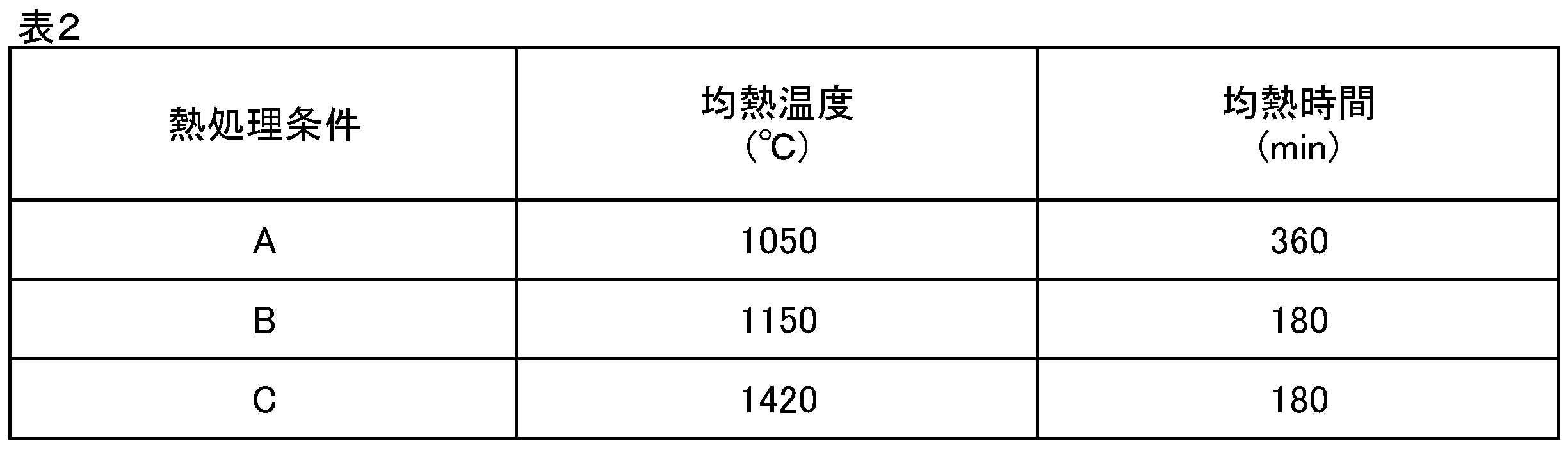
- raw symbol For 1, 2-1 to 2-4 and 3-9 of the powder were subjected to osmotic diffusion process of Si by CVD method using SiCl 4. The conditions for the osmotic diffusion treatment are shown in Table 2.
- the powder thus obtained is subjected to sieving (based on JIS Z 2510).
- the average particle diameter D 50 is 80 ⁇ m, 70 ⁇ m, 60 ⁇ m and 20 ⁇ m, and other iron powders. Had an average particle diameter D 50 of 80 ⁇ m.
- These powders were each provided with an insulating coating with a silicone resin.
- the silicone resin was coated by the following procedure. First, the silicone resin was dissolved in toluene to prepare a diluted resin solution having a silicone resin concentration of 1.0 mass%. Next, the powder and the resin diluted solution were mixed so that the resin addition ratio with respect to the powder was 0.5 mass%. Then, the coated iron powder was obtained by performing drying in air
- the test piece prepared in accordance with this procedure was heat-treated in nitrogen at 750 ° C. for 30 minutes to obtain a dust core. After that, winding was performed (primary volume: 100 turns, secondary volume: 40 turns), hysteresis loss measurement (0.2 T) by DC magnetizer (DC magnetometer manufactured by Metron Giken), and iron loss measuring device (Metron) Iron loss measurement (0.2 T, 20 kHz) was performed using a high-frequency iron loss measuring device manufactured by Giken. Eddy current loss was determined from the difference between the obtained iron loss and hysteresis loss. Table 4 shows the measurement results of the eddy current loss.
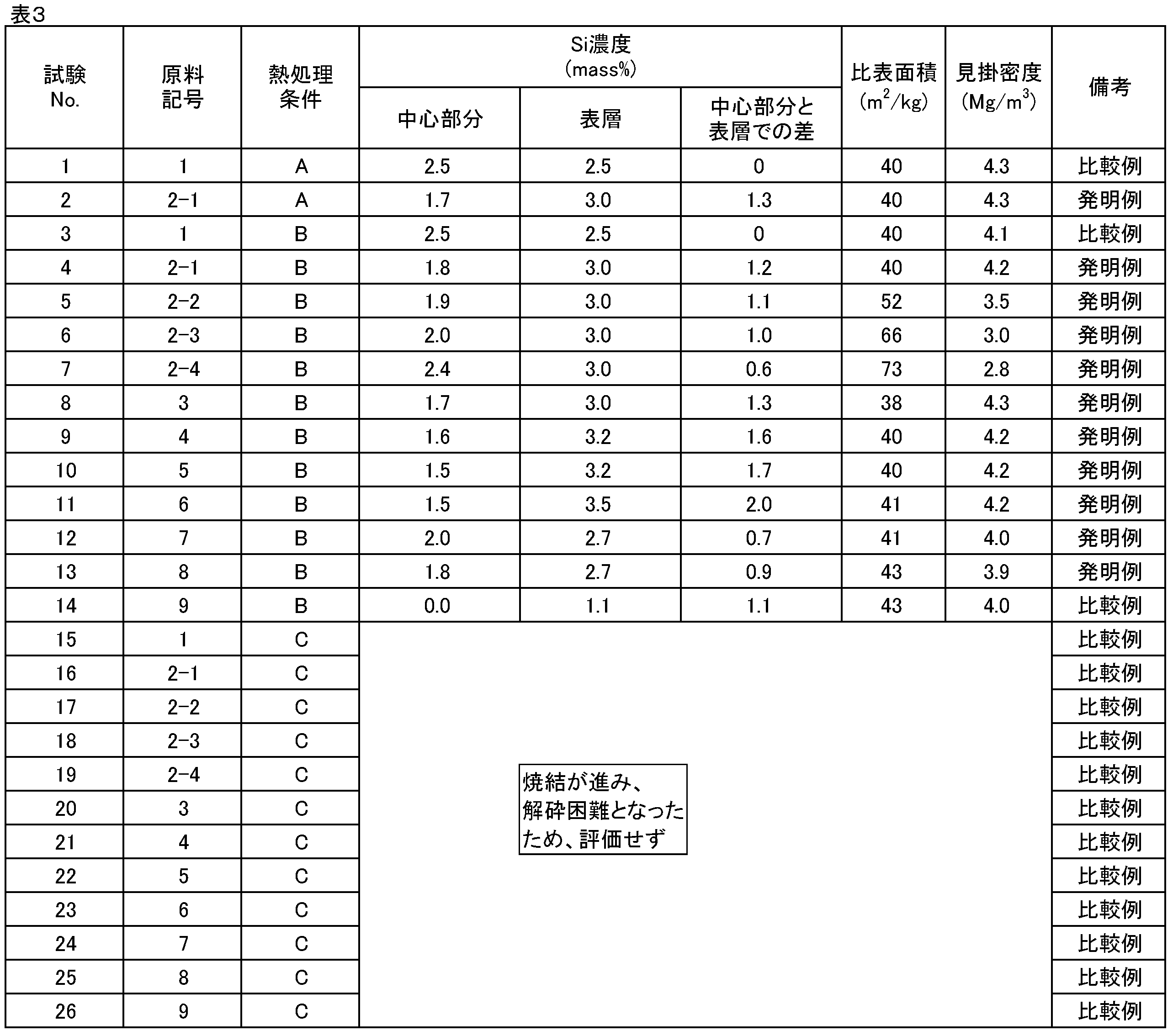
- test No. in which the difference between the Si concentration in the surface layer and the Si concentration in the central portion (Si concentration difference) was 0 mass%.
- the dust cores 1 and 3 both have an eddy current loss of over 700 kW / m 3 .
- the eddy current loss was higher than that of 27 Fe-3 mass% Si dust core.
- a dust core (test Nos. 2-1 to 2-4 and 4 to 13) having a Si concentration in the central portion of 1.0 mass% or more and a Si concentration difference of 0.5 mass% or more has an eddy current loss of 500. Test No. kW / m 3 or less and Fe-3 mass% Si. The eddy current loss was reduced by more than 200 kW / m 3 compared with 27 dust cores.
- dust cores with a Si concentration difference of 1.0 mass% or more (Test Nos. 2-1 to 2-4, 4 to 6, 8 to 11) have an eddy current loss of 400 kW / m 3 or less. It was found that the eddy current loss was extremely low.
- the powder magnetic cores (test Nos. 2-1 to 2-4) made of powders having different D 50 s , the iron loss was reduced as the particle diameter became finer.
Landscapes
- Chemical & Material Sciences (AREA)
- Engineering & Computer Science (AREA)
- Mechanical Engineering (AREA)
- Metallurgy (AREA)
- Organic Chemistry (AREA)
- Materials Engineering (AREA)
- Power Engineering (AREA)
- Chemical Kinetics & Catalysis (AREA)
- Dispersion Chemistry (AREA)
- General Chemical & Material Sciences (AREA)
- Physics & Mathematics (AREA)
- Electromagnetism (AREA)
- Manufacturing & Machinery (AREA)
- Inorganic Chemistry (AREA)
- Powder Metallurgy (AREA)
- Soft Magnetic Materials (AREA)
Abstract
Description
上記技術は、表層におけるSiの濃化による磁束の粉末表層への集中を利用した粒子内の渦電流損低減と、残留SiO2による粒子間渦電流損低減の2つを組み合わせたものである。
従って、従来技術ではいずれも、高まる渦電流損低減に対する要求に応えるのは困難である。
(i)軟磁性粉末中のSi拡散は、母相の鉄がα相である場合とγ相である場合で大きく異なっており、γ相中をSiが拡散するスピードは、α相中を拡散するスピードに比べて極めて遅い。
(ii)Siを粒子表層に濃化させるための熱処理を行う際にγ相が安定となるように、ベース粉末の組成を調整することで、ベース粉末がSiを含有していたとしても、粒子表層に粒子中心部よりも高濃度のSiを濃化させることが可能である。
(iii)粒子中心部分のSi量を増加させることにより、Siを粒子表層に濃化させたときの渦電流損を効果的に低減できる。
本発明は上記知見を基に得られたものである。
1.Fe:60 mass%以上、
γ相安定化元素、および
電気抵抗を上げる元素:1.0 mass%以上、を含有する軟磁性粉末用原料粉末。
前記軟磁性粉末用原料粉末に対して1.0~6.5 mass%のSiを前記電気抵抗を上げる元素として含有する、前記に記載の軟磁性粉末用原料粉末。
60 mass%以上のFe、
γ相安定化元素、および
1.0 mass%以上の、電気抵抗を上げる元素、を含有し、
前記圧粉磁芯用軟磁性粉末を構成する粒子の中心部分における前記電気抵抗を上げる元素の濃度が1.0 mass%以上であり、
前記圧粉磁芯用軟磁性粉末を構成する粒子の表層における前記電気抵抗を上げる元素の濃度が、前記圧粉磁芯用軟磁性粉末を構成する粒子の中心部分における前記電気抵抗を上げる元素の濃度よりも高い、圧粉磁芯用軟磁性粉末。
以下、本発明を具体的に説明する。
本発明の一実施形態における軟磁性粉末用原料粉末は、Fe、γ相安定化元素、および電気抵抗を上げる元素を必須成分として含有する。前記各成分について、以下説明する。
本発明の軟磁性粉末用原料粉末は、主成分としてFeを含有する。軟磁性粉末用原料粉末におけるFe含有量は、60 mass%以上とする。一方、Fe含有量の上限については特に限定されないが、後述のγ相安定化元素や電気抵抗を上げる元素の効果を十分に得るためには、Fe含有量を98.5 mass%未満とすることが好ましい。
本発明の一実施形態における圧粉磁芯用軟磁性粉末は、後述するように原料粉末を熱処理することにより、該粉末を構成する粒子の表層に、電気抵抗を上げる元素を浸透拡散させることで製造することができる。その際、粉末の結晶構造がα(フェライト)相であると、前記電気抵抗を上げる元素はα相中を容易に拡散するため、熱処理中に前記電気抵抗を上げる元素が粒子の中心部分まで拡散してしまい、表層と中心部分とにおける電気抵抗を上げる元素の濃度が均一化してしまう。
Mn:8.0 mass%以下(0を含まない)
Cu:4.0 mass%以下(0を含まない)
C:1.0 mass%以下(0を含まない)
N:2.4 mass%以下(0を含まない)
上記Ni、Mn、Cu、C、およびNを始めとするγ相安定化元素は、単独で使用することもできるが、2以上の元素を組み合わせて用いることもできる。
本発明の一実施形態における軟磁性粉末用原料粉末は、電気抵抗を上げる元素を 合計量で1.0 mass%以上含有する。電気抵抗を上げる元素を1.0 mass%以上添加することにより、粉末の中心部分における電気抵抗を上昇させ、それにより渦電流損を低減することができる。渦電流損をさらに低減するという観点からは、電気抵抗を上げる元素の含有量を1.4 mass%以上とすることが好ましい。一方、電気抵抗を上げる元素の含有量の上限は特に限定されない。しかし、電気抵抗を上げる元素を過度に添加すると、ヒステリシス損の増加や、圧縮性の低下が生じる場合があるため、電気抵抗を上げる元素の含有量を20.0 mass%以下とすることが好ましい。
Si:1.5~6.5 mass%
Al:1.0~6.0 mass%
Cr:1.0~10.0 mass%
上記Si、Al、およびCrを始めとする電気抵抗を上げる元素は、単独で使用することもできるが、2以上の元素を組み合わせて用いることもできる。
本発明の一実施形態における圧粉磁芯用軟磁性粉末は、60 mass%以上のFe、γ相安定化元素、および1.0 mass%以上の電気抵抗を上げる元素を含有する。前記圧粉磁芯用軟磁性粉末については、特に断らない限り、上記圧粉磁芯用軟磁性粉末と同一とすることができる。
本発明に用いる軟磁性粉末の原料粉末は任意の方法で製造することができる。製造方法の具体例としては、例えば、アトマイズ法、酸化物還元法、電解析出法などが挙げられるが、中でもアトマイズ法を用いることが好ましい。アトマイズ法で製造される粉末は粒子形状が球形に近いため、アトマイズ法で製造された粉末(アトマイズ粉)を用いることにより、圧粉磁芯における粒子間の接触に起因する粒子間渦電流損の増加をさらに抑制することができる。
(a) 粉末の表面にCVD法やPVD法によって前記元素を蒸着し、浸透拡散させる方法。
(b)粉末表面に前記元素をめっきし、次いで熱処理により浸透拡散させる方法。
(c)粉末の表層に存在するか粉末に接している前記元素の酸化物を、粉末中に含まれるCにより還元し、固相拡散によって浸透拡散させる方法。
(d)溶融液中に粉末を浸漬させて液相拡散によって浸透拡散させる方法。
SiCl4ガスを用いたCVD法は、高温のSiCl4ガス雰囲気中に粉末を曝すことによりSiCl4中のSiを粉末中へ浸透拡散させる方法である。なお、残りの4Clは、鉄と反応してFeCl4となり、系外へ排出される。


Claims (5)
- Fe:60 mass%以上、
γ相安定化元素、および
電気抵抗を上げる元素:1.0 mass%以上、を含有する軟磁性粉末用原料粉末。 - 前記γ相安定化元素が、Ni、Mn、Cu、C、およびNからなる群より選択される1または2以上である、請求項1に記載の軟磁性粉末用原料粉末。
- 前記電気抵抗を上げる元素が、Si、Al、およびCrからなる群より選択される1または2以上である、請求項1または2に記載の軟磁性粉末用原料粉末。
- 前記軟磁性粉末用原料粉末に対して1.5~20 mass%のNiを前記γ相安定化元素として含有し、
前記軟磁性粉末用原料粉末に対して1.0~6.5 mass%のSiを前記電気抵抗を上げる元素として含有する、請求項1に記載の軟磁性粉末用原料粉末。 - 圧粉磁芯用軟磁性粉末であって、
60 mass%以上のFe、
γ相安定化元素、および
1.0 mass%以上の、電気抵抗を上げる元素、を含有し、
前記圧粉磁芯用軟磁性粉末を構成する粒子の中心部分における前記電気抵抗を上げる元素の濃度が1.0 mass%以上であり、
前記圧粉磁芯用軟磁性粉末を構成する粒子の表層における前記電気抵抗を上げる元素の濃度が、前記圧粉磁芯用軟磁性粉末を構成する粒子の中心部分における前記電気抵抗を上げる元素の濃度よりも高い、圧粉磁芯用軟磁性粉末。
Priority Applications (6)
| Application Number | Priority Date | Filing Date | Title |
|---|---|---|---|
| JP2016533671A JP6191774B2 (ja) | 2015-02-09 | 2016-02-08 | 軟磁性粉末用原料粉末および圧粉磁芯用軟磁性粉末 |
| CA2974067A CA2974067C (en) | 2015-02-09 | 2016-02-08 | Raw material powder for soft magnetic powder, and soft magnetic powder for dust core |
| US15/548,850 US20180236537A1 (en) | 2015-02-09 | 2016-02-08 | Raw material powder for soft magnetic powder, and soft magnetic powder for dust core |
| KR1020177022899A KR101963069B1 (ko) | 2015-02-09 | 2016-02-08 | 연자성 분말용 원료 분말 및 압분 자심용 연자성 분말 |
| SE1750988A SE542793C2 (en) | 2015-02-09 | 2016-02-08 | Raw material powder for soft magnetic powder, and soft magnetic powder for dust core |
| CN201680006831.7A CN107206486B (zh) | 2015-02-09 | 2016-02-08 | 软磁性粉末用原料粉末和压粉磁芯用软磁性粉末 |
Applications Claiming Priority (2)
| Application Number | Priority Date | Filing Date | Title |
|---|---|---|---|
| JP2015-023399 | 2015-02-09 | ||
| JP2015023399 | 2015-02-09 |
Publications (2)
| Publication Number | Publication Date |
|---|---|
| WO2016129263A1 true WO2016129263A1 (ja) | 2016-08-18 |
| WO2016129263A8 WO2016129263A8 (ja) | 2017-06-29 |
Family
ID=56614523
Family Applications (1)
| Application Number | Title | Priority Date | Filing Date |
|---|---|---|---|
| PCT/JP2016/000641 Ceased WO2016129263A1 (ja) | 2015-02-09 | 2016-02-08 | 軟磁性粉末用原料粉末および圧粉磁芯用軟磁性粉末 |
Country Status (7)
| Country | Link |
|---|---|
| US (1) | US20180236537A1 (ja) |
| JP (1) | JP6191774B2 (ja) |
| KR (1) | KR101963069B1 (ja) |
| CN (1) | CN107206486B (ja) |
| CA (1) | CA2974067C (ja) |
| SE (1) | SE542793C2 (ja) |
| WO (1) | WO2016129263A1 (ja) |
Cited By (1)
| Publication number | Priority date | Publication date | Assignee | Title |
|---|---|---|---|---|
| JP2017092255A (ja) * | 2015-11-10 | 2017-05-25 | Jfeスチール株式会社 | 軟磁性粉末用の原料粉末並びに圧粉磁芯用軟磁性粉末およびその製造方法 |
Families Citing this family (1)
| Publication number | Priority date | Publication date | Assignee | Title |
|---|---|---|---|---|
| JP2026000207A (ja) * | 2024-06-17 | 2026-01-05 | 新東工業株式会社 | 鉄基磁性粉粒体、その製造方法、及び磁性材料 |
Citations (5)
| Publication number | Priority date | Publication date | Assignee | Title |
|---|---|---|---|---|
| JPS5124449B2 (ja) * | 1973-11-02 | 1976-07-24 | ||
| JP2678762B2 (ja) * | 1988-03-08 | 1997-11-17 | 古河機械金属株式会社 | 高透磁率磁性合金磁性材料およびその材料で製造されるダストコア |
| JP2009158652A (ja) * | 2007-12-26 | 2009-07-16 | Panasonic Corp | 複合磁性材料およびその製造方法 |
| JP2011157591A (ja) * | 2010-02-01 | 2011-08-18 | Toyota Motor Corp | 圧粉磁心用粉末製造方法及び圧粉磁心用粉末製造装置 |
| WO2011148826A1 (ja) * | 2010-05-28 | 2011-12-01 | 住友電気工業株式会社 | 軟磁性粉末、造粒粉、圧粉磁心、電磁部品及び圧粉磁心の製造方法 |
Family Cites Families (13)
| Publication number | Priority date | Publication date | Assignee | Title |
|---|---|---|---|---|
| US1187123A (en) * | 1915-11-13 | 1916-06-13 | Lauritz W Andersen | Combined socket-cover and shade-holder. |
| US5252148A (en) * | 1989-05-27 | 1993-10-12 | Tdk Corporation | Soft magnetic alloy, method for making, magnetic core, magnetic shield and compressed powder core using the same |
| JPH1187123A (ja) | 1997-09-08 | 1999-03-30 | Mitsubishi Materials Corp | 高周波用軟磁性粉末 |
| CZ300322B6 (cs) * | 1998-11-16 | 2009-04-22 | Bt Magnet-Technologie Gmbh | Zpusob výroby magneticky mekkých slinovaných soucástí |
| CN1110825C (zh) * | 1999-11-12 | 2003-06-04 | 上海交通大学 | 高饱和磁通密度及低剩磁双铁磁性相软磁合金 |
| ES2737983T3 (es) * | 2002-12-24 | 2020-01-17 | Jfe Steel Corp | Chapa de acero electromagnético no orientado de Fe-Cr-Si y proceso para producir la misma |
| DE102005022536A1 (de) * | 2005-05-17 | 2006-11-23 | Siemens Ag | Steuereinheit mit einer flexiblen Leiterplatte |
| JP4044591B1 (ja) | 2006-09-11 | 2008-02-06 | 株式会社神戸製鋼所 | 圧粉磁心用鉄基軟磁性粉末およびその製造方法ならびに圧粉磁心 |
| EP2147445B1 (en) | 2006-12-07 | 2017-05-31 | Höganäs AB | Soft magnetic powder |
| KR100797895B1 (ko) * | 2006-12-22 | 2008-01-24 | 성진경 | 표면 (100) 면 형성 방법, 이를 이용한 무방향성 전기강판의 제조 방법 및 이를 이용하여 제조된 무방향성 전기강판 |
| JP5470683B2 (ja) | 2007-05-31 | 2014-04-16 | Jfeスチール株式会社 | 圧粉磁心用金属粉末および圧粉磁心の製造方法 |
| JP5261406B2 (ja) | 2010-01-15 | 2013-08-14 | トヨタ自動車株式会社 | 圧粉磁心用粉末、圧粉磁心用粉末を圧粉成形した圧粉磁心、及び、圧粉磁心用粉末の製造方法 |
| JP6035788B2 (ja) | 2012-03-09 | 2016-11-30 | Jfeスチール株式会社 | 圧粉磁芯用粉末 |
-
2016
- 2016-02-08 SE SE1750988A patent/SE542793C2/en not_active IP Right Cessation
- 2016-02-08 JP JP2016533671A patent/JP6191774B2/ja active Active
- 2016-02-08 KR KR1020177022899A patent/KR101963069B1/ko not_active Expired - Fee Related
- 2016-02-08 CA CA2974067A patent/CA2974067C/en active Active
- 2016-02-08 WO PCT/JP2016/000641 patent/WO2016129263A1/ja not_active Ceased
- 2016-02-08 US US15/548,850 patent/US20180236537A1/en not_active Abandoned
- 2016-02-08 CN CN201680006831.7A patent/CN107206486B/zh not_active Expired - Fee Related
Patent Citations (5)
| Publication number | Priority date | Publication date | Assignee | Title |
|---|---|---|---|---|
| JPS5124449B2 (ja) * | 1973-11-02 | 1976-07-24 | ||
| JP2678762B2 (ja) * | 1988-03-08 | 1997-11-17 | 古河機械金属株式会社 | 高透磁率磁性合金磁性材料およびその材料で製造されるダストコア |
| JP2009158652A (ja) * | 2007-12-26 | 2009-07-16 | Panasonic Corp | 複合磁性材料およびその製造方法 |
| JP2011157591A (ja) * | 2010-02-01 | 2011-08-18 | Toyota Motor Corp | 圧粉磁心用粉末製造方法及び圧粉磁心用粉末製造装置 |
| WO2011148826A1 (ja) * | 2010-05-28 | 2011-12-01 | 住友電気工業株式会社 | 軟磁性粉末、造粒粉、圧粉磁心、電磁部品及び圧粉磁心の製造方法 |
Cited By (1)
| Publication number | Priority date | Publication date | Assignee | Title |
|---|---|---|---|---|
| JP2017092255A (ja) * | 2015-11-10 | 2017-05-25 | Jfeスチール株式会社 | 軟磁性粉末用の原料粉末並びに圧粉磁芯用軟磁性粉末およびその製造方法 |
Also Published As
| Publication number | Publication date |
|---|---|
| KR20170106415A (ko) | 2017-09-20 |
| CA2974067A1 (en) | 2016-08-18 |
| CA2974067C (en) | 2020-11-24 |
| JP6191774B2 (ja) | 2017-09-06 |
| WO2016129263A8 (ja) | 2017-06-29 |
| CN107206486B (zh) | 2021-09-10 |
| SE1750988A1 (sv) | 2017-08-14 |
| JPWO2016129263A1 (ja) | 2017-04-27 |
| US20180236537A1 (en) | 2018-08-23 |
| SE542793C2 (en) | 2020-07-07 |
| CN107206486A (zh) | 2017-09-26 |
| KR101963069B1 (ko) | 2019-03-27 |
Similar Documents
| Publication | Publication Date | Title |
|---|---|---|
| US7871474B2 (en) | Method for manufacturing of insulated soft magnetic metal powder formed body | |
| CN109935432B (zh) | R-t-b系永久磁铁 | |
| CN107492429A (zh) | 一种耐高温钕铁硼磁体及其制备方法 | |
| CN100439012C (zh) | 铁基软磁粉末 | |
| JP2008172257A (ja) | 絶縁軟磁性金属粉末成形体の製造方法 | |
| JP2003142310A (ja) | 高い電気抵抗を有する圧粉磁心とその製造方法 | |
| JP2011243830A (ja) | 圧粉磁芯及びその製造方法 | |
| WO2013125075A1 (ja) | ネオジム系希土類永久磁石及びその製造方法 | |
| CN113674984B (zh) | 一种FeSiAlZrScSr磁粉芯的制备方法 | |
| JP5814809B2 (ja) | 圧粉磁心用混合粉末 | |
| JP5427664B2 (ja) | 圧粉磁性体用軟磁性粉末、それを用いた圧粉磁性体および製造方法 | |
| CN105121069A (zh) | 压粉磁芯用铁粉以及压粉磁芯用绝缘包覆铁粉 | |
| JP6191774B2 (ja) | 軟磁性粉末用原料粉末および圧粉磁芯用軟磁性粉末 | |
| JP2009235517A (ja) | 圧粉磁心用金属粉末および圧粉磁心の製造方法 | |
| JP2005213621A (ja) | 軟磁性材料および圧粉磁心 | |
| JP2005303006A (ja) | 圧粉磁心の製造方法および圧粉磁心 | |
| JP6504027B2 (ja) | 軟磁性粉末用の原料粉末並びに圧粉磁芯用軟磁性粉末およびその製造方法 | |
| KR101441745B1 (ko) | 합금 분말, 합금 분말 코어 및 그 제조방법 | |
| JP2007027320A (ja) | 軟磁性材料、圧粉磁心、および軟磁性材料の製造方法 | |
| CN103266260A (zh) | 软磁Fe~6.5%Si合金粉末的制造方法 | |
| JP2013197240A (ja) | Nd−Fe−B系希土類焼結磁石及びその製造方法。 | |
| JP2013206999A (ja) | 圧粉磁心用軟磁性鉄基粉末の製造方法 | |
| JP5382424B2 (ja) | 磁心用粉末の製造方法 | |
| WO2005024858A1 (ja) | 軟磁性材料およびその製造方法 | |
| CN115976423B (zh) | 一种HfFe纳米粉复合钕铁硼磁体及其制备方法 |
Legal Events
| Date | Code | Title | Description |
|---|---|---|---|
| ENP | Entry into the national phase |
Ref document number: 2016533671 Country of ref document: JP Kind code of ref document: A |
|
| 121 | Ep: the epo has been informed by wipo that ep was designated in this application |
Ref document number: 16748909 Country of ref document: EP Kind code of ref document: A1 |
|
| ENP | Entry into the national phase |
Ref document number: 2974067 Country of ref document: CA |
|
| WWE | Wipo information: entry into national phase |
Ref document number: 15548850 Country of ref document: US |
|
| NENP | Non-entry into the national phase |
Ref country code: DE |
|
| WWE | Wipo information: entry into national phase |
Ref document number: 1750988-6 Country of ref document: SE |
|
| ENP | Entry into the national phase |
Ref document number: 20177022899 Country of ref document: KR Kind code of ref document: A |
|
| 122 | Ep: pct application non-entry in european phase |
Ref document number: 16748909 Country of ref document: EP Kind code of ref document: A1 |