WO2016129195A1 - 感光性樹脂組成物および樹脂組成物、パターン化樹脂膜およびその製造方法、ならびに細胞培養装置 - Google Patents
感光性樹脂組成物および樹脂組成物、パターン化樹脂膜およびその製造方法、ならびに細胞培養装置 Download PDFInfo
- Publication number
- WO2016129195A1 WO2016129195A1 PCT/JP2015/086457 JP2015086457W WO2016129195A1 WO 2016129195 A1 WO2016129195 A1 WO 2016129195A1 JP 2015086457 W JP2015086457 W JP 2015086457W WO 2016129195 A1 WO2016129195 A1 WO 2016129195A1
- Authority
- WO
- WIPO (PCT)
- Prior art keywords
- carbon atoms
- group
- resin film
- formula
- resin composition
- Prior art date
- Legal status (The legal status is an assumption and is not a legal conclusion. Google has not performed a legal analysis and makes no representation as to the accuracy of the status listed.)
- Ceased
Links
Classifications
-
- C—CHEMISTRY; METALLURGY
- C08—ORGANIC MACROMOLECULAR COMPOUNDS; THEIR PREPARATION OR CHEMICAL WORKING-UP; COMPOSITIONS BASED THEREON
- C08G—MACROMOLECULAR COMPOUNDS OBTAINED OTHERWISE THAN BY REACTIONS ONLY INVOLVING UNSATURATED CARBON-TO-CARBON BONDS
- C08G65/00—Macromolecular compounds obtained by reactions forming an ether link in the main chain of the macromolecule
- C08G65/02—Macromolecular compounds obtained by reactions forming an ether link in the main chain of the macromolecule from cyclic ethers by opening of the heterocyclic ring
- C08G65/04—Macromolecular compounds obtained by reactions forming an ether link in the main chain of the macromolecule from cyclic ethers by opening of the heterocyclic ring from cyclic ethers only
- C08G65/06—Cyclic ethers having no atoms other than carbon and hydrogen outside the ring
- C08G65/14—Unsaturated oxiranes
-
- C—CHEMISTRY; METALLURGY
- C12—BIOCHEMISTRY; BEER; SPIRITS; WINE; VINEGAR; MICROBIOLOGY; ENZYMOLOGY; MUTATION OR GENETIC ENGINEERING
- C12M—APPARATUS FOR ENZYMOLOGY OR MICROBIOLOGY; APPARATUS FOR CULTURING MICROORGANISMS FOR PRODUCING BIOMASS, FOR GROWING CELLS OR FOR OBTAINING FERMENTATION OR METABOLIC PRODUCTS, i.e. BIOREACTORS OR FERMENTERS
- C12M3/00—Tissue, human, animal or plant cell, or virus culture apparatus
-
- G—PHYSICS
- G03—PHOTOGRAPHY; CINEMATOGRAPHY; ANALOGOUS TECHNIQUES USING WAVES OTHER THAN OPTICAL WAVES; ELECTROGRAPHY; HOLOGRAPHY
- G03F—PHOTOMECHANICAL PRODUCTION OF TEXTURED OR PATTERNED SURFACES, e.g. FOR PRINTING, FOR PROCESSING OF SEMICONDUCTOR DEVICES; MATERIALS THEREFOR; ORIGINALS THEREFOR; APPARATUS SPECIALLY ADAPTED THEREFOR
- G03F7/00—Photomechanical, e.g. photolithographic, production of textured or patterned surfaces, e.g. printing surfaces; Materials therefor, e.g. comprising photoresists; Apparatus specially adapted therefor
- G03F7/004—Photosensitive materials
- G03F7/027—Non-macromolecular photopolymerisable compounds having carbon-to-carbon double bonds, e.g. ethylenic compounds
-
- G—PHYSICS
- G03—PHOTOGRAPHY; CINEMATOGRAPHY; ANALOGOUS TECHNIQUES USING WAVES OTHER THAN OPTICAL WAVES; ELECTROGRAPHY; HOLOGRAPHY
- G03F—PHOTOMECHANICAL PRODUCTION OF TEXTURED OR PATTERNED SURFACES, e.g. FOR PRINTING, FOR PROCESSING OF SEMICONDUCTOR DEVICES; MATERIALS THEREFOR; ORIGINALS THEREFOR; APPARATUS SPECIALLY ADAPTED THEREFOR
- G03F7/00—Photomechanical, e.g. photolithographic, production of textured or patterned surfaces, e.g. printing surfaces; Materials therefor, e.g. comprising photoresists; Apparatus specially adapted therefor
- G03F7/004—Photosensitive materials
- G03F7/027—Non-macromolecular photopolymerisable compounds having carbon-to-carbon double bonds, e.g. ethylenic compounds
- G03F7/028—Non-macromolecular photopolymerisable compounds having carbon-to-carbon double bonds, e.g. ethylenic compounds with photosensitivity-increasing substances, e.g. photoinitiators
- G03F7/031—Organic compounds not covered by group G03F7/029
-
- G—PHYSICS
- G03—PHOTOGRAPHY; CINEMATOGRAPHY; ANALOGOUS TECHNIQUES USING WAVES OTHER THAN OPTICAL WAVES; ELECTROGRAPHY; HOLOGRAPHY
- G03F—PHOTOMECHANICAL PRODUCTION OF TEXTURED OR PATTERNED SURFACES, e.g. FOR PRINTING, FOR PROCESSING OF SEMICONDUCTOR DEVICES; MATERIALS THEREFOR; ORIGINALS THEREFOR; APPARATUS SPECIALLY ADAPTED THEREFOR
- G03F7/00—Photomechanical, e.g. photolithographic, production of textured or patterned surfaces, e.g. printing surfaces; Materials therefor, e.g. comprising photoresists; Apparatus specially adapted therefor
- G03F7/004—Photosensitive materials
- G03F7/075—Silicon-containing compounds
Definitions
- the present invention relates to a photosensitive resin composition and a resin composition suitably used for forming a resin film having a large film thickness, a patterned resin film, a method for producing the same, and a cell culture apparatus.
- a tissue having a function equivalent to that of a tissue in a living body has attracted attention.
- a spheroid is a three-dimensional cellular tissue formed by aggregation of many cells.
- Spheroid culture is a culture method that can maintain the function of cells for a long period of time compared to conventional monolayer culture, and is closer to a living body. It is known that the survival state can be maintained over a long period of time by culturing cells in three dimensions as compared to culturing cells in two dimensions (Patent Document 1).
- Patent Document 1 a cell culture substrate having a surface to which cells adhere relatively weakly compared to 2D culture is used, so that the problem that the formed spheroids are released into the culture solution is known.
- Patent Document 1 a method of culturing cells in a cell holding cavity for holding cells has been disclosed.
- the partition wall forming the cavity is formed from a photosensitive resin composition containing a water-soluble resin that has a weak adhesive force with the cell tissue body in consideration of ease of taking out the cell tissue body after culturing.
- a partition wall may be used (Patent Documents 2 to 3).
- JP 2006-121991 A Japanese Patent Laid-Open No. 03-007576 JP 2014-023508 A
- An object of the present invention is to provide a photosensitive resin composition, a resin composition, a patterned resin film, a method for producing the same, and a cell culture device, which can form a resin film having a large film thickness and excellent water resistance. Is to provide.
- the present inventors have intensively studied to solve the above problems. As a result, the inventors have found that the above problem can be solved by the following configuration, and have completed the present invention.
- the present invention includes, for example, the following [1] to [11].
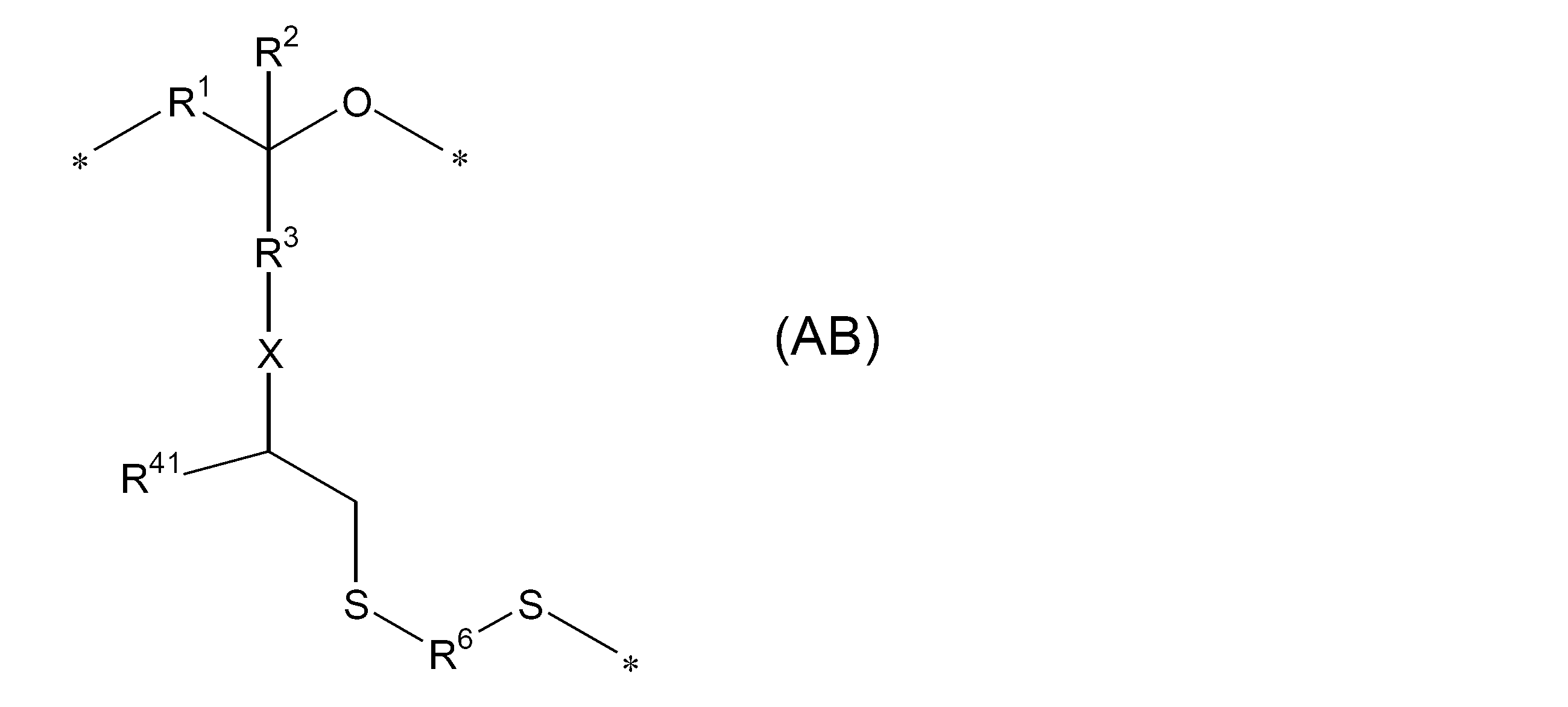
- a cell culture apparatus having a cell culture substrate and a patterned resin film formed on the substrate, wherein the patterned resin film has a structural unit represented by the formula (AB) apparatus.
- R 1 is an alkanediyl group having 1 to 10 carbon atoms
- R 2 is a hydrogen atom or an alkyl group having 1 to 10 carbon atoms
- R 3 is a direct bond
- R 41 is a hydrogen atom or an alkyl group having 1 to 10 carbon atoms
- R 6 is a divalent organic group
- * is a bond.
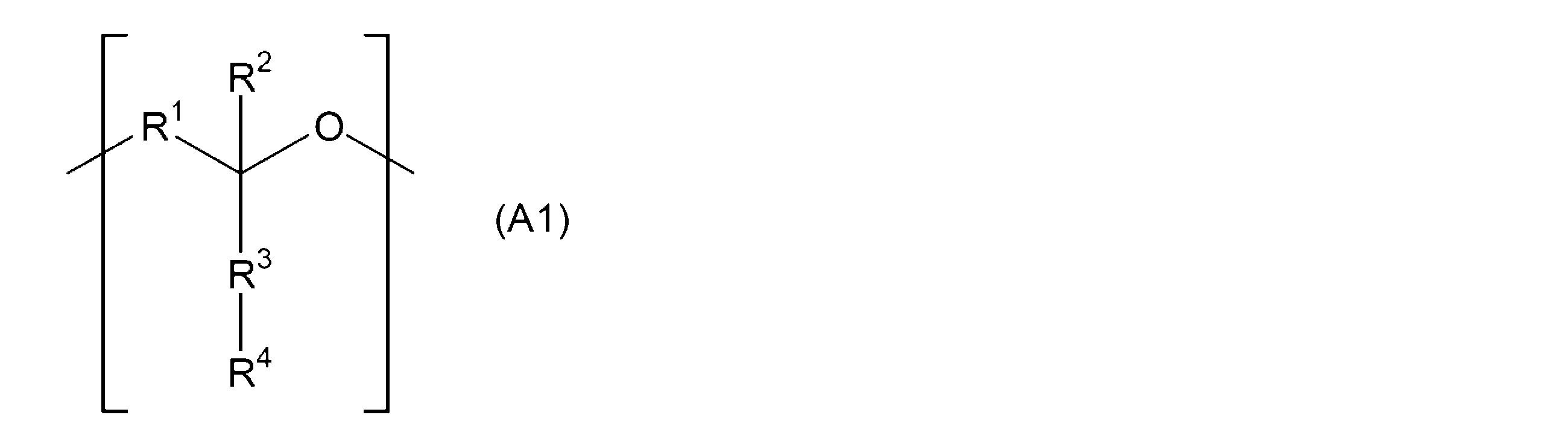
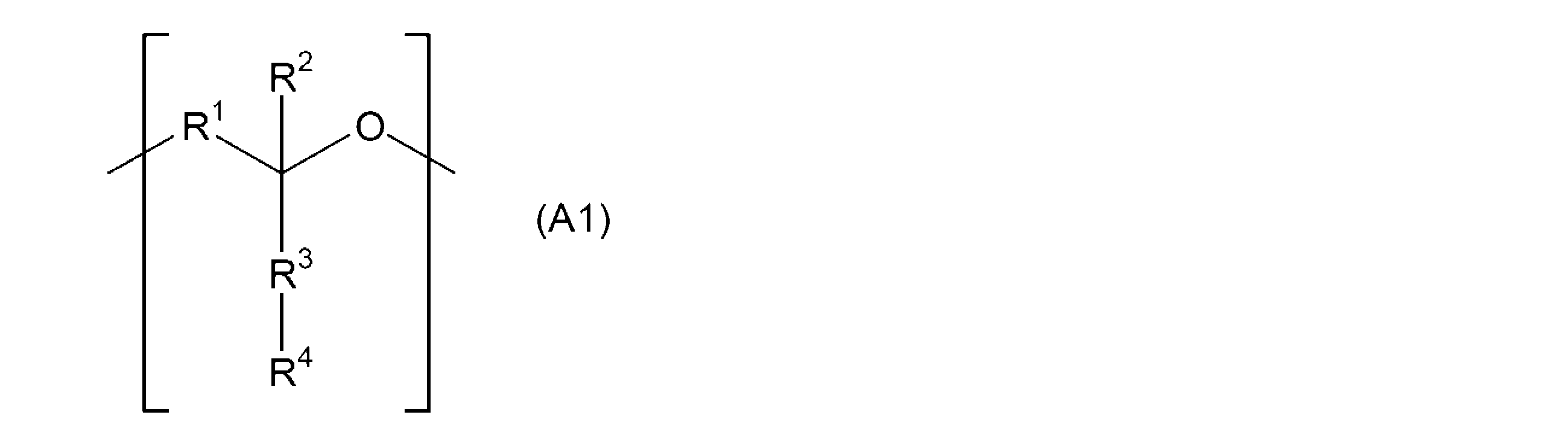
- a photosensitive resin composition comprising a polymer (A) having a structural unit represented by the formula (A1), a compound (B) having two or more mercapto groups, and a photoradical polymerization initiator (C). object.
- R 1 is an alkanediyl group having 1 to 10 carbon atoms
- R 2 is a hydrogen atom or an alkyl group having 1 to 10 carbon atoms
- R 3 is a direct bond or a carbon number
- R 5 represents an alkanediyl group having 1 to 10 carbon atoms.
- R 5 represents an alkanediyl group having 1 to 10 carbon atoms.
- R 1 is an alkanediyl group having 1 to 10 carbon atoms
- R 2 is a hydrogen atom or an alkyl group having 1 to 10 carbon atoms
- R 3 is a direct bond or a carbon number
- R 1 is an alkanediyl group having 1 to 10 carbon atoms
- R 2 is a hydrogen atom or an alkyl group having 1 to 10 carbon atoms
- R 3 is a direct bond
- R 41 is a hydrogen atom or an alkyl group having 1 to 10 carbon atoms
- R 6 is a divalent organic group
- * is a bond.
- a photosensitive resin composition and a resin composition, a patterned resin film, a method for producing the same, and a cell culture apparatus that can form a resin film having a large film thickness and excellent water resistance. Can be provided.
- the resin composition of the present invention contains a polymer (A) described below and a compound (B) having two or more mercapto groups.
- the resin composition further contains a radical photopolymerization initiator (C)
- the composition is particularly referred to as a “photosensitive resin composition”. When these are not particularly distinguished, they are simply referred to as “the composition of the present invention”.
- composition of the present invention contains the polymer (A) and the compound (B), a resin film having a large film thickness and excellent water resistance can be formed. Further, since the photosensitive resin composition of the present invention contains the above (A) to (C), a patterned resin film having a large film thickness and excellent water resistance can be formed.
- the viscosity of the composition of the present invention at 23 ° C. is usually 0.1 to 10,000 cP, preferably 100 to 5,000 cP, more preferably 1,000 to 3,000 cP.
- the viscosity is a value measured by a method based on JIS Z8803.
- the polymer (A) has a structural unit represented by the formula (A1).
- R 1 is an alkanediyl group having 1 to 10 carbon atoms.
- R 2 is a hydrogen atom or an alkyl group having 1 to 10 carbon atoms, preferably a hydrogen atom.
- R 3 is a direct bond, an alkanediyl group having 1 to 10 carbon atoms, or a divalent group represented by —R 31 O—, wherein R 31 is an alkanediyl group having 1 to 10 carbon atoms. is there.
- R 31 is preferably bonded to the carbon atom of the main chain of the polymer (A) (C1 in the formula (A1)).
- R 3 is preferably a divalent group represented by —R 31 O—.
- R 4 is a monovalent group having an ethylenically unsaturated double bond.
- R 41 is a hydrogen atom or an alkyl group having 1 to 10 carbon atoms
- R 42 is an alkanediyl group having 1 to 10 carbon atoms
- R 43 is a direct bond or an alkanediyl group having 1 to 10 carbon atoms.
- the polymer (A) may further have a structural unit represented by the formula (A2).
- R 5 is an alkanediyl group having 1 to 10 carbon atoms.
- examples of the alkanediyl group having 1 to 10 carbon atoms include methylene group, 1,2-ethanediyl group, n-propylene group, isopropylene group and isobutylene group.
- the carbon number of the alkanediyl group is preferably 1 to 5, more preferably 1 to 3.
- examples of the alkyl group having 1 to 10 carbon atoms include methyl, ethyl, n-propyl, isopropyl, n-butyl, tert-butyl, pentyl, hexyl, heptyl, octyl, nonyl and decyl. It is done.
- the number of carbon atoms of the alkyl group is preferably 1 to 5, more preferably 1 to 2.
- the content of the structural unit (A1) is usually 10 mol% or more, preferably 10 to 100 mol%, more preferably 30 to 100 mol%, in 100 mol% of all the structural units constituting the polymer (A). .
- the content of the structural unit (A1) is in the above range, a polymer excellent in crosslinkability due to the compound (B) tends to be obtained.
- the content of the structural unit (A2) is usually 90 mol% or less, preferably 70 mol% or less in 100 mol% of all the structural units constituting the polymer (A).
- the content of the structural unit (A2) is in the above range, a polymer preferable for forming a resin film having a large film thickness and excellent water resistance tends to be obtained.
- the structure of the polymer and the content of the structural unit can be measured by 1 H-NMR and 13 C-NMR analysis.
- a heavy solvent having the highest polymer solubility is selected from deuterated chloroform, deuterated methanol and deuterated water.
- the structural unit (A1) can be introduced into the polymer (A) by polymerizing the compound represented by the formula (a1) as described later.
- the structural unit (A2) is obtained by copolymerizing the compound represented by the formula (a2) and / or using the compound represented by the formula (a2 ′) as a starting material.
- A) can be introduced.
- the polymer (A) may be a homopolymer composed of one type of structural unit (A1), or a copolymer or structural unit (A1) containing two or more types of structural units (A1) and a structural unit ( And a copolymer containing A2).
- the random units of the structural units (A11) and (A12) may be a polymer or a random copolymer of the structural unit (A1) and the structural unit (A2), and the structural unit (A11) block-structural unit (A12) block, structural unit (A1) block-structural unit (A2 It may be a block copolymer such as a diblock body such as a block or a triblock body such as a structural unit (A1) block-structural unit (A2) block-structural unit (A1) block.
- the weight average molecular weight (Mw) of the polymer (A) measured by gel permeation chromatography is usually 1,000 to 100,000, preferably 2,000 to 50,000, more preferably in terms of polystyrene. 3,000 to 30,000.
- the molecular weight distribution of the polymer (A) expressed by weight average molecular weight (Mw) / number average molecular weight (Mn) is usually 1 to 5, preferably 1 to 3.
- Mw is in the above range
- a resin film having a high resolution and a large film thickness can be formed. It is preferable in terms of resolution that Mw / Mn is in the above range.
- the details of the measuring method of Mw and Mn are as described in the examples.
- the polymer (A) is a water-soluble resin in one embodiment, it is possible to form a resin film having a cell non-adhesive property having a weak adhesive force with a cell tissue body.
- the “water-soluble resin” in the present invention refers to a resin having a solubility in 100 g of water at 25 ° C. and 1 bar of 0.1 g or more.
- the content of the polymer (A) is usually 10 to 60% by mass, preferably 15 to 55% by mass, and more preferably 20 to 50% by mass in 100% by mass of the composition of the present invention.
- the content of the polymer (A) is within the above range, a composition capable of forming a resin film having a large film thickness and high resolution can be obtained.
- coated can be obtained.
- the polymer (A) can be produced according to a known production method.
- the polymer (A) can be synthesized, for example, by ring-opening addition polymerization of a compound represented by the formula (a1). In the ring-opening addition polymerization, a compound represented by the formula (a2) as necessary. May be copolymerized.
- R 1 to R 4 are synonymous with the same symbols in the formula (A1).
- R 5 is an alkanediyl group having 2 to 10 carbon atoms.
- Examples of the compound represented by the formula (a1) include allyl glycidyl ether, ethoxyvinyl glycidyl ether, 3,4-epoxy-1-butene, 3,4-epoxy-2-methyl-1-butene, 3,4 -Epoxy-4-methyl-1-butene.
- Examples of the compound represented by the formula (a2) include ethylene oxide (EO), propylene oxide (PO), and butylene oxide (BO).
- the method for producing the polymer (A) there is a method of subjecting the active hydrogen-containing compound, which is the starting material, to ring-opening addition polymerization of the compound (a1) and, if necessary, the compound (a2).
- the ring-opening addition polymerization is preferably anionic ring-opening polymerization.
- the reaction temperature of the ring-opening addition polymerization is usually 80 to 200 ° C., and the reaction time is usually 1 to 20 hours.
- the ring-opening addition polymerization is preferably performed under an inert atmosphere such as a nitrogen atmosphere.
- an active hydrogen-containing compound and a catalyst are charged into a reaction vessel and dehydration is performed in the reaction vessel.
- dehydration treatment include a heat dehydration method, a vacuum dehydration method, and a vacuum dehydration method.
- the active hydrogen-containing compound examples include compounds having one or more active hydrogen-containing groups such as hydroxyl group, amino group, carboxyl group, and amide group in the molecule.
- Specific examples of the active hydrogen-containing compound include alcohol compounds, phenol compounds, amines, carboxylic acids, and amide compounds.
- An active hydrogen containing compound may be used individually by 1 type, and may use 2 or more types together.
- alcohol compounds include monovalent alcohols, divalent alcohols, and trivalent or higher alcohols.
- a compound represented by the formula (a2 ′) is particularly preferable.
- R 5 is an alkanediyl group having 1 to 10 carbon atoms
- R A is a hydrogen atom or an alkyl group having 1 to 10 carbon atoms
- n is an integer of 1 to 1000.
- Examples of the compound (a2 ′) include ethylene glycol, diethylene glycol, triethylene glycol, polyethylene glycol, propylene glycol, polypropylene glycol, ethylene glycol monomethyl ether, and triethylene glycol monomethyl ether.
- the addition polymerization is preferably performed in the presence of a catalyst.
- a catalyst examples include alkali metal or alkaline earth metal hydroxides such as sodium hydroxide, potassium hydroxide, cesium hydroxide, calcium hydroxide, barium hydroxide, strontium hydroxide; sodium hydride, potassium hydride Alkali metal hydrides such as A catalyst may be used individually by 1 type and may use 2 or more types together.
- the amount of the catalyst used is preferably 0.01 to 10 parts by mass, more preferably 0.05 to 5 parts by mass with respect to 100 parts by mass of the active hydrogen-containing compound.
- an inert solvent can be used as necessary.
- the inert solvent include ethers such as diethyl ether, ethylene glycol dimethyl ether and dioxane; ketones such as acetone, methyl isobutyl ketone and methyl ethyl ketone; sulfones such as dimethyl sulfoxide; halogenated hydrocarbons such as dichloromethane and chloroform.
- Aromatic hydrocarbons such as benzene, toluene and xylene; and aliphatic hydrocarbons such as pentane, hexane, cyclopentane and cyclohexane.
- An inert solvent may be used individually by 1 type, and may use 2 or more types together.
- the above addition polymerization may be addition polymerization of compound (a1) alone, or in the case of addition polymerization of two or more kinds of compounds (a1) or addition polymerization of compound (a1) and compound (a2), two or more kinds of compounds ( It may be random copolymerization or block copolymerization of a1), or random copolymerization or block copolymerization of compound (a1) and compound (a2).
- the polymer (A) is usually isolated by filtration, washing, drying, recrystallization, reprecipitation, dialysis, centrifugation, extraction with various solvents, neutralization, chromatography, etc., if necessary. These means may be combined appropriately.
- the compound (B) has two or more mercapto groups (—SH groups).
- the number of mercapto groups contained in the compound (B) is preferably 2 or more, more preferably 3 to 10.
- the composition of the present invention contains a polymer (A) having an ethylenically unsaturated double bond and a compound (B) having two or more mercapto groups.
- the mercapto group and the double bond can react with each other without any oxygen hindrance.
- the compound (B) for example, Mercaptocarboxylic acid ester of polyhydric alcohol (B1), Alkanedithiol (B2), Aromatic ring-containing dithiol (B3) and mercapto ether (B4) Is mentioned.
- examples of the polyhydric alcohol include dihydric alcohols such as ethylene glycol, propylene glycol, butanediol, hexanediol, octanediol, and diethylene glycol, particularly dihydric alcohols having 2 to 20 carbon atoms; trimethylol Examples thereof include tri- to hexahydric alcohols such as propane, pentaerythritol and dipentaerythritol, particularly tri- to hexahydric alcohols having 2 to 20 carbon atoms.
- examples of the mercaptocarboxylic acid include mercaptocarboxylic acids having 2 to 20 carbon atoms, and specific examples include mercaptoacetic acid, mercaptopropionic acid, and mercaptobutanoic acid.
- the compound (B1) for example, Mercaptocarboxylic acid esters of dihydric alcohols, specifically ethylene glycol bis (2-mercaptopropionate), 1,2-propylene glycol bis (2-mercaptopropionate), diethylene glycol bis (2-mercaptopropionate) Bis), 1,4-butanediol bis (2-mercaptopropionate), and 1,8-octanediol bis (2-mercaptopropionate), and 1,4-butanediol Bismercaptoacetate, such as bismercaptoacetate and ethylene glycol bismercaptoacetate; Mercapto carboxylic acid esters of tri- to hexahydric alcohols, specifically tris, tetrakis or hexa Tris such as kissmercaptopropionate, pentaerythritol tetrakismercaptobutyrate, tetrakis or hexakismercaptobutyrate, and tris, tetraki
- alkanedithiol (B2) examples include alkanedithiols having 2 to 20 carbon atoms. Specifically, 1,2-ethanedithiol, 1,3-propanedithiol, 1,4-butanedithiol, 1, Examples include 6-hexamethylenedithiol and 1,10-decanedithiol.
- aromatic ring-containing dithiol (B3) examples include, for example, benzenedithiol which may have an alkyl group. Specifically, 1,2-benzenedithiol, 1,3-benzenedithiol, p-xylenedithiol, And m-xylenedithiol.
- Examples of mercapto ether (B4) include di (mercaptoethyl) ether.
- mercaptocarboxylic acid ester of polyhydric alcohol (B1) is preferable, and mercaptocarboxylic acid ester of tri to hexahydric alcohol is more preferable.
- the molecular weight of the compound (B) is usually from 50 to 10,000, preferably from 75 to 3,000, particularly preferably from 100 to 1,000, from the viewpoint of developability as a photosensitive resin composition.
- the content of the compound (B) in the composition of the present invention is usually 1 to 100 parts by weight, preferably 2 to 50 parts by weight, more preferably 5 to 20 parts by weight with respect to 100 parts by weight of the polymer (A). It is. If the content of the compound (B) is not less than the above lower limit value, the curing rate of the composition of the present invention, the hardness of the patterned resin film and the water resistance are more satisfactorily exhibited. The developability of the photosensitive resin composition of the present invention is further improved.
- the photosensitive resin composition of the present invention contains a radical photopolymerization initiator (C).
- the photoradical polymerization initiator (C) is a compound that generates radicals when irradiated with light.
- a radical is generated based on the initiator (C), and the radical acts on a mercapto group contained in the compound (B).
- thiyl radical is generated and this thiyl radical is added to the ethylenically unsaturated double bond contained in the polymer (A) to form a crosslinked structure, resulting in a film which is hardly soluble in the developer.
- a negative pattern can be formed by utilizing the fact that the film changes from an easily soluble state to a hardly soluble state with respect to the developer by light irradiation.
- Examples of the initiator (C) include, for example, JP 2008-276194 A, JP 2003-241372 A, JP 2009-519991 A, JP 2009-53730 A, International Publication 2010/001691, And photopolymerization initiators described in JP-A No. 2011-132215 and the like.
- Examples of the initiator (C) include alkylphenone compounds, acylphosphine oxide compounds, biimidazole compounds, triazine compounds, oxime ester compounds, benzoin compounds, and benzophenone compounds.
- alkylphenone compound examples include 1-hydroxy-cyclohexyl-phenyl-ketone, 2-hydroxy-2-methyl-1-phenylpropan-1-one, 1- [4- (2-hydroxyethoxy) -phenyl]- 2-hydroxy-2-methyl-1-propan-1-one, and 2-hydroxy-1- ⁇ 4- [4- (2-hydroxy-2-methyl-propionyl) -benzyl] phenyl ⁇ -2-methyl- ⁇ -hydroxyalkylphenones such as propan-1-one; 2-methyl-1- (4-methylthiophenyl) -2-morpholinopropan-1-one, 2-benzyl-2-dimethylamino-1- (4-morpholino Phenyl) butan-1-one, 2- (2-methylbenzyl) -2-dimethylamino-1- (4-morpholinophenyl) bu Non, 2- (3-methylbenzyl) -2-dimethylamino-1- (4-morpholinophenyl) butanone, 2- (4-methylbenzy
- acylphosphine oxide compound examples include 2,4,6-trimethylbenzoyldiphenylphosphine oxide and bis (2,4,6-trimethylbenzoyl) phenylphosphine oxide.
- biimidazole compound examples include 2,2′-bis (2,4-dichlorophenyl) -4,5,4 ′, 5′-tetraphenyl-1,2′-biimidazole, 2,2′-bis ( 2-chlorophenyl) -4,5,4 ′, 5′-tetraphenyl-1,2′-biimidazole, 2,2′-bis (2,4-dichlorophenyl) -4,5,4 ′, 5′- Tetraphenyl-1,2'-biimidazole, 2,2'-bis (2,4-dimethylphenyl) -4,5,4 ', 5'-tetraphenyl-1,2'-biimidazole, 2,2 '-Bis (2-methylphenyl) -4,5,4', 5'-tetraphenyl-1,2'-biimidazole and 2,2'-diphenyl-4,5,4 ', 5'-tetra And phen
- triazine compound examples include 2,4-bis (trichloromethyl) -6- (4-methoxyphenyl) -1,3,5-triazine, 2,4-bis (trichloromethyl) -6- (4-methoxy Naphthyl) -1,3,5-triazine, 2,4-bis (trichloromethyl) -6-piperonyl-1,3,5-triazine, 2,4-bis (trichloromethyl) -6- (4-methoxystyryl) ) -1,3,5-triazine, 2,4-bis (trichloromethyl) -6- [2- (5-methylfuran-2-yl) ethenyl] -1,3,5-triazine, 2,4- Bis (trichloromethyl) -6- [2- (furan-2-yl) ethenyl] -1,3,5-triazine, 2,4-bis (trichloromethyl) -6- [2- (furan-2-yl)
- oxime ester compounds include N-benzoyloxy-1- (4-phenylsulfanylphenyl) butan-1-one-2-imine, N-ethoxycarbonyloxy-1-phenylpropan-1-one-2-imine N-benzoyloxy-1- (4-phenylsulfanylphenyl) octane-1-one-2-imine, N-acetoxy-1- [9-ethyl-6- (2-methylbenzoyl) -9H-carbazole-3 -Yl] ethane-1-imine and N-acetoxy-1- [9-ethyl-6- ⁇ 2-methyl-4- (3,3-dimethyl-2,4-dioxacyclopentanylmethyloxy) benzoyl ⁇ -9H-carbazol-3-yl] ethane-1-imine.
- benzoin compound examples include benzoin, benzoin methyl ether, benzoin ethyl ether, benzoin isopropyl ether, and benzoin isobutyl ether.
- benzophenone compound examples include benzophenone, methyl o-benzoylbenzoate, 4-phenylbenzophenone, 4-benzoyl-4′-methyldiphenyl sulfide, 3,3 ′, 4,4′-bis (diethylamino) benzophenone, 4, 4'-tetra (tert-butylperoxycarbonyl) benzophenone, and 2,4,6-trimethylbenzophenone.
- the radical photopolymerization initiator (C) may be used alone or in combination of two or more.
- the content of the initiator (C) is preferably 0.1 to 10 parts by mass, more preferably 0.3 to 5 parts per 100 parts by mass of the polymer (A). Part by mass, more preferably 0.5 to 5 parts by mass.
- the content of the initiator (C) is equal to or more than the lower limit value, the exposed portion is sufficiently cured and the heat resistance is easily improved.
- the content of the initiator (C) is not more than the above upper limit value, it is easy to obtain a patterned resin film with high resolution without lowering the transparency to exposure light.
- ⁇ Silane coupling agent having a mercapto group (D)> By using a silane coupling agent (D) having a mercapto group as a component of the composition of the present invention, a patterned resin film having excellent adhesion to a substrate and excellent in water resistance is formed. Can do.
- the silane coupling agent (D) is also considered to be added to the ethylenically unsaturated double bond contained in the polymer (A) at the time of exposure.
- the silane coupling agent (D) is an organosilicon compound having one mercapto group, and examples thereof include a compound represented by the formula (D1), and a compound represented by the formula (D2) is preferable.
- R 1 is a monovalent organic group having one mercapto group
- R 2 and R 3 may be the same or different, but have no mercapto group
- R 3 is a monovalent organic group, for example, an alkyl group, an alkoxyalkyl group or an acetyl group
- n is It is an integer from 1 to 3.
- R 2 is an alkyl group having 1 to 20 carbon atoms or an aromatic group having 6 to 20 carbon atoms
- R 3 is an alkyl group having 1 to 20 carbon atoms or an alkoxyalkyl having 2 to 20 carbon atoms.
- a group or an acetyl group R is an alkanediyl group having 1 to 20 carbon atoms, and n is an integer of 1 to 3.
- silane coupling agent (D) examples include 3-mercaptopropyltrimethoxysilane, 3-mercaptopropyltriethoxysilane, and 3-mercaptopropyldimethoxymethylsilane.
- the silane coupling agent (D) may be used alone or in combination of two or more.
- the content of the silane coupling agent (D) is preferably 0.001 to 10 parts by mass, more preferably 0.01 to 5 parts by mass with respect to 100 parts by mass of the polymer (A). Part, more preferably 0.05 to 1 part by weight.
- the composition of the present invention preferably contains a solvent (E).
- the handleability of the composition can be improved, and the viscosity and storage stability can be adjusted.
- the solvent (E) for example, water or a mixed solvent mainly containing water is preferable.
- the solvent other than water constituting the mixed solvent include organic solvents that can be uniformly mixed with water, for example, alcohols such as methanol, ethanol, n-butanol, and propylene glycol monomethyl ether.
- the mixed solvent usually 50% by mass or more, preferably 60% by mass or more, more preferably 70% by mass or more is water.
- Solvent (E) may be used alone or in combination of two or more.
- the content of the solvent (E) is such that the solid content concentration in the composition usually exceeds 10% by mass and is 70% by mass or less, preferably 15% by mass. Is more than 60% by mass, more preferably more than 20% by mass and 55% by mass or less.
- the solid content usually means all components other than the solvent (E) contained in the composition.
- additives In the composition of the present invention, other additives such as adhesion assistant, acid diffusion controller, crosslinked fine particles, leveling agent, surfactant, sensitizer, inorganic filler, quencher, etc. It can be contained as long as the characteristics are not impaired.
- composition of this invention can be prepared by mixing each component uniformly. Moreover, in order to remove a foreign material, after mixing each component uniformly, you may filter the obtained mixture with a filter.
- One embodiment of the patterned resin film of the present invention has a structural unit represented by the formula (AB).
- the patterned resin film is formed, for example, from the photosensitive resin composition of the present invention, and the structural unit is formed, for example, by a reaction between the polymer (A) and the compound (B).
- the patterned resin film having the structural unit is excellent in water resistance.
- R 1 is an alkanediyl group having 1 to 10 carbon atoms
- R 2 is a hydrogen atom or an alkyl group having 1 to 10 carbon atoms
- R 3 is a direct bond
- R 41 is a hydrogen atom or an alkyl group having 1 to 10 carbon atoms
- R 6 is a divalent organic group
- * is a bond.
- each symbol in the formula (AB) specific examples and preferred examples of each group in R 1 to R 3 , R 31 and R 41 are the same as the same symbols in the formula (A1).
- examples of the divalent organic group for X include —R 42 —, —R 42 —O—, and —R 43 —COO—, and R 42 and R 43 are the same as those in the formula (A1). It is synonymous with the same symbol.
- R 6 is the residue of compound (B) after the reaction of the mercapto group of compound (B) with the ethylenically unsaturated double bond of polymer (A).
- One embodiment of the patterned resin film of the present invention is formed from the photosensitive resin composition of the present invention.
- a resin film having a large film thickness and water resistance can be formed.
- a patterned resin film with high resolution can be formed.
- This production example includes a step 1 for forming a resin film of the photosensitive resin composition of the present invention on a substrate, a step 2 for selectively exposing the resin film, and the exposed resin film with a developer. And developing step 3.
- This manufacturing example may further include a step 4 of heat-treating the patterned resin film.
- step 1 the photosensitive resin composition of the present invention is applied and dried on a substrate to form a resin film.
- drying conditions for example, heating is performed at 50 to 90 ° C. for 1 to 30 minutes using an oven or a hot plate.
- the thickness of the resin film is usually 1 to 200 ⁇ m, preferably 5 to 100 ⁇ m, more preferably 10 to 50 ⁇ m. If the film thickness is insufficient, a resin film may be formed by coating twice or the like.
- the substrate for example, polystyrene, polycarbonate, polyacetal, triacetyl cellulose, polyamide, polyimide, polyethylene, polypropylene, vinyl chloride, vinylidene chloride, polyphenylene sulfide, polyethersulfone, polyurethane, polyethylene terephthalate, polyethylene naphthalate, polyacrylate,
- a resin substrate made of at least one resin selected from polymethacrylate and cellulose; a substrate made of a material such as glass, ceramic, and stainless steel. It may be a resin substrate made of a biodegradable polymer such as polylactic acid, polyglycolic acid, and polycaprolactan.
- a known cell culture substrate described in JP-A-2002-335949 can also be used.
- Examples of the coating method of the composition include a dipping method, a spray method, a bar coating method, a roll coating method, a spin coating method, a curtain coating method, a gravure printing method, a silk screen method, and an inkjet method.
- step 2 the resin film is exposed through a desired mask pattern using, for example, a contact aligner, a stepper, or a scanner.
- exposure light include ultraviolet light and visible light, and light with a wavelength of 200 to 500 nm (eg, i-line (365 nm)) is usually used.
- the irradiation amount of actinic rays varies depending on the type and content of each component in the photosensitive resin composition, the thickness of the resin film, and the like. When i-line is used for exposure light, the exposure amount is usually 100 to 10, 000 mJ / cm 2 .
- PEB processing In order to further promote the crosslinking reaction, it is preferable to perform a heat treatment after exposure.
- this processing is also referred to as “PEB processing”.
- the PEB condition varies depending on the type and content of each component in the photosensitive resin composition and the thickness of the resin film, but is usually 50 to 90 ° C. and about 1 to 60 minutes.
- step 3 the resin film after exposure is developed with a developer, and a non-exposed portion is dissolved and removed to form a desired patterned resin film on the substrate.
- the developer for example, water or a mixed solvent mainly containing water is preferable.
- the mixed solvent include the mixed solvents described in the column for the solvent (E).
- the development method include a shower development method, a spray development method, an immersion development method, and a paddle development method.
- the development conditions in the immersion development method include conditions in which the substrate on which the resin film is formed is immersed in a developer at 20 to 40 ° C. for about 1 to 10 minutes.
- the patterned resin film is further cured by heating.
- the heating conditions are not particularly limited, but for example, the heating is performed at a temperature of 100 to 300 ° C. for about 30 minutes to 10 hours depending on the use of the patterned resin film. In order to sufficiently advance the curing or to prevent the deformation of the pattern shape, heating can be performed in multiple stages.
- the cell culture device of the present invention has the above-described patterned resin film of the present invention.
- the apparatus preferably includes a cell culture substrate and the above-described patterned resin film of the present invention formed on the substrate.
- the patterned resin film of the cell culture device of the present invention is formed from a cell and a resin film formed from the photosensitive resin composition of the present invention or a resin film having the structural unit (AB). It has a structure in which one or a plurality of pores are formed to hold cellular tissues, particularly spheroids.
- the patterned resin film is a partition wall that forms a hole.
- the hole is formed through the resin film.
- the bottom surface of the hole is constituted by the surface of the cell culture substrate, and the side surface of the hole is constituted by a resin film.
- the surface of the cell culture substrate preferably has cell adhesion from the viewpoint of cell retention.
- the patterned resin film preferably has cell non-adhesiveness in consideration of the ease of removing the cell tissue from the pores after culturing. Since the photosensitive resin composition of this invention contains the polymer (A) which is a water-soluble resin in one Embodiment, the patterned resin film which has the said property can be formed.
- the shape of the bottom surface of the hole is not particularly limited, and examples thereof include a circular shape, an elliptical shape, and a polygonal shape.
- the area of the bottom surface of the hole is appropriately determined depending on the size and type of the cell, but is usually 1,000 to 400,000 ⁇ m 2 , preferably 5,000 to 200,000 ⁇ m 2 .
- the patterned resin film in which holes are formed in the resin film can be formed, for example, according to the above-described method for producing a patterned resin film.
- a cell culture substrate is used as the substrate to which the photosensitive resin composition is applied.
- the bottom surface of the hole is preferably a surface having cell adhesiveness from the viewpoint of holding cells and forming a cell tissue body.
- Cell adhesive surfaces include, for example, surfaces into which charged functional groups such as carboxyl groups and amino groups have been introduced, surfaces into which cell adhesive peptides such as arginine, glycine, and aspartic acid sequences have been introduced. It is the surface where the polymer which it has was fixed.
- the functional group having an electric charge can be introduced by treating the substrate surface with radiation such as plasma.
- the polymer having cell adhesion include, for example, synthetic polymers having a charge such as polyacrylic acid, polyvinyl sulfate, polystyrene sulfonic acid, polyallylamine, chondroitin sulfate, dermatan sulfate, dextran sulfate, keratan sulfate, heparan sulfate, Examples thereof include polysaccharides having a charge such as hyaluronic acid and chitin, cell adhesive proteins such as collagen, gelatin, fibronectin, hydronectin and laminin, and synthetic polymers on which cell adhesive proteins and cell adhesive peptides are immobilized.
- a cell culture substrate having a cell adhesive surface can be used. Further, after the patterned resin film is formed on the cell culture substrate, the exposed surface of the substrate (bottom surface of the hole) may be subjected to radiation treatment or a cell-adhesive polymer may be immobilized.
- the substrate surface that is the bottom surface of the hole may have an uneven structure.
- the adhesion of the cell tissue body to the bottom surface can be improved.
- Examples of the shape in the planar direction of the convex portion or the concave portion in the concavo-convex structure include a circular shape, an elliptical shape, and a polygonal shape.
- the depth of the hole is determined by the thickness of the patterned resin film, and is usually 1 to 200 ⁇ m, preferably 5 to 100 ⁇ m, more preferably 10 to 50 ⁇ m. If it is this range, a cell and a cell tissue body can be favorably hold
- the cells are cultured in the pores of the patterned resin film to form cell tissues, particularly spheroids.
- a culture solution containing cells is put into the hole, and cells seeded on the bottom surface of the hole form a cell tissue body that is three-dimensionally bonded on the surface of the cell culture substrate that is the bottom surface.
- the cell tissue is cultured for a long period of time while being stably held in the hole formed by the partition wall while adhering to the bottom surface of the hole without floating in the culture solution.
- the type of animal species and organ / tissue is not particularly limited as long as cells form a bond between cells.
- primary cells collected from liver, pancreas, kidney, nerve, skin, etc. derived from animals such as humans, pigs, dogs, rats, mice, ES cells (EmbryonicmbStem cell), established cell lines, or These include cells that have been genetically manipulated.
- a cell may be used individually by 1 type and may use 2 or more types together.
- As the culture solution an aqueous solution containing necessary salts and / or nutrient components at an appropriate concentration can be used so that the survival state and function of the cells can be maintained.
- Method for measuring physical properties [1] Method for measuring Mw, Mn and Mw / Mn of polymer
- the weight average molecular weight (Mw), number average molecular weight (Mn) and molecular weight distribution (Mw / Mn) of the polymer are: The measurement was performed by gel permeation chromatography under the following conditions. Column: Tosoh column “TSKgel ⁇ M” and “TSKgel ⁇ 2500” connected in series. Solvent: N-methyl-2-pyrrolidone with lithium bromide and phosphoric acid added. Temperature: 40 ° C. ⁇ Detection method: Refractive index method ⁇ Standard material: Polystyrene ⁇ GPC apparatus: manufactured by Tosoh Corporation, apparatus name “HLC-8020-GPC”
- A1 Polymer (A1) produced in Synthesis Example 1
- A2 Polymer produced in Synthesis Example 2 (A2)
- A3 Polyethylene glycol (trade name “Polyethylene Glycol 4000”, manufactured by Wako Pure Chemical Industries, Ltd.)
- B1 Pentaerythritol tetrakis (mercaptoacetate)
- B2 Mixture containing pentaerythritol tetrakis (3-mercaptobutyrate) as the main component (trade name “Karenz MT PE1”, manufactured by Showa Denko KK)
- C1 2,4,6-trimethylbenzoyldiphenylphosphine oxide (trade name “LUCIRIN TPO”, manufactured by BASF Corporation)
- C2 Compound represented by the following formula
- [4-2] Water Resistance of Patterned Resin Film A glass substrate having a patterned resin having the maximum height (film thickness) obtained in the above “[4-1] Production of patterned resin film” It was immersed in water at 23 ° C. for 1 week. The water resistance was evaluated by the presence or absence of peeling of the patterned resin film after immersion.
Landscapes
- Physics & Mathematics (AREA)
- Chemical & Material Sciences (AREA)
- Health & Medical Sciences (AREA)
- General Physics & Mathematics (AREA)
- Engineering & Computer Science (AREA)
- Life Sciences & Earth Sciences (AREA)
- Organic Chemistry (AREA)
- Wood Science & Technology (AREA)
- Bioinformatics & Cheminformatics (AREA)
- Zoology (AREA)
- Spectroscopy & Molecular Physics (AREA)
- Biomedical Technology (AREA)
- Microbiology (AREA)
- Virology (AREA)
- Cell Biology (AREA)
- Biotechnology (AREA)
- Medicinal Chemistry (AREA)
- Sustainable Development (AREA)
- Chemical Kinetics & Catalysis (AREA)
- Polymers & Plastics (AREA)
- Biochemistry (AREA)
- General Engineering & Computer Science (AREA)
- General Health & Medical Sciences (AREA)
- Genetics & Genomics (AREA)
- Materials For Photolithography (AREA)
Abstract
本発明の課題は、耐水性に優れたパターン化樹脂膜を有する細胞培養装置を提供することにある。本発明の細胞培養装置は、細胞培養用基板と、前記基板上に形成されたパターン化樹脂膜とを有する細胞培養装置であり、前記パターン化樹脂膜が、式(AB)で表される構造単位を有する。 [式(AB)中、R1は、炭素数1~10のアルカンジイル基であり、R2は、水素原子または炭素数1~10のアルキル基であり、R3は、直接結合、炭素数1~10のアルカンジイル基、または-R31O-で表される2価の基であり、ここでR31は、炭素数1~10のアルカンジイル基であり、Xは、直接結合、または2価の有機基であり、R41は、水素原子または炭素数1~10のアルキル基であり、R6は、直接結合または2価の有機基であり、*は結合手である。]
Description
本発明は、膜厚が大きい樹脂膜の形成に好適に用いられる感光性樹脂組成物および樹脂組成物、パターン化樹脂膜およびその製造方法、ならびに細胞培養装置に関する。
細胞培養技術では、生体内の組織と同等の機能を有する組織(スフェロイド)の培養が注目されている。スフェロイドとは、細胞が多数凝集して形成された3次元状の細胞組織体である。スフェロイド培養は、従来の単層培養に比べ、細胞の機能を長期間維持することが可能であり、より生体に近い培養法である。細胞を3次元で培養することにより、細胞を2次元で培養する場合に比べて、その生存状態を長期間に亘って維持できるということが知られている(特許文献1)。
しかしながら、3次元培養では、2次元培養に比べて、細胞が比較的弱く接着する表面を有する細胞培養用基板が用いられるため、形成されるスフェロイドが培養液中に遊離する問題が知られている(特許文献1)。
この問題を解決するため、細胞を保持するための細胞保持キャビティ内において、細胞を培養する方法が開示されている(特許文献1)。このキャビティを形成する隔壁としては、培養後の細胞組織体を取り出すときの容易性を考慮して、細胞組織体との接着力が弱い、水溶性樹脂を含有する感光性樹脂組成物から形成された隔壁が用いられることがある(特許文献2~3)。
細胞培養を3次元で行う場合、細胞保持キャビティのような細胞を保持する孔は、深い方が培養細胞を良好に保持できる。このため、感光性樹脂組成物には、膜厚が大きい樹脂膜を形成できることが望まれる。また、培養液が水を含むことから、感光性樹脂組成物には、耐水性に優れた樹脂膜を形成できることも望まれる。
本発明の課題は、膜厚が大きく且つ耐水性に優れた樹脂膜を形成することを可能とする、感光性樹脂組成物および樹脂組成物、パターン化樹脂膜およびその製造方法、ならびに細胞培養装置を提供することにある。
本発明者らは上記課題を解決するため鋭意検討を行った。その結果、以下の構成により上記課題を解決できることを見出し、本発明を完成するに至った。
本発明は、例えば以下の[1]~[11]である。
[1]細胞培養用基板と、前記基板上に形成されたパターン化樹脂膜とを有する細胞培養装置であり、前記パターン化樹脂膜が、式(AB)で表される構造単位を有する細胞培養装置。

[2]前記パターン化樹脂膜が、孔を形成する隔壁である前記[1]に記載の細胞培養装置。
[3]式(A1)で表される構造単位を有する重合体(A)と、メルカプト基を2以上有する化合物(B)と、光ラジカル重合開始剤(C)とを含有する感光性樹脂組成物。
[4]重合体(A)が、式(A2)で表される構造単位をさらに有する、前記[3]に記載の感光性樹脂組成物。

[5]メルカプト基を有するシランカップリング剤(D)をさらに含有する、前記[3]または[4]に記載の感光性樹脂組成物。
[6]式(A1)で表される構造単位を有する重合体(A)と、メルカプト基を2以上有する化合物(B)とを含有する樹脂組成物。
[7]基板上に、前記[3]~[5]のいずれか1項に記載の感光性樹脂組成物の樹脂膜を形成する工程1、前記樹脂膜を選択的に露光する工程2、および露光後の前記樹脂膜を現像液で現像する工程3を有する、パターン化樹脂膜の製造方法。
[8]前記基板が、細胞培養用基板である前記[7]に記載のパターン化樹脂膜の製造方法。
[9]前記[7]または[8]に記載の製造方法によって得られたパターン化樹脂膜。
[10]式(AB)で表される構造単位を有するパターン化樹脂膜。
[9]前記[7]または[8]に記載の製造方法によって得られたパターン化樹脂膜。
[10]式(AB)で表される構造単位を有するパターン化樹脂膜。
[11]前記[9]に記載のパターン化樹脂膜を有する細胞培養装置。
本発明によれば、膜厚が大きく且つ耐水性に優れた樹脂膜を形成することを可能とする、感光性樹脂組成物および樹脂組成物、パターン化樹脂膜およびその製造方法、ならびに細胞培養装置を提供することができる。
以下、本発明を実施するための形態について好適態様も含めて説明する。本明細書において、式(n)で表される構造単位を、単に「構造単位(n)」とも記載し、式(n)で表される化合物を、単に「化合物(n)」とも記載する。nは式番号である。
〔樹脂組成物および感光性樹脂組成物〕
本発明の樹脂組成物は、以下に説明する重合体(A)と、メルカプト基を2以上有する化合物(B)とを含有する。前記樹脂組成物が、さらに光ラジカル重合開始剤(C)を含有する場合、当該組成物を特に「感光性樹脂組成物」ともいう。特にこれらを区別しない場合は、単に「本発明の組成物」ともいう。
本発明の樹脂組成物は、以下に説明する重合体(A)と、メルカプト基を2以上有する化合物(B)とを含有する。前記樹脂組成物が、さらに光ラジカル重合開始剤(C)を含有する場合、当該組成物を特に「感光性樹脂組成物」ともいう。特にこれらを区別しない場合は、単に「本発明の組成物」ともいう。
本発明の組成物は、重合体(A)および化合物(B)を含有することから、膜厚が大きく、耐水性に優れた樹脂膜を形成することができる。また、本発明の感光性樹脂組成物は、上記(A)~(C)を含有することから、膜厚が大きく、耐水性に優れたパターン化樹脂膜を形成することができる。
本発明の組成物の23℃における粘度は、通常0.1~10,000cP、好ましくは100~5,000cP、より好ましくは1,000~3,000cPである。粘度は、JIS Z8803に準拠した方法により測定される値である。
〈重合体(A)〉
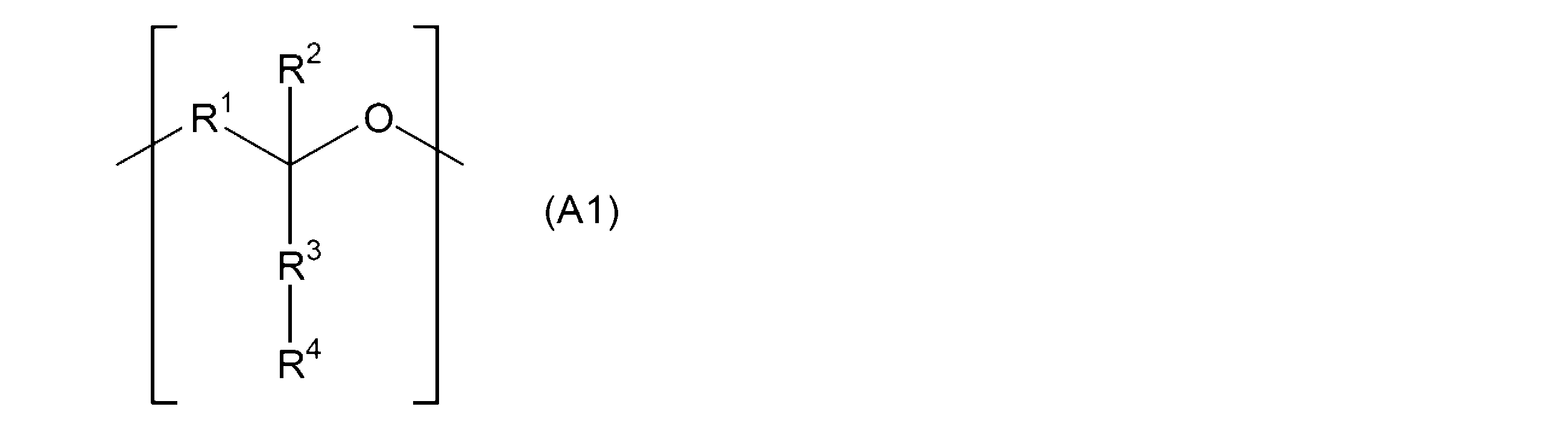
重合体(A)は、式(A1)で表される構造単位を有する。
重合体(A)は、式(A1)で表される構造単位を有する。

エチレン性不飽和二重結合を有する1価の基としては、例えば、-CR41=CH2、-R42-CR41=CH2、-R42-O-CR41=CH2、-R43-COO-CR41=CH2が挙げられる。R41は、水素原子または炭素数1~10のアルキル基であり、R42は、炭素数1~10のアルカンジイル基である。R43は、直接結合または炭素数1~10のアルカンジイル基である。
重合体(A)は、式(A2)で表される構造単位をさらに有してもよい。

なお、式(A1)中の-R1-O-および式(A1)中に含まれうる-R31O-および-R42-O-は、構造単位(A2)としてはカウントしないものとする。
式(A1)および(A2)において、炭素数1~10のアルカンジイル基としては、例えば、メチレン基、1,2-エタンジイル基、n-プロピレン基、イソプロピレン基およびイソブチレン基が挙げられる。アルカンジイル基の炭素数は、好ましくは1~5、より好ましくは1~3である。
式(A1)において、炭素数1~10のアルキル基としては、例えば、メチル、エチル、n-プロピル、イソプロピル、n-ブチル、tert-ブチル、ペンチル、ヘキシル、ヘプチル、オクチル、ノニルおよびデシルが挙げられる。アルキル基の炭素数は、好ましくは1~5、より好ましくは1~2である。
構造単位(A1)の含有量は、重合体(A)を構成する全構造単位100モル%中、通常10モル%以上、好ましくは10~100モル%、より好ましくは30~100モル%である。構造単位(A1)の含有量が前記範囲にあると、化合物(B)による架橋性に優れた重合体が得られる傾向にある。
構造単位(A2)の含有量は、重合体(A)を構成する全構造単位100モル%中、通常90モル%以下、好ましくは70モル%以下である。構造単位(A2)の含有量が前記範囲にあると、膜厚が大きく且つ耐水性に優れた樹脂膜の形成に好ましい重合体が得られる傾向にある。
重合体の構造および構造単位の含有量は、1H-NMRおよび13C-NMR分析により測定することができる。例えば、装置名「ECP-400P」(JEOL社製)を用い、重クロロホルム、重メタノールおよび重水から、最も重合体の溶解性の高い重溶媒を選択する。
構造単位(A1)は、後述するように、式(a1)で表される化合物を重合することで、重合体(A)に導入することができる。構造単位(A2)は、後述するように、式(a2)で表される化合物を共重合する、および/または式(a2')で表される化合物を開始物質として用いることで、重合体(A)に導入することができる。
重合体(A)は、1種の構造単位(A1)からなる単独重合体であってもよく、2種以上の構造単位(A1)を含む共重合体または構造単位(A1)と構造単位(A2)とを含む共重合体であってもよい。前記共重合体としては、構造単位(A11)および(A12)を、いずれも構造単位(A1)に包含され、互いに異なる構造単位であるとすると、構造単位(A11)および(A12)のランダム共重合体または構造単位(A1)および構造単位(A2)のランダム共重合体であってもよく、構造単位(A11)ブロック-構造単位(A12)ブロック、構造単位(A1)ブロック-構造単位(A2)ブロック等のジブロック体、構造単位(A1)ブロック-構造単位(A2)ブロック-構造単位(A1)ブロック等のトリブロック体などのブロック共重合体でもよい。
重合体(A)のゲルパーミエーションクロマトグラフィー法により測定される重量平均分子量(Mw)は、ポリスチレン換算で、通常1,000~100,000、好ましくは2,000~50,000、より好ましくは3,000~30,000である。また、重合体(A)の重量平均分子量(Mw)/数平均分子量(Mn)で表される分子量分布は、通常1~5、好ましくは1~3である。
Mwが上記範囲にあると、解像度が高く、膜厚の大きい樹脂膜を形成することができる。Mw/Mnが上記範囲にあると、解像性の点で好ましい。MwおよびMnの測定方法の詳細は、実施例に記載したとおりである。
重合体(A)は一実施形態において水溶性樹脂であることから、細胞組織体との接着力が弱い、細胞非接着性を有する樹脂膜を形成することができる。本発明における「水溶性樹脂」とは、25℃、1barでの水100gに対する溶解度が0.1g以上である樹脂をいう。
重合体(A)の含有量は、本発明の組成物100質量%中、通常10~60質量%、好ましくは15~55質量%、さらに好ましくは20~50質量%である。重合体(A)の含有量が前記範囲にあると、膜厚が大きく、解像度が高い樹脂膜を形成可能な組成物が得られる。また、重合体(A)の含有量が前記範囲にあっても、塗布可能な粘度を有する組成物を得ることができる。
重合体(A)は、公知の製造方法に従って製造することができる。
重合体(A)は、例えば、式(a1)で表される化合物の開環付加重合により合成することができ、前記開環付加重合において、必要に応じて式(a2)で表される化合物を共重合してもよい。

式(a2)中、R5は、炭素数2~10のアルカンジイル基である。
式(a1)で表される化合物としては、例えば、アリルグリシジルエーテル、エトキシビニルグリシジルエーテル、3,4-エポキシ-1-ブテン、3,4-エポキシ-2-メチル-1-ブテン、3,4-エポキシ-4-メチル-1-ブテンが挙げられる。
式(a2)で表される化合物としては、例えば、エチレンオキサイド(EO)、プロピレンオキサイド(PO)、ブチレンオキサイド(BO)が挙げられる。
重合体(A)の製造方法の一例としては、開始物質である活性水素含有化合物に、化合物(a1)、および必要に応じて化合物(a2)を開環付加重合させる方法が挙げられる。開環付加重合は、アニオン開環重合であることが好ましい。
開環付加重合の反応温度は、通常80~200℃であり、反応時間は、通常1~20時間である。開環付加重合は、窒素雰囲気等の不活性雰囲気下で行うことが好ましい。
上記付加重合では、活性水素含有化合物および触媒を反応容器に仕込み、反応容器において脱水処理が行われることが好ましい。脱水処理としては、例えば、加熱脱水方式、減圧脱水方式、および真空脱水方式が挙げられる。
活性水素含有化合物としては、例えば、ヒドロキシル基、アミノ基、カルボキシル基、およびアミド基等の活性水素含有基を分子中に1個以上有する化合物が挙げられる。活性水素含有化合物としては、具体的には、アルコール化合物、フェノール化合物、アミン、カルボン酸、およびアミド化合物が挙げられる。活性水素含有化合物は1種単独で用いてもよく、2種以上を併用してもよい。
アルコール化合物の具体例を示すと、例えば、1価のアルコール、2価のアルコール、および3価以上のアルコールが挙げられる。アルコール化合物としては、式(a2')で表される化合物が特に好ましい。

化合物(a2')としては、例えば、エチレングリコール、ジエチレングリコール、トリエチレングリコール、ポリエチレングリコール、プロピレングリコール、ポリプロピレングリコール、エチレングリコールモノメチルエーテル、およびトリエチレングリコールモノメチルエーテルが挙げられる。
上記付加重合は、触媒の存在下で行うことが好ましい。触媒としては、例えば、水酸化ナトリウム、水酸化カリウム、水酸化セシウム、水酸化カルシウム、水酸化バリウム、水酸化ストロンチウム等のアルカリ金属またはアルカリ土類金属の水酸化物;水素化ナトリウム、水素化カリウム等のアルカリ金属の水素化物が挙げられる。触媒は1種単独で用いてもよく、2種以上を併用してもよい。
触媒の使用量は、活性水素含有化合物100質量部に対して、好ましくは0.01~10質量部、より好ましくは0.05~5質量部である。
上記付加重合では、必要に応じて不活性溶媒を用いることができる。不活性溶媒としては、例えば、ジエチルエーテル、エチレングリコールジメチルエーテル、ジオキサン等のエーテル類;アセトン、メチルイソブチルケトン、メチルエチルケトン等のケトン類;ジメチルスルホキシド等のスルホン類;ジクロロメタン、クロロホルム等のハロゲン化炭化水素類;ベンゼン、トルエン、キシレン等の芳香族炭化水素類;ペンタン、ヘキサン、シクロペンタン、シクロヘキサン等の脂肪族炭化水素類が挙げられる。不活性溶媒は1種単独で用いてもよく、2種以上を併用してもよい。
上記付加重合では、化合物(a1)単独の付加重合でもよく、2種以上の化合物(a1)の付加重合または化合物(a1)と化合物(a2)との付加重合の場合、2種以上の化合物(a1)のランダム共重合もしくはブロック共重合、または化合物(a1)と化合物(a2)とのランダム共重合もしくはブロック共重合でもよい。
上記製造方法において、重合体(A)の単離は、必要に応じて、ろ過、洗浄、乾燥、再結晶、再沈殿、透析、遠心分離、各種溶媒による抽出、中和、クロマトグラフィー等の通常の手段を適宜組み合わせて行えばよい。
〈化合物(B)〉
化合物(B)は、メルカプト基(-SH基)を2以上有する。化合物(B)が有するメルカプト基数は、好ましくは2以上、より好ましくは3~10である。
化合物(B)は、メルカプト基(-SH基)を2以上有する。化合物(B)が有するメルカプト基数は、好ましくは2以上、より好ましくは3~10である。
本発明の組成物は、エチレン性不飽和二重結合を有する重合体(A)と、メルカプト基を2以上有する化合物(B)とを含有する。メルカプト基と前記二重結合とは、酸素の障害なく反応できる。本発明では、これらの成分の反応により、耐水性に優れた、具体的には樹脂膜が形成された基板を水中に浸漬した場合に樹脂膜の剥離が防止された、高膜厚の樹脂膜を形成することができる。
化合物(B)としては、例えば、
多価アルコールのメルカプトカルボン酸エステル(B1)、
アルカンジチオール(B2)、
芳香環含有ジチオール(B3)、および
メルカプトエーテル(B4)
が挙げられる。
多価アルコールのメルカプトカルボン酸エステル(B1)、
アルカンジチオール(B2)、
芳香環含有ジチオール(B3)、および
メルカプトエーテル(B4)
が挙げられる。
上記エステル(B1)において、多価アルコールとしては、例えば、エチレングリコール、プロピレングリコール、ブタンジオール、ヘキサンジオール、オクタンジオール、ジエチレングリコール等の2価アルコール、特に炭素数2~20の2価アルコール;トリメチロールプロパン、ペンタエリスリトール、ジペンタエリスリトール等の3~6価アルコール、特に炭素数2~20の3~6価アルコールが挙げられる。
上記エステル(B1)において、メルカプトカルボン酸としては、例えば、炭素数2~20のメルカプトカルボン酸が挙げられ、具体的には、メルカプト酢酸、メルカプトプロピオン酸、メルカプトブタン酸が挙げられる。
化合物(B1)としては、例えば、
2価アルコールのメルカプトカルボン酸エステル、具体的には、エチレングリコールビス(2-メルカプトプロピオネート)、1,2-プロピレングリコールビス(2-メルカプトプロピオネート)、ジエチレングリコールビス(2-メルカプトプロピオネート)、1,4-ブタンジオールビス(2-メルカプトプロピオネート)、および1,8-オクタンジオールビス(2-メルカプトプロピオネート)等のビスメルカプトプロピオネート、ならびに1,4-ブタンジオールビスメルカプトアセテート、およびエチレングリコールビスメルカプトアセテート等のビスメルカプトアセテート;
3~6価アルコールのメルカプトカルボン酸エステル、具体的には、トリメチロールプロパントリスメルカプトプロピオネート、ペンタエリスリトールテトラキスメルカプトプロピオネート、およびジペンタエリスリトールヘキサキスメルカプトプロピオネート等のトリス、テトラキスまたはヘキサキスメルカプトプロピオネート、ペンタエリスリトールテトラキスメルカプトブチレート等のトリス、テトラキスまたはヘキサキスメルカプトブチレート、ならびにトリメチロールプロパントリスメルカプトアセテート、ペンタエリスリトールテトラキスメルカプトアセテート等のトリス、テトラキスまたはヘキサキスメルカプトアセテート;
が挙げられる。
2価アルコールのメルカプトカルボン酸エステル、具体的には、エチレングリコールビス(2-メルカプトプロピオネート)、1,2-プロピレングリコールビス(2-メルカプトプロピオネート)、ジエチレングリコールビス(2-メルカプトプロピオネート)、1,4-ブタンジオールビス(2-メルカプトプロピオネート)、および1,8-オクタンジオールビス(2-メルカプトプロピオネート)等のビスメルカプトプロピオネート、ならびに1,4-ブタンジオールビスメルカプトアセテート、およびエチレングリコールビスメルカプトアセテート等のビスメルカプトアセテート;
3~6価アルコールのメルカプトカルボン酸エステル、具体的には、トリメチロールプロパントリスメルカプトプロピオネート、ペンタエリスリトールテトラキスメルカプトプロピオネート、およびジペンタエリスリトールヘキサキスメルカプトプロピオネート等のトリス、テトラキスまたはヘキサキスメルカプトプロピオネート、ペンタエリスリトールテトラキスメルカプトブチレート等のトリス、テトラキスまたはヘキサキスメルカプトブチレート、ならびにトリメチロールプロパントリスメルカプトアセテート、ペンタエリスリトールテトラキスメルカプトアセテート等のトリス、テトラキスまたはヘキサキスメルカプトアセテート;
が挙げられる。
アルカンジチオール(B2)としては、例えば、炭素数2~20のアルカンジチオールが挙げられ、具体的には、1,2-エタンジチオール、1,3-プロパンジチオール、1,4-ブタンジチオール、1,6-ヘキサメチレンジチオール、および1,10-デカンジチオールが挙げられる。
芳香環含有ジチオール(B3)としては、例えば、アルキル基を有してもよいベンゼンジチオールが挙げられ、具体的には、1,2-ベンゼンジチオール、1,3-ベンゼンジチオール、p-キシレンジチオール、およびm-キシレンジチオールが挙げられる。
メルカプトエーテル(B4)としては、例えば、ジ(メルカプトエチル)エーテルが挙げられる。
これらの中でも、反応速度の観点から、多価アルコールのメルカプトカルボン酸エステル(B1)が好ましく、3~6価アルコールのメルカプトカルボン酸エステルがより好ましい。
化合物(B)の分子量は、感光性樹脂組成物としての現像性の観点から、通常50~10,000、好ましくは75~3,000、特に好ましくは100~1,000である。
本発明の組成物における化合物(B)の含有量は、重合体(A)100質量部に対して、通常1~100質量部、好ましくは2~50質量部、より好ましくは5~20質量部である。化合物(B)の含有量が、前記下限値以上であれば、本発明の組成物の硬化速度、パターン化樹脂膜の硬度および耐水性がさらに良好に発揮され、前記上限値以下であれば、本発明の感光性樹脂組成物の現像性がさらに良好に発揮される。
〈光ラジカル重合開始剤(C)〉
本発明の感光性樹脂組成物は、光ラジカル重合開始剤(C)を含有する。
本発明の感光性樹脂組成物は、光ラジカル重合開始剤(C)を含有する。
光ラジカル重合開始剤(C)は、光照射により、ラジカルを発生する化合物である。開始剤(C)を含有する組成物から得られる樹脂膜に対して光照射することで、開始剤(C)に基づきラジカルが生成し、前記ラジカルが化合物(B)に含まれるメルカプト基に作用してチイルラジカルが生成し、このチイルラジカルが重合体(A)に含まれるエチレン性不飽和二重結合に付加して架橋構造が形成され、現像液に対して難溶な膜になると推定される。光照射により前記膜が現像液に対して易溶の状態から難溶の状態に変化することを利用することにより、ネガ型のパターンを形成することができる。
開始剤(C)としては、例えば、特開2008-276194号公報、特開2003-241372号公報、特表2009-519991号公報、特表2009-531730号公報、国際公開2010/001691号公報、および特開2011-132215号公報等に記載の光重合開始剤が挙げられる。
開始剤(C)としては、例えば、アルキルフェノン化合物、アシルホスフィンオキサイド化合物、ビイミダゾール化合物、トリアジン化合物、オキシムエステル化合物、ベンゾイン化合物、およびベンゾフェノン化合物が挙げられる。
アルキルフェノン化合物としては、例えば、1-ヒドロキシ-シクロヘキシル-フェニル-ケトン、2-ヒドロキシ-2-メチル-1-フェニルプロパン-1-オン、1-[4-(2-ヒドロキシエトキシ)-フェニル]-2-ヒドロキシ-2-メチル-1-プロパン-1-オン、および2-ヒロドキシ-1-{4-[4-(2-ヒドロキシ-2-メチル-プロピオニル)-ベンジル]フェニル}-2-メチル-プロパン-1-オン等のα-ヒドロキシアルキルフェノン;2-メチル-1-(4-メチルチオフェニル)-2-モルホリノプロパン-1-オン、2-ベンジル-2-ジメチルアミノ-1-(4-モルホリノフェニル)ブタン-1-オン、2-(2-メチルベンジル)-2-ジメチルアミノ-1-(4-モルホリノフェニル)ブタノン、2-(3-メチルベンジル)-2-ジメチルアミノ-1-(4-モルホリノフェニル)ブタノン、2-(4-メチルベンジル)-2-ジメチルアミノ-1-(4-モルホリノフェニル)ブタノン、2-(2-エチルベンジル)-2-ジメチルアミノ-1-(4-モルホリノフェニル)ブタノン、2-(2-プロピルベンジル)-2-ジメチルアミノ-1-(4-モルホリノフェニル)ブタノン、および2-(2-ブチルベンジル)-2-ジメチルアミノ-1-(4-モルホリノフェニル)ブタノン等のα-アミノアルキルフェノン;2,2-ジメトキシ-1,2-ジフェニルエタン-1-オン、および2,2-ジエトキシアセトフェノン等のジアルコキシアセトフェノンが挙げられる。
アシルホスフィンオキサイド化合物としては、例えば、2,4,6-トリメチルベンゾイルジフェニルホスフィンオキサイド、およびビス(2,4,6-トリメチルベンゾイル)フェニルホスフィンオキサイドが挙げられる。
ビイミダゾール化合物としては、例えば、2,2'-ビス(2,4-ジクロロフェニル)-4,5,4',5'-テトラフェニル-1,2'-ビイミダゾール、2,2'-ビス(2-クロロフェニル)-4,5,4',5'-テトラフェニル-1,2'-ビイミダゾール、2,2'-ビス(2,4-ジクロロフェニル)-4,5,4',5'-テトラフェニル-1,2'-ビイミダゾール、2,2'-ビス(2,4-ジメチルフェニル)-4,5,4',5'-テトラフェニル-1,2'-ビイミダゾール、2,2'-ビス(2-メチルフェニル)-4,5,4',5'-テトラフェニル-1,2'-ビイミダゾール、および2,2'-ジフェニル-4,5,4',5'-テトラフェニル-1,2'-ビイミダゾールが挙げられる。
トリアジン化合物としては、例えば、2,4-ビス(トリクロロメチル)-6-(4-メトキシフェニル)-1,3,5-トリアジン、2,4-ビス(トリクロロメチル)-6-(4-メトキシナフチル)-1,3,5-トリアジン、2,4-ビス(トリクロロメチル)-6-ピペロニル-1,3,5-トリアジン、2,4-ビス(トリクロロメチル)-6-(4-メトキシスチリル)-1,3,5-トリアジン、2,4-ビス(トリクロロメチル)-6-〔2-(5-メチルフラン-2-イル)エテニル〕-1,3,5-トリアジン、2,4-ビス(トリクロロメチル)-6-〔2-(フラン-2-イル)エテニル〕-1,3,5-トリアジン、2,4-ビス(トリクロロメチル)-6-〔2-(4-ジエチルアミノ-2-メチルフェニル)エテニル〕-1,3,5-トリアジン、および2,4-ビス(トリクロロメチル)-6-〔2-(3,4-ジメトキシフェニル)エテニル〕-1,3,5-トリアジンが挙げられる。
オキシムエステル化合物としては、例えば、N-ベンゾイルオキシ-1-(4-フェニルスルファニルフェニル)ブタン-1-オン-2-イミン、N-エトキシカルボニルオキシ-1-フェニルプロパン-1-オン-2-イミン、N-ベンゾイルオキシ-1-(4-フェニルスルファニルフェニル)オクタン-1-オン-2-イミン、N-アセトキシ-1-[9-エチル-6-(2-メチルベンゾイル)-9H-カルバゾール-3-イル]エタン-1-イミン、およびN-アセトキシ-1-[9-エチル-6-{2-メチル-4-(3,3-ジメチル-2,4-ジオキサシクロペンタニルメチルオキシ)ベンゾイル}-9H-カルバゾール-3-イル]エタン-1-イミンが挙げられる。
ベンゾイン化合物としては、例えば、ベンゾイン、ベンゾインメチルエーテル、ベンゾインエチルエーテル、ベンゾインイソプロピルエーテル、およびベンゾインイソブチルエーテルが挙げられる。
ベンゾフェノン化合物としては、例えば、ベンゾフェノン、o-ベンゾイル安息香酸メチル、4-フェニルベンゾフェノン、4-ベンゾイル-4'-メチルジフェニルサルファイド、3,3',4,4'-ビス(ジエチルアミノ)ベンゾフェノン、4,4'-テトラ(tert-ブチルパーオキシカルボニル)ベンゾフェノン、および2,4,6-トリメチルベンゾフェノンが挙げられる。
光ラジカル重合開始剤(C)は1種単独で用いてもよく、2種以上を併用してもよい。
本発明の感光性樹脂組成物において、開始剤(C)の含有量は、重合体(A)100質量部に対して、好ましくは0.1~10質量部、より好ましくは0.3~5質量部、さらに好ましくは0.5~5質量部である。開始剤(C)の含有量が前記下限値以上であると、露光部の硬化が充分となり、耐熱性が向上しやすい。開始剤(C)の含有量が前記上限値以下であると、露光光に対する透明性が低下することなく、解像度が高いパターン化樹脂膜が得られやすい。
〈メルカプト基を有するシランカップリング剤(D)〉
メルカプト基を有するシランカップリング剤(D)を本発明の組成物の含有成分として用いることにより、基板に対して優れた密着性を有し、耐水性により優れたパターン化樹脂膜を形成することができる。シランカップリング剤(D)も、露光時に、重合体(A)に含まれるエチレン性不飽和二重結合に付加するものと考えられる。
メルカプト基を有するシランカップリング剤(D)を本発明の組成物の含有成分として用いることにより、基板に対して優れた密着性を有し、耐水性により優れたパターン化樹脂膜を形成することができる。シランカップリング剤(D)も、露光時に、重合体(A)に含まれるエチレン性不飽和二重結合に付加するものと考えられる。
シランカップリング剤(D)は、メルカプト基を1つ有する有機ケイ素化合物であり、例えば、式(D1)で表される化合物が挙げられ、式(D2)で表される化合物が好ましい。
Si(R1)(R2)3-n(OR3)n (D1)
式(D1)中、R1は、メルカプト基を1つ有する1価の有機基であり、R2およびR3は、それぞれ同一でも異なっていてもよく、ただしメルカプト基を有さず、R2はR1とは異なる1価の有機基であり、例えばアルキル基または芳香族基であり、R3は1価の有機基であり、例えばアルキル基、アルコキシアルキル基またはアセチル基であり、nは1~3の整数である。
式(D1)中、R1は、メルカプト基を1つ有する1価の有機基であり、R2およびR3は、それぞれ同一でも異なっていてもよく、ただしメルカプト基を有さず、R2はR1とは異なる1価の有機基であり、例えばアルキル基または芳香族基であり、R3は1価の有機基であり、例えばアルキル基、アルコキシアルキル基またはアセチル基であり、nは1~3の整数である。

シランカップリング剤(D)としては、例えば、3-メルカプトプロピルトリメトキシシラン、3-メルカプトプロピルトリエトキシシラン、および3-メルカプトプロピルジメトキシメチルシランが挙げられる。
シランカップリング剤(D)は1種単独で用いてもよく、2種以上を併用してもよい。
本発明の組成物において、シランカップリング剤(D)の含有量は、重合体(A)100質量部に対して、好ましくは0.001~10質量部、より好ましくは0.01~5質量部、さらに好ましくは0.05~1質量部である。
〈溶媒(E)〉
本発明の組成物は、溶媒(E)を含有することが好ましい。溶媒(E)を用いることで、前記組成物の取扱い性を向上させたり、粘度および保存安定性を調節したりすることができる。
本発明の組成物は、溶媒(E)を含有することが好ましい。溶媒(E)を用いることで、前記組成物の取扱い性を向上させたり、粘度および保存安定性を調節したりすることができる。
溶媒(E)としては、例えば、水、または水を主体とする混合溶媒が好ましい。混合溶媒を構成する水以外の溶媒としては、水と均一に混合し得る有機溶媒、例えばメタノール、エタノール、n-ブタノール、プロピレングリコールモノメチルエーテル等のアルコール類が挙げられる。混合溶媒では、通常50質量%以上、好ましくは60質量%以上、より好ましくは70質量%以上が水である。
溶媒(E)は1種単独で用いてもよく、2種以上を併用してもよい。
本発明の組成物において、溶媒(E)を用いる場合、溶媒(E)の含有量は、当該組成物中の固形分濃度が通常10質量%を超えて70質量%以下、好ましくは15質量%を超えて60質量%以下、より好ましくは20質量%を超えて55質量%以下となる範囲である。固形分とは、通常、組成物中に含まれる溶媒(E)以外の全成分をいう。
〈その他添加剤〉
本発明の組成物には、その他、密着助剤、酸拡散制御剤、架橋微粒子、レベリング剤、界面活性剤、増感剤、無機フィラー、クエンチャー等の各種添加剤を、本発明の目的および特性を損なわない範囲で含有させることができる。
本発明の組成物には、その他、密着助剤、酸拡散制御剤、架橋微粒子、レベリング剤、界面活性剤、増感剤、無機フィラー、クエンチャー等の各種添加剤を、本発明の目的および特性を損なわない範囲で含有させることができる。
〈組成物の調製方法〉
本発明の組成物は、各成分を均一に混合することにより調製できる。また、異物を取り除くために、各成分を均一に混合した後、得られた混合物をフィルター等で濾過してもよい。
本発明の組成物は、各成分を均一に混合することにより調製できる。また、異物を取り除くために、各成分を均一に混合した後、得られた混合物をフィルター等で濾過してもよい。
〔パターン化樹脂膜およびその製造方法〕
本発明のパターン化樹脂膜の一実施形態は、式(AB)で表される構造単位を有する。前記パターン化樹脂膜は、例えば本発明の感光性樹脂組成物から形成され、前記構造単位は、例えば重合体(A)と化合物(B)とが反応することにより形成される。前記構造単位を有するパターン化樹脂膜は、耐水性に優れている。
本発明のパターン化樹脂膜の一実施形態は、式(AB)で表される構造単位を有する。前記パターン化樹脂膜は、例えば本発明の感光性樹脂組成物から形成され、前記構造単位は、例えば重合体(A)と化合物(B)とが反応することにより形成される。前記構造単位を有するパターン化樹脂膜は、耐水性に優れている。
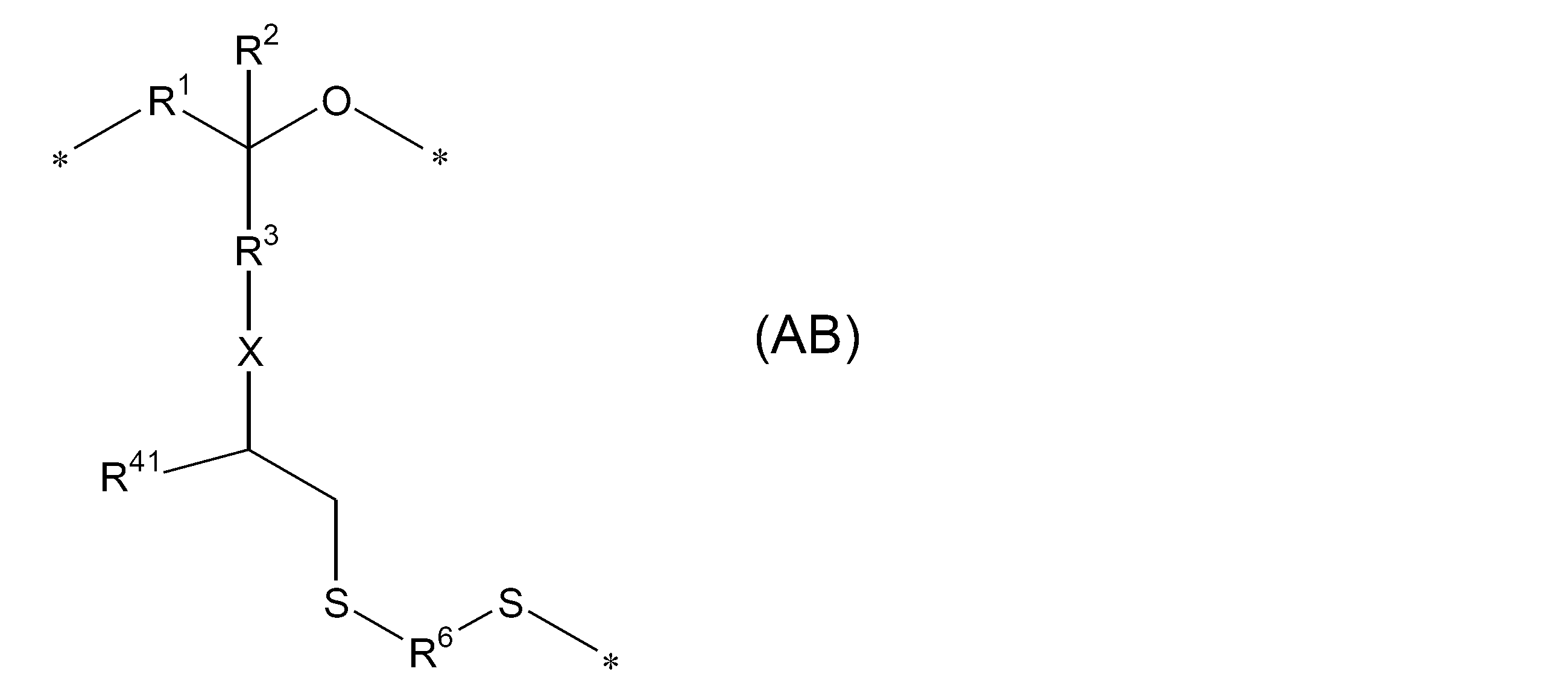
式(AB)の各記号の説明中、R1~R3、R31およびR41における各基の具体例および好適例は、前記式(A1)中の同一記号と同様である。式(AB)中、Xの2価の有機基としては、-R42-、-R42-O-、-R43-COO-が挙げられ、R42およびR43は前記式(A1)中の同一記号と同義である。
式(AB)中、R6は、化合物(B)のメルカプト基と重合体(A)のエチレン性不飽和二重結合とが反応した後の化合物(B)の残基である。
本発明のパターン化樹脂膜の一実施形態は、本発明の感光性樹脂組成物から形成される。前記組成物を用いることにより、膜厚が大きく、耐水性を有する樹脂膜を形成することができる。また、解像度の高いパターン化樹脂膜を形成することができる。
本発明のパターン化樹脂膜の製造例を以下に示す。この製造例は、基板上に、本発明の感光性樹脂組成物の樹脂膜を形成する工程1と、前記樹脂膜を選択的に露光する工程2と、露光後の前記樹脂膜を現像液で現像する工程3とを有する。この製造例は、さらに前記パターン化樹脂膜を加熱処理する工程4を有してもよい。
[工程1]
工程1では、本発明の感光性樹脂組成物を基板上に塗布・乾燥し、樹脂膜を形成する。乾燥条件は、オーブンやホットプレートを用いて、例えば、50~90℃で1~30分間加熱する。樹脂膜の膜厚は、通常1~200μm、好ましくは5~100μm、より好ましくは10~50μmである。膜厚が足りない場合は、2度塗り等により樹脂膜を形成してもよい。
工程1では、本発明の感光性樹脂組成物を基板上に塗布・乾燥し、樹脂膜を形成する。乾燥条件は、オーブンやホットプレートを用いて、例えば、50~90℃で1~30分間加熱する。樹脂膜の膜厚は、通常1~200μm、好ましくは5~100μm、より好ましくは10~50μmである。膜厚が足りない場合は、2度塗り等により樹脂膜を形成してもよい。
基板としては、例えば、ポリスチレン、ポリカーボネート、ポリアセタール、トリアセチルセルロース、ポリアミド、ポリイミド、ポリエチレン、ポリプロピレン、塩化ビニル、塩化ビニリデン、ポリフェニレンサルファイド、ポリエーテルサルフォン、ポリウレタン、ポリエチレンテレフタレート、ポリエチレンナフタレート、ポリアクリレート、ポリメタクリレートおよびセルロースから選ばれる少なくとも1種の樹脂からなる樹脂基板;ガラス、セラミック、ステンレス鋼等の材料からなる基板が挙げられる。ポリ乳酸、ポリグリコール酸、ポリカプロラクタン等の生分解性ポリマー等からなる樹脂基板であってもよい。基板としては、特開2002-335949号公報等に記載の公知の細胞培養用基板を用いることもできる。
組成物の塗布方法としては、例えば、ディッピング法、スプレー法、バーコート法、ロールコート法、スピンコート法、カーテンコート法、グラビア印刷法、シルクスクリーン法、インクジェット法が挙げられる。
[工程2]
工程2では、所望のマスクパターンを介して、例えばコンタクトアライナー、ステッパーまたはスキャナーを用いて、上記樹脂膜に対して露光を行う。露光光としては、紫外線、可視光線などが挙げられ、通常、波長200~500nmの光(例:i線(365nm))を用いる。活性光線の照射量は、感光性樹脂組成物中の各成分の種類、含有量および樹脂膜の厚さなどによって異なるが、露光光にi線を使用する場合、露光量は通常100~10,000mJ/cm2である。
工程2では、所望のマスクパターンを介して、例えばコンタクトアライナー、ステッパーまたはスキャナーを用いて、上記樹脂膜に対して露光を行う。露光光としては、紫外線、可視光線などが挙げられ、通常、波長200~500nmの光(例:i線(365nm))を用いる。活性光線の照射量は、感光性樹脂組成物中の各成分の種類、含有量および樹脂膜の厚さなどによって異なるが、露光光にi線を使用する場合、露光量は通常100~10,000mJ/cm2である。
また、架橋反応をより進めるため、露光後に加熱処理を行うことが好ましい。以下、この処理を「PEB処理」ともいう。PEB条件は、感光性樹脂組成物中の各成分の種類、含有量および樹脂膜の厚さなどによって異なるが、通常50~90℃で、1~60分間程度である。
[工程3]
工程3では、現像液により前記露光後の樹脂膜を現像して、非露光部を溶解・除去することにより、基板上に所望のパターン化樹脂膜を形成する。
工程3では、現像液により前記露光後の樹脂膜を現像して、非露光部を溶解・除去することにより、基板上に所望のパターン化樹脂膜を形成する。
現像液としては、例えば、水、または水を主体とする混合溶媒が好ましい。混合溶媒としては、溶媒(E)の欄に記載した混合溶媒が挙げられる。現像方法としては、例えば、シャワー現像法、スプレー現像法、浸漬現像法、パドル現像法が挙げられる。例えば浸漬現像法での現像条件は、樹脂膜が形成された基板を、20~40℃の現像液に1~10分間程度浸漬する条件が挙げられる。
[工程4]
必要に応じて、加熱によりパターン化樹脂膜をさらに硬化させる。加熱条件は特に限定されないが、パターン化樹脂膜の用途に応じて、例えば100~300℃の温度で30分~10時間程度加熱する。硬化を充分に進行させたり、パターン形状の変形を防止したりするため、多段階で加熱することもできる。
必要に応じて、加熱によりパターン化樹脂膜をさらに硬化させる。加熱条件は特に限定されないが、パターン化樹脂膜の用途に応じて、例えば100~300℃の温度で30分~10時間程度加熱する。硬化を充分に進行させたり、パターン形状の変形を防止したりするため、多段階で加熱することもできる。
〔細胞培養装置〕
本発明の細胞培養装置は、上述した本発明のパターン化樹脂膜を有する。前記装置は、細胞培養用基板と、この基板上に形成された、上述した本発明のパターン化樹脂膜とを有することが好ましい。
本発明の細胞培養装置は、上述した本発明のパターン化樹脂膜を有する。前記装置は、細胞培養用基板と、この基板上に形成された、上述した本発明のパターン化樹脂膜とを有することが好ましい。
以下、細胞培養装置の一態様について説明する。
本発明の細胞培養装置が有するパターン化樹脂膜は、本発明の感光性樹脂組成物から形成された樹脂膜または上記構造単位(AB)を有する樹脂膜に、細胞、およびこの細胞から形成された細胞組織体、特にスフェロイドを保持するための、1つまたは複数の孔が形成された構造を有する。パターン化樹脂膜は、孔を形成する隔壁である。
孔は、樹脂膜を貫通して形成されている。孔の底面は、細胞培養用基板の表面により構成され、孔の側面は、樹脂膜により構成されている。細胞培養用基板の表面は、細胞保持の観点から、細胞接着性を有することが好ましい。
パターン化樹脂膜は、培養後に細胞組織体を孔内から取り出す際の容易性を考慮して、細胞非接着性を有することが好ましい。本発明の感光性樹脂組成物は、一実施形態において水溶性樹脂である重合体(A)を含有することから、前記性質を有するパターン化樹脂膜を形成することができる。
孔の底面の形状は特に限定されず、例えば、円形状、楕円形状、多角形状が挙げられる。孔の底面の面積は、細胞の大きさ・種類等によって適宜決定されるが、通常1,000~400,000μm2、好ましくは5,000~200,000μm2である。
樹脂膜に孔が形成されたパターン化樹脂膜は、例えば、上述したパターン化樹脂膜の製造方法に従い形成することができる。その際、感光性樹脂組成物が塗布される基板としては、細胞培養用基板が用いられる。
孔の底面は、細胞を保持し細胞組織体を形成する点から、細胞接着性を有する表面であることが好ましい。細胞接着性の表面は、例えば、カルボキシル基、アミノ基等の電荷を有する官能基が導入された表面、アルギニン・グリシン・アスパラギン酸配列等の細胞接着性ペプチドが導入された表面、細胞接着性を有する高分子が固定された表面である。
前記電荷を有する官能基は、基板表面をプラズマ等の放射線で処理することによって導入することができる。前記細胞接着性を有する高分子としては、例えば、ポリアクリル酸、ポリビニル硫酸、ポリスチレンスルホン酸、ポリアリルアミン等の電荷を有する合成高分子、コンドロイチン硫酸、デルマタン硫酸、デキストラン硫酸、ケラタン硫酸、ヘパラン硫酸、ヒアルロン酸、キチン等の電荷を有する多糖類、コラーゲン、ゼラチン、フィブロネクチン、ハイドロネクチン、ラミニン等の細胞接着性タンパク質、細胞接着性タンパク質や細胞接着性ペプチドを固定した合成高分子が挙げられる。
例えば、細胞接着性の表面を有する細胞培養用基板を用いることができる。また、細胞培養用基板上にパターン化樹脂膜を形成した後に、露出した基板の表面(孔の底面)に、放射線処理したり、細胞接着性を有する高分子を固定化したりしてもよい。
孔の底面である基板表面は、凹凸構造を有していてもよい。このような凹凸構造を設けることで、細胞組織体の前記底面への接着性を向上させることができる。凹凸構造における凸部または凹部の平面方向の形状は、例えば、円形状、楕円形状、多角形状が挙げられる。
孔の深さは、パターン化樹脂膜の膜厚により決定され、通常1~200μm、好ましくは5~100μm、より好ましくは10~50μmである。この範囲であれば、孔内に細胞および細胞組織体を良好に保持することができる。
本発明の細胞培養装置を用いて細胞を培養する際には、パターン化樹脂膜が有する孔内において、細胞を培養し、細胞組織体、特にスフェロイドを形成する。例えば、細胞を含む培養液を孔内に入れ、孔の底面に播種された細胞が、当該底面である細胞培養用基板の表面上で3次元的に結合した細胞組織体を形成する。細胞組織体は、培養液中に浮遊することなく孔の底面に接着した状態で、隔壁により形成された孔内に安定して保持されたまま長期間にわたって培養される。
細胞としては、細胞同士の間で互いに結合を形成するものであれば、動物種や臓器・組織の種類は特に限定されない。例えば、ヒトやブタ、イヌ、ラット、マウス等の動物由来の肝臓、膵臓、腎臓、神経、皮膚等から採取される初代細胞、ES細胞(Embryonic Stem cell)、樹立されている株化細胞、またはこれらに遺伝子操作等を施した細胞が挙げられる。細胞は1種単独で用いてもよく、2種以上を併用してもよい。培養液としては、細胞の生存状態および機能を維持できるよう、必要な塩類および/または栄養成分を適切な濃度で含む水溶液を用いることができる。
以下、本発明を実施例に基づいてさらに具体的に説明するが、本発明はこれら実施例に限定されない。以下の実施例等の記載において、特に言及しない限り、「部」は「質量部」の意味で用いる。
[1]物性の測定方法
[1-1]重合体のMw、MnおよびMw/Mnの測定方法
重合体の重量平均分子量(Mw)、数平均分子量(Mn)および分子量分布(Mw/Mn)は、下記条件下で、ゲルパーミエーションクロマトグラフィー法により測定した。
・カラム:東ソー社製カラムの「TSKgel αM」および
「TSKgel α2500」を直列に接続
・溶媒:臭化リチウムおよびリン酸を添加したN-メチル-2-ピロリドン
・温度:40℃
・検出方法:屈折率法
・標準物質:ポリスチレン
・GPC装置:東ソー製、装置名「HLC-8020-GPC」
[1-1]重合体のMw、MnおよびMw/Mnの測定方法
重合体の重量平均分子量(Mw)、数平均分子量(Mn)および分子量分布(Mw/Mn)は、下記条件下で、ゲルパーミエーションクロマトグラフィー法により測定した。
・カラム:東ソー社製カラムの「TSKgel αM」および
「TSKgel α2500」を直列に接続
・溶媒:臭化リチウムおよびリン酸を添加したN-メチル-2-ピロリドン
・温度:40℃
・検出方法:屈折率法
・標準物質:ポリスチレン
・GPC装置:東ソー製、装置名「HLC-8020-GPC」
[2]重合体(A)の合成
[合成例1]重合体(A1)の合成
窒素雰囲気下の200mlフラスコ中に、ジエチレングリコールを2.5g、水酸化カリウムを0.05g加えて、85℃で50mmHgの減圧下で、1時間、攪拌しながら脱水を行った。その後、アリルグリシジルエーテルを69g加えて、105℃で8時間反応させた後、23℃まで冷却した。この反応溶液を再沈殿により精製し、重合体(A1)を得た。重合体(A1)のMnは3000、Mwは3200、Mw/Mnは1.07であった。
[合成例1]重合体(A1)の合成
窒素雰囲気下の200mlフラスコ中に、ジエチレングリコールを2.5g、水酸化カリウムを0.05g加えて、85℃で50mmHgの減圧下で、1時間、攪拌しながら脱水を行った。その後、アリルグリシジルエーテルを69g加えて、105℃で8時間反応させた後、23℃まで冷却した。この反応溶液を再沈殿により精製し、重合体(A1)を得た。重合体(A1)のMnは3000、Mwは3200、Mw/Mnは1.07であった。
[合成例2]重合体(A2)の合成
窒素雰囲気下の200mlフラスコ中に、Mnが4200のポリエチレングリコールを72g、水酸化カリウムを0.05g加えて、85℃で50mmHgの減圧下で、1時間、攪拌しながら脱水を行った。その後、アリルグリシジルエーテルを69g加えて、105℃で8時間反応させた後、23℃まで冷却した。この反応溶液を再沈殿により精製し、重合体(A2)を得た。重合体(A2)のMnは6400、Mwは6700、Mw/Mnは1.05であった。
窒素雰囲気下の200mlフラスコ中に、Mnが4200のポリエチレングリコールを72g、水酸化カリウムを0.05g加えて、85℃で50mmHgの減圧下で、1時間、攪拌しながら脱水を行った。その後、アリルグリシジルエーテルを69g加えて、105℃で8時間反応させた後、23℃まで冷却した。この反応溶液を再沈殿により精製し、重合体(A2)を得た。重合体(A2)のMnは6400、Mwは6700、Mw/Mnは1.05であった。
[3]感光性樹脂組成物の製造
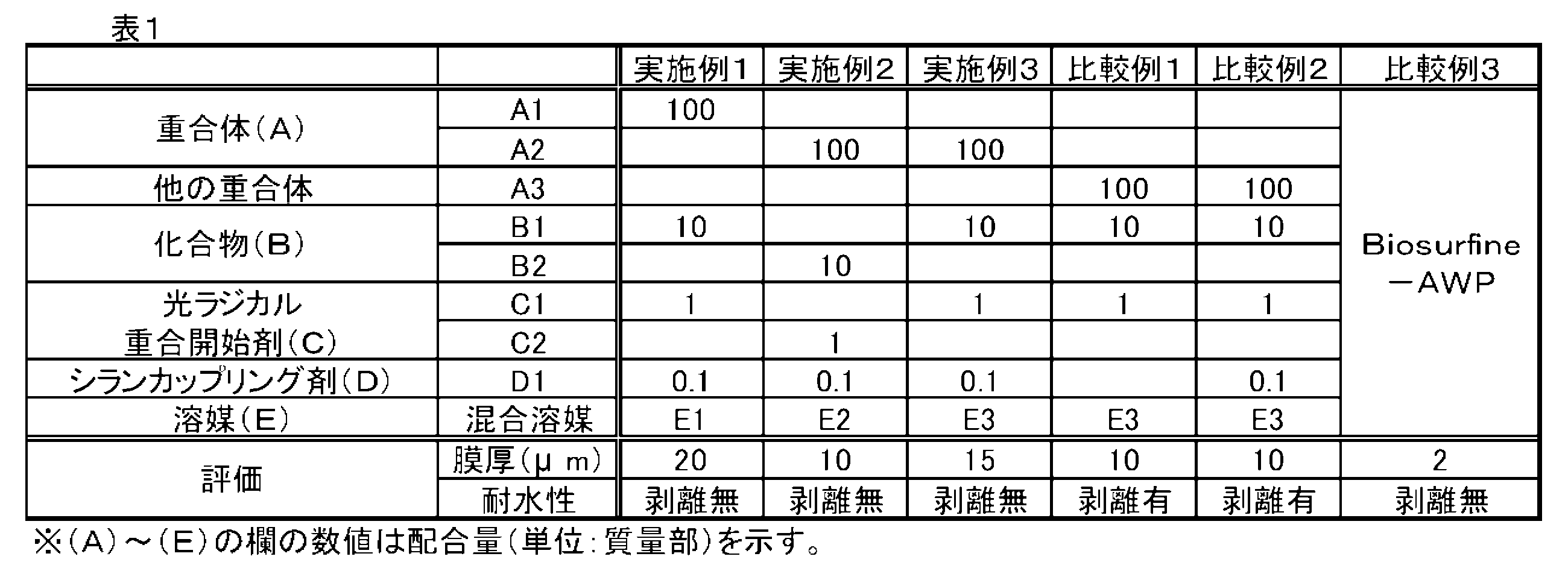
[実施例1~3および比較例1~2]
表1に示す成分を混合することで、実施例1~3および比較例1~2の感光性樹脂組成物を製造した。溶媒は、感光性樹脂組成物の23℃における粘度(JIS Z8803準拠)が500~2000cPの範囲内になる量で用いた。
[実施例1~3および比較例1~2]
表1に示す成分を混合することで、実施例1~3および比較例1~2の感光性樹脂組成物を製造した。溶媒は、感光性樹脂組成物の23℃における粘度(JIS Z8803準拠)が500~2000cPの範囲内になる量で用いた。
なお、表1に示す各種成分の詳細は以下の通りである。
A1:合成例1で製造した重合体(A1)
A2:合成例2で製造した重合体(A2)
A3:ポリエチレングリコール(商品名「Polyethylene Glycol 4000」、和光純薬工業(株)製)
B1:ペンタエリスリトールテトラキス(メルカプトアセテート)
B2:ペンタエリスリトールテトラキス(3-メルカプトブチレート)を主成分とする混合物(商品名「カレンズMT PE1」、昭和電工(株)製)
C1:2,4,6-トリメチルベンゾイルジフェニルホスフィンオキサイド(商品名「LUCIRIN TPO」、BASF(株)製)
C2:下記式で表される化合物
A2:合成例2で製造した重合体(A2)
A3:ポリエチレングリコール(商品名「Polyethylene Glycol 4000」、和光純薬工業(株)製)
B1:ペンタエリスリトールテトラキス(メルカプトアセテート)
B2:ペンタエリスリトールテトラキス(3-メルカプトブチレート)を主成分とする混合物(商品名「カレンズMT PE1」、昭和電工(株)製)
C1:2,4,6-トリメチルベンゾイルジフェニルホスフィンオキサイド(商品名「LUCIRIN TPO」、BASF(株)製)
C2:下記式で表される化合物

E1:水/メタノール=90/10(質量%)の混合溶媒
E2:水/メタノール=70/30(質量%)の混合溶媒
E3:水
[比較例3]
比較例3では、感光性樹脂組成物として、市販の感光性樹脂組成物(商品名「Biosurfine-AWP」、東洋合成工業(株)製)を用いた。
[4]評価
[4-1]パターン化樹脂膜の製造
ガラス基板上に、感光性樹脂組成物をスピンコート法にて塗布し、ホットプレートを用いて70℃で20分間加熱し、膜厚2μm、5μm、10μm、15μmおよび20μmの樹脂膜を形成した。次いで、アライナー(Suss Microtec社製、装置名「MA-100」)を用い、高圧水銀灯からの紫外線を、パターンマスクを介して、波長365nmにおける露光量が1,000mJ/cm2となるように樹脂膜に照射した。露光後の樹脂膜を、ホットプレートを用いて70℃で730秒間加熱し、水を用いて浸漬現像(23℃、1分間)し、直径400μmで高さがそれぞれ2μm、5μm、10μm、15μmおよび20μmであり、断面が矩形のホールパターンを有するパターン化樹脂膜を形成した。良好なパターン化樹脂膜を形成できる最大の高さ(膜厚)を表1に示す。
[4-1]パターン化樹脂膜の製造
ガラス基板上に、感光性樹脂組成物をスピンコート法にて塗布し、ホットプレートを用いて70℃で20分間加熱し、膜厚2μm、5μm、10μm、15μmおよび20μmの樹脂膜を形成した。次いで、アライナー(Suss Microtec社製、装置名「MA-100」)を用い、高圧水銀灯からの紫外線を、パターンマスクを介して、波長365nmにおける露光量が1,000mJ/cm2となるように樹脂膜に照射した。露光後の樹脂膜を、ホットプレートを用いて70℃で730秒間加熱し、水を用いて浸漬現像(23℃、1分間)し、直径400μmで高さがそれぞれ2μm、5μm、10μm、15μmおよび20μmであり、断面が矩形のホールパターンを有するパターン化樹脂膜を形成した。良好なパターン化樹脂膜を形成できる最大の高さ(膜厚)を表1に示す。
[4-2]パターン化樹脂膜の耐水性
前記『[4-1]パターン化樹脂膜の製造』で得られた最大の高さ(膜厚)を有するパターン化樹脂を有するガラス基板を、純水中に23℃で1週間浸漬した。浸漬後のパターン化樹脂膜の剥離の有無により、耐水性を評価した。
前記『[4-1]パターン化樹脂膜の製造』で得られた最大の高さ(膜厚)を有するパターン化樹脂を有するガラス基板を、純水中に23℃で1週間浸漬した。浸漬後のパターン化樹脂膜の剥離の有無により、耐水性を評価した。
Claims (11)
- 細胞培養用基板と、前記基板上に形成されたパターン化樹脂膜とを有する細胞培養装置であり、前記パターン化樹脂膜が、式(AB)で表される構造単位を有する細胞培養装置。

R1は、炭素数1~10のアルカンジイル基であり、
R2は、水素原子または炭素数1~10のアルキル基であり、
R3は、直接結合、炭素数1~10のアルカンジイル基、または-R31O-で表される2価の基であり、ここでR31は、炭素数1~10のアルカンジイル基であり、
Xは、直接結合、または2価の有機基であり、
R41は、水素原子または炭素数1~10のアルキル基であり、
R6は、2価の有機基であり、
*は結合手である。] - 前記パターン化樹脂膜が、孔を形成する隔壁である請求項1に記載の細胞培養装置。
- 式(A1)で表される構造単位を有する重合体(A)と、
メルカプト基を2以上有する化合物(B)と、
光ラジカル重合開始剤(C)と
を含有する感光性樹脂組成物。
R1は、炭素数1~10のアルカンジイル基であり、
R2は、水素原子または炭素数1~10のアルキル基であり、
R3は、直接結合、炭素数1~10のアルカンジイル基、または-R31O-で表される2価の基であり、ここでR31は、炭素数1~10のアルカンジイル基であり、
R4は、エチレン性不飽和二重結合を有する1価の基である。] - 重合体(A)が、式(A2)で表される構造単位をさらに有する、請求項3に記載の感光性樹脂組成物。

- メルカプト基を有するシランカップリング剤(D)
をさらに含有する、請求項3または4に記載の感光性樹脂組成物。 - 式(A1)で表される構造単位を有する重合体(A)と、
メルカプト基を2以上有する化合物(B)と
を含有する樹脂組成物。

R1は、炭素数1~10のアルカンジイル基であり、
R2は、水素原子または炭素数1~10のアルキル基であり、
R3は、直接結合、炭素数1~10のアルカンジイル基、または-R31O-で表される2価の基であり、ここでR31は、炭素数1~10のアルカンジイル基であり、
R4は、エチレン性不飽和二重結合を有する1価の基である。] - 基板上に、請求項3~5のいずれか1項に記載の感光性樹脂組成物の樹脂膜を形成する工程1、前記樹脂膜を選択的に露光する工程2、および露光後の前記樹脂膜を現像液で現像する工程3を有する、パターン化樹脂膜の製造方法。
- 前記基板が、細胞培養用基板である請求項7に記載のパターン化樹脂膜の製造方法。
- 請求項7または8に記載の製造方法によって得られたパターン化樹脂膜。
- 式(AB)で表される構造単位を有するパターン化樹脂膜。

R1は、炭素数1~10のアルカンジイル基であり、
R2は、水素原子または炭素数1~10のアルキル基であり、
R3は、直接結合、炭素数1~10のアルカンジイル基、または-R31O-で表される2価の基であり、ここでR31は、炭素数1~10のアルカンジイル基であり、
Xは、直接結合、または2価の有機基であり、
R41は、水素原子または炭素数1~10のアルキル基であり、
R6は、2価の有機基であり、
*は結合手である。] - 請求項9に記載のパターン化樹脂膜を有する細胞培養装置。
Applications Claiming Priority (2)
| Application Number | Priority Date | Filing Date | Title |
|---|---|---|---|
| JP2015-024173 | 2015-02-10 | ||
| JP2015024173 | 2015-02-10 |
Publications (1)
| Publication Number | Publication Date |
|---|---|
| WO2016129195A1 true WO2016129195A1 (ja) | 2016-08-18 |
Family
ID=56615250
Family Applications (1)
| Application Number | Title | Priority Date | Filing Date |
|---|---|---|---|
| PCT/JP2015/086457 Ceased WO2016129195A1 (ja) | 2015-02-10 | 2015-12-28 | 感光性樹脂組成物および樹脂組成物、パターン化樹脂膜およびその製造方法、ならびに細胞培養装置 |
Country Status (1)
| Country | Link |
|---|---|
| WO (1) | WO2016129195A1 (ja) |
Citations (8)
| Publication number | Priority date | Publication date | Assignee | Title |
|---|---|---|---|---|
| JP2002287339A (ja) * | 2000-12-05 | 2002-10-03 | Kansai Research Institute | 活性成分及びそれを用いた感光性樹脂組成物 |
| JP2004321040A (ja) * | 2003-04-23 | 2004-11-18 | Jsr Corp | 細胞培養床チップおよびその製造方法並びに細胞培養方法 |
| WO2006030631A1 (ja) * | 2004-09-17 | 2006-03-23 | Toppan Printing Co., Ltd. | 着色アルカリ現像性感光性樹脂組成物及び該着色アルカリ現像性感光性樹脂組成物を用いたカラーフィルタ |
| JP2006084985A (ja) * | 2004-09-17 | 2006-03-30 | Asahi Denka Kogyo Kk | アルカリ現像性樹脂組成物 |
| JP2009133966A (ja) * | 2007-11-29 | 2009-06-18 | Sanyo Chem Ind Ltd | 感光性樹脂組成物 |
| JP2010262135A (ja) * | 2009-05-07 | 2010-11-18 | Hitachi Chem Co Ltd | 感光性樹脂組成物、それを用いたカラーフィルタ及びカラー表示装置 |
| JP2014085635A (ja) * | 2012-10-26 | 2014-05-12 | Tokyo Ohka Kogyo Co Ltd | ポジ型感光性樹脂組成物、ポリイミド樹脂パターンの形成方法、及びパターン化されたポリイミド樹脂膜 |
| JP2014164143A (ja) * | 2013-02-26 | 2014-09-08 | Ricoh Co Ltd | クリーニングブレード、画像形成装置、及びプロセスカートリッジ |
-
2015
- 2015-12-28 WO PCT/JP2015/086457 patent/WO2016129195A1/ja not_active Ceased
Patent Citations (8)
| Publication number | Priority date | Publication date | Assignee | Title |
|---|---|---|---|---|
| JP2002287339A (ja) * | 2000-12-05 | 2002-10-03 | Kansai Research Institute | 活性成分及びそれを用いた感光性樹脂組成物 |
| JP2004321040A (ja) * | 2003-04-23 | 2004-11-18 | Jsr Corp | 細胞培養床チップおよびその製造方法並びに細胞培養方法 |
| WO2006030631A1 (ja) * | 2004-09-17 | 2006-03-23 | Toppan Printing Co., Ltd. | 着色アルカリ現像性感光性樹脂組成物及び該着色アルカリ現像性感光性樹脂組成物を用いたカラーフィルタ |
| JP2006084985A (ja) * | 2004-09-17 | 2006-03-30 | Asahi Denka Kogyo Kk | アルカリ現像性樹脂組成物 |
| JP2009133966A (ja) * | 2007-11-29 | 2009-06-18 | Sanyo Chem Ind Ltd | 感光性樹脂組成物 |
| JP2010262135A (ja) * | 2009-05-07 | 2010-11-18 | Hitachi Chem Co Ltd | 感光性樹脂組成物、それを用いたカラーフィルタ及びカラー表示装置 |
| JP2014085635A (ja) * | 2012-10-26 | 2014-05-12 | Tokyo Ohka Kogyo Co Ltd | ポジ型感光性樹脂組成物、ポリイミド樹脂パターンの形成方法、及びパターン化されたポリイミド樹脂膜 |
| JP2014164143A (ja) * | 2013-02-26 | 2014-09-08 | Ricoh Co Ltd | クリーニングブレード、画像形成装置、及びプロセスカートリッジ |
Similar Documents
| Publication | Publication Date | Title |
|---|---|---|
| TWI507429B (zh) | 聚合物鍵合之雙醯基膦氧化物 | |
| TWI579309B (zh) | 用於導向自組裝之中性層聚合物組合物及其方法 | |
| JP5720103B2 (ja) | シリコーンハイドロゲル、眼用レンズおよびコンタクトレンズ | |
| JP2014531615A (ja) | ブロックコポリマー及び該ブロックコポリマーを用いたリソグラフィーパターニング | |
| KR20120035134A (ko) | 하부층 조성물 및 하부층의 이미지화 방법 | |
| Schuler et al. | On the Generation of Polyether‐Based Coatings through Photoinduced C, H Insertion Crosslinking | |
| TW200815498A (en) | Crosslinkable prepolymer, process for production thereof, and use thereof | |
| TW201837609A (zh) | 感光性矽氧烷樹脂組成物、硬化膜及觸控面板用構件 | |
| KR101923182B1 (ko) | 고불소계 용제로 가공이 가능한 고불소화 포지티프형 전자선 레지스트 | |
| WO2014054606A1 (ja) | 微細レジストパターン形成用組成物およびそれを用いたパターン形成方法 | |
| JP2018009086A (ja) | 重合体、感光性樹脂組成物および細胞培養基板の製造方法 | |
| JP7192779B2 (ja) | 共重合体およびポジ型レジスト組成物 | |
| JP6544035B2 (ja) | 感光性樹脂組成物およびその用途 | |
| JP6725016B2 (ja) | 重合体 | |
| JPWO2016068261A1 (ja) | 自己組織化用高分子材料、自己組織化膜、自己組織化膜の製造方法及び凹凸パターン | |
| JP2019034990A (ja) | 多孔質体の表面処理ポリマー | |
| KR20260057205A (ko) | 공중합체, 감광성 수지조성물, 패턴형성용 재료, 경화물 및 화상표시장치 | |
| JP6070106B2 (ja) | 生体材料パターニング用樹脂基材およびその製造方法ならびに生体材料パターニング材およびその製造方法 | |
| JP5411919B2 (ja) | ポリオルガノシロキサン組成物 | |
| JP6217857B2 (ja) | 新規な重合体およびその用途 | |
| JP2018004939A (ja) | 感光性樹脂組成物、細胞培養基板およびその製造方法、ならびに細胞培養基材用処理剤 | |
| JP2010168509A (ja) | ポリオルガノシロキサングラフト重合体および光重合性樹脂組成物 | |
| Kim et al. | Simple patterning of cells on a biocompatible nonchemically amplified resist | |
| TW202039608A (zh) | 光硬化性聚矽氧樹脂組成物及由其硬化成的聚矽氧樹脂成形體以及該成形體的製造方法 | |
| JP5580917B2 (ja) | ポリオルガノシロキサングラフト重合体および光重合性樹脂組成物 |
Legal Events
| Date | Code | Title | Description |
|---|---|---|---|
| 121 | Ep: the epo has been informed by wipo that ep was designated in this application |
Ref document number: 15882068 Country of ref document: EP Kind code of ref document: A1 |
|
| NENP | Non-entry into the national phase |
Ref country code: DE |
|
| NENP | Non-entry into the national phase |
Ref country code: JP |
|
| 122 | Ep: pct application non-entry in european phase |
Ref document number: 15882068 Country of ref document: EP Kind code of ref document: A1 |