WO2016117175A1 - ジルコニウム抽出剤及びジルコニウム抽出方法 - Google Patents
ジルコニウム抽出剤及びジルコニウム抽出方法 Download PDFInfo
- Publication number
- WO2016117175A1 WO2016117175A1 PCT/JP2015/077355 JP2015077355W WO2016117175A1 WO 2016117175 A1 WO2016117175 A1 WO 2016117175A1 JP 2015077355 W JP2015077355 W JP 2015077355W WO 2016117175 A1 WO2016117175 A1 WO 2016117175A1
- Authority
- WO
- WIPO (PCT)
- Prior art keywords
- zirconium
- extractant
- acidic solution
- scandium
- extraction
- Prior art date
- Legal status (The legal status is an assumption and is not a legal conclusion. Google has not performed a legal analysis and makes no representation as to the accuracy of the status listed.)
- Ceased
Links
- 0 *C(C(O)=O)N(*)CC(N(*)*)=O Chemical compound *C(C(O)=O)N(*)CC(N(*)*)=O 0.000 description 2
Images
Classifications
-
- C—CHEMISTRY; METALLURGY
- C22—METALLURGY; FERROUS OR NON-FERROUS ALLOYS; TREATMENT OF ALLOYS OR NON-FERROUS METALS
- C22B—PRODUCTION AND REFINING OF METALS; PRETREATMENT OF RAW MATERIALS
- C22B34/00—Obtaining refractory metals
- C22B34/10—Obtaining titanium, zirconium or hafnium
- C22B34/14—Obtaining zirconium or hafnium
-
- C—CHEMISTRY; METALLURGY
- C07—ORGANIC CHEMISTRY
- C07C—ACYCLIC OR CARBOCYCLIC COMPOUNDS
- C07C237/00—Carboxylic acid amides, the carbon skeleton of the acid part being further substituted by amino groups
- C07C237/02—Carboxylic acid amides, the carbon skeleton of the acid part being further substituted by amino groups having the carbon atoms of the carboxamide groups bound to acyclic carbon atoms of the carbon skeleton
- C07C237/04—Carboxylic acid amides, the carbon skeleton of the acid part being further substituted by amino groups having the carbon atoms of the carboxamide groups bound to acyclic carbon atoms of the carbon skeleton the carbon skeleton being acyclic and saturated
- C07C237/06—Carboxylic acid amides, the carbon skeleton of the acid part being further substituted by amino groups having the carbon atoms of the carboxamide groups bound to acyclic carbon atoms of the carbon skeleton the carbon skeleton being acyclic and saturated having the nitrogen atoms of the carboxamide groups bound to hydrogen atoms or to acyclic carbon atoms
-
- C—CHEMISTRY; METALLURGY
- C22—METALLURGY; FERROUS OR NON-FERROUS ALLOYS; TREATMENT OF ALLOYS OR NON-FERROUS METALS
- C22B—PRODUCTION AND REFINING OF METALS; PRETREATMENT OF RAW MATERIALS
- C22B3/00—Extraction of metal compounds from ores or concentrates by wet processes
- C22B3/20—Treatment or purification of solutions, e.g. obtained by leaching
- C22B3/26—Treatment or purification of solutions, e.g. obtained by leaching by liquid-liquid extraction using organic compounds
-
- C—CHEMISTRY; METALLURGY
- C22—METALLURGY; FERROUS OR NON-FERROUS ALLOYS; TREATMENT OF ALLOYS OR NON-FERROUS METALS
- C22B—PRODUCTION AND REFINING OF METALS; PRETREATMENT OF RAW MATERIALS
- C22B3/00—Extraction of metal compounds from ores or concentrates by wet processes
- C22B3/20—Treatment or purification of solutions, e.g. obtained by leaching
- C22B3/26—Treatment or purification of solutions, e.g. obtained by leaching by liquid-liquid extraction using organic compounds
- C22B3/32—Carboxylic acids
-
- B—PERFORMING OPERATIONS; TRANSPORTING
- B01—PHYSICAL OR CHEMICAL PROCESSES OR APPARATUS IN GENERAL
- B01D—SEPARATION
- B01D11/00—Solvent extraction
- B01D11/04—Solvent extraction of solutions which are liquid
- B01D11/0492—Applications, solvents used
-
- Y—GENERAL TAGGING OF NEW TECHNOLOGICAL DEVELOPMENTS; GENERAL TAGGING OF CROSS-SECTIONAL TECHNOLOGIES SPANNING OVER SEVERAL SECTIONS OF THE IPC; TECHNICAL SUBJECTS COVERED BY FORMER USPC CROSS-REFERENCE ART COLLECTIONS [XRACs] AND DIGESTS
- Y02—TECHNOLOGIES OR APPLICATIONS FOR MITIGATION OR ADAPTATION AGAINST CLIMATE CHANGE
- Y02P—CLIMATE CHANGE MITIGATION TECHNOLOGIES IN THE PRODUCTION OR PROCESSING OF GOODS
- Y02P10/00—Technologies related to metal processing
- Y02P10/20—Recycling
Definitions
- the present invention relates to a zirconium extractant and a zirconium extraction method.
- Zirconium is a valuable metal that is used as a coating material for nuclear reactor fuel rods as an alloy, as well as for white pigments and piezoelectric elements as zirconium oxide.
- scandium having the smallest atomic number among rare earth elements has applications such as a material for metal halide lamps, an additive element for alloys, and an additive element for catalytic ceramics in recent years.
- ScSZ Sc 2 O 3 -doped ZrO 2 / scandia stabilized zirconia
- ScSZ of the above-mentioned used SOFC electrolyte is dissolved by adding a strong acid, impurities are separated by means such as neutralization precipitation, and scandium and zirconium are further separated by means such as solvent extraction. Can be considered.
- Patent Document 1 discloses a method for separating iron and / or zirconium from actinides and / or lanthanides present in an aqueous acid solution by propanediamide. This method utilizes a 5-substituted propanediamide having the structure of the following chemical formula. (In the formula, R 1 , R 2 and R 3 may be the same or different and are alkyl groups which can have 1 or 2 oxygen atoms in the chain.)
- Patent Document 1 does not describe the behavior of scandium slightly different in chemical properties, although it is the same group 3 as lanthanoids, and there is no knowledge of separating zirconium and scandium.
- Patent Document 2 there is provided a technique for separating the Sc 3+ from an aqueous solution containing a metal ion other than Sc 3+ and Sc 3+ using reagents versatile, Specifically, a step of adding an organic solvent and a first chelating agent for complexing Sc 3+ in an organic solvent to an aqueous solution containing Sc 3+ and a metal ion other than Sc 3+ ; It is disclosed to perform a step of mixing a solvent to form a mixed solution, complexing Sc 3+ and the first chelating agent, and a step of separating the mixed solution into an organic phase and an aqueous phase. ing.
- Patent Document 2 when the method described in Patent Document 2 is used, as shown in the text of Patent Document 2 and FIGS. 1 to 7, rather than extracting zirconium, rather than extracting scandium, or extracting behavior of iron or aluminum However, there is a problem that it is difficult to obtain a high-purity zirconium.
- the present invention provides an extractant capable of extracting zirconium from an acidic solution obtained by acid leaching of a material containing zirconium and scandium, such as an SOFC electrode material, and a method for extracting zirconium using the extractant.
- the purpose is to do.
- the present inventors provide a zirconium extractant comprising an amide derivative represented by the following general formula (I), thereby containing scandium and a large amount of impurities. As a result, it was found that zirconium can be recovered from the solution, and the present invention has been completed.
- the present invention provides the following.
- the present invention is a zirconium extractant comprising an amide derivative represented by the following general formula (I).
- R 1 and R 2 each represent the same or different alkyl group.
- the alkyl group may be linear or branched.
- R 3 represents a hydrogen atom or an alkyl group.
- R 4 represents a hydrogen atom, Or, any group other than an amino group bonded to the ⁇ -carbon as an amino acid is shown.
- the alkyl group of R 1 and R 2 in the above formula is a branched chain, and the carbon number of the alkyl group of R 1 and R 2 is 5 or more and 11 or less.
- the amide derivative is any one or more of a glycinamide derivative, a histidine amide derivative, a lysine amide derivative, an aspartic acid amide derivative and a normal-methylglycine derivative.
- this invention attaches
- the acidic solution further contains one or more selected from scandium, titanium, lanthanum, and yttrium, and the acidic solution is adjusted while adjusting the pH of the acidic solution to 0.8 or less.
- this invention mixes the acidic solution whose pH is 0 or more and 0.5 or less with respect to the said extractant which extracted the said zirconium from the said acidic solution after attaching
- this invention adjusts the pH of the said acidic solution to 1.0 after the said back extraction, One or more components selected from a zirconium or a zirconium, and a scandium, and titanium, a lanthanum, and a yttrium, Then, an acidic solution whose pH is adjusted to 0.2 or less is mixed with the extractant to separate zirconium and scandium, and the zirconium extraction method according to (6).
- the present invention is the zirconium extraction method according to any one of (4) to (7), wherein the acidic solution is obtained by acid-dissolving an electrode material of a solid electrolyte fuel cell. .
- zirconium can be recovered at a time from an acidic solution containing scandium and various impurities.
- the process of extracting zirconium from the acidic solution is performed only once, and the volume of the extract can be greatly reduced. Therefore, compact equipment is sufficient, and zirconium can be extracted from the acidic solution containing zirconium early and with high efficiency. .
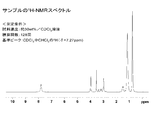
- FIG. 1 is a diagram showing a 1 H-NMR spectrum of a glycinamide derivative synthesized in Example 1.
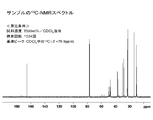
- FIG. 1 is a diagram showing a 13 C-NMR spectrum of a glycinamide derivative synthesized in Example 1.
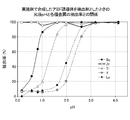
- FIG. It is a figure which shows the relationship between the original solution pH when using the amide derivative synthesize
- the zirconium extractant of the present invention comprises an amide derivative represented by the following general formula (I).
- R 1 and R 2 each represent the same or different alkyl group.
- the alkyl group may be linear or branched, but the alkyl group is preferably branched because of its excellent solubility in organic solvents.
- it is more preferable that the alkyl group is a branched chain, and the lengths of R 1 and R 2 are different from each other because it is more excellent in solubility in an organic solvent.
- the carbon number of the alkyl group is not particularly limited, but is preferably 5 or more and 11 or less, more preferably 7 or more and 9 or less.
- the zirconium extractant becomes water-soluble, and leakage (distribution) of the extractant into water may be a problem, which is not preferable.
- the surface active ability of an extractant goes up and an emulsion can be formed, and since a 3rd layer can be formed in addition to an aqueous layer and an organic phase, it is not preferable.
- R 3 represents a hydrogen atom or an alkyl group.
- R 4 represents a hydrogen atom or an arbitrary group other than an amino group bonded to the ⁇ -carbon as an amino acid.
- the lipophilicity can be enhanced and used as an extractant.
- the amide derivative is preferably at least one of a glycinamide derivative, a histidine amide derivative, a lysine amide derivative, an aspartic acid amide derivative and a normal-methylglycine derivative.
- the above glycinamide derivative can be synthesized by the following method.
- 2-halogenated acetyl halide is added to an alkylamine having a structure represented by NHR 1 R 2 (R 1 and R 2 are the same as the above substituents R 1 and R 2 ), and an amine is obtained by nucleophilic substitution reaction. Is substituted with 2-halogenated acetyl to give 2-halogenated (N, N-di) alkylacetamide.
- Replacing glycine with histidine, lysine, and aspartic acid can synthesize histidine amide derivatives, lysine amide derivatives, and aspartic acid amide derivatives. From the constant, it is considered to be within the range of the results using the glycine derivative and the histidine amide derivative.
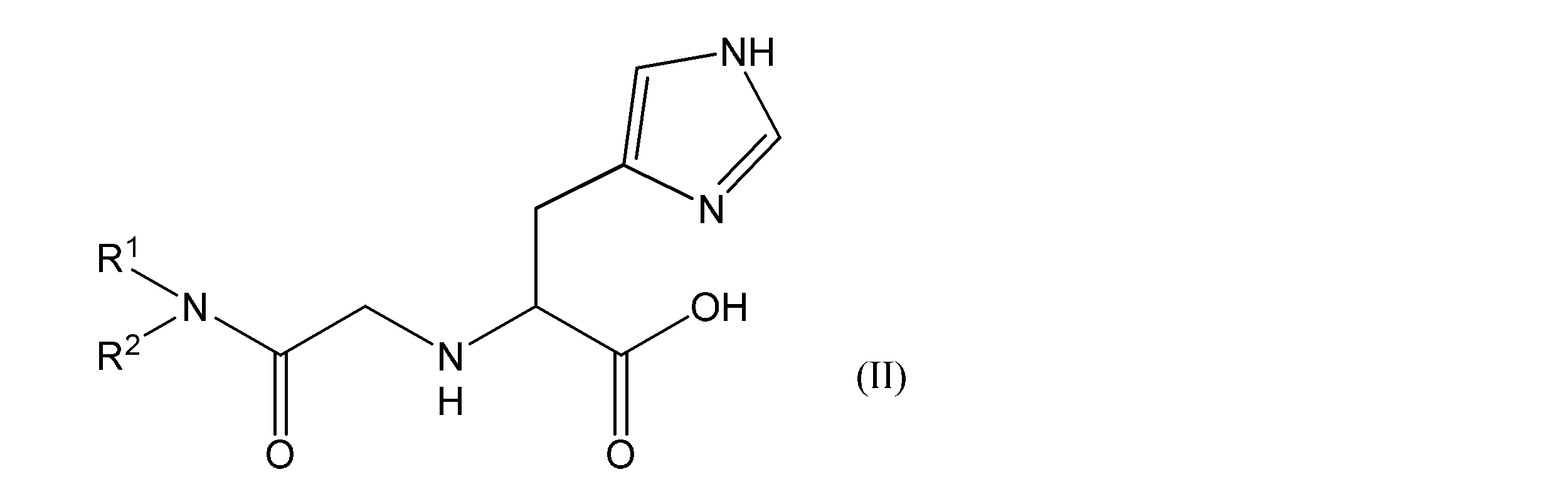
- the histidine amide derivative is represented by the following general formula (II).
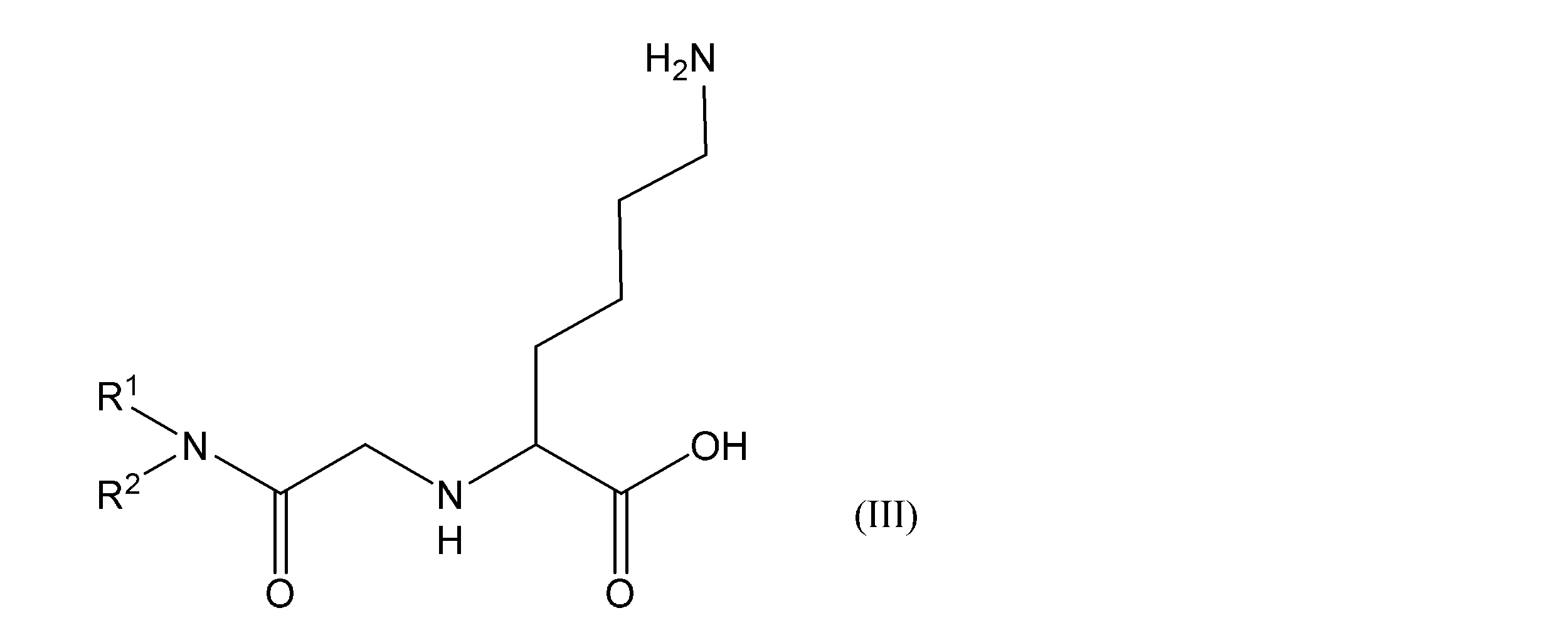
- the lysine amide derivative is represented by the following general formula (III).
- the aspartic acid amide derivative is represented by the following general formula (IV).
- the zirconium extractant of the present invention is excellent in extraction ability from a strongly acidic solution. Therefore, zirconium can be extracted in a low pH region where scandium, titanium, lanthanum, yttrium, etc. cannot be extracted. A solution obtained by acid-dissolving a raw material containing zirconium and scandium can be subjected to extraction as it is.
- the organic solvent may be any solvent as long as the extractant and the metal extraction species are dissolved, for example, a chlorinated solvent such as chloroform and dichloromethane, an aromatic hydrocarbon such as benzene, toluene, and xylene, Examples thereof include aliphatic hydrocarbons such as hexane. These organic solvents may be used alone or in combination, and alcohols such as 1-octanol may be mixed.
- a chlorinated solvent such as chloroform and dichloromethane
- an aromatic hydrocarbon such as benzene, toluene, and xylene
- aliphatic hydrocarbons such as hexane.
- the concentration of the extractant can be appropriately set depending on the concentration of zirconium or scandium.
- the stirring time and the extraction temperature vary depending on the concentration of zirconium and scandium as well as the amount of extractant to be added, as well as the time to reach equilibrium. You only have to set it.
- This extractant can extract zirconium even in a strongly acidic region where other metal components having a pH of about 0.2 cannot be extracted. For this reason, an organic solvent after extracting a plurality of types of ions such as zirconium ions is separated, and a back extraction starting solution (for example, an acid solution having a pH of about 0.2) adjusted to have a pH lower than that of the acidic aqueous solution. Is added and stirred to leave zirconium ions in the organic solvent, back-extract scandium other than zirconium, titanium, yttrium, lanthanum, etc. into the acid solution, and further back-extract the zirconium ions from the organic solvent.
- a back extraction starting solution for example, an acid solution having a pH of about 0.2
- zirconium ions can be recovered in the aqueous solution.
- the back extraction solution for example, an aqueous solution in which nitric acid, hydrochloric acid, or sulfuric acid is diluted is preferably used. Further, zirconium ions can be concentrated by appropriately changing the ratio between the organic phase and the aqueous phase.
- zirconium and scandium having a pH of about 0.8 to 1.5, preferably about 1.0 are extracted, and yttrium, lanthanum, and the like are separated by contacting with an acid adjusted to a pH range in which yttrium and lanthanum are not extracted. It is also possible to increase the ratio of zirconium and scandium and then concentrate the scandium to separate it from zirconium.
- zirconium can be separated from the extractant and recovered, for example, by decomposing the extractant extracted to the full capacity of the extract by a method such as incineration.
- D2EHAG a glycinamide derivative represented by the following general formula (I), that is, N- [N, N-bis (2-ethylhexyl) aminocarbonyl into which two 2-ethylhexyl groups are introduced Methyl] glycine (N- [N,
- D2EHAG was synthesized as follows. First, as shown in the following reaction formula (II), 23.1 g (0.1 mol) of commercially available di (2-ethylhexyl) amine and 10.1 g (0.1 mol) of triethylamine were separated into chloroform. Then, 13.5 g (0.12 mol) of 2-chloroacetyl chloride was added dropwise, then washed once with 1 mol / l hydrochloric acid, then with ion-exchanged water, and the chloroform phase was separated. did.
- reaction formula (II) 23.1 g (0.1 mol) of commercially available di (2-ethylhexyl) amine and 10.1 g (0.1 mol) of triethylamine were separated into chloroform. Then, 13.5 g (0.12 mol) of 2-chloroacetyl chloride was added dropwise, then washed once with 1 mol / l hydrochloric acid, then
- reaction formula (III) methanol is added to and dissolved in 8.0 g (0.2 mol) of sodium hydroxide, and the solution in which 15.01 g (0.2 mol) of glycine is further added is stirred. Then, 12.72 g (0.04 mol) of the above CDEHAA was slowly added dropwise and stirred. After completion of the stirring, the solvent in the reaction solution was distilled off, and chloroform was added to the residue to dissolve it. The solution was acidified by adding 1 mol / l sulfuric acid, washed with ion-exchanged water, and the chloroform phase was separated.
- Zirconium was extracted using the extractant according to the example (D2EHAG).
- Zirconium, scandium, titanium, yttrium, and lanthanum each contain 1 ⁇ 10 ⁇ 4 mol / l, and several types of acidic hydrochloric acid solutions with pH adjusted to 0.2 to 4.1 are used as a base solution, and the same volume of 0.01 mol
- a normal dodecane solution containing / l of zirconium extractant was added to a test tube, placed in a thermostatic chamber at 25 ° C., and shaken for 24 hours. At this time, the pH of the hydrochloric acid solution was adjusted using hydrochloric acid having a concentration of 0.1 mol / l or a sodium hydroxide solution having a concentration of 1 mol / l.
- the aqueous phase was separated, and the zirconium concentration, scandium concentration, titanium concentration, yttrium concentration, and lanthanum concentration were measured using an induction plasma emission spectroscopic analyzer (ICP-AES).
- ICP-AES induction plasma emission spectroscopic analyzer
- the organic phase was back extracted with 1 mol / l hydrochloric acid.
- the zirconium concentration, scandium concentration, titanium concentration, yttrium concentration, and lanthanum concentration in the back extraction phase were measured using ICP-AES. From these measurement results, the extraction rates of zirconium, scandium, titanium, lanthanum, and yttrium were each defined by (1-concentration after extraction / concentration before extraction) ⁇ 100.
- the results are shown in FIG.
- the horizontal axis in FIG. 3 is the pH after extraction of the hydrochloric acid acidic solution, and the vertical axis is the extraction rate (unit:%) of zirconium, scandium, titanium, yt
- the extraction rate of zirconium is almost 100% even in a strongly acidic region having a pH of about 0.2.
- only about 10% of scandium is extracted around pH 0.2, but 80% or more is extracted when pH is 1.0.
- titanium, yttrium, and lanthanum are extracted only about 10 to 20% at a pH of about 1.0, and are not extracted unless the pH is in the region of 1.5 or higher.
- zirconium can be separated and recovered from scandium, titanium, yttrium, and lanthanum by pH adjustment.
Landscapes
- Chemical & Material Sciences (AREA)
- Organic Chemistry (AREA)
- Engineering & Computer Science (AREA)
- Mechanical Engineering (AREA)
- Manufacturing & Machinery (AREA)
- Materials Engineering (AREA)
- Metallurgy (AREA)
- Geology (AREA)
- Geochemistry & Mineralogy (AREA)
- General Life Sciences & Earth Sciences (AREA)
- Life Sciences & Earth Sciences (AREA)
- Environmental & Geological Engineering (AREA)
- Manufacture And Refinement Of Metals (AREA)
- Fuel Cell (AREA)
- Inert Electrodes (AREA)
Abstract
SOFC電極材等、ジルコニウム及びスカンジウムを含有する材料を酸浸出して得た酸性溶液からジルコニウムを早期かつ高効率に抽出できる抽出剤、及びこの抽出剤を用いたジルコニウム抽出方法を提供する。 本発明に係るジルコニウム抽出剤は、下記一般式(I)で表されるアミド誘導体からなる。式中、R1及びR2は、それぞれ同一又は別異のアルキル基を示す。アルキル基は直鎖でも分鎖でも良い。R3は水素原子又はアルキル基を示す。R4は水素原子、又はアミノ酸としてα炭素に結合される、アミノ基以外の任意の基を示す。ジルコニウムを含有する酸性溶液、又はジルコニウムとスカンジウムとを含有する酸性溶液を、上記ジルコニウム抽出剤による溶媒抽出に付し、酸性溶液からジルコニウムを抽出することで、ジルコニウムを早期かつ高効率に抽出できる。
Description
本発明は、ジルコニウム抽出剤及びジルコニウム抽出方法に関する。
ジルコニウムは、合金として原子炉の燃料棒の被覆材料として使われるほか、酸化ジルコニウムとして白色顔料や圧電素子などに用いられる有価な金属である。一方、希土類元素の中でもっとも原子番号が小さいスカンジウムは、メタルハライドランプの材料、合金への添加元素、近年では触媒セラミックスへの添加元素等として使用される等の用途がある。
さらに、ジルコニアとスカンジウム両方に共通する用途として、最近ではSOFCと称せられる固体酸化物型燃料電池の電解質として、ScSZ(Sc2O3-doped ZrO2/スカンジア安定化ジルコニア)の利用が検討されている。
このように、ジルコニウムとスカンジウムは両方とも有価な元素であり、効率的な回収や精製が試みられてきた。また、将来的に使用済みSOFCをリサイクルしてスカンジウムとジルコニウムを分離して拐取し、再度利用することも考えられる。
このような分離に用いる方法として、例えば上記の使用済みSOFC電解質のScSZに強酸を加えて溶解し、中和沈殿等の手段を用いて不純物を分離し、さらに溶媒抽出等の手段でスカンジウムとジルコニウムを分離することが考えられる。
例えば、特許文献1には、プロパンジアミドによって水性酸溶液中に存在するアクチニド及び/又はランタニドから鉄及び/又はジルコニウムを分離する方法が示されている。この方法は、下記化学式の構造を持つ五-置換プロパンジアミドを利用するものである。

(式中、R1、R2及びR3は、同じであっても異なっていてもよく、連鎖中に1又は2個の酸素原子を有することができるアルキル基である。)
しかしながら、上記特許文献1には、ランタノイドと同じ3族ではあるものの、化学的性質が微妙に異なるスカンジウムの挙動に関する記載はなく、ジルコニウムとスカンジウムとを分離する知見はない。
ジルコニウムとスカンジウムとを分離すること関し、特許文献2には、汎用性のある試薬を用いてSc3+とSc3+以外の金属イオンとを含む水溶液からSc3+を分離する技術を提供するもので、具体的には、Sc3+とSc3+以外の金属イオンとを含む水溶液に、有機溶媒と、Sc3+を有機溶媒中で錯形成させるための第1のキレート剤とを加える工程と、水溶液と有機溶媒とを混合して混合液を形成させ、Sc3+と第1のキレート剤とを錯形成させる工程と、混合液を有機相と水相とに相分離する工程と、を行うことが開示されている。
しかしながら、特許文献2に記載の方法を用いた場合、特許文献2の本文及び図1~7に示されるように、ジルコニウムが抽出されずにむしろスカンジウムを抽出したり、あるいは鉄やアルミニウムの抽出挙動がジルコニウムの抽出挙動と一部で同一傾向を示す等、シャープな分離とは言い難く、高純度なジルコニウムを得ることが難しいという課題がある。
本発明は、SOFC電極材等、ジルコニウム及びスカンジウムを含有する材料を酸浸出して得た酸性溶液からジルコニウムを早期かつ高効率に抽出できる抽出剤、及びこの抽出剤を用いたジルコニウム抽出方法を提供することを目的とする。
本発明者らは、上記課題を解決すべく鋭意研究を重ねた結果、下記一般式(I)で表されるアミド誘導体からなるジルコニウム抽出剤を提供することで、スカンジウムや多種多量な不純物を含有する溶液からジルコニウムを回収できることを見出し、本発明を完成するに至った。
具体的に、本発明では、以下のようなものを提供する。
(1)本発明は、下記一般式(I)で表されるアミド誘導体からなる、ジルコニウム抽出剤である。
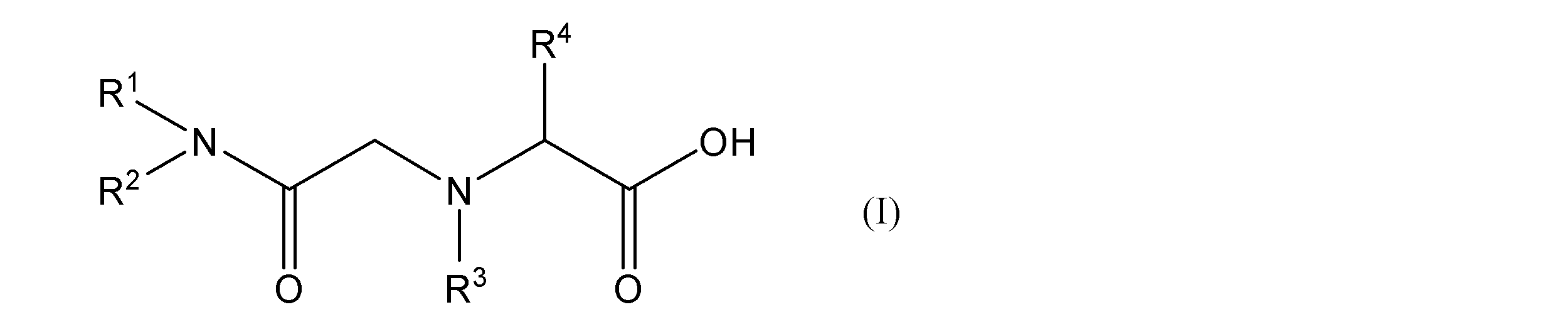
(式中、R1及びR2は、それぞれ同一又は別異のアルキル基を示す。アルキル基は直鎖でも分鎖でも良い。R3は水素原子又はアルキル基を示す。R4は水素原子、又はアミノ酸としてα炭素に結合される、アミノ基以外の任意の基を示す。)
(2)また、本発明は、前記式中、R1及びR2のアルキル基は分鎖であり、R1及びR2のアルキル基の炭素数は5以上11以下である、(1)に記載のジルコニウム抽出剤である。
(3)また、本発明は、前記アミド誘導体がグリシンアミド誘導体、ヒスチジンアミド誘導体、リジンアミド誘導体、アスパラギン酸アミド誘導体及びノルマル-メチルグリシン誘導体のいずれか1以上である、(1)又は(2)に記載のジルコニウム抽出剤である。
(4)また、本発明は、ジルコニウムを含有する酸性溶液、又はジルコニウムとスカンジウムとを含有する酸性溶液を、(1)から(3)のいずれかに記載のジルコニウム抽出剤による溶媒抽出に付し、前記酸性溶液から前記ジルコニウムを抽出するジルコニウム抽出方法である。
(5)また、本発明は、前記酸性溶液は、スカンジウム、チタン、ランタン及びイットリウムから選択される一以上をさらに含有し、前記酸性溶液のpHを0.8以下に調整しながら前記酸性溶液を前記溶媒抽出に付す、(1)から(4)のいずれかに記載のジルコニウム抽出方法である。
(6)また、本発明は、前記ジルコニウム抽出剤による溶媒抽出に付した後、前記酸性溶液から前記ジルコニウムを抽出した前記抽出剤に対し、pHが0以上0.5以下の酸性溶液を混合することで逆抽出を行い、その後、前記抽出剤と前記酸性溶液とを分離することで、ジルコニウムとスカンジウム、チタン、ランタン及びイットリウムから選択される少なくとも一以上の成分とを分離する、(4)又は(5)に記載のジルコニウム抽出方法である。
(7)また、本発明は、前記逆抽出の後、前記酸性溶液のpHを1.0に調整して、ジルコニウム又はジルコニウム及びスカンジウムと、チタン、ランタン及びイットリウムから選択される一以上の成分とを分離し、その後、前記抽出剤にpHが0.2以下に調整した酸性溶液を混合し、ジルコニウムとスカンジウムとを分離する、(6)に記載のジルコニウム抽出方法である。
(8)また、本発明は、前記酸性溶液が、固体電解質燃料電池の電極材を酸溶解して得たものである、(4)から(7)のいずれかに記載のジルコニウム抽出方法である。
本発明によれば、スカンジウムや多種多量な不純物を含有する酸性溶液からジルコニウムを一度に回収できる。酸性溶液からジルコニウムを抽出する工程が1回だけとなり、抽出液の体積を大幅に減らすことができるため、コンパクトな設備で済み、かつジルコニウムを含有する酸性溶液からジルコニウムを早期かつ高効率に抽出できる。
以下、本発明の具体的な実施形態について詳細に説明するが、本発明は以下の実施形態に何ら限定されるものではなく、本発明の目的の範囲内において、適宜変更を加えて実施することができる。
<ジルコニウム抽出剤>
本発明のジルコニウム抽出剤は、下記一般式(I)で表されるアミド誘導体からなる。
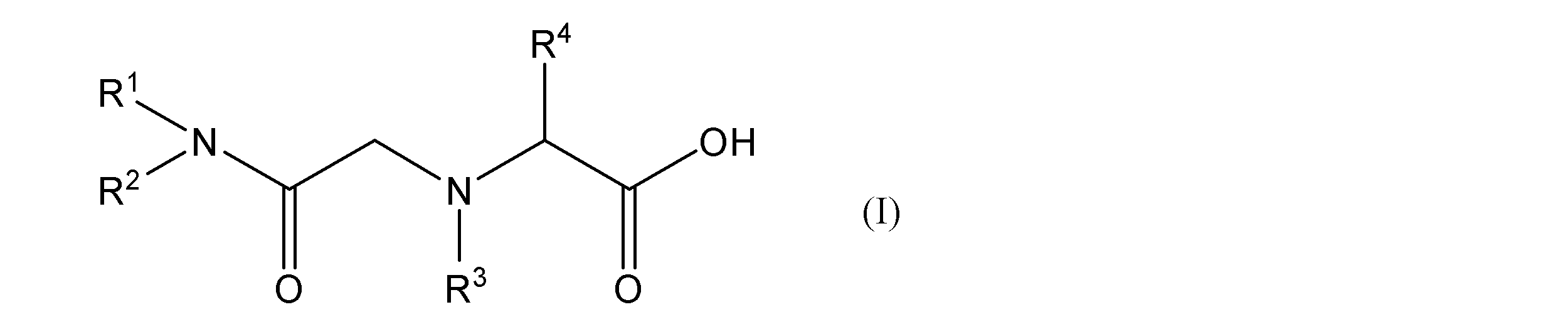
本発明のジルコニウム抽出剤は、下記一般式(I)で表されるアミド誘導体からなる。
式中、R1及びR2は、それぞれ同一又は別異のアルキル基を示す。アルキル基は直鎖でも分鎖でも良いが、有機溶媒への溶解性に優れることから、アルキル基は、分鎖であることが好ましい。加えて、有機溶媒への溶解性によりいっそう優れることから、アルキル基が分鎖であり、さらにR1及びR2の長さがそれぞれ異なることがより好ましい。
また、アルキル基の炭素数は、特に限定されるものでないが、5以上11以下であることが好ましく、7以上9以下であることがより好ましい。炭素数が少なすぎると、ジルコニウム抽出剤が水溶性となり、抽出剤の水への漏洩(分配)が問題となり得るため、好ましくない。また、炭素数が多すぎると、抽出剤の界面活性能が上がり、エマルションを形成し得ること、また、水層及び有機相の他に第3層を形成し得るため、好ましくない。
R3は水素原子又はアルキル基を示す。R4は水素原子、又はアミノ酸としてα炭素に結合される、アミノ基以外の任意の基を示す。
本発明ではアミドの骨格にアルキル基を導入することによって、親油性を高め、抽出剤として用いることができる。
上記アミド誘導体は、グリシンアミド誘導体、ヒスチジンアミド誘導体、リジンアミド誘導体、アスパラギン酸アミド誘導体及びノルマル-メチルグリシン誘導体のいずれか1以上であることが好ましい。
アミド誘導体がグリシンアミド誘導体である場合、上記のグリシンアミド誘導体は、次の方法によって合成できる。まず、NHR1R2(R1,R2は、上記の置換基R1,R2と同じ)で表される構造のアルキルアミンに2-ハロゲン化アセチルハライドを加え、求核置換反応によりアミンの水素原子を2-ハロゲン化アセチルに置換することによって、2-ハロゲン化(N,N-ジ)アルキルアセトアミドを得る。
次に、グリシン又はN-アルキルグリシン誘導体に上記2-ハロゲン化(N,N-ジ)アルキルアセトアミドを加え、求核置換反応によりグリシン又はN-アルキルグリシン誘導体の水素原子の一つを(N,N-ジ)アルキルアセトアミド基に置換する。これら2段階の反応によってグリシンアルキルアミド誘導体を合成できる。
なお、グリシンをヒスチジン、リジン、アスパラギン酸に置き換えれば、ヒスチジンアミド誘導体、リジンアミド誘導体、アスパラギン酸アミド誘導体を合成できるが、リジンやアスパラギン酸誘導体による抽出挙動は、対象とするマンガンやコバルト等の錯安定定数から、グリシン誘導体及びヒスチジンアミド誘導体を用いた結果の範囲内に収まると考えられる。
一般式(I)で表される化合物がヒスチジンアミド誘導体である場合、ヒスチジンアミド誘導体は下記一般式(II)で表される。
前記一般式(I)で表される化合物がリジンアミド誘導体である場合、リジンアミド誘導体は下記一般式(III)で表される。
前記一般式(I)で表される化合物がアスパラギン酸アミド誘導体である場合、アスパラギン酸アミド誘導体は下記一般式(IV)で表される。

<ジルコニウムの選択抽出方法>
上記方法によって合成した抽出剤を用いてジルコニウムイオンを抽出し、スカンジウムと分離するには、ジルコニウムイオンとスカンジウムイオンを含む酸性溶液を調整しながら、この酸性溶液を、上記抽出剤の有機溶液に加えて混合する。これによって、有機相にジルコニウムイオンを選択的に抽出することができる。ジルコニウムを含有する酸性溶液から、ジルコニウムを効率的に抽出する際、抽出剤は、上記のアミノ誘導体であれば、いずれの化合物であってもよい。
上記方法によって合成した抽出剤を用いてジルコニウムイオンを抽出し、スカンジウムと分離するには、ジルコニウムイオンとスカンジウムイオンを含む酸性溶液を調整しながら、この酸性溶液を、上記抽出剤の有機溶液に加えて混合する。これによって、有機相にジルコニウムイオンを選択的に抽出することができる。ジルコニウムを含有する酸性溶液から、ジルコニウムを効率的に抽出する際、抽出剤は、上記のアミノ誘導体であれば、いずれの化合物であってもよい。
本発明のジルコニウム抽出剤は、強酸性溶液からの抽出能力が優れている。このためスカンジウムやチタンやランタンやイットリウム等を抽出できない低いpH領域でジルコニウムを抽出することができる。ジルコニウムとスカンジウムを含む原料を酸溶解した溶解液をそのまま抽出に付することができる。
有機溶媒は、抽出剤及び金属抽出種が溶解する溶媒であればどのようなものであってもよく、例えば、クロロホルム、ジクロロメタン等の塩素系溶媒、ベンゼン、トルエン、キシレン等の芳香族炭化水素、ヘキサン等の脂肪族炭化水素等が挙げられる。これらの有機溶媒は、単独でも複数混合しても良く、1-オクタノールのようなアルコール類を混合しても良い。
抽出剤の濃度は、ジルコニウムやスカンジウムの濃度によって適宜設定できる。また、撹拌時間及び抽出温度は、平衡到達時間がジルコニウムやスカンジウムの濃度のほか、加える抽出剤の量によって変化するため、ジルコニウムイオンとスカンジウムイオンの酸性水溶液、及び抽出剤の有機溶液の条件によって適宜設定すればよい。
本抽出剤は、pHが0.2程度の他の金属成分が抽出できないような強酸性領域であってもジルコニウムを抽出できる。このため、ジルコニウムイオン等複数種類のイオンを抽出した後の有機溶媒を分取し、これに上記酸性水溶液よりpHを低く調整した逆抽出始液(例えば、pHが0.2程度の酸溶液)を加えて撹拌することにより、ジルコニウムイオンを有機溶媒中に残して、ジルコニウム以外のスカンジウム、チタン、イットリウム、ランタン等を酸溶液中に逆抽出し、さらに、有機溶媒からジルコニウムイオンを逆抽出することで、ジルコニウムイオンを水溶液中に回収することができる。逆抽出溶液としては、例えば、硝酸、塩酸、硫酸を希釈した水溶液が好適に用いられる。また、有機相と水相の比率を適宜変更することによって、ジルコニウムイオンを濃縮することもできる。
また、pHが0.8~1.5程度、好ましくは1.0程度のジルコニウムとスカンジウムが抽出されイットリウムやランタンが抽出されないpH領域に調整した酸を接触させてイットリウムやランタン等を分離し、ジルコニウムとスカンジウムの割合を増してからスカンジウムを濃縮してジルコニウムから分離することもできる。
なお、抽出剤からジルコニウムを分離して回収するには、例えばジルコニウムを抽出能力一杯まで抽出した本抽出剤を焼却等の方法により分解することで行える。
本発明の抽出剤が従来の抽出剤と異なる抽出挙動をとるメカニズムは正確にはわからないが、本発明の抽出剤の構造上の特徴によって従来なかった効果を得られたと考えられる。
以下、実施例により、本発明をさらに詳細に説明するが、本発明はこれらの記載に何ら制限を受けるものではない。
<実施例>
抽出剤となるアミド誘導体の一例として、下記一般式(I)で表されるグリシンアミド誘導体、すなわち、2つの2-エチルヘキシル基を導入したN-[N,N-ビス(2-エチルヘキシル)アミノカルボニルメチル]グリシン(N-[N,N-Bis(2-ethylhexyl)aminocarbonylmethyl]glycine)(あるいはN,N-ジ(2-エチルヘキシル)アセトアミド-2-グリシン(N,N-di(2-ethylhexyl)acetamide-2-glycine)ともいい、以下「D2EHAG」という。)を合成した。
抽出剤となるアミド誘導体の一例として、下記一般式(I)で表されるグリシンアミド誘導体、すなわち、2つの2-エチルヘキシル基を導入したN-[N,N-ビス(2-エチルヘキシル)アミノカルボニルメチル]グリシン(N-[N,N-Bis(2-ethylhexyl)aminocarbonylmethyl]glycine)(あるいはN,N-ジ(2-エチルヘキシル)アセトアミド-2-グリシン(N,N-di(2-ethylhexyl)acetamide-2-glycine)ともいい、以下「D2EHAG」という。)を合成した。
D2EHAGの合成は、次のようにして行った。まず、下記反応式(II)に示すように、市販のジ(2-エチルヘキシル)アミン23.1g(0.1mol)と、トリエチルアミン10.1g(0.1mol)とを分取し、これにクロロホルムを加えて溶解し、次いで2-クロロアセチルクロリド13.5g(0.12mol)を滴下した後、1mol/lの塩酸で1回洗浄し、その後、イオン交換水で洗浄し、クロロホルム相を分取した。
次に、無水硫酸ナトリウムを適量(約10~20g)加え、脱水した後、ろ過し、黄色液体29.1gを得た。この黄色液体(反応生成物)の構造を、核磁気共鳴分析装置(NMR)を用いて同定したところ、上記黄色液体は、2-クロロ-N,N-ジ(2-エチルヘキシル)アセトアミド(以下「CDEHAA」という。)の構造であることが確認された。なお、CDEHAAの収率は、原料であるジ(2-エチルヘキシル)アミンに対して90%であった。

次に、下記反応式(III)に示すように、水酸化ナトリウム8.0g(0.2mol)にメタノールを加えて溶解し、さらにグリシン15.01g(0.2mol)を加えた溶液を撹拌しながら、上記CDEHAA12.72g(0.04mol)をゆっくりと滴下し、撹拌した。撹拌を終えた後、反応液中の溶媒を留去し、残留物にクロロホルムを加えて溶解した。この溶液に1mol/lの硫酸を添加して酸性にした後、イオン交換水で洗浄し、クロロホルム相を分取した。
このクロロホルム相に無水硫酸マグネシウム適量を加え脱水し、ろ過した。再び溶媒を減圧除去し、12.5gの黄色糊状体を得た。上記のCDEHAA量を基準とした収率は87%であった。黄色糊状体の構造をNMR及び元素分析により同定したところ、図1及び図2に示すように、D2EHAGの構造を持つことが確認された。上記の工程を経て、実施例1のジルコニウム抽出剤を得た。

<ジルコニウムの抽出>
実施例(D2EHAG)に係る抽出剤を用いて、ジルコニウムの抽出を行った。
実施例(D2EHAG)に係る抽出剤を用いて、ジルコニウムの抽出を行った。
ジルコニウムとスカンジウム、チタン、イットリウム、ランタンをそれぞれ1×10⁻⁴mol/l含み、pHを0.2~4.1に調整した数種類の塩酸酸性溶液を元液とし、それと同体積の0.01mol/lのジルコニウム抽出剤を含むノルマルドデカン溶液を試験管に加えて25℃恒温庫内に入れ、24時間振とうした。このとき、塩酸溶液のpHは、濃度0.1mol/lの塩酸や濃度1mol/lの水酸化ナトリウム溶液を用いて調整した。
振とう後、水相を分取し、誘導プラズマ発光分光分析装置(ICP-AES)を用いてジルコニウム濃度及スカンジウム濃度及びチタン濃度、イットリウム濃度、ランタン濃度を測定した。また、有機相について、1mol/lの塩酸を用いて逆抽出した。そして、逆抽出相中のジルコニウム濃度及スカンジウム濃度及びチタン濃度、イットリウム濃度、ランタン濃度を、ICP-AESを用いて測定した。これらの測定結果から、ジルコニウム、スカンジウム、チタン、ランタン、イットリウムの抽出率を、それぞれ(1-抽出後の濃度/抽出前の濃度)×100で定義し、求めた。結果を図3及び表1に示す。図3の横軸は、塩酸酸性溶液の抽出後のpHであり、縦軸は、ジルコニウム、スカンジウム、チタン、イットリウム、ランタンの抽出率(単位:%)である。
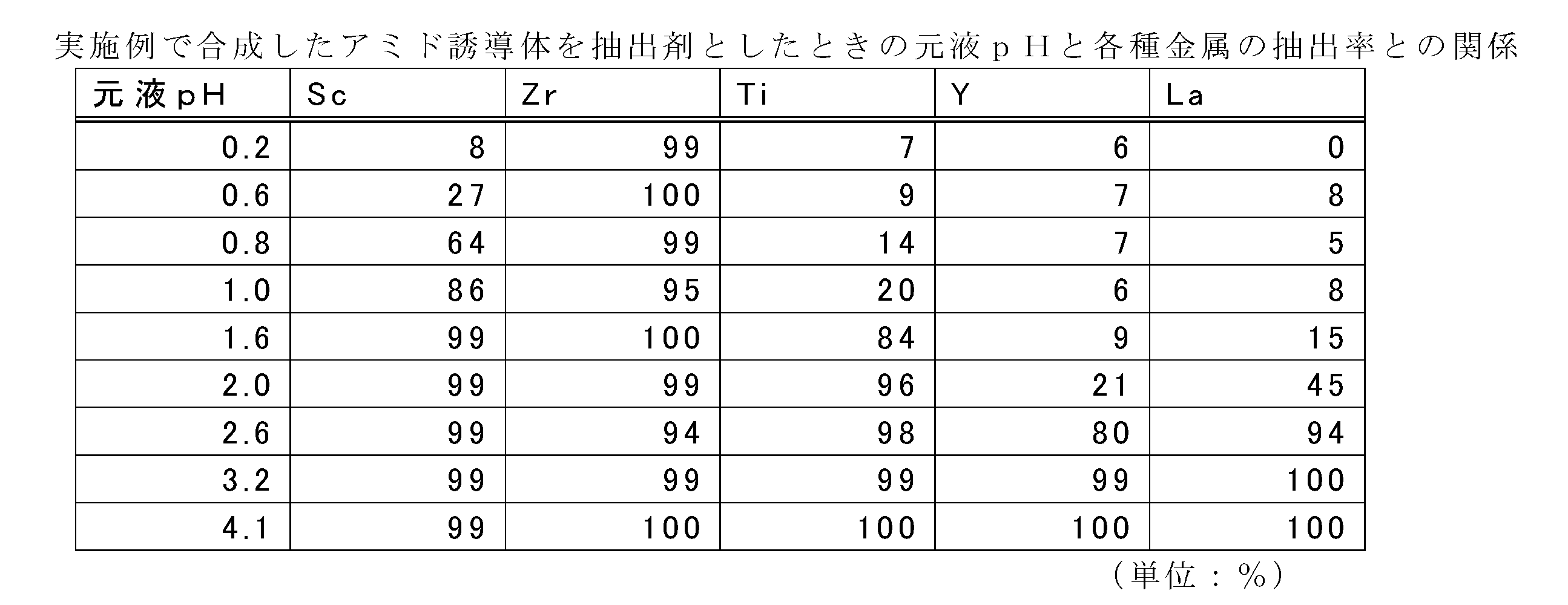
実施例のジルコニウム抽出剤を用いると、pHが0.2程度の強酸性領域であっても、ジルコニウムの抽出率はほぼ100%に近い。一方、スカンジウムはpH0.2付近では10%程度しか抽出されないが、pHが1.0では80%以上抽出される。さらに、チタンやイットリウムやランタンはpH1.0程度では10~20%程度しか抽出されず、pHが1.5以上の領域にならないと抽出されないことが分かる。
このように、本発明の抽出剤を用いることで、ジルコニウムを、pH調整によりスカンジウムやチタンやイットリウムやランタンと分離して回収できることが確認された。
Claims (8)
- 下記一般式(I)で表されるアミド誘導体からなる、ジルコニウム抽出剤。

- 前記式中、R1及びR2のアルキル基は分鎖であり、R1及びR2のアルキル基の炭素数は5以上11以下である、請求項1に記載のジルコニウム抽出剤。
- 前記アミド誘導体がグリシンアミド誘導体、ヒスチジンアミド誘導体、リジンアミド誘導体、アスパラギン酸アミド誘導体及びノルマル-メチルグリシン誘導体のいずれか1以上である、請求項1又は2に記載のジルコニウム抽出剤。
- ジルコニウムを含有する酸性溶液、又はジルコニウムとスカンジウムとを含有する酸性溶液を、請求項1から3のいずれかに記載のジルコニウム抽出剤による溶媒抽出に付し、前記酸性溶液から前記ジルコニウムを抽出するジルコニウム抽出方法。
- 前記酸性溶液は、スカンジウム、チタン、ランタン及びイットリウムから選択される一以上をさらに含有し、
前記酸性溶液のpHを0.8以下に調整しながら前記酸性溶液を前記溶媒抽出に付す、請求項1から4のいずれかに記載のジルコニウム抽出方法。 - 前記ジルコニウム抽出剤による溶媒抽出に付した後、前記酸性溶液から前記ジルコニウムを抽出した前記抽出剤に対し、pHが0以上0.5以下の酸性溶液を混合することで逆抽出を行い、その後、前記抽出剤と前記酸性溶液とを分離することで、ジルコニウムとスカンジウム、チタン、ランタン及びイットリウムから選択される少なくとも一以上の成分とを分離する、請求項4又は5に記載のジルコニウム抽出方法。
- 前記逆抽出の後、前記酸性溶液のpHを1.0に調整して、ジルコニウム又はジルコニウム及びスカンジウムと、チタン、ランタン及びイットリウムから選択される一以上の成分とを分離し、
その後、前記抽出剤にpHが0.2以下に調整した酸性溶液を混合し、ジルコニウムとスカンジウムとを分離する、請求項6に記載のジルコニウム抽出方法。 - 前記酸性溶液が、固体電解質燃料電池の電極材を酸溶解して得たものである、請求項4から7のいずれかに記載のジルコニウム抽出方法。
Priority Applications (1)
| Application Number | Priority Date | Filing Date | Title |
|---|---|---|---|
| US15/544,079 US10036082B2 (en) | 2015-01-20 | 2015-09-28 | Zirconium extractant and method for extracting zirconium |
Applications Claiming Priority (2)
| Application Number | Priority Date | Filing Date | Title |
|---|---|---|---|
| JP2015008636A JP5940688B1 (ja) | 2015-01-20 | 2015-01-20 | ジルコニウム抽出剤及びジルコニウム抽出方法 |
| JP2015-008636 | 2015-01-20 |
Publications (1)
| Publication Number | Publication Date |
|---|---|
| WO2016117175A1 true WO2016117175A1 (ja) | 2016-07-28 |
Family
ID=56244655
Family Applications (1)
| Application Number | Title | Priority Date | Filing Date |
|---|---|---|---|
| PCT/JP2015/077355 Ceased WO2016117175A1 (ja) | 2015-01-20 | 2015-09-28 | ジルコニウム抽出剤及びジルコニウム抽出方法 |
Country Status (3)
| Country | Link |
|---|---|
| US (1) | US10036082B2 (ja) |
| JP (1) | JP5940688B1 (ja) |
| WO (1) | WO2016117175A1 (ja) |
Families Citing this family (2)
| Publication number | Priority date | Publication date | Assignee | Title |
|---|---|---|---|---|
| US10651479B2 (en) * | 2018-02-05 | 2020-05-12 | Bloom Energy Corporation | Method of recovering metal compounds from solid oxide fuel cell scrap |
| CN115810436A (zh) * | 2022-11-15 | 2023-03-17 | 先进能源科学与技术广东省实验室 | 一种在钇靶上分离89Zr的方法及应用 |
Citations (3)
| Publication number | Priority date | Publication date | Assignee | Title |
|---|---|---|---|---|
| JPH0570856A (ja) * | 1991-03-21 | 1993-03-23 | Commiss Energ Atom | 三価ランタニドおよび(または)アクチニドから鉄および(または)ジルコニウムの分離方法 |
| JP2012102062A (ja) * | 2010-11-12 | 2012-05-31 | Univ Of Miyazaki | アルキルアミノリン化合物及び金属抽出剤 |
| WO2013069562A1 (ja) * | 2011-11-09 | 2013-05-16 | 国立大学法人九州大学 | 有価金属抽出剤及びこの抽出剤を用いた有価金属抽出方法 |
Family Cites Families (25)
| Publication number | Priority date | Publication date | Assignee | Title |
|---|---|---|---|---|
| US5250517A (en) | 1987-10-06 | 1993-10-05 | Hoffmann-La Roche Inc. | Renin inhibiting compounds |
| JP2876152B2 (ja) | 1990-06-19 | 1999-03-31 | 三井サイテック株式会社 | 希土類金属の分離精製法 |
| JPH06200336A (ja) | 1992-09-01 | 1994-07-19 | Mitsui Cyanamid Co | コバルトとニッケルの分離方法 |
| JP3307204B2 (ja) | 1995-11-22 | 2002-07-24 | 大平洋金属株式会社 | レアーアースメタルの濃縮分離回収方法 |
| JP3428292B2 (ja) | 1996-04-26 | 2003-07-22 | 大平洋金属株式会社 | Sc金属の回収方法 |
| EP0834581A1 (en) | 1996-09-30 | 1998-04-08 | Basf Aktiengesellschaft | Use of hydrocarbon-soluble aminomethylenephosphonic acid derivatives for the solvent extraction of metal ions from aqueous solutions |
| DE19859683C1 (de) | 1998-12-23 | 2000-08-24 | Starck H C Gmbh Co Kg | Verfahren zur Extraktion von Anionen |
| JP3806258B2 (ja) | 1999-01-21 | 2006-08-09 | 同和鉱業株式会社 | Ga,Inの溶媒抽出方法 |
| JP3385997B2 (ja) | 1999-02-12 | 2003-03-10 | 大平洋金属株式会社 | 酸化鉱石から有価金属を回収する方法 |
| JP3430973B2 (ja) | 1999-04-26 | 2003-07-28 | 大平洋金属株式会社 | 酸化鉱石からニッケルとスカンジウムを回収する方法 |
| US20050124765A1 (en) | 2003-11-25 | 2005-06-09 | Japan Atomic Energy Research Institute | Adsorbent for recovering useful rare metals by adsorption |
| US20080038168A1 (en) | 2004-01-28 | 2008-02-14 | Commonwealth Scientific And Industrial Research Organisation | Solvent Extraction Process For Separating Cobalt And/Or Manganese From Impurities In Leach Solutions |
| US7935322B2 (en) | 2004-01-28 | 2011-05-03 | Commonwealth Scientific & Indistrial Research Organisation | Solvent extraction process for separating cobalt and/or nickel from impurities in leach solutions |
| JP5035788B2 (ja) | 2006-06-06 | 2012-09-26 | 独立行政法人日本原子力研究開発機構 | 希土類金属の抽出剤と抽出方法 |
| CN101519427B (zh) | 2008-02-29 | 2015-02-25 | 中国人民解放军军事医学科学院毒物药物研究所 | 具有内皮素受体拮抗活性的肽类衍生物及其药物组合物和用途 |
| JP5504575B2 (ja) | 2008-04-21 | 2014-05-28 | 国立大学法人 宮崎大学 | ホスフィン酸を配位子とするキレート抽出剤 |
| JP5326610B2 (ja) | 2009-02-02 | 2013-10-30 | 住友金属鉱山株式会社 | 使用済みニッケル水素電池からの金属の回収方法 |
| JP5679159B2 (ja) | 2010-07-05 | 2015-03-04 | 信越化学工業株式会社 | 希土類金属抽出剤の合成方法、及び希土類金属の溶媒抽出用有機相 |
| JP2013057115A (ja) | 2011-09-09 | 2013-03-28 | Kanazawa Inst Of Technology | Sc3+とSc3+以外の金属イオンとを含む水溶液からSc3+を分離するための方法 |
| JP5279942B1 (ja) | 2011-11-09 | 2013-09-04 | 国立大学法人九州大学 | コバルト抽出方法 |
| AU2012336970B2 (en) | 2011-11-09 | 2015-04-30 | Kyushu University, National University Corporation | Cobalt extraction method |
| JP5367862B2 (ja) | 2012-03-13 | 2013-12-11 | 国立大学法人九州大学 | スカンジウム抽出剤およびこの抽出剤を用いたスカンジウム抽出方法 |
| JP5398885B1 (ja) * | 2012-08-20 | 2014-01-29 | 国立大学法人九州大学 | ガリウム抽出方法 |
| JP5734268B2 (ja) | 2012-12-12 | 2015-06-17 | 国立大学法人九州大学 | ニッケル抽出方法 |
| JP5595554B1 (ja) | 2013-03-18 | 2014-09-24 | 国立大学法人九州大学 | ニッケル、コバルト及び/又はスカンジウムを含有する酸性溶液から不純物を分離する方法 |
-
2015
- 2015-01-20 JP JP2015008636A patent/JP5940688B1/ja active Active
- 2015-09-28 WO PCT/JP2015/077355 patent/WO2016117175A1/ja not_active Ceased
- 2015-09-28 US US15/544,079 patent/US10036082B2/en active Active
Patent Citations (3)
| Publication number | Priority date | Publication date | Assignee | Title |
|---|---|---|---|---|
| JPH0570856A (ja) * | 1991-03-21 | 1993-03-23 | Commiss Energ Atom | 三価ランタニドおよび(または)アクチニドから鉄および(または)ジルコニウムの分離方法 |
| JP2012102062A (ja) * | 2010-11-12 | 2012-05-31 | Univ Of Miyazaki | アルキルアミノリン化合物及び金属抽出剤 |
| WO2013069562A1 (ja) * | 2011-11-09 | 2013-05-16 | 国立大学法人九州大学 | 有価金属抽出剤及びこの抽出剤を用いた有価金属抽出方法 |
Also Published As
| Publication number | Publication date |
|---|---|
| JP2016132804A (ja) | 2016-07-25 |
| US20180010211A1 (en) | 2018-01-11 |
| US10036082B2 (en) | 2018-07-31 |
| JP5940688B1 (ja) | 2016-06-29 |
Similar Documents
| Publication | Publication Date | Title |
|---|---|---|
| CA2837834C (en) | Scandium extraction method | |
| JP5279942B1 (ja) | コバルト抽出方法 | |
| WO2013069562A1 (ja) | 有価金属抽出剤及びこの抽出剤を用いた有価金属抽出方法 | |
| JP5734268B2 (ja) | ニッケル抽出方法 | |
| CN104583426B (zh) | 镓提取剂以及镓提取方法 | |
| JP5940688B1 (ja) | ジルコニウム抽出剤及びジルコニウム抽出方法 | |
| JP5420033B1 (ja) | インジウム抽出剤およびこの抽出剤を用いたインジウム抽出方法 | |
| WO2013069563A1 (ja) | コバルト抽出方法 | |
| JP5595543B1 (ja) | 有価金属抽出方法 | |
| CN104540972B (zh) | 有价金属分离方法 |
Legal Events
| Date | Code | Title | Description |
|---|---|---|---|
| 121 | Ep: the epo has been informed by wipo that ep was designated in this application |
Ref document number: 15878864 Country of ref document: EP Kind code of ref document: A1 |
|
| WWE | Wipo information: entry into national phase |
Ref document number: 15544079 Country of ref document: US |
|
| NENP | Non-entry into the national phase |
Ref country code: DE |
|
| 122 | Ep: pct application non-entry in european phase |
Ref document number: 15878864 Country of ref document: EP Kind code of ref document: A1 |