WO2016017279A1 - 取引処理装置及び取引システム - Google Patents
取引処理装置及び取引システム Download PDFInfo
- Publication number
- WO2016017279A1 WO2016017279A1 PCT/JP2015/066434 JP2015066434W WO2016017279A1 WO 2016017279 A1 WO2016017279 A1 WO 2016017279A1 JP 2015066434 W JP2015066434 W JP 2015066434W WO 2016017279 A1 WO2016017279 A1 WO 2016017279A1
- Authority
- WO
- WIPO (PCT)
- Prior art keywords
- state
- banknote
- information
- transaction processing
- scrutiny
- Prior art date
- Legal status (The legal status is an assumption and is not a legal conclusion. Google has not performed a legal analysis and makes no representation as to the accuracy of the status listed.)
- Ceased
Links
Images









Classifications
-
- G—PHYSICS
- G07—CHECKING-DEVICES
- G07D—HANDLING OF COINS OR VALUABLE PAPERS, e.g. TESTING, SORTING BY DENOMINATIONS, COUNTING, DISPENSING, CHANGING OR DEPOSITING
- G07D9/00—Counting coins; Handling of coins not provided for in the other groups of this subclass
Definitions
- the present invention relates to a transaction processing apparatus and a transaction system for examining money stored in a transaction processing apparatus such as an ATM.
- the scrutiny terminal instructs the transaction processing device to scrutinize, and instructs the host computer to notify the current amount of the transaction processing device. Scrutinize based on the current height.
- the transaction processing device is controlled by an instruction from a remote place so that the clerk does not have to confirm the money stored in the reject cassette when executing the scrutiny by the transaction processing device.
- the transaction processing device since there is a possibility that money of unknown denomination or number will be stored in the reject cassette, in order to actually check the currency of the reject cassette at regular intervals and to ensure the accuracy of scrutiny It is desirable to conduct a re-counting of the denomination cassettes at regular intervals, and since it is necessary to pause the apparatus during these processes, there is a problem that the operating time of the transaction processing apparatus is limited. In addition, since recounting counts the money in the transaction processing apparatus, there is a problem of increasing the possibility of extending the suspension period due to the occurrence of equipment failure accompanying the counting process.
- the transaction processing apparatus stores a banknote identification unit that identifies the denomination and quantity of banknotes, a banknote cassette that stores banknotes for each denomination, and a reject banknote that cannot be identified by the banknote identification unit.
- a transaction processing apparatus having a reject cassette and a control unit, wherein the control unit stores the first information of the number of denominations of banknotes stored in the banknote cassette and the first reject cassette.
- a storage unit that stores second information on the number of banknotes to be stored and state information, and when the state information is read from the storage unit, the banknote cassette is stored based on the state information.
- the bill counting process it is determined whether the second state is an unnecessary first state, and when the second state is determined, the monitoring terminal is in the second state.
- Send notifications with information When the instruction is received, in the case of the first state, the first scrutiny process is performed to associate the first information and the second information with the scrutiny result without performing the counting process.
- a second scrutiny process is performed to perform the count process and associate the first information and the second information updated according to the result of the count process with a scrutinization result. It is characterized by carrying out.
- the transaction system is a transaction system having a plurality of transaction processing devices, a scrutiny terminal, and a monitoring terminal, each of the plurality of transaction processing devices identifying a denomination and quantity of a banknote.
- An identification unit a banknote cassette that stores banknotes for each denomination; a first reject cassette that stores rejected banknotes that cannot be identified by the banknote identification unit; and a control unit, wherein the control unit is included in the banknote cassette.
- a storage unit that stores first information of the number of banknotes stored for each denomination, second information of the number of banknotes stored in the first reject cassette, and status information;
- the state information When reading out the state information from the section, based on the state information, it is determined whether the state is an unnecessary first state or a necessary second state for the counting processing of the bills stored in the bill cassette
- the first scrutiny process is made to correspond to the scrutiny result
- the second scrutinization process is performed to perform the counting process and associate the first information and the second information updated according to the counting process result with the scrutinization result.
- the monitoring terminal receives a notification including information indicating that the second state is transmitted when the control unit determines the second state, and the scrutiny terminal is configured to perform the first scrutiny process.
- at least one of the second scrutiny processing information is transmitted from the transaction processing device.
- FIG. 1 is a block diagram illustrating functions and configurations of a transaction processing apparatus, a scrutiny terminal, and a monitoring terminal.
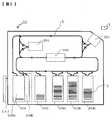
- FIG. 2 is a diagram showing an internal configuration of the transaction processing apparatus.
- the transaction processing apparatus 2 is connected to the scrutiny terminal 1, the host computer 3, and the monitoring terminal 4 via a network.
- the number of transaction processing devices 2 connected to the scrutinization terminal 1, the host computer 3, and the monitoring terminal 4 is not limited to one.
- the transaction processing apparatus 2, the scrutinization terminal 1, and the monitoring terminal 4 constitute a transaction system. Further, the transaction system may include the host computer 3.
- transaction processing apparatus 2 determines whether or not counting is necessary based on internal state information, and notifies monitoring terminal 4 if counting is necessary.
- the monitoring terminal 4 displays the information received from the transaction processing device 2 on the display unit 44.
- the monitoring terminal 4 includes a communication unit 42 that receives information of the transaction processing apparatus 2 that is remotely installed, a display unit 44, a sound generation unit 45, an operation unit 43, and a control unit 41 that controls these units.
- the control unit 41 includes a hardware configuration such as a CPU and a memory, and a software configuration such as a program and data, and controls various processes.
- the display unit 44 has a screen display function, and the sound generation unit 45 has a sound generation function such as a buzzer. When receiving information from the transaction processing device 2, these functions notify the supervisor by voice or display the received information on the screen.
- the operation unit 43 has an input detection function for accepting an input operation. The input detection function detects, for example, input from a touch panel that allows contact input or a hardware key that can be pressed. This function enables the supervisor to send an instruction to the transaction processing device 2 from a remote location.
- the host computer 3 manages, for example, the balance of each user's account and the current amount of each transaction processing device 2.
- the transaction processing device 2 receives a scrutiny instruction from the scrutiny terminal 1, the transaction processing device 2 instructs the host computer 3 to notify the current height of the transaction processing device 2. Then, the transaction processing device 2 performs a scrutiny determination based on the current height inside the transaction processing device 2 and the current height from the host computer 3, and transmits the determination result to the scrutiny terminal 1.
- the scrutiny terminal 1 displays the determination result information received from the transaction processing device 2 on the display unit 14.
- the scrutiny terminal 1 has a control unit 11 that manages scrutiny result information of the transaction processing device 2 that is remotely installed.
- the communication unit 12, the operation unit 13, the display unit 14, and the control unit 11 that controls these units are included.
- the control unit 11 includes a hardware configuration such as a CPU and a memory, and a software configuration such as a program and data, and controls various processes.
- the display unit 14 has a screen display function, and the operation unit 13 has an input detection function by a mouse or contact input.
- the person who manages the scrutiny information checks the scrutinization data result, the operation of displaying the terminal state information / scrutiny result confirmation status information of the transaction processing apparatus 2 is accepted.
- the transaction processing apparatus 2 includes a control unit 21, a display / operation unit 22, a card / detail processing unit 23, a passbook processing unit 24, a banknote processing unit 25, a coin processing unit 26, and a communication unit 27.
- the control unit 21 controls the operation of each part of the transaction processing apparatus 2 main body. For example, if the control part 21 receives the instruction
- the display / operation unit 22 has a display provided on the front surface of the main body and a touch panel attached on the screen of the display.
- the display / operation unit 22 displays an operation guidance screen for the user on the display.
- the display / operation unit 22 detects a pressing position of the touch panel, and accepts a user's input operation relating to a personal identification number and transaction details (transaction type, deposit / withdrawal amount, etc.).
- the card / detail processing unit 23 takes in a cash card (hereinafter simply referred to as a card) inserted into a card insertion slot provided in the front of the main body, and stores card information (financial institution) recorded on the magnetic stripe of the card. Number, store number, account number, etc.) and rewrite card information. If the inserted card is an IC card, the data recorded on the IC chip of the card is read or rewritten as necessary. Further, the card / detail processing unit 23 includes a printing unit (not shown) for printing the transaction contents on the specification. The card / specification processing unit 23 releases the specification printed with the transaction contents to the specification discharge port provided on the front of the main body.
- the bankbook processing unit 24 has a printing unit (not shown) that takes in a bankbook inserted in a bankbook insertion port provided on the front of the main body and prints a transaction history on the bankbook. Further, the passbook processing unit 24 is recorded on a page turning mechanism for turning over a page of the taken passbook, a bar code reader for reading a bar code indicating a page number printed on the passbook, and a magnetic stripe attached to the passbook. It also has a magnetic head or the like that reads the bankbook information (financial institution number, store number, account number, etc.).
- the banknote processing unit 25 is connected to a banknote transport path L formed between a deposit / withdrawal port 201 provided on the front face of the main body and the banknote cassettes 204A to 204C housed inside the main body.
- the banknote S is conveyed along.
- the bill cassette 204A and the bill cassette 204B will be described as cassettes that store 10,000 yen bills
- the bill cassette 204C will be described as a cassette that stores thousand yen bills. Further, in this embodiment, an example in which a cassette for storing 5,000 yen bills and 2,000 yen bills is not mounted is shown.
- the banknote processing unit 25 includes, for each banknote transported along the banknote transport path L, a banknote identification section 202 that identifies the denomination and authenticity, and a temporary storage section 203 that temporarily stores banknotes.
- the bill identifying unit 202 identifies the denomination and authenticity based on the magnetic pattern read from the bill, the transmitted light pattern, and the like.
- the banknote identification part 202 discriminate
- the banknote processing unit 25 is a replenishment cassette 206 for replenishing banknotes in the banknote cassettes 204A to 204C (a replenishment unit 206A storing banknotes to be replenished, a replenishment rejecting section 206B storing banknotes that could not be identified during replenishment). And a first reject cassette 205 for storing reject banknotes.
- the banknote processing unit 25 includes a detection unit (not shown) that detects which of the banknote cassettes 204A to 204C and the first reject cassette 205 has been inserted or removed.
- the banknote processing unit 25 includes a second reject cassette 207 for storing banknotes that could not be identified by the banknote identification unit 202. Moreover, the banknote process part 25 is provided with the detection part (not shown) which detects whether the inside of the 2nd rejection cassette 207 is empty.
- the banknote processing unit 25 includes a memory (not shown), and denominations of reject banknotes stored in the banknote cassettes 204A to 204C and the first reject cassette 205 (and may include the second reject cassette 207).
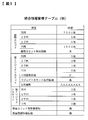
- a cash information management table (see FIG. 3) for storing the number of sheets for each and the status information on the necessity of recounting described later is stored.
- FIG. 3 is a diagram illustrating an example of the cash information management table. As shown in FIG. 3, the rejected banknote is recognized as a banknote that the banknote recognition unit 202 can identify as a 10,000 yen bill or a thousand yen bill (“10,000 yen” in the first reject cassette column).
- banknote processing unit 25 Details of the banknote processing unit 25 will be described later.
- the coin processing unit 26 conveys coins along a coin conveyance path formed between a coin deposit / withdrawal port provided on the front face of the main body and a coin cartridge housed inside the main body. Moreover, the coin process part 26 has a coin identification part which identifies a money type and authenticity for every coin currently conveyed along a coin conveyance path.
- the coin processing unit 26 includes a memory (not shown), and stores a cash information management table that stores the number of rejected coins stored in a reject coin storage unit (not shown).
- the reject coin is a coin that could not be identified by the coin identifying unit.
- the communication unit 27 communicates with the scrutinization terminal 1, the host computer 3, and the monitoring terminal 4 based on instructions from the control unit 21.
- FIG. 4 is a diagram showing the relationship of each process in the scrutiny terminal, transaction processing apparatus, host computer, and monitoring terminal.
- the scrutinization terminal 1 and the host computer 3 correspond to the scrutinization apparatus of this embodiment.
- the various processes with respect to a banknote are demonstrated.
- the transaction processing apparatus 2 performs a process in which the number of banknotes stored in its own apparatus fluctuates (for example, a replenishment process for replenishing banknotes into the banknote cassette 204A to the banknote cassette 204C, by the user).
- the host computer 3 is notified of the transaction amount of the process (for example, the supplemented amount, the withdrawal transaction amount, and the deposit transaction amount).
- the host computer 3 updates the present amount of the transaction processing apparatus 2 according to the transaction amount.
- the host computer 3 can manage the current amount of each transaction processing device 2 (the amount stored in the transaction processing device 2).
- the transaction processing device 2 refers to the cash information management table provided in the banknote processing unit 25 at the time of activation or at least when performing the above-described processing in which the number of banknotes fluctuates. Is read and extracted. Then, when it is determined that recounting is necessary based on the status information indicating whether recounting is necessary, the monitoring terminal 4 is notified of status information at the time of activation or when the above-described processing for changing the number of bills is performed.
- the state information indicating whether recounting is necessary is the banknote cassette sampling information stored in the cash information management table provided in the banknote processing unit 25, the unknown banknote (denomination or number of sheets) of the first reject cassette. Bill) information, first reject cassette sampling information, cash unit and other trouble information (related to a mechanism such as a mechanism), and cash residual trouble information.
- the scrutinization terminal 1 performs a scrutiny determination process to check whether the number of denominations of banknotes stored in the transaction processing device 2 is correct.
- the scrutiny terminal 1 gives a scrutiny instruction to the transaction processing device 2 so as to perform a scrutiny process.
- the transaction processing device 2 receives a scrutiny instruction from the scrutinization terminal 1, the number of denominations of banknotes stored in its own device from the cash information management table provided in the bill processing unit 25, and whether or not recounting is necessary. Extract status information for. Further, a current high notification instruction is given to the host computer 3 so as to notify the current high. The host computer 3 that has received the current high notification instruction notifies the current high of the transaction processing device 2.
- the transaction processing device 2 determines that recounting is necessary based on the status information indicating whether recounting is necessary, the transaction processing device 2 notifies the scrutinization terminal 1 that recounting is necessary as a first response. Further, when recounting is unnecessary, the transaction processing apparatus 2 determines the stored banknotes based on the number of denominations of banknotes stored in its own apparatus and the current height from the host computer 3. Determine if the number of denominations is correct. Then, the scrutinization terminal 1 is notified of the current high determination result as a first response. Note that the scrutinization terminal 1 may instruct the transaction processing device 2 to inquire before the scrutiny instruction. In this case, the transaction processing device 2 notifies the scrutiny terminal 1 of an inquiry response having substantially the same content as the first response described above and below. In this case, it becomes possible to grasp the state of the transaction processing apparatus 2 before giving an actual scrutiny instruction at the scrutinization terminal 1.
- FIG. 5 is a flowchart showing a process flow of the replenishment process.
- the banknote processing unit 25 of the transaction processing device 2 performs the replenishment process shown in FIG.
- the clerk takes out the cash from the replenishment cassette 206.
- the transaction processing apparatus 2 stores an empty replenishment cassette 206 in its own apparatus during operation.
- the banknote processing unit 25 of the transaction processing device 2 resets a counter for each denomination (S101).
- the counter for each denomination counts the number of banknotes to be replenished for each denomination.
- the banknote processing unit 25 pays out banknotes one by one from the replenishment unit 206A of the replenishment cassette 206 (S102), and the banknote identification unit 202 identifies the denomination of the banknote (S103). At this time, the bill identifying unit 202 also identifies the authenticity of the bill.
- the banknote processing part 25 counts up the counter according to the money type of a banknote, if the banknote identification part 202 can identify the money type of a banknote (S104: Yes) (S105).
- the banknote processing unit 25 stores banknotes in the corresponding banknote cassette among the banknote cassettes 204A to 204C (S106), and proceeds to S108. Specifically, the banknote processing unit 25 stores the banknote in the banknote cassette 204A or the banknote cassette 204B if the banknote is a 10,000 yen bill, and stores it in the banknote cassette 204C if the banknote is a thousand yen bill.
- the banknote process part 25 accommodates in the replenishment rejection part 206B of the replenishment cassette 206 (S107), and goes to S108. move on.
- the banknote processing unit 25 repeats the processes of S102 to S108 until the replenishment of the banknote cassette 204A to the banknote cassette 204C is completed (S108: No).
- the banknote processing unit 25 completes the replenishment of the banknote cassettes 204A to 204C (S108: Yes)
- the cash information management table (FIG. 3) for the replenished banknotes based on the counter value for each denomination. Is updated (S109).
- the replenishment amount is calculated based on the value of the counter for each denomination (S110).
- the transaction processing device 2 notifies the host computer 3 via the communication unit 27 as the transaction amount of the replenishment amount calculated by the banknote processing unit 25 (S111).
- the banknote processing unit 25 identifies banknotes stored in the replenishment cassette 206 and replenishes the banknote cassettes 204A to 204C. At this time, since the banknote processing unit 25 counts the number of replenished banknotes for each denomination using a counter for each denomination, the banknote processing unit 25 can accurately grasp the amount replenished to the transaction processing device 2. .
- the host computer 3 adds the transaction amount (number of denominations of banknotes) notified from the transaction processing device 2 to the current amount of the transaction processing device 2, so that even after the replenishment processing, Can be grasped accurately.
- FIG. 6 is a flowchart showing the processing flow of the withdrawal process.
- the transaction processing device 2 performs the process shown in FIG. 6 when the user performs a withdrawal transaction (a withdrawal transaction amount is specified).
- the banknote processing unit 25 of the transaction processing device 2 resets a counter for each denomination (S201).
- the counter for each denomination counts the number of banknotes to be dispensed for each denomination.
- the banknote processing unit 25 pays out banknotes one by one from the banknote cassette 204A to banknote cassette 204C according to the withdrawal transaction amount (S202). For example, the banknote processing unit 25 pays out, for example, a 10,000 yen bill from the banknote cassette 204A according to the withdrawal transaction amount (for example, 30,000 yen).
- the banknote processing unit 25 identifies the denomination of the fed banknote by the banknote identification unit 202 (S203). At this time, the bill identifying unit 202 also identifies the authenticity of the bill. The banknote process part 25 will count up the counter according to the money type of a banknote, if the banknote identification part 202 can identify the money type of a banknote (S204: Yes) (S205). The banknote processing unit 25 stores banknotes in the deposit / withdrawal port 201 (S206), and proceeds to S211.
- the banknote processing unit 25 regards the banknote that could not be identified as a reject banknote and stores it in the temporary storage unit 203. (S207), the process proceeds to S208.
- the banknote processing unit 25 refers to the counter for each denomination, and repeats the processes in S202 to S208 until the banknote stored in the deposit / withdrawal port 201 matches the withdrawal transaction amount (S208: No). Do.
- the banknote processing unit 25 stores the banknote stored in the temporary storage unit 203 in the original banknote cassette 204A to banknote cassette 204C. (S209), the cash information management table (FIG. 3) is updated based on the value of the counter for each denomination (S210). Thereafter, the deposit / withdrawal port 201 is opened to withdraw the banknote (S211). Then, the transaction processing device 2 notifies the host computer 3 via the communication unit 27 as the transaction amount of the withdrawal transaction amount (S212).
- the banknote processing unit 25 identifies banknotes stored in the banknote cassette 204A to banknote cassette 204C during the withdrawal process, and rejects banknotes included in the banknote cassette 204A to banknote cassette 204C.
- a withdrawal process is carried out without storing in one reject cassette 205.
- banknotes whose denomination and number are unknown are not stored in the first reject cassette 205, and the number of unknown banknotes in the transaction processing apparatus can be reduced.
- the host computer 3 adds the transaction amount notified from the transaction processing device 2 (the number of each banknote denomination) to the current height of the transaction processing device 2 during the replenishment processing, Even so, the current height can be accurately grasped.
- FIG. 7 shows the processing of the deposit transaction
- FIG. 8 shows the processing of storing the deposited banknote in the banknote cassette after the deposit transaction is confirmed.
- the banknote processing unit 25 of the transaction processing device 2 performs the process shown in FIG. 7 when the user performs a deposit transaction (a banknote enters the deposit / withdrawal port 201).
- the banknote processing unit 25 of the transaction processing device 2 resets a counter for each denomination (S301).
- the counter for each denomination counts the number of banknotes to be deposited for each denomination.
- the banknote processing unit 25 feeds out banknotes stored in the deposit / withdrawal port 201 one by one (S302), and the banknote identification unit 202 identifies the denomination of the banknote (S303). At this time, the bill identifying unit 202 also identifies the authenticity of the bill.
- the banknote processing unit 25 When the banknote recognition unit 202 can identify the denomination of the banknote (S304: Yes), the banknote processing unit 25 counts up a counter corresponding to the denomination of the banknote (S305), and stores the banknote in the temporary storage unit 203. Store (S306) and proceed to S308.
- the banknote processing unit 25 conveys the banknote to the return port (S307), and proceeds to S308.
- the banknote processing unit 25 repeats the processes of S302 to S308 until the banknote in the deposit / withdrawal port 201 is empty (S308: No).
- the bill processing unit 25 checks whether there is a bill at the return port (S309).
- the bill processing unit 25 returns the bill (S310) and proceeds to S311.
- the banknote processing unit 25 proceeds to S311 when there is no banknote in the return slot (S309: No).
- the banknote processing unit 25 displays the deposit transaction amount based on the counter corresponding to the denomination of the banknote (S311).
- the banknote processing unit 25 confirms the deposit transaction and temporarily stores the value of the counter for each denomination (S313). Then, the transaction processing device 2 notifies the host computer 3 through the communication unit 27 as the transaction amount of the deposit transaction amount (S314).
- the banknote processing unit 25 conveys and returns the banknote of the temporary storage unit 203 to the return port (S315). Note that the banknote processing unit 25 may allow the user to add money without returning the banknote of the temporary holding unit 203 when the deposit transaction amount is not fixed.
- the host computer 3 adds the transaction amount notified from the transaction processing device 2 (the number of banknotes for each denomination) to the current amount of the transaction processing device 2 in the deposit processing. Even if it exists, the current height can be accurately grasped.
- the banknote processing unit 25 resets the counter for each denomination and the rejection counter (S401).
- This counter for each denomination counts the number of denominations of banknotes stored in the banknote cassette 204A to banknote cassette 204C.
- This reject counter counts the number of bills stored in the reject cassette.
- the banknote processing unit 25 pays out banknotes one by one from the temporary storage unit 203 (S402), and the banknote identification unit 202 identifies the denomination of the banknote (S403). At this time, the bill identifying unit 202 also identifies the authenticity of the bill.
- the banknote processing unit 25 can identify the denomination of the banknote by the banknote recognition unit 202 (S404: Yes), the banknote is a denomination (10,000 yen, 1,000 yen) that can be stored in the banknote cassette 204A to banknote cassette 204C. Is determined (S405).
- the banknote processing unit 25 counts up a counter corresponding to the banknote denominations (S406).
- the banknote processing unit 25 stores banknotes in the corresponding banknote cassette among the banknote cassettes 204A to 204C (S407), and proceeds to S411.
- the banknote process part 25 regards the banknote which could not be identified as a reject banknote, and is a cash information management table (refer FIG. 3). "Presence / absence of unknown banknote in first reject cassette” is updated to "present” (S408). Thereafter, the reject counter is counted up by the number of rejected banknotes (S409).
- the banknote processing unit 25 stores the reject banknote in the first reject cassette 205 (S410), and proceeds to S411.
- the banknote processing unit 25 corresponds to the number of the banknotes. Therefore, the reject counter is counted up (S409).
- the banknote processing unit 25 stores the banknote as a reject banknote in the first reject cassette 205 (S410), and proceeds to S411.
- the banknote processing unit 25 repeats the processes of S402 to S411 until the payout of the banknote from the temporary storage unit 203 is completed (S411: No).
- the banknote processing unit 25 completes paying out the banknotes from the temporary storage unit 203 (S411: Yes)
- the number of banknotes stored in the temporary storage unit (total value of the counter for each denomination temporarily stored in S313).
- the denomination of the reject banknote is estimated based on the value of the counter for each denomination (S413), and the process proceeds to S415.
- the banknote processing unit 25 has a 10,000 yen counter that is temporarily stored and a 1,000 yen counter that is 5 (a counter that is temporarily stored in S313), and a 10,000 yen counter that is 1 and a 1000 yen counter that is 5 (in S406).
- the counter for counting is 1 and the counter for rejection is 1 (counter counted in S409), it is estimated that the rejected banknote is a 10000 yen bill by calculating the difference of the counter for each denomination. .
- the banknote processing unit 25 updates the “presence / absence of unknown banknote in the first reject cassette” in the cash information management table (see FIG. 3) to “present” (S414), and S415. Proceed to In S415, the banknote processing unit 25 updates the cash information management table.
- the banknote processing unit 25 identifies the denomination of the banknote and stores it in the temporary holding unit 203 at the time of deposit transaction, and after recognizing the deposit transaction, identifies the banknote stored in the temporary holding unit 203 again to reject the banknote. Is stored in the first reject cassette 205. For this reason, the banknote processing unit 25 subtracts the number of denominations stored in the banknote cassette 204A to the banknote cassette 204C from the number of banknotes identified for the deposit transaction, thereby identifying the banknote identified as the reject banknote. The denomination of can be reliably estimated.
- the number of banknotes stored in the temporary storage unit 203 matches the total number of banknotes stored in the first reject cassette 205 and the number of denominations stored in the banknote cassettes 204A to 204C.
- the number of banknotes stored in the temporary storage unit 203 matches the total number of banknotes stored in the first reject cassette 205 and the number of denominations stored in the banknote cassettes 204A to 204C.
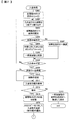
- FIG. 9 is a flowchart showing a process flow of the monitoring notification process.
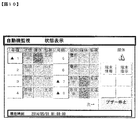
- FIG. 10 is an example of a screen that displays the contents of the monitoring notification, and displays whether or not counting is necessary for each transaction processing device.
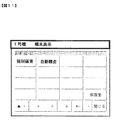
- FIG. 11 is an example of an operation screen for displaying and selecting an instruction to be transmitted from the monitoring terminal 4 to the transaction processing device 2.
- the transaction processing device 2 extracts status information indicating whether recounting is necessary or not from the cash information management table at the timing of the monitoring notification (S501).
- the timing of the monitoring notification is at least one of the timings when the transaction processing device 2 is activated and when the above-described processing of changing the number of bills is performed.
- Transaction processing apparatus 2 performs re-count required state determination to be described later based on re-count required state information (S502). If it is determined that the second state requires re-counting (S502: Yes), the monitoring terminal 4 is notified of the second state (S503).
- the notification of the second state includes information indicating that counting processing (recounting) is necessary and identification information of the target terminal.
- the monitoring terminal 4 When the monitoring terminal 4 receives the second state from the transaction processing device 2, as shown in FIG. 10, the terminal included in the notification of the second state in the state display table displayed on the display unit 44, as shown in FIG.
- One of the items (medium column) of the transaction processing device (unit column) corresponding to the identification information of the item is based on the information indicating the necessity of recounting included in the notification of the second state, and the necessity information of the counting process "Saikeiyou" is displayed. Furthermore, you may notify a supervisor that the 2nd state was received using audio
- the monitoring terminal 4 can also display a terminal instruction screen as shown in FIG.
- the target terminal is displayed so that it can be identified by color or display, the instruction is selected by contact input, and an arbitrary instruction is given to the transaction processing device 2 Can be sent.
- the terminal instruction is counted when, for example, a compulsory scrutiny instruction that is a command to force the transaction processing apparatus 2 to perform a scrutinization process with counting and a second state notification including information indicating that recounting is necessary
- the monitoring terminal 4 When receiving the input of the forced scrutiny instruction, the monitoring terminal 4 transmits a scrutinization instruction with a count to the transaction processing device 2.
- the transaction processing device 2 that has received the scrutinization instruction with counting performs counting processing and updates the cash management information table as a result.
- the transaction processing apparatus 2 extracts the status information of the necessity of recounting from the said cash management information table, and performs a recount required state determination. As a result of the determination, if the recounting is necessary, the transaction processing apparatus notifies the monitoring terminal 4 that the second state is in effect, and the monitoring terminal 4 performs processing when receiving the notification of the second state. .
- the monitoring terminal 4 When receiving the input of the automatic scrutiny instruction, the monitoring terminal 4 registers that the transaction processing apparatus to be subject to automatic scrutiny is subject to automatic scrutiny.
- a scrutiny instruction with count is automatically transmitted.
- the transaction processing apparatus 2 that has received the scrutinization instruction with counting performs processing when the above-described scrutiny instruction with counting is received.
- the transaction processing device 2 notifies the monitoring terminal 4 of any information regarding the status of whether or not the recounting is necessary when the determination result of the recounting necessary state determination is the first state that does not require the recounting (S502: No). do not do. Thereby, the information transmitted to the monitoring terminal 4 can be reduced and the network load can be suppressed.
- the transaction processing device 2 may perform a current high match determination, which will be described later, and notify the monitoring terminal 4 that it is in the second state that requires re-counting when the determination results do not match.
- the transaction processing device 2 notifies the current high of the transaction processing device 2 so as to notify the host computer 3 of the current height of the transaction processing device 2 when the determination result of the recount required state determination (S502) does not require recounting.
- An instruction is given, and the current height of the transaction processing device 2 is acquired. Then, it is determined whether the total amount of the banknotes stored in the banknote cassettes 204A to 204C in the cash information management table and the reject banknotes matches the current height transmitted from the host computer 3.
- the monitoring terminal 4 is notified of the second state.
- the monitoring terminal 4 that has received the second state from the transaction processing device 2 performs the process when it has received the second state described above. Thereby, the supervisor can grasp
- the monitoring terminal 4 may display detailed information such as the reason why the transaction processing device 2 determines that recounting is necessary, the number of banknotes for each denomination, and the number of rejected banknotes for each denomination.
- the transaction processing device 2 is set to notify the monitoring terminal 4 of the above information. Thereby, the supervisor can confirm the detailed information of the transaction processing apparatus 2 from remote.
- the monitoring terminal 4 may notify the monitor that the recounting state has been received using lighting or blinking of a lamp or the like. Good. Thereby, it can notify effectively also to a hearing-impaired person.
- the timing of the monitoring notification may include the time when the state sense instruction is received from the monitoring terminal 4.
- the monitoring terminal 4 may have a state detection instruction for notifying the state of the transaction processing device 2 and may transmit the state detection instruction to the transaction processing device 2 at an arbitrary time.
- the transaction processing apparatus 2 that has received the state detection instruction performs recounting necessary state determination (S502), and if the determination result indicates that recounting is necessary, notifies the monitoring terminal 4 that the state is the second state. Thereby, even when there is no process in which the transaction processing apparatus 2 starts or the number of banknotes fluctuates, it is possible to grasp the state of necessity of recounting.
- the timing at which the monitoring terminal 4 transmits the scrutinization instruction with counting to the transaction processing device 2 may be any time after the re-counting required state is received from the transaction processing device.
- movement which requires a load can be implemented in the time slot
- FIG. 12 is a flowchart illustrating a determination flow of the recount required state. This flow may be the same when the transaction processing apparatus 2 performs the monitoring notification or when the first response and the second response are transmitted in the scrutiny process described later.
- the transaction processing device 2 performs a re-counting state determination process based on the re-counting state information that is information stored in the cash information management table.
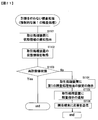
- FIG. 13 is a flowchart showing a processing flow of the scrutiny determination processing.
- FIG. 14 is a diagram illustrating an example of a scrutiny list screen, which displays information about whether or not to perform a counting process to be described later for each transaction processing apparatus.
- S701 a scrutiny instruction from the scrutinization terminal 1 to execute a scrutiny process
- the number of banknotes for each denomination the reject banknotes from the cash information management table.
- the number of denominations and status information indicating whether recounting is necessary are extracted (S702).
- a current high notification instruction is given to the host computer 3 so as to notify the current high of the transaction processing device 2 (S703), and the current high of the transaction processing device 2 is acquired (S704).
- the transaction processing device 2 determines whether or not the reject cassette with the banknotes is withdrawn from the reject cassette withdrawing information about the first reject cassette based on the status information on whether or not recounting is necessary. Occurrence of an event that may cause uncertainties in the amount of banknotes in the transaction processing apparatus by determining whether or not an unknown state of the number of reject cassettes stored due to rejected banknotes generated during counting is determined from unknown banknote information about one reject cassette Determine presence or absence. When it is determined that there is no occurrence of an event that may cause the bill amount in the transaction processing device to be uncertain, re-counting is performed by comparing the information included in the cash information management table described above with the result of matching between the current amount described later. Whether or not is necessary is determined.
- the scrutinization terminal uses the above-mentioned determination result of the necessity of recounting, the number of banknotes stored in each banknote cassette 204A to banknote cassette 204C for each denomination, and the number of reject banknotes for each denomination. 1 to send.
- the determination result included in the first response includes “reject cassette unknown banknote present”.
- Information indicating the state is included (S706).
- the determination result included in the first response includes information indicating the “recount required” state (S708). Further, when the transaction processing device 2 is in a state that does not require recounting (S707: No), the sum of the banknotes stored in the banknote cassettes 204A to 204C in the cash information management table and the reject banknotes is calculated as follows: It is checked whether or not it matches the current height transmitted from the host computer 3 (S709).
- the transaction result 2 includes information indicating the state of “scrutinize” in the determination result included in the first response (S710). Further, when the transaction processing apparatus 2 does not coincide with the current high (S709: No), the transaction processing apparatus 2 includes information indicating the state of “scrutinize NG” in the determination result included in the first response (S711).
- the transaction processing apparatus 2 transmits the first response to the scrutinization terminal 1 after the determination result information is included in the first response.
- the display unit displays “Reject cassette unknown banknote present”, “recount required”, “scrutiny OK”, “ “Scrutinize NG” is displayed.
- the scrutinization terminal 1 When performing the above-described inquiry instruction, the scrutinization terminal 1 issues an inquiry instruction to the transaction processing apparatus 2 to execute the inquiry process before issuing the scrutiny instruction, and the transaction processing apparatus 2 receives the first response. It is assumed that the inquiry terminal is notified of an inquiry response having substantially the same content as the above.
- the transaction processing device 2 has acquired the current height from the host computer 3, but the scrutiny terminal 1 may acquire the current height from the transaction processing device 2 and the host computer 3. Then, the scrutinization terminal 1 may check whether the amounts match using the current amount acquired from the transaction processing device 2 and the current amount acquired from the host computer 3.
- the timing at which the transaction processing device 2 issues a current high notification instruction to the host computer 3 and the timing at which the current high is acquired from the host computer 3 are basically after the information acquisition of the cash information management table. However, it may be an appropriate time from when the scrutiny instruction is received (S701) to when the current high match is determined (S709). Based on the information included in the first response, it is determined that there is no occurrence of an event that may cause an indeterminacy of the banknote amount in the transaction processing device 2, and the banknotes stored in the banknote cassettes 204A to 204C and reject banknotes. If the total amount of money matches the current high information, the scrutiny is confirmed including rejected banknotes.
- the first response is treated as a scrutinized result without performing a counting process described later.
- the scrutinization terminal 1 instructs the transaction processing device 2 to perform re-counting (counting processing) to be described later, and the second response transmitted from the transaction processing device 2 to the scrutiny terminal 1 as a result of the re-counting is the scrutiny result. And the second scrutiny process.
- FIG. 15 is a flowchart showing a processing flow.
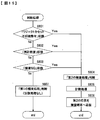
- the scrutiny terminal 1 receives the first response from the transaction processing device 2, the flow shown in FIG. 15 is executed.
- the scrutinization terminal 1 confirms the information of the first response and is “reject cassette unknown banknote present” (S801: Yes), when it is in the “recount required” state (S802: Yes), If any of the conditions of “scrutinization NG” is satisfied (S803: Yes), the transaction processing device 2 is in a state of requiring re-counting, and is thus determined to be the target of the second scrutiny processing. (S804). In this case, a re-counting instruction is notified from the scrutiny terminal 1 to the transaction processing device 2, and the transaction processing device 2 performs a counting process (S805). The result is transmitted to the examination terminal 1 as a second response (S806).
- the transaction processing device 2 If none of the conditions are met (S803: No), the transaction processing device 2 is in a state that does not require re-counting, and is therefore determined to be the target of the first scrutiny process (S807). In this case, the counting process (S805) is not performed.
- the banknote processing unit 25 performs a counting process (see FIG. 16) that counts the number of banknotes stored in all banknote cassettes 204A to 204C for each denomination.
- the transaction processing apparatus 2 counts the number of banknotes stored in each banknote cassette 204A to banknote cassette 204C for each denomination, and for each banknote type stored in the reject cassette.
- the cash information management table (see FIG. 3) is updated for at least one of the number of sheets and the presence / absence of an unknown banknote in the first reject cassette. Referring to this update result, the number of banknotes stored in each banknote cassette 204A to banknote cassette 204C for each denomination, the number of banknotes stored in the reject cassette for each denomination, and the necessity of recounting
- the determination result on the necessity of re-counting based on the information is notified to the scrutiny terminal as a second response (scrutiny result) (S806).
- At least the number of banknotes stored in each banknote cassette 204A to banknote cassette 204C for each denomination and the number of banknotes stored in the reject cassette for each denomination are necessarily included.
- Status information indicating whether or not recounting is necessary refers to banknote cassette sampling information, unknown banknote information of the first reject cassette, first reject cassette sampling information, cash unit, etc. stored in the cash information management table of the banknote processing unit 25 ( Failure information, cash residue failure, etc., and at least a part of these.
- FIG. 16 is a flowchart showing the processing flow of the counting process.
- the banknote processing unit 25 resets the counter for each denomination (S901). This counter for each denomination counts the number of denominations of banknotes stored in the banknote cassette 204A to banknote cassette 204C.
- the banknote processing unit 25 pays out banknotes and stores them in the replenishing unit 206A of the replenishing cassette 206 until the banknote cassettes (firstly, the banknote cassette 204A and banknote cassette 204B storing 10,000 yen bills) are empty (S902). Since the replenishment part 206A of the replenishment cassette 206 is empty, only the banknotes in the banknote cassette 204A and the banknote cassette 204B are stored by performing the process of S902.
- the banknote processing unit 25 feeds out banknotes one by one from the replenishing unit 206A of the replenishment cassette 206 (S903), and the banknote identification unit 202 identifies the denomination of the banknote (S904). Also identify the authenticity of banknotes.
- the banknote process part 25 will count up the counter according to the money type of a banknote, if the banknote identification part 202 can identify the money type of a banknote (S905: Yes) (S906).
- the banknote processing unit 25 stores banknotes in a banknote cassette corresponding to the denomination (S907), and proceeds to S912.
- the banknote process part 25 considers the banknote which could not be identified as a reject banknote, and is a cash information management table (FIG. 3). "Refer to the presence / absence of unknown banknote in the first reject cassette” is updated to "present” (S908). And the banknote process part 25 accommodates a reject banknote in the 1st reject cassette 205 (S909), and progresses to S910.
- the banknote processing unit 25 repeatedly performs the processing of S903 to S910 until the replenishing unit 206A of the replenishing cassette 206 is empty (S910: No).
- the banknote processing unit 25 uses the banknote cassette in which another denomination is stored (the banknote cassette 204C in which a thousand yen bill is stored). (S911: No), the processing of S902 to S911 is performed.
- the banknote processing unit 25 stores the banknotes newly fed out from the banknote cassette as the partition banknotes in the first reject cassette 205. (S912). At this time, the banknote processing unit 25 identifies the serial number (AAAAAAAAA) of the partition banknote in the banknote identification unit 202, and registers “AAAAAAAAA” in the “partition banknote” of the cash information management table (see FIG. 3). Thereafter, the cash information management table (see FIG. 3) is updated based on the value of the counter for each denomination. (S913) As described above, the banknote processing unit 25 completes the counting process stored in all banknote cassettes.
- the banknote process part 25 accommodates a partition banknote in the 1st reject cassette 205 after a count process, it can discriminate
- the clerk can take out and examine only the reject banknote before the completion of the scrutiny process from the first reject cassette 205 even when the banknote of the first reject cassette 205 actually needs to be examined.
- FIG. 17 is an explanatory diagram when the reject cassette is stored.
- FIG. 18 is an explanatory diagram when the reject cassette is removed.
- the sensor 507 (for example, a pressure sensor) comes into contact with the bottom of the first reject cassette 205. As shown in FIG. 18, the sensor 507 moves away from the bottom side of the first reject cassette 205 after the first reject cassette 205 is extracted.
- the banknote processing unit 25 detects that the sensor 507 is not in contact with the first reject cassette 205, the banknote processing unit 25 detects the removal of the first reject cassette, and the “first reject cassette” in the cash information management table (see FIG. 3). Update “Presence of sampling” to “Yes”.
- the banknote processing unit 25 can detect the removal of the first reject cassette 205 using the sensor 507.
- the banknote processing unit 25 drives the solenoid 505 based on an instruction from the control unit 21. Since the solenoid 505 pulls the lower side of the second lever 502 toward the first reject cassette 205, the second lever 502 is movable around the fulcrum 504, and from the key portion provided on the upper side of the second lever 502, the first lever 501 comes off. The first lever 501 moves around the fulcrum 503 and contacts the fixed guide plate 508 at the tip opposite to the second lever 502.
- the banknote processing unit 25 pushes up the first lever 501 (the opposite side of the second lever 502) when the first reject cassette 205 is removed.
- the first lever 501 is movable around a fulcrum 503, and the tip on the first lever 501 side (the second lever 502 side) fits into a key part provided on the upper part of the second lever 502. As a result, the first lever 501 presses the sensor 506.
- the bill processing unit 25 is powered off and does not drive the solenoid 505, so the first lever 501 and the second lever 502 are not moved.
- the banknote processing unit 25 detects that the sensor 506 is in contact with the first lever 501, and therefore detects the removal of the first reject cassette, and the cash information management table (see FIG. 3). ) “Presence / absence of removal of first reject cassette” is updated to “Yes”.
- the banknote processing unit 25 detects that the sensor 506 is not in contact with the first lever 501.
- the banknote processing unit 25 can detect that the reject cassette 205 has been removed when the power is turned off. That is, it can be seen that the transaction processing device 2 may have removed the banknotes stored in the first reject cassette 205. It can also be seen that the banknotes 204A to 204C may have been extracted by the same means.
- the bill may remain in the bill transport path L.
- the banknotes remaining in the banknote entrance / exit are inserted and stored in the first reject cassette 205 while being recognized by the banknote recognition unit 202.
- Banknotes that could not be identified are stored directly in the second reject cassette 207.
- the second reject cassette may not be mechanically transported, and may be, for example, a box-shaped member for storing banknotes in an envelope.
- the unknown banknote is not stored in the first reject cassette 205 and is managed separately, and the operation can be resumed while the number of denominations of the first reject cassette 205 is fixed.
- the number of banknotes stored in the second reject cassette stored in the cash information management table is added to the first response and the second response (settlement result) to be notified. Information may be included.
- the scrutinization terminal 1 the banknote accommodated in the transaction processing apparatus 2 including all the unknown banknotes can be grasped
- the cash information management table is configured to be included in each of the banknote processing unit 25 and the coin processing unit 26, but may be configured to be included in the control unit 21.
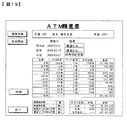
- the scrutiny list screen shown in FIG. 14 is displayed as a result of scrutiny by the scrutinization terminal 1, but information on the result may be output to a printer (not shown). Further, a scrutiny table as shown in FIG. 19 may be created or output.
- FIG. 19 is a diagram showing an example of a scrutiny table. When the scrutiny table shown in FIG. 19 is displayed, the scrutinization terminal 1 stores the history information of the result of the scrutiny of each transaction processing device in its own device.
- the banknotes are replenished from the replenishing portion 206A of the replenishing cassette 206 until the replenishment of the banknote cassettes 204A to 204C is completed in S108 of FIG.
- the banknotes 204A to 204C may be replenished with bills until the replenishing portion 206A of the replenishing cassette 206 is empty.
- FIG. 14 is a diagram showing an example of the scrutiny list screen, but the control related to the display of FIG. 14 is substantially the same as the description so far. However, regardless of the result of the determination of whether the re-counting is necessary and the determination result of the current high collation inappropriateness in the determination process of the first scrutiny process and the second scrutiny process shown in FIG.
- the counting is forcibly executed, and in the scrutiny processing that does not perform counting, in principle, the scrutiny results are obtained with the first response without counting.
- the scrutiny terminal 1 instructs the transaction processing device 2 before the scrutiny instruction, and the transaction processing device 2 inquires the content substantially the same as the first response. The response may be notified to the scrutinizing terminal 1.
- processing similar to the processing related to the first response is performed, and the determination result is stored in the examination terminal 1 or the determination result is displayed on the display unit of the operation terminal 1 as shown in FIG.
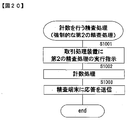
- FIG. 20 is a flowchart showing a processing flow of a scrutiny process for forcibly counting.
- FIG. 21 is a flowchart showing the processing flow of the non-counting examination process.
- the scrutinization terminal 1 performs a scrutiny with counting regardless of the state of scrutinization OK, scrutiny NG, recounting, etc., for a plurality of transaction processing devices 2. 2 is instructed to perform a scrutiny with counting (S1001).
- the scrutiny with counting is a process of performing the above-described counting process after receiving a scrutiny instruction, updating the cash management information table as a result, and transmitting a response including the updated content to the scrutinization terminal, This corresponds to the above-described second scrutiny process.
- the transaction processing device 2 receives the instruction to execute the scrutiny with counting, performs the counting process (S1002), updates the result to the cash management information table, and scrutinizes the scrutinization result as a response including the updated content. (S1003).
- the display of the scrutiny terminal 1 shown in FIG. Check the check box to select and input, press the “Scrutinize with Count” button, and enter the “Scrutinize with Count” instruction.
- the scrutinization terminal 1 instructs the transaction processing device 2 that is the target of selection input to perform a scrutiny with count, that is, a process corresponding to the second scrutinization process.
- the scrutinization terminal 1 performs a scrutiny without counting regardless of the state of scrutinization OK, scrutiny NG, or re-counting required for a plurality of transaction processing devices 2. 2, the transaction processing device 2 is instructed to notify the scrutinization terminal 1 of the determination result of whether or not the recounting is necessary based on the status information indicating whether or not the recounting is necessary (S1101). The determination result of necessity is acquired (S1102). When it is determined from the received determination result that the transaction processing device 2 is not in a state requiring re-counting (S1103: No), the scrutinization terminal 1 instructs a scrutiny without counting, that is, setting corresponding to the first scrutiny process ( S1104).
- scrutiny without counting means that when a scrutiny instruction is received, information is extracted from the cash management information table without performing a counting process triggered by reception of the scrutiny instruction, and a response including the extracted content is sent. This is a process to be sent to the scrutinization terminal and corresponds to the first scrutiny process described above.
- the state information indicating whether or not recounting is necessary may be the same as the state information indicating whether or not recounting is included, and is stored in the cash information management table provided in the banknote processing unit 25.
- Banknote cassette extraction information unknown banknote information of the first reject cassette (banknote whose denomination or number could not be identified), first reject cassette extraction information, cash unit etc. (related to mechanisms such as mechanisms), fault information, cash residual fault At least part of the information.
- the scrutinization terminal 1 When performing the non-counting scrutiny process, check the check box of the transaction processing device 2 that executes the non-counting scrutiny among the check boxes of the plurality of transaction processing devices 2 on the display unit of the scrutiny terminal 1 shown in FIG. To select and input, press the “No scrutiny button”, and enter the “No scrutiny” command.
- the scrutinization terminal 1 Upon receiving the input of the “non-counting scrutinization” instruction, the scrutinization terminal 1 instructs the transaction processing apparatus 2 that is the target of selection input to respond corresponding to the first scrutiny process by the process of FIG. The processing device 2 is automatically selected, and the transaction processing device 2 is instructed to perform a scrutiny without counting.
- scrutiny process (process equivalent to the second scrutiny process) that forcibly performs counting at any time ) May be instructed once. In this case, it is possible to easily carry out unannounced scrutiny for ensuring security. Further, the transaction processing device that performs the scrutinization processing for compulsory counting and the transaction processing device that performs the scrutiny processing that does not perform counting are explicitly shown for each transaction processing device on the display unit of the scrutiny terminal shown in FIG. May be displayed.
- each transaction processing device it is determined whether the first scrutiny processing or the second scrutiny processing, and a log is left in either the scrutiny terminal, the transaction processing device, or the host computer. May be. In this case, when the failure occurs, the log can be used as a cause investigation of the failure occurrence.
- information related to scrutiny may be recorded only in the electronic journal without being printed on the statement slip in the transaction processing device. In this case, it is not necessary to suspend the operation for printing a statement slip as a result of the scrutiny process, and the operation stop time can be further shortened.
- the scrutiny terminal may be configured as a server.
Landscapes
- Physics & Mathematics (AREA)
- General Physics & Mathematics (AREA)
- Financial Or Insurance-Related Operations Such As Payment And Settlement (AREA)
Abstract
取引処理装置での現金管理業務を省力化させつつ、取引処理装置の状態を把握しながら当該業務のセキュリティを向上させることが課題となっている。 取引処理装置は、紙幣カセットに収納される紙幣の金種毎の枚数の情報と、リジェクトカセットに収納される紙幣の枚数の情報と、状態情報とを格納する記憶部を有し、状態情報に基づいて、紙幣カセットの収納される紙幣の計数処理について、不要な第1の状態、必要な第2の状態のいずれの状態かを判断する。第2の状態と判断するときには、監視端末に第2の状態であることの情報を含む通知を送信する。
Description
この発明は、ATM等の取引処理装置内に収納されている貨幣を精査する取引処理装置、及び取引システムに関する。
従来、ATM等の取引処理装置では、ホストコンピュータに現在高を管理されている(例えば、特許文献1参照)。
例えば、特許文献1では、精査端末にて、取引処理装置に精査を指示するとともに、ホストコンピュータに取引処理装置の現在高を通知するように指示し、取引処理装置からの精査結果とホストコンピュータからの現在高とに基づいて精査判定を行う。
特許文献1では、遠隔地からの指示で、取引処理装置での精査の実行の際に、係員にリジェクトカセットに収納された貨幣を確認せずともよいように取引処理装置の制御を行う。しかし、リジェクトカセットには、金種もしくは枚数が不明な貨幣が収納される可能性があるため、一定期間ごとにリジェクトカセットの貨幣を実際に確認し、あわせて、精査の精度を担保するためには一定期間ごとに金種別カセットの再計数の精査を行うことが望ましく、これらの処理の間は装置を休止させる必要があるため、取引処理装置の稼働時間が制限される課題がある。また、再計数は取引処理装置内の貨幣を計数するため、計数処理に伴う機器障害発生による休止期間の延長の可能性も高める課題がある。
また、精査の実施が一定期間ごとに行う場合、精査の不実施の期間内に、取引処理装置内の貨幣を流用等の不正が発生しうる課題もある。
そこで、取引処理装置での現金管理業務を省力化させつつ、取引処理装置の状態を把握しながら当該業務のセキュリティを向上させることが課題となっている。
本発明による取引処理装置は一例として、紙幣の金種及び数量を識別する紙幣識別部と、紙幣を金種毎に収納する紙幣カセットと、前記紙幣識別部で識別ができないリジェクト紙幣を収納する第1リジェクトカセットと、制御部とを有する取引処理装置であって、前記制御部は、前記紙幣カセットに収納される紙幣の金種毎の枚数の第1の情報と、前記第1リジェクトカセットに収納される紙幣の枚数の第2の情報と、状態情報とを格納する記憶部を有し、前記記憶部から前記状態情報を読み出すときに、前記状態情報に基づいて、前記紙幣カセットの収納される紙幣の計数処理について、不要な第1の状態、必要な第2の状態のいずれの状態かを判断し、前記第2の状態と判断するとき、監視端末に前記第2の状態であることの情報を含む通知を送信し、指示を受信するとき、前記第1の状態の場合は、前記計数処理を行わずに前記第1の情報と前記第2の情報とを精査結果に対応させる第1の精査処理を実施し、前記第2の状態の場合は、前記計数処理を行い前記計数処理の結果に応じて更新された前記第1の情報及び前記第2の情報とを精査結果に対応させる第2の精査処理を実施することを特徴とする。
本発明による取引システムは一例として、複数の取引処理装置と、精査端末と、監視端末を有する取引システムであって、前記複数の取引処理装置の各々は、紙幣の金種及び数量を識別する紙幣識別部と、紙幣を金種毎に収納する紙幣カセットと、前記紙幣識別部で識別ができないリジェクト紙幣を収納する第1リジェクトカセットと、制御部とを備え、前記制御部は、前記紙幣カセットに収納される紙幣の金種毎の枚数の第1の情報と、前記第1リジェクトカセットに収納される紙幣の枚数の第2の情報と、状態情報とを格納する記憶部を有し、前記記憶部から前記状態情報を読み出すときに、前記状態情報に基づいて、前記紙幣カセットに収納される紙幣の計数処理について、不要な第1の状態、必要な第2の状態のいずれの状態かを判断し、指示を受信するとき、前記第1の状態の場合は、前記計数処理を行わずに前記第1の情報と前記第2の情報とを精査結果に対応させる第1の精査処理を実施し、前記第2の状態の場合は、前記計数処理を行い前記計数処理の結果に応じて更新された前記第1の情報及び前記第2の情報とを精査結果に対応させる第2の精査処理を実施し、前記監視端末は、前記制御部が前記第2の状態と判断するときに送信する前記第2の状態であることの情報を含む通知を受信し、前記精査端末は、前記第1の精査処理と前記第2の精査処理との少なくともいずれかについて、前記取引処理装置から情報を送信されることを特徴とする。
取引処理装置に関する係員の現金管理業務を低減させかつ装置自体の休止時間の低減しつつ、取引処理装置の状態を把握しながら現金管理業務のセキュリティを高めることができる。
本実施形態に係る取引処理装置2(例えば、ATMや両替機等)、及び取引処理装置2の精査を遠隔地から行う精査端末1、取引処理装置2の状態を遠隔地から監視する監視端末4からなる精査システムについて図を参照して説明する。図1は、取引処理装置、精査端末、及び監視端末の機能、構成を示すブロック図である。図2は、取引処理装置の内部構成を示す図である。
図1に示すように、取引処理装置2は、精査端末1及びホストコンピュータ3、監視端末4とネットワークを介して接続されている。なお、精査端末1及びホストコンピュータ3、監視端末4に接続される取引処理装置2の台数は1台に限らない。また、取引処理装置2と精査端末1及び監視端末4とにより、取引システムを構成する。また、取引システムはホストコンピュータ3をも含める構成としてもよい。
取引処理装置2は、後述のように、内部の状態情報に基づいて計数要否の判定を行い、計数が必要な状態であれば監視端末4に通知する。監視端末4は、当該取引処理装置2から受信した情報を表示部44に表示する。
監視端末4は遠隔して設置される取引処理装置2の情報を受信する通信部42、表示部44、音声発生部45、操作部43、そしてこれら各部を制御する制御部41を有する。制御部41は、CPU,メモリ等のハード構成と、プログラム、データ等のソフト構成とから成り、各種処理を制御する。表示部44は画面表示機能を、音声発生部45はブザー等の音声発生機能を各々もっている。これらの機能は、取引処理装置2から情報を受信したときに、監視者に対して音声で通知したり受信した情報を画面表示したりする。また、操作部43は入力操作を受け付けるための入力検知機能をもっている。入力検知機能は例えば、接触入力が可能なタッチパネルや押下が可能なハードウェアキーによる入力を検知する。この機能は、取引処理装置2に対して監視者が遠隔から指示を送ることを可能とする。
ホストコンピュータ3は、例えば、各ユーザの口座における残高の管理や、各取引処理装置2の現在高を管理している。取引処理装置2は、精査端末1から精査指示を受信するときに、ホストコンピュータ3に対して、当該取引処理装置2の現在高を通知するよう指示する。そして、取引処理装置2は、当該取引処理装置2内部の現在高と、ホストコンピュータ3からの現在高と、に基づいて精査判定を行い、当該判定結果を精査端末1に送信する。精査端末1は、取引処理装置2から受信した当該判定結果情報を表示部14に表示する。
精査端末1は遠隔して設置される取引処理装置2の精査結果情報を管理する制御部11を有する。通信部12、操作部13、表示部14、そしてこれら各部を制御する制御部11などで構成されている。制御部11は、CPU,メモリ等のハード構成と、プログラム、データ等のソフト構成とから成り、各種処理を制御する。
表示部14は画面表示機能を、操作部13はマウス或いは接触入力による入力の検知機能を各々もっている。これらは、精査情報を管理する者が、精査データ結果チェックを行う際、取引処理装置2の端末状態情報/精査結果確認状況情報を表示の操作等を受付ける。
取引処理装置2は、制御部21、表示・操作部22、カード・明細書処理部23、通帳処理部24、紙幣処理部25、硬貨処理部26、及び通信部27を備える。
制御部21は、取引処理装置2本体各部の動作を制御する。例えば、制御部21は、通信部27を介して精査端末1から精査の指示を受け付けると、紙幣処理部25及び硬貨処理部26に計数を伴う精査処理を実行させる。
表示・操作部22は、本体正面に設けた表示器、及びこの表示器の画面上に貼付したタッチパネルを有している。表示・操作部22は、利用者に対する操作案内画面を表示器に表示する。また、表示・操作部22は、タッチパネルの押下位置を検知することにより、暗証番号や取引内容(取引種別、入出金金額等)にかかる利用者の入力操作を受け付ける。
カード・明細書処理部23は、本体正面に設けたカード挿入口に挿入されたキャッシュカード(以下、単にカードと称す。)を取り込み、このカードの磁気ストライプに記録されているカード情報(金融機関番号、店舗番号、口座番号等)の読み取りや、カード情報の書き換え等を行う。また、挿入されたカードがICカードである場合には、必要に応じて、そのカードのICチップに記録されているデータの読み取りや、書き換えも行う。更に、カード・明細書処理部23は、取引内容を明細書に印字する印字部(不図示)を有する。カード・明細書処理部23は、取引内容を印字した明細書を本体正面に設けた明細書放出口に放出する。
通帳処理部24は、本体正面に設けた通帳挿入口に挿入された通帳を取り込み、この通帳に対して取引履歴を印字する印字部(不図示)を有している。また、通帳処理部24は、取り込んだ通帳のページを捲るページ捲り機構や、通帳に印刷されているページ番号を示すバーコードを読み取るバーコードリーダ、通帳に貼付されている磁気ストライプに記録されている通帳情報(金融機関番号、店舗番号、口座番号等)を読み取る磁気ヘッド等も有している。
図2に示すように、紙幣処理部25は、本体正面に設けた入出金口201と、本体内部に収納されている紙幣カセット204A~紙幣カセット204Cと、の間に形成した紙幣搬送路Lに沿って紙幣Sを搬送する。本実施形態においては、紙幣カセット204A、紙幣カセット204Bは、1万円札を収納するカセットであり、紙幣カセット204Cは、千円札を収納するカセットであるとして説明する。また、本実施例では、5千円札と2千円札を収納するカセットは装着しない例を示す。
紙幣処理部25は、紙幣搬送路Lに沿って搬送している紙幣毎に、金種及び真偽を識別する紙幣識別部202、及び紙幣を一時収納する一時保留部203を備える。紙幣識別部202は、紙幣から読み取った磁気パターンや、透過光パターン等に基づいて金種及び真偽を識別する。また、紙幣識別部202は、紙幣の形状や厚み等から枚数を判別する。
紙幣処理部25は、紙幣カセット204A~紙幣カセット204Cに紙幣を補充する補充用カセット206(補充する紙幣が収納されている補充部206A、補充時に識別できなかった紙幣を収納する補充リジェクト部206B)、及びリジェクト紙幣を収納する第1リジェクトカセット205を備える。また、紙幣処理部25は、紙幣カセット204A~紙幣カセット204C、第1リジェクトカセット205のいずれが抜き差しされたかを検知する検知部(不図示)を備える。
紙幣処理部25は、紙幣識別部202にて識別できなかった紙幣を収納しておくための第2リジェクトカセット207を備える。また、紙幣処理部25は、第2リジェクトカセット207内が空かを検知する検知部(不図示)を備える。
紙幣処理部25は、メモリ(不図示)を備え、紙幣カセット204A~紙幣カセット204C、第1リジェクトカセット205(及び第2リジェクトカセット207を含めてもよい)に収納されているリジェクト紙幣の金種毎の枚数、及び後述する再計数要否の状態情報を記憶する現金情報管理テーブル(図3参照)を記憶する。図3は、現金情報管理テーブルの一例を示す図である。図3に示すように、リジェクト紙幣には、紙幣識別部202が万円札、千円札と識別できたものの出金に使用するには適さない紙幣(第1リジェクトカセット欄の「万円」テーブルと「千円」テーブルに情報を格納される紙幣)と、紙幣カセット204A~紙幣カセット204Cに収納できない5千円札、2千円札等の紙幣(第1リジェクトカセット欄の「5千円」テーブルと「2千円」テーブルに情報を格納される紙幣)と、が含まれる。紙幣処理部25の詳細については、後述する。
硬貨処理部26は、本体正面に設けた硬貨入出金口と、本体内部に収納されている硬貨カートリッジと、の間に形成された硬貨搬送路に沿って硬貨を搬送する。また、硬貨処理部26は、硬貨搬送路に沿って搬送している硬貨毎に、金種、及び真偽を識別する硬貨識別部を有している。
硬貨処理部26は、メモリ(不図示)を備え、リジェクト硬貨収納部(不図示)に収納されているリジェクト硬貨の金種毎の枚数等を記憶する現金情報管理テーブルを記憶する。リジェクト硬貨とは、硬貨識別部が識別できなかった硬貨のことである。
通信部27は、制御部21の指示に基づいて、精査端末1やホストコンピュータ3、監視端末4との通信を行う。
まず、精査端末1、取引処理装置2、ホストコンピュータ3、及び監視端末4との関係について図4を参照して説明する。図4は、精査端末、取引処理装置、ホストコンピュータ及び監視端末における各処理の関係を示す図である。なお、精査端末1及びホストコンピュータ3が本実施例の精査装置に相当する。以下、紙幣に対する各種処理について説明する。
図4に示すように、取引処理装置2は、自装置内に収納している紙幣の枚数が変動する処理(例えば、紙幣カセット204A~紙幣カセット204Cへ紙幣を補充するための補充処理、ユーザによる出金処理、及びユーザによる入金処理)を行うと当該処理の取引額(例えば、補充した金額、出金取引金額、及び入金取引金額)をホストコンピュータ3に通知する。そして、ホストコンピュータ3は、取引額に応じて、取引処理装置2の現在高を更新する。以上より、ホストコンピュータ3は、各取引処理装置2の現在高(取引処理装置2に収納されている金額)を管理することができる。
また、取引処理装置2は起動時、または前述した紙幣の枚数が変動する処理を行うときの少なくともいずれかに、紙幣処理部25が備える現金情報管理テーブルを参照し、再計数要否の状態情報を読み出して抽出する。そして、再計数要否の状態情報に基づいて再計数要の状態と判断するとき、監視端末4に起動時、または前述した紙幣の枚数が変動する処理を行うときの状態情報を通知する。ここで、再計数要否の状態情報とは、紙幣処理部25が備える現金情報管理テーブルに格納された、紙幣カセット抜取情報、第1リジェクトカセットの不明紙幣(金種もしくは枚数が識別できなった紙幣)情報、第1リジェクトカセット抜取情報、現金ユニット等(メカなどの機構に関する)障害情報、現金残留障害情報の少なくとも一部とする。
精査端末1は、取引処理装置2に収納されている紙幣の金種毎の枚数が正しいかを調べる精査判定処理を行う。精査端末1は、取引処理装置2に対して、精査処理を行うよう精査指示を行う。取引処理装置2は、精査端末1から精査指示を受信するとき、紙幣処理部25が備える現金情報管理テーブルから、自装置内に収納されている紙幣の金種毎の枚数、及び再計数要否の状態情報を抽出する。さらに、ホストコンピュータ3に対して、現在高を通知するよう現在高通知指示を行う。現在高通知指示を受信したホストコンピュータ3は、当該取引処理装置2の現在高を通知する。そして、取引処理装置2は、再計数要否の状態情報に基いて、再計数が要と判断するとき、再計数が要であることを第1の応答として精査端末1へ通知する。また、再計数が不要のとき、取引処理装置2は、自装置内に収納されている紙幣の金種毎の枚数とホストコンピュータ3からの現在高と、に基づいて、収納されている紙幣の金種毎の枚数が正しいかを判定する。そして、現在高の判定結果を第1の応答として精査端末1へ通知する。なお、精査端末1は、この精査指示の前に照会指示を取引処理装置2に指示してもよい。この場合、取引処理装置2では、上記及び下記する第1の応答と実質的に同様の内容の照会応答を精査端末1に通知する。この場合には、精査端末1にて、実際の精査指示を指示する前に取引処理装置2の状態を把握しておくことが可能となる。
次に、上述した各処理(補充処理、出金処理、入金処理、監視通知処理、精査判定処理)の詳細について図5~図16を参照して説明する。
まず、補充処理の詳細について、図5を参照して説明する。図5は、補充処理の処理フローを示すフローチャートである。取引処理装置2の紙幣処理部25は、係員が補充用カセット206をセットすると、図5に示す補充処理を行う。そして、係員は、取引処理装置2の補充処理が完了すると、補充用カセット206から現金を取り出す。なお、取引処理装置2は、運用時、自装置内に空の補充用カセット206を格納している。
図5に示すように、取引処理装置2の紙幣処理部25は、金種毎のカウンタをリセットする(S101)。この金種毎のカウンタは、補充する紙幣の金種毎の枚数をカウントする。
紙幣処理部25は、補充用カセット206の補充部206Aから紙幣を1枚ずつ繰り出し(S102)、紙幣の金種を紙幣識別部202にて識別する(S103)。この際、紙幣識別部202は、紙幣の真偽についても識別する。
紙幣処理部25は、紙幣識別部202にて紙幣の金種を識別できる(S104:Yes)と、紙幣の金種に応じたカウンタをカウントアップする(S105)。紙幣処理部25が、紙幣カセット204A~紙幣カセット204Cのうち、該当する紙幣カセットに紙幣を収納して(S106)、S108へ進む。具体的には、紙幣処理部25は、紙幣が1万円札なら、紙幣カセット204A又は紙幣カセット204Bに収納し、紙幣が千円札なら、紙幣カセット204Cに収納する。
また、紙幣処理部25は、紙幣識別部202にて紙幣の金種を識別できなかった場合に(S104:No)、補充用カセット206の補充リジェクト部206Bへ収納して(S107)、S108へ進む。
S108にて、紙幣処理部25は、紙幣カセット204A~紙幣カセット204Cへの補充が完了するまで(S108:No)、S102~S108の処理を繰り返し行う。紙幣処理部25は、紙幣カセット204A~紙幣カセット204Cへの補充が完了すると(S108:Yes)、補充された紙幣について、金種毎のカウンタの値に基づいて、現金情報管理テーブル(図3)を更新する(S109)。その後、金種毎のカウンタの値にもとづいて、補充額を算出する(S110)。取引処理装置2は、紙幣処理部25が算出した補充額を取引額として、通信部27を介してホストコンピュータ3に通知する(S111)。
以上のように、紙幣処理部25は、補充用カセット206に収納されている紙幣を識別して、紙幣カセット204A~紙幣カセット204Cに補充する。この際、紙幣処理部25は、金種毎のカウンタを用いて、補充した紙幣の枚数を金種毎にカウントしているため、取引処理装置2に補充した金額を正確に把握することができる。
また、ホストコンピュータ3は、当該取引処理装置2の現在高に、取引処理装置2から通知された取引額(紙幣の金種毎の枚数)を加算するため、補充処理後であっても現在高を正確に把握することができる。
次に、出金処理の詳細について、図6を参照して説明する。図6は、出金処理の処理フローを示すフローチャートである。取引処理装置2は、ユーザが出金取引を行う(出金取引金額が指定される)と、図6に示す処理を行う。図6に示すように、取引処理装置2の紙幣処理部25は、金種毎のカウンタをリセットする(S201)。この金種毎のカウンタは、出金する紙幣の金種毎の枚数をカウントする。
紙幣処理部25は、出金取引金額に応じて、紙幣カセット204A~紙幣カセット204Cから紙幣を1枚ずつ繰り出す(S202)。例えば、紙幣処理部25は、出金取引金額(例えば3万円)に応じて、例えば万円札を紙幣カセット204Aから繰り出す。
紙幣処理部25は、繰り出された紙幣の金種を紙幣識別部202にて識別する(S203)。この際、紙幣識別部202は、紙幣の真偽についても識別する。紙幣処理部25は、紙幣識別部202にて紙幣の金種を識別できる(S204:Yes)と、紙幣の金種に応じたカウンタをカウントアップする(S205)。紙幣処理部25は、入出金口201に紙幣を収納して(S206)、S211へ進む。
また、紙幣処理部25は、紙幣識別部202にて紙幣の金種を識別できなかった場合に(S204:No)、識別できなかった紙幣をリジェクト紙幣とみなして、一時保留部203に収納して(S207)S208へ進む。
S208にて、紙幣処理部25は、金種毎のカウンタを参照して、入出金口201に収納した紙幣が出金取引金額に一致するまで(S208:No)、S202~S208の処理を繰り返し行う。紙幣処理部25は、入出金口201に収納した紙幣が出金取引金額に一致すると(S208:Yes)、一時保留部203に収納した紙幣を繰り出した元の紙幣カセット204A~紙幣カセット204Cに収納し、(S209)、出金された紙幣について、金種毎のカウンタの値に基づいて、現金情報管理テーブル(図3)を更新する(S210)。その後、入出金口201を開けて、紙幣を出金する(S211)。そして、取引処理装置2は、出金取引金額を取引額として、通信部27を介してホストコンピュータ3に通知する(S212)。
以上のように、紙幣処理部25は、出金処理の際は、紙幣カセット204A~紙幣カセット204Cに収納されている紙幣を識別して、紙幣カセット204A~紙幣カセット204Cに含まれるリジェクト紙幣を第1リジェクトカセット205へ収納することなく出金処理を行う。このため、第1リジェクトカセット205に金種、枚数が不明な紙幣が収納されることがなくなり、取引処理装置内の不明紙幣の枚数を低減させることができる。 また、ホストコンピュータ3は、補充処理の際は、当該取引処理装置2の現在高に、取引処理装置2から通知された取引額(紙幣の金種毎の枚数)を加算するため、補充処理後であっても現在高を正確に把握することができる。
次に、入金処理の詳細について、図7を参照して説明する。図7、図8は、入金処理の処理フローを示すフローチャートである。図7は、入金取引の処理を示し、図8は、入金取引確定後、入金された紙幣を紙幣カセットへ収納する処理を示す。取引処理装置2の紙幣処理部25は、ユーザが入金取引を行う(入出金口201に紙幣が入れる)と、図7に示す処理を行う。
図7に示すように、取引処理装置2の紙幣処理部25は、金種毎のカウンタをリセットする(S301)。この金種毎のカウンタは、入金する紙幣の金種毎の枚数をカウントする。
紙幣処理部25は、入出金口201に収納された紙幣を1枚ずつ繰り出して(S302)、当該紙幣の金種を紙幣識別部202にて識別する(S303)。この際、紙幣識別部202は、紙幣の真偽についても識別する。
紙幣処理部25は、紙幣識別部202にて紙幣の金種を識別できる(S304:Yes)と、紙幣の金種に応じたカウンタをカウントアップして(S305)、一時保留部203に紙幣を収納して(S306)、S308へ進む。
また、紙幣処理部25は、紙幣識別部202にて紙幣の金種を識別できなかった場合に(S304:No)、当該紙幣を返却口へ搬送して(S307)、S308へ進む。
紙幣処理部25は、入出金口201の紙幣が空になるまで(S308:No)、S302~S308の処理を繰り返し行う。紙幣処理部25は、入出金口201の紙幣が空になると(S308:Yes)、返却口に紙幣が有るかを調べる(S309)。紙幣処理部25は、返却口に紙幣が有る場合に(S309:Yes)、当該紙幣を返却して(S310)、S311へ進む。紙幣処理部25は、返却口に紙幣がない場合に(S309:No)、S311へ進む。
紙幣処理部25は、紙幣の金種に応じたカウンタに基づいて、入金取引金額を表示する(S311)。紙幣処理部25は、ユーザによって、入金取引金額が確定されたら(S312:Yes)、入金取引を確定して、金種毎のカウンタの値を一時記憶する(S313)。そして、取引処理装置2は、入金取引金額を取引額として、通信部27を介してホストコンピュータ3に通知する(S314)。
また、紙幣処理部25は、入金取引金額が確定しない場合に(S312:No)、一時保留部203の紙幣を返却口へ搬送して返却する(S315)。なお、紙幣処理部25は、入金取引金額が確定しない場合に、一時保留部203の紙幣を返却せずに、ユーザに追加入金させてもよい。
以上より、ホストコンピュータ3は、入金処理では、当該取引処理装置2の現在高に、取引処理装置2から通知された取引額(紙幣の金種毎の枚数)を加算するため、入金処理後であっても現在高を正確に把握することができる。
図8に示すように、紙幣処理部25は、入金取引が確定すると、金種毎のカウンタ及びリジェクト用カウンタをリセットする(S401)。この金種毎のカウンタは、紙幣カセット204A~紙幣カセット204Cに収納した紙幣の金種毎の枚数をカウントする。このリジェクト用カウンタは、リジェクトカセットに収納される紙幣の枚数をカウントする。
紙幣処理部25は、一時保留部203から紙幣を1枚ずつ繰り出し(S402)、紙幣の金種を紙幣識別部202にて識別する(S403)。この際、紙幣識別部202は、紙幣の真偽についても識別する。
紙幣処理部25は、紙幣識別部202にて紙幣の金種を識別できる(S404:Yes)と、紙幣が紙幣カセット204A~紙幣カセット204Cに収納可能な金種(万円、千円)であるか判断する(S405)。紙幣処理部25は、紙幣が紙幣カセット204A~紙幣カセット204Cに収納可能な金種であった場合に(S405:Yes)、紙幣の金種に応じたカウンタをカウントアップする(S406)。そして、紙幣処理部25は、紙幣カセット204A~紙幣カセット204Cのうち、該当する紙幣カセットに紙幣を収納して(S407)、S411へ進む。
また、紙幣処理部25は、紙幣識別部202にて紙幣の金種を識別できない場合に(S404:No)、識別できなかった紙幣をリジェクト紙幣とみなして、現金情報管理テーブル(図3参照)の「第1リジェクトカセットの不明紙幣の有無」を「有」に更新する(S408)。その後リジェクト紙幣の枚数分だけリジェクト用カウンタをカウントアップする(S409)。紙幣処理部25は、リジェクト紙幣を第1リジェクトカセット205へ収納して(S410)、S411へ進む。
更に、紙幣処理部25は、紙幣が紙幣カセット204A~紙幣カセット204Cに収納できない紙幣(例えば、5千円札や2千円札等)である場合に(S405:No)、当該紙幣の枚数分だけ、リジェクト用カウンタをカウントアップする(S409)。紙幣処理部25は、当該紙幣をリジェクト紙幣として第1リジェクトカセット205へ収納して(S410)、S411へ進む。
S411にて、紙幣処理部25は、一時保留部203からの紙幣の繰り出しが完了するまで(S411:No)、S402~S411の処理を繰り返し行う。紙幣処理部25は、一時保留部203からの紙幣の繰り出しが完了すると(S411:Yes)、一時保留部に収納されていた紙幣の枚数(S313で一時記憶した金種毎のカウンタの合計値)が、紙幣カセット204A~紙幣カセット204Cに収納された紙幣の枚数(金種毎のカウンタの合計値)と第1リジェクトカセット205に収納されたリジェクト紙幣の枚数(リジェクト用カウンタの値)との合計枚数に、一致するか否か調べる(S412)。
紙幣処理部25は、一致する場合に(S412:Yes)、金種毎のカウンタの値に基づいてリジェクト紙幣の金種を推定して(S413)、S415へ進む。例えば、紙幣処理部25は、一時記憶する万円のカウンタが2で千円のカウンタが5(S313で一時記憶するカウンタ)、且つ万円のカウンタが1で千円のカウンタが5(S406でカウントするカウンタ)、且つリジェクト用カウンタが1(S409でカウントするカウンタ)であった場合に、金種毎のカウンタの差分を求めることで、リジェクト紙幣が1枚の万円札であったと推定する。紙幣処理部25は、一致しない場合に(S412:No)、現金情報管理テーブル(図3参照)の「第1リジェクトカセットの不明紙幣の有無」を「有」に更新して(S414)、S415へ進む。S415にて、紙幣処理部25は、現金情報管理テーブルを更新する。
以上より、紙幣処理部25は、入金取引時に、紙幣の金種を識別して一時保留部203に収納し、入金取引確定後に、一時保留部203に収納した紙幣を再度識別して、リジェクト紙幣を第1リジェクトカセット205に収納する。このため、紙幣処理部25は、入金取引に識別した紙幣の金種毎の枚数から紙幣カセット204A~紙幣カセット204Cに収納した金種毎の枚数を差分することで、リジェクト紙幣として識別された紙幣の金種を確実に推定することができる。また、一時保留部203に収納した紙幣の枚数と、紙幣カセット204A~紙幣カセット204Cに収納した金種毎の枚数と第1リジェクトカセット205とに収納した枚数との合計枚数とが一致するか調べることで、例えば、紙幣カセット204A~紙幣カセット204Cや第1リジェクトカセット205に紛れ込んでしまった紙幣があることがわかる。
次に、監視通知処理の詳細について、図9~図12を参照して説明する。図9は監視通知処理の処理フローを示すフローチャートである。図10は監視通知内容を表示する画面の一例であり、取引処理装置毎に計数要の状態であるか否かを表示する。また、図11は監視端末4から取引処理装置2に送信する指示を表示して選択するための操作画面の一例である。
図9に示すように、取引処理装置2は監視通知のタイミングにて現金情報管理テーブルから再計数要否の状態情報を抽出する(S501)。ここで、監視通知のタイミングとは、当該取引処理装置2の起動時、上述の紙幣の枚数が変動する処理を行う時、のうちの少なくともいずれかのタイミングとする。取引処理装置2は、再計数要否の状態情報に基づいて後述する再計数要状態判定を行う(S502)。判定の結果、再計数を要とする第2の状態であれば(S502:Yes)、第2の状態であることを監視端末4に通知する(S503)。第2の状態の通知については、計数処理(再計数)が必要であることを示す情報と、当該対象端末の識別情報とを含む。
監視端末4は、取引処理装置2から第2の状態であることを受信したとき、図10に示すように、表示部44に表示する状態表示テーブルにおいて、第2の状態の通知に含まれる端末の識別情報に対応する取引処理装置(号機の欄)の項目の一つ(媒体欄)に、第2の状態の通知に含まれる再計数要を示す情報に基づいて、計数処理の要否情報として「サイケイスウヨウ」を表示する。さらに、ブザー等の音声を用いて第2の状態を受信したことを監視者に通知してもよい。
監視端末4は、図11に示すような端末指示の画面も表示部44に表示できる。この場合、端末指示画面では、図中の「▲1」のように対象端末を色や表示で識別できるように表示の上、接触入力にて指示を選択し、取引処理装置2に任意の指示を送信することができる。端末指示は、例えば、強制的に計数あり精査処理を取引処理装置2に行わせる指令である強制精査指示と、再計数要を示す情報を含む第2の状態の通知を受信したときに計数あり精査処理を取引処理装置2に行わせる指令であって、自動的に送信される自動精査指示がある。強制精査指示の入力を受ける場合、監視端末4は取引処理装置2に計数あり精査指示を送信する。計数あり精査指示を受信した取引処理装置2は、計数処理を行い、その結果として現金管理情報テーブルを更新する。そして、取引処理装置2は、当該現金管理情報テーブルから再計数要否の状態情報を抽出し、再計数要状態判定を行う。判定の結果、再計数要の状態である場合、当該取引処理装置は監視端末4に第2の状態であることを通知し、監視端末4は第2の状態の通知を受けるときの処理を行う。自動精査指示の入力を受ける場合、監視端末4は自動精査対象となる取引処理装置について自動精査対象であることを登録する。監視端末4が自動精査対象として登録されている取引処理装置から再計数要を示す情報を含む第2の状態の通知を受信した場合、自動的に計数あり精査指示を送信する。計数あり精査指示を受信した取引処理装置2は、上述の計数あり精査指示を受信したときの処理を行う。
取引処理装置2は、再計数要状態判定の判定結果が再計数不要な第1の状態である場合(S502:No)、監視端末4に対して再計数要否の状態に関する情報を何も通知しない。これにより、監視端末4に送信する情報を削減し、ネットワークの負荷を抑えることができる。
なお、取引処理装置2は後述する現在高の一致判定を行い、判定結果が不一致の場合に再計数が必要な第2の状態であることを監視端末4に通知してもよい。この場合、取引処理装置2は、再計数要状態判定(S502)の判定結果が再計数不要であるとき、ホストコンピュータ3に対して、取引処理装置2の現在高を通知するように現在高通知指示を行い、当該取引処理装置2の現在高を取得する。そして、現金情報管理テーブルの各紙幣カセット204A~紙幣カセット204Cに収納されている紙幣とリジェクト紙幣とを合計した金額が、ホストコンピュータ3から送信された現在高と一致するかを判定する。判定結果が不一致の場合、第2の状態であることを監視端末4に通知する。当該取引処理装置2から第2の状態であることを受信した監視端末4は、前述の第2の状態であることを受信したときの処理を行う。これにより、監視者は取引処理装置毎に現在高の不一致による第2の状態にあることを遠隔から把握することができる。
また、監視端末4は取引処理装置2が再計数要と判定した理由、紙幣の金種毎の枚数、及びリジェクト紙幣の金種毎の枚数、などの詳細な情報を画面表示してもよい。この場合、取引処理装置2は上述の情報を監視端末4に通知するように設定する。これにより、監視者は遠隔から取引処理装置2の詳細情報を確認することができる。
また、監視端末4は、取引処理装置2から第2の状態であることを受信したとき、ランプ等の点灯または点滅を用いて再計数要の状態を受信したことを監視者に通知してもよい。これにより、聴覚障害者に対しても効果的に通知することができる。
また、監視通知のタイミングに、監視端末4から状態センス指示を受信した時を含めてもよい。この場合、監視端末4は取引処理装置2の状態を通知させる状態検出指示をもち、任意の時期に当該取引処理装置2に対して状態検出指示を送信できるようにしてもよい。状態検出指示を受信した取引処理装置2は、再計数要状態判定を行い(S502)、判定結果が再計数要であれば、第2の状態であることを監視端末4に通知する。これにより、取引処理装置2において起動や紙幣の枚数が変動する処理がないときでも、再計数要否の状態を把握することができる。
また、自動精査指示において、監視端末4が取引処理装置2に計数あり精査指示を送信するタイミングは、当該取引処理装置から再計数要状態を受信した後の任意の時期としてもよい。これにより、負荷のかかる計数動作を当該取引処理装置の使用者が少ない時間帯に実施することができる。
次に再計数要状態の判定の詳細について、図12を参照して説明する。図12は、再計数要状態の判定フローを示すフローチャートである。このフローは、取引処理装置2が、監視通知を行う場合も、後述する精査処理にて第1の応答及び第2の応答を送信する場合も同様としてよい。取引処理装置2は、現金情報管理テーブルに格納される情報である再計数要否の状態情報に基づいて、再計数要状態の判定処理を行う。
この再計数要状態の判定処理では、取引処理装置2内の紙幣金額の不確定原因となりうる事象の発生有無を判断する。すなわち、現金情報管理テーブルの各種情報を取得し(S601)、再計数要否の状態情報の紙幣カセット抜取情報に基づく判断から金種カセット抜取有と判断の場合(S602)、第1リジェクトカセットの不明紙幣情報に基づく判断から第1リジェクトカセット不明紙幣有と判断の場合(S603)、第1リジェクトカセット抜取情報に基づく判断から第1リジェクトカセット抜取有と判断の場合(S604)、現金ユニット等(メカなどの機構に関する)障害情報に基づく判断から紙幣処理部障害有と判断の場合(S605)、現金残留障害に基づく判断から紙幣残留障害有と判断の場合(S606)、のいずれかの条件を満たしていた場合に再計数要状態と判定する(S608)。いずれの条件にも該当しなかった場合、再計数不要状態と判定する(S607)。 次に、精査判定処理の詳細について、図13~図16を参照して説明する。
図13は、精査判定処理の処理フローを示すフローチャートである。図14は、精査一覧画面の一例を示す図であり、取引処理装置毎に後述する計数処理を行うか否かについての情報を表示する。図13に示すように、取引処理装置2は、精査端末1から精査処理を実行するように精査指示を受信した場合(S701)、現金情報管理テーブルから紙幣の金種毎の枚数、リジェクト紙幣の金種毎の枚数、及び再計数要否の状態情報を抽出する(S702)。次に、ホストコンピュータ3に対して、取引処理装置2の現在高を通知するように現在高通知指示を行い(S703)、当該取引処理装置2の現在高を取得する(S704)。
取引処理装置2は、再計数要否の状態情報に基づいて、第1リジェクトカセットについてのリジェクトカセット抜取情報から、紙幣が収納されている状態のリジェクトカセットについての抜取の有無を判定したり、第1リジェクトカセットについての不明紙幣情報から、計数中に発生したリジェクト紙幣などによるリジェクトカセットの収納枚数の不明状態の発生有無を判定し、取引処理装置内の紙幣金額の不確定原因となりうる事象の発生有無を判定する。取引処理装置内の紙幣金額の不確定原因となりうる事象の発生がないと判定する場合は、上述の現金情報管理テーブルに含まれる情報と後述の現在高との照合の結果を対比して再計数の要否を判定する。当該対比の結果が不適切と判定した場合、及び取引処理装置内の紙幣金額の不確定原因となりうる事象が発生している場合は、後述の再計数の対象となる。そして、上述の再計数要否の判定結果と、各紙幣カセット204A~紙幣カセット204Cに収納されている紙幣の金種毎の枚数、リジェクト紙幣の金種毎の枚数を第1の応答として精査端末1に送信する。
例えば、計数中に発生したリジェクト紙幣などによりリジェクトカセットに収納している枚数が不明となったと判定する場合(S705:Yes)、第1の応答に含む判定結果に「リジェクトカセット不明紙幣有」の状態を示す情報を含めるようにする(S706)。これらの判断は一部について行ってもよいが、再計数要否の状態情報の全てについて判断する場合には、精査の精度の担保のための再計数が真に必要な場合のみに、再計数を行う指示を出す処理とすることができ、その結果として、再計数に起因する取引処理装置の休止時間をより短縮することが可能となる。また、取引処理装置2は、例えば、リジェクトカセット不明紙幣が無い場合に(S705:No)、状態情報に基づいて、再計数要状態であるか調べる(S707)。
取引処理装置2は、再計数要状態である場合(S707:Yes)、第1の応答に含む判定結果に「再計数要」の状態を示す情報を含めるようにする(S708)。また、取引処理装置2は、再計数不要状態である場合(S707:No)、現金情報管理テーブルの各紙幣カセット204A~紙幣カセット204Cに収納されている紙幣とリジェクト紙幣とを合計した金額が、ホストコンピュータ3から送信される現在高と一致するか調べる(S709)。
取引処理装置2は、現在高と一致する場合に(S709:Yes)、第1の応答に含む判定結果に「精査OK」の状態を示す情報を含めるようにする(S710)。また、取引処理装置2は、現在高と一致しない場合に(S709:No)、第1の応答に含む判定結果に「精査NG」の状態を示す情報を含めるようにする(S711)。
取引処理装置2は、第1の応答に判定結果の情報が含められた後、精査端末1に第1の応答を送信する。
精査端末1は、第1の応答を受信したとき、上述の判定結果に基づき、図10に示すように表示部に「リジェクトカセット不明紙幣有」、「再計数要」、「精査OK」、「精査NG」のいずれかを表示する。
上述の照会指示を行う場合は、精査端末1は精査指示を行う前に、当該取引処理装置2に対して、照会処理を実行するように照会指示を行い、取引処理装置2は第1の応答と実質的に同様の内容の照会応答を精査端末に通知しておくものとする。
なお、取引処理装置2がホストコンピュータ3から現在高を取得したが、精査端末1が取引処理装置2、及びホストコンピュータ3から現在高を取得してもよい。そして、精査端末1にて、取引処理装置2から取得した現在高とホストコンピュータ3から取得した現在高とを用いて金額が一致するか調べてもよい。
なお、取引処理装置2がホストコンピュータ3に現在高通知指示を行うタイミングおよびホストコンピュータ3から現在高を取得するタイミングは、基本は現金情報管理テーブルの情報取得後とする。ただし、精査指示を受信(S701)してから現在高の一致を判定(S709)するまでの間の適切な時期としてもよい。 第1の応答に含まれる情報に基づき、取引処理装置2内の紙幣金額の不確定原因となりうる事象の発生なしと判断し、各紙幣カセット204A~紙幣カセット204Cに収納されている紙幣とリジェクト紙幣とを合計した金額が、現在高の情報と一致する場合は、リジェクト紙幣も含めて精査が確定した状態である。この場合、後述する計数処理を行わずに、第1の応答を精査結果と取り扱う第1の精査処理とする。この場合、精査指示を受けた時点での取引処理装置2の計数処理なしに、取引処理装置2内の現金の状態を正確に把握する精査が実現できるとともに、精査時間のための稼働停止をなくすことができる。また、係員が取引処理装置2の設置場所へ行ってリジェクト貨幣の枚数を確認する必要がなくなり、係員の精査処理にかかる手間が大幅に削減できる。
一方、第1の応答に含まれる情報に基づき、取引処理装置2内の紙幣金額の不確定原因となりうる事象の発生ありと判断する場合や、各紙幣カセット204A~紙幣カセット204Cに収納されている紙幣とリジェクト紙幣とを合計した金額が、現在高の情報と一致しない場合は、精査が確定していない状態である。この場合には、精査端末1が後述する再計数(計数処理)を取引処理装置2に指示し、再計数の結果として取引処理装置2から精査端末1に送信される第2の応答を精査結果と取り扱う第2の精査処理とする。
次に、第1の精査と第2の精査の判断処理の詳細について、図15を参照して説明する。図15は、処理フローを示すフローチャートである。精査端末1が取引処理装置2から第1の応答を受信すると、図15に示すフローが実行される。
精査端末1が、第1の応答の情報を確認して、「リジェクトカセット不明紙幣有」であった場合(S801:Yes)、「再計数要」の状態であった場合(S802:Yes)、「精査NG」の状態である場合(S803:Yes)、のいずれかの条件を満たしていた場合、取引処理装置2は再計数要状態であるため、第2の精査処理の対象と判断される(S804)。この場合、精査端末1から取引処理装置2に再計数の指示が通知され、取引処理装置2では計数処理を実施される(S805)。その結果は、第2の応答として精査端末1へ送信される(S806)。いずれの条件にも該当しなかった場合(S803:No)、取引処理装置2は再計数不要状態であるため、第1の精査処理の対象と判断される(S807)。この場合は、計数処理(S805)を行わない。
S805では、紙幣処理部25は、全紙幣カセット204A~紙幣カセット204Cに収納されている紙幣の金種毎の枚数を計数する計数処理(図16参照)を行う。
S805の後に、取引処理装置2は、計数処理の結果として、各紙幣カセット204A~紙幣カセット204Cに収納されている紙幣の金種毎の枚数、リジェクトカセットに収納されている紙幣の金種毎の枚数、第1リジェクトカセットの不明紙幣の有無の少なくともいずれかについて、現金情報管理テーブル(図3参照)に更新する。この更新結果を参照し、各紙幣カセット204A~紙幣カセット204Cに収納されている紙幣の金種毎の枚数、リジェクトカセットに収納されている紙幣の金種毎の枚数、及び再計数要否の状態情報に基づく再計数要否の判定結果を第2の応答(精査結果)として、精査端末に通知する(S806)。第2の応答では、少なくとも各紙幣カセット204A~紙幣カセット204Cに収納されている紙幣の金種毎の枚数、リジェクトカセットに収納されている紙幣の金種毎の枚数は必ず含むものとする。再計数要否の状態情報とは、紙幣処理部25が備える現金情報管理テーブルに格納された、紙幣カセット抜取情報、第1リジェクトカセットの不明紙幣情報、第1リジェクトカセット抜取情報、現金ユニット等(メカなどの機構に関する)障害情報、現金残留障害などであり、これらの少なくとも一部とする。
次に、計数処理の詳細について、図16を参照して説明する。図16は、計数処理の処理フローを示すフローチャートである。紙幣処理部25は、金種毎のカウンタをリセットする(S901)。この金種毎のカウンタは、紙幣カセット204A~紙幣カセット204Cに収納されている紙幣の金種毎の枚数をカウントする。
紙幣処理部25は、紙幣カセット(まず万円札が収納された紙幣カセット204A及び紙幣カセット204B)が空になるまで、紙幣を繰り出し、補充用カセット206の補充部206Aに収納する(S902)。補充用カセット206の補充部206Aは、空であったため、S902の処理を行うことで、紙幣カセット204A及び紙幣カセット204Bの紙幣のみが収納されたことになる。
紙幣処理部25は、補充用カセット206の補充部206Aから紙幣を1枚ずつ繰り出して(S903)、紙幣の金種を紙幣識別部202にて識別する(S904)この際、紙幣識別部202は、紙幣の真偽についても識別する。紙幣処理部25は、紙幣識別部202にて紙幣の金種を識別できる(S905:Yes)と、紙幣の金種に応じたカウンタをカウントアップする(S906)。紙幣処理部25は、金種に応じた紙幣カセットに紙幣を収納して(S907)、S912へ進む。
また、紙幣処理部25は、紙幣識別部202にて紙幣の金種を識別できなかった場合に(S905:No)、識別できなかった紙幣をリジェクト紙幣とみなして、現金情報管理テーブル(図3参照)の「第1リジェクトカセットの不明紙幣の有無」を「有」に更新する(S908)。そして、紙幣処理部25は、リジェクト紙幣を第1リジェクトカセット205へ収納して(S909)、S910へ進む。
S910にて、紙幣処理部25は、補充用カセット206の補充部206Aが空になるまで(S910:No)、S903~S910の処理を繰り返し行う。紙幣処理部25は、補充用カセット206の補充部206Aが空になると(S910:Yes)、他の金種が収納された紙幣カセット(次に、千円札が収納された紙幣カセット204C)について(S911:No)、S902~S911の処理を行う。
紙幣処理部25は、紙幣カセット204A~紙幣カセット204Cの全てについて、S902~S903の処理が完了すると(S911:Yes)、紙幣カセットから新たに繰り出した紙幣を仕切紙幣として第1リジェクトカセット205へ収納する(S912)。この際、紙幣処理部25は、紙幣識別部202にて仕切紙幣の記番号(AAAAAAAA)を識別し、現金情報管理テーブル(図3参照)の「仕切紙幣」に「AAAAAAAA」を登録する。その後、金種毎のカウンタの値に基づいて、現金情報管理テーブル(図3参照)を更新する。(S913)以上より、紙幣処理部25は、全紙幣カセットに収納された計数処理を完了する。
また、紙幣処理部25は、計数処理後に仕切紙幣を第1リジェクトカセット205へ収納するため、精査処理完了前のリジェクト紙幣か、精査処理完了後のリジェクト紙幣かを識別することができる。この結果、係員は、実際に第1リジェクトカセット205の紙幣を調べなければならない場合であっても、第1リジェクトカセット205から精査処理完了前のリジェクト紙幣のみを取り出して調べることができる。
次に、第1リジェクトカセット205の抜き取りの有無を検知する機構について、図17、図18を参照して説明する。図17は、リジェクトカセットの格納時の説明図である。図18は、リジェクトカセットの抜き取り時の説明図である。
電源オン時、図17に示すように、第1リジェクトカセット205の格納時、センサ507(例えば、圧力センサ)は、第1リジェクトカセット205の底辺に当接する。また、図18に示すように、第1リジェクトカセット205の抜き取り後、センサ507は、第1リジェクトカセット205の底辺から離れる。紙幣処理部25は、センサ507が第1リジェクトカセット205に当接していないことを検知すると、第1リジェクトカセットの抜き取りを検知して、現金情報管理テーブル(図3参照)の「第1リジェクトカセット抜取の有無」を「有」に更新する。以上より、電源オン時、紙幣処理部25は、センサ507を用いて、第1リジェクトカセット205の抜き取りを検知することができる。
また、紙幣処理部25は、第1リジェクトカセット205を格納すると、制御部21からの指示に基づいて、ソレノイド505を駆動させる。ソレノイド505が第2レバー502の下側を第1リジェクトカセット205側に引っ張るため、第2レバー502は、支点504を中心として可動し、第2レバー502の上側に設けた鍵部から第1レバー501が外れる。第1レバー501は、支点503を中心として可動し、第2レバー502の反対側の先端で固定ガイド板508に接する。
電源オフ時、紙幣処理部25は、第1リジェクトカセット205が抜き取られると、固定ガイド板508が第1レバー501(第2レバー502の反対側)を押し上げる。第1レバー501は、支点503を中心として可動し、第1レバー501側の先端(第2レバー502側)が第2レバー502の上部に設けた鍵部に嵌る。この結果、第1レバー501がセンサ506を押した状態となる。
この状態で第1リジェクトカセット205が格納されたとしても、紙幣処理部25は、電源がオフされており、ソレノイド505を駆動させないため、第1レバー501、及び第2レバー502を可動させない。
電源がオンされると、紙幣処理部25は、センサ506が第1レバー501に当接していることを検知するため、第1リジェクトカセットの抜き取りを検知して、現金情報管理テーブル(図3参照)の「第1リジェクトカセット抜取の有無」を「有」に更新する。
また、第1リジェクトカセット205が抜き取られていない場合、紙幣処理部25は、センサ506が第1レバー501に当接していないことを検知する。
以上より、紙幣処理部25は、電源オフ時にリジェクトカセット205が抜き取られていたことを検知することができる。すなわち、取引処理装置2は、第1リジェクトカセット205に収納されている紙幣を抜き取られた可能性があることが分かる。また、紙幣カセット204A~紙幣カセット204Cについても、同様の手段で収納されている紙幣を抜き取られた可能性があることが分かる。
次に紙幣処理部25での障害発生時の対処の詳細について説明する。紙幣処理部25で障害が発生した場合、紙幣が紙幣搬送路Lに残留する場合がある。このとき紙幣入出口に残留していた紙幣を挿入し、紙幣識別部202にて識別を行いながら第1リジェクトカセット205に収納する。識別できなかった紙幣については第2リジェクトカセット207に直接収納するものとする。第2リジェクトカセットは機械的に搬送しなくともよく、例えば紙幣を封筒にいれて収納するための箱状部材でもよい。
これにより、不明紙幣が第1リジェクトカセット205に収納されずに別管理となり、第1リジェクトカセット205の金種別枚数は確定したまま運用を再開することができる。
また、第2リジェクトカセット207に収納した紙幣の情報(枚数など)を表示・操作部22を使用して入力可能とし、現金情報管理テーブル(図3参照)を更新する構成にしてもよい。これにより、第2リジェクトカセット内の紙幣の情報を、上述の第1の応答や第2の応答などの精査端末への通知に含めることができ、あらゆる不明紙幣を含めて、取引処理装置2に収納される紙幣を特定することができる。
加えて図11のS604にて、通知する第1の応答や第2の応答(精算結果)に、現金情報管理テーブル(図3参照)に格納される第2リジェクトカセットの収納紙幣の枚数等の情報を含めてもよい。これにより、精査端末1においても、あらゆる不明紙幣を含めて、取引処理装置2に収納される紙幣を把握することができる。
なお、本実施形態では、紙幣の精査について例を挙げて説明したが、硬貨に対しても実質的に同様の精査を行うことが可能である。
なお、本実施形態では、現金情報管理テーブルは、紙幣処理部25及び硬貨処理部26がそれぞれ備える構成としたが、制御部21が備える構成としてもよい。
なお、本実施形態では、精査端末1による精査の判定の結果として、図14に示す精査一覧画面を表示したが、当該結果の情報をプリンタ(不図示)へ出力してもよい。また、図19に示すような精査表を作成したり、出力したりしてもよい。図19は、精査表の一例を示す図である。図19に示す精査表を表示する場合、精査端末1は、各々の取引処理装置の精査の判定の結果の履歴情報を自装置内に記憶する。
なお、本実施形態では、図5のS108にて、紙幣カセット204A~紙幣カセット204Cの補充が完了するまで、補充用カセット206の補充部206Aから紙幣を補充した。しかし、補充用カセット206の補充部206Aが空になるまで、紙幣カセット204A~紙幣カセット204Cに紙幣を補充してもよい。
なお、本実施形態では、図16のS712にて、計数終了時に仕切り紙幣を用いる運用としたが、仕切紙幣を用いずに運用してもよい。その場合は第1リジェクトカセット205に収納された紙幣がどの精査期間に収納されものかが不明となるが収納された時期を特定する必要がなければ支障にはならない。
次に精査端末が複数の取引処理装置と対応する場合に、少なくとも一部の取引処理装置について、強制的に計数を行う精査処理と計数を行わない精査処理とを選択的に実施させる例について、図14、図20、図21を参照して説明する。図14は精査一覧画面の一例を示す図であるが、図14の表示に関連する制御はここまでの説明と実質的に同様の制御である。但し、図13に示す第1の精査処理と第2の精査処理との判断処理における、再計数要状態か否かの判断及び現在高照合不適切性の判断の結果に関わらず、強制的に計数を行う精査処理では計数を強制的に実行し、計数を行わない精査処理では原則として計数を行わずに第1の応答を持って精査結果とする点が異なる。なお、図14の表示に関連する制御につき、精査端末1が精査指示の前に照会指示を取引処理装置2に指示し、取引処理装置2は第1の応答と実質的に同様の内容の照会応答を精査端末1に通知しておくようにしてもよい。この場合は、第1の応答に関する処理と同様の処理を行い、その判断結果を精査端末1にて記憶したり、図14に示すように操作端末1の表示部にその判断結果を表示する。図20は強制的に計数を行う精査処理の処理フローを示すフローチャートである。図21は計数なし精査処理の処理フローを示すフローチャートである。
まず、強制的に計数を行う精査処理の詳細について、図14、図20を参照して説明する。図20に示すように、精査端末1は、複数の取引処理装置2について、状態が精査OKか、精査NGか、再計数要か等の状態に関わらず、計数あり精査を実行させる取引処理装置2に対して計数あり精査の実行を指示する(S1001)。ここで、計数あり精査とは、精査指示を受けてから上述の計数処理を行い、その結果として現金管理情報テーブルを更新し、当該更新内容を含めた応答を精査端末に送信する処理であり、上述の第2の精査処理に相当する。
取引処理装置2は、計数あり精査の実行の指示を受けて、計数処理を行い(S1002)、その結果を現金管理情報テーブルに更新し、当該更新内容を含めた応答である精査結果を精査端末に送信する(S1003)。強制的に計数を行う精査処理を行う場合には、図14に示す精査端末1の表示部にて、複数の取引処理装置2のチェックボックスのうち、計数あり精査を実行させる取引処理装置2のチェックボックスにチェックを入れて選択入力を行い、「計数あり精査」ボタンを押下げ、「計数あり精査」指示を入力する。「計数あり精査」指示の入力を受けるとき、精査端末1は選択入力の対象である取引処理装置2へ、計数あり精査、すなわち第2の精査処理相当の処理を指示する。
次に計数なし精査処理の詳細について、図14、図21を参照して説明する。図21に示すように、精査端末1は、複数の取引処理装置2について、状態が精査OKか、精査NGか、再計数要か等の状態に関わらず、計数なし精査を実行させる取引処理装置2に対して、当該取引処理装置2が再計数要否の状態情報に基づく再計数要否の判定結果を精査端末1へ通知するように指示し(S1101)、当該取引処理装置2の再計数要否の判定結果を取得する(S1102)。精査端末1は、受信した判定結果から当該取引処理装置2が再計数要状態でないと判断する場合(S1103:No)には、計数なし精査、すなわち第1の精査処理相当の設定を指示する(S1104)。ここで、計数なし精査とは、精査指示を受けたとき、当該精査指示の受信をトリガーとする計数処理を行うことなく、現金管理情報テーブルから情報を抽出し、当該抽出内容を含めた応答を精査端末に送信する処理であり、上述の第1の精査処理に相当する。
取引処理装置2では、その後に精査端末から精査指示を通知(S1105)されるときに、計数なし精査、すなわち、当該精査指示の受信をトリガーとする計数処理を行うことなく、現金管理情報テーブルから情報を抽出し、当該抽出内容を含めた応答を精査端末に送信する(S1106)。
なお、S1103の再計数要状態か否かの判断にて、再計数要状態と判断する場合には、S1104の対応設定の指示は行わず、通常の第1の精査と第2の精査の判断処理を行うこととする。
ここで、再計数の要否の状態情報とは、上述の第1の応答に含まれる、再計数要否の状態情報と同様でよく、紙幣処理部25が備える現金情報管理テーブルに格納された、紙幣カセット抜取情報、第1リジェクトカセットの不明紙幣(金種もしくは枚数が識別できなった紙幣)情報、第1リジェクトカセット抜取情報、現金ユニット等(メカなどの機構に関する)障害情報、現金残留障害情報の少なくとも一部とする。
計数なし精査処理を行う場合には、図14に示す精査端末1の表示部にて、複数の取引処理装置2のチェックボックスのうち、計数なし精査を実行させる取引処理装置2のチェックボックスにチェックを入れて選択入力を行い、「計数なし精査ボタン」を押下げ、「計数なし精査」指示を入力する。「計数なし精査」指示の入力を受けるとき、精査端末1は、選択入力の対象である取引処理装置2に対して、図21の処理により第1の精査処理相当の対応を指示してある取引処理装置2を自動選択し、計数なし精査を当該取引処理装置2へ指示する。
強制的に計数を行う精査処理と計数を行わない精査処理とを選択的に実施させる場合には、精査端末における第1の精査処理相当の処理と第2の精査処理相当の処理との判断処理を、精査タイミングの度に実行する必要がなくなり、精査端末の負荷を大幅に減少できる。また、計数を行わない精査処理を行う取引処理装置を選択設定している場合には、精査端末を介して管理する複数の取引処理装置の全体としての精査対応時間を大幅に短縮することができる。
なお、計数を行わない精査処理として第1の精査処理相当の設定を行っている取引処理装置に対して、任意の時期に、強制的に計数を行う精査処理(第2の精査処理相当の処理)を単発的に指示してもよい。この場合は、セキュリティ確保のための抜き打ち精査を容易に実施することが可能となる。また、強制的に計数を行う精査処理を実施させる取引処理装置と計数を行わない精査処理を実施させる取引処理装置とを、図14に示す精査端末の表示部に、取引処理装置毎に明示的に表示させてもよい。この場合は、各々の取引処理装置の精査の形態がいずれの処理であるかが可視化され、精査端末の負荷分散のための各々の取引処理装置への精査指示タイミング調整や容易化、係員による各々の取引処理装置の保守作業のための確認の容易化を図ることができる。
さらに、上述に実施の例において、各々の取引処理装置について、第1の精査処理と第2の精査処理のいずれと判断したか、精査端末か取引処理装置かホストコンピュータのいずれかにログを残してもよい。この場合は、障害発生時に、障害発生の原因究明として当該ログを活用することができる。
さらに、第1の精査処理の行った後には、取引処理装置に精査に関わる情報を明細票に印字せずに、電子ジャーナルにのみ記録するようにしてもよい。この場合は、精査処理に伴う結果の明細票印字のために稼働停止にする必要もなくなり、稼働停止時間をさらに短縮することができる。
なお、上述の実施の例において、精査端末は、サーバとして構成してもよい。
Claims (16)
- 紙幣の金種及び数量を識別する紙幣識別部と、
紙幣を金種毎に収納する紙幣カセットと、
前記紙幣識別部で識別ができないリジェクト紙幣を収納する第1リジェクトカセットと、
制御部とを有する取引処理装置であって、
前記制御部は、
前記紙幣カセットに収納される紙幣の金種毎の枚数の第1の情報と、前記第1リジェクトカセットに収納される紙幣の枚数の第2の情報と、状態情報とを格納する記憶部を有し、前記記憶部から前記状態情報を読み出すときに、前記状態情報に基づいて、前記紙幣カセットの収納される紙幣の計数処理について、不要な第1の状態、必要な第2の状態のいずれの状態かを判断し、
前記第2の状態と判断するとき、監視端末に前記第2の状態であることの情報を含む通知を送信し、
指示を受信するとき、
前記第1の状態の場合は、前記計数処理を行わずに前記第1の情報と前記第2の情報とを精査結果に対応させる第1の精査処理を実施し、前記第2の状態の場合は、前記計数処理を行い前記計数処理の結果に応じて更新された前記第1の情報及び前記第2の情報とを精査結果に対応させる第2の精査処理を実施することを特徴とする取引処理装置。 - 前記制御部は、前記第1の状態と前記第2の状態とのいずれの状態かの判断について、前記状態情報に基づいて、前記取引処理装置内の紙幣金額の不確定原因となりうる事象から判断することを特徴とする請求項1に記載の取引処理装置。
- 前記制御部は、前記取引処理装置の起動のとき、または前記取引処理装置の内部に収納する紙幣の枚数が変動する処理を行うときの少なくともいずれかのときに、前記第1の状態と前記第2の状態とのいずれの状態かの判断を行うことを特徴とする請求項1乃至2のいずれかに記載の取引処理装置。
- 前記制御部は、前記第1の状態か前記第2の状態のいずれの状態かの判断を行うとき、前記状態情報として、前記紙幣カセットの抜取情報、前記第1リジェクトカセットの不明紙幣情報、前記第1リジェクトカセットの抜取情報、障害情報の少なくとも一部の情報に基づいて判断を行うことを特徴とする請求項1乃至3のいずれかに記載の取引処理装置。
- 前記第2の状態であることの情報を含む通知は、計数処理が必要であることを示す情報と、対象の前記取引処理装置の識別情報とを含むことを特徴とする請求項1乃至4のいずれかに記載の取引処理装置。
- 前記制御部は、前記第2の状態と判断するとき、判断理由情報を前記監視端末に送信することを特徴とする請求項1乃至5のいずれかに記載の取引処理装置。
- 複数の取引処理装置と、精査端末と、監視端末を有する取引システムであって、
前記複数の取引処理装置の各々は、
紙幣の金種及び数量を識別する紙幣識別部と、
紙幣を金種毎に収納する紙幣カセットと、
前記紙幣識別部で識別ができないリジェクト紙幣を収納する第1リジェクトカセットと、
制御部とを備え、
前記制御部は、
前記紙幣カセットに収納される紙幣の金種毎の枚数の第1の情報と、前記第1リジェクトカセットに収納される紙幣の枚数の第2の情報と、状態情報とを格納する記憶部を有し、 前記記憶部から前記状態情報を読み出すときに、前記状態情報に基づいて、前記紙幣カセットに収納される紙幣の計数処理について、不要な第1の状態、必要な第2の状態のいずれの状態かを判断し、指示を受信するとき、
前記第1の状態の場合は、前記計数処理を行わずに前記第1の情報と前記第2の情報とを精査結果に対応させる第1の精査処理を実施し、前記第2の状態の場合は、前記計数処理を行い前記計数処理の結果に応じて更新された前記第1の情報及び前記第2の情報とを精査結果に対応させる第2の精査処理を実施し、
前記監視端末は、前記制御部が前記第2の状態と判断するときに送信する前記第2の状態であることの情報を含む通知を受信し、
前記精査端末は、前記第1の精査処理と前記第2の精査処理との少なくともいずれかについて、前記取引処理装置から情報を送信されることを特徴とする取引システム。 - 前記監視端末は、前記第2の状態であることの情報を含む通知の送信元の前記取引処理装置について、前記計数処理の要否情報を表示する表示部を有することを特徴とする請求項7に記載の取引システム。
- 前記制御部は、前記第1の状態と前記第2の状態とのいずれの状態かの判断について、前記状態情報に基づいて、前記取引処理装置内の紙幣金額の不確定原因となりうる事象から判断することを特徴とする請求項7乃至8のいずれかに記載の取引システム。
- 前記制御部は、前記取引処理装置の起動のとき、または前記取引処理装置の内部に収納する紙幣の枚数が変動する処理を行うときの少なくともいずれかのときに、前記第1の状態と前記第2の状態とのいずれの状態かの判断を行うことを特徴とする請求項7乃至9のいずれかに記載の取引システム。
- 前記監視端末は、前記第2の状態であることの情報を含む通知を受信したことを通知するランプまたはブザーを有することを特徴とする請求項7乃至10のいずれかに記載の取引システム。
- 前記監視端末は、前記第2の状態であることの情報を含む通知の送信元の前記取引処理装置について、自動的に、前記計数処理を伴う精査処理を指示することを特徴とする請求項7乃至11のいずれかに記載の取引システム。
- 前記監視端末は、前記第2の状態であることの情報を含む通知の送信元の前記取引処理装置について、強制的な前記計数処理を伴う精査処理を指示することを特徴とする請求項7乃至12のいずれかに記載の取引システム。
- 前記精査端末は、前記複数の取引処理装置毎に前記計数処理を行うか否かについての情報を表示する表示部をさらに有することを特徴とする請求項7乃至13のいずれかに記載の取引システム。
- 前記精査端末は、前記複数の取引処理装置の少なくとも一部について、前記第1の精査処理と前記第2の精査処理とのいずれかを実施させるよう制御することを特徴とする請求項7乃至14のいずれかに記載の取引システム。
- 前記精査端末は、前記第1の精査処理の実施設定をされた前記取引処理装置に対して、任意の時期に、前記計数処理を行う精査処理を指示することを特徴とする請求項7乃至13のいずれかに記載の取引システム。
Priority Applications (1)
| Application Number | Priority Date | Filing Date | Title |
|---|---|---|---|
| CN201580039955.0A CN106575459B (zh) | 2014-07-30 | 2015-06-08 | 交易处理装置以及交易系统 |
Applications Claiming Priority (2)
| Application Number | Priority Date | Filing Date | Title |
|---|---|---|---|
| JP2014-154421 | 2014-07-30 | ||
| JP2014154421A JP6268057B2 (ja) | 2014-07-30 | 2014-07-30 | 取引処理装置及び取引システム |
Publications (1)
| Publication Number | Publication Date |
|---|---|
| WO2016017279A1 true WO2016017279A1 (ja) | 2016-02-04 |
Family
ID=55217184
Family Applications (1)
| Application Number | Title | Priority Date | Filing Date |
|---|---|---|---|
| PCT/JP2015/066434 Ceased WO2016017279A1 (ja) | 2014-07-30 | 2015-06-08 | 取引処理装置及び取引システム |
Country Status (3)
| Country | Link |
|---|---|
| JP (1) | JP6268057B2 (ja) |
| CN (1) | CN106575459B (ja) |
| WO (1) | WO2016017279A1 (ja) |
Cited By (1)
| Publication number | Priority date | Publication date | Assignee | Title |
|---|---|---|---|---|
| CN114022993A (zh) * | 2021-11-02 | 2022-02-08 | 中国银行股份有限公司 | 一种现钞追踪方法及装置 |
Families Citing this family (2)
| Publication number | Priority date | Publication date | Assignee | Title |
|---|---|---|---|---|
| JP6674360B2 (ja) * | 2016-09-27 | 2020-04-01 | 日立オムロンターミナルソリューションズ株式会社 | 精査システム |
| WO2018205096A1 (zh) * | 2017-05-08 | 2018-11-15 | 深圳怡化电脑股份有限公司 | Atm 清机方法、装置、系统及 atm 机 |
Citations (3)
| Publication number | Priority date | Publication date | Assignee | Title |
|---|---|---|---|---|
| JPH09138880A (ja) * | 1995-11-15 | 1997-05-27 | Toshiba Corp | 自動取引装置 |
| JP2002251651A (ja) * | 2001-02-26 | 2002-09-06 | Glory Ltd | 現金処理機の精査システム |
| JP2011018207A (ja) * | 2009-07-09 | 2011-01-27 | Hitachi Omron Terminal Solutions Corp | 取引処理装置、及び精査システム |
Family Cites Families (2)
| Publication number | Priority date | Publication date | Assignee | Title |
|---|---|---|---|---|
| JP5539112B2 (ja) * | 2010-08-30 | 2014-07-02 | 日立オムロンターミナルソリューションズ株式会社 | 有価媒体処理装置および有価媒体処理システム |
| WO2012090301A1 (ja) * | 2010-12-28 | 2012-07-05 | 富士通フロンテック株式会社 | 入出金装置、補充回収装置及び、入出金装置の運用方法 |
-
2014
- 2014-07-30 JP JP2014154421A patent/JP6268057B2/ja active Active
-
2015
- 2015-06-08 CN CN201580039955.0A patent/CN106575459B/zh not_active Expired - Fee Related
- 2015-06-08 WO PCT/JP2015/066434 patent/WO2016017279A1/ja not_active Ceased
Patent Citations (3)
| Publication number | Priority date | Publication date | Assignee | Title |
|---|---|---|---|---|
| JPH09138880A (ja) * | 1995-11-15 | 1997-05-27 | Toshiba Corp | 自動取引装置 |
| JP2002251651A (ja) * | 2001-02-26 | 2002-09-06 | Glory Ltd | 現金処理機の精査システム |
| JP2011018207A (ja) * | 2009-07-09 | 2011-01-27 | Hitachi Omron Terminal Solutions Corp | 取引処理装置、及び精査システム |
Cited By (1)
| Publication number | Priority date | Publication date | Assignee | Title |
|---|---|---|---|---|
| CN114022993A (zh) * | 2021-11-02 | 2022-02-08 | 中国银行股份有限公司 | 一种现钞追踪方法及装置 |
Also Published As
| Publication number | Publication date |
|---|---|
| JP2016031684A (ja) | 2016-03-07 |
| CN106575459A (zh) | 2017-04-19 |
| JP6268057B2 (ja) | 2018-01-24 |
| CN106575459B (zh) | 2018-11-27 |
Similar Documents
| Publication | Publication Date | Title |
|---|---|---|
| JP5830553B2 (ja) | 取引処理装置、及び取引システム | |
| JP5528019B2 (ja) | 精査システム | |
| JP5111060B2 (ja) | 紙幣取扱装置および現金自動取引装置 | |
| CN101093591B (zh) | 纸叶类处理系统 | |
| JP6335669B2 (ja) | 貨幣処理機、貨幣処理システムおよび貨幣処理方法 | |
| EP1349126B1 (en) | Automatic transaction machine | |
| WO2013153572A1 (ja) | 紙葉類処理装置 | |
| JP6268057B2 (ja) | 取引処理装置及び取引システム | |
| JP6122086B2 (ja) | 取引処理装置、及び取引システム | |
| KR20100081915A (ko) | 권류 처리장치, 기록매체 및 권류 처리방법 | |
| JP6476006B2 (ja) | 自動取引装置及び取引システム | |
| JP2009139980A (ja) | 現金自動取引装置 | |
| JP6576658B2 (ja) | 取引処理装置及び取引システム | |
| JP5087889B2 (ja) | 現金処理装置 | |
| JP2003006714A (ja) | 現金管理システム及び現金管理方法 | |
| JP2015191332A (ja) | 媒体取引装置 | |
| JP2008052486A (ja) | 自動取引装置 | |
| JP4311951B2 (ja) | 貨幣処理装置 | |
| JP2017102495A (ja) | 取引処理システム及び取引処理装置 | |
| JP6631088B2 (ja) | 現金処理装置 | |
| JP2018055520A (ja) | 現金処理装置 | |
| JP2015143954A (ja) | 入出金装置及び入出金プログラム | |
| JP2022139724A (ja) | 貨幣処理装置、貨幣処理装置の異常解消方法およびコンピュータプログラム | |
| JPH04155493A (ja) | 現金自動取引装置 | |
| JP2016110198A (ja) | 棒金収納装置、貨幣処理システム及び処理方法 |
Legal Events
| Date | Code | Title | Description |
|---|---|---|---|
| 121 | Ep: the epo has been informed by wipo that ep was designated in this application |
Ref document number: 15826859 Country of ref document: EP Kind code of ref document: A1 |
|
| NENP | Non-entry into the national phase |
Ref country code: DE |
|
| 122 | Ep: pct application non-entry in european phase |
Ref document number: 15826859 Country of ref document: EP Kind code of ref document: A1 |