WO2015163293A1 - フィブロイン多孔質体、フィブロイン水溶液及びフィブロイン原料 - Google Patents
フィブロイン多孔質体、フィブロイン水溶液及びフィブロイン原料 Download PDFInfo
- Publication number
- WO2015163293A1 WO2015163293A1 PCT/JP2015/062022 JP2015062022W WO2015163293A1 WO 2015163293 A1 WO2015163293 A1 WO 2015163293A1 JP 2015062022 W JP2015062022 W JP 2015062022W WO 2015163293 A1 WO2015163293 A1 WO 2015163293A1
- Authority
- WO
- WIPO (PCT)
- Prior art keywords
- fibroin
- porous material
- aqueous solution
- molecular weight
- fibroin porous
- Prior art date
- Legal status (The legal status is an assumption and is not a legal conclusion. Google has not performed a legal analysis and makes no representation as to the accuracy of the status listed.)
- Ceased
Links
Images
Classifications
-
- A—HUMAN NECESSITIES
- A61—MEDICAL OR VETERINARY SCIENCE; HYGIENE
- A61K—PREPARATIONS FOR MEDICAL, DENTAL OR TOILETRY PURPOSES
- A61K9/00—Medicinal preparations characterised by special physical form
- A61K9/70—Web, sheet or filament bases ; Films; Fibres of the matrix type containing drug
-
- A—HUMAN NECESSITIES
- A61—MEDICAL OR VETERINARY SCIENCE; HYGIENE
- A61L—METHODS OR APPARATUS FOR STERILISING MATERIALS OR OBJECTS IN GENERAL; DISINFECTION, STERILISATION OR DEODORISATION OF AIR; CHEMICAL ASPECTS OF BANDAGES, DRESSINGS, ABSORBENT PADS OR SURGICAL ARTICLES; MATERIALS FOR BANDAGES, DRESSINGS, ABSORBENT PADS OR SURGICAL ARTICLES
- A61L15/00—Chemical aspects of, or use of materials for, bandages, dressings or absorbent pads
- A61L15/16—Bandages, dressings or absorbent pads for physiological fluids such as urine or blood, e.g. sanitary towels, tampons
-
- C—CHEMISTRY; METALLURGY
- C07—ORGANIC CHEMISTRY
- C07K—PEPTIDES
- C07K1/00—General methods for the preparation of peptides, i.e. processes for the organic chemical preparation of peptides or proteins of any length
- C07K1/02—General methods for the preparation of peptides, i.e. processes for the organic chemical preparation of peptides or proteins of any length in solution
-
- C—CHEMISTRY; METALLURGY
- C07—ORGANIC CHEMISTRY
- C07K—PEPTIDES
- C07K14/00—Peptides having more than 20 amino acids; Gastrins; Somatostatins; Melanotropins; Derivatives thereof
- C07K14/435—Peptides having more than 20 amino acids; Gastrins; Somatostatins; Melanotropins; Derivatives thereof from animals; from humans
-
- C—CHEMISTRY; METALLURGY
- C08—ORGANIC MACROMOLECULAR COMPOUNDS; THEIR PREPARATION OR CHEMICAL WORKING-UP; COMPOSITIONS BASED THEREON
- C08J—WORKING-UP; GENERAL PROCESSES OF COMPOUNDING; AFTER-TREATMENT NOT COVERED BY SUBCLASSES C08B, C08C, C08F, C08G or C08H
- C08J9/00—Working-up of macromolecular substances to porous or cellular articles or materials; After-treatment thereof
- C08J9/28—Working-up of macromolecular substances to porous or cellular articles or materials; After-treatment thereof by elimination of a liquid phase from a macromolecular composition or article, e.g. drying of coagulum
Definitions
- the present invention relates to a fibroin porous body excellent in mechanical strength and stretchability, and a fibroin aqueous solution and a fibroin raw material suitable for producing a fibroin porous body excellent in mechanical strength and stretchability.
- Porous materials that can be produced using biological substances such as proteins and saccharides are used in cosmetics and esthetics for the purpose of moisturizing and the like for use in esthetic salons or individuals, wound dressings, sustained-release carriers for drugs, etc.
- saccharides such as cellulose and chitin, and protein groups such as collagen, keratin, and silk fibroin are known.
- Patent Document 2 there is a method for producing a porous body by maintaining the pH of the silk fibroin aqueous solution at 6 or less to cause gelation, or by adding a poor solvent to the aqueous solution for gelation, and freeze-drying the obtained gel.
- Patent Document 3 a method for producing a porous body by maintaining a frozen state for a long time after freezing a silk fibroin aqueous solution has been reported.
- this method is poor in reproducibility, and it is often impossible to produce a porous body.
- Patent Document 4 and Non-Patent Document 1 Compared with the above-described method for producing a silk fibroin porous material, a reliable and simple method has been reported (Patent Document 4 and Non-Patent Document 1).
- This technique is a technique in which a silk fibroin porous material is obtained by adding a small amount of a water-soluble organic solvent to a silk fibroin aqueous solution and then freezing and melting for a certain time.
- Patent Document 5 describes the above-mentioned Patent Document 4 and Non-Patent Document 1 by adding a small amount of an aliphatic carboxylic acid to a silk fibroin aqueous solution, freezing it for a certain time, and then melting it.
- the silk fibroin aqueous solution is prepared by dissolving it in a neutral salt solution such as an aqueous solution containing lithium bromide, calcium chloride and ethanol (hereinafter also referred to as “calcium chloride / ethanol aqueous solution”), and desalting by dialysis.
- a neutral salt solution such as an aqueous solution containing lithium bromide, calcium chloride and ethanol
- calcium chloride / ethanol aqueous solution aqueous solution containing lithium bromide, calcium chloride and ethanol
- JP-A-8-41097 Japanese Patent Publication No. 6-94518 JP 2006-249115 A Japanese Patent No. 3412014 International Publication No. 2010/116994
- the silk fibroin porous material is often used in a thin state, and mechanical strength such as tear strength is particularly required for the porous material.
- the silk fibroin porous body which is high in tensile strain and excellent in a stretching property is calculated
- the silk fibroin porous material obtained by the production method disclosed in Patent Document 5 may not fully meet the above requirements.
- a simple method to improve the mechanical strength of silk fibroin porous material is to reduce the porosity by using a high concentration silk fibroin aqueous solution when making silk fibroin porous material. Further, the obtained silk fibroin porous material has a low tensile strain and is remarkably hard and has many problems that cannot be applied.
- the present invention provides a fibroin porous body excellent in mechanical strength and stretchability, and a fibroin excellent in mechanical strength and stretchability, without impairing the advantages of the silk fibroin porous body, such as flexibility and texture. It aims at providing the fibroin aqueous solution and fibroin raw material for producing a porous body.
- the gist of the present invention is as follows.
- [1] A fibroin porous material containing fibroin having a protein-equivalent molecular weight of 110,000 to 310,000.
- [2] The fibroin porous material according to the above [1], comprising fibroin having a protein-equivalent molecular weight of 180,000 to 310,000.
- [3] The fibroin porous material according to the above [1] or [2], wherein the tensile strain is 52 to 67%.
- the fibroin aqueous solution described in any one of [6] to [9] above or the aqueous solution obtained from the fibroin raw material described in [10] above is frozen and then thawed.
- the fibroin porous body of the present invention is a fibroin porous body containing fibroin having a protein-equivalent molecular weight of 110,000 to 310,000.
- protein-converted molecular weight refers to chromatograms of evaluation samples obtained using high performance liquid chromatograph (HPLC), glutamate dehydrogenase (molecular weight: 290,000), porcine myocardial lactate dehydrogenation as molecular weight markers. It means the molecular weight converted to the molecular weight of the protein using a calibration curve prepared using an enzyme (molecular weight: 142,000) and yeast enolase (molecular weight: 67,000), and is measured by the method described in the examples. be able to.
- “molecular weight” means “protein equivalent molecular weight” unless otherwise specified.
- the protein-equivalent molecular weight of fibroin contained in the fibroin porous material of the present invention is 110,000 to 310,000, preferably 140,000 to 310,000, and preferably 180,000 to 310,000. More preferred.
- a fibroin porous body containing fibroin having a molecular weight in this range is excellent in mechanical strength and stretchability.
- a fibroin porous body containing fibroin having the above-mentioned molecular weight can be suitably prepared by using the fibroin aqueous solution of the present invention described later and the fibroin raw material of the present invention.
- the fibroin content in the fibroin porous material of the present invention is preferably 80% by mass or more, more preferably 90% by mass or more, further preferably 95% by mass or more, and particularly preferably substantially 100% by mass. is there.
- the average pore diameter of the fibroin porous material of the present invention is preferably 1 to 500 ⁇ m, more preferably 5 to 300 ⁇ m, still more preferably 10 to 100 ⁇ m.
- the average pore diameter is within the above range, the touch is good, and when considering use as a cell culture support (scaffold material) for regenerative medicine, cells tend to enter the pores.
- the average pore size of the fibroin porous body was obtained by taking five scanning electron micrographs of the porous body cross section, and further taking five scanning electron micrographs of the porous body cross section prepared on different days. These 10 scanning electron micrographs are image processed using image analysis software, and are average values of pore diameters calculated.
- size and thickness of the fibroin porous body of this invention there is no restriction
- the fibroin porous body of a desired shape can also be obtained by processing. There is no restriction
- the 25% compressive stress of the fibroin porous material is preferably 20 to 25 kPa, and more preferably 20 to 23 kPa.
- a fibroin porous material having a 25% compressive stress in this range is excellent in flexibility.
- the tear strength of the fibroin porous material is preferably 20 to 50 N / mm, more preferably 20 to 45 N / mm, and even more preferably 25 to 45 N / mm.
- a fibroin porous material having a tear strength in this range is excellent in mechanical strength, stretchability, and flexibility.
- the tensile strength of the fibroin porous material is preferably 35 to 75 kPa, and more preferably 40 to 70 kPa.
- a fibroin porous material having a tensile strength in this range is excellent in balance between mechanical strength, stretchability and flexibility.
- the tensile strain of the fibroin porous material is preferably 52 to 67%, more preferably 56 to 65%.
- a fibroin porous material having a tensile strain in this range is excellent in stretchability.
- the tensile strength and tensile strain in this specification mean the stress and strain when the test piece is broken when the test piece is pulled with a universal testing machine or the like, and the value of tensile strain (%) is , [[(Length after deformation ⁇ length before deformation) / (length before deformation)] ⁇ 100].
- the 25% compressive stress, tear strength, and tensile strain of the fibroin porous material can be measured by the methods described in Examples.
- the fibroin raw material of the present invention the fibroin aqueous solution of the present invention, and the method for producing the fibroin porous body of the present invention using these used preferably for the production of the fibroin porous body of the present invention will be described.
- the fibroin raw material of the present invention is a fibroin raw material having a protein-equivalent molecular weight of 160,000 to 410,000, and is preferably used for producing the fibroin porous material of the present invention.
- the protein equivalent molecular weight of the fibroin raw material of the present invention is 160,000 to 410,000, preferably 200,000 to 360,000, and more preferably 240,000 to 310,000.
- the fibroin raw material of the present invention can be obtained by scouring silk raw materials such as silkworms and raw silk containing sericin in addition to fibroin and removing sericin.
- silk raw materials such as silkworms and raw silk containing sericin in addition to fibroin and removing sericin.
- a cocoon, a cut cocoon, raw silk, etc. can be used.
- silk raw materials of rabbits because they can be procured stably.
- scouring is performed in a process in which a silk raw material is placed in an aqueous solution in which an alkaline agent is dissolved and heated.
- an alkaline agent there is no particular limitation on the scouring method, and methods such as hanging kneading, mechanical kneading, bag kneading, foam kneading and the like can be used.
- the alkaline agent there is no particular limitation on the alkaline agent, and Marcel soap, sodium carbonate, sodium bicarbonate, etc. can be used. However, since there is a concern about residual soap, sodium carbonate, sodium bicarbonate is preferably used, and the molecular weight can be easily controlled. Therefore, it is more preferable to use sodium carbonate.
- the concentration of the alkaline agent is preferably 15% owf to 25% owf.
- the bath ratio during scouring ratio of the mass of the aqueous solution in which the alkaline agent is dissolved to the mass of the fibroin raw material
- the heating temperature during scouring is not particularly limited as long as sericin can be sufficiently removed, but in the case of normal pressure, 85 to 100 ° C. is preferable. Sericin can be efficiently removed by setting the temperature within this range.
- the scouring time is not particularly limited as long as sericin can be sufficiently removed, but it is preferably 3 hours to 5 hours. By setting within this range, sericin can be efficiently removed and a fibroin raw material having a target molecular weight can be obtained. After scouring, in order to remove alkali and sericin adhering to the fibroin raw material, it is preferable to perform dehydration and drying after hot water washing and water washing.
- the aqueous fibroin solution of the present invention is a fibroin aqueous solution containing fibroin having a protein-equivalent molecular weight of 160,000 to 410,000, and is preferably used for producing the fibroin porous material of the present invention.
- the protein-equivalent molecular weight of fibroin in the aqueous fibroin solution of the present invention is 160,000 to 410,000, preferably 200,000 to 350,000, and more preferably 240,000 to 310,000.
- the aqueous fibroin solution of the present invention can be obtained, for example, by dissolving the fibroin raw material of the present invention in a solution and then removing the chemical used for the dissolution.
- a method of dissolution A method of dissolving in a neutral salt solution such as lithium bromide aqueous solution or calcium chloride / ethanol aqueous solution and desalting by dialysis.
- a method of removing hydrogen oxide, a method of dissolving in copper ethylenediamine and dialysis after adding a copper ion dissociator, etc. can be used, but it is dissolved in a neutral salt solution for ease of post-treatment and molecular weight adjustment, A method of desalting is preferred.
- an aqueous solution of lithium bromide or an aqueous solution of calcium chloride / ethanol is preferable.
- Their concentration is preferably 8 to 10 mol / L in the case of an aqueous lithium bromide solution.
- a calcium chloride / ethanol aqueous solution it is preferable to use a solution in which calcium chloride, ethanol, and water are mixed at a molar ratio of 1: 2: 8. By setting these concentrations, the fibroin raw material can be efficiently dissolved.
- the dissolution temperature is not particularly limited as long as the fibroin raw material is dissolved, but it is preferably 10 to 40 ° C. in the case of a lithium bromide aqueous solution.
- the temperature is preferably 70 to 90 ° C, more preferably 75 to 85 ° C.
- the dissolution time is not particularly limited, but when an aqueous lithium bromide solution is used, it is preferably 3 to 24 hours, more preferably 5 to 18 hours. In the case of calcium chloride / ethanol aqueous solution, it is preferably 10 minutes to 60 minutes, more preferably 15 minutes to 40 minutes.
- the dissolution concentration of fibroin is not particularly limited as long as it can be dissolved in the solution, but is preferably 50 g / L to 200 g / L, and more preferably 100 g / L to 150 g / L. By setting the dissolution concentration within this range, an aqueous fibroin solution having a concentration suitable for production of a fibroin porous material can be obtained.
- desalting can be performed by dialysis using a dialysis membrane, ultrafiltration, or the like.
- the molecular weight cutoff of the dialysis membrane or ultrafiltration membrane is preferably 5,000 to 40,000, and more preferably 5,000 to 10,000.
- the fibroin aqueous solution of the present invention preferably further contains an aliphatic carboxylic acid.
- the fibroin aqueous solution of the present invention particularly containing an aliphatic carboxylic acid is referred to as “fibroin porous body preparation solution”.
- the fibroin porous material preparation solution of the present invention can be obtained by adding an aliphatic carboxylic acid and concentration adjusting water to the above-mentioned fibroin aqueous solution.
- the fibroin concentration in the fibroin porous body preparation solution is preferably 10 g / L to 70 g / L, more preferably 20 g / L to 50 g / L, and more preferably 25 g / L to 45 g / L. Further preferred. By setting the fibroin concentration within this range, a fibroin porous body having good texture and excellent handling properties can be obtained.
- the fibroin concentration can be obtained by the following equation from the mass reduction of the fibroin aqueous solution put into a container and completely dried.
- (Fibroin concentration, g / L) (mass after drying of fibroin aqueous solution, g) / (volume of aqueous fibroin solution before drying, L)
- the aliphatic carboxylic acid to be added is not particularly limited as long as it is water-soluble, and is preferably a saturated or unsaturated monocarboxylic acid, dicarboxylic acid or tricarboxylic acid having 1 to 6 carbon atoms, more preferably 3 to 5 carbon atoms.
- aliphatic carboxylic acids include monocarboxylic acids such as formic acid, acetic acid, propionic acid, butyric acid, lactic acid, acrylic acid, and 2-butenoic acid; and dicarboxylic acids such as oxalic acid, malonic acid, succinic acid, and maleic acid.
- An acid is mentioned preferably, These can be used individually or in combination of multiple types.
- acetic acid, lactic acid and succinic acid are more preferable, and acetic acid is more preferable.
- the concentration of the aliphatic carboxylic acid to be added is preferably 0.5 to 10% by volume in the fibroin porous material preparation solution, more preferably 1 to 4% by volume, and 1.5 to 2.5% by volume. % Is more preferable. By setting the concentration within this range, a fibroin porous material having excellent mechanical strength can be obtained.
- limiting in particular in the water to add It is preferable to use a pure water and an ultrapure water from the few impurities.
- the method for producing a fibroin porous material of the present invention is a method in which the aqueous fibroin solution of the present invention or the aqueous solution obtained from the fibroin raw material of the present invention is frozen and then thawed.
- the fibroin porous material of the present invention can be suitably obtained, for example, by pouring the fibroin porous material preparation solution into a mold or container, freezing it for a certain time, and then thawing it.
- the freezing temperature is preferably ⁇ 10 to ⁇ 30 ° C., more preferably ⁇ 15 to ⁇ 25 ° C.
- the freezing time is preferably 4 hours or more, and more preferably 6 hours or more so that the fibroin aqueous solution to which the additive has been added is sufficiently frozen and the frozen state can be maintained for a certain time.
- it is preferable to freeze by holding for 6 to 100 hours under a temperature condition of ⁇ 15 to ⁇ 25 ° C. from the viewpoint of forming a porous body excellent in mechanical strength with good reproducibility.
- the fibroin porous material preparation solution may be frozen at a freezing temperature all at once, but it is preferable to pass a supercooled state before freezing in order to obtain a fibroin porous material having a uniform structure.
- a fibroin porous body having a uniform structure can be obtained by temporarily holding an aqueous fibroin solution to which an additive has been added at ⁇ 5 ° C. for 2 hours and then freezing it to a freezing temperature.
- the fibroin porous material is obtained by freezing and then thawing the fibroin aqueous solution by the above method.
- a melting method Methods, such as natural melting and storage in a thermostat, are mentioned preferably.
- the additive remains in the fibroin porous material obtained as described above.
- the remaining additive may be left as it is or may be removed depending on the application.
- the simplest method is to remove the fibroin porous body by immersing it in pure water.
- the thus obtained fibroin porous material is in a state of absorbing water.
- the water-absorbing fibroin porous material may be dried.
- Freeze-drying is preferable at the meaning which suppresses shrinkage
- freeze-drying if the drying is finished without completely sublimating the water, the remaining ice melts into water, and the pores are crushed due to the surface tension, so the water is completely sublimated. It is preferable to dry.
- the concentration of glycerin in the glycerin aqueous solution in which the fibroin porous material is immersed is preferably 0.5 to 10% by volume, more preferably 1 to 8% by volume, and even more preferably 1.5 to 6% by volume.
- the content of glycerin in the dried fibroin porous material is preferably 20 to 70% by mass, more preferably 25 to 60% by mass, and further preferably 30 to 50% by mass. By setting the concentration within this range, moderate flexibility can be imparted to the dried fibroin porous material.
- the glycerin content (% by mass) in the dry fibroin porous material is obtained by dividing the mass of glycerin introduced into the dry fibroin porous material by the mass of the dry fibroin porous material after the glycerin is introduced. It was calculated by the following formula.
- the fibroin porous material dried as described above is substantially free of moisture. Since the fibroin porous body is obtained by freezing and thawing a fibroin aqueous solution, it is usually in a state where moisture or the like is present in the pores. A normal fibroin porous body and a dry fibroin porous body differ in terms of the amount of water or the like present in the pores.
- the fibroin porous body can be made into a shape according to the purpose, such as a sheet shape, a block shape, a tubular shape, or the like by appropriately selecting a container into which an aqueous fibroin solution added with an additive is poured.
- the internal structure and hardness of the fibroin porous body can be adjusted by adjusting the type and amount of fibroin and additives used as raw materials, and can be gel, sheet or block having various hardness A fibroin porous body can be obtained.
- the wound dressing of the present invention is a wound dressing using the porous fibroin of the present invention.
- the wound dressing of the present invention it is preferable to use a dried fibroin porous material obtained by immersing the fibroin porous material of the present invention in glycerin and freeze-drying as described above.
- a dry fibroin porous material By using a dry fibroin porous material, a wound dressing material excellent in water absorption and cushioning properties can be obtained.
- a porous material as a wound dressing, in addition to cushioning to relieve pain when applied to a wound part and to reduce pain when hitting the wound part, exudation that exudes from a wound or the like Water retention is also desired to absorb the fluid and hold it on the wound surface, and to actively utilize the components contained in the exudate, so that it can be used for wet therapy to heal the wound.
- the fibroin porous body of the present invention is excellent in mechanical strength and stretchability, and is excellent in water retention and cushioning properties without impairing the advantages of the texture such as flexibility and touch.
- the wound dressing of the present invention absorbs exudate that exudes from the wound, etc., the characteristics of alleviating pain caused by being applied to the wound part, and reducing pain when hitting the wound part. Therefore, it is excellent in characteristics that can be held in a wound part and can actively use components contained in the exudate, and can be used in moving parts such as arms and elbows, and can be suitably used for wet therapy.
- the wound dressing of the present invention can contain a drug by taking advantage of its excellent water absorption characteristics.
- a drug By including a drug, the wound dressing of the present invention can be given a function of promoting wound healing.
- the wound dressing of the present invention may be impregnated or applied with a drug such as a bactericidal agent, an antibiotic or a physiologically active substance.
- a drug such as a bactericidal agent, an antibiotic or a physiologically active substance.
- the wound dressing of the present invention can be used in the form of fixing the sheet-like fibroin porous material of the present invention with a dressing film, a bandage, an adhesive tape or the like. Since the fibroin porous material is soft even in a dry state, it can be used as it is, or it can be used by adding a humectant. As the humectant, glycerin, polyvinyl pyrrolidone, polyvinyl alcohol, polyethylene glycol and the like can be used. In the case where a moisturizing agent is included, it is preferable to keep the wound dressing of the present invention in a hermetically sealed state so as to prevent drying in a state where the amount of moisture is maintained until just before use.
- the wound dressing of the present invention is preferably a fibroin porous body having a porous layer made of the fibroin porous body of the present invention and a film layer having no pores only on one surface thereof.
- the porous layer is in contact with the wound surface and the film layer is provided on the opposite surface opposite to the wound surface. This is because, when such a wound dressing is applied to wet therapy, exudate from the wound surface can be absorbed and retained, and there is an effect of suppressing evaporation and diffusion of the exudate.
- stimulates healing of a wound can be given by including a chemical
- healing can be promoted by impregnating or applying a bactericidal agent, antibiotics, physiologically active substance, or the like to the porous layer.
- a bactericidal agent antibiotics, physiologically active substance, or the like
- These drugs can be used alone or in combination of two or more.
- the number of pores of the film layer can be controlled, and a film layer having a small amount of pores can be formed as necessary.
- the film layer since the film layer has very few pores, the surface is smooth. Therefore, by using the film layer as the wound surface side, it is possible to give a function of preventing adhesion and to control the liquid permeability of the film layer to control the drug release rate.
- the wound dressing of the present invention is composed of a porous body and a porous body having a film layer having no pores on both sides thereof, the rate of absorbing exudate from the wound surface as described above is high. Although it may decrease, it has a function of suppressing evaporation of exudate and a function of preventing adhesion to the wound surface.
- the wound dressing of the present invention is composed of a porous body consisting only of a porous layer, exudate from the wound surface may pass through the porous layer and ooze to the opposite side. It is assumed that the wound dressing material has sufficient water retention even in the porous layer itself, so that the effect of the present invention is sufficiently exhibited. Evaporation can also be suppressed by using a dressing film with low moisture permeability.
- the present invention will be described more specifically with reference to examples. However, the present invention is not limited to these examples.
- the fibroin aqueous solution prepared for measuring the protein-converted molecular weight of the fibroin raw material is referred to as “fibroin aqueous solution (A)”
- the fibroin aqueous solution used for the production of the fibroin porous material is referred to as “fibroin aqueous solution (B).
- the fibroin aqueous solution prepared for measuring the protein-converted molecular weight of fibroin contained in the fibroin porous material is referred to as “fibroin aqueous solution (C)”.
- the protein conversion molecular weight of fibroin was measured by the following method.
- an aqueous fibroin solution (A) was prepared by the following method.
- the fibroin raw material was poured into a 9 mol / L lithium bromide aqueous solution at 20 ° C. so as to have a concentration of 100 g / L, and completely dissolved by stirring for 10 hours.
- the lysate was centrifuged (rotation speed: 12,000 min ⁇ 1 , 5 minutes), the precipitate was removed by decantation, and then a dialysis tube (trade name: Spectra / Por 1 Dialysis Membrane, MWCO 6,000-8).
- aqueous fibroin solution (A).
- the fibroin concentration in the fibroin aqueous solution (A) was measured by the same method as described in the section of the fibroin porous material preparation solution. This fibroin aqueous solution (A) was used as a molecular weight measurement solution of fibroin raw material.
- aqueous fibroin solution (B) was prepared by the method described in the examples below and used as a molecular weight measurement solution.
- an aqueous fibroin solution (C) was prepared by the following method.
- the fibroin porous material was poured into a 9 mol / L lithium bromide aqueous solution at 20 ° C. to a concentration of 100 g / L and completely dissolved by stirring for 10 hours.
- the lysate was centrifuged (rotation speed: 12,000 min ⁇ 1 , 5 minutes), the precipitate was removed by decantation, and then a dialysis tube (trade name: Spectra / Por 1 Dialysis Membrane, MWCO 6,000-8).
- fibroin aqueous fibroin solution C
- the fibroin concentration in the fibroin aqueous solution (C) was measured by the same method as described in the section of the fibroin porous material preparation solution. This fibroin aqueous solution (C) was used as a molecular weight measuring solution for fibroin porous material.
- the fibroin aqueous solution (A) When measuring the protein equivalent molecular weight of the fibroin raw material, the fibroin aqueous solution (A) is used. When measuring the protein equivalent molecular weight of the fibroin aqueous solution (B) itself, when measuring the protein equivalent molecular weight of the fibroin porous material, the fibroin aqueous solution. Each protein equivalent molecular weight was measured by performing the following evaluation using (C).
- these fibroin aqueous solutions (A) to (C) are referred to as “molecular weight measurement solutions”.
- HPLC high-performance liquid chromatograph
- a high-performance liquid chromatograph (HPLC) main body manufactured by Hitachi High-Technologies Corporation, trade name: Chromaster (“Chromamaster” is a registered trademark)
- an optional UV detector manufactured by Hitachi High-Technologies Corporation) Model number: 5410
- pump manufactured by Hitachi High-Technologies Corporation, model number: 5110
- autosampler manufactured by Hitachi High-Technologies Corporation, model number: 5210
- column oven manufactured by Hitachi High-Technologies Corporation, model number: 5310)
- an HPLC apparatus combined with a column (trade name: SHODEX PROTEIN KW-804 (“SHODEX” is a registered trademark)) manufactured by Showa Denko KK was used.
- the measurement conditions were a mobile phase flow rate of 0.5 mL / sec, a column temperature of 30 ° C., and a detection wavelength of UV 220 nm.
- yeast-derived glutamate dehydrogenase molecular weight: 290,000, Oriental Yeast Co., LTD.
- MW-Marker HPLC
- porcine myocardial lactate dehydrogenase molecular weight: 142,000, manufactured by Oriental Yeast Co., LTD, trade name: MW-Marker (HPLC)
- yeast-derived enolase Molecular weight: 67,000, manufactured by Oriental Yeast Co., LTD, trade name: MW-Marker (HPLC)
- HPLC MW-Marker
- Example 1 Alkali scouring 2 L of sodium carbonate aqueous solution was used as a scouring solution, and scouring was performed under the conditions described in Table 1.
- a 3 L glass beaker was used for the scouring container, and the scouring was heated while controlling the temperature of a hot stirrer (manufactured by As One Co., Ltd., trade name: CT-5HT) with a K thermocouple, and stirring was appropriately performed with a glass rod. .
- CT-5HT hot stirrer
- the scoured slag obtained was thoroughly washed with hot water at 60 ° C. and then washed with pure water. The obtained washed cuts were air-dried in a room at 24 ° C.
- aqueous fibroin solution (B) In preparing the fibroin aqueous solution (B), first, the silk fibroin raw material obtained by performing the above-described alkali scouring is added to 1 L of a 9 mol / L lithium bromide aqueous solution at 20 ° C. so as to have a concentration of 100 g / L. It was completely dissolved by stirring for a period of time. Next, the lysate was centrifuged (rotation speed: 12,000 min ⁇ 1 , 5 minutes), the precipitate was removed by decantation, and then a dialysis tube (trade name: Spectra / Por 1 Dialysis Membrane, MWCO 6,000-8).
- the above-mentioned fibroin porous body preparation solution is poured into a mold (inside size: 400 mm x 300 mm x 10 mm) made of an aluminum plate and cooled to -5 ° C in advance (manufactured by Maekawa Seisakusho Co., Ltd.) ) And allowed to stand at ⁇ 5 ° C. for 2 hours.
- a mold inside size: 400 mm x 300 mm x 10 mm
- Nybrine Z1 manufactured by MORESCO, trade name (“Nybrine” is a registered trademark
- the frozen sample is allowed to return to room temperature by natural thawing, then removed from the mold, immersed in ultrapure water, and the acetic acid used is removed by exchanging the ultrapure water twice a day for 3 days. Got the body.
- Table 1 shows the results of measuring the protein-equivalent molecular weight of fibroin contained in the obtained fibroin porous material by the method described above.
- Example 2 to 5 and Comparative Examples 1 and 2 Except for changing the scouring time in Example 1 as shown in Table 1, in the same manner as in Example 1, alkaline scouring, preparation of fibroin aqueous solution, preparation of fibroin porous body preparation solution, preparation of fibroin porous body were performed. And a fibroin porous material was obtained.
- Table 1 shows the results of measuring the protein-converted molecular weights of the obtained fibroin raw material, fibroin aqueous solution (B), and fibroin porous material by the above-described method.
- Example 6 Except that the method of preparing the fibroin aqueous solution (B) was changed to the method described below, alkali scouring and production of a fibroin porous material were performed in the same manner as in Example 1 to obtain a fibroin porous material.
- Table 1 shows the results of measuring the protein-converted molecular weights of the obtained fibroin raw material, fibroin aqueous solution (B), and fibroin porous material by the above-described method.
- the fibroin aqueous solution (B) has a fibroin concentration of 100 g / L in 1 L of a solution obtained by mixing silk fibroin raw material obtained by alkali scouring with calcium chloride, ethanol and water at 20 ° C. in a molar ratio of 1: 2: 8. The solution was completely dissolved by heating and stirring at 80 ° C. for 40 minutes. Next, the lysate was centrifuged (rotation speed: 12,000 min ⁇ 1 , 5 minutes), the precipitate was removed by decantation, and then a dialysis tube (trade name: Spectra / Por 1 Dialysis Membrane, MWCO 6,000-8).
- Table 1 shows the results of measuring the 25% compressive stress, tear strength, tensile strength and tensile strain of the fibroin porous material obtained above under the following conditions.
- a test piece of a fibroin porous material punched into a trouser shape, with a size of 100 mm ⁇ 15 mm and a cut of 40 mm in length, is a universal testing machine (model number: EZ- (N) S, manufactured by Shimadzu Corporation) ), The load cell is 50 N, the gripping tool is a jig for tensile testing, the tearing speed is 200 mm / min, the initial gripping distance is 40 mm, and the median tearing force is measured at a room temperature of 22 ° C. It is a value calculated by the formula of Tearing strength median tearing force (N) / test specimen thickness (mm)
- Example 1 From Table 1, in Examples 1 to 6, it was found that the tensile strain of the fibroin porous material was higher than those of Comparative Examples 1 and 2 that were not of appropriate molecular weight and excellent in stretchability. From Table 1, in Examples 1 to 6, the protein equivalent molecular weight of the fibroin raw material and the fibroin aqueous solution was 168,000 to 403,000, but in Comparative Example 1 with a long scouring time, 126,000, a comparison with a short scouring time. In Example 2, it was 731,000, and it was found that the molecular weight was decreased as the scouring time was increased.
- the protein equivalent molecular weight of the fibroin porous material was 119,000 to 308,000, but in Comparative Example 1 having a long scouring time, 92,000, a comparative example having a short scouring time. 2 was 592,000, and it was found that the molecular weight decreased as the scouring time increased.
- the protein equivalent molecular weight of the fibroin aqueous solution produced using the fibroin raw material having a protein equivalent molecular weight of 160,000 to 410,000 is 160,000 to 410,000, and the fibroin aqueous solution was produced using the fibroin aqueous solution.
- the protein-equivalent molecular weight of the fibroin porous material is 110,000 to 310,000, and it was found that all of these fibroin porous materials are excellent in mechanical strength, stretchability and flexibility.
- Example 7 (Production of porous fibroin)
- a fibroin porous material was obtained in the same manner as in Example 3 except that the size of the mold made of the aluminum plate into which the fibroin porous material preparation solution was poured was set to an inner diameter of 50 mm ⁇ 50 mm ⁇ 0.6 mm.
- the obtained fibroin porous body was immersed in 5 L of 3% by volume glycerin aqueous solution for 96 hours to replace the water inside the fibroin porous body with the glycerin aqueous solution.
- the fibroin porous material immersed in the glycerin aqueous solution was freeze-dried for 3 days using a freeze dryer (“FD-550P (model number)”, manufactured by Tokyo Rika Kikai Co., Ltd.) to obtain a dried fibroin porous material.
- FD-550P model number
- the glycerin content (% by mass) in the dry fibroin porous material is obtained by dividing the mass of glycerin introduced into the dry fibroin porous material by the mass of the dry fibroin porous material after the glycerin is introduced.
- Comparative Example 3 A dried fibroin porous material and a covering material were produced in the same manner as in Example 7 except that the same fibroin raw material as in Comparative Example 1 was used.
- Comparative Example 4 A dry fibroin porous material and a covering material were produced in the same manner as in Example 7 except that the same fibroin raw material as in Comparative Example 2 was used.
- the wound dressing material (dried fibroin porous material) of the present invention has high water retention, so that it is useful as a wound dressing material used for wounds with a large amount of exudate.
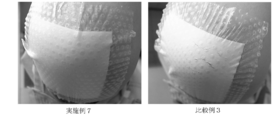
- the wound dressing material using the fibroin porous material of the present invention has a large tensile strain and high mechanical strength, so it is difficult to tear even if it is applied to a joint part where skin movement such as elbows, knees, and fingers is large. It has been found that the wound dressing has the necessary stretch and mechanical strength. Further, when the elbow was stretched again after bending the elbow at the time of wearing the covering material of Example 7, the covering material contracted following the skin again and returned to its original size.
- the wound dressing using the fibroin porous material of the present invention has a small tensile residual strain, and therefore follows a repeated operation.
- the coating material (dried fibroin porous body) produced in Comparative Example 3 has a low molecular weight of the raw material and is inferior in tensile strength and tensile strain. It was found to be difficult to use as a wound dressing.
- Comparative Example 4 when the produced fibroin porous material was freeze-dried, it contracted greatly, became hard and warped. Furthermore, it was found that the dry fibroin porous material produced from a raw material having a high molecular weight is difficult to apply to a wound dressing because of its poor water retention.
- a fibroin porous body was produced by the following method.
- Example 8 A coating material was prepared in the same manner as in Example 7, except that the size of the mold made of the aluminum plate into which the fibroin porous material preparation solution was poured was set to an inner diameter of 50 mm ⁇ 50 mm ⁇ 3 mm.
- Comparative Example 5 In Comparative Example 3, a coating material was prepared in the same manner as in Comparative Example 3 except that the size of the mold made of the aluminum plate into which the fibroin porous material preparation solution was poured was changed to an inner diameter of 50 mm ⁇ 50 mm ⁇ 3 mm.
- Comparative Example 6 In Comparative Example 4, a coating material was prepared in the same manner as in Comparative Example 4 except that the size of the mold made of the aluminum plate into which the fibroin porous material preparation solution was poured was changed to an inner diameter of 50 mm ⁇ 50 mm ⁇ 3 mm.
- Example 8 since the covering material using the fibroin porous material of the present invention is excellent in cushioning properties, there is an effect of reducing pain when applied to the wound part by applying it. I understood that. On the other hand, since the dry fibroin porous body part was hard, the covering material produced in Comparative Example 6 was poor in cushioning properties and was not suitable for a wound covering material.
- the porous fibroin material of the present invention can be widely applied in the cosmetics and esthetic fields, and is extremely useful as a skin care material such as a face mask and an eye mask adapted to the shape of the face.
- medical fields such as wound dressings, drug sustained-release carriers, hemostatic sponges, daily necessities such as disposable diapers and sanitary products, cell culture supports and tissue regeneration supports in tissue engineering and regenerative medical engineering, water purification applications and environmental fields
- the present invention can be applied to various industries such as a support that becomes a place of residence for microorganisms and bacteria.
Landscapes
- Chemical & Material Sciences (AREA)
- Health & Medical Sciences (AREA)
- Organic Chemistry (AREA)
- Life Sciences & Earth Sciences (AREA)
- General Health & Medical Sciences (AREA)
- Medicinal Chemistry (AREA)
- Engineering & Computer Science (AREA)
- Veterinary Medicine (AREA)
- Materials Engineering (AREA)
- Public Health (AREA)
- Animal Behavior & Ethology (AREA)
- Epidemiology (AREA)
- Biochemistry (AREA)
- Proteomics, Peptides & Aminoacids (AREA)
- Biophysics (AREA)
- Genetics & Genomics (AREA)
- Molecular Biology (AREA)
- Bioinformatics & Cheminformatics (AREA)
- Hematology (AREA)
- Polymers & Plastics (AREA)
- Gastroenterology & Hepatology (AREA)
- Zoology (AREA)
- Toxicology (AREA)
- Pharmacology & Pharmacy (AREA)
- Chemical Kinetics & Catalysis (AREA)
- Analytical Chemistry (AREA)
- Materials For Medical Uses (AREA)
- Manufacture Of Porous Articles, And Recovery And Treatment Of Waste Products (AREA)
- Medicinal Preparation (AREA)
- Peptides Or Proteins (AREA)
- Cosmetics (AREA)
Abstract
タンパク質換算分子量が110,000~310,000であるフィブロインを含有してなるフィブロイン多孔質体に関する。
Description
本発明は、機械的強度及び伸縮性に優れるフィブロイン多孔質体、並びに機械的強度及び伸縮性に優れるフィブロイン多孔質体を作製するのに適したフィブロイン水溶液及びフィブロイン原料に関する。
タンパク質、糖類等の生物由来物質を利用して作製可能である多孔質体は、エステティックサロン又は個人での使用による保湿等を目的とした化粧品及びエステ分野、創傷被覆材、薬剤徐放担体等の医療分野、紙おむつ、生理用品等の生活日用品分野、微生物、細菌等の住処になる支持体として活用し得る浄水分野、組織工学、再生医療工学等における細胞培養支持体(足場材料)及び組織再生支持体など、産業上幅広い分野で利用される。
これら多孔質体を構成する生体由来物質としては、セルロース、キチン等の糖類、コラーゲン、ケラチン、シルクフィブロイン等のタンパク質群などが知られている。
これら多孔質体を構成する生体由来物質としては、セルロース、キチン等の糖類、コラーゲン、ケラチン、シルクフィブロイン等のタンパク質群などが知られている。
これらの生体由来物質のうち、タンパク質としては、コラーゲンがよく利用されてきたが、BSE問題が発生してから牛由来のコラーゲンを利用することが非常に難しくなってきた。また、ケラチンは、羊毛、羽毛等から得ることができるが、原料入手に問題があり、工業的に利用することは難しい。羊毛は、原料価格が非常に高騰しており、羽毛に関しては市場が小さいため、これらの原料を安定的に入手することが困難である。一方、シルクフィブロインは、原料入手の観点からは、安定に供給されることが期待でき、さらに価格も安定しているので、工業的に利用することが容易であるという特長を有している。
シルクフィブロインは、衣類用途以外に、手術用縫合糸として長く使用されてきた実績があり、現在では食品及び化粧品の添加物としても利用され、人体に対する安全性にも問題が無いことから、上記のような多孔質体の利用分野に利用することが可能である。
シルクフィブロインは、衣類用途以外に、手術用縫合糸として長く使用されてきた実績があり、現在では食品及び化粧品の添加物としても利用され、人体に対する安全性にも問題が無いことから、上記のような多孔質体の利用分野に利用することが可能である。
シルクフィブロイン多孔質体を作製する手法に関しては、いくつか報告がある。
例えば、シルクフィブロイン水溶液を急速冷凍した後、結晶化溶媒に浸漬し、融解と結晶化を同時進行することによって得る方法がある(特許文献1)。しかしながら、この方法は結晶化溶媒である有機溶媒を大量に使用する必要があり、さらに溶媒の残留の可能性も否定できず、化粧品、エステ分野等の上記した応用分野での使用には問題がある。
次に、シルクフィブロイン水溶液のpHを6以下に保持してゲル化させるか又はその水溶液に貧溶媒を添加してゲル化させ、得られたゲルを凍結乾燥して多孔質体を作製する方法がある(特許文献2)。しかしながら、この方法では十分な強度を持った多孔質体を得ることはできない。他に、シルクフィブロイン水溶液を冷凍した後に長時間凍結状態を維持することで多孔質体を作製する手法が報告されている(特許文献3)。しかしながら、本発明者らの検討ではこの手法は再現性が乏しく、多孔質体が作製できないことが多い。
例えば、シルクフィブロイン水溶液を急速冷凍した後、結晶化溶媒に浸漬し、融解と結晶化を同時進行することによって得る方法がある(特許文献1)。しかしながら、この方法は結晶化溶媒である有機溶媒を大量に使用する必要があり、さらに溶媒の残留の可能性も否定できず、化粧品、エステ分野等の上記した応用分野での使用には問題がある。
次に、シルクフィブロイン水溶液のpHを6以下に保持してゲル化させるか又はその水溶液に貧溶媒を添加してゲル化させ、得られたゲルを凍結乾燥して多孔質体を作製する方法がある(特許文献2)。しかしながら、この方法では十分な強度を持った多孔質体を得ることはできない。他に、シルクフィブロイン水溶液を冷凍した後に長時間凍結状態を維持することで多孔質体を作製する手法が報告されている(特許文献3)。しかしながら、本発明者らの検討ではこの手法は再現性が乏しく、多孔質体が作製できないことが多い。
上記したシルクフィブロイン多孔質体の作製手法と比較すると、確実で簡便な手法が報告されている(特許文献4及び非特許文献1)。この手法は、シルクフィブロイン水溶液に対して少量の水溶性有機溶媒を添加した後に、一定時間冷凍して融解することによってシルクフィブロイン多孔質体が得られる手法である。また、特許文献5には、シルクフィブロイン水溶液に対して少量の脂肪族カルボン酸を添加した後に、一定時間凍結させて、その後融解することで、上記の特許文献4及び非特許文献1に記載される手法よりもさらに高強度のシルクフィブロイン多孔質体を製造する方法が提案されている。
シルクフィブロイン水溶液を作製する手法は、臭化リチウム、塩化カルシウムとエタノールとを含む水溶液(以下、「塩化カルシウム/エタノール水溶液」ともいう)等の中性塩溶液に溶解し、透析により脱塩する手法(非特許文献2)、過酸化水素水に溶解後、乾熱乾燥し、過酸化水素を除去する方法(非特許文献3)、銅エチレンジアミンに溶解し、銅イオン乖離剤を添加した後に透析する手法(非特許文献4)等いくつか知られている。処理の容易さから中性塩溶液に溶解し、透析により脱塩する手法が利用されることが多い。
Biomacromolecules,6,3100-3106(2005)
日本シルク学会誌, 20, 89-94 (2012)
"過酸化水素による絹フィブロインの溶解について"、[online]、平成18年9月1日、京都府織物・機械金属振興センターホームページ、[平成26年4月17日検索]、インターネット<URL:http://www.silk.pref.kyoto.jp/oriki/index-d/d0609/kenkyusyokai_0901htm.html>
日本シルク学会誌, 10, 57-63 (2001)
ところで、例えば、化粧品、エステ分野におけるフェイスマスク、アイマスク等のスキンケア部材、医療分野における指、肘、膝等の人体の稼動部への貼り付けが想定される創傷被覆材、組織工学、再生医療工学等の分野における細胞培養支持体の用途においては、シルクフィブロイン多孔質体を薄くして用いる場合が多く、とりわけ該多孔質体に対して引裂き強さ等の機械的強度が要求される。また、稼動部へ使用する場合には、引張ひずみが高く、伸縮性に優れるシルクフィブロイン多孔質体が求められる。しかし、特許文献5に開示される製法によって得られるシルクフィブロイン多孔質体によっても、上記の要求に十分に対応できない場合があった。
シルクフィブロイン多孔質体の機械的強度を向上させる簡便な手法としては、シルクフィブロイン多孔質体作製時に高濃度のシルクフィブロイン水溶液を使用することで空孔率を低下させる方法が挙げられるが、この場合、得られるシルクフィブロイン多孔質体の引張ひずみが低い上、顕著に硬く、適用できない用途が多いという問題点があった。
そこで、本発明は、シルクフィブロイン多孔質体の柔軟性、肌触り等の質感の長所を損なうことなく、機械的強度及び伸縮性にも優れるフィブロイン多孔質体、並びに機械的強度及び伸縮性に優れるフィブロイン多孔質体を作製するためのフィブロイン水溶液及びフィブロイン原料を提供することを目的とする。
本発明者らは、前記課題を達成するために鋭意研究を重ねた結果、下記の発明により当該課題を解決できることを見出した。
すなわち、本発明の要旨は、以下の通りである。
[1]タンパク質換算分子量が110,000~310,000であるフィブロインを含有してなるフィブロイン多孔質体。
[2]タンパク質換算分子量が180,000~310,000であるフィブロインを含有してなる、上記[1]に記載のフィブロイン多孔質体。
[3]引張ひずみが52~67%である、上記[1]又は[2]に記載のフィブロイン多孔質体。
[4]引裂き強さが20~45N/mmである、上記[1]~[3]のいずれか1項に記載のフィブロイン多孔質体。
[5]25%圧縮応力が20~25kPaである、上記[1]~[4]のいずれか1項に記載のフィブロイン多孔質体。
[6]タンパク質換算分子量が160,000~410,000であるフィブロインを含有してなるフィブロイン水溶液。
[7]タンパク質換算分子量が240,000~310,000であるフィブロインを含有してなる、上記[6]に記載のフィブロイン水溶液。
[8]さらに、脂肪族カルボン酸を含む、上記[6]又は[7]に記載のフィブロイン水溶液。
[9]脂肪族カルボン酸が酢酸である、上記[8]に記載のフィブロイン水溶液。
[10]タンパク質換算分子量が160,000~410,000であるフィブロイン原料。
[11]上記[6]~[9]のいずれか1項に記載のフィブロイン水溶液、又は上記[10]に記載のフィブロイン原料から得られる水溶液を凍結し、ついで融解する、上記[1]~[5]のいずれか1項に記載のフィブロイン多孔質体の製造方法。
[12]上記[1]~[5]のいずれか1項に記載のフィブロイン多孔質体を用いた創傷被覆材。
すなわち、本発明の要旨は、以下の通りである。
[1]タンパク質換算分子量が110,000~310,000であるフィブロインを含有してなるフィブロイン多孔質体。
[2]タンパク質換算分子量が180,000~310,000であるフィブロインを含有してなる、上記[1]に記載のフィブロイン多孔質体。
[3]引張ひずみが52~67%である、上記[1]又は[2]に記載のフィブロイン多孔質体。
[4]引裂き強さが20~45N/mmである、上記[1]~[3]のいずれか1項に記載のフィブロイン多孔質体。
[5]25%圧縮応力が20~25kPaである、上記[1]~[4]のいずれか1項に記載のフィブロイン多孔質体。
[6]タンパク質換算分子量が160,000~410,000であるフィブロインを含有してなるフィブロイン水溶液。
[7]タンパク質換算分子量が240,000~310,000であるフィブロインを含有してなる、上記[6]に記載のフィブロイン水溶液。
[8]さらに、脂肪族カルボン酸を含む、上記[6]又は[7]に記載のフィブロイン水溶液。
[9]脂肪族カルボン酸が酢酸である、上記[8]に記載のフィブロイン水溶液。
[10]タンパク質換算分子量が160,000~410,000であるフィブロイン原料。
[11]上記[6]~[9]のいずれか1項に記載のフィブロイン水溶液、又は上記[10]に記載のフィブロイン原料から得られる水溶液を凍結し、ついで融解する、上記[1]~[5]のいずれか1項に記載のフィブロイン多孔質体の製造方法。
[12]上記[1]~[5]のいずれか1項に記載のフィブロイン多孔質体を用いた創傷被覆材。
本発明によれば、シルクフィブロイン多孔質体の柔軟性、肌触り等の質感の長所を損なうことなく、機械的強度と伸縮性に優れるフィブロイン多孔質体、並びに機械的強度及び伸縮性に優れ、かつクッション性及び保水性にも優れるフィブロイン多孔質体を作製するためのフィブロイン水溶液及びフィブロイン原料を提供することができる。
〔フィブロイン多孔質体〕
本発明のフィブロイン多孔質体は、タンパク質換算分子量が110,000~310,000であるフィブロインを含有してなるフィブロイン多孔質体である。
本明細書において、タンパク質換算分子量とは、高速液体クロマトグラフ(HPLC)を用いて得られる評価試料のクロマトグラムを、分子量マーカーとしてグルタミン酸脱水素酵素(分子量:290,000)、豚心筋乳酸脱水素酵素(分子量:142,000)、酵母エノラーゼ(分子量:67,000)を使用して作成した校正曲線を用いて、タンパク質の分子量に換算した分子量を意味し、実施例に記載の方法により測定することができる。本明細書において「分子量」は、特に断らない限り「タンパク質換算分子量」を意味する。
本発明のフィブロイン多孔質体は、タンパク質換算分子量が110,000~310,000であるフィブロインを含有してなるフィブロイン多孔質体である。
本明細書において、タンパク質換算分子量とは、高速液体クロマトグラフ(HPLC)を用いて得られる評価試料のクロマトグラムを、分子量マーカーとしてグルタミン酸脱水素酵素(分子量:290,000)、豚心筋乳酸脱水素酵素(分子量:142,000)、酵母エノラーゼ(分子量:67,000)を使用して作成した校正曲線を用いて、タンパク質の分子量に換算した分子量を意味し、実施例に記載の方法により測定することができる。本明細書において「分子量」は、特に断らない限り「タンパク質換算分子量」を意味する。
本発明のフィブロイン多孔質体に含まれるフィブロインのタンパク質換算分子量は110,000~310,000であり、140,000~310,000であることが好ましく、180,000~310,000であることがより好ましい。この範囲の分子量のフィブロインを含有するフィブロイン多孔質体は機械的強度及び伸縮性に優れている。
上記の分子量を有するフィブロインを含むフィブロイン多孔質体は、後述する本発明のフィブロイン水溶液及び本発明のフィブロイン原料を使用することで、好適に作製することができる。
上記の分子量を有するフィブロインを含むフィブロイン多孔質体は、後述する本発明のフィブロイン水溶液及び本発明のフィブロイン原料を使用することで、好適に作製することができる。
本発明のフィブロイン多孔質体中に含まれるフィブロインの含有量は、好ましくは80質量%以上、より好ましくは90質量%以上、さらに好ましくは95質量%以上、特に好ましくは実質的に100質量%である。
本発明のフィブロイン多孔質体の平均細孔径は、1~500μmが好ましく、5~300μmがより好ましく、10~100μmがさらに好ましい。平均細孔径が上記範囲内であると、肌触りが良好であり、また再生医療向けの細胞培養支持体(足場材料)としての用途を考慮した場合、細胞が細孔内に入りやすい。
ここで、フィブロイン多孔質体の平均細孔径は、多孔質体断面の走査型電子顕微鏡写真を5枚撮影し、さらに異なる日に作製した多孔質体断面の走査型電子顕微鏡写真を5枚撮影し、それら10枚の走査型電子顕微鏡写真を画像解析ソフトを用いて画像処理し、算出した細孔径の平均値である。
ここで、フィブロイン多孔質体の平均細孔径は、多孔質体断面の走査型電子顕微鏡写真を5枚撮影し、さらに異なる日に作製した多孔質体断面の走査型電子顕微鏡写真を5枚撮影し、それら10枚の走査型電子顕微鏡写真を画像解析ソフトを用いて画像処理し、算出した細孔径の平均値である。
また、本発明のフィブロイン多孔質体の大きさ、厚さに特に制限は無く、用途に応じて適切な大きさ、厚さのものを使用すればよい。具体的には、例えばフェイスマスク、アイマスク等のスキンケア部材の場合は、0.2~1mm程度のものを使用することが好ましい。また、加工によって所望の形状のフィブロイン多孔質体を得ることもできる。
加工の方法に特に制限は無く、トムソン刃を使用した打ち抜き、バンドソーでのスライス加工等が挙げられる。
加工の方法に特に制限は無く、トムソン刃を使用した打ち抜き、バンドソーでのスライス加工等が挙げられる。
フィブロイン多孔質体の25%圧縮応力は20~25kPaであることが好ましく、20~23kPaであることがより好ましい。25%圧縮応力がこの範囲のフィブロイン多孔質体は柔軟性に優れている。
フィブロイン多孔質体の引裂き強さは20~50N/mmであることが好ましく、20~45N/mmであることがより好ましく、25~45N/mmであることがさらに好ましい。引裂き強さがこの範囲のフィブロイン多孔質体は機械的強度、伸縮性、柔軟性のバランスに優れる。
フィブロイン多孔質体の引張強さは35~75kPaであることが好ましく、40~70kPaであることがより好ましい。引張強さがこの範囲のフィブロイン多孔質体は機械的強度、伸縮性、柔軟性のバランスに優れている。
フィブロイン多孔質体の引張ひずみは52~67%であることが好ましく、56~65%であることがより好ましい。引張ひずみがこの範囲のフィブロイン多孔質体は伸縮性に優れている。
なお、本明細書における引張強さ及び引張ひずみとは、試験片を万能試験機等で引っ張った際に、試験片が破断したときの応力及びひずみを意味し、引張ひずみ(%)の値は、[〔(変形後の長さ-変形前の長さ)/(変形前の長さ)〕×100]で表される比率の値を意味する。
フィブロイン多孔質体の25%圧縮応力、引裂き強さ及び引張ひずみは実施例に記載の方法により測定することができる。
フィブロイン多孔質体の引裂き強さは20~50N/mmであることが好ましく、20~45N/mmであることがより好ましく、25~45N/mmであることがさらに好ましい。引裂き強さがこの範囲のフィブロイン多孔質体は機械的強度、伸縮性、柔軟性のバランスに優れる。
フィブロイン多孔質体の引張強さは35~75kPaであることが好ましく、40~70kPaであることがより好ましい。引張強さがこの範囲のフィブロイン多孔質体は機械的強度、伸縮性、柔軟性のバランスに優れている。
フィブロイン多孔質体の引張ひずみは52~67%であることが好ましく、56~65%であることがより好ましい。引張ひずみがこの範囲のフィブロイン多孔質体は伸縮性に優れている。
なお、本明細書における引張強さ及び引張ひずみとは、試験片を万能試験機等で引っ張った際に、試験片が破断したときの応力及びひずみを意味し、引張ひずみ(%)の値は、[〔(変形後の長さ-変形前の長さ)/(変形前の長さ)〕×100]で表される比率の値を意味する。
フィブロイン多孔質体の25%圧縮応力、引裂き強さ及び引張ひずみは実施例に記載の方法により測定することができる。
次に、本発明のフィブロイン多孔質体の製造に好ましく用いられる、本発明のフィブロイン原料、本発明のフィブロイン水溶液及びこれらを用いた本発明のフィブロイン多孔質体の製造方法について説明する。
〔フィブロイン原料〕
本発明のフィブロイン原料は、タンパク質換算分子量が160,000~410,000であるフィブロイン原料であり、本発明のフィブロイン多孔質体の製造に好ましく用いられる。
本発明のフィブロイン原料のタンパク質換算分子量は160,000~410,000であり、200,000~360,000であることが好ましく、240,000~310,000であることがより好ましい。この範囲の分子量のフィブロイン原料を使用してフィブロイン多孔質体を作製することで機械的強度及び伸縮性に優れるフィブロイン多孔質体が得られる。
フィブロイン原料のタンパク質換算分子量は、実施例に記載の方法で測定することができる。
本発明のフィブロイン原料は、タンパク質換算分子量が160,000~410,000であるフィブロイン原料であり、本発明のフィブロイン多孔質体の製造に好ましく用いられる。
本発明のフィブロイン原料のタンパク質換算分子量は160,000~410,000であり、200,000~360,000であることが好ましく、240,000~310,000であることがより好ましい。この範囲の分子量のフィブロイン原料を使用してフィブロイン多孔質体を作製することで機械的強度及び伸縮性に優れるフィブロイン多孔質体が得られる。
フィブロイン原料のタンパク質換算分子量は、実施例に記載の方法で測定することができる。
本発明のフィブロイン原料は、フィブロインに加え、セリシンを含む繭、生糸等の絹原料を精練し、セリシンを除去することで得られる。
使用する絹原料に特に制限は無く、繭、切繭、生糸等を使用することができる。蚕の品種にも特に制限は無いが、安定的に調達できることから家蚕の絹原料を使用することが好ましい。
使用する絹原料に特に制限は無く、繭、切繭、生糸等を使用することができる。蚕の品種にも特に制限は無いが、安定的に調達できることから家蚕の絹原料を使用することが好ましい。
通常、精練はアルカリ剤を溶解した水溶液中に絹原料を入れ、加熱するという工程で行われる。
精練の方法に特に制限は無く、吊練り、機械練り、袋練り、泡練り等の手法を用いることができる。
アルカリ剤に特に制限は無く、マルセル石鹸、炭酸ナトリウム、重曹等を使用することができるが、石鹸の残留が懸念されることから、炭酸ナトリウム、重曹を用いることが好ましく、分子量の制御が容易なことから炭酸ナトリウムを用いることがより好ましい。
アルカリ剤の濃度は、15%owf~25%owfであることが好ましい。この範囲に設定することで効率良くセリシンを除去すると共に、目的の分子量のフィブロイン原料を得ることができる。
精練時の浴比(フィブロイン原料の質量に対するアルカリ剤を溶解した水溶液の質量の比)は、20~100倍であることが好ましい。この範囲に設定することで効率良くセリシンを除去することができる。
精練時の加熱の温度はセリシンを十分除去可能であれば特に制限は無いが、常圧の場合、85~100℃が好ましい。温度をこの範囲に設定することで効率良くセリシンを除去することが可能である。
精練の時間はセリシンを十分除去可能であれば特に制限は無いが、3時間~5時間であることが好ましい。この範囲に設定することで効率良くセリシンを除去すると共に、目的の分子量のフィブロイン原料を得ることができる。
精練後はフィブロイン原料に付着したアルカリ及びセリシンを除去するため、湯洗浄、水洗浄を行った後、脱水、乾燥することが好ましい。
精練の方法に特に制限は無く、吊練り、機械練り、袋練り、泡練り等の手法を用いることができる。
アルカリ剤に特に制限は無く、マルセル石鹸、炭酸ナトリウム、重曹等を使用することができるが、石鹸の残留が懸念されることから、炭酸ナトリウム、重曹を用いることが好ましく、分子量の制御が容易なことから炭酸ナトリウムを用いることがより好ましい。
アルカリ剤の濃度は、15%owf~25%owfであることが好ましい。この範囲に設定することで効率良くセリシンを除去すると共に、目的の分子量のフィブロイン原料を得ることができる。
精練時の浴比(フィブロイン原料の質量に対するアルカリ剤を溶解した水溶液の質量の比)は、20~100倍であることが好ましい。この範囲に設定することで効率良くセリシンを除去することができる。
精練時の加熱の温度はセリシンを十分除去可能であれば特に制限は無いが、常圧の場合、85~100℃が好ましい。温度をこの範囲に設定することで効率良くセリシンを除去することが可能である。
精練の時間はセリシンを十分除去可能であれば特に制限は無いが、3時間~5時間であることが好ましい。この範囲に設定することで効率良くセリシンを除去すると共に、目的の分子量のフィブロイン原料を得ることができる。
精練後はフィブロイン原料に付着したアルカリ及びセリシンを除去するため、湯洗浄、水洗浄を行った後、脱水、乾燥することが好ましい。
〔フィブロイン水溶液〕
本発明のフィブロイン水溶液は、タンパク質換算分子量が160,000~410,000であるフィブロインを含有してなるフィブロイン水溶液であり、本発明のフィブロイン多孔質体の製造に好ましく用いられる。
本発明のフィブロイン水溶液中のフィブロインのタンパク質換算分子量は160,000~410,000であり、200,000~350,000であることが好ましく、240,000~310,000であることがより好ましい。この範囲の分子量のフィブロイン水溶液を使用してフィブロイン多孔質体を作製することで機械的強度及び伸縮性に優れるフィブロイン多孔質体が得られる。
フィブロイン水溶液のタンパク質換算分子量は、実施例に記載の方法で測定することができる。
本発明のフィブロイン水溶液は、タンパク質換算分子量が160,000~410,000であるフィブロインを含有してなるフィブロイン水溶液であり、本発明のフィブロイン多孔質体の製造に好ましく用いられる。
本発明のフィブロイン水溶液中のフィブロインのタンパク質換算分子量は160,000~410,000であり、200,000~350,000であることが好ましく、240,000~310,000であることがより好ましい。この範囲の分子量のフィブロイン水溶液を使用してフィブロイン多孔質体を作製することで機械的強度及び伸縮性に優れるフィブロイン多孔質体が得られる。
フィブロイン水溶液のタンパク質換算分子量は、実施例に記載の方法で測定することができる。
本発明のフィブロイン水溶液は、例えば、本発明のフィブロイン原料を溶解液に溶解した後、溶解に使用した薬剤を除去することで得られる。
溶解の方法に特に制限は無く、臭化リチウム水溶液、塩化カルシウム/エタノール水溶液等の中性塩溶液に溶解し、透析により脱塩する手法、過酸化水素水に溶解後、乾熱乾燥し、過酸化水素を除去する方法、銅エチレンジアミンに溶解し、銅イオン乖離剤を添加した後に透析する手法等を使用することができるが、後処理及び分子量調節の容易さから中性塩溶液に溶解し、脱塩する手法が好ましい。
溶解の方法に特に制限は無く、臭化リチウム水溶液、塩化カルシウム/エタノール水溶液等の中性塩溶液に溶解し、透析により脱塩する手法、過酸化水素水に溶解後、乾熱乾燥し、過酸化水素を除去する方法、銅エチレンジアミンに溶解し、銅イオン乖離剤を添加した後に透析する手法等を使用することができるが、後処理及び分子量調節の容易さから中性塩溶液に溶解し、脱塩する手法が好ましい。
使用する中性塩溶液としては臭化リチウム水溶液、塩化カルシウム/エタノール水溶液が好ましい。またそれらの濃度は臭化リチウム水溶液の場合8~10mol/Lであることが好ましい。塩化カルシウム/エタノール水溶液の場合、塩化カルシウムとエタノールと水とをモル比1:2:8で混合した溶液を使用することが好ましい。これらの濃度に設定することでフィブロイン原料を効率良く溶解することができる。
溶解温度はフィブロイン原料が溶解する温度であれば特に制限は無いが、臭化リチウム水溶液の場合10~40℃であることが好ましい。塩化カルシウム/エタノール水溶液の場合、70~90℃であることが好ましく、75~85℃であることがより好ましい。これらの温度範囲に設定することで効率良く溶解可能であると共に、目的の分子量のフィブロイン水溶液を得ることができる。
溶解時間に特に制限は無いが、臭化リチウム水溶液を使用した場合、3時間~24時間であることが好ましく、5時間~18時間であることがより好ましい。塩化カルシウム/エタノール水溶液の場合、10分~60分であることが好ましく、15分~40分であることがより好ましい。これらの溶解時間に設定することでフィブロイン原料が十分に溶解すると共に、目的の分子量のフィブロイン水溶液を得ることができる。
フィブロインの溶解濃度は溶解液に溶解可能な濃度であれば特に制限は無いが、50g/L~200g/Lであることが好ましく、100g/L~150g/Lであることがより好ましい。溶解濃度をこの範囲に設定することでフィブロイン多孔質体の作製に適した濃度のフィブロイン水溶液が得られる。
脱塩の手法に特に制限は無く、透析膜を使用した透析、限外ろ過等により脱塩することができる。透析膜又は限外ろ過膜の分画分子量は5,000~40,000であることが好ましく、5,000~10,000であることがより好ましい。この範囲の分画分子量の透析膜又は限外ろ過膜を使用することで脱塩効率と、フィブロインのロスの少なさとを両立することができる。
本発明のフィブロイン水溶液は、さらに、脂肪族カルボン酸を含むことが好ましい。
なお、本明細書において、特に脂肪族カルボン酸を含む本発明のフィブロイン水溶液を、「フィブロイン多孔質体作製溶液」と称する。
なお、本明細書において、特に脂肪族カルボン酸を含む本発明のフィブロイン水溶液を、「フィブロイン多孔質体作製溶液」と称する。
<フィブロイン多孔質体作製溶液>
本発明のフィブロイン多孔質体作製溶液は前述のフィブロイン水溶液に脂肪族カルボン酸と濃度調整用の水を添加することで得られる。
フィブロイン多孔質体作製溶液中でのフィブロイン濃度は10g/L~70g/Lであることが好ましく、20g/L~50g/Lであることがより好ましく、25g/L~45g/Lであることがさらに好ましい。フィブロイン濃度をこの範囲に濃度を設定することで質感が良く、また、ハンドリング性に優れるフィブロイン多孔質体が得られる。フィブロイン濃度はフィブロイン水溶液を容器に入れて完全に乾燥し、その質量減少から次式のように求めることができる。
(フィブロイン濃度,g/L)=(フィブロイン水溶液の乾燥後質量,g)/(乾燥前のフィブロイン水溶液の体積,L)
本発明のフィブロイン多孔質体作製溶液は前述のフィブロイン水溶液に脂肪族カルボン酸と濃度調整用の水を添加することで得られる。
フィブロイン多孔質体作製溶液中でのフィブロイン濃度は10g/L~70g/Lであることが好ましく、20g/L~50g/Lであることがより好ましく、25g/L~45g/Lであることがさらに好ましい。フィブロイン濃度をこの範囲に濃度を設定することで質感が良く、また、ハンドリング性に優れるフィブロイン多孔質体が得られる。フィブロイン濃度はフィブロイン水溶液を容器に入れて完全に乾燥し、その質量減少から次式のように求めることができる。
(フィブロイン濃度,g/L)=(フィブロイン水溶液の乾燥後質量,g)/(乾燥前のフィブロイン水溶液の体積,L)
添加する脂肪族カルボン酸は水溶性のものであれば特に制限は無く、好ましくは炭素数1~6、より好ましくは炭素数3~5の飽和又は不飽和のモノカルボン酸、ジカルボン酸、トリカルボン酸が好ましく挙げられる。このような脂肪族カルボン酸としては、例えば、蟻酸、酢酸、プロピオン酸、酪酸、乳酸、アクリル酸、2-ブテン酸等のモノカルボン酸;シュウ酸、マロン酸、コハク酸、マレイン酸等のジカルボン酸が好ましく挙げられ、これらを単独で、又は複数種を組み合わせて用いることができる。人体への安全性を考慮すると、酢酸、乳酸、コハク酸がより好ましく、酢酸がさらに好ましい。
添加する脂肪族カルボン酸の濃度はフィブロイン多孔質体作製溶液中で0.5~10体積%であることが好ましく、1~4体積%であることがより好ましく、1.5~2.5体積%であることがさらに好ましい。この範囲に濃度を設定することで機械的強度に優れるフィブロイン多孔質体が得られる。
添加する水に特に制限は無いが、不純物の少なさから、純水及び超純水を使用することが好ましい。
添加する脂肪族カルボン酸の濃度はフィブロイン多孔質体作製溶液中で0.5~10体積%であることが好ましく、1~4体積%であることがより好ましく、1.5~2.5体積%であることがさらに好ましい。この範囲に濃度を設定することで機械的強度に優れるフィブロイン多孔質体が得られる。
添加する水に特に制限は無いが、不純物の少なさから、純水及び超純水を使用することが好ましい。
〔フィブロイン多孔質体の製造方法〕
本発明のフィブロイン多孔質体の製造方法は、本発明のフィブロイン水溶液、又は本発明のフィブロイン原料から得られた水溶液を凍結し、ついで融解する方法である。
本発明のフィブロイン多孔質体の製造方法は、本発明のフィブロイン水溶液、又は本発明のフィブロイン原料から得られた水溶液を凍結し、ついで融解する方法である。
本発明のフィブロイン多孔質体は、例えば、前記フィブロイン多孔質体作製溶液を型又は容器に流し込み一定時間凍結した後に融解することで好適に得られる。
凍結温度としては、-10~-30℃が好ましく、-15~-25℃がより好ましい。凍結時間としては、添加剤を加えたフィブロイン水溶液が十分に凍結し、かつ凍結状態を一定時間保持できるよう、4時間以上であることが好ましく、6時間以上であることがより好ましい。また、特に-15~-25℃の温度条件下、6時間から100時間保持して凍結することが機械的強度に優れる多孔質体を再現良く形成する観点から好ましい。
凍結温度としては、-10~-30℃が好ましく、-15~-25℃がより好ましい。凍結時間としては、添加剤を加えたフィブロイン水溶液が十分に凍結し、かつ凍結状態を一定時間保持できるよう、4時間以上であることが好ましく、6時間以上であることがより好ましい。また、特に-15~-25℃の温度条件下、6時間から100時間保持して凍結することが機械的強度に優れる多孔質体を再現良く形成する観点から好ましい。
ここで、前記フィブロイン多孔質体作製溶液を一気に凍結温度まで下げて凍結してもよいが、凍結の前に過冷却状態を経ることが、均一な構造のフィブロイン多孔質体を得る上で好ましい。例えば、添加剤を加えたフィブロイン水溶液を一旦、-5℃で2時間保持して、その後、凍結温度まで下げて凍結することで、均一な構造のフィブロイン多孔質体を得ることができる。
上記の手法でフィブロイン水溶液を凍結させた後、次いで融解することによって、フィブロイン多孔質体が得られる。融解の方法としては、特に制限はなく、自然融解、恒温槽での保管等の方法が好ましく挙げられる。
上記のようにして得られたフィブロイン多孔質体には添加剤が残存する。残存する添加剤は用途に応じてそのままの状態としてもよいし、除去してもよい。添加剤をフィブロイン多孔質体から除去する方法としては、例えば、フィブロイン多孔質体を、純水中に浸漬して除去することが最も簡便な方法として挙げられる。
このようにして得られたフィブロイン多孔質体は吸水した状態である。乾燥状態のフィブロイン多孔質体が必要な場合、吸水状態のフィブロイン多孔質体を乾燥すればよい。フィブロイン多孔質体の乾燥の手法としては特に制限は無いが、収縮を抑えるという意味で凍結乾燥が好ましい。凍結乾燥の場合、水分を完全に昇華させずに乾燥を終えると、残った氷が融解して水になり、その表面張力の影響で空孔が潰れてしまうため、水分が完全に昇華するまで乾燥することが好ましい。
また、凍結乾燥の際、予めフィブロイン多孔質体をグリセリン水溶液に浸漬することが、乾燥時のひび割れを防止すると共に、乾燥後にも柔軟な複合体が得られる観点から好ましい。
この場合、フィブロイン多孔質体を浸漬するグリセリン水溶液におけるグリセリンの濃度は、0.5~10体積%が好ましく、1~8体積%がより好ましく、1.5~6体積%がさらに好ましい。
この範囲にグリセリン濃度を設定することで質感が良く、ひび割れの無い乾燥フィブロイン多孔質体を得ることができる。このようにして得られる乾燥フィブロイン多孔質体はグリセリンを含有することを特徴とする。
この場合、フィブロイン多孔質体を浸漬するグリセリン水溶液におけるグリセリンの濃度は、0.5~10体積%が好ましく、1~8体積%がより好ましく、1.5~6体積%がさらに好ましい。
この範囲にグリセリン濃度を設定することで質感が良く、ひび割れの無い乾燥フィブロイン多孔質体を得ることができる。このようにして得られる乾燥フィブロイン多孔質体はグリセリンを含有することを特徴とする。
乾燥フィブロイン多孔質体中でグリセリンの含有量は20~70質量%であることが好ましく、25~60質量%であることがより好ましく、30~50質量%であることがさらに好ましい。濃度をこの範囲とすることで乾燥フィブロイン多孔質体に適度な柔軟性を付与することができる。
乾燥フィブロイン多孔質体中のグリセリンの含有量(質量%)は、乾燥フィブロイン多孔質体に導入されたグリセリンの質量を、グリセリンが導入された後の乾燥フィブロイン多孔質体の質量で割ったものとし、以下の式で算出した。
(乾燥フィブロイン多孔質体中のグリセリンの含有量(質量%))=((グリセリンを導入した乾燥フィブロイン多孔質体の質量)-(グリセリンの未導入の乾燥フィブロイン多孔質体の質量))/(グリセリンの導入後の乾燥フィブロイン多孔質体の質量)×100
乾燥フィブロイン多孔質体中のグリセリンの含有量(質量%)は、乾燥フィブロイン多孔質体に導入されたグリセリンの質量を、グリセリンが導入された後の乾燥フィブロイン多孔質体の質量で割ったものとし、以下の式で算出した。
(乾燥フィブロイン多孔質体中のグリセリンの含有量(質量%))=((グリセリンを導入した乾燥フィブロイン多孔質体の質量)-(グリセリンの未導入の乾燥フィブロイン多孔質体の質量))/(グリセリンの導入後の乾燥フィブロイン多孔質体の質量)×100
上記のようにして乾燥したフィブロイン多孔質体は、水分が実質的に含まれないものである。フィブロイン多孔質体は、フィブロイン水溶液を凍結し、融解して得られるので、通常、細孔部に水分等が存在した状態となっている。通常のフィブロイン多孔質体と乾燥フィブロイン多孔質体とは、細孔部に水等が存在する量の点で状態は異なるものとなる。
フィブロイン多孔質体は、添加剤を加えたフィブロイン水溶液を流し込む容器を適宜選択することにより、シート状、ブロック状、管状等、目的に応じた形状とすることができる。
また、原料として用いるフィブロイン及び添加剤の種類及び添加量を調節することで、フィブロイン多孔質体の内部構造と固さを調整することができ、種々の固さを有するゲル状、シート状又はブロック状のフィブロイン多孔質体を得ることができる。
また、原料として用いるフィブロイン及び添加剤の種類及び添加量を調節することで、フィブロイン多孔質体の内部構造と固さを調整することができ、種々の固さを有するゲル状、シート状又はブロック状のフィブロイン多孔質体を得ることができる。
〔創傷被覆材〕
本発明の創傷被覆材は、本発明フィブロイン多孔質体を用いた創傷被覆材である。
また、本発明の創傷被覆材としては、本発明のフィブロイン多孔質体を前述のとおり、グリセリンに浸漬し、凍結乾燥した乾燥フィブロイン多孔質体を用いることが好ましい。乾燥フィブロイン多孔質体を用いることで吸水性やクッション性に優れた創傷被覆材が得られる。
多孔質体を創傷被覆材として用いる場合、創傷部に貼付することによる痛みの緩和、また該創傷部をぶつけた際の痛みを軽減するためのクッション性に加え、傷口等から滲み出してくる滲出液を吸収して創傷面に保持し、該滲出液に含まれる成分を積極的に活用することで、創傷を治癒させる湿潤療法に活用し得るための保水性も望まれる。
本発明のフィブロイン多孔質体は、柔軟性、肌触り等の質感の長所を損なうことなく、機械的強度及び伸縮性に優れ、さらに保水性及びクッション性にも優れる。
そのため、本発明の創傷被覆材は、創傷部に貼付することによる痛みを緩和し、また該創傷部をぶつけた際の痛みを軽減するという特性、傷口等から滲み出してくる滲出液を吸収して創傷部に保持し、該滲出液に含まれる成分を積極的に活用し得る特性、腕や肘といった稼動部に用い得る特性に優れており、湿潤療法にも好適に用いることがでる。
本発明の創傷被覆材は、本発明フィブロイン多孔質体を用いた創傷被覆材である。
また、本発明の創傷被覆材としては、本発明のフィブロイン多孔質体を前述のとおり、グリセリンに浸漬し、凍結乾燥した乾燥フィブロイン多孔質体を用いることが好ましい。乾燥フィブロイン多孔質体を用いることで吸水性やクッション性に優れた創傷被覆材が得られる。
多孔質体を創傷被覆材として用いる場合、創傷部に貼付することによる痛みの緩和、また該創傷部をぶつけた際の痛みを軽減するためのクッション性に加え、傷口等から滲み出してくる滲出液を吸収して創傷面に保持し、該滲出液に含まれる成分を積極的に活用することで、創傷を治癒させる湿潤療法に活用し得るための保水性も望まれる。
本発明のフィブロイン多孔質体は、柔軟性、肌触り等の質感の長所を損なうことなく、機械的強度及び伸縮性に優れ、さらに保水性及びクッション性にも優れる。
そのため、本発明の創傷被覆材は、創傷部に貼付することによる痛みを緩和し、また該創傷部をぶつけた際の痛みを軽減するという特性、傷口等から滲み出してくる滲出液を吸収して創傷部に保持し、該滲出液に含まれる成分を積極的に活用し得る特性、腕や肘といった稼動部に用い得る特性に優れており、湿潤療法にも好適に用いることがでる。
本発明の創傷被覆材は、吸水性に優れた特性をいかし、薬剤を含ませることができる。薬剤を含ませることにより、本発明の創傷被覆材に創傷の治癒を促進する機能を付与することができる。薬剤を含ませる場合、例えば、殺菌剤、抗生物質、生理活性物質等の薬剤を、本発明の創傷被覆材に含浸又は塗布すればよい。これらの薬剤を1種又は2種以上を組み合わせて使用することができる。
本発明の創傷被覆材は、シート状の本発明のフィブロイン多孔質体を、ドレッシングフィルム、包帯、粘着テープ等で固定する形態で用いることができる。
フィブロイン多孔質体は、乾燥状態でも柔らかいため、そのまま用いることもできるし、また保湿剤を含ませて用いることもできる。保湿剤としては、グリセリン、ポリビニルピロリドン、ポリビニルアルコール、ポリエチレングリコール等を使用することができる。なお、保湿剤を含ませた状態の場合には、使用直前まで、水分量を保った状態で、乾燥を防ぐように、本発明の創傷被覆材を密閉状態にしておくことが好ましい。
フィブロイン多孔質体は、乾燥状態でも柔らかいため、そのまま用いることもできるし、また保湿剤を含ませて用いることもできる。保湿剤としては、グリセリン、ポリビニルピロリドン、ポリビニルアルコール、ポリエチレングリコール等を使用することができる。なお、保湿剤を含ませた状態の場合には、使用直前まで、水分量を保った状態で、乾燥を防ぐように、本発明の創傷被覆材を密閉状態にしておくことが好ましい。
本発明の創傷被覆材としては、本発明のフィブロイン多孔質体からなる多孔質層と、その一方の面のみに細孔を有しないフィルム層を有するフィブロイン多孔質体が好ましい。その使用方法としては、創傷面に多孔質層が接し、創傷面とは反対側の対向面にフィルム層を有することが好ましい。このような創傷被覆材を湿潤療法に適用すると、創傷面からの滲出液を吸収及び保持することができ、該滲出液の蒸発や拡散を抑える効果があるためである。
さらに、多孔質層中に薬剤を含ませることで、創傷の治癒を促進する機能を持たせることができる。例えば、殺菌剤、抗生物質、生理活性物質などを、多孔質層に含浸もしくは塗布することで、治癒を促進させることができる。これらの薬剤は1種または2種以上を組み合わせて使用することができる。
なお、フィルム層の細孔の数は制御することができ、必要に応じて少量の細孔を有するフィルム層とすることもできる。
一方、フィルム層は、細孔が極めて少ないために、表面が平滑である。そのため、該フィルム層を創傷面側として使用することで、癒着を防止する機能を持たせることや、フィルム層の液透過性を制御することで薬剤の放出速度を制御することができる。
さらに、多孔質層中に薬剤を含ませることで、創傷の治癒を促進する機能を持たせることができる。例えば、殺菌剤、抗生物質、生理活性物質などを、多孔質層に含浸もしくは塗布することで、治癒を促進させることができる。これらの薬剤は1種または2種以上を組み合わせて使用することができる。
なお、フィルム層の細孔の数は制御することができ、必要に応じて少量の細孔を有するフィルム層とすることもできる。
一方、フィルム層は、細孔が極めて少ないために、表面が平滑である。そのため、該フィルム層を創傷面側として使用することで、癒着を防止する機能を持たせることや、フィルム層の液透過性を制御することで薬剤の放出速度を制御することができる。
本発明の創傷被覆材が、多孔質層とその両面に細孔を有しないフィルム層を有する多孔質体で構成される場合には、上述のような創傷面からの滲出液を吸収する速度が低下する場合があるが、滲出液の蒸発を抑制する機能と、創傷面への癒着を防止する機能を有するものである。
また、本発明の創傷被覆材が、多孔質層のみからなる多孔質体により構成される場合には、創傷面からの滲出液が該多孔質層を通過して、反対側に滲出することが想定されるが、該創傷被覆材は多孔質層自体でも、十分な保水性を有するので、本発明の効果を十分に奏するものである。また、水分透過性の低いドレッシングフィルムを用いることでも蒸発を抑えることができる。
また、本発明の創傷被覆材が、多孔質層のみからなる多孔質体により構成される場合には、創傷面からの滲出液が該多孔質層を通過して、反対側に滲出することが想定されるが、該創傷被覆材は多孔質層自体でも、十分な保水性を有するので、本発明の効果を十分に奏するものである。また、水分透過性の低いドレッシングフィルムを用いることでも蒸発を抑えることができる。
以下に、本発明を実施例によりさらに具体的に説明するが、本発明は、これらの実施例によってなんら限定されるものではない。
なお、以下の実施例において、フィブロイン原料のタンパク質換算分子量を測定するために調製したフィブロイン水溶液を「フィブロイン水溶液(A)」と称し、フィブロイン多孔質体の作製に用いるフィブロイン水溶液を「フィブロイン水溶液(B)」と称し、フィブロイン多孔質体に含まれるフィブロインのタンパク質換算分子量を測定するために調製したフィブロイン水溶液を「フィブロイン水溶液(C)」と称する。
また、フィブロインのタンパク質換算分子量は以下の方法により測定した。
なお、以下の実施例において、フィブロイン原料のタンパク質換算分子量を測定するために調製したフィブロイン水溶液を「フィブロイン水溶液(A)」と称し、フィブロイン多孔質体の作製に用いるフィブロイン水溶液を「フィブロイン水溶液(B)」と称し、フィブロイン多孔質体に含まれるフィブロインのタンパク質換算分子量を測定するために調製したフィブロイン水溶液を「フィブロイン水溶液(C)」と称する。
また、フィブロインのタンパク質換算分子量は以下の方法により測定した。
〔フィブロイン原料の分子量測定準備〕
フィブロイン原料のタンパク質換算分子量を測定するために、まず下記の手法でフィブロイン水溶液(A)を調製した。
フィブロイン原料を20℃の9mol/L臭化リチウム水溶液に濃度が100g/Lになるよう投入し、10時間攪拌することで完全に溶解した。次いで溶解液を遠心分離(回転数:12,000min-1、5分間)して、デカンテーションで沈殿物を除去した後、透析チューブ(商品名:Spectra/Por 1 Dialysis Membrane、MWCO6,000-8,000、Spectrum Laboratories,Inc.製)に注入し、超純水製造装置(PRO-0500及びFPC-0500(以上、型番)、オルガノ株式会社製)から採水した超純水5Lに対して12時間の透析を5回繰り返して脱塩し、得られた溶液を再度遠心分離(回転数:12,000min-1、30分間)することで、フィブロイン水溶液(A)を得た。フィブロイン水溶液(A)中でのフィブロイン濃度をフィブロイン多孔質体作製溶液の項で示したのと同様の方法で測定した。このフィブロイン水溶液(A)をフィブロイン原料の分子量測定溶液とした。
フィブロイン原料のタンパク質換算分子量を測定するために、まず下記の手法でフィブロイン水溶液(A)を調製した。
フィブロイン原料を20℃の9mol/L臭化リチウム水溶液に濃度が100g/Lになるよう投入し、10時間攪拌することで完全に溶解した。次いで溶解液を遠心分離(回転数:12,000min-1、5分間)して、デカンテーションで沈殿物を除去した後、透析チューブ(商品名:Spectra/Por 1 Dialysis Membrane、MWCO6,000-8,000、Spectrum Laboratories,Inc.製)に注入し、超純水製造装置(PRO-0500及びFPC-0500(以上、型番)、オルガノ株式会社製)から採水した超純水5Lに対して12時間の透析を5回繰り返して脱塩し、得られた溶液を再度遠心分離(回転数:12,000min-1、30分間)することで、フィブロイン水溶液(A)を得た。フィブロイン水溶液(A)中でのフィブロイン濃度をフィブロイン多孔質体作製溶液の項で示したのと同様の方法で測定した。このフィブロイン水溶液(A)をフィブロイン原料の分子量測定溶液とした。
〔フィブロイン水溶液(B)のタンパク質換算分子量の測定準備〕
フィブロイン水溶液(B)は、後述の実施例に記載の方法により調製し、分子量測定溶液とした。
フィブロイン水溶液(B)は、後述の実施例に記載の方法により調製し、分子量測定溶液とした。
〔フィブロイン多孔質体の分子量測定準備〕
フィブロイン多孔質体の分子量を測定するために、まず下記の手法でフィブロイン水溶液(C)を調製した。
フィブロイン多孔質体を20℃の9mol/L臭化リチウム水溶液に濃度が100g/Lになるよう投入し、10時間攪拌することで完全に溶解した。次いで溶解液を遠心分離(回転数:12,000min-1、5分間)して、デカンテーションで沈殿物を除去した後、透析チューブ(商品名:Spectra/Por 1 Dialysis Membrane、MWCO6,000-8,000、Spectrum Laboratories, Inc.製)に注入し、超純水製造装置(PRO-0500及びFPC-0500(以上、型番)、オルガノ株式会社製)から採水した超純水5Lに対して12時間の透析を5回繰り返して脱塩し、得られた溶液を再度遠心分離(回転数:12,000min―1、30分間)することでフィブロイン水溶液(C)を得た。フィブロイン水溶液(C)中でのフィブロイン濃度をフィブロイン多孔質体作製溶液の項で示した方法と同様の方法で測定した。このフィブロイン水溶液(C)をフィブロイン多孔質体の分子量測定溶液とした。
フィブロイン多孔質体の分子量を測定するために、まず下記の手法でフィブロイン水溶液(C)を調製した。
フィブロイン多孔質体を20℃の9mol/L臭化リチウム水溶液に濃度が100g/Lになるよう投入し、10時間攪拌することで完全に溶解した。次いで溶解液を遠心分離(回転数:12,000min-1、5分間)して、デカンテーションで沈殿物を除去した後、透析チューブ(商品名:Spectra/Por 1 Dialysis Membrane、MWCO6,000-8,000、Spectrum Laboratories, Inc.製)に注入し、超純水製造装置(PRO-0500及びFPC-0500(以上、型番)、オルガノ株式会社製)から採水した超純水5Lに対して12時間の透析を5回繰り返して脱塩し、得られた溶液を再度遠心分離(回転数:12,000min―1、30分間)することでフィブロイン水溶液(C)を得た。フィブロイン水溶液(C)中でのフィブロイン濃度をフィブロイン多孔質体作製溶液の項で示した方法と同様の方法で測定した。このフィブロイン水溶液(C)をフィブロイン多孔質体の分子量測定溶液とした。
〔移動相の調製〕
ガラスビーカーに超純水を700mL入れ、そこに硫酸ナトリウム(無水物、和光純薬工業株式会社製、試薬特級)14.2gと尿素(和光純薬工業株式会社製、試薬特級)120.1gを加えて得た溶液をビーカーごと超音波洗浄機に漬けて超音波処理し、完全に溶解させた。この溶液にさらにリン酸緩衝剤粉末(1.15mol/L、pH7.0、和光純薬工業株式会社製、生化学用)20gを加え、再度超音波処理をして溶解した。次いで溶解後の溶液をメスフラスコに移し、1Lにメスアップした後に攪拌して均一な溶液とした。この溶液を分子量測定に使用する移動相とした。
ガラスビーカーに超純水を700mL入れ、そこに硫酸ナトリウム(無水物、和光純薬工業株式会社製、試薬特級)14.2gと尿素(和光純薬工業株式会社製、試薬特級)120.1gを加えて得た溶液をビーカーごと超音波洗浄機に漬けて超音波処理し、完全に溶解させた。この溶液にさらにリン酸緩衝剤粉末(1.15mol/L、pH7.0、和光純薬工業株式会社製、生化学用)20gを加え、再度超音波処理をして溶解した。次いで溶解後の溶液をメスフラスコに移し、1Lにメスアップした後に攪拌して均一な溶液とした。この溶液を分子量測定に使用する移動相とした。
〔タンパク質換算分子量の測定〕
フィブロイン原料のタンパク質換算分子量を測定する場合はフィブロイン水溶液(A)を、フィブロイン水溶液(B)のタンパク質換算分子量を測定する場合それ自体を、フィブロイン多孔質体のタンパク質換算分子量を測定する場合はフィブロイン水溶液(C)を用いて下記評価を行うことでそれぞれのタンパク質換算分子量を測定した。
以下、これらのフィブロイン水溶液(A)~(C)を「分子量測定溶液」と称する。
分子量測定溶液にフィブロイン濃度が10g/Lになるよう超純水を加えて混合し、続いてそこに移動相を加えて5倍に希釈し、得られた溶液を0.45μmのフィルタ(東洋濾紙株式会社製、商品名:25HP045AN)に通してろ過し、クロマトグラフ評価試料とした。
測定には高速液体クロマトグラフ(HPLC)本体(株式会社日立ハイテクノロジーズ製、商品名:Chromaster(「Chromaster」は、登録商標。))、とそのオプションであるUV検出器(株式会社日立ハイテクノロジーズ製、型番:5410)、ポンプ(株式会社日立ハイテクノロジーズ製、型番:5110)、オートサンプラ(株式会社日立ハイテクノロジーズ製、型番:5210)、カラムオーブン(株式会社日立ハイテクノロジーズ製、型番:5310)に加え、カラム(昭和電工株式会社製、商品名:SHODEX PROTEIN KW-804(「SHODEX」は、登録商標。))を組み合わせたHPLC装置を使用した。測定条件は移動相流量0.5mL/sec、カラム温度30℃、検出波長UV220nmとした。
得られたクロマトグラムをタンパク質分子量に換算するための較正曲線の作成には、分子量マーカーとしてHPLC用分子量マーカータンパク質である酵母由来グルタミン酸脱水素酵素(分子量:290,000、Oriental Yeast Co.,LTD.製、商品名:MW-Marker(HPLC))、豚心筋由来乳酸脱水素酵素(分子量:142,000、Oriental Yeast Co.,LTD製、商品名:MW-Marker(HPLC))、酵母由来エノラーゼ(分子量:67,000、Oriental Yeast Co.,LTD製、商品名:MW-Marker(HPLC))を使用した。
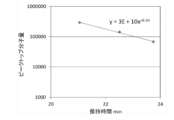
HPLC装置に移動相を1時間流しベースラインが安定するのを待った。ベースライン安定後に、各分子量マーカーが水溶液中でそれぞれ0.05質量%となるように溶解した分子量マーカー水溶液を22μL注入して、得られるクロマトグラムのピークトップと分子量マーカーの分子量から較正曲線を作成した。較正曲線を図1に示す。次いで、クロマトグラフ評価試料を22μL注入して得られるクロマトグラムのピークトップの位置から較正曲線を使用してフィブロインのタンパク質換算分子量を測定した。
フィブロイン原料のタンパク質換算分子量を測定する場合はフィブロイン水溶液(A)を、フィブロイン水溶液(B)のタンパク質換算分子量を測定する場合それ自体を、フィブロイン多孔質体のタンパク質換算分子量を測定する場合はフィブロイン水溶液(C)を用いて下記評価を行うことでそれぞれのタンパク質換算分子量を測定した。
以下、これらのフィブロイン水溶液(A)~(C)を「分子量測定溶液」と称する。
分子量測定溶液にフィブロイン濃度が10g/Lになるよう超純水を加えて混合し、続いてそこに移動相を加えて5倍に希釈し、得られた溶液を0.45μmのフィルタ(東洋濾紙株式会社製、商品名:25HP045AN)に通してろ過し、クロマトグラフ評価試料とした。
測定には高速液体クロマトグラフ(HPLC)本体(株式会社日立ハイテクノロジーズ製、商品名:Chromaster(「Chromaster」は、登録商標。))、とそのオプションであるUV検出器(株式会社日立ハイテクノロジーズ製、型番:5410)、ポンプ(株式会社日立ハイテクノロジーズ製、型番:5110)、オートサンプラ(株式会社日立ハイテクノロジーズ製、型番:5210)、カラムオーブン(株式会社日立ハイテクノロジーズ製、型番:5310)に加え、カラム(昭和電工株式会社製、商品名:SHODEX PROTEIN KW-804(「SHODEX」は、登録商標。))を組み合わせたHPLC装置を使用した。測定条件は移動相流量0.5mL/sec、カラム温度30℃、検出波長UV220nmとした。
得られたクロマトグラムをタンパク質分子量に換算するための較正曲線の作成には、分子量マーカーとしてHPLC用分子量マーカータンパク質である酵母由来グルタミン酸脱水素酵素(分子量:290,000、Oriental Yeast Co.,LTD.製、商品名:MW-Marker(HPLC))、豚心筋由来乳酸脱水素酵素(分子量:142,000、Oriental Yeast Co.,LTD製、商品名:MW-Marker(HPLC))、酵母由来エノラーゼ(分子量:67,000、Oriental Yeast Co.,LTD製、商品名:MW-Marker(HPLC))を使用した。
HPLC装置に移動相を1時間流しベースラインが安定するのを待った。ベースライン安定後に、各分子量マーカーが水溶液中でそれぞれ0.05質量%となるように溶解した分子量マーカー水溶液を22μL注入して、得られるクロマトグラムのピークトップと分子量マーカーの分子量から較正曲線を作成した。較正曲線を図1に示す。次いで、クロマトグラフ評価試料を22μL注入して得られるクロマトグラムのピークトップの位置から較正曲線を使用してフィブロインのタンパク質換算分子量を測定した。
実施例1
(アルカリ精練)
炭酸ナトリウム水溶液2Lを精練液として使用し、表1に記載の条件で精練を行った。精練容器には3Lのガラスビーカーを使用し、精練の加熱はホットスターラー(アズワン株式会社製、商品名:CT-5HT)をK熱電対で温度制御しながら行い、攪拌はガラス棒で適宜行った。加熱には得られた精練後の切繭を60℃のお湯で十分に洗浄した後に、純水でも洗浄を行った。得られた洗浄後の切繭を24℃の室内で2週間かけて自然乾燥し、完全に乾燥させて、フィブロイン原料を得た。次いで練減率を下式に従って算出した。結果を表1に示す。
練減率(質量%)=(精練前質量-精練後質量)÷精練前質量×100
また、得られたフィブロイン原料を用いて、前述の方法でフィブロイン水溶液(A)を調製し、フィブロイン原料のタンパク質換算分子量を測定した結果を表1に示す。
(アルカリ精練)
炭酸ナトリウム水溶液2Lを精練液として使用し、表1に記載の条件で精練を行った。精練容器には3Lのガラスビーカーを使用し、精練の加熱はホットスターラー(アズワン株式会社製、商品名:CT-5HT)をK熱電対で温度制御しながら行い、攪拌はガラス棒で適宜行った。加熱には得られた精練後の切繭を60℃のお湯で十分に洗浄した後に、純水でも洗浄を行った。得られた洗浄後の切繭を24℃の室内で2週間かけて自然乾燥し、完全に乾燥させて、フィブロイン原料を得た。次いで練減率を下式に従って算出した。結果を表1に示す。
練減率(質量%)=(精練前質量-精練後質量)÷精練前質量×100
また、得られたフィブロイン原料を用いて、前述の方法でフィブロイン水溶液(A)を調製し、フィブロイン原料のタンパク質換算分子量を測定した結果を表1に示す。
(フィブロイン水溶液(B)の調製)
フィブロイン水溶液(B)を調製するにあたって、まず、上記のアルカリ精練を行って得られたシルクフィブロイン原料を20℃の9mol/L臭化リチウム水溶液1Lに濃度が100g/Lになるよう投入し、10時間攪拌することで完全に溶解した。次いで溶解液を遠心分離(回転数:12,000min-1、5分間)して、デカンテーションで沈殿物を除去した後、透析チューブ(商品名:Spectra/Por 1 Dialysis Membrane、MWCO6,000-8,000、Spectrum Laboratories, Inc.製(「Spectra/Por」は、登録商標。))に注入し、超純水製造装置(PRO-0500及びFPC-0500(以上、型番)、オルガノ株式会社製、)から採水した超純水5Lに対して12時間の透析を5回繰り返して脱塩し、得られた溶液を再度遠心分離(回転数:12,000min-1、30分間)することでフィブロイン水溶液(B)を得た。フィブロイン水溶液(B)中でのフィブロイン濃度をフィブロイン多孔質体作製溶液の項で示した方法で測定した。
また、前述の方法でフィブロイン水溶液(B)中のフィブロインのタンパク質換算分子量を測定した結果を表1に示す。
フィブロイン水溶液(B)を調製するにあたって、まず、上記のアルカリ精練を行って得られたシルクフィブロイン原料を20℃の9mol/L臭化リチウム水溶液1Lに濃度が100g/Lになるよう投入し、10時間攪拌することで完全に溶解した。次いで溶解液を遠心分離(回転数:12,000min-1、5分間)して、デカンテーションで沈殿物を除去した後、透析チューブ(商品名:Spectra/Por 1 Dialysis Membrane、MWCO6,000-8,000、Spectrum Laboratories, Inc.製(「Spectra/Por」は、登録商標。))に注入し、超純水製造装置(PRO-0500及びFPC-0500(以上、型番)、オルガノ株式会社製、)から採水した超純水5Lに対して12時間の透析を5回繰り返して脱塩し、得られた溶液を再度遠心分離(回転数:12,000min-1、30分間)することでフィブロイン水溶液(B)を得た。フィブロイン水溶液(B)中でのフィブロイン濃度をフィブロイン多孔質体作製溶液の項で示した方法で測定した。
また、前述の方法でフィブロイン水溶液(B)中のフィブロインのタンパク質換算分子量を測定した結果を表1に示す。
(フィブロイン多孔質体作製溶液の調製)
上記フィブロイン水溶液(B)の調製の項で調製したフィブロイン水溶液(B)に、フィブロイン濃度30g/L、酢酸濃度2.0%(v/v)となるように酢酸及び超純水を加え、フィブロイン多孔質体作製溶液を調製した。
上記フィブロイン水溶液(B)の調製の項で調製したフィブロイン水溶液(B)に、フィブロイン濃度30g/L、酢酸濃度2.0%(v/v)となるように酢酸及び超純水を加え、フィブロイン多孔質体作製溶液を調製した。
(フィブロイン多孔質体の作製)
前述のフィブロイン多孔質体作製溶液をアルミ板で作製した型(内側サイズ;400mm×300mm×10mm)に流し込み、予め-5℃に冷却しておいた液冷式低温恒温槽(株式会社前川製作所製)に入れて-5℃で2時間静置した。冷媒としてはナイブラインZ1(株式会社MORESCO製、商品名(「ナイブライン」は、登録商標。))を使用した。
その後、-3℃/時間の速度で-20℃まで冷却し、そのままの温度で5時間保持して凍結した。
凍結した試料を自然解凍で室温に戻してから、型から取り出し、超純水に浸漬し、超純水を1日2回、3日間交換することによって、使用した酢酸を除去し、フィブロイン多孔質体を得た。得られたフィブロイン多孔質体に含まれるフィブロインのタンパク質換算分子量を前述の方法で測定した結果を表1に示す。
前述のフィブロイン多孔質体作製溶液をアルミ板で作製した型(内側サイズ;400mm×300mm×10mm)に流し込み、予め-5℃に冷却しておいた液冷式低温恒温槽(株式会社前川製作所製)に入れて-5℃で2時間静置した。冷媒としてはナイブラインZ1(株式会社MORESCO製、商品名(「ナイブライン」は、登録商標。))を使用した。
その後、-3℃/時間の速度で-20℃まで冷却し、そのままの温度で5時間保持して凍結した。
凍結した試料を自然解凍で室温に戻してから、型から取り出し、超純水に浸漬し、超純水を1日2回、3日間交換することによって、使用した酢酸を除去し、フィブロイン多孔質体を得た。得られたフィブロイン多孔質体に含まれるフィブロインのタンパク質換算分子量を前述の方法で測定した結果を表1に示す。
実施例2~5及び比較例1及び2
実施例1において精練時間を、表1に示すとおりに変えた以外は実施例1と同様にして、アルカリ精練、フィブロイン水溶液の調製、フィブロイン多孔質体作製溶液の調製、フィブロイン多孔質体の作製を行い、フィブロイン多孔質体を得た。
得られたフィブロイン原料、フィブロイン水溶液(B)及びフィブロイン多孔質体のタンパク質換算分子量を前述の方法で測定した結果を表1に示す。
実施例1において精練時間を、表1に示すとおりに変えた以外は実施例1と同様にして、アルカリ精練、フィブロイン水溶液の調製、フィブロイン多孔質体作製溶液の調製、フィブロイン多孔質体の作製を行い、フィブロイン多孔質体を得た。
得られたフィブロイン原料、フィブロイン水溶液(B)及びフィブロイン多孔質体のタンパク質換算分子量を前述の方法で測定した結果を表1に示す。
実施例6
フィブロイン水溶液(B)の調製方法を以下に記載した方法とした以外は実施例1と同様にしてアルカリ精練、フィブロイン多孔質体の作製を行い、フィブロイン多孔質体を得た。得られたフィブロイン原料、フィブロイン水溶液(B)及びフィブロイン多孔質体のタンパク質換算分子量を前述の方法で測定した結果を表1に示す。
フィブロイン水溶液(B)の調製方法を以下に記載した方法とした以外は実施例1と同様にしてアルカリ精練、フィブロイン多孔質体の作製を行い、フィブロイン多孔質体を得た。得られたフィブロイン原料、フィブロイン水溶液(B)及びフィブロイン多孔質体のタンパク質換算分子量を前述の方法で測定した結果を表1に示す。
(フィブロイン水溶液(B)の調製-2)
フィブロイン水溶液(B)は、アルカリ精練を行って得られたシルクフィブロイン原料を20℃の塩化カルシウムとエタノールと水とをモル比1:2:8で混合した溶液1Lにフィブロインの濃度が100g/Lになるよう投入し、80℃で40分間加熱、攪拌することで完全に溶解した。次いで溶解液を遠心分離(回転数:12,000min-1、5分間)して、デカンテーションで沈殿物を除去した後、透析チューブ(商品名:Spectra/Por 1 Dialysis Membrane、MWCO6,000-8,000、Spectrum Laboratories, Inc.製)に注入し、超純水製造装置(PRO-0500及びFPC-0500(以上、型番)、オルガノ株式会社製)から採水した超純水5Lに対して12時間の透析を5回繰り返して脱塩し、得られた溶液を再度遠心分離(回転数:12,000min-1、30分間)することでフィブロイン水溶液(B)を得た。フィブロイン水溶液(B)中でのフィブロイン濃度をフィブロイン多孔質体作製溶液の項で示した方法で測定した。
フィブロイン水溶液(B)は、アルカリ精練を行って得られたシルクフィブロイン原料を20℃の塩化カルシウムとエタノールと水とをモル比1:2:8で混合した溶液1Lにフィブロインの濃度が100g/Lになるよう投入し、80℃で40分間加熱、攪拌することで完全に溶解した。次いで溶解液を遠心分離(回転数:12,000min-1、5分間)して、デカンテーションで沈殿物を除去した後、透析チューブ(商品名:Spectra/Por 1 Dialysis Membrane、MWCO6,000-8,000、Spectrum Laboratories, Inc.製)に注入し、超純水製造装置(PRO-0500及びFPC-0500(以上、型番)、オルガノ株式会社製)から採水した超純水5Lに対して12時間の透析を5回繰り返して脱塩し、得られた溶液を再度遠心分離(回転数:12,000min-1、30分間)することでフィブロイン水溶液(B)を得た。フィブロイン水溶液(B)中でのフィブロイン濃度をフィブロイン多孔質体作製溶液の項で示した方法で測定した。
[機械特性の評価]
上記で得られたフィブロイン多孔質体について、以下の条件により25%圧縮応力、引裂き強さ、引張強さ及び引張ひずみを測定した結果を表1に示す。
上記で得られたフィブロイン多孔質体について、以下の条件により25%圧縮応力、引裂き強さ、引張強さ及び引張ひずみを測定した結果を表1に示す。
(25%圧縮応力の測定)
フィブロイン多孔質体について、万能試験機(型番:EZ-(N)S、株式会社島津製作所製)を用い、ロードセルは50N、治具として直径8mmの円形の圧縮板を用いて、圧縮速度1mm/min、室温22℃の条件下で、材料の厚さの25%を圧縮板で押し込んだときのロードを測定し、以下の式により算出した値を25%圧縮応力(kPa)とした。
25%圧縮応力(kPa)=材料の厚さの25%を圧縮板で押し込んだときのロード/圧縮板の面積(mm2)×1000
フィブロイン多孔質体について、万能試験機(型番:EZ-(N)S、株式会社島津製作所製)を用い、ロードセルは50N、治具として直径8mmの円形の圧縮板を用いて、圧縮速度1mm/min、室温22℃の条件下で、材料の厚さの25%を圧縮板で押し込んだときのロードを測定し、以下の式により算出した値を25%圧縮応力(kPa)とした。
25%圧縮応力(kPa)=材料の厚さの25%を圧縮板で押し込んだときのロード/圧縮板の面積(mm2)×1000
(引裂き強さの測定)
100mm×15mmの大きさで、かつ長さ40mmの切込みを入れた、トラウザ形に打ち抜いたフィブロイン多孔質体の試験片について、万能試験機(型番:EZ-(N)S、株式会社島津製作所製)を用い、ロードセルは50N、つかみ具は引張試験用の冶具を用い、引裂き速度200mm/min、初期つかみ具間距離40mm、室温22℃の条件下で、引裂き力の中央値を測定し、以下の式により算出した値である。
引裂き強さ=引裂き力の中央値(N)/試験片の厚さ(mm)
100mm×15mmの大きさで、かつ長さ40mmの切込みを入れた、トラウザ形に打ち抜いたフィブロイン多孔質体の試験片について、万能試験機(型番:EZ-(N)S、株式会社島津製作所製)を用い、ロードセルは50N、つかみ具は引張試験用の冶具を用い、引裂き速度200mm/min、初期つかみ具間距離40mm、室温22℃の条件下で、引裂き力の中央値を測定し、以下の式により算出した値である。
引裂き強さ=引裂き力の中央値(N)/試験片の厚さ(mm)
(引張強さ、引張ひずみの測定)
50mm×5mmの大きさに打ち抜いたフィブロイン多孔質体の試験片について、万能試験機(型番:EZ-(N)S、株式会社島津製作所製)を用い、ロードセルは50N、つかみ具は引張試験用の冶具を用い、引張速度5mm/min、初期つかみ具間距離30mm、室温22℃の条件下で試験片を引張り、試験片破断時の応力とひずみをそれぞれ引張強さ、引張ひずみとした。
50mm×5mmの大きさに打ち抜いたフィブロイン多孔質体の試験片について、万能試験機(型番:EZ-(N)S、株式会社島津製作所製)を用い、ロードセルは50N、つかみ具は引張試験用の冶具を用い、引張速度5mm/min、初期つかみ具間距離30mm、室温22℃の条件下で試験片を引張り、試験片破断時の応力とひずみをそれぞれ引張強さ、引張ひずみとした。

表1より、実施例1から6においてはいずれも練減率は31質量%前後であり、セリシンがほぼ完全に除去されていることが分かった。
表1より、実施例1から6においてフィブロイン多孔質体の25%圧縮応力は、分子量が高すぎる比較例2と比べて低く、柔軟性に優れていることが分かった。
表1より、実施例1から6においてはフィブロイン多孔質体の引裂き強さは、分子量が低すぎる比較例1と比べて高く、機械的強度に優れていることが分かった。
表1より、実施例1から6においてはフィブロイン多孔質体の引張強さは、分子量が低すぎる比較例1と比べて高く、機械的強度に優れていることが分かった。
表1より、実施例1から6においてはフィブロイン多孔質体の引張ひずみは、適切な分子量でない比較例1、比較例2と比べて高く、伸縮性に優れていることが分かった。
表1より、実施例1から6においてはフィブロイン原料及びフィブロイン水溶液のタンパク質換算分子量は168,000~403,000であったが、精練時間の長い比較例1では126,000、精練時間の短い比較例2では731,000であり、精練時間が長くなるにつれ分子量が低下していることが分かった。
表1より、実施例1から6においてはフィブロイン多孔質体のタンパク質換算分子量は119,000~308,000であったが、精練時間の長い比較例1では92,000、精練時間の短い比較例2では592,000であり、精練時間が長くなるにつれ分子量が低下していることが分かった。
以上より、タンパク質換算分子量が160,000~410,000のフィブロイン原料を使用して作製したフィブロイン水溶液のタンパク質換算分子量は160,000~410,000であり、またそのフィブロイン水溶液を使用して作製したフィブロイン多孔質体のタンパク質換算分子量は110,000~310,000であり、これらのフィブロイン多孔質体は、いずれも機械的強度、伸縮性、柔軟性に優れていることが分かった。
表1より、実施例1から6においてフィブロイン多孔質体の25%圧縮応力は、分子量が高すぎる比較例2と比べて低く、柔軟性に優れていることが分かった。
表1より、実施例1から6においてはフィブロイン多孔質体の引裂き強さは、分子量が低すぎる比較例1と比べて高く、機械的強度に優れていることが分かった。
表1より、実施例1から6においてはフィブロイン多孔質体の引張強さは、分子量が低すぎる比較例1と比べて高く、機械的強度に優れていることが分かった。
表1より、実施例1から6においてはフィブロイン多孔質体の引張ひずみは、適切な分子量でない比較例1、比較例2と比べて高く、伸縮性に優れていることが分かった。
表1より、実施例1から6においてはフィブロイン原料及びフィブロイン水溶液のタンパク質換算分子量は168,000~403,000であったが、精練時間の長い比較例1では126,000、精練時間の短い比較例2では731,000であり、精練時間が長くなるにつれ分子量が低下していることが分かった。
表1より、実施例1から6においてはフィブロイン多孔質体のタンパク質換算分子量は119,000~308,000であったが、精練時間の長い比較例1では92,000、精練時間の短い比較例2では592,000であり、精練時間が長くなるにつれ分子量が低下していることが分かった。
以上より、タンパク質換算分子量が160,000~410,000のフィブロイン原料を使用して作製したフィブロイン水溶液のタンパク質換算分子量は160,000~410,000であり、またそのフィブロイン水溶液を使用して作製したフィブロイン多孔質体のタンパク質換算分子量は110,000~310,000であり、これらのフィブロイン多孔質体は、いずれも機械的強度、伸縮性、柔軟性に優れていることが分かった。
[保水性試験及びヒト肘部への貼付試験]
次に保水性試験及びヒト肘部への貼付試験を行うため、以下の方法で、フィブロイン多孔質体を作製した。
次に保水性試験及びヒト肘部への貼付試験を行うため、以下の方法で、フィブロイン多孔質体を作製した。
実施例7
(フィブロイン多孔質体の作製)
実施例3において、フィブロイン多孔質体作製溶液を流し込むアルミ板で作製した型のサイズを内径;50mm×50mm×0.6mmとした以外は実施例3と同様にしてフィブロイン多孔質体を得た。
(フィブロイン多孔質体の乾燥)
得られたフィブロイン多孔質体を5Lの3体積%グリセリン水溶液に96時間浸漬し、フィブロイン多孔質体内部の水分をグリセリン水溶液に置換した。次いで、グリセリン水溶液浸漬後のフィブロイン多孔質体を凍結乾燥機(「FD-550P(型番)」、東京理化器械株式会社製)を使用して3日間凍結乾燥し、乾燥フィブロイン多孔質体を得た。
この乾燥フィブロイン多孔質体中のグリセリンの含有量を下記の方法で評価したところ、41.9質量%であった。
(グリセリンの含有量の測定)
乾燥フィブロイン多孔質体中のグリセリンの含有量(質量%)は、乾燥フィブロイン多孔質体に導入されたグリセリンの質量を、グリセリンが導入された後の乾燥フィブロイン多孔質体の質量で割ったものとし、以下の式で算出した。
(乾燥フィブロイン多孔質体中のグリセリンの含有量(質量%))=((グリセリンを導入した乾燥フィブロイン多孔質体の質量)-(グリセリンの未導入の乾燥フィブロイン多孔質体の質量))/(グリセリンの導入後の乾燥フィブロイン多孔質体の質量)×100
(被覆材の作製)
Smith & Nephew KK製フィルムドレッシング材オプサイトジェントルロール(10cm幅、製品番号:66801197)をハサミで8cm角に切断した。得られた8cm角のフィルムドレッシング材の離型フィルム(ライナー)を剥離し、フィルムドレッシング材本体の粘着剤塗布面を露出させた。離型フィルムを剥離したフィルムドレッシング材本体の粘着剤塗布面の中央部に上記した乾燥フィブロイン多孔質体を貼り付けた(以下これを被覆材と称す)。
(フィブロイン多孔質体の作製)
実施例3において、フィブロイン多孔質体作製溶液を流し込むアルミ板で作製した型のサイズを内径;50mm×50mm×0.6mmとした以外は実施例3と同様にしてフィブロイン多孔質体を得た。
(フィブロイン多孔質体の乾燥)
得られたフィブロイン多孔質体を5Lの3体積%グリセリン水溶液に96時間浸漬し、フィブロイン多孔質体内部の水分をグリセリン水溶液に置換した。次いで、グリセリン水溶液浸漬後のフィブロイン多孔質体を凍結乾燥機(「FD-550P(型番)」、東京理化器械株式会社製)を使用して3日間凍結乾燥し、乾燥フィブロイン多孔質体を得た。
この乾燥フィブロイン多孔質体中のグリセリンの含有量を下記の方法で評価したところ、41.9質量%であった。
(グリセリンの含有量の測定)
乾燥フィブロイン多孔質体中のグリセリンの含有量(質量%)は、乾燥フィブロイン多孔質体に導入されたグリセリンの質量を、グリセリンが導入された後の乾燥フィブロイン多孔質体の質量で割ったものとし、以下の式で算出した。
(乾燥フィブロイン多孔質体中のグリセリンの含有量(質量%))=((グリセリンを導入した乾燥フィブロイン多孔質体の質量)-(グリセリンの未導入の乾燥フィブロイン多孔質体の質量))/(グリセリンの導入後の乾燥フィブロイン多孔質体の質量)×100
(被覆材の作製)
Smith & Nephew KK製フィルムドレッシング材オプサイトジェントルロール(10cm幅、製品番号:66801197)をハサミで8cm角に切断した。得られた8cm角のフィルムドレッシング材の離型フィルム(ライナー)を剥離し、フィルムドレッシング材本体の粘着剤塗布面を露出させた。離型フィルムを剥離したフィルムドレッシング材本体の粘着剤塗布面の中央部に上記した乾燥フィブロイン多孔質体を貼り付けた(以下これを被覆材と称す)。
比較例3
比較例1と同様のフィブロイン原料を用いる以外は実施例7と同様にして、乾燥フィブロイン多孔質体及び被覆材を作製した。
比較例1と同様のフィブロイン原料を用いる以外は実施例7と同様にして、乾燥フィブロイン多孔質体及び被覆材を作製した。
比較例4
比較例2と同様のフィブロイン原料を用いる以外は実施例7と同様にして、乾燥フィブロイン多孔質体及び被覆材を作製した。
比較例2と同様のフィブロイン原料を用いる以外は実施例7と同様にして、乾燥フィブロイン多孔質体及び被覆材を作製した。
実施例7、比較例3及び比較例4で得られた乾燥フィブロイン多孔質体及び被覆材を用いて、以下の条件により保水性試験及びヒト肘部への貼付試験を行った。結果を表2に示す。
(保水性試験)
乾燥フィブロイン多孔質体を秤量後(この時の質量を乾燥質量とする)、超純水中に30秒間浸漬した。次いで30秒間空気中で保持し表面の水分を落として、再度秤量し(この時の質量を湿潤質量とする)、下式に従って保水率を測定した。
保水率(%)=〔(湿潤質量(g)-乾燥質量(g))/乾燥質量(g)〕×100
乾燥フィブロイン多孔質体を秤量後(この時の質量を乾燥質量とする)、超純水中に30秒間浸漬した。次いで30秒間空気中で保持し表面の水分を落として、再度秤量し(この時の質量を湿潤質量とする)、下式に従って保水率を測定した。
保水率(%)=〔(湿潤質量(g)-乾燥質量(g))/乾燥質量(g)〕×100
(ヒト肘部への貼付試験)
被覆材を日本人男性5名及び日本人女性5名の肘部にヒジを伸ばした状態で貼付し、次いで被覆材が剥離しない様にゆっくりとヒジを曲げ、被覆材の様子を観察し、以下の基準に従い判定を行った。
A:ヒジを曲げる際に被覆材に使用したフィブロイン多孔質体に破れが1名も生じなかった場合
B:ヒジを曲げた際に被覆材に使用したフィブロイン多孔質体に破れが1名でも生じた場合
被覆材を日本人男性5名及び日本人女性5名の肘部にヒジを伸ばした状態で貼付し、次いで被覆材が剥離しない様にゆっくりとヒジを曲げ、被覆材の様子を観察し、以下の基準に従い判定を行った。
A:ヒジを曲げる際に被覆材に使用したフィブロイン多孔質体に破れが1名も生じなかった場合
B:ヒジを曲げた際に被覆材に使用したフィブロイン多孔質体に破れが1名でも生じた場合
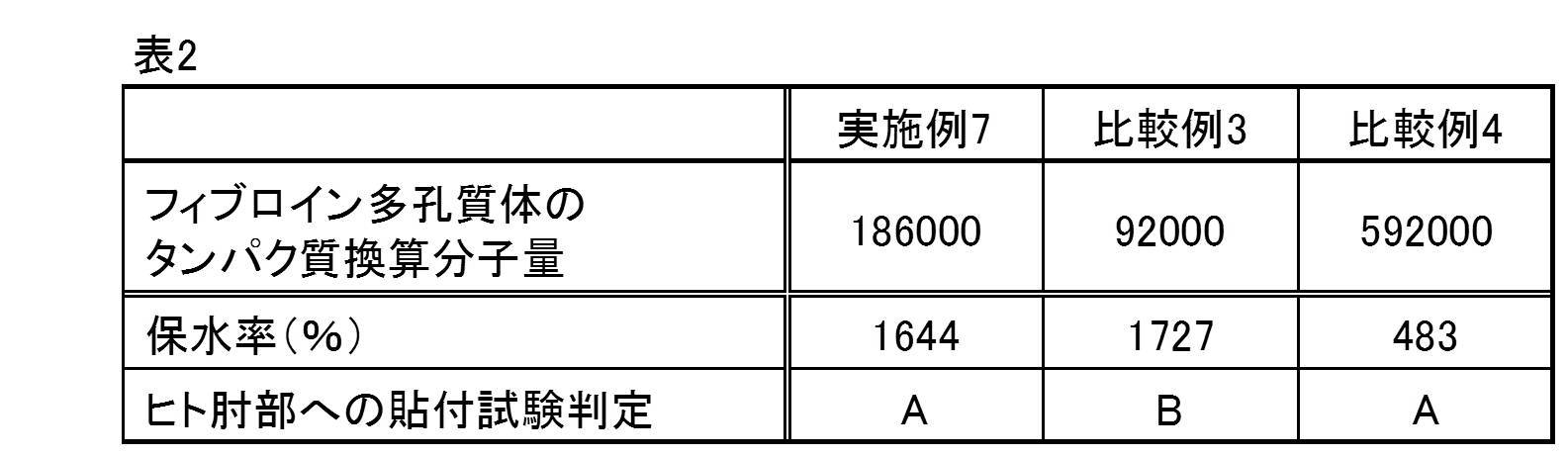
実施例7の結果から本発明の創傷被覆材(乾燥フィブロイン多孔質体)は保水性が高いため、浸出液の多い創傷に使用する創傷被覆材として有用であることが分かった。また、本発明のフィブロイン多孔質体を用いた創傷被覆材は引張ひずみが大きく、機械的強度が高いため、ヒジ、ヒザ、手指等の皮膚の動きが大きい関節部分に貼付しても破れづらく、創傷被覆材に必要な伸縮性及び機械的強度を有することが分かった。
さらに、実施例7の被覆材を装着時にヒジを曲げた後に再度ヒジを伸ばすと、被覆材は再度皮膚に追従して縮み、ほぼ元通りの大きさに戻った。このことから本発明のフィブロイン多孔質体を用いた創傷被覆材は引張残留ひずみが小さいため、繰り返しの動作にも追従することが分かった。
これに対して比較例3で作製した被覆材(乾燥フィブロイン多孔質体)は、原料の分子量が低いため、引張強さ及び引張ひずみに劣るため、皮膚の動きが大きい関節部分に貼付すると動作の際に破れやすく、創傷被覆材としての使用は難しいことが分かった。さらに比較例4においては作製したフィブロイン多孔質体を凍結乾燥すると大きく収縮し、硬くなると共に反りが発生した。さらに保水性にも乏しいことから、分子量が高い原料で作製した乾燥フィブロイン多孔質体は創傷被覆材への応用は困難であることが分かった。
さらに、実施例7の被覆材を装着時にヒジを曲げた後に再度ヒジを伸ばすと、被覆材は再度皮膚に追従して縮み、ほぼ元通りの大きさに戻った。このことから本発明のフィブロイン多孔質体を用いた創傷被覆材は引張残留ひずみが小さいため、繰り返しの動作にも追従することが分かった。
これに対して比較例3で作製した被覆材(乾燥フィブロイン多孔質体)は、原料の分子量が低いため、引張強さ及び引張ひずみに劣るため、皮膚の動きが大きい関節部分に貼付すると動作の際に破れやすく、創傷被覆材としての使用は難しいことが分かった。さらに比較例4においては作製したフィブロイン多孔質体を凍結乾燥すると大きく収縮し、硬くなると共に反りが発生した。さらに保水性にも乏しいことから、分子量が高い原料で作製した乾燥フィブロイン多孔質体は創傷被覆材への応用は困難であることが分かった。
[クッション性試験]
次にクッション性試験を行うため、以下の方法で、フィブロイン多孔質体を作製した。
次にクッション性試験を行うため、以下の方法で、フィブロイン多孔質体を作製した。
実施例8
実施例7において、フィブロイン多孔質体作製溶液を流し込むアルミ板で作製した型のサイズを内径;50mm×50mm×3mmとした以外は実施例7と同様にして被覆材を作製した。
実施例7において、フィブロイン多孔質体作製溶液を流し込むアルミ板で作製した型のサイズを内径;50mm×50mm×3mmとした以外は実施例7と同様にして被覆材を作製した。
比較例5
比較例3において、フィブロイン多孔質体作製溶液を流し込むアルミ板で作製した型のサイズを内径;50mm×50mm×3mmとした以外は比較例3と同様にして被覆材を作製した。
比較例3において、フィブロイン多孔質体作製溶液を流し込むアルミ板で作製した型のサイズを内径;50mm×50mm×3mmとした以外は比較例3と同様にして被覆材を作製した。
比較例6
比較例4において、フィブロイン多孔質体作製溶液を流し込むアルミ板で作製した型のサイズを内径;50mm×50mm×3mmとした以外は比較例4と同様にして被覆材を作製した。
比較例4において、フィブロイン多孔質体作製溶液を流し込むアルミ板で作製した型のサイズを内径;50mm×50mm×3mmとした以外は比較例4と同様にして被覆材を作製した。
上記実施例8、比較例5及び比較例6で得られた被覆材を用いて、以下の条件によりクッション性試験を行った。結果を表3に示す。
(クッション性試験)
被覆材を日本人男性5名及び日本人女性5名の肘部にヒジを曲げた状態で貼付し、被覆材で覆われた部分を机に打ちつけた際のクッション性を以下の基準に従い判定を行った。
A:クッション性が高く、特に痛みが軽減されたと判断した被験者が、8人以上であった。
B:クッション性が高く、特に痛みが軽減されたと判断した被験者が、4~7人であった。
C:クッション性が高く、特に痛みが軽減されたと判断した被験者が、3人未満であった。
被覆材を日本人男性5名及び日本人女性5名の肘部にヒジを曲げた状態で貼付し、被覆材で覆われた部分を机に打ちつけた際のクッション性を以下の基準に従い判定を行った。
A:クッション性が高く、特に痛みが軽減されたと判断した被験者が、8人以上であった。
B:クッション性が高く、特に痛みが軽減されたと判断した被験者が、4~7人であった。
C:クッション性が高く、特に痛みが軽減されたと判断した被験者が、3人未満であった。
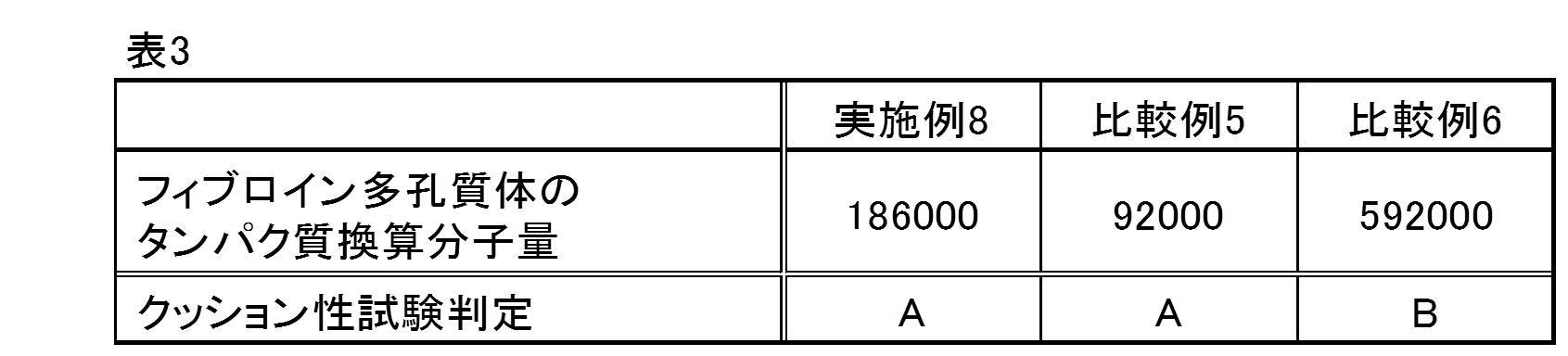
実施例8、比較例5及び6の結果から、本発明のフィブロイン多孔質体を用いた被覆材はクッション性に優れるため、創傷部に貼付することでぶつけた際の痛みを軽減する効果があることが分かった。これに対して比較例6で作製した被覆材は、乾燥フィブロイン多孔質体部分が硬いため、クッション性に乏しく、創傷被覆材に適していないことが分かった。
本発明のフィブロイン多孔質体は、化粧品及びエステ分野等に広く適用することができ、顔の形状に合わせたフェイスマスク、アイマスク等のスキンケア材料としても極めて有用である。また、創傷被覆材、薬剤徐放担体、止血スポンジ等の医療分野、紙おむつ、生理用品等の生活日用品分野、組織工学、再生医工学における細胞培養支持体及び組織再生支持体、浄水用途及び環境分野における微生物、細菌等の住処になる支持体等、種々の産業に適用が可能である。
Claims (12)
- タンパク質換算分子量が110,000~310,000であるフィブロインを含有してなるフィブロイン多孔質体。
- タンパク質換算分子量が180,000~310,000であるフィブロインを含有してなる、請求項1に記載のフィブロイン多孔質体。
- 引張ひずみが52~67%である、請求項1又は2に記載のフィブロイン多孔質体。
- 引裂き強さが20~45N/mmである、請求項1~3のいずれか1項に記載のフィブロイン多孔質体。
- 25%圧縮応力が20~25kPaである、請求項1~4のいずれか1項に記載のフィブロイン多孔質体。
- タンパク質換算分子量が160,000~410,000であるフィブロインを含有してなるフィブロイン水溶液。
- タンパク質換算分子量が240,000~310,000であるフィブロインを含有してなる、請求項6に記載のフィブロイン水溶液。
- さらに、脂肪族カルボン酸を含む、請求項6又は7に記載のフィブロイン水溶液。
- 脂肪族カルボン酸が酢酸である、請求項8に記載のフィブロイン水溶液。
- タンパク質換算分子量が160,000~410,000であるフィブロイン原料。
- 請求項6~9のいずれか1項に記載のフィブロイン水溶液、又は請求項10に記載のフィブロイン原料から得られる水溶液を凍結し、ついで融解する、請求項1~5のいずれか1項に記載のフィブロイン多孔質体の製造方法。
- 請求項1~5のいずれか1項に記載のフィブロイン多孔質体を用いた創傷被覆材。
Priority Applications (1)
| Application Number | Priority Date | Filing Date | Title |
|---|---|---|---|
| JP2016514929A JP6742607B2 (ja) | 2014-04-21 | 2015-04-20 | フィブロイン多孔質体、フィブロイン水溶液及びフィブロイン原料 |
Applications Claiming Priority (2)
| Application Number | Priority Date | Filing Date | Title |
|---|---|---|---|
| JP2014-087282 | 2014-04-21 | ||
| JP2014087282 | 2014-04-21 |
Publications (1)
| Publication Number | Publication Date |
|---|---|
| WO2015163293A1 true WO2015163293A1 (ja) | 2015-10-29 |
Family
ID=54332459
Family Applications (1)
| Application Number | Title | Priority Date | Filing Date |
|---|---|---|---|
| PCT/JP2015/062022 Ceased WO2015163293A1 (ja) | 2014-04-21 | 2015-04-20 | フィブロイン多孔質体、フィブロイン水溶液及びフィブロイン原料 |
Country Status (3)
| Country | Link |
|---|---|
| JP (1) | JP6742607B2 (ja) |
| TW (1) | TWI722984B (ja) |
| WO (1) | WO2015163293A1 (ja) |
Citations (7)
| Publication number | Priority date | Publication date | Assignee | Title |
|---|---|---|---|---|
| WO2001042300A1 (en) * | 1999-12-09 | 2001-06-14 | National Institute Of Agrobiological Sciences | Process for producing functional silk fibroin and utilization of the same |
| WO2010116994A1 (ja) * | 2009-04-06 | 2010-10-14 | 日立化成工業株式会社 | シルクフィブロイン多孔質体の製造方法 |
| JP2012082241A (ja) * | 2010-10-06 | 2012-04-26 | Hitachi Chemical Co Ltd | シルクフィブロイン多孔質体 |
| JP2012080915A (ja) * | 2010-10-06 | 2012-04-26 | Hitachi Chemical Co Ltd | 創傷被覆材 |
| JP2012082240A (ja) * | 2010-10-06 | 2012-04-26 | Hitachi Chemical Co Ltd | シルクフィブロイン多孔質体 |
| JP2012082242A (ja) * | 2010-10-06 | 2012-04-26 | Hitachi Chemical Co Ltd | シルクフィブロイン多孔質体の製造方法 |
| JP2012082244A (ja) * | 2010-10-06 | 2012-04-26 | Hitachi Chemical Co Ltd | シルクフィブロイン多孔質体の製造方法 |
Family Cites Families (2)
| Publication number | Priority date | Publication date | Assignee | Title |
|---|---|---|---|---|
| JP4074923B2 (ja) * | 1997-12-25 | 2008-04-16 | エンザミンインターナショナル株式会社 | 精製絹フィブロイン溶液及びその製造方法 |
| CN100551449C (zh) * | 2006-12-30 | 2009-10-21 | 苏州大学 | 柞蚕丝素蛋白生物医用材料及其制备方法 |
-
2015
- 2015-04-20 JP JP2016514929A patent/JP6742607B2/ja active Active
- 2015-04-20 WO PCT/JP2015/062022 patent/WO2015163293A1/ja not_active Ceased
- 2015-04-21 TW TW104112675A patent/TWI722984B/zh active
Patent Citations (7)
| Publication number | Priority date | Publication date | Assignee | Title |
|---|---|---|---|---|
| WO2001042300A1 (en) * | 1999-12-09 | 2001-06-14 | National Institute Of Agrobiological Sciences | Process for producing functional silk fibroin and utilization of the same |
| WO2010116994A1 (ja) * | 2009-04-06 | 2010-10-14 | 日立化成工業株式会社 | シルクフィブロイン多孔質体の製造方法 |
| JP2012082241A (ja) * | 2010-10-06 | 2012-04-26 | Hitachi Chemical Co Ltd | シルクフィブロイン多孔質体 |
| JP2012080915A (ja) * | 2010-10-06 | 2012-04-26 | Hitachi Chemical Co Ltd | 創傷被覆材 |
| JP2012082240A (ja) * | 2010-10-06 | 2012-04-26 | Hitachi Chemical Co Ltd | シルクフィブロイン多孔質体 |
| JP2012082242A (ja) * | 2010-10-06 | 2012-04-26 | Hitachi Chemical Co Ltd | シルクフィブロイン多孔質体の製造方法 |
| JP2012082244A (ja) * | 2010-10-06 | 2012-04-26 | Hitachi Chemical Co Ltd | シルクフィブロイン多孔質体の製造方法 |
Non-Patent Citations (4)
| Title |
|---|
| KOZO TSUBOUCHI ET AL.: "Seiren Kenshi no Fibroin-chu ni Hikessho Ryoiki wa Aruka?", THE JAPANESE SOCIETY OF SILK SCIENCE AND TECHNOLOGY GAKKAISHI, vol. 12, 2003, pages 98 - 99 * |
| KOZO TSUBOUCHI ET AL.: "The degradation of fibroin molecule in the preparation of solubilized fibroin from the cocoon of the silkworm, Bombyx mori", J. SERIC. SCI. JPN., vol. 71, no. 1, 2002, pages 1 - 5, XP055233039 * |
| NAOSUKE SUMI ET AL.: "Silk Fibroin o Shiyo shita Takoshitsutai Keisei", DAI 18 KAI POLYMER MATERIAL FORUM YOKOSHU, 2009, pages 201 * |
| WRAY L.S. ET AL.: "Effect of processing on silk- based biomaterials : reproducibility and biocompatibility.", J. BIOMED. MATER. RES. B: APPL. BIOMATER., vol. 99, no. 1, 2011, pages 89 - 101, XP055233034 * |
Also Published As
| Publication number | Publication date |
|---|---|
| TWI722984B (zh) | 2021-04-01 |
| TW201620509A (zh) | 2016-06-16 |
| JPWO2015163293A1 (ja) | 2017-04-13 |
| JP6742607B2 (ja) | 2020-08-19 |
Similar Documents
| Publication | Publication Date | Title |
|---|---|---|
| Silva et al. | Topical caffeine delivery using biocellulose membranes: a potential innovative system for cellulite treatment | |
| JP2703531B2 (ja) | 微生物多糖製品及びその製造方法 | |
| CN101293110A (zh) | 一种医用水凝胶创伤敷料及其制备方法 | |
| Iswariya et al. | Design and development of a piscine collagen blended pullulan hydrogel for skin tissue engineering | |
| TWI398276B (zh) | Method for producing bacterial cellulose with controlled pore size and its use in wound dressing | |
| JP5754612B2 (ja) | 創傷被覆材 | |
| JP6139259B2 (ja) | 創傷治療剤の製造方法 | |
| CN103865079A (zh) | 一种抗菌丝素蛋白水凝胶及其瞬时制备的方法 | |
| Cheng et al. | Mussel-inspired photothermal antibacterial multi-network hydrogel for cascade-enhanced infected wound healing | |
| CN103724709A (zh) | 一种氧化普鲁兰多糖-丝胶复合物改性天然乳胶的方法 | |
| JP6742607B2 (ja) | フィブロイン多孔質体、フィブロイン水溶液及びフィブロイン原料 | |
| Jiang et al. | An adenine-modified chitosan cross-linked 8arm-PEG-CHO hydrogel for promoting infected wound healing | |
| CN107496971B (zh) | 一种细菌纤维素/乳铁蛋白抗菌敷料及其制备方法 | |
| JP5889188B2 (ja) | 組織接着用シート製剤 | |
| JP6842101B2 (ja) | 医療用部材 | |
| JP6638647B2 (ja) | 多孔質材料及び多孔質シート | |
| CN111135340B (zh) | 一种生物纤维素复合凝胶材料及其作为创伤敷料的用途 | |
| JP6822760B2 (ja) | 止血材 | |
| JP6551403B2 (ja) | フィブロイン多孔質シート、医療用シート、創傷被覆材、及びフィブロイン多孔質シートの製造方法 | |
| CN107185026B (zh) | 一种魔芋葡甘聚糖医用抗菌敷料的制备方法 | |
| JP2010100535A (ja) | コラーゲンシートの製造方法 | |
| JP5615804B2 (ja) | 医療用及び基礎化粧用(スキンケア用)高分子材料並びにその製造方法 | |
| CN115369644A (zh) | 一种可用于医疗和卫生的抗菌凝血吸液多功能非织造材料 | |
| TWI334877B (en) | Method for preparing degradable wound dressing | |
| Shipovskaya et al. | Structure and properties of chitosan-based films for biomedical purposes |
Legal Events
| Date | Code | Title | Description |
|---|---|---|---|
| 121 | Ep: the epo has been informed by wipo that ep was designated in this application |
Ref document number: 15783271 Country of ref document: EP Kind code of ref document: A1 |
|
| ENP | Entry into the national phase |
Ref document number: 2016514929 Country of ref document: JP Kind code of ref document: A |
|
| NENP | Non-entry into the national phase |
Ref country code: DE |
|
| 122 | Ep: pct application non-entry in european phase |
Ref document number: 15783271 Country of ref document: EP Kind code of ref document: A1 |