WO2015045948A1 - 医療支援装置、医療支援装置の制御方法、医療支援プログラム及び医療支援システム - Google Patents
医療支援装置、医療支援装置の制御方法、医療支援プログラム及び医療支援システム Download PDFInfo
- Publication number
- WO2015045948A1 WO2015045948A1 PCT/JP2014/074387 JP2014074387W WO2015045948A1 WO 2015045948 A1 WO2015045948 A1 WO 2015045948A1 JP 2014074387 W JP2014074387 W JP 2014074387W WO 2015045948 A1 WO2015045948 A1 WO 2015045948A1
- Authority
- WO
- WIPO (PCT)
- Prior art keywords
- medical
- information
- clinical path
- equipment
- path information
- Prior art date
- Legal status (The legal status is an assumption and is not a legal conclusion. Google has not performed a legal analysis and makes no representation as to the accuracy of the status listed.)
- Ceased
Links
Images





Classifications
-
- G—PHYSICS
- G06—COMPUTING OR CALCULATING; COUNTING
- G06Q—INFORMATION AND COMMUNICATION TECHNOLOGY [ICT] SPECIALLY ADAPTED FOR ADMINISTRATIVE, COMMERCIAL, FINANCIAL, MANAGERIAL OR SUPERVISORY PURPOSES; SYSTEMS OR METHODS SPECIALLY ADAPTED FOR ADMINISTRATIVE, COMMERCIAL, FINANCIAL, MANAGERIAL OR SUPERVISORY PURPOSES, NOT OTHERWISE PROVIDED FOR
- G06Q10/00—Administration; Management
- G06Q10/06—Resources, workflows, human or project management; Enterprise or organisation planning; Enterprise or organisation modelling
-
- G—PHYSICS
- G16—INFORMATION AND COMMUNICATION TECHNOLOGY [ICT] SPECIALLY ADAPTED FOR SPECIFIC APPLICATION FIELDS
- G16H—HEALTHCARE INFORMATICS, i.e. INFORMATION AND COMMUNICATION TECHNOLOGY [ICT] SPECIALLY ADAPTED FOR THE HANDLING OR PROCESSING OF MEDICAL OR HEALTHCARE DATA
- G16H10/00—ICT specially adapted for the handling or processing of patient-related medical or healthcare data
- G16H10/60—ICT specially adapted for the handling or processing of patient-related medical or healthcare data for patient-specific data, e.g. for electronic patient records
-
- G—PHYSICS
- G16—INFORMATION AND COMMUNICATION TECHNOLOGY [ICT] SPECIALLY ADAPTED FOR SPECIFIC APPLICATION FIELDS
- G16H—HEALTHCARE INFORMATICS, i.e. INFORMATION AND COMMUNICATION TECHNOLOGY [ICT] SPECIALLY ADAPTED FOR THE HANDLING OR PROCESSING OF MEDICAL OR HEALTHCARE DATA
- G16H40/00—ICT specially adapted for the management or administration of healthcare resources or facilities; ICT specially adapted for the management or operation of medical equipment or devices
- G16H40/60—ICT specially adapted for the management or administration of healthcare resources or facilities; ICT specially adapted for the management or operation of medical equipment or devices for the operation of medical equipment or devices
-
- G—PHYSICS
- G16—INFORMATION AND COMMUNICATION TECHNOLOGY [ICT] SPECIALLY ADAPTED FOR SPECIFIC APPLICATION FIELDS
- G16H—HEALTHCARE INFORMATICS, i.e. INFORMATION AND COMMUNICATION TECHNOLOGY [ICT] SPECIALLY ADAPTED FOR THE HANDLING OR PROCESSING OF MEDICAL OR HEALTHCARE DATA
- G16H70/00—ICT specially adapted for the handling or processing of medical references
- G16H70/20—ICT specially adapted for the handling or processing of medical references relating to practices or guidelines
Definitions
- the present invention relates to a medical support device that analyzes the effects of introducing medical equipment, a control method for the medical support device, a medical support program, and a medical support system.
- the clinical path is a chart-type medical treatment schedule table representing medical treatment contents standardized for each disease.
- a plurality of scheduled treatment items such as diagnosis, treatment, and examination are set in advance along the time axis according to the type of disease, so that a patient's treatment schedule can be easily created.
- the clinical path clarifies necessary medical care items for each disease. Therefore, medical quality and efficiency are improved by performing patient medical care based on the clinical path.
- the clinical path is not only used for confirming the scheduled medical treatment items, but also the medical information regarding the specific contents and results of the medical examinations, treatments and examinations given to the patients, and is used to manage the medical treatment results of the patients. Is also used.
- new medical equipment such as medical equipment and medicines are introduced, or old medical equipment is replaced with new ones as appropriate. Since new medical equipment is improved compared to conventional equipment, various introduction effects such as shortening hospitalization days and hospitalization days, normalizing medical examination results, and the like can be obtained. In this way, when new medical equipment is introduced, the contents of the clinical path medical treatment scheduled items and the medical treatment schedule are changed in accordance with the new medical equipment.
- Patent Document 1 discloses a management support system that analyzes data on performance information collected from medical institutions using a benchmark method and provides the analysis results to the medical institutions.
- this management support system as a result of data analysis, it is possible to present the average length of stay of patients so that they can be compared with other hospitals. For example, if the average length of hospital stay before and after the introduction of medical equipment is compared, the effect of introducing new medical equipment can be known.
- An object of the present invention is to provide a medical support device, a control method for the medical support device, a medical support program, and a medical support system that can analyze an accurate introduction effect of newly introduced medical equipment.
- the medical support apparatus of the present invention includes a device correspondence information storage unit, a clinical path information storage unit, an operation reception unit, a device search unit, a clinical path information search unit, a performance information acquisition unit, and an introduction effect analysis. Department.
- the equipment correspondence information storage unit stores the identification information of the first medical equipment and the identification information of the second medical equipment used before the introduction of the first medical equipment in association with each other.
- the clinical path information storage unit includes a patient's medical treatment schedule, medical information regarding medical care performed on the patient, and identification information of the first medical equipment or the second medical equipment used for medical care as one of the medical information. Contains clinical path information.
- the operation accepting unit accepts a request for analyzing the introduction effect of the first medical device on a clinical path display screen on which the medical schedule, the medical information, and the identification information of the first medical device are displayed as one of the medical information.
- the equipment search unit searches the second medical equipment corresponding to the first medical equipment received by the operation reception unit from the equipment correspondence information storage unit.
- the clinical path information search unit includes, from the clinical path information storage unit, first clinical path information in which the first medical device received by the operation reception unit is used for medical treatment and a second medical device specified by the device search unit. The second clinical path information used for medical care is searched.
- the result information acquisition unit acquires first result information and second result information representing the treatment effect of the first medical equipment and the second medical equipment from the first clinical path information and the second clinical path information.
- the introduction effect analysis unit analyzes the introduction effect of the first medical equipment by comparing the first result information and the second result information.
- the clinical path information is classified for each disease name or patient attribute, and the clinical path information search unit searches the first clinical path information and the second clinical path information for each attribute,
- the result information acquisition unit acquires the first result information and the second result information for each attribute, and the introduction effect analysis unit analyzes the introduction effect of the first medical equipment for each attribute.
- the first result information and the second result information are any of hospitalization days, hospital days, and test values of medical examinations performed on patients.
- the introduction effect analysis unit divides the second performance information by the first performance information to obtain the introduction effect of the first medical device with respect to the second medical equipment.
- the patient attributes preferably include at least one of gender, age and physical measurements.
- a screen creation unit that creates a clinical path display screen and an introduction effect display screen on which the introduction effect of the first medical device is displayed. It is preferable that the screen creation unit creates a graph for comparing the first performance information and the second performance information, and displays the graph on the introduction effect display screen. Moreover, a screen creation part may display the numerical value of 1st track record information and 2nd track record information with a graph. It is preferable to provide a distribution unit that distributes the clinical path display screen and the introduction effect display screen to client terminals connected via a network.
- the control method of the medical support device of the present invention analyzes the introduction effect of the first medical equipment in comparison with the second medical equipment used before the introduction of the first medical equipment.
- the control method of the medical support apparatus includes an operation reception step, a device search step, a clinical path information search step, a result information acquisition step, and an introduction effect analysis step.
- the operation reception step includes a clinical schedule including the patient's medical schedule, medical information regarding the medical care performed on the patient, and identification information of the first medical equipment or the second medical equipment used for the medical care as one of the medical information. On the clinical path display screen on which path information is displayed, a request for analyzing the effect of introducing the first medical equipment is received.
- the equipment search step corresponds to the first medical equipment received in the operation reception step from the equipment correspondence information storage unit in which the identification information of the first medical equipment and the identification information of the second medical equipment are stored in association with each other. Search for second medical equipment.
- the clinical path information search step the first clinical path information in which the first medical equipment received in the operation reception step is used for medical care is searched in the equipment search step from the clinical path information storage unit in which the clinical path information is stored.
- the second medical equipment used is searched for second clinical path information used for medical treatment.
- the result information acquisition step acquires first result information and second result information representing the therapeutic effects of the first medical equipment and the second medical equipment from the first clinical path information and the second clinical path information.
- the introduction effect analyzing step analyzes the introduction effect of the first medical equipment by comparing the first result information and the second result information.
- the medical support program of the present invention causes a computer to analyze the introduction effect of the first medical device in comparison with the second medical device used before the introduction of the first medical device.
- the medical support program causes the computer to execute an operation reception step, a device search step, a clinical path information search step, a performance information acquisition step, and an introduction effect analysis step.
- the medical support system of the present invention includes a medical support device and a client terminal connected to the medical support device via a network.
- the medical support apparatus is a client of a clinical path display screen.
- a screen distribution unit that distributes to the terminal and an analysis result distribution unit that distributes the analysis result of the introduction effect to the client terminal are provided.
- the therapeutic effect of the newly introduced first medical equipment and the therapeutic effect of the second medical equipment used before the introduction of the first medical equipment are acquired and acquired.
- the introduction effect of the first medical equipment can be analyzed by comparing the therapeutic effects.
- the clinical path information has been changed due to the introduction of the new first medical equipment, so the contents of the scheduled medical treatment items and the medical schedule have been changed.
- the effect of introduction can be analyzed.
- the medical support system 10 shown in FIG. 1 is a computer system for managing medical staff such as doctors and nurses so that clinical path information can be shared.
- the medical support system 10 is installed in a medical institution such as a hospital.
- the clinical path is a chart-type medical treatment schedule table representing medical treatment contents standardized for each disease.
- a plurality of scheduled treatment items such as diagnosis, treatment, and examination are set in advance along the time axis according to the type of disease, so that a patient's treatment schedule can be easily created.
- the medical support system 10 includes a medical support apparatus 11 that manages clinical path information and a plurality of client terminals 12 that are used for browsing clinical path information.
- the medical support apparatus 11 and the client terminal 12 are connected by a network 13 constructed by an intranet.
- the medical support device 11 is, for example, a desktop personal computer in which an application program for managing clinical path information is installed.
- the medical support apparatus 11 is installed in an information processing room of a medical institution.
- the medical support device 11 analyzes a function of accepting login or logout from the client terminal 12, a function of creating, updating and deleting clinical path information in response to a request from the client terminal 12, and an effect of introducing medical equipment. It has a function.
- the medical support apparatus 11 also has a function of creating a clinical path display screen on which clinical path information is displayed and an introduction effect display screen on which the introduction effect of medical equipment is displayed and distributing the screen to the client terminal 12. Yes.
- the medical equipment refers to various medical equipment, medical materials, medicines, and the like.
- the client terminal 12 is, for example, a desktop personal computer in which an application program used for browsing clinical path information is installed.
- a plurality of client terminals 12 are installed for each clinical department or for each medical office, and are used for browsing clinical path information by medical staff such as doctors and nurses.
- the client terminal 12 includes a terminal main body 12a including a CPU, a memory, a data storage, and the like, a display 12b, and an input device 12c including a mouse and a keyboard.
- the client terminal 12 has a function of logging in and out of the medical support apparatus 11, a function of requesting the medical support apparatus 11 to create, update, and delete clinical path information, and a function of requesting an analysis of the effect of introducing medical equipment. I have.
- the client terminal 12 also has a function of displaying the clinical path display screen and the introduction effect display screen distributed from the medical support apparatus 11 on the display 12b, a function of performing an operation of updating clinical path information, and the like.
- the medical support device 11 is configured based on a computer such as a personal computer or a workstation.
- the medical support device 11 includes a display 16, an input unit 17 such as a keyboard and a mouse, and a computer main body 18.
- the computer main body 18 is provided with a CPU 19, a memory 20, a storage device 21, and a communication I / F 22, which are connected via a data bus 23.
- the storage device 21 is a device that stores various types of data, and includes, for example, a hard disk drive.
- the storage device 21 stores various programs such as an operating system (not shown) and a medical support program 26 that causes a computer to function as the medical support apparatus 11.
- the memory 20 is a work memory for the CPU 19 to execute processing.
- the CPU 21 loads the operating system stored in the storage device 21 into the memory 20 and executes processing according to the program, thereby comprehensively controlling each part of the computer.
- the communication I / F 22 is a communication interface for connecting to the network 13 and communicating with each client terminal 12.
- the storage device 21 also stores various databases such as a user information database (hereinafter referred to as a DB) 29, a path template information DB 30, a clinical path information DB 31, and a device correspondence information DB 32.
- a user information database hereinafter referred to as a DB
- DB user information database
- path template information DB a path template information DB
- clinical path information DB a clinical path information DB
- device correspondence information DB 32 a user information database
- the user information DB 29 stores user information 29 a of users who can access the medical support apparatus 11.
- the user information 29a stores a user ID and a password.
- the user ID is identification information of a user who can access the medical support apparatus 11.
- the password is used for authentication when the user logs into the medical support apparatus 11.
- the path template information DB 30 stores a plurality of path template information 30a serving as templates for clinical path information.
- the pass template information 30a is standardized for each disease such as illness or injury such as stroke, cancer, bone fracture, or burn.
- the path template information 30a stores a disease name and a standard medical schedule in which a plurality of medical schedule items are set according to the type of the disease.
- the path template information DB 30 stores path template information of main diseases in advance, but new path template information can be created and registered by a medical institution that has introduced the medical support system 10.
- the clinical path information DB 31 corresponds to the clinical path information storage unit of the present invention, and stores a plurality of clinical path information 31 a created by the medical support apparatus 11.
- the clinical path information DB 31 distinguishes a large number of clinical path information 31a into a major classification 35 for each disease, a middle classification 36 that distinguishes the major classification 35 for each patient attribute, and a middle classification 36 for each attribute content. They are classified and managed as small classifications 37a, 37b, and 37c.
- the major classification 35 is classified for each disease such as stroke, myocardial infarction, stomach cancer and the like.
- the middle class 36 classifies each major class 35 into gender, age, and physical measurements.
- the physical measurement values are classified according to, for example, the ratio of “weight / height” in view of the high causal relationship between the degree of obesity and the disease. Depending on the type of disease, classification may be made based on blood pressure, blood glucose level, or the like.
- the minor classifications 37a to 37c are obtained by classifying each of the middle classifications 36 according to their contents. For example, the middle class “gender” is classified into sub-classes “male” and “female”, and the middle class “age” is classified according to age, such as “10s” and “20s”.
- the clinical path information 31a identifies the medical schedule created based on the standard medical schedule of the path template information 30a, the medical information related to the medical care performed on the patient, and the clinical path information 31a.
- the path ID, patient information, doctor information, nurse information, and the like input when creating the clinical path information 31a are stored.
- Patient information includes patient ID, patient name, date of birth, sex, and disease name.
- the doctor information is a doctor ID and a doctor name.
- the nurse information includes a nurse ID and a nurse name.
- the equipment correspondence information DB 32 corresponds to the equipment correspondence information storage unit of the present invention, and has the newly introduced new medical equipment (first medical equipment) and the same function or use as the new medical equipment. And identification information with respect to the old medical equipment (second medical equipment) that was used before the introduction of the new medical equipment. For example, model names “XR100C” and “XR001A” are stored as identification information in the new medical equipment and the old medical equipment of the “X-ray imaging apparatus”. Similarly, new medical equipment and old medical equipment such as “CT imaging apparatus”, “blood test apparatus”, and “anticancer agent” store model names and product names as identification information. Registration of new medical equipment and old medical equipment in the equipment correspondence information DB 32 is performed by a doctor, a nurse, an engineer who manages the medical support system 10 or the like when new medical equipment is introduced.
- a patient information DB, a staff information DB, and the like may be stored in the storage device 21 in order to simplify the input of patient information and staff information such as doctors and nurses when creating clinical path information.
- Various databases such as the user information DB 29, the path template information DB 30, the clinical path information DB 31, and the equipment correspondence information DB 32 may be stored in an external data server connected to the medical support apparatus 11.
- the CPU 19 of the medical support apparatus 11 cooperates with the memory 20 to operate the operation receiving unit 40, the authentication unit 41, the clinical path information management unit 42, and the screen creation unit. 43, a distribution unit 44, a device search unit 45, a clinical path information search unit 46, a performance information acquisition unit 47, and an introduction effect analysis unit 48.
- the operation reception unit 40 receives various operations of the medical support apparatus 11 by the client terminal 12.
- the operation receiving unit 40 distributes a login screen having user ID and password input fields to the requesting client terminal 12.
- the operation reception unit 40 receives a user ID and a password input on the login screen.
- the authentication unit 41 searches whether the user ID and password input on the login screen are in the user information DB 29.
- the authentication unit 41 authenticates the client terminal 12 when the input user ID and password are found from the user information DB 29, and authenticates the client terminal 12 when the input user ID and password are not found. Without sending an unauthenticated notification.
- the operation reception unit 40 distributes to the client terminal 12 a menu screen provided with operation buttons for creating, updating, deleting, and browsing the clinical path information 31a.
- a menu screen provided with operation buttons for creating, updating, deleting, and browsing the clinical path information 31a.
- an operation signal indicating the operation content is input to the operation receiving unit 40.
- the operation accepting unit 40 delivers a clinical path creation screen to the client terminal 12 when the creation button is operated on the menu screen.
- the clinical path creation screen is provided with input fields such as patient name and ID, date of birth, sex, disease name, doctor name and ID in charge, nurse name and ID in charge, start date of medical treatment, and the like.
- Various information input on the clinical path creation screen is transmitted from the client terminal 12 to the medical support apparatus 11 and input to the operation reception unit 40.
- the operation accepting unit 40 delivers a clinical path update screen or a browse screen to the client terminal 12 when an update button or a browse button is operated on the menu screen.
- the clinical path update screen and the browsing screen in order to be able to search the clinical path information 31a from various viewpoints from the clinical path information DB 31, the path ID, patient name and patient ID, doctor name and doctor ID in charge, nurse in charge
- An input field is provided in which a name, nurse ID, and the like can be input.
- Various information input on the clinical path update screen and the browsing screen is transmitted from the client terminal 12 to the medical support apparatus 11 and input to the operation reception unit 40.
- the operation reception unit 40 receives an update operation from the client terminal 12 when updating the clinical path information 31a.
- This update operation includes, for example, input of medical information related to medical care performed on a patient, in addition to changing, adding, and deleting a medical schedule item with respect to a medical care schedule.
- the input medical information includes identification information of new medical equipment or old medical equipment used for medical care.
- the operation reception part 40 receives selection of the new medical equipment which analyzes an introduction effect, and an analysis request
- the clinical path information management unit 42 creates, updates, and deletes the clinical path information 31a.
- the clinical path information management unit 42 stores the paths stored in the path template information DB 30 based on various information input on the clinical path creation screen. Based on the template information 30a, the clinical path information 31a is created.
- the created clinical path information 31a is stored in the clinical path information DB 31, and is classified based on the disease name and patient attributes.
- the clinical path information management unit 42 searches the clinical path information DB 31 based on various information input on the clinical path update screen, and has been created.
- the clinical path information 31a is read and updated according to the update operation from the client terminal 12.
- the updated clinical path information 31a is stored in the clinical path information DB 31.
- the clinical path information management part 42 searches clinical path information DB31 based on the various information input into the clinical path browsing screen, when the operation reception part 40 receives the browsing request of clinical path information 31a, Read the created clinical path information 31a.
- the screen creation unit 43 creates a clinical path display screen and an introduction effect display screen.
- the screen creating unit 43 creates a clinical path display screen based on the created clinical path information 31a.
- a clinical path display screen is created based on the created clinical path information 31a.
- the operation reception unit 40 receives a request for analyzing the introduction effect of a new medical device, the operation reception unit 40 creates an introduction effect display screen based on the analysis result.
- the distribution unit 44 is a screen distribution unit and an analysis result distribution unit of the present invention, and distributes the clinical path display screen and the introduction effect display screen created by the screen creation unit 43 to the client terminal 12 through the network 13. For example, when the same clinical path information 31 a and the introduction effect display screen are browsed by a plurality of client terminals 12, the distribution unit 44 distributes the same clinical path display screen and the introduction effect display screen to each client terminal 12. To do. When different clinical path information 31a and introduction effect display screens are browsed by a plurality of client terminals 12, the distribution unit 44 distributes different clinical path display screens and introduction effect display screens to each client terminal 12. To do.
- the equipment search unit 45, the clinical path information search unit 46, the result information acquisition unit 47, and the introduction effect analysis unit 48 are used for analyzing the introduction effect of new medical equipment.
- the device search unit 45 searches the device correspondence information DB 32 and finds a new medical device included in the analysis request. Identify the old medical equipment corresponding to the identification information. For example, when the identification information of the new medical equipment included in the analysis request is “XR-100C” of the X-ray imaging apparatus, the old medical equipment “XR-001A” corresponding to this is specified.
- the clinical path information search unit 46 receives from the clinical path information DB 31 the first clinical path information in which the new medical equipment included in the analysis request is used for medical care and the old medical equipment searched by the equipment search part 45 for medical care.
- the second clinical path information being used is searched. This search is performed for each of the major classification 35, the middle classification 36, and the minor classification 37 of the clinical path information 31a. Therefore, when the new medical equipment and the old medical equipment are used for a plurality of diseases such as stroke, myocardial infarction, and stomach cancer, for each major classification 35 corresponding to each disease, the middle classification of each major classification 35 For 36 and the small classification 37, the first clinical path information and the second clinical path information are searched.
- the result information acquisition unit 47 acquires first result information and second result information representing the treatment effect of the new medical equipment and the old medical equipment from the searched first clinical path information and second clinical path information.
- first record information and the second record information for example, the number of days of hospitalization of the patient is used.
- the result information acquisition unit 47 identifies the hospitalization date and the discharge date from the medical schedule of the first clinical path information and the second clinical path information, and determines the number of hospitalization days from the hospitalization date to the discharge date. 2 Acquired as performance information.
- the acquisition of the first performance information and the second performance information is performed for each of the major classification 35, the middle classification 36, and the minor classification 37 of the clinical path information 31a.
- the introduction effect analysis unit 48 compares the first result information and the second result information, and analyzes the introduction effect of the new medical equipment. Specifically, the introductory effect analysis unit 48 calculates the average of the first performance information and the second performance information, that is, the average number of hospitalization days, for each of the major classification 35, the middle classification 36, and the minor classification 37 of the clinical path information 31a. . Next, the introduction effect analysis unit 48 divides the average hospital stay of the old medical equipment by the average hospital stay of the new medical equipment, thereby reducing the decrease rate of the average hospital stay of the new medical equipment relative to the old medical equipment. Calculate as an effect. The analysis result of the introduction effect analysis unit 48 is input to the screen creation unit 43.
- the clinical path display screen 51 displays a medical schedule table 52 in a chart format.
- a path ID for identifying the clinical path information 31a a patient name and ID, a patient's date of birth and gender, a doctor name and ID, a nurse name and ID are displayed.
- the clinical path display screen 51 is operated by the input device 12 c of the client terminal 12.
- a save button 51a is operated when the clinical path information 31 a displayed on the clinical path display screen 51 is saved in the clinical path information DB 31.
- the delete button 51 b is operated when deleting the clinical path information 31 a displayed on the clinical path display screen 51 from the clinical path information DB 31.
- the end button 51d is operated to end without saving the clinical path information 31a displayed on the clinical path display screen 51 in the clinical path information DB 31.
- the analysis button 51c is operated when analyzing the effect of introducing new medical equipment.
- the medical treatment schedule table 52 is a chart type schedule table in which a plurality of medical treatment schedule items are arranged along a time axis arranged on the horizontal axis.
- the time axis is provided with a plurality of date fields 55 in which the date on which the patient is treated and the medical condition of the patient on that date are described.
- the medical treatment status represents the progress of medical treatment such as “hospitalization (the day before surgery)”, “the day of surgery”, “the day after surgery”, “discharge”, and the like.
- each date column 55 a plurality of medical treatment item columns 57 for displaying medical treatment schedule items set for each disease according to the standard medical treatment schedule of the path template information 30a and medical treatment information regarding the performed medical treatment are provided. It has been.
- This medical treatment item column 57 is divided into a plurality of medical treatment items such as “diagnosis”, “treatment / treatment / drug”, “examination”, “observation record”, etc., as shown in the plurality of heading columns 58 at the left end. .
- Each medical treatment item column 57 is divided into two upper and lower levels, the upper row is a scheduled item column for displaying a scheduled medical treatment item, and the lower row is a medical treatment information column for displaying medical treatment information.
- a medical schedule item “pre-hospital examination” is displayed in the scheduled item column 57a of the medical item column 57 corresponding to the “hospitalization (the day before surgery)” in the medical situation and the “diagnosis” in the medical item.
- the information column 57b displays medical information “no problem” as a result of the pre-hospital examination.
- a diagnosis schedule item “X-ray imaging” is displayed in the schedule item column 57c of the diagnosis item column 57 corresponding to the “hospitalization (the day before surgery)” of the diagnosis status and the “examination” of the diagnosis item.
- X-ray imaging is displayed in 57d.
- medical information of the model name “XR100C” of the new medical equipment used for X-ray imaging is displayed in the scheduled item column 57a of the medical item column 57 corresponding to the “hospitalization (the day before surgery)” in the medical situation and the “diagnosis” in the medical item.
- a diagnosis schedule item “vital” is displayed, and the diagnosis information is displayed.
- vital data such as body temperature (BT), pulse (P) and blood pressure (BP) is displayed.
- BT body temperature
- P pulse
- BP blood pressure
- the medical treatment schedule table 52 can be scrolled in the horizontal direction by the scroll bar 52a provided at the lower portion, so that it is possible to cope with diseases having a long medical treatment day.
- the medical schedule table 52 can be scrolled up and down by a scroll bar 52b provided at the right end, it is possible to cope with diseases having many medical schedule items. Therefore, when there are further medical care item fields under “observation record”, all the medical care item fields can be browsed by scrolling the medical care schedule table 52.
- the medical schedule item and the medical information can be input from the client terminal 12.
- the medical information input screen 61 shown in FIG. 11 is displayed on the clinical path display screen 51.
- the medical information input screen 61 is provided with an input field 61a for inputting medical information, an input button 61b for instructing input execution, and a cancel button 61c for instructing input stop.
- the display of the medical information input screen 61 is terminated, and the input medical information is displayed in the selected medical information field of the clinical path display screen 51. Is displayed.
- the medical treatment schedule item can be input to the medical treatment item column 57 in the same manner as the medical treatment information column.
- the medical treatment schedule item can be corrected or deleted.
- the medical information column displaying the identification information of the new medical equipment is selected with the mouse, and the analysis button 51c on the upper right of the screen is operated. Then, the introduction effect of the selected new medical equipment is analyzed by the equipment search section 45, the clinical path information search section 46, the result information acquisition section 47, and the introduction effect analysis section 48 described above, and is introduced by the screen creation section 43. An effect display screen is created.
- FIG. 12 shows an example of the introduction effect display screen 64, in which the introduction effect of the identification information “XR-100C” of the X-ray imaging apparatus displayed in the medical treatment information column 57 d is displayed on the clinical path display screen 51. Yes.
- the introduction effect display screen 64 displays the introduction effect using the graph 65 and the table 66 for each classification of the clinical path information DB 31. In the figure, only the effect of introducing “stroke” in the large classification 35 is displayed, but by operating the scroll bar 64a on the right side of the screen to scroll down the screen, “myocardial infarction” and “stomach cancer” are displayed. The effect of introducing the other large classification 35 such as “can be displayed.
- the graph 65 is a bar graph in which the average hospital stay and each classification are set on the vertical axis and the horizontal axis, and the average hospital stay of the new medical equipment and the old medical equipment input from the introduction effect analysis unit 48 is the clinical path information. 31a is displayed for each of the large classification 35, the medium classification 36, and the small classification 37. In addition, a scroll bar 65a for scrolling the graph 65 in the left-right direction is provided below the graph 65 in order to display the introduction effect for each of a large number of classifications.
- Table 66 new medical equipment, old medical equipment and introduction effects are set on the vertical axis, and each classification is set on the horizontal axis.
- the average hospitalization days for each classification input from the introduction effect analysis unit 48 are displayed.
- the cell corresponding to the introduction effect displays the rate of decrease in the average hospital stay of new medical equipment relative to the old medical equipment, obtained by dividing the average hospital stay of old medical equipment by the average hospital stay of new medical equipment.
- a scroll bar 66a for scrolling the table 66 in the left-right direction is provided at the bottom of the table 66 so that the introduction effect for each of a large number of classifications can be displayed.
- a button 64b for returning from the introduction effect display screen 64 to the original clinical path display screen 51 is provided.
- an end button 64c for ending browsing of clinical path information and the like is also provided.
- the equipment search unit 45 searches the equipment correspondence information DB 32 and specifies the old medical equipment corresponding to the identification information of the new medical equipment included in the analysis request (S11).
- the clinical path information search unit 46 receives from the clinical path information DB 31 the first clinical path information in which the new medical equipment included in the analysis request is used for medical care and the old medical equipment searched by the equipment search part 45 for medical care.
- the used second clinical path information is searched for each of the major classification 35, middle classification 36, and minor classification 37 in the clinical path information DB 31 (S12).
- the actual result information acquisition unit 47 acquires, as first actual result information and second actual result information, the number of hospitalization days indicating the treatment effect of the new medical equipment and the old medical equipment from the retrieved first clinical path information and second clinical path information. (S13).
- the introduction effect analysis unit 48 analyzes the introduction effect of new medical equipment for each of the large classification 35, the medium classification 36, and the small classification 37 in the clinical path information DB 31 (S14). Specifically, the average of the first actual information and the second actual information, that is, the average number of days of hospitalization is calculated, and the average number of days of hospitalization of the old medical equipment is divided by the average number of days of hospitalization of the new medical equipment. The rate of decrease in the average hospital stay for new medical equipment is calculated as the effect of introducing new medical equipment.
- the screen creation unit 43 creates the introduction effect display screen 64 based on the analysis result of the introduction effect analysis unit 48 (S15).
- the distribution unit 44 distributes the created introduction effect display screen 64 to the client terminal 12 (S16).
- the treatment effect of the newly introduced medical device and the treatment effect of the old medical device used before the introduction of the new medical device are acquired from the clinical path information 31a, and the acquired treatment
- the effect of introducing new medical equipment can be analyzed by comparing the effects. Since the clinical path information 31a has been changed in the scheduled treatment items and the medical schedule due to the introduction of new medical equipment, the use of the treatment effect obtained from the clinical path information 31a enables accurate introduction of new medical equipment.
- the effect can be analyzed.
- the analyzed introduction effect can be used to judge the quality of the introduction result or to reference when introducing new medical equipment.
- the clinical path information DB 31 is classified in advance into a major classification 35 for each disease, a middle classification 36 for each patient attribute, and a minor classification 37 for each attribute content, and the introduction effect is analyzed for each classification.
- the clinical path information 31a may be stored in the clinical path information DB 31 without being classified.
- the above-described major classification 35, middle classification 36, and minor classification 37 may be designated as analysis conditions, and the analysis may be performed according to the analysis conditions.
- the number of days of hospitalization is used as the result information indicating the therapeutic effect, but the number of days of hospitalization or the test value of a medical examination may be used.
- the weight / height ratio is used as a body measurement value for classifying clinical path information, depending on the disease, blood pressure, blood glucose level, and other test values may be used as classification items.
Landscapes
- Engineering & Computer Science (AREA)
- Health & Medical Sciences (AREA)
- Business, Economics & Management (AREA)
- Medical Informatics (AREA)
- Primary Health Care (AREA)
- General Health & Medical Sciences (AREA)
- Epidemiology (AREA)
- Public Health (AREA)
- Entrepreneurship & Innovation (AREA)
- Economics (AREA)
- Human Resources & Organizations (AREA)
- Strategic Management (AREA)
- General Business, Economics & Management (AREA)
- Biomedical Technology (AREA)
- Game Theory and Decision Science (AREA)
- General Physics & Mathematics (AREA)
- Theoretical Computer Science (AREA)
- Physics & Mathematics (AREA)
- Tourism & Hospitality (AREA)
- Quality & Reliability (AREA)
- Operations Research (AREA)
- Marketing (AREA)
- Educational Administration (AREA)
- Development Economics (AREA)
- Bioethics (AREA)
- Medical Treatment And Welfare Office Work (AREA)
Abstract
新しい医療機材の導入効果を分析することができる医療支援装置、医療支援装置の制御方法、医療支援プログラム及び医療支援システムを提供する。 機材検索部(45)は、機材対応情報DB(32)から、新医療機材に対応する旧医療機材を検索する。クリニカルパス情報検索部(46)は、クリニカルパス情報DB(31)から、新旧の医療機材が診療に使用されているクリニカルパス情報を検索し、実績情報取得部(47)は、検索されたクリニカルパス情報から新旧の医療機材の治療効果を表す入院日数を取得する。導入効果分析部(48)は、新旧の医療機材の平均入院日数を算出して、旧医療機材の平均入院日数を新医療機材の平均入院日数で除算し、旧医療機材に対する新医療機材の平均入院日数の減少率を新医療機材の導入効果として算出する。
Description
本発明は、医療機材の導入効果を分析する医療支援装置、医療支援装置の制御方法、医療支援プログラム及び医療支援システムに関するものである。
近年、病院などの医療機関では、医療の質及び効率を向上するために、クリニカルパスの導入が進んでいる。クリニカルパスとは、疾病毎に標準化された診療内容を表すチャート式の診療スケジュール表である。クリニカルパスには、疾病の種類に応じて、診察や治療、検査などの複数の診療予定項目が時間軸に沿って予め設定されているため、患者の診療スケジュールを簡単に作成することができる。クリニカルパスにより、疾病毎に必要な診療項目が明確になるため、クリニカルパスに基づいて患者の診療を行うことにより、医療の質及び効率は向上する。また、クリニカルパスは、診療予定項目の確認に用いられるだけでなく、患者に施された診察、治療及び検査の具体的な内容や結果などに関する診療情報が記入され、患者の診療実績の管理にも利用されている。
医療機関では、医療機器や薬品などの医療機材を新たに導入し、あるいは古くなった医療機材を新しいものに入れ換えることが適宜行われている。新しい医療機材は、従来のものに比べて改良されているので、入院日数や通院日数の短縮、医療検査の検査結果の正常化など、様々な導入効果を得ることができる。このように、新たな医療機材が導入された場合には、新しい医療機材に合わせてクリニカルパスの診療予定項目の内容や、診療スケジュールも変更される。
ところで、医療機関では、新しい医療機材を導入した場合に、その導入効果を定量化することが従来から望まれている。医療機材の導入効果が定量化できれば、導入結果の良否判定や、新たな医療機材の導入時の参考などにすることができる。特許文献1には、医療機関から収集した実績情報をベンチマーク手法によってデータ分析し、その分析結果を医療機関に提供する経営支援システムが開示されている。この経営支援システムでは、データ分析の結果として、患者の平均在院日数を他の病院と比較できるように提示することができる。例えば、医療機材の導入前後の平均在院日数を比較すれば、新たな医療機材の導入効果を知ることができる。
特許文献1の経営支援システムでは、実績情報として、レセプト情報、退院サマリー、給与データ、損益計算データ、オーダリングデータ、電子カルテデータなどの各種情報を収集し、これらの実績情報を分析して平均在院日数を求めている。したがって、これらの実績情報の分析結果として得られる平均在院日数は、診療を担当する医師や看護師の医療技術や、選択された治療方法の種類などによっても変化するので、特許文献1の経営支援システムでは、医療機材の正確な導入効果を分析することはできない。
本発明は、新しく導入された医療機材の正確な導入効果を分析することができる医療支援装置、医療支援装置の制御方法、医療支援プログラム及び医療支援システムを提供することを目的としている。
上記課題を解決するために、本発明の医療支援装置は、機材対応情報格納部、クリニカルパス情報格納部、操作受付部、機材検索部、クリニカルパス情報検索部、実績情報取得部、導入効果分析部を備えている。機材対応情報格納部は、第1医療機材の識別情報と、第1医療機材の導入以前に利用されていた第2医療機材の識別情報とが対応付けて格納されている。クリニカルパス情報格納部は、患者の診療スケジュールと、患者に実施された診療に関する診療情報と、診療情報の一つとして、診療に使用された第1医療機材または第2医療機材の識別情報とを含むクリニカルパス情報が格納されている。操作受付部は、診療スケジュールと、診療情報と、診療情報の一つとして第1医療機材の識別情報とが表示されるクリニカルパス表示画面において、第1医療機材の導入効果の分析要求を受け付ける。機材検索部は、機材対応情報格納部から、操作受付部で受け付けた第1医療機材に対応する第2医療機材を検索する。クリニカルパス情報検索部は、クリニカルパス情報格納部から、操作受付部で受け付けた第1医療機材が診療に使用されている第1クリニカルパス情報と、機材検索部で特定された第2医療機材が診療に使用されている第2クリニカルパス情報とを検索する。実績情報取得部は、第1クリニカルパス情報及び第2クリニカルパス情報から、第1医療機材及び第2医療機材の治療効果を表す第1実績情報及び第2実績情報を取得する。導入効果分析部は、第1実績情報と第2実績情報とを比較して、第1医療機材の導入効果を分析する。
クリニカルパス情報格納部は、クリニカルパス情報が、疾病名または患者の属性毎に分類されており、クリニカルパス情報検索部は、属性毎に第1クリニカルパス情報及び第2クリニカルパス情報を検索し、実績情報取得部は、属性毎に第1実績情報及び第2実績情報を取得し、導入効果分析部は、属性毎に第1医療機材の導入効果を分析することが好ましい。
第1実績情報及び第2実績情報は、入院日数、通院日数及び患者に施された医療検査の検査値のいずれかであることが好ましい。導入効果分析部は、第1実績情報で第2実績情報を除算して、第2医療機材に対する第1医療機材の導入効果を求めることが好ましい。患者の属性は、性別、年齢及び身体測定値の少なくとも1つを含むことが好ましい。
クリニカルパス表示画面と、第1医療機材の導入効果が表示される導入効果表示画面とを作成する画面作成部を備えることが好ましい。画面作成部は、第1実績情報と第2実績情報とを比較するグラフを作成し、このグラフを導入効果表示画面に表示させることが好ましい。また、画面作成部は、グラフとともに、第1実績情報及び第2実績情報の数値を表示させてもよい。クリニカルパス表示画面及び導入効果表示画面を、ネットワークを介して接続されているクライアント端末に配信する配信部を備えることが好ましい。
本発明の医療支援装置の制御方法は、第1医療機材の導入効果を、第1医療機材の導入前に使用されていた第2医療機材と比較して分析する。医療支援装置の制御方法は、操作受付ステップと、機材検索ステップと、クリニカルパス情報検索ステップと、実績情報取得ステップと、導入効果分析ステップとを備えている。操作受付ステップは、患者の診療スケジュールと、患者に実施された診療に関する診療情報と、診療情報の一つとして、診療に使用された第1医療機材または第2医療機材の識別情報とを含むクリニカルパス情報が表示されるクリニカルパス表示画面において、第1医療機材の導入効果の分析要求を受け付ける。機材検索ステップは、第1医療機材の識別情報と、第2医療機材の識別情報とが対応付けて格納されている機材対応情報格納部から、操作受付ステップで受け付けた第1医療機材に対応する第2医療機材を検索する。クリニカルパス情報検索ステップは、クリニカルパス情報が格納されるクリニカルパス情報格納部から、操作受付ステップで受け付けた第1医療機材が診療に使用されている第1クリニカルパス情報と、機材検索ステップで検索された第2医療機材が診療に使用されている第2クリニカルパス情報とを検索する。実績情報取得ステップは、第1クリニカルパス情報及び第2クリニカルパス情報から、第1医療機材及び第2医療機材の治療効果を表す第1実績情報及び第2実績情報を取得する。導入効果分析ステップは、第1実績情報と第2実績情報とを比較して、第1医療機材の導入効果を分析する。
本発明の医療支援プログラムは、コンピュータに、第1医療機材の導入効果を第1医療機材の導入前に使用されていた第2医療機材と比較して分析させる。医療支援プログラムは、操作受付ステップと、機材検索ステップと、クリニカルパス情報検索ステップと、実績情報取得ステップと、導入効果分析ステップとをコンピュータに実行させる。
本発明の医療支援システムは、医療支援装置と、この医療支援装置にネットワークを介して接続されたクライアント端末とを備えている。医療支援装置は、機材対応情報格納部、クリニカルパス情報格納部、操作受付部、機材検索部、クリニカルパス情報検索部、実績情報取得部、導入効果分析部の他に、クリニカルパス表示画面をクライアント端末に配信する画面配信部と、導入効果の分析結果をクライアント端末に配信する分析結果配信部とを備えている。
本発明によれば、クリニカルパス情報から、新しく導入された第1医療機材の治療効果と、第1医療機材の導入以前に使用されていた第2医療機材の治療効果とを取得し、取得した治療効果の比較により、第1医療機材の導入効果を分析することができる。クリニカルパス情報は、新しい第1医療機材の導入により、診療予定項目の内容や診療スケジュールが変更されているので、クリニカルパス情報から取得した治療効果を利用することで、第1医療機材の正確な導入効果を分析することができる。
図1に示す医療支援システム10は、医師や看護師などの医療スタッフがクリニカルパス情報を共有できるように管理するためのコンピュータシステムである。この医療支援システム10は、病院などの医療機関に設置されている。クリニカルパスとは、疾病毎に標準化された診療内容を表すチャート式の診療スケジュール表である。クリニカルパスには、疾病の種類に応じて、診察や治療、検査などの複数の診療予定項目が時間軸に沿って予め設定されているため、患者の診療スケジュールを簡単に作成することができる。
医療支援システム10は、クリニカルパス情報を管理する医療支援装置11と、クリニカルパス情報の閲覧などに利用される複数台のクライアント端末12とを備えている。医療支援装置11とクライアント端末12は、イントラネットで構築されたネットワーク13により接続されている。
医療支援装置11は、例えば、クリニカルパス情報の管理を行うアプリケーションプログラムがインストールされたデスクトップ型のパーソナルコンピュータである。医療支援装置11は、医療機関の情報処理室などに設置されている。医療支援装置11は、クライアント端末12からのログインまたはログアウトを受け付ける機能と、クライアント端末12からの要求に応じて、クリニカルパス情報を作成、更新及び削除する機能と、医療機材の導入効果を分析する機能を備えている。また、医療支援装置11は、クリニカルパス情報が表示されるクリニカルパス表示画面と、医療機材の導入効果が表示される導入効果表示画面を作成して、クライアント端末12に配信する機能なども備えている。なお、医療機材とは、各種医療機器や医療材、薬品などをいう。
クライアント端末12は、例えば、クリニカルパス情報の閲覧に用いられるアプリケーションプログラムがインストールされたデスクトップ型のパーソナルコンピュータである。クライアント端末12は、例えば、診療科毎、あるいは診療室毎に複数台が設置されており、医師や看護師などの医療スタッフによるクリニカルパス情報の閲覧などに利用される。クライアント端末12は、CPU、メモリ及びデータストレージなどを備える端末本体12aと、ディスプレイ12bと、マウスやキーボードからなる入力機器12cとを備えている。クライアント端末12は、医療支援装置11にログイン及びログアウトする機能と、医療支援装置11にクリニカルパス情報の作成、更新及び削除を要求する機能と、医療機材の導入効果の分析を要求する機能とを備えている。また、クライアント端末12は、医療支援装置11から配信されたクリニカルパス表示画面及び導入効果表示画面をディスプレイ12bに表示する機能と、クリニカルパス情報の更新操作を行う機能なども備えている。
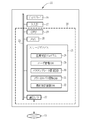
図2に示すように、医療支援装置11は、パーソナルコンピュータやワークステーションなどのコンピュータをベースに構成されている。医療支援装置11は、ディスプレイ16と、キーボードやマウスなどの入力部17と、コンピュータ本体18とを備えている。コンピュータ本体18には、CPU19、メモリ20、ストレージデバイス21、通信I/F22が設けられており、これらはデータバス23を介して接続されている。
ストレージデバイス21は、各種データを格納するデバイスであり、例えば、ハードディスクドライブで構成されている。ストレージデバイス21には、オペレーティングシステム(図示せず)や、コンピュータを医療支援装置11として機能させる医療支援プログラム26などの各種プログラムが格納されている。
メモリ20は、CPU19が処理を実行するためのワークメモリである。CPU21は、ストレージデバイス21に格納されているオペレーティングシステムをメモリ20へロードして、プログラムに従った処理を実行することにより、コンピュータの各部を統括的に制御する。通信I/F22は、ネットワーク13に接続して、各クライアント端末12と通信するための通信インタフェースである。
ストレージデバイス21には、ユーザ情報データベース(以下、データベースをDBという)29、パステンプレート情報DB30、クリニカルパス情報DB31、及び機材対応情報DB32などの各種データベースも格納されている。
図3に示すように、ユーザ情報DB29は、医療支援装置11にアクセス可能なユーザのユーザ情報29aが格納されている。ユーザ情報29aには、ユーザID、パスワード、が格納されている。ユーザIDは、医療支援装置11にアクセス可能なユーザの識別情報である。パスワードは、ユーザが医療支援装置11にログインする際の認証に用いられる。
図4に示すように、パステンプレート情報DB30には、クリニカルパス情報のテンプレートとなる複数のパステンプレート情報30aが格納されている。パステンプレート情報30aは、例えば、脳卒中、癌、骨折、火傷など、病気や怪我などの疾病毎に標準化されている。パステンプレート情報30aには、疾病の名称と、疾病の種類に応じて複数の診療予定項目が設定された標準診療スケジュールとが格納されている。パステンプレート情報DB30には、主な疾病のパステンプレート情報が予め格納されているが、医療支援システム10を導入した医療機関により、新たなパステンプレート情報を作成して登録することもできる。
図5に示すように、クリニカルパス情報DB31は、本発明のクリニカルパス情報格納部に相当し、医療支援装置11で作成された複数のクリニカルパス情報31aが格納されている。クリニカルパス情報DB31は、多数のクリニカルパス情報31aを、疾病毎の大分類35と、この大分類35を患者の属性毎に区別した中分類36と、中分類36を属性の内容毎に区別した小分類37a、37b、37cとに分類して管理している。大分類35は、脳卒中、心筋梗塞、胃ガンなど、疾病毎に分類されている。中分類36は、各大分類35を性別、年齢、身体測定値に分類している。身体測定値としては、肥満度と疾病との因果関係の高さに鑑み、例えば、「体重/身長」の比によって分類されている。なお、疾病の種類によっては、血圧や血糖値などで分類してもよい。小分類37a~37cは、中分類36の各分類をその内容毎に分類したものである。例えば、中分類「性別」は、小分類「男性」、「女性」に分類されており、中分類「年齢」は、「10代」、「20代」など、年代別に分類されている。
図6に示すように、クリニカルパス情報31aには、パステンプレート情報30aの標準診療スケジュールに基づいて作成された診療スケジュールと、患者に実施された診療に関する診療情報と、クリニカルパス情報31aを識別するパスIDと、クリニカルパス情報31aの作成時に入力された患者情報、医師情報、看護師情報などが格納されている。患者情報は、患者ID、患者氏名、生年月日、性別及び疾病名などである。医師情報は、医師ID及び医師名である。看護師情報は、看護師ID及び看護師名である。
図7に示すように、機材対応情報DB32は、本発明の機材対応情報格納部に相当し、新たに導入された新医療機材(第1医療機材)と、新医療機材と同じ機能または用途を有し、新医療機材の導入前に使用されていた旧医療機材(第2医療機材)との識別情報が対応付けて格納されている。例えば、「X線撮影装置」の新医療機材及び旧医療機材には、識別情報として機種名「XR100C」及び「XR001A」が格納されている。同様に、「CT撮影装置」、「血液検査装置」、「抗ガン剤」の新医療機材及び旧医療機材には、識別情報として機種名や製品名が格納されている。機材対応情報DB32に対する新医療機材及び旧医療機材の登録は、新医療機材が導入された際に、医師や看護師、医療支援システム10を管理するエンジニアなどによって行われる。
なお、クリニカルパス情報の作成時に、患者情報や、医師や看護師などのスタッフ情報の入力を簡易化するために、ストレージデバイス21に、患者情報DBやスタッフ情報DBなどを格納してもよい。また、ユーザ情報DB29、パステンプレート情報DB30、クリニカルパス情報DB31及び機材対応情報DB32などの各種データベースについては、医療支援装置11に接続された外部データサーバに格納してもよい。
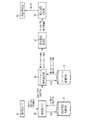
図8に示すように、医療支援プログラム26が起動すると、医療支援装置11のCPU19は、メモリ20と協働して、操作受付部40、認証部41、クリニカルパス情報管理部42、画面作成部43、配信部44、機材検索部45、クリニカルパス情報検索部46、実績情報取得部47及び導入効果分析部48として機能する。
操作受付部40は、クライアント端末12による医療支援装置11の各種操作を受け付ける。操作受付部40は、クライアント端末12からログイン要求を受け付けた場合に、ユーザID及びパスワードの入力欄を有するログイン画面を要求元のクライアント端末12に配信する。また、操作受付部40は、ログイン画面において入力されたユーザID及びパスワードを受け付ける。
認証部41は、ログイン画面において入力されたユーザID及びパスワードが、ユーザ情報DB29にあるか否かを検索する。認証部41は、入力されたユーザID及びパスワードがユーザ情報DB29から見つかった場合には、クライアント端末12を認証し、入力されたユーザID及びパスワードが見つからなかった場合には、クライアント端末12を認証せず、非認証通知を送信する。
操作受付部40は、クライアント端末12がログインした場合、クリニカルパス情報31aの作成、更新、削除及び閲覧などの操作ボタンが設けられたメニュー画面をクライアント端末12に配信する。クライアント端末12でメニュー画面が操作されると、その操作内容を表す操作信号が操作受付部40に入力される。
操作受付部40は、メニュー画面において作成ボタンが操作された場合には、クライアント端末12にクリニカルパス作成画面を配信する。クリニカルパス作成画面には、患者氏名及びID、生年月日、性別、疾病の名称、担当医氏名及びID、担当看護師名及びID、診療開始日などの入力欄が設けられている。クリニカルパス作成画面で入力された各種情報は、クライアント端末12から医療支援装置11に送信され、操作受付部40に入力される。
操作受付部40は、メニュー画面において、更新ボタンあるいは閲覧ボタンが操作された場合には、クライアント端末12にクリニカルパス更新画面あるいは閲覧画面を配信する。クリニカルパス更新画面及び閲覧画面には、クリニカルパス情報DB31から様々な観点でクリニカルパス情報31aを検索できるようにするため、パスID、患者氏名及び患者ID、担当医師名及び医師ID、担当看護師名及び看護師IDなどが入力可能な入力欄が設けられている。クリニカルパス更新画面及び閲覧画面で入力された各種情報は、クライアント端末12から医療支援装置11に送信され、操作受付部40に入力される。
操作受付部40は、クリニカルパス情報31aの更新時には、クライアント端末12から更新操作を受け付ける。この更新操作には、診療スケジュールに対する診療予定項目の変更、追加及び削除の他、患者に実施された診療に関する診療情報の入力などが含まれる。入力される診療情報には、診療に使用された新医療機材または旧医療機材の識別情報も含まれる。また、操作受付部40は、クリニカルパス表示画面において、導入効果を分析する新医療機材の選択と、分析要求とを受け付ける。
クリニカルパス情報管理部42は、クリニカルパス情報31aの作成、更新、削除などを行う。クリニカルパス情報管理部42は、操作受付部40がクリニカルパス情報31aの作成要求を受け付けた場合には、クリニカルパス作成画面に入力された各種情報に基づき、パステンプレート情報DB30に格納されているパステンプレート情報30aをベースにして、クリニカルパス情報31aを作成する。作成されたクリニカルパス情報31aは、クリニカルパス情報DB31に格納され、疾病名と患者属性とに基づいて分類される。
クリニカルパス情報管理部42は、操作受付部40がクリニカルパス情報31aの更新要求を受け付けた場合には、クリニカルパス更新画面に入力された各種情報に基づいてクリニカルパス情報DB31を検索し、作成済みのクリニカルパス情報31aを読み出し、クライアント端末12からの更新操作に応じて更新する。更新されたクリニカルパス情報31aは、クリニカルパス情報DB31に格納される。
また、クリニカルパス情報管理部42は、操作受付部40がクリニカルパス情報31aの閲覧要求を受け付けた場合には、クリニカルパス閲覧画面に入力された各種情報に基づいてクリニカルパス情報DB31を検索し、作成済みのクリニカルパス情報31aを読み出す。
画面作成部43は、クリニカルパス表示画面及び導入効果表示画面の作成を行う。画面作成部43は、操作受付部40がクリニカルパス情報31aの作成要求を受け付けた場合には、作成されたクリニカルパス情報31aに基づいてクリニカルパス表示画面を作成する。また、操作受付部40がクリニカルパス情報31aの更新要求または閲覧要求を受け付けた場合には、作成済みのクリニカルパス情報31aに基づいてクリニカルパス表示画面を作成する。操作受付部40が、新医療機材の導入効果の分析要求を受け付けた場合には、分析結果に基づいて導入効果表示画面を作成する。
配信部44は、本発明の画面配信部及び分析結果配信部であり、画面作成部43により作成されたクリニカルパス表示画面及び導入効果表示画面を、ネットワーク13を通じてクライアント端末12に配信する。例えば、複数台のクライアント端末12で同じクリニカルパス情報31a及び導入効果表示画面が閲覧される場合には、配信部44は、各クライアント端末12に同じクリニカルパス表示画面及び導入効果表示画面をそれぞれ配信する。また、複数台のクライアント端末12で異なるクリニカルパス情報31a及び導入効果表示画面が閲覧される場合には、配信部44は、各クライアント端末12にそれぞれ異なるクリニカルパス表示画面及び導入効果表示画面を配信する。
機材検索部45、クリニカルパス情報検索部46、実績情報取得部47及び導入効果分析部48は、新医療機材の導入効果の分析に利用される。図9に示すように、機材検索部45は、操作受付部40が新医療機材の導入効果の分析要求を受け付けた場合に、機材対応情報DB32を検索し、分析要求に含まれる新医療機材の識別情報に対応する旧医療機材を特定する。例えば、分析要求に含まれる新医療機材の識別情報がX線撮影装置の「XR-100C」であった場合、これに対応する旧医療機材「XR-001A」が特定される。
クリニカルパス情報検索部46は、クリニカルパス情報DB31から、分析要求に含まれる新医療機材が診療に使用されている第1クリニカルパス情報と、機材検索部45で検索された旧医療機材が診療に使用されている第2クリニカルパス情報とを検索する。この検索は、クリニカルパス情報31aの大分類35、中分類36及び小分類37毎に行われる。したがって、新医療機材及び旧医療機材が、脳卒中、心筋梗塞及び胃ガンなどの複数の疾病で使用されている場合には、各疾病に対応する大分類35毎に、各大分類35の中分類36及び小分類37について、第1クリニカルパス情報及び第2クリニカルパス情報が検索される。
実績情報取得部47は、検索された第1クリニカルパス情報及び第2クリニカルパス情報から、新医療機材及び旧医療機材の治療効果を表す第1実績情報及び第2実績情報を取得する。第1実績情報及び第2実績情報としては、例えば患者の入院日数が用いられる。実績情報取得部47は、第1クリニカルパス情報及び第2クリニカルパス情報の診療スケジュールから、入院日及び退院日を特定し、この入院日から退院日までの入院日数を、第1実績情報及び第2実績情報として取得する。第1実績情報及び第2実績情報の取得は、クリニカルパス情報31aの大分類35、中分類36及び小分類37毎に行われる。
導入効果分析部48は、第1実績情報と第2実績情報とを比較して、新医療機材の導入効果を分析する。具体的には、導入効果分析部48は、クリニカルパス情報31aの大分類35、中分類36及び小分類37毎に、第1実績情報と第2実績情報の平均、すなわち平均入院日数を算出する。次いで、導入効果分析部48は、旧医療機材の平均入院日数を新医療機材の平均入院日数で除算することにより、旧医療機材に対する新医療機材の平均入院日数の減少率を新医療機材の導入効果として算出する。導入効果分析部48の分析結果は、画面作成部43に入力される。
図10に示すように、クリニカルパス表示画面51には、チャート形式の診療スケジュール表52が表示される。クリニカルパス表示画面51の上部には、クリニカルパス情報31aを識別するパスIDと、患者氏名及びID、患者の生年月日及び性別、医師名及びID、看護師名及びIDとが表示されている。クリニカルパス表示画面51は、クライアント端末12の入力機器12cによって操作される。
クリニカルパス表示画面51の右上には、保存ボタン51a、削除ボタン51b、分析ボタン51c、終了ボタン51dが設けられている。保存ボタン51aは、クリニカルパス表示画面51に表示されているクリニカルパス情報31aを、クリニカルパス情報DB31に保存する場合に操作される。削除ボタン51bは、クリニカルパス表示画面51に表示されているクリニカルパス情報31aをクリニカルパス情報DB31から削除する場合に操作される。終了ボタン51dは、クリニカルパス表示画面51に表示されているクリニカルパス情報31aをクリニカルパス情報DB31に保存しないで終了する場合に操作される。分析ボタン51cは、新医療機材の導入効果を分析する際に操作される。
診療スケジュール表52は、横軸に配された時間軸に沿って、複数の診療予定項目が配されたチャート式のスケジュール表となっている。時間軸には、患者の診療が行われる月日と、その月日における患者の診療状況とが記載される複数の日付欄55が設けられている。診療状況とは、「入院(手術前日)」、「手術当日」、「術後○日目」、「退院」などのように、診療の経過を表している。
各日付欄55の下には、パステンプレート情報30aの標準診療スケジュールによって疾病ごとに設定されている診療予定項目と、実施された診療に関する診療情報とが表示される複数の診療項目欄57が設けられている。この診療項目欄57は、左端の複数の見出し欄58に示す通り、例えば、「診察」、「治療・処置・薬剤」、「検査」、「観察記録」などの複数の診療項目に分かれている。各診療項目欄57は、上下2段に分かれており、上段は診療予定項目が表示される予定項目欄とされ、下段は診療情報が表示される診療情報欄となっている。
例えば、診療状況の「入院(手術前日)」と、診療項目の「診察」とに対応する診療項目欄57の予定項目欄57aには、「入院前診察」という診療予定項目が表示され、診療情報欄57bには、入院前診察の結果である「問題無し」という診療情報が表示されている。診療状況の「入院(手術前日)」と、診療項目の「検査」とに対応する診療項目欄57の予定項目欄57cには、「X線撮影」という診療予定項目が表示され、診療情報欄57dには、X線撮影に使用された新医療機材の機種名「XR100C」という診療情報が表示されている。また、診療状況の「入院(手術前日)」と、診療項目の「観察記録」とに対応する診療項目欄57の予定項目欄57eには、「バイタル」という診療予定項目が表示され、診療情報欄57fには、体温(BT)、脈拍(P)及び血圧(BP)などのバイタルデータが表示されている。このように、診療情報欄には、診療結果の他、診療に使用された医療機材の機種名なども表示される。
診療スケジュール表52は、下部に設けられたスクロールバー52aにより、左右方向にスクロール可能となっているので、診療日数の長い疾病にも対応することができる。また、診療スケジュール表52は、右端に設けられたスクロールバー52bにより、上下方向にスクロール可能となっているので、診療予定項目の多い疾病にも対応することができる。したがって、「観察記録」の下にさらに診療項目欄がある場合には、診療スケジュール表52をスクロールすることで、全ての診療項目欄を閲覧することができる。
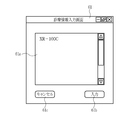
各診療項目欄57の予定項目欄及び診療情報欄には、クライアント端末12から診療予定項目及び診療情報が入力できるようになっている。クライアント端末12の入力機器12cを構成するマウスで診療情報欄をダブルクリックすると、クリニカルパス表示画面51上には、図11に示す診療情報入力画面61が表示される。診療情報入力画面61には、診療情報が入力される入力欄61aと、入力実行を指示する入力ボタン61bと、入力中止を指示するキャンセルボタン61cとが設けられている。入力欄61aに診療情報を入力し、入力ボタン61bを操作すると、診療情報入力画面61の表示が終了し、クリニカルパス表示画面51の選択されている診療情報欄には、入力された診療情報が表示される。
また、詳しくは図示しないが、各診療項目欄57の予定項目欄にも診療情報欄と同様の手順で診療予定項目を入力することができる。なお、予定項目欄に、標準診療スケジュールに基づく診療予定項目が予め入力されている場合には、その診療予定項目を修正し、あるいは削除することもできる。
新医用機材の導入効果を分析する場合には、クリニカルパス表示画面51において、新医療機材の識別情報が表示されている診療情報欄をマウスで選択し、画面右上の分析ボタン51cを操作する。すると、上述した機材検索部45、クリニカルパス情報検索部46、実績情報取得部47及び導入効果分析部48により、選択された新医療機材の導入効果の分析が行われ、画面作成部43により導入効果表示画面が作成される。
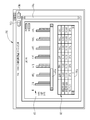
図12は、導入効果表示画面64の一例であり、クリニカルパス表示画面51において、診療情報欄57dに表示されている、X線撮影装置の識別情報「XR-100C」の導入効果が表示されている。導入効果表示画面64は、クリニカルパス情報DB31の分類毎に、グラフ65及び表66を用いて導入効果を表示する。なお、図では、大分類35の「脳卒中」の導入効果のみが表示されているが、画面右側のスクロールバー64aを操作して画面を下方にスクロールさせることにより、「心筋梗塞」、「胃ガン」などの他の大分類35の導入効果を表示させることができる。
グラフ65は、縦軸及び横軸に、平均入院日数及び各分類が設定された棒グラフであり、導入効果分析部48から入力された新医療機材及び旧医療機材の平均入院日数が、クリニカルパス情報31aの大分類35、中分類36及び小分類37毎に表示されている。また、多数の分類毎の導入効果を表示できるようにするため、グラフ65の下部には、グラフ65を左右方向でスクロールさせるスクロールバー65aが設けられている。
表66は、縦軸に新医療機材、旧医療機材及び導入効果が設定され、横軸に各分類が設定されている。表66の新医療機材及び旧医療機材各分類に対応するセルには、導入効果分析部48から入力された分類毎の平均入院日数がそれぞれ表示される。また、導入効果に対応するセルには、旧医療機材の平均入院日数を新医療機材の平均入院日数で除算して求めた、旧医療機材に対する新医療機材の平均入院日数の減少率が表示される。また、多数の分類毎の導入効果を表示できるようにするため、表66の下部には、表66を左右方向でスクロールさせるスクロールバー66aが設けられている。このように、導入効果表示画面64では、新医療機材の導入効果をグラフ65や表66により確認することができるので、導入効果の比較や比較が容易となる。
導入効果表示画面64の右上部分には、導入効果表示画面64から元のクリニカルパス表示画面51に戻るためのボタン64bが設けられている。また、そのとなりには、クリニカルパス情報の閲覧などを終了するための終了ボタン64cも設けられている。
次に、図13を参照しながら、上記実施形態の作用について説明する。クライアント端末12に表示されているクリニカルパス表示画面51おいて、新たに導入された新医療機材の識別時情報が表示されている診療情報欄が選択され、かつ分析ボタン51cが操作されると、クライアント端末12から医療支援装置11に、新医療機材の識別情報を含む分析要求が送信される。この分析要求は、操作受付部40により受け付けられる(S10)。
機材検索部45は、機材対応情報DB32を検索し、分析要求に含まれる新医療機材の識別情報に対応する旧医療機材を特定する(S11)。クリニカルパス情報検索部46は、クリニカルパス情報DB31から、分析要求に含まれる新医療機材が診療に使用されている第1クリニカルパス情報と、機材検索部45で検索された旧医療機材が診療に使用されている第2クリニカルパス情報とを、クリニカルパス情報DB31の大分類35、中分類36及び小分類37毎に検索する(S12)。
実績情報取得部47は、検索された第1クリニカルパス情報及び第2クリニカルパス情報から、新医療機材及び旧医療機材の治療効果を表す入院日数を、第1実績情報及び第2実績情報として取得する(S13)。導入効果分析部48は、クリニカルパス情報DB31の大分類35、中分類36及び小分類37毎に、新医療機材の導入効果を分析する(S14)。具体的には、第1実績情報と第2実績情報の平均、すなわち平均入院日数をそれぞれ算出し、旧医療機材の平均入院日数を新医療機材の平均入院日数で除算することにより、旧医療機材に対する新医療機材の平均入院日数の減少率を新医療機材の導入効果として算出する。
画面作成部43は、導入効果分析部48の分析結果に基づいて導入効果表示画面64を作成する(S15)。配信部44は、作成された導入効果表示画面64を、クライアント端末12に配信する(S16)。
上記実施形態によれば、クリニカルパス情報31aから、新しく導入された新医療機材の治療効果と、新医療機材の導入以前に使用されていた旧医療機材の治療効果とを取得し、取得した治療効果の比較により、新医療機材の導入効果を分析することができる。クリニカルパス情報31aは、新医療機材の導入により、診療予定項目の内容や診療スケジュールが変更されているので、クリニカルパス情報31aから取得した治療効果を利用することで、新医療機材の正確な導入効果を分析することができる。分析された導入効果は、導入結果の良否判定や、新たな医療機材の導入時の参考などにすることができる。
上記実施形態では、クリニカルパス情報DB31を疾病毎の大分類35、患者属性毎の中分類36、属性の内容毎の小分類37に予め分類し、分類毎に導入効果を分析しているが、クリニカルパス情報31aを分類せずにクリニカルパス情報DB31に格納してもよい。この場合、導入効果の分析要求時に、上述した大分類35、中分類36及び小分類37を分析条件として指定できるようにし、この分析条件にしたがって分析が行われるようにすればよい。
また、治療効果を表す実績情報として入院日数を用いたが、通院日数や、医療検査の検査値などを用いてもよい。また、クリニカルパス情報を分類する身体測定値として、体重/身長の比を用いたが、疾病によっては、血圧や血糖値、その他の検査値を分類項目として用いてもよい。
10 医療支援システム
11 医療支援装置
12 クライアント端末
31 クリニカルパス情報DB
32 機材対応情報DB
40 操作受付部
42 クリニカルパス情報管理部
43 画面作成部
44 配信部
45 機材検索部
46 クリニカルパス情報検索部
47 実績情報取得部
48 導入効果分析部
11 医療支援装置
12 クライアント端末
31 クリニカルパス情報DB
32 機材対応情報DB
40 操作受付部
42 クリニカルパス情報管理部
43 画面作成部
44 配信部
45 機材検索部
46 クリニカルパス情報検索部
47 実績情報取得部
48 導入効果分析部
Claims (15)
- 第1医療機材の識別情報と、前記第1医療機材の導入以前に利用されていた第2医療機材の識別情報とが対応付けて格納されている機材対応情報格納部と、
患者の診療スケジュールと、前記患者に実施された診療に関する診療情報と、前記診療情報の一つとして、前記診療に使用された前記第1医療機材または前記第2医療機材の識別情報とを含むクリニカルパス情報が格納されるクリニカルパス情報格納部と、
前記診療スケジュールと、前記診療情報と、前記診療情報の一つとして前記第1医療機材の識別情報とが表示されるクリニカルパス表示画面において、前記第1医療機材の導入効果の分析要求を受け付ける操作受付部と、
前記機材対応情報格納部から、前記操作受付部で受け付けた前記第1医療機材に対応する前記第2医療機材を検索する機材検索部と、
前記クリニカルパス情報格納部から、前記操作受付部で受け付けた前記第1医療機材が診療に使用されている第1クリニカルパス情報と、前記機材検索部で検索された前記第2医療機材が診療に使用されている第2クリニカルパス情報とを検索するクリニカルパス情報検索部と、
前記第1クリニカルパス情報及び前記第2クリニカルパス情報から、前記第1医療機材及び前記第2医療機材の治療効果を表す第1実績情報及び第2実績情報を取得する実績情報取得部と、
前記第1実績情報と前記第2実績情報とを比較して、前記第1医療機材の導入効果を分析する導入効果分析部と、
を備える医療支援装置。 - 前記クリニカルパス情報格納部は、前記クリニカルパス情報が、疾病名または前記患者の属性毎に分類されており、
前記クリニカルパス情報検索部は、前記属性毎に前記第1クリニカルパス情報及び前記第2クリニカルパス情報を検索し、
前記実績情報取得部は、前記属性毎に前記第1実績情報及び前記第2実績情報を取得し、
前記導入効果分析部は、前記属性毎に前記第1医療機材の導入効果を分析する請求項1に記載の医療支援装置。 - 前記第1実績情報及び前記第2実績情報は、入院日数、通院日数及び前記患者に施された医療検査の検査値のいずれかである請求項1または2に記載の医療支援装置。
- 前記導入効果分析部は、前記第1実績情報で前記第2実績情報を除算して、前記第2医療機材に対する前記第1医療機材の導入効果を求める請求項3に記載の医療支援装置。
- 前記患者の属性は、性別、年齢及び身体測定値の少なくとも1つを含む請求項2に記載の医療支援装置。
- 前記クリニカルパス表示画面と、前記第1医療機材の導入効果が表示される導入効果表示画面とを作成する画面作成部を備える請求項1に記載の医療支援装置。
- 前記画面作成部は、前記第1実績情報と前記第2実績情報とを比較するグラフを作成し、前記グラフを前記導入効果表示画面に表示させる請求項6に記載の医療支援装置。
- 前記画面作成部は、前記グラフとともに、前記第1実績情報及び前記第2実績情報の数値を表示する請求項7に記載の医療支援装置。
- 前記クリニカルパス表示画面及び前記導入効果表示画面を、ネットワークを介して接続されているクライアント端末に配信する配信部を備える請求項6に記載の医療支援装置。
- 第1医療機材の導入効果を、前記第1医療機材の導入前に使用されていた第2医療機材と比較して分析する医療支援装置の制御方法であり、
患者の診療スケジュールと、前記患者に実施された診療に関する診療情報と、前記診療情報の一つとして、前記診療に使用された前記第1医療機材または前記第2医療機材の識別情報とを含むクリニカルパス情報が表示されるクリニカルパス表示画面において、前記第1医療機材の導入効果の分析要求を受け付ける操作受付ステップと、
前記第1医療機材の識別情報と、前記第2医療機材の識別情報とが対応付けて格納されている機材対応情報格納部から、前記操作受付ステップで受け付けた前記第1医療機材に対応する前記第2医療機材を検索する機材検索ステップと、
前記クリニカルパス情報が格納されるクリニカルパス情報格納部から、前記操作受付ステップで受け付けた前記第1医療機材が診療に使用されている第1クリニカルパス情報と、前記機材検索ステップで検索された前記第2医療機材が診療に使用されている第2クリニカルパス情報とを検索するクリニカルパス情報検索ステップと、
前記第1クリニカルパス情報及び前記第2クリニカルパス情報から、前記第1医療機材及び前記第2医療機材の治療効果を表す第1実績情報及び第2実績情報を取得する実績情報取得ステップと、
前記第1実績情報と前記第2実績情報とを比較して、前記第1医療機材の導入効果を分析する導入効果分析ステップと、
を備える医療支援装置の制御方法。 - 前記クリニカルパス情報格納部は、前記クリニカルパス情報が、疾病名または前記患者の属性毎に分類されており、
前記クリニカルパス情報検索ステップは、前記属性毎に前記第1クリニカルパス情報及び前記第2クリニカルパス情報を検索し、
前記実績情報取得ステップは、前記属性毎に前記第1実績情報及び前記第2実績情報を取得し、
前記導入効果分析ステップは、前記属性毎に前記第1医療機材の導入効果を分析する請求項10に記載の医療支援装置の制御方法。 - コンピュータに、第1医療機材の導入効果を前記第1医療機材の導入前に使用されていた第2医療機材と比較して分析させる医療支援プログラムであり、
患者の診療スケジュールと、前記患者に実施された診療に関する診療情報と、前記診療情報の一つとして、前記診療に使用された前記第1医療機材または前記第2医療機材の識別情報とを含むクリニカルパス情報が表示されるクリニカルパス表示画面において、前記第1医療機材の導入効果の分析要求を受け付ける操作受付ステップと、
前記第1医療機材の識別情報と、前記第2医療機材の識別情報とが対応付けて格納されている機材対応情報格納部から、前記操作受付ステップで受け付けた前記第1医療機材に対応する前記第2医療機材を検索する機材検索ステップと、
前記クリニカルパス情報が格納されるクリニカルパス情報格納部から、前記操作受付ステップで受け付けた前記第1医療機材が診療に使用されている第1クリニカルパス情報と、前記機材検索ステップで検索された前記第2医療機材が診療に使用されている第2クリニカルパス情報とを検索するクリニカルパス情報検索ステップと、
前記第1クリニカルパス情報及び前記第2クリニカルパス情報から、前記第1医療機材及び前記第2医療機材の治療効果を表す第1実績情報及び第2実績情報を取得する実績情報取得ステップと、
前記第1実績情報と前記第2実績情報とを比較して、前記第1医療機材の導入効果を分析する導入効果分析ステップと、
を備える医療支援プログラム。 - 前記クリニカルパス情報格納部は、前記クリニカルパス情報が、疾病名または前記患者の属性毎に分類されており、
前記クリニカルパス情報検索ステップは、前記属性毎に前記第1クリニカルパス情報及び前記第2クリニカルパス情報を検索し、
前記実績情報取得ステップは、前記属性毎に前記第1実績情報及び前記第2実績情報を取得し、
前記導入効果分析ステップは、前記属性毎に前記第1医療機材の導入効果を分析する請求項12に記載の医療支援装置の制御方法。 - 第1医療機材の導入効果を、前記第1医療機材の導入前に使用されていた第2医療機材と比較して分析する医療支援装置と、前記医療支援装置にネットワークを介して接続されたクライアント端末とを備える医療支援システムにおいて、
前記医療支援装置は、
前記第1医療機材の識別情報と、前記第2医療機材の識別情報とが対応付けて格納されている機材対応情報格納部と、
患者の診療スケジュールと、前記患者に実施された診療に関する診療情報と、前記診療情報の一つとして、前記診療に使用された前記第1医療機材または前記第2医療機材の識別情報とを含むクリニカルパス情報が格納されるクリニカルパス情報格納部と、
前記診療スケジュールと、前記診療情報と、前記診療情報の一つとして前記第1医療機材の識別情報とが表示されるクリニカルパス表示画面を前記クライアント端末に配信する画面配信部と、
前記クライアント端末から、前記クリニカルパス表示画面を介して前記第1医療機材の導入効果の分析要求を受け付ける操作受付部と、
前記機材対応情報格納部から、前記操作受付部で受け付けた前記第1医療機材に対応する前記第2医療機材を検索する機材検索部と、
前記クリニカルパス情報格納部から、前記操作受付部で受け付けた前記第1医療機材が診療に使用されている第1クリニカルパス情報と、前記機材検索部で検索された前記第2医療機材が診療に使用されている第2クリニカルパス情報とを検索するクリニカルパス情報検索部と、
前記第1クリニカルパス情報及び前記第2クリニカルパス情報から、前記第1医療機材及び前記第2医療機材の治療効果を表す第1実績情報及び第2実績情報を取得する実績情報取得部と、
前記第1実績情報と前記第2実績情報とを比較して、前記第1医療機材の導入効果を分析する導入効果分析部と、
前記導入効果の分析結果を前記クライアント端末に配信する分析結果配信部と、
を備える医療支援システム。 - 前記クリニカルパス情報格納部は、前記クリニカルパス情報が、疾病名または前記患者の属性毎に分類されており、
前記クリニカルパス情報検索部は、前記属性毎に前記第1クリニカルパス情報及び前記第2クリニカルパス情報を検索し、
前記実績情報取得部は、前記属性毎に前記第1実績情報及び前記第2実績情報を取得し、
前記導入効果分析部は、前記属性毎に前記第1医療機材の導入効果を分析する請求項14に記載の医療支援システム。
Priority Applications (2)
| Application Number | Priority Date | Filing Date | Title |
|---|---|---|---|
| JP2015539124A JP6151786B2 (ja) | 2013-09-30 | 2014-09-16 | 医療支援装置、医療支援装置の制御方法、医療支援プログラム及び医療支援システム |
| US15/083,627 US20160210418A1 (en) | 2013-09-30 | 2016-03-29 | Medical support device, method for controlling medical support device, and medical support system |
Applications Claiming Priority (2)
| Application Number | Priority Date | Filing Date | Title |
|---|---|---|---|
| JP2013-204299 | 2013-09-30 | ||
| JP2013204299 | 2013-09-30 |
Related Child Applications (1)
| Application Number | Title | Priority Date | Filing Date |
|---|---|---|---|
| US15/083,627 Continuation US20160210418A1 (en) | 2013-09-30 | 2016-03-29 | Medical support device, method for controlling medical support device, and medical support system |
Publications (1)
| Publication Number | Publication Date |
|---|---|
| WO2015045948A1 true WO2015045948A1 (ja) | 2015-04-02 |
Family
ID=52743089
Family Applications (1)
| Application Number | Title | Priority Date | Filing Date |
|---|---|---|---|
| PCT/JP2014/074387 Ceased WO2015045948A1 (ja) | 2013-09-30 | 2014-09-16 | 医療支援装置、医療支援装置の制御方法、医療支援プログラム及び医療支援システム |
Country Status (3)
| Country | Link |
|---|---|
| US (1) | US20160210418A1 (ja) |
| JP (1) | JP6151786B2 (ja) |
| WO (1) | WO2015045948A1 (ja) |
Cited By (2)
| Publication number | Priority date | Publication date | Assignee | Title |
|---|---|---|---|---|
| JP7253123B1 (ja) * | 2021-12-22 | 2023-04-05 | 株式会社エクサウィザーズ | 情報処理方法、コンピュータプログラム及び情報処理装置 |
| US11769191B2 (en) | 2019-03-13 | 2023-09-26 | Mitsubishi Electric Corporation | Information processing apparatus, information processing method, information providing system, machine learning device, and inference device |
Citations (4)
| Publication number | Priority date | Publication date | Assignee | Title |
|---|---|---|---|---|
| JP2005165513A (ja) * | 2003-12-01 | 2005-06-23 | Olympus Corp | 病院情報システム |
| JP2007108814A (ja) * | 2005-10-11 | 2007-04-26 | Hitachi Ltd | バリアンス分析システム |
| JP2009093309A (ja) * | 2007-10-05 | 2009-04-30 | Hitachi Ltd | バリアンス原因フィルタリングシステム |
| JP2014035703A (ja) * | 2012-08-09 | 2014-02-24 | Canon Inc | 医用情報処理装置、医用情報処理方法及びプログラム |
Family Cites Families (4)
| Publication number | Priority date | Publication date | Assignee | Title |
|---|---|---|---|---|
| US6078890A (en) * | 1998-06-01 | 2000-06-20 | Ford Global Technologies, Inc. | Method and system for automated health care rate renewal and quality assessment |
| JP4812299B2 (ja) * | 2003-12-25 | 2011-11-09 | 株式会社東芝 | バーチャルペイシェントシステム |
| JP2008512444A (ja) * | 2004-09-09 | 2008-04-24 | イッスム・リサーチ・ディベロップメント・カンパニー・オブ・ザ・ヘブルー・ユニバーシティ・オブ・エルサレム | 神経変性状態の治療のための、両親媒性弱塩基様テンパミンを含むリポソーム製剤 |
| WO2006027787A1 (en) * | 2004-09-09 | 2006-03-16 | Yissum Research Development Company Of The Hebrew University Of Jerusalem | Liposomal compositions of glucocorticoid and glucocorticoid derivatives |
-
2014
- 2014-09-16 JP JP2015539124A patent/JP6151786B2/ja active Active
- 2014-09-16 WO PCT/JP2014/074387 patent/WO2015045948A1/ja not_active Ceased
-
2016
- 2016-03-29 US US15/083,627 patent/US20160210418A1/en not_active Abandoned
Patent Citations (4)
| Publication number | Priority date | Publication date | Assignee | Title |
|---|---|---|---|---|
| JP2005165513A (ja) * | 2003-12-01 | 2005-06-23 | Olympus Corp | 病院情報システム |
| JP2007108814A (ja) * | 2005-10-11 | 2007-04-26 | Hitachi Ltd | バリアンス分析システム |
| JP2009093309A (ja) * | 2007-10-05 | 2009-04-30 | Hitachi Ltd | バリアンス原因フィルタリングシステム |
| JP2014035703A (ja) * | 2012-08-09 | 2014-02-24 | Canon Inc | 医用情報処理装置、医用情報処理方法及びプログラム |
Cited By (3)
| Publication number | Priority date | Publication date | Assignee | Title |
|---|---|---|---|---|
| US11769191B2 (en) | 2019-03-13 | 2023-09-26 | Mitsubishi Electric Corporation | Information processing apparatus, information processing method, information providing system, machine learning device, and inference device |
| JP7253123B1 (ja) * | 2021-12-22 | 2023-04-05 | 株式会社エクサウィザーズ | 情報処理方法、コンピュータプログラム及び情報処理装置 |
| WO2023119465A1 (ja) * | 2021-12-22 | 2023-06-29 | 株式会社エクサウィザーズ | 情報処理方法、コンピュータプログラム及び情報処理装置 |
Also Published As
| Publication number | Publication date |
|---|---|
| JPWO2015045948A1 (ja) | 2017-03-09 |
| JP6151786B2 (ja) | 2017-06-21 |
| US20160210418A1 (en) | 2016-07-21 |
Similar Documents
| Publication | Publication Date | Title |
|---|---|---|
| US10593428B2 (en) | Diagnosis support apparatus and method, and non-transitory computer readable medium | |
| CN104823211B (zh) | 医疗检查结果显示装置及其工作方法 | |
| JP5663599B2 (ja) | 診療支援システム及び診療支援方法 | |
| JP6074390B2 (ja) | 診療支援装置、診療支援装置の作動方法及びプログラム、並びに診療支援システム | |
| JP5844246B2 (ja) | 検査結果表示装置及びその作動方法、並びに制御プログラム | |
| US20090094063A1 (en) | Display and method for medical procedure selection | |
| CA3083093C (en) | Medical examination support apparatus, and operation method and operation program thereof | |
| US20170014090A1 (en) | Data output device and method, and non-transitory computer readable medium | |
| US20150339447A1 (en) | Medical assistance device, operation method of medical assistance device, non-transitory computer-readable recording medium, and medical assistance system | |
| JP6527771B2 (ja) | 情報分析支援装置とその作動方法および作動プログラム、並びに情報分析支援システム | |
| CN106164976A (zh) | 诊疗支持装置、方法及程序以及诊疗信息保存装置、方法及程序 | |
| JP5674719B2 (ja) | 診療情報処理装置及び診療情報プログラム | |
| JP6074348B2 (ja) | 医療支援装置とその制御方法及び制御プログラム、並びに医療支援システム | |
| AU2024205829A1 (en) | Medical care assistance device, and operation method and operation program therefor | |
| WO2015019887A1 (ja) | データ管理サーバー及び在宅診療連携システム | |
| JP2022142234A (ja) | プログラム、情報処理方法、及び情報処理装置 | |
| JP6151786B2 (ja) | 医療支援装置、医療支援装置の制御方法、医療支援プログラム及び医療支援システム | |
| JP2018112941A (ja) | 医療検索プログラム及びそのシステム | |
| US20160210438A1 (en) | Medical assistance device, control method for medical assistance device, and medical assistance system | |
| JP6252038B2 (ja) | 情報処理プログラム及び情報処理装置 | |
| JP2010277550A (ja) | プログラム、表示方法、表示装置及び診療情報管理装置 | |
| JP2019185342A (ja) | 情報処理方法、情報処理プログラム、および記憶媒体 | |
| JP2014063214A (ja) | 実施行為支援装置及び実施行為支援プログラム | |
| JP2008021041A (ja) | 医療支援システム、及び医療支援プログラム | |
| JP2014199582A (ja) | 医療情報処理装置、方法およびプログラム |
Legal Events
| Date | Code | Title | Description |
|---|---|---|---|
| 121 | Ep: the epo has been informed by wipo that ep was designated in this application |
Ref document number: 14847258 Country of ref document: EP Kind code of ref document: A1 |
|
| ENP | Entry into the national phase |
Ref document number: 2015539124 Country of ref document: JP Kind code of ref document: A |
|
| NENP | Non-entry into the national phase |
Ref country code: DE |
|
| 122 | Ep: pct application non-entry in european phase |
Ref document number: 14847258 Country of ref document: EP Kind code of ref document: A1 |