WO2015033893A1 - 曲面形状部材形成用感光性樹脂組成物、及びこれを用いた、曲面形状部材形成用感光性樹脂フィルム、並びにこれらを用いたレンズ部材 - Google Patents
曲面形状部材形成用感光性樹脂組成物、及びこれを用いた、曲面形状部材形成用感光性樹脂フィルム、並びにこれらを用いたレンズ部材 Download PDFInfo
- Publication number
- WO2015033893A1 WO2015033893A1 PCT/JP2014/072949 JP2014072949W WO2015033893A1 WO 2015033893 A1 WO2015033893 A1 WO 2015033893A1 JP 2014072949 W JP2014072949 W JP 2014072949W WO 2015033893 A1 WO2015033893 A1 WO 2015033893A1
- Authority
- WO
- WIPO (PCT)
- Prior art keywords
- meth
- forming
- photosensitive resin
- acrylate
- curved surface
- Prior art date
- Legal status (The legal status is an assumption and is not a legal conclusion. Google has not performed a legal analysis and makes no representation as to the accuracy of the status listed.)
- Ceased
Links
- 0 CC(C)(C)C(*C(N=O)=O)*(*)C(*)(C(C)(C)C)[Al]C Chemical compound CC(C)(C)C(*C(N=O)=O)*(*)C(*)(C(C)(C)C)[Al]C 0.000 description 2
Images

Classifications
-
- G—PHYSICS
- G03—PHOTOGRAPHY; CINEMATOGRAPHY; ANALOGOUS TECHNIQUES USING WAVES OTHER THAN OPTICAL WAVES; ELECTROGRAPHY; HOLOGRAPHY
- G03F—PHOTOMECHANICAL PRODUCTION OF TEXTURED OR PATTERNED SURFACES, e.g. FOR PRINTING, FOR PROCESSING OF SEMICONDUCTOR DEVICES; MATERIALS THEREFOR; ORIGINALS THEREFOR; APPARATUS SPECIALLY ADAPTED THEREFOR
- G03F7/00—Photomechanical, e.g. photolithographic, production of textured or patterned surfaces, e.g. printing surfaces; Materials therefor, e.g. comprising photoresists; Apparatus specially adapted therefor
- G03F7/004—Photosensitive materials
- G03F7/027—Non-macromolecular photopolymerisable compounds having carbon-to-carbon double bonds, e.g. ethylenic compounds
- G03F7/032—Non-macromolecular photopolymerisable compounds having carbon-to-carbon double bonds, e.g. ethylenic compounds with binders
- G03F7/033—Non-macromolecular photopolymerisable compounds having carbon-to-carbon double bonds, e.g. ethylenic compounds with binders the binders being polymers obtained by reactions only involving carbon-to-carbon unsaturated bonds, e.g. vinyl polymers
-
- C—CHEMISTRY; METALLURGY
- C08—ORGANIC MACROMOLECULAR COMPOUNDS; THEIR PREPARATION OR CHEMICAL WORKING-UP; COMPOSITIONS BASED THEREON
- C08F—MACROMOLECULAR COMPOUNDS OBTAINED BY REACTIONS ONLY INVOLVING CARBON-TO-CARBON UNSATURATED BONDS
- C08F2/00—Processes of polymerisation
- C08F2/46—Polymerisation initiated by wave energy or particle radiation
- C08F2/48—Polymerisation initiated by wave energy or particle radiation by ultraviolet or visible light
-
- C—CHEMISTRY; METALLURGY
- C08—ORGANIC MACROMOLECULAR COMPOUNDS; THEIR PREPARATION OR CHEMICAL WORKING-UP; COMPOSITIONS BASED THEREON
- C08F—MACROMOLECULAR COMPOUNDS OBTAINED BY REACTIONS ONLY INVOLVING CARBON-TO-CARBON UNSATURATED BONDS
- C08F220/00—Copolymers of compounds having one or more unsaturated aliphatic radicals, each having only one carbon-to-carbon double bond, and only one being terminated by only one carboxyl radical or a salt, anhydride ester, amide, imide or nitrile thereof
- C08F220/02—Monocarboxylic acids having less than ten carbon atoms; Derivatives thereof
- C08F220/10—Esters
- C08F220/26—Esters containing oxygen in addition to the carboxy oxygen
- C08F220/30—Esters containing oxygen in addition to the carboxy oxygen containing aromatic rings in the alcohol moiety
- C08F220/301—Esters containing oxygen in addition to the carboxy oxygen containing aromatic rings in the alcohol moiety and one oxygen in the alcohol moiety
-
- G—PHYSICS
- G02—OPTICS
- G02B—OPTICAL ELEMENTS, SYSTEMS OR APPARATUS
- G02B1/00—Optical elements characterised by the material of which they are made; Optical coatings for optical elements
- G02B1/04—Optical elements characterised by the material of which they are made; Optical coatings for optical elements made of organic materials, e.g. plastics
- G02B1/041—Lenses
-
- G—PHYSICS
- G02—OPTICS
- G02B—OPTICAL ELEMENTS, SYSTEMS OR APPARATUS
- G02B3/00—Simple or compound lenses
- G02B3/0006—Arrays
- G02B3/0012—Arrays characterised by the manufacturing method
- G02B3/0018—Reflow, i.e. characterized by the step of melting microstructures to form curved surfaces, e.g. manufacturing of moulds and surfaces for transfer etching
-
- G—PHYSICS
- G03—PHOTOGRAPHY; CINEMATOGRAPHY; ANALOGOUS TECHNIQUES USING WAVES OTHER THAN OPTICAL WAVES; ELECTROGRAPHY; HOLOGRAPHY
- G03F—PHOTOMECHANICAL PRODUCTION OF TEXTURED OR PATTERNED SURFACES, e.g. FOR PRINTING, FOR PROCESSING OF SEMICONDUCTOR DEVICES; MATERIALS THEREFOR; ORIGINALS THEREFOR; APPARATUS SPECIALLY ADAPTED THEREFOR
- G03F7/00—Photomechanical, e.g. photolithographic, production of textured or patterned surfaces, e.g. printing surfaces; Materials therefor, e.g. comprising photoresists; Apparatus specially adapted therefor
- G03F7/0005—Production of optical devices or components in so far as characterised by the lithographic processes or materials used therefor
-
- G—PHYSICS
- G03—PHOTOGRAPHY; CINEMATOGRAPHY; ANALOGOUS TECHNIQUES USING WAVES OTHER THAN OPTICAL WAVES; ELECTROGRAPHY; HOLOGRAPHY
- G03F—PHOTOMECHANICAL PRODUCTION OF TEXTURED OR PATTERNED SURFACES, e.g. FOR PRINTING, FOR PROCESSING OF SEMICONDUCTOR DEVICES; MATERIALS THEREFOR; ORIGINALS THEREFOR; APPARATUS SPECIALLY ADAPTED THEREFOR
- G03F7/00—Photomechanical, e.g. photolithographic, production of textured or patterned surfaces, e.g. printing surfaces; Materials therefor, e.g. comprising photoresists; Apparatus specially adapted therefor
- G03F7/004—Photosensitive materials
- G03F7/027—Non-macromolecular photopolymerisable compounds having carbon-to-carbon double bonds, e.g. ethylenic compounds
-
- G—PHYSICS
- G03—PHOTOGRAPHY; CINEMATOGRAPHY; ANALOGOUS TECHNIQUES USING WAVES OTHER THAN OPTICAL WAVES; ELECTROGRAPHY; HOLOGRAPHY
- G03F—PHOTOMECHANICAL PRODUCTION OF TEXTURED OR PATTERNED SURFACES, e.g. FOR PRINTING, FOR PROCESSING OF SEMICONDUCTOR DEVICES; MATERIALS THEREFOR; ORIGINALS THEREFOR; APPARATUS SPECIALLY ADAPTED THEREFOR
- G03F7/00—Photomechanical, e.g. photolithographic, production of textured or patterned surfaces, e.g. printing surfaces; Materials therefor, e.g. comprising photoresists; Apparatus specially adapted therefor
- G03F7/004—Photosensitive materials
- G03F7/038—Macromolecular compounds which are rendered insoluble or differentially wettable
-
- G—PHYSICS
- G03—PHOTOGRAPHY; CINEMATOGRAPHY; ANALOGOUS TECHNIQUES USING WAVES OTHER THAN OPTICAL WAVES; ELECTROGRAPHY; HOLOGRAPHY
- G03F—PHOTOMECHANICAL PRODUCTION OF TEXTURED OR PATTERNED SURFACES, e.g. FOR PRINTING, FOR PROCESSING OF SEMICONDUCTOR DEVICES; MATERIALS THEREFOR; ORIGINALS THEREFOR; APPARATUS SPECIALLY ADAPTED THEREFOR
- G03F7/00—Photomechanical, e.g. photolithographic, production of textured or patterned surfaces, e.g. printing surfaces; Materials therefor, e.g. comprising photoresists; Apparatus specially adapted therefor
- G03F7/26—Processing photosensitive materials; Apparatus therefor
- G03F7/40—Treatment after imagewise removal, e.g. baking
Definitions
- the present invention relates to a photosensitive resin composition for forming a curved surface member, a photosensitive resin film for forming a curved surface member, and a lens member formed using them.
- Patent Document 1 discloses that an optical waveguide film is installed above an IC chip having an optical element on the surface, and optical communication is performed between the IC chip and the optical waveguide film.
- optical communication is performed between a substrate provided with optical communication means such as an optical element and an optical communication means such as an optical waveguide as in Patent Document 1, these optical communication means are positioned with high accuracy.
- optical communication cannot be performed unless it is mounted, and there is a problem that optical loss (signal intensity) decreases unless light is collected.
- Patent Document 2 discloses a lens-attached substrate in which a microlens is installed on the surface of a transparent substrate.
- a photosensitive resin resist is formed on the surface of the transparent substrate, and a light shielding film having an opening is formed on the back surface of the substrate.
- light is irradiated from the light shielding film side to expose a portion of the photosensitive resin resist that is located at a position facing the opening of the light shielding film, and then developed to form a cylindrical resist structure.
- the resist structure is heated to cause the surface of the resist structure to be heated, whereby a microlens is manufactured.
- a lens forming material for example, a resin composition composed of a compound having a non-photosensitive polymer and an ethylenically unsaturated group is disclosed as in Patent Document 3, and a curved surface shape is expressed by heat treatment.
- a resin composition composed of a compound having a non-photosensitive polymer and an ethylenically unsaturated group
- Patent Document 3 a resin composition composed of a compound having a non-photosensitive polymer and an ethylenically unsaturated group
- a curved surface shape is expressed by heat treatment.
- the cross-linking between the polymer component and other components is sparse, and the lens shape is disturbed by post-heating after forming the lens such as reflow, and the light collecting property is adversely affected. There was concern.
- a photosensitive polymer component when a photosensitive polymer component is used, cross-linking becomes dense at the time of exposure, and the above-mentioned shape disturbance can be suppressed.
- the present invention has been made to solve the above problems, and has a heat-resistant photosensitive resin composition for forming a curved member, a photosensitive resin film for forming a curved member, and a lens formed using the same.
- An object is to provide a member.
- the inventors of the present invention have a polymer, a polymerizable compound having a group that thermally reacts with the polymer, and a photosensitive member for forming a curved surface member containing a polymerization initiator. It has been found that the above-mentioned problems can be solved by using a resin composition. The present invention has been completed based on such knowledge.
- the present invention relates to a photosensitive resin composition for forming a curved surface member comprising (A) a polymer, (B) a polymerizable compound having a group that thermally reacts with the polymer, and (C) a polymerization initiator.
- a photosensitive resin film for forming a curved surface member using the photosensitive resin composition for forming a curved surface member, and a photosensitive resin composition for forming a curved surface member or a photosensitive resin film for forming a curved surface member The present invention provides a lens member that is excellent in heat resistance, curved surface formability, and transparency.
- a lens member that is soluble in an alkaline aqueous solution and can be formed relatively freely is formed with a curved member having excellent heat resistance, curved shape, and transparency.
- the photosensitive resin composition for forming a curved surface and the photosensitive resin composition film for forming a curved surface obtained using the same can be provided.
- the photosensitive resin composition for forming a curved member according to an embodiment of the present invention contains (A) a polymer, (B) a polymerizable compound having a group that thermally reacts with the polymer, and (C) a polymerization initiator.
- the resin composition is preferably cured by heating or irradiation with actinic rays.
- the polymer of component (A) is generally preferably alkali-soluble, and the alkali-soluble polymer is an alkali-soluble group (for example, carboxyl group, sulfonic acid group, phenolic hydroxyl group, alcoholic hydroxyl group, amino group, etc.). Any polymer that can be dissolved in an aqueous alkali solution is acceptable. Although there is no restriction
- the alkali-soluble (meth) acrylic polymer is not particularly limited as long as it is dissolved in a developing solution composed of an alkaline aqueous solution and has a solubility to the extent that the intended development processing is performed.
- (meth) acrylic acid various (meth) acrylic acid esters ((meth) acrylic alkyl ester, (meth) acrylic acid hydroxyalkyl ester, etc.), (meth) acrylic monomers such as (meth) acrylamide, and others
- Polymers such as polymerizable unsaturated group-containing monomers (styrene, ⁇ -methylstyrene, maleic anhydride, N-substituted or unsubstituted maleimide monomers, etc.) are preferred.
- the main chain includes structural units (A-1) and (A-2) represented by the following general formulas (1) and (2), and further structural units represented by the following general formulas (3) and (4) More preferably, an alkali-soluble (meth) acrylic polymer containing at least one of (A-3) and (A-4) is used.
- R 1 to R 3 each independently represent a hydrogen atom or an organic group having 1 to 20 carbon atoms.
- R 4 to R 7 each independently represents a hydrogen atom or an organic group having 1 to 20 carbon atoms
- R 7 to R 9 each independently represents a hydrogen atom or an organic group having 1 to 20 carbon atoms
- R 10 to R 12 and X 1 each independently represent a hydrogen atom or an organic group having 1 to 20 carbon atoms
- Examples of the organic group in the general formulas (1) to (4) include monovalent or 2 such as an alkyl group, a cycloalkyl group, an aryl group, an aralkyl group, a carbonyl group, an alkoxycarbonyl group, an aryloxycarbonyl group, and a carbamoyl group.
- Valent groups and further include hydroxyl group, halogen atom, alkyl group, cycloalkyl group, aryl group, aralkyl group, carbonyl group, alkoxycarbonyl group, aryloxycarbonyl group, carbamoyl group alkoxy group, aryloxy group , An alkylthio group, an arylthio group, an amino group, a silyl group and the like may be substituted.
- the content of the structural unit (A-1) derived from the maleimide skeleton is preferably 3% by mass or more and 50% by mass or less. If it is less than 3% by mass, heat resistance derived from maleimide cannot be obtained, and if it exceeds 50% by mass, the transparency is not sufficient and the resulting resin pattern becomes brittle. From the above viewpoint, 5% by mass or more and 40% by mass or less is more preferable, and 10% by mass or more and 30% by mass or less is particularly preferable.
- the structure of the structural unit (A-1) derived from maleimide is not particularly limited as long as it is represented by the general formula (1).
- maleimide used as the raw material for the structural unit (A-1) examples include N-methylmaleimide, N-ethylmaleimide, N-propylmaleimide, N-isopropylmaleimide, N-butylmaleimide, N-isobutylmaleimide, and N-2.
- cycloalkylmaleimide is preferably used, and N-cyclohexylmaleimide and N-2-methylcyclohexylmaleimide are more preferably used. These compounds can be used alone or in combination of two or more.
- the content of the structural unit (A-2) derived from (meth) acrylate is 20% by mass or more and 90% by mass or less. It is preferable that If it is less than 20% by mass, transparency derived from (meth) acrylate cannot be obtained, and if it exceeds 90% by mass, sufficient heat resistance cannot be obtained. From the above viewpoint, 25% by mass or more and 85% by mass or less is more preferable, and 30% by mass or more and 80% by mass or less is particularly preferable.
- the structure of the structural unit (A-2) derived from (meth) acrylate is not particularly limited as long as it is represented by the general formula (2).
- Examples of the (meth) acrylate used in the component (A) of the present invention include, for example, methyl (meth) acrylate, ethyl (meth) acrylate, butyl (meth ) Acrylate, isobutyl (meth) acrylate, tert-butyl (meth) acrylate, butoxyethyl (meth) acrylate, isoamyl (meth) acrylate, hexyl (meth) acrylate, 2-ethylhexyl (meth) acrylate, heptyl (meth) acrylate, Octyl heptyl (meth) acrylate, nonyl (meth) acrylate, decyl (meth) acrylate, undecyl (meth) acrylate, lauryl (meth) acrylate, tridecyl (meth) acrylate,
- aliphatic (meth) acrylates such as methyl (meth) acrylate, ethyl (meth) acrylate, butyl (meth) acrylate, and 2-ethylhexyl (meth) acrylate; (Meth) acrylate; preferably aromatic (meth) acrylate; heterocyclic (meth) acrylate.
- aliphatic (meth) acrylates such as methyl (meth) acrylate, ethyl (meth) acrylate, butyl (meth) acrylate, and 2-ethylhexyl (meth) acrylate
- (Meth) acrylate preferably aromatic (meth) acrylate; heterocyclic (meth) acrylate.
- the content of the structural units (A-3) and (A-4) derived from the compound having a carboxyl group and an unsaturated ethylenic double bond is 3% by mass or more and 60% by mass or less. Preferably there is. If it is less than 3% by mass, it is difficult to dissolve in a developer comprising an alkaline aqueous solution, and if it exceeds 60% by mass, a layer of the photosensitive resin composition is selectively removed by development described later to form a pattern. , Developer resistance (property that the portion that becomes a pattern without being removed by development is not affected by the developer) deteriorates. From the above viewpoint, the content is more preferably 5% by mass or more and 50% by mass or less, and particularly preferably 10% by mass or more and 40% by mass or less.
- the structures of the structural units (A-3) and (A-4) derived from the compound having a carboxyl group and an ethylenically unsaturated group are not particularly limited as long as they are represented by the general formulas (3) and (4). Absent.
- Examples of the compound having a carboxyl group and an ethylenically unsaturated group as a raw material for the structural unit (A-3) include (meth) acrylic acid, maleic acid, fumaric acid, crotonic acid, itaconic acid, citraconic acid, and mesaconic acid. And cinnamic acid.
- (meth) acrylic acid, maleic acid, fumaric acid, and crotonic acid are preferable from the viewpoints of transparency and alkali solubility.
- maleic anhydride may be used as a raw material, and after the polymerization, ring opening may be performed with an appropriate alcohol such as methanol, ethanol, propanol, or the like to convert the structure into the structure of the structural unit (A-3).
- alcohol such as methanol, ethanol, propanol, or the like
- Examples of the compound having a carboxyl group and an ethylenically unsaturated group as a raw material for the structural unit (A-4) include mono (2- (meth) acryloyloxyethyl) succinate and mono (2- (meth) acryloyl).
- Roxyethyl) phthalate mono (2- (meth) acryloyloxyethyl) isophthalate, mono (2- (meth) acryloyloxyethyl) terephthalate, mono (2- (meth) acryloyloxyethyl) tetrahydrophthalate, mono (2- (meth) acryloyloxyethyl) hexahydrophthalate, mono (2- (meth) acryloyloxyethyl) hexahydroisophthalate, mono (2- (meth) acryloyloxyethyl) hexahydroterephthalate, ⁇ - Carboxy-polycaprolactone mono (meth) acrylate, 3-vinyl-anion Kosan, and 4-vinyl benzoate.
- the alkali-soluble (meth) acrylic polymer may contain structural units other than the structural units (A-1) to (A-4) as necessary.
- the compound having an ethylenically unsaturated group as a raw material for such a structural unit is not particularly limited.
- styrene ⁇ -methylstyrene, vinyltoluene, and N-vinylcarbazole are more preferable from the viewpoints of heat resistance and transparency. These compounds can be used alone or in combination of two or more.
- the alkali-soluble (meth) acrylic polymer is not particularly limited in its synthesis method.
- maleimide as a raw material for the structural unit (A-1)
- (meth) acrylate as a raw material for the structural unit (A-2)
- a compound having a carboxyl group and an ethylenically unsaturated group as a raw material for the structural unit (A-3) and / or (A-4)
- a compound having another ethylenically unsaturated group can be obtained by copolymerization using a suitable polymerization initiator (preferably a radical polymerization initiator).
- a suitable polymerization initiator preferably a radical polymerization initiator
- an organic solvent can be used as a reaction solvent.
- the polymerization initiator used in the present invention is not particularly limited, and examples thereof include ketone peroxides such as methyl ethyl ketone peroxide, cyclohexanone peroxide, and methylcyclohexanone peroxide; 1,1-bis (t-butylperoxy) cyclohexane, 1,1-bis (t-butylperoxy) -2-methylcyclohexane, 1,1-bis (t-butylperoxy) -3,3,5-trimethylcyclohexane, 1,1-bis (t-hexylperper Peroxyketals such as oxy) cyclohexane and 1,1-bis (t-hexylperoxy) -3,3,5-trimethylcyclohexane; hydroperoxides such as p-menthane hydroperoxide; ⁇ , ⁇ ′-bis ( t-Butylperoxy) diisopropylbenzene, dicumyl peroxy Dialky
- the organic solvent used as the reaction solvent is not particularly limited as long as it can dissolve the alkali-soluble polymer.
- aromatic hydrocarbons such as toluene, xylene, mesitylene, cumene, p-cymene; tetrahydrofuran, 1, 4 -Cyclic ethers such as dioxane; alcohols such as methanol, ethanol, isopropanol, butanol, ethylene glycol, propylene glycol; ketones such as acetone, methyl ethyl ketone, methyl isobutyl ketone, cyclohexanone, 4-hydroxy-4-methyl-2-pentanone; acetic acid Esters such as methyl, ethyl acetate, butyl acetate, methyl lactate, ethyl lactate, and ⁇ -butyrolactone; carbonates such as ethylene carbonate and propylene carbonate; ethylene glycol monomethyl ether, ethyl
- the alkali-soluble (meth) acrylic polymer may contain an ethylenically unsaturated group in the side chain as necessary.
- the composition and synthesis method are not particularly limited.
- the alkali-soluble (meth) acrylic polymer may include at least one ethylenically unsaturated group and an epoxy group, an oxetanyl group, an isocyanate group, a hydroxyl group, a carboxyl group, and the like.
- An ethylenically unsaturated group can be introduced into the side chain by addition reaction of a compound having one functional group.
- the weight average molecular weight of the alkali-soluble polymer is preferably 1,000 or more and 300,000 or less. If the molecular weight is less than 1,000, the strength of the cured product is insufficient when the resin composition is used, and if it is greater than 3,000,000, the curved surface shape is developed by dripping, and the alkaline aqueous solution. Solubility in a developing solution and compatibility with the polymerizable compound (B) are poor. From the above viewpoint, it is more preferably 3,000 or more and 200,000 or less, and particularly preferably 5,000 or more and 100,000 or less.
- the weight average molecular weight in the present invention is a value measured by gel permeation chromatography (GPC) and converted to standard polystyrene.
- the alkali-soluble (meth) acrylic polymer has an acid value so that it can be developed with various known developing solutions in the step of selectively removing a layer of the photosensitive resin composition by development, which will be described later. can do.
- the acid value is preferably 20 mgKOH / g or more and 300 mgKOH / g or less. If it is less than 20 mgKOH / g, development is difficult, and if it is more than 300 mgKOH / g, the developer resistance is lowered.
- the acid value is preferably 10 mgKOH / g or more and 260 mgKOH / g or less. If the acid value is less than 10 mg KOH / g, development is difficult, and if it exceeds 260 mg KOH / g, the developer resistance is lowered. From the above viewpoint, it is more preferably 20 mgKOH / g or more and 250 mgKOH / g or less, and particularly preferably 30 mgKOH / g or more and 200 mgKOH / g or less.
- the compounding quantity of (A) component is 10 mass% or more and 85 mass% or less with respect to the total amount of (A) component and (B) component. If it is less than 10% by mass, the strength and flexibility of the cured product of the photosensitive resin composition for forming a curved surface-shaped member may be insufficient. If it is more than 85% by mass, it is entangled by the component (B) during exposure. In some cases, the developer is not easily cured and the developer resistance is insufficient. From the above viewpoint, it is more preferably 15% by mass or more, and particularly preferably 20% by mass or more. Moreover, as an upper limit, it is more preferable that it is 75 mass% or less, and it is especially preferable that it is 65 mass% or less. Moreover, 10 mass% or more and 65 mass% or less is the range which was excellent also in the surface of curved-surface expression especially by heat processing.
- the polymerizable compound (B) having a thermally reactive group preferably includes a compound having one epoxy group and one ethylenically unsaturated group in one molecule.
- a compound having one epoxy group and one ethylenically unsaturated group in one molecule show, for example, an epoxy (meth) acrylate obtained by reacting an epoxy resin having a glycidyl group in one molecule with a (meth) acrylic acid compound, and 0.1 (meth) acrylic acid compound relative to the epoxy group.
- What was made to react by an equivalent or more and 0.9 equivalent or less is preferable, and 0.2 equivalent or more and 0.8 equivalent or less are more preferable.
- 0.4 equivalent or more and 0.6 equivalent or less are particularly preferable.
- bisphenol A type epoxy (meth) acrylate bisphenol A type epoxy (meth) acrylate, tetrabromobisphenol A type epoxy (meth) acrylate, bisphenol F type epoxy (meth) acrylate, bisphenol AF type epoxy (meth) acrylate, bisphenol AD type epoxy (meth) acrylate Bifunctional phenol glycidyl ether such as biphenyl type epoxy (meth) acrylate, naphthalene type epoxy (meth) acrylate, fluorene type epoxy (meth) acrylate; hydrogenated bisphenol A type epoxy (meth) acrylate, hydrogenated bisphenol F type epoxy ( Hydrogenated bifunctional polymers such as (meth) acrylate, hydrogenated 2,2′-biphenol type epoxy (meth) acrylate, hydrogenated 4,4′-biphenol type epoxy (meth) acrylate, etc.
- Functional phenol glycidyl ether derived; bifunctional such as polyethylene glycol type epoxy (meth) acrylate, polypropylene glycol type epoxy (meth) acrylate, neopentyl glycol type epoxy (meth) acrylate, 1,6-hexanediol type epoxy (meth) acrylate Derived from aliphatic alcohol glycidyl ether; cyclohexanedimethanol type epoxy (meth) acrylate, tricyclodecane dimethanol type epoxy Derived from bifunctional alicyclic alcohol glycidyl ether such as (meth) acrylate; polyfunctional aliphatic alcohol glycidyl ether such as trimethylolpropane type epoxy (meth) acrylate, sorbitol type epoxy (meth) acrylate, glycerin type epoxy (meth) acrylate Origin: Bifunctional aromatic glycidyl ester such as phthalic acid diglycidyl ester;
- bisphenol A type epoxy (meth) acrylate bisphenol F type epoxy (meth) acrylate, bisphenol AF type epoxy (meth) acrylate, bisphenol AD type epoxy ( (Meth) acrylate, biphenyl type epoxy (meth) acrylate, naphthalene type epoxy (meth) acrylate, fluorene type epoxy (meth) acrylate, phenol novolac type epoxy (meth) acrylate, cresol novolac type epoxy (meth) acrylate, cyclohexanedimethanol type Epoxy (meth) acrylates containing an aliphatic ring or aromatic ring such as epoxy (meth) acrylate and tricyclodecane dimethanol type epoxy (meth) acrylate are preferred. Of these, compounds having a bisphenol skeleton in the molecule are preferred.
- the polymerizable compound of component (B) in addition to the compound having an epoxy group and an ethylenically unsaturated group in one molecule as described above, two or more ethylenic groups in one molecule from the viewpoint of developability and heat resistance. It is preferable to contain at least one of a compound containing an unsaturated group and a compound containing two or more epoxy groups in one molecule. In addition, in the composition of this invention, the compound which has an epoxy group and an ethylenically unsaturated group may not be included.
- Examples of the compound containing two or more ethylenically unsaturated groups in one molecule include (meth) acrylate, vinylidene halide, vinyl ether, vinyl ester, vinyl pyridine, vinyl amide, arylated vinyl and the like. Of these, (meth) acrylate and arylated vinyl are preferable from the viewpoint of transparency. As the (meth) acrylate, either a bifunctional or polyfunctional one can be used.
- bifunctional (meth) acrylate examples include ethylene glycol di (meth) acrylate, diethylene glycol di (meth) acrylate, triethylene glycol di (meth) acrylate, tetraethylene glycol di (meth) acrylate, and polyethylene glycol di (meth) acrylate.
- Examples of the trifunctional or higher polyfunctional (meth) acrylate include trimethylolpropane tri (meth) acrylate, ethoxylated trimethylolpropane tri (meth) acrylate, propoxylated trimethylolpropane tri (meth) acrylate, and ethoxylated propoxylated tri Methylolpropane tri (meth) acrylate, pentaerythritol tri (meth) acrylate, ethoxylated pentaerythritol tri (meth) acrylate, propoxylated pentaerythritol tri (meth) acrylate, ethoxylated propoxylated pentaerythritol tri (meth) acrylate, pentaerythritol Tetra (meth) acrylate, ethoxylated pentaerythritol tetra (meth) acrylate, propoxylated pentaerythri
- heterocyclic (meth) acrylates aromatic epoxy (meth) acrylates are preferable.
- These compounds can be used alone or in combination of two or more, and can also be used in combination with other polymerizable compounds.
- the content thereof is preferably 10 parts by mass or more and 90 parts by mass or less, and 30 parts by mass or more and 80 parts by mass with respect to 100 parts by mass of the total amount of the polymerizable compound of component (B). Part or less is more preferable. 40 parts by mass or more and 70 parts by mass or less is particularly preferable.
- bisphenol A type epoxy resin tetrabromobisphenol A type epoxy resin, bisphenol F type epoxy resin, bisphenol AF type epoxy resin, bisphenol AD type epoxy resin, biphenyl type epoxy resin, naphthalene type epoxy resin, fluorene type epoxy Bifunctional phenol glycidyl ether such as resin; hydrogenated bisphenol A type epoxy resin, hydrogenated bisphenol F type epoxy resin, hydrogenated 2,2′-biphenol type epoxy resin, hydrogenated 4,4′-biphenol type epoxy resin, etc.
- Functional phenol glycidyl ether such as polyethylene glycol type epoxy resin, polypropylene glycol type epoxy resin, neopentyl glycol type epoxy resin, 1,6-hexanediol type epoxy resin; cyclohexanedimethanol type epoxy resin, Bifunctional alicyclic alcohol glycidyl ether such as tricyclodecane dimethanol type epoxy resin; polyfunctional aliphatic alcohol glycidyl ether such as trimethylolpropane type epoxy resin, sorbitol type epoxy resin, glycerin type epoxy resin; diglycidyl phthalate Bifunctional aromatic glycidyl ester such as tetrahydrophthalic acid diglycidyl ester, hexahydrophthalic acid diglycidyl ester, etc.
- bifunctional aliphatic alcohol glycidyl ether such as polyethylene glycol type epoxy resin, polypropylene glycol type epoxy resin, neopentyl glycol type epoxy resin
- a bifunctional aromatic glycidylamine such as N, N-diglycidylaniline, N, N-diglycidyltrifluoromethylaniline; N, N, N ′, N′-tetraglycidyl-4,4-diaminodiphenylmethane, Polyfunctional aromatic glycidylamines such as 1,3-bis (N, N-glycidylaminomethyl) cyclohexane and N, N, O-triglycidyl-p-aminophenol; alicyclic diepoxy acetal, alicyclic diepoxy Bifunctional alicyclic epoxy resins such as adipate, alicyclic diepoxycarboxylate, vinylcyclohexene dioxide; 1,2-epoxy-4- (2-oxiranyl) of 2,2-bis (hydroxymethyl) -1-butanol ) Polyfunctional alicyclic epoxy resins such as cyclohexane adducts; Examples thereof include polyfunctional heterocyclic
- bisphenol A type epoxy resin bisphenol F type epoxy resin, bisphenol AF type epoxy resin, bisphenol AD type epoxy resin, biphenyl type epoxy resin, naphthalene type epoxy resin, fluorene type Bifunctional phenol glycidyl ether such as epoxy resin; hydrogenated bifunctional phenol glycidyl ether; polyfunctional phenol glycidyl ether; bifunctional alicyclic alcohol glycidyl ether; bifunctional aromatic glycidyl ester; bifunctional alicyclic
- the glycidyl ester; the bifunctional alicyclic epoxy resin; the polyfunctional alicyclic epoxy resin; the polyfunctional heterocyclic epoxy resin; and the bifunctional or polyfunctional silicon-containing epoxy resin can be used alone or in combination of two or more, and can also be used in combination with other polymerizable compounds.
- the polymerizable compound of component (B) from the viewpoint of heat resistance, at least one selected from the group consisting of an alicyclic structure, an aryl group, an aryloxy group, and an aralkyl group in one molecule other than the above, from the viewpoint of heat resistance.
- Specific examples include (meth) acrylate or N-vinylcarbazole containing at least one selected from the group consisting of an alicyclic structure, an aryl group, an aryloxy group, and an aralkyl group.
- an aryl group represents aromatic heterocyclic groups, such as aromatic carbon hydrogen groups, such as a phenyl group and a naphthyl group, and a carbazole group, for example.
- the compound which has an epoxy group and an ethylenically unsaturated group is not included as a polymeric compound of (B) component, and said compound may be used.
- At least one of the compounds represented by the following general formulas (5) to (8) is preferably used as the polymerizable compound of the component (B).
- a polymerizable compound of component (B) it is also a preferred embodiment to use at least one of compounds containing an aryl group and an ethylenically unsaturated group represented by the following general formulas (5) to (8). is there. (Wherein Ar is
- X 2 represents O (oxygen atom), S (sulfur atom), OCH 2 , SCH 2 , O (CH 2 CH 2 O) a, O [CH 2 CH (CH 3 ) O] b, OCH 2 CH (OH ) CH 2 O represents any divalent group.
- Y 1 is (A linking chain is located on the left and right of each structure).
- R 13 represents either a hydrogen atom or a methyl group.
- R 14 to R 30 each independently represent a hydrogen atom, a fluorine atom, an organic group having 1 to 20 carbon atoms, or a fluorine-containing organic group having 1 to 20 carbon atoms.
- a and b are each independently an integer of 1 to 20, and c is an integer of 2 to 10.
- R 31 is Any one of these groups is shown.
- R 32 to R 34 each independently represents a hydrogen atom or a methyl group.
- d represents an integer of 1 to 10.
- X 3 and X 4 each independently represent a divalent group of any one of O, S, O (CH 2 CH 2 O) e, and O [CH 2 CH (CH 3 ) O] f. .
- Y2 is (A linking chain is located on the left and right of each structure).
- R 35 and R 40 each independently represent a hydrogen atom or a methyl group.
- R 36 to R 39 each independently represents a hydrogen atom, a fluorine atom, an organic group having 1 to 20 carbon atoms, or a fluorine-containing organic group having 1 to 20 carbon atoms.
- e and f each independently represent an integer of 1 to 20, and g represents an integer of 2 to 10.
- R 41 and R 46 each independently represent a hydrogen atom or a methyl group.
- R 42 to R 45 each independently represent a hydrogen atom, a fluorine atom, an organic group having 1 to 20 carbon atoms, or a fluorine-containing organic group having 1 to 20 carbon atoms.
- h represents an integer of 1 to 5
- i represents an integer of 2 to 10.
- Examples of the organic group in the general formulas (5) to (8) include the same examples as those described in the general formulas (1) to (4).
- the blending amount of the polymerizable compound of component (B) is preferably 15% by mass or more and 90% by mass or less with respect to the total amount of component (A) and component (B).
- it is less than 15% by mass it is difficult to entangle the (A) alkali-soluble (meth) acrylic polymer and cure it, and the developer resistance may be insufficient.
- the content is more preferably 30% by mass or more and 80% by mass or less.
- the polymerization initiator for component (C) is not particularly limited as long as it initiates polymerization by heating or irradiation with ultraviolet rays, for example, a compound having an ethylenically unsaturated group as the polymerizable compound for component (B).
- a thermal radical polymerization initiator, a photo radical polymerization initiator, and the like can be mentioned, and a photo radical polymerization initiator is preferable because it has a high curing rate and can be cured at room temperature.
- thermal radical polymerization initiator examples include ketone peroxides such as methyl ethyl ketone peroxide, cyclohexanone peroxide, and methylcyclohexanone peroxide; 1,1-bis (t-butylperoxy) cyclohexane, 1,1-bis (t-Butylperoxy) -2-methylcyclohexane, 1,1-bis (t-butylperoxy) -3,3,5-trimethylcyclohexane, 1,1-bis (t-hexylperoxy) cyclohexane, 1,1- Peroxyketals such as bis (t-hexylperoxy) -3,3,5-trimethylcyclohexane; hydroperoxides such as p-menthane hydroperoxide; ⁇ , ⁇ ′-bis (t-butylperoxy) diisopropylbenzene , Dicumyl peroxide, t-butylcumylperoxy Dial
- radical photopolymerization initiators include benzoinketals such as 2,2-dimethoxy-1,2-diphenylethane-1-one; 1-hydroxycyclohexyl phenyl ketone, 2-hydroxy-2-methyl-1-phenylpropane ⁇ -hydroxy ketones such as 1-one, 1- [4- (2-hydroxyethoxy) phenyl] -2-hydroxy-2-methyl-1-propan-1-one; 2-benzyl-2-dimethylamino- ⁇ -amino ketones such as 1- (4-morpholinophenyl) -butan-1-one, 1,2-methyl-1- [4- (methylthio) phenyl] -2-morpholinopropan-1-one; Oxime esters such as [(4-phenylthio) phenyl] -1,2-octadion-2- (benzoyl) oxime; bis (2,4,6-to Phosphine oxides such as limethylbenzoyl) phenylphosphine
- the aryl group substituents at the two triarylimidazole sites may give the same and symmetric compounds, but give differently asymmetric compounds. May be. Also.
- a thioxanthone compound and a tertiary amine may be combined, such as a combination of diethylthioxanthone and dimethylaminobenzoic acid.
- the ⁇ -hydroxyketone; the phosphine oxide is preferable.
- thermal and photo radical polymerization initiators can be used alone or in combination of two or more. Furthermore, it can also be used in combination with an appropriate sensitizer.
- examples of the polymerization initiator of component (C) include a thermal cationic polymerization initiator and a photocationic polymerization initiator.
- a photocationic polymerization initiator is preferred because it can be cured.
- thermal cationic polymerization initiator examples include benzylsulfonium salts such as p-alkoxyphenylbenzylmethylsulfonium hexafluoroantimonate; benzyl-p-cyanopyridinium hexafluoroantimonate, 1-naphthylmethyl-o-cyanopyridinium hexafluoroantimony And pyridinium salts such as cinnamyl-o-cyanopyridinium hexafluoroantimonate; benzylammonium salts such as benzyldimethylphenylammonium hexafluoroantimonate and the like.
- the benzylsulfonium salt is preferable.
- Examples of the cationic photopolymerization initiator include aryl diazonium salts such as p-methoxybenzenediazonium hexafluorophosphate, diaryliodonium salts such as diphenyliodonium hexafluorophosphate, diphenyliodonium hexafluoroantimonate; triphenylsulfonium hexafluorophosphate, triphenyl Triarylsulfonium salts such as sulfonium hexafluoroantimonate, diphenyl-4-thiophenoxyphenylsulfonium hexafluorophosphate, diphenyl-4-thiophenoxyphenylsulfonium hexafluoroantimonate, diphenyl-4-thiophenoxyphenylsulfonium pentafluorohydroxyantimonate ; Triphenylselenonium hexa Triarylselenonium salt
- the above triarylsulfonium salts are preferable from the viewpoints of curability, transparency, and heat resistance.
- thermal and photocationic polymerization initiators can be used alone or in combination of two or more. Furthermore, it can also be used in combination with an appropriate sensitizer.
- the compounding quantity of the polymerization initiator of (C) component is 0.1 mass part or more and 10 mass parts or less with respect to 100 mass parts of total amounts of (A) component and (B) component. If it is less than 0.1 parts by mass, curing may be insufficient, and if it is more than 10 parts by mass, sufficient light transmittance may not be obtained. From the above viewpoint, it is more preferably 0.3 parts by mass or more and 7 parts by mass or less, and particularly preferably 0.5 parts by mass or more and 5 parts by mass or less.
- an antioxidant in the photosensitive resin composition for forming a curved surface-shaped member of the present invention, an antioxidant, an anti-yellowing agent, an ultraviolet absorber, a visible light absorber, a colorant, a plasticizer
- so-called additives such as stabilizers and fillers may be added in proportions that do not adversely affect the effects of the present invention.
- the photosensitive resin composition for forming a curved shape member of the present invention may be diluted with a suitable organic solvent and used as a photosensitive resin varnish for forming a curved shape member.
- the organic solvent used here is not particularly limited as long as it can dissolve the resin composition.
- aromatic hydrocarbons such as toluene, xylene, mesitylene, cumene, p-cymene; tetrahydrofuran, 1, 4 -Cyclic ethers such as dioxane; alcohols such as methanol, ethanol, isopropanol, butanol, ethylene glycol, propylene glycol; ketones such as acetone, methyl ethyl ketone, methyl isobutyl ketone, cyclohexanone, 4-hydroxy-4-methyl-2-pentanone; acetic acid Esters such as methyl, ethyl acetate, butyl acetate, methyl lactate, ethyl lactate and ⁇ -butyrolactone; carbonates such as ethylene carbonate and propylene carbonate; ethylene glycol monomethyl ether, ethylene glycol mono Chill ether, ethylene glycol monobutyl ether, ethylene glycol dimethyl ether, ethylene glycol mono
- These organic solvents can be used alone or in combination of two or more.
- concentration in a resin varnish is 20 to 80 mass% normally.
- it is more preferably 50 rpm or more and 800 rpm or less, and particularly preferably 100 rpm or more and 500 rpm or less.
- they are 1 hour or more and 24 hours or less. If the time is less than 1 hour, the components (A) to (C) and the organic solvent may not be sufficiently mixed. If the time is longer than 24 hours, the varnish preparation time cannot be shortened.
- a filter having a pore diameter of 50 ⁇ m or less When the hole diameter is larger than 50 ⁇ m, large foreign matters and the like are not removed, and repellency may occur during varnish application, and scattering of light propagating through the lens member is not suppressed. From the above viewpoint, it is more preferable to filter using a filter having a pore diameter of 30 ⁇ m or less, and it is particularly preferable to filter using a filter having a pore diameter of 10 ⁇ m or less.
- the blended photosensitive resin varnish for forming a curved member is defoamed under reduced pressure.
- limiting in particular in the defoaming method As a specific example, a degassing apparatus with a vacuum pump and a bell jar and a vacuum apparatus can be used.
- limiting in particular in the pressure at the time of pressure reduction The pressure which the organic solvent contained in a resin varnish does not boil is preferable.
- limiting in particular in vacuum degassing time It is preferable that they are 3 minutes or more and 60 minutes or less. If it is less than 3 minutes, bubbles dissolved in the resin varnish cannot be removed. When longer than 60 minutes, the organic solvent contained in the resin varnish volatilizes.
- the refractive index in the wavelength range of 830 to 850 nm at a temperature of 25 ° C. is preferably 1.400 or more and 1.700 or less. If it is 1.400 or more and 1.700 or less, since the refractive index with a normal optical resin does not differ greatly, the versatility as an optical material is not impaired. From the above viewpoint, it is more preferably 1.425 or more and 1.675 or less, and particularly preferably 1.450 or more and 1.650 or less.
- the transmittance of the film at a wavelength of 400 nm is preferably 80% or more. If the transmittance is less than 80%, the amount of transmitted light is insufficient. From the above viewpoint, the transmittance is more preferably 85% or more. Note that the upper limit of the transmittance is not particularly limited.
- a photosensitive resin film for forming a curved member according to the present invention comprises the above-described photosensitive resin composition for forming a curved member, and comprises a photosensitive resin varnish for forming a curved member containing the components (A) to (C). It can be easily produced by applying to a suitable substrate film and removing the solvent. Moreover, you may manufacture by apply
- Polyester such as polyethylene terephthalate, polybutylene terephthalate, and polyethylene naphthalate
- Polyolefin such as polyethylene and a polypropylene
- Polycarbonate polyamide, polyimide, polyamideimide, polyetherimide, polyether sulfide , Polyethersulfone, polyetherketone, polyphenylene ether, polyphenylene sulfide, polyarylate, polysulfone, liquid crystal polymer and the like.
- polyethylene terephthalate polybutylene terephthalate, polyethylene naphthalate, polypropylene, polycarbonate, polyamide, polyimide, polyamideimide, polyphenylene ether, polyphenylene sulfide, polyarylate, polysulfone. preferable.
- the thickness of the base film may be appropriately changed depending on the intended flexibility, but is preferably 3 ⁇ m or more and 250 ⁇ m or less. If it is less than 3 ⁇ m, the film strength is insufficient, and if it is thicker than 250 ⁇ m, sufficient flexibility cannot be obtained. From the above viewpoint, it is more preferably 5 ⁇ m or more and 200 ⁇ m or less, and particularly preferably 7 ⁇ m or more and 150 ⁇ m or less. In addition, from the viewpoint of improving the peelability from the resin layer, a film that has been subjected to a release treatment with a silicone compound, a fluorine-containing compound, or the like may be used as necessary.
- the photosensitive resin film for forming a curved surface member formed by applying a photosensitive resin varnish for forming a curved surface member or a photosensitive resin composition for forming a curved surface member on a base film is formed by applying a protective film as necessary. It is good also as a 3 layer structure which affixes on a layer and consists of a base film, a resin layer, and a protective film.
- the protective film is not particularly limited, and examples thereof include polyesters such as polyethylene terephthalate, polybutylene terephthalate and polyethylene naphthalate; polyolefins such as polyethylene and polypropylene. Among these, from the viewpoint of flexibility and toughness, polyesters such as polyethylene terephthalate; polyolefins such as polyethylene and polypropylene are preferable. In addition, from the viewpoint of improving the peelability from the resin layer, a film that has been subjected to a release treatment with a silicone compound, a fluorine-containing compound, or the like may be used as necessary.
- the thickness of the protective film may be appropriately changed depending on the intended flexibility, but is preferably 10 ⁇ m or more and 250 ⁇ m or less.
- the thickness is more preferably 15 ⁇ m or more and 200 ⁇ m or less, and particularly preferably 20 ⁇ m or more and 150 ⁇ m or less.
- the thickness of the resin layer of the photosensitive resin film for forming a curved member according to the present invention is not particularly limited, but the thickness after drying is preferably 5 ⁇ m or more and 500 ⁇ m or less. If the thickness is less than 5 ⁇ m, the strength of the resin film or the cured product of the film is insufficient because the thickness is insufficient, and if it is thicker than 500 ⁇ m, the drying cannot be sufficiently performed and the amount of residual solvent in the resin film increases. As a result, foaming may occur when the cured product of the film is heated. By setting the thickness of the photosensitive layer in the above range, the performance as a lens member can be more reliably obtained after exposure and development. Adjustment of the thickness of a coating film can be performed by changing the application quantity of a coating liquid and the quantity of a solvent, for example.
- the thus-obtained photosensitive resin film for forming a curved surface-shaped member can be easily stored, for example, by winding it into a roll.
- a roll-shaped film can be cut into a suitable size and stored in a sheet shape.
- the photosensitive resin composition for forming a curved surface member of the present invention is suitable as a photosensitive resin composition for forming a curved surface member.
- the photosensitive resin film for forming a curved surface member of the present invention is formed of a curved surface member. It is suitable as a photosensitive resin film.
- the method for producing the lens member of the present invention is not particularly limited, but a method for producing a curved resin member for forming a curved member by using a spin coating method or the like using a photosensitive resin varnish for forming a curved member. And a method of manufacturing by a lamination method. Moreover, it can also manufacture combining these methods. Among these, from the viewpoint that a lens member manufacturing process having excellent productivity can be provided, a method of manufacturing by a lamination method using a photosensitive resin film for forming a curved surface member is preferable.
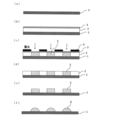
- a photosensitive resin film for forming a curved surface-shaped member having a base film 3 is used as the previous process.
- the photosensitive resin layer 2 for forming a curved member is laminated on the material 1.
- the photosensitive resin film for forming a curved surface member is laminated while being pressed so as to be in contact with the substrate 1.
- a lamination method there is a method of laminating by heating and pressure bonding using a roll laminator or a flat plate laminator, but from the viewpoint of adhesion and followability, a lower clad is used under reduced pressure using a flat plate laminator.
- the flat plate type laminator refers to a laminator in which a laminated material is sandwiched between a pair of flat plates and pressed by pressing the flat plate.
- a vacuum pressurizing laminator can be suitably used.
- the heating temperature here is preferably 40 ° C. or higher and 130 ° C. or lower, and the pressure bonding pressure is preferably 0.1 MPa or higher and 1.0 MPa or lower, but these conditions are not particularly limited.
- the laminating temperature is preferably 20 ° C. or higher and 130 ° C. or lower. When the temperature is lower than 20 ° C., the adhesion between the curved shape member-forming photosensitive resin layer 2 and the substrate 1 is deteriorated.
- the temperature is more preferably 40 ° C. or higher and 100 ° C. or lower.
- the pressure is preferably 0.2 MPa or more and 0.9 MPa or less, and the laminating speed is preferably 0.1 m / min or more and 3 m / min or less, but these conditions are not particularly limited.
- the base material 1 For example, a glass epoxy resin substrate, a ceramic substrate, a glass substrate, a silicon substrate, a plastic substrate, a metal substrate, a substrate with a resin layer, a substrate with a metal layer, a plastic film, a plastic with a resin layer Examples thereof include a film, a plastic film with a metal layer, and an electric wiring board.
- the active light for photocuring the resin for forming a columnar member is ultraviolet light
- a metal substrate, a plastic substrate that does not transmit ultraviolet light, a glass epoxy resin substrate, and the like are preferable.
- substrate is 5 micrometers or more and 1 mm or less, and it is more preferably 10 micrometers or more and 100 micrometers or less. preferable.
- Step 1 Photocuring and Patterning Step
- the photosensitive layer is exposed as a step 1 using a photomask 4 to form the columnar portion 5.
- actinic rays are irradiated in an image form through a photomask having a negative or positive mask pattern called artwork.
- an active light beam may be directly irradiated on an image without passing through a photomask using laser direct drawing.
- the active light source include known light sources that effectively emit ultraviolet rays, such as carbon arc lamps, mercury vapor arc lamps, ultrahigh pressure mercury lamps, high pressure mercury lamps, and xenon lamps.
- there are those that effectively radiate visible light such as a photographic flood bulb and a solar lamp.
- the dose of active light here is preferably 0.01 J / cm 2 or more 10J / cm 2 or less. If it is less than 0.01 J / cm 2 , the curing reaction does not proceed sufficiently, and the lens pattern (columnar portion) may be washed away by the development process. If it exceeds 10 J / cm 2 , the exposure amount is excessive.
- the curved surface shape is less likely to occur due to heat dripping during heat treatment. From the viewpoints described above, more preferably 0.05 J / cm 2 or more 5 J / cm 2 or less, particularly preferably 0.1 J / cm 2 or more 3J / cm 2 or less. In addition, you may heat after exposure from a viewpoint of the resolution of the columnar part 5, and an adhesive improvement after exposure.
- the time from ultraviolet irradiation to post-exposure heating is preferably within 10 minutes. Within 10 minutes, the active species generated by ultraviolet irradiation will not be deactivated.
- the post-exposure heating temperature is preferably 40 ° C. or higher and 160 ° C. or lower, and the time is preferably 30 seconds or longer and 10 minutes or shorter.
- Step 2 Development step As step 2, after exposure, as shown in FIG. 1 (d), the base film 3 of the photosensitive resin film 2 for forming a curved surface-shaped member is removed, and an alkaline aqueous solution, an aqueous developer, etc.
- the developer is developed by a known method such as spraying, rocking dipping, brushing, scraping, dipping and paddle. Moreover, you may use together 2 or more types of image development methods as needed.
- the base of the alkaline aqueous solution is not particularly limited.
- an alkali hydroxide such as lithium, sodium or potassium hydroxide
- an alkali carbonate such as lithium, sodium, potassium or ammonium carbonate or bicarbonate
- Alkali metal phosphates such as potassium phosphate and sodium phosphate
- Alkali metal pyrophosphates such as sodium pyrophosphate and potassium pyrophosphate
- Sodium salts such as borax and sodium metasilicate
- Tetramethylammonium hydroxide Triethanolamine And organic bases such as ethylenediamine, diethylenetriamine, 2-amino-2-hydroxymethyl-1,3-propanediol, 1,3-diaminopropanol-2-morpholine, and the like.
- the pH of the alkaline aqueous solution used for development is preferably 9 to 11, and the temperature is adjusted in accordance with the developability of the core portion-forming resin composition layer.
- a surfactant, an antifoaming agent, a small amount of an organic solvent for accelerating development, and the like may be mixed.
- the aqueous developer is not particularly limited as long as it is composed of water or an alkaline aqueous solution and one or more organic solvents.
- the pH of the aqueous developer is preferably as low as possible within a range where the development of the core portion-forming resin film can be sufficiently performed, preferably pH 8 to 12, and particularly preferably pH 9 to 10.
- organic solvent examples include alcohols such as methanol, ethanol, isopropanol, butanol, ethylene glycol and propylene glycol; ketones such as acetone and 4-hydroxy-4-methyl-2-pentanone; ethylene glycol monomethyl ether and ethylene glycol mono
- organic solvent examples include polyhydric alcohol alkyl ethers such as ethyl ether, propylene glycol monomethyl ether, propylene glycol monoethyl ether, diethylene glycol monomethyl ether, diethylene glycol monoethyl ether, and diethylene glycol monobutyl ether. These can be used alone or in combination of two or more.
- the concentration of the organic solvent is usually preferably 2 to 90% by mass, and the temperature is adjusted in accordance with the developability of the core portion-forming resin composition. Further, a small amount of a surfactant, an antifoaming agent or the like may be mixed in the aqueous developer.
- the columnar portion 5 of the optical waveguide may be cleaned using a cleaning liquid composed of water and the above organic solvent as necessary.
- An organic solvent can be used individually or in combination of 2 or more types.
- the concentration of the organic solvent is usually preferably 2 to 90% by mass, and the temperature is adjusted in accordance with the developability of the core portion-forming resin composition.
- columnar section 5 As processing after the development or washing, if necessary, with columnar section 5 further cured by performing the degree of exposure 60 ° C. or higher 250 ° C. or less degree of heating or 0.1 mJ / cm 2 or more 1000 mJ / cm 2 or less using May be.
- Step 3 Heat treatment (sagging) step Subsequently, the column member 5 formed on the substrate 1 as step 3 is heated, and the lens member 6 having excellent heat resistance is obtained by simultaneously performing the heating and thermosetting steps. Can be obtained.
- the heating method include known methods such as hot air radiation and infrared irradiation heating, and are not particularly limited as long as the lens pattern formed on the substrate is effectively heated.
- the temperature during heating is preferably 60 ° C. or higher and 200 ° C. or lower, more preferably 80 ° C. or higher and 180 ° C. or lower, and particularly preferably 100 ° C. or higher and 160 ° C. or lower. If this heating temperature is less than 60 ° C, the drooling effect tends to be insufficient, and if it exceeds 200 ° C, the constituent components of the photosensitive resin composition layer tend to thermally decompose.
- Example 1 [Base polymer; production of (meth) acrylic polymer (P-1)]
- a flask equipped with a stirrer, a cooling pipe, a gas introduction pipe, a dropping funnel, and a thermometer 42 parts by mass of propylene glycol monomethyl ether acetate and 21 parts by mass of methyl lactate were weighed and stirred while introducing nitrogen gas. .
- the liquid temperature was raised to 65 ° C., 14,5 parts by mass of N-cyclohexylmaleimide, 20 parts by mass of benzyl acrylate, 39 parts by mass of O-phenylphenol 1.5 EO acrylate, 14 parts by mass of 2-hydroxyethyl methacrylate, 12.
- EA ⁇ 1010N
- C 1 mass of 1- [4- (2-hydroxyethoxy) phenyl] -2-hydroxy-2-methyl-1-propan-1-one (“Irgacure 2959” manufactured by BASF Japan Ltd.) as a polymerization initiator 1 part by weight of bis (2,4,6-trimethylbenzoyl) phenylphosphine oxide (“Irgacure 819” manufactured by BASF Japan Ltd.) was weighed into a wide-mouthed plastic bottle and rotated at a temperature of 25 ° C. using a stirrer.
- the resin varnish for forming the core part was prepared by stirring for 6 hours under the condition of several 400 rpm. Thereafter, using a polyflon filter having a pore size of 2 ⁇ m (“PF020” manufactured by Advantech Toyo Co., Ltd.) and a membrane filter having a pore size of 0.5 ⁇ m (“J050A” manufactured by Advantech Toyo Co., Ltd.), a temperature of 25 ° C. and a pressure of 0.4 MPa. And filtered under pressure. Subsequently, defoaming was performed under reduced pressure for 15 minutes using a vacuum pump and a bell jar under conditions of a reduced pressure of 50 mmHg to obtain a photosensitive resin varnish LEV-1 for forming a curved member.
- PF020 manufactured by Advantech Toyo Co., Ltd.
- J050A a membrane filter having a pore size of 0.5 ⁇ m
- the photosensitive resin varnish LEV-1 for forming a curved surface member is coated on a non-treated surface of a PET film (“A1517” manufactured by Toyobo Co., Ltd., thickness 16 ⁇ m) (“Multicoater TM-MC manufactured by Hirano Techseed Co., Ltd.). ”) And dried at 100 ° C. for 20 minutes, and then a release PET film (“ A31 ”manufactured by Teijin DuPont Films, Inc., 25 ⁇ m thick) is pasted as a protective film, and a photosensitive resin film for forming a curved surface member LEF-1 was obtained.
- the thickness of the resin layer can be arbitrarily adjusted by adjusting the gap of the coating machine, but in this example, the thickness after curing was adjusted to 50 ⁇ m.
- Examples 2 and 3 and Comparative Examples 1 to 3 According to the blending ratio shown in Table 1, curved surface member forming photosensitive resin varnishes LEV-2 to 6 were prepared, and curved surface member forming photosensitive resin films LEF-2 to 6 were prepared in the same manner as in Example 1. Produced.
- a sample for measuring refractive index is laminated and cured on a silicon substrate (size: 60 ⁇ 20 mm, thickness: 0.6 mm) in the same manner as the sample for measuring light transmittance, by laminating and curing a photosensitive resin film for forming a curved surface member.
- the refractive index of the sample at a wavelength of 830 nm was measured using a prism-coupled refractometer (“Model 2020” manufactured by Metricon).
- the photosensitive resin film (lens pattern 4) for forming a curved surface member was exposed by irradiating with an ultraviolet ray (wavelength 365 nm) with 2500 mJ / cm 2 through a negative photomask 4 having a lens pattern.
- an ultraviolet ray wavelength 365 nm
- a spray type developing device (“RX-40D” manufactured by Yamagata Kikai Co., Ltd.) was used, and the temperature was 30 ° C. with a 1 mass% sodium carbonate aqueous solution.
- Development was performed under conditions of a spray pressure of 0.15 MPa and a development time of 105 seconds to obtain a columnar portion 5. Then, it wash
- the photosensitive member for forming a curved member As follows. The resin composition was evaluated.
- Example preparation method A through hole having a diameter of 210 ⁇ m was formed by drilling on a 150 mm ⁇ 150 mm polyimide film (“UPILEX RN” manufactured by Ube Nitto Kasei Co., Ltd., thickness: 25 ⁇ m) to obtain a substrate with a through hole. Next, a 50 ⁇ m-thick photosensitive resin film for forming a curved surface member is peeled off from the obtained substrate, and the cover film is peeled off.
- UPILEX RN manufactured by Ube Nitto Kasei Co., Ltd., thickness: 25 ⁇ m
- the pressure is 0.4 MPa
- the temperature is 110 ° C.
- the pressurization time is 30 seconds
- the laminate is laminated, thereby simultaneously filling the through hole with the photosensitive resin for forming the curved surface member.
- a photosensitive resin layer for forming a curved member was formed on the substrate.
- 2500 J / cm 2 of ultraviolet rays (wavelength 365 nm) was irradiated from the through-hole opening using an ultraviolet exposure machine to expose the photosensitive resin film for forming a curved member (lens pattern 4).
- a spray type developing device (“RX-40D” manufactured by Yamagata Kikai Co., Ltd.) was used, and the temperature was 30 ° C. with a 1 mass% sodium carbonate aqueous solution. Development was performed under conditions of a spray pressure of 0.15 MPa and a development time of 105 seconds to obtain a columnar portion. Then, it wash
- the photosensitive resin composition for forming a curved member of the present invention is excellent in lens forming property and transparency, and in heat resistance which is considered to be a problem in conventional lens materials. Very good.
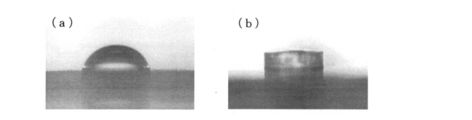
- the film of Example 1 has a smooth resin surface even after a heat history of 200 ° C. for 1 hour.
- the film of Comparative Example 1 shown in FIG. 3B was inferior in heat resistance due to the occurrence of wrinkles considered to be resin flow after heat treatment.
- the resin composition having a crosslink with the base polymer of the present invention is excellent in heat resistance and effective in maintaining the lens shape.
- the curved surface-shaped member-forming photosensitive resin composition of the present invention is excellent in lens forming property, transparency and heat resistance, and a lens member produced using these is very excellent in light collecting property.
Landscapes
- Physics & Mathematics (AREA)
- General Physics & Mathematics (AREA)
- Chemical & Material Sciences (AREA)
- Chemical Kinetics & Catalysis (AREA)
- Spectroscopy & Molecular Physics (AREA)
- Optics & Photonics (AREA)
- Organic Chemistry (AREA)
- Polymers & Plastics (AREA)
- Medicinal Chemistry (AREA)
- Engineering & Computer Science (AREA)
- Manufacturing & Machinery (AREA)
- Health & Medical Sciences (AREA)
- Crystallography & Structural Chemistry (AREA)
- Addition Polymer Or Copolymer, Post-Treatments, Or Chemical Modifications (AREA)
- Photosensitive Polymer And Photoresist Processing (AREA)
- Polymerisation Methods In General (AREA)
- Materials For Photolithography (AREA)
Abstract
Description
例えば、特許文献1には、表面に光学素子を備えたICチップの上方に光導波路フィルムを設置し、これらICチップと光導波路フィルムとの間で光通信を行うことが開示されている。ところが、特許文献1のように光学素子のような光通信手段を備えた基板と光導波路のような光通信手段との間で光通信を行う場合、これら光通信手段同士を高精度に位置決めして実装しないと光通信することができないという問題や、集光しないと光損失(信号強度)が減少してしまう問題がある。
例えば、特許文献2には、透明基板の表面にマイクロレンズが設置されたレンズ付き基板が開示されている。このレンズ付き基板を製造するには、透明基板の表面に感光性樹脂レジストを形成すると共に基板の裏面に開口部を有する遮光膜を形成する。次いで、遮光膜側から光を照射して、感光性樹脂レジストのうち遮光膜の開口部との対向位置に存在する部分を露光した後、現像して円柱状のレジスト構造物を形成する。その後、このレジスト構造物を加熱し、レジスト構造物の表面を熱だれさせることにより、マイクロレンズが製造される。
本発明は上記課題を解決するためになされたものであり、耐熱性に優れた曲面形状部材形成用感光性樹脂組成物、曲面形状部材形成用感光性樹脂フィルム、及びそれらを用いて形成するレンズ部材を提供することを目的とする。
以下、本発明に用いられる各成分について説明する。
(A)成分のポリマーとしては、一般にアルカリ可溶性であることが好ましく、アルカリ可溶性ポリマーとは、アルカリ可溶性基(例えば、カルボキシル基、スルホン酸基、フェノール性水酸基、アルコール性水酸基、アミノ基等)を有するポリマーであり、アルカリ水溶液に対して溶解し得るものであればよい。このようなポリマーに特に制限は無いが、アルカリ可溶性の(メタ)アクリルポリマーが好ましい。また、アルカリ可溶性基としては、カルボキシル基が好ましい。
なお、(メタ)アクリルとは、アクリル及び/又はメタクリルを意味する。
アルカリ可溶性(メタ)アクリルポリマーとしては、アルカリ性水溶液からなる現像液に溶解し、目的とする現像処理が遂行される程度に溶解性を有するものであれば特に制限はない。例えば、(メタ)アクリル酸、各種(メタ)アクリル酸エステル((メタ)アクリルアルキルエステル、(メタ)アクリル酸ヒドロキシアルキルエステル等)、(メタ)アクリルアミド等の(メタ)アクリル系モノマ、これらと他の重合性不飽和基含有モノマ(スチレン、αメチルスチレン、マレイン酸無水物、N置換若しくは未置換のマレイミドモノマ等)等の重合体が好ましいものとして挙げられる。
これらの中で、透明性、耐熱性、アルカリ性水溶液への溶解性の観点から、N置換マレイミドを用いるマレイミド骨格を有するものが好ましく、これと他の(メタ)アクリル系の共重合体がより好ましい。主鎖に下記一般式(1)、(2)で表される構造単位(A-1)及び(A―2)を含み、さらに下記一般式(3)、(4)で表される構造単位(A-3)及び(A-4)の少なくとも一方を含むアルカリ可溶性(メタ)アクリルポリマーを用いることがさらに好ましい。

(式中、R1~R3は、各々独立に水素原子、炭素数1~20の有機基のいずれかを示す。)

(式中、R4~R7は、各々独立に水素原子、炭素数1~20の有機基のいずれかを示す。)

(式中、R7~R9は、各々独立に水素原子、炭素数1~20の有機基のいずれかを示す。)

(式中、R10~R12及びX1は、各々独立に水素原子、炭素数1~20の有機基のいずれかを示す。)
マレイミド由来の構造単位(A-1)の構造は、一般式(1)で表されるものであれば特に制限はない。
これらの化合物は、単独で又は2種類以上を組み合わせて用いることができる。
(メタ)アクリレート由来の構造単位(A-2)の構造は、一般式(2)で表されるものであれば特に制限はない。
これらの中でも透明性及び耐熱性の観点から、メチル(メタ)アクリレート、エチル(メタ)アクリレート、ブチル(メタ)アクリレート、2-エチルヘキシル(メタ)アクリレート等の脂肪族(メタ)アクリレート;上記脂環式(メタ)アクリレート;上記芳香族(メタ)アクリレート;上記複素環式(メタ)アクリレートであることが好ましい。
これらの化合物は、単独で又は2種類以上を組み合わせて用いることができる。
構造単位(A-3)の原料となるカルボキシル基とエチレン性不飽和基を有する化合物としては、例えば、(メタ)アクリル酸、マレイン酸、フマル酸、クロトン酸、イタコン酸、シトラコン酸、メサコン酸、ケイ皮酸等が挙げられ、これらの中で、透明性、アルカリ可溶性の観点から(メタ)アクリル酸、マレイン酸、フマル酸、クロトン酸であることが好ましい。
また、無水マレイン酸を原料として用いて、重合後にメタノール、エタノール、プロパノール等の適当なアルコールによって開環し、構造単位(A-3)の構造に変換してもよい。これらの化合物は、単独で又は2種類以上を組み合わせて用いることができる。
これらの中で、透明性、アルカリ可溶性の観点から、モノ(2-(メタ)アクリロイロキシエチル)スクシネート、モノ(2-(メタ)アクリロイロキシエチル)テトラヒドロフタレート、モノ(2-(メタ)アクリロイロキシエチル)ヘキサヒドロフタレート、モノ(2-(メタ)アクリロイロキシエチル)ヘキサヒドロイソフタレート、モノ(2-(メタ)アクリロイロキシエチル)ヘキサヒドロテレフタレートであることが好ましい。
これらの化合物は、単独で又は2種類以上を組み合わせて用いることができる。
このような構造単位の原料となるエチレン性不飽和基を有する化合物としては特に制限はなく、例えばスチレン、α-メチルスチレン、ビニルトルエン、塩化ビニル、酢酸ビニル、ビニルピリジン、N-ビニルピロリドン、N-ビニルカルバゾール、ブタジエン、イソプレン、クロロプレン等が挙げられる。これらの中で、耐熱性、透明性の観点からスチレン、α-メチルスチレン、ビニルトルエン、N-ビニルカルバゾールを用いることがさらに好ましい。
これらの化合物は、単独で又は2種類以上を組み合わせて用いることができる。
これらの有機溶剤は、単独で又は2種類以上を組み合わせて使用することができる。
これらの中でも透明性及び反応性の観点から、グリシジル(メタ)アクリレート、3,4-エポキシシクロヘキシルメチル(メタ)アクリレート、イソシアン酸エチル(メタ)アクリレート、2-ヒドロキシエチル(メタ)アクリレート、2-ヒドロキシプロピル(メタ)アクリレート、2-ヒドロキシブチル(メタ)アクリレート、(メタ)アクリル酸、クロトン酸、2-ヘキサヒドロフタロイルエチル(メタ)アクリレートであることが好ましい。これらの化合物は、単独で又は2種類以上を組み合わせて用いることができる。
なお、本発明における重量平均分子量は、ゲル浸透クロマトグラフィー(GPC)で測定し、標準ポリスチレン換算した値である。
水又はアルカリ性水溶液と1種以上の界面活性剤とからなるアルカリ性水溶液を用いて現像する場合には、酸価が10mgKOH/g以上260mgKOH/g以下であることが好ましい。酸価が10mgKOH/g未満であると現像が困難であり、260mgKOH/gより多いと耐現像液性が低下する。以上の観点から、20mgKOH/g以上250mgKOH/g以下であることがさらに好ましく、30mgKOH/g以上200mgKOH/g以下であることが特に好ましい。
(B)成分の熱反応する基を有する重合性化合物としては、1分子中に1つのエポキシ基と1つのエチレン性不飽和基を有する化合物を含むことが好ましい。
これらは、例えば、1分子内にグリシジル基を有するエポキシ樹脂を(メタ)アクリル酸化合物と反応させて得られるエポキシ(メタ)アクリレートを示し、エポキシ基に対し(メタ)アクリル酸化合物を0.1当量以上0.9当量以下反応させたものが好ましく、0.2当量以上0.8当量以下がより好ましい。0.4当量以上0.6当量以下が特に好ましい。
なお、本発明の組成物においては、エポキシ基とエチレン性不飽和基を有する化合物を含まない場合もあり得る。
これらの中でも透明性及び耐熱性の観点から、上記脂環式(メタ)アクリレート;上記芳香族(メタ)アクリレート;上記複素環式(メタ)アクリレート;上記脂環式エポキシ(メタ)アクリレート;上記芳香族エポキシ(メタ)アクリレートであることが好ましい。
これらの中でも透明性及び耐熱性の観点から、複素環式(メタ)アクリレート;芳香族エポキシ(メタ)アクリレートであることが好ましい。
これらの化合物は、単独または2種類以上組み合わせて使用することができ、さらにその他の重合性化合物と組み合わせて使用することもできる。
エチレン性不飽和基を有する化合物を用いる場合、その含有量は、(B)成分の重合性化合物の総量100質量部に対し、10質量部以上90質量部以下が好ましく、30質量部以上80質量部以下がより好ましい。40質量部以上70質量部以下が特に好ましい。
これらの化合物は、単独で又は2種類以上を組み合わせて使用することができ、さらにその他の重合性化合物と組み合わせて使用することもできる。
なお、本発明の組成物においては、(B)成分の重合性化合物として、エポキシ基とエチレン性不飽和基を有する化合物を含まず、上記の化合物を用いる場合もあり得る。

(式中、Arは、

のいずれかの基を示す。
X2は、O(酸素原子)、S(硫黄原子)、OCH2、SCH2、O(CH2CH2O)a、O[CH2CH(CH3)O]b、OCH2CH(OH)CH2Oのいずれかの2価の基を示す。

のいずれかの2価の基を示す(結合鎖は各構造の左右に位置する)。R13は水素原子、メチル基のいずれかを示す。R14~R30は、各々独立して水素原子、フッ素原子、炭素数1~20の有機基、炭素数1~20の含フッ素有機基のいずれかを示す。a及びbは各々独立して1~20の整数、cは2~10の整数を示す。)


のいずれかの基を示す。R32~R34は、各々独立して水素原子、メチル基のいずれかを示す。dは1~10の整数を示す。)

(式中、X3及びX4は、各々独立にO、S、O(CH2CH2O)e、O[CH2CH(CH3)O]fのいずれかの2価の基を示す。

のいずれかの2価の基を示す(結合鎖は各構造の左右に位置する)。
R35及びR40は、各々独立して水素原子、メチル基のいずれかを示す。R36~R39は、各々独立して水素原子、フッ素原子、炭素数1~20の有機基、炭素数1~20の含フッ素有機基のいずれかを示す。e及びfは各々独立して1~20の整数、gは2~10の整数を示す。)


のいずれかの2価の基を示す(結合鎖は各構造の左右に位置する)。R41及びR46は、各々独立して水素原子、メチル基のいずれかを示す。R42~R45は、各々独立して水素原子、フッ素原子、炭素数1~20の有機基、炭素数1~20の含フッ素有機基のいずれかを示す。hは1~5の整数、iは2~10の整数を示す。)
なお、一般式(5)~(8)における有機基としては、一般式(1)~(4)で説明したものと同様の例が挙げられる。
(C)成分の重合開始剤としては、加熱又は紫外線等の照射によって重合を開始させるものであれば特に制限はなく、例えば(B)成分の重合性化合物としてエチレン性不飽和基を有する化合物を用いる場合、熱ラジカル重合開始剤、光ラジカル重合開始剤等が挙げられるが、硬化速度が速く常温硬化が可能なことから、光ラジカル重合開始剤であることが好ましい。
これらの中で、硬化性、透明性、及び耐熱性の観点から、上記ジアシルパーオキシド;上記パーオキシエステル;上記アゾ化合物であることが好ましい。
これらの中で、硬化性、透明性、及び耐熱性の観点から、上記ベンジルスルホニウム塩であることが好ましい。
これらの中で、硬化性、透明性、及び耐熱性の観点から、上記トリアリールスルホニウム塩であることが好ましい。これらの熱及び光カチオン重合開始剤は、単独で又は2種類以上組み合わせて用いることができる。さらに、適切な増感剤と組み合わせて用いることもできる。
本発明の曲面形状部材形成用感光性樹脂組成物は、好適な有機溶剤を用いて希釈し、曲面形状部材形成用感光性樹脂ワニスとして使用してもよい。ここで用いる有機溶剤としては、該樹脂組成物を溶解しえるものであれば特に制限はなく、例えば、トルエン、キシレン、メシチレン、クメン、p-シメン等の芳香族炭化水素;テトラヒドロフラン、1,4-ジオキサン等の環状エーテル;メタノール、エタノール、イソプロパノール、ブタノール、エチレングリコール、プロピレングリコール等のアルコール;アセトン、メチルエチルケトン、メチルイソブチルケトン、シクロヘキサノン、4-ヒドロキシ-4-メチル-2-ペンタノン等のケトン;酢酸メチル、酢酸エチル、酢酸ブチル、乳酸メチル、乳酸エチル、γ-ブチロラクトン等のエステル;エチレンカーボネート、プロピレンカーボネート等の炭酸エステル;エチレングリコールモノメチルエーテル、エチレングリコールモノエチルエーテル、エチレングリコールモノブチルエーテル、エチレングリコールジメチルエーテル、エチレングリコールジエチルエーテル、プロピレングリコールモノメチルエーテル、プロピレングリコールモノエチルエーテル、プロピレングリコールジメチルエーテル、プロピレングリコールジエチルエーテル、ジエチレングリコールモノメチルエーテル、ジエチレングリコールモノエチルエーテル、ジエチレングリコールモノブチルエーテル、ジエチレングリコールジメチルエーテル、ジエチレングリコールジエチルエーテル等の多価アルコールアルキルエーテル;エチレングリコールモノメチルエーテルアセテート、エチレングリコールモノエチルエーテルアセテート、エチレングリコールモノブチルエーテルアセテート、プロピレングリコールモノメチルエーテルアセテート、プロピレングリコールモノエチルエーテルアセテート、ジエチレングリコールモノメチルエーテルアセテート、ジエチレングリコールモノエチルエーテルアセテート等の多価アルコールアルキルエーテルアセテート;N,N-ジメチルホルムアミド、N,N-ジメチルアセトアミド、N-メチルピロリドン等のアミド等が挙げられる。
これらの中で、溶解性及び沸点の観点から、トルエン、メタノール、エタノール、イソプロパノール、アセトン、メチルエチルケトン、メチルイソブチルケトン、シクロヘキサノン、酢酸メチル、酢酸エチル、酢酸ブチル、乳酸メチル、乳酸エチル、エチレングリコールモノメチルエーテル、エチレングリコールモノエチルエーテル、プロピレングリコールモノメチルエーテル、プロピレングリコールモノエチルエーテル、ジエチレングリコールジメチルエーテル、エチレングリコールモノメチルエーテルアセテート、プロピレングリコールモノメチルエーテルアセテート、N,N-ジメチルアセトアミドであることが好ましい。
これらの有機溶剤は、単独で又は2種類以上を組み合わせて使用することができる。また、樹脂ワニス中の固形分濃度は、通常20質量%以上80質量%以下であることが好ましい。
本発明の曲面形状部材形成用感光性樹脂フィルムは、上記の曲面形状部材形成用感光性樹脂組成物からなり、(A)~(C)成分を含有する曲面形状部材形成用感光性樹脂ワニスを好適な基材フィルムに塗布し、溶媒を除去することにより容易に製造することができる。また、曲面形状部材形成用感光性樹脂組成物を直接基材フィルムに塗布して製造してもよい。
なお、樹脂層との剥離性向上の観点から、シリコーン系化合物、含フッ素化合物等により離型処理が施されたフィルムを必要に応じて用いてもよい。
保護フィルムの厚みは、目的とする柔軟性により適宜変えてよいが、10μm以上250μm以下であることが好ましい。10μm未満であるとフィルム強度が不十分であり、250μmより厚いと十分な柔軟性が得られない。以上の観点から、15μm以上200μm以下であることがさらに好ましく、20μm以上150μm以下であることが特に好ましい。
以下、本発明の曲面形状部材(レンズ部材)の製造方法について説明する。
本発明のレンズ部材を製造する方法としては、特に制限はないが、曲面形状部材形成用感光性樹脂ワニスを用いてスピンコート法などにより製造する方法、又は曲面形状部材形成用感光性樹脂フィルムを用いて積層法により製造する方法等が挙げられる。また、これらの方法を組み合わせて製造することもできる。これらの中では、生産性に優れたレンズ部材製造プロセスが提供可能という観点から、曲面形状部材形成用感光性樹脂フィルムを用いて積層法により製造する方法が好ましい。
まず、図1の(a)(b)に示すように、前工程として基材フィルム3を有する曲面形状部材形成用感光性樹脂フィルムを基材1上に積層して曲面形状部材形成用感光性樹脂層2を形成する。
曲面形状部材形成用感光性樹脂フィルムは、基材1に接するように、圧着しながら積層する。積層方式としては、ロールラミネータ、または平板型ラミネータを用いて加熱しながら圧着することにより積層する方法が挙げられるが、密着性および追従性の観点から、平板型ラミネータを用いて減圧下で下部クラッド層形成用樹脂フィルムを積層することが好ましい。
なお、本発明において平板型ラミネータとは、積層材料を一対の平板の間に挟み、平板を加圧することにより圧着させるラミネータのことを指し、例えば、真空加圧式ラミネータを好適に用いることができる。ここでの加熱温度は、40℃以上130℃以下であることが好ましく、圧着圧力は、0.1MPa以上1.0MPa以下であることが好ましいが、これらの条件には特に制限はない。下部クラッド層形成用樹脂フィルムに保護フィルムが存在する場合には、保護フィルムを除去した後に積層する。
なお、真空加圧式ラミネータによる積層の前に、ロールラミネータを用いて、あらかじめ曲面形状部材形成用感光性樹脂フィルムを基材1上に仮貼りしておいてもよい。ここで、密着性および追従性向上の観点から、圧着しながら仮貼りすることが好ましく、圧着する際、ヒートロールを有するラミネータを用いて加熱しながら行ってもよい。ラミネート温度は、20℃以上130℃以下であることが好ましい。20℃未満であると曲面形状部材形成用感光性樹脂層2と基材1との密着性が悪化し、130℃より高いと樹脂層がロールラミネート時に流動しすぎて、必要とする膜厚が得られない。以上の観点から、40℃以上100℃以下であることがより好ましい。圧力は0.2MPa以上0.9MPa以下であることが好ましく、ラミネート速度は0.1m/min以上3m/min以下であることが好ましいが、これらの条件には特に制限はない。
例えば、柱状部材形成用樹脂を光硬化するための活性光線が紫外光であれば、金属基板、紫外光を透過しないプラスチック基板やガラスエポキシ樹脂基板等が好適に挙げられる。
基板の厚みには特に制限はないが、強度の確保及び光路の短縮による光ロスの低減の観点から、基板の厚みは5μm以上1mm以下であることが好ましく、10μm以上100μm以下であることがより好ましい。
次に、図1の(c)に示すように、工程1としてフォトマスク4を用いて感光層を露光し、柱状部5を形成する。具体的には、アートワークと呼ばれるネガ又はポジマスクパターンを有するフォトマスクを通して活性光線が画像状に照射される。また、レーザ直接描画を用いてフォトマスクを通さずに直接活性光線を画像上に照射してもよい。活性光線の光源としては、例えば、カーボンアーク灯、水銀蒸気アーク灯、超高圧水銀灯、高圧水銀灯、キセノンランプ等の紫外線を有効に放射する公知の光源が挙げられる。また、他にも写真用フラッド電球、太陽ランプ等の可視光を有効に放射するものが挙げられる。
ここでの活性光線の照射量は、0.01J/cm2以上10J/cm2以下であることが好ましい。0.01J/cm2未満であると、硬化反応が十分に進行せずに、現像工程によってレンズパターン(柱状部)が流失してしまうことがあり、10J/cm2より多くすると露光量過多によって、熱処理時の熱だれによる曲面形状の発現が起こりにくくなる。以上の観点から、0.05J/cm2以上5J/cm2以下であることがより好ましく、0.1J/cm2以上3J/cm2以下であることが特に好ましい。
なお、露光後に、柱状部5の解像度及び密着性向上の観点から、露光後加熱を行ってもよい。紫外線照射から露光後加熱までの時間は、10分以内であることが好ましい。10分以内であると紫外線照射により発生した活性種が失活することがない。露光後加熱の温度は40℃以上160℃以下であることが好ましく、時間は30秒以上10分以下であることが好ましい。
工程2として、露光後、図1の(d)に示すように、曲面形状部材形成用感光性樹脂フィルム2の基材フィルム3を除去し、アルカリ性水溶液、水系現像液等の現像液を用いて、例えば、スプレー、揺動浸漬、ブラッシング、スクラッピング、ディップ及びパドル等の公知の方法により現像する。また、必要に応じて2種類以上の現像方法を併用してもよい。
上記有機溶剤としては、例えば、メタノール、エタノール、イソプロパノール、ブタノール、エチレングリコール、プロピレングリコール等のアルコール;アセトン、4-ヒドロキシ-4-メチル-2-ペンタノン等のケトン;エチレングリコールモノメチルエーテル、エチレングリコールモノエチルエーテル、プロピレングリコールモノメチルエーテル、プロピレングリコールモノエチルエーテル、ジエチレングリコールモノメチルエーテル、ジエチレングリコールモノエチルエーテル、ジエチレングリコールモノブチルエーテル等の多価アルコールアルキルエーテル等が挙げられる。
これらは、単独で又は2種類以上を組み合わせて使用することができる。有機溶剤の濃度は、通常、2~90質量%であることが好ましく、その温度はコア部形成用樹脂組成物の現像性に合わせて調節される。また、水系現像液中には、界面活性剤、消泡剤等を少量混入させてもよい。
続いて、工程3として基材1上に形成された柱状部5を加熱し、熱だれ、熱硬化工程を同時に行うことで耐熱性に優れたレンズ部材6を得ることができる。加熱する方法としては、熱風放射、赤外線照射加熱等の公知の方法が挙げられ、基板上に形成されたレンズパターンが有効に加熱される方法であれば特に制限されない。
[ベースポリマー;(メタ)アクリルポリマー(P-1)の作製]
撹拌機、冷却管、ガス導入管、滴下ろうと、及び温度計を備えたフラスコに、プロピレングリコールモノメチルエーテルアセテート42質量部及び乳酸メチル21質量部を秤量し、窒素ガスを導入しながら撹拌を行った。液温を65℃に上昇させ、N-シクロヘキシルマレイミド14,5質量部、ベンジルアクリレート20質量部、O-フェニルフェノール1.5EOアクリレート39質量部、2-ヒドロキシエチルメタクリレート14質量部、メタクリル酸12.5質量部、2,2’-アゾビス(2,4-ジメチルバレロニトリル)4質量部、プロピレングリコールモノメチルエーテルアセテート37質量部、及び乳酸メチル21質量部の混合物を3時間かけて滴下後、65℃で3時間撹拌し、さらに95℃で1時間撹拌を続けて、(メタ)アクリルポリマー(P-1)溶液(固形分45質量%)を得た。
P-1の酸価を測定した結果、79mgKOH/gであった。なお、酸価はP-1溶液を中和するのに要した0.1mol/L水酸化カリウム水溶液量から算出した。このとき、指示薬として添加したフェノールフタレインが無色からピンク色に変色した点を中和点とした。
P-1の重量平均分子量(標準ポリスチレン換算)をGPC(東ソー株式会社製「SD-8022」、「DP-8020」、「RI-8020」)を用いて測定した結果、2.5×10⁴であった。なお、カラムは日立化成株式会社製「Gelpack GL-A150-S」及び「Gelpack GL-A160-S」を使用した。溶離液としてはテトラヒドロフランを用い、サンプル濃度0.5mg/mlとし、溶出速度を1ml/分として測定した。
(A)アルカリ可溶性(メタ)アクリルポリマーとして、P-2溶液(固形分45質量%)60質量部、(B)重合性化合物として、ビスフェノールA型エポキシアクリレート(新中村化学工業株式会社製「EA-1010N」)(エポキシ当量518g/eq)40質量部

(C)重合開始剤として、1-[4-(2-ヒドロキシエトキシ)フェニル]-2-ヒドロキシ-2-メチル-1-プロパン-1-オン(BASFジャパン株式会社製「イルガキュア2959」)1質量部、ビス(2,4,6-トリメチルベンゾイル)フェニルホスフィンオキシド(BASFジャパン株式会社製「イルガキュア819」)1質量部を広口のポリ瓶に秤量し、撹拌機を用いて、温度25℃、回転数400rpmの条件で、6時間撹拌して、コア部形成用樹脂ワニスを調合した。その後、孔径2μmのポリフロンフィルタ(アドバンテック東洋株式会社製「PF020」)及び孔径0.5μmのメンブレンフィルタ(アドバンテック東洋株式会社製「J050A」)を用いて、温度25℃、圧力0.4MPaの条件で加圧濾過した。続いて、真空ポンプ及びベルジャーを用いて減圧度50mmHgの条件で15分間減圧脱泡し、曲面形状部材形成用感光性樹脂ワニスLEV-1を得た。
上記曲面形状部材形成用感光性樹脂ワニスLEV-1を、PETフィルム(東洋紡績株式会社製「A1517」、厚み16μm)の非処理面上に塗工機(株式会社ヒラノテクシード製「マルチコーターTM-MC」)を用いて塗布し、100℃で20分乾燥し、次いで保護フィルムとして離型PETフィルム(帝人デュポンフィルム株式会社製「A31」、厚み25μm)を貼付け、曲面形状部材形成用感光性樹脂フィルムLEF-1を得た。このとき樹脂層の厚みは、塗工機のギャップを調節することで任意に調整可能であるが、本実施例では硬化後の膜厚が、50μmとなるように調節した。
表1に示す配合比に従って、曲面形状部材形成用感光性樹脂ワニスLEV-2~6を調合し、実施例1と同様な方法で、曲面形状部材形成用感光性樹脂フィルムLEF-2~6を作製した。
保護フィルム(ピューレックスA31)を除去した前記曲面形状部材形成用感光性樹脂フィルムを、スライドガラス(サイズ:76mm×26mm、厚さ:1mm)上に前記真空ラミネータを用いて、圧力0.4MPa、温度50℃及び加圧時間30秒の条件で積層した。次いで、紫外線露光機にて紫外線(波長365nm)を1000mJ/cm2照射し、さらに160℃で1時間加熱し、光線透過率測定用のサンプルを作製した。このサンプルの波長850nmにおける光線透過率を、分光光度計(株式会社日立ハイテクノロージーズ製「U-3310」)を用いて測定した。
シリコン基板(サイズ:60×20mm、厚さ:0.6mm)上に光線透過率測定用のサンプルと同様にして曲面形状部材形成用感光性樹脂フィルムを積層、硬化し、屈折率測定用のサンプルを作製した。このサンプルの波長830nmにおける屈折率を、プリズム結合式屈折率計(Metricon社製「Model2020」)を用いて測定した。
真空加圧式ラミネータ(株式会社名機製作所製「MVLP-500/600」)を用い、圧力0.4MPa、温度80℃及び加圧時間30秒の条件で、保護フィルム(ピューレックスA31)を除去した曲面形状部材形成用感光性樹脂フィルムLEF-1を、ガラスエポキシ樹脂基板(日立化成株式会社製「MCL-E-679FB」、板厚0.6mm、銅箔はエッチングにより除去)上に積層した。次いで、レンズパターンを有するネガ型フォトマスク4を介し、紫外線露光機で紫外線(波長365nm)を2500mJ/cm2照射して、曲面形状部材形成用感光性樹脂フィルム(レンズパターン4)を露光した。支持フィルム(東洋紡績株式会社製「コスモシャインA1517」)を除去した後、スプレー式現像装置(株式会社山縣機械製「RX-40D」)を用い、1質量%炭酸ナトリウム水溶液にて温度30℃、スプレー圧0.15MPa、現像時間105秒の条件で現像し、柱状部5を得た。続いて、純水にて洗浄し、160℃で1時間熱硬化及び熱だれさせた。
ダイシングソー(株式会社ディスコ製「DAD-341」)を用いてレンズ部材を基材方向に対し垂直方向にカットし、得られた断面を観察することで、曲面形状が得られているか評価を行った。
○:柱状部断面が曲面形状
×:柱状部断面が矩形形状
本発明の曲面形状部材形成用感光性樹脂組成物を用いて作製したレンズ部材において、リフロー等の熱履歴によるレンズ形状の変化を確認するために、下記のようにして曲面形状部材形成用感光性樹脂組成物の評価を行った。
[サンプルの作製法]
シリコン基板(サイズ:60×20mm、厚さ:0.6mm)上に光線透過率測定用のサンプルと同様にして曲面形状部材形成用感光性樹脂フィルムを積層、紫外線露光機にて紫外線(波長365nm)を2500mJ/cm2照射し、160℃にて1時間加熱した。さらに熱履歴後の表面状態の観察を容易にするため、蒸着装置(ファースト技研製「RE-0025」)を用いてAuを0.5μm蒸着した。
200℃にて1時間加熱し、熱履歴後の形状を観察した。
○:Au蒸着面が平滑
×:Au蒸着面にしわ、突起発生。
[サンプルの作製法]
150mm×150mmのポリイミドフィルム(宇部日東化成株式会社製「ユーピレックスRN」、厚み;25μm)基板に、ドリル加工にて直径210μmのスルーホールを形成し、スルーホール付き基板を得た。次いで、得られた前記基板に50μm厚みの曲面形状部材形成用感光性樹脂フィルムを、カバーフィルムを剥離後、真空加圧式ラミネータ(株式会社名機製作所製「MVLP-500」)を用い、500Pa以下に真空引きした後、圧力0.4MPa、温度110℃、加圧時間30秒の条件にて加熱圧着して、ラミネートすることにより、スルーホール内を曲面形状部材形成用感光性樹脂で埋め込むと同時に前記基板上に曲面形状部材形成用感光性樹脂層を形成した。
次に、スルーホール開口部から、紫外線露光機を用いて、紫外線(波長365nm)を2500J/cm2照射し、曲面形状部材形成用感光性樹脂フィルム(レンズパターン4)を露光した。支持フィルム(東洋紡績株式会社製「コスモシャインA1517」)を除去した後、スプレー式現像装置(株式会社山縣機械製「RX-40D」)を用い、1質量%炭酸ナトリウム水溶液にて温度30℃、スプレー圧0.15MPa、現像時間105秒の条件で現像し、柱状部を得た。続いて、純水にて洗浄し、160℃で1時間熱硬化及び熱だれさせ、スルーホール基板上にレンズ部材を得た。
得られた基板下面のスルーホールからGI50マルチモード用光ファイバを用いて850nmの光信号を入射し、レンズ部材内へ伝搬、集光させ、レンズ部材垂直延長線上に設置したGI62.5のマルチモード光ファイバにて受光し、光損失を測定した。光ファイバ先端とレンズ部材間距離は100μmとした。このときの値を光損失(A)とし、次いで200℃、1時間の熱履歴後に測定した値を光損失(B)とした。
以上より、熱履歴による光損失増加量(C)を以下の式に従って算出した。
(式)(C)=(B)-(A)

2)ビスフェノールA型エポキシアクリレート(新中村化学株式会社製「EA-1010N」、エポキシ当量518g/eq)
3)ヒドロキシエチルアクリロイルオキシエチルフタル酸(共栄社化学株式会社製「HOA-MPEH」、β-ヒドロキシエチル-β′- アクリロイルオキシル-o-フタレート)
4)エトキシ化ビスフェノールAジアクリレート(日立化成株式会社製「ファンクリルFA-324A」)

5)エトキシ化ビスフェノールAジアクリレート(日立化成株式会社製「ファンクリルFA-321A」)

6)フェノールビフェニレン型エポキシ樹脂(日本化薬株式会社製「NC-3000」、エポキシ当量275g/eq)
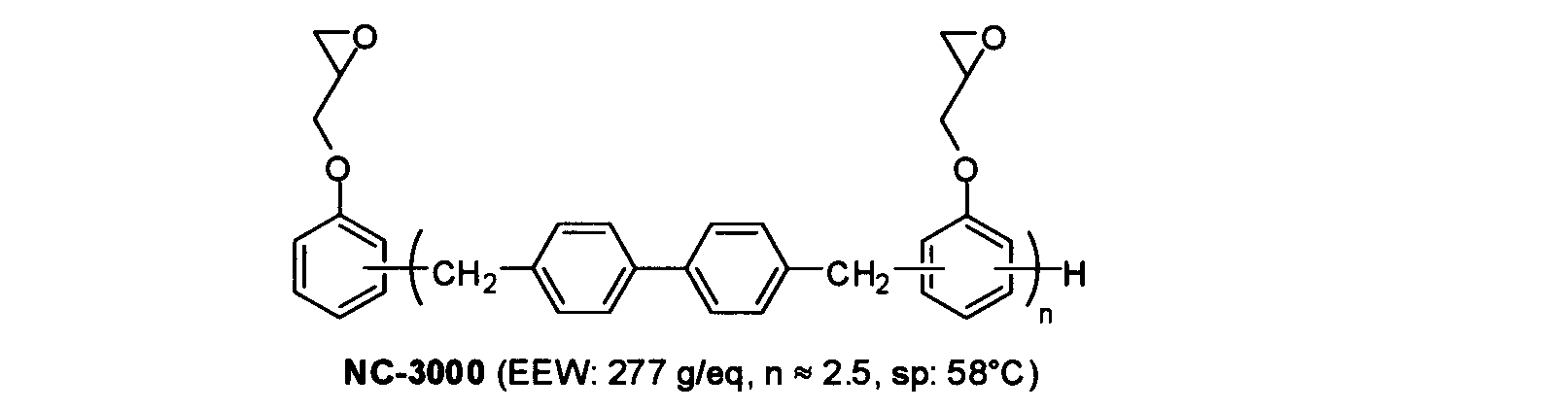
7)1-[4-(2-ヒドロキシエトキシ)フェニル]-2-ヒドロキシ-2-メチル-1-プロパン-1-オン(BASFジャパン株式会社製「イルガキュア2959」)
8)ビス(2,4,6-トリメチルベンゾイル)フェニルホスフィンオキシド(BASFジャパン株式会社製「イルガキュア819」)
2…曲面形状部材形成用感光性樹脂フィルム
3…基材フィルム
4…フォトマスク(レンズパターン)
5…柱状部
6…レンズ部材
Claims (16)
- (A)ポリマー、(B)前記ポリマーと熱反応する基を有する重合性化合物、及び、(C)重合開始剤を含有してなる曲面形状部材形成用感光性樹脂組成物。
- (A)ポリマーが、カルボキシル基を有する請求項1に記載の曲面形状部材形成用感光性樹脂組成物。
- (A)ポリマーが、重量平均分子量1,000以上300,000以下である請求項1又は2に記載の曲面形状部材形成用感光性樹脂組成物。
- (A)ポリマーが、主鎖にマレイミド骨格を有する請求項1~3のいずれかに記載の曲面形状部材形成用感光性樹脂組成物。
- (B)重合性化合物が、その分子中にエポキシ基とエチレン性不飽和基を有する化合物を含むものである請求項1~4のいずれかに記載の曲面形状部材形成用感光性樹脂組成物。
- 分子中にエポキシ基とエチレン性不飽和基を有する化合物が、その分子中に脂環又は芳香環を含むものである請求項5に記載の曲面形状部材形成用感光性樹脂組成物。
- 分子中にエポキシ基とエチレン性不飽和基を有する化合物が、分子中に1つのエポキシ基と1つのエチレン性不飽和基を有するものである請求項5又は6に記載の曲面形状部材形成用感光性樹脂組成物。
- 分子中にエポキシ基とエチレン性不飽和基を有する化合物が、その分子中にビスフェノール骨格を有するものである請求項5~7のいずれかに記載の曲面形状部材形成用感光性樹脂組成物。
- (B)成分として、分子中にエポキシ基とエチレン性不飽和基を含む化合物以外に、分子中に2以上のエチレン性不飽和基を含む化合物を含有し、さらに、その他の成分として、分子中に2以上のエポキシ基を含む化合物を含有する請求項5~8のいずれかに記載の曲面形状部材形成用感光性樹脂組成物。
- (A)成分の配合量が(A)成分及び(B)成分の総量に対して10質量%以上85質量%以下であり、(B)成分の配合量が(A)成分及び(B)成分の総量に対して15質量%以上90質量%以下であり、(C)成分の配合量が(A)成分及び(B)成分の総量100質量部に対して、0.1質量部以上10質量部以下である請求項1~9のいずれかに記載の曲面形状部材形成用感光性樹脂組成物。
- (A)成分の配合量が(A)成分及び(B)成分の総量に対して10質量%以上65質量%以下であり、(B)成分の配合量が(A)成分及び(B)成分の総量に対して35質量%以上90質量%以下である請求項10に記載の曲面形状部材形成用感光性樹脂組成物。
- 工程1:曲面形状部材形成用感光性樹脂組成物の層を形成し、露光により所望のパターン形状に前記曲面形状部材形成用感光性樹脂組成物を光硬化する工程、
工程2:前記曲面形状部材形成用感光性樹脂組成物の未硬化部分を現像除去し、曲面形状部材形成用柱状部材を形成する工程、
工程3:前記曲面形状部材形成用柱状部材を加熱し、熱だれさせて凸状の曲面形状を形成する工程を有する曲面形状の製造方法に使用される請求項1~11のいずれかに記載の曲面形状部材形成用樹脂組成物。 - 請求項1~12のいずれかに記載の曲面形状部材形成用感光性樹脂組成物を用いて得られる樹脂層を含む曲面形状部材形成用感光性樹脂フィルム。
- 基材フィルム、樹脂層、及び保護フィルムからなる3層構造の請求項13に記載の曲面形状部材形成用感光性樹脂フィルム。
- 請求項1~12のいずれかに記載の曲面形状部材形成用樹脂組成物又は請求項13若しくは請求項14に記載の曲面形状部材形成用感光性樹脂フィルムを使用する曲面形状部材の製造方法であって、請求項12に記載の工程1、工程2及び工程3の各工程を有する曲面形状部材の製造方法。
- 請求項1~12のいずれかに記載の曲面形状部材形成用感光性樹脂組成物又は請求項13若しくは請求項14に記載の曲面形状部材形成用感光性樹脂フィルムを使用して得られるか、或いは、請求項15に記載の製造方法により得られるレンズ。
Priority Applications (3)
| Application Number | Priority Date | Filing Date | Title |
|---|---|---|---|
| JP2015535461A JPWO2015033893A1 (ja) | 2013-09-04 | 2014-09-01 | 曲面形状部材形成用感光性樹脂組成物、及びこれを用いた、曲面形状部材形成用感光性樹脂フィルム、並びにこれらを用いたレンズ部材 |
| US14/916,248 US20160209743A1 (en) | 2013-09-04 | 2014-09-01 | Photosensitive resin composition for forming member having curved shape, photosensitive resin film for forming member having curved shape using said composition, and lens member manufactred using said composition or said film |
| CN201480048138.7A CN105636991A (zh) | 2013-09-04 | 2014-09-01 | 曲面形状构件形成用感光性树脂组合物、使用其的曲面形状构件形成用感光性树脂膜和使用它们的透镜构件 |
Applications Claiming Priority (2)
| Application Number | Priority Date | Filing Date | Title |
|---|---|---|---|
| JP2013183517 | 2013-09-04 | ||
| JP2013-183517 | 2013-09-04 |
Publications (1)
| Publication Number | Publication Date |
|---|---|
| WO2015033893A1 true WO2015033893A1 (ja) | 2015-03-12 |
Family
ID=52628367
Family Applications (1)
| Application Number | Title | Priority Date | Filing Date |
|---|---|---|---|
| PCT/JP2014/072949 Ceased WO2015033893A1 (ja) | 2013-09-04 | 2014-09-01 | 曲面形状部材形成用感光性樹脂組成物、及びこれを用いた、曲面形状部材形成用感光性樹脂フィルム、並びにこれらを用いたレンズ部材 |
Country Status (4)
| Country | Link |
|---|---|
| US (1) | US20160209743A1 (ja) |
| JP (1) | JPWO2015033893A1 (ja) |
| CN (1) | CN105636991A (ja) |
| WO (1) | WO2015033893A1 (ja) |
Cited By (2)
| Publication number | Priority date | Publication date | Assignee | Title |
|---|---|---|---|---|
| JP2016042157A (ja) * | 2014-08-18 | 2016-03-31 | 株式会社日本触媒 | 硬化性樹脂組成物 |
| JP2017031254A (ja) * | 2015-07-29 | 2017-02-09 | 日立化成株式会社 | 樹脂組成物、硬化物、樹脂シート及び電子部品 |
Families Citing this family (5)
| Publication number | Priority date | Publication date | Assignee | Title |
|---|---|---|---|---|
| JP6859136B2 (ja) * | 2017-03-03 | 2021-04-14 | 日東電工株式会社 | 光導波路コア形成用感光性エポキシ樹脂組成物、光導波路コア形成用感光性フィルム、光導波路、光電気混載基板および光導波路の製造方法 |
| WO2019106846A1 (ja) * | 2017-12-01 | 2019-06-06 | 日立化成株式会社 | 半導体装置の製造方法、仮固定材用樹脂組成物、及び仮固定材用積層フィルム |
| CN111279804B (zh) * | 2017-12-20 | 2023-10-24 | 住友电气工业株式会社 | 制造印刷电路板和层压结构的方法 |
| US11996384B2 (en) | 2020-12-15 | 2024-05-28 | Pulseforge, Inc. | Method and apparatus for debonding temporarily bonded wafers in wafer-level packaging applications |
| KR102896852B1 (ko) * | 2021-01-28 | 2025-12-04 | 삼성전자주식회사 | 렌즈 어레이, 이를 포함한 이미지 장치 및 그 제조 방법 |
Citations (6)
| Publication number | Priority date | Publication date | Assignee | Title |
|---|---|---|---|---|
| JP2003181856A (ja) * | 2001-12-17 | 2003-07-02 | Rikogaku Shinkokai | 可塑性物質の成形方法および成形体 |
| JP2010002912A (ja) * | 2007-11-20 | 2010-01-07 | Hitachi Chem Co Ltd | 感光性樹脂組成物、感光性樹脂硬化物、感光性樹脂フィルム、感光性樹脂フィルム硬化物及びこれらを用いて得られる光導波路 |
| JP2011116798A (ja) * | 2009-11-30 | 2011-06-16 | Hitachi Chem Co Ltd | 光導波路形成用樹脂組成物及びこれを用いた光導波路形成用樹脂フィルム、並びにこれらを用いた光導波路 |
| JP2011117988A (ja) * | 2009-11-30 | 2011-06-16 | Hitachi Chem Co Ltd | 光導波路形成用樹脂組成物及びこれを用いた光導波路形成用樹脂フィルム、並びにこれらを用いた光導波路 |
| JP2011123312A (ja) * | 2009-12-11 | 2011-06-23 | Univ Of Tokyo | マイクロレンズの作製方法 |
| JP2012063786A (ja) * | 2003-08-25 | 2012-03-29 | Hitachi Chem Co Ltd | 永久レジスト用感光性樹脂組成物、永久レジスト用感光性フィルム、レジストパターンの形成方法及びプリント配線板 |
-
2014
- 2014-09-01 JP JP2015535461A patent/JPWO2015033893A1/ja active Pending
- 2014-09-01 CN CN201480048138.7A patent/CN105636991A/zh active Pending
- 2014-09-01 US US14/916,248 patent/US20160209743A1/en not_active Abandoned
- 2014-09-01 WO PCT/JP2014/072949 patent/WO2015033893A1/ja not_active Ceased
Patent Citations (6)
| Publication number | Priority date | Publication date | Assignee | Title |
|---|---|---|---|---|
| JP2003181856A (ja) * | 2001-12-17 | 2003-07-02 | Rikogaku Shinkokai | 可塑性物質の成形方法および成形体 |
| JP2012063786A (ja) * | 2003-08-25 | 2012-03-29 | Hitachi Chem Co Ltd | 永久レジスト用感光性樹脂組成物、永久レジスト用感光性フィルム、レジストパターンの形成方法及びプリント配線板 |
| JP2010002912A (ja) * | 2007-11-20 | 2010-01-07 | Hitachi Chem Co Ltd | 感光性樹脂組成物、感光性樹脂硬化物、感光性樹脂フィルム、感光性樹脂フィルム硬化物及びこれらを用いて得られる光導波路 |
| JP2011116798A (ja) * | 2009-11-30 | 2011-06-16 | Hitachi Chem Co Ltd | 光導波路形成用樹脂組成物及びこれを用いた光導波路形成用樹脂フィルム、並びにこれらを用いた光導波路 |
| JP2011117988A (ja) * | 2009-11-30 | 2011-06-16 | Hitachi Chem Co Ltd | 光導波路形成用樹脂組成物及びこれを用いた光導波路形成用樹脂フィルム、並びにこれらを用いた光導波路 |
| JP2011123312A (ja) * | 2009-12-11 | 2011-06-23 | Univ Of Tokyo | マイクロレンズの作製方法 |
Cited By (2)
| Publication number | Priority date | Publication date | Assignee | Title |
|---|---|---|---|---|
| JP2016042157A (ja) * | 2014-08-18 | 2016-03-31 | 株式会社日本触媒 | 硬化性樹脂組成物 |
| JP2017031254A (ja) * | 2015-07-29 | 2017-02-09 | 日立化成株式会社 | 樹脂組成物、硬化物、樹脂シート及び電子部品 |
Also Published As
| Publication number | Publication date |
|---|---|
| CN105636991A (zh) | 2016-06-01 |
| JPWO2015033893A1 (ja) | 2017-03-02 |
| US20160209743A1 (en) | 2016-07-21 |
Similar Documents
| Publication | Publication Date | Title |
|---|---|---|
| US8036511B2 (en) | Resin composition for optical material, resin film for optical material, and optical waveguide | |
| WO2015033893A1 (ja) | 曲面形状部材形成用感光性樹脂組成物、及びこれを用いた、曲面形状部材形成用感光性樹脂フィルム、並びにこれらを用いたレンズ部材 | |
| JP5282688B2 (ja) | 感光性樹脂組成物、感光性樹脂硬化物、感光性樹脂フィルム、感光性樹脂フィルム硬化物及びこれらを用いて得られる光導波路 | |
| WO2015029261A1 (ja) | 光導波路形成用樹脂組成物、光導波路形成用樹脂フィルム及びそれらを用いた光導波路 | |
| JP5526740B2 (ja) | 光導波路形成用樹脂組成物及びこれを用いた光導波路形成用樹脂フィルム、並びにこれらを用いた光導波路 | |
| JP5515219B2 (ja) | 光導波路形成用樹脂組成物、光導波路形成用樹脂フィルム、及びこれらを用いた光導波路 | |
| JP5904362B2 (ja) | 光学材料用樹脂組成物、光学材料用樹脂フィルム及び光導波路 | |
| WO2015019512A1 (ja) | 光導波路用樹脂組成物、並びにそれを用いた光導波路用樹脂フィルム、光導波路及び光電気複合配線板 | |
| JP5003506B2 (ja) | 光学材料用樹脂組成物、光学材料用樹脂フィルム、及びこれらを用いた光導波路 | |
| JP2009175244A (ja) | 光学材料用樹脂組成物、光学材料用樹脂フィルム、及びこれらを用いた光導波路 | |
| JP2009093140A (ja) | 光導波路の製造方法及び該製造方法により得られた光導波路 | |
| JP2015146000A (ja) | 光導波路形成用樹脂組成物、光導波路形成用樹脂フィルム及びそれらを用いた光導波路 | |
| JP2009167353A (ja) | 光学材料用樹脂組成物、光学材料用樹脂フィルム、及びこれらを用いた光導波路 | |
| JP2013174776A (ja) | 光学材料用樹脂組成物、光学材料用樹脂フィルム及びそれらを用いた光導波路 | |
| WO2017022055A1 (ja) | 光導波路形成用樹脂組成物、光導波路形成用樹脂フィルム、それらを用いた光導波路及びその製造方法 | |
| JP2017187653A (ja) | 光導波路クラッド材、光導波路クラッド層形成用樹脂フィルム及び光導波路 | |
| JP2017187652A (ja) | 光導波路クラッド材、光導波路クラッド層形成用樹脂フィルム及び光導波路 | |
| JP2015215467A (ja) | 光導波路形成用樹脂組成物、光導波路形成用樹脂フィルム及びそれらを用いた光導波路 | |
| JP2015215466A (ja) | 光導波路形成用樹脂組成物、光導波路形成用樹脂フィルム及びそれらを用いた光導波路 | |
| JP2016114672A (ja) | 光導波路形成用樹脂組成物、光導波路形成用樹脂フィルム及びそれらを用いた光導波路 | |
| JP2017187655A (ja) | 光導波路の製造方法 | |
| JP2016200770A (ja) | 光学材料用樹脂組成物、光学材料用樹脂フィルム及び光導波路 | |
| JP2016199720A (ja) | 光学材料用樹脂組成物、光学材料用樹脂フィルム及び光導波路 | |
| JP2016114671A (ja) | 光導波路形成用樹脂組成物、光導波路形成用樹脂フィルム及びそれらを用いた光導波路 |
Legal Events
| Date | Code | Title | Description |
|---|---|---|---|
| 121 | Ep: the epo has been informed by wipo that ep was designated in this application |
Ref document number: 14842069 Country of ref document: EP Kind code of ref document: A1 |
|
| ENP | Entry into the national phase |
Ref document number: 2015535461 Country of ref document: JP Kind code of ref document: A |
|
| WWE | Wipo information: entry into national phase |
Ref document number: 14916248 Country of ref document: US |
|
| NENP | Non-entry into the national phase |
Ref country code: DE |
|
| 122 | Ep: pct application non-entry in european phase |
Ref document number: 14842069 Country of ref document: EP Kind code of ref document: A1 |