WO2015016189A1 - 非水二次電池用電解液および非水二次電池 - Google Patents
非水二次電池用電解液および非水二次電池 Download PDFInfo
- Publication number
- WO2015016189A1 WO2015016189A1 PCT/JP2014/069852 JP2014069852W WO2015016189A1 WO 2015016189 A1 WO2015016189 A1 WO 2015016189A1 JP 2014069852 W JP2014069852 W JP 2014069852W WO 2015016189 A1 WO2015016189 A1 WO 2015016189A1
- Authority
- WO
- WIPO (PCT)
- Prior art keywords
- compound
- group
- secondary battery
- aqueous secondary
- phosphorus
- Prior art date
- Legal status (The legal status is an assumption and is not a legal conclusion. Google has not performed a legal analysis and makes no representation as to the accuracy of the status listed.)
- Ceased
Links
Images

Classifications
-
- H—ELECTRICITY
- H01—ELECTRIC ELEMENTS
- H01M—PROCESSES OR MEANS, e.g. BATTERIES, FOR THE DIRECT CONVERSION OF CHEMICAL ENERGY INTO ELECTRICAL ENERGY
- H01M10/00—Secondary cells; Manufacture thereof
- H01M10/05—Accumulators with non-aqueous electrolyte
- H01M10/052—Li-accumulators
-
- H—ELECTRICITY
- H01—ELECTRIC ELEMENTS
- H01M—PROCESSES OR MEANS, e.g. BATTERIES, FOR THE DIRECT CONVERSION OF CHEMICAL ENERGY INTO ELECTRICAL ENERGY
- H01M10/00—Secondary cells; Manufacture thereof
- H01M10/05—Accumulators with non-aqueous electrolyte
- H01M10/056—Accumulators with non-aqueous electrolyte characterised by the materials used as electrolytes, e.g. mixed inorganic/organic electrolytes
- H01M10/0564—Accumulators with non-aqueous electrolyte characterised by the materials used as electrolytes, e.g. mixed inorganic/organic electrolytes the electrolyte being constituted of organic materials only
- H01M10/0566—Liquid materials
- H01M10/0567—Liquid materials characterised by the additives
-
- H—ELECTRICITY
- H01—ELECTRIC ELEMENTS
- H01M—PROCESSES OR MEANS, e.g. BATTERIES, FOR THE DIRECT CONVERSION OF CHEMICAL ENERGY INTO ELECTRICAL ENERGY
- H01M4/00—Electrodes
- H01M4/02—Electrodes composed of, or comprising, active material
- H01M4/36—Selection of substances as active materials, active masses, active liquids
- H01M4/48—Selection of substances as active materials, active masses, active liquids of inorganic oxides or hydroxides
- H01M4/50—Selection of substances as active materials, active masses, active liquids of inorganic oxides or hydroxides of manganese
- H01M4/505—Selection of substances as active materials, active masses, active liquids of inorganic oxides or hydroxides of manganese of mixed oxides or hydroxides containing manganese for inserting or intercalating light metals, e.g. LiMn2O4 or LiMn2OxFy
-
- H—ELECTRICITY
- H01—ELECTRIC ELEMENTS
- H01M—PROCESSES OR MEANS, e.g. BATTERIES, FOR THE DIRECT CONVERSION OF CHEMICAL ENERGY INTO ELECTRICAL ENERGY
- H01M4/00—Electrodes
- H01M4/02—Electrodes composed of, or comprising, active material
- H01M4/36—Selection of substances as active materials, active masses, active liquids
- H01M4/48—Selection of substances as active materials, active masses, active liquids of inorganic oxides or hydroxides
- H01M4/52—Selection of substances as active materials, active masses, active liquids of inorganic oxides or hydroxides of nickel, cobalt or iron
- H01M4/525—Selection of substances as active materials, active masses, active liquids of inorganic oxides or hydroxides of nickel, cobalt or iron of mixed oxides or hydroxides containing iron, cobalt or nickel for inserting or intercalating light metals, e.g. LiNiO2, LiCoO2 or LiCoOxFy
-
- H—ELECTRICITY
- H01—ELECTRIC ELEMENTS
- H01M—PROCESSES OR MEANS, e.g. BATTERIES, FOR THE DIRECT CONVERSION OF CHEMICAL ENERGY INTO ELECTRICAL ENERGY
- H01M2300/00—Electrolytes
- H01M2300/0017—Non-aqueous electrolytes
-
- Y—GENERAL TAGGING OF NEW TECHNOLOGICAL DEVELOPMENTS; GENERAL TAGGING OF CROSS-SECTIONAL TECHNOLOGIES SPANNING OVER SEVERAL SECTIONS OF THE IPC; TECHNICAL SUBJECTS COVERED BY FORMER USPC CROSS-REFERENCE ART COLLECTIONS [XRACs] AND DIGESTS
- Y02—TECHNOLOGIES OR APPLICATIONS FOR MITIGATION OR ADAPTATION AGAINST CLIMATE CHANGE
- Y02E—REDUCTION OF GREENHOUSE GAS [GHG] EMISSIONS, RELATED TO ENERGY GENERATION, TRANSMISSION OR DISTRIBUTION
- Y02E60/00—Enabling technologies; Technologies with a potential or indirect contribution to GHG emissions mitigation
- Y02E60/10—Energy storage using batteries
Definitions
- the present invention relates to an electrolytic solution for non-aqueous secondary batteries and a non-aqueous secondary battery using the same.
- a lithium ion secondary battery By using a lithium ion secondary battery, a large energy density can be obtained in charge and discharge as compared with a lead battery or a nickel cadmium battery.
- Applications to portable electronic devices such as mobile phones and laptop computers are widely spread using this characteristic.
- development of a secondary battery which is particularly lightweight and capable of obtaining a high energy density is in progress.
- their size, weight reduction, long life and reliability are strongly demanded.
- high reliability is essential, and coexistence of battery performance and reliability is further strongly demanded.
- a combination of a carbonate-based solvent such as propylene carbonate or diethyl carbonate and an electrolyte salt such as lithium hexafluorophosphate is widely used as an electrolytic solution of a lithium ion secondary battery. These are because the conductivity is high and the potential is stable.
- the present invention has been made in view of such problems, and an object of the present invention is to provide an electrolyte solution for a non-aqueous secondary battery and a secondary battery that realizes favorable storage characteristics while improving the flame retardancy.
- a non-aqueous secondary comprising an electrolyte, a phosphorus and a compound having a nitrogen atom, or a phosphorus-containing compound comprising a phosphorus and a compound having a halogen atom, a polymer compound having a weight average molecular weight of 500 or more, and a non-aqueous solvent
- adjacent substituents may form a ring, and at least one nitrogen atom or halogen atom is included in X and R 11 ).
- a plurality of R 21 each independently represent a monovalent substituent.
- the adjacent R 21 may be such that the substituents form a ring.
- N represents an integer of 2 or more, and the bonding ends are bonded to each other To form a ring)
- the nonaqueous secondary battery according to any one of [1] to [8], wherein the polymer compound has an oxygen atom, a nitrogen atom, or a halogen atom in at least one of a side chain and a main chain. Electrolyte solution.
- a non-aqueous secondary battery comprising the electrolytic solution for a non-aqueous secondary battery according to any one of [1] to [10], a positive electrode, and a negative electrode.
- each substitution The groups, etc. may be the same or different.
- a plurality of substituents and the like are adjacent to each other, they may be bonded to each other or condensed to form a ring.
- the electrolyte solution for non-aqueous secondary batteries of the present invention exhibits high storage characteristics even at high temperatures, and exhibits excellent flame retardancy.
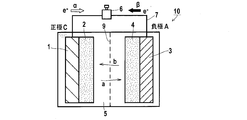
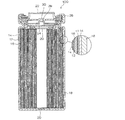
- FIG. 1 is a cross-sectional view schematically illustrating a mechanism of a lithium secondary battery according to a preferred embodiment of the present invention. It is sectional drawing which shows the specific structure of the lithium secondary battery which concerns on preferable embodiment of this invention. It is sectional drawing which shows the structure of CR2032 type coin battery typically.
- the electrolyte solution for non-aqueous secondary batteries of the present invention contains a specific phosphorus-containing compound and a specific amount of a polymer compound.
- the reason for exhibiting the above-mentioned excellent effect by this is presumed as follows.
- a polymer compound of a predetermined amount or more is added to the electrolyte solution for a secondary battery, it solidifies or has a high viscosity, which hinders the performance of the battery.
- a specific phosphorus-containing compound is added into the system together with the polymer compound, the viscosity can be lowered and it can be adapted to practical use.
- the performance relating to the capacity retention rate at high temperature storage and suppression of volume expansion of the battery is improved by selecting a particular phosphorus-containing compound.
- This is presumed to be the result of the action of the element contained in the phosphorus-containing compound, that the polarity of the molecule is not high, or the interaction with the polymer compound.
- the phosphorus-containing compound functions as a flame retardant and can impart flame retardancy to the electrolytic solution.
- the carbonized layer is formed on the surface of the electrolytic solution at the time of combustion due to the effect of applying the above-mentioned polymer compound, and the flame retardance is more effectively extracted.
- the phosphorus-containing compounds used in the present invention are compounds having phosphorus and nitrogen atoms in the molecule, or compounds having phosphorus and halogen atoms in the molecule.
- the phosphorus-containing compound may further have a carbon atom or an oxygen atom.
- the phosphorus-containing compound is preferably at least one of a phosphoric acid ester compound, a phosphoric acid amide compound, and a phosphazene compound.
- the said phosphorus containing compound is a phosphoric acid ester compound or a phosphoric acid amide compound
- the phosphoric acid ester compound and the phosphoric acid amide compound mean not only a compound having a phosphoric acid structure (derivative) but also a compound having a phosphonic acid structure (derivative) and a compound having a phosphinic acid structure (derivative) And a compound (derivative) having a phosphine oxide structure.
- X represents an oxygen atom, a sulfur atom, or N (R 12 ).
- R 12 represents a hydrogen atom or a monovalent substituent. Examples of the monovalent substituent include the following substituent T. Among them, R 12 is preferably an alkyl group having 1 to 12 carbon atoms, more preferably an alkyl group having 1 to 6 carbon atoms, and particularly preferably an alkyl group having 1 to 3 carbon atoms.
- R 11 represents a hydrogen atom or a monovalent substituent.
- the monovalent substituent include the following substituent T.
- R 11 adjacent substituents may form a ring.
- R 11 is a halogen atom (particularly preferably a fluorine atom), an alkyl group (preferably having 1 to 12 carbon atoms, more preferably 1 to 6 and particularly preferably 1 to 3), and an alkoxy group (1 to 6 carbon atoms) 12 is preferable, 1 to 6 is more preferable, 1 to 3 is particularly preferable, thioalkoxy group (having 1 to 12 carbon atoms is preferable, 1 to 6 is more preferable, 1 to 3 is particularly preferable), aryloxy group 6 to 22 carbon atoms are preferable, 6 to 14 carbon atoms are more preferable, arylthio group (preferably 6 to 22 carbon atoms, more preferably 6 to 14 carbon atoms), aralkyl group (preferably 7 to 23 carbon atoms, 7 to 15 carbon atoms More preferred),
- R 11 is an alkyl group, an alkoxy group, a thioalkoxy group, an aryl group, an aryloxy group, an arylthio group, an aralkyl group or an aralkyloxy group, it may particularly have a halogen atom (particularly a fluorine atom), It is preferable to have this.
- R 11 contains a halogen atom the number is preferably 1 to 20, more preferably 1 to 15, and still more preferably 1 to 12, in the molecule. It is particularly preferable that the number is 9 or more.
- R 11 contains a nitrogen atom, the number is preferably 1 to 6, more preferably 1 to 4 in the molecule.
- R 13 is a hydrogen atom or a monovalent substituent, and examples of the substituent T described later can be given.
- R 13 is preferably a hydrogen atom or an alkyl group having 1 to 12 carbon atoms, more preferably an alkyl group having 1 to 6 carbon atoms, and particularly preferably a hydrogen atom or an alkyl group having 1 to 3 carbon atoms.
- R 13 may be bonded to each other or condensed to form a ring. At this time, hetero atoms such as nitrogen atom, oxygen atom, and sulfur atom may be incorporated.
- the ring formed is preferably a 5- or 6-membered ring.
- the five-membered ring is preferably a compound containing a nitrogen-containing five-membered ring, such as pyrrole, imidazole, pyrazole, indazole, indole, benzimidazole, pyrrolidine, imidazolidine, pyrazolidine, indoline, carbazole, or derivatives thereof (all of them) N substitution) is mentioned.
- a nitrogen-containing five-membered ring such as pyrrole, imidazole, pyrazole, indazole, indole, benzimidazole, pyrrolidine, imidazolidine, pyrazolidine, indoline, carbazole, or derivatives thereof (all of them) N substitution
- 6-membered rings include piperidine, morpholine, piperazine, and derivatives thereof (all substituted with N).
- At least one nitrogen atom or halogen atom is contained in X and R 11 as a condition. In the present embodiment, this is an important factor, which brings about an excellent effect. For example, assuming that the X and R 11 do not contain a nitrogen atom nor a halogen atom, a trimethyl phosphoric acid, do not exhibit a sufficient effect in this (see below Comparative Example).
- Halogen content ( ⁇ F ) Number of halogen atoms / molecular weight
- the nitrogen content ( ⁇ N ) is preferably 0.05% or more and 6% or less, and more preferably 0.2% or more and 4% or less.
- the halogen content ( ⁇ F ) is preferably 0.2% or more and 10% or less, and more preferably 1% or more and 6% or less.
- the phosphorus-containing compound is preferably a phosphazene compound, and more preferably a compound having a partial structure represented by the following formula (2).
- each R 21 independently represents a monovalent substituent.
- substituents may form a ring.
- n represents an integer of 2 or more, and the bonding ends may bond to form a ring.
- substituents of R 21 include the examples of substituent T described later, and among them, a halogen atom (particularly preferably a fluorine atom) and an alkyl group (preferably having a carbon number of 1 to 12, preferably 1 to 6), -3 is particularly preferable, an alkoxy group (preferably having 1 to 12 carbon atoms, more preferably 1 to 6 and particularly preferably 1 to 3), and a thioalkoxy group (preferably having 1 to 12 carbon atoms and 1 to 6)
- 1 to 3 is particularly preferable, aryloxy group (preferably having 6 to 22 carbon atoms, more preferably 6 to 14), arylthio group (preferably having 6 to 22 carbon atoms, and more preferably 6 to 14), aralkyl Group (preferably 7 to
- the phosphorus-containing compound is more preferably a cyclic phosphazene compound represented by the following formula (2-1) or (2-2).
- R a1 to R a6 are each independently a monovalent group, and examples of the group of R 21 can be mentioned, and a halogen atom (preferably a fluorine atom), an alkyl group (preferably having 1 to 12 carbon atoms, preferably 1 to 6) 1 to 3 are particularly preferable, an alkoxy group (preferably having 1 to 12 carbon atoms, more preferably 1 to 6 and particularly preferably 1 to 3), an -NCO group, an amino group (having 0 to 12 carbon atoms) The carbon number is preferably 0 to 6, more preferably 0 to 3).
- R a1 to R a6 may be the same or different.
- at least four of R a1 to R a6 are fluorine atoms, and more preferably at least five are fluorine atoms.
- Preferred amino groups are also the same as the N (R 13) 2.
- R b1 to R b8 are each independently a monovalent group, and preferable ones are the same as the above R a1 to R a6 .
- at least six of R b1 to R b8 are fluorine atoms, and more preferably at least seven are fluorine atoms.
- Preferred compounds of the above phosphorus-containing compounds are exemplified below, but the present invention is not construed as being limited thereby.
- the concentration of the phosphorus-containing compound in the electrolyte for a non-aqueous secondary battery is not particularly limited, but is preferably 0.5% by mass or more, and 1% by mass or more based on the total amount including the electrolyte. Is more preferable, and particularly preferably 1.5% by mass or more.
- the upper limit side is preferably 50% by mass or less, more preferably 30% by mass or less, and particularly preferably 20% by mass or less.
- polyacrylonitrile As the above-mentioned polymer compound used in the present invention, polyacrylonitrile, poly (meth) acrylic acid ester (the alkyl group constituting the ester preferably has 1 to 12 carbon atoms, more preferably 1 to 6 and more preferably 1 to 3) Particularly preferred) polyvinylidene fluoride, polysiloxane (preferably, polydimethylsiloxane which may be terminally and / or side-chain modified (preferably aryl modified, aralkyl modified, polyalkylene glycol modified), polytetramethoxysilane) And polyalkylene glycols (preferably polyethylene glycol, polypropylene glycol) are preferably selected from the group consisting of Among these, polyacrylonitrile, poly (meth) acrylic acid ester, polyvinylidene fluoride and polysiloxane are preferable.
- the above-mentioned polymer compound has an oxygen atom, a nitrogen atom or a halogen atom in at least one of the side chain and the main chain.
- the side chain contains an oxygen atom
- the side chain is preferably an acyl group (preferably having 1 to 12 carbon atoms, more preferably 1 to 6 carbon atoms, and particularly preferably 1 to 3 carbon atoms), an acyloxy group (1 carbon atoms) -12 is preferable, 1 to 6 is more preferable, and 1 to 3 is particularly preferable, or an alkoxy group (having 1 to 12 carbon atoms is preferable, 1 to 6 is more preferable, and 1 to 3 is particularly preferable), polyalkylene glycol And groups containing a group (preferably containing 3 to 100 alkylene glycol units).
- Examples of the group containing a nitrogen atom in the side chain include a group containing a cyano group or an amino group (more preferably 0 to 6 carbon atoms, particularly preferably 0 to 3 carbon atoms).
- Examples of those having a halogen atom in the side chain include a halogen atom (particularly preferably a fluorine atom) or a halogenated alkyl group (preferably having a carbon number of 1 to 12, more preferably 1 to 6, and particularly preferably 1 to 3).
- Be Examples of the structure containing an oxygen atom in the main chain include-( RA- O)-.
- R A is an alkylene group having 1 to 12 carbon atoms (preferably 1 to 6 carbon atoms, more preferably 1 to 3 carbon atoms).
- R A is an alkylene group having 1 to 12 carbon atoms (preferably 1 to 6 carbon atoms, more preferably 1 to 3 carbon atoms).
- RN is a hydrogen atom or an alkyl group (preferably having 1 to 12 carbon atoms, more preferably 1 to 6 carbon atoms, and particularly preferably 1 to 3 carbon atoms).
- the concentration of the above-mentioned polymer compound in the non-aqueous secondary battery electrolyte is not particularly limited, but is regulated to 20% by mass or less based on the total amount including the electrolyte. Furthermore, it is preferable that it is 10 mass% or less, and it is especially preferable that it is 8 mass% or less.
- the lower limit is 0.1% by mass or more, and more preferably 1% by mass or more.
- the weight average molecular weight of the polymer compound is preferably 500 or more, more preferably 1000 or more, and particularly preferably 3000 or more.
- the upper limit is preferably less than 1,000,000, more preferably 100,000 or less, and particularly preferably 50,000 or less.
- the molecular weight of the low molecular weight compound applies to the commercially available compound, the molecular weight calculated from the chemical structure described in the catalog.
- the method of determining molecular weight by mass spectrometry is applied after column separation by LC-MS.
- the weight average molecular weight in terms of standard polystyrene is measured by gel permeation chromatography (GPC).
- the above-mentioned polymer compound is dissolved in the solution. This is a meaning to distinguish it from being present in the liquid as a capsule or the like, and the term “dissolution” is dispersed as particles or suspended within a range that does not impair the effects of the present invention. Means that it may be settled. The dissolved state of the polymer compound can be confirmed by visual observation that the presence of a significant solid content is not recognized.
- the electrolyte used for the electrolyte solution of this invention is a salt of the metal ion which belongs to periodic table 1 group or 2 group.
- the material is suitably selected by the use purpose of electrolyte solution.
- lithium salt, potassium salt, sodium salt, calcium salt, magnesium salt and the like can be mentioned, and when used for a secondary battery etc., lithium salt is preferable from the viewpoint of output.
- a lithium salt may be selected as the metal ion salt.
- the lithium salt is preferably a lithium salt generally used for the electrolyte of a non-aqueous electrolytic solution for lithium secondary batteries, and is not particularly limited. For example, those described below are preferable.
- Inorganic lithium salts inorganic fluoride salts such as LiPF 6 , LiBF 4 , LiAsF 6 , LiSbF 6 etc; perhalogenates such as LiClO 4 , LiBrO 4 , LiIO 4 etc .; inorganic chloride salts such as LiAlCl 4 etc.
- (L-2) fluorine-containing organic lithium salt perfluoroalkanesulfonic acid salt such as LiCF 3 SO 3 ; LiN (CF 3 SO 2 ) 2 , LiN (CF 3 CF 2 SO 2 ) 2 , LiN (FSO 2 ) 2
- Perfluoroalkanesulfonylimide salts such as LiN (CF 3 SO 2 ) (C 4 F 9 SO 2 );
- Perfluoroalkanesulfonyl methide salts such as LiC (CF 3 SO 2 ) 3 ; Li [PF 5 (CF 2) CF 2 CF 3)], Li [PF 4 (CF 2 CF 2 CF 3) 2], Li [PF 3 (CF 2 CF 2 CF 3) 3], Li [PF 5 (CF 2 CF 2 CF 2 CF 3 )], Li [PF 4 ( CF 2 CF 2 CF 3 )], Li [PF 4 ( CF 2 CF 2 CF 3 )], Li [PF 3 (CF 2 CF 2 CF
- (L-3) oxalato borate salt lithium bis (oxalato) borate, lithium difluoro oxalato borate and the like.
- LiPF 6 , LiBF 4 , LiAsF 6 , LiSbF 6 , LiClO 4 , Li (Rf 1 SO 3 ), LiN (Rf 1 SO 2 ) 2 , LiN (FSO 2 ) 2 , and LiN (Rf 1 SO 2 ) 2 ) (Rf 2 SO 2 ) is preferable, and lithium such as LiPF 6 , LiBF 4 , LiN (Rf 1 SO 2 ) 2 , LiN (FSO 2 ) 2 , and LiN (Rf 1 SO 2 ) (Rf 2 SO 2 ) Imide salts are more preferred.
- Rf 1 and Rf 2 each represent a perfluoroalkyl group.
- the electrolyte used for electrolyte solution may be used individually by 1 type, and may combine 2 or more types arbitrarily.
- the electrolyte (preferably, an ion of a metal belonging to Group 1 or Group 2 of the periodic table or a metal salt thereof) in the electrolytic solution is added in such an amount that the preferred salt concentration described in the preparation of the electrolytic solution below Is preferred.
- the salt concentration is appropriately selected depending on the purpose of use of the electrolytic solution, but generally it is 10% by mass to 50% by mass, and more preferably 15% by mass to 30% by mass in the total mass of the electrolytic solution.
- the molar concentration is preferably 0.5M to 1.5M.
- what is necessary is just to be calculated by salt conversion with the metal applied suitably, when evaluating as a density
- the non-aqueous solvent used in the present invention is preferably an aprotic organic solvent, and more preferably an aprotic organic solvent having 2 to 10 carbon atoms.
- the non-aqueous solvent is preferably a compound having an ether group, a carbonyl group, an ester group or a carbonate group.
- the above compound may have a substituent, and examples thereof include a substituent T described later.
- non-aqueous solvents examples include ethylene carbonate, propylene carbonate, butylene carbonate, dimethyl carbonate, diethyl carbonate, ethyl methyl carbonate, methyl propyl carbonate, ⁇ -butyrolactone, ⁇ -valerolactone, 1,2-dimethoxyethane, tetrahydrofuran, 2 -Methyltetrahydrofuran, tetrahydropyran, 1,3-dioxolane, 4-methyl-1,3-dioxolane, 1,3-dioxane, 1,4-dioxane, methyl acetate, ethyl acetate, methyl propionate, ethyl propionate, butyric acid Methyl, methyl isobutyrate, methyl trimethylacetate, ethyl trimethylacetate, acetonitrile, glutaronitrile, adiponitrile, methoxyacetonitrile, 3-
- At least one member selected from the group consisting of ethylene carbonate, propylene carbonate, dimethyl carbonate, diethyl carbonate and ethyl methyl carbonate is preferred, and in particular, high viscosity (high dielectric constant) solvents such as ethylene carbonate or propylene carbonate (eg, ratio More preferred is a combination of a dielectric constant ⁇ ⁇ 30) and a low viscosity solvent (eg, viscosity ⁇ 1 mPa ⁇ s) such as dimethyl carbonate, ethyl methyl carbonate or diethyl carbonate.
- high viscosity solvents such as ethylene carbonate or propylene carbonate
- a low viscosity solvent eg, viscosity ⁇ 1 mPa ⁇ s
- the electrolytic solution of the present invention preferably contains various functional additives.
- Examples of the function developed by this additive include improvement in flame retardancy, improvement in cycle characteristics, and improvement in capacity characteristics. Below, the example of the functional additive which it is preferable to apply to this invention is shown.
- aromatic compounds include biphenyl compounds and alkyl-substituted benzene compounds.
- the biphenyl compound has a partial structure in which two benzene rings are linked by a single bond, and the benzene ring may have a substituent, and preferred substituents are alkyl groups having 1 to 4 carbon atoms (for example, Methyl, ethyl, propyl, t-butyl and the like), and an aryl group having 6 to 10 carbon atoms (eg, phenyl, naphthyl and the like).
- biphenyl compound examples include biphenyl, o-terphenyl, m-terphenyl, p-terphenyl, 4-methylbiphenyl, 4-ethylbiphenyl and 4-tert-butylbiphenyl.
- the alkyl-substituted benzene compound is preferably a benzene compound substituted with an alkyl group having 1 to 10 carbon atoms, and specifically, ethylbenzene, isopropylbenzene, cyclohexylbenzene, t-amylbenzene, t-butylbenzene, tethyrahydronaphthalene It can be mentioned.
- Halogen-containing compound (B) As a halogen atom which a halogen containing compound has, a fluorine atom, a chlorine atom, or a bromine atom is preferable, and a fluorine atom is more preferable.
- the number of halogen atoms is preferably 1 to 6, and more preferably 1 to 3.
- the halogen-containing compound is preferably a carbonate compound substituted with a fluorine atom, a polyether compound having a fluorine atom, or a fluorine-substituted aromatic compound.
- the halogen-substituted carbonate compound may be either linear or cyclic, but from the viewpoint of ion conductivity, cyclic carbonate compounds having high coordination ability with electrolyte salt (eg, lithium ion) are preferable, and 5-membered cyclic carbonate compounds are particularly preferable. preferable. Preferred specific examples of the halogen-substituted carbonate compound are shown below. Among these, compounds of Bex1 to Bex4 are particularly preferable, and Bex1 is particularly preferable.
- ⁇ Polymerizable compound (C)> Carbon as a polymerizable compound - preferably a compound having a carbon double bond, selected vinylene carbonate, carbonate compounds having a double bond such as vinyl ethylene carbonate, acrylate group, methacrylate group, cyanoacrylate group, from ArufaCF 3 acrylate groups Compounds having a group and compounds having a styryl group are preferable, and carbonate compounds having a double bond or compounds having two or more polymerizable groups in the molecule are more preferable.
- phosphorus containing compound (D) As a phosphorus containing compound, it is a thing other than the said specific phosphorus containing compound, and a phosphoric acid ester compound and a phosphazene compound are preferable. Preferred examples of the phosphoric acid ester compound include triphenyl phosphate and tribenzyl phosphate. As a phosphorus containing compound, the compound represented by following formula (D2) or (D3) is also preferable.
- R D4 to R D11 represent monovalent substituents.
- monovalent substituents preferred are halogen atoms such as alkyl group, aryl group, alkoxy group, aryloxy group, amino group, fluorine, chlorine, bromine and the like.
- At least one of the substituents of R D4 to R D11 is preferably a fluorine atom, and more preferably a substituent consisting of an alkoxy group, an amino group or a fluorine atom.
- the compound represented by following formula (E1) and (E2) is preferable.
- X 1 and X 2 each independently represent -O- or -C (Ra) (Rb)-.
- Ra and Rb each independently represent a hydrogen atom or a substituent.
- the substituent is preferably an alkyl group having 1 to 8 carbon atoms, a fluorine atom, or an aryl group having 6 to 14 carbon atoms.
- ⁇ represents an atomic group necessary to form a 5- to 6-membered ring.
- the skeleton of ⁇ may contain, in addition to carbon atoms, sulfur atoms, oxygen atoms, and the like.
- ⁇ may be substituted, and the substituent includes a substituent T, preferably an alkyl group, a fluorine atom or an aryl group.
- the silicon-containing compound is preferably a compound represented by the following formula (F1) or (F2).
- R F1 represents an alkyl group, an alkenyl group, an acyl group, an acyloxy group or an alkoxycarbonyl group.
- R F2 represents an alkyl group, an alkenyl group, an alkynyl group or an alkoxy group. A plurality of R F1 and R F2 in one formula may be different or the same.
- nitrile compound (G) As a nitrile compound, the compound represented by following formula (G) is preferable.
- R G1 to R G3 each independently represent a hydrogen atom, an alkyl group, an alkoxycarbonyl group, an aryloxycarbonyl group, a cyano group, a carbamoyl group, a sulfonyl group, a halogen atom, or a phosphonyl group.
- Preferred examples of each substituent can be referred to the examples of substituent T.
- compounds in which any one or more of R G1 to R G3 have a plurality of nitrile groups containing a cyano group are preferable.
- Ng represents an integer of 1 to 8;
- Specific examples of the compound represented by the formula (G) include acetonitrile, propionitrile, isobutyronitrile, succinonitrile, malononitrile, glutaronitrile, adiponitrile, 2-methylglutanonitrile, hexanetricarbonitrile, propane Tetracarbonitrile and the like are preferable. Particularly preferred are succinonitrile, malononitrile, glutaronitrile, adiponitrile, 2-methylglutanonitrile, hexanetricarbonitrile, propanetetracarbonitrile.
- the metal complex compound is preferably a transition metal complex or a rare earth complex.
- complexes represented by any of the following formulas (H-1) to (H-3) are preferable.
- X H and Y H each represent a methyl group, n-butyl group, bis (trimethylsilyl) amino group, or a thioisocyanate group, and X H and Y H are condensed to form a cyclic alkenyl group (butadiene Metal-lacycle) may be formed.
- M H represents a transition element or a rare earth element. Specifically, M H is preferably Fe, Ru, Cr, V, Ta, Mo, Ti, Zr, Hf, Y, La, Ce, Sw, Nd, Lu, Er, Yb, Gd.
- m H and n H are integers that satisfy 0 ⁇ m H + n H ⁇ 3.
- n H + m H is preferably 1 or more. When n H and m H are 2 or more, two or more groups defined therein may be different from each other.
- the metal complex compound is also preferably a compound having a partial structure represented by the following formula (H-4).
- M H represents a transition element or a rare earth element and has the same meaning as in formulas (H-1) to (H-3).
- R 1H and R 2H are hydrogen, an alkyl group (preferably 1 to 6 carbon atoms), an alkenyl group (preferably 2 to 6 carbon atoms), an alkynyl group (preferably 2 to 6 carbon atoms), an aryl group (preferably carbon atoms) Represents 6 to 14), a heteroaryl group (preferably 3 to 6 carbon atoms), an alkylsilyl group (preferably 1 to 6 carbon atoms), or a halogen.
- R 1H and R 2H may be linked to each other.
- R 1H and R 2H may be linked together to form a ring.
- Preferred examples of R 1H and R 2H include examples of the substituent T described later.
- q H represents an integer of 1 to 4 and is preferably an integer of 2 to 4. More preferably, it is 2 or 4. When q H is 2 or more, a plurality of groups defined there may be the same or different.
- the metal complex compound is also preferably a compound represented by any of the following formulas.
- the central metal M h is particularly preferably Ti, Zr, ZrO, Hf, V, Cr, Fe, Ce, and most preferably Ti, Zr, Hf, V, Cr.
- R 3h , R 5h , R 7h to R 10h represent substituents.
- an alkyl group, an alkoxy group, an aryl group, an alkenyl group and a halogen atom are preferable, and an alkyl group having 1 to 6 carbon atoms, an alkoxy group having 1 to 6 carbon atoms, an aryl group having 6 to 12 carbon atoms, and 2 carbon atoms
- Alkenyl groups of -6 are more preferred, with methyl, ethyl, propyl, isopropyl, isobutyl, t-butyl, perfluoromethyl, methoxy, phenyl and ethenyl being preferred.
- R 33h , R 55h R 33h and R 55h each represent a hydrogen atom or a substituent of R 3h .
- Y h Y h is preferably an alkyl group having 1 to 6 carbon atoms or a bis (trialkylsilyl) amino group, and more preferably a methyl group or a bis (trimethylsilyl) amino group.
- L h , m h , o h l h, m h, o h represents an integer of 0-3, an integer of 0 to 2 is preferred.
- l h , m h and o h are 2 or more, the plurality of structural parts defined there may be the same as or different from each other.
- L h is preferably an alkylene group or an arylene group, more preferably a cycloalkylene group having 3 to 6 carbon atoms or an arylene group having 6 to 14 carbon atoms, and still more preferably cyclohexylene or phenylene.
- the imide compound is preferably a sulfoneimide compound having a perfluoro group from the viewpoint of oxidation resistance, and specific examples include a perfluorosulfoimide lithium compound. Specific examples of the imide compound include the following structures, and more preferred are Cex1 and Cex2.
- the electrolytic solution of the present invention may contain at least one selected from the negative electrode film-forming agent, a flame retardant, an overcharge inhibitor and the like, in addition to the above.
- the content ratio of these functional additives in the non-aqueous electrolyte is not particularly limited, but preferably 0.001% by mass to 10% by mass with respect to the whole non-aqueous electrolyte (including the electrolyte).
- the above exemplary compounds may have an optional substituent T.
- substituent T include the following.
- An alkyl group preferably an alkyl group having 1 to 20 carbon atoms, such as methyl, ethyl, isopropyl, t-butyl, pentyl, heptyl, 1-ethylpentyl, benzyl, 2-ethoxyethyl, 1-carboxymethyl and the like
- alkenyl A group preferably an alkenyl group having 2 to 20 carbon atoms, such as vinyl, allyl, oleyl etc.
- an alkynyl group preferably an alkynyl group having 2 to 20 carbon atoms such as ethynyl, butadiynyl, phenylethynyl etc
- a cycloalkyl group preferably a cycloalkyl group having 3 to 20 carbon atoms, such as cyclopropyl, cyclopentyl, cycl
- An acyl group preferably an acyl group having 1 to 20 carbon atoms, such as acetyl, propionyl, butyryl, benzoyl etc.
- an acyloxy group preferably an acyloxy group having 1 to 20 carbon atoms, such as acetyloxy, benzoyl Oxy and the like
- carbamoyl groups preferably having 1 to 20 carbon atoms
- Ruvamoyl group for example, N, N-dimethylcarbamoyl, N-phenylcarbamoyl and the like
- acylamino group preferably an acylamino group having 1 to 20 carbon atoms, for example, acetylamino, benzoylamino and the like
- sulfonamide group preferably A sulfamoyl group having 0 to 20 carbon atoms, such as methane sulfonamide, benzene sulfonamide, N-methyl methane sul
- the compound or the substituent / connecting group or the like contains an alkyl group, an alkylene group, an alkenyl group, an alkenylene group or the like, these may be cyclic or linear, or may be linear or branched and substituted as described above It may be substituted or unsubstituted.
- the aryl group, the heterocyclic group and the like may be monocyclic or fused ring, and may be substituted or unsubstituted as well.
- Each substituent defined in the present specification may be substituted via the following linking group L within the scope of achieving the effects of the present invention.
- the alkyl group / alkylene group, the alkenyl group / alkenylene group may further have the following hetero linking group in the structure.
- the linking group L a hydrocarbon linking group (an alkylene group having 1 to 10 carbon atoms (more preferably 1 to 6 carbon atoms, more preferably 1 to 3 carbon atoms) and an alkenylene group having 2 to 10 carbon atoms (more preferably carbon atoms) Number 2 to 6, more preferably 2 to 4), an arylene group having 6 to 22 carbon atoms (more preferably 6 to 10 carbon atoms)], hetero linking group [carbonyl group (-CO-), ether group (-O) -), A thioether group (-S-), an imino group (-NR N- )), or a linking group combining these is preferred.
- R N is defined as above, the number of atoms constituting the linking group is preferably from 1 to 36, 1 to more preferably from 24, more that 1 to 12 Preferably, it is 1 to 6, particularly preferably.
- the number of linking atoms in the linking group is preferably 10 or less, and more preferably 8 or less.
- the lower limit is 1 or more, preferably 2 or more.
- the non-aqueous electrolytic solution of the present invention can be prepared by dissolving each of the above components in the non-aqueous electrolytic solution solvent, including an example using a lithium salt as a metal ion salt, by a conventional method.
- non-water refers to substantially free of water, and may contain a trace amount of water as long as the effects of the invention are not impaired.
- concentration of water is preferably 200 ppm (mass basis) or less, more preferably 100 ppm or less, and still more preferably 20 ppm or less. There is no particular lower limit value, but it is practical that it is 1 ppm or more in consideration of unavoidable contamination.
- the viscosity of the electrolytic solution of the present invention is not particularly limited, but is preferably 1000 mPa ⁇ s or less at 25 ° C., more preferably 100 to 0.1 mPa ⁇ s, and 10 to 0.5 mPa ⁇ s. Is particularly preferred.
- Viscosity refers to the value measured by the following method.
- One mL of the sample is placed in a rheometer (CLS 500), and measured using Steel Cone 4 cm / 2 in diameter (both made by TA Instrumentsnts).
- CLS 500 rheometer
- Steel Cone 4 cm / 2 in diameter both made by TA Instrumentsnts.
- the sample is previously kept warm until the temperature becomes constant at the measurement start temperature, and the measurement is started thereafter.
- the measurement temperature is 25 ° C.
- the lithium ion secondary battery 10 of the present embodiment includes the electrolyte 5 for non-aqueous secondary batteries of the present invention and the positive electrode C capable of inserting and releasing lithium ions (positive electrode current collector 1, positive electrode active material layer 2) And a negative electrode A (negative electrode current collector 3, negative electrode active material layer 4) capable of insertion and release or dissolution and deposition of lithium ions.
- the separator 9 disposed between the positive electrode and the negative electrode, the collector terminal (not shown), the exterior case, etc. (Not shown) may be included.
- a protective element may be attached to the inside of the battery and / or the outside of the battery.
- Battery shape There is no restriction
- FIG. 2 is an example of a bottomed cylindrical lithium secondary battery 100.
- This battery is a bottomed cylindrical lithium secondary battery 100 in which the positive electrode sheet 14 and the negative electrode sheet 16 wound together through the separator 12 are wound and housed in the outer can 18.
- the ratio of the area T of the largest surface (the product of the width and height of the external dimension excluding the terminal portion, unit cm 2 ) and the thickness T (unit cm) of the battery outline The value of 2S / T is preferably 100 or more, and more preferably 200 or more.
- the lithium secondary battery of the present embodiment is configured to include the electrolyte solution 5, the electrode mixtures C and A of the positive electrode and the negative electrode, and the basic member 9 of the separator, as described with reference to FIG. Each of these members will be described below.
- Electrode mixture The electrode mixture is obtained by applying a dispersion of an active material, a conductive agent, a binder, a filler, and the like on a current collector (electrode base material), and in a lithium battery, the active material is a positive electrode active material It is preferable to use a negative electrode mixture in which the positive electrode mixture and the active material are negative electrode active materials. Next, each component etc. in the dispersion (composition for electrodes) which comprises an electrode mixture material are demonstrated.
- a transition metal oxide for the positive electrode active material it is preferable to use a transition metal oxide for the positive electrode active material, and among them, it has a transition element M a (one or more elements selected from Co, Ni, Fe, Mn, Cu, V). Is preferred.
- mixed elements M b (elements of Group 1 (Ia) other than lithium, elements of Group 2 (IIa), Al, Ga, In, Ge, Sn, Pb, Sb, Bi, Si) , P, B, etc.) may be mixed.
- Specific transition metal oxides including, for example, those represented by any of the following formulas (MA) to (MC) as the transition metal oxides, or V 2 O 5 , MnO 2 as the other transition metal oxides, etc. Can be mentioned.
- a particulate positive electrode active material may be used as the positive electrode active material. Specifically, a transition metal oxide capable of reversibly inserting and releasing lithium ions can be used, but it is preferable to use the above-mentioned specific transition metal
- the transition metal oxides, oxides containing the above transition element M a is preferably exemplified.
- a mixed element M b (preferably Al) may be mixed.
- the amount of mixing is preferably 0 to 30 mol% with respect to the amount of transition metal. It is more preferable to be synthesized by mixing so that the molar ratio of Li / M a is 0.3 to 2.2.
- Transition metal oxide represented by the formula (MA) (layered rock salt type structure)
- those represented by the following formula are preferable.
- M 1 has the same meaning as Ma above.
- a represents 0 to 1.2, preferably 0.1 to 1.15, and more preferably 0.6 to 1.1.
- b represents 1 to 3 and is preferably 2.
- a part of M 1 may be substituted by the above mixed element M b .
- the transition metal oxide represented by the above formula (MA) typically has a layered rock salt type structure.
- the transition metal oxide is more preferably one represented by the following formulae.
- g has the same meaning as a.
- j represents 0.1 to 0.9.
- i represents 0 to 1; However, 1-ji is 0 or more.
- k is the same as b above.
- Specific examples of the above transition metal compounds include LiCoO 2 (lithium cobaltate [LCO]), LiNi 2 O 2 (lithium nickelate), LiNi 0.85 Co 0.01 Al 0.05 O 2 (nickel cobalt aluminum acid) Lithium [NCA], LiNi 0.33 Co 0.33 Mn 0.33 O 2 (lithium nickel manganese cobaltate [NMC]), and LiNi 0.5 Mn 0.5 O 2 (lithium manganese nickelate).
- transition metal oxides represented by the formula (MA) partially overlap, but when the notation is changed and shown, those represented below are also mentioned as preferable examples.
- M 2 has the same meaning as Ma above.
- c represents 0 to 2, preferably 0.1 to 1.15, and more preferably 0.6 to 1.5.
- d represents 3 to 5 and is preferably 4.
- the transition metal oxide represented by formula (MB) is more preferably one represented by each of the following formulas.
- (MB-1) Li m Mn 2 O n
- (MB-2) Li m Mn p Al 2-p O n
- (MB-3) Li m Mn p Ni 2-p O n
- m is the same as c. n is synonymous with d. p represents 0 to 2; Specific examples of the transition metal compound are LiMn 2 O 4 and LiMn 1.5 Ni 0.5 O 4 .
- transition metal oxide represented by the formula (MB) those represented by the following may also be mentioned as preferable examples.
- the electrode containing Ni is more preferable from the viewpoint of high capacity and high output.
- e represents 0 to 2, preferably 0.1 to 1.15, and more preferably 0.5 to 1.5.
- f represents 1 to 5 and is preferably 0.5 to 2.
- M 3 represents one or more elements selected from V, Ti, Cr, Mn, Fe, Co, Ni, and Cu. M 3 may be substituted by other metals such as Ti, Cr, Zn, Zr, Nb, etc., in addition to the mixed element M b described above. Specific examples thereof include olivine-type iron phosphates such as LiFePO 4 and Li 3 Fe 2 (PO 4 ) 3 , iron pyrophosphates such as LiFeP 2 O 7 , cobalt phosphates such as LiCoPO 4 , Li 3 Examples include monoclinic Nasacon type vanadium phosphate salts such as V 2 (PO 4 ) 3 (lithium vanadium phosphate).
- the a, c, g, m and e values representing the composition of Li are values that change due to charge and discharge, and are typically evaluated by the values of stable states when containing Li.
- the composition of Li is shown as a specific value, but this also changes depending on the operation of the battery.
- an active material containing nickel and / or manganese can be used at a high potential, so that the capacity can be increased, and even when used at a high potential, it is particularly preferable because the capacity retention rate is high.
- the positive electrode active material a material that can maintain normal use at a positive electrode potential (Li / Li + reference) of 3.5 V or more, more preferably 3.8 V or more, and 4 V or more It is more preferably present, 4.25 V or more, and still more preferably 4.3 V or more. There is no particular upper limit, but 5 V or less is practical. By setting the above range, cycle characteristics and high rate discharge characteristics can be improved.
- being able to maintain normal use means that the electrode material does not deteriorate and become unusable even when charging is performed at that voltage, and this potential is also referred to as a normally usable potential.
- positive electrode potential (negative electrode potential) + (battery voltage).
- the negative electrode potential is 1.55 V.
- graphite is used as the negative electrode, the negative electrode potential is 0.1 V.
- the battery voltage is observed to calculate the positive electrode potential.
- the average particle size of the positive electrode active material used in the non-aqueous secondary battery of the present invention is not particularly limited, but is preferably 0.1 ⁇ m to 50 ⁇ m. No particular limitation is imposed on the specific surface area, preferably from 0.01m 2 / g ⁇ 50m 2 / g by BET method.
- the pH of the supernatant liquid when 5 g of the positive electrode active material is dissolved in 100 ml of distilled water is preferably 7 or more and 12 or less.
- a well-known pulverizer or classifier is used.
- a mortar, a ball mill, a vibration ball mill, a vibration mill, a satellite ball mill, a planetary ball mill, a swirl flow jet mill, a sieve or the like is used.
- the positive electrode active material obtained by the above-mentioned firing method may be used after washing with water, an acidic aqueous solution, an alkaline aqueous solution and an organic solvent.
- the compounding quantity of a positive electrode active material is not specifically limited, It is preferable that it is 60-98 mass% in 100 mass% of solid components in the dispersoid (mixture) for comprising an active material layer, and 70-95 mass. More preferably, it is%.
- the electrolyte solution for non-aqueous secondary batteries of the present invention in combination with a high potential positive electrode.
- a high potential positive electrode usually the battery characteristics tend to be greatly degraded.
- the non-aqueous electrolyte of the present invention is compounded by combining the above-mentioned specific phosphorus-containing compound and the polymer, so the reduction is suppressed. Good performance can be maintained.
- anode Active Material materials capable of reversibly inserting and releasing lithium ions are preferable, and there is no particular limitation, and carbonaceous materials, metal oxides such as tin oxide and silicon oxide, metal complex oxides, lithium Examples thereof include a simple substance, a lithium alloy such as a lithium aluminum alloy, and a metal capable of forming an alloy with lithium such as Sn or Si. One of these may be used alone, or two or more of these may be used in any combination and ratio. Among them, carbonaceous materials or lithium composite oxides are preferably used from the viewpoint of reliability.
- the metal composite oxide is preferably capable of absorbing and desorbing lithium, and preferably contains titanium and / or lithium as a component from the viewpoint of high current density charge / discharge characteristics.
- the carbonaceous material used as the negative electrode active material is a material substantially consisting of carbon.
- Examples thereof include petroleum pitch, natural graphite, artificial graphite such as vapor grown graphite, and carbonaceous materials obtained by firing various synthetic resins such as PAN-based resin and furfuryl alcohol resin.
- various carbon fibers such as PAN-based carbon fiber, cellulose-based carbon fiber, pitch-based carbon fiber, vapor-grown carbon fiber, dehydrated PVA-based carbon fiber, lignin carbon fiber, glassy carbon fiber, activated carbon fiber, mesophase fine Spheres, graphite whiskers, flat graphite and the like can also be mentioned.
- These carbonaceous materials can also be divided into non-graphitizable carbon materials and graphitic carbon materials according to the degree of graphitization. Further, it is preferable that the carbonaceous material have the spacing, density, and size of crystallite described in JP-A-62-22066, JP-A-2-6856 and JP-A-3-45473.
- the carbonaceous material does not have to be a single material, and it is preferable to use a mixture of natural graphite and artificial graphite described in JP-A-5-90844, or graphite having a coating layer described in JP-A-6-4516. You can also.
- the metal oxide and metal complex oxide which are the negative electrode active material used in the non-aqueous secondary battery of this invention contain these at least 1 sort (s).
- a metal oxide and metal complex oxide an amorphous oxide is preferable, and chalcogenide which is a reaction product of a metal element and an element of periodic table group 16 is also preferably used.
- amorphous is an X-ray diffraction method using CuK ⁇ radiation, and means one having a broad scattering band having an apex in a region of 20 ° to 40 ° in 2 ⁇ value, and a crystalline diffraction line May be included.
- the strongest intensity of the crystalline diffraction lines observed at 40 degrees or more and 70 degrees or less in 2 ⁇ value is 100 times or less of the diffraction line intensity at the top of the broad scattering band observed at 20 degrees or more and 40 degrees or less in 2 ⁇ values Is preferably, it is more preferably 5 times or less, and particularly preferably not having a crystalline diffraction line.
- amorphous oxides of semimetal elements and chalcogenides are more preferable, and elements of periodic table group 13 (IIIB) to group 15 (VB), Particularly preferred are oxides of one of Al, Ga, Si, Sn, Ge, Pb, Sb and Bi alone or a combination of two or more thereof, and chalcogenides.
- oxides of one of Al, Ga, Si, Sn, Ge, Pb, Sb and Bi alone or a combination of two or more thereof and chalcogenides.
- preferable amorphous oxides and chalcogenides include, for example, Ga 2 O 3 , SiO, GeO, SnO, SnO 2 , PbO, PbO 2 , Pb 2 O 3 , Pb 2 O 4 , Pb 3 O 4 , and the like.
- Sb 2 O 3 , Sb 2 O 4 , Sb 2 O 5 , Bi 2 O 3 , Bi 2 O 4 , SnSiO 3 , GeS, SnS, SnS 2 , PbS, PbS 2 , Sb 2 S 3 , Sb 2 S 5 , SnSiS 3 etc. are mentioned preferably. They may also be complex oxides with lithium oxide, such as Li 2 SnO 2 .
- the average particle size of the negative electrode active material used in the non-aqueous secondary battery of the present invention is preferably 0.1 ⁇ m to 60 ⁇ m.
- grinders and classifiers are used to achieve the desired particle size.
- a mortar, a ball mill, a sand mill, a vibrating ball mill, a satellite ball mill, a planetary ball mill, a swirl flow jet mill, a sieve or the like is suitably used.
- wet pulverization in the presence of water or an organic solvent such as methanol can also be carried out as necessary.
- the classification method is not particularly limited, and a sieve, an air classifier or the like can be used as required. Classification can be used both dry and wet.
- the chemical formula of the compound obtained by the above-mentioned firing method can be calculated from the mass difference of the powder before and after firing as a measurement method using inductively coupled plasma (ICP) emission spectroscopy and as a simple method.
- ICP inductively coupled plasma
- a negative electrode active material which can be used in combination with an amorphous oxide negative electrode active material mainly composed of Sn, Si and Ge, a carbon material capable of inserting and extracting lithium ion or lithium metal, lithium, Preferred examples include lithium alloys and metals that can be alloyed with lithium.
- the electrolyte of the present invention is preferably combined with a high potential negative electrode (preferably lithium titanium oxide, potential 1.55 V vs. Li metal), and a low potential negative electrode (preferably carbon material, silicon-containing material, potential about 0) It exhibits excellent properties in any of the combinations with (1 V vs. Li metal).
- Metal or metal oxide negative electrode preferably Si, Si oxide, Si / Si oxide, Sn, Sn oxide, Sn oxide, SnB x P y O z , Cu
- Metal or metal oxide negative electrode preferably Si, Si oxide, Si / Si oxide, Sn, Sn oxide, Sn oxide, SnB x P y O z , Cu
- It can also be preferably used in a battery using, as a negative electrode, / Sn and a plurality of composites thereof, and a composite of these metals or metal oxides and a carbon material.
- the electrically conductive material it is preferable to use an electron conductive material that does not cause a chemical change in the configured secondary battery, and any known electrically conductive material can be used.
- natural graphite scaling graphite, flake graphite, earthy graphite etc.
- artificial graphite carbon black, acetylene black, ketjen black, carbon fiber and metal powder (copper, nickel, aluminum, silver And the like), metal fibers or polyphenylene derivatives (described in JP-A-59-20,971), etc.
- metal fibers or polyphenylene derivatives described in JP-A-59-20,971), etc.
- the amount of the conductive agent added is preferably 11 to 50% by mass, and more preferably 2 to 30% by mass. In the case of carbon and graphite, 2 to 15% by mass is particularly preferable.
- Binder polysaccharide, thermoplastic resin, polymer having rubber elasticity, etc. may be mentioned. Among them, for example, starch, carboxymethylcellulose, cellulose, diacetylcellulose, methylcellulose, hydroxyethylcellulose, hydroxypropylcellulose Water solubility of sodium alginate, polyacrylic acid, sodium polyacrylate, polyvinylphenol, polyvinyl methyl ether, polyvinyl alcohol, polyvinyl pyrrolidone, polyacrylonitrile, polyacrylamide, polyhydroxy (meth) acrylate, styrene-maleic acid copolymer, etc.
- Polymer polyvinyl chloride, polytetrafluoroethylene, polyvinylidene fluoride, tetrafluoroethylene-hexafluoropropylene copolymer, vinyl (Polyamide, polypropylene, ethylene-propylene-diene-polymer (EPDM), sulfonated EPDM, polyvinyl acetal resin, methyl methacrylate, 2-ethylhexyl acrylate, etc.
- the binder may be used singly or in combination of two or more.
- the amount of addition of the binder is small, the holding power and the cohesion of the electrode mixture become weak.
- the amount is too large, the electrode volume increases and the capacity per electrode unit volume or unit mass decreases.
- the addition amount of the binder is preferably 1 to 30% by mass, and more preferably 2 to 10% by mass.
- the electrode mixture may contain a filler.
- a filler As the material for forming the filler, it is preferable to use a fibrous material which does not cause a chemical change in the secondary battery of the present invention. Usually, fibrous fillers made of materials such as olefin polymers such as polypropylene and polyethylene, glass and carbon are used. The amount of the filler added is not particularly limited, but it is preferably 0 to 30% by mass in the dispersion.
- the current collector of the positive and negative electrodes an electron conductor which does not cause a chemical change in the non-aqueous electrolyte secondary battery of the present invention is used.
- the current collector of the positive electrode in addition to aluminum, stainless steel, nickel, titanium etc., it is preferable to treat the surface of aluminum or stainless steel with carbon, nickel, titanium or silver, and among them, aluminum, aluminum alloy More preferable.
- a collector of a negative electrode aluminum, copper, stainless steel, nickel, and titanium are preferable, and aluminum, copper, and a copper alloy are more preferable.
- the shape of the current collector is usually a film sheet, but a net, a punch, a lath body, a porous body, a foam, a molded body of a fiber group, and the like can also be used.
- the thickness of the current collector is not particularly limited, but is preferably 1 ⁇ m to 500 ⁇ m. Further, it is also preferable to make the current collector surface uneven by surface treatment.
- An electrode mixture of a lithium secondary battery is formed by members appropriately selected from these materials.
- the separator used in the non-aqueous secondary battery of the present invention is made of a material having mechanical strength, ion permeability, and oxidation / reduction resistance at the contact surface of the positive electrode and the negative electrode, which electrically insulates the positive electrode and the negative electrode.
- a material having mechanical strength, ion permeability, and oxidation / reduction resistance at the contact surface of the positive electrode and the negative electrode, which electrically insulates the positive electrode and the negative electrode.
- porous polymer materials, inorganic materials, organic-inorganic hybrid materials, glass fibers, etc. are used.
- These separators preferably have a shutdown function for securing reliability, that is, have a function of closing a gap at 80 ° C. or more to increase resistance and interrupting current, and the closing temperature is 90 ° C. or more and 180 ° C. or less Is preferred.
- the shape of the pores of the separator is usually circular or elliptical, and the size is 0.05 ⁇ m to 30 ⁇ m, preferably 0.1 ⁇ m to 20 ⁇ m. Furthermore, it may be a rod-like or irregular-shaped hole as in the case of the drawing method or the phase separation method.
- the ratio of these gaps, ie, the porosity is 20% to 90%, preferably 35% to 80%.
- polymer material what used single materials, such as a cellulose nonwoven fabric, polyethylene, a polypropylene, and what used 2 or more types of composite materials may be used. What laminated two or more types of microporous films which changed a pore size, a porosity, the blockade temperature of a pore, etc. is preferable.
- oxides such as alumina and silicon dioxide, nitrides such as aluminum nitride and silicon nitride, and sulfates such as barium sulfate and calcium sulfate are used, and those having a particle shape or fiber shape are used.
- a thin film such as a non-woven fabric, a woven fabric and a microporous film is used.
- the thin film shape one having a pore diameter of 0.01 ⁇ m to 1 ⁇ m and a thickness of 5 ⁇ m to 50 ⁇ m is suitably used.
- a separator in which a composite porous layer containing particles of the above-mentioned inorganic substance is formed on the surface layer of a positive electrode and / or a negative electrode using a resin binder.
- alumina particles having a 90% particle diameter of less than 1 ⁇ m may be formed as porous layers on both sides of the positive electrode using a fluorine resin binder.
- any shape such as a sheet shape, a square shape, and a cylinder shape can be applied.
- a mixture of a positive electrode active material and a negative electrode active material is mainly used by being coated (coated), dried and compressed on a current collector.
- FIG. 2 shows an example of a bottomed cylindrical lithium secondary battery 100.
- This battery is a bottomed cylindrical lithium secondary battery 100 in which the positive electrode sheet 14 and the negative electrode sheet 16 wound together through the separator 12 are wound and housed in the outer can 18.
- 20 in the figure is an insulating plate
- 22 is a sealing plate
- 24 is a positive electrode current collector
- 26 is a gasket
- 28 is a pressure sensitive valve body
- 30 is a current interrupting element.
- hatching is changed in consideration of visibility, but each member corresponds to the whole view by reference numeral.
- a slurry or paste negative electrode mixture is prepared by mixing a negative electrode active material and a binder, filler, etc., which is optionally used, dissolved in an organic solvent.
- the obtained negative electrode mixture is uniformly applied over the entire surfaces of both surfaces of the metal core as a current collector, and then the organic solvent is removed to form a negative electrode mixture layer.
- the laminate of the current collector and the negative electrode mixture layer is rolled by a roll press machine or the like to a predetermined thickness, and a negative electrode sheet (electrode sheet) is obtained.
- the coating method of each agent, the drying of the coated material, and the method of forming the positive and negative electrodes may be carried out according to a standard method.
- a cylindrical battery is described as an example, but the present invention is not limited thereto.
- a separator After processing into a sheet battery as it is, or inserting it into a rectangular can after folding it into a rectangular can, electrically connecting the can and the sheet, an electrolyte is injected and the opening is sealed using a sealing plate. You may form a prismatic battery.
- the safety valve can be used as a sealing plate for sealing the opening.
- the sealing member may be equipped with various conventionally known safety elements.
- a fuse, a bimetal, a PTC element or the like is suitably used as the overcurrent protection element.
- a method of cutting the battery can, a method of cracking the gasket, a method of cracking the sealing plate, or a method of cutting with the lead plate can be used as a measure for raising the internal pressure of the battery can.
- the charger may be provided with a protective circuit incorporating an overcharge or overdischarge countermeasure, or may be connected independently.
- the can and the lead plate can be made of an electrically conductive metal or alloy.
- metals such as iron, nickel, titanium, chromium, molybdenum, copper, aluminum or alloys thereof are suitably used.
- the method of welding the cap, the can, the sheet, and the lead plate can use a known method (eg, direct current or alternating current electric welding, laser welding, ultrasonic welding).
- the sealing compound for sealing can use conventionally known compounds and mixtures, such as asphalt.
- a secondary battery called a lithium battery is a secondary battery (lithium ion secondary battery) that utilizes absorption and desorption of lithium for charge and discharge reactions, and a secondary battery (lithium metal secondary battery) that utilizes precipitation and dissolution of lithium are roughly divided into In the present invention, application as a lithium ion secondary battery is preferable.
- the non-aqueous secondary battery of the present invention is applicable to various applications because it can produce a secondary battery with good cycle performance.
- the application mode is not particularly limited, for example, when installed in an electronic device, a laptop computer, a pen input computer, a mobile computer, an e-book player, a mobile phone, a cordless handset, a pager, a handy terminal, a mobile fax, a mobile phone Copy, portable printer, headphone stereo, video movie, LCD TV, handy cleaner, portable CD, mini disc, electric shaver, transceiver, electronic organizer, calculator, memory card, portable tape recorder, radio, backup power supply, memory card etc
- Other consumer products include automobiles, electric vehicles, motors, lighting devices, toys, game machines, road conditioners, watches, strobes, cameras, medical devices (pace makers, hearing aids, shoulder machines, etc.). Furthermore, it can be used for various military and space applications. It can also be combined with a solar cell.
- Example 1 (Preparation of electrolyte) LiPF 6 was added to a solution in which ethylene carbonate (EC) and ethyl methyl carbonate (EMC) were mixed at a volume ratio of 1: 2 so as to be 1 mol / L, to prepare a reference electrolyte preparation liquid.
- EC ethylene carbonate
- EMC ethyl methyl carbonate
- Each of the polyacrylonitrile and the phosphorus-containing compound was added to this electrolytic solution preparation solution at the addition amount described in the table, and the electrolytic solution of the example was prepared by stirring.
- the comparative example without an additive used the said electrolyte solution preparation liquid as it was as electrolyte solution.
- an electrolyte combustion test and a cell characteristic test described later were conducted.
- the viscosity at 25 ° C. of the prepared electrolytic solution of the present invention was all 100 mPa ⁇ s or less, and the water content measured by Karl Fischer method (JIS K 0113) was 20 pp
- Active material active material: lithium nickel manganese cobaltate (LiNi 1/3 Mn 1/3 Co 1/3 O 2 ) [NMC] 85 mass%, conductive additive: carbon black 7.5 mass%, binder: PVDF 7.
- the negative electrode was prepared with 5% by mass of active material: 85% by mass of graphite, 7.5% by mass of conductive additive: carbon black, and 7.5% by mass of binder: PVDF.
- the separator is a polypropylene porous membrane 24 ⁇ m thick.
- the electrolyte flame resistance evaluation and 2032 type coin battery (diameter: 20 mm, height: 3.2 mm, top cover, bottom cover: made of SUS) for each test electrolyte A thickness of 250 ⁇ m, see FIG. 3) was prepared, and the following battery characteristic items were evaluated.
- the volume was measured.
- the ratio of the discharge capacity after this one month to the initial discharge capacity was taken as the capacity retention rate (%).
- the ratio of the increase in battery volume after the test to the volume at the time of battery preparation was defined as the volume increase during the charge life test. This volume increase is 0% or more and less than 1% A 1% or more to less than 3% B 3% or more C Evaluated as. It is preferable that the volume does not increase during normal charge storage.
- this volume increase means the decomposition of the components of the electrolytic solution and the accompanying gasification, and the smaller the increase, the more preferable the deterioration is suppressed.
- confirmation of the change of the performance by high temperature storage can be evaluated as performance as it is in a high temperature environment as it is, and can also be evaluated from the viewpoint of durability at normal temperature as a deterioration acceleration test.
- Test No. Tests with numbers starting with: c are comparative examples.
- TMP trimethyl phosphate
- TEP triethyl phosphate
- PAN polyacrylonitrile
- 1 It represents the result of the flame retardancy evaluation of the electrolytic solution.
- * 2 Weight average molecular weight
- Example 2 Preparation of electrolyte
- An electrolyte was prepared in the same manner as in Example 1 except that the polymer and the phosphorus-containing compound described in Table 2 were used, and each performance evaluation test of the secondary battery was performed.
- the same 2032 type coin battery as that of Example 1 was manufactured and used as a secondary battery in its material and structure. The results are as follows.
- Example 3 A secondary battery for test was produced in the same manner as in Example 1 except that the positive electrode active material was changed from NMC to LiCoO 2 (LCO).
- the flame retardancy evaluation and the high temperature storage characteristics were tested in the same manner as in Example 1 using this, the following results were obtained. From this result, it is understood that the phosphorus-containing compound of the present invention produces a significant difference particularly when combined with a high potential positive electrode material (NMC or the like), and a remarkable effect is exhibited.
- evaluation results are shown by an index (relative value) when the performance of c31 or c41 is 100 except for flame retardancy.
- Example 4 A sample of the electrolytic solution was prepared in the same manner as in the above test 101 except that the phosphorus-containing compound was changed from C1-1 to C1-14, C1-19, C2-11, and C2-17. The flame retardancy and high temperature storage characteristics (capacity retention rate, volume increase) were evaluated for each electrolyte solution. As a result, all showed the favorable result of test 101 and a level substantially the same.
Landscapes
- Chemical & Material Sciences (AREA)
- Chemical Kinetics & Catalysis (AREA)
- Electrochemistry (AREA)
- General Chemical & Material Sciences (AREA)
- Inorganic Chemistry (AREA)
- Engineering & Computer Science (AREA)
- Manufacturing & Machinery (AREA)
- Physics & Mathematics (AREA)
- Condensed Matter Physics & Semiconductors (AREA)
- General Physics & Mathematics (AREA)
- Secondary Cells (AREA)
- Battery Electrode And Active Subsutance (AREA)
Abstract
電解質と、リンおよび窒素原子を有する化合物またはリンおよびハロゲン原子を有する化合物からなるリン含有化合物と、重量平均分子量500以上の高分子化合物と、非水溶剤とを含有する非水二次電池用電解液であって、上記高分子化合物が0.1質量%以上20質量%以下で液中に溶解している二次電池用電解液。
Description
本発明は、非水二次電池用電解液およびそれを用いた非水二次電池に関する。
リチウムイオン二次電池を用いることにより、鉛電池やニッケルカドミウム電池と比較して、その充放電において、大きなエネルギー密度を得ることができる。この特性を利用して、携帯電話あるいはノートパソコンなどのポータブル電子機器への適用が広く普及している。これに伴い、ポータブル電子機器の電源として、特に軽量で高エネルギー密度が得られる二次電池の開発が進められている。さらには、その小型・軽量化および長寿命、信頼性が強く求められている。今後大容量化が予想される電気自動車や蓄電設備等の用途においては高い信頼性が必須となり電池性能と信頼性との両立がさらに強く要求される。
リチウムイオン二次電池の電解液としては、プロピレンカーボネートあるいはジエチルカーボネートなどのカーボネート系の溶媒と、六フッ化リン酸リチウムなどの電解質塩との組み合わせが広く用いられている。これらは導電率が高く、電位的にも安定だからである。
一方、溶媒をなす化合物のような低分子量の可燃性有機化合物を含むため、信頼性の観点からその難燃性の付与が重要である。この改善を目的として、電解液中にリン酸エステルやホスファゼン化合物を含有させる技術が提案されている(特許文献1~3参照)。
上記のような高い信頼性と電池性能の要求を考慮するとき、上記特許文献の技術では未だ十分とは言えず、さらに高い難燃性の実現が望まれた。また、難燃性だけでなく電池の諸性能との両立が必要であり、特に昨今の使用形態を考慮すると高温での高い保存特性が求められてきている。
本発明はかかる課題に鑑みてなされたものであり、難燃性の向上とともに、良好な保存特性を実現する非水二次電池用電解液および二次電池の提供を目的とする。
本発明はかかる課題に鑑みてなされたものであり、難燃性の向上とともに、良好な保存特性を実現する非水二次電池用電解液および二次電池の提供を目的とする。
上記の課題は以下の手段により解決された。
〔1〕電解質と、リンおよび窒素原子を有する化合物またはリンおよびハロゲン原子を有する化合物からなるリン含有化合物と、重量平均分子量500以上の高分子化合物と、非水溶剤とを含有する非水二次電池用電解液であって、高分子化合物が0.1質量%以上20質量%以下で液中に溶解している二次電池用電解液。
〔2〕リン含有化合物が、リン酸エステル化合物、リン酸アミド化合物、およびホスファゼン化合物のうちの少なくとも1種を含む〔1〕に記載の非水二次電池用電解液。
〔3〕高分子化合物が、ポリアクリロニトリル、ポリ(メタ)アクリル酸エステル、ポリフッ化ビニリデン、ポリシロキサン、およびポリアルキレングリコールからなる群から選ばれる〔1〕または〔2〕に記載の非水二次電池用電解液。
〔4〕電解液の25℃における粘度が1000mPa・s以下で液状である〔1〕~〔3〕のいずれか1項に記載の非水二次電池用電解液。
〔5〕高分子化合物の添加量が0.1質量%~10質量%である〔1〕~〔4〕のいずれか1項に記載の非水二次電池用電解液。
〔6〕高分子化合物の重量平均分子量が500以上100万未満である〔1〕~〔5〕のいずれか1項に記載の非水二次電池用電解液。
〔7〕リン含有化合物がホスファゼン化合物である〔1〕~〔6〕のいずれか1項に記載の非水二次電池用電解液。
〔8〕リン含有化合物が下記式(1)で表される化合物または下記式(2)で表される部分構造を有する化合物である〔1〕~〔6〕のいずれか1項に記載の非水二次電池用電解液。

(Xは酸素原子、硫黄原子、N(R12)を表す。R12は水素原子または1価の置換基を表す。複数のR11はそれぞれ独立に水素原子または1価の置換基を表す。R11は隣り合う置換基同士が環を形成していてもよい。XおよびR11の中に少なくとも一つの窒素原子またはハロゲン原子を含む。)
(複数のR21はそれぞれ独立に1価の置換基を表す。近接のR21は置換基同士が環を形成していても良い。nは2以上の整数を表し、結合端同士が結合して環を形成しても良い。)
〔9〕高分子化合物が、側鎖および主鎖の少なくともいずれかに酸素原子、窒素原子、またはハロゲン原子を有する〔1〕~〔8〕のいずれか1項に記載の非水二次電池用電解液。
〔10〕リン含有化合物を0.5質量%以上50質量%で含有する〔1〕~〔9〕のいずれか1項に記載の非水二次電池用電解液。
〔11〕〔1〕~〔10〕のいずれか1項に記載の非水二次電池用電解液と、正極と、負極とを具備する非水二次電池。
〔12〕正極の活物質がニッケル及び/又はマンガンを含む〔11〕に記載の非水二次電池。
〔1〕電解質と、リンおよび窒素原子を有する化合物またはリンおよびハロゲン原子を有する化合物からなるリン含有化合物と、重量平均分子量500以上の高分子化合物と、非水溶剤とを含有する非水二次電池用電解液であって、高分子化合物が0.1質量%以上20質量%以下で液中に溶解している二次電池用電解液。
〔2〕リン含有化合物が、リン酸エステル化合物、リン酸アミド化合物、およびホスファゼン化合物のうちの少なくとも1種を含む〔1〕に記載の非水二次電池用電解液。
〔3〕高分子化合物が、ポリアクリロニトリル、ポリ(メタ)アクリル酸エステル、ポリフッ化ビニリデン、ポリシロキサン、およびポリアルキレングリコールからなる群から選ばれる〔1〕または〔2〕に記載の非水二次電池用電解液。
〔4〕電解液の25℃における粘度が1000mPa・s以下で液状である〔1〕~〔3〕のいずれか1項に記載の非水二次電池用電解液。
〔5〕高分子化合物の添加量が0.1質量%~10質量%である〔1〕~〔4〕のいずれか1項に記載の非水二次電池用電解液。
〔6〕高分子化合物の重量平均分子量が500以上100万未満である〔1〕~〔5〕のいずれか1項に記載の非水二次電池用電解液。
〔7〕リン含有化合物がホスファゼン化合物である〔1〕~〔6〕のいずれか1項に記載の非水二次電池用電解液。
〔8〕リン含有化合物が下記式(1)で表される化合物または下記式(2)で表される部分構造を有する化合物である〔1〕~〔6〕のいずれか1項に記載の非水二次電池用電解液。
(複数のR21はそれぞれ独立に1価の置換基を表す。近接のR21は置換基同士が環を形成していても良い。nは2以上の整数を表し、結合端同士が結合して環を形成しても良い。)
〔9〕高分子化合物が、側鎖および主鎖の少なくともいずれかに酸素原子、窒素原子、またはハロゲン原子を有する〔1〕~〔8〕のいずれか1項に記載の非水二次電池用電解液。
〔10〕リン含有化合物を0.5質量%以上50質量%で含有する〔1〕~〔9〕のいずれか1項に記載の非水二次電池用電解液。
〔11〕〔1〕~〔10〕のいずれか1項に記載の非水二次電池用電解液と、正極と、負極とを具備する非水二次電池。
〔12〕正極の活物質がニッケル及び/又はマンガンを含む〔11〕に記載の非水二次電池。
本明細書において、特定の符号で表示された置換基や連結基が複数あるとき、あるいは複数の置換基等(置換基数の規定も同様)を同時もしくは択一的に規定するときには、それぞれの置換基等は互いに同一でも異なっていてもよい。また、複数の置換基等が近接するときにはそれらが互いに結合したり縮合したりして環を形成していてもよい。
本発明の非水二次電池用電解液は、高温であっても高い保存特性を示し、優れた難燃性を発揮する。
本発明の上記及び他の特徴及び利点は、下記の記載および添付の図面からより明らかになるであろう。
本発明の上記及び他の特徴及び利点は、下記の記載および添付の図面からより明らかになるであろう。
本発明の非水二次電池用電解液は、特定のリン含有化合物と特定量の高分子化合物とを含有する。これにより、上記の優れた効果を発揮する理由は以下のように推定される。
通常、二次電池用の電解液に、所定量以上の高分子化合物を添加すると固化あるいは高粘度となり、電池の性能を阻害する。これに対し、高分子化合物とともに特定のリン含有化合物を系内に添加すると、低粘度化し実用に適合させることができる。このとき、特に特定のリン含有化合物を選定することにより、高温保存における容量維持率と電池の体積膨張の抑制(成分の分解抑制)に係る性能が良化することが分かってきた。これは、リン含有化合物の含有元素の作用や、その分子の極性が高くないこと、あるいは高分子化合物とともに奏する相互作用による結果と推定している。また、リン含有化合物は難燃化剤として機能し、電解液に難燃性を付与することができる。一方、上記高分子化合物を付与した効果により燃焼時に電解液表面にその炭化層が形成され、その難燃性が一層効果的に引き出されると推定される。すなわち、その相乗効果から、高い難燃性を示し、かつ上記の良好な保存特性をも実現しえたものと考えられる。以下、本発明の非水二次電池用電解液についてその好ましい実施形態を中心に詳細に説明する。
通常、二次電池用の電解液に、所定量以上の高分子化合物を添加すると固化あるいは高粘度となり、電池の性能を阻害する。これに対し、高分子化合物とともに特定のリン含有化合物を系内に添加すると、低粘度化し実用に適合させることができる。このとき、特に特定のリン含有化合物を選定することにより、高温保存における容量維持率と電池の体積膨張の抑制(成分の分解抑制)に係る性能が良化することが分かってきた。これは、リン含有化合物の含有元素の作用や、その分子の極性が高くないこと、あるいは高分子化合物とともに奏する相互作用による結果と推定している。また、リン含有化合物は難燃化剤として機能し、電解液に難燃性を付与することができる。一方、上記高分子化合物を付与した効果により燃焼時に電解液表面にその炭化層が形成され、その難燃性が一層効果的に引き出されると推定される。すなわち、その相乗効果から、高い難燃性を示し、かつ上記の良好な保存特性をも実現しえたものと考えられる。以下、本発明の非水二次電池用電解液についてその好ましい実施形態を中心に詳細に説明する。
(リン含有化合物)
本発明に用いられるリン含有化合物は、分子中にリンおよび窒素原子を有する化合物であるか、または分子中にリンおよびハロゲン原子を有する化合物である。リン含有化合物は、さらに炭素原子や酸素原子を有していてもよい。リン含有化合物としては、リン酸エステル化合物、リン酸アミド化合物、およびホスファゼン化合物のうちの少なくとも1種であることが好ましい。
本発明に用いられるリン含有化合物は、分子中にリンおよび窒素原子を有する化合物であるか、または分子中にリンおよびハロゲン原子を有する化合物である。リン含有化合物は、さらに炭素原子や酸素原子を有していてもよい。リン含有化合物としては、リン酸エステル化合物、リン酸アミド化合物、およびホスファゼン化合物のうちの少なくとも1種であることが好ましい。
上記リン含有化合物が、リン酸エステル化合物またはリン酸アミド化合物であるとき、下記式(1)で表されることが好ましい。なお、本明細書においてリン酸エステル化合物およびリン酸アミド化合物とは、リン酸構造をもつ化合物(誘導体)のみならず、ホスホン酸構造をもつ化合物(誘導体)、ホスフィン酸構造をもつ化合物(誘導体)、ホスフィンオキシド構造をもつ化合物(誘導体)を広く含む意味である。

上記式中、Xは酸素原子、硫黄原子、N(R12)を表す。R12は水素原子または1価の置換基を表す。一価の置換基としては、後記置換基Tの例が挙げられる。なかでも、R12は、炭素数1~12のアルキル基が好ましく、炭素数1~6のアルキル基がより好ましく、炭素数1~3のアルキル基が特に好ましい。
R11は水素原子または1価の置換基を表す。一価の置換基としては、後記置換基Tの例が挙げられる。R11は隣り合う置換基同士が環を形成していてもよい。なかでも、R11は、ハロゲン原子(特にフッ素原子が好ましい)、アルキル基(炭素数1~12が好ましく、1~6がより好ましく、1~3が特に好ましい)、アルコキシ基(炭素数1~12が好ましく、1~6がより好ましく、1~3が特に好ましい)、チオアルコキシ基(炭素数1~12が好ましく、1~6がより好ましく、1~3が特に好ましい)、アリールオキシ基(炭素数6~22が好ましく、6~14がより好ましい)、アリールチオ基(炭素数6~22が好ましく、6~14がより好ましい)、アラルキル基(炭素数7~23が好ましく、7~15がより好ましい)、アラルキルオキシ基(炭素数7~23が好ましく、7~15がより好ましい)、またはアミノ基(炭素数0~12が好ましく、炭素数0~6がより好ましく、0~3がより好ましい)が好ましい。R11が、アルキル基、アルコキシ基、チオアルコキシ基、アリール基、アリールオキシ基、アリールチオ基、アラルキル基、アラルキルオキシ基であるとき、特にハロゲン原子(特にフッ素原子)を有していてもよく、これを有することが好ましい。R11がハロゲン原子を含むとき、その個数は、分子内に、1~20個であることが好ましく、1~15個であることがより好ましく、1~12個であることがさらに好ましく、3~9個であることが特に好ましい。R11が窒素原子を含むとき、その個数は、分子内に、1~6個であることが好ましく、1~4個であることがより好ましい。
R11がアミノ基である場合、N(R13)2として示すと、R13は、水素原子または一価の置換基であり、後記置換基Tの例が挙げられる。なかでも、R13は、水素原子、炭素数1~12のアルキル基が好ましく、炭素数1~6のアルキル基がより好ましく、水素原子または炭素数1~3のアルキル基が特に好ましい。R13は互いに結合してまたは縮合して環を形成していてもよい。このとき、窒素原子、酸素原子、硫黄原子などのヘテロ原子を取り込んでいてもよい。形成される環として好ましくは、5員環または6員環が好ましい。5員環としては、含窒素の5員環を含む化合物が好ましく、ピロール、イミダゾール、ピラゾール、インダゾール、インドール、ベンゾイミダゾール、ピロリジン、イミダゾリジン、ピラゾリジン、インドリン、カルバゾール、またはこれらの誘導体など(いずれもN置換)が挙げられる。6員環としては、ピペリジン、モルホリン、ピペラジン、またはこれらの誘導体など(いずれもN置換)が挙げられる。
上記式(1)においては、XおよびR11の中に少なくとも一つの窒素原子またはハロゲン原子が含まれることを条件とする。本実施形態において、これは重要な要素であり、これにより優れた効果をもたらす。例えば、XおよびR11に窒素原子もハロゲン原子も含まれないものとして、リン酸トリメチルが挙げられるが、これでは十分な効果を発揮しない(後記比較例参照)。
分子中に含まれる窒素原子およびハロゲン原子の数は特に限定されないが、下記の含窒素率(ηN)および含ハロゲン率(ηF)において特定の範囲となることが好ましい。
含窒素率(ηN)= 窒素原子の数/分子量
含ハロゲン率(ηF)= ハロゲン原子の数/分子量
分子中に含まれる窒素原子およびハロゲン原子の数は特に限定されないが、下記の含窒素率(ηN)および含ハロゲン率(ηF)において特定の範囲となることが好ましい。
含窒素率(ηN)= 窒素原子の数/分子量
含ハロゲン率(ηF)= ハロゲン原子の数/分子量
含窒素率(ηN)が、0.05%以上6%以下であることが好ましく、0.2%以上4%以下であることがより好ましい。
含ハロゲン率(ηF)は、0.2%以上10%以下であることが好ましく、1%以上6%以下であることがより好ましい。
含ハロゲン率(ηF)は、0.2%以上10%以下であることが好ましく、1%以上6%以下であることがより好ましい。
リン含有化合物は、ホスファゼン化合物であることも好ましく、なかでも下記式(2)で表される部分構造を有する化合物であることが好ましい。

式(2)中、R21はそれぞれ独立に1価の置換基を表す。近接のR21は置換基同士が環を形成していても良い。nは2以上の整数を表し、結合端同士が結合して環を形成しても良い。
R21の置換基としては、後記置換基Tの例が挙げられるが、なかでもハロゲン原子(特にフッ素原子が好ましい)、アルキル基(炭素数1~12が好ましく、1~6がより好ましく、1~3が特に好ましい)、アルコキシ基(炭素数1~12が好ましく、1~6がより好ましく、1~3が特に好ましい)、チオアルコキシ基(炭素数1~12が好ましく、1~6がより好ましく、1~3が特に好ましい)、アリールオキシ基(炭素数6~22が好ましく、6~14がより好ましい)、アリールチオ基(炭素数6~22が好ましく、6~14がより好ましい)、アラルキル基(炭素数7~23が好ましく、7~15がより好ましい)、アラルキルオキシ基(炭素数7~23が好ましく、7~15がより好ましい)、アミノ基(炭素数0~12が好ましく、炭素数0~6がより好ましく、0~3がより好ましい)、-NCO基が挙げられる。アミノ基の好ましいものとしては、N(R13)2と同じであり、R13が形成しうる環も同様である。
R21の置換基としては、後記置換基Tの例が挙げられるが、なかでもハロゲン原子(特にフッ素原子が好ましい)、アルキル基(炭素数1~12が好ましく、1~6がより好ましく、1~3が特に好ましい)、アルコキシ基(炭素数1~12が好ましく、1~6がより好ましく、1~3が特に好ましい)、チオアルコキシ基(炭素数1~12が好ましく、1~6がより好ましく、1~3が特に好ましい)、アリールオキシ基(炭素数6~22が好ましく、6~14がより好ましい)、アリールチオ基(炭素数6~22が好ましく、6~14がより好ましい)、アラルキル基(炭素数7~23が好ましく、7~15がより好ましい)、アラルキルオキシ基(炭素数7~23が好ましく、7~15がより好ましい)、アミノ基(炭素数0~12が好ましく、炭素数0~6がより好ましく、0~3がより好ましい)、-NCO基が挙げられる。アミノ基の好ましいものとしては、N(R13)2と同じであり、R13が形成しうる環も同様である。
リン含有化合物としては、さらに下記式(2-1)または(2-2)で表される環状ホスファゼン化合物がより好ましい。

Ra1~Ra6はそれぞれ独立に1価の基であり、R21の基の例が挙げられ、ハロゲン原子(好ましくはフッ素原子)、アルキル基(炭素数1~12が好ましく、1~6がより好ましく、1~3が特に好ましい)、アルコキシ基(炭素数1~12が好ましく、1~6がより好ましく、1~3が特に好ましい)、-NCO基、アミノ基(炭素数0~12が好ましく、炭素数0~6がより好ましく、0~3がより好ましい)が好ましい。Ra1~Ra6は、互いに同じでも異なっていてもよい。Ra1~Ra6のうち少なくとも4つがフッ素原子であることが好ましく、少なくとも5つがフッ素原子であることが更に好ましい。ここでのアミノ基の好ましいものも上記N(R13)2と同じである。
Rb1~Rb8はそれぞれ独立に1価の基であり、その好ましいものは、上記Ra1~Ra6と同じである。Rb1~Rb8のうち少なくとも6つがフッ素原子であることが好ましく、少なくとも7つがフッ素原子であることが更に好ましい。
上記リン含有化合物の好ましい化合物を下記に例示するが、本発明がこれにより限定して解釈されるものではない。

上記リン含有化合物の非水二次電池用電解液中の濃度は特に限定されないが、電解質を含む量を全量に対して、0.5質量%以上であることが好ましく、1質量%以上であることがより好ましく、1.5質量%以上であることが特に好ましい。上限側の規定としては、50質量%以下であることが好ましく、30質量%以下であることがより好ましく、20質量%以下であることが特に好ましい。リン含有化合物をこの下限値以上で配合することにより、十分な難燃性を付与することができ、かつ高分子化合物の影響による増粘を抑える効果を十分に発揮する。また、上記上限値以下で配合することにより、電池性能に過度な影響を与えず、良好な充放電性を実現することができる。
上記特定のリン含有化合物は1種を単独で用いても、2種以上を組み合わせて用いてもよい。
上記特定のリン含有化合物は1種を単独で用いても、2種以上を組み合わせて用いてもよい。
(高分子化合物)
本発明に用いられる上記高分子化合物としては、ポリアクリロニトリル、ポリ(メタ)アクリル酸エステル(エステルを構成するアルキル基は、炭素数1~12が好ましく、1~6がより好ましく、1~3が特に好ましい)、ポリフッ化ビニリデン、ポリシロキサン(好ましくは、末端及び/又は側鎖が変性(好ましくはアリール変性、アラルキル変性、ポリアルキレングリコール変性)されていてもよいポリジメチルシロキサン、ポリテトラメトキシシラン)、およびポリアルキレングリコール(好ましくはポリエチレングリコール、ポリプロピレングリコール)からなる群から選ばれるものであることが好ましい。なかでも、ポリアクリロニトリル、ポリ(メタ)アクリル酸エステル、ポリフッ化ビニリデン、ポリシロキサンが好ましい。
本発明に用いられる上記高分子化合物としては、ポリアクリロニトリル、ポリ(メタ)アクリル酸エステル(エステルを構成するアルキル基は、炭素数1~12が好ましく、1~6がより好ましく、1~3が特に好ましい)、ポリフッ化ビニリデン、ポリシロキサン(好ましくは、末端及び/又は側鎖が変性(好ましくはアリール変性、アラルキル変性、ポリアルキレングリコール変性)されていてもよいポリジメチルシロキサン、ポリテトラメトキシシラン)、およびポリアルキレングリコール(好ましくはポリエチレングリコール、ポリプロピレングリコール)からなる群から選ばれるものであることが好ましい。なかでも、ポリアクリロニトリル、ポリ(メタ)アクリル酸エステル、ポリフッ化ビニリデン、ポリシロキサンが好ましい。
これを別の側面から規定すると、上記高分子化合物が、側鎖及び主鎖の少なくともいずれかに酸素原子、窒素原子、またはハロゲン原子を有することが好ましい。側鎖に酸素原子を有するものであるとき、上記側鎖としては、アシル基(炭素数1~12が好ましく、1~6がより好ましく、1~3が特に好ましい)、アシルオキシ基(炭素数1~12が好ましく、1~6がより好ましく、1~3が特に好ましい)、またはアルコキシ基(炭素数1~12が好ましく、1~6がより好ましく、1~3が特に好ましい)、ポリアルキレングリコール基(好ましくはアルキレングリコール単位を3~100含有)を含む基が挙げられる。側鎖に窒素原子を含むものとしては、シアノ基またはアミノ基(炭素数0~6がより好ましく、0~3が特に好ましい)を含む基が挙げられる。側鎖にハロゲン原子を有するものとしては、ハロゲン原子(特にフッ素原子が好ましい)またはハロゲン化アルキル基(炭素数1~12が好ましく、1~6がより好ましく、1~3が特に好ましい)が挙げられる。
主鎖に酸素原子を含む構造としては、-(RA-O)-が挙げられる。RAは炭素数1~12のアルキレン基(炭素数1~6が好ましく、1~3がより好ましい)である。主鎖に窒素原子を含む構造としては、-(RA-NRN)-が挙げられる。RAは炭素数1~12のアルキレン基(炭素数1~6が好ましく、1~3がより好ましい)である。RNは水素原子またはアルキル基(炭素数1~12が好ましく、1~6がより好ましく、1~3が特に好ましい)である。
主鎖に酸素原子を含む構造としては、-(RA-O)-が挙げられる。RAは炭素数1~12のアルキレン基(炭素数1~6が好ましく、1~3がより好ましい)である。主鎖に窒素原子を含む構造としては、-(RA-NRN)-が挙げられる。RAは炭素数1~12のアルキレン基(炭素数1~6が好ましく、1~3がより好ましい)である。RNは水素原子またはアルキル基(炭素数1~12が好ましく、1~6がより好ましく、1~3が特に好ましい)である。
上記高分子化合物の非水二次電池用電解液中の濃度は特に限定されないが、電解質を含む量を全量として、20質量%以下に規制される。さらに、10質量%以下であることが好ましく、8質量%以下であることが特に好ましい。下限側の規定としては、0.1質量%以上であり、1質量%以上であることがより好ましい。高分子化合物を上記上限値以下で配合することにより、電解液の良好な流動性を保つことができる。また、上記下限値以上で配合することにより、高分子化合物を添加することによる難燃性に係る相乗効果を十分に引き出すことができ好ましい。
上記高分子化合物は1種を単独で用いても、2種以上を組み合わせて用いてもよい。
上記高分子化合物は1種を単独で用いても、2種以上を組み合わせて用いてもよい。
上記高分子化合物の重量平均分子量は、500以上であることが好ましく、1000以上であることがより好ましく、3000以上であることが特に好ましい。上限側の規定としては、100万未満であることが好ましく、10万以下であることがより好ましく、5万以下であることが特に好ましい。高分子化合物の分子量を上記上限値以下とすることにより、電解液への溶解性が向上し、また電池性能の劣化を抑制することができる。また、上記下限値以上とすることにより、難燃性を向上することができ好ましい。
-分子量の測定-
本明細書において分子量の小さい化合物の分子量は、市販の化合物についてはカタログ記載の化学構造から算出した分子量を適用する。化学構造が不明の場合等は、LC-MSによりカラム分離をした上でマススペクトロメトリーにより分子量を決定する方法を適用する。
高分子化合物については、ゲルパーミエーションクロマトグラフィー(GPC)によって標準ポリスチレン換算の重量平均分子量を計測する。測定法としては、基本として、カラムとしてはTOSOH TSKgel Super AWM-Hを3本つなげたカラムを用い、10mMLiBr/N-メチルピロリドンを溶離液として用いるか、カラムとしてTOSOH TSKgel Super HZM-H、TOSOH TSKgel Super HZ4000、TOSOH TSKgel Super HZ2000をつないだカラムを用い、テトラヒドロフランを溶離液として用いる方法により測定した。ただし、ポリマー種によっては適宜適切な溶離液を選定して用いればよい。
本明細書において分子量の小さい化合物の分子量は、市販の化合物についてはカタログ記載の化学構造から算出した分子量を適用する。化学構造が不明の場合等は、LC-MSによりカラム分離をした上でマススペクトロメトリーにより分子量を決定する方法を適用する。
高分子化合物については、ゲルパーミエーションクロマトグラフィー(GPC)によって標準ポリスチレン換算の重量平均分子量を計測する。測定法としては、基本として、カラムとしてはTOSOH TSKgel Super AWM-Hを3本つなげたカラムを用い、10mMLiBr/N-メチルピロリドンを溶離液として用いるか、カラムとしてTOSOH TSKgel Super HZM-H、TOSOH TSKgel Super HZ4000、TOSOH TSKgel Super HZ2000をつないだカラムを用い、テトラヒドロフランを溶離液として用いる方法により測定した。ただし、ポリマー種によっては適宜適切な溶離液を選定して用いればよい。
本発明の非水二次電池用電解液において、上記高分子化合物は液中に溶解している。これは、液中にカプセルなどとして存在することと区別する意味であり、上記「溶解」の語には、粒子として分散していたり、本発明の効果を損ねない範囲で縣濁していたり一部が沈降していたりしてもよい意味である。高分子化合物の溶解状態は目視により顕著な固形分の存在が認められないことにより確認することができる。
(電解質)
本発明の電解液に用いる電解質は周期律表第一族又は第二族に属する金属イオンの塩であることが好ましい。その材料は電解液の使用目的により適宜選択される。例えば、リチウム塩、カリウム塩、ナトリウム塩、カルシウム塩、マグネシウム塩などが挙げられ、二次電池などに使用される場合には、出力の観点からリチウム塩が好ましい。本発明の電解液をリチウム二次電池用非水系電解液として用いる場合には、金属イオンの塩としてリチウム塩を選択すればよい。リチウム塩としては、リチウム二次電池用非水系電解液の電解質に通常用いられるリチウム塩が好ましく、特に制限はないが、例えば、以下に述べるものが好ましい。
本発明の電解液に用いる電解質は周期律表第一族又は第二族に属する金属イオンの塩であることが好ましい。その材料は電解液の使用目的により適宜選択される。例えば、リチウム塩、カリウム塩、ナトリウム塩、カルシウム塩、マグネシウム塩などが挙げられ、二次電池などに使用される場合には、出力の観点からリチウム塩が好ましい。本発明の電解液をリチウム二次電池用非水系電解液として用いる場合には、金属イオンの塩としてリチウム塩を選択すればよい。リチウム塩としては、リチウム二次電池用非水系電解液の電解質に通常用いられるリチウム塩が好ましく、特に制限はないが、例えば、以下に述べるものが好ましい。
(L-1)無機リチウム塩:LiPF6、LiBF4、LiAsF6、LiSbF6等の無機フッ化物塩;LiClO4、LiBrO4、LiIO4等の過ハロゲン酸塩;LiAlCl4等の無機塩化物塩等。
(L-2)含フッ素有機リチウム塩:LiCF3SO3等のパーフルオロアルカンスルホン酸塩;LiN(CF3SO2)2、LiN(CF3CF2SO2)2、LiN(FSO2)2、LiN(CF3SO2)(C4F9SO2)等のパーフルオロアルカンスルホニルイミド塩;LiC(CF3SO2)3等のパーフルオロアルカンスルホニルメチド塩;Li[PF5(CF2CF2CF3)]、Li[PF4(CF2CF2CF3)2]、Li[PF3(CF2CF2CF3)3]、Li[PF5(CF2CF2CF2CF3)]、Li[PF4(CF2CF2CF2CF3)2]、Li[PF3(CF2CF2CF2CF3)3]等のフルオロアルキルフッ化リン酸塩等。
(L-3)オキサラトボレート塩:リチウムビス(オキサラト)ボレート、リチウムジフルオロオキサラトボレート等。
これらのなかで、LiPF6、LiBF4、LiAsF6、LiSbF6、LiClO4、Li(Rf1SO3)、LiN(Rf1SO2)2、LiN(FSO2)2、及びLiN(Rf1SO2)(Rf2SO2)が好ましく、LiPF6、LiBF4、LiN(Rf1SO2)2、LiN(FSO2)2、及びLiN(Rf1SO2)(Rf2SO2)などのリチウムイミド塩がさらに好ましい。ここで、Rf1、Rf2はそれぞれパーフルオロアルキル基を示す。
なお、電解液に用いる電解質は、1種を単独で使用しても、2種以上を任意に組み合わせてもよい。
電解液における電解質(好ましくは周期律表第一族又は第二族に属する金属のイオンもしくはその金属塩)は、以下に電解液の調製法で述べる好ましい塩濃度となるような量で添加されることが好ましい。塩濃度は電解液の使用目的により適宜選択されるが、一般的には電解液全質量中10質量%~50質量%であり、さらに好ましくは15質量%~30質量%である。モル濃度としては0.5M~1.5Mが好ましい。なお、イオンの濃度として評価するときには、その好適に適用される金属との塩換算で算定されればよい。
これらのなかで、LiPF6、LiBF4、LiAsF6、LiSbF6、LiClO4、Li(Rf1SO3)、LiN(Rf1SO2)2、LiN(FSO2)2、及びLiN(Rf1SO2)(Rf2SO2)が好ましく、LiPF6、LiBF4、LiN(Rf1SO2)2、LiN(FSO2)2、及びLiN(Rf1SO2)(Rf2SO2)などのリチウムイミド塩がさらに好ましい。ここで、Rf1、Rf2はそれぞれパーフルオロアルキル基を示す。
なお、電解液に用いる電解質は、1種を単独で使用しても、2種以上を任意に組み合わせてもよい。
電解液における電解質(好ましくは周期律表第一族又は第二族に属する金属のイオンもしくはその金属塩)は、以下に電解液の調製法で述べる好ましい塩濃度となるような量で添加されることが好ましい。塩濃度は電解液の使用目的により適宜選択されるが、一般的には電解液全質量中10質量%~50質量%であり、さらに好ましくは15質量%~30質量%である。モル濃度としては0.5M~1.5Mが好ましい。なお、イオンの濃度として評価するときには、その好適に適用される金属との塩換算で算定されればよい。
(非水溶剤)
本発明に用いられる非水溶剤としては、非プロトン性有機溶媒であることが好ましく、なかでも炭素数2~10の非プロトン性有機溶媒であることが好ましい。上記非水溶剤は、エーテル基、カルボニル基、エステル基、またはカーボネート基を有する化合物であることが好ましい。上記化合物は置換基を有していてもよく、その例として後記置換基Tが挙げられる。
本発明に用いられる非水溶剤としては、非プロトン性有機溶媒であることが好ましく、なかでも炭素数2~10の非プロトン性有機溶媒であることが好ましい。上記非水溶剤は、エーテル基、カルボニル基、エステル基、またはカーボネート基を有する化合物であることが好ましい。上記化合物は置換基を有していてもよく、その例として後記置換基Tが挙げられる。
非水溶剤としては、例えば、エチレンカーボネート、プロピレンカーボネート、ブチレンカーボネート、ジメチルカーボネート、ジエチルカーボネート、エチルメチルカーボネート、メチルプロピルカーボネート、γ-ブチロラクトン、γ-バレロラクトン、1,2-ジメトキシエタン、テトラヒドロフラン、2-メチルテトラヒドロフラン、テトラヒドロピラン、1,3-ジオキソラン、4-メチル-1,3-ジオキソラン、1,3-ジオキサン、1,4-ジオキサン、酢酸メチル、酢酸エチル、プロピオン酸メチル、プロピオン酸エチル、酪酸メチル、イソ酪酸メチル、トリメチル酢酸メチル、トリメチル酢酸エチル、アセトニトリル、グルタロニトリル、アジポニトリル、メトキシアセトニトリル、3-メトキシプロピオニトリル、N,N-ジメチルホルムアミド、N-メチルピロリジノン、N-メチルオキサゾリジノン、N,N’-ジメチルイミダゾリジノン、ニトロメタン、ニトロエタン、スルホラン、燐酸トリメチル、ジメチルスルホキシドあるいはジメチルスルホキシド燐酸などが挙げられる。これらは、一種単独で用いても2種以上を併用してもよい。中でも、エチレンカーボネート、プロピレンカーボネート、ジメチルカーボネート、ジエチルカーボネートおよびエチルメチルカーボネートからなる群のうちの少なくとも1種が好ましく、特に、エチレンカーボネートあるいはプロピレンカーボネートなどの高粘度(高誘電率)溶媒(例えば、比誘電率ε≧30)とジメチルカーボネート、エチルメチルカーボネートあるいはジエチルカーボネートなどの低粘度溶媒(例えば、粘度≦1mPa・s)との組み合わせがより好ましい。電解質塩の解離性およびイオンの移動度が向上するからである。
(機能性添加剤)
本発明の電解液には、各種の機能性添加剤を含有させることが好ましい。この添加剤により発現させる機能としては、例えば、難燃性の向上、サイクル特性の良化、容量特性の改善が挙げられる。以下に、本発明に適用することが好ましい機能性添加剤の例を示す。
本発明の電解液には、各種の機能性添加剤を含有させることが好ましい。この添加剤により発現させる機能としては、例えば、難燃性の向上、サイクル特性の良化、容量特性の改善が挙げられる。以下に、本発明に適用することが好ましい機能性添加剤の例を示す。
<芳香族性化合物(A)>
芳香族性化合物としては、ビフェニル化合物、アルキル置換ベンゼン化合物が挙げられる。ビフェニル化合物は2つのベンゼン環が単結合で結合している部分構造を有しておりベンゼン環は置換基を有してもよく、好ましい置換基は、炭素原子数1~4のアルキル基(例えば、メチル、エチル、プロピル、t-ブチルなど)、炭素原子数6~10のアリール基(例えば、フェニル、ナフチルなど)である。
ビフェニル化合物としては、具体的に、ビフェニル、o-テルフェニル、m-テルフェニル、p-テルフェニル、4-メチルビフェニル、4-エチルビフェニル、及び4-tert-ブチルビフェニルを挙げることができる。
アルキル置換ベンゼン化合物は、炭素数1~10のアルキル基で置換されたベンゼン化合物が好ましく、具体的には、エチルベンゼン、イソプロピルベンゼン、シクロヘキシルベンゼン、t-アミルベンゼン、t-ブチルベンゼン、テチラヒドロナフタレンを挙げることができる。
芳香族性化合物としては、ビフェニル化合物、アルキル置換ベンゼン化合物が挙げられる。ビフェニル化合物は2つのベンゼン環が単結合で結合している部分構造を有しておりベンゼン環は置換基を有してもよく、好ましい置換基は、炭素原子数1~4のアルキル基(例えば、メチル、エチル、プロピル、t-ブチルなど)、炭素原子数6~10のアリール基(例えば、フェニル、ナフチルなど)である。
ビフェニル化合物としては、具体的に、ビフェニル、o-テルフェニル、m-テルフェニル、p-テルフェニル、4-メチルビフェニル、4-エチルビフェニル、及び4-tert-ブチルビフェニルを挙げることができる。
アルキル置換ベンゼン化合物は、炭素数1~10のアルキル基で置換されたベンゼン化合物が好ましく、具体的には、エチルベンゼン、イソプロピルベンゼン、シクロヘキシルベンゼン、t-アミルベンゼン、t-ブチルベンゼン、テチラヒドロナフタレンを挙げることができる。
<ハロゲン含有化合物(B)>
ハロゲン含有化合物が有するハロゲン原子としてはフッ素原子、塩素原子、または、臭素原子が好ましく、フッ素原子がより好ましい。ハロゲン原子の数としては1~6個が好ましく、1~3個が更に好ましい。ハロゲン含有化合物としてはフッ素原子で置換されたカーボネート化合物、フッ素原子を有するポリエーテル化合物、フッ素置換芳香族化合物が好ましい。
ハロゲン置換カーボネート化合物は鎖状、または、環状いずれでもよいが、イオン伝導性の観点から、電解質塩(例えばリチウムイオン)の配位性が高い環状カーボネート化合物が好ましく、5員環環状カーボネート化合物が特に好ましい。
ハロゲン置換カーボネート化合物の好ましい具体例を以下に示す。この中でもBex1~Bex4の化合物が特に好ましく、Bex1が特に好ましい。
ハロゲン含有化合物が有するハロゲン原子としてはフッ素原子、塩素原子、または、臭素原子が好ましく、フッ素原子がより好ましい。ハロゲン原子の数としては1~6個が好ましく、1~3個が更に好ましい。ハロゲン含有化合物としてはフッ素原子で置換されたカーボネート化合物、フッ素原子を有するポリエーテル化合物、フッ素置換芳香族化合物が好ましい。
ハロゲン置換カーボネート化合物は鎖状、または、環状いずれでもよいが、イオン伝導性の観点から、電解質塩(例えばリチウムイオン)の配位性が高い環状カーボネート化合物が好ましく、5員環環状カーボネート化合物が特に好ましい。
ハロゲン置換カーボネート化合物の好ましい具体例を以下に示す。この中でもBex1~Bex4の化合物が特に好ましく、Bex1が特に好ましい。
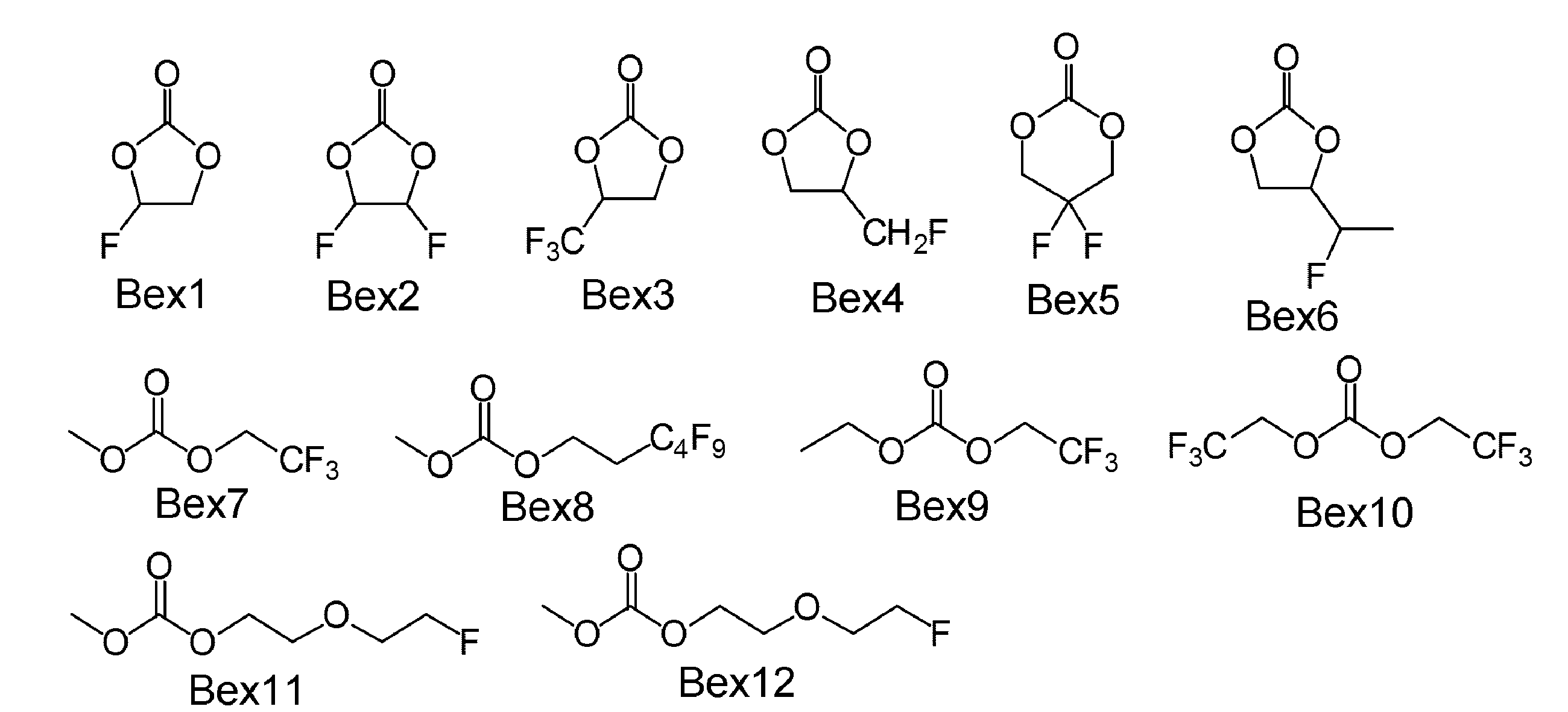
<重合性化合物(C)>
重合性化合物としては炭素-炭素二重結合を有する化合物が好ましく、ビニレンカーボネート、ビニルエチレンカーボネートなどの二重結合を有するカーボネート化合物、アクリレート基、メタクリレート基、シアノアクリレート基、αCF3アクリレート基から選ばれる基を有する化合物、スチリル基を有する化合物が好ましく、二重結合を有するカーボネート化合物、あるいは重合性基を分子内に2つ以上有する化合物が更に好ましい。
重合性化合物としては炭素-炭素二重結合を有する化合物が好ましく、ビニレンカーボネート、ビニルエチレンカーボネートなどの二重結合を有するカーボネート化合物、アクリレート基、メタクリレート基、シアノアクリレート基、αCF3アクリレート基から選ばれる基を有する化合物、スチリル基を有する化合物が好ましく、二重結合を有するカーボネート化合物、あるいは重合性基を分子内に2つ以上有する化合物が更に好ましい。
<リン含有化合物(D)>
リン含有化合物としては、上記特定のリン含有化合物以外のものであり、リン酸エステル化合物、ホスファゼン化合物が好ましい。リン酸エステル化合物の好ましい例としては、リン酸トリフェニル、リン酸トリベンジルなどが挙げられる。リン含有化合物としては、下記式(D2)または(D3)で表される化合物も好ましい。
リン含有化合物としては、上記特定のリン含有化合物以外のものであり、リン酸エステル化合物、ホスファゼン化合物が好ましい。リン酸エステル化合物の好ましい例としては、リン酸トリフェニル、リン酸トリベンジルなどが挙げられる。リン含有化合物としては、下記式(D2)または(D3)で表される化合物も好ましい。

式中、RD4~RD11は1価の置換基を表す。1価の置換基の中で好ましくは、アルキル基、アリール基、アルコキシ基、アリールオキシ基、アミノ基、フッ素、塩素、臭素等のハロゲン原子である。RD4~RD11の置換基の少なくとも1つはフッ素原子であることが好ましく、アルコキシ基、アミノ基、フッ素原子からなる置換基がより好ましい。
<硫黄含有化合物(E)>
含硫黄化合物としては-SO2-、-SO3-、-OS(=O)O-結合を有する化合物が好ましく、プロパンサルトン、プロペンサルトン、エチレンサルファイトなどの環状含硫黄化合物、スルホン酸エステル類が好ましい。
含硫黄化合物としては-SO2-、-SO3-、-OS(=O)O-結合を有する化合物が好ましく、プロパンサルトン、プロペンサルトン、エチレンサルファイトなどの環状含硫黄化合物、スルホン酸エステル類が好ましい。
含硫黄環状化合物としては、下記式(E1)、(E2)で表される化合物が好ましい。

式中、X1、X2はそれぞれ独立に、-O-、-C(Ra)(Rb)-を表す。ここで、Ra、Rbは、それぞれ独立に、水素原子、または置換基を表す。置換基として、好ましくは炭素原子数1~8のアルキル基、フッ素原子、炭素原子数の6~14のアリール基である。αは5~6員環を形成するのに必要な原子群を表す。αの骨格は炭素原子のほか、硫黄原子、酸素原子などを含んでもよい。αは置換されていてもよく、置換基としては置換基Tがあげられ、好ましくはアルキル基、フッ素原子、アリール基である。
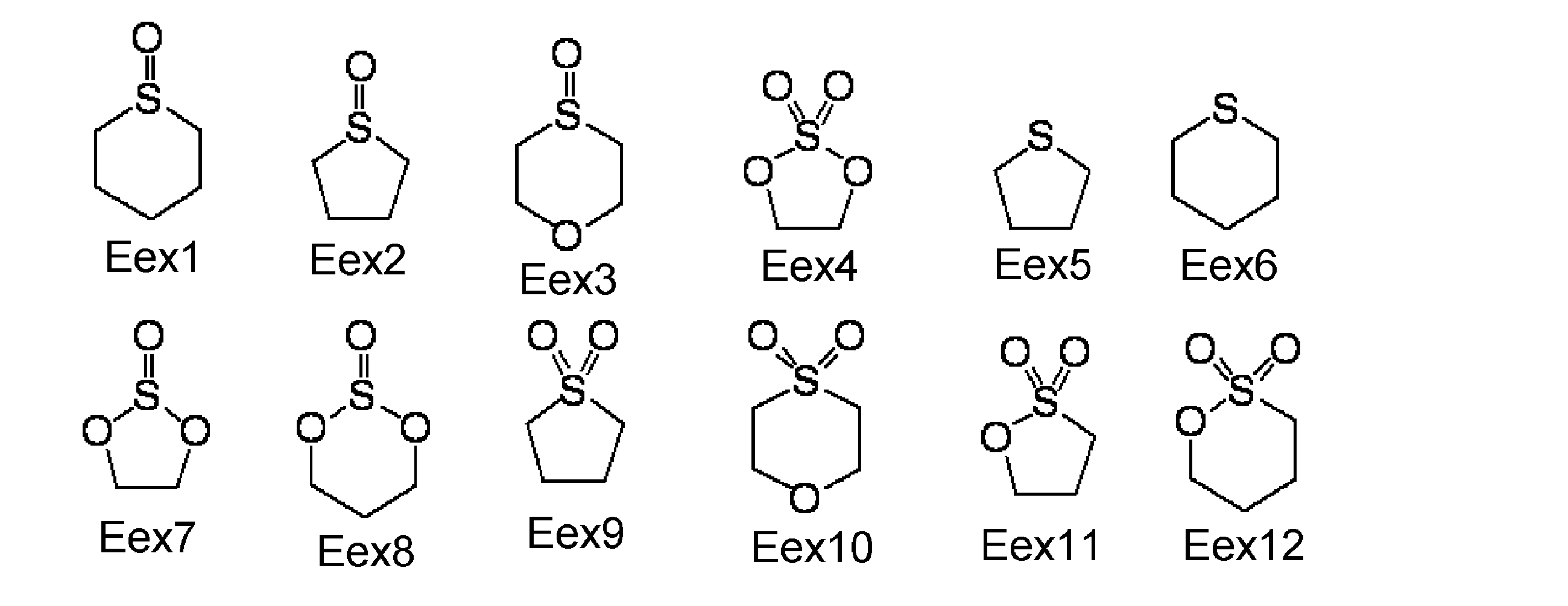
<ケイ素含有化合物(F)>
ケイ素含有化合物としては、下記式(F1)または(F2)で表される化合物が好ましい。
ケイ素含有化合物としては、下記式(F1)または(F2)で表される化合物が好ましい。

RF1はアルキル基、アルケニル基、アシル基、アシルオキシ基、または、アルコキシカルボニル基を表す。
RF2はアルキル基、アルケニル基、アルキニル基、又はアルコキシ基を表す。
なお、1つの式に複数あるRF1及びRF2はそれぞれ異なっていても同じであってもよい。
RF2はアルキル基、アルケニル基、アルキニル基、又はアルコキシ基を表す。
なお、1つの式に複数あるRF1及びRF2はそれぞれ異なっていても同じであってもよい。
<ニトリル化合物(G)>
ニトリル化合物としては、下記式(G)で表される化合物が好ましい。
ニトリル化合物としては、下記式(G)で表される化合物が好ましい。

式中、RG1~RG3はそれぞれ独立に水素原子、アルキル基、アルコキシカルボニル基、アリールオキシカルボニル基、シアノ基、カルバモイル基、スルホニル基、ハロゲン原子、またはホスホニル基を表す。各置換基の好ましいものは、置換基Tの例を参照することができるが、なかでも、RG1~RG3のいずれか一つ以上がシアノ基を含むニトリル基を複数有する化合物が好ましい。
・ngは1~8の整数を表す。
式(G)で表される化合物の具体例としては、アセトニトリル、プロピオニトリル、イソブチロニトリル、スクシノニトリル、マロノニトリル、グルタロニトリル、アジポニトリル、2メチルグルタノニトリル、ヘキサントリカルボニトリル、プロパンテトラカルボニトリル等が好ましい。特に好ましくは、スクシノニトリル、マロノニトリル、グルタロニトリル、アジポニトリル、2メチルグルタノニトリル、ヘキサントリカルボニトリル、プロパンテトラカルボニトリルである。
<金属錯体化合物(H)>
金属錯体化合物としては、遷移金属錯体もしくは希土類錯体が好ましい。なかでも、下記式(H-1)~(H-3)のいずれかで表される錯体が好ましい。
金属錯体化合物としては、遷移金属錯体もしくは希土類錯体が好ましい。なかでも、下記式(H-1)~(H-3)のいずれかで表される錯体が好ましい。
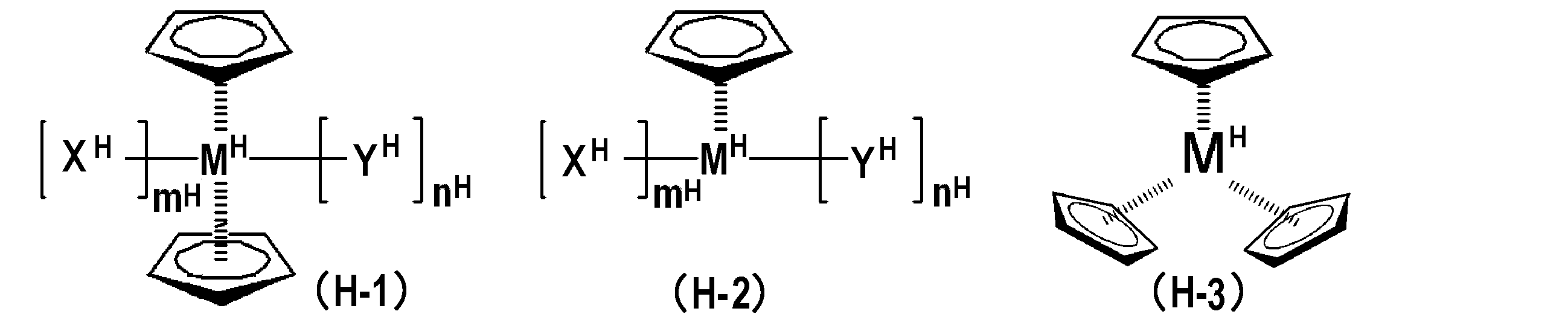
式中、XHおよびYHは、それぞれ、メチル基、n-ブチル基、ビス(トリメチルシリル)アミノ基、チオイソシアン酸基であり、XH,YHが縮環して環状アルケニル基(ブタジエン配位型メタラサイクル)を形成してもよい。式中、MHは遷移元素または希土類元素を表す。具体的にMHは、Fe、Ru、Cr、V、Ta、Mo、Ti、Zr、Hf、Y、La、Ce、Sw、Nd、Lu、Er、Yb、Gdであることが好ましい。mH,nHは0≦mH+nH≦3を満たす整数である。nH+mHは1以上であることが好ましい。nH、mHが2以上であるとき、そこで規定される2以上の基はそれぞれ異なっていてもよい。
上記金属錯体化合物は下記式(H-4)で表される部分構造を有する化合物も好ましい。
MH-(NR1HR2H)qH ・・・ 式(H-4)
式中、MHは遷移元素または希土類元素を表し、式(H-1)~(H-3)と同義である。
R1H,R2Hは水素、アルキル基(好ましい炭素数は1~6)、アルケニル基(好ましい炭素数は2~6)、アルキニル基(好ましい炭素数は2~6)、アリール基(好ましい炭素数は6~14)、ヘテロアリール基(好ましい炭素数は3~6)、アルキルシリル基(好ましい炭素数は1~6)、またはハロゲンを表す。R1H,R2Hは互いに連結されていてもよい。R1H,R2Hはそれぞれあるいは連結して環を形成していてもよい。R1H,R2Hの好ましいものとしては、後記置換基Tの例が挙げられる。なかでも、メチル基、エチル基、トリメチルシリル基が好ましい。
qHは1~4の整数を表し、2~4の整数が好ましい。更に好ましくは2または4である。qHが2以上のとき、そこで規定される複数の基は互いに同じでも異なっていてもよい。
qHは1~4の整数を表し、2~4の整数が好ましい。更に好ましくは2または4である。qHが2以上のとき、そこで規定される複数の基は互いに同じでも異なっていてもよい。
金属錯体化合物は、下記式のいずれかで表される化合物も好ましい。
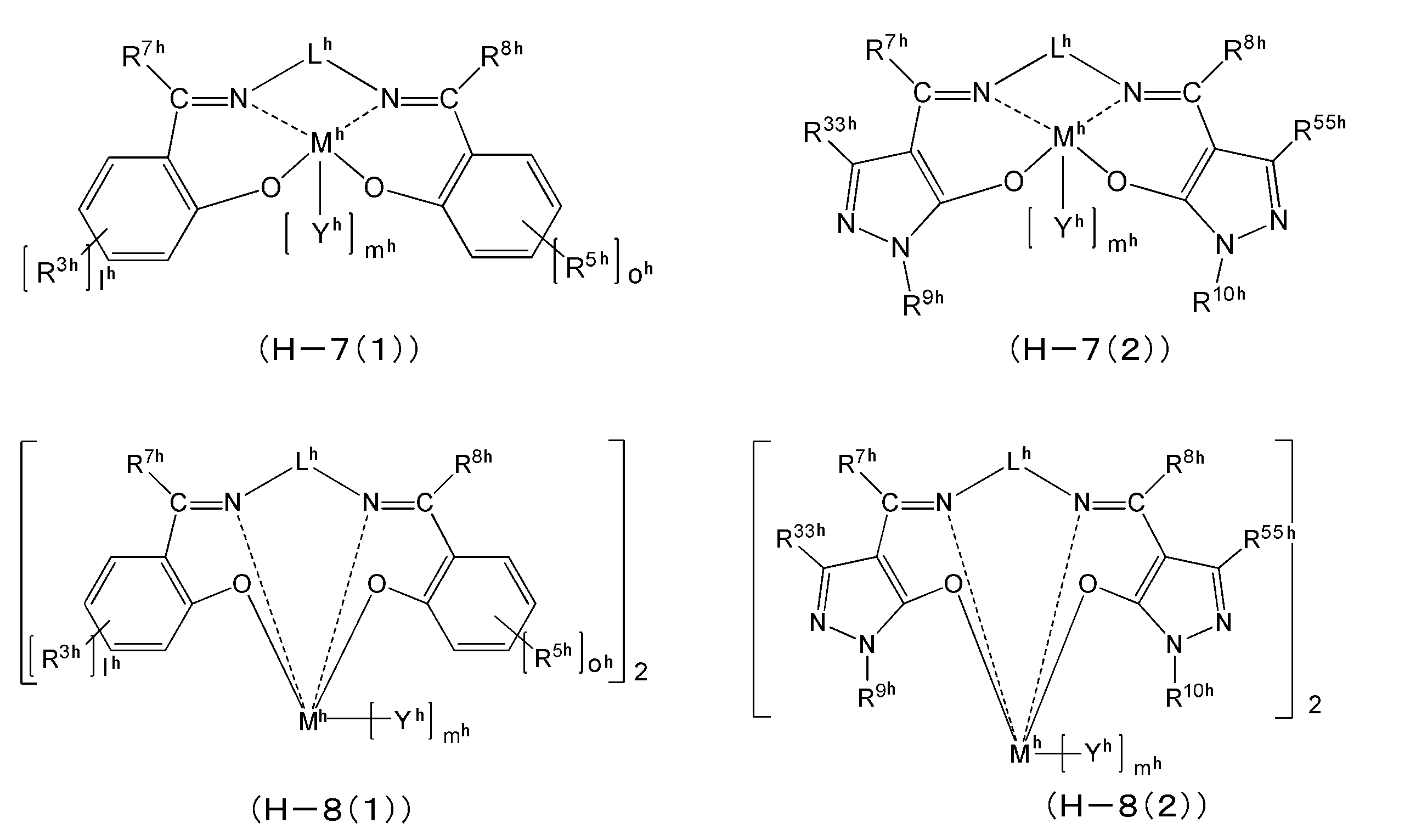
・Mh
中心金属Mhは、Ti、Zr、ZrO、Hf、V、Cr、Fe、Ceが特に好ましく、Ti、Zr、Hf、V、Crが最も好ましい。
中心金属Mhは、Ti、Zr、ZrO、Hf、V、Cr、Fe、Ceが特に好ましく、Ti、Zr、Hf、V、Crが最も好ましい。
・R3h、R5h、R7h~R10h
これらは置換基を表す。なかでも、アルキル基、アルコキシ基、アリール基、アルケニル基、ハロゲン原子が好ましく、炭素数1~6のアルキル基、炭素数1~6のアルコキシ基、炭素数6~12のアリール基、炭素数2~6のアルケニル基がより好ましく、メチル、エチル、プロピル、イソプロピル、イソブチル、t-ブチル、パーフルオロメチル、メトキシ、フェニル、エテニルであることが好ましい。
これらは置換基を表す。なかでも、アルキル基、アルコキシ基、アリール基、アルケニル基、ハロゲン原子が好ましく、炭素数1~6のアルキル基、炭素数1~6のアルコキシ基、炭素数6~12のアリール基、炭素数2~6のアルケニル基がより好ましく、メチル、エチル、プロピル、イソプロピル、イソブチル、t-ブチル、パーフルオロメチル、メトキシ、フェニル、エテニルであることが好ましい。
・R33h、R55h
R33h、R55hは水素原子またはR3hの置換基を表す。
R33h、R55hは水素原子またはR3hの置換基を表す。
・Yh
Yhは、炭素数1~6のアルキル基またはビス(トリアルキルシリル)アミノ基が好ましく、メチル基またはビス(トリメチルシリル)アミノ基がより好ましい。
Yhは、炭素数1~6のアルキル基またはビス(トリアルキルシリル)アミノ基が好ましく、メチル基またはビス(トリメチルシリル)アミノ基がより好ましい。
・lh、mh、oh
lh、mh、ohは0~3の整数を表し、0~2の整数が好ましい。lh、mh、ohが2以上のとき、そこで規定される複数の構造部は互いに同じであっても、異なっていてもよい。
lh、mh、ohは0~3の整数を表し、0~2の整数が好ましい。lh、mh、ohが2以上のとき、そこで規定される複数の構造部は互いに同じであっても、異なっていてもよい。
・Lh
Lhはアルキレン基、アリーレン基が好ましく、炭素数3~6のシクロアルキレン基、炭素数6~14のアリーレン基がより好ましく、シクロヘキシレン、フェニレンがさらに好ましい。
Lhはアルキレン基、アリーレン基が好ましく、炭素数3~6のシクロアルキレン基、炭素数6~14のアリーレン基がより好ましく、シクロヘキシレン、フェニレンがさらに好ましい。
<イミド化合物(I)>
イミド化合物としては、耐酸化性の観点よりパーフルオロ基を有するスルホンイミド化合物が好ましく、具体的にはパーフルオロスルホイミドリチウム化合物が挙げられる。
イミド化合物として、具体的には下記の構造が挙げられ、より好ましくはCex1、Cex2である。
イミド化合物としては、耐酸化性の観点よりパーフルオロ基を有するスルホンイミド化合物が好ましく、具体的にはパーフルオロスルホイミドリチウム化合物が挙げられる。
イミド化合物として、具体的には下記の構造が挙げられ、より好ましくはCex1、Cex2である。

本発明の電解液には、上記のものを始め、負極被膜形成剤、難燃剤、過充電防止剤等から選ばれる少なくとも1種を含有していてもよい。非水電解液中におけるこれら機能性添加剤の含有割合は特に限定はないが、非水電解液全体(電解質を含む)に対し、それぞれ、0.001質量%~10質量%が好ましい。これらの化合物を添加することにより、過充電による異常を抑制したり、高温保存後の容量維持特性やサイクル特性を向上させたりすることができる。
上記例示化合物は任意の置換基Tを有していてもよい。
置換基Tとしては、下記のものが挙げられる。
アルキル基(好ましくは炭素原子数1~20のアルキル基、例えばメチル、エチル、イソプロピル、t-ブチル、ペンチル、ヘプチル、1-エチルペンチル、ベンジル、2-エトキシエチル、1-カルボキシメチル等)、アルケニル基(好ましくは炭素原子数2~20のアルケニル基、例えば、ビニル、アリル、オレイル等)、アルキニル基(好ましくは炭素原子数2~20のアルキニル基、例えば、エチニル、ブタジイニル、フェニルエチニル等)、シクロアルキル基(好ましくは炭素原子数3~20のシクロアルキル基、例えば、シクロプロピル、シクロペンチル、シクロヘキシル、4-メチルシクロヘキシル等)、アリール基(好ましくは炭素原子数6~26のアリール基、例えば、フェニル、1-ナフチル、4-メトキシフェニル、2-クロロフェニル、3-メチルフェニル等)、ヘテロ環基(好ましくは炭素原子数2~20のヘテロ環基、好ましくは、少なくとも1つの酸素原子、硫黄原子、窒素原子を有する5または6員環のヘテロ環基が好ましく、例えば、2-ピリジル、4-ピリジル、2-イミダゾリル、2-ベンゾイミダゾリル、2-チアゾリル、2-オキサゾリル等)、アルコキシ基(好ましくは炭素原子数1~20のアルコキシ基、例えば、メトキシ、エトキシ、イソプロピルオキシ、ベンジルオキシ等)、アリールオキシ基(好ましくは炭素原子数6~26のアリールオキシ基、例えば、フェノキシ、1-ナフチルオキシ、3-メチルフェノキシ、4-メトキシフェノキシ等)、アルコキシカルボニル基(好ましくは炭素原子数2~20のアルコキシカルボニル基、例えば、エトキシカルボニル、2-エチルヘキシルオキシカルボニル等)、アミノ基(好ましくは炭素原子数0~20のアミノ基、アルキルアミノ基、アリールアミノ基を含み、例えば、アミノ、N,N-ジメチルアミノ、N,N-ジエチルアミノ、N-エチルアミノ、アニリノ等)、スルファモイル基(好ましくは炭素原子数0~20のスルファモイル基、例えば、N,N-ジメチルスルファモイル、N-フェニルスルファモイル等)、アシル基(好ましくは炭素原子数1~20のアシル基、例えば、アセチル、プロピオニル、ブチリル、ベンゾイル等)、アシルオキシ基(好ましくは炭素原子数1~20のアシルオキシ基、例えば、アセチルオキシ、ベンゾイルオキシ等)、カルバモイル基(好ましくは炭素原子数1~20のカルバモイル基、例えば、N,N-ジメチルカルバモイル、N-フェニルカルバモイル等)、アシルアミノ基(好ましくは炭素原子数1~20のアシルアミノ基、例えば、アセチルアミノ、ベンゾイルアミノ等)、スルホンアミド基(好ましくは炭素原子数0~20のスルファモイル基、例えば、メタンスルホンアミド、ベンゼンスルホンアミド、N-メチルメタンスルホンアミド、N-エチルベンゼンスルホンアミド等)、アルキルチオ基(好ましくは炭素原子数1~20のアルキルチオ基、例えば、メチルチオ、エチルチオ、イソプロピルチオ、ベンジルチオ等)、アリールチオ基(好ましくは炭素原子数6~26のアリールチオ基、例えば、フェニルチオ、1-ナフチルチオ、3-メチルフェニルチオ、4-メトキシフェニルチオ等)、アルキルもしくはアリールスルホニル基(好ましくは炭素原子数1~20のアルキルもしくはアリールスルホニル基、例えば、メチルスルホニル、エチルスルホニル、ベンゼンスルホニル等)、ヒドロキシル基、シアノ基、ハロゲン原子(例えばフッ素原子、塩素原子、臭素原子、ヨウ素原子等)であり、より好ましくはアルキル基、アルケニル基、アリール基、ヘテロ環基、アルコキシ基、アリールオキシ基、アルコキシカルボニル基、アミノ基、アシルアミノ基、ヒドロキシル基またはハロゲン原子であり、特に好ましくはアルキル基、アルケニル基、ヘテロ環基、アルコキシ基、アルコキシカルボニル基、アミノ基、アシルアミノ基またはヒドロキシル基である。
また、これらの置換基Tで挙げた各基は、上記の置換基Tがさらに置換していてもよい。
置換基Tとしては、下記のものが挙げられる。
アルキル基(好ましくは炭素原子数1~20のアルキル基、例えばメチル、エチル、イソプロピル、t-ブチル、ペンチル、ヘプチル、1-エチルペンチル、ベンジル、2-エトキシエチル、1-カルボキシメチル等)、アルケニル基(好ましくは炭素原子数2~20のアルケニル基、例えば、ビニル、アリル、オレイル等)、アルキニル基(好ましくは炭素原子数2~20のアルキニル基、例えば、エチニル、ブタジイニル、フェニルエチニル等)、シクロアルキル基(好ましくは炭素原子数3~20のシクロアルキル基、例えば、シクロプロピル、シクロペンチル、シクロヘキシル、4-メチルシクロヘキシル等)、アリール基(好ましくは炭素原子数6~26のアリール基、例えば、フェニル、1-ナフチル、4-メトキシフェニル、2-クロロフェニル、3-メチルフェニル等)、ヘテロ環基(好ましくは炭素原子数2~20のヘテロ環基、好ましくは、少なくとも1つの酸素原子、硫黄原子、窒素原子を有する5または6員環のヘテロ環基が好ましく、例えば、2-ピリジル、4-ピリジル、2-イミダゾリル、2-ベンゾイミダゾリル、2-チアゾリル、2-オキサゾリル等)、アルコキシ基(好ましくは炭素原子数1~20のアルコキシ基、例えば、メトキシ、エトキシ、イソプロピルオキシ、ベンジルオキシ等)、アリールオキシ基(好ましくは炭素原子数6~26のアリールオキシ基、例えば、フェノキシ、1-ナフチルオキシ、3-メチルフェノキシ、4-メトキシフェノキシ等)、アルコキシカルボニル基(好ましくは炭素原子数2~20のアルコキシカルボニル基、例えば、エトキシカルボニル、2-エチルヘキシルオキシカルボニル等)、アミノ基(好ましくは炭素原子数0~20のアミノ基、アルキルアミノ基、アリールアミノ基を含み、例えば、アミノ、N,N-ジメチルアミノ、N,N-ジエチルアミノ、N-エチルアミノ、アニリノ等)、スルファモイル基(好ましくは炭素原子数0~20のスルファモイル基、例えば、N,N-ジメチルスルファモイル、N-フェニルスルファモイル等)、アシル基(好ましくは炭素原子数1~20のアシル基、例えば、アセチル、プロピオニル、ブチリル、ベンゾイル等)、アシルオキシ基(好ましくは炭素原子数1~20のアシルオキシ基、例えば、アセチルオキシ、ベンゾイルオキシ等)、カルバモイル基(好ましくは炭素原子数1~20のカルバモイル基、例えば、N,N-ジメチルカルバモイル、N-フェニルカルバモイル等)、アシルアミノ基(好ましくは炭素原子数1~20のアシルアミノ基、例えば、アセチルアミノ、ベンゾイルアミノ等)、スルホンアミド基(好ましくは炭素原子数0~20のスルファモイル基、例えば、メタンスルホンアミド、ベンゼンスルホンアミド、N-メチルメタンスルホンアミド、N-エチルベンゼンスルホンアミド等)、アルキルチオ基(好ましくは炭素原子数1~20のアルキルチオ基、例えば、メチルチオ、エチルチオ、イソプロピルチオ、ベンジルチオ等)、アリールチオ基(好ましくは炭素原子数6~26のアリールチオ基、例えば、フェニルチオ、1-ナフチルチオ、3-メチルフェニルチオ、4-メトキシフェニルチオ等)、アルキルもしくはアリールスルホニル基(好ましくは炭素原子数1~20のアルキルもしくはアリールスルホニル基、例えば、メチルスルホニル、エチルスルホニル、ベンゼンスルホニル等)、ヒドロキシル基、シアノ基、ハロゲン原子(例えばフッ素原子、塩素原子、臭素原子、ヨウ素原子等)であり、より好ましくはアルキル基、アルケニル基、アリール基、ヘテロ環基、アルコキシ基、アリールオキシ基、アルコキシカルボニル基、アミノ基、アシルアミノ基、ヒドロキシル基またはハロゲン原子であり、特に好ましくはアルキル基、アルケニル基、ヘテロ環基、アルコキシ基、アルコキシカルボニル基、アミノ基、アシルアミノ基またはヒドロキシル基である。
また、これらの置換基Tで挙げた各基は、上記の置換基Tがさらに置換していてもよい。
化合物ないし置換基・連結基等がアルキル基・アルキレン基、アルケニル基・アルケニレン基等を含むとき、これらは環状でも鎖状でもよく、また直鎖でも分岐していてもよく、上記のように置換されていても無置換でもよい。またアリール基、ヘテロ環基等を含むとき、それらは単環でも縮環でもよく、同様に置換されていても無置換でもよい。
本明細書で規定される各置換基は、本発明の効果を奏する範囲で下記の連結基Lを介在して置換されていてもよい。また、アルキル基・アルキレン基、アルケニル基・アルケニレン基はさらに構造中に下記のヘテロ連結基を介在していてもよい。
連結基Lとしては、炭化水素連結基〔炭素数1~10のアルキレン基(より好ましくは炭素数1~6、さらに好ましくは1~3)、炭素数2~10のアルケニレン基(より好ましくは炭素数2~6、さらに好ましくは2~4)、炭素数6~22のアリーレン基(より好ましくは炭素数6~10)〕、ヘテロ連結基〔カルボニル基(-CO-)、エーテル基(-O-)、チオエーテル基(-S-)、イミノ基(-NRN-)〕、またはこれらを組み合せた連結基が好ましい。
RNは前記と同義である
本明細書において、連結基を構成する原子の数は、1~36であることが好ましく、1~24であることがより好ましく、1~12であることがさらに好ましく、1~6であることが特に好ましい。連結基の連結原子数は10以下であることが好ましく、8以下であることがより好ましい。下限としては、1以上であり、2以上が好ましい。上記連結原子数とは所定の構造部間を結ぶ経路に位置し連結に関与する最少の原子数を言う。たとえば、-CH2-C(=O)-O-の場合、連結原子数は3となる。
本明細書で規定される各置換基は、本発明の効果を奏する範囲で下記の連結基Lを介在して置換されていてもよい。また、アルキル基・アルキレン基、アルケニル基・アルケニレン基はさらに構造中に下記のヘテロ連結基を介在していてもよい。
連結基Lとしては、炭化水素連結基〔炭素数1~10のアルキレン基(より好ましくは炭素数1~6、さらに好ましくは1~3)、炭素数2~10のアルケニレン基(より好ましくは炭素数2~6、さらに好ましくは2~4)、炭素数6~22のアリーレン基(より好ましくは炭素数6~10)〕、ヘテロ連結基〔カルボニル基(-CO-)、エーテル基(-O-)、チオエーテル基(-S-)、イミノ基(-NRN-)〕、またはこれらを組み合せた連結基が好ましい。
RNは前記と同義である
本明細書において、連結基を構成する原子の数は、1~36であることが好ましく、1~24であることがより好ましく、1~12であることがさらに好ましく、1~6であることが特に好ましい。連結基の連結原子数は10以下であることが好ましく、8以下であることがより好ましい。下限としては、1以上であり、2以上が好ましい。上記連結原子数とは所定の構造部間を結ぶ経路に位置し連結に関与する最少の原子数を言う。たとえば、-CH2-C(=O)-O-の場合、連結原子数は3となる。
[電解液の調製方法等]
本発明の非水電解液は、金属イオンの塩としてリチウム塩を用いた例を含め、上記各成分を上記非水電解液溶媒に溶解して、常法により調製することができる。
本発明の非水電解液は、金属イオンの塩としてリチウム塩を用いた例を含め、上記各成分を上記非水電解液溶媒に溶解して、常法により調製することができる。
本発明において、「非水」とは水を実質的に含まないことをいい、発明の効果を妨げない範囲で微量の水を含んでいてもよい。良好な特性を得ることを考慮して言うと、水の濃度が200ppm(質量基準)以下であることが好ましく、100ppm以下であることがより好ましく20ppm以下であることが更に好ましい。下限値は特にないが、不可避的な混入を考慮すると、1ppm以上であることが実際的である。本発明の電解液の粘度は特に限定されないが、25℃において、1000mPa・s以下であることが好ましく、100~0.1mPa・sであることがより好ましく、10~0.5mPa・sであることが特に好ましい。
<粘度の測定方法>
粘度は以下の方法で測定した値を言うこととする。サンプル1mLをレオメーター(CLS 500)に入れ、直径4cm/2°のSteel Cone(共に、TA Instrumennts社製)を用いて測定する。サンプルは予め測定開始温度にて温度が一定となるまで保温しておき、測定はその後に開始する。測定温度は25℃とする。
粘度は以下の方法で測定した値を言うこととする。サンプル1mLをレオメーター(CLS 500)に入れ、直径4cm/2°のSteel Cone(共に、TA Instrumennts社製)を用いて測定する。サンプルは予め測定開始温度にて温度が一定となるまで保温しておき、測定はその後に開始する。測定温度は25℃とする。
[二次電池]
本発明においては上記非水電解液を含有する非水二次電池とすることが好ましい。好ましい実施形態として、リチウムイオン二次電池についてその機構を模式化して示した図1を参照して説明する。本実施形態のリチウムイオン二次電池10は、上記本発明の非水二次電池用電解液5と、リチウムイオンの挿入放出が可能な正極C(正極集電体1,正極活物質層2)と、リチウムイオンの挿入放出又は溶解析出が可能な負極A(負極集電体3,負極活物質層4)とを備える。これら必須の部材に加え、電池が使用される目的、電位の形状などを考慮し、正極と負極の間に配設されるセパレータ9、集電端子(図示せず)、及び外装ケース等(図示せず)を含んで構成されてもよい。必要に応じて、電池の内部及び電池の外部の少なくともいずれかに保護素子を装着してもよい。このような構造とすることにより、電解液5内でリチウムイオンの授受a,bが生じ、充電α、放電βを行うことができ、回路配線7を介して動作機構6を介して運転あるいは蓄電を行うことができる。以下、本発明の好ましい実施形態であるリチウム二次電池の構成について、さらに詳細に説明する。
本発明においては上記非水電解液を含有する非水二次電池とすることが好ましい。好ましい実施形態として、リチウムイオン二次電池についてその機構を模式化して示した図1を参照して説明する。本実施形態のリチウムイオン二次電池10は、上記本発明の非水二次電池用電解液5と、リチウムイオンの挿入放出が可能な正極C(正極集電体1,正極活物質層2)と、リチウムイオンの挿入放出又は溶解析出が可能な負極A(負極集電体3,負極活物質層4)とを備える。これら必須の部材に加え、電池が使用される目的、電位の形状などを考慮し、正極と負極の間に配設されるセパレータ9、集電端子(図示せず)、及び外装ケース等(図示せず)を含んで構成されてもよい。必要に応じて、電池の内部及び電池の外部の少なくともいずれかに保護素子を装着してもよい。このような構造とすることにより、電解液5内でリチウムイオンの授受a,bが生じ、充電α、放電βを行うことができ、回路配線7を介して動作機構6を介して運転あるいは蓄電を行うことができる。以下、本発明の好ましい実施形態であるリチウム二次電池の構成について、さらに詳細に説明する。
(電池形状)
本実施形態のリチウム二次電池が適用される電池形状には、特に制限はなく、例えば、有底筒型形状、有底角型形状、薄型形状、シート形状、及び、ペーパー形状などが挙げられ、これらのいずれであってもよい。また、組み込まれるシステムや機器の形を考慮した馬蹄形や櫛型形状等の異型のものであってもよい。なかもで、電池内部の熱を効率よく外部に放出する観点から、比較的平らで大面積の面を少なくとも一つを有する有底角型形状や薄型形状などの角型形状が好ましい。
本実施形態のリチウム二次電池が適用される電池形状には、特に制限はなく、例えば、有底筒型形状、有底角型形状、薄型形状、シート形状、及び、ペーパー形状などが挙げられ、これらのいずれであってもよい。また、組み込まれるシステムや機器の形を考慮した馬蹄形や櫛型形状等の異型のものであってもよい。なかもで、電池内部の熱を効率よく外部に放出する観点から、比較的平らで大面積の面を少なくとも一つを有する有底角型形状や薄型形状などの角型形状が好ましい。
有底筒型形状の電池では、充填される発電素子に対する外表面積が小さくなるので、充電や放電時に内部抵抗による発生するジュール発熱を効率よく外部に逃げる設計にすることが好ましい。また、熱伝導性の高い物質の充填比率を高め、内部での温度分布が小さくなるように設計することが好ましい。図2は、有底筒型形状リチウム二次電池100の例である。この電池は、セパレータ12を介して重ね合わせた正極シート14、負極シート16を巻回して外装缶18内に収納した有底筒型リチウム二次電池100となっている。
有底角型形状では、一番大きい面の面積S(端子部を除く外形寸法の幅と高さとの積、単位cm2)の2倍と電池外形の厚さT(単位cm)との比率2S/Tの値が100以上であることが好ましく、200以上であることが更に好適である。最大面を大きくすることにより高出力かつ大容量の電池であってもサイクル性や高温保存等の特性を向上させるとともに、異常発熱時の放熱効率を上げ、内圧上昇を抑制できるので「弁作動」を抑制することができる。
(電池を構成する部材)
本実施形態のリチウム二次電池は、図1に基づいて言うと、電解液5、正極及び負極の電極合剤C,A、セパレータの基本部材9を具備して構成される。以下、これらの各部材について述べる。
本実施形態のリチウム二次電池は、図1に基づいて言うと、電解液5、正極及び負極の電極合剤C,A、セパレータの基本部材9を具備して構成される。以下、これらの各部材について述べる。
(電極合材)
電極合材は、集電体(電極基材)上に活物質と導電剤、結着剤、フィラーなどの分散物を塗布したものであり、リチウム電池においては、活物質が正極活物質である正極合材と活物質が負極活物質である負極合材が使用されることが好ましい。次に、電極合材を構成する分散物(電極用組成物)中の各成分等について説明する。
電極合材は、集電体(電極基材)上に活物質と導電剤、結着剤、フィラーなどの分散物を塗布したものであり、リチウム電池においては、活物質が正極活物質である正極合材と活物質が負極活物質である負極合材が使用されることが好ましい。次に、電極合材を構成する分散物(電極用組成物)中の各成分等について説明する。
・正極活物質
正極活物質には遷移金属酸化物を用いることが好ましく、中でも、遷移元素Ma(Co、Ni、Fe、Mn、Cu、Vから選択される1種以上の元素)を有することが好ましい。また、混合元素Mb(リチウム以外の金属周期律表の第1(Ia)族の元素、第2(IIa)族の元素、Al、Ga、In、Ge、Sn、Pb、Sb、Bi、Si、P、Bなど)を混合してもよい。この、遷移金属酸化物として例えば、下記式(MA)~(MC)のいずれかで表されるものを含む特定遷移金属酸化物、あるいはその他の遷移金属酸化物としてV2O5、MnO2等が挙げられる。正極活物質には、粒子状の正極活物質を用いてもよい。具体的に、可逆的にリチウムイオンを挿入・放出できる遷移金属酸化物を用いることができるが、上記特定遷移金属酸化物を用いることが好ましい。
正極活物質には遷移金属酸化物を用いることが好ましく、中でも、遷移元素Ma(Co、Ni、Fe、Mn、Cu、Vから選択される1種以上の元素)を有することが好ましい。また、混合元素Mb(リチウム以外の金属周期律表の第1(Ia)族の元素、第2(IIa)族の元素、Al、Ga、In、Ge、Sn、Pb、Sb、Bi、Si、P、Bなど)を混合してもよい。この、遷移金属酸化物として例えば、下記式(MA)~(MC)のいずれかで表されるものを含む特定遷移金属酸化物、あるいはその他の遷移金属酸化物としてV2O5、MnO2等が挙げられる。正極活物質には、粒子状の正極活物質を用いてもよい。具体的に、可逆的にリチウムイオンを挿入・放出できる遷移金属酸化物を用いることができるが、上記特定遷移金属酸化物を用いることが好ましい。
遷移金属酸化物としては、上記遷移元素Maを含む酸化物等が好適に挙げられる。このとき混合元素Mb(好ましくはAl)などを混合してもよい。混合量としては、遷移金属の量に対して0~30mol%が好ましい。Li/Maのモル比が0.3~2.2になるように混合して合成されたものが、より好ましい。
〔式(MA)で表される遷移金属酸化物(層状岩塩型構造)〕
リチウム含有遷移金属酸化物としては中でも下式で表されるものが好ましい。
LiaM1Ob ・・・ (MA)
リチウム含有遷移金属酸化物としては中でも下式で表されるものが好ましい。
LiaM1Ob ・・・ (MA)
式中、M1は上記Maと同義である。aは0~1.2を表し、0.1~1.15であることが好ましく、さらに0.6~1.1であることが好ましい。bは1~3を表し、2であることが好ましい。M1の一部は上記混合元素Mbで置換されていてもよい。上記式(MA)で表される遷移金属酸化物は典型的には層状岩塩型構造を有する。
本遷移金属酸化物は下記の各式で表されるものであることがより好ましい。
(MA-1) LigCoOk
(MA-2) LigNiOk
(MA-3) LigMnOk
(MA-4) LigCojNi1-jOk
(MA-5) LigNijMn1-jOk
(MA-6) LigCojNiiAl1-j-iOk
(MA-7) LigCojNiiMn1-j-iOk
(MA-1) LigCoOk
(MA-2) LigNiOk
(MA-3) LigMnOk
(MA-4) LigCojNi1-jOk
(MA-5) LigNijMn1-jOk
(MA-6) LigCojNiiAl1-j-iOk
(MA-7) LigCojNiiMn1-j-iOk
ここでgは上記aと同義である。jは0.1~0.9を表す。iは0~1を表す。ただし、1-j-iは0以上になる。kは上記bと同義である。上記遷移金属化合物の具体例を示すと、LiCoO2(コバルト酸リチウム[LCO])、LiNi2O2(ニッケル酸リチウム)LiNi0.85Co0.01Al0.05O2(ニッケルコバルトアルミニウム酸リチウム[NCA])、LiNi0.33Co0.33Mn0.33O2(ニッケルマンガンコバルト酸リチウム[NMC])、LiNi0.5Mn0.5O2(マンガンニッケル酸リチウム)である。
式(MA)で表される遷移金属酸化物は、一部重複するが、表記を変えて示すと、下記で表されるものも好ましい例として挙げられる。
(i)LigNixMnyCozO2(x>0.2,y>0.2,z≧0,x+y+z=1)
代表的なもの:
LigNi1/3Mn1/3Co1/3O2
LigNi1/2Mn1/2O2
(ii)LigNixCoyAlzO2(x>0.7,y>0.1,0.1>z≧0.05,x+y+z=1)
代表的なもの:
LigNi0.8Co0.15Al0.05O2
(i)LigNixMnyCozO2(x>0.2,y>0.2,z≧0,x+y+z=1)
代表的なもの:
LigNi1/3Mn1/3Co1/3O2
LigNi1/2Mn1/2O2
(ii)LigNixCoyAlzO2(x>0.7,y>0.1,0.1>z≧0.05,x+y+z=1)
代表的なもの:
LigNi0.8Co0.15Al0.05O2
〔式(MB)で表される遷移金属酸化物(スピネル型構造)〕
リチウム含有遷移金属酸化物としては中でも下記式(MB)で表されるものも好ましい。
LicM2 2Od ・・・ (MB)
リチウム含有遷移金属酸化物としては中でも下記式(MB)で表されるものも好ましい。
LicM2 2Od ・・・ (MB)
式中、M2は上記Maと同義である。cは0~2を表し、0.1~1.15であることが好ましく、さらに0.6~1.5であることが好ましい。dは3~5を表し、4であることが好ましい。
式(MB)で表される遷移金属酸化物は下記の各式で表されるものであることがより好ましい。
(MB-1) LimMn2On
(MB-2) LimMnpAl2-pOn
(MB-3) LimMnpNi2-pOn
(MB-1) LimMn2On
(MB-2) LimMnpAl2-pOn
(MB-3) LimMnpNi2-pOn
mはcと同義である。nはdと同義である。pは0~2を表す。上記遷移金属化合物の具体例を示すと、LiMn2O4、LiMn1.5Ni0.5O4である。
式(MB)で表される遷移金属酸化物はさらに下記で表されるものも好ましい例として挙げられる。
(a) LiCoMnO4
(b) Li2FeMn3O8
(c) Li2CuMn3O8
(d) Li2CrMn3O8
(e) Li2NiMn3O8
高容量、高出力の観点で上記のうちNiを含む電極が更に好ましい。
(a) LiCoMnO4
(b) Li2FeMn3O8
(c) Li2CuMn3O8
(d) Li2CrMn3O8
(e) Li2NiMn3O8
高容量、高出力の観点で上記のうちNiを含む電極が更に好ましい。
〔式(MC)で表される遷移金属酸化物〕
リチウム含有遷移金属酸化物としてはリチウム含有遷移金属リン酸化物を用いることも好ましく、中でも下記式(MC)で表されるものも好ましい。
LieM3(PO4)f ・・・ (MC)
リチウム含有遷移金属酸化物としてはリチウム含有遷移金属リン酸化物を用いることも好ましく、中でも下記式(MC)で表されるものも好ましい。
LieM3(PO4)f ・・・ (MC)
式中、eは0~2を表し、0.1~1.15であることが好ましく、さらに0.5~1.5であることが好ましい。fは1~5を表し、0.5~2であることが好ましい。
上記M3はV、Ti、Cr、Mn、Fe、Co、Ni、Cuから選択される一種以上の元素を表す。上記M3は、上記の混合元素Mbのほか、Ti、Cr、Zn、Zr、Nb等の他の金属で置換していてもよい。具体例としては、例えば、LiFePO4、Li3Fe2(PO4)3等のオリビン型リン酸鉄塩、LiFeP2O7等のピロリン酸鉄類、LiCoPO4等のリン酸コバルト類、Li3V2(PO4)3(リン酸バナジウムリチウム)等の単斜晶ナシコン型リン酸バナジウム塩が挙げられる。
なお、Liの組成を表す上記a,c,g,m,e値は、充放電により変化する値であり、典型的には、Liを含有したときの安定な状態の値で評価される。上記式(a)~(e)では特定値としてLiの組成を示しているが、これも同様に電池の動作により変化するものである。
これらの中でもニッケル及び/又はマンガンを含有する活物質が高電位で使用できるため容量を大きくすることができ、また高電位で使用しても容量維持率が高いため特に好ましい。
なお、Liの組成を表す上記a,c,g,m,e値は、充放電により変化する値であり、典型的には、Liを含有したときの安定な状態の値で評価される。上記式(a)~(e)では特定値としてLiの組成を示しているが、これも同様に電池の動作により変化するものである。
これらの中でもニッケル及び/又はマンガンを含有する活物質が高電位で使用できるため容量を大きくすることができ、また高電位で使用しても容量維持率が高いため特に好ましい。
本発明において、正極活物質には3.5V以上の正極電位(Li/Li+基準)で通常使用を維持できる材料を用いることが好ましく、3.8V以上であることがより好ましく、4V以上であることがさらに好ましく、4.25V以上であることがさらに好ましく、4.3V以上であることがさらに好ましい。上限は特にないが、5V以下であることが実際的である。上記範囲とすることで、サイクル特性および高レート放電特性を向上することができる。
ここで通常使用を維持できるとは、その電圧で充電を行ったときでも電極材料が劣化して使用不能になることがないことを意味し、この電位を通常使用可能電位ともいう。
充放電時の正極電位(Li/Li+基準)は
(正極電位)=(負極電位)+(電池電圧)である。負極としてチタン酸リチウムを用いた場合、負極電位は1.55Vとする。負極として黒鉛を用いた場合は負極電位は0.1Vとする。充電時に電池電圧を観測し、正極電位を算出する。
ここで通常使用を維持できるとは、その電圧で充電を行ったときでも電極材料が劣化して使用不能になることがないことを意味し、この電位を通常使用可能電位ともいう。
充放電時の正極電位(Li/Li+基準)は
(正極電位)=(負極電位)+(電池電圧)である。負極としてチタン酸リチウムを用いた場合、負極電位は1.55Vとする。負極として黒鉛を用いた場合は負極電位は0.1Vとする。充電時に電池電圧を観測し、正極電位を算出する。
本発明の非水二次電池において、用いられる正極活物質の平均粒子サイズは特に限定されないが、0.1μm~50μmが好ましい。比表面積としては特に限定されないが、BET法で0.01m2/g~50m2/gであるのが好ましい。また、正極活物質5gを蒸留水100mlに溶かした時の上澄み液のpHとしては、7以上12以下が好ましい。
正極活物質を所定の粒子サイズにするには、良く知られた粉砕機や分級機が用いられる。例えば、乳鉢、ボールミル、振動ボールミル、振動ミル、衛星ボールミル、遊星ボールミル、旋回気流型ジェットミルや篩などが用いられる。上記焼成法によって得られた正極活物質は、水、酸性水溶液、アルカリ性水溶液、有機溶剤にて洗浄した後使用してもよい。
正極活物質の配合量は特に限定されないが、活物質層を構成するための分散物(合剤)中、固形成分100質量%において、60~98質量%であることが好ましく、70~95質量%であることがより好ましい。
本発明の非水二次電池用電解液は、高電位の正極と組み合わせて用いることが特に好ましい。高電位の正極を用いると、通常、電池特性が大きく低下しがちであるが、本発明の非水電解液は、上記特定のリン含有化合物とポリマーとを組み合わせて配合したため、この低下を抑えた良好な性能を維持することができる。
・負極活物質
負極活物質としては、可逆的にリチウムイオンを挿入・放出できるものが好ましく、特に制限はなく、炭素質材料、酸化錫や酸化ケイ素等の金属酸化物、金属複合酸化物、リチウム単体やリチウムアルミニウム合金等のリチウム合金、及び、SnやSi等のリチウムと合金形成可能な金属等が挙げられる。
これらは、1種を単独で用いても、2種以上を任意の組み合わせ及び比率で併用しても良い。なかでも炭素質材料又はリチウム複合酸化物が信頼性の点から好ましく用いられる。
また、金属複合酸化物としては、リチウムを吸蔵、放出可能であることが好ましく、構成成分としてチタン及び/又はリチウムを含有していることが、高電流密度充放電特性の観点で好ましい。
負極活物質としては、可逆的にリチウムイオンを挿入・放出できるものが好ましく、特に制限はなく、炭素質材料、酸化錫や酸化ケイ素等の金属酸化物、金属複合酸化物、リチウム単体やリチウムアルミニウム合金等のリチウム合金、及び、SnやSi等のリチウムと合金形成可能な金属等が挙げられる。
これらは、1種を単独で用いても、2種以上を任意の組み合わせ及び比率で併用しても良い。なかでも炭素質材料又はリチウム複合酸化物が信頼性の点から好ましく用いられる。
また、金属複合酸化物としては、リチウムを吸蔵、放出可能であることが好ましく、構成成分としてチタン及び/又はリチウムを含有していることが、高電流密度充放電特性の観点で好ましい。
負極活物質として用いられる炭素質材料とは、実質的に炭素からなる材料である。例えば、石油ピッチ、天然黒鉛、気相成長黒鉛等の人造黒鉛、及びPAN系の樹脂やフルフリルアルコール樹脂等の各種の合成樹脂を焼成した炭素質材料を挙げることができる。さらに、PAN系炭素繊維、セルロース系炭素繊維、ピッチ系炭素繊維、気相成長炭素繊維、脱水PVA系炭素繊維、リグニン炭素繊維、ガラス状炭素繊維、活性炭素繊維等の各種炭素繊維類、メソフェーズ微小球体、グラファイトウィスカー、平板状の黒鉛等を挙げることもできる。
これらの炭素質材料は、黒鉛化の程度により難黒鉛化炭素材料と黒鉛系炭素材料に分けることもできる。また炭素質材料は、特開昭62-22066号公報、特開平2-6856号公報、同3-45473号公報に記載される面間隔や密度、結晶子の大きさを有することが好ましい。炭素質材料は、単一の材料である必要はなく、特開平5-90844号公報記載の天然黒鉛と人造黒鉛の混合物、特開平6-4516号公報記載の被覆層を有する黒鉛等を用いることもできる。
本発明の非水二次電池において用いられる負極活物質である金属酸化物及び金属複合酸化物は、これらの少なくとも1種を含んでいることが好ましい。金属酸化物及び金属複合酸化物としては、特に非晶質酸化物が好ましく、さらに金属元素と周期律表第16族の元素との反応生成物であるカルコゲナイトも好ましく用いられる。ここでいう非晶質とは、CuKα線を用いたX線回折法で、2θ値で20°~40°の領域に頂点を有するブロードな散乱帯を有するものを意味し、結晶性の回折線を有してもよい。2θ値で40°以上70°以下に見られる結晶性の回折線の内最も強い強度が、2θ値で20°以上40°以下に見られるブロードな散乱帯の頂点の回折線強度の100倍以下であるのが好ましく、5倍以下であるのがより好ましく、結晶性の回折線を有さないことが特に好ましい。
上記非晶質酸化物及びカルコゲナイドからなる化合物群のなかでも、半金属元素の非晶質酸化物、及びカルコゲナイドがより好ましく、周期律表第13(IIIB)族~15(VB)族の元素、Al、Ga、Si、Sn、Ge、Pb、Sb、Biの一種単独あるいはそれらの2種以上の組み合わせからなる酸化物、及びカルコゲナイドが特に好ましい。好ましい非晶質酸化物及びカルコゲナイドの具体例としては、例えば、Ga2O3、SiO、GeO、SnO、SnO2、PbO、PbO2、Pb2O3、Pb2O4、Pb3O4、Sb2O3、Sb2O4、Sb2O5、Bi2O3、Bi2O4、SnSiO3、GeS、SnS、SnS2、PbS、PbS2、Sb2S3、Sb2S5、SnSiS3などが好ましく挙げられる。また、これらは、酸化リチウムとの複合酸化物、例えば、Li2SnO2であってもよい。
本発明の非水二次電池において、用いられる上記負極活物質の平均粒子サイズは、0.1μm~60μmが好ましい。所定の粒子サイズにするには、よく知られた粉砕機や分級機が用いられる。例えば、乳鉢、ボールミル、サンドミル、振動ボールミル、衛星ボールミル、遊星ボールミル、旋回気流型ジェットミルや篩などが好適に用いられる。粉砕時には水、あるいはメタノール等の有機溶媒を共存させた湿式粉砕も必要に応じて行うことができる。所望の粒径とするためには分級を行うことが好ましい。分級方法としては特に限定はなく、篩、風力分級機などを必要に応じて用いることができる。分級は乾式、湿式ともに用いることができる。
上記焼成法により得られた化合物の化学式は、測定方法として誘導結合プラズマ(ICP)発光分光分析法、簡便法として、焼成前後の粉体の質量差から算出できる。
本発明において、Sn、Si、Geを中心とする非晶質酸化物負極活物質に併せて用いることができる負極活物質としては、リチウムイオン又はリチウム金属を吸蔵・放出できる炭素材料や、リチウム、リチウム合金、リチウムと合金可能な金属が好適に挙げられる。
本発明の電解液は好ましい様態として高電位負極(好ましくはリチウム・チタン酸化物、電位1.55V対Li金属)との組合せ、及び低電位負極(好ましくは炭素材料、シリコン含有材料、電位約0.1V対Li金属)との組合せのいずれにおいても優れた特性を発現する。更に高容量化に向けて開発が進んでいるリチウムと合金形成可能な金属または金属酸化物負極(好ましくはSi、酸化Si、Si/酸化Si、Sn、酸化Sn、SnBxPyOz、Cu/Snおよびこれらのうち複数の複合体)、及びこれらの金属または金属酸化物と炭素材料の複合体を負極とする電池においても好ましく用いることができる。
・導電材
導電材は、構成された二次電池において、化学変化を起こさない電子伝導性材料を用いることが好ましく、公知の導電材を任意に用いることができる。通常、天然黒鉛(鱗状黒鉛、鱗片状黒鉛、土状黒鉛など)、人工黒鉛、カーボンブラック、アセチレンブラック、ケッチェンブラック、炭素繊維や金属粉(銅、ニッケル、アルミニウム、銀(特開昭63-10148,554号に記載)等)、金属繊維あるいはポリフェニレン誘導体(特開昭59-20,971号に記載)などの導電性材料を1種又はこれらの混合物として含ませることができる。その中でも、黒鉛とアセチレンブラックの併用がとくに好ましい。上記導電剤の添加量としては、11~50質量%が好ましく、2~30質量%がより好ましい。カーボンや黒鉛の場合は、2~15質量%が特に好ましい。
・導電材
導電材は、構成された二次電池において、化学変化を起こさない電子伝導性材料を用いることが好ましく、公知の導電材を任意に用いることができる。通常、天然黒鉛(鱗状黒鉛、鱗片状黒鉛、土状黒鉛など)、人工黒鉛、カーボンブラック、アセチレンブラック、ケッチェンブラック、炭素繊維や金属粉(銅、ニッケル、アルミニウム、銀(特開昭63-10148,554号に記載)等)、金属繊維あるいはポリフェニレン誘導体(特開昭59-20,971号に記載)などの導電性材料を1種又はこれらの混合物として含ませることができる。その中でも、黒鉛とアセチレンブラックの併用がとくに好ましい。上記導電剤の添加量としては、11~50質量%が好ましく、2~30質量%がより好ましい。カーボンや黒鉛の場合は、2~15質量%が特に好ましい。
・結着剤
結着剤としては、多糖類、熱可塑性樹脂及びゴム弾性を有するポリマーなどが挙げられ、その中でも、例えば、でんぷん、カルボキシメチルセルロース、セルロース、ジアセチルセルロース、メチルセルロース、ヒドロキシエチルセルロース、ヒドロキシプロピルセルロース、アルギン酸ナトリウム、ポリアクリル酸、ポリアクリル酸ナトリウム、ポリビニルフェノール、ポリビニルメチルエーテル、ポリビニルアルコール、ポリビニルピロリドン、ポリアクリロニトリル、ポリアクリルアミド、ポリヒドロキシ(メタ)アクリレート、スチレン-マレイン酸共重合体等の水溶性ポリマー、ポリビニルクロリド、ポリテトラフルオロエチレン、ポリフッ化ビニリデン、テトラフロロエチレン-ヘキサフロロプロピレン共重合体、ビニリデンフロライド-テトラフロロエチレン-ヘキサフロロプロピレン共重合体、ポリエチレン、ポリプロピレン、エチレン-プロピレン-ジエン-ポリマー(EPDM)、スルホン化EPDM、ポリビニルアセタール樹脂、メチルメタアクリレート、2-エチルヘキシルアクリレート等の(メタ)アクリル酸エステルを含有する(メタ)アクリル酸エステル共重合体、(メタ)アクリル酸エステル-アクリロニトリル共重合体、ビニルアセテート等のビニルエステルを含有するポリビニルエステル共重合体、スチレン-ブタジエン共重合体、アクリロニトリル-ブタジエン共重合体、ポリブタジエン、ネオプレンゴム、フッ素ゴム、ポリエチレンオキシド、ポリエステルポリウレタン樹脂、ポリエーテルポリウレタン樹脂、ポリカーボネートポリウレタン樹脂、ポリエステル樹脂、フェノール樹脂、エポキシ樹脂等のエマルジョン(ラテックス)あるいはサスペンジョンが好ましく、ポリアクリル酸エステル系のラテックス、カルボキシメチルセルロース、ポリテトラフロロエチレン、ポリフッ化ビニリデンが、より好ましい。
結着剤としては、多糖類、熱可塑性樹脂及びゴム弾性を有するポリマーなどが挙げられ、その中でも、例えば、でんぷん、カルボキシメチルセルロース、セルロース、ジアセチルセルロース、メチルセルロース、ヒドロキシエチルセルロース、ヒドロキシプロピルセルロース、アルギン酸ナトリウム、ポリアクリル酸、ポリアクリル酸ナトリウム、ポリビニルフェノール、ポリビニルメチルエーテル、ポリビニルアルコール、ポリビニルピロリドン、ポリアクリロニトリル、ポリアクリルアミド、ポリヒドロキシ(メタ)アクリレート、スチレン-マレイン酸共重合体等の水溶性ポリマー、ポリビニルクロリド、ポリテトラフルオロエチレン、ポリフッ化ビニリデン、テトラフロロエチレン-ヘキサフロロプロピレン共重合体、ビニリデンフロライド-テトラフロロエチレン-ヘキサフロロプロピレン共重合体、ポリエチレン、ポリプロピレン、エチレン-プロピレン-ジエン-ポリマー(EPDM)、スルホン化EPDM、ポリビニルアセタール樹脂、メチルメタアクリレート、2-エチルヘキシルアクリレート等の(メタ)アクリル酸エステルを含有する(メタ)アクリル酸エステル共重合体、(メタ)アクリル酸エステル-アクリロニトリル共重合体、ビニルアセテート等のビニルエステルを含有するポリビニルエステル共重合体、スチレン-ブタジエン共重合体、アクリロニトリル-ブタジエン共重合体、ポリブタジエン、ネオプレンゴム、フッ素ゴム、ポリエチレンオキシド、ポリエステルポリウレタン樹脂、ポリエーテルポリウレタン樹脂、ポリカーボネートポリウレタン樹脂、ポリエステル樹脂、フェノール樹脂、エポキシ樹脂等のエマルジョン(ラテックス)あるいはサスペンジョンが好ましく、ポリアクリル酸エステル系のラテックス、カルボキシメチルセルロース、ポリテトラフロロエチレン、ポリフッ化ビニリデンが、より好ましい。
結着剤は、一種単独又は二種以上を混合して用いることができる。結着剤の添加量が少ないと、電極合剤の保持力・凝集力が弱くなる。多すぎると電極体積が増加し電極単位体積あるいは単位質量あたりの容量が減少する。このような理由で結着剤の添加量は1~30質量%が好ましく、2~10質量%がより好ましい。
・フィラー
電極合材は、フィラーを含んでいてもよい。フィラーを形成する材料は、本発明の二次電池において、化学変化を起こさない繊維状材料を用いることが好ましい。通常、ポリプロピレン、ポリエチレンなどのオレフィン系ポリマー、ガラス、炭素などの材料からなる繊維状のフィラーが用いられる。フィラーの添加量は特に限定されないが、分散物中、0~30質量%が好ましい。
電極合材は、フィラーを含んでいてもよい。フィラーを形成する材料は、本発明の二次電池において、化学変化を起こさない繊維状材料を用いることが好ましい。通常、ポリプロピレン、ポリエチレンなどのオレフィン系ポリマー、ガラス、炭素などの材料からなる繊維状のフィラーが用いられる。フィラーの添加量は特に限定されないが、分散物中、0~30質量%が好ましい。
・集電体
正・負極の集電体としては、本発明の非水電解質二次電池において化学変化を起こさない電子伝導体が用いられる。正極の集電体としては、アルミニウム、ステンレス鋼、ニッケル、チタンなどの他にアルミニウムやステンレス鋼の表面にカーボン、ニッケル、チタンあるいは銀を処理させたものが好ましく、その中でも、アルミニウム、アルミニウム合金がより好ましい。
正・負極の集電体としては、本発明の非水電解質二次電池において化学変化を起こさない電子伝導体が用いられる。正極の集電体としては、アルミニウム、ステンレス鋼、ニッケル、チタンなどの他にアルミニウムやステンレス鋼の表面にカーボン、ニッケル、チタンあるいは銀を処理させたものが好ましく、その中でも、アルミニウム、アルミニウム合金がより好ましい。
負極の集電体としては、アルミニウム、銅、ステンレス鋼、ニッケル、チタンが好ましく、アルミニウム、銅、銅合金がより好ましい。
上記集電体の形状としては、通常フィルムシート状のものが使用されるが、ネット、パンチされたもの、ラス体、多孔質体、発泡体、繊維群の成形体なども用いることができる。上記集電体の厚みとしては、特に限定されないが、1μm~500μmが好ましい。また、集電体表面は、表面処理により凹凸を付けることも好ましい。
これらの材料から適宜選択した部材によりリチウム二次電池の電極合材が形成される。
これらの材料から適宜選択した部材によりリチウム二次電池の電極合材が形成される。
(セパレータ)
本発明の非水二次電池に用いられるセパレータは、正極と負極を電子的に絶縁する機械的強度、イオン透過性、及び正極と負極の接触面で酸化・還元耐性のある材料で構成されていることが好ましい。このような材料として多孔質のポリマー材料や無機材料、有機無機ハイブリッド材料、あるいはガラス繊維などが用いられる。これらセパレータは信頼性確保のためのシャットダウン機能、すなわち、80℃以上で隙間を閉塞して抵抗を上げ、電流を遮断する機能を持つことが好ましく、閉塞温度は90℃以上、180℃以下であることが好ましい。
本発明の非水二次電池に用いられるセパレータは、正極と負極を電子的に絶縁する機械的強度、イオン透過性、及び正極と負極の接触面で酸化・還元耐性のある材料で構成されていることが好ましい。このような材料として多孔質のポリマー材料や無機材料、有機無機ハイブリッド材料、あるいはガラス繊維などが用いられる。これらセパレータは信頼性確保のためのシャットダウン機能、すなわち、80℃以上で隙間を閉塞して抵抗を上げ、電流を遮断する機能を持つことが好ましく、閉塞温度は90℃以上、180℃以下であることが好ましい。
上記セパレータの孔の形状は、通常は円形や楕円形で、大きさは0.05μm~30μmであり、0.1μm~20μmが好ましい。さらに延伸法、相分離法で作った場合のように、棒状や不定形の孔であってもよい。これらの隙間の占める比率すなわち気孔率は、20%~90%であり、35%~80%が好ましい。
上記ポリマー材料としては、セルロース不織布、ポリエチレン、ポリプロピレンなどの単一の材料を用いたものでも、2種以上の複合化材料を用いたものであってもよい。孔径、気孔率や孔の閉塞温度などを変えた2種以上の微多孔フィルムを積層したものが、好ましい。
上記無機物としては、アルミナや二酸化珪素等の酸化物類、窒化アルミや窒化珪素等の窒化物類、硫酸バリウムや硫酸カルシウム等の硫酸塩類が用いられ、粒子形状もしくは繊維形状のものが用いられる。形態としては、不織布、織布、微多孔性フィルム等の薄膜形状のものが用いられる。薄膜形状では、孔径が0.01μm~1μm、厚さが5μm~50μmのものが好適に用いられる。上記の独立した薄膜形状以外に、上記無機物の粒子を含有する複合多孔層を樹脂製の結着剤を用いて正極及び/又は負極の表層に形成させてなるセパレータを用いることができる。例えば、正極の両面に90%粒径が1μm未満のアルミナ粒子をフッ素樹脂の結着剤を用いて多孔層として形成させることが挙げられる。
(非水二次電池の作製)
本発明の非水二次電池の形状としては、既述のように、シート状、角型、シリンダー状などいずれの形にも適用できる。正極活物質や負極活物質の合剤は、集電体の上に、塗布(コート)、乾燥、圧縮されて、主に用いられる。
本発明の非水二次電池の形状としては、既述のように、シート状、角型、シリンダー状などいずれの形にも適用できる。正極活物質や負極活物質の合剤は、集電体の上に、塗布(コート)、乾燥、圧縮されて、主に用いられる。
以下、図2により、有底筒型形状リチウム二次電池100を例に挙げて、その構成及び作製方法について説明する。有底筒型形状の電池では、充填される発電素子に対する外表面積が小さくなるので、充電や放電時に内部抵抗による発生するジュール発熱を効率よく外部に逃げる設計にすることが好ましい。また、熱伝導性の高い物質の充填比率を高め、内部での温度分布が小さくなるように設計することが好ましい。図2は、有底筒型形状リチウム二次電池100を例である。この電池は、セパレータ12を介して重ね合わせた正極シート14、負極シート16を巻回して外装缶18内に収納した有底筒型リチウム二次電池100となっている。その他、図中の20が絶縁板、22が封口板、24が正極集電体、26がガスケット、28が圧力感応弁体、30が電流遮断素子である。なお、拡大した円内の図示は視認性を考慮しハッチングを変えているが、各部材は符号により全体図と対応している。
まず、負極活物質と、所望により用いられる結着剤やフィラーなどを有機溶剤に溶解したものを混合して、スラリー状あるいはペースト状の負極合剤を調製する。得られた負極合剤を集電体としての金属芯体の両面の全面にわたって均一に塗布し、その後、有機溶剤を除去して負極合材層を形成する。さらに、集電体と負極合材層との積層体をロールプレス機等により圧延して、所定の厚みに調製して負極シート(電極シート)を得る。このとき、各剤の塗布方法や塗布物の乾燥、正・負極の電極の形成方法は定法によればよい。
本実施形態では、円筒形の電池を例に挙げたが、本発明はこれに制限されず、例えば、上記方法で作製された正・負の電極シートを、セパレータを介して重ね合わせた後、そのままシート状電池に加工するか、或いは、折りまげた後角形缶に挿入して、缶とシートを電気的に接続した後、電解質を注入し、封口板を用いて開口部を封止して角形電池を形成してもよい。
いずれの実施形態においても、安全弁を開口部を封止するための封口板として用いることができる。また、封口部材には、安全弁の他、従来知られている種々の安全素子を備えつけてもよい。例えば、過電流防止素子として、ヒューズ、バイメタル、PTC素子などが好適に用いられる。
また、上記安全弁のほかに電池缶の内圧上昇の対策として、電池缶に切込を入れる方法、ガスケット亀裂方法あるいは封口板亀裂方法あるいはリード板との切断方法を利用することができる。また、充電器に過充電や過放電対策を組み込んだ保護回路を具備させるか、あるいは独立に接続させてもよい。
缶やリード板は、電気伝導性をもつ金属や合金を用いることができる。例えば、鉄、ニッケル、チタン、クロム、モリブデン、銅、アルミニウムなどの金属あるいはそれらの合金が好適に用いられる。
キャップ、缶、シート、リード板の溶接法は、公知の方法(例、直流又は交流の電気溶接、レーザー溶接、超音波溶接)を用いることができる。封口用シール剤は、アスファルトなどの従来知られている化合物や混合物を用いることができる。
[非水二次電池の用途]
リチウム電池と呼ばれる二次電池は、充放電反応にリチウムの吸蔵および放出を利用する二次電池(リチウムイオン二次電池)と、リチウムの析出および溶解を利用する二次電池(リチウム金属二次電池)とに大別される。本発明においてはリチウムイオン二次電池としての適用が好ましい。
本発明の非水二次電池はサイクル性良好な二次電池を作製することができるため、種々の用途に適用される。適用態様には特に限定はないが、例えば、電子機器に搭載する場合、ノートパソコン、ペン入力パソコン、モバイルパソコン、電子ブックプレーヤー、携帯電話、コードレスフォン子機、ページャー、ハンディーターミナル、携帯ファックス、携帯コピー、携帯プリンター、ヘッドフォンステレオ、ビデオムービー、液晶テレビ、ハンディークリーナー、ポータブルCD、ミニディスク、電気シェーバー、トランシーバー、電子手帳、電卓、メモリーカード、携帯テープレコーダー、ラジオ、バックアップ電源、メモリーカードなどが挙げられる。その他民生用として、自動車、電動車両、モーター、照明器具、玩具、ゲーム機器、ロードコンディショナー、時計、ストロボ、カメラ、医療機器(ペースメーカー、補聴器、肩もみ機など)などが挙げられる。更に、各種軍需用、宇宙用として用いることができる。また、太陽電池と組み合わせることもできる。
本発明の非水二次電池はサイクル性良好な二次電池を作製することができるため、種々の用途に適用される。適用態様には特に限定はないが、例えば、電子機器に搭載する場合、ノートパソコン、ペン入力パソコン、モバイルパソコン、電子ブックプレーヤー、携帯電話、コードレスフォン子機、ページャー、ハンディーターミナル、携帯ファックス、携帯コピー、携帯プリンター、ヘッドフォンステレオ、ビデオムービー、液晶テレビ、ハンディークリーナー、ポータブルCD、ミニディスク、電気シェーバー、トランシーバー、電子手帳、電卓、メモリーカード、携帯テープレコーダー、ラジオ、バックアップ電源、メモリーカードなどが挙げられる。その他民生用として、自動車、電動車両、モーター、照明器具、玩具、ゲーム機器、ロードコンディショナー、時計、ストロボ、カメラ、医療機器(ペースメーカー、補聴器、肩もみ機など)などが挙げられる。更に、各種軍需用、宇宙用として用いることができる。また、太陽電池と組み合わせることもできる。
以下に、実施例に基づき本発明についてさらに詳細に説明するが、本発明がこれにより限定して解釈されるものではない。配合量に関する規定は特に断らない限り質量基準である。
(実施例1)
(電解液の調製)
エチレンカーボネート(EC)、エチルメチルカーボネート(EMC)を体積比1:2で混合した溶液に対し、1mol/LとなるようにLiPF6を添加し、基準となる電解液調製液を作製した。この電解液調製液に対し表に記載の添加量で、ポリアクリロニトリル及びリン含有化合物をそれぞれ含有させ、攪拌することで実施例の電解液を調製した。なお、添加剤のない比較例は、上記電解液調製液をそのまま電解液として使用した。これらの電解液を用い、後述の電解液燃焼試験及び電池特性試験を実施した。調製した本願の電解液の25℃における粘度は全て100mPa・s以下、カールフィッシャー法(JISK0113)により測定した水分量は20ppm(質量基準)以下であった。
(電解液の調製)
エチレンカーボネート(EC)、エチルメチルカーボネート(EMC)を体積比1:2で混合した溶液に対し、1mol/LとなるようにLiPF6を添加し、基準となる電解液調製液を作製した。この電解液調製液に対し表に記載の添加量で、ポリアクリロニトリル及びリン含有化合物をそれぞれ含有させ、攪拌することで実施例の電解液を調製した。なお、添加剤のない比較例は、上記電解液調製液をそのまま電解液として使用した。これらの電解液を用い、後述の電解液燃焼試験及び電池特性試験を実施した。調製した本願の電解液の25℃における粘度は全て100mPa・s以下、カールフィッシャー法(JISK0113)により測定した水分量は20ppm(質量基準)以下であった。
(2032形コイン電池の作製)
正極は活物質:ニッケルマンガンコバルト酸リチウム(LiNi1/3Mn1/3Co1/3O2)[NMC]85質量%、導電助剤:カーボンブラック7.5質量%、バインダー:PVDF 7.5質量%で作製し、負極は活物質:黒鉛85質量%、導電助剤:カーボンブラック7.5質量%、バインダー:PVDF 7.5質量%で作製した。セパレータはポリプロピレン製多孔質膜24μm厚である。
正極は活物質:ニッケルマンガンコバルト酸リチウム(LiNi1/3Mn1/3Co1/3O2)[NMC]85質量%、導電助剤:カーボンブラック7.5質量%、バインダー:PVDF 7.5質量%で作製し、負極は活物質:黒鉛85質量%、導電助剤:カーボンブラック7.5質量%、バインダー:PVDF 7.5質量%で作製した。セパレータはポリプロピレン製多孔質膜24μm厚である。
上記の電解液、正負極、セパレータを使用し、各試験用電解液について、電解液難燃性評価及び2032形コイン電池(直径:20mm、高さ:3.2mm、上蓋、底蓋:SUS製 厚さ250μm、図3参照)を作製し、下記電池特性項目の評価を行った。
<電解液難燃性試験>
UL-94HB水平燃焼試験を参考に、以下の試験系にて評価実施した。
幅13mm、長さ110mmのガラスろ紙(ADVANTEC GA-100)を切り出し、調製した電解液1.5mLをガラスろ紙上に満遍なく滴下した。十分にガラスろ紙内に電解液が染み込んだ後、余剰の電解液を拭い、ガラスろ紙を水平になるように吊るした。全炎長2cmに調整したブタンガスバーナーの内炎をガラスろ紙先端に触れさせながら5秒着火し、炎を離した後の挙動で評価を行った。
A・・・不燃もしくは消炎レベル
B・・・燃焼抑制効果が見られるが、不燃、消炎には至らないレベル
C・・・燃焼抑制効果が見られないレベル
UL-94HB水平燃焼試験を参考に、以下の試験系にて評価実施した。
幅13mm、長さ110mmのガラスろ紙(ADVANTEC GA-100)を切り出し、調製した電解液1.5mLをガラスろ紙上に満遍なく滴下した。十分にガラスろ紙内に電解液が染み込んだ後、余剰の電解液を拭い、ガラスろ紙を水平になるように吊るした。全炎長2cmに調整したブタンガスバーナーの内炎をガラスろ紙先端に触れさせながら5秒着火し、炎を離した後の挙動で評価を行った。
A・・・不燃もしくは消炎レベル
B・・・燃焼抑制効果が見られるが、不燃、消炎には至らないレベル
C・・・燃焼抑制効果が見られないレベル
<高温保存試験>
作製した2032形電池を用いて60℃の恒温槽中、0.4mA(0.2C)で電池電圧が4.2Vになるまで定電流充電した後、4.2Vで定電圧において電流値が0.12mAになるまで、もしくは2時間充電を行った。0.4mA(0.2C)で電池電圧が3.0Vになるまで定電流放電を行い、この時の放電容量を初期放電容量とした。続いて、0.4mA(0.2C)で電池電圧が4.2Vになるまで定電流充電した後、4.2Vで定電圧において電流値が0.12mAになるまで、もしくは2時間充電を行い、60℃の恒温槽内で1ヶ月間静置し、次に0.4mA(0.2C)で電池電圧が3.0Vになるまで定電流放電を行い、その放電容量(mAh)及び電池の体積を測定した。この1ヵ月後の放電容量の初期放電容量に対する比率を容量維持率(%)とした。一方、試験後の電池体積増加分の電池作製時体積に対する比率を充電寿命試験時の体積増加量とした。
この体積増加量が
0%以上~1%未満 A
1%以上~3%未満 B
3%以上 C
として評価した。
通常充電保存時では体積が増加しないことが好ましい。つまり、この体積増加は電解液の成分の分解およびそれに伴うガス化を意味し、その増加が小さいほど劣化が抑制されており好ましい。なお、高温保存による性能の変化の確認は、そのまま高温環境での性能として評価することができるとともに、劣化促進試験として、常温での耐久性の観点からも評価できる。
作製した2032形電池を用いて60℃の恒温槽中、0.4mA(0.2C)で電池電圧が4.2Vになるまで定電流充電した後、4.2Vで定電圧において電流値が0.12mAになるまで、もしくは2時間充電を行った。0.4mA(0.2C)で電池電圧が3.0Vになるまで定電流放電を行い、この時の放電容量を初期放電容量とした。続いて、0.4mA(0.2C)で電池電圧が4.2Vになるまで定電流充電した後、4.2Vで定電圧において電流値が0.12mAになるまで、もしくは2時間充電を行い、60℃の恒温槽内で1ヶ月間静置し、次に0.4mA(0.2C)で電池電圧が3.0Vになるまで定電流放電を行い、その放電容量(mAh)及び電池の体積を測定した。この1ヵ月後の放電容量の初期放電容量に対する比率を容量維持率(%)とした。一方、試験後の電池体積増加分の電池作製時体積に対する比率を充電寿命試験時の体積増加量とした。
この体積増加量が
0%以上~1%未満 A
1%以上~3%未満 B
3%以上 C
として評価した。
通常充電保存時では体積が増加しないことが好ましい。つまり、この体積増加は電解液の成分の分解およびそれに伴うガス化を意味し、その増加が小さいほど劣化が抑制されており好ましい。なお、高温保存による性能の変化の確認は、そのまま高温環境での性能として評価することができるとともに、劣化促進試験として、常温での耐久性の観点からも評価できる。
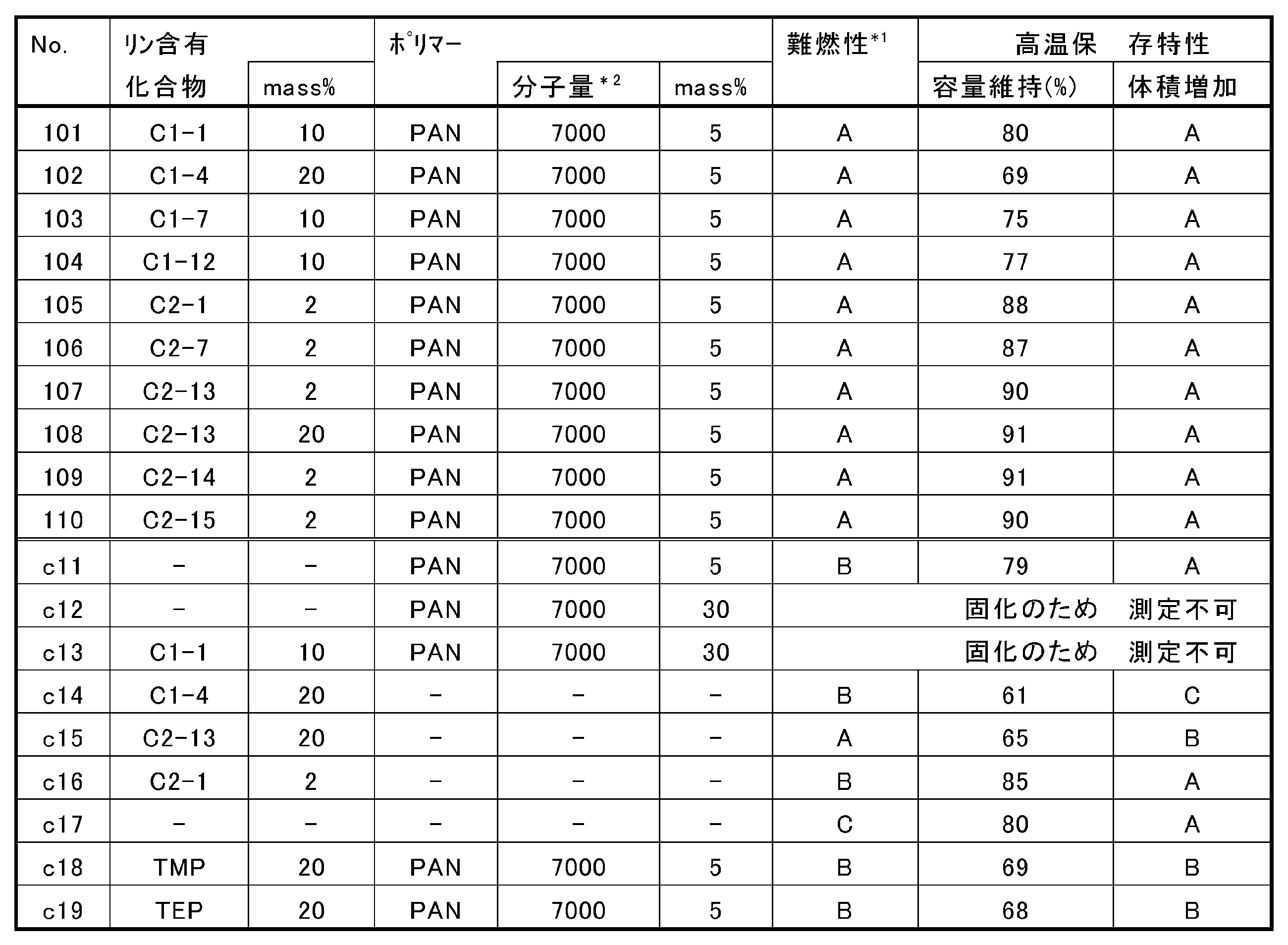
TMP:リン酸トリメチル
TEP:リン酸トリエチル
PAN:ポリアクリロニトリル
*1:電解液の難燃性評価の結果を表す。
*2:重量平均分子量
上記の結果より、本発明のリン含有化合物とポリマーを特定量で配合した非水二次電池用電解液を用いることにより、高い難燃性と優れた高温保存特性(容量維持、体積増加抑制)を実現することができることが分かる。
(実施例2)
(電解液の調製)
表2に記載のポリマー及びリン含有化合物を使用する以外、実施例1と同様にして電解液を調製し、二次電池の各性能評価試験を行った。二次電池もその材料および構造において、実施例1と同じ2032形コイン電池を作製して用いた。結果は以下のとおりである。
(電解液の調製)
表2に記載のポリマー及びリン含有化合物を使用する以外、実施例1と同様にして電解液を調製し、二次電池の各性能評価試験を行った。二次電池もその材料および構造において、実施例1と同じ2032形コイン電池を作製して用いた。結果は以下のとおりである。
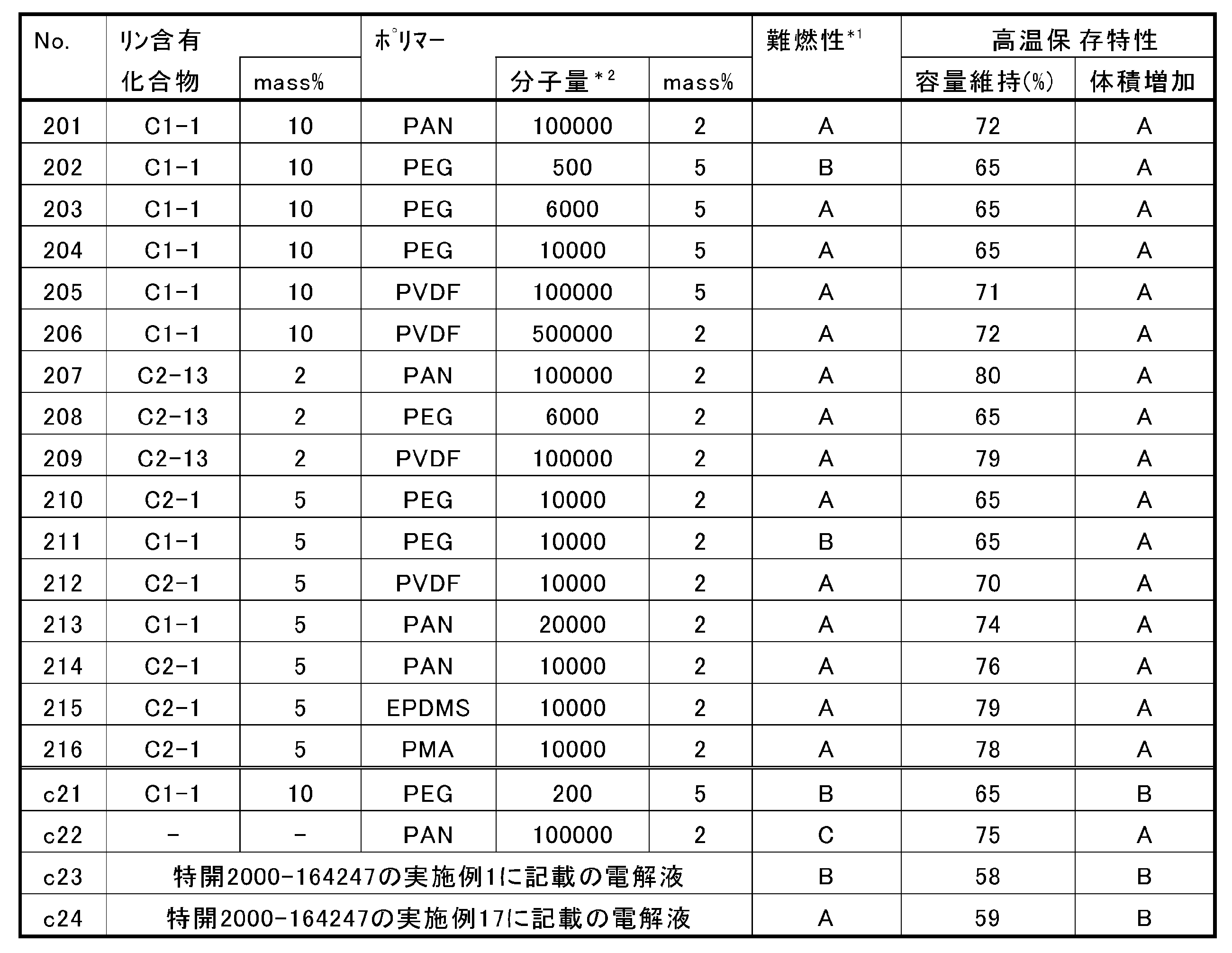
PAN:ポリアクリロニトリル
PEG:ポリエチレングリコール
PVDF:ポリフッ化ビニリデン
EPDMS:ポリエーテル変性ポリジメチルシロキサン
PMA:ポリアクリル酸メチル
*1:電解液難燃性評価を表す。
*2:重量平均分子量
上記の結果より分かるとおり、本発明の非水二次電池用電解液によれば、特定のリン含有化合物と組みあせてさまざまな高分子化合物を適用することができ、良好な難燃性と高温保存特性とを両立して実現することができる。
<特開2000-164247>
――――――――――――――――――――――――
EC DMC TMP
質量部 質量部 質量部
――――――――――――――――――――――――
実施例1 37.6 56.7 5.2
実施例17 30.2 45.3 20.5
――――――――――――――――――――――――
<高分子化合物> 上記処方のつづき
――――――――――――――――――――――――――
種類 分子量 質量部
――――――――――――――――――――――――――
実施例1 PEGDME 220 0.5
実施例17 PEG 10000 4.0
――――――――――――――――――――――――――
上記比率のEC/DMC/TMPの混合溶媒に電解質のLiPF6を溶解し、電解質濃度1.0mol/リットルの非水電解液を調製した。
EC:エチレンカーボネート
DMC:ジメチルカーボネート
TMP:リン酸トリメチル
PEGDME:ポリエチレングリコールジメチルエーテル
PEG:ポリエチレングリコール
――――――――――――――――――――――――
EC DMC TMP
質量部 質量部 質量部
――――――――――――――――――――――――
実施例1 37.6 56.7 5.2
実施例17 30.2 45.3 20.5
――――――――――――――――――――――――
<高分子化合物> 上記処方のつづき
――――――――――――――――――――――――――
種類 分子量 質量部
――――――――――――――――――――――――――
実施例1 PEGDME 220 0.5
実施例17 PEG 10000 4.0
――――――――――――――――――――――――――
上記比率のEC/DMC/TMPの混合溶媒に電解質のLiPF6を溶解し、電解質濃度1.0mol/リットルの非水電解液を調製した。
EC:エチレンカーボネート
DMC:ジメチルカーボネート
TMP:リン酸トリメチル
PEGDME:ポリエチレングリコールジメチルエーテル
PEG:ポリエチレングリコール
(実施例3)
実施例1に対して、正極活物質をNMCからLiCoO2(LCO)に変えた以外同様にして、試験用の二次電池を作製した。これを用いて、実施例1と同様に難燃性評価、高温保存特性(容量維持率、体積増加量)の試験を行ったところ、下記のような結果が得られた。この結果から、本発明のリン含有化合物は、特に高電位の正極材料(NMC等)と組み合わせたときに大きな差を生じ顕著な効果が発揮されることが分かる。なお、評価結果は難燃性以外、c31またはc41の性能を100としたときのインデックス(相対値)で示している。
実施例1に対して、正極活物質をNMCからLiCoO2(LCO)に変えた以外同様にして、試験用の二次電池を作製した。これを用いて、実施例1と同様に難燃性評価、高温保存特性(容量維持率、体積増加量)の試験を行ったところ、下記のような結果が得られた。この結果から、本発明のリン含有化合物は、特に高電位の正極材料(NMC等)と組み合わせたときに大きな差を生じ顕著な効果が発揮されることが分かる。なお、評価結果は難燃性以外、c31またはc41の性能を100としたときのインデックス(相対値)で示している。
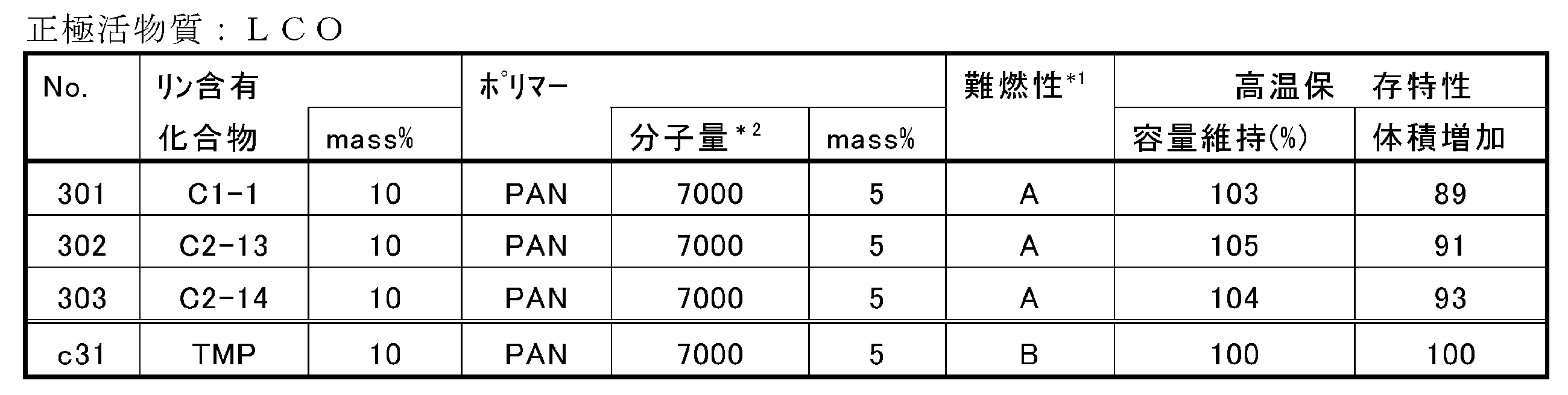
*2:重量平均分子量

*2:重量平均分子量
(実施例4)
上記の試験101に対して、リン含有化合物をC1-1から、C1-14、C1-19、C2-11、C2-17に代えた以外同様にして、電解液の試料を調製した。各電解液について、難燃性、高温保存特性(容量維持率、体積増加)を評価した。その結果、いずれも試験101とほぼ同レベルの良好な結果を示した。
上記の試験101に対して、リン含有化合物をC1-1から、C1-14、C1-19、C2-11、C2-17に代えた以外同様にして、電解液の試料を調製した。各電解液について、難燃性、高温保存特性(容量維持率、体積増加)を評価した。その結果、いずれも試験101とほぼ同レベルの良好な結果を示した。
本発明をその実施態様とともに説明したが、我々は特に指定しない限り我々の発明を説明のどの細部においても限定しようとするものではなく、添付の請求の範囲に示した発明の精神と範囲に反することなく幅広く解釈されるべきであると考える。
本願は、2013年7月29日に日本国で特許出願された特願2013-157190に基づく優先権を主張するものであり、これらはここに参照してその内容を本明細書の記載の一部として取り込む。
本願は、2013年7月29日に日本国で特許出願された特願2013-157190に基づく優先権を主張するものであり、これらはここに参照してその内容を本明細書の記載の一部として取り込む。
C 正極(正極合材)
1 正極導電材(集電体)
2 正極活物質層
A 負極(負極合材)
3 負極導電材(集電体)
4 負極活物質層
5 非水電解液
6 動作手段
7 配線
9 セパレータ
10 リチウムイオン二次電池
12 セパレータ
14 正極シート
16 負極シート
18 負極を兼ねる外装缶
20 絶縁板
22 封口板
24 正極集電
26 ガスケット
28 圧力感応弁体
30 電流遮断素子
100 有底筒型形状リチウム二次電池
61 負極端子
62 負極
63 セパレータ+電解液
64 ガスケット
65 正極
66 正極缶
1 正極導電材(集電体)
2 正極活物質層
A 負極(負極合材)
3 負極導電材(集電体)
4 負極活物質層
5 非水電解液
6 動作手段
7 配線
9 セパレータ
10 リチウムイオン二次電池
12 セパレータ
14 正極シート
16 負極シート
18 負極を兼ねる外装缶
20 絶縁板
22 封口板
24 正極集電
26 ガスケット
28 圧力感応弁体
30 電流遮断素子
100 有底筒型形状リチウム二次電池
61 負極端子
62 負極
63 セパレータ+電解液
64 ガスケット
65 正極
66 正極缶
Claims (12)
- 電解質と、リンおよび窒素原子を有する化合物またはリンおよびハロゲン原子を有する化合物からなるリン含有化合物と、重量平均分子量500以上の高分子化合物と、非水溶剤とを含有する非水二次電池用電解液であって、上記高分子化合物が0.1質量%以上20質量%以下で液中に溶解している二次電池用電解液。
- 上記リン含有化合物が、リン酸エステル化合物、リン酸アミド化合物、およびホスファゼン化合物のうちの少なくとも1種を含む請求項1に記載の非水二次電池用電解液。
- 上記高分子化合物が、ポリアクリロニトリル、ポリ(メタ)アクリル酸エステル、ポリフッ化ビニリデン、ポリシロキサン、およびポリアルキレングリコールからなる群から選ばれる請求項1または2に記載の非水二次電池用電解液。
- 電解液の25℃における粘度が1000mPa・s以下で液状である請求項1~3のいずれか1項に記載の非水二次電池用電解液。
- 上記高分子化合物の添加量が0.1質量%~10質量%である請求項1~4のいずれか1項に記載の非水二次電池用電解液。
- 上記高分子化合物の重量平均分子量が500以上100万未満である請求項1~5のいずれか1項に記載の非水二次電池用電解液。
- 上記リン含有化合物がホスファゼン化合物である請求項1~6のいずれか1項に記載の非水二次電池用電解液。
- 上記リン含有化合物が下記式(1)で表される化合物または下記式(2)で表される部分構造を有する化合物である請求項1~6のいずれか1項に記載の非水二次電池用電解液。

(複数のR21はそれぞれ独立に1価の置換基を表す。近接のR21は置換基同士が環を形成していても良い。nは2以上の整数を表し、結合端同士が結合して環を形成しても良い。) - 上記高分子化合物が、側鎖および主鎖の少なくともいずれかに酸素原子、窒素原子、またはハロゲン原子を有する請求項1~8のいずれか1項に記載の非水二次電池用電解液。
- 上記リン含有化合物を0.5質量%以上50質量%で含有する請求項1~9のいずれか1項に記載の非水二次電池用電解液。
- 請求項1~10のいずれか1項に記載の非水二次電池用電解液と、正極と、負極とを具備する非水二次電池。
- 上記正極の活物質がニッケル及び/又はマンガンを含む請求項11に記載の非水二次電池。
Applications Claiming Priority (2)
| Application Number | Priority Date | Filing Date | Title |
|---|---|---|---|
| JP2013-157190 | 2013-07-29 | ||
| JP2013157190A JP2015026589A (ja) | 2013-07-29 | 2013-07-29 | 非水二次電池用電解液および非水二次電池 |
Publications (1)
| Publication Number | Publication Date |
|---|---|
| WO2015016189A1 true WO2015016189A1 (ja) | 2015-02-05 |
Family
ID=52431722
Family Applications (1)
| Application Number | Title | Priority Date | Filing Date |
|---|---|---|---|
| PCT/JP2014/069852 Ceased WO2015016189A1 (ja) | 2013-07-29 | 2014-07-28 | 非水二次電池用電解液および非水二次電池 |
Country Status (2)
| Country | Link |
|---|---|
| JP (1) | JP2015026589A (ja) |
| WO (1) | WO2015016189A1 (ja) |
Cited By (4)
| Publication number | Priority date | Publication date | Assignee | Title |
|---|---|---|---|---|
| CN111864196A (zh) * | 2019-04-30 | 2020-10-30 | Sk新技术株式会社 | 锂二次电池 |
| JP2022116941A (ja) * | 2021-01-29 | 2022-08-10 | トヨタ自動車株式会社 | リチウムイオン二次電池用非水系電解液およびリチウムイオン二次電池 |
| WO2023193230A1 (zh) * | 2022-04-08 | 2023-10-12 | 宁德时代新能源科技股份有限公司 | 电解液、二次电池、电池模块、电池包和用电装置 |
| WO2024095972A1 (ja) * | 2022-10-31 | 2024-05-10 | 富士フイルム株式会社 | 非水電解液二次電池用電解液、非水電解液二次電池、及び非水電解液二次電池の製造方法 |
Families Citing this family (5)
| Publication number | Priority date | Publication date | Assignee | Title |
|---|---|---|---|---|
| DE102015106811B4 (de) * | 2015-04-30 | 2022-02-03 | VON ARDENNE Asset GmbH & Co. KG | Verwendung einer Folienstruktur in einem Energiespeicher und Energiespeicher |
| DE102015218653A1 (de) * | 2015-09-28 | 2017-03-30 | Wacker Chemie Ag | Cyclische Phosphonamide als Elektrolytbestandteil für Lithium-Ionen-Batterien |
| KR20180129492A (ko) | 2017-05-26 | 2018-12-05 | 삼성전자주식회사 | 포스파이트계 첨가제를 포함하는 리튬이차전지 |
| JP7375511B2 (ja) * | 2019-12-02 | 2023-11-08 | 株式会社Gsユアサ | 非水電解質、非水電解質蓄電素子及びその製造方法 |
| JP7601086B2 (ja) * | 2020-02-28 | 2024-12-17 | 日本ゼオン株式会社 | 電気化学デバイス用電解液、可塑性組成物、用途及び製造方法 |
Citations (10)
| Publication number | Priority date | Publication date | Assignee | Title |
|---|---|---|---|---|
| JPS61133582A (ja) * | 1984-12-04 | 1986-06-20 | Hitachi Ltd | 二次電池 |
| JPH09293534A (ja) * | 1996-04-26 | 1997-11-11 | Nippon Telegr & Teleph Corp <Ntt> | リチウム電池用電解液組成物 |
| JPH1021958A (ja) * | 1996-07-04 | 1998-01-23 | Shin Kobe Electric Mach Co Ltd | リチウムイオン二次電池 |
| JPH11185803A (ja) * | 1997-12-22 | 1999-07-09 | Sony Corp | 非水電解液二次電池及びその製造方法 |
| JP2000164247A (ja) * | 1998-11-24 | 2000-06-16 | Mitsui Chemicals Inc | 非水電解液およびそれを用いた二次電池 |
| JP2002252030A (ja) * | 2001-02-22 | 2002-09-06 | Fuji Photo Film Co Ltd | 電解質組成物及びその製造方法、非水電解質二次電池 |
| JP2002359000A (ja) * | 2001-03-28 | 2002-12-13 | Toshiba Corp | 非水電解液および非水電解液二次電池 |
| JP2007080651A (ja) * | 2005-09-14 | 2007-03-29 | Bridgestone Corp | ポリマーゲル電解質及びそれを用いたポリマー電池 |
| JP2012089468A (ja) * | 2010-09-22 | 2012-05-10 | Fujifilm Corp | 非水二次電池用電解液及びリチウム二次電池 |
| JP2013033663A (ja) * | 2011-08-02 | 2013-02-14 | Mitsubishi Chemicals Corp | 非水系電解液及びそれを用いた非水系電解液電池 |
Family Cites Families (6)
| Publication number | Priority date | Publication date | Assignee | Title |
|---|---|---|---|---|
| JP2009158460A (ja) * | 2007-12-05 | 2009-07-16 | Sony Corp | 非水電解液二次電池 |
| US9123973B2 (en) * | 2010-12-22 | 2015-09-01 | Samsung Sdi Co., Ltd. | Electrolyte for lithium secondary battery and lithium secondary battery comprising the same |
| JP5780481B2 (ja) * | 2011-01-24 | 2015-09-16 | 積水化学工業株式会社 | 電解質、電解質膜、リチウムイオン二次電池及びホスファゼン化合物 |
| JP5777982B2 (ja) * | 2011-09-02 | 2015-09-16 | 株式会社Nttファシリティーズ | 非水電解液電池 |
| JP5801765B2 (ja) * | 2012-06-20 | 2015-10-28 | 富士フイルム株式会社 | 非水二次電池用電解液および非水電解液二次電池 |
| JP2014078434A (ja) * | 2012-10-11 | 2014-05-01 | Fujifilm Corp | 非水電解液二次電池 |
-
2013
- 2013-07-29 JP JP2013157190A patent/JP2015026589A/ja not_active Abandoned
-
2014
- 2014-07-28 WO PCT/JP2014/069852 patent/WO2015016189A1/ja not_active Ceased
Patent Citations (10)
| Publication number | Priority date | Publication date | Assignee | Title |
|---|---|---|---|---|
| JPS61133582A (ja) * | 1984-12-04 | 1986-06-20 | Hitachi Ltd | 二次電池 |
| JPH09293534A (ja) * | 1996-04-26 | 1997-11-11 | Nippon Telegr & Teleph Corp <Ntt> | リチウム電池用電解液組成物 |
| JPH1021958A (ja) * | 1996-07-04 | 1998-01-23 | Shin Kobe Electric Mach Co Ltd | リチウムイオン二次電池 |
| JPH11185803A (ja) * | 1997-12-22 | 1999-07-09 | Sony Corp | 非水電解液二次電池及びその製造方法 |
| JP2000164247A (ja) * | 1998-11-24 | 2000-06-16 | Mitsui Chemicals Inc | 非水電解液およびそれを用いた二次電池 |
| JP2002252030A (ja) * | 2001-02-22 | 2002-09-06 | Fuji Photo Film Co Ltd | 電解質組成物及びその製造方法、非水電解質二次電池 |
| JP2002359000A (ja) * | 2001-03-28 | 2002-12-13 | Toshiba Corp | 非水電解液および非水電解液二次電池 |
| JP2007080651A (ja) * | 2005-09-14 | 2007-03-29 | Bridgestone Corp | ポリマーゲル電解質及びそれを用いたポリマー電池 |
| JP2012089468A (ja) * | 2010-09-22 | 2012-05-10 | Fujifilm Corp | 非水二次電池用電解液及びリチウム二次電池 |
| JP2013033663A (ja) * | 2011-08-02 | 2013-02-14 | Mitsubishi Chemicals Corp | 非水系電解液及びそれを用いた非水系電解液電池 |
Cited By (8)
| Publication number | Priority date | Publication date | Assignee | Title |
|---|---|---|---|---|
| CN111864196A (zh) * | 2019-04-30 | 2020-10-30 | Sk新技术株式会社 | 锂二次电池 |
| JP2022116941A (ja) * | 2021-01-29 | 2022-08-10 | トヨタ自動車株式会社 | リチウムイオン二次電池用非水系電解液およびリチウムイオン二次電池 |
| JP7678675B2 (ja) | 2021-01-29 | 2025-05-16 | トヨタ自動車株式会社 | リチウムイオン二次電池用非水系電解液およびリチウムイオン二次電池 |
| WO2023193230A1 (zh) * | 2022-04-08 | 2023-10-12 | 宁德时代新能源科技股份有限公司 | 电解液、二次电池、电池模块、电池包和用电装置 |
| CN117223141A (zh) * | 2022-04-08 | 2023-12-12 | 宁德时代新能源科技股份有限公司 | 电解液、二次电池、电池模块、电池包和用电装置 |
| US20240021864A1 (en) * | 2022-04-08 | 2024-01-18 | Contemporary Amperex Technology Co., Limited | Electrolyte, secondary battery, battery module, battery pack and electrical device |
| EP4283745A4 (en) * | 2022-04-08 | 2024-05-01 | Contemporary Amperex Technology Co., Limited | ELECTROLYTE SOLUTION, SECONDARY BATTERY, BATTERY MODULE, BATTERY PACK AND ELECTRICAL DEVICE |
| WO2024095972A1 (ja) * | 2022-10-31 | 2024-05-10 | 富士フイルム株式会社 | 非水電解液二次電池用電解液、非水電解液二次電池、及び非水電解液二次電池の製造方法 |
Also Published As
| Publication number | Publication date |
|---|---|
| JP2015026589A (ja) | 2015-02-05 |
Similar Documents
| Publication | Publication Date | Title |
|---|---|---|
| JP6376709B2 (ja) | 非水二次電池用電解液および非水二次電池、これらに用いられる添加剤 | |
| JP6485956B2 (ja) | 非水電解液および非水二次電池 | |
| JP6071600B2 (ja) | 非水二次電池用電解液および非水二次電池、電解液用添加剤 | |
| JP2014127354A (ja) | 非水二次電池用電解液および非水二次電池、電解液用添加剤 | |
| JP6154145B2 (ja) | 非水二次電池用電解液および非水二次電池 | |
| JP6047458B2 (ja) | 非水二次電池 | |
| WO2015016189A1 (ja) | 非水二次電池用電解液および非水二次電池 | |
| JP6238411B2 (ja) | 非水二次電池用電解液および非水二次電池 | |
| WO2015016187A1 (ja) | 非水二次電池用電解液および非水二次電池 | |
| CN105393397B (zh) | 非水电解液及非水二次电池 | |
| JPWO2018135395A1 (ja) | 非水二次電池用電解液、非水二次電池及び金属錯体 | |
| JP6588965B2 (ja) | 電解液および非水二次電池 | |
| JP2014235986A (ja) | 非水二次電池用電解液および非水二次電池 | |
| JP5886160B2 (ja) | 非水二次電池用電解液、非水二次電池電解液用キット及び非水電解液二次電池 | |
| JP2016162523A (ja) | 非水二次電池用電解液および非水二次電池 | |
| WO2014157533A1 (ja) | 非水二次電池および非水二次電池用電解液 | |
| JPWO2018016519A1 (ja) | 非水二次電池用電解液および非水二次電池 | |
| JP2014063668A (ja) | 非水二次電池用電解液及び二次電池 | |
| JP6391028B2 (ja) | 電解液、リチウムイオン電池およびリチウムイオンキャパシタ | |
| JP6583915B2 (ja) | 非水電解液および非水二次電池 | |
| JPWO2018016444A1 (ja) | 非水二次電池用電解液および非水二次電池 | |
| JP2014220053A (ja) | 非水二次電池および非水二次電池用電解液 | |
| JP2015026587A (ja) | 非水二次電池用電解液、非水二次電池電解液用添加剤及び非水二次電池 | |
| WO2014156428A1 (ja) | 非水二次電池用電解液及び非水二次電池 |
Legal Events
| Date | Code | Title | Description |
|---|---|---|---|
| 121 | Ep: the epo has been informed by wipo that ep was designated in this application |
Ref document number: 14831166 Country of ref document: EP Kind code of ref document: A1 |
|
| NENP | Non-entry into the national phase |
Ref country code: DE |
|
| 122 | Ep: pct application non-entry in european phase |
Ref document number: 14831166 Country of ref document: EP Kind code of ref document: A1 |