WO2015015855A1 - ボイラ燃料用石炭 - Google Patents
ボイラ燃料用石炭 Download PDFInfo
- Publication number
- WO2015015855A1 WO2015015855A1 PCT/JP2014/062419 JP2014062419W WO2015015855A1 WO 2015015855 A1 WO2015015855 A1 WO 2015015855A1 JP 2014062419 W JP2014062419 W JP 2014062419W WO 2015015855 A1 WO2015015855 A1 WO 2015015855A1
- Authority
- WO
- WIPO (PCT)
- Prior art keywords
- coal
- calcium
- boiler fuel
- boiler
- fuel
- Prior art date
- Legal status (The legal status is an assumption and is not a legal conclusion. Google has not performed a legal analysis and makes no representation as to the accuracy of the status listed.)
- Ceased
Links
Images


Classifications
-
- C—CHEMISTRY; METALLURGY
- C10—PETROLEUM, GAS OR COKE INDUSTRIES; TECHNICAL GASES CONTAINING CARBON MONOXIDE; FUELS; LUBRICANTS; PEAT
- C10L—FUELS NOT OTHERWISE PROVIDED FOR; NATURAL GAS; SYNTHETIC NATURAL GAS OBTAINED BY PROCESSES NOT COVERED BY SUBCLASSES C10G OR C10K; LIQUIFIED PETROLEUM GAS; USE OF ADDITIVES TO FUELS OR FIRES; FIRE-LIGHTERS
- C10L9/00—Treating solid fuels to improve their combustion
- C10L9/10—Treating solid fuels to improve their combustion by using additives
-
- C—CHEMISTRY; METALLURGY
- C10—PETROLEUM, GAS OR COKE INDUSTRIES; TECHNICAL GASES CONTAINING CARBON MONOXIDE; FUELS; LUBRICANTS; PEAT
- C10L—FUELS NOT OTHERWISE PROVIDED FOR; NATURAL GAS; SYNTHETIC NATURAL GAS OBTAINED BY PROCESSES NOT COVERED BY SUBCLASSES C10G OR C10K; LIQUIFIED PETROLEUM GAS; USE OF ADDITIVES TO FUELS OR FIRES; FIRE-LIGHTERS
- C10L5/00—Solid fuels
- C10L5/02—Solid fuels such as briquettes consisting mainly of carbonaceous materials of mineral or non-mineral origin
- C10L5/04—Raw material of mineral origin to be used; Pretreatment thereof
-
- F—MECHANICAL ENGINEERING; LIGHTING; HEATING; WEAPONS; BLASTING
- F23—COMBUSTION APPARATUS; COMBUSTION PROCESSES
- F23K—FEEDING FUEL TO COMBUSTION APPARATUS
- F23K1/00—Preparation of lump or pulverulent fuel in readiness for delivery to combustion apparatus
-
- C—CHEMISTRY; METALLURGY
- C10—PETROLEUM, GAS OR COKE INDUSTRIES; TECHNICAL GASES CONTAINING CARBON MONOXIDE; FUELS; LUBRICANTS; PEAT
- C10L—FUELS NOT OTHERWISE PROVIDED FOR; NATURAL GAS; SYNTHETIC NATURAL GAS OBTAINED BY PROCESSES NOT COVERED BY SUBCLASSES C10G OR C10K; LIQUIFIED PETROLEUM GAS; USE OF ADDITIVES TO FUELS OR FIRES; FIRE-LIGHTERS
- C10L2200/00—Components of fuel compositions
- C10L2200/02—Inorganic or organic compounds containing atoms other than C, H or O, e.g. organic compounds containing heteroatoms or metal organic complexes
- C10L2200/0204—Metals or alloys
- C10L2200/0213—Group II metals: Be, Mg, Ca, Sr, Ba, Ra, Zn, Cd, Hg
-
- C—CHEMISTRY; METALLURGY
- C10—PETROLEUM, GAS OR COKE INDUSTRIES; TECHNICAL GASES CONTAINING CARBON MONOXIDE; FUELS; LUBRICANTS; PEAT
- C10L—FUELS NOT OTHERWISE PROVIDED FOR; NATURAL GAS; SYNTHETIC NATURAL GAS OBTAINED BY PROCESSES NOT COVERED BY SUBCLASSES C10G OR C10K; LIQUIFIED PETROLEUM GAS; USE OF ADDITIVES TO FUELS OR FIRES; FIRE-LIGHTERS
- C10L2200/00—Components of fuel compositions
- C10L2200/02—Inorganic or organic compounds containing atoms other than C, H or O, e.g. organic compounds containing heteroatoms or metal organic complexes
- C10L2200/0204—Metals or alloys
- C10L2200/024—Group VIII metals: Fe, Co, Ni, Ru, Rh, Pd, Os, Ir, Pt
-
- C—CHEMISTRY; METALLURGY
- C10—PETROLEUM, GAS OR COKE INDUSTRIES; TECHNICAL GASES CONTAINING CARBON MONOXIDE; FUELS; LUBRICANTS; PEAT
- C10L—FUELS NOT OTHERWISE PROVIDED FOR; NATURAL GAS; SYNTHETIC NATURAL GAS OBTAINED BY PROCESSES NOT COVERED BY SUBCLASSES C10G OR C10K; LIQUIFIED PETROLEUM GAS; USE OF ADDITIVES TO FUELS OR FIRES; FIRE-LIGHTERS
- C10L2290/00—Fuel preparation or upgrading, processes or apparatus therefore, comprising specific process steps or apparatus units
- C10L2290/02—Combustion or pyrolysis
-
- C—CHEMISTRY; METALLURGY
- C10—PETROLEUM, GAS OR COKE INDUSTRIES; TECHNICAL GASES CONTAINING CARBON MONOXIDE; FUELS; LUBRICANTS; PEAT
- C10L—FUELS NOT OTHERWISE PROVIDED FOR; NATURAL GAS; SYNTHETIC NATURAL GAS OBTAINED BY PROCESSES NOT COVERED BY SUBCLASSES C10G OR C10K; LIQUIFIED PETROLEUM GAS; USE OF ADDITIVES TO FUELS OR FIRES; FIRE-LIGHTERS
- C10L2290/00—Fuel preparation or upgrading, processes or apparatus therefore, comprising specific process steps or apparatus units
- C10L2290/08—Drying or removing water
-
- C—CHEMISTRY; METALLURGY
- C10—PETROLEUM, GAS OR COKE INDUSTRIES; TECHNICAL GASES CONTAINING CARBON MONOXIDE; FUELS; LUBRICANTS; PEAT
- C10L—FUELS NOT OTHERWISE PROVIDED FOR; NATURAL GAS; SYNTHETIC NATURAL GAS OBTAINED BY PROCESSES NOT COVERED BY SUBCLASSES C10G OR C10K; LIQUIFIED PETROLEUM GAS; USE OF ADDITIVES TO FUELS OR FIRES; FIRE-LIGHTERS
- C10L2290/00—Fuel preparation or upgrading, processes or apparatus therefore, comprising specific process steps or apparatus units
- C10L2290/14—Injection, e.g. in a reactor or a fuel stream during fuel production
- C10L2290/146—Injection, e.g. in a reactor or a fuel stream during fuel production of water
-
- C—CHEMISTRY; METALLURGY
- C10—PETROLEUM, GAS OR COKE INDUSTRIES; TECHNICAL GASES CONTAINING CARBON MONOXIDE; FUELS; LUBRICANTS; PEAT
- C10L—FUELS NOT OTHERWISE PROVIDED FOR; NATURAL GAS; SYNTHETIC NATURAL GAS OBTAINED BY PROCESSES NOT COVERED BY SUBCLASSES C10G OR C10K; LIQUIFIED PETROLEUM GAS; USE OF ADDITIVES TO FUELS OR FIRES; FIRE-LIGHTERS
- C10L2290/00—Fuel preparation or upgrading, processes or apparatus therefore, comprising specific process steps or apparatus units
- C10L2290/54—Specific separation steps for separating fractions, components or impurities during preparation or upgrading of a fuel
-
- C—CHEMISTRY; METALLURGY
- C10—PETROLEUM, GAS OR COKE INDUSTRIES; TECHNICAL GASES CONTAINING CARBON MONOXIDE; FUELS; LUBRICANTS; PEAT
- C10L—FUELS NOT OTHERWISE PROVIDED FOR; NATURAL GAS; SYNTHETIC NATURAL GAS OBTAINED BY PROCESSES NOT COVERED BY SUBCLASSES C10G OR C10K; LIQUIFIED PETROLEUM GAS; USE OF ADDITIVES TO FUELS OR FIRES; FIRE-LIGHTERS
- C10L2290/00—Fuel preparation or upgrading, processes or apparatus therefore, comprising specific process steps or apparatus units
- C10L2290/54—Specific separation steps for separating fractions, components or impurities during preparation or upgrading of a fuel
- C10L2290/545—Washing, scrubbing, stripping, scavenging for separating fractions, components or impurities during preparation or upgrading of a fuel
-
- F—MECHANICAL ENGINEERING; LIGHTING; HEATING; WEAPONS; BLASTING
- F23—COMBUSTION APPARATUS; COMBUSTION PROCESSES
- F23K—FEEDING FUEL TO COMBUSTION APPARATUS
- F23K2201/00—Pretreatment of solid fuel
- F23K2201/50—Blending
- F23K2201/505—Blending with additives
Definitions
- the present invention relates to coal for boiler fuel used as fuel for coal-fired boilers.
- Patent Document 1 calcium oxide (CaO), calcium carbonate (CaCO 3 ), calcium hydroxide (Ca (OH) 2 ), and other calcium compounds (such as calcium oxide (CaO 3 )) are heated by laser irradiation or plasma heating. It is possible to remove sulfur oxide from exhaust gas by generating ultrafine particles (1 to 100 nm) of CaO) and blowing the ultrafine particles into a furnace or flue to react with sulfur oxides in the exhaust gas. is suggesting.
- the first invention made in order to solve the above-mentioned problem is a coal for boiler fuel used as a fuel for a coal-fired boiler, and a raw material coal composed of lignite or subbituminous coal, sulfur in the raw coal. It is a coal for boiler fuel characterized by having a metamorphic coal in which an equimolar amount or more of calcium is supported with respect to the molar amount of the above.
- the second invention is the boiler fuel coal according to the first invention, wherein the modified coal further carries iron at a ratio of 0.1 to 5% by weight with respect to the dry weight of the raw coal. It is the coal for boiler fuel characterized by being made.
- the third invention is the boiler fuel coal according to the first or second invention, wherein the modified coal contains calcium in a ratio of 4 to 10% by weight with respect to the dry weight of the raw coal. It is supported and consists of a mixed coal obtained by mixing the modified coal with a basic coal composed of at least one of bituminous coal, subbituminous coal, and lignite so that the ratio of the modified coal is 10 to 50% by weight. This is coal for boiler fuel.
- the fourth invention is a coal for boiler fuel, characterized in that it is subjected to dry distillation treatment in the coal for boiler fuel according to any one of the first to third inventions.
- a fifth invention is a boiler fuel coal characterized in that the boiler fuel coal according to the fourth invention is further inactivated.
- the coal for boiler fuel is a coal for boiler fuel that is used as a fuel for a coal-fired boiler, and is a raw material coal composed of lignite or sub-bituminous coal and a molar amount of sulfur (S) in the raw coal. It consists of a modified coal on which an equimolar amount of calcium (Ca) is supported.
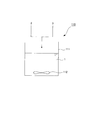
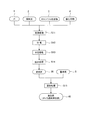
- the coal for boiler fuel is composed of water 1 and the raw coal 2 in which the particle size (about 50 mm) is pulverized (maximum particle size is about 5 mm) ( Sulfur content of 0.4 to 1.2% by weight (when dry)) and calcium compound 3 such as calcium oxide (CaO), calcium carbonate (CaCO 3 ) and calcium hydroxide (Ca (OH) 2 ) It is put into a treatment tank 111 of the apparatus 110 and stirred with a stirring blade 112 (pH 8 to 12), and calcium ions are eluted and contained in the water 1 from the calcium compound 3 and brought into contact with the raw coal 2.
- the particle size about 50 mm
- maximum particle size is about 5 mm
- calcium compound 3 such as calcium oxide (CaO), calcium carbonate (CaCO 3 ) and calcium hydroxide (Ca (OH) 2 )
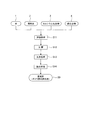
- the raw carbon 2 After the ion exchange of the hydrogen ions of hydroxyl groups (—OH) and carboxyl groups (—COOH) present in 2 and the calcium ions, the raw carbon 2 is loaded with calcium in the above-mentioned amount (in FIG. 1, 11) Separation from the inside of the treatment tank 111 to the outside by filtration or the like (S12 in FIG. 1), and if necessary, a water washing treatment (S13 in FIG. 1) followed by a dehydration treatment (S14 in FIG. 1). Therefore, it can be easily obtained.
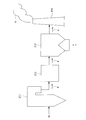
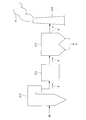
- the boiler fuel coal (metamorphic coal) 10 manufactured in this way is dried and pulverized (particle size: around 0.1 mm) and supplied as fuel into the boiler furnace 211 as shown in FIG. Then, high-temperature combustion (temperature: 1500 to 1700 ° C.) is performed to form exhaust gas 6.
- the sulfur oxide in the exhaust gas 6 easily reacts with calcium oxide having a very large specific surface area in the form of ultrafine particles to become calcium sulfate (CaSO 4 ).
- the exhaust gas 6 in which the sulfur oxide is calcium sulfate is heat-exchanged by the heat exchanger 212 and cooled, and then the solid matter 7 containing the calcium sulfate and the like is removed by the dust removing device 213 and then the chimney 214. Is discharged to the outside.
- ultrafine particles can be easily generated at low cost, and the cost for the boiler equipment is greatly increased. Can be reduced.
- the amount of calcium supported by the raw coal 2 needs to be equal to or greater than the molar amount of sulfur in the raw coal 2. This is because, if the amount of calcium carried by the raw coal 2 is less than an equimolar amount with respect to the molar amount of sulfur in the raw coal 2, the sulfur oxide generated with combustion is sufficiently removed. It is because it is not possible.
- bituminous coal As the raw coal 2, lignite and subbituminous coal can be applied, but it is difficult to apply bituminous coal. Because lignite and sub-bituminous coal have the necessary amount of hydroxyl groups (—OH), carboxyl groups (—COOH), etc., that carry calcium by ion exchange with calcium ions, bituminous coal has too few groups. This is because it is difficult to fully support calcium.
- the raw coal 2 carries calcium (Ca) in an equimolar amount or more with respect to the molar amount of sulfur (S) in the raw coal 2 and the raw coal. It is made of a modified coal further supporting iron (Fe) at a ratio of 0.1 to 5% by weight with respect to the dry weight of the charcoal 2.
- the boiler fuel coal includes water 1, the raw coal 2, the calcium compound 3, and an iron compound 4 such as iron sulfate (FeSO 4 ).
- an iron compound 4 such as iron sulfate (FeSO 4 ).
- it is placed in the processing tank 111 of the processing apparatus 110 and stirred with the stirring blade 112 (pH 8 to 12), and calcium ions are eluted and contained in the water 1 from the calcium compound 3.
- iron ions are eluted from the iron compound 4 into the water 1 and brought into contact with the raw coal 2 so that the hydroxyl ions (—OH) and carboxyl groups (—COOH) present in the raw coal 2
- hydroxyl ions and iron ions are ion-exchanged and calcium and iron are supported on the raw coal 2 in the above-described amounts (S11 in FIG. 4), respectively.
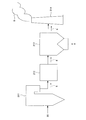
- the boiler fuel coal (metamorphic coal) 20 produced in this way is dried and pulverized (particle size: around 0.1 mm) and injected as fuel into the boiler furnace 211 as shown in FIG. It is supplied and burned at high temperature (temperature: 1500-1700 ° C.) to become exhaust gas 6.
- sulfur oxide (SOx) and calcium oxide are present in the exhaust gas 6 in the same manner as in the embodiment described above, and are generated from the iron (Fe) content carried on the coal 20 for boiler fuel.
- Iron oxide (FeO) is present in the form of ultrafine particles (particle diameter: several to several tens of nm).
- the sulfur oxide in the exhaust gas 6 reacts with calcium oxide to form calcium sulfate (CaSO 4 ) as in the above-described embodiment.
- the iron oxide in the exhaust gas 6 that has a very large specific surface area in the state of ultrafine particles is in contact with the carbon content of the coal 20 for boiler fuel with a very high probability, and the carbon content is ensured by the catalytic function. To burn (oxidize).
- the exhaust gas 6 in which the sulfur oxide is converted to calcium sulfate and the carbon component is reliably combusted (oxidized) is heat-exchanged by the heat exchanger 212 and cooled, and then contains the calcium sulfate and the like. After the solid matter 8 having a low fuel carbon content is removed by the dust removing device 213, it is discharged from the chimney 214 to the outside.
- the combustion efficiency in the boiler furnace 211 can be further improved as compared with the case of the above-described embodiment.
- the solid matter 8 recovered by the dust removing device 213 can be obtained as well as the same effects as those of the above-described embodiment.
- the amount of unburned carbon remaining therein can be reduced as compared with the above-described embodiment.
- the amount of iron carried by the raw coal 2 is preferably 0.1 to 5% by weight with respect to the dry weight of the raw coal 2. This is because, if the amount of iron carried by the raw coal 2 is less than 0.1% by weight with respect to the dry weight of the raw coal 2, the above-mentioned effects cannot be sufficiently expressed, and the raw material This is because if it exceeds 5% by weight with respect to the dry weight of the charcoal 2, the time required for the supporting treatment S11 becomes too long, and the criticality is reached in improving the combustion efficiency.
- the coal for boiler fuel according to the present embodiment is a ratio of 4 to 10% by weight with respect to the dry weight of the raw coal 2 (equal molar amount or more with respect to the molar amount of sulfur (S)).
- calcium (Ca) is supported, and modified coal in which iron (Fe) is further supported at a ratio of 0.1 to 5% by weight with respect to the dry weight of the raw coal 2, bituminous coal, subbituminous coal, lignite Basic coal comprising at least one of the above is composed of mixed coal mixed so that the ratio of the above-mentioned metamorphic coal is 10 to 50% by weight.
- the boiler fuel coal includes water 1, the raw coal 2, the calcium compound 3, and an iron compound 4 such as iron sulfate (FeSO 4 ).
- an iron compound 4 such as iron sulfate (FeSO 4 ).
- it is placed in the processing tank 111 of the processing apparatus 110 and stirred with the stirring blade 112 (pH 8 to 12), and calcium ions are eluted and contained in the water 1 from the calcium compound 3.
- iron ions are eluted from the iron compound 4 into the water 1 and brought into contact with the raw coal 2 so that the hydroxyl ions (—OH) and carboxyl groups (—COOH) present in the raw coal 2
- hydroxyl ions and iron ions are ion-exchanged and calcium and iron are supported on the raw coal 2 in the amounts described above (S11 in FIG. 6), respectively.
- the ratio of the basic coal 5 composed of at least one of bituminous coal, subbituminous coal, and brown coal and the modified coal 30 is 10 to 50% by weight.
- it can obtain easily by carrying out a mixing process (S15 in FIG. 6).
- the boiler fuel coal (mixed coal) 40 manufactured in this way is dried and pulverized (particle size: around 0.1 mm) and injected as fuel into the boiler furnace 211 as shown in FIG. It is supplied and burned at high temperature (temperature: 1500-1700 ° C.) to become exhaust gas 6.
- the calcium oxide in the exhaust gas 6 reacts with sulfur oxide (SOx) generated from sulfur (S) contained in the modified coal 30 and the basic coal 5 to become calcium sulfate (CaSO 4 ).
- SOx sulfur oxide
- S sulfur
- CaSO 4 calcium sulfate
- the iron oxide in the exhaust gas 6 comes into contact with the carbon content of the modified coal 30 and the basic coal 5 with a very high probability, and the carbon content is reliably burned (oxidized) by the catalytic function.
- the exhaust gas 6 in which the sulfur oxide is calcium sulfate and the carbon component is reliably combusted (oxidized) is heat-exchanged by the heat exchanger 212 and cooled, as in the above-described embodiment.
- the solid matter 8 is removed by the dust removing device 213 and then discharged from the chimney 214 to the outside.
- the molar amount equal to or more than the molar amount obtained by summing the molar amount of sulfur contained in the raw coal 2 and the molar amount of sulfur contained in the basic coal 5.
- the basic coal 5 on which calcium is not supported can also be supplied as fuel into the boiler furnace 211, and the modified coal 30 obtained by carrying calcium on the raw coal 2 is treated. The amount of use can be reduced.
- coal 40 for boiler fuel according to the present embodiment it is possible to obtain the same operational effects as in the case of the above-described embodiment, and more efficiently than in the case of the above-described embodiment. Manufacturing costs can be reduced.
- the ratio of the modified coal 30 in the boiler fuel coal (mixed coal) 40 is 10 to 50% by weight.
- the ratio of the basic coal 5 in the boiler fuel coal (mixed coal) 40 is 50 to 90%. It is preferable that it is% by weight. This is because if the ratio of the basic coal 5 in the coal for boiler fuel (mixed coal) 40 is less than 50% by weight, it becomes difficult to increase the production efficiency of the coal 40 for boiler fuel. This is because if it exceeds wt%, depending on the properties of the basic coal 5, there is a possibility that the sulfur oxide generated from the sulfur content in the basic coal 5 cannot be sufficiently made calcium sulfate.
- the amount of calcium supported by the raw coal 2 is preferably 4 to 10% by weight with respect to the dry weight of the raw coal 2. Because, if the amount of calcium carried by the raw coal 2 is less than 4% by weight with respect to the dry weight of the raw coal 2, depending on the properties of the basic coal 5 and the mixing ratio with the basic coal 5, If the sulfur oxide generated from the sulfur content in the basic coal 5 may not be sufficiently calcium sulfate, and if it exceeds 10% by weight with respect to the dry weight of the raw coal 2, the raw coal 2 This is because the time required for the supporting process S11 becomes too long, resulting in a decrease in manufacturing efficiency and difficulty in reducing manufacturing costs.
- the boiler fuel coal according to the present embodiment is obtained by subjecting the mixed coal 40 to dry distillation treatment and inactivation treatment.
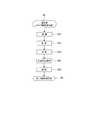
- the mixed coal 40 obtained in the same manner as in the third embodiment described above is put in a drying apparatus as shown in FIG.
- Moisture is removed by heating and drying (around 100 ° C.) (S21 in FIG. 8), and then transferred to a distillation apparatus and heated and distilled (around 400 ° C.) in an inert gas atmosphere such as nitrogen gas.
- this carbonized carbon is transferred into a cooling device and cooled (around 50 ° C.) (in FIG.
- the activated surface was inactivated in an inactivation atmosphere (oxygen concentration: several to 21% by volume) (S24 in FIG. 8). ), It can be easily obtained by forming into a granule with a granulator (S25 in FIG. 8).
- the boiler fuel coal 50 according to the present embodiment is obtained by subjecting the boiler fuel coal (mixed coal) 40 to a dry distillation treatment and an inactivation treatment.
- the boiler fuel coal 50 according to the present embodiment, most of the volatile components such as mercury are removed in advance, so that even if the boiler furnace 211 is supplied as fuel and burned, the exhaust gas
- the mercury content in 6 can be extremely reduced, and can be reduced below the emission regulation concentration.
- the mercury content in the exhaust gas 6 can be extremely reduced as well as the same effects as those of the embodiment described above. Therefore, it is not necessary to install the mercury removing device in the boiler equipment, and the cost related to the boiler equipment can be further reduced.
- the calcium compound 3 includes not only powders and granules of calcium oxide (CaO), calcium carbonate (CaCO 3 ), calcium hydroxide (Ca (OH) 2 ), etc., for example, gypsum waste materials and cement It is also possible to apply waste materials containing calcium, such as waste materials, shells, fly ash and steel slag.
- the calcium source can be recycled and the generation of waste is greatly suppressed. This is very preferable.
- iron sulfate in the solid material 8 collected by the dust removing device 213 is used as the iron compound 4
- the iron source can be recycled and the generation of waste is greatly suppressed. Is very preferable.
- the water 1 and the raw coal 2 are put into the treatment tank 111 of the treatment device 210 and the stirring blades are mixed. While stirring at 112, water 1 and the calcium compound 3 are placed in the elution tank 213 and stirred by the stirring blade 214, so that the water 1 in the elution tank 213 is eluted and contains calcium ions from the calcium compound 3.
- the water 1 is sent from the elution tank 213 through the filter 213a into the treatment tank 111, and the amount of water 1 sent into the treatment tank 111 is sent from the treatment tank 111 through the filter 111a to the elution tank.
- calcium can be supported on the raw coal 2 without mixing the calcium compound 3 (waste) and the raw coal 2. Since can be, so that the calcium compound 3 and (waste) and the raw coal 2 can be easily separated, highly preferred.
- mixed coal (boiler fuel coal) 40 obtained by mixing the modified coal 30 in which calcium and iron are supported on the raw coal 2 and the basic coal 5 is mixed.
- mixed coal coal for boiler fuel in which the raw coal 2 is mixed with the modified coal in which calcium is supported without supporting iron and the basic coal 5 is mixed. Even in this case, it can be applied in the same manner as in the above-described embodiment.
- the mixed coal (boiler fuel coal) 40 is placed in a drying device and dried by heating, and then transferred to a dry distillation device and heated to dry distillation. After the coal is transferred into the cooling device and cooled, it is transferred into the inactivation processing device and subjected to the inactivation treatment.
- the modified coal 30 and the basic coal 5 are mixed and mixed in a drying apparatus and dried by heating, and then transferred to a distillation apparatus and heated to dry distillation. Then, this carbonized coal is transferred into a cooling device and cooled, and then transferred into an inactivation processing device and subjected to an inactivation treatment. It is also possible to manufacture the coal 50 for fuel.
- boiler fuel is obtained by subjecting a mixed coal (boiler fuel coal) 40 obtained by mixing the metamorphic coal 30 and the basic coal 5 to dry distillation treatment and inactivation treatment.
- a mixed coal (boiler fuel coal) 40 obtained by mixing the metamorphic coal 30 and the basic coal 5 to dry distillation treatment and inactivation treatment.
- the coal 50 for manufacture was demonstrated, as another embodiment, for example, the dry distillation process and the inactivation process with respect to the above-mentioned metamorphic coals 10 and 20 obtained in the first and second embodiments described above. It is possible to obtain coal for boiler fuel.
- the boiler fuel coal 50 is manufactured by subjecting the boiler fuel coal 40 to dry distillation and deactivation.
- the deactivation process can be omitted.
- coal for boiler fuel according to the present invention can be implemented by appropriately combining the technical matters described in the above-described embodiments as necessary.
- ⁇ Specimen B> A modified coal (15 wt%) in which calcium is supported (6 wt%) and iron (2 wt%) is supported on raw coal made of lignite and basic coal (85 wt%) made of lignite is used as a dryer. After heating and drying with mixing, transfer to the carbonization device and heat to carbonization, then transfer this carbonized coal to the cooling device and cool it, then transfer to the inactivation treatment device Then, after inactivation treatment, coal for boiler fuel (test body B) was obtained by forming into a granule with a granulator.
- Test method The test bodies A and B and the comparative body were each injected into a boiler furnace as fuel and burned at a high temperature, and the sulfur dioxide concentration in the generated exhaust gas and the unburned carbon ratio in the recovered solid were determined. .
- Test results The test results are shown in Table 1 below.
- the sulfur dioxide concentration in the exhaust gas can be made smaller than the reference value (100 ppm). Furthermore, in the test body B, it has confirmed that the unburned carbon ratio in the collect
- the coal for boiler fuel according to the present invention can generate ultrafine particles of calcium oxide easily at a low cost, and can greatly reduce the cost of boiler facilities, so that it can be used extremely beneficially industrially. Can do.
Landscapes
- Chemical & Material Sciences (AREA)
- Engineering & Computer Science (AREA)
- General Life Sciences & Earth Sciences (AREA)
- Oil, Petroleum & Natural Gas (AREA)
- Organic Chemistry (AREA)
- Life Sciences & Earth Sciences (AREA)
- Environmental & Geological Engineering (AREA)
- Geochemistry & Mineralogy (AREA)
- Geology (AREA)
- Combustion & Propulsion (AREA)
- Mechanical Engineering (AREA)
- General Engineering & Computer Science (AREA)
- Solid Fuels And Fuel-Associated Substances (AREA)
Abstract
Description
本発明に係るボイラ燃料用石炭の第一番目の実施形態を図1~3に基づいて説明する。
本発明に係るボイラ燃料用石炭の第二番目の実施形態を図4,5に基づいて説明する。ただし、前述した実施形態の場合と同様な部分においては、前述した実施形態の説明で用いた符号と同様な符号を用いることにより、前述した実施形態での説明と重複する説明を省略する。
本発明に係るボイラ燃料用石炭の第三番目の実施形態を図6,7に基づいて説明する。ただし、前述した実施形態の場合と同様な部分においては、前述した実施形態の説明で用いた符号と同様な符号を用いることにより、前述した実施形態での説明と重複する説明を省略する。
本発明に係るボイラ燃料用石炭の第四番目の実施形態を図8に基づいて説明する。ただし、前述した実施形態の場合と同様な部分においては、前述した実施形態の説明で用いた符号と同様な符号を用いることにより、前述した実施形態での説明と重複する説明を省略する。
なお、カルシウム化合物3としては、酸化カルシウム(CaO)や炭酸カルシウム(CaCO3)や水酸化カルシウム(Ca(OH)2)等の粉体や粒状体等はもちろんのこと、例えば、石膏廃材やセメント廃材や貝殻やフライアッシュや鉄鋼スラグ等のようなカルシウムを含有する廃棄物を適用することも可能である。
〈試験体A〉
褐炭からなる原料炭にカルシウムを担持(8重量%)させた変成炭(15重量%)と、褐炭からなる基本炭(85重量%)とを乾燥器に入れて混合しながら加熱乾燥してから、乾留装置内に移載して加熱乾留した後、この乾留炭を冷却装置内に移載して冷却してから、不活性化処理装置内に移載して不活性化処理した後、造粒装置で粒状に成形することにより、ボイラ燃料用石炭(試験体A)を得た。
褐炭からなる原料炭にカルシウムを担持(6重量%)させると共に鉄を担持(2重量%)させた変成炭(15重量%)と、褐炭からなる基本炭(85重量%)とを乾燥器に入れて混合しながら加熱乾燥してから、乾留装置内に移載して加熱乾留した後、この乾留炭を冷却装置内に移載して冷却してから、不活性化処理装置内に移載して不活性化処理した後、造粒装置で粒状に成形することにより、ボイラ燃料用石炭(試験体B)を得た。
褐炭からなる基本炭(100重量%)を乾燥器に入れて混合しながら加熱乾燥してから、乾留装置内に移載して加熱乾留した後、この乾留炭を冷却装置内に移載して冷却してから、不活性化処理装置内に移載して不活性化処理した後、造粒装置で粒状に成形することにより、ボイラ燃料用石炭(比較体)を得た。
上記試験体A,B及び上記比較体をボイラ炉内にそれぞれ燃料として吹込んで高温燃焼させ、生成した排ガス中の二酸化硫黄濃度と、回収された固形物中の未燃炭素割合とをそれぞれ求めた。
試験結果を下記の表1に示す。

2 原料炭
3 カルシウム化合物
4 鉄化合物
5 基本炭
6 排ガス
7,8 固形物
9 pH調整剤
10,20 変成炭(ボイラ燃料用石炭)
30 変成炭
40 混合炭(ボイラ燃料用石炭)
50 ボイラ燃料用石炭
110,120 処理装置
111 処理槽
111a フィルタ
112 攪拌翼
123 溶出槽
123a フィルタ
124 攪拌翼
211 ボイラ炉
212 熱交換器
213 除塵装置
214 煙突
Claims (5)
- 石炭焚きボイラの燃料に使用されるボイラ燃料用石炭であって、
褐炭又は亜瀝青炭からなる原料炭に、当該原料炭中の硫黄のモル量に対して等モル量以上のカルシウムが担持された変成炭を有している
ことを特徴とするボイラ燃料用石炭。 - 請求項1に記載のボイラ燃料用石炭において、
前記変成炭が、前記原料炭の乾燥重量に対して0.1~5重量%の割合で鉄をさらに担持したものである
ことを特徴とするボイラ燃料用石炭。 - 請求項1又は請求項2に記載のボイラ燃料用石炭において、
前記変成炭が、前記原料炭の乾燥重量に対して4~10重量%の割合でカルシウムを担持したものであり、
前記変成炭の割合が10~50重量%となるように、瀝青炭、亜瀝青炭、褐炭のうちの少なくとも一種からなる基本炭と前記変成炭とを混合した混合炭からなる
ことを特徴とするボイラ燃料用石炭。 - 請求項1から請求項3のいずれか一項に記載のボイラ燃料用石炭において、
乾留処理されたものである
ことを特徴とするボイラ燃料用石炭。 - 請求項4に記載のボイラ燃料用石炭において、
さらに不活性化処理されたものである
ことを特徴とするボイラ燃料用石炭。
Priority Applications (4)
| Application Number | Priority Date | Filing Date | Title |
|---|---|---|---|
| DE112014003542.4T DE112014003542T5 (de) | 2013-07-31 | 2014-05-09 | Kohle als Heizkesselbrennstoff |
| AU2014297739A AU2014297739A1 (en) | 2013-07-31 | 2014-05-09 | Coal for boiler fuel |
| US14/906,342 US20160168496A1 (en) | 2013-07-31 | 2014-05-09 | Coal for boiler fuel |
| CN201480041376.5A CN105408690A (zh) | 2013-07-31 | 2014-05-09 | 锅炉燃料用煤炭 |
Applications Claiming Priority (2)
| Application Number | Priority Date | Filing Date | Title |
|---|---|---|---|
| JP2013-158716 | 2013-07-31 | ||
| JP2013158716A JP2015030739A (ja) | 2013-07-31 | 2013-07-31 | ボイラ燃料用石炭 |
Publications (1)
| Publication Number | Publication Date |
|---|---|
| WO2015015855A1 true WO2015015855A1 (ja) | 2015-02-05 |
Family
ID=52431402
Family Applications (1)
| Application Number | Title | Priority Date | Filing Date |
|---|---|---|---|
| PCT/JP2014/062419 Ceased WO2015015855A1 (ja) | 2013-07-31 | 2014-05-09 | ボイラ燃料用石炭 |
Country Status (6)
| Country | Link |
|---|---|
| US (1) | US20160168496A1 (ja) |
| JP (1) | JP2015030739A (ja) |
| CN (1) | CN105408690A (ja) |
| AU (1) | AU2014297739A1 (ja) |
| DE (1) | DE112014003542T5 (ja) |
| WO (1) | WO2015015855A1 (ja) |
Families Citing this family (2)
| Publication number | Priority date | Publication date | Assignee | Title |
|---|---|---|---|---|
| JP2016040364A (ja) * | 2014-08-11 | 2016-03-24 | 三菱重工業株式会社 | 改質石炭製造設備および方法 |
| CN110964580A (zh) * | 2019-11-04 | 2020-04-07 | 山西潞安煤基合成油有限公司 | 一种高浓度气化水煤浆制备方法 |
Citations (9)
| Publication number | Priority date | Publication date | Assignee | Title |
|---|---|---|---|---|
| JPS62500109A (ja) * | 1984-09-03 | 1987-01-16 | ザ ブリテイツシユ ピトロ−リアム コンパニ− ピ−.エル.シ−. | 固体燃料およびその燃焼方法 |
| JPH02202994A (ja) * | 1989-01-27 | 1990-08-13 | Texaco Dev Corp | イオウを含有する固形炭素質燃料の部分的酸化法 |
| JPH0441198B2 (ja) * | 1983-09-19 | 1992-07-07 | Hitachi Ltd | |
| JPH05125372A (ja) * | 1991-10-09 | 1993-05-21 | Idemitsu Kosan Co Ltd | 可燃性脱硫剤およびこれを用いる燃焼ガスの脱硫方法 |
| JPH06158069A (ja) * | 1992-11-19 | 1994-06-07 | Mitsubishi Materials Corp | 微粉炭用添加剤 |
| JP2004285098A (ja) * | 2003-03-19 | 2004-10-14 | Nippon Steel Corp | 焼結用燃料コークスおよびその製造方法 |
| JP2012126856A (ja) * | 2010-12-17 | 2012-07-05 | Mitsubishi Heavy Ind Ltd | 石炭不活化処理装置 |
| JP2012197360A (ja) * | 2011-03-22 | 2012-10-18 | Mitsubishi Heavy Ind Ltd | 石炭改質システム |
| WO2013103097A1 (ja) * | 2012-01-06 | 2013-07-11 | 三菱重工業株式会社 | 石炭不活性化処理方法 |
Family Cites Families (13)
| Publication number | Priority date | Publication date | Assignee | Title |
|---|---|---|---|---|
| US1958691A (en) * | 1930-11-06 | 1934-05-15 | Fuel Process Company | Fuel and process of treating fuels |
| US4200439A (en) * | 1977-12-19 | 1980-04-29 | Exxon Research & Engineering Co. | Gasification process using ion-exchanged coal |
| FR2411879A1 (fr) * | 1977-12-19 | 1979-07-13 | Exxon Research Engineering Co | Procede catalytique pour la preparation de gaz combustible a partir de la houille |
| US5085764A (en) * | 1981-03-31 | 1992-02-04 | Trw Inc. | Process for upgrading coal |
| US4492588A (en) * | 1981-05-01 | 1985-01-08 | California Institute Of Technology | Method for removing sulfur from fossil fuels |
| JPH05105889A (ja) * | 1991-10-15 | 1993-04-27 | Matsushita Electric Ind Co Ltd | 固形燃料 |
| JPH06184571A (ja) * | 1992-04-16 | 1994-07-05 | Taiyo Ltd | 石炭と植物質との複合固形燃料の製法及び複合固形燃料 |
| JPH0718279A (ja) * | 1993-06-30 | 1995-01-20 | Mitsui Eng & Shipbuild Co Ltd | コールクリーニング方法 |
| US7695535B2 (en) * | 2001-10-10 | 2010-04-13 | River Basin Energy, Inc. | Process for in-situ passivation of partially-dried coal |
| WO2006006978A1 (en) * | 2004-06-28 | 2006-01-19 | Nox Ii International, Ltd. | Reducing sulfur gas emissions resulting from the burning of carbonaceous fuels |
| PL1872054T5 (pl) * | 2005-03-17 | 2022-08-16 | Nox Ii International, Ltd. | Zmniejszenie emisji rtęci w spalinach ze spalania węgla |
| JP5679335B2 (ja) * | 2011-10-13 | 2015-03-04 | 株式会社神戸製鋼所 | 石炭混合燃料及びその燃焼方法 |
| CN102517102A (zh) * | 2011-12-08 | 2012-06-27 | 西安瑞金源能源科技有限责任公司 | 一种固硫剂 |
-
2013
- 2013-07-31 JP JP2013158716A patent/JP2015030739A/ja active Pending
-
2014
- 2014-05-09 DE DE112014003542.4T patent/DE112014003542T5/de not_active Withdrawn
- 2014-05-09 WO PCT/JP2014/062419 patent/WO2015015855A1/ja not_active Ceased
- 2014-05-09 CN CN201480041376.5A patent/CN105408690A/zh active Pending
- 2014-05-09 US US14/906,342 patent/US20160168496A1/en not_active Abandoned
- 2014-05-09 AU AU2014297739A patent/AU2014297739A1/en not_active Abandoned
Patent Citations (9)
| Publication number | Priority date | Publication date | Assignee | Title |
|---|---|---|---|---|
| JPH0441198B2 (ja) * | 1983-09-19 | 1992-07-07 | Hitachi Ltd | |
| JPS62500109A (ja) * | 1984-09-03 | 1987-01-16 | ザ ブリテイツシユ ピトロ−リアム コンパニ− ピ−.エル.シ−. | 固体燃料およびその燃焼方法 |
| JPH02202994A (ja) * | 1989-01-27 | 1990-08-13 | Texaco Dev Corp | イオウを含有する固形炭素質燃料の部分的酸化法 |
| JPH05125372A (ja) * | 1991-10-09 | 1993-05-21 | Idemitsu Kosan Co Ltd | 可燃性脱硫剤およびこれを用いる燃焼ガスの脱硫方法 |
| JPH06158069A (ja) * | 1992-11-19 | 1994-06-07 | Mitsubishi Materials Corp | 微粉炭用添加剤 |
| JP2004285098A (ja) * | 2003-03-19 | 2004-10-14 | Nippon Steel Corp | 焼結用燃料コークスおよびその製造方法 |
| JP2012126856A (ja) * | 2010-12-17 | 2012-07-05 | Mitsubishi Heavy Ind Ltd | 石炭不活化処理装置 |
| JP2012197360A (ja) * | 2011-03-22 | 2012-10-18 | Mitsubishi Heavy Ind Ltd | 石炭改質システム |
| WO2013103097A1 (ja) * | 2012-01-06 | 2013-07-11 | 三菱重工業株式会社 | 石炭不活性化処理方法 |
Also Published As
| Publication number | Publication date |
|---|---|
| JP2015030739A (ja) | 2015-02-16 |
| DE112014003542T5 (de) | 2016-05-12 |
| US20160168496A1 (en) | 2016-06-16 |
| AU2014297739A1 (en) | 2016-02-11 |
| CN105408690A (zh) | 2016-03-16 |
Similar Documents
| Publication | Publication Date | Title |
|---|---|---|
| JP2007530256A (ja) | 煙道ガスからの水銀除去を向上させるための臭素添加 | |
| JP2007196215A (ja) | 燃焼排ガス中の微量有害大気汚染物質除去のための吸着剤及びその製造方法 | |
| Izquierdo et al. | Carbon-enriched coal fly ash as a precursor of activated carbons for SO2 removal | |
| JP6224903B2 (ja) | 微粉炭燃焼装置における硫黄分の除去方法 | |
| JPWO2016143433A1 (ja) | 石炭改質プラントおよび改質石炭の製造方法 | |
| JP2006035189A (ja) | セメント製造プロセスを利用した有機性汚泥の処理方法 | |
| Shengquan et al. | SO2 emission from municipal sewage sludge cocombustion with bituminous coal under O2/CO2 atmosphere versus O2/N2 atmosphere | |
| EP2628533A1 (en) | Method and installation for the regeneration of spent carbonaceous adsorbent | |
| JP2015030739A (ja) | ボイラ燃料用石炭 | |
| BE1015949A3 (fr) | Procede d'abattement de mercure et de metaux lourds des gaz de fumees. | |
| CN102393147A (zh) | 烧结烟气综合处理工艺 | |
| JP4215921B2 (ja) | 循環流動層ボイラシステム及びその操業方法 | |
| JP3600421B2 (ja) | 改質炭の製造方法及びその装置 | |
| JP2005265273A (ja) | 汚泥のガス化溶融方法および装置 | |
| CN107883779B (zh) | 一种钢厂烧结烟气综合处理系统及方法 | |
| CN110776269A (zh) | 一种沸腾炉处理脱硫灰的方法 | |
| JP6260404B2 (ja) | 排ガス処理方法及び処理装置 | |
| CN110564437B (zh) | 一种煤粉炉炉前煤提质系统及方法 | |
| JP5875145B2 (ja) | 廃液処理方法 | |
| JP2000237528A (ja) | 石炭の使用方法、石炭乾留物、及びその製造方法 | |
| JP6287477B2 (ja) | 排ガス処理方法及び処理装置 | |
| JP2002086104A (ja) | 廃棄物の集塵灰の処理方法及び装置 | |
| WO1994021965A1 (en) | Recycling processes using fly ash | |
| JP2005319372A (ja) | 汚泥の炭化処理方法及び装置並びに発電方法 | |
| CN115820951B (zh) | 一种可燃固废有害元素选择性脱除制备高炉喷吹燃料的方法 |
Legal Events
| Date | Code | Title | Description |
|---|---|---|---|
| WWE | Wipo information: entry into national phase |
Ref document number: 201480041376.5 Country of ref document: CN |
|
| 121 | Ep: the epo has been informed by wipo that ep was designated in this application |
Ref document number: 14832488 Country of ref document: EP Kind code of ref document: A1 |
|
| WWE | Wipo information: entry into national phase |
Ref document number: 14906342 Country of ref document: US |
|
| WWE | Wipo information: entry into national phase |
Ref document number: IDP00201600436 Country of ref document: ID |
|
| WWE | Wipo information: entry into national phase |
Ref document number: 112014003542 Country of ref document: DE |
|
| ENP | Entry into the national phase |
Ref document number: 2014297739 Country of ref document: AU Date of ref document: 20140509 Kind code of ref document: A |
|
| 122 | Ep: pct application non-entry in european phase |
Ref document number: 14832488 Country of ref document: EP Kind code of ref document: A1 |