WO2014157231A1 - 冷間鍛造性及び切削性に優れたフェライト系ステンレス鋼線 - Google Patents
冷間鍛造性及び切削性に優れたフェライト系ステンレス鋼線 Download PDFInfo
- Publication number
- WO2014157231A1 WO2014157231A1 PCT/JP2014/058332 JP2014058332W WO2014157231A1 WO 2014157231 A1 WO2014157231 A1 WO 2014157231A1 JP 2014058332 W JP2014058332 W JP 2014058332W WO 2014157231 A1 WO2014157231 A1 WO 2014157231A1
- Authority
- WO
- WIPO (PCT)
- Prior art keywords
- less
- steel wire
- inclusions
- corrosion resistance
- machinability
- Prior art date
- Legal status (The legal status is an assumption and is not a legal conclusion. Google has not performed a legal analysis and makes no representation as to the accuracy of the status listed.)
- Ceased
Links
Images

Classifications
-
- C—CHEMISTRY; METALLURGY
- C22—METALLURGY; FERROUS OR NON-FERROUS ALLOYS; TREATMENT OF ALLOYS OR NON-FERROUS METALS
- C22C—ALLOYS
- C22C38/00—Ferrous alloys, e.g. steel alloys
- C22C38/18—Ferrous alloys, e.g. steel alloys containing chromium
- C22C38/40—Ferrous alloys, e.g. steel alloys containing chromium with nickel
- C22C38/54—Ferrous alloys, e.g. steel alloys containing chromium with nickel with boron
-
- C—CHEMISTRY; METALLURGY
- C22—METALLURGY; FERROUS OR NON-FERROUS ALLOYS; TREATMENT OF ALLOYS OR NON-FERROUS METALS
- C22C—ALLOYS
- C22C38/00—Ferrous alloys, e.g. steel alloys
- C22C38/18—Ferrous alloys, e.g. steel alloys containing chromium
-
- B—PERFORMING OPERATIONS; TRANSPORTING
- B22—CASTING; POWDER METALLURGY
- B22D—CASTING OF METALS; CASTING OF OTHER SUBSTANCES BY THE SAME PROCESSES OR DEVICES
- B22D11/00—Continuous casting of metals, i.e. casting in indefinite lengths
- B22D11/10—Supplying or treating molten metal
- B22D11/11—Treating the molten metal
- B22D11/114—Treating the molten metal by using agitating or vibrating means
- B22D11/115—Treating the molten metal by using agitating or vibrating means by using magnetic fields
-
- C—CHEMISTRY; METALLURGY
- C21—METALLURGY OF IRON
- C21D—MODIFYING THE PHYSICAL STRUCTURE OF FERROUS METALS; GENERAL DEVICES FOR HEAT TREATMENT OF FERROUS OR NON-FERROUS METALS OR ALLOYS; MAKING METAL MALLEABLE, e.g. BY DECARBURISATION OR TEMPERING
- C21D6/00—Heat treatment of ferrous alloys
- C21D6/002—Heat treatment of ferrous alloys containing Cr
-
- C—CHEMISTRY; METALLURGY
- C21—METALLURGY OF IRON
- C21D—MODIFYING THE PHYSICAL STRUCTURE OF FERROUS METALS; GENERAL DEVICES FOR HEAT TREATMENT OF FERROUS OR NON-FERROUS METALS OR ALLOYS; MAKING METAL MALLEABLE, e.g. BY DECARBURISATION OR TEMPERING
- C21D9/00—Heat treatment, e.g. annealing, hardening, quenching or tempering, adapted for particular articles; Furnaces therefor
- C21D9/52—Heat treatment, e.g. annealing, hardening, quenching or tempering, adapted for particular articles; Furnaces therefor for wires; for strips ; for rods of unlimited length
- C21D9/525—Heat treatment, e.g. annealing, hardening, quenching or tempering, adapted for particular articles; Furnaces therefor for wires; for strips ; for rods of unlimited length for wire, for rods
-
- C—CHEMISTRY; METALLURGY
- C22—METALLURGY; FERROUS OR NON-FERROUS ALLOYS; TREATMENT OF ALLOYS OR NON-FERROUS METALS
- C22C—ALLOYS
- C22C38/00—Ferrous alloys, e.g. steel alloys
-
- C—CHEMISTRY; METALLURGY
- C22—METALLURGY; FERROUS OR NON-FERROUS ALLOYS; TREATMENT OF ALLOYS OR NON-FERROUS METALS
- C22C—ALLOYS
- C22C38/00—Ferrous alloys, e.g. steel alloys
- C22C38/001—Ferrous alloys, e.g. steel alloys containing N
-
- C—CHEMISTRY; METALLURGY
- C22—METALLURGY; FERROUS OR NON-FERROUS ALLOYS; TREATMENT OF ALLOYS OR NON-FERROUS METALS
- C22C—ALLOYS
- C22C38/00—Ferrous alloys, e.g. steel alloys
- C22C38/002—Ferrous alloys, e.g. steel alloys containing In, Mg, or other elements not provided for in one single group C22C38/001 - C22C38/60
-
- C—CHEMISTRY; METALLURGY
- C22—METALLURGY; FERROUS OR NON-FERROUS ALLOYS; TREATMENT OF ALLOYS OR NON-FERROUS METALS
- C22C—ALLOYS
- C22C38/00—Ferrous alloys, e.g. steel alloys
- C22C38/004—Very low carbon steels, i.e. having a carbon content of less than 0,01%
-
- C—CHEMISTRY; METALLURGY
- C22—METALLURGY; FERROUS OR NON-FERROUS ALLOYS; TREATMENT OF ALLOYS OR NON-FERROUS METALS
- C22C—ALLOYS
- C22C38/00—Ferrous alloys, e.g. steel alloys
- C22C38/005—Ferrous alloys, e.g. steel alloys containing rare earths, i.e. Sc, Y, Lanthanides
-
- C—CHEMISTRY; METALLURGY
- C22—METALLURGY; FERROUS OR NON-FERROUS ALLOYS; TREATMENT OF ALLOYS OR NON-FERROUS METALS
- C22C—ALLOYS
- C22C38/00—Ferrous alloys, e.g. steel alloys
- C22C38/02—Ferrous alloys, e.g. steel alloys containing silicon
-
- C—CHEMISTRY; METALLURGY
- C22—METALLURGY; FERROUS OR NON-FERROUS ALLOYS; TREATMENT OF ALLOYS OR NON-FERROUS METALS
- C22C—ALLOYS
- C22C38/00—Ferrous alloys, e.g. steel alloys
- C22C38/04—Ferrous alloys, e.g. steel alloys containing manganese
-
- C—CHEMISTRY; METALLURGY
- C22—METALLURGY; FERROUS OR NON-FERROUS ALLOYS; TREATMENT OF ALLOYS OR NON-FERROUS METALS
- C22C—ALLOYS
- C22C38/00—Ferrous alloys, e.g. steel alloys
- C22C38/06—Ferrous alloys, e.g. steel alloys containing aluminium
-
- C—CHEMISTRY; METALLURGY
- C22—METALLURGY; FERROUS OR NON-FERROUS ALLOYS; TREATMENT OF ALLOYS OR NON-FERROUS METALS
- C22C—ALLOYS
- C22C38/00—Ferrous alloys, e.g. steel alloys
- C22C38/18—Ferrous alloys, e.g. steel alloys containing chromium
- C22C38/20—Ferrous alloys, e.g. steel alloys containing chromium with copper
-
- C—CHEMISTRY; METALLURGY
- C22—METALLURGY; FERROUS OR NON-FERROUS ALLOYS; TREATMENT OF ALLOYS OR NON-FERROUS METALS
- C22C—ALLOYS
- C22C38/00—Ferrous alloys, e.g. steel alloys
- C22C38/18—Ferrous alloys, e.g. steel alloys containing chromium
- C22C38/22—Ferrous alloys, e.g. steel alloys containing chromium with molybdenum or tungsten
-
- C—CHEMISTRY; METALLURGY
- C22—METALLURGY; FERROUS OR NON-FERROUS ALLOYS; TREATMENT OF ALLOYS OR NON-FERROUS METALS
- C22C—ALLOYS
- C22C38/00—Ferrous alloys, e.g. steel alloys
- C22C38/18—Ferrous alloys, e.g. steel alloys containing chromium
- C22C38/26—Ferrous alloys, e.g. steel alloys containing chromium with niobium or tantalum
-
- C—CHEMISTRY; METALLURGY
- C22—METALLURGY; FERROUS OR NON-FERROUS ALLOYS; TREATMENT OF ALLOYS OR NON-FERROUS METALS
- C22C—ALLOYS
- C22C38/00—Ferrous alloys, e.g. steel alloys
- C22C38/18—Ferrous alloys, e.g. steel alloys containing chromium
- C22C38/28—Ferrous alloys, e.g. steel alloys containing chromium with titanium or zirconium
-
- C—CHEMISTRY; METALLURGY
- C22—METALLURGY; FERROUS OR NON-FERROUS ALLOYS; TREATMENT OF ALLOYS OR NON-FERROUS METALS
- C22C—ALLOYS
- C22C38/00—Ferrous alloys, e.g. steel alloys
- C22C38/18—Ferrous alloys, e.g. steel alloys containing chromium
- C22C38/32—Ferrous alloys, e.g. steel alloys containing chromium with boron
-
- C—CHEMISTRY; METALLURGY
- C22—METALLURGY; FERROUS OR NON-FERROUS ALLOYS; TREATMENT OF ALLOYS OR NON-FERROUS METALS
- C22C—ALLOYS
- C22C38/00—Ferrous alloys, e.g. steel alloys
- C22C38/18—Ferrous alloys, e.g. steel alloys containing chromium
- C22C38/40—Ferrous alloys, e.g. steel alloys containing chromium with nickel
- C22C38/42—Ferrous alloys, e.g. steel alloys containing chromium with nickel with copper
-
- C—CHEMISTRY; METALLURGY
- C22—METALLURGY; FERROUS OR NON-FERROUS ALLOYS; TREATMENT OF ALLOYS OR NON-FERROUS METALS
- C22C—ALLOYS
- C22C38/00—Ferrous alloys, e.g. steel alloys
- C22C38/18—Ferrous alloys, e.g. steel alloys containing chromium
- C22C38/40—Ferrous alloys, e.g. steel alloys containing chromium with nickel
- C22C38/44—Ferrous alloys, e.g. steel alloys containing chromium with nickel with molybdenum or tungsten
-
- C—CHEMISTRY; METALLURGY
- C22—METALLURGY; FERROUS OR NON-FERROUS ALLOYS; TREATMENT OF ALLOYS OR NON-FERROUS METALS
- C22C—ALLOYS
- C22C38/00—Ferrous alloys, e.g. steel alloys
- C22C38/18—Ferrous alloys, e.g. steel alloys containing chromium
- C22C38/40—Ferrous alloys, e.g. steel alloys containing chromium with nickel
- C22C38/46—Ferrous alloys, e.g. steel alloys containing chromium with nickel with vanadium
-
- C—CHEMISTRY; METALLURGY
- C22—METALLURGY; FERROUS OR NON-FERROUS ALLOYS; TREATMENT OF ALLOYS OR NON-FERROUS METALS
- C22C—ALLOYS
- C22C38/00—Ferrous alloys, e.g. steel alloys
- C22C38/18—Ferrous alloys, e.g. steel alloys containing chromium
- C22C38/40—Ferrous alloys, e.g. steel alloys containing chromium with nickel
- C22C38/48—Ferrous alloys, e.g. steel alloys containing chromium with nickel with niobium or tantalum
-
- C—CHEMISTRY; METALLURGY
- C22—METALLURGY; FERROUS OR NON-FERROUS ALLOYS; TREATMENT OF ALLOYS OR NON-FERROUS METALS
- C22C—ALLOYS
- C22C38/00—Ferrous alloys, e.g. steel alloys
- C22C38/18—Ferrous alloys, e.g. steel alloys containing chromium
- C22C38/40—Ferrous alloys, e.g. steel alloys containing chromium with nickel
- C22C38/50—Ferrous alloys, e.g. steel alloys containing chromium with nickel with titanium or zirconium
Definitions
- the present invention relates to a ferritic stainless steel wire having cold forgeability, machinability and corrosion resistance at the same time.
- ⁇ Electronic equipment parts are required to have high workability due to severe requirements for flatness and dimensional accuracy in addition to strength characteristics and corrosion resistance. Therefore, if only machining is performed, productivity is low and cost is high compared to cold forging. On the other hand, although cold forging has high productivity, the surface roughness standard required for products is strict, and surface finishing is difficult only by cold forging. Therefore, the method of manufacturing as close to the finished shape as possible by cold forging and finally finishing the surface by cutting processing satisfies the quality, increases the productivity, and processes the product from the steel wire, thereby reducing the cost.
- Patent Document 1 Cr: 10.0 to 30.0%, S: 0.10% or less for improving machinability, Se: 0.03 to 0.30%, Te: 0.01 to 0 .10%, Pb: 0.03 to 0.30%, Bi: 0.03 to 0.30%, and the area ratio occupied by crystal grains having an equivalent circle diameter of 200 ⁇ m or less is 60% or more.
- Ferritic free-cutting stainless steel having excellent toughness with a Charpy transition temperature of 50 ° C. or less, cold workability, and surface skin characteristics after processing is disclosed.
- Patent Document 1 does not disclose the composition and distribution of inclusions.
- ferritic stainless steel is expressed in terms of mass%: C: ⁇ 0.15%, Si: ⁇ 1.00%, Mn: ⁇ 1.50%, Cr: 12-30%, S: ⁇ 0 .010%, further containing Al: 2.0 to 6.0% if necessary, and by reducing the width of the sulfide to 3 ⁇ m or less, the ferrite system has improved machinability without impairing toughness and ductility Stainless steel is disclosed.
- mass% C: ⁇ 0.15%
- Si ⁇ 1.00%
- Mn ⁇ 1.50%
- Cr 12-30%
- S ⁇ 0 .010%
- Al 2.0 to 6.0%
- a ferritic stainless steel containing Cr: 10 to 20% by mass has an equivalent circle diameter of 1 ⁇ m or more, TiO2: 5 to 30%, CaO: 5 to 30% by mass%.
- Ferritic stainless steel excellent in machinability characterized by containing is disclosed. Although the composition and ratio of inclusions are disclosed, the distribution of inclusions is not disclosed.
- Patent Document 4 discloses a rotor hub that improves machinability after plastic working to increase productivity, and prevents contamination due to falling off of inclusions.
- the components of the ferritic free-cutting stainless steel used in this rotor hub are P: 0.05% to 0.15%, S: 0.10% to 0.30%, Mn: 0.15% to 0.30% Cu: 0.40% to 1.00%, the direction and size of the A-based inclusions (inclusions having a shape stretched by rolling) appearing on the cut surface along the central axis of the part,
- a rotor hub is disclosed that defines a distribution density (a distribution density of less than 3 pieces / mm 2 in a thickness direction exceeding 50 ⁇ m).
- A-type inclusions having a length of 100 ⁇ m or more are distributed at least 1 piece / mm 2 on the cut surface, The inclusion distribution in the bar is not disclosed.
- An object of the present invention is to simultaneously have cold forgeability, machinability, and corrosion resistance in a ferritic stainless steel wire.
- the present inventors have found that the size of inclusions and the distribution state in the steel wire are in addition to the properties of ferritic stainless steel. It was found that a ferritic stainless steel wire suitable as an electronic device material such as a hard disk or a hub can be obtained by defining these. As for corrosion resistance, it has corrosion resistance as a Cr-based ferritic stainless steel, but Cr carbonitride is formed along the grain boundary in the welded portion, and a Cr-depleted layer is partially formed, so that the corrosion resistance is deteriorated.
- the inventors have ensured the machinability by precipitating a relatively large amount of inclusions on the surface layer portion of the steel wire, and in the central portion of the steel wire, ensure the toughness by relatively reducing the inclusions, It has been found that cold forgeability is ensured.
- the present invention has been made based on the above findings, and the gist thereof is as follows.
- a ferritic stainless steel wire that is small [2] The ferritic stainless steel wire according to [1], wherein a density of inclusions having an area of 0.5 ⁇ m 2 or more in the central portion of the steel wire is 3000 pieces / mm 2 or less. [3] The difference in density of inclusions having an area of 0.5 ⁇ m 2 or more in the steel wire center portion and the steel wire surface layer portion is 1000 pieces / mm 2 or more, according to [1] or [2] Ferritic stainless steel wire.
- a ferritic stainless steel wire having cold forgeability, machinability, and corrosion resistance can be obtained.
- C 0.001% or more and 0.02% or less C increases the strength of the ferrite structure of the matrix, and further is an austenite phase and carbide forming element.
- the austenite phase produces a martensite structure after welding to improve the strength, and fine carbides also contribute to the improvement of strength, so 0.001% or more is contained.
- the content is preferably 0.003% or more, and more preferably 0.004% or more.
- it exceeds 0.02% depending on the cooling rate after hot rolling, a Cr-depleted layer is generated around the grain boundary due to the precipitation of Cr carbide. In a corrosive environment, so-called intergranular corrosion occurs because the Cr-depleted layer along the grain boundary dissolves. Therefore, the C content is limited to 0.02% or less.
- Si 0.1% or more and 1.0% or less Si is a deoxidizer and forms an oxide film of SiO2 to suppress the progress of oxidation against the temperature rise of the surface at the time of cutting, so high temperature oxidation resistance It is an element useful for sex. However, if the content exceeds 1.0%, it becomes hard and the mechanical properties deteriorate. Therefore, the Si amount is set to 1.0% or less. In order to ensure this effect, it is preferably 0.9% or less, and more preferably 0.8% or less. Further, if it is less than 0.1%, the deoxidation effect cannot be obtained, so 0.1% or more is contained. In order to ensure this effect, the content is preferably 0.2% or more, and more preferably 0.25% or more.
- Mn 1.0% or less Mn, like C, increases the strength of the ferrite structure of the matrix, and is an austenite-forming element, but inclusions remaining in the steel when the austenite Mn content exceeds 1.0% Will increase the corrosion resistance. Therefore, the amount of Mn was made into the range of 1.0% or less. In order to ensure this effect, it is preferably 0.9% or less, and more preferably 0.8% or less. Further, Mn is not necessarily contained, but if it is less than 0.1%, the strength of the steel wire is lowered. More preferably. It should be 0.15% or more.
- P 0.04% or less
- P is an element that is inevitably mixed from the raw material, and not only deteriorates mechanical properties such as toughness but also is harmful to corrosion resistance. Therefore, it is preferable to reduce P as much as possible. In particular, when the P content exceeds 0.04%, the adverse effect becomes significant, so the P content is limited to 0.04% or less.
- S 0.03% or less
- S is an element that is inevitably mixed from the raw material in the same manner as P, and combines with Mn to form MnS, which becomes the starting point of initial firing.
- S is also a harmful element that segregates at the grain boundaries and promotes embrittlement of the grain boundaries. Therefore, it is preferable to reduce S as much as possible. In particular, when the S content exceeds 0.03%, the adverse effect becomes remarkable, so the S content is limited to 0.03% or less.
- Cr 10.5% or more and 30.0% or less Cr is an important element as a corrosion resistance developing component in the present invention.
- the steel wire which is the subject of the present invention requires at least 10.5% as the Cr amount necessary for corrosion resistance. This is because when the content is less than 10.5%, it is difficult to form a strong passive film or a high-temperature oxide film.
- the content is preferably 12.0% or more, and more preferably 15.0% or more.
- the Cr concentration is set to 30.0% or less.
- the content is preferably 21.0% or less, and more preferably 20.0% or less.
- N 0.001% or more and 0.025% or less N is contained in an amount of 0.001% or more in order to increase the strength of the ferrite structure of the matrix and further to increase the strength because it is an austenite phase and nitride forming element.
- the content is preferably 0.005% or more, and more preferably 0.008% or more.
- the upper limit was made 0.025%.
- it is 0.020% or less, More preferably, it is 0.018% or less.
- Nb 0.20% or more and 0.80% or less
- Ti 0.10% or more and 0.50% or less
- Nb and Ti are elements that form carbides and nitrides, and Cr carbides Is suppressed, and as a result, generation of Cr-deficient layers is suppressed, so that intergranular corrosion can be prevented. For this reason, at least one of Nb and Ti is included.
- the content is preferably 0.25% or more, and more preferably 0.30% or more.
- the content is preferably 0.75% or less, and more preferably 0.70% or less.
- the content is preferably 0.15% or more, more preferably 0.20% or more.
- the content exceeds 0.50%, cold forgeability and high-temperature oxidation resistance deteriorate.
- the oxide film becomes less dense and high-temperature oxidation tends to proceed. Therefore, it was made 0.50% or less.
- the content is preferably 0.45% or less, and more preferably 0.40% or less.
- Nb + Ti / (C + N) ⁇ 10
- the Nb and Ti described above must be contained so as to satisfy (Nb + Ti) / (C + N) ⁇ 10.
- Nb, Ti, C, and N mean the respective element contents (% by mass).
- test conditions were continuous immersion for 16 hours (h) in a boiled solution (sulfuric acid concentration: 0.5%, copper sulfate: 5%) while contacting the test piece with the copper piece. After the test, a cross section of the test piece was cut out and the intergranular corrosion state of the weld metal part was observed with an optical microscope.
- Nb + Ti sulfuric acid / copper sulfate corrosion test
- Cu, Ni, and Mo contain at least one kind because the corrosion resistance and strength are improved by the inclusion.
- Cu 0.05% or more and 1.0% or less
- Cu is a useful element that improves corrosion resistance and strength.
- it is preferable to make it contain 0.05% or more.
- it is preferably 0.1% or more, and more preferably 0.2% or more.
- the content is preferably 0.9% or less, and more preferably 0.8% or less.
- Ni 0.05% or more and 1.0% or less Ni, like Cu, is an effective element that improves corrosion resistance and strength. In order to acquire this effect, it is preferable to make it contain 0.05% or more. In order to ensure this effect, it is preferably 0.1% or more, and more preferably 0.2% or more. On the other hand, when the content exceeds 1.0%, the cold forgeability deteriorates. Therefore, it was set to 1.0% or less. In order to ensure this effect, it is preferably 0.9% or less, and more preferably 0.8% or less.
- Mo 0.02% or more and 2.5% or less Mo increases the corrosion resistance and the high-temperature strength, and is a ferrite-forming element. This effect can be obtained by containing 0.02% or more. In order to ensure this effect, it is preferably 0.1% or more, and more preferably 0.3% or more. On the other hand, if it exceeds 2.5%, the ⁇ phase tends to precipitate and becomes brittle, and the cold forgeability deteriorates, so 0.02 to 2.5%. In order to ensure this effect, the content is preferably 2.3% or less, and more preferably 2.0% or less.
- Al 0.05% or less Al is an element useful as a deoxidizer, and can be added by 0.001% or more as necessary. However, when the content exceeds 0.05%, the toughness deteriorates. Therefore, it was made 0.05% or less.
- Ca 0.05% or less Ca is a useful element that improves hot workability, and can be added by 0.001% or more as necessary. On the other hand, if the content exceeds 0.05%, the toughness deteriorates. Therefore, it was made 0.05% or less.
- V 0.1% or less V is a useful element that improves corrosion resistance, and can be added by 0.03% or more as necessary. On the other hand, if the content exceeds 0.1%, the toughness deteriorates. Therefore, it was made 0.1% or less.
- B 0.01% or less B is a useful element that improves hot workability, and can be added in an amount of 0.0003% or more as necessary. On the other hand, if the content exceeds 0.01%, the toughness deteriorates. Therefore, it was made 0.01% or less.
- Bi 0.5% or less Bi is a useful element that improves corrosion resistance and cutting workability, and can be added by 0.005% or more as necessary. On the other hand, if the content exceeds 0.5%, the toughness deteriorates. Therefore, it was made 0.5% or less.
- Mg 0.1% or less Mg is a useful element that improves corrosion resistance, and can be added in an amount of 0.0002% or more as necessary. On the other hand, if the content exceeds 0.1%, the toughness deteriorates. Therefore, it was made 0.1% or less.
- Zr 0.5% or less Zr is a useful element that improves corrosion resistance and hot workability, and can be added by 0.03% or more as necessary. On the other hand, when the content exceeds 0.5%, the effect is saturated. Therefore, it was made 0.5% or less.
- REM (Sc, Y and elements Nos. 57 to 71): 0.1% or less REM is a useful element that improves hot workability, and can be added by 0.03% or more as necessary. . On the other hand, if the content exceeds 0.1%, the toughness deteriorates. Therefore, it was made 0.1% or less.
- a surface to be inspected (surface to be inspected) 2 passes through the center of the steel wire and is a cut surface parallel to the steel wire axial direction and includes from the center to the end of the test piece 1 (surface layer of the steel wire). It was supposed to be. Further, in the test surface 2, the length corresponding to 1/6 of the outer diameter of the steel wire from the surface of the steel wire toward the center of the steel wire (the length corresponding to 1/6 of the diameter of the steel wire, where t is the outer diameter of the steel wire) The region up to 1/6 t.
- the steel wire surface layer portion 3 the region from the steel wire surface to the steel wire center direction that exceeds the length of 1/6 of the steel wire outer diameter and 1 ⁇ 2 the steel wire outer diameter (that is, the steel wire center) is the center of the steel wire. This is called part 4.
- region in the to-be-tested surface 2 was 300 mm ⁇ 2 > in the steel wire surface layer part, and was 600 mm ⁇ 2 > in the steel wire center part. Then, 200 visual fields and 400 visual fields were extracted from each observation region, and the area and density of inclusions were measured.
- the magnification of the microscope was 400 times, and the thing which cannot observe the whole inclusion from the reason that a part of inclusions protruded out of the visual field in the edge part of each measurement visual field was excluded from the measurement object.
- inclusions with an inclusion area of less than 0.5 ⁇ m 2 in each measurement visual field were excluded from the measurement because they had a very small influence on cold forgeability and free-cutting properties.
- the measuring method of an inclusion is not specifically limited to an above-described method. What is necessary is just to select the observation area
- the inclusion area refers to the area of the inclusion measured in the measurement visual field. Therefore, the maximum value of the inclusion area is set to 100 ⁇ m 2 or less. Further, the average value of inclusions area is deteriorated machinability is less than 1 [mu] m 2, the mean value of inclusions area was 1 [mu] m 2 or more. If the average value of the inclusion area is more than 5 ⁇ m 2 , cracking occurs during cold forging, so the average value of the inclusion area is set to 5 ⁇ m 2 or less.
- the density of inclusions with an inclusion area of 0.5 ⁇ m 2 or more in the surface layer portion of the steel wire is less than 3000 pieces / mm 2 , the machinability becomes poor, and when it exceeds 7000 pieces / mm 2 , the cold forgeability is bad. Become. For this reason, the density of inclusions is preferably 3000 / mm 2 or more and 7000 / mm 2 or less.
- the reason why the inclusions on the surface of the steel wire are targeted is as follows. That is, the smaller the cutting allowance that requires cutting after cold forging, the lower the cost, but if the steel wire surface layer has good machinability, the processing cost can be kept low, and the flatness of the product This is because the surface roughness can be secured.
- the outer diameter of the steel wire is not particularly limited, but is preferably 1 mm to 20 mm.
- regulated that the density of an inclusion is smaller than the density of a steel wire surface layer part in the steel wire center part is demonstrated.
- the density of inclusions is smaller in the central portion of the steel wire than in the surface portion of the steel wire. It is preferable that the density difference between the inclusions in the steel wire surface layer portion and the steel wire central portion is 1000 pieces / mm 2 or more.
- the density of inclusions having an inclusion area of 0.5 ⁇ m 2 or more is desirably 1000 pieces / mm 2 or more and 3000 pieces / mm 2 or less.
- the refining process and the casting process require labor and time, the productivity is lowered, and the production cost is significantly increased.
- a steel wire is manufactured by sequentially processing from a billet as a material thereof, and further, a part is manufactured from the steel wire.
- a typical manufacturing process is as follows. [1] Billet-[2] Wire rolling-[3] Annealing-[4] Wire drawing-[5] Annealing-[6] Skin pass wire drawing-[7] Cold forging-[8] Cutting-[9] Used as a part.
- Billets are produced by the process of melting alloy a, raw material b, refining c, and continuous casting.
- the size and density of the inclusions described above can be controlled by the process conditions of b refining-c continuous casting.
- the relationship between smelting and casting conditions and inclusion properties is illustrated.
- large inclusions having a cross-sectional area of 100 ⁇ m 2 can be levitated in a refining process or a casting process and separated from molten steel as slag. For this reason, when the ascent time is lengthened, large inclusions are likely to rise.
- the size (cross-sectional area) of the maximum inclusion can be reduced as the billet drawing speed during continuous casting is decreased.
- the average inclusion area of inclusions having an inclusion area of 0.5 ⁇ m 2 or more can be reduced.
- the billet drawing speed may be set to 0.1 to 1.0 m / min.
- the ascent time becomes excessively long, so that only fine inclusions remain in the steel, and the necessary inclusion area cannot be obtained. Furthermore, since it is excessively cleaned, the inclusion density in the surface layer necessary for free-cutting properties cannot be obtained. On the other hand, if it exceeds 1.0 m / min, the inclusion flotation time is too short, so not only large inclusions remain, but also cleaning does not proceed and the inclusion density becomes too high, resulting in poor cold forgeability. .
- Electromagnetic stirring also affects the inclusion density distribution in the surface layer and the center. That is, such large inclusions are likely to float, and a speed difference within the same inclusions appears remarkably. That is, when electromagnetic stirring is performed, the molten steel flow velocity is fast on the outer peripheral side of the billet, and the molten steel flow velocity is slow in the center.
- the outer peripheral side of the inclusions has a higher speed and the center side has a lower speed, so the large inclusions move toward the center. And since a large inclusion floats simultaneously with heading to a center part, the inclusion of a central part vicinity floats together, being taken in by a large inclusion. As a result, the density of inclusions is smaller in the center than in the surface layer.
- the inclusion density of inclusions of 0.5 ⁇ m 2 or more in the steel wire surface layer is 3000 to 7000 pieces / mm 2
- inclusion area In the density of inclusions of 0.5 ⁇ m 2 or more, the central portion of the steel wire can be made smaller than the surface portion of the steel wire.
- the condition of electromagnetic stirring is set so that the flow rate at the position of 5/6 of the mold radius from the center of the mold is 10 to 20 cm / second. When the flow rate by electromagnetic stirring is less than 10 cm / second, the formation of large inclusions is small and the inclusion density becomes too high.
- the continuous casting was performed with a round billet continuous casting apparatus having a diameter of 178 mm.
- Electromagnetic stirring was applied in a continuous casting mold. The electromagnetic stirring was performed so as to form a swirl flow in the molten steel in the mold.
- the molten steel flow velocity in the mold was measured.
- the molten steel flow velocity at a position 5/6 of the mold radius from the center of the mold was measured by a molten steel flow velocity measuring sensor as described in Non-Patent Document 1.
- the end surface of the steel wire of (phi) 16mm was cut with the cermet tool, and the surface state after 100-m cutting was evaluated by Ra.
- the peripheral speed was 150 m / min, the cut was 0.04 mm, the feed was 0.03 mm / rev, and a water-soluble cutting fluid was used as the coolant.
- Ra 0.5 ⁇ m or less and small size ⁇ (good)
- Ra 0.5 ⁇ m or larger size x (impossible), It was evaluated with.
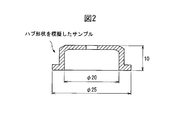
- the surface layer was cut to prepare a sample having a shape simulating a hub having a diameter of 20 mm and a thickness of 1.0 mm shown in FIG.
- Tables 1 and 2 show the chemical composition of the stainless steel wire for hub material of the present invention, evaluation results of cold forging, cutting, salt spray test and comparative examples.
- the “intergranular corrosion resistance index” in the table means (Ti + Nb) / (C + N).
- No. 1-No. 20 shows an embodiment of the present invention. In any case, no deterioration of cold forgeability, machinability and corrosion resistance was detected.
- No. No. 21 had a C content exceeding 0.02%, and the corrosion resistance deteriorated.
- No. No. 22 had an Si content exceeding 1.0%, and the cold forgeability deteriorated.
- No. 23 the amount of Mn exceeded 1.0%, and the corrosion resistance deteriorated.
- the inclusion density in the central portion of the steel wire cannot be reduced in the radial direction of the steel wire, and the distribution of inclusions is not appropriate.
- it exceeds 20 cm / sec a large amount of large inclusions are generated, and the floating of the inclusions becomes excessive. As a result, only fine inclusions remain in the steel, and it becomes impossible to obtain the required inclusion average area.
- the inclusion density of the surface layer necessary for free-cutting is also increased. It cannot be obtained.
- the magnetic stirring speed exceeded 20 cm / second, the inclusion average area was below 1 ⁇ m 2 , the inclusion density in the steel wire surface layer portion was below 3000 pieces / mm 2 , and the machinability deteriorated.
- the magnetic stirring speed was lower than 10 cm / second, and the inclusion density in the steel wire surface layer portion was higher than 7000 pieces / mm 2 , and cold forgeability and corrosion resistance were deteriorated.
- ferritic stainless steel according to the present invention is excellent in cold forgeability, machinability and corrosion resistance, it can be used for electronic equipment parts (hard disks, hubs, etc.).
Landscapes
- Chemical & Material Sciences (AREA)
- Engineering & Computer Science (AREA)
- Mechanical Engineering (AREA)
- Materials Engineering (AREA)
- Metallurgy (AREA)
- Organic Chemistry (AREA)
- Physics & Mathematics (AREA)
- Thermal Sciences (AREA)
- Crystallography & Structural Chemistry (AREA)
- Heat Treatment Of Steel (AREA)
- Continuous Casting (AREA)
Abstract
Description
耐食性については、Crベースのフェライト系ステンレス鋼としての耐食性を有するが、溶接部ではCr炭窒化物が粒界に沿って形成され、部分的にCr欠乏層が生じるため耐食性が劣化する。そのためTi、Nbを添加し、Ti、Nbの炭窒化物を優先的に析出させることでCr炭窒化物の析出を制限し、Cr欠乏層の形成を抑制できることを見出した。
切削性と冷間鍛造性は、介在物(非金属介在物ともいう。)の観点から、相反するものである。つまり、切削性には介在物が多くある方がよいものの、逆に冷間鍛造性には介在物が少ない方がよい。そこで、本発明者等は、鋼線の表層部に介在物を比較的多く析出させることにより切削性を担保させ、鋼線中央部では、介在物を比較的少なくすることで靭性を確保し、冷間鍛造性を担保させることを見出した。
本発明は上記知見に基づきなされたものであり、その要旨は次のとおりである。
C :0.001%以上0.02%以下、
Si:0.1%以上1.0%以下、
Mn:1.0%以下、
Cr:10.5%以上30.0%以下、
N:0.001%以上0.025%以下
を含有し、更に、
Nb:0.20%以上0.80%以下
Ti:0.10%以上0.50%以下
のうち1種または2種を含有し、更に
Cu:0.05%以上1.0%以下
Ni:0.05%以上1.0%以下
Mo:0.02%以上2.5%以下
のうち1種または2種以上を含有し、
(Nb+Ti)/(C+N)≧10
を満足し、残部がFe及び不可避的不純物である鋼線であって、
不可避的不純物として
P:0.04%以下、
S:0.03%以下に制限され、
更に
鋼線の中心を通り、鋼線の軸方向に平行な断面において、
面積100μm2超の介在物が存在せず、
面積0.5μm2以上の介在物の面積の平均値が1μm2以上5μm2以下であり、
且つ、鋼線表面より鋼線中心方向に鋼線外径の1/6の長さまでの部分を鋼線表層部、鋼線表面から鋼線外形の1/6超え鋼線の中心までの部分を鋼線中央部としたとき、
鋼線表層部において面積0.5μm2以上の介在物の密度が3000~7000個/mm2であり、かつ
面積0.5μm2以上の介在物の密度について鋼線中央部が鋼線表層部より小さいことを特徴とするフェライト系ステンレス鋼線。
[2]前記鋼線中央部における面積0.5μm2以上の介在物の密度が3000個/mm2以下であることを特徴とする[1]に記載のフェライト系ステンレス鋼線。
[3]鋼線中央部と鋼線表層部における面積0.5μm2以上の介在物の密度の差が1000個/mm2以上であることを特徴とする[1]または[2]に記載のフェライト系ステンレス鋼線。
[4]さらに質量%で、
Al:0.05%以下,
Ca:0.05%以下
V:0.1%以下、
B:0.01%以下、
Bi:0.5%以下
Mg:0.1%以下
Zr:0.5%以下
REM:0.1%以下
の一種または二種以上を含有することを特徴とする[1]~[3]のいずれか1項に記載のフェライト系ステンレス鋼線。
Cは、マトリックスのフェライト組織の強度を高め、更に、オーステナイト相および炭化物の生成元素である。オーステナイト相は、溶接後においてマルテンサイト組織を生じて強度を向上させ、また微細炭化物も強度の向上に寄与するため、0.001%以上含有させる。この効果を確実にするため、好ましくは0.003%以上とし、さらに好ましくは0.004%以上にするとよい。しかしながら、0.02%超では熱間圧延後の冷却速度によってはCr炭化物の粒界への析出によりその回りにCr欠乏層が生成するようになる。腐食環境では、粒界に沿ったCr欠乏層が溶解するので、いわゆる粒界腐食が発生する。従って、C量を0.02%以下の範囲に限定した。さらに粒界腐食を防止するには、C量は0.015%以下の範囲にすることが望ましい。さらに好ましくは、0.010%以下にするとよい。
Siは、脱酸剤として、またSiO2の酸化皮膜を形成して切削加工時の表面の温度上昇に対して酸化の進行を抑制するので耐高温酸化性に有用な元素である。しかし、含有量が1.0%超になると硬くなり機械的性質が劣化する。従って、Si量は1.0%以下とした。この効果を確実にするため、好ましくは0.9%以下とし、さらに好ましくは0.8%以下にするとよい。
また、0.1%未満では脱酸効果が得られないため0.1%以上含有させる。この効果を確実にするため、好ましくは0.2%以上とし、さらに好ましくは0.25%以上にするとよい。
MnもCと同様マトリックスのフェライト組織の強度を高め、更に、オーステナイト相生成元素であるが、オーステナイトMn含有量が1.0%を超えると鋼中に残存する介在物が多くなり耐食性が劣化する。従って、Mn量は1.0%以下の範囲とした。この効果を確実にするため、好ましくは0.9%以下とし、さらに好ましくは0.8%以下にするとよい。また、Mnは必ずしも含有しなくてもよいが、0.1%より少ないと鋼線の強度が低くなるので、0.1%以上含有することが好ましい。さらに好ましくは。0.15%以上とするとよい。
Pは、原料から不可避で混入する元素であり、靱性等の機械的性質を劣化させるのみならず、耐食性に対しても有害な元素である。したがって、Pは極力低減することが好ましい。特にP含有量が0.04%超になるとその悪影響が顕著になるので、P量は0.04%以下に制限するものとした。
Sは、Pと同様に原料から不可避で混入する元素であり、Mnと結合してMnSを形成し、初期発銹の起点となる。またSは、結晶粒界に偏析して粒界脆化を促進する有害元素でもある。したがって、Sは極力低減することが好ましい。特にS含有量が0.03%を超えるとその悪影響が顕著になるので、S量は0.03%以下に制限するものとした。
Crは、本発明における耐食性発現成分として重要な元素である。本発明で対象にする鋼線は、耐食性に必要なCr量として、少なくとも10.5%が必要である。これは、10.5%未満になると強固な不動態皮膜や高温酸化皮膜が生成され難くなるためである。この効果を確実にするため、好ましくは12.0%以上とし、さらに好ましくは15.0%以上にするとよい。
一方、Cr濃度が30.0%超になると、耐食性は良くなるものの、靱性が低くなることやコストアップに繋がる。従って、Cr濃度は30.0%以下とした。この効果を確実にするため、好ましくは21.0%以下とし、さらに好ましくは20.0%以下にするとよい。
Nは、マトリックスのフェライト組織の強度を高め、更に、オーステナイト相および窒化物の生成元素であり強度を高めるため、0.001%以上含有させる。この効果を確実にするため、好ましくは0.005%以上とし、さらに好ましくは0.008%以上にするとよい。一方、過剰に含有させると耐食性、冷間鍛造性を劣化させるため上限を0.025%とした。好ましくは、0.020%以下であり、更に好ましくは、0.018%以下である。
NbとTiは、ともに炭化物や窒化物を形成する元素であり、Cr炭化物の生成を抑制し、その結果Cr欠乏層の生成を抑制するので粒界腐食を防止することができる。そのため、NbとTiの少なくとも1種以上を含有させることとする。
しかしながら含有量が0.80%超になると冷間鍛造性や耐高温酸化性が劣化する。この効果を確実にするため、好ましくは0.75%以下とし、さらに好ましくは0.70%以下にするとよい。
上述したNbとTiは、(Nb+Ti)/(C+N)≧10となるように含有させることが必要である。式中、Nb、Ti、C、Nはそれぞれの元素含有量(質量%)を意味する。
(Nb+Ti)/(C+N)≧10
であれば粒界腐食の発生が抑制されることを見出した。この効果を確実にするため、好ましくは、(Nb+Ti)/(C+N)≧15とするとよく、更に好ましくは、(Nb+Ti)/(C+N)≧20とするとよい。
Cuは、耐食性および強度を向上させる有用な元素である。この効果を得るためには、0.05%以上含有させることが好ましい。この効果を確実にするため、好ましくは0.1%以上にするとよく、更に好ましくは0.2%以上にするとよい。一方、含有量が1.0%超になると靭性が劣化するのみならず冷間鍛造性が劣化する。従って、1.0%以下とした。この効果を確実にするため、好ましくは0.9%以下にするとよく、更に好ましくは0.8%以下にするとよい。
Niは、Cuと同様に耐食性および強度を向上させる有効な元素である。この効果を得るためには0.05%以上含有させることが好ましい。この効果を確実にするため、好ましくは0.1%以上にするとよく、更に好ましくは0.2%以上にするとよい。一方、含有量が1.0%超になると冷間鍛造性が劣化する。従って、1.0%以下とした。この効果を確実にするため、好ましくは、0.9%以下にするとよく、更に好ましくは、0.8%以下にするとよい。
Moは、耐食性および高温強度を高め、フェライト生成元素であり、0.02%以上含有させることでこの効果が得られる。この効果を確実にするため、好ましくは0.1%以上にするとよく、更に好ましくは0.3%以上にするとよい。一方2.5%を超えるとσ相が析出しやすく脆化し、冷間鍛造性が劣化するので0.02~2.5%とする。この効果を確実にするため、好ましくは、2.3%以下にするとよく、更に好ましくは、2.0%以下にするとよい。
Alは,脱酸剤として有用な元素であり、必要に応じて0.001%以上添加できる。しかし,含有量が0.05%超になると靭性が劣化する。従って,0.05%以下とした。
Caは,熱間加工性を向上させる有用な元素であり,必要に応じて0.001%以上添加できる。一方、含有量が0.05%超になると靭性が劣化する。従って,0.05%以下とした。
Vは,耐食性を向上させる有用な元素であり,必要に応じて0.03%以上添加できる。一方、含有量が0.1%超になると靭性が劣化する。従って,0.1%以下とした。
Bは,熱間加工性を向上させる有用な元素であり、必要に応じて0.0003%以上添加できる。一方、含有量が0.01%超になると靭性が劣化する。従って,0.01%以下とした。
Biは,耐食性及び切削加工性を向上させる有用な元素であり、必要に応じて0.005%以上添加できる。一方、含有量が0.5%超になると靭性が劣化する。従って、0.5%以下とした。
Mgは,耐食性を向上させる有用な元素であり,必要に応じて0.0002%以上添加できる。一方、含有量が0.1%超になると靭性が劣化する。従って、0.1%以下とした。
Zrは,耐食性,熱間加工性を向上させる有用な元素であり,必要に応じて0.03%以上添加できる。一方、含有量が0.5%超になると効果が飽和する。従って,0.5%以下とした。
REMは,熱間加工性を向上させる有用な元素であり,必要に応じて0.03%以上添加できる。一方、含有量が0.1%超になると靭性が劣化する。従って、0.1%以下とした。
上述したように、本発明者らは、冷間鍛造性と快削性とを両立する条件を見出すため、介在物の大きさや密度について、詳細に検討を行った。
なお、介在物の測定方法は、前記した方法には特に限定されない。観察領域や、測定視野の大きさは、適宜選択すればよい。
[1]ビレット-[2]線材圧延-[3]焼鈍-[4]伸線-[5]焼鈍-[6]スキンパス伸線-[7]冷間鍛造-[8]切削加工-[9]部品として使用。
また、ビレットはa合金原料溶解-b精錬-c連続鋳造のプロセスで製造される。
据え込み率(%)=((H-h)/H)×100
ただし、鍛造前のサンプルの長さをH、鍛造後のサンプルの長さをhとする。
Ra:0.5μm以下でむしれ小のものを○(良)
Ra:0.5μm超えるかあるいはむしれ大のものを×(不可)、
で評価した。


2 被検面
3 鋼線表層部
4 鋼線中央部
Claims (4)
- 質量%で、
C :0.001%以上0.02%以下、
Si:0.1%以上1.0%以下、
Mn:1.0%以下、
Cr:10.5%以上30.0%以下、
N:0.001%以上0.025%以下
を含有し、更に、
Nb:0.20%以上0.80%以下
Ti:0.10%以上0.50%以下
のうち1種または2種を含有し、更に
Cu:0.05%以上1.0%以下
Ni:0.05%以上1.0%以下
Mo:0.02%以上2.5%以下
のうち1種または2種以上を含有し、
(Nb+Ti)/(C+N)≧10
を満足し、残部がFe及び不可避的不純物である鋼線であって、
不可避的不純物として
P:0.04%以下、
S:0.03%以下に制限され、
更に
鋼線の中心を通り、鋼線の軸方向に平行な断面において、
面積100μm2超の介在物が存在せず、
面積0.5μm2以上の介在物の面積の平均値が1μm2以上5μm2以下であり、
且つ、鋼線表面より鋼線中心方向に鋼線外径の1/6の長さまでの部分を鋼線表層部、鋼線表面から鋼線外形の1/6超え鋼線の中心までの部分を鋼線中央部としたとき、
鋼線表層部において面積0.5μm2以上の介在物の密度が3000~7000個/mm2であり、かつ
面積0.5μm2以上の介在物の密度について鋼線中央部の密度が鋼線表層部の密度より小さいことを特徴とするフェライト系ステンレス鋼線。
- 前記鋼線中央部における面積0.5μm2以上の介在物の密度が3000個/mm2以下であることを特徴とする請求項1に記載のフェライト系ステンレス鋼線。
- 鋼線中央部と鋼線表層部における面積0.5μm2以上の介在物の密度の差が1000個/mm2以上であることを特徴とする請求項1または2に記載のフェライト系ステンレス鋼線。
- さらに質量%で、
Al:0.05%以下,
Ca:0.05%以下
V:0.1%以下、
B:0.01%以下、
Bi:0.5%以下
Mg:0.1%以下
Zr:0.5%以下
REM:0.1%以下
の一種または二種以上を含有することを特徴とする請求項1~3のいずれか1項に記載のフェライト系ステンレス鋼線。
Priority Applications (2)
| Application Number | Priority Date | Filing Date | Title |
|---|---|---|---|
| KR1020147030661A KR101612474B1 (ko) | 2013-03-29 | 2014-03-25 | 냉간 단조성 및 절삭성이 우수한 페라이트계 스테인리스 강선 |
| JP2014536058A JP6207513B2 (ja) | 2013-03-29 | 2014-03-25 | 冷間鍛造性及び切削性に優れたフェライト系ステンレス鋼線 |
Applications Claiming Priority (2)
| Application Number | Priority Date | Filing Date | Title |
|---|---|---|---|
| JP2013-071760 | 2013-03-29 | ||
| JP2013071760 | 2013-03-29 |
Publications (1)
| Publication Number | Publication Date |
|---|---|
| WO2014157231A1 true WO2014157231A1 (ja) | 2014-10-02 |
Family
ID=51624200
Family Applications (1)
| Application Number | Title | Priority Date | Filing Date |
|---|---|---|---|
| PCT/JP2014/058332 Ceased WO2014157231A1 (ja) | 2013-03-29 | 2014-03-25 | 冷間鍛造性及び切削性に優れたフェライト系ステンレス鋼線 |
Country Status (3)
| Country | Link |
|---|---|
| JP (1) | JP6207513B2 (ja) |
| KR (1) | KR101612474B1 (ja) |
| WO (1) | WO2014157231A1 (ja) |
Cited By (9)
| Publication number | Priority date | Publication date | Assignee | Title |
|---|---|---|---|---|
| CN109790603A (zh) * | 2016-09-28 | 2019-05-21 | 株式会社Posco | 用于排气系统热交换器的具有优异吸声性能的铁素体不锈钢及其制造方法 |
| JP6547927B1 (ja) * | 2018-02-14 | 2019-07-24 | Jfeスチール株式会社 | フェライト系ステンレス鋼 |
| WO2019159606A1 (ja) * | 2018-02-14 | 2019-08-22 | Jfeスチール株式会社 | フェライト系ステンレス鋼 |
| US10487380B2 (en) | 2016-08-17 | 2019-11-26 | Hyundai Motor Company | High-strength special steel |
| US10487382B2 (en) | 2016-09-09 | 2019-11-26 | Hyundai Motor Company | High strength special steel |
| WO2020196595A1 (ja) | 2019-03-27 | 2020-10-01 | 日鉄ステンレス株式会社 | 棒状鋼材 |
| JP2021038439A (ja) * | 2019-09-04 | 2021-03-11 | 日鉄ステンレス株式会社 | フェライト系ステンレス棒鋼、自動車燃料系部品および自動車燃料系部材 |
| JP2022155342A (ja) * | 2021-03-30 | 2022-10-13 | 日鉄ステンレス株式会社 | フェライト系ステンレス鋼材及びその製造方法、並びに耐食性部材 |
| US12359292B2 (en) | 2020-02-19 | 2025-07-15 | Nippon Steel Stainless Steel Corporation | Rod-shaped electromagnetic stainless steel material |
Families Citing this family (1)
| Publication number | Priority date | Publication date | Assignee | Title |
|---|---|---|---|---|
| KR20200015265A (ko) * | 2018-08-03 | 2020-02-12 | 주식회사 포스코 | 용접부 저온인성이 우수한 Ti, Nb 첨가 페라이트계 스테인리스강 |
Citations (6)
| Publication number | Priority date | Publication date | Assignee | Title |
|---|---|---|---|---|
| JP2006016665A (ja) * | 2004-07-01 | 2006-01-19 | Nippon Steel & Sumikin Stainless Steel Corp | 耐食性,冷間加工性および靱性に優れる磁性を有する安価ステンレス鋼線材または鋼線。 |
| JP2006233251A (ja) * | 2005-02-23 | 2006-09-07 | Nippon Steel & Sumikin Stainless Steel Corp | 高純度フェライト系ステンレス鋼の製造方法およびその製品 |
| JP2007077444A (ja) * | 2005-09-14 | 2007-03-29 | Nippon Steel & Sumikin Stainless Steel Corp | 耐銹性に優れたフェライト系ステンレス鋼線とその製造方法 |
| JP2007169714A (ja) * | 2005-12-22 | 2007-07-05 | Nippon Steel & Sumikin Stainless Steel Corp | 耐応力腐食割れ性に優れ熱変形が少なく着磁性を有するコンベア金網用ステンレス鋼線およびそれを用いたコンベア用金網 |
| JP2008266677A (ja) * | 2007-04-17 | 2008-11-06 | Nippon Steel & Sumikin Stainless Steel Corp | フェライト系ステンレス鋼製の冷間鍛造部品の不動態化処理方法 |
| JP2010261074A (ja) * | 2009-05-08 | 2010-11-18 | Nippon Steel & Sumikin Stainless Steel Corp | 高温耐久性に優れたボス材用フェライト系ステンレス鋼線 |
-
2014
- 2014-03-25 KR KR1020147030661A patent/KR101612474B1/ko active Active
- 2014-03-25 WO PCT/JP2014/058332 patent/WO2014157231A1/ja not_active Ceased
- 2014-03-25 JP JP2014536058A patent/JP6207513B2/ja active Active
Patent Citations (6)
| Publication number | Priority date | Publication date | Assignee | Title |
|---|---|---|---|---|
| JP2006016665A (ja) * | 2004-07-01 | 2006-01-19 | Nippon Steel & Sumikin Stainless Steel Corp | 耐食性,冷間加工性および靱性に優れる磁性を有する安価ステンレス鋼線材または鋼線。 |
| JP2006233251A (ja) * | 2005-02-23 | 2006-09-07 | Nippon Steel & Sumikin Stainless Steel Corp | 高純度フェライト系ステンレス鋼の製造方法およびその製品 |
| JP2007077444A (ja) * | 2005-09-14 | 2007-03-29 | Nippon Steel & Sumikin Stainless Steel Corp | 耐銹性に優れたフェライト系ステンレス鋼線とその製造方法 |
| JP2007169714A (ja) * | 2005-12-22 | 2007-07-05 | Nippon Steel & Sumikin Stainless Steel Corp | 耐応力腐食割れ性に優れ熱変形が少なく着磁性を有するコンベア金網用ステンレス鋼線およびそれを用いたコンベア用金網 |
| JP2008266677A (ja) * | 2007-04-17 | 2008-11-06 | Nippon Steel & Sumikin Stainless Steel Corp | フェライト系ステンレス鋼製の冷間鍛造部品の不動態化処理方法 |
| JP2010261074A (ja) * | 2009-05-08 | 2010-11-18 | Nippon Steel & Sumikin Stainless Steel Corp | 高温耐久性に優れたボス材用フェライト系ステンレス鋼線 |
Cited By (15)
| Publication number | Priority date | Publication date | Assignee | Title |
|---|---|---|---|---|
| US10487380B2 (en) | 2016-08-17 | 2019-11-26 | Hyundai Motor Company | High-strength special steel |
| US10487382B2 (en) | 2016-09-09 | 2019-11-26 | Hyundai Motor Company | High strength special steel |
| CN109790603B (zh) * | 2016-09-28 | 2021-07-23 | 株式会社Posco | 用于排气系统热交换器的具有优异吸声性能的铁素体不锈钢及其制造方法 |
| US11740038B2 (en) | 2016-09-28 | 2023-08-29 | Posco Co., Ltd | Ferritic stainless steel having excellent sound absorption properties for exhaust system heat exchanger and method of manufacturing the same |
| CN109790603A (zh) * | 2016-09-28 | 2019-05-21 | 株式会社Posco | 用于排气系统热交换器的具有优异吸声性能的铁素体不锈钢及其制造方法 |
| CN111727268B (zh) * | 2018-02-14 | 2022-06-07 | 杰富意钢铁株式会社 | 铁素体类不锈钢 |
| CN111727268A (zh) * | 2018-02-14 | 2020-09-29 | 杰富意钢铁株式会社 | 铁素体类不锈钢 |
| WO2019159606A1 (ja) * | 2018-02-14 | 2019-08-22 | Jfeスチール株式会社 | フェライト系ステンレス鋼 |
| JP6547927B1 (ja) * | 2018-02-14 | 2019-07-24 | Jfeスチール株式会社 | フェライト系ステンレス鋼 |
| WO2020196595A1 (ja) | 2019-03-27 | 2020-10-01 | 日鉄ステンレス株式会社 | 棒状鋼材 |
| JP2021038439A (ja) * | 2019-09-04 | 2021-03-11 | 日鉄ステンレス株式会社 | フェライト系ステンレス棒鋼、自動車燃料系部品および自動車燃料系部材 |
| JP7333729B2 (ja) | 2019-09-04 | 2023-08-25 | 日鉄ステンレス株式会社 | フェライト系ステンレス棒鋼、自動車燃料系部品および自動車燃料系部材 |
| US12359292B2 (en) | 2020-02-19 | 2025-07-15 | Nippon Steel Stainless Steel Corporation | Rod-shaped electromagnetic stainless steel material |
| JP2022155342A (ja) * | 2021-03-30 | 2022-10-13 | 日鉄ステンレス株式会社 | フェライト系ステンレス鋼材及びその製造方法、並びに耐食性部材 |
| JP7685856B2 (ja) | 2021-03-30 | 2025-05-30 | 日鉄ステンレス株式会社 | フェライト系ステンレス鋼材及びその製造方法、並びに耐食性部材 |
Also Published As
| Publication number | Publication date |
|---|---|
| JPWO2014157231A1 (ja) | 2017-02-16 |
| JP6207513B2 (ja) | 2017-10-04 |
| KR20150000893A (ko) | 2015-01-05 |
| KR101612474B1 (ko) | 2016-04-14 |
Similar Documents
| Publication | Publication Date | Title |
|---|---|---|
| JP6207513B2 (ja) | 冷間鍛造性及び切削性に優れたフェライト系ステンレス鋼線 | |
| JP6004653B2 (ja) | フェライト系ステンレス鋼線材、及び鋼線、並びに、それらの製造方法 | |
| KR102884990B1 (ko) | 내식성이 우수한 마르텐사이트계 스테인리스 강판 및 그 제조 방법, 그리고 마르텐사이트계 스테인리스 칼날 제품 | |
| JP5511208B2 (ja) | 耐食性の良好な省合金二相ステンレス鋼材とその製造方法 | |
| JP7518342B2 (ja) | 二相ステンレス鋼材 | |
| CN106414785A (zh) | 油井用高强度不锈钢无缝钢管及其制造方法 | |
| WO2018043565A1 (ja) | オーステナイト系ステンレス鋼 | |
| SA517381921B1 (ar) | أنبوب أو ماسورة غير ملحومة من فولاذ مقاوم للصدأ بجدران ثقيلة ذات مقاومة عالية وطريقة تصنيعه | |
| JP6760379B2 (ja) | 機械構造用鋼 | |
| US8603263B2 (en) | Duplex stainless steel having excellent alkali resistance | |
| JP5907760B2 (ja) | マルテンサイト系快削ステンレス鋼棒線およびその製造方法 | |
| WO2018146783A1 (ja) | オーステナイト系耐熱合金およびその製造方法 | |
| KR20190123303A (ko) | 절삭 가공용 선재 | |
| US10844466B2 (en) | Hot forging steel and hot forged product | |
| JP6760375B2 (ja) | 機械構造用鋼 | |
| JP6134553B2 (ja) | 耐酸性良好な二相ステンレス鋼 | |
| JP5474616B2 (ja) | 鍛造性に優れるフェライト系ステンレス快削鋼棒線 | |
| JP5242495B2 (ja) | 高温耐久性に優れたボス材用フェライト系ステンレス鋼線 | |
| KR20180125566A (ko) | Ni-Fe-Cr 합금 | |
| WO2014125770A1 (ja) | 鉛快削鋼 | |
| WO2016199843A1 (ja) | 快削鋼 | |
| JP6652021B2 (ja) | 熱間鍛造用鋼及び熱間鍛造品 | |
| JP5392207B2 (ja) | 高周波焼入れ用鋼及びそれを用いて製造されるクランクシャフト | |
| JP2014189833A (ja) | 高強度オーステナイト系快削ステンレス鋼線およびその製造方法 | |
| JP5957241B2 (ja) | フェライト系快削ステンレス鋼棒線およびその製造方法 |
Legal Events
| Date | Code | Title | Description |
|---|---|---|---|
| ENP | Entry into the national phase |
Ref document number: 2014536058 Country of ref document: JP Kind code of ref document: A |
|
| ENP | Entry into the national phase |
Ref document number: 20147030661 Country of ref document: KR Kind code of ref document: A |
|
| 121 | Ep: the epo has been informed by wipo that ep was designated in this application |
Ref document number: 14776164 Country of ref document: EP Kind code of ref document: A1 |
|
| NENP | Non-entry into the national phase |
Ref country code: DE |
|
| 122 | Ep: pct application non-entry in european phase |
Ref document number: 14776164 Country of ref document: EP Kind code of ref document: A1 |