WO2014087707A1 - 酸化第二銅微粉末及びその製造方法 - Google Patents
酸化第二銅微粉末及びその製造方法 Download PDFInfo
- Publication number
- WO2014087707A1 WO2014087707A1 PCT/JP2013/072467 JP2013072467W WO2014087707A1 WO 2014087707 A1 WO2014087707 A1 WO 2014087707A1 JP 2013072467 W JP2013072467 W JP 2013072467W WO 2014087707 A1 WO2014087707 A1 WO 2014087707A1
- Authority
- WO
- WIPO (PCT)
- Prior art keywords
- fine powder
- electrolytic copper
- copper
- powder
- cupric oxide
- Prior art date
- Legal status (The legal status is an assumption and is not a legal conclusion. Google has not performed a legal analysis and makes no representation as to the accuracy of the status listed.)
- Ceased
Links
Images

Classifications
-
- C—CHEMISTRY; METALLURGY
- C01—INORGANIC CHEMISTRY
- C01G—COMPOUNDS CONTAINING METALS NOT COVERED BY SUBCLASSES C01D OR C01F
- C01G3/00—Compounds of copper
- C01G3/02—Oxides; Hydroxides
-
- C—CHEMISTRY; METALLURGY
- C25—ELECTROLYTIC OR ELECTROPHORETIC PROCESSES; APPARATUS THEREFOR
- C25C—PROCESSES FOR THE ELECTROLYTIC PRODUCTION, RECOVERY OR REFINING OF METALS; APPARATUS THEREFOR
- C25C1/00—Electrolytic production, recovery or refining of metals by electrolysis of solutions
- C25C1/12—Electrolytic production, recovery or refining of metals by electrolysis of solutions of copper
-
- C—CHEMISTRY; METALLURGY
- C25—ELECTROLYTIC OR ELECTROPHORETIC PROCESSES; APPARATUS THEREFOR
- C25C—PROCESSES FOR THE ELECTROLYTIC PRODUCTION, RECOVERY OR REFINING OF METALS; APPARATUS THEREFOR
- C25C5/00—Electrolytic production, recovery or refining of metal powders or porous metal masses
- C25C5/02—Electrolytic production, recovery or refining of metal powders or porous metal masses from solutions
-
- B—PERFORMING OPERATIONS; TRANSPORTING
- B22—CASTING; POWDER METALLURGY
- B22F—WORKING METALLIC POWDER; MANUFACTURE OF ARTICLES FROM METALLIC POWDER; MAKING METALLIC POWDER; APPARATUS OR DEVICES SPECIALLY ADAPTED FOR METALLIC POWDER
- B22F2302/00—Metal Compound, non-Metallic compound or non-metal composition of the powder or its coating
- B22F2302/25—Oxide
-
- C—CHEMISTRY; METALLURGY
- C01—INORGANIC CHEMISTRY
- C01P—INDEXING SCHEME RELATING TO STRUCTURAL AND PHYSICAL ASPECTS OF SOLID INORGANIC COMPOUNDS
- C01P2002/00—Crystal-structural characteristics
- C01P2002/70—Crystal-structural characteristics defined by measured X-ray, neutron or electron diffraction data
- C01P2002/72—Crystal-structural characteristics defined by measured X-ray, neutron or electron diffraction data by d-values or two theta-values, e.g. as X-ray diagram
-
- C—CHEMISTRY; METALLURGY
- C01—INORGANIC CHEMISTRY
- C01P—INDEXING SCHEME RELATING TO STRUCTURAL AND PHYSICAL ASPECTS OF SOLID INORGANIC COMPOUNDS
- C01P2004/00—Particle morphology
- C01P2004/01—Particle morphology depicted by an image
- C01P2004/03—Particle morphology depicted by an image obtained by SEM
-
- C—CHEMISTRY; METALLURGY
- C01—INORGANIC CHEMISTRY
- C01P—INDEXING SCHEME RELATING TO STRUCTURAL AND PHYSICAL ASPECTS OF SOLID INORGANIC COMPOUNDS
- C01P2004/00—Particle morphology
- C01P2004/60—Particles characterised by their size
- C01P2004/61—Micrometer sized, i.e. from 1-100 micrometer
Definitions
- the present invention relates to cupric oxide fine powder and a method for producing the same.
- cupric oxide fine powder is used for pigments, paints, catalysts, ceramic colorants, copper sources for replenishing copper plating solutions, etc., and the production methods are roughly classified into wet methods and dry methods.
- sodium hydroxide is added to an aqueous solution of cupric chloride or copper sulfate to form copper hydroxide, and then the copper hydroxide is heated (see Patent Document 1). More specifically, the etching waste solution of the printed circuit board containing cupric chloride is neutralized with caustic (NaOH), and the neutralized copper solution and caustic aqueous solution are placed in an aqueous solution maintained at a temperature of 40 to 50 ° C. At the same time, the mixture is added dropwise to produce a copper hydrate while maintaining the pH of the mixed aqueous solution in the range of weakly acidic to weakly alkaline. Next, the pH is adjusted to 12 to 13, and kept at a temperature of 70 to 80 ° C. for 30 minutes, and then washed with water and solid-liquid separation to produce cupric oxide.
- CaOH caustic
- cupric oxide powder produced by a wet method has an advantage of fast solubility in a copper plating solution.
- cupric oxide powder is produced by a wet method, there is a problem that the residual concentration of S and the like derived from sulfate ions tends to be relatively high in addition to Na. If cupric oxide powder containing a large amount of impurities is added to the plating solution, plating defects may occur due to the impurities. For example, in the method described in Patent Document 1, impurities other than copper dissolved when etching a printed circuit board are included in the etching waste liquid used, and sodium chloride (NaCl) is used as an impurity during neutralization. As a by-product, etc., a water washing step is required to remove impurities.
- NaCl sodium chloride
- a method of drying the slurry-like cupric oxide fine powder a method of evaporating the solvent by heating the container, a method of drying by heating the container while stirring, or a method of heating with hot air
- a medium fluidized drying method in which slurry is put into a medium such as alumina, powder dried on the surface of the medium is peeled off, exhausted with hot air, and recovered as a dry powder with a cyclone, bag filter or the like.
- the dry method there is a method in which copper nitrate, copper sulfate, copper carbonate, copper hydroxide or the like is heated in air to a temperature of about 600 ° C. and thermally decomposed (see Non-Patent Document 1).
- the dry method has a higher purity of cupric oxide obtained than the wet method, and is excellent in solubility in a plating solution.
- the obtained copper oxide powder is required to be in a fine powder state, but the cupric oxide powder obtained by the dry method has a large particle size due to sintering. It is necessary to pulverize the cupric oxide powder.
- metallic copper when used as a raw material, it is difficult to finely grind metal copper because it is soft and ductile when ground before heat treatment. For this reason, in order to heat-treat completely to copper oxide, it is necessary to heat to a higher temperature.
- sintering of the copper particles occurs again by the heat treatment at a high temperature, so that it is necessary to grind again after the heat treatment, etc. In this respect, the dry method was not an efficient method.
- Patent Documents 3 to 5 In order to increase the efficiency of the dry method, it has been proposed to pulverize electrolytic copper powder prepared in a copper sulfate solution by a jet mill pulverization method (see Patent Documents 3 to 5). According to Patent Documents 3 to 5, in order to finely pulverize the electrolytic copper powder, it can be said that the particle diameter of the electrolytic copper powder as a pulverized raw material is an important factor. For example, Patent Document 3 shows that in order to obtain a copper powder of 10 ⁇ m or less, the size of the electrolytic copper powder as a raw material must be 2000 cm 2 / g or more in terms of specific surface area.
- the formation form of the electrolytic copper powder is a resin-grown structure
- the electrolytic copper powder which is a pulverized raw material
- the electrolytic copper powder after pulverization becomes agglomerated or flat due to properties such as ductility of metallic copper. It is difficult to refine the copper powder.
- the present invention has been made by focusing on reducing the electrolytic copper powder and improving the solubility in the plating solution, and the subject is high purity, which is the conventional advantage of the dry method. It is to improve the solubility in the plating solution while taking advantage of this fact.
- the inventors of the present invention pulverized electrolytic copper powder having an oxide film on the surface in a dry manner, and oxidized the electrolytic copper fine powder obtained by this pulverization, thereby The inventors have found that the object can be achieved and have completed the present invention.
- the present invention provides the following.
- the present invention comprises a dry pulverization step of pulverizing electrolytic copper powder having an oxide film on the surface by a dry method, and an oxidation step of oxidizing electrolytic copper fine powder obtained by this dry pulverization step. It is a manufacturing method of a fine powder.
- the oxide film is formed by washing electrolytic copper powder obtained by electrolysis of a copper ion-containing solution with water and then drying at 70 ° C. to 150 ° C. in an oxygen-containing atmosphere.
- the method for producing cupric oxide fine powder according to (1) is described in detail below.
- this invention is a manufacturing method of the cupric oxide fine powder as described in (1) or (2) with which the said dry-type grinding
- this invention uses the copper sulfate aqueous solution in which the cupric oxide fine powder obtained by the manufacturing method in any one of (1) to (4) was melt
- the average particle size is 5 ⁇ m or less, the maximum particle size is 15 ⁇ m or less, and 10 g of cupric oxide fine powder is 228 g / L of CuSO 4 .5H 2 at 25 ° C.
- the dissolution time is 1 minute or less. Copper fine powder.
- cupric oxide fine powder having high copper oxide purity and high solubility in a plating solution.
- This cupric oxide fine powder is suitably used as a copper source for replenishing a copper plating solution used industrially.
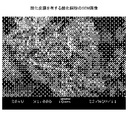
- the scanning electron microscope image (SEM image) of the copper oxide powder which has an oxide film on the surface is shown.
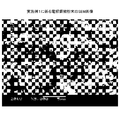
- the SEM image of the electrolytic copper fine powder which concerns on Example 1 is shown.
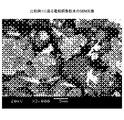
- the SEM image of the electrolytic copper fine powder which concerns on the comparative example 1 is shown.
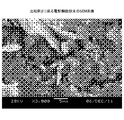
- the SEM image of the electrolytic copper fine powder which concerns on the comparative example 2 is shown.
- the X-ray-diffraction pattern of the cupric oxide fine powder concerning Example 1 is shown.
- the production method of the present invention includes a dry pulverization step S1 in which electrolytic copper powder having an oxide film on the surface is pulverized in a dry manner, and an oxidation step S2 in which electrolytic copper fine powder obtained by the dry pulverization step S1 is oxidized.
- electrolytic copper powder in order to clearly distinguish the state of electrolytic copper or copper oxide, the electrolytic copper before dry pulverization is referred to as “electrolytic copper powder”, and the electrolytic copper after dry pulverization but before oxidation is expressed as “ It is called “electrolytic copper fine powder”, and the oxidized copper oxide is called “cupric oxide fine powder”.
- the electrolytic copper powder used in the dry pulverization step S1 may have any method for forming an oxide film as long as it has an oxide film on its surface.
- the electrolytic copper powder is deposited on the surface of the electrode by electrolysis of copper and collected, and then subjected to an oxide film forming step S0 for forming an oxide film on the surface of the electrolytic copper powder.
- the electrolytic copper powder has, for example, a bath composition of CuSO 4 ⁇ 5H 2 O: 5 to 50 g / L, free H 2 SO 4 : 50 to 250 g / L, a current density of 5 to 30 A / dm 2 , and a bath temperature of 20 to 60. It can be produced by electrolysis under the condition of ° C. and electrodepositing on the cathode.
- the obtained electrolytic copper powder is preferably washed at a temperature of 70 to 150 ° C. in an oxygen-containing atmosphere in order to remove moisture after washing with water.
- An oxygen-containing atmosphere means a state containing oxygen at least to the extent of the atmosphere, and may be an air atmosphere or a state in which oxygen is artificially supplied. In consideration, an air atmosphere is preferable.
- the electrolytic copper powder reacts with oxygen in the gas, and an oxide film is formed on the surface of the electrolytic copper powder.
- an oxide film is formed on the surface of the electrolytic copper powder.
- it is preferably 20% or more of the theoretical weight when oxidized to copper, more preferably 30% or more, and further preferably 40% or more.
- the present invention includes a dry pulverization step S1 in which electrolytic copper powder having an oxide film on the surface is pulverized in a dry manner to obtain electrolytic copper fine powder.
- Electrolytic copper powder is soft and ductile, so it is difficult to grind finely. Therefore, the electrolytic copper powder is preferably pulverized in an oxygen-containing atmosphere. By pulverizing in an oxygen-containing atmosphere, the metal surface appearing by pulverization can be oxidized, and as a result, a new oxide film is formed. Therefore, the ductility of the electrolytic copper powder can be suppressed, and the electrolytic copper powder can be efficiently miniaturized.
- the pulverization method is not particularly limited, but considering the manufacturing cost and efficiency, a method of colliding electrolytic copper powders in a fluid or colliding electrolytic copper powders with a collision plate in a fluid is preferable.
- a method of colliding electrolytic copper powders in a fluid or colliding electrolytic copper powders with a collision plate in a fluid is preferable.
- jet mills and cyclone mills are commercially available apparatuses such as jet mills and cyclone mills.
- electrolytic copper fine powder can be obtained more efficiently.
- the particle diameter of the electrolytic copper fine powder is not particularly limited, but the average particle diameter is preferably 5 ⁇ m or less, so that the oxidation step S2 described below can be performed efficiently, and preferably 4 ⁇ m or less. More preferably, it is more preferably 3 ⁇ m or less.
- the maximum particle size is preferably 15 ⁇ m or less, more preferably 10 ⁇ m or less.
- the particle diameter is based on a volume sphere equivalent diameter when measured using a laser particle size distribution measuring instrument Macrotrac (manufactured by Nikkiso Co., Ltd.).
- the present invention includes an oxidation step S2 for oxidizing the electrolytic copper fine powder obtained by the dry pulverization step S1.
- the oxidation step S2 is preferably performed by heating the electrolytic copper fine powder at 300 ° C to 700 ° C. If it is this temperature range, the temperature which heat-processes will not be specifically limited, However, It is preferable to set with the particle diameter of electrolytic copper fine powder. For example, when the average particle diameter of the electrolytic copper fine powder is 5 ⁇ m or less, the electrolytic copper fine powder can be made into cupric oxide fine powder by heat treatment at a relatively low temperature. On the other hand, when the average particle diameter of the electrolytic copper fine powder exceeds 5 ⁇ m, heat treatment at a relatively high temperature is required to oxidize not only the surface of the electrolytic copper fine powder but also the center.
- the electrolytic copper powder is pulverized to obtain the electrolytic copper fine powder, but the electrolytic copper fine powder is sintered and the particle size is increased. If it does so, the melt
- the sintered cupric oxide powder is pulverized again even if the electrolytic copper fine powder is sintered.
- the average particle diameter of the electrolytic copper fine powder is preferably 10 ⁇ m or less, and the maximum particle diameter is preferably 15 ⁇ m or less.
- the heat treatment time depends on the heat treatment temperature.
- the heat treatment time is preferably 5 hours or less, and when the heat treatment temperature is 500 ° C. to 700 ° C. Is preferably 3 hours or less.
- the particle size of the second electrolytic copper fine powder is larger than that of the electrolytic copper fine powder, but in order to increase the solubility in the copper sulfate plating solution, It is preferable to suppress as much as possible. Therefore, the particle diameter of the cupric oxide fine copper powder is preferably about the same as that of the electrolytic copper fine powder. Specifically, the average particle diameter is preferably 5 ⁇ m or less, and preferably 4 ⁇ m or less. More preferably, it is more preferably 3 ⁇ m or less. The maximum particle size is preferably 15 ⁇ m or less, more preferably 10 ⁇ m or less.
- the cupric oxide fine powder obtained by the above production method is suitably used as a raw material for the electrolytic solution of the electrolytic copper plating apparatus.
- the cupric oxide fine powder charged into the plating solution should not produce a dissolution residue.
- cuprous oxide does not dissolve in the plating solution and becomes a residue, so it is necessary to avoid the production of fine cuprous oxide powder. Therefore, it is preferable that the purity of the cupric oxide fine powder in the cupric oxide fine powder is high, preferably 99% or more, and more preferably 99.5% or more. Since the cupric oxide fine powder obtained by the production method of the present invention is obtained by oxidizing the pulverized electrolytic copper fine powder by heat treatment, the electrolytic copper can be completely oxidized to cupric oxide. As a result, generation of cuprous oxide can be suppressed.
- the solubility of the cupric oxide fine powder in the plating solution is high. 10 g of the cupric oxide fine powder obtained by the above production method was mixed with 228 g / L CuSO 4 .5H 2 O, 68 g / L free H 2 SO 4 and 60 mg / L chloride ion at 25 ° C. Is dissolved within 1 minute. In this respect, the cupric oxide fine powder obtained by the above production method is suitably used as a raw material for the electrolytic solution of the electrolytic copper plating apparatus.
- cupric oxide fine powder obtained by the above production method is suitably used as a raw material for the electrolytic solution of the electrolytic copper plating apparatus.
- a copper plating solution (copper sulfate aqueous solution) used for electrolytic plating of copper contains copper sulfate, sulfuric acid and chloride ions, and a pH lower than 1 is often used.
- a known additive is added to the copper plating solution to improve the quality of the copper plating.
- a problem is how to make a mechanism for supplying copper to the plating solution.
- the copper source copper or a compound containing copper
- the sulfate ion in the plating solution, etc. as the copper source dissolves.
- C It is required that the additive contained in the plating solution does not decompose.
- the cupric oxide fine powder obtained by the above production method can comply with any of the above (a) to (c).
- a cupric oxide dissolution tank for dissolving the cupric oxide fine powder is provided separately from the plating tank for plating the electrolytic plating apparatus.
- An aqueous solution (plating solution) may be circulated between the plating tank and the cupric oxide dissolution tank.
- This cupric oxide dissolution tank returns an aqueous solution formed by dissolving cupric oxide fine powder in the aqueous solution supplied from the plating tank to the plating tank. It is preferable to attach a stirring mechanism such as a propeller to the cupric oxide dissolution tank to be used. Moreover, you may provide a well-known various filter between a plating tank and a cupric oxide dissolution tank for removal of a dust, a foreign material, etc.
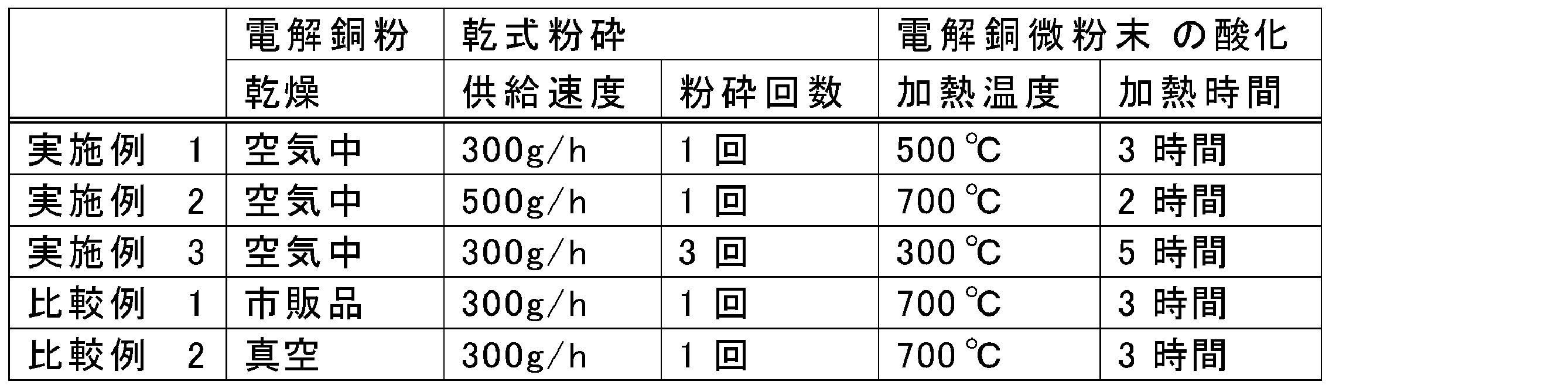
- Example 1 First, using a copper sulfate aqueous solution containing 32 g / L of CuSO 4 .5H 2 O and 55 g / L of free H 2 SO 4 , electrolysis was performed under conditions of an energization current density of 10 A / dm 2 and a bath temperature of 25 ° C. Copper powder was prepared. The electrolytic copper powder was thoroughly washed with water and then dried overnight at a temperature of 105 ° C. using a dryer.
- this copper oxide powder was dry pulverized in an air atmosphere using a jet mill (device name: Nano Grinding Mill NJ-50, manufactured by Tokuju Kogakusha Co., Ltd.). Dry pulverization was carried out under the conditions of pulverization pressure: 1 MPa and supply rate: 300 g / h.
- the pulverized electrolytic copper powder was heated in an electric furnace under an air atmosphere at a heating temperature of 500 ° C. for 3 hours to oxidize the electrolytic copper powder to obtain a cupric oxide fine powder according to Example 1. .
- Example 2 Other than having made the supply rate at the time of dry pulverization 500 g / h, and oxidizing the pulverized electrolytic copper powder in an electric furnace in an air atmosphere at a heating temperature of 700 ° C. for 2 hours for 2 hours Obtained the cupric oxide fine powder based on Example 2 by the same method as described in Example 1.
- Example 3 Example 1 except that the dry pulverization was repeated three times, and the pulverized electrolytic copper fine powder was kept in an electric furnace in an air atmosphere at a heating temperature of 300 ° C. for 5 hours to oxidize the electrolytic copper powder.
- a cupric oxide fine powder according to Example 3 was obtained in the same manner as described.
- FIG. 2 is an SEM image of the electrolytic copper powder after drying according to Example 1.
- FIGS. 3 is an SEM image of the electrolytic copper fine powder according to Example 1
- FIG. 4 is an SEM image of the electrolytic copper fine powder according to Comparative Example 1
- FIG. 5 is an electrolytic copper fine powder according to Comparative Example 2. It is a SEM image of powder. Table 2 shows the result of observing the shape.
- the electrolytic copper fine powders in Examples 1 to 3 were pulverized in a granular state.
- the electrolytic copper fine powder in Comparative Examples 1 and 2 contained not only granular particles but also flat particles. This is presumed to be because the electrolytic copper powder could not be finely pulverized due to the ductility of metallic copper because the surface did not have an oxide film.
- the average particle size and the maximum particle size of the electrolytic copper fine powder were measured. These particle diameters are based on the equivalent volume sphere diameters measured using a laser particle size distribution measuring instrument Macrotrac (manufactured by Nikkiso Co., Ltd.). The results are shown in Table 2.
- the electrolytic copper fine powders in Examples 1 to 3 had an average particle size of 3.5 ⁇ m or less and a maximum particle size of 10 ⁇ m or less. From this, it was confirmed quantitatively that the electrolytic copper fine powders in Examples 1 to 3 were pulverized in a granular state.
- the electrolytic copper fine powders in Comparative Examples 1 and 2 had an average particle size of 5.2 ⁇ m or more and a maximum particle size of 20 ⁇ m or more. From this, it has been quantitatively confirmed that the electrolytic copper fine powder in Comparative Examples 1 and 2 contains particles that are not properly pulverized.
- FIG. 6 An example of the results is shown in FIG. 6 is an XRD pattern of a cupric oxide fine powder according to Example 1.
- FIG. 6 From this XRD pattern, it was confirmed that the cupric oxide fine powder according to Example 1 was a CuO single phase.
- illustration is abbreviate
- the solubility with respect to a plating solution was added to 1 L of a plating solution while stirring with a stirrer at 25 ° C. with 10 g of cupric oxide fine powder according to Examples and Comparative Examples. Evaluation was made by measuring the time until the fine powder was completely dissolved.
- the plating solution was a solution containing 228 g / L of CuSO 4 .5H 2 O, 68 g / L of free H 2 SO 4 and 60 mg / L of chloride ions. The results are shown in Table 3.
- the cupric oxide fine powder according to the example could be dissolved in the plating solution within 35 seconds.
- cupric oxide fine powder having high solubility in the plating solution can be provided even by the dry method.
- the cupric oxide fine powder according to the comparative example could not be completely dissolved in the plating solution even after 20 minutes.
- fine cupric oxide produced through a dry pulverization process in which electrolytic copper powder having an oxide film on the surface is pulverized in a dry process and an oxidation process in which electrolytic copper fine powder obtained by this dry pulverization process is oxidized. It was confirmed that the powder has both high purity, which is a conventional advantage of the dry method, and high solubility in a plating solution, which is a conventional advantage of the wet method. As a result, it was confirmed that it can be used very suitably as a copper source for replenishment of industrial copper plating solutions.
Landscapes
- Chemical & Material Sciences (AREA)
- Organic Chemistry (AREA)
- Engineering & Computer Science (AREA)
- Chemical Kinetics & Catalysis (AREA)
- Electrochemistry (AREA)
- Materials Engineering (AREA)
- Metallurgy (AREA)
- Inorganic Chemistry (AREA)
- Electrolytic Production Of Metals (AREA)
- Powder Metallurgy (AREA)
- Electroplating And Plating Baths Therefor (AREA)
Abstract
純度、めっき液への溶解性の双方に優れた酸化第二銅微粉末を提供する。 本発明の製造方法は、表面に酸化皮膜を有する電解銅粉を乾式で粉砕する乾式粉砕工程S1と、この乾式粉砕工程によって得られる電解銅微粉末を酸化する酸化工程S2とを含む。酸化皮膜は、銅イオン含有溶液の電気分解によって得られる電解銅粉を水洗した後、酸素含有雰囲気において70℃~150℃の温度で乾燥することによって形成されることが好ましい。乾式粉砕工程S1は酸素含有雰囲気で行われることが好ましく、酸化工程S2は、電解銅微粉末を300℃~700℃で熱することによって行われることが好ましい。
Description
本発明は、酸化第二銅微粉末及びその製造方法に関する。
酸化第二銅微粉末は、顔料、塗料、触媒、陶磁器の着色剤や銅めっき液の補給用銅源等に用いられ、その製造方法は、湿式法と乾式法に大別される。
湿式法の一例として、塩化第二銅や硫酸銅の水溶液に水酸化ナトリウムを加えて水酸化銅を生成させた後、この水酸化銅を加熱することが挙げられる(特許文献1参照)。より詳しくは、塩化第二銅を含むプリント基板のエッチング廃液を苛性アルカリ(NaOH)で中和し、その中和した銅溶液と苛性アルカリ水溶液とを、温度40~50℃に保持した水溶液中に同時に滴下混合して、その混合した水溶液のpHを弱酸性から弱アルカリ性の範囲に維持しながら銅の水和物を生成させる。次いで、pHを12~13に調製し、70~80℃の温度に30分間保持した後、水洗、固液分離して酸化第二銅を製造することが挙げられる。
湿式法の他の一例として、硫酸銅水溶液と水酸化ナトリウム水溶液とを30℃以下の温度で反応させて水酸化第二銅を生成し、この水酸化第二銅を60~80℃の温度に加熱、熟成して酸化第二銅を形成することが挙げられる(特許文献2参照)。一般に、湿式法で製造された酸化第二銅粉末は、銅めっき液への溶解性が速いという利点を有する。
しかしながら、酸化第二銅粉末を湿式法で製造すると、Naのほか、硫酸イオンに由来するS等の残留濃度が比較的高くなりがちであるという課題を有する。不純物を多く含む酸化第二銅粉末をめっき液に加えると、不純物に起因してめっきの不具合を生じ得る。例えば、特許文献1に記載の方法では、使用するエッチング廃液中において、プリント基板をエッチングするときに溶解する銅以外の不純物が含まれることのほか、中和のときに不純物として塩化ナトリウム(NaCl)が副生すること等から、不純物除去のために水洗工程が必要となる。さらには水洗しても完全に除去することは困難であるといった課題もあり、引用文献1に記載の方法で製造した酸化銅は、不純物をめっき液中に添加することになるため、添加とともにめっき皮膜特性が劣化してめっき液を更新しなければならないという課題がある。
また、スラリー状の酸化第二銅微粉末を乾燥する手法として、容器を加熱することで溶媒を気化して乾燥する方法や容器内を撹拌しながら加熱して乾燥する方法や熱風によって流動しているアルミナ等の媒体中にスラリーを投入し、媒体表面で乾燥した粉がはがれて熱風とともに排気されてサイクロン、バグフィルター等で乾燥粉体として回収する媒体流動式乾燥方法等が知られている。これらの方法は、乾燥方法としては工業的に確立された効率の良い方法である。しかしながら、乾燥された酸化第二銅微粉末の2次粒子を凝集形状に制御することが難しく、溶解性やハンドリング性を一定にコントロールすることが難しいという課題がある。
一方、乾式法の一例として、硝酸銅、硫酸銅、炭酸銅、水酸化銅等を空気中で600℃程度の温度に加熱して熱分解する方法が挙げられる(非特許文献1参照)。一般に、乾式法は、湿式法に比べ、得られる酸化第二銅の純度が高く、めっき液への溶解性に優れる。
しかしながら、乾式法では、酸化第二銅粉末どうしで焼結しやすく、酸化第二銅粉末が粗大化してめっき液への溶解速度が極めて遅くなることがあり得る。溶解性を向上させるためには、得られた酸化銅粉が微細な粉末状態であることが要求されるが、乾式法で得られる酸化第二銅粉は焼結によって粒子が大きくなるため、大きくなった酸化第二銅粉を粉砕することが必要となる。特に、金属銅を原料に用いた場合、熱処理前に粉砕すると、金属銅は柔らかく延性を持つため、細かく粉砕することは難しい。このため、完全に酸化銅まで熱処理を行うためには、より高温に加熱する必要があるが、高温での熱処理によって再び銅粒子の焼結が発生するため、熱処理後再度粉砕する必要が生じる等の点で乾式法が効率的な方法であるとはいえなかった。
乾式法の効率を高めるため、硫酸銅溶液中で作製した電解銅粉をジェットミル粉砕法で粉砕することが提案されている(特許文献3~5参照)。特許文献3~5によると、電解銅粉を微細に粉砕するためには、粉砕原料となる電解銅粉の粒子径が重要な要素であるといえる。例えば、特許文献3では、10μm以下の銅粉を得るためには、原料となる電解銅粉の大きさが比表面積で2000cm2/g以上の大きさでなければならないことが示されている。また、特許文献5においても、ジェットミルでの粉砕法を、粒子相互を衝突させる方式から衝突板に衝突させる衝突板方式のジェットミルに変更しても、粉砕原料である電解銅粉の平均粒径が20~35μmであるとされる。
電解銅粉の形成形態は樹脂状に成長した構造であるため、粒子を衝突させて粉砕する場合、樹脂状の枝の部分より折れることによって細かく粉砕されるために、粉砕後の粒子を細かくするためには、粉砕原料である電解銅粉の形状を細かくしておく必要がある。樹脂状の枝よりも更に細かく粉砕するためには、ジェットミル方式では限界がある。しかしながら、別な粉砕機であるクラッシャー、ボールミル、振動ミルで粉砕すると、金属銅の延性などの特性によって、粉砕後の電解銅粉が凝集したもの、あるいは平板状のものとなるため、やはり、電解銅粉を微細化することは難しい。
第4版 実験化学講座 無機化合物,日本化学会編,丸善株式会社,1993年12月
そこで、本発明は、電解銅粉を微細化し、めっき液への溶解性を高めることに着目してなされたものであり、その課題とするところは、乾式法の従来の利点である、高純度であることを生かしつつ、めっき液への溶解性を高めることである。
本発明者らは、上記課題を解決すべく鋭意研究を重ねた結果、表面に酸化皮膜を有する電解銅粉を乾式で粉砕し、この粉砕によって得られる電解銅微粉末を酸化することで上記の目的を達成できることを見出し、本発明を完成するに至った。
具体的には、本発明では、以下のようなものを提供する。
(1)本発明は、表面に酸化皮膜を有する電解銅粉を乾式で粉砕する乾式粉砕工程と、この乾式粉砕工程によって得られる電解銅微粉末を酸化する酸化工程とを含む、酸化第二銅微粉末の製造方法である。
(2)また、本発明は、前記酸化皮膜が、銅イオン含有溶液の電気分解によって得られる電解銅粉を水洗した後、酸素含有雰囲気において70℃~150℃の温度で乾燥することによって形成される、(1)に記載の酸化第二銅微粉末の製造方法である。
(3)また、本発明は、前記乾式粉砕工程が酸素含有雰囲気で行われる、(1)又は(2)に記載の酸化第二銅微粉末の製造方法である。
(4)また、本発明は、前記酸化工程が前記電解銅微粉末を300℃~700℃で熱することによって行われる、(1)から(3)のいずれかに記載の酸化第二銅微粉末の製造方法である。
(5)また、本発明は、(1)から(4)のいずれかに記載の製造方法によって得られる酸化第二銅微粉末が溶解された硫酸銅水溶液を電解銅めっき装置の電解液として使用する、銅めっき方法である。
(6)また、本発明は、平均粒子径が5μm以下であり、最大粒子径が15μm以下であり、10gの酸化第二銅微粉末を、25℃における、228g/LのCuSO4・5H2Oと、68g/Lの遊離H2SO4と、60mg/Lの塩化物イオンとを含有する硫酸含有溶液1Lに浸漬して行う溶解試験において、溶解時間が1分以下である、酸化第二銅微粉末である。
本発明によると、酸化銅の純度が高く、かつ、めっき液への溶解性が高い酸化第二銅微粉末を提供できる。この酸化第二銅微粉末は、工業的に用いる銅めっき液の補給用銅源として好適に使用される。
以下、本発明の具体的な実施形態について詳細に説明するが、本発明は以下の実施形態に何ら限定されるものではなく、本発明の目的の範囲内において、適宜変更を加えて実施することができる。
<酸化第二銅微粉末の製造方法>
本発明の製造方法は、表面に酸化皮膜を有する電解銅粉を乾式で粉砕する乾式粉砕工程S1と、この乾式粉砕工程S1によって得られる電解銅微粉末を酸化する酸化工程S2とを含む。なお、本明細書では、電解銅ないし酸化銅の状態を明確に区別するため、乾式粉砕前の電解銅を「電解銅粉」といい、乾式粉砕後であるが酸化前である電解銅を「電解銅微粉末」といい、酸化後の酸化銅を「酸化第二銅微粉末」という。
本発明の製造方法は、表面に酸化皮膜を有する電解銅粉を乾式で粉砕する乾式粉砕工程S1と、この乾式粉砕工程S1によって得られる電解銅微粉末を酸化する酸化工程S2とを含む。なお、本明細書では、電解銅ないし酸化銅の状態を明確に区別するため、乾式粉砕前の電解銅を「電解銅粉」といい、乾式粉砕後であるが酸化前である電解銅を「電解銅微粉末」といい、酸化後の酸化銅を「酸化第二銅微粉末」という。
〔酸化皮膜形成工程S0〕
本発明において、乾式粉砕工程S1で用いる電解銅粉は、表面に酸化皮膜を有するものであれば、酸化皮膜の形成手法はどのようなものであってもよいが、一例として、硫酸銅溶液中で銅の電気分解を行うことによって電極表面に電解銅粉を析出させ、回収した後、この電解銅粉の表面に酸化皮膜を形成する酸化皮膜形成工程S0を経たものが挙げられる。
本発明において、乾式粉砕工程S1で用いる電解銅粉は、表面に酸化皮膜を有するものであれば、酸化皮膜の形成手法はどのようなものであってもよいが、一例として、硫酸銅溶液中で銅の電気分解を行うことによって電極表面に電解銅粉を析出させ、回収した後、この電解銅粉の表面に酸化皮膜を形成する酸化皮膜形成工程S0を経たものが挙げられる。
電解銅粉は、例えば、CuSO4・5H2O:5~50g/L、遊離H2SO4:50~250g/Lの浴組成で、電流密度5~30A/dm2、浴温20~60℃の条件で電解し、陰極上に電析させることによって製造できる。
得られた電解銅粉は、水洗によって洗浄した後、水分を除去するため、酸素含有雰囲気において70~150℃の温度で乾燥させることが好ましい。
酸素含有雰囲気とは、少なくとも大気の程度に酸素を含有する状態であることをいい、空気雰囲気であってもよいし、人工的に酸素を供給する状態下であってもよいが、量産コストを考慮すると空気雰囲気であることが好ましい。
上記の乾燥を行うことによって、電解銅粉と、気体中の酸素とが反応し、電解銅粉の表面に酸化皮膜が形成される。酸化皮膜の形成の程度を制御する必要は特になく、大気中において一般的な乾燥器の中で水洗後の電解銅粉を乾燥させることで足りるが、電解銅粉の全てが完全に酸化第二銅に酸化した場合の理論重量に対して20%以上酸化していることが好ましく、30%以上進行していることがより好ましく、40%以上進行していることがさらに好ましい。
〔乾式粉砕工程S1〕
本発明は、表面に酸化皮膜を有する電解銅粉を乾式で粉砕し、電解銅微粉末を得る乾式粉砕工程S1を含む。
本発明は、表面に酸化皮膜を有する電解銅粉を乾式で粉砕し、電解銅微粉末を得る乾式粉砕工程S1を含む。
電解銅粉は柔かく延性をもつため、細かく粉砕することは難しい。そこで、電解銅粉の粉砕は、酸素含有雰囲気で行うことが好ましい。酸素含有雰囲気で粉砕することにより、粉砕によって現れる金属表面を酸化できるため、結果として新たな酸化皮膜が形成される。そのため、電解銅粉の延性を抑えることができ、電解銅粉を効率よく微細化できる。
粉砕方法は特に限定されるものではないが、製造コストや効率を考慮すると、流体中で電解銅粉どうしを衝突、又は電解銅粉を衝突板に衝突させて粉砕させる方式が好ましく、具体的には、ジェットミル、サイクロンミル等の名称で市販されている装置が挙げられる。
また、粉砕装置と分級装置とを組み合わせることにより、より効率的に電解銅微粉末を得ることができる。
電解銅微粉末の粒子径は特に限定されるものでないが、続いて説明する酸化工程S2を効率的に行うことができるようにするため、平均粒子径は5μm以下であることが好ましく、4μm以下であることがより好ましく、3μm以下にすることがさらに好ましい。また、最大粒子径は15μm以下であることが好ましく、10μm以下であることがより好ましい。なお、本明細書では、特に断りのない限り、粒子径は、レーザー粒度分布測定器マクロトラック(日機装社製)を用いて測定したときの体積球相当径によるものとする。
〔酸化工程S2〕
本発明は、乾式粉砕工程S1によって得られる電解銅微粉末を酸化する酸化工程S2を含む。
本発明は、乾式粉砕工程S1によって得られる電解銅微粉末を酸化する酸化工程S2を含む。
酸化工程S2は、電解銅微粉末を300℃~700℃で熱することによって行われることが好ましい。この温度範囲であれば、熱処理する温度は特に限定されるものでないが、電解銅微粉末の粒子径によって設定することが好ましい。例えば、電解銅微粉末の平均粒子径が5μm以下である場合、比較的低温での熱処理で電解銅微粉末を酸化第二銅微粉末にすることができる。一方、電解銅微粉末の平均粒子径が5μmを超える場合、電解銅微粉末の表面のみならず、中心まで酸化するには、比較的高温での熱処理を要する。
しかしながら、熱処理を高温で行うと、せっかく電解銅粉を粉砕して電解銅微粉末を得たにもかかわらず、電解銅微粉末どうしが焼結して粒子径が大きくなってしまう。そうすると、酸化第二電解銅微粉末のめっき液への溶解特性が低くなる。
酸化第二電解銅微粉末のめっき液への溶解特性が低くなることを回避するため、たとえ電解銅微粉末どうしが焼結した場合であっても、焼結した酸化第二銅粉を再度粉砕し、酸化第二電解銅微粉末にすればよいが、再度の粉砕は製造コストの高騰につながるため、粉砕の回数は1回に留めることが好ましい。この観点から、電解銅微粉末の平均粒子径は10μm以下であることが好ましく、最大粒子径は15μm以下であることが好ましい。
また、熱処理の時間は熱処理温度に依存し、熱処理温度が300℃~500℃である場合、熱処理時間を5時間以下にすることが好ましく、熱処理温度が500℃~700℃である場合、熱処理時間を3時間以下にすることが好ましい。
電解銅微粉末どうしの焼結により、酸化第二電解銅微粉末の粒子径は、電解銅微粉末のそれよりも大きくなるが、硫酸銅めっき液への溶解性を高めるため、この焼結はできるだけ抑えることが好ましい。そのため、酸化第二電解銅微粉末の粒子径は、電解銅微粉末のそれと同程度であることが好ましく、具体的に、平均粒子径は5μm以下であることが好ましく、4μm以下であることがより好ましく、3μm以下にすることがさらに好ましい。また、最大粒子径は15μm以下であることが好ましく、10μm以下であることがより好ましい。
ところで、上記の製造方法によって得られる酸化第二銅微粉末は、電解銅めっき装置の電解液の原料として好適に使用される。めっき液に投入される酸化第二銅微粉末は、溶解残渣を生じるものであってはならない。特に、酸化第一銅は、めっき液に溶解せずに残渣となることから、酸化第一銅微粉末が生成することを避ける必要がある。そのため、酸化第二銅微粉末における酸化第二銅微粉末の純度は高いことが好ましく、99%以上であることが好ましく、99.5%以上であることがより好ましい。本発明の製造方法によって得られる酸化第二銅微粉末は、粉砕した電解銅微粉末を熱処理によって酸化したものであるため、電解銅を酸化第二銅にまで完全に酸化することができる。その結果、酸化第一銅が生じることを抑えることができる。
また、めっき液への銅源の供給は、めっき液に含まれる銅源が減少する都度、速やかに行う必要がある。そのため、酸化第二銅微粉末のめっき液への溶解度は高いことが好ましい。上記の製造方法によって得られる酸化第二銅微粉末10gを、25℃における、228g/LのCuSO4・5H2Oと、68g/Lの遊離H2SO4と、60mg/Lの塩化物イオンとを含有する硫酸含有溶液1Lに浸漬すると、1分以内に溶解する。この点で、上記の製造方法によって得られる酸化第二銅微粉末は、電解銅めっき装置の電解液の原料として好適に使用される。
<酸化第二銅微粉末を用いた銅めっき方法>
上記の製造方法によって得られる酸化第二銅微粉末は、電解銅めっき装置の電解液の原料として好適に使用される。
上記の製造方法によって得られる酸化第二銅微粉末は、電解銅めっき装置の電解液の原料として好適に使用される。
銅を電解めっきする際に用いる銅めっき液(硫酸銅水溶液)は、硫酸銅、硫酸及び塩化物イオンを含有し、pHは1よりも低いものが用いられることが多い。そして、この銅めっき液には、銅めっきの品質向上のため公知の添加剤が加えられている。
一方、銅の電解めっきを行うと、めっき液中の銅が析出し、めっき液の銅濃度が低下する。そこで、めっき液の銅濃度の低下を防ぐ為、陽極に銅を用いて陽極を溶解しながら銅電解めっきを行う方法と、陽極に導電性酸化物セラミック等で覆われたチタン等からなる不溶性陽極を用いるとともに、めっき液へ銅を供給する機構を備えた方法とが知られている。
ところで、後者の方法である場合、めっき液に銅を供給する機構をどのようにするかが課題となる。めっき液へ銅を供給するには、(ア)めっき液に銅源(銅又は銅を含む化合物)が速やかに溶解すること、(イ)銅源が溶解することでめっき液中の硫酸イオン等の割合が大きく変化しないこと、(ウ)めっき液に含まれる添加剤が分解しないことが求められる。
上記の製造方法によって得られる酸化第二銅微粉末は、上記(ア)~(ウ)のいずれにも応じることができる。
電解めっき装置を用いて酸化第二銅微粉末を硫酸銅水溶液に供給するには、電解めっき装置のめっきを行うめっき槽とは別に酸化第二銅微粉末を溶解する酸化第二銅溶解槽を設け、めっき槽と酸化第二銅溶解槽の間で水溶液(めっき液)を循環させればよい。
この酸化第二銅溶解槽は、めっき槽から供給された水溶液に酸化第二銅微粉末を溶解させて形成した水溶液を、めっき槽へ送り返す。使用する酸化第二銅溶解槽には、プロペラなどの攪拌機構を付属させることが好ましい。また、めっき槽と酸化第二銅溶解槽の間には、ゴミや異物等の除去のため公知の各種フィルターを備えてもよい。
以下、実施例により、本発明をさらに詳細に説明するが、本発明はこれらの記載に何ら制限を受けるものではない。
<実施例1>
まず、32g/LのCuSO4・5H2Oと、55g/Lの遊離H2SO4とを含有する硫酸銅水溶液を用いて、通電電流密度10A/dm2、浴温25℃の条件で電解銅粉を調製した。この電解銅粉を十分に水洗した後、乾燥器を用いて105℃の温度で一晩乾燥した。
まず、32g/LのCuSO4・5H2Oと、55g/Lの遊離H2SO4とを含有する硫酸銅水溶液を用いて、通電電流密度10A/dm2、浴温25℃の条件で電解銅粉を調製した。この電解銅粉を十分に水洗した後、乾燥器を用いて105℃の温度で一晩乾燥した。
続いて、この酸化銅粉をジェットミル(装置名:ナノグラインディングミルNJ-50,徳寿工作所社製)を用いて空気雰囲気下で乾式粉砕した。乾式粉砕は、粉砕圧力:1MPa,供給速度:300g/hの条件で行った。
続いて、粉砕した電解銅微粉末を電気炉内で、空気雰囲気下で加熱温度500℃、3時間保持して電解銅粉を酸化し、実施例1に係る酸化第二銅微粉末を得た。
<実施例2>
乾式粉砕する際の供給速度を500g/hにしたこと、及び粉砕した電解銅微粉末を電気炉内で、空気雰囲気下で加熱温度700℃、2時間保持して電解銅粉を酸化したこと以外は、実施例1に記載の方法と同じ方法で実施例2に係る酸化第二銅微粉末を得た。
乾式粉砕する際の供給速度を500g/hにしたこと、及び粉砕した電解銅微粉末を電気炉内で、空気雰囲気下で加熱温度700℃、2時間保持して電解銅粉を酸化したこと以外は、実施例1に記載の方法と同じ方法で実施例2に係る酸化第二銅微粉末を得た。
<実施例3>
乾式粉砕を3回繰り返したこと、及び粉砕した電解銅微粉末を電気炉内で、空気雰囲気下で加熱温度300℃、5時間保持して電解銅粉を酸化したこと以外は、実施例1に記載の方法と同じ方法で実施例3に係る酸化第二銅微粉末を得た。
乾式粉砕を3回繰り返したこと、及び粉砕した電解銅微粉末を電気炉内で、空気雰囲気下で加熱温度300℃、5時間保持して電解銅粉を酸化したこと以外は、実施例1に記載の方法と同じ方法で実施例3に係る酸化第二銅微粉末を得た。
<比較例1>
市販の電解銅粉(商品名:MF-D2,三井金属鉱業(株)社製)を用いたこと、及び粉砕した電解銅粉を電気炉内で、空気雰囲気下で加熱温度700℃、3時間保持して電解銅粉を酸化したこと以外は、実施例1に記載の方法と同じ方法で比較例1に係る酸化第二銅微粉末を得た。
市販の電解銅粉(商品名:MF-D2,三井金属鉱業(株)社製)を用いたこと、及び粉砕した電解銅粉を電気炉内で、空気雰囲気下で加熱温度700℃、3時間保持して電解銅粉を酸化したこと以外は、実施例1に記載の方法と同じ方法で比較例1に係る酸化第二銅微粉末を得た。
<比較例2>
電解銅粉の乾燥を真空で行ったこと、及び粉砕した電解銅微粉末を電気炉内で、空気雰囲気下で加熱温度700℃、3時間保持して電解銅粉を酸化したこと以外は、実施例1に記載の方法と同じ方法で比較例2に係る酸化第二銅微粉末を得た。
電解銅粉の乾燥を真空で行ったこと、及び粉砕した電解銅微粉末を電気炉内で、空気雰囲気下で加熱温度700℃、3時間保持して電解銅粉を酸化したこと以外は、実施例1に記載の方法と同じ方法で比較例2に係る酸化第二銅微粉末を得た。
<評価>
〔電解銅粉について〕
[表面の色相]
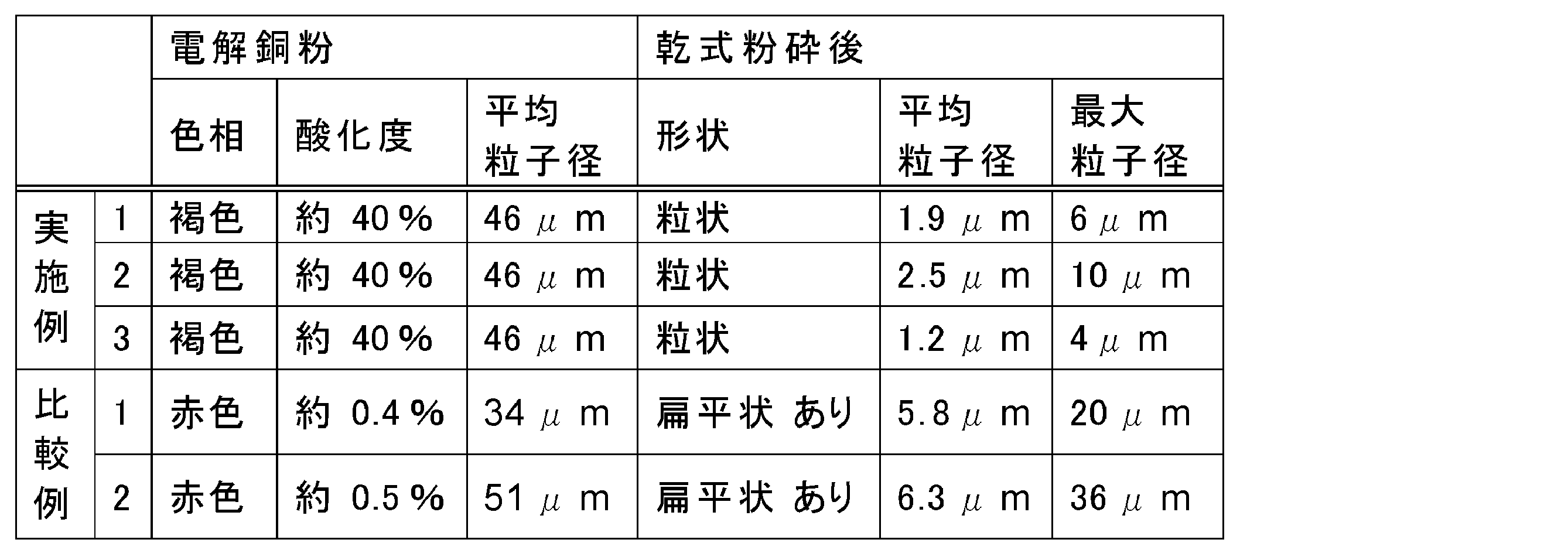
電解銅粉を乾燥した後における電解銅粉の表面の色相を目視で観察した。結果を表2に示す。実施例1~3における電解銅粉の表面は褐色に変色していた。その結果、表面に酸化皮膜が形成されていることが目視で確認された。一方、比較例1及び2における電解銅粉は赤色を有していた。このことから、表面に酸化皮膜がほとんど形成されていないことが目視で確認された。
〔電解銅粉について〕
[表面の色相]
電解銅粉を乾燥した後における電解銅粉の表面の色相を目視で観察した。結果を表2に示す。実施例1~3における電解銅粉の表面は褐色に変色していた。その結果、表面に酸化皮膜が形成されていることが目視で確認された。一方、比較例1及び2における電解銅粉は赤色を有していた。このことから、表面に酸化皮膜がほとんど形成されていないことが目視で確認された。
[酸化の程度]
乾燥後の電解銅粉について、乾燥後の電解銅粉の重量と、電解銅粉の全てが完全に酸化第二銅に酸化した場合の理論重量とを対比することで、酸化の程度を推定した。結果を表2に示す。実施例1~3における電解銅粉は、理論重量に対して約40%の酸化が進行していた。このことから、実施例1~3における電解銅粉は、表面に酸化皮膜が形成されていることが定量的に確認された。一方、比較例1における電解銅粉は、理論重量に対して約0.4%の酸化しか進行しておらず、比較例2における電解銅粉は、理論重量に対して約0.5%の酸化しか進行していなかった。このことから、比較例1及び2における電解銅粉は、表面に酸化皮膜がほとんど形成されていないことが定量的に確認された。
乾燥後の電解銅粉について、乾燥後の電解銅粉の重量と、電解銅粉の全てが完全に酸化第二銅に酸化した場合の理論重量とを対比することで、酸化の程度を推定した。結果を表2に示す。実施例1~3における電解銅粉は、理論重量に対して約40%の酸化が進行していた。このことから、実施例1~3における電解銅粉は、表面に酸化皮膜が形成されていることが定量的に確認された。一方、比較例1における電解銅粉は、理論重量に対して約0.4%の酸化しか進行しておらず、比較例2における電解銅粉は、理論重量に対して約0.5%の酸化しか進行していなかった。このことから、比較例1及び2における電解銅粉は、表面に酸化皮膜がほとんど形成されていないことが定量的に確認された。
[酸化銅粉のSEM画像]
乾燥後の電解銅粉の走査電子顕微鏡画像(以下、「SEM画像」ともいう。)を撮影した。結果の一例を図2に示す。図2は、実施例1に係る乾燥後の電解銅粉のSEM画像である。
乾燥後の電解銅粉の走査電子顕微鏡画像(以下、「SEM画像」ともいう。)を撮影した。結果の一例を図2に示す。図2は、実施例1に係る乾燥後の電解銅粉のSEM画像である。
[平均粒子径]
乾燥後の電解銅粉の平均粒子径(体積球相当径)を、レーザー粒度分布測定器マクロトラック(日機装社製)を用いて測定した。結果を表2に示す。
乾燥後の電解銅粉の平均粒子径(体積球相当径)を、レーザー粒度分布測定器マクロトラック(日機装社製)を用いて測定した。結果を表2に示す。
〔乾式粉砕後の電解銅微粉末について〕
[形状]
乾式粉砕後の電解銅微粉末について、SEM画像を撮影した。そして、このSEM画像から実施例及び比較例における電解銅微粉末の形状を観察した。SEM画像の一例を図3~図5に示す。図3は、実施例1に係る電解銅微粉末のSEM画像であり、図4は、比較例1に係る電解銅微粉末のSEM画像であり、図5は、比較例2に係る電解銅微粉末のSEM画像である。また、形状を観察した結果を表2に示す。実施例1~3における電解銅微粉末は粒状の状態で粉砕されていた。一方、比較例1及び2における電解銅微粉末は粒状のものだけでなく、扁平状の粒子も含んでいた。これは、表面が酸化皮膜を有するものでないため、金属銅の延性が作用して電解銅粉を細かく粉砕できなかったためであると推測される。
[形状]
乾式粉砕後の電解銅微粉末について、SEM画像を撮影した。そして、このSEM画像から実施例及び比較例における電解銅微粉末の形状を観察した。SEM画像の一例を図3~図5に示す。図3は、実施例1に係る電解銅微粉末のSEM画像であり、図4は、比較例1に係る電解銅微粉末のSEM画像であり、図5は、比較例2に係る電解銅微粉末のSEM画像である。また、形状を観察した結果を表2に示す。実施例1~3における電解銅微粉末は粒状の状態で粉砕されていた。一方、比較例1及び2における電解銅微粉末は粒状のものだけでなく、扁平状の粒子も含んでいた。これは、表面が酸化皮膜を有するものでないため、金属銅の延性が作用して電解銅粉を細かく粉砕できなかったためであると推測される。
[平均粒子径及び最大粒子径]
電解銅微粉末の平均粒子径及び最大粒子径を測定した。これらの粒子径は、レーザー粒度分布測定器マクロトラック(日機装社製)を用いて測定した、体積球相当径によるものである。結果を表2に示す。実施例1~3における電解銅微粉末は、平均粒子径が3.5μm以下であり、最大粒子径が10μm以下であった。このことから、実施例1~3における電解銅微粉末が粒状の状態で粉砕されていることを定量的に確認できた。一方、比較例1及び2における電解銅微粉末は、平均粒子径が5.2μm以上であり、最大粒子径が20μm以上であった。このことから、比較例1及び2における電解銅微粉末が適切に粉砕されていない粒子を含むものであることを定量的に確認できた。
電解銅微粉末の平均粒子径及び最大粒子径を測定した。これらの粒子径は、レーザー粒度分布測定器マクロトラック(日機装社製)を用いて測定した、体積球相当径によるものである。結果を表2に示す。実施例1~3における電解銅微粉末は、平均粒子径が3.5μm以下であり、最大粒子径が10μm以下であった。このことから、実施例1~3における電解銅微粉末が粒状の状態で粉砕されていることを定量的に確認できた。一方、比較例1及び2における電解銅微粉末は、平均粒子径が5.2μm以上であり、最大粒子径が20μm以上であった。このことから、比較例1及び2における電解銅微粉末が適切に粉砕されていない粒子を含むものであることを定量的に確認できた。
〔酸化後の酸化第二銅微粉末について〕
[形状]
酸化後の酸化第二銅微粉末について、SEM画像を撮影して確認したが、酸化によって状態に変化が無く、図3~図5に示す酸化前の状態と同じであった。
[形状]
酸化後の酸化第二銅微粉末について、SEM画像を撮影して確認したが、酸化によって状態に変化が無く、図3~図5に示す酸化前の状態と同じであった。
[色]
実施例及び比較例に係る酸化第二銅微粉末の色を目視で観察した。結果を表3に示す。いずれの試料も黒色を呈していた。
実施例及び比較例に係る酸化第二銅微粉末の色を目視で観察した。結果を表3に示す。いずれの試料も黒色を呈していた。
[相]
実施例及び比較例に係る酸化第二銅微粉末の相状態を確認するため、酸化第二銅微粉末に対し、X線回折を行った。結果の一例を図6及び表3に示す。図6は、実施例1に係る酸化第二銅微粉末のXRDパターンである。このXRDパターンから、実施例1に係る酸化第二銅微粉末は、CuO単一相であることが確認された。なお、図示は省略するが、他の実施例及び比較例に係る酸化第二銅微粉末も同様のXRDパターンを示し、いずれもCuO単一相であることが確認された。
実施例及び比較例に係る酸化第二銅微粉末の相状態を確認するため、酸化第二銅微粉末に対し、X線回折を行った。結果の一例を図6及び表3に示す。図6は、実施例1に係る酸化第二銅微粉末のXRDパターンである。このXRDパターンから、実施例1に係る酸化第二銅微粉末は、CuO単一相であることが確認された。なお、図示は省略するが、他の実施例及び比較例に係る酸化第二銅微粉末も同様のXRDパターンを示し、いずれもCuO単一相であることが確認された。
[純度]
実施例及び比較例に係る酸化第二銅微粉末について、電解重量分析を行った。結果を表3に示す。いずれの酸化第二銅微粉末についても、酸化第二銅の濃度が99.6重量%であることが確認された。
実施例及び比較例に係る酸化第二銅微粉末について、電解重量分析を行った。結果を表3に示す。いずれの酸化第二銅微粉末についても、酸化第二銅の濃度が99.6重量%であることが確認された。
[平均粒子径及び最大粒子径]
酸化第二銅微粉末の平均粒子径及び最大粒子径を測定した。粒子径の測定方法は、電解銅微粉末における測定方法と同じである。結果を表3に示す。粒子径の測定結果から、実施例1~3における酸化第二銅微粉末が粒状であること、及び比較例1、2における酸化第二銅微粉末が粒状以外の粒子を含むものであることを定量的に確認できた。
酸化第二銅微粉末の平均粒子径及び最大粒子径を測定した。粒子径の測定方法は、電解銅微粉末における測定方法と同じである。結果を表3に示す。粒子径の測定結果から、実施例1~3における酸化第二銅微粉末が粒状であること、及び比較例1、2における酸化第二銅微粉末が粒状以外の粒子を含むものであることを定量的に確認できた。
[めっき液に対する溶解性の評価]
めっき液に対する溶解性は、実施例及び比較例に係る酸化第二銅微粉末10gを25℃にてスターラーで撹拌しながら1Lのめっき液に添加し、この添加をしたときから上記酸化第二銅微粉末が完全に溶解するまでの時間を測定することによって評価した。めっき液は、228g/LのCuSO4・5H2Oと、68g/Lの遊離H2SO4と、60mg/Lの塩化物イオンとを含有する溶液とした。結果を表3に示す。実施例に係る酸化第二銅微粉末は、35秒以内でめっき液に溶解することができた。このことから、乾式法であってもめっき液への高い溶解性を有する酸化第二銅微粉末を提供できることが確認された。一方、比較例に係る酸化第二銅微粉末は、20分を経過してもめっき液に完全に溶解させることはできなかった。
めっき液に対する溶解性は、実施例及び比較例に係る酸化第二銅微粉末10gを25℃にてスターラーで撹拌しながら1Lのめっき液に添加し、この添加をしたときから上記酸化第二銅微粉末が完全に溶解するまでの時間を測定することによって評価した。めっき液は、228g/LのCuSO4・5H2Oと、68g/Lの遊離H2SO4と、60mg/Lの塩化物イオンとを含有する溶液とした。結果を表3に示す。実施例に係る酸化第二銅微粉末は、35秒以内でめっき液に溶解することができた。このことから、乾式法であってもめっき液への高い溶解性を有する酸化第二銅微粉末を提供できることが確認された。一方、比較例に係る酸化第二銅微粉末は、20分を経過してもめっき液に完全に溶解させることはできなかった。
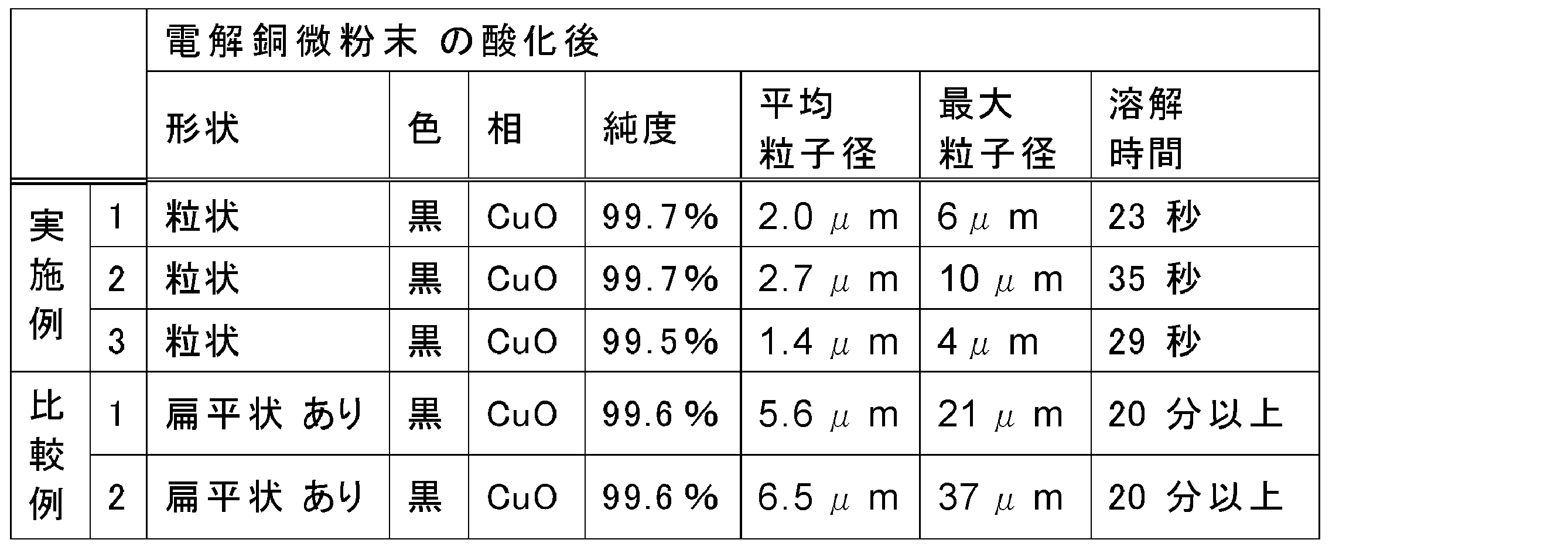
上記のとおり、表面に酸化皮膜を有する電解銅粉を乾式で粉砕する乾式粉砕工程と、この乾式粉砕工程によって得られる電解銅微粉末を酸化する酸化工程とを経て製造される酸化第二銅微粉末は、乾式法の従来の利点である、高純度であることと、湿式法の従来の利点である、めっき液への高い溶解性との両方を併せ持つことが確認された。その結果、工業的に用いる銅めっき液の補給用銅源として極めて好適に使用できることが確認された。
一方、表面に酸化皮膜を有する電解銅粉を用いない場合、20分を経過してもめっき液に完全に溶解させることができなかった(比較例1、2)。この点で、銅めっき液の補給用銅源としては支障を生じ得ることが確認された。
Claims (6)
- 表面に酸化皮膜を有する電解銅粉を乾式で粉砕する乾式粉砕工程と、
この乾式粉砕工程によって得られる電解銅微粉末を酸化する酸化工程とを含む、酸化第二銅微粉末の製造方法。 - 前記酸化皮膜は、銅イオン含有溶液の電気分解によって得られる電解銅粉を水洗した後、酸素含有雰囲気において70℃~150℃の温度で乾燥することによって形成される、請求項1に記載の酸化第二銅微粉末の製造方法。
- 前記乾式粉砕工程は酸素含有雰囲気で行われる、請求項1又は2に記載の酸化第二銅微粉末の製造方法。
- 前記酸化工程は、前記電解銅微粉末を300℃~700℃で熱することによって行われる、請求項1から3のいずれかに記載の酸化第二銅微粉末の製造方法。
- 請求項1から4のいずれかに記載の製造方法によって得られる酸化第二銅微粉末が溶解された硫酸銅水溶液を電解銅めっき装置の電解液として使用する、銅めっき方法。
- 平均粒子径が5μm以下であり、最大粒子径が15μm以下であり、10gの酸化第二銅微粉末を、25℃における、228g/LのCuSO4・5H2Oと、68g/Lの遊離H2SO4と、60mg/Lの塩化物イオンとを含有する硫酸含有溶液1Lに浸漬して行う溶解試験において、溶解時間が1分以下である、酸化第二銅微粉末。
Applications Claiming Priority (2)
| Application Number | Priority Date | Filing Date | Title |
|---|---|---|---|
| JP2012-268381 | 2012-12-07 | ||
| JP2012268381A JP5817711B2 (ja) | 2012-12-07 | 2012-12-07 | 酸化第二銅微粉末及びその製造方法 |
Publications (1)
| Publication Number | Publication Date |
|---|---|
| WO2014087707A1 true WO2014087707A1 (ja) | 2014-06-12 |
Family
ID=50883138
Family Applications (1)
| Application Number | Title | Priority Date | Filing Date |
|---|---|---|---|
| PCT/JP2013/072467 Ceased WO2014087707A1 (ja) | 2012-12-07 | 2013-08-22 | 酸化第二銅微粉末及びその製造方法 |
Country Status (3)
| Country | Link |
|---|---|
| JP (1) | JP5817711B2 (ja) |
| TW (1) | TWI580643B (ja) |
| WO (1) | WO2014087707A1 (ja) |
Families Citing this family (5)
| Publication number | Priority date | Publication date | Assignee | Title |
|---|---|---|---|---|
| JP3328378B2 (ja) | 1993-07-09 | 2002-09-24 | 住友金属工業株式会社 | 高周波加熱装置 |
| JP3320509B2 (ja) | 1993-07-29 | 2002-09-03 | 住友金属工業株式会社 | 高周波加熱装置 |
| JP3163037B2 (ja) | 1997-05-22 | 2001-05-08 | セア スチール コーポレーション | 高周波電気抵抗溶接装置の自動入熱量制御システム及び制御方法 |
| JP6303022B2 (ja) * | 2014-10-03 | 2018-03-28 | 三井金属鉱業株式会社 | 銅粉 |
| TWI655042B (zh) * | 2016-09-29 | 2019-04-01 | 日商Jx金屬股份有限公司 | 表面處理金屬粉、雷射燒結體之製造方法、製造雷射燒結用表面處理金屬粉之方法 |
Citations (4)
| Publication number | Priority date | Publication date | Assignee | Title |
|---|---|---|---|---|
| JPS62199705A (ja) * | 1986-02-25 | 1987-09-03 | Fukuda Kinzoku Hakufun Kogyo Kk | 微細粒状銅粉の製造方法 |
| JP2008122030A (ja) * | 2006-11-15 | 2008-05-29 | Mitsui Mining & Smelting Co Ltd | ヒートパイプ構成原料 |
| JP2009047383A (ja) * | 2007-08-22 | 2009-03-05 | Mitsui Mining & Smelting Co Ltd | ヒートパイプ構成原料 |
| JP2012193068A (ja) * | 2011-03-16 | 2012-10-11 | Sumitomo Metal Mining Co Ltd | 高純度酸化第二銅微粉末の製造方法、および硫酸銅水溶液の銅イオンの供給方法 |
Family Cites Families (1)
| Publication number | Priority date | Publication date | Assignee | Title |
|---|---|---|---|---|
| CN102441381A (zh) * | 2011-10-28 | 2012-05-09 | 昆山德泰新材料科技有限公司 | 一种用氧化铜粉生产的催化剂及其制造方法 |
-
2012
- 2012-12-07 JP JP2012268381A patent/JP5817711B2/ja not_active Expired - Fee Related
-
2013
- 2013-08-22 WO PCT/JP2013/072467 patent/WO2014087707A1/ja not_active Ceased
- 2013-10-17 TW TW102137471A patent/TWI580643B/zh not_active IP Right Cessation
Patent Citations (4)
| Publication number | Priority date | Publication date | Assignee | Title |
|---|---|---|---|---|
| JPS62199705A (ja) * | 1986-02-25 | 1987-09-03 | Fukuda Kinzoku Hakufun Kogyo Kk | 微細粒状銅粉の製造方法 |
| JP2008122030A (ja) * | 2006-11-15 | 2008-05-29 | Mitsui Mining & Smelting Co Ltd | ヒートパイプ構成原料 |
| JP2009047383A (ja) * | 2007-08-22 | 2009-03-05 | Mitsui Mining & Smelting Co Ltd | ヒートパイプ構成原料 |
| JP2012193068A (ja) * | 2011-03-16 | 2012-10-11 | Sumitomo Metal Mining Co Ltd | 高純度酸化第二銅微粉末の製造方法、および硫酸銅水溶液の銅イオンの供給方法 |
Also Published As
| Publication number | Publication date |
|---|---|
| TWI580643B (zh) | 2017-05-01 |
| JP5817711B2 (ja) | 2015-11-18 |
| JP2014114472A (ja) | 2014-06-26 |
| TW201422535A (zh) | 2014-06-16 |
Similar Documents
| Publication | Publication Date | Title |
|---|---|---|
| JP7645862B2 (ja) | リチウム及び他の金属を廃イオン電池から回収する方法 | |
| TWI905083B (zh) | 回收廢鋰離子電池之方法 | |
| TWI877188B (zh) | 自廢鋰離子電池中回收鋰之方法 | |
| US7566357B2 (en) | Method of producing fine-particle copper powders | |
| TWI846738B (zh) | 藉由浸濾物的電解以移除銅雜質的電池回收 | |
| US11939221B2 (en) | Method for the manufacture of reduced graphene oxide from electrode graphite scrap | |
| JP5817711B2 (ja) | 酸化第二銅微粉末及びその製造方法 | |
| JP5648803B2 (ja) | 酸化第二銅微粉末および硫酸銅水溶液の銅イオン供給方法 | |
| JP2016003360A (ja) | 硫酸ニッケル溶液の製造方法 | |
| JP6011992B2 (ja) | 電解銅粉末の製造方法 | |
| JP5568977B2 (ja) | 電池からのマンガンの回収方法 | |
| JP5874910B2 (ja) | 高純度酸化第二銅微粉末の製造方法、および硫酸銅水溶液の銅イオンの供給方法 | |
| JP5622108B2 (ja) | 高純度酸化第二銅微粉末とその製造方法、および高純度酸化第二銅微粉末を用いた硫酸銅水溶液の銅イオン供給方法 | |
| JP6056709B2 (ja) | 酸化第二銅粉及び酸化第二銅微粉末の製造方法 | |
| WO2014109088A1 (ja) | 酸化第二銅微粉末及びその製造方法 | |
| JP2012193068A (ja) | 高純度酸化第二銅微粉末の製造方法、および硫酸銅水溶液の銅イオンの供給方法 | |
| WO1989004736A1 (fr) | Procede de production de poudre de particules metalliques | |
| JP2015160780A (ja) | 酸化ニッケルの製造方法および得られる酸化ニッケル微粉末 | |
| JP5858267B2 (ja) | 易溶性酸化第二銅微粉末および硫酸銅水溶液への銅イオン供給方法 | |
| JP5720651B2 (ja) | 酸化第二銅粉及びその製造方法 | |
| JP2024135725A (ja) | パイロクロア酸化物粉体 | |
| JP2024135724A (ja) | パイロクロア酸化物粉体の製造方法 | |
| JP2004256372A (ja) | リチウムマンガン酸化物、およびその製造方法 | |
| JP2016107329A (ja) | 陽極の再生方法 | |
| TW202134182A (zh) | 純化鋰鹽的方法 |
Legal Events
| Date | Code | Title | Description |
|---|---|---|---|
| 121 | Ep: the epo has been informed by wipo that ep was designated in this application |
Ref document number: 13860671 Country of ref document: EP Kind code of ref document: A1 |
|
| DPE2 | Request for preliminary examination filed before expiration of 19th month from priority date (pct application filed from 20040101) | ||
| NENP | Non-entry into the national phase |
Ref country code: DE |
|
| 122 | Ep: pct application non-entry in european phase |
Ref document number: 13860671 Country of ref document: EP Kind code of ref document: A1 |