WO2014020711A1 - 取引管理システムおよび取引管理プログラム - Google Patents
取引管理システムおよび取引管理プログラム Download PDFInfo
- Publication number
- WO2014020711A1 WO2014020711A1 PCT/JP2012/069509 JP2012069509W WO2014020711A1 WO 2014020711 A1 WO2014020711 A1 WO 2014020711A1 JP 2012069509 W JP2012069509 W JP 2012069509W WO 2014020711 A1 WO2014020711 A1 WO 2014020711A1
- Authority
- WO
- WIPO (PCT)
- Prior art keywords
- trader
- transaction
- product
- order
- upstream
- Prior art date
- Legal status (The legal status is an assumption and is not a legal conclusion. Google has not performed a legal analysis and makes no representation as to the accuracy of the status listed.)
- Ceased
Links
Images












Classifications
-
- G—PHYSICS
- G06—COMPUTING OR CALCULATING; COUNTING
- G06Q—INFORMATION AND COMMUNICATION TECHNOLOGY [ICT] SPECIALLY ADAPTED FOR ADMINISTRATIVE, COMMERCIAL, FINANCIAL, MANAGERIAL OR SUPERVISORY PURPOSES; SYSTEMS OR METHODS SPECIALLY ADAPTED FOR ADMINISTRATIVE, COMMERCIAL, FINANCIAL, MANAGERIAL OR SUPERVISORY PURPOSES, NOT OTHERWISE PROVIDED FOR
- G06Q20/00—Payment architectures, schemes or protocols
- G06Q20/08—Payment architectures
- G06Q20/10—Payment architectures specially adapted for electronic funds transfer [EFT] systems; specially adapted for home banking systems
-
- G—PHYSICS
- G06—COMPUTING OR CALCULATING; COUNTING
- G06Q—INFORMATION AND COMMUNICATION TECHNOLOGY [ICT] SPECIALLY ADAPTED FOR ADMINISTRATIVE, COMMERCIAL, FINANCIAL, MANAGERIAL OR SUPERVISORY PURPOSES; SYSTEMS OR METHODS SPECIALLY ADAPTED FOR ADMINISTRATIVE, COMMERCIAL, FINANCIAL, MANAGERIAL OR SUPERVISORY PURPOSES, NOT OTHERWISE PROVIDED FOR
- G06Q20/00—Payment architectures, schemes or protocols
- G06Q20/08—Payment architectures
- G06Q20/14—Payment architectures specially adapted for billing systems
-
- G—PHYSICS
- G06—COMPUTING OR CALCULATING; COUNTING
- G06Q—INFORMATION AND COMMUNICATION TECHNOLOGY [ICT] SPECIALLY ADAPTED FOR ADMINISTRATIVE, COMMERCIAL, FINANCIAL, MANAGERIAL OR SUPERVISORY PURPOSES; SYSTEMS OR METHODS SPECIALLY ADAPTED FOR ADMINISTRATIVE, COMMERCIAL, FINANCIAL, MANAGERIAL OR SUPERVISORY PURPOSES, NOT OTHERWISE PROVIDED FOR
- G06Q20/00—Payment architectures, schemes or protocols
- G06Q20/08—Payment architectures
- G06Q20/20—Point-of-sale [POS] network systems
- G06Q20/201—Price look-up processing, e.g. updating
-
- G—PHYSICS
- G06—COMPUTING OR CALCULATING; COUNTING
- G06Q—INFORMATION AND COMMUNICATION TECHNOLOGY [ICT] SPECIALLY ADAPTED FOR ADMINISTRATIVE, COMMERCIAL, FINANCIAL, MANAGERIAL OR SUPERVISORY PURPOSES; SYSTEMS OR METHODS SPECIALLY ADAPTED FOR ADMINISTRATIVE, COMMERCIAL, FINANCIAL, MANAGERIAL OR SUPERVISORY PURPOSES, NOT OTHERWISE PROVIDED FOR
- G06Q20/00—Payment architectures, schemes or protocols
- G06Q20/08—Payment architectures
- G06Q20/20—Point-of-sale [POS] network systems
- G06Q20/209—Specified transaction journal output feature, e.g. printed receipt or voice output
-
- G—PHYSICS
- G06—COMPUTING OR CALCULATING; COUNTING
- G06Q—INFORMATION AND COMMUNICATION TECHNOLOGY [ICT] SPECIALLY ADAPTED FOR ADMINISTRATIVE, COMMERCIAL, FINANCIAL, MANAGERIAL OR SUPERVISORY PURPOSES; SYSTEMS OR METHODS SPECIALLY ADAPTED FOR ADMINISTRATIVE, COMMERCIAL, FINANCIAL, MANAGERIAL OR SUPERVISORY PURPOSES, NOT OTHERWISE PROVIDED FOR
- G06Q30/00—Commerce
- G06Q30/04—Billing or invoicing
-
- G—PHYSICS
- G06—COMPUTING OR CALCULATING; COUNTING
- G06Q—INFORMATION AND COMMUNICATION TECHNOLOGY [ICT] SPECIALLY ADAPTED FOR ADMINISTRATIVE, COMMERCIAL, FINANCIAL, MANAGERIAL OR SUPERVISORY PURPOSES; SYSTEMS OR METHODS SPECIALLY ADAPTED FOR ADMINISTRATIVE, COMMERCIAL, FINANCIAL, MANAGERIAL OR SUPERVISORY PURPOSES, NOT OTHERWISE PROVIDED FOR
- G06Q30/00—Commerce
- G06Q30/06—Buying, selling or leasing transactions
Definitions
- the present invention relates to a transaction management system and a transaction management program.
- an orderer who wants to purchase a product accesses a server or the like as an ordering destination from his / her terminal device via a network and performs a process of placing an order for the product.
- processing is performed not only between the two parties of the supplier and the orderer, but also between, for example, a trader that actually provides a product, a trader that mediates it, and a customer that purchases the product.
- Patent Document 1 Japanese Patent Laid-Open No. 2007-172081 describes a brokerage sales support system and a brokerage sales support method.
- the intermediary sales support technology has a configuration in which a sales intermediary server system and a product provider server system are connected via a network.
- the merchandise provider server system uses the product provider home page as the display surface of the customer terminal device. Display.
- the product provider server system requests the order form generation data of the product selected by the customer on the product provider home page, the order provider generation data is transmitted to the customer terminal device.
- the server system for sales intermediaries receives order form data created by the customer based on the order form generation data from the customer terminal device. In this way, by including the link of the product provider home page in the sales broker home page, it is said that the sales broker can reduce the trouble of updating the home page used for sales and provide the latest information to the customer. Yes.
- the sales broker server system is configured to generate order slip data for a product provider based on order data from a customer who is a product orderer.
- the sales broker server system merely mediates the order contents from the customer and the data of the shipping destination to the server system of the product provider. It is not configured to automatically perform processing related to product transactions with the product provider. For this reason, even though order processing can be performed, it is necessary to separately manage the slips of actual transactions, and there is still a problem that the management is still troublesome.
- An object of the present invention is to provide a transaction management system and a transaction management program capable of simplifying the slip management of merchandise transactions among a plurality of staged traders, which is the above-described problem.
- a transaction setting information storage unit for storing an upstream transaction ID for purchasing the product specified by the product ID in association with the intermediate transaction ID and the product ID of the intermediate transaction;
- the first sales price which is the sales price of the product by the upstream trader specified by the upstream trader ID in association with the product ID and the upstream trader ID, is stored, and is associated with the product ID and the intermediate trader ID.
- a price storage unit for storing a second sales price which is a sales price of the product by the intermediate trader;
- An order management unit that receives an order for a product from an intermediate trader along with an input of the product ID, the downstream trader ID of the downstream trader, and the order quantity of the product from a downstream trader in which the intermediate trader sells the product; Based on the order quantity received by the order management department and the second sales price, issue an order slip from the downstream trader to the intermediate trader, and based on the order quantity accepted by the order management department and the first sales price,
- a slip issue processing unit for issuing an order slip from an intermediate trader to an upstream trader;
- a transaction management system is provided.
- the transaction setting information stores the upstream trader to whom a certain intermediate trader purchases the product and the first sales price at which the upstream trader sells the product.
- the transaction management system can also grasp the sales price of the product between the intermediate trader and the upstream trader when there is an order from the downstream trader. . Therefore, not only the order slip from the downstream trader to the intermediate trader but also the order slip from the intermediate trader to the upstream trader can be automatically issued.
- the downstream trader Based on the order quantity of the commodity input from, it is possible to easily issue an order slip to the upstream trader using the first selling price by the upstream trader.
- the upstream trader may or may not be a user of this trade management system.
- the order slip can be provided on the display of the upstream trader's user terminal while the upstream trader is logged in.
- the transaction management system is configured in a distributed manner with a plurality of servers and the upstream trader and the downstream trader are users of different servers, order processing between traders is performed by data linkage between the servers. be able to.
- the slip issuing processing unit is configured to transfer the intermediate transaction from the upstream transaction to the intermediate transaction based on the order quantity and the first sales price used to issue the order slip from the intermediate transaction to the upstream transaction. Based on the order quantity and the second sales price used to issue the billing slip or delivery slip to the trader and the order slip from the downstream trader to the intermediate trader, the intermediate trader to the downstream trader A billing document or a delivery document can be issued.
- the order quantity of products exchanged between traders is the same. Therefore, the billing slip or delivery slip can be easily issued by using the data used for issuing the order slip from the downstream side to the upstream side in the billing slip or delivery slip from the upstream side to the downstream side.
- the entire merchandise distribution can be grasped by linking transaction data matching the upstream and downstream traders by the product ID.
- the intermediate trader can connect the intermediate trader with the upstream trader. Since it is possible to pay attention to the upstream traders before the acceptance inspection in the meantime and prompt retransmission, the quality of the product can be ensured by a simple DB structure.
- the transaction management system provides a transaction pattern in which a predetermined number of transaction intermediaries are inserted between a merchandise recipient and a merchandise dispatcher as a terminal, whereby order management is performed in units of this transaction pattern. , Delivery management, billing management, product quality management, and product logistics management can be performed efficiently. That is, it can be said that one of the major features of the present invention is that these patterns can be managed by this patterned simple data structure of the transaction management information storage unit.
- the product includes not only tangibles but also “services” which are intangibles.
- “sales” includes not only sales of products but also “provision” of services. Therefore, the transaction management system according to the present invention can be applied not only to merchandise transactions but also to the provision of services.
- the delivery date management unit of the transaction management system receives the transaction ID sent from the upstream trader and the notification of completion of shipment, and the acceptance criteria of the transaction between each trader of the transaction ID is at the time of shipment. Judgment is made between acceptance inspection and delivery inspection. In the case of inspection at the time of shipment, the billable flag is turned on between the traders.
- the product receipt date is sent, the date is stored, it is periodically determined whether or not the product receipt date is written for the transaction ID registered in the waiting list, and the product receipt date is written. If so, turn on the billable flag for the transaction between the traders in the delivery verification of the transaction ID.
- the slip issuance processing unit creates slip data only for transactions for which the billable flag is turned on immediately on each billing or on the closing date in the case of a billing request.
- the present invention can create a voucher having a so-called front / back relationship such as a purchase order and an invoice at an appropriate timing.
- a so-called front / back relationship such as a purchase order and an invoice at an appropriate timing.
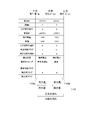
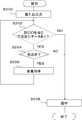
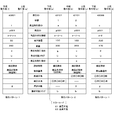
- FIG. 1 shows an example of the data structure of the transaction management information storage part by the 2nd Embodiment of this invention. It is a flowchart which shows the process sequence of the starting routine at the time of dispatch of the delivery management part by the 2nd Embodiment of this invention. It is a flowchart which shows the process sequence of the fixed period starting routine of the delivery management part by the 2nd Embodiment of this invention. It is explanatory drawing of the flow of the ordering information by the embodiment of this invention, and the flow of goods.
- FIG. 1 is a block diagram showing configurations of a user terminal 40, a user terminal 42, and a user terminal 44, which are terminals of each trader communicating with the transaction management system 10 and the transaction management system 10 in the first embodiment of the present invention.
- FIG. 1 is a block diagram showing configurations of a user terminal 40, a user terminal 42, and a user terminal 44, which are terminals of each trader communicating with the transaction management system 10 and the transaction management system 10 in the first embodiment of the present invention.
- the transaction management system 10 is connected to terminals such as the user terminal 40, the user terminal 42, and the user terminal 44 via the network 50.
- the network 50 can be a public network such as the Internet or a local network such as an intranet.
- the transaction management system 10 is managed and operated by, for example, a transaction management service provider.
- the transaction management system 10 manages merchandise ordering processing between merchandise distributors.
- the user terminal 40, the user terminal 42, and the user terminal 44 can be terminals such as a personal computer of each trader who conducts a transaction using a service provided by a transaction management service provider.
- the trader can be a trader.
- the transaction management system 10 stores transaction management information relating to transactions between producers such as product manufacturers, end consumers, and traders such as wholesalers and retailers interposed between them. It can be set as the structure hold
- the information of the transaction management information used in the downstream transaction is diverted to the upstream transaction management information, or the information of the transaction management information used in the upstream transaction is converted to the downstream side. Can be diverted to transaction management information.
- each trader can access the integrated data, it is not necessary to transmit / receive data to / from each other when providing each trader with slips, books, etc., which will be described later.
- FIG. 2 is a functional block diagram showing in detail the configuration of the transaction management system 10 in the present embodiment.
- the transaction management system 10 includes a transmission / reception unit 24 for transmitting / receiving data via the network 50, a central processing unit 26 for processing data received from the transmission / reception unit 24, and a data storage unit 28 for storing data. including.
- the central processing unit 26 includes, as components, a transmission / reception processing unit 112, a setting information receiving unit 114, an order management unit 118, a transaction management information generation unit 120, a slip issue processing unit 122, a delivery management unit 126, and a physical distribution status management unit. 128.
- the data storage unit 28 includes, as components, a product information storage unit 140, a trader information storage unit 142, a transaction setting information storage unit 144, a price storage unit 146, a transaction management information storage unit 148, a slip information storage unit 150, and inventory information.
- a storage unit 152 is included.
- Each component of the central processing unit 26 and the data storage unit 28 of the transaction management system 10 shown in FIG. 2 is not a hardware unit configuration but a functional unit block.
- Each component of the central processing unit 26 and the data storage unit 28 of the transaction management system 10 includes a CPU of any computer, a memory, a program that implements the components of the figure loaded in the memory, and a hard disk that stores the program It is realized by an arbitrary combination of hardware and software centering on a storage unit such as a network interface. It will be understood by those skilled in the art that there are various modifications to the implementation method and apparatus.
- the transaction management system 10 can include an input unit such as a keyboard and a mouse for inputting and outputting data and a display unit such as a display.
- the central processing unit 26 can be configured to have an input / output processing function for inputting / outputting data between such an input unit and a display unit.
- the configuration of the transaction management system 10 is not limited to one physically configured by one device, and may be configured in a distributed manner.
- the transmission / reception processing unit 112 exchanges data with the transmission / reception unit 24.
- the merchandise information storage unit 140 stores information related to merchandise that is managed by the user of the transaction management system 10 using the transaction management system 10 in association with the merchandise ID.
- the trader information storage unit 142 stores information related to traders who are users of the trade management system 10 in association with trader IDs.
- the transaction setting information storage unit 144 stores a product ID of a product sold by each trader in association with the trader ID. Further, the transaction setting information storage unit 144 associates with the combination of the trader ID and the product ID, and the upstream trader ID of the upstream trader of the ordering party who purchases the product specified by the product ID, Transaction setting information such as the downstream trader ID of the downstream trader who orders the product specified by the product ID from the trader, the quantity available for sale to the downstream trader, the order management mode, the product distribution mode, etc. Can be stored as
- the price storage unit 146 corresponds to the sales price that each trader sells to the downstream trader who is the orderer for each product, the product ID, the trader ID, and the downstream trader ID of the downstream trader who is the orderer. Add and remember.
- the setting information receiving unit 114 receives various setting information input from the user terminal such as the user terminal 40 to the user terminal 42 via the network 50 by the user, and the product information storage unit 140, the trader information storage unit 142, and the transaction setting, respectively.
- the information is stored in the information storage unit 144 and the price storage unit 146.
- the data stored in the transaction setting information storage unit 144 and the price storage unit 146 is directly input from a user terminal such as the user terminal 40 to the user terminal 42 by a user who is a business operator, The operator or the like can input the information set by a user terminal such as the user terminal 40 to the user terminal 42 or the input unit of the transaction management system 10.
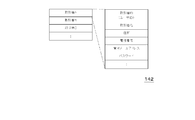
- FIG. 3 is a diagram illustrating an example of a data configuration of the product information storage unit 140.
- the product information storage unit 140 stores information such as product category, product name, producer information, product introduction address, etc. of each product in association with the product ID.
- FIG. 4 is a diagram illustrating an example of a data configuration of the trader information storage unit 142.
- the trader information storage unit 142 stores information such as the trader name, address, telephone number, e-mail address, password, and trader introduction address of each trader in association with the trader ID.
- the trader ID can be a user ID that identifies the user when each trader logs in to the trade management system 10.
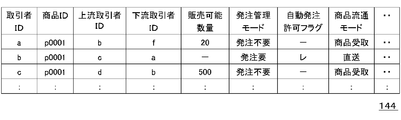
- FIG. 5 is a diagram illustrating an example of a data configuration of the transaction setting information storage unit 144.
- the transaction setting information storage unit 144 is associated with the trader ID of the target trader (corresponding to an intermediate trader), and the product ID of the product sold by the trader, and the trader is specified by the product ID.
- the information such as the merchandise distribution mode is stored.
- the order management mode indicates whether or not it is necessary to place an order with the upstream trader when the trader receives a product order from the downstream trader. For example, if an intermediate trader holds inventory and the downstream trader places an order for goods, he / she provides the stock held by the downstream trader to the upstream trader at that time. Is not required, so “ordering is not required”. For example, in the example shown in FIG. 5, the trader with the trader ID “a” and the trader ID “c” holds the stock of the product with the product ID “p0001” by itself. Is "no ordering required”. On the other hand, for the trader with trader ID “b”, the order management mode is “order required”. When there is an order from a downstream trader identified by the downstream trader ID for the trader with the trader ID “b”, to the upstream trader identified by the upstream trader ID on the upstream side. It is necessary to order.
- the order management mode when the order management mode is set to “order required”, it should be set so that it is possible to distinguish whether it is possible to automatically place an order with an upstream trader or whether confirmation with the trader is necessary. Can do.
- the automatic ordering permission flag in the automatic ordering permission flag column is turned on.
- “Re” when the automatic order flag is turned on, “Re” is indicated.
- the order management mode is “order required” and “re” is set in the automatic order permission flag field.
- upstream and downstream correspond to the flow of the product, and the product is distributed from the upstream trader to the downstream trader.
- the product distribution mode indicates a distribution mode of products to the trader when the product is ordered from the trader to the upstream trader. For example, when the trader receives a product from an upstream trader, the product is “received”, and the trader itself only mediates the order from the downstream trader to the upstream trader. If you don't receive a product, you can set it to "direct delivery”. For example, in the example shown in FIG. 5, the merchandise distribution mode is “product receipt” for the traders with the trader ID “a” and the trader ID “c”. This means that the trader with the trader ID “a” and the trader with the trader ID “c” need to actually receive the goods from their upstream traders.
- the merchandise distribution mode is “direct delivery”. This means that the trader with the trader ID “b” merely mediates the trade and does not need to actually receive the product from the upstream trader. That is, after an order has been placed for the upstream trader ID “c”, the product shipped from the upstream trader ID “c” is not shipped to the trader with the trader ID “b”. That is, it is sent directly to the trader with trader ID “a”.
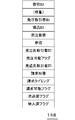
- FIG. 6 is a diagram illustrating an example of a data configuration of the price storage unit 146.
- the price storage unit 146 stores information such as a trader ID, a downstream trader ID, a sales price (unit price (yen)), a billing form, and billing timing in association with the product ID.
- the billing form and the billing timing are determined between the upstream trader who is the orderer and the trader who is the ordering party. For example, the trader who is the ordering party sets the setting information from the user terminal 40 to the user terminal 42.
- the price can be registered in the price storage unit 146 via the reception unit 114.
- the billing form column it is possible to set whether to bill each time an invoice is issued for each order, or a closing bill to be issued collectively at the end of the month or the end of the month.
- the billing timing column will show the “when ordering” arrangement for issuing an invoice when a product is ordered from a downstream trader, and the upstream trader that is the supplier.
- "At the time of product shipment” which is an arrangement for issuing an invoice when a product is shipped from the company
- At the time of product delivery an arrangement for issuing an invoice when a product is delivered to a trader who is an orderer Etc. can be set.
- the billing timing column will show “End of Period”, which is an arrangement to issue invoices at the end of the period, “End of Month”, which is an arrangement to issue invoices at the end of the month, etc. Can be set.
- the selling price is basically set higher on the downstream side. Thereby, when a trader is a wholesaler etc., a sales profit can be obtained.
- the ordering management unit 118 manages an ordering process based on the ordering instruction.
- the first trader who gives an ordering instruction for a product will be described as a downstream trader
- the trader who is the supplier of the downstream trader will be the intermediate trader
- the trader who is the supplier of the intermediate trader will be the upstream trader.
- the order management unit 118 determines whether or not an intermediate trader as an ordering party places an order for a product from an upstream upstream trader when there is an order for the product from a certain downstream trader.
- the order management unit 118 also performs an ordering process to the upstream upstream trader.
- the order management unit 118 receives order information input by the downstream trader when the logged-in downstream trader issues an ordering instruction.
- the order management unit 118 accepts input of the downstream trader ID of the downstream trader who is the orderer, the product ID of the product to be ordered, and the order quantity of the product to be ordered.
- the order management unit 118 uses the downstream trader ID and product ID of the downstream trader as keys, and from the transaction setting information storage unit 144 and the price storage unit 146, the intermediate business partner of the ordering party who sells the product to the downstream trader.
- the intermediate trader ID and sales price are also acquired as ordering information.
- the order management unit 118 may provide an input screen (not shown) for inputting information for ordering to the user terminal, for example, when an instruction to order a product is made while the downstream trader is logged in. . Further, the order management unit 118 receives an input of a product name or a product ID from a downstream trader, and uses the product name or product ID as a key to store the product information storage unit 140, the transaction setting information storage unit 144, and the price storage. The information on the corresponding product may be read from the unit 146 or the like and presented on the user input screen.
- the order management unit 118 accesses the transaction setting information storage unit 144 and the price storage unit 146 using the downstream transaction ID of the downstream transaction as a key, and for example, the downstream transaction is set as the downstream transaction.
- Each product ID of a plurality of products may be acquired and displayed as a list on the input screen so that downstream traders can select the product.
- product information may be read out from the product information storage unit 140 using the product ID as a key, and the product information may be displayed on the input screen.
- the order management unit 118 reads, from the transaction setting information storage unit 144 using the downstream trader ID and the product ID as keys, the available quantity of the product that the upstream trader assigns to the downstream trader, and the like. You may make it display on an input screen.
- the order management unit 118 issues a transaction ID when receiving an ordering instruction from a downstream trader.
- the order management unit 118 notifies the transaction management information generation unit 120 to that effect.
- the transaction management information generating unit 120 associates the transaction ID issued by the order management unit 118 with the order information received from the user by the order management unit 118 and the order information acquired from the transaction setting information storage unit 144 and the price storage unit 146.
- Transaction management information including The transaction management information generation unit 120 stores the generated transaction management information in the transaction management information storage unit 148.
- accept from a trader means that each function of the trade management system 10 uses a trader ID of each user from a user terminal such as the user terminal 40 to the user terminal 42 used by the trader. This means that instructions and information are received in a state where is specified.
- FIG. 7 is a diagram illustrating an example of a data configuration of the transaction management information storage unit 148.
- the transaction management information storage unit 148 includes a transaction ID field, a branch number field, an ordering trader ID field, a product ID field, an order quantity field, a unit price field, an ordering business partner ID field, a shipping destination business person ID field, and the like. Further, the transaction management information storage unit 148 includes an orderable flag column, a billing form column, a billing timing column, a billable flag column, a shipped flag column, a delivered flag column, and the like. These flag fields are used for controlling the timing at which a slip issuing processing unit 122 described later issues a slip.
- the transaction management information generation unit 120 stores the downstream trader ID of the downstream trader who is the orderer as “ordering trader ID” and the intermediate trader ID of the intermediate trader of the ordering party as “ordered trader ID”. To do.
- the order management unit 118 accesses the product distribution mode column of the transaction setting information storage unit 144 and sets “product receipt” for the transaction setting information whose downstream transaction is the target transaction. If it is, the downstream trader ID of the downstream trader is acquired as the shipping destination trader ID. On the other hand, the order management unit 118 accesses the product distribution mode column of the transaction setting information storage unit 144 and sets “product receipt” such as “direct delivery” for the transaction setting information whose downstream transaction is the target transaction. If not, it is determined whether or not “commodity receipt” is made by referring to the commodity distribution mode column of the transaction setting information in which the downstream trader of the downstream trader is the target trader.
- the order management unit 118 repeats this process, and performs a process of acquiring the trader ID of the trader whose setting of the product distribution mode column of the target trader is “product receipt” as the shipping destination trader ID.
- the order management unit 118 acquires the transaction ID “a” as the shipping destination transaction ID for the transaction between the transaction with the transaction ID “a” and the transaction with the transaction ID “b”.
- the setting in the product distribution mode column of the transaction setting information of the transaction with the transaction ID “b” as the target transaction is “direct delivery”.
- the order management unit 118 refers to the product distribution mode column of the transaction setting information of the trader with the trader ID “a” further downstream of the trader with the trader ID “b”, It is determined whether or not.
- the order management unit 118 also acquires the transaction ID “a” as the shipping destination transaction ID for transactions between the transaction with the transaction ID “b” and the transaction with the transaction ID “c”. .
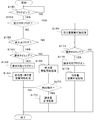
- FIG. 8 is a flowchart showing an example of a processing procedure when the order management unit 118 receives an ordering instruction for a product from a downstream trader.
- the order management unit 118 Upon receiving the ordering instruction (YES in step S100), the order management unit 118 issues a transaction ID (step S102).
- the transaction ID can identify each transaction that does not overlap with the transaction ID of another transaction.
- the order management unit 118 notifies the transaction management information generation unit 120 of the issued transaction ID and the acquired order information, and issues a transaction management information generation instruction to the transaction management information generation unit 120 (step S104).
- the transaction management information generation unit 120 Based on this instruction, the transaction management information generation unit 120 generates transaction management information and stores it in the transaction management information storage unit 148.
- the transaction management information includes a transaction ID, an ordering trader ID, a product ID, an order quantity, a sales price (unit price), an ordering trader ID, and the like.
- the transaction management information includes an orderable flag column, a billing mode column, a billing timing column, a billable flag column, a dispatched flag column, and a delivered flag.
- the flag column can also be provided.
- the ordering management unit 118 turns on the orderable flag in the orderable flag column of the transaction management information (step S106).
- the order management unit 118 accesses the transaction setting information storage unit 144 using the downstream trader ID and the product ID as keys, and places an order for the trader ID of the trader who is the intermediate trader specified by these keys.
- the setting in the management mode column is confirmed, and it is determined whether or not the upstream order processing is performed (step S108). If “Order Required” is set in the Order Management Mode column, the order management unit 118 determines that the upstream order processing is necessary (YES in Step S108).
- the order management unit 118 issues a new transaction ID (step S110) when it is determined that upstream processing is necessary (YES in step S108).
- the order management unit 118 performs the downstream ordering process with respect to the upstream ordering process.
- the transaction ID including the same identification information as the identification information included in the issued transaction ID, for example, the same identification information with a branch number added can be issued.
- the order management unit 118 adds a branch number to the transaction ID issued in step S102, and adds another branch number to the transaction ID issued in step S102 for the transaction ID of the new transaction. Issue what you did.
- the order management unit 118 notifies the transaction management information generation unit 120 of the issued transaction ID and the acquired order information, and issues a new transaction management information generation instruction to the transaction management information generation unit 120 (step S112). At this time, the transaction management information generation unit 120 can take over the product ID and the order quantity from the downstream transaction management information.
- the order management unit 118 determines whether or not automatic order processing to the upstream side can be performed. First, the order management unit 118 accesses the transaction setting information storage unit 144 using the downstream trader ID and the product ID as keys, and performs upstream transactions of the trader ID of the trader who is an intermediate trader identified by these keys. The setting of the supplier ID column is confirmed, and it is determined whether or not the upstream trader ID is set (step S114).
- the order management unit 118 accesses the price storage unit 146, and as the downstream trader ID, the trader ID of the trader who is an intermediate trader, the trade It is determined whether or not the sales price (unit price) of the information in which the upstream trader ID and the product ID are set as the seller ID is set (step S116).
- the order management unit 118 accesses the transaction setting information storage unit 144 using the downstream trader ID and the product ID as keys, and specifies with these keys.
- the setting of the automatic ordering permission flag field of the trader ID of the trader who is the intermediate trader is confirmed, and it is determined whether or not the automatic ordering permission flag is on (step S118). If the automatic ordering permission flag is on (YES in step S118), it means that the automatic ordering process may be performed without confirming with the user. Therefore, the process proceeds to step S106, and the order management unit 118 determines the transaction management information.
- the orderable flag is turned on.
- the order management unit 118 acquires the upstream trader ID in the case of YES in step S114, acquires the selling price (unit price) in the case of YES in step S116, and uses them as ordering information as the transaction management information generation unit. 120 can be notified sequentially.
- the transaction management information generation unit 120 can add the order information notified from the order management unit 118 to the transaction management information and store it in the transaction management information storage unit 148.
- step S106 After step S106, until it is determined that the upstream ordering process is not necessary (NO in step S108), the same process is repeated, and the ordering management unit 118 is set as ordering required in the ordering management mode on the upstream side. The same ordering process is performed for the traders between the traders.
- step S114 if the upstream trader ID is not set in step S114 (NO in step S114), the selling price (unit price) is not set in step S116 (NO in step S116), or automatic ordering is permitted in step S118. If the flag is not on (NO in step S118), the order management unit 118 cannot perform automatic ordering processing, and therefore performs inquiry processing for the supplier (in this case, an intermediate trader) of the ordering party ( Step S120). Also in this case, since the transaction ID is issued in step S110, the order management unit 118 can also provide the transaction ID when making an inquiry to the intermediate trader. Thereby, when there is an input of ordering information from an intermediate trader later, generation of transaction management information can be facilitated.
- the transaction setting information storage unit 144 and the price of the information on the upstream trader to whom the trader of the ordering party who sells each product orders the product and the sales price by the upstream trader are further described.
- the information in the storage unit 146 it is possible to automatically generate the transaction management information for the order placed upstream.
- automatic ordering processing can also be performed by setting an automatic orderability flag.
- FIG. 9 is a flowchart illustrating an example of a processing procedure in the case where the order management unit 118 accepts input of order information from an intermediate trader as a user after making an inquiry to the trader in step S120 of FIG. .
- the order management unit 118 when a user who is an intermediate trader logs in to the transaction management system 10 and inputs an order information along with an input of a transaction ID (YES in step S121), the order management unit 118 is upstream from the user. An input of a trader ID, an input of a selling price (unit price), and the like are accepted as ordering information (YES in step S122, YES in step S123). The order management unit 118 notifies the transaction management information generation unit 120 of the received order information, and instructs the transaction management information generation unit 120 to generate transaction management information (step S124). In addition, if an order is accepted from the user and the upstream order permission is obtained (YES in step S125), the orderable flag in the transaction management information is turned on (step S126).
- FIG. 10 shows the first transaction management information 148a regarding the downstream trader (ID “a”) and the intermediate trader (ID “b”), the intermediate trader (ID “b”), and the upstream trader (ID “c”). ]
- the order of the product from the trader with the trader ID “b” to the trader with the trader ID “c” is automatically performed, and the product is sent from the trader with the trader ID “c”. The case where it is sent directly to the trader with trader ID “a” is shown.
- the information on the ordering trader ID column, the product ID column, the order quantity column, and the unit price column of the first transaction management information 148a between the trader ID “a” and the trader ID “b” can be acquired from the ordering information received by the management unit 118.
- the delivery destination transaction ID is “a”.
- the first transaction management information is included in the product ID column and the order quantity column of the second transaction management information 148b between the transaction ID “b” and the transaction ID “c”, respectively.
- Information similar to 148a is input.
- information in the ordering supplier ID column of the first transaction management information 148a is input to the ordering agent ID column of the second transaction management information 148b.
- the order management unit 118 sets the delivery destination transaction ID set in the downstream transaction management information of the orderer, that is, “a” as the delivery destination transaction ID.
- the delivery management unit 126 accepts input of shipped information from the trader when the trader of the ordering party ships the ordered product. Specifically, the delivery management unit 126 receives a transaction ID, a trader ID of the trader, and the like from the trader as the dispatched information. The delivery management unit 126 turns on the dispatched flag in the dispatched flag column of the corresponding transaction management information in the transaction management information storage unit 148 based on the transaction ID and the trader ID.
- the delivery management unit 126 refers to the corresponding transaction management information based on the transaction ID and the transaction ID, and the same shipping destination transaction ID as the shipping destination transaction ID of the transaction management information is designated as the shipping destination. It is determined whether or not the transaction management information further exists on the downstream side. When there is transaction management information in which the same shipping destination transaction ID is designated as a shipping destination on the downstream side, the delivery management unit 126 also turns on the shipping completion flag of the transaction management information.
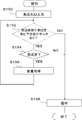
- FIG. 11 is a flowchart illustrating an example of a processing procedure in which the delivery management unit 126 turns on the dispatched flag in the transaction management information storage unit 148.
- an upstream trader who ships a product can input information to the transaction management system 10 via a network 50 from a user terminal such as the user terminal 40.
- the delivery management unit 126 receives input of dispatched information indicating that it has been shipped together with the trader ID and transaction ID of the upstream trader (YES in step S130).
- the delivery management unit 126 accesses the transaction management information storage unit 148 and, based on the transaction ID and the transaction ID, sets the shipping completion flag of the transaction management information in which the transaction ID of the upstream transaction is the ordering party. Turn on (step S132).
- the delivery management unit 126 similarly accesses the transaction management information storage unit 148, and the shipping destination transaction ID of the transaction management information in which the transaction ID of the upstream transaction is the ordering party is the ordering transaction. It is determined whether it is the same as the ID (step S134). Here, if the shipping destination trader ID and the ordering trader ID are not the same (NO in step S134), the process proceeds to downstream transaction management information, and the shipping completion flag of the transaction management information is turned on (step S132). ) Repeat the same process. On the other hand, if the shipping destination trader ID and the ordering trader ID are the same in step S134 (YES in step S134), the process ends.
- the order trader ID is “b”.
- the shipping destination transaction ID is “a”, which is different. Therefore, the delivery management unit 126 turns on the shipped flag of the first transaction management information 148a on the downstream side after turning on the shipped flag of the second transaction management information 148b.
- the ordering trader ID is “a”, but the shipping destination trader ID is also “a”. These are the same. Therefore, the process of turning on the dispatched flag is ended here.
- the trader with the trader ID “c”, which is the upstream trader sends the dispatched information. It is possible to perform a process of turning on the dispatched flag of the first transaction management information 148a without inputting the dispatched information or the like by the trader with the trader ID “b” which is an intermediate trader simply by inputting. it can.
- the delivery management unit 126 can use the trader ID of the trader to which the product has been shipped, as the shipped flag for turning on the flag.
- the trader ID “a” is used as the shipment completion flag.
- the delivery management unit 126 receives input of delivered information from the trader when the product is delivered to the trader who is the orderer. Specifically, the delivery management unit 126 receives, as delivered information, a transaction ID, a trader ID of the trader, a trader ID of the trader who shipped the product, and the like from the trader. Accept. The delivery management unit 126 turns on the delivered flag in the delivered flag column of the corresponding transaction management information in the transaction management information storage unit 148 based on the transaction ID and the transaction ID.
- the delivery management unit 126 refers to the corresponding transaction management information based on the transaction ID and the transaction ID, and the same shipping destination transaction ID as the shipping destination transaction ID of the transaction management information is designated as the shipping destination. It is determined whether or not the transaction management information further exists on the upstream side. When there is transaction management information in which the same shipping destination transaction ID is designated as the shipping destination on the upstream side, the delivery management unit 126 also turns on the delivered flag of the transaction management information.
- FIG. 13 is a flowchart illustrating an example of a processing procedure in which the delivery management unit 126 turns on the delivered flag in the transaction management information storage unit 148.
- a downstream trader to whom goods are delivered can input information to the transaction management system 10 via a network 50 from a user terminal such as the user terminal 40.
- the delivery management unit 126 accepts input of delivery information indicating that delivery has been completed together with the trader ID and transaction ID of the downstream trader (YES in step S140).
- the delivered information may include a trader ID of a trader who shipped the product.
- the delivery management unit 126 accesses the transaction management information storage unit 148, and turns on the delivered flag of the transaction management information whose downstream transaction ID is the orderer based on the transaction ID and the transaction ID. (Step S142).
- the delivery management unit 126 similarly accesses the transaction management information storage unit 148, and the supplier transaction ID of the transaction management information in which the transaction ID of the downstream transaction is the purchaser is the product. It is determined whether or not it is the same as the trader ID of the dispatched trader (step S144).
- the transaction management information is moved to the upstream side and the delivery flag of the transaction management information is turned on. (Step S132), the same processing is repeated.
- step S144 if the ordering supplier ID is the same as the supplier ID of the shipper (YES in step S144), the process ends.
- the delivery management unit 126 turns on the delivered flag of the upstream second transaction management information 148b after turning on the delivered flag of the first transaction management information 148a.
- the second transaction management information 148b between the trader ID “b” and the trader ID “c”, the trader of the trader who shipped the product to the supplier trader ID “c”.
- the ID is also “c”, and these are the same. Therefore, the process for turning on the delivered flag is terminated here.
- the trader with the trader ID “a”, which is the downstream trader sends the delivered information. It is possible to perform processing to turn on the delivery flag of the second transaction management information 148b without inputting the delivery information or the like by the trader with the trader ID “b”, which is an intermediate trader, simply by inputting. it can.
- the slip issue processing unit 122 issues a purchase order (order slip) from the purchaser of the product to the purchaser, an invoice (billing slip) from the purchaser of the product to the purchaser, and a delivery note (delivery slip). Further, the slip issue processing unit 122 can issue a purchase ledger of a downstream trader on the ordering side of a product and a sales ledger on the side of accepting an order for the product based on a transaction between the traders.
- the slip information storage unit 150 can store data necessary for issuing a slip, such as a purchase order, a delivery note / invoice, a purchase ledger, and a format for issuing a sales ledger.
- the slip issue processor 122 issues a purchase order from the purchaser to the supplier based on the order quantity received by the order management unit 118 and the sales price by the supplier.
- the price storage unit 146 stores the first sales price that is the sales price of the product by the upstream trader specified by the upstream trader ID in association with the product ID and the upstream trader ID.
- the second sales price which is the sales price of the product by the intermediate trader, is stored in association with the product ID and the intermediate trader ID.
- the slip issue processing unit 122 issues an order slip from the downstream trader to the intermediate trader based on the order quantity received by the order management part 118 and the second sales price, and the order quantity accepted by the order management part 118.
- an order slip is issued from the intermediate trader to the upstream trader.
- the slip issue processing unit 122 determines that the upstream side is based on the order quantity received by the order management unit 118 and the first sales price by the upstream business partner.
- a purchase order is also issued to the next supplier.
- the slip issue processing unit 122 issues a downstream invoice or invoice based on the sales quantity and the sales price used to issue the purchase order.
- a purchase order and an invoice or delivery note between the same traders are issued using the same data.
- the slip issuing processing unit 122 uses the data including the sales quantity and the sales price to issue a purchase order to be provided to an upstream transaction based on the purchase order format.
- Issue invoices or invoices for delivery to downstream traders based on the invoice or invoice format. For example, when a purchase order is issued based on the data entered as an order when the purchaser places an order with a certain supplier, the invoice from the supplier to the purchaser is issued using the same data. Or you can issue a delivery note.
- the slip issue processing unit 122 can generate a purchase ledger or a sales ledger formed by accumulating information used for issuing an order slip.
- the voucher issuance processing unit 122 can accumulate and store transaction management information between each trader during a predetermined period.
- the slip issuance processing unit 122 uses the accumulated data of the transaction management information to provide the downstream trader on the ordering side of the product based on the transaction between the traders based on the format for the purchase ledger.
- a purchase ledger can be issued.
- the slip issue processing unit 122 uses the same accumulated data to receive an order for a product based on a transaction between the traders based on the sales ledger format.
- a sales ledger to be provided to upstream traders can be issued simultaneously.
- issuing a voucher means that the voucher can be viewed by the corresponding trader.
- the slip issuing processing unit 122 is based on whether the orderable flag, the dispatched flag, or the delivered flag in the transaction management information storage unit 148 of any one of the traders is turned on by the order management unit 118 or the delivery management unit 126. Then, processing is performed so that the corresponding trader can view invoices such as purchase orders, invoices, and invoices.
- FIG. 14 is a flowchart illustrating an example of a processing procedure of the slip issuing process unit 122.
- the order management unit 118 When the order management possible flag of the transaction management information in the transaction management information storage unit 148 is turned on, the order management unit 118 notifies the slip issue processing unit 122 of the transaction ID (including branch number if there is a branch number) along with the notification of the transaction ID. Notify that.
- the delivery management unit 126 turns on the dispatched flag or the delivered flag of the transaction management information in the transaction management information storage unit 148, the delivery management unit 126 notifies the transaction ID (including the branch number if there is a branch number) along with the slip. This is notified to the issue processing unit 122.
- the slip issue processing unit 122 is turned on. Processing is performed according to the type of flag.
- the slip issuing processor 122 determines whether or not the flag is an orderable flag (step S152). If the flag is an orderable flag (YES in step S152), it is issued based on the transaction management information specified by the transaction ID.
- the purchase order form is processed so that the trader identified by the supplier trader ID can browse (step S154). When the browsing is enabled, the voucher issue processing unit 122 can control the voucher to be displayed on the log-in screen of the corresponding trader when, for example, the corresponding trader inputs his / her ID and logs in. it can.
- step S118 and step S106 in FIG. 8 when it is set to automatically place an order to an upstream trader, the order can be placed when the transaction management information is generated.
- the flag is also turned on. Therefore, the slip issuing processing unit 122 can browse the purchase orders from the downstream traders and the intermediate traders to the intermediate traders and the upstream traders as soon as the order management unit 118 accepts the orders from the downstream traders. Can be. Thereby, the transaction ID “c” on the upstream side can browse the purchase order without the transaction of the transaction ID “b”, which is an intermediate transaction, being processed.
- the voucher issuance processing unit 122 refers to the billing timing of the transaction management information specified by the transaction ID, and determines whether or not the product ordering time is set as the billing timing (step S174).
- the slip issuing processor 122 turns on the billable flag of the transaction management information (step S176).
- the voucher issuance processing unit 122 processes the invoice generated based on the transaction management information specified by the transaction ID so that the transaction specified by the ordering transaction ID can be viewed (step S178). .
- step S152 determines whether or not the flag is a delivered flag (step S158).
- the voucher issuance processing unit 122 refers to the billing timing of the transaction management information specified by the transaction ID, and determines whether or not the time of product delivery is set as the billing timing. Determination is made (step S160).
- the slip issue processing unit 122 turns on the billable flag of the transaction management information (step S164).
- the slip issuance processing unit 122 processes the invoice and invoice generated based on the transaction management information specified by the transaction ID so that the transaction specified by the ordering transaction ID can be viewed (step). S164). At this time, the voucher issuance processing unit 122 can generate both the delivery note and the invoice.
- step S160 when the delivery time of the product is not set as the billing timing in step S160 (NO in step S160), the slip issuing processor 122 places an order for the delivery note generated based on the transaction management information specified by the transaction ID. Processing is performed so that the trader identified by the trader ID can be browsed (step S168).
- the voucher issuance processing unit 122 determines whether or not a closing bill such as the end of the term or the end of the month is set as the billing timing based on the order timing of the transaction management information specified by the transaction ID (step S170). ).
- the slip issuing processing unit 122 performs a process of storing the transaction management information specified by the transaction ID as, for example, the invoice information storage unit 150 as storage information of the invoice. This is performed (step S172).
- the slip issuance processing unit 122 is set with the invoice accumulated information stored in the slip information storage unit 150, for example, by receiving an instruction from the user at the end of the period or by monitoring the timing at the end of the period. Can be provided to the corresponding trader in a viewable manner.
- step S174 the slip issuing processing unit 122 refers to the billing timing of the transaction management information specified by the transaction ID, and determines whether or not the time of shipping the product is set as the billing timing (step). S174).
- the slip issuing processing unit 122 turns on the billable flag of the transaction management information (step S176).
- the voucher issuance processing unit 122 processes the invoice generated based on the transaction management information specified by the transaction ID so that the transaction specified by the ordering transaction ID can be viewed (step S178). .
- the slip issuance processing unit 122 when any of the orderable flag, the dispatched flag, or the delivered flag is turned on, it is set in the transaction setting information storage unit 144. Depending on the billing form and billing timing, the corresponding trader can view the purchase order, bill, invoice, and the like.
- the delivery management unit 126 for example, when the product is not shipped to the intermediate trader and is directly sent from the upstream trader to the downstream trader, the upstream trader only needs to input the dispatched information.
- the intermediate trader performs a process of turning on the dispatched flag of the transaction management information of the transaction between the intermediate trader and the downstream trader without inputting the dispatched information or the like.
- the delivery management unit 126 allows transactions between the intermediate trader and the upstream trader without the intermediate trader entering the delivered information or the like only by the downstream trader entering the delivered information. It is possible to perform processing for turning on the delivered flag of the transaction management information. Therefore, in such a case, the slip issuance processing unit 122 automatically issues a purchase order, an invoice, and an invoice at an appropriate timing after the dispatched flag and the delivered flag are turned on. Can do.
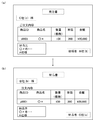
- FIG. 15A shows a purchase order provided from “Company A” with a trader ID “a” to “Company B” with a trader ID “b”.
- FIG. 15B is a diagram showing an invoice provided from “Company B” with the trader ID “b” to “Company A” with the trader ID “a”.
- the information included in the purchase order and the delivery note is the same except for the portion indicated by the broken line.
- FIG. 16A shows a purchase order provided from “Company B” with a trader ID “b” to “C Company” with a trader ID “c”.
- FIG. 16B is a diagram showing an invoice provided from “Company C” with a trader ID “c” to “Company B” with a trader ID “b”.
- the information included in the purchase order and the delivery note is the same except for the portion indicated by the broken line.
- the upstream trader to whom a user purchases the product and the selling price at which the upstream trader sells the product If the order quantity of the ordered product does not change when an order is received from a (downstream trader), not only a purchase order from the trader to the supplier (intermediate trader) is generated. In addition, a purchase order from the supplier to the upstream supplier (upstream supplier) can be automatically generated.
- the data used for the purchase order provided to the upstream trader between each trader can be used as the data for the invoice or delivery note provided to the downstream trader between each trader, Or delivery note can be provided easily.
- the distribution status management unit 128 accesses the transaction management information in the transaction management information storage unit 148, and after the product from the upstream transaction is delivered to a certain downstream transaction, Is managed and provided to a predetermined trader by managing information such as whether or not the trader has been sent further downstream by the downstream trader. Thereby, the upstream trader can grasp the shipping state of the product of the downstream trader, and can make an order prediction that the product is ordered from the downstream trader next time.
- the distribution status management unit 128 sends the merchant with the trader ID “c” who shipped the merchandise in the example described with reference to FIG. Further, it is possible to present whether or not a product has been ordered from a downstream trader and the quantity when the order has been placed.
- FIG. 17 is a flowchart illustrating a processing procedure in which the distribution status management unit 128 presents the quantity of products shipped from a downstream trader.
- the distribution status management unit 128 sets the ship-to trader ID as the ordering trader. It is determined whether there is transaction management information included as an ID (step S192). When there is transaction management information including the shipping destination transaction ID as the ordering party transaction ID (YES in step S192), the distribution status management unit 128 determines whether or not the product has been shipped in the transaction management information. (Step S194).
- step S194 If the product has already been shipped (YES in step S194), the physical distribution status management unit 128 acquires the ordered quantity (step S196). Returning to step S192, the same processing is repeated. Thereafter, the distribution status management unit 128 presents the acquired order quantity to the trader (step S198).
- an upstream trader can grasp the quantity of goods shipped from a trader who is an orderer of his / her goods to a downstream trader, for example, to inventory the downstream trader.
- the upstream trader can further place an order to the upstream side at an appropriate timing.
- the distribution status management unit 128 performs user authentication based on the trader ID of the user, and information related to the orderer of the trade in which the user is designated as the ordering party. It is possible to make it possible to present only.
- the transaction management information storage unit 148 for each transaction, the product ID of the product and the trader ID of the product orderer for each transaction.
- the business partner ID of the ordering party who sells the product to the ordering party, the trader ID of the shipping destination to which the ordering party ships the product, the order quantity, and the shipping of the product to the shipping destination The state is memorized.
- the shipping status of the product can be grasped from the flags in the orderable flag column, the shipped flag column, and the delivered flag column.
- the transaction management system 10 by referring to the transaction management information in the transaction management information storage unit 148, for example, how much quantity is based on the dispatched flag (or orderable flag) and the dispatch quantity. It is possible to grasp whether or not the product is shipped from the trader to the downstream trader.
- the distribution status management unit 128 accesses the transaction management information storage unit 148 in response to an inquiry about the inventory quantity of the product in the search target transaction specified by the transaction ID along with the specification of the transaction ID and the product ID. , Processing for subtracting the order quantity in the transaction management information registered as the ordering party from the order quantity in the transaction management information registered as the ordering party and the shipping destination. As a result, the inventory quantity of the product in the search target trader is calculated and presented.
- FIG. 18 shows that in the first transaction management information 148a and the second transaction management information 148b shown in FIG. 12, a trader with a trade ID “a” who is a downstream trader receives an order for a product from the downstream side. It is a figure which shows the example of a data structure of the transaction management information storage part 148 in the case of performing a new transaction.
- the transaction management information generation unit 120 generates third transaction management information 148c with a new transaction ID, and stores the new transaction ID “t0201” in the transaction management information storage unit 148.
- the distribution status management unit 128 is designated by the trader ID together with designation of the trader ID “a” and the product ID “p0001”.
- the first transaction management information 148a in which the transaction management information storage unit 148 is accessed in response to the inquiry about the inventory quantity of the merchandise of the search target transaction, and the search target transaction is registered as the orderer and the shipping destination.
- FIG. 19 is a diagram showing another example of the configuration of the transaction management information storage unit 148 shown in FIG.
- the transaction management information generation unit 120 also stores the transaction ID “t0101” of the upstream transaction that is the target of the transaction in the transaction management information storage unit 148 in association with each transaction management information as the original transaction ID. can do.
- the physical distribution status management unit 128 can perform management such as grasping the shipping state of the product in the downstream transaction based on the transaction ID of the upstream transaction.
- the physical distribution status management unit 128 presents whether or not an order for a product has been ordered from a further downstream trader to the trader with the trader ID “a” to which the product has been shipped, and the quantity when the order has been placed. Can do.
- FIG. 20 is a flowchart illustrating a processing procedure in which the distribution status management unit 128 presents the quantity of products shipped from a downstream trader.
- the distribution status management unit 128 determines whether there is transaction management information including the transaction ID as the original transaction ID. (Step S202). When there is transaction management information including the transaction ID as the original transaction ID (YES in step S202), the distribution status management unit 128 determines whether or not the product has been shipped in the transaction management information (step S204). . When the product has been shipped (YES in step S204), the physical distribution status management unit 128 acquires the ordered quantity (step S206). Returning to step S202, the same processing is repeated. Thereafter, the physical distribution status management unit 128 presents the acquired order quantity to the trader (step S208).
- FIG. 21 is a diagram illustrating another example of the configuration of the transaction management information storage unit 148 illustrated in FIGS. 18 and 19.
- the transaction management information generation unit 120 associates each product ID with the trader ID of the trader in which the product is distributed as product ID additional information.
- the transaction management information storage unit 148 can store the information.
- “edc” is stored as the product ID additional information.
- the product with the product ID “p0001” held by the trader with the trader ID “c” is the trader with the trader ID “e”, the trader with the trader ID “d”, and the trader ID “ It is that it is distributed in the order of the traders of “c”.
- the trader ID “a” is added to the trade management information.
- “edcca” can be stored as the product ID additional information.
- the trader ID of the raw material trader used when the product is manufactured is included as the product ID additional information. You can also.
- the trader ID of the trader who handled the raw material instead of the current product may be attached together with a distinguishable code or the like.
- a trader is a terminal consumer, it can be set as the structure which attach
- the information in the shipping destination transaction ID column of each transaction management information is the transaction management information storage in which the information in the ordering vendor ID column of other related transaction management information is stored.
- the address information of the unit 148 may be included.
- the distribution status management unit 128, based on an order for a product from one of the traders, when the product is distributed from the upstream trader to the downstream trader, the transaction of the trader who has received the product.
- the merchant ID is added to the end of the product ID additional information, and the quantity of the product received by the trader is stored as an inventory quantity in the inventory information storage unit 152 in association with the product ID and the product ID additional information.
- the distribution status management unit 128 sends the product sent from the inventory quantity associated with the product ID and the product ID additional information added with the trader ID of the trader who sent the product at the end.
- the stock quantity is also updated by reducing the quantity.
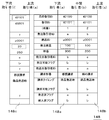
- FIG. 22 is a diagram illustrating an example of a data configuration of the inventory information storage unit 152.
- the distribution status management unit 128 adds the merchant ID of the merchant to the merchandise ID additional information at the timing when the merchandise is delivered to one of the traders and the delivery flag is turned on, and delivered. It is possible to perform a process for updating the inventory quantity of the product.
- the stock quantity of the product ID additional information “ed” is 1000, and the stock of the product ID additional information “edc” is stored.
- the quantity is 500.
- the physical distribution status management unit 128 associates the inventory quantity “increment” with the new product ID additional information “edc-a” in which “a” is added to the product ID additional information “edc”.
- the inventory quantity of the product ID additional information “edc” is updated to “400” obtained by subtracting “100” from the inventory information “500” before the update.
- FIG. 22 (c) it is further assumed that an order with the order quantity “20” is placed from the trader with the trader ID “f” to the trader with the trader ID “a”. Thereafter, the merchandise is sent from the trader with the trader ID “a” to the trader with the trader ID “f”, the trader with the trader ID “f” receives a delivery instruction, and the delivery flag is set.
- the distribution status management unit 128 associates the new product ID additional information “edcacaf” with “f” added to the product ID additional information “edcca”.
- the inventory quantity “20” is stored, and the inventory quantity of the product ID additional information “edca” is updated to “80” obtained by subtracting “20” from the inventory information “100” before the update. .
- the distribution status management unit 128 accepts an inquiry about the distribution status of the transaction sent by the transaction downstream from the transaction authorized by the own transaction ID, and the distribution status of the product related to the transaction Can provide processing. For example, when receiving an inquiry about the distribution status of a transaction sent by the transaction downstream from the transaction with the transaction ID “e”, the distribution status management unit 128 accesses the inventory information storage unit 152 to execute the transaction. The information including the person ID “e” included in the product ID additional information is extracted. The physical distribution status management unit 128 can provide the extracted information to the user terminal of the trader.
- the physical distribution status management unit 128 does not provide the product ID additional information to the user as it is, but the transaction IDs other than the transaction IDs adjacent to the transaction IDs of the targeted transaction transactions are unidentified marks ( For example, it can be converted to “%”) and provided to the relevant trader.
- the inventory situation in a distribution channel can be grasped, without specifying a trader. Since the trader is not specified, the upstream trader and the downstream trader can easily disclose their inventory data, and the accuracy of overall demand forecast, delivery date forecast, and the like can be improved.
- the trader ID of the trader with the trader ID “e” and the trader ID of the trader with the trader ID “d” with which the trader directly trades the product The mark “%” is displayed.
- the trader ID “e” is not provided with the trader ID itself, which is the identification information of the trader with whom the trader is not directly dealing, but the trader directly communicates. For example, it is possible to present the amount of merchandise that is in stock at each of the downstream traders. As a result, while preventing the information of the trader from becoming known to other traders, it is helpful to make forecasts for orders and to place orders by grasping how much the products handled by each trader are distributed.
- the end consumer may be displayed together with a code that can identify the end consumer.
- the trader ID of those traders is presented to the trader with trader ID “e”. Also good.
- an invoice or invoice can be issued independently.
- by storing the sales price between each trader in the price storage unit 146 when an invoice is issued from the upstream side to the downstream side, Similarly, further downstream invoices can be automatically issued based on sales price information.
- the transaction management system 10 in the present embodiment can also be applied when the upstream trader is not a user of this transaction management system.
- the order slip can be provided in a form displayed on the display of the user terminal of the upstream trader while the upstream trader is logged in.
- the ordering slip is automatically generated, so that the ordering process can be easily performed by facsimile transmission or e-mail attachment.
- the transaction setting information storage unit 144 may be configured to hold the stock quantity held by the trader in association with the trader ID and the product ID of the target trader (corresponding to an intermediate trader). .
- the order management unit 118 subtracts the order quantity from the inventory quantity in the transaction setting information storage unit 144 based on the order quantity, and changes the saleable quantity. Can also be performed.
- the transaction setting information storage unit 144 stores an upstream transaction ID and a downstream transaction ID in association with each transaction ID. showed that. However, it is not necessary to register the upstream trader ID and / or the downstream trader ID, which is the ordering party, in each trader ID for all products. For products for which it is not desired to specify an upstream trader or a downstream trader, a code such as “all” indicating that the product is not specified may be registered.
- the configuration of the transaction management information storage unit 148 is configured so that it is possible to manage whether the time of shipment or the time of delivery as a reference for raising the inspection (acceptance standard), compared to the first embodiment.
- the delivery management unit 126 sets a billable flag based on the acceptance criteria, and the slip issuing processing unit 122 performs an output process of an invoice based on the billable flag. is there.
- the transaction management system 10 starts with a merchandise recipient (including a prospective recipient) and a merchandise shipper (including a prospective dispatcher) as ends. Is provided with a pattern (transaction pattern) in which a predetermined number of transaction brokers are inserted, and the transaction management information storage unit 148 is configured with this transaction pattern as a unit, thereby managing billed delivery and merchandise logistics.
- FIG. 24 shows a data configuration example of the transaction management information storage unit 148 according to the present embodiment.
- transaction pattern 1 is a pattern for performing a transaction between two parties, a downstream trader who is a product recipient and an upstream trader who is a product shipper. It is a pattern intervened by the middle trader.
- a pattern is set according to the number of brokers.
- FIG. 21 The main difference between FIG. 21 and FIG. 24 is that, instead of the billing timing, dispatched flag, and delivered flag in FIG. is there.
- the number of days of transportation is the number of days required when goods are transported from the upstream trader to the downstream trader, and a predetermined initial value is set in advance.
- the transaction management information storage unit 148 is a shipping start routine that is started by a shipping completion notification including the transaction ID and the shipping date and time sent from the user terminal of the upstream trader, and a fixed period starting routine that is started at a fixed period. It is configured.
- FIG. 25 is a flowchart showing the processing procedure of the shipping start routine of the delivery management unit 126.
- the shipping start routine of the delivery management unit is started by receiving the shipping completion notification of the upstream trader.
- a shipping notification which is a notification that shipping has been completed, is sent by e-mail to a downstream trader together with a transaction ID (S300).
- the downstream trader includes all downstream traders as seen from the upstream trader in the trade ID (the same applies to the upstream traders), but in the case of step S300, the intermediate trader When it exists, you may make it notify to both the said trader and a downstream trader (terminal trader), and you may make it notify only a downstream trader.
- the delivery management unit 126 writes the shipping date and time in the shipping date and time column of the transaction management information storage unit 148 (S301). And the delivery management part 126 determines the transaction pattern of the said transaction ID (S302), and when the pattern 2, ie, an intermediary trader, exists, the acceptance criteria of an intermediary trader (ie, an upstream trader and an intermediary trader). (S303). If the read acceptance criteria is when the product is shipped (“YES” in S304), the billable flag is set and the read acceptance criteria is when the product arrives (during delivery). ) (“NO” in S304), the transaction ID is registered in the billable waiting list (hereinafter simply referred to as “waiting list”) (S306).
- the acceptance criteria of the downstream trader that is, the acceptance criteria of the transaction between the downstream trader and the immediate higher order trader
- S307 the same processing as the above steps S304 to S306 is executed (S307).
- step S302 the process immediately proceeds to step S307 and the subsequent processes are executed. If the number of transaction patterns is 3 or more, the processes of steps S303 to S306 may be added according to the number of intermediate traders. The above is the processing procedure of the shipping start routine of the delivery management unit 126.
- the downstream trader who is the prospective recipient of goods inputs the receipt information via the user terminal when receiving the goods.
- the transaction management system 10 is sent to the transaction management system 10 together with the transaction ID.
- an error code corresponding to the abnormal state is sent to the transaction management system 10.
- the transaction management system 10 stores the received information in the delivery date / time column of the transaction ID in the transaction management information storage unit 148. Examples of product abnormalities include shortage of quantity and poor product quality.
- the processing procedure of the fixed period activation routine of the delivery management unit 126 will be described with reference to FIG.
- the periodic management start routine of the delivery management unit is started periodically, the first transaction ID registered in the waiting list is extracted (S400).
- the data in the delivery date / time field in the downstream trader column of the transaction management information storage unit 148 is read (S401). If the date / time data is stored in the delivery date / time field (“YES” in S403), the transaction ID is stored.
- step S405 a billable flag is set in the column in which the acceptance criterion is when the commodity arrives (S404), and the transaction ID is deleted from the waiting list (S405).
- step S406 if an error code is set in step S403 (“YES” in S406), the upstream supplier as the shipping destination is notified (S407). If NO in step S406, that is, if neither the date nor error code is set in the delivery date / time column, the difference between the current date / time and the shipping date / time of the upstream trader is calculated (S409), and the difference is the number of shipping days + ⁇ ( If it is larger than (a predetermined margin) (“YES” in S410), the process proceeds to step S404. The above processing is executed for all transaction IDs in the waiting list (S411, S412).
- step S405 additional information in the product ID may be added immediately after step S405.
- the shipping date may be calculated by subtracting the shipping date from the delivery date, and the value may be used as the shipping date between the same traders.
- FIG. 27 is an explanatory diagram of the order information flow and the product flow.
- ordering information flows in the order of traders a, b, and c, and the trader c (upstream trader) completes the shipment of the product, for example, by pressing a dispatch button displayed on the terminal, to the system 10. Notice.
- the product is sent from the trader c to the trader a.
- Product distribution information is stored in the transaction management information storage unit 148 as product ID additional information.
- product ID additional information For example, in the example of FIG. 24, it means that the product sent from the trader c is a product traded in the order of the traders edc.
- the trader a adds the identification information of the trader a (product recipient) to the merchandise ID additional information by the trade management system 10.
- the product ID additional information is edca.
- This addition method becomes logistics traceability information.
- the traders downstream of the trade ID including intermediate traders
- the product ID additional information is edcba. This is the traceability information for delivery.
- the delivery flow is in principle the reverse of the order placement (order receipt from the order receiving side), it can also be regarded as traceability information for the order placement. If both the traceability of logistics and the traceability of delivery (ordering) are memorized, it is possible to elucidate what kind of transactions were made when problems occurred in logistics, and to ensure the safety and security of transactions. Can be.
- the transaction management system 10 determines whether or not to accept the inspection, manages the quality of the product, and the quality of the product based on the product shipment completion notification sent from the trader c and the input data of the trader a (downstream trader). Execute logistics management centrally and efficiently.
- the output of the purchase order and delivery note shown in FIGS. 15 and 16 can be output from the common data stored in the transaction management information storage unit 148, but the output timing becomes a problem.
- the billable flag is set according to the inspection standard, and the issue processing can be appropriately performed by the slip issuing processing unit 122 according to the billing form.
- the use of common data that is, the so-called front / back relationship in transactions, is not limited to purchase orders and delivery notes, but can be applied to, for example, sales ledgers and purchase ledgers.
- the feature of the embodiment of the present invention is that, as described above, it is possible to create the slips and the accounting data at an appropriate timing, omitting the burden of input by the downstream trader.
- each upstream trader For example, by looking at the inventory status of each upstream trader for a certain product, it becomes possible to predict the necessity of ordering and the delivery date at the time of ordering. On the other hand, it is possible to predict orders for a certain product by checking the inventory status of each downstream trader. At this time, the inventory status (inventory quantity, trend of increase / decrease in inventory quantity, etc.) can be seen / not seen, the specific availability of the supplier is set, and the inventory status of the upstream or downstream supplier It is good to be able to set whether to make it visible. Further, it may be possible to set how to show the inventory amount (for example, so-called sensory or analog way of showing, for example, large or small, or showing the increase / decrease trend as a ratio).
- the inventory amount for example, so-called sensory or analog way of showing, for example, large or small, or showing the increase / decrease trend as a ratio.
- the setting timing of the billable flag can be changed according to the acceptance criterion. Therefore, in addition to the effect of the first embodiment, the acceptance and slip of the bill can be efficiently performed at an appropriate timing. In addition to enabling issuance, it is possible to efficiently manage product quality and logistics.
- Transaction Pattern 2 a company that operates a portal site such as Internet shopping is an intermediate trader, a person who purchases a product using the site is a downstream trader, and a product that posts product information on that site Almost function as an escrow by setting the seller as the upstream trader, the acceptance standard between the downstream trader and the middle trader at the time of shipment, and the middle trader and the upstream trader as the delivery time standard. Can be realized.
- the intermediate trader can connect between the intermediate trader and the upstream trader. Since attention can be paid to upstream traders prior to acceptance and re-transmission or the like can be promoted, the quality of the product can be ensured by a simple DB structure.
- traceability information as a logistic such as a barcode or QR code (registered trademark, the same shall apply hereinafter) in which product ID, product lot number (or transaction ID), and product ID additional information are continuously connected. It may be attached to the product, or the traceability information may be stored in the IC chip and attached to the product for the transaction. Then, the upstream trader reads this QR code (traceability information as physical distribution) with a reading means such as a QR code reader and sends it to the transaction management system 10 when shipping the product.
- a transaction can be specified by a transaction ID, or a product ID, a lot number (not shown), and a product ID additional information.
- the transaction is identified from the traceability information as the distribution, and the billing flag is set according to the processing procedure described in FIGS. 25 and 26, and the invoice issuance process is performed by the slip issuance processing unit 122. Do.
- each trader can issue the documents necessary for the transaction such as invoices by simply reading the traceability information of the logistics attached to the product, thereby greatly saving labor. be able to. Further, by sequentially updating the traceability information of the logistics attached to the product, it becomes possible to grasp how the logistics is performed only by the product.
- the transaction management system of the present invention can be realized as a distributed system. For example, when upstream transactions are executed on different servers, each data in the transaction management information storage unit 148 is converted into the data format of the server, and distributed processing is realized by performing data linkage. be able to.
- the transaction patterns 1 and 2 can be used in combination as appropriate according to the actual situation of the transaction.
- the data structure of each pattern can be appropriately changed and used.
- the upstream trader (c) receives the order received via the intermediate trader (b), and the upstream trader (c) moves the product related to the order downstream.
- a column for setting a flag indicating whether or not to send directly is provided, and the upstream trader (c) sends the downstream trader (a) if the flag is set.
- Directly sent if the flag is not set, it is sent to the intermediate trader (b).
- the data structure of the transaction pattern 1 is used between the downstream trader (a) and the intermediate trader (b). It is also possible to complete the transaction by using the data structure of transaction pattern 1 between (b) and the upstream trader (c).
- the transaction ID may be common, and the branch number may distinguish between downstream-intermediate transactions and intermediate-upstream transactions.
- the order quantity (man-hours) and unit price (man-hour unit price) are used using the transaction pattern 1.
- a purchase order including contract
- the cost determined by is issued, and charged to the downstream trader (a) from the upstream trader (b) at the time of delivery or acceptance based on the set acceptance criteria.
- the man-hour and the unit price may be set separately, or the entire development cost is set in one of the columns (for example, “Order quantity” field), and the other column (for example, “Unit price” field) is fixed. You may make it set to a value (for example, "1").
- a net trader or the like mediates the commission service, the transaction can be efficiently managed using the transaction pattern 2.
Landscapes
- Business, Economics & Management (AREA)
- Accounting & Taxation (AREA)
- Finance (AREA)
- Development Economics (AREA)
- Engineering & Computer Science (AREA)
- Strategic Management (AREA)
- Physics & Mathematics (AREA)
- General Business, Economics & Management (AREA)
- General Physics & Mathematics (AREA)
- Theoretical Computer Science (AREA)
- Economics (AREA)
- Marketing (AREA)
- Management, Administration, Business Operations System, And Electronic Commerce (AREA)
Priority Applications (11)
| Application Number | Priority Date | Filing Date | Title |
|---|---|---|---|
| AU2012386707A AU2012386707B2 (en) | 2012-07-31 | 2012-07-31 | Transaction management system and transaction management program |
| KR20157002729A KR20150040895A (ko) | 2012-07-31 | 2012-07-31 | 거래 관리 시스템 및 거래 관리 프로그램 |
| KR1020177009093A KR101872403B1 (ko) | 2012-07-31 | 2012-07-31 | 거래 관리 시스템 및 거래 관리 프로그램 |
| EP12882375.4A EP2881907A4 (en) | 2012-07-31 | 2012-07-31 | TRANSACTION MANAGEMENT SYSTEM AND TRANSACTION MANAGEMENT PROGRAM |
| IN453DEN2015 IN2015DN00453A (https=) | 2012-07-31 | 2012-07-31 | |
| CA2879822A CA2879822A1 (en) | 2012-07-31 | 2012-07-31 | Transaction management system and transaction management program |
| CN201280075023.8A CN104584040A (zh) | 2012-07-31 | 2012-07-31 | 交易管理系统和交易管理程序 |
| JP2014527881A JP6118959B2 (ja) | 2012-07-31 | 2012-07-31 | 取引管理システムおよび取引管理プログラム |
| SG11201500586SA SG11201500586SA (en) | 2012-07-31 | 2012-07-31 | Transaction management system and transaction management program |
| PCT/JP2012/069509 WO2014020711A1 (ja) | 2012-07-31 | 2012-07-31 | 取引管理システムおよび取引管理プログラム |
| US14/606,149 US20150149351A1 (en) | 2012-07-31 | 2015-01-27 | Transaction management system and transaction management program |
Applications Claiming Priority (1)
| Application Number | Priority Date | Filing Date | Title |
|---|---|---|---|
| PCT/JP2012/069509 WO2014020711A1 (ja) | 2012-07-31 | 2012-07-31 | 取引管理システムおよび取引管理プログラム |
Related Child Applications (1)
| Application Number | Title | Priority Date | Filing Date |
|---|---|---|---|
| US14/606,149 Continuation US20150149351A1 (en) | 2012-07-31 | 2015-01-27 | Transaction management system and transaction management program |
Publications (1)
| Publication Number | Publication Date |
|---|---|
| WO2014020711A1 true WO2014020711A1 (ja) | 2014-02-06 |
Family
ID=50027441
Family Applications (1)
| Application Number | Title | Priority Date | Filing Date |
|---|---|---|---|
| PCT/JP2012/069509 Ceased WO2014020711A1 (ja) | 2012-07-31 | 2012-07-31 | 取引管理システムおよび取引管理プログラム |
Country Status (10)
| Country | Link |
|---|---|
| US (1) | US20150149351A1 (https=) |
| EP (1) | EP2881907A4 (https=) |
| JP (1) | JP6118959B2 (https=) |
| KR (2) | KR101872403B1 (https=) |
| CN (1) | CN104584040A (https=) |
| AU (1) | AU2012386707B2 (https=) |
| CA (1) | CA2879822A1 (https=) |
| IN (1) | IN2015DN00453A (https=) |
| SG (1) | SG11201500586SA (https=) |
| WO (1) | WO2014020711A1 (https=) |
Cited By (1)
| Publication number | Priority date | Publication date | Assignee | Title |
|---|---|---|---|---|
| WO2023181140A1 (ja) * | 2022-03-22 | 2023-09-28 | 株式会社藤海産 | 市場取引管理システム、市場取引管理プログラムおよび市場取引管理方法 |
Families Citing this family (10)
| Publication number | Priority date | Publication date | Assignee | Title |
|---|---|---|---|---|
| US10769725B1 (en) * | 2013-06-05 | 2020-09-08 | Bids Trading, L.P. | System and methods for optimizing the effectiveness of interaction between participants in an electronic trading environment |
| JP5902340B1 (ja) * | 2015-07-02 | 2016-04-13 | 山九株式会社 | 物流・支払代行管理システム |
| US20180300783A1 (en) * | 2017-04-13 | 2018-10-18 | David LoPresti | Service area and rate tool for online marketplace |
| US10417595B2 (en) * | 2017-05-05 | 2019-09-17 | DeHart Consulting, LLC | Time-based, demand-pull production |
| CN107103522A (zh) * | 2017-05-16 | 2017-08-29 | 上海要票信息技术有限公司 | 一种用于艺术展演票务的网络批发交易平台 |
| CN107103481A (zh) * | 2017-05-22 | 2017-08-29 | 环球智达科技(北京)有限公司 | 基于序列号的设备售后信息处理系统 |
| KR101961949B1 (ko) * | 2018-09-12 | 2019-07-17 | 김광원 | 중계를 위한 통합 거래 서비스 시스템 및 그 방법 |
| KR101961948B1 (ko) * | 2018-09-12 | 2019-07-17 | 김광원 | 중계를 위한 통합 거래 서비스 시스템 및 그 방법 |
| JP7339085B2 (ja) * | 2019-09-10 | 2023-09-05 | 東芝テック株式会社 | データ管理システム、データ管理装置、データ管理プログラム |
| KR102479928B1 (ko) * | 2019-09-23 | 2022-12-21 | 중소기업은행 | 퇴직연금관리시스템 및 그 방법 |
Citations (12)
| Publication number | Priority date | Publication date | Assignee | Title |
|---|---|---|---|---|
| JP2000231671A (ja) * | 1999-02-12 | 2000-08-22 | Sanyo Electric Co Ltd | 販売管理装置 |
| JP2001155255A (ja) * | 1999-11-25 | 2001-06-08 | Toshiba Tec Corp | 商品販売データ処理装置 |
| JP2002342627A (ja) * | 2001-05-11 | 2002-11-29 | Sanyo Electric Co Ltd | 受注情報管理装置、受注情報管理システム、受注情報管理プログラム、及び記憶媒体 |
| JP2003196516A (ja) * | 2001-12-21 | 2003-07-11 | Ricoh Co Ltd | 消耗品管理システム、消耗品管理装置 |
| JP2004005114A (ja) * | 2002-05-31 | 2004-01-08 | Toray Ind Inc | 会計処理装置及び会計処理方法 |
| JP2004246882A (ja) * | 2003-01-24 | 2004-09-02 | Chugoku Electric Power Co Inc:The | 取引仲介システム、取引仲介方法およびプログラム |
| JP2005309710A (ja) * | 2004-04-21 | 2005-11-04 | Hitachi Ltd | 引当枠の分配回収管理システム |
| JP2006113688A (ja) * | 2004-10-12 | 2006-04-27 | Edison:Kk | 廃棄物処理管理システムおよび方法 |
| JP2007172081A (ja) | 2005-12-19 | 2007-07-05 | Taiyo Ltd | 仲介販売支援システムおよび仲介販売支援方法 |
| JP2009129007A (ja) * | 2007-11-20 | 2009-06-11 | Esuko:Kk | 納品書発行代行システム及びその方法 |
| JP2012038282A (ja) * | 2010-08-11 | 2012-02-23 | Osk:Kk | 物流管理サーバー装置、受注者コンピューターおよび検収完了情報の格納方法 |
| JP2012128866A (ja) * | 2012-01-31 | 2012-07-05 | Hitachi Ltd | Rfid内蔵ケーブルシステム,その製作方法及び製造装置 |
Family Cites Families (11)
| Publication number | Priority date | Publication date | Assignee | Title |
|---|---|---|---|---|
| US5712989A (en) * | 1993-04-02 | 1998-01-27 | Fisher Scientific Company | Just-in-time requisition and inventory management system |
| US7721948B1 (en) * | 1999-05-25 | 2010-05-25 | Silverbrook Research Pty Ltd | Method and system for online payments |
| JP2002083157A (ja) * | 2000-07-07 | 2002-03-22 | Matsushita Electric Works Ltd | 商流方法および商流システム |
| JP4306972B2 (ja) * | 2001-01-14 | 2009-08-05 | コクヨ株式会社 | 取引支援装置及び取引支援方法 |
| AU2001100598A4 (en) * | 2001-11-28 | 2002-01-24 | Chin Kok Yap | Method and apparatus for integrated supply chain management |
| US20060138223A1 (en) * | 2004-12-23 | 2006-06-29 | Schar Brian A | Shipping information acquisition device and usage |
| US20070050290A1 (en) * | 2005-08-31 | 2007-03-01 | Transitiondynamics International, Inc. | System and method for anonymized disclosure of corporate data in electronic negotiations |
| US20080015875A1 (en) * | 2006-07-17 | 2008-01-17 | Gary Gardner | Supply chain tracking and management |
| US20100191618A1 (en) * | 2009-01-28 | 2010-07-29 | Dan Zhu | Centralized database supported electronic catalog and order system for merchandise distribution |
| CN102208078A (zh) * | 2010-03-29 | 2011-10-05 | 韦建华 | 个人化商品组合交易系统 |
| CN102214337A (zh) * | 2010-04-07 | 2011-10-12 | 上海钧宸投资有限公司 | 商品交易结算方法和系统 |
-
2012
- 2012-07-31 CN CN201280075023.8A patent/CN104584040A/zh active Pending
- 2012-07-31 JP JP2014527881A patent/JP6118959B2/ja active Active
- 2012-07-31 EP EP12882375.4A patent/EP2881907A4/en not_active Ceased
- 2012-07-31 WO PCT/JP2012/069509 patent/WO2014020711A1/ja not_active Ceased
- 2012-07-31 SG SG11201500586SA patent/SG11201500586SA/en unknown
- 2012-07-31 KR KR1020177009093A patent/KR101872403B1/ko active Active
- 2012-07-31 AU AU2012386707A patent/AU2012386707B2/en active Active
- 2012-07-31 KR KR20157002729A patent/KR20150040895A/ko not_active Ceased
- 2012-07-31 CA CA2879822A patent/CA2879822A1/en not_active Abandoned
- 2012-07-31 IN IN453DEN2015 patent/IN2015DN00453A/en unknown
-
2015
- 2015-01-27 US US14/606,149 patent/US20150149351A1/en not_active Abandoned
Patent Citations (12)
| Publication number | Priority date | Publication date | Assignee | Title |
|---|---|---|---|---|
| JP2000231671A (ja) * | 1999-02-12 | 2000-08-22 | Sanyo Electric Co Ltd | 販売管理装置 |
| JP2001155255A (ja) * | 1999-11-25 | 2001-06-08 | Toshiba Tec Corp | 商品販売データ処理装置 |
| JP2002342627A (ja) * | 2001-05-11 | 2002-11-29 | Sanyo Electric Co Ltd | 受注情報管理装置、受注情報管理システム、受注情報管理プログラム、及び記憶媒体 |
| JP2003196516A (ja) * | 2001-12-21 | 2003-07-11 | Ricoh Co Ltd | 消耗品管理システム、消耗品管理装置 |
| JP2004005114A (ja) * | 2002-05-31 | 2004-01-08 | Toray Ind Inc | 会計処理装置及び会計処理方法 |
| JP2004246882A (ja) * | 2003-01-24 | 2004-09-02 | Chugoku Electric Power Co Inc:The | 取引仲介システム、取引仲介方法およびプログラム |
| JP2005309710A (ja) * | 2004-04-21 | 2005-11-04 | Hitachi Ltd | 引当枠の分配回収管理システム |
| JP2006113688A (ja) * | 2004-10-12 | 2006-04-27 | Edison:Kk | 廃棄物処理管理システムおよび方法 |
| JP2007172081A (ja) | 2005-12-19 | 2007-07-05 | Taiyo Ltd | 仲介販売支援システムおよび仲介販売支援方法 |
| JP2009129007A (ja) * | 2007-11-20 | 2009-06-11 | Esuko:Kk | 納品書発行代行システム及びその方法 |
| JP2012038282A (ja) * | 2010-08-11 | 2012-02-23 | Osk:Kk | 物流管理サーバー装置、受注者コンピューターおよび検収完了情報の格納方法 |
| JP2012128866A (ja) * | 2012-01-31 | 2012-07-05 | Hitachi Ltd | Rfid内蔵ケーブルシステム,その製作方法及び製造装置 |
Non-Patent Citations (1)
| Title |
|---|
| See also references of EP2881907A4 |
Cited By (2)
| Publication number | Priority date | Publication date | Assignee | Title |
|---|---|---|---|---|
| WO2023181140A1 (ja) * | 2022-03-22 | 2023-09-28 | 株式会社藤海産 | 市場取引管理システム、市場取引管理プログラムおよび市場取引管理方法 |
| JP7383241B1 (ja) * | 2022-03-22 | 2023-11-20 | 株式会社藤海産 | 市場取引管理システム、市場取引管理プログラムおよび市場取引管理方法 |
Also Published As
| Publication number | Publication date |
|---|---|
| JP6118959B2 (ja) | 2017-04-26 |
| SG11201500586SA (en) | 2015-04-29 |
| EP2881907A4 (en) | 2016-01-27 |
| AU2012386707A1 (en) | 2015-02-12 |
| CA2879822A1 (en) | 2014-02-06 |
| CN104584040A (zh) | 2015-04-29 |
| KR20150040895A (ko) | 2015-04-15 |
| AU2012386707B2 (en) | 2016-08-25 |
| JPWO2014020711A1 (ja) | 2016-07-11 |
| IN2015DN00453A (https=) | 2015-06-26 |
| KR101872403B1 (ko) | 2018-07-31 |
| US20150149351A1 (en) | 2015-05-28 |
| KR20170040383A (ko) | 2017-04-12 |
| EP2881907A1 (en) | 2015-06-10 |
Similar Documents
| Publication | Publication Date | Title |
|---|---|---|
| JP6118959B2 (ja) | 取引管理システムおよび取引管理プログラム | |
| JP3887854B2 (ja) | 電子取引支援方法 | |
| KR20190127344A (ko) | 공급자와 판매자간 전자 상거래 중계 시스템 및 중계 방법 | |
| WO2019034158A1 (zh) | 商品限购方法及系统 | |
| JP2018142382A (ja) | 取引管理システムおよび取引管理プログラム | |
| WO2001048644A1 (en) | Remodeling mediation system and method | |
| JP6218086B2 (ja) | 購買決済システム | |
| JP2010250363A (ja) | ギフトポイント販売交換システム | |
| JP2001306959A (ja) | 電子商取引支援システム | |
| JP2002197397A (ja) | 決済代行システム、決済代行方法、決済代行プログラムを記録した記録媒体及び決済代行プログラム | |
| JP2005250899A (ja) | プリペイド決済装置、プリペイド決済システム、プリペイド決済方法、及びプログラム | |
| KR20090112996A (ko) | 인터넷을 이용한 쇼핑몰 상품 통합관리시스템 및 그 방법 | |
| KR101937328B1 (ko) | 소셜 네트워크 시스템을 이용한 실시간 물류 시스템 및 그 운용방법 | |
| JP7383241B1 (ja) | 市場取引管理システム、市場取引管理プログラムおよび市場取引管理方法 | |
| KR101046602B1 (ko) | 사업자 간의 유통 절차 관리 시스템 | |
| KR101908912B1 (ko) | B2b 전용 글로벌 무역지원 플랫폼을 가지는 거래물량 전환 가능 수출 비즈니스 시스템 및 이를 이용한 서비스 제공방법 | |
| KR20180069647A (ko) | 전자거래 시스템 및 방법 | |
| JP2007219569A (ja) | ショッピングシステム | |
| KR102378240B1 (ko) | 거래 보증 및 전산화를 기반으로 한 시공업체 통합 중개 시스템 | |
| JP7801954B2 (ja) | 販売データ管理システムおよび情報処理装置 | |
| JP4878383B2 (ja) | 電子商取引システム、電子商取引プログラム及び事業者サーバ | |
| JP2007272617A (ja) | 購買代行サーバ装置 | |
| JP2002041782A (ja) | 配当変動制不動産投資管理方法および管理システム | |
| JP2018072918A (ja) | 決済装置および決済方法 | |
| JP2006260436A (ja) | 個人情報保護システム |
Legal Events
| Date | Code | Title | Description |
|---|---|---|---|
| 121 | Ep: the epo has been informed by wipo that ep was designated in this application |
Ref document number: 12882375 Country of ref document: EP Kind code of ref document: A1 |
|
| ENP | Entry into the national phase |
Ref document number: 2879822 Country of ref document: CA |
|
| WWE | Wipo information: entry into national phase |
Ref document number: 2012882375 Country of ref document: EP |
|
| ENP | Entry into the national phase |
Ref document number: 20157002729 Country of ref document: KR Kind code of ref document: A |
|
| NENP | Non-entry into the national phase |
Ref country code: DE |
|
| ENP | Entry into the national phase |
Ref document number: 2012386707 Country of ref document: AU Date of ref document: 20120731 Kind code of ref document: A |
|
| ENP | Entry into the national phase |
Ref document number: 2014527881 Country of ref document: JP Kind code of ref document: A |