WO2012141155A1 - 太陽熱集熱用反射鏡およびその製造方法 - Google Patents
太陽熱集熱用反射鏡およびその製造方法 Download PDFInfo
- Publication number
- WO2012141155A1 WO2012141155A1 PCT/JP2012/059737 JP2012059737W WO2012141155A1 WO 2012141155 A1 WO2012141155 A1 WO 2012141155A1 JP 2012059737 W JP2012059737 W JP 2012059737W WO 2012141155 A1 WO2012141155 A1 WO 2012141155A1
- Authority
- WO
- WIPO (PCT)
- Prior art keywords
- coating film
- inclined surface
- fluorine
- reflective layer
- containing resin
- Prior art date
- Legal status (The legal status is an assumption and is not a legal conclusion. Google has not performed a legal analysis and makes no representation as to the accuracy of the status listed.)
- Ceased
Links
Images

Classifications
-
- G—PHYSICS
- G02—OPTICS
- G02B—OPTICAL ELEMENTS, SYSTEMS OR APPARATUS
- G02B5/00—Optical elements other than lenses
- G02B5/08—Mirrors
- G02B5/0808—Mirrors having a single reflecting layer
-
- C—CHEMISTRY; METALLURGY
- C03—GLASS; MINERAL OR SLAG WOOL
- C03C—CHEMICAL COMPOSITION OF GLASSES, GLAZES OR VITREOUS ENAMELS; SURFACE TREATMENT OF GLASS; SURFACE TREATMENT OF FIBRES OR FILAMENTS MADE FROM GLASS, MINERALS OR SLAGS; JOINING GLASS TO GLASS OR OTHER MATERIALS
- C03C17/00—Surface treatment of glass, not in the form of fibres or filaments, by coating
- C03C17/28—Surface treatment of glass, not in the form of fibres or filaments, by coating with organic material
- C03C17/32—Surface treatment of glass, not in the form of fibres or filaments, by coating with organic material with synthetic or natural resins
- C03C17/328—Polyolefins
-
- C—CHEMISTRY; METALLURGY
- C03—GLASS; MINERAL OR SLAG WOOL
- C03C—CHEMICAL COMPOSITION OF GLASSES, GLAZES OR VITREOUS ENAMELS; SURFACE TREATMENT OF GLASS; SURFACE TREATMENT OF FIBRES OR FILAMENTS MADE FROM GLASS, MINERALS OR SLAGS; JOINING GLASS TO GLASS OR OTHER MATERIALS
- C03C17/00—Surface treatment of glass, not in the form of fibres or filaments, by coating
- C03C17/34—Surface treatment of glass, not in the form of fibres or filaments, by coating with at least two coatings having different compositions
- C03C17/36—Surface treatment of glass, not in the form of fibres or filaments, by coating with at least two coatings having different compositions at least one coating being a metal
- C03C17/3602—Surface treatment of glass, not in the form of fibres or filaments, by coating with at least two coatings having different compositions at least one coating being a metal the metal being present as a layer
- C03C17/3657—Surface treatment of glass, not in the form of fibres or filaments, by coating with at least two coatings having different compositions at least one coating being a metal the metal being present as a layer the multilayer coating having optical properties
- C03C17/3663—Surface treatment of glass, not in the form of fibres or filaments, by coating with at least two coatings having different compositions at least one coating being a metal the metal being present as a layer the multilayer coating having optical properties specially adapted for use as mirrors
-
- C—CHEMISTRY; METALLURGY
- C03—GLASS; MINERAL OR SLAG WOOL
- C03C—CHEMICAL COMPOSITION OF GLASSES, GLAZES OR VITREOUS ENAMELS; SURFACE TREATMENT OF GLASS; SURFACE TREATMENT OF FIBRES OR FILAMENTS MADE FROM GLASS, MINERALS OR SLAGS; JOINING GLASS TO GLASS OR OTHER MATERIALS
- C03C17/00—Surface treatment of glass, not in the form of fibres or filaments, by coating
- C03C17/34—Surface treatment of glass, not in the form of fibres or filaments, by coating with at least two coatings having different compositions
- C03C17/36—Surface treatment of glass, not in the form of fibres or filaments, by coating with at least two coatings having different compositions at least one coating being a metal
- C03C17/38—Surface treatment of glass, not in the form of fibres or filaments, by coating with at least two coatings having different compositions at least one coating being a metal at least one coating being a coating of an organic material
-
- C—CHEMISTRY; METALLURGY
- C09—DYES; PAINTS; POLISHES; NATURAL RESINS; ADHESIVES; COMPOSITIONS NOT OTHERWISE PROVIDED FOR; APPLICATIONS OF MATERIALS NOT OTHERWISE PROVIDED FOR
- C09D—COATING COMPOSITIONS, e.g. PAINTS, VARNISHES OR LACQUERS; FILLING PASTES; CHEMICAL PAINT OR INK REMOVERS; INKS; CORRECTING FLUIDS; WOODSTAINS; PASTES OR SOLIDS FOR COLOURING OR PRINTING; USE OF MATERIALS THEREFOR
- C09D127/00—Coating compositions based on homopolymers or copolymers of compounds having one or more unsaturated aliphatic radicals, each having only one carbon-to-carbon double bond, and at least one being terminated by a halogen; Coating compositions based on derivatives of such polymers
- C09D127/02—Coating compositions based on homopolymers or copolymers of compounds having one or more unsaturated aliphatic radicals, each having only one carbon-to-carbon double bond, and at least one being terminated by a halogen; Coating compositions based on derivatives of such polymers not modified by chemical after-treatment
- C09D127/12—Coating compositions based on homopolymers or copolymers of compounds having one or more unsaturated aliphatic radicals, each having only one carbon-to-carbon double bond, and at least one being terminated by a halogen; Coating compositions based on derivatives of such polymers not modified by chemical after-treatment containing fluorine atoms
-
- C—CHEMISTRY; METALLURGY
- C09—DYES; PAINTS; POLISHES; NATURAL RESINS; ADHESIVES; COMPOSITIONS NOT OTHERWISE PROVIDED FOR; APPLICATIONS OF MATERIALS NOT OTHERWISE PROVIDED FOR
- C09D—COATING COMPOSITIONS, e.g. PAINTS, VARNISHES OR LACQUERS; FILLING PASTES; CHEMICAL PAINT OR INK REMOVERS; INKS; CORRECTING FLUIDS; WOODSTAINS; PASTES OR SOLIDS FOR COLOURING OR PRINTING; USE OF MATERIALS THEREFOR
- C09D5/00—Coating compositions, e.g. paints, varnishes or lacquers, characterised by their physical nature or the effects produced; Filling pastes
- C09D5/04—Thixotropic paints
-
- C—CHEMISTRY; METALLURGY
- C09—DYES; PAINTS; POLISHES; NATURAL RESINS; ADHESIVES; COMPOSITIONS NOT OTHERWISE PROVIDED FOR; APPLICATIONS OF MATERIALS NOT OTHERWISE PROVIDED FOR
- C09D—COATING COMPOSITIONS, e.g. PAINTS, VARNISHES OR LACQUERS; FILLING PASTES; CHEMICAL PAINT OR INK REMOVERS; INKS; CORRECTING FLUIDS; WOODSTAINS; PASTES OR SOLIDS FOR COLOURING OR PRINTING; USE OF MATERIALS THEREFOR
- C09D5/00—Coating compositions, e.g. paints, varnishes or lacquers, characterised by their physical nature or the effects produced; Filling pastes
- C09D5/08—Anti-corrosive paints
- C09D5/082—Anti-corrosive paints characterised by the anti-corrosive pigment
- C09D5/084—Inorganic compounds
-
- F—MECHANICAL ENGINEERING; LIGHTING; HEATING; WEAPONS; BLASTING
- F24—HEATING; RANGES; VENTILATING
- F24S—SOLAR HEAT COLLECTORS; SOLAR HEAT SYSTEMS
- F24S23/00—Arrangements for concentrating solar-rays for solar heat collectors
- F24S23/70—Arrangements for concentrating solar-rays for solar heat collectors with reflectors
- F24S23/82—Arrangements for concentrating solar-rays for solar heat collectors with reflectors characterised by the material or the construction of the reflector
-
- F—MECHANICAL ENGINEERING; LIGHTING; HEATING; WEAPONS; BLASTING
- F24—HEATING; RANGES; VENTILATING
- F24S—SOLAR HEAT COLLECTORS; SOLAR HEAT SYSTEMS
- F24S40/00—Safety or protection arrangements of solar heat collectors; Preventing malfunction of solar heat collectors
- F24S40/40—Preventing corrosion; Protecting against dirt or contamination
-
- G02B1/105—
-
- G—PHYSICS
- G02—OPTICS
- G02B—OPTICAL ELEMENTS, SYSTEMS OR APPARATUS
- G02B1/00—Optical elements characterised by the material of which they are made; Optical coatings for optical elements
- G02B1/10—Optical coatings produced by application to, or surface treatment of, optical elements
- G02B1/14—Protective coatings, e.g. hard coatings
-
- F—MECHANICAL ENGINEERING; LIGHTING; HEATING; WEAPONS; BLASTING
- F24—HEATING; RANGES; VENTILATING
- F24S—SOLAR HEAT COLLECTORS; SOLAR HEAT SYSTEMS
- F24S23/00—Arrangements for concentrating solar-rays for solar heat collectors
- F24S23/70—Arrangements for concentrating solar-rays for solar heat collectors with reflectors
- F24S2023/86—Arrangements for concentrating solar-rays for solar heat collectors with reflectors in the form of reflective coatings
-
- Y—GENERAL TAGGING OF NEW TECHNOLOGICAL DEVELOPMENTS; GENERAL TAGGING OF CROSS-SECTIONAL TECHNOLOGIES SPANNING OVER SEVERAL SECTIONS OF THE IPC; TECHNICAL SUBJECTS COVERED BY FORMER USPC CROSS-REFERENCE ART COLLECTIONS [XRACs] AND DIGESTS
- Y02—TECHNOLOGIES OR APPLICATIONS FOR MITIGATION OR ADAPTATION AGAINST CLIMATE CHANGE
- Y02E—REDUCTION OF GREENHOUSE GAS [GHG] EMISSIONS, RELATED TO ENERGY GENERATION, TRANSMISSION OR DISTRIBUTION
- Y02E10/00—Energy generation through renewable energy sources
- Y02E10/40—Solar thermal energy, e.g. solar towers
Definitions
- the present invention relates to a solar heat collecting reflector and a manufacturing method thereof.
- a glass substrate, a reflective layer formed on the back side of the glass substrate, and a rust preventive coating film formed on the reflective layer are widely used.
- the reflective layer is formed of a silver film that is easily oxidized, and corrosion and alteration of the reflective layer are suppressed by a rust preventive coating.
- rainwater and the like enter the interface between the reflective layer and the anticorrosive coating film at the periphery of the mirror, and the anticorrosive coating film peels off. There was a problem that the reflective layer was corroded and the reflectivity was lowered.
- the inclined surface inclined about 45 ° with respect to the surface having the anticorrosive coating film by polishing the edge portion where the peripheral edge of the surface having the anticorrosive coating film and the side peripheral surface contact each other.
- a method of forming a cured coating film by applying an epoxy resin paint on the inclined surface and curing it is being studied.
- the epoxy resin coating applied to the inclined surface flows before curing or during curing, it is difficult to perform uniform coating. It is not possible to sufficiently suppress corrosion.
- Patent Document 1 a method is disclosed in which an epoxy resin paint is applied to an inclined surface with an inclination angle of 10 ° to 20 ° and cured to form a cured coating film (Patent Document 1). ).
- a cured coating film having a uniform film thickness may not be formed on the inclined surface.
- the cured coating film formed with epoxy resin paint does not have sufficient weather resistance as a coating film to be formed on a solar heat collecting reflector, and it is exposed to the outdoors for a long time under severe conditions. There is also a problem that the coating itself deteriorates and peels off from the inclined surface.
- the present invention provides a solar heat collecting reflector capable of suppressing moisture from entering the interface between the reflective layer and the anticorrosive coating film formed on the reflective layer, and suppressing reduction in reflectance due to corrosion of the reflective layer, and It aims at providing the manufacturing method.
- a reflecting mirror having a glass substrate, a reflective layer provided on one side of the glass substrate, and a rust preventive coating film provided on the surface of the reflective layer, From the fluorine-containing resin paint having an inclined surface between the peripheral edge and the side peripheral surface of the surface on which the anticorrosive coating film exists, and at least a part of the inclined surface has a thixotropic index of 1.5 to 10.0.
- a solar heat collecting reflector which is covered with a formed protective coating.
- a reflection plate having a glass substrate, a reflection layer provided on one surface of the glass substrate, and a rust preventive coating provided on the surface of the reflection layer is prepared, and the anticorrosion coating of the reflection plate is prepared.
- An inclined surface is formed between the peripheral edge and the side peripheral surface of the surface where the film is present, and a fluorine-containing resin paint having a thixotropy index of 1.5 to 10.0 is applied to the formed inclined surface.
- the inclined surface is a surface having an end portion of the interface between the reflective layer and the antirust coating film, and at least a portion of the inclined surface where the end portion exists is covered with the protective coating film.
- the manufacturing method as described in. [5] The manufacturing method according to [3] or [4], wherein the inclined surface is formed by polishing an edge portion where a peripheral edge of a surface where the anticorrosive coating film is present and a side peripheral surface are in contact with each other.
- Method. [6] The manufacturing method according to any one of [3] to [5], wherein an inclination angle of the inclined surface is 30 ° to 80 °.
- the reflector is manufactured by forming a reflective layer on one side of a glass substrate and forming a rust-preventing coating film on the reflective layer using a rust-preventing paint.
- [3] [6] The production method according to any one of [6].
- [8] The production method according to any one of [3] to [7], wherein the fluororesin coating material has a thixotropy index of 2.5 to 6.0.
- the fluorine-containing resin paint is a fluorine-containing resin paint containing a fluoroolefin copolymer (A) having a crosslinkable group, a rheology control agent (B), and a solvent (C).
- the production method according to any one of [8]. [10] The production method according to [9], wherein the rheology control agent (B) is a fatty acid amide.
- the fluorine-containing resin paint further contains a curing agent (D) that can react with the crosslinkable group to crosslink the fluoroolefin copolymer (A). Manufacturing method.
- the inclined surface which is the surface where the interface between the reflective layer and the anticorrosive coating film protecting the reflective layer is exposed, is coated with a protective coating film having excellent weather resistance, Intrusion of moisture into the interface is suppressed, and thereby a decrease in reflectance due to corrosion of the reflective layer is suppressed.
- This solar heat collecting reflector can be manufactured by the manufacturing method of the present invention.
- the polymerization unit directly formed by polymerization of the monomer and the polymerization unit obtained by chemically converting a part of the polymerization unit formed by polymerization of the monomer are collectively referred to. It is called “unit”.
- the thixotropy index in the present invention at 25 ° C., the viscosity when the rotational speed is 5rpm by an E type viscometer (eta 5rpm), the viscosity ratio of the viscosity when the rotational speed of 50rpm ( ⁇ 50rpm) ( ⁇ 5 rpm / ⁇ 50 rpm ).
- (meth) acrylic acid in this specification means methacrylic acid or acrylic acid. The same applies to (meth) acrylate.
- the solar heat collecting reflector of the present invention is a mirror that reflects sunlight in a solar heat collecting system that collects solar heat and uses it as thermal energy.
- the solar heat collecting reflector of the present invention will be described with reference to FIG.
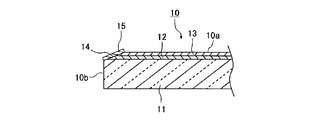
- the solar heat collecting reflector 10 of the present invention (hereinafter also referred to as “reflecting mirror 10”) is provided on a glass substrate 11, a reflective layer 12 provided on one side of the glass substrate 11, and a surface of the reflective layer 12. And anticorrosive coating 13. Further, an inclined surface 14 is provided between the peripheral edge of the surface 10 a where the antirust coating film 13 exists and the side peripheral surface 10 b, and the inclined surface 14 is covered with a protective coating film 15.
- the inclined surface 14 has an end portion of the interface between the reflective layer 12 and the antirust coating 13, and the protective coating 15 covers at least the end portion on the inclined surface 14.
- the reflecting mirror 10 is used with the surface on the glass substrate 11 side irradiated with sunlight and the surface on the anticorrosive coating 13 side as the back surface, and the glass substrate 11 side of the reflective layer 12 becomes the reflecting surface.
- the shape of the reflecting mirror 10 is not particularly limited. For example, it may be a plane mirror having a rectangular or circular shape, or may be a curved mirror having a curved surface such as a hemispherical surface, a semicylindrical surface, or a paraboloid of revolution (the concave surface is a reflecting surface).
- the production method of the present invention is a method for producing the solar heat collecting reflector.
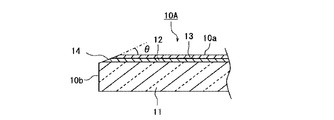
- the reflection plate 10 ⁇ / b> A is a reflection plate having a glass substrate 11, a reflection layer 12 provided on one side of the glass substrate 11, and a rust preventive coating film 13 provided on the surface of the reflection layer 12.
- an inclined surface 14 is formed between the peripheral edge of the surface 10a of the reflective plate 10A on which the anticorrosive coating 13 is present and the side peripheral surface 10b using the reflective plate 10A.
- An inclination angle of the inclined surface 14 (an angle formed by the surface 10a and the inclined surface 14) is represented by ⁇ .
- a fluorine-containing resin paint is applied to the formed inclined surface 14, and the inclined surface 14 is covered with a protective coating film 15 formed from the fluorine-containing resin paint to obtain the reflecting mirror 10 shown in FIG.
- the inclined surface 14 has an end surface of the reflective layer 12 and an end surface of the anticorrosive coating film 13, and therefore an end portion of the interface between the reflective layer 12 and the anticorrosive coating film 13. .
- the cross-sectional view of FIG. 2 is a schematic diagram, and the actual thickness of each of the reflective layer 12 and the anticorrosive coating 13 is typically much thinner than the thickness of the glass substrate 11. Therefore, the inclined surface 14 is actually mostly composed of the surface of the glass substrate 11, and the end surface of the reflective layer 12 and the end surface of the anticorrosive coating 13 on the inclined surface 14 have an area compared to the surface of the glass substrate 11. Relatively few.
- the inclination angle ⁇ is an angle formed by the reflective layer side surface of the glass substrate 11 and the glass substrate surface of the inclined surface 14.
- the protective coating 15 needs to be provided at the end of the interface between the reflective layer 12 and the antirust coating 13 on the inclined surface 14.
- the thickness of the reflective layer 12 is thin and the interface between the glass substrate 11 and the reflective layer 12 is close to the interface between the reflective layer 12 and the anticorrosive coating film 13, the glass on the inclined surface 14 is usually used.
- a protective coating 15 is also formed at the end of the interface between the substrate 11 and the reflective layer 12.
- the protective coating film 15 may be provided up to the vicinity of the inclined surface 14 in addition to the inclined surface 14. For example, you may provide the protective coating 15 to the part adjacent to the inclined surface 14 of the surface 10a, and the part adjacent to the inclined surface 14 of the side peripheral surface 10b. In particular, it is rather difficult to form the protective coating film 15 only on the end face of the rust-proof coating film 13 because the thickness of the rust-proof coating film 13 is usually thin. It is preferable to form the film 15.
- a commercially available reflector plate 10A shown in FIG. 1 can be obtained and used, or separately or when the reflector mirror 10 is manufactured, the reflector plate 10A is manufactured and used. You can also Although the case where the reflecting plate 10A is manufactured will be described later, it is considered that many commercially available reflecting plates 10A are manufactured by the method described later using many of the same materials as described later.
- the process of manufacturing the reflector 10A is referred to as a lamination process.
- polishing or grinding is preferable.
- the formation process of the inclined surface 14 (hereinafter referred to as a polishing process) will be described taking the formation of the inclined surface 14 by polishing as an example.
- a fluorine-containing resin paint having a thixotropy index of 1.5 to 10.0 is used as the fluorine-containing resin paint used for forming the protective coating film 15.
- the process of forming the protective coating film 15 using this fluorine-containing resin paint is hereinafter referred to as a protective coating film forming process.
- the production method of the present invention will be further described in the above three steps.
- the reflective plate 10A having the configuration shown in FIG. 1 is manufactured by a method in which after the reflective layer 12 is formed on the glass substrate 11, a rust preventive paint is applied on the reflective layer 12 to form the rust preventive coating 13. Is preferred. Applying a rust preventive paint on the reflective layer 12 means that in addition to the form in which the rust preventive paint is directly applied to the surface of the reflective layer 12, other layers such as a metal protective layer to be described later are formed on the surface of the reflective layer 12. A mode in which the anticorrosion paint is indirectly applied on the reflective layer 12 by applying the anticorrosion paint to the surface of the other layer is also included.
- the glass substrate 11 known glass for mirrors can be used, and examples thereof include soda lime glass.
- the thickness of the glass substrate 11 is preferably 0.5 to 10 mm.
- the reflective layer 12 is a layer that reflects sunlight, and can be formed by an electroless plating method, a vacuum deposition method, a sputtering method, or the like.
- the material for forming the reflective layer 12 is preferably at least one selected from the group consisting of metals and metal oxides.
- the metal and metal oxide that form the reflective layer 12 are not particularly limited as long as a high reflectance can be secured when the reflective layer is formed.
- the metal preferably contains at least one element selected from the group consisting of titanium, molybdenum, manganese, aluminum, silver, copper, gold, and nickel. It is preferable to contain.
- the silver content in the reflective layer 12 is preferably 60% by mass or more, particularly preferably 100% by mass.
- the metal oxide may be one type or two or more types.
- titanium oxide is preferable.
- the reflective layer 12 may be a layer containing both a metal and a metal oxide.
- the thickness of the reflective layer 12 is preferably 500 to 2000 mg / m 2 .
- a metal protective layer may be provided between the reflective layer 12 and the antirust coating 13 for the purpose of protecting the reflective layer 12.
- the metal protective layer is provided for the purpose of suppressing oxidation of silver.
- the metal forming the metal protective layer include copper, nickel, nickel alloy, tin, and tin alloy.
- the thickness of the silver layer is more preferably 300 to 1500 mg / m 2 and the thickness of the copper layer is more preferably 30 to 1000 mg / m 2 .
- the rust preventive paint is preferably a curable paint containing a curable resin component.
- the rust preventive coating film 13 is formed by applying and curing a rust preventive paint.
- the rust preventive paint is a paint that forms a coating film that suppresses the occurrence of rust on the reflective layer 12, and examples thereof include a paint composition containing a resin component, a rust preventive pigment, and a curing agent.
- the rust preventive paint may contain a solvent, a curing catalyst, a rheology control agent and the like as required.
- the resin component examples include acrylic resin, polyester resin, polyurethane resin, alkyd resin, fluororesin, epoxy resin, and polyether resin.
- acrylic resin, alkyd resin, polyurethane resin, and epoxy resin are preferable because of excellent adhesion to the reflective layer 12 or the metal protective layer, and it is excellent in moisture resistance and easily suppresses elution of the pigment. Is more preferable. 1 type may be sufficient as the resin component contained in an antirust coating, and 2 or more types may be sufficient as it.
- the rust preventive pigment is a pigment for preventing the reflection layer 12 from being corroded or altered.
- a lead-free rust preventive pigment having a low environmental load is preferable.
- lead-free rust preventive pigments include cyanamide zinc, zinc oxide, zinc phosphate, calcium magnesium phosphate, zinc molybdate, barium borate, and calcium cyanamide zinc.
- the rust preventive pigment contained in the rust preventive paint may be one kind or two or more kinds.
- the curing agent forms a chemical bond (crosslinking) by a crosslinking reaction with the resin component, and may be appropriately selected according to the type of the resin component.
- a polyvalent isocyanate curing agent a block polyvalent An isocyanate type hardening
- polyvalent isocyanate curing agent examples include polyvalent isocyanate compounds having two or more isocyanate groups.
- examples of the polyvalent isocyanate compound include aliphatic polyvalent isocyanate compounds such as ethylene diisocyanate; alicyclic polyvalent isocyanate compounds such as isophorone diisocyanate; non-yellowing aromatic isocyanate compounds such as m-xylene diisocyanate.
- a modified product may be used as the polyvalent isocyanate compound, and examples thereof include urethane-modified products, urea-modified products, isocyanurate-modified products, burette-modified products, allophanate-modified products, and carbodiimide-modified products.
- Examples of the block polyvalent isocyanate curing agent include compounds in which the isocyanate group of the polyvalent isocyanate compound is protected with a group that can be deprotected by heating or the like.
- the compound etc. which made the polyvalent isocyanate compound react with well-known blocking agents, such as alcohol, caprolactam, MEK oxime, and organic acid ester, and protected the isocyanate group are mentioned.
- Examples of amino curing agents include urea resins (such as methylolated urea) and melamine resins (such as methylolated melamine).
- the solvent is not particularly limited as long as it can dissolve or disperse each component of the anticorrosive paint.
- Solvents include, for example, methanol, ethanol, propanol, butanol, isobutanol, ethylene glycol, propylene glycol, diethylene glycol, dipropylene glycol, diacetone alcohol, methyl cellosolve, cellosolve, butyl cellosolve, cellosolve acetate, ethyl acetate, butyl acetate, isobutyl Examples include acetate, methyl ethyl ketone, methyl isobutyl ketone, isophorone, cyclohexanone, ethyl acetate, butyl acetate and the like. Of these, butyl cellosolve is preferred because it does not fall under the PRTR method and has low toxicity. 1 type may be sufficient as the solvent contained in an antirust coating, and 2 or more types may be sufficient as it.
- tin catalysts such as tin octylate, tributyltin dilaurate, and dibutyltin dilaurate are preferable.
- the curing catalyst contained in the rust preventive paint may be one type or two or more types.
- the rheology control agent include conventionally known fatty acid amides, bentonites, organic modified bentonites, long chain fatty acid esters, urea waxes, polyolefin waxes, polyethylene oxides, microgels and the like.
- the rheology control agent contained in the rust preventive paint may be one kind or two or more kinds.
- Examples of the method for applying the rust preventive paint include a method using a brush, a roller, a spray, a flow coater, an applicator and the like. What is necessary is just to determine suitably the application quantity of an antirust coating so that the dry film thickness of the antirust coating 13 may be in the range of desired thickness.
- the apparatus used for curing the anticorrosive paint is not particularly limited, and a curing apparatus such as a closed curing furnace or a tunnel furnace capable of continuous curing can be employed.
- a heat source is not specifically limited, A hot air, infrared rays, a high frequency, etc. are mentioned.
- the temperature for curing the rust preventive coating is preferably 50 to 250 ° C.
- the solvent may be removed before curing or simultaneously with curing. The removal of the solvent is preferably carried out by volatilization by heating, reduced pressure or the like.
- the rust preventive coating 13 may be formed by applying a rust preventive paint a plurality of times.
- the thickness of the anticorrosive coating 13 is preferably 30 to 150 ⁇ m in terms of dry film thickness. Even when the rust preventive paint is applied a plurality of times, the total thickness of the coating film is preferably within the above range.
- Polishing process By polishing the edge portion 10c where the peripheral edge 10b of the surface 10a where the anticorrosive coating film 13 exists in the reflector 10A illustrated in FIG. 1 is in contact with the side peripheral surface 10b, as shown in FIG.
- the inclined surface 14 is formed.
- the polishing for forming the inclined surface 14 is not particularly limited as long as the inclined surface 14 having a desired inclination angle ⁇ can be formed, and examples thereof include buff polishing.
- the lower limit value of the inclination angle ⁇ of the inclined surface 14 with respect to the surface 10a on which the rust preventive coating film 13 is present is preferably 30 °, more preferably 40 °, since it is easy to suppress a decrease in the reflecting surface of the reflecting mirror 10. Since the upper limit value of the inclination angle ⁇ of the inclined surface 14 is easy to suppress sagging of the fluorine-containing resin paint when the protective coating film 15 is formed, it is easy to form the protective coating film 15 having a uniform film thickness. 80 ° is preferable, and 70 ° is more preferable.
- Protective coating formation process A fluorine-containing resin paint having a thixotropy index of 1.5 to 10.0 is applied on the inclined surface 14 formed in the polishing step, and a protective coating film 15 is formed on the inclined surface 14 as shown in FIG. Thus, the reflecting mirror 10 is obtained.
- the protective coating film 15 is formed using a fluorine-containing resin paint having a thixotropy index of 1.5 to 10.0.
- the lower limit value of the thixotropy index of the fluororesin coating material in the present invention is 1.5, and 2.0 is preferable because it can suppress sagging of the coating material during coating and can form the protective coating film 15 having a uniform film thickness. 2.5 is more preferable. Further, the above lower limit value is preferable from the viewpoint that the fluorine-containing resin paint does not go around the reflecting surface and does not contaminate the reflecting surface.
- the upper limit value of the thixotropy index of the fluorine-containing resin paint is 10.0 because the smoothness of the protective coating film 15 is good and the wet spreadability of the paint is good, and 8.0 is preferable. 0.0 is more preferable.
- the fluorine-containing resin paint in the present invention is a paint containing a fluorine-containing resin as a resin component, and may further contain a resin other than the fluorine-containing resin as a resin component.
- the fluorinated resin is preferably a curable fluorinated resin.
- a paint having a non-curable fluorine-containing resin can also be used.
- the paint having a non-curable fluorine-containing resin contains a solvent-soluble fluorine-containing resin, and a coating film is formed by evaporating and removing the solvent after the application of the paint.
- the curable fluorine-containing resin is preferably composed of a fluoroolefin copolymer (A) having a crosslinkable group.
- the fluoroolefin copolymer (A) having a crosslinkable group is also simply referred to as a copolymer (A).
- a fluorine-containing resin paint in the present invention a fluorine-containing resin paint containing a rheology control agent (B) and a solvent (C) is preferable.
- the copolymer (A) in the present invention is a fluoroolefin copolymer having a crosslinkable group.
- the copolymer is based on a unit based on a fluoroolefin and a monomer copolymerizable with the fluoroolefin (hereinafter referred to as “monomer ( a1) ", and a copolymer having a unit having a crosslinkable group based on.
- the monomer (a1) is a monomer having a crosslinkable group or a monomer having a group that can be converted to a crosslinkable group after polymerization.
- the monomer (a1) is produced after the production of the copolymer.
- a unit that can be converted into a crosslinkable group of a unit based on the above is converted into a crosslinkable group to obtain a unit having a crosslinkable group.
- copolymer (A) from the viewpoint of the solubility of the copolymer, the weather resistance of the protective coating film 15, the coating workability, and the like, a unit based on the fluoroolefin, a unit based on the monomer (a1), Fluoroolefin copolymer having a unit
- the monomer having a group that can be converted into a crosslinkable group is the same as the monomer (a1), the group that can be converted into the crosslinkable group after polymerization is not converted into the crosslinkable group.
- the monomer is monomer (a2).
- the non-curable fluororesin include a fluoroolefin copolymer having no unit based on the monomer (a1) and having a unit based on the fluoroolefin and the monomer (a2). Can be mentioned. Since this fluoroolefin copolymer does not have a crosslinkable group, it is usually used as a non-curable fluororesin.
- a fluoroolefin is a compound in which one or more hydrogen atoms of an olefin hydrocarbon (general formula C n H 2n ) are substituted with a fluorine atom.
- the carbon number of the fluoroolefin is preferably 2 to 8, and more preferably 2 to 6.
- the number of fluorine atoms in the fluoroolefin (hereinafter referred to as “fluorine addition number”) is preferably 2 or more, and more preferably 3 to 4. When the fluorine addition number is 2 or more, the weather resistance of the protective coating film 15 is improved.
- one or more hydrogen atoms not substituted with fluorine atoms may be substituted with chlorine atoms.
- fluoroolefin one or more selected from the group consisting of tetrafluoroethylene, chlorotrifluoroethylene, hexafluoropropylene, vinylidene fluoride and vinyl fluoride is preferable, and tetrafluoroethylene and chlorotrifluoroethylene are more preferable.
- a fluoro olefin may be used individually by 1 type, and may use 2 or more types together.
- the unit based on fluoroolefin a unit directly formed by polymerization of fluoroolefin is preferable.
- the monomer (a1) is a monomer having a crosslinkable group or a group that can be converted into a crosslinkable group.
- the said crosslinkable group is group which reacts with crosslinkable groups or a hardening
- Examples of the crosslinkable group include a hydroxyl group, a carboxyl group, a hydrolyzable silyl group, an epoxy group, an amino group, and an isocyanate group.
- the unit having a crosslinkable group based on the monomer (a1) is preferably a unit directly formed by polymerization of the monomer (a1) having a crosslinkable group.
- Examples of the monomer having a hydroxyl group include allyl alcohol; hydroxyalkyl vinyl ethers such as 2-hydroxyethyl vinyl ether, 4-hydroxybutyl vinyl ether and cyclohexanediol monovinyl ether; hydroxyalkyl allyl ethers such as 2-hydroxyethyl allyl ether; Examples thereof include hydroxyalkyl vinyl esters such as ethyl carboxylic acid vinyl ester; (meth) acrylic acid hydroxyalkyl esters such as hydroxyethyl (meth) acrylate and the like.
- Examples of the monomer having a carboxyl group include crotonic acid and undecenoic acid.
- Examples of the monomer having a hydrolyzable silyl group include triethoxyvinylsilane.
- Examples of the monomer having an epoxy group include glycidyl vinyl ether and glycidyl allyl ether.
- Examples of the monomer having an amino group include aminopropyl vinyl ether and aminopropyl allyl ether.
- Examples of the monomer having an isocyanate group include isocyanatopropyl (meth) acrylate.
- a monomer (a1) may be used individually by 1 type, and may use 2 or more types together.
- the unit having a crosslinkable group based on the monomer (a1) uses the monomer (a1) having a group that can be converted into a crosslinkable group, and after the polymer is obtained, the polymer is crosslinked. It may be a unit having a crosslinkable group formed by chemically converting a part or all of the group that can be converted into a functional group.
- a method of introducing a hydroxyl group by saponifying a polymer obtained by copolymerizing a carboxylic acid vinyl ester, a polymer obtained by copolymerizing a monomer having a hydroxyl group with a polyvalent carboxylic acid or an anhydride thereof to form a carboxyl A method of introducing a group, a method of introducing a hydrolyzable silyl group by reacting an isocyanate alkyl alkoxysilane with a polymer copolymerized with a monomer having a hydroxyl group, and a polymer copolymerizing a monomer having a hydroxyl group Examples include a method of introducing an isocyanate group by reacting a polyvalent isocyanate compound.
- the monomer (a2) is preferably a vinyl monomer, that is, a compound having a carbon-carbon double bond.
- the vinyl monomer include vinyl ether, allyl ether, carboxylic acid vinyl ester, carboxylic acid allyl ester, and olefin.
- vinyl ether examples include cycloalkyl vinyl ethers such as cyclohexyl vinyl ether; alkyl vinyl ethers such as nonyl vinyl ether, 2-ethylhexyl vinyl ether, hexyl vinyl ether, ethyl vinyl ether, n-butyl vinyl ether, and t-butyl vinyl ether.
- alkyl ethers such as nonyl vinyl ether, 2-ethylhexyl vinyl ether, hexyl vinyl ether, ethyl vinyl ether, n-butyl vinyl ether, and t-butyl vinyl ether.
- allyl ether examples include alkyl allyl ethers such as ethyl allyl ether and hexyl allyl ether.
- Examples of the carboxylic acid vinyl ester include vinyl esters of carboxylic acids such as acetic acid, butyric acid, pivalic acid, benzoic acid, and propionic acid. Further, as vinyl ester of carboxylic acid having a branched alkyl group, commercially available Veova-9, Veova-10 (both manufactured by Shell Chemical Co., Ltd.) and the like may be used. Examples of the carboxylic acid allyl ester include allyl esters of carboxylic acids mentioned in the above carboxylic acid vinyl ester. Examples of the olefin include ethylene, propylene, isobutylene and the like. A monomer (a2) may be used individually by 1 type, and may use 2 or more types together.
- the copolymer (A) is preferably a copolymer (A1), a copolymer of chlorotrifluoroethylene (CTFE), cyclohexyl vinyl ether (CHVE), alkyl vinyl ether and hydroxyalkyl vinyl ether; CTFE, alkyl vinyl ether and allyl alcohol A copolymer of CTFE, aliphatic carboxylic acid vinyl ester and hydroxyalkyl vinyl ether; or a copolymer using tetrafluoroethylene (TFE) instead of CTFE in these copolymers.
- CTFE chlorotrifluoroethylene
- CHVE cyclohexyl vinyl ether
- CTFE alkyl vinyl ether and hydroxyalkyl vinyl ether
- CTFE alkyl vinyl ether and allyl alcohol
- TFE tetrafluoroethylene
- the proportion of units based on the fluoroolefin in the copolymer (A1) is preferably from 30 to 70 mol%, more preferably from 40 to 60 mol%, based on all units in the copolymer (A1). If the unit based on a fluoroolefin is more than the said lower limit, the weather resistance of the protective coating film 15 will improve. If the unit based on a fluoro olefin is below the said upper limit, the solubility to the solvent (C) of a copolymer (A1) will improve.
- the proportion of units based on the monomer (a1) in the copolymer (A1) is preferably 0.5 to 30 mol%, more preferably 1 to 20 mol%.
- the ratio of the unit based on a monomer (a1) is more than the said lower limit, the adhesiveness of the protective coating film 15 will improve. If the ratio of the unit based on a monomer (a1) is below the said upper limit, the mechanical characteristic of the protective coating film 15 will improve.
- the proportion of units based on the monomer (a2) in the copolymer (A1) is preferably 0.5 to 50 mol%, more preferably 1 to 40 mol%. If the ratio of the unit based on a monomer (a2) is more than the said lower limit, the solubility to the solvent (C) of a copolymer (A1) will improve. When the proportion of the units based on the monomer (a2) is not more than the above upper limit value, the weather resistance and adhesion of the protective coating film 15 are improved.
- the number average molecular weight of the copolymer (A) is preferably 2,000 to 100,000, more preferably 6,000 to 30,000.
- the fluorine-containing resin for coatings comprising the copolymer (A)
- the trade name “Lumiflon” manufactured by Asahi Glass Co., Ltd.
- the trade name “Fluonate” manufactured by Dainippon Ink & Chemicals, Inc.
- the trade name “cefural coat” Central Glass
- Trade name “Zaflon” manufactured by Toa Gosei Co., Ltd.
- trade name “Zeffle” manufactured by Daikin Industries, Ltd.
- 1 type of a copolymer (A) may be used independently, and 2 or more types of a copolymer (A) may be used together.
- the content of the copolymer (A) in the fluorine-containing resin coating is preferably 20 to 80% by mass, more preferably 30 to 70% by mass. If content of a copolymer (A) is more than the said lower limit, the weather resistance of the protective coating film 15 will improve. If content of a copolymer (A) is below the said upper limit, a coating operation will become easy.
- the rheology control agent (B) is a component that adjusts the thixotropic index of the fluorine-containing resin paint.
- examples of the rheology control agent (B) include fatty acid amide, bentonite, organically modified bentonite, long chain fatty acid ester, urea wax, polyolefin wax, polyethylene oxide and the like.
- fatty acid amides are preferable because they easily swell in solvents such as aromatics, ketones, and esters, increase in viscosity in a small amount, and have little influence on the weather resistance of the coating film.
- fatty acid amides include the following compounds. Saturated fatty acid monoamides (lauric acid amide, stearic acid amide, palmitic acid amide, caproic acid amide, caprylic acid amide, capric acid amide, myristic acid amide, behenic acid amide, hydroxystearic acid amide, etc.) Unsaturated fatty acid monoamide (oleic acid amide, erucic acid amide, ricinoleic acid amide, brassicinic acid amide, esylic acid amide, linoleic acid amide, linolenic acid amide, rice sugar fatty acid amide, coconut fatty acid amide, etc.) Saturated fatty acid bisamide (methylenebisstearic acid amide, ethylene biscapric acid amide, ethylene bislauric acid amide, ethylene bisstearic acid amide, ethylene bisisostearic acid amide, ethylene bishydroxystearic acid amide, hexam
- saturated fatty acid monoamides and saturated fatty acid bisamides are more preferable because the rheology control agent (B) is effective when added in a small amount and hardly causes a decrease in weather resistance due to remaining in the coating film.
- Saturated fatty acid bisamide is more preferable, and ethylene bishydroxystearic acid amide is particularly preferable.
- ASA fatty acid amide
- Tarren trade name “Tarren” or the trade name “Flownon” (manufactured by Kyoeisha Chemical Co., Ltd.), and the trade name “Disparon” (manufactured by Enomoto Kasei Co., Ltd.) Etc.
- a rheology control agent (B) may be used individually by 1 type, and may use 2 or more types together.
- the blending amount of the rheology control agent (B) in the fluorine-containing resin coating is preferably 0.05 to 5.0% by mass, more preferably 0.1 to 3.0% by mass with respect to the total solid content in the coating. preferable. If the blending amount of the rheology control agent (B) is equal to or more than the lower limit, it is easy to suppress scattering of the paint. If the blending amount of the rheology control agent (B) is less than or equal to the above upper limit, the viscosity of the paint does not become too high, the application work becomes easy, and the deterioration of weather resistance is easily suppressed.
- solvent (C) A solvent (C) will not be specifically limited if each component, such as a copolymer (A), can be melt
- the solvent (C) include aromatic compounds such as xylene and toluene; ketones such as methyl ethyl ketone and methyl isobutyl ketone; esters such as butyl acetate and amyl acetate; propylene glycol such as propylene glycol monomethyl ether and propylene glycol dimethyl ether. Examples thereof include alkyl ethers.
- a solvent (C) may be used individually by 1 type, and may use 2 or more types together.
- a solvent (C) you may use the polymerization solvent used at the time of the superposition
- the content of the solvent (C) in the fluororesin coating material is appropriately determined in consideration of the solubility of the copolymer (A), the thixotropy index, the coating method, and the like.
- the fluororesin coating material used in the present invention preferably contains a curing agent (D) when the copolymer (A) does not have a crosslinkable group that provides self-curing properties.
- curing agent (D) what reacts with the crosslinkable group which a copolymer (A) has, and can form a cured coating film should just be used, and various hardening
- Specific examples of the curing agent (D) include amino curing agents, polyisocyanate curing agents, block polyisocyanate curing agents, and the like. Specific examples of these curing agents are the same as those mentioned for the anticorrosion paint.
- curing agent (D) may be used individually by 1 type, and may use 2 or more types together.
- the content of the curing agent (D) in the fluorine-containing resin paint is 1 mol of the crosslinkable group in the copolymer (A).
- An amount such that the reactive group that reacts with the crosslinkable group is 0.5 to 1.5-fold mol is preferable. If content of a hardening
- the fluorine-containing resin paint in the present invention preferably contains a pigment (E) for the purpose of rust prevention, coloring, reinforcement and the like.
- the pigment (E) is preferably one or more pigments selected from the group consisting of rust preventive pigments, colored pigments and extender pigments.
- the rust preventive pigment examples include the same ones as those given for the rust preventive paint.
- the color pigment is a pigment for coloring the coating film.
- examples of the color pigment include titanium oxide, carbon black, iron oxide, phthalocyanine blue, phthalocyanine green, quinacridone, isoindolinone, benzimidazolone, and dioxazine.
- titanium oxide pigment it is preferable that the surface treatment is performed with cerium oxide or the like and the photocatalytic action is suppressed for the purpose of further improving the weather resistance of the protective coating film 15.
- the extender pigment is a pigment for improving the hardness of the protective coating film 15 and increasing the thickness of the protective coating film 15.
- extender pigments include talc, barium sulfate, mica, and calcium carbonate.
- titanium oxide is particularly preferable because of excellent ultraviolet blocking performance.
- the content of the pigment (E) is the total solid content (100 parts by mass) other than the pigment (E) in the fluororesin paint at the time of use. On the other hand, it is preferably 50 to 500 parts by mass, more preferably 100 to 400 parts by mass. If content of a pigment (E) is more than the said lower limit, the function of a pigment (E) will be easy to be obtained. If content of a pigment (E) is below the said upper limit, it will become easy to form the protective coating film 15 of a uniform film thickness.
- the fluorine-containing resin paint in the present invention may contain other components in addition to the components described above.
- Other components include curing catalysts, antioxidants, rust inhibitors, leveling agents, antifoaming agents, antifouling agents, surfactants, other resins other than the copolymer (A), silane coupling agents, and matting agents. And antistatic agents.
- the curing reaction is promoted, and chemical properties such as water resistance and salt water resistance of the protective coating film 15 and physical properties such as scratch resistance and crack resistance due to a thermal cycle. Performance is improved.
- Solar heat collecting reflectors may wash sand or dust attached to the reflective surface with water or seawater, and the protective coating's water resistance, salt water resistance and other chemical performance and scratch resistance and other physical performance. In order to improve, it is preferable to contain a curing catalyst to promote the curing reaction.
- solar heat collecting reflectors may be installed in areas where the temperature difference between daytime and nighttime is severe, such as in the desert, improving crack resistance due to the thermal cycle and suppressing moisture ingress from the periphery.
- a curing catalyst to promote the curing reaction.
- a fluororesin coating material in this invention contain a curing catalyst.
- the curing catalyst tin catalysts such as tin octylate, tributyltin dilaurate, and dibutyltin dilaurate are preferable.
- a curing catalyst may be used individually by 1 type, and may use 2 or more types together.
- the content of the curing catalyst is preferably 0.00001 to 10% by mass with respect to the total solid content (100 mass) in the paint at the time of use. If the content of the curing catalyst is 0.00001% by mass or more, the catalytic effect can be sufficiently obtained. If content of a curing catalyst is 10 mass% or less, it will be easy to suppress the influence to the protective coating film 15 of the remaining curing catalyst, and the heat resistance and water resistance of the protective coating film 15 will improve.
- the fluorine-containing resin paint in the present invention is a method in which components such as a copolymer (A), a rheology control agent (B), and a solvent (C) are blended and then dispersed by a kneader, a disperser, or the like. Obtained by the method.
- the mixing order of each component is not particularly limited.
- the fluorine-containing resin coating in the present invention may be a two-pack type coating composition in which the curing agent (D) is added immediately before forming the coating film.
- Examples of the method for applying the fluorine-containing resin paint to the inclined surface 14 include application by brush, application by spray, application by dipping method, application by roll coater, application by flow coater, application by potting and the like.
- the solvent (C) is removed by evaporation. Evaporation removal of the solvent (C) is also called drying, and is usually performed by heating a coating film containing the solvent. By removing the solvent (C), a solvent-free coating film is formed.
- the fluorine-containing resin is made of the copolymer (A)
- the fluorine-containing resin is then cured.
- the fluorine-containing resin is cured by heating a coating film having no solvent. Subsequent to the heating for removing the solvent by evaporation, the coating film can be cured by heating.
- the apparatus used for curing the fluororesin coating is not particularly limited, and a curing apparatus such as a closed curing furnace or a tunnel furnace capable of continuous curing can be employed.
- a heat source is not specifically limited, A hot air, infrared rays, a high frequency, etc. are mentioned.
- the temperature and time required for curing the fluorine-containing resin paint vary depending on the crosslinkable group, the curing agent (D), the type of the curing catalyst, etc. of the copolymer (A), but are in the range of 50 to 150 ° C.
- the curing conditions of 1 to 10 hours are preferable, and the curing conditions of 30 minutes to 2 hours at a temperature in the temperature range of 50 to 80 ° C. are more preferable.
- the protective coating film 15 may be formed by applying a fluorine-containing resin paint a plurality of times.
- the thickness of the protective coating film 15 is preferably 10 to 50 ⁇ m. Even when the protective coating 15 is applied a plurality of times, the total thickness of the coating is preferably within the above range.
- the manufacturing method of the solar heat collecting reflector of the present invention described above uses a fluorine-containing resin paint having a thixotropy index of 1.5 to 10.0 to form a fluorine-containing film when forming a coating film on an inclined surface. Sagging and flow of resin paint can be suppressed. As a result, a coating film having a uniform film thickness and excellent weather resistance can be formed on the inclined surface formed by polishing the edge portion, so that the interface between the glass substrate and the reflective layer and the interface between the reflective layer and the anticorrosive coating film are formed.
- a solar heat collecting reflector can be obtained in which the intrusion of moisture into the substrate is sufficiently suppressed and a decrease in reflectance due to corrosion of the reflective layer can be suppressed over a long period of time. Moreover, since the manufacturing method of the solar heat collecting reflector of this invention can suppress the dripping and flow of a fluorine-containing resin coating material, workability
- Example 1 to 4 are production examples.
- Example 5 is an example and Example 6 is a comparative example.
- Thixotropic index is at 25 ° C., and a viscosity (eta 5rpm) when speed is 5rpm in E-type viscometer, rotational speed and the viscosity (eta 50 rpm) when the 50 rpm, their viscosity ratio (eta 5rpm / ⁇ 50 rpm ).
- CFE chlorotrifluoroethylene
- A1-1 fluoroolefin copolymer having a hydroxyl group.
- Example 2 ⁇ Manufacture of fluorine-containing resin coatings> [Example 2] To 60.0 g of the xylene solution (nonvolatile content 60 mass%) of the fluoroolefin copolymer (A1-1) obtained in Example 1, titanium oxide (made by Sakai Chemical Co., Ltd., trade name “ 22.0 g of D-918 "), 14.5 g of xylene as a solvent (C), 5.0 g of butyl acetate, tarene 8300-20 as a rheology control agent (B) (fatty acid amide, manufactured by Kyoeisha Chemical Co., Ltd.) 1.5 g of active ingredient (20.0% by mass) was added, and 105.0 g of glass beads having a diameter of 1 mm were further added, followed by stirring for 2 hours with a paint shaker.
- titanium oxide made by Sakai Chemical Co., Ltd., trade name “ 22.0 g of D-918 "
- xylene as a solvent
- B r
- Example 3 To 60.0 g of the xylene solution (nonvolatile content 60 mass%) of the fluoroolefin copolymer (A1-1) obtained in Example 1, titanium oxide (made by Sakai Chemical Co., Ltd., trade name “ 22.0 g of D-918 "), 14.5 g of xylene and 5.0 g of butyl acetate were added, and 105.0 g of glass beads having a diameter of 1 mm were further added, and the mixture was stirred for 2 hours with a paint shaker. After stirring, filtration was performed to remove the glass beads to obtain a pigment composition.
- Example 4 On one side of the glass substrate, a silver plating process is performed so that the thickness is 1000 mg / m 2 to form a reflective layer (silver layer), and copper is plated on the reflective layer so that the thickness is 100 mg / m 2.
- the metal protective layer (copper layer) was formed by processing.
- an anticorrosive paint containing no lead (trade name “SM COAT DF”, manufactured by Dainippon Paint Co., Ltd.) was applied so that the film thickness of the dry coating film was 60 ⁇ m, and 170 ° C. was dried and cured in an oven for 5 minutes to form a rust-proof coating film to obtain a reflector.
- Example 5 On the inclined surface of the reflector obtained in Example 4, the fluorine-containing resin paint (i) obtained in Example 2 was brushed and cured in a constant temperature room at 25 ° C. for 1 week to form a protective coating film. A solar heat collecting reflector was obtained.
- Example 6 A protective coating film is formed on the inclined surface of the reflector obtained in Example 4 in the same manner as in Example 5 except that the fluorine-containing resin paint (ii) is used instead of the fluorine-containing resin paint (i). A heat collecting reflector was obtained.
- Example 5 Accelerated weather resistance test
- Example 6 Accelerated Weathering Tester (Q-PANEL LAB PRODUCTS, model: QUV / SE)
- ⁇ Good. No abnormality (peeling or cracking) was observed in the protective coating film.
- ⁇ Defect. Abnormalities (peeling and cracking) were observed in the protective coating film.
- Example 5 using the fluorine-containing resin paint (i) of the present invention, it was formed as compared with Example 6 using a fluorine-containing resin paint (ii) having a thixotropic index of less than 1.5.
- the protective coating film had a good appearance and had excellent weather resistance.
- the solar heat collecting reflector of the present invention is used in a solar heat collecting system using solar heat.
- solar heat collection system for example, sunlight is reflected by a reflector and collected in a heat collection tube, and heat energy is obtained by heating the heat medium of the heat collection tube with the heat of the sunlight, and the heat energy is generated. Used for etc. It should be noted that the entire content of the specification, claims, abstract, and drawings of Japanese Patent Application No. 2011-089078 filed on April 13, 2011 is cited here as the disclosure of the specification of the present invention. Incorporated.
Landscapes
- Chemical & Material Sciences (AREA)
- Engineering & Computer Science (AREA)
- Physics & Mathematics (AREA)
- Life Sciences & Earth Sciences (AREA)
- Organic Chemistry (AREA)
- Materials Engineering (AREA)
- Optics & Photonics (AREA)
- Chemical Kinetics & Catalysis (AREA)
- General Chemical & Material Sciences (AREA)
- Geochemistry & Mineralogy (AREA)
- General Physics & Mathematics (AREA)
- Wood Science & Technology (AREA)
- Sustainable Energy (AREA)
- Sustainable Development (AREA)
- Thermal Sciences (AREA)
- Combustion & Propulsion (AREA)
- Mechanical Engineering (AREA)
- General Engineering & Computer Science (AREA)
- Inorganic Chemistry (AREA)
- Paints Or Removers (AREA)
- Application Of Or Painting With Fluid Materials (AREA)
- Optical Elements Other Than Lenses (AREA)
Abstract
太陽熱集熱用反射鏡における反射板のエッジ部分を研磨して形成した傾斜面に、反射層と防錆塗膜の界面への水分の浸入を抑制し、反射層の腐食による反射率の低下を抑制する耐候性に優れた塗膜を均一な膜厚で形成させる。 ガラス基板11と反射層12と防錆塗膜13とを有し、さらに前記防錆塗膜13を有する面10aの周縁と側周面10bとの間に傾斜面14を有し、該傾斜面14が、チクソトロピーインデックスが1.5~10.0の含フッ素樹脂塗料から形成された保護塗膜15で被覆されている、太陽熱集熱用反射鏡。
Description
本発明は、太陽熱集熱用反射鏡およびその製造方法に関する。
太陽熱を利用する太陽熱集熱システムに用いられる太陽熱集熱用反射鏡としては、ガラス基板と、該ガラス基板の裏面側に形成された反射層と、該反射層上に形成された防錆塗膜とを有する反射鏡が広く用いられている。この太陽熱集熱用反射鏡は、反射層が酸化されやすい銀膜により形成されており、防錆塗膜によって反射層の腐食および変質を抑制している。しかし、太陽熱集熱用反射鏡は長期間、屋外で使用されることから、鏡の周縁部において、反射層と防錆塗膜の界面に雨水等が浸入し、防錆塗膜が剥離して反射層が腐食し、反射率が低下する問題があった。
この問題を防止する手段としては、防錆塗膜を有する面の周縁と側周面とが接するエッジ部分に研磨を施して、防錆塗膜を有する面に対して45°程度傾斜した傾斜面を形成し、該傾斜面にエポキシ樹脂塗料を塗布して硬化させて硬化塗膜を形成する方法が検討されている。しかし、この方法では前記傾斜面に塗布したエポキシ樹脂塗料が硬化前や硬化中に流動することで均一な塗装が困難なため、形成される硬化塗膜の膜厚が不均一になって反射層の腐食を充分に抑制できない。そこで、塗料のたれを抑制する方策として、傾斜角を10°~20°とした傾斜面にエポキシ樹脂塗料を塗布して硬化させて硬化塗膜を形成する方法が開示されている(特許文献1)。
しかし、特許文献1に記載の方法でも、傾斜面上に膜厚が均一な硬化塗膜を形成できない場合がある。また、エポキシ樹脂塗料により形成される硬化塗膜は、太陽熱集熱用反射鏡に形成する塗膜としては充分な耐候性を有しておらず、苛酷な条件で屋外に長期間暴露されることで塗膜自体が劣化して傾斜面から剥離する問題もある。
本発明は、反射層と該反射層上に形成された防錆塗膜との界面への水分の浸入を抑制し、反射層の腐食による反射率の低下を抑制できる太陽熱集熱用反射鏡およびその製造方法の提供を目的とする。
本発明は、前記課題を解決するために以下の構成を採用した。
[1]ガラス基板と、該ガラス基板の片面に設けられた反射層と、該反射層の表面に設けられた防錆塗膜とを有する反射鏡であり、
前記防錆塗膜が存在する面の周縁と側周面との間に傾斜面を有し、該傾斜面の少なくとも一部がチクソトロピーインデックスが1.5~10.0である含フッ素樹脂塗料から形成された保護塗膜で被覆されていることを特徴とする太陽熱集熱用反射鏡。
[2]前記傾斜面が反射層と防錆塗膜との界面の端部を有し、前記保護塗膜が少なくとも前記端部を被覆している、[1]に記載の太陽熱集熱用反射鏡。
[1]ガラス基板と、該ガラス基板の片面に設けられた反射層と、該反射層の表面に設けられた防錆塗膜とを有する反射鏡であり、
前記防錆塗膜が存在する面の周縁と側周面との間に傾斜面を有し、該傾斜面の少なくとも一部がチクソトロピーインデックスが1.5~10.0である含フッ素樹脂塗料から形成された保護塗膜で被覆されていることを特徴とする太陽熱集熱用反射鏡。
[2]前記傾斜面が反射層と防錆塗膜との界面の端部を有し、前記保護塗膜が少なくとも前記端部を被覆している、[1]に記載の太陽熱集熱用反射鏡。
[3]ガラス基板と、該ガラス基板の片面に設けられた反射層と、該反射層の表面に設けられた防錆塗膜とを有する反射板を用意し、該反射板の前記防錆塗膜が存在する面の周縁と側周面との間に傾斜面を形成し、形成された傾斜面にチクソトロピーインデックスが1.5~10.0である含フッ素樹脂塗料を塗布して該傾斜面の少なくとも一部を該含フッ素樹脂塗料から形成された保護塗膜で被覆することを特徴とする太陽熱集熱用反射鏡の製造方法。
[4]前記傾斜面が反射層と防錆塗膜との界面の端部を有する面であり、前記傾斜面の少なくとも前記端部が存在する部分を前記保護塗膜で被覆する、[3]に記載の製造方法。
[5]前記傾斜面を、反射板の前記防錆塗膜が存在する面の周縁と側周面とが接するエッジ部分を研磨することによって形成する、[3]または[4]に記載の製造方法。
[6]前記傾斜面の傾斜角が30°~80°である、[3]~[5]のいずれかに記載の製造方法。
[7]前記反射板が、ガラス基板の片面に反射層を形成し、該反射層上に防錆塗料を使用して防錆塗膜を形成することにより製造されたものである、[3]~[6]のいずれかに記載の製造方法。
[8]前記含フッ素樹脂塗料のチクソトロピーインデックスが2.5~6.0である、[3]~[7]のいずれかに記載の製造方法。
[5]前記傾斜面を、反射板の前記防錆塗膜が存在する面の周縁と側周面とが接するエッジ部分を研磨することによって形成する、[3]または[4]に記載の製造方法。
[6]前記傾斜面の傾斜角が30°~80°である、[3]~[5]のいずれかに記載の製造方法。
[7]前記反射板が、ガラス基板の片面に反射層を形成し、該反射層上に防錆塗料を使用して防錆塗膜を形成することにより製造されたものである、[3]~[6]のいずれかに記載の製造方法。
[8]前記含フッ素樹脂塗料のチクソトロピーインデックスが2.5~6.0である、[3]~[7]のいずれかに記載の製造方法。
[9]前記含フッ素樹脂塗料が、架橋性基を有するフルオロオレフィン系共重合体(A)、レオロジーコントロール剤(B)および溶剤(C)を含有する含フッ素樹脂塗料である、[3]~[8]のいずれかに記載の製造方法。
[10]前記レオロジーコントロール剤(B)が脂肪酸アミドである、[9]に記載の製造方法。
[11]前記含フッ素樹脂塗料が、前記架橋性基と反応してフルオロオレフィン系共重合体(A)を架橋させうる硬化剤(D)をさらに含有する、[9]または[10]に記載の製造方法。
[12]前記含フッ素樹脂塗料がさらに顔料(E)を含有する、[9]~[11]のいずれかに記載の製造方法。
[10]前記レオロジーコントロール剤(B)が脂肪酸アミドである、[9]に記載の製造方法。
[11]前記含フッ素樹脂塗料が、前記架橋性基と反応してフルオロオレフィン系共重合体(A)を架橋させうる硬化剤(D)をさらに含有する、[9]または[10]に記載の製造方法。
[12]前記含フッ素樹脂塗料がさらに顔料(E)を含有する、[9]~[11]のいずれかに記載の製造方法。
本発明の太陽熱集熱用反射鏡においては、反射層と該反射層を保護する防錆塗膜との界面が露出する面である傾斜面が耐候性の優れた保護塗膜で被覆され、前記界面への水分の浸入が抑制され、それにより反射層の腐食による反射率の低下が抑制される。この太陽熱集熱用反射鏡は本発明の製造方法によって製造できる。
本発明においては、単量体が重合することで直接形成される重合単位と、単量体の重合によって形成される重合単位の一部を化学変換することで得られる重合単位とを総称して「単位」という。また、本発明におけるチクソトロピーインデックスとは、25℃における、E型粘度計による回転数が5rpmのときの粘度(η5rpm)と、回転数が50rpmのときの粘度(η50rpm)の粘度比(η5rpm/η50rpm)である。また、本明細書中における(メタ)アクリル酸とは、メタクリル酸またはアクリル酸を意味する。(メタ)アクリレートについても同様である。
本発明の太陽熱集熱用反射鏡は、太陽熱を集めて熱エネルギーとして利用する太陽熱集熱システムにおける太陽光を反射する鏡である。本発明の太陽熱集熱用反射鏡を図3に基づいて説明する。
本発明の太陽熱集熱用反射鏡10(以下、「反射鏡10」ともいう)は、ガラス基板11と、ガラス基板11の片面に設けられた反射層12と、反射層12の表面に設けられた防錆塗膜13とを有する。さらに、防錆塗膜13が存在する面10aの周縁と側周面10bとの間に傾斜面14を有し、該傾斜面14は保護塗膜15で被覆されている。また、傾斜面14には、反射層12と防錆塗膜13との界面の端部が存在し、保護塗膜15は少なくとも傾斜面14にある上記端部を被覆している。
反射鏡10は、ガラス基板11側の面を太陽光が照射される面、防錆塗膜13側の面を裏面として使用され、反射層12のガラス基板11側が反射面となる。
反射鏡10の形状は特に限定されない。たとえば、矩形や円形の形状を有する平面鏡であってもよく、半球面、半円筒面、回転放物面などの曲面を有する曲面鏡(凹面が反射面であるもの)であってもよい。
本発明の太陽熱集熱用反射鏡10(以下、「反射鏡10」ともいう)は、ガラス基板11と、ガラス基板11の片面に設けられた反射層12と、反射層12の表面に設けられた防錆塗膜13とを有する。さらに、防錆塗膜13が存在する面10aの周縁と側周面10bとの間に傾斜面14を有し、該傾斜面14は保護塗膜15で被覆されている。また、傾斜面14には、反射層12と防錆塗膜13との界面の端部が存在し、保護塗膜15は少なくとも傾斜面14にある上記端部を被覆している。
反射鏡10は、ガラス基板11側の面を太陽光が照射される面、防錆塗膜13側の面を裏面として使用され、反射層12のガラス基板11側が反射面となる。
反射鏡10の形状は特に限定されない。たとえば、矩形や円形の形状を有する平面鏡であってもよく、半球面、半円筒面、回転放物面などの曲面を有する曲面鏡(凹面が反射面であるもの)であってもよい。
本発明の製造方法は、前記太陽熱集熱用反射鏡を製造する方法である。以下、本発明の太陽熱集熱用反射鏡の製造方法の一例を図1~3に基づいて詳細に説明する。
まず、図1に示す反射板10Aを用意する。反射板10Aは、ガラス基板11と、該ガラス基板11の片面に設けられた反射層12と、該反射層12の表面に設けられた防錆塗膜13とを有する反射板である。この反射板10Aを用いて、図2に示すように、この反射板10Aの、防錆塗膜13が存在する面10aの周縁と側周面10bとの間に傾斜面14を形成する。傾斜面14の傾斜角(面10aと傾斜面14とがなす角度)をθで表わす。次いで、形成された傾斜面14に含フッ素樹脂塗料を塗布し、傾斜面14を含フッ素樹脂塗料から形成された保護塗膜15で被覆して、図3に示す反射鏡10を得る。
まず、図1に示す反射板10Aを用意する。反射板10Aは、ガラス基板11と、該ガラス基板11の片面に設けられた反射層12と、該反射層12の表面に設けられた防錆塗膜13とを有する反射板である。この反射板10Aを用いて、図2に示すように、この反射板10Aの、防錆塗膜13が存在する面10aの周縁と側周面10bとの間に傾斜面14を形成する。傾斜面14の傾斜角(面10aと傾斜面14とがなす角度)をθで表わす。次いで、形成された傾斜面14に含フッ素樹脂塗料を塗布し、傾斜面14を含フッ素樹脂塗料から形成された保護塗膜15で被覆して、図3に示す反射鏡10を得る。
図2に示すように、傾斜面14には、反射層12の端面と防錆塗膜13の端面が存在し、従ってまた反射層12と防錆塗膜13との界面の端部が存在する。図2の断面図は模式的な図であり、反射層12および防錆塗膜13のそれぞれの実際の厚さは、ガラス基板11の厚さに比較してはるかに薄いのが通例である。従って、傾斜面14は、実際は、その大部分がガラス基板11の面からなり、傾斜面14における反射層12の端面と防錆塗膜13の端面はガラス基板11の面に比較して面積が相対的少ない。また、反射層12の厚さと防錆塗膜13の厚さはそれぞれ通常一定であるので、前記傾斜角θはガラス基板11の反射層側表面と傾斜面14のガラス基板面とのなす角ということもできる。
保護塗膜15は、傾斜面14における、反射層12と防錆塗膜13との界面の端部に設ける必要がある。また、反射層12の厚さは薄く、ガラス基板11と反射層12との界面は反射層12と防錆塗膜13との界面と近接していることより、通常、傾斜面14における、ガラス基板11と反射層12との界面の端部にも、保護塗膜15が形成される。
また、傾斜面14における反射層12の端面全体も通常保護する必要があり、防錆塗膜13の端面全体も保護することが好ましい。しかし、傾斜面14の大部分はガラス基板11の面であるので、反射層12の面と防錆塗膜13の端面の近傍以外のガラス基板11の面全体は、必ずしも保護塗膜15で保護されている必要はない。
さらに、保護塗膜15は、傾斜面14に加えて傾斜面14の近傍まで設けてもよい。たとえば、面10aの傾斜面14に隣接する部分や側周面10bの傾斜面14に隣接する部分まで保護塗膜15を設けてもよい。特に、防錆塗膜13の厚さは通常薄いことより、防錆塗膜13の端面のみに保護塗膜15を形成することはむしろ困難であり、その面を超えて面10a上まで保護塗膜15を形成することが好ましい。
保護塗膜15は、傾斜面14における、反射層12と防錆塗膜13との界面の端部に設ける必要がある。また、反射層12の厚さは薄く、ガラス基板11と反射層12との界面は反射層12と防錆塗膜13との界面と近接していることより、通常、傾斜面14における、ガラス基板11と反射層12との界面の端部にも、保護塗膜15が形成される。
また、傾斜面14における反射層12の端面全体も通常保護する必要があり、防錆塗膜13の端面全体も保護することが好ましい。しかし、傾斜面14の大部分はガラス基板11の面であるので、反射層12の面と防錆塗膜13の端面の近傍以外のガラス基板11の面全体は、必ずしも保護塗膜15で保護されている必要はない。
さらに、保護塗膜15は、傾斜面14に加えて傾斜面14の近傍まで設けてもよい。たとえば、面10aの傾斜面14に隣接する部分や側周面10bの傾斜面14に隣接する部分まで保護塗膜15を設けてもよい。特に、防錆塗膜13の厚さは通常薄いことより、防錆塗膜13の端面のみに保護塗膜15を形成することはむしろ困難であり、その面を超えて面10a上まで保護塗膜15を形成することが好ましい。
本発明の製造方法において、図1に示す反射板10Aは市販のものを入手して使用することができ、また、別途にもしくは反射鏡10を製造する際に反射板10Aを製造して使用することもできる。反射板10Aを製造する場合を後述するが、市販の反射板10Aも、その多くは後述と同様の材料を使用し、後述の方法で製造されたものであることが少なくないと考えられる。以下、反射板10Aを製造する工程を積層工程という。
反射板10Aを用いて傾斜面14を形成する方法としては研磨や研削が好ましい。以下、研磨による傾斜面14の形成を例に傾斜面14の形成工程(以下、研磨工程という)を説明する。
保護塗膜15の形成に使用される含フッ素樹脂塗料として、本発明ではチクソトロピーインデックスが1.5~10.0である含フッ素樹脂塗料を用いる。この含フッ素樹脂塗料を使用して保護塗膜15を形成する工程を以下保護塗膜形成工程という。
以下本発明の製造方法を上記3工程に分けてさらに説明する。
反射板10Aを用いて傾斜面14を形成する方法としては研磨や研削が好ましい。以下、研磨による傾斜面14の形成を例に傾斜面14の形成工程(以下、研磨工程という)を説明する。
保護塗膜15の形成に使用される含フッ素樹脂塗料として、本発明ではチクソトロピーインデックスが1.5~10.0である含フッ素樹脂塗料を用いる。この含フッ素樹脂塗料を使用して保護塗膜15を形成する工程を以下保護塗膜形成工程という。
以下本発明の製造方法を上記3工程に分けてさらに説明する。
積層工程:
図1に示す構成の反射板10Aは、ガラス基板11上に反射層12を形成した後、反射層12上に防錆塗料を塗布して防錆塗膜13を形成する方法で製造されることが好ましい。反射層12上に防錆塗料を塗布するとは、反射層12の表面に直接防錆塗料を塗布する形態に加えて、反射層12の表面に後述する金属保護層等の他の層を形成し、該他の層の表面に防錆塗料を塗布することで、反射層12上に間接的に防錆塗料を塗布する形態も含む。
図1に示す構成の反射板10Aは、ガラス基板11上に反射層12を形成した後、反射層12上に防錆塗料を塗布して防錆塗膜13を形成する方法で製造されることが好ましい。反射層12上に防錆塗料を塗布するとは、反射層12の表面に直接防錆塗料を塗布する形態に加えて、反射層12の表面に後述する金属保護層等の他の層を形成し、該他の層の表面に防錆塗料を塗布することで、反射層12上に間接的に防錆塗料を塗布する形態も含む。
ガラス基板11としては、鏡用の公知のガラスが使用でき、たとえば、ソーダライムガラス等が挙げられる。
ガラス基板11の厚みは、0.5~10mmが好ましい。
ガラス基板11の厚みは、0.5~10mmが好ましい。
反射層12は、太陽光を反射する層であり、無電解メッキ法、真空蒸着法、スパッタ法等により形成できる。反射層12を形成する材料としては、金属および金属酸化物からなる群から選ばれる少なくとも1種が好ましい。反射層12を形成する金属、金属酸化物は、反射層とした時に高い反射率を確保できるものであれば特に限定されない。
反射層12が金属からなる場合、該金属としては、チタン、モリブデン、マンガン、アルミニウム、銀、銅、金およびニッケルからなる群から選ばれる少なくとも1種の元素を含有することが好ましく、特に銀を含有することが好ましい。その場合の反射層12における銀の含有量は、60質量%以上が好ましく、100質量%が特に好ましい。反射層12が金属酸化物からなる場合、該金属酸化物は1種でもよく、2種以上でもよい。金属酸化物としては、酸化チタンが好ましい。また、反射層12は、金属および金属酸化物の両方を含有する層であってもよい。
反射層12の厚みは、500~2000mg/m2が好ましい。
反射層12が金属からなる場合、該金属としては、チタン、モリブデン、マンガン、アルミニウム、銀、銅、金およびニッケルからなる群から選ばれる少なくとも1種の元素を含有することが好ましく、特に銀を含有することが好ましい。その場合の反射層12における銀の含有量は、60質量%以上が好ましく、100質量%が特に好ましい。反射層12が金属酸化物からなる場合、該金属酸化物は1種でもよく、2種以上でもよい。金属酸化物としては、酸化チタンが好ましい。また、反射層12は、金属および金属酸化物の両方を含有する層であってもよい。
反射層12の厚みは、500~2000mg/m2が好ましい。
本発明においては、反射層12と防錆塗膜13の間に、反射層12を保護する目的で金属保護層を設けてもよい。金属保護層は、たとえば、反射層12を銀層とする場合に銀の酸化を抑制する目的で設ける。金属保護層を形成する金属としては、銅、ニッケル、ニッケル合金、スズ、スズ合金等が挙げられる。
反射層12と防錆塗膜13の間に金属保護層を設ける場合、ガラス基板11側から、反射層12である銀層と、金属保護層である銅層を積層する形態が好ましい。この場合、銀層の厚みを300~1500mg/m2、銅層の厚みを30~1000mg/m2とすることがより好ましい。
反射層12と防錆塗膜13の間に金属保護層を設ける場合、ガラス基板11側から、反射層12である銀層と、金属保護層である銅層を積層する形態が好ましい。この場合、銀層の厚みを300~1500mg/m2、銅層の厚みを30~1000mg/m2とすることがより好ましい。
防錆塗料は硬化性の樹脂成分を含む硬化性塗料であることが好ましい。この場合、防錆塗膜13は、防錆塗料を塗布し、硬化させることにより形成される。
防錆塗料は、反射層12に錆が発生することを抑制する塗膜を形成する塗料であり、たとえば、樹脂成分、防錆顔料および硬化剤を含有する塗料組成物が挙げられる。また、防錆塗料は、必要に応じて、溶剤、硬化触媒、レオロジーコントロール剤等を含有させてもよい。
防錆塗料は、反射層12に錆が発生することを抑制する塗膜を形成する塗料であり、たとえば、樹脂成分、防錆顔料および硬化剤を含有する塗料組成物が挙げられる。また、防錆塗料は、必要に応じて、溶剤、硬化触媒、レオロジーコントロール剤等を含有させてもよい。
樹脂成分としては、たとえば、アクリル樹脂、ポリエステル樹脂、ポリウレタン樹脂、アルキッド樹脂、フッ素樹脂、エポキシ樹脂、ポリエーテル樹脂等が挙げられる。なかでも、反射層12または金属保護層との密着性に優れることから、アクリル樹脂、アルキッド樹脂、ポリウレタン樹脂、エポキシ樹脂が好ましく、耐湿性に優れ、顔料の溶出を抑制しやすいことから、エポキシ樹脂がより好ましい。防錆塗料に含まれる樹脂成分は1種であってもよく、2種以上であってもよい。
防錆顔料は、反射層12の腐食や変質を防止するための顔料である。防錆顔料としては、環境への負荷が少ない無鉛防錆顔料が好ましい。無鉛防錆顔料としては、シアナミド亜鉛、酸化亜鉛、リン酸亜鉛、リン酸カルシウムマグネシウム、モリブデン酸亜鉛、ホウ酸バリウム、シアナミド亜鉛カルシウム等が挙げられる。防錆塗料に含まれる防錆顔料は1種であってもよく、2種以上であってもよい。
硬化剤は、前記樹脂成分と架橋反応して化学結合(架橋)を形成するものであり、前記樹脂成分の種類に応じて適宜選定すればよく、たとえば、多価イソシアネート系硬化剤、ブロック多価イソシアネート系硬化剤、アミノ系硬化剤等が挙げられる。防錆塗料に含まれる硬化剤は1種であってもよく、2種以上であってもよい。
多価イソシアネート系硬化剤としては、2個以上のイソシアネート基を有する多価イソシアネート化合物が挙げられる。多価イソシアネート化合物としては、例えば、エチレンジイソシアネート等の脂肪族多価イソシアネート化合物;イソホロンジイソシアネート等の脂環族多価イソシアネート化合物;m-キシレンジイソシアネート等の無黄変性芳香族イソシアネート化合物等が挙げられる。多価イソシアネート化合物は変性体を用いてもよく、たとえば、ウレタン変性体、ウレア変性体、イソシアヌレート変性体、ビューレット変性体、アロファネート変性体、カルボジイミド変性体等が挙げられる。
ブロック多価イソシアネート系硬化剤としては、多価イソシアネート化合物のイソシアネート基が、加熱等により脱保護できる基で保護された化合物等が挙げられる。たとえば、多価イソシアネート化合物に、アルコール、カプロラクタム、MEKオキシム、有機酸エステル等の公知のブロック剤を反応させてイソシアネート基を保護した化合物等が挙げられる。
アミノ系硬化剤としては、たとえば、尿素樹脂(メチロール化尿素など)、メラミン樹脂(メチロール化メラミンなど)等が挙げられる。
ブロック多価イソシアネート系硬化剤としては、多価イソシアネート化合物のイソシアネート基が、加熱等により脱保護できる基で保護された化合物等が挙げられる。たとえば、多価イソシアネート化合物に、アルコール、カプロラクタム、MEKオキシム、有機酸エステル等の公知のブロック剤を反応させてイソシアネート基を保護した化合物等が挙げられる。
アミノ系硬化剤としては、たとえば、尿素樹脂(メチロール化尿素など)、メラミン樹脂(メチロール化メラミンなど)等が挙げられる。
溶剤は、防錆塗料の各成分を溶解または分散できるものであれば特に限定されない。溶剤としては、たとえば、メタノール、エタノール、プロパノール、ブタノール、イソブタノール、エチレングリコール、プロピレングリコール、ジエチレングリコール、ジプロピレングリコール、ジアセトンアルコール、メチルセロソルブ、セロソルブ、ブチルセロソルブ、セロソルブアセテート、エチルアセテート、ブチルアセテート、イソブチルアセテート、メチルエチルケトン、メチルイソブチルケトン、イソホロン、シクロヘキサノン、酢酸エチル、酢酸ブチル等が挙げられる。なかでも、PRTR法に該当せず、毒性が低いことから、ブチルセロソルブが好ましい。防錆塗料に含まれる溶剤は1種であってもよく、2種以上であってもよい。
硬化触媒としては、オクチル酸錫、トリブチル錫ジラウレート、ジブチル錫ジラウレート等の錫触媒が好ましい。防錆塗料に含まれる硬化触媒は1種であってもよく、2種以上であってもよい。
レオロジーコントロール剤としては、たとえば、従来から知られている脂肪酸アミド、ベントナイト、有機変性ベントナイト、長鎖脂肪酸エステル、尿素ワックス、ポリオレフィンワックス、ポリエチレンオキサイド、マイクロゲル等が挙げられる。防錆塗料に含まれるレオロジーコントロール剤は1種であってもよく、2種以上であってもよい。
レオロジーコントロール剤としては、たとえば、従来から知られている脂肪酸アミド、ベントナイト、有機変性ベントナイト、長鎖脂肪酸エステル、尿素ワックス、ポリオレフィンワックス、ポリエチレンオキサイド、マイクロゲル等が挙げられる。防錆塗料に含まれるレオロジーコントロール剤は1種であってもよく、2種以上であってもよい。
防錆塗料を塗布する方法としては、たとえば、刷毛、ローラ、スプレー、フローコータ、アプリケータ等を用いる方法が挙げられる。防錆塗料の塗布量は、防錆塗膜13の乾燥膜厚が所望の厚みの範囲内となるように適宜決定すればよい。
防錆塗料の硬化に用いる装置は特に制限はなく、密閉式硬化炉、連続硬化が可能なトンネル炉等の硬化装置を採用できる。加熱源は特に限定されず、熱風、赤外線、高周波等が挙げられる。防錆塗料を硬化させる際の温度は、50~250℃が好ましい。防錆塗料が溶剤を含有している場合には、該溶剤は硬化を行う前もしくは硬化を行うと同時に除去すればよい。溶剤の除去は、加熱、減圧等により揮発させることで行うことが好ましい。
防錆塗料の硬化に用いる装置は特に制限はなく、密閉式硬化炉、連続硬化が可能なトンネル炉等の硬化装置を採用できる。加熱源は特に限定されず、熱風、赤外線、高周波等が挙げられる。防錆塗料を硬化させる際の温度は、50~250℃が好ましい。防錆塗料が溶剤を含有している場合には、該溶剤は硬化を行う前もしくは硬化を行うと同時に除去すればよい。溶剤の除去は、加熱、減圧等により揮発させることで行うことが好ましい。
防錆塗膜13は、防錆塗料を複数回塗布して形成してもよい。
防錆塗膜13の厚みは、乾燥膜厚で30~150μmが好ましい。防錆塗料を複数回塗布した場合についても、塗膜の総厚みとして前記範囲内であることが好ましい。
防錆塗膜13の厚みは、乾燥膜厚で30~150μmが好ましい。防錆塗料を複数回塗布した場合についても、塗膜の総厚みとして前記範囲内であることが好ましい。
研磨工程:
図1に例示した反射板10Aにおける防錆塗膜13が存在する面10aの周縁と側周面10bとが接するエッジ部分10cを研磨することで、図2に示すように、所望の傾斜角θの傾斜面14を形成する。傾斜面14を形成する研磨は、所望の傾斜角θの傾斜面14を形成できるものであれば特に限定されず、たとえば、バフ研磨等が挙げられる。
図1に例示した反射板10Aにおける防錆塗膜13が存在する面10aの周縁と側周面10bとが接するエッジ部分10cを研磨することで、図2に示すように、所望の傾斜角θの傾斜面14を形成する。傾斜面14を形成する研磨は、所望の傾斜角θの傾斜面14を形成できるものであれば特に限定されず、たとえば、バフ研磨等が挙げられる。
防錆塗膜13が存在する面10aに対する傾斜面14の傾斜角θの下限値は、反射鏡10の反射面の減少を抑制しやすいことから、30°が好ましく、40°がより好ましい。前記傾斜面14の傾斜角θの上限値は、保護塗膜15を形成する際の含フッ素樹脂塗料のたれを抑制しやすく、均一な膜厚の保護塗膜15を形成しやすくなることから、80°が好ましく、70°がより好ましい。
保護塗膜形成工程:
研磨工程で形成した傾斜面14上に、チクソトロピーインデックスが1.5~10.0の含フッ素樹脂塗料を塗布して、図3に示すように、傾斜面14上に保護塗膜15を形成することで反射鏡10を得る。本発明では、チクソトロピーインデックスが1.5~10.0の含フッ素樹脂塗料を用いて保護塗膜15を形成することを特徴とする。
研磨工程で形成した傾斜面14上に、チクソトロピーインデックスが1.5~10.0の含フッ素樹脂塗料を塗布して、図3に示すように、傾斜面14上に保護塗膜15を形成することで反射鏡10を得る。本発明では、チクソトロピーインデックスが1.5~10.0の含フッ素樹脂塗料を用いて保護塗膜15を形成することを特徴とする。
[含フッ素樹脂塗料]
本発明における含フッ素樹脂塗料のチクソトロピーインデックスの下限値は、塗装時の塗料のたれを抑制でき、均一な膜厚の保護塗膜15を形成できることから、1.5であり、2.0が好ましく、2.5がより好ましい。また、含フッ素樹脂塗料が、反射面側に回りこまず、反射面を汚染しないという点からも、上記の下限値が好ましい。含フッ素樹脂塗料のチクソトロピーインデックスの上限値は、保護塗膜15の平滑性が良好になり、また塗料の濡れ広がり性が良好になることから、10.0であり、8.0が好ましく、6.0がより好ましい。
本発明における含フッ素樹脂塗料は含フッ素樹脂を樹脂成分とする塗料であり、樹脂成分としてさらに含フッ素樹脂以外の樹脂を含有していてもよい。含フッ素樹脂は硬化性の含フッ素樹脂であることが好ましい。非硬化性の含フッ素樹脂を有する塗料も使用できる。非硬化性の含フッ素樹脂を有する塗料は、溶剤溶解性の含フッ素樹脂を含有し、塗料の塗布後溶剤を蒸発除去することにより被膜が形成される。
硬化性の含フッ素樹脂は、架橋性基を有するフルオロオレフィン系共重合体(A)からなることが好ましい。以下、架橋性基を有するフルオロオレフィン系共重合体(A)を単に共重合体(A)ともいう。
本発明における含フッ素樹脂塗料としては、レオロジーコントロール剤(B)および溶剤(C)を含有する含フッ素樹脂塗料が好ましい。
本発明における含フッ素樹脂塗料のチクソトロピーインデックスの下限値は、塗装時の塗料のたれを抑制でき、均一な膜厚の保護塗膜15を形成できることから、1.5であり、2.0が好ましく、2.5がより好ましい。また、含フッ素樹脂塗料が、反射面側に回りこまず、反射面を汚染しないという点からも、上記の下限値が好ましい。含フッ素樹脂塗料のチクソトロピーインデックスの上限値は、保護塗膜15の平滑性が良好になり、また塗料の濡れ広がり性が良好になることから、10.0であり、8.0が好ましく、6.0がより好ましい。
本発明における含フッ素樹脂塗料は含フッ素樹脂を樹脂成分とする塗料であり、樹脂成分としてさらに含フッ素樹脂以外の樹脂を含有していてもよい。含フッ素樹脂は硬化性の含フッ素樹脂であることが好ましい。非硬化性の含フッ素樹脂を有する塗料も使用できる。非硬化性の含フッ素樹脂を有する塗料は、溶剤溶解性の含フッ素樹脂を含有し、塗料の塗布後溶剤を蒸発除去することにより被膜が形成される。
硬化性の含フッ素樹脂は、架橋性基を有するフルオロオレフィン系共重合体(A)からなることが好ましい。以下、架橋性基を有するフルオロオレフィン系共重合体(A)を単に共重合体(A)ともいう。
本発明における含フッ素樹脂塗料としては、レオロジーコントロール剤(B)および溶剤(C)を含有する含フッ素樹脂塗料が好ましい。
(架橋性基を有するフルオロオレフィン系共重合体(A))
本発明における共重合体(A)は、架橋性基を有するフルオロオレフィン系共重合体であり、フルオロオレフィンに基づく単位と、フルオロオレフィンと共重合可能な単量体(以下、「単量体(a1)」と記す。)に基づく架橋性基を有する単位とを有する共重合体である。単量体(a1)は架橋性基を有する単量体または重合後に架橋性基に変換しうる基を有する単量体であり、後者の場合は、共重合体製造後に単量体(a1)に基づく単位の架橋性基に変換しうる基を架橋性基に変換して架橋性基を有する単位とする。
共重合体(A)としては、共重合体の溶解性、保護塗膜15の耐候性、塗布作業性等の点から、フルオロオレフィンに基づく単位と、単量体(a1)に基づく単位と、フルオロオレフィンおよび単量体(a1)以外の他の単量体(以下、「単量体(a2)」と記す。)に基づく単位を有するフルオロオレフィン系共重合体(以下、共重合体(A1)という)が好ましい。なお、単量体(a1)と同様の、架橋性基に変換しうる基を有する単量体であっても、重合後にその架橋性基に変換しうる基が架橋性基に変換されない場合には、その単量体は単量体(a2)とする。
なお、前記の非硬化性のフッ素樹脂としては、たとえば、単量体(a1)に基づく単位を有さない、フルオロオレフィンと単量体(a2)に基づく単位を有するフルオロオレフィン系共重合体が挙げられる。このフルオロオレフィン系共重合体は架橋性基を有さないことより、通常、非硬化性のフッ素樹脂として使用される。
本発明における共重合体(A)は、架橋性基を有するフルオロオレフィン系共重合体であり、フルオロオレフィンに基づく単位と、フルオロオレフィンと共重合可能な単量体(以下、「単量体(a1)」と記す。)に基づく架橋性基を有する単位とを有する共重合体である。単量体(a1)は架橋性基を有する単量体または重合後に架橋性基に変換しうる基を有する単量体であり、後者の場合は、共重合体製造後に単量体(a1)に基づく単位の架橋性基に変換しうる基を架橋性基に変換して架橋性基を有する単位とする。
共重合体(A)としては、共重合体の溶解性、保護塗膜15の耐候性、塗布作業性等の点から、フルオロオレフィンに基づく単位と、単量体(a1)に基づく単位と、フルオロオレフィンおよび単量体(a1)以外の他の単量体(以下、「単量体(a2)」と記す。)に基づく単位を有するフルオロオレフィン系共重合体(以下、共重合体(A1)という)が好ましい。なお、単量体(a1)と同様の、架橋性基に変換しうる基を有する単量体であっても、重合後にその架橋性基に変換しうる基が架橋性基に変換されない場合には、その単量体は単量体(a2)とする。
なお、前記の非硬化性のフッ素樹脂としては、たとえば、単量体(a1)に基づく単位を有さない、フルオロオレフィンと単量体(a2)に基づく単位を有するフルオロオレフィン系共重合体が挙げられる。このフルオロオレフィン系共重合体は架橋性基を有さないことより、通常、非硬化性のフッ素樹脂として使用される。
フルオロオレフィンは、オレフィン炭化水素(一般式CnH2n)の水素原子の1個以上がフッ素原子で置換された化合物である。
フルオロオレフィンの炭素数は、2~8が好ましく、2~6がより好ましい。
フルオロオレフィンにおけるフッ素原子の数(以下、「フッ素付加数」という。)は、2以上が好ましく、3~4がより好ましい。フッ素付加数が2以上であれば、保護塗膜15の耐候性が向上する。フルオロオレフィンにおいては、フッ素原子で置換されていない水素原子の1個以上が塩素原子で置換されていてもよい。
フルオロオレフィンの炭素数は、2~8が好ましく、2~6がより好ましい。
フルオロオレフィンにおけるフッ素原子の数(以下、「フッ素付加数」という。)は、2以上が好ましく、3~4がより好ましい。フッ素付加数が2以上であれば、保護塗膜15の耐候性が向上する。フルオロオレフィンにおいては、フッ素原子で置換されていない水素原子の1個以上が塩素原子で置換されていてもよい。
フルオロオレフィンとしては、テトラフルオロエチレン、クロロトリフルオロエチレン、ヘキサフルオロプロピレン、フッ化ビニリデンおよびフッ化ビニルからなる群から選ばれる1種以上が好ましく、テトラフルオロエチレン、クロロトリフルオロエチレンがより好ましい。
フルオロオレフィンは、1種を単独で使用してもよく、2種以上を併用してもよい。
フルオロオレフィンに基づく単位としては、フルオロオレフィンの重合により直接形成される単位が好ましい。
フルオロオレフィンは、1種を単独で使用してもよく、2種以上を併用してもよい。
フルオロオレフィンに基づく単位としては、フルオロオレフィンの重合により直接形成される単位が好ましい。
単量体(a1)は、架橋性基または架橋性基に変換しうる基を有する単量体である。前記架橋性基とは、架橋性基同士、または硬化剤と反応して架橋結合を形成する基である。架橋性基としては、水酸基、カルボキシル基、加水分解性シリル基、エポキシ基、アミノ基、イソシアネート基等が挙げられる。
単量体(a1)に基づく、架橋性基を有する単位としては、架橋性基を有する単量体(a1)の重合により直接形成される単位が好ましい。
単量体(a1)に基づく、架橋性基を有する単位としては、架橋性基を有する単量体(a1)の重合により直接形成される単位が好ましい。
水酸基を有する単量体としては、たとえば、アリルアルコール;2-ヒドロキシエチルビニルエーテル、4-ヒドロキシブチルビニルエーテル、シクロヘキサンジオールモノビニルエーテル等のヒドロキシアルキルビニルエーテル;2-ヒドロキシエチルアリルエーテル等のヒドロキシアルキルアリルエーテル;ヒドロキシエチルカルボン酸ビニルエステル等のヒドロキシアルキルビニルエステル;ヒドロキシエチル(メタ)アクリレート等の(メタ)アクリル酸ヒドロキシアルキルエステル等が挙げられる。
カルボキシル基を有する単量体としては、たとえば、クロトン酸、ウンデセン酸等が挙げられる。
加水分解性シリル基を有する単量体としては、たとえば、トリエトキシビニルシラン等が挙げられる。
エポキシ基を有する単量体としては、たとえば、グリシジルビニルエーテル、グリシジルアリルエーテル等が挙げられる。
アミノ基を有する単量体としては、たとえば、アミノプロピルビニルエーテル、アミノプロピルアリルエーテル等が挙げられる。
イソシアネート基を有する単量体としては、たとえば、イソシアナトプロピル(メタ)アクリレート等が挙げられる。
単量体(a1)は、1種を単独で使用してもよく、2種以上を併用してもよい。
カルボキシル基を有する単量体としては、たとえば、クロトン酸、ウンデセン酸等が挙げられる。
加水分解性シリル基を有する単量体としては、たとえば、トリエトキシビニルシラン等が挙げられる。
エポキシ基を有する単量体としては、たとえば、グリシジルビニルエーテル、グリシジルアリルエーテル等が挙げられる。
アミノ基を有する単量体としては、たとえば、アミノプロピルビニルエーテル、アミノプロピルアリルエーテル等が挙げられる。
イソシアネート基を有する単量体としては、たとえば、イソシアナトプロピル(メタ)アクリレート等が挙げられる。
単量体(a1)は、1種を単独で使用してもよく、2種以上を併用してもよい。
また、単量体(a1)に基づく、架橋性基を有する単位は、架橋性基に変換しうる基を有する単量体(a1)を使用し、重合体を得た後に該重合体の架橋性基に変換しうる基の一部ないし全部を化学変換することで形成された架橋性基を有する単位であってもよい。たとえば、カルボン酸ビニルエステルを共重合した重合体をケン化することにより水酸基を導入する方法、水酸基を有する単量体を共重合した重合体に多価カルボン酸またはその無水物を反応させてカルボキシル基を導入する方法、水酸基を有する単量体を共重合した重合体にイソシアネートアルキルアルコキシシランを反応させて加水分解性シリル基を導入する方法、水酸基を有する単量体を共重合した重合体に多価イソシアネート化合物を反応させてイソシアネート基を導入する方法等が挙げられる。
単量体(a2)としては、ビニル系モノマー、すなわち、炭素-炭素二重結合を有する化合物が好ましい。ビニル系モノマーとしては、たとえば、ビニルエーテル、アリルエーテル、カルボン酸ビニルエステル、カルボン酸アリルエステル、オレフィン等が挙げられる。
ビニルエーテルとしては、たとえば、シクロヘキシルビニルエーテル等のシクロアルキルビニルエーテル;ノニルビニルエーテル、2-エチルヘキシルビニルエーテル、ヘキシルビニルエーテル、エチルビニルエーテル、n-ブチルビニルエーテル、t-ブチルビニルエーテル等のアルキルビニルエーテルが挙げられる。
アリルエーテルとしては、たとえば、エチルアリルエーテル、ヘキシルアリルエーテル等のアルキルアリルエーテルが挙げられる。
アリルエーテルとしては、たとえば、エチルアリルエーテル、ヘキシルアリルエーテル等のアルキルアリルエーテルが挙げられる。
カルボン酸ビニルエステルとしては、たとえば、酢酸、酪酸、ピバリン酸、安息香酸、プロピオン酸等のカルボン酸のビニルエステルが挙げられる。また、分枝鎖状のアルキル基を有するカルボン酸のビニルエステルとして、市販されているベオバ-9、ベオバ-10(いずれもシェル化学社製、商品名)等を使用してもよい。
カルボン酸アリルエステルとしては、たとえば、前記カルボン酸ビニルエステルで挙げたカルボン酸のアリルエステルが挙げられる。
オレフィンとしては、たとえば、エチレン、プロピレン、イソブチレン等が挙げられる。
単量体(a2)は、1種を単独で使用してもよく、2種以上を併用してもよい。
カルボン酸アリルエステルとしては、たとえば、前記カルボン酸ビニルエステルで挙げたカルボン酸のアリルエステルが挙げられる。
オレフィンとしては、たとえば、エチレン、プロピレン、イソブチレン等が挙げられる。
単量体(a2)は、1種を単独で使用してもよく、2種以上を併用してもよい。
共重合体(A)としては、共重合体(A1)が好ましく、クロロトリフルオロエチレン(CTFE)、シクロヘキシルビニルエーテル(CHVE)、アルキルビニルエーテルおよびヒドロキシアルキルビニルエーテルの共重合体;CTFE、アルキルビニルエーテルおよびアリルアルコールの共重合体;CTFE、脂肪族カルボン酸ビニルエステルおよびヒドロキシアルキルビニルエーテルの共重合体;またはこれらの共重合体におけるCTFEの代わりにテトラフルオロエチレン(TFE)を用いた共重合体がより好ましい。
共重合体(A1)中のフルオロオレフィンに基づく単位の割合は、共重合体(A1)中の全単位に対して、30~70モル%が好ましく、40~60モル%がより好ましい。フルオロオレフィンに基づく単位が前記下限値以上であれば、保護塗膜15の耐候性が向上する。フルオロオレフィンに基づく単位が前記上限値以下であれば、共重合体(A1)の溶剤(C)への溶解性が向上する。
共重合体(A1)中の単量体(a1)に基づく単位の割合は、0.5~30モル%が好ましく、1~20モル%がより好ましい。単量体(a1)に基づく単位の割合が前記下限値以上であれば、保護塗膜15の密着性が向上する。単量体(a1)に基づく単位の割合が前記上限値以下であれば、保護塗膜15の機械特性が向上する。
共重合体(A1)中の単量体(a2)に基づく単位の割合は、0.5~50モル%が好ましく、1~40モル%がより好ましい。単量体(a2)に基づく単位の割合が前記下限値以上であれば、共重合体(A1)の溶剤(C)への溶解性が向上する。単量体(a2)に基づく単位の割合が前記上限値以下であれば、保護塗膜15の耐候性および密着性が向上する。
共重合体(A1)中の単量体(a1)に基づく単位の割合は、0.5~30モル%が好ましく、1~20モル%がより好ましい。単量体(a1)に基づく単位の割合が前記下限値以上であれば、保護塗膜15の密着性が向上する。単量体(a1)に基づく単位の割合が前記上限値以下であれば、保護塗膜15の機械特性が向上する。
共重合体(A1)中の単量体(a2)に基づく単位の割合は、0.5~50モル%が好ましく、1~40モル%がより好ましい。単量体(a2)に基づく単位の割合が前記下限値以上であれば、共重合体(A1)の溶剤(C)への溶解性が向上する。単量体(a2)に基づく単位の割合が前記上限値以下であれば、保護塗膜15の耐候性および密着性が向上する。
共重合体(A)の数平均分子量は、2,000~100,000が好ましく、6,000~30,000がより好ましい。
共重合体(A)からなる塗料用含フッ素樹脂としては、商品名「ルミフロン」(旭硝子社製)、商品名「フルオネート」(大日本インキ化学工業社製)、商品名「セフラルコート」(セントラル硝子社製)、商品名「ザフロン」(東亜合成社製)、商品名「ゼッフル」(ダイキン工業社製)等が市販されている。
本発明における含フッ素樹脂塗料における樹脂成分としては、共重合体(A)の1種を単独で使用してもよく、共重合体(A)の2種以上を併用してもよい。
本発明における含フッ素樹脂塗料における樹脂成分としては、共重合体(A)の1種を単独で使用してもよく、共重合体(A)の2種以上を併用してもよい。
含フッ素樹脂塗料中の共重合体(A)の含有量は、20~80質量%が好ましく、30~70質量%がより好ましい。共重合体(A)の含有量が前記下限値以上あれば、保護塗膜15の耐候性が向上する。共重合体(A)の含有量が前記上限値以下であれば、塗布作業が容易になる。
(レオロジーコントロール剤(B))
レオロジーコントロール剤(B)は、含フッ素樹脂塗料のチクソトロピーインデックスを調整する成分である。
レオロジーコントロール剤(B)としては、脂肪酸アミド、ベントナイト、有機変性ベントナイト、長鎖脂肪酸エステル、尿素ワックス、ポリオレフィンワックス、ポリエチレンオキサイド等が挙げられる。なかでも、芳香族、ケトン類、エステル類等の溶剤に容易に膨潤する点、少量で増粘する点、塗膜の耐候性への影響が小さい点等から、脂肪酸アミドが好ましい。
レオロジーコントロール剤(B)は、含フッ素樹脂塗料のチクソトロピーインデックスを調整する成分である。
レオロジーコントロール剤(B)としては、脂肪酸アミド、ベントナイト、有機変性ベントナイト、長鎖脂肪酸エステル、尿素ワックス、ポリオレフィンワックス、ポリエチレンオキサイド等が挙げられる。なかでも、芳香族、ケトン類、エステル類等の溶剤に容易に膨潤する点、少量で増粘する点、塗膜の耐候性への影響が小さい点等から、脂肪酸アミドが好ましい。
脂肪酸アミドとしては、たとえば、以下の化合物が挙げられる。
飽和脂肪酸モノアミド(ラウリン酸アミド、ステアリン酸アミド、パルミチン酸アミド、カプロン酸アミド、カプリル酸アミド、カプリン酸アミド、ミリスチン酸アミド、ベヘン酸アミド、ヒドロキシステアリン酸アミド等)、
不飽和脂肪酸モノアミド(オレイン酸アミド、エルカ酸アミド、リシノール酸アミド、ブラシジン酸アミド、エシル酸アミド、リノール酸アミド、リノレン酸アミド、米糖脂肪酸アミド、ヤシ脂肪酸アミド等)、
飽和脂肪酸ビスアミド(メチレンビスステアリン酸アミド、エチレンビスカプリン酸アミド、エチレンビスラウリン酸アミド、エチレンビスステアリン酸アミド、エチレンビスイソステアリン酸アミド、エチレンビスヒドロキシステアリン酸アミド、ヘキサメチレンビスステアリン酸アミド、ヘキサメチレンビスベヘン酸アミド、ヘキサメチレンビスヒドロキシステアリン酸アミド、N,N’-ジステアリルアジピン酸アミド、N,N’-ジステアリルセバシン酸アミド、メチレンビスパルミチン酸アミド、エチレンビスパルミチン酸アミド、メチレンビスベヘン酸アミド、エチレンビスベヘン酸アミド、ヘキサエチレンビスパルミチン酸アミド等)、
不飽和脂肪酸ビスアミド(エチレンビスオレイン酸アミド、ヘキサメチレンビスオレイン酸アミド、N,N’-ジオレイルアジピン酸アミド、N,N’-ジオレイルセバシン酸アミド等)、
置換アミド(N-ステアリルステアリン酸アミド、N-オレイルオレイン酸アミド、N-ステアリルオレイン酸アミド、N-オレイルステアリン酸アミド、N-ステアリルエルカ酸アミド、N-オレイルパルミチン酸アミド等)、
芳香族ビスアミド類(メチロールステアリン酸アミド類、メチロールベヘン酸アミド等のメチロールアミド類、N,N-ジステアリルイソフタール酸アミド、メタキシリレンビスステアリン酸アミド等)、
分岐型アミド(N,N’-2-ヒドロキシエチルステアリン酸アミド、N,N’-エチレンビスオレイン酸アミド、N,N’-キシレンビスステアリン酸アミド、N,N’-ジオレイルアジピン酸アミド、N,N’-ジオレイルセバシン酸アミド、N,N’-ジステアリルイソフタル酸アミド等)、
アルカノールアミド(ヤシ油脂肪酸モノエタノールアミド、ラウリン酸モノエタノールアミド、ミリスチン酸モノエタノールアミド、オレイン酸モノエタノールアミド、ヤシ油脂肪酸ジエタノールアミド、ラウリン酸ジエタノールアミド、ミリスチン酸ジエタノールアミド、オレイン酸ジエタノールアミド、ヤシ油脂肪酸モノプロパノールアミド、ラウリン酸モノプロパノールアミド、ミリスチン酸モノプロパノールアミド、オレイン酸モノプロパノールアミド、ポリオキシアルキレンアルカノールアミド等)等。
飽和脂肪酸モノアミド(ラウリン酸アミド、ステアリン酸アミド、パルミチン酸アミド、カプロン酸アミド、カプリル酸アミド、カプリン酸アミド、ミリスチン酸アミド、ベヘン酸アミド、ヒドロキシステアリン酸アミド等)、
不飽和脂肪酸モノアミド(オレイン酸アミド、エルカ酸アミド、リシノール酸アミド、ブラシジン酸アミド、エシル酸アミド、リノール酸アミド、リノレン酸アミド、米糖脂肪酸アミド、ヤシ脂肪酸アミド等)、
飽和脂肪酸ビスアミド(メチレンビスステアリン酸アミド、エチレンビスカプリン酸アミド、エチレンビスラウリン酸アミド、エチレンビスステアリン酸アミド、エチレンビスイソステアリン酸アミド、エチレンビスヒドロキシステアリン酸アミド、ヘキサメチレンビスステアリン酸アミド、ヘキサメチレンビスベヘン酸アミド、ヘキサメチレンビスヒドロキシステアリン酸アミド、N,N’-ジステアリルアジピン酸アミド、N,N’-ジステアリルセバシン酸アミド、メチレンビスパルミチン酸アミド、エチレンビスパルミチン酸アミド、メチレンビスベヘン酸アミド、エチレンビスベヘン酸アミド、ヘキサエチレンビスパルミチン酸アミド等)、
不飽和脂肪酸ビスアミド(エチレンビスオレイン酸アミド、ヘキサメチレンビスオレイン酸アミド、N,N’-ジオレイルアジピン酸アミド、N,N’-ジオレイルセバシン酸アミド等)、
置換アミド(N-ステアリルステアリン酸アミド、N-オレイルオレイン酸アミド、N-ステアリルオレイン酸アミド、N-オレイルステアリン酸アミド、N-ステアリルエルカ酸アミド、N-オレイルパルミチン酸アミド等)、
芳香族ビスアミド類(メチロールステアリン酸アミド類、メチロールベヘン酸アミド等のメチロールアミド類、N,N-ジステアリルイソフタール酸アミド、メタキシリレンビスステアリン酸アミド等)、
分岐型アミド(N,N’-2-ヒドロキシエチルステアリン酸アミド、N,N’-エチレンビスオレイン酸アミド、N,N’-キシレンビスステアリン酸アミド、N,N’-ジオレイルアジピン酸アミド、N,N’-ジオレイルセバシン酸アミド、N,N’-ジステアリルイソフタル酸アミド等)、
アルカノールアミド(ヤシ油脂肪酸モノエタノールアミド、ラウリン酸モノエタノールアミド、ミリスチン酸モノエタノールアミド、オレイン酸モノエタノールアミド、ヤシ油脂肪酸ジエタノールアミド、ラウリン酸ジエタノールアミド、ミリスチン酸ジエタノールアミド、オレイン酸ジエタノールアミド、ヤシ油脂肪酸モノプロパノールアミド、ラウリン酸モノプロパノールアミド、ミリスチン酸モノプロパノールアミド、オレイン酸モノプロパノールアミド、ポリオキシアルキレンアルカノールアミド等)等。
レオロジーコントロール剤(B)は、少量の添加で効果があり、塗膜中に残存することによる耐候性低下を引き起こし難いという点で、脂肪酸アミドのなかでも、飽和脂肪酸モノアミド、飽和脂肪酸ビスアミドがより好ましく、飽和脂肪酸ビスアミドがさらに好ましく、エチレンビスヒドロキシステアリン酸アミドが特に好ましい。
脂肪酸アミドとしては、商品名「A-S-A」(伊藤製油社製)、商品名「ターレン」または商品名「フローノン」(共栄社化学社製)、商品名「ディスパロン」(楠本化成社製)等が市販されている。
レオロジーコントロール剤(B)は、1種を単独で使用してもよく、2種以上を併用してもよい。
レオロジーコントロール剤(B)は、1種を単独で使用してもよく、2種以上を併用してもよい。
含フッ素樹脂塗料中のレオロジーコントロール剤(B)の配合量は、塗料中の全固形分に対して、0.05~5.0質量%が好ましく、0.1~3.0質量%がより好ましい。レオロジーコントロール剤(B)の配合量が前記下限値以上であれば、塗料の飛散を抑制しやすくなる。レオロジーコントロール剤(B)の配合量が前記上限値以下であれば、塗料の粘度が高くなりすぎず塗布作業が容易になり、また耐候性の低下を抑制しやすい。
(溶剤(C))
溶剤(C)は、共重合体(A)等の各成分を溶解または分散できるものであれば特に限定されない。
溶剤(C)としては、たとえば、キシレン、トルエン等の芳香族化合物;メチルエチルケトン、メチルイソブチルケトン等のケトン類;酢酸ブチル、酢酸アミル等のエステル類;プロピレングリコールモノメチルエーテル、プロピレングリコールジメチルエーテル等のプロピレングリコールアルキルエーテル類等が挙げられる。
溶剤(C)は、1種を単独で使用してもよく、2種以上を併用してもよい。
溶剤(C)は、共重合体(A)等の各成分を溶解または分散できるものであれば特に限定されない。
溶剤(C)としては、たとえば、キシレン、トルエン等の芳香族化合物;メチルエチルケトン、メチルイソブチルケトン等のケトン類;酢酸ブチル、酢酸アミル等のエステル類;プロピレングリコールモノメチルエーテル、プロピレングリコールジメチルエーテル等のプロピレングリコールアルキルエーテル類等が挙げられる。
溶剤(C)は、1種を単独で使用してもよく、2種以上を併用してもよい。
溶剤(C)としては、場合によっては共重合体(A)を製造する際の単量体の重合時に使用した重合溶媒を使用してもよい。
含フッ素樹脂塗料中の溶剤(C)の含有量は、共重合体(A)の溶解性、チクソトロピーインデックス、塗布方法等を考慮して適宜決定される。
含フッ素樹脂塗料中の溶剤(C)の含有量は、共重合体(A)の溶解性、チクソトロピーインデックス、塗布方法等を考慮して適宜決定される。
(硬化剤(D))
本発明に使用する含フッ素樹脂塗料は、共重合体(A)が自己硬化性をもたらす架橋性基を有しない場合、硬化剤(D)を含有させることが好ましい。硬化剤(D)としては、共重合体(A)が有する架橋性基と反応して硬化塗膜を形成できるものであればよく、塗料用硬化剤として知られる種々の硬化剤が使用できる。硬化剤(D)の具体例としては、アミノ系硬化剤、多価イソシアネート系硬化剤、ブロック多価イソシアネート系硬化剤等が挙げられる。これらの硬化剤の具体例は、前記防錆塗料で挙げたものと同じものが挙げられる。なかでも、共重合体(A)が水酸基を有する場合、高温焼付けを必要とせず、現場施工ができる多価イソシアネート系硬化剤が好ましく、無黄変タイプの多価イソシアネート系硬化剤が特に好ましい。
硬化剤(D)は、1種を単独で使用してもよく、2種以上を併用してもよい。
本発明に使用する含フッ素樹脂塗料は、共重合体(A)が自己硬化性をもたらす架橋性基を有しない場合、硬化剤(D)を含有させることが好ましい。硬化剤(D)としては、共重合体(A)が有する架橋性基と反応して硬化塗膜を形成できるものであればよく、塗料用硬化剤として知られる種々の硬化剤が使用できる。硬化剤(D)の具体例としては、アミノ系硬化剤、多価イソシアネート系硬化剤、ブロック多価イソシアネート系硬化剤等が挙げられる。これらの硬化剤の具体例は、前記防錆塗料で挙げたものと同じものが挙げられる。なかでも、共重合体(A)が水酸基を有する場合、高温焼付けを必要とせず、現場施工ができる多価イソシアネート系硬化剤が好ましく、無黄変タイプの多価イソシアネート系硬化剤が特に好ましい。
硬化剤(D)は、1種を単独で使用してもよく、2種以上を併用してもよい。
本発明における含フッ素樹脂塗料が硬化剤(D)を含有する場合、含フッ素樹脂塗料における硬化剤(D)の含有量は、共重合体(A)中の架橋性基1モルに対して、該架橋性基と反応する反応性基が0.5~1.5倍モルとなる量が好ましい。硬化剤(D)の含有量が前記下限値以上であれば、共重合体(A)を充分に架橋しやすい。硬化剤(D)の含有量が前記上限値以下であれば、未反応の硬化剤(D)が塗膜に残留し、保護塗膜15の性能に影響することを抑制しやすい。
(顔料(E))
本発明における含フッ素樹脂塗料は、防錆、着色、補強等を目的として、顔料(E)を含有することが好ましい。顔料(E)としては、防錆顔料、着色顔料および体質顔料からなる群から選ばれる1種以上の顔料が好ましい。
本発明における含フッ素樹脂塗料は、防錆、着色、補強等を目的として、顔料(E)を含有することが好ましい。顔料(E)としては、防錆顔料、着色顔料および体質顔料からなる群から選ばれる1種以上の顔料が好ましい。
防錆顔料は、前記防錆塗料で挙げたものと同じものが挙げられる。
着色顔料は、塗膜を着色するための顔料である。着色顔料としては、酸化チタン、カーボンブラック、酸化鉄、フタロシアニンブルー、フタロシアニングリーン、キナクリドン、イソインドリノン、ベンズイミダゾロン、ジオキサジン等が挙げられる。酸化チタン顔料を使用する場合には、保護塗膜15の耐候性をさらに向上させる目的で、酸化セリウム等で表面処理が施され、光触媒作用を抑制されたものが好ましい。このような酸化チタンとしてはD-918(商品名、堺化学社製)、PFC105(商品名、石原産業社製)が特に推奨できる。
体質顔料は、保護塗膜15の硬度を向上させ、かつ、保護塗膜15の厚みを増すための顔料である。体質顔料としては、タルク、硫酸バリウム、マイカ、炭酸カルシウム等が挙げられる。
顔料(E)としては、紫外線遮断性能に優れることから、酸化チタンが特に好ましい。
着色顔料は、塗膜を着色するための顔料である。着色顔料としては、酸化チタン、カーボンブラック、酸化鉄、フタロシアニンブルー、フタロシアニングリーン、キナクリドン、イソインドリノン、ベンズイミダゾロン、ジオキサジン等が挙げられる。酸化チタン顔料を使用する場合には、保護塗膜15の耐候性をさらに向上させる目的で、酸化セリウム等で表面処理が施され、光触媒作用を抑制されたものが好ましい。このような酸化チタンとしてはD-918(商品名、堺化学社製)、PFC105(商品名、石原産業社製)が特に推奨できる。
体質顔料は、保護塗膜15の硬度を向上させ、かつ、保護塗膜15の厚みを増すための顔料である。体質顔料としては、タルク、硫酸バリウム、マイカ、炭酸カルシウム等が挙げられる。
顔料(E)としては、紫外線遮断性能に優れることから、酸化チタンが特に好ましい。
本発明における含フッ素樹脂塗料が顔料(E)を含有する場合、顔料(E)の含有量は、使用時の含フッ素樹脂塗料における顔料(E)以外の固形分の総量(100質量部)に対して、50~500質量部が好ましく、100~400質量部がより好ましい。顔料(E)の含有量が前記下限値以上であれば、顔料(E)の機能が得られやすい。顔料(E)の含有量が前記上限値以下であれば、均一な膜厚の保護塗膜15を形成するのが容易になる。
(その他成分)
本発明における含フッ素樹脂塗料には、前述した各成分以外のその他の成分を含有してもよい。その他の成分としては、硬化触媒、酸化防止剤、防錆剤、レベリング剤、消泡剤、防汚剤、界面活性剤、共重合体(A)以外のその他樹脂、シランカップリング剤、つや消し剤、帯電防止剤等が挙げられる。
本発明における含フッ素樹脂塗料には、前述した各成分以外のその他の成分を含有してもよい。その他の成分としては、硬化触媒、酸化防止剤、防錆剤、レベリング剤、消泡剤、防汚剤、界面活性剤、共重合体(A)以外のその他樹脂、シランカップリング剤、つや消し剤、帯電防止剤等が挙げられる。
本発明における含フッ素樹脂塗料に硬化触媒を含有させることで、硬化反応が促進され、保護塗膜15の耐水性、耐塩水性等の化学性能および耐擦り傷性や冷熱サイクルによる耐クラック性等の物理性能が向上する。太陽熱集熱用反射鏡は、反射面に付着した砂やゴミ等を水や海水で洗浄することがあり、保護塗膜の耐水性や耐塩水性等の化学性能や耐擦り傷性等の物理性能を向上させるために、硬化触媒を含有させ、硬化反応を促進させることが好ましい。また、太陽熱集熱用反射鏡は、砂漠等の昼間と夜間の温度差が激しい地域に設置されることがあり、冷熱サイクルによる耐クラック性を向上させ、周縁部よりの水分の浸入を抑制するために、硬化触媒を含有させ、硬化反応を促進させることが好ましい。また、低温において短時間で硬化させる場合には、本発明における含フッ素樹脂塗料に硬化触媒を含有させることが好ましい。
硬化触媒としては、オクチル酸錫、トリブチル錫ジラウレート、ジブチル錫ジラウレート等の錫触媒が好ましい。硬化触媒は、1種を単独で使用してもよく、2種以上を併用してもよい。
硬化触媒としては、オクチル酸錫、トリブチル錫ジラウレート、ジブチル錫ジラウレート等の錫触媒が好ましい。硬化触媒は、1種を単独で使用してもよく、2種以上を併用してもよい。
本発明における含フッ素樹脂塗料が硬化触媒を含有する場合、硬化触媒の含有量は、使用時の塗料における固形分の総量(100質量)に対して、0.00001~10質量%が好ましい。硬化触媒の含有量が0.00001質量%以上であれば、触媒効果が充分に得られやすい。硬化触媒の含有量が10質量%以下であれば、残存する硬化触媒の保護塗膜15への影響を抑制しやすく、保護塗膜15の耐熱性および耐水性が向上する。
本発明における含フッ素樹脂塗料は、共重合体(A)、レオロジーコントロール剤(B)、溶剤(C)等の各成分を配合した後、混練機、分散機等で分散する方法、または撹拌する方法により得られる。各成分の混合順序は特に限定されない。
本発明における含フッ素樹脂塗料は、硬化剤(D)を使用する場合、塗膜を形成する直前に硬化剤(D)を加える二液型の塗料組成物であってもよく、共重合体(A)の架橋性基または硬化剤(D)の反応性基のいずれかをブロック化している場合等は、共重合体(A)と硬化剤(D)を予め含む一液型の塗料組成物であってもよい。
本発明における含フッ素樹脂塗料は、硬化剤(D)を使用する場合、塗膜を形成する直前に硬化剤(D)を加える二液型の塗料組成物であってもよく、共重合体(A)の架橋性基または硬化剤(D)の反応性基のいずれかをブロック化している場合等は、共重合体(A)と硬化剤(D)を予め含む一液型の塗料組成物であってもよい。
傾斜面14への含フッ素樹脂塗料の塗布方法としては、刷毛による塗布、スプレーによる塗布、浸漬法による塗布、ロールコータによる塗布、フローコータによる塗布、ポッティングによる塗布等が挙げられる。
傾斜面14に含フッ素樹脂塗料の塗膜を形成した後溶剤(C)を蒸発除去する。溶剤(C)の蒸発除去は乾燥とも呼ばれ、通常溶剤を含む塗膜を加熱することによって行う。溶剤(C)の除去により溶剤のない塗膜が形成される。含フッ素樹脂が共重合体(A)からなる場合、次いで含フッ素樹脂を硬化させる。含フッ素樹脂を硬化は溶剤のない塗膜を加熱することによって行うのが通例である。上記溶剤の蒸発除去のための加熱に引き続いて塗膜を加熱硬化させることができる。
傾斜面14に含フッ素樹脂塗料の塗膜を形成した後溶剤(C)を蒸発除去する。溶剤(C)の蒸発除去は乾燥とも呼ばれ、通常溶剤を含む塗膜を加熱することによって行う。溶剤(C)の除去により溶剤のない塗膜が形成される。含フッ素樹脂が共重合体(A)からなる場合、次いで含フッ素樹脂を硬化させる。含フッ素樹脂を硬化は溶剤のない塗膜を加熱することによって行うのが通例である。上記溶剤の蒸発除去のための加熱に引き続いて塗膜を加熱硬化させることができる。
含フッ素樹脂塗料の硬化に用いる装置は特に制限はなく、密閉式硬化炉、連続硬化が可能なトンネル炉等の硬化装置を採用できる。加熱源は特に限定されず、熱風、赤外線、高周波等が挙げられる。
含フッ素樹脂塗料の硬化に要する温度および時間については、共重合体(A)が有する架橋性基、硬化剤(D)、硬化触媒の種類等によっても異なるが、50~150℃の範囲の温度で、1~10時間の硬化条件が好ましく、50~80℃の温度範囲の温度で、30分~2時間の硬化条件がより好ましい。
含フッ素樹脂塗料の硬化に要する温度および時間については、共重合体(A)が有する架橋性基、硬化剤(D)、硬化触媒の種類等によっても異なるが、50~150℃の範囲の温度で、1~10時間の硬化条件が好ましく、50~80℃の温度範囲の温度で、30分~2時間の硬化条件がより好ましい。
保護塗膜15は、含フッ素樹脂塗料を複数回塗布して形成してもよい。
保護塗膜15の厚みは、10~50μmが好ましい。保護塗膜15を複数回塗布した場合についても、塗膜の総厚みとして前記範囲内であることが好ましい。
保護塗膜15の厚みは、10~50μmが好ましい。保護塗膜15を複数回塗布した場合についても、塗膜の総厚みとして前記範囲内であることが好ましい。
以上説明した本発明の太陽熱集熱用反射鏡の製造方法は、チクソトロピーインデックスが1.5~10.0の含フッ素樹脂塗料を使用することで、傾斜面に塗膜を形成する際、含フッ素樹脂塗料のたれや流動を抑制できる。これにより、エッジ部分を研磨して形成された傾斜面に膜厚が均一で耐候性に優れた塗膜を形成できるので、ガラス基板と反射層との界面および反射層と防錆塗膜の界面への水分の浸入が充分に抑制され、反射層が腐食することによる反射率の低下を長期にわたって抑制できる太陽熱集熱用反射鏡が得られる。また、本発明の太陽熱集熱用反射鏡の製造方法は、含フッ素樹脂塗料のたれや流動を抑制できるため作業性も向上する。
以下、実施例によって本発明を詳細に説明するが、本発明は以下の記載によっては限定されない。例1~例4は製造例である。例5は実施例であり、例6は比較例である。
[チクソトロピーインデックスの測定]
チクソトロピーインデックスは、25℃において、E型粘度計における回転数が5rpmのときの粘度(η5rpm)と、回転数が50rpmのときの粘度(η50rpm)を測定し、それらの粘度比(η5rpm/η50rpm)として算出した。
[チクソトロピーインデックスの測定]
チクソトロピーインデックスは、25℃において、E型粘度計における回転数が5rpmのときの粘度(η5rpm)と、回転数が50rpmのときの粘度(η50rpm)を測定し、それらの粘度比(η5rpm/η50rpm)として算出した。
<共重合体(A)の製造>
[例1]
内容積2500mLのステンレス製撹拌機付き耐圧反応器に、キシレンの590gと、エタノールの170gと、単量体(a1)である4-ヒドロキシブチルビニルエーテル(HBVE)の129gと、単量体(a2)であるエチルビニルエーテル(EVE)の206gおよびシクロヘキシルビニルエーテル(CHVE)の208gと、炭酸カルシウムの11gと、パーブチルパーピバレート(PBPV)の3.5gとを仕込み、窒素による脱気により液中の溶存酸素を除去した。
次に、フルオロオレフィンであるクロロトリフルオロエチレン(CTFE)の660gを導入して徐々に昇温し、温度65℃に維持しながら反応を続けた。10時間反応させた後、反応器を水冷して反応を停止した。得られた反応液を室温まで冷却した後、未反応の単量体をパージし、得られた反応液を珪藻土で濾過して固形物を除去した。次に、キシレンの一部とエタノールを減圧留去により除去し、水酸基を有するフルオロオレフィン系共重合体(A1-1)のキシレン溶液(不揮発分60質量%)を得た。
[例1]
内容積2500mLのステンレス製撹拌機付き耐圧反応器に、キシレンの590gと、エタノールの170gと、単量体(a1)である4-ヒドロキシブチルビニルエーテル(HBVE)の129gと、単量体(a2)であるエチルビニルエーテル(EVE)の206gおよびシクロヘキシルビニルエーテル(CHVE)の208gと、炭酸カルシウムの11gと、パーブチルパーピバレート(PBPV)の3.5gとを仕込み、窒素による脱気により液中の溶存酸素を除去した。
次に、フルオロオレフィンであるクロロトリフルオロエチレン(CTFE)の660gを導入して徐々に昇温し、温度65℃に維持しながら反応を続けた。10時間反応させた後、反応器を水冷して反応を停止した。得られた反応液を室温まで冷却した後、未反応の単量体をパージし、得られた反応液を珪藻土で濾過して固形物を除去した。次に、キシレンの一部とエタノールを減圧留去により除去し、水酸基を有するフルオロオレフィン系共重合体(A1-1)のキシレン溶液(不揮発分60質量%)を得た。
<含フッ素樹脂塗料の製造>
[例2]
例1で得られたフルオロオレフィン系共重合体(A1-1)のキシレン溶液(不揮発分60質量%)の60.0gに、顔料(E)である酸化チタン(堺化学社製、商品名「D-918」)の22.0g、溶剤(C)であるキシレンの14.5g、酢酸ブチルの5.0g、レオロジーコントロール剤(B)であるターレン8300-20(脂肪酸アミド系、共栄社化学製、有効成分20.0質量%)の1.5gを加え、さらに、直径1mmのガラスビーズの105.0gを加えて、ペイントシェーカーで2時間撹拌した。撹拌後、濾過を行ってガラスビーズを取り除き、顔料組成物を得た。
次に、前記顔料組成物に、硬化剤(D)であるHDIヌレートタイプのポリイソシアネート樹脂(日本ポリウレタン社製、商品名「コロネートHX」)の6.6gと、硬化触媒であるジブチル錫ジラウレートの0.1g(キシレンで4~10倍に希釈して3gとしたもの。)とをさらに加えて混合し、含フッ素樹脂塗料(i)を得た。得られた含フッ素樹脂塗料(i)のチクソトロピーインデックスは4.5であった。
[例2]
例1で得られたフルオロオレフィン系共重合体(A1-1)のキシレン溶液(不揮発分60質量%)の60.0gに、顔料(E)である酸化チタン(堺化学社製、商品名「D-918」)の22.0g、溶剤(C)であるキシレンの14.5g、酢酸ブチルの5.0g、レオロジーコントロール剤(B)であるターレン8300-20(脂肪酸アミド系、共栄社化学製、有効成分20.0質量%)の1.5gを加え、さらに、直径1mmのガラスビーズの105.0gを加えて、ペイントシェーカーで2時間撹拌した。撹拌後、濾過を行ってガラスビーズを取り除き、顔料組成物を得た。
次に、前記顔料組成物に、硬化剤(D)であるHDIヌレートタイプのポリイソシアネート樹脂(日本ポリウレタン社製、商品名「コロネートHX」)の6.6gと、硬化触媒であるジブチル錫ジラウレートの0.1g(キシレンで4~10倍に希釈して3gとしたもの。)とをさらに加えて混合し、含フッ素樹脂塗料(i)を得た。得られた含フッ素樹脂塗料(i)のチクソトロピーインデックスは4.5であった。
[例3]
例1で得られたフルオロオレフィン系共重合体(A1-1)のキシレン溶液(不揮発分60質量%)の60.0gに、顔料(E)である酸化チタン(堺化学社製、商品名「D-918」)の22.0g、キシレンの14.5g、酢酸ブチルの5.0gを加え、さらに、直径1mmのガラスビーズの105.0gを加えて、ペイントシェーカーで2時間撹拌した。撹拌後、濾過を行ってガラスビーズを取り除き、顔料組成物を得た。
次に、前記顔料組成物に、硬化剤(D)としてHDIヌレートタイプのポリイソシアネート樹脂(日本ポリウレタン社製、商品名「コロネートHX」)の6.6gと、硬化触媒であるジブチル錫ジラウレートの0.1g(キシレンで4~10倍に希釈して3gとしたもの。)とをさらに加えて混合し、含フッ素樹脂塗料(ii)を得た。得られた含フッ素樹脂塗料(ii)のチクソトロピーインデックスは1.2であった。
例1で得られたフルオロオレフィン系共重合体(A1-1)のキシレン溶液(不揮発分60質量%)の60.0gに、顔料(E)である酸化チタン(堺化学社製、商品名「D-918」)の22.0g、キシレンの14.5g、酢酸ブチルの5.0gを加え、さらに、直径1mmのガラスビーズの105.0gを加えて、ペイントシェーカーで2時間撹拌した。撹拌後、濾過を行ってガラスビーズを取り除き、顔料組成物を得た。
次に、前記顔料組成物に、硬化剤(D)としてHDIヌレートタイプのポリイソシアネート樹脂(日本ポリウレタン社製、商品名「コロネートHX」)の6.6gと、硬化触媒であるジブチル錫ジラウレートの0.1g(キシレンで4~10倍に希釈して3gとしたもの。)とをさらに加えて混合し、含フッ素樹脂塗料(ii)を得た。得られた含フッ素樹脂塗料(ii)のチクソトロピーインデックスは1.2であった。
<反射板の製造>
[例4]
ガラス基板の片面に、厚みが1000mg/m2になるように銀メッキ処理を施して反射層(銀層)を形成し、さらにその反射層上に厚みが100mg/m2になるように銅メッキ処理を施して金属保護層(銅層)を形成した。次に、前記金属保護層上に、鉛を含まない防錆塗料(大日本塗料社製、商品名「SM COAT DF」)を乾燥塗膜の膜厚が60μmとなるように塗布し、170℃のオーブンで5分間乾燥硬化させることにより防錆塗膜を形成して反射板を得た。
次に、得られた反射板の防錆塗膜を有する面の周縁と側周面とが接するエッジ部分をバフ研磨し、図3に例示したような、傾斜角θが50°の傾斜面を形成した。
[例4]
ガラス基板の片面に、厚みが1000mg/m2になるように銀メッキ処理を施して反射層(銀層)を形成し、さらにその反射層上に厚みが100mg/m2になるように銅メッキ処理を施して金属保護層(銅層)を形成した。次に、前記金属保護層上に、鉛を含まない防錆塗料(大日本塗料社製、商品名「SM COAT DF」)を乾燥塗膜の膜厚が60μmとなるように塗布し、170℃のオーブンで5分間乾燥硬化させることにより防錆塗膜を形成して反射板を得た。
次に、得られた反射板の防錆塗膜を有する面の周縁と側周面とが接するエッジ部分をバフ研磨し、図3に例示したような、傾斜角θが50°の傾斜面を形成した。
<反射板のエッジ部分の加工>
[例5]
例4で得られた反射板の傾斜面に、例2で得られた含フッ素樹脂塗料(i)を刷毛塗りし、25℃の恒温室中で1週間養生させることにより保護塗膜を形成し、太陽熱集熱用反射鏡を得た。
[例5]
例4で得られた反射板の傾斜面に、例2で得られた含フッ素樹脂塗料(i)を刷毛塗りし、25℃の恒温室中で1週間養生させることにより保護塗膜を形成し、太陽熱集熱用反射鏡を得た。
[例6]
含フッ素樹脂塗料(i)の代わりに含フッ素樹脂塗料(ii)を使用した以外は、例5と同様にして、例4で得られた反射板の傾斜面に保護塗膜を形成し、太陽熱集熱用反射鏡を得た。
含フッ素樹脂塗料(i)の代わりに含フッ素樹脂塗料(ii)を使用した以外は、例5と同様にして、例4で得られた反射板の傾斜面に保護塗膜を形成し、太陽熱集熱用反射鏡を得た。
[評価方法]
例5および例6で得られた太陽熱集熱用反射鏡について、形成初期の保護塗膜の外観の評価と、促進耐候性試験による保護塗膜の耐候性の評価を行った。
(外観)
形成初期の保護塗膜の外観を目視で確認し、以下の基準に従って評価した。
「○」:良好。塗料たれや濡れ広がり不良等の問題が確認されず、傾斜面上に均一な膜厚の保護塗膜が形成された。
「×」:不良。塗料たれが発生し、傾斜面上に均一な膜厚の保護塗膜を形成できなかった。
(促進耐候性試験)
Accelerated Weathering Tester(Q-PANEL LAB PRODUCTS社製、モデル:QUV/SE)を用い、5000時間暴露後と初期の保護塗膜を比較して、異常(剥離、割れ)の有無について以下の基準に従って評価した。
「○」:良好。保護塗膜に異常(剥離、割れ)が観察されなかった。
「×」:不良。保護塗膜に異常(剥離、割れ)が観察された。
例5および例6の評価結果を表1に示す。
例5および例6で得られた太陽熱集熱用反射鏡について、形成初期の保護塗膜の外観の評価と、促進耐候性試験による保護塗膜の耐候性の評価を行った。
(外観)
形成初期の保護塗膜の外観を目視で確認し、以下の基準に従って評価した。
「○」:良好。塗料たれや濡れ広がり不良等の問題が確認されず、傾斜面上に均一な膜厚の保護塗膜が形成された。
「×」:不良。塗料たれが発生し、傾斜面上に均一な膜厚の保護塗膜を形成できなかった。
(促進耐候性試験)
Accelerated Weathering Tester(Q-PANEL LAB PRODUCTS社製、モデル:QUV/SE)を用い、5000時間暴露後と初期の保護塗膜を比較して、異常(剥離、割れ)の有無について以下の基準に従って評価した。
「○」:良好。保護塗膜に異常(剥離、割れ)が観察されなかった。
「×」:不良。保護塗膜に異常(剥離、割れ)が観察された。
例5および例6の評価結果を表1に示す。

表1に示すように、本発明の含フッ素樹脂塗料(i)を使用した例5では、チクソトロピーインデックスが1.5未満の含フッ素樹脂塗料(ii)を使用した例6に比べて、形成した保護塗膜は外観が良好であり、優れた耐候性を有していた。
本発明の太陽熱集熱用反射鏡は、太陽熱を利用する太陽熱集熱システムに用いられる。該太陽熱集熱システムでは、たとえば、反射鏡で太陽光を反射して集熱管に集め、その太陽光の熱で集熱管の熱媒を加熱することで熱エネルギーを得て、その熱エネルギーを発電等に使用する。
なお、2011年4月13日に出願された日本特許出願2011-089078号の明細書、特許請求の範囲、要約書および図面の全内容をここに引用し、本発明の明細書の開示として、取り入れるものである。
なお、2011年4月13日に出願された日本特許出願2011-089078号の明細書、特許請求の範囲、要約書および図面の全内容をここに引用し、本発明の明細書の開示として、取り入れるものである。
10 太陽熱集熱用反射鏡
11 ガラス基板
12 反射層
13 防錆塗膜
14 傾斜面
15 保護塗膜
10a 防錆塗膜を有する面
10b 側周面
10c エッジ部分
11 ガラス基板
12 反射層
13 防錆塗膜
14 傾斜面
15 保護塗膜
10a 防錆塗膜を有する面
10b 側周面
10c エッジ部分
Claims (12)
- ガラス基板と、該ガラス基板の片面に設けられた反射層と、該反射層の表面に設けられた防錆塗膜とを有する反射鏡であり、
前記防錆塗膜が存在する面の周縁と側周面との間に傾斜面を有し、該傾斜面の少なくとも一部がチクソトロピーインデックスが1.5~10.0である含フッ素樹脂塗料から形成された保護塗膜で被覆されていることを特徴とする太陽熱集熱用反射鏡。 - 前記傾斜面が反射層と防錆塗膜との界面の端部を有し、前記保護塗膜が少なくとも前記端部を被覆している、請求項1に記載の太陽熱集熱用反射鏡。
- ガラス基板と、該ガラス基板の片面に設けられた反射層と、該反射層の表面に設けられた防錆塗膜とを有する反射板を用意し、該反射板の前記防錆塗膜が存在する面の周縁と側周面との間に傾斜面を形成し、形成された傾斜面にチクソトロピーインデックスが1.5~10.0である含フッ素樹脂塗料を塗布して該傾斜面の少なくとも一部を該含フッ素樹脂塗料から形成された保護塗膜で被覆することを特徴とする太陽熱集熱用反射鏡の製造方法。
- 前記傾斜面が反射層と防錆塗膜との界面の端部を有する面であり、前記傾斜面の少なくとも前記端部が存在する部分を前記保護塗膜で被覆する、請求項3に記載の製造方法。
- 前記傾斜面を、反射板の前記防錆塗膜が存在する面の周縁と側周面とが接するエッジ部分を研磨することによって形成する、請求項3または4に記載の製造方法。
- 前記傾斜面の傾斜角が30°~80°である、請求項3~5のいずれか一項に記載の製造方法。
- 前記反射板が、ガラス基板の片面に反射層を形成し、該反射層上に防錆塗料を使用して防錆塗膜を形成することにより製造されたものである、請求項3~6のいずれか一項に記載の製造方法。
- 前記含フッ素樹脂塗料のチクソトロピーインデックスが2.5~6.0である、請求項3~7のいずれか一項に記載の製造方法。
- 前記含フッ素樹脂塗料が、架橋性基を有するフルオロオレフィン系共重合体(A)、レオロジーコントロール剤(B)および溶剤(C)を含有する含フッ素樹脂塗料である、請求項3~8のいずれか一項に記載の製造方法。
- 前記レオロジーコントロール剤(B)が脂肪酸アミドである、請求項9に記載の製造方法。
- 前記含フッ素樹脂塗料が、前記架橋性基と反応してフルオロオレフィン系共重合体(A)を架橋させうる硬化剤(D)をさらに含有する、請求項9または10に記載の製造方法。
- 前記含フッ素樹脂塗料がさらに顔料(E)を含有する、請求項9~11のいずれか一項に記載の製造方法。
Applications Claiming Priority (2)
| Application Number | Priority Date | Filing Date | Title |
|---|---|---|---|
| JP2011-089078 | 2011-04-13 | ||
| JP2011089078A JP2014132203A (ja) | 2011-04-13 | 2011-04-13 | 太陽熱集熱用反射鏡の製造方法 |
Publications (1)
| Publication Number | Publication Date |
|---|---|
| WO2012141155A1 true WO2012141155A1 (ja) | 2012-10-18 |
Family
ID=47009328
Family Applications (1)
| Application Number | Title | Priority Date | Filing Date |
|---|---|---|---|
| PCT/JP2012/059737 Ceased WO2012141155A1 (ja) | 2011-04-13 | 2012-04-09 | 太陽熱集熱用反射鏡およびその製造方法 |
Country Status (2)
| Country | Link |
|---|---|
| JP (1) | JP2014132203A (ja) |
| WO (1) | WO2012141155A1 (ja) |
Cited By (2)
| Publication number | Priority date | Publication date | Assignee | Title |
|---|---|---|---|---|
| CN103938818A (zh) * | 2014-03-22 | 2014-07-23 | 烟台斯坦普精工建设有限公司 | 一种减噪隔热装饰一体化板及其制备方法 |
| WO2024056602A1 (fr) * | 2022-09-16 | 2024-03-21 | Aurys Industries | Procédé de revêtement d'un panneau de verre feuilleté et panneau de verre feuilleté revêtu |
Families Citing this family (2)
| Publication number | Priority date | Publication date | Assignee | Title |
|---|---|---|---|---|
| JP7480980B2 (ja) * | 2019-09-30 | 2024-05-10 | ナトコ株式会社 | 塗料組成物、塗装物の製造方法および塗装物 |
| WO2024034026A1 (ja) * | 2022-08-09 | 2024-02-15 | 三菱電機株式会社 | 絶縁ワニス組成物、絶縁ワニス硬化物、コイルおよびコイルの製造方法 |
Citations (6)
| Publication number | Priority date | Publication date | Assignee | Title |
|---|---|---|---|---|
| JP2006199948A (ja) * | 2004-12-21 | 2006-08-03 | Nippon Paint Co Ltd | ネジ塗装用カチオン電着塗料組成物 |
| WO2009113591A1 (ja) * | 2008-03-14 | 2009-09-17 | 旭硝子株式会社 | コーティング剤用組成物 |
| JP2010192711A (ja) * | 2009-02-18 | 2010-09-02 | Nishio Glass & Mirror Co Ltd | 板鏡における防水構造 |
| WO2011105515A1 (ja) * | 2010-02-26 | 2011-09-01 | 旭硝子株式会社 | 太陽熱集熱用反射鏡用の塗料組成物、ならびに太陽熱集熱用反射鏡およびその製造方法 |
| JP2011219653A (ja) * | 2010-04-12 | 2011-11-04 | Asahi Glass Co Ltd | 風力発電機のブレードの表面塗布用塗料組成物、ならびに風力発電機のブレードおよびその製造方法 |
| WO2012029929A1 (ja) * | 2010-09-03 | 2012-03-08 | 旭硝子株式会社 | フッ素樹脂オルガノゾルの製造方法、フッ素樹脂オルガノゾルおよびコーティング用組成物 |
-
2011
- 2011-04-13 JP JP2011089078A patent/JP2014132203A/ja not_active Withdrawn
-
2012
- 2012-04-09 WO PCT/JP2012/059737 patent/WO2012141155A1/ja not_active Ceased
Patent Citations (6)
| Publication number | Priority date | Publication date | Assignee | Title |
|---|---|---|---|---|
| JP2006199948A (ja) * | 2004-12-21 | 2006-08-03 | Nippon Paint Co Ltd | ネジ塗装用カチオン電着塗料組成物 |
| WO2009113591A1 (ja) * | 2008-03-14 | 2009-09-17 | 旭硝子株式会社 | コーティング剤用組成物 |
| JP2010192711A (ja) * | 2009-02-18 | 2010-09-02 | Nishio Glass & Mirror Co Ltd | 板鏡における防水構造 |
| WO2011105515A1 (ja) * | 2010-02-26 | 2011-09-01 | 旭硝子株式会社 | 太陽熱集熱用反射鏡用の塗料組成物、ならびに太陽熱集熱用反射鏡およびその製造方法 |
| JP2011219653A (ja) * | 2010-04-12 | 2011-11-04 | Asahi Glass Co Ltd | 風力発電機のブレードの表面塗布用塗料組成物、ならびに風力発電機のブレードおよびその製造方法 |
| WO2012029929A1 (ja) * | 2010-09-03 | 2012-03-08 | 旭硝子株式会社 | フッ素樹脂オルガノゾルの製造方法、フッ素樹脂オルガノゾルおよびコーティング用組成物 |
Cited By (3)
| Publication number | Priority date | Publication date | Assignee | Title |
|---|---|---|---|---|
| CN103938818A (zh) * | 2014-03-22 | 2014-07-23 | 烟台斯坦普精工建设有限公司 | 一种减噪隔热装饰一体化板及其制备方法 |
| WO2024056602A1 (fr) * | 2022-09-16 | 2024-03-21 | Aurys Industries | Procédé de revêtement d'un panneau de verre feuilleté et panneau de verre feuilleté revêtu |
| FR3139752A1 (fr) * | 2022-09-16 | 2024-03-22 | Aurys Industries | procédé de revêtement d’un panneau de verre feuilleté et panneau de verre feuilleté revêtu |
Also Published As
| Publication number | Publication date |
|---|---|
| JP2014132203A (ja) | 2014-07-17 |
Similar Documents
| Publication | Publication Date | Title |
|---|---|---|
| WO2012046783A1 (ja) | 太陽熱集熱用反射板の表面塗布用塗料組成物および太陽熱集熱用反射板の製造方法 | |
| EP3133131B1 (en) | Powder paint and painted article | |
| JP6447498B2 (ja) | 粉体塗料、塗装物品およびそれらの製造方法 | |
| EP1219686B1 (en) | Highly weathering-resistant powder coating composition | |
| WO2011129411A1 (ja) | 太陽熱集熱用反射板の表面塗布用塗料組成物および太陽熱集熱用反射板、ならびにそれらの製造方法 | |
| JP2012026338A (ja) | 風力発電機のブレードの表面塗布用塗料組成物および風力発電機のブレードの製造方法 | |
| EP3219769A1 (en) | Powder coating composition, powder coating and painted article | |
| JP2014132203A (ja) | 太陽熱集熱用反射鏡の製造方法 | |
| JP2021164996A (ja) | 塗膜付き基材および塗膜付き基材の製造方法 | |
| WO2020017563A1 (ja) | 塗料、塗膜付き基材、及び塗膜付き基材の製造方法 | |
| CN111386320B (zh) | 涂料组合物及涂膜 | |
| WO2012147569A1 (ja) | 塗装物品および鏡の製造方法 | |
| JPS6112760A (ja) | 塗料用樹脂組成物 | |
| JP6863469B2 (ja) | 防錆塗料、塗膜及び積層体 | |
| JP2013169535A (ja) | 鏡の製造方法 | |
| JP2015025026A (ja) | 塗料用組成物 | |
| JPH0211623B2 (ja) | ||
| JP7192609B2 (ja) | 塗装金属板 | |
| JP2025165116A (ja) | 含フッ素塗料用組成物、及び、塗装物品 | |
| WO2012081642A1 (ja) | 太陽熱集熱用反射板の表面塗布用塗料組成物および太陽熱集熱用反射板の製造方法 | |
| JP2013023604A (ja) | 太陽熱集熱用反射板の表面塗布用塗料組成物および太陽熱集熱用反射板の製造方法 | |
| JPH02108528A (ja) | 密着性の優れたフッ素樹脂塗装透明着色ステンレス鋼板およびその製造方法 | |
| JPH03152119A (ja) | 樹脂組成物 | |
| CN116063914A (zh) | 涂料组合物、涂膜及涂装体 | |
| JPH04346873A (ja) | 物品の塗装方法 |
Legal Events
| Date | Code | Title | Description |
|---|---|---|---|
| 121 | Ep: the epo has been informed by wipo that ep was designated in this application |
Ref document number: 12770731 Country of ref document: EP Kind code of ref document: A1 |
|
| NENP | Non-entry into the national phase |
Ref country code: DE |
|
| 122 | Ep: pct application non-entry in european phase |
Ref document number: 12770731 Country of ref document: EP Kind code of ref document: A1 |
|
| NENP | Non-entry into the national phase |
Ref country code: JP |