WO2012108444A1 - 心筋症特異的多能性幹細胞およびその用途 - Google Patents
心筋症特異的多能性幹細胞およびその用途 Download PDFInfo
- Publication number
- WO2012108444A1 WO2012108444A1 PCT/JP2012/052788 JP2012052788W WO2012108444A1 WO 2012108444 A1 WO2012108444 A1 WO 2012108444A1 JP 2012052788 W JP2012052788 W JP 2012052788W WO 2012108444 A1 WO2012108444 A1 WO 2012108444A1
- Authority
- WO
- WIPO (PCT)
- Prior art keywords
- cardiomyopathy
- cells
- lamin
- gene
- cell
- Prior art date
- Legal status (The legal status is an assumption and is not a legal conclusion. Google has not performed a legal analysis and makes no representation as to the accuracy of the status listed.)
- Ceased
Links
Images


Classifications
-
- G—PHYSICS
- G01—MEASURING; TESTING
- G01N—INVESTIGATING OR ANALYSING MATERIALS BY DETERMINING THEIR CHEMICAL OR PHYSICAL PROPERTIES
- G01N33/00—Investigating or analysing materials by specific methods not covered by groups G01N1/00 - G01N31/00
- G01N33/48—Biological material, e.g. blood, urine; Haemocytometers
- G01N33/50—Chemical analysis of biological material, e.g. blood, urine; Testing involving biospecific ligand binding methods; Immunological testing
- G01N33/5005—Chemical analysis of biological material, e.g. blood, urine; Testing involving biospecific ligand binding methods; Immunological testing involving human or animal cells
- G01N33/5008—Chemical analysis of biological material, e.g. blood, urine; Testing involving biospecific ligand binding methods; Immunological testing involving human or animal cells for testing or evaluating the effect of chemical or biological compounds, e.g. drugs, cosmetics
- G01N33/5044—Chemical analysis of biological material, e.g. blood, urine; Testing involving biospecific ligand binding methods; Immunological testing involving human or animal cells for testing or evaluating the effect of chemical or biological compounds, e.g. drugs, cosmetics involving specific cell types
- G01N33/5061—Muscle cells
-
- G—PHYSICS
- G01—MEASURING; TESTING
- G01N—INVESTIGATING OR ANALYSING MATERIALS BY DETERMINING THEIR CHEMICAL OR PHYSICAL PROPERTIES
- G01N33/00—Investigating or analysing materials by specific methods not covered by groups G01N1/00 - G01N31/00
- G01N33/48—Biological material, e.g. blood, urine; Haemocytometers
- G01N33/50—Chemical analysis of biological material, e.g. blood, urine; Testing involving biospecific ligand binding methods; Immunological testing
- G01N33/5005—Chemical analysis of biological material, e.g. blood, urine; Testing involving biospecific ligand binding methods; Immunological testing involving human or animal cells
- G01N33/5008—Chemical analysis of biological material, e.g. blood, urine; Testing involving biospecific ligand binding methods; Immunological testing involving human or animal cells for testing or evaluating the effect of chemical or biological compounds, e.g. drugs, cosmetics
- G01N33/5044—Chemical analysis of biological material, e.g. blood, urine; Testing involving biospecific ligand binding methods; Immunological testing involving human or animal cells for testing or evaluating the effect of chemical or biological compounds, e.g. drugs, cosmetics involving specific cell types
- G01N33/5073—Stem cells
-
- C—CHEMISTRY; METALLURGY
- C07—ORGANIC CHEMISTRY
- C07K—PEPTIDES
- C07K2319/00—Fusion polypeptide
- C07K2319/01—Fusion polypeptide containing a localisation/targetting motif
- C07K2319/02—Fusion polypeptide containing a localisation/targetting motif containing a signal sequence
Definitions
- the present invention relates to cardiomyopathy-specific pluripotent stem cells, cardiomyocytes that are induced to differentiate from the stem cells, and express cardiomyopathy traits, and screening for preventive and / or therapeutic agents for cardiomyopathy using the cardiomyocytes Regarding the method. More specifically, the present invention is a pluripotent stem cell having a lamin A / C gene abnormality, in particular an induced pluripotent stem (iPS) cell derived from a patient with lamin A / C cardiomyopathy, induced to differentiate from the stem cell, Cardiomyocytes exhibiting a phenotype characteristic of lamin A / C cardiomyopathy such as abnormal nuclear morphology, nuclear membrane damage, reduced contractile force, etc.
- the present invention relates to a method for screening a prophylactic and / or therapeutic agent, which comprises selecting a test substance having an improved I as a candidate for a prophylactic and / or therapeutic agent for cardiomyopathy.
- DCM Dilated cardiomyopathy
- lamin A / C Abnormalities in the lamin A / C gene are known to cause organ-specific diseases such as cardiomyopathy, muscular dystrophy, peripheral neuropathy, familial lipoatrophy and progeria, and are collectively called laminopathy.
- organ-specific diseases such as cardiomyopathy, muscular dystrophy, peripheral neuropathy, familial lipoatrophy and progeria
- laminopathy In the heart, dilated cardiomyopathy (lamin A / C cardiomyopathy) with cardiac conduction disorder is caused (Non-patent Document 3), and the prognosis is poor due to the combination of fatal arrhythmia and severe heart failure, and there is no fundamental cure .
- DCM beta blockers and ACE inhibitors are used as DCM therapeutics. Recently, attempts have been made to treat heart failure with calcium sensitizers. However, existing drugs have a PDE inhibitory action, which reduces symptoms in the short term, but does not provide a long-term improvement effect. In order to develop effective new DCM therapeutic agents, a disease model that can reproduce the pathology of DCM is required.
- Non-patent Document 4 As an animal model of DCM, a knock-in mouse (Lmna H226P / H226P ) introduced with a missense mutation (H226P) of a lamin A / C gene identified in a family of Emery-Dreyfs muscular dystrophy is known (Non-patent Document 4). . This mouse develops heart failure at the age of 5-6 months, causes loss of cardiomyocytes and fibrosis of the myocardium and dies by 12-13 months, so it is often used as an animal model for severe DCM, For example, the effect of calcium sensitizers to prevent the onset of heart failure has been studied (Non-patent Document 5). However, it is unclear whether animal models reflect the effects of drugs in humans. From the viewpoint of animal welfare, it is more desirable to use a cultured human cell model for early screening of drug discovery research.
- iPS cells can be produced from a small amount of somatic cells, and examples of production from skin cells of elderly people have been reported, iPS cells are established from somatic cells of patients with a certain disease, and the pathology of the disease is determined. By differentiating into cell types to be expressed, disease-related cells (disease-relevant cells) having the gene abnormality of the patient can be easily obtained.
- ALS amyotrophic lateral sclerosis
- Parkinson's disease has already been reported (Non-patent Documents 6 and 7).
- ALS amyotrophic lateral sclerosis
- Parkinson's disease has already been reported (Non-patent Documents 6 and 7).
- ALS amyotrophic lateral sclerosis
- Parkinson's disease has already been reported (Non-patent Documents 6 and 7).
- ALS amyotrophic lateral sclerosis
- Parkinson's disease has already been reported (Non-patent Documents 6 and 7).
- ALS amyotrophic lateral sclerosis
- An object of the present invention is to establish a pluripotent stem cell derived from a cardiomyopathy patient, induce differentiation of a cardiomyocyte expressing a cardiomyopathy trait from the stem cell, and prevent and / or treat cardiomyopathy using the cardiomyocyte It is to provide a method of screening for substances that can be drugs.
- the present inventors conducted genetic analysis on patients who first developed familial dilated cardiomyopathy and cardiac conduction disorder (DCM-CD).
- DCM-CD familial dilated cardiomyopathy and cardiac conduction disorder
- the lamin A / C gene 2 nucleotides (908th to 909th CT) in the coding region (CDS) were deleted, and the 303rd amino acid (Ser) was mutated to Cys, followed by 25 more meaningless amino acids.
- Ser 303rd amino acid
- a screening method for a prophylactic and / or therapeutic agent for cardiomyopathy comprising the following steps: (1) a step of bringing a test substance into contact with a cardiomyocyte or tissue derived from a pluripotent stem cell having a lamin A / C gene abnormality; (2) Compared to the case where the test substance is not contacted, the trait different from the normal cardiomyocyte or tissue expressed by the cardiomyocyte or tissue is changed so as to be close to the trait of the normal cardiomyocyte, or A step of selecting a test substance that prevents or delays the expression of a different character as a candidate substance for a prophylactic and / or therapeutic agent for cardiomyopathy.
- the pluripotent stem cell is an induced pluripotent stem (iPS) cell.
- the lamin A / C gene abnormality is a frameshift mutation caused by deletion of CT at positions 908 to 909 in the nucleotide sequence shown in SEQ ID NO: 1 or 3.
- the cardiomyopathy is dilated cardiomyopathy.
- the cardiomyopathy is lamin A / C cardiomyopathy.
- Stem cells [15] A cardiomyocyte having an abnormal nuclear morphology and / or a nuclear membrane disorder, which is induced to differentiate from the pluripotent stem cell according to any one of [11] to [14].
- the myocardial tissue according to [16] wherein the myocardial tissue expresses a trait that reproduces a disease state of cardiomyopathy selected from a decrease in muscle contraction force, muscle fibrosis, and loss of cardiomyocytes.
- cardiomyopathy preventive and / or therapeutic agents can be screened using cardiomyocytes or tissues induced to differentiate from cardiomyopathy-specific pluripotent stem cells.
- lamin represents an iPS cell-derived cardiomyocyte established from a Lamin A / C cardiomyopathy patient
- 201B7 represents a 201B7-derived cardiomyocyte.
- 2 is an electron micrograph of the nuclear membrane of iPS cell-derived cardiomyocytes established from a patient with lamin A / C cardiomyopathy. The nuclear membrane is damaged at the arrow.
- the present invention improves or prevents the expression of cardiomyopathy in cardiomyocytes or tissues obtained by inducing differentiation of cardiomyopathy patients, preferably iPS cells, or prevents the expression of the character Alternatively, a method of screening for a substance that delays is provided.
- the pluripotent stem cell used as a starting material in the present invention has a lamin A / C gene abnormality that causes cardiomyopathy, and has “self-renewal ability” that can proliferate while maintaining an undifferentiated state.
- Any undifferentiated cell having “differentiated pluripotency” capable of differentiating into all three germ layers can be used.
- iPS cells, ES cells, and embryonic germ (EG) cells derived from primordial germ cells Examples include mutipotent germline stem (mGS) cells isolated in the process of establishing GS cells from testicular tissue, multipotent adult progenitor cells (MAPC) isolated from bone marrow, and the like.
- the ES cell may be an ES cell produced by nuclear reprogramming from a somatic cell. Although iPS cells or ES cells are preferred, mGS cells and MAPCs are also preferred in that they can be obtained from individuals after birth. Pluripotent stem cells may have a homozygous lamin A / C gene abnormality, but are preferably heterozygous.
- the method of the present invention can be applied in any mammal in which any pluripotent stem cell has been established or is capable of being established, such as humans, mice, monkeys, pigs, rats, dogs, etc. Among them, human is preferable.
- iPS Artificial pluripotent stem
- ES cells An artificial stem cell derived from a somatic cell that has almost the same properties as those of the cell line, such as differentiation pluripotency and proliferation ability by self-replication (K. Takahashi and S. Yamanaka (2006) Cell, 126: 663-676; K. Takahashi et al. (2007) Cell, 131: 861-872; J. Yu et al.
- the nuclear reprogramming substance is not particularly limited as long as it is a gene that is specifically expressed in ES cells, a gene that plays an important role in maintaining undifferentiation of ES cells, or a gene product thereof, such as Oct3 / 4, Klf4, Klf1, Klf2, Klf5, Sox2, Sox1, Sox3, Sox15, Sox17, Sox18, c-Myc, L-Myc, N-Myc, TERT, SV40 Large T antigen, HPV16 E6, HPV16 E7, Bmil, Lin28, Lin28b , Nanog, Esrrb or Esrrg.
- These reprogramming substances may be used in combination when iPS cells are established. For example, a combination including at least one, two, or three of the above-described initialization substances,
- nucleotide sequences of mouse and human cDNAs of each of the above nuclear reprogramming substances and the amino acid sequence information of the protein encoded by the cDNA refer to NCBI accession numbers described in WO 2007/069666, and L-Myc, Lin28 , Lin28b, Esrrb and Esrrg mouse and human cDNA and amino acid sequence information can be obtained by referring to the following NCBI accession numbers, respectively.
- a person skilled in the art can prepare a desired nuclear reprogramming substance by a conventional method based on the cDNA sequence or amino acid sequence information.
- nuclear reprogramming substances may be introduced into somatic cells in the form of proteins, for example, by lipofection, binding to cell membrane permeable peptides, microinjection, or in the form of DNA, for example, It can be introduced into somatic cells by techniques such as viruses, plasmids, artificial chromosomes, vectors, lipofection, liposomes, and microinjection.
- Virus vectors include retrovirus vectors, lentivirus vectors (cells, 126, pp.663-676, 2006; Cell, 131, pp.861-872, 2007; Science, 318, pp.1917-1920, 2007 ), Adenovirus vectors (Science, 322, 945-949, 2008), adeno-associated virus vectors, Sendai virus vectors (Proc Jpn Acad Ser B Phys Biol Sci. 85, 348-62, 2009) and the like.
- artificial chromosome vectors include human artificial chromosomes (HAC), yeast artificial chromosomes (YAC), and bacterial artificial chromosomes (BAC, PAC).
- a plasmid for mammalian cells can be used (Science, 322: 949-953, 2008).
- the vector can contain regulatory sequences such as a promoter, enhancer, ribosome binding sequence, terminator, polyadenylation site, etc. so that a nuclear reprogramming substance can be expressed.
- Selectable marker sequences such as kanamycin resistance gene, ampicillin resistance gene, puromycin resistance gene, thymidine kinase gene, diphtheria toxin gene, reporter gene sequences such as green fluorescent protein (GFP), ⁇ -glucuronidase (GUS), FLAG, etc. Can be included.
- the above vector contains a LoxP sequence before and after the gene or promoter encoding the nuclear reprogramming substance and the gene encoding the nuclear reprogramming substance that binds to it. You may have.
- the vector may also contain EBNA-1 and oriP or Large T and SV40ori sequences so that they are replicated without being incorporated into the chromosome and are present episomally.
- HDAC histone deacetylase
- VPA valproic acid
- MC 1293 sodium butyrate
- M344 small molecule inhibitors
- siRNA and shRNA against HDAC eg, HDAC1 siRNA Smartpool O (Millipore)
- HuSH 29mer shRNA Constructs against HDAC1 Nucleic acid expression inhibitors such as (OriGene) etc.
- DNA methyltransferase inhibitors eg 5'-azacytidine
- G9a histone methyltransferase Inhibitors eg, small molecule inhibitors such as BIX-01294 (Cell Stem Cell, 2: 525-528 (2008)), siRNA and shRNA against G9a (eg, G9a siRNA (human) (Santa Cruz Biotechnology), etc.), etc.
- Nucleic acid expression inhibitors, etc.] L-channel calcium agonist (eg Bayk8644) (Cell Stem Cell, 3, 568-574 (2008)) p53 inhibitors (eg siRNA and shRNA against p53) (Cell Stem Cell, 3, 475-479 (2008)), Wnt Signaling (eg soluble Wnt3a) (Cell Stem Cell, 3, 132-135 (2008)), LIF or cytokines such as bFGF, ALK5 inhibitors (eg SB431542) (Nat Methods, 6: 805-8 (2009)), mitogen-activated protein kinase signaling inhibitors, glycogen synthase kinase-3 inhibitors (PloS Biology, 6 (10 ), 2237-2247 (2008)), miR-291-3p, miR-294, miR-295 and other miRNAs (RL Judson et al., Nat.
- L-channel calcium agonist eg Bayk8644
- p53 inhibitors eg siRNA and shRNA against p53
- Examples of the culture medium for iPS cell induction include (1) DMEM, DMEM / F12 or DME medium containing 10 to 15% FBS (these media include LIF, penicillin / streptomycin, puromycin, L-glutamine). , (2) ES cell culture medium containing bFGF or SCF, for example, mouse ES cell culture medium (for example, TX-WES medium, thrombos. X)) or primate ES cell culture medium (eg, primate (human & monkey) ES cell culture medium, Reprocell, Kyoto, Japan).
- culture methods include, for example, contacting somatic cells with a nuclear reprogramming substance (DNA or protein) on DMEM or DMEM / F12 medium containing 10% FBS in the presence of 5% CO 2 at 37 ° C. Culture for ⁇ 7 days, then re-spread the cells on feeder cells (eg, mitomycin C-treated STO cells, SNL cells, etc.), and bFGF-containing primate ES cells approximately 10 days after contact between the somatic cells and the nuclear reprogramming substance Culturing in a culture medium can produce iPS-like colonies about 30 to about 45 days or more after the contact. Moreover, in order to increase the induction efficiency of iPS cells, the cells may be cultured under conditions of an oxygen concentration as low as 5-10%.
- a nuclear reprogramming substance DNA or protein
- FBS-containing DMEM medium including LIF, penicillin / streptomycin, puromycin, L-glutamine, Non-essential amino acids, ⁇ -mercaptoethanol, etc. can be included as appropriate.
- ES-like colonies can be formed after about 25 to about 30 days or more.
- the medium is replaced with a fresh medium once a day from the second day after the start of the culture.
- the number of somatic cells used for nuclear reprogramming is not limited, but ranges from about 5 ⁇ 10 3 to about 5 ⁇ 10 6 cells per 100 cm 2 of culture dish.
- a marker gene-expressing cell When a gene containing a drug resistance gene is used as a marker gene, a marker gene-expressing cell can be selected by culturing in a medium (selective medium) containing the corresponding drug.
- the marker gene is a fluorescent protein gene
- the marker gene-expressing cells can be obtained by observing with a fluorescence microscope, by adding a luminescent substrate in the case of a luminescent enzyme gene, and by adding a chromogenic substrate in the case of a chromogenic enzyme gene. Can be detected.
- a “somatic cell” may be any cell other than a germ cell derived from a mammal (eg, human, mouse, monkey, pig, rat, etc.), such as an epithelial cell that keratinizes.
- keratinized epidermal cells mucosal epithelial cells (eg, epithelial cells of the tongue surface), exocrine glandular epithelial cells (eg, mammary cells), hormone-secreting cells (eg, adrenal medullary cells), cells for metabolism and storage (Eg, hepatocytes), luminal epithelial cells that make up the interface (eg, type I alveolar cells), luminal epithelial cells (eg, vascular endothelial cells) in the inner chain, and ciliated cells that are capable of transporting (Eg, airway epithelial cells), extracellular matrix secreting cells (eg, fibroblasts), contractile cells (eg, smooth muscle cells), blood and immune system cells (eg, T lymphocytes), sensory cells (Eg, sputum cells), autonomic nervous system neurons (eg, cholinergic neurons) , Sensory organs and peripheral neuron support cells (eg, companion cells), central nervous system neurons and glial cells
- undifferentiated progenitor cells including somatic stem cells
- terminally differentiated mature cells can be used as the source of somatic cells in the invention.
- undifferentiated progenitor cells include tissue stem cells (somatic stem cells) such as neural stem cells, hematopoietic stem cells, mesenchymal stem cells, and dental pulp stem cells.
- the mammal individual from which somatic cells are collected is not particularly limited, but is preferably a human. More preferably, a patient with familial lamin A / C cardiomyopathy (preferably dilated cardiomyopathy with cardiac stimulation conduction disorder (DCM-CD)) or unaffected with the same lamin A / C gene mutation as the patient It is desirable to collect somatic cells from humans.
- gene mutations include lamin A / C gene coding region (CDS) and intron region mutations that cause splicing abnormalities.
- a mutation that deletes the 908-909th two bases (CT) of CDS (CDS of lamin A ⁇ ⁇ mRNA is shown in SEQ ID NO: 1 and CDS of lamin C mRNA is shown in SEQ ID NO: 3) can be mentioned.
- CDS of lamin A ⁇ ⁇ mRNA is shown in SEQ ID NO: 1
- CDS of lamin C mRNA is shown in SEQ ID NO: 3
- a frame shift occurs to generate a stop codon, and a mutant lamin A / C protein (SEQ ID NO: 6) consisting of 328 amino acids is generated.
- Lamin A / C gene mutations that lead to DCM-CD include, for example, a missense mutation (R166P) in which the 166th Arg of Lamin A / C protein is replaced with Pro, and the 225th Arg is replaced with another amino acid.
- R166P missense mutation
- Missense mutation (R225X), missense mutation (Y259H) in which 259th Tyr is replaced with His, frame shift by replacing 815-818th 4th base of CDS of lamin A / C gene with 6th base of CCAGAC Mutation, mutation in which 9 bases (3 amino acids) are inserted due to splicing abnormality due to A ⁇ G substitution 10 bases upstream from the 3 'end of the third intron of the lamin A / C gene (J Cardiovasc Electrophysiol 2005; 16: 137-45 ), Or natural mutations listed in the sequence annotation information column of human lamin A / C (LMNA_HUMAN) registered as P02545 in UniProtKB.
- LMNA_HUMAN sequence annotation information column of human lamin A / C
- an iPS cell having a lamin A / C gene abnormality is a lamin A / C having a gene abnormality that causes cardiomyopathy after the iPS cell is established from a somatic cell having a normal lamin A / C gene by the above-described method.
- the gene can also be generated by knocking in the lamin A / C locus of iPS cells.
- PGD pre-implantation diagnosis
- ES human embryonic stem
- Examples of ES cell production methods include culturing an inner cell mass at the blastocyst stage of a mammal (see, for example, Manipulating the Mouse Embryo A Laboratory Manual, Second Edition, Cold Spring Harbor Laboratory Press (1994)) , A method of culturing early embryos produced by somatic cell nuclear transfer (Wilmut et al., Nature, 385, 810 (1997); Cibelli et al., Science, 280, 1256 (1998); Akira Iriya et al., Protein nucleic acid enzyme , 44, 892 (1999); Baguisi et al., Nature Biotechnology, 17, 456 (1999); Wakayama et al., Nature, 394, 369 (1998); Wakayama et al., Nature Genetics, 22, 127 (1999) Wakayama et al., Proc.
- somatic cell nuclear transfer the type of somatic cells and the source from which the somatic cells are collected are the same as in the case of the iPS cells.
- EG cells can be induced by isolating primordial germ cells according to conventional methods and culturing them in the presence of LIF, bFGF and SCF.
- mGS cells can be prepared from testis cells according to the method described in WO 2005/100548.
- Pluripotent adult progenitor cells can be isolated from bone marrow according to the method described in J. Clin. Invest. 109: 337-346 (2002).
- the cardiomyopathy- specific pluripotent stem cells obtained as described above can be differentiated into cardiomyocytes by any known differentiation induction method.
- methods for inducing differentiation into cardiomyocytes for example, methods using embryoid body (EB) formation and methods using a directed differentiation approach have been reported (eg, Nature 2008; 453: 524-8, J Clin Invest 2001; 108: 407-14, Circ Res 2002; 91: 501-8, Circ Res 2003; 93: 32-9, Nat Biotechnol 2007; 25: 1015-24, Circulation 2008; 118: 517, Circulation 2008 118: 506, Nat Biotechnol 2005; 23: 611 etc.).
- EB embryoid body
- the medium can be used by adding an additive to the basal medium.
- the basal medium include Neurobasal medium, Neural Progenitor Basal medium, NS-A medium, BME medium, BGJb medium, CMRL 1066 medium, Glasgow MEM medium, Improved MEM ⁇ Zinc Option medium, IMDM medium, Medium 199 medium, Eagle MEM medium, ⁇ MEM medium, DMEM medium, DMEM / F12 medium, Ham medium, RPMI 1640 medium, Fischer's medium, and mixed media for animal cells
- IMDM medium Neurobasal medium, Neural Progenitor Basal medium, NS-A medium, BME medium, BGJb medium, CMRL 1066 medium, Glasgow MEM medium, Improved MEM ⁇ Zinc Option medium, IMDM medium, Medium 199 medium, Eagle MEM medium, ⁇ MEM medium, DMEM medium, DMEM / F12 medium, Ham medium, RPMI 1640 medium, Fischer's medium, and mixed media for animal cells
- IMDM medium
- serum As additives, serum, retinoic acid, ascorbic acid, BMP (BMP2, BMP4), Nodal, TGF ⁇ 1, Activin-A, Dkk1, IGFBP-4, bFGF, EGF, HGF, LIF, amino acids, vitamins, interleukins, Insulin, transferrin, heparin, heparan sulfate, collagen, fibronectin, progesterone, selenite, B27-supplement, N2-supplement, ITS-supplement, antibiotics. It is also preferable to add Nogin as a BMP inhibitor in the early stage of differentiation induction.
- the incubator can be coated with a coating agent such as collagen, gelatin, matrigel, poly-L-lysine, poly-D-lysine, fibronectin, laminin and the like.
- a coating agent such as collagen, gelatin, matrigel, poly-L-lysine, poly-D-lysine, fibronectin, laminin and the like.
- the concentration of pluripotent stem cells at the start of culture can be appropriately set so as to efficiently form cardiomyocytes.
- the concentration of pluripotent stem cells at the start of culture is not particularly limited.
- the concentration is about 1 ⁇ 10 3 to about 1 ⁇ 10 6 cells / ml, preferably about 1 ⁇ 10 4 to about 5 ⁇ 10 5 cells / ml. It is.
- Other culture conditions such as culture temperature and CO 2 concentration can be set as appropriate.
- the culture temperature is not particularly limited, but is, for example, about 30 to 40 ° C., preferably about 37 ° C.
- the CO 2 concentration is, for example, about 1 to 10%, preferably about 5%.
- the cardiomyocytes obtained as described above express traits characteristic of lamin A / C cardiomyopathy as typified by abnormal nuclear morphology and / or nuclear membrane damage.
- As a prophylactic and / or therapeutic drug for cardiomyopathy, particularly lamin A / C cardiomyopathy, can be screened.
- cardiomyocytes can be purified from an ascorbic acid-treated embryoid body with a Percoll gradient, and myocardial tissue can be constructed in the presence of type I collagen and matrigel (Circulation 2006; 113: 2237).
- pathological conditions characteristic to cardiomyopathy such as a decrease in muscle contraction force, loss of cardiomyocytes, and fibrosis of the myocardial tissue are reproduced. Therefore, screening for prophylactic and / or therapeutic drugs for cardiomyopathy, especially dilated cardiomyopathy, including lamin A / C cardiomyopathy, using as an index the improvement of these traits or the inhibition or delay of the expression of these traits be able to.
- the present invention comprises contacting a cardiomyocyte or tissue derived from cardiomyopathy-specific pluripotent stem cells obtained as described above with a test substance. Using as an index whether the test substance changes a trait different from the normal cardiomyocyte or tissue expressed by the cardiomyocyte or tissue so that it approximates the trait of the normal cardiomyocyte, or prevents or delays the expression of the different trait.
- the present invention provides a method for screening a candidate substance for a prophylactic and / or therapeutic agent for cardiomyopathy, preferably dilated cardiomyopathy, particularly lamin A / C cardiomyopathy.
- test substance in the present invention may be any known compound and novel compound, for example, nucleic acid, carbohydrate, lipid, protein, peptide, organic low molecular weight compound, compound library prepared using combinatorial chemistry technology And random peptide libraries prepared by solid-phase synthesis or phage display methods, or natural components derived from microorganisms, animals and plants, marine organisms, and the like.
- the cardiomyocytes when not in contact with a test substance and the form and / or degree of damage to the nucleus of the cardiomyocytes when contacted with the test substance are compared,
- a method for selecting a test substance as a candidate for a prophylactic and / or therapeutic drug for cardiomyopathy when abnormalities in nuclear morphology and / or nuclear membrane damage at the time of contact are milder than those at the time of non-contact Is mentioned.
- Nuclear morphology and nuclear membrane damage can be assayed by observing cardiomyocytes with an electron microscope in a conventional manner.
- the test substance is a candidate substance for a prophylactic and / or therapeutic agent for cardiomyopathy The method of selecting as is mentioned.
- the substance selected by the above screening method can be used as a prophylactic and / or therapeutic agent for cardiomyopathy.
- the cardiomyopathy preventive / therapeutic agent in the present invention is prepared by mixing the selected substance as an active ingredient alone or with a pharmacologically acceptable carrier, excipient, diluent, etc. It can be administered orally or parenterally as a pharmaceutical composition.
- compositions for oral administration include solid or liquid dosage forms, specifically tablets (including sugar-coated tablets and film-coated tablets), pills, granules, powders, capsules (including soft capsules), and syrups. Agents, emulsions, suspensions and the like.
- a composition for parenteral administration for example, injections, suppositories and the like are used, and injections include intravenous injections, subcutaneous injections, intradermal injections, intramuscular injections, infusions, and the like. Dosage forms may be included.
- excipients eg sugar derivatives such as lactose, sucrose, sucrose, mannitol, sorbitol; starch derivatives such as corn starch, potato starch, alpha starch, dextrin; cellulose derivatives such as crystalline cellulose; Gum arabic; dextran; organic excipients such as pullulan; and silicate derivatives such as light anhydrous silicic acid, synthetic aluminum silicate, calcium silicate, magnesium magnesium aluminosilicate; phosphates such as calcium hydrogen phosphate; Carbonates such as calcium; inorganic excipients such as sulfates such as calcium sulfate), lubricants (eg, stearic acid metal salts such as stearic acid, calcium stearate, magnesium stearate; talc; Colloidal silica; wax like beeswax and gay wax Borax; adipic acid; sulfate such as sodium sulfate; glycol; fuma
- the dose of the active ingredient of the cardiomyopathy preventive / therapeutic agent in the present invention can vary depending on various conditions such as the patient's symptoms, age, weight and the like.
- the dose varies depending on symptoms, age, etc.
- the lower limit is 0.1 mg (preferably 0.5 mg) and the upper limit is 1000 mg (preferably 500 mg).
- the dose may be increased or decreased depending on the symptoms.
- cardiomyopathy preventive / therapeutic agent in the present invention may be used in combination with other drugs such as ⁇ blocker, ACE inhibitor, calcium sensitizer and the like.
- the agent for preventing / treating cardiomyopathy and these other agents in the present invention can be administered simultaneously, sequentially or separately.
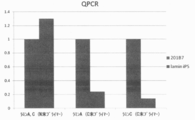
- lamin A / C gene in iPS cells was quantified by q-PCR. Specifically, total lamin A and C mRNA were quantified with the N-terminal primer, and wild-type allele lamin A or lamin C was quantified with the C-terminal primer. The result is shown in figure 2. Compared with control iPS cells (201B7), iPS cells derived from lamin A / C cardiomyopathy patients did not show a decrease in the expression level of lamin A / C gene and expressed mutant allele-derived mRNA.
- iPS cells are aggregated to form embryoid bodies, which are differentiated into cardiomyocytes by treatment with Activin A, BMP4, bFGF for 3 days and VEGF, DKK1 for 4 days in suspension culture.
- Activin A BMP4
- VEGF vascular endothelial growth factor
- DKK1 DKK1 for 4 days in suspension culture.
- a beating embryoid body YangYet al, Nature. 2008 May 22; 453 (7194): 524-8.
- iPS cells cultured on Matrigel-coated plates are treated with Activin A and BMP4 for 5 days, and then cultured for 2-3 weeks, resulting in the appearance of beating cardiomyocytes. (Laflamme et al, Nat Biotechnol. 2007 Sep; 25 (9): 1015-24.).
- iPS cells were prepared from skin fibroblasts of lamin A / C-related cardiomyopathy patients, and the disease could be reproduced in differentiated myocardium.
- Lamin A / C-related cardiomyopathy is an intractable disease for which no fundamental treatment has been established, and it is expected that this model will be useful for elucidating the pathophysiology and evaluating drug efficacy.
Landscapes
- Health & Medical Sciences (AREA)
- Life Sciences & Earth Sciences (AREA)
- Engineering & Computer Science (AREA)
- Biomedical Technology (AREA)
- Immunology (AREA)
- Cell Biology (AREA)
- Hematology (AREA)
- Chemical & Material Sciences (AREA)
- Urology & Nephrology (AREA)
- Molecular Biology (AREA)
- Toxicology (AREA)
- Physics & Mathematics (AREA)
- Biotechnology (AREA)
- Tropical Medicine & Parasitology (AREA)
- Bioinformatics & Cheminformatics (AREA)
- Food Science & Technology (AREA)
- Medicinal Chemistry (AREA)
- Microbiology (AREA)
- Analytical Chemistry (AREA)
- Biochemistry (AREA)
- General Health & Medical Sciences (AREA)
- General Physics & Mathematics (AREA)
- Pathology (AREA)
- Developmental Biology & Embryology (AREA)
- Measuring Or Testing Involving Enzymes Or Micro-Organisms (AREA)
- Micro-Organisms Or Cultivation Processes Thereof (AREA)
Abstract
本発明は、以下の工程: (1)ラミンA/C遺伝子異常を有する多能性幹細胞由来の心筋細胞もしくは組織に被検物質を接触させる工程、および (2)被検物質を接触させなかった場合と比較して、該心筋細胞もしくは組織が発現する正常心筋細胞もしくは組織と異なる形質を、正常心筋細胞の形質に近づけるように変化させるか、あるいは当該異なる形質の発現を阻止もしくは遅延させた被検物質を、心筋症の予防および/または治療薬の候補物質として選択する工程 を含む、心筋症の予防および/または治療薬のスクリーニング方法を提供する。
Description
本発明は、心筋症特異的な多能性幹細胞、該幹細胞から分化誘導される、心筋症の形質を発現する心筋細胞、並びに該心筋細胞を用いた心筋症の予防および/または治療薬のスクリーニング方法に関する。より詳細には、本発明は、ラミンA/C遺伝子異常を有する多能性幹細胞、特にラミンA/C心筋症患者由来の人工多能性幹(iPS)細胞、該幹細胞から分化誘導される、核形態の異常、核膜の障害、収縮力の低下等のラミンA/C心筋症に特徴的な表現型を示す心筋細胞、該心筋細胞に被検物質を作用させ、該表現型(病態)を改善した被検物質を心筋症の予防および/または治療薬の候補として選択することを含む、該予防および/または治療薬のスクリーニングする方法に関する。
拡張型心筋症(DCM)は、心室拡大、心筋細胞の脱落、心筋の線維化をきたし、突然死や心不全の原因となる難治性疾患である。DCMの20-35%は家族性に発症することから、それらの病因は遺伝子変異であると考えられており、原因遺伝子の探索の結果、これまでに約30種の原因遺伝子が発見されている。そのうちの1つであるラミンA/C遺伝子は、V型中間径フィラメントであるラミンA、C(スプライシングバリアント)をコードするが、これらのタンパク質は核膜内層の主な構成分子であり(非特許文献1)、核膜の構造保持やDNA転写、遺伝子発現に重要な役割を果たしている(非特許文献2)。ラミンA/C遺伝子の異常は、心筋症の他、筋ジストロフィー、末梢神経障害、家族性脂肪萎縮症、早老症など臓器特異的疾患を引き起こすことが知られており、ラミノパチーと総称される。心臓においては、心臓伝導障害を伴う拡張型心筋症(ラミンA/C心筋症)を引き起こし(非特許文献3)、致死性不整脈や重症心不全の合併により予後不良であり、根本的治療法はない。
現在、DCMの治療薬としては、βブロッカーやACE阻害剤などが用いられている。最近では、カルシウム増感剤による心不全治療も試みられているが、既存の薬剤にはPDE阻害作用があり、短期的に症状を軽減させるものの長期的な改善効果は得られていない。有効な新規DCM治療薬を開発するために、DCMの病態を再現し得る疾患モデルが求められる。
DCMの動物モデルとして、エメリー・ドレイフス型筋ジストロフィーの家系で同定されたラミンA/C遺伝子のミスセンス変異(H226P)を導入したノックインマウス(LmnaH226P/H226P)が知られている(非特許文献4)。このマウスは生後5-6ヶ月で心不全を発症し、心筋細胞の脱落や心筋の線維化をきたすとともに12-13ヶ月までに死亡するため、重症DCMの動物モデルとして研究によく用いられており、例えば、カルシウム増感剤による心不全の発症予防効果などが検討されている(非特許文献5)。しかし、動物モデルはヒトでの薬剤の効果を反映しているかどうか不明であり、動物愛護の観点からも、創薬研究のより早期のスクリーニングにおいては、ヒト培養細胞モデルを用いることがより望ましい。
iPS細胞は少量の体細胞から作製可能であり、高齢者の皮膚細胞からの作製例も報告されているので、ある疾患の患者の体細胞からiPS細胞を樹立し、それを該疾患の病態を発現する細胞タイプに分化させれば、該患者の遺伝子異常を有する疾患関連細胞(disease-relevant cells)を容易に取得することができる。既に筋萎縮性側索硬化症(ALS)やパーキンソン病等の種々の疾患の患者由来のiPS細胞の作製が報告されている(非特許文献6, 7)。しかし、遺伝的変異に基づく疾患であっても、長い年月の潜伏期間を経て発症する疾患も多く、そのような疾患においては、疾患特異的iPS細胞由来の細胞といえども、短い実験期間の中で病態を再現することは非常に難しい。実際、心筋症患者由来のiPS細胞から心筋症の病態を再現する心筋細胞を誘導したとの報告は皆無である。
Lin F et al. J Biol Chem 1993;268:16321-6
Nature reviews 2002;3:848-58
N Engl J Med 1999;341:1715-24
Hum Mol Genet 2005;14:155-169
J Am Coll Cardiol 2010;55:1503-5
Science 2008;321:1218-21
Cell 2008;134:877-86
本発明の目的は、心筋症患者由来の多能性幹細胞を樹立し、該幹細胞から心筋症の形質を発現する心筋細胞を分化誘導し、該心筋細胞を用いて心筋症の予防および/または治療薬となり得る物質をスクリーニングする方法を提供することである。
本発明者らは、上記の目的を達成すべく、まず家族性に拡張型心筋症および心伝導障害(DCM-CD)を発症する患者を対象に遺伝子解析を実施した結果、ラミンA/C遺伝子のコード領域(CDS)内の2塩基(908-909番目のCT)が欠失したために、303番目のアミノ酸(Ser)がCysに変異し、さらに無意味なアミノ酸が25残基続いた後に終止コドンを生じ、結果的に328アミノ酸からなる短縮されたタンパク質が翻訳されるフレームシフト変異を同定した。当該変異を有する患者から皮膚を採取して皮膚線維芽細胞を樹立し、これに4因子(Oct3/4、Sox2、Klf4、c-Myc)を導入してラミンA/C心筋症特異的iPS細胞を樹立した。リアルタイム定量PCRの結果、このiPS細胞は変異ラミンA/C mRNAを野生型ラミンA/C遺伝子を有する対照iPS細胞と同等レベルで発現しており、ナンセンス変異介在性のRNA分解は起こっていなかった。次に、このiPS細胞を常法により心筋細胞に分化させ、得られた心筋細胞を電子顕微鏡により解析したところ、ラミンA/C心筋症の心筋細胞に特徴的な所見である核形態の異常と核膜の障害を認めた。このように、ラミンA/C心筋症患者から樹立されたiPS細胞由来の心筋細胞は心筋症の病態をよく再現していたので、本発明者らは、当該細胞を用いてこれらの病態の改善を指標として候補物質をスクリーニングすることにより、心筋症の予防および/または治療効果を有する物質を探索し得ることを見出し、本発明を完成するに至った。
すなわち、本発明は以下の通りである。
[1]心筋症の予防および/または治療薬のスクリーニング方法であって、以下の工程を含む方法:
(1)ラミンA/C遺伝子異常を有する多能性幹細胞由来の心筋細胞もしくは組織に被検物質を接触させる工程、
(2)被検物質を接触させなかった場合と比較して、該心筋細胞もしくは組織が発現する正常心筋細胞もしくは組織と異なる形質を、正常心筋細胞の形質に近づけるように変化させるか、あるいは当該異なる形質の発現を阻止もしくは遅延させた被検物質を、心筋症の予防および/または治療薬の候補物質として選択する工程。
[2]多能性幹細胞が人工多能性幹(iPS)細胞である、上記[1]記載の方法。
[3]ラミンA/C遺伝子異常が配列番号:1または3に示されるヌクレオチド配列中908-909番目のCTの欠失によるフレームシフト変異である、上記[1]または[2]記載の方法。
[4]心筋症が拡張型心筋症である、上記[1]~[3]のいずれかに記載の方法。
[5]心筋症がラミンA/C心筋症である、上記[1]~[4]のいずれかに記載の方法。
[6]心筋細胞もしくは組織が発現する正常心筋細胞もしくは組織と異なる形質が、心筋症の病態を再現する形質である、上記[1]~[5]のいずれかに記載の方法。
[7]心筋症の病態を再現する形質が、心筋細胞の核形態の異常および/または核膜の障害、心筋細胞の収縮力の低下、並びに心筋組織の線維化および/または細胞脱落から選ばれる、上記[6]記載の方法。
[8]iPS細胞が、Oct3/4を含有する初期化因子、または該初期化因子をコードする核酸を導入することにより作製される、上記[2]~[7]のいずれかに記載の方法。
[9]iPS細胞が、Oct3/4、Sox2およびKlf4を含有する初期化因子、または該初期化因子をコードする核酸を導入することにより作製される、上記[2]~[7]のいずれかに記載の方法。
[10]iPS細胞が、Oct3/4、Sox2、Klf4およびc-Mycを含有する初期化因子、または該初期化因子をコードする核酸を導入することにより作製される、上記[2]~[7]のいずれかに記載の方法。
[11]心筋症を引き起こすラミンA/C遺伝子異常を有する多能性幹細胞であって、核形態の異常および核膜の障害を有しない多能性幹細胞。
[12]iPS細胞である、上記[11]記載の多能性幹細胞。
[13]ラミンA/C遺伝子異常が配列番号:1または3に示されるヌクレオチド配列中908-909番目のCTの欠失によるフレームシフト変異である、上記[11]または[12]記載の多能性幹細胞。
[14]Oct3/4遺伝子、Sox2遺伝子、Klf4遺伝子およびc-Myc遺伝子から選ばれる1以上の外来性遺伝子を染色体中に含む、上記[11]~[13]のいずれかに記載の多能性幹細胞。
[15]上記[11]~[14]のいずれかに記載の多能性幹細胞から分化誘導された、核形態の異常および/または核膜の障害を有する心筋細胞。
[16]上記[15]記載の心筋細胞により構築された心筋組織。
[17]筋収縮力の低下、筋繊維化および心筋細胞の脱落から選ばれる心筋症の病態を再現する形質を発現する上記[16]記載の心筋組織。
[1]心筋症の予防および/または治療薬のスクリーニング方法であって、以下の工程を含む方法:
(1)ラミンA/C遺伝子異常を有する多能性幹細胞由来の心筋細胞もしくは組織に被検物質を接触させる工程、
(2)被検物質を接触させなかった場合と比較して、該心筋細胞もしくは組織が発現する正常心筋細胞もしくは組織と異なる形質を、正常心筋細胞の形質に近づけるように変化させるか、あるいは当該異なる形質の発現を阻止もしくは遅延させた被検物質を、心筋症の予防および/または治療薬の候補物質として選択する工程。
[2]多能性幹細胞が人工多能性幹(iPS)細胞である、上記[1]記載の方法。
[3]ラミンA/C遺伝子異常が配列番号:1または3に示されるヌクレオチド配列中908-909番目のCTの欠失によるフレームシフト変異である、上記[1]または[2]記載の方法。
[4]心筋症が拡張型心筋症である、上記[1]~[3]のいずれかに記載の方法。
[5]心筋症がラミンA/C心筋症である、上記[1]~[4]のいずれかに記載の方法。
[6]心筋細胞もしくは組織が発現する正常心筋細胞もしくは組織と異なる形質が、心筋症の病態を再現する形質である、上記[1]~[5]のいずれかに記載の方法。
[7]心筋症の病態を再現する形質が、心筋細胞の核形態の異常および/または核膜の障害、心筋細胞の収縮力の低下、並びに心筋組織の線維化および/または細胞脱落から選ばれる、上記[6]記載の方法。
[8]iPS細胞が、Oct3/4を含有する初期化因子、または該初期化因子をコードする核酸を導入することにより作製される、上記[2]~[7]のいずれかに記載の方法。
[9]iPS細胞が、Oct3/4、Sox2およびKlf4を含有する初期化因子、または該初期化因子をコードする核酸を導入することにより作製される、上記[2]~[7]のいずれかに記載の方法。
[10]iPS細胞が、Oct3/4、Sox2、Klf4およびc-Mycを含有する初期化因子、または該初期化因子をコードする核酸を導入することにより作製される、上記[2]~[7]のいずれかに記載の方法。
[11]心筋症を引き起こすラミンA/C遺伝子異常を有する多能性幹細胞であって、核形態の異常および核膜の障害を有しない多能性幹細胞。
[12]iPS細胞である、上記[11]記載の多能性幹細胞。
[13]ラミンA/C遺伝子異常が配列番号:1または3に示されるヌクレオチド配列中908-909番目のCTの欠失によるフレームシフト変異である、上記[11]または[12]記載の多能性幹細胞。
[14]Oct3/4遺伝子、Sox2遺伝子、Klf4遺伝子およびc-Myc遺伝子から選ばれる1以上の外来性遺伝子を染色体中に含む、上記[11]~[13]のいずれかに記載の多能性幹細胞。
[15]上記[11]~[14]のいずれかに記載の多能性幹細胞から分化誘導された、核形態の異常および/または核膜の障害を有する心筋細胞。
[16]上記[15]記載の心筋細胞により構築された心筋組織。
[17]筋収縮力の低下、筋繊維化および心筋細胞の脱落から選ばれる心筋症の病態を再現する形質を発現する上記[16]記載の心筋組織。
本発明によれば、心筋症特異的多能性幹細胞から分化誘導された心筋細胞もしくは組織を用いて心筋症の予防および/または治療薬をスクリーニングすることができる。
本発明は、心筋症患者由来の多能性幹細胞、好ましくはiPS細胞を分化誘導して得られた心筋細胞もしくは組織における心筋症の病態を再現する形質を改善するか、該形質の発現を阻止もしくは遅延させる物質をスクリーニングする方法を提供する。
I. 多能性幹細胞
本発明において出発材料となる多能性幹細胞は、心筋症を引き起こすラミンA/C遺伝子の異常を有し、かつ未分化状態を保持したまま増殖できる「自己再生能」と三胚葉系列すべてに分化できる「分化多能性」とを有する未分化細胞であれば特に制限されず、例えば、iPS細胞、ES細胞の他、始原生殖細胞に由来する胚性生殖(EG)細胞、精巣組織からのGS細胞の樹立培養過程で単離されるmutipotent germline stem(mGS)細胞、骨髄から単離されるmultipotent adult progenitor cell(MAPC)等が挙げられる。ES細胞は体細胞から核初期化されて生じたES細胞であってもよい。好ましくはiPS細胞またES細胞であるが、出生後の個体から取得できる点でmGS細胞やMAPCもまた好ましい。多能性幹細胞はラミンA/C遺伝子の異常をホモ接合型で有していてもよいが、好ましくはヘテロ接合型である。
本発明において出発材料となる多能性幹細胞は、心筋症を引き起こすラミンA/C遺伝子の異常を有し、かつ未分化状態を保持したまま増殖できる「自己再生能」と三胚葉系列すべてに分化できる「分化多能性」とを有する未分化細胞であれば特に制限されず、例えば、iPS細胞、ES細胞の他、始原生殖細胞に由来する胚性生殖(EG)細胞、精巣組織からのGS細胞の樹立培養過程で単離されるmutipotent germline stem(mGS)細胞、骨髄から単離されるmultipotent adult progenitor cell(MAPC)等が挙げられる。ES細胞は体細胞から核初期化されて生じたES細胞であってもよい。好ましくはiPS細胞またES細胞であるが、出生後の個体から取得できる点でmGS細胞やMAPCもまた好ましい。多能性幹細胞はラミンA/C遺伝子の異常をホモ接合型で有していてもよいが、好ましくはヘテロ接合型である。
本発明の方法は、いずれかの多能性幹細胞が樹立されているか、樹立可能である、任意の哺乳動物において適用することができ、例えば、ヒト、マウス、サル、ブタ、ラット、イヌ等が挙げられるが、好ましくはヒトである。
II. 多能性幹細胞の製造方法
本発明における多能性幹細胞として好適なiPS細胞の製造例を以下に示すが、これらに限定されない。
II-1. iPS細胞の製造方法
人工多能性幹 (iPS) 細胞は、ある特定の核初期化物質を、DNA又はタンパク質の形態で体細胞に導入することによって作製することができる、ES細胞とほぼ同等の特性、例えば分化多能性と自己複製による増殖能、を有する体細胞由来の人工の幹細胞である(K. Takahashi and S. Yamanaka (2006) Cell, 126: 663-676; K. Takahashi et al. (2007) Cell, 131: 861-872; J. Yu et al. (2007) Science, 318: 1917-1920; M. Nakagawa et al. (2008) Nat. Biotechnol., 26: 101-106; 国際公開WO 2007/069666)。核初期化物質は、ES細胞に特異的に発現している遺伝子またはES細胞の未分化維持に重要な役割を果たす遺伝子もしくはその遺伝子産物であれば良く、特に限定されないが、例えばOct3/4, Klf4, Klf1, Klf2, Klf5, Sox2, Sox1, Sox3, Sox15, Sox17, Sox18, c-Myc, L-Myc, N-Myc, TERT, SV40 Large T antigen, HPV16 E6, HPV16 E7, Bmil, Lin28, Lin28b, Nanog, EsrrbまたはEsrrgが例示される。これらの初期化物質は、iPS細胞樹立の際には、組み合わされて使用されてもよい。例えば、上記初期化物質を、少なくとも1つ、2つもしくは3つ含む組み合わせであり、好ましくは4つを含む組み合わせである。
本発明における多能性幹細胞として好適なiPS細胞の製造例を以下に示すが、これらに限定されない。
II-1. iPS細胞の製造方法
人工多能性幹 (iPS) 細胞は、ある特定の核初期化物質を、DNA又はタンパク質の形態で体細胞に導入することによって作製することができる、ES細胞とほぼ同等の特性、例えば分化多能性と自己複製による増殖能、を有する体細胞由来の人工の幹細胞である(K. Takahashi and S. Yamanaka (2006) Cell, 126: 663-676; K. Takahashi et al. (2007) Cell, 131: 861-872; J. Yu et al. (2007) Science, 318: 1917-1920; M. Nakagawa et al. (2008) Nat. Biotechnol., 26: 101-106; 国際公開WO 2007/069666)。核初期化物質は、ES細胞に特異的に発現している遺伝子またはES細胞の未分化維持に重要な役割を果たす遺伝子もしくはその遺伝子産物であれば良く、特に限定されないが、例えばOct3/4, Klf4, Klf1, Klf2, Klf5, Sox2, Sox1, Sox3, Sox15, Sox17, Sox18, c-Myc, L-Myc, N-Myc, TERT, SV40 Large T antigen, HPV16 E6, HPV16 E7, Bmil, Lin28, Lin28b, Nanog, EsrrbまたはEsrrgが例示される。これらの初期化物質は、iPS細胞樹立の際には、組み合わされて使用されてもよい。例えば、上記初期化物質を、少なくとも1つ、2つもしくは3つ含む組み合わせであり、好ましくは4つを含む組み合わせである。
上記の各核初期化物質のマウスおよびヒトcDNAのヌクレオチド配列並びに該cDNAにコードされるタンパク質のアミノ酸配列情報は、WO 2007/069666に記載のNCBI accession numbersを参照すること、またL-Myc、Lin28、Lin28b、EsrrbおよびEsrrgのマウスおよびヒトのcDNA配列およびアミノ酸配列情報については、それぞれ下記NCBI accession numbersを参照することにより取得できる。当業者は、当該cDNA配列またはアミノ酸配列情報に基づいて、常法により所望の核初期化物質を調製することができる。
遺伝子名 マウス ヒト
L-Myc NM_008506 NM_001033081
Lin28 NM_145833 NM_024674
Lin28b NM_001031772 NM_001004317
Esrrb NM_011934 NM_004452
Esrrg NM_011935 NM_001438
遺伝子名 マウス ヒト
L-Myc NM_008506 NM_001033081
Lin28 NM_145833 NM_024674
Lin28b NM_001031772 NM_001004317
Esrrb NM_011934 NM_004452
Esrrg NM_011935 NM_001438
これらの核初期化物質は、タンパク質の形態で、例えばリポフェクション、細胞膜透過性ペプチドとの結合、マイクロインジェクションなどの手法によって体細胞内に導入してもよいし、あるいは、DNAの形態で、例えば、ウイルス、プラスミド、人工染色体などのベクター、リポフェクション、リポソーム、マイクロインジェクションなどの手法によって体細胞内に導入することができる。ウイルスベクターとしては、レトロウイルスベクター、レンチウイルスベクター(以上、Cell, 126, pp.663-676, 2006; Cell, 131, pp.861-872, 2007; Science, 318, pp.1917-1920, 2007)、アデノウイルスベクター(Science, 322, 945-949, 2008)、アデノ随伴ウイルスベクター、センダイウイルスベクター(Proc Jpn Acad Ser B Phys Biol Sci. 85, 348-62, 2009)などが例示される。また、人工染色体ベクターとしては、例えばヒト人工染色体(HAC)、酵母人工染色体(YAC)、細菌人工染色体(BAC、PAC)などが含まれる。プラスミドとしては、哺乳動物細胞用プラスミドを使用しうる(Science, 322:949-953, 2008)。ベクターには、核初期化物質が発現可能なように、プロモーター、エンハンサー、リボゾーム結合配列、ターミネーター、ポリアデニル化サイトなどの制御配列を含むことができるし、さらに、必要に応じて、薬剤耐性遺伝子(例えばカナマイシン耐性遺伝子、アンピシリン耐性遺伝子、ピューロマイシン耐性遺伝子など)、チミジンキナーゼ遺伝子、ジフテリアトキシン遺伝子などの選択マーカー配列、緑色蛍光タンパク質(GFP)、β-グルクロニダーゼ(GUS)、FLAGなどのレポーター遺伝子配列などを含むことができる。また、上記ベクターには、体細胞への導入後、核初期化物質をコードする遺伝子もしくはプロモーターとそれに結合する核初期化物質をコードする遺伝子を共に切除するために、それらの前後にLoxP配列を有してもよい。さらに、上記ベクターには、染色体への取り込みされなくとも複製されて、エピソーマルに存在するようにEBNA-1およびoriPもしくはLarge TおよびSV40ori配列を含むこともできる。
核初期化に際して、iPS細胞の誘導効率を高めるために、上記の因子の他に、例えば、ヒストンデアセチラーゼ(HDAC)阻害剤[例えば、バルプロ酸(VPA)(Nat. Biotechnol., 26(7): 795-797 (2008))、トリコスタチンA、酪酸ナトリウム、MC 1293、M344等の低分子阻害剤、HDACに対するsiRNAおよびshRNA(例、HDAC1 siRNA SmartpoolO (Millipore)、HuSH 29mer shRNA Constructs against HDAC1 (OriGene)等)等の核酸性発現阻害剤など]、DNAメチルトランスフェラーゼ阻害剤(例えば5’-azacytidine)(Nat. Biotechnol., 26(7): 795-797 (2008))、G9aヒストンメチルトランスフェラーゼ阻害剤[例えば、BIX-01294 (Cell Stem Cell, 2: 525-528 (2008))等の低分子阻害剤、G9aに対するsiRNAおよびshRNA(例、G9a siRNA(human) (Santa Cruz Biotechnology)等)等の核酸性発現阻害剤など]、L-channel calcium agonist (例えばBayk8644) (Cell Stem Cell, 3, 568-574 (2008))、p53阻害剤(例えばp53に対するsiRNAおよびshRNA)(Cell Stem Cell, 3, 475-479 (2008))、Wnt Signaling(例えばsoluble Wnt3a)(Cell Stem Cell, 3, 132-135 (2008))、LIFまたはbFGFなどのサイトカイン、ALK5阻害剤(例えば、SB431542)(Nat Methods, 6: 805-8 (2009))、mitogen-activated protein kinase signalling阻害剤、glycogen synthase kinase-3阻害剤(PloS Biology, 6(10), 2237-2247 (2008))、miR-291-3p、miR-294、miR-295などのmiRNA (R.L. Judson et al., Nat. Biotech., 27:459-461 (2009))、等を使用することができる。
iPS細胞誘導のための培養培地としては、例えば(1) 10~15% FBSを含有するDMEM、DMEM/F12又はDME培地(これらの培地にはさらに、LIF、penicillin/streptomycin、puromycin、L-グルタミン、非必須アミノ酸類、β-メルカプトエタノールなどを適宜含むことができる。)、(2) bFGF又はSCFを含有するES細胞培養用培地、例えばマウスES細胞培養用培地(例えばTX-WES培地、トロンボX社)又は霊長類ES細胞培養用培地(例えば霊長類(ヒト&サル)ES細胞用培地、リプロセル、京都、日本)、などが含まれる。
iPS細胞誘導のための培養培地としては、例えば(1) 10~15% FBSを含有するDMEM、DMEM/F12又はDME培地(これらの培地にはさらに、LIF、penicillin/streptomycin、puromycin、L-グルタミン、非必須アミノ酸類、β-メルカプトエタノールなどを適宜含むことができる。)、(2) bFGF又はSCFを含有するES細胞培養用培地、例えばマウスES細胞培養用培地(例えばTX-WES培地、トロンボX社)又は霊長類ES細胞培養用培地(例えば霊長類(ヒト&サル)ES細胞用培地、リプロセル、京都、日本)、などが含まれる。
培養法の例としては、たとえば、37℃、5% CO2存在下にて、10% FBS含有DMEM又はDMEM/F12培地上で体細胞と核初期化物質 (DNA又はタンパク質) を接触させ約4~7日間培養し、その後、細胞をフィーダー細胞 (たとえば、マイトマイシンC処理STO細胞、SNL細胞等) 上にまきなおし、体細胞と核初期化物質の接触から約10日後からbFGF含有霊長類ES細胞培養用培地で培養し、該接触から約30~約45日又はそれ以上ののちにiPS様コロニーを生じさせることができる。また、iPS細胞の誘導効率を高めるために、5-10%と低い酸素濃度の条件下で培養してもよい。
あるいは、その代替培養法として、フィーダー細胞 (たとえば、マイトマイシンC処理STO細胞、SNL細胞等) 上で10% FBS含有DMEM培地(これにはさらに、LIF、ペニシリン/ストレプトマイシン、ピューロマイシン、L-グルタミン、非必須アミノ酸類、β-メルカプトエタノールなどを適宜含むことができる。)で培養し、約25~約30日又はそれ以上ののちにES様コロニーを生じさせることができる。
上記培養の間には、培養開始2日目以降から毎日1回新鮮な培地と培地交換を行う。また、核初期化に使用する体細胞の細胞数は、限定されないが、培養ディッシュ100cm2あたり約5×10³~約5×10⁶細胞の範囲である。
マーカー遺伝子として薬剤耐性遺伝子を含む遺伝子を用いた場合は、対応する薬剤を含む培地(選択培地)で培養を行うことによりマーカー遺伝子発現細胞を選択することができる。またマーカー遺伝子が蛍光タンパク質遺伝子の場合は蛍光顕微鏡で観察することによって、発光酵素遺伝子の場合は発光基質を加えることによって、また発色酵素遺伝子の場合は発色基質を加えることによって、マーカー遺伝子発現細胞を検出することができる。
本明細書中で使用する「体細胞」は、哺乳動物(例えば、ヒト、マウス、サル、ブタ、ラット等)由来の生殖細胞以外のいかなる細胞であってもよく、例えば、角質化する上皮細胞(例、角質化表皮細胞)、粘膜上皮細胞(例、舌表層の上皮細胞)、外分泌腺上皮細胞(例、乳腺細胞)、ホルモン分泌細胞(例、副腎髄質細胞)、代謝・貯蔵用の細胞(例、肝細胞)、境界面を構成する内腔上皮細胞(例、I型肺胞細胞)、内鎖管の内腔上皮細胞(例、血管内皮細胞)、運搬能をもつ繊毛のある細胞(例、気道上皮細胞)、細胞外マトリックス分泌用細胞(例、線維芽細胞)、収縮性細胞(例、平滑筋細胞)、血液と免疫系の細胞(例、Tリンパ球)、感覚に関する細胞(例、桿細胞)、自律神経系ニューロン(例、コリン作動性ニューロン)、感覚器と末梢ニューロンの支持細胞(例、随伴細胞)、中枢神経系の神経細胞とグリア細胞(例、星状グリア細胞)、色素細胞(例、網膜色素上皮細胞)、およびそれらの前駆細胞 (組織前駆細胞) 等が挙げられる。細胞の分化の程度や細胞を採取する動物の齢などに特に制限はなく、未分化な前駆細胞 (体性幹細胞も含む) であっても、最終分化した成熟細胞であっても、同様に本発明における体細胞の起源として使用することができる。ここで未分化な前駆細胞としては、たとえば神経幹細胞、造血幹細胞、間葉系幹細胞、歯髄幹細胞等の組織幹細胞(体性幹細胞)が挙げられる。
本発明において、体細胞を採取する由来となる哺乳動物個体は特に制限されないが、好ましくはヒトである。より好ましくは、家族性ラミンA/C心筋症(好ましくは、心刺激伝導障害を伴う拡張型心筋症(DCM-CD))の患者または当該患者と同一のラミンA/C遺伝子変異を有する未発症のヒトから体細胞を採取することが望ましい。ここで、遺伝子変異として、ラミンA/C遺伝子のコーディング領域(CDS)やスプライシング異常を引き起こすイントロン領域の変異が挙げられる。好ましくは、CDS(ラミンA mRNAのCDSを配列番号:1に、ラミンC mRNAのCDSを配列番号:3にそれぞれ示す)の908-909番目の2塩基(CT)を欠失する変異が挙げられるが、これに限定されない。当該欠失変異の結果、フレームシフトが起こって終止コドンを生じ、328アミノ酸からなる変異ラミンA/Cタンパク質(配列番号:6)が生成される。
DCM-CDを来たす他のラミンA/C遺伝子変異としては、例えば、ラミンA/Cタンパク質の166番目のArgがProで置換されるミスセンス変異(R166P)、225番目のArgが他のアミノ酸で置換されるミスセンス変異(R225X)、259番目のTyrがHisで置換されるミスセンス変異(Y259H)、ラミンA/C遺伝子のCDSの815-818番目の4塩基がCCAGACの6塩基に置き換わることによるフレームシフト変異、ラミンA/C遺伝子の第3イントロンの3’端から10塩基上流のA<G置換によるスプライシング異常で9塩基(3アミノ酸)が挿入される変異(J Cardiovasc Electrophysiol 2005;16:137-45)、あるいはUniProtKBにP02545として登録されているヒトラミンA/C(LMNA_HUMAN)の配列アノテーション情報欄に列挙される天然の変異が挙げられる。
あるいは、ラミンA/C遺伝子異常を有するiPS細胞は、正常なラミンA/C遺伝子を有する体細胞から、上述の方法によりiPS細胞を樹立した後、心筋症を引き起こす遺伝子異常を有するラミンA/C遺伝子を、iPS細胞のラミンA/C遺伝子座にノックインすることによっても作製することができる。
II-2. 他の多能性幹細胞の製造方法
不妊治療における体外受精では、病原性変異が同定されている家系に対して着床前診断(PGD)を行い、受精卵が病原性変異を有する場合は余剰胚として処理される場合がある。海外ではこのような病原性変異を有する余剰胚から樹立したヒト胚性幹(ES)細胞が、疾患特異的ES細胞として研究に利用されている。従って、PGDによりラミンA/C遺伝子異常が発見され、余剰胚となった初期胚から、心筋症特異的ES細胞を取得することができる。
不妊治療における体外受精では、病原性変異が同定されている家系に対して着床前診断(PGD)を行い、受精卵が病原性変異を有する場合は余剰胚として処理される場合がある。海外ではこのような病原性変異を有する余剰胚から樹立したヒト胚性幹(ES)細胞が、疾患特異的ES細胞として研究に利用されている。従って、PGDによりラミンA/C遺伝子異常が発見され、余剰胚となった初期胚から、心筋症特異的ES細胞を取得することができる。
ES細胞の作製方法としては、例えば、哺乳動物の胚盤胞ステージにおける内部細胞塊を培養する方法(例えば、Manipulating the Mouse Embryo A Laboratory Manual,Second Edition,Cold Spring Harbor Laboratory Press (1994) を参照)、体細胞核移植によって作製された初期胚を培養する方法(Wilmut et al., Nature, 385, 810 (1997); Cibelli et al., Science, 280, 1256 (1998); 入谷明ら, 蛋白質核酸酵素, 44, 892 (1999); Baguisi et al., Nature Biotechnology,17, 456 (1999); Wakayama et al., Nature, 394, 369 (1998); Wakayama et al., Nature Genetics, 22, 127 (1999); Wakayama et al., Proc. Natl. Acad. Sci. USA, 96, 14984 (1999); RideoutIII et al., Nature Genetics, 24, 109 (2000))などが挙げられるが、これらに限定されない。
体細胞核移植による場合、体細胞の種類や体細胞を採取するソースは上記iPS細胞の場合に準ずる。
体細胞核移植による場合、体細胞の種類や体細胞を採取するソースは上記iPS細胞の場合に準ずる。
EG細胞は、常法に従って始原生殖細胞を単離し、これをLIF、bFGFおよびSCFの存在下で培養することにより誘導することができる。また、mGS細胞はWO 2005/100548に記載される方法に従って、精巣細胞から作製することができる。多能性成体前駆細胞(MAPC)はJ. Clin. Invest. 109:337-346 (2002) に記載される方法に従って、骨髄から単離することができる。
III. 多能性幹細胞からの心筋細胞の分化誘導法
上記のようにして得られる心筋症特異的多能性幹細胞は、自体公知の任意の分化誘導法により心筋細胞へと分化させることができる。心筋細胞への分化誘導法としては、例えば、胚様体(EB)形成を利用する方法や、指向的な分化アプローチを用いる方法が報告されている(例、Nature 2008;453:524-8, J Clin Invest 2001;108:407-14, Circ Res 2002;91:501-8, Circ Res 2003;93:32-9, Nat Biotechnol 2007;25:1015-24, Circulation 2008;118:517, Circulation 2008;118:506, Nat Biotechnol 2005;23:611等)。
上記のようにして得られる心筋症特異的多能性幹細胞は、自体公知の任意の分化誘導法により心筋細胞へと分化させることができる。心筋細胞への分化誘導法としては、例えば、胚様体(EB)形成を利用する方法や、指向的な分化アプローチを用いる方法が報告されている(例、Nature 2008;453:524-8, J Clin Invest 2001;108:407-14, Circ Res 2002;91:501-8, Circ Res 2003;93:32-9, Nat Biotechnol 2007;25:1015-24, Circulation 2008;118:517, Circulation 2008;118:506, Nat Biotechnol 2005;23:611等)。
培地は、基本培地へ添加剤を加えて用いることができ、基本培地としては、例えば、Neurobasal培地、Neural Progenitor Basal培地、NS-A培地、BME培地、BGJb培地、CMRL 1066培地、Glasgow MEM培地、Improved MEM Zinc Option培地、IMDM培地、Medium 199培地、Eagle MEM培地、αMEM培地、DMEM培地、DMEM/F12培地、ハム培地、RPMI 1640培地、Fischer’s培地、およびこれらの混合培地など、動物細胞の培養に用いることのできる培地であれば特に限定されない。より好ましくは、DMEM/F12の混合物である。添加剤として、血清、レチノイン酸、アスコルビン酸、BMP(BMP2、BMP4)、Nodal、TGFβ1、アクチビン-A、Dkk1、IGFBP-4、bFGF、EGF、HGF、LIF、アミノ酸、ビタミン類、インターロイキン類、インスリン、トランスフェリン、ヘパリン、ヘパラン硫酸、コラーゲン、フィブロネクチン、プロゲステロン、セレナイト、B27-サプリメント、N2-サプリメント、ITS-サプリメント、抗生物質が挙げられる。また、分化誘導初期においては、BMP阻害剤としてのNoginを添加することも好ましい。
培養器は、例えば、コラーゲン、ゼラチン、マトリゲル、ポリ-L-リジン、ポリ-D-リジン、フィブロネクチン、ラミニンなどのコーティング剤でコーティングすることができる。
培養開始時の多能性幹細胞の濃度は、効率的に心筋細胞を形成させるように適宜設定できる。培養開始時の多能性幹細胞の濃度は、特に限定されないが、例えば、約1×10³~約1×10⁶細胞/ml、好ましくは約1×104~約5×105細胞/mlである。
培養温度、CO2濃度等の他の培養条件は適宜設定できる。培養温度は、特に限定されるものではないが、例えば約30~40℃、好ましくは約37℃である。また、CO2濃度は、例えば約1~10%、好ましくは約5%である。
培養温度、CO2濃度等の他の培養条件は適宜設定できる。培養温度は、特に限定されるものではないが、例えば約30~40℃、好ましくは約37℃である。また、CO2濃度は、例えば約1~10%、好ましくは約5%である。
上記のようにして得られた心筋細胞は、核形態の異常および/または核膜の障害に代表されるラミンA/C心筋症に特徴的な形質を発現するので、これらの形質の改善を指標として心筋症、特にラミンA/C心筋症の予防および/または治療薬をスクリーニングすることができる。
また、上記のようにして得られる心筋細胞から心筋組織を構築することもできる。例えば、アスコルビン酸処理した胚様体からPercollグラジエントにて心筋細胞を純化し、I型コラーゲンとマトリゲル存在下に心筋組織を構築することができる(Circulation 2006;113:2237)。このようにして得られる心筋組織では、筋収縮力の低下、心筋細胞の脱落、心筋組織の線維化等の心筋症に特徴的な病態が再現される。従って、これらの形質の改善、あるいはこれらの形質の発現の阻止もしくは遅延を指標として、ラミンA/C心筋症をはじめとして広く心筋症、特に拡張型心筋症の予防および/または治療薬をスクリーニングすることができる。
IV. 心筋症の予防および/または治療薬のスクリーニング方法
本発明は、前述のように得られた心筋症特異的多能性幹細胞由来の心筋細胞もしくは組織と被検物質とを接触させ、該被検物質が、該心筋細胞もしくは組織が発現する正常心筋細胞もしくは組織と異なる形質を、正常心筋細胞の形質に近づけるように変化させるか、あるいは当該異なる形質の発現を阻止もしくは遅延させるかを指標として、心筋症、好ましくは拡張型心筋症、特にラミンA/C心筋症の予防および/または治療薬の候補物質をスクリーニングする方法を提供する。
本発明は、前述のように得られた心筋症特異的多能性幹細胞由来の心筋細胞もしくは組織と被検物質とを接触させ、該被検物質が、該心筋細胞もしくは組織が発現する正常心筋細胞もしくは組織と異なる形質を、正常心筋細胞の形質に近づけるように変化させるか、あるいは当該異なる形質の発現を阻止もしくは遅延させるかを指標として、心筋症、好ましくは拡張型心筋症、特にラミンA/C心筋症の予防および/または治療薬の候補物質をスクリーニングする方法を提供する。
本発明における被検物質は、いかなる公知化合物および新規化合物であってもよく、例えば、核酸、糖質、脂質、蛋白質、ペプチド、有機低分子化合物、コンビナトリアルケミストリー技術を用いて作製された化合物ライブラリー、固相合成やファージディスプレイ法により作製されたランダムペプチドライブラリー、あるいは微生物、動植物、海洋生物等由来の天然成分等が挙げられる。
スクリーニングの方法としては、例えば、被検物質と接触させない場合の心筋細胞と、被検物質と接触させた場合の心筋細胞の核の形態および/または核膜の障害の有無や程度を比較し、接触時の核形態の異常および/または核膜の障害が、非接触時のそれらよりも軽度である場合に、該被検物質を心筋症の予防および/または治療薬の候補物質として選択する方法が挙げられる。核の形態や核膜の障害は心筋細胞を常法により電子顕微鏡で観察することにより検定することができる。
あるいは、被検物質と接触させない場合の心筋組織と、被検物質と接触させた場合の心筋組織とで、1)筋収縮力、2)心筋細胞の脱落、3)線維化などを比較し、接触時の筋収縮力の低下、心筋細胞の脱落、線維化の程度が、非接触時のそれらよりも軽度である場合に、該被検物質を心筋症の予防および/または治療薬の候補物質として選択する方法が挙げられる。
V. 心筋症の予防および治療剤
上記のスクリーニング法により選択された物質は、心筋症の予防および/または治療薬として使用し得る。
本発明における心筋症予防・治療剤は、有効成分である選択された物質をそのまま単独で、または薬理学的に許容される担体、賦形剤、希釈剤等と混合し、適当な剤型の医薬組成物として経口的又は非経口的に投与することができる。
上記のスクリーニング法により選択された物質は、心筋症の予防および/または治療薬として使用し得る。
本発明における心筋症予防・治療剤は、有効成分である選択された物質をそのまま単独で、または薬理学的に許容される担体、賦形剤、希釈剤等と混合し、適当な剤型の医薬組成物として経口的又は非経口的に投与することができる。
経口投与のための組成物としては、固体または液体の剤形、具体的には錠剤(糖衣錠、フィルムコーティング錠を含む)、丸剤、顆粒剤、散剤、カプセル剤(ソフトカプセル剤を含む)、シロップ剤、乳剤、懸濁剤等が挙げられる。一方、非経口投与のための組成物としては、例えば、注射剤、坐剤等が用いられ、注射剤は静脈注射剤、皮下注射剤、皮内注射剤、筋肉注射剤、点滴注射剤等の剤形を包含しても良い。これらの製剤は、賦形剤(例えば、乳糖、白糖、葡萄糖、マンニトール、ソルビトールのような糖誘導体;トウモロコシデンプン、バレイショデンプン、α澱粉、デキストリンのような澱粉誘導体;結晶セルロースのようなセルロース誘導体;アラビアゴム;デキストラン;プルランのような有機系賦形剤;及び、軽質無水珪酸、合成珪酸アルミニウム、珪酸カルシウム、メタ珪酸アルミン酸マグネシウムのような珪酸塩誘導体;燐酸水素カルシウムのような燐酸塩;炭酸カルシウムのような炭酸塩;硫酸カルシウムのような硫酸塩等の無機系賦形剤である)、滑沢剤(例えば、ステアリン酸、ステアリン酸カルシウム、ステアリン酸マグネシウムのようなステアリン酸金属塩;タルク;コロイドシリカ;ビーズワックス、ゲイ蝋のようなワックス類;硼酸;アジピン酸;硫酸ナトリウムのような硫酸塩;グリコール;フマル酸;安息香酸ナトリウム;DLロイシン;ラウリル硫酸ナトリウム、ラウリル硫酸マグネシウムのようなラウリル硫酸塩;無水珪酸、珪酸水和物のような珪酸類;及び、上記澱粉誘導体である)、結合剤(例えば、ヒドロキシプロピルセルロース、ヒドロキシプロピルメチルセルロース、ポリビニルピロリドン、マクロゴール、及び、前記賦形剤と同様の化合物である)、崩壊剤(例えば、低置換度ヒドロキシプロピルセルロース、カルボキシメチルセルロース、カルボキシメチルセルロースカルシウム、内部架橋カルボキシメチルセルロースナトリウムのようなセルロース誘導体;カルボキシメチルスターチ、カルボキシメチルスターチナトリウム、架橋ポリビニルピロリドンのような化学修飾されたデンプン・セルロース類である)、乳化剤(例えば、ベントナイト、ビーガムのようなコロイド性粘土;水酸化マグネシウム、水酸化アルミニウムのような金属水酸化物;ラウリル硫酸ナトリウム、ステアリン酸カルシウムのような陰イオン界面活性剤;塩化ベンザルコニウムのような陽イオン界面活性剤;及び、ポリオキシエチレンアルキルエーテル、ポリオキシエチレンソルビタン脂肪酸エステル、ショ糖脂肪酸エステルのような非イオン界面活性剤である)、安定剤(メチルパラベン、プロピルパラベンのようなパラオキシ安息香酸エステル類;クロロブタノール、ベンジルアルコール、フェニルエチルアルコールのようなアルコール類;塩化ベンザルコニウム;フェノール、クレゾールのようなフェノール類;チメロサール;デヒドロ酢酸;及び、ソルビン酸である)、矯味矯臭剤(例えば、通常使用される、甘味料、酸味料、香料等である)、希釈剤等の添加剤を用いて周知の方法で製造される。
本発明における心筋症予防・治療剤の有効成分の投与量は、患者の症状、年齢、体重等の種々の条件により変化し得る。
その投与量は症状、年齢等により異なるが、経口投与の場合には、1回当たり下限0.1mg(好適には0.5mg)、上限1000mg(好適には500mg)を、非経口的投与の場合には、1回当たり下限0.01mg(好適には0.05mg)、上限100mg(好適には50mg)を、成人に対して1日当たり1乃至6回投与することができる。症状に応じて増量もしくは減量してもよい。
その投与量は症状、年齢等により異なるが、経口投与の場合には、1回当たり下限0.1mg(好適には0.5mg)、上限1000mg(好適には500mg)を、非経口的投与の場合には、1回当たり下限0.01mg(好適には0.05mg)、上限100mg(好適には50mg)を、成人に対して1日当たり1乃至6回投与することができる。症状に応じて増量もしくは減量してもよい。
さらに、本発明における心筋症予防・治療剤は、他の薬剤、例えば、βブロッカー、ACE阻害剤、カルシウム増感剤などと併用してもよい。本発明における心筋症予防・治療剤およびこれらの他の薬剤は、同時に、順次又は別個に投与することができる。
以下に実施例を挙げて本発明をより具体的に説明するが、本発明がこれらに限定されないことは言うまでもない。
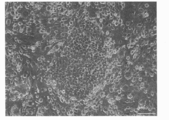
家族性に拡張型心筋症および心臓刺激伝導障害を来たし、ラミンA/C遺伝子変異(c.908_909delCT, p. S303fsX25)が同定されているラミンA/C心筋症患者より皮膚を採取し、皮膚線維芽細胞を樹立した。次に、高橋、山中らの方法(Cell 131: 861-872(2007))を用い、レトロウイルスにて以下の4遺伝子(OCT3/4、SOX2、KLF4、C-MYC)を前記皮膚線維芽細胞に導入し、ラミンA/C心筋症患者由来のiPS細胞を樹立した。樹立したiPS細胞コロニーの写真を図1に示す。
iPS細胞におけるラミンA/C遺伝子の発現をq-PCRで定量した。具体的には、N末プライマーでtotalのラミンA、C mRNAを定量し、C末プライマーで野生型アレルのラミンAまたはラミンCをそれぞれ定量した。結果を図2に示す。コントロールiPS細胞(201B7)に比べ、ラミンA/C心筋症患者由来のiPS細胞は、ラミンA/C遺伝子の発現量の低下を認めず、変異アレル由来mRNAも発現していた。
iPS細胞におけるラミンA/C遺伝子の発現をq-PCRで定量した。具体的には、N末プライマーでtotalのラミンA、C mRNAを定量し、C末プライマーで野生型アレルのラミンAまたはラミンCをそれぞれ定量した。結果を図2に示す。コントロールiPS細胞(201B7)に比べ、ラミンA/C心筋症患者由来のiPS細胞は、ラミンA/C遺伝子の発現量の低下を認めず、変異アレル由来mRNAも発現していた。
次に、胚様体形成法及び二次元分化誘導法を用いて心筋分化を行った。胚様体形成法においては、iPS細胞を凝集させ胚様体を形成し、浮遊培養にてActivin A, BMP4, bFGFで3日間、VEGF,DKK1で4日間処理することにより、心筋細胞に分化して拍動する胚様体を得た(Yang et al, Nature. 2008 May 22;453(7194):524-8)。また、二次元分化誘導法においては、マトリゲルコートしたプレート上で培養したiPS細胞をActivin A, BMP4で5日間処理し、その後さらに2-3週間培養を続けることにより、拍動する心筋細胞が出現した (Laflamme et al, Nat Biotechnol. 2007 Sep;25(9):1015-24.)。
次に、胚様体形成法により得られた心筋細胞を電子顕微鏡により解析した。その結果、核形態の異常(図3)、および核膜の障害(図4:矢印の部位にて核二重層の障害)を認め、ラミンA/C心筋症患者の心筋組織にてみられる特徴的な所見を再現していることが明らかになった。
以上により、ラミンA/C関連心筋症患者の皮膚線維芽細胞よりiPS細胞を作製し、分化心筋において疾患を再現できた。
以上により、ラミンA/C関連心筋症患者の皮膚線維芽細胞よりiPS細胞を作製し、分化心筋において疾患を再現できた。
ラミンA/C関連心筋症は、根本的治療法の確立されていない、難治性疾患であり、本モデルが病態解明や薬効評価に役立つと期待される。
本発明を好ましい態様を強調して説明してきたが、好ましい態様が変更され得ることは当業者にとって自明であろう。本発明は、本発明が本明細書に詳細に記載された以外の方法で実施され得ることを意図する。したがって、本発明は添付の「請求の範囲」の精神および範囲に包含されるすべての変更を含むものである。
ここで述べられた特許および特許出願明細書を含む全ての刊行物に記載された内容は、ここに引用されたことによって、その全てが明示されたと同程度に本明細書に組み込まれるものである。
ここで述べられた特許および特許出願明細書を含む全ての刊行物に記載された内容は、ここに引用されたことによって、その全てが明示されたと同程度に本明細書に組み込まれるものである。
本願は、2011年2月7日付で出願された米国仮特許出願第61/439,968号を基礎としており、その内容は、ここで参照することにより本願明細書に全て包含される。
Claims (17)
- 心筋症の予防および/または治療薬のスクリーニング方法であって、以下の工程を含む方法:
(1)ラミンA/C遺伝子異常を有する多能性幹細胞由来の心筋細胞もしくは組織に被検物質を接触させる工程、
(2)被検物質を接触させなかった場合と比較して、該心筋細胞もしくは組織が発現する正常心筋細胞もしくは組織と異なる形質を、正常心筋細胞の形質に近づけるように変化させるか、あるいは当該異なる形質の発現を阻止もしくは遅延させた被検物質を、心筋症の予防および/または治療薬の候補物質として選択する工程。 - 多能性幹細胞が人工多能性幹(iPS)細胞である、請求項1記載の方法。
- ラミンA/C遺伝子異常が配列番号:1または3に示されるヌクレオチド配列中908-909番目のCTの欠失によるフレームシフト変異である、請求項1または2記載の方法。
- 心筋症が拡張型心筋症である、請求項1~3のいずれか1項に記載の方法。
- 心筋症がラミンA/C心筋症である、請求項1~4のいずれか1項に記載の方法。
- 心筋細胞もしくは組織が発現する正常心筋細胞もしくは組織と異なる形質が、心筋症の病態を再現する形質である、請求項1~5のいずれか1項に記載の方法。
- 心筋症の病態を再現する形質が、心筋細胞の核形態の異常および/または核膜の障害、心筋細胞の収縮力の低下、並びに心筋組織の線維化および/または細胞脱落から選ばれる、請求項6記載の方法。
- iPS細胞が、Oct3/4を含有する初期化因子、または該初期化因子をコードする核酸を導入することにより作製される、請求項2~7のいずれか1項に記載の方法。
- iPS細胞が、Oct3/4、Sox2およびKlf4を含有する初期化因子、または該初期化因子をコードする核酸を導入することにより作製される、請求項2~7のいずれか1項に記載の方法。
- iPS細胞が、Oct3/4、Sox2、Klf4およびc-Mycを含有する初期化因子、または該初期化因子をコードする核酸を導入することにより作製される、請求項2~7のいずれか1項に記載の方法。
- 心筋症を引き起こすラミンA/C遺伝子異常を有する多能性幹細胞であって、核形態の異常および核膜の障害を有しない多能性幹細胞。
- iPS細胞である、請求項11記載の多能性幹細胞。
- ラミンA/C遺伝子異常が配列番号:1または3に示されるヌクレオチド配列中908-909番目のCTの欠失によるフレームシフト変異である、請求項11または12記載の多能性幹細胞。
- Oct3/4遺伝子、Sox2遺伝子、Klf4遺伝子およびc-Myc遺伝子から選ばれる1以上の外来性遺伝子を染色体中に含む、請求項11~13のいずれか1項に記載の多能性幹細胞。
- 請求項11~14のいずれか1項に記載の多能性幹細胞から分化誘導された、核形態の異常および/または核膜の障害を有する心筋細胞。
- 請求項15記載の心筋細胞により構築された心筋組織。
- 筋収縮力の低下、筋繊維化および心筋細胞の脱落から選ばれる心筋症の病態を再現する形質を発現する請求項16記載の心筋組織。
Priority Applications (1)
| Application Number | Priority Date | Filing Date | Title |
|---|---|---|---|
| JP2012556904A JP5995086B2 (ja) | 2011-02-07 | 2012-02-07 | 心筋症特異的多能性幹細胞およびその用途 |
Applications Claiming Priority (2)
| Application Number | Priority Date | Filing Date | Title |
|---|---|---|---|
| US201161439968P | 2011-02-07 | 2011-02-07 | |
| US61/439,968 | 2011-02-07 |
Publications (1)
| Publication Number | Publication Date |
|---|---|
| WO2012108444A1 true WO2012108444A1 (ja) | 2012-08-16 |
Family
ID=46638657
Family Applications (1)
| Application Number | Title | Priority Date | Filing Date |
|---|---|---|---|
| PCT/JP2012/052788 Ceased WO2012108444A1 (ja) | 2011-02-07 | 2012-02-07 | 心筋症特異的多能性幹細胞およびその用途 |
Country Status (2)
| Country | Link |
|---|---|
| JP (1) | JP5995086B2 (ja) |
| WO (1) | WO2012108444A1 (ja) |
Cited By (8)
| Publication number | Priority date | Publication date | Assignee | Title |
|---|---|---|---|---|
| WO2014071323A3 (en) * | 2012-11-02 | 2014-10-09 | Duke University | Inhibition of histone methyltransferase for cardiac reprogramming |
| WO2014185358A1 (ja) * | 2013-05-14 | 2014-11-20 | 国立大学法人京都大学 | 効率的な心筋細胞の誘導方法 |
| WO2014189144A1 (ja) * | 2013-05-23 | 2014-11-27 | 国立大学法人京都大学 | 骨髄異形成症候群等の治療/予防薬のスクリーニング方法 |
| WO2015025957A1 (ja) * | 2013-08-23 | 2015-02-26 | 国立大学法人大阪大学 | 薬剤候補化合物のスクリーニングに用いる心筋組織チップの製造方法 |
| WO2015133147A1 (ja) * | 2014-03-05 | 2015-09-11 | 公益財団法人先端医療振興財団 | 疾患ヒト化モデル動物及び奇形腫組織 |
| WO2018164098A1 (ja) * | 2017-03-06 | 2018-09-13 | 国立大学法人大阪大学 | 心臓線維化モデルとして用いられる細胞集団、その製造方法、それを利用したスクリーニング方法及び心臓線維化モデルの評価方法、並びに心臓線維化モデルの評価システム |
| JPWO2017175876A1 (ja) * | 2016-04-05 | 2019-03-14 | 学校法人自治医科大学 | 幹細胞を再樹立する方法 |
| JPWO2018164098A1 (ja) * | 2017-03-16 | 2020-01-16 | 国立大学法人大阪大学 | 心臓線維化モデルとして用いられる細胞集団、その製造方法、それを利用したスクリーニング方法及び心臓線維化モデルの評価方法、並びに心臓線維化モデルの評価システム |
Family Cites Families (4)
| Publication number | Priority date | Publication date | Assignee | Title |
|---|---|---|---|---|
| WO2004035753A2 (en) * | 2002-10-18 | 2004-04-29 | The Government Of The United States Of America As Represented By The Secretary Of The Department Of Health And Human Services | Lmna gene and its involvement in hutchinson-gilford progeria syndrome (hgps) and arteriosclerosis |
| ES2770067T3 (es) * | 2004-05-11 | 2020-06-30 | Ncardia Ag | Descubrimiento de fármacos basado en células diferenciadas in vitro |
| KR100821102B1 (ko) * | 2005-12-06 | 2008-04-08 | 주식회사 엘지화학 | 안전성이 강화된 전극 및 이를 구비한 전기화학소자 |
| WO2010138750A2 (en) * | 2009-05-27 | 2010-12-02 | The Salk Institute For Biological Studies | Generation of genetically corrected disease-free induced pluripotent stem cells |
-
2012
- 2012-02-07 JP JP2012556904A patent/JP5995086B2/ja not_active Expired - Fee Related
- 2012-02-07 WO PCT/JP2012/052788 patent/WO2012108444A1/ja not_active Ceased
Non-Patent Citations (5)
| Title |
|---|
| CARVAJAL-VERGARA X. ET AL.: "Patient-specific induced pluripotent stem-cell-derived models of LEOPARD syndrome", NATURE, vol. 465, no. 7299, 2010, pages 808 - 12 * |
| FATKIN D. ET AL.: "Missense mutations in the rod domain of the lamin A/C gene as causes of dilated cardiomyopathy and conduction-system disease", N.ENGL.J.MED., vol. 341, no. 23, 1999, pages 1715 - 24 * |
| LAFLAMME M.A. ET AL.: "Cardiomyocytes derived from human embryonic stem cells in pro-survival factors enhance function of infracted rat hearts", NAT.BIOTECHNOL., vol. 25, no. 9, 2007, pages 1015 - 24 * |
| YANG L. ET AL.: "Human cardiovascular progenitor cells develop from a KDR+ embryonic-stem-cell- derived population", NATURE, vol. 453, no. 7194, 2008, pages 524 - 8 * |
| YOSHIDA Y. ET AL.: "Rinsho Oyo ni Muketa ES/iPS Saibo no Kenkyu", ANGIOLOGY FRONTIER, vol. 7, no. 2, 2008, pages 56 - 59 * |
Cited By (13)
| Publication number | Priority date | Publication date | Assignee | Title |
|---|---|---|---|---|
| WO2014071323A3 (en) * | 2012-11-02 | 2014-10-09 | Duke University | Inhibition of histone methyltransferase for cardiac reprogramming |
| US10130637B2 (en) | 2012-11-02 | 2018-11-20 | Duke University | Inhibition of histone methyltransferase for cardiac reprogramming |
| US9822342B2 (en) | 2013-05-14 | 2017-11-21 | Kyoto University | Method of efficiently inducing cardiomyocytes |
| WO2014185358A1 (ja) * | 2013-05-14 | 2014-11-20 | 国立大学法人京都大学 | 効率的な心筋細胞の誘導方法 |
| JPWO2014185358A1 (ja) * | 2013-05-14 | 2017-02-23 | 国立大学法人京都大学 | 効率的な心筋細胞の誘導方法 |
| WO2014189144A1 (ja) * | 2013-05-23 | 2014-11-27 | 国立大学法人京都大学 | 骨髄異形成症候群等の治療/予防薬のスクリーニング方法 |
| JPWO2014189144A1 (ja) * | 2013-05-23 | 2017-02-23 | 国立大学法人京都大学 | 骨髄異形成症候群等の治療/予防薬のスクリーニング方法 |
| WO2015025957A1 (ja) * | 2013-08-23 | 2015-02-26 | 国立大学法人大阪大学 | 薬剤候補化合物のスクリーニングに用いる心筋組織チップの製造方法 |
| JPWO2015025957A1 (ja) * | 2013-08-23 | 2017-03-02 | 国立大学法人大阪大学 | 薬剤候補化合物のスクリーニングに用いる心筋組織チップの製造方法 |
| WO2015133147A1 (ja) * | 2014-03-05 | 2015-09-11 | 公益財団法人先端医療振興財団 | 疾患ヒト化モデル動物及び奇形腫組織 |
| JPWO2017175876A1 (ja) * | 2016-04-05 | 2019-03-14 | 学校法人自治医科大学 | 幹細胞を再樹立する方法 |
| WO2018164098A1 (ja) * | 2017-03-06 | 2018-09-13 | 国立大学法人大阪大学 | 心臓線維化モデルとして用いられる細胞集団、その製造方法、それを利用したスクリーニング方法及び心臓線維化モデルの評価方法、並びに心臓線維化モデルの評価システム |
| JPWO2018164098A1 (ja) * | 2017-03-16 | 2020-01-16 | 国立大学法人大阪大学 | 心臓線維化モデルとして用いられる細胞集団、その製造方法、それを利用したスクリーニング方法及び心臓線維化モデルの評価方法、並びに心臓線維化モデルの評価システム |
Also Published As
| Publication number | Publication date |
|---|---|
| JP5995086B2 (ja) | 2016-09-21 |
| JPWO2012108444A1 (ja) | 2014-07-03 |
Similar Documents
| Publication | Publication Date | Title |
|---|---|---|
| JP5995086B2 (ja) | 心筋症特異的多能性幹細胞およびその用途 | |
| JP6153232B2 (ja) | 筋萎縮性側索硬化症の予防および治療薬とそのスクリーニング方法 | |
| Cao et al. | Transcriptional and functional profiling of human embryonic stem cell-derived cardiomyocytes | |
| KR102265024B1 (ko) | Fgfr3병의 예방 및 치료제 및 그 스크리닝 방법 | |
| Le et al. | Enhanced telomere rejuvenation in pluripotent cells reprogrammed via nuclear transfer relative to induced pluripotent stem cells | |
| KR20200010279A (ko) | 중간 중배엽 세포로부터 신장 전구 세포로의 분화 유도 방법 및 다능성 줄기세포로부터 신장 전구 세포로의 분화 유도 방법 | |
| JP7785350B2 (ja) | 不整脈源性心筋症患者由来の多能性幹細胞およびその利用ならびに不整脈源性心筋症治療用医薬 | |
| EP3161129B1 (en) | Neural cells expressing adenovirus e4orf1, and methods of making and using the same | |
| JP2011121949A (ja) | 筋萎縮性側索硬化症の予防および治療用医薬組成物 | |
| EP3613848A1 (en) | Method for producing dopaminergic neurons | |
| JP6856266B2 (ja) | Fgfr3病の予防および治療剤ならびにそのスクリーニング方法 | |
| JP6083874B2 (ja) | ミトコンドリア病特異的人工多能性幹細胞、その製造方法及び使用 | |
| WO2011046189A1 (ja) | 神経変性疾患のモデル細胞、その製造方法及びその用途 | |
| JP7548494B2 (ja) | 細胞の製造方法 | |
| Nedelec et al. | Genetically-modified human pluripotent stem cells: new hopes for the understanding and the treatment of neurological diseases? | |
| KR20240099369A (ko) | 돌연변이를 포함하는 도파민성 뉴런 및 이의 사용 방법 | |
| CN119452075A (zh) | 疾病模型及其用途 | |
| WO2021177419A1 (ja) | アンチセンスオリゴヌクレオチド医薬のスクリーニング方法 | |
| JP2023086705A (ja) | 筋疲労/筋損傷の細胞モデル、その製造方法及びその用途 | |
| Ngo | Understanding Dishevelled-Mediated Wnt Signaling in Regulating Early Development and Stem Cell Differentiation | |
| JP2023071631A (ja) | Alport症候群の予防又は治療薬のスクリーニング又は評価方法 | |
| HK40012172A (en) | Neural cells expressing adenovirus e4orf1, and methods of making and using the same | |
| Cao et al. | Transcriptional and Functional Profiling of Human Embryonic Stem Cell-Derived | |
| HK1236993A1 (en) | Neural cells expressing adenovirus e4orf1, and methods of making and using the same | |
| HK1236993B (en) | Neural cells expressing adenovirus e4orf1, and methods of making and using the same |
Legal Events
| Date | Code | Title | Description |
|---|---|---|---|
| 121 | Ep: the epo has been informed by wipo that ep was designated in this application |
Ref document number: 12745277 Country of ref document: EP Kind code of ref document: A1 |
|
| ENP | Entry into the national phase |
Ref document number: 2012556904 Country of ref document: JP Kind code of ref document: A |
|
| NENP | Non-entry into the national phase |
Ref country code: DE |
|
| 122 | Ep: pct application non-entry in european phase |
Ref document number: 12745277 Country of ref document: EP Kind code of ref document: A1 |