WO2012102293A1 - 有機系紫外線吸収剤含有樹脂粒子とその製造方法及び有機系紫外線吸収剤含有樹脂粒子分散液及び水系分散体及び油系分散体並びに化粧料 - Google Patents
有機系紫外線吸収剤含有樹脂粒子とその製造方法及び有機系紫外線吸収剤含有樹脂粒子分散液及び水系分散体及び油系分散体並びに化粧料 Download PDFInfo
- Publication number
- WO2012102293A1 WO2012102293A1 PCT/JP2012/051509 JP2012051509W WO2012102293A1 WO 2012102293 A1 WO2012102293 A1 WO 2012102293A1 JP 2012051509 W JP2012051509 W JP 2012051509W WO 2012102293 A1 WO2012102293 A1 WO 2012102293A1
- Authority
- WO
- WIPO (PCT)
- Prior art keywords
- mass
- organic ultraviolet
- containing resin
- ultraviolet absorber
- resin particles
- Prior art date
- Legal status (The legal status is an assumption and is not a legal conclusion. Google has not performed a legal analysis and makes no representation as to the accuracy of the status listed.)
- Ceased
Links
Images




Classifications
-
- A—HUMAN NECESSITIES
- A61—MEDICAL OR VETERINARY SCIENCE; HYGIENE
- A61K—PREPARATIONS FOR MEDICAL, DENTAL OR TOILETRY PURPOSES
- A61K8/00—Cosmetics or similar toiletry preparations
- A61K8/18—Cosmetics or similar toiletry preparations characterised by the composition
- A61K8/30—Cosmetics or similar toiletry preparations characterised by the composition containing organic compounds
- A61K8/33—Cosmetics or similar toiletry preparations characterised by the composition containing organic compounds containing oxygen
- A61K8/37—Esters of carboxylic acids
-
- A—HUMAN NECESSITIES
- A61—MEDICAL OR VETERINARY SCIENCE; HYGIENE
- A61K—PREPARATIONS FOR MEDICAL, DENTAL OR TOILETRY PURPOSES
- A61K8/00—Cosmetics or similar toiletry preparations
- A61K8/02—Cosmetics or similar toiletry preparations characterised by special physical form
- A61K8/0241—Containing particulates characterized by their shape and/or structure
- A61K8/0245—Specific shapes or structures not provided for by any of the groups of A61K8/0241
-
- A—HUMAN NECESSITIES
- A61—MEDICAL OR VETERINARY SCIENCE; HYGIENE
- A61K—PREPARATIONS FOR MEDICAL, DENTAL OR TOILETRY PURPOSES
- A61K8/00—Cosmetics or similar toiletry preparations
- A61K8/02—Cosmetics or similar toiletry preparations characterised by special physical form
- A61K8/0241—Containing particulates characterized by their shape and/or structure
- A61K8/0283—Matrix particles
-
- A—HUMAN NECESSITIES
- A61—MEDICAL OR VETERINARY SCIENCE; HYGIENE
- A61K—PREPARATIONS FOR MEDICAL, DENTAL OR TOILETRY PURPOSES
- A61K8/00—Cosmetics or similar toiletry preparations
- A61K8/18—Cosmetics or similar toiletry preparations characterised by the composition
- A61K8/30—Cosmetics or similar toiletry preparations characterised by the composition containing organic compounds
- A61K8/33—Cosmetics or similar toiletry preparations characterised by the composition containing organic compounds containing oxygen
- A61K8/35—Ketones, e.g. benzophenone
-
- A—HUMAN NECESSITIES
- A61—MEDICAL OR VETERINARY SCIENCE; HYGIENE
- A61K—PREPARATIONS FOR MEDICAL, DENTAL OR TOILETRY PURPOSES
- A61K8/00—Cosmetics or similar toiletry preparations
- A61K8/18—Cosmetics or similar toiletry preparations characterised by the composition
- A61K8/30—Cosmetics or similar toiletry preparations characterised by the composition containing organic compounds
- A61K8/55—Phosphorus compounds
-
- A—HUMAN NECESSITIES
- A61—MEDICAL OR VETERINARY SCIENCE; HYGIENE
- A61K—PREPARATIONS FOR MEDICAL, DENTAL OR TOILETRY PURPOSES
- A61K8/00—Cosmetics or similar toiletry preparations
- A61K8/18—Cosmetics or similar toiletry preparations characterised by the composition
- A61K8/72—Cosmetics or similar toiletry preparations characterised by the composition containing organic macromolecular compounds
- A61K8/81—Cosmetics or similar toiletry preparations characterised by the composition containing organic macromolecular compounds obtained by reactions involving only carbon-to-carbon unsaturated bonds
- A61K8/8141—Compositions of homopolymers or copolymers of compounds having one or more unsaturated aliphatic radicals, each having only one carbon-to-carbon double bond, and at least one being terminated by only one carboxyl radical, or of salts, anhydrides, esters, amides, imides or nitriles thereof; Compositions of derivatives of such polymers
- A61K8/8152—Homopolymers or copolymers of esters, e.g. (meth)acrylic acid esters; Compositions of derivatives of such polymers
-
- A—HUMAN NECESSITIES
- A61—MEDICAL OR VETERINARY SCIENCE; HYGIENE
- A61Q—SPECIFIC USE OF COSMETICS OR SIMILAR TOILETRY PREPARATIONS
- A61Q17/00—Barrier preparations; Preparations brought into direct contact with the skin for affording protection against external influences, e.g. sunlight, X-rays or other harmful rays, corrosive materials, bacteria or insect stings
- A61Q17/04—Topical preparations for affording protection against sunlight or other radiation; Topical sun tanning preparations
-
- C—CHEMISTRY; METALLURGY
- C08—ORGANIC MACROMOLECULAR COMPOUNDS; THEIR PREPARATION OR CHEMICAL WORKING-UP; COMPOSITIONS BASED THEREON
- C08K—Use of inorganic or non-macromolecular organic substances as compounding ingredients
- C08K5/00—Use of organic ingredients
- C08K5/0008—Organic ingredients according to more than one of the "one dot" groups of C08K5/01 - C08K5/59
- C08K5/005—Stabilisers against oxidation, heat, light, ozone
-
- C—CHEMISTRY; METALLURGY
- C08—ORGANIC MACROMOLECULAR COMPOUNDS; THEIR PREPARATION OR CHEMICAL WORKING-UP; COMPOSITIONS BASED THEREON
- C08K—Use of inorganic or non-macromolecular organic substances as compounding ingredients
- C08K5/00—Use of organic ingredients
- C08K5/49—Phosphorus-containing compounds
- C08K5/51—Phosphorus bound to oxygen
- C08K5/52—Phosphorus bound to oxygen only
- C08K5/521—Esters of phosphoric acids, e.g. of H3PO4
-
- A—HUMAN NECESSITIES
- A61—MEDICAL OR VETERINARY SCIENCE; HYGIENE
- A61K—PREPARATIONS FOR MEDICAL, DENTAL OR TOILETRY PURPOSES
- A61K2800/00—Properties of cosmetic compositions or active ingredients thereof or formulation aids used therein and process related aspects
- A61K2800/40—Chemical, physico-chemical or functional or structural properties of particular ingredients
- A61K2800/41—Particular ingredients further characterized by their size
- A61K2800/412—Microsized, i.e. having sizes between 0.1 and 100 microns
-
- C—CHEMISTRY; METALLURGY
- C08—ORGANIC MACROMOLECULAR COMPOUNDS; THEIR PREPARATION OR CHEMICAL WORKING-UP; COMPOSITIONS BASED THEREON
- C08K—Use of inorganic or non-macromolecular organic substances as compounding ingredients
- C08K2201/00—Specific properties of additives
- C08K2201/002—Physical properties
- C08K2201/003—Additives being defined by their diameter
-
- C—CHEMISTRY; METALLURGY
- C08—ORGANIC MACROMOLECULAR COMPOUNDS; THEIR PREPARATION OR CHEMICAL WORKING-UP; COMPOSITIONS BASED THEREON
- C08L—COMPOSITIONS OF MACROMOLECULAR COMPOUNDS
- C08L33/00—Compositions of homopolymers or copolymers of compounds having one or more unsaturated aliphatic radicals, each having only one carbon-to-carbon double bond, and only one being terminated by only one carboxyl radical, or of salts, anhydrides, esters, amides, imides or nitriles thereof; Compositions of derivatives of such polymers
- C08L33/04—Homopolymers or copolymers of esters
- C08L33/06—Homopolymers or copolymers of esters of esters containing only carbon, hydrogen and oxygen, which oxygen atoms are present only as part of the carboxyl radical
- C08L33/10—Homopolymers or copolymers of methacrylic acid esters
- C08L33/12—Homopolymers or copolymers of methyl methacrylate
Definitions
- the present invention relates to organic ultraviolet absorber-containing resin particles, a method for producing the same, organic ultraviolet absorber-containing resin particle dispersions, aqueous dispersions, oil dispersions, and cosmetics, and more particularly to skin care cosmetics and makeup.
- Organic UV absorber-containing resin suitable for use in various cosmetics such as cosmetics and body care cosmetics, especially for whitening skin care cosmetics that require UV shielding function, base makeup for makeup cosmetics, and sunscreen for body care cosmetics
- the present invention relates to a particle, a method for producing the same, a dispersion containing the organic ultraviolet absorbent-containing resin particles, an aqueous dispersion and an oil dispersion, and a cosmetic.
- an ultraviolet shielding material used in cosmetics there are an inorganic ultraviolet scattering agent and an organic ultraviolet absorber, which are properly used depending on the application.
- organic ultraviolet absorbers include dibenzoylmethane compounds, benzophenone derivatives, paraaminobenzoic acid derivatives, methoxycinnamic acid derivatives, salicylic acid derivatives, and the like.
- UVA absorbers that absorb near ultraviolet rays include dibenzoylmethane series.
- Compounds, particularly avobenzone (4-tert-butyl-4′-methoxydibenzoylmethane) are widely used.
- organic ultraviolet absorbers Compared with inorganic ultraviolet scattering agents, organic ultraviolet absorbers have the advantage that they do not become whitish when applied to the skin and are highly transparent.
- Organic UV absorbers prevent UV light from penetrating into skin cells by chemically absorbing UV energy and converting it into heat energy. For this reason, there is a problem that there is a concern about the influence on the skin, such as causing allergic symptoms when a person with sensitive skin uses an organic ultraviolet absorber.
- organic ultraviolet absorbers are used as sunscreens for adults because they have a small amount of ultraviolet shielding effect compared to inorganic ultraviolet scattering agents.
- the organic ultraviolet absorber is insoluble in water, it has to be dissolved in a specific solvent in order to exert its ultraviolet absorption effect, and there is a problem that the degree of freedom of cosmetic formulation is lowered.
- Patent Document 1 a cosmetic has been proposed in which an organic ultraviolet absorber is included in a specific microcapsule so that it hardly comes into contact with the skin.
- the ultraviolet absorber is included in the microcapsules that do not absorb ultraviolet rays, the microcapsules are obstructed and cannot sufficiently absorb ultraviolet rays.
- the ultraviolet protective effect was low as compared with the blending amount of the organic ultraviolet absorber. Therefore, if an attempt is made to produce a cosmetic with a sufficient ultraviolet shielding effect, the amount of the organic ultraviolet absorber must be relatively increased, which makes it difficult to make microcapsules.
- the present invention has been made in view of the above circumstances, has a high UV protection effect, reduces the contact of the organic UV absorber with the skin, and of course is water-in-oil type (W / O type).
- Organic UV absorber-containing resin particles that can be incorporated into oil-in-water (O / W) cosmetics, a method for producing the same, and dispersion obtained by dispersing the organic UV absorber-containing resin particles
- An object is to provide a liquid, an aqueous dispersion and an oil dispersion, and a cosmetic.
- the inventors of the present invention dissolved an organic ultraviolet absorber in a resin monomer containing a phosphate ester type surfactant and polymerized it to form fine resin particles.
- the present inventors have found that the UV protection effect can be improved without dissolving the organic UV absorber in a specific solvent and can also be applied to prescriptions of water-based cosmetics, and the present invention has been completed. .
- the organic ultraviolet absorbent-containing resin particle of the present invention is an organic ultraviolet absorbent-containing resin particle comprising a resin containing an organic ultraviolet absorbent and a phosphate ester type surfactant.
- the average particle size of the organic ultraviolet absorber-containing resin particles is 0.05 ⁇ m or more and 1 ⁇ m or less, and the content of the organic ultraviolet absorber is 0.1% by mass or more and 80% by mass or less. It is characterized by that.
- Another organic ultraviolet absorbent-containing resin particle of the present invention is an organic ultraviolet absorbent-containing resin particle comprising a resin containing an organic ultraviolet absorbent and a phosphate ester type surfactant.
- the organic ultraviolet absorber-containing resin particles have an average particle diameter of 0.05 ⁇ m or more and 0.5 ⁇ m or less, and the organic ultraviolet absorber content is 0.1 mass% or more and 80 mass% or less. It is characterized by being.
- the organic ultraviolet absorber is one selected from the group consisting of dibenzoylmethane compounds, benzophenone derivatives, paraaminobenzoic acid derivatives, methoxycinnamic acid derivatives, and salicylic acid derivatives. Two or more are preferable.
- the resin monomer contains an organic ultraviolet absorbent and a phosphate type surfactant, and the content of the organic ultraviolet absorbent is 0.1.
- a resin monomer solution is prepared by dissolving so that the content of the phosphate type surfactant is 1% by mass to 50% by mass. Is suspended or emulsified in pure water containing a suspension protective agent, a silicone-based antifoaming agent and a crosslinking agent to form a suspension or emulsion, and then a polymerization initiator is added to the suspension or emulsion Then, suspension polymerization or emulsion polymerization is performed to produce organic ultraviolet absorber-containing resin particles.
- the organic ultraviolet absorbent-containing resin particle dispersion of the present invention is an organic ultraviolet absorbent-containing resin particle dispersion obtained by dispersing the organic ultraviolet absorbent-containing resin particles of the present invention in a dispersion medium,
- the content of the organic ultraviolet absorber-containing resin particles is 1% by mass or more and 80% by mass or less.
- the organic ultraviolet absorbent-containing resin particle aqueous dispersion of the present invention is an organic ultraviolet absorbent-containing resin particle aqueous system obtained by dispersing the organic ultraviolet absorbent-containing resin particles of the present invention in a dispersion medium containing alcohols. It is a dispersion,
- the content rate of the said organic type ultraviolet absorber containing resin particle is 1 mass% or more and 80 mass% or less, and the content rate of the said alcohol is 5 mass% or more and 20 mass% or less. It is characterized by that.
- the organic ultraviolet absorbent-containing resin particle oil-based dispersion of the present invention is an organic ultraviolet absorbent-containing resin obtained by dispersing the organic ultraviolet absorbent-containing resin particles of the present invention in an oil component containing a surfactant.
- the content rate of the said surfactant is 1 mass% or more and 40 mass% or less, It is characterized by the above-mentioned.
- the cosmetic of the present invention comprises the organic ultraviolet absorbent-containing resin particles of the present invention, the organic ultraviolet absorbent-containing resin particle dispersion of the present invention, the organic ultraviolet absorbent-containing resin particles aqueous dispersion of the present invention, and the present invention.
- the organic ultraviolet absorber-containing resin particles of the present invention by adding an organic ultraviolet absorber and a phosphate ester type surfactant to the resin, the average of the organic ultraviolet absorber-containing resin particles is obtained. Since the particle diameter is 0.05 ⁇ m or more and 1 ⁇ m or less and the content of the organic ultraviolet absorber is 0.1% by mass or more and 80% by mass or less, the ultraviolet protective effect is high, and this organic ultraviolet absorber-containing resin When the particles are used in cosmetics, the organic ultraviolet absorber is dispersed in the resin, so that the burden of contact with the skin can be reduced, and therefore it can be used safely. In addition, since it is not necessary to dissolve the organic ultraviolet absorber in a specific solvent, it can be applied to water-based cosmetics, and the degree of freedom of formulation as cosmetics can be improved.
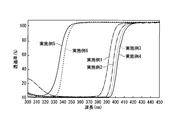
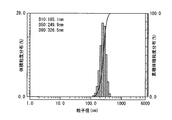
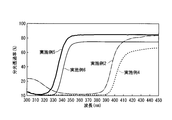
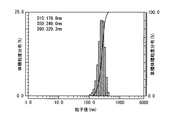
- FIG. 3 is a view showing the spectral transmittance of each resin monomer solution of Examples 1 to 6 of the present invention. It is a figure which shows the volume particle size distribution and cumulative volume particle size distribution of the organic type ultraviolet absorber containing resin particle of Example 2 of this invention. It is a scanning electron microscope (SEM) image of the organic type ultraviolet absorber containing resin particle of Example 2 of this invention. It is a transmission electron microscope (TEM) image of the organic type ultraviolet absorber containing resin particle of Example 2 of this invention. It is a figure which shows the spectral transmittance of each moisture gel of Example 2, 4-6 of this invention. It is a figure which shows the volume particle size distribution and cumulative volume particle size distribution of the organic type ultraviolet absorber containing resin particle dispersion of Example 4 of this invention.
- SEM scanning electron microscope
- TEM transmission electron microscope
- the organic ultraviolet absorber-containing resin particles of the present invention the production method thereof, the organic ultraviolet absorber-containing resin particle dispersion, the aqueous dispersion, the oil dispersion, and the form for carrying out the cosmetic will be described.
- the following embodiments are specifically described for better understanding of the gist of the invention, and do not limit the present invention unless otherwise specified.
- the organic ultraviolet absorber-containing resin particles of the present embodiment are organic ultraviolet absorber-containing resin particles (hereinafter simply referred to as “resin particles”) containing an organic ultraviolet absorber and a phosphate ester type surfactant in a resin.
- the organic ultraviolet absorber-containing resin particles may have an average particle diameter of 0.05 ⁇ m or more and 1 ⁇ m or less, and the organic ultraviolet absorber content is It is 0.1 mass% or more and 80 mass% or less.
- the average particle diameter of the organic ultraviolet absorber-containing resin particles is 5% by mass of the organic ultraviolet absorber-containing resin particles, 10% by mass of polyether-modified silicone, decamethylcyclopentasiloxane SH245 (Toray Dow Corning) (Distributed by Co., Ltd.)
- a dispersion obtained by dispersing 85% by mass with a sand mill at 2500 revolutions for 3 hours was measured using a dynamic light scattering particle size distribution analyzer LB-550 (manufactured by Horiba Seisakusho).
- the cumulative volume particle size distribution when measured means a particle size of 50 volume% (D50).
- the dispersed particle diameter of D50 obtained by the above measurement method substantially matches the primary particle diameter of the resin particles when the organic ultraviolet absorber-containing resin particles are observed with a scanning electron microscope. Therefore, the average primary particle diameter of the organic ultraviolet absorbent-containing resin particles may be measured as the average particle diameter of the organic ultraviolet absorbent-containing resin particles.
- the resin is not particularly limited as long as the monomer can dissolve the organic ultraviolet absorber, the monomer polymer has high transparency, and can be used as a raw material for cosmetics.
- resin monomers include (meth) acrylic resins, acrylic esters, methacrylic esters, acrylic styrene copolymers, acrylamide copolymers, acrylic epoxy copolymers, acrylic urethane copolymers, acrylic polyester copolymers.
- a monomer such as a polymer, a silicon acrylic copolymer, a vinyl acetate resin, a polyamide resin, an epoxy resin, a urethane resin, a polyester resin, or a silicone resin can be used.
- a monomer of (meth) acrylic resin is preferable in that it is excellent in transparency.
- These monomers may be used by polymerizing only one of them alone, or may be polymerized and used in combination of two or more.
- (Meth) acrylic resin monomers include methyl acrylate, ethyl acrylate, propyl acrylate, n-butyl acrylate, isobutyl acrylate, hexyl acrylate, 2-ethylhexyl acrylate, n-octyl acrylate, acrylic acid Dodecyl, lauryl acrylate, stearyl acrylate, 2-chloroethyl acrylate, phenyl acrylate, methyl ⁇ -chloroacrylate, trifluoroethyl acrylate, tetrafluoropropyl acrylate, methyl methacrylate, ethyl methacrylate, propyl methacrylate , N-butyl methacrylate, isobutyl methacrylate, hexyl methacrylate, 2-ethylhexyl methacrylate, n-octyl methacrylate, dodecyl meth
- Examples of monomers that can be polymerized in combination with the above acrylic include styrene, o-methylstyrene, m-methylstyrene, p-methylstyrene, ⁇ -methylstyrene, o-ethylstyrene, m-ethylstyrene, p- Ethyl styrene, 2,4-dimethyl styrene, pn-butyl styrene, pt-butyl styrene, pn-hexyl styrene, pn-octyl styrene, pn-nonyl styrene, pn-decyl Styrene, pn-dodecyl styrene, p-methoxy styrene, p-phenyl styrene, p-chloro
- These resin monomers may be used by polymerizing only one kind alone or in combination of two or more kinds.
- the content of the monomer of the (meth) acrylic resin in the resin monomer is preferably 10% by mass or more from the viewpoint of transparency. More preferably, it is 30% by mass or more.
- the organic ultraviolet absorber is not particularly limited as long as it can be dissolved in the above resin monomer.
- dibenzoylmethane compound for example, dibenzoylmethane compound, benzophenone derivative, paraaminobenzoic acid derivative, methoxycinnamic acid derivative, salicylic acid derivative Etc.
- These organic ultraviolet absorbers may be used alone or in combination of two or more.
- the content of the organic ultraviolet absorber in the resin particles is preferably 0.1% by mass or more and 80% by mass or less, more preferably 0.5% by mass or more and 50% by mass or less, and further preferably 1% by mass. Above and 30% by mass.
- the content of the organic ultraviolet absorber in the resin particles is less than 0.1% by mass, the amount of the organic ultraviolet absorber is too small, and the ultraviolet shielding function of the organic ultraviolet absorber is sufficiently expressed.
- a large amount of resin particles are required, which makes it difficult to design a material for producing cosmetics, which is not preferable.
- the content exceeds 80% by mass, the amount of the organic ultraviolet absorber becomes relatively high with respect to the resin, and as a result, the dispersibility of the organic ultraviolet absorber in the resin decreases, Since uniformity is impaired, it is not preferable.
- the average particle diameter of the resin particles is 0.05 ⁇ m or more and 1 ⁇ m or less, preferably 0.1 ⁇ m or more and 0.7 ⁇ m or less, more preferably 0.2 ⁇ m or more and 0.5 ⁇ m or less, and further preferably 0.2 ⁇ m. It is above and below 0.4 micrometer.
- the average particle diameter of the resin particles is less than 0.05 ⁇ m, the resin particles easily aggregate with each other. Therefore, when the resin particles are dispersed in the dispersion medium, the dispersibility is lowered and the ultraviolet ray shielding function is reduced. This is not preferable because it cannot be fully expressed.
- the average particle size exceeds 1 ⁇ m, the UV protection effect is reduced, and further, when used as a cosmetic, the elongation and slippage in the skin are reduced, resulting in a feeling of roughness and the like, which deteriorates the touch. It is not preferable because the feeling of use deteriorates.
- the phosphoric acid ester type surfactant is not particularly limited as long as it is a known phosphoric acid ester and a salt thereof, and polyoxyethylene alkylphenyl ether phosphoric acid or polyoxyethylene alkyl ether phosphoric acid and a salt thereof may be used. it can.
- a phosphate ester type surfactant By containing a phosphate ester type surfactant, the emulsion film strength of a suspension or emulsion described later can be increased, and the particle diameter of the resin can be controlled more accurately and with a smaller particle size.
- the organic ultraviolet absorbent and the phosphate type surfactant are added to the resin monomer, and the organic ultraviolet absorbent content is 0. 1 mass% or more and 80 mass% or less and the content of the phosphoric acid ester type surfactant is dissolved so as to be 1 mass% or more and 50 mass% or less to obtain a resin monomer solution.
- the liquid is suspended or emulsified in pure water containing a suspension protective agent, a silicone-based antifoaming agent and a crosslinking agent to form a suspension or emulsion, and then a polymerization initiator is added to the suspension or emulsion.
- suspension polymerization or emulsion polymerization is added to produce organic ultraviolet absorber-containing resin particles.
- an organic ultraviolet absorber is dissolved in a resin monomer containing a phosphate ester type surfactant to obtain a resin monomer solution.
- the content of the phosphate ester type surfactant is 1% by mass or more and 50% by mass or less with respect to the resin monomer solution. The reason is that when the content is less than 1% by mass, the emulsion film strength of the suspension or emulsion described later does not increase, and as a result, the polymerization efficiency of suspension polymerization or emulsion polymerization may decrease. is there.
- a commonly used dispersant may be added.
- a dispersing agent those having high affinity with the resin monomer and high hydrophobicity are preferable.
- Examples of such a dispersant include carboxylic acids such as sodium carboxymethylcellulose or salts thereof, sulfonic acids or salts thereof such as sodium alkanesulfonate, sulfate esters or salts thereof such as sodium polyoxyethylene nonylphenyl ether sulfate, lauryl, and the like. Examples thereof include phosphonic acid such as sodium phosphate or a salt thereof.
- organic ultraviolet absorbent-containing resin particles of the present embodiment when used in cosmetics, these dispersants must be recognized as raw materials for cosmetics at the same time.
- the method for dissolving the organic ultraviolet absorber in the resin monomer is not particularly limited as long as the organic ultraviolet absorber is dissolved in the resin monomer, and the compatibility between the resin monomer and the organic ultraviolet absorber is taken into consideration.
- a mixing method may be selected as appropriate. As the degree of mixing, mixing may be performed until no solid content can be visually confirmed.
- a magnetic stirrer, a stirrer, etc. are mentioned, for example.
- the resin monomer solution is suspended or emulsified in pure water containing a suspension protective agent, a silicone-based antifoaming agent, and a crosslinking agent, and the dispersion particle diameter is 0.05 ⁇ m or more and 1 ⁇ m or less.
- Suspension protectants include nonionic surfactants such as polyoxyethylene alkyl ethers and polyoxyethylene alkylphenyl ethers, or anionic interfaces such as alkylbenzene sulfonates, alkyl sulfates, and alkylphenyl sulfates.
- An anionic surfactant is preferable among these, and an alkylbenzene sulfonate is preferable as this anionic surfactant.
- the addition amount of the suspension protective agent is preferably 0.1% by mass or more and 10% by mass or less, and more preferably 0.1% by mass or more and 2% by mass or less with respect to the resin monomer solution.
- silicone antifoaming agent examples include an oil type, an oil compound type, a solution type, a powder type, a solid type, an emulsion type, and a self-emulsifying type. Among these, an oil compound type is preferable.
- the addition amount of the silicone-based antifoaming agent is preferably 0.01% by mass or more and 5% by mass or less, and more preferably 0.1% by mass or more and 1% by mass or less with respect to the resin monomer solution. . Silicone-based antifoaming agent is added in an amount of 0.01% by mass to 5% by mass with respect to the resin monomer solution, thereby greatly increasing the stirring speed of a mixer, stirrer, homomixer, homogenizer, etc.
- the resin particles can be reduced to about 50 nm. Therefore, when this resin particle is applied to a cosmetic or the like, it is possible to provide a cosmetic that is more excellent in transparency and excellent in feeling of use without a feeling of roughness.
- the stirring speed of mixers, stirrers, homomixers, homogenizers, etc. can be greatly increased, and as a result, the production efficiency and yield of organic ultraviolet absorber-containing resin particles can be improved, so that production Cost can be greatly reduced.
- the crosslinking agent is not particularly limited as long as it is a monomer having two or more unsaturated double bonds, and is not limited to a polyfunctional vinyl monomer or a polyfunctional (meth) acrylic acid ester derivative. It can be used by appropriately selecting from the above. More specifically, divinylbenzene, divinylbiphenyl, divinylnaphthalene, (poly) ethylene glycol di (meth) acrylate, (poly) propylene glycol di (meth) acrylate, (poly) tetramethylene glycol di (meth) acrylate, etc. (Poly) alkylene glycol type
- (poly) ethylene glycol di (meth) acrylate is particularly preferable.
- the addition amount of the crosslinking agent is preferably 0.1% by mass or more and 10% by mass or less, and more preferably 1% by mass or more and 10% by mass or less with respect to the resin monomer solution.
- polymerization initiator is added to said suspension or emulsion, and suspension polymerization or emulsion polymerization is performed.
- Polymerization initiators include persulfates such as potassium persulfate and ammonium persulfate, hydrogen peroxide, benzoyl peroxide, lauroyl peroxide, t-butyl hydroperoxide, benzoyl peroxide, cumene hydroperoxide, and other organic peroxides.
- azo initiators such as azobisdiisobutyronitrile and 2,2-azobis (2-amidinopropane) dihydrochloride, among which persulfate is preferred.
- the addition amount of the polymerization initiator is preferably 0.01% by mass or more and 1% by mass or less, more preferably 0.05% by mass or more and 0.5% by mass or less with respect to the above suspension or emulsion. is there.
- the polymerization method a method is preferred in which the above suspension or emulsion is polymerized by heating while stirring in a nitrogen atmosphere and in the presence of a polymerization initiator.
- the temperature at which this polymerization is started is preferably 50 ° C. or higher and 80 ° C. or lower. Further, the holding time at this temperature is preferably about 1 to 5 hours, and an appropriate time may be selected in consideration of the time when the unreacted residual monomer is minimized, the polymerization state, and the production cost. Thereafter, the polymerization reaction is stopped by cooling with ice or natural cooling.
- the average of the obtained organic ultraviolet absorber-containing particles can be controlled to 0.05 ⁇ m or more and 1 ⁇ m or less.
- the alcohol is not particularly limited as long as it is soluble in pure water and can be easily washed away. Examples thereof include ethanol, 2-propanol, and 2-propanol is particularly preferable.
- the washing method is not particularly limited as long as residual monomers can be removed, but washing is performed by pressure filtration, suction filtration, filter press, centrifugation, ultrafiltration, decantation, or the like. When cleaning is performed using 2-propanol, the cleaning is performed to the extent that the 2-propanol concentration meter is 1% or less and the conductivity meter is 20 ⁇ S / cm or less.
- the obtained polymer is dried at 80 ° C. or more and 100 ° C. or less to remove alcohol and pure water, and then the obtained polymer is crushed.
- the drying method is not particularly limited as long as it is a method capable of removing alcohol and pure water, and examples thereof include drying in atmospheric pressure and vacuum drying.
- the crushing method is not particularly limited as long as the obtained polymer can be crushed into particles of 0.05 ⁇ m or more and 1 ⁇ m or less, and examples thereof include a pin mill, a hammer mill, a jet mill, and an impeller mill. It is done.
- the organic ultraviolet absorbent-containing resin particles can be generated.
- the organic ultraviolet absorber-containing resin particles can improve the feeling of use when used in cosmetics by crushing each particle aggregated by drying through a crushing step.
- the organic ultraviolet absorbent-containing resin particle dispersion of this embodiment is a dispersion obtained by dispersing the above-described organic ultraviolet absorbent-containing resin particles in a dispersion medium.
- the content is 1% by mass or more and 80% by mass or less, more preferably 20% by mass or more and 70% by mass or less, and further preferably 30% by mass or more and 60% by mass or less.
- Such a dispersion medium may be any solvent that can disperse the above-described organic ultraviolet absorbent-containing resin particles.
- alcohols such as methanol, ethanol, 2-propanol, butanol, octanol, and the like , Ethyl acetate, butyl acetate, ethyl lactate, propylene glycol monomethyl ether acetate, propylene glycol monoethyl ether acetate, esters such as ⁇ -butyrolactone, diethyl ether, ethylene glycol monomethyl ether (methyl cellosolve), ethylene glycol monoethyl ether ( Ethyl cellosolve), ethylene glycol monobutyl ether (butyl cellosolve), ethers such as diethylene glycol monomethyl ether, diethylene glycol monoethyl ether, , Ketones such as methyl ethyl ketone, methyl isobutyl ketone, acet
- the content of the organic ultraviolet absorbent-containing resin particles is less than 1% by mass, the amount of the organic ultraviolet absorbent is too small, and this dispersion cannot sufficiently exhibit the ultraviolet shielding function. As a result, it is not preferable because the material design for producing the cosmetic becomes extremely difficult.
- the content exceeds 80% by mass the amount of the organic ultraviolet absorber in the dispersion becomes relatively high, and as a result, the dispersibility of the organic ultraviolet absorber in the dispersion decreases, and the composition This is not preferable because the uniformity of the film is impaired.
- This dispersion is prepared by mixing the above-described organic ultraviolet absorber-containing resin particles with a dispersion medium, and if necessary, mixing a dispersant and a water-soluble binder, and then using this mixture, a sand mill, a bead mill using zirconia beads, It can be obtained by carrying out dispersion treatment using a dispersing machine such as a ball mill or a homogenizer, and dispersing the organic ultraviolet absorber-containing resin particles in a dispersion medium.
- the time required for the dispersion treatment is not particularly limited as long as it is sufficient for the organic ultraviolet absorbent-containing resin particles to be dispersed in the dispersion medium.
- Organic ultraviolet absorbent-containing resin particle aqueous dispersion of the present embodiment contains the organic ultraviolet absorbent-containing resin particles in an amount of 1% by mass to 80% by mass, more preferably 20% by mass to 70% by mass. More preferably, it is an aqueous dispersion containing 30% by mass or more and 60% by mass or less and containing 5% by mass or more and 20% by mass or less of alcohols.
- the water-soluble polymer is further added in an amount of 0.001% by mass to 10% by mass, more preferably 0.005% by mass and 5% by mass, and still more preferably 0.01% by mass and more. It is good also as containing 3 mass% or less. In this case, it is necessary to adjust the content of each component so that the total content of each component of the organic ultraviolet absorbent-containing resin particles, alcohols and water-soluble polymer does not exceed 100% by mass.
- alcohols include monohydric alcohols having 1 to 6 carbon atoms such as ethanol, 1-propanol, 2-propanol, 1-butanol, 2-butanol, glycerin, 1,3-butylene glycol, propylene glycol, sorbitol, or polyhydric acids.
- examples include alcohols, and among them, monohydric alcohols, particularly ethanol is preferable.
- the alcohol content is preferably 5% by mass or more and 20% by mass or less, more preferably 10% by mass or more and 20% by mass or less.
- the dispersibility of the organic ultraviolet absorber-containing resin particles and the temporal stability of the aqueous dispersion can be improved, which is preferable. .
- the water-soluble polymer is not particularly limited as long as it can be used for cosmetic purposes, but it is not limited to gum arabic, sodium alginate, casein, carrageenan, galactan, carboxy. Vinyl polymer, carboxymethylcellulose, sodium carboxymethylcellulose, carboxymethyl starch, agar, xanthan gum, quince seed, guar gum, collagen, gelatin, cellulose, dextran, dextrin, tragacanth gum, hydroxyethylcellulose, hydroxypropylcellulose, sodium hyaluronate pectin, pullulan, methylcellulose And methyl hydroxypropyl cellulose.
- water-soluble polymers may be used alone or in combination of two or more.
- the water-soluble polymer has a role as a dispersant and a viscosity modifier, and when added, the dispersibility of the organic ultraviolet absorbent-containing resin particles and the temporal stability of the aqueous dispersion are also improved.
- the content of the alcohol is preferably 5% by mass or more and 20% by mass or less, more preferably 15% by mass or more and 20% by mass or less.
- the reason why the alcohol content when the aqueous dispersion contains a water-soluble polymer is 5% by mass or more and 20% by mass or less is that when the content is less than 5% by mass, the content of the alcohol is less than 5% by mass. Therefore, the water-soluble polymer cannot uniformly infiltrate into the alcohols and swells non-uniformly with moisture. As a result, the dispersibility of the organic ultraviolet absorber-containing resin particles decreases.
- This organic ultraviolet absorbent-containing resin particle aqueous dispersion is prepared by, for example, mixing the above-mentioned organic ultraviolet absorbent-containing resin particles in a solvent containing an alcohol or a mixture containing an alcohol and a water-soluble polymer. It can be obtained by mixing and dispersing water. The amount of water may be appropriately adjusted, but a range of 15% by mass to 94% by mass is preferable.
- the mixing method is not particularly limited.For example, by using a dispersing machine such as a sand mill, a bead mill using zirconia beads, a ball mill, a homogenizer, or the like, by appropriately dispersing the organic ultraviolet absorbent-containing resin particles, Obtainable.
- a dispersing machine such as a sand mill, a bead mill using zirconia beads, a ball mill, a homogenizer, or the like, by appropriately dispersing the organic ultraviolet absorbent-containing resin particles, Obtainable.
- the organic ultraviolet absorbent-containing resin particle oil-based dispersion of the present embodiment is an organic ultraviolet absorbent-containing resin obtained by dispersing the above-described organic ultraviolet absorbent-containing resin particles in an oil component containing a surfactant.
- the content rate of the said surfactant is 1 mass% or more and 40 mass% or less.
- the content of the organic ultraviolet absorber-containing resin particles is preferably 20% by mass or more and 70% by mass or less, and more preferably 30% by mass or more and 60% by mass or less.
- the oil component is not particularly limited as long as it can be used for cosmetic applications, for example, hydrocarbons, fats and oils, waxes, hardened oils, ester oils, fatty acids, higher alcohols, silicone oils, Fluorine oils, lanolin derivatives, oily gelling agents and the like can be mentioned. These may be derived from any source such as animal oil, vegetable oil, and synthetic oil, and may be any property such as solid oil, semi-solid oil, liquid oil, and volatile oil.
- hydrocarbons examples include liquid paraffin, squalane, petrolatum, polyethylene wax, ethylene / propylene copolymer, paraffin wax, montan wax, Fischer-Tropsch wax, polyisobutylene, polybutene, ceresin wax, ozokerite wax, and the like.
- oils and fats examples include owl, olive oil, castor oil, mink oil, macadamian nut oil and the like.
- waxes examples include beeswax, gay wax, carnauba wax, and candelilla wax.
- Ester oils include jojoba oil, glyceryl trioctanoate, polyglyceryl diisostearate, diglyceryl triisostearate, glyceryl tribehenate, cetyl 2-ethylhexanoate, isopropyl myristate, isopropyl palmitate, octyldodecyl myristate, pentasodium rosinate Examples include erythritol ester, neopentyl glycol dioctanoate, cholesterol fatty acid ester, phytosterol fatty acid ester, triglyceride, and diisostearyl malate.
- fatty acids examples include stearic acid, lauric acid, myristic acid, behenic acid, isostearic acid, oleic acid and the like.
- higher alcohols examples include stearyl alcohol, cetyl alcohol, lauryl alcohol, oleyl alcohol, isostearyl alcohol, and behenyl alcohol.
- Silicone oils include linear silicones such as dimethylpolysiloxane and methylphenylpolysiloxane, cyclic silicones such as octamethylcyclotetrasiloxane and decamethylcyclopentasiloxane, cross-linked polyether-modified methylpolysiloxane, and methacrylic-modified organo.
- silicone oils may be used alone or in combination of two or more.
- a low molecular weight chain silicone or a volatile silicone oil having a molecular weight of 20000 or less is preferable because it has a low surface tension and spreads smoothly when applied to the skin.
- these silicone oils have a dull feeling, the sticky feeling and oiliness are reduced, and a cosmetic with a refreshing feeling of use can be obtained.
- fluorinated oils examples include perfluorodecane, perfluorooctane, and perfluoropolyether.
- lanolin derivatives include lanolin, lanolin acetate, lanolin fatty acid isopropyl, lanolin alcohol, and the like.
- oily gelling agents include sucrose fatty acid ester, starch fatty acid ester, aluminum isostearate, 1,2-hydroxystearic acid and the like.
- the oil component may be used alone or in combination of two or more.
- silicone oil is preferable because it reduces stickiness and oiliness and provides a refreshing feeling.
- the surfactant is not particularly limited as long as it can be used for cosmetic applications, and examples thereof include nonionic surfactants, anionic surfactants, cationic surfactants, and amphoteric surfactants.
- nonionic surfactants include glycerin fatty acid esters and alkylene glycol adducts thereof, polyglycerin fatty acid esters and alkylene glycol adducts thereof, propylene glycol fatty acid esters and alkylene glycol adducts thereof, sorbitan fatty acid esters and alkylene glycols thereof.
- Adduct fatty acid ester of sorbitol and its alkylene glycol adduct, polyalkylene glycol fatty acid ester, sucrose fatty acid ester, polyoxyalkylene alkyl ether, glycerin alkyl ether, polyoxyethylene alkyl phenyl ether, polyoxyethylene hydrogenated castor oil, lanolin Alkylene glycol adduct, polyoxyalkylene alkyl co-modified silicone, polyether-modified silicone Etc.
- anionic surfactants include inorganic and organic salts of fatty acids such as stearic acid and lauric acid, alkylbenzene sulfates, alkyl sulfonates, ⁇ -olefin sulfonates, dialkyl sulfosuccinates, ⁇ -sulfonates.
- Fatty acid salt acylmethyl taurine salt, N-methyl-N-alkyl taurine salt, polyoxyethylene alkyl ether sulfate, polyoxyethylene alkyl phenyl ether sulfate, alkyl phosphate, polyoxyethylene alkyl ether phosphate, polyoxyethylene Examples thereof include alkylphenyl ether phosphates, N-acyl amino acid salts, N-acyl-N-alkyl amino acid salts, o-alkyl substituted malate salts, and alkyl sulfosuccinate salts.
- Examples of the cationic surfactant include alkylamine salts, polyamines and alkanolamine fatty acid derivatives, alkyl quaternary ammonium salts, and cyclic quaternary ammonium salts.
- Examples of amphoteric surfactants include carboxylic acid type, sulfuric acid ester type, sulfonic acid type, and phosphoric acid ester type.
- surfactants may be used alone or in combination of two or more.
- nonionic surfactants are preferable, and polyether-modified silicones are particularly preferable because they have good dispersibility and can provide a cosmetic with excellent adhesion to the skin.
- the content of the surfactant in the oil-based dispersion is preferably 1% by mass or more and 40% by mass or less, more preferably 10% by mass or more and 30% by mass or less, with respect to the organic ultraviolet absorber-containing resin particles. It is.
- the reason why the content of the surfactant in the oil-based dispersion is 1% by mass or more and 40% by mass or less is that when the content is less than 1% by mass, the content of the surfactant is too small. Therefore, the surface cannot be uniformly infiltrated on the surface of the organic ultraviolet absorbent-containing resin particles, and as a result, the dispersibility of the organic ultraviolet absorbent-containing resin particles is lowered and handling becomes difficult. Since stability falls, it is not preferable.
- the content exceeds 40% by mass, the viscosity of the entire oil dispersion increases, and the dispersion stability of the organic UV absorber-containing resin particles decreases, and the stability of the oil dispersion over time also decreases. In addition, the stickiness and oiliness increase, which is not preferable.
- This organic ultraviolet absorbent-containing resin particle oil dispersion is obtained by mixing the above-mentioned organic ultraviolet absorbent-containing resin particles in a mixture (dispersion medium) containing a solvent containing an oil component and a surfactant. be able to.
- the mixing method is not particularly limited.
- a dispersion process such as a sand mill, a bead mill using zirconia beads, a ball mill, a homogenizer or the like is used to perform dispersion treatment, and the organic ultraviolet absorbent-containing resin particles are dispersed in a dispersion medium. It can be obtained by dispersing in the above.
- the time required for the dispersion treatment is not particularly limited as long as it is sufficient for the organic ultraviolet absorbent-containing resin particles to be dispersed in the dispersion medium.
- the cosmetic of the present embodiment includes the above-described organic ultraviolet absorbent-containing resin particles, organic ultraviolet absorbent-containing resin particle dispersion, organic ultraviolet absorbent-containing resin particle aqueous dispersion, and organic ultraviolet absorbent-containing resin particles.
- a cosmetic comprising 1% by weight or more and 60% by weight or less in terms of organic ultraviolet absorber-containing resin particles, of one or more selected from the group of oil-based dispersions.
- This cosmetic comprises the above-mentioned organic ultraviolet absorber-containing resin particles, organic ultraviolet absorber-containing resin particle dispersion, organic ultraviolet absorber-containing resin particle aqueous dispersion, and organic ultraviolet absorber-containing resin particle oil dispersion.
- One or two or more selected from the group of body can be obtained by conventional blending into emulsions, creams, foundations, lipsticks, blushers, eye shadows and the like.
- various cosmetics such as skin care cosmetics, makeup cosmetics, body care cosmetics and the like excellent in transparency and feeling of use can be provided by using the cosmetics of the present embodiment as cosmetic ingredients.
- cosmetics of the present embodiment when used for whitening skin care cosmetics that require UV shielding function, base makeup for makeup cosmetics, sunscreen for body care cosmetics, etc., it provides cosmetics with excellent UV shielding function, transparency and feeling of use. be able to.
- the organic ultraviolet absorbent-containing resin particles of the present embodiment the organic ultraviolet absorbent is uniformly dispersed in the resin by dissolving it in the resin monomer.
- the burden on the skin can be reduced.
- the ultraviolet absorbent-containing resin particles of the present embodiment do not require the organic ultraviolet absorbent to be dissolved in a specific solvent, not only the water-in-oil type (W / O type) but also the conventional formulation is used. It can be blended in water-based cosmetics such as oil-in-water type (O / W type), lotion and sunscreen gel, which have been difficult. Therefore, it is possible to increase the degree of freedom in formulating cosmetics.
- the phosphoric acid ester type surfactant is contained, the resin particles can be made into fine particles of 1 ⁇ m or less, and the ultraviolet shielding effect can be improved.
- the cosmetic excellent in the ultraviolet shielding function, transparency, feeling of use, and safety can be obtained.
- various cosmetics such as skin care cosmetics, makeup cosmetics, body care cosmetics and the like excellent in ultraviolet shielding function, transparency, usability and safety are provided. be able to.
- this product when used for skin care cosmetic whitening, makeup cosmetic base makeup, body care cosmetic sunscreens, etc. that require UV shielding function, this product has excellent UV shielding function, transparency, feeling of use and safety. Can be provided.
- the organic ultraviolet absorber containing resin particle of this embodiment, the dispersion liquid containing it, an aqueous dispersion, and an oil-type dispersion can be diverted also to the weather resistant coating etc. which require an ultraviolet-shielding function.
- the feeling of roughness and feeling of use which are regarded as important in cosmetics, are not so much of a problem. Can increase the degree of freedom.
- the obtained resin monomer solution was applied to a quartz plate in an amount of 2 mg / cm 2 , and the spectral transmittance of this resin monomer solution was measured using SPF analyzer UV-1000S (manufactured by Labsphere, USA). This spectral transmittance is shown in FIG.
- Example 2 "Production and evaluation of resin monomer solution" To 102 parts by mass of methyl methacrylate, 12 parts by mass (10.0% by mass) of dibenzoylmethane compound (Avobenzone, Parsole (registered trademark) 1789), 6 parts by mass (5.0% by mass) of a phosphoric ester type surfactant The resin monomer solution of Example 2 containing 10% by mass of a dibenzoylmethane-based compound (Avobenzone, Parsole (registered trademark) 1789) was prepared. The spectral transmittance of the obtained resin monomer solution was measured in the same manner as in Example 1. This spectral transmittance is shown in FIG.
- the dispersed particle size of the organic ultraviolet absorber-containing resin particles was measured using a dynamic light scattering particle size distribution analyzer LB-550 (manufactured by Horiba, Ltd.).
- 5 parts by mass of organic ultraviolet absorber-containing resin particles are charged into a solution in which 10 parts by mass of polyether-modified silicone (dispersant) and 85 parts by mass of decamethylcyclopentasiloxane (cyclic silicone) are mixed and dispersed.
- the particle size distribution and the cumulative volume particle size distribution were calculated by measuring the dispersed particle size of an organic ultraviolet absorbent-containing resin particle dispersion containing 5% by mass of resin particles.
- FIG. 3 shows a scanning electron microscope (SEM) image of the above-mentioned organic ultraviolet absorber-containing resin particles
- FIG. 4 shows a transmission electron microscope (TEM) image of the organic ultraviolet absorber-containing resin particles. Show.
- the spectral transmittance and SPF value of the moisture gel were measured in the same manner as in Example 1. This spectral transmittance is shown in FIG. Moreover, it was 3,500 mPa * s when the viscosity of this moisture gel was measured with the B-type viscosity meter (made by Toki Sangyo Co., Ltd.).
- Example 3 "Production and evaluation of resin monomer solution" 90 parts by mass of methyl methacrylate, 24 parts by mass (20.0% by mass) of dibenzoylmethane-based compound (Avobenzone, Parsole (registered trademark) 1789), 6 parts by mass of phosphate type surfactant (5.0% by mass)
- the resin monomer solution of Example 3 containing 20% by mass of a dibenzoylmethane-based compound (Avobenzone, Parsole (registered trademark) 1789) was prepared.
- the spectral transmittance of the obtained resin monomer solution was measured in the same manner as in Example 1. This spectral transmittance is shown in FIG.
- Example 4 "Production and evaluation of resin monomer solution" To 78 parts by mass of methyl methacrylate, 36 parts by mass (30.0% by mass) of a dibenzoylmethane compound (Avobenzone, Parsole (registered trademark) 1789), 6 parts by mass (5.0% by mass) of a phosphate ester type surfactant The resin monomer solution of Example 4 containing 30% by mass of a dibenzoylmethane-based compound (Avobenzone, Parsole (registered trademark) 1789) was prepared. The spectral transmittance of the obtained resin monomer solution was measured in the same manner as in Example 1. This spectral transmittance is shown in FIG.
- the dispersed particle size of the obtained organic ultraviolet absorber-containing resin particles was measured in the same manner as in Example 2.
- an organic ultraviolet absorbent-containing resin particle dispersion containing 5% by mass of resin particles is prepared using the organic ultraviolet absorbent-containing resin particles, and the dispersed particle diameter of the dispersion is measured. Distribution and cumulative volume particle size distribution were calculated.
- the particle size of the cumulative volume particle size distribution of 10 volume% (D10) is 176.8 nm
- the particle diameter of 50 volume% (D50) is 249.0 nm
- the particle diameter of 90 volume% (D90) is 329.3 nm. there were.
- the volume particle size distribution and cumulative volume particle size distribution of this organic ultraviolet absorbent-containing resin particle dispersion are shown in FIG.
- Example 2 Preparation of aqueous dispersion of resin particles containing organic UV absorber
- Example 2 is the same as Example 2 except that the organic ultraviolet absorbent-containing resin particles (Avobenzone 30 mass% + PMMA) are used instead of the organic ultraviolet absorbent-containing resin particles (Avobenzone 10 mass% + PMMA) of Example 2.
- an organic ultraviolet absorber-containing resin particle aqueous dispersion of Example 4 containing 40% by mass of resin particles was produced.
- the spectral transmittance and SPF value of the moisture gel were measured in the same manner as in Example 1. This spectral transmittance is shown in FIG. Moreover, it was 3,500 mPa * s when the viscosity of this moisture gel was measured with the B-type viscosity meter (made by Toki Sangyo Co., Ltd.).
- Example 5 "Production and evaluation of resin monomer solution" To 108 parts by mass of methyl methacrylate, 6 parts by mass (5.0% by mass) of ethylhexyl methoxycinnamate (Pulsol (registered trademark) MCX) and 6 parts by mass (5.0% by mass) of a phosphate type surfactant were added. A resin monomer solution of Example 5 was produced in the same manner as Example 1 except for the addition. The spectral transmittance of the obtained resin monomer solution was measured in the same manner as in Example 1. This spectral transmittance is shown in FIG.
- Example 2 Other than using the organic ultraviolet absorbent-containing resin particles (MCX 5 mass% + PMMA) aqueous dispersion instead of the organic ultraviolet absorbent-containing resin particles (Avobenzone 10 mass% + PMMA) aqueous dispersion of Example 2, In the same manner as in Example 2, the moisture gel of Example 5 containing 10% by mass of the organic ultraviolet absorbent-containing resin particles (MCX 5% by mass + PMMA) of Example 5 was obtained.
- the spectral transmittance and SPF value of the moisture gel were measured in the same manner as in Example 1. This spectral transmittance is shown in FIG. Moreover, it was 3,600 mPa * s when the viscosity of this moisture gel was measured with the B-type viscosity meter (made by Toki Sangyo Co., Ltd.).
- Example 6 "Production and evaluation of resin monomer solution" To 102 parts by mass of methyl methacrylate, 12 parts by mass (10.0% by mass) of ethylhexyl methoxycinnamate (Pulsol (registered trademark) MCX) and 6 parts by mass (5.0% by mass) of a phosphate ester type surfactant A resin monomer solution of Example 6 was produced in the same manner as Example 1 except for the addition. The spectral transmittance of the obtained resin monomer solution was measured in the same manner as in Example 1. This spectral transmittance is shown in FIG.
- the spectral transmittance and SPF value of the moisture gel were measured in the same manner as in Example 1. This spectral transmittance is shown in FIG. Moreover, it was 3,600 mPa * s when the viscosity of this moisture gel was measured with the B-type viscosity meter (made by Toki Sangyo Co., Ltd.).
- dibenzoylmethane-based compound (Avobenzone, Parsol (registered trademark) 1789).
- organic ultraviolet absorber-containing resin particle (dibenzoylmethane 10 mass% + PMMA) made of polymethyl methacrylate (PMMA) containing no phosphate ester type surfactant.
- the dispersed particle size of the obtained organic ultraviolet absorber-containing resin particles was measured in the same manner as in Example 2.
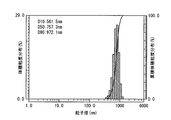
- the cumulative volume particle size distribution was 101.5% (D10) with a particle size of 561.5 nm, 50% by volume (D50) with a particle size of 757.3 nm, and 90% by volume (D90) with a particle size of 972.1 nm. there were.
- the volume particle size distribution and cumulative volume particle size distribution of this organic ultraviolet absorbent-containing resin particle dispersion are shown in FIG.
- dibenzoylmethane-based compound (Avobenzone, Parsol (registered trademark) 1789).
- an organic ultraviolet absorber-containing resin particle (dibenzoylmethane 30% by mass + PMMA) made of polymethyl methacrylate (PMMA) that does not contain a phosphate ester type surfactant.
- the dispersed particle size of the obtained organic ultraviolet absorber-containing resin particles was measured in the same manner as in Example 2.
- the particle size of the cumulative volume particle size distribution of 10% by volume (D10) is 496.9 nm
- the particle size of 50% by volume (D50) is 709.2 nm
- the particle size of 90% by volume (D90) is 963.9 nm. there were.
- the volume particle size distribution and cumulative volume particle size distribution of this organic ultraviolet absorbent-containing resin particle dispersion are shown in FIG.
- Example 7 “Preparation of oil dispersions of resin particles containing organic UV absorbers” 36 parts by mass of organic ultraviolet absorber-containing resin particles (Avobenzone 10% by mass + PMMA) obtained in Example 2 and 75 decamethylcyclopentasiloxane (D5) SH245 (manufactured by Toray Dow Corning Co., Ltd.) Part by mass, 9 parts by mass of polyether-modified silicone SH3775M (manufactured by Toray Dow Corning Co., Ltd.) are mixed and dispersed at 2500 rpm for 3 hours using a sand mill, and organic ultraviolet absorber-containing resin particles (Avobenzone) An organic ultraviolet absorbent-containing resin particle (Avobenzone 10 mass% + PMMA) -containing oil-based dispersion of Example 7 containing 30 mass% of 10 mass% + PMMA) was produced.
- the spectral transmittance of the obtained simple sunscreen was measured in the same manner as in Example 1.
- the spectral transmittance of this simple sunscreen is shown in FIG.
- the SPF value of this simple sunscreen was 70.13.
- Example 8 “Preparation of oil dispersions of resin particles containing organic UV absorbers” Except for using the organic ultraviolet absorber-containing resin particles (Avobenzone 30% by mass + PMMA) obtained in Example 4 instead of the organic ultraviolet absorber-containing resin particles (Avobenzone 10% by mass + PMMA), Example In the same manner as in No. 7, the organic ultraviolet absorber-containing resin particles (Avobenzone 30% by mass + PMMA) -containing oil-based dispersion of Example 8 containing 30% by mass of organic ultraviolet absorber-containing resin particles (Avobenzone 30% by mass + PMMA) was made.
- the spectral transmittance of the obtained simple sunscreen was measured in the same manner as in Example 1.
- the spectral transmittance of this simple sunscreen is shown in FIG.
- the SPF value of this simple sunscreen was 288.57.
- the spectral transmittance of the obtained simple sunscreen was measured in the same manner as in Example 1.
- the spectral transmittance of this simple sunscreen is shown in FIG. Further, the SPF value of this simple sunscreen was 8.37.
- the spectral transmittance of the obtained simple sunscreen was measured in the same manner as in Example 1.
- the spectral transmittance of this simple sunscreen is shown in FIG.
- the SPF value of this simple sunscreen was 22.33.
- Table 1 shows the SPF values and critical wavelengths of Examples 7 and 8 and Comparative Examples 3 and 4, respectively.
- Examples 7 and 8 were able to shield ultraviolet rays from around 390 nm, the comparative examples were able to shield ultraviolet rays only from around 380 nm, even though the resin particles were blended in equal amounts.
- the phosphate ester type surfactant is mixed to reduce the resin particle diameter, so that there are few gaps between the particles when the coating film is formed. Therefore, the transmittance from 290 nm to the vicinity of the critical wavelength is suppressed to about 1% or less, and the ultraviolet shielding effect is high.
- Comparative Examples 3 and 4 in which the phosphate ester type surfactant was not mixed had a relatively large particle size, so that when the coating film was formed, the gaps between the particles increased and the ultraviolet shielding effect was low.
- Examples 7 and 8 have high SPF values, and Comparative Examples 3 and 4 have low SPF values. From this, it was found that the ultraviolet ray shielding effect can be enhanced by adding a phosphate ester type surfactant.
- the organic ultraviolet absorber-containing resin particles of the present invention are organic ultraviolet absorber-containing resin particles comprising a resin containing an organic ultraviolet absorber and a phosphate ester type surfactant.
- UV protection effect by making the average particle diameter of the resin particles containing the ultraviolet absorber from 0.05 ⁇ m to 1 ⁇ m and the content of the organic ultraviolet absorber from 0.1 mass% to 80 mass% Because it is high and can reduce the contact load on the skin and can be used safely, it is not only water-in-oil type (W / O type) but also oil-in-water type (O / W). It can also be applied to cosmetics, can improve the degree of freedom of prescription as a cosmetic, and its industrial value is great.
Landscapes
- Health & Medical Sciences (AREA)
- Life Sciences & Earth Sciences (AREA)
- Animal Behavior & Ethology (AREA)
- General Health & Medical Sciences (AREA)
- Public Health (AREA)
- Veterinary Medicine (AREA)
- Birds (AREA)
- Epidemiology (AREA)
- Chemical & Material Sciences (AREA)
- Emergency Medicine (AREA)
- Medicinal Chemistry (AREA)
- Polymers & Plastics (AREA)
- Organic Chemistry (AREA)
- Chemical Kinetics & Catalysis (AREA)
- Physics & Mathematics (AREA)
- Dermatology (AREA)
- Mathematical Physics (AREA)
- Geometry (AREA)
- Cosmetics (AREA)
- Polymerisation Methods In General (AREA)
- Compositions Of Macromolecular Compounds (AREA)
Abstract
Description
また、有機系紫外線吸収剤は、無機系紫外線散乱剤と比べて少量で紫外線遮蔽効果が高いことから、大人用サンスクリーンとして使用されている。しかしながら、有機系紫外線吸収剤が水に不溶であることから、その紫外線吸収効果を発揮させるためには特定の溶媒に溶かす必要があり、化粧品の処方の自由度を下げるという問題点があった。
そこで、紫外線遮蔽効果が十分な化粧料を作製しようとすると、相対的に有機系紫外線吸収剤の配合量を多くせざるを得ず、マイクロカプセル化が難しいという問題点があった。
また、有機系紫外線吸収剤を特定の溶媒に溶かす必要が無いので、水系の化粧料へも適用することができ、化粧料としての処方の自由度を向上させることができる。
なお、以下の実施の形態は、発明の趣旨をより良く理解させるために具体的に説明するものであり、特に指定のない限り、本発明を限定するものではない。
本実施形態の有機系紫外線吸収剤含有樹脂粒子は、樹脂に、有機系紫外線吸収剤と、リン酸エステル型界面活性剤と、を含有してなる有機系紫外線吸収剤含有樹脂粒子(以下、単に「樹脂粒子」と称することもある)であって、前記有機系紫外線吸収剤含有樹脂粒子の平均粒子径は0.05μm以上かつ1μm以下であり、かつ前記有機系紫外線吸収剤の含有率は、0.1質量%以上かつ80質量%以下である。
なお、上記の測定方法により得られるD50の分散粒径は、走査型電子顕微鏡で有機系紫外線吸収剤含有樹脂粒子を観察したときの樹脂粒子の一次粒子径とほぼ一致する。したがって、有機系紫外線吸収剤含有樹脂粒子の平均粒子径として、有機系紫外線吸収剤含有樹脂粒子の平均一次粒子径を測定してもよい。
このような樹脂モノマーとしては、例えば、(メタ)アクリル樹脂、アクリル酸エステル、メタクリル酸エステル、アクリルスチレン共重合体、アクリルアミド共重合体、アクリルエポキシ共重合体、アクリルウレタン共重合体、アクリルポリエステル共重合体、シリコンアクリル共重合体、酢酸ビニル樹脂、ポリアミド樹脂、エポキシ樹脂、ウレタン樹脂、ポリエステル樹脂、シリコーン樹脂等のモノマーを用いることができる。これらの中でも(メタ)アクリル樹脂のモノマーが透明性に優れている点で好ましい。
これらのモノマーは、これらのうち1種のみを単独で重合して用いてもよく、2種以上を組み合わせて重合して用いてもよい。
また、適宜オリゴマーを用いてもよい。
ここで、有機系紫外線吸収剤の樹脂粒子中における含有率が0.1質量%未満では、有機系紫外線吸収剤の量が少なすぎて、有機系紫外線吸収剤が有する紫外線遮蔽機能を十分に発現することができなくなり、その結果、紫外線遮蔽機能を十分に発現させようとすると、大量の樹脂粒子が必要となり、化粧料を作製する際の材料設計が極めて難しくなるので好ましくない。一方、含有率が80質量%を超えると、有機系紫外線吸収剤の量が樹脂に対して相対的に高くなり、その結果、樹脂中における有機系紫外線吸収剤の分散性が低下し、組成の均一性が損なわれるので、好ましくない。
ここで、樹脂粒子の平均粒子径が0.05μm未満では、樹脂粒子同士が凝集し易くなり、したがって、この樹脂粒子を分散媒中に分散させた場合に分散性が低下し、紫外線遮蔽機能を十分に発現することができなくなるので好ましくない。一方、平均粒子径が1μmを超えると、紫外線防御効果が低下し、さらに、化粧料として用いた場合に、肌における伸びや滑りが低下し、その結果、ざらつき感等が生じて肌触り等が悪化する等、使用感が悪くなるので好ましくない。
リン酸エステル型界面活性剤を含有させることにより、後述する懸濁液または乳化液のエマルジョン被膜強度を高めて、樹脂の粒子径をより小さくかつ精度良く制御することができる。
本実施形態の有機系紫外線吸収剤含有樹脂粒子の製造方法は、樹脂モノマーに、有機系紫外線吸収剤と、リン酸エステル型界面活性剤とを、前記有機系紫外線吸収剤の含有率が0.1質量%以上かつ80質量%以下かつ前記リン酸エステル型界面活性剤の含有率が1質量%以上かつ50質量%以下となるように溶解させて樹脂モノマー溶解液とし、次いで、この樹脂モノマー溶解液を、懸濁保護剤、シリコーン系消泡剤及び架橋剤を含む純水中に懸濁または乳化させて懸濁液または乳化液とし、次いで、この懸濁液または乳化液に重合開始剤を添加して懸濁重合または乳化重合を行い、有機系紫外線吸収剤含有樹脂粒子を生成する方法である。
まず、有機系紫外線吸収剤を、リン酸エステル型界面活性剤を含む樹脂モノマー中に溶解させ、樹脂モノマー溶解液とする。
リン酸エステル型界面活性剤の含有率は、上記の樹脂モノマー溶解液に対して1質量%以上かつ50質量%以下である。その理由は、含有率が1質量%未満では、後述する懸濁液または乳化液のエマルジョン被膜強度が高くならず、その結果、懸濁重合または乳化重合の重合効率が低下する場合があるからである。一方、50質量%を超えると、これ以上含有率を上げても、さらに重合効率を改善することができず、リン酸エステル型界面活性剤が無駄になるからである。
なお、有機系紫外線吸収剤含有樹脂粒子の特性を失わない範囲において、一般的に使用される分散剤を添加してもよい。
このような分散剤としては、樹脂モノマーとの親和性に富み、かつ疎水性の高いものがよい。
混合の程度としては、目視で固形分の沈殿が確認できなくなるまで混合すればよい。この混合工程に用いられる混合装置としては、例えば、マグネチックスターラーや撹拌機等が挙げられる。
以上により、有機系紫外線吸収剤を含有する樹脂モノマー溶解液を得ることができる。
懸濁保護剤としては、ポリオキシエチレンアルキルエーテル、ポリオキシエチレンアルキルフェニルエーテル等の非イオン性界面活性剤、あるいはアルキルベンゼンスルホン酸塩、アルキル硫酸エステル塩、アルキルフェニル硫酸エステル塩等の陰イオン性界面活性剤等が挙げられ、これらの中でも、陰イオン性界面活性剤が好ましく、この陰イオン性界面活性剤としては、アルキルベンゼンスルホン酸塩が好ましい。
懸濁保護剤の添加量は、上記の樹脂モノマー溶解液に対して0.1質量%以上かつ10質量%以下が好ましく、より好ましくは0.1質量%以上かつ2質量%以下である。
このシリコーン系消泡剤の添加量は、上記の樹脂モノマー溶解液に対して0.01質量%以上かつ5質量%以下が好ましく、より好ましくは0.1質量%以上かつ1質量%以下である。
シリコーン系消泡剤は、上記の樹脂モノマー溶解液に対して0.01質量%以上かつ5質量%以下添加することにより、混合機、撹拌機、ホモミキサー、ホモジナイザー等の攪拌速度を大幅に上げることができ、その結果、樹脂粒子を50nm程度まで小さくすることができる。
したがって、この樹脂粒子を化粧料等に適用した場合、より透明性にすぐれ、ざらつき感等がない使用感に優れた化粧料を提供することが可能である。
また、混合機、撹拌機、ホモミキサー、ホモジナイザー等の攪拌速度を大幅に上げることができ、その結果、有機系紫外線吸収剤含有樹脂粒子の製造効率及び収率を向上させることができるので、製造コストを大幅に削減することができる。
より具体的には、ジビニルベンゼン、ジビニルビフェニル、ジビニルナフタレン、(ポリ)エチレングリコールジ(メタ)アクリレート、(ポリ)プロピレングリコールジ(メタ)アクリレート、(ポリ)テトラメチレングリコールジ(メタ)アクリレート等の(ポリ)アルキレングリコール系ジ(メタ)アクリレートが挙げられる。
これらの中でも特に(ポリ)エチレングリコールジ(メタ)アクリレートが好ましい。
架橋剤の添加量は、上記の樹脂モノマー溶解液に対して0.1質量%以上かつ10質量%以下が好ましく、より好ましくは1質量%以上かつ10質量%以下である。
重合開始剤としては、過硫酸カリウム、過硫酸アンモニウム等の過硫酸塩、過酸化水素、過酸化ベンゾイル、過酸化ラウロイル、t-ブチルハイドロパーオキサイド、ベンゾイルパーオキサイド、クメンハイドロパーオキサイド等の有機過酸化物、アゾビスジイソブチロニトリル、2,2-アゾビス(2-アミジノプロパン)ジハイドロクロライド等のアゾ系開始剤等が挙げられるが、これらの中でも、過硫酸塩が好ましい。
重合開始剤の添加量は、上記の懸濁液または乳化液に対して0.01質量%以上かつ1質量%以下が好ましく、より好ましくは0.05質量%以上かつ0.5質量%以下である。
この重合を開始する温度としては、50℃以上かつ80℃以下が好ましい。また、この温度における保持時間としては、1~5時間程度が好ましく、未反応の残留モノマーが最小となる時間および重合状態、製造コストとの兼ね合いで適当な時間を選べばよい。
その後、氷冷または自然冷却し、重合反応を停止させる。
アルコール類は、純水に可溶なもので容易に洗い流せるものであればよく、例えば、エタノール、2-プロパノール等があげられ、特に2-プロパノールが好ましい。
洗浄方法は、残留モノマー等を除去できれば特に限定されないが、加圧ろ過や、吸引ろ過、フィルタープレス、遠心分離、限外ろ過、デカンテーション等により洗浄する。洗浄は2-プロパノールを用いて洗浄した場合は、2-プロパノール濃度計で1%以下、導電率計で20μS/cm以下になる程度まで行う。
解砕方法としては、得られた重合物を0.05μm以上かつ1μm以下の粒子に解砕することができる方法であれば特に限定されないが、ピンミル、ハンマーミル、ジェットミル、インペラーミル等が挙げられる。
この有機系紫外線吸収剤含有樹脂粒子は、解砕工程を経ることにより、乾燥により凝集した各粒子を解砕し、化粧料に使用した場合の使用感を向上させることができる。
本実施形態の有機系紫外線吸収剤含有樹脂粒子分散液は、上記の有機系紫外線吸収剤含有樹脂粒子を分散媒中に分散してなる分散液であり、この有機系紫外線吸収剤含有樹脂粒子の含有率は1質量%以上かつ80質量%以下、より好ましくは20質量%以上かつ70質量%以下、さらに好ましくは30質量%以上かつ60質量%以下である。
また、分散処理に要する時間は、有機系紫外線吸収剤含有樹脂粒子が分散媒中に分散するのに十分な時間であればよく、特に制限はされない。
本実施形態の有機系紫外線吸収剤含有樹脂粒子水系分散体は、上記の有機系紫外線吸収剤含有樹脂粒子を1質量%以上かつ80質量%以下、より好ましくは20質量%以上かつ70質量%以下、さらに好ましくは30質量%以上かつ60質量%以下含有するとともに、アルコール類を5質量%以上かつ20質量%以下含有してなる水系分散体である。
特に、アルコール類の含有率を10質量%以上かつ20質量%以下とした場合には、有機系紫外線吸収剤含有樹脂粒子の分散性及び水系分散体の経時安定性を向上させることができるので好ましい。
水溶性高分子は、分散剤及び粘度調整剤としての役割を有し、添加することによって有機系紫外線吸収剤含有樹脂粒子の分散性及び水系分散体の経時安定性も向上する。
ここで、水系分散体が水溶性高分子を含む場合のアルコール類の含有率を5質量%以上かつ20質量%以下とした理由は、含有率が5質量%未満では、アルコール類の含有量が少なすぎてしまうために、水溶性高分子がアルコール類に均一に浸潤できずに水分にて不均一に膨潤することとなり、その結果、有機系紫外線吸収剤含有樹脂粒子の分散性が低下して取扱いが困難となり、さらには水系分散体の経時安定性が低下するので、好ましくない。また、含有率が20質量%を超えると、水系分散体全体の粘性が高くなり、有機系紫外線吸収剤含有樹脂粒子の分散安定性が低下するとともに、水系分散体の経時安定性も低下するので、好ましくない。
すなわち、上記範囲で調整することにより、肌に塗り広げて塗布した場合に透明性を十分に確保することができる有機系紫外線吸収剤含有樹脂粒子水系分散体が得られる。
本実施形態の有機系紫外線吸収剤含有樹脂粒子油系分散体は、上記の有機系紫外線吸収剤含有樹脂粒子を、界面活性剤を含む油性成分中に分散してなる有機系紫外線吸収剤含有樹脂粒子油系分散体であって、前記有機系紫外線吸収剤含有樹脂粒子の含有率は1質量%以上かつ80質量%以下であり、前記油性成分の含有率は10質量%以上かつ90質量%以下であり、かつ前記界面活性剤の含有率は1質量%以上かつ40質量%以下である。
上記範囲で調整することにより、肌に塗り広げて塗布した場合に透明性を十分に確保することができる有機系紫外線吸収剤含有樹脂粒子油系分散体が得られる。
ロウ類としては、ミツロウ、ゲイロウ、カルナウバワックス、キャンデリラワックス等が挙げられる。
高級アルコール類としては、ステアリルアルコール、セチルアルコール、ラウリルアルコール、オレイルアルコール、イソステアリルアルコール、ベヘニルアルコール等が挙げられる。
上記シリコーン油類の中でも、分子量が20000以下の低分子量の鎖状シリコーンや揮発性シリコーン油は、表面張力が低いことから、肌に塗布した時になめらかにのび広がるので好ましい。また、これらのシリコーン油類はさらっとした感触を有するので、べたつき感や油っぽさが軽減され、さっぱりとした使用感の化粧料を得ることができるので好ましい。
ラノリン誘導体類としては、ラノリン、酢酸ラノリン、ラノリン脂肪酸イソプロピル、ラノリンアルコール等が挙げられる。
油性ゲル化剤類としては、蔗糖脂肪酸エステル、デンプン脂肪酸エステル、イソステアリン酸アルミニウム、1、2-ヒドロキシステアリン酸等が挙げられる。
上記油性成分の中でも、シリコーン油は、べたつき感や油っぽさを軽減し、さっぱりとした使用感が得られるので好ましい。
非イオン性界面活性剤としては、例えば、グリセリン脂肪酸エステル及びそのアルキレングリコール付加物、ポリグリセリン脂肪酸エステル及びそのアルキレングリコール付加物、プロピレングリコール脂肪酸エステル及びそのアルキレングリコール付加物、ソルビタン脂肪酸エステル及びそのアルキレングリコール付加物、ソルビトールの脂肪酸エステル及びそのアルキレングリコール付加物、ポリアルキレングリコール脂肪酸エステル、蔗糖脂肪酸エステル、ポリオキシアルキレンアルキルエーテル、グリセリンアルキルエーテル、ポリオキシエチレンアルキルフェニルエーテル、ポリオキシエチレン硬化ヒマシ油、ラノリンのアルキレングリコール付加物、ポリオキシアルキレンアルキル共変性シリコーン、ポリエーテル変性シリコーン等が挙げられる。
両性界面活性剤としては、例えば、カルボン酸型、硫酸エステル型、スルホン酸型、リン酸エステル型等が挙げられる。
ここで、油系分散体中の界面活性剤の含有率を1質量%以上かつ40質量%以下とした理由は、含有率が1質量%未満では、界面活性剤の含有量が少なすぎてしまうために、有機系紫外線吸収剤含有樹脂粒子表面に均一に浸潤できず、その結果、有機系紫外線吸収剤含有樹脂粒子の分散性が低下して取扱いが困難となり、さらには油系分散体の経時安定性が低下するので好ましくない。また、含有率が40質量%を超えると、油系分散体全体の粘性が高くなり、有機系紫外線吸収剤含有樹脂粒子の分散安定性が低下するとともに、油系分散体の経時安定性も低下し、べたつき感や油っぽさが増すので、好ましくない。
また、分散処理に要する時間は、有機系紫外線吸収剤含有樹脂粒子が分散媒中に分散するのに十分な時間であればよく、特に制限はされない。
本実施形態の化粧料は、上述した有機系紫外線吸収剤含有樹脂粒子、有機系紫外線吸収剤含有樹脂粒子分散液、有機系紫外線吸収剤含有樹脂粒子水系分散体、有機系紫外線吸収剤含有樹脂粒子油系分散体、の群から選択される1種または2種以上を、有機系紫外線吸収剤含有樹脂粒子換算で1質量%以上かつ60質量%以下含有してなる化粧料であり、この有機系紫外線吸収剤含有樹脂粒子を上記の範囲内で含有することにより、透明感があり、しかも、ざらつき感等が無く、使用感に優れたものとなる。
また、本実施形態の紫外線吸収剤含有樹脂粒子は、有機系紫外線吸収剤を特定の溶媒に溶解させる必要がないので、油中水型(W/O型)は勿論のこと、従来では処方が困難であった水中油型(O/W型)、化粧水や日焼け止めジェル等の水系化粧料に配合することができる。したがって、化粧料の処方の自由度をあげることができる。
さらに、リン酸エステル型界面活性剤を含有したので、樹脂粒子を1μm以下の微小な粒子とすることができ、紫外線遮蔽効果を向上させることができる。
さらに、本実施形態の化粧料を化粧品の成分として用いることにより、紫外線遮蔽機能、透明感及、使用感及び安全性に優れたスキンケア化粧品、メイクアップ化粧品、ボディケア化粧品等の各種化粧品を提供することができる。特に、紫外線遮蔽機能が必要とされるスキンケア化粧品のホワイトニング、メイクアップ化粧品のベースメイク、ボディケア化粧品のサンスクリーン等に用いた場合、紫外線遮蔽機能、透明感、使用感及び安全性に優れた化粧品を提供することができる。
また、化粧品以外の分野で用いる場合には、化粧品で重要視されているざらつき感や使用感等がさほど問題とされない場合も多く、分散剤や樹脂の選択の幅が広がり、塗料等の設計配合の自由度を高めることができる。
[実施例1]
「樹脂モノマー溶解液の作製及び評価」
メタクリル酸メチル108質量部に、ジベンゾイルメタン系化合物(アボベンゾン、パルソール(登録商標)1789)6質量部(5.0質量%)、リン酸エステル型界面活性剤6質量部(5.0質量%)を加え、完全に溶解させて、ジベンゾイルメタン系化合物(アボベンゾン、パルソール(登録商標)1789)を5質量%含有する実施例1の樹脂モノマー溶解液を作製した。
得られた樹脂モノマー溶解液を2mg/cm2の量にて石英板に塗布し、この樹脂モノマー溶解液の分光透過率をSPFアナライザー UV-1000S(米国Labsphere社製)を用いて測定した。この分光透過率を図1に示す。
上記の樹脂モノマー溶解液105質量部に、純水229.5質量部、ドデシルベンゼンスルホン酸ナトリウム0.5質量部、エチレングリコールジメタクリレート14.0質量部、シリコーン系消泡剤1.0質量部を混合し、ホモジナイザーを用いて攪拌し、エマルジョンを作製した。
上記のエマルジョン320.0質量部と、純水79.856質量部と、過硫酸カリウム0.144質量部とを混合し、攪拌機および温度計を備えた反応装置に移して窒素置換を1時間行った。
次いで、窒素置換後の反応溶液を加熱して65℃に昇温させ、この65℃にて3時間保持し、重合反応を行った。その後、氷冷して重合反応を停止させ、得られた重合物を2-プロパノール及び純水で洗浄した後、90℃にて乾燥させ、アボベンゾンを5質量%含むポリメチルメタクリレート(PMMA)からなる有機系紫外線吸収剤含有樹脂粒子を作製した。
「樹脂モノマー溶解液の作製及び評価」
メタクリル酸メチル102質量部に、ジベンゾイルメタン系化合物(アボベンゾン、パルソール(登録商標)1789)12質量部(10.0質量%)、リン酸エステル型界面活性剤6質量部(5.0質量%)を加え、完全に溶解させて、ジベンゾイルメタン系化合物(アボベンゾン、パルソール(登録商標)1789)を10質量%含有する実施例2の樹脂モノマー溶解液を作製した。
得られた樹脂モノマー溶解液の分光透過率を実施例1と同様にして測定した。この分光透過率を図1に示す。
上記の樹脂モノマー溶解液105質量部に、純水229.5質量部、ドデシルベンゼンスルホン酸ナトリウム0.5質量部、エチレングリコールジメタクリレート14.0質量部、シリコーン系消泡剤1.0質量部を混合し、ホモジナイザーを用いて攪拌し、エマルジョンを作製した。
上記のエマルジョン320.0質量部と、純水79.856質量部と、過硫酸カリウム0.144質量部とを混合し、攪拌機および温度計を備えた反応装置に移して窒素置換を1時間行った。
次いで、窒素置換後の反応溶液を加熱して65℃に昇温させ、この65℃にて3時間保持し、重合反応を行った。その後、氷冷して重合反応を停止させ、得られた重合物を2-プロパノール及び純水で洗浄した後、90℃にて乾燥させ、ジベンゾイルメタン系化合物(アボベンゾン、パルソール(登録商標)1789)を10質量%含むポリメチルメタクリレート(PMMA)からなる有機系紫外線吸収剤含有樹脂粒子を作製した。
この有機系紫外線吸収剤含有樹脂粒子分散液の体積粒度分布及び累積体積粒度分布を図2に示す。また、上記の有機系紫外線吸収剤含有樹脂粒子の走査型電子顕微鏡(SEM)像を図3に、この有機系紫外線吸収剤含有樹脂粒子の透過型電子顕微鏡(TEM)像を図4に、それぞれ示す。
上記の有機系紫外線吸収剤含有樹脂粒子(アボベンゾン10質量%+PMMA)20質量部(40質量%)、エタノール7.5質量部(15質量%)、純水22.5質量部(45質量%)を混合し、樹脂粒子を40質量%含む有機系紫外線吸収剤含有樹脂粒子水系分散体を作製した。
カルボキシメチルセルロースナトリウム1.5質量部(3質量%)、エタノール8.13質量部(16.25質量%)、グリセリン2.5質量部(5質量%)を混合した。次いで、上記の有機系紫外線吸収剤含有樹脂粒子水系分散体12.5質量部(25.0質量%)、純水25.38質量部(50.75質量%)を混合し、70℃にて10分間、加熱の条件下で攪拌を行い、有機系紫外線吸収剤含有樹脂粒子(アボベンゾン10質量%+PMMA)を10質量%含有したモイスチャージェルを得た。
また、このモイスチャージェルの粘度をB型粘度計(東機産業株式会社製)により測定したところ、3,500mPa・sであった。
「樹脂モノマー溶解液の作製及び評価」
メタクリル酸メチル90質量部に、ジベンゾイルメタン系化合物(アボベンゾン、パルソール(登録商標)1789)24質量部(20.0質量%)、リン酸エステル型界面活性剤6質量部(5.0質量%)を加え、完全に溶解させて、ジベンゾイルメタン系化合物(アボベンゾン、パルソール(登録商標)1789)を20質量%含有する実施例3の樹脂モノマー溶解液を作製した。
得られた樹脂モノマー溶解液の分光透過率を実施例1と同様にして測定した。この分光透過率を図1に示す。
「樹脂モノマー溶解液の作製及び評価」
メタクリル酸メチル78質量部に、ジベンゾイルメタン系化合物(アボベンゾン、パルソール(登録商標)1789)36質量部(30.0質量%)、リン酸エステル型界面活性剤6質量部(5.0質量%)を加え、完全に溶解させて、ジベンゾイルメタン系化合物(アボベンゾン、パルソール(登録商標)1789)を30質量%含有する実施例4の樹脂モノマー溶解液を作製した。
得られた樹脂モノマー溶解液の分光透過率を実施例1と同様にして測定した。この分光透過率を図1に示す。
上記のジベンゾイルメタン系化合物(アボベンゾン、パルソール(登録商標)1789)を30質量%含有する樹脂モノマー溶解液を用いた他は、実施例2と同様にして、エマルジョンを作製した。
上記のエマルジョン320.0質量部と、純水79.856質量部と、過硫酸カリウム0.144質量部とを混合し、攪拌機および温度計を備えた反応装置に移して窒素置換を1時間行った。
次いで、窒素置換後の反応溶液を加熱して65℃に昇温させ、この65℃にて3時間保持し、重合反応を行った。その後、氷冷して重合反応を停止させ、得られた重合物を2-プロパノール及び純水で洗浄した後、90℃にて乾燥させ、ジベンゾイルメタン系化合物(アボベンゾン、パルソール(登録商標)1789)を30質量%含むポリメチルメタクリレート(PMMA)からなる有機系紫外線吸収剤含有樹脂粒子を作製した。
その結果、累積体積粒度分布が10体積%(D10)の粒子径は176.8nm、50体積%(D50)の粒子径は249.0nm、90体積%(D90)の粒子径は329.3nmであった。
この有機系紫外線吸収剤含有樹脂粒子分散液の体積粒度分布及び累積体積粒度分布を図6に示す。
実施例2の有機系紫外線吸収剤含有樹脂粒子(アボベンゾン10質量%+PMMA)の替わりに、上記の有機系紫外線吸収剤含有樹脂粒子(アボベンゾン30質量%+PMMA)を用いた他は、実施例2と同様にして、樹脂粒子を40質量%含む実施例4の有機系紫外線吸収剤含有樹脂粒子水系分散体を作製した。
実施例2の有機系紫外線吸収剤含有樹脂粒子(アボベンゾン10質量%+PMMA)水系分散体の替わりに、上記の有機系紫外線吸収剤含有樹脂粒子(アボベンゾン30質量%+PMMA)水分散体を用いた他は、実施例2と同様にして、実施例4の有機系紫外線吸収剤含有樹脂粒子アボベンゾン30質量%+PMMA)を10質量%含有したモイスチャージェルを得た。
また、このモイスチャージェルの粘度をB型粘度計(東機産業株式会社製)により測定したところ、3,500mPa・sであった。
「樹脂モノマー溶解液の作製及び評価」
メタクリル酸メチル108質量部に、メトキシケイ皮酸エチルヘキシル(パルソール(登録商標)MCX)6質量部(5.0質量%)、リン酸エステル型界面活性剤6質量部(5.0質量%)を加えた以外は、実施例1と同様にして、実施例5の樹脂モノマー溶解液を作製した。
得られた樹脂モノマー溶解液の分光透過率を実施例1と同様にして測定した。この分光透過率を図1に示す。
上記のメトキシケイ皮酸エチルヘキシル(パルソール(登録商標)MCX)を5質量%含有する樹脂モノマー溶解液を用いた他は、実施例2と同様にして、エマルジョンを作製した。
上記のエマルジョンを用いた他は、実施例2と同様にして、メトキシケイ皮酸エチルヘキシル(パルソール(登録商標)MCX)を5質量%含むポリメチルメタクリレート(PMMA)からなる実施例5の有機系紫外線吸収剤含有樹脂粒子を作製した。
実施例2の有機系紫外線吸収剤含有樹脂粒子(アボベンゾン10質量%+PMMA)の替わりに上記の有機系紫外線吸収剤含有樹脂粒子(MCX5質量%+PMMA)を用いた他は、実施例2と同様にして、樹脂粒子を40質量%含む実施例5の有機系紫外線吸収剤含有樹脂粒子水系分散体を作製した。
また、このモイスチャージェルの粘度をB型粘度計(東機産業株式会社製)により測定したところ、3,600mPa・sであった。
「樹脂モノマー溶解液の作製及び評価」
メタクリル酸メチル102質量部に、メトキシケイ皮酸エチルヘキシル(パルソール(登録商標)MCX)12質量部(10.0質量%)、リン酸エステル型界面活性剤6質量部(5.0質量%)を加えた他は、実施例1と同様にして、実施例6の樹脂モノマー溶解液を作製した。
得られた樹脂モノマー溶解液の分光透過率を実施例1と同様にして測定した。この分光透過率を図1に示す。
上記のメトキシケイ皮酸エチルヘキシル(パルソール(登録商標)MCX)を10質量%含有する樹脂モノマー溶解液を用いた他は、実施例2と同様にして、エマルジョンを作製した。
上記のエマルジョンを用いた他は、実施例2と同様にして、メトキシケイ皮酸エチルヘキシル(パルソール(登録商標)MCX)を10質量%含むポリメチルメタクリレート(PMMA)からなる実施例6の有機系紫外線吸収剤含有樹脂粒子を作製した。
実施例2の有機系紫外線吸収剤含有樹脂粒子(アボベンゾン10質量%+PMMA)の替わりに、上記の有機系紫外線吸収剤含有樹脂粒子(MCX10質量%+PMMA)を用いた他は実施例2と同様にして、樹脂粒子を40質量%含む実施例6の有機系紫外線吸収剤含有樹脂粒子水系分散体を作製した。
実施例2の有機系紫外線吸収剤含有樹脂粒子(アボベンゾン10質量%+PMMA)水系分散体の替わりに、上記の有機系紫外線吸収剤含有樹脂粒子(MCX10質量%+PMMA)水系分散体を用いた他は、実施例2と同様にして、実施例6の有機系紫外線吸収剤含有樹脂粒子(MCX10質量%+PMMA)を10質量%含有した実施例6のモイスチャージェルを得た。
また、このモイスチャージェルの粘度をB型粘度計(東機産業株式会社製)により測定したところ、3,600mPa・sであった。
「樹脂モノマー溶解液の作製」
メタクリル酸メチル108質量部にジベンゾイルメタン系化合物(アボベンゾン、パルソール(登録商標)1789)12質量部(10.0質量%)を加え、完全に溶解させて、ジベンゾイルメタン系化合物(アボベンゾン、パルソール(登録商標)1789)を10質量%含有し、リン酸エステル型界面活性剤を含有しない樹脂モノマー溶解液を作製した。
ジベンゾイルメタン系化合物(アボベンゾン、パルソール(登録商標)1789)を10質量%含有する樹脂モノマー溶解液の替わりに、ジベンゾイルメタン系化合物(アボベンゾン、パルソール(登録商標)1789)を10質量%含有し、リン酸エステル型界面活性剤を含有しない樹脂モノマー溶解液を用いた他は、実施例2と同様にして、エマルジョンを作製した。
上記のエマルジョン320.0質量部と、純水79.856質量部と、過硫酸カリウム0.144質量部とを混合し、攪拌機および温度計を備えた反応装置に移して窒素置換を1時間行った。
次いで、窒素置換後の反応溶液を加熱して65℃に昇温させ、この65℃にて3時間保持し、重合反応を行った。その後、氷冷して重合反応を停止させ、得られた重合物を2-プロパノール及び純水で洗浄した後、90℃にて乾燥させ、ジベンゾイルメタン系化合物(アボベンゾン、パルソール(登録商標)1789)を10質量%含有し、リン酸エステル型界面活性剤を含有しないポリメチルメタクリレート(PMMA)からなる有機系紫外線吸収剤含有樹脂粒子(ジベンゾイルメタン10質量%+PMMA)を作製した。
その結果、累積体積粒度分布が10体積%(D10)の粒子径は561.5nm、50体積%(D50)の粒子径は757.3nm、90体積%(D90)の粒子径は972.1nmであった。
この有機系紫外線吸収剤含有樹脂粒子分散液の体積粒度分布及び累積体積粒度分布を図7に示す。
「樹脂モノマー溶解液の作製」
メタクリル酸メチル84質量部にジベンゾイルメタン系化合物(アボベンゾン、パルソール(登録商標)1789)36質量部(30.0質量%)を加え、完全に溶解させて、ジベンゾイルメタン系化合物(アボベンゾン、パルソール(登録商標)1789)を30質量%含有し、リン酸エステル型界面活性剤を含有しない樹脂モノマー溶解液を作製した。
ジベンゾイルメタン系化合物(アボベンゾン、パルソール(登録商標)1789)を10質量%含有する樹脂モノマー溶解液の替わりに、ジベンゾイルメタン系化合物(アボベンゾン、パルソール(登録商標)1789)を30質量%含有し、リン酸エステル型界面活性剤を含有しない樹脂モノマー溶解液を用いた他は、実施例2と同様にして、エマルジョンを作製した。
上記のエマルジョン320.0質量部と、純水79.856質量部と、過硫酸カリウム0.144質量部とを混合し、攪拌機および温度計を備えた反応装置に移して窒素置換を1時間行った。
次いで、窒素置換後の反応溶液を加熱して65℃に昇温させ、この65℃にて3時間保持し、重合反応を行った。その後、氷冷して重合反応を停止させ、得られた重合物を2-プロパノール及び純水で洗浄した後、90℃にて乾燥させ、ジベンゾイルメタン系化合物(アボベンゾン、パルソール(登録商標)1789)を30質量%含有し、リン酸エステル型界面活性剤を含有しないポリメチルメタクリレート(PMMA)からなる有機系紫外線吸収剤含有樹脂粒子(ジベンゾイルメタン30質量%+PMMA)を作製した。
その結果、累積体積粒度分布が10体積%(D10)の粒子径は496.9nm、50体積%(D50)の粒子径は709.2nm、90体積%(D90)の粒子径は963.9nmであった。
この有機系紫外線吸収剤含有樹脂粒子分散液の体積粒度分布及び累積体積粒度分布を図8に示す。
[実施例7]
「有機系紫外線吸収剤含有樹脂粒子の油系分散体の作製」
実施例2にて得られた有機系紫外線吸収剤含有樹脂粒子(アボベンゾン10質量%+PMMA)を36質量部、デカメチルシクロペンタシロキサン(D5)SH245(東レ・ダウコーニング(株)社製)を75質量部、ポリエーテル変性シリコーンSH3775M(東レ・ダウコーニング(株)社製)9質量部を混合して、サンドミルを用いて2500回転にて3時間分散させ、有機系紫外線吸収剤含有樹脂粒子(アボベンゾン10質量%+PMMA)を30質量%含む実施例7の有機系紫外線吸収剤含有樹脂粒子(アボベンゾン10質量%+PMMA)含有油系分散体を作製した。
予め純水を8.2質量部、1、3-ブタンジオールを5.0質量部混合した水溶液に、上記の有機系紫外線吸収剤含有樹脂粒子(アボベンゾン10質量%+PMMA)含有油系分散体を66.8質量部、成膜剤として直鎖型ポリエーテル変性シリコーン KF6028(信越化学工業社製)を9.6質量部、乳化剤として分岐型ポリエーテル変性シリコーン KF6017(信越化学工業社製)を10.4質量部、乳鉢にてよく混合し、有機系紫外線吸収剤含有樹脂粒子(アボベンゾン10質量%+PMMA)を20質量%含有する実施例7の簡易サンスクリーンを作製した。
また、この簡易サンスクリーンのSPF値は、70.13であった。
「有機系紫外線吸収剤含有樹脂粒子の油系分散体の作製」
有機系紫外線吸収剤含有樹脂粒子(アボベンゾン10質量%+PMMA)の替わりに、実施例4にて得られた有機系紫外線吸収剤含有樹脂粒子(アボベンゾン30質量%+PMMA)を用いた他は、実施例7と同様にして、有機系紫外線吸収剤含有樹脂粒子(アボベンゾン30質量%+PMMA)を30質量%含む実施例8の有機系紫外線吸収剤含有樹脂粒子(アボベンゾン30質量%+PMMA)含有油系分散体を作製した。
有機系紫外線吸収剤含有樹脂粒子(アボベンゾン10質量%+PMMA)含有油系分散体の替わりに、上記の有機系紫外線吸収剤含有樹脂粒子(アボベンゾン30質量%+PMMA)含有油系分散体を用いた他は、実施例7と同様にして、有機系紫外線吸収剤含有樹脂粒子(アボベンゾン30質量%+PMMA)を20質量%含有する実施例8の簡易サンスクリーンを作製した。
また、この簡易サンスクリーンのSPF値は、288.57であった。
「有機系紫外線吸収剤含有樹脂粒子の油系分散体の作製」
有機系紫外線吸収剤含有樹脂粒子(アボベンゾン10質量%+PMMA)の替わりに、比較例1のリン酸エステル型界面活性剤を含有しない有機系紫外線吸収剤含有樹脂粒子(アボベンゾン10質量%+PMMA)を用いた他は、実施例7と同様にして、リン酸エステル型界面活性剤を含有しない有機系紫外線吸収剤含有樹脂粒子(アボベンゾン10質量%+PMMA)を30質量%含む比較例3のリン酸エステル型界面活性剤を含有しない有機系紫外線吸収剤含有樹脂粒子(アボベンゾン10質量%+PMMA)含有油系分散体を作製した。
有機系紫外線吸収剤含有樹脂粒子(アボベンゾン10質量%+PMMA)含有油系分散体の替わりに、上記のリン酸エステル型界面活性剤を含有しないポリメチルメタクリレート(PMMA)からなる有機系紫外線吸収剤含有樹脂粒子(アボベンゾン10質量%+PMMA)含有油系分散体を用いた他は、実施例7と同様にして、リン酸エステル型界面活性剤を含有しないポリメチルメタクリレート(PMMA)からなる有機系紫外線吸収剤含有樹脂粒子(アボベンゾン10質量%+PMMA)を20質量%含有する比較例3の簡易サンスクリーンを作製した。
また、この簡易サンスクリーンのSPF値は、8.37であった。
「有機系紫外線吸収剤含有樹脂粒子の油系分散体の作製」
有機系紫外線吸収剤含有樹脂粒子(アボベンゾン10質量%+PMMA)の替わりに、比較例2のリン酸エステル型界面活性剤を含有しない有機系紫外線吸収剤含有樹脂粒子(アボベンゾン30質量%+PMMA)を用いた他は、実施例7と同様にして、リン酸エステル型界面活性剤を含有しない有機系紫外線吸収剤含有樹脂粒子(アボベンゾン30質量%+PMMA)を30質量%含む比較例4のリン酸エステル型界面活性剤を含有しない有機系紫外線吸収剤含有樹脂粒子(アボベンゾン30質量%+PMMA)含有油系分散体を作製した。
有機系紫外線吸収剤含有樹脂粒子(アボベンゾン10質量%+PMMA)含有油系分散体の替わりに、上記のリン酸エステル型界面活性剤を含有しないポリメチルメタクリレート(PMMA)からなる有機系紫外線吸収剤含有樹脂粒子(アボベンゾン30質量%+PMMA)含有油系分散体を用いた他は、実施例7と同様にして、リン酸エステル型界面活性剤を含有しないポリメチルメタクリレート(PMMA)からなる有機系紫外線吸収剤含有樹脂粒子(アボベンゾン30質量%+PMMA)を20質量%含有する比較例4の簡易サンスクリーンを作製した。
また、この簡易サンスクリーンのSPF値は、22.33であった。
実施例7、8及び比較例3、4それぞれのSPF値及び臨界波長を表1に示す。

その結果、実施例7、8はSPF値が高く、比較例3、4ではSPF値が低い結果となったと考えられる。このことから、リン酸エステル型界面活性剤を加えることにより、紫外線遮蔽効果を高めることができることが分かった。
Claims (8)
- 樹脂に、有機系紫外線吸収剤と、リン酸エステル型界面活性剤と、を含有してなる有機系紫外線吸収剤含有樹脂粒子であって、
前記有機系紫外線吸収剤含有樹脂粒子の平均粒子径は0.05μm以上かつ1μm以下であり、かつ前記有機系紫外線吸収剤の含有率は、0.1質量%以上かつ80質量%以下であることを特徴とする有機系紫外線吸収剤含有樹脂粒子。 - 樹脂に、有機系紫外線吸収剤と、リン酸エステル型界面活性剤と、を含有してなる有機系紫外線吸収剤含有樹脂粒子であって、
前記有機系紫外線吸収剤含有樹脂粒子の平均粒子径は0.05μm以上かつ0.5μm以下であり、かつ前記有機系紫外線吸収剤の含有率は、0.1質量%以上かつ80質量%以下であることを特徴とする有機系紫外線吸収剤含有樹脂粒子。 - 前記有機系紫外線吸収剤は、ジベンゾイルメタン系化合物、ベンゾフェノン誘導体、パラアミノ安息香酸誘導体、メトキシ桂皮酸誘導体、サリチル酸誘導体の群から選択される1種または2種以上であることを特徴とする請求項1または2記載の有機系紫外線吸収剤含有樹脂粒子。
- 樹脂モノマーに、有機系紫外線吸収剤と、リン酸エステル型界面活性剤とを、前記有機系紫外線吸収剤の含有率が0.1質量%以上かつ80質量%以下かつ前記リン酸エステル型界面活性剤の含有率が1質量%以上かつ50質量%以下となるように溶解させて樹脂モノマー溶解液とし、次いで、この樹脂モノマー溶解液を、懸濁保護剤、シリコーン系消泡剤及び架橋剤を含む純水中に懸濁または乳化させて懸濁液または乳化液とし、次いで、この懸濁液または乳化液に重合開始剤を添加して懸濁重合または乳化重合を行い、有機系紫外線吸収剤含有樹脂粒子を生成することを特徴とする有機系紫外線吸収剤含有樹脂粒子の製造方法。
- 請求項1ないし3のいずれか1項記載の有機系紫外線吸収剤含有樹脂粒子を分散媒中に分散してなる有機系紫外線吸収剤含有樹脂粒子分散液であって、
前記有機系紫外線吸収剤含有樹脂粒子の含有率は1質量%以上かつ80質量%以下であることを特徴とする有機系紫外線吸収剤含有樹脂粒子分散液。 - 請求項1ないし3のいずれか1項記載の有機系紫外線吸収剤含有樹脂粒子を、アルコール類を含む分散媒中に分散してなる有機系紫外線吸収剤含有樹脂粒子水系分散体であって、
前記有機系紫外線吸収剤含有樹脂粒子の含有率は1質量%以上かつ80質量%以下であり、かつ前記アルコール類の含有率は5質量%以上かつ20質量%以下であることを特徴とする有機系紫外線吸収剤含有樹脂粒子水系分散体。 - 請求項1ないし3のいずれか1項記載の有機系紫外線吸収剤含有樹脂粒子を、界面活性剤を含む油性成分中に分散してなる有機系紫外線吸収剤含有樹脂粒子油系分散体であって、
前記有機系紫外線吸収剤含有樹脂粒子の含有率は1質量%以上かつ80質量%以下であり、前記油性成分の含有率は10質量%以上かつ90質量%以下であり、かつ前記界面活性剤の含有率は1質量%以上かつ40質量%以下であることを特徴とする有機系紫外線吸収剤含有樹脂粒子油系分散体。 - 請求項1ないし3のいずれか1項記載の有機系紫外線吸収剤含有樹脂粒子、請求項5記載の有機系紫外線吸収剤含有樹脂粒子分散液、請求項6記載の有機系紫外線吸収剤含有樹脂粒子水系分散体、請求項7記載の有機系紫外線吸収剤含有樹脂粒子油系分散体、の群から選択される1種または2種以上を、前記有機系紫外線吸収剤含有樹脂粒子換算で1質量%以上かつ60質量%以下含有してなることを特徴とする化粧料。
Priority Applications (3)
| Application Number | Priority Date | Filing Date | Title |
|---|---|---|---|
| CN2012800062327A CN103328582A (zh) | 2011-01-25 | 2012-01-25 | 含有有机系紫外线吸收剂的树脂粒子及其制造方法、含有有机系紫外线吸收剂的树脂粒子分散液、水系分散体和油系分散体、以及化妆料 |
| JP2012554812A JP5895851B2 (ja) | 2011-01-25 | 2012-01-25 | 有機系紫外線吸収剤含有樹脂粒子の製造方法 |
| US13/981,526 US20130309284A1 (en) | 2011-01-25 | 2012-01-25 | Organic ultraviolet absorbent-containing resin particles, method for manufacturing the same, organic ultraviolet absorbent-containing resin particle dispersion liquid, aqueous dispersion element, oil-based dispersion element and cosmetic material |
Applications Claiming Priority (2)
| Application Number | Priority Date | Filing Date | Title |
|---|---|---|---|
| JP2011012860 | 2011-01-25 | ||
| JP2011-012860 | 2011-01-25 |
Publications (1)
| Publication Number | Publication Date |
|---|---|
| WO2012102293A1 true WO2012102293A1 (ja) | 2012-08-02 |
Family
ID=46580858
Family Applications (1)
| Application Number | Title | Priority Date | Filing Date |
|---|---|---|---|
| PCT/JP2012/051509 Ceased WO2012102293A1 (ja) | 2011-01-25 | 2012-01-25 | 有機系紫外線吸収剤含有樹脂粒子とその製造方法及び有機系紫外線吸収剤含有樹脂粒子分散液及び水系分散体及び油系分散体並びに化粧料 |
Country Status (4)
| Country | Link |
|---|---|
| US (1) | US20130309284A1 (ja) |
| JP (1) | JP5895851B2 (ja) |
| CN (1) | CN103328582A (ja) |
| WO (1) | WO2012102293A1 (ja) |
Cited By (2)
| Publication number | Priority date | Publication date | Assignee | Title |
|---|---|---|---|---|
| JP2018514638A (ja) * | 2015-02-26 | 2018-06-07 | ポリント コンポジッツ ユーエスエイ インコーポレイテッド | 充填剤 |
| US20190142713A1 (en) * | 2016-04-13 | 2019-05-16 | Segan Industries, Inc. | Optical Evanescent Color Change Compositions and Methods of Making and Using the Same |
Families Citing this family (1)
| Publication number | Priority date | Publication date | Assignee | Title |
|---|---|---|---|---|
| WO2016210044A1 (en) * | 2015-06-24 | 2016-12-29 | Rohm And Haas Company | Particles containing ultraviolet absorber |
Citations (11)
| Publication number | Priority date | Publication date | Assignee | Title |
|---|---|---|---|---|
| JPH05184909A (ja) * | 1992-01-17 | 1993-07-27 | Kanzaki Paper Mfg Co Ltd | 紫外線吸収剤内包マイクロカプセル |
| JPH09194512A (ja) * | 1996-01-18 | 1997-07-29 | Sumitomo Osaka Cement Co Ltd | 樹脂成形品の製造方法 |
| JPH09208927A (ja) * | 1996-02-07 | 1997-08-12 | Sumitomo Osaka Cement Co Ltd | 紫外線遮蔽性粉体、紫外線遮蔽性樹脂組成物、および紫外線遮蔽性樹脂成形体 |
| JPH09208437A (ja) * | 1996-02-07 | 1997-08-12 | Sumitomo Osaka Cement Co Ltd | 化粧料 |
| JPH10152507A (ja) * | 1996-11-22 | 1998-06-09 | Toagosei Co Ltd | 水性エマルジョンの製造方法 |
| JPH11267495A (ja) * | 1998-03-20 | 1999-10-05 | Oji Paper Co Ltd | マイクロカプセルおよび該マイクロカプセルを使用した 感熱記録体 |
| JP2000212207A (ja) * | 1999-01-28 | 2000-08-02 | Sekisui Chem Co Ltd | 着色樹脂エマルジョン及びこれを用いた着色微粒子、透明着色膜、透明着色硬化膜 |
| JP2000351721A (ja) * | 1999-05-12 | 2000-12-19 | F Hoffmann La Roche Ag | 光安定性の化粧料用光遮蔽性組成物 |
| JP2003073407A (ja) * | 2001-08-29 | 2003-03-12 | Pacific Corp | 紫外線散乱用無機/高分子複合粒子及びその製造方法 |
| JP2009155622A (ja) * | 2007-12-07 | 2009-07-16 | Nippon Shokubai Co Ltd | ポリマー被覆金属酸化物微粒子水分散体およびそれを用いた化粧料 |
| WO2011034032A1 (ja) * | 2009-09-15 | 2011-03-24 | 住友大阪セメント株式会社 | 金属酸化物内包樹脂粉体とそれを含む分散液及び水系分散体及び金属酸化物内包樹脂粉体の製造方法並びに化粧料 |
Family Cites Families (4)
| Publication number | Priority date | Publication date | Assignee | Title |
|---|---|---|---|---|
| JP3461026B2 (ja) * | 1994-04-22 | 2003-10-27 | 大日本インキ化学工業株式会社 | 樹脂水性分散液の製造方法 |
| JP4004470B2 (ja) * | 2001-11-02 | 2007-11-07 | 三洋化成工業株式会社 | 複合樹脂粒子 |
| WO2005023878A1 (en) * | 2003-09-11 | 2005-03-17 | Ciba Specialty Chemicals Holding Inc. | Water based concentrated product forms of light stabilizers made by a heterophase polymerization technique |
| DE102004012576A1 (de) * | 2004-03-12 | 2005-09-29 | Basf Ag | Effektstoffe enthaltende wässrige Polymerdispersionen, Verfahren zu ihrer Herstellung und ihre Verwendung |
-
2012
- 2012-01-25 JP JP2012554812A patent/JP5895851B2/ja not_active Expired - Fee Related
- 2012-01-25 CN CN2012800062327A patent/CN103328582A/zh active Pending
- 2012-01-25 WO PCT/JP2012/051509 patent/WO2012102293A1/ja not_active Ceased
- 2012-01-25 US US13/981,526 patent/US20130309284A1/en not_active Abandoned
Patent Citations (11)
| Publication number | Priority date | Publication date | Assignee | Title |
|---|---|---|---|---|
| JPH05184909A (ja) * | 1992-01-17 | 1993-07-27 | Kanzaki Paper Mfg Co Ltd | 紫外線吸収剤内包マイクロカプセル |
| JPH09194512A (ja) * | 1996-01-18 | 1997-07-29 | Sumitomo Osaka Cement Co Ltd | 樹脂成形品の製造方法 |
| JPH09208927A (ja) * | 1996-02-07 | 1997-08-12 | Sumitomo Osaka Cement Co Ltd | 紫外線遮蔽性粉体、紫外線遮蔽性樹脂組成物、および紫外線遮蔽性樹脂成形体 |
| JPH09208437A (ja) * | 1996-02-07 | 1997-08-12 | Sumitomo Osaka Cement Co Ltd | 化粧料 |
| JPH10152507A (ja) * | 1996-11-22 | 1998-06-09 | Toagosei Co Ltd | 水性エマルジョンの製造方法 |
| JPH11267495A (ja) * | 1998-03-20 | 1999-10-05 | Oji Paper Co Ltd | マイクロカプセルおよび該マイクロカプセルを使用した 感熱記録体 |
| JP2000212207A (ja) * | 1999-01-28 | 2000-08-02 | Sekisui Chem Co Ltd | 着色樹脂エマルジョン及びこれを用いた着色微粒子、透明着色膜、透明着色硬化膜 |
| JP2000351721A (ja) * | 1999-05-12 | 2000-12-19 | F Hoffmann La Roche Ag | 光安定性の化粧料用光遮蔽性組成物 |
| JP2003073407A (ja) * | 2001-08-29 | 2003-03-12 | Pacific Corp | 紫外線散乱用無機/高分子複合粒子及びその製造方法 |
| JP2009155622A (ja) * | 2007-12-07 | 2009-07-16 | Nippon Shokubai Co Ltd | ポリマー被覆金属酸化物微粒子水分散体およびそれを用いた化粧料 |
| WO2011034032A1 (ja) * | 2009-09-15 | 2011-03-24 | 住友大阪セメント株式会社 | 金属酸化物内包樹脂粉体とそれを含む分散液及び水系分散体及び金属酸化物内包樹脂粉体の製造方法並びに化粧料 |
Cited By (2)
| Publication number | Priority date | Publication date | Assignee | Title |
|---|---|---|---|---|
| JP2018514638A (ja) * | 2015-02-26 | 2018-06-07 | ポリント コンポジッツ ユーエスエイ インコーポレイテッド | 充填剤 |
| US20190142713A1 (en) * | 2016-04-13 | 2019-05-16 | Segan Industries, Inc. | Optical Evanescent Color Change Compositions and Methods of Making and Using the Same |
Also Published As
| Publication number | Publication date |
|---|---|
| JPWO2012102293A1 (ja) | 2014-06-30 |
| CN103328582A (zh) | 2013-09-25 |
| US20130309284A1 (en) | 2013-11-21 |
| JP5895851B2 (ja) | 2016-03-30 |
Similar Documents
| Publication | Publication Date | Title |
|---|---|---|
| JP6028570B2 (ja) | 紫外線遮蔽複合粒子とその製造方法及び紫外線遮蔽複合粒子含有分散液及び水系分散体及び油系分散体並びに化粧料 | |
| JP5834916B2 (ja) | 金属酸化物内包樹脂粉体とそれを含む分散液及び水系分散体及び金属酸化物内包樹脂粉体の製造方法並びに化粧料 | |
| CN112689500B (zh) | 水包油型乳化化妆料 | |
| CN103547649B (zh) | 紫外线遮蔽剂及其制造方法、含有紫外线遮蔽剂的分散液、以及化妆料 | |
| US20040071956A1 (en) | Polymer composite particle and method of producing the same | |
| JP6619262B2 (ja) | 複合粒子、化粧料組成物、及び、複合粒子の製造方法 | |
| CN113710226A (zh) | 化妆料 | |
| JP2023077409A (ja) | 表面処理粉体、及びそれを含有する化粧料 | |
| JP6880013B2 (ja) | 乱層状窒化ホウ素を含むスキンケア組成物 | |
| JP5895851B2 (ja) | 有機系紫外線吸収剤含有樹脂粒子の製造方法 | |
| JP4212924B2 (ja) | 複合ポリマー粒子及びその製法 | |
| JP6462583B2 (ja) | テアニンを用いた表面処理粉体及びそれを含有する化粧料 | |
| JP2013227266A (ja) | 紫外線遮蔽剤と紫外線遮蔽剤含有分散液及び化粧料並びに紫外線遮蔽剤の製造方法 | |
| JP2013091658A (ja) | 化粧料、油系化粧料、水系化粧料、乳化系化粧料 | |
| CN111526858B (zh) | 用于模糊皮肤的表面瑕疵的化妆品组合物 | |
| JP6186704B2 (ja) | 紫外線遮蔽粒子と紫外線遮蔽分散液及び化粧料並びに紫外線遮蔽粒子の製造方法 | |
| JP4593151B2 (ja) | 化粧料 | |
| JP5970956B2 (ja) | 紫外線遮蔽剤と紫外線遮蔽剤含有分散液及び化粧料並びに紫外線遮蔽剤の製造方法 | |
| TW201922199A (zh) | 包含有機uv吸收劑的水矽型態化妝品組成物 | |
| JP5708377B2 (ja) | 紫外線遮蔽ゲル状組成物及びその製造方法並びに化粧料 | |
| JP2012229168A (ja) | 紫外線遮断複合粉末 | |
| JP2012240948A (ja) | 紫外線遮蔽剤とそれを含有する紫外線遮蔽剤含有分散液、及び化粧料 | |
| JP5388330B2 (ja) | 油剤内包粉体及びそれを含有する化粧料 | |
| JP2009001828A (ja) | 複合ポリマー粒子及びその製法 |
Legal Events
| Date | Code | Title | Description |
|---|---|---|---|
| 121 | Ep: the epo has been informed by wipo that ep was designated in this application |
Ref document number: 12739216 Country of ref document: EP Kind code of ref document: A1 |
|
| ENP | Entry into the national phase |
Ref document number: 2012554812 Country of ref document: JP Kind code of ref document: A |
|
| WWE | Wipo information: entry into national phase |
Ref document number: 13981526 Country of ref document: US |
|
| NENP | Non-entry into the national phase |
Ref country code: DE |
|
| 122 | Ep: pct application non-entry in european phase |
Ref document number: 12739216 Country of ref document: EP Kind code of ref document: A1 |