WO2012019405A1 - 一种金属氰化物配位催化剂及其制备方法和应用 - Google Patents
一种金属氰化物配位催化剂及其制备方法和应用 Download PDFInfo
- Publication number
- WO2012019405A1 WO2012019405A1 PCT/CN2010/079735 CN2010079735W WO2012019405A1 WO 2012019405 A1 WO2012019405 A1 WO 2012019405A1 CN 2010079735 W CN2010079735 W CN 2010079735W WO 2012019405 A1 WO2012019405 A1 WO 2012019405A1
- Authority
- WO
- WIPO (PCT)
- Prior art keywords
- cyanide complex
- metal cyanide
- catalyst
- epoxide
- formula
- Prior art date
- Legal status (The legal status is an assumption and is not a legal conclusion. Google has not performed a legal analysis and makes no representation as to the accuracy of the status listed.)
- Ceased
Links
Classifications
-
- C—CHEMISTRY; METALLURGY
- C08—ORGANIC MACROMOLECULAR COMPOUNDS; THEIR PREPARATION OR CHEMICAL WORKING-UP; COMPOSITIONS BASED THEREON
- C08G—MACROMOLECULAR COMPOUNDS OBTAINED OTHERWISE THAN BY REACTIONS ONLY INVOLVING UNSATURATED CARBON-TO-CARBON BONDS
- C08G59/00—Polycondensates containing more than one epoxy group per molecule; Macromolecules obtained by polymerising compounds containing more than one epoxy group per molecule using curing agents or catalysts which react with the epoxy groups
- C08G59/18—Macromolecules obtained by polymerising compounds containing more than one epoxy group per molecule using curing agents or catalysts which react with the epoxy groups ; e.g. general methods of curing
- C08G59/68—Macromolecules obtained by polymerising compounds containing more than one epoxy group per molecule using curing agents or catalysts which react with the epoxy groups ; e.g. general methods of curing characterised by the catalysts used
- C08G59/686—Macromolecules obtained by polymerising compounds containing more than one epoxy group per molecule using curing agents or catalysts which react with the epoxy groups ; e.g. general methods of curing characterised by the catalysts used containing nitrogen
-
- C—CHEMISTRY; METALLURGY
- C07—ORGANIC CHEMISTRY
- C07F—ACYCLIC, CARBOCYCLIC OR HETEROCYCLIC COMPOUNDS CONTAINING ELEMENTS OTHER THAN CARBON, HYDROGEN, HALOGEN, OXYGEN, NITROGEN, SULFUR, SELENIUM OR TELLURIUM
- C07F15/00—Compounds containing elements of Groups 8, 9, 10 or 18 of the Periodic Table
- C07F15/06—Cobalt compounds
- C07F15/065—Cobalt compounds without a metal-carbon linkage
-
- C—CHEMISTRY; METALLURGY
- C08—ORGANIC MACROMOLECULAR COMPOUNDS; THEIR PREPARATION OR CHEMICAL WORKING-UP; COMPOSITIONS BASED THEREON
- C08F—MACROMOLECULAR COMPOUNDS OBTAINED BY REACTIONS ONLY INVOLVING CARBON-TO-CARBON UNSATURATED BONDS
- C08F24/00—Homopolymers and copolymers of compounds having one or more unsaturated aliphatic radicals, each having only one carbon-to-carbon double bond, and at least one being terminated by a heterocyclic ring containing oxygen
-
- C—CHEMISTRY; METALLURGY
- C08—ORGANIC MACROMOLECULAR COMPOUNDS; THEIR PREPARATION OR CHEMICAL WORKING-UP; COMPOSITIONS BASED THEREON
- C08G—MACROMOLECULAR COMPOUNDS OBTAINED OTHERWISE THAN BY REACTIONS ONLY INVOLVING UNSATURATED CARBON-TO-CARBON BONDS
- C08G63/00—Macromolecular compounds obtained by reactions forming a carboxylic ester link in the main chain of the macromolecule
- C08G63/02—Polyesters derived from hydroxycarboxylic acids or from polycarboxylic acids and polyhydroxy compounds
- C08G63/12—Polyesters derived from hydroxycarboxylic acids or from polycarboxylic acids and polyhydroxy compounds derived from polycarboxylic acids and polyhydroxy compounds
- C08G63/40—Polyesters derived from ester-forming derivatives of polycarboxylic acids or of polyhydroxy compounds, other than from esters thereof
- C08G63/42—Cyclic ethers; Cyclic carbonates; Cyclic sulfites; Cyclic orthoesters
-
- C—CHEMISTRY; METALLURGY
- C08—ORGANIC MACROMOLECULAR COMPOUNDS; THEIR PREPARATION OR CHEMICAL WORKING-UP; COMPOSITIONS BASED THEREON
- C08G—MACROMOLECULAR COMPOUNDS OBTAINED OTHERWISE THAN BY REACTIONS ONLY INVOLVING UNSATURATED CARBON-TO-CARBON BONDS
- C08G63/00—Macromolecular compounds obtained by reactions forming a carboxylic ester link in the main chain of the macromolecule
- C08G63/78—Preparation processes
- C08G63/82—Preparation processes characterised by the catalyst used
-
- C—CHEMISTRY; METALLURGY
- C08—ORGANIC MACROMOLECULAR COMPOUNDS; THEIR PREPARATION OR CHEMICAL WORKING-UP; COMPOSITIONS BASED THEREON
- C08G—MACROMOLECULAR COMPOUNDS OBTAINED OTHERWISE THAN BY REACTIONS ONLY INVOLVING UNSATURATED CARBON-TO-CARBON BONDS
- C08G64/00—Macromolecular compounds obtained by reactions forming a carbonic ester link in the main chain of the macromolecule
- C08G64/20—General preparatory processes
- C08G64/32—General preparatory processes using carbon dioxide
- C08G64/34—General preparatory processes using carbon dioxide and cyclic ethers
-
- C—CHEMISTRY; METALLURGY
- C08—ORGANIC MACROMOLECULAR COMPOUNDS; THEIR PREPARATION OR CHEMICAL WORKING-UP; COMPOSITIONS BASED THEREON
- C08G—MACROMOLECULAR COMPOUNDS OBTAINED OTHERWISE THAN BY REACTIONS ONLY INVOLVING UNSATURATED CARBON-TO-CARBON BONDS
- C08G65/00—Macromolecular compounds obtained by reactions forming an ether link in the main chain of the macromolecule
- C08G65/02—Macromolecular compounds obtained by reactions forming an ether link in the main chain of the macromolecule from cyclic ethers by opening of the heterocyclic ring
- C08G65/26—Macromolecular compounds obtained by reactions forming an ether link in the main chain of the macromolecule from cyclic ethers by opening of the heterocyclic ring from cyclic ethers and other compounds
- C08G65/2642—Macromolecular compounds obtained by reactions forming an ether link in the main chain of the macromolecule from cyclic ethers by opening of the heterocyclic ring from cyclic ethers and other compounds characterised by the catalyst used
- C08G65/2645—Metals or compounds thereof, e.g. salts
- C08G65/2663—Metal cyanide catalysts, i.e. DMC's
Definitions
- the invention belongs to the field of catalysts for polymer synthesis, and particularly relates to a metal cyanide coordination catalyst and a preparation method and application thereof. Background technique
- Polyethers, polycarbonates, polyesters and poly(ester-carbonates) prepared by copolymerization of epoxide homopolymers, epoxides and monomers such as co 2 and acid anhydrides are important functional polymer materials.
- polycarbonate, polyester and poly(ester-carbonate) are novel degradable polymer materials, and monomers such as co 2 and acid anhydride are easily obtained at low cost, and thus have great development prospects.
- the key to the biodegradability of these synthetic polymeric materials is to obtain completely alternating copolymers.
- biodegradability and oxygen barrier properties are mainly determined by whether the molecular structure of the product is completely alternating.
- heterogeneous catalysts such as glutaric acid catalysts, rare earth three-way catalyst systems, etc. can catalyze the complete alternating copolymerization of co 2 and epoxide, but the activity is very low, and generally the optimum catalytic activity is about 60 g polymer/g. catalyst.
- the catalytic activity is low and the amount is large, it is difficult to remove the catalyst from the product, and the production cost is high.
- a homogeneous catalyst such as diimine catalyst, Salen-Co catalyst to catalyze the complete alternating copolymerization of CO 2 and epoxide
- the activity can reach above 100 g polymer / g catalyst, up to ⁇ 900 g polymer / g catalyst
- the raw materials of the homogeneous catalyst are expensive, the synthesis route is long and demanding, and the conditions for the polymerization are also very demanding, so the production cost is high, and the removal of the homogeneous catalyst is also very difficult.
- the traditional double metal cyanide (DMC) is a high-efficiency catalyst for the homopolymerization of epoxides to prepare polyether polyols.
- the resulting polyether polyols have low unsaturation (0.005 ⁇ 0.008mol/kg) and narrow molecular weight distribution (M w /M n ⁇ 1.2 ), the quality is significantly better than the polyether prepared by KOH catalysis. Due to the high activity of the DMC catalyst, it often leads to rapid polymerization after the induction period and strong exothermic in a short time, which may lead to the production of high molecular weight products and serious safety hazards. Therefore, the smooth progress of the catalytic process and the elimination of high molecular weight "tailing" are high quality poly The key issue with ether polyols.
- the DMC catalyst disclosed in the prior art catalyzes the copolymerization of propylene oxide (PO) with CO 2 to obtain a poly(ether-carbonate) having a low molecular weight or a low glass transition temperature, and the thermal properties of the product such as glass transition temperature (Tg) and The initial thermal decomposition temperature (T d ) is not ideal; at the same time, due to the large amount of cyclic products, epoxy monomer waste and complicated post-treatment processes are caused.
- Chinese Patent Application No. 200680010849.0, 200780027326.1 reports a method for preparing poly(ether-carbonate) by DMC catalyzed.
- the structure of the polymerization product contains more polyether, more cyclic by-products, and molecular weight. Low, wherein the polymerization activity reported in Chinese Patent Application No. 200680010849.0 can only be up to 0.8 kg of polymer per gram of catalyst.
- the heterogeneous catalyst DMC its catalytic behavior and effect are determined by the active center structure and the external surface area.
- the prior art mainly improves the DMC catalyst by changing the external complexing agent, adding salt and loading, etc., all in the aqueous phase, so the available organic external complexing agent is very limited; most oil-soluble organic complexing agents are in It is difficult to form a strong or weak coordination structure with the active central metal in the aqueous phase, so that the coordination structure of the active site of the catalyst or the environmental disaster is substantially changed.
- the prepared catalyst does not have a significant improvement in the effect of catalyzing the epoxide and CO 2 copolymerization as compared with the conventional DMC catalyst.
- the invention provides a metal cyanide complex catalyst and a preparation method and application thereof.
- the catalyst is different from a conventional DMC catalyst in composition, structure and active center, and has a nano-sheet or spherical shape and has nanometers. The pore structure and thus its specific surface area is high. Especially when the catalytic epoxide is copolymerized with CO 2 , the catalyst exhibits excellent catalytic performance.
- M 1 is a divalent metal ion, preferably one selected from the group consisting of Zn 2+ , Co 2+ , Ni 2+ or Fe 2+ ;
- M 2 is a divalent or trivalent metal ion not containing Fe 2+ and Fe 3+ , preferably one selected from the group consisting of Co 3+ , Ni 2+ , Cd 2+ , Cr 3+ or Mn 3+ ;
- L 1 is an internal bound ligand coordinated to M 2 , and a ligand well known in the art may be used, preferably a monodentate ligand selected from 0, S, P or N as a coordinating atom, with 0, S , P or N is a bidentate ligand or one or two of a halogen anion, preferably Cl—, Br—, ⁇ , CN—, N 3 —, OCN—, SCN—, OH—, NH 3 , pyridine or bipyridine;
- X is an anion, preferably one or more selected from the group consisting of F-, Cl-, Br-, hydrazine, OAc-, S0 4 2 —, N0 3 —, an aryloxy anion, and an organic carboxylate ion; further preferably selected One of Cl—, Br—, OAc”, S0 4 2 —, N0 3 —, an aryloxy anion or an organic carboxylate ion;
- L2 is a ligand of M 1 well known in the art neutral electron donor ligand
- ligand atom is preferably selected from N, 0, P and S neutral ligand; and more preferably is selected from alkyl N- Imidazole, N-arylimidazole, bipyridine, pyridine, aliphatic nitrile, aromatic nitrile, hydrazine, ⁇ '-dialkylamide, hydrazine, ⁇ '-diaryl amide, hydrazine-substituted cyclic amide, sub Sulfone or sulfone compounds, organic carboxylic acid esters, ketones, cyclic ketones, phosphates, all alkyl substituted trimerization nitriles, all aryl substituted trimerization nitriles, carbonates, lactones, sulphur ethers, rings Carbonate or cyclic ethers.
- L2 should be a neutral ligand with electron donation, and L2 should not be an organic ligand containing protons, such as alcohols, carboxylic acids and phenolic compounds, and corresponding macromolecular compounds.
- Su is a metal halide of lanthanum and lan of the Yi and Yi nationalities.
- Su can be regarded as an inert carrier of the catalyst, and the related method is disclosed in the Chinese patent of the inventor's patent number ZL200710066763.6 (publication number CN101003622);
- L3 is a water-soluble polymer, a self-assembled polymer in a mixed solution of water and an alcohol, a self-assembled polymer in a mixed solution of water and ether, or a self-assembled polymerization in a mixed solution of water and an alcohol and an ether.
- a diblock or triblock of ethylene oxide and propylene oxide preferably a polyoxyethylene polyol, water soluble or self-assemblable in water/alcohol, water/ether or water/alcohol/ether solutions Copolymer, polyester, polyetherester, polyether modified polysiloxane, poly(indenyl) hydroxyethyl acrylate, polyfluorene, ⁇ '-diethyl acrylamide, hydrazine-isopropyl acrylamide, poly Ethylene oxide-polyfluorene, ⁇ '-diethylacrylamide block copolymer, polyethylene oxide-polyfluorene-isopropylacrylamide block copolymer, polyethylene oxide-polyacrylic acid block
- the polymer should be capable of forming nano-aggregates by self-assembly in water or a solution of water and a solvent such as an alcohol or an ether, which is the key point for the physical state of the catalyst to have a nano-sheet, a spherical shape and a porous structure. .
- a solvent such as an alcohol or an ether
- a and d are positive numbers
- b is a positive integer
- c is 0, 1 or 2
- m and n are positive numbers
- the preparation method of the above metal cyanide complex catalyst comprises the following steps: Step 1: Mixing a mixed solution consisting of L3, a metal cyanide complex represented by formula (2), deionized water I, an alcohol and/or an ether solvent to a pH of less than 7, and then adding to MipQg
- the mixture of salt, Su or Su precursor and deionized water II is stirred at 0-120 ° C for 0.5-200 hours, preferably at a reaction temperature of 20-100 ° C, preferably for a reaction time of 1 to 60.
- the mechanical or magnetic stirring method can be used, and the stirring speed is 100 2000 rpm; after the reaction is completed, the product is obtained by centrifugation, filtration, washing and natural drying;
- M 3 is an alkali metal ion, an alkaline earth metal ion or a hydrogen ion, and e and f are positive integers, and M 2 , L1, b, c are the same as defined in the formula (1);
- the stoichiometric ratio of the metal cyanide complex represented by the formula (2) to the deionized water I is 0.005 2 g: 1 ml, preferably 0.1 to 1 g: 1 ml;
- the L3 is 0-40% by weight of the deionized water I; in the mixed solution, the alcohol and/or ether solvent is deionized water I volume. 0-2 times, preferably 0-0.8 times; the presence of these solvents contributes to good dispersion or self-assembly of L3 in solution, which is the physical basis for the formation of pore structures.
- the alcohol solvent is an alcohol known in the art, preferably a tertiary alcohol having a carbon number of less than 6 and a secondary alcohol;
- the ether solvent is an ether known in the art, preferably tetrahydrofuran, At least one of oxyhexacyclohexane, ethylene glycol dioxime ether, propylene glycol dioxime ether or crown ether; or a mixture of at least two solvents of the above solvents;
- the inorganic acid or the water-soluble organic acid may be used, preferably hydrochloric acid, nitric acid, sulfuric acid, strepic acid or carbonic acid, and the amount of the acid is adjusted to adjust the pH of the solution to 7 or less, preferably less than 4
- This can eliminate the possible basic structure (Zn-OH structure) in the catalyst, while at the same time obtaining a suitable pH range to facilitate the dispersion and assembly of L3 in the system.
- the stoichiometric ratio of ⁇ salt to deionized water II is 0.05 ⁇ 1 g: 1 ml, preferably 0.1 0.5 g: 1 ml;
- the reaction molar ratio of the metal cyanide complex represented by the formula (2) to the ruthenium salt is 1 : 1 to 50, preferably 1 : 1 to 30;
- the weight ratio of the metal cyanide complex represented by the formula (2) to the precursor of Su or Su is 1:0 to 20;
- Su is a metal salt, it is preferably a halide of a lanthanide and a lanthanide metal element, a sulphate of a lanthanide and a lanthanum metal element, a nitrate of a lanthanide and a lanthanum metal element, or a lithium halide salt, at this time
- Su is preferably a halide of a lanthanide and a lanthanide metal element, a sulphate of a lanthanide and a lanthanum metal element, a nitrate of a lanthanide and a lanthanum metal element, or a lithium halide salt, at this time Su
- the weight fraction in the final catalyst is 0 to 10%.
- the role of such a metal salt is to form more defects on the surface of the catalyst, thereby increasing the concentration of the surface
- Su SiO 2 or Ti 2 2 , silicate, titanate or the like is used as a precursor, which is synchronously formed during the formation of the catalyst, and Su can be regarded as an inert carrier of the catalyst, and the related method is inventor. It is disclosed in the Chinese patent No. ZL200710066763.6 (publication number CN101003622), but the difference is that the L3 introduced in the present invention makes the final catalyst have a physically porous structure, in which case Su is in the final catalyst. The weight fraction is 5 ⁇ 90%.
- Step 2 The solid obtained in the first step is repeatedly dispersed in an anhydrous organic solvent in which L2 is dissolved, and the molar ratio of L2 to the metal cyanide complex represented by the formula (2) is 0.110; 20 ⁇ 120 ° C, preferably 40 ° C ⁇ 100 ° C, can also be slurry at the reflux temperature of the system; pulping time is 0.5 200 hours, preferably 1 ⁇ 48 hours; under an inert atmosphere or a closed reaction vessel The intermediate pulp, after dispersing-slurrying, is subjected to distillation, centrifugation or filtration steps, and finally dried to constant weight to obtain a metal cyanide complex catalyst.
- the molar ratio of the Mi(X) g salt to the metal cyanide complex represented by the formula (2) is 0 to 2 in an anhydrous organic solvent in which L 2 is dissolved.
- the content of the M 1 metal ion in the catalyst can be effectively increased, at least to ensure that the M 1 metal ion is not lost in the second step, thereby increasing the activity center.
- the organic solvent is an alcohol or ether solvent known in the art
- the alcohol solvent is a tertiary alcohol and a secondary alcohol having a carbon number of less than 6
- the ether solvent is tetrahydrofuran, At least one of oxyhexacyclohexane, ethylene glycol dioxime ether, propylene glycol dioxime ether or crown ether.
- the organic solvent is not only a small molecular complexing agent in the preparation process of the conventional DMC, but also a solvent for washing away L3. Excessive residual L3 is not conducive to the dispersion of the catalyst during the polymerization reaction and the diffusion of the monomer to the active center, sometimes increasing the reaction induction period.
- the catalyst often contains a certain amount of L3.
- the organic solvents that is, the residues of low-boiling complexing agents such as alcohols and ethers
- these solvents may affect the grain size and morphology of the catalyst.
- the residual solvent especially the alcohol solvent, will lead to chain transfer during the polymerization process.
- the molecular weight of the product is lowered, so that it is necessary to sufficiently dry the catalyst obtained.
- the catalyst prepared by the present invention does not contain the above solvent (or low boiling point complexing agent), which is also a remarkable compositional feature of the catalyst provided by the present invention unlike conventional DMC catalysts.
- the preparation method used in the invention adopts the electron-donating complexing agent L2 and forms a coordination with the metal-deficient metal center M 1 ion, thereby forming an active component represented by the formula MM ⁇ CN LIC ⁇ X ⁇ UI ⁇ .
- the catalyst of the present invention when the catalytic performance of the epoxide / C0 2 copolymerizing a polymerizable significant increase selectivity, i.e. increase the degree of alternation of success which is the adjustment strategy DMC active sites from the chemical point of view.
- the pulping process of the second step is equivalent to the solvothermal process because the water content of the system is very low.
- the experimental results show that the complexing agent L2 can be coordinated with the M 1 in the catalyst.
- the coordinating ability of the selected complexing agent L2 and M 1 is greater than the solvation of the alcohol or ether solvent in which it is dissolved and M 1 , There will be better results. Most of the L3 can be washed away by the washing process in the second step.
- the amount of L3 retention has little effect on the polymerization activity and selectivity, but affects the pore size of the obtained catalyst, which often affects the polymerization induction period;
- the process is thorough, so small molecule complexing agents such as tetrahydrofuran, tert-butanol and the like can be removed.
- the method of the present invention synthesized metal cyanide complex catalyst, wherein the molar ratio of M 1 and M 2 (i.e., a / ratio of d) is 1 ⁇ 4; M 1 and the molar ratio of L2 (i.e., a / n of the ratio) It is 0.001 ⁇ 5.
- Scanning electron microscopy (SEM) results show that it is a nano-spherical or sheet-like structure (Fig. 1); wide-angle X-ray diffraction results show that the catalyst is polycrystalline, and the broadened diffraction line indicates that the polycrystalline grain size is below 100 nm (Fig. 2).
- the catalyst pore structure was determined by nitrogen adsorption-desorption experiment.
- the organic matter is removed by calcination, generally calcination at less than 400 ° C does not destroy the catalyst skeleton structure, and can remove organic matter; in addition, the catalyst can be removed by repeated extraction with a strong polar solvent at less than 200 ° C. The organic component in the medium. After the treatment, the pore structure of the catalyst can be determined more accurately. The results showed that it contained irregularly nanopore structure, the average pore size of 3 ⁇ 100nm, a specific surface area of 50 ⁇ 800m 2 / g, - the general case of 100 ⁇ 600m 2 / g.
- the metal cyanide complex catalyst prepared by the invention can catalyze the ring with high activity and high selectivity
- the oxide is homopolymerized and alternately copolymerized with carbon dioxide and acid anhydride to prepare polycarbonate, polyester, and the like.
- the invention provides the above metal cyanide complex catalyst for preparing a polyether by catalytic epoxide homopolymerization, alternating copolymerization of an epoxide and an acid anhydride to prepare a polyester, catalytic epoxide copolymerization with carbon dioxide to prepare a polycarbonate, catalytic epoxy
- the epoxide is a compound well known in the art, preferably ethylene oxide, propylene oxide, butylene oxide, 1,1-didecylethylene oxide, epichlorohydrin, ring At least one of oxybromopropane, styrene oxide, cyclohexene oxide, 4-vinyloxycyclohexene, cyclopentene oxide or C 5 -C 2 o ⁇ -alkylene oxide, the anhydride Compounds well known in the art are preferably selected from the group consisting of maleic anhydride, glutaric anhydride, succinic anhydride, diglycolic anhydride, phthalic anhydride or a mixture of any of these.
- the metal cyanide complex catalyst When used for catalytic ring opening polymerization of epoxide, high catalytic efficiency is exhibited, and the catalytic polymerization process is relatively stable, eliminating the intense exothermic process, and thus the pressure of the reaction system remains stable, the catalyst It does not deactivate over a longer reaction time, while significantly reducing the "tailing" of high molecular weight.
- the metal cyanide complex catalyst is used to catalyze the copolymerization of an epoxide with an acid anhydride, or an epoxide, an acid anhydride and a CO 2 ternary copolymer, which exhibits high catalytic efficiency and high copolymerization alternating ratio.
- the catalyst, epoxide and/or initiator are added at room temperature to seal the high pressure reactor under the pressure of the system itself (copolymerization of epoxide and anhydride) Or 0.5-10 MPa (for epoxide, anhydride and C0 2 terpolymer).
- the reaction temperature is 0-180 ° C, preferably 20-150 ° C; the reaction time is 0.5-100 hours, preferably 2-24 hours; wherein the starter can be a polyether polyol of different molecular weight, polyester polyol
- the polyether ester polyol and the small molecule alcohol may also be added without a starter. When no starter is added, the starter is considered to be water in the system.
- Catalytic epoxide and anhydride acid copolymerization can be greater than 2kg polymer / g active component, the degree of substitution > 95%, number average molecular weight >10,000; catalytic epoxide, anhydride and C0 2 ternary copolymerization, catalysis The efficiency can reach 1.5 kg polymer / g active component, the degree of alternation is >95%, and the number average molecular weight is >20,000.
- the metal cyanide complex catalyst prepared by the above method can catalyze the alternating copolymerization of epoxide and carbon dioxide to produce a high molecular weight, high alternating aliphatic polycarbonate with high activity and high selectivity.
- Catalytic preparation of aliphatic polycarbonate by using metal cyanide complex catalyst of the invention includes the following steps:
- the metal cyanide complex catalyst of the invention is used as a catalyst to catalyze the copolymerization of epoxide and carbon dioxide, the copolymerization reaction temperature is 20-150 ° C, the carbon dioxide pressure is 0.5-10 MPa, and the reaction time is l ⁇ 48 h.
- the crude product obtained by copolymerization is purified and dried to obtain an aliphatic polycarbonate; wherein the metal cyanide complex catalyst has a concentration of 1 to 100 kg of epoxide/g of catalyst in the reaction system.
- the copolymerization reaction temperature is 20 to 150 ° C, preferably 30 120 ° C. Too low a copolymerization reaction temperature results in a low reaction conversion rate and a long reaction time; too high a copolymerization reaction temperature significantly increases the content of polyacid chain links in the polymer.
- the carbon dioxide pressure is 0.5 to 10 MPa, preferably 1.5 to 8.0 MPa. Since the reaction is carried out in a closed system, the closed system can be evacuated prior to the introduction of co 2 , at which time the copolymerization pressure, i.e., the system pressure, is the co 2 pressure.
- the copolymerization pressure i.e., the system pressure
- the co 2 pressure is the co 2 pressure.
- the experiment shows that the polymerization can be carried out smoothly at a lower pressure, and the catalytic efficiency is not significantly reduced, but the polyether chain content in the polymer is slightly increased. Under too high pressure, the polymerization reaction can be carried out smoothly, to a certain extent. Reduce the content of polyacid chain links, but equipment investment increases. Therefore, the selection of temperature and co 2 pressure in the present invention is based on a combination of efficiency, cost, and quality.
- the copolymerization reaction can be carried out under bulk conditions or in a solution.
- the solvent used is an aliphatic cyclic ether having less than 12 carbon atoms, an aliphatic ketone having less than 10 carbon atoms, a carbonate having a carbon number of less than 12, or a cyclic carbonate, an alkylnitrile or an alkane.
- the base-substituted benzene is preferably tetrahydrofuran, dioxane, cyclohexanone, dinonyl carbonate, diethyl carbonate, propylene carbonate or ethylene carbonate.
- the crude product obtained by the copolymerization can be purified by direct decompression to remove the unreacted monomer and solvent, or by removing the catalyst by pressure filtration, centrifugation or the like, and then removing the unreacted monomer by direct decompression. And solvent. Further purification of the crude product obtained by copolymerization can be carried out by the following steps: after dissolving the crude product in a solvent such as tetrahydrofuran or dichloromethane, and then reprecipitating in an alcohol solvent such as decyl alcohol or ethanol in a non-solvent of the product, After filtration or centrifugation, it is dried to obtain a polycarbonate.
- a solvent such as tetrahydrofuran or dichloromethane
- different active hydrogen-containing compounds can be used as the initiator, preferably water, alcohol, phenol, acid, polyether polyol, polycarbonate polyol, polyether ester polyol and polyester polyol, and the functionality is 1 ⁇ 8, the number average molecular weight is less than 10000, and the molar ratio of the initiator functional group to the epoxide is 0-0.5, preferably 0-0.01, when the molar ratio of the initiator functional group to the epoxide is 0, that is, the initiator is not used, in order to achieve the effect of the present invention, the initiator must be used cautiously, starting The agent is used as a molecular weight regulator, and theoretically too much initiator will inevitably cause a decrease in molecular weight.
- the remarkable effect of the catalytic catalyzed preparation of the aliphatic polycarbonate of the present invention lies in the molecular weight and the degree of substitution of the obtained product under the premise of high activity. Both are significantly improved.
- the key to achieving this remarkable effect is the metal cyanide complex catalyst represented by the general formula (1).
- the catalyst exhibits significant polymerization selectivity when the epoxide is copolymerized with co 2 such that the degree of alternation is increased.
- the catalyst used in the catalytic preparation of the aliphatic polycarbonate of the present invention has an extremely high catalytic activity, generally > 1.0 kg polymer / g catalyst, preferably > 1.5 kg polymer / g catalyst.
- the catalytic activity here is premised on the catalytic activity of near-alternating polycarbonates (alternating degrees >90%, preferably >95%), rather than for the preparation of low alternating poly(ether-carbonates).
- the present invention also provides an aliphatic polycarbonate obtained by the above catalytic preparation method.
- the polycarbonate obtained by the above synthesis method can simultaneously obtain the following effects under the premise of ensuring high activity: a weight average molecular weight of >80,000, a molecular weight distribution of 1.2 to 4, an alternating degree of >90%, and more often >95%,
- the cyclic carbonate by-product is ⁇ 10% by weight, generally less than 2% by weight.
- the degree of alternation of the polymer is calculated from the polycarbonate chain content / (polycarbonate chain content + polyacid chain content), the polycarbonate chain content and the molar percentage of the polyacid chain link can be based on the nuclear magnetic resonance spectrum Calculation.
- the weight average molecular weight of the obtained polycarbonate and its distribution were measured by gel permeation chromatography, and the monodisperse polystyrene was used as a reference, and tetrahydrofuran was used as a mobile phase, and the measurement was carried out at 35 °C.
- the obtained product has a narrow molecular weight distribution and is superior to the existing catalyst system such as glutaric acid catalyst and rare earth three-way catalytic system, and in particular, the content of the cyclic carbonate by-product is remarkably lowered, thereby greatly saving the monomer. , also reduces the cumbersome post-processing steps, thereby greatly reducing production costs.
- the polycarbonate prepared by the method for synthesizing the aliphatic polycarbonate provided by the present invention has better thermal stability.
- the glass transition temperature is > 30 ° C
- the glass transition temperature is often below 10 ° C and cannot be used directly as a material.
- the present invention has the following beneficial technical effects:
- a metal cyanide complex catalyst according to the present invention is implemented in coordination with the donor ligand L2 M 1, which has a unique active site structure; the same time, a sheet-like or spherical shape having a nano and nano-pore structure containing The porous structure, thereby realizing a high specific surface area, therefore, the composition, structure, active center properties and physical structure of the metal cyanide complex catalyst of the present invention are different from the conventional DMC catalyst, exhibiting surprising catalytic effects, especially For the copolymerization reaction, the polymerization selectivity is significantly improved under the premise of high activity catalysis, thereby overcoming the deficiency of the conventional DMC catalyst in catalyzing the copolymerization of epoxide with C0 2 , an acid anhydride and the like (especially epoxide and CO 2 copolymerization).
- the preparation method of the metal cyanide complex catalyst of the invention is a two-step preparation process, and the traditional one-step aqueous phase preparation method of the DMC catalyst is improved, and no large-scale use such as t-butanol, ethylene glycol dioxime and tetrahydrofuran is required.
- the metal cyanide complex catalyst of the invention can be applied to the catalytic epoxide homopolymerization and its alternating copolymerization with carbon dioxide and acid anhydride to prepare polycarbonate and polyester, exhibiting high activity, high selectivity and excellent catalysis.
- the metal cyanide complex catalyst of the invention can be used to catalyze the high molecular weight under the condition of extremely high activity when catalyzing the ternary copolymerization or multi-component copolymerization of two or more epoxy monomers with C0 2 .
- a method for catalyzing the preparation of an aliphatic polycarbonate by the metal cyanide complex catalyst of the present invention which comprises a metal cyanide complex catalyst having a novel structure active center of the present invention, which can be high with or without a solvent
- the active catalytic epoxide is nearly alternating copolymerized with C0 2 to obtain full alternation.
- High molecular weight copolymers give aliphatic polycarbonates with good thermal and biodegradability, such as alternating copolymerization of PO/C0 2 to high molecular weight polycarbonates with catalytic activity >1.0 13 ⁇ 4 polymer/g catalyst, significantly higher
- the activity of the heterogeneous catalysts disclosed in the prior art, high activity will significantly reduce the production cost of the polycarbonate.
- thermodynamically easily generated cyclic carbonate can be largely avoided during the reaction, such as alternating PO/C0 2 Copolymerization of high molecular weight polycarbonate, the by-product weight fraction in the product ⁇ 10%, generally ⁇ 5%; for CHO, styrene oxide and oxidized cyclopentene copolymerized with CO 2 , the product is substantially free of cyclic carbonate product.
- the copolymer has a weight average molecular weight of >80000 and a molecular weight distribution of 1.2 to 4.
- the method for catalytically preparing an aliphatic polycarbonate of the present invention effectively solves the problems in the prior art, achieves extremely high activity catalysis, and obtains a polycarbonate material having a high molecular weight, a narrow molecular weight distribution, and a high degree of alternation, while the ring
- the content of carbonate carbonate by-products is small, or even not, and the CO 2 copolymer with good thermal properties and biodegradability is obtained.
- the method for preparing an aliphatic polycarbonate by the metal cyanide complex catalyst of the invention is simple and easy to operate, and the catalyst is insensitive to water and air, and is a heterogeneous catalyst which can be filtered from the reaction system and can be regenerated.
- the obtained aliphatic polycarbonate has a high molecular weight, a narrow molecular weight distribution, a high degree of alternation, and a small amount of cyclic carbonate by-product.
- A is a catalyst prepared in Example 2
- B is a catalyst prepared in Example 3;
- A is the catalyst prepared in Example 2
- B is the catalyst prepared in Example 3;
- Figure 3 is an infrared spectrum of a metal cyanide complex catalyst prepared in accordance with the present invention, wherein A is the catalyst prepared in Example 2, and B' is the catalyst prepared in Example 5.
- Figure 4 is a nuclear magnetic diagram of a carbon dioxide/propylene oxide copolymer (crude product) prepared by the catalyst obtained in Example 1 (Table 1, No. 3) according to the method of the present invention;
- Figure 5 is a nuclear magnetic diagram of a carbon dioxide/propylene oxide/CHO terpolymer (crude product) prepared by the method of the present invention using Example 3 (Table 3, No. 20); Line 1 is the glass transition temperature of the propylene oxide-carbon dioxide copolymer obtained in Table 1, No. 3. Curves 2 to 6 are the glass transition temperatures of the polymers obtained in Nos. 16, 17, 18, 19 and 20 in Table 3, respectively. detailed description
- Step 1 0.80 g of K 3 Co(CN) 6 (0.0024 mol) was dissolved in 50 mL of deionized water I, 2 mL of t-butanol (1.57 g) was added to obtain a mixed solution I', and an aqueous solution of hydrochloric acid was added to adjust the mixed solution I' To pH ⁇ 7, dissolve evenly and transparently, and then add to the aqueous solution (mixed solution II') formed by dissolving 4.0 g (0.029 mol) of chlorinated in 20 mL of deionized water II under stirring, at 40 The reaction was stirred at ° C for 24 hours, and suction-filtered to obtain a semi-dry solid cake;
- Step 2 The mixture of the filter cake obtained in the previous step and 0.5 g of chlorinated (0.0037 mol) was dispersed in 2.0 g of 1-phenylimidazole.
- Example 2 Same as in Example 1, except that 2.1 g of EO 2a PO 7() EO 20 (Pluronic P123, Aldrich ) was added to the mixed solution I' of the first step, which was 4.2 wt% of the deionized water I weight (50 g). Finally, 1.5 g of a solid metal cyanide complex catalyst was obtained.
- the average pore size was measured by a nitrogen gas adsorption method to be 8 nm.
- Example 2 In the same manner as in Example 1, except that the 4.0 g of the chlorination in the first step was changed to 15.0 g of acetic acid, the 1-phenylimidazole was replaced with the equimolar amount of the diphenylacetonitrile in the second step, and the acetic acid was not used in the second step. Finally, 1.5 g of a solid metal cyanide complex catalyst was obtained.
- the aqueous solution of chlorinated solution was obtained by dissolving 2.5 g (0.018 mol) of chlorinated solution in 20 mL of water. Stirring, the speed is 800 rpm;
- the filter cake obtained in the previous step and 0.5 g of the chloride were dispersed in anhydrous tert-butanol (50 mL) in which 4.5 g of bipyridyl (0.0288 mol) was dissolved, and the autogenous pressure was applied to the autoclave lined with polytetrafluoroethylene. The mixture was allowed to stand at 95 ° C for 10 hours, and suction-filtered to give a white solid; and then washed three times with a t-butanol sulphate and dried under vacuum to constant weight to give a solid.
- the average pore size was measured by a nitrogen gas adsorption method to be 32 nm.
- the peaks of 2294 and 472 wavenumbers in the infrared spectrum are characteristic infrared absorption peaks of CN and Co-C bonds in the catalyst; 1500 wavenumber is the infrared absorption peak of the introduced ligand, 1000-1300 wave number
- the broad peak indicates that the catalyst contains a silica carrier formed by hydrolysis of TEOS and a small amount of residual polyether.
- Example 5 1.6 g of a SiO 2 -supported Ni-Zn catalyst was prepared by substituting K 2 Ni(CN) 4 (0.0033 mol ) for K 3 [Co(CN) 6 ].
- Example 6 According to the method of Example 6, an equivalent molar amount of K 3 [Co(CN) 5 Br] was used instead of K 3 Co(CN) 6 , and bipyridine was replaced with hexaphenyl tripite nitrile (1.7 g, 0.0024 mol).
- a SiO 2 supported catalyst containing 2.5 g of different internal bound ligands was prepared according to the method of Example 6. Elemental analysis results: Zn: 20.4 wt%; Co: 7.6 wt%; CI: 4.3 wt%; Br: 4.5 wt%; C: 32.68 wt%; H: 2.09 wt%; N: 16.25 wt%.
- the average particle size is less than 100 nm
- the average pore size was measured by a nitrogen gas adsorption method to be 60 nm.
- the elemental analysis mainly uses X-ray fluorescence spectroscopy, atomic spectroscopy and CHN elemental analysis; when the pore size is measured by nitrogen adsorption desorption method, the organic component in the catalyst needs to be removed in advance, and the calcination method is used. Calcination at less than 350 ° C (when most of the organic matter is decomposed, the catalyst skeleton structure is not destroyed, the catalyst is decomposed above 400 ° C), or the strong polar solvent is used at less than 200 ° C. Repeated extraction.
- Nitrogen adsorption desorption curves and transmission electron microscopy observations indicate that the pores formed by the catalyst are mainly irregular pores generated by nanoparticle accumulation.
- the molecular weight and molecular weight distribution in the following examples were determined by gel permeation chromatography using monodisperse polystyrene as the standard and tetrahydrofuran as the mobile phase at 35 ° C.
- the content of the cyclic product and the proportion of the copolymerized component were determined by 1 H NMR method; the activity of the catalyst was determined by the weighing method; the glass transition temperature was determined by thermal analysis, and the temperature was raised at 10 ° C / min, and the second heating curve was thermally converted to the glass transition temperature value.
- Example 8 A metal cyanide complex catalyst catalyzes the copolymerization of propylene oxide with CO 2 .
- the polymerization activity was g polymer / g catalyst. Information on different polymerization conditions, polymerization product structure and the like are listed in Table 1. Table 1: Metal cyanide coordination catalyst catalyzes the copolymerization of propylene oxide with co 2
- the polycarbonates obtained in No. 1-8 in Table 1 all have a glass transition temperature of more than 30 ° C; wherein the polycarbonate obtained by No. 3 has a weight average molecular weight of 239,000, and its carbon dioxide/propylene oxide copolymer (crude product)
- the nuclear magnetic map is shown in the left figure of Figure 4, with a chemical shift of 4.9 ppm, a polycarbonate propylene ester chain at 4.0 to 4.3 ppm, and a nuclear magnetic resonance absorption peak of a cyclic carbonate at a chemical shift of 4.5 ppm.
- the ⁇ 3.7ppm represents the polyacid chain link, and the content of the polyether chain link is extremely low; the glass transition temperature is 34.3 ° C, and the glass transition temperature is shown by curve 1 in FIG.
- Example 9 The catalyst prepared in Examples 1, 2 and 5 was used to catalyze the oxidation of cyclohexene (CHO) (or 4-vinylcyclohexene VCHO) with CO 2 .
- CHO cyclohexene
- VCHO 4-vinylcyclohexene VCHO
- Table 2 Copolymerization of cyclohexene oxide (CHO) and 4-vinylcyclohexene oxide (VCHO) with carbon dioxide
- the glass transition temperatures of the polymers obtained in Table 2 were all greater than 108 ° C (DSC method, 10 ° C / min, taken from the second heating curve).
- the catalyst prepared in Example 3 was used to catalyze the hydrolysis of two different epoxides with C0 2 ternary.
- the glass transition temperatures of the polymers of Nos. 16, 17, 18, 19 and 20 in Table 3 are 42.3 ° C, 41.2 ° C, 43.6 ° C, 44.4 ° C and 44.7 ° C, respectively (DSC method, 10 ° C /min, taken from the thermal transition of the second heating curve), as shown by curves 2-6 in Figure 6.
- the NMR spectrum of the carbon dioxide/propylene oxide/CHO terpolymer (crude product) obtained in No. 20 is shown in Fig. 5, and the chemical position.
- Example 11 The catalyst prepared in Example 1 was used to catalyze the epoxide homopolymerization (stepwise feeding method).
- the number average molecular weight is 3.83 kg/mol, the molecular weight distribution is 1.08, wherein the product having a number average molecular weight of more than 100,000 is less than 500 ppm in the total product, and the conventional DMC catalyst catalyzes the product having a number average molecular weight of more than 100,000 in the PO homopolymerization product.
- the content of the product is generally greater than 1000 ppm; the activity of the catalyst is 51.5 kg polymer / g catalyst.
- Example 12 Catalyst for the epoxide/anhydride copolymerization using the catalyst prepared in Example 4 Prior to the polymerization, a high-pressure autoclave having a capacity of 60 ml was removed at 110 ° C for about 2 hours to remove water and cooled to room temperature in a drying tower. 3.0 mg of catalyst, 2.0 g of maleic anhydride, 4.0 mL of cyclohexene oxide and 4.0 mL of tetrahydrofuran were added to the reaction vessel, and the reaction kettle was sealed, and added to an oil bath preheated to 90 ° C, and magnetically stirred for 5 hours. , quickly cool down, release pressure, and take out the crude product.
- the solvent is removed under reduced pressure, and the crude product is dissolved in THF.
- the polymer is precipitated in decyl alcohol, dried in vacuo to give a yellow product.
- the conversion is calculated by weighing method, and the polyester chain link and the polyacid chain link are calculated by nuclear magnetic resonance spectroscopy. content.
- the number average molecular weight of the polymer is 24,000, and the molecular weight distribution is 1.6;
- the activity of the catalyst was 3.2 kg polymer / g catalyst
- Example 13 The catalyst prepared in Example 4 was used to catalyze epoxide/acid liver/C0 2 terpolymerization.
- a high-pressure reaction vessel having a capacity of 100 ml was used to remove water at about 110 ° C for about 2 hours.
- a catalyst of 10.0 mg of catalyst, 40.0 mL of cyclohexene oxide, 4.0 g of maleic anhydride, and 40 mL of tetrahydrofuran were sequentially added to the reaction vessel, and the reaction vessel was sealed.
- the pressure of C0 2 to C0 2 was added to 4.0 MPa, and after stirring for 5 hours, the temperature was rapidly lowered, the pressure was released, and the crude product was taken out.
- the crude product was washed with C3 ⁇ 4C1 2 / decyl alcohol and dried in vacuo to give a yellow product.
- the conversion was calculated by the weighing method, and the content of the polyester chain and the polyacid chain was calculated by the nuclear magnetic resonance spectrum.
- the number average molecular weight of the polymer is 30,000, and the molecular weight distribution is 1.8;
- Catalyst activity 5.6 kg polymer / g catalyst.
- the glass transition temperature was 108 °C.
Landscapes
- Chemical & Material Sciences (AREA)
- Organic Chemistry (AREA)
- Health & Medical Sciences (AREA)
- Chemical Kinetics & Catalysis (AREA)
- Medicinal Chemistry (AREA)
- Polymers & Plastics (AREA)
- Toxicology (AREA)
- Polyesters Or Polycarbonates (AREA)
- Polyethers (AREA)
Description
说 明 书 一种金属氰化物配位催化剂及其制备方法和应用 技术领域
本发明属于高分子合成用催化剂领域, 具体涉及一种金属氰化物配位 催化剂及其制备方法和应用。 背景技术
环氧化物均聚、 环氧化物与 co2、 酸酐等单体共聚制备的聚醚、 聚碳 酸酯、 聚酯和聚(酯 -碳酸酯)是重要的功能高分子材料。 其中聚碳酸酯、 聚酯和聚 (酯-碳酸酯)是新型的可降解高分子材料, 且所用的单体如 co2 和酸酐易得价廉, 因而极具发展前景。 这些合成高分子材料生物降解性的 关键在于获得完全交替的共聚物。
尤其对于由 co2和环氧化物共聚合成的脂肪族聚碳酸酯,其应用的关 键特性是可生物降解性和氧阻隔性能。 而这些特性主要决定于产物的分子 结构是否全交替。 现有技术中, 非均相催化剂如戊二酸辞催化剂、 稀土三 元催化体系等可催化 co2与环氧化物全交替共聚,但活性很低,一般最佳 催化活性约 60g聚合物 /g催化剂。 由于催化活性低、 用量大, 因而从产物 中脱除催化剂困难, 生产成本高。 釆用均相催化剂如二亚胺辞催化剂、 Salen-Co催化剂催化 C02与环氧化物全交替共聚, 活性可达到 100 g聚合 物 /g催化剂以上, 最高可达到〜 900g聚合物 /g催化剂, 但均相催化剂的原 料昂贵, 合成路线长且苛刻, 用于聚合时的条件也十分苛刻, 因而生产成 本^^高, 同时均相催化剂的脱除也非常困难。
传统的双金属氰化物 ( DMC )是催化环氧化物均聚制备聚醚多元醇的 高效催化剂, 所得聚醚多元醇具有低不饱和度(0.005~0.008mol/kg )、 窄 分子量分布(Mw/Mn<1.2 )等优点, 其质量明显优于使用 KOH催化制备 的聚醚。 由于 DMC催化剂的高活性, 往往导致诱导期之后的快速聚合和 短时间内强放热, 既可能导致高分子量产物的产生, 又会带来严重的安全 隐患。 因此催化过程的平稳进行及消除高分子量 "拖尾" 是获得高品质聚
醚多元醇的关键问题。
近年来, DMC催化剂的高活性也吸引研究者将其应用于二氧化碳与 环氧化物共聚制备聚碳酸酯、 环氧化物与酸酐共聚制备聚酯等反应。 非常 遗憾的是,现有技术釆用 DMC催化环氧化物与 C02共聚存在诸多的不足, 主要有: 所得产物结构中有相当比例的聚醚, 以及环状副产物环碳酸酯含 量较高。 这是因为聚醚和环状碳酸酯的产生在热力学上极为有利。 现有技 术公开的 DMC催化剂催化环氧丙烷( PO )与 C02共聚得到的是低分子量 或低玻璃化温度的聚 (醚-碳酸酯 ), 产物的热性能如玻璃化转变温度 ( Tg ) 和初始热分解温度( Td )均不理想; 同时由于环状产物的大量产生而造成 环氧单体浪费及复杂的后处理流程。
现有技术中, 如申请号为 200680010849.0、 200780027326.1的中国专 利申请报道了 DMC催化制备聚(醚 -碳酸酯)的方法, 聚合产物结构中含 有较多聚醚,环状副产物量较多,分子量低,其中申请号为 200680010849.0 的中国专利申请报道的聚合活性最高只能达 0.8kg聚合物 /g催化剂。
再如专利号为 US4500704 的美国专利釆用乙二醇单曱醚为外界配体 的钴-辞双金属催化剂催化 PO与 C02共聚, 在 700psi的聚合压力下 35°C 下聚合 48h, 得到了数均分子量虽达 23000的共聚物, 产物的玻璃化转变 温度 Tg仅为 8°C , 表明其碳酸酯链节含量较低 (高分子量全交替 PO/C02 共聚物的 Tg >35°C );另外,专利号为 US6713599、 US6762278和 US4826053 的美国专利披露的双金属氰化物催化剂催化 co2共聚的技术也存在同样 的问题, 即产物分子量低、 聚碳酸酯在聚合物中的重量分数一般低于
20wt% , 同时环状产物含量高, 催化活性低。
从催化理论看, 对于非均相催化剂 DMC , 其催化行为和效果在内因 上决定于活性中心结构, 在外因方面决定于比表面积。 现有技术主要通过 改变外界配位剂、 外加盐和负载化等方法改进 DMC催化剂, 均在水相中 进行, 因而可用的有机外界配位剂非常有限; 大部分油溶性的有机配位剂 在水相中很难与活性中心金属形成强或弱的配位结构,故而实际上催化剂 活性中心配位结构或环境艮难发生实质性改变。 因而制备得到的催化剂在 催化环氧化物和 C02共聚的效果方面与传统 DMC催化剂相比没有显著进 步。 釆用 DMC催化剂催化环氧化物与 C02高活性、 高选择性共聚, 获得
高分子量、全交替的聚碳酸酯且产物中环状副产物含量低是这一领域尚未 解决的挑战性课题。 发明内容
本发明提供了一种金属氰化物配位催化剂及其制备方法和应用, 该催 化剂在组成、 结构和活性中心上均不同于传统的 DMC催化剂, 其具有纳 米片状或球状的形状, 且具有纳米孔结构, 因而其比表面积高。 尤其在催 化环氧化物与 C02共聚时该催化剂表现出卓越的催化性能。
一种金属氰化物配位催化剂, 其组成结构式如式(1 )所示:
M1 a[M2(CN)bLlc]d(X)m(L2)n-xSu-yL3-zH20 ( 1 ) 式(1 ) 中,
M1为二价金属离子, 优选选自 Zn2+、 Co2+、 Ni2+或 Fe2+中的一种;
M2为不包含 Fe2+和 Fe3+的二价或三价金属离子,优选选自 Co3+、 Ni2+、 Cd2+、 Cr3+或 Mn3+中的一种;
L 1为与 M2配位的内界配体, 可釆用本领域所熟知的配体, 优选选自 以 0、 S、 P或 N为配位原子的单齿配体、 以 0、 S、 P或 N为配位原子的 双齿配体、 卤阴离子中的一种或两种, 优选为 Cl—、 Br―、 Γ、 CN―、 N3—、 OCN―、 SCN―、 OH―、 NH3、 吡啶或联吡啶;
X为阴离子, 优选选自 F―、 Cl—、 Br―、 Γ、 OAc―、 S04 2—、 N03—、 芳 氧基负离子和有机羧酸根离子中的一种或多种; 进一步优选选自 Cl—、 Br ―、 OAc" , S04 2—、 N03—、 芳氧基负离子或有机羧酸根离子中的一种;
L2为与 M1配位的本领域内所公知的供电子性中性配体 , 优选选自配 位原子为N、 0、 P和 S的中性配体; 进一步优选选自 N-烷基咪唑、 N-芳 基咪唑、 联吡啶、 吡啶、 脂肪族腈类、 芳香族腈类、 Ν,Ν'-二烷基酰胺、 Ν,Ν'-二芳基酰胺、 Ν-取代环酰胺、 亚砜或砜类化合物、 有机羧酸酯、 酮 类、 环酮类、 磷酸酯、 全烷基取代三聚碑腈、 全芳基取代三聚碑腈、 碳酸 酯、 内酯、 石克醚、 环碳酸酯或环醚类。
强调的是 L2应是具有供电子性的中性配体, L2不可为含有质子的有 机配体, 如醇类、 羧酸类和酚类化合物以及相应的大分子化合物等。
Su为 ΠΑ族和 ΠΙΑ族金属元素的卤化物、 ΠΑ族和 ΠΙΑ族金属元素的
硫酸盐、 ΠΑ族和 ΠΙΑ族金属元素的硝酸盐、 卤化锂盐、 二氧化硅、 二氧 化钛中的一种或多种; 当 Su中含二氧化硅或二氧化钛时, 是在生成催化 剂的过程中同步生成的, 此时 Su可以视为催化剂的惰性载体, 相关方法 在本发明人的专利号为 ZL200710066763.6 (公开号为 CN101003622 ) 的 中国专利中已有披露;
L3为水溶性的聚合物、在水与醇的混合溶液中自组装的聚合物、 水与 醚的混合溶液中自组装的聚合物、或者在水与醇和醚组成的混合溶液中自 组装的聚合物, 优选为聚氧化乙烯多元醇、 水溶性的或可在水 /醇、 水 /醚 或水 /醇 /醚溶液中自组装的环氧乙烷和环氧丙烷的两嵌段或三嵌段共聚 物、 聚酯、 聚醚酯、 聚醚改性聚硅氧烷、 聚(曱基) 丙烯酸羟乙酯、 聚 Ν, Ν'-二乙基丙烯酰胺、 Ν-异丙基丙烯酰胺、 聚环氧乙烷-聚 Ν, Ν'-二乙基 丙烯酰胺嵌段共聚物、 聚环氧乙烷-聚 Ν-异丙基丙烯酰胺嵌段共聚物、 聚 环氧乙烷-聚丙烯酸嵌段共聚物、 聚环氧乙烷-聚丙烯酸(酯) 的嵌段共聚 物中的一种或多种; 在催化剂合成过程中, L3的存在既作为外界配位剂, 又是调节催化剂的微观结构形态和孔结构的模板剂。 因而该类聚合物应可 在水或水与醇、 醚等溶剂组成的溶液中通过自组装形成纳米聚集体, 这是 使催化剂聚集态物理上具有纳米片状、 球状且含有多孔结构的关键所在。 之一„
a和 d为正数, b为正整数, c为 0、 1或 2, m和 n为正数, x、 y和 z 为零或正数, 其中, a:d = l~4, a:n = 0.001 5。
从化学角度看, M^M^CN^IbLlcWX ^n作为整体, 其中的金属离 子 M1既与氰化络合物阴离子 [M2(CN)bLlc]发生强配位, 也与 L2配位。 釆 用强烈的真空干燥方法也不能除去 L2,表明 L2与活性中心的结合力大于 一般的物理吸附。 而对于在叔丁醇为配位剂合成的催化剂, 通过强烈的真 空干燥方法可以除去叔丁醇。 另外釆用供电子能力弱于 L2的醇类、 醚类 难以洗去催化剂中的 L2。 红外光语信息、 广角 X射线衍射、 激光拉曼光 谱等表征结果表明 L2和 M1之间发生配位。正是这种新的活性中心配位关 系的存在, 是本发明的催化剂能取得前所未有的催化效果的关键原因。
上述金属氰化物配位催化剂的制备方法, 包括以下步骤:
步骤一: 将由 L3、 式(2 )所示的氰化金属络合物、 去离子水 I、 醇类 和 /或醚类溶剂组成的混合溶液 Γ调至 pH值小于 7 , 再加至由 MipQg盐、 Su或 Su的前驱体、去离子水 II组成的混合溶液 ΙΓ中,在 0~120°C搅拌反 应 0.5~200小时, 优选反应温度为 20~100°C , 优选反应时间为 1~60小时, 可釆用机械或磁力搅拌方法, 搅拌速度 100 2000转; 反应完毕后经离心、 过滤、 洗涤和自然干燥后得到固体状产物;

式(2 )中, M3为碱金属离子、 碱土金属离子或氢离子, e和 f为正整 数, M2、 Ll、 b、 c同所述的式(1 ) 中的定义;
其中, L3、 M1 , X、 Su同所述的式(1 ) 中的定义, g为 1或 2;
所述的混合溶液 Γ中, 式( 2 )所示的氰化金属络合物与去离子水 I的 化学计量比为 0.005 2克: 1毫升, 优选为 0.1~1克: 1毫升;
所述的混合溶液 Γ中, 所述的 L3为去离子水 I重量的 0~40%; 所述的混合溶液 Γ中, 所述的醇类和 /或醚类溶剂为去离子水 I体积的 0-2倍,优选为 0~0.8倍; 这些溶剂的存在有助于 L3在溶液中能良好分散 或自组装, 这是形成孔结构的物理基础。
所述的醇类溶剂为本领域内所公知的醇类, 优选为碳原子数小于 6的 叔醇和仲醇;所述的醚类溶剂为本领域内所公知的醚类,优选为四氢呋喃、 二氧六环、 乙二醇二曱醚、 丙二醇二曱醚或冠醚中的至少一种; 也可以是 上述溶剂中至少两种溶剂的混合物;
调节溶液的酸性, 可以釆用无机酸或水溶性的有机酸, 优选为盐酸、 硝酸、 硫酸、 碑酸或碳酸, 酸的用量以将溶液的 pH值调至 7以下为准, 优选为小于 4 , 这样既可以消除催化剂中可能的存在的碱式结构 (Zn-OH 结构 ),同时又能获得合适的 pH范围而有利于 L3在体系中的分散和组装。
所述的混合溶液 ΙΓ中,Μ^Χ^盐与去离子水 II的化学计量比为 0.05~1 克: 1毫升, 优选为 0.1 0.5克: 1毫升;
式(2 )所示的氰化金属络合物与 Μ^Χ^盐的反应摩尔比为 1 : 1~50 , 优选为 1 : 1~30;
式(2 )所示的氰化金属络合物与所述的 Su或 Su的前驱体的重量比 为 1 :0~20;
当 Su为金属盐时, 优选为 ΠΑ族和 ΠΙΑ族金属元素的卤化物、 ΠΑ族 和 ΙΠΑ族金属元素的硫酸盐、 ΠΑ族和 ΙΠΑ族金属元素的硝酸盐、 或者卤 化锂盐, 此时 Su在最终催化剂中的重量分数为 0~10%。 釆用此类金属盐 的作用在于在催化剂表面形成更多的缺陷,从而提高催化剂表面活性中心 的浓度;
当 Su为 Si02或 Ti02时, 是利用硅酸酯、 钛酸酯等为前驱体, 在生成 催化剂的过程中同步生成, 此时 Su可以视为催化剂的惰性载体, 相关方 法在本发明人的专利号为 ZL200710066763.6 (公开号为 CN101003622 ) 的中国专利中已有披露, 但显著不同的是本发明中引入的 L3使得最终催 化剂具有物理上的多孔结构, 此情况下 Su在最终催化剂中所占的重量分 数为 5~90%。
步骤二: 将步骤一所得的固体在溶有 L2 的无水有机溶剂中重复分散 化浆, L2与式(2 )所示的氰化金属络合物的摩尔比为 0.1 10; 化浆温度 为 20~120°C, 优选为 40°C~100°C, 也可在体系的回流温度化浆; 化浆时 间为 0.5 200小时, 优选为 1~48小时; 在惰性气氛下或密闭的反应容器 中化浆, 分散 -化浆后再经蒸馏、 离心或过滤步骤, 最后干燥至恒重得到 金属氰化物配位催化剂。
优选的技术方案中, 在溶有 L2 的无水有机溶剂中含有 Μ^Χ^盐, Mi(X)g盐与式(2 )所示的氰化金属络合物的摩尔比为 0~2, 当使用 Μ^Χ^ 盐时,可有效增加 M1金属离子在催化剂中的含量, 至少保证 M1金属离子 在步骤二中不损失, 从而起到增加活性中心的作用。
步骤二中, 所述的有机溶剂为本领域所公知的醇类或醚类溶剂, 所述 的醇类溶剂为碳原子数小于 6的叔醇和仲醇,所述的醚类溶剂为四氢呋喃、 二氧六环、 乙二醇二曱醚、 丙二醇二曱醚或冠醚中的至少一种。 所述的有 机溶剂既是传统 DMC制备过程中的小分子配位剂, 同时又是洗去 L3的 溶剂。 残留 L3过多不利于聚合反应过程中催化剂的分散及单体向活性中 心的扩散, 有时会增加反应诱导期。 但催化剂中往往含有一定量的 L3。 此外, 由于所述的有机溶剂, 即醇类和醚类等低沸点配位剂的残留已被证 明对催化活性没有促进作用,尽管这些溶剂可影响催化剂的晶粒大小和形 态。 同时残留的溶剂尤其醇类溶剂, 在聚合过程中将导致链转移, 从而导
致产物分子量的降低, 因此对制备所得的催化剂进行充分干燥是必要的。 本发明制备的催化剂不含上述溶剂 (或低沸点配位剂), 这也是本发明提 供的催化剂不同于传统 DMC催化剂的显著组成特征。
现有技术中披露的 DMC催化剂在催化环氧化物与 C02共聚时的活性 虽然各有差异, 但聚合的选择性却基本相同。 这一现象表明现有制备方法 中并未改进催化剂活性中心的化学结构和微环境。本发明釆用的制备方法 选用供电子性配位剂 L2, 并与缺电性的金属中心 M1离子形成配位, 由此 形成可由式 M M^CN LIC^X^UI^ 表示的活性组分。本发明催化剂在 催化环氧化物 /C02共聚时表现出了显著的聚合选择性的提高,即交替度的 提高, 这也正是从化学的角度调节 DMC活性中心结构策略的成功之处。
本发明提供的金属氰化物配位催化剂制备方法中,步骤二的化浆过程, 由于体系含水量很低, 相当于溶剂热过程。 实验结果显示可促进配位剂 L2与催化剂中的 M1配位,当所选择的配位剂 L2与 M1配位能力大于溶解 其的醇类或醚类溶剂与 M1的溶剂化作用时, 会有更佳的效果。 通过步骤 二中的洗涤过程往往可将大部分 L3洗去, L3保留量的大小对聚合活性和 选择性影响不大,但影响所得催化剂的孔径大小,这往往影响聚合诱导期; 步骤二的干燥过程是彻底的, 因此小分子配位剂如四氢呋喃、 叔丁醇等可 除去。
本发明的方法合成的金属氰化物配位催化剂,其中 M1与 M2的摩尔比 (即 a/d之比)为 1~4; M1与 L2的摩尔比 (即 a/n之比) 为 0.001~5。 扫 描电镜结果表明其为纳米球状或片状结构 (如图 1 ); 广角 X射线衍射结 果表明该催化剂为多晶结构, 宽化的衍射线表明其多晶晶粒大小在 lOOnm 以下 (如图 2 ); 釆用氮气吸附-脱附实验结果测定催化剂孔结构, 在测试 之前需将催化剂中的有机组分包括 L3和 L2彻底除去是必须的也是常用的 处理步骤。 通常釆用煅烧方法除去有机物, 一般小于 400°C条件下煅烧不 会破坏催化剂骨架结构, 且又能除去有机物; 另外釆用强极性溶剂在小于 200°C条件下反复抽提也可除去催化剂中的有机组分。 经过处理后才能较 准确测定催化剂的孔结构。 结果表明其含有不规则纳米孔结构, 平均孔大 小为 3~100nm, 比表面积为 50~800m2/g, —般情况下为 100~600m2/g。
本发明制备的金属氰化物配位催化剂, 可高活性、 高选择性地催化环
氧化物均聚及其和二氧化碳、 酸酐交替共聚制备聚碳酸酯、 聚酯等。
本发明提供了上述的金属氰化物配位催化剂在催化环氧化物均聚制备 聚醚、 催化环氧化物和酸酐交替共聚制备聚酯、 催化环氧化物与二氧化碳 共聚制备聚碳酸酯、 催化环氧化物、 酸酐和二氧化碳共聚制备聚(酯 -碳 酸酯) 中的应用。 其中, 所述的环氧化物为本领域内众所周知的化合物, 优选为环氧乙烷、 环氧丙烷、 环氧丁烷、 1,1-二曱基环氧乙烷、 环氧氯丙 烷、 环氧溴丙烷、 氧化苯乙烯、 氧化环己烯、 4-乙烯基氧化环己烯、 氧化 环戊烯或 C5-C2o的 α-氧化烯中的至少一种,所述的酸酐为本领域内众所周 知的化合物, 优选为选自马来酸酐、 戊二酸酐、 丁二酸酐、 二甘醇酸酐、 邻苯二曱酸酐或它们中任意几种的混合物。
将所述的金属氰化物配位催化剂用于催化环氧化物开环聚合时, 体现 出高的催化效率, 同时催化聚合过程较为平稳, 消除了剧烈放热过程, 因 而反应体系压力保持平稳, 催化剂在较长反应时间内不会失活, 同时显著 减少了高分子量的 "拖尾"。
将所述的金属氰化物配位催化剂用于催化环氧化物与酸酐共聚,或环 氧化物、 酸酐和 C02三元共聚, 体现出高的催化效率和高的共聚交替率。 高压反应釜经除水和 N2置换后, 在室温条件下加入催化剂、 环氧化物和 (或)起始剂, 密封高压反应釜内, 在体系自身压力下(对环氧化物与酸 酐共聚)或 0.5-10 MPa (对环氧化物、 酸酐和 C02三元共聚)下进行。 反 应温度为 0-180°C, 优选为 20-150°C; 反应时间为 0.5-100小时, 优选为 2-24小时; 其中起始剂可为不同分子量的聚醚多元醇、 聚酯多元醇、 聚醚 酯多元醇和小分子醇类等物质, 也可以不加起始剂, 当不加入起始剂时, 可以认为起始剂为体系中的水。 催化环氧化物与酸酐二元共聚, 催化效率 可大于 2kg聚合物 /g活性组分, 交替程度>95%, 数均分子量 > 1万; 催化 环氧化物、酸酐和 C02三元共聚,催化效率可达 1.5 kg聚合物 /g活性组分, 交替程度>95%, 数均分子量 > 2万。
尤其显著的是, 釆用上述方法制备的金属氰化物配位催化剂, 可高活 性、 高选择性地催化环氧化物和二氧化碳交替共聚制备高分子量、 高交替 度的脂肪族聚碳酸酯。
一种应用本发明金属氰化物配位催化剂催化制备脂肪族聚碳酸酯的
方法, 包括以下步骤:
在高压反应釜内, 以本发明金属氰化物配位催化剂为催化剂, 催化环 氧化物和二氧化碳共聚, 共聚反应温度为 20-150°C , 二氧化碳压力为 0.5~10MPa, 反应时间为 l~48h, 共聚得到的粗产物经纯化干燥后得到脂 肪族聚碳酸酯; 其中, 所述的金属氰化物配位催化剂在反应体系中的浓度 为 l~100kg环氧化物 /g催化剂。
其中, 所述的共聚反应温度为 20-150°C , 优选为 30 120 °C。 太低的 共聚反应温度导致反应转化率低、 反应时间长; 太高的共聚反应温度会显 著增加聚合物中聚酸链节的含量。
其中, 所述的二氧化碳压力为 0.5~10MPa, 优选为 1.5~8.0MPa。 由于 反应在密闭的体系中进行, 在通入 co2前可对密闭体系抽真空处理, 此时 共聚反应压力即体系压力为 co2压力。 实验显示: 在较低压力下聚合可顺 利进行, 催化效率没有明显降低, 但会造成聚合物中聚醚链节含量的略微 增大; 过高压力下聚合反应也可顺利进行, 可在一定程度上减少聚酸链节 含量, 但设备投资增加。 因此, 本发明中的温度和 co2压力的选择是基于 效率、 成本和质量的综合考虑后进行优选的结果。
其中,所述的共聚反应可以在本体条件下进行,也可以在溶液中进行。 当在溶液中进行时, 使用的溶剂为碳原子数小于 12的脂肪环醚、 碳原子 数小于 10的脂肪族酮、 碳原子数小于 12的碳酸酯或环状碳酸酯、 烷基腈 或烷基取代苯, 优选为四氢呋喃、 二氧六环、 环己酮、 碳酸二曱酯、 碳酸 二乙酯、 碳酸丙烯酯或碳酸乙烯酯。
其中,共聚得到的粗产物的纯化可以通过直接减压法除去未反应完的 单体和溶剂, 或者通过压滤、 离心等方法除去催化剂后, 再通过直接减压 法除去未反应完的单体和溶剂。共聚得到的粗产物进一步纯化可以釆用以 下步骤完成: 将粗产物溶解在四氢呋喃或二氯曱烷等溶剂中后, 再在产物 的非溶剂中如曱醇或乙醇等醇类溶剂中重沉淀、过滤或离心后再干燥即得 到聚碳酸酯。
其中, 可以釆用不同含活性氢的化合物为起始剂, 优选为水、 醇、酚、 酸、 聚醚多元醇、 聚碳酸酯多元醇、 聚醚酯多元醇和聚酯多元醇, 官能度 为 1~8, 数均分子量小于 10000, 起始剂官能团数与环氧化物的摩尔比为
0-0.5 , 优选为 0~0.01 , 当起始剂官能团数与环氧化物的摩尔比为 0时, 即不使用起始剂, 为达到本发明的效果, 需慎重使用起始剂, 起始剂作为 分子量调节剂使用, 理论上过多的起始剂必然引起分子量的下降。
相对于传统的双金属催化剂催化环氧化物与 co2共聚制备聚(醚 -碳 酸酯 ), 本发明催化制备脂肪族聚碳酸酯的显著效果在于在高活性的前提 下所得产物的分子量、 交替度均显著提高。 获得这一显著效果的关键在于 由通式(1 )表示的金属氰化物配位催化剂。 该催化剂在催化环氧化物与 co2共聚时表现出了显著的聚合选择性使得交替度提高。
本发明催化制备脂肪族聚碳酸酯时使用的催化剂具有极高的催化活 性, 一般 > 1.0kg聚合物 /g催化剂, 优选 > 1.5 kg聚合物 /g催化剂。 此处催 化活性的前提是获得近全交替的聚碳酸酯时(交替度 >90%, 优选 >95% ) 的催化活性, 而非针对制备低交替度的聚 (醚-碳酸酯 )。 目前本领域内能 同时获得高分子量(重均 > 80,000 )、 高交替度 ( >90%, 优选 >95% ) 的催 化剂如戊二酸辞催化剂、 稀土三元催化体系和 salenCo催化剂的最佳活性 仅分别为 60g聚合物 /g催化剂、 60g聚合物 /g催化剂和〜 900g聚合物 /g催 化剂, 后者为均相催化剂, 其合成过程非常复杂。
本发明还提供了由上述催化制备方法得到的脂肪族聚碳酸酯。 由上述 合成方法得到的聚碳酸酯,在保证高活性的前提下,可同时获得以下效果: 重均分子量 >80,000 ,分子量分布 1.2~4,交替度 > 90%,较多情况下 > 95%, 环碳酸酯副产物 < 10wt%, —般小于 2wt%。 聚合物的交替度由聚碳酸酯 链节含量 / (聚碳酸酯链节含量 +聚酸链节含量)计算, 聚碳酸酯链节含量 和聚酸链节的摩尔百分含量可根据核磁氢谱计算。所得聚碳酸酯的重均分 子量及其分布由凝胶渗透色谱法测定, 以单分散性的聚苯乙烯为参照, 以 四氢呋喃为流动相, 35°C下测定。 所得产物的分子量分布较窄, 显著优于 戊二酸辞催化剂和稀土三元催化体系等现有的催化剂体系,尤其显著的是 环状碳酸酯副产物的含量显著降低, 从而大大节约了单体, 也减少了后处 理步骤的繁瑣程度, 从而大大降低了生产成本。
同时由本发明提供的脂肪族聚碳酸酯的合成方法制备的聚碳酸酯,具 有较好的热稳定性能。 如对 C02与环氧丙烷共聚物, 玻璃化转变温度> 30°C, 而现有技术釆用双金属催化剂催化所得的 C02与环氧丙烷共聚物,
玻璃化温度往往在 10°C以下, 不能作为材料直接使用。
相对于现有技术, 本发明具有以下有益的技术效果:
( 1 )本发明的金属氰化物配位催化剂中实现了供电子配体 L2与 M1 的配位, 因而具有独特的活性中心结构; 同时, 还具有纳米片状或球状外 形和含纳米孔结构的多孔结构, 从而实现了高比表面积, 因此, 本发明金 属氰化物配位催化剂组成、 结构、 活性中心性质和物理结构均不同于传统 的 DMC催化剂, 表现出了令人惊讶的催化效果, 尤其对共聚反应, 在高 活性催化前提下, 聚合选择性显著提高, 从而克服了传统 DMC催化剂在 催化环氧化物与 C02、酸酐等共聚(尤其是环氧化物与 C02共聚)的不足。
( 2 )本发明的金属氰化物配位催化剂的制备方法, 通过实现供电子 配体 L2与 M1的配位、 引入兼具大分子外界配位剂和模板剂的 L3、 以及 控制制备体系 pH值等方法, 获得了活性中心性质不同于传统 DMC的新 型金属氰化物配位催化剂, 并成功实施了催化剂聚集态的改变, 得到了纳 米片状或球状外形和含纳米孔结构的催化剂, 其比表面积大大增加, 催化 剂性能大大提高。 同时本发明的金属氰化物配位催化剂的制备方法为两步 法制备工艺, 改进了传统的一步水相制备 DMC催化剂的方法, 不需要大 量使用如叔丁醇、 乙二醇二曱醚和四氢呋喃等传统外界有机配位剂与水的 混合溶液, 因而避免了有机配体的浪费以及对环境的污染。
( 3 )本发明金属氰化物配位催化剂可应用在催化环氧化物均聚及其 和二氧化碳、 酸酐交替共聚制备聚碳酸酯、 聚酯, 表现出高活性、 高选择 性, 具有非常好的催化效果, 尤其是对 C02和环氧化物的共聚反应表现出 了令人惊讶的催化效果。 相对于现有技术, 本发明金属氰化物配位催化剂 应用在催化两种及两种以上环氧单体与 C02三元共聚或多元共聚时,依然 可在极高活性前提下, 获得高分子量、 高交替度的聚碳酸酯材料, 环状碳 酸酯副产物含量很少。现有技术公开的催化剂对环氧单体往往具有较大的 立体选择性。 因此本发明容易实现通过改变环氧单体种类、 投料比来调控 共聚物的性能。
( 4 )本发明金属氰化物配位催化剂催化制备脂肪族聚碳酸酯的方法, 釆用了本发明的具有新结构活性中心的金属氰化物配位催化剂,在有或无 溶剂条件下,可高活性催化环氧化物与 C02近交替共聚反应,获得全交替、
高分子量的共聚物,得到具有良好的热性能和生物降解性能脂肪族聚碳酸 酯, 如对 PO/C02交替共聚合成高分子量聚碳酸酯, 催化活性>1.0 1¾聚合 物 /g催化剂,显著高于现有技术公开的非均相催化剂的活性, 高活性将显 著降低聚碳酸酯的生产成本。
在该共聚反应体系中 ,在本发明金属氰化物配位催化剂的催化作用下 , 反应过程中可在很大程度上避免热力学上易生成的环状碳酸酯的产生,如 对 PO/C02交替共聚合成高分子量聚碳酸酯,副产物在产物中的重量分数 < 10%, 一般 < 5%; 对于 CHO、 氧化苯乙烯和氧化环戊烯与 C02共聚, 产 物中基本无环状碳酸酯副产物。 共聚物的重均分子量 >80000, 分子量分布 为 1.2~4。 因此, 本发明的催化制备脂肪族聚碳酸酯的方法有效解决了现 有技术中的问题, 实现了极高活性催化, 获得高分子量、 窄分子量分布、 高交替度的聚碳酸酯材料, 同时环状碳酸酯副产物含量较少, 甚至没有, 制得了热性能佳和易生物降解的 C02共聚物,这些材料在医用高分子材料 中有巨大的应用前景。
本发明金属氰化物配位催化剂催化制备脂肪族聚碳酸酯的方法简单、 易操作, 催化剂对水和空气不敏感, 为非均相催化剂, 可从反应体系中滤 除, 可再生使用。 制得的脂肪族聚碳酸酯分子量高、 分子量分布窄、 交替 度高, 同时环状碳酸酯副产物含量较少。 附图说明
图 1为本发明制得的金属氰化物配位催化剂的扫描电镜结果, 其中 A 为实施例 2制备的催化剂, B为实施例 3制备的催化剂;
图 2为本发明制得的金属氰化物配位催化剂的广角 X射线衍射结果, 其中 A为实施例 2制备的催化剂, B为实施例 3制备的催化剂;
图 3为本发明制得的金属氰化物配位催化剂的红外光谱图,其中 A为 实施例 2制备的催化剂, B'为实施例 5制备的催化剂。
图 4为按照本发明方法釆用实施例 1所得催化剂 (表 1 , 编号 3 )催 化制备的二氧化碳 /环氧丙烷共聚物 (粗产物) 的核磁语图;
图 5为按照本发明方法釆用实施例 3 (表 3 , 编号 20 )催化制备的二 氧化碳 /环氧丙烷 /CHO三元共聚物 (粗产物) 的核磁语图;
线 1 为表 1序号 3所得的环氧丙烷-二氧化碳共聚物的玻璃化转变温度。 曲线 2~6依次分别为表 3中序号 16、 17、 18、 19和 20所得聚合物的玻璃 化转变温度。 具体实施方式
下面结合附图和实施例来详细说明本发明, 但本发明并不仅限于此。 实施例 1 金属氰化物配位催化剂的制备
步骤一: 将 0.80g K3Co(CN)6 ( 0.0024mol )溶解于 50mL去离子水 I 中, 加入叔丁醇 2mL ( 1.57g ), 得到混合溶液 I' , 加入盐酸水溶液调节 混合溶液 I' 至 pH < 7 , 溶解均匀透明, 然后在搅拌条件下加入至由 4.0 g ( 0.029mol )氯化辞在 20mL去离子水 II中溶解形成的氯化辞水溶液(混 合溶液 II' ) 中, 于 40°C搅拌反应 24小时, 抽滤得到半干的固体滤饼; 步骤二: 将上一步骤所得滤饼与 0.5g氯化辞(0.0037mol ) 的混合物 分散于溶解了 2.0 g 1-苯基咪唑(即 N-苯基咪唑, 0.0139mol )的无水叔丁 醇(20mL ) 中, 于 60°C搅拌 10小时, 抽滤得到白色固体。 将所得的白 色固体再分散于 40mL无水叔丁醇中, 于 60°C搅拌 10小时后冷却过滤, 同样步骤重复 3次。 收集每次过滤出的叔丁醇蒸馏回用, 固体在 80°C下 真空干燥 2天, 得到固体金属氰化物配位催化剂 1.3g。
元素分析结果: Zn: 26.4wt%; Co: 11.4wt%; CI: 2.4wt%; C: 28.7wt%; H: 2.10wt%; N: 21.1wt%
SEM观察为纳米片状, 片厚度: 20~40nm;
XRD结果在 2 θ =13-25°区间显示宽峰。
氮气吸附法测得平均孔径大小为 4nm。 实施例 2 金属氰化物配位催化剂的制备
同实施例 1 ,只是在步骤一的混合溶液 I' 中加入有 2.1g EO2aPO7()EO20 ( Pluronic P123, Aldrich ), 为去离子水 I重量( 50g ) 的 4.2wt%。 最终得 到固体金属氰化物配位催化剂 1.5g。
元素分析结果: Zn: 19.4wt%; Co: 9.6wt%; CI: 6.3wt%; C: 28.84wt%; H: 3.27wt%; N:16.35wt%
SEM观察(见图 1A ): 球状, 平均粒径小于 lOOnm;
XRD结果(见图 2A )在 2 Θ =13~25°区间显示宽峰;
氮气吸附法测得平均孔径大小为 8nm。
红外光谱图(见图 3 A )处 2294和 472波数的峰为催化剂中 CN和 Co-C 键的特征红外吸收峰; 1500和 1200波数的吸收峰表明有机配体的存在于 催化剂中。 实施例 3 金属氰化物配位催化剂的制备
同实施例 1 ,只是在步骤二中将 1-苯基咪唑换成等摩尔的二苯基亚砜, 无水叔丁醇换成等体积的无水四氢呋喃, 在无水四氢呋喃中分散化浆, 化 浆温度为四氢呋喃的回流温度。 得到固体金属氰化物配位催化剂 1.8g。
元素分析结果: Zn: 19.2wt%; Co: 9.2wt%; CI: 2.8wt%; C: 26.04wt%; H: 1.03wt%; N: 15.78wt%。
SEM观察(见图 IB )为片状, 片厚度: 20~40nm;
XRD结果在 2 θ =13-25°区间显示宽峰;
氮气吸附法测得平均孔径大小为 45nm。 实施例 4 金属氰化物配位催化剂的制备
同实施例 1 , 只是将步骤一中的 4.0g氯化辞改为 15.0g醋酸辞, 将步 骤二中 1-苯基咪唑换成等摩尔的二苯乙腈, 且在步骤二不使用醋酸辞。 最 终得到固体金属氰化物配位催化剂 1.5g。
元素分析结果: Zn: 26.6wt%; Co: 12.5wt%; C: 31.45wt%; H: 1.49wt%; N: 17.32wt%。
SEM观察为球状, 平均粒径为 ~50nm。 实施例 5 金属氰化物配位催化剂的制备
步骤一:
将 8.0g EO20PO70EO20溶解于 60mL去离子水和 2mL四氢呋喃中, 溶 解透明后再加入 l.Og K3Co(CN)6 ( 0.003mol )溶解透明, 得到混合溶液 I ' , 在搅拌条件下加入浓盐酸溶液调节混合溶液 I' 至 pH=4, 溶解均匀透 明 (EO20PO70EO2Q与去离子水的重量分数为 13.3% );
将 4.g正硅酸乙酯( TEOS )加入至氯化辞水溶液中快速搅拌, 形成混 合溶液 II' , 氯化辞水溶液是由 2.5g ( 0.018mol ) 氯化辞溶解于 20mL水 中得到, 剧烈搅拌, 转速为 800转;
然后将混合溶液 I' 滴加至混合溶液 ΙΓ 中, 于 40°C搅拌反应 24小 时, 抽滤得到半干的白色固体滤饼;
步骤二:
将上一步骤所得滤饼和 0.5g 氯化辞分散于溶解了 4.5g 联吡啶 ( 0.0288mol )的无水叔丁醇( 50mL ), 于衬有聚四氟乙烯的高压釜内于体 系自生压力下 95°C静置 10小时, 抽滤得到白色固体; 然后再用叔丁醇化 浆洗涤 3次, 真空干燥至恒重, 得到固体 2.3g。
元素分析结果: Zn: 23.4wt%; Co: 7.8wt%; CI: 4.2wt%; C: 36.19wt%; H: 2.18wt%; N:16.63wt%。
SEM观察为不规则片状, 片厚度为 80nm;
XRD结果在 2 θ =13-25°区间显示宽峰。
氮气吸附法测得平均孔径大小为 32nm。
红外光谱图 (见图 3 B' )处 2294和 472波数的峰为催化剂中 CN和 Co-C 键的特征红外吸收峰; 1500 波数为引入的配体的红外吸收峰, 1000-1300波数处的宽峰表明催化剂中中含有 TEOS水解生成的二氧化硅 载体和少量残留的聚醚。 实施例 6 金属氰化物配位催化剂的制备
在实施例 5中, 以 K2Ni(CN)4 ( 0.0033mol )代替 K3[Co(CN)6] , 制备 得到 Si02负载的 Ni-Zn催化剂 1.6g。
元素分析结果: Si02: 22.3%; Zn: 16.5wt%; Ni: 3.8wt%; CI: 3.5wt%; C: 25.73wt%; H: 1.39wt%; N: 16.86wt%。
SEM观察结果为不规则片状, 片的平均厚度小于 100nm。 实施例 7 金属氰化物配位催化剂的制备
按照实施例 6方法, 以等摩尔量的 K3[Co(CN)5Br]代替 K3Co(CN)6, 将联吡啶换成六苯基三聚碑腈 (1.7g, 0.0024mol ), 按照实施例 6方法制 备得 Si02负载的含不同内界配体的催化剂 2.5g。
元素分析结果: Zn: 20.4wt%; Co: 7.6wt%; CI: 4.3wt%; Br: 4.5wt%; C: 32.68wt%; H: 2.09wt%; N: 16.25wt%。
SEM观察球状, 平均粒径小于 lOOnm;
氮气吸附法测得平均孔径大小为 60nm。 上述分析方法中,元素分析主要釆用 X射线荧光光谱法、原子光谱法 和 CHN元素分析法; 釆用氮气吸附脱附法测孔径时, 需预先除去催化剂 中的有机组分, 釆用煅烧方法在小于 350°C条件下煅烧(此时大部分有机 物分解, 而催化剂骨架结构不会破坏, 该类催化剂在 400°C以上才分解), 或者釆用强极性溶剂在小于 200°C条件下反复抽提。 氮气吸附脱附曲线和 透射电镜观察结果表明催化剂形成的孔主要为纳米颗粒堆积产生的不规 则孔。 以下实施例中分子量及分子量分布, 由凝胶渗透色谱法测定, 以单分 散的聚苯乙烯为标样,以四氢呋喃为流动相, 35°C下测定;环状产物含量、 共聚组分比例由 1 H NMR法测定; 催化剂的活性由称重法确定; 玻璃化转 变温度由热分析法测定, 按 10°C/min升温, 取第二次升温曲线热转变为 玻璃化转变温度值。 实施例 8 金属氰化物配位催化剂催化环氧丙烷与 C02共聚。
向洗净的高压反应釜加入 12mg催化剂 (表 1中编号 2和 3分别釆用 了 5和 15mg催化剂), 再在 80°C下真空干燥 24h, 然后冷却至室温。 在 负压条件下将 30mL干燥的环氧丙烷注射入釜中, 搅拌条件下压入一定压 力的 C02, 然后加热至设定温度(30~100°C ), 调整 C02进入量压力至设 定压力 (2.5~7MPa ), 反应 10h后冷却, 先放出反应釜内多余的气体, 再 出料。 粗产物用 iHNMR和 GPC测试, 表征聚合物结构, 称重法计算产 率。 聚合活性为 g聚合物 /g催化剂。 不同聚合反应条件、 聚合产物结构等 信息列于表 1。
表 1 : 金属氰化物配位催化剂催化环氧丙烷与 co2共聚

聚合反应前将 500 ml高压反应釜加热至 60-80 °C , 1小时左右除去水 分, 加入〜 20mg催化剂, 再加入氧化环己烯(CHO ) (或 4-乙烯基氧化环 己烯 VCHO ) 40 ml (或溶剂 THF )搅拌升温至一定温度, 充入 C02至压 力为一定压力, 反应 10小时后, 快速降温, 释放压力, 取出产物。 将产 物置于真空下 60°C干燥以除去未反应的单体,要进一步纯化产物,可将产 物溶于 C¾C12, 过滤后用曱醇沉析。 表 2中特例为编号 12 的示例中加入 20mL CHO, 20mL四氢呋喃, 反应 24h。 上述的反应条件、 反应物用量和 产物结构等信息见表 2。
表 2: 氧化环己烯 (CHO)及 4-乙烯基氧化环己烯 (VCHO)与二氧化碳共聚
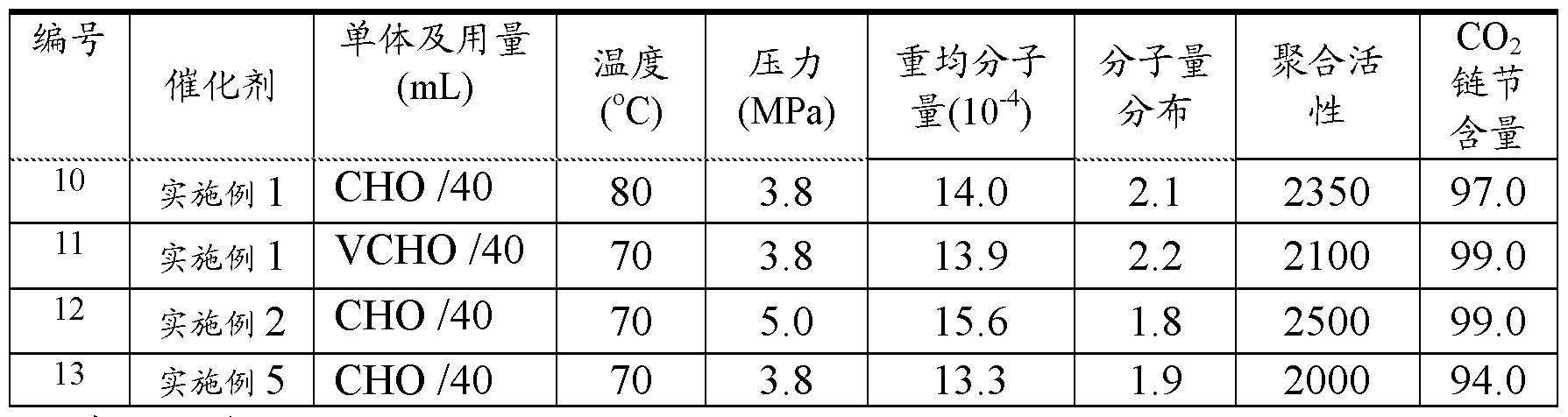
表 2 中所得聚合物的玻璃化转变温度均大于 108°C ( DSC 法, 10°C/min, 取自第二条升温曲线)。 实施例 10
釆用实施例 3 制备的催化剂催化两种不同的环氧化物与 C02三元共 水。
聚合反应前将 500 ml高压反应釜加热至 60-80 °C 1小时左右除去水分, 加入 15mg催化剂(实施例 3合成的催化剂), 再注射加入以一定比例混合 的两种环氧单体的混合物,搅拌升温至一定温度, 充入 C02至压力为一定 压力, 反应 10-15小时后, 快速降温, 释放压力, 取出产物。 将产物置于 真空下 60°C干燥以除去未反应的单体,要进一步纯化产物,可将产物溶于 C¾C12, 过滤后用曱醇沉析。 上述的反应条件、 反应物用量和产物结构等 信息见表 3。
表 3: 金属氰化物配位催化剂催化环氧化物与 C02三元共聚

其中表 3中序号 16、 17、 18、 19和 20所得聚合物的玻璃化转变温度分 别为 42.3 °C、 41.2 °C、 43.6 °C、 44.4 °C和 44.7°C ( DSC法, 10°C/min, 取自 第二条升温曲线的热转变), 如图 6中曲线 2~6所示。 编号 20得到的二氧化 碳 /环氧丙烷 /CHO三元共聚物(粗产物)的核磁氢谱图如图 5所示, 化学位
移为 4.9ppm、 4.4ppm处代表聚碳酸酯丙烯酯链节和聚碳酸环己烯链节, 化 学位移为 4.5ppm处为环状碳酸酯的核磁共振吸收峰,此处峰强度几乎可以 忽略不计, 3.5~3.7ppm处代表聚醚链节, 可见聚酸链节的含量极低。 实施例 11 采用实施例 1制备的催化剂催化环氧化物均聚(分步加料 方式)
在 500毫升不锈钢高压釜中,先加入 20克 起始剂 (PPG-400)和 7.0毫 克催化剂, 然后加热升至一定温度 (110 °C) , 以氮气置换数次, 真空脱水 0.5 h, 继续升温至 120°C之后, 用计量泵打入 10毫升 PO, 待出现压力突 降时 (18分钟),在约 5小时内分批加入 PO单体,每次 10ml左右 (共 100 毫 升)。 反应完后减压脱除残余单体, 得带粘稠液态产物。
数均分子量 3.83kg/mol, 分子量分布 1.08, 其中数均分子量大于 10 万的产物在总产物中含量低于 500ppm,而传统 DMC催化剂催化 PO均聚 产物中数均分子量大于 10万的产物在总产物中含量一般大于 lOOOppm; 催化剂的活性为 51.5kg 聚合物 /g催化剂。
实施例 12: 采用实施例 4制备的催化剂催化环氧化物 /酸酐共聚 聚合反应前先将容量为 60ml的高压反应釜于 110°C下 2小时左右除去 水分并在干燥塔中下冷却至室温。向反应釜中加入 3.0 mg催化剂、马来酸 酐 2.0g、 氧化环己烯 4.0mL和四氢呋喃 4.0mL, 密封好反应釜, 加入到预 热至 90°C的油浴中, 磁力搅拌反应 5小时后, 快速降温, 释放压力, 取出 粗产物。 先减压除去溶剂、 再用 THF溶解粗产物, 在曱醇中沉淀出聚合 物, 真空干燥后得到黄色产物, 称重法计算转化率, 通过核磁氢谱计算聚 酯链节和聚酸链节含量。
聚合物数均分子量 2.4万, 分子量分布 1.6;
共聚物交替度 96%;
催化剂的活性为 3.2kg 聚合物 / g催化剂;
玻璃化转变温度 82°C。
实施例 13: 采用实施例 4制备的催化剂催化环氧化物 /酸肝 /C02三元 共聚
聚合反应前先将容量为 100 ml的高压反应釜于 110°C下 2小时左右除 去水分。向反应釜中依次加入催化剂 10.0 mg催化剂、氧化环己烯 40.0mL、 马来酸酐 4.0g和四氢呋喃 40mL, 密封好反应釜。加入 C02至 C02压力为 4.0MPa, 搅拌反应 5小时后, 快速降温, 释放压力, 取出粗产物。 粗产物 经 C¾C12/曱醇洗涤、 真空干燥后得到黄色产物, 称重法计算转化率, 通 过核磁氢谱计算聚酯链节和聚酸链节的含量。
聚合物数均分子量 3.0万, 分子量分布 1.8;
共聚物交替度 98%;
催化剂的活性 5.6 kg 聚合物 / g催化剂。
玻璃化转变温度 108°C。
Claims
1、 一种金属氰化物配位催化剂, 其特征在于, 其组成结构式如式(1 ) 所示:
M1 a[M2(CN)bLlc]d(X)m(L2)n-xSu-yL3-zH20 ( 1 ) 式(1 ) 中,
M1为二价金属离子, 选自 Zn2+、 Co2+、 Ni2+或 Fe2+中的一种;
M2为不包含 Fe2+和 Fe3+的二价或三价金属离子,选自 Co3+、 Ni2+、 Cd2+、
Cr3+或 Mn3+中的一种;
L1为与 M2配位的内界配体, 选自以 N、 0、 P和 S为配位原子的单 齿配体、 以 0、 S、 P或 N为配位原子的双齿配体或 [¾阴离子中的一种或 两种;
X为阴离子, 选自 F―、 Cl—、 Br―、 Γ、 OAc―、 S04 2—、 N03—、 芳氧基 负离子和有机羧酸根离子中的一种或多种;
L2为与 M1配位的含具有供电子性配位原子 N、 0、 P和 S的中性配 体;
Su为 ΠΑ族和 ΠΙΑ族金属元素的卤化物、 ΠΑ族和 ΠΙΑ族金属元素的 硫酸盐、 ΠΑ族和 ΠΙΑ族金属元素的硝酸盐、 卤化锂盐、 二氧化硅、 二氧 化钛中的一种或多种;
L3为水溶性的聚合物、在水与醇的混合溶液中自组装的聚合物、 水与 醚的混合溶液中自组装的聚合物、或者在水与醇和醚组成的混合溶液中自 组装的聚合物;
a和 d为正数, b为正整数, c为 0、 1或 2, m和 n为正数, x、 y和 z 为零或正数, 其中, a:d = l~4, a:n = 0.001 5。
2、如权利要求 1所述的金属氰化物配位催化剂, 其特征在于, 所述的 L2为 N-烷基咪唑、 N-芳基咪唑、 联吡啶、 吡啶、 脂肪族腈类、 芳香族腈 类、 Ν,Ν'-二烷基酰胺、 Ν,Ν'-二芳基酰胺、 Ν-取代环酰胺、 亚砜或砜类化 合物、 有机羧酸酯、 酮类、 环酮类、 磷酸酯、 全烷基取代三聚碑腈、 全芳 基取代三聚碑腈、 碳酸酯、 环内酯、 硫醚、 环碳酸酯或环醚类。
3、如权利要求 1所述的金属氰化物配位催化剂, 其特征在于, 其为纳 米片状或球状, 并且具有平均孔径小于 100纳米的孔结构。
4、 如权利要求 1~3任一所述的金属氰化物配位催化剂的制备方法, 其特征在于, 包括以下步骤:
步骤一: 将由 L3、 式(2 )所示的氰化金属络合物、 去离子水 I、 醇类 和 /或醚类溶剂组成的混合溶液 Γ调至 pH值小于 7 , 再加至由 MipQg盐、 Su或 Su的前驱体、去离子水 II组成的混合溶液 ΙΓ中,在 0~120°C搅拌反 应 0.5~200小时, 反应完毕后经分离、 干燥后得到固体;

式(2 )中, M3为碱金属离子、 碱土金属离子或氢离子, e和 f为正整 数, M2、 Ll、 b、 c同所述的式(1 ) 中的定义;
其中, L3、 M1 , X、 Su同所述的式(1 ) 中的定义, g为 1或 2;
所述的混合溶液 Γ中, 式( 2 )所示的氰化金属络合物与去离子水 I的 化学计量比为 0.005 2克: 1毫升;所述的 L3为去离子水 I重量的 0~40%, 所述的醇类和 /或醚类溶剂为去离子水 I体积的 0~2倍;
所述的混合溶液 ΙΓ中,Μ^Χ^盐与去离子水 II的化学计量比为 0.05~1 克: 1毫升;
式(2 )所示的氰化金属络合物与 Μ^Χ^盐的反应摩尔比为 1 : 1~50; 式(2 )所示的氰化金属络合物与所述的 Su或 Su 的前驱体的重量比为 1 :0-20 ;
步骤二: 将步骤一所得的固体在溶有 L2 的无水有机溶剂中重复分散 化浆, L2与式(2 )所示的氰化金属络合物的摩尔比为 0.1 10 , 化浆温度 为 20〜: 120°C , 化浆时间为 0.5~200小时, 在惰性气氛下或密闭的反应容器 中化浆, 分散 -化浆后再经蒸馏、 分离、 干燥, 得到金属氰化物配位催化 剂。
5、 如权利要求 4所述的制备方法, 其特征在于, 所述的步骤一中, 式 ( 2 )所示的氰化金属络合物与 Μ^Χ^盐的反应摩尔比为 1 : 1~30。
6、如权利要求 4所述的制备方法, 其特征在于, 所述的步骤一的混合 溶液 Γ中, 所述的醇类和 /或醚类溶剂为去离子水 I体积的 0~0.8倍。
7、 如权利要求 4所述的制备方法, 其特征在于, 所述的步骤二中, 化 浆温度为 40°C~100°C。
8、如权利要求 4所述的制备方法,其特征在于,所述的步骤二中 , 所 述的溶有 L2的无水有机溶剂中含有 Mi(X)g盐, Mi(X)g盐与式(2 )所示 的氰化金属络合物摩尔比为 0~2。
9、 如权利要求 1~3 任一所述的金属氰化物配位催化剂的应用, 其特 征在于, 为在催化环氧化物均聚制备聚醚、 催化环氧化物和酸酐交替共聚 制备聚酯、 催化环氧化物与二氧化碳共聚制备聚碳酸酯、 以及催化环氧化 物、 酸酐和二氧化碳共聚制备聚(酯 -碳酸酯) 中的应用。
10、如权利要求 9所述的金属氰化物配位催化剂的应用,其特征在于, 所述的环氧化物为环氧乙烷, 环氧丙烷, C5-C2Q的 α-氧化烯、环氧氯丙烷、 环氧溴丙烷、 烯丙基缩水甘油醚、 环氧丁烷、 环氧异丁烷、 氧化环己烯、 氧化环戊烯、 氧化环庚烯、 氧化环辛烯、 4-乙烯基氧化环己烯、 氧化苯乙 烯、 烷基取代氧化苯乙烯或氧化柠檬烯中的一种或多种。
11、如权利要求 9所述的金属氰化物配位催化剂的应用,其特征在于, 为在催化环氧化物与二氧化碳共聚制备脂肪族聚碳酸酯的应用, 步骤包 括: 在高压反应釜内, 以如权利要求 1~3任一所述的金属氰化物配位催化 剂为催化剂, 催化环氧化物和二氧化碳共聚, 共聚反应温度为 20-150°C , 二氧化碳压力为 0.5~10MPa, 反应时间为 l~48h, 共聚得到的粗产物经纯 化干燥后得到脂肪族聚碳酸酯; 其中, 所述的金属氰化物配位催化剂在反 应体系中的浓度为 l~100kg环氧化物 /g催化剂。
12、如权利要求 11所述的金属氰化物配位催化剂的应用,其特征在于, 所述的金属氰化物配位催化剂的催化活性 > 1.0kg聚合物 /g催化剂。
13、如权利要求 11所述的金属氰化物配位催化剂的应用,其特征在于, 所述的共聚反应温度为 30〜: 120 °C , 二氧化碳压力为 1.5~8.0MPa。
Priority Applications (2)
| Application Number | Priority Date | Filing Date | Title |
|---|---|---|---|
| US13/394,267 US8859452B2 (en) | 2010-08-13 | 2010-12-13 | Metal cyanide complex catalyst and its preparation and application |
| US14/484,490 US9469722B2 (en) | 2010-08-13 | 2014-09-12 | Metal cyanide complex catalyst and its preparation and application |
Applications Claiming Priority (4)
| Application Number | Priority Date | Filing Date | Title |
|---|---|---|---|
| CN2010102539367A CN101928390B (zh) | 2010-08-13 | 2010-08-13 | 一种金属氰化物配位催化剂及其制备方法和应用 |
| CN2010102539282A CN101942081B (zh) | 2010-08-13 | 2010-08-13 | 金属氰化物配位催化剂催化制备脂肪族聚碳酸酯的方法 |
| CN201010253928.2 | 2010-08-13 | ||
| CN201010253936.7 | 2010-08-13 |
Related Child Applications (2)
| Application Number | Title | Priority Date | Filing Date |
|---|---|---|---|
| US13/394,267 A-371-Of-International US8859452B2 (en) | 2010-08-13 | 2010-12-13 | Metal cyanide complex catalyst and its preparation and application |
| US14/484,490 Division US9469722B2 (en) | 2010-08-13 | 2014-09-12 | Metal cyanide complex catalyst and its preparation and application |
Publications (1)
| Publication Number | Publication Date |
|---|---|
| WO2012019405A1 true WO2012019405A1 (zh) | 2012-02-16 |
Family
ID=45567307
Family Applications (1)
| Application Number | Title | Priority Date | Filing Date |
|---|---|---|---|
| PCT/CN2010/079735 Ceased WO2012019405A1 (zh) | 2010-08-13 | 2010-12-13 | 一种金属氰化物配位催化剂及其制备方法和应用 |
Country Status (2)
| Country | Link |
|---|---|
| US (2) | US8859452B2 (zh) |
| WO (1) | WO2012019405A1 (zh) |
Cited By (2)
| Publication number | Priority date | Publication date | Assignee | Title |
|---|---|---|---|---|
| CN112718004A (zh) * | 2021-01-18 | 2021-04-30 | 西京学院 | 一种纳米催化剂Cu2O/p(SBMA)及方法和应用 |
| CN115888826A (zh) * | 2022-11-01 | 2023-04-04 | 常州大学 | 一种选择性co2还原自旋催化材料及其制备方法与应用 |
Families Citing this family (20)
| Publication number | Priority date | Publication date | Assignee | Title |
|---|---|---|---|---|
| GB0807607D0 (en) | 2008-04-25 | 2008-06-04 | Imp Innovations Ltd | Catalyst |
| GB201308978D0 (en) * | 2013-05-17 | 2013-07-03 | Imp Innovations Ltd | Method for producing polymers and block copolymers |
| CN103350988B (zh) * | 2013-07-04 | 2015-10-21 | 中国石油大学(北京) | 一种单晶碲纳米管及其制备方法与应用 |
| PT3172215T (pt) * | 2014-07-24 | 2018-08-03 | Vignali Graziano | Derivado orgânico de titânio e processos para a sua preparação, tinta contendo o derivado e método de impressão digital de cerâmica utilizando a tinta |
| KR101767310B1 (ko) | 2015-07-10 | 2017-08-10 | 국민대학교산학협력단 | 전자끄는기를 포함하는 에폭사이드, 이산화탄소 및 전자끄는기를 포함하지 않는 에폭사이드의 삼원중합체 제조방법 |
| GB201514506D0 (en) | 2015-08-14 | 2015-09-30 | Imp Innovations Ltd | Multi-block copolymers |
| GB201515350D0 (en) | 2015-08-28 | 2015-10-14 | Econic Technologies Ltd | Method for preparing polyols |
| EP3441417A4 (en) | 2016-04-08 | 2019-10-30 | Sumitomo Seika Chemicals CO. LTD. | ALIPHATIC POLYCARBONATE RESIN FOR MANUFACTURING A PARTITION, SEPARATING MATERIAL, SUBSTRATE AND PRODUCTION METHOD THEREFOR, MANUFACTURING METHOD FOR CIRCUIT SUBSTRATE AND CIRCUIT MANUFACTURING METHOD |
| US10119223B2 (en) | 2016-07-15 | 2018-11-06 | Covestro Llc | Carpet and synthetic turf backings prepared from a polyether carbonate polyol |
| CA3040327A1 (en) | 2016-10-18 | 2018-04-26 | Repsol, S.A. | New high molecular weight polymers from waste raw materials |
| CA3103743A1 (en) * | 2018-06-19 | 2019-12-26 | Henkel Ag & Co. Kgaa | Highly active double metal cyanide compounds |
| CN110964191B (zh) * | 2018-09-29 | 2021-02-02 | 杭州普力材料科技有限公司 | 一种混合酸改性的锌钴双金属氰化物催化剂及其制备方法 |
| CN113075146B (zh) * | 2020-01-03 | 2023-03-31 | 国家烟草质量监督检验中心 | 一种有机显色剂、基于其的有机络合物探针及其制备方法和用途 |
| CN114456363B (zh) * | 2022-02-25 | 2022-11-01 | 中国科学院长春应用化学研究所 | 一种催化体系和多嵌段共聚物的合成方法 |
| CN114591501B (zh) * | 2022-03-18 | 2024-08-20 | 华峰集团有限公司 | 一种复合催化剂、二氧化碳基共聚物及其制备方法和应用 |
| CN115028845B (zh) * | 2022-05-11 | 2023-05-12 | 烟台大学 | 一种锌配位聚合物催化剂及其制备方法和应用 |
| CN114832418B (zh) * | 2022-06-09 | 2024-04-26 | 上海傲班科技有限公司 | 一种有机溶剂的纯化方法及纯化设备 |
| KR102653010B1 (ko) * | 2022-12-19 | 2024-03-28 | 아주대학교산학협력단 | 하이드로젠 헥사시아노코발테이트 및 이의 제조 방법 |
| CN116102726B (zh) * | 2023-03-22 | 2024-10-25 | 大连理工大学 | 一类手性有机硼催化剂及其制备方法、在制备光学活性聚碳酸酯或聚酯中的应用 |
| CN118878807B (zh) * | 2024-09-27 | 2024-12-20 | 合肥普力先进材料科技有限公司 | 一种吡啶羧酸锌配合物复合催化剂 |
Citations (4)
| Publication number | Priority date | Publication date | Assignee | Title |
|---|---|---|---|---|
| US6362126B1 (en) * | 1998-03-05 | 2002-03-26 | Basf Aktiengesellschaft | Supported double metal cyanide catalysts, method for producing them, and their use for producing polyether alcohols |
| CN1740208A (zh) * | 2005-09-07 | 2006-03-01 | 黎明化工研究院 | 双金属氰化物络合物催化剂及其制备方法 |
| CN101003622A (zh) * | 2007-01-18 | 2007-07-25 | 浙江大学 | 一种负载型双金属氰化络合物催化剂及其制备方法和应用 |
| CN101942081A (zh) * | 2010-08-13 | 2011-01-12 | 浙江大学 | 金属氰化物配位催化剂催化制备脂肪族聚碳酸酯的方法 |
Family Cites Families (6)
| Publication number | Priority date | Publication date | Assignee | Title |
|---|---|---|---|---|
| US4500704A (en) | 1983-08-15 | 1985-02-19 | The Dow Chemical Company | Carbon dioxide oxirane copolymers prepared using double metal cyanide complexes |
| EP0252401B1 (de) | 1986-07-07 | 1990-10-10 | Wilhelm A. Keller | Austraggerät zur Bedienung von Kartuschen |
| US6762278B2 (en) | 2002-02-04 | 2004-07-13 | Basf Corporation | Process for the copolymerization of alkylene oxides and carbon dioxide using suspensions of multi-metal cyanide compounds |
| US6713599B1 (en) | 2003-03-31 | 2004-03-30 | Basf Corporation | Formation of polymer polyols with a narrow polydispersity using double metal cyanide (DMC) catalysts |
| US7671228B2 (en) | 2005-03-29 | 2010-03-02 | Basf Corporation | Method of forming a polyethercarbonate polyol using a CO2-philic compound or substituent |
| US7977501B2 (en) | 2006-07-24 | 2011-07-12 | Bayer Materialscience Llc | Polyether carbonate polyols made via double metal cyanide (DMC) catalysis |
-
2010
- 2010-12-13 US US13/394,267 patent/US8859452B2/en active Active
- 2010-12-13 WO PCT/CN2010/079735 patent/WO2012019405A1/zh not_active Ceased
-
2014
- 2014-09-12 US US14/484,490 patent/US9469722B2/en active Active
Patent Citations (4)
| Publication number | Priority date | Publication date | Assignee | Title |
|---|---|---|---|---|
| US6362126B1 (en) * | 1998-03-05 | 2002-03-26 | Basf Aktiengesellschaft | Supported double metal cyanide catalysts, method for producing them, and their use for producing polyether alcohols |
| CN1740208A (zh) * | 2005-09-07 | 2006-03-01 | 黎明化工研究院 | 双金属氰化物络合物催化剂及其制备方法 |
| CN101003622A (zh) * | 2007-01-18 | 2007-07-25 | 浙江大学 | 一种负载型双金属氰化络合物催化剂及其制备方法和应用 |
| CN101942081A (zh) * | 2010-08-13 | 2011-01-12 | 浙江大学 | 金属氰化物配位催化剂催化制备脂肪族聚碳酸酯的方法 |
Non-Patent Citations (1)
| Title |
|---|
| XUE-KE SUN ET AL.: "Alternating Copolymerization of Carbon Dioxide and Cyclohexene Oxide Catalyzed by Silicon Dioxide/Zn-CoIII Double Metal Cyanide Complex Hybrid Catalysts with a Nanolamellar Structure", JOURNAL OF POLYMER SCIENCE: ART A: POLYMER CHEMISTRY, vol. 46, 2008, pages 3128 - 3139 * |
Cited By (2)
| Publication number | Priority date | Publication date | Assignee | Title |
|---|---|---|---|---|
| CN112718004A (zh) * | 2021-01-18 | 2021-04-30 | 西京学院 | 一种纳米催化剂Cu2O/p(SBMA)及方法和应用 |
| CN115888826A (zh) * | 2022-11-01 | 2023-04-04 | 常州大学 | 一种选择性co2还原自旋催化材料及其制备方法与应用 |
Also Published As
| Publication number | Publication date |
|---|---|
| US9469722B2 (en) | 2016-10-18 |
| US20150018501A1 (en) | 2015-01-15 |
| US8859452B2 (en) | 2014-10-14 |
| US20120172566A1 (en) | 2012-07-05 |
Similar Documents
| Publication | Publication Date | Title |
|---|---|---|
| WO2012019405A1 (zh) | 一种金属氰化物配位催化剂及其制备方法和应用 | |
| CN101942081B (zh) | 金属氰化物配位催化剂催化制备脂肪族聚碳酸酯的方法 | |
| CN101928390B (zh) | 一种金属氰化物配位催化剂及其制备方法和应用 | |
| CN105683241B (zh) | 用于制备聚合物和嵌段共聚物的方法和催化剂系统 | |
| CN111393630B (zh) | 一种聚合物多元醇及其制备方法 | |
| Padmanaban et al. | Acid-mediated surface etching of a nano-sized metal-organic framework for improved reactivity in the fixation of CO2 into polymers | |
| CN101440159B (zh) | 脂肪族聚碳酸酯的合成方法 | |
| CN114989408B (zh) | 一种二氧化碳/环氧化合物共聚用固相催化剂及其制备方法 | |
| CN111889141A (zh) | 一种催化二氧化碳与环氧化物环加成反应的离子液体功能化联吡啶类多孔聚合物催化剂 | |
| CN113185701B (zh) | 金属卟啉基多孔聚合物及其制备和在催化二氧化碳与环氧化物环加成反应中的应用 | |
| CN112250856B (zh) | 一种双金属氰化物络合催化剂、其制法及聚丙二醇的制法 | |
| WO2020062816A1 (zh) | 一种混合酸改性的锌钴双金属氰化物催化剂及其制备方法 | |
| CN110483404A (zh) | 咪唑类离子液体、聚离子液体及其制备方法及应用 | |
| CN116731271A (zh) | 一种Zn-Salen基离子型聚合物催化剂及其制备方法与应用 | |
| CN103333331B (zh) | 一种高分子负载型催化剂及其制备方法和应用 | |
| CN110327973B (zh) | 一种交联降冰片烯共聚物/炭黑三维网络负载铜纳米催化剂及其制备方法与应用 | |
| CN109897072B (zh) | 一种含铁配合物及其制备及包含其的催化剂组合物和利用所述催化剂组合物的己内酯的聚合 | |
| JP4837820B2 (ja) | プロピレンオキシドの重合触媒組成物およびプロピレンオキシドの重合体の製造方法 | |
| CN112280028B (zh) | 一种无机盐协同Ti/Si复合材料催化制备高分子量聚丁二醇碳酸酯的方法 | |
| CN101328264A (zh) | 用离子液体支载催化剂制备聚碳酸酯的方法 | |
| CN108395510B (zh) | 催化体系及其在制备二氧化碳基聚碳酸酯嵌段共聚物中的应用 | |
| CN107353400A (zh) | 一种聚丙撑碳酸酯/纤维素纳米晶复合材料的制备方法 | |
| CN112961364B (zh) | 一种含间碳硼烷基团的耐高温聚合物及其制备方法 | |
| CN116474838B (zh) | 一种高稳定性低氯催化剂及其制备方法和应用 | |
| CN115746029A (zh) | 一种苯并噁嗪功能化氨基桥联多芳氧基稀土金属配合物及其制备方法与催化应用 |
Legal Events
| Date | Code | Title | Description |
|---|---|---|---|
| WWE | Wipo information: entry into national phase |
Ref document number: 13394267 Country of ref document: US |
|
| 121 | Ep: the epo has been informed by wipo that ep was designated in this application |
Ref document number: 10855825 Country of ref document: EP Kind code of ref document: A1 |
|
| NENP | Non-entry into the national phase |
Ref country code: DE |
|
| 122 | Ep: pct application non-entry in european phase |
Ref document number: 10855825 Country of ref document: EP Kind code of ref document: A1 |