WO2011102258A1 - (メタ)アクリレート化合物および該(メタ)アクリレート化合物を含有する硬化性組成物 - Google Patents
(メタ)アクリレート化合物および該(メタ)アクリレート化合物を含有する硬化性組成物 Download PDFInfo
- Publication number
- WO2011102258A1 WO2011102258A1 PCT/JP2011/052571 JP2011052571W WO2011102258A1 WO 2011102258 A1 WO2011102258 A1 WO 2011102258A1 JP 2011052571 W JP2011052571 W JP 2011052571W WO 2011102258 A1 WO2011102258 A1 WO 2011102258A1
- Authority
- WO
- WIPO (PCT)
- Prior art keywords
- meth
- acrylate
- acrylate compound
- curable composition
- compound
- Prior art date
- Legal status (The legal status is an assumption and is not a legal conclusion. Google has not performed a legal analysis and makes no representation as to the accuracy of the status listed.)
- Ceased
Links
- 0 CCC(**)C(OCC(C)(C)N)=O Chemical compound CCC(**)C(OCC(C)(C)N)=O 0.000 description 2
Images

Classifications
-
- C—CHEMISTRY; METALLURGY
- C08—ORGANIC MACROMOLECULAR COMPOUNDS; THEIR PREPARATION OR CHEMICAL WORKING-UP; COMPOSITIONS BASED THEREON
- C08F—MACROMOLECULAR COMPOUNDS OBTAINED BY REACTIONS ONLY INVOLVING CARBON-TO-CARBON UNSATURATED BONDS
- C08F20/00—Homopolymers and copolymers of compounds having one or more unsaturated aliphatic radicals, each having only one carbon-to-carbon double bond, and only one being terminated by only one carboxyl radical or a salt, anhydride, ester, amide, imide or nitrile thereof
- C08F20/02—Monocarboxylic acids having less than ten carbon atoms, Derivatives thereof
- C08F20/10—Esters
- C08F20/26—Esters containing oxygen in addition to the carboxy oxygen
- C08F20/30—Esters containing oxygen in addition to the carboxy oxygen containing aromatic rings in the alcohol moiety
-
- C—CHEMISTRY; METALLURGY
- C07—ORGANIC CHEMISTRY
- C07C—ACYCLIC OR CARBOCYCLIC COMPOUNDS
- C07C69/00—Esters of carboxylic acids; Esters of carbonic or haloformic acids
- C07C69/76—Esters of carboxylic acids having a carboxyl group bound to a carbon atom of a six-membered aromatic ring
-
- C—CHEMISTRY; METALLURGY
- C09—DYES; PAINTS; POLISHES; NATURAL RESINS; ADHESIVES; COMPOSITIONS NOT OTHERWISE PROVIDED FOR; APPLICATIONS OF MATERIALS NOT OTHERWISE PROVIDED FOR
- C09D—COATING COMPOSITIONS, e.g. PAINTS, VARNISHES OR LACQUERS; FILLING PASTES; CHEMICAL PAINT OR INK REMOVERS; INKS; CORRECTING FLUIDS; WOODSTAINS; PASTES OR SOLIDS FOR COLOURING OR PRINTING; USE OF MATERIALS THEREFOR
- C09D4/00—Coating compositions, e.g. paints, varnishes or lacquers, based on organic non-macromolecular compounds having at least one polymerisable carbon-to-carbon unsaturated bond ; Coating compositions, based on monomers of macromolecular compounds of groups C09D183/00 - C09D183/16
-
- G—PHYSICS
- G02—OPTICS
- G02B—OPTICAL ELEMENTS, SYSTEMS OR APPARATUS
- G02B1/00—Optical elements characterised by the material of which they are made; Optical coatings for optical elements
- G02B1/04—Optical elements characterised by the material of which they are made; Optical coatings for optical elements made of organic materials, e.g. plastics
Definitions
- the present invention relates to a (meth) acrylate compound suitable as a raw material for producing a transparent material and an optical material, a curable composition containing the (meth) acrylate compound, and a cured product obtained by curing the curable composition. .
- optical lenses In recent years, materials with excellent optical performance have been demanded along with the development of optical industry such as optical equipment, optical communication and display. Examples include optical lenses, optical disk substrates, plastic substrates for liquid crystal display elements, color filter substrates, plastic substrates for organic EL display elements, solar cell substrates, touch panels, optical elements, optical waveguides, and LED sealing materials. There is a strong demand for optical lenses, optical elements, and optical waveguide materials.
- inorganic glass is often used as a substrate for a liquid crystal display element, a substrate for a color filter, a substrate for an organic EL display element, a solar cell substrate, a touch panel, and the like.
- a plastic material instead of a glass plate because of problems such as the glass plate is easily broken, cannot be bent, has a large specific gravity, and is not suitable for weight reduction.
- plastic materials having excellent heat resistance such as reflow resistance have been demanded as optical lenses, optical elements, optical waveguides, and LED sealing materials.
- heat resistance even if the heat resistance is excellent, a plastic material having a low refractive index increases the edge thickness or the central portion, and the light weight characteristic of plastic is impaired. Therefore, a plastic material having a higher refractive index in addition to heat resistance is desired.
- Patent Document 1 discloses a member obtained by curing a resin composition comprising an amorphous thermoplastic resin and bis (meth) acrylate curable with active energy rays with active energy rays.
- a resin composition comprising an amorphous thermoplastic resin and bis (meth) acrylate curable with active energy rays with active energy rays.
- it can be suitably used for an optical lens, an optical disk substrate, a plastic liquid crystal substrate, and the like instead of a glass substrate.
- transparency may be lowered due to a difference between a refractive index of an amorphous thermoplastic resin and a refractive index of a resin obtained by curing bis (meth) acrylate with active energy rays.
- Patent Document 2 JP-A-4-325508 (Patent Document 2) describes that the refractive index and heat resistance of a plastic lens material are improved by introducing a fluorene skeleton.
- a compound containing a fluorene skeleton has a very high viscosity, is inferior in handling properties, and does not satisfy the required low viscosity.
- Patent Document 3 JP-A-2005-272773 (Patent Document 3) describes a cured product obtained by curing a curable composition containing a compound having a biphenyl skeleton, and the composition has a low viscosity and a high refractive index. It is described that a cured product can be obtained.
- heat resistance since the compound having a biphenyl skeleton, which is a component of the composition, is a monofunctional monomer, a problem remains in heat resistance.
- the present invention provides a (meth) acrylate compound capable of giving a cured product having a high refractive index and excellent transparency and heat resistance, a curable composition containing the (meth) acrylate compound, and the It aims at providing the hardened
- the present invention includes the following matters.
- a (meth) acrylate compound represented by the following formula (1) [1] A (meth) acrylate compound represented by the following formula (1).
- R 1 and R 2 are each independently a hydrogen atom or a methyl group, X is an organic group having 6 to 30 carbon atoms including an aromatic ring, and a is an integer of 1 to 3) And b is an integer of 0 to 3.
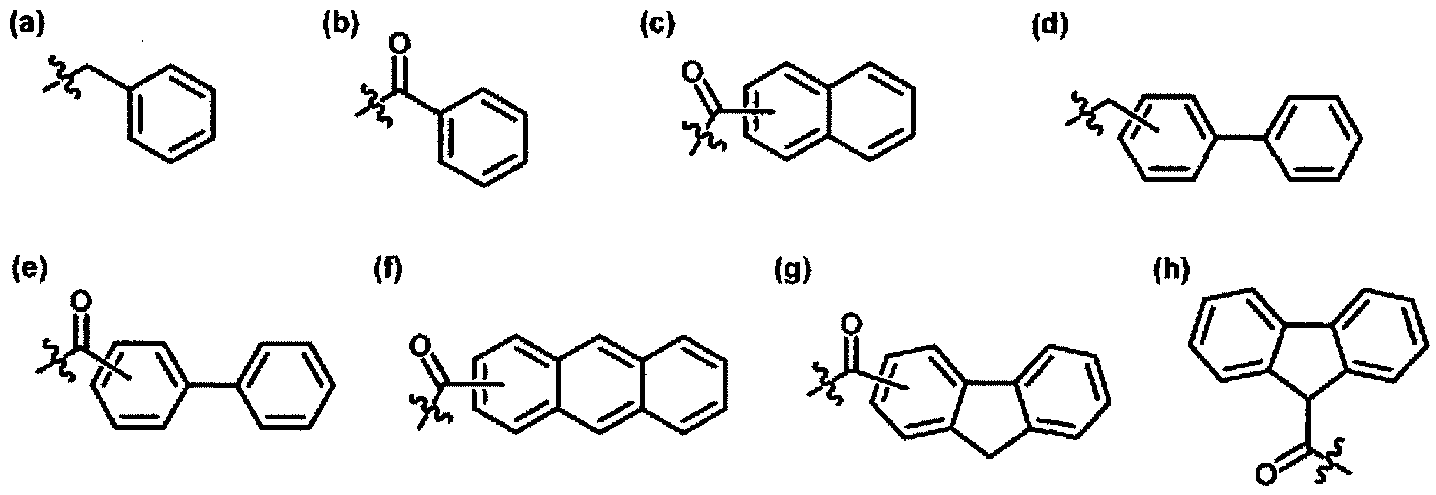
- X is any one of organic groups represented by the following formulas (a) to (h).
- R 1 and R 2 are each independently a hydrogen atom or a methyl group, a is an integer of 1 to 3, and b is an integer of 0 to 3.
- [4] The (meth) acrylate compound according to [3], wherein in the formula (2), a naphthyl group is bonded at the ⁇ -position.
- a curable composition comprising the (meth) acrylate compound according to any one of [1] to [8] and a polymerization initiator.
- the (meth) acrylate compound which can give the hardened
- the (meth) acrylate compound of the present invention includes an optical lens, an optical disk substrate, a plastic substrate for a liquid crystal display element, a substrate for a color filter, a plastic substrate for an organic EL display element, a solar cell substrate, a touch panel, an optical element, an optical waveguide, and an LED. It is suitably used for applications such as a sealing material.
- FIG. 1 shows a 1 H-NMR chart of the (meth) acrylate compound (6) synthesized in Example 1.
- (meth) acrylate compound (1) the (meth) acrylate compound of the present invention
- the curable composition the curable composition
- the cured product will be described in detail.
- the (meth) acrylate compound (1) of the present invention is a compound having 1 to 3 ethylenically unsaturated bonds in the molecule as represented by the following formula (1).
- the (meth) acrylate of the (meth) acrylate compound means acrylate and / or methacrylate.
- R 1 and R 2 are each independently a hydrogen atom or a methyl group, but R 1 is preferably a hydrogen atom in terms of curability, and R 2 has heat resistance and pencil hardness. A methyl group is preferable in terms of improvement.
- A is an integer of 1 to 3, preferably 2 or 3, more preferably 3, from the viewpoints of heat resistance, pencil hardness and refractive index improvement, and availability of raw materials.
- B is an integer of 0 to 3, but is preferably 0 or 1 and more preferably 0 from the viewpoints of improvement in heat resistance and pencil hardness and availability of raw materials.
- X is an organic group having 6 to 30 carbon atoms including an aromatic ring, and preferably 7 to 24 carbon atoms and 7 to 19 carbon atoms from the viewpoint of improving the refractive index and reducing the viscosity. More preferably, it is particularly preferably 7 to 15 carbon atoms.
- X include organic groups represented by the following (a) to (h).
- the portions with wavy lines represent the X bond in the (meth) acrylate compound (1).
- the (meth) acrylate compound (1) is particularly preferably represented by the following formula (2).
- the compound represented by the following formula (2) is also referred to as “(meth) acrylate compound (2)”.
- R 1, R 2, a and b are the same as those of the R 1, R 2, a and b of (meth) acrylate compound (1).
- the (meth) acrylate compound (2) preferably includes a naphthalene structure bonded at the ⁇ -position from the viewpoint of handling properties of the raw material, and is a compound represented by the following formula (6) (hereinafter referred to as “(meth) acrylate compound”). (6) ”is also most preferable.
- the viscosity of the (meth) acrylate compound (1) at 25 ° C. is 10 to 20,000 mPa ⁇ s, preferably 50 to 18,000 mPa ⁇ s, more preferably 100 to 15,000 mPa ⁇ s.
- the apparatus and conditions used for the above-mentioned viscosity measurement are as described in the examples described later.
- B-type viscometer DV-III ULTRA manufactured by BROOKFIELD
- rotor No. 42 the rotational speed is 1 to 7 rpm.
- the said method shows an example of the manufacturing method of the (meth) acrylate compound (1) of this invention, It can manufacture using not only the said method but a various well-known method.
- R 1 and R 2 are each independently a hydrogen atom or a methyl group, a is an integer of 1 to 3, and b is an integer of 0 to 3.
- Examples of the (meth) acrylate compound (3) include pentaerythritol tri (meth) acrylate, pentaerythritol di (meth) acrylate, ethylene oxide-modified pentaerythritol tri (meth) acrylate, ethylene oxide-modified pentaerythritol di (meth) acrylate, Examples include propylene oxide-modified pentaerythritol tri (meth) acrylate and propylene oxide-modified pentaerythritol di (meth) acrylate.
- examples of the substituent Y include a substituent that reacts with a hydroxyl group and has a leaving ability, and examples thereof include a halogen atom and an alkoxy group.
- a chlorine atom, a bromine atom, a methoxy group, and an ethoxy group are particularly preferable from the viewpoints of reactivity and availability.
- Examples of the compound (4) include benzyl chloride, benzyl bromide, benzyl chloromethyl ether, benzyl chloromethyl sulfide, 4-benzyloxyphenylacetyl chloride, benzoyl chloride, benzoyl bromide, methyl 2-benzoylbenzoate, and benzoyl fluoride.
- the molar ratio when the (meth) acrylate compound (3) and the compound (4) are reacted is the number of moles of hydroxyl group in the (meth) acrylate compound (3): the number of leaving groups in the compound (4).
- the number of moles is preferably 1: 1 to 1: 1.2.
- Examples of the base include triethylamine, 1,4-diazabicyclo [2.2.2] octane, 2,6,7-trimethyl-1,4-diazabicyclo [2.2.2] octane, t-butoxy potassium, water
- Examples include sodium oxide and ion exchange resin. These bases may be used individually by 1 type, and may be used in combination of 2 or more type.
- the amount of the base added is preferably 1.0 to 2.0 equivalents, more preferably 1.0 to 1.5 equivalents, per one hydroxyl group in the (meth) acrylate compound (3). If the addition amount is less than 1.0 equivalent, the reactivity may decrease. On the other hand, if the amount added exceeds 2.0 equivalents, side reactions may occur during the reaction.
- the reaction temperature in the reaction between the (meth) acrylate compound (3) and the compound (4) is preferably ⁇ 10 to 100 ° C., more preferably 0 to 80 ° C., and particularly preferably 10 to 40 ° C.
- Examples of the solvent used in the reaction of the (meth) acrylate compound (3) and the compound (4) include cyclic ethers such as tetrahydrofuran and dioxane; amides such as N, N-dimethylformamide; toluene and xylene Aromatic hydrocarbons; halogenated hydrocarbons such as methylene chloride and chloroform; acetonitrile and the like. Of these, tetrahydrofuran, toluene and dichloromethane are preferred.
- the (meth) acrylate compound (1) can also be produced by reacting the (meth) acrylate compound (3) with the compound (5).
- Examples of the compound (5) include benzoic acid, 1-naphthoic acid, 2-naphthoic acid, 4-phenylbenzoic acid, 2-phenylbenzoic acid, 1-anthracenecarboxylic acid, 2-anthracenecarboxylic acid, 9-anthracenecarboxylic acid. And acid and 9-fluorenecarboxylic acid. Of these, 1-naphthoic acid and 4-phenylbenzoic acid are preferred.
- the (meth) acrylate compound (3) and the compound (5) are reacted, it is preferable to use a condensing agent.
- the condensing agent By using the condensing agent, the carboxylic acid is activated, and the reaction can be significantly accelerated.
- the condensing agent examples include N, N′-dicyclohexylcarbodiimide, 1-ethyl-3- (3-dimethylaminopropyl) carbodiimide, 1,1′-carbonyldiimidazole, 2-chloro-1-methylpyridinium iodine, methyl -3-methyl-2-fluoropyridinium tosylate, methanesulfonyloxybenzotriazole, 1-propylphosphonic acid cyclic anhydride and the like. Of these, 1-ethyl-3- (3-dimethylaminopropyl) carbodiimide is preferred.
- the said condensing agent may be used individually by 1 type, and may be used in combination of 2 or more type.
- the amount of the condensing agent added is preferably 1.0 to 2.0 equivalents, more preferably 1.0 to 1.5 equivalents, relative to one carboxylic acid in the compound (5). If the addition amount is less than 1.0 equivalent, the reactivity may decrease. On the other hand, if the amount added exceeds 2.0 equivalents, side reactions may occur during the reaction or post-treatment may become complicated.
- a tertiary amine can be added as a catalyst when reacting the (meth) acrylate compound (3) and the compound (5).
- the reaction can be significantly accelerated by using a tertiary amine.
- the tertiary amine include pyridine, N, N-dimethyl-4-aminopyridine, triethylamine, N, N-diisopropylethylamine and N, N-diethylaniline. Of these, N, N-dimethyl-4-aminopyridine is preferred.
- the reaction temperature in the reaction between the (meth) acrylate compound (3) and the compound (5) is preferably ⁇ 10 to 80 ° C., more preferably 0 to 60 ° C., and further preferably 10 to 40 ° C.
- Examples of the solvent used in the reaction of the (meth) acrylate compound (3) with the compound (5) include cyclic ethers such as tetrahydrofuran and dioxane; amides such as N, N-dimethylformamide; toluene and xylene Aromatic hydrocarbons; halogenated hydrocarbons such as methylene chloride and chloroform; and acetonitrile. Of these, tetrahydrofuran, toluene and dichloromethane are preferred.
- the curable composition of this invention contains the said (meth) acrylate compound (1) and a polymerization initiator.
- the polymerization initiator As the polymerization initiator, a photopolymerization initiator and a thermal polymerization initiator are used.
- the (meth) acrylate compound (1) in the curable composition causes a polymerization reaction by irradiating the curable composition with active energy rays such as ultraviolet rays or visible rays, and the cured product. Can be obtained.
- active energy rays such as ultraviolet rays or visible rays
- the (meth) acrylate compound (1) undergoes a polymerization reaction by heating to obtain a cured product.
- a photopolymerization initiator is preferable from the viewpoint that it can be used for a substrate having low heat resistance.
- Photopolymerization initiators include 1-hydroxycyclohexyl phenyl ketone, 2,2'-dimethoxy-2-phenylacetophenone, xanthone, fluorene, fluorenone, benzaldehyde, anthraquinone, triphenylamine, carbazole, 3-methylacetophenone, 4-chloro Benzophenone, 4,4'-dimethoxybenzophenone, 4,4'-diaminobenzophenone, Michler's ketone, benzoylpropyl ether, benzoin ethyl ether, benzyldimethyl ketal, 1- (4-isopropylphenyl) -2-hydroxy-2-methylpropane- 1-one, 2-hydroxy-2-methyl-1-phenylpropan-1-one, phenylglyoxylic acid methyl ester, thioxanthone, diethylthioxanthone, -Isopropylthioxan
- thermal polymerization initiator examples include azo compounds and organic peroxides.
- azo compound 2,2′-azobis (isobutyronitrile), 2,2′-azobis (2,4-dimethylvaleronitrile), 2,2′-azobis (isobutyric acid) dimethyl, 4,4 ′ -Azobis (4-cyanovaleric acid), 2,2'-azobis (2-amidinopropane) dihydrochloride and 2,2'-azobis ⁇ 2-methyl-N- [2- (1-hydroxybutyl)]- Propionamide ⁇ and the like.
- Organic peroxides include benzoyl peroxide, lauroyl peroxide, t-butylperoxy-2-ethylhexanoate, t-butylperoxyneodecanoate and 1,1,3,3-tetramethylbutylperoxide. And oxy-2-ethylhexanoate.
- thermal polymerization initiators may be used individually by 1 type, and may use 2 or more types together.
- the amount of the polymerization initiator used is not particularly limited, but is 0.1 to 5 parts by mass with respect to 100 parts by mass as a total of the (meth) acrylate compound (1) and the radical reactive component described later which is an optional component.
- the amount is preferably 0.5 to 3 parts by mass, more preferably 0.5 to 1 part by mass.
- the curable composition may contain other components as necessary.
- other components include radical reactive components such as polymerization inhibitors, urethane oligomers and reactive monomers, and solvents.
- the polymerization inhibitor is used to prevent a component from causing a polymerization reaction during storage of the curable composition.
- examples of the polymerization inhibitor include hydroquinone, hydroquinone monomethyl ether, benzoquinone, pt-butylcatechol and 2,6-di-tert-butyl-4-methylphenol.
- the polymerization inhibitor may be contained in an amount of 0.1 parts by mass or less with respect to 100 parts by mass as a total of the (meth) acrylate compound (1) and a radical reactive component described later which is an optional component.
- the radical reactive component is used to adjust the properties of the obtained cured product, for example, mechanical properties such as hardness, elasticity and adhesion, optical properties such as transparency, and reactivity.
- examples of the radical reactive component include urethane oligomers and reactive monomers.
- a urethane oligomer is an oligomer having a urethane bond and an ethylenically unsaturated bond, and is a polymer having a relatively low molecular weight in which 2 to 20 urethane monomers obtained by reacting an isocyanate group and a hydroxyl group are bonded. It is.
- urethane oligomer examples include those manufactured by Arakawa Chemical Industries, Ltd., trade name beam sets 102, 502H, 505A-6, 510, 550B, 551B, 575, 575CB, EM-90, EM92; Name photomer 6008, 6210; manufactured by Shin-Nakamura Chemical Co., Ltd., trade names NK Oligo U-2PPA, U-4HA, U-6HA, U-15HA, UA-32P, U-324A, U-4H, U-6H UA-160TM, UA-122P, UA-2235PE, UA-340P, UA-5201, UA-512; manufactured by Toagosei Co., Ltd., trade names Aronix M-1100, M-1200, M-1210, M-1310 , M-1600, M-1960, M-5700, Aron Oxetane OXT-101; manufactured by Kyoeisha Chemical Co., Ltd.
- the reactive monomer is also called a reactive diluent and is a monomer having an ethylenically unsaturated bond.
- the monomer having an ethylenically unsaturated bond may be a monofunctional monomer or a polyfunctional monomer, and specifically includes an ethylenically unsaturated aromatic compound, a carboxyl group-containing unsaturated compound, a monofunctional (meth) acrylate, a difunctional monomer. Examples include (meth) acrylate, polyfunctional (meth) acrylate, epoxy poly (meth) acrylate, urethane poly (meth) acrylate, and polyester poly (meth) acrylate.
- Examples of the ethylenically unsaturated aromatic compound include diisopropenylbenzene, styrene, ⁇ -methylstyrene, o-methylstyrene, m-methylstyrene, p-methylstyrene, pt-butylstyrene, and o-chlorostyrene.
- carboxyl group-containing unsaturated compound examples include (meth) acrylic acid, crotonic acid, maleic acid, fumaric acid and itaconic acid.
- Examples of monofunctional (meth) acrylates include methyl (meth) acrylate, ethyl (meth) acrylate, propyl (meth) acrylate, isopropyl (meth) acrylate, butyl (meth) acrylate, isobutyl (meth) acrylate, and t-butyl.
- (Meth) acrylate pentyl (meth) acrylate, amyl (meth) acrylate, isoamyl (meth) acrylate, hexyl (meth) acrylate, heptyl (meth) acrylate, octyl (meth) acrylate, isooctyl (meth) acrylate, 2-ethylhexyl (Meth) acrylate, nonyl (meth) acrylate, decyl (meth) acrylate, isodecyl (meth) acrylate, undecyl (meth) acrylate, dodecyl (meth) acrylate, laur Alkyl (meth) acrylates such as ru (meth) acrylate, stearyl (meth) acrylate and isostearyl (meth) acrylate; trifluoroethyl (meth) acrylate, tetrafluoropropyl (
- di (meth) acrylate examples include ethylene glycol di (meth) acrylate, diethylene glycol di (meth) acrylate, triethylene glycol di (meth) acrylate, polyethylene glycol di (meth) acrylate, propylene glycol di (meth) acrylate, Dipropylene glycol di (meth) acrylate, tripropylene glycol di (meth) acrylate, polypropylene glycol di (meth) acrylate, neopentyl glycol di (meth) acrylate, 1,3-propanediol di (meth) acrylate, 1,4 -Butanediol di (meth) acrylate, 1,6-hexanediol di (meth) acrylate, 1,9-nonanediol di (meth) acrylate, hydroxypivalic acid ester Neopentyl glycol di (meth) acrylate, bisphenol A di (meth) acrylate,
- Examples of the polyfunctional (meth) acrylate include trimethylolpropane tri (meth) acrylate, pentaerythritol tri (meth) acrylate, pentaerythritol tetra (meth) acrylate, dipentaerythritol tetra (meth) acrylate, dipentaerythritol penta ( And (meth) acrylate, dipentaerythritol hexa (meth) acrylate, trimethylolpropane trioxyethyl (meth) acrylate, and tris (2-hydroxyethyl) isocyanurate tri (meth) acrylate.
- Examples of the epoxy poly (meth) acrylate include compounds obtained by reacting (meth) acrylic acid or (meth) acrylate having a hydroxy group with a compound having two or more epoxy groups in the molecule, such as a bisphenol A type epoxy resin. It is done.
- urethane poly (meth) acrylate As urethane poly (meth) acrylate, urethane di (1) -hexamethylene diisocyanate, isophorone diisocyanate and dicyclohexylmethane diisocyanate are reacted with diisocyanate such as 2-hydroxyethyl (meth) acrylate and other (meth) acrylates having a hydroxy group.
- (Meth) acrylate, urethane hexa (meth) acrylate obtained by reacting 1,6-hexamethylene diisocyanate with pentaerythritol tri (meth) acrylate, and dicyclomethane diisocyanate and poly (repeating unit n 6 to 15) tetramethylene glycol And polyurethane di (meth) acrylate obtained by reacting 2-hydroxyethyl (meth) acrylate with the urethanization reaction product.
- Polyester poly (meth) acrylate is a reaction of polyester (meth) acrylate, trimethylolpropane, ethylene glycol, succinic acid, and (meth) acrylic acid obtained by reacting trimethylolpropane with succinic acid and (meth) acrylic acid.
- polyester (meth) acrylate and the like examples thereof include polyester (meth) acrylate and the like.
- the monomers having an ethylenically unsaturated bond may be used alone or in combination of two or more.
- the urethane oligomer and the reactive monomer may be used alone or in combination.
- Solvent is used to help disperse each component in the curable composition.
- the solvent include esters such as ethyl acetate, butyl acetate and isopropyl acetate; ketones such as acetone, methyl ethyl ketone, methyl isobutyl ketone and cyclohexanone; cyclic ethers such as tetrahydrofuran and dioxane; N, N-dimethylformamide and the like.
- Aromatic hydrocarbons such as toluene; Halogenated hydrocarbons such as methylene chloride; Ethylene glycol, ethylene glycol methyl ether, ethylene glycol mono-n-propyl ether, ethylene glycol monomethyl ether acetate, diethylene glycol, diethylene glycol monomethyl ether , Ethylene glycol such as diethylene glycol monoethyl ether and diethylene glycol monoethyl ether acetate Propylene glycol, propylene glycol methyl ether, propylene glycol ethyl ether, propylene glycol butyl ether, propylene glycol propyl ether, propylene glycol monomethyl ether acetate, dipropylene glycol, dipropylene glycol monomethyl ether, dipropylene glycol monoethyl ether and di And propylene glycols such as propylene glycol monomethyl ether acetate; and acetonitrile.
- ethyl acetate methyl ethyl ketone, cyclohexanone, toluene, dichloromethane, diethylene glycol monomethyl ether and propylene glycol monomethyl ether acetate are preferred.
- the viscosity of the curable composition depends on the structure of the (meth) acrylate compound (1) or the amount of the solvent in the curable composition, but is preferably 10 to 20,000 mPa ⁇ s at 25 ° C., More preferably, it is 50 to 18,000 mPa ⁇ s, and most preferably 100 to 15,000 mPa ⁇ s.
- the viscosity of the curable composition is higher than 20,000 mPa ⁇ s, handling properties may be poor and workability may be poor.
- the measurement conditions of a viscosity are described in the below-mentioned Example.
- the curable composition of the present invention comprises a (meth) acrylate compound (1) and a polymerization initiator, and if necessary, the above-mentioned other components at room temperature or under heating conditions, a mixer, a ball mill and It can mix
- the above solvents can be used alone or in combination of two or more.
- the amount of the solvent to be used is not particularly limited, but is 50 to 200 parts by mass, preferably 50 to 100 parts by mass with respect to 100 parts by mass in total of the components in the curable composition excluding the solvent.
- the cured product of the present invention is cured, for example, by applying the curable composition on a substrate and forming a coating film, and then irradiating with active energy rays or heating. Obtained. Moreover, you may harden by performing both irradiation of an active energy ray, and a heating.
- Examples of the method for applying the curable composition include application by a bar coater, applicator, die coater, spin coater, spray coater, curtain coater and roll coater, application by screen printing, and application by dipping. It is done.
- the coating amount of the curable composition of the present invention on the substrate is not particularly limited, and can be appropriately adjusted according to the purpose.
- the thickness of the coating film obtained after coating and drying and then curing by irradiation with active energy rays is 1 to 500 ⁇ m, preferably 5 to 300 ⁇ m, for evaluating the properties of the cured product.
- the active energy ray used for curing is not particularly limited, but an electron beam or light having a wavelength from ultraviolet to infrared is preferable.
- the light source for example, an ultrahigh pressure mercury light source or a metal halide light source can be used if the active energy ray is ultraviolet light, a metal halide light source or halogen light source can be used if it is visible light, and a halogen light source can be used if it is infrared light. Light sources such as LEDs can be used.
- the irradiation amount of the active energy ray is appropriately set according to the type of the light source, the film thickness of the coating film, and the like.
- the irradiation amount of the active energy ray is appropriately set according to the type of the light source and the film thickness of the coating film, but the reaction rate of the ethylenically unsaturated group of the (meth) acrylate compound (1) is preferably 80% or more, preferably Is set to be 90% or more.
- the reaction rate is calculated from the change in the absorption peak intensity of the ethylenically unsaturated group before and after the reaction by infrared absorption spectrum.
- curing may be further advanced by heat treatment or annealing treatment as necessary.
- the heating temperature at that time is 80 to 200 ° C., and the heating time is 10 to 60 minutes.
- the heating temperature is 80 to 200 ° C, preferably 100 to 150 ° C.
- the heating temperature is lower than 80 ° C., it is necessary to lengthen the heating time, which may be not economical.
- the heating temperature is higher than 200 ° C., energy costs are required and heating heating time and cooling time are required.
- the heating time is appropriately set according to the heating temperature and the film thickness of the coating film, but the reaction rate of the ethylenically unsaturated group of the (meth) acrylate compound (1) is 80% or more, preferably 90% or more. Is set to be The reaction rate is calculated from the change in the absorption peak intensity of the ethylenically unsaturated group before and after the reaction by infrared absorption spectrum.
- the refractive index of the cured product of the present invention obtained by the above-described method can be measured, for example, by the method described in the Examples below, and is preferably 1.55 or more and 1.65 or less, more preferably 1. It is 56 or more and 1.64 or less, Especially preferably, it is 1.57 or more and 1.63 or less, Most preferably, it is 1.58 or more and 1.62 or less.
- cured material is smaller than 1.55, the center parts, such as an optical lens, become thick, and the lightweight property which is the characteristics of a plastic may be impaired.
- the refractive index of the cured product is larger than 1.65, the transparency may decrease due to light surface reflection and scattering loss.
- the glass transition temperature of the cured product can be measured, for example, by the method described in Examples below, and is preferably 100 ° C. or higher and 300 ° C. or lower, more preferably 120 ° C. or higher and 290 ° C. or lower, and particularly preferably 150 ° C. or higher. It is 280 degrees C or less.
- the glass transition temperature is lower than 100 ° C., the heat resistance is inferior and coloring or warping may occur.
- the glass transition temperature is higher than 300 ° C., there may be a concern about workability.
- the measuring method of glass transition temperature is as having described in the Example mentioned later.
- Viscosity The viscosity of the curable composition was measured using a B-type viscometer DV-III ULTRA (manufactured by BROOKFIELD) with a rotor No. The measurement was performed at 42, at a rotational speed of 1 to 7 rpm, and at a measurement temperature of 25 ° C. When the viscosity is moderately low, the handling property is good.
- the refractive index of the cured product was measured using a multiwavelength Abbe refractometer DR-M2 (manufactured by Atago) at a measurement temperature of 25 ° C. and a measurement wavelength of 589 nm.
- Total light transmittance The total light transmittance of the cured product was measured using a haze meter COH400 (manufactured by Nippon Denshoku Industries Co., Ltd.).
- Glass transition temperature (Tg) A cured specimen was processed into a shape of 30 mm in length, 5 mm in width, and 200 ⁇ m in thickness, and using DMS6100 (manufactured by Seiko Denshi Kogyo Co., Ltd.) in a tensile mode, a temperature range of 20 to 300 ° C., and a heating rate of 2 ° C. Tan ⁇ value was measured at a frequency of 1 Hz per minute, and the peak temperature of the tan ⁇ value was defined as the glass transition temperature. In addition, it shows that heat resistance is so favorable that a glass transition temperature is high.
- the hardness of the pencil lead was specified and used as the pencil hardness.
- Example 1 Preparation of (meth) acrylate compound (1)
- 30 parts by mass of toluene manufactured by Junsei Chemical Co., Ltd.
- 26 parts by mass of pentaerythritol triacrylate manufactured by Shin-Nakamura Chemical Co., Ltd.
- 9 parts by mass of triethylamine manufactured by Tokyo Chemical Industry Co., Ltd.
- 17 parts by mass of 1-naphthoyl chloride manufactured by Tokyo Chemical Industry Co., Ltd. was gradually added dropwise under ice cooling, followed by stirring at room temperature.
- the 1 H-NMR signal of the (meth) acrylate compound (6) is assigned as follows.
- Comparative Example 1 Preparation of comparative curable composition (solution 2)
- o-phenylphenoxyethyl acrylate manufactured by Toagosei Co., Ltd.
- (meth) acrylate compound (6) was used instead of (meth) acrylate compound (6).
- a comparative curable composition (solution 2) was obtained in the same manner as in Example 2 except for the above.
- Comparative Curable Composition (Solution 3)
- a bisarylfluorene skeleton compound manufactured by Osaka Gas Chemical Co., Ltd., trade name: OGSOL
- a comparative curable composition was obtained in the same manner as in Example 2 except that EA-0200 was used.
- Example 3 Production of cured product
- the curable composition prepared in Example 2 (Solution 1) and the comparative curable compositions prepared in Comparative Examples 1 and 2 (Solutions 2 and 3) were separated into separate glass substrates ( (50 mm ⁇ 50 mm) was applied in a film shape so that the thickness of the cured product was 200 ⁇ m. Subsequently, the coating film was cured by exposure at 4 J / cm 2 with an exposure apparatus incorporating an ultrahigh pressure mercury lamp. The performance of the obtained cured film was evaluated. The results are shown in Table 1.
- the composition (solution 1) of Example 2 of the present invention has a lower viscosity and better handling properties than Comparative Example 2 using a compound containing a bisarylfluorene skeleton.
- cured material is 1.55 or more, the total light transmittance is also favorable, and it can use it suitably for materials, such as an optical lens.
- cured material is 250 degreeC or more, heat resistance is also favorable. Further, it has a pencil hardness of 4H and can be suitably used as a coating material.
- Comparative Example 1 using o-phenylphenoxyethyl acrylate is good in viscosity, refractive index and transparency of the composition (solution 2), but cured because it is monofunctional. Is inferior in heat resistance and has low pencil hardness.
- Comparative Example 2 using a compound containing a bisarylfluorene skeleton the refractive index and heat resistance of the cured product are good, but the viscosity of the composition is very high and handling properties are poor.
- the cured product obtained by curing the curable composition has a high refractive index and good transparency and heat resistance, so that it is used for transparent plates, optical lenses, optical disk substrates, plastic substrates for liquid crystal displays, and color filters. It is suitable as an optical material such as a substrate, a plastic substrate for organic EL display elements, a solar cell substrate, a touch panel, an optical element, an optical waveguide, and an LED sealing material. Moreover, since the said hardened
Landscapes
- Chemical & Material Sciences (AREA)
- Organic Chemistry (AREA)
- Health & Medical Sciences (AREA)
- Chemical Kinetics & Catalysis (AREA)
- Medicinal Chemistry (AREA)
- Polymers & Plastics (AREA)
- Physics & Mathematics (AREA)
- Materials Engineering (AREA)
- Engineering & Computer Science (AREA)
- Wood Science & Technology (AREA)
- Life Sciences & Earth Sciences (AREA)
- General Physics & Mathematics (AREA)
- Optics & Photonics (AREA)
- Addition Polymer Or Copolymer, Post-Treatments, Or Chemical Modifications (AREA)
- Organic Low-Molecular-Weight Compounds And Preparation Thereof (AREA)
- Paints Or Removers (AREA)
Abstract
[課題]屈折率が高く、透明性および耐熱性に優れた硬化物を与えることができ、ハンドリング性にも優れた(メタ)アクリレート化合物、該(メタ)アクリレート化合物を含有する硬化性組成物およびその硬化物を提供する。 [解決手段]下記式(1)で表されることを特徴とする(メタ)アクリレート化合物。(式(1)中、R1およびR2はそれぞれ独立に水素原子またはメチル基であり、Xは芳香環を含む炭素数が6~30の有機基であり、aは1~3の整数であり、bは0~3の整数である。)
Description
本発明は、透明性素材および光学材料の製造原料に好適な(メタ)アクリレート化合物、該(メタ)アクリレート化合物を含有する硬化性組成物、ならびに該硬化性組成物を硬化してなる硬化物に関する。
近年、光学機器、光通信およびディスプレイなどの光産業の進展と共に、光学性能の優れた素材が要望されている。例えば、光学レンズ、光ディスク基板、液晶表示素子用プラスチック基板、カラーフィルター用基板、有機EL表示素子用プラスチック基板、太陽電池基板、タッチパネル、光学素子、光導波路およびLED封止材などが挙げられ、特に光学レンズ、光学素子および光導波路材料への要望が強い。
一般に、液晶表示素子用基板、カラーフィルター用基板、有機EL表示素子用基板、太陽電池基板およびタッチパネルなどとしては、無機ガラスが多く用いられている。しかし、ガラス板は割れやすい、曲げられない、比重が大きく軽量化に不向きであるなどの問題から、近年、ガラス板の代わりにプラスチック素材を用いる試みが数多く行われるようになってきた。
光学レンズ、光学素子、光導波路およびLED封止材としては、近年、リフロー耐性を有するなどの耐熱性に優れたプラスチック材料が要望されてきている。しかし、耐熱性に優れていても、屈折率の低いプラスチック材料だとコバ厚または中央部が厚くなり、プラスチックの特徴である軽量性が損なわれてしまう。そのため、耐熱性に加え、より屈折率が高いプラスチック材料が望まれている。
特開平10-77321号公報(特許文献1)には、非晶質熱可塑性樹脂および活性エネルギー線により硬化可能なビス(メタ)アクリレートよりなる樹脂組成物を、活性エネルギー線により硬化させてなる部材が、ガラス基板に代えて光学レンズ、光ディスク基板およびプラスチック液晶基板などに好適に利用できることが記載されている。しかし、非晶質熱可塑性樹脂の屈折率とビス(メタ)アクリレートを活性エネルギー線により硬化した樹脂の屈折率との差により透明性が低下する懸念がある。
特開平4-325508号公報(特許文献2)には、フルオレン骨格を導入することでプラスチックレンズ材料の屈折率および耐熱性が向上することが記載されている。しかし、フルオレン骨格を含有する化合物は非常に粘度が高く、ハンドリング性に劣り、求められている低粘度化を満足できていない。
特開2005-272773号公報(特許文献3)には、ビフェニル骨格を有する化合物を含む硬化性組成物を硬化させて得られる硬化物が記載され、該組成物が低粘度であり、高屈折率の硬化物が得られることが記載されている。しかし、耐熱性に関する記載はなく、該組成物の成分であるビフェニル骨格を有する化合物は単官能モノマーであることから耐熱性に課題が残されている。
本発明は、高屈折率であり、透明性および耐熱性に優れた硬化物を与えることができる(メタ)アクリレート化合物を提供すること、該(メタ)アクリレート化合物を含む硬化性組成物、および該硬化性組成物を硬化して得られる硬化物を提供することを課題とする。
本発明者らは鋭意検討した結果、特定の構造を有する(メタ)アクリレート化合物、およびこれを含有する硬化性組成物が上記の課題を解決できることを見出し、本発明を完成させるに至った。
すなわち、本発明には以下の事項が含まれる。
[1]下記式(1)で表されることを特徴とする(メタ)アクリレート化合物。
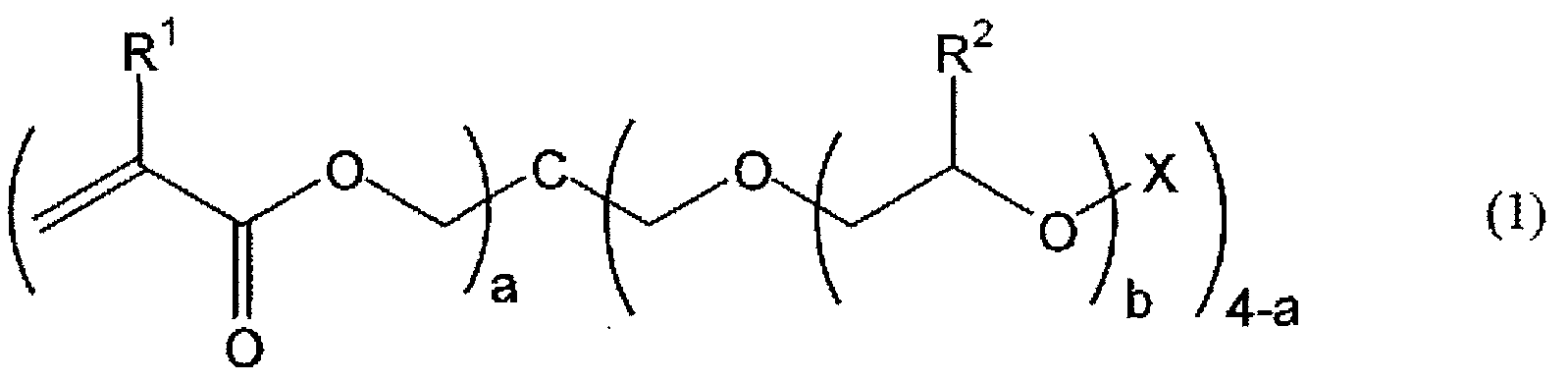
(式(1)中、R1およびR2はそれぞれ独立に水素原子またはメチル基であり、Xは芳香環を含む炭素数が6~30の有機基であり、aは1~3の整数であり、bは0~3の整数である。)
[2]前記Xが下記式(a)~(h)で表される有機基のいずれかであることを特徴とする[1]に記載の(メタ)アクリレート化合物。
[2]前記Xが下記式(a)~(h)で表される有機基のいずれかであることを特徴とする[1]に記載の(メタ)アクリレート化合物。

(なお、(a)~(h)に示す有機基中、波線を付した箇所は、式(1)に示す化合物におけるXの結合手を表す。)
[3]下記式(2)で表されることを特徴とする[1]または[2]に記載の(メタ)アクリレート化合物(1)。
[3]下記式(2)で表されることを特徴とする[1]または[2]に記載の(メタ)アクリレート化合物(1)。

(式(2)中、R1およびR2はそれぞれ独立に水素原子またはメチル基であり、aは1~3の整数であり、bは0~3の整数である。)
[4]前記式(2)中、ナフチル基がα位で結合していることを特徴とする[3]に記載の(メタ)アクリレート化合物。
[4]前記式(2)中、ナフチル基がα位で結合していることを特徴とする[3]に記載の(メタ)アクリレート化合物。
[5]前記式(2)中、aが2または3であることを特徴とする[3]または[4]に記載の(メタ)アクリレート化合物。
[6]前記式(2)中、bが0または1であることを特徴とする[3]~[5]のいずれかに記載の(メタ)アクリレート化合物。
[7]前記式(2)中、R1が水素原子であり、R2がメチル基であることを特徴とする[3]~[6]のいずれかに記載の(メタ)アクリレート化合物。
[8]下記式(6)で表されることを特徴とする[1]に記載の(メタ)アクリレート化合物。
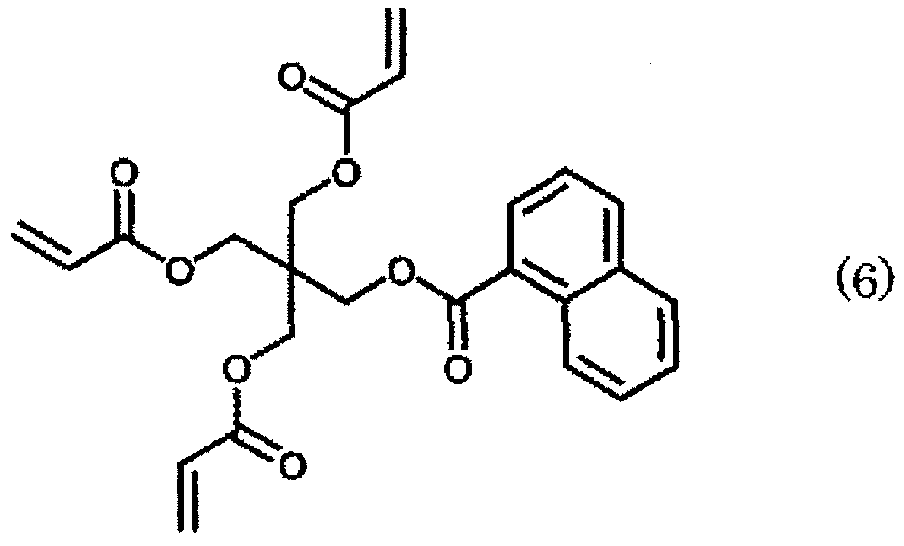
[9][1]~[8]のいずれかに記載の(メタ)アクリレート化合物および重合開始剤を含有することを特徴とする硬化性組成物。
[10][9]に記載の硬化性組成物を硬化して得られる硬化物。
[11]屈折率が1.55以上1.65以下であることを特徴とする[10]に記載の硬化物。
[12]ガラス転移温度が100℃以上300℃以下であることを特徴とする[10]または[11]に記載の硬化物。
[13][9]に記載の硬化性組成物を硬化して得られるコーティング材料。
[14][9]に記載の硬化性組成物を硬化して得られる光学材料。
[15][9]に記載の硬化性組成物を硬化して得られるレンズ。
本発明によれば、高屈折率であり、透明性および耐熱性に優れた硬化物を与えることができる(メタ)アクリレート化合物が提供され、さらに該(メタ)アクリレート化合物を含有する硬化性組成物およびその硬化物を提供することができる。
本発明の(メタ)アクリレート化合物は、光学レンズ、光学ディスク基板、液晶表示素子用プラスチック基板、カラーフィルター用基板、有機EL表示素子用プラスチック基板、太陽電池基板、タッチパネル、光学素子、光導波路およびLED封止材などの用途に好適に用いられる。
以下、本発明の(メタ)アクリレート化合物(以下「(メタ)アクリレート化合物(1)」ともいう。)、硬化性組成物および硬化物について詳細に説明する。
〔(メタ)アクリレート化合物(1)〕
本発明の(メタ)アクリレート化合物(1)は、下記式(1)に表されるように、分子中にエチレン性不飽和結合を1~3個有する化合物である。なお、本明細書において、(メタ)アクリレート化合物の(メタ)アクリレートとは、アクリレートおよび/またはメタクリレートを意味する。
本発明の(メタ)アクリレート化合物(1)は、下記式(1)に表されるように、分子中にエチレン性不飽和結合を1~3個有する化合物である。なお、本明細書において、(メタ)アクリレート化合物の(メタ)アクリレートとは、アクリレートおよび/またはメタクリレートを意味する。
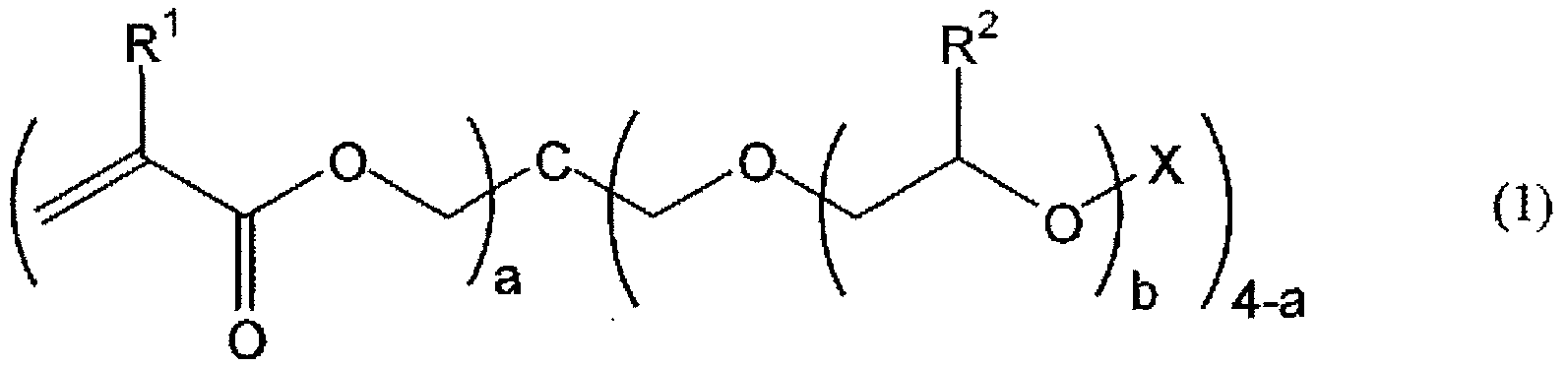
上記式(1)中、R1およびR2はそれぞれ独立に水素原子またはメチル基であるが、R1は硬化性の点で水素原子であることが好ましく、R2は耐熱性および鉛筆硬度を向上させるという点でメチル基であることが好ましい。
aは1~3の整数であるが、耐熱性、鉛筆硬度および屈折率の向上および原料の入手容易性の観点から2または3であることが好ましく、3であることがより好ましい。
bは0~3の整数であるが、耐熱性および鉛筆硬度の向上および原料の入手容易性の観点から0または1であることが好ましく、0であることがより好ましい。
Xは芳香環を含む炭素数6~30の有機基であるが、屈折率の向上および低粘度化の観点から、炭素数7~24であることが好ましく、炭素数7~19であることがより好ましく、炭素数7~15であることが特に好ましい。
Xの具体例としては、以下の(a)~(h)で表される有機基が挙げられる。なお、(a)~(h)で表される有機基中、波線を付した箇所は、(メタ)アクリレート化合物(1)におけるXの結合手を表す。

上記具体例の中では、屈折率、粘度および原料の入手容易性の観点から(c)のナフトイル骨格を有するものが特に好ましい。
上記(メタ)アクリレート化合物(1)は、下記式(2)で表されることが特に好ましい。なお、下記式(2)で表される化合物を以下「(メタ)アクリレート化合物(2)」ともいう。

上記式(2)中、R1、R2、aおよびbは(メタ)アクリレート化合物(1)のR1、R2、aおよびbとして挙げたものと同様である。
上記(メタ)アクリレート化合物(2)は、原料のハンドリング性の観点から、α位で結合するナフタレン構造を含むことが好ましく、下記式(6)で表される化合物(以下「(メタ)アクリレート化合物(6)」ともいう。)であることが最も好ましい。
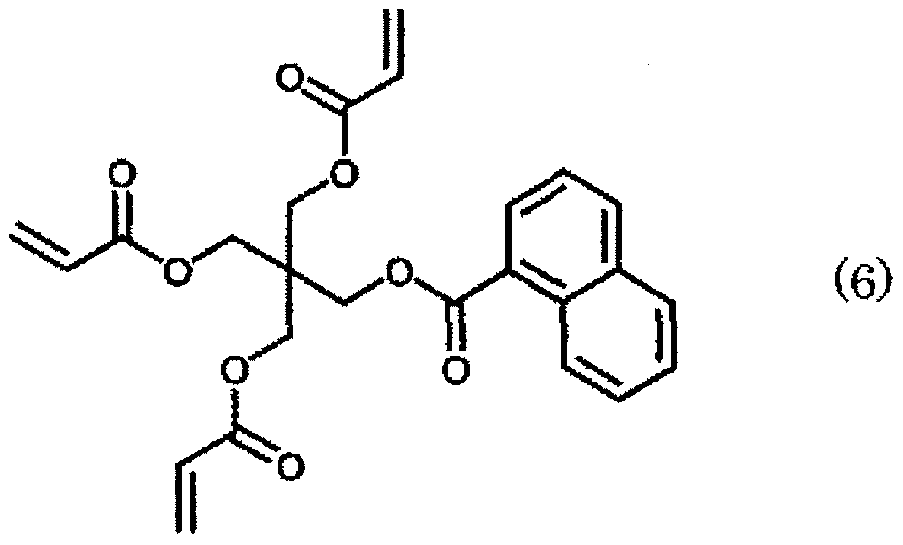
上記(メタ)アクリレート化合物(1)の25℃での粘度は、10~20,000mPa・s、好ましくは50~18,000mPa・s、より好ましくは100~15,000mPa・sである。上記粘度が10mPa・sよりも低い場合、または20,000mPa・sよりも高い場合、ハンドリング性が悪くなり、作業性が劣り、使用しにくくなる場合がある。なお、上記粘度の測定に用いる装置および条件は、後述する実施例に記載するように、B型粘度計DV-III ULTRA(BROOKFIELD社製)、ローターNo.42、回転数1~7rpmである。
[(メタ)アクリレート化合物(1)の製造方法]
上記(メタ)アクリレート化合物(1)の製造方法としては、下記式(3)で表される化合物(以下「(メタ)アクリレート化合物(3)」ともいう。)と、上記式(1)中のXと同じ有機基を有し、かつ脱離能を有する置換基(以下「置換基Y」ともいう。)を有する化合物(以下「化合物(4)」ともいう。)とを反応させる方法、ならびに(メタ)アクリレート化合物(3)と、式(1)中のXと同じ有機基を有し、末端がカルボン酸である化合物(以下、「化合物(5)」ともいう。)とを反応させる方法などが挙げられる。
上記(メタ)アクリレート化合物(1)の製造方法としては、下記式(3)で表される化合物(以下「(メタ)アクリレート化合物(3)」ともいう。)と、上記式(1)中のXと同じ有機基を有し、かつ脱離能を有する置換基(以下「置換基Y」ともいう。)を有する化合物(以下「化合物(4)」ともいう。)とを反応させる方法、ならびに(メタ)アクリレート化合物(3)と、式(1)中のXと同じ有機基を有し、末端がカルボン酸である化合物(以下、「化合物(5)」ともいう。)とを反応させる方法などが挙げられる。
なお、上記方法は本発明の(メタ)アクリレート化合物(1)の製造方法の一例を示すものであり、上記方法に限らず、種々の公知の方法を使って製造することができる。

上記式(3)中、R1およびR2はそれぞれ独立に水素原子またはメチル基であり、aは1~3の整数であり、bは0~3の整数である。
上記(メタ)アクリレート化合物(3)としては、例えば、ペンタエリスリトールトリ(メタ)アクリレート、ペンタエリスリトールジ(メタ)アクリレート、エチレンオキシド変性ペンタエリスリトールトリ(メタ)アクリレート、エチレンオキシド変性ペンタエリスリトールジ(メタ)アクリレート、プロピレンオキシド変性ペンタエリスリトールトリ(メタ)アクリレートおよびプロピレンオキシド変性ペンタエリスリトールジ(メタ)アクリレートなどが挙げられる。
化合物(4)中、置換基Yとしては、水酸基と反応し、脱離能を有する置換基が挙げられ、例えば、ハロゲン原子およびアルコキシ基が挙げられる。このうち、反応性および入手容易性の観点から、塩素原子、臭素原子、メトキシ基およびエトキシ基が特に好ましい。
上記化合物(4)としては、例えば、ベンジルクロリド、ベンジルブロミド、ベンジルクロロメチルエーテル、ベンジルクロロメチルスルフィド、4-ベンジルオキシフェニルアセチルクロリド、ベンゾイルクロリド、ベンゾイルブロミド、2-ベンゾイル安息香酸メチル、ベンゾイルフルオリド、ベンゾイルギ酸メチル、ベンゾイルギ酸エチル、3-ベンゾイルプロピオン酸メチル、ビフェニルクロリド、4,4'-ビフェニルジカルボニルクロリド、4,4'-ビフェニルジカルボン酸ジメチル、4,4'-ビフェニルジカルボン酸ジエチル、4-フェニルベンゾイルクロリド、4-フェニルベンジルブロミド、1-ナフトイルクロリド、2-ナフトイルクロリド、2-アントラセンカルボン酸、9-アントラセンカルボン酸、1,8-アントラセンジカルボン酸ジメチル、アントラキノン-2-カルボニルクロリド、9-フルオレン酢酸、9-フルオレンカルボン酸、9-フルオレノン-2-カルボン酸、クロロギ酸-9-フルオレニルメチル、2,2',4'-トリクロロアセトフェノン、2,3',4'-トリクロロアセトフェノン、2,4,6-トリクロロベンゾイルクロリド、トリフェニル酢酸、トリフェニルメチルクロリド、トリフェニルメチルブロミド、ジフェニル酢酸メチルおよびジフェニルアセチルクロリドなどが挙げられる。
上記(メタ)アクリレート化合物(3)と上記化合物(4)とを反応させる際のモル比は、(メタ)アクリレート化合物(3)中の水酸基のモル数:化合物(4)中の脱離基のモル数=1:1~1:1.2であることが好ましい。
上記(メタ)アクリレート化合物(3)と、上記化合物(4)とを反応させる際には、塩基を使用することが好ましい。塩基を使用することにより、反応を著しく速めることができる。
塩基としては、例えば、トリエチルアミン、1,4-ジアザビシクロ[2.2.2]オクタン、2,6,7-トリメチル-1,4-ジアザビシクロ[2.2.2]オクタン、t-ブトキシカリウム、水酸化ナトリウムおよびイオン交換樹脂などが挙げられる。これらの塩基は1種単独で用いてもよく、2種以上を組み合わせて用いてもよい。塩基の添加量は、(メタ)アクリレート化合物(3)中の水酸基1個に対して1.0~2.0当量が好ましく、1.0~1.5当量がより好ましい。添加量が1.0当量未満では反応性が低下する場合がある。一方、添加量が2.0当量を超えると反応時に副反応が起きる可能性がある。
上記(メタ)アクリレート化合物(3)と化合物(4)との反応における反応温度は、好ましくは-10~100℃、より好ましくは0~80℃、特に好ましくは10~40℃である。
上記(メタ)アクリレート化合物(3)と化合物(4)との反応において用いられる溶媒としては、例えば、テトラヒドロフランおよびジオキサンなどの環状エーテル類;N,N-ジメチルホルムアミドなどのアミド類;トルエンおよびキシレンなどの芳香族炭化水素類;塩化メチレンおよびクロロホルムなどのハロゲン化炭化水素類;アセトニトリルなどが挙げられる。これらのうち、テトラヒドロフラン、トルエンおよびジクロロメタンが好ましい。
上述した反応条件で反応を行うことで副反応が抑えられ、良好な収率および純度で(メタ)アクリレート化合物(1)が得られる。また、室温付近で反応を行うことで(メタ)アクリレート化合物(1)同士の重合の可能性が低減される。
上記(メタ)アクリレート化合物(1)は、(メタ)アクリレート化合物(3)と、化合物(5)とを反応させて製造することもできる。
化合物(5)としては、例えば、安息香酸、1-ナフトエ酸、2-ナフトエ酸、4-フェニル安息香酸、2-フェニル安息香酸、1-アントラセンカルボン酸、2-アントラセンカルボン酸、9-アントラセンカルボン酸および9-フルオレンカルボン酸などが挙げられる。これらのうち、1-ナフトエ酸および4-フェニル安息香酸が好ましい。
上記(メタ)アクリレート化合物(3)と化合物(5)とを反応させる際のモル比は、(メタ)アクリレート化合物(3)中の水酸基のモル数:化合物(5)中のカルボン酸のモル数=1:1~1:1.2であることが好ましい。
上記(メタ)アクリレート化合物(3)と上記化合物(5)とを反応させる際には、縮合剤を用いることが好ましい。縮合剤を用いることによりカルボン酸が活性化され、反応を著しく速めることができる。
縮合剤としては、例えば、N,N'-ジシクロヘキシルカルボジイミド、1-エチル-3-(3-ジメチルアミノプロピル)カルボジイミド、1,1'-カルボニルジイミダゾール、2-クロロ-1-メチルピリジニウムヨウ素、メチル・3-メチル-2-フルオロピリジニウム・トシレート、メタンスルホニルオキシベンゾトリアゾールおよび1-プロピルホスホン酸環状無水物などが挙げられる。これらのうち1-エチル-3-(3-ジメチルアミノプロピル)カルボジイミドが好ましい。上記縮合剤は1種単独で用いてもよく、2種以上を組み合わせて用いてもよい。
縮合剤の添加量は、化合物(5)中のカルボン酸1個に対して1.0~2.0当量が好ましく、1.0~1.5当量がより好ましい。添加量が1.0当量未満では反応性が低下する場合がある。一方、添加量が2.0当量を超えると反応時に副反応が起きたり後処理が煩雑になったりする可能性がある。
上記(メタ)アクリレート化合物(3)と上記化合物(5)とを反応させる際に、触媒として三級アミンを加えることができる。三級アミンを用いることで反応を著しく速めることができる。三級アミンとしては、例えば、ピリジン、N,N-ジメチル-4-アミノピリジン、トリエチルアミン、N,N-ジイソプロピルエチルアミンおよびN,N-ジエチルアニリンなどが挙げられる。これらのうち、N,N-ジメチル-4-アミノピリジンが好ましい。
上記(メタ)アクリレート化合物(3)と化合物(5)との反応における反応温度は、好ましくは-10~80℃、より好ましくは0~60℃、さらに好ましくは10~40℃である。
上記(メタ)アクリレート化合物(3)と化合物(5)との反応において用いられる溶媒としては、例えば、テトラヒドロフランおよびジオキサンなどの環状エーテル類;N,N-ジメチルホルムアミドなどのアミド類;トルエンおよびキシレンなどの芳香族炭化水素類;塩化メチレンおよびクロロホルムなどのハロゲン化炭化水素類;ならびにアセトニトリルなどが挙げられる。これらのうち、テトラヒドロフラン、トルエンおよびジクロロメタンが好ましい。
上述した反応条件にて反応を行うことで副反応が抑えられ、良好な収率および純度で(メタ)アクリレート化合物(1)が得られる。また、室温付近で反応を行うことで(メタ)アクリレート化合物(1)同士の重合の可能性が低減される。
〔硬化性組成物〕
本発明の硬化性組成物は、上記(メタ)アクリレート化合物(1)および重合開始剤を含有する。
本発明の硬化性組成物は、上記(メタ)アクリレート化合物(1)および重合開始剤を含有する。
上記重合開始剤としては光重合開始剤および熱重合開始剤が用いられる。光重合開始剤を用いる場合、硬化性組成物に紫外線または可視光線などの活性エネルギー線を照射することで、硬化性組成物中の(メタ)アクリレート化合物(1)が重合反応を起こし、硬化物を得ることができる。熱重合開始剤を使用する場合は、加熱することで(メタ)アクリレート化合物(1)が重合反応を起こし硬化物を得ることができる。このうち、耐熱性の低い基材にも使用可能という観点から光重合開始剤が好ましい。
光重合開始剤としては、1-ヒドロキシシクロヘキシルフェニルケトン、2,2'-ジメトキシ-2-フェニルアセトフェノン、キサントン、フルオレン、フルオレノン、ベンズアルデヒド、アントラキノン、トリフェニルアミン、カルバゾール、3-メチルアセトフェノン、4-クロロベンゾフェノン、4,4'-ジメトキシベンゾフェノン、4,4'-ジアミノベンゾフェノン、ミヒラーケトン、ベンゾイルプロピルエーテル、ベンゾインエチルエーテル、ベンジルジメチルケタール、1-(4-イソプロピルフェニル)-2-ヒドロキシ-2-メチルプロパン-1-オン、2-ヒドロキシ-2-メチル-1-フェニルプロパン-1-オン、フェニルグリオキシリックアシッドメチルエステル、チオキサントン、ジエチルチオキサントン、2-イソプロピルチオキサントン、2-クロロチオキサントン、2-メチル-1-[4-(メチルチオ)フェニル]-2-モルフォリノプロパン-1-オン、2,4,6-トリメチルベンゾイルジフェニルフォスフィンオキサイド、エチル(2,4,6-トリメチルベンゾイル)フェニルホスフィネート、2-ベンジル-2-ジメチルアミノ-1-(4-モルフォリノフェニル)ブタン-1-オンおよび1-[4-(2-ヒドロキシエトキシ)-フェニル]-2-ヒドロキシ-2-メチルプロパン-1-オンなどが挙げられる。これらの光重合開始剤は1種単独で用いてもよく、2種以上を併用してもよい。
熱重合開始剤としては、アゾ化合物および有機過酸化物などが挙げられる。アゾ化合物としては、2,2'-アゾビス(イソブチロニトリル)、2,2'-アゾビス(2,4-ジメチルバレロニトリル)、2,2'-アゾビス(イソ酪酸)ジメチル、4,4'-アゾビス(4-シアノ吉草酸)、2,2'-アゾビス(2-アミジノプロパン)2塩酸塩および2,2'-アゾビス{2-メチル-N-[2-(1-ヒドロキシブチル)]-プロピオンアミド}などが挙げられる。有機過酸化物としては、ベンゾイルパーオキサイド、ラウロイルパーオキサイド、t-ブチルパーオキシ-2-エチルヘキサノエート、t-ブチルパーオキシネオデカノエートおよび1,1,3,3-テトラメチルブチルパーオキシ-2-エチルヘキサノエートなどが挙げられる。これらの熱重合開始剤は1種を単独で用いてもよく、2種以上を併用してもよい。
重合開始剤の使用量は、特に限定されないが、(メタ)アクリレート化合物(1)および任意成分である後述するラジカル反応性成分との合計量100質量部に対して、0.1~5質量部、好ましくは0.5~3質量部、より好ましくは0.5~1質量部である。重合開始剤の使用量が上記の範囲内にあると、(メタ)アクリレート化合物(1)の重合速度が速くなり、また、硬化性組成物が酸素などによる重合阻害を受けることもない。さらに、得られる硬化膜について高い強度および耐熱性を達成することができ、着色も起こりにくい。
上記硬化性組成物には、必要に応じてその他の成分が含まれていてもよい。その他の成分としては、重合禁止剤、ウレタンオリゴマーおよび反応性モノマーなどのラジカル反応性成分ならびに溶剤などが挙げられる。
重合禁止剤は、硬化性組成物の保存中に含有成分が重合反応を起こすのを防止するために用いられる。重合禁止剤としては、例えば、ハイドロキノン、ハイドロキノンモノメチルエーテル、ベンゾキノン、p-t-ブチルカテコールおよび2,6-ジ-t-ブチル-4-メチルフェノールなどが挙げられる。
重合禁止剤は、(メタ)アクリレート化合物(1)および任意成分である後述するラジカル反応性成分との合計量100質量部に対して0.1質量部以下の量で含まれていてもよい。
ラジカル反応性成分は、得られる硬化物の特性、例えば、硬度、弾性および密着性などの機械特性、透明性などの光学特性、および反応性を調整するために用いられる。ラジカル反応性成分としては、ウレタンオリゴマーおよび反応性モノマーなどが挙げられる。
ウレタンオリゴマーとは、ウレタン結合とエチレン性不飽和結合とを有するオリゴマーであり、イソシアネート基と水酸基とを反応させて得られるウレタンモノマーが、2~20個結合した比較的分子量の低い重合体のことである。ウレタンオリゴマーとしては、例えば、荒川化学工業(株)製、商品名ビームセット102、502H、505A-6、510、550B、551B、575、575CB、EM-90、EM92;サンノプコ(株)製、商品名フォトマー6008、6210;新中村化学工業(株)製、商品名NKオリゴU-2PPA、U-4HA、U-6HA、U-15HA、UA-32P、U-324A、U-4H、U-6H、UA-160TM、UA-122P、UA-2235PE、UA-340P、UA-5201、UA-512;東亞合成(株)製、商品名アロニックスM-1100、M-1200、M-1210、M-1310、M-1600、M-1960、M-5700、アロンオキセタンOXT-101;共栄社化学(株)製、商品名AH-600、AT606、UA-306H、UF-8001;日本化薬(株)製、商品名カヤラッドUX-2201、UX-2301、UX-3204、UX-3301、UX-4101、UX-6101、UX-7101;日本合成化学工業(株)製、商品名、紫光UV-1700B、UV-3000B、UV-6100B、UV-6300B、UV-7000、UV-7600B、UV-7605B、UV-2010B、UV-6630B、UV-7510B、UV-7461TE、UV-3310B、UV-6640B;根上工業(株)製、商品名アートレジンUN-1255、UN-5200、UN-7700、UN-333、UN-905、HDP-4T、HMP-2、UN-901T、UN-3320HA、UN-3320HB、UN-3320HC、UN-3320HS、H-61、HDP-M20、UN-5500、UN-5507;ダイセルユーシービー(株)製、商品名Ebecryl6700、204、205、220、254、1259、1290K、1748、2002、2220、4833、4842、4866、5129、6602、8301などが挙げられる。これらは単独でも2種類以上を混合しても用いられる。
反応性モノマーは反応性希釈剤ともいい、エチレン性不飽和結合を有するモノマーである。エチレン性不飽和結合を有するモノマーとしては、単官能性モノマーでも多官能性モノマーでもよく、具体的にはエチレン性不飽和芳香族化合物、カルボキシル基含有不飽和化合物、単官能(メタ)アクリレート、ジ(メタ)アクリレート、多官能(メタ)アクリレート、エポキシポリ(メタ)アクリレート、ウレタンポリ(メタ)アクリレートおよびポリエステルポリ(メタ)アクリレートなどが挙げられる。
エチレン性不飽和芳香族化合物としては、例えば、ジイソプロペニルベンゼン、スチレン、α-メチルスチレン、o-メチルスチレン、m-メチルスチレン、p-メチルスチレン、p-t-ブチルスチレン、o-クロロスチレン、m-クロロスチレン、p-クロロスチレン、1,1-ジフェニルエチレン、p-メトキシスチレン、N,N-ジメチル-p-アミノスチレン、N,N-ジエチル-p-アミノスチレン、エチレン性不飽和ピリジンおよびエチレン性不飽和イミダゾールなどが挙げられる。
カルボキシル基含有不飽和化合物としては、例えば、(メタ)アクリル酸、クロトン酸、マレイン酸、フマル酸およびイタコン酸などが挙げられる。
単官能(メタ)アクリレートとしては、例えば、メチル(メタ)アクリレート、エチル(メタ)アクリレート、プロピル(メタ)アクリレート、イソプロピル(メタ)アクリレート、ブチル(メタ)アクリレート、イソブチル(メタ)アクリレート、t-ブチル(メタ)アクリレート、ペンチル(メタ)アクリレート、アミル(メタ)アクリレート、イソアミル(メタ)アクリレート、ヘキシル(メタ)アクリレート、ヘプチル(メタ)アクリレート、オクチル(メタ)アクリレート、イソオクチル(メタ)アクリレート、2-エチルヘキシル(メタ)アクリレート、ノニル(メタ)アクリレート、デシル(メタ)アクリレート、イソデシル(メタ)アクリレート、ウンデシル(メタ)アクリレート、ドデシル(メタ)アクリレート、ラウリル(メタ)アクリレート、ステアリル(メタ)アクリレートおよびイソステアリル(メタ)アクリレートなどのアルキル(メタ)アクリレート類;トリフルオロエチル(メタ)アクリレート、テトラフルオロプロピル(メタ)アクリレート、ヘキサフルオロイソプロピル(メタ)アクリレート、オクタフルオロペンチル(メタ)アクリレートおよびヘプタデカフルオロデシル(メタ)アクリレートなどのフルオロアルキル(メタ)アクリレート類;ヒドロキシエチル(メタ)アクリレート、ヒドロキシプロピル(メタ)アクリレートおよびヒドロキシブチル(メタ)アクリレートなどのヒドロキシアルキル(メタ)アクリレート類;フェノキシエチル(メタ)アクリレートおよび2-ヒドロキシ-3-フェノキシプロピル(メタ)アクリレートなどのフェノキシアルキル(メタ)アクリレート類;メトキシエチル(メタ)アクリレート、エトキシエチル(メタ)アクリレート、プロポキシエチル(メタ)アクリレート、ブトキシエチル(メタ)アクリレートおよびメトキシブチル(メタ)アクリレートなどのアルコキシアルキル(メタ)アクリレート類;ポリエチレングリコールモノ(メタ)アクリレート、エトキシジエチレングリコール(メタ)アクリレート、メトキシポリエチレングリコール(メタ)アクリレート、フェノキシポリエチレングリコール(メタ)アクリレートおよびノニルフェノキシポリエチレングリコール(メタ)アクリレートなどのポリエチレングリコール(メタ)アクリレート類;ポリプロピレングリコールモノ(メタ)アクリレート、メトキシポリプロピレングリコール(メタ)アクリレート、エトキシポリプロピレングリコール(メタ)アクリレートおよびノニルフェノキシポリプロピレングリコール(メタ)アクリレートなどのポリプロピレングリコール(メタ)アクリレート類;シクロヘキシル(メタ)アクリレート、4-ブチルシクロヘキシル(メタ)アクリレート、ジシクロペンタニル(メタ)アクリレート、ジシクロペンテニル(メタ)アクリレート、ジシクロペンタジエニル(メタ)アクリレート、ボルニル(メタ)アクリレート、イソボルニル(メタ)アクリレートおよびトリシクロデカニル(メタ)アクリレートなどのシクロアルキル(メタ)アクリレート類;ベンジル(メタ)アクリレートおよびテトラヒドロフルフリル(メタ)アクリレートなどが挙げられる。
ジ(メタ)アクリレートとしては、例えば、エチレングリコールジ(メタ)アクリレート、ジエチレングリコールジ(メタ)アクリレート、トリエチレングリコールジ(メタ)アクリレート、ポリエチレングリコールジ(メタ)アクリレート、プロピレングリコールジ(メタ)アクリレート、ジプロピレングリコールジ(メタ)アクリレート、トリプロピレングリコールジ(メタ)アクリレート、ポリプロピレングリコールジ(メタ)アクリレート、ネオペンチルグリコールジ(メタ)アクリレート、1,3-プロパンジオールジ(メタ)アクリレート、1,4-ブタンジオールジ(メタ)アクリレート、1,6-ヘキサンジオールジ(メタ)アクリレート、1,9-ノナンジオールジ(メタ)アクリレート、ヒドロキシピバリン酸エステルネオペンチルグリコールジ(メタ)アクリレート、ビスフェノールAジ(メタ)アクリレート、2,2-ビス(4-(メタ)アクリロイルオキシエトキシフェニル)プロパン、2,2-ビス(4-(メタ)アクリロイルオキシジエトキシフェニル)プロパン、トリメチロールプロパンジ(メタ)アクリレート、トリシクロデカンジメタノールジアクリレートおよびビス(2-(メタ)アクリロイルオキシエチル)ヒドロキシエチル-イソシアヌレートなどが挙げられる。
多官能(メタ)アクリレートとしては、例えば、トリメチロールプロパントリ(メタ)アクリレート、ペンタエリスリトールトリ(メタ)アクリレート、ペンタエリスリトールテトラ(メタ)アクリレート、ジペンタエリスリトールテトラ(メタ)アクリレート、ジペンタエリスリトールペンタ(メタ)アクリレート、ジペンタエリスリトールヘキサ(メタ)アクリレート、トリメチロールプロパントリオキシエチル(メタ)アクリレートおよびトリス(2-ヒドロキシエチル)イソシアヌレートトリ(メタ)アクリレートなどが挙げられる。
エポキシポリ(メタ)アクリレートとしては、ビスフェノールA型エポキシ樹脂などのエポキシ基を分子内に2個以上有する化合物に、(メタ)アクリル酸またはヒドロキシ基を有する(メタ)アクリレートを反応させたものが挙げられる。
ウレタンポリ(メタ)アクリレートとしては、1,6-ヘキサメチレンジイソシアネート、イソホロンジイソシアネートおよびジシクロヘキシルメタンジイソシアネートなどのジイソシアネートに2-ヒドロキシエチル(メタ)アクリレートなどのヒドロキシ基を有する(メタ)アクリレートを反応させたウレタンジ(メタ)アクリレート、1,6-ヘキサメチレンジイソシアネートにペンタエリスリトールトリ(メタ)アクリレートを反応させたウレタンヘキサ(メタ)アクリレート、ならびにジシクロメタンジイソシアネートとポリ(繰り返し単位n=6~15)テトラメチレングリコールとのウレタン化反応物に2-ヒドロキシエチル(メタ)アクリレートを反応させたポリウレタンジ(メタ)アクリレートなどが挙げられる。
ポリエステルポリ(メタ)アクリレートとしては、トリメチロールプロパンとコハク酸および(メタ)アクリル酸を反応させたポリエステル(メタ)アクリレート、トリメチロールプロパン、エチレングリコール、コハク酸、および(メタ)アクリル酸とを反応させたポリエステル(メタ)アクリレートなどが挙げられる。
上記エチレン性不飽和結合を有するモノマーは、1種単独でまたは2種類以上を用いてもよい。ウレタンオリゴマーおよび反応性モノマーはそれぞれ単独で用いてもよく、組み合わせて用いてもよい。
溶剤は硬化性組成物中の各成分の分散を助けるために用いられる。溶剤としては、例えば、酢酸エチル、酢酸ブチルおよび酢酸イソプロピルなどのエステル類;アセトン、メチルエチルケトン、メチルイソブチルケトンおよびシクロヘキサノンなどのケトン類;テトラヒドロフランおよびジオキサンなどの環状エーテル類;N,N-ジメチルホルムアミドなどのアミド類;トルエンなどの芳香族炭化水素類;塩化メチレンなどのハロゲン化炭化水素類;エチレングリコール、エチレングリコールメチルエーテル、エチレングリコールモノ-n-プロピルエーテル、エチレングリコールモノメチルエーテルアセテート、ジエチレングリコール、ジエチレングリコールモノメチルエーテル、ジエチレングリコールモノエチルエーテルおよびジエチレングリコールモノエチルエーテルアセテートなどのエチレングリコール類;プロピレングリコール、プロピレングリコールメチルエーテル、プロピレングリコールエチルエーテル、プロピレングリコールブチルエーテル、プロピレングリコールプロピルエーテル、プロピレングリコールモノメチルエーテルアセテート、ジプロピレングリコール、ジプロピレングリコールモノメチルエーテル、ジプロピレングリコールモノエチルエーテルおよびジプロピレングリコールモノメチルエーテルアセテートなどのプロピレングリコール類;ならびにアセトニトリルなどが挙げられる。これらのうち、酢酸エチル、メチルエチルケトン、シクロヘキサノン、トルエン、ジクロロメタン、ジエチレングリコールモノメチルエーテルおよびプロピレングリコールモノメチルエーテルアセテートなどが好ましい。
上記硬化性組成物の粘度は、(メタ)アクリレート化合物(1)の構造または硬化性組成物中の溶剤の量に依存するが、25℃で10~20,000mPa・sであることが好ましく、50~18,000mPa・sであることがより好ましく、100~15,000mPa・sであることが最も好ましい。硬化性組成物の粘度が20,000mPa・sよりも高いと、ハンドリング性が悪く作業性に劣る場合がある。なお、粘度の測定条件は、後述の実施例に記載する。
硬化性組成物の製造方法
本発明の硬化性組成物は(メタ)アクリレート化合物(1)および重合開始剤、さらに必要に応じて上記その他の成分を、室温または加熱条件下で、ミキサー、ボールミルおよび3本ロールなどの混合機により、溶剤を用いずに混合するか、あるいは上述した溶剤などをさらに希釈剤として添加して溶解させることによって、配合および調製することができる。
本発明の硬化性組成物は(メタ)アクリレート化合物(1)および重合開始剤、さらに必要に応じて上記その他の成分を、室温または加熱条件下で、ミキサー、ボールミルおよび3本ロールなどの混合機により、溶剤を用いずに混合するか、あるいは上述した溶剤などをさらに希釈剤として添加して溶解させることによって、配合および調製することができる。
上記溶剤は単独でも2種類以上を組み合わせて使用することができる。溶剤の使用量は特に限定されないが、溶剤を除く硬化性組成物中の成分の合計100質量部に対して、50~200質量部、好ましくは50~100質量部である。
硬化物の製造方法
本発明の硬化物は、例えば、基材上に上記硬化性組成物を塗布し、塗膜を形成した後、活性エネルギー線を照射することによって、あるいは加熱することによって硬化させて得られる。また活性エネルギー線の照射と加熱との両方を行って硬化させてもよい。
本発明の硬化物は、例えば、基材上に上記硬化性組成物を塗布し、塗膜を形成した後、活性エネルギー線を照射することによって、あるいは加熱することによって硬化させて得られる。また活性エネルギー線の照射と加熱との両方を行って硬化させてもよい。
硬化性組成物を塗布する方法としては、例えば、バーコーター、アプリケーター、ダイコーター、スピンコーター、スプレーコーター、カーテンコーターおよびロールコーターなどによる塗布、スクリーン印刷などによる塗布、ならびにディッピングなどによる塗布などが挙げられる。
本発明の硬化性組成物の基材上への塗布量は特に制限されず、目的に応じて適宜調整することができる。塗布乾燥後、活性エネルギー線照射で硬化処理した後に得られる塗膜の膜厚は、硬化物特性評価用としては1~500μm、好ましくは5~300μmとなる量である。
硬化するために用いられる活性エネルギー線としては、特に制限はないが、電子線、または紫外から赤外の波長の光が好ましい。光源としては、例えば、活性エネルギー線が紫外線であれば超高圧水銀光源またはメタルハライド光源、可視光線であればメタルハライド光源またはハロゲン光源、赤外線であればハロゲン光源が使用できるが、この他にもレーザーおよびLEDなどの光源が使用できる。活性エネルギー線の照射量は、光源の種類や塗膜の膜厚などに応じて適宜設定される。
活性エネルギー線の照射量は、光源の種類や塗膜の膜厚などに応じて適宜設定されるが、(メタ)アクリレート化合物(1)のエチレン性不飽和基の反応率が80%以上、好ましくは90%以上になるように設定される。また反応率は、赤外線吸収スペクトルにより、反応前後のエチレン性不飽和基の吸収ピーク強度の変化から算出される。
また、活性エネルギー線を照射して硬化させた後、必要に応じて加熱処理またはアニール処理をして硬化をさらに進行させてもよい。そのときの加熱温度は80~200℃、加熱時間は10~60分である。
加熱処理による熱重合で硬化させる場合、加熱温度は80~200℃、好ましくは100~150℃である。加熱温度が80℃より低いと、加熱時間を長くする必要があり経済性に欠ける場合がある。一方、加熱温度が200℃より高いと、エネルギーコストがかかる上に加熱昇温時間および降温時間がかかるため、経済性に欠ける場合がある。また加熱時間は、加熱温度や塗膜の膜厚などに応じて適宜設定されるが、(メタ)アクリレート化合物(1)のエチレン性不飽和基の反応率が80%以上、好ましくは90%以上になるように設定される。反応率は、赤外線吸収スペクトルにより、反応前後のエチレン性不飽和基の吸収ピーク強度の変化から算出される。
硬化物
上述した方法で得られる本発明の硬化物の屈折率は、例えば後述の実施例に記載の方法で測定することができ、好ましくは1.55以上1.65以下、より好ましくは1.56以上1.64以下、特に好ましくは1.57以上1.63以下、最も好ましくは1.58以上1.62以下である。硬化物の屈折率が1.55よりも小さい場合、光学レンズなどの中央部が厚くなり、プラスチックの特徴である軽量性が損なわれる場合がある。一方、硬化物の屈折率が1.65よりも大きい場合、光の表面反射と散乱損失により透明性が低下する場合がある。
上述した方法で得られる本発明の硬化物の屈折率は、例えば後述の実施例に記載の方法で測定することができ、好ましくは1.55以上1.65以下、より好ましくは1.56以上1.64以下、特に好ましくは1.57以上1.63以下、最も好ましくは1.58以上1.62以下である。硬化物の屈折率が1.55よりも小さい場合、光学レンズなどの中央部が厚くなり、プラスチックの特徴である軽量性が損なわれる場合がある。一方、硬化物の屈折率が1.65よりも大きい場合、光の表面反射と散乱損失により透明性が低下する場合がある。
上記硬化物のガラス転移温度は、例えば後述の実施例に記載の方法で測定することができ、好ましくは100℃以上300℃以下、より好ましくは120℃以上290℃以下、特に好ましくは150℃以上280℃以下である。ガラス転移温度が100℃よりも低い場合、耐熱性に劣り、着色や反りが発生する場合がある。一方、ガラス転移温度が300℃よりも高い場合、加工性に懸念が生じる場合がある。なお、ガラス転移温度の測定方法は、後述する実施例において記載した通りである。
以下、実施例および比較例に基づいて本発明をさらに具体的に説明するが、本発明はこれらの実施例および比較例に限定されるものではない。実施例および比較例で用いた測定方法を以下に示す。
(1)核磁気共鳴法(1HNMR)
Bruker社製AMX400を用い、重クロロホルム中で行った。
Bruker社製AMX400を用い、重クロロホルム中で行った。
(2)粘度
硬化性組成物の粘度はB型粘度計DV-III ULTRA(BROOKFIELD社製)を用いて、ローターNo.42、回転数1~7rpm、測定温度25℃にて測定した。粘度が適度に低いとき、ハンドリング性が良好であることを示す。
硬化性組成物の粘度はB型粘度計DV-III ULTRA(BROOKFIELD社製)を用いて、ローターNo.42、回転数1~7rpm、測定温度25℃にて測定した。粘度が適度に低いとき、ハンドリング性が良好であることを示す。
(3)屈折率
硬化物の屈折率は多波長アッベ屈折率計DR-M2(Atago社製)を用いて、測定温度25℃、測定波長589nmにて測定した。
硬化物の屈折率は多波長アッベ屈折率計DR-M2(Atago社製)を用いて、測定温度25℃、測定波長589nmにて測定した。
(4)全光線透過率
硬化物の全光線透過率は、ヘイズメーターCOH400(日本電色工業(株)製)を用いて測定した。
硬化物の全光線透過率は、ヘイズメーターCOH400(日本電色工業(株)製)を用いて測定した。
(5)ガラス転移温度(Tg)
硬化物の試験片を縦30mm、横5mm、厚さ200μmの形状に加工し、DMS6100(セイコー電子工業(株)製)を用いて、引張モード、温度範囲20~300℃、昇温速度2℃/分、周波数1Hzにてtanδ値を測定し、tanδ値のピークの温度をガラス転移温度とした。なお、ガラス転移温度が高いほど、耐熱性が良好であることを示す。
硬化物の試験片を縦30mm、横5mm、厚さ200μmの形状に加工し、DMS6100(セイコー電子工業(株)製)を用いて、引張モード、温度範囲20~300℃、昇温速度2℃/分、周波数1Hzにてtanδ値を測定し、tanδ値のピークの温度をガラス転移温度とした。なお、ガラス転移温度が高いほど、耐熱性が良好であることを示す。
(6)鉛筆硬度
JIS-K5600に準拠し、三菱鉛筆(株)製ユニ(登録商標)を用いて鉛筆と硬化膜の角度が45度になるようにして試験片を引っ掻き、傷がつかない最大硬さの鉛筆用芯を特定し、鉛筆硬度とした。
JIS-K5600に準拠し、三菱鉛筆(株)製ユニ(登録商標)を用いて鉛筆と硬化膜の角度が45度になるようにして試験片を引っ掻き、傷がつかない最大硬さの鉛筆用芯を特定し、鉛筆硬度とした。
[実施例1](メタ)アクリレート化合物(1)の調製
反応容器中にトルエン(純正化学(株)製)30質量部、ペンタエリスリトールトリアクリレート(新中村化学工業(株)製)26質量部、トリエチルアミン(東京化成工業(株)製)9質量部を入れて撹拌した。その後、氷冷下にて1-ナフトイルクロリド(東京化成工業(株)製)17質量部を徐々に滴下し、室温にて撹拌を行った。約15時間経過後、高速液体クロマトグラフィーで原料のペンタエリスリトールトリアクリレートが消失したことを確認し、純水を加えて反応を終了した。続いて、酢酸エチルで抽出を行い、飽和食塩水を用いて2回洗浄を行った。無水硫酸ナトリウムで乾燥後、減圧濃縮し、下記式(6)に示す化合物を得た。
反応容器中にトルエン(純正化学(株)製)30質量部、ペンタエリスリトールトリアクリレート(新中村化学工業(株)製)26質量部、トリエチルアミン(東京化成工業(株)製)9質量部を入れて撹拌した。その後、氷冷下にて1-ナフトイルクロリド(東京化成工業(株)製)17質量部を徐々に滴下し、室温にて撹拌を行った。約15時間経過後、高速液体クロマトグラフィーで原料のペンタエリスリトールトリアクリレートが消失したことを確認し、純水を加えて反応を終了した。続いて、酢酸エチルで抽出を行い、飽和食塩水を用いて2回洗浄を行った。無水硫酸ナトリウムで乾燥後、減圧濃縮し、下記式(6)に示す化合物を得た。
下記(メタ)アクリレート化合物(6)の粘度と、後述の溶液1の粘度との差は約±20%以内で同などの値であった。測定条件は、溶液1と同じである。(メタ)アクリレート化合物(6)の1H-NMRチャートを図1に示す。

上記(メタ)アクリレート化合物(6)の1H-NMRのシグナルは以下のように帰属される。
4.39ppm:H4、H8、H12
4.53ppm:H13
5.86ppm:H1、H5、H9
6.10ppm:H3、H7、H11
6.41ppm:H2、H6、H10
7.47-7.62ppm:H15、H18、H19
7.87ppm:H17
8.03ppm:H16
8.12ppm:H14
8.83ppm:H20
[実施例2]硬化性組成物(溶液1)の調製
紫外線を遮蔽した容器中において、実施例1で調製した(メタ)アクリレート化合物(6)100質量部、光重合開始剤としてエチル(2,4,6-トリメチルベンゾイル)フェニルホスフィネート(BASFジャパン(株)製、商品名Lucirin TPO-L)1質量部を配合し、室温で撹拌混合し、均一に溶解させて硬化性組成物(溶液1)を得た。
4.53ppm:H13
5.86ppm:H1、H5、H9
6.10ppm:H3、H7、H11
6.41ppm:H2、H6、H10
7.47-7.62ppm:H15、H18、H19
7.87ppm:H17
8.03ppm:H16
8.12ppm:H14
8.83ppm:H20
[実施例2]硬化性組成物(溶液1)の調製
紫外線を遮蔽した容器中において、実施例1で調製した(メタ)アクリレート化合物(6)100質量部、光重合開始剤としてエチル(2,4,6-トリメチルベンゾイル)フェニルホスフィネート(BASFジャパン(株)製、商品名Lucirin TPO-L)1質量部を配合し、室温で撹拌混合し、均一に溶解させて硬化性組成物(溶液1)を得た。
[比較例1]比較硬化性組成物(溶液2)の調製
実施例2において、(メタ)アクリレート化合物(6)に代えて、o-フェニルフェノキシエチルアクリレート(東亞合成(株)製)を使用する以外は、実施例2と同様にして比較硬化性組成物(溶液2)を得た。
実施例2において、(メタ)アクリレート化合物(6)に代えて、o-フェニルフェノキシエチルアクリレート(東亞合成(株)製)を使用する以外は、実施例2と同様にして比較硬化性組成物(溶液2)を得た。
[比較例2]比較硬化性組成物(溶液3)の調製
実施例2において、(メタ)アクリレート化合物(6)に代えて、ビスアリールフルオレン骨格化合物(大阪ガスケミカル(株)製、商品名オグソールEA-0200)を使用する以外は、実施例2と同様にして比較硬化性組成物(溶液3)を得た。
実施例2において、(メタ)アクリレート化合物(6)に代えて、ビスアリールフルオレン骨格化合物(大阪ガスケミカル(株)製、商品名オグソールEA-0200)を使用する以外は、実施例2と同様にして比較硬化性組成物(溶液3)を得た。
[実施例3]硬化物の製造
実施例2で調製した硬化性組成物(溶液1)ならびに比較例1および2で調製した比較硬化性組成物(溶液2および3)をそれぞれ別々のガラス基板(50mm×50mm)上に、硬化物の厚みが200μmになるように膜状に塗布した。引き続き、超高圧水銀ランプを組み込んだ露光装置で4J/cm2露光し塗膜を硬化させた。得られた硬化膜の性能を評価した。結果を表1に示す。
実施例2で調製した硬化性組成物(溶液1)ならびに比較例1および2で調製した比較硬化性組成物(溶液2および3)をそれぞれ別々のガラス基板(50mm×50mm)上に、硬化物の厚みが200μmになるように膜状に塗布した。引き続き、超高圧水銀ランプを組み込んだ露光装置で4J/cm2露光し塗膜を硬化させた。得られた硬化膜の性能を評価した。結果を表1に示す。

表1より、本発明の実施例2の組成物(溶液1)は、ビスアリールフルオレン骨格を含む化合物を用いた比較例2よりも低粘度でありハンドリング性が良好である。また、硬化物の屈折率が1.55以上であるとともに、全光線透過率も良好であり、光学レンズなどの材料に好適に使用することができる。さらに、硬化物のガラス転移温度が250℃以上であることから耐熱性も良好である。さらに、鉛筆硬度も4Hの硬度があり、コーティング材としても好適に使用することができる。
これに比較して、o-フェニルフェノキシエチルアクリレートを用いた比較例1は、組成物(溶液2)の粘度、硬化物の屈折率および透明性は良好であるが、単官能であるため硬化物の耐熱性に劣り、鉛筆硬度も低い。また、ビスアリールフルオレン骨格を含む化合物を用いた比較例2は、硬化物の屈折率および耐熱性は良好であるものの、組成物の粘度が非常に高くハンドリング性に劣る。
本発明の(メタ)アクリレート化合物および硬化性組成物は、ハンドリング性に優れるため、作業性を向上させることができる。
上記硬化性組成物を硬化して得られる硬化物は、高屈折率であり、透明性および耐熱性も良好であるため、透明板、光学レンズ、光ディスク基板、液晶表示用プラスチック基板、カラーフィルター用基板、有機EL表示素子用プラスチック基板、太陽電池基板、タッチパネル、光学素子、光導波路およびLED封止材などの光学材料として好適である。また、上記硬化物は、鉛筆硬度にも優れるため、液晶テレビ、パソコン、携帯電話のディスプレイおよびタッチパネルなどのコーティング材としても好適である。
Claims (15)
- 下記式(1)で表されることを特徴とする(メタ)アクリレート化合物。

- 前記Xが下記式(a)~(h)で表される有機基のいずれかであることを特徴とする請求項1に記載の(メタ)アクリレート化合物。
- 下記式(2)で表されることを特徴とする請求項1に記載の(メタ)アクリレート化合物。

- 前記式(2)中、ナフチル基がα位で結合していることを特徴とする請求項3に記載の(メタ)アクリレート化合物。
- 前記式(2)中、aが2または3であることを特徴とする請求項3または4に記載の(メタ)アクリレート化合物。
- 前記式(2)中、bが0または1であることを特徴とする請求項3~5のいずれかに記載の(メタ)アクリレート化合物。
- 前記式(2)中、R1が水素原子であり、R2がメチル基であることを特徴とする請求項3~6のいずれかに記載の(メタ)アクリレート化合物。
- 下記式(6)で表されることを特徴とする請求項1に記載の(メタ)アクリレート化合物。

- 請求項1~8のいずれかに記載の(メタ)アクリレート化合物および重合開始剤を含有することを特徴とする硬化性組成物。
- 請求項9に記載の硬化性組成物を硬化して得られる硬化物。
- 屈折率が1.55以上1.65以下であることを特徴とする請求項10に記載の硬化物。
- ガラス転移温度が100℃以上300℃以下であることを特徴とする請求項10または11に記載の硬化物。
- 請求項9に記載の硬化性組成物を硬化して得られるコーティング材料。
- 請求項9に記載の硬化性組成物を硬化して得られる光学材料。
- 請求項9に記載の硬化性組成物を硬化して得られるレンズ。
Priority Applications (1)
| Application Number | Priority Date | Filing Date | Title |
|---|---|---|---|
| JP2012500559A JPWO2011102258A1 (ja) | 2010-02-19 | 2011-02-08 | (メタ)アクリレート化合物および該(メタ)アクリレート化合物を含有する硬化性組成物 |
Applications Claiming Priority (2)
| Application Number | Priority Date | Filing Date | Title |
|---|---|---|---|
| JP2010-034812 | 2010-02-19 | ||
| JP2010034812 | 2010-02-19 |
Publications (1)
| Publication Number | Publication Date |
|---|---|
| WO2011102258A1 true WO2011102258A1 (ja) | 2011-08-25 |
Family
ID=44482845
Family Applications (1)
| Application Number | Title | Priority Date | Filing Date |
|---|---|---|---|
| PCT/JP2011/052571 Ceased WO2011102258A1 (ja) | 2010-02-19 | 2011-02-08 | (メタ)アクリレート化合物および該(メタ)アクリレート化合物を含有する硬化性組成物 |
Country Status (3)
| Country | Link |
|---|---|
| JP (1) | JPWO2011102258A1 (ja) |
| TW (1) | TW201202191A (ja) |
| WO (1) | WO2011102258A1 (ja) |
Cited By (6)
| Publication number | Priority date | Publication date | Assignee | Title |
|---|---|---|---|---|
| CN114854361A (zh) * | 2021-02-03 | 2022-08-05 | 荒川化学工业株式会社 | 活性能量射线固化型粘合剂组合物、固化物以及层叠体 |
| KR20250063245A (ko) | 2023-10-30 | 2025-05-08 | 스미또모 가가꾸 가부시키가이샤 | 조성물 및 그 경화물, 성형물, 표시 장치, 및 고체 촬상 소자 |
| KR20250063244A (ko) | 2023-10-30 | 2025-05-08 | 스미또모 가가꾸 가부시키가이샤 | 조성물 및 그 경화물, 성형물, 표시 장치, 및 고체 촬상 소자 |
| KR20250117313A (ko) | 2024-01-26 | 2025-08-04 | 스미또모 가가꾸 가부시키가이샤 | 화합물, 조성물 및 그 경화물, 성형물, 표시 장치, 및 고체 촬상 소자 |
| KR20250150580A (ko) | 2023-02-16 | 2025-10-20 | 스미또모 가가꾸 가부시키가이샤 | 화합물 및 그 제조 방법, 조성물, 경화물, 표시 장치, 및 고체 촬상 소자 |
| KR20260020962A (ko) | 2023-06-06 | 2026-02-12 | 스미또모 가가꾸 가부시키가이샤 | 화합물 및 그것을 포함하는 조성물 |
Citations (3)
| Publication number | Priority date | Publication date | Assignee | Title |
|---|---|---|---|---|
| JPS5693776A (en) * | 1979-12-28 | 1981-07-29 | Dainippon Ink & Chem Inc | Ultraviolet curing type printing ink composition |
| JPS5714613A (en) * | 1980-06-30 | 1982-01-25 | Dainippon Ink & Chem Inc | Photosetting composition |
| JPH11282157A (ja) * | 1997-10-31 | 1999-10-15 | Nippon Zeon Co Ltd | ポリイミド系感光性樹脂組成物 |
-
2011
- 2011-02-08 JP JP2012500559A patent/JPWO2011102258A1/ja active Pending
- 2011-02-08 WO PCT/JP2011/052571 patent/WO2011102258A1/ja not_active Ceased
- 2011-02-17 TW TW100105251A patent/TW201202191A/zh unknown
Patent Citations (3)
| Publication number | Priority date | Publication date | Assignee | Title |
|---|---|---|---|---|
| JPS5693776A (en) * | 1979-12-28 | 1981-07-29 | Dainippon Ink & Chem Inc | Ultraviolet curing type printing ink composition |
| JPS5714613A (en) * | 1980-06-30 | 1982-01-25 | Dainippon Ink & Chem Inc | Photosetting composition |
| JPH11282157A (ja) * | 1997-10-31 | 1999-10-15 | Nippon Zeon Co Ltd | ポリイミド系感光性樹脂組成物 |
Cited By (7)
| Publication number | Priority date | Publication date | Assignee | Title |
|---|---|---|---|---|
| CN114854361A (zh) * | 2021-02-03 | 2022-08-05 | 荒川化学工业株式会社 | 活性能量射线固化型粘合剂组合物、固化物以及层叠体 |
| CN114854361B (zh) * | 2021-02-03 | 2026-03-10 | 荒川化学工业株式会社 | 活性能量射线固化型粘合剂组合物、固化物以及层叠体 |
| KR20250150580A (ko) | 2023-02-16 | 2025-10-20 | 스미또모 가가꾸 가부시키가이샤 | 화합물 및 그 제조 방법, 조성물, 경화물, 표시 장치, 및 고체 촬상 소자 |
| KR20260020962A (ko) | 2023-06-06 | 2026-02-12 | 스미또모 가가꾸 가부시키가이샤 | 화합물 및 그것을 포함하는 조성물 |
| KR20250063245A (ko) | 2023-10-30 | 2025-05-08 | 스미또모 가가꾸 가부시키가이샤 | 조성물 및 그 경화물, 성형물, 표시 장치, 및 고체 촬상 소자 |
| KR20250063244A (ko) | 2023-10-30 | 2025-05-08 | 스미또모 가가꾸 가부시키가이샤 | 조성물 및 그 경화물, 성형물, 표시 장치, 및 고체 촬상 소자 |
| KR20250117313A (ko) | 2024-01-26 | 2025-08-04 | 스미또모 가가꾸 가부시키가이샤 | 화합물, 조성물 및 그 경화물, 성형물, 표시 장치, 및 고체 촬상 소자 |
Also Published As
| Publication number | Publication date |
|---|---|
| TW201202191A (en) | 2012-01-16 |
| JPWO2011102258A1 (ja) | 2013-06-17 |
Similar Documents
| Publication | Publication Date | Title |
|---|---|---|
| US20100087611A1 (en) | Urethane compound, curable composition containing the same, and cured product thereof | |
| US20100210812A1 (en) | Curable composition and cured product thereof | |
| JPWO2009142237A1 (ja) | 反応性(メタ)アクリレートポリマーを含有した硬化性組成物およびその硬化物 | |
| JP5664970B2 (ja) | 活性エネルギー線硬化型樹脂組成物 | |
| JP2010138393A (ja) | 光学レンズシート用エネルギー線硬化型樹脂組成物及びその硬化物 | |
| JPWO2011102258A1 (ja) | (メタ)アクリレート化合物および該(メタ)アクリレート化合物を含有する硬化性組成物 | |
| CN101657474A (zh) | 氨基甲酸酯化合物、含有该化合物的固化性组合物及其固化物 | |
| JP5307511B2 (ja) | 被膜形成用ラジカル重合性樹脂組成物 | |
| CN101616941A (zh) | 光学透镜片用能量射线固化型树脂组合物及其固化物 | |
| JP2009209256A (ja) | ウレタン化合物を含有した硬化性組成物およびその硬化物 | |
| JP6132140B2 (ja) | 紫外線硬化型粘着剤組成物及び粘着剤 | |
| JPWO2010092936A1 (ja) | 芳香族基含有(メタ)アクリレート化合物 | |
| JP5225547B2 (ja) | 不飽和基を有するイソシアネート化合物を付加させてなるウレタン化合物、及びこれを含有した光硬化性組成物、ならびにその硬化物 | |
| JP4967076B2 (ja) | 硬化性組成物 | |
| JP2011033875A (ja) | 光学レンズ用エネルギー線硬化型樹脂組成物及び光学レンズ | |
| JP2004196965A (ja) | ウレタン(メタ)アクリレート系化合物及びそれを用いた活性エネルギー線硬化型樹脂組成物 | |
| JP5528884B2 (ja) | 紫外線硬化型樹脂組成物 | |
| JP5516177B2 (ja) | ウレタン(メタ)アクリレートの製造方法 | |
| CN114685745A (zh) | 氨基甲酸酯(甲基)丙烯酸酯及氨基甲酸酯(甲基)丙烯酸酯树脂的制造方法 | |
| JP2008222985A (ja) | 活性エネルギー線硬化型樹脂組成物 | |
| JP6219083B2 (ja) | 耐熱性および寸法精度に優れる硬化物を形成する光硬化性樹脂組成物 | |
| JP2016219497A (ja) | 圧電材料 | |
| JP2005352324A (ja) | 低屈折率樹脂組成物、レンズ用樹脂組成物及びその硬化物 | |
| JP2002284827A (ja) | ラジカル硬化性樹脂組成物 | |
| JPH04272914A (ja) | 新規なエネルギー線硬化型樹脂の製造方法 |
Legal Events
| Date | Code | Title | Description |
|---|---|---|---|
| 121 | Ep: the epo has been informed by wipo that ep was designated in this application |
Ref document number: 11744545 Country of ref document: EP Kind code of ref document: A1 |
|
| WWE | Wipo information: entry into national phase |
Ref document number: 2012500559 Country of ref document: JP |
|
| NENP | Non-entry into the national phase |
Ref country code: DE |
|
| 122 | Ep: pct application non-entry in european phase |
Ref document number: 11744545 Country of ref document: EP Kind code of ref document: A1 |