WO2011043502A1 - 광감각제 - 금속나노입자 복합물 및 이를 함유하는 광역학 치료 또는 진단을 위한 조성물 - Google Patents
광감각제 - 금속나노입자 복합물 및 이를 함유하는 광역학 치료 또는 진단을 위한 조성물 Download PDFInfo
- Publication number
- WO2011043502A1 WO2011043502A1 PCT/KR2009/005763 KR2009005763W WO2011043502A1 WO 2011043502 A1 WO2011043502 A1 WO 2011043502A1 KR 2009005763 W KR2009005763 W KR 2009005763W WO 2011043502 A1 WO2011043502 A1 WO 2011043502A1
- Authority
- WO
- WIPO (PCT)
- Prior art keywords
- photosensitive agent
- polyethylene glycol
- seq
- metal nanoparticle
- photosensitizer
- Prior art date
- Legal status (The legal status is an assumption and is not a legal conclusion. Google has not performed a legal analysis and makes no representation as to the accuracy of the status listed.)
- Ceased
Links
Images




Classifications
-
- A—HUMAN NECESSITIES
- A61—MEDICAL OR VETERINARY SCIENCE; HYGIENE
- A61K—PREPARATIONS FOR MEDICAL, DENTAL OR TOILETRY PURPOSES
- A61K47/00—Medicinal preparations characterised by the non-active ingredients used, e.g. carriers or inert additives; Targeting or modifying agents chemically bound to the active ingredient
- A61K47/50—Medicinal preparations characterised by the non-active ingredients used, e.g. carriers or inert additives; Targeting or modifying agents chemically bound to the active ingredient the non-active ingredient being chemically bound to the active ingredient, e.g. polymer-drug conjugates
- A61K47/51—Medicinal preparations characterised by the non-active ingredients used, e.g. carriers or inert additives; Targeting or modifying agents chemically bound to the active ingredient the non-active ingredient being chemically bound to the active ingredient, e.g. polymer-drug conjugates the non-active ingredient being a modifying agent
- A61K47/62—Medicinal preparations characterised by the non-active ingredients used, e.g. carriers or inert additives; Targeting or modifying agents chemically bound to the active ingredient the non-active ingredient being chemically bound to the active ingredient, e.g. polymer-drug conjugates the non-active ingredient being a modifying agent the modifying agent being a protein, peptide or polyamino acid
- A61K47/64—Drug-peptide, drug-protein or drug-polyamino acid conjugates, i.e. the modifying agent being a peptide, protein or polyamino acid which is covalently bonded or complexed to a therapeutically active agent
-
- A—HUMAN NECESSITIES
- A61—MEDICAL OR VETERINARY SCIENCE; HYGIENE
- A61K—PREPARATIONS FOR MEDICAL, DENTAL OR TOILETRY PURPOSES
- A61K41/00—Medicinal preparations obtained by treating materials with wave energy or particle radiation ; Therapies using these preparations
- A61K41/0057—Photodynamic therapy with a photosensitizer, i.e. agent able to produce reactive oxygen species upon exposure to light or radiation, e.g. UV or visible light; photocleavage of nucleic acids with an agent
- A61K41/0071—PDT with porphyrins having exactly 20 ring atoms, i.e. based on the non-expanded tetrapyrrolic ring system, e.g. bacteriochlorin, chlorin-e6, or phthalocyanines
-
- A—HUMAN NECESSITIES
- A61—MEDICAL OR VETERINARY SCIENCE; HYGIENE
- A61K—PREPARATIONS FOR MEDICAL, DENTAL OR TOILETRY PURPOSES
- A61K47/00—Medicinal preparations characterised by the non-active ingredients used, e.g. carriers or inert additives; Targeting or modifying agents chemically bound to the active ingredient
- A61K47/50—Medicinal preparations characterised by the non-active ingredients used, e.g. carriers or inert additives; Targeting or modifying agents chemically bound to the active ingredient the non-active ingredient being chemically bound to the active ingredient, e.g. polymer-drug conjugates
- A61K47/69—Medicinal preparations characterised by the non-active ingredients used, e.g. carriers or inert additives; Targeting or modifying agents chemically bound to the active ingredient the non-active ingredient being chemically bound to the active ingredient, e.g. polymer-drug conjugates the conjugate being characterised by physical or galenical forms, e.g. emulsion, particle, inclusion complex, stent or kit
- A61K47/6921—Medicinal preparations characterised by the non-active ingredients used, e.g. carriers or inert additives; Targeting or modifying agents chemically bound to the active ingredient the non-active ingredient being chemically bound to the active ingredient, e.g. polymer-drug conjugates the conjugate being characterised by physical or galenical forms, e.g. emulsion, particle, inclusion complex, stent or kit the form being a particulate, a powder, an adsorbate, a bead or a sphere
- A61K47/6923—Medicinal preparations characterised by the non-active ingredients used, e.g. carriers or inert additives; Targeting or modifying agents chemically bound to the active ingredient the non-active ingredient being chemically bound to the active ingredient, e.g. polymer-drug conjugates the conjugate being characterised by physical or galenical forms, e.g. emulsion, particle, inclusion complex, stent or kit the form being a particulate, a powder, an adsorbate, a bead or a sphere the form being an inorganic particle, e.g. ceramic particles, silica particles, ferrite or synsorb
-
- A—HUMAN NECESSITIES
- A61—MEDICAL OR VETERINARY SCIENCE; HYGIENE
- A61K—PREPARATIONS FOR MEDICAL, DENTAL OR TOILETRY PURPOSES
- A61K49/00—Preparations for testing in vivo
- A61K49/001—Preparation for luminescence or biological staining
- A61K49/0013—Luminescence
- A61K49/0017—Fluorescence in vivo
-
- A—HUMAN NECESSITIES
- A61—MEDICAL OR VETERINARY SCIENCE; HYGIENE
- A61K—PREPARATIONS FOR MEDICAL, DENTAL OR TOILETRY PURPOSES
- A61K49/00—Preparations for testing in vivo
- A61K49/001—Preparation for luminescence or biological staining
- A61K49/0063—Preparation for luminescence or biological staining characterised by a special physical or galenical form, e.g. emulsions, microspheres
- A61K49/0065—Preparation for luminescence or biological staining characterised by a special physical or galenical form, e.g. emulsions, microspheres the luminescent/fluorescent agent having itself a special physical form, e.g. gold nanoparticle
-
- A—HUMAN NECESSITIES
- A61—MEDICAL OR VETERINARY SCIENCE; HYGIENE
- A61P—SPECIFIC THERAPEUTIC ACTIVITY OF CHEMICAL COMPOUNDS OR MEDICINAL PREPARATIONS
- A61P35/00—Antineoplastic agents
Definitions
- the present invention relates to a photosensitive agent, and more particularly, to a photosensitive agent-metal nanoparticle complex and a composition for photodynamic therapy or diagnosis containing the same.
- Photodynamic therapy using photosensitizers is gaining attention as a treatment that can solve the side effects of surgery, radiation therapy, drug therapy, and aftereffects of cancer, which are conventional cancer treatments.
- the photosensitizer is excited when irradiated with light of a specific wavelength, and the photosensitizer in the excited state reacts with the surrounding substrate or oxygen to produce reactive oxygen species, and the generated reactive oxygen species is generated in the surrounding tumor. Apoptosis or necrosis of cells.
- the composite includes a photosensitive agent, metal nanoparticles, and a backbone connecting the photosensitive agent and the metal nanoparticles.
- the backbone has a polypeptide substrate that can be specifically degraded by proteases.
- compositions for photodynamic therapy or diagnosis comprising a photosensitive agent-metal nanoparticle complex and a pharmaceutically acceptable carrier.
- the photosensitizer-metal nanoparticle complex in the normal tissue, is present in a state where the photosensitizer and the metal nanoparticles are connected by the backbone, thereby suppressing the generation of fluorescence and reactive oxygen species.
- the photosensitizer and the metal nanoparticle may exist in a separated state, thereby activating fluorescence and reactive oxygen species generation.
- photosensitive reactions in normal tissues can be suppressed while tumor tissues can be effectively destroyed.
- selective fluorescence in tumor tissue can improve the diagnostic accuracy of the tumor using the complex.
- FIG. 1 is a schematic view showing a photosensitive agent-metal nanoparticle composite according to an embodiment of the present invention.
- FIG. 2 and 3 is a schematic diagram showing the reaction by the light of the photosensitizer-metal nanoparticle complex according to an embodiment of the present invention accumulated in the affected tissue overexpressed normal tissue and protease, respectively.
- Figure 4 is a transmission electron microscope photograph of the gold nanorods prepared according to Preparation Example 1.
- FIG. 5 is an HPLC result of the MMP2 probe prepared in Preparation Example 2
- Figure 6 is a mass analysis result of the MMP2 probe prepared in Preparation Example 2.
- FIG. 7 is a UV / Vis absorption spectrum of gold nanorods according to Preparation Example 1
- FIG. 8 is a UV / Vis absorption spectrum of the photosensitive agent-metal nanoparticle composite according to Preparation Example 2.
- FIG. 8 is a UV / Vis absorption spectrum of the photosensitive agent-metal nanoparticle composite according to Preparation Example 2.
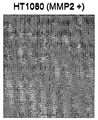
- 9 and 10 are photographs taken of fluorescence of the HT1080 cell line and BT20 cell line treated with the photosensitive agent-metal nanoparticle complex, respectively.
- 11 and 12 are graphs showing cell viability according to conditions according to Assays 2-1 and 2-2, respectively.
- FIG. 1 is a schematic view showing a photosensitive agent-metal nanoparticle composite according to an embodiment of the present invention.
- the photosensitive agent-metal nanoparticle composite 10 includes a metal nanoparticle 11, a photosensitive agent 15, and the metal nanoparticle 11 and the And a backbone 13 connecting the photosensitizers 15.
- the backbone 13 includes a polypeptide substrate 13a that can be specifically degraded by protease that is overexpressed in diseased tissue such as tumors, for example tumors.
- the tumor may be composed of proliferative cells.
- proteases examples include cathepsins, matrix metalloproteinases (MMPs), membrane-type MMPs, collagenases, gelatinases, stromelysins, urokinase- Urokinase-type plasminogen activator (uPA), caspases, viral proteases, HIV proteases, HSV protease HSV proteases, gelatinases, urokinases, secretases, endosomal hydrolase, prostate specific antigens, plasminogen activators , CMV (Cytomegalovirus) protease, and thrombin.
- MMPs matrix metalloproteinases
- uPA urokinase- Urokinase-type plasminogen activator
- the kadipsin may be Kadipsin A, Kadipsin B, Kadipsin D, Kadipsin H, Kadipsin K, Kadipsin L, or Kadipsin S, wherein the MMP MMP1, MMP2, MMP3, MMP7, MMP8 , MMP9, MMP10, MMP11, MMP12, or MMP13.
- the polypeptide substrate 13a comprises RPLALWRS (SEQ ID NO: 1), GGLGQRGRSANAILE (SEQ ID NO: 2), GVSQNYPIVG (SEQ ID NO: 3), LVLASSSFGY (SEQ ID NO: 4), PLGMWSR (SEQ ID NO: 5), PGNWT (SEQ ID NO: 6), PAGLLGC (SEQ ID NO: 7), LGGSGRSANAILE (SEQ ID NO: 8) , RR, RRG, GPICFFRLG (SEQ ID NO: 9), HSSKLQG (SEQ ID NO: 10), PIC (Et) FF (SEQ ID NO: 11), HSSKLQ (SEQ ID NO: 12), P Amino acid sequences, including but not limited to (L / Q) G (I / L) AG (SEQ ID NO: 13), GVVQASCRLA (SEQ ID NO: 14), or KK.
- RPLALWRS SEQ ID NO: 1
- examples of such polypeptide substrates 13a include PLGVRG (SEQ ID NO: 15, -Pro-Leu-Gly-Val-Arg-Gly-), or cathepsin S (which can be specifically degraded by MMP2). It may be LR (-Leu-Arg-) that can be specifically degraded by cathepsin S).
- the backbone 13 is chemically bonded to both of the metal nanoparticles 11 and the photosensitive agent 15, and the polypeptide substrate 13a itself is the metal nanoparticles 11 and the light. And chemically bind to the sensory agent 15.
- the backbone 13 may chemically connect the first substrate 13b, the polypeptide substrate 13a, and the photosensitive agent 15, which chemically connect the polypeptide substrate 13a and the metal nanoparticle 11 to each other. It may further include at least one of the second connector (13c) for connecting.
- the metal nanoparticles 11 and / or the photosensitive agent 15 may be coupled to side chains of the backbone 13.
- the backbone 13 may be chemisorbed to the metal nanoparticles 11 and may be covalently bonded to the photosensitive agent 15.
- the first connector 13b may be connected to the polypeptide substrate 13a by a peptide bond, and may be connected to the surface of the metal nanoparticle 11 by a thiol-metal bond.
- the first linker 13b for this purpose include cysteine having a thiol group in the side chain, or a polypeptide including cysteine, or an amino group or a carboxyl group in the main chain (or side chain) and a thiol group in the side chain (or main chain). It may be an alkylene.
- the second connector 13c may be connected to the polypeptide substrate 13a by a peptide bond, and the photosensitive agent 15 may be connected to an amide bond.
- the second linker 13c for this may be lysine containing an amino group in the side chain, or a polypeptide comprising lysine, or alkyl or alkylene having amino groups in the side chain and / or main chain.
- the photosensitive agent 15 may contain a carboxyl group as a substituent so that the carboxyl group may react with the amine group of the second linker 13c to form an amide bond.
- the present invention is not limited thereto, and when the one terminal amino acid of the polypeptide substrate 13a is cysteine, the first connector 13b may be omitted, and when the other terminal amino acid of the polypeptide substrate 13a is lysine, The second connector 13c may be omitted.
- the backbone 13 may suitably include the constituent amino acid number or the carbon number of the alkylene group so that the photosensitive agent 15 is located within a distance of about 20 nm from the surface of the metal nanoparticle 11.
- the photosensitive agent 15 may be a porphyrin-based compound or a nonporphyrin compound in the form of a free base or a metal complex.
- the porphyrins compound is, for example, porphyrin derivatives (porphyrin derivatives); At least one pyrrole constituting porphyrin is reduced porphyrins such as chlorin, bacteriochlorin, in which pyrrole is reduced to pyrroline; Or porphyrin analogues such as phthalocyanine, naphthalocyanine.
- the non-porphyrin compound may be hypericin, rhodamine, rose bengal, psoralen, phenothiazinium-based dye or merocyanine. .
- the photosensitive agent 15 is not toxic when in the ground state, but is absorbed in a single state when absorbing light of a specific wavelength. Some of the photosensitizers in the singlet state return to the ground state while emitting energy in the form of fluorescence, and most of them are transferred to the triplet state through intersystem crossing.
- the photosensitive agent in one or three states reacts with the surrounding substrate or oxygen to react reactive oxygen species, for example, singlet oxygen, oxygen radicals, super oxides or peroxides. Create The resulting reactive oxygen species can kill or necrosis surrounding tumor cells.
- the photosensitive agent 15 may be a material that is excited by light having a wavelength of 450 to 950 nm, preferably 600 to 900 nm, in consideration of the possibility of photopermeation in the tissue and the generation efficiency of reactive oxygen species.
- the metal nanoparticles 11 may be nanoparticles having a length of several tens to several tens of nanometers in at least one direction, and may include metals capable of resonance energy transfer with the photosensitive agent 15.
- the metal contained in the metal nanoparticles 11 may be, for example, gold, silver, copper, platinum, palladium, nickel, iron, or a mixed metal of two or more thereof.
- a single state Energy transfer may occur from the photosensitive agent 15 to the surface of the metal nanoparticles 11, and thus the photosensitive agent 15 may not fluoresce and generate reactive oxygen species. .
- the photosensitive agent-metal nanoparticle complex 10 in which the metal nanoparticle 11 and the photosensitive agent 15 are connected by the backbone 13 may not exhibit cytotoxicity.
- the metal contained in the metal nanoparticles 11 has a molar extinction coefficient of 10 9 or more and can absorb light more than ten thousand times more efficiently than the photosensitive agent 15, and the introduction of a substance into the surface It can be easy gold.
- the metal nanoparticles 11 may have a sphere shape, a rod shape, a pyramid shape, a star shape, and a core-shell shape.
- the wavelength of the metal nanoparticles 11 may vary depending on its constituent material, shape, or size. Therefore, the constituent material, shape, or size of the metal nanoparticles 11 may be adjusted so that the fluorescence spectrum of the photosensitive agent 15 and the absorption spectrum of the metal nanoparticles 11 may overlap.
- the hydrophilic polymer 19 may be further connected to an end of the backbone 13 adjacent to the photosensitive agent 15.
- the hydrophilic polymer may be biocompatible polyalkylene glycol (poly (alkylene glycol)), such as low immunogenicity.
- the polyalkylene glycol is polyethylene glycol (PEG); Methoxy polyethylene glycol (MPEG); Methoxypolypropylene glycol; Copolymers of polyethylene glycol and methoxy polypropylene glycol; Dextran; Hyaluronic acid; Polylactic-polyglycolic acid copolymers; Polyethylene glycol-diacid; Polyethylene glycol monoamines; Methoxypolyethylene glycol monoamine; Methoxy polyethylene glycol hydrazide; Methoxy polyethylene glycol imidazole; Or a copolymer of two or more of polyethylene glycol, methoxy polypropylene glycol, polyethylene glycol-diacid, polyethylene glycol monoamine, methoxy polyethylene glycol monoamine
- the hydrophilic polymer is a copolymer of polyalkylene glycol and another polymer, for example polyethylene glycol and polypeptide, polyethylene glycol and polysaccharide, polyethylene glycol and polyamidoamine, polyethylene glycol and polyethyleneamine or polyethylene glycol Copolymers with polynucleotides.
- photosensitive agent-metal nanoparticle composite 10 may be represented by the following Chemical Formula 1.
- FIG. 2 and 3 is a schematic diagram showing the reaction by the light of the photosensitizer-metal nanoparticle complex according to an embodiment of the present invention accumulated in the affected tissue overexpressed normal tissue and protease, respectively.
- the photosensitive agent-metal nanoparticle composite 10 accumulated in the normal tissue maintains the metal nanoparticle 11 and the photosensitive agent 15 connected by the backbone 13. Therefore, when the composite 10 is exposed to light having a wavelength capable of exciting the photosensitive agent 15, energy transfer from the photosensitive agent 15 in one state to the surface of the metal nanoparticle 11 is performed. That is, resonance energy transfer may occur.
- the metal nanoparticles 11 may act as a quencher to suppress fluorescence generation and reactive oxygen species generation of the photosensitive agent 15. As a result, the complex 10 may not exhibit cytotoxicity.
- the polypeptide substrate 13a in the backbone 13 is specifically decomposed to separate the metal nanoparticle 11 and the photosensitive agent 15.
- the distance between the surface of the metal nanoparticle 11 and the photosensitive agent 15 is greater than 20 nm, for example, a distance where quenching is not possible.
- the composite 10 is exposed to light having a wavelength capable of exciting the photosensitive agent 15, the photosensitive agent 15 is excited in a single state.
- the photosensitive agent in one or three states reacts with the surrounding substrate or oxygen to react reactive oxygen species, for example, singlet oxygen, oxygen radicals, super oxides or peroxides. Create The resulting reactive oxygen species can kill or necrosis surrounding tumor cells.
- the nano-sized complex 10 when the photosensitive agent-metal nanoparticle complex 10 is administered in vivo with a tumor, the nano-sized complex 10 is easy to the tumor due to the loose neovascular tissue present around the tumor. It can infiltrate and accumulate in the tumor and stay longer due to lack of drainage through the lymphatic vessels. However, the complex 10 may also accumulate nonspecifically in normal tissues such as eyes or skin.
- the complex 10 includes the photosensitizer 15 and the metal nanoparticle 11 as the backbone ( Fluorescence and reactive oxygen species generation can be suppressed even when exposed to light having a wavelength capable of exciting the photosensitive agent 15 by being present in a connected state.
- the photosensitive agent 15 and the metal nanoparticles 11 may exist in a separated state, and thus the wavelength at which the photosensitive agent 15 may be excited Fluorescence and reactive oxygen species generation can be activated when exposed to light having.
- photosensitive reactions in normal tissues can be suppressed while tumor tissues can be effectively destroyed.
- selective fluorescence in tumor tissue can further improve tumor diagnosis accuracy using the complex.
- Yet another embodiment of the present invention provides a pharmaceutical composition containing the photosensitive agent-metal nanoparticle complex described with reference to FIG. 1.
- the pharmaceutical composition according to the present embodiment includes a pharmaceutically effective amount of a photosensitive agent-metal nanoparticle complex and a pharmaceutically acceptable carrier.
- the carrier may be a diluent.
- the composition may further comprise adjuvants such as preservatives, wetting agents, emulsifiers, and dispersants.
- Such pharmaceutical compositions may be formulated to match the intended route of administration.
- routes of administration include, but are not limited to, parenteral, such as intravenous, intradermal, subcutaneous, intranasal, transdermal (topical), mucosal, and rectal administration.
- Suitable carriers that can be used for parenteral administration are well known to those skilled in the art.
- Aqueous vehicles including but not limited to, for example, sodium chloride injection, Ringer's injection, dextrose injection, dextrose and sodium chloride injection, and lactate containing Ringer's injection;
- Water-miscible carriers including but not limited to ethyl alcohol, polyethylene glycol, and polypropylene glycol;
- non-aqueous carriers including but not limited to corn oil, cottonseed oil, peanut oil, sesame oil, ethyl oleate, isopropyl myristate, and benzyl benzoate.
- Such pharmaceutical compositions can be used for tumor treatment or tumor diagnosis.
- the effective amount can be determined by the physician on a case-by-case basis.
- the age, sex, weight, or severity of the condition to be treated or diagnosed may be considered.
- the photosensitive agent-metal nanoparticle complex may be administered at 0.001 ⁇ g to 10 mg / kg based on the equivalent weight of the photosensitive agent and the patient's weight. In certain instances the complex may be administered at 0.1 mg-1 mg / kg.
- Metal nanoparticles were prepared using a seed mediated method. Specifically, 7.5 ml of CTAB aqueous solution dissolved in 100 mM mol of CTAB (cetyltrimethylammonium bromide) in tertiary distilled water and 250 ⁇ l of 10 mM HAuCl 4 aqueous solution (HAuCl 4 .3H 2 O) were mixed therein, followed by 10 mM NaBH 4. 600 ⁇ l of aqueous solution was added thereto. After stirring for 2 minutes, the mixture was left at 25 ° C. for 2 hours to prepare a seed solution.
- CTAB cetyltrimethylammonium bromide
- 10 mM HAuCl 4 aqueous solution HuCl 4 .3H 2 O
- FIG. 4 is a transmission electron microscope photograph of the gold nanorods prepared according to Preparation Example 1.
- FIG. 4 is a transmission electron microscope photograph of the gold nanorods prepared according to Preparation Example 1.
- Rink amide MBHA resin as a solid support phase Fmoc-mini-PEG TM (PEPNET, 9-Fluorenylmethoxycarbonyl-8-Amino-3,6-Dioxaoctanoic Acid), and amino groups protected with Fmoc (Fluorenylmethoxycarbonyl) groups
- Fmoc-mini-PEG TM PEPNET, 9-Fluorenylmethoxycarbonyl-8-Amino-3,6-Dioxaoctanoic Acid
- Fmoc (Fluorenylmethoxycarbonyl) groups The amino acids were used, and the compound represented by (2) was obtained through conventional solid-phase synthesis.
- the Fmoc-amino acid in turn, has a residue of Fmoc-Lys (Alloc), a lysine protected with an Alloc (allyloxycarbonyl) group, Fmoc-Gly, and a residue of Fmoc-Arg (an arginine protected with a Pbf (pentamethyldihydro-benzofuran-5-sulfonyl) group.
- Pbf Fmoc-Val, Fmoc-Gly, Fmoc-Leu, Fmoc-Pro, Fmoc-Gly, Fmoc-Gly, residues were Fmoc-Cys (Trt) protected with Trt (trityl) group.
- the resultant mixed solution was treated with an excess of diethyl ether to form a precipitate.
- the precipitate was centrifuged to completely precipitate the precipitate, and the procedure of removing excess TFA, TIS, EDT, thionazole, etc. was repeated twice. Solidified precipitate was obtained.
- the obtained precipitate was purified using high performance liquid chromatography (HPLC). The purified material was lyophilized to obtain the photosensitive agent-polypeptide conjugate, Compound 6, MMP2 probe (MMP2P).
- FIG. 5 is an HPLC result of the MMP2 probe prepared in Preparation Example 2
- Figure 6 is a mass analysis result of the MMP2 probe prepared in Preparation Example 2.
- the MMP2 probe prepared through Preparation Example 2 exhibits a purity of about 98%, and the molecular weight of the MMP2 probe may be confirmed to be 2039 g / mol to predict that Compound (6) is produced. .
- the gold nanorod prepared in Preparation Example 1 was added to 1 ml of distilled water to prepare a gold nanorod dispersion having a concentration of 100 nM, and 200 ⁇ l and 2 mM K in which the MMP2 probe prepared in Preparation Example 2 was dissolved at a concentration of 1 mM.
- 100 ⁇ l of a 2 CO 3 aqueous solution was added, followed by reaction at room temperature for 5 days. Thereafter, dialysis was carried out using distilled water using a filtration membrane having a molecular weight of 50,000 (MWCO) to remove MMP2 probe that did not participate in the reaction with the gold nanorods, thereby providing a photosensitizer-polypeptide conjugate connected to the gold nanorods.
- a metal nanoparticle composite solution, that is, MMP2P-GNR was obtained.
- FIG. 7 is a UV / Vis absorption spectrum of gold nanorods prepared according to Preparation Example 1.
- the maximum absorption wavelength was about 750 nm and a strong absorption spectrum in the 650 to 780 nm region, which is the fluorescence wavelength of pyrophorovide a.
- FIG. 8 is a UV / Vis absorption spectrum of the photosensitive agent-metal nanoparticle complex (MMP2P-GNR) according to Preparation Example 3.
- MMP2P-GNR photosensitive agent-metal nanoparticle complex
- the UV / Vis absorption spectrum of the photosensitive agent-metal nanoparticle composite according to Preparation Example 3 is compared with the UV / Vis absorption spectrum of the gold nanorods according to Preparation Example 1 (FIG. 7).
- 8 is 387 nm (F) which is an absorption peak by a photosensitive agent.
- F an absorption peak by a photosensitive agent.
- One Soret band
- 670 nm F 2 , Q band
- HT1080 fibrosarcoma a cancer cell line that overexpresses MMP2, and BT20 mammary adenocarcinoma, a cell line that underexpresses MMP2 (see Bremer C et al., Nature Medicine 7 (6) 743-748, 2001).
- LebTek II Chambered coverglass was seeded 90,000 per well, and then incubated for 24 hours. Thereafter, the photosensitive agent-metal nanoparticle complex solution according to Preparation Example 2 was diluted using the cell culture solution to contain 5 ⁇ M equivalent of the photosensitive agent, and then added to 600 ⁇ l per well, and then placed in an incubator at 37 ° C. for 15 hours. Thereafter, the cell culture medium containing the complex was removed, the cells were washed three times with fresh cell culture, and fluorescence was observed under a confocal microscope (Ex. 405 nm, Em. 646-753 nm).
- 9 and 10 are photographs taken of fluorescence of the HT1080 cell line and BT20 cell line treated with the photosensitive agent-metal nanoparticle complex, respectively.
- HT1080 (MMP2 +) was seeded in 96 well plates at a concentration of 9,000 cells / well.
- the photosensitive agent-polypeptide conjugate used in Preparation Example 2 and the photosensitive agent-metal nanoparticle complex prepared in Preparation Example 2 were diluted using a cell culture solution, and the final concentration of the MMP2 probe (MMP2P) solution having a final concentration of 5uM equivalent of the photosensitive agent.
- MMP2P-GNR photosensitizer-metal nanoparticle complex
- control group was added the same volume of a new cell culture containing no photosensitizer. Subsequently, after washing twice with the cell culture solution, the PDT treatment group was subjected to photodynamic therapy using a 670 nm laser under conditions of an irradiation dose density of 40 mW / cm 2 and a dose of 10 J / cm 2 . After 24 hours, MTT assay was performed to determine cell viability.
- BT20 (MMP2-) was seeded in 96 well plates at a concentration of 9,000 cells / well. The following day, the photosensitive agent-polypeptide conjugate used in Preparation Example 2 and the photosensitive agent-metal nanoparticle complex prepared in Preparation Example 2 were diluted using a cell culture solution, and the final concentration of the MMP2 probe (MMP2P) solution having a final concentration of 5uM equivalent of the photosensitive agent. And a photosensitizer-metal nanoparticle complex (MMP2P-GNR) solution were prepared, 200 ⁇ l per well was added to some wells, and then placed at 37 ° C. for 15 hours.
- MMP2P-GNR photosensitizer-metal nanoparticle complex
- control group was added the same volume of a new cell culture containing no photosensitizer. Subsequently, after washing twice with the cell culture solution, the PDT treatment group was subjected to photodynamic therapy using a 670 nm laser under conditions of an irradiation dose density of 40 mW / cm 2 and a dose of 10 J / cm 2 . After 24 hours, MTT assay was performed to determine cell viability.
- 11 and 12 are graphs showing cell viability according to conditions according to Assays 1-1 and 1-2, respectively.
- the photosensitizer-metal nanoparticle complex causes phototoxicity only in tissues overexpressing MMP2, and phototoxicity is not induced in tissues with low MMP2 expression, for example, normal tissues.
- the photosensitive agent-metal nanoparticle complex is administered to a patient and subjected to photodynamic therapy, only tissues overexpressing MMP2 can be selectively treated.
Landscapes
- Health & Medical Sciences (AREA)
- Life Sciences & Earth Sciences (AREA)
- Chemical & Material Sciences (AREA)
- Engineering & Computer Science (AREA)
- General Health & Medical Sciences (AREA)
- Veterinary Medicine (AREA)
- Public Health (AREA)
- Animal Behavior & Ethology (AREA)
- Epidemiology (AREA)
- Pharmacology & Pharmacy (AREA)
- Medicinal Chemistry (AREA)
- Bioinformatics & Cheminformatics (AREA)
- Biomedical Technology (AREA)
- Molecular Biology (AREA)
- Inorganic Chemistry (AREA)
- Proteomics, Peptides & Aminoacids (AREA)
- Biochemistry (AREA)
- Ceramic Engineering (AREA)
- Chemical Kinetics & Catalysis (AREA)
- General Chemical & Material Sciences (AREA)
- Nuclear Medicine, Radiotherapy & Molecular Imaging (AREA)
- Organic Chemistry (AREA)
- Medicinal Preparation (AREA)
- Medicines That Contain Protein Lipid Enzymes And Other Medicines (AREA)
- Pharmaceuticals Containing Other Organic And Inorganic Compounds (AREA)
Abstract
광감각제 - 금속나노입자 복합물 및 이를 함유하는 광역학 치료 또는 진단을 위한 조성물을 제공한다. 상기 복합물은 광감각제, 금속나노입자, 및 상기 광감각제와 상기 금속나노입자를 연결하는 백본을 구비한다. 상기 백본은 단백분해효소에 의해 특이적으로 분해될 수 있는 폴리펩티드 기질을 구비한다. 상기 복합물은 정상조직에서는 형광발생 및 반응성 산소종의 생성이 억제되고 종양조직에서는 형광발생 및 반응성 산소종의 생성이 활성화되어 종양조직을 효과적으로 파괴할 수 있다. 또한, 종양조직에서의 선택적 형광발생은 상기 복합체를 사용한 종양의 진단 정확도를 더욱 향상시킬 수 있다.
Description
본 발명은 광감각제에 관한 것으로, 보다 상세하게는 광감각제 - 금속나노입자 복합물 및 이를 함유하는 광역학 치료 또는 진단을 위한 조성물에 관한 것이다.
광감각제(photosensitizer)를 사용하는 광역학 치료법(photodynamic therapy)은 종래의 암치료법인 수술이나 방사선 요법, 약물요법의 부작용 및 암치료 이후의 후유증 문제를 해결할 수 있는 치료법으로서 관심을 얻고 있다.
광감각제는 특정 파장의 빛에 조사되었을 때 여기되고, 여기 상태의 광감각제는 주변의 기질 또는 산소와 반응하여 반응성 산소종(reactive oxygen species)를 생성하고, 생성된 반응성 산소종은 주변 종양 세포를 자멸(apoptosis) 또는 괴사(necrosis)시킨다.
그러나, 현재 암치료에 사용되는 광감각제의 경우, 광감각제 투여 후 환자가 빛에 노출되는 경우에 피부나 눈에 비특이적으로 축적되어 잔존하는 광감각제가 여기되고, 이로 인해 피부 또는 눈의 정상세포를 죽이는 피부 광민감성 부작용이 문제되고 있다.
본 발명은 광역학 반응이 표적 환부에서 보다 선택적으로 일어나 반응 부작용을 줄일 수 있는 광감각제 - 금속나노입자 복합물 및 이를 함유하는 광역학 치료 또는 진단을 위한 조성물을 제공하는 것을 목적으로 한다.
상기 과제를 이루기 위하여 본 발명의 일 측면은 광감각제-금속나노입자 복합물을 제공한다. 상기 복합물은 광감각제, 금속나노입자, 및 상기 광감각제와 상기 금속나노입자를 연결하는 백본을 구비한다. 상기 백본은 단백분해효소에 의해 특이적으로 분해될 수 있는 폴리펩티드 기질을 구비한다.
상기 과제를 이루기 위하여 본 발명의 다른 측면은 광역학 치료 또는 진단을 위한 조성물을 제공한다. 상기 조성물은 광감각제-금속나노입자 복합물과 약제학적으로 허용가능한 담체를 포함한다.
본 발명에 의하면, 정상조직에서는 광감각제-금속나노입자 복합물은 광감각제와 금속나노입자가 백본에 의해 연결된 상태로 존재하여 형광 및 반응성 산소종 생성이 억제될 수 있다. 그러나, 단백분해효소가 과발현되는 종양에서는 상기 백본 내의 폴리펩티드가 특이적으로 분해되므로, 상기 광감각제과 금속나노입자가 분리된 상태로 존재할 수 있어, 형광 및 반응성 산소종 생성이 활성화될 수 있다. 그 결과, 정상조직에서의 광민감성 반응은 억제할 수 있으면서도 종양조직은 효과적으로 파괴할 수 있다. 또한, 종양조직에서의 선택적 형광발생은 상기 복합체를 사용한 종양의 진단 정확도를 향상시킬 수 있다.
본 발명의 효과들은 이상에서 언급한 효과들로 제한되지 않으며, 언급되지 않은 또 다른 효과들은 청구범위의 기재로부터 당업자에게 명확하게 이해될 수 있을 것이다.
도 1은 본 발명의 일 실시예에 따른 광감각제 - 금속나노입자 복합물을 나타낸 개략도이다.
도 2 및 도 3는 각각 정상조직 및 단백분해효소가 과발현된 환부에 축적된 본 발명의 일 실시예에 따른 광감각제 - 금속나노입자 복합물의 광에 의한 반응들을 나타낸 개략도이다.
도 4은 제조예 1에 따라 제조된 골드 나노막대를 촬영한 투과전자현미경 사진이다.
도 5는 제조예 2를 통해 제조된 MMP2 프로브의 HPLC 결과이며, 도 6는 제조예 2를 통해 제조된 MMP2 프로브의 질량 분석 결과이다.
도 7는 제조예 1에 따른 골드 나노막대의 UV/Vis 흡수 스펙트럼이고, 도 8는 제조예 2에 따른 광감각제-금속나노입자 복합체의 UV/Vis 흡수 스펙트럼이다.
도 9 및 도 10는 각각 광감각제-금속나노입자 복합체로 처리된 HT1080 세포주와 BT20 세포주의 형광을 촬영한 사진들이다.
도 11 및 도 12는 각각 분석예들 2-1 및 2-2에 따른 조건별 세포 생존율을 나타낸 그래프이다.
이하, 본 발명을 보다 구체적으로 설명하기 위하여 본 발명에 따른 바람직한 실시예를 첨부된 도면을 참조하여 보다 상세하게 설명한다. 그러나, 본 발명은 여기서 설명되어지는 실시예에 한정되지 않고 다른 형태로 구체화될 수도 있다.
광감각제 - 금속나노입자 복합물
도 1은 본 발명의 일 실시예에 따른 광감각제 - 금속나노입자 복합물을 나타낸 개략도이다.
도 1을 참조하면, 본 발명의 일 실시예에 따른 광감각제 - 금속나노입자 복합물(10)은 금속나노입자(11), 광감각제(15), 및 상기 금속나노입자(11)와 상기 광감각제(15)를 연결하는 백본(backbone, 13)을 포함한다.
상기 백본(13)은 질병과 관련된 특정 효소, 예를 들어 종양과 같은 병에 걸린 조직에서 과발현되는 단백분해효소(protease)에 의해 특이적으로 분해될 수 있는 폴리펩티드 기질(13a)을 포함한다. 일 예로서, 상기 종양은 증식성 세포들에 의해 구성될 수 있다.
이러한 단백분해효소의 예는 카텝신류 (cathepsins), MMP류(matrix metalloproteinases), 막 유형의 MMP류, 콜라게나아제류(collagenases), 젤라티나이제(gelatinases), 스트로멜리신류(stromelysins), 유로키나제-형 플라스미노겐 활성화제 (urokinase-type plasminogen activator, uPA), 카스파아제류(caspases), 바이러스성 단백분해효소류(viral proteases), HIV 단백분해효소류(HIV proteases), HSV 단백분해효소류(HSV proteases), 젤라틴분해효소(gelatinase), 유로키나아제(urokinases), 세크리타아제류(secretases), 엔도좀 가수분해효소(endosomal hydrolase), PSA(Prostate Specific Antigen), 플라스미노겐 활성제(plasminogen activator), CMV (Cytomegalovirus) 단백분해효소, 및 트롬빈(thrombin)을 포함한다. 구체적으로, 상기 카뎁신은 카뎁신 A, 카뎁신 B, 카뎁신 D, 카뎁신 H, 카뎁신 K, 카뎁신 L, 또는 카뎁신 S일 수 있고, 상기 MMP는 MMP1, MMP2, MMP3, MMP7, MMP8, MMP9, MMP10, MMP11, MMP12, 또는 MMP13일 수 있다.
상기 폴리펩티드 기질(13a)은 RPLALWRS(서열번호 1), GGLGQRGRSANAILE(서열번호 2), GVSQNYPIVG(서열번호 3), LVLASSSFGY(서열번호 4), PLGMWSR(서열번호 5), PGNWT(서열번호 6), PAGLLGC(서열번호 7), LGGSGRSANAILE(서열번호 8), RR, RRG, GPICFFRLG (서열번호 9), HSSKLQG (서열번호 10), PIC(Et)FF (서열번호 11), HSSKLQ (서열번호 12), P(L/Q)G(I/L)AG (서열번호 13), GVVQASCRLA (서열번호 14), 또는 KK을 포함하나 이에 한정되지 않는 아미노산 서열을 포함할 수 있다. 일 실시예에서, 이러한 폴리펩티드 기질(13a)의 예는 MMP2 에 의해 특이적으로 분해될 수 있는 PLGVRG (서열번호 15, -Pro-Leu-Gly-Val-Arg-Gly-), 또는 카텝신 S(cathepsin S)에 의해 특이적으로 분해될 수 있는 LR(-Leu-Arg-)일 수 있다.
상기 백본(13)은 상기 금속나노입자(11) 및 상기 광감각제(15)의 사이에서 이들 둘에 화학적으로 결합되는데, 상기 폴리펩티드 기질(13a) 자체가 상기 금속나노입자(11) 및 상기 광감각제(15)에 화학적으로 결합할 수 있다. 또는 상기 백본(13)은 상기 폴리펩티드 기질(13a)과 상기 금속나노입자(11)를 화학적으로 연결하는 제1 연결자(13b)와 상기 폴리펩티드 기질(13a)과 상기 광감각제(15)를 화학적으로 연결하는 제2 연결자(13c) 중 적어도 하나를 더 포함할 수 있다. 일 예로서, 상기 금속나노입자(11) 및/또는 상기 광감각제(15)는 상기 백본(13)의 측쇄에 결합될 수 있다.
구체적으로, 상기 백본(13)은 상기 금속나노입자(11)에 화학흡착될 수 있고, 상기 광감각제(15)에 공유결합될 수 있다. 일 예로서, 상기 제1 연결자(13b)는 상기 폴리펩티드 기질(13a)에는 펩티드 결합으로 연결되고, 상기 금속나노입자(11) 표면에는 티올(thiol)-금속 결합으로 연결될 수 있다. 이를 위한 상기 제1 연결자(13b)의 예는 측쇄에 티올기를 갖는 시스테인(Cystein), 또는 시스테인을 포함하는 폴리펩티드, 또는 주쇄(또는 측쇄)에 아미노기 또는 카르복시기를 갖고 측쇄(또는 주쇄)에 티올기를 갖는 알킬렌(alkylene)일 수 있다. 상기 제2 연결자(13c)는 상기 폴리펩티드 기질(13a)에는 펩티드 결합으로 연결되고, 상기 광감각제(15)에는 아미드 결합으로 연결될 수 있다. 이를 위한 상기 제2 연결자(13c)의 예는 측쇄에 아미노기를 함유하는 리신(lysine), 또는 리신을 포함하는 폴리펩티드, 또는 측쇄 및/또는 주쇄에 아미노기들을 갖는 알킬 또는 알킬렌일 수 있다. 또한, 상기 광감각제(15)는 카복실기를 치환기로 함유하여 상기 카복실기는 상기 제2 연결자(13c)의 아민기와 반응하여 아미드 결합을 형성할 수 있다. 그러나 이에 한정되지 않고, 상기 폴리펩티드 기질(13a)의 일측 말단 아미노산이 시스테인인 경우에는 상기 제1 연결자(13b)를 생략할 수 있고, 상기 폴리펩티드 기질(13a)의 타측 말단 아미노산이 리신인 경우에는 상기 제2 연결자(13c)를 생략할 수 있다.
상기 백본(13)은 상기 금속나노입자(11)의 표면으로부터 상기 광감각제(15)가 약 20nm 이내의 거리에 위치하도록, 그 구성 아미노산 수 또는 알킬렌기의 탄소수를 적절하게 구비할 수 있다.
상기 광감각제(15)는 유리 염기(free base) 또는 금속 착물(metal complex) 형태의 포르피린 기반(porphyrin-based) 화합물, 또는 비포르피린(nonporphyrin) 화합물일 수 있다. 상기 포르피린계(porphyrins) 화합물은 예를 들어, 포르피린 유도체들(porphyrin derivatives); 포르피린을 구성하는 적어도 하나의 피롤(pyrrole)이 피롤린(pyrroline)으로 환원된 환원 포르피린계(reduced porphyrins) 예를 들어, 클로린(chlorin), 박테리오클로린(bacteriochlorin); 또는 포르피린 유사체들(porphyrin analogues) 예를 들어, 프탈로시아닌(phthalocyanine), 나프탈로시아닌(naphthalocyanine)일 수 있다. 상기 비포르피린 화합물은 하이페리신(hypericin), 로다민(rhodamine), 로즈벵갈 (rose Bengal), 프소랄렌(psoralen), 페노씨아지늄(phenothiazinium) 계열 염료 또는 메로시아닌(merocyanine)일 수 있다.
상기 광감각제(15)는 기저상태에 있을 때는 독성을 나타내지 않으나, 특정 파장의 광을 흡수하면 일항 상태(single state)로 여기된다. 일항 상태의 광감각제 중 일부는 형광의 형태로 에너지를 발산하면서 기저상태로 돌아가고, 대부분은 계간 전이(intersystem crossing)를 통해 삼항 상태(triplet state)로 전이된다. 상기 일항 상태 또는 삼항 상태의 광감각제는 주변의 기질 또는 산소와 반응하여 반응성 산소종(reactive oxygen species), 예를 들어 일항 산소, 산소 라디칼, 슈퍼 옥사이드(super oxide) 또는 퍼옥사이드(peroxide)를 생성한다. 생성된 반응성 산소종은 주변 종양 세포를 사멸(apoptosis) 또는 괴사(necrosis)시킬 수 있다.
상기 광감각제(15)는 조직내 광침투 가능성 및 반응성 산소종의 생성 효율을 고려할 때, 450 내지 950nm, 바람직하게는 600 내지 900nm의 파장을 갖는 광에 의해 여기되는 물질일 수 있다.
상기 금속나노입자(11)는 적어도 일방향의 길이가 수 내지 수십 나노미터인 나노입자로서, 상기 광감각제(15)와의 공명 에너지 전이(resonance energy transfer)가 가능한 금속을 함유할 수 있다. 상기 금속나노입자(11)에 함유된 금속은 예를 들어, 금, 은, 구리, 백금, 팔라듐, 니켈, 철, 또는 이들 중 둘 이상의 혼합금속일 수 있다. 구체적으로, 상기 금속나노입자(11)와 상기 광감각제(15)가 상기 백본(13)에 의해 연결된 광감각제 - 금속나노입자 복합물(10)이 특정 파장의 광에 노출되는 경우, 일항 상태의 광감각제(15)에서 상기 금속나노입자(11)의 표면으로 에너지 전이가 발생할 수 있고, 이에 따라 상기 광감각제(15)는 형광을 내지 못할 뿐 아니라 반응성 산소종을 생성하지 못할 수 있다. 그 결과, 상기 금속나노입자(11)와 상기 광감각제(15)가 상기 백본(13)에 의해 연결된 광감각제 - 금속나노입자 복합물(10)은 세포 독성을 나타내지 못할 수 있다.
일 실시예에서, 금속나노입자(11)에 함유된 금속은 몰흡광계수가 109 이상으로서 상기 광감각제(15)에 비해 만배 이상 효율적으로 광을 흡수할 수 있고, 또한 표면에 물질 도입이 용이한 금일 수 있다. 상기 금속나노입자(11)는 구(sphere)형, 막대(rod)형, 피라미드(pyramid)형, 별 모양(star-shaped), 코어-쉘 (core-shell) 형태일 수 있다. 이러한 금속나노입자(11)는 그의 구성물질, 모양 또는 크기에 따라서 흡수하는 파장영역이 달라질 수 있다. 따라서, 상기 광감각제(15)의 형광 스펙트럼과 상기 금속나노입자(11)의 흡광스펙트럼이 겹칠 수 있도록 상기 금속나노입자(11)의 구성물질, 모양 또는 크기를 조절할 수 있다.
상기 백본(13)의 말단 구체적으로, 상기 광감각제(15)에 인접한 단부에 친수성 고분자(19)가 더 연결될 수 있다. 상기 친수성 고분자는 저면역원성(low immunogenicity)등의 생체적합성을 갖는(biocompatible) 폴리알킬렌글리콜(poly(alkylene glycol))일 수 있다. 상기 폴리알킬렌글리콜은 폴리에틸렌글리콜(PEG); 메톡시폴리에틸렌글리콜(MPEG); 메톡시폴리프로필렌 글리콜; 폴리에틸렌글리콜과 메톡시폴리프로필렌글리콜의 공중합체; 덱스트란(dextran); 히알루론산 (hyaluronic acid); 폴리락틱-폴리글리콜릭 산 공중합체; 폴리에틸렌글리콜-이산(polyethylene glycol-diacid); 폴리에틸렌글리콜 모노아민; 메톡시폴리에틸렌글리콜 모노아민; 메톡시폴리에틸렌글리콜 하이드라자이드; 메톡시폴리에틸렌글리콜 이미다졸; 또는 폴리에틸렌글리콜, 메톡시폴리프로필렌글리콜, 폴리에틸렌글리콜-이산, 폴리에틸렌글리콜 모노아민, 메톡시폴리에틸렌글리콜 모노아민, 메톡시폴리에틸렌글리콜 하이드라자이드, 및 메톡시폴리에틸렌글리콜 이미다졸 중 둘 이상의 공중합체일 수 있다. 이에 더하여, 상기 친수성 고분자는 폴리알킬렌글리콜과 다른 폴리머의 공중합체 예를 들어, 폴리에틸렌글리콜과 폴리펩티드, 폴리에틸렌글리콜과 다당류(polysaccharide), 폴리에틸렌글리콜과 폴리아미도아민, 폴리에틸렌글리콜과 폴리에틸렌아민 또는 폴리에틸렌글리콜과 폴리뉴클레오티드와의 공중합체일 수 있다.
상기 광감각제 - 금속나노입자 복합물(10)의 일 예는 하기 화학식 1로 나타낼 수 있다.
화학식 1 
도 2 및 도 3는 각각 정상조직 및 단백분해효소가 과발현된 환부에 축적된 본 발명의 일 실시예에 따른 광감각제 - 금속나노입자 복합물의 광에 의한 반응들을 나타낸 개략도이다.
도 2를 참조하면, 정상조직에 축적된 광감각제 - 금속나노입자 복합물(10)은 금속나노입자(11)와 광감각제(15)가 백본(13)에 의해 연결된 상태를 유지한다. 따라서, 상기 복합물(10)이 상기 광감각제(15)를 여기시킬 수 있는 파장을 갖는 광에 노출된 경우, 일항 상태의 광감각제(15)에서 금속나노입자(11)의 표면으로 에너지 전이 즉, 공명 에너지 전달(resonance energy transfer)이 발생할 수 있다. 이 경우, 상기 금속나노입자(11)는 소광제(quencher)로서 작용하여 상기 광감각제(15)의 형광 발생 및 반응성 산소종 생성을 억제할 수 있다. 그 결과, 상기 복합물(10)은 세포 독성을 나타내지 않을 수 있다.
반면, 도 3를 참조하면, 환부에 축적된 광감각제 - 금속나노입자 복합물(10)은 환부에서 과발현된 단백분해효소(P)와 만나고, 상기 단백분해효소(P)는 상기 복합물(10)의 백본(13) 내의 폴리펩티드 기질(13a)를 특이적으로 분해하여, 금속나노입자(11)와 광감각제(15)를 분리시킨다. 그 결과, 상기 금속나노입자(11)의 표면과 상기 광감각제(15) 사이의 거리는 소광이 가능하지 않은 거리 예를 들어, 20nm를 초과하게 된다. 그 후, 상기 복합물(10)이 상기 광감각제(15)를 여기시킬 수 있는 파장을 갖는 광에 노출된 경우, 상기 광감각제(15)는 일항 상태(single state)로 여기된다. 일항 상태의 광감각제 중 일부는 형광의 형태로 에너지를 발산하면서 기저상태로 돌아가고, 대부분은 계간 전이(intersystem crossing)를 통해 삼항 상태(triplet state)로 전이된다. 상기 일항 상태 또는 삼항 상태의 광감각제는 주변의 기질 또는 산소와 반응하여 반응성 산소종(reactive oxygen species), 예를 들어 일항 산소, 산소 라디칼, 슈퍼 옥사이드(super oxide) 또는 퍼옥사이드(peroxide)를 생성한다. 생성된 반응성 산소종은 주변 종양 세포를 사멸(apoptosis) 또는 괴사(necrosis)시킬 수 있다.
한편, 상기 광감각제 - 금속나노입자 복합물(10)을 종양을 지닌 생체 내로 투여하는 경우에, 상기 나노 사이즈를 갖는 복합물(10)은 종양 주변에 존재하는 느슨한 신생 혈관 조직으로 인해 상기 종양에 쉽게 침투하고 또한 림프관을 통한 배출기능의 부족으로 인해 상기 종양에 축적되고 또한 오래 머무를 수 있다. 그러나, 상기 복합물(10)은 눈 또는 피부 등의 정상조직에 비특이적으로 축적될 가능성도 있다.
하지만, 상기 정상조직에서보다 상기 종양에서 단백분해효소가 과발현되므로, 도 2를 참조하여 설명한 바와 같이 상기 정상조직에서는 복합물(10)은 광감각제(15)과 금속나노입자(11)가 백본(13)에 의해 연결된 상태로 존재하여 상기 광감각제(15)를 여기시킬 수 있는 파장을 갖는 광에 노출된 경우에도 형광 및 반응성 산소종 생성이 억제될 수 있다. 그러나, 도 3를 참조하여 설명한 바와 같이 상기 종양에서는 상기 광감각제(15)과 금속나노입자(11)가 분리된 상태로 존재할 수 있어, 상기 광감각제(15)를 여기시킬 수 있는 파장을 갖는 광에 노출된 경우 형광 및 반응성 산소종 생성이 활성화될 수 있다. 그 결과, 정상조직에서의 광민감성 반응은 억제할 수 있으면서도 종양조직은 효과적으로 파괴할 수 있다. 또한, 종양조직에서의 선택적 형광발생은 상기 복합체를 사용한 종양 진단 정확도를 더욱 향상시킬 수 있다.
광감각제 - 금속나노입자 복합물을 함유하는 약제학적 조성물
본 발명의 또 다른 실시예는 도 1을 참조하여 설명한 광감각제 - 금속나노입자 복합물을 함유하는 약제학적 조성물을 제공한다.
본 실시예에 따른 약제학적 조성물은 약제학적으로 유효량의 광감각제 - 금속나노입자 복합물과, 약제학적으로 허용 가능한 담체를 포함한다. 상기 담체는 희석제일 수 있다. 상기 조성물은 보존제, 습윤제, 유화제, 및 분산제 등의 보조제를 더 포함할 수 있다.
이러한 약제학적 조성물은 의도된 투여 경로와 조화되도록 제형화될 수 있다. 투여 경로의 예는, 비경구, 예를 들어 정맥내, 피부내, 피하, 비내, 경피(국소), 점막관통, 및 직장 투여를 포함하나, 이들에 한정되는 것은 아니다.
비경구 투여를 위해 사용될 수 있는 적절한 담체는 당업자에게 널리 공지되어 있다. 예를 들어, 염화나트륨 주사액, 링거 주사액, 덱스트로오스 주사액, 덱스트로오스 및 염화나트륨 주사액, 및 락테이트 함유 링거 주사액를 포함하나 이들에 한정되지 않는 수성 운반체(vehicle); 에틸 알코올, 폴리에틸렌 글리콜, 및 폴리프로필렌 글리콜을 포함하나 이들에 한정되지 않는 수-혼화성 운반체; 및 옥수수 유, 면실 유, 땅콩 유, 참깨 유, 에틸 올레이트, 이소프로필 미리스테이트, 및 벤질 벤조에이트를 포함하나 이들에 한정되지 않는 비-수성 운반체일 수 있다.
이러한 약제학적 조성물은 종양 치료 또는 종양 진단을 위해 사용될 수 있다. 종양 치료 또는 종양 진단을 위해 사용되는 경우에, 유효량은 케이스 별로 의사에 의해 결정될 수 있다. 이 때, 환자의 나이, 성별, 체중, 또는 치료 또는 진단되어야 할 병태의 중증도가 고려될 수 있다. 일 예로서, 광감각제 - 금속나노입자 복합물은 광감각제의 당량 및 환자 체중을 기준으로 0.001㎍ ~ 10 ㎎/㎏으로 투여될 수 있다. 특정 예에서 상기 복합물은 0.1㎎ ~ 1 ㎎/㎏으로 투여될 수 있다.
실험예들(Examples)
다음으로 본 발명의 이해를 돕기 위하여 바람직한 실시예를 제시한다. 그러나 다음의 실시예는 본 발명을 예시하기 위한 것으로써, 본 발명의 내용을 한정하는 것은 아니다.
제조예 1: 금속나노입자의 제조
금속나노입자는 시드 매개 방법(seed mediated method)을 사용하여 제조하였다. 구체적으로, CTAB(cetyltrimethylammonium bromide)를 3차 증류수에 100mM의 몰농도로 녹인 CTAB 수용액 7.5㎖와 10mM의 HAuCl4수용액(HAuCl4.3H2O) 250㎕를 섞어준 후, 여기에 10mM의 NaBH4 수용액 600㎕를 넣어주었다. 이를 2분 동안 교반한 후, 25℃에서 2시간을 방치하여 시드 용액을 준비하였다.
한편, 100mM의 CTAB 수용액 40㎖에 10mM의 HAuCl4수용액(HAuCl4.3H2O) 1.7㎖를 첨가한 후, 여기에 10mM의 AgNO3 수용액 250㎕와 100mM의 아스코르브산(ascorbic acid) 270㎕를 순차적으로 넣어주었다. 여기에, 상기 시드 용액 420㎕를 넣어주고 12시간 동안 반응시킨 후, 15000g, 25℃, 15분 조건에서 원심 분리하여 골드 나노막대를 얻었다.
도 4는 제조예 1에 따라 제조된 골드 나노막대를 촬영한 투과전자현미경 사진이다.
도 4를 참조하면, 평균 길이 34nm 및 너비 9nm인 골드 나노 막대가 형성됨을 알 수 있다.
제조예 2: 광감각제-폴리펩티드 결합체(MMP2 프로브) 제조
[반응식 1]

고체 지지상으로서의 링크 아미드 MBHA 레진(rink amide MBHA resin), Fmoc-mini-PEGTM(PEPNET사, 9-Fluorenylmethoxycarbonyl-8-Amino-3,6-Dioxaoctanoic Acid), 및 아미노기가 Fmoc(Fluorenylmethoxycarbonyl)기로 보호된 아미노산들을 사용하고, 통상적인 고체상 합성법(solid-phase synthesis)을 통해 (2)로 표시된 화합물을 얻었다. 구체적으로, (a) 20% 피페리딘 DMF(Dimethylformamide) 용액을 사용하여 Fmoc 탈보호, (b) Fmoc-mini-PEGTM 첨가, (c) DIPEA (N,N-Diisopropylethylamine), HOBT(Hydroxybenzotriazole), HBTU(O-(Benzotriazol-1-yl)-N,N,N',N'-tetramethyluronium hexafluorophosphate)를 포함하는 DMF 용액을 사용한 카르복시산 활성화 및 커플링을 반복적으로 4회 진행한 후, (d) 20% 피페리딘 DMF 용액을 사용하여 Fmoc 탈보호, (e) Fmoc-아미노산 첨가, (f) DIPEA, HOBT, 및 HBTU를 포함하는 DMF 용액을 사용한 카르복시산 활성화 및 커플링을 반복적으로 진행하여 (2)로 표시된 화합물을 얻었다. 상기 Fmoc-아미노산은 차례로, 잔기가 Alloc(allyloxycarbonyl)기로 보호된 리신인 Fmoc-Lys(Alloc), Fmoc-Gly, 잔기가 Pbf(pentamethyldihydro-benzofuran-5-sulfonyl)기로 보호된 아르기닌인 Fmoc-Arg(Pbf), Fmoc-Val, Fmoc-Gly, Fmoc-Leu, Fmoc-Pro, Fmoc-Gly, Fmoc-Gly, 잔기가 Trt(trityl)기로 보호된 Fmoc-Cys(Trt)이었다.
화합물 (2)에 (Boc)2O과 DIPEA를 포함하는 DMF 용액을 첨가하여 화합물 (2)의 말단 아미노기를 Boc(t-butoxycarbonyl)기로 치환시켜, (3)의 화합물을 얻었다. 이 후, 화합물 (3)에 Pd(PPh3)4(Tetrakis(triphenylphosphine)palladium(0))과 1, 3-디메틸바르비투르산(1.3-Dimethylbarbituric acid)을 포함하는 MC(Methylene Chloride)용액을 첨가하여 화합물 (3)의 리신의 잔기를 보호하는 Alloc를 탈보호시켜, (4)의 화합물을 얻었다. 이 후, 화합물 (4)에 피로페오포르바이드 a(pyropheophorbide a, ppa), DIPEA, HOBT, 및 HBTU를 포함하는 DMF 용액을 첨가하여 화합물 (4)와 ppa를 커플링시켜 (5)의 화합물을 얻었다. 이 후, 화합물 (5)에 TFA(Trifluoroacetic acid)/ TIS(triisopropylsilane)/ EDT(1,2-ethanedithiol)/ 티오아니졸(thioanisole)/ 물 (부피비 = 90:2.5:2.5:2.5:2.5)의 혼합물을 첨가하여 링크 아미드 MBHA 레진으로부터 (6)의 화합물을 절단시킨 혼합용액을 얻었다.
얻어진 혼합용액을 디에틸에테르 용매를 과량처리하여 침전물을 생성시킨 후, 생성된 침전물을 원심분리시켜 완전히 침전시키고 과량의 TFA, TIS, EDT, 티오니아졸 등을 제거하는 절차를 2회 반복 진행하여 고형화된 침전물을 얻었다. 얻어진 침전물을 HPLC(high performance liquid chromatography)를 이용하여 정제하였다. 정제된 물질을 동결건조시켜 화합물 (6)인 광감각제-폴리펩티드 결합체 즉, MMP2 프로브(MMP2P)를 수득하였다.
도 5는 제조예 2를 통해 제조된 MMP2 프로브의 HPLC 결과이며, 도 6는 제조예 2를 통해 제조된 MMP2 프로브의 질량 분석 결과이다.
도 5 및 도 6를 참조하면, 제조예 2를 통해 제조된 MMP2 프로브는 약 98%의 순도를 나타내며, MMP2 프로브의 분자량은 2039g/mol인 것으로 확인되어 화합물 (6)이 생성된 것을 예측할 수 있다.
제조예 3: 광감각제-금속나노입자 복합체(MMP2P-GNR) 제조
제조예 1에서 제조된 골드 나노막대를 1㎖의 증류수에 넣어 100nM의 농도의 골드 나노막대 분산액을 만들고, 여기에 제조예 2에서 제조된 MMP2 프로브를 1 mM의 농도로 녹인 수용액 200㎕와 2mM K2CO3 수용액 100㎕를 첨가한 후, 실온에서 5일 동안 반응시켰다. 이 후, 증류수 상에서 분획분자량(MWCO)이 50,000인 여과막을 사용하여 투석하여 골드 나노막대와의 반응에 참여하지 않은 MMP2 프로브를 제거하여, 골드 나노막대에 광감각제-폴리펩티드 결합체가 연결된 광감각제-금속나노입자 복합체 용액 즉, MMP2P-GNR을 얻었다.
도 7는 제조예 1에 따라 제조된 골드 나노막대들의 UV/Vis 흡수 스펙트럼이다.
도 7를 참조하면, 최대 흡수 파장이 약 750㎚ 이었으며, 피로페오포르바이드 a의 형광 파장인 650 내지 780nm 영역대에서 강한 흡수 스펙트럼을 갖고 있음을 알 수 있다.
도 8는 제조예 3에 따른 광감각제-금속나노입자 복합체(MMP2P-GNR)의 UV/Vis 흡수 스펙트럼이다.
도 7 및 도 8를 참조하면, 제조예 1에 따른 골드 나노막대의 UV/Vis 흡수 스펙트럼(도 7)과 비교할 때, 제조예 3에 따른 광감각제-금속나노입자 복합체의 UV/Vis 흡수 스펙트럼(도 8)은 광감각제에 의한 흡수피크인 387㎚(F1, Soret 밴드)와 670㎚(F2, Q 밴드)에서 추가적인 흡수 피크를 나타낸다. 도 8의 UV/Vis 흡수 스펙트럼 분석으로부터 투석 후 얻어진 광감각제-금속나노입자 복합체 수용액 내의 광감각제 농도가 75uM 당량임이 확인 되었다.
분석예 1: 광감각제-금속나노입자 복합체(MMP2P-GNR)의 형광 활성화 분석
MMP2를 과발현하는 암 세포주인 HT1080 섬유육종과 MMP2를 저발현하는 세포주인 BT20 유선암(mammary adenocarcinoma)를 (참조: Bremer C et al., Nature Medicine 7(6) 743-748, 2001) 세포배양 용기(LebTek II Chambered coverglass)에 웰 당 9만개씩 시딩한 후, 24 시간 동안 배양하였다. 이 후에 세포 배양액을 이용하여 제조예 2에 따른 광감각제-금속나노입자 복합체 용액을 광감각제가 5uM 당량으로 포함되도록 희석시켜 웰당 600㎕씩 첨가 후, 15시간 동안 37℃의 인큐베이터에 두었다. 이 후, 상기 복합체가 포함된 세포 배양액을 제거하고, 새로운 세포 배양액으로 세포를 3번 세정 후, 컨포컬 현미경으로 형광을 관찰하였다(Ex. 405nm, Em. 646-753nm).
도 9 및 도 10는 각각 광감각제-금속나노입자 복합체로 처리된 HT1080 세포주와 BT20 세포주의 형광을 촬영한 사진들이다.
도 9 및 도 10를 참조하면, MMP2를 저발현하는 세포주인 BT20에 비해 MMP2를 과발현하는 암 세포주인 HT1080에서 훨씬 강한 형광이 발생하는 것을 알 수 있다. 이러한 결과로부터, MMP2로 인해 광감각제-금속나노입자 복합체의 폴리펩티드가 분해되면서 광감각제가 금속나노입자로부터 분리되고, 분리된 광감각제가 형광을 강하게 나타냄을 알 수 있다. 따라서, 상기 광감각제-금속나노입자 복합체를 환자에 투여하고 광조사에 따른 형광을 측정하는 경우, MMP2가 과발현되는 조직의 위치를 보다 정확하게 진단할 수 있음을 알 수 있다.
분석예 2: 광역학 치료 후 세포 생존 분석
<분석예 2-1: 세포주 HT1080에 대한 분석>
HT1080 (MMP2+)를 9,000 세포들/웰의 농도로 96 웰 플레이트에 시딩하였다. 다음날 세포 배양액를 이용하여 제조예 2에 사용된 광감각제-폴리펩티드 결합체와 제조예 2에서 제조된 광감각제-금속나노입자 복합체를 희석하여 최종농도가 광감각제 5uM 당량인 MMP2 프로브 (MMP2P) 용액과 광감각제-금속나노입자 복합체 (MMP2P-GNR) 용액을 제조하고, 일부 웰들에 웰당 200㎕ 씩 첨가 한 후, 37℃ 에서 15시간 동안 두었다. 한편, 대조군은 광감각제가 함유되어 있지 않은 새로운 세포 배양액을 동일한 부피 첨가 하였다. 이 후에 세포배양액을 이용하여 2번 세척후에 광역학치료(PDT) 처리 그룹은, 670nm레이져를 이용하여 조사 선량밀도 40mW/cm2 및 선량 10J/cm2의 조건에서 광역학 치료를 시행하였다. 24시간 후에 MTT 분석을 시행하여 세포 생존율을 측정하였다.
<분석예 2-2: 세포주 BT20에 대한 분석>
BT20 (MMP2-)를 9,000 세포들/웰의 농도로 96 웰 플레이트에 시딩하였다. 다음날 세포 배양액를 이용하여 제조예 2에 사용된 광감각제-폴리펩티드 결합체와 제조예 2에서 제조된 광감각제-금속나노입자 복합체를 희석하여 최종농도가 광감각제 5uM 당량인 MMP2 프로브 (MMP2P) 용액과 광감각제-금속나노입자 복합체 (MMP2P-GNR) 용액을 제조하고, 일부 웰들에 웰당 200㎕ 씩 첨가 한 후, 37℃ 에서 15시간 동안 두었다. 한편, 대조군은 광감각제가 함유되어 있지 않은 새로운 세포 배양액을 동일한 부피 첨가 하였다. 이 후에 세포배양액을 이용하여 2번 세척후에 광역학치료(PDT) 처리 그룹은, 670nm레이져를 이용하여 조사 선량밀도 40mW/cm2 및 선량 10J/cm2의 조건에서 광역학 치료를 시행하였다. 24시간 후에 MTT 분석을 시행하여 세포 생존율을 측정하였다.
상기 분석예들 2-1 및 2-2에서 분석한 그룹별 조건을 나타내었다.
표 1
| 세포주 | 조건 명칭 | 조건 | |
| 세포주 처리조건 | 광역학 치료여부 | ||
| HT1080 | Media Control | 세포 배양액 | × |
| (MMP2P-GNR) - PDT | 광감각제-금속나노입자 복합체 | × | |
| (MMP2P) - PDT | 광감각제-폴리펩티드 결합체 | × | |
| (MMP2P-GNR) + PDT | 광감각제-금속나노입자 복합체 | ○ | |
| (MMP2P) + PDT | 광감각제-폴리펩티드 결합체 | ○ | |
| BT20 | Media Control | 세포 배양액 | × |
| (MMP2P-GNR) - PDT | 광감각제-금속나노입자 복합체 | × | |
| (MMP2P) - PDT | 광감각제-폴리펩티드 결합체 | × | |
| (MMP2P-GNR) + PDT | 광감각제-금속나노입자 복합체 | ○ | |
| (MMP2P) + PDT | 광감각제-폴리펩티드 결합체 | ○ | |
도 11 및 도 12는 각각 분석예들 1-1 및 1-2에 따른 조건별 세포 생존율을 나타낸 그래프이다.
도 11 및 도 12를 참조하면, 광감각제-폴리펩티드 결합체 처리한 후 광역학 치료를 시행한 경우(MMP2P+PDT)에는 HT1080 세포주 및 BT20 세포주 모두에서 낮은 세포 생존율을 나타내어 높은 광독성을 나타낸 것을 알 수 있다. 그러나, 광감각제-폴리펩티드 결합체를 금속나노입자에 결합시킨 광감각제-금속나노입자 복합체를 처리한 후 광역학 치료를 시행한 경우(MMP2P-GNR+PDT)에는 HT1080 세포주는 16% 세포 생존율을 보인 반면 BT20 세포주는 63%의 세포 생존율을 보였다. 이로부터 광감각제-금속나노입자 복합체의 광독성 유발력이 MMP2에 의해서 선택적으로 활성화된 것을 알 수 있다. 다시 말해서, 상기 광감각제-금속나노입자 복합체는 MMP2가 과발현되는 조직에서만 광독성이 유발되고, MMP2가 저발현되는 조직, 예를 들어 정상조직에서는 광독성이 유발되지 않음을 알 수 있다. 결론적으로, 상기 광감각제-금속나노입자 복합체를 환자에 투여하고 광역학치료를 시행하는 경우, MMP2가 과발현되는 조직만을 선택적으로 치료할 수 있음을 알 수 있다.
이상 첨부된 도면을 참조하여 본 발명의 실시예를 설명하였지만, 본 발명이 속하는 기술분야에서 통상의 지식을 가진 자는 본 발명이 그 기술적 사상이나 필수적인 특징을 변경하지 않고서 다른 구체적인 형태로 실시될 수 있다는 것을 이해할 수 있을 것이다. 그러므로 이상에서 기술한 실시예들은 모든 면에서 예시적인 것이며 한정적이 아닌 것으로 이해해야만 한다. 본 발명의 범위는 상기 상세한 설명보다는 후술하는 특허청구범위에 의하여 나타내어지며, 특허청구범위의 의미 및 범위 그리고 그 균등 개념으로부터 도출되는 모든 변경 또는 변형된 형태가 본 발명의 범위에 포함되는 것으로 해석되어야 한다.
Claims (14)
- 광감각제;금속나노입자; 및상기 광감각제와 상기 금속나노입자를 연결하고 단백분해효소에 의해 특이적으로 분해될 수 있는 폴리펩티드 기질을 구비하는 백본을 포함하는 광감각제-금속나노입자 복합물.
- 제1항에 있어서,상기 폴리펩티드 기질은 RPLALWRS(서열번호 1), GGLGQRGRSANAILE(서열번호 2), GVSQNYPIVG(서열번호 3), LVLASSSFGY(서열번호 4), PLGMWSR(서열번호 5), PGNWT(서열번호 6), PAGLLGC(서열번호 7), LGGSGRSANAILE(서열번호 8), RR, RRG, GPICFFRLG (서열번호 9), HSSKLQG (서열번호 10), PIC(Et)FF (서열번호 11), HSSKLQ (서열번호 12), P(L/Q)G(I/L)AG (서열번호 13), GVVQASCRLA (서열번호 14), KK, PLGVRG(서열번호 15), 또는 LR을 포함하는 아미노산 서열을 갖는 광감각제-금속나노입자 복합물.
- 제1항에 있어서,상기 폴리펩티드 기질은 카텝신류(cathepsins), MMP류(Matrix metallopeptidases), 막 유형의 MMP류, 콜라게나아제류(collagenases), 젤라티나이제(gelatinases), 스트로멜리신류(stromelysins), 유로키나제-형 플라스미노겐 활성화제 (urokinase-type plasminogen activator, uPA), 카스파아제류(caspases), 바이러스성 단백분해효소류(viral proteases), HIV 단백분해효소류(HIV proteases), HSV 단백분해효소류(HSV proteases), 젤라틴분해효소(gelatinase), 유로키나아제(urokinases), 세크리타아제류(secretases), 엔도좀 가수분해효소(endosomal hydrolase), PSA(Prostate Specific Antigen), 플라스미노겐 활성제(plasminogen activator), CMV (Cytomegalovirus) 단백분해효소, 및 트롬빈(thrombin)으로 이루어진 군에서 선택되는 어느 하나의 단백분해효소에 의해 특이적으로 잘라지는 것인 광감각제-금속나노입자 복합물.
- 제1항에 있어서,상기 백본은 상기 폴리펩티드 기질과 상기 금속나노입자를 연결하는 제1 연결자와 상기 폴리펩티드 기질과 상기 광감각제를 연결하는 제2 연결자 중 적어도 하나를 더 포함하는 광감각제-금속나노입자 복합물.
- 제4항에 있어서,상기 제1 연결자는 티올기를 갖는 시스테인(Cystein), 또는 시스테인을 포함하는 폴리펩티드, 또는 측쇄 또는 주쇄에 티올기를 갖는 알킬렌(alkylene)인 광감각제-금속나노입자 복합물.
- 제4항에 있어서,상기 제2 연결자는 측쇄에 아민기를 함유하는 리신(lysine), 또는 리신을 포함하는 폴리펩티드, 또는 측쇄 또는 주쇄에 아민기를 갖는 알킬 또는 알킬렌이고,상기 광감각제는 치환기로서 카르복실기를 갖는 것인 광감각제-금속나노입자 복합물.
- 제1항에 있어서,상기 광감각제는 유리 염기(free base) 또는 금속 착물(metal complex) 형태의 포르피린 기반(porphyrin-based) 화합물, 또는 비포르피린(nonporphyrin) 화합물인 광감각제-금속나노입자 복합물.
- 제7항에 있어서,상기 광감각제는 피로페오포르바이드 a(pyropheophorbide a)인 광감각제-금속나노입자 복합물.
- 제1항에 있어서,상기 금속나노입자는 금, 은, 구리, 백금, 팔라듐, 니켈, 철, 또는 이들 중 둘 이상의 혼합금속을 함유하는 광감각제-금속나노입자 복합물.
- 제9항에 있어서,상기 금속 나노입자의 형태는 구(sphere)형, 막대(rod)형, 피라미드(pyramid)형, 별 모양(star-shaped), 코어-쉘 (core-shell) 형태인 광감각제-금속나노입자 복합물.
- 제1항에 있어서,상기 백본의 상기 광감각제에 인접한 단부에 연결된 친수성 고분자를 더 포함하는 광감각제-금속나노입자 복합물.
- 제11항에 있어서,상기 친수성 고분자는 폴리에틸렌글리콜(PEG); 메톡시폴리에틸렌글리콜(MPEG); 메톡시폴리프로필렌 글리콜; 폴리에틸렌글리콜과 메톡시폴리프로필렌글리콜의 공중합체; 덱스트란(dextran); 히알루론산 (hyaluronic acid); 폴리락틱-폴리글리콜릭 산 공중합체; 폴리에틸렌글리콜-이산(polyethylene glycol-diacid); 폴리에틸렌글리콜 모노아민; 메톡시폴리에틸렌글리콜 모노아민; 메톡시폴리에틸렌글리콜 하이드라자이드; 메톡시폴리에틸렌글리콜 이미다졸; 또는 폴리에틸렌글리콜, 메톡시폴리프로필렌글리콜, 폴리에틸렌글리콜-이산, 폴리에틸렌글리콜 모노아민, 메톡시폴리에틸렌글리콜 모노아민, 메톡시폴리에틸렌글리콜 하이드라자이드, 및 메톡시폴리에틸렌글리콜 이미다졸 중 둘 이상의 공중합체; 또는 폴리에틸렌글리콜과 폴리펩티드, 폴리에틸렌글리콜과 다당류(polysaccharide), 폴리에틸렌글리콜과 폴리아미도아민, 폴리에틸렌글리콜과 폴리에틸렌아민 또는 폴리에틸렌글리콜과 폴리뉴클레오티드의 공중합체인 광감각제-금속나노입자 복합물.
- 제1항에 있어서,상기 광감각제-금속나노입자 복합물은 하기 화학식 1로 표시되는 광감각제-금속나노입자 복합물.[화학식 1]

- 제1항 내지 제13항 중 어느 한항의 광감각제-금속나노입자복합물과 약제학적으로 허용가능한 담체를 포함하는 광역학 치료 또는 진단을 위한 조성물.
Priority Applications (2)
| Application Number | Priority Date | Filing Date | Title |
|---|---|---|---|
| PCT/KR2009/005763 WO2011043502A1 (ko) | 2009-10-08 | 2009-10-08 | 광감각제 - 금속나노입자 복합물 및 이를 함유하는 광역학 치료 또는 진단을 위한 조성물 |
| US12/665,013 US9339557B2 (en) | 2009-10-08 | 2009-10-08 | Photosensitizer-metal nanoparticle complex and composition containing the complex for photodynamic therapy or diagnosis |
Applications Claiming Priority (1)
| Application Number | Priority Date | Filing Date | Title |
|---|---|---|---|
| PCT/KR2009/005763 WO2011043502A1 (ko) | 2009-10-08 | 2009-10-08 | 광감각제 - 금속나노입자 복합물 및 이를 함유하는 광역학 치료 또는 진단을 위한 조성물 |
Publications (1)
| Publication Number | Publication Date |
|---|---|
| WO2011043502A1 true WO2011043502A1 (ko) | 2011-04-14 |
Family
ID=43856945
Family Applications (1)
| Application Number | Title | Priority Date | Filing Date |
|---|---|---|---|
| PCT/KR2009/005763 Ceased WO2011043502A1 (ko) | 2009-10-08 | 2009-10-08 | 광감각제 - 금속나노입자 복합물 및 이를 함유하는 광역학 치료 또는 진단을 위한 조성물 |
Country Status (2)
| Country | Link |
|---|---|
| US (1) | US9339557B2 (ko) |
| WO (1) | WO2011043502A1 (ko) |
Cited By (4)
| Publication number | Priority date | Publication date | Assignee | Title |
|---|---|---|---|---|
| KR101459192B1 (ko) * | 2012-11-28 | 2014-11-10 | 연세대학교 산학협력단 | 근적외선을 이용한 외부자극 감응형 약물 담체, 이의 제조방법 및 이를 이용한 약물 전달 시스템 |
| CN105694851A (zh) * | 2016-03-08 | 2016-06-22 | 武汉大学 | 一种肿瘤靶向诊疗荧光探针 |
| CN113368236A (zh) * | 2021-04-28 | 2021-09-10 | 温州医科大学附属口腔医院 | 用于光动力/no协同抗生物膜感染和促伤口愈合的两亲性树状多肽及其制备方法、用途 |
| CN114404364A (zh) * | 2022-01-18 | 2022-04-29 | 广西大学 | 一种可诱导肿瘤相关巨噬细胞m1型极化的光敏纳米胶束的构建及其抗肿瘤应用 |
Families Citing this family (4)
| Publication number | Priority date | Publication date | Assignee | Title |
|---|---|---|---|---|
| WO2017049125A1 (en) | 2015-09-16 | 2017-03-23 | La Jolla Nanomedical | A cellular activity targeted nanoparticle system and methods of producing the nanoparticle system |
| KR101930399B1 (ko) * | 2017-09-20 | 2018-12-18 | 한국과학기술연구원 | 종양세포 특이적 감응형 자가조립 나노약물복합체 |
| WO2019190459A1 (en) | 2018-03-26 | 2019-10-03 | Zamadar Matibur Rahaman | Multifunctional treatment and diagnostic compositions and methods |
| CN112472665B (zh) * | 2020-12-04 | 2022-09-09 | 上海交通大学医学院附属第九人民医院 | 一种自产氧增强光动力治疗的经皮给药纳米凝胶及其制备方法 |
Citations (2)
| Publication number | Priority date | Publication date | Assignee | Title |
|---|---|---|---|---|
| KR20030038814A (ko) * | 2000-10-11 | 2003-05-16 | 타게솜, 인크. | 표적 치료제 |
| KR20060135719A (ko) * | 2003-12-31 | 2006-12-29 | 인텔 코포레이션 | 스캐닝 프로브 현미경 및 나노코드를 이용하여 핵산을검출하는 방법 및 조성물 |
Family Cites Families (3)
| Publication number | Priority date | Publication date | Assignee | Title |
|---|---|---|---|---|
| US6949581B2 (en) * | 2003-03-21 | 2005-09-27 | Ceramoptec Industries, Inc. | Water-soluble mono-PEGylated tetrapyrrole derivatives for photodynamic therapy and method of production |
| US20090209508A1 (en) * | 2005-05-16 | 2009-08-20 | Universite De Geneve | Compounds for Photochemotherapy |
| WO2007041596A2 (en) | 2005-10-03 | 2007-04-12 | The General Hospital Corporation | Compositions and methods for the treatment of cancer |
-
2009
- 2009-10-08 US US12/665,013 patent/US9339557B2/en not_active Expired - Fee Related
- 2009-10-08 WO PCT/KR2009/005763 patent/WO2011043502A1/ko not_active Ceased
Patent Citations (2)
| Publication number | Priority date | Publication date | Assignee | Title |
|---|---|---|---|---|
| KR20030038814A (ko) * | 2000-10-11 | 2003-05-16 | 타게솜, 인크. | 표적 치료제 |
| KR20060135719A (ko) * | 2003-12-31 | 2006-12-29 | 인텔 코포레이션 | 스캐닝 프로브 현미경 및 나노코드를 이용하여 핵산을검출하는 방법 및 조성물 |
Non-Patent Citations (3)
| Title |
|---|
| BECHET, DENISE ET AL.: "Nanoparticles as vehicles for delivery of photodynamic therapy agents", CELL, vol. 26, no. 11, 2008, pages 612 - 621 * |
| LAW, BENEDICT ET AL., PROTEOLYSIS: A BIOLOGICAL PROCESS ADAPTED IN DRUG DELIVERY, THERAPY, AND IMAGING, BIOCONJUGATE CHEMISTRY, vol. 20, no. 8, 3 September 2009 (2009-09-03), pages 1683 - 1695 * |
| PARK, KYEONGSOON ET AL.: "New Generation of Multifunctional Nanoparticles for Cancer Imaging and Therapy", ADVANCED FUNCTIONAL MATERIALS, 14 April 2009 (2009-04-14), pages 1553 - 1566 * |
Cited By (6)
| Publication number | Priority date | Publication date | Assignee | Title |
|---|---|---|---|---|
| KR101459192B1 (ko) * | 2012-11-28 | 2014-11-10 | 연세대학교 산학협력단 | 근적외선을 이용한 외부자극 감응형 약물 담체, 이의 제조방법 및 이를 이용한 약물 전달 시스템 |
| CN105694851A (zh) * | 2016-03-08 | 2016-06-22 | 武汉大学 | 一种肿瘤靶向诊疗荧光探针 |
| CN105694851B (zh) * | 2016-03-08 | 2018-07-27 | 武汉大学 | 一种肿瘤靶向诊疗荧光探针 |
| CN113368236A (zh) * | 2021-04-28 | 2021-09-10 | 温州医科大学附属口腔医院 | 用于光动力/no协同抗生物膜感染和促伤口愈合的两亲性树状多肽及其制备方法、用途 |
| CN114404364A (zh) * | 2022-01-18 | 2022-04-29 | 广西大学 | 一种可诱导肿瘤相关巨噬细胞m1型极化的光敏纳米胶束的构建及其抗肿瘤应用 |
| CN114404364B (zh) * | 2022-01-18 | 2023-06-16 | 广西大学 | 一种可诱导肿瘤相关巨噬细胞m1型极化的光敏纳米胶束的构建及其抗肿瘤应用 |
Also Published As
| Publication number | Publication date |
|---|---|
| US9339557B2 (en) | 2016-05-17 |
| US20110293728A1 (en) | 2011-12-01 |
Similar Documents
| Publication | Publication Date | Title |
|---|---|---|
| KR101116570B1 (ko) | 광감각제 - 금속나노입자 복합물 및 이를 함유하는 광역학 치료 또는 진단을 위한 조성물 | |
| KR101141410B1 (ko) | 광감각제 - 금속나노입자 전하 복합체 및 이를 함유하는 광역학 치료 또는 진단을 위한 조성물 | |
| CN104940950B (zh) | 一种肿瘤靶向多肽光敏剂键合物 | |
| Liu et al. | In vivo 808 nm image-guided photodynamic therapy based on an upconversion theranostic nanoplatform | |
| US9339557B2 (en) | Photosensitizer-metal nanoparticle complex and composition containing the complex for photodynamic therapy or diagnosis | |
| CN105669735B (zh) | 一种轴向取代的酞菁硅配合物及其阿霉素偶联物 | |
| Li et al. | Synthesis and biological evaluation of peptide-conjugated phthalocyanine photosensitizers with highly hydrophilic modifications | |
| CN105343878A (zh) | 还原敏感型水溶性分子靶向光敏剂及其制备方法和应用 | |
| Yoon et al. | Nanotechnology-based photodynamic therapy | |
| Peng et al. | Polymer-directed supramolecular assembly of photosensitizers: Evocation of photothermal effect and highly efficient loading of disulfiram for chemo-phototherapy of cancer | |
| CN112939905B (zh) | 一种具有聚集诱导发光性质的化合物及其制备方法和应用 | |
| KR20160044217A (ko) | 가용화된 광감작제를 유효성분으로 하는 진단 또는 치료용 약학적 조성물 | |
| CN113797335B (zh) | 基于多肽的自组装光敏纳米纤维材料及其制备方法、在制备抗肿瘤药物中的应用 | |
| CN111135298B (zh) | 一种双亲性氟硼二吡咯类化合物及其制备方法和用途 | |
| Chen et al. | Novel BODIPY-based nano-biomaterials with enhanced DAD structure for NIR-triggered photodynamic and photothermal therapy | |
| CN109513015B (zh) | 一种肿瘤微环境响应性自组装诊疗一体化试剂及其制备方法 | |
| CN115785218A (zh) | 肿瘤靶向光敏剂嵌合肽及其应用 | |
| CN114075266B (zh) | 一种用于光热治疗的多肽组装单体及其制备方法和应用 | |
| CN111420053B (zh) | 一种可胞内聚集的多功能磁性纳米粒复合物及其制备方法 | |
| Mroz et al. | Fullerenes as photosensitizers in photodynamic therapy | |
| Ou et al. | A novel nanoprobe based on single-walled carbon nanotubes/photosensitizer for cancer cell imaging and therapy | |
| CN112999348B (zh) | 一种形貌可变的多肽-染料偶联物及制备方法与应用 | |
| CN116999577A (zh) | 一种超声及pH双重响应的多肽纳米药物及其制备方法和应用 | |
| Cui et al. | Novel naphthalimide bridged zinc porphyrin/BODIPY nanomaterials with DA structure for photodynamic therapy | |
| CN108136018A (zh) | 缀合物 |
Legal Events
| Date | Code | Title | Description |
|---|---|---|---|
| WWE | Wipo information: entry into national phase |
Ref document number: 12665013 Country of ref document: US |
|
| 121 | Ep: the epo has been informed by wipo that ep was designated in this application |
Ref document number: 09850274 Country of ref document: EP Kind code of ref document: A1 |
|
| NENP | Non-entry into the national phase |
Ref country code: DE |
|
| 122 | Ep: pct application non-entry in european phase |
Ref document number: 09850274 Country of ref document: EP Kind code of ref document: A1 |