WO2011027389A1 - リグノセルロース系バイオマスからエタノールを製造する方法 - Google Patents
リグノセルロース系バイオマスからエタノールを製造する方法 Download PDFInfo
- Publication number
- WO2011027389A1 WO2011027389A1 PCT/JP2009/004318 JP2009004318W WO2011027389A1 WO 2011027389 A1 WO2011027389 A1 WO 2011027389A1 JP 2009004318 W JP2009004318 W JP 2009004318W WO 2011027389 A1 WO2011027389 A1 WO 2011027389A1
- Authority
- WO
- WIPO (PCT)
- Prior art keywords
- ethanol
- fermentation
- saccharification
- lignocellulosic biomass
- lignin
- Prior art date
- Legal status (The legal status is an assumption and is not a legal conclusion. Google has not performed a legal analysis and makes no representation as to the accuracy of the status listed.)
- Ceased
Links
Images


Classifications
-
- C—CHEMISTRY; METALLURGY
- C12—BIOCHEMISTRY; BEER; SPIRITS; WINE; VINEGAR; MICROBIOLOGY; ENZYMOLOGY; MUTATION OR GENETIC ENGINEERING
- C12P—FERMENTATION OR ENZYME-USING PROCESSES TO SYNTHESISE A DESIRED CHEMICAL COMPOUND OR COMPOSITION OR TO SEPARATE OPTICAL ISOMERS FROM A RACEMIC MIXTURE
- C12P7/00—Preparation of oxygen-containing organic compounds
- C12P7/02—Preparation of oxygen-containing organic compounds containing a hydroxy group
- C12P7/04—Preparation of oxygen-containing organic compounds containing a hydroxy group acyclic
- C12P7/06—Ethanol, i.e. non-beverage
- C12P7/08—Ethanol, i.e. non-beverage produced as by-product or from waste or cellulosic material substrate
- C12P7/10—Ethanol, i.e. non-beverage produced as by-product or from waste or cellulosic material substrate substrate containing cellulosic material
-
- C—CHEMISTRY; METALLURGY
- C12—BIOCHEMISTRY; BEER; SPIRITS; WINE; VINEGAR; MICROBIOLOGY; ENZYMOLOGY; MUTATION OR GENETIC ENGINEERING
- C12M—APPARATUS FOR ENZYMOLOGY OR MICROBIOLOGY; APPARATUS FOR CULTURING MICROORGANISMS FOR PRODUCING BIOMASS, FOR GROWING CELLS OR FOR OBTAINING FERMENTATION OR METABOLIC PRODUCTS, i.e. BIOREACTORS OR FERMENTERS
- C12M45/00—Means for pre-treatment of biological substances
- C12M45/02—Means for pre-treatment of biological substances by mechanical forces; Stirring; Trituration; Comminuting
-
- C—CHEMISTRY; METALLURGY
- C12—BIOCHEMISTRY; BEER; SPIRITS; WINE; VINEGAR; MICROBIOLOGY; ENZYMOLOGY; MUTATION OR GENETIC ENGINEERING
- C12M—APPARATUS FOR ENZYMOLOGY OR MICROBIOLOGY; APPARATUS FOR CULTURING MICROORGANISMS FOR PRODUCING BIOMASS, FOR GROWING CELLS OR FOR OBTAINING FERMENTATION OR METABOLIC PRODUCTS, i.e. BIOREACTORS OR FERMENTERS
- C12M45/00—Means for pre-treatment of biological substances
- C12M45/20—Heating; Cooling
-
- C—CHEMISTRY; METALLURGY
- C12—BIOCHEMISTRY; BEER; SPIRITS; WINE; VINEGAR; MICROBIOLOGY; ENZYMOLOGY; MUTATION OR GENETIC ENGINEERING
- C12P—FERMENTATION OR ENZYME-USING PROCESSES TO SYNTHESISE A DESIRED CHEMICAL COMPOUND OR COMPOSITION OR TO SEPARATE OPTICAL ISOMERS FROM A RACEMIC MIXTURE
- C12P7/00—Preparation of oxygen-containing organic compounds
- C12P7/02—Preparation of oxygen-containing organic compounds containing a hydroxy group
- C12P7/04—Preparation of oxygen-containing organic compounds containing a hydroxy group acyclic
- C12P7/06—Ethanol, i.e. non-beverage
- C12P7/14—Multiple stages of fermentation; Multiple types of microorganisms or re-use of microorganisms
-
- C—CHEMISTRY; METALLURGY
- C12—BIOCHEMISTRY; BEER; SPIRITS; WINE; VINEGAR; MICROBIOLOGY; ENZYMOLOGY; MUTATION OR GENETIC ENGINEERING
- C12P—FERMENTATION OR ENZYME-USING PROCESSES TO SYNTHESISE A DESIRED CHEMICAL COMPOUND OR COMPOSITION OR TO SEPARATE OPTICAL ISOMERS FROM A RACEMIC MIXTURE
- C12P2201/00—Pretreatment of cellulosic or lignocellulosic material for subsequent enzymatic treatment or hydrolysis
-
- Y—GENERAL TAGGING OF NEW TECHNOLOGICAL DEVELOPMENTS; GENERAL TAGGING OF CROSS-SECTIONAL TECHNOLOGIES SPANNING OVER SEVERAL SECTIONS OF THE IPC; TECHNICAL SUBJECTS COVERED BY FORMER USPC CROSS-REFERENCE ART COLLECTIONS [XRACs] AND DIGESTS
- Y02—TECHNOLOGIES OR APPLICATIONS FOR MITIGATION OR ADAPTATION AGAINST CLIMATE CHANGE
- Y02E—REDUCTION OF GREENHOUSE GAS [GHG] EMISSIONS, RELATED TO ENERGY GENERATION, TRANSMISSION OR DISTRIBUTION
- Y02E50/00—Technologies for the production of fuel of non-fossil origin
- Y02E50/10—Biofuels, e.g. bio-diesel
Definitions
- the present invention relates to a method for producing ethanol by using a hemicellulose or cellulose in lignocellulosic biomass such as woody biomass and soft biomass as raw materials at low cost and efficiently saccharifying, and further fermenting ethanol using yeast.
- Lignocellulosic biomass including woody biomass, is composed of approximately 20% hemicellulose, approximately 50% cellulose, and approximately 30% lignin. Hemicellulose and cellulose can be decomposed into saccharides by saccharification treatment, and further fermented using a fermentation microorganism such as yeast to produce ethanol. C5 saccharides and C6 saccharides are obtained by saccharification of hemicellulose, and C6 saccharides are obtained by saccharification of cellulose.
- C5-based saccharides refer to pentoses such as xylose and arabinose and their oligosaccharides.
- C6 type saccharide means 6 carbon sugars, such as glucose and galactose, and its oligosaccharide.
- a concentrated sulfuric acid method and a dilute sulfuric acid method can be mentioned.
- the concentrated sulfuric acid method has high saccharification efficiency, but uses 70 to 80% high-concentration sulfuric acid at around 50 to 100 ° C. Therefore, expensive equipment with excellent acid resistance is required, and the sulfuric acid recovery cost is also high.
- high saccharification yield (65 to 90%) can be obtained with saccharification of hemicellulose, but saccharification of cellulose has a disadvantage that the saccharification rate (25 to 40%) is very low (non-conversion).
- Patent Document 2 Non-Patent Document 3).
- hemicellulose When lignocellulosic biomass is hydrolyzed with dilute sulfuric acid at 150 to 180 ° C. for several minutes, hemicellulose is first hydrolyzed to form C5 sugars such as xylose, arabinose and other 5-carbon sugars and their oligosaccharides, Six carbon sugars such as glucose, galactose, mannose and oligosaccharides thereof, which are C6 sugars, are obtained (first saccharification step).
- C5 sugars such as xylose, arabinose and other 5-carbon sugars and their oligosaccharides
- Six carbon sugars such as glucose, galactose, mannose and oligosaccharides thereof, which are C6 sugars
- the saccharification rate of hemicellulose is 80% or more, but in the second saccharification step, the saccharification rate of cellulose remains at about 30 to 40% and the saccharification rate is low.
- the saccharide raw material in the first saccharification step and the second saccharification step, the saccharide raw material is slurried, so that the ethanol concentration after ethanol fermentation becomes low. For this reason, the energy consumption in the ethanol distillation process increases, and it is difficult to ensure high energy efficiency.
- the solid residue of the hemicellulose component that was not saccharified in the first saccharification step is decomposed to fermentation inhibitors such as acetic acid and formic acid, such as acetic acid and formic acid, in the second saccharification step, or levulinic acid and furfural. It is known that 5-HMF and the like are produced and have an adverse effect on subsequent alcohol fermentation.
- Patent Document 5 discloses an ethanol production method in which hemicellulose is acid-hydrolyzed, the saccharified solution is neutralized and fermented, and the residue is fermented after being pulverized and enzymatically hydrolyzed.
- Non-Patent Document 1 in the enzymatic saccharification of lignocellulosic biomass such as soft biomass as disclosed in Non-Patent Document 1, there is an advantage that the generated sugar does not decompose, but the lignin is not sufficiently removed and the cellulose is covered. Therefore, there is a drawback that an efficient enzymatic saccharification reaction is difficult to be performed. For this reason, a large amount of enzyme is required, and there is a problem that it is difficult to ensure economic efficiency.
- the present invention aims to provide an inexpensive and efficient ethanol production method using lignocellulosic biomass as a raw material.
- lignin covering cellulose can be removed by immersing in ethanol with respect to the solid residue after lignocellulosic biomass has been subjected to blasting treatment or subcritical treatment, thereby completing the present invention. It came to.
- the present invention A method for producing ethanol from lignocellulosic biomass, A lignocellulosic biomass decomposition process in which lignocellulosic biomass is crushed or hydrolyzed in a subcritical state and then flashed; A lignin removal step of removing the lignin by immersing the solid residue after the decomposition step in ethanol; A C6 saccharification and fermentation step in which the solid residue after the lignin removal step is saccharified by an enzyme and further fermented to ethanol; It is related with the method characterized by having.
- lignocellulosic biomass is saccharified by explosion treatment or the like, and separated into a saccharification solution (liquid phase) and a solid residue by solid-liquid separation.
- C5 type saccharides are fully collect
- the washing water containing the C5 saccharide and the saccharification treatment liquid (explosive treatment liquid or subcritical treatment liquid) separated into solid and liquid are mixed to obtain a C5 saccharification liquid.
- the cellulose saccharification rate by the enzyme is improved by dissolving and removing lignin by immersing the solid residue in ethanol.
- the saccharification treatment liquid (liquid phase) and the solid residue washing water contain C5-based saccharides (xylose, arabinose, xylo-oligosaccharides, etc.). To make the C5 sugar concentration 3% to 6%. By this concentration operation, the rate of ethanol fermentation by the C5 fermenting microorganism is improved.
- the upper limit of ethanol concentration is about 3% for C5 fermentation and about 15% for C6 fermentation.
- the final concentration of ethanol is preferably as high as possible.
- the mixture is mixed with the C6-based saccharified liquid. Rather than individually fermenting the C6 saccharified solution, the ethanol concentration before distillation can be increased, and energy consumption in the ethanol distillation step can be reduced.
- Furfural, 5-hydroxymethylfurfural (5-HMF), organic acid, etc. produced in the hydrolytic treatment in the explosion or subcritical state by immersing lignocellulosic biomass in ethanol or ammonia water before the decomposition step It is possible to reduce the concentration of substances harmful to ethanol fermentation.
- Ethanol may be absolute ethanol or an aqueous solution having a concentration of 20% or more. Moreover, it is preferable to use ammonia water having a concentration of 20% or less.
- the immersion time is preferably 1 hour or more and 24 hours or less.
- C5-fermented microorganisms separated from the C5-based fermented liquid for ethanol fermentation of the C5-based saccharified liquid.
- C6 fermented microorganism from the C6 fermented liquid after the C6 based saccharification / simultaneous fermentation step and reuse it for ethanol fermentation of the C6 based saccharified liquid.
- the saccharification rate of cellulose by C6 enzyme which has been insufficient in the past, is improved by combining explosion treatment and ethanol immersion. Moreover, it becomes possible to raise the ethanol concentration obtained as an integrated plant to about 8% at the maximum by mixing C5 type
- FIG. 1 is a process flow diagram of Embodiment 1 of the present invention.
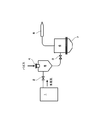
- FIG. 2 is a conceptual diagram of the blasting apparatus.
- FIG. 3 is a process flow diagram of the second embodiment of the present invention.
- FIG. 1 A process flow diagram of Embodiment 1 of the present invention is shown in FIG.
- biomass such as sugarcane bagasse
- biomass lignocellulosic biomass
- This small piece is crushed with steam (200-240 ° C, 1.5-4MPa, 1-15min; preferably 225-230 ° C, 2.5-3Mpa, 1-5min) to saccharify the hemicellulose component in the biomass.
- steam 200-240 ° C, 1.5-4MPa, 1-15min; preferably 225-230 ° C, 2.5-3Mpa, 1-5min
- Biomass (explosion-treated product) processed by the blasting apparatus includes fermentation inhibitors and solid residues such as C5 saccharified liquid derived from hemicellulose, sugar decomposition products, and lignin solution. ⁇ This crushed material is separated into solid and liquid by a filter press or the like, and divided into a blasting solution and a solid residue. The solid residue is further washed with water as appropriate, and the saccharide contained in the solid residue is recovered. The sugar recovery rate is improved by washing with water.
- FIG. 1 a conceptual diagram of the explosion device is shown in FIG.
- the boiler heating temperature is determined from the saturated steam curve so that the predetermined explosion pressure is reached, and the boiler 1 is started up.
- the valves 2 and 3 are “closed”.
- a predetermined amount of bagasse is introduced into the reactor through the inlet 4 and sealed.
- the valve 2 is opened, steam is supplied from the boiler 1 to the reactor 5 and heated.
- the valve 2 After heating for a predetermined time, the valve 2 is “closed” and immediately the valve 3 is “opened” to perform the explosion treatment.
- the solid (solid residue) and the blasting treatment liquid are conveyed to the separator 6 when the pressure is released, where they are separated from the water vapor, and the blasting treatment liquid and the solid are collected in the receiver 7. And the receiver 7 is removed and a blasting process liquid and solid substance are collect
- washing water containing C5-based saccharide is mixed with the explosion treatment liquid to obtain a C5-based saccharified liquid.
- the sugar concentration in the saccharified solution is lowered. Therefore, the C5-based saccharified solution is concentrated using a membrane capable of concentrating C5-based saccharides such as a reverse osmosis membrane.
- the fermentation rate of the C5 saccharified solution is also increased.
- by reducing the amount of the saccharified solution it is possible to downsize the fermenter for the C5-based saccharified solution.
- the C5 saccharified solution is sent to a C5 saccharified solution fermenter, and ethanol is added at 27 to 35 ° C. for 48 to 72 hours by fermentation microorganisms of the C5 saccharified solution (C5 fermented microorganisms such as Pichia tipstipitis). Ferment.
- the C5-based saccharified solution becomes a C5-based fermented solution, and ethanol can be fermented to a maximum ethanol concentration of about 3%.
- the C5-based fermented liquid can be taken out of the plant as it is. It is preferable to carry out saccharification and ethanol fermentation simultaneously with an enzyme and a fermentation microorganism (C6 fermentation microorganism) of a C6 saccharified solution.
- xylo-oligosaccharide when xylo-oligosaccharide is contained in the C5-based saccharified solution, if an enzyme such as xylanase is introduced from the outside, the xylo-oligosaccharide is decomposed into monosaccharide, and the ethanol fermentation rate of the C5-based saccharified solution is further improved. To do.
- the solid residue obtained by the blasting treatment is washed with water to remove saccharides and lignin dissolved product, and then ethanol concentration is 30% or more, preferably 50% or more in ethanol water at room temperature for 0.5 hours to 48 hours, preferably It is immersed for 1 hour to 24 hours, so that the lignin covering the cellulose is dissolved and removed.
- the solid residue is mechanically deethanolated or deethanolized by heating or heating under reduced pressure (if high-concentration ethanol water is used, it may be washed with water and then deethanolated. ).
- C6 fermentation process The solid residue after the deethanol treatment is sent to a C6 saccharification / simultaneous fermentation tank.
- a C6 saccharification / simultaneous fermentation tank it is preferable to add the above-mentioned C5 fermentation broth to produce a slurry having a predetermined solid content concentration (10 to 20%).
- Enzyme and C6 fermenting microorganism for example, Saccharomyces cerevisiae
- ethanol fermentation is carried out at 27 to 35 ° C. for 24 to 48 hours.
- C6 saccharification / simultaneous fermentation process of the present invention it is preferable to produce a slurry using a C5 fermentation liquid instead of water.
- C6 fermenting microorganisms are superior in organic acid resistance and ethanol resistance compared to C5 fermenting microorganisms. Therefore, even if a solid residue is slurried using a C5 fermented liquid, C6 saccharification and simultaneous Fermentation is possible.
- C6-based saccharification / simultaneous fermenter so even if the saccharification reaction of cellulose proceeds, the concentration of C6-based saccharides such as glucose can always be kept low by the fermenting microorganisms. realizable.
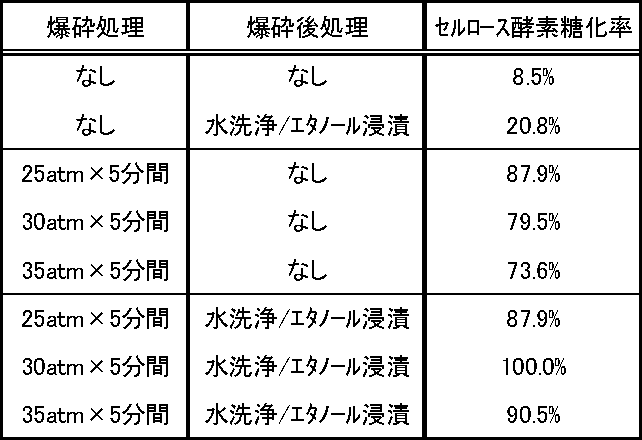
- the enzymatic saccharification rate of cellulose was less than 10% when no explosion treatment was performed and ethanol was not immersed, and about 20% when only ethanol was immersed. Even when blasting at 25 to 35 atm for 5 minutes, the enzymatic saccharification rate of cellulose was 73.6 to 87.9% under the conditions where ethanol was not immersed. However, when ethanol was immersed after the same explosion treatment, 30 atm was obtained. And in the case of 35 atm, the enzymatic saccharification rate of cellulose improved by more than 20%. In particular, under the condition of 30 atm ⁇ 5 minutes, the enzymatic saccharification rate of cellulose was 100%, and the cellulose was completely decomposed.
- the amount of ethanol produced per unit weight of raw material biomass can be about 200 L / ton biomass, which is about twice that of acid hydrolysis using dilute sulfuric acid.
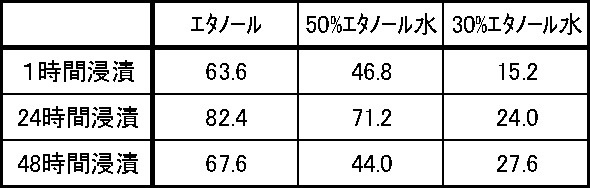
- Ethanol concentration and lignin removal rate The change of the lignin removal rate when the ethanol concentration and the immersion time were changed was examined for 100 g of sugarcane bagasse pieces that were crushed under the condition of 35 atm ⁇ 5 minutes described in 1 above. The lignin removal rate was estimated from the weight change. The results are shown in Table 2. The unit of numerical values in Table 2 is%.
- the lignin removal rate was less than 30% even when the immersion time was increased.
- 50% ethanol water and absolute ethanol the lignin removal rate was highest when immersed for 24 hours.
- the ethanol concentration was preferably 50% or more, and the immersion time was preferably 1 hour or more and 24 hours or less.
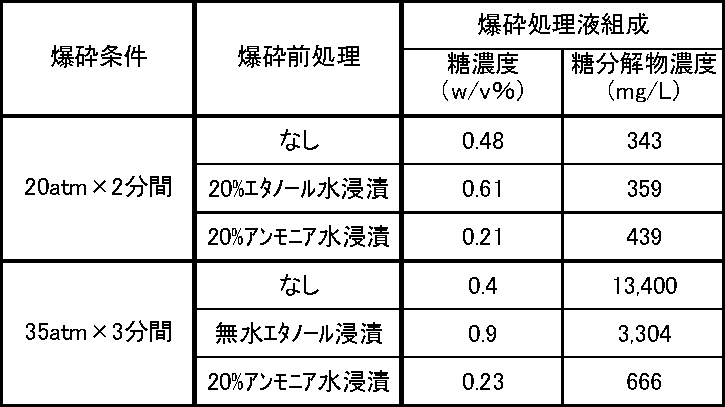
- the concentration of the glycolytic substance was about 1/4 when immersed in absolute ethanol and about 1/20 when immersed in 20% ammonia water.
- the sugar concentration was more than twice that of the case without pretreatment.
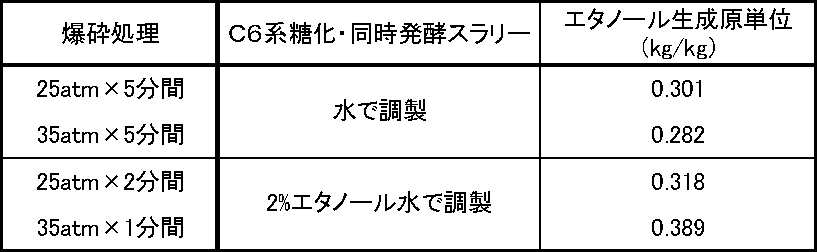
- the C6 fermented slurry was prepared with 2% ethanol water on the assumption that the C5 fermented liquid after removing the C5 fermenting microorganisms was used, but ethanol was initially used as the C6 saccharification / simultaneous fermentation slurry. However, it was confirmed that enzymatic saccharification and simultaneous fermentation were not inhibited.
- biomass such as sugarcane bagasse pieces is blasted using a blasting device, but the blasting device can be replaced with a subcritical (water) device.
- a similar effect can be obtained by hydrolyzing the bagasse pieces in the subcritical state and then rapidly reducing the pressure with a flash device, instead of blasting the bagasse pieces.
- the subcritical water temperature is preferably 160 to 240 ° C., and the treatment time is preferably 1 to 90 minutes.
- the subcritical solvent is not limited to water, and may be an organic acid such as acetic acid (for example, 0.1 M concentration or less) or an ethanol mixed solution.
- Embodiment 3 biomass as a saccharide raw material is refined to an average diameter of 30 to 50 mm or less (preferably 10 mm or less) using a crusher or a pulverizer before saccharification treatment.
- a crusher or a pulverizer before saccharification treatment.
- the biomass is crushed into fine powder of 100 ⁇ m or less by blasting, so if the saccharide raw material is crushed to a size that can be easily handled in a later process. It is not necessary to make the average diameter smaller than 30-50mm before the explosion treatment.
- Embodiment 4 instead of using the C5 fermenting microorganism and the C6 fermenting microorganism, it is also possible to use a fermenting microorganism displaying the enzyme on the surface. That is, when a fermenting microorganism having surface display of xylanase and cellulase as disclosed in Japanese Patent Application Laid-Open No. 2008-193935 is used, the same surface display fermenting microorganism can be input to C5 fermentation and C6 saccharification / simultaneous fermentation. . In this case, there is only one fermentation microorganism culture tank, which leads to a reduction in equipment costs.
- the method for producing ethanol from lignocellulosic biomass of the present invention is particularly useful in the field of bioethanol production using a chemical plant.
Landscapes
- Life Sciences & Earth Sciences (AREA)
- Organic Chemistry (AREA)
- Engineering & Computer Science (AREA)
- Chemical & Material Sciences (AREA)
- Wood Science & Technology (AREA)
- Health & Medical Sciences (AREA)
- Zoology (AREA)
- Bioinformatics & Cheminformatics (AREA)
- Biotechnology (AREA)
- Genetics & Genomics (AREA)
- Microbiology (AREA)
- Biochemistry (AREA)
- General Engineering & Computer Science (AREA)
- General Health & Medical Sciences (AREA)
- Sustainable Development (AREA)
- Biomedical Technology (AREA)
- Molecular Biology (AREA)
- Chemical Kinetics & Catalysis (AREA)
- General Chemical & Material Sciences (AREA)
- Mechanical Engineering (AREA)
- Preparation Of Compounds By Using Micro-Organisms (AREA)
Abstract
Description
リグノセルロース系バイオマスからエタノールを製造する方法であって、
リグノセルロース系バイオマスを爆砕処理するか、亜臨界状態で加水分解した後フラッシュ処理するリグノセルロース分解工程と、
分解工程後の固形残渣をエタノール浸漬してリグニンを除去するリグニン除去工程と、
リグニン除去工程後の固形残渣を、酵素によって糖化し、さらにエタノールへと発酵させるC6系糖化発酵工程と、
を有することを特徴とする方法に関する。
本発明の実施の形態1の工程フロー図を、図1に示す。
まず、サトウキビバガス等のリグノセルロース系バイオマス(以下、「バイオマス」と称する)を破砕機又は粉砕機等により平均径30~50mm以下(好ましくは、10mm以下)の小片とする。この小片を爆砕装置にて水蒸気による爆砕処理(200~240℃、1.5~4MPa、1~15min;好ましくは225~230℃、2.5~3Mpa、1~5min)を行い、バイオマス中のヘミセルロース成分を糖化する。
次に、C5系糖類を含む洗浄水を爆砕処理液と混合し、C5系糖化液とする。洗浄水を混合することにより糖化液中の糖濃度は低下する。そこで、C5系糖化液は、逆浸透膜等のC5系糖類を濃縮できる膜を用いて糖濃縮を行なう。糖濃度を高めることによって、C5系糖化液の発酵速度も増大する。また、糖化液量が減少することにより、C5系糖化液の発酵槽を小型化することも可能となる。
爆砕処理によって得られた固形残渣は、水洗浄されて糖類及びリグニン溶解物が除去された後、エタノール濃度30%以上、好ましくは50%以上エタノール水に常温で0.5時間以上48時間以下、好ましくは1時間以上24時間以下の時間浸漬され、セルロースを被覆しているリグニンが溶解及び除去される。エタノール浸漬後、固形残渣を機械的に脱エタノール処理するか、加熱又は減圧加熱等により脱エタノール処理を行う(高濃度エタノール水を用いる場合には、一旦水洗浄した後に脱エタノール処理してもよい)。
脱エタノール処理後の固形残渣は、C6系糖化・同時発酵槽に送られる。ここで、上述したC5系発酵液を加え、所定の固形分濃度(10~20%)のスラリーを製造することが好ましい。酵素及びC6系発酵微生物(例えば、Saccharomyces cerevisiae)を所定量(糖質原料:酵素=5~2000:1、好ましくは10~1000:1/発酵微生物菌体量は発酵液量に対して0.1w/v%以上3w/v%以下、好ましくは0.3w/v%以上1.5w/v%以下)投入して、27~35℃、24~48時間、エタノール発酵させる。
1辺約30mmのさとうきびバガス小片を原料100gとして、爆砕処理とエタノール浸漬によるリグニン除去とを組み合わせたことによる、C6系糖化・同時発酵工程におけるセルロースの酵素糖化率の変化を調べた。エタノール浸漬を行う場合には、爆砕処理によって得られた固形残渣を水洗浄した後、無水エタノールに室温で1時間浸漬させた。また、セルロースの酵素糖化率は、[((C6系糖類生成量×0.9)/セルロース量)×100]という式で算出した。その結果を、表1に示す。
上記1の35atm×5分間の条件で爆砕処理したさとうきびバガス小片100gを、エタノール濃度及び浸漬時間を変化させた場合のリグニン除去率の変化を調べた。リグニン除去率は、重量変化から推測した。その結果を、表2に示す。なお、表2の数値の単位は、すべて%である。
上記1と同じさとうきびバガス小片100gを、爆砕処理前に無水エタノール、20%エタノール水又は20%アンモニア水に室温で24時間浸漬する前処理を行った。その後、上記1と同様に爆砕処理を行い、爆砕処理液の糖濃度(w/v%)と、有害物質として5-HMF、フルフラール及び有機酸の糖分解物質3種類の合計濃度(mg/L)を測定した。その結果を、表3に示す。なお、糖濃度及び糖分解物質3種類の濃度は、高速液体クロマトグラフィを用いて測定した。
上記1と同じさとうきびバガス小片100gを爆砕処理し、固形残渣を水洗浄した後、無水エタノールに室温で3時間浸漬した。エタノールを水洗浄によって除去し、水又は2%エタノール水を用いてC6系発酵用のスラリーを調製した。セルラーゼ及びC6系発酵微生物(Saccharomyces cerevisiae)を添加し、固形分濃度10%、固形分:酵素=10:1、糖化発酵温度37℃、糖化発酵時間48時間という条件で糖化及びエタノール発酵させた。原料セルロース単位重量あたりに生成されたエタノール重量(エタノール生成原単位:kg/kg)を [爆砕さとうきびバガスから生成したエタノール重量/爆砕さとうきびバガス中のセルロース重量]で算出した。その結果を、表4に示す。
実施の形態1では、爆砕装置を用いてさとうきびバガス小片等のバイオマスを爆砕処理するが、爆砕装置を亜臨界(水)装置に置き換えることができる。例えば、図3に示すように、バガス小片を爆砕処理する替わりに、亜臨界状態でバガス小片を加水分解した後、フラッシュ装置によって急激に減圧することでも同様の効果がある。
実施の形態1では、糖質原料であるバイオマスを、糖化処理する前に破砕機又は粉砕機を用いて平均径30~50mm以下(好ましくは10mm以下)に細かくしているが、バイオマスを25~35atm×5分間以上の条件で爆砕処理する場合には、爆砕によりバイオマスが100μm以下の微粉末に粉砕されることから、糖質原料が後の工程で容易にハンドリングできるサイズに破砕されるならば、爆砕処理前に平均径30~50mm以下に細かくする必要はない。
C5系発酵微生物及びC6系発酵微生物を用いる代わりに、酵素を表層提示している発酵微生物を使用することも可能である。すなわち、特開2008-193935号公報に開示されているようなキシラナーゼ及びセルラーゼを表層提示した発酵微生物を用いると、C5系発酵及びC6系糖化・同時発酵に同じ表層提示発酵微生物が投入可能となる。この場合、発酵微生物培養槽が一つとなり、設備費の削減につながる。
2,3:バルブ
4:投入口
5:反応器
6:セパレータ
7:受器
8:消音器
Claims (7)
- リグノセルロース系バイオマスからエタノールを製造する方法であって、
リグノセルロース系バイオマスを爆砕処理するか、亜臨界状態で加水分解するリグノセルロース分解工程と、
分解工程後の固形残渣をエタノール浸漬してリグニンを除去するリグニン除去工程と
リグニン除去工程後の固形残渣を、酵素によって糖化し、さらにC6系発酵微生物によりエタノールへと発酵させるC6系糖化・同時発酵工程と、
を有することを特徴とする方法。 - 分解工程後の液相を濃縮した後、C5系発酵微生物によってC5系糖類のエタノール発酵を行うC5系発酵工程をさらに有することを特徴とする、請求項1に記載の方法。
- 前記C5系発酵工程後のC5系発酵液から発酵微生物を分離した後、C5系発酵液を前記C6系糖化・同時発酵工程へと供給する、請求項2に記載の方法。
- C5系発酵液から分離されたC5系発酵微生物を再利用する、請求項3に記載の方法。
- 前記分解工程前に、リグノセルロース系バイオマスをエタノール又はアンモニア水に浸漬する浸漬工程をさらに有する、請求項1に記載の方法。
- 前記C6系糖化・同時発酵工程後のC6系発酵液からC6系発酵微生物を分離して再利用する、請求項1に記載の方法。
- C5系発酵微生物及びC6系発酵微生物を用いる代わりに、C5系酵素及びC6系酵素を表層提示した、グルコース及びキシロースをエタノール資化できる発酵微生物を用いる、請求項2に記載の方法。
Priority Applications (4)
| Application Number | Priority Date | Filing Date | Title |
|---|---|---|---|
| US13/393,518 US20120220005A1 (en) | 2009-09-02 | 2009-09-02 | Method for producing ethanol from lignocellulosic biomass |
| BR112012004665A BR112012004665A2 (pt) | 2009-09-02 | 2009-09-02 | "método para produção de etanol a partir de biomassa lignocelulósica" |
| PCT/JP2009/004318 WO2011027389A1 (ja) | 2009-09-02 | 2009-09-02 | リグノセルロース系バイオマスからエタノールを製造する方法 |
| JP2011529688A JP5265013B2 (ja) | 2009-09-02 | 2009-09-02 | リグノセルロース系バイオマスからエタノールを製造する方法 |
Applications Claiming Priority (1)
| Application Number | Priority Date | Filing Date | Title |
|---|---|---|---|
| PCT/JP2009/004318 WO2011027389A1 (ja) | 2009-09-02 | 2009-09-02 | リグノセルロース系バイオマスからエタノールを製造する方法 |
Publications (1)
| Publication Number | Publication Date |
|---|---|
| WO2011027389A1 true WO2011027389A1 (ja) | 2011-03-10 |
Family
ID=43648951
Family Applications (1)
| Application Number | Title | Priority Date | Filing Date |
|---|---|---|---|
| PCT/JP2009/004318 Ceased WO2011027389A1 (ja) | 2009-09-02 | 2009-09-02 | リグノセルロース系バイオマスからエタノールを製造する方法 |
Country Status (4)
| Country | Link |
|---|---|
| US (1) | US20120220005A1 (ja) |
| JP (1) | JP5265013B2 (ja) |
| BR (1) | BR112012004665A2 (ja) |
| WO (1) | WO2011027389A1 (ja) |
Cited By (6)
| Publication number | Priority date | Publication date | Assignee | Title |
|---|---|---|---|---|
| WO2013046623A1 (ja) * | 2011-09-30 | 2013-04-04 | 川崎重工業株式会社 | セルロース系バイオマスを原料とするエタノール製造方法 |
| WO2013046622A1 (ja) * | 2011-09-30 | 2013-04-04 | 川崎重工業株式会社 | セルロース系バイオマスを原料とするエタノール製造方法 |
| JP2013126395A (ja) * | 2011-12-19 | 2013-06-27 | Kawasaki Heavy Ind Ltd | リグノセルロース系バイオマスを原料とするエタノール製造方法及びエタノール製造装置 |
| JP2015503558A (ja) * | 2011-12-30 | 2015-02-02 | レンマティックス, インコーポレイテッドRenmatix, Inc. | C5およびc6単糖を含む組成物 |
| JP2015167535A (ja) * | 2014-03-10 | 2015-09-28 | 王子ホールディングス株式会社 | バイオマスからのフルフラール類、及びエタノールの製造方法 |
| JP5909598B2 (ja) * | 2013-05-28 | 2016-04-26 | アサヒグループホールディングス株式会社 | 選択的発酵方法による粗糖及びエタノールの製造方法 |
Families Citing this family (7)
| Publication number | Priority date | Publication date | Assignee | Title |
|---|---|---|---|---|
| JP5694305B2 (ja) * | 2010-05-12 | 2015-04-01 | 本田技研工業株式会社 | リグノセルロース系バイオマスの処理方法 |
| US9447326B2 (en) | 2012-06-22 | 2016-09-20 | Sundrop Fuels, Inc. | Pretreatment of biomass using steam explosion methods before gasification |
| CN103739384A (zh) * | 2013-12-27 | 2014-04-23 | 中国科学院过程工程研究所 | 枯枝落叶资源化利用的方法 |
| US10223257B2 (en) | 2015-07-27 | 2019-03-05 | International Business Machines Corporation | Multi-section garbage collection |
| US10316336B2 (en) * | 2016-05-26 | 2019-06-11 | Api Intellectual Property Holdings, Llc | Systems and methods for continuously fermenting C5 and C6 saccharides |
| US11193146B2 (en) * | 2019-06-26 | 2021-12-07 | Indian Oil Corporation Limited | Process for second generation ethanol production |
| CN116064687A (zh) * | 2022-12-29 | 2023-05-05 | 西北农林科技大学 | 一种生物质预处理和制备乙醇的方法及其应用 |
Citations (2)
| Publication number | Priority date | Publication date | Assignee | Title |
|---|---|---|---|---|
| JP2005199209A (ja) * | 2004-01-16 | 2005-07-28 | Kanazawa Univ Tlo Inc | 汚染土壌のファイトレメディエーションと有用資源化方法 |
| WO2007043657A1 (ja) * | 2005-10-14 | 2007-04-19 | National University Corporation Kanazawa University | 重金属存在下で有機物質を分解する方法 |
Family Cites Families (5)
| Publication number | Priority date | Publication date | Assignee | Title |
|---|---|---|---|---|
| US6423145B1 (en) * | 2000-08-09 | 2002-07-23 | Midwest Research Institute | Dilute acid/metal salt hydrolysis of lignocellulosics |
| CA2595484A1 (en) * | 2006-08-07 | 2008-02-07 | John Allan Fallavollita | Process for recovery of holocellulose and near-native lignin from biomass |
| US7666637B2 (en) * | 2006-09-05 | 2010-02-23 | Xuan Nghinh Nguyen | Integrated process for separation of lignocellulosic components to fermentable sugars for production of ethanol and chemicals |
| CA2739451A1 (en) * | 2008-10-17 | 2010-04-22 | Mascoma Corporation | Production of pure lignin from lignocellulosic biomass |
| PL2467532T3 (pl) * | 2009-08-24 | 2014-11-28 | Abengoa Bioenergy New Tech Llc | Sposób wytwarzania etanolu i współproduktów z biomasy celulozowej |
-
2009
- 2009-09-02 WO PCT/JP2009/004318 patent/WO2011027389A1/ja not_active Ceased
- 2009-09-02 JP JP2011529688A patent/JP5265013B2/ja not_active Expired - Fee Related
- 2009-09-02 BR BR112012004665A patent/BR112012004665A2/pt not_active Application Discontinuation
- 2009-09-02 US US13/393,518 patent/US20120220005A1/en not_active Abandoned
Patent Citations (2)
| Publication number | Priority date | Publication date | Assignee | Title |
|---|---|---|---|---|
| JP2005199209A (ja) * | 2004-01-16 | 2005-07-28 | Kanazawa Univ Tlo Inc | 汚染土壌のファイトレメディエーションと有用資源化方法 |
| WO2007043657A1 (ja) * | 2005-10-14 | 2007-04-19 | National University Corporation Kanazawa University | 重金属存在下で有機物質を分解する方法 |
Non-Patent Citations (1)
| Title |
|---|
| YOSHITOSHI NAKAMURA: "Bakusai Shori o Mochiita Ethanol Seisan Maeshori Gijutsu", TECHNO INNOVATION, vol. 18, no. 1, 2008, pages 40 - 45 * |
Cited By (7)
| Publication number | Priority date | Publication date | Assignee | Title |
|---|---|---|---|---|
| WO2013046623A1 (ja) * | 2011-09-30 | 2013-04-04 | 川崎重工業株式会社 | セルロース系バイオマスを原料とするエタノール製造方法 |
| WO2013046622A1 (ja) * | 2011-09-30 | 2013-04-04 | 川崎重工業株式会社 | セルロース系バイオマスを原料とするエタノール製造方法 |
| JPWO2013046622A1 (ja) * | 2011-09-30 | 2015-03-26 | 川崎重工業株式会社 | セルロース系バイオマスを原料とするエタノール製造方法 |
| JP2013126395A (ja) * | 2011-12-19 | 2013-06-27 | Kawasaki Heavy Ind Ltd | リグノセルロース系バイオマスを原料とするエタノール製造方法及びエタノール製造装置 |
| JP2015503558A (ja) * | 2011-12-30 | 2015-02-02 | レンマティックス, インコーポレイテッドRenmatix, Inc. | C5およびc6単糖を含む組成物 |
| JP5909598B2 (ja) * | 2013-05-28 | 2016-04-26 | アサヒグループホールディングス株式会社 | 選択的発酵方法による粗糖及びエタノールの製造方法 |
| JP2015167535A (ja) * | 2014-03-10 | 2015-09-28 | 王子ホールディングス株式会社 | バイオマスからのフルフラール類、及びエタノールの製造方法 |
Also Published As
| Publication number | Publication date |
|---|---|
| US20120220005A1 (en) | 2012-08-30 |
| JP5265013B2 (ja) | 2013-08-14 |
| BR112012004665A2 (pt) | 2017-06-13 |
| JPWO2011027389A1 (ja) | 2013-01-31 |
Similar Documents
| Publication | Publication Date | Title |
|---|---|---|
| JP5265013B2 (ja) | リグノセルロース系バイオマスからエタノールを製造する方法 | |
| JP4804457B2 (ja) | エタノールの製造方法 | |
| EP2449092B1 (en) | Biomass hydrolysis process | |
| JP5325793B2 (ja) | リグニンを除去するために、アルカリ溶液で固体リグノセルロース材料を処理するステップを含む、固体リグノセルロース材料からのエタノールの発酵生産のための方法 | |
| JPWO2008050740A1 (ja) | セルロース系バイオマスの糖化分解方法及び糖化分解装置 | |
| JP4522797B2 (ja) | リグノセルロースの前処理方法及びエタノール製造方法 | |
| JP2014506451A (ja) | リグニン及び他の生物学的生成物を草本植物から酵素によって単離するプロセス及びシステム | |
| EP2931904A1 (en) | Process for the conversion of cellulosic feedstock materials | |
| WO2012019305A1 (en) | Method for dilute acid pretreatment of l1gnocellulosic feedstocks | |
| BRPI0904538B1 (pt) | Processo de tratamento de biomassa vegetal | |
| Thanapimmetha et al. | A comparison of methods of ethanol production from sweet sorghum bagasse | |
| JP2010253348A (ja) | バイオマスの加水分解方法、および、エタノールの製造方法 | |
| Hashem et al. | Recycling rice straw into biofuel | |
| KR101039792B1 (ko) | 바이오 연료 및 바이오 화학물질 제조용 전처리 장치, 및 이를 이용한 전처리 공정과 바이오 연료 및 바이오 화학물질의 제조 공정 | |
| EP3914723A1 (fr) | Procédé de traitement d'une biomasse lignocellulosique | |
| JP5504397B2 (ja) | エタノール製造方法 | |
| CA3108308A1 (en) | Acid bisulfite pretreatment | |
| JP5700619B2 (ja) | アルコールの製造方法 | |
| CN106471127B (zh) | Ibe发酵方法 | |
| JP2014158437A (ja) | リグノセルロース系バイオマスの糖化液、及びその製造方法と使用方法 | |
| CN110272927A (zh) | 一种利用酮醇类预处理剂预处理木质纤维素的方法 | |
| JP2007151433A (ja) | リグノセルロースの前処理方法及びエタノール製造方法 | |
| WO2011125992A1 (ja) | 植物バイオマスの処理方法、植物バイオマスからの糖の製造方法、植物バイオマスからのアルコール及び/又は有機酸の製造方法 | |
| US20080153144A1 (en) | Method for converting herbaceous plant fibers into fuel alcohol | |
| Gill et al. | Sequential fermentation of organosolv pretreated corn stover for improved cellulose hydrolysis and bioethanol yield |
Legal Events
| Date | Code | Title | Description |
|---|---|---|---|
| 121 | Ep: the epo has been informed by wipo that ep was designated in this application |
Ref document number: 09848920 Country of ref document: EP Kind code of ref document: A1 |
|
| WWE | Wipo information: entry into national phase |
Ref document number: 2011529688 Country of ref document: JP |
|
| NENP | Non-entry into the national phase |
Ref country code: DE |
|
| WWE | Wipo information: entry into national phase |
Ref document number: 13393518 Country of ref document: US |
|
| 122 | Ep: pct application non-entry in european phase |
Ref document number: 09848920 Country of ref document: EP Kind code of ref document: A1 |
|
| REG | Reference to national code |
Ref country code: BR Ref legal event code: B01A Ref document number: 112012004665 Country of ref document: BR |
|
| ENP | Entry into the national phase |
Ref document number: 112012004665 Country of ref document: BR Kind code of ref document: A2 Effective date: 20120301 |