WO2010052852A1 - 芳香族アミン誘導体及びそれを用いた有機エレクトロルミネッセンス素子 - Google Patents
芳香族アミン誘導体及びそれを用いた有機エレクトロルミネッセンス素子 Download PDFInfo
- Publication number
- WO2010052852A1 WO2010052852A1 PCT/JP2009/005689 JP2009005689W WO2010052852A1 WO 2010052852 A1 WO2010052852 A1 WO 2010052852A1 JP 2009005689 W JP2009005689 W JP 2009005689W WO 2010052852 A1 WO2010052852 A1 WO 2010052852A1
- Authority
- WO
- WIPO (PCT)
- Prior art keywords
- group
- substituted
- unsubstituted
- carbon atoms
- formula
- Prior art date
- Legal status (The legal status is an assumption and is not a legal conclusion. Google has not performed a legal analysis and makes no representation as to the accuracy of the status listed.)
- Ceased
Links
- 0 C*(C1C=C(C)C=C[C@]1C1=CC)C1=CC(C)=C Chemical compound C*(C1C=C(C)C=C[C@]1C1=CC)C1=CC(C)=C 0.000 description 5
Classifications
-
- H—ELECTRICITY
- H10—SEMICONDUCTOR DEVICES; ELECTRIC SOLID-STATE DEVICES NOT OTHERWISE PROVIDED FOR
- H10K—ORGANIC ELECTRIC SOLID-STATE DEVICES
- H10K85/00—Organic materials used in the body or electrodes of devices covered by this subclass
- H10K85/60—Organic compounds having low molecular weight
- H10K85/615—Polycyclic condensed aromatic hydrocarbons, e.g. anthracene
-
- H—ELECTRICITY
- H10—SEMICONDUCTOR DEVICES; ELECTRIC SOLID-STATE DEVICES NOT OTHERWISE PROVIDED FOR
- H10K—ORGANIC ELECTRIC SOLID-STATE DEVICES
- H10K85/00—Organic materials used in the body or electrodes of devices covered by this subclass
- H10K85/40—Organosilicon compounds, e.g. TIPS pentacene
-
- C—CHEMISTRY; METALLURGY
- C07—ORGANIC CHEMISTRY
- C07F—ACYCLIC, CARBOCYCLIC OR HETEROCYCLIC COMPOUNDS CONTAINING ELEMENTS OTHER THAN CARBON, HYDROGEN, HALOGEN, OXYGEN, NITROGEN, SULFUR, SELENIUM OR TELLURIUM
- C07F7/00—Compounds containing elements of Groups 4 or 14 of the Periodic Table
- C07F7/02—Silicon compounds
- C07F7/08—Compounds having one or more C—Si linkages
- C07F7/0803—Compounds with Si-C or Si-Si linkages
- C07F7/081—Compounds with Si-C or Si-Si linkages comprising at least one atom selected from the elements N, O, halogen, S, Se or Te
- C07F7/0812—Compounds with Si-C or Si-Si linkages comprising at least one atom selected from the elements N, O, halogen, S, Se or Te comprising a heterocyclic ring
-
- C—CHEMISTRY; METALLURGY
- C07—ORGANIC CHEMISTRY
- C07C—ACYCLIC OR CARBOCYCLIC COMPOUNDS
- C07C15/00—Cyclic hydrocarbons containing only six-membered aromatic rings as cyclic parts
- C07C15/20—Polycyclic condensed hydrocarbons
- C07C15/27—Polycyclic condensed hydrocarbons containing three rings
- C07C15/28—Anthracenes
-
- C—CHEMISTRY; METALLURGY
- C07—ORGANIC CHEMISTRY
- C07F—ACYCLIC, CARBOCYCLIC OR HETEROCYCLIC COMPOUNDS CONTAINING ELEMENTS OTHER THAN CARBON, HYDROGEN, HALOGEN, OXYGEN, NITROGEN, SULFUR, SELENIUM OR TELLURIUM
- C07F7/00—Compounds containing elements of Groups 4 or 14 of the Periodic Table
- C07F7/02—Silicon compounds
- C07F7/08—Compounds having one or more C—Si linkages
- C07F7/0803—Compounds with Si-C or Si-Si linkages
- C07F7/081—Compounds with Si-C or Si-Si linkages comprising at least one atom selected from the elements N, O, halogen, S, Se or Te
-
- C—CHEMISTRY; METALLURGY
- C09—DYES; PAINTS; POLISHES; NATURAL RESINS; ADHESIVES; COMPOSITIONS NOT OTHERWISE PROVIDED FOR; APPLICATIONS OF MATERIALS NOT OTHERWISE PROVIDED FOR
- C09K—MATERIALS FOR MISCELLANEOUS APPLICATIONS, NOT PROVIDED FOR ELSEWHERE
- C09K11/00—Luminescent materials, e.g. electroluminescent or chemiluminescent
- C09K11/06—Luminescent materials, e.g. electroluminescent or chemiluminescent containing organic luminescent materials
-
- H—ELECTRICITY
- H10—SEMICONDUCTOR DEVICES; ELECTRIC SOLID-STATE DEVICES NOT OTHERWISE PROVIDED FOR
- H10K—ORGANIC ELECTRIC SOLID-STATE DEVICES
- H10K85/00—Organic materials used in the body or electrodes of devices covered by this subclass
- H10K85/60—Organic compounds having low molecular weight
- H10K85/615—Polycyclic condensed aromatic hydrocarbons, e.g. anthracene
- H10K85/622—Polycyclic condensed aromatic hydrocarbons, e.g. anthracene containing four rings, e.g. pyrene
-
- H—ELECTRICITY
- H10—SEMICONDUCTOR DEVICES; ELECTRIC SOLID-STATE DEVICES NOT OTHERWISE PROVIDED FOR
- H10K—ORGANIC ELECTRIC SOLID-STATE DEVICES
- H10K85/00—Organic materials used in the body or electrodes of devices covered by this subclass
- H10K85/60—Organic compounds having low molecular weight
- H10K85/615—Polycyclic condensed aromatic hydrocarbons, e.g. anthracene
- H10K85/626—Polycyclic condensed aromatic hydrocarbons, e.g. anthracene containing more than one polycyclic condensed aromatic rings, e.g. bis-anthracene
-
- H—ELECTRICITY
- H10—SEMICONDUCTOR DEVICES; ELECTRIC SOLID-STATE DEVICES NOT OTHERWISE PROVIDED FOR
- H10K—ORGANIC ELECTRIC SOLID-STATE DEVICES
- H10K85/00—Organic materials used in the body or electrodes of devices covered by this subclass
- H10K85/60—Organic compounds having low molecular weight
- H10K85/631—Amine compounds having at least two aryl rest on at least one amine-nitrogen atom, e.g. triphenylamine
- H10K85/633—Amine compounds having at least two aryl rest on at least one amine-nitrogen atom, e.g. triphenylamine comprising polycyclic condensed aromatic hydrocarbons as substituents on the nitrogen atom
-
- C—CHEMISTRY; METALLURGY
- C07—ORGANIC CHEMISTRY
- C07C—ACYCLIC OR CARBOCYCLIC COMPOUNDS
- C07C2603/00—Systems containing at least three condensed rings
- C07C2603/02—Ortho- or ortho- and peri-condensed systems
- C07C2603/04—Ortho- or ortho- and peri-condensed systems containing three rings
- C07C2603/22—Ortho- or ortho- and peri-condensed systems containing three rings containing only six-membered rings
- C07C2603/24—Anthracenes; Hydrogenated anthracenes
-
- C—CHEMISTRY; METALLURGY
- C07—ORGANIC CHEMISTRY
- C07C—ACYCLIC OR CARBOCYCLIC COMPOUNDS
- C07C2603/00—Systems containing at least three condensed rings
- C07C2603/02—Ortho- or ortho- and peri-condensed systems
- C07C2603/40—Ortho- or ortho- and peri-condensed systems containing four condensed rings
- C07C2603/42—Ortho- or ortho- and peri-condensed systems containing four condensed rings containing only six-membered rings
- C07C2603/50—Pyrenes; Hydrogenated pyrenes
-
- C—CHEMISTRY; METALLURGY
- C09—DYES; PAINTS; POLISHES; NATURAL RESINS; ADHESIVES; COMPOSITIONS NOT OTHERWISE PROVIDED FOR; APPLICATIONS OF MATERIALS NOT OTHERWISE PROVIDED FOR
- C09K—MATERIALS FOR MISCELLANEOUS APPLICATIONS, NOT PROVIDED FOR ELSEWHERE
- C09K2211/00—Chemical nature of organic luminescent or tenebrescent compounds
- C09K2211/10—Non-macromolecular compounds
- C09K2211/1003—Carbocyclic compounds
- C09K2211/1007—Non-condensed systems
-
- C—CHEMISTRY; METALLURGY
- C09—DYES; PAINTS; POLISHES; NATURAL RESINS; ADHESIVES; COMPOSITIONS NOT OTHERWISE PROVIDED FOR; APPLICATIONS OF MATERIALS NOT OTHERWISE PROVIDED FOR
- C09K—MATERIALS FOR MISCELLANEOUS APPLICATIONS, NOT PROVIDED FOR ELSEWHERE
- C09K2211/00—Chemical nature of organic luminescent or tenebrescent compounds
- C09K2211/10—Non-macromolecular compounds
- C09K2211/1003—Carbocyclic compounds
- C09K2211/1011—Condensed systems
-
- C—CHEMISTRY; METALLURGY
- C09—DYES; PAINTS; POLISHES; NATURAL RESINS; ADHESIVES; COMPOSITIONS NOT OTHERWISE PROVIDED FOR; APPLICATIONS OF MATERIALS NOT OTHERWISE PROVIDED FOR
- C09K—MATERIALS FOR MISCELLANEOUS APPLICATIONS, NOT PROVIDED FOR ELSEWHERE
- C09K2211/00—Chemical nature of organic luminescent or tenebrescent compounds
- C09K2211/10—Non-macromolecular compounds
- C09K2211/1003—Carbocyclic compounds
- C09K2211/1014—Carbocyclic compounds bridged by heteroatoms, e.g. N, P, Si or B
-
- H—ELECTRICITY
- H10—SEMICONDUCTOR DEVICES; ELECTRIC SOLID-STATE DEVICES NOT OTHERWISE PROVIDED FOR
- H10K—ORGANIC ELECTRIC SOLID-STATE DEVICES
- H10K50/00—Organic light-emitting devices
- H10K50/10—OLEDs or polymer light-emitting diodes [PLED]
- H10K50/11—OLEDs or polymer light-emitting diodes [PLED] characterised by the electroluminescent [EL] layers
Definitions
- the present invention relates to an aromatic amine derivative.
- the present invention also relates to an organic electroluminescence device using an aromatic amine derivative.
- Organic electroluminescence (EL) devices using organic substances are promising for use as solid-state, inexpensive, large-area full-color display devices, and many developments have been made.
- an EL element is composed of a light emitting layer and a pair of counter electrodes sandwiching the layer.
- light emission when an electric field is applied between both electrodes, electrons are injected from the cathode side and holes are injected from the anode side.
- this is a phenomenon in which electrons recombine with holes in the light emitting layer to generate an excited state, and energy is emitted as light when the excited state returns to the ground state.
- organic EL elements have a higher driving voltage and lower light emission luminance and light emission efficiency than inorganic light-emitting diodes. Further, the characteristic deterioration has been remarkably not put into practical use.
- organic materials constituting organic EL elements As an organic material constituting the organic EL element, for example, a styryl compound having an aromatic amine has been studied (for example, see Patent Document 1 or 2).
- Patent Document 1 or 2 As an organic material constituting the organic EL element, it has been reported that luminous efficiency and lifetime are improved. However, further improvement in luminous efficiency and luminous lifetime is required.
- An object of the present invention is to provide an organic material capable of improving the light emission efficiency and light emission lifetime of an organic EL element.
- an aromatic amine derivative having a specific structure and having a substituted or unsubstituted silyl group improves the luminous efficiency and lifetime of an organic EL device. It was.
- the present invention has been completed based on such findings. According to the present invention, the following aromatic amine derivatives and the like are provided. 1.
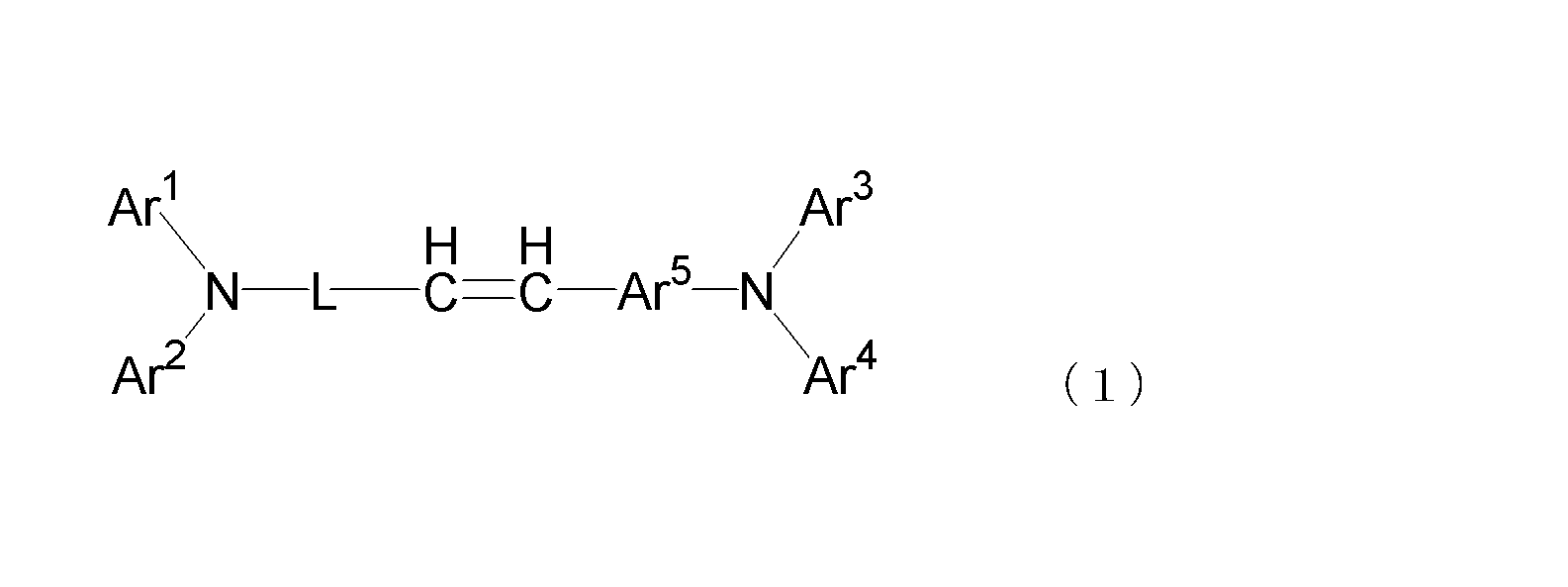
- Ar 1 to Ar 4 are each independently a substituted or unsubstituted aryl group having 6 to 20 nuclear carbon atoms, or a substituted or unsubstituted heteroaryl group having 5 to 20 nuclear carbon atoms, and Ar 1 to Ar 4 At least one of 4 has a substituted or unsubstituted silyl group.
- Ar 5 is a substituted or unsubstituted arylene group having 6 to 20 nuclear carbon atoms, or a substituted or unsubstituted heteroarylene group having 5 to 20 nuclear carbon atoms.
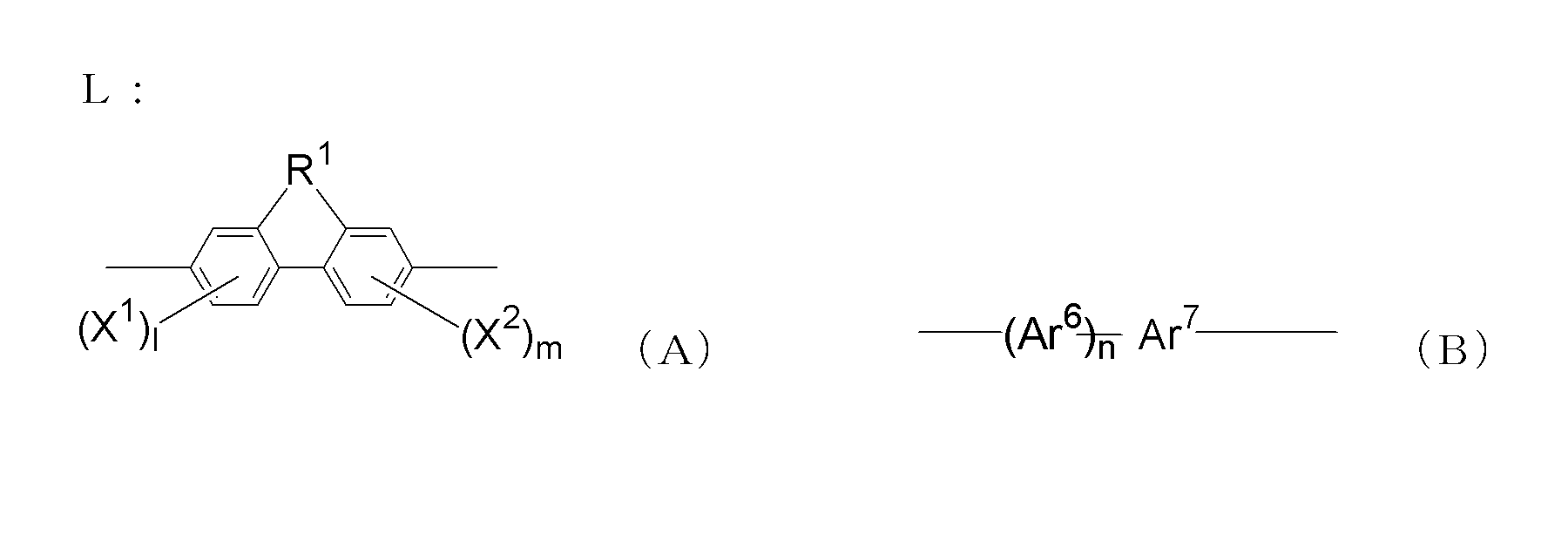
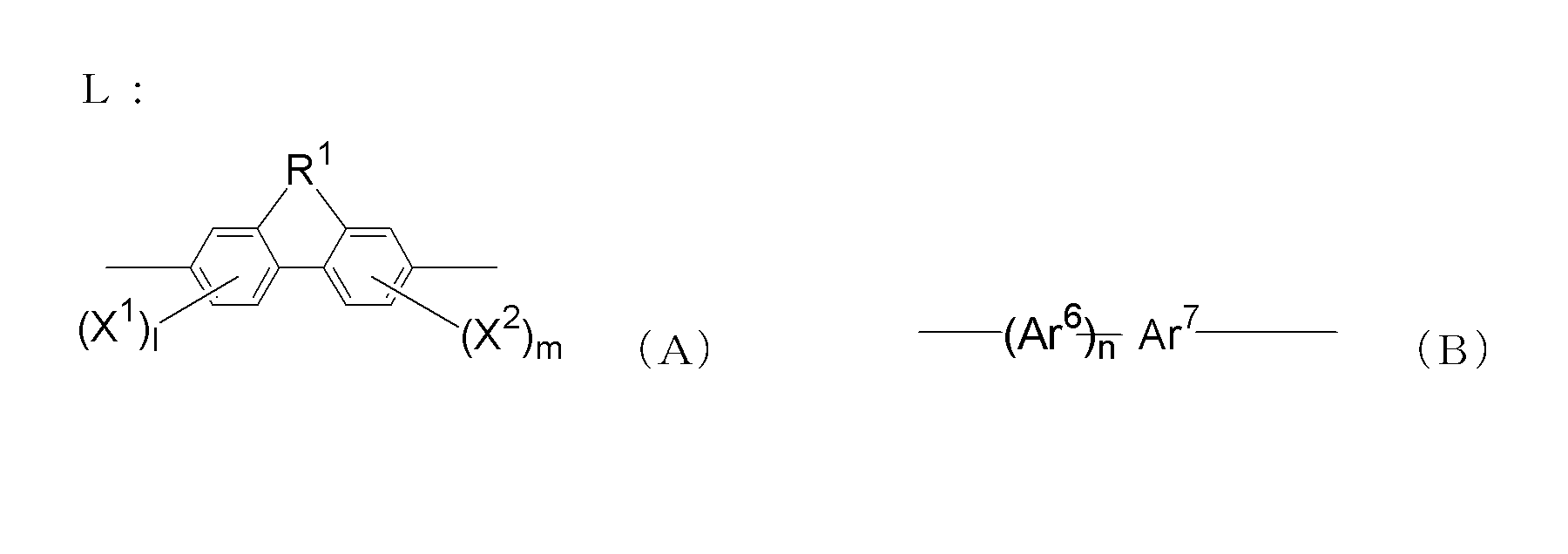
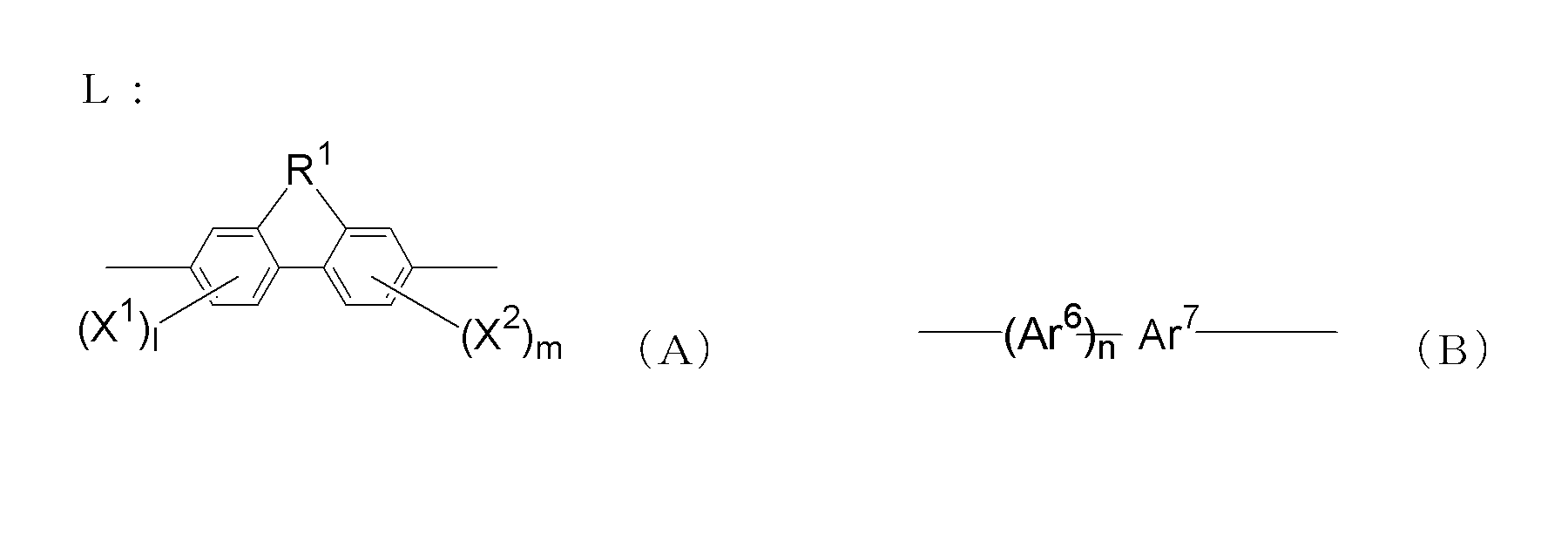
- L is a group represented by the following formula (A) or (B).
- X 1 and X 2 are each a substituent, l and m are each an integer of 0 to 3, and R 1 is a substituted or unsubstituted alkylene group having 1 to 3 carbon atoms.
- Ar 6 and Ar 7 are each independently a substituted or unsubstituted arylene group having 6 to 20 nuclear carbon atoms or a substituted or unsubstituted heteroarylene group having 5 to 20 nuclear carbon atoms, and n is 1 to 3, Ar 6 and Ar 7 may combine with each other to form an aromatic ring. However, the case where Ar 5 and Ar 7 are simultaneously substituted or unsubstituted phenylene groups is excluded. )] 2.
- the aromatic amine derivative according to 1, wherein L in the formula (1) is a group represented by the formula (A). 3. 3. The aromatic amine derivative according to 2, wherein R 1 in the formula (A) is an alkylene group having 1 to 3 carbon atoms having an alkyl group as a substituent. 4). 2. The aromatic amine derivative according to 1, wherein L in the formula (1) is a group represented by the formula (B). 5). 4. The aromatic amine derivative according to 4, wherein n in the formula (B) is 1. 6). 6. The aromatic amine derivative according to any one of 1 to 5, which is a doping material for an organic electroluminescence device. 7).
- At least one of the organic thin film layers is any one of 1 to 5
- the light emitting layer contains the aromatic amine derivative.
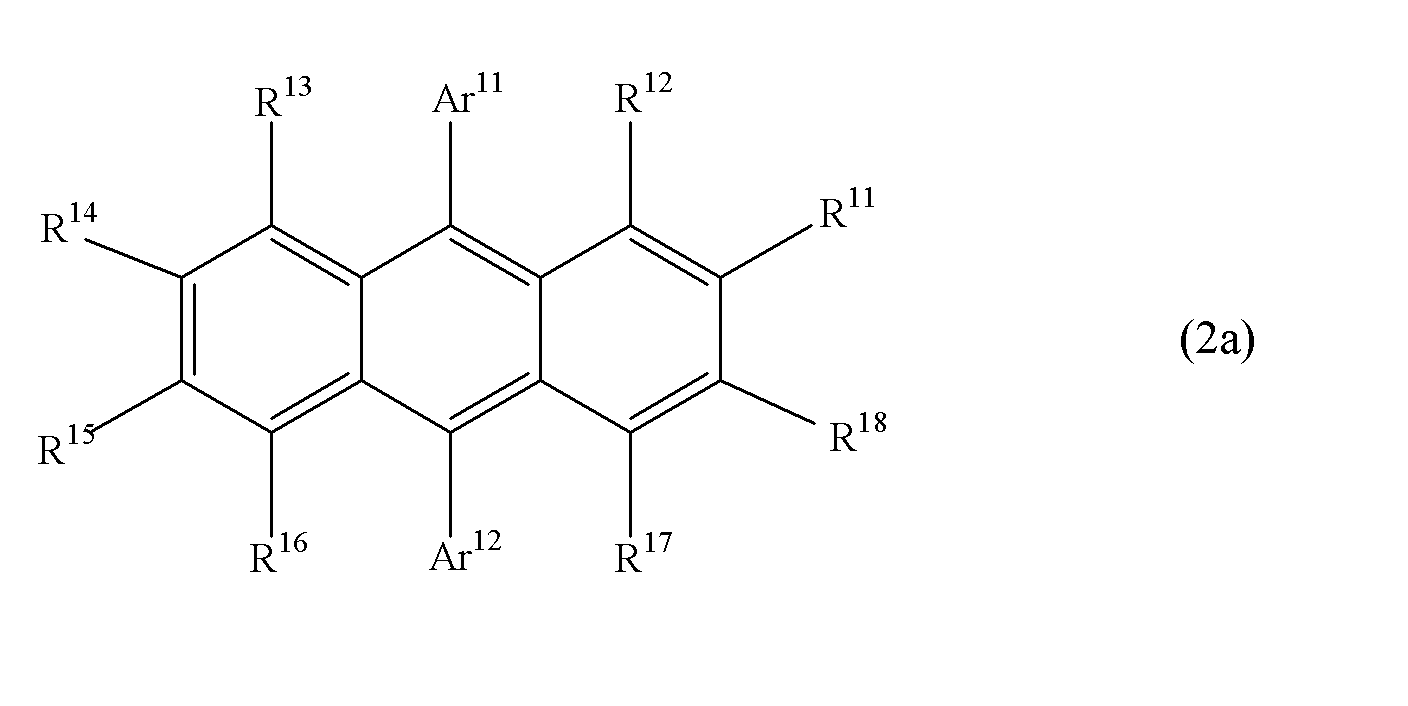
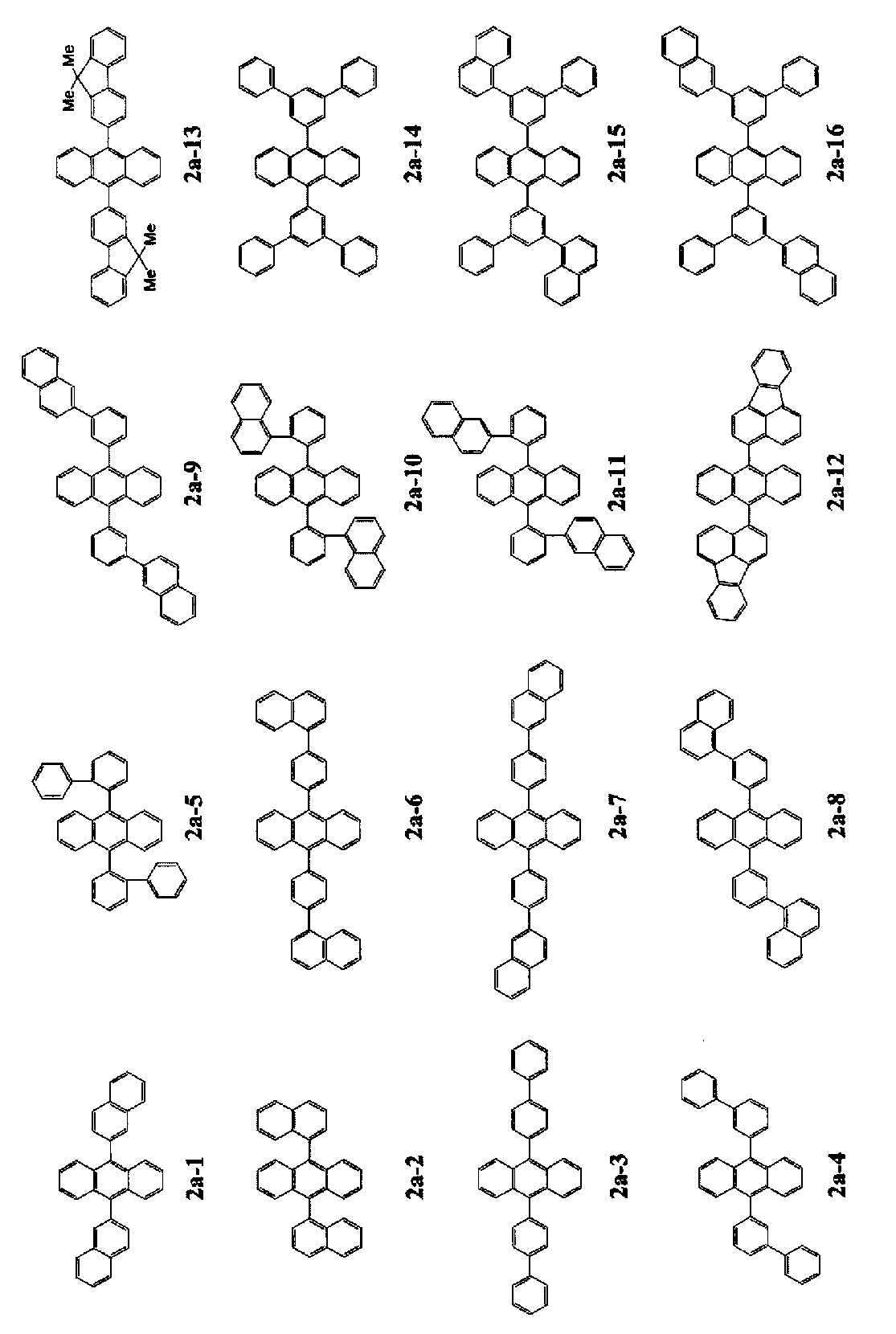
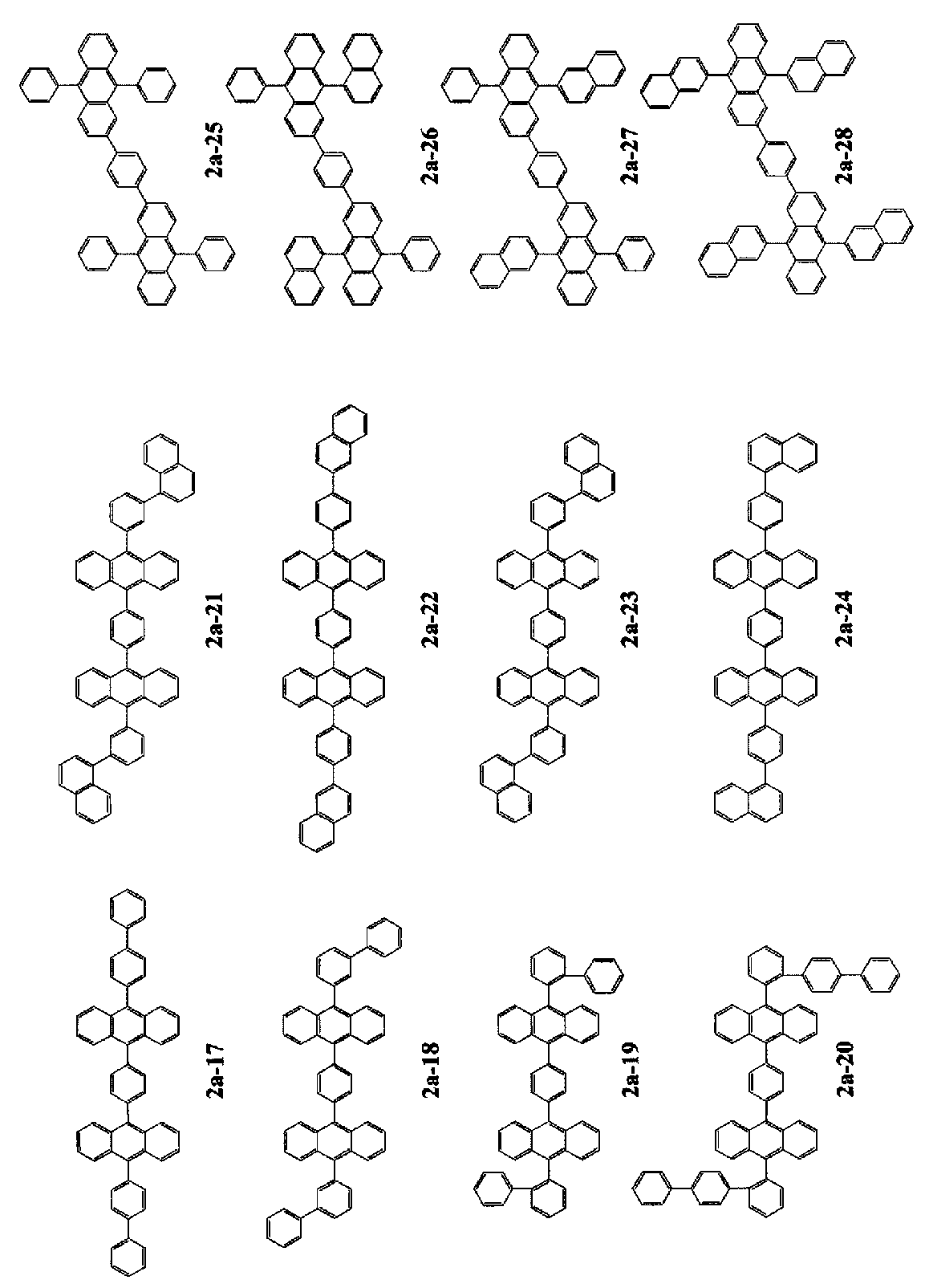
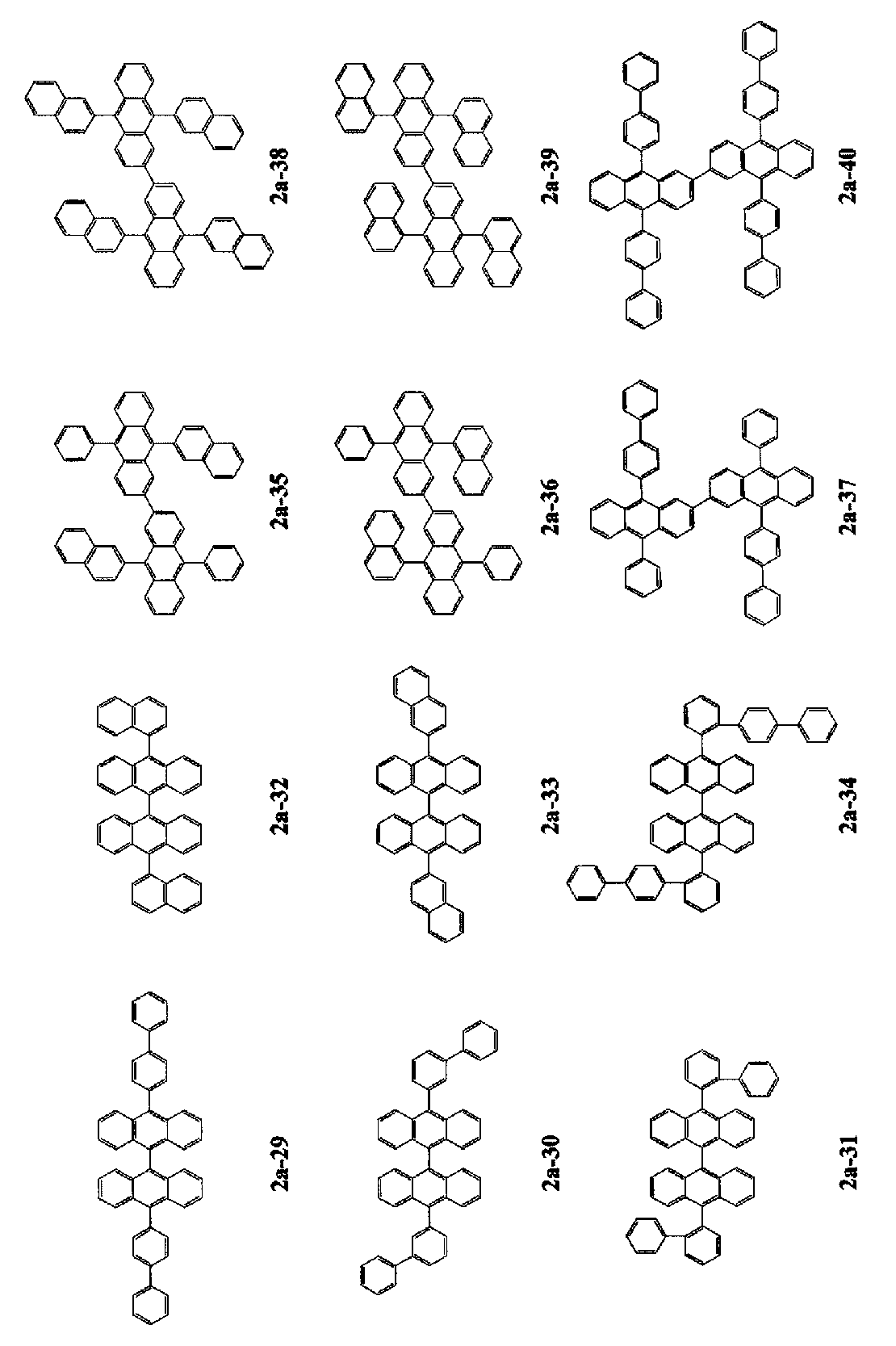
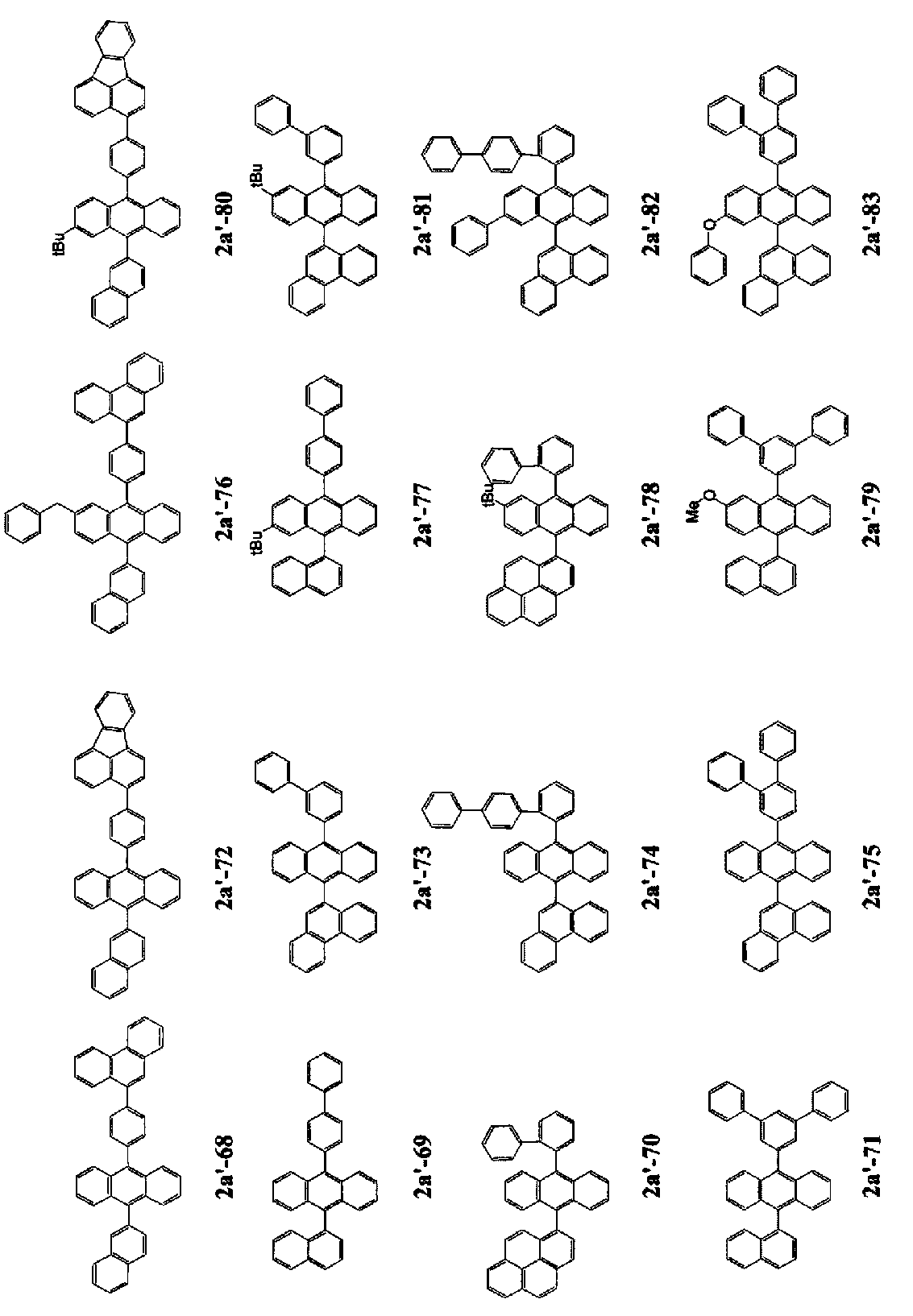
- the light emitting layer contains the aromatic amine derivative and a compound having a structure represented by the following formula (2a) having an anthracene skeleton.
- Ar 11 and Ar 12 are each independently a group derived from a substituted or unsubstituted aromatic ring having 6 to 20 carbon atoms, and R 11 to R 18 are each independently a hydrogen atom.
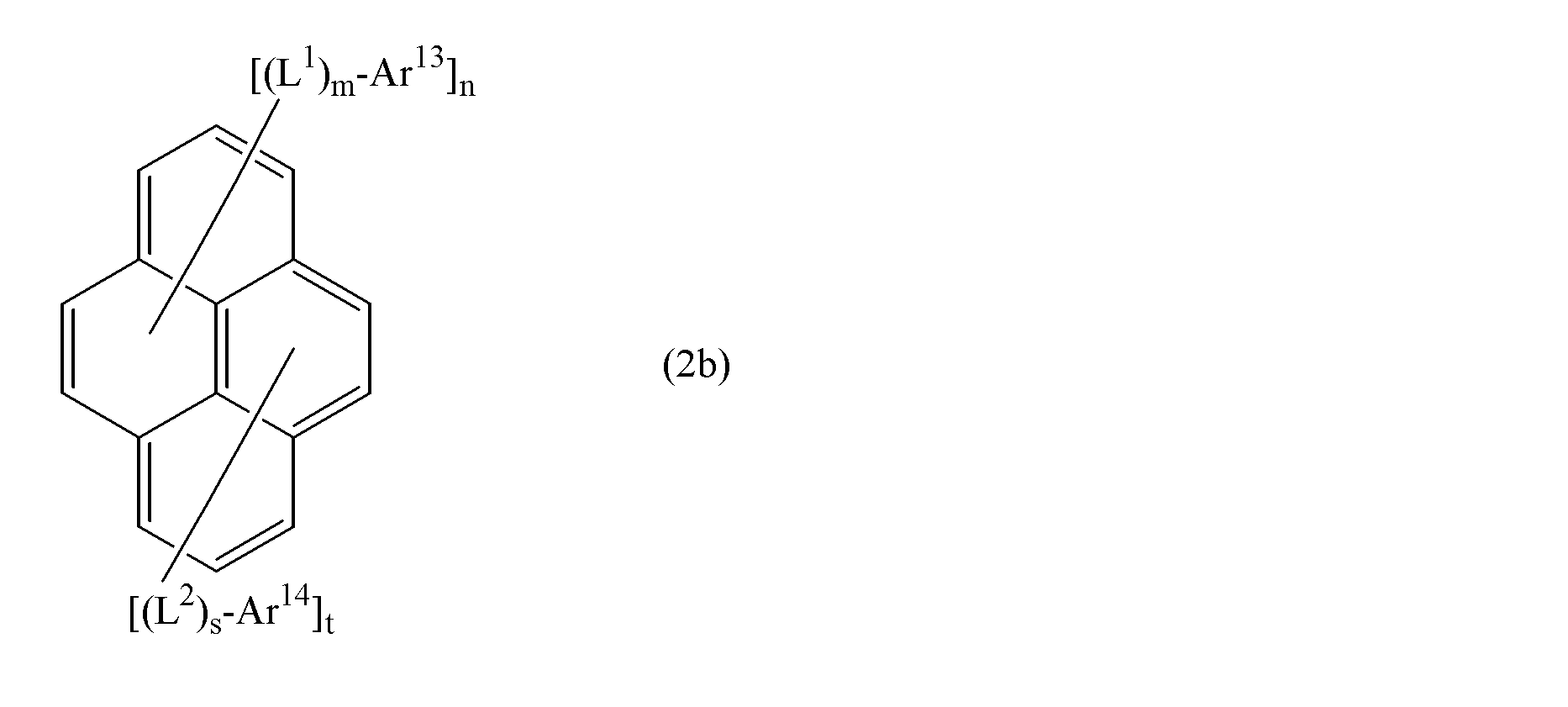
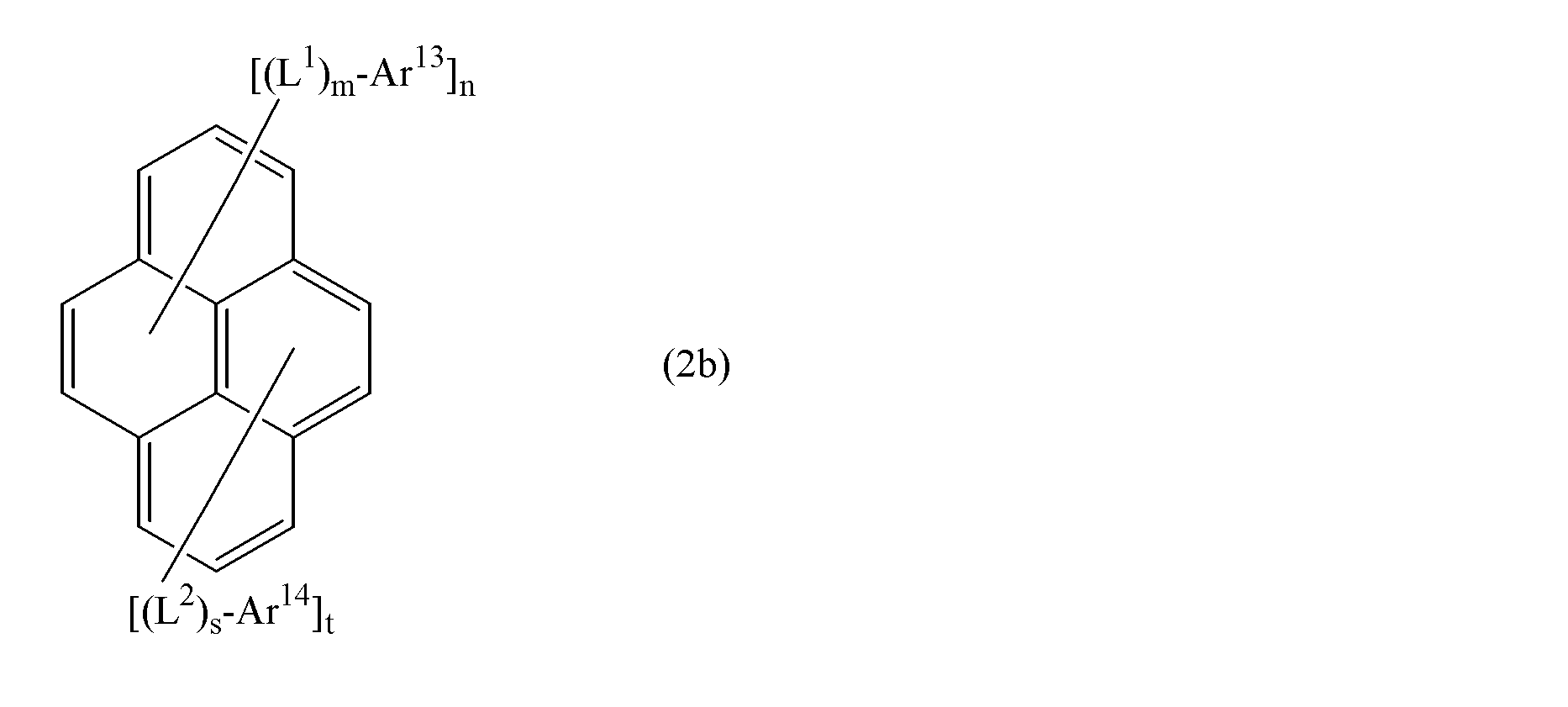
- Ar 13 and Ar 14 are each independently a substituted or unsubstituted aryl group having 6 to 50 carbon atoms;
- L 1 and L 2 are each independently a substituted or unsubstituted phenylene group;
- m is an integer of 0 to 2
- n is an integer of 1 to 4
- s Is an integer from 0 to 2
- t is an integer from 0 to 4.
- L 1 or Ar 13 is bonded to any of the 1-5 positions of pyrene, and L 2 or Ar 14 is any of the 6-10 positions of pyrene.
- the organic electroluminescent material comprises a host material and a dopant material; and
- the dopant material is an aromatic amine derivative according to any one of 1 to 5, and the host material is a compound represented by the formula (2a) according to 9 and a formula (2b) according to 10.
- the aromatic amine derivative effective in the improvement of the luminous efficiency and the light emission lifetime of an organic EL element can be provided.
- the organic EL device of the present invention has high luminous efficiency and is not easily deteriorated even when used for a long time, and has a long life.
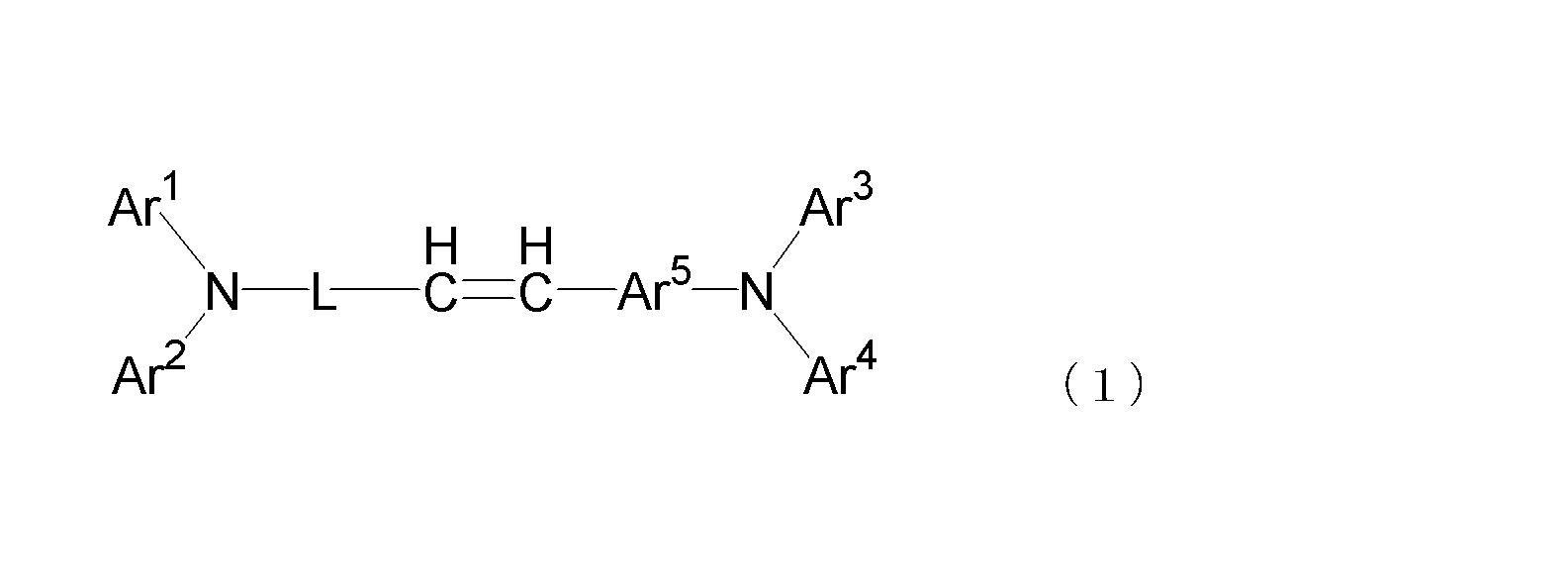
- the aromatic amine derivative of the present invention is a compound represented by the following formula (1).
- Ar 1 to Ar 4 are each independently a substituted or unsubstituted aryl group having 6 to 20 (preferably 6 to 14, more preferably 6 to 10) nuclear carbon atoms, An unsubstituted heteroaryl group having 5 to 20 (preferably 5 to 10, more preferably 5 to 8) nuclear carbon atoms, and at least one of Ar 1 to Ar 4 has a substituted or unsubstituted silyl group .
- Ar 5 represents a substituted or unsubstituted arylene group having 6 to 20 (preferably 6 to 14, more preferably 6 to 10) nuclear carbon atoms, or a substituted or unsubstituted nuclear carbon number of 5 to 20 (preferably 5). To 10 and more preferably 5 to 8) heteroarylene groups.
- Examples of the substituted or unsubstituted aryl group having 6 to 20 carbon atoms represented by Ar 1 to Ar 4 include a phenyl group, a 2-methylphenyl group, a 3-methylphenyl group, a 4-methylphenyl group, and 2, 4- Dimethylphenyl group, 2,3-dimethylphenyl group, 4-ethylphenyl group, 4-isopropylphenyl group, 4-cyclopentylphenyl group, 4-cyclohexylphenyl group, 3-methoxyphenyl group, biphenyl group, 3-phenylphenyl group 4-methylbiphenyl group, 4-ethylbiphenyl group, 4-cyclohexylbiphenyl group, terphenyl group, 3,5-dichlorophenyl group, naphthyl group, 5-methylnaphthyl group, 1-naphthyl group, 2-naphthyl group, anthryl Group, pyren
- Examples of the substituted or unsubstituted heteroaryl group having 5 to 20 carbon atoms represented by Ar 1 to Ar 4 include imidazole, benzimidazole, pyrrole, furan, benzofuran, thiophene, benzothiophene, oxadiazoline, indoline, carbazole, Residues such as pyridine, quinoline, isoquinoline, benzoquinone, pyrarodine, imidazolidine, piperidine, dibenzofuran, benzoxazole and the like can be mentioned.
- At least one of Ar 1 to Ar 4 has a substituted or unsubstituted silyl group.
- the substituted silyl group include a trimethylsilyl group, a triethylsilyl group, a t-butyldimethylsilyl group, a vinyldimethylsilyl group, a propyldimethylsilyl group, a triphenylsilyl group, a triisopropylsilyl group, and preferably a trimethylsilyl group, Examples thereof include a triethylsilyl group, a t-butyldimethylsilyl group, a propyldimethylsilyl group, and a triisopropylsilyl group.
- examples of the substituent include the same groups as those shown for X 1 and X 2 in formula (A) described later. Hereinafter, the same applies to the substituent when each group in formula (1) has a substituent.
- Examples of the arylene group and heteroarylene group of Ar 5 include a divalent group of the aryl group or heteroaryl group described in the above Ar 1 to Ar 4 .
- L is a group represented by the following formula (A) or (B).
- X 1 and X 2 each represent a substituent.
- the substituent include a substituted or unsubstituted aryl group having 6 to 50 carbon atoms (preferably 6 to 20, more preferably 6 to 14), a substituted or unsubstituted carbon group having 4 to 50 carbon atoms (preferably 4 to 20 carbon atoms, More preferably 4 to 14) heteroaryl group, substituted or unsubstituted alkyl group having 1 to 50 carbon atoms (preferably 1 to 20, more preferably 1 to 12, particularly preferably 1 to 8), substituted or unsubstituted A substituted cycloalkyl group having 3 to 50 carbon atoms (preferably 3 to 20, more preferably 3 to 14 carbon atoms), a substituted or unsubstituted carbon atom having 1 to 50 carbon atoms (preferably 1 to 20, more preferably 1 to 12, Particularly preferably 1 to 8) an alkoxy group, a substituted or unsubstituted aralkyl group (the aryl
- L and m are each an integer of 0 to 3 (preferably 0 to 1).
- R 1 is a substituted or unsubstituted alkylene group having 1 to 3 carbon atoms.
- a methylene group, ethylene group, propylene group, dimethylmethylene group, diethylmethylene group, diphenylmethylene group and the like can be mentioned.
- R 1 preferably has an alkyl group as a substituent, and specific examples thereof include a dimethylmethylene group and a diethylmethylene group.
- Ar 6 and Ar 7 are each independently a substituted or unsubstituted arylene group having 6 to 20 (preferably 6 to 10) nuclear carbon atoms, or a substituted or unsubstituted nuclear carbon number of 5 To 20 (preferably 5 to 10) heteroarylene groups.
- Examples of the arylene group and the heteroarylene group of Ar 6 and Ar 7 include a group in which the aryl group or the heteroaryl group described in the above Ar 1 to Ar 4 is divalent similarly to the above Ar 5 .
- N is 1 to 3 (preferably 1).
- Ar 6 and Ar 7 may combine with each other to form an aromatic ring.
- Ar 6 and Ar 7 may combine with each other to form an aromatic ring.
- the following structures are mentioned.
- L and Ar 5 may be in a cis or trans position with respect to the central —C ⁇ C—.
- Ar 5 and Ar 7 are simultaneously substituted or unsubstituted phenylene groups, they are not aromatic amine derivatives of the present invention. Specific examples of the aromatic amine derivative represented by the formula (1) of the present invention are shown below, but the present invention is not limited to these exemplified compounds.
- the method for producing the aromatic amine derivative represented by the formula (1) of the present invention is not particularly limited and may be produced by a known method.
- tetrahedron 40 is used for an amine derivative and an aromatic halogenated compound. (1984) 1435 to 1456, or a coupling reaction using a palladium catalyst described in Journal of American Chemical Society 123 (2001) 7727 to 7729.
- the aromatic amine derivative of the present invention is preferably used as a material for an organic EL device, and more preferably used as a light emitting material for an organic EL device, particularly as a doping material.
- the organic EL element of the present invention is an organic electroluminescent element in which an organic compound layer composed of one layer or a plurality of layers including at least a light emitting layer is sandwiched between a pair of electrodes. And at least one aromatic amine derivative.
- the light emitting layer preferably contains at least one aromatic amine derivative, and the light emitting layer contains 0.01 to 20% by weight of the aromatic amine derivative of the present invention.
- the aromatic amine derivative of the present invention is used as a light emitting material for an organic EL device, the light emitting layer is selected from at least one aromatic amine derivative and compounds represented by the following formulas (2a) to (2c).
- the organic EL element is included, it is preferable in terms of providing an organic EL element having high luminous efficiency and being hardly deteriorated even when used for a long time. It is preferable that at least one selected from the compounds represented by the following formulas (2a) and (2b) is a host material.
- Ar 11 and Ar 12 are each independently a group derived from a substituted or unsubstituted aromatic ring having 6 to 20 (preferably 6 to 14) carbon atoms.
- the aromatic ring may be substituted with one or more substituents.
- the substituent of the aromatic ring is a substituted or unsubstituted aryl group having 6 to 50 carbon atoms (preferably 6 to 20, more preferably 6 to 14 carbon atoms), a substituted or unsubstituted carbon group having 1 to 50 carbon atoms (preferably 1-20, more preferably 1-12, particularly preferably 1-8) alkyl groups, substituted or unsubstituted C 3-50 cycloalkyl groups (preferably 3-20, more preferably 3-14)
- the alkyl moiety has 1 to 5 carbon atoms, and a substituted or unsubstituted carbon number of 6 to 50 (preferably 6 to 20, more preferably 6 to 6 carbon atoms).
- the substituents When the aromatic ring is substituted with two or more substituents, the substituents may be the same or different, and adjacent substituents are bonded to each other to form a saturated or unsaturated cyclic structure. It may be formed.
- Ar 11 and Ar 12 is preferably different. Further, at least one of Ar 11 and Ar 12 is preferably a substituent having a substituted or unsubstituted condensed ring group having 10 to 30 (preferably 10 to 20) carbon atoms, and a substituted or unsubstituted naphthyl group It is more preferable that the substituent has.
- Examples of the group derived from a substituted or unsubstituted aromatic ring having 6 to 20 carbon atoms of Ar 11 and Ar 12 include a phenyl group, a 1-naphthyl group, a 2-naphthyl group, a 1-anthryl group, and a 2-anthryl group.
- 9-anthryl group 1-phenanthryl group, 2-phenanthryl group, 3-phenanthryl group, 4-phenanthryl group, 9-phenanthryl group, 1-naphthacenyl group, 2-naphthacenyl group, 9-naphthacenyl group, 1-pyrenyl group 2-pyrenyl group, 4-pyrenyl group, 2-biphenylyl group, 3-biphenylyl group, 4-biphenylyl group, p-terphenyl-4-yl group, p-terphenyl-3-yl group, p -Terphenyl-2-yl group, m-terphenyl-4-yl group, m-terphenyl-3-yl group, m-terphenyl-2-yl group, o-tolyl M-tolyl group, p-tolyl group, pt-butylphenyl group, p- (2-phenylpropyl) pheny
- R 11 to R 18 are each independently a hydrogen atom, a substituted or unsubstituted aryl group having 6 to 50 carbon atoms (preferably 6 to 20, more preferably 6 to 14 carbon atoms), a substituted or unsubstituted carbon number 4 A heteroaryl group having 1 to 50 (preferably 4 to 20, more preferably 4 to 14), a substituted or unsubstituted carbon number of 1 to 50 (preferably 1 to 20, more preferably 1 to 12, particularly preferably 1 to 8) an alkyl group, a substituted or unsubstituted cycloalkyl group having 3 to 50 (preferably 3 to 20, more preferably 3 to 14) cycloalkyl group, a substituted or unsubstituted carbon group having 1 to 50 (preferably 1 to 20, more preferably 1 to 12, particularly preferably 1 to 8 alkoxy groups, substituted or unsubstituted aralkyl groups (the aryl moiety has 6 to 50 carbon atoms (preferably 6 to 20 carbon atoms, more preferably Or
- alkoxycarbonyl group (the alkyl moiety has 1 to 50 carbon atoms), a substituted or unsubstituted silyl group, a carboxyl group, a halogen atom, a cyano group, a nitro group and a hydroxyl group.
- Examples of the substituted or unsubstituted aryl group having 6 to 50 carbon atoms of R 11 to R 18 in the formula (2a) include a phenyl group, a 1-naphthyl group, a 2-naphthyl group, a 1-anthryl group, a 2-anthryl group, 9-anthryl group, 1-phenanthryl group, 2-phenanthryl group, 3-phenanthryl group, 4-phenanthryl group, 9-phenanthryl group, 1-naphthacenyl group, 2-naphthacenyl group, 9-naphthacenyl group, 1-pyrenyl group, 2-pyrenyl group, 4-pyrenyl group, 2-biphenylyl group, 3-biphenylyl group, 4-biphenylyl group, p-terphenyl-4-yl group, p-terphenyl-3-yl group, p- Terphenyl-2-yl group, m
- substituents combining phenyl group, phenylene group, naphthyl group, naphthalene group may be used.
- phenyl naphthyl group, naphthyl phenyl group, naphthyl naphthyl group, naphthyl naphthyl naphthyl group, phenyl phenyl naphthyl group, naphthyl naphthyl phenyl group, naphthyl Phenyl naphthyl group, naphthyl-phenylphenyl group, a phenyl naphthyl naphthyl group, a phenyl naphthyl phenyl group) may be used.
- Examples of the substituted or unsubstituted heteroaryl group having 4 to 50 carbon atoms in R 11 to R 18 in the formula (2a) include a 1-pyrrolyl group, a 2-pyrrolyl group, a 3-pyrrolyl group, a pyrazinyl group, and a 2-pyridinyl group.
- Examples of the substituted or unsubstituted alkyl group having 1 to 50 carbon atoms of R 11 to R 18 in the formula (2a) include a methyl group, an ethyl group, a propyl group, an isopropyl group, an n-butyl group, an s-butyl group, and an isobutyl group.
- Examples of the substituted or unsubstituted cycloalkyl group having 3 to 50 carbon atoms of R 11 to R 18 in the formula (2a) and the aromatic ring substituent include a cyclopropyl group, a cyclobutyl group, a cyclopentyl group, a cyclohexyl group, 4 -Methylcyclohexyl group, 1-adamantyl group, 2-adamantyl group, 1-norbornyl group, 2-norbornyl group and the like.
- the substituted or unsubstituted alkoxy group having 1 to 50 carbon atoms of R 11 to R 18 is a group represented by —OY, and Y represents the substituted or unsubstituted group of R 11 to R 18 . It is selected from alkyl groups having 1 to 50 carbon atoms.
- the substituted or unsubstituted aralkyl group (the aryl moiety has 6 to 50 carbon atoms and the alkyl moiety has 1 to 50 carbon atoms) as a substituent of R 11 to R 18 in formula (2a) includes a benzyl group, 1-phenylethyl Group, 2-phenylethyl group, 1-phenylisopropyl group, 2-phenylisopropyl group, phenyl-t-butyl group, ⁇ -naphthylmethyl group, 1- ⁇ -naphthylethyl group, 2- ⁇ -naphthylethyl group, 1 - ⁇ -naphthylisopropyl, 2- ⁇ -naphthylisopropyl, ⁇ -naphthylmethyl, 1- ⁇ -naphthylethyl, 2- ⁇ -naphthylethyl, 1- ⁇ -naphthylisoprop
- R 11 to R 18 are represented as —OY ′ and —SY ′′, respectively.
- R 11 to R 18 are selected from substituted or unsubstituted aryl groups having 6 to 50 atoms.
- a substituted or unsubstituted alkoxycarbonyl group of R 11 to R 18 (wherein the alkyl moiety has 1 to 50 carbon atoms) is represented as —COOZ, and Z is a substituted or unsubstituted group of R 11 to R 18 described above. And an alkyl group having 1 to 50 carbon atoms.
- Examples of the substituted silyl group of R 11 to R 18 in the formula (2a) include a trimethylsilyl group, a triethylsilyl group, a t-butyldimethylsilyl group, a vinyldimethylsilyl group, a propyldimethylsilyl group, and a triphenylsilyl group.
- halogen atom of R 11 to R 18 in the formula (2a) examples include fluorine, chlorine, bromine, iodine and the like.
- the substituent of the aromatic ring of R 11 to R 18 and / or Ar 11 to Ar 12 is a halogen atom, hydroxyl group, nitro group, cyano group, alkyl group, aryl group, cycloalkyl group, alkoxy group, aromatic May be further substituted with an aromatic group, aralkyl group, aryloxy group, arylthio group, alkoxycarbonyl group, carboxyl group or the like.
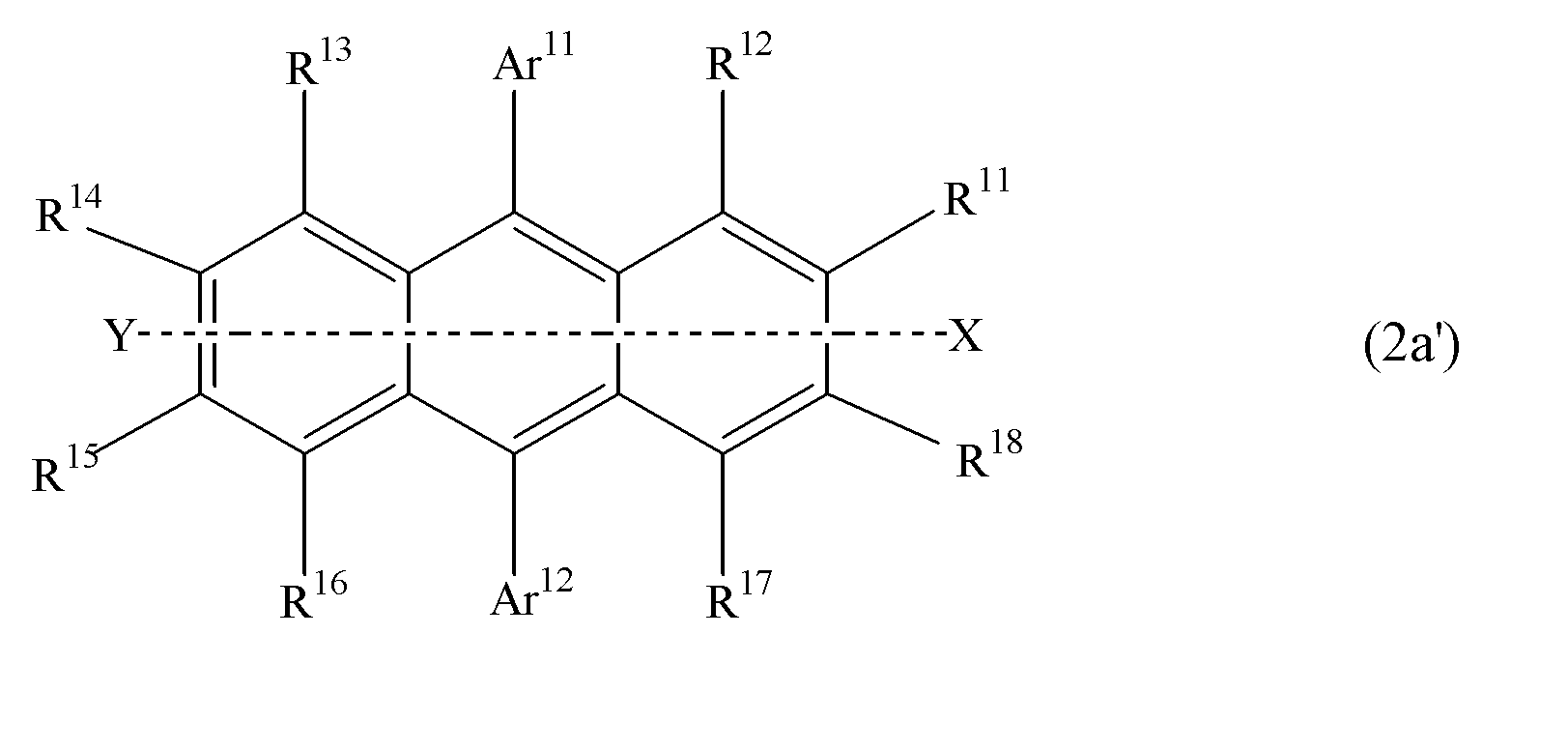
- the anthracene derivative represented by the formula (2a) is preferably a compound having a structure represented by the following formula (2a ′).
- Ar 11 and Ar 12 , R 11 to R 18 are as defined in the formula (2a), provided that R 11 to R 18 are symmetrical with respect to the XY axis.
- the substituents Ar 11 and Ar 12 at the 9th and 10th positions of the anthracene structure are asymmetric with respect to the XY axis.
- anthracene derivative represented by the formula (2a) used in the organic EL device of the present invention include an anthracene skeleton in the molecule shown in JP-A-2004-356033 [0043] to [0063].
- Various known anthracene derivatives such as those having two and compounds having one anthracene skeleton shown in pages 27 to 28 of WO 2005/061656 can be mentioned. A typical example is shown below.
- Ar 13 and Ar 14 are each independently a substituted or unsubstituted aryl group having 6 to 50 (preferably 6 to 20, more preferably 6 to 16) nuclear carbon atoms
- L 1 And L 2 are each independently a group selected from a substituted or unsubstituted phenylene group, a substituted or unsubstituted naphthalenylene group, a substituted or unsubstituted fluorenylene group, and a substituted or unsubstituted dibenzosilolylene group.
- M is an integer from 0 to 2
- n is an integer from 1 to 4
- s is an integer from 0 to 2
- t is an integer from 0 to 4.
- L 1 or Ar 13 is bonded to any one of positions 1 to 5 of pyrene
- L 2 or Ar 14 is bonded to any of positions 6 to 10 of pyrene.
- the aryl group having 6 to 50 nuclear carbon atoms of Ar 13 and Ar 14 in the formula (2b) includes a phenyl group, a 1-naphthyl group, a 2-naphthyl group, a 1-anthryl group, a 2-anthryl group, and a 9-anthryl group.
- 9- (10-phenyl) anthryl group 9- (10-naphthyl-1-yl) anthryl group, 9- (10-naphthyl-2-yl) anthryl group, 1-phenanthryl group, 2-phenanthryl group, 3 -Phenanthryl group, 4-phenanthryl group, 9-phenanthryl group, 1-naphthacenyl group, 2-naphthacenyl group, 9-naphthacenyl group, 1-pyrenyl group, 2-pyrenyl group, 4-pyrenyl group, 2-biphenylyl group, 3-biphenylyl group, 4-biphenylyl group, p-terphenyl-4-yl group, p-terphenyl-3-yl group, p-terphenyl 2-yl group, m-terphenyl-4-yl group, m-terphenyl-3-yl group, m-terphenyl-2-yl group
- An aromatic ring group having 6 to 16 nuclear carbon atoms is preferred, and in particular, a phenyl group, 1-naphthyl group, 2-naphthyl group, 9- (10-phenyl) anthryl group, 9- (10-naphthyl-1- Yl) anthryl group, 9- (10-naphthyl-2-yl) anthryl group, 9-phenanthryl group, 1-pyrenyl group, 2-pyrenyl group, 4-pyrenyl group, 2-biphenylyl group, 3-biphenylyl group 4-biphenylyl group, o-tolyl group, m-tolyl group, p-tolyl group and pt-butylphenyl group.
- the aryl group may be further substituted with a substituent.
- substituents include an alkyl group (methyl group, ethyl group, propyl group, isopropyl group, n-butyl group, s-butyl group, isobutyl group).
- L 1 and L 2 in the formula (2b) are preferably selected from a substituted or unsubstituted phenylene group and a substituted or unsubstituted fluorenylene group.
- the substituent is selected from the groups exemplified as the substituent for the aryl group.
- M in the formula (2b) is preferably an integer of 0 to 1.
- n is preferably an integer of 1 to 2.
- s is preferably an integer of 0 to 1.
- t is preferably an integer of 0 to 2.
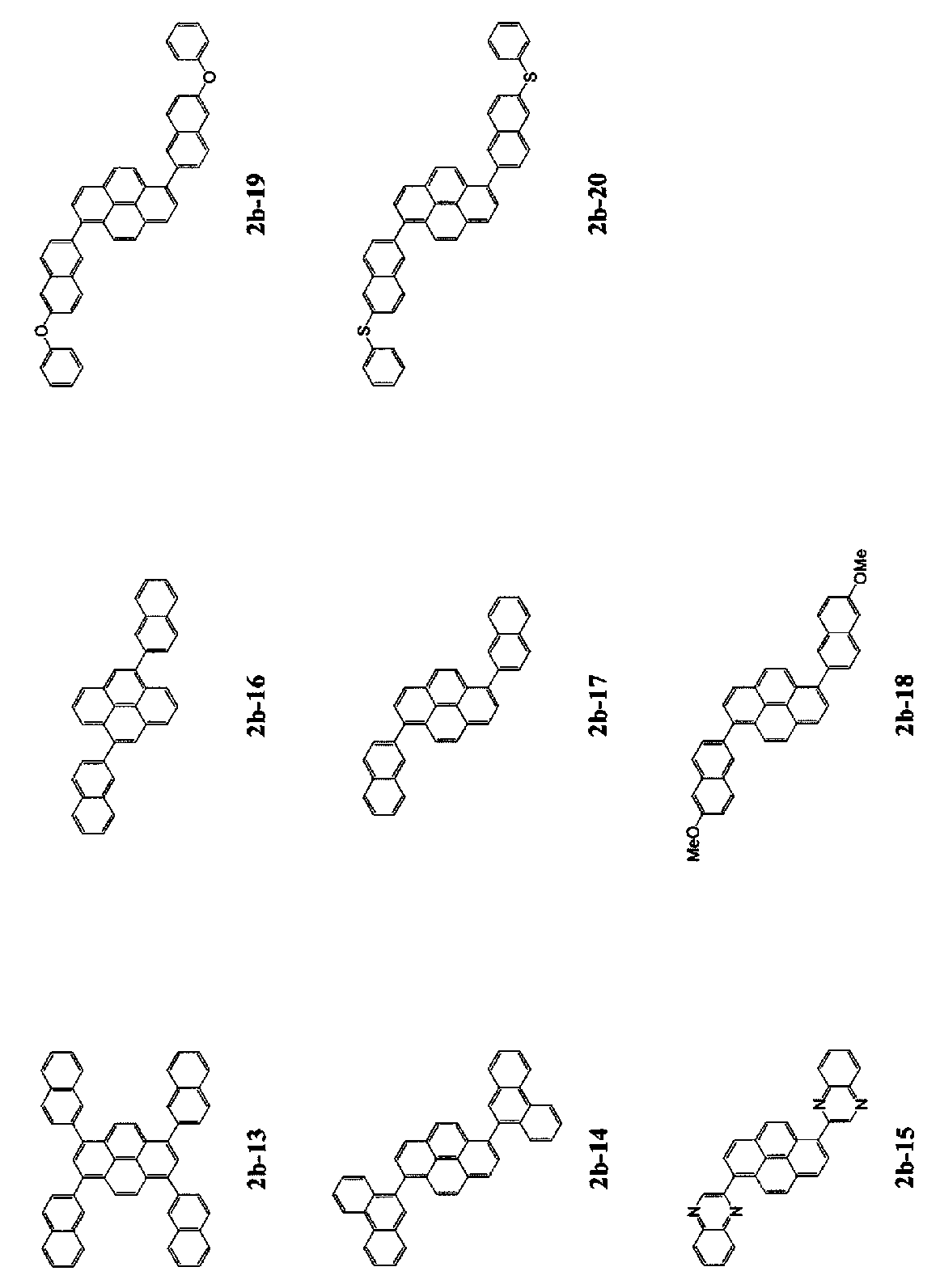
- pyrene derivative represented by the formula (2b) used in the organic EL device of the present invention include asymmetric pyrene derivatives shown in WO2005 / 115950 pamphlets [0020] to [0023]. be able to.
- a symmetric pyrene derivative can also be used as the material for the organic EL device of the present invention. A typical example is shown below.
- Ar 18 to Ar 20 each independently represents a substituted or aryl group having 6 to 50 nuclear carbon atoms, and the aryl group may be substituted with one or more substituents.
- Ar 18 to Ar 20 and at least one of the substituents of these aryl groups have a condensed ring aryl structure having 10 to 20 nuclear carbon atoms or a condensed ring heteroaryl structure having 6 to 20 nuclear carbon atoms.
- Ar represents a trivalent group derived from a substituted or unsubstituted aromatic ring or heteroaromatic ring.
- the aryl group having 6 to 50 nuclear carbon atoms of Ar 18 to Ar 20 in the formula (2c) preferably has 6 to 30 nuclear carbon atoms, more preferably 6 to 20 carbon atoms, and still more preferably 6 to 16 carbon atoms.
- Aryl groups include phenyl, naphthyl, anthryl, phenanthrenyl, pyrenyl, perylenyl, fluorenyl, biphenylyl, terphenylyl, rubrenyl, chrysenyl, triphenylenyl, benzoanthryl, benzo Examples thereof include a phenanthrenyl group and a diphenylanthryl group, and these aryl groups may further have a substituent.
- Examples of the substituent on the aryl group include an alkyl group (preferably having 1 to 30 carbon atoms, more preferably 1 to 20 carbon atoms, and particularly preferably 1 to 10 carbon atoms such as methyl, ethyl, isopropyl, t -Butyl, n-octyl, n-decyl, n-hexadecyl, cyclopropyl, cyclopentyl, cyclohexyl, etc.), alkenyl group, aryl group (preferably having 6 to 30 carbon atoms, more preferably 6 to 20 carbon atoms, Particularly preferably, it has 6 to 12 carbon atoms, and examples thereof include phenyl, p-methylphenyl, naphthyl, anthranyl and the like, amino group, alkoxy group, aryloxy group, halogen atom (for example, fluorine atom, chlorine atom, bromine).
- alkyl group preferably having 1 to
- Atom, iodine atom, etc. cyano group, nitro group, hydroxamic acid group, heterocyclic group
- it has 1 to 30 carbon atoms, more preferably 1 to 12 carbon atoms
- the hetero atom include a nitrogen atom, an oxygen atom, a sulfur atom, specifically, for example, imidazolyl, pyridyl, quinolyl, furyl, thienyl, piperidyl.
- a naphthalene structure As the condensed ring aryl structure having 10 to 20 nuclear carbon atoms which Ar 18 to Ar 20 in formula (2c) and at least one of the substituents of these aryl groups have, a naphthalene structure, an anthracene structure, a phenanthrene structure, a pyrene structure, Examples thereof include a perylene structure, and a naphthalene structure, an anthracene structure, a pyrene structure, and a phenanthrene structure are preferable, a phenanthrene structure, an aryl structure having four or more rings, and particularly preferably a pyrene structure.
- Examples of the condensed ring heteroaryl structure having 6 to 20 nuclear carbon atoms which Ar 18 to Ar 20 in formula (2c) and at least one of the substituents of these aryl groups have include a quinoline structure, a quinoxaline structure, a quinazoline structure, and an acridine structure.
- the trivalent group derived from the aromatic ring of Ar in formula (2c) preferably has 6 to 30 carbon atoms, more preferably 6 to 20 carbon atoms, and still more preferably 6 to 16 carbon atoms. Specific examples include trivalent groups derived from benzene, naphthalene, anthrane, phenanthrene, pyrene, and triphenylene.
- the trivalent group derived from the heteroaromatic ring of Ar in formula (2c) preferably contains an atom selected from a nitrogen atom, a sulfur atom and an oxygen atom as a hetero atom, and more preferably contains a nitrogen atom.
- it preferably has 2 to 30 carbon atoms, more preferably 3 to 20 carbon atoms, and still more preferably 3 to 16 carbon atoms.
- Specific examples include trivalent groups derived from pyridine, pyrazine, thiopyran, quinoline, quinoxaline, and triazine.
- the trivalent group derived from these aromatic rings or heteroaromatic rings may have a substituent. Examples of the substituent include a group represented by a substituent on the aryl group of the substituent Ar 18 .
- Ar is preferably a trivalent group derived from benzenetriyl, naphthalenetriyl, anthracentriyl, pyrenetriyl, triphenylene, more preferably benzenetriyl, and even more preferably unsubstituted (Ar 18 , Ar 19 and Ar 20 are substituted) benzenetriyl, alkyl-substituted benzenetriyl.
- benzene derivative represented by the formula (2c) used in the organic EL device of the present invention include known benzene derivatives disclosed in JP-A-2002-324678 [0079] to [0083]. Various benzene derivatives can be mentioned.
- organic EL elements having a plurality of organic thin film layers are (anode / hole injection layer / light emitting layer / cathode), (anode / light emitting layer / electron injection layer / cathode), (anode / hole). (Injection layer / light emitting layer / electron injection layer / cathode) and the like.
- injection layer / light emitting layer / electron injection layer / cathode injection layer / light emitting layer / electron injection layer / cathode
- further known light emitting materials, doping materials, hole injecting materials, and electron injecting materials can be used for the plurality of layers as necessary.
- the organic EL element can prevent the brightness
- a light-emitting material, a doping material, a hole injection material, and an electron injection material can be used in combination. Further, by using a doping material, it is possible to improve light emission luminance and light emission efficiency and to obtain red and blue light emission.
- the hole injection layer, the light emitting layer, and the electron injection layer may each be formed with a layer configuration of two or more layers. In that case, in the case of a hole injection layer, the layer that injects holes from the electrode is a hole injection layer, and the layer that receives holes from the hole injection layer and transports holes to the light emitting layer is a hole transport layer. Call.
- an electron injection layer a layer that injects electrons from an electrode is referred to as an electron injection layer, and a layer that receives electrons from the electron injection layer and transports electrons to a light emitting layer is referred to as an electron transport layer.
- an electron injection layer a layer that injects electrons from an electrode
- an electron transport layer a layer that receives electrons from the electron injection layer and transports electrons to a light emitting layer.
- Each of these layers is selected and used depending on factors such as the energy level of the material, heat resistance, adhesion with the organic layer or the metal electrode.
- Examples of host materials or doping materials other than the above formulas (2a) to (2c) that can be used in the light emitting layer together with the aromatic amine derivative of the present invention include naphthalene, phenanthrene, rubrene, anthracene, tetracene, pyrene, perylene, chrysene, Decacyclene, coronene, tetraphenylcyclopentadiene, pentaphenylcyclopentadiene, fluorene, spirofluorene, 9,10-diphenylanthracene, 9,10-bis (phenylethynyl) anthracene, 1,4-bis (9'-ethynylanthracenyl) ) Condensed large aromatic compounds such as benzene and their derivatives, organometallic complexes such as tris (8-quinolinolato) aluminum, bis- (2-methyl-8-quinolinolato) -4- (phenyl
- the hole injection material has the ability to transport holes, has a hole injection effect from the anode, an excellent hole injection effect for the light emitting layer or the light emitting material, and excitons generated in the light emitting layer.
- a compound that prevents movement to the electron injection layer or the electron injection material and has an excellent thin film forming ability is preferable.
- phthalocyanine derivatives naphthalocyanine derivatives, porphyrin derivatives, oxazole, oxadiazole, triazole, imidazole, imidazolone, imidazolethione, pyrazoline, pyrazolone, tetrahydroimidazole, oxazole, oxadiazole, hydrazone, acyl hydrazone, polyaryl Examples include alkane, stilbene, butadiene, benzidine type triphenylamine, styrylamine type triphenylamine, diamine type triphenylamine, and derivatives thereof, and polymer materials such as polyvinyl carbazole, polysilane, and conductive polymer.
- more effective hole injection materials are aromatic tertiary amine derivatives and phthalocyanine derivatives.
- aromatic tertiary amine derivatives include triphenylamine, tolylamine, tolyldiphenylamine, N, N′-diphenyl-N, N ′-(3-methylphenyl) -1,1′-biphenyl-4,4 '-Diamine, N, N, N', N '-(4-methylphenyl) -1,1'-phenyl-4,4'-diamine, N, N, N', N '-(4-methylphenyl) ) -1,1′-biphenyl-4,4′-diamine, N, N′-diphenyl-N, N′-dinaphthyl-1,1′-biphenyl-4,4′-diamine, N, N, N
- phthalocyanine (Pc) derivative examples include H 2 Pc, CuPc, CoPc, NiPc, ZnPc, PdPc, FePc, MnPc, ClAlPc, ClGaPc, ClInPc, ClSnPc, Cl 2 SiPc, (HO) AlPc, (HO) GaPc, Examples include, but are not limited to, phthalocyanine derivatives and naphthalocyanine derivatives such as VOPc, TiOPc, MoOPc, and GaPc—O—GaPc.
- the organic EL device of the present invention includes a layer containing these aromatic tertiary amine derivatives and / or phthalocyanine derivatives, for example, the hole transport layer or the hole injection layer, between the light emitting layer and the anode. Preferably formed.
- an electron injection material it has the ability to transport electrons, has an electron injection effect from the cathode, an excellent electron injection effect for the light emitting layer or light emitting material, and a hole injection layer of excitons generated in the light emitting layer
- the compound which prevents the movement to and is excellent in thin film forming ability is preferable.
- it is not limited to these.
- it can be sensitized by adding an electron accepting substance to the hole injecting material and an electron donating substance to the electron injecting material.
- more effective electron injection materials are metal complex compounds and nitrogen-containing five-membered ring derivatives.
- the metal complex compound include 8-hydroxyquinolinate lithium, bis (8-hydroxyquinolinato) zinc, bis (8-hydroxyquinolinato) copper, bis (8-hydroxyquinolinato) manganese, and tris.
- nitrogen-containing five-membered derivative for example, oxazole, thiazole, oxadiazole, thiadiazole, and triazole derivatives are preferable.
- the organic EL device of the present invention in the light emitting layer, in addition to at least one selected from the aromatic amine derivatives represented by the formula (1), a light emitting material, a doping material, a hole injecting material, and an electron injecting material. At least one kind may be contained in the same layer.
- a protective layer is provided on the surface of the device, or the entire device is protected by silicon oil, resin, etc. Is also possible.
- a material having a work function larger than 4 eV is suitable, and carbon, aluminum, vanadium, iron, cobalt, nickel, tungsten, silver, gold, platinum Palladium, etc. and their alloys, metal oxides such as tin oxide and indium oxide used for ITO substrates and NESA substrates, and organic conductive resins such as polythiophene and polypyrrole are used.
- Suitable conductive materials for the cathode are those having a work function smaller than 4 eV, such as magnesium, calcium, tin, lead, titanium, yttrium, lithium, ruthenium, manganese, aluminum, lithium fluoride, and the like.
- alloys include magnesium / silver, magnesium / indium, lithium / aluminum, and the like, but are not limited thereto.
- the ratio of the alloy is controlled by the temperature of the vapor deposition source, the atmosphere, the degree of vacuum, etc., and is selected to an appropriate ratio. If necessary, the anode and the cathode may be formed of two or more layers.
- the organic EL device of the present invention in order to emit light efficiently, it is desirable that at least one surface be sufficiently transparent in the light emission wavelength region of the device.
- the substrate is also preferably transparent.
- the transparent electrode is set using the above-described conductive material so as to ensure a predetermined translucency by a method such as vapor deposition or sputtering.
- the electrode on the light emitting surface preferably has a light transmittance of 10% or more.
- the substrate is not limited as long as it has mechanical and thermal strength and has transparency, and includes a glass substrate and a transparent resin film.
- Transparent resin films include polyethylene, ethylene-vinyl acetate copolymer, ethylene-vinyl alcohol copolymer, polypropylene, polystyrene, polymethyl methacrylate, polyvinyl chloride, polyvinyl alcohol, polyvinyl butyral, nylon, polyether ether ketone.
- Each layer of the organic EL device of the present invention can be formed by applying any one of dry deposition methods such as vacuum deposition, sputtering, plasma and ion plating, and wet deposition methods such as spin coating, dipping and flow coating. Can do.
- the film thickness is not particularly limited, but must be set to an appropriate film thickness. If the film thickness is too thick, a large applied voltage is required to obtain a constant light output, resulting in poor efficiency. If the film thickness is too thin, pinholes and the like are generated, and sufficient light emission luminance cannot be obtained even when an electric field is applied.
- the normal film thickness is suitably in the range of 5 nm to 10 ⁇ m, but more preferably in the range of 10 nm to 0.2 ⁇ m.
- the material for forming each layer is dissolved or dispersed in an appropriate solvent such as ethanol, chloroform, tetrahydrofuran, dioxane, or the like to form a thin film, and any solvent may be used.
- an organic EL material-containing solution containing the aromatic amine derivative of the present invention and a solvent can be used as the organic EL material.
- the organic EL material includes a host material and a dopant material, the dopant material is the aromatic amine derivative of the present invention, and the host material is represented by Formula (2a) and Formula (2b). It is preferable that it is at least one selected from compounds.
- an appropriate resin or additive may be used for improving film formability and preventing pinholes in the film.
- Usable resins include polystyrene, polycarbonate, polyarylate, polyester, polyamide, polyurethane, polysulfone, polymethyl methacrylate, polymethyl acrylate, cellulose and other insulating resins and copolymers thereof, poly-N-vinylcarbazole And photoconductive resins such as polysilane, and conductive resins such as polythiophene and polypyrrole.
- the additive include an antioxidant, an ultraviolet absorber, and a plasticizer.
- the organic EL device of the present invention can be used for a flat light emitter such as a flat panel display of a wall-mounted television, a copying machine, a printer, a light source such as a backlight of a liquid crystal display or instruments, a display board, a marker lamp, and the like.
- the material of the present invention can be used not only in an organic EL device but also in fields such as an electrophotographic photosensitive member, a photoelectric conversion device, a solar cell, and an image sensor.
- the intermediate body 1 was identified by analysis of FD-MS (field desorption mass spectrum).
- Synthesis Example (1-2) Synthesis of Intermediate 2 In a 1000 mL eggplant flask under argon flow, 41.9 g of 2-bromo-7-iodo-9,9-dimethylfluorene and 300 mL of dehydrated THF were added and cooled to ⁇ 65 ° C. Then, 72 mL of n-butyllithium hexane solution (1.6 M) was added and reacted for 30 minutes. Then, 25 mL of dehydrated N, N-dimethylformamide was added dropwise, and the temperature was gradually raised and reacted at room temperature for 4 hours.
- Synthesis Example (1-3) Synthesis of Intermediate 3 Under a stream of argon, 8.40 g of diethyl (4-bromobenzyl) phosphonate and 50 mL of THF were placed in a 300 mL eggplant flask, cooled to ⁇ 68 ° C., and potassium tert-butoxide. 6.16 g was added and reacted for 90 minutes. Subsequently, a solution of 6.90 g of Intermediate 2 in THF (60 mL) was added dropwise and reacted for 2 hours, and then the temperature was raised to room temperature over 1 hour with stirring, followed by reaction at room temperature for 2 hours. Water and toluene were added to separate the layers, and the aqueous layer was extracted with toluene.
- Synthesis Example (1-1) (Synthesis of Intermediate 1), 4-bromobenzyl bromide was used instead of 1-bromo-4- (trimethylsilyl) benzene. This was synthesized in the same manner except that 3,5-dimethyldiphenylamine was used in place of aniline. The powder was identified as Intermediate 4 by FD-MS (field desorption mass spectrum) analysis.
- Synthesis Example (2-2) Synthesis of Intermediate 5 Under a stream of argon, 9.80 g of Intermediate 4 and 7.10 g of triethyl phosphite were placed in a 300 mL eggplant flask, heated, and purified by distillation. After removing ethyl, unreacted triethyl phosphite was removed by distillation under reduced pressure to obtain 10.8 g of a white solid.
- the intermediate body 5 was identified by analysis of FD-MS (field desorption mass spectrum).
- Synthesis Example (2-4) Synthesis of D-3 Synthesis was performed in the same manner as in Synthesis of D-1 (Synthesis Example (1-4)) except that Intermediate 6 was used instead of Intermediate 3.
- Synthesis Example (3-1) Synthesis of Intermediate 7 Under a stream of argon, in a 500 mL eggplant flask, 14.2 g of 6-bromo-2-naphthyl trifluoromethanesulfonate, 6.9 g of 4-chlorophenylboronic acid, tetrakis (triphenyl) Phosphine) palladium (0) 1.4 g, sodium carbonate 12.8 g (upper water 60 mL) and toluene were added, and the reaction was carried out for 8 hours under reflux in an argon stream. Water and toluene were added to separate the solution, and the aqueous layer was extracted with toluene.
- Synthesis Example (3-2) Synthesis of Intermediate 8
- Intermediate 7 was used instead of 6-bromo-2-naphthyl trifluoromethanesulfonate.
- Synthesis was performed in the same manner except that trans-2- (4-chlorophenyl) vinylboronic acid was used instead of -chlorophenylboronic acid.
- the powder was identified as Intermediate 8 by FD-MS (field desorption mass spectrum) analysis.
- Synthesis Example (3-3) Synthesis of D-11 Synthesis was performed in the same manner as in the synthesis of D-1 (Synthesis Example (1-4)) except that Intermediate 8 was used instead of Intermediate 3.
- Example 1 A transparent electrode made of indium tin oxide having a thickness of 120 nm was provided on a glass substrate having a size of 25 mm ⁇ 75 mm ⁇ 1.1 mm. This transparent electrode serves as an anode. Subsequently, the glass substrate was cleaned by irradiating ultraviolet rays and ozone, and then the substrate was placed in a vacuum deposition apparatus. First, N ′, N ′′ -bis [4- (diphenylamino) phenyl] -N ′, N ′′ -diphenylbiphenyl-4,4′-diamine was deposited to a thickness of 60 nm as a hole injection layer.
- N, N, N ′, N′-tetrakis (4-biphenyl) -4,4′-benzidine was vapor deposited to a thickness of 20 nm thereon as a hole transport layer.
- an anthracene derivative (2a-1) as a host material and an aromatic amine derivative (D-1) as a doping material were co-evaporated at a mass ratio of 40: 2 to form a light-emitting layer having a thickness of 40 nm.
- tris (8-hydroxyquinolinato) aluminum was deposited to a thickness of 20 nm as an electron injection layer.
- lithium fluoride was deposited to a thickness of 1 nm, and then aluminum was deposited to a thickness of 150 nm to produce an organic EL device.
- the aluminum / lithium fluoride serves as a cathode.
- Table 1 shows the results of measuring the device performance (light emission luminance, light emission efficiency) during driving at a current density of 10 mA / cm 2 and the half life at an initial luminance of 500 cd / cm 2. Show.
- Example 2 In Example 1, an organic EL device was produced using (D-3) instead of the aromatic amine derivative (D-1), and evaluated in the same manner as in Example 1. The results are shown in Table 1.
- Example 3 In Example 1, an organic EL device was produced using (D-11) instead of the aromatic amine derivative (D-1), and evaluated in the same manner as in Example 1. The results are shown in Table 1.
- Example 4 In Example 1, an organic EL device was produced by using (2a′-55) instead of the anthracene derivative (2a-1) as a host material, and evaluated in the same manner as in Example 1. The results are shown in Table 1.
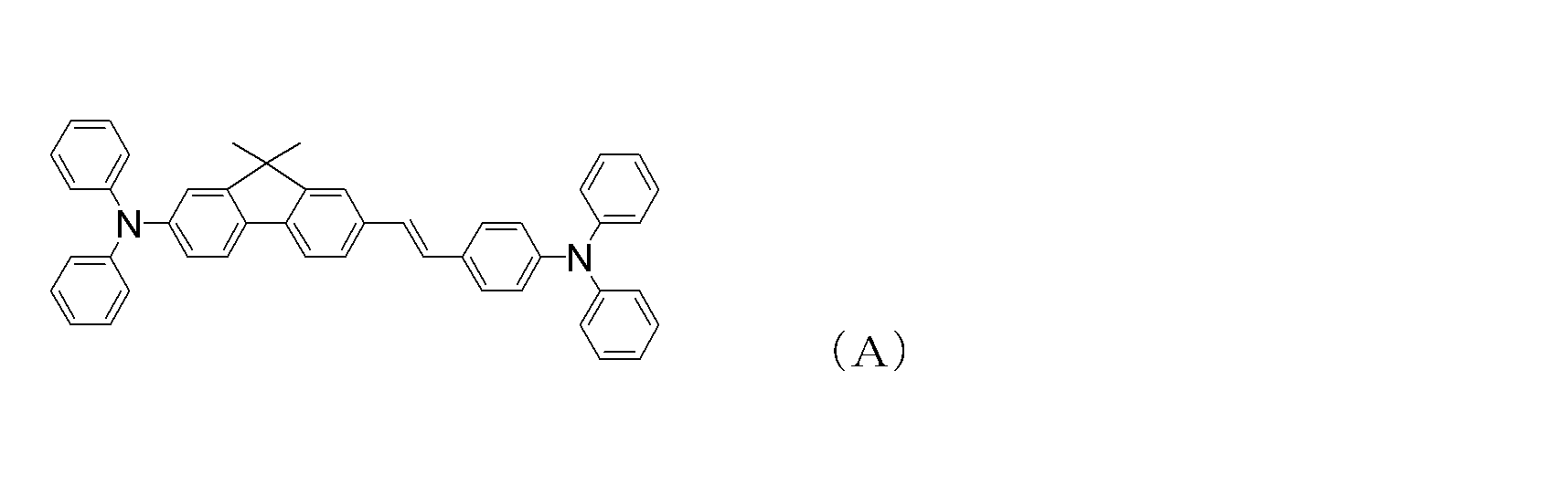
- Example 1 an organic EL device was produced using the compound (A) instead of the aromatic amine derivative (D-1), and evaluated in the same manner as in Example 1. The results are shown in Table 2.
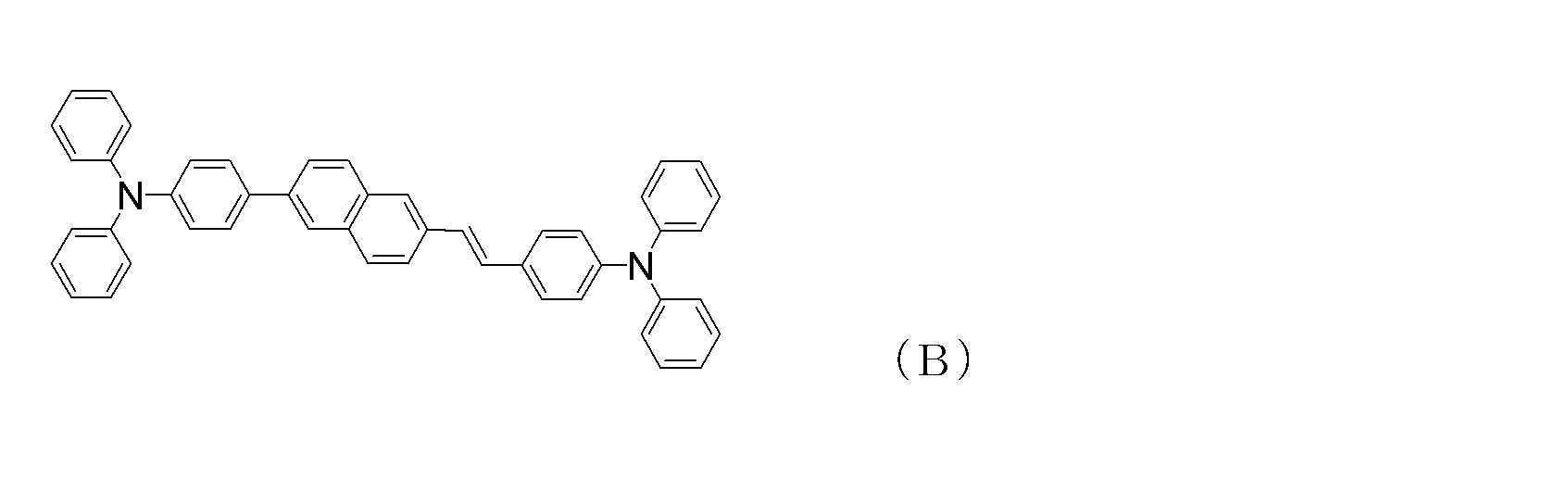
- Example 2 an organic EL device was produced using the compound (B) instead of the aromatic amine derivative (D-1), and evaluated in the same manner as in Example 1. The results are shown in Table 2.
- the organic EL device using the aromatic amine derivative of the present invention can obtain a practically sufficient light emission luminance at a low applied voltage, has a high light emission efficiency, is not easily deteriorated even after long use, and has a long life. For this reason, it is useful as a light source such as a flat light emitter of a wall-mounted television and a backlight of a display.
Landscapes
- Chemical & Material Sciences (AREA)
- Organic Chemistry (AREA)
- Engineering & Computer Science (AREA)
- Materials Engineering (AREA)
- Physics & Mathematics (AREA)
- Spectroscopy & Molecular Physics (AREA)
- Electroluminescent Light Sources (AREA)
Abstract
Description
有機EL素子を構成する有機材料として、例えば、芳香族アミンを有するスチリル化合物が検討されている(例えば、特許文献1又は2参照。)。このスチリル化合物を使用した有機EL素子では、発光効率及び寿命が改善することが報告されている。
しかしながら、さらなる発光効率及び発光寿命の向上が要求されている。
本発明によれば、以下の芳香族アミン誘導体等が提供される。
1.下記式(1)で表される芳香族アミン誘導体。
Ar1~Ar4は、それぞれ独立に、置換もしくは無置換の核炭素数6~20のアリール基、又は、置換もしくは無置換の核炭素数5~20のヘテロアリール基であり、Ar1~Ar4の少なくとも1つは、置換もしくは無置換のシリル基を有する。
Ar5は、置換もしくは無置換の核炭素数6~20のアリーレン基、又は、置換もしくは無置換の核炭素数5~20のヘテロアリーレン基である。
Lは下記式(A)又は(B)で表わされる基である。
Ar6及びAr7は、それぞれ独立に、置換もしくは無置換の核炭素数6~20のアリーレン基、又は、置換もしくは無置換の核炭素数5~20のヘテロアリーレン基であり、nは1~3であり、Ar6及びAr7は、互いに結合して芳香環を形成してもよい。
但し、Ar5とAr7が同時に置換もしくは無置換のフェニレン基である場合を除く。)]
2.前記式(1)中のLが、前記式(A)で表わされる基である1に記載の芳香族アミン誘導体。
3.前記式(A)中のR1が、置換基としてアルキル基を有する炭素数1~3のアルキレン基である2に記載の芳香族アミン誘導体。
4.前記式(1)中のLが、前記式(B)で表わされる基である1に記載の芳香族アミン誘導体。
5.前記式(B)中のnが1である4に記載の芳香族アミン誘導体。
6.有機エレクトロルミネッセンス素子用のドーピング材料である1~5のいずれかに記載の芳香族アミン誘導体。
7.陰極と陽極との間に少なくとも発光層を含む一層又は複数層からなる有機薄膜層が挟持されている有機エレクトロルミネッセンス素子において、該有機薄膜層の少なくとも一層が、1~5のいずれかに記載の芳香族アミン誘導体を含有する有機エレクトロルミネッセンス素子。
8.前記発光層が前記芳香族アミン誘導体を含有する7に記載の有機エレクトロルミネッセンス素子。
9.前記発光層が、前記芳香族アミン誘導体と、アントラセン骨格を有する下記式(2a)で表される構造を有する化合物とを含有する7に記載の有機エレクトロルミネッセンス素子。

10.前記式(2a)において、Ar11とAr12とが異なる基である9に記載の有機エレクトロルミネッセンス素子。
11.前記発光層が、前記芳香族アミン誘導体と、ピレン骨格を有する下記式(2b)で表される構造を有する化合物とを含有する7に記載の有機エレクトロルミネッセンス素子。
12.有機エレクトロルミネッセンス材料として1~5のいずれかに記載の芳香族アミン誘導体と、溶媒とを含有する有機エレクトロルミネッセンス材料含有溶液。
13.前記有機エレクトロルミネッセンス材料がホスト材料とドーパント材料とを含み、かつ、
前記ドーパント材料が、1~5のいずれかに記載の芳香族アミン誘導体であり、前記ホスト材料が、9に記載の式(2a)で表される化合物及び10に記載の式(2b)で表される化合物の少なくとも1種である12に記載の有機エレクトロルミネッセンス材料含有溶液。
また、本発明の有機EL素子は、発光効率が高く、長時間使用しても劣化しづらく寿命が長い。
Ar5は、置換もしくは無置換の核炭素数6~20(好ましくは6~14、更に好ましくは6~10)のアリーレン基、又は、置換もしくは無置換の核炭素数5~20(好ましくは5~10、更に好ましくは5~8)のヘテロアリーレン基である。
尚、上記Ar1~Ar4が、さらに置換基を有する場合、置換基としては、後述する式(A)のX1及びX2に示した例と同様な基が挙げられる。以下、式(1)中の各基が置換基を有する場合の置換基についても同様である。
上記置換基の具体例は、後述する式(2a)のR11~R18と同様である。
R1は置換基としてアルキル基を有することが好ましく、具体的には、ジメチルメチレン基、ジエチルメチレン基等が挙げられる。
Ar6及びAr7のアリーレン基及びヘテロアリーレン基の例としては、上記Ar5と同様、上記Ar1~Ar4で説明したアリール基又はヘテロアリール基の例を2価とした基が挙げられる。

また、Ar5とAr7が同時に置換もしくは無置換のフェニレン基である場合は本発明の芳香族アミン誘導体ではない。
本発明の式(1)で表される芳香族アミン誘導体の具体例を以下に示すが、本発明はこれら例示化合物に限定されるものではない。

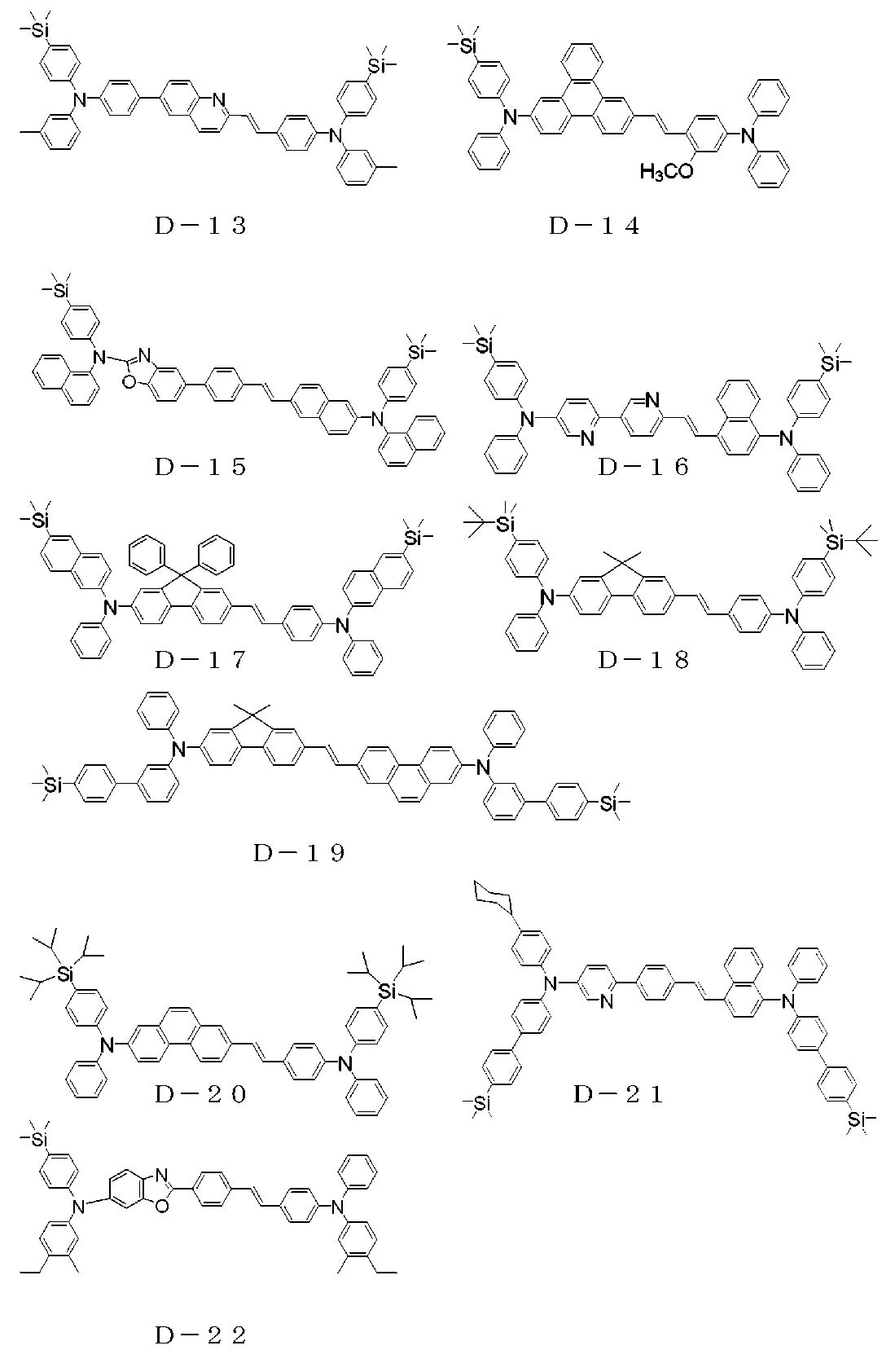
本発明の有機EL素子は、一対の電極に少なくとも発光層を含む1層又は複数層からなる有機化合物層が挟持されている有機エレクトロルミネッセンス素子において、前記有機化合物層の少なくとも1層が、本発明の芳香族アミン誘導体を少なくとも1種含むものである。
本発明の有機EL素子においては、前記発光層が前記芳香族アミン誘導体を少なくとも1種含むと好ましく、前記発光層中に本発明の芳香族アミン誘導体が0.01~20重量%含有されていると好ましく、0.5~20重量%含有されているとさらに好ましく、1~20重量%含有されていると特に好ましく、5~20重量%含有されていると最も好ましい。
また、本発明の芳香族アミン誘導体を有機EL素子の発光材料として用いる場合、前記発光層が前記芳香族アミン誘導体を少なくとも1種と下記式(2a)~(2c)で表される化合物から選ばれる少なくとも1種とを含むと、発光効率が高く、長時間使用しても劣化しづらく寿命が長い有機EL素子が提供できるという点で好ましい。下記式(2a)及び(2b)で表される化合物から選ばれる少なくとも1種がホスト材料であると好ましい。
式(2a)
前記R11~R18及び/又は前記Ar11~Ar12の芳香族環の置換基は、ハロゲン原子、ヒドロキシル基、ニトロ基、シアノ基、アルキル基、アリール基、シクロアルキル基、アルコキシ基、芳香族複素環基、アラルキル基、アリールオキシ基、アリールチオ基、アルコキシカルボニル基、カルボキシル基等でさらに置換されていてもよい。


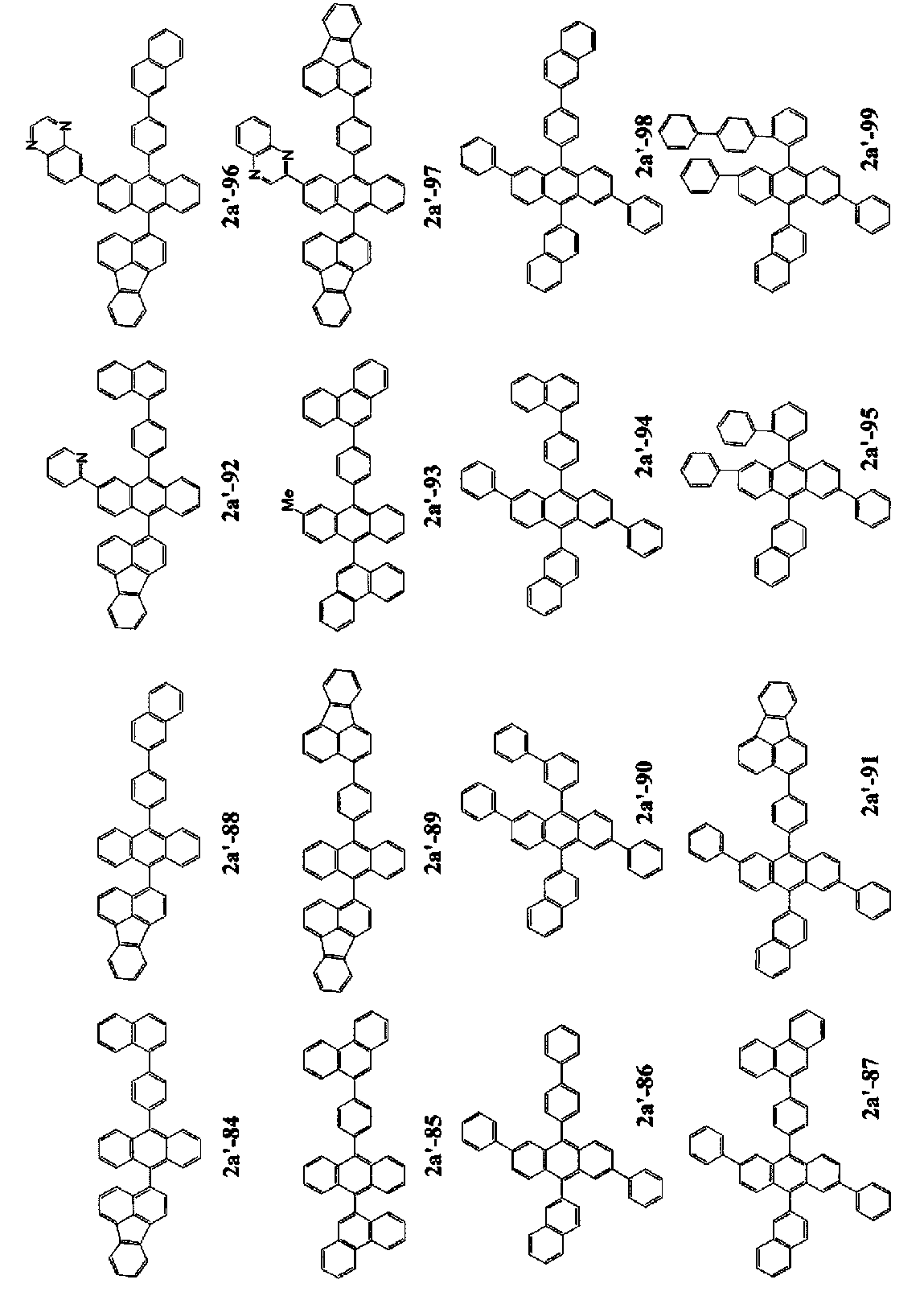
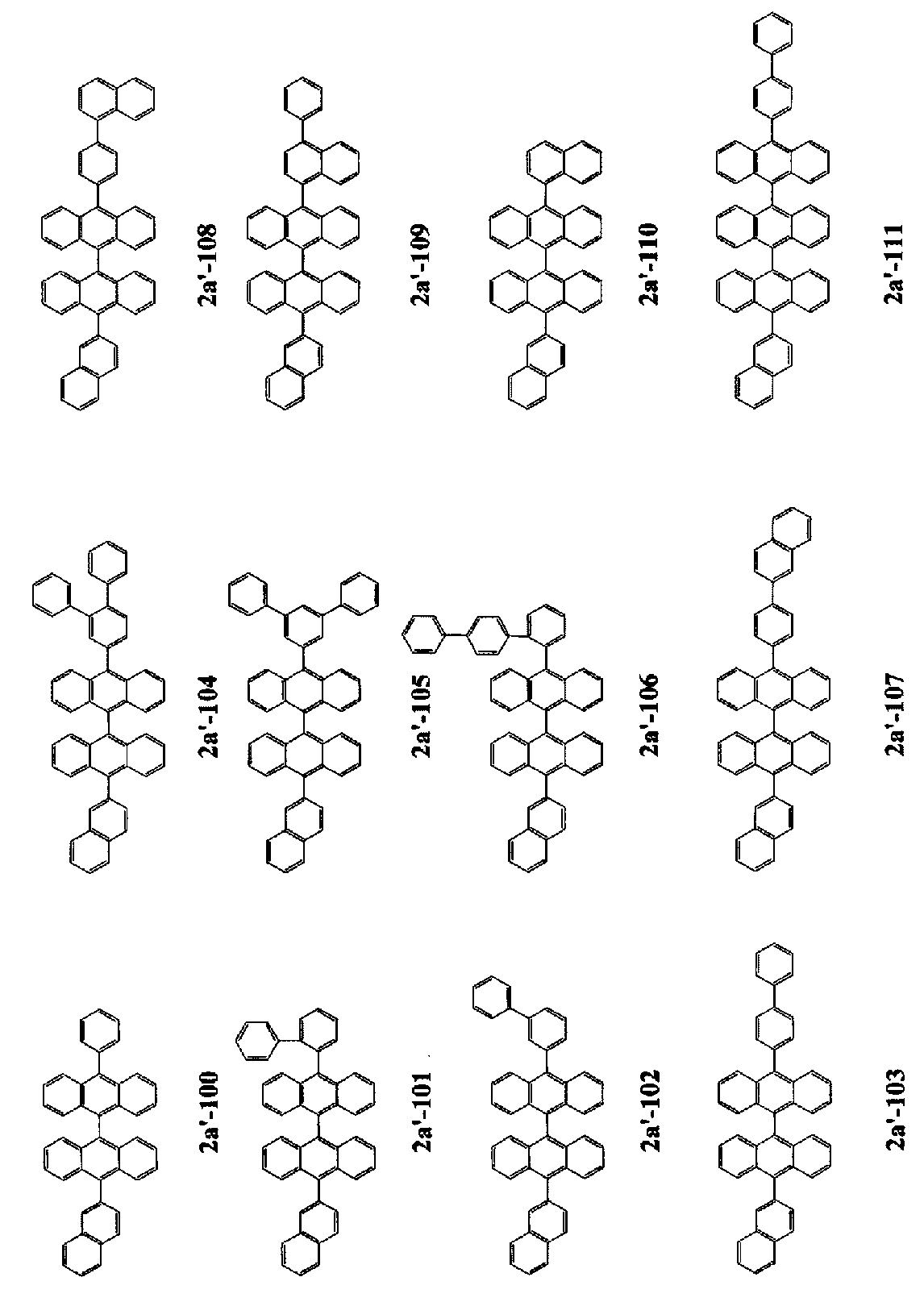
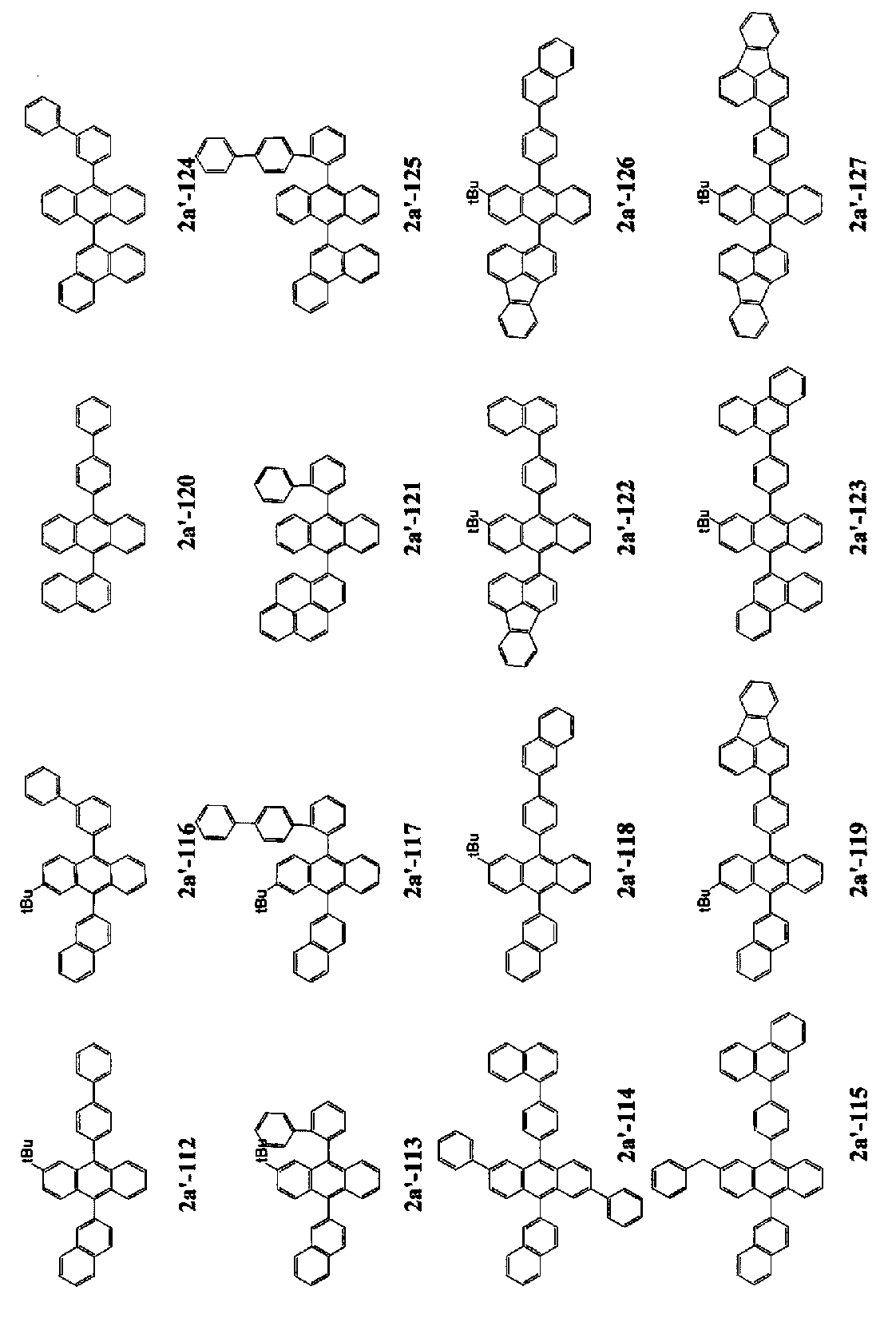


式(2b)におけるmは、好ましくは0~1の整数である。nは、好ましくは1~2の整数である。sは、好ましくは0~1の整数である。tは、好ましくは0~2の整数である。

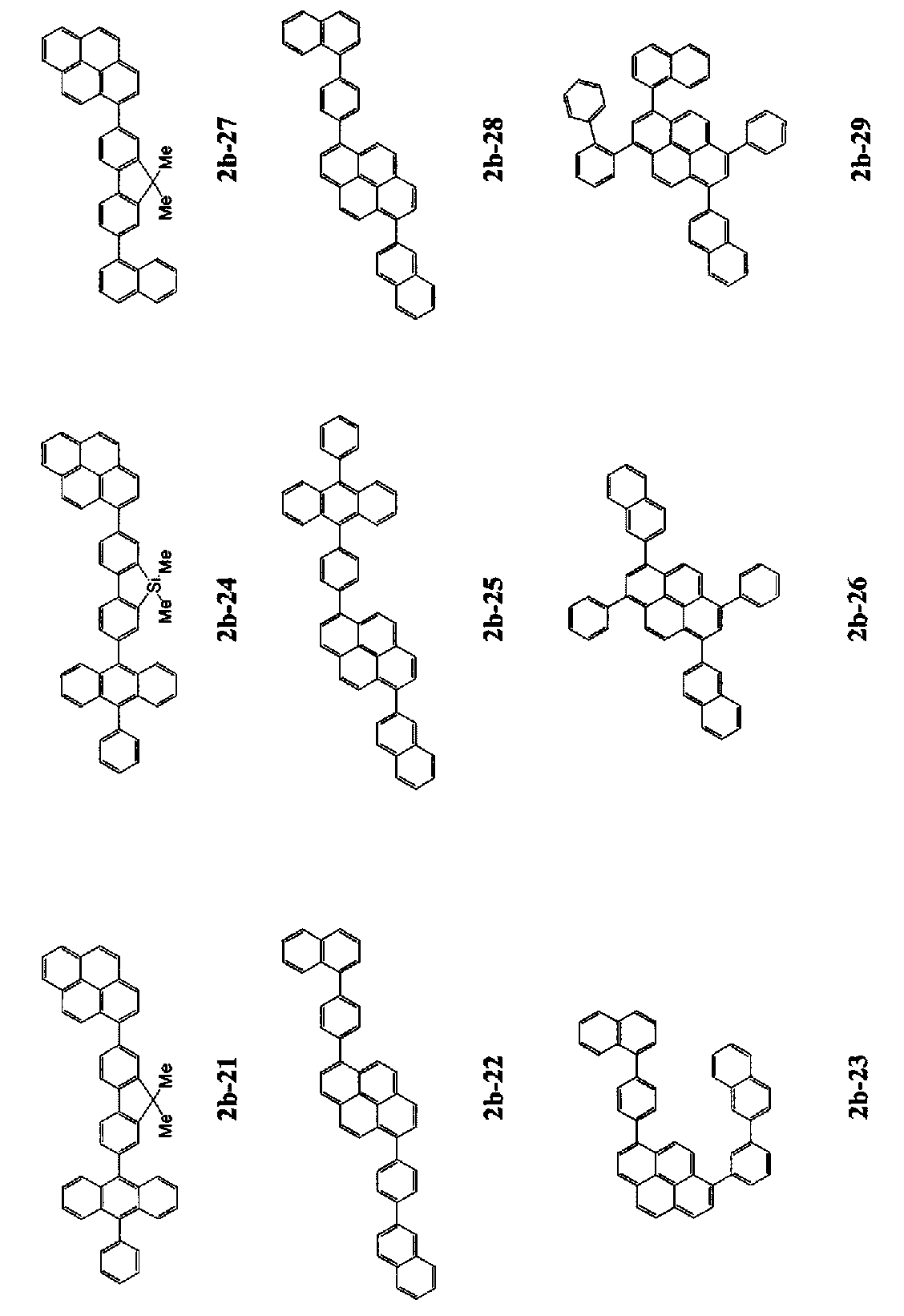
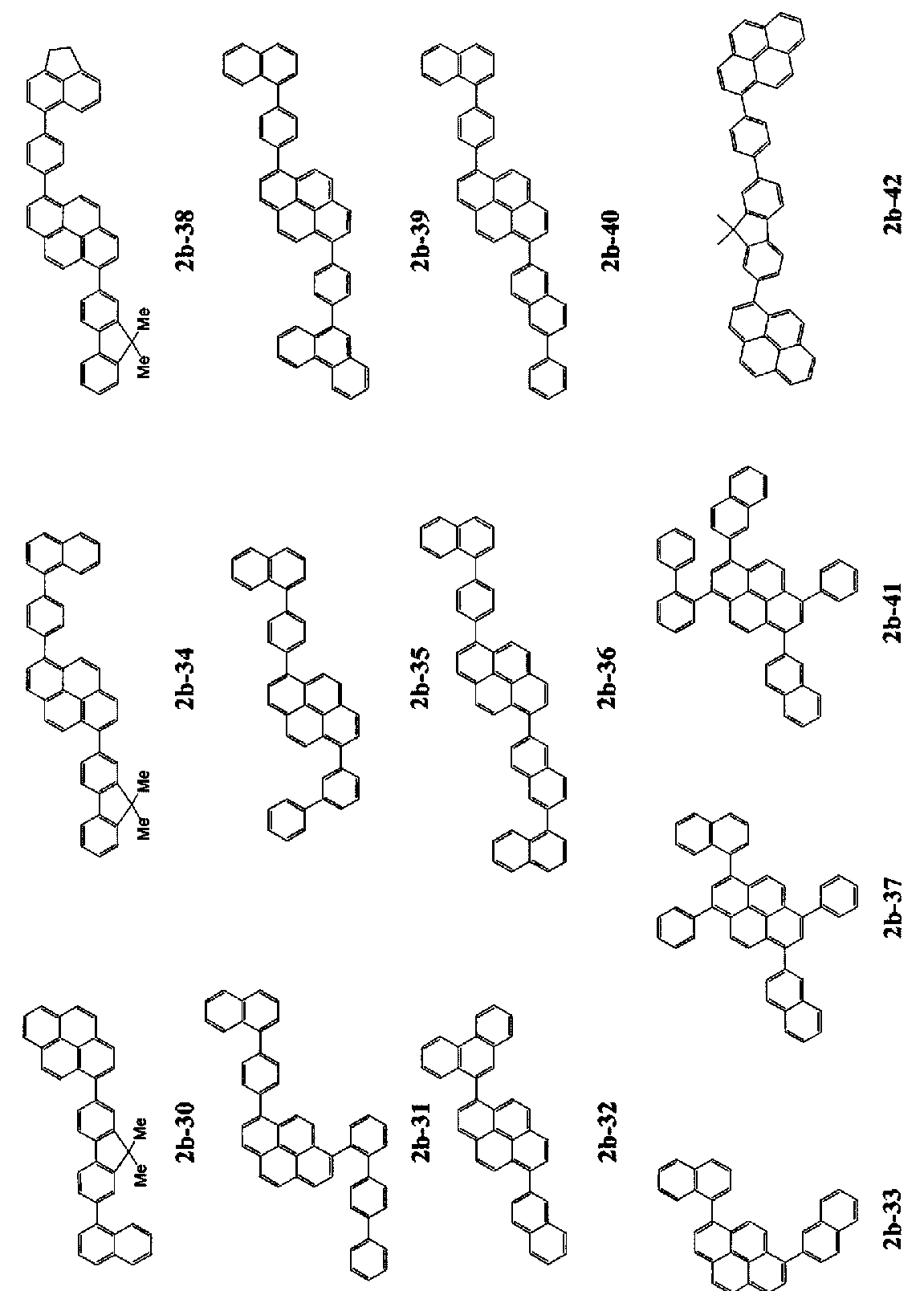
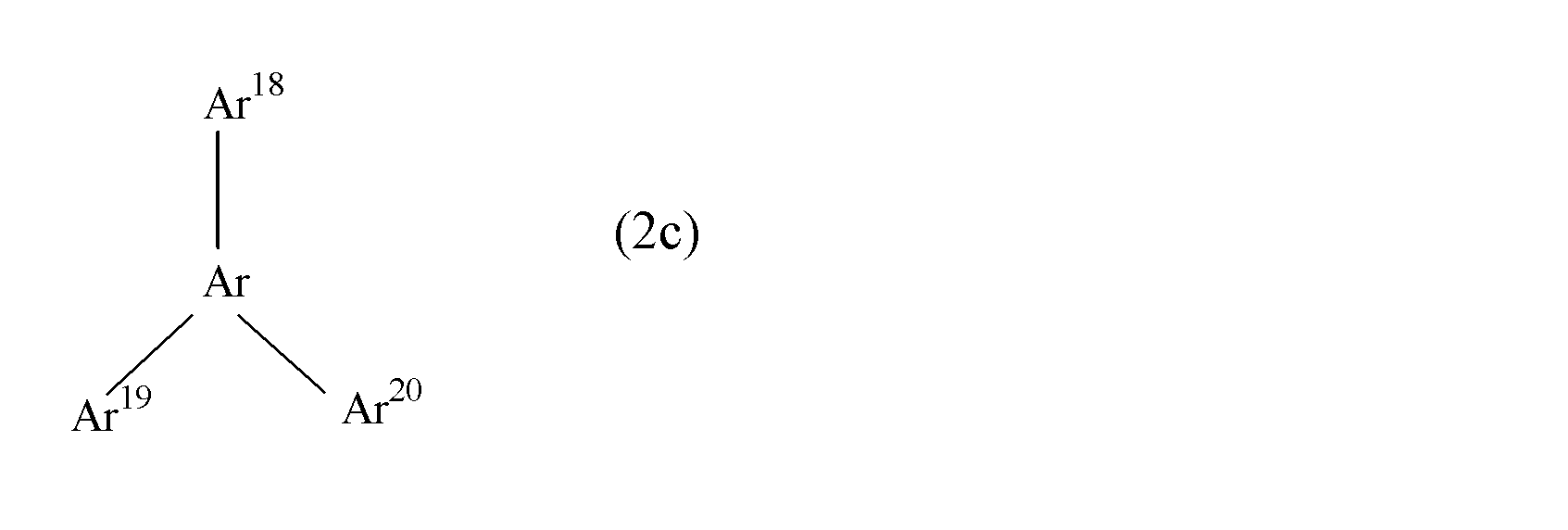
Ar18~Ar20及びこれらのアリール基が有する置換基の少なくとも1つは核炭素数10~20の縮合環アリール構造又は核炭素数6~20の縮合環ヘテロアリール構造を有する。Arは、置換もしくは無置換の、芳香族環又は複素芳香環から誘導される3価の基を表す。
式(2c)におけるAr18~Ar20及びこれらのアリール基が有する置換基の少なくとも1つが有する核炭素数6~20の縮合環ヘテロアリール構造としては、キノリン構造、キノキサリン構造、キナゾリン構造、アクリジン構造、フェナントリジン構造、フタラジン構造、フェナントロリン構造等が挙げられ、好ましくは、キノリン構造、キノキサリン構造、キナゾリン構造、フタラジン構造、フェナントロリン構造である。
式(2c)におけるArの複素芳香環から誘導される3価の基は、好ましくはヘテロ原子として窒素原子、硫黄原子及び酸素原子から選ばれる原子を含み、より好ましくは窒素原子を含む。また、好ましくは炭素数2~30であり、より好ましくは炭素数3~20であり、さらに好ましくは炭素数3~16である。具体的には、ピリジン、ピラジン、チオピラン、キノリン、キノキサリン、トリアジンから誘導される3価の基等が挙げられる。
これらの芳香環又は複素芳香環から誘導される3価の基は置換基を有していても良い。置換基としては、置換基Ar18のアリール基上の置換基で示した基等が挙げられる。
Arは、好ましくはベンゼントリイル、ナフタレントリイル、アントラセントリイル、ピレントリイル、トリフェニレンから誘導される3価の基であり、より好ましくはベンゼントリイルであり、さらに好ましくは無置換(Ar18、Ar19及びAr20は置換されている)ベンゼントリイル、アルキル置換ベンゼントリイルである。
前記複数層には、必要に応じて、本発明の芳香族アミン誘導体に加えてさらなる公知の発光材料、ドーピング材料、正孔注入材料や電子注入材料を使用することもできる。有機EL素子は、前記有機薄膜層を複数層構造にすることにより、クエンチングによる輝度や寿命の低下を防ぐことができる。必要があれば、発光材料、ドーピング材料、正孔注入材料や電子注入材料を組み合わせて使用することができる。また、ドーピング材料により、発光輝度や発光効率の向上、赤色や青色の発光を得ることもできる。また、正孔注入層、発光層、電子注入層は、それぞれ二層以上の層構成により形成されても良い。その際には、正孔注入層の場合、電極から正孔を注入する層を正孔注入層、正孔注入層から正孔を受け取り発光層まで正孔を輸送する層を正孔輸送層と呼ぶ。同様に、電子注入層の場合、電極から電子を注入する層を電子注入層、電子注入層から電子を受け取り発光層まで電子を輸送する層を電子輸送層と呼ぶ。これらの各層は、材料のエネルギー準位、耐熱性、有機層又は金属電極との密着性等の各要因により選択されて使用される。
本発明の有機EL素子において使用できる正孔注入材料の中で、さらに効果的な正孔注入材料は、芳香族三級アミン誘導体及びフタロシアニン誘導体である。
芳香族三級アミン誘導体としては、例えば、トリフェニルアミン、トリトリルアミン、トリルジフェニルアミン、N,N’-ジフェニル-N,N’-(3-メチルフェニル)-1,1’-ビフェニル-4,4’-ジアミン、N,N,N’,N’-(4-メチルフェニル)-1,1’-フェニル-4,4’-ジアミン、N,N,N’,N’-(4-メチルフェニル)-1,1’-ビフェニル-4,4’-ジアミン、N,N’-ジフェニル-N,N’-ジナフチル-1,1’-ビフェニル-4,4’-ジアミン、N,N’-(メチルフェニル)-N,N’-(4-n-ブチルフェニル)-フェナントレン-9,10-ジアミン、N,N-ビス(4-ジ-4-トリルアミノフェニル)-4-フェニル-シクロヘキサン等、又はこれらの芳香族三級アミン骨格を有したオリゴマーもしくはポリマーであるが、これらに限定されるものではない。
また、本発明の有機EL素子は、発光層と陽極との間に、これらの芳香族三級アミン誘導体及び/又はフタロシアニン誘導体を含有する層、例えば、前記正孔輸送層又は正孔注入層を形成してなると好ましい。
前記金属錯体化合物としては、例えば、8-ヒドロキシキノリナートリチウム、ビス(8-ヒドロキシキノリナート)亜鉛、ビス(8-ヒドロキシキノリナート)銅、ビス(8-ヒドロキシキノリナート)マンガン、トリス(8-ヒドロキシキノリナート)アルミニウム、トリス(2-メチル-8-ヒドロキシキノリナート)アルミニウム、トリス(8-ヒドロキシキノリナート)ガリウム、ビス(10-ヒドロキシベンゾ[h]キノリナート)ベリリウム、ビス(10-ヒドロキシベンゾ[h]キノリナート)亜鉛、ビス(2-メチル-8-キノリナート)クロロガリウム、ビス(2-メチル-8-キノリナート)(o-クレゾラート)ガリウム、ビス(2-メチル-8-キノリナート)(1-ナフトラート)アルミニウム、ビス(2-メチル-8-キノリナート)(2-ナフトラート)ガリウム等が挙げられるが、これらに限定されるものではない。
本発明の有機EL素子の陽極に使用される導電性材料としては、4eVより大きな仕事関数を持つものが適しており、炭素、アルミニウム、バナジウム、鉄、コバルト、ニッケル、タングステン、銀、金、白金、パラジウム等及びそれらの合金、ITO基板、NESA基板に使用される酸化スズ、酸化インジウム等の酸化金属、さらにはポリチオフェンやポリピロール等の有機導電性樹脂が用いられる。陰極に使用される導電性物質としては、4eVより小さな仕事関数を持つものが適しており、マグネシウム、カルシウム、錫、鉛、チタニウム、イットリウム、リチウム、ルテニウム、マンガン、アルミニウム、フッ化リチウム等及びそれらの合金が用いられるが、これらに限定されるものではない。合金としては、マグネシウム/銀、マグネシウム/インジウム、リチウム/アルミニウム等が代表例として挙げられるが、これらに限定されるものではない。合金の比率は、蒸着源の温度、雰囲気、真空度等により制御され、適切な比率に選択される。陽極及び陰極は、必要があれば二層以上の層構成により形成されていても良い。
このような湿式成膜法に適した溶液として、有機EL材料として本発明の芳香族アミン誘導体と溶媒とを含有する有機EL材料含有溶液を用いることができる。
また、前記有機EL材料が、ホスト材料とドーパント材料とを含み、前記ドーパント材料が、本発明の芳香族アミン誘導体であり、前記ホスト材料が、式(2a)及び式(2b)で表される化合物から選ばれる少なくとも1種であると好ましい。
また、いずれの有機薄膜層においても、成膜性向上、膜のピンホール防止等のため適切な樹脂や添加剤を使用しても良い。
使用可能な樹脂としては、ポリスチレン、ポリカーボネート、ポリアリレート、ポリエステル、ポリアミド、ポリウレタン、ポリスルフォン、ポリメチルメタクリレート、ポリメチルアクリレート、セルロース等の絶縁性樹脂及びそれらの共重合体、ポリ-N-ビニルカルバゾール、ポリシラン等の光導電性樹脂、ポリチオフェン、ポリピロール等の導電性樹脂を挙げられる。また、添加剤としては、酸化防止剤、紫外線吸収剤、可塑剤等を挙げられる。
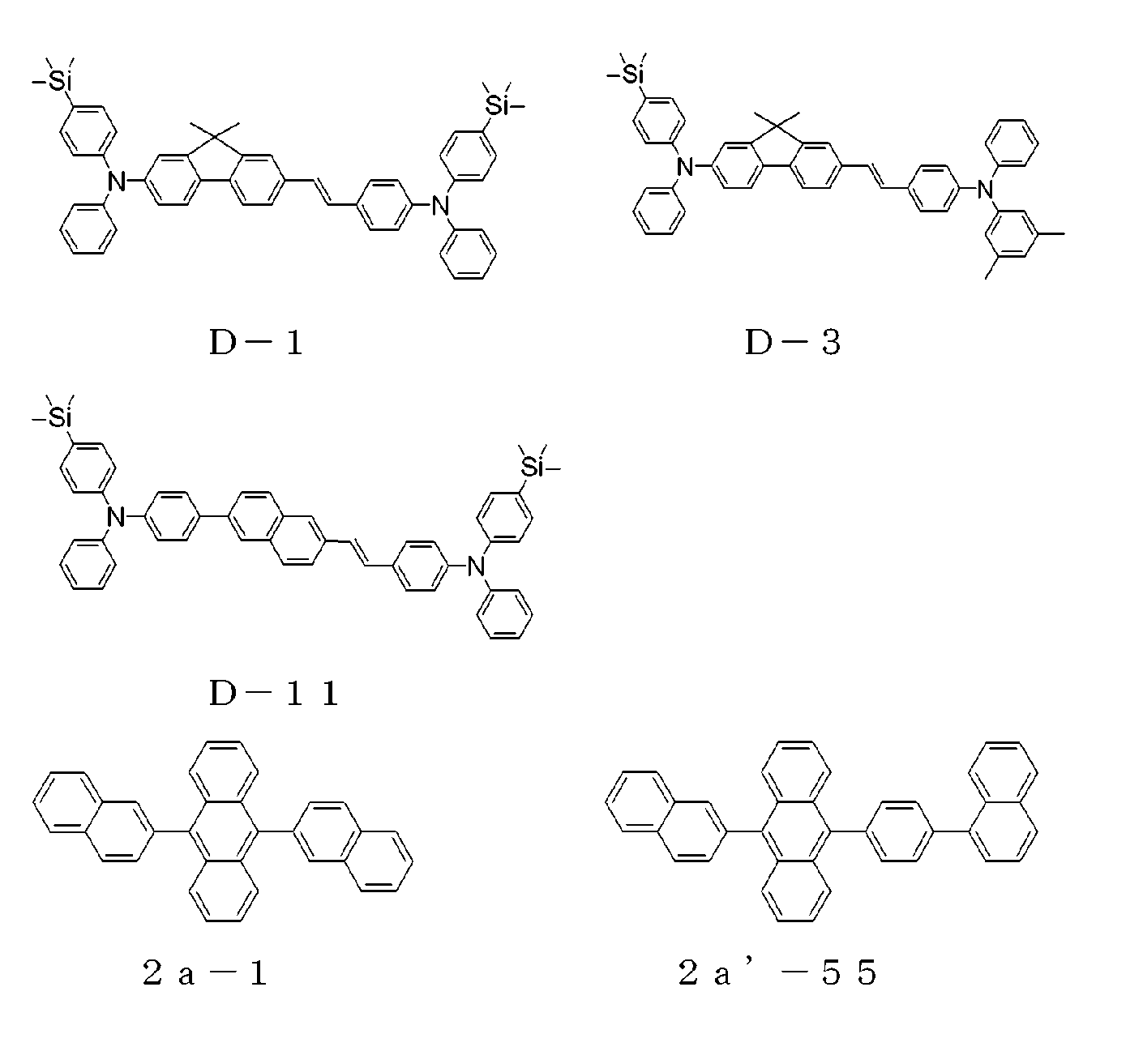
以下の工程により、化合物(D-1)を合成した。
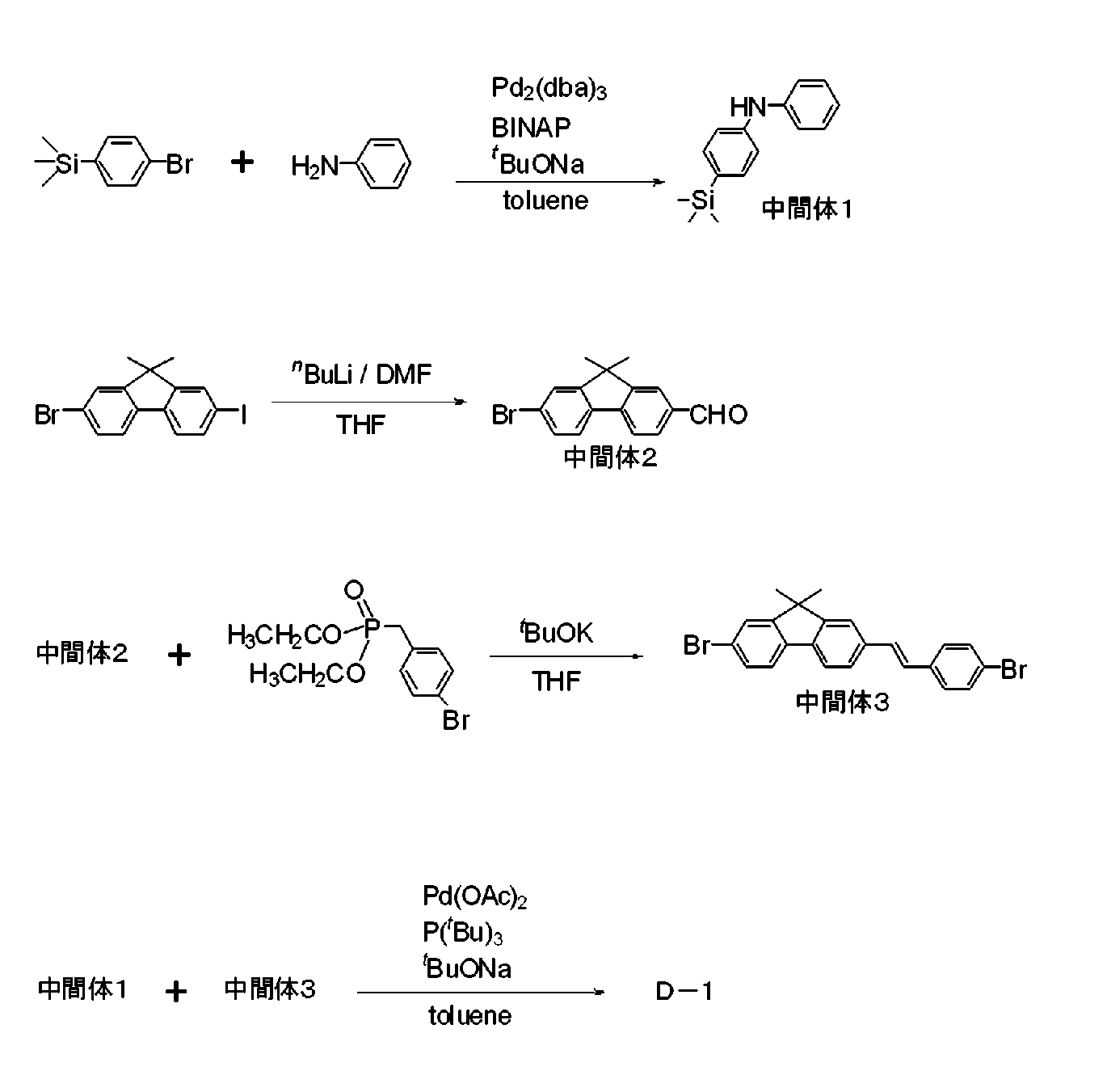
アルゴン気流下、1000mLナスフラスコに、1-ブロモ-4-(トリメチルシリル)ベンゼン27.5g、アニリン33.5g、トリス(ジベンジリデンアセトン)ジパラジウム(0)1.65g、2,2’-ビス(ジフェニルホスフィノ)-1,1’-ビナフチル2.24g、ナトリウムtert-ブトキシド23.0g、トルエンを入れ、100℃にて6時間反応した。
冷却後、反応溶液をセライトろ過し、ろ液を濃縮し、シリカゲルクロマトグラフィー(トルエン/ヘキサン(15/85))で精製し、減圧乾燥したところ、23.1gの無色透明の液体を得た。FD-MS(フィールドディソープションマススペクトル)の分析により、中間体1と同定した。
アルゴン気流下、1000mLのナスフラスコに、2-ブロモ-7-ヨード-9,9-ジメチルフルオレン41.9g、脱水THF300mLを入れ、-65℃に冷却した後、n-ブチルリチウムヘキサン溶液(1.6M)72mLを入れ、30分反応した後、脱水N,N-ジメチルホルムアミドを25mL滴下した後、徐々に昇温し、室温下4時間反応した。
4N塩酸、トルエンを加えて分液、抽出した後、上水、飽和食塩水で有機層を洗浄、硫酸ナトリウムで乾燥し、濃縮して得られた粗生成物をシリカゲルクロマトグラフィー(トルエン)で精製し得られた固体を減圧乾燥したところ、24.4gの白色固体を得た。FD-MS(フィールドディソープションマススペクトル)の分析により、中間体2と同定した。
アルゴン気流下、300mLのナスフラスコに、(4-ブロモベンジル)ホスホン酸ジエチル8.40g、THF50mLを入れ、-68℃に冷却し、カリウムtert-ブトキシド6.16gを入れ、90分反応した。続いて、中間体2 6.90gのTHF(60mL)溶液を滴下し、2時間反応した後、撹拌しながら1時間かけて室温まで昇温し、室温にて2時間反応した。
上水、トルエンを加えて分液、水層をトルエンで抽出した後、合わせた有機層を上水、飽和食塩水で洗浄し、硫酸ナトリウムで乾燥し、濃縮して得られた固体をトルエンで再結晶して得られた固体を減圧乾燥したところ、7.00gの黄白色固体を得た。FD-MS(フィールドディソープションマススペクトル)の分析により、中間体3と同定した。
アルゴン気流下、200mLのナスフラスコに、中間体1 5.50g、中間体3 4.50g、ナトリウムtert-ブトキシド1.90g、酢酸パラジウム(II)133mg、トリ-tert-ブチルホスフィン121mg、トルエンを入れ、90℃にて10時間反応した。
冷却後、反応溶液をセライトろ過し、ろ液を濃縮し、得られた粗生成物をシリカゲルクロマトグラフィー(トルエン/ヘキサン(20/80))で精製し、得られた固体をトルエン、エタノールで再結晶して得られた固体を減圧乾燥したところ、2.7gの黄白色固体を得た。
FDMS、calcd for C53H54N2Si2=774、found m/z=774(M+)
以下の工程により、化合物(D-3)を合成した。
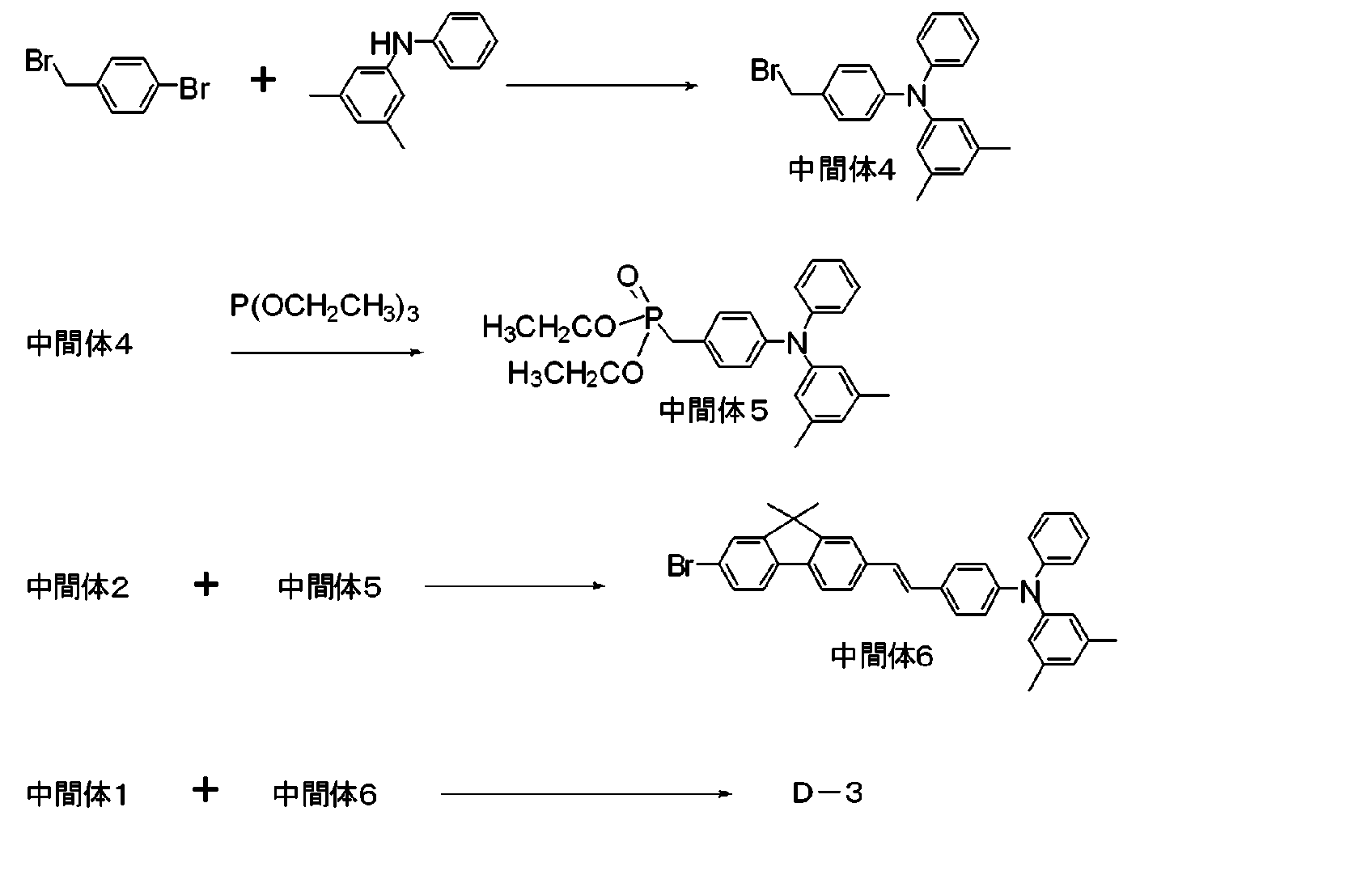
合成例(1-1):(中間体1の合成)において、1-ブロモ-4-(トリメチルシリル)ベンゼンの代わりに4-ブロモベンジルブロミドを用いて、アニリンの代わりに3,5-ジメチルジフェニルアミンを用いた他は、同様の方法で合成した。FD-MS(フィールドディソープションマススペクトル)の分析により、中間体4と同定した。
アルゴン気流下、300mLのナスフラスコに、中間体4 9.80g、亜りん酸トリエチル7.10gを入れ、昇温し、蒸留にて精製した臭化エチルを除いた後、減圧蒸留にて未反応の亜りん酸トリエチルを除き、10.8gの白色固体を得た。FD-MS(フィールドディソープションマススペクトル)の分析により、中間体5と同定した。
中間体3の合成(合成例(1-3))において、(4-ブロモベンジル)ホスホン酸ジエチルの代わりに中間体5を用いた他は、同様の方法で合成した。FD-MS(フィールドディソープションマススペクトル)の分析により、中間体6と同定した。
D-1の合成(合成例(1-4))において、中間体3の代わりに中間体6を用いた他は、同様の方法で合成した。
得られた化合物について、FD-MS(フィールドディソープションマススペクトル)の分析結果を示す。
FDMS、calcd for C52H50N2Si=730、found m/z=730(M+)
以下の工程により、化合物(D-11)を合成した。
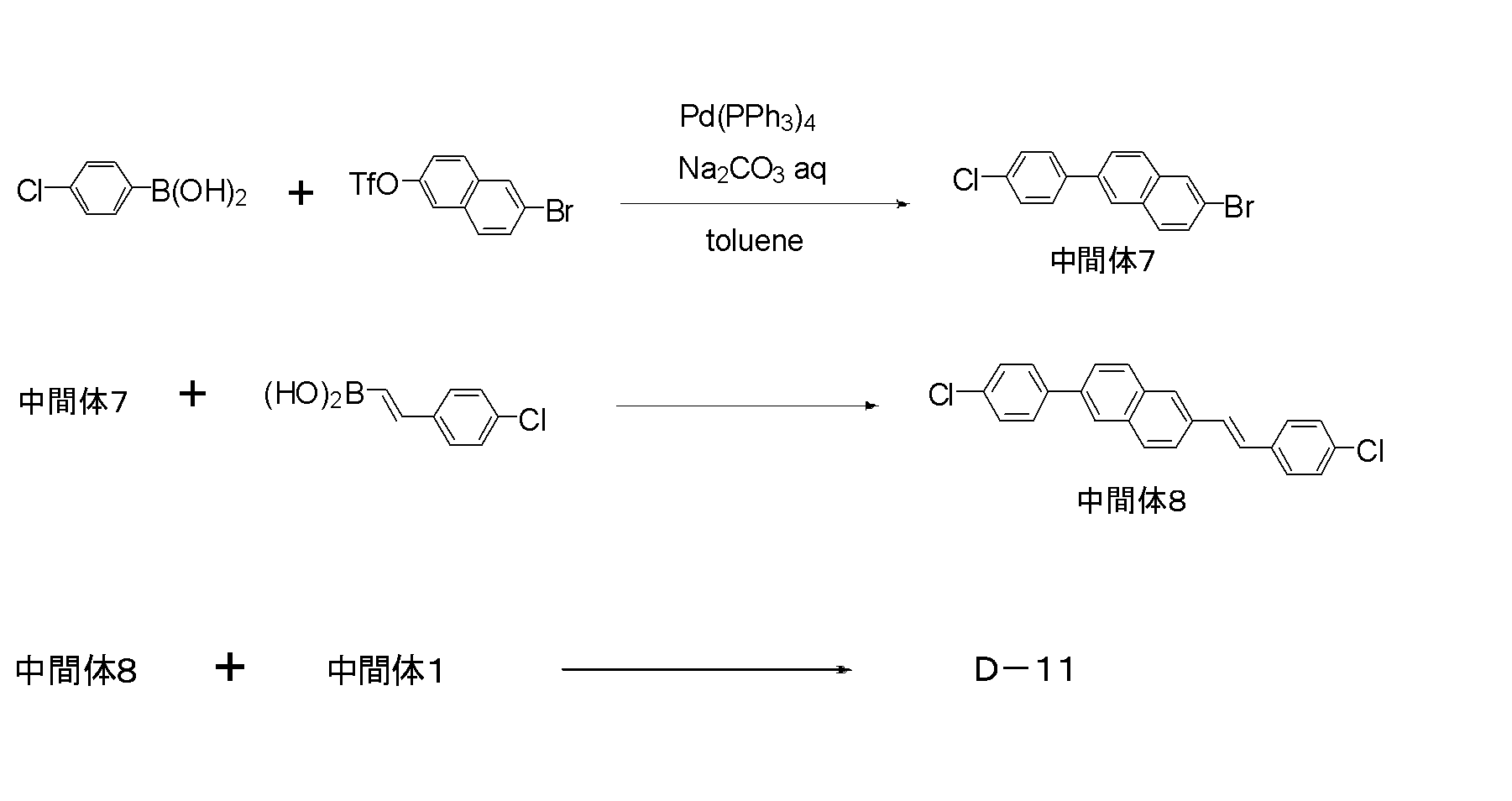
アルゴン気流下、500mLのナスフラスコに、トリフルオロメタンスルホン酸6-ブロモ-2-ナフチル14.2g、4-クロロフェニルボロン酸6.9g、テトラキス(トリフェニルホスフィン)パラジウム(0)1.4g、炭酸ナトリウム12.8g(上水60mL)、及びトルエンを入れ、アルゴン気流下、還流にて8時間反応した。
上水、トルエンを加えて分液、水層をトルエンで抽出した後、合わせた有機層を上水、飽和食塩水で洗浄し、硫酸ナトリウムで乾燥し、濃縮して得られた租生成物をシリカゲルクロマトグラフィー(トルエン/ヘキサン(30/70))で精製し、得られた固体を減圧乾燥したところ、8.6gの白色固体を得た。FD-MS(フィールドディソープションマススペクトル)の分析により、中間体7と同定した。
中間体7の合成(合成例(3-1))において、トリフルオロメタンスルホン酸6-ブロモ-2-ナフチルの代わりに中間体7を用いて、4-クロロフェニルボロン酸の代わりにtrans-2-(4-クロロフェニル)ビニルボロン酸を用いた他は、同様の方法で合成した。FD-MS(フィールドディソープションマススペクトル)の分析により、中間体8と同定した。
D-1の合成(合成例(1-4))において、中間体3の代わりに中間体8を用いた他は、同様の方法で合成した。
得られた化合物について、FD-MS(フィールドディソープションマススペクトル)の分析結果を示す。
FDMS、calcd for C54H52N2Si=784、found m/z=784(M+)
25mm×75mm×1.1mmサイズのガラス基板上に、膜厚120nmのインジウムスズ酸化物からなる透明電極を設けた。この透明電極は、陽極として働く。続いて、このガラス基板に紫外線及びオゾンを照射して洗浄したのち、真空蒸着装置にこの基板を設置した。
まず、正孔注入層として、N’,N’’-ビス[4-(ジフェニルアミノ)フェニル]-N’,N’’-ジフェニルビフェニル-4,4’-ジアミンを60nmの厚さに蒸着したのち、その上に正孔輸送層として、N,N,N’,N’-テトラキス(4-ビフェニル)-4,4’-ベンジジンを20nmの厚さに蒸着した。次いで、ホスト材料であるアントラセン誘導体(2a-1)と、ドーピング材料である芳香族アミン誘導体(D-1)とを、質量比40:2で同時蒸着し、厚さ40nmの発光層を形成した。
この発光層上に、電子注入層として、トリス(8-ヒドロキシキノリナト)アルミニウムを20nmの厚さに蒸着した。
次に、弗化リチウムを1nmの厚さに蒸着し、次いでアルミニウムを150nmの厚さに蒸着し、有機EL素子を作製した。尚、このアルミニウム/弗化リチウムは陰極として働く。
こうして得られた有機EL素子について、電流密度10mA/cm2における駆動時の素子性能(発光輝度、発光効率)、及び、初期輝度500cd/cm2での、半減寿命を測定した結果を表1に示す。
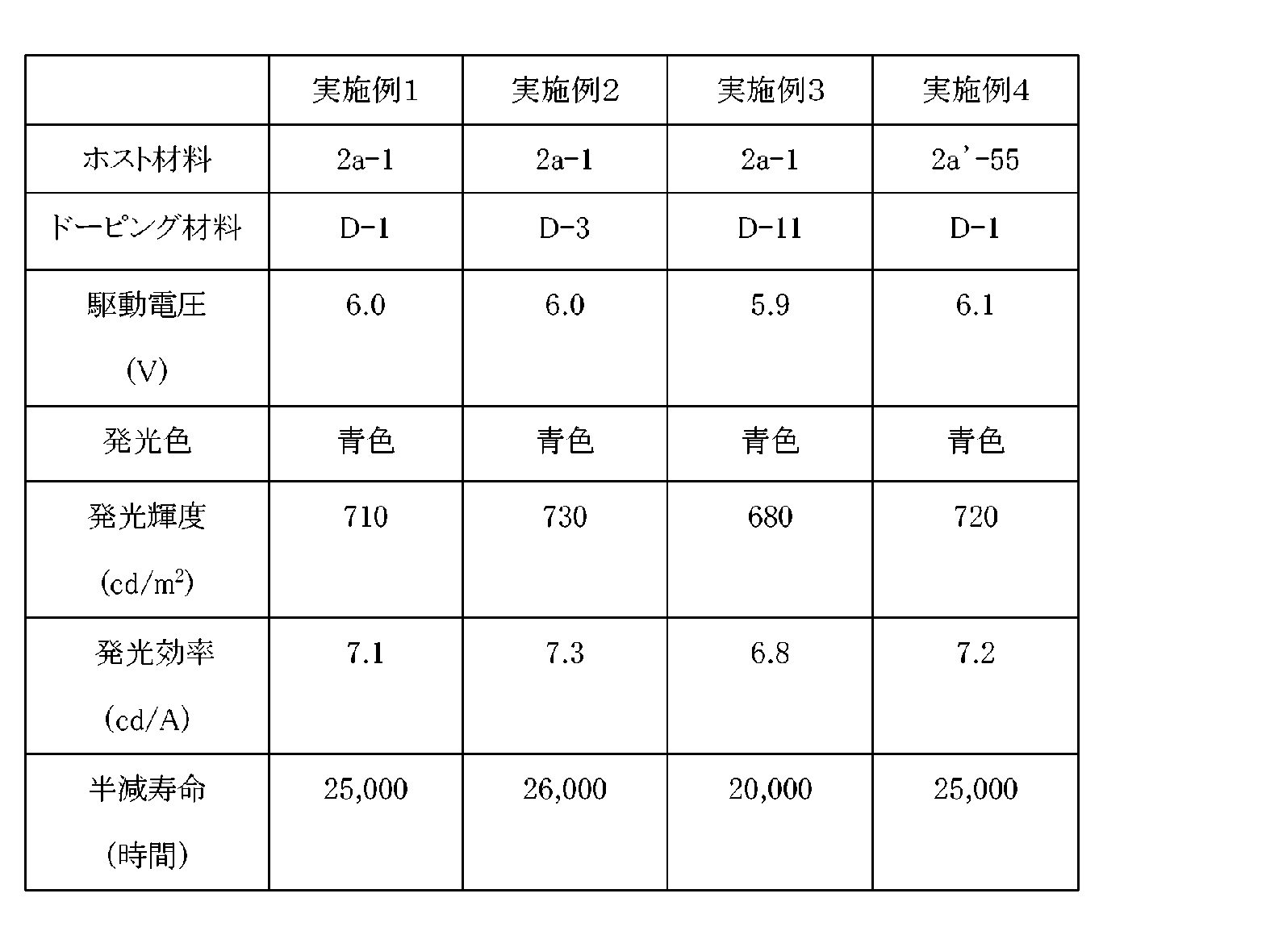
実施例1において、芳香族アミン誘導体(D-1)の代わりに、(D-3)を用いて有機EL素子を作製し、実施例1と同様に評価した。結果を表1に示す。
実施例1において、芳香族アミン誘導体(D-1)の代わりに、(D-11)を用いて有機EL素子を作製し、実施例1と同様に評価した。結果を表1に示す。
実施例1において、ホスト材料であるアントラセン誘導体(2a-1)の代わりに(2a’-55)を用いて、有機EL素子を作製し、実施例1と同様に評価した。結果を表1に示す。
実施例1において、芳香族アミン誘導体(D-1)の代わりに、化合物(A)用いて有機EL素子を作製し、実施例1と同様に評価した。結果を表2に示す。
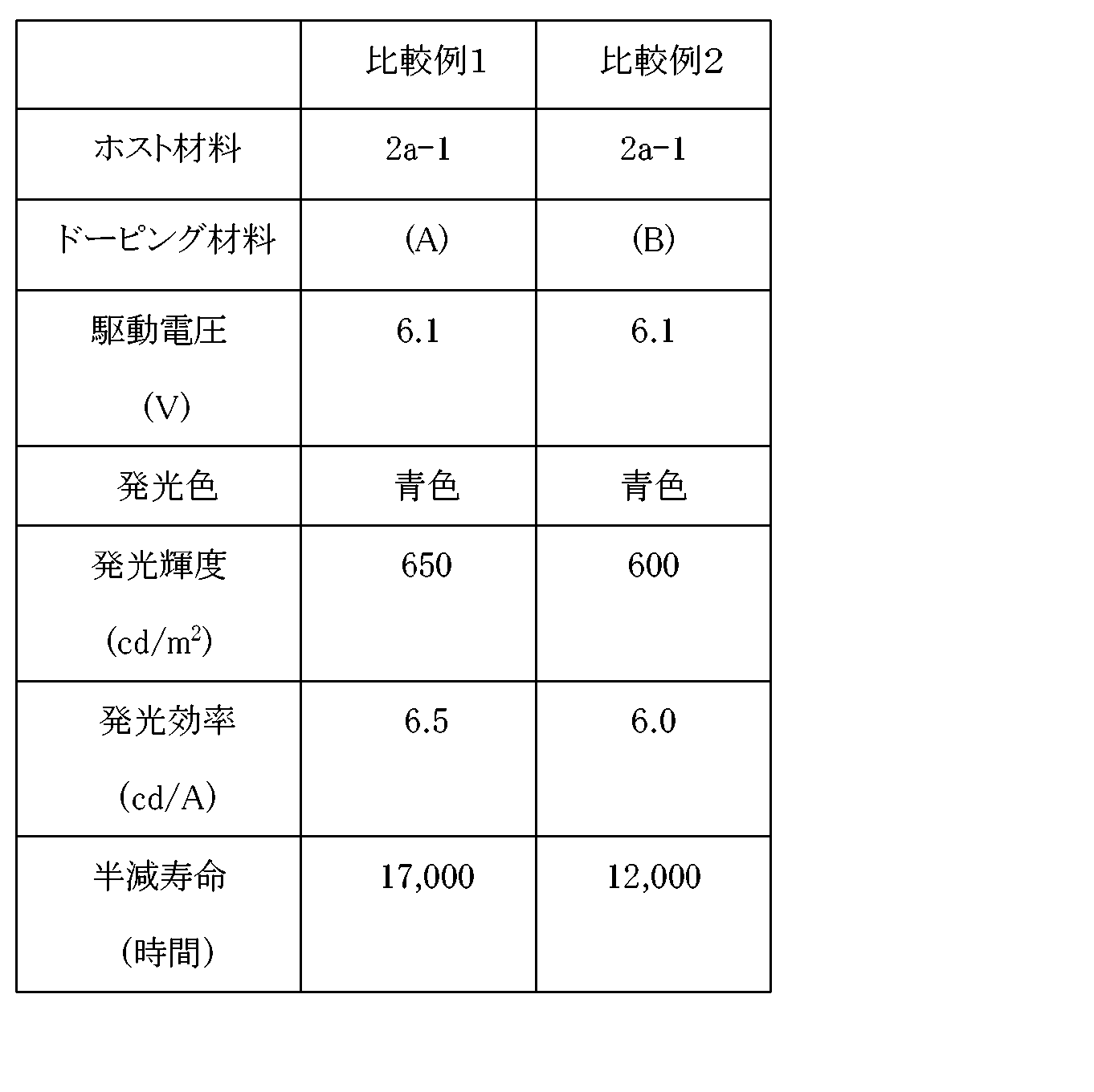
実施例1において、芳香族アミン誘導体(D-1)の代わりに、化合物(B)用いて有機EL素子を作製し、実施例1と同様に評価した。結果を表2に示す。
この明細書に記載の文献の内容を全てここに援用する。
Claims (13)
- 下記式(1)で表される芳香族アミン誘導体。
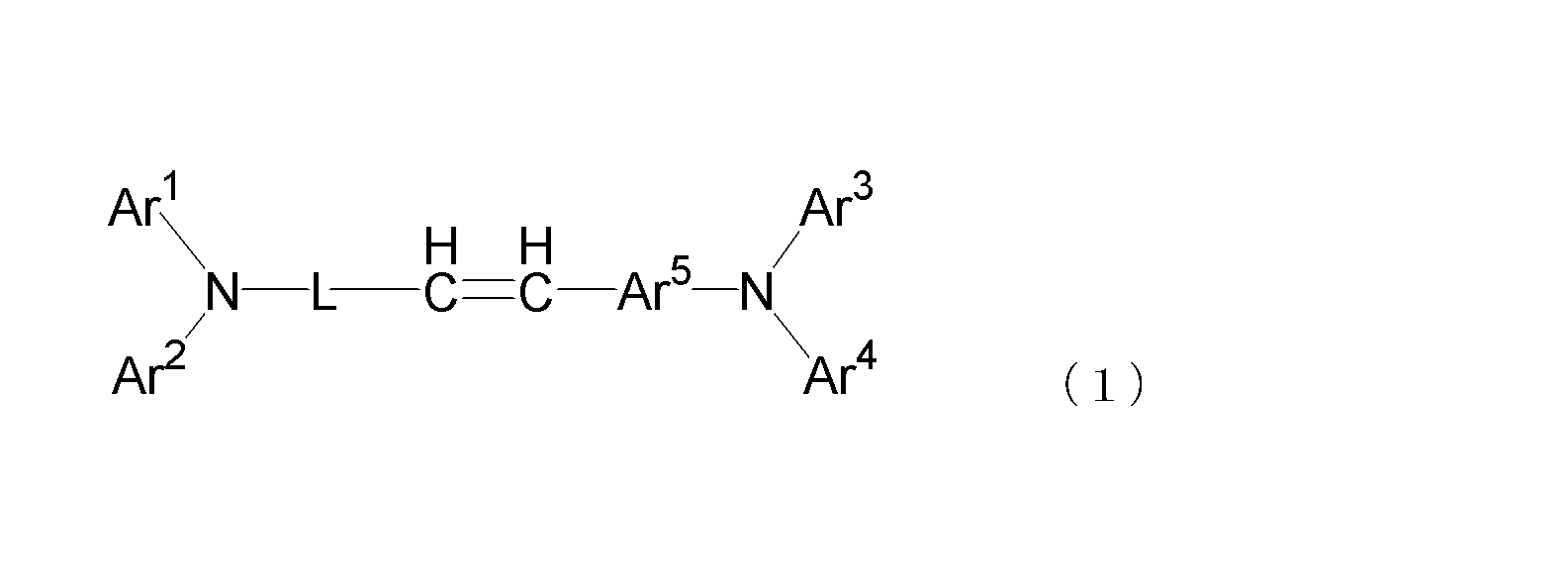
Ar1~Ar4は、それぞれ独立に、置換もしくは無置換の核炭素数6~20のアリール基、又は、置換もしくは無置換の核炭素数5~20のヘテロアリール基であり、Ar1~Ar4の少なくとも1つは、置換もしくは無置換のシリル基を有する。
Ar5は、置換もしくは無置換の核炭素数6~20のアリーレン基、又は、置換もしくは無置換の核炭素数5~20のヘテロアリーレン基である。
Lは下記式(A)又は(B)で表わされる基である。
Ar6及びAr7は、それぞれ独立に、置換もしくは無置換の核炭素数6~20のアリーレン基、又は、置換もしくは無置換の核炭素数5~20のヘテロアリーレン基であり、nは1~3であり、Ar6及びAr7は、互いに結合して芳香環を形成してもよい。
但し、Ar5とAr7が同時に置換もしくは無置換のフェニレン基である場合を除く。)] - 前記式(1)中のLが、前記式(A)で表わされる基である請求項1に記載の芳香族アミン誘導体。
- 前記式(A)中のR1が、置換基としてアルキル基を有する炭素数1~3のアルキレン基である請求項2に記載の芳香族アミン誘導体。
- 前記式(1)中のLが、前記式(B)で表わされる基である請求項1に記載の芳香族アミン誘導体。
- 前記式(B)中のnが1である請求項4に記載の芳香族アミン誘導体。
- 有機エレクトロルミネッセンス素子用のドーピング材料である請求項1~5のいずれかに記載の芳香族アミン誘導体。
- 陰極と陽極との間に少なくとも発光層を含む一層又は複数層からなる有機薄膜層が挟持されている有機エレクトロルミネッセンス素子において、該有機薄膜層の少なくとも一層が、請求項1~5のいずれかに記載の芳香族アミン誘導体を含有する有機エレクトロルミネッセンス素子。
- 前記発光層が前記芳香族アミン誘導体を含有する請求項7に記載の有機エレクトロルミネッセンス素子。
- 前記発光層が、前記芳香族アミン誘導体と、アントラセン骨格を有する下記式(2a)で表される構造を有する化合物とを含有する請求項7に記載の有機エレクトロルミネッセンス素子。

- 前記式(2a)において、Ar11とAr12とが異なる基である請求項9に記載の有機エレクトロルミネッセンス素子。
- 前記発光層が、前記芳香族アミン誘導体と、ピレン骨格を有する下記式(2b)で表される構造を有する化合物とを含有する請求項7に記載の有機エレクトロルミネッセンス素子。
- 有機エレクトロルミネッセンス材料として請求項1~5のいずれかに記載の芳香族アミン誘導体と、溶媒とを含有する有機エレクトロルミネッセンス材料含有溶液。
- 前記有機エレクトロルミネッセンス材料がホスト材料とドーパント材料とを含み、かつ、
前記ドーパント材料が、請求項1~5のいずれかに記載の芳香族アミン誘導体であり、前記ホスト材料が、請求項9に記載の式(2a)で表される化合物及び請求項10に記載の式(2b)で表される化合物の少なくとも1種である請求項12に記載の有機エレクトロルミネッセンス材料含有溶液。
Priority Applications (5)
| Application Number | Priority Date | Filing Date | Title |
|---|---|---|---|
| EP09824553.3A EP2351759B1 (en) | 2008-11-10 | 2009-10-28 | Aromatic amine derivative, and organic electroluminescent element comprising same |
| JP2010536655A JP5396397B2 (ja) | 2008-11-10 | 2009-10-28 | 芳香族アミン誘導体及びそれを用いた有機エレクトロルミネッセンス素子 |
| US13/128,400 US8597800B2 (en) | 2008-11-10 | 2009-10-28 | Aromatic amine derivative and organic electroluminescent element comprising the same |
| KR1020117010512A KR101345055B1 (ko) | 2008-11-10 | 2009-10-28 | 방향족 아민 유도체 및 그것을 이용한 유기 전계발광 소자 |
| CN200980144282XA CN102209722A (zh) | 2008-11-10 | 2009-10-28 | 芳香族胺衍生物及使用它的有机电致发光元件 |
Applications Claiming Priority (2)
| Application Number | Priority Date | Filing Date | Title |
|---|---|---|---|
| JP2008287919 | 2008-11-10 | ||
| JP2008-287919 | 2008-11-10 |
Publications (1)
| Publication Number | Publication Date |
|---|---|
| WO2010052852A1 true WO2010052852A1 (ja) | 2010-05-14 |
Family
ID=42152665
Family Applications (1)
| Application Number | Title | Priority Date | Filing Date |
|---|---|---|---|
| PCT/JP2009/005689 Ceased WO2010052852A1 (ja) | 2008-11-10 | 2009-10-28 | 芳香族アミン誘導体及びそれを用いた有機エレクトロルミネッセンス素子 |
Country Status (6)
| Country | Link |
|---|---|
| US (1) | US8597800B2 (ja) |
| EP (1) | EP2351759B1 (ja) |
| JP (1) | JP5396397B2 (ja) |
| KR (1) | KR101345055B1 (ja) |
| CN (1) | CN102209722A (ja) |
| WO (1) | WO2010052852A1 (ja) |
Cited By (2)
| Publication number | Priority date | Publication date | Assignee | Title |
|---|---|---|---|---|
| JP2012509591A (ja) * | 2008-11-21 | 2012-04-19 | グレイセル・ディスプレイ・インコーポレーテッド | 電界発光化合物を発光材料として用いた電界発光素子 |
| WO2012056674A1 (ja) * | 2010-10-25 | 2012-05-03 | 出光興産株式会社 | 芳香族アミン誘導体、及びそれを用いた有機エレクトロルミネッセンス素子。 |
Families Citing this family (3)
| Publication number | Priority date | Publication date | Assignee | Title |
|---|---|---|---|---|
| US7886377B2 (en) | 2006-10-13 | 2011-02-15 | Hill-Rom Services, Inc. | Push handle with rotatable user interface |
| US8757308B2 (en) | 2009-09-10 | 2014-06-24 | Hill-Rom Services Inc. | Powered transport system and control methods |
| CN106631983B (zh) * | 2016-12-23 | 2021-09-21 | 中国科学院长春应用化学研究所 | 基于二苯乙烯单元的树枝状化合物及有机电致发光器件 |
Citations (7)
| Publication number | Priority date | Publication date | Assignee | Title |
|---|---|---|---|---|
| JP2002324678A (ja) | 2001-04-26 | 2002-11-08 | Fuji Photo Film Co Ltd | 発光素子 |
| JP2004356033A (ja) | 2003-05-30 | 2004-12-16 | Tdk Corp | 有機el素子 |
| WO2005061656A1 (ja) | 2003-12-19 | 2005-07-07 | Idemitsu Kosan Co., Ltd. | 有機エレクトロルミネッセンス素子用発光材料、それを利用した有機エレクトロルミネッセンス素子及び有機エレクトロルミネッセンス素子用材料 |
| JP2005234355A (ja) * | 2004-02-20 | 2005-09-02 | Kyocera Mita Corp | 電子写真感光体 |
| WO2005115950A1 (ja) | 2004-05-27 | 2005-12-08 | Idemitsu Kosan Co., Ltd. | 非対称ピレン誘導体及びそれを利用した有機エレクトロルミネッセンス素子 |
| WO2006049860A1 (en) | 2004-10-29 | 2006-05-11 | Eastman Kodak Company | Organic element for electroluminescent devices |
| WO2007123137A1 (ja) | 2006-04-18 | 2007-11-01 | Idemitsu Kosan Co., Ltd. | 芳香族アミン誘導体及びそれを用いた有機エレクトロルミネッセンス素子 |
Family Cites Families (1)
| Publication number | Priority date | Publication date | Assignee | Title |
|---|---|---|---|---|
| US20090066227A1 (en) * | 2005-12-20 | 2009-03-12 | Canon Kabushiki Kaisha | Organic light-emitting device |
-
2009
- 2009-10-28 WO PCT/JP2009/005689 patent/WO2010052852A1/ja not_active Ceased
- 2009-10-28 KR KR1020117010512A patent/KR101345055B1/ko not_active Expired - Fee Related
- 2009-10-28 US US13/128,400 patent/US8597800B2/en active Active
- 2009-10-28 CN CN200980144282XA patent/CN102209722A/zh active Pending
- 2009-10-28 EP EP09824553.3A patent/EP2351759B1/en not_active Not-in-force
- 2009-10-28 JP JP2010536655A patent/JP5396397B2/ja not_active Expired - Fee Related
Patent Citations (7)
| Publication number | Priority date | Publication date | Assignee | Title |
|---|---|---|---|---|
| JP2002324678A (ja) | 2001-04-26 | 2002-11-08 | Fuji Photo Film Co Ltd | 発光素子 |
| JP2004356033A (ja) | 2003-05-30 | 2004-12-16 | Tdk Corp | 有機el素子 |
| WO2005061656A1 (ja) | 2003-12-19 | 2005-07-07 | Idemitsu Kosan Co., Ltd. | 有機エレクトロルミネッセンス素子用発光材料、それを利用した有機エレクトロルミネッセンス素子及び有機エレクトロルミネッセンス素子用材料 |
| JP2005234355A (ja) * | 2004-02-20 | 2005-09-02 | Kyocera Mita Corp | 電子写真感光体 |
| WO2005115950A1 (ja) | 2004-05-27 | 2005-12-08 | Idemitsu Kosan Co., Ltd. | 非対称ピレン誘導体及びそれを利用した有機エレクトロルミネッセンス素子 |
| WO2006049860A1 (en) | 2004-10-29 | 2006-05-11 | Eastman Kodak Company | Organic element for electroluminescent devices |
| WO2007123137A1 (ja) | 2006-04-18 | 2007-11-01 | Idemitsu Kosan Co., Ltd. | 芳香族アミン誘導体及びそれを用いた有機エレクトロルミネッセンス素子 |
Non-Patent Citations (3)
| Title |
|---|
| JOURNAL OF AMERICAN CHEMICAL SOCIETY, vol. 123, 2001, pages 7727 - 7729 |
| See also references of EP2351759A4 |
| TETRAHEDRON, vol. 40, 1984, pages 1435 - 1456 |
Cited By (5)
| Publication number | Priority date | Publication date | Assignee | Title |
|---|---|---|---|---|
| JP2012509591A (ja) * | 2008-11-21 | 2012-04-19 | グレイセル・ディスプレイ・インコーポレーテッド | 電界発光化合物を発光材料として用いた電界発光素子 |
| WO2012056674A1 (ja) * | 2010-10-25 | 2012-05-03 | 出光興産株式会社 | 芳香族アミン誘導体、及びそれを用いた有機エレクトロルミネッセンス素子。 |
| CN102639490A (zh) * | 2010-10-25 | 2012-08-15 | 出光兴产株式会社 | 芳香族胺衍生物及使用该衍生物的有机电致发光元件 |
| JPWO2012056674A1 (ja) * | 2010-10-25 | 2014-03-20 | 出光興産株式会社 | 芳香族アミン誘導体、及びそれを用いた有機エレクトロルミネッセンス素子。 |
| US9269907B2 (en) | 2010-10-25 | 2016-02-23 | Idemitsu Kosan Co., Ltd. | Aromatic amine derivative and organic electroluminescence device using the same |
Also Published As
| Publication number | Publication date |
|---|---|
| KR20110097768A (ko) | 2011-08-31 |
| EP2351759A4 (en) | 2012-07-18 |
| US20110233534A1 (en) | 2011-09-29 |
| CN102209722A (zh) | 2011-10-05 |
| EP2351759A1 (en) | 2011-08-03 |
| EP2351759B1 (en) | 2014-05-14 |
| JPWO2010052852A1 (ja) | 2012-04-05 |
| JP5396397B2 (ja) | 2014-01-22 |
| US8597800B2 (en) | 2013-12-03 |
| KR101345055B1 (ko) | 2013-12-26 |
Similar Documents
| Publication | Publication Date | Title |
|---|---|---|
| JP5091854B2 (ja) | 芳香族アミン誘導体及びそれを用いた有機エレクトロルミネッセンス素子 | |
| JP5191496B2 (ja) | 芳香族アミン誘導体及びそれを用いた有機エレクトロルミネッセンス素子 | |
| KR100949214B1 (ko) | 방향족 아민 유도체 및 그것을 사용한 유기 전기발광 소자 | |
| KR101349457B1 (ko) | 방향족 아민 유도체 및 그것을 이용한 유기 전기발광 소자 | |
| WO2009084585A1 (ja) | 芳香族ジアミン誘導体及びそれを用いた有機エレクトロルミネッセンス素子 | |
| WO2009102054A1 (ja) | 有機発光媒体および有機el素子 | |
| JPWO2010013676A1 (ja) | 有機発光媒体及び有機el素子 | |
| WO2009107596A1 (ja) | 有機発光媒体及び有機el素子 | |
| JP2009161470A (ja) | 非対称芳香族ジアミン誘導体及びそれを用いた有機エレクトロルミネッセンス素子 | |
| WO2010013675A1 (ja) | 有機発光媒体及び有機el素子 | |
| JPWO2008156089A1 (ja) | 芳香族アミン誘導体及びそれを用いた有機エレクトロルミネッセンス素子 | |
| JPWO2009102026A1 (ja) | 有機発光媒体および有機el素子 | |
| JP5396397B2 (ja) | 芳香族アミン誘導体及びそれを用いた有機エレクトロルミネッセンス素子 | |
| JP4860849B2 (ja) | アミノ基を有する新規芳香族化合物及びそれを利用した有機エレクトロルミネッセンス素子 | |
| US8829783B2 (en) | Trinaphthyl monoamine or derivative thereof, organic electroluminescent device using the same, and organic electroluminescent material-containing solution | |
| JP2010143841A (ja) | 芳香族アミン誘導体及びそれを用いた有機エレクトロルミネッセンス素子 | |
| JP2009161469A (ja) | 芳香族化合物および有機エレクトロルミネッセンス素子 | |
| JP2009161468A (ja) | 芳香族アミン誘導体及びそれを用いた有機エレクトロルミネッセンス素子 | |
| JP2009161464A (ja) | カルバゾール誘導体及びそれを用いた有機エレクトロルミネッセンス素子 | |
| JP2009161465A (ja) | 芳香族アミン誘導体及びそれを用いた有機エレクトロルミネッセンス素子 | |
| JP6047116B2 (ja) | 新規なアントラセン化合物及びこれを用いた有機エレクトロルミネッセンス素子 | |
| JP2009161466A (ja) | 芳香族アミン誘導体及びそれを用いた有機エレクトロルミネッセンス素子 |
Legal Events
| Date | Code | Title | Description |
|---|---|---|---|
| WWE | Wipo information: entry into national phase |
Ref document number: 200980144282.X Country of ref document: CN |
|
| 121 | Ep: the epo has been informed by wipo that ep was designated in this application |
Ref document number: 09824553 Country of ref document: EP Kind code of ref document: A1 |
|
| ENP | Entry into the national phase |
Ref document number: 2010536655 Country of ref document: JP Kind code of ref document: A |
|
| WWE | Wipo information: entry into national phase |
Ref document number: 2009824553 Country of ref document: EP |
|
| ENP | Entry into the national phase |
Ref document number: 20117010512 Country of ref document: KR Kind code of ref document: A |
|
| NENP | Non-entry into the national phase |
Ref country code: DE |
|
| WWE | Wipo information: entry into national phase |
Ref document number: 13128400 Country of ref document: US |