WO2010010669A1 - 難燃性ポリブチレンテレフタレート系樹脂組成物 - Google Patents
難燃性ポリブチレンテレフタレート系樹脂組成物 Download PDFInfo
- Publication number
- WO2010010669A1 WO2010010669A1 PCT/JP2009/003315 JP2009003315W WO2010010669A1 WO 2010010669 A1 WO2010010669 A1 WO 2010010669A1 JP 2009003315 W JP2009003315 W JP 2009003315W WO 2010010669 A1 WO2010010669 A1 WO 2010010669A1
- Authority
- WO
- WIPO (PCT)
- Prior art keywords
- polybutylene terephthalate
- acid
- weight
- terephthalate resin
- flame
- Prior art date
- Legal status (The legal status is an assumption and is not a legal conclusion. Google has not performed a legal analysis and makes no representation as to the accuracy of the status listed.)
- Ceased
Links
Classifications
-
- C—CHEMISTRY; METALLURGY
- C08—ORGANIC MACROMOLECULAR COMPOUNDS; THEIR PREPARATION OR CHEMICAL WORKING-UP; COMPOSITIONS BASED THEREON
- C08K—Use of inorganic or non-macromolecular organic substances as compounding ingredients
- C08K5/00—Use of organic ingredients
- C08K5/16—Nitrogen-containing compounds
- C08K5/34—Heterocyclic compounds having nitrogen in the ring
- C08K5/3467—Heterocyclic compounds having nitrogen in the ring having more than two nitrogen atoms in the ring
- C08K5/3477—Six-membered rings
- C08K5/3492—Triazines
- C08K5/34928—Salts
-
- C—CHEMISTRY; METALLURGY
- C08—ORGANIC MACROMOLECULAR COMPOUNDS; THEIR PREPARATION OR CHEMICAL WORKING-UP; COMPOSITIONS BASED THEREON
- C08K—Use of inorganic or non-macromolecular organic substances as compounding ingredients
- C08K5/00—Use of organic ingredients
- C08K5/49—Phosphorus-containing compounds
- C08K5/51—Phosphorus bound to oxygen
- C08K5/53—Phosphorus bound to oxygen bound to oxygen and to carbon only
- C08K5/5313—Phosphinic compounds, e.g. R2=P(:O)OR'
Definitions
- the present invention relates to a flame retardant polybutylene terephthalate resin composition that exhibits excellent flame retardancy without the aid of a halogen flame retardant.
- This resin composition has excellent flame retardancy, and has good mechanical properties, electrical properties (tracking resistance) and molding processability, excellent appearance, and suppressed bleed-out.
- the polybutylene terephthalate resin molded product can be provided.
- PBT Polybutylene terephthalate resin
- thermoplastic resins As a method for imparting flame retardancy to thermoplastic resins, organic halogen flame retardants are widely used. However, this flame retardant has a problem that dioxins may be generated if it is disposed of by incineration or the like when the molded resin containing the flame retardant is discarded, and the surrounding environment is polluted. Therefore, various studies have been made on flame-retarding thermoplastic resins using non-halogen flame retardants that do not contain halogen.
- the toughness (represented by tensile elongation) of the resulting resin composition is lowered.
- a method of blending a flame retardant aid to reduce the blending amount of the flame retardant or blending a flexible resin such as an elastomer has been proposed.
- a method of blending a fluorine resin as a flame retardant aid has been proposed (see, for example, Patent Document 5).
- the blending of the fluororesin has a problem in that, for example, in the thin molding of 1 mm or less, the fluidity is greatly lowered, there is a problem in moldability, and the warpage amount of the thin molded product is increased.
- the present invention provides a polybutylene terephthalate resin composition that is highly flame-retardant using a non-halogen flame retardant and is excellent in electrical resistance and moldability. Is an issue.
- the inventors of the present invention have prepared the above object by blending a polybutylene terephthalate resin having a glass transition temperature in a specific range with a phosphinic acid metal salt, preferably a phosphinic acid metal salt and an amino group-containing triazine salt.
- a phosphinic acid metal salt preferably a phosphinic acid metal salt and an amino group-containing triazine salt.
- the polybutylene terephthalate resin (A) is such that 70 mol% or more of each of the carboxylic acid component and the alcohol component is derived from terephthalic acid and 1,4-butanediol, and polytetramethylene is used as a copolymerization component.
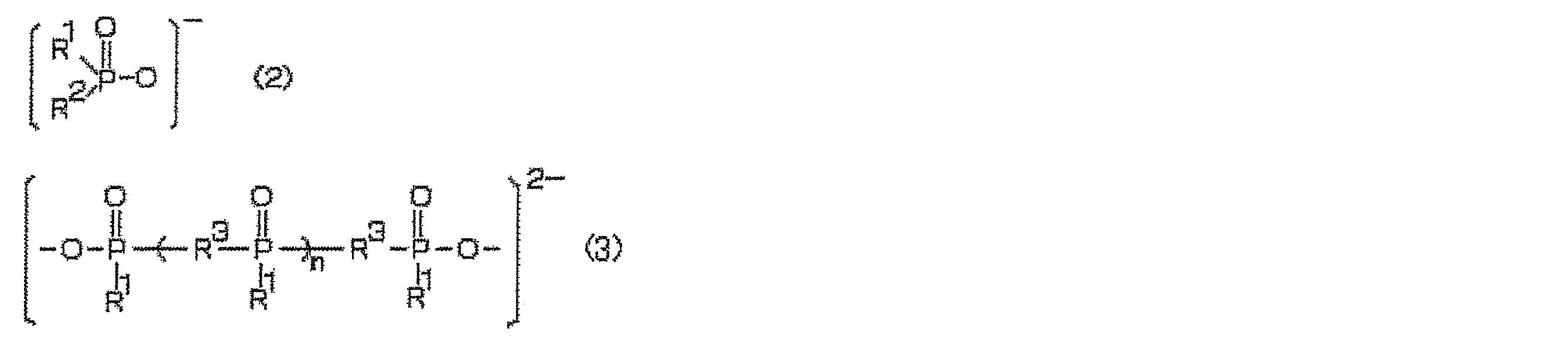
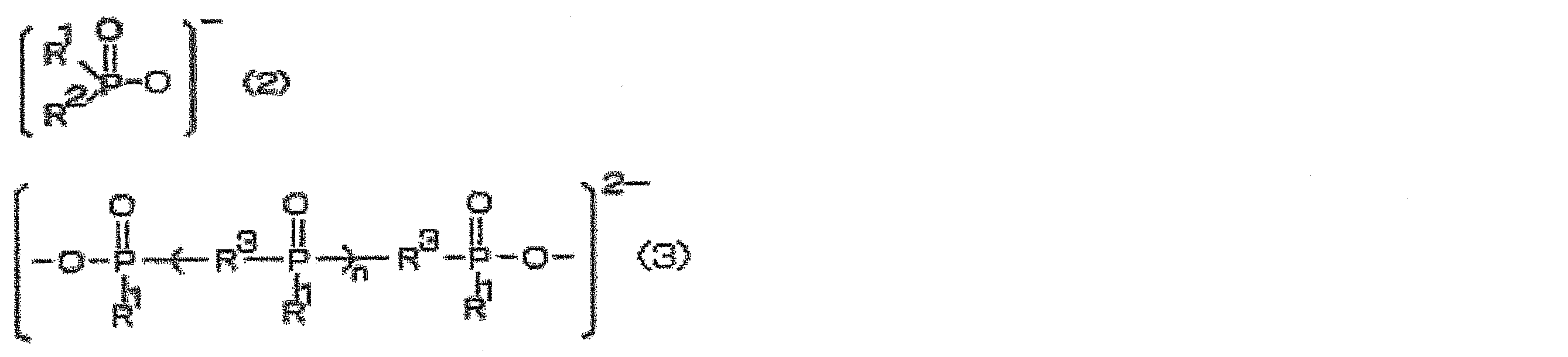
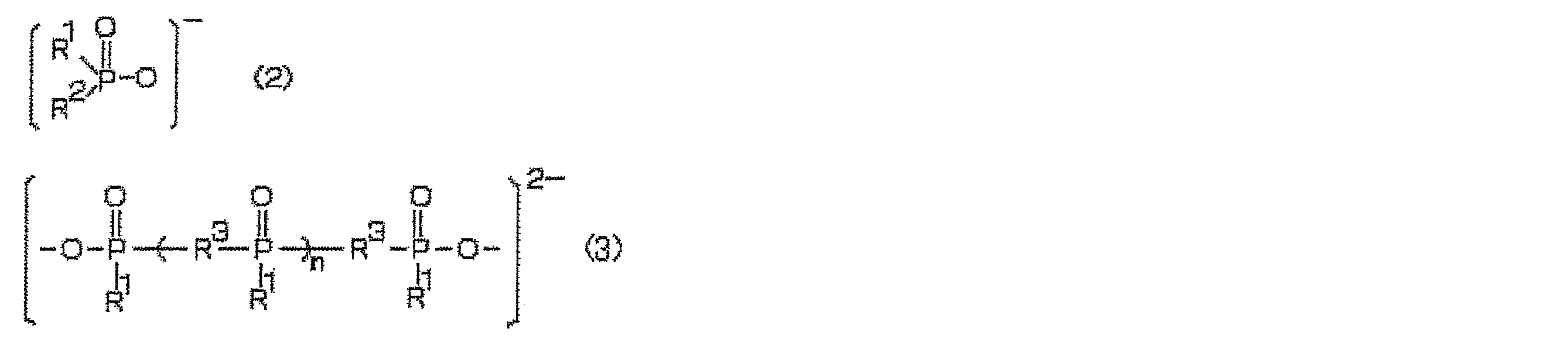
- R 1 and R 2 each independently represents an alkyl group or an optionally substituted aryl group having 1 to 6 carbon atoms, R 1 each other may be the same or different, R 3 Represents an alkylene group having 1 to 10 carbon atoms, an arylene group which may be substituted, or a combination thereof, R 3 may be the same or different, and n represents an integer of 0 to 2 .
- a butylene terephthalate resin composition A butylene terephthalate resin composition.
- the amount of the (B) phosphinate metal is 10 to 60 parts by weight with respect to 100 parts by weight of the polybutylene terephthalate resin, according to any one of [1] to [7] Flame retardant polybutylene terephthalate resin composition.
- the flame retardant polybutylene terephthalate resin composition provided by the present invention is highly flame retardant using a non-halogen flame retardant, and is excellent in electrical resistance and moldability. .
- (A) Polybutylene terephthalate resin is a polyester resin mainly composed of terephthalic acid and 1,4-butanediol, and its glass transition temperature ( Hereinafter, it may be abbreviated as Tg.) Is in the range of 0 to 75 ° C.
- a terephthalic acid component and a 1,4-butanediol component occupy 70 mol% or more of a carboxylic acid component and an alcohol component, respectively.
- the Tg of the polybutylene terephthalate resin can be adjusted by copolymerizing terephthalic acid and 1,4-butanediol with other dicarboxylic acid, diol, hydroxycarboxylic acid and the like.
- the Tg of the polybutylene terephthalate resin used in the present invention is preferably 0 to 65 ° C., and more preferably 0 to 60 ° C.
- the glass transition temperature (Tg) is a peak temperature of a loss elastic modulus (E ′′) obtained from a dynamic viscoelasticity measurement at a frequency of 110 Hz using a dynamic viscoelasticity measuring device Rheogel-E4000 manufactured by UBM. Define as
- dicarboxylic acids other than terephthalic acid used in combination with terephthalic acid include phthalic acid, isophthalic acid, 4,4′-diphenyldicarboxylic acid, 4,4′-diphenylether dicarboxylic acid, 4,4′-benzophenone dicarboxylic acid, 4, Aromatic dicarboxylic acids such as 4'-diphenoxyethanedicarboxylic acid, 4,4'-diphenylsulfone dicarboxylic acid, 2,6-naphthalenedicarboxylic acid, 1,2-cyclohexanedicarboxylic acid, 1,3-cyclohexanedicarboxylic acid, 1 Alicyclic dicarboxylic acids such as 1,4-cyclohexanedicarboxylic acid, aliphatic dicarboxylic acids such as malonic acid, succinic acid, glutaric acid, adipic acid, pimelic acid, suberic acid, azelaic acid, sebacic
- Diols other than 1,4-butanediol used in combination with 1,4-butanediol include ethylene glycol, diethylene glycol, polyethylene glycol, 1,2-propanediol, 1,3-propanediol, polypropylene glycol, polytetra Methylene glycol, dibutylene glycol, 1,5-pentanediol, neopentyl glycol, 1,6-hexanediol, aliphatic diols such as 1,8-octanediol, 1,2-cyclohexanediol, 1,4-cyclohexanediol 1,1-cyclohexanedimethylol, 1,4-cyclohexanedimethylol, and other alicyclic diols, xylylene glycol, 4,4′-dihydroxybiphenyl, 2,2-bis (4-hydroxyphenyl) propane, bis ( 4-hi And aromatic di
- hydroxycarboxylic acid examples include lactic acid, glycolic acid, m-hydroxybenzoic acid, p-hydroxybenzoic acid, 6-hydroxy-2-naphthalenecarboxylic acid, p- ⁇ -hydroxyethoxybenzoic acid and the like.
- monofunctional compounds such as stearyl alcohol, benzyl alcohol, stearic acid, benzoic acid, t-butylbenzoic acid, benzoylbenzoic acid, tricarbaric acid, trimellitic acid, trimesic acid, pyromellitic acid, gallic acid, trimethylol
- monofunctional compounds such as stearyl alcohol, benzyl alcohol, stearic acid, benzoic acid, t-butylbenzoic acid, benzoylbenzoic acid, tricarbaric acid, trimellitic acid, trimesic acid, pyromellitic acid, gallic acid, trimethylol
- Trifunctional or more polyfunctional compounds such as ethane, trimethylolpropane, glycerol, pentaerythritol and the like may be copolymerized.
- two or more types having different intrinsic viscosities may be used in combination to adjust the desired intrinsic viscosity.
- the components derived from terephthalic acid and 1,4-butanediol account for 70 mol% or more of the carboxylic acid component and the alcohol component, respectively, and polyalkylene glycol It is preferable to use a component derived from at least one selected from the group consisting of isophthalic acid and dimer acid as the main copolymerization component.
- copolymerization components As components other than terephthalic acid and 1,4-butanediol, if the content is 3% by weight or less in the polybutylene terephthalate resin, other components than those described above are included as copolymerization components. It may be. Among these, the following copolymer resins (A-1) to (A-3) are preferable.
- Polytetramethylene ether glycol copolymer resin (hereinafter sometimes referred to as polyester ether resin) is composed mainly of dicarboxylic acid mainly composed of terephthalic acid, 1,4-butanediol and polytetramethylene ether glycol.
- the proportion of the component derived from polytetramethylene ether glycol is 2 to 30% by weight.
- the proportion of the component derived from polytetramethylene ether glycol is preferably 3 to 25% by weight, particularly 5 to 20% by weight. Fat may be sufficient.
- the number average molecular weight of the polytetramethylene ether glycol used in the present invention may be appropriately selected and determined. Among these, it is preferably 300 to 6000, more preferably 500 to 5000, and particularly preferably 500 to 3000. .
- the number average molecular weight of polytetramethylene ether glycol can be determined by reacting this with excess acetic anhydride, decomposing the remaining acetic anhydride with water to give an acid, and quantifying this acid by alkali titration. it can.
- the solution viscosity [ ⁇ ] of the polyester ether resin used in the present invention is 0.7-2 as measured at 30 ° C. using a mixed solvent of tetrachloroethane and phenol in a weight ratio of 1/1. Among these, 0.8 to 1.6 is preferable.
- the melting point of the polyester ether resin is 200 to 225 ° C., preferably 205 to 222 ° C.
- the dimer acid copolyester resin is a copolyester obtained by copolymerizing glycol mainly composed of 1,4-butanediol, terephthalic acid, and dimer acid.
- the proportion of the dimer acid component in the total carboxylic acid component is 0.5 to 30 mol% as carboxylic acid groups. If the proportion of the dimer acid is too large, the long-term heat resistance of the resin composition using the dimer acid is remarkably lowered. On the other hand, if the amount is too small, the toughness is significantly reduced. Accordingly, the ratio of the dimer acid component to the total carboxylic acid component is preferably 1 to 20 mol%, particularly preferably 3 to 15 mol%, as the carboxylic acid group.
- the dimer acid used in the present invention is usually a dimerization reaction of an unsaturated fatty acid having 18 carbon atoms, specifically, for example, oleic acid, linoleic acid, linolenic acid, elaidic acid, etc. with a clay catalyst such as montmorillonite. The thing obtained by letting it be mentioned is mentioned.
- the reaction product of the dimerization reaction is a mixture mainly containing a dimer acid having 36 carbon atoms, and further containing a trimer acid having 54 carbon atoms, a monomer acid having 18 carbon atoms, and the like. This mixture is purified by vacuum distillation, molecular distillation, hydrogenation reaction or the like to obtain dimer acid.
- Dimer acid is not a single compound, but is generally a mixture of compounds having a chain, aromatic ring, alicyclic monocyclic and alicyclic polycyclic structures. For example, when a material having a large amount of linoleic acid is used as a dimer acid raw material, a compound having a chain structure is reduced and a compound having a cyclic structure is increased in the obtained dimer acid.
- dimer acid used for the production of the copolyester used in the present invention it is preferable to use one containing 10% by weight or more of the chain dimer acid represented by the following general formula (1).
- R m and R p each independently represent an alkyl group
- R n and R q each independently represent an alkylene group
- R m , R n , R p and R q are (The sum of carbon numbers is 28 to 46.)
- the resulting copolymer polyester resin itself has good tensile elongation, and therefore the tensile elongation of the resin composition of the present invention using the same is improved. Therefore, it is preferable.
- the proportion of monomer acid contained in the dimer acid is preferably 1% by weight or less.
- the monomer acid inhibits the polymerization of the resin produced during the copolymerization, but if it is 1% by weight, the condensation polymerization proceeds sufficiently during the copolymerization, so that a high molecular weight copolymer can be obtained.
- the toughness of the composition is improved.
- dimer acids include PRIPOL® 1008 and PRIPOL® 1009 manufactured by Unikema Corporation, and further PRIPLAST® 3008 and PRIPLAST® 1899 manufactured by Unikema as ester-forming derivatives of PRIPOL® 1008.
- the production method of the copolyester resin using dimer acid is not particularly limited, and can be carried out according to any conventionally known method, for example, the method disclosed in JP-A-2001-064576.
- the isophthalic acid copolymerized polyester resin is a copolymer of glycol mainly composed of 1,4-butanediol and dicarboxylic acid mainly composed of terephthalic acid and isophthalic acid. Copolyester.
- the proportion of the isophthalic acid component in the total carboxylic acid component is 1 to 30 mol% as the carboxylic acid group.
- the proportion of the isophthalic acid component is preferably 1 to 20 mol%, particularly preferably 3 to 15 mol%, as the carboxylic acid group.
- A-4) Mixture of copolymerized polyester and other PBT
- This mixture is composed of any of the above-mentioned copolymerized polyesters (A-1) to (A-3) and other PBT, preferably Is a mixture of PBT having a copolymerization component of 3 wt% or less in a weight ratio of 100/0 to 10/90.
- the mixing ratio is preferably 100/0 to 15/85, and particularly preferably 100/0 to 30/70.
- the copolyester and other PBT can be easily dispersed with a twin-screw extruder or the like generally used for melt kneading, but it is preferable to match the melt viscosities of both.
- phosphinate metal is used as a flame retardant.
- the anion moiety is preferably represented by the formula (2) or (3), and the metal ion of the cation moiety is preferably calcium, magnesium, aluminum or zinc.
- R 1 and R 2 each independently represents an alkyl group or an optionally substituted aryl group having 1 to 6 carbon atoms, R 1 each other may be the same or different, R 3 Represents an alkylene group having 1 to 10 carbon atoms, an arylene group which may be substituted, or a combination thereof, R 3 may be the same or different, and n represents an integer of 0 to 2 .
- phosphinic acid metal salts include calcium dimethylphosphinate, magnesium dimethylphosphinate, aluminum dimethylphosphinate, zinc dimethylphosphinate, calcium ethylmethylphosphinate, magnesium ethylmethylphosphinate, aluminum ethylmethylphosphinate, ethylmethyl Zinc phosphinate, calcium diethylphosphinate, magnesium diethylphosphinate, aluminum diethylphosphinate, zinc diethylphosphinate, calcium methyl-n-propylphosphinate, magnesium methyl-n-propylphosphinate, aluminum methyln-propylphosphinate , Methyl-n-propylphosphinate zinc, methandi (methylphosphinic acid) calcium, methandi (methylphosphine) Phosphoric acid) magnesium, methanebis (methylphosphinic acid) aluminum, methanebis (methylphosphinic acid) zinc, benzen
- these compounds may be used alone or in combination of two or more at any ratio.
- aluminum diethylphosphinate, calcium diethylphosphinate, and zinc diethylphosphinate are particularly preferable from the viewpoints of flame retardancy and electrical characteristics.
- all melting peak temperatures (Tm) are 180 in DSC measurement (differential scanning calorimetry: Differential scanning calorimetry, measurement condition: temperature rising condition from 30 ° C. to 300 ° C. is 20 ° C./min). Those appearing at higher than or equal to ° C are preferred, and those appearing at 180 to 200 ° C are more preferred.
- the particle size of the phosphinic acid salt used in the present invention affects the appearance and mechanical strength of the resin molded product obtained from the resin composition. Therefore, the particle size of 95% by weight or more is 100 ⁇ m or less as measured by the laser diffraction method. It is preferable that Among them, particles having a particle size of 95% by weight or more and 50 ⁇ m or less, specifically, for example, powder obtained by pulverization are preferable.
- the adjustment cost increases as the particle size is reduced.
- 90% by weight or more of the particle size is in the range of 20 to 40 ⁇ m.
- the (B) phosphinic acid metal salt used in the present invention is blended in an amount of 5 to 70 parts by weight per 100 parts by weight of the (A) polybutylene terephthalate resin. If it is less than 5 parts by weight, the intended flame retardancy is not sufficient, and if it exceeds 70 parts by weight, mechanical properties, moldability, mold release defects and mold deposits are likely to occur. In view of both flame retardancy and mechanical properties, the preferred blending amount is 10 to 60 parts by weight per 100 parts by weight of the (A) polybutylene terephthalate resin.
- (C) Salt of amino group-containing triazines The resin composition of the present invention further contains a salt of amino group-containing triazines (triazines having amino groups) which are nitrogen-based flame retardants. Is preferred. By blending this amino group-containing triazine salt, a desired flame retardant effect can be expressed by blending a relatively small amount of a metal phosphinate.
- amino group-containing triazines amino group-containing 1,3,5-triazines are usually used. Specifically, for example, melamine, substituted melamine (2-methylmelamine, guanylmelamine, etc.), melamine condensate ( Melam, melem, melon, etc.), melamine co-condensation resin (melamine-formaldehyde resin, etc.), cyanuric amides (ammelin, ammelide, etc.), guanamine or its derivatives (guanamine, methylguanamine, acetoguanamine, benzoguanamine, succinoguanamine , Adipoguanamine, phthalogamine, CTU-guanamine, etc.).
- an inorganic acid or an organic acid may be used as an acid which forms a salt with this.
- inorganic acids include nitric acid, chloric acid (chloric acid, hypochlorous acid, etc.), phosphoric acid (phosphoric acid, phosphorous acid, hypophosphorous acid, polyphosphoric acid, etc.), sulfuric acid (sulfuric acid and sulfurous acid).
- organic acids include organic sulfonic acids (aliphatic sulfonic acids such as methanesulfonic acid, aromatic sulfonic acids such as toluenesulfonic acid and benzenesulfonic acid), cyclic ureas (uric acid, barbituric acid, And cyanuric acid and acetylene urea).
- organic sulfonic acids aliphatic sulfonic acids such as methanesulfonic acid, aromatic sulfonic acids such as toluenesulfonic acid and benzenesulfonic acid
- cyclic ureas uric acid, barbituric acid, And cyanuric acid and acetylene urea
- alkane sulfonic acids having 1 to 4 carbon atoms such as methanesulfonic acid, aryl sulfonic acids such as toluenesulfonic acid, which may have an alkyl group having 1 to 3 carbon atoms, and cyanuric acid.
- salts of amino group-containing triazines include, for example, melamine cyanurate, melam, melem double salt, melamine phosphate (melamine polyphosphate, melamine polyphosphate, melam, melem double salt, etc.), melamine sulfate (Melamine sulfate, dimelamine sulfate, dimelam pyrosulfate, etc.), melamine sulfonates (melamine methanesulfonate, melam methanesulfonate, melem methanesulfonate, melamine methanesulfonate, melam, melem double salt, melamine toluenesulfonate, toluene Melamine sulfonate, melamine toluenesulfonate, melam, melem double salt, etc.). These may be used alone or in combination of two or more at any ratio.
- an adduct of cyanuric acid or isocyanuric acid and a triazine compound is usually 1 to 1 (molar ratio), optionally 1 to 2 (molar ratio).
- examples include melamine cyanurate, benzoguanamine cyanurate, acetoguanamine cyanurate, and melamine cyanurate is particularly preferable.
- These salts are obtained, for example, by mixing a mixture of amino group-containing triazines and cyanuric acid or isocyanuric acid into an aqueous slurry and mixing to form both salts into fine particles, and then filtering and drying the slurry to obtain a powder. .
- the average particle diameter of the salt before blended with the resin is such as flame retardancy, mechanical strength and heat-and-moisture resistance properties, residence stability, and surface properties of the resin molded product obtained from the resin composition of the present invention. Therefore, it is preferable that 95% by weight or more of the particles have a particle size of 100 ⁇ m or less, particularly 80 ⁇ m or less, as measured by laser diffraction.
- a dispersant such as tris ( ⁇ -hydroxyethyl) isocyanurate, a known surface treatment agent, or the like may be used in combination.
- the amount of the (C) amino group-containing triazine salt in the present invention is 0 to 40 parts by weight, preferably 5 to 30 parts by weight, per 100 parts by weight of the component (A) polybutylene terephthalate resin. .
- the compounding amount of the salt of the component (C) amino group-containing triazine exceeds 40 parts by weight, the mechanical properties of the resin molded product obtained from the resin composition of the present invention tend to be lowered.
- a dispersant in order to improve the dispersibility of the salt of (B) phosphinic acid salt and (C) amino group-containing triazine, these are treated with a dispersant in advance and then mixed with other components to form a resin. You may mix
- examples of the monomer include glycols such as ethylene glycol and butanediol, and isocyanates such as TDI and MDI.
- examples of the polymer include polyether polyols such as polyethylene glycol, polyester polyol, bisphenol A diglycidyl ester, phenol-formaldehyde resin, or epoxy resin such as cresol-formaldehyde resin polyglycidyl ester.
- a phosphinic acid metal salt-containing flame retardant granulated with a binder as disclosed in JP-A-2004-99893 is preferably used.
- preferable binders include waxes such as carnauba wax, montan wax, and polyethylene wax, and polyethylene glycol.
- the melting point of the binder is preferably 50 to 200 ° C., and the amount of the binder is preferably 0.5 to 10 parts by weight with respect to 100 parts by weight of the flame retardant.
- the flame retardant aid is preferably a metal borate, specifically, an alkali metal salt such as sodium tetraborate or potassium metaborate, or an alkaline earth metal such as calcium borate, magnesium orthoborate, barium orthoborate or zinc borate.
- alkali metal salt such as sodium tetraborate or potassium metaborate
- alkaline earth metal such as calcium borate, magnesium orthoborate, barium orthoborate or zinc borate.
- the salt include zinc borate.
- the anti-dripping agent is preferably a fluororesin, and specifically, for example, polytetrafluoroethylene, tetrafluoroethylene / perfluoroalkyl vinyl ether copolymer, tetrafluoroethylene / hexafluoropropylene copolymer, tetrafluoroethylene / ethylene copolymer.
- a fluororesin for example, polytetrafluoroethylene, tetrafluoroethylene / perfluoroalkyl vinyl ether copolymer, tetrafluoroethylene / hexafluoropropylene copolymer, tetrafluoroethylene / ethylene copolymer.
- a polymer etc. are mentioned.
- the resin composition of the present invention may contain other flame retardants without departing from the spirit of the present invention.
- the halogen-based flame retardant is preferably 2% by mass or less in the entire composition.
- the resin composition of the present invention includes a resin molded article excellent in performance such as mechanical strength, heat resistance, dimensional stability (deformation resistance, warpage), and electrical properties.
- various (D) inorganic fillers such as fibrous form, a granular form, and plate shape, can be mix
- the blending amount of the inorganic filler (D) is 0 to 150 parts by weight, preferably 0 to 100 parts by weight, more preferably 10 to 50 parts by weight with respect to 100 parts by weight of the component (A) polybutylene terephthalate resin. Parts, especially 20 to 40 parts by weight. If it exceeds 150 parts by weight, it becomes difficult to ensure the toughness of the resin composition.
- the fibrous filler examples include glass fiber, carbon fiber, silica fiber, silica / alumina fiber, zirconia fiber, boron nitride fiber, silicon nitride fiber, boron fiber, potassium titanate fiber, stainless steel, and aluminum.
- Metal fibrous materials such as titanium, copper, and brass.
- Particularly typical fibrous fillers are glass fiber and carbon fiber.
- the particulate filler include carbon black, silica, quartz powder, glass beads, glass powder, calcium oxalate, aluminum oxalate, kaolin, talc, clay, diatomaceous earth, wollastonite, and the like.
- Metal oxides such as oxalate, iron oxide, titanium oxide, zinc oxide, and alumina, metal carbonates such as calcium carbonate and magnesium carbonate, metal sulfates such as calcium sulfate and barium sulfate, other silicon carbide, silicon nitride , Boron nitride, various metal powders, and the like.
- the plate filler examples include mica, glass flakes, various metal foils and the like. These inorganic fillers may be used alone or in combination of two or more at any ratio.
- the combined use of fibrous fillers, particularly glass fibers and powder and / or plate-like fillers, is a preferable combination particularly in combination of mechanical strength, dimensional accuracy, electrical properties, and the like.
- a sizing agent or a surface treatment agent can be used.
- a functional compound such as an epoxy compound, a silane compound, or a titanate compound is used.
- the filler may be previously treated with these compounds, or may be added at the same time or separately when the resin composition is produced.
- the resin composition of the present invention may be blended with various known additives that are generally used for thermoplastic resins in order to impart desired properties according to the purpose.
- additives such as antioxidants and ultraviolet absorbers, antistatic agents, colorants such as dyes and pigments, lubricants and crystallization accelerators, crystal nucleating agents, hydrolysis resistance improvers (epoxys) Compounds, carbodiimide compounds, etc.) and the like.
- the resin composition of the present invention can be additionally used in combination with other thermoplastic resins depending on the purpose.
- a thermoplastic resin a resin that is stable at a high temperature is used.
- thermoplastic resins may be used alone or in combination of two or more in any proportion. Further, elastomers that are impact resistance improvers may be blended. Of course, blending of the above-mentioned additives and thermoplastic resins must be within a range that does not impair the desired effect of the resin composition of the present invention. .
- the flame-retardant polybutylene terephthalate resin composition of the present invention can be produced by facilities and methods generally used for production of conventional resin compositions. Specifically, for example, 1) A method in which each component is mixed and then kneaded and extruded into a pellet by a monoaxial or biaxial extruder, and 2) a plurality of types having different compositions in the raw material for forming the resin composition First, pellets are prepared, and a predetermined amount of the pellets are mixed to obtain a resin composition having the desired composition. 3) A part of the raw material is melt-kneaded in advance, and other (remaining) raw materials are added thereto. And a kneading method.
- Tensile test Measured according to ISO 527 using an ISO tensile test piece (ISO 3167).
- Weld tensile test The tensile test piece used for the evaluation of weld physical properties is the same as the above ISO tensile test piece size, and injection molding is performed with a two-point gate from the longitudinal direction on both sides of the test piece. It evaluated using the test piece in which is formed. The weld properties were determined by obtaining the retention of tensile elongation, and the higher the value, the better the weld characteristics (weld adhesion).
- CTI test Comparative tracking index test
- the CTI was determined by the test method defined in the international standard IEC60112.
- CTI shows the resistance to tracking at a voltage of 25 V in increments of 100 V to 600 V when wet-contaminated with an electric field applied to the surface of a solid electrical insulating material. The higher the value, the better. Is 600V or higher.
- the above tests (2) to (6) were conducted using an injection molding machine (model SH-100, manufactured by Sumitomo Heavy Industries, Ltd.) under conditions of a cylinder temperature of 270 ° C. and a mold temperature of 80 ° C.
- Pieces three types of flat plate test pieces each having a length of 10 cm and a thickness of 3 mm, and a test piece of UL-94 standard having a thickness of 1/32 inch
- an ISO tensile test piece (ISO 3167) was molded at 265 ° C. using an injection molding machine (Sumitomo Heavy Industries Co., Ltd., Sakai Model S-75 MIII). The evaluation results are shown in Table 1.
- the glass transition temperature of the polybutylene terephthalate resin blended with the (A-1) resin and the (A-4) resin in Example 5 was 58 ° C. as measured by the dynamic viscoelasticity method.
- the glass transition temperature of the polybutylene terephthalate resin blended with the (A-1) resin and the (A-4) resin was 56 ° C. as measured by the dynamic viscoelasticity method.
- the glass transition temperature of the polybutylene terephthalate resin blended with the (A) resin and the (A-4) resin, as measured by the dynamic viscoelasticity method, is 56 ° C.
- the glass transition temperature of the polybutylene terephthalate resin blended with the resin, measured by the dynamic viscoelasticity method, is 70.5 ° C.
- the resin compositions of the comparative examples all have a low tensile elongation, and even when a flexible polyester elastomer is blended, the improvement in the elongation is insufficient.
- the resin composition of the present invention is not only excellent in improvement in elongation, but also excellent in CTI, no bleed-out, and good releasability. .
- the flame-retardant polybutylene terephthalate resin composition of the present invention and the resin molded product obtained by molding the resin composition have excellent toughness and CTI, and the occurrence of bleed-out is also suppressed, which is further difficult during use. Since the influence on the electrical characteristics by the flame retardant is also reduced and the productivity is excellent, it is economical and can be expected to be applied to a wide range of parts such as electrical and electronic parts such as connectors and terminals. Furthermore, it can be applied to automobile parts and building material parts.
- the flame-retardant polybutylene terephthalate resin composition of the present invention is excellent in flame retardancy and excellent in electrical resistance and moldability, although no non-halogen flame retardant is used. Therefore, by using the composition, it is possible to provide a molded article having excellent surface appearance, toughness and tracking resistance.
- the present invention is expected to be industrially useful from the following viewpoints. 1) Although it has excellent flame retardancy, since the flame retardant used is a non-halogen flame retardant, it does not generate dioxins or the like even when incinerated waste after use, and does not cause environmental pollution problems .
Landscapes
- Chemical & Material Sciences (AREA)
- Health & Medical Sciences (AREA)
- Chemical Kinetics & Catalysis (AREA)
- Medicinal Chemistry (AREA)
- Polymers & Plastics (AREA)
- Organic Chemistry (AREA)
- Compositions Of Macromolecular Compounds (AREA)
- Polyesters Or Polycarbonates (AREA)
Abstract
Description
[1](A)動的粘弾性法で測定したガラス転移温度が0℃~75℃であるポリブチレンテレフタレート系樹脂100重量部に対して、(B)ホスフィン酸金属塩5~70重量部を配合してなることを特徴とする難燃性ポリブチレンテレフタレート系樹脂組成物。
[2]ポリブチレンテレフタレート系樹脂(A)が、カルボン酸成分及びアルコール成分のそれぞれ70モル%以上がテレフタル酸及び1,4-ブタンジオールに由来するものであり、且つ共重合成分としてポリテトラメチレンエーテルグリコール、ダイマー酸及びイソフタル酸の何れかに由来する成分を含有しているものであることを特徴とする[1]記載の難燃性ポリブチレンテレフタレート系樹脂組成物。
[3]ポリブチレンテレフタレート系樹脂(A)が、下記の(1)~(4)よりなる群から選ばれるものであることを特徴とする[1]または[2]に記載の難燃性ポリブチレンテレフタレート系樹脂組成物。
(1)テレフタル酸、1,4-ブタンジオール及びポリテトラメチレンエーテルグリコールに由来する成分から主として成っており、他の成分は3重量%以下であり、且つポリテトラメチレンエーテルグリコールに由来する成分が2~30重量%である。
(2)テレフタル酸、1,4-ブタンジオール及びダイマー酸に由来する成分から主として成っており、他の成分は3重量%以下であり、且つダイマー酸に由来する成分が酸に由来する成分の0.5~30モル%である。
(3)テレフタル酸、1,4-ブタンジオール及びイソフタル酸に由来する成分から主として成っており、他の成分は3重量%以下であり、且つイソフタル酸に由来する成分が酸に由来する成分の1~30モル%である。
(4)上記(1)~(3)のいずれかと上記以外で共重合成分が3重量%以下のポリブチレンテレフタレート樹脂との混合物で、混合物に占めるポリブチレンテレフタレート樹脂の比率が90重量%以下である。
[4]ポリブチレンテレフタレート系樹脂(A)が、下記の(1)~(4)よりなる群から選ばれるものであることを特徴とする[1]または[2]に記載の難燃性ポリブチレンテレフタレート系樹脂組成物。
(1)テレフタル酸、1,4-ブタンジオール及び数平均分子量が500~5000のポリテトラメチレンエーテルグリコールに由来する成分から主として成っており、他の成分は3重量%以下であり、且つポリテトラメチレンエーテルグリコールに由来する成分が3~25重量%である。
(2)テレフタル酸、1,4-ブタンジオール及びダイマー酸に由来する成分から主として成っており、他の成分は3重量%以下であり、且つダイマー酸に由来する成分が酸に由来する成分の3~15モル%である。
(3)テレフタル酸、1,4-ブタンジオール及びイソフタル酸に由来する成分から主として成っており、他の成分は3重量%以下であり、且つイソフタル酸に由来する成分が酸に由来する成分の3~15モル%である。
(4)上記(1)~(3)のいずれかと上記以外で共重合成分が3重量%以下のポリブチレンテレフタレート樹脂との混合物で、混合物に占めるポリブチレンテレフタレート樹脂の比率が85重量%以下である。
[5]ポリブチレンテレフタレート系樹脂のガラス転移温度が0~65℃であることを特徴とする[1]乃至[4]のいずれかに記載の難燃性ポリブチレンテレフタレート系樹脂組成物。
[6](B)ホスフィン酸金属塩の、アニオン部分が式(2)又は(3)で表され、カチオン部分がカルシウムイオン、マグネシウムイオン、アルミニウムイオン及び亜鉛イオンからなる群より選ばれるものであることを特徴とする[1]乃至[5]のいずれかに記載の難燃性ポリブチレンテレフタレート系樹脂組成物。
[7](B)ホスフィン酸金属塩が、DSC測定法で測定した全ての融解ピークが180℃以上であることを特徴とする[1]乃至[6]のいずれかに記載の難燃性ポリブチレンテレフタレート系樹脂組成物。
[8](B)ホスフィン酸塩金属の配合量が、ポリブチレンテレフタレート系樹脂100重量部に対して10~60重量部であることを特徴とする[1]乃至[7]のいずれかに記載の難燃性ポリブチレンテレフタレート系樹脂組成物。
[9]さらに、(C)アミノ基含有トリアジン類の塩を、ポリブチレンテレフタレート系樹脂100重量部に対して、40重量部以下の割合で含む、[1]乃至[8]のいずれかに記載の難燃性ポリブチレンテレフタレート系樹脂組成物。
[10]さらに、(C)アミノ基含有トリアジン類の塩を、ポリブチレンテレフタレート系樹脂100重量部に対して、30~50重量部の割合で含む、[1]乃至[8]のいずれかに記載の難燃性ポリブチレンテレフタレート系樹脂組成物。
[11](B)ホスフィン酸金属塩に対する(C)アミノ基含有トリアジン類の塩の配合量の比((C)/(B))が0.1~2であることを特徴とする[9]または[10]に記載の難燃性ポリブチレンテレフタレート系樹脂組成物。
[12]さらに、(D)無機充填剤を、ポリブチレンテレフタレート系樹脂100重量部に対して、150重量部以下の割合で含む、[1]乃至[11]のいずれかに記載の難燃性ポリブチレンテレフタレート系樹脂組成物。
[13][1]乃至[12]のいずれかに記載の難燃性ポリブチレンテレフタレート系樹脂組成物を成形してなる成形品。
本発明において(A)ポリブチレンテレフタレート系樹脂とは、テレフタル酸と1,4-ブタンジオールを主原料とするポリエステル樹脂であり、そのガラス転移温度(以下、Tgと略記することがある。)が、0~75℃の範囲のものをいう。

イソフタル酸共重合ポリエステル樹脂は、1,4-ブタンジオールを主とするグリコールと、テレフタル酸及びイソフタル酸を主とするジカルボン酸を共重合した、共重合ポリエステルである。
よって全カルボン酸成分に占めるイソフタル酸成分の割合は、カルボン酸基として、中でも1~20モル%であることが好ましく、特に3~15モル%であることが好ましい。
この混合物は、上述の(A-1)~(A-3)のいずれかの共重合ポリエステルと、他のPBT、好ましくは共重合成分が3重量%以下のPBTとを、100/0~10/90の重量比率で混合したものである。
本発明においては、難燃剤としてホスフィン酸塩金属を用いる。本発明に用いるホスフィン酸金属塩とは、アニオン部分が式(2)又は(3)で表され、カチオン部分の金属イオンがカルシウム、マグネシウム、アルミニウム又は亜鉛の何れかであることが好ましい。
本発明の樹脂組成物には、更に、窒素系難燃剤であるアミノ基含有トリアジン類(アミノ基を有するトリアジン類)の塩を配合することが好ましい。このアミノ基含有トリアジン類の塩を配合することによって、比較的少量のフォスフィン酸金属塩の配合で所望の難燃効果を発現させることが出来る。
また本発明の樹脂組成物には、機械的強度、耐熱性、寸法安定性(耐変形、そり)、電気的性質等の性能に優れた樹脂成形体を得るために、繊維状、粉粒状、板状等の、各種の(D)無機充填剤を配合することができる。(D)無機充填剤の配合量は、成分(A)ポリブチレンテレフタレート系樹脂100重量部に対して、0~150重量部、中でも好ましくは0~100重量部であり、更には10~50重量部、特に20~40重量部である。150重量部を超えて配合すると、樹脂組成物の靭性を確保することが困難となる。
繊維状充填剤、特にガラス繊維と粉粒状および/または板状充填剤の併用は、特に機械的強度と寸法精度、電気的性質等を兼備する上で好ましい組み合わせである。
(A-1)ポリエステルエーテル共重合体:ポリテトラメチレンエーテルグリコールユニット(数平均分子量=約1016)含量20重量%を共重合したポリブチレンテレフタレート樹脂。Tg=22℃ 固有粘度=1.3
(B-1)ホスフィン酸金属塩:1、2-ジエチルホスフィン酸アルミニウム塩 特開平11-060924号公報の実施例に準じて調整した。尚、(B-1)、(B-2)いずれのホスフィン酸塩も、粒径30~40μmの範囲にその90重量%以上があった。
(C-1)ポリリン酸メラミン:チバスペシャリティーケミカル社製、melapure(商品名)200/20
旭ファイバーグラス社製ガラス繊維、チョップドストランド、03JA-FT592
(E-1)ヒンダードフェノール系酸化防止剤:チバスペシャリティーケミカル社製、イルガノックス(商品名)1010
(1)引っ張り試験
引張試験:ISO引張試験片(ISO3167)によりISO527に準拠し測定した。
ウエルド引張試験:ウェルド物性評価時に使用する引張試験片は、上記のISO引張試験片サイズと同じでかつ試験片の両側長手方向からの2点ゲートで射出成形を実施、試験片中央部にウェルドラインが形成される試験片を用いて評価した。ウェルド物性は、引張伸度の保持率を求め、当該数値が高いもの程ウェルド特性(ウエルド密着性)に優れていると判定した。
UL試験片(厚み1/32インチ)について、アンダーライターズ・ラボラトリーズ(Underwriter's Laboratories Inc.)のUL-94規格垂直燃焼試験により実施した。難燃性レベルは該規格に従い、V-0>V-1>V-2>HBの順で評価し、V-2以上の難燃性が要求され、好ましくはV-0である。
試験片(厚み3mmの平板)について、国際規格 IEC60112に定める試験法によりCTIを決定した。CTIは固体電気絶縁材料の表面に電界が加わった状態で湿潤汚染されたとき、100Vから600Vの間の25V刻みの電圧におけるトラッキングに対する対抗性を示すものであり、数値が高いほど良好で、好ましくは600V以上である。
10cm角、厚み3mmの平板を試料とし、150℃に温調された熱風乾燥機内で、72時間の熱処理を行った後、試験片の表面を目視観察により、難燃剤の染み出しが認められなかったら○、認められたら×と分類した。
後述する射出成形機を用い、シリンダー温度260℃、金型温度80℃で、直径100mm、厚さ1.6mmの円盤状樹脂成形体を作成し、この際、樹脂ゲートは厚さ方向の側面の一点のみとした。この円盤状樹脂成形体を平坦面に置き、その下端の一点を平坦面に接するようにした際、平坦面から浮き上がっている下端の平坦面からの浮き上がり距離の最大値を測定し、この距離を反り量とした。
シリンダー温度270℃、金型温度80℃で、成形サイクルについては、ガラス繊維の未配合組成物については40秒、ガラス繊維配合組成物については30秒で、10cm角、厚み3mmの平板を成形する際に、エジェクターピンが板に食い込んでいないものを○、エジェクターピンが板に食い込んでいるものを×とした。
表1に示す通り、ガラス繊維以外の成分を一括してスーパーミキサー(新栄機械社製SK-350型)で混合し、L/D=42の2軸押出機(日本製鋼所社製、TEX30XCT)のホッパーに投入し、(C)ガラス繊維をサイドフィードして、吐出量20kg/h、スクリュー回転数200rpm、バレル温度260℃の条件下押出してポリブチレンテレフタレート系樹脂組成物のペレットを得た。表1では、各種原材料を重量比で示している。


一方で、本発明の樹脂組成物は、伸度の改善が十分であるだけでなく、CTIに優れ、更にブリードアウトも認められず、離型性も良好な、優れた物であることが判る。
特に、本発明は、以下の観点から、産業上の有用性が期待される。
1)優れた難燃性を有しているが、用いる難燃剤が非ハロゲン系難燃剤であるので、使用後の廃棄物を焼却してもダイオキシン等を発生させず、環境汚染問題を起こさない。
2)成型品を高温度に曝しても、樹脂成形体表面に難燃剤等のブリードアウトの発生が少なく、樹脂成形体表面外観の悪化や、電気抵抗の低下等の問題がない。
3)靭性及び耐トラッキング性に優れており、広範囲の電気・電子分野に使用可能である。
4)汎用PBTと遜色のない離型性を有しているので、短い成形サイクルでの成形が可能であり、成形時の生産性に優れたものとすることができる。
Claims (13)
- (A)動的粘弾性法で測定したガラス転移温度が0℃~75℃であるポリブチレンテレフタレート系樹脂100重量部に対して、
(B)ホスフィン酸金属塩5~70重量部を配合してなることを特徴とする難燃性ポリブチレンテレフタレート系樹脂組成物。 - ポリブチレンテレフタレート系樹脂(A)が、カルボン酸成分及びアルコール成分のそれぞれ70モル%以上がテレフタル酸及び1,4-ブタンジオールに由来するものであり、且つ共重合成分としてポリテトラメチレンエーテルグリコール、ダイマー酸及びイソフタル酸の何れかに由来する成分を含有しているものであることを特徴とする請求項1記載の難燃性ポリブチレンテレフタレート系樹脂組成物。
- ポリブチレンテレフタレート系樹脂(A)が、下記の(1)~(4)よりなる群から選ばれるものであることを特徴とする請求項1または2に記載の難燃性ポリブチレンテレフタレート系樹脂組成物。
(1)テレフタル酸、1,4-ブタンジオール及びポリテトラメチレンエーテルグリコールに由来する成分から主として成っており、他の成分は3重量%以下であり、且つポリテトラメチレンエーテルグリコールに由来する成分が2~30重量%である。
(2)テレフタル酸、1,4-ブタンジオール及びダイマー酸に由来する成分から主として成っており、他の成分は3重量%以下であり、且つダイマー酸に由来する成分が酸に由来する成分の0.5~30モル%である。
(3)テレフタル酸、1,4-ブタンジオール及びイソフタル酸に由来する成分から主として成っており、他の成分は3重量%以下であり、且つイソフタル酸に由来する成分が酸に由来する成分の1~30モル%である。
(4)上記(1)~(3)のいずれかと上記以外で共重合成分が3重量%以下のポリブチレンテレフタレート樹脂との混合物で、混合物に占めるポリブチレンテレフタレート樹脂の比率が90重量%以下である。 - ポリブチレンテレフタレート系樹脂(A)が、下記の(1)~(4)よりなる群から選ばれるものであることを特徴とする請求項1または2に記載の難燃性ポリブチレンテレフタレート系樹脂組成物。
(1)テレフタル酸、1,4-ブタンジオール及び数平均分子量が500~5000のポリテトラメチレンエーテルグリコールに由来する成分から主として成っており、他の成分は3重量%以下であり、且つポリテトラメチレンエーテルグリコールに由来する成分が3~25重量%である。
(2)テレフタル酸、1,4-ブタンジオール及びダイマー酸に由来する成分から主として成っており、他の成分は3重量%以下であり、且つダイマー酸に由来する成分が酸に由来する成分の3~15モル%である。
(3)テレフタル酸、1,4-ブタンジオール及びイソフタル酸に由来する成分から主として成っており、他の成分は3重量%以下であり、且つイソフタル酸に由来する成分が酸に由来する成分の3~15モル%である。
(4)上記(1)~(3)のいずれかと上記以外で共重合成分が3重量%以下のポリブチレンテレフタレート樹脂との混合物で、混合物に占めるポリブチレンテレフタレート樹脂の比率が85重量%以下である。 - ポリブチレンテレフタレート系樹脂のガラス転移温度が0~65℃であることを特徴とする請求項1乃至4のいずれかに記載の難燃性ポリブチレンテレフタレート系樹脂組成物。
- (B)ホスフィン酸金属塩の、アニオン部分が式(2)又は(3)で表され、カチオン部分がカルシウムイオン、マグネシウムイオン、アルミニウムイオン及び亜鉛イオンからなる群より選ばれるものであることを特徴とする請求項1乃至5のいずれかに記載の難燃性ポリブチレンテレフタレート系樹脂組成物。
- (B)ホスフィン酸金属塩が、DSC測定法で測定した全ての融解ピークが180℃以上であることを特徴とする請求項1乃至6のいずれかに記載の難燃性ポリブチレンテレフタレート系樹脂組成物。
- (B)ホスフィン酸塩金属の配合量が、ポリブチレンテレフタレート系樹脂100重量部に対して10~60重量部であることを特徴とする請求項1乃至7のいずれかに記載の難燃性ポリブチレンテレフタレート系樹脂組成物。
- さらに、(C)アミノ基含有トリアジン類の塩を、ポリブチレンテレフタレート系樹脂100重量部に対して、40重量部以下の割合で含む、請求項1乃至8のいずれかに記載の難燃性ポリブチレンテレフタレート系樹脂組成物。
- さらに、(C)アミノ基含有トリアジン類の塩を、ポリブチレンテレフタレート系樹脂100重量部に対して、30~50重量部の割合で含む、請求項1乃至8のいずれかに記載の難燃性ポリブチレンテレフタレート系樹脂組成物。
- (B)ホスフィン酸金属塩に対する(C)アミノ基含有トリアジン類の塩の配合量の比((C)/(B))が0.1~2であることを特徴とする請求項9または10に記載の難燃性ポリブチレンテレフタレート系樹脂組成物。
- さらに、(D)無機充填剤を、ポリブチレンテレフタレート系樹脂100重量部に対して、150重量部以下の割合で含む、請求項1乃至11のいずれかに記載の難燃性ポリブチレンテレフタレート系樹脂組成物。
- 請求項1乃至12のいずれかに記載の難燃性ポリブチレンテレフタレート系樹脂組成物を成形してなる成形品。
Priority Applications (4)
| Application Number | Priority Date | Filing Date | Title |
|---|---|---|---|
| EP09800186.0A EP2322577A4 (en) | 2008-07-21 | 2009-07-15 | FLAME RESISTANT RESIN COMPOSITION BASED ON POLYBUTYLENEPEPHTHALATE |
| JP2010521594A JP5492082B2 (ja) | 2008-07-21 | 2009-07-15 | 難燃性ポリブチレンテレフタレート系樹脂組成物 |
| US13/055,335 US20110200811A1 (en) | 2008-07-21 | 2009-07-15 | Flame-retardant polybutylene terephthalate series resin composition |
| CN2009801286681A CN102105533A (zh) | 2008-07-21 | 2009-07-15 | 阻燃性聚对苯二甲酸丁二醇酯系树脂组合物 |
Applications Claiming Priority (2)
| Application Number | Priority Date | Filing Date | Title |
|---|---|---|---|
| JP2008188000 | 2008-07-21 | ||
| JP2008-188000 | 2008-07-21 |
Publications (1)
| Publication Number | Publication Date |
|---|---|
| WO2010010669A1 true WO2010010669A1 (ja) | 2010-01-28 |
Family
ID=41570142
Family Applications (1)
| Application Number | Title | Priority Date | Filing Date |
|---|---|---|---|
| PCT/JP2009/003315 Ceased WO2010010669A1 (ja) | 2008-07-21 | 2009-07-15 | 難燃性ポリブチレンテレフタレート系樹脂組成物 |
Country Status (5)
| Country | Link |
|---|---|
| US (1) | US20110200811A1 (ja) |
| EP (1) | EP2322577A4 (ja) |
| JP (1) | JP5492082B2 (ja) |
| CN (1) | CN102105533A (ja) |
| WO (1) | WO2010010669A1 (ja) |
Cited By (11)
| Publication number | Priority date | Publication date | Assignee | Title |
|---|---|---|---|---|
| JP2011213769A (ja) * | 2010-03-31 | 2011-10-27 | Toray Ind Inc | 難燃性樹脂組成物 |
| JP2012008221A (ja) * | 2010-06-22 | 2012-01-12 | Hitachi Chem Co Ltd | 光導波路クラッド用樹脂組成物、光導波路クラッド用樹脂フィルム、及びそれを使用した光導波路 |
| JP2014101503A (ja) * | 2012-10-23 | 2014-06-05 | Mitsui Chemicals Inc | 難燃性組成物 |
| WO2015141708A1 (ja) * | 2014-03-19 | 2015-09-24 | 東洋紡株式会社 | 難燃性ポリエステル樹脂組成物 |
| JP2021024951A (ja) * | 2019-08-05 | 2021-02-22 | 三菱ケミカル株式会社 | ポリエステル |
| WO2021256488A1 (ja) | 2020-06-17 | 2021-12-23 | 三菱エンジニアリングプラスチックス株式会社 | 樹脂組成物および電磁波吸収体 |
| WO2021256487A1 (ja) | 2020-06-17 | 2021-12-23 | 三菱エンジニアリングプラスチックス株式会社 | 樹脂組成物、成形体、電磁波吸収体および樹脂組成物の吸収率の測定方法 |
| WO2023090374A1 (ja) | 2021-11-17 | 2023-05-25 | 三菱エンジニアリングプラスチックス株式会社 | 樹脂組成物、ペレット、および、成形品 |
| WO2023100897A1 (ja) | 2021-11-30 | 2023-06-08 | 三菱エンジニアリングプラスチックス株式会社 | 樹脂組成物、成形品、複合体、および、金属樹脂複合体 |
| WO2024101133A1 (ja) * | 2022-11-10 | 2024-05-16 | 東洋紡エムシー株式会社 | 難燃性ポリエステルエラストマー樹脂組成物 |
| WO2025033541A1 (ja) | 2023-08-09 | 2025-02-13 | 三菱ケミカル株式会社 | 樹脂組成物、ペレット、および、成形品 |
Families Citing this family (6)
| Publication number | Priority date | Publication date | Assignee | Title |
|---|---|---|---|---|
| EP2414454A1 (en) * | 2009-03-31 | 2012-02-08 | DSM IP Assets B.V. | Polymer composition containing polybutylene terephthalate and flame retardant additives |
| JP5468944B2 (ja) * | 2010-03-12 | 2014-04-09 | 矢崎総業株式会社 | 押出しフレキシブルフラットケーブル |
| CN103146153A (zh) | 2011-12-07 | 2013-06-12 | 杜邦公司 | 阻燃的共聚醚酯组合物及包含其的制品 |
| EP2788365A1 (en) * | 2012-11-24 | 2014-10-15 | E. I. Du Pont de Nemours and Company | Flame-retardant copolyetherester composition and articles comprising the same |
| CN108383987B (zh) * | 2018-01-17 | 2020-03-17 | 四川大学 | 基于芳酮结构的高成炭低烟阻燃抗熔滴共聚酯及其制备方法 |
| CN115135719B (zh) * | 2020-02-19 | 2024-01-19 | 东洋纺Mc株式会社 | 阻燃性聚酯树脂组合物以及含有其的模制品 |
Citations (15)
| Publication number | Priority date | Publication date | Assignee | Title |
|---|---|---|---|---|
| JPS59202240A (ja) | 1983-05-02 | 1984-11-16 | Daihachi Kagaku Kogyosho:Kk | 難燃性熱可塑性樹脂組成物 |
| JPH0555979A (ja) | 1991-08-23 | 1993-03-05 | Matsushita Electric Ind Co Ltd | 携帯電話装置 |
| JPH06924A (ja) | 1990-12-17 | 1994-01-11 | Sumitomo Bakelite Co Ltd | 多層延伸フイルム及びその製造方法 |
| JPH0953007A (ja) | 1995-08-17 | 1997-02-25 | Teijin Ltd | 難燃性樹脂組成物および電線 |
| JPH10147699A (ja) | 1996-11-20 | 1998-06-02 | Nippon G Ii Plast Kk | 難燃性樹脂組成物 |
| JPH1160924A (ja) | 1997-06-13 | 1999-03-05 | Polyplastics Co | 難燃性熱可塑性ポリエステル樹脂組成物 |
| JP2001064576A (ja) | 1999-08-30 | 2001-03-13 | Kanebo Ltd | 電線被覆用ポリエステル樹脂組成物 |
| JP2001261855A (ja) * | 2000-03-14 | 2001-09-26 | Sumitomo Bakelite Co Ltd | 難燃性シート |
| JP2004099893A (ja) | 2002-09-06 | 2004-04-02 | Clariant Gmbh | 顆粒状難燃剤組成物 |
| JP2004204194A (ja) * | 2002-12-26 | 2004-07-22 | Polyplastics Co | 難燃性樹脂組成物 |
| JP2004269885A (ja) | 2003-03-05 | 2004-09-30 | Clariant Gmbh | 難燃剤分散物 |
| JP2006117721A (ja) | 2004-10-19 | 2006-05-11 | Wintech Polymer Ltd | 難燃性熱可塑性ポリエステル樹脂組成物 |
| WO2007077794A1 (ja) * | 2005-12-26 | 2007-07-12 | Wintech Polymer Ltd. | レーザー溶着における透過側部材用難燃性樹脂組成物 |
| WO2007089653A2 (en) * | 2006-01-27 | 2007-08-09 | General Electric Company | Molding compositions containing polyalkylene terephthalates and modified polybutylene terephthalate (pbt) random copolymers derived from pet |
| JP2008156392A (ja) * | 2006-12-21 | 2008-07-10 | Wintech Polymer Ltd | 難燃性樹脂組成物 |
Family Cites Families (4)
| Publication number | Priority date | Publication date | Assignee | Title |
|---|---|---|---|---|
| DE19820398A1 (de) * | 1998-05-07 | 1999-11-11 | Basf Ag | Flammgeschützte Polyesterformmassen |
| US20020086927A1 (en) * | 1999-07-23 | 2002-07-04 | De Schryver Daniel A. | Flame retardant compositions |
| JP5214099B2 (ja) * | 2005-09-28 | 2013-06-19 | ウィンテックポリマー株式会社 | 難燃性ポリブチレンテレフタレート樹脂組成物 |
| DE102007041594A1 (de) * | 2007-09-01 | 2009-03-05 | Clariant International Limited | Flammwidrige Polyestercompounds |
-
2009
- 2009-07-15 JP JP2010521594A patent/JP5492082B2/ja active Active
- 2009-07-15 EP EP09800186.0A patent/EP2322577A4/en not_active Withdrawn
- 2009-07-15 WO PCT/JP2009/003315 patent/WO2010010669A1/ja not_active Ceased
- 2009-07-15 CN CN2009801286681A patent/CN102105533A/zh active Pending
- 2009-07-15 US US13/055,335 patent/US20110200811A1/en not_active Abandoned
Patent Citations (15)
| Publication number | Priority date | Publication date | Assignee | Title |
|---|---|---|---|---|
| JPS59202240A (ja) | 1983-05-02 | 1984-11-16 | Daihachi Kagaku Kogyosho:Kk | 難燃性熱可塑性樹脂組成物 |
| JPH06924A (ja) | 1990-12-17 | 1994-01-11 | Sumitomo Bakelite Co Ltd | 多層延伸フイルム及びその製造方法 |
| JPH0555979A (ja) | 1991-08-23 | 1993-03-05 | Matsushita Electric Ind Co Ltd | 携帯電話装置 |
| JPH0953007A (ja) | 1995-08-17 | 1997-02-25 | Teijin Ltd | 難燃性樹脂組成物および電線 |
| JPH10147699A (ja) | 1996-11-20 | 1998-06-02 | Nippon G Ii Plast Kk | 難燃性樹脂組成物 |
| JPH1160924A (ja) | 1997-06-13 | 1999-03-05 | Polyplastics Co | 難燃性熱可塑性ポリエステル樹脂組成物 |
| JP2001064576A (ja) | 1999-08-30 | 2001-03-13 | Kanebo Ltd | 電線被覆用ポリエステル樹脂組成物 |
| JP2001261855A (ja) * | 2000-03-14 | 2001-09-26 | Sumitomo Bakelite Co Ltd | 難燃性シート |
| JP2004099893A (ja) | 2002-09-06 | 2004-04-02 | Clariant Gmbh | 顆粒状難燃剤組成物 |
| JP2004204194A (ja) * | 2002-12-26 | 2004-07-22 | Polyplastics Co | 難燃性樹脂組成物 |
| JP2004269885A (ja) | 2003-03-05 | 2004-09-30 | Clariant Gmbh | 難燃剤分散物 |
| JP2006117721A (ja) | 2004-10-19 | 2006-05-11 | Wintech Polymer Ltd | 難燃性熱可塑性ポリエステル樹脂組成物 |
| WO2007077794A1 (ja) * | 2005-12-26 | 2007-07-12 | Wintech Polymer Ltd. | レーザー溶着における透過側部材用難燃性樹脂組成物 |
| WO2007089653A2 (en) * | 2006-01-27 | 2007-08-09 | General Electric Company | Molding compositions containing polyalkylene terephthalates and modified polybutylene terephthalate (pbt) random copolymers derived from pet |
| JP2008156392A (ja) * | 2006-12-21 | 2008-07-10 | Wintech Polymer Ltd | 難燃性樹脂組成物 |
Non-Patent Citations (1)
| Title |
|---|
| See also references of EP2322577A4 |
Cited By (12)
| Publication number | Priority date | Publication date | Assignee | Title |
|---|---|---|---|---|
| JP2011213769A (ja) * | 2010-03-31 | 2011-10-27 | Toray Ind Inc | 難燃性樹脂組成物 |
| JP2012008221A (ja) * | 2010-06-22 | 2012-01-12 | Hitachi Chem Co Ltd | 光導波路クラッド用樹脂組成物、光導波路クラッド用樹脂フィルム、及びそれを使用した光導波路 |
| JP2014101503A (ja) * | 2012-10-23 | 2014-06-05 | Mitsui Chemicals Inc | 難燃性組成物 |
| WO2015141708A1 (ja) * | 2014-03-19 | 2015-09-24 | 東洋紡株式会社 | 難燃性ポリエステル樹脂組成物 |
| JP2021024951A (ja) * | 2019-08-05 | 2021-02-22 | 三菱ケミカル株式会社 | ポリエステル |
| JP7494450B2 (ja) | 2019-08-05 | 2024-06-04 | 三菱ケミカル株式会社 | ポリエステル |
| WO2021256488A1 (ja) | 2020-06-17 | 2021-12-23 | 三菱エンジニアリングプラスチックス株式会社 | 樹脂組成物および電磁波吸収体 |
| WO2021256487A1 (ja) | 2020-06-17 | 2021-12-23 | 三菱エンジニアリングプラスチックス株式会社 | 樹脂組成物、成形体、電磁波吸収体および樹脂組成物の吸収率の測定方法 |
| WO2023090374A1 (ja) | 2021-11-17 | 2023-05-25 | 三菱エンジニアリングプラスチックス株式会社 | 樹脂組成物、ペレット、および、成形品 |
| WO2023100897A1 (ja) | 2021-11-30 | 2023-06-08 | 三菱エンジニアリングプラスチックス株式会社 | 樹脂組成物、成形品、複合体、および、金属樹脂複合体 |
| WO2024101133A1 (ja) * | 2022-11-10 | 2024-05-16 | 東洋紡エムシー株式会社 | 難燃性ポリエステルエラストマー樹脂組成物 |
| WO2025033541A1 (ja) | 2023-08-09 | 2025-02-13 | 三菱ケミカル株式会社 | 樹脂組成物、ペレット、および、成形品 |
Also Published As
| Publication number | Publication date |
|---|---|
| EP2322577A1 (en) | 2011-05-18 |
| US20110200811A1 (en) | 2011-08-18 |
| CN102105533A (zh) | 2011-06-22 |
| JPWO2010010669A1 (ja) | 2012-01-05 |
| EP2322577A4 (en) | 2014-11-12 |
| JP5492082B2 (ja) | 2014-05-14 |
Similar Documents
| Publication | Publication Date | Title |
|---|---|---|
| JP5492082B2 (ja) | 難燃性ポリブチレンテレフタレート系樹脂組成物 | |
| US7829614B2 (en) | Reinforced polyester compositions, methods of manufacture, and articles thereof | |
| KR101230083B1 (ko) | 난연성 폴리에스터 조성물 | |
| KR101558874B1 (ko) | 난연성 폴리에스테르 조성물, 제조방법, 및 그의 물품 | |
| JP5059706B2 (ja) | 難燃性熱可塑性樹脂組成物 | |
| CN101151320B (zh) | 阻燃性聚酯树脂组合物 | |
| JP5214099B2 (ja) | 難燃性ポリブチレンテレフタレート樹脂組成物 | |
| JP5499686B2 (ja) | 難燃性ポリブチレンテレフタレート系樹脂組成物 | |
| JP5543789B2 (ja) | 熱伝導性ポリアルキレンテレフタレート系樹脂組成物および樹脂成形体 | |
| TWI848204B (zh) | 熱塑性聚酯樹脂組成物及成形品 | |
| CN101283032A (zh) | 无卤阻燃热塑性聚酯 | |
| CN115135720B (zh) | 聚酯弹性体树脂组合物 | |
| JP6904173B2 (ja) | 熱可塑性ポリエステル樹脂組成物および成形品 | |
| JP6045909B2 (ja) | 回路遮断器用ポリエステル系樹脂組成物 | |
| KR20150054036A (ko) | 유동성과 표면 광택이 우수한 비할로겐 난연성 폴리에스테르 수지 조성물 및 이의 성형품 | |
| CN115135719B (zh) | 阻燃性聚酯树脂组合物以及含有其的模制品 | |
| JP2021024876A (ja) | 電気絶縁部品用難燃性ポリブチレンテレフタレート樹脂組成物 | |
| WO2026099379A1 (en) | Composition | |
| JP2017179352A (ja) | 難燃性ポリエチレンテレフタレート樹脂組成物及び成形品 |
Legal Events
| Date | Code | Title | Description |
|---|---|---|---|
| WWE | Wipo information: entry into national phase |
Ref document number: 200980128668.1 Country of ref document: CN |
|
| 121 | Ep: the epo has been informed by wipo that ep was designated in this application |
Ref document number: 09800186 Country of ref document: EP Kind code of ref document: A1 |
|
| WWE | Wipo information: entry into national phase |
Ref document number: 2010521594 Country of ref document: JP |
|
| NENP | Non-entry into the national phase |
Ref country code: DE |
|
| WWE | Wipo information: entry into national phase |
Ref document number: 2009800186 Country of ref document: EP |
|
| WWE | Wipo information: entry into national phase |
Ref document number: 13055335 Country of ref document: US |