US9145448B2 - Method for the isolation of haptoglobin - Google Patents
Method for the isolation of haptoglobin Download PDFInfo
- Publication number
- US9145448B2 US9145448B2 US11/577,478 US57747805A US9145448B2 US 9145448 B2 US9145448 B2 US 9145448B2 US 57747805 A US57747805 A US 57747805A US 9145448 B2 US9145448 B2 US 9145448B2
- Authority
- US
- United States
- Prior art keywords
- human
- anion exchange
- buffer
- elution
- conductivity
- Prior art date
- Legal status (The legal status is an assumption and is not a legal conclusion. Google has not performed a legal analysis and makes no representation as to the accuracy of the status listed.)
- Active, expires
Links
- 238000000034 method Methods 0.000 title claims abstract description 116
- 238000002955 isolation Methods 0.000 title claims abstract description 36
- 102000014702 Haptoglobin Human genes 0.000 title abstract description 19
- 108050005077 Haptoglobin Proteins 0.000 title abstract description 19
- 108010058936 Cohn fraction V Proteins 0.000 claims abstract description 37
- 238000005571 anion exchange chromatography Methods 0.000 claims abstract description 15
- 241000700605 Viruses Species 0.000 claims abstract description 14
- 230000002779 inactivation Effects 0.000 claims abstract description 8
- 239000000758 substrate Substances 0.000 claims description 63
- QTBSBXVTEAMEQO-UHFFFAOYSA-N Acetic acid Chemical compound CC(O)=O QTBSBXVTEAMEQO-UHFFFAOYSA-N 0.000 claims description 44
- 241000282414 Homo sapiens Species 0.000 claims description 37
- FAPWRFPIFSIZLT-UHFFFAOYSA-M Sodium chloride Chemical compound [Na+].[Cl-] FAPWRFPIFSIZLT-UHFFFAOYSA-M 0.000 claims description 36
- 239000000872 buffer Substances 0.000 claims description 36
- 238000005349 anion exchange Methods 0.000 claims description 35
- 238000010828 elution Methods 0.000 claims description 33
- 102000001708 Protein Isoforms Human genes 0.000 claims description 26
- 108010029485 Protein Isoforms Proteins 0.000 claims description 26
- 238000005406 washing Methods 0.000 claims description 25
- 239000000356 contaminant Substances 0.000 claims description 21
- 238000011068 loading method Methods 0.000 claims description 21
- 235000017281 sodium acetate Nutrition 0.000 claims description 21
- 239000011780 sodium chloride Substances 0.000 claims description 18
- 239000011534 wash buffer Substances 0.000 claims description 16
- VMHLLURERBWHNL-UHFFFAOYSA-M Sodium acetate Chemical compound [Na+].CC([O-])=O VMHLLURERBWHNL-UHFFFAOYSA-M 0.000 claims description 15
- 239000012149 elution buffer Substances 0.000 claims description 15
- 239000001632 sodium acetate Substances 0.000 claims description 15
- 239000003599 detergent Substances 0.000 claims description 13
- 238000000746 purification Methods 0.000 claims description 13
- 239000002904 solvent Substances 0.000 claims description 13
- 238000004191 hydrophobic interaction chromatography Methods 0.000 claims description 9
- 239000012160 loading buffer Substances 0.000 claims description 9
- 238000004587 chromatography analysis Methods 0.000 claims description 7
- 150000001413 amino acids Chemical class 0.000 claims description 6
- 239000003381 stabilizer Substances 0.000 claims description 6
- BFSVOASYOCHEOV-UHFFFAOYSA-N 2-diethylaminoethanol Chemical group CCN(CC)CCO BFSVOASYOCHEOV-UHFFFAOYSA-N 0.000 claims description 5
- 229920000936 Agarose Polymers 0.000 claims description 5
- 239000003153 chemical reaction reagent Substances 0.000 claims description 5
- 238000009928 pasteurization Methods 0.000 claims description 5
- CIWBSHSKHKDKBQ-JLAZNSOCSA-N Ascorbic acid Chemical compound OC[C@H](O)[C@H]1OC(=O)C(O)=C1O CIWBSHSKHKDKBQ-JLAZNSOCSA-N 0.000 claims description 4
- 238000010438 heat treatment Methods 0.000 claims description 4
- 238000011026 diafiltration Methods 0.000 claims description 3
- 238000001914 filtration Methods 0.000 claims description 3
- 239000012467 final product Substances 0.000 claims description 3
- 238000012544 monitoring process Methods 0.000 claims description 3
- 229960005070 ascorbic acid Drugs 0.000 claims description 2
- 235000010323 ascorbic acid Nutrition 0.000 claims description 2
- 239000011668 ascorbic acid Substances 0.000 claims description 2
- 239000013522 chelant Substances 0.000 claims description 2
- 238000011062 flow through chromatography Methods 0.000 claims description 2
- 229910052588 hydroxylapatite Inorganic materials 0.000 claims description 2
- 229910052751 metal Inorganic materials 0.000 claims description 2
- 239000002184 metal Substances 0.000 claims description 2
- XYJRXVWERLGGKC-UHFFFAOYSA-D pentacalcium;hydroxide;triphosphate Chemical compound [OH-].[Ca+2].[Ca+2].[Ca+2].[Ca+2].[Ca+2].[O-]P([O-])([O-])=O.[O-]P([O-])([O-])=O.[O-]P([O-])([O-])=O XYJRXVWERLGGKC-UHFFFAOYSA-D 0.000 claims description 2
- 235000000346 sugar Nutrition 0.000 claims description 2
- 150000005846 sugar alcohols Chemical class 0.000 claims description 2
- 150000008163 sugars Chemical class 0.000 claims description 2
- 238000000108 ultra-filtration Methods 0.000 claims description 2
- 238000011100 viral filtration Methods 0.000 claims description 2
- 101001078385 Homo sapiens Haptoglobin Proteins 0.000 claims 1
- 102000050796 human HP Human genes 0.000 claims 1
- 230000009467 reduction Effects 0.000 abstract description 2
- 239000000523 sample Substances 0.000 description 35
- 235000002639 sodium chloride Nutrition 0.000 description 27
- 239000000047 product Substances 0.000 description 19
- 102000004169 proteins and genes Human genes 0.000 description 18
- 108090000623 proteins and genes Proteins 0.000 description 18
- 102000009027 Albumins Human genes 0.000 description 17
- 108010088751 Albumins Proteins 0.000 description 17
- LFQSCWFLJHTTHZ-UHFFFAOYSA-N Ethanol Chemical compound CCO LFQSCWFLJHTTHZ-UHFFFAOYSA-N 0.000 description 14
- 150000003839 salts Chemical class 0.000 description 13
- 229960000583 acetic acid Drugs 0.000 description 12
- 239000003446 ligand Substances 0.000 description 11
- 230000008569 process Effects 0.000 description 11
- 229920002271 DEAE-Sepharose Polymers 0.000 description 9
- 238000004128 high performance liquid chromatography Methods 0.000 description 8
- 238000012545 processing Methods 0.000 description 8
- BFNBIHQBYMNNAN-UHFFFAOYSA-N ammonium sulfate Chemical compound N.N.OS(O)(=O)=O BFNBIHQBYMNNAN-UHFFFAOYSA-N 0.000 description 7
- 229910052921 ammonium sulfate Inorganic materials 0.000 description 7
- 239000001166 ammonium sulphate Substances 0.000 description 7
- 235000011130 ammonium sulphate Nutrition 0.000 description 7
- 150000001450 anions Chemical class 0.000 description 7
- 150000003278 haem Chemical class 0.000 description 7
- 239000007787 solid Substances 0.000 description 7
- 239000000243 solution Substances 0.000 description 7
- 239000000126 substance Substances 0.000 description 7
- XLYOFNOQVPJJNP-UHFFFAOYSA-N water Substances O XLYOFNOQVPJJNP-UHFFFAOYSA-N 0.000 description 7
- BDKLKNJTMLIAFE-UHFFFAOYSA-N 2-(3-fluorophenyl)-1,3-oxazole-4-carbaldehyde Chemical compound FC1=CC=CC(C=2OC=C(C=O)N=2)=C1 BDKLKNJTMLIAFE-UHFFFAOYSA-N 0.000 description 6
- KRKNYBCHXYNGOX-UHFFFAOYSA-N citric acid Chemical compound OC(=O)CC(O)(C(O)=O)CC(O)=O KRKNYBCHXYNGOX-UHFFFAOYSA-N 0.000 description 6
- 238000005194 fractionation Methods 0.000 description 6
- 239000002244 precipitate Substances 0.000 description 6
- 229940087562 sodium acetate trihydrate Drugs 0.000 description 6
- 229920002678 cellulose Polymers 0.000 description 5
- 239000001913 cellulose Substances 0.000 description 5
- 239000000470 constituent Substances 0.000 description 5
- 238000002474 experimental method Methods 0.000 description 5
- 230000003993 interaction Effects 0.000 description 5
- 238000004519 manufacturing process Methods 0.000 description 5
- 239000000203 mixture Substances 0.000 description 5
- 238000001556 precipitation Methods 0.000 description 5
- 238000000159 protein binding assay Methods 0.000 description 5
- 238000002415 sodium dodecyl sulfate polyacrylamide gel electrophoresis Methods 0.000 description 5
- 238000002965 ELISA Methods 0.000 description 4
- 229920002684 Sepharose Polymers 0.000 description 4
- 238000002835 absorbance Methods 0.000 description 4
- 238000004458 analytical method Methods 0.000 description 4
- 238000003556 assay Methods 0.000 description 4
- 239000006167 equilibration buffer Substances 0.000 description 4
- 239000012362 glacial acetic acid Substances 0.000 description 4
- 210000004185 liver Anatomy 0.000 description 4
- 238000002360 preparation method Methods 0.000 description 4
- 239000006228 supernatant Substances 0.000 description 4
- 230000002792 vascular Effects 0.000 description 4
- 239000012619 Butyl Sepharose® Substances 0.000 description 3
- 229920005654 Sephadex Polymers 0.000 description 3
- 239000012507 Sephadex™ Substances 0.000 description 3
- VYPSYNLAJGMNEJ-UHFFFAOYSA-N Silicium dioxide Chemical compound O=[Si]=O VYPSYNLAJGMNEJ-UHFFFAOYSA-N 0.000 description 3
- HEMHJVSKTPXQMS-UHFFFAOYSA-M Sodium hydroxide Chemical compound [OH-].[Na+] HEMHJVSKTPXQMS-UHFFFAOYSA-M 0.000 description 3
- 102000004338 Transferrin Human genes 0.000 description 3
- 108090000901 Transferrin Proteins 0.000 description 3
- 230000002776 aggregation Effects 0.000 description 3
- 238000004220 aggregation Methods 0.000 description 3
- 230000003139 buffering effect Effects 0.000 description 3
- 230000000694 effects Effects 0.000 description 3
- 239000004615 ingredient Substances 0.000 description 3
- 239000000463 material Substances 0.000 description 3
- 230000004048 modification Effects 0.000 description 3
- 238000012986 modification Methods 0.000 description 3
- 125000001997 phenyl group Chemical group [H]C1=C([H])C([H])=C(*)C([H])=C1[H] 0.000 description 3
- 238000000926 separation method Methods 0.000 description 3
- 239000002594 sorbent Substances 0.000 description 3
- 238000004659 sterilization and disinfection Methods 0.000 description 3
- 239000012581 transferrin Substances 0.000 description 3
- 230000003612 virological effect Effects 0.000 description 3
- 239000008215 water for injection Substances 0.000 description 3
- GUPXYSSGJWIURR-UHFFFAOYSA-N 3-octoxypropane-1,2-diol Chemical compound CCCCCCCCOCC(O)CO GUPXYSSGJWIURR-UHFFFAOYSA-N 0.000 description 2
- GUBGYTABKSRVRQ-WFVLMXAXSA-N DEAE-cellulose Chemical compound OC1C(O)C(O)C(CO)O[C@H]1O[C@@H]1C(CO)OC(O)C(O)C1O GUBGYTABKSRVRQ-WFVLMXAXSA-N 0.000 description 2
- 229920002307 Dextran Polymers 0.000 description 2
- DHMQDGOQFOQNFH-UHFFFAOYSA-N Glycine Chemical compound NCC(O)=O DHMQDGOQFOQNFH-UHFFFAOYSA-N 0.000 description 2
- 206010018910 Haemolysis Diseases 0.000 description 2
- XEEYBQQBJWHFJM-UHFFFAOYSA-N Iron Chemical compound [Fe] XEEYBQQBJWHFJM-UHFFFAOYSA-N 0.000 description 2
- 102000008299 Nitric Oxide Synthase Human genes 0.000 description 2
- 108010021487 Nitric Oxide Synthase Proteins 0.000 description 2
- 102000012404 Orosomucoid Human genes 0.000 description 2
- 108010061952 Orosomucoid Proteins 0.000 description 2
- WCUXLLCKKVVCTQ-UHFFFAOYSA-M Potassium chloride Chemical compound [Cl-].[K+] WCUXLLCKKVVCTQ-UHFFFAOYSA-M 0.000 description 2
- 102000029797 Prion Human genes 0.000 description 2
- 108091000054 Prion Proteins 0.000 description 2
- 102000004005 Prostaglandin-endoperoxide synthases Human genes 0.000 description 2
- 108090000459 Prostaglandin-endoperoxide synthases Proteins 0.000 description 2
- PMZURENOXWZQFD-UHFFFAOYSA-L Sodium Sulfate Chemical compound [Na+].[Na+].[O-]S([O-])(=O)=O PMZURENOXWZQFD-UHFFFAOYSA-L 0.000 description 2
- 239000002253 acid Substances 0.000 description 2
- 238000001042 affinity chromatography Methods 0.000 description 2
- 239000003957 anion exchange resin Substances 0.000 description 2
- 230000003110 anti-inflammatory effect Effects 0.000 description 2
- 238000013459 approach Methods 0.000 description 2
- 239000011324 bead Substances 0.000 description 2
- 230000008901 benefit Effects 0.000 description 2
- 230000004071 biological effect Effects 0.000 description 2
- 230000008033 biological extinction Effects 0.000 description 2
- 210000004369 blood Anatomy 0.000 description 2
- 239000008280 blood Substances 0.000 description 2
- 125000000484 butyl group Chemical group [H]C([*])([H])C([H])([H])C([H])([H])C([H])([H])[H] 0.000 description 2
- 230000015556 catabolic process Effects 0.000 description 2
- 210000004027 cell Anatomy 0.000 description 2
- 239000003795 chemical substances by application Substances 0.000 description 2
- 238000006731 degradation reaction Methods 0.000 description 2
- 239000000645 desinfectant Substances 0.000 description 2
- 238000001514 detection method Methods 0.000 description 2
- 201000010099 disease Diseases 0.000 description 2
- 208000037265 diseases, disorders, signs and symptoms Diseases 0.000 description 2
- 239000003814 drug Substances 0.000 description 2
- 238000011067 equilibration Methods 0.000 description 2
- 238000009472 formulation Methods 0.000 description 2
- 239000000499 gel Substances 0.000 description 2
- 230000008588 hemolysis Effects 0.000 description 2
- 238000000338 in vitro Methods 0.000 description 2
- 230000001939 inductive effect Effects 0.000 description 2
- 238000005342 ion exchange Methods 0.000 description 2
- 238000004255 ion exchange chromatography Methods 0.000 description 2
- 238000001155 isoelectric focusing Methods 0.000 description 2
- 210000003734 kidney Anatomy 0.000 description 2
- 238000011031 large-scale manufacturing process Methods 0.000 description 2
- 230000001717 pathogenic effect Effects 0.000 description 2
- 229920000642 polymer Polymers 0.000 description 2
- 230000002829 reductive effect Effects 0.000 description 2
- 238000013341 scale-up Methods 0.000 description 2
- 241000894007 species Species 0.000 description 2
- KDYFGRWQOYBRFD-UHFFFAOYSA-N succinic acid Chemical compound OC(=O)CCC(O)=O KDYFGRWQOYBRFD-UHFFFAOYSA-N 0.000 description 2
- STCOOQWBFONSKY-UHFFFAOYSA-N tributyl phosphate Chemical compound CCCCOP(=O)(OCCCC)OCCCC STCOOQWBFONSKY-UHFFFAOYSA-N 0.000 description 2
- 238000001262 western blot Methods 0.000 description 2
- QKNYBSVHEMOAJP-UHFFFAOYSA-N 2-amino-2-(hydroxymethyl)propane-1,3-diol;hydron;chloride Chemical compound Cl.OCC(N)(CO)CO QKNYBSVHEMOAJP-UHFFFAOYSA-N 0.000 description 1
- 206010048998 Acute phase reaction Diseases 0.000 description 1
- 206010067484 Adverse reaction Diseases 0.000 description 1
- 241000894006 Bacteria Species 0.000 description 1
- 108010039209 Blood Coagulation Factors Proteins 0.000 description 1
- 102000015081 Blood Coagulation Factors Human genes 0.000 description 1
- 102000004506 Blood Proteins Human genes 0.000 description 1
- 108010017384 Blood Proteins Proteins 0.000 description 1
- 102000014914 Carrier Proteins Human genes 0.000 description 1
- 108010062580 Concanavalin A Proteins 0.000 description 1
- 241000196324 Embryophyta Species 0.000 description 1
- 102000004190 Enzymes Human genes 0.000 description 1
- 108090000790 Enzymes Proteins 0.000 description 1
- 241000233866 Fungi Species 0.000 description 1
- 239000004471 Glycine Substances 0.000 description 1
- 102000003886 Glycoproteins Human genes 0.000 description 1
- 108090000288 Glycoproteins Proteins 0.000 description 1
- 238000011993 High Performance Size Exclusion Chromatography Methods 0.000 description 1
- 241000282412 Homo Species 0.000 description 1
- 108060003951 Immunoglobulin Proteins 0.000 description 1
- 206010061218 Inflammation Diseases 0.000 description 1
- 206010022822 Intravascular haemolysis Diseases 0.000 description 1
- 241000283973 Oryctolagus cuniculus Species 0.000 description 1
- 229920001213 Polysorbate 20 Polymers 0.000 description 1
- BQCADISMDOOEFD-UHFFFAOYSA-N Silver Chemical compound [Ag] BQCADISMDOOEFD-UHFFFAOYSA-N 0.000 description 1
- 208000007536 Thrombosis Diseases 0.000 description 1
- 239000008351 acetate buffer Substances 0.000 description 1
- 238000002479 acid--base titration Methods 0.000 description 1
- 230000004658 acute-phase response Effects 0.000 description 1
- 230000006838 adverse reaction Effects 0.000 description 1
- 239000012491 analyte Substances 0.000 description 1
- 230000002491 angiogenic effect Effects 0.000 description 1
- 239000003963 antioxidant agent Substances 0.000 description 1
- 230000003078 antioxidant effect Effects 0.000 description 1
- 235000006708 antioxidants Nutrition 0.000 description 1
- 230000001363 autoimmune Effects 0.000 description 1
- 108091008324 binding proteins Proteins 0.000 description 1
- 239000010836 blood and blood product Substances 0.000 description 1
- 239000003114 blood coagulation factor Substances 0.000 description 1
- 229940125691 blood product Drugs 0.000 description 1
- 150000001720 carbohydrates Chemical group 0.000 description 1
- 235000014633 carbohydrates Nutrition 0.000 description 1
- 230000005779 cell damage Effects 0.000 description 1
- 208000037887 cell injury Diseases 0.000 description 1
- 230000006037 cell lysis Effects 0.000 description 1
- 210000003169 central nervous system Anatomy 0.000 description 1
- 239000011248 coating agent Substances 0.000 description 1
- 238000000576 coating method Methods 0.000 description 1
- 238000004440 column chromatography Methods 0.000 description 1
- 239000012141 concentrate Substances 0.000 description 1
- 230000001276 controlling effect Effects 0.000 description 1
- 229920005565 cyclic polymer Polymers 0.000 description 1
- 230000006378 damage Effects 0.000 description 1
- 230000007423 decrease Effects 0.000 description 1
- 239000008367 deionised water Substances 0.000 description 1
- 230000008021 deposition Effects 0.000 description 1
- 238000000502 dialysis Methods 0.000 description 1
- 239000012470 diluted sample Substances 0.000 description 1
- 238000007865 diluting Methods 0.000 description 1
- 239000000539 dimer Substances 0.000 description 1
- 150000002016 disaccharides Chemical class 0.000 description 1
- BNIILDVGGAEEIG-UHFFFAOYSA-L disodium hydrogen phosphate Chemical compound [Na+].[Na+].OP([O-])([O-])=O BNIILDVGGAEEIG-UHFFFAOYSA-L 0.000 description 1
- 229910000397 disodium phosphate Inorganic materials 0.000 description 1
- 210000004696 endometrium Anatomy 0.000 description 1
- 230000003511 endothelial effect Effects 0.000 description 1
- 210000003743 erythrocyte Anatomy 0.000 description 1
- 210000003918 fraction a Anatomy 0.000 description 1
- 230000024924 glomerular filtration Effects 0.000 description 1
- 230000013595 glycosylation Effects 0.000 description 1
- 238000006206 glycosylation reaction Methods 0.000 description 1
- 238000003119 immunoblot Methods 0.000 description 1
- 230000000951 immunodiffusion Effects 0.000 description 1
- 102000018358 immunoglobulin Human genes 0.000 description 1
- 229940072221 immunoglobulins Drugs 0.000 description 1
- 239000012535 impurity Substances 0.000 description 1
- 238000001727 in vivo Methods 0.000 description 1
- 238000011534 incubation Methods 0.000 description 1
- 208000015181 infectious disease Diseases 0.000 description 1
- 230000002458 infectious effect Effects 0.000 description 1
- 230000004054 inflammatory process Effects 0.000 description 1
- 238000011835 investigation Methods 0.000 description 1
- 229910052742 iron Inorganic materials 0.000 description 1
- 208000017169 kidney disease Diseases 0.000 description 1
- 238000002386 leaching Methods 0.000 description 1
- 210000004072 lung Anatomy 0.000 description 1
- 201000004792 malaria Diseases 0.000 description 1
- 238000004949 mass spectrometry Methods 0.000 description 1
- 238000001840 matrix-assisted laser desorption--ionisation time-of-flight mass spectrometry Methods 0.000 description 1
- 230000007246 mechanism Effects 0.000 description 1
- 150000002772 monosaccharides Chemical class 0.000 description 1
- 244000309711 non-enveloped viruses Species 0.000 description 1
- 230000036542 oxidative stress Effects 0.000 description 1
- 230000036961 partial effect Effects 0.000 description 1
- 230000007170 pathology Effects 0.000 description 1
- 210000004303 peritoneum Anatomy 0.000 description 1
- 239000000546 pharmaceutical excipient Substances 0.000 description 1
- 239000000256 polyoxyethylene sorbitan monolaurate Substances 0.000 description 1
- 235000010486 polyoxyethylene sorbitan monolaurate Nutrition 0.000 description 1
- 229920001184 polypeptide Polymers 0.000 description 1
- 229940068977 polysorbate 20 Drugs 0.000 description 1
- 239000011148 porous material Substances 0.000 description 1
- 239000001103 potassium chloride Substances 0.000 description 1
- 235000011164 potassium chloride Nutrition 0.000 description 1
- 102000004196 processed proteins & peptides Human genes 0.000 description 1
- 108090000765 processed proteins & peptides Proteins 0.000 description 1
- 239000002510 pyrogen Substances 0.000 description 1
- 230000006950 reactive oxygen species formation Effects 0.000 description 1
- 238000011084 recovery Methods 0.000 description 1
- 230000001105 regulatory effect Effects 0.000 description 1
- 239000011347 resin Substances 0.000 description 1
- 229920005989 resin Polymers 0.000 description 1
- 230000000717 retained effect Effects 0.000 description 1
- 230000002441 reversible effect Effects 0.000 description 1
- 230000002000 scavenging effect Effects 0.000 description 1
- 210000002966 serum Anatomy 0.000 description 1
- 229910052709 silver Inorganic materials 0.000 description 1
- 239000004332 silver Substances 0.000 description 1
- BHZOKUMUHVTPBX-UHFFFAOYSA-M sodium acetic acid acetate Chemical compound [Na+].CC(O)=O.CC([O-])=O BHZOKUMUHVTPBX-UHFFFAOYSA-M 0.000 description 1
- 239000001509 sodium citrate Substances 0.000 description 1
- NLJMYIDDQXHKNR-UHFFFAOYSA-K sodium citrate Chemical compound O.O.[Na+].[Na+].[Na+].[O-]C(=O)CC(O)(CC([O-])=O)C([O-])=O NLJMYIDDQXHKNR-UHFFFAOYSA-K 0.000 description 1
- 239000001488 sodium phosphate Substances 0.000 description 1
- 229910000162 sodium phosphate Inorganic materials 0.000 description 1
- 229910052938 sodium sulfate Inorganic materials 0.000 description 1
- 235000011152 sodium sulphate Nutrition 0.000 description 1
- 238000002798 spectrophotometry method Methods 0.000 description 1
- 239000007858 starting material Substances 0.000 description 1
- 238000006467 substitution reaction Methods 0.000 description 1
- 239000001384 succinic acid Substances 0.000 description 1
- 238000012360 testing method Methods 0.000 description 1
- 230000001225 therapeutic effect Effects 0.000 description 1
- 210000001519 tissue Anatomy 0.000 description 1
- 230000000451 tissue damage Effects 0.000 description 1
- 231100000827 tissue damage Toxicity 0.000 description 1
- 208000037816 tissue injury Diseases 0.000 description 1
- 238000000954 titration curve Methods 0.000 description 1
- 231100000331 toxic Toxicity 0.000 description 1
- 230000002588 toxic effect Effects 0.000 description 1
- RYFMWSXOAZQYPI-UHFFFAOYSA-K trisodium phosphate Chemical compound [Na+].[Na+].[Na+].[O-]P([O-])([O-])=O RYFMWSXOAZQYPI-UHFFFAOYSA-K 0.000 description 1
- 238000000870 ultraviolet spectroscopy Methods 0.000 description 1
- 210000002700 urine Anatomy 0.000 description 1
- 230000035899 viability Effects 0.000 description 1
Images




Classifications
-
- C—CHEMISTRY; METALLURGY
- C07—ORGANIC CHEMISTRY
- C07K—PEPTIDES
- C07K14/00—Peptides having more than 20 amino acids; Gastrins; Somatostatins; Melanotropins; Derivatives thereof
- C07K14/435—Peptides having more than 20 amino acids; Gastrins; Somatostatins; Melanotropins; Derivatives thereof from animals; from humans
- C07K14/46—Peptides having more than 20 amino acids; Gastrins; Somatostatins; Melanotropins; Derivatives thereof from animals; from humans from vertebrates
- C07K14/47—Peptides having more than 20 amino acids; Gastrins; Somatostatins; Melanotropins; Derivatives thereof from animals; from humans from vertebrates from mammals
-
- A—HUMAN NECESSITIES
- A61—MEDICAL OR VETERINARY SCIENCE; HYGIENE
- A61P—SPECIFIC THERAPEUTIC ACTIVITY OF CHEMICAL COMPOUNDS OR MEDICINAL PREPARATIONS
- A61P11/00—Drugs for disorders of the respiratory system
-
- A—HUMAN NECESSITIES
- A61—MEDICAL OR VETERINARY SCIENCE; HYGIENE
- A61P—SPECIFIC THERAPEUTIC ACTIVITY OF CHEMICAL COMPOUNDS OR MEDICINAL PREPARATIONS
- A61P13/00—Drugs for disorders of the urinary system
- A61P13/12—Drugs for disorders of the urinary system of the kidneys
-
- A—HUMAN NECESSITIES
- A61—MEDICAL OR VETERINARY SCIENCE; HYGIENE
- A61P—SPECIFIC THERAPEUTIC ACTIVITY OF CHEMICAL COMPOUNDS OR MEDICINAL PREPARATIONS
- A61P25/00—Drugs for disorders of the nervous system
-
- A—HUMAN NECESSITIES
- A61—MEDICAL OR VETERINARY SCIENCE; HYGIENE
- A61P—SPECIFIC THERAPEUTIC ACTIVITY OF CHEMICAL COMPOUNDS OR MEDICINAL PREPARATIONS
- A61P43/00—Drugs for specific purposes, not provided for in groups A61P1/00-A61P41/00
-
- A—HUMAN NECESSITIES
- A61—MEDICAL OR VETERINARY SCIENCE; HYGIENE
- A61K—PREPARATIONS FOR MEDICAL, DENTAL OR TOILETRY PURPOSES
- A61K38/00—Medicinal preparations containing peptides
- A61K38/16—Peptides having more than 20 amino acids; Gastrins; Somatostatins; Melanotropins; Derivatives thereof
- A61K38/17—Peptides having more than 20 amino acids; Gastrins; Somatostatins; Melanotropins; Derivatives thereof from animals; from humans
- A61K38/1703—Peptides having more than 20 amino acids; Gastrins; Somatostatins; Melanotropins; Derivatives thereof from animals; from humans from vertebrates
- A61K38/1709—Peptides having more than 20 amino acids; Gastrins; Somatostatins; Melanotropins; Derivatives thereof from animals; from humans from vertebrates from mammals
- A61K38/1722—Plasma globulins, lactoglobulins
-
- B—PERFORMING OPERATIONS; TRANSPORTING
- B01—PHYSICAL OR CHEMICAL PROCESSES OR APPARATUS IN GENERAL
- B01D—SEPARATION
- B01D15/00—Separating processes involving the treatment of liquids with solid sorbents; Apparatus therefor
- B01D15/08—Selective adsorption, e.g. chromatography
- B01D15/26—Selective adsorption, e.g. chromatography characterised by the separation mechanism
- B01D15/36—Selective adsorption, e.g. chromatography characterised by the separation mechanism involving ionic interaction, e.g. ion-exchange, ion-pair, ion-suppression or ion-exclusion
- B01D15/361—Ion-exchange
- B01D15/363—Anion-exchange
-
- C—CHEMISTRY; METALLURGY
- C07—ORGANIC CHEMISTRY
- C07K—PEPTIDES
- C07K1/00—General methods for the preparation of peptides, i.e. processes for the organic chemical preparation of peptides or proteins of any length
- C07K1/14—Extraction; Separation; Purification
- C07K1/16—Extraction; Separation; Purification by chromatography
- C07K1/18—Ion-exchange chromatography
-
- C—CHEMISTRY; METALLURGY
- C07—ORGANIC CHEMISTRY
- C07K—PEPTIDES
- C07K14/00—Peptides having more than 20 amino acids; Gastrins; Somatostatins; Melanotropins; Derivatives thereof
- C07K14/435—Peptides having more than 20 amino acids; Gastrins; Somatostatins; Melanotropins; Derivatives thereof from animals; from humans
- C07K14/46—Peptides having more than 20 amino acids; Gastrins; Somatostatins; Melanotropins; Derivatives thereof from animals; from humans from vertebrates
- C07K14/47—Peptides having more than 20 amino acids; Gastrins; Somatostatins; Melanotropins; Derivatives thereof from animals; from humans from vertebrates from mammals
- C07K14/4701—Peptides having more than 20 amino acids; Gastrins; Somatostatins; Melanotropins; Derivatives thereof from animals; from humans from vertebrates from mammals not used
- C07K14/4717—Plasma globulins, lactoglobulin
Definitions
- Haptoglobin is an acute-phase response protein, synthesised mainly in the liver. It is also synthesised in other tissues such as arterial walls, endometrium and peritoneum.
- Hp haemoglobin binding protein
- RES reticular endothelial system
- haem ferroprotoporphyrin DX
- Hb haem (ferroprotoporphyrin DX) molecule found in Hb is an indispensable element in a wide variety of other protein systems (e.g. enzymes such as cyclooxygenase [COX] and nitric oxide synthase [NOS]), acting according to the properties of the polypeptide(s) bound to it.
- enzymes such as cyclooxygenase [COX] and nitric oxide synthase [NOS]
- excess of free haem can cause cell damage and tissue injury (e.g. in kidney, lung and CNS) since it catalyses the formation of reactive oxygen species, which in turn cause oxidative stress.
- Intravascular haemolysis occurs physiologically, but also accelerates as a severe complication in various autoimmune, infectious (e.g. malaria) and inherited (e.g. sickle cell) diseases.
- free vascular Hb is captured by Hp and transported to the liver RES. Some processing may also take place in monocyte-macrophages. However, free vascular Hb can be rapidly converted to met-Hb, which readily liberates the potentially toxic haem moiety.
- Free vascular haem is captured by albumin or haemopexin (Hx) and is transported to the liver for degradation in the RES. When large amounts of haem accumulate (e.g.
- the scavenging mechanisms are overwhelmed or unable to gain access to the free haem, and tissue damage results. If the amount of red cell lysis saturates the haem/Hb removal system, Hb will start to appear in the urine (glomerular filtration by the kidney).
- Hp has a tetrameric structure comprising two ⁇ and two ⁇ chains, linked by disulphide linkages.
- the ⁇ chain (245 amino acids) has a mass of about 40 kDa (of which approximately 30% w/w is carbohydrate) and is shared by all phenotypes.
- the ⁇ chain exists in two forms: ⁇ 1, (83 amino acids, 9 kDa) and ⁇ 2 (142 amino acids, 17.3 kDa) and therefore Hp occurs as three phenotypes, referred to as Hp1-1, Hp2-1 and Hp2-2.
- Hp1-1 contains two ⁇ 1 chains
- Hp2-2 contains two ⁇ 2 chains
- Hp2-1 contains one ⁇ 1 and one ⁇ 2 chain.
- Hp 1-1 has a molecular mass of 100 kDa, or 165 kDa when complexed with Hb. Hp1-1 exists as a single isoform, and is also referred to as Hp dimer. Hp2-1 has an average molecular mass of 220 kDa and forms liner polymers. Hp2-2 has an average molecular mass of 400 kDa and forms cyclic polymers. Each different polymeric form is a different isoform. A PCR methodology has been devised (Koch et al. 2002, Clin. Chem. 48: 1377-1382) for studying Hp polymorphism.
- Hp has been identified as a potential treatment for renal disorders caused by haemolysis. It is potentially useful therapeutically as a means of removing free haemoglobin; the complexes thus formed having potential additional benefits as anti-inflammatory, antioxidant or angiogenic agents.
- Hp is considered difficult to isolate in large amounts whilst retaining its biological activity.
- a variety of protocols for the isolation of Hp have been described. A common theme is affinity chromatography. Affinity ligands used include monoclonal antibodies (Katnik and Jadach, 1993, Arch. Immunol. Ther. Exp. (Warz) Vol 41: 303-308 and Tseng et al 2004, Protein Expr Purif 33: 265-273), haemoglobin (Liau et al.
- a further drawback of affinity ligand based protocols is that if the Hp product is destined for use as a pharmaceutical, the source of the affinity ligand must be controlled. In this regard, Hb may not be acceptable to regulators, since it is sourced from red blood cells. It is also necessary to monitor and control the leaching of the ligand, as the presence of the affinity ligand in the product may raise concern for its safe use in patients.
- HPLC High Performance Liquid Chromatography
- Hp can be isolated from a fraction of human plasma previously unknown as a source of Hp using an anion exchange substrate in a simple method which results in high, reproducible yields and which is capable of economic use on a large scale.
- the isolation method is capable of being used in the purification of Hp for therapeutic uses (i.e. the final product is sufficiently pure and contaminant free for administration to humans).
- a common first step is the fractionation of the plasma.
- the most commonly used fractionation method is the Cohn method (Cohn, E. J. et al 1946 J. Am. Chem. Soc. 68: 459) and modifications thereof (e.g. Kistler and Nitschmann, 1962, Vox Sang, 7, p 414-24).
- This process begins with cryoprecipitation to remove some of the coagulation factors followed by celite treatment.
- the resultant plasma pool is treated with increasing concentrations of ethanol to precipitate fraction A+1 (a combination of fractions, I, II, and III) and fraction IV. Lowering the pH of the fraction IV supernatant and then dropping the temperature from ⁇ 5 C ( ⁇ 1° C.) to ⁇ 10° C. ( ⁇ 3° C.) causes the precipitation of Cohn fraction V.
- Cohn fraction V has been considered to be primarily a source of albumin. However, it has now been realised that Cohn fraction V is also a useful source of Hp and furthermore is a source from which Hp can be isolated successfully and with relative ease.
- the present invention therefore provides a method for the isolation of haptoglobin from a sample comprising Cohn fraction V, wherein said method comprises anion exchange chromatography of said sample.
- haptoglobin Hp
- Hp all phenotypes (including all isoforms) of Hp.
- the Hp isolated using the method of the invention will potentially contain all the isoforms of Hp present in the starting sample.
- the exact composition of the isolate will ultimately be dictated by the phenotypes of the source. Accordingly, if pooled plasma samples are used all isoforms will be isolated.
- a methodology has been devised for studying Hp polymorphism (Typing of haptoglobin using the Phastsystem, Hansson et al, Application Note 373 for the Phastsystem, Amersham Biosciences), and thus the skilled would be able to determine which isoforms are present in the isolate.
- the method can be used to determine which of the varying sizes of Hp isoforms are present.
- haemogloblin to bind to haptoglobin and therefore provide a pseudoperoxidase activity that can be detected in a gel, can be substituted for western blotting with antibody detection (immunoblot).
- Hp ELISA high performance size exclusion chromatography
- Hb binding assay Hb binding assay
- turbimetric readings we have discovered from using these techniques and others, for example high performance size exclusion chromatography (HPLC-SEC assay), Hp ELISA, Hb binding assay and turbimetric readings, that the different forms of Hp give differing signals in the different assays. For instance, the smaller molecular weight forms of Hp give a lower signal in the ELISA, and a higher signal by turbimetric analysis, than the larger molecular weight forms.
- the assays of choice for comparison of the quantities of the different forms are therefore western blots, HPLC-SEC and the Hb binding assay.
- Hp isoforms are thought to have different biological effects as demonstrated from in-vitro observations and population studies in certain disease states. From a study of this data it is likely that the lower molecular weight forms isolated from fraction V will have a greater anti-inflammatory effect than the higher molecular weight forms. It is also clear from analysis of a different species of Hp that binding to human Hb may well be species specific. Knowledge of these differences has permitted optimisation of the fractionation method, and access to different Hp isoforms for in vitro investigations and in vivo efficacy studies.
- isolation it is meant that preferably at least 50% of Hp present in the fraction V starting sample is present in the product of the method of the invention. Preferably at least 65% and most preferably at least 80% of Hp present on the starting sample is present in the product of the method of the invention.
- the Hp obtained using the method of the invention will preferably be at least 70% pure, more preferably at least 80% pure and most preferably 90% pure. It should be noted that, like all isolation procedures, increases in purity are often associated with decreases in yield. Stages added to ensure viral safety may also lower the overall recovery.
- Hp-Hb binding assay based on the method of Katnik et al, 1995, ibid
- the specific activity of the product can also be determined using the Hb binding assay in combination with HPLC-SEC and the extinction coefficient as determined from the amino acid sequence.
- Cohn fraction V it is meant the plasma fraction designated Cohn fraction V in the Cohn fractionation method (Cohn, 1946, ibid) and any modification of said method, including the modified method of Kistler and Nitschmann (1962, ibid).
- This process can involve cryoprecipitation of plasma, celite treatment, then stepwise exposure to 19% ethanol at pH 5.85 and ⁇ 5° C., 40% ethanol at pH 5.85 and ⁇ 5° C. and finally 40% ethanol at pH 4.8 and ⁇ 8° C., with precipitated material being removed at each stage. The final precipitate is Cohn fraction V.
- compositions to Cohn fraction V obtained in an alternative manner or known by an alternative terminology are considered to be encompassed by the invention.
- the main constituent of fraction V is albumin. Hp and transferrin are also present in appreciable amounts and alpha 1 acid glycoprotein can be detected at low levels. Trace amounts of other proteins are also present.
- the plasma may be obtained from any suitable biological source although plasma from mammalian blood is preferred. Most preferred is plasma from human blood.
- sample comprising Cohn fraction V it is meant that the majority of the proteinaceous component of the sample is Cohn fraction V. Preferably the only proteinaceous component of the sample is Cohn fraction V.
- anion exchange chromatography it is meant a method of chromatography by which separation is achieved on the basis of charge, specifically negative charge.
- Ion exchange chromatography utilises a charged solid support which binds molecules of a sample which is applied to the solid support. Unbound molecules may be the target molecules and thus the ion exchange step can be considered to be akin to a filtration step removing unwanted molecules. Alternatively the target molecules may be those which remain bound, the unbound molecules being unwanted. The latter is the more usual approach since elution of the bound molecules from the solid support can then be controlled/selective and thus a better quality of product can be achieved.
- Anion exchange chromatography techniques commonly use substrates such as, but not limited to, dextran, cellulose and modifications thereof that are positively charged. These substrates can comprise part of the solid support (e.g. a coating) or can form the entirety of the solid support.
- the solid support may be in particulate form (e.g. a resin) however non-particulate supports (e.g. filter papers or gels) may be used. Particulate substrates are typically, though not always, packed into columns.
- substrate or “anion exchange substrate” is used it should be interpreted to be referring to substrates in a form suitable for use in anion exchange techniques.
- a sample which is to undergo anion exchange chromatography is applied to the substrate.
- (negatively charged) molecules within the sample bind to the substrate. Washing of the substrate therefore removes unbound or weakly bound molecules.
- Controlled/selective elution of the bound molecules can be achieved by passing solutions of increasing salt concentration over the substrate since this disrupts the charge interactions between the substrate and the bound molecules.
- the pH of the elution solution may also be altered to induce elution since this will alter the charge present on the bound molecule and the substrate.
- the weaker the charge interaction between the molecule and the substrate the lower the concentration of salt required to disrupt the interaction and thus induce the elution of that molecule from the substrate.
- selective elution of bound molecules can be achieved.
- the strength of the charge interaction can be modified by the choice of material for the solid support.
- QAE-Sephadex® or GE cellulose are strong anion exchanger substrates whilst DEAE-cellulose and DEAE-Sephadex® are weak anion exchange substrates.
- weak it is meant anion exchanger substrates with a weak buffering capacity.
- the buffering capacity of any particular anion exchanger is readily determined by acid-base titration of the substrate, the resulting titration curve indicating the strength and breadth of the buffering capacity.
- the invention provides a method for the isolation of haptoglobin from a sample comprising Cohn fraction V wherein said method comprises anion exchange chromatography of said sample using a weak anion exchange substrate.
- the invention provides a method for the isolation of haptoglobin from a sample comprising Cohn fraction V wherein said method comprises anion exchange chromatography using DEAE agarose.
- the sample will be loaded onto the anion exchange substrate in a suitable loading solution.
- the anion exchange substrate and the loading conditions should be such that Hp is bound to the substrate whilst albumin, the major constituent of Cohn fraction V, remains unbound or is only weakly bound.
- the albumin may then be removed from the substrate using a suitable wash buffer, prior to selective elution of the Hp.
- the anion exchange substrate is preferably in the form of a column.
- the method of the invention is not limited to column chromatography.
- the same components are preferably used in all the different buffers, with only the amounts or concentrations of the individual components varying between the different buffers.
- the invention provides a method for the isolation of haptoglobin from a sample comprising Cohn fraction V wherein said method comprises:
- One or more washing steps may also be included to reduce unwanted molecules in the Hp eluate.
- the object of a washing step is to pass a suitable buffer across the substrate which will elute unbound, or very weakly bound, molecules of the sample (e.g. albumin) without inducing the elution of the target molecule (Hp).
- one or more washing steps will be included between the step of loading the sample comprising Cohn fraction V onto the anion exchange substrate and the step of eluting Hp therefrom.
- washing steps may be included inbetween distinct elution steps, especially if other potentially useful molecules are to be eluted prior to the elution of Hp.
- the anion exchange substrate is washed to remove unbound material before the Hp is eluted therefrom.
- the invention provides a method for the isolation of haptoglobin from a sample comprising Cohn fraction V wherein said method comprises;
- the invention provides a method for the isolation of albumin and haptoglobin from a sample comprising Cohn fraction V, the method comprising:
- Typical loading, washing and elution buffers comprise a buffer component pair and a salt.
- Suitable buffer component pairs include, but are not limited to, sodium acetate and acetic acid, sodium citrate and citric acid, citric acid and sodium phosphate, and succinic acid and sodium hydroxide.
- a preferred buffer component pair is sodium acetate and acetic acid.
- Suitable salts include sodium chloride, potassium chloride, and sodium sulphate. A preferred salt is sodium chloride.
- the loading, washing and elution buffers can be alternatively defined in terms of their conductivity.
- the skilled man will be able to formulate buffers with any suitable salt and buffer component so long as the correct conductivity of the buffer is obtained.
- the skilled man would also appreciate that the conductivity required for each buffer type may depend on the anion exchange substrate used.
- Loading and washing buffers are often the same.
- the following discussion of washing buffers is therefore applicable to loading buffers.
- the skilled man will be capable of devising separate loading and washing buffers from his common general knowledge should it be necessary.
- a conductivity of between 0.1 and 3.0 mS/cm is preferred, more preferably the conductivity will be between 0.5 and 2.5 mS/cm and most preferably between 1.0 and 2.0 mS/cm.
- a conductivity of between 0.7 and 2.7 mS/cm is preferred, more preferably the conductivity will be between 1.1 and 2.3 mS/cm and most preferably between 1.2 and 2.2 mS/cm cm.
- a wash buffer with this most preferred conductivity comprises 5 mM sodium acetate and 15 mM sodium chloride adjusted to pH 4.6 with acetic acid.
- a conductivity of between 8.0 and 15.0 mS/cm is preferred, more preferably the conductivity will be between 9.5 and 13.5 mS/cm and most preferably between 10.5 and 12.5 mS/cm.
- a conductivity of between 9.0 and 14.0 mS/cm is preferred, more preferably the conductivity will be between 10.0 and 13.0 mS/cm and most preferably between 10.5 and 12.5 mS/cm.
- an elution buffer with this most preferred conductivity comprises 5 mM sodium acetate and 113.5 mM sodium chloride adjusted to pH 4.6 with acetic acid.
- the pH of the loading, washing and elution buffers is also important.
- the pH may alter the conductivity of the buffer depending on the buffer constituents used and may also induce the elution (desired or not) of the target molecule from the substrate.
- a pH range of between 3 and 7 is preferred. More preferred is a pH of between 4 and 6 and most preferable is a pH of between 4.2 and 5.0.
- the pH would be 4.6 ⁇ 0.1 (adjusted with acetic acid).
- a pH range of between 3 and 7 is preferred. More preferred is a pH of between 4 and 6 and most preferable is a pH of between 4.2 and 5.0.
- a buffer comprising 5 mM sodium acetate and 113.5 mM sodium chloride at a conductivity of 11.5 ⁇ 1.0 mS/cm the pH would be 4.6 ⁇ 0.1 (adjusted with acetic acid).
- the skilled man will be aware of the relationship between pH and conductivity, and between pH and degree of elution, and will be able to predict precise pH ranges which are appropriate for the buffers and substrates being used and the function they are performing. Moreover, common general knowledge will enable optimisation of buffer parameters without undue burden.
- the invention provides a method for the isolation of haptoglobin from a sample comprising Cohn fraction V wherein said method comprises;
- Hp with a high degree of purity.
- Contaminants which bind to the substrate less strongly than Hp can be eluted first by suitable choice of initial elution conditions.
- the elution buffer used to elute the Hp should be chosen such that it does not remove contaminants which bind to the substrate more strongly than does Hp. For example, albumin and transferrin bind to DEAE Sepharose more weakly than does Hp and are eluted before Hp.
- ⁇ 1-acid glycoprotein has been found to bind more strongly to DEAE Sepharose than does Hp and may remain bound to the column after Hp is eluted.
- AAG ⁇ 1-acid glycoprotein
- the more negatively charged a particular protein is the more strongly it will bind to the anion exchange resin and the higher the salt concentration that is required to elute it will be. Any eluted proteins other than Hp may be discarded or, if they are potentially useful, they may be retained for further processing.
- UV spectroscopy can follow the progress of elution in real time.
- Techniques such as HPLC SEC chromatography or SDS PAGE can be used to detect the presence and identity of impurities.
- Matrix assisted laser desorption ionization time-of-flight (MALDI-ToF) mass spectrometry of HPLC fractions or SDS-PAGE bands can also be used to identify the proteins present.
- Known proteins can be monitored with antibody-based detection methods (e.g. enzyme-linked immunosorbent assay (ELISA), radial immuno diffusion (RID) and tubimetric determinations).
- ELISA enzyme-linked immunosorbent assay
- RID radial immuno diffusion
- the method of the invention can also be used to achieve separation and isolation of particular isoforms of Hp. Separation can be achieved on the basis of charge. These differences in charge are likely to be a result of varying glycosylation patterns in the different isoforms. The lower the negative charge of an isoform, the lower the salt concentration required to elute that isoform. Typically salt concentrations increase during the course of the elution step and so the less negatively charged isoforms elute first. By monitoring the eluate in standard ways the skilled man would be able in the identify discrete peaks of elution which correspond to the discreet isoforms and accordingly isolate the discreet isoforms.
- the present invention provides a method for the isolation of individual haptoglobin isoforms from a sample comprising Cohn fraction V wherein said method comprises anion exchange chromatography of said sample.
- Cohn fraction V as the starting material may also have an affect on the isoforms of Hp that are ultimately isolated. It has been found that the proportions of the phenotypes of Hp present in fraction IV and fraction V of the Cohn fractionation process differ. Therefore, in isolating Hp from fraction V a different Hp product may be produced than the Hp product produced using fraction IV. Specifically, the proportion of the 1-1 isoform has been found to be greater than the proportion of 2-2 isoforms in the fraction V derived product when compared with a fraction IV derived product. This is postulated to be as a result of precipitation of the heavier isoforms as the pH is reduced at high ethanol concentration during the fractionation process.
- large-scale it is meant that isolation is achievable from volumes of starting sample in the order of thousands of liters. Viewed alternatively, large-scale refers to starting plasma batch sizes of at least 1000 liters, more preferably at least 3000 liters and most preferably at least 6000 liters.
- Anion exchange chromatography can be used to isolate a significant proportion of the Hp in Cohn fraction V.
- the direct product of the anion exchange step of the method of the invention can be subjected to procedures to purify it further and/or concentrate the preparation.
- suitable procedures include, but are not limited to, diafiltration, ultrafiltration, flowthrough chromatography, metal chelate chromatography, hydroxyapatite chromatography, and dedicated virus inactivation/reduction procedures.
- the isolated and/or purified Hp may need to undergo further processing to remove any biological or chemical contaminants that may remain in the sample.
- Such procedures are well known in the art and the skilled man would be able to apply his common general knowledge and perform routine testing to enable him to formulate the isolated/purified Hp to be suitable for pharmaceutical use.
- HIC hydrophobic interaction chromatography
- HIC purification For example, it may be preferred to choose conditions where the Hp flows through while the contaminants are bound, whilst in other situations the reverse may be true.
- the skilled man would also be aware of the factors that affect HIC purification such as pH and residence time.
- the residence time is especially critical in cases where the product is in the flowthrough. This is because shorter residence times may allow contaminants to flow through, thus contaminating the product.
- Suitable HIC buffers have an ammonium sulphate concentration of between 0.5 M and 1.5 M, preferably between 0.8 M and 1.2 M and most preferably between 0.9 M and 1.1 M, and a pH of between 5 and 9, preferably between 6 and 8 and most preferably between 6.5 and 7.5.
- Suitable flow velocities for HIC would be no greater than 10 cm/min, preferably between 0.5 and 5 cm/min and most preferably between 1 and 3 cm/min.
- Diafiltration may be used to adjust the salt concentration or pH to be suitable for pharmaceutical use.
- Biological contaminants such as viruses or prions can be removed by known virus filtration techniques, by known chemical disinfection (viral inactivation) techniques and/or by known pasteurisation or heat treatment techniques.
- virus filtration techniques for example, we have found that large scale virus removal and/or inactivation of a solution containing Hp is possible using solvent detergent treatment as outlined in EP-A 0131740, providing the Hp is treated at a pH in the range pH 5-9.
- solvent detergent treatment as outlined in EP-A 0131740, providing the Hp is treated at a pH in the range pH 5-9.
- a further step may be included in the method to remove the solvent detergent reagents.
- anion exchange chromatography may be used.
- a suitable anion exchange chromatography step would be the same as those discussed herein in relation to the initial purification of Hp.
- a solvent detergent reagent removal step could comprise diluting the solvent detergent treated sample appropriately to keep conductivity below 3 mS/cm, loading the treated sample onto an anion exchange substrate (for example a DEAE agarose substrate), washing the substrate to selectively remove unbound or weakly bound contaminants, and selectively eluting Hp from the anion exchange substrate.
- anion exchange chromatography for the removal of the solvent detergent reagents may also lead to improved purity of the final product.
- Stabilisers would include, but are not limited to, sugars, sugar alcohols, ascorbic acid and amino acids. Methods to remove stabilisers, if necessary, are well known in the art. If a chemical disinfectant (e.g. solvent/detergent) is used this is also likely to need removal. Methods for removal of chemical disinfectants are well known in the art. The particular order of the above mentioned procedures is not considered important, however particular orders may be more advantageous than others in terms of expediency and cost. For instance, it may be preferable to perform pasteurisation with stabilisers or perform a chemical disinfection step prior to a filtration or dialysis step that could be designed to remove the stabilisers or disinfection agent. Blood products for use as pharmaceuticals will preferably undergo at least two viral inactivation steps. The Hp may be subsequently formulated for clinical use.
- Hp should be substantially free of chemical and biological contaminants, to the extent that the levels in the formulation would not be considered harmful to a patient. Ideally, the levels of any contaminants will be substantially lower than the minimum levels required by Regulatory bodies in relation to pharmaceuticals.
- biological contaminants biological entities capable of inducing pathologies in a patient.
- biological entities include, but are not limited to, viruses, prions, bacteria, fungi, spores, and cells.
- the invention provides products obtained by any and all methods of the invention hereinbefore described.
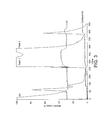
- FIG. 1 shows results from an example of laboratory scale Hp isolation experiment.
- the three traces correspond to conductivity (Cond), pH (pH), and UV absorbance (UV). Peaks of protein elution are marked albumin R/T, Hapto peak 1, Hapto peak 2 and AAG (al-acid glycoprotein).
- FIG. 2 shows the HPLC analysis of the Hp peaks (peak 1 and peak 2) for Hapto011.
- FIG. 2 a peak 1.
- FIG. 2 b peak 2.
- FIG. 3 shows results from an example of commercial scale Hp isolation experiment (Production Run). The three traces correspond to conductivity (Cond), pH (pH), and UV absorbance (UV).
- FIG. 4 shows the HPLC analysis of the Hp peaks (peak 1 and peak 2) for Production Run.
- FIG. 4 a peak 1.
- FIG. 4 b peak 2
- Plasma was subjected to a controlled thaw at ⁇ 0.5° C. to 2° C. during which some proteins precipitated.
- the supernatant was collected, treated with celite and then filtered to remove other unwanted proteins.
- the resulting supernatant was adjusted to a pH of 5.85 with acetate buffer and 17-21% ethanol v/v was added.
- the temperature was controlled during the ensuing precipitation at between ⁇ 4° C. and ⁇ 6° C. These conditions are similar to those used in the second stage of the Kistler and Nitschmann process and so the precipitate includes fraction 1 and precipitate A of that process.
- the precipitate is referred to as A+1.
- the supernatant was further fractionated by the adjustment of ethanol concentration to between 38 and 42%.
- the precipitated proteins are known collectively as fraction IV in the Kistler and Nitschmann process. Adjustment of the pH to 4.85 and the temperature to between ⁇ 7° C. and ⁇ 13° caused fraction V to precipitate.
- Examples 1 and 2 DEAE Sepharose® (Amersham) 12.5 cm bed height in an Amersham 16/20 XK column.
- FIG. 1 shows the presence of protein in the eluate as monitored by UV absorbance as a function of the volume of the buffer run through the column. The conductivity and pH of the eluate are also shown. As can be seen, Hp eluted as two peaks after albumin was eluted.
- FIG. 2 shows that Peak 1 ( FIG. 2 a ) had more Hp 1-1 than the other forms and that Peak 2 ( FIG. 2 b ) was richer in the higher Hp forms (Hp 2-2 and 2-1) than Peak 1.
- the purification factor was 40 fold, the purity 72% and the yield 80%.
- Peak 2 had a purity of 40%.
- FIG. 3 shows the presence of protein in the eluate (monitored by UV absorbance) as a function of the volume of the buffer running through the column. The chromatogram begins at the end of the albumin elution peak. As can be seen Hp eluted as two peaks after albumin was eluted. The similarity of this trace compared with the laboratory scale experiment highlighted the suitability of the method of the invention for scale up for commercial isolation of Hp.
- FIG. 4 shows that Peak 1 ( FIG. 4 a ) had more Hp 1-1 than the other forms and that Peak 2 ( FIG. 4 b ) was richer in the higher Hp forms (Hp 2-2 and 2-1) than Peak 1.
- the purity of peak 1 was 67%, that of peak 2 was lower.
- the yield of peak 1 was approximately 74%. As only a sample of peak two was taken, the yield of this peak could not be assessed.
- scale-up does not affect the quality of the product.
- the Hp fraction obtained from Example 4 was further purified on butyl sepharose.
- a prepacked 20 ml HiPrepTM Butyl ff was equilibrated with 180 ml of 1.0 M ammonium sulphate in 50 mM Na 2 HPO 4 buffer pH 7.0 at a flow rate of 4.5 ml/min (135 cm/h).
- 40 ml of peak 1 from Example 4 was then loaded at 3.5 ml/min.
- the column was then washed with 20 ml of the equilibration buffer.
- the flowthrough and the wash (haptoglobin product) were collected in one vessel. Bound molecules (contaminants) were washed off the column with de-ionised water.
- the flowthrough (Hp) was analysed by HPLC-SEC. From the areas of the peaks, 98% of total protein was Hp and 67% was Hp having a molecular weight of about 100 kDa.
- the pH should be between 6 and 8
- the ammonium sulphate concentration should be between 0.8M and 1.2M
- the loading flow rate should be between 1 and 3 cm/min.
- the Hp produced by the methods of the invention has been shown to be resilient to a wide range of pH conditions making further purification schemes requiring acid or alkaline conditions feasible.
- 3 ml of Hp from peak 1 in Example 4 was incubated with 3 ml of buffer (200 mM glycine for pH 2, 3, and 4, 200 mM NH 4 HCO 3 for pH 11). Samples were taken at 0, 4, 7, 24, 48 and 72 hr. Samples were immediately neutralised with 1 M Tris-HCl pH 7.0. The samples were then analysed by silver stained SDS-PAGE and the results of the analysis showed that Hp can withstand a pH range of 4-11 for 72 hours. However, at pH 2 complete aggregation occurred within 4 hours and at pH 3 partial degradation was observed (as evidenced by extra bands on the SDS-PAGE).
- Hp produced by the methods of the invention is stable at 4° C. for periods in excess of 18 months without the addition of any protein, monosaccharide or disaccharide excipient.
- Extreme temperatures specifically those above 40° C., produce Hp aggregation after a short or longer period, depending on temperature. For example, incubation of Hp at 60° C. for 24 hrs resulted in complete aggregation as shown by HPLC-SEC.
- Peak 1 from Example 4 was solvent detergent treated following the method of patent number EP-A 0131740. Briefly, 4.32 g of polysorbate 20, 1.16 g of tri n-butylphosphate (TnBP) and 14.52 g of WFI (water for injection) were mixed vigorously for 15 minutes. 8.7 g of this mixture was added to 150 ml of peak 1 from Example 4 and incubated at 25° C. for 30 minutes. The sample was then diluted to 475 ml with WFI. The diluted sample was then loaded on to a 30 ml DEAE column with buffers as used in Example 3. Unbound molecules and the solvent detergent (SD) reagents were washed off the column. Hp was eluted as in Example 3.
- SD solvent detergent
- the Hp obtained was analysed by a) SDS-PAGE which showed that most of the contaminants were removed, and by b) haemoglobin binding assay which showed that 63% of active Hp was recovered in the product. The remaining 37% was lost during the washing step thus showing that the SD treatment does not affect the activity of the Hp.
Landscapes
- Health & Medical Sciences (AREA)
- Chemical & Material Sciences (AREA)
- Organic Chemistry (AREA)
- Life Sciences & Earth Sciences (AREA)
- Medicinal Chemistry (AREA)
- General Health & Medical Sciences (AREA)
- General Chemical & Material Sciences (AREA)
- Engineering & Computer Science (AREA)
- Nuclear Medicine, Radiotherapy & Molecular Imaging (AREA)
- Chemical Kinetics & Catalysis (AREA)
- Pharmacology & Pharmacy (AREA)
- Bioinformatics & Cheminformatics (AREA)
- Animal Behavior & Ethology (AREA)
- Public Health (AREA)
- Veterinary Medicine (AREA)
- Biophysics (AREA)
- Biochemistry (AREA)
- Proteomics, Peptides & Aminoacids (AREA)
- Molecular Biology (AREA)
- Genetics & Genomics (AREA)
- Toxicology (AREA)
- Zoology (AREA)
- Gastroenterology & Hepatology (AREA)
- Biomedical Technology (AREA)
- Neurology (AREA)
- Pulmonology (AREA)
- Urology & Nephrology (AREA)
- Neurosurgery (AREA)
- Peptides Or Proteins (AREA)
- Medicines That Contain Protein Lipid Enzymes And Other Medicines (AREA)
- Medicines Containing Material From Animals Or Micro-Organisms (AREA)
- Steroid Compounds (AREA)
- Preparation Of Compounds By Using Micro-Organisms (AREA)
- Semiconductor Lasers (AREA)
- Micro-Organisms Or Cultivation Processes Thereof (AREA)
Applications Claiming Priority (3)
| Application Number | Priority Date | Filing Date | Title |
|---|---|---|---|
| GBGB0423196.5A GB0423196D0 (en) | 2004-10-19 | 2004-10-19 | Method |
| GB0423196.5 | 2004-10-19 | ||
| PCT/GB2005/004037 WO2006043062A1 (en) | 2004-10-19 | 2005-10-19 | Method for the isolation of haptoglobin |
Publications (2)
| Publication Number | Publication Date |
|---|---|
| US20090281282A1 US20090281282A1 (en) | 2009-11-12 |
| US9145448B2 true US9145448B2 (en) | 2015-09-29 |
Family
ID=33484812
Family Applications (1)
| Application Number | Title | Priority Date | Filing Date |
|---|---|---|---|
| US11/577,478 Active 2030-05-25 US9145448B2 (en) | 2004-10-19 | 2005-10-19 | Method for the isolation of haptoglobin |
Country Status (13)
| Country | Link |
|---|---|
| US (1) | US9145448B2 (enExample) |
| EP (1) | EP1802654B1 (enExample) |
| JP (1) | JP4950053B2 (enExample) |
| AT (1) | ATE539085T1 (enExample) |
| AU (1) | AU2005297061B2 (enExample) |
| BR (1) | BRPI0516933B8 (enExample) |
| CA (1) | CA2584407C (enExample) |
| ES (1) | ES2379157T3 (enExample) |
| GB (1) | GB0423196D0 (enExample) |
| IL (1) | IL182340A (enExample) |
| MX (1) | MX2007004244A (enExample) |
| PL (1) | PL1802654T3 (enExample) |
| WO (1) | WO2006043062A1 (enExample) |
Families Citing this family (7)
| Publication number | Priority date | Publication date | Assignee | Title |
|---|---|---|---|---|
| GB0423196D0 (en) | 2004-10-19 | 2004-11-24 | Nat Blood Authority | Method |
| US9534029B2 (en) | 2012-10-03 | 2017-01-03 | Csl Behring Ag | Method of purifying proteins |
| HK1212995A1 (zh) * | 2012-10-03 | 2016-06-24 | Csl Behring Ag | 一种纯化蛋白质的方法 |
| EP3917943A4 (en) * | 2019-02-01 | 2022-12-07 | Ohio State Innovation Foundation | PROTEINS PURIFICATION PROCEDURES |
| US20220218834A1 (en) * | 2019-05-20 | 2022-07-14 | Ohio State Innovation Foundation | Apohemoglobin-haptoglobin complexes and methods of using thereof |
| US20240034749A1 (en) * | 2021-02-04 | 2024-02-01 | Green Cross Corporation | Method for purification of hemopexin and haptoglobin |
| CN115531921B (zh) * | 2022-08-26 | 2024-07-16 | 大连依利特分析仪器有限公司 | 一种制备型液相色谱馏分收集装置及方法 |
Citations (13)
| Publication number | Priority date | Publication date | Assignee | Title |
|---|---|---|---|---|
| GB1426039A (en) | 1973-11-15 | 1976-02-25 | Green Cross Corp | Haptoglobin in aqueous solution and process for tits preparation |
| US4061735A (en) | 1973-11-15 | 1977-12-06 | The Green Cross Corporation | Haptoglobin in aqueous solution and process for preparing the same |
| US4103687A (en) | 1976-04-16 | 1978-08-01 | The Green Cross Corporation | Use of haptoglobin for therapy of cerebral vasospasm |
| US4137307A (en) | 1973-11-15 | 1979-01-30 | The Green Cross Corporation | Process for preparing haptoglobin aqueous solution using strong anion exchanger |
| EP0131740A2 (en) | 1983-07-14 | 1985-01-23 | New York Blood Center, Inc. | Undenatured virus-free biologically active protein derivatives |
| EP0367220A2 (en) | 1988-10-31 | 1990-05-09 | The Green Cross Corporation | Albumin preparation and process for preparing the same |
| US5094960A (en) * | 1988-10-07 | 1992-03-10 | New York Blood Center, Inc. | Removal of process chemicals from labile biological mixtures by hydrophobic interaction chromatography |
| WO2003006668A2 (en) | 2001-07-11 | 2003-01-23 | Rappaport Family Institute For Research In The Medical Sciences | Haptoglobin Derived Antioxidants |
| US20030158391A1 (en) | 1999-12-15 | 2003-08-21 | Mark Hennies | Anitbodies and method for producing same, the use thereof and immunisation cocktails, immunoassays-sets and peptides |
| JP2004244348A (ja) | 2003-02-13 | 2004-09-02 | Nihon Pharmaceutical Co Ltd | パプトグロビンの精製法 |
| US20050063951A1 (en) | 2000-10-16 | 2005-03-24 | Soren Moestrup | Function of a haptoglobin-haemoglobin receptor and the uses thereof |
| WO2006043062A1 (en) | 2004-10-19 | 2006-04-27 | Nhs Blood And Transplant | Method for the isolation of haptoglobin |
| WO2006107708A1 (en) | 2005-04-04 | 2006-10-12 | Alexion Pharmaceuticals, Inc. | Treatment of disease caused by excess free hemoglobin |
Family Cites Families (2)
| Publication number | Priority date | Publication date | Assignee | Title |
|---|---|---|---|---|
| JPS5337406B2 (enExample) * | 1973-11-15 | 1978-10-09 | ||
| JP3825061B2 (ja) * | 1994-09-28 | 2006-09-20 | 三菱ウェルファーマ株式会社 | ハプトグロビンの製造方法 |
-
2004
- 2004-10-19 GB GBGB0423196.5A patent/GB0423196D0/en not_active Ceased
-
2005
- 2005-10-19 US US11/577,478 patent/US9145448B2/en active Active
- 2005-10-19 CA CA2584407A patent/CA2584407C/en not_active Expired - Lifetime
- 2005-10-19 ES ES05794729T patent/ES2379157T3/es not_active Expired - Lifetime
- 2005-10-19 BR BRPI0516933A patent/BRPI0516933B8/pt active IP Right Grant
- 2005-10-19 AU AU2005297061A patent/AU2005297061B2/en not_active Ceased
- 2005-10-19 MX MX2007004244A patent/MX2007004244A/es active IP Right Grant
- 2005-10-19 WO PCT/GB2005/004037 patent/WO2006043062A1/en not_active Ceased
- 2005-10-19 EP EP05794729A patent/EP1802654B1/en not_active Expired - Lifetime
- 2005-10-19 JP JP2007537377A patent/JP4950053B2/ja not_active Expired - Lifetime
- 2005-10-19 AT AT05794729T patent/ATE539085T1/de active
- 2005-10-19 PL PL05794729T patent/PL1802654T3/pl unknown
-
2007
- 2007-03-29 IL IL182340A patent/IL182340A/en active IP Right Grant
Patent Citations (13)
| Publication number | Priority date | Publication date | Assignee | Title |
|---|---|---|---|---|
| GB1426039A (en) | 1973-11-15 | 1976-02-25 | Green Cross Corp | Haptoglobin in aqueous solution and process for tits preparation |
| US4061735A (en) | 1973-11-15 | 1977-12-06 | The Green Cross Corporation | Haptoglobin in aqueous solution and process for preparing the same |
| US4137307A (en) | 1973-11-15 | 1979-01-30 | The Green Cross Corporation | Process for preparing haptoglobin aqueous solution using strong anion exchanger |
| US4103687A (en) | 1976-04-16 | 1978-08-01 | The Green Cross Corporation | Use of haptoglobin for therapy of cerebral vasospasm |
| EP0131740A2 (en) | 1983-07-14 | 1985-01-23 | New York Blood Center, Inc. | Undenatured virus-free biologically active protein derivatives |
| US5094960A (en) * | 1988-10-07 | 1992-03-10 | New York Blood Center, Inc. | Removal of process chemicals from labile biological mixtures by hydrophobic interaction chromatography |
| EP0367220A2 (en) | 1988-10-31 | 1990-05-09 | The Green Cross Corporation | Albumin preparation and process for preparing the same |
| US20030158391A1 (en) | 1999-12-15 | 2003-08-21 | Mark Hennies | Anitbodies and method for producing same, the use thereof and immunisation cocktails, immunoassays-sets and peptides |
| US20050063951A1 (en) | 2000-10-16 | 2005-03-24 | Soren Moestrup | Function of a haptoglobin-haemoglobin receptor and the uses thereof |
| WO2003006668A2 (en) | 2001-07-11 | 2003-01-23 | Rappaport Family Institute For Research In The Medical Sciences | Haptoglobin Derived Antioxidants |
| JP2004244348A (ja) | 2003-02-13 | 2004-09-02 | Nihon Pharmaceutical Co Ltd | パプトグロビンの精製法 |
| WO2006043062A1 (en) | 2004-10-19 | 2006-04-27 | Nhs Blood And Transplant | Method for the isolation of haptoglobin |
| WO2006107708A1 (en) | 2005-04-04 | 2006-10-12 | Alexion Pharmaceuticals, Inc. | Treatment of disease caused by excess free hemoglobin |
Non-Patent Citations (21)
Also Published As
| Publication number | Publication date |
|---|---|
| BRPI0516933B8 (pt) | 2021-05-25 |
| JP4950053B2 (ja) | 2012-06-13 |
| BRPI0516933A (pt) | 2008-09-23 |
| ES2379157T3 (es) | 2012-04-23 |
| IL182340A0 (en) | 2007-07-24 |
| EP1802654B1 (en) | 2011-12-28 |
| AU2005297061A1 (en) | 2006-04-27 |
| EP1802654A1 (en) | 2007-07-04 |
| MX2007004244A (es) | 2007-09-07 |
| JP2008517046A (ja) | 2008-05-22 |
| CA2584407C (en) | 2015-02-03 |
| AU2005297061B2 (en) | 2011-09-01 |
| US20090281282A1 (en) | 2009-11-12 |
| IL182340A (en) | 2012-06-28 |
| BRPI0516933B1 (pt) | 2021-02-09 |
| CA2584407A1 (en) | 2006-04-27 |
| GB0423196D0 (en) | 2004-11-24 |
| WO2006043062A1 (en) | 2006-04-27 |
| ATE539085T1 (de) | 2012-01-15 |
| PL1802654T3 (pl) | 2012-05-31 |
Similar Documents
| Publication | Publication Date | Title |
|---|---|---|
| EP0408029B1 (en) | Method of fractionating plasma protein | |
| JP6876655B2 (ja) | タンパク質の精製方法 | |
| JP2005500265A (ja) | 治療的使用のためのヒト免疫グロブリン濃縮物の調製方法 | |
| AU2013203930A1 (en) | A method of purifying proteins | |
| JP2965623B2 (ja) | 精製されたアルブミン溶液の製造方法 | |
| US9145448B2 (en) | Method for the isolation of haptoglobin | |
| TWI593702B (zh) | 純化由細胞培養而來的alpha蛋白酶抑制劑 | |
| EP1419177B1 (en) | A purification process for large scale production of gc-globulin, product obtained thereby and their use in medicine | |
| US8580931B2 (en) | Method for the purification of alpha-1-antitrypsin | |
| HK40050028A (en) | A method of purifying proteins | |
| HU200345B (en) | Process for producing immunoglobin and albumin by combination of 2-ethoxy-6,9-diaminoacridine and chromatography |
Legal Events
| Date | Code | Title | Description |
|---|---|---|---|
| AS | Assignment |
Owner name: NHS BLOOD AND TRANSPLANT, GREAT BRITAIN Free format text: ASSIGNMENT OF ASSIGNORS INTEREST;ASSIGNORS:DALTON, JOAN;PODMORE, ADRIAN;KUMPALUME, PETER;SIGNING DATES FROM 20090617 TO 20090625;REEL/FRAME:022972/0566 Owner name: NHS BLOOD AND TRANSPLANT, GREAT BRITAIN Free format text: ASSIGNMENT OF ASSIGNORS INTEREST;ASSIGNORS:DALTON, JOAN;PODMORE, ADRIAN;KUMPALUME, PETER;REEL/FRAME:022972/0566;SIGNING DATES FROM 20090617 TO 20090625 |
|
| AS | Assignment |
Owner name: BIO PRODUCTS LABORATORY LIMITED, UNITED KINGDOM Free format text: ASSIGNMENT OF ASSIGNORS INTEREST;ASSIGNOR:NHS BLOOD AND TRANSPLANT (TRADING AS BIO PRODUCTS LABORATORY);REEL/FRAME:026177/0596 Effective date: 20101220 |
|
| AS | Assignment |
Owner name: BIO PRODUCTS LABORATORY LIMITED, UNITED KINGDOM Free format text: CORRECTIVE ASSIGNMENT TO CORRECT THE LISTING OF PATENT NO. 5,487,981 FOR THE ASSIGNMENT PREVIOUSLY RECORDED ON REEL 026177 FRAME 0596. ASSIGNOR(S) HEREBY CONFIRMS THE ASSIGNMENT SHOULD REFLECT PATENT NO. 5,487,891;ASSIGNOR:NHS BLOOD AND TRANSPLANT (TRADING AS BIO PRODUCTS LABORATORY);REEL/FRAME:027026/0834 Effective date: 20101220 |
|
| STCF | Information on status: patent grant |
Free format text: PATENTED CASE |
|
| MAFP | Maintenance fee payment |
Free format text: PAYMENT OF MAINTENANCE FEE, 4TH YEAR, LARGE ENTITY (ORIGINAL EVENT CODE: M1551); ENTITY STATUS OF PATENT OWNER: LARGE ENTITY Year of fee payment: 4 |
|
| MAFP | Maintenance fee payment |
Free format text: PAYMENT OF MAINTENANCE FEE, 8TH YEAR, LARGE ENTITY (ORIGINAL EVENT CODE: M1552); ENTITY STATUS OF PATENT OWNER: LARGE ENTITY Year of fee payment: 8 |