US12343703B2 - Method for synthesizing SiO2Al2O3 containing sol solution and method for forming porous alumina film - Google Patents
Method for synthesizing SiO2Al2O3 containing sol solution and method for forming porous alumina film Download PDFInfo
- Publication number
- US12343703B2 US12343703B2 US18/835,990 US202318835990A US12343703B2 US 12343703 B2 US12343703 B2 US 12343703B2 US 202318835990 A US202318835990 A US 202318835990A US 12343703 B2 US12343703 B2 US 12343703B2
- Authority
- US
- United States
- Prior art keywords
- sio
- solution
- sol
- concentration
- mass
- Prior art date
- Legal status (The legal status is an assumption and is not a legal conclusion. Google has not performed a legal analysis and makes no representation as to the accuracy of the status listed.)
- Active
Links
Images




Classifications
-
- C—CHEMISTRY; METALLURGY
- C01—INORGANIC CHEMISTRY
- C01F—COMPOUNDS OF THE METALS BERYLLIUM, MAGNESIUM, ALUMINIUM, CALCIUM, STRONTIUM, BARIUM, RADIUM, THORIUM, OR OF THE RARE-EARTH METALS
- C01F7/00—Compounds of aluminium
- C01F7/02—Aluminium oxide; Aluminium hydroxide; Aluminates
- C01F7/34—Preparation of aluminium hydroxide by precipitation from solutions containing aluminium salts
-
- B—PERFORMING OPERATIONS; TRANSPORTING
- B01—PHYSICAL OR CHEMICAL PROCESSES OR APPARATUS IN GENERAL
- B01J—CHEMICAL OR PHYSICAL PROCESSES, e.g. CATALYSIS OR COLLOID CHEMISTRY; THEIR RELEVANT APPARATUS
- B01J21/00—Catalysts comprising the elements, oxides, or hydroxides of magnesium, boron, aluminium, carbon, silicon, titanium, zirconium, or hafnium
-
- B—PERFORMING OPERATIONS; TRANSPORTING
- B01—PHYSICAL OR CHEMICAL PROCESSES OR APPARATUS IN GENERAL
- B01J—CHEMICAL OR PHYSICAL PROCESSES, e.g. CATALYSIS OR COLLOID CHEMISTRY; THEIR RELEVANT APPARATUS
- B01J23/00—Catalysts comprising metals or metal oxides or hydroxides, not provided for in group B01J21/00
- B01J23/02—Catalysts comprising metals or metal oxides or hydroxides, not provided for in group B01J21/00 of the alkali- or alkaline earth metals or beryllium
-
- B—PERFORMING OPERATIONS; TRANSPORTING
- B01—PHYSICAL OR CHEMICAL PROCESSES OR APPARATUS IN GENERAL
- B01J—CHEMICAL OR PHYSICAL PROCESSES, e.g. CATALYSIS OR COLLOID CHEMISTRY; THEIR RELEVANT APPARATUS
- B01J37/00—Processes, in general, for preparing catalysts; Processes, in general, for activation of catalysts
- B01J37/009—Preparation by separation, e.g. by filtration, decantation, screening
-
- B—PERFORMING OPERATIONS; TRANSPORTING
- B01—PHYSICAL OR CHEMICAL PROCESSES OR APPARATUS IN GENERAL
- B01J—CHEMICAL OR PHYSICAL PROCESSES, e.g. CATALYSIS OR COLLOID CHEMISTRY; THEIR RELEVANT APPARATUS
- B01J37/00—Processes, in general, for preparing catalysts; Processes, in general, for activation of catalysts
- B01J37/02—Impregnation, coating or precipitation
- B01J37/0215—Coating
-
- B—PERFORMING OPERATIONS; TRANSPORTING
- B01—PHYSICAL OR CHEMICAL PROCESSES OR APPARATUS IN GENERAL
- B01J—CHEMICAL OR PHYSICAL PROCESSES, e.g. CATALYSIS OR COLLOID CHEMISTRY; THEIR RELEVANT APPARATUS
- B01J37/00—Processes, in general, for preparing catalysts; Processes, in general, for activation of catalysts
- B01J37/02—Impregnation, coating or precipitation
- B01J37/0236—Drying, e.g. preparing a suspension, adding a soluble salt and drying
-
- B—PERFORMING OPERATIONS; TRANSPORTING
- B01—PHYSICAL OR CHEMICAL PROCESSES OR APPARATUS IN GENERAL
- B01J—CHEMICAL OR PHYSICAL PROCESSES, e.g. CATALYSIS OR COLLOID CHEMISTRY; THEIR RELEVANT APPARATUS
- B01J37/00—Processes, in general, for preparing catalysts; Processes, in general, for activation of catalysts
- B01J37/02—Impregnation, coating or precipitation
- B01J37/03—Precipitation; Co-precipitation
- B01J37/031—Precipitation
-
- B—PERFORMING OPERATIONS; TRANSPORTING
- B01—PHYSICAL OR CHEMICAL PROCESSES OR APPARATUS IN GENERAL
- B01J—CHEMICAL OR PHYSICAL PROCESSES, e.g. CATALYSIS OR COLLOID CHEMISTRY; THEIR RELEVANT APPARATUS
- B01J37/00—Processes, in general, for preparing catalysts; Processes, in general, for activation of catalysts
- B01J37/06—Washing
-
- B—PERFORMING OPERATIONS; TRANSPORTING
- B01—PHYSICAL OR CHEMICAL PROCESSES OR APPARATUS IN GENERAL
- B01J—CHEMICAL OR PHYSICAL PROCESSES, e.g. CATALYSIS OR COLLOID CHEMISTRY; THEIR RELEVANT APPARATUS
- B01J37/00—Processes, in general, for preparing catalysts; Processes, in general, for activation of catalysts
- B01J37/08—Heat treatment
-
- C—CHEMISTRY; METALLURGY
- C01—INORGANIC CHEMISTRY
- C01B—NON-METALLIC ELEMENTS; COMPOUNDS THEREOF; METALLOIDS OR COMPOUNDS THEREOF NOT COVERED BY SUBCLASS C01C
- C01B33/00—Silicon; Compounds thereof
- C01B33/113—Silicon oxides; Hydrates thereof
- C01B33/12—Silica; Hydrates thereof, e.g. lepidoic silicic acid
- C01B33/14—Colloidal silica, e.g. dispersions, gels, sols
- C01B33/141—Preparation of hydrosols or aqueous dispersions
-
- C—CHEMISTRY; METALLURGY
- C01—INORGANIC CHEMISTRY
- C01F—COMPOUNDS OF THE METALS BERYLLIUM, MAGNESIUM, ALUMINIUM, CALCIUM, STRONTIUM, BARIUM, RADIUM, THORIUM, OR OF THE RARE-EARTH METALS
- C01F7/00—Compounds of aluminium
- C01F7/02—Aluminium oxide; Aluminium hydroxide; Aluminates
- C01F7/44—Dehydration of aluminium oxide or hydroxide, i.e. all conversions of one form into another involving a loss of water
-
- C—CHEMISTRY; METALLURGY
- C04—CEMENTS; CONCRETE; ARTIFICIAL STONE; CERAMICS; REFRACTORIES
- C04B—LIME, MAGNESIA; SLAG; CEMENTS; COMPOSITIONS THEREOF, e.g. MORTARS, CONCRETE OR LIKE BUILDING MATERIALS; ARTIFICIAL STONE; CERAMICS; REFRACTORIES; TREATMENT OF NATURAL STONE
- C04B41/00—After-treatment of mortars, concrete, artificial stone or ceramics; Treatment of natural stone
- C04B41/009—After-treatment of mortars, concrete, artificial stone or ceramics; Treatment of natural stone characterised by the material treated
-
- C—CHEMISTRY; METALLURGY
- C04—CEMENTS; CONCRETE; ARTIFICIAL STONE; CERAMICS; REFRACTORIES
- C04B—LIME, MAGNESIA; SLAG; CEMENTS; COMPOSITIONS THEREOF, e.g. MORTARS, CONCRETE OR LIKE BUILDING MATERIALS; ARTIFICIAL STONE; CERAMICS; REFRACTORIES; TREATMENT OF NATURAL STONE
- C04B41/00—After-treatment of mortars, concrete, artificial stone or ceramics; Treatment of natural stone
- C04B41/45—Coating or impregnating, e.g. injection in masonry, partial coating of green or fired ceramics, organic coating compositions for adhering together two concrete elements
- C04B41/50—Coating or impregnating, e.g. injection in masonry, partial coating of green or fired ceramics, organic coating compositions for adhering together two concrete elements with inorganic materials
- C04B41/5025—Coating or impregnating, e.g. injection in masonry, partial coating of green or fired ceramics, organic coating compositions for adhering together two concrete elements with inorganic materials with ceramic materials
- C04B41/5031—Alumina
-
- C—CHEMISTRY; METALLURGY
- C04—CEMENTS; CONCRETE; ARTIFICIAL STONE; CERAMICS; REFRACTORIES
- C04B—LIME, MAGNESIA; SLAG; CEMENTS; COMPOSITIONS THEREOF, e.g. MORTARS, CONCRETE OR LIKE BUILDING MATERIALS; ARTIFICIAL STONE; CERAMICS; REFRACTORIES; TREATMENT OF NATURAL STONE
- C04B41/00—After-treatment of mortars, concrete, artificial stone or ceramics; Treatment of natural stone
- C04B41/80—After-treatment of mortars, concrete, artificial stone or ceramics; Treatment of natural stone of only ceramics
- C04B41/81—Coating or impregnation
- C04B41/85—Coating or impregnation with inorganic materials
- C04B41/87—Ceramics
-
- B—PERFORMING OPERATIONS; TRANSPORTING
- B01—PHYSICAL OR CHEMICAL PROCESSES OR APPARATUS IN GENERAL
- B01J—CHEMICAL OR PHYSICAL PROCESSES, e.g. CATALYSIS OR COLLOID CHEMISTRY; THEIR RELEVANT APPARATUS
- B01J21/00—Catalysts comprising the elements, oxides, or hydroxides of magnesium, boron, aluminium, carbon, silicon, titanium, zirconium, or hafnium
- B01J21/12—Silica and alumina
-
- B—PERFORMING OPERATIONS; TRANSPORTING
- B01—PHYSICAL OR CHEMICAL PROCESSES OR APPARATUS IN GENERAL
- B01J—CHEMICAL OR PHYSICAL PROCESSES, e.g. CATALYSIS OR COLLOID CHEMISTRY; THEIR RELEVANT APPARATUS
- B01J2235/00—Indexing scheme associated with group B01J35/00, related to the analysis techniques used to determine the catalysts form or properties
- B01J2235/30—Scanning electron microscopy; Transmission electron microscopy
-
- C—CHEMISTRY; METALLURGY
- C04—CEMENTS; CONCRETE; ARTIFICIAL STONE; CERAMICS; REFRACTORIES
- C04B—LIME, MAGNESIA; SLAG; CEMENTS; COMPOSITIONS THEREOF, e.g. MORTARS, CONCRETE OR LIKE BUILDING MATERIALS; ARTIFICIAL STONE; CERAMICS; REFRACTORIES; TREATMENT OF NATURAL STONE
- C04B2111/00—Mortars, concrete or artificial stone or mixtures to prepare them, characterised by specific function, property or use
- C04B2111/00474—Uses not provided for elsewhere in C04B2111/00
- C04B2111/00793—Uses not provided for elsewhere in C04B2111/00 as filters or diaphragms
-
- C—CHEMISTRY; METALLURGY
- C04—CEMENTS; CONCRETE; ARTIFICIAL STONE; CERAMICS; REFRACTORIES
- C04B—LIME, MAGNESIA; SLAG; CEMENTS; COMPOSITIONS THEREOF, e.g. MORTARS, CONCRETE OR LIKE BUILDING MATERIALS; ARTIFICIAL STONE; CERAMICS; REFRACTORIES; TREATMENT OF NATURAL STONE
- C04B2111/00—Mortars, concrete or artificial stone or mixtures to prepare them, characterised by specific function, property or use
- C04B2111/00474—Uses not provided for elsewhere in C04B2111/00
- C04B2111/0081—Uses not provided for elsewhere in C04B2111/00 as catalysts or catalyst carriers
Definitions
- Porous alumina materials having a large specific surface area are useful as a catalyst carrier, on which a catalytic substance is supported, a filter, or the like.
- a catalyst carrier on which a catalytic substance is supported, a filter, or the like.
- studies for improving the characteristics of such materials have been conducted on an ongoing basis (see, for example, Patent Documents 1 to 5, and the like).
- the catalyst carrier is required to suppress a decrease in specific surface area and a change in composition due to a hydration reaction under severe conditions such as high temperature, high pressure, and the presence of water vapor.
- the inventors of the present application have clarified that Al 2 O 3 to which SiO 2 or Ba is added maintains a high specific surface area even when calcined at 1200° C. for several tens of hours, and that the generation of a-Al 2 O 3 due to the transition of Al 2 O 3 is not observed (see the above-mentioned Patent Document 6).
- Such a highly heat-resistant alumina powder can be molded into pellets or the like and applied to a catalyst carrier for a reaction requiring high heat resistance such as a steam reforming reaction.
- the pressure-loss of the pelletized catalyst carrier is increased under high SV conditions.
- an automobile exhaust gas purifying catalyst or the like in which a carrier component such as alumina is wash coated on a honeycomb made of cordierite to form an alumina layer and a noble metal is supported.
- a carrier component such as alumina
- a noble metal is supported.
- the alumina layer obtained by the existing technology has insufficient heat resistance of the alumina itself, sintering tends to proceed under high temperature, high pressure, and water vapor atmosphere such as a steam reforming reaction, and the catalytic activity is remarkably lowered.
- the present invention was made in view of the above problems, and it is an object of the present invention to provide a method for forming a high-heat-resistant and high-specific-surface-area porous alumina film having excellent adhesion to the surface of various substrate (e.g., cordierite, quartz-glass, a-Al 2 O 3 , etc.), and a method for synthesizing a sol solution that serves as an alumina precursor for producing such a porous alumina film.
- substrate e.g., cordierite, quartz-glass, a-Al 2 O 3 , etc.
- the present inventors have found a method for forming a highly functional catalyst carrier layer on the substrate surface from the perspective of adhesion, heat resistance, and specific surface area, and have reached the present invention to be hereinafter described.
- a method for synthesizing a sol solution according to the present invention is a method for synthesizing SiO 2 Al 2 O 3 containing sol solution for forming a porous alumina to which silica is added, the method including:
- SiO 2 Al 2 O 3 containing sol solution including highly dispersed sol particles with silica bonded to boehmite particles is obtained through the autoclave treatment in the step for preparing the SiO 2 Al 2 O 3 containing sol solution. Since the solution state of the sol solution is a sol state, when the sol solution is applied to a substrate surface and dried, a gel film of a coating film having a homogeneous film property in which the sol particles are uniformly dispersed is obtained, and a high-heat-resistant and high-specific-surface-area porous alumina film with silica added, which is excellent in adhesion, can be formed to the surface of various substrate by calcining the gel film.
- the specific pH range varies according to SiO 2 concentration defined as a mass concentration of SiO 2 with respect to SiO 2 Al 2 O 3 in the SiO 2 Al 2 O 3 containing sol solution after preparation, and is in a range of 2.8 or more and 7.8 or less when the aluminum compound is any of the aluminum nitrate, the aluminum chloride, and the aluminum sulfate, and is in a range of 1.0 or more and 6.2 or less when the aluminum compound is the sodium aluminate.
- a method for synthesizing a sol solution according to the present invention is a method for synthesizing SiO 2 Al 2 O 3 containing sol solution for forming a porous alumina to which silica is added, the method including:
- Al 2 O 3 containing sol solution including highly dispersed boehmite sol particles is obtained through the autoclave treatment in the step for preparing the Al 2 O 3 containing sol solution, and after the alkoxysilane solution in which the alkoxysilane obtained in the step for preparing the alkoxysilane solution is uniformly dissolved is added to the Al 2 O 3 containing sol solution, the hydrolysis reaction proceeds with a certain temperature and time-course to produce silica particles, and SiO 2 Al 2 O 3 containing sol solution including highly dispersed sol particles with silica particles bonded to boehmite sol particles is obtained as is the case in the above-mentioned method for synthesizing a sol solution of the first feature.
- the solution state of the sol solution is a sol state
- a gel film of a coating film having a homogeneous film property in which the sol particles are uniformly dispersed is obtained, and a high-heat-resistant and high-specific-surface-area porous alumina film with silica added, which is excellent in adhesion, can be formed to the surface of various substrate by calcining the gel film.
- the aluminum solution in the step for precipitating the precipitate, is heated under reflux and then subjected to a pH adjusting treatment to precipitate the precipitate.
- FIG. 53 is a process transition diagram showing an outline of an example of a method for synthesizing Ba-added SiO 2 Al 2 O 3 containing sol solution according to the eighth embodiment (Example 20 of the seventh synthesis method).
- FIG. 56 is an XRD pattern diagram showing the crystal structures after the initial heat treatment, the first heat treatment, and the second heat treatment of the present powder sample S11 having SiO 2 concentration of 1 mass % prepared by drying and calcining SiO 2 Al 2 O 3 containing sol solution synthesized by Example 18 of the seventh synthesis method.
- the first synthesis method is roughly divided into the following Steps #11 to #15.
- an alkoxysilane solution containing an alkoxysilane, water, an alcohol, and an inorganic acid is prepared (Step #11), and an aluminum solution containing an aluminum compound selected from among aluminum nitrate, aluminum chloride, and aluminum sulfate and water is prepared (Step #12). Note that either Step #11 or Step #12 may be performed first.
- Step #13 in the mixed solution obtained by mixing the alkoxysilane solution obtained in Step #11 and the aluminum solution obtained in Step #12, a precipitate with a silicon compound adsorbed on aluminum hydroxide is precipitated (Step #13).
- Step #13 the precipitate obtained in Step #13 is filtered from the mixed solution, and the filtered precipitate is washed with water to prepare a precipitate cake (Step #14).
- water is added to the precipitate cake obtained in Step #14 to prepare a slurry solution, and after a pH adjusting treatment is performed on the slurry solution, an autoclave treatment is performed on the slurry solution to prepare SiO 2 Al 2 O 3 containing sol solution (Step #15).
- Steps #11 to #15 the SiO 2 Al 2 O 3 containing sol solution is synthesized.
- Step #15 the aluminum hydroxide (Al(OH) 3 ) in the slurry solution is partially dehydrated to produce boehmite (AlOOH) under the temperature and pressure of the autoclave treatment, and SiO 2 Al 2 O 3 containing sol solution, in which sol particles with silica bonded to the boehmite particles are present in highly dispersed form, is synthesized.
- the first synthesis method corresponds to the first AC method when the aluminum compound is selected from among aluminum nitrate, aluminum chloride, and aluminum sulfate.
- the alkoxysilane is preferably a tetraalkoxysilane.
- the tetraalkoxysilane is preferably selected from tetramethoxysilane, tetraethoxysilane, tetraisopropoxysilane, and tetra-n-butoxysilane, and in the examples described later, tetraethoxysilane (TEOS) is suitably used.
- TEOS tetraethoxysilane
- Methanol, ethanol, n-propanol, isopropanol, and the like are used for the alcohol, and in the examples described later, ethanol is suitably used.
- Hydrochloric acid, nitric acid, and the like are used for the inorganic acid, and in the examples described later, hydrochloric acid is suitably used.
- the mass concentration of SiO 2 relative to SiO 2 Al 2 O 3 in SiO 2 Al 2 O 3 containing sol solution prepared in Step #15 (expressed in mass %, hereinafter simply referred to as “SiO 2 concentration”) is determined. Therefore, in order to set the SiO 2 concentration in the SiO 2 Al 2 O 3 containing sol solution to a desired value, the mixing ratio of both solutions is adjusted in Step #13 with respect to the respective charge-in quantities of Steps #11 and #12.
- Step #13 the mixed solution is heated under reflux, and then ammonia water is added dropwise to the mixed solution to adjust pH, and the mixture is stirred. Hydrolysis of the mixed solutions proceeds by the heating under reflux and pH adjustment, and the aluminum hydroxide and the silicon compound are coprecipitated.
- the amount of water added to the precipitate cake is adjusted to control sol solution concentration (mass %), which indicates a content of SiO 2 Al 2 O 3 relative to the total mass of SiO 2 Al 2 O 3 containing sol solution after synthesis, to be equal to or less than the specific concentration so that the solution state after autoclave treatment is a sol state, and a pH adjusting treatment is performed on the slurry solution to control pH value of the slurry solution to be within a specific pH range so that the solution state after the autoclave treatment is a sol state.
- sol solution concentration mass %
- the sol solution concentration is controlled by adjusting the respective charge-in quantities of the alkoxysilane and the aluminum compound in Steps #11 and #12 and the amount of water added to the precipitate cake in Step #15.
- the specific concentration varies depending on SiO 2 concentration and the heating condition (treatment temperature, treatment time) of the autoclave treatment
- the specific pH range varies depending on SiO 2 concentration within a range of 2.8 or more and 7.8 or less.
- the treatment temperature of the autoclave treatment is set to a specific treatment temperature within a range of 100° C. or higher and 200° C. or lower
- the treatment time of the autoclave treatment is set within a specific time range in which the solution state after the autoclave treatment corresponding to the specific treatment temperature is a sol state.
- the specific time range is within a range of 1 hour or more and 100 hours or less.
- Steps #11 to #15 for synthesizing SiO 2 Al 2 O 3 containing sol solution having SiO 2 concentration of 1 mass % will be described.
- SiO 2 Al 2 O 3 with SiO 2 concentration of X mass % is expressed as X % SiO 2 Al 2 O 3 .
- Example 1 using aluminum nitrate As the aluminum compound, Example 1 using aluminum nitrate, Example 2 using aluminum chloride, and Example 3 using aluminum sulfate will be described in order.
- tetraethoxysilane (TEOS) is used as the alkoxysilane
- ethanol is used as the alcohol
- hydrochloric acid is used as the inorganic acid.
- 7.52 g of ethanol was added to 5.00 g of TEOS, and the mixture was stirred at room temperature for 5 minutes, then 1.25 g of concentrated hydrochloric acid (37%) was added, and the mixture was further stirred at room temperature for 5 minutes. While the mixed solution was stirred, 71.2 g of water was added dropwise and mixed to obtain a clear and uniform 5.88% TEOS solution (alkoxysilane solution).
- Step #12 aluminum nitrate was used as the aluminum compound, and 14.57 g of aluminum nitrate nonahydrate was dissolved in 57.10 g of water to obtain an aluminum nitrate aqueous solution (aluminum solution).
- Example 2 1% SiO 2 Al 2 O 3 containing sol solution could be synthesized under the same conditions as in Example 1, except that in Step #12, 9.38 g of aluminum chloride (III) hexahydrate was dissolved in 83.24 g of water to obtain an aluminum chloride aqueous solution (aluminum solution). That is, also in Example 2, as in Example 1, a total amount 80 g of 1% SiO 2 Al 2 O 3 2.5% sol was obtained. Therefore, descriptions that overlap with Example 1 will be omitted.
- the third synthesis method is roughly divided into the following Steps #31 to #36.
- Step #36 the alkoxysilane solution prepared in Step #31 is directly added to Al 2 O 3 containing sol solution without silica added (SiO 2 concentration: 0 mass %) synthesized through Steps #32 to #35, and thereby SiO 2 Al 2 O 3 containing sol solution is synthesized.
- the amount of water added to the precipitate cake is adjusted to control sol solution concentration (mass %), which indicates a content of Al 2 O 3 relative to the total mass of Al 2 O 3 containing sol solution after synthesis, to be equal to or less than the specific concentration so that the solution state after the autoclave treatment is a sol state, and the pH adjusting treatment is performed on the slurry solution to control pH value of the slurry solution to be within a specific pH range so that the solution state after the autoclave treatment is a sol state.
- sol solution concentration mass %
- the specific concentration in Step #35 is a specific concentration at SiO 2 concentration of 0 mass % (no silica added) in Step #15 of the first synthesis method, or a specific concentration at SiO 2 concentration of 0 mass % in Step #25 of the second synthesis method, depending on the aluminum compound used.
- the specific pH range in Step #35 is a specific pH range at SiO 2 concentration of 0 mass % in Step #15 of the first synthesis method or a specific pH range at SiO 2 concentration of 0 mass % in Step #25 of the second synthesis method, depending on the aluminum compound used.
- Example 5 using aluminum nitrate as the aluminum compound will be described.
- Step #33 the heating under reflux and the pH adjustment are performed on the aluminum nitrate aqueous solution obtained in Step #32 in the same manner as in Step #13 of Example 1 without adding 5.88% TEOS solution, and precipitates of aluminum hydroxide were precipitated in the aluminum nitrate aqueous solution.
- Example 6 As in Example 5, in Step #32, it is preferable to increase the amount of water added to the aluminum solution by the same amount as TEOS solution added in Step #23 of Example 2 from the amount of water in Step #22 of Example 2 so that the total amount of the aluminum solution at the time of the precipitation in Step #33 is the same as the total amount of the mixed solution at the time of the precipitation in Step #23 of Example 2.
- Example 6 in the pH adjusting treatment on the sodium aluminate aqueous solution in Step #33, unlike Example 5, in order to perform the pH adjustment from the base side to the acidic side using nitric acid, the target value of the pH adjustment is set to a pH7.5, which is lower than the target value pH8.0 in Step #23 of Example 4 of the second synthesis method (the first AC method), depending on the additive amount of the alkoxysilane solution.
- the conditions of the autoclave treatment of the third synthesis method depending on the aluminum compound to be used, the conditions of the autoclave treatment at SiO 2 concentration of 0 mass % in the first synthesis method or the second synthesis method can be used.
- present powder sample S3 1% SiO 2 Al 2 O 3 containing sol solution obtained through Step #31 to Step #36 of the third synthesis method described in Example 5 was dried at 150° C., subsequently pulverized into a powder, and the powder was calcined in the air at 1000° C. for 5 hours (initial heat treatment), so that SiO 2 Al 2 O 3 powder (present sample S3A) was prepared.
- a present sample S3B obtained by adding the first heat treatment at 1200° C. for 5 hours to the present sample S3A, and a present sample S3C obtained by adding the second heat treatment at 1200° C. for 30 hours to the present sample S3A were prepared.
- the present samples S3A to S3C prepared by changing the SiO 2 concentration in five ways: 0 mass %, 3 mass %, 5 mass %, and 10 mass % (initial heat treatment, first heat treatment, second heat treatment) were added, and the measurement results of the respective specific surface areas (m 2 /g) of the present samples S3A, the present samples S3B, and the present samples S3C having the respective SiO 2 concentrations were shown in FIGS. 23 to 25 for each heat treatment.
- Tables 8 below shows the measurement results of the respective specific surface areas (m 2 /g) of the present samples S4A to S4C prepared at SiO 2 concentration of 5 mass % and 10 mass %.
- the measurement results of the respective specific surface areas of the present samples S2A to S2C having SiO 2 concentration of 5 mass % prepared by the second synthesis method (the first AC method) and the measurement results of the respective specific surface areas of the comparative samples C2A to C2C having SiO 2 concentration of 5 mass % and 10 mass % prepared by the precipitation method are also shown in Table 8.
- Step #41 of the fourth synthesis method is provided as the countermeasure against the reduction in the total pore volume of Al 2 O 3 , which is caused by the surface tension of the water to be evaporated in the process of forming the transparent gel by drying SiO 2 Al 2 O 3 containing sol solution synthesized by any one of the first to third synthesis methods of Step #40.
- Step #41 when the specific additive is added to SiO 2 Al 2 O 3 containing sol solution synthesized in any one of the first, second, and third synthesis method (Step #40), 3 mass % of the specific additive (EG or DMF) to the total amount of the sol solution after the addition of the specific additive is added and stirred, and SiO 2 Al 2 O 3 containing sol solution to which the specific additive is added is prepared.
- EG or DMF specific additive
- Example 7 As an example (Example 7) of the above preferred implementation of the fourth synthesis method, in Step #40, SiO 2 Al 2 O 3 containing sol solutions having SiO 2 concentration of 3 mass % and 10 mass % were synthesized by the first synthesis method using aluminum nitrate as the aluminum compound, and in Step #41, EG and DMF were respectively added to the synthesized sol solutions, and the mixtures were stirred to prepare four types of SiO 2 Al 2 O 3 containing sol solutions to which the specific additives were added.
- the sol solution concentration of Example 7, for example was set to the same 2.5 mass % as in Example 1 of the first synthesis method.
- Table 9 shows the measured specific surface areas (m 2 /g) and total pore volumes (cm 3 /g) of the four present samples S5B. Also, the specific surface areas (m 2 /g) and total pore volumes (cm 3 /g) of the present samples S1B and the comparative samples C1B prepared with SiO 2 concentration of 3 mass % and 10 mass % shown in Table 3 of the above-mentioned “[4] Evaluation of heat resistance of the first synthesis method (1)” are shown in Table 9 for comparison purposes.
- the present samples S1B are SiO 2 Al 2 O 3 powders obtained by synthesizing SiO 2 Al 2 O 3 containing sol solutions having SiO 2 concentration of 3 mass % and 10 mass % by the first synthesis method using aluminum nitrate as the aluminum compound, and drying the synthesized sol solutions at 150° C. without adding the specific additive and pulverizing into powdery dry gels and calcining the dry gels by the first heat treatment at 1200° C. for 5 hours.
- the comparative samples C1B are SiO 2 Al 2 O 3 powders obtained by drying precipitate cakes having SiO 2 concentration of 3 mass % and 10 mass % obtained by the precipitation method using aluminum nitrate as the aluminum compound at 150° C. and pulverizing into powdery dry gels and calcining the dry gels by the first heat treatment at 1200° C. for 5 hours.
- FIG. 32 shows the pore distributions (BJH plots) of the two types of present samples S5B with the specific additives EG and DMF added and the present samples S1B, each having SiO 2 concentration of 3 mass %
- FIG. 33 shows the pore distributions (BJH plots) of the two types of present samples S5B with the specific additives EG and DMF added and the present samples S1B, each having SiO 2 concentration of 10 mass %.
- FIGS. 32 shows the pore distributions (BJH plots) of the two types of present samples S5B with the specific additives EG and DMF added and the present samples S1B, each having SiO 2 concentration of 10 mass %.
- circles (•) indicate the pore distribution of the present samples S1B (no specific additive)
- triangles ( ⁇ ) indicate the pore distribution of the present samples S5B(EG added)
- squares ( ⁇ ) indicate the pore distribution of the present samples S5B(DMF added)
- the vertical axis indicates the differential pore volume dV p /dr p (m 3 /g/nm
- the horizontal axis indicates the pore diameter r p (nm).
- Example 7 of the fourth synthesis method for synthesizing SiO 2 Al 2 O 3 containing sol solution by the first synthesis method using aluminum nitrate as the aluminum compound in Step #40 in addition to the four types of the present samples S5B (SiO 2 concentration: 3 mass %, 10 mass %), the present samples S5A to S5C with the specific additive of DMF (initial heat treatment, first heat treatment, second heat treatment) were prepared by changing the SiO 2 concentration to 0 mass %, 1 mass %, and 5 mass %.
- DMF initial heat treatment, first heat treatment, second heat treatment
- Example 9 of the fourth synthesis method for synthesizing SiO 2 Al 2 O 3 containing sol solution by the third synthesis method using aluminum nitrate as the aluminum compound in Step #40 SiO 2 Al 2 O 3 containing sol solutions were prepared by changing the SiO 2 concentration to 0 mass %, 3 mass %, 5 mass %, and 10 mass % in addition to SiO 2 concentration of 1 mass %, and DMF was added to the prepared sol solutions as the specific additive, and by stirring the mixture at room temperature, SiO 2 Al 2 O 3 containing sol solutions with the specific additive added were prepared and then subjected to calcination at 1000° C.
- the measurement results of the respective specific surface areas of the comparative samples CIA, the comparative samples C1B, and the comparative samples C1C having SiO 2 concentrations of 0 mass %, 1 mass %, 3 mass %, 5 mass %, and 10 mass % produced by the precipitation method using aluminum nitrate as the aluminum compound are also shown in FIGS. 34 to 36 for each heat treatment.
- Step #40 of the fourth synthesis method even when either the first synthesis method or the third synthesis method is used in Step #40 of the fourth synthesis method, a specific surface area equivalent to that of the precipitation method can be obtained by adding the specific additive in Step #41 to SiO 2 Al 2 O 3 containing sol solution synthesized in Step #40.
- Table 10 shows the measurement results of the specific surface areas (m 2 /g) of the present samples S6A, the present samples S6B, and the present samples S6C prepared at SiO 2 concentration of 5 mass % and 10 mass %.
- the measurement results of the respective specific surface areas (m 2 /g) of the present samples S4A to S4C having SiO 2 concentration of 5 mass % and 10 mass % the measurement results of the respective specific surface areas of the present samples S2A to S2C having SiO 2 concentration of 5 mass % prepared by the second synthesis method, and the measurement results of the respective specific surface areas of the comparative samples C2A to C2C having SiO 2 concentration of 5 mass % and 10 mass % prepared by the precipitation method, which are already shown in Table 8, are also shown in Table 10.
- the specific surface areas of the present samples S6A to S6C synthesized by the third synthesis method are increased from those of the present samples S4A to S4C synthesized by the same third synthesis method (the second AC method) without adding the specific additive.
- the specific surface area of the present sample S6B having SiO 2 concentration of 5 mass % is slightly lower than that of the present sample S4B synthesized by the same third composite process without adding the specific additive, but is almost the same specific surface area.
- Example 8 of the fourth synthesis method for synthesizing SiO 2 Al 2 O 3 containing sol solution by the third synthesis method using sodium aluminate as the aluminum compound instead of the second synthesis method in Step #40 in addition to the two types of the present samples S6A to S6C (SiO 2 concentration: 5 mass %, 10 mass %), the present samples S6A to S6C with the specific additive of DMF (initial heat treatment, first heat treatment, second heat treatment) were prepared by changing SiO 2 concentration to 0 mass %, 1 mass %, and 3 mass %.
- DMF initial heat treatment, first heat treatment, second heat treatment
- Example 10 of the fourth synthesis method for synthesizing SiO 2 Al 2 O 3 containing sol solution by the second synthesis method using sodium aluminate as the aluminum compound in Step #40 SiO 2 Al 2 O 3 containing sol solutions were synthesized by changing the SiO 2 concentration on five ways: 0 mass %, 1 mass %, 3 mass %, 5 mass %, and 10 mass %, and DMF was added to the prepared sol solutions as the specific additive, and by stirring the mixture at room temperature, SiO 2 Al 2 O 3 containing sol solutions with the specific additive added were prepared and then subjected to calcination at 1000° C.
- present samples S6aA For 5 hours (initial heat treatment) to produce SiO 2 Al 2 O 3 powders (present samples S6aA).
- present samples S6a B obtained by adding the first heat treatment at 1200° C. for 5 hours to the present samples S6aA
- present samples S6a C obtained by adding the second heat treatment at 1200° C. for 30 hours to the present samples S6a A were prepared.
- FIGS. 37 to 39 the measurement results of the specific surface areas (m 2 /g) of the present samples S6a A, the present samples S6a B, and the present samples S6a C at the respective SiO 2 concentrations are also described for each heat treatment. Furthermore, for comparison purposes, in FIGS.
- the measured results of the specific surface areas of the comparative samples C2A, the comparative samples C2B, and the comparative samples C2C having SiO 2 concentrations of 0 mass %, 1 mass %, 3 mass %, 5 mass %, and 10 mass % produced by the precipitation method using sodium aluminate as the aluminum compound are also shown for each heat treatment.
- the fifth synthesis method includes Step #51 of adding a powder of a barium compound to SiO 2 Al 2 O 3 containing sol solution synthesized by any one of the above-mentioned first, second, and third synthesis methods (Step #50) and stirring the mixture as a post-treatment to any one of these synthesis methods.
- barium nitrate, barium hydroxide, barium chloride, and barium acetate are preferably used as the barium compound.
- barium hydroxide barium hydroxide octahydrate is used, and for barium chloride, barium chloride dihydrate is used.
- Ba-added SiO 2 Al 2 O 3 obtained by drying and calcinating Ba-added SiO 2 Al 2 O 3 containing sol solution synthesized in Step #51 is appropriately expressed as Z % BaO-X % SiO 2 Al 2 O 3 where SiO 2 concentration (a mass concentration of SiO 2 relative to SiO 2 Al 2 O 3 ) is X mass %, and BaO concentration (a mass concentration of BaO relative to SiO 2 Al 2 O 3 ) is Z mass %.
- Ba-added SiO 2 Al 2 O 3 containing sol solution synthesized in Step #51 are dried, so that boehmite gel with the barium compounds (e.g., barium nitrate) and silica added is produced. Since the barium compound is added to the sol solution and stirred, it will be dispersed in the gel after drying. Therefore, according to the fifth synthesis method, it is considered that the barium compound is present in the dry gel in a highly dispersed form, rather than adding the barium compound (barium nitrate) to the precipitate disclosed in the above-described Patent Document 6. Furthermore, SiO 2 Al 2 O 3 and BaO were produced by calcining the boehmite gel at 1000° C. These points are apparent from XRD patterns shown in FIG. 41 described later.
- Example 11 As an example (Example 11) of the fifth synthesis method, a process for preparing 6.5% BaO-1% SiO 2 Al 2 O 3 containing sol solution, which are a precursor for synthesizing 6.5% BaO-1% SiO 2 Al 2 O 3 having SiO 2 concentration of 1 mass % and BaO concentration of 6.5 mass %, which exhibited high heat resistance in the above-mentioned Document 6, will be described.
- Example 11 in Step #50, a total amount 80 g of 1% SiO 2 Al 2 O 3 2.5% sol is obtained through Steps #11 to #15 of Example 1 of the first synthesis method using aluminum nitrate as the aluminum compound, and in Step #51, 0.2386 g of barium nitrate is added to the sol obtained in Step #50 and the mixture is stirred at room temperature to prepare 6.5% BaO-1% SiO 2 Al 2 O 3 2.5% sol.
- Example 11 when barium hydroxide, barium chloride, or barium acetate is added instead of barium nitrate as the barium compound, 0.2880 g of barium hydroxide octahydrate, 0.2230 g of barium chloride dihydrate, or 0.2332 g of barium acetate is added to a total amount 80 g of 1% SiO 2 Al 2 O 3 2.5% sol, and the mixture is stirred at room temperature to prepare 6.5% BaO-1% SiO 2 Al 2 O 3 2.5% sol in the same manner.
- Example 12 As another example (Example 12) of the fifth synthesis method, a process for preparing 6.5% BaO-1% SiO 2 Al 2 O 3 containing sol solution in the same manner as in Example 11 will be described.
- Step #50 a total amount 80 g of 1% SiO 2 Al 2 O 3 2.5% sol is obtained via Steps #21 to #25 of Example 4 of the second synthesis method using sodium aluminate as the aluminum compound, and in Step #51, 0.2386 g of barium nitrate is added to the sol obtained in Step #50 and the mixture is stirred at room temperature to prepare 6.5% BaO-1% SiO 2 Al 2 O 3 2.5% sol.
- barium hydroxide, barium chloride, or barium acetate can be used as the barium compound instead of barium nitrate.
- the present powder sample S7 6.5% BaO-1% SiO 2 Al 2 O 3 2.5% sol obtained through Step #50 of Example 11 of the fifth synthesis method (Steps #11 to #15 of Example 1 of the first synthesis method) and Step #51 was dried at 150° C. and subsequently pulverized into a powder, and the powder was calcined in the air at 1000° C. for 5 hours (initial heat treatment), so that 6.5% BaO-1% SiO 2 Al 2 O 3 powder (present sample S7A) was prepared.
- a present sample S7B obtained by adding the first heat treatment at 1200° C. for 5 hours to the present sample S7A, and a present sample S7C obtained by adding the second heat treatment at 1200° C. for 30 hours to the present sample S7A were prepared.
- the present powder sample S7 after drying at 150° C. and prior to the initial heat treatment is referred to as the present dry sample S7D (see FIG. 41 described later).
- a comparative example C7 for the present powder sample S7 6.5% BaO-1% SiO 2 Al 2 O 3 2.5% sol prepared by the precipitation method using aluminum nitrate as the aluminum compound instead of the fifth synthesis method was dried at 150° C., and subsequently pulverized into a powder, and the powder was calcined at 1000° C. for 5 hours (initial heat treatment) in the air so that 6.5% BaO-1% SiO 2 Al 2 O 3 powder (comparative sample C7A) was prepared.
- a comparative sample C7B obtained by adding the first heat treatment at 1200° C. for 5 hours to the comparative sample C7A and a comparative sample C7C obtained by adding the second heat treatment at 1200° C. for 30 hours to the comparative sample C7A were prepared.
- Table 11 shows the measurement results of the specific surface areas (m 2 /g) of the present sample S7A, the present sample S7B and the present sample S7C, and the measurement results of the specific surface areas of the comparative sample C7A, the comparative sample C7B, and the comparative sample C7C. Furthermore, for comparison purposes, the measurement results of the respective specific surface areas (m 2 /g) (see FIG.
- the samples (the present samples S7B and S7C, the present samples S1B and S1C, the comparative samples C7B and C7C, the comparative samples C1B and C1C) subjected to the first and second heat treatments at 1200° C. for 5 hours and 30 hours the specific surface area was increased by adding barium in any of the synthesis methods.
- the samples S7B and S7C of the fifth synthesis method showed a higher specific surface area than the comparative samples C7B and C7C in the respective heat treatments.
- barium aluminate barium monoaluminate: BaO ⁇ Al 2 O 3 , barium hexaaluminate: BaO ⁇ 6Al 2 O 3 ) was confirmed in the present sample S7B.
- Barium aluminate is known to inhibit the mass transfer of Al at high temperatures, thereby suppressing the phase transition to the a phase.
- Table 12 below shows the measurement results of the respective specific surface areas (m 2 /g) of the present powder samples S7 (the present samples S7A, the present samples S7B, the present samples S7C) prepared using barium nitrate, barium hydroxide, barium chloride, and barium acetate, respectively, as the barium compound in Example 11.
- Table 12 using any of these four barium compounds exhibited a high specific surface area after the second heat treatment at 1200° C. for 30 hours, and further exhibited a higher specific surface area than the comparative sample C7C prepared by the precipitation method shown in Table 11.
- barium nitrate, barium hydroxide, barium chloride, and barium acetate can be suitably used as the barium compound to be added to SiO 2 Al 2 O 3 containing sol solution.
- a comparative example C8 for the present powder sample S8 6.5% BaO-1% SiO 2 Al 2 O 3 2.5% sol prepared by the precipitation method using sodium aluminate as the aluminum compound instead of the fifth synthesis method was dried at 150° C., and subsequently pulverized into a powder, and the powder was calcined at 1000° C. for 5 hours (initial heat treatment) in the air so that 6.5% BaO-1% SiO 2 Al 2 O 3 powder (comparative sample C8A) was prepared.
- a comparative sample C8B obtained by adding the first heat treatment at 1200° C. for 5 hours to the comparative sample C8A and a comparative sample C8C obtained by adding the second heat treatment at 1200° C. for 30 hours to the comparative sample C8A were prepared.
- Table 13 below shows the measurement results of the respective specific surface areas (m 2 /g) of the present sample S8A, the present sample S8B, and the present sample S8C, which were prepared, and those of the comparative sample C8A, the comparative sample C8B, and the comparative sample C8C. Furthermore, for comparison purposes, the measurement results of the respective specific surface areas (m 2 /g) (see FIG.
- the specific surface area is slightly reduced by adding barium in any of the synthesis methods.
- the specific surface area was increased by adding barium in any of the synthesis methods.
- the present sample S8C of the fifth synthesis method showed a higher specific surface area than the comparative sample C8C in the respective heat treatments.
- FIG. 43 shows XRD patterns showing the crystal structures after the respective heat treatments in the present sample S8A, the present sample S8B, and the present sample S8C.
- FIG. 44 shows XRD patterns showing the crystal structures after the respective heat treatments in the comparative sample C8A, the comparative sample C8B, and the comparative sample C8C.
- the fifth synthesis method in which barium is added to SiO 2 Al 2 O 3 containing sol solution, provides higher heat resistance than the precipitation method, even when sodium aluminate is used as the aluminum compound.
- the heat resistance of SiO 2 Al 2 O 3 powder obtained by drying and calcining Ba-added SiO 2 Al 2 O 3 containing sol solution synthesized by the fifth synthesis method using the third synthesis method (the second AC method) in Step #50 is not evaluated.
- the present powder samples S3 and S4 obtained through the third synthesis method (the second AC method) have sufficient heat resistance equivalent to the present powder samples S1 and S2 obtained through the first and second synthesis methods (the first AC method).
- the effect of improving heat resistance by adding barium can also be obtained in SiO 2 Al 2 O 3 obtained by drying and calcining Ba-added SiO 2 Al 2 O 3 containing sol solution synthesized by the fifth synthesis method using the third synthesis method (the second AC method) in Step #50 similar to the fifth synthesis method using the first and second synthesis methods (the first AC method) in Step #50.
- the sixth synthesis method corresponds to a synthesis method in which the fourth synthesis method and the fifth synthesis method described above are integrated, and as shown in the process transition diagram of FIG. 45 , the sixth synthesis method includes Step #61 of adding the specific additive and the barium compound to SiO 2 Al 2 O 3 containing sol solution synthesized by any of the first, second, and third synthesis methods (Step #60) and stirring the mixture, as a post-treatment with respect to any of the first, second, and third synthesis methods (Step #60).
- Step #61 of the sixth synthesis method is provided firstly as the countermeasure against the reduction in the total pore volume of Al 2 O 3 , which is caused by the surface tension of the water to be evaporated in the process of forming the transparent gel by drying SiO 2 Al 2 O 3 containing sol solution synthesized by any one of the first to third synthesis methods of Step #60 as in Step #41 of the fourth synthesis method, and secondly in order to obtain the effect of improving heat resistance by adding barium as in Step #51 of the fifth synthesis method.
- the sixth synthesis method aims to simultaneously obtain two effects of improving heat resistance by adding the specific additive (EG or DMF) and the barium compound.
- ethylene glycol (EG) or N,N-dimethylformamide (DMF) is preferably used as the specific additive as in Step #41 of the fourth synthesis method, and further, barium nitrate, barium hydroxide, barium chloride, and barium acetate are preferably used as the barium compound as in Step #51 of the fifth synthesis method.
- the timing of the addition may be after Ba-added SiO 2 Al 2 O 3 containing sol solution is synthesized.
- Step #60 a total amount 80 g of 1% SiO 2 Al 2 O 3 2.5% sol is obtained through Steps #11 to #15 of Example 1 of the first synthesis method using aluminum nitrate as the aluminum compound, and in Step #61, 0.2386 g of barium nitrate is added to the sol obtained in Step #60 and 3 mass % of the specific additive (EG or DMF) is further added to the total amount of the sol solution after adding the specific additive, and the mixture is stirred at room temperature to prepare 6.5% BaO-1% SiO 2 Al 2 O 3 2.5% sol to which the specific additive is added.
- the specific additive EG or DMF
- Example 14 As another example of the sixth synthesis method (Example 14), in the same manner as in Example 12 of the fifth synthesis method, in Step #60, a total amount 80 g of 1% SiO 2 Al 2 O 3 2.5% sol is obtained through Steps #21 to #25 of Example 4 of the second synthesis method using sodium aluminate as the aluminum compound, and in Step #61, 0.2386 g of barium nitrate is added to the sol obtained in Step #60 and 3 mass % of the specific additive (EG or DMF) is further added to the total amount of the sol solution after adding the specific additive, and the mixture is stirred at room temperature to prepare 6.5% BaO-1% SiO 2 Al 2 O 3 2.5% sol to which the specific additive is added.
- the specific additive EG or DMF
- a present sample S9B and a present sample S10B obtained by adding the first heat treatment at 1200° C. for 5 hours to the present sample S9A and the present sample S10A, respectively, and a present sample S9C and a present sample S10C obtained by adding the second heat treatment at 1200° C. for 30 hours to the present sample S9A and the present sample S10A, respectively, were prepared.
- DMF added to 6.5% BaO-1% SiO 2 Al 2 O 3 2.5% sol is burned in the initial heat treatment and is not present in the present samples S9A to S9C and the present samples S10A to S10C after calcination.
- Table 14 below shows the measurement results of the respective specific surface areas (m 2 /g) of the present samples S9A to S9C, which were prepared, and the total pore volume (cm 3 /g) of the present sample S9B. Furthermore, for comparison purposes, the measurement results of the respective specific surface areas (m 2 /g) of the present samples S1A to S1C obtained by drying and calcining Ba-unadded SiO 2 Al 2 O 3 containing sol solution having SiO 2 concentration of 1 mass %, synthesized in Example 1 of the first synthesis method explained in the above described “[4]Evaluation of heat resistance of the first synthesis method (1)”, and the total pore volume (cm 3 /g) of the present sample S1B (see FIG.
- FIG. 46 shows XRD patterns showing the crystal structures after the respective heat treatments in the present samples S9A to S9C.
- FIG. 47 shows XRD patterns showing the crystal structures after the respective heat treatments in the present samples S10A to S10C.
- the phase transition to some a-Al 2 O 3 phase was confirmed, but in the present sample S9C and the present sample S10C after the second heat treatment to which both the specific additive and the barium compound were added, the generation of the ⁇ phase was not confirmed.
- the addition of the specific additive suppresses the decrease in the pore volume of SiO 2 Al 2 O 3 , making it possible to achieve a high specific surface area and suppress the phase transition to the a-Al 2 O 3 phase.
- the present forming method an embodiment of a method for forming a porous alumina film using SiO 2 Al 2 O 3 containing sol solution or Ba-added SiO 2 Al 2 O 3 containing sol solution synthesized by the first to sixth synthesis methods described above (hereinafter, appropriately referred to as “the present forming method”) will be described.
- Step #71 SiO 2 Al 2 O 3 containing sol solution (when any of the first to fourth synthesis methods is used) or Ba-added SiO 2 Al 2 O 3 containing sol solution (when the fifth or sixth synthesis method is used) is prepared using any of the first to sixth synthesis methods described above (sol solution preparation step).
- Step #72 the sol solution prepared in Step #71 is applied to a predetermined substrate surface to form a coating film (coating step).
- FIG. 49 shows SEM photographs taken by field emission scanning electron microscope (FE-SEM) of porous alumina films of 6.5% BaO-1% SiO 2 Al 2 O 3 formed on the respective surfaces of the glass cloth and the silica cloth of Example 16.
- FE-SEM field emission scanning electron microscope
- 1% SiO 2 Al 2 O 3 2.5% sol and 1% SiO 2 Al 2 O 3 3.75% sol having a different concentration of the sol solution were prepared, and the substrate (glass plate) of 6) above which had been washed with aqua regia was immersed in each sol solution for 10 minutes, pulled out, and dried at 150° C. for 30 minutes.
- the substrates and the coating films that had been dried were calcined at 500° C. for 5 hours to form porous alumina films of 1% SiO 2 Al 2 O 3 on the substrate surface.
- FIG. 50 shows SEM photographs taken by the above-described FE-SEM of the cross section and surface of porous alumina films of 1% SiO 2 Al 2 O 3 formed using two types of 1% SiO 2 Al 2 O 3 containing sol solutions having different sol solution concentrations of Example 17. From the cross-sectional photograph of FIG. 50 , it turns out that the porous alumina film was formed in close contact with the glass plate in both cases of the two types of coated sol solutions having different sol solution concentrations. The thicknesses of the porous alumina films ware 0.65 ⁇ m at sol solution concentration of 2.5 mass % and 1.2 ⁇ m at sol solution concentration of 3.75 mass %.
- the film thickness of the porous alumina film can be adjusted by the sol solution concentration. Furthermore, from the surface photograph of FIG. 50 , it was confirmed that the porous alumina films uniformly covered the surface of the glass plate in both sol solution concentrations. From the above, it turns out that by using SiO 2 Al 2 O 3 containing sol solution or Ba-added SiO 2 Al 2 O 3 containing sol solution synthesized by the first to sixth synthesis methods, a porous alumina film can be easily formed on the substrate surface with uniformity and excellent adhesion even if the surface is flat.
- Step #71 in the manner of Example 1 of the first synthesis method, three types of sol solutions in which the solution states were the gel, the sol, and the precipitate were prepared by changing pH value of the slurry solution in three ways in the pH adjusting treatment on the slurry solution of Step #15. Solutions of the gel and the precipitate were also sufficiently stirred to form a homogeneous solution. Then, the glass plates washed with aqua regia were immersed in the three solutions for 10 minutes, pulled up, and dried at 150° C. for 30 minutes. The dried substrates and the coating films were calcined at 500° C. for 5 hours to form SiO 2 Al 2 O 3 porous alumina films on the substrates.
- the porous alumina film formed was transparent, and the underlying pattern could be visually confirmed as with the glass plate, and the formation of a porous alumina film having homogeneity and excellent adhesion was confirmed.
- the porous alumina film formed when the solution state is the gel it was confirmed that the thin film had been peeled off, and it was not possible to form a porous alumina film that was homogeneous and excellent in adhesion.
- the solution state was the precipitate, the surface of the porous alumina film became cloudy, and the porous alumina film could not be uniformly formed on the substrate surface. Therefore, it can be said that an optimum solution state for forming a porous alumina film having homogeneity and excellent adhesion is the sol state.
- Example 15 of the present forming method the heat resistance of the porous alumina films of 1% SiO 2 Al 2 O 3 and 3% SiO 2 Al 2 O 3 formed on the five types of substrate surfaces of the above 1) to 5) were evaluated in the following manner. Since it is difficult to separate the porous alumina films formed from the substrates and measure the specific surface area thereof alone, the specific surface area Sa (m 2 /g) of the porous alumina film was calculated from the relational expression shown in the following calculation formula (2).
- Table 17 below shows the supported amounts x (mass %) and the three types of the specific surface areas St, Sa and Sb (m 2 /g) after the initial heat treatment of 1% SiO 2 Al 2 O 3 formed on the five types of substrate surfaces of above-described 1) to 5) and the specific surface area Sc1 (m 2 /g) of 1% SiO 2 Al 2 O 3 powder obtained by drying and calcining (initial heat treatment) 1% SiO 2 Al 2 O 3 3.75% sols prepared for each substrate in Example 15 as the comparative example without being coated to the substrates.
- Table 18 shows the supported amounts x (mass %) and the three types of the specific surface areas St, Sa and Sb (m 2 /g) after the initial heat treatment of 3% SiO 2 Al 2 O 3 formed on the five types of substrate surfaces of above-described 1) to 5) and the specific surface area Sc2 (m 2 /g) of 3% SiO 2 Al 2 O 3 powder obtained by drying and calcining (initial heat treatment) 3% SiO 2 Al 2 O 3 3.75% sols prepared for each substrate in Example 15 as the comparative example without being coated to the substrates.
- the specific surface areas Sb when the substrates are glass cloth and silica cloth were not measurable by the nitrogen adsorption BET method, and therefore were set to 0 (m 2 /g).
- Example 16 of the present forming method the heat resistances of porous alumina films of 6.5% BaO-1% SiO 2 Al 2 O 3 formed on the surfaces of the two types of substrates (cicaAl, silica cloth) of above-described 1) and 5) (hereinafter, collectively referred to as “present film sample Sf”) were evaluated in the following manner.
- porous alumina films (the present samples SfA) of 6.5% BaO-1% SiO 2 Al 2 O 3 were prepared for the two types of substrates through the calcination of the initial heat treatment (1000° C. for 5 hours) in Example 16 of the present forming method.
- the present samples SfB obtained by adding the first heat treatment at 1200° C. for 5 hours to the present samples SfA and the present samples SfC obtained by adding the second heat treatment at 1200° C. for 30 hours to the present samples SfA were prepared, respectively.
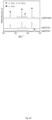
- FIG. 51 shows XRD patterns showing the crystal structures after the respective heat treatments in the present samples SfA to SfC in which the substrate is silica cloth.
- the supported amount x is 6.2 mass %.
- FIG. 51 also shows an XRD pattern of the substrate on which Ba-added SiO 2 Al 2 O 3 film is not formed, as a reference.
- peaks of ⁇ -Al 2 O 3 were detected, and in the calcinations at 1200° C. for 5 hours and 30 hours (first and second heat treatments), peaks of cristobalite were detected with crystallization of SiO 2 of the substrate.
- the seventh synthesis method is roughly divided into a step (Step #80) of preparing SiO 2 Al 2 O 3 containing sol solution by any of the first, second, and third synthesis methods described above, a step (Step #81) of preparing SiO 2 Al 2 O 3 powder by drying SiO 2 Al 2 O 3 containing sol solution prepared in Step #80, and a step (Step #82) of adding water to SiO 2 Al 2 O 3 powder, and stirring the mixture to reconstitute SiO 2 Al 2 O 3 containing sol solution having a desired sol solution concentration.
- the drying process of Step #81 is preferably performed, for example, at 150° C.
- the sol solution obtained in Step #80 is referred to as “the first sol”
- the sol solution obtained in Step #82 is referred to as “the second sol” as appropriate.
- the seventh synthesis method is advantageous in that the sol solution concentration of SiO 2 Al 2 O 3 containing sol solution after the reconstitution can be easily controlled by adjusting the amount of water to be added in Step #82 with respect to the mass of SiO 2 Al 2 O 3 powder obtained in Step #81.
- Step #80 is the same as Steps #40, #50, and #60 in the fourth, fifth, and sixth synthesis methods. Therefore, in the fourth, fifth, and sixth synthesis methods, the specific additive (EG or DMF) or the barium compound or both to be added to SiO 2 Al 2 O 3 containing sol solution prepared in Step #40, #50, or #60 can be added to SiO 2 Al 2 O 3 containing sol solution (the first sol), which was prepared in Step #80, in Step #83 prior to the drying treatment in Step #81 in the seventh synthesis method, as shown in FIG. 53 . Furthermore, as shown in FIG. 54 , the addition of the specific additive and/or the barium compound can be performed in Step #84 with respect to SiO 2 Al 2 O 3 containing sol solution (the second sol) reconstituted in Step #81.
- the specific additive EG or DMF
- Example 18 in Step #80, SiO 2 Al 2 O 3 containing sol solution having SiO 2 concentration of 1 mass % is synthesized using the first synthesis method as an example.
- Step #80 of Example 18 TEOS solution and the aluminum nitrate solution having the same solution concentrations as those used in Steps #12 and #13 of Example 1 of the first synthesis method were subjected to the autoclave treatment in the same manner as in Example 1 by multiplying the respective amounts by 1.5 to obtain a total amount 80 g of SiO 2 Al 2 O 3 containing sol solution (the first sol) having SiO 2 concentration of 1 mass % and sol solution concentration of 3.75 mass %.
- the sol solution concentration is 1.5 times the 2.5 mass % of Example 1, and 1% SiO 2 Al 2 O 3 powder obtained by drying this sol solution at 150° C. in Step #81 is 3.0 g. Subsequently, in Step #82, 80 g of water was added with 3.0 g of 1 0 % SiO 2 Al 2 O 3 powder obtained in Step #81, and the mixture was stirred at room temperature for 30 minutes to obtain a total amount 83 g of 1% SiO 2 Al 2 O 3 containing sol solution (the second sol). The sol solution concentration is 3.61%.
- Step #80 of Example 18 SiO 2 concentration can be adjusted by changing the mixing ratio of TEOS solution and the aluminum nitrate solution as explained in the above-described “[1] Basic structure of the first synthesis method”.
- Example 20 as shown in FIG. 53 , in Step #80, 1% SiO 2 Al 2 O 3 containing sol solution having sol solution concentration of 3.75 mass % (the first sol) was prepared in the same manner as in Example 18, and in Step #83, 0.3579 g of barium nitrate as the barium compound and 3 mass % of DMF in the total amount of the sol solution after the addition as the specific additive were respectively added to the first sol and the mixture was stirred to obtain 6.5% BaO-1% SiO 2 Al 2 O 3 3.75% sol solution to which DMF was added. Subsequently, in Step #81, the sol solution prepared in Step #83 was dried at 150° C.
- Example 21 as shown in FIG. 54 , in Steps #80 to #82, the same process as in Example 18 was performed to obtain a total amount 83 g of 1% SiO 2 Al 2 O 3 containing sol solution (the second sol). Subsequently, in Step #84, 0.3579 g of barium nitrate as the barium compound and 3 mass % of DMF in the total amount of the sol solution after the addition as the specific additive were respectively added to the second sol and the mixture was stirred to obtain 6.5% BaO-1% SiO 2 Al 2 O 3 containing sol solution to which DMF was added.
- Example 20 and Example 21 are different in the timing of adding the specific additive and the barium compound when performing Steps #80 to #82 of Example 18.
- the specific additive and the barium compound are added to the first sol after Step #80
- the specific additive and a barium compound are added to the second sol after Step #82.
- the powders of the added specific additive and the barium compound were completely dissolved in the second sol, allowing the preparation of a uniform 6.5% BaO-1% SiO 2 Al 2 O 3 containing sol solution with DMF added.
- Example 22 there are two Steps #80 (Step #80A, Step #80B).
- the two Steps #80 correspond to Steps #11 to #15 of Example 1 of the first synthesis method.
- the mixing ratios of TEOS solution and the aluminum nitrate solution are the same, but since sol solution concentrations of SiO 2 Al 2 O 3 containing sol solutions to be synthesized are different, the amounts of TEOS solution and the aluminum nitrate solution to be used are different between Step #80A and Step #80B.
- Step #80A the same process as in Example 18 was carried out to obtain a total amount 80 g of 1% SiO 2 Al 2 O 3 3.75% sol (the first sol). Subsequently, in Step #81, the sol solution was dried at 150° C. to obtain 3.0 g of 1% SiO 2 Al 2 O 3 powder.
- Step #80B using TEOS solution and the aluminum nitrate solution having the same solution concentrations as those used in Steps #12 and #13 of Example 1 of the first synthesis method with the respective amounts multiplied by 3.2, the autoclave treatment was performed in the same manner as in Example 1 to obtain a total amount 80 g of SiO 2 Al 2 O 3 containing sol solution (the first sol) having SiO 2 concentration of 1 mass % and sol solution concentration of 8 mass %. Note that either Step #80A or Step #80B may be executed first or simultaneously.
- Step #82 2.47 g of 1% SiO 2 Al 2 O 3 powder obtained in Step #81 was weighed and added to a total amount 80 g of 1% SiO 2 Al 2 O 3 8% sol (the first sol) obtained in Step #80B, and the mixture was stirred to obtain SiO 2 Al 2 O 3 containing sol solution (the second sol) having SiO 2 concentration of 1 mass % and sol solution concentration of 10.31 mass %.
- the additive amount (mixing ratio) of 1% SiO 2 Al 2 O 3 powder in Step #82 was set to 3 mass % with respect to the sol solution after the addition.
- the concentration of the sol solution can be increased to 10 mass % or more.
- the heat resistances of SiO 2 Al 2 O 3 powders obtained by drying and calcining SiO 2 Al 2 O 3 containing sol solutions (the second sol) having SiO 2 concentrations of 1 mass % and 3 mass % synthesized in Example 18 of the seventh synthesis method using aluminum nitrate as the aluminum compound (hereinafter, collectively referred to as the “present powder sample S11”) were evaluated.
- present powder samples S11 SiO 2 Al 2 O 3 containing sol solutions having SiO 2 concentrations of 1 mass % and 3 mass % obtained through Steps #80 to #82 of Example 18 were dried at 150° C. and subsequently pulverized into powders, and the powders were calcined in the air at 1000° C. for 5 hours (initial heat treatment), so that SiO 2 Al 2 O 3 powders (present samples S11A) were prepared.
- FIG. 56 shows XRD patterns showing the crystal structure after the respective heat treatments in the present sample S11A, the present sample S11B, and the present sample S11C, each having SiO 2 concentration of 1 mass %.
- XRD patterns showing the crystal structure after the respective heat treatments in the present sample S1A, the present sample S1B, and the present sample S1C, each having SiO 2 concentration of 1 mass %, prepared by the first synthesis method are shown in FIG. 9
- XRD patterns showing the crystal structure after the respective heat treatments in the present sample S3A, the present sample S3B, and the present sample S3C, each having SiO 2 concentration of 1 mass %, prepared by the third synthesis method are shown in FIG. 26 .
- the heat resistances of SiO 2 Al 2 O 3 powders obtained by drying and calcining SiO 2 Al 2 O 3 containing sol solutions (the second sol) having SiO 2 concentrations of 1 mass % and 3 mass % synthesized in Example 19 of the seventh synthesis method using sodium aluminate as the aluminum compound (hereinafter, collectively referred to as the “present powder samples S12”) were evaluated.
- present powder samples S12 SiO 2 Al 2 O 3 containing sol solutions having SiO 2 concentrations of 1 mass % and 3 mass % obtained through Steps #80 to #82 of Example 19 were dried at 150° C. and subsequently pulverized into powders, and the powders were calcined in the air at 1000° C. for 5 hours (initial heat treatment), so that SiO 2 Al 2 O 3 powders (present samples S12A) were prepared.
- Table 21 shows the measured results of the respective specific surface areas (m 2 /g) of the present samples S12A to S12C prepared at SiO 2 concentrations of 1 mass % and 3 mass %.
- the measurement results of the respective specific surface areas of the present samples S2A to S2C prepared by the second synthesis method (Example 4) having SiO 2 concentrations of 1 mass % and 3 mass % and the measurement results of the respective specific surface areas of the present samples S4A to S4C prepared by the third synthesis method (Example 6) having SiO 2 concentrations of 1 mass % and 3 mass % are also shown in Table 21.
- FIG. 57 shows XRD patterns showing the crystal structure after the respective heat treatments in the present sample S12A, the present sample S12B, and the present sample S12C, each having SiO 2 concentration of 1 mass %.
- XRD patterns showing the crystal structure after the respective heat treatments in the present sample S2A, the present sample S2B, and the present sample S2C, each having SiO 2 concentration of 1 mass %, prepared by the second synthesis method are shown in FIG. 18
- XRD patterns showing the crystal structure after the respective heat treatments in the present sample S4A, the present sample S4B, and the present sample S4C, each having SiO 2 concentration of 1 mass %, prepared by the third synthesis method are shown in FIG. 30 .
- present powder sample S14 6.5% BaO-1% SiO 2 Al 2 O 3 containing sol solution (the second sol), to which DMF was added, obtained through Steps #80 to #82, #84 of Example 21 was dried at 150° C. and subsequently pulverized into a powder, and the powder was calcined at 1000° C. for 5 hours (initial heat treatment) in the air so that BaO—SiO 2 Al 2 O 3 powder to which DMF was added (present sample S14A) was prepared.
- present sample S14B obtained by adding the first heat treatment at 1200° C. for 5 hours to the present sample S14A
- a present sample S14C obtained by adding the second heat treatment at 1200° C. for 30 hours to the present sample S14A were prepared.
- Table 22 below shows the measurement results of the respective specific surface areas (m 2 /g) of the present samples S13A to S13C and the present samples S14A to S14C, each having SiO 2 concentration of 1 mass % and the total pore volumes (cm 3 /g) of the present sample S13B and the present sample S14B, each having SiO 2 concentration of 1 mass %.
- the present powder sample S11 prepared in Example 18 of the seventh synthesis method, to which DMF and the barium compound are not added had a reduced specific surface area after the first and second heat treatments at 1200° C. This is consistent with the fact that in the XRD patterns of FIG. 56 , the alumina of the present powder sample S11 to which DMF and barium compound were not added was completely a-transformed after the first and second heat treatments at 1200° C.
- the present powder sample S13 and the present powder sample S14 prepared in Example 20 and Example 21 of the seventh synthesis method the decrease in the specific surface area after the first and second heat treatments at 1200° C.
- the present powder sample S13 and the present powder sample S14 prepared in Example 20 and Example 21 of the seventh synthesis method exhibit the specific surface area and total pore volume comparable with the present powder sample S9 prepared in the sixth synthesis method (Example 13), and thereby it was confirmed that the addition of DMF and the barium compound is effective.
- the heat resistances of SiO 2 Al 2 O 3 powder obtained by drying and calcining SiO 2 Al 2 O 3 containing sol solution (the second sol) having SiO 2 concentration of 1 mass % and sol solution concentration of 10.31 mass % synthesized in Example 22 of the seventh synthesis method using aluminum nitrate as the aluminum compound (hereinafter, collectively referred to as the “present powder sample S15”) was evaluated.
- SiO 2 Al 2 O 3 containing sol solution having SiO 2 concentration of 1 mass % and sol solution concentration of 10.31 mass % obtained through Step #80 (#80A, #80B) to Step #82 of Example 22 was dried at 150° C. and subsequently pulverized into a powder, and the powder was calcined at 1000° C. for 5 hours (initial heat treatment) in the air, so that SiO 2 Al 2 O 3 powder (present sample S15A) was prepared.
- a present sample S15B obtained by adding the first heat treatment at 1200° C. for 5 hours to the present sample S15A, and a present sample S15C obtained by adding the second heat treatment at 1200° C. for 30 hours to the present sample S15A were prepared.
- Table 23 shows the measurement results of the respective specific surface areas (m 2 /g) of the present samples S15A to S15C obtained from SiO 2 Al 2 O 3 containing sol solution having sol solution concentration of 10.31 mass % synthesized in Example 22 of the seventh synthesis method.
- the measurement results of the specific surface areas of the present samples S1A to S1C obtained from SiO 2 Al 2 O 3 containing sol solution having sol solution concentration of 2.5 mass % synthesized by the first synthesis method (Example 1) are also shown in Table 23.
- SiO 2 Al 2 O 3 containing sol solution or Ba-added SiO 2 Al 2 O 3 containing sol solution may be prepared using the seventh synthesis method instead of any of the first to sixth synthesis methods.
- the present invention is suitably used for synthesizing SiO 2 Al 2 O 3 containing sol solution for forming silica-added porous alumina on various substrate surfaces, and for forming a heat-resistant porous alumina film.
Landscapes
- Chemical & Material Sciences (AREA)
- Organic Chemistry (AREA)
- Engineering & Computer Science (AREA)
- Materials Engineering (AREA)
- Chemical Kinetics & Catalysis (AREA)
- Inorganic Chemistry (AREA)
- Ceramic Engineering (AREA)
- Life Sciences & Earth Sciences (AREA)
- Geology (AREA)
- Structural Engineering (AREA)
- Thermal Sciences (AREA)
- Physics & Mathematics (AREA)
- Dispersion Chemistry (AREA)
- Compounds Of Alkaline-Earth Elements, Aluminum Or Rare-Earth Metals (AREA)
Applications Claiming Priority (3)
| Application Number | Priority Date | Filing Date | Title |
|---|---|---|---|
| JP2022-050413 | 2022-03-25 | ||
| JP2022050413 | 2022-03-25 | ||
| PCT/JP2023/010790 WO2023182247A1 (ja) | 2022-03-25 | 2023-03-20 | SiO2Al2O3含有ゾル溶液の合成方法、及び、多孔質アルミナ膜の形成方法 |
Related Parent Applications (1)
| Application Number | Title | Priority Date | Filing Date |
|---|---|---|---|
| PCT/JP2023/010790 A-371-Of-International WO2023182247A1 (ja) | 2022-03-25 | 2023-03-20 | SiO2Al2O3含有ゾル溶液の合成方法、及び、多孔質アルミナ膜の形成方法 |
Related Child Applications (1)
| Application Number | Title | Priority Date | Filing Date |
|---|---|---|---|
| US19/221,361 Division US12440825B2 (en) | 2022-03-25 | 2025-05-28 | Method for synthesizing SiO2Al2O3 containing sol solution and method for forming porous alumina film |
Publications (2)
| Publication Number | Publication Date |
|---|---|
| US20250041832A1 US20250041832A1 (en) | 2025-02-06 |
| US12343703B2 true US12343703B2 (en) | 2025-07-01 |
Family
ID=88101009
Family Applications (2)
| Application Number | Title | Priority Date | Filing Date |
|---|---|---|---|
| US18/835,990 Active US12343703B2 (en) | 2022-03-25 | 2023-03-20 | Method for synthesizing SiO2Al2O3 containing sol solution and method for forming porous alumina film |
| US19/221,361 Active US12440825B2 (en) | 2022-03-25 | 2025-05-28 | Method for synthesizing SiO2Al2O3 containing sol solution and method for forming porous alumina film |
Family Applications After (1)
| Application Number | Title | Priority Date | Filing Date |
|---|---|---|---|
| US19/221,361 Active US12440825B2 (en) | 2022-03-25 | 2025-05-28 | Method for synthesizing SiO2Al2O3 containing sol solution and method for forming porous alumina film |
Country Status (7)
| Country | Link |
|---|---|
| US (2) | US12343703B2 (https=) |
| EP (1) | EP4458771B1 (https=) |
| JP (1) | JP7678492B2 (https=) |
| KR (1) | KR102753605B1 (https=) |
| CN (1) | CN118632823B (https=) |
| DK (1) | DK4458771T3 (https=) |
| WO (1) | WO2023182247A1 (https=) |
Families Citing this family (1)
| Publication number | Priority date | Publication date | Assignee | Title |
|---|---|---|---|---|
| JP7678492B2 (ja) | 2022-03-25 | 2025-05-16 | 株式会社ルネッサンス・エナジー・リサーチ | SiO2Al2O3含有ゾル溶液の合成方法、及び、多孔質アルミナ膜の形成方法 |
Citations (10)
| Publication number | Priority date | Publication date | Assignee | Title |
|---|---|---|---|---|
| US5731261A (en) | 1995-06-01 | 1998-03-24 | Enichem S.P.A. | Process for the preparation of mixed porous silica-alumina oxides in a spherical form |
| JP2004203654A (ja) | 2002-12-25 | 2004-07-22 | National Institute Of Advanced Industrial & Technology | 高耐熱・高強度アルミナ多孔体の製造法 |
| JP2009061383A (ja) | 2007-09-06 | 2009-03-26 | Nagoya Institute Of Technology | 耐熱性アルミナ担体とその製造方法 |
| CN101535182A (zh) | 2006-11-08 | 2009-09-16 | 日产化学工业株式会社 | 二氧化硅-氧化铝复合溶胶及其制造方法 |
| WO2012096386A1 (ja) | 2011-01-14 | 2012-07-19 | 株式会社ルネッサンス・エナジー・リサーチ | 多孔質アルミナ材料及びその製造方法、並びに触媒 |
| US20130105883A1 (en) | 2010-05-31 | 2013-05-02 | SK Hynix Inc. | Non-volatile memory device and method for fabricating the same |
| WO2013111457A1 (ja) | 2012-01-23 | 2013-08-01 | エヌ・イーケムキャット株式会社 | 硫酸バリウムを含むアルミナ材料、それを用いた排気ガス浄化用触媒 |
| WO2014051091A1 (ja) | 2012-09-28 | 2014-04-03 | Dic株式会社 | α-アルミナ微粒子及びその製造方法 |
| WO2021192752A1 (ja) | 2020-03-26 | 2021-09-30 | 株式会社ルネッサンス・エナジー・リサーチ | 多孔質アルミナ及び触媒 |
| WO2023182247A1 (ja) | 2022-03-25 | 2023-09-28 | 株式会社ルネッサンス・エナジー・リサーチ | SiO2Al2O3含有ゾル溶液の合成方法、及び、多孔質アルミナ膜の形成方法 |
Family Cites Families (3)
| Publication number | Priority date | Publication date | Assignee | Title |
|---|---|---|---|---|
| CN101225248A (zh) * | 2007-01-16 | 2008-07-23 | 财团法人工业技术研究院 | 显色材料及其制备方法 |
| CN108854870A (zh) * | 2017-05-11 | 2018-11-23 | 北京化工大学 | 一种高纯度硅铝溶胶的制备方法 |
| CN110844911A (zh) * | 2019-12-20 | 2020-02-28 | 黄冈师范学院 | 一种利用含氟硅渣直接制备高纯白炭黑的方法 |
-
2023
- 2023-03-20 JP JP2024510149A patent/JP7678492B2/ja active Active
- 2023-03-20 DK DK23774842.1T patent/DK4458771T3/da active
- 2023-03-20 WO PCT/JP2023/010790 patent/WO2023182247A1/ja not_active Ceased
- 2023-03-20 CN CN202380019058.8A patent/CN118632823B/zh active Active
- 2023-03-20 KR KR1020247025562A patent/KR102753605B1/ko active Active
- 2023-03-20 EP EP23774842.1A patent/EP4458771B1/en active Active
- 2023-03-20 US US18/835,990 patent/US12343703B2/en active Active
-
2025
- 2025-05-28 US US19/221,361 patent/US12440825B2/en active Active
Patent Citations (13)
| Publication number | Priority date | Publication date | Assignee | Title |
|---|---|---|---|---|
| US5731261A (en) | 1995-06-01 | 1998-03-24 | Enichem S.P.A. | Process for the preparation of mixed porous silica-alumina oxides in a spherical form |
| JP2004203654A (ja) | 2002-12-25 | 2004-07-22 | National Institute Of Advanced Industrial & Technology | 高耐熱・高強度アルミナ多孔体の製造法 |
| CN101535182A (zh) | 2006-11-08 | 2009-09-16 | 日产化学工业株式会社 | 二氧化硅-氧化铝复合溶胶及其制造方法 |
| JP2009061383A (ja) | 2007-09-06 | 2009-03-26 | Nagoya Institute Of Technology | 耐熱性アルミナ担体とその製造方法 |
| US20130105883A1 (en) | 2010-05-31 | 2013-05-02 | SK Hynix Inc. | Non-volatile memory device and method for fabricating the same |
| US20130324392A1 (en) | 2011-01-14 | 2013-12-05 | Renaissance Energy Research Corporation | Porous Alumina Material, Process for Producing Same, and Catalyst |
| WO2012096386A1 (ja) | 2011-01-14 | 2012-07-19 | 株式会社ルネッサンス・エナジー・リサーチ | 多孔質アルミナ材料及びその製造方法、並びに触媒 |
| WO2013111457A1 (ja) | 2012-01-23 | 2013-08-01 | エヌ・イーケムキャット株式会社 | 硫酸バリウムを含むアルミナ材料、それを用いた排気ガス浄化用触媒 |
| US20140329669A1 (en) | 2012-01-23 | 2014-11-06 | N.E. Chemcat Corporation | Alumina material containing barium sulfate and exhaust gas purifying catalyst using same |
| WO2014051091A1 (ja) | 2012-09-28 | 2014-04-03 | Dic株式会社 | α-アルミナ微粒子及びその製造方法 |
| US20150239746A1 (en) | 2012-09-28 | 2015-08-27 | Dic Corporation | Alpha-alumina particles and method for manufacturing the same |
| WO2021192752A1 (ja) | 2020-03-26 | 2021-09-30 | 株式会社ルネッサンス・エナジー・リサーチ | 多孔質アルミナ及び触媒 |
| WO2023182247A1 (ja) | 2022-03-25 | 2023-09-28 | 株式会社ルネッサンス・エナジー・リサーチ | SiO2Al2O3含有ゾル溶液の合成方法、及び、多孔質アルミナ膜の形成方法 |
Non-Patent Citations (2)
| Title |
|---|
| Yao Nan et al., Preparation of oxide and mixed oxide catalytic materials with concentrated distribution of mesopores by sol-gel method, China Science (B), vol. 31, No. 4, Aug. 2001, pp. 356-363; (D3 of CN Action; English translation of relevant text of action included in document). |
| Zheng Guangjian, Research on the preparation of amorphous Al2O3—2SiO2 and the mechanism of geopolymerization reaction China Doctoral Dissertation Full Text Database Engineering Science and Technology I, 2012 No. 7, B020-92, pp. 51-53, 20120715; (D1 of CN Action; English translation of relevant text of action included in document). |
Also Published As
| Publication number | Publication date |
|---|---|
| WO2023182247A1 (ja) | 2023-09-28 |
| CN118632823A (zh) | 2024-09-10 |
| JP7678492B2 (ja) | 2025-05-16 |
| JPWO2023182247A1 (https=) | 2023-09-28 |
| US20250288974A1 (en) | 2025-09-18 |
| US20250041832A1 (en) | 2025-02-06 |
| US12440825B2 (en) | 2025-10-14 |
| KR20240125048A (ko) | 2024-08-19 |
| CN118632823B (zh) | 2025-09-30 |
| KR102753605B1 (ko) | 2025-01-10 |
| EP4458771A1 (en) | 2024-11-06 |
| EP4458771A4 (en) | 2025-05-07 |
| DK4458771T3 (da) | 2026-02-09 |
| EP4458771B1 (en) | 2025-12-24 |
Similar Documents
| Publication | Publication Date | Title |
|---|---|---|
| RU2606505C2 (ru) | Пористый неорганический композитный оксид | |
| US10882025B2 (en) | Catalyst/catalyst support compositions having high reducibility and comprising a nanometric cerium oxide deposited onto a support substrate | |
| KR101900320B1 (ko) | 산화알루미늄 및 세륨/지르코늄-혼합 산화물의 합성물 제조방법 | |
| CN103339061B (zh) | 多孔质氧化铝材料及其制造方法、以及催化剂 | |
| CN101959801B (zh) | 基于氧化铝或羟基氧化铝载体上的氧化锆、氧化钛或锆和钛的混合氧化物的组合物、制备方法以及作为催化剂的用途 | |
| US12440825B2 (en) | Method for synthesizing SiO2Al2O3 containing sol solution and method for forming porous alumina film | |
| JP3016865B2 (ja) | 混合セリウムないしジルコニウム酸化物,並びにこれらの製造方法及び使用方法 | |
| JP5148637B2 (ja) | 高比表面積のセリウムおよび別の希土類混合酸化物、調製方法、ならびに触媒反応における使用 | |
| KR20120029475A (ko) | 비다공도를 갖는, 산화세륨 및 산화지르코늄을 포함하는 조성물, 그의 제조 방법 및 촉매작용에서의 그의 용도 | |
| Parhizkar et al. | Synthesis and characterization of nano CoFe2O4 prepared by sol-gel auto-combustion with ultrasonic irradiation and evaluation of photocatalytic removal and degradation kinetic of reactive red 195 | |
| CN109465003B (zh) | 一种稀土元素复合氧化物及其制备方法和应用 | |
| Khanmohammadi et al. | Synthesis of meso-porous gamma-alumina membrane: effect of yttria addition on the thermal stability | |
| CN102826568B (zh) | 纳米晶zsm-5沸石团簇的制备方法以及由该方法制得的纳米晶zsm-5沸石团簇 | |
| JP7742591B2 (ja) | 多孔質アルミナ及び触媒 | |
| CN117003272A (zh) | 一种具有高热稳定性的改性氧化铝及其制备方法 | |
| JPS61171538A (ja) | 内燃機関の排気ガス処理用触媒の製造方法 | |
| Manjumol et al. | An ‘Eco-friendly’all aqueous sol gel process for multi functional ultrafiltration membrane on porous tubular alumina substrate | |
| JPWO2023182247A5 (https=) | ||
| EP3995449A1 (en) | Method of preparing scr catalyst and scr catalyst prepared thereby | |
| Smitha et al. | Energy revamping of solar panels through titania nanocomposite coatings; influence of aqueous silica precursor | |
| CN116943745B (zh) | 一种无定形硅铝及其制备方法和应用 | |
| Wong et al. | Textural stability of yttria-doped titania membranes | |
| CN121847250A (zh) | 一种铈掺杂氧化镍催化剂及其制备方法与应用 | |
| JP2024040674A (ja) | モリブデン被覆アルミナ粒子およびその製造方法 | |
| Rauta et al. | Centre for Nano Science and Technology, KS Rangasamy college of Technology |
Legal Events
| Date | Code | Title | Description |
|---|---|---|---|
| AS | Assignment |
Owner name: NATIONAL INSTITUTE OF TECHNOLOGY, JAPAN Free format text: ASSIGNMENT OF ASSIGNORS INTEREST;ASSIGNORS:HASEGAWA, AKIRA;OKADA, OSAMU;NAKAMURA, HIROMI;AND OTHERS;REEL/FRAME:068187/0481 Effective date: 20240614 Owner name: RENAISSANCE ENERGY RESEARCH CORPORATION, JAPAN Free format text: ASSIGNMENT OF ASSIGNORS INTEREST;ASSIGNORS:HASEGAWA, AKIRA;OKADA, OSAMU;NAKAMURA, HIROMI;AND OTHERS;REEL/FRAME:068187/0481 Effective date: 20240614 |
|
| FEPP | Fee payment procedure |
Free format text: ENTITY STATUS SET TO UNDISCOUNTED (ORIGINAL EVENT CODE: BIG.); ENTITY STATUS OF PATENT OWNER: LARGE ENTITY |
|
| STPP | Information on status: patent application and granting procedure in general |
Free format text: RESPONSE TO NON-FINAL OFFICE ACTION ENTERED AND FORWARDED TO EXAMINER |
|
| STPP | Information on status: patent application and granting procedure in general |
Free format text: NOTICE OF ALLOWANCE MAILED -- APPLICATION RECEIVED IN OFFICE OF PUBLICATIONS |
|
| STCF | Information on status: patent grant |
Free format text: PATENTED CASE |