EP4541192A2 - Zusammensetzung auf basis von polyol(en) und sterolen zur verwendung in der landwirtschaft - Google Patents
Zusammensetzung auf basis von polyol(en) und sterolen zur verwendung in der landwirtschaft Download PDFInfo
- Publication number
- EP4541192A2 EP4541192A2 EP25161649.6A EP25161649A EP4541192A2 EP 4541192 A2 EP4541192 A2 EP 4541192A2 EP 25161649 A EP25161649 A EP 25161649A EP 4541192 A2 EP4541192 A2 EP 4541192A2
- Authority
- EP
- European Patent Office
- Prior art keywords
- solution
- sterol
- polyols
- ionic surfactant
- plants
- Prior art date
- Legal status (The legal status is an assumption and is not a legal conclusion. Google has not performed a legal analysis and makes no representation as to the accuracy of the status listed.)
- Pending
Links
Images

Classifications
-
- A—HUMAN NECESSITIES
- A01—AGRICULTURE; FORESTRY; ANIMAL HUSBANDRY; HUNTING; TRAPPING; FISHING
- A01N—PRESERVATION OF BODIES OF HUMANS OR ANIMALS OR PLANTS OR PARTS THEREOF; BIOCIDES, e.g. AS DISINFECTANTS, AS PESTICIDES OR AS HERBICIDES; PEST REPELLANTS OR ATTRACTANTS; PLANT GROWTH REGULATORS
- A01N45/00—Biocides, pest repellants or attractants, or plant growth regulators, containing compounds having three or more carbocyclic rings condensed among themselves, at least one ring not being a six-membered ring
-
- A—HUMAN NECESSITIES
- A01—AGRICULTURE; FORESTRY; ANIMAL HUSBANDRY; HUNTING; TRAPPING; FISHING
- A01N—PRESERVATION OF BODIES OF HUMANS OR ANIMALS OR PLANTS OR PARTS THEREOF; BIOCIDES, e.g. AS DISINFECTANTS, AS PESTICIDES OR AS HERBICIDES; PEST REPELLANTS OR ATTRACTANTS; PLANT GROWTH REGULATORS
- A01N43/00—Biocides, pest repellants or attractants, or plant growth regulators containing heterocyclic compounds
- A01N43/02—Biocides, pest repellants or attractants, or plant growth regulators containing heterocyclic compounds having rings with one or more oxygen or sulfur atoms as the only ring hetero atoms
- A01N43/04—Biocides, pest repellants or attractants, or plant growth regulators containing heterocyclic compounds having rings with one or more oxygen or sulfur atoms as the only ring hetero atoms with one hetero atom
- A01N43/14—Biocides, pest repellants or attractants, or plant growth regulators containing heterocyclic compounds having rings with one or more oxygen or sulfur atoms as the only ring hetero atoms with one hetero atom six-membered rings
- A01N43/16—Biocides, pest repellants or attractants, or plant growth regulators containing heterocyclic compounds having rings with one or more oxygen or sulfur atoms as the only ring hetero atoms with one hetero atom six-membered rings with oxygen as the ring hetero atom
Definitions
- plants have established protective mechanical barriers (cuticle, pectocellulosic wall), particularly against bioaggressors.
- SAR systemic acquired resistance
- plants have intrinsic means to defend themselves.
- Stimulators of defenses include plant natural defense stimulators (PNDS), also known as elicitors.
- PNDS plant natural defense stimulators
- biotic stress means stress which comes from living organisms such as pathogenic microorganisms, for example fungi, bacteria, viruses, but also nematodes, insects, mites, herbivores, or parasitic plants.
- the term “elicitor” means a substance that is recognized by plants and activates a signaling cascade that leads the plant to mobilize its defense mechanisms.
- An elicitor is a substance capable, under certain conditions, of stimulating natural defense mechanisms. These natural defenses are directed against bioaggressors (diseases, pests).
- abiotic stress means stress resulting from non-living things such as water stress, saline stress, flooding stress, wind (pour), thermal stress (cold, frost, thermal shock), stress due to ultraviolet rays (solar radiation), stress linked to nutrient deficiencies, injury stress, oxidative stress, osmotic stress, chemical stress.
- biostimulant or plant biostimulant is defined in accordance with the study commissioned by the Centre for Studies and Foresight of the Ministry of Agriculture, Agri-Food and Forestry (MAAF) and financed by the MAAF within the framework of program 215 (Market No. SSP-2013-094, Final Report - December 2014) entitled "Stimulation products in agriculture aimed at improving the biological functionalities of soils and plants - Study of available knowledge and strategic recommendations”.
- a biostimulant is: “A material that contains substance(s) and/or microorganism(s) whose function, when applied to plants or the rhizosphere, is to stimulate natural processes to improve/benefit nutrient uptake, nutrient efficiency, abiotic stress tolerance, and crop quality, regardless of the nutrient content of the biostimulant.” (EBIC, 2014).
- biostimulants currently used include microorganisms, plant extracts, and synthetic chemical compounds. However, the effectiveness of these biostimulants is not optimal.
- the first problem that the invention aims to solve is therefore that of developing compositions which contribute to the biostimulation of plants.
- the objective is to develop alternative compositions that are capable of promoting plant resistance to abiotic stress more effectively than the compounds of the prior art.
- the objective is to stimulate certain natural mechanisms to improve/benefit nutrient absorption, nutrient efficiency, tolerance to abiotic stress, and crop quality with, in the case of nutrients in particular, the direct or indirect effect of plant growth, and therefore improved yield.
- a second problem that the invention aims to solve is that of developing compositions that are capable of stimulating certain natural mechanisms to improve tolerance to biotic stress.
- a third problem that the invention aims to solve is that of developing compositions that make it possible to limit the quantity of phytosanitary products applied while maintaining the same effect as standard doses.
- the third objective is to develop a composition that can be used as an adjuvant in phytosanitary compositions in particular.
- the Applicant has found that these objectives were achieved by combining a non-ionic surfactant derived from polyols and a sterol hereinafter referred to as “the composition or the composition of the invention”.
- the invention firstly relates to the use of at least one non-ionic surfactant derived from polyols and a sterol as a biostimulant of a plant, hereinafter referred to as “the composition or the composition of the invention”.
- the composition of the invention is used to promote germination.
- the composition of the invention is used to promote the elongation of the main roots and the multiplication and elongation of the secondary roots, in other words the growth of the main and secondary roots.
- the composition of the invention is used to promote flowering.
- the composition of the invention is used to promote plant resistance against abiotic stresses.
- the composition is used in particular to limit stomatal water loss, that is to say to enable the plant to better resist water stress.
- the composition of the invention has a particular effect on the activation of the systemic acquired resistance system.
- the composition acts not only to stimulate natural defense mechanisms against biotic stresses but also to promote resistance to abiotic stresses.
- composition of the invention is not a product with specific activity makes it possible to envisage broad-spectrum use on a large number of crops, which can save minor crops for which the number of available phytosanitary products is almost zero.
- composition of the invention made it possible to improve the spreading of liquids on the leaf, in particular of an aqueous solution. This phenomenon would result from the reduction in the surface tension of the leaf in contact with the composition of the invention. It follows that by improving the spreading of a solution containing a product active with respect to the plant, the quantity of product required for an equivalent effect is reduced.
- the invention also relates to the use of the composition as an adjuvant of a solution containing a product active with respect to the plant.
- Biocontrol products aim to prevent the action of organisms harmful to plants and are chosen in particular from fungicides, fungistatics, bactericides, bacteriostatics, insecticides, acaricides, parasiticides, nematicides, mole-killers or bird or game repellents, one or more substances which aim to destroy undesirable plants or to slow their growth chosen in particular from herbicides or antidicotyledons.
- composition of the invention thus constitutes a saving for the farmer who reduces the number of applications (passages in the field).
- the product does not cause resistance.
- its use, possibly in alternation, but especially in association with "classic” plant protection products (biocontrol products) not only allows, as already mentioned, to limit the quantity of product to be applied but also to avoid or delay the appearance of resistance to these products and increase their durability.
- composition of the invention When used in association with a product active against the plant as described above, it is used simultaneously or sequentially.
- composition according to the invention can be applied after emergence or before emergence, on the seed, the seedling (juvenile stage before flowering), the plant during flowering (before, during or after pollination), the plant after fertilization, the plant during fruiting, the fruit, the flowers, the leaves, the stems, the roots or in the soil, before or after sowing.
- composition can be practically applied by spraying, watering, adding to a hydroponic growing medium, immersing the seed and/or coating the seed.
- the plant is chosen from the group comprising Dicotyledons and Monocotyledons, advantageously from the group comprising cereals, root and tuber plants, sacchariferous plants, legumes, nut plants, oil-producing or oleaginous plants, vegetable crops, fruit trees, aromatic plants and spices, flower crops, or even industrial crops intended for the production of a raw material for processing.
- the non-ionic surfactant derived from polyols is chosen from the group comprising sugar and fatty acid esters, alkyl-mono- and alkyl-poly-glucosides, alkyl-mono- and alkyl-poly-glucoside and fatty acid esters and N-alkylglucamides, in particular N-methylglucamides.
- non-ionic surfactant derived from polyols is chosen from the group comprising sucrose esters, sorbitan esters and glucose esters.
- the non-ionic surfactant derived from polyols is ethoxylated or non-ethoxylated.
- the non-ionic surfactant derived from polyols is sucrose stearate.
- the sterol is chosen from cholesterol, plant sterols such as campesterol, beta-sitosterol, stigmasterol, brassicasterol, campestanol, sitostanol, animal sterols such as lanosterol or yeast or fungal sterols such as ergosterol.
- the sterol is beta-sitosterol.
- the non-ionic surfactant derived from polyols and the sterol are in solution, advantageously in the form of an aqueous solution, comprising 0.01% to 80%, preferably 0.05% to 30%, even more preferably 0.75% to 3% by weight of the solution of non-ionic surfactant derived from polyols and sterol.
- the use according to the invention of at least one non-ionic surfactant derived from polyols corresponding to sucrose stearate and the sterol corresponding to beta-sitosterol is advantageousously, the use according to the invention of at least one non-ionic surfactant derived from polyols corresponding to sucrose stearate and the sterol corresponding to beta-sitosterol.
- the invention relates to a composition
- a composition comprising sucrose stearate as a non-ionic surfactant derived from polyols and, as sterol, at least beta-sitosterol or stigmasterol or cholesterol or ergosterol or a mixture thereof.
- the beta-sitosterol is between 1 and 99% by weight of the composition and the sucrose stearate is between 99 and 1% by weight of the composition, preferably the beta-sitosterol is between 40 and 1% and the sucrose stearate is between 60 and 99% by weight of the composition.
- Different combinations of the invention with a plant sterol are prepared from sucrose stearate and beta-sitosterol.
- the combinations are prepared by dry mixing of sucrose stearate and beta-sitosterol, with proportions varying from 0 to 100% by mass relative to the total mass of the mixture, for each of these ingredients, as indicated in the following Table 1.
- Table 1 Sample Sucrose stearate Beta-sitosterol HAS 0 100 B 1 99 C 2.5 97.5 D 5 95 E 10 90 F 15 85 G 20 80 H 25 75 I 30 70 I 35 65 K 40 60 L 45 55 M 50 50 N 55 45 O 60 40 P 65 35 O 70 30 R 75 25 S 80 20 T 85 15 U 90 10 V 95 5 W 97.5 2.5 X 99 1 Y 100 0
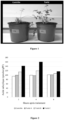
- Each batch consists of four pots.
- sample S produces the optimal effect of plant resistance to abiotic stress (sample S composed of 80% sucrose stearate and 20% beta-sitosterol).
- Salicylic acid is a phenolic compound that is involved in the establishment of both local and systemic resistance (SAR) in plants.
- Each batch consists of four pots.
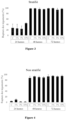
- Plants harvested after treatment application were frozen and ground with liquid nitrogen to perform quantitative analysis of salicylic acid content in the plants.
- sucrose stearate and beta-sitosterol induces a stimulation of salicylic acid synthesis greater than the addition of the effects of each compound taken individually (sample A: beta-sitosterol + sample Y: sucrose stearate), in response to biotic stress.
- Arabidopsis thaliana seeds were placed in a climatic chamber under a photoperiod of 16 hours of day / 8 hours of night, at 22°C.
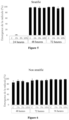
- the seeds were imbibed with water (control) or with the composition according to the invention at concentrations of 1%, 3% and 10% in water.
- the seeds were previously stratified (i.e. exposed to cold) or not stratified.
- Arabidopsis thaliana plants are grown on agar medium in a climate chamber under the following conditions: 23°C and a photoperiod of 16h day / 8h night.
- a standard agar medium is used as a control.
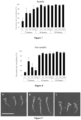
- Agar media containing 10 -5 % and 10 -3 % of the sucrose stearate and beta-sitosterol mixture according to sample S are used to evaluate the effect of the invention on the development of the root system.
- the length of the main root and secondary roots is measured between the 2nd and 21st day post-germination.
- the quantity of secondary roots is assessed visually.
- FIG. 10 shows that the main root of plants grown in the presence of 10 -5 % and 10 -3 % of the mixture according to the invention is longer than for plants grown in control agar medium.
- FIG. 11 shows that plants grown in agar media comprising 10 -5 % and 10 -3 % of the mixture according to the invention have more secondary roots which are also longer.
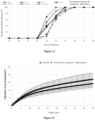
- the number of flowering plants per modality was measured as a function of time.
- sucrose stearate and beta-sitosterol mixture according to the invention accelerates the flowering of Arabidopsis thaliana.
- the 4-week-old plants were treated by foliar spraying, 4 hours before the measurements were taken, with water (Control) or a solution comprising 3% of the sucrose stearate and beta-sitosterol mixture according to sample S.
- Arabidopsis thaliana leaves were treated by foliar spraying, with water (Control) or a solution comprising 3% of the sucrose stearate and beta-sitosterol mixture according to the sample S.
- the number of droplets present on the surface of the plant leaf is quantified.
- the results show a reduction in the number of droplets on the Arabidopsis thaliana leaf after application of the mixture according to the invention.
- the composition according to the invention makes it possible to reduce the surface tension of the solution sprayed on the leaves and therefore allows better spreading of the droplets and better adhesion of the solution to the leaf.
- results show that there is no accumulation of the solution comprising the sucrose stearate and beta-sitosterol mixture according to the invention at the level of the veins and axillary buds of the plant.
- sucrose stearate and beta-sitosterol makes it possible in particular to treat grasses known to be poorly wettable.
- the use of the mixture according to the invention makes it possible to increase plant coverage and to use less product per hectare.
Landscapes
- Life Sciences & Earth Sciences (AREA)
- Agronomy & Crop Science (AREA)
- Pest Control & Pesticides (AREA)
- Plant Pathology (AREA)
- Health & Medical Sciences (AREA)
- Engineering & Computer Science (AREA)
- Dentistry (AREA)
- General Health & Medical Sciences (AREA)
- Wood Science & Technology (AREA)
- Zoology (AREA)
- Environmental Sciences (AREA)
- Agricultural Chemicals And Associated Chemicals (AREA)
- Cultivation Of Plants (AREA)
Applications Claiming Priority (4)
| Application Number | Priority Date | Filing Date | Title |
|---|---|---|---|
| FR1757558A FR3069757B1 (fr) | 2017-08-07 | 2017-08-07 | Composition a base de sterols |
| FR1757557A FR3069756B1 (fr) | 2017-08-07 | 2017-08-07 | Tensioactif non ionique comme biostimulant |
| PCT/FR2018/051931 WO2019030442A1 (fr) | 2017-08-07 | 2018-07-26 | Composition a base de polyol(s) et de sterol(s) pour usage dans le domaine agricole |
| EP18755875.4A EP3664612A1 (de) | 2017-08-07 | 2018-07-26 | Zusammensetzung aus polyol(en) und sterol(en) zur verwendung im landwirtschaftlichen bereich |
Related Parent Applications (1)
| Application Number | Title | Priority Date | Filing Date |
|---|---|---|---|
| EP18755875.4A Division EP3664612A1 (de) | 2017-08-07 | 2018-07-26 | Zusammensetzung aus polyol(en) und sterol(en) zur verwendung im landwirtschaftlichen bereich |
Publications (2)
| Publication Number | Publication Date |
|---|---|
| EP4541192A2 true EP4541192A2 (de) | 2025-04-23 |
| EP4541192A3 EP4541192A3 (de) | 2025-07-30 |
Family
ID=63244626
Family Applications (2)
| Application Number | Title | Priority Date | Filing Date |
|---|---|---|---|
| EP18755875.4A Pending EP3664612A1 (de) | 2017-08-07 | 2018-07-26 | Zusammensetzung aus polyol(en) und sterol(en) zur verwendung im landwirtschaftlichen bereich |
| EP25161649.6A Pending EP4541192A3 (de) | 2017-08-07 | 2018-07-26 | Zusammensetzung auf basis von polyol(en) und sterolen zur verwendung in der landwirtschaft |
Family Applications Before (1)
| Application Number | Title | Priority Date | Filing Date |
|---|---|---|---|
| EP18755875.4A Pending EP3664612A1 (de) | 2017-08-07 | 2018-07-26 | Zusammensetzung aus polyol(en) und sterol(en) zur verwendung im landwirtschaftlichen bereich |
Country Status (6)
| Country | Link |
|---|---|
| US (1) | US11779019B2 (de) |
| EP (2) | EP3664612A1 (de) |
| CN (1) | CN111050561B (de) |
| BR (1) | BR112020002435B1 (de) |
| MA (1) | MA49832A (de) |
| WO (1) | WO2019030442A1 (de) |
Families Citing this family (10)
| Publication number | Priority date | Publication date | Assignee | Title |
|---|---|---|---|---|
| BR112020002435B1 (pt) | 2017-08-07 | 2023-03-21 | Elicit Plant | Usos de pelo menos um tensoativo não iônico derivado a partir de polióis e um esterol |
| CN113133466B (zh) * | 2020-01-19 | 2022-03-22 | 山西嘉乐农业股份有限公司 | 豆甾醇抗逆促长剂及其制备方法 |
| CA3187659A1 (fr) * | 2020-08-06 | 2022-02-10 | Frederic Chauffour | Kit pour le traitement de semences |
| HRP20250008T1 (hr) * | 2021-10-08 | 2025-03-14 | Elicit Plant | Poljoprivredni pripravak na bazi fitosterola i njegova uporaba |
| WO2024074215A1 (en) | 2022-10-07 | 2024-04-11 | Elicit Plant | Phytosterol-based agricultural composition and their use |
| AR132423A1 (es) | 2023-04-13 | 2025-06-25 | Elicit Plant | Método para conservar o mejorar el rendimiento de un cultivo de campo expuesto al menos a un estrés abiótico |
| EP4445732A1 (de) | 2023-04-13 | 2024-10-16 | Elicit Plant | Vorbeugende behandlung zur erhaltung der ausbeute einer kulturpflanze, die wenigstens einer thermischen belastung ausgesetzt ist |
| WO2025061272A1 (en) | 2023-09-19 | 2025-03-27 | Elicit Plant | Method for matching the phytosterol content of an agricultural composition to that of target plant species for improving biostimulation |
| WO2025061271A1 (en) | 2023-09-19 | 2025-03-27 | Elicit Plant | Exogenous addition of specific phytosterol blends to stimulate target plant species |
| US20260020564A1 (en) * | 2024-07-19 | 2026-01-22 | Elicit Plant | Fungal diseases reduction and yield improvement methods and composition thereof |
Family Cites Families (19)
| Publication number | Priority date | Publication date | Assignee | Title |
|---|---|---|---|---|
| JPS5157556A (en) | 1974-11-07 | 1976-05-20 | Dai Ichi Kogyo Seiyaku Co Ltd | Inenoseiikukairyo oyobi zoshuzai |
| JPS61251601A (ja) * | 1985-04-02 | 1986-11-08 | Norin Suisansyo Kajiyu Shikenjo | 果樹の摘花剤 |
| EP0271579B1 (de) * | 1985-09-24 | 1991-12-11 | Ss Pharmaceutical Co., Ltd. | Fungizides mittel |
| JPS62186936A (ja) | 1986-02-13 | 1987-08-15 | Asahi Denka Kogyo Kk | ステリン乳化乃至可溶化組成物 |
| JP3313846B2 (ja) | 1993-09-24 | 2002-08-12 | 三井農林株式会社 | 植物病害防護剤 |
| GB0021498D0 (en) * | 2000-09-01 | 2000-10-18 | Novartis Nutrition Ag | New formulation |
| CN1450863A (zh) * | 2000-11-03 | 2003-10-22 | 孟山都技术有限公司 | 降低胆固醇的甾醇组合物、制备和使用方法 |
| US20110100079A1 (en) | 2007-08-31 | 2011-05-05 | Masatoshi Kamei | Method for imparting stress tolerance to plant |
| KR101170810B1 (ko) | 2011-09-26 | 2012-08-02 | 한국화학연구원 | 베타-시토스테롤을 유효성분으로 함유하는 식물병 방제용 조성물 및 이의 용도 |
| KR101463428B1 (ko) * | 2012-11-19 | 2014-11-20 | 한국화학연구원 | 베타-시토스테롤, 캄페스테롤, 스티그마스테롤 및 브라시카스테롤의 합제를 유효성분으로 함유하는 식물병 방제용 조성물 및 이의 용도 |
| CN103563929B (zh) | 2013-10-18 | 2015-05-13 | 陕西上格之路生物科学有限公司 | 一种含有胡萝卜苷与谷甾醇的抗病毒组合物及其抗病毒应用 |
| WO2015085116A1 (en) * | 2013-12-04 | 2015-06-11 | Newleaf Symbiotics, Inc. | Methods and compositions for improving soybean yield |
| WO2015085115A1 (en) | 2013-12-04 | 2015-06-11 | Newleaf Symbiotics, Inc. | Methods and compositions for improving corn yield |
| CN106889068A (zh) * | 2017-03-03 | 2017-06-27 | 山东本源生态农业科技有限公司 | 一种促进植物生根发芽的调节剂、及其制备方法和应用 |
| IT201700066508A1 (it) | 2017-06-15 | 2018-12-15 | Isagro Spa | Sospensioni concentrate di fitosteroli e relativo processo di preparazione |
| FR3069756B1 (fr) | 2017-08-07 | 2020-01-10 | Innovi | Tensioactif non ionique comme biostimulant |
| BR112020002435B1 (pt) | 2017-08-07 | 2023-03-21 | Elicit Plant | Usos de pelo menos um tensoativo não iônico derivado a partir de polióis e um esterol |
| FR3069757B1 (fr) | 2017-08-07 | 2021-07-23 | Innovi Production | Composition a base de sterols |
| FR3109262B1 (fr) | 2020-04-20 | 2023-03-31 | Elicit Plant | Procede de traitement preventif d’une plante cultivee pour limiter la perte de matiere seche liee a un stress abiotique et/ou biotique |
-
2018
- 2018-07-26 BR BR112020002435-0A patent/BR112020002435B1/pt active IP Right Grant
- 2018-07-26 CN CN201880051082.9A patent/CN111050561B/zh active Active
- 2018-07-26 US US16/636,346 patent/US11779019B2/en active Active
- 2018-07-26 EP EP18755875.4A patent/EP3664612A1/de active Pending
- 2018-07-26 MA MA049832A patent/MA49832A/fr unknown
- 2018-07-26 WO PCT/FR2018/051931 patent/WO2019030442A1/fr not_active Ceased
- 2018-07-26 EP EP25161649.6A patent/EP4541192A3/de active Pending
Also Published As
| Publication number | Publication date |
|---|---|
| EP3664612A1 (de) | 2020-06-17 |
| BR112020002435B1 (pt) | 2023-03-21 |
| MA49832A (fr) | 2020-06-17 |
| EP4541192A3 (de) | 2025-07-30 |
| WO2019030442A1 (fr) | 2019-02-14 |
| BR112020002435A2 (pt) | 2020-07-28 |
| US20200163338A1 (en) | 2020-05-28 |
| CN111050561B (zh) | 2022-08-12 |
| CN111050561A (zh) | 2020-04-21 |
| US11779019B2 (en) | 2023-10-10 |
Similar Documents
| Publication | Publication Date | Title |
|---|---|---|
| EP4541192A2 (de) | Zusammensetzung auf basis von polyol(en) und sterolen zur verwendung in der landwirtschaft | |
| Rojas-Aréchiga et al. | Seed germination of wild and cultivated Stenocereus stellatus (Cactaceae) from the Tehuacán-Cuicatlán Valley, Central México | |
| Kulkarni et al. | Plant-derived smoke: Old technology with possibilities for economic applications in agriculture and horticulture | |
| WO2019030443A1 (fr) | Composition a base de polyol(s) et de sterol(s) pour usage dans le domaine agricole | |
| EP4138562A1 (de) | Verfahren zur präventiven behandlung einer nutzpflanze zur begrenzung des trockenmasseverlusts aufgrund von abiotischem und/oder biotischem stress | |
| Kossou et al. | Indigenous cowpea production and protection practices in Benin | |
| TR201815600T4 (tr) | Bitkilerin özelliklerini geliştirmek için melanoidinlerin kullanılması. | |
| EP3066925B1 (de) | Zusammensetzung für den landwirtschaftlichen einsatz zum stimulieren des stickstoff-stoffwechsels von pflanzen, die ein algenextrakt vom typ laminaria und glutamatsäure umfasst, entsprechende verfahren und entsprechende anwendungen | |
| Mowa et al. | The effect of sulphuric acid and effective micro-organisms on the seed germination of Harpagophytum procumbens (devil's claw) | |
| WO2022004741A1 (ja) | 植物栽培方法及び植物活力剤 | |
| CN104938525A (zh) | 一种植物杀菌剂的制备方法和应用 | |
| EP3664610A2 (de) | Verwendung eines nichtionischen tensids, das ein polyolderivat ist, als pflanzenwachstumsstimulator oder als adjuvans | |
| JP2001302426A (ja) | 抗菌性植物活性剤 | |
| Hummer et al. | Evergreen production of southern highbush blueberries in Hawai'i | |
| Tschannen | Controlling post-harvest losses of yam (Dioscorea Spp.) by application of gibberellic acid | |
| RU2774079C1 (ru) | Способ повышения урожайности рапса ярового | |
| Campbell et al. | Utilisation of solasodine from fruits for long-term control of Solanum mauritianum | |
| RU2838882C1 (ru) | Способ профилактической обработки культивируемого растения для ограничения потери сухого вещества, связанной с абиотическим и/или биотическим стрессом | |
| Nizamani et al. | MANAGEMENT OF HAIRY CATERPILLAR, EUPROCTIS FRATERNA MOORE OF JUJUBE, ZIZIPHUS MAURITIANA LAM. | |
| Sertek et al. | INFLUENCE OF INSECTICIDES ON PRODUCTIVITY IN RAPE CROPS IN AKMOLA REGION | |
| Oso et al. | Efficacy of Turmeric (Curcuma longa) and Lambda-cyhalothrin on Insect Pest Infestation and Performance of Okra in Ado-Ekiti, Nigeria | |
| KAUSHAL | SEASONAL INCIDENCE AND MANAGEMENT OF LASORA FRUIT WEEVIL UNDER LOW AND MID HILLS OF HIMACHAL PRADESH | |
| Imoloame et al. | Economic assessment of some pre-emergence herbicides in the Sudan Savanna Zone of Nigeria | |
| Chuku et al. | Effect of mangrove wood ash application on flea beetles infestation on okra plants. | |
| Netam | DEPARTMENT OF ENTOMOLOGY COLLEGE OF AGRICULTURE INDIRA GANDHI KRISHI VISHWAVIDYALAYA RAIPUR (CHHATTISGARH) |
Legal Events
| Date | Code | Title | Description |
|---|---|---|---|
| PUAI | Public reference made under article 153(3) epc to a published international application that has entered the european phase |
Free format text: ORIGINAL CODE: 0009012 |
|
| STAA | Information on the status of an ep patent application or granted ep patent |
Free format text: STATUS: REQUEST FOR EXAMINATION WAS MADE |
|
| 17P | Request for examination filed |
Effective date: 20250304 |
|
| AC | Divisional application: reference to earlier application |
Ref document number: 3664612 Country of ref document: EP Kind code of ref document: P |
|
| AK | Designated contracting states |
Kind code of ref document: A2 Designated state(s): AL AT BE BG CH CY CZ DE DK EE ES FI FR GB GR HR HU IE IS IT LI LT LU LV MC MK MT NL NO PL PT RO RS SE SI SK SM TR |
|
| REG | Reference to a national code |
Ref country code: DE Ref legal event code: R079 Free format text: PREVIOUS MAIN CLASS: A01P0021000000 Ipc: A01N0045000000 |
|
| PUAL | Search report despatched |
Free format text: ORIGINAL CODE: 0009013 |
|
| AK | Designated contracting states |
Kind code of ref document: A3 Designated state(s): AL AT BE BG CH CY CZ DE DK EE ES FI FR GB GR HR HU IE IS IT LI LT LU LV MC MK MT NL NO PL PT RO RS SE SI SK SM TR |
|
| RIC1 | Information provided on ipc code assigned before grant |
Ipc: A01N 45/00 20060101AFI20250625BHEP Ipc: A01N 43/16 20060101ALI20250625BHEP Ipc: A01P 21/00 20060101ALI20250625BHEP |