EP4530349A1 - Enzyme immobilisée et son utilisation et son procédé de préparation d'éthylhexylglycérine - Google Patents
Enzyme immobilisée et son utilisation et son procédé de préparation d'éthylhexylglycérine Download PDFInfo
- Publication number
- EP4530349A1 EP4530349A1 EP22948717.8A EP22948717A EP4530349A1 EP 4530349 A1 EP4530349 A1 EP 4530349A1 EP 22948717 A EP22948717 A EP 22948717A EP 4530349 A1 EP4530349 A1 EP 4530349A1
- Authority
- EP
- European Patent Office
- Prior art keywords
- chitin
- expression product
- fusion protein
- seq
- amino acid
- Prior art date
- Legal status (The legal status is an assumption and is not a legal conclusion. Google has not performed a legal analysis and makes no representation as to the accuracy of the status listed.)
- Pending
Links
Images


Classifications
-
- C—CHEMISTRY; METALLURGY
- C12—BIOCHEMISTRY; BEER; SPIRITS; WINE; VINEGAR; MICROBIOLOGY; ENZYMOLOGY; MUTATION OR GENETIC ENGINEERING
- C12N—MICROORGANISMS OR ENZYMES; COMPOSITIONS THEREOF; PROPAGATING, PRESERVING, OR MAINTAINING MICROORGANISMS; MUTATION OR GENETIC ENGINEERING; CULTURE MEDIA
- C12N9/00—Enzymes; Proenzymes; Compositions thereof; Processes for preparing, activating, inhibiting, separating or purifying enzymes
- C12N9/14—Hydrolases (3)
-
- C—CHEMISTRY; METALLURGY
- C07—ORGANIC CHEMISTRY
- C07K—PEPTIDES
- C07K14/00—Peptides having more than 20 amino acids; Gastrins; Somatostatins; Melanotropins; Derivatives thereof
- C07K14/195—Peptides having more than 20 amino acids; Gastrins; Somatostatins; Melanotropins; Derivatives thereof from bacteria
-
- C—CHEMISTRY; METALLURGY
- C12—BIOCHEMISTRY; BEER; SPIRITS; WINE; VINEGAR; MICROBIOLOGY; ENZYMOLOGY; MUTATION OR GENETIC ENGINEERING
- C12N—MICROORGANISMS OR ENZYMES; COMPOSITIONS THEREOF; PROPAGATING, PRESERVING, OR MAINTAINING MICROORGANISMS; MUTATION OR GENETIC ENGINEERING; CULTURE MEDIA
- C12N1/00—Microorganisms; Compositions thereof; Processes of propagating, maintaining or preserving microorganisms or compositions thereof; Processes of preparing or isolating a composition containing a microorganism; Culture media therefor
- C12N1/20—Bacteria; Culture media therefor
-
- C—CHEMISTRY; METALLURGY
- C12—BIOCHEMISTRY; BEER; SPIRITS; WINE; VINEGAR; MICROBIOLOGY; ENZYMOLOGY; MUTATION OR GENETIC ENGINEERING
- C12N—MICROORGANISMS OR ENZYMES; COMPOSITIONS THEREOF; PROPAGATING, PRESERVING, OR MAINTAINING MICROORGANISMS; MUTATION OR GENETIC ENGINEERING; CULTURE MEDIA
- C12N11/00—Carrier-bound or immobilised enzymes; Carrier-bound or immobilised microbial cells; Preparation thereof
- C12N11/02—Enzymes or microbial cells immobilised on or in an organic carrier
-
- C—CHEMISTRY; METALLURGY
- C12—BIOCHEMISTRY; BEER; SPIRITS; WINE; VINEGAR; MICROBIOLOGY; ENZYMOLOGY; MUTATION OR GENETIC ENGINEERING
- C12N—MICROORGANISMS OR ENZYMES; COMPOSITIONS THEREOF; PROPAGATING, PRESERVING, OR MAINTAINING MICROORGANISMS; MUTATION OR GENETIC ENGINEERING; CULTURE MEDIA
- C12N11/00—Carrier-bound or immobilised enzymes; Carrier-bound or immobilised microbial cells; Preparation thereof
- C12N11/02—Enzymes or microbial cells immobilised on or in an organic carrier
- C12N11/10—Enzymes or microbial cells immobilised on or in an organic carrier the carrier being a carbohydrate
-
- C—CHEMISTRY; METALLURGY
- C12—BIOCHEMISTRY; BEER; SPIRITS; WINE; VINEGAR; MICROBIOLOGY; ENZYMOLOGY; MUTATION OR GENETIC ENGINEERING
- C12N—MICROORGANISMS OR ENZYMES; COMPOSITIONS THEREOF; PROPAGATING, PRESERVING, OR MAINTAINING MICROORGANISMS; MUTATION OR GENETIC ENGINEERING; CULTURE MEDIA
- C12N15/00—Mutation or genetic engineering; DNA or RNA concerning genetic engineering, vectors, e.g. plasmids, or their isolation, preparation or purification; Use of hosts therefor
- C12N15/09—Recombinant DNA-technology
- C12N15/11—DNA or RNA fragments; Modified forms thereof; Non-coding nucleic acids having a biological activity
- C12N15/62—DNA sequences coding for fusion proteins
-
- C—CHEMISTRY; METALLURGY
- C12—BIOCHEMISTRY; BEER; SPIRITS; WINE; VINEGAR; MICROBIOLOGY; ENZYMOLOGY; MUTATION OR GENETIC ENGINEERING
- C12N—MICROORGANISMS OR ENZYMES; COMPOSITIONS THEREOF; PROPAGATING, PRESERVING, OR MAINTAINING MICROORGANISMS; MUTATION OR GENETIC ENGINEERING; CULTURE MEDIA
- C12N15/00—Mutation or genetic engineering; DNA or RNA concerning genetic engineering, vectors, e.g. plasmids, or their isolation, preparation or purification; Use of hosts therefor
- C12N15/09—Recombinant DNA-technology
- C12N15/63—Introduction of foreign genetic material using vectors; Vectors; Use of hosts therefor; Regulation of expression
- C12N15/70—Vectors or expression systems specially adapted for E. coli
-
- C—CHEMISTRY; METALLURGY
- C12—BIOCHEMISTRY; BEER; SPIRITS; WINE; VINEGAR; MICROBIOLOGY; ENZYMOLOGY; MUTATION OR GENETIC ENGINEERING
- C12P—FERMENTATION OR ENZYME-USING PROCESSES TO SYNTHESISE A DESIRED CHEMICAL COMPOUND OR COMPOSITION OR TO SEPARATE OPTICAL ISOMERS FROM A RACEMIC MIXTURE
- C12P7/00—Preparation of oxygen-containing organic compounds
- C12P7/02—Preparation of oxygen-containing organic compounds containing a hydroxy group
- C12P7/04—Preparation of oxygen-containing organic compounds containing a hydroxy group acyclic
- C12P7/18—Preparation of oxygen-containing organic compounds containing a hydroxy group acyclic polyhydric
-
- C—CHEMISTRY; METALLURGY
- C12—BIOCHEMISTRY; BEER; SPIRITS; WINE; VINEGAR; MICROBIOLOGY; ENZYMOLOGY; MUTATION OR GENETIC ENGINEERING
- C12P—FERMENTATION OR ENZYME-USING PROCESSES TO SYNTHESISE A DESIRED CHEMICAL COMPOUND OR COMPOSITION OR TO SEPARATE OPTICAL ISOMERS FROM A RACEMIC MIXTURE
- C12P7/00—Preparation of oxygen-containing organic compounds
- C12P7/64—Fats; Fatty oils; Ester-type waxes; Higher fatty acids, i.e. having at least seven carbon atoms in an unbroken chain bound to a carboxyl group; Oxidised oils or fats
- C12P7/6436—Fatty acid esters
- C12P7/6445—Glycerides
-
- C—CHEMISTRY; METALLURGY
- C07—ORGANIC CHEMISTRY
- C07K—PEPTIDES
- C07K2319/00—Fusion polypeptide
-
- C—CHEMISTRY; METALLURGY
- C07—ORGANIC CHEMISTRY
- C07K—PEPTIDES
- C07K2319/00—Fusion polypeptide
- C07K2319/20—Fusion polypeptide containing a tag with affinity for a non-protein ligand
-
- C—CHEMISTRY; METALLURGY
- C12—BIOCHEMISTRY; BEER; SPIRITS; WINE; VINEGAR; MICROBIOLOGY; ENZYMOLOGY; MUTATION OR GENETIC ENGINEERING
- C12R—INDEXING SCHEME ASSOCIATED WITH SUBCLASSES C12C - C12Q, RELATING TO MICROORGANISMS
- C12R2001/00—Microorganisms ; Processes using microorganisms
- C12R2001/01—Bacteria or Actinomycetales ; using bacteria or Actinomycetales
- C12R2001/185—Escherichia
- C12R2001/19—Escherichia coli
-
- C—CHEMISTRY; METALLURGY
- C12—BIOCHEMISTRY; BEER; SPIRITS; WINE; VINEGAR; MICROBIOLOGY; ENZYMOLOGY; MUTATION OR GENETIC ENGINEERING
- C12R—INDEXING SCHEME ASSOCIATED WITH SUBCLASSES C12C - C12Q, RELATING TO MICROORGANISMS
- C12R2001/00—Microorganisms ; Processes using microorganisms
- C12R2001/01—Bacteria or Actinomycetales ; using bacteria or Actinomycetales
- C12R2001/46—Streptococcus ; Enterococcus; Lactococcus
-
- C—CHEMISTRY; METALLURGY
- C12—BIOCHEMISTRY; BEER; SPIRITS; WINE; VINEGAR; MICROBIOLOGY; ENZYMOLOGY; MUTATION OR GENETIC ENGINEERING
- C12Y—ENZYMES
- C12Y303/00—Hydrolases acting on ether bonds (3.3)
- C12Y303/02—Ether hydrolases (3.3.2)
- C12Y303/02003—Epoxide hydrolase (3.3.2.3)
Definitions
- the present disclosure relates to the technical field of biocatalysis, and specifically to an immobilized enzyme and a use thereof and a method therefor for preparing ethylhexylglycerin.
- 2-ethylhexylglycerin ( CasNo: 70445-33-9 ), also known as isooctyl glycerol ether or octyloxy glycerol, is an amphiphilic molecule with effects such as lubrication, antibacterial, moisturizing, and deodorization.
- Ethylhexylglycerin is a widely used daily chemical product worldwide, applied in various bathing products, cleaning products, deodorants, eye makeup, foundation, hair care products, and sunscreen products. Ethylhexylglycerin can enhance the moisturizing effect of emollient and moisturizing formulations while providing a smooth skin feel.
- ethylhexylglycerin When incorporated into cream formulations, it increases skin absorption efficiency of the cream and mitigates undesirable sensory effects such as stickiness and whitening.
- the antibacterial activity of ethylhexylglycerin can inhibit the growth and reproduction of bacteria that cause odor on the skin surface, providing a deodorizing effect.
- traditional preservatives such as phenoxyethanol
- This feature can effectively reduce the amount of traditional preservatives used, significantly lower the toxicity of the preservative system, making cosmetics safer and more reassuring for consumers.
- Ethylhexylglycerin has become an important variety of green preservatives, with broad applications and large consumption.
- Cithylhexylglycerin is a green preservative
- Chinese Patent No. CN108191614A discloses a method for preparing ethylhexylglycerin, which includes the following steps: (1) Using boron trifluoride etherate solution as a catalyst, under stirring conditions, react isooctanol and glycidyl esters at room temperature to generate an intermediate; (2) Adding an acid as a catalyst to the intermediate obtained in step (1), then adding water or alcohol, reacting under atmospheric or reduced pressure to hydrolyze or alcoholize the intermediate obtained in step (1); (3) Washing and separating the product obtained in step (2), then distilling to obtain ethylhexylglycerin.
- Biological enzyme methods are characterized by high catalytic efficiency and good specificity.
- the immobilized enzyme form allows for repeated recycling of enzymes, facilitates separation from substrates and products after the reaction, enhances stability against heat, pH, etc., with no enzyme residue in the product solution, simplifying the purification process.
- Immobilized enzymes are more suitable for industrial applications.
- Common methods of enzyme immobilization generally involve obtaining purified free enzymes, then immobilizing them by adsorption, embedding, covalent bonding, etc., which are cumbersome processes with low enzyme activity recovery rates. Thus, a highly specific, efficient, low-cost enzyme immobilization method is of significant importance.
- the objective of the present disclosure is to provide a method for preparing ethylhexylglycerin using an immobilized enzyme.
- the present disclosure identifies a chitin-binding domain with chitin-binding activity, leveraging the specific and efficient binding properties of the polypeptide to chitin, thereby achieving simultaneous enzyme purification and immobilization.
- the use of this immobilized enzyme in the production of ethylhexylglycerin achieves significant cost savings.
- the present disclosure provides a fusion protein including an epoxide hydrolase active domain and a chitin protein binding domain.
- the epoxide hydrolase active domain is an expression product of SEQ ID NO: 1 or an amino acid sequence obtained by substitution, deletion, or addition of one or more amino acids of the expression product, or an amino acid sequence with at least 80% sequence identity to the expression product.
- the chitin protein binding domain is an expression product of SEQ ID NO: 2 or an amino acid sequence obtained by substitution, deletion, or addition of one or more amino acids of the expression product, or an amino acid sequence with at least 80% sequence identity to the expression product.
- the fusion protein further includes a linker peptide, which is an expression product of SEQ ID NO: 3 or an amino acid sequence obtained by substitution, deletion, or addition of one or more amino acids of the expression product, or an amino acid sequence with at least 80% sequence identity to the expression product.
- a linker peptide which is an expression product of SEQ ID NO: 3 or an amino acid sequence obtained by substitution, deletion, or addition of one or more amino acids of the expression product, or an amino acid sequence with at least 80% sequence identity to the expression product.
- the fusion protein is an expression product of SEQ ID NO: 4 or an amino acid sequence obtained by substitution, deletion, or addition of one or more amino acids of the expression product, or an amino acid sequence with at least 80% sequence identity to the expression product.
- the present disclosure provides an immobilized enzyme, which includes a chitin immobilized carrier and the fusion protein as described above.
- the chitin immobilized carrier is selected from any one or more of chitin powder, chitin particles, chitin resin, chitin magnetic beads, chitin polymer, or chitin gel.
- the present disclosure further provides a vector including the DNA sequences shown in SEQ ID NO: 1 and SEQ ID NO: 2. More preferably, the vector includes the DNA sequence shown in SEQ ID NO: 4.
- the present disclosure provides a genetically engineered cell, including the DNA sequences shown in SEQ ID NO: 1 and SEQ ID NO: 2 in a free or integrated state. More preferably, the genetically engineered cell includes the DNA sequence shown in SEQ ID NO: 4 in a free or integrated state.
- the present disclosure provides a method for preparing an immobilized enzyme, including:
- the epoxide hydrolase active domain is an expression product of SEQ ID NO: 1 or an amino acid sequence obtained by substitution, deletion, or addition of one or more amino acids of the expression product, or an amino acid sequence with at least 80% sequence identity to the expression product
- the chitin protein binding domain is an expression product of SEQ ID NO: 2 or an amino acid sequence obtained by substitution, deletion, or addition of one or more amino acids of the expression product, or an amino acid sequence with at least 80% sequence identity to the expression product.
- the host cell is a bacterial or fungal cell.
- the present disclosure provides the use of the fusion protein or immobilized enzyme as described above or the immobilized enzyme prepared according to the above method, for the preparation of ethylhexylglycerin with ethylhexyl glycidyl ether as a substrate.
- the present disclosure provides a method for preparing ethylhexylglycerin, including using ethylhexyl glycidyl ether as a substrate and contacting it with the fusion protein or immobilized enzyme as described above or the immobilized enzyme prepared according to the above method to produce ethylhexylglycerin.
- the present disclosure discloses a fusion protein and an immobilized enzyme including the fusion protein, where the fusion protein includes an epoxide hydrolase active domain and a chitin protein binding domain.
- the present disclosure achieves efficient immobilization of epoxide hydrolase through the specific affinity between chitin and the fusion protein, and uses ethylhexyl glycidyl ether as a substrate to efficiently produce ethylhexylglycerin with the immobilized enzyme.
- the immobilization method of the present disclosure offers advantages such as low cost, high enzyme immobilization efficiency, minimal enzyme activity loss, and strong specificity, fundamentally solving issues like poor recyclability and low stability of free enzymes, as well as low repeatability in traditional whole-cell immobilization methods. It resolves issues such as deep color and protein residues in downstream separation and purification.
- the present disclosure discloses a fusion protein, an immobilized enzyme containing the fusion protein, and a method for preparing ethylhexylglycerin by using this immobilized enzyme.
- the present disclosure identifies a chitin-binding domain with chitin-binding activity, leveraging the specific and efficient binding properties of the polypeptide to chitin, thereby achieving simultaneous enzyme purification and immobilization.
- the use of this immobilized enzyme in the production of ethylhexylglycerin achieves significant cost savings.
- the method for preparing ethylhexylglycerin using the immobilized enzyme of the present disclosure includes:
- 500g/L of ethylhexyl glycidyl ether can be fully converted to ethylhexylglycerin within 8 hours, without any by-products, demonstrating good industrial application potential and achieving the purpose of reducing impurities and saving costs.
- Another objective of the present disclosure is to provide a method for preparing the immobilized enzyme described above for preparing ethylhexylglycerin, which includes:
- the immobilized enzyme exhibits high activity and tolerance to high substrate concentration, resulting in high conversion reaction efficiency and 100% substrate conversion rate.
- the seed medium is a conventional LB medium with the following formulation: Peptone 10g/L, yeast extract 5g/L, NaCl 10g/L; the plate medium is LB medium with 15g/L agar added and sterilized at 121° C for 20 minutes.
- the fermentation medium is a conventional TB medium with the following formulation: Peptone 12g/L, yeast extract 24g/L, glycerol 4mL/L, diluted to 900mL, and 100mL of 0.17M potassium dihydrogen phosphate-dipotassium hydrogen phosphate solution prepared, sterilized at 115° C for 20 minutes, mixed after sterilization.
- Another objective of the present disclosure is to provide a method for producing a genetically engineered strain for high-yield fusion epoxide hydrolase, as described in the method for preparing the immobilized enzyme above.
- This method involves obtaining the epoxide hydrolase (NaEH) gene from Novosphingobium aromaticivorans via PCR, with the gene product sequence designated as ABD26703.1 and the nucleotide sequence as shown in SEQ ID NO: 1.
- the chitin-binding protein (LlChBD) gene from Lactococcus lactis is also obtained via PCR, with the nucleotide sequence as shown in SEQ ID NO: 2.
- a linker peptide is introduced through primers, with the nucleotide sequence as shown in SEQ ID NO: 3.
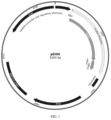
- the NaEH gene, linker coding sequence, and L1ChBD gene are inserted between the NcoI and EcoRI sites of the plasmid pYB1s to obtain the recombinant expression vector, designated as pEHM.
- the recombinant expression vector was then transformed into host bacteria Escherichia coli K-12 BW 25113, thus obtaining the genetically engineered strain for high-yield epoxide hydrolase fusion protein.
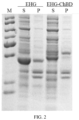
- the target protein expressed by the genetically engineered strain of high-yield epoxide hydrolase fusion protein can reach 20-40% of total protein, achieving efficient heterologous expression of the target protein.
- the present disclosure further specifies that the donor bacteria are from the genera Escherichia, Corynebacterium, Bacillus, Pseudomonas, Saccharomyces, and Fusarium, containing the NaEH gene.
- Another objective of the present disclosure is to provide an application of the genetically engineered strain for the high-yield epoxide hydrolase fusion protein as described above, in the method for preparing ethylhexylglycerin using an immobilized enzyme.
- the immobilized enzyme catalyzes 100% substrate conversion rate. Compared to the current industrial chemical method of preparing ethylhexylglycerin, it has a simple process, is environmentally friendly, generates no by-products, can significantly reduce the use of acids, bases, and organic solvents, has high production efficiency, no enzyme residue in the product solution, and a simplified purification process.
- polypeptide As used in this disclosure, the terms “polypeptide,” “peptide,” and “protein” are used interchangeably to refer to amino acid polymers of any length.
- chitin-binding domain refers to a polypeptide capable of specifically binding to chitin or chitin, generally of small molecular weight (30-100 amino acids), and also has good stability, capable of binding to chitin or chitin in harsh environments, thus having good application in the purification and immobilization of target proteins (enzymes).
- the vector described in the following examples is the pBAD/HisB vector.
- Example 1 Construction of the expression vector for epoxide hydrolase with a chitin-binding domain
- the epoxide hydrolase gene NaEH and the chitin-binding protein gene LlChBD were obtained by PCR amplification using primer pairs EH-F and EH-R, Ll-F and L1-R.
- the pBAD/HisB vector was double-digested with NcoI and EcoRI, and the large fragment of the vector, approximately 3960bp, was recovered.
- the recovered NaEH and LlChBD gene fragments and the large vector fragment were ligated using the Gibson method (Gibson DG, Young L, Chuang RY, Venter JC, Hutchison CA, 3rd, Smith HO: Enzymatic assembly of DNA molecules up to several hundred kilobases. Nat Methods 2009, 6:343-345 .), and the ligation product was transformed into Fast-T1 competent cells (Nanjing Novozymes Biotechnology Co., Ltd., catalog number C505) and plated on LB agar containing streptomycin.
- the primer sequences are as follows:
- the underlined sequence is the linker peptide sequence LL-F SEQ ID NO: 7 : 5'- GGTGGATCAGGAGGTGGTGGATCAGAAGCTGCAGCTAAGACTACTTATACCGTCAA
- the underlined sequence is the linker peptide sequence LL-R SEQ ID NO: 8 : 5'-GCTGCAGACCGAGCTCACCGAATTCTTATGTCAGTACAAGTTTTTGACCAATG-3' pBAD-F SEQ ID NO: 9: 5'-CGGCGTCACACTTTGCTATG-3' pBAD-R SEQ ID NO: 10: 5'-CGTTTCACTTCTGAGTTCGGC-3'
- the promoter initiating transcription of the epoxide hydrolase fusion protein gene is the pBAD promoter.
- the expression vector pEHM constructed in Example 1 was chemically transformed into Escherichia coli K-12 BW 25113, and positive clones were selected on LB plates containing streptomycin (streptomycin concentration 50ug/mL), yielding an engineered strain named BW/pEHM.
- the composition of the LB medium is: Peptone 10g/L, yeast extract 5g/L, NaCl 10g/L; the plate medium is LB medium with 15g/L agar added and sterilized at 121° C for 20 minutes.
- composition of the TB medium is: Peptone 12g/L, yeast extract 24g/L, glycerol 4mL/L, diluted to 900mL, and 100mL of 0.17M potassium dihydrogen phosphate-dipotassium hydrogen phosphate solution prepared, sterilized at 115° C for 20 minutes, mixed after sterilization.
- the immobilized enzyme was resuspended with 20mM sodium phosphate buffer at pH 7.0, centrifuged (10000rpm, 4° C, 10 min) to remove the supernatant, and the operation was repeated multiple times until no protein remained in the supernatant (detected by Coomassie brilliant blue solution) to remove non-specifically binding proteins.
- the remaining chitin particles after the removal of supernatant were the immobilized epoxide hydrolase.
- the immobilized epoxide hydrolase was freeze-dried to obtain dry immobilized epoxide hydrolase, which can be stored for long-term use.
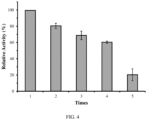
- the test results showed that, with the increase of reaction batches, the conversion rate gradually decreased. The conversion rate could still remain above 80% after two consecutive batches were used. The test results are shown in FIG. 4 .
- the 0.1g of immobilized epoxide hydrolase was taken and suspended in 1mL of 20mM sodium phosphate buffer at pH 7.0, and 1mL of ethylhexyl glycidyl ether substrate was added.
- the conversion reaction temperature was 37° C, and the conversion reaction was conducted at 200rpm for 4 hours, producing ethylhexylglycerin.
- the using amount of immobilized enzyme per mL of reaction system was 0.01-0.2g.
- the chromatographic column used for gas chromatography analysis was Agilent HP-5 (0.2mm ⁇ 30m), with an initial temperature of 100° C, a temperature ramp rate of 25° C/min, and an injection volume of 2 ⁇ L.
Landscapes
- Chemical & Material Sciences (AREA)
- Health & Medical Sciences (AREA)
- Life Sciences & Earth Sciences (AREA)
- Organic Chemistry (AREA)
- Genetics & Genomics (AREA)
- Engineering & Computer Science (AREA)
- Wood Science & Technology (AREA)
- Zoology (AREA)
- Bioinformatics & Cheminformatics (AREA)
- General Engineering & Computer Science (AREA)
- Biotechnology (AREA)
- General Health & Medical Sciences (AREA)
- Biochemistry (AREA)
- Biomedical Technology (AREA)
- Microbiology (AREA)
- Molecular Biology (AREA)
- Medicinal Chemistry (AREA)
- Biophysics (AREA)
- General Chemical & Material Sciences (AREA)
- Chemical Kinetics & Catalysis (AREA)
- Plant Pathology (AREA)
- Physics & Mathematics (AREA)
- Gastroenterology & Hepatology (AREA)
- Proteomics, Peptides & Aminoacids (AREA)
- Virology (AREA)
- Tropical Medicine & Parasitology (AREA)
- Oil, Petroleum & Natural Gas (AREA)
- Micro-Organisms Or Cultivation Processes Thereof (AREA)
- Enzymes And Modification Thereof (AREA)
- Immobilizing And Processing Of Enzymes And Microorganisms (AREA)
Applications Claiming Priority (2)
| Application Number | Priority Date | Filing Date | Title |
|---|---|---|---|
| CN202210737367.6A CN117343195A (zh) | 2022-06-27 | 2022-06-27 | 一种固定化酶及其用于制备乙基己基甘油的用途及方法 |
| PCT/CN2022/104609 WO2024000620A1 (fr) | 2022-06-27 | 2022-09-02 | Enzyme immobilisée et son utilisation et son procédé de préparation d'éthylhexylglycérine |
Publications (2)
| Publication Number | Publication Date |
|---|---|
| EP4530349A1 true EP4530349A1 (fr) | 2025-04-02 |
| EP4530349A4 EP4530349A4 (fr) | 2026-02-11 |
Family
ID=89369733
Family Applications (1)
| Application Number | Title | Priority Date | Filing Date |
|---|---|---|---|
| EP22948717.8A Pending EP4530349A4 (fr) | 2022-06-27 | 2022-09-02 | Enzyme immobilisée et son utilisation et son procédé de préparation d'éthylhexylglycérine |
Country Status (4)
| Country | Link |
|---|---|
| US (1) | US20250382592A1 (fr) |
| EP (1) | EP4530349A4 (fr) |
| CN (1) | CN117343195A (fr) |
| WO (1) | WO2024000620A1 (fr) |
Family Cites Families (4)
| Publication number | Priority date | Publication date | Assignee | Title |
|---|---|---|---|---|
| CN108191614A (zh) | 2017-12-29 | 2018-06-22 | 广州星业科技股份有限公司 | 一种制备乙基己基甘油的方法 |
| CN111187792B (zh) * | 2018-11-14 | 2024-02-06 | 南京盛德生物科技研究院有限公司 | 乙基己基甘油的制备方法 |
| CN111979206B (zh) * | 2019-05-24 | 2021-08-17 | 深圳瑞德林生物技术有限公司 | 固定化融合酶及用其制备谷胱甘肽的方法 |
| CN112359033B (zh) * | 2020-11-17 | 2023-06-16 | 吉林大学 | 一种几丁质结合域及其应用 |
-
2022
- 2022-06-27 CN CN202210737367.6A patent/CN117343195A/zh active Pending
- 2022-09-02 WO PCT/CN2022/104609 patent/WO2024000620A1/fr not_active Ceased
- 2022-09-02 EP EP22948717.8A patent/EP4530349A4/fr active Pending
- 2022-09-02 US US18/879,261 patent/US20250382592A1/en active Pending
Also Published As
| Publication number | Publication date |
|---|---|
| EP4530349A4 (fr) | 2026-02-11 |
| US20250382592A1 (en) | 2025-12-18 |
| CN117343195A (zh) | 2024-01-05 |
| WO2024000620A1 (fr) | 2024-01-04 |
Similar Documents
| Publication | Publication Date | Title |
|---|---|---|
| CN106957850B (zh) | 一株产磷脂酶d的基因工程菌及其构建方法与应用 | |
| CN105624125B (zh) | 醛酮还原酶及其在合成(2s,3r)-2-苯甲酰氨甲基-3-羟基丁酸酯中的应用 | |
| CN108841809A (zh) | 具有高比活及热稳定性的淀粉酶突变体及其基因和应用 | |
| CN115820601A (zh) | 一种聚酯塑料水解酶及其应用 | |
| CN116144635A (zh) | 一种比活和耐酸性提高的几丁质酶BlChiA突变体 | |
| CN108884120B (zh) | 纯化3,6-脱水-l-半乳糖的方法 | |
| CN105543190B (zh) | 一种酯酶bse00077及其编码基因和应用 | |
| CN112899256B (zh) | 一种来源于南极细菌的耐低温磷脂酶d及其制备方法和应用 | |
| CN107858340A (zh) | 高催化活性的d‑果糖‑6‑磷酸醛缩酶a突变体、重组表达载体、基因工程菌及其应用 | |
| CN110229804A (zh) | 一种柠檬烯合成酶SynLS1及其应用 | |
| CN111996205A (zh) | 几丁质酶基因、几丁质酶及其制备方法和应用 | |
| US20250382592A1 (en) | Immobilized enzyme and use thereof and method therefor for preparing ethylhexylglycerin | |
| CN103131659B (zh) | 一种耐有机溶剂脂肪酶、其编码基因、产生菌株及应用 | |
| CN103352031B (zh) | 一种糖基转移酶基因及应用 | |
| CN104762306B (zh) | 一种海洋酯酶及其编码基因e32与应用 | |
| CN113403332A (zh) | 一种α-琼胶酶基因及其编码酶的应用 | |
| CN111187792B (zh) | 乙基己基甘油的制备方法 | |
| CN109355271A (zh) | 一种海洋红酵母来源的环氧化物水解酶及其应用 | |
| CN114196655B (zh) | 耐热性昆布多糖降解酶OUC-SaLam66及其应用 | |
| CN118147114A (zh) | 用于催化根皮苷制备根皮素的β-葡萄糖苷酶突变体及其编码基因和它们的应用 | |
| CN109971695A (zh) | 一种表达软骨素6-硫酸转移酶基因的重组菌及其应用 | |
| CN105950595B (zh) | (-)-γ-内酰胺酶、基因、突变体、载体及其制备与应用 | |
| CN117887686A (zh) | 聚对苯二甲酸乙二醇酯水解酶及其在降解pet制品中的应用 | |
| CN108060186B (zh) | 一种对硝基苄醇丙二酸单酯的生物制备方法 | |
| CN115261342A (zh) | 一种伯克霍尔德氏菌bjq0011来源酯合成酶jfn94_18195、编码基因及其应用 |
Legal Events
| Date | Code | Title | Description |
|---|---|---|---|
| STAA | Information on the status of an ep patent application or granted ep patent |
Free format text: STATUS: THE INTERNATIONAL PUBLICATION HAS BEEN MADE |
|
| PUAI | Public reference made under article 153(3) epc to a published international application that has entered the european phase |
Free format text: ORIGINAL CODE: 0009012 |
|
| STAA | Information on the status of an ep patent application or granted ep patent |
Free format text: STATUS: REQUEST FOR EXAMINATION WAS MADE |
|
| 17P | Request for examination filed |
Effective date: 20241227 |
|
| AK | Designated contracting states |
Kind code of ref document: A1 Designated state(s): AL AT BE BG CH CY CZ DE DK EE ES FI FR GB GR HR HU IE IS IT LI LT LU LV MC MK MT NL NO PL PT RO RS SE SI SK SM TR |
|
| DAV | Request for validation of the european patent (deleted) | ||
| DAX | Request for extension of the european patent (deleted) | ||
| REG | Reference to a national code |
Ref country code: DE Ref legal event code: R079 Free format text: PREVIOUS MAIN CLASS: C12N0011100000 Ipc: C07K0014195000 |
|
| A4 | Supplementary search report drawn up and despatched |
Effective date: 20260114 |
|
| RIC1 | Information provided on ipc code assigned before grant |
Ipc: C07K 14/195 20060101AFI20260108BHEP Ipc: C12N 1/21 20060101ALI20260108BHEP Ipc: C12N 9/14 20060101ALI20260108BHEP Ipc: C12N 11/10 20060101ALI20260108BHEP Ipc: C12N 15/62 20060101ALI20260108BHEP Ipc: C12N 15/70 20060101ALI20260108BHEP Ipc: C12P 7/18 20060101ALI20260108BHEP Ipc: C12R 1/46 20060101ALI20260108BHEP |