EP4517707A2 - Schloss für elektronisches werkzeug - Google Patents
Schloss für elektronisches werkzeug Download PDFInfo
- Publication number
- EP4517707A2 EP4517707A2 EP25152875.8A EP25152875A EP4517707A2 EP 4517707 A2 EP4517707 A2 EP 4517707A2 EP 25152875 A EP25152875 A EP 25152875A EP 4517707 A2 EP4517707 A2 EP 4517707A2
- Authority
- EP
- European Patent Office
- Prior art keywords
- tool
- provisions
- mobile device
- communication
- registration
- Prior art date
- Legal status (The legal status is an assumption and is not a legal conclusion. Google has not performed a legal analysis and makes no representation as to the accuracy of the status listed.)
- Pending
Links
Images



Classifications
-
- G—PHYSICS
- G05—CONTROLLING; REGULATING
- G05B—CONTROL OR REGULATING SYSTEMS IN GENERAL; FUNCTIONAL ELEMENTS OF SUCH SYSTEMS; MONITORING OR TESTING ARRANGEMENTS FOR SUCH SYSTEMS OR ELEMENTS
- G05B19/00—Program-control systems
- G05B19/02—Program-control systems electric
- G05B19/18—Numerical control [NC], i.e. automatically operating machines, in particular machine tools, e.g. in a manufacturing environment, so as to execute positioning, movement or co-ordinated operations by means of program data in numerical form
- G05B19/406—Numerical control [NC], i.e. automatically operating machines, in particular machine tools, e.g. in a manufacturing environment, so as to execute positioning, movement or co-ordinated operations by means of program data in numerical form characterised by monitoring or safety
- G05B19/4063—Monitoring general control system
-
- B—PERFORMING OPERATIONS; TRANSPORTING
- B25—HAND TOOLS; PORTABLE POWER-DRIVEN TOOLS; MANIPULATORS
- B25F—COMBINATION OR MULTI-PURPOSE TOOLS NOT OTHERWISE PROVIDED FOR; DETAILS OR COMPONENTS OF PORTABLE POWER-DRIVEN TOOLS NOT PARTICULARLY RELATED TO THE OPERATIONS PERFORMED AND NOT OTHERWISE PROVIDED FOR
- B25F5/00—Details or components of portable power-driven tools not particularly related to the operations performed and not otherwise provided for
-
- G—PHYSICS
- G07—CHECKING-DEVICES
- G07C—TIME OR ATTENDANCE REGISTERS; REGISTERING OR INDICATING THE WORKING OF MACHINES; GENERATING RANDOM NUMBERS; VOTING OR LOTTERY APPARATUS; ARRANGEMENTS, SYSTEMS OR APPARATUS FOR CHECKING NOT PROVIDED FOR ELSEWHERE
- G07C3/00—Registering or indicating the condition or the working of machines or other apparatus, other than vehicles
- G07C3/08—Registering or indicating the production of the machine either with or without registering working or idle time
-
- G—PHYSICS
- G07—CHECKING-DEVICES
- G07C—TIME OR ATTENDANCE REGISTERS; REGISTERING OR INDICATING THE WORKING OF MACHINES; GENERATING RANDOM NUMBERS; VOTING OR LOTTERY APPARATUS; ARRANGEMENTS, SYSTEMS OR APPARATUS FOR CHECKING NOT PROVIDED FOR ELSEWHERE
- G07C9/00—Individual registration on entry or exit
- G07C9/30—Individual registration on entry or exit not involving the use of a pass
- G07C9/38—Individual registration on entry or exit not involving the use of a pass with central registration
-
- G—PHYSICS
- G05—CONTROLLING; REGULATING
- G05B—CONTROL OR REGULATING SYSTEMS IN GENERAL; FUNCTIONAL ELEMENTS OF SUCH SYSTEMS; MONITORING OR TESTING ARRANGEMENTS FOR SUCH SYSTEMS OR ELEMENTS
- G05B2219/00—Program-control systems
- G05B2219/30—Nc systems
- G05B2219/50—Machine tool, machine tool null till machine tool work handling
- G05B2219/50206—Tool monitoring integrated in nc control
Definitions
- the present subject matter relates to tools and particularly power tools, systems utilizing such tools, and methods for governing and monitoring tool use.
- Remote activation systems are known in the art and have been used in electronic devices such as digital cameras, laptop computers, and other electronic instruments. Although satisfactory in many respects, these systems often require lengthy or intricate set-up or initialization procedures for the purchaser or owner of the device. In addition, depending upon the features of the remote activation system, such systems may also be expensive and significantly increase the cost of the device into which they are incorporated.
- Remote activation and tracking systems have also been applied to tools for example in order to track location of a tool within a facility or to monitor use of the tool. Again, although such systems have been found to be useful in certain aspects, it can be difficult to incorporate tools into such a system and use the tools without undue interruption. In addition, such systems may also increase the cost of the tools.
- jobsites often experience adverse environmental conditions such as exposure to rain, snow, high and/or low temperatures, and dirt and mud.
- jobsites may experience electrical interruption or interference. Exposure to such conditions can interfere with wireless communication during use of tools at a jobsite.
- users of tools at such jobsites in many instances are not the owners of such tools and so their use and handling of the tools may not be with the utmost care or in a manner so as to promote wireless communication with tools at a jobsite.
- tool users at such jobsites are typically not motivated to ensure incorporation of tools into an electronic remote activation or tracking system. And so in many instances, users may bypass the electronic system and thereby use the tools in an unauthorized manner.
- the Hilti TPS system consists of a company card, activation key, and an electronic module inside the tool.
- a unique theft protection code is set initially in each tool using the company card.
- Authorized users unlock the tool by holding the activation key to the tool to unlock the tool. If the tool is stolen, it will lock after 20 minutes and can not be restarted without the activation key.
- implementation and use of the system at a jobsite and/or with multiple tools becomes cumbersome because separate cards are required for each tool. Furthermore, if the activation key is lost or stolen, the tool is unusable.
- the present subject matter provides a method for governing use of a tool.
- the method comprises providing a system including (i) a registration and control component, (ii) at least one mobile device, and (iii) at least one tool including communication provisions and electronic locking provisions.
- the method also comprises registering the tool with the registration and control component.
- the method additionally comprises selecting at least one parameter to govern tool operation.
- the method also comprises transmitting the parameter to the tool to govern tool operation. The tool remains operational until disabled based upon the selected parameter and without receipt of a deactivation signal.
- the present subject matter provides a method for governing use of a tool.
- the method comprises providing a system including (i) a registration and control component, (ii) at least one mobile device, and (iii) at least one tool including data storage provisions, communication provisions, and electronic locking provisions.
- the method also comprises specifying a maximum amount of cumulative time during which the tool is operational.
- the method additionally comprises storing the specified maximum amount of cumulative time during which the tool is operational in the data storage provisions of the tool.
- the method further comprises resetting a timer thereby causing the electronic locking provisions to enable tool operation.
- the method also comprises during tool operation, measuring a cumulative time of tool operation.
- the method comprises comparing the measured cumulative time of tool operation to the specified maximum amount of cumulative time during which the tool is allowed to be operational. If the measured cumulative time of tool operation is greater than the specified maximum amount of cumulative time during which the tool is allowed to be operational, the method causes the electronic locking provisions to disable tool operation.
- the present subject matter provides a method for governing use of a tool.
- the method comprises providing a system including (i) a registration and control component, (ii) at least one mobile device, and (iii) at least one tool including data storage provisions, communication provisions, and electronic locking provisions.
- the method also comprises specifying a maximum cumulative number of actuation cycles during which the tool is operational.
- the method additionally comprises storing the specified maximum cumulative number of actuation cycles during which the tool is operational in the data storage provisions of the tool.
- the method further comprises resetting a counter thereby causing the electronic locking provisions to enable tool operation.
- the method also comprises during tool operation, counting a cumulative number of actuation cycles.
- the method further comprises comparing the counted cumulative number of actuation cycles with the specified maximum cumulative number of actuation cycles during which the tool is operational. If the counted cumulative number of actuation cycles is greater than the specified maximum cumulative number of actuation cycles during which the tool is allowed to be operational, the method causes the electronic locking provisions to disable tool operation.
- the present subject matter provides a method for governing use of a tool.
- the method comprises providing a system including (i) a registration and control component, (ii) at least one mobile device, and (iii) at least one tool including communication provisions and electronic locking provisions.
- the method also comprises specifying a maximum amount of cumulative time during which the tool is operational and a maximum cumulative number of actuation cycles during which the tool is operational.
- the method additionally comprises storing the specified maximum amount of cumulative time during which the tool is operational and the maximum cumulative number of actuation cycles during which the tool is operational in the data storage provisions of the tool.
- the method also comprises during tool operation, measuring a cumulative time of tool operation and counting a cumulative number of actuation cycles.
- the method additionally comprises comparing the measured cumulative time of tool operation to the specified maximum amount of cumulative time during which the tool is allowed to be operational and comparing the cumulative number of actuation cycles with the specified maximum cumulative number of actuation cycles during which the tool is allowed to be operational.
- the method causes the electronic locking provisions to disable tool operation.
- the present subject matter provides a system for governing use of a tool.
- the system comprises a registration and control component having data storage provisions and communication provisions.
- the system also comprises at least one mobile electronic device including data storage provisions, communication provisions, user interface provisions, and control provisions.
- the mobile device is capable of communication with the registration and control component.
- the mobile device is also capable of transmitting an actuation signal that includes an actuation code.
- the system also comprises a tool having data storage provisions, communication provisions, and actuatable electronic lock provisions.
- the tool is capable of communication with the mobile device and receiving the actuation signal from the mobile device.
- the electronic lock provisions are configured to enable operation of the tool upon receipt of the actuation code.
- the present subject matter provides a tool that includes activatable electronic locking provisions which are initially provided in (i) a deactivated state thereby allowing tool operation or (ii) with parameters set to allow infinite use.
- the present subject matter provides systems and methods which govern use of one or more tools by utilizing an activation or actuation signal or transmission which enables subsequent tool operation. After receipt of the initial signal by the tool, the tool does not require any further communication, and particularly does not require the presence of a continuous signal for subsequent operation.
- the systems of the present subject matter generally comprise (i) a registration and control component, typically provided by one or more computer servers or information processing units for issuing activation signal(s), (ii) one or more mobile electronic devices for communicating with one or more tools of interest and relaying activation signal(s) to the tools, and (iii) at least one tool including electronic data storage provisions, communication provisions, and electronic locking provisions, all of which are described in greater detail herein.
- a registration and control component typically provided by one or more computer servers or information processing units for issuing activation signal(s)
- one or more mobile electronic devices for communicating with one or more tools of interest and relaying activation signal(s) to the tools
- at least one tool including electronic data storage provisions, communication provisions, and electronic locking provisions, all of which are described in greater detail herein.
- the tool(s) are initially provided with their electronic locking provisions deactivated.
- the tools can be used in a conventional fashion. If the tools are registered with the system, a tool owner or party with supervisory status is prompted to select an operating mode for the tool.
- One operating mode enables the tool to be used without supervision or control from the system. This mode is referred to herein as a "free mode” or "indefinite duration mode". If that mode is selected for the tool, the electronic locking provisions remain deactivated.
- supervised mode Another operating mode referred to herein as a "supervised mode,” enables the tool to be used for (i) a preset period of time (or until a specified time or date), or (ii) for a preset number of activation cycles, or (iii) until the first occurrence of either (i) or (ii).
- the tool owner or supervisor specifies one or both of (i) a maximum amount of cumulative time during which the tool is operational, and (ii) a maximum cumulative number of activation cycles during which the tool is operational.
- the tool owner or supervisor can also specify a time and date at which activation expires.
- the selections are stored in the data storage provisions of the tool.
- the system transmits an activation signal which is relayed to the tool by the mobile device thereby activating the electronic locking provisions and enabling tool operation. After receipt of the activation signal by the tool subsequent communication with the tool (and the system) is not required until the enabling parameter expires.
- the tool can be used at remote locations in which wireless signals are not present.
- operation of the tool is enabled upon resetting of a timer and/or a counter.
- the operation time is cumulatively measured. This measured cumulative operation time is continuously compared to the maximum amount of cumulative time previously specified and stored in the tool. Once the measured cumulative time of tool operation is greater than the specified maximum amount of cumulative time, the electronic locking provisions are caused to disable tool operation. Disabling tool operation does not require communication between the tool and the system or mobile device.
- the selected parameter is number of activation cycles of the tool
- all instances of tool activation are cumulatively measured.
- the measured cumulative number of activation cycles is continuously compared to the maximum cumulative number of activation cycles previously specified and stored in the tool. Once the measured cumulative number of activation cycles is greater than the specified maximum number of activation cycles, the electronic locking provisions are caused to disable tool operation.
- the internal real time clock compares actual time with the set expiration date. If expiration is reached, the tool is disabled.
- the present subject matter includes the use of a variety of parameters to limit and/or govern tool use. That is, the present subject matter includes the use of different parameters and/or additional parameters than the time of tool operation, number of activation cycles of the tool, and/or a set time/date.
- the tool(s) of the present subject matter do not require continuous and direct communication with the registration and control component. Instead and as previously described, in certain embodiments the registration and control component issues a one-time activation signal to the mobile device, which relays that signal to the tool of interest. And in certain versions, the tools are enabled by resetting timers and/or counters in the tool and thus no activation signals to the tools are required.
- the registration and control component receives information and data, retains information and data, administers access and use permissions, and governs user access to, and use of, tools registered with the system.
- the registration and control component in many embodiments of the present subject matter is provided by one or more computer servers or units which may be remotely located. As described herein, typically the one or more registration and control component(s) is accessed via the internet and can include cloud-based storage, processing, and/or communication.
- the registration and control component includes a database and/or data storage provisions in which user information is retained.
- user information include user name; registrant name if different than the user name; company or organization name; contact information of user, registrant, and/or company; date of initial registration of user and/or tool(s) and optionally dates of subsequent registrations or logins; password(s) and other confidential information relating to the user, registrant, and/or company; designation or status of the user, registrant, and/or company, e.g, industrial, contractor, builder, or home user; location of registered user and/or tool; preset or predesignated tool parameters; actual use-based tool parameters; warnings or indicators associated with registered tools and/or users; status of warnings or indicators; and a wide array of other information and data such as the IP address used to register the tool or to enable the tool.
- the registration and control component may include communication provisions so that the component can exchange, transmit, and/or receive information or data from the one or more mobile electronic devices.
- the registration and control component includes internet communication provisions.
- the present subject matter system also comprises one or more mobile electronic devices.
- the mobile devices can be in a variety of forms such as smartphones, tablet computers, or laptop computers for example.
- the mobile device includes a computing device that may be a small-form factor portable (or mobile) electronic device such as a mobile phone or smartphone, or, alternatively, a personal data assistant (PDA), a personal media player device, an application specific device such as a tablet or slate computing device, or a hybrid device that may include any of the above functions.
- smartphones include devices running on ANDROID or IPHONE, e.g., iOS, platforms.
- Nonlimiting examples of tablet computing devices include IPAD available from Apple Corporation.
- Nonlimiting examples of a personal media player device is an IPOD or more particularly an IPOD TOUCH available from Apple.
- the mobile device may also be in the form of a personal computer including both laptop computer and non-laptop, e.g., desktop, computer configurations.
- Mobile devices may be communicatively coupled to cloud-based service and data centers and/or a third party entity via, e.g., at least a wireless local area network technology (WLAN), i.e., Wi-Fi.
- WLAN wireless local area network technology
- embodiments of local access to cloud-based storage are not limited to wireless communications, and therefore hard-wired communications may also apply to the embodiments described herein.
- the mobile devices also include communication provisions between the mobile device and the registration and control component.
- Such communications are via the internet, and utilize a cloud-based infrastructure.
- the present subject matter also includes the use of other communications between the mobile devices and the registration and control component.
- the system 10 comprises one or more communication links between the tool(s) 20 and the mobile device(s) 30 collectively shown in Figure 1 as link(s) A. More particularly, other nonlimiting examples of tools include a drill 22 which can communicate with the mobile device 30 via link(s) A', a table saw 24 which can communicate with the mobile device 30 via link(s) A", and a miter saw 26 which can communicate with the mobile device 30 via link(s) A′′′. Additional nonlimiting examples of tools include measurement devices such as thermal cameras or inspection devices such as drain inspection cameras.
- the system 10 also comprises one or more communication links between the mobile device(s) 30 and the cloud-based infrastructure 50 collectively shown in Figure 1 as link(s) B.
- the system can also comprise additional mobile device(s) collectively depicted as 30' which can communicate with the cloud 50 via link(s) B'.
- the system 10 also comprises one or more communication links between the registration and control component 40 and the cloud-based infrastructure 50 collectively shown in Figure 1 as link(s) C. It is contemplated that communication link(s) could also be provided directly between the registration and control component 40 and the mobile device(s) 30.
- the system 10 can comprise one or more personal computers (PCs) or laptop computers 60 which can communicate via link(s) D with the registration and control component 40.
- the system 10 can also comprise one or more personal computers (PCs) or laptop computers 65 which can communicate with the cloud 50 via link(s) E.
- computers 60 and/or 65 can also be configured to communicate with the tool(s).
- the computers 60, 65 serve a role of the mobile device 30.
- the mobile device can be configured as a "trusted" device.
- the mobile device can receive, store, and/or issue one or more actuation code(s) that can be used repeatedly.
- repeated issuance of an actuation code may not require communication between the trusted mobile device and the registration and control component.
- the present subject matter system also comprises one or more tools having electronic data storage provisions, electronic control circuitry, and communication provisions.
- the tools may be in the form of various devices such as cameras, or measurement or inspection devices.
- the tools also comprise electronic lock or locking provisions.
- the tools are electrically powered or at least include electrical controls.
- the tools are hand-held tools however the present subject matter includes other tools or tool systems such as stationary or non-mobile tool systems such as floor standing equipment or transportable or bench top tools.
- One or multiple tools can be utilized with the registration and control component and the mobile devices.
- Nonlimiting examples of tools include press tools, crimping tools, inspection or remote viewing systems, locating equipment, rotary powered tools including drills, grinders, impact tools, powered wrenches, expansion tools, shaping or forming tools, table saws, circular saws, miter saws, and the like.
- rotary powered tools including drills, grinders, impact tools, powered wrenches, expansion tools, shaping or forming tools, table saws, circular saws, miter saws, and the like.
- a wide array of tools are encompassed by the present subject matter.
- the electronic data storage provisions are typically incorporated in the tool and can be in the form of known data storage formats such as flash memory components.
- the data storage provisions may also include or be in the form of memory cards, disk or drive components, data cartridges or components such as ROM or RAM memory, and peripheral data storage components.
- the electronic control circuitry includes one or more electronic processors configured to implement and execute the systems and methods described herein.
- the communication provisions are typically selected in view of the communication provisions of the mobile device(s).
- a wide array of communication formats can be used for the tool including but not limited to radio frequency, infrared, BLUETOOTH, Wi-Fi, near-field communications, and cable-based communications. The previously noted communication protocols can be used for tool communication.
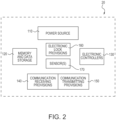
- FIG. 2 is a schematic illustration of components incorporated in a tool 20 of the present subject matter.
- the tool 20 generally comprises a power source 110 which typically includes one or more batteries and/or a source of external electrical power, memory and data storage provisions 120, one or more electronic controllers 130, communication receiving provisions 140, and communication transmitting provisions 150.
- the electronic controllers 130 typically include microprocessor based circuits that can be configured to perform a wide array of tool operation and control functions.
- the electronic controllers 130 also include locks and/or the measurement circuits.
- the tool includes a real time clock and/or a timer.
- the measurement circuits can also include one or more "counters" that can be configured to count various aspects of tool operation such as a number of tool actuations.
- the tool 20 may also comprise electronic lock provisions 160 as described in greater detail herein.
- the tool 20 may also comprise one or more sensors collectively shown as 170 to sense one or more parameters, typically in real-time relating to tool use, operating conditions, and/or ambient conditions.
- sensors include temperature sensors, pressure sensors, force sensors, electrical current sensors, electrical voltage sensors, accelerometers, counters, and time sensors to measure time periods of use or particular conditions of use.
- Many currently available tools and tool systems include electronic controls for operating the tool.
- one or more of components 110, 120, and 130 may in certain applications be readily configured in the tool(s) of interest.
- the communication provisions 140, 150 as previously described correspond to the communication format of the mobile device(s).
- the electric or electronic lock provisions incorporated in tools of the present subject matter can take a variety of different forms and configurations.
- the lock provisions can be configured to enable tool use upon receiving an activation signal.
- the activation signal can be issued from the registration and control component and/or the mobile device, or be based upon signals from both. Typically, the activation signal is issued from the registration and control component and relayed by the mobile device to the tool.
- the electronic lock provisions can be in the form of algorithm instructions executed entirely or at least partially by electronic circuitry in the tool. If such virtual electronic lock provisions are executed partially by the tool, the other algorithm instructions can be executed at the mobile device and particularly using the noted app. Alternatively or in addition, it is also contemplated that algorithm instructions can also be executed at the registration and control component.
- the electronic lock provisions can also include one or more physical components such as a switch that connects or disconnects actuation circuit(s) and/or power supplies of the tool(s).
- the electronic lock provisions utilize one or more field effect transistors (FET) to provide switching or activation of the tool of interest. These circuits when used for enabling tool operation as described herein are referred to as FET-based electronic lock provisions.
- FET-based electronic lock provisions can be provided in a wide array of formats and configurations.
- the present subject matter also provides various methods and techniques for governing and monitoring use of tool(s) registered in the system.
- many of the methods involve initially registering or updating a previously registered tool with the system and particularly with one or both of the registration and control component and/or the mobile device(s).
- Figure 3 schematically depicts a method 200 in accordance with the present subject matter in which a tool is registered with a system such as registering the tool 20 with the system 10 in Figure 1 .
- the method 200 shown in Figure 3 comprises one or more operations in which a user registers himself or herself with a system. These operations are collectively denoted as 210 in Figure 3 .
- the user registration operations may include the user providing identifying information, contact information, and information pertaining to the tool(s) of interest.
- the user registration operations may also include assigning a unique password and/or identification to the user.
- the method 200 also comprises one or more operations collectively denoted as 220 in which the user utilizing one or more mobile devices, establishes identification between a mobile device such as a smartphone for example and the registration and control component.
- the operations 220 may also include obtaining or otherwise downloading an algorithm or app to the mobile device, to facilitate user control and operation of the tool(s) of interest and/or to facilitate communication and/or data exchange between one or both of (i) the tool and the mobile device, and (ii) the registration and control component.
- operations 220 are performed by a user establishing communication between the mobile device and the registration and control component, downloading an algorithm or app to the mobile device, and then using the algorithm or app and the mobile device, and entering a unique user password to log into the user's registration data or account maintained at the registration and control component.
- a user may select one or more tool parameters and/or other items associated with the tool, user, and the like. These operations are collectively depicted in Figure 3 as 230. For example, after logging into their account, a user can select how long a tool of interest shall remain operational. For example, a user may select an activation time period of 24 hours, 1 week, 2 weeks, 1 month, 3 months, 6 months, or other time period. It will be understood that the present subject matter includes selection of activation time periods less than these, greater than these, and/or different than these time periods. In certain embodiments, the system and/or tool is configured such that if an activation time period of 1 month is selected, the tool of interest will remain operational at any time up to 1 month.
- a user After expiration of the 1 month activation time period, the tool is disabled and cannot be used until corrective action is taken.
- An example of such corrective action is a user logging into the system and re-activating the tool to cause the system to issue an activation code or electronic signal to the tool.
- a user can select how many cycles or intervals of operation are permitted for a tool. For example, a user may select a number of cycles or intervals of operation as 10 cycles, 100 cycles, 500 cycles, 1,000 cycles, 10,000 cycles, or any other number of cycles.
- a user can select permitted operating ranges of tool(s).
- a user can select certain parameters of the tool or use of the tool, which if sensed or experienced result in the tool being rendered inoperable. For example, if a certain number of cycles of tool use are exceeded, the tool is disabled.
- These and other user selectable parameters can be set during operation 230. These parameters can be entered and stored into the system at the registration and control component, the mobile device, or both. Regardless, the parameters are stored in the tool.
- the method 200 also comprises one or more operations collectively denoted as 240 in Figure 3 , of transmitting an activation signal to the mobile device.
- the operation(s) 240 can also include establishing a communication link between the mobile device and the registration and control component. This link is schematically shown in Figure 1 as links B, C.
- the method 200 additionally comprises one or more operations collectively shown as 250 in Figure 3 , of relaying the activation signal to the tool.
- the operation(s) 250 can also include establishing a communication link between the mobile device and the tool, which is schematically shown in Figure 1 as link A.
- the method 200 can also include one or more operations 260 in which the mobile device transmits data to the system.
- an activation code or permission is transmitted or otherwise provided to the tool.
- the activation signal is issued from the system and relayed by the mobile device to the tool. Receipt of the activation code by the tool typically enables operation of the tool.
- the activation code or permission can be issued by the registration and control component and then relayed from the mobile device to the tool.
- the system and tool(s) are configured such that the tool is initially enabled or permitted to operate and thus does not require an initial activation signal from the registration and control component and/or the mobile device.
- a tool having electronic locking provisions can initially be provided by a manufacturer or supplier with such provisions in a deactivated state thereby allowing tool operation.
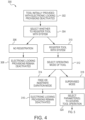
- FIGs 4-6 schematically illustrate methods of governing tool use in accordance with the present subject matter.
- a tool is initially provided with its electronic locking provisions deactivated. In this state, the tool can be operated in a conventional manner. This is shown in Figure 4 as 302.
- the tool user, owner, or other party selects whether to register the tool with the system. If the party decides to not register the tool, denoted at 306, then the electronic locking provisions remain deactivated as shown at 308.
- the party decides to register the tool with the system, denoted at 310, the party is then prompted at 312 to select an operating mode for the tool. If a "free” or “indefinite duration” mode (also referred to as an “infinite” or “infinite duration” mode) is selected, shown as 314, then the electronic locking provisions remain deactivated as depicted at 316.
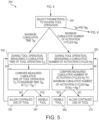
- the parameters may include a maximum cumulative time Tm, a maximum cumulative number of activation cycles Nm, or both of these parameters. This is denoted in Figure 5 as 320. It will be appreciated that the present subject matter is not limited to the use of these parameters and includes the use of one or more other parameters.
- the tool measures a cumulative time of tool operation To, which is shown in Figure 5 as 330.
- the measured cumulative time of tool operation To is compared to the maximum cumulative time of tool operation previously specified at 320. This comparison is depicted in Figure 5 as 335. If To is greater than Tm, any further operation of the tool is prevented. The tool is disabled, as shown at 340. If however, To is less than Tm, the tool is allowed to operate as shown at 345.
- the cumulative time of tool operation is measured, hence the method is repeated from operation 330, to comparison 335, to one of the results 340 or 345. If result 345 occurs, the method is again repeated from 330 as previously described.
- the tool measures a cumulative number of activation cycles No, which is shown in Figure 5 as 355.
- the measured cumulative number of activation cycles No is compared to the maximum cumulative number of activation cycles Nm previously specified at 320. This comparison is shown in Figure 5 as 360. If No is greater than Nm, then any further operation of the tool is prevented. The tool is disabled, as shown at 365. If however, No is less than Nm, the tool is allowed to operate as shown at 370.
- the cumulative number of tool activation cycles is measured, hence the method is repeated from operation 355, to comparison 360, to one of the results 365, 370. If result 370 occurs, the method is again repeated from 355 as previously described.
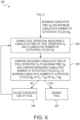
- the owner or supervisor selects to disable the tool upon a first occurrence of either the maximum cumulative time Tm and the maximum cumulative number of activation cycles Nm, the previously noted timer and counter are reset.
- the tool is enabled for operation.
- the tool measures both a cumulative time of tool operation To and a cumulative number of activation cycles No as shown at 380.
- the method compares the measured signals to the corresponding maximum cumulative time of tool operation Tm and the maximum cumulative number of activation cycles Nm previously specified. This comparison is shown in Figure 6 as 385. If either (i) To is greater than Tm or (ii) No is greater than Nm, then any further operation of the tool is prevented. The tool is disabled, as shown at 395. If however, both (i) To is less than Tm and (ii) No is less than Nm, the tool is allowed to operate as shown at 390.
- the cumulative time of tool operation and the cumulative number of tool activation cycles are measured, hence the method is repeated from operation 380, to comparison 385, to one of the results 390, 395. If result 390 occurs, the method is again repeated from 380 as previously described.
- a method for controlling use of a tool comprises providing a system including (i) a registration and control component, (ii) at least one mobile electronic device, and (iii) at least one tool including electronic locking provisions.
- the mobile device is in communication with the registration and control component, and the electronic locking provisions are configured to enable operation of the tool.
- enabling the tool may require receipt of an activation signal.
- the tools do not require an activation signal for operation.
- the method also comprises selecting at least one parameter which for example may be selected from the group consisting of (i) an activation time period, and (ii) a number of activation cycles. This is depicted in Figure 7 as 410.
- the method also comprises establishing a maximum value for the selected parameter(s). This is shown as 420 in Figure 7 . For example, if the selected parameter is a tool activation time period, the maximum value for that parameter may be selected to be 1 month.
- the selected parameter is a number of tool activations, i.e., discrete uses of the tool
- the maximum value for that parameter may be selected to be 500 activations.
- the method also comprises storing the maximum value for the selected parameter(s) on the tool. This is shown as 430 in Figure 7 .
- the method also comprises comparing a current value of the selected parameter with the maximum value for the selected parameter. This is shown as 440 in Figure 7 . If the current value of the selected parameter is greater than the maximum value for the selected parameter, then further use of the tool is prevented, such as shown at 450.
- the selected parameter is an activation time period in the form of an expiration date and the tool further includes data storage provisions.
- the method further comprises storing the expiration date in the data storage provisions in the tool.
- the tool includes a real time clock.
- the comparing is performed by comparing the expiration date stored in the data storage provisions with a real time date provided by the system, and if the real time date is after the expiration date, the electronic locking provisions of the tool are actuated to thereby disable operation of the tool.
- the present subject matter includes the use of a wide array of parameters for governing tool use. Thus, the present subject matter is not limited to the particular examples of an activation time period and/or a number of activation cycles.
- the tool can be configured to monitor time of use. This aspect is beneficial in a number of applications. For example, monitoring total time of use when using certain cutter inserts with the tool is beneficial. After exceeding a particular total time of use, the cutter inserts may need to be changed. After a certain amount of time, an LED or other indicator is actuated to indicate the required change of the cutter inserts. After the inserts have been changed, the user connects with a mobile device to reset the LED and a counter or timer. During this connection, data between the device (and subsequently the device and the server) is exchanged.
- the present subject matter systems and methods provide an array of additional features and functions as follows.
- the systems prevent use of one or more tools based upon particular criteria and/or conditions.
- the user can declare the device as his own and a permanent code can be issued to, and stored onto the device (or other trusted device). Now the device can be used any time to activate the tool without logging into the system. And thus, the permanent code serves as a "permanent key" for the tool. Alternatively, a "one-time code" can be issued that allows the user to use the device only once for tool activation. Before using the device a second time, the user must establish a new connection to the system and obtain a new code.
- a tool adapted for use with the system is initially provided or sold with the electronic lock disabled or inactive.
- any user who does not wish to use the electronic lock or register the tool with the system can use the tool in a conventional fashion and without any further action.
- the system can be configured to collect and store data relating to tool use and transmit such data to a mobile device for subsequent uploading or transfer to the registration and control component.
- the system collects information relating to the time and duration of tool use. This enables a party such as a business owner or jobsite supervisor to monitor whether any unauthorized use such as after hour use of the tool(s) has occurred.
- the present subject matter systems can also be configured to monitor, store, and/or display status information relating to each tool of interest.
- the present systems can also provide a wide array of information and data to a user concerning tool(s) of interest and their use.
- the systems can be configured to send automated emails or other communications such as text messages to designated users or other parties such as tool service reminders, notification of tool deactivation, or the like.
- Memory or data storage provisions incorporated in a tool or in a mobile device which have received tool data can provide information to a user for display or further processing. For example, statistical processing of tool use data can be performed to provide information to users, other parties, and/or tool manufacturers.
- a tool in accordance with the present subject matter and including electronic lock provisions is initially provided, sold, and/or provided to a user with the electronic lock provisions set to infinite use. This provides the user with an option of whether to utilize the electronic lock provisions. If the user decides to not use the provisions, such as if the user does not have access to a computer, the tool can be operated in a conventional fashion. More specifically, in many embodiments of the present subject matter, the electronic locking provisions are activatable and typically activatable by a user, operator, supervisor, or other party. Typically, after manufacture and assembly of a tool and upon purchase of the tool, the electronic locking provisions are set to allow infinite use, thereby allowing tool operation regardless of whether the tool is registered or used with the systems described herein.
- the activation signals issued by the registration and control component and relayed by the mobile device(s) include one or more activation codes that may include instructions for the tools and components of the tools.
- the activation codes may include instructions for the tool and/or its electronic locking provisions to enable operation of the tool upon receipt of the activation code.
- the activation codes can be created or generated by the registration and control component and selectively issued to the mobile devices.
- a mobile device is configured to store multiple activation codes. In this manner, if a tool became disabled in the field such as due to exceeding a maximum cumulative time of tool operation, an operator could use the mobile device to issue another activation signal with an activation code to enable the tool to be used again. This re-activation of the tool using the mobile device would not require communication between the mobile device and the registration and control component.
- the user can designate a mobile device as a "trusted device” that can enable tool use without further connection with the server.
- tools and/or the system can be configured such that any comparing of a current value of a selected parameter, e.g., an activation time period, a number of activation cycles, and/or a tool use parameter, with a maximum value selected for that parameter is performed prior to use of a tool.
- the tools and/or system can be configured such that the comparing is only performed prior to use of the tool. This enables a user to finish a particular use or application of the tool.
- the systems can be configured to transmit, store, and/or display information concerning tool(s) and their use such as cycle counts, pressure data, warnings, and the like.
- various data concerning tool use is collected and stored on the tool.
- Nonlimiting examples of such data include dates and times when the tool was used; if the tool is a press or crimp tool, data concerning crimp pressure, size of fittings pressed, and other associated measurements; temperatures during tool use; number of tool uses or actuations; and other information collected from sensors incorporated in the tool.
- the various data is stored in electronic data storage provisions onboard the tool.
- the data can be transferred or transmitted to one or more mobile device(s) in a subsequent communication between the tool and the mobile device. Once transferred to the mobile device, the data or a portion thereof can be transferred to the registration and control component or to other components of the system as desired.
- the systems can be configured to transmit reminders relating to tool service and activation details which are derived or determined from tool use data.
- reminder signals or other notifications may be issued by the system prior to expiration of any tool deactivation time periods or cycle counts.
- a reminder signal is issued to warn of the tool nearing a state of being disabled.
- a warning can be issued by the system prior to expiration of the one week time period, such as for example 24 hours prior to expiration. This allows a user to then reset or otherwise actuate the tool prior to expiration and resulting tool deactivation.
- a user can establish communication between his smartphone and the tool and renew the activation time period using an app running on the smartphone.
- the tools can be provided with one or more illuminated indicators that emit light upon the locking provisions being in a state that prevents tool operation.
- the illuminated indicator could be a light emitting diode (LED) which is activated to emit light upon the locking provisions disabling tool use.
- the tool 20 could include one or more illuminated indicators 20a and 20b that emit light such as red, yellow, or green light to indicate a locking state or other state of the tool.
- the system can also be configured such that one or more tools can be activated or re-activated, using a primary or master activation or deactivation code.
- the systems and/or electronic locking provisions allow tool use when a communication link is not established, such as if a data connection link between a tool and a mobile device cannot be established or is temporarily lost during tool use.
- Deferred updating of the tool use data and/or user information retained with the registration and control component can occur upon a subsequent data connection such as between the mobile device and the registration and control component, i.e., via the cloud.
- the present subject matter also includes tools that include labels, tags, stickers, molded indicia, or other means to indicate that the tool includes electronic locking provisions. These are collectively referred to herein as "visual indicia.”
- the visual indicia provide a clear visually perceptible warning that the tool includes anti-theft provisions, e.g., the electronic locking provisions and/or the additional aspects described herein.
- the tool 20 is depicted as including visual indicia 20c which may for example be a label that is adhesively secured to the tool 20.
- the label 20c may convey that the tool includes electronic locking provisions and/or can be used with or registered with a system or database of the tool's manufacturer or supplier.
- the present subject matter provides various advantages and benefits including the following. No permanent connection to a mobile device is required. Once activated, the tool can be used until one or more parameter(s) expire. No costly cell connection is required unlike other devices such as for example plug-in devices for cars. All communication is "relayed" via the mobile device, using data connection already associated with the mobile device and/or its use.
Landscapes
- Physics & Mathematics (AREA)
- General Physics & Mathematics (AREA)
- Engineering & Computer Science (AREA)
- Mechanical Engineering (AREA)
- Human Computer Interaction (AREA)
- Manufacturing & Machinery (AREA)
- Automation & Control Theory (AREA)
- Telephone Function (AREA)
- Selective Calling Equipment (AREA)
- Numerical Control (AREA)
Applications Claiming Priority (3)
| Application Number | Priority Date | Filing Date | Title |
|---|---|---|---|
| US201461973932P | 2014-04-02 | 2014-04-02 | |
| EP15772767.8A EP3126098B1 (de) | 2014-04-02 | 2015-03-30 | Schloss für elektronisches werkzeug |
| PCT/US2015/023243 WO2015153398A1 (en) | 2014-04-02 | 2015-03-30 | Electronic tool lock |
Related Parent Applications (1)
| Application Number | Title | Priority Date | Filing Date |
|---|---|---|---|
| EP15772767.8A Division EP3126098B1 (de) | 2014-04-02 | 2015-03-30 | Schloss für elektronisches werkzeug |
Publications (2)
| Publication Number | Publication Date |
|---|---|
| EP4517707A2 true EP4517707A2 (de) | 2025-03-05 |
| EP4517707A3 EP4517707A3 (de) | 2025-07-30 |
Family
ID=54209699
Family Applications (2)
| Application Number | Title | Priority Date | Filing Date |
|---|---|---|---|
| EP25152875.8A Pending EP4517707A3 (de) | 2014-04-02 | 2015-03-30 | Schloss für elektronisches werkzeug |
| EP15772767.8A Active EP3126098B1 (de) | 2014-04-02 | 2015-03-30 | Schloss für elektronisches werkzeug |
Family Applications After (1)
| Application Number | Title | Priority Date | Filing Date |
|---|---|---|---|
| EP15772767.8A Active EP3126098B1 (de) | 2014-04-02 | 2015-03-30 | Schloss für elektronisches werkzeug |
Country Status (4)
| Country | Link |
|---|---|
| US (3) | US10437228B2 (de) |
| EP (2) | EP4517707A3 (de) |
| CN (1) | CN106132639B (de) |
| WO (2) | WO2015153008A2 (de) |
Families Citing this family (50)
| Publication number | Priority date | Publication date | Assignee | Title |
|---|---|---|---|---|
| US8269612B2 (en) | 2008-07-10 | 2012-09-18 | Black & Decker Inc. | Communication protocol for remotely controlled laser devices |
| WO2013063507A1 (en) | 2011-10-26 | 2013-05-02 | Milwaukee Electric Tool Corporation | Wireless tracking of power tools and related devices |
| US9908182B2 (en) | 2012-01-30 | 2018-03-06 | Black & Decker Inc. | Remote programming of a power tool |
| US20130327552A1 (en) | 2012-06-08 | 2013-12-12 | Black & Decker Inc. | Power tool having multiple operating modes |
| US12548018B2 (en) | 2013-12-18 | 2026-02-10 | Payrange Llc | Device and method for providing external access to multi-drop bus peripheral devices |
| US12548032B2 (en) | 2014-06-30 | 2026-02-10 | Payrange Llc | Processing interrupted transactions over non-persistent network connections |
| US12248939B2 (en) | 2014-06-30 | 2025-03-11 | Payrange Llc | Intermediary communications over non-persistent network connections |
| KR102052809B1 (ko) | 2015-05-04 | 2019-12-05 | 밀워키 일렉트릭 툴 코포레이션 | 전동 공구 및 무선 통신 방법 |
| US10380883B2 (en) * | 2015-06-16 | 2019-08-13 | Milwaukee Electric Tool Corporation | Power tool profile sharing and permissions |
| US11440153B2 (en) * | 2015-08-27 | 2022-09-13 | Hubbell Incorporated | Remotely activated portable hand tool |
| AU2015417240A1 (en) * | 2015-12-14 | 2018-07-05 | Gustav Klauke Gmbh | Motor-driven hand-held tool, method for using a hand-held tool, combination of a motor-driven hand-held tool and glove |
| DE102015226802A1 (de) * | 2015-12-29 | 2017-06-29 | Robert Bosch Gmbh | Elektrohandwerkzeug, Elektrohandwerkszeugsystem, Verfahren zum Betreiben eines Elektrohandwerkzeugs oder Elektrohandwerkzeugsystems |
| US11200774B2 (en) * | 2016-03-21 | 2021-12-14 | Husqvarna Ab | Device for real time equipment tracking at a construction site |
| SE539516C2 (en) | 2016-03-31 | 2017-10-03 | Husqvarna Ab | Handheld chainsaw comprising at least one orientation sensor, a method of using the chainsaw and a mobile telephone to establish a connection to the chainsaw |
| DE102016217835A1 (de) * | 2016-09-19 | 2018-03-22 | Robert Bosch Gmbh | Verfahren zur Freigabe eines aktiven Betriebszustandes einer Handwerkzeugmaschine in Abhängigkeit davon, ob eine Schutzausrüstung von einem Bediener der Handwerkzeugmaschine mitgeführt oder getragen wird |
| DE102016217833A1 (de) | 2016-09-19 | 2018-03-22 | Robert Bosch Gmbh | Verfahren zur Freigabe eines aktiven Betriebszustandes einer Handwerkzeugmaschine in Abhängigkeit davon, ob eine Schutzausrüstung von einem Bediener der Handwerkzeugmaschine mitgeführt oder getragen wird |
| WO2018114643A1 (en) * | 2016-12-21 | 2018-06-28 | Atlas Copco Industrial Technique Ab | Method, monitoring node and computer program of monitoring a manufacturing process |
| DE102017204150A1 (de) * | 2017-03-14 | 2018-09-20 | Robert Bosch Gmbh | Werkzeugsystem und Verfahren |
| DE102017205299A1 (de) * | 2017-03-29 | 2018-10-04 | Robert Bosch Gmbh | Vorrichtung zu einer Generierung zumindest einer Kennung wenigstens eines Gegenstands |
| DE102017205314A1 (de) * | 2017-03-29 | 2018-10-04 | Robert Bosch Gmbh | Verfahren zu einer Generierung zumindest einer Kennung wenigstens eines Gegenstands |
| EP3392811B1 (de) * | 2017-04-21 | 2021-08-18 | Leica Geosystems AG | Datenverteilungssystem und -verfahren für eine gruppe von elektronischen geräten |
| US11543320B2 (en) * | 2017-05-22 | 2023-01-03 | Snap-On Incorporated | Wireless torque wrench with torque specifications |
| US10510199B2 (en) | 2017-08-07 | 2019-12-17 | Milwaukee Electric Tool Corporation | Power tool with irreversably lockable compartment |
| US11260514B2 (en) | 2017-11-29 | 2022-03-01 | Milwaukee Electric Tool Corporation | Externally attachable tracking module for a power tool |
| EP3501739A1 (de) * | 2017-12-21 | 2019-06-26 | Aliki Technik GmbH Schraubsysteme Entwicklung- Produktion-Vertrieb | Verfahren zur kalibrierung und steuerung einer schraubvorrichtung und vorrichtung zur durchführung des verfahrens |
| DE102018111652A1 (de) * | 2018-05-15 | 2019-11-21 | STAHLWILLE Eduard Wille GmbH & Co. KG | Werkzeug und Verfahren zum Betätigen eines Werkzeuges |
| US11763610B2 (en) * | 2018-09-13 | 2023-09-19 | Milwaukee Electric Tool Corporation | Anti-theft systems and devices for battery-powered power tools |
| CN112930630A (zh) | 2018-09-28 | 2021-06-08 | 哈勃股份有限公司 | 具有压接定位的电动工具 |
| WO2020075231A1 (ja) * | 2018-10-10 | 2020-04-16 | 京セラ株式会社 | 工具管理装置、工具管理システム、工具管理方法、及び工具 |
| CN109366359B (zh) * | 2018-10-25 | 2020-10-16 | 毛海龙 | 高稳定性的基于物联网的智能磨床控制方法及系统 |
| US11665519B2 (en) | 2019-02-06 | 2023-05-30 | Milwaukee Electric Tool Corporation | Power tool with shared terminal block |
| US20200313453A1 (en) * | 2019-03-28 | 2020-10-01 | Techtronic Cordless Gp | Battery pack and/or battery charger having disabling functions and method of operating the same |
| US11246004B2 (en) | 2019-04-16 | 2022-02-08 | Milwaukee Electric Tool Corporation | Power tool geofence tracking and dashboard |
| US11902778B2 (en) | 2019-08-13 | 2024-02-13 | Milwaukee Electric Tool Corporation | Credentialed wireless fob to control power tool devices |
| KR20220122631A (ko) | 2019-11-21 | 2022-09-02 | 밀워키 일렉트릭 툴 코포레이션 | 전동 공구를 위한 삽입식 무선 통신 장치 |
| US11161231B2 (en) | 2019-12-18 | 2021-11-02 | Milwaukee Electric Tool Corporation | Out-of-band point of sale activation for electronic power tool devices |
| AT523566A1 (de) * | 2020-03-10 | 2021-09-15 | Weber Hyraulik Gmbh | Verfahren zum Betreiben eines Rettungssystems mit einem mobilen Rettungsgerät |
| AT523567B1 (de) * | 2020-03-10 | 2023-07-15 | Weber Hydraulik Gmbh | Mobiles Rettungsgerät, sowie computerimplementiertes Verfahren zur Diebstahlsicherung des mobilen Rettungsgerätes |
| CA3186593A1 (en) * | 2020-06-21 | 2021-12-30 | Hubbell Incorporated | Power tool with crimp image |
| US12592134B2 (en) | 2020-07-21 | 2026-03-31 | Payrange Llc | Systems and methods for tool activation and display cabinet locking |
| CA3197899A1 (en) * | 2020-08-31 | 2022-02-28 | Snap-On Incorporated | Wireless torque wrench with torque specifications |
| EP4060351A1 (de) * | 2021-03-18 | 2022-09-21 | Werme Patent AB | Dosiervorrichtung zur bestimmung der nutzung eines werkzeugs |
| US11903592B2 (en) | 2021-05-10 | 2024-02-20 | DePuy Synthes Products, Inc. | Data modules for surgical instruments |
| DE102021209657A1 (de) * | 2021-09-02 | 2023-03-02 | Robert Bosch Gesellschaft mit beschränkter Haftung | Eintreibwerkzeug mit mindestens einer Schnittstelle |
| US20240424655A1 (en) * | 2021-09-10 | 2024-12-26 | Milwaukee Electric Tool Corporation | Systems and Methods for Multi-Channel Power Tool Communication |
| DE102022103305A1 (de) * | 2022-02-11 | 2023-08-17 | Einhell Germany Ag | Projektunterstützung bei der Nutzung eines Elektrogeräts mit einem Akkupack |
| US12467617B2 (en) * | 2022-02-16 | 2025-11-11 | Milwaukee Electric Tool Corporation | Externally controlled indicator |
| US20240246219A1 (en) * | 2023-01-19 | 2024-07-25 | Milwaukee Electric Tool Corporation | Smart accessory storage device |
| WO2025151896A2 (en) * | 2024-01-12 | 2025-07-17 | PayRange Inc. | Systems and methods for tool activation and display cabinet locking |
| US20250256385A1 (en) * | 2024-02-12 | 2025-08-14 | Black & Decker Inc. | Auxiliary wireless device for power tool |
Citations (9)
| Publication number | Priority date | Publication date | Assignee | Title |
|---|---|---|---|---|
| US7298240B2 (en) | 2004-09-24 | 2007-11-20 | David Lamar | Electronically enabling devices remotely |
| US20110153868A1 (en) | 2009-12-18 | 2011-06-23 | Alcatel-Lucent Usa Inc. | Cloud-Based Application For Low-Provisioned High-Functionality Mobile Station |
| US20120060165A1 (en) | 2010-09-02 | 2012-03-08 | International Business Machines Corporation | Cloud pipeline |
| WO2012155937A1 (en) | 2011-05-18 | 2012-11-22 | Telefonaktiebolaget L M Ericsson (Publ) | Smartphone apps in a cloud |
| US20130122861A1 (en) | 2011-11-11 | 2013-05-16 | Electronics And Telecommunications Research Institute | System and method for verifying apps for smart phone |
| WO2013119247A1 (en) | 2012-02-10 | 2013-08-15 | Empire Technology Development Llc | Data transmisson in cloud-based system |
| WO2013141868A1 (en) | 2012-03-22 | 2013-09-26 | Hewlett-Packard Development Company, L.P. | Cloud-based data processing |
| US8549656B2 (en) | 2011-02-11 | 2013-10-01 | Mocana Corporation | Securing and managing apps on a device |
| WO2013163249A1 (en) | 2012-04-24 | 2013-10-31 | 24/7 Customer, Inc. | Optimizing web and mobile self-serve apps |
Family Cites Families (53)
| Publication number | Priority date | Publication date | Assignee | Title |
|---|---|---|---|---|
| DE4429206C2 (de) | 1994-08-18 | 1998-04-09 | Atlas Copco Tools Ab | Einrichtung zur Betriebssperre bzw. Betriebsfreigabe einer elektrischen Handwerkzeugmaschine |
| US8423180B1 (en) * | 1994-12-16 | 2013-04-16 | Automed Technologies, Inc. | System for tracking and dispensing medical items from environmentally controlled storage area |
| US8289132B2 (en) | 1997-10-27 | 2012-10-16 | Direct Source International, Inc. | Locking system for electronic equipment |
| US7394347B2 (en) | 1997-10-27 | 2008-07-01 | World Wide Innovations, Llc | Locking device for electronic equipment |
| US6536536B1 (en) | 1999-04-29 | 2003-03-25 | Stephen F. Gass | Power tools |
| JP2003528400A (ja) | 2000-03-21 | 2003-09-24 | コーネンキー,ティ,エリック | セキュリティ装置 |
| EP1273723B1 (de) | 2000-03-31 | 2013-07-24 | Hitachi Construction Machinery Co., Ltd. | Verfahren für die messung der arbeitsstunden einer auf dem baufeld arbeitenden baumaschine, datensammel- bzw. verwaltungssystem, und basisstation |
| CN1956618B (zh) * | 2001-06-15 | 2013-06-12 | 东京毅力科创株式会社 | 干蚀刻方法 |
| CN100423954C (zh) | 2002-04-09 | 2008-10-08 | 美商波特-凯博公司 | 无线电控系统 |
| DE10238710A1 (de) | 2002-08-23 | 2004-03-04 | Metabowerke Gmbh | Elektrohandwerkzeuggerät |
| DE10309703A1 (de) | 2003-03-06 | 2004-09-23 | Metabowerke Gmbh | Elektrohandwerkzeuggerät mit Diebstahlschutzeinrichtung und Verfahren zum Betreiben eines solchen Elektrohandwerkzeuggeräts |
| DE20317913U1 (de) | 2003-11-19 | 2004-02-12 | Novopress Gmbh Pressen Und Presswerkzeuge & Co Kg | Handgeführtes Preßgerät |
| PL1533767T3 (pl) | 2003-11-24 | 2007-06-29 | Black & Decker Inc | Bezprzewodowy system monitorowania i ochrony zasobów |
| CN1641174A (zh) | 2004-01-06 | 2005-07-20 | 戴瑞·杰·凯迪 | 用于电子设备的锁具控制系统及其防盗方法 |
| US6845279B1 (en) * | 2004-02-06 | 2005-01-18 | Integrated Technologies, Inc. | Error proofing system for portable tools |
| US7119686B2 (en) | 2004-04-13 | 2006-10-10 | Midtronics, Inc. | Theft prevention device for automotive vehicle service centers |
| GB0415190D0 (en) | 2004-07-07 | 2004-08-11 | Five Sides Ind Ltd | Device |
| GB2418252A (en) | 2004-09-16 | 2006-03-22 | Peter Rawlings | Measuring the operational time of a tool |
| FR2892043B1 (fr) | 2005-10-14 | 2009-04-24 | Prospection Et D Inv S Techniq | Systeme de surete antivol d'un outil a actionnement manuel portatif et l'outil adapte du systeme. |
| EP1949345B1 (de) | 2005-11-18 | 2010-01-13 | Metabowerke GmbH | Elektrohandwerkzeuggerät und akkupack hierfür |
| EP1973077A3 (de) * | 2007-03-17 | 2009-04-15 | L Gent Limited | Vorrichtung und System zur Überwachung von Werkzeugverwendung |
| WO2009027617A1 (en) * | 2007-08-28 | 2009-03-05 | John Stanton | A utility metering system incorporating a private/public radio network |
| WO2009029296A1 (en) * | 2007-08-31 | 2009-03-05 | At & T Mobility Ii Llc | Enhanced messaging with language translation feature |
| DE102008000973A1 (de) | 2008-04-03 | 2009-10-08 | Hilti Aktiengesellschaft | Handgeführtes Arbeitsgerät |
| US7787981B2 (en) | 2008-05-16 | 2010-08-31 | Xerox Corporation | System for reliable collaborative assembly and maintenance of complex systems |
| CN101419727B (zh) | 2008-11-26 | 2011-08-10 | 朱鸽 | 计时、计数器 |
| US8797138B2 (en) * | 2009-01-13 | 2014-08-05 | Utc Fire & Security Americas Corporation, Inc. | One-time access for electronic locking devices |
| FI121978B (fi) | 2009-12-21 | 2011-06-30 | Sandvik Mining & Constr Oy | Menetelmä rikotusvasaran käyttömäärän määrittämiseksi, rikotusvasara sekä mittauslaite |
| JP6382104B2 (ja) | 2011-07-24 | 2018-08-29 | 株式会社マキタ | 動力工具システム |
| EP2735078B1 (de) | 2011-07-24 | 2017-10-04 | Makita Corporation | Elektrowerkzeugsystem und adapter dafür |
| WO2013063507A1 (en) | 2011-10-26 | 2013-05-02 | Milwaukee Electric Tool Corporation | Wireless tracking of power tools and related devices |
| US8588818B2 (en) * | 2011-11-08 | 2013-11-19 | Cellco Partnership | Location-based broadcast messaging to mobile devices located in or entering into a defined geographic area |
| AU2012258380A1 (en) | 2011-11-30 | 2013-06-13 | Rick Manson | Locking apparatus |
| CN102609665B (zh) | 2012-01-19 | 2014-12-10 | 福建三元达软件有限公司 | 对用户程序签名及验证用户程序签名的方法及装置 |
| US9908182B2 (en) | 2012-01-30 | 2018-03-06 | Black & Decker Inc. | Remote programming of a power tool |
| US20130257589A1 (en) * | 2012-03-29 | 2013-10-03 | Mohammad MOHIUDDIN | Access control using an electronic lock employing short range communication with mobile device |
| JP5918004B2 (ja) | 2012-04-27 | 2016-05-18 | 株式会社東海理化電機製作所 | 電子キー登録システム |
| EP3792010B1 (de) | 2012-06-12 | 2024-05-22 | Snap-On Incorporated | Werkzeugtraining für automatisierte werkzeugsteuerungssysteme |
| US20140107853A1 (en) | 2012-06-26 | 2014-04-17 | Black & Decker Inc. | System for enhancing power tools |
| US20140006295A1 (en) | 2012-06-29 | 2014-01-02 | Milwaukee Electric Tool Corporation | Digital chain-of-custody |
| US9055033B2 (en) | 2012-07-17 | 2015-06-09 | Milwaukee Electric Tool Corporation | Universal protocol for power tools |
| WO2014043190A2 (en) | 2012-09-11 | 2014-03-20 | Black & Decker Inc. | System and method for identifying a power tool |
| US9654563B2 (en) | 2012-12-14 | 2017-05-16 | Biscotti Inc. | Virtual remote functionality |
| KR102134713B1 (ko) | 2012-12-21 | 2020-07-16 | 니다 테크 스웨덴 에이비 | 동력 공구를 언락킹 및 락킹시킬 수 있는 방법, 공구 제어 노드, 컴퓨터 판독가능 기록 매체 및 동력 공구 디바이스 |
| DE102012112835A1 (de) | 2012-12-21 | 2014-06-26 | Robert Bosch Gmbh | System mit einer zentralen Lizenzverwaltungseinheit und einer Werkzeugvorrichtung |
| US9466198B2 (en) | 2013-02-22 | 2016-10-11 | Milwaukee Electric Tool Corporation | Wireless tracking of power tools and related devices |
| DE102013203553B3 (de) | 2013-03-01 | 2014-07-17 | Novopress Gmbh Pressen Und Presswerkzeuge & Co. Kg | Handgeführtes Pressgerät |
| DE102013212003A1 (de) | 2013-06-25 | 2015-01-08 | Robert Bosch Gmbh | Handwerkzeugmaschine |
| US10131042B2 (en) | 2013-10-21 | 2018-11-20 | Milwaukee Electric Tool Corporation | Adapter for power tool devices |
| CA2972029C (en) * | 2014-12-23 | 2023-07-04 | Richard LE | Bipolar electrosurgical sealer and divider |
| EP3332295A4 (de) * | 2015-08-05 | 2019-01-02 | Tetrascience, Inc. | Verfahren, systeme und vorrichtungen zur überwachung und steuerung von werkzeugen |
| DE102017205299A1 (de) * | 2017-03-29 | 2018-10-04 | Robert Bosch Gmbh | Vorrichtung zu einer Generierung zumindest einer Kennung wenigstens eines Gegenstands |
| US11221611B2 (en) | 2018-01-24 | 2022-01-11 | Milwaukee Electric Tool Corporation | Power tool including a machine learning block |
-
2015
- 2015-02-20 WO PCT/US2015/016755 patent/WO2015153008A2/en not_active Ceased
- 2015-03-23 US US14/665,088 patent/US10437228B2/en active Active
- 2015-03-30 EP EP25152875.8A patent/EP4517707A3/de active Pending
- 2015-03-30 EP EP15772767.8A patent/EP3126098B1/de active Active
- 2015-03-30 CN CN201580008488.5A patent/CN106132639B/zh active Active
- 2015-03-30 WO PCT/US2015/023243 patent/WO2015153398A1/en not_active Ceased
-
2019
- 2019-08-27 US US16/552,060 patent/US20190384256A1/en not_active Abandoned
-
2020
- 2020-06-25 US US16/912,508 patent/US11592801B2/en active Active
Patent Citations (9)
| Publication number | Priority date | Publication date | Assignee | Title |
|---|---|---|---|---|
| US7298240B2 (en) | 2004-09-24 | 2007-11-20 | David Lamar | Electronically enabling devices remotely |
| US20110153868A1 (en) | 2009-12-18 | 2011-06-23 | Alcatel-Lucent Usa Inc. | Cloud-Based Application For Low-Provisioned High-Functionality Mobile Station |
| US20120060165A1 (en) | 2010-09-02 | 2012-03-08 | International Business Machines Corporation | Cloud pipeline |
| US8549656B2 (en) | 2011-02-11 | 2013-10-01 | Mocana Corporation | Securing and managing apps on a device |
| WO2012155937A1 (en) | 2011-05-18 | 2012-11-22 | Telefonaktiebolaget L M Ericsson (Publ) | Smartphone apps in a cloud |
| US20130122861A1 (en) | 2011-11-11 | 2013-05-16 | Electronics And Telecommunications Research Institute | System and method for verifying apps for smart phone |
| WO2013119247A1 (en) | 2012-02-10 | 2013-08-15 | Empire Technology Development Llc | Data transmisson in cloud-based system |
| WO2013141868A1 (en) | 2012-03-22 | 2013-09-26 | Hewlett-Packard Development Company, L.P. | Cloud-based data processing |
| WO2013163249A1 (en) | 2012-04-24 | 2013-10-31 | 24/7 Customer, Inc. | Optimizing web and mobile self-serve apps |
Also Published As
| Publication number | Publication date |
|---|---|
| CN106132639A (zh) | 2016-11-16 |
| EP3126098A1 (de) | 2017-02-08 |
| WO2015153008A2 (en) | 2015-10-08 |
| EP3126098C0 (de) | 2025-01-29 |
| WO2015153398A1 (en) | 2015-10-08 |
| US20190384256A1 (en) | 2019-12-19 |
| US10437228B2 (en) | 2019-10-08 |
| WO2015153008A3 (en) | 2015-11-26 |
| CN106132639B (zh) | 2019-09-06 |
| EP4517707A3 (de) | 2025-07-30 |
| US20200326681A1 (en) | 2020-10-15 |
| US20150286209A1 (en) | 2015-10-08 |
| EP3126098A4 (de) | 2017-11-08 |
| US11592801B2 (en) | 2023-02-28 |
| EP3126098B1 (de) | 2025-01-29 |
Similar Documents
| Publication | Publication Date | Title |
|---|---|---|
| US11592801B2 (en) | Systems for monitoring aspects of tool use | |
| US11022955B2 (en) | Smart tool systems | |
| EP3662427B1 (de) | System und verfahren zur verwaltung eines industriellen gerätesystems | |
| US9535415B2 (en) | Software, systems, and methods for mobile visualization of industrial automation environments | |
| RU2623676C2 (ru) | Информационная система для транспортных средств промышленного назначения | |
| KR102309769B1 (ko) | 필터 시스템의 유지보수 및 모니터링을 위한 시스템 및 방법 | |
| JP2013537671A (ja) | 技術的設備を制御する方法 | |
| CN105592142A (zh) | 监测装置与系统 | |
| CN106161489A (zh) | 电动工具的数据传输系统 | |
| JP2014225234A5 (de) | ||
| CN112912906B (zh) | 用于数字地跟踪和监视汽车修补维修过程的方法和系统 | |
| CN110023986B (zh) | 按需服务提供系统以及按需服务提供方法 | |
| CN105592136A (zh) | 监测系统 | |
| EP2437714A1 (de) | Verfahren und system zur überwachung der nutzung eines aufzugs | |
| KR101872288B1 (ko) | 원격 제어 시스템 | |
| JP2019144986A (ja) | 貸出管理装置、貸出管理方法、貸出管理プログラム及び貸出管理システム | |
| AU2022276420A1 (en) | Truck-tablet interface | |
| JP5569491B2 (ja) | フィールド機器及び通信システム | |
| JP2015170193A (ja) | 電子機器管理システム、電子機器管理サーバ及び電子機器管理方法 | |
| CN101523776A (zh) | 监测装置与系统 | |
| CN107783506B (zh) | 行动制造管理和优化平台 | |
| EP3046061B1 (de) | Verfahren zur Herstellung mindestens eines Betriebsparameters einer elektrischen Unterstationskomponente | |
| JP2021068983A (ja) | ゲートウェイ装置、管理サーバ、設定端末、ゲートウェイ装置の制御方法、管理サーバの制御方法、設定端末の制御方法、制御プログラム、および記録媒体 | |
| CN113852505A (zh) | 充电中断故障的监控及处置方法、装置和可读存储介质 | |
| JP2012109807A (ja) | 無線フィールド機器管理装置及び通信システム |
Legal Events
| Date | Code | Title | Description |
|---|---|---|---|
| PUAI | Public reference made under article 153(3) epc to a published international application that has entered the european phase |
Free format text: ORIGINAL CODE: 0009012 |
|
| STAA | Information on the status of an ep patent application or granted ep patent |
Free format text: STATUS: THE APPLICATION HAS BEEN PUBLISHED |
|
| AC | Divisional application: reference to earlier application |
Ref document number: 3126098 Country of ref document: EP Kind code of ref document: P |
|
| AK | Designated contracting states |
Kind code of ref document: A2 Designated state(s): AL AT BE BG CH CY CZ DE DK EE ES FI FR GB GR HR HU IE IS IT LI LT LU LV MC MK MT NL NO PL PT RO RS SE SI SK SM TR |
|
| RIN1 | Information on inventor provided before grant (corrected) |
Inventor name: POND, FREDERICK D. Inventor name: KRONDORFER, HARALD Inventor name: KREUZER, RUDOLF |
|
| REG | Reference to a national code |
Ref country code: DE Ref legal event code: R079 Free format text: PREVIOUS MAIN CLASS: G07C0009380000 Ipc: B25D0017000000 |
|
| PUAL | Search report despatched |
Free format text: ORIGINAL CODE: 0009013 |
|
| AK | Designated contracting states |
Kind code of ref document: A3 Designated state(s): AL AT BE BG CH CY CZ DE DK EE ES FI FR GB GR HR HU IE IS IT LI LT LU LV MC MK MT NL NO PL PT RO RS SE SI SK SM TR |
|
| RIC1 | Information provided on ipc code assigned before grant |
Ipc: B25D 17/00 20060101AFI20250626BHEP Ipc: E05B 49/02 20060101ALI20250626BHEP Ipc: H04W 88/02 20090101ALI20250626BHEP |
|
| STAA | Information on the status of an ep patent application or granted ep patent |
Free format text: STATUS: REQUEST FOR EXAMINATION WAS MADE |
|
| 17P | Request for examination filed |
Effective date: 20260126 |