EP4502129A1 - Fermentiertes lebensmittel und herstellungsverfahren dafür - Google Patents
Fermentiertes lebensmittel und herstellungsverfahren dafür Download PDFInfo
- Publication number
- EP4502129A1 EP4502129A1 EP23780342.4A EP23780342A EP4502129A1 EP 4502129 A1 EP4502129 A1 EP 4502129A1 EP 23780342 A EP23780342 A EP 23780342A EP 4502129 A1 EP4502129 A1 EP 4502129A1
- Authority
- EP
- European Patent Office
- Prior art keywords
- lactic acid
- acid bacterium
- glucose
- fermented food
- sugars
- Prior art date
- Legal status (The legal status is an assumption and is not a legal conclusion. Google has not performed a legal analysis and makes no representation as to the accuracy of the status listed.)
- Pending
Links
Images




Classifications
-
- A—HUMAN NECESSITIES
- A23—FOODS OR FOODSTUFFS; TREATMENT THEREOF, NOT COVERED BY OTHER CLASSES
- A23L—FOODS, FOODSTUFFS OR NON-ALCOHOLIC BEVERAGES, NOT OTHERWISE PROVIDED FOR; PREPARATION OR TREATMENT THEREOF
- A23L33/00—Modifying nutritive qualities of foods; Dietetic products; Preparation or treatment thereof
- A23L33/10—Modifying nutritive qualities of foods; Dietetic products; Preparation or treatment thereof using additives
- A23L33/135—Bacteria or derivatives thereof, e.g. probiotics
-
- A—HUMAN NECESSITIES
- A23—FOODS OR FOODSTUFFS; TREATMENT THEREOF, NOT COVERED BY OTHER CLASSES
- A23L—FOODS, FOODSTUFFS OR NON-ALCOHOLIC BEVERAGES, NOT OTHERWISE PROVIDED FOR; PREPARATION OR TREATMENT THEREOF
- A23L2/00—Non-alcoholic beverages; Dry compositions or concentrates therefor; Preparation or treatment thereof
- A23L2/38—Other non-alcoholic beverages
- A23L2/382—Other non-alcoholic beverages fermented
-
- A—HUMAN NECESSITIES
- A23—FOODS OR FOODSTUFFS; TREATMENT THEREOF, NOT COVERED BY OTHER CLASSES
- A23L—FOODS, FOODSTUFFS OR NON-ALCOHOLIC BEVERAGES, NOT OTHERWISE PROVIDED FOR; PREPARATION OR TREATMENT THEREOF
- A23L33/00—Modifying nutritive qualities of foods; Dietetic products; Preparation or treatment thereof
- A23L33/10—Modifying nutritive qualities of foods; Dietetic products; Preparation or treatment thereof using additives
- A23L33/125—Modifying nutritive qualities of foods; Dietetic products; Preparation or treatment thereof using additives containing carbohydrate syrups; containing sugars; containing sugar alcohols; containing starch hydrolysates
-
- A—HUMAN NECESSITIES
- A23—FOODS OR FOODSTUFFS; TREATMENT THEREOF, NOT COVERED BY OTHER CLASSES
- A23P—SHAPING OR WORKING OF FOODSTUFFS, NOT FULLY COVERED BY A SINGLE OTHER SUBCLASS
- A23P30/00—Shaping or working of foodstuffs characterised by the process or apparatus
-
- C—CHEMISTRY; METALLURGY
- C12—BIOCHEMISTRY; BEER; SPIRITS; WINE; VINEGAR; MICROBIOLOGY; ENZYMOLOGY; MUTATION OR GENETIC ENGINEERING
- C12C—BEER; PREPARATION OF BEER BY FERMENTATION; PREPARATION OF MALT FOR MAKING BEER; PREPARATION OF HOPS FOR MAKING BEER
- C12C7/00—Preparation of wort
- C12C7/04—Preparation or treatment of the mash
-
- C—CHEMISTRY; METALLURGY
- C12—BIOCHEMISTRY; BEER; SPIRITS; WINE; VINEGAR; MICROBIOLOGY; ENZYMOLOGY; MUTATION OR GENETIC ENGINEERING
- C12N—MICROORGANISMS OR ENZYMES; COMPOSITIONS THEREOF; PROPAGATING, PRESERVING, OR MAINTAINING MICROORGANISMS; MUTATION OR GENETIC ENGINEERING; CULTURE MEDIA
- C12N1/00—Microorganisms; Compositions thereof; Processes of propagating, maintaining or preserving microorganisms or compositions thereof; Processes of preparing or isolating a composition containing a microorganism; Culture media therefor
- C12N1/20—Bacteria; Culture media therefor
-
- C—CHEMISTRY; METALLURGY
- C12—BIOCHEMISTRY; BEER; SPIRITS; WINE; VINEGAR; MICROBIOLOGY; ENZYMOLOGY; MUTATION OR GENETIC ENGINEERING
- C12N—MICROORGANISMS OR ENZYMES; COMPOSITIONS THEREOF; PROPAGATING, PRESERVING, OR MAINTAINING MICROORGANISMS; MUTATION OR GENETIC ENGINEERING; CULTURE MEDIA
- C12N1/00—Microorganisms; Compositions thereof; Processes of propagating, maintaining or preserving microorganisms or compositions thereof; Processes of preparing or isolating a composition containing a microorganism; Culture media therefor
- C12N1/20—Bacteria; Culture media therefor
- C12N1/205—Bacterial isolates
-
- C—CHEMISTRY; METALLURGY
- C12—BIOCHEMISTRY; BEER; SPIRITS; WINE; VINEGAR; MICROBIOLOGY; ENZYMOLOGY; MUTATION OR GENETIC ENGINEERING
- C12P—FERMENTATION OR ENZYME-USING PROCESSES TO SYNTHESISE A DESIRED CHEMICAL COMPOUND OR COMPOSITION OR TO SEPARATE OPTICAL ISOMERS FROM A RACEMIC MIXTURE
- C12P1/00—Preparation of compounds or compositions, not provided for in groups C12P3/00 - C12P39/00, by using microorganisms or enzymes
- C12P1/06—Preparation of compounds or compositions, not provided for in groups C12P3/00 - C12P39/00, by using microorganisms or enzymes by using actinomycetales
-
- A—HUMAN NECESSITIES
- A23—FOODS OR FOODSTUFFS; TREATMENT THEREOF, NOT COVERED BY OTHER CLASSES
- A23V—INDEXING SCHEME RELATING TO FOODS, FOODSTUFFS OR NON-ALCOHOLIC BEVERAGES AND LACTIC OR PROPIONIC ACID BACTERIA USED IN FOODSTUFFS OR FOOD PREPARATION
- A23V2002/00—Food compositions, function of food ingredients or processes for food or foodstuffs
-
- A—HUMAN NECESSITIES
- A23—FOODS OR FOODSTUFFS; TREATMENT THEREOF, NOT COVERED BY OTHER CLASSES
- A23V—INDEXING SCHEME RELATING TO FOODS, FOODSTUFFS OR NON-ALCOHOLIC BEVERAGES AND LACTIC OR PROPIONIC ACID BACTERIA USED IN FOODSTUFFS OR FOOD PREPARATION
- A23V2200/00—Function of food ingredients
- A23V2200/06—Function of food ingredients pH modification agent
-
- C—CHEMISTRY; METALLURGY
- C12—BIOCHEMISTRY; BEER; SPIRITS; WINE; VINEGAR; MICROBIOLOGY; ENZYMOLOGY; MUTATION OR GENETIC ENGINEERING
- C12R—INDEXING SCHEME ASSOCIATED WITH SUBCLASSES C12C - C12Q, RELATING TO MICROORGANISMS
- C12R2001/00—Microorganisms ; Processes using microorganisms
- C12R2001/01—Bacteria or Actinomycetales ; using bacteria or Actinomycetales
- C12R2001/225—Lactobacillus
Definitions
- the present invention relates to a fermented food containing a lactic acid bacterium and specific sugars and having a pH of 4.5 or lower and a production method thereof.
- rice contains a large amount of starch and can be processed into a fermentation substrate containing glucose (Glc) and maltose (Mal) through liquefaction or saccharification using koji, malt or an enzyme, and these sugars can be used as growth substrates for lactic acid bacteria or sweeteners of drinks.
- Glc glucose
- Mal maltose
- a technique regarding a method for producing a starch-derived yogurt drink obtained from rice flour or the like as a raw material has been actually reported (PTL 1) .
- a liquefied or saccharified fermentation substrate is merely fermented.
- the drink due to excessive fermentation depending on the culture conditions of the lactic acid bacterium or the degree of liquefaction or saccharification of the fermentation substrate, the drink has a too strong acid taste, requires addition of a sweetener for adjusting the flavor, or has a significantly decreased count of the lactic acid bacterium due to excessive acid production.
- a problem of the invention is to provide a technique for inhibiting acid production by a lactic acid bacterium and improving the flavor and the viability of the lactic acid bacterium in a fermented food containing the lactic acid bacterium and sugars.
- the present inventors have found that the problem can be solved by culturing a lactic acid bacterium in a medium containing glucose and sugars which can be assimilated by the lactic acid bacterium other than glucose until the medium becomes substantially free from glucose and by adjusting the pH to 4.5 or lower, and the inventors have thus completed the invention.
- the invention is a fermented food containing a lactic acid bacterium, the fermented food is substantially free from glucose, the fermented food contains sugars which can be assimilated by the lactic acid bacterium other than glucose, the sugars which can be assimilated by the lactic acid bacterium is derived from a vegetable material containing starch, and the fermented food has a pH of 4.5 or lower.
- the invention is a method for producing a fermented food, the method including the following steps (a) and (b):
- the invention is a method for inhibiting assimilation of sugars which can be assimilated by a lactic acid bacterium other than glucose during storage of a fermented food containing a lactic acid bacterium which is characterized in that
- the invention is a method for inhibiting a decrease in the pH during storage of a fermented food containing a lactic acid bacterium which is characterized in that
- the fermented food of the invention has high storage stability because the acid production by a lactic acid bacterium can be inhibited and the flavor and the viability of the lactic acid bacterium can be improved.
- the fermented food of the invention has been fermented with a lactic acid bacterium until the fermented food is substantially free from glucose, because the fermented food contains sugars derived from a vegetable material which can be assimilated by the lactic acid bacterium other than glucose, a sweet taste can be felt even without the addition of a sweetener.
- the method for producing a fermented food of the invention is a simple production method because it is basically sufficient to control only the glucose amount and the pH of the medium for producing the excellent fermented food with a lactic acid bacterium.
- the fermented food of the invention is a fermented food containing a lactic acid bacterium, the fermented food is substantially free from glucose, the fermented food contains sugars which can be assimilated by the lactic acid bacterium other than glucose, the sugars which can be assimilated by the lactic acid bacterium is derived from a vegetable material containing starch, and the fermented food has a pH of 4.5 or lower.
- the lactic acid bacterium contained in the fermented food of the invention is not particularly limited, but examples thereof include lactic acid bacteria of the genus Lacticaseibacillus such as Lacticaseibacillus paracasei and Lacticaseibacillus zeae and those of the genus Lactobacillus such as Lactobacillus helveticus, Lactobacillus acidophilus, and Lactobacillus gasseri.
- One kind of the lactic acid bacteria or a combination of two or more kinds thereof can be used, but the genus Lacticaseibacillus and/or the genus Lactobacillus are preferable, and Lacticaseibacillus paracasei is more preferable.
- Lacticaseibacillus paracasei strain YIT 9029 (FERM BP-1366) is particularly preferable.
- Lacticaseibacillus paracasei strain YIT 9029 listed above was deposited for an international deposit as Lactobacillus casei YIT 9029 (FERM BP-1366, accession date of May 1, 1981) to an international depositary authority under the Budapest Treaty, International Patent Organism Depositary, National Institute of Technology and Evaluation (#120, 2-5-8 Kazusakamatari, Kisarazu-shi, Chiba 292-0818).
- LcS was previously classified as Lactobacillus casei but reclassified as Lacticaseibacillus paracasei after the recent reclassification of the genus Lactobacillus ( Zheng et al., A taxonomic note on the genus Lactobacillus: Description of 23 novel genera, emended description of the genus Lactobacillus Beijerinck 1901, and union of Lactobacillaceae and Leuconostocaceae. Int. J. Syst. Evol. Microbiol. 2020 Apr; 70(4) :2782-2858 DOI 10.1099/ijsem.0.004107 ).
- the classification of the lactic acid bacteria is according to the new classification classified based on the above document.
- the lactic acid bacterium content of the fermented food of the invention is not particularly limited but is, for example, 1.0 ⁇ 10 5 to 1.0 ⁇ 10 10 cfu/mL, preferably 1.0 ⁇ 10 6 to 1.0 ⁇ 10 10 cfu/mL.
- the fermented food of the invention is substantially free from glucose.
- the substantially free here is, for example, 0.1 mass/volume % (mass/volume % is shown by % (w/v) below) or lower, preferably 0.05% (w/v) or lower.
- the glucose is substantially not contained in the fermented food because a lactic acid bacterium is cultured in a medium containing glucose and sugars which can be assimilated by the lactic acid bacterium other than glucose until the medium becomes substantially free from glucose as described below.
- the sugars which can be assimilated by the lactic acid bacterium contained in the fermented food of the invention is preferably sugars derived from a vegetable material containing starch.
- the sugars derived from a vegetable material containing starch here refers to sugars composing a vegetable material containing starch or sugars obtained by degradation or the like of a vegetable material containing starch with an enzyme or the like.
- the vegetable material containing starch is not particularly limited, but examples thereof include rice (unpolished rice), wheat, corn, potato, and the like. One kind of the vegetable materials containing starch or a combination of two or more kinds thereof can be used, but rice is preferable.
- sugars derived from the vegetable materials are maltose, isomaltose, maltotriose, panose, and the like.
- One kind of the sugars derived from the vegetable materials or a combination of two or more kinds thereof can be used, but maltose is preferable.
- the amount of the sugars which can be assimilated by the lactic acid bacterium derived from the vegetable material containing starch contained in the fermented food of the invention is not particularly limited but is, for example, 1 to 25% (w/v), preferably 10 to 25% (w/v).
- the fermented food of the invention has a pH of 4.5 or lower, preferably a pH of 3.0 or higher and 4.5 or lower, more preferably 3.5 or higher and 4.4 or lower, particularly preferably 3.5 or higher and lower than 4.0. Because the fermented food is substantially free from glucose, contains sugars which can be assimilated by the lactic acid bacterium other than glucose, in which the sugars which can be assimilated by the lactic acid bacterium is derived from a vegetable material containing starch, and has a pH of 4.5 or lower, the lactic acid bacterium does not assimilate the sugars which the lactic acid bacterium otherwise assimilates.
- the fermented food can be stored stably for a long time because the acid production by the lactic acid bacterium can be inhibited and the flavor and the viability of the lactic acid bacterium can be improved.
- that the fermented food can be stored stably for a long time means that the changes in the viable cell count and the acidity after storage at 10°C for three months are within ⁇ 50% or less of those at the start of the storage.
- the fermented food of the invention may contain, for example, an aroma, a thickener, a coagulant, a colorant, fruit juice, or the like as long as the effects of the invention are not impaired.
- the form of the fermented food of the invention is not particularly limited, and examples thereof include a drink, a solid yogurt-like food, a sauce, and the like.
- the fermented food of the invention can be prepared as a fermented food in which milk and the specific allergen ingredients are not used and which does not contain sugars other than the sugars derived from a vegetable material containing starch, and thus the fermented food is "free from milk, the 28 specific allergen ingredients and added sugar".
- a sufficient flavor is obtained without addition of a sweetener.
- the fermented food of the invention is a fermented food containing a lactic acid bacterium which is substantially free from glucose, contains sugars which can be assimilated by the lactic acid bacterium other than glucose, in which the sugars which can be assimilated by the lactic acid bacterium is maltose, and has a pH of 4.5 or lower instead of the above configuration.
- maltose is not derived from a vegetable material and that maltose which is commercially available or the like is added alone.
- the maltose content of the fermented food may be the same as that of the sugars which can be assimilated by the lactic acid bacterium other than glucose in the fermented food of the invention.
- the fermented food may be the same as the fermented food of the invention except that the sugars which can be assimilated by the lactic acid bacterium other than glucose is maltose which is not derived from a vegetable material.
- the fermented food of the invention explained above can be produced by a production method including the following steps (a) and (b).
- the sugars which can be assimilated by the lactic acid bacterium other than glucose used in the step (a) refers to sugars composing a vegetable material containing starch or sugars obtained by degradation or the like of a vegetable material containing starch with an enzyme or the like.
- the vegetable material containing starch is not particularly limited, but examples thereof include rice (unpolished rice), wheat, corn, potato, and the like.
- rice unpolished rice
- One kind of the vegetable materials containing starch or a combination of two or more kinds thereof can be used, but rice is preferable.
- sugars derived from the vegetable materials are maltose, isomaltose, maltotriose, panose, and the like.
- One kind of the sugars derived from the vegetable materials or a combination of two or more kinds thereof can be used, but maltose is preferable.
- the glucose content of the medium is not particularly limited as long as it is such an amount that glucose is assimilated by the lactic acid bacterium and is substantially not contained in the final product, but the glucose content is, for example, 0.3 to 1.0% (w/v), preferably 0.3 to 0.6% (w/v).
- the amount of the sugars which can be assimilated by the lactic acid bacterium other than glucose contained in the medium is not particularly limited but is, for example, 1 to 25% (w/v), preferably 10 to 25% (w/v).
- the medium containing glucose and sugars which can be assimilated by the lactic acid bacterium other than glucose used in the step (a) is not particularly limited, but for example, one obtained by adding the glucose above and the sugars which can be assimilated by the lactic acid bacterium other than glucose to, for example, a medium such as soy milk and vegetable juice can be used, or one in combination with a component such as yeast extract can also be used.
- a saccharified material obtained by a liquefaction treatment and a saccharification treatment of a vegetable material containing starch a mixture of two or more saccharified materials having different sugar compositions obtained by the liquefaction treatment and the saccharification treatment of a vegetable material containing starch under two or more types of condition, a liquefied material obtained by the liquefaction treatment of a vegetable material containing starch, and the like can also be used.
- the saccharified material obtained by the liquefaction treatment and the saccharification treatment of a vegetable material containing starch or the mixture of two or more saccharified materials having different sugar compositions obtained by the liquefaction treatment and the saccharification treatment of a vegetable material containing starch under two or more types of condition is preferable.
- the saccharified material obtained by the liquefaction treatment and the saccharification treatment of a vegetable material containing starch can be obtained as follows.
- a liquefaction enzyme, koji, molt, or the like for degrading and liquefying starch is caused to act on a vegetable material containing starch which has been subjected to crushing or the like when necessary, and thus a liquefied material is obtained.
- the liquefaction enzyme include various types of ⁇ -amylase.
- One kind of liquefaction enzyme or a combination of two or more kinds thereof can be used, but heat-resistant ⁇ -amylase is preferable.
- the conditions of the liquefaction treatment of the vegetable material containing starch may be appropriately set depending on the liquefaction enzyme used or the like and are, for example, in the case of ⁇ -amylase, conditions of the addition amount of 0.001 to 0.5% (w/v), preferably 0.01 to 0.1% (w/v) based on the vegetable material containing starch, at 65 to 95°C, preferably at 75 to 90°C, for 10 minutes to four hours, preferably for 30 minutes to an hour. As a result, a liquefied material is obtained.
- the liquefaction enzyme or the like may be inactivated by heating.
- the saccharification treatment is conducted.
- a saccharification enzyme which degrades the liquefied material into sugars is used for the saccharification treatment.
- the saccharification enzyme include ⁇ -amylase, pullulanase, glucoamylase, and the like.
- One kind of the saccharification enzymes or a combination of two or more kinds thereof can be used, but the combination of ⁇ -amylase and pullulanase is preferable.
- the conditions of the saccharification treatment of the liquefied material may be appropriately set depending on the saccharification enzyme used and are, for example, in the case of ⁇ -amylase and pullulanase, conditions of the addition amounts of 0.01 to 0.1% (w/v) based on the liquefied material at 50 to 70°C for four to 36 hours. As a result, a saccharified material is obtained.
- the saccharification enzyme may be inactivated by heating.
- the glucose amount in the saccharified material may be the same as the content in the medium described above, and one skilled in the art can achieve such an amount by adjusting the conditions of the liquefaction treatment and the saccharification treatment.
- the saccharified material obtained by the liquefaction treatment and the saccharification treatment of a vegetable material containing starch can be obtained, for example, by treating unpolished rice as follows. After suspending unpolished rice flour and water, the suspension is heated to a range in which the suspension does not gelatinize, for example, to around 50°C to 60°C, with stirring. The mixing ratio of the unpolished rice flour and water may be appropriately set, but the solid content is preferably around 10 to 35 mass%. Next, heat-resistant ⁇ -amylase is added, and the mixture is heated and liquefied.
- the glucose content of the saccharified material to be obtained in the end is adjusted by appropriately setting the addition amount of the liquefaction enzyme and the reaction temperature and the period of the liquefaction within the condition range described above. After the termination of the reaction, the mixture is immediately heated for inactivation of the liquefaction enzyme and sterilization. Next, ⁇ -amylase and pullulanase are added as the saccharification enzymes, and the reaction is conducted under the conditions. After the termination of the reaction, the mixture is immediately heated for both inactivation of the saccharification enzymes and sterilization. As a result, a saccharified material of unpolished rice having the same glucose content as that of the medium above and a maltose content of around 20% (w/v) can be prepared. By appropriately adjusting the conditions of the liquefaction treatment and the saccharification treatment, a saccharified material can be obtained also from a vegetable material other than unpolished rice, such as grains including polished rice and wheat and potatoes.
- the mixture of two or more saccharified materials having different sugar compositions obtained by the liquefaction treatment and the saccharification treatment of a vegetable material containing starch under two or more types of condition can be obtained as follows. First, saccharified materials obtained by the liquefaction treatment and the saccharification treatment of the vegetable material containing starch described above are obtained separately in the condition range described above, and two or more saccharified materials having different sugar compositions are obtained. Then, the two or more saccharified materials having different sugar compositions are mixed, and thus a final saccharified material is obtained.
- the glucose amount in the final saccharified material may be the same as the content in the medium described above, and one skilled in the art can achieve such an amount by adjusting the conditions of the liquefaction treatment and the saccharification treatment.
- the mixture of two or more saccharified materials having different sugar compositions obtained by the liquefaction treatment and the saccharification treatment of the vegetable material containing starch under two or more types of condition can be obtained by treating unpolished rice as follows. After heat-resistant ⁇ -amylase and unpolished rice flour are added to water heated to 75°C to 90°C in advance, the mixture is liquefied with stirring. A slurry obtained by dissolving unpolished rice flour in a small amount of water may be added instead of the unpolished rice flour.
- the addition amount of the unpolished rice flour may be appropriately set but is preferably set in such a manner that the solid content of the final saccharified material becomes around 10 to 35% (w/v).
- ⁇ -amylase and pullulanase as the saccharification enzymes to the liquefied material and conducting the reaction under the conditions, a saccharified material having a glucose content of around 0.1% (w/v) and a maltose content of around 20% (w/v) can be prepared.
- a saccharified material having a glucose content of around 22% (w/v) and a maltose content of 0.5% (w/v) can be prepared.
- a saccharified material of unpolished rice having the same glucose content as that of the medium above and a maltose content of around 20% (w/v) can be prepared by mixing the saccharified materials.
- the liquefied material obtained by the liquefaction treatment of a vegetable material containing starch or the saccharified material obtained by the saccharification treatment of a vegetable material containing starch can be obtained by appropriately employing the liquefaction treatment or the saccharification treatment described above using the vegetable material containing starch.
- the lactic acid bacterium is cultured in the medium described above until the medium becomes substantially free from glucose.
- the conditions for fermenting until the lactic acid bacterium assimilates substantially all the glucose contained in the medium are not particularly limited, but for example, the lactic acid bacterium is inoculated at a percentage of 0.001 to 5.0%, preferably 0.01 to 1.0% based on the medium and cultured at 25 to 37°C, preferably at 30 to 37°C, for 24 to 120 hours, preferably for 24 to 48 hours.
- the pH is adjusted to 4.5 or lower when the pH after the termination of the culture is higher than 4.5.
- the pH after the termination of the culture can also be adjusted by adjusting the glucose concentration of the saccharified material.
- adjusting the pH to 4.4 or lower, preferably lower than 4.0, assimilation of the sugars which can be assimilated by the lactic acid bacterium other than glucose can be inhibited during storage, and stable storage is possible.
- lactic acid, acetic acid, citric acid, or the like may be added separately to adjust the pH.
- treatment such as homogenization or an operation such as dilution, flavor adjustment, and filling may be appropriately conducted in the range in which the pH and the glucose concentration are not affected.
- the fermented food containing a lactic acid bacterium is substantially free from glucose, contains sugars which can be assimilated by the lactic acid bacterium other than glucose, and has a pH of 4.5 or lower, assimilation of the sugars which can be assimilated by the lactic acid bacterium other than glucose during storage of the fermented food can be inhibited.
- the fermented food containing a lactic acid bacterium is substantially free from glucose, contains sugars which can be assimilated by the lactic acid bacterium other than glucose, and has a pH of 4.5 or lower, a decrease in the pH during storage of the fermented food can be inhibited.
- RO water in an amount of 400 g was poured into a 1-L flask and heated to 85°C with a hot stirrer having a solution temperature sensor. After dissolving 45 g of unpolished rice flour therein, a liquefaction enzyme was added, and 125 g of unpolished rice flour and 30 g of RO water were further added. The mixture was stirred at the same temperature for 30 minutes.
- the liquefaction enzyme Keristase E5CC, Amano Enzyme Inc.
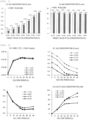
- a saccharified material having a low Glc concentration and a high Mal concentration (21% (w/v) Mal and lower than 0.1% (w/v) Glc) and a saccharified material having a high Glc concentration (22% (w/v) Glc and 0.5% (w/v) Mal) could be prepared.
- saccharified unpolished rice materials having various Glc concentrations in the range of 0.1% to 1.0% could be prepared ( Fig. 1a ).
- the Mal concentrations of all the saccharified materials were around 20% (w/v) ( Fig. 1b ).
- Unpolished rice flour was liquefied under four types of condition with different amounts of the enzyme, different reaction temperatures, and different reaction periods for the liquefaction, and liquefied materials having Glc concentrations of 0.4, 0.7, 0.9, and 1.1% (w/v) were prepared.
- a preculture solution of Lacticaseibacillus paracasei strain YIT 9029 (FERM BP-1366) (hereinafter referred to "LcS")
- LcS Lacticaseibacillus paracasei strain YIT 9029
- the preculture solution was inoculated at 0.1% in the liquefied materials and cultured at 37°C for 24 hours.
- the fermented materials were transferred at 1.0% to fresh liquefied unpolished rice materials and cultured at 37°C, and the viable cell counts, the pH, the Glc concentrations, and the lactic acid concentrations were measured.
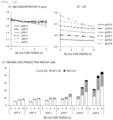
- the viable cell counts of all the liquefied materials reached 1.6 ⁇ 10 9 cfu/mL or higher ( Fig. 2a ).
- the liquefied unpolished rice material with an initial Glc of 0.4% (w/v) depletion of Glc was observed at the 24th hour of the culture, and the decrease in the pH and the production of lactic acid stopped at the same time point ( Figs. 2b to d ).
- the liquefied unpolished rice materials with initial Glc of 0.7% (w/v) or higher even after reaching the stationary phase, Glc remained, and the production of lactic acid continued ( Figs. 2b to d .
- Glc can be assimilated/depleted by LcS as a growth substrate by adjusting the Glc concentration of the liquefied material. Moreover, it was found that the decrease in the pH and the production of lactic acid after reaching the stationary phase can be inhibited by depletion of Glc.
- LcS was cultured at 37°C for 24 hours in various liquefied unpolished rice materials by the same method as that of Example 1. Next, the culture solutions were inoculated at 1.0% to fresh liquefied materials and cultured at 37°C for 24 hours. After the culture, the culture solutions were stored at 10°C for four weeks, and the viable cell counts, the pH, the Glc concentrations, and the lactic acid concentrations were measured over time.
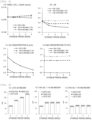
- a liquefied unpolished rice material was prepared in the same manner as in Example 1 and saccharified using ⁇ -amylase ( ⁇ -amylase F "Amano", Amano Enzyme Inc.) and pullulanase (Kleistase PL45, Amano Enzyme Inc.), and thus a saccharified unpolished rice material (about 0.4% (w/v) Glc and about 18% (w/v) Mal) was prepared. The growth of LcS in the saccharified material and that in the liquefied material before the saccharification (about 0.4% (w/v) Glc) were compared.
- the highest bacterial count of LcS reached in the saccharified unpolished rice material was 2.0 ⁇ 10 9 cfu/mL, which was equivalent to that of the culture in the liquefied unpolished rice material before the saccharification ( Fig. 4a ).
- the Mal concentration did not change even after the Glc depletion ( Figs. 4b and c ).
- LcS assimilates Glc preferentially in a saccharified unpolished rice material containing Glc and Mal.
- the concentration of Mal produced by the saccharification did not change, the possibility of functioning as a sweetener was shown.
- Example 1 Various saccharified unpolished rice materials having different Glc and Mal concentrations were prepared in the same manners as in Example 1 and Example 3, and LcS was cultured at 37°C for 24 hours. After the termination of the culture, the fermented materials were stored at 10°C, and the sugar concentrations, the lactic acid concentrations, and the viable cell counts were examined after one week, two weeks, four weeks, eight weeks, and 12 weeks.
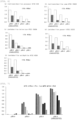
- the viable cell counts also at the 12th week of the storage were 1.2 ⁇ 10 9 cfu/mL, and the viabilities were both around 60% ( Fig. 5a ). Almost no change was observed in the Mal concentrations of all the fermented materials during the storage period ( Fig. 5c ). Accordingly, it was found that the acid production during low-temperature storage can be inhibited by regulating the Glc concentration in the saccharified unpolished rice material. Moreover, it was also found that the Mal concentration can be maintained almost without any change and that the viable cell count can be maintained high over a long period of time. Therefore, the results suggest the possibility that a LcS fermented drink which is free of added sugar and which has excellent storage stability can be provided using the fermentation substrate.
- strains of five species of lactic acid bacteria ( Lactobacillus acidophilus (ATCC4356), Lactobacillus helveticus (ATCC15009), Lacticaseibacillus paracasei (ATCC334), Lactobacillus gasseri (ATCC33323), and Lacticaseibacillus zeae (ATCC15820)) were cultured for 24 hours in the Glc-ILS medium shown in Table 1 of Example 1 and then re-cultured for 24 hours in Glc-ILS media or Mal-ILS media (obtained by changing Glc from 2% (w/v) to 0.6% (w/v) and newly adjusting Mal to 1.4% (w/v) in the Glc-ILS medium shown in Table 1) which were adjusted to various pH values, and the influences of the pH of the medium on the assimilation of Mal and Glc were compared.
- strain ATCC can be purchased from ATCC (American Type Culture Collection 10801 University Boulevard Manassas, Virginia 2011
- LcS was cultured in an ILS medium containing 2.0% (w/v) Glc, and washed bacterial cells were prepared.
- the bacterial cells were re-cultured in fresh ILS media containing various sugars each in the same volume as that of the original medium, and the assimilation properties were examined.
- the sugar sources of the ILS media used for the re-culture were Glc, Mal, galactose (Gal), fructose (Fru), mannose (Man), ribose (Rib), or lactose (Lac), and the pH was adjusted to pH 3.0, 4.0, or 5.0 with lactic acid.
- LcS was cultured for 14 hours in media with 2.0% (w/v) Glc, 0.9% (w/v) Glc/1.1% (w/v) Mal, and 0.6% (w/v) Glc/1.4% (w/v) Mal and then stored at 4°C for four weeks, and the viable cell counts, the pH, the organic acid concentrations, and the residual sugars were measured.
- LcS was cultured at 37°C for 14 hours using an ILS medium containing 0.6% (w/v) Glc and 1.4% (w/v) Mal, and the bacterial cells in which Mal assimilation after Glc depletion was inhibited were recovered by centrifugation.
- the recovered bacterial cells were washed with saline and then re-cultured in various ILS media or the culture supernatant recovered during the recovery of the bacterial cells each in the same volume as that of the original culture solution, and the sugar assimilation properties, the changes in the pH, and the organic acid production were examined.
- LcS was cultured at 37°C for 14 hours using an ILS medium containing 2.0% (w/v) Glc, and bacterial cells were recovered by centrifugation and washed with saline. The bacterial cells were suspended and re-cultured in 2.0% (w/v) Mal-containing ILS media which were adjusted to various pH values each in the same volume as that of the original culture solution, and the residual sugar concentrations, the pH, and the organic acid concentrations were measured over time. The initial pH values of the Mal-ILS media were adjusted to 3.0, 3.5, 3.8, 4.0, 4.2, 4.4, 4.6, 4.8, and 5.0 with lactic acid.
- the invention is a new fermented food containing sugars derived from a vegetable material containing starch and is useful for promoting health.
Landscapes
- Life Sciences & Earth Sciences (AREA)
- Chemical & Material Sciences (AREA)
- Engineering & Computer Science (AREA)
- Health & Medical Sciences (AREA)
- Organic Chemistry (AREA)
- Zoology (AREA)
- Wood Science & Technology (AREA)
- Genetics & Genomics (AREA)
- Bioinformatics & Cheminformatics (AREA)
- Food Science & Technology (AREA)
- Biotechnology (AREA)
- Polymers & Plastics (AREA)
- Mycology (AREA)
- Nutrition Science (AREA)
- Biochemistry (AREA)
- General Engineering & Computer Science (AREA)
- General Health & Medical Sciences (AREA)
- Microbiology (AREA)
- Tropical Medicine & Parasitology (AREA)
- Virology (AREA)
- Biomedical Technology (AREA)
- Medicinal Chemistry (AREA)
- Molecular Biology (AREA)
- Chemical Kinetics & Catalysis (AREA)
- General Chemical & Material Sciences (AREA)
- Micro-Organisms Or Cultivation Processes Thereof (AREA)
- General Preparation And Processing Of Foods (AREA)
- Preparation Of Compounds By Using Micro-Organisms (AREA)
Applications Claiming Priority (2)
| Application Number | Priority Date | Filing Date | Title |
|---|---|---|---|
| JP2022053741 | 2022-03-29 | ||
| PCT/JP2023/012184 WO2023190332A1 (ja) | 2022-03-29 | 2023-03-27 | 発酵食品及びその製造方法 |
Publications (2)
| Publication Number | Publication Date |
|---|---|
| EP4502129A1 true EP4502129A1 (de) | 2025-02-05 |
| EP4502129A4 EP4502129A4 (de) | 2026-03-25 |
Family
ID=88202358
Family Applications (1)
| Application Number | Title | Priority Date | Filing Date |
|---|---|---|---|
| EP23780342.4A Pending EP4502129A4 (de) | 2022-03-29 | 2023-03-27 | Fermentiertes lebensmittel und herstellungsverfahren dafür |
Country Status (9)
| Country | Link |
|---|---|
| US (1) | US20250212927A1 (de) |
| EP (1) | EP4502129A4 (de) |
| JP (1) | JPWO2023190332A1 (de) |
| KR (1) | KR20240167815A (de) |
| CN (1) | CN118946656A (de) |
| CA (1) | CA3247042A1 (de) |
| MX (1) | MX2024011796A (de) |
| TW (1) | TW202404478A (de) |
| WO (1) | WO2023190332A1 (de) |
Family Cites Families (6)
| Publication number | Priority date | Publication date | Assignee | Title |
|---|---|---|---|---|
| JP3469265B2 (ja) * | 1993-02-22 | 2003-11-25 | 日澱化學株式会社 | 酸性アミラーゼ、その製造法およびそれを用いた澱粉分解物の製造法 |
| JP2010119350A (ja) * | 2008-11-20 | 2010-06-03 | Hiroshima Prefecture | マルトオリゴ糖高含有乳酸発酵物、その製造方法及びそれを含有する飲食品、飼料、又はこれらの原材料 |
| JP6029150B2 (ja) * | 2014-11-17 | 2016-11-24 | 有限会社ラヴィアンサンテ | 澱粉由来ヨーグルト様飲料の製造方法 |
| PH12017501489B1 (en) * | 2015-02-17 | 2023-03-17 | Yakult Honsha Kk | Method for producing fermented milk food |
| CN108432998B (zh) * | 2018-03-21 | 2022-04-29 | 锦州医科大学 | 一种由乳酸菌组合物快速发酵玉米汁饮料的方法 |
| JP7092572B2 (ja) * | 2018-06-25 | 2022-06-28 | 群栄化学工業株式会社 | 乳酸発酵飲料又は食品、及びその製造方法 |
-
2023
- 2023-03-27 WO PCT/JP2023/012184 patent/WO2023190332A1/ja not_active Ceased
- 2023-03-27 US US18/849,788 patent/US20250212927A1/en active Pending
- 2023-03-27 CN CN202380031348.4A patent/CN118946656A/zh active Pending
- 2023-03-27 JP JP2024512454A patent/JPWO2023190332A1/ja active Pending
- 2023-03-27 KR KR1020247031569A patent/KR20240167815A/ko active Pending
- 2023-03-27 EP EP23780342.4A patent/EP4502129A4/de active Pending
- 2023-03-27 CA CA3247042A patent/CA3247042A1/en active Pending
- 2023-03-29 TW TW112111905A patent/TW202404478A/zh unknown
-
2024
- 2024-09-25 MX MX2024011796A patent/MX2024011796A/es unknown
Also Published As
| Publication number | Publication date |
|---|---|
| US20250212927A1 (en) | 2025-07-03 |
| JPWO2023190332A1 (de) | 2023-10-05 |
| WO2023190332A1 (ja) | 2023-10-05 |
| MX2024011796A (es) | 2025-01-09 |
| TW202404478A (zh) | 2024-02-01 |
| CA3247042A1 (en) | 2025-04-14 |
| KR20240167815A (ko) | 2024-11-28 |
| CN118946656A (zh) | 2024-11-12 |
| EP4502129A4 (de) | 2026-03-25 |
Similar Documents
| Publication | Publication Date | Title |
|---|---|---|
| JP6029150B2 (ja) | 澱粉由来ヨーグルト様飲料の製造方法 | |
| CN106987513B (zh) | 一种含乳酸菌的保健食醋饮料及其制备方法 | |
| KR100471631B1 (ko) | 비피도박테리움 브레베 및 이를 이용한 발효두유 | |
| KR20130142707A (ko) | 효소전환과 유산균 발효를 이용한 화합물 k의 함량이 강화된 발효홍삼 농축액의 제조방법 및 그 제조방법에 의해 제조된 발효홍삼 농축액을 유효성분으로 함유하는 제품 | |
| JP5218041B2 (ja) | 米乳酸発酵飲食品及びその製造方法 | |
| JP5044769B2 (ja) | 乳酸菌ラクトバシラス・サケイ株、飲料製造方法、食品製造方法、漬け床製造方法、製パン改質原料製造方法 | |
| JP6994797B1 (ja) | 酪酸菌の増殖方法及び食品添加物又は飼料添加物の製造方法 | |
| US20240115631A1 (en) | Composition comprising grain-derived lactic acid bacteria for relieving hangover and bowel trouble | |
| KR930005199B1 (ko) | 곡립형태의 쌀을 이용한 고농도 젖산 발효제품 제조방법 및 발효시 2차 효소처리에 의한 품질향상방법 | |
| JPWO2007097374A1 (ja) | γ−アミノ酪酸生産能を有する乳酸菌 | |
| KR102320816B1 (ko) | 발효취 감소 및 빵 부피 증가 효과를 가지는 락티카제이바실러스 파라카제이 lrcc5240 균주 및 이의 용도 | |
| JP5212641B2 (ja) | ウメ乳酸発酵飲食品及びその製造方法 | |
| EP4502129A1 (de) | Fermentiertes lebensmittel und herstellungsverfahren dafür | |
| JP2010119350A (ja) | マルトオリゴ糖高含有乳酸発酵物、その製造方法及びそれを含有する飲食品、飼料、又はこれらの原材料 | |
| CN104711208B (zh) | 一种具有高的淀粉分解能力的乳酸菌 | |
| KR20150088588A (ko) | 신규한 감마아미노부티르산 고생산성 균주 락토바실러스 브레비스 cfm11 및 이의 용도 | |
| JP2017509353A (ja) | デキストランの製造方法 | |
| CN113403214B (zh) | 一种枯草芽孢杆菌纳豆菌亚种菌株、纳豆发酵饮品及其制备方法 | |
| JP4838628B2 (ja) | γ−アミノ酪酸高含有組成物の製造方法 | |
| JP3595122B2 (ja) | 豆乳発酵食品の製造法 | |
| KR20210022957A (ko) | 술지게미 분리가공을 통해 유통기한이 증가되는 생막걸리 제조 방법 및 이를 이용한 생막걸리 | |
| CN115997822B (zh) | 一种罗伊氏乳杆菌常温酸奶及其制备方法 | |
| JP2025127599A (ja) | 新規ラクチプランチバチルス・プランタルム及びその利用 | |
| WO2025088252A1 (en) | Method for fermenting cultured plant cells | |
| ODA et al. | Utilization of Lactobacillus amylovorus as an alternative microorganism for saccharifying boiled rice |
Legal Events
| Date | Code | Title | Description |
|---|---|---|---|
| STAA | Information on the status of an ep patent application or granted ep patent |
Free format text: STATUS: THE INTERNATIONAL PUBLICATION HAS BEEN MADE |
|
| PUAI | Public reference made under article 153(3) epc to a published international application that has entered the european phase |
Free format text: ORIGINAL CODE: 0009012 |
|
| STAA | Information on the status of an ep patent application or granted ep patent |
Free format text: STATUS: REQUEST FOR EXAMINATION WAS MADE |
|
| 17P | Request for examination filed |
Effective date: 20241007 |
|
| AK | Designated contracting states |
Kind code of ref document: A1 Designated state(s): AL AT BE BG CH CY CZ DE DK EE ES FI FR GB GR HR HU IE IS IT LI LT LU LV MC ME MK MT NL NO PL PT RO RS SE SI SK SM TR |
|
| DAV | Request for validation of the european patent (deleted) | ||
| DAX | Request for extension of the european patent (deleted) | ||
| A4 | Supplementary search report drawn up and despatched |
Effective date: 20260225 |
|
| RIC1 | Information provided on ipc code assigned before grant |
Ipc: C12C 7/04 20060101AFI20260219BHEP Ipc: A23L 33/00 20160101ALI20260219BHEP Ipc: A23L 33/125 20160101ALI20260219BHEP Ipc: C12N 1/20 20060101ALI20260219BHEP Ipc: C12P 1/06 20060101ALI20260219BHEP |