EP4480321A2 - Verfahren zur herstellung von eingekapselten aminosäuren für wiederkäuer - Google Patents
Verfahren zur herstellung von eingekapselten aminosäuren für wiederkäuer Download PDFInfo
- Publication number
- EP4480321A2 EP4480321A2 EP24203633.3A EP24203633A EP4480321A2 EP 4480321 A2 EP4480321 A2 EP 4480321A2 EP 24203633 A EP24203633 A EP 24203633A EP 4480321 A2 EP4480321 A2 EP 4480321A2
- Authority
- EP
- European Patent Office
- Prior art keywords
- lysine
- amino acid
- emulsifier
- pastille
- granules
- Prior art date
- Legal status (The legal status is an assumption and is not a legal conclusion. Google has not performed a legal analysis and makes no representation as to the accuracy of the status listed.)
- Pending
Links
Images





Classifications
-
- A—HUMAN NECESSITIES
- A23—FOODS OR FOODSTUFFS; TREATMENT THEREOF, NOT COVERED BY OTHER CLASSES
- A23K—FODDER
- A23K20/00—Accessory food factors for animal feeding-stuffs
- A23K20/10—Organic substances
- A23K20/142—Amino acids; Derivatives thereof
-
- A—HUMAN NECESSITIES
- A23—FOODS OR FOODSTUFFS; TREATMENT THEREOF, NOT COVERED BY OTHER CLASSES
- A23K—FODDER
- A23K20/00—Accessory food factors for animal feeding-stuffs
- A23K20/10—Organic substances
- A23K20/158—Fatty acids; Fats; Products containing oils or fats
-
- A—HUMAN NECESSITIES
- A23—FOODS OR FOODSTUFFS; TREATMENT THEREOF, NOT COVERED BY OTHER CLASSES
- A23K—FODDER
- A23K40/00—Shaping or working-up of animal feeding-stuffs
- A23K40/10—Shaping or working-up of animal feeding-stuffs by agglomeration; by granulation, e.g. making powders
-
- A—HUMAN NECESSITIES
- A23—FOODS OR FOODSTUFFS; TREATMENT THEREOF, NOT COVERED BY OTHER CLASSES
- A23K—FODDER
- A23K40/00—Shaping or working-up of animal feeding-stuffs
- A23K40/30—Shaping or working-up of animal feeding-stuffs by encapsulating; by coating
-
- A—HUMAN NECESSITIES
- A23—FOODS OR FOODSTUFFS; TREATMENT THEREOF, NOT COVERED BY OTHER CLASSES
- A23K—FODDER
- A23K40/00—Shaping or working-up of animal feeding-stuffs
- A23K40/30—Shaping or working-up of animal feeding-stuffs by encapsulating; by coating
- A23K40/35—Making capsules specially adapted for ruminants
-
- A—HUMAN NECESSITIES
- A23—FOODS OR FOODSTUFFS; TREATMENT THEREOF, NOT COVERED BY OTHER CLASSES
- A23K—FODDER
- A23K50/00—Feeding-stuffs specially adapted for particular animals
- A23K50/10—Feeding-stuffs specially adapted for particular animals for ruminants
-
- A—HUMAN NECESSITIES
- A23—FOODS OR FOODSTUFFS; TREATMENT THEREOF, NOT COVERED BY OTHER CLASSES
- A23K—FODDER
- A23K50/00—Feeding-stuffs specially adapted for particular animals
- A23K50/10—Feeding-stuffs specially adapted for particular animals for ruminants
- A23K50/15—Feeding-stuffs specially adapted for particular animals for ruminants containing substances which are metabolically converted to proteins, e.g. ammonium salts or urea
-
- A—HUMAN NECESSITIES
- A23—FOODS OR FOODSTUFFS; TREATMENT THEREOF, NOT COVERED BY OTHER CLASSES
- A23P—SHAPING OR WORKING OF FOODSTUFFS, NOT FULLY COVERED BY A SINGLE OTHER SUBCLASS
- A23P10/00—Shaping or working of foodstuffs characterised by the products
- A23P10/30—Encapsulation of particles, e.g. foodstuff additives
Definitions
- the present invention relates to a process for making compositions that deliver high amounts of an absorbable amino acid to a ruminant animal for direct nourishment, and the compositions made by the process.
- Ruminant animals have evolved a large pre-gastric fermentation process that enables digestion of feedstuffs normally indigestible by mammalian hydrolytic-enzymatic processes.
- the beneficial processes associated with fermentation of cellulosic and other feedstuffs is the provision of nourishing end-products for the animal, such as microbial protein, volatile fatty acids, and vitamins.
- High quality proteins and free amino acids can be fermented in the first stomach (also called the "rumen") of a ruminant animal, thereby reducing their value.
- free amino acids if added directly to the diet, are fermented to ammonia and volatile fatty acids, which are of much lesser value to the animal than the amino acids.
- rumen fermentation of feedstuffs, particularly amino acids present difficult challenges in the formulation of diets that precisely supply essential amino acids required for maximal growth and lactation of ruminant animals.
- compositions and methods have been tested for controlled delivery and release of amino acids. Certain of these approaches have demonstrated utility and commercial value. However, it has proven difficult to develop and practice high capacity processing methods that consistently produce a rumen-protected amino acid, which then is released in the small intestine.
- Conventional coating technologies and methods of manufacturing encapsulated products are costly and can result in inconsistent product quality.
- Conventional coating materials typically serve no functional purpose beyond protecting the amino acid from rumen microbial fermentation. Certain coatings, while protective, are not permitted as safe to use in animal feed applications.
- a variety of conventional protective barriers have been utilized.
- An effective barrier system restricts exposure of amino acids in feedstuff when passing through the rumen while readily releasing nutrients upon exposure to digestive processes in the acidic-enzymatic compartments of the digestive tract.
- Commercial interest has largely focused on the amino acids predicted to be most limiting to performance, such as methionine and lysine. Because each amino acid has unique chemical and physical characteristics, the barrier technology must be harmonized with particular characteristic(s) of the amino acid. Inclusion of the amino acid within a protective matrix or outer shell adds expense and inevitably dilutes the amino acid provided by the feedstuff product. Sufficient amino acid density within a feedstuff product, technical delivery, and cost effective manufacturing techniques have not been met by conventional approaches.
- a manufacturing process that overcomes the limitations of conventional manufacturing techniques, and that surprisingly produces compositions, which when fed to a ruminant animal, delivers high amounts of absorbable amino acid to the animal for direct nourishment.
- the process comprises deposition or pastillation techniques that produce a composition comprising greater than 50% by weight of a nourishing amino acid.
- the process produces a uniformly sized particle (i.e., an encapsulate or pastille) in a low-cost, continuous process possessing high capacity.
- the process comprises encapsulating or coating an animal feed ingredient, the process comprising mixing an emulsifier with a coating agent, to form a coating mixture, and placing the coating mixture over an animal feed ingredient particle, thus encapsulating or coating the animal feed ingredient.
- a process mixing and heating an emulsifier with a hydrogenated vegetable oil, thereby producing a coating mixture, and mixing the coating mixture with amino acid particles to form a slurry.
- the process may further comprise heating the slurry to form a product melt.
- the process may further comprise depositing the product melt with a pastillator as substantially uniform and dust free pastille granules onto a belt cooler.
- lipids or fatty acids as hydrophobic and nutritionally acceptable materials to provide a base of resistance to the aqueous environment of the rumen.
- the challenge faced is that amino acids present as dry solids within the formulation have different melt points and densities from that of a lipid.
- the solubility differences based on the extreme hydrophilic and hydrophobic properties of amino acids and the lipids can often lead to phase separation of the slurries when blended together in a molten state. Such phase separations can occur not just in the bulk phase but also in the small micro domains of fat crystal network.
- Amino acids can be included in formulations either as salts incorporating the physical properties of particle distribution or as "free" amino acids often within a water solution enhancing consideration of hydrophobic and hydrophilic interaction.
- the separation of ingredients within the matrix can cause inconsistency within the final product and a reduced level of protection from the rumen environment.
- the amino acid may be an amino acid that is beneficial to a ruminant animal when added to the diet of the animal, including but not limited to lysine, methionine, histidine, choline, and combinations of any thereof.
- new techniques are provided that overcome challenges and limitations of conventional approaches.
- Experiments were designed and carried out that tested certain characteristics of solid particles, emulsifiers, lipids and rheological properties of slurries prepared using pastillation processing. Surprisingly, it was discovered that when rheology parameters are well controlled, a high percentage of solids can be incorporated in the slurry or product melt when pastillation/deposition processing was practiced.
- compositions comprising an amino acid, lipid and emulsifier (adjusting for other additives, if desirable).
- the viscosity of a slurry increases with solids content and fineness of incorporated solids (i.e. amino acid).
- Inclusion of an emulsifier facilitates the reduction of surface tension between the solid/liquid interface, which can lead to a decrease in viscosity.
- the shear thinning property of a slurry allows for a higher inclusion of solids, which enables the slurry to be flowable during processing. Similarity in length of the fatty acid chain and degree of unsaturation between the "tail" of the emulsifier and the fat used can also improve function. It has been determined that in general, a larger "head” on the emulsifier allows a greater decrease in viscosity for a given solids concentration and particle size of solids.
- emulsifiers with favorable properties and that are used in food products for animals are sorbitan esters and lecithin (of which phosphatidylcholine is a component thereof).
- Phosphatidylcholine is generally considered to be a beneficial component of lecithin because it is rich in choline, a member of the B-vitamin complex involved in certain biological functions.
- the presence of emulsifiers in systems of extreme solubility parameters facilitates the lubrication of solids in a fat system by creating more nucleation sites. This allows the higher loading of hydrophilic solids in the fat slurry, creating more homogenous dispersion, and leading to more uniform pastilles in the process.
- Lecithin contains two fatty acid chains with a large phosphate head group. Because of its favorable emulsification properties, lecithin is described in prior art related to compositions and methods of producing encapsulated products used in ruminant food. Lecithin, although a well-described food emulsifier, and commonly used in chocolate making to reduce the viscosity of sugar solids, does not hold good in improving the yield properties.
- Polyglycerol polyricinoleate (PGPR) is a polyglycerol ester-based emulsifier often used in conjunction with lecithin to offer both viscosity and yield properties and combinations of lecithin-PGPR are common in chocolate manufacturing because of synergistic interactions.
- FIG. 1 illustrates a flow diagram of a process according to aspects of the disclosure.
- pastillation system 100 comprises mixing vessel 2, pastillator 4, belt cooler 6, and bagging station 8.
- Raw material 10 and coating mixture 12 can be added to mixing vessel 2 through upper opening 14 of mixing vessel 2.
- Raw material 10 may comprise an amino acid that is supplied from amino acid source 16.
- Coating mixture 12 may comprise an emulsifier and coating agent that are mixed and supplied from coating mixture source 18.
- Mixing arms 20 can be turned around a vertical axis A-A to mix raw material 10 and coating mixture 12 within mixing vessel 2 to form a slurry.
- Raw material 10 and coating mixture 12 may be heated in mixing vessel 2 to form product melt 22.
- the raw material and coating mixture may be heated to greater than 10°C above the melting point of the fat.
- raw material 10 and coating mixture 12 may be heated together or separately before mixing in mixing vessel 2, or heated together after mixing in mixing vessel 2.
- Product melt 22 can exit mixing vessel 2 through lower opening 24 of mixing vessel 2.
- Product melt 22 can be pumped from mixing vessel 2 to pastillator 4 using pump 26.
- product melt 22 can flow to filter 28 to remove undesirable large particles or coalescents so that a substantially uniform filtered product melt can exit filter 28 and conveyed or delivered to pastillator 4.
- Pastillator 4 is configured to heat the filtered product melt to maintain the flow ability of product melt 22 and form a pastille comprising an encapsulated amino acid.
- Pastillator 4 is configured to deposit substantially uniform and dust free pastille granules 30 (comprising encapsulated amino acid particles) onto belt cooler 6 near proximal end 32 of belt cooler 6.
- the substantially uniform and dust free pastille granules 30 may be substantially in the shape of a half-sphere.
- the substantially uniform and dust free pastille granules may have a substantially pyramidal shape (similar to a chocolate chip shape).
- a pastille granule has an aspect ratio (diameter: height) of 1.5 to 2.5, about 1.7, or about 2.0, in a shape similar to a half-sphere.
- the substantially uniform and dust free pastille granules may be substantially flat-sided spheres (similar to a hockey puck shape).
- Pastillator 4 may be configured to produce pastille sizes of desired size, e.g., ranging from 1 to 25 mm in diameter (when looking down on the pastille granules after being deposited onto belt cooler 6.
- Pastille granules 30 may be collected from distal end 34 of belt cooler 6 and conveyed to bagging station 8, where pastille granules can be placed in bag 36.
- Pastillator 4 can be operated continuously for long periods of time. Water can be pumped by cooling water pump 38 from water tank 40 to chiller 42 and then sent to cooling water sprayers 44 comprising spray nozzles 46. Cooling water can be sprayed by sprayers 44 through spray nozzles 46 to bottom interface 48 of belt cooler 6, and thus provide cooling to belt cooler 6, and pastille granules 30 on belt cooler 6. After being sprayed, the water can be recycled back to water tank 40.
- Belt cooler 6 may rotate around belt rollers 50 and 52. As shown in FIG. 1 , belt roller 50 is proximal to pastillator 4, and belt roller 52 is distal to pastillator 4.
- the superior handling quality of the pastille granules allows for their use in further formulation of animal feeds, where homogeneous distribution of nutrients throughout the final feed mix is desired.
- FIG. 2 illustrates further aspects of pastillator 4 that is shown more generally in FIG. 1 .
- pastillator 4 comprises product distribution pipe 200, heat shield 204, heated cylindrical stator 206, heating medium 208, and product distribution bar 210.
- Pastillator 4 may also comprise refeed bar 212.
- pastillator 4 is configured to deposit substantially uniform and dust free pastille granules 30 (comprising encapsulated amino acid) onto belt cooler 6. Filtered product melt supplied from filter 28 (shown in FIG. 1 ) is heated by pastillator 4 to maintain flow ability of product melt 22.
- Product melt 22 is deposited through product distribution openings 202 as substantially uniform and dust free pastille granules 30 (comprising encapsulated amino acid) onto belt cooler 6.
- Cooling water spray nozzles 46 are configured to spray cool water to interface 48 to cool belt cooler 6 and pastille granules 30 deposited on belt cooler 6.
- Belt cooler 6 can comprise belt rollers 216.
- Belt rollers 216 may be the same as or different from belt rollers 50 and 52.
- the vertical distance between belt cooler 6 and pastillator 4 can be adjusted by vertically moving rollers 216 in relation to pastillator 4.
- Heated cylindrical stator 206 may comprise a hollow roller 218. Heated cylindrical stator 206 may comprise a perforated rotating shell 220 that turns concentrically around the stator, depositing drops of product melt 22 as pastille granules 30 across an operating width of the steel belt or belt cooler 6.
- a system of baffles and internal nozzles built into the heated cylindrical stator 206 provides a uniform pressure across the operating width of the belt cooler 6, providing an even flow through all holes or product distribution openings 202 of the perforated rotating shell 220. This ensures that each pastille granule 30 is of a uniform size, along a row of pastille granules 30 between one edge of the belt to the other.
- the circumferential speed of pastillator 4 is synchronized with the speed of the belt so that drops are therefore deposited on the belt without deformation.
- Heat released during solidification and cooling is transferred by the stainless steel belt or belt cooler 6 to the cooling water sprayed underneath.
- This water is collected in a tank, e.g., tank 40, and returned to the water chilling system or chiller 42, and at no stage does water come into direct contact with the product or pastille granules 30.
- the design of an effective pastillation system takes into consideration a number of factors. For instance, the minimum diameter of a pastille depends on the diameter of the holes or product distribution openings 202 in rotating shell 220, the density and viscosity of the product itself, the surface tension and the mechanical acceleration applied to the droplet.
- the drops should be of sufficient weight and volume in order to be deposited onto the steel belt or belt cooler 6, and the distance between the outer rotating shell 220 and the steel belt can be adjusted to provide an efficient and process and desired pastille granules 30.
- FIG. 3 illustrates depositing of pastille granules 30 onto belt cooler 6. As shown in FIG. 3 , pastille granules 30 are deposited onto belt cooler 6 through product distribution openings 202. Those skilled in the art having the benefit of this disclosure will recognize that suitable pin and/or needle structures may be used to convey pastille granules 30 through product distribution openings 202 onto belt cooler 6.
- a product produced by any of the processes described herein is produced.
- a pastillated granule comprises an amino acid, an emulsifier, and a coating agent.
- the pastillated granule is in a shape approximating a half-sphere having an aspect ratio (diameter/height) of 1.5 to 2.5.
- the amino acid may be selected from the group consisting of lysine, histidine, methionine, choline, and combinations of any thereof.
- the emulsifier may be selected from the group consisting of lecithin, monoglyceride, sorbitan ester, polyglycerols, and combinations thereof.
- the coating agent may be selected from the group consisting of an oil, a fatty acid, and combinations thereof.
- the coating agent may be a hydrogenated vegetable oil.
- the pastillated granule may have a size of 2.2-5.0 mm or 2.2-3.5 mm.
- the amino acid may have a particle size of 50-120 mesh or 80-110 mesh.
- the amino acid may be present in the pastillated granule at 25-85% by weight, 25-75% by weight, or 35-75% by weight.
- method of feeding an animal comprises mixing a pastillated granule produced as described herein with an animal feed ingredient to product an animal feed and feeding the animal feed to an animal.
- the animal may be a ruminant.
- a process of encapsulating amino acid particles includes mixing an emulsifier with a coating agent, thereby producing a coating mixture, mixing the coating mixture with an amino acid particle to form a slurry, forming pastilles with the slurry, and depositing the pastilles onto a belt.
- the process may further include heating the coating mixture and/or cooling the pastilles on the belt.
- viscosity as a distinguishing feature in accordance with aspects of the disclosure.
- a trial was undertaken to evaluate equipment and handling for prilling in a spray chilling process. The intent of these trials was to form prills of about 1 mm and evaluate rumen integrity (stability) as affected by lysine amount and particle size, and choice of emulsifier.
- Lysine HCl in dry powder form was included at 50% to the slurry. Lysine HCl was either milled recharge with a larger distribution of particle size or screened through a 40 mesh screen. Hydrogenated soy or palm oil made up the balance of the formula. During testing, 25 lb. slurry batches were formed with a spinning disk operating in a spray tower.
- Example 2 Evaluation of lysine formulation among process methods (viscosity influences process method - thus allowing for control to improve product).
- Lysine hydrochloride (Lys HCL) of varying particle size profiles (unscreened Lys HCl and screened Lys HCl) were used in formulation. Slurries were formulated to contain 40 or 50% Lys HCl, and monoglyceride emulsifier (Alphadim ® 90 SBK, by Corbion) was added between 0.5 and 5% by weight of the formula and was heated around 20 degrees C above the melt point of the fat system. The balance of the material was a fully hydrogenated soybean oil.
- Lysine hydrochloride (Lys HCL) of varying particle size profiles (unscreened Lys HCl and screened Lys HCl) were used in formulation. Slurries were formulated to contain 40 or 50% Lys HCl, and monoglyceride emulsifier (Alphadim ® 90 SBK, by Corbion) was added between 0.5 and 5% by weight of the formula and was heated around 20 degrees C above the melt point of the fat system. The balance of the material was a
- the coating process utilizes the fully hydrogenated soybean oil plus emulsifier sprayed onto the lysine granules. Samples of each prototype were evaluated for rumen stability after a 16 hours of incubation in the rumens of lactating cows. Results are shown in Table 2. Table 2.
- Prototypes produced by spray chilling resulted in prills were more spherical as viscosity increased with somewhat larger particle size. Decreasing lysine content improved rumen stability. Extrusion provided flexibility in formulation of lysine suspensions and formation of particles, however, fracturing along particle edges appeared to compromise rumen integrity. Fluid bed processing resulted in rumen integrity superior to spray chilling and similar to extrusion.
- Pastillation processing resulted in superior integrity of prills, particularly when particle size of Lys HCl was controlled at ⁇ 40 Mesh. It was discovered that viscosity could be adjusted sufficiently to enable pastillation of a high solids suspension with a pastille mean particle size greater than 2mm. A high amount of emulsifier in the composition did not improve rumen integrity of the pastille, and in fact a lesser concentration resulted in a more stable pastille. It was discovered that the functionality of the emulsifier and not the amount that drives the rheology properties when it comes to such high solids fat slurry systems. However, there is a significant tradeoff when it comes to process, composition, physical properties such as particle size, the rheology and rumen stability.
- Example 3 Functional additive inclusion in compositions further distinguish and contribute nourishment.
- Feed additives and in particular naturally occurring phytonutrients found in botanical and plant extracts often are added to feeds to support digestive processes or favorably affect feed digestion and the immune system of animals. Additives are especially useful for animals producing high amounts of commercially valuable product, such as fluid milk or meat. An increased emphasis on reducing or eliminating sub-therapeutic antibiotic usage in animal feeds in favor of natural alternatives such as phytonutrients prompted investigations to explore whether phytonutrients could be added to compositions used in the encapsulation process.
- compositions used in the pastillation processing were augmented with botanical extracts as a source of phytonutrients.
- Formulations contained 50% Lys HCl and 0.5% SMS emulsifier.
- Prototype materials were incubated in porous dacron bags for 16 hours in the rumens of lactating dairy cows to estimate integrity of the pastille.
- the preferred composition may be formulated to release a certain amount of phytonutrient and some lysine in the rumen, with absolute dissolution occurring later in the gastrointestinal tract, thus affording multiple benefits depending on targeted bioactivity of the phytonutrient and benefits associated with proving soluble protein (lysine) to the rumen or lower gastrointestinal tract.
- Results are shown in Table 3.
- Table 3 Ingredient % added botanical Dry Weight Recovery, % Protein Recovery % of Protein 50% Lysine HCl 0 96.9 84.0 Capsaicin 2.0 78.0 36.4 Peppermint 2.0 65.1 21.3 Thymol 1.0 86.1 55.4 Tumeric & Piperine 2.5 88.1 60.0 Zinc & Thymol 0.5 86.5 65.5
- Emulsifiers are amphiphilic molecules that are ubiquitous and found in very diverse applications such as food, feed, personal care & cosmetics and pharmaceutical industries. Emulsifiers are very versatile and hence exploited for different functionalities such as wetting agent, emollient, solubilizer, dispersant, defoamer, crystal modifier, texturant, etc. In addition, emulsifiers can also modify the nucleation, crystal growth, and polymorphic transformation processes of fats not just in bulk but also in emulsion phase. This unique functionality has offered the food industry with a major breakthrough in customizing the fat systems for not only the saturated fat reduction but also for improving the shelf life and organoleptic properties.
- the emulsifiers can be categorized as crystal former or crystal breaker.
- the solubility of emulsifiers based on the similarities and dissimilarities in the fatty acid chain of the molecule, the concentration of the emulsifier, etc. contribute different functionalities to the fat system.
- the hydrophobic fat has significant amount of the hydrophilic water soluble solid components, such as, sugar etc.
- the functionality of the emulsifier should be such that it lubricates the solids forming a much less viscous slurry/suspension.
- appropriate emulsifiers can be identified based on the fat and the nature of dry solid, its particle size and stability.
- a process step for lysine encapsulation was investigated using hydrogenated soy oil blended with Lys HCl, a water-soluble solid.
- the amount of lysine solids, the ratio of lipid to lysine, and concentration and type of emulsifier were shown to affect the rheology properties of blends processed to form pastilles or extruded products.
- emulsifier a distinguishing feature of an emulsifier is the release properties of the lysine after processing. It was important to understand whether the emulsifier would affect the release of the encapsulated hydrophilic ingredients.
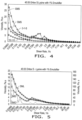
- FIG. 4 shows the viscosity curves as a function of shear rate in presence of emulsifiers GMS-Glycerol monostearate; SMS-Sorbitan monostearate; 3-1-S - Triglycerol monostearate and 10-1-S - Decaglycerol monostearate at 85C.
- the particle size of Lysine was ⁇ 40 mesh.
- the chemical formulas of sorbitan monostearate (SMS) and glycerol monostearate (GMS) are shown below.
- triglycerol monostearate will have three glycerol groups and decaglycerol monostearate will have ten glycerol groups instead of the single glycerol group shown below for glycerol and sorbitan monostearate.
- a glycerol head group with the sorbitan ester of stearic acid was shown more effective in lowering the viscosity of the lipid-lysine blend.
- the decaglycerol of stearic acid ester is more effective than the corresponding triglycerol ester.
- the common functionality of the head group comes from its bulkiness. The larger the head group the fatty acid chain orients towards the solid/liquid interface and facilitates the lubrication of the solid particles resulting in fluidizing the slurry leading to low viscosity properties. It is the particle size distribution of the solid particles in the fat continuous phase that drives the rheology functionality.
- FIG. 5 shows the effect of the fatty acid tail group of the emulsifier with similar head group.
- the sorbitan monostearate (SMS), sorbitan monooleate (SMO) and sorbitan monolaurate (SML) both have the common sorbitan head group with change in the fatty acid chain length of the hydrophobic moiety.
- SMS sorbitan monostearate
- SMO sorbitan monooleate
- SML sorbitan monolaurate
- Soy lecithin is a phospholipid with two fatty acid chains and a larger polar phosphate head group, and is shown in the following formula:
- phosphatidylcholine is generally considered to be a beneficial component of lecithin because it is rich in choline, a member of the B-vitamin complex involved in certain biological functions. Phosphatidylcholine is shown in the following formula:
- Lecithin is a well-known food emulsifier.
- lecithin is commonly used in chocolate making to reduce the viscosity of sugar solids.
- Lecithin does not hold well in improving the yield properties.
- Polyglycerol polyricinoleate (PGPR) is a polyglycerol ester based emulsifier used in conjunction with lecithin to offer both viscosity and yield properties in chocolate with its synergistic interactions.
- FIGs. 6 through 16 Aspects of the disclosure are further shown in FIGs. 6 through 16 .
- FIG. 6 illustrates viscosity curves of compositions comprising encapsulated lysine as a function of shear rate in the presence of emulsifier (10-1-S - decaglycerol monostearate, Yelkin ® SS Lecithin, by Archer Daniels Midland Company, or 6-2-S - hexaglycerol monostearate) at 85 C according to aspects of the disclosure, wherein the compositions comprise a 45:55 blend of hydrogenated soy oil and lysine with 1% emulsifier.
- emulsifier 10-1-S - decaglycerol monostearate, Yelkin ® SS Lecithin, by Archer Daniels Midland Company, or 6-2-S - hexaglycerol monostearate
- FIG. 7 illustrates viscosity curves of compositions comprising encapsulated lysine as a function of shear rate in the presence of emulsifier (Yelkin ® SS Lecithin, by Archer Daniels Midland Company, or 10-1-S - decaglycerol monostearate) at 85 C according to aspects of the disclosure, wherein the compositions comprise a 40:60 blend of hydrogenated soy oil and lysine with 1% emulsifier, and wherein lysine HCL was screened through a 40 mesh screen.
- emulsifier Yelkin ® SS Lecithin, by Archer Daniels Midland Company, or 10-1-S - decaglycerol monostearate
- FIG. 8 illustrates viscosity curves of compositions comprising encapsulated lysine as a function of shear rate in the presence of emulsifier (Yelkin ® SS Lecithin, by Archer Daniels Midland Company, or 10-1-S - decaglycerol monostearate) at 85 C according to aspects of the disclosure, wherein the compositions comprise a 40:60 blend of hydrogenated soy oil and lysine with 1% emulsifier, and wherein lysine HCL was screened through a 60 mesh screen.
- emulsifier Yelkin ® SS Lecithin, by Archer Daniels Midland Company, or 10-1-S - decaglycerol monostearate
- lecithin e.g., Yelkin ® SS Lecithin
- SMS sorbitan monostearate
- FIG. 9 illustrates viscosity curves of compositions comprising encapsulated lysine as a function of shear rate in the presence of emulsifier (Yelkin ® SS Lecithin, by Archer Daniels Midland Company) at 85 C according to aspects of the disclosure, wherein the compositions comprise either a 50:50 blend or a 45:55 blend of hydrogenated soy oil and lysine with 1% emulsifier, and wherein lysine HCL was screened through a 60 mesh screen.
- FIG. 10 illustrates viscosity curves of compositions comprising encapsulated lysine as a function of shear rate in the presence of emulsifier (Yelkin ® SS Lecithin, by Archer Daniels Midland Company) at 85 C according to aspects of the disclosure, wherein the compositions comprise either a 50:50 blend or a 45:55 blend of hydrogenated soy oil and lysine with 1% emulsifier, and wherein lysine HCL was screened through a 100 mesh screen.
- emulsifier Yamaleukin ® SS Lecithin, by Archer Daniels Midland Company
- FIG. 11 illustrates viscosity curves of compositions comprising encapsulated lysine as a function of shear rate in the presence of emulsifier (SMS - sorbitan monostearate) at 85 C according to aspects of the disclosure, wherein the compositions comprise either a 50:50 blend or a 45:55 blend of hydrogenated soy oil and lysine with 1% emulsifier, and wherein lysine HCL was screened through a 60 mesh screen.
- SMS - sorbitan monostearate emulsifier
- FIG. 12 illustrates viscosity curves of compositions comprising encapsulated lysine as a function of shear rate in the presence of emulsifier (SMS - sorbitan monostearate) at 85 C according to aspects of the disclosure, wherein the compositions comprise either a 50:50 blend or a 45:55 blend of hydrogenated soy oil and lysine with 1% emulsifier, and wherein lysine HCL was screened through a 100 mesh screen.
- SMS - sorbitan monostearate emulsifier
- FIG. 13 illustrates viscosity curves of compositions comprising encapsulated lysine as a function of shear rate in the presence of emulsifier (lecithin) at 85 C according to aspects of the disclosure, wherein the compositions comprise either a 50:50 blend or a 45:55 blend or a 40:60 blend of hydrogenated soy oil and lysine with 1% emulsifier, and wherein lysine HCL was screened through a 40 mesh screen.
- emulsifier lecithin
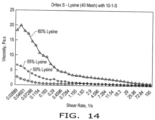
- FIG. 14 illustrates viscosity curves of compositions comprising encapsulated lysine as a function of shear rate in the presence of emulsifier (10-1-S - decaglycerol monostearate) at 85 C according to aspects of the disclosure, wherein the compositions comprise either a 50:50 blend or a 45:55 blend or a 40:60 blend of hydrogenated soy oil and lysine with 1% emulsifier, and wherein lysine HCL was screened through a 40 mesh screen.
- emulsifier 10-1-S - decaglycerol monostearate
- Dritex S -Lysine blends were made at ratios of 50:50 and 45:55 with different particle size of lysine, the absolute viscosities were very different even based on the choice of emulsifier.
- the viscosity profile of lecithin was very independent on the particle size of lecithin with higher range of viscosity of only 30Pa.s.
- the sorbitan monostearate has relatively higher viscosity at low shear in the range of 120Pa.s.
- Dritex S blend with 40 mesh lysine in presence of PGE 10-1-S was much lower than lecithin.
- the effectiveness of emulsifier can be ranked as 10-1-S>Lecithin >SMS.
- the overall functionality will be based on the choice of particle size of dry solids, the target loading, the fat system, its ratio and the emulsifier type.
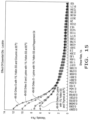
- FIG. 15 illustrates viscosity curves of compositions comprising encapsulated lysine as a function of shear rate in the presence of emulsifier (Yelkin ® SS Lecithin, by Archer Daniels Midland Company, or Yelkin ® SS Lecithin with phytonutrient essential oils, i.e., thymol, or peppermint oil, or curcumin) at 85 C according to aspects of the disclosure, wherein the compositions comprise either a 49:50 blend of hydrogenated soy oil and lysine with 1% emulsifier and phytonutrient essential oils at 1% wt:wt, and wherein lysine HCL was screened through a 40 mesh screen.
- emulsifier Yelkin ® SS Lecithin, by Archer Daniels Midland Company, or Yelkin ® SS Lecithin with phytonutrient essential oils, i.e., thymol, or peppermint oil, or curcumin
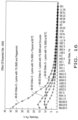
- FIG. 16 illustrates viscosity curves of compositions comprising encapsulated lysine as a function of shear rate in the presence of emulsifier (SMS - sorbitan monostearate, or SMS - sorbitan monostearate with phytonutrient essential oils, i.e., thymol, or peppermint oil, or curcumin) at 85 C according to aspects of the disclosure, wherein the compositions comprise either a 49:50 blend of hydrogenated soy oil and lysine with 1% emulsifier and phytonutrient essential oils at 1% wt:wt, and wherein lysine HCL was screened through a 40 mesh screen.
- emulsifier SMS - sorbitan monostearate, or SMS - sorbitan monostearate with phytonutrient essential oils, i.e., thymol, or peppermint oil, or curcumin
- sorbitan monostearate SMS
- lecithin is more effective for peppermint oil as phytonutrient
- rheology of the lysine-lipid system is affected by particle size of dry solids, the target loading, the lipid system, its ratio and the type of emulsifier.
- Adjustment of particle size and emulsifier (or combinations of emulsifiers) such as the PGE's 6-2-S and 10-1-may allow maximal inclusion of dry solids, perhaps to 60-65% (e.g., in the case of lysine) or 65-70% (in the case of histidine), or alternately use of a broader profile of particle distribution than otherwise practiced, especially as adjusted for rheology and desired final size of pastille.
- Particle size of the amino acid such as lysine affects the distribution of the liquid triglyceride coating.
- the liquid system has to overcome the particle-particle interaction of the fine solids to provide good flow and coating characteristics. If the particle size distribution is larger, more uniform coating of the fat system is possible. However, when the particle size is much finer, there is a greater possibility of the formation of larger aggregates that retard the flow properties of the fat-lysine slurry.
- the packing density of the larger particle size solids allows for liquid triglyceride with the emulsifier to penetrate the packed system more uniformly than what is expected from very fine solids. Interaction with the properties of the botanical components would then modify the needed content and choice of emulsifier system.
- Example 5 Manufacture of lysine pastilles by pastillation processing
- Lysine pastilles were produced in a pilot scale facility substantially as shown in FIGs. 1 through 3 to investigate compositions and pastillation manufacturing when practiced in a continuous operation.
- Lys HCl was screened on a rotex screener fitted with 40, 60, or 100 mesh screens to facilitate evaluation of solid particle size at 40 - 60% addition of Lys HCl.
- Monoglycerides (Alphadim 90 SBK), sorbitan mono-stearate (SMS), lecithin emulsifiers, or combinations were studied at 1% addition.
- Prototypes materials were evaluated for integrity by incubation in porous dacron bags for 16 hours in the rumens of lactating dairy cows.
- Lysine pastilles were produced substantially as shown in FIGs. 1 through 3 .
- the compositions contained 1% lecithin, 49% hydrogenated soybean oil, and 50% Lys HCl.
- the Lys HCl was milled and screened on a rotex screener fitted with 60 or 100 mesh screens to facilitate evaluation of solid particle size.
- Pastillated granules were collected from batch sizes of approximately 45 kg and the formed pastilles were evaluated for particle size distribution by sieving through a vibrating sifter (Sweco) fitted with 6 screens.
- the integrity of the pastilled granules was determined by incubation in porous dacron bags for 16 hours in the rumens of lactating dairy cows. The material that remained after incubation in the rumen was exposed in an in vitro assay to a buffered solution of enzymes mimicking intestinal fluid. The results of the in vitro assay are reported as estimated intestinal release.
- the % protection (stability) of lysine in the rumen was largely unaffected by the mesh size of the Lys in the pastillated granule or the size of the postulated granule.
- the estimated % intestinal release was superior when the finer mesh Lys was used, as 100 mesh Lys averaged 84% intestinal release whereas 60 mesh Lys averaged 52% release.
- the results indicate that 100 mesh vs 60 mesh Lys in the composition resulted in superior MP Lys (24.6 vs 14.4 g, respectively).
- Example 7 Processing methods to produce pastillated lysine.
- Lysine pastilles were produced substantially as shown in FIGs. 1 through 3 .
- Batches of approximately 45 kg were made, with each batch having the same composition.
- the composition included 1% lecithin, 49% hydrogenated soybean oil, and 50% Lys HCl.
- the Lys used in the composition was milled through a 100 mesh screen and laser diffraction was used to determine the size classes ( ⁇ M) of the milled Lys. 90% of the milled lysine was ⁇ 125 ⁇ M and the median size was approximately 50 ⁇ M.
- Pastillated granules were further subjected to imaging technology to determine the size of the lysine granules found in the pastillated granules. Randomly selected pastilles from each sub-lot were sectioned and placed cut side face up on a carbon spot. Samples were imaged using a scanning electron microscope operated with back scatter comp, aperture 1, 10 mm working distance, 15 kV and 50x magnification.
- Pastillated granules were subjected to rumen stability and in vitro simulated intestinal release assays and the MP Lys content of the lots was calculated as described in Example 6. Results are presented in the Table 6. Table 6.
- Pastilles within a 2.8-3.4 mm diameter or 2.4-2.8 mm diameter exhibited similar % rumen stability (70 vs 69), % intestinal release (89 vs. 93), and estimated MP Lys (24.4 vs. 25.2 g/100 g). Thus, a uniform pastillated granule with uniform stability and release of the lysine was produced.
- Example 8 Lysine status of dairy cows dosed with pastillated granules.
- Pastillated granules were produced as described herein. Cows were fed diets formulated to provide nutrients sufficient to maintain body weight while supporting high amounts of milk output.
- Treatments were as follow; cows fed a basal diet + 115g of ground corn ( CON ); basal diet + 115g of a commercially-available rumen-protected lysine source ( AJP ) (positive control); basal diet + 115g of one example of a rumen-protected lysine source; and basal diet + 115g of a second example of a rumen-protected lysine source throughout the study. The study was repeated four times in order to evaluate eight different examples identified as A to H.
- Treatments were delivered twice a day (12 hr-intervals) via 28-mL gelatin capsules (Structure Probe Inc., West Chester, PA), and administered orally via balling gun. All cows were fed the same diet throughout the trial once daily at 1300 h.
- the pastillated granules were manufactured in accordance with this disclosure and contained 50-55% lysine HCl and selected emulsifiers at 1% of the composition.
- Ajipro-L was used for AJP treatment (manufactured by Ajinomoto Heartland Inc., 8430 W. Bryn Mawr, #650, Chicago, IL).
- TMR total mixed ration
- Cows were milked 3 times daily at 0430, 12300, and 1930 h. Milk weights were recorded at every milking and samples were obtained at each milking from d 5 to 7 of each period. A preservative (800 Broad Spectrum Microtabs II; D&F Control Systems, Inc., San Ramon, CA) was added to the samples and stored in a refrigerator at 0°C for 3 d when they were composited in proportion to milk yield and sent to a commercial laboratory (Dairy One, Ithaca, NY) to be analyzed for contents of fat, true protein, casein, milk urea nitrogen (MUN), lactose, total solids, and for somatic cell count (SCC) using mid-infrared procedures (AOAC, 1995b).
- MUN true protein, casein, milk urea nitrogen
- SCC somatic cell count
- Blood was sampled from the coccygeal vein or artery at 0800h, 1000h, 1200h, and 1400h on d 5, 6, 7 of each period from each cow, and on d -3, -2, and -1 of the first period to be used as a covariate (BD Vacutainer; BD and Co., Franklin Lakes, NJ). Serum and plasma samples were obtained by centrifugation of the tubes at 2,500 ⁇ g for 15 min at 4°C and stored at -80°C for further analysis. Plasma samples were pooled by cow by day and subjected to amino acid profile analysis.
- bioavailable lysine content of examples A-H was determined by assessing relative changes in plasma free amino acid concentrations when cows were fed CON or dosed with AJP or test products. This approach assumes a positive linear relationship for absorbed lysine and plasma lysine concentration. Numerous publications have validated the approach as biologically relevant and useful in determining the delivery of absorbable lysine to the abomasum or intestines of the animal (Guinard and Rulquin, 1994; King et al., 1991; Rulquin and Kowalczk, 2003).
- Bioavailable lysine content of the encapsulated lysine products was determined by assessing plasma free lysine content as a percentage of total amino acids (TAA) when cows were bolused with test product or AJP.
- Table 7 shows the effects on plasma free amino concentration of dosing cows with AJP or examples A to H.
- Examples A and F did not elicit beneficial effects on plasma lysine content.
- Example A failed because the pastille was out of specified range for pastille median size, whereas F failed because the emulsifier (SMS) may have caused inferior release of lysine in the abomasum-small intestine.
- Examples B, C, D, E, G, and H demonstrated varying potential for delivery of bioavailable lysine.
- Example C demonstrated superior properties, with and estimated delivery of 36 g of bioavailable lysine per 100 g of product. The studies show benefits for improving lysine status of lactating dairy cows by encapsulating lysine using the processing method disclosed herein.
- Periods (7 d) were divided in washout phase (d 1, no treatment was delivered), adaptation 3 phase (d 2 to 4), in which treatments were delivered in gelatin capsules, and phase for statistical inferences (d 5 to 7) in which treatments were also delivered in gelatin capsules.
- Treatments were as follow; cows fed a basal diet + 115g of ground corn ( CON ); basal diet + 115g of a commercially-available rumen-protected lysine source ( AJP ) (positive control); basal diet + 115g of pastillated Lys granule, identified as Rumen Protected Lys A ( RPL A ); and basal diet + 115g of a second rumen-protected lysine prototype identified as Rumen Protected Lys B ( RPL B ) throughout the study period.
- Cows were milked 3 times daily at 04:30, 12:30, and 19:30 h. Milk weights were recorded at every milking and samples were obtained at each milking from d 5 to 7 of each period. A preservative (800 Broad Spectrum Microtabs II; D&F Control Systems, Inc., San Ramon, CA) was added to the samples and stored in a refrigerator at 0°C for 3 d when they were composited in proportion to milk yield and sent to a commercial laboratory to be analyzed for contents of fat, true protein, casein, milk urea nitrogen, lactose, total solids, and for somatic cell count (SCC) using mid-infrared procedures (AOAC, 1995b).
- SCC somatic cell count
- Lysine HCl was initially evaluated having a particle size passing a 60 mesh screen or a 100 mesh screen.
- Monoglycerides (Alphadim 90 SBK), sorbitan mono-stearate (SMS), lecithin emulsifiers, or combinations were studied at 1% addition, or at 1.5 % as solids content approached the limitation of viscosity to form pastilles. Histidine, methionine, and choline chloride were then compared as alternate examples of the process to form initial estimates of load rates and stability.
- FIG. 18 shows the relationship between emulsifier composition, level of added lysine HCl, and rumen stability for pastilles between 3 and 5 mm in diameter.
- Use of SBK provided good rumen stability, but viscosity limited inclusion of Lysine to about 55% of the composition, in contrast for this test use of lecithin increased allowable solids to 65%.
- Use of SMS alone was intermediate reaching 60% solids inclusion while maintaining a rumen stability greater than 70% of the protein value (RUP, % CP). Increasing solid load generally resulted in a curvilinear decrease in rumen stability.
- Combinations of SMS and lecithin provided improved rumen stability in comparison to lecithin and increased the potential load rate as compared to SMS.
- Emulsifier blends allowed successful formation of pastilles at a solids content of 60% for methionine, 65% for lysine HCL, and 70% for histidine. Choline HCL is also presented to demonstrate the potential for physical delivery of nutrients other than amino acids.
- Table 9 The Relationship of emulsifier level and choice, pastille size, nutrient load and rumen stability (RUP % CP).
- the results of this Example demonstrates the ability to adjust the type and level of emulsifier to accommodate multiple nutrients in the formation of encapsulated granules and the potential to adjust delivery within the digestive tract of the animal.
- Material optimization for a given nutrient, amino acid, vitamin, or phytonutrient will develop from the viscosity formed from the physical properties of the solids and emulsifier composition to allow granule formation also interacting with solids load rate, emulsifier content, and granule size to provide appropriate delivery of the nutrients.
- aspects of the disclosure include: Discovery of selection of one or a combination of emulsifier(s) to maximize the content of dry solids in a slurry, with fine-tuning of the formulation based upon amino acid properties such as hydrophilicity, particles size, and inclusion of additional nutritive additives, such as, botanical extracts.
- a solids content exceeding 50% in the pastillation-deposition process is enabled.
- compositions comprising maximal inclusion of dry solids, perhaps to 60-65% (e.g., in the case of lysine HCl) or 65-70% (in the case of histidine), or alternately use of a broader profile of particle distribution than otherwise practiced, especially as adjusted for rheology and desired final size of pastille.. These concentrations exceed those of commercially available products in the market at present, which enables an improved utility in practice.
- polyglycerol emulsifiers in encapsulates for animals, which provides improved properties relative to at least sorbitan esters and they appear effective alternatives to lecithin.
- Use of the emulsifiers such as PGE can enable greater solids content and/or greater flexibility in solid particle size.
- encapsulated amino acid product Inclusion of functional additives, such as enzymes or phytonutrients, into an encapsulated amino acid product to enhance animal utilization.
- Materials such as mint (menthol) and capsaicin can alter inflammation or blood flow in animals.
- phytonutrients enhancing absorptive capacity of intestinal tissue, it may be inferred that greater absorption and utilization of the amino acid is delivered to the intestines of a ruminant animal by using the encapsulated amino acid product made in accordance with the present invention than a non-encapsulated amino acid product, i.e., free amino acid product.
- botanicals creates an additional adjustment for rheology based on function within the material matrix with both increases and decreases in viscosity relative to solids observed.
- inclusion of curcumin increased viscosity to a greater extent in interaction with lecithin than with SMS indicating a substantial amount of fine-tuning and customization may be required to optimize a product that delivers nourishment and functionality in a single product form.
Landscapes
- Life Sciences & Earth Sciences (AREA)
- Polymers & Plastics (AREA)
- Chemical & Material Sciences (AREA)
- Food Science & Technology (AREA)
- Engineering & Computer Science (AREA)
- Zoology (AREA)
- Animal Husbandry (AREA)
- Birds (AREA)
- Proteomics, Peptides & Aminoacids (AREA)
- Fodder In General (AREA)
- Feed For Specific Animals (AREA)
- Medicinal Preparation (AREA)
- Glanulating (AREA)
Applications Claiming Priority (3)
| Application Number | Priority Date | Filing Date | Title |
|---|---|---|---|
| US201762581296P | 2017-11-03 | 2017-11-03 | |
| EP18874565.7A EP3703507A4 (de) | 2017-11-03 | 2018-10-25 | Verfahren zur herstellung von eingekapselten aminosäuren für wiederkäuer |
| PCT/US2018/057458 WO2019089333A1 (en) | 2017-11-03 | 2018-10-25 | Process for producing encapsulated amino acids for ruminants |
Related Parent Applications (1)
| Application Number | Title | Priority Date | Filing Date |
|---|---|---|---|
| EP18874565.7A Division EP3703507A4 (de) | 2017-11-03 | 2018-10-25 | Verfahren zur herstellung von eingekapselten aminosäuren für wiederkäuer |
Publications (2)
| Publication Number | Publication Date |
|---|---|
| EP4480321A2 true EP4480321A2 (de) | 2024-12-25 |
| EP4480321A3 EP4480321A3 (de) | 2025-03-05 |
Family
ID=66333320
Family Applications (2)
| Application Number | Title | Priority Date | Filing Date |
|---|---|---|---|
| EP24203633.3A Pending EP4480321A3 (de) | 2017-11-03 | 2018-10-25 | Verfahren zur herstellung von eingekapselten aminosäuren für wiederkäuer |
| EP18874565.7A Withdrawn EP3703507A4 (de) | 2017-11-03 | 2018-10-25 | Verfahren zur herstellung von eingekapselten aminosäuren für wiederkäuer |
Family Applications After (1)
| Application Number | Title | Priority Date | Filing Date |
|---|---|---|---|
| EP18874565.7A Withdrawn EP3703507A4 (de) | 2017-11-03 | 2018-10-25 | Verfahren zur herstellung von eingekapselten aminosäuren für wiederkäuer |
Country Status (10)
| Country | Link |
|---|---|
| US (1) | US20200345038A1 (de) |
| EP (2) | EP4480321A3 (de) |
| JP (2) | JP7593808B2 (de) |
| CN (1) | CN111447837A (de) |
| AU (2) | AU2018362266A1 (de) |
| BR (1) | BR112020008867A2 (de) |
| CA (1) | CA3100950A1 (de) |
| MX (1) | MX2020007101A (de) |
| RU (1) | RU2020116189A (de) |
| WO (1) | WO2019089333A1 (de) |
Families Citing this family (22)
| Publication number | Priority date | Publication date | Assignee | Title |
|---|---|---|---|---|
| IT201900013449A1 (it) * | 2019-07-31 | 2021-01-31 | Vetagro Int S R L | Composizione comprendente amminoacidi e una matrice lipidica per animali monogastrici non mammiferi e suo uso |
| CN110973373A (zh) * | 2019-12-05 | 2020-04-10 | 江苏神力特生物科技股份有限公司 | 一种特殊水用饲料品质改善剂以及制备方法 |
| WO2021116088A1 (en) * | 2019-12-09 | 2021-06-17 | Dsm Ip Assets B.V. | Mixture comprising hydrogenated soybean oil and thymol |
| CN111214455B (zh) * | 2020-01-10 | 2021-09-28 | 北京东方天合过瘤胃技术研究院有限公司 | 过瘤胃维生素d3及其制备方法 |
| US10947552B1 (en) | 2020-09-30 | 2021-03-16 | Alpine Roads, Inc. | Recombinant fusion proteins for producing milk proteins in plants |
| US10894812B1 (en) | 2020-09-30 | 2021-01-19 | Alpine Roads, Inc. | Recombinant milk proteins |
| IL301396A (en) | 2020-09-30 | 2023-05-01 | Nobell Foods Inc | Recombinant milk proteins and food compositions comprising the same |
| PT4037666T (pt) | 2020-12-08 | 2024-06-25 | Ruminant Biotech Corp Ltd | Aperfeiçoamentos de dispositivos e métodos para administração de substâncias a animais |
| NL2028496B1 (en) | 2021-06-21 | 2022-12-29 | Kaer Holding B V | Micro encapsulated additive provided with an editable external coating. |
| KR102730874B1 (ko) * | 2021-08-18 | 2024-11-18 | 주식회사 대호 | 가축용 사료 코팅제 및 그 제조방법 |
| KR102689220B1 (ko) * | 2023-02-02 | 2024-07-30 | 주식회사 대호 | 동물용 펠렛 사료 기능성 코팅액 조성물 |
| JP2024174416A (ja) * | 2023-06-05 | 2024-12-17 | 株式会社三共 | 遊技機 |
| JP2024174417A (ja) * | 2023-06-05 | 2024-12-17 | 株式会社三共 | 遊技機 |
| JP2024174422A (ja) * | 2023-06-05 | 2024-12-17 | 株式会社三共 | 遊技機 |
| JP2024174420A (ja) * | 2023-06-05 | 2024-12-17 | 株式会社三共 | 遊技機 |
| JP2024174415A (ja) * | 2023-06-05 | 2024-12-17 | 株式会社三共 | 遊技機 |
| JP2024174421A (ja) * | 2023-06-05 | 2024-12-17 | 株式会社三共 | 遊技機 |
| JP2024174418A (ja) * | 2023-06-05 | 2024-12-17 | 株式会社三共 | 遊技機 |
| JP2024174413A (ja) * | 2023-06-05 | 2024-12-17 | 株式会社三共 | 遊技機 |
| JP2024174419A (ja) * | 2023-06-05 | 2024-12-17 | 株式会社三共 | 遊技機 |
| JP2024174414A (ja) * | 2023-06-05 | 2024-12-17 | 株式会社三共 | 遊技機 |
| JP2025000098A (ja) * | 2023-06-19 | 2025-01-07 | 株式会社三共 | 遊技機 |
Family Cites Families (18)
| Publication number | Priority date | Publication date | Assignee | Title |
|---|---|---|---|---|
| GB1324087A (en) * | 1969-07-18 | 1973-07-18 | Commw Scient Ind Res Org | Copolymers and veterinary compositions treated therewith |
| WO1984000282A1 (en) * | 1982-07-12 | 1984-02-02 | Eastman Kodak Co | Rumen-stable pellets |
| JPS60141243A (ja) * | 1983-12-27 | 1985-07-26 | Nippon Soda Co Ltd | 反すう動物用飼料添加物 |
| JP2668880B2 (ja) * | 1987-06-23 | 1997-10-27 | 日本油脂株式会社 | 被覆アミノ酸類の製造方法 |
| US5631031A (en) * | 1994-06-13 | 1997-05-20 | Meade; Thomas L. | Water-insoluble amino acid salt |
| MXPA04006445A (es) * | 2002-01-08 | 2004-10-04 | Can Technologies Inc | Encapsulacion mediante revestimiento con una mezcla de lipidos y compuestos hidrofobicos de punto de fusion elevado. |
| US7297356B2 (en) * | 2004-05-10 | 2007-11-20 | Grain States Soya, Inc. | Method for manufacturing animal feed, method for increasing the rumen bypass capability of an animal feedstuff and animal feed |
| CA2670931C (en) * | 2006-11-28 | 2016-01-12 | Purac Biochem Bv | Stable lactide particles |
| DK2274989T3 (en) * | 2008-04-03 | 2015-05-11 | Ajinomoto Kk | FEED ADDITIVE COMPOSITION FOR LODGERS AND METHOD OF PRODUCING THEREOF |
| JP2011125217A (ja) * | 2008-04-03 | 2011-06-30 | Ajinomoto Co Inc | 酸性、中性アミノ酸含有反芻動物用飼料添加組成物及びその製造方法 |
| JP5923443B2 (ja) | 2009-03-26 | 2016-05-24 | アドバンスド バイオニュートリション コーポレーション | 生物活性物質のマイクロカプセル化及びその製造方法 |
| PL2421385T3 (pl) | 2009-04-23 | 2017-08-31 | H.J. Baker & Bro., Inc. | Granulowany suplement paszy |
| JP5746177B2 (ja) * | 2009-08-28 | 2015-07-08 | ザ ハーシー カンパニー | キシリトール含有可食性製品 |
| US10092533B2 (en) * | 2010-10-18 | 2018-10-09 | H. J. Baker & Bro., Llc | Granular feed supplement |
| RU2528482C1 (ru) | 2011-01-20 | 2014-09-20 | Дзе Иамс Компани | Способ изготовления корма для домашних животных |
| EP3190902A4 (de) * | 2014-08-20 | 2018-01-17 | Benemilk Oy | Beschichtete futterzusammensetzung für milchgebende wiederkäuer sowie verfahren zur herstellung und verwendung der futterzusammensetzung |
| WO2016154574A1 (en) * | 2015-03-25 | 2016-09-29 | Benemilk Oy | Rumen by-pass animal feed composition and method of making same |
| CN105663081B (zh) * | 2015-12-30 | 2019-08-02 | 大连医诺生物股份有限公司 | 微囊化β-丙氨酸 |
-
2018
- 2018-10-25 JP JP2020524898A patent/JP7593808B2/ja active Active
- 2018-10-25 WO PCT/US2018/057458 patent/WO2019089333A1/en not_active Ceased
- 2018-10-25 BR BR112020008867-6A patent/BR112020008867A2/pt not_active Application Discontinuation
- 2018-10-25 CA CA3100950A patent/CA3100950A1/en active Pending
- 2018-10-25 MX MX2020007101A patent/MX2020007101A/es unknown
- 2018-10-25 AU AU2018362266A patent/AU2018362266A1/en not_active Abandoned
- 2018-10-25 US US16/761,030 patent/US20200345038A1/en active Pending
- 2018-10-25 CN CN201880077915.9A patent/CN111447837A/zh active Pending
- 2018-10-25 EP EP24203633.3A patent/EP4480321A3/de active Pending
- 2018-10-25 EP EP18874565.7A patent/EP3703507A4/de not_active Withdrawn
- 2018-10-25 RU RU2020116189A patent/RU2020116189A/ru unknown
-
2023
- 2023-05-01 JP JP2023075389A patent/JP7819147B2/ja active Active
-
2024
- 2024-08-28 AU AU2024216388A patent/AU2024216388A1/en active Pending
Also Published As
| Publication number | Publication date |
|---|---|
| WO2019089333A1 (en) | 2019-05-09 |
| JP7593808B2 (ja) | 2024-12-03 |
| MX2020007101A (es) | 2020-09-03 |
| BR112020008867A2 (pt) | 2020-10-20 |
| EP4480321A3 (de) | 2025-03-05 |
| EP3703507A1 (de) | 2020-09-09 |
| CA3100950A1 (en) | 2019-05-09 |
| RU2020116189A (ru) | 2021-12-03 |
| JP2023090854A (ja) | 2023-06-29 |
| CN111447837A (zh) | 2020-07-24 |
| JP2021501600A (ja) | 2021-01-21 |
| JP7819147B2 (ja) | 2026-02-24 |
| EP3703507A4 (de) | 2020-11-11 |
| AU2018362266A1 (en) | 2020-06-11 |
| AU2024216388A1 (en) | 2024-09-19 |
| US20200345038A1 (en) | 2020-11-05 |
Similar Documents
| Publication | Publication Date | Title |
|---|---|---|
| AU2024216388A1 (en) | Process for producing encapsulated amino acids for ruminants | |
| JP5735955B2 (ja) | 反芻動物用飼料組成物、反芻動物の食餌を補う方法、および反芻動物用飼料組成物を製造する方法 | |
| JP5400783B2 (ja) | 粒状飼料サプリメント | |
| KR100222503B1 (ko) | 사료용 비타민 c피복제제, 그 제조방법 및 용도 | |
| EP2274990B1 (de) | Futterzusatzzusammensetzung für wiederkäuer mit saurer oder neutraler aminosäure und herstellungsverfahren dafür | |
| JP2006504411A (ja) | コーティングされた大豆製品およびコーティング方法 | |
| WO1994015480A1 (en) | Composition and method for ruminant milk production | |
| EP3206508A1 (de) | Zusammensetzungen zur mehrphasigen, versetzten oder verzögerten freisetzung eines wirkstoffs | |
| Carvalho et al. | Effect of slow-release urea microencapsulated in beeswax and its inclusion in ruminant diets | |
| CN101431903B (zh) | 制备反刍保护的胆碱的方法 | |
| KR20160075528A (ko) | 탄수화물을 포함하는 식이 조성물 및 이의 제조 방법 및 용도 | |
| JP2004123636A (ja) | 二重被覆造粒物およびその製造方法 | |
| CA2925105A1 (en) | Protein-containing dietary compositions and methods for their preparation and use | |
| HK40114857A (en) | Process for producing encapsulated amino acids for ruminants | |
| JP4316566B2 (ja) | 反芻胃内保護的及び反芻胃通過後有効な形態で投与される、塩化コリンを含有する粒子を含む組成物 | |
| US20240423243A1 (en) | Compositions and methods for reducing greenhouse gas | |
| US12599153B2 (en) | Compositions and methods for reducing greenhouse gas | |
| US20240226045A9 (en) | Rumen-protected compositions and methods of making the same | |
| WO2023000103A1 (en) | Ruminant bypass feed supplements comprising coated flaked camelina seeds | |
| JP3670988B2 (ja) | 生理活性物質封入微粒子及びその製造方法 | |
| US20240306669A1 (en) | Raw-fiber crusted pellets, feedstuff containing them, and corresponding methods and uses | |
| CN118078761A (zh) | 一种拉沙洛西钠微丸及其制备方法 | |
| JP2025057556A (ja) | 耐酸性粉末、食品、及び耐酸性粉末の製造方法 | |
| JP2003265119A (ja) | 改良ローヤルゼリー粉末、その製造方法、およびこれを含むローヤルゼリー食品 | |
| HK1143508A (en) | Granular feed supplement |
Legal Events
| Date | Code | Title | Description |
|---|---|---|---|
| PUAI | Public reference made under article 153(3) epc to a published international application that has entered the european phase |
Free format text: ORIGINAL CODE: 0009012 |
|
| STAA | Information on the status of an ep patent application or granted ep patent |
Free format text: STATUS: THE APPLICATION HAS BEEN PUBLISHED |
|
| AC | Divisional application: reference to earlier application |
Ref document number: 3703507 Country of ref document: EP Kind code of ref document: P |
|
| AK | Designated contracting states |
Kind code of ref document: A2 Designated state(s): AL AT BE BG CH CY CZ DE DK EE ES FI FR GB GR HR HU IE IS IT LI LT LU LV MC MK MT NL NO PL PT RO RS SE SI SK SM TR |
|
| PUAL | Search report despatched |
Free format text: ORIGINAL CODE: 0009013 |
|
| AK | Designated contracting states |
Kind code of ref document: A3 Designated state(s): AL AT BE BG CH CY CZ DE DK EE ES FI FR GB GR HR HU IE IS IT LI LT LU LV MC MK MT NL NO PL PT RO RS SE SI SK SM TR |
|
| RIC1 | Information provided on ipc code assigned before grant |
Ipc: A23K 50/15 20160101AFI20250124BHEP |
|
| REG | Reference to a national code |
Ref country code: HK Ref legal event code: DE Ref document number: 40114857 Country of ref document: HK |
|
| STAA | Information on the status of an ep patent application or granted ep patent |
Free format text: STATUS: REQUEST FOR EXAMINATION WAS MADE |
|
| STAA | Information on the status of an ep patent application or granted ep patent |
Free format text: STATUS: EXAMINATION IS IN PROGRESS |
|
| 17P | Request for examination filed |
Effective date: 20250903 |
|
| 17Q | First examination report despatched |
Effective date: 20250917 |