EP4471895B1 - Kathodenmaterial und herstellungsverfahren dafür - Google Patents
Kathodenmaterial und herstellungsverfahren dafür Download PDFInfo
- Publication number
- EP4471895B1 EP4471895B1 EP23199535.8A EP23199535A EP4471895B1 EP 4471895 B1 EP4471895 B1 EP 4471895B1 EP 23199535 A EP23199535 A EP 23199535A EP 4471895 B1 EP4471895 B1 EP 4471895B1
- Authority
- EP
- European Patent Office
- Prior art keywords
- cathode material
- metal oxide
- lithium
- lithium metal
- solid electrolyte
- Prior art date
- Legal status (The legal status is an assumption and is not a legal conclusion. Google has not performed a legal analysis and makes no representation as to the accuracy of the status listed.)
- Active
Links
Images



Classifications
-
- H—ELECTRICITY
- H01—ELECTRIC ELEMENTS
- H01M—PROCESSES OR MEANS, e.g. BATTERIES, FOR THE DIRECT CONVERSION OF CHEMICAL ENERGY INTO ELECTRICAL ENERGY
- H01M4/00—Electrodes
- H01M4/02—Electrodes composed of, or comprising, active material
- H01M4/36—Selection of substances as active materials, active masses, active liquids
- H01M4/48—Selection of substances as active materials, active masses, active liquids of inorganic oxides or hydroxides
- H01M4/52—Selection of substances as active materials, active masses, active liquids of inorganic oxides or hydroxides of nickel, cobalt or iron
- H01M4/525—Selection of substances as active materials, active masses, active liquids of inorganic oxides or hydroxides of nickel, cobalt or iron of mixed oxides or hydroxides containing iron, cobalt or nickel for inserting or intercalating light metals, e.g. LiNiO2, LiCoO2 or LiCoOxFy
-
- C—CHEMISTRY; METALLURGY
- C01—INORGANIC CHEMISTRY
- C01G—COMPOUNDS CONTAINING METALS NOT COVERED BY SUBCLASSES C01D OR C01F
- C01G53/00—Compounds of nickel
- C01G53/40—Complex oxides containing nickel and at least one other metal element
- C01G53/42—Complex oxides containing nickel and at least one other metal element containing alkali metals, e.g. LiNiO2
- C01G53/44—Complex oxides containing nickel and at least one other metal element containing alkali metals, e.g. LiNiO2 containing manganese
- C01G53/50—Complex oxides containing nickel and at least one other metal element containing alkali metals, e.g. LiNiO2 containing manganese of the type (MnO2)n-, e.g. Li(NixMn1-x)O2 or Li(MyNixMn1-x-y)O2
-
- H—ELECTRICITY
- H01—ELECTRIC ELEMENTS
- H01M—PROCESSES OR MEANS, e.g. BATTERIES, FOR THE DIRECT CONVERSION OF CHEMICAL ENERGY INTO ELECTRICAL ENERGY
- H01M10/00—Secondary cells; Manufacture thereof
- H01M10/05—Accumulators with non-aqueous electrolyte
- H01M10/052—Li-accumulators
-
- H—ELECTRICITY
- H01—ELECTRIC ELEMENTS
- H01M—PROCESSES OR MEANS, e.g. BATTERIES, FOR THE DIRECT CONVERSION OF CHEMICAL ENERGY INTO ELECTRICAL ENERGY
- H01M10/00—Secondary cells; Manufacture thereof
- H01M10/05—Accumulators with non-aqueous electrolyte
- H01M10/052—Li-accumulators
- H01M10/0525—Rocking-chair batteries, i.e. batteries with lithium insertion or intercalation in both electrodes; Lithium-ion batteries
-
- H—ELECTRICITY
- H01—ELECTRIC ELEMENTS
- H01M—PROCESSES OR MEANS, e.g. BATTERIES, FOR THE DIRECT CONVERSION OF CHEMICAL ENERGY INTO ELECTRICAL ENERGY
- H01M10/00—Secondary cells; Manufacture thereof
- H01M10/05—Accumulators with non-aqueous electrolyte
- H01M10/056—Accumulators with non-aqueous electrolyte characterised by the materials used as electrolytes, e.g. mixed inorganic/organic electrolytes
- H01M10/0561—Accumulators with non-aqueous electrolyte characterised by the materials used as electrolytes, e.g. mixed inorganic/organic electrolytes the electrolyte being constituted of inorganic materials only
- H01M10/0562—Solid materials
-
- H—ELECTRICITY
- H01—ELECTRIC ELEMENTS
- H01M—PROCESSES OR MEANS, e.g. BATTERIES, FOR THE DIRECT CONVERSION OF CHEMICAL ENERGY INTO ELECTRICAL ENERGY
- H01M4/00—Electrodes
- H01M4/02—Electrodes composed of, or comprising, active material
- H01M4/04—Processes of manufacture in general
- H01M4/0471—Processes of manufacture in general involving thermal treatment, e.g. firing, sintering, backing particulate active material, thermal decomposition, pyrolysis
-
- H—ELECTRICITY
- H01—ELECTRIC ELEMENTS
- H01M—PROCESSES OR MEANS, e.g. BATTERIES, FOR THE DIRECT CONVERSION OF CHEMICAL ENERGY INTO ELECTRICAL ENERGY
- H01M4/00—Electrodes
- H01M4/02—Electrodes composed of, or comprising, active material
- H01M4/36—Selection of substances as active materials, active masses, active liquids
- H01M4/362—Composites
- H01M4/366—Composites as layered products
-
- H—ELECTRICITY
- H01—ELECTRIC ELEMENTS
- H01M—PROCESSES OR MEANS, e.g. BATTERIES, FOR THE DIRECT CONVERSION OF CHEMICAL ENERGY INTO ELECTRICAL ENERGY
- H01M4/00—Electrodes
- H01M4/02—Electrodes composed of, or comprising, active material
- H01M4/36—Selection of substances as active materials, active masses, active liquids
- H01M4/48—Selection of substances as active materials, active masses, active liquids of inorganic oxides or hydroxides
- H01M4/50—Selection of substances as active materials, active masses, active liquids of inorganic oxides or hydroxides of manganese
- H01M4/505—Selection of substances as active materials, active masses, active liquids of inorganic oxides or hydroxides of manganese of mixed oxides or hydroxides containing manganese for inserting or intercalating light metals, e.g. LiMn2O4 or LiMn2OxFy
-
- C—CHEMISTRY; METALLURGY
- C01—INORGANIC CHEMISTRY
- C01P—INDEXING SCHEME RELATING TO STRUCTURAL AND PHYSICAL ASPECTS OF SOLID INORGANIC COMPOUNDS
- C01P2004/00—Particle morphology
- C01P2004/01—Particle morphology depicted by an image
- C01P2004/03—Particle morphology depicted by an image obtained by SEM
-
- C—CHEMISTRY; METALLURGY
- C01—INORGANIC CHEMISTRY
- C01P—INDEXING SCHEME RELATING TO STRUCTURAL AND PHYSICAL ASPECTS OF SOLID INORGANIC COMPOUNDS
- C01P2004/00—Particle morphology
- C01P2004/54—Particles characterised by their aspect ratio, i.e. the ratio of sizes in the longest to the shortest dimension
-
- C—CHEMISTRY; METALLURGY
- C01—INORGANIC CHEMISTRY
- C01P—INDEXING SCHEME RELATING TO STRUCTURAL AND PHYSICAL ASPECTS OF SOLID INORGANIC COMPOUNDS
- C01P2004/00—Particle morphology
- C01P2004/60—Particles characterised by their size
- C01P2004/61—Micrometer sized, i.e. from 1-100 micrometer
-
- C—CHEMISTRY; METALLURGY
- C01—INORGANIC CHEMISTRY
- C01P—INDEXING SCHEME RELATING TO STRUCTURAL AND PHYSICAL ASPECTS OF SOLID INORGANIC COMPOUNDS
- C01P2004/00—Particle morphology
- C01P2004/80—Particles consisting of a mixture of two or more inorganic phases
- C01P2004/82—Particles consisting of a mixture of two or more inorganic phases two phases having the same anion, e.g. both oxidic phases
- C01P2004/84—Particles consisting of a mixture of two or more inorganic phases two phases having the same anion, e.g. both oxidic phases one phase coated with the other
-
- C—CHEMISTRY; METALLURGY
- C01—INORGANIC CHEMISTRY
- C01P—INDEXING SCHEME RELATING TO STRUCTURAL AND PHYSICAL ASPECTS OF SOLID INORGANIC COMPOUNDS
- C01P2006/00—Physical properties of inorganic compounds
- C01P2006/40—Electric properties
-
- H—ELECTRICITY
- H01—ELECTRIC ELEMENTS
- H01M—PROCESSES OR MEANS, e.g. BATTERIES, FOR THE DIRECT CONVERSION OF CHEMICAL ENERGY INTO ELECTRICAL ENERGY
- H01M4/00—Electrodes
- H01M4/02—Electrodes composed of, or comprising, active material
- H01M2004/026—Electrodes composed of, or comprising, active material characterised by the polarity
- H01M2004/028—Positive electrodes
-
- Y—GENERAL TAGGING OF NEW TECHNOLOGICAL DEVELOPMENTS; GENERAL TAGGING OF CROSS-SECTIONAL TECHNOLOGIES SPANNING OVER SEVERAL SECTIONS OF THE IPC; TECHNICAL SUBJECTS COVERED BY FORMER USPC CROSS-REFERENCE ART COLLECTIONS [XRACs] AND DIGESTS
- Y02—TECHNOLOGIES OR APPLICATIONS FOR MITIGATION OR ADAPTATION AGAINST CLIMATE CHANGE
- Y02E—REDUCTION OF GREENHOUSE GAS [GHG] EMISSIONS, RELATED TO ENERGY GENERATION, TRANSMISSION OR DISTRIBUTION
- Y02E60/00—Enabling technologies; Technologies with a potential or indirect contribution to GHG emissions mitigation
- Y02E60/10—Energy storage using batteries
Definitions
- the present disclosure relates to a cathode material and a preparation method thereof, and more particularly to a cathode material and a preparation method thereof for obtaining a solid electrolyte coating layer through an organic solvent thereby enhancing the electrochemical performance.
- solid-state batteries In recent years, the development of solid-state batteries has become a mainstream trend due to increasing emphasis on safety and energy density. While solid-state batteries show promise for improving upon traditional lithium batteries, there is still room for further enhancements.
- cathode materials high-nickel cathode materials are known to be sensitive to moisture.
- solid electrolytes it is a challenging task to reduce their thickness while improving their mechanical properties.
- US 2022/216507 A1 discloses a solid electrolyte material for a lithium secondary battery, an electrode, and a battery, relating in particular to an additive material capable of improving rapid transmission of ions in lithium secondary battery electrodes, a preparation method therefor and application thereof, and a solid electrolyte material for a secondary battery, a preparation method therefor and application thereof, as well as an electrode, an electrolyte thin layer, and a preparation method therefor.
- a 10% Li 3 InCl 6 -coated NCM material was assembled into a 10% LIC@NCM/Li 6 PS 5 Cl/In all-solid-state battery with an initial charge capacity of 201.3 mAh g -1 , a discharge specific capacity of 158.7 mAh g -1 , and a Coulombic efficiency of 79.06%. After 100 cycles at room temperature at 0.1C current density, the capacity retention was 92% and the capacity retention was 72% after 270 cycles. In comparison, all-solid-state batteries using matched Li 6 PS 5 Cl and untreated NCM had a capacity retention rate of 53% after 100 cycles at 0.1C under the same charge/discharge regime and environment.
- oxide solid electrolytes oxide solid electrolytes, sulfide solid electrolytes, and halide solid electrolytes have emerged as the most promising options for mass production.
- the halide solid electrolytes have received significant attention in recent years due to their remarkable properties such as high stability, safety, ion conductivity, and low interfacial impedance.
- halide solid electrolytes are also sensitive to moisture.
- the electrochemical performance of the widely used Li 3 InCl 6 in halide solid electrolytes has room for improvement.
- An object of the present disclosure is to provide a cathode material having a solid electrolyte coating layer obtained through an organic solvent, thereby eliminating the adverse effects of moisture on the cathode material and enhancing the electrochemical performance.
- the cathode material includes a plurality of particles. Each of the plurality of particles includes a core layer and a coating layer coated thereon.
- the core layer includes a lithium metal oxide material having a composition of Li[Ni a Co b Mn c Al d ]O 2 .
- the coefficient "a" satisfies the conditions of 0.8 ⁇ a ⁇ 1.
- the coating layer of the cathode material includes a solid electrolyte having a composition of Li 3 InCl x F y .
- the incorporation of chlorine and fluorine in the solid electrolyte further results in the cathode material with high discharge capacity and high discharge capacity retention.
- the coefficients "x" and "y” satisfy the conditions of 4 ⁇ x ⁇ 5.5 and 0.5 ⁇ y ⁇ 2.
- the lithium metal oxide material in the core layer and the solid electrolyte in the coating layer have a weight ratio ranged from 1:0.3 to 1:0.6, resulting in the cathode material with a uniform core-shell structure.
- Another object of the present disclosure is to provide a preparation method of a cathode material for obtaining a solid electrolyte coating layer through an organic solvent, thereby eliminating the adverse effects of moisture on the cathode material and enhancing the electrochemical performance.
- a lithium metal oxide material, a first material and an organic solvent are mixed and heat-treated to form the cathode material.
- wet mixing using the organic solvent offers cost efficiency and easy controllability. It not only enhances the solid dispersion of the cathode material but also eliminates the adverse effects of moisture.
- the first material is reacted and undergoes an in-situ synthesis on the surface of the cathode material particles, resulting in the formation of a solid electrolyte.
- the heat treatment has a temperature ranged from 100 °C to 250 °C, ensuring that the preparation method of the cathode material is energy-efficient, cost-effective and environmentally friendly.
- a cathode material including a plurality of particles according to appended claim 1 is provided.
- Each of the plurality of particles includes a core layer and a coating layer.
- the core layer includes a lithium metal oxide material.
- the lithium metal oxide material has a composition of Li[Ni a Co b Mn c Al d ]O 2 .
- the coating layer is coated on the core layer and includes a solid electrolyte.
- a first material is reacted on the core layer to in-situ synthesize the solid electrolyte.
- the solid electrolyte has a composition of Li 3 InCl x F y .
- the lithium metal oxide material, the first material, and a solvent are mixed to form a precursor.
- the precursor is heat-treated to form the cathode material.
- the first material includes lithium, indium, chlorine, and fluorine.
- the lithium metal oxide material and the solid electrolyte have a weight ratio ranged from 1:0.3 to 1:0.6.
- the coefficient "a" satisfies the condition of 0.9 ⁇ a ⁇ 1.
- the lithium metal oxide material and the solid electrolyte have a weight ratio ranged from 1:0.4 to 1:0.5.
- each of the plurality of particles has a particle size
- the coating layer has a thickness.
- the particle size and the thickness have a ratio ranged from 6:1 to 40:1.
- the particle size is ranged from 5 ⁇ m to 20 ⁇ m, and the thickness is ranged from 0.5 ⁇ m to 3 ⁇ m.
- the first material comprises lithium chloride (LiCl), lithium fluoride (LiF) and indium chloride (InCl 3 ).
- the solvent includes a volatile organic solvent.
- the precursor is heat-treated in a vacuum environment or an inert atmosphere to form the cathode material.
- the precursor is heat-treated at a temperature to form the cathode material.
- the temperature is ranged from 100 °C to 250 °C.
- the coefficient "a" satisfies the condition of 0.9 ⁇ a ⁇ 1.
- the lithium metal oxide material and the solid electrolyte have a weight ratio ranged from 1:0.4 to 1:0.5.
- each of the plurality of particles has a particle size
- the coating layer has a thickness.
- the particle size and the thickness have a ratio ranged from 6:1 to 40:1.
- the particle size is ranged from 5 ⁇ m to 20 ⁇ m, and the thickness is ranged from 0.5 ⁇ m to 3 ⁇ m.
- the first material comprises lithium chloride (LiCl), lithium fluoride (LiF), and indium chloride (InCl 3 ).
- the solvent includes a volatile organic solvent.
- the precursor is heat-treated in a vacuum environment or an inert atmosphere to form the cathode material.
- the precursor is heat-treated at a temperature to form the cathode material.
- the temperature is ranged from 100 °C to 250 °C.
- FIG. 1 is a schematic diagram of a cathode material particle according to an embodiment of the present disclosure.
- FIG. 2 is a cross-sectional SEM image of cathode material particles according to an embodiment of the present disclosure.
- FIG. 2 is obtained by a Focused ion beam scanning electron microscopy (FIB-SEM).
- the cathode material includes a plurality of particles 1.
- Each of the plurality of particles 1 includes a core layer 10 and a coating layer 20.
- the core layer 10 includes a lithium metal oxide material.
- the lithium metal oxide material has a composition of Li[Ni a Co b Mn c Al d ]O 2 .
- the coating layer 20 is coated on the core layer 10 and includes a solid electrolyte.
- a first material is reacted on the core layer 10 to in-situ synthesize the solid electrolyte.
- the solid electrolyte has a composition of Li 3 InCl x F y .
- the lithium metal oxide material, the first material, and a solvent are mixed to form a precursor.
- the precursor is heat-treated to form the cathode material.
- the first material includes lithium, indium, chlorine, and fluorine.
- the lithium metal oxide material and the solid electrolyte have a weight ratio ranged from 1:0.3 to 1:0.6.
- the incorporation of chlorine and fluorine in the solid electrolyte results in the cathode material with high discharge capacity and high discharge capacity retention.
- the lithium metal oxide material includes a lithium nickel cobalt manganese oxide (NCM) material having a composition of Li[Ni a Co b Mn c ]O 2 .
- NCM lithium nickel cobalt manganese oxide
- the lithium nickel cobalt manganese oxide material is prepared by a solid-state synthesis method.
- the lithium metal oxide material includes a lithium nickel cobalt manganese oxide (NCM) material with a different amount ratio, a lithium nickel cobalt aluminum oxide (NCA) material having a composition of Li[Ni a Co b Al d ]O 2 , or a lithium nickel cobalt manganese aluminum oxide (NCMA) material having a composition of Li[Ni a Co b Mn c Al d ]O 2 , and is prepared by a sol-gel process.
- NCM lithium nickel cobalt manganese oxide
- NCA lithium nickel cobalt aluminum oxide
- NCMA lithium nickel cobalt manganese aluminum oxide
- the lithium metal oxide material has a composition of Li[Ni a Co b Mn c Al d ]O 2 , and the coefficients "a" satisfies the condition of 0.9 ⁇ a ⁇ 1. This condition indicates that the proportion of nickel in the metallic elements other than lithium in the lithium metal oxide material is more than 90%.
- the lithium metal oxide material includes a lithium nickel cobalt manganese aluminum oxide (NCMA) material having a composition of Li[Ni a Co b Mn c Al d ]O 2 .
- NCMA lithium nickel cobalt manganese aluminum oxide
- the coefficients "x" and "y” further satisfy the conditions of 4 ⁇ x ⁇ 5.5 and 0.5 ⁇ y ⁇ 2. These conditions indicate that chlorine and fluorine have an amount ratio ranged from 5.5:0.5 to 4:2.
- the electrochemical performance of the cathode material is enhanced. Even more preferably, the amount ratio of chlorine to fluorine is ranged from 5.3:0.7 to 4.5:1.5.
- the present disclosure is not limited thereto.
- the lithium metal oxide material and the solid electrolyte have a weight ratio ranged from 1:0.4 to 1:0.5, resulting in the cathode material with a uniform core-shell structure.
- each of the plurality of the particles 1 includes a particle size T1, and the coating layer 20 has a thickness T2.
- the particle size T1 and the thickness T2 have a ratio ranged from 6:1 to 40:1.
- the particle size T1 is ranged from 5 ⁇ m to 20 ⁇ m
- the thickness T2 is ranged from 0.5 ⁇ m to 3 ⁇ m.
- the first material comprises lithium chloride (LiCl), lithium fluoride (LiF) and indium chloride (InCl3).
- the solvent is a volatile organic solvent. Compared to dry mixing, wet mixing using the organic solvent offers cost efficiency and easy controllability. It not only enhances the solid dispersion of the cathode material but also eliminates the adverse effects of moisture. Furthermore, through wet mixing, the first material is reacted and undergoes an in-situ synthesis on the surface of the cathode material particles, resulting in the formation of a solid electrolyte. This leads to the formation of the cathode material with a uniform core-shell structure, thereby enhancing the electrochemical performance.
- lithium, indium, and halogen elements (the sum of chlorine and fluorine) have an amount ratio of 3:1:6.
- the volatile organic solvent is an ethanol.
- the lithium metal oxide material, the first material, a conductive additive, a binder, and the solvent are mixed and reacted to form the precursor.
- the lithium metal oxide material, the first material, the conductive additive, the binder, and the solvent are reacted in a vacuum environment or an inert atmosphere to form the cathode material.
- the conductive additive includes a nano carbon tube, a conductive graphite, a conductive carbon black, an acetylene black, or a vapor grown carbon fiber (VGCF).
- the binder includes a polyvinylidene difluoride (PVDF) or a polytetrafluoroethene (PTFE).
- PVDF polyvinylidene difluoride
- PTFE polytetrafluoroethene
- the vacuum environment is in a reaction flask having a pressure less than or equal to 10 -3 torr.
- the inert atmosphere is an argon atmosphere or a nitrogen atmosphere. The present disclosure is not limited thereto.
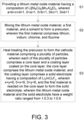
- FIG. 3 is a flow chart of a preparation method of a cathode material according to an embodiment of the present disclosure.
- a lithium metal oxide material is provided.
- the lithium metal oxide material has a composition of Li[Ni a Co b Mn c Al d ]O 2 .
- the lithium metal oxide material includes a lithium nickel cobalt manganese oxide (NCM) material having a composition of Li[Ni a Co b Mn c ]O 2 .
- the lithium nickel cobalt manganese oxide material is prepared by a solid-state synthesis method.
- the lithium metal oxide material includes a lithium nickel cobalt manganese oxide (NCM) material with a different composition ratio, a lithium nickel cobalt aluminum oxide (NCA) material having a composition of Li[Ni a Co b Al d ]O 2 , or a lithium nickel cobalt manganese aluminum oxide (NCMA) material having a composition of Li[Ni a Co b Mn c Al d ]O 2 , and is prepared by a sol-gel process.
- the lithium metal oxide material has a composition of Li[Ni a Co b Mn c Al d ]O 2 , and the coefficients "a" satisfies the condition of 0.9 ⁇ a ⁇ 1.
- the lithium metal oxide material includes a lithium nickel cobalt manganese aluminum oxide (NCMA) material having a composition of Li[Ni a Co b Mn c Al d ]O 2 .
- NCMA lithium nickel cobalt manganese aluminum oxide
- nickel, cobalt, manganese and aluminum in the NCMA material have an amount ratio of 93:3:3:1.
- the types, the composition ratios, and the preparation processes of the lithium metal oxide material are adjustable according to the practical requirements. The present disclosure is not limited thereto, and not redundantly described herein.
- the lithium metal oxide material, the first material, and a solvent are mixed to form a precursor.
- the first material includes lithium, indium, chlorine, and fluorine.
- the first material comprises lithium chloride (LiCl), lithium fluoride (LiF) and indium chloride (InCl3).
- the solvent is a volatile organic solvent. Compared to dry mixing, wet mixing using the organic solvent offers cost efficiency and easy controllability. It not only enhances the solid dispersion of the cathode material but also eliminates the adverse effects of moisture. Furthermore, through wet mixing, the first material is reacted and undergoes an in-situ synthesis on the surface of the cathode material particles, resulting in the formation of a solid electrolyte.
- the cathode material with a uniform core-shell structure, thereby enhancing the electrochemical performance.
- the first material lithium, indium, and halogen elements (the sum of chlorine and fluorine) have an amount ratio of 3:1:6.
- the volatile organic solvent is an ethanol.
- other volatile organic solvents that do not react with the lithium metal oxide material and the first material are also suitable, and their description is not redundantly described herein.
- the lithium metal oxide material, the first material, a conductive additive, a binder, and the solvent are mixed and reacted to form the precursor.
- the lithium metal oxide material, the first material, the conductive additive, the binder, and the solvent are reacted in a vacuum environment or an inert atmosphere to form the precursor.
- the conductive additive includes a nano carbon tube, a conductive graphite, a conductive carbon black, an acetylene black, or a vapor grown carbon fiber (VGCF).
- the binder includes a polyvinylidene difluoride (PVDF) or a polytetrafluoroethene (PTFE).
- PVDF polyvinylidene difluoride
- PTFE polytetrafluoroethene
- the vacuum environment is in a reaction flask having a pressure less than or equal to 10 -3 torr.
- the inert atmosphere is an argon atmosphere or a nitrogen atmosphere. The present disclosure is not limited thereto.
- the precursor is heat-treated to form the cathode material including a plurality of particles 1.
- Each of the plurality of particles 1 includes a core layer 10 and a coating layer 20.
- the core layer 10 includes the lithium metal oxide material.
- the coating layer is coated on the core layer and includes a solid electrolyte.
- the first material is reacted on the core layer 20 to in-situ synthesize the solid electrolyte.
- the solid electrolyte has a composition of Li 3 InCl x F y .
- the lithium metal oxide material and the solid electrolyte have a weight ratio ranged from 1:0.3 to 1:0.6.
- the precursor is heat-treated in a vacuum environment or an inert atmosphere to form the cathode material.
- the vacuum environment is in a reaction flask having a pressure less than or equal to 10 -3 torr.
- the inert atmosphere is an argon atmosphere or a nitrogen atmosphere.
- the present disclosure is not limited thereto.
- the precursor is heat-treated at a temperature ranged from 100 °C to 250 °C.
- the temperature is ranged from 160 °C to 200 °C, ensuring that the preparation method of the cathode material is energy-efficient, cost-effective and environmentally friendly.
- the precursor is uniformly coated on a metal foil and hot treated, and then cut to form the cathode sheet.
- the coefficients "x" and "y” further satisfy the conditions of 4 ⁇ x ⁇ 5.5 and 0.5 ⁇ y ⁇ 2. These conditions indicate that chlorine and fluorine have an amount ratio ranged from 5.5:0.5 to 4:2.
- the electrochemical performance of the cathode material is enhanced. Even more preferably, the amount ratio of chlorine to fluorine is ranged from 5.3:0.7 to 4.5:1.5.
- the present disclosure is not limited thereto.
- the lithium metal oxide material and the solid electrolyte have a weight ratio ranged from 1:0.4 to 1:0.5, resulting in the cathode material with a uniform core-shell structure.
- Each of the plurality of the particles 1 includes a particle size T1, and the coating layer 20 has a thickness T2.
- the particle size T1 and the thickness T2 have a ratio ranged from 6:1 to 40:1.
- the particle size T1 is ranged from 5 ⁇ m to 20 ⁇ m
- the thickness T2 is ranged from 0.5 ⁇ m to 3 ⁇ m.
- the first demonstrative example is a cathode material prepared through the following steps.
- a lithium metal oxide material is provided.
- the lithium metal oxide material has a composition of Li[Ni a Co b Mn c ]O 2 .
- the first material of the first demonstrative example includes 0.083 grams of lithium chloride (LiCl), 0.0189 grams of lithium fluoride (LiF), and 0.199 grams of indium chloride (InCl 3 ). This indicates that in the first material, lithium, indium, chloride, and fluoride have an amount ratio of 3:1:5.19:0.81.
- the precursor is heat-treated to form the cathode material.
- the precursor is heat-treated in an argon atmosphere at a temperature of 180 °C for a duration of 2 hours.
- the preparation method of the second demonstrative example is roughly similar to that of the first demonstrative example.
- the first material of the second demonstrative example includes 0.068 grams of lithium chloride (LiCl), 0.029 grams of lithium fluoride (LiF), and 0.203 grams of indium chloride (InCl 3 ). This indicates that in the first material, lithium, indium, chloride, and fluoride have an amount ratio of 3:1:4.77:1.23.
- the preparation method of the third demonstrative example is roughly similar to that of the first demonstrative example.
- the first material of the third demonstrative example includes 0.053 grams of lithium chloride (LiCl), 0.04 grams of lithium fluoride (LiF), and 0.207 grams of indium chloride (InCl 3 ). This indicates that in the first material, lithium, indium, chloride, and fluoride have an amount ratio of 3:1:4.35:1.65.
- the preparation method of the comparative example is roughly similar to that of the first demonstrative example.
- the first material of the comparative example includes 0.11 grams of lithium chloride (LiCl) and 0.19 grams of indium chloride (InCl 3 ). This indicates that the first material does not include fluoride, and lithium, indium, and chloride have an amount ratio of 3:1:4.35:1.65.
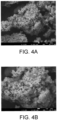
- FIGS. 4A and 4B are SEM images of a cathode material according to a first demonstrative example of the present disclosure.
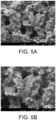
- FIGS. 5A and 5B are SEM images of a cathode material according to a second demonstrative example of the present disclosure.
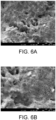
- FIGS. 6A and 6B are SEM images of a cathode material according to a third demonstrative example of the present disclosure.
- FIGS. 7A and 7B are SEM images of a cathode material according to a comparative example of the present disclosure.
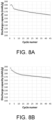
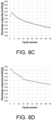
- FIGS. 8A to 8D are plots of discharge capacity vs. cycle number for button cells made using the first demonstrative example, the second demonstrative example, the third demonstrative example and the comparative example of the present disclosure.
- Table 1 below shows the discharge capacity at the first cycle and the forty-fifth cycle for the button cells made using the first demonstrative example, the second demonstrative example, the third demonstrative example and the comparative example.
- the cathode of each button cells is made using the first demonstrative example, the second demonstrative example, the third demonstrative example and the comparative example, respectively.
- the anode of each button cells is made using lithium.
- the button cells undergo testing under specific conditions, including a voltage window ranging from 2.5 V to 4.4 V, a C-rate of 0.1 C, and a temperature of 55 °C.
- the button cells are charged by a constant current (CC) method and discharged by a constant current constant voltage (CCCV) method.
- CC constant current
- CCCV constant current constant voltage
- the button cells are discharged at a constant current until they reach a specified voltage limit. Once the voltage limit is reached, the button cells are then discharged at a constant voltage until they are fully discharged.
- the discharge capacity of the second demonstrative example is 196.18 mAh/g, slightly higher than the discharge capacity of the comparative example.
- chlorine and fluorine has an amount ratio of 4.77:1.23.
- the discharge capacity of the first demonstrative example is 189.49 mAh/g, slightly lower than the discharge capacity of the comparative example. However, the differences are not significant.
- chlorine and fluorine has an amount ratio of 5.19:0.81.
- the discharge capacity of the first demonstrative example is 160.21 mAh/g, showing an improvement of 8.31% compared to the discharge capacity of the comparative example, which is 147.91 mAh/g.
- the discharge capacity of the second demonstrative example is 166.90 mAh/g, showing an improvement of 12.83% compared to the discharge capacity of the comparative example, which is 147.91 mAh/g. Based on the results, it can be inferred that the incorporation of chlorine and fluorine in the solid electrolyte results in the cathode material with high discharge capacity.
- the solid electrolyte formulated with a chlorine-to-fluorine amount ratio ranged from 5.3:0.7 to 4.5:1.5 demonstrates superior performance.
- Table 1 1st Cycle Discharge Capacity (mAh/g) 45th Cycle Discharge Capacity (mAh/g) First Demonstrative Example 189.49 160.21 Second Demonstrative Example 196.18 166.90 Third Demonstrative Example 157.60 123.62 Comparative Example 192.97 147.91
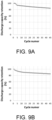
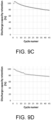
- FIGS. 9A to 9D are plots of discharge capacity retention vs. cycle number for button cells made using the first demonstrative example, the second demonstrative example, the third demonstrative example and the comparative example of the present disclosure.
- Table 2 shows the discharge capacity retention at the forty-fifth cycle for the button cells made using the first demonstrative example, the second demonstrative example, the third demonstrative example and the comparative example.
- the discharge capacity retention of the first demonstrative example is 84.55 %, showing an improvement of 10.31 % compared to the discharge capacity of the comparative example, which is 76.65 %.
- the discharge capacity of the second demonstrative example is 85.07 %, showing an improvement of 10.98 % compared to the discharge capacity of the comparative example, which is 76.65 %.
- the discharge capacity of the second demonstrative example is 166.90 mAh/g, showing an improvement of 2.34 % compared to the discharge capacity of the comparative example, which is 76.65 %.
- the incorporation of chlorine and fluorine in the solid electrolyte results in the cathode material with high discharge capacity retention.
- the solid electrolyte formulated with a chlorine-to-fluorine amount ratio ranged from 5.3:0.7 to 4.5:1.5 demonstrates superior performance.
- Table 2 45th Cycle Discharge Capacity Retention First Demonstrative Example 84.55 % Second Demonstrative Example 85.07 % Third Demonstrative Example 78.44 % Comparative Example 76.65%
- the present disclosure provides a cathode material and a preparation method thereof for obtaining a solid electrolyte coating through an organic solvent, thereby eliminating the adverse effects of moisture on the cathode material and enhancing the electrochemical performance.
- the cathode material includes a plurality of particles. Each of the plurality of particles includes a core layer and a coating layer coated thereon.
- the core layer includes a lithium metal oxide material having a composition of Li[Ni a Co b Mn c Al d ]O 2 .
- the coefficient "a" satisfies the conditions of 0.8 ⁇ a ⁇ 1.
- the coating layer of the cathode material includes a solid electrolyte having a composition of Li 3 InCl x F y .
- the incorporation of chlorine and fluorine in the solid electrolyte further results in the cathode material with high discharge capacity and high discharge capacity retention.
- the coefficients "x" and "y” satisfy the conditions of 4 ⁇ x ⁇ 5.5 and 0.5 ⁇ y ⁇ 2.
- the lithium metal oxide material in the core layer and the solid electrolyte in the coating layer have a weight ratio ranged from 1:0.3 to 1:0.6, resulting in the cathode material with a uniform core-shell structure.
- the lithium metal oxide material, a first material and an organic solvent are mixed and heat-treated to form the cathode material.
- wet mixing using the organic solvent offers cost efficiency and easy controllability. It not only enhances the solid dispersion of the cathode material but also eliminates the adverse effects of moisture.
- the first material is reacted and undergoes an in-situ synthesis on the surface of the cathode material particles, resulting in the formation of a solid electrolyte. This leads to the formation of the cathode material with a uniform core-shell structure, thereby enhancing the electrochemical performance.
- the heat treatment has a temperature ranged from 100 °C to 250 °C, ensuring that the preparation method of the cathode material is energy-efficient, cost-effective and environmentally friendly.
Landscapes
- Chemical & Material Sciences (AREA)
- Chemical Kinetics & Catalysis (AREA)
- Electrochemistry (AREA)
- General Chemical & Material Sciences (AREA)
- Inorganic Chemistry (AREA)
- Engineering & Computer Science (AREA)
- Organic Chemistry (AREA)
- Composite Materials (AREA)
- Manufacturing & Machinery (AREA)
- Materials Engineering (AREA)
- Physics & Mathematics (AREA)
- Condensed Matter Physics & Semiconductors (AREA)
- General Physics & Mathematics (AREA)
- Battery Electrode And Active Subsutance (AREA)
- Inorganic Compounds Of Heavy Metals (AREA)
- Primary Cells (AREA)
- Secondary Cells (AREA)
Claims (14)
- Kathodenmaterial, umfassend eine Vielzahl von Teilchen (1), wobei jedes der Vielzahl von Teilchen (1) dadurch gekennzeichnet ist, dass es umfasst:eine Kernschicht (10), die ein Lithium-Metalloxid-Material umfasst, wobei das Lithium-Metalloxid-Material eine Zusammensetzung von Li[NiaCobMncAld]O2 aufweist, wobei a+b+c+d=1, 0,8<a<1, 0<b<1, 0≤c<1 und 0≤d< 1; undeine Überzugsschicht (20), die auf die Kernschicht (10) aufgebracht ist und einen Festelektrolyten umfasst, wobei der Festelektrolyt durch eine Reaktion eines ersten Materials auf der Kernschicht (10) gebildet wird und eine Zusammensetzung von Li3InClxFy, x+y=6, 4≤x≤5,5 und 0.5≤y≤2, wobei das Lithium-Metalloxid-Material, das erste Material und ein Lösungsmittel gemischt werden, um einen Vorläufer zu bilden, und der Vorläufer wärmebehandelt wird, um das Kathodenmaterial zu bilden, wobei das erste Material Lithium, Indium, Chlor und Fluor umfasst, und das Lithium-Metalloxid-Material und der Festelektrolyt ein Gewichtsverhältnis im Bereich von 1:0,3 bis 1:0,6 aufweisen.
- Kathodenmaterial nach Anspruch 1, wobei 0,9<a<1.
- Kathodenmaterial nach Anspruch 1, wobei das Lithium-Metalloxid-Material und der Festelektrolyt ein Gewichtsverhältnis im Bereich von 1:0,4 bis 1:0,5 aufweisen.
- Kathodenmaterial nach Anspruch 1, wobei jedes der Vielzahl von Teilchen (1) eine Teilchengröße (T1) hat und die Überzugsschicht (20) eine Dicke (T2) hat, wobei die Teilchengröße (T1) und die Dicke (T2) ein Verhältnis im Bereich von 6:1 bis 40:1 haben, wobei die Teilchengröße (T1) im Bereich von 5 µm bis 20 µm liegt und die Dicke (T2) im Bereich von 0,5 µm bis 3 µm liegt.
- Kathodenmaterial nach Anspruch 1, wobei das erste Material Lithiumchlorid (LiCl), Lithiumfluorid (LiF) und Indiumchlorid (InCl3) umfasst.
- Kathodenmaterial nach Anspruch 1, wobei das Lösungsmittel ein flüchtiges organisches Lösungsmittel umfasst.
- Kathodenmaterial nach Anspruch 1, wobei der Vorläufer in einer Vakuumumgebung oder einer inerten Atmosphäre wärmebehandelt wird, um das Kathodenmaterial zu bilden, wobei der Vorläufer bei einer Temperatur wärmebehandelt wird, um das Kathodenmaterial zu bilden, und die Temperatur im Bereich von 100 °C bis 250 °C liegt.
- Verfahren zur Herstellung eines Kathodenmaterials, dadurch gekennzeichnet, dass es die folgenden Schritte umfasst:(a) Bereitstellen eines Lithiummetalloxidmaterials mit einer Zusammensetzung von Li[NiaCobMncAld]O2, wobei a+b+c+d=1, 0,8<a<1, 0<b<1, 0≤c<1 und 0≤d<1;(b) Mischen des Lithiummetalloxidmaterials mit einem ersten Material und einem Lösungsmittel, um einen Vorläufer zu bilden, wobei das erste Material Lithium, Indium, Chlor und Fluor umfasst; und(c) Wärmebehandlung des Vorläufers, um das Kathodenmaterial zu bilden, das eine Vielzahl von Teilchen (1) umfasst, wobei jedes der Vielzahl von Teilchen (1) eine Kernschicht (10) und eine Überzugsschicht (20) umfasst, die auf die Kernschicht (10) aufgetragen ist, wobei die Kernschicht (10) das Lithium-Metalloxid-Material umfasst und die Überzugsschicht (20) einen Festelektrolyten mit einer Zusammensetzung von Li3InClxFy umfasst, wobei x+y=6, 4≤x≤5.5 und 0,5≤y≤2 ist, und das erste Material auf der Kernschicht (10) reagiert, um den Festelektrolyten zu bilden, wobei das Lithiummetalloxidmaterial und der Festelektrolyt ein Gewichtsverhältnis im Bereich von 1:0,3 bis 1:0,6 aufweisen.
- Verfahren zur Herstellung eines Kathodenmaterials nach Anspruch 8, wobei 0,9<a<1.
- Verfahren zur Herstellung eines Kathodenmaterials nach Anspruch 8, wobei das Lithium-Metalloxid-Material und der Festelektrolyt ein Gewichtsverhältnis im Bereich von 1:0,4 bis 1:0,5 aufweisen.
- Verfahren zur Herstellung eines Kathodenmaterials nach Anspruch 8, wobei jedes der mehreren Teilchen (1) eine Teilchengröße (T1) aufweist und die Überzugsschicht (20) eine Dicke (T2) aufweist, wobei die Teilchengröße (T1) und die Dicke (T2) ein Verhältnis im Bereich von 6:1 bis 40:1 aufweisen, wobei die Teilchengröße (T1) im Bereich von 5 µm bis 20 µm liegt und die Dicke (T2) im Bereich von 0,5 µm bis 3 µm liegt.
- Verfahren zur Herstellung eines Kathodenmaterials nach Anspruch 8, wobei das erste Material Lithiumchlorid (LiCl), Lithiumfluorid (LiF) und Indiumchlorid (InCl3) umfasst.
- Verfahren zur Herstellung eines Kathodenmaterials nach Anspruch 8, wobei das Lösungsmittel ein flüchtiges organisches Lösungsmittel umfasst.
- Verfahren zur Herstellung eines Kathodenmaterials nach Anspruch 8, wobei der Vorläufer in einer Vakuumumgebung oder einer inerten Atmosphäre wärmebehandelt wird, um das Kathodenmaterial zu bilden, wobei der Vorläufer bei einer Temperatur wärmebehandelt wird, um das Kathodenmaterial zu bilden, und die Temperatur im Bereich von 100 °C bis 250 °C liegt.
Priority Applications (2)
| Application Number | Priority Date | Filing Date | Title |
|---|---|---|---|
| MA71107A MA71107B1 (fr) | 2023-06-02 | 2023-09-25 | Matériau de cathode et son procédé de préparation |
| HRP20250890TT HRP20250890T1 (hr) | 2023-06-02 | 2023-09-25 | Katodni materijal i postupak njegove pripreme |
Applications Claiming Priority (1)
| Application Number | Priority Date | Filing Date | Title |
|---|---|---|---|
| TW112120622A TWI867563B (zh) | 2023-06-02 | 2023-06-02 | 正極材料及其製備方法 |
Publications (3)
| Publication Number | Publication Date |
|---|---|
| EP4471895A1 EP4471895A1 (de) | 2024-12-04 |
| EP4471895C0 EP4471895C0 (de) | 2025-06-18 |
| EP4471895B1 true EP4471895B1 (de) | 2025-06-18 |
Family
ID=88196981
Family Applications (1)
| Application Number | Title | Priority Date | Filing Date |
|---|---|---|---|
| EP23199535.8A Active EP4471895B1 (de) | 2023-06-02 | 2023-09-25 | Kathodenmaterial und herstellungsverfahren dafür |
Country Status (9)
| Country | Link |
|---|---|
| US (1) | US20240400410A1 (de) |
| EP (1) | EP4471895B1 (de) |
| JP (1) | JP2024173574A (de) |
| KR (1) | KR20240173136A (de) |
| AU (1) | AU2023233213B1 (de) |
| ES (1) | ES3036404T3 (de) |
| HR (1) | HRP20250890T1 (de) |
| MA (1) | MA71107B1 (de) |
| TW (1) | TWI867563B (de) |
Families Citing this family (1)
| Publication number | Priority date | Publication date | Assignee | Title |
|---|---|---|---|---|
| US12463242B2 (en) * | 2022-06-29 | 2025-11-04 | Nissan North America, Inc. | Advanced cathode materials for long-life lithium-ion batteries |
Family Cites Families (12)
| Publication number | Priority date | Publication date | Assignee | Title |
|---|---|---|---|---|
| TW201419635A (zh) * | 2012-11-08 | 2014-05-16 | Nanmat Technology Co Ltd | 一種具有核殼結構之正極材料及其製備方法 |
| JP7390692B2 (ja) * | 2019-04-29 | 2023-12-04 | 国聯汽車動力電池研究院有限責任公司 | リチウム二次電池固体電解質材料、電極及び電池 |
| JP7376348B2 (ja) * | 2019-12-26 | 2023-11-08 | エルジー エナジー ソリューション リミテッド | 正極、リチウムイオン二次電池、正極の製造方法、及びリチウムイオン二次電池の製造方法 |
| CN111146425B (zh) * | 2019-12-30 | 2022-01-25 | 国联汽车动力电池研究院有限责任公司 | 一种电极材料包覆固态电解质的方法和该包覆材料和使用该包覆方法制备电极 |
| WO2021209380A1 (en) * | 2020-04-14 | 2021-10-21 | Solvay Sa | New lithium rare-earth halides |
| CN111490243B (zh) * | 2020-05-25 | 2022-03-11 | 蜂巢能源科技有限公司 | 一种锂离子电池用复合正极材料、其制备方法及用途 |
| CN113845141A (zh) * | 2020-06-28 | 2021-12-28 | 宝山钢铁股份有限公司 | 一种氟掺杂的卤化物固态电解质、制备方法及锂电池 |
| CN111900461B (zh) * | 2020-07-17 | 2022-06-28 | 国联汽车动力电池研究院有限责任公司 | 一种用于高压全固态电池的含氟固态电解质及其制备方法和应用 |
| CN116745952A (zh) * | 2020-12-25 | 2023-09-12 | 株式会社Lg新能源 | 正极活性材料、正极活性材料浆料、正极、锂离子二次电池以及制备正极活性材料的方法 |
| CN113097460B (zh) * | 2021-03-29 | 2022-09-09 | 清华大学 | 一种三元正极材料@氧化铟核壳结构复合材料及其制备方法 |
| CN114335681B (zh) * | 2021-11-29 | 2023-11-28 | 蜂巢能源科技(无锡)有限公司 | 无机卤化物固态电解质、其制备方法、锂离子电池及应用 |
| CN114497713B (zh) * | 2022-02-15 | 2024-03-26 | 蜂巢能源科技(无锡)有限公司 | 一种含氟固态电解质及其制备方法与应用 |
-
2023
- 2023-06-02 TW TW112120622A patent/TWI867563B/zh active
- 2023-07-14 US US18/222,149 patent/US20240400410A1/en active Pending
- 2023-09-21 JP JP2023155824A patent/JP2024173574A/ja active Pending
- 2023-09-22 AU AU2023233213A patent/AU2023233213B1/en active Active
- 2023-09-22 KR KR1020230127211A patent/KR20240173136A/ko active Pending
- 2023-09-25 HR HRP20250890TT patent/HRP20250890T1/hr unknown
- 2023-09-25 ES ES23199535T patent/ES3036404T3/es active Active
- 2023-09-25 MA MA71107A patent/MA71107B1/fr unknown
- 2023-09-25 EP EP23199535.8A patent/EP4471895B1/de active Active
Also Published As
| Publication number | Publication date |
|---|---|
| US20240400410A1 (en) | 2024-12-05 |
| EP4471895A1 (de) | 2024-12-04 |
| TW202450156A (zh) | 2024-12-16 |
| EP4471895C0 (de) | 2025-06-18 |
| KR20240173136A (ko) | 2024-12-10 |
| MA71107B1 (fr) | 2025-08-29 |
| ES3036404T3 (en) | 2025-09-18 |
| HRP20250890T1 (hr) | 2025-09-26 |
| JP2024173574A (ja) | 2024-12-12 |
| AU2023233213B1 (en) | 2024-10-03 |
| TWI867563B (zh) | 2024-12-21 |
Similar Documents
| Publication | Publication Date | Title |
|---|---|---|
| EP1738425B1 (de) | Verfahren zur herstellung eines aktiven anodenmaterials mit verbesserten elektrochemischen eigenschaften | |
| KR101630209B1 (ko) | 양극 활물질, 그를 갖는 리튬이차전지 및 그의 제조 방법 | |
| US7285358B2 (en) | Negative active material for lithium rechargeable batteries and method of fabricating same | |
| EP4068426A1 (de) | Aktives kathodenverbundmaterial für eine festkörperbatterie, verfahren zur herstellung davon, kathodenschicht für eine festkörperbatterie und festkörperbatterie mit der kathodenschicht | |
| JP6578189B2 (ja) | 非水二次電池用正極材料及びその製造方法、並びにその非水二次電池用正極材料を用いた非水二次電池用正極及びそれを用いた非水二次電池 | |
| JP7771198B2 (ja) | 負極活物質、これを含む負極、これを含む二次電池、および負極活物質の製造方法 | |
| US20240154106A1 (en) | Negative electrode active material, negative electrode material and battery | |
| KR20160090580A (ko) | 양극 활물질, 그 제조방법 및 이를 포함하는 리튬이차전지 | |
| KR20180077018A (ko) | 이차전지용 양극 활물질, 그 제조방법 및 이를 포함하는 리튬 이차전지 | |
| KR20190001191A (ko) | 리튬 이차전지용 양극 활물질 및 이를 포함하는 리튬 이차전지 | |
| US20250309264A1 (en) | Lithium manganese iron phosphate cathode material, preparation method therefor, and lithium-ion battery thereof | |
| KR20150070888A (ko) | 나노크기의 이산화티탄으로 표면이 코팅된 구형의 전이금속복합탄산물을 이용한 고전압용 비수계 리튬이차전지용 고용량 양극재료 및 그의 제조 방법 | |
| EP4471895B1 (de) | Kathodenmaterial und herstellungsverfahren dafür | |
| US20250030045A1 (en) | Solid electrolyte material and battery using same | |
| CN113614948B (zh) | 正极材料和电池 | |
| CN119627193A (zh) | 一种固态电解质及其制备方法与应用 | |
| EP4040542A1 (de) | Kathodenaktivmaterial für eine lithiumsekundärbatterie und lithiumsekundärbatterie damit | |
| KR20200131793A (ko) | 복합음극활물질, 이의 제조 방법 및 이를 포함한 음극을 포함하는 리튬이차전지 | |
| JP7702578B2 (ja) | オリビン型複合正極材料及びその製造方法と応用、リチウムイオン電池 | |
| US20230093244A1 (en) | Solid-state battery | |
| EP4492480A1 (de) | Verfahren zur herstellung einer verbundkathode | |
| KR101919715B1 (ko) | 음극 재료의 제조 방법 | |
| WO2021220580A1 (ja) | 負極材料および電池 | |
| JP3495639B2 (ja) | リチウム・マンガン複合酸化物とその製造法並びに該複合酸化物を使用したリチウム二次電池 | |
| US12424657B2 (en) | Positive-electrode material and battery |
Legal Events
| Date | Code | Title | Description |
|---|---|---|---|
| REG | Reference to a national code |
Ref country code: HR Ref legal event code: TUEP Ref document number: P20250890T Country of ref document: HR |
|
| PUAI | Public reference made under article 153(3) epc to a published international application that has entered the european phase |
Free format text: ORIGINAL CODE: 0009012 |
|
| STAA | Information on the status of an ep patent application or granted ep patent |
Free format text: STATUS: REQUEST FOR EXAMINATION WAS MADE |
|
| 17P | Request for examination filed |
Effective date: 20241020 |
|
| AK | Designated contracting states |
Kind code of ref document: A1 Designated state(s): AL AT BE BG CH CY CZ DE DK EE ES FI FR GB GR HR HU IE IS IT LI LT LU LV MC ME MK MT NL NO PL PT RO RS SE SI SK SM TR |
|
| GRAP | Despatch of communication of intention to grant a patent |
Free format text: ORIGINAL CODE: EPIDOSNIGR1 |
|
| STAA | Information on the status of an ep patent application or granted ep patent |
Free format text: STATUS: GRANT OF PATENT IS INTENDED |
|
| RIC1 | Information provided on ipc code assigned before grant |
Ipc: H01M 10/0562 20100101ALI20241218BHEP Ipc: H01M 10/0525 20100101ALI20241218BHEP Ipc: H01M 10/052 20100101ALI20241218BHEP Ipc: H01M 4/505 20100101ALI20241218BHEP Ipc: H01M 4/04 20060101ALI20241218BHEP Ipc: H01M 4/525 20100101ALI20241218BHEP Ipc: H01M 4/36 20060101AFI20241218BHEP |
|
| INTG | Intention to grant announced |
Effective date: 20250109 |
|
| RAV | Requested validation state of the european patent: fee paid |
Extension state: MA Effective date: 20250224 |
|
| GRAS | Grant fee paid |
Free format text: ORIGINAL CODE: EPIDOSNIGR3 |
|
| GRAA | (expected) grant |
Free format text: ORIGINAL CODE: 0009210 |
|
| STAA | Information on the status of an ep patent application or granted ep patent |
Free format text: STATUS: THE PATENT HAS BEEN GRANTED |
|
| AK | Designated contracting states |
Kind code of ref document: B1 Designated state(s): AL AT BE BG CH CY CZ DE DK EE ES FI FR GB GR HR HU IE IS IT LI LT LU LV MC ME MK MT NL NO PL PT RO RS SE SI SK SM TR |
|
| REG | Reference to a national code |
Ref country code: GB Ref legal event code: FG4D |
|
| REG | Reference to a national code |
Ref country code: CH Ref legal event code: EP |
|
| REG | Reference to a national code |
Ref country code: DE Ref legal event code: R096 Ref document number: 602023004071 Country of ref document: DE |
|
| REG | Reference to a national code |
Ref country code: CH Ref legal event code: EP |
|
| REG | Reference to a national code |
Ref country code: IE Ref legal event code: FG4D |
|
| U01 | Request for unitary effect filed |
Effective date: 20250715 |
|
| U07 | Unitary effect registered |
Designated state(s): AT BE BG DE DK EE FI FR IT LT LU LV MT NL PT RO SE SI Effective date: 20250721 |
|
| REG | Reference to a national code |
Ref country code: MA Ref legal event code: VAGR Ref document number: 71107 Country of ref document: MA Kind code of ref document: B1 |
|
| REG | Reference to a national code |
Ref country code: ES Ref legal event code: FG2A Ref document number: 3036404 Country of ref document: ES Kind code of ref document: T3 Effective date: 20250918 |
|
| REG | Reference to a national code |
Ref country code: HR Ref legal event code: T1PR Ref document number: P20250890 Country of ref document: HR |
|
| REG | Reference to a national code |
Ref country code: HR Ref legal event code: ODRP Ref document number: P20250890 Country of ref document: HR Payment date: 20250925 Year of fee payment: 3 |
|
| PG25 | Lapsed in a contracting state [announced via postgrant information from national office to epo] |
Ref country code: GR Free format text: LAPSE BECAUSE OF FAILURE TO SUBMIT A TRANSLATION OF THE DESCRIPTION OR TO PAY THE FEE WITHIN THE PRESCRIBED TIME-LIMIT Effective date: 20250919 |
|
| PGFP | Annual fee paid to national office [announced via postgrant information from national office to epo] |
Ref country code: NO Payment date: 20250919 Year of fee payment: 3 |
|
| PGFP | Annual fee paid to national office [announced via postgrant information from national office to epo] |
Ref country code: TR Payment date: 20250917 Year of fee payment: 3 |
|
| PGFP | Annual fee paid to national office [announced via postgrant information from national office to epo] |
Ref country code: HR Payment date: 20250916 Year of fee payment: 3 |
|
| PG25 | Lapsed in a contracting state [announced via postgrant information from national office to epo] |
Ref country code: RS Free format text: LAPSE BECAUSE OF FAILURE TO SUBMIT A TRANSLATION OF THE DESCRIPTION OR TO PAY THE FEE WITHIN THE PRESCRIBED TIME-LIMIT Effective date: 20250918 |
|
| REG | Reference to a national code |
Ref country code: HR Ref legal event code: ODRP Ref document number: P20250890 Country of ref document: HR Payment date: 20250916 Year of fee payment: 3 |
|
| U20 | Renewal fee for the european patent with unitary effect paid |
Year of fee payment: 3 Effective date: 20250930 |
|
| VSFP | Annual fee paid to validation state [announced via postgrant information from national office to epo] |
Ref country code: MA Payment date: 20251008 Year of fee payment: 3 |