EP4406978A1 - Metallocenverbindung, herstellungsverfahren und verwendung - Google Patents
Metallocenverbindung, herstellungsverfahren und verwendung Download PDFInfo
- Publication number
- EP4406978A1 EP4406978A1 EP22960619.9A EP22960619A EP4406978A1 EP 4406978 A1 EP4406978 A1 EP 4406978A1 EP 22960619 A EP22960619 A EP 22960619A EP 4406978 A1 EP4406978 A1 EP 4406978A1
- Authority
- EP
- European Patent Office
- Prior art keywords
- compound
- metallocene compound
- reaction
- substituted
- ligand
- Prior art date
- Legal status (The legal status is an assumption and is not a legal conclusion. Google has not performed a legal analysis and makes no representation as to the accuracy of the status listed.)
- Pending
Links
Images
Classifications
-
- C—CHEMISTRY; METALLURGY
- C07—ORGANIC CHEMISTRY
- C07F—ACYCLIC, CARBOCYCLIC OR HETEROCYCLIC COMPOUNDS CONTAINING ELEMENTS OTHER THAN CARBON, HYDROGEN, HALOGEN, OXYGEN, NITROGEN, SULFUR, SELENIUM OR TELLURIUM
- C07F17/00—Metallocenes
-
- C—CHEMISTRY; METALLURGY
- C08—ORGANIC MACROMOLECULAR COMPOUNDS; THEIR PREPARATION OR CHEMICAL WORKING-UP; COMPOSITIONS BASED THEREON
- C08F—MACROMOLECULAR COMPOUNDS OBTAINED BY REACTIONS ONLY INVOLVING CARBON-TO-CARBON UNSATURATED BONDS
- C08F10/00—Homopolymers and copolymers of unsaturated aliphatic hydrocarbons having only one carbon-to-carbon double bond
- C08F10/14—Monomers containing five or more carbon atoms
-
- C—CHEMISTRY; METALLURGY
- C08—ORGANIC MACROMOLECULAR COMPOUNDS; THEIR PREPARATION OR CHEMICAL WORKING-UP; COMPOSITIONS BASED THEREON
- C08F—MACROMOLECULAR COMPOUNDS OBTAINED BY REACTIONS ONLY INVOLVING CARBON-TO-CARBON UNSATURATED BONDS
- C08F110/00—Homopolymers of unsaturated aliphatic hydrocarbons having only one carbon-to-carbon double bond
- C08F110/14—Monomers containing five or more carbon atoms
-
- C—CHEMISTRY; METALLURGY
- C08—ORGANIC MACROMOLECULAR COMPOUNDS; THEIR PREPARATION OR CHEMICAL WORKING-UP; COMPOSITIONS BASED THEREON
- C08F—MACROMOLECULAR COMPOUNDS OBTAINED BY REACTIONS ONLY INVOLVING CARBON-TO-CARBON UNSATURATED BONDS
- C08F4/00—Polymerisation catalysts
- C08F4/42—Metals; Metal hydrides; Metallo-organic compounds; Use thereof as catalyst precursors
- C08F4/44—Metals; Metal hydrides; Metallo-organic compounds; Use thereof as catalyst precursors selected from light metals, zinc, cadmium, mercury, copper, silver, gold, boron, gallium, indium, thallium, rare earths or actinides
- C08F4/60—Metals; Metal hydrides; Metallo-organic compounds; Use thereof as catalyst precursors selected from light metals, zinc, cadmium, mercury, copper, silver, gold, boron, gallium, indium, thallium, rare earths or actinides together with refractory metals, iron group metals, platinum group metals, manganese, rhenium technetium or compounds thereof
- C08F4/62—Refractory metals or compounds thereof
- C08F4/64—Titanium, zirconium, hafnium or compounds thereof
- C08F4/659—Component covered by group C08F4/64 containing a transition metal-carbon bond
- C08F4/6592—Component covered by group C08F4/64 containing a transition metal-carbon bond containing at least one cyclopentadienyl ring, condensed or not, e.g. an indenyl or a fluorenyl ring
-
- C—CHEMISTRY; METALLURGY
- C08—ORGANIC MACROMOLECULAR COMPOUNDS; THEIR PREPARATION OR CHEMICAL WORKING-UP; COMPOSITIONS BASED THEREON
- C08F—MACROMOLECULAR COMPOUNDS OBTAINED BY REACTIONS ONLY INVOLVING CARBON-TO-CARBON UNSATURATED BONDS
- C08F2420/00—Metallocene catalysts
- C08F2420/02—Cp or analog bridged to a non-Cp X anionic donor
-
- C—CHEMISTRY; METALLURGY
- C08—ORGANIC MACROMOLECULAR COMPOUNDS; THEIR PREPARATION OR CHEMICAL WORKING-UP; COMPOSITIONS BASED THEREON
- C08F—MACROMOLECULAR COMPOUNDS OBTAINED BY REACTIONS ONLY INVOLVING CARBON-TO-CARBON UNSATURATED BONDS
- C08F4/00—Polymerisation catalysts
- C08F4/42—Metals; Metal hydrides; Metallo-organic compounds; Use thereof as catalyst precursors
- C08F4/44—Metals; Metal hydrides; Metallo-organic compounds; Use thereof as catalyst precursors selected from light metals, zinc, cadmium, mercury, copper, silver, gold, boron, gallium, indium, thallium, rare earths or actinides
- C08F4/60—Metals; Metal hydrides; Metallo-organic compounds; Use thereof as catalyst precursors selected from light metals, zinc, cadmium, mercury, copper, silver, gold, boron, gallium, indium, thallium, rare earths or actinides together with refractory metals, iron group metals, platinum group metals, manganese, rhenium technetium or compounds thereof
- C08F4/62—Refractory metals or compounds thereof
- C08F4/64—Titanium, zirconium, hafnium or compounds thereof
- C08F4/659—Component covered by group C08F4/64 containing a transition metal-carbon bond
- C08F4/65908—Component covered by group C08F4/64 containing a transition metal-carbon bond in combination with an ionising compound other than alumoxane, e.g. (C6F5)4B-X+
-
- C—CHEMISTRY; METALLURGY
- C08—ORGANIC MACROMOLECULAR COMPOUNDS; THEIR PREPARATION OR CHEMICAL WORKING-UP; COMPOSITIONS BASED THEREON
- C08F—MACROMOLECULAR COMPOUNDS OBTAINED BY REACTIONS ONLY INVOLVING CARBON-TO-CARBON UNSATURATED BONDS
- C08F4/00—Polymerisation catalysts
- C08F4/42—Metals; Metal hydrides; Metallo-organic compounds; Use thereof as catalyst precursors
- C08F4/44—Metals; Metal hydrides; Metallo-organic compounds; Use thereof as catalyst precursors selected from light metals, zinc, cadmium, mercury, copper, silver, gold, boron, gallium, indium, thallium, rare earths or actinides
- C08F4/60—Metals; Metal hydrides; Metallo-organic compounds; Use thereof as catalyst precursors selected from light metals, zinc, cadmium, mercury, copper, silver, gold, boron, gallium, indium, thallium, rare earths or actinides together with refractory metals, iron group metals, platinum group metals, manganese, rhenium technetium or compounds thereof
- C08F4/62—Refractory metals or compounds thereof
- C08F4/64—Titanium, zirconium, hafnium or compounds thereof
- C08F4/659—Component covered by group C08F4/64 containing a transition metal-carbon bond
- C08F4/65912—Component covered by group C08F4/64 containing a transition metal-carbon bond in combination with an organoaluminium compound
Definitions
- the present application relates to the field of metallocene compounds catalysis technologies and, in particular, to a metallocene compound, and a preparation method and application thereof.
- US6548686 B2 disclosed a preparation method of a class of transition metal compounds with a constrained geometry configuration and an application thereof.
- the structure of the compounds is shown in Formula 1.
- This class of compounds can be applied to catalyzing polymerization or copolymerization of short chain olefins such as ethylene, propylene, butene, butadiene, and 1-hexene.
- Ying MU's group designed a constrained geometry metallocene-catalyst containing a single carbon atom bridged aryloxy (see Formula 7, where R 1 is selected from H (1), Me (2), or t Bu (3,4)); R 2 is selected from H (2,3) or t Bu (1,4)).
- This catalyst can be used to catalyze the polymerization of ethylene to prepare polyethylene with a medium molecular weight, or to catalyze the copolymerization of ethylene and 1-hexene to prepare an ethylene/1-hexene copolymer product with a medium molecular weight.
- Hidenori Hanaoka designed and synthesized a series of new titanium metal catalysts with a constrained geometry configuration (see Formulas 8 to 11, where Rs are Me and Et respectively, in formula 8; Rs are Me and Et respectively, in formula 9; R 1 s are selected from H or Me and R 2 s are selected from Me and Et, in formula 10; Rs are Me and H respectively, in Formula 11).
- These catalysts are mainly used for the copolymerization of ethylene and 1-hexene, which can effectively improve a polymerization activity, produce a copolymer with a high molecular weight and ensure a high insertion rate of 1-hexene.
- this metallocene catalyst can greatly enhance activity of copolymerization of ethylene and 1-hexene.
- the metallocene compounds have limitations on both raw materials and products. For example, they can only be used to catalyze the polymerization reaction of a straight chain olefin with carbon atoms less than or equal to 6, but cannot be used to catalyze the polymerization reaction of a straight chain olefin with carbon atoms greater than 6, and also cannot be used to catalyze the polymerization reaction of a branched chain olefin with carbon atoms greater than or equal to 6, or when the metallocene compounds with the above structural formulas are used to catalyze the polymerization reaction of straight chain olefins with carbon atoms greater than or equal to 6, it is not possible to prepare a polymerization product with a high molecular weight.
- the present application provides a metallocene compound that can be used for efficiently catalyzing a long straight chain ⁇ -olefin raw material and also a mixed long branched chain non-terminal olefin raw material, and obtaining a polymerization product with a target molecular weight according to demand.
- the present application provides a preparation method for a metallocene compound, which can prepare a metallocene compound that is suitable for effectively catalyzing a long straight chains ⁇ -olefin raw material and a mixed long branched chain non-terminal olefin raw material, and obtaining a polymerization product with a target molecular weight according to demand.
- the present application provides a catalyst system that is suitable for catalyzing a C6-C30 long straight chain ⁇ -olefin raw material and a mixed long branched chain non-terminal olefin raw material, and obtaining a polymerization product with a target molecular weight according to demand.
- the present application provides a metallocene compound, including a structure as shown in Formula a:
- a substituent of C6-C30 aryl in Ar is selected from at least one of methyl, ethyl, methylene, isopropyl, vinyl, propenyl, and butenyl.
- a substituent of cyclopentadienyl, indenyl, or fluorenyl in Cp' is selected from at least one of methyl, ethyl, n-propyl, isopropyl, n-butyl, isobutyl, and phenyl.
- a substituent of C1-C30 alkyl, C1-C30 alkoxy, C2-C30 dialkylamino, C2-C30 alkenyl or C6-C30 aryl in X is selected from at least one of methyl, ethyl, methylene, isopropyl, vinyl, propenyl, and butenyl.
- the metallocene compound includes the following structural formulas:
- the present application further provides a preparation method of the above metallocene compound, including the following steps:
- the strong alkaline compound is selected from at least one of n-butyl lithium, methyl lithium, methylmagnesium chloride, or benzylmagnesium chloride.
- a molar ratio of diarylmethanol, dihydropyran, and first n-butyl lithium is (29.5-30.5): (59.5-60.5): (29.7-35.1); and/or, in a preparation process of the ligand, a molar ratio of the second compound, the fifth compound, n-butyl lithium, and hydrochloric acid is (4.3-5.2): (4.2-4.8): (4.5-5.2): (9.8-10.4).
- a molar ratio of the ligand, the strong alkaline compound, and MX 4 is (3.8-4.4): (8.0-9.2): (3.9-4.5).
- the present application further provides a catalyst system, including the above metallocene compound.
- the metallocene compound of the present application includes structures shown in formula a, and the metallocene compound is a compound with silicon-carbon-oxygen bridge heteroatom constrained geometry configuration.
- the metal center of the metallocene compound contains a five membered chelate ring, and two large steric hindrance aromatic groups are connected to the bridge carbon atom, rendering a coordination space environment more crowded and thus greatly improving a thermal stability of the metallocene compound.
- the metallocene compound exhibits a special high activity catalytic performance under a high temperature condition, high resistance to impurities, and long catalytic life.
- the metallocene compound is suitable for catalyzing a C6-C30 long straight chain ⁇ -olefin raw material, and a mixed long branched chain non-terminal olefin raw material, and may obtain a polymerization product with target molecular weight according to demand.
- the catalyst system of the present application includes the above metallocene compound and thus is suitable for catalyzing a C6-C30 long straight chain ⁇ -olefin raw material and a mixed long branched chain non-terminal olefin raw material, and may obtain a polymerization product with a target molecular weight according to demand.
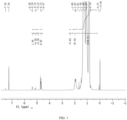
- FIG. 1 is a nuclear magnetic resonance hydrogen spectrum ( 1 H NMR) of a polymerization product obtained from a polymerization reaction of 1-decene catalyzed by a metallocene compound in Example 1 of the present application.
- a first aspect of the present application provides a metallocene compound, including a structure shown in Formula a:
- Ar is selected from a substituted or unsubstituted C6-C30 aryl (e.g., phenyl, biphenyl, substituted phenyl, or substituted biphenyl);
- the metallocene compound of the present application is a compound with a silicon-carbon-oxygen bridge heteroatom constrained geometry configuration, the metal center of the metallocene compound contains a five membered chelate ring, and two large steric hindrance aromatic groups are connected to the bridge carbon atom, rendering a coordination space environment more crowded and thus greatly improving a thermal stability of the metallocene compound.
- the metallocene compound exhibits a special high activity catalytic performance under a high temperature condition, high resistance to impurities, and long catalytic life.
- the metallocene compound is suitable for a long straight chain ⁇ -olefin raw material and a long branched chain non-terminal olefin raw material, and can obtain a polymerization product with target molecular weight according to demand. For example, it may be applied to a polymerization reaction of a straight chain olefin with carbon atoms greater than 6, or to a polymerization reaction of a branched chain system with carbon atoms greater than or equal to 6, and after the polymerization reaction, a polymer with a high molecular weight may be obtained.
- the present application does not specifically limit a substituent of C6-C30 aryl in Ar.
- the substituent of C6-C30 aryl in Ar may be selected from at least one of methyl, ethyl, methylene, isopropyl, vinyl, propenyl, and butenyl.
- the present application does not specially limit a substituent of cyclopentadienyl, indenyl, or fluorene in Cp'.
- the substituent of Cp' is selected from at least one of methyl, ethyl, n-propyl, isopropyl, n-butyl, isobutyl, or phenyl.
- the substituent of cyclopentadienyl, indenyl, or fluorenyl in Cp' is selected from at least one of methyl, ethyl, n-propyl, isopropyl, and butyl.
- a substituent of C1-C30 alkyl, C1-C30 alkoxy, C2-C30 dialkylamino, C2-C30 alkenyl or C6-C30 aryl in X is selected from at least one of methyl, ethyl, methylene, isopropyl, vinyl, propenyl, and butenyl.
- the metallocene compound include the following structural formulas:
- a second aspect of the present application provides a preparation method of the above metallocene compound, including the following steps:
- the ligand may be prepared by a method including the following steps, and a specific reaction formula is shown in Formula 13:
- the strong alkaline compound is selected from at least one of n-butyl lithium, methyl lithium, methylmagnesium chloride, or benzylmagnesium chloride.
- the strong alkaline compound is selected from the above substances, it is more conducive to the reaction between the ligand and the strong alkaline compound to produce the ligand salt.
- a reaction formula for the metallocene compound in some embodiments of the present application is shown in Formula 14:
- a molar ratio of diarylmethanol, dihydropyran, and first n-butyl lithium is (29.5-30.5): (59.5-60.5): (29.7-35.1); and in a preparation process of the ligand, when a molar ratio of the second compound, the fifth compound, n-butyl lithium, and hydrochloric acid is (4.3-5.2): (4.2-4.8): (4.5-5.2): (9.8-10.4), a higher purity ligand may be produced, which is beneficial for obtaining the metallocene compound of the present application, where the metallocene compound is suitable for a C6-C30 long linear chain ⁇ -olefin raw material and also a mixed long branched chain non-terminal olefin raw material, and may obtain a polymerization product with a target molecular weight according to demand.
- the ligand salt can be better produced, and can react with MX 4 to obtain the metallocene compound of the present application.
- a third aspect of the present application provides a catalyst system, including the above metallocene compound.
- metallocene compound of the present application may be combined with other compound, including a cocatalyst, to form a catalyst system for catalyzing a polymerization reaction of an olefin or other compound.
- the catalyst system of the present application includes the above metallocene compound, and thus is suitable for catalyzing a C6-C30 long straight chain ⁇ -olefin raw material and also a mixed long branched chain non-terminal olefin raw material, and may obtain a polymerization product with a target molecular weight according to demand.
- Table 1 Name of chemicals Specification Manufacturer n-Butyl lithium 2.5M Hubei Yunmei Chemical Group Co., Ltd Ethanol Analytical pure Tianjin Damao Chemical Reagent Factory 1-Hecene Analytical pure Aladdin Chemical Reagent Co., Ltd Mixed decene Boiling point: 150 ⁇ 180°C Dushanzi Petrochemical Company Tetrahydrofuran Analytical pure Sinopharm Company Diphenyl methanol Analytical pure Aladdin Chemical Reagent Co., Ltd (p-tolyl)(phenyl)methanol Analytical pure Aladdin Chemical Reagent Co., Ltd (o-phenyl)(phenyl)methanol Analytical pure Aladdin Chemical Reagent Co., Ltd Diethyl ether Analytical pure Tianjin Damao Chemical Reagent Factory Dimethyldichlorosilane Analytical pure Aladdin Chemical Reagent Co., Ltd Column
- the ligand of the metallocene compound of this Example is prepared by a preparation method including the following steps:
- the metallocene compound of this Example is prepared by a preparation method including the following steps:
- Example 2 The preparation method of the metallocene compound in this Example differs from Example 1 in that:
- Example 2 The preparation method of the ligand of the metallocene compound in this Example differs from Example 1 in that:
- Example 2 The preparation method of the metallocene compound in this Example differs from Example 1 in that:
- Example 2 The preparation method of the ligand of the metallocene compound in this Example differs from Example 1 in that:
- Example 2 The preparation method of the metallocene compound in this Example differs from Example 1 in that:
- Example 2 The preparation method of the ligand of the metallocene compound in this Example differs from Example 1 in that:
- Example 2 The preparation method of the metallocene compound in this Example differs from Example 1 in that:
- the preparation method of the metallocene compound in this Example differs from Example 1 in that: the ligand b1 was replaced with the ligand b2, titanium tetrachloride was replaced with zirconium tetrachloride, and a metallocene compound a6, dimethylsilyl bridged tetramethylcyclopentadienyl-[(p-tolyl)(phenyl)methoxy] zirconium dichloride (1090 mg, 2.08 mmol, 44.8%), was obtained.
- Example 2 The preparation method of the metallocene compound in this Example differs from Example 1 in that:
- Catalytic activity of catalyst (total mass of reaction product)/number of moles of catalyst/catalytic time/number of active sites, where the number of active sites of the metallocene compound is 1;
- the kinematic viscosity of polymerization product is determined according to GB/T256-1988 method: the kinematic viscosity of the obtained polymerization product samples at 40 °C and 100 °C is measured using a SYP1003V1 kinematic viscosity tester, and then, the viscosity index is calculated according to a conversion relationship between the viscosity and the viscosity index (ASTMD2270 method);
- the pour point of polymerization product is measured using GB/T3535-83 (91) ;
- the weight average molecular weight of polymerization product is measured using GB/T 27843-2011 .
- Table 2 Conversion rate % Yield % Kinematic viscosity at 100°C, mm 2 /s Activity ⁇ 10 6 g/mol M•h Viscosity index Pour point °C Weight average molecular weight
- Example 1 96.00 95.44 28.25 16.60 153 -44 4820
- Example 2 96.11 93.28 25.13 17.14 148 -46 4320
- Example 3 95.65 92.02 29.57 7.02 155 -50 4058
- Example 4 97.32 95.01 26.18 18.70 149 -52 3954
- Example 5 95.28 93.45 32.57 20.07 168 -54 3322
- Example 6 96.14 92.15 30.19 18.68 166 -51 3545
- Example 7 95.32 94.24 38.42 23.16 172 -43 3728 Comparative Example 1 78
- Nuclear magnetic resonance was used to test the polymer obtained from the polymerization reaction of 1-decene catalyzed by the metallocene compound in Example 1.
- 1H NMR nuclear magnetic resonance hydrogen spectrum
- the metallocene compound of Example 1, 2,4-di-tert-butyl-6-(2,3,4,5-tetramethylcyclopentadienyl)phenoxy titanium dichloride (Comparative Example 1), (4,6-di-tert-butyl-9-fluorenyl)phenoxy titanium dichloride (Comparative Example 2), (3,4-diphenyl-6-cyclopentadienyl)phenoxy titanium dichloride (Comparative Example 3) and rac-vinyl-bis-(4,5,6,7-tetrahydro-1-indenyl) zirconium dichloride (Comparative Example 4) were used as catalysts, respectively, to catalyze the polymerization reaction of a mixed decene liquid, specifically including the following: A 300mL of a stainless-steel polymerization reactor with magnetic stirring paddles was heated to 70 °C, vacuumed for 1 hour, and after N 2 replacement for the reactor was performed for 2-3 times, 100mL of mixed decene
Landscapes
- Chemical & Material Sciences (AREA)
- Organic Chemistry (AREA)
- Health & Medical Sciences (AREA)
- Chemical Kinetics & Catalysis (AREA)
- Medicinal Chemistry (AREA)
- Polymers & Plastics (AREA)
- Crystallography & Structural Chemistry (AREA)
- Engineering & Computer Science (AREA)
- Materials Engineering (AREA)
- Transition And Organic Metals Composition Catalysts For Addition Polymerization (AREA)
Applications Claiming Priority (2)
| Application Number | Priority Date | Filing Date | Title |
|---|---|---|---|
| CN202211178402.1A CN117801029A (zh) | 2022-09-26 | 2022-09-26 | 一种茂金属化合物、制备方法和应用 |
| PCT/CN2022/135851 WO2024066024A1 (zh) | 2022-09-26 | 2022-12-01 | 一种茂金属化合物、制备方法和应用 |
Publications (2)
| Publication Number | Publication Date |
|---|---|
| EP4406978A1 true EP4406978A1 (de) | 2024-07-31 |
| EP4406978A4 EP4406978A4 (de) | 2025-05-14 |
Family
ID=90428546
Family Applications (1)
| Application Number | Title | Priority Date | Filing Date |
|---|---|---|---|
| EP22960619.9A Pending EP4406978A4 (de) | 2022-09-26 | 2022-12-01 | Metallocenverbindung, herstellungsverfahren und verwendung |
Country Status (5)
| Country | Link |
|---|---|
| US (1) | US20240336645A1 (de) |
| EP (1) | EP4406978A4 (de) |
| JP (1) | JP7776661B2 (de) |
| CN (1) | CN117801029A (de) |
| WO (1) | WO2024066024A1 (de) |
Family Cites Families (8)
| Publication number | Priority date | Publication date | Assignee | Title |
|---|---|---|---|---|
| JP3346256B2 (ja) * | 1997-01-14 | 2002-11-18 | 住友化学工業株式会社 | オレフィン(共)重合体の製造方法 |
| SG99905A1 (en) * | 2000-06-21 | 2003-11-27 | Sumitomo Chemical Co | Transition metal compound, catalyst for addition polymerization, and process for producing addition polymer |
| JP4760171B2 (ja) * | 2004-08-30 | 2011-08-31 | 住友化学株式会社 | メタロセン化合物の製造方法 |
| JP4432737B2 (ja) * | 2004-11-10 | 2010-03-17 | 住友化学株式会社 | 遷移金属化合物の精製方法。 |
| JP2008222899A (ja) * | 2007-03-14 | 2008-09-25 | Sumitomo Chemical Co Ltd | オレフィン重合体及びオレフィン重合体の製造方法 |
| CN101130467A (zh) | 2007-08-30 | 2008-02-27 | 吉林大学 | 一种茂金属催化剂体系催化α-烯烃齐聚的方法 |
| KR101827523B1 (ko) * | 2012-03-06 | 2018-03-22 | 에스케이이노베이션 주식회사 | 혼성 담지 메탈로센 촉매, 이의 제조방법 및 이를 이용한 폴리올레핀의 제조방법 |
| ES2949011T3 (es) | 2014-06-30 | 2023-09-25 | Dow Global Technologies Llc | Sistemas de catalizador para la polimerización de olefinas |
-
2022
- 2022-09-26 CN CN202211178402.1A patent/CN117801029A/zh active Pending
- 2022-12-01 WO PCT/CN2022/135851 patent/WO2024066024A1/zh not_active Ceased
- 2022-12-01 JP JP2024544826A patent/JP7776661B2/ja active Active
- 2022-12-01 EP EP22960619.9A patent/EP4406978A4/de active Pending
-
2024
- 2024-04-25 US US18/646,396 patent/US20240336645A1/en active Pending
Also Published As
| Publication number | Publication date |
|---|---|
| US20240336645A1 (en) | 2024-10-10 |
| WO2024066024A1 (zh) | 2024-04-04 |
| EP4406978A4 (de) | 2025-05-14 |
| JP2025503241A (ja) | 2025-01-30 |
| CN117801029A (zh) | 2024-04-02 |
| JP7776661B2 (ja) | 2025-11-26 |
Similar Documents
| Publication | Publication Date | Title |
|---|---|---|
| KR101637026B1 (ko) | 메탈로센 담지 촉매 및 이를 이용하는 폴리올레핀의 제조방법 | |
| KR101623485B1 (ko) | 메탈로센 화합물, 이를 포함하는 촉매 조성물 및 이를 이용하는 올레핀계 중합체의 제조방법 | |
| CN108794545B (zh) | 用于制备超高分子量聚乙烯弹性体的含叔丁基不对称α-二亚胺镍配合物、制备方法及用途 | |
| WO2011099583A1 (ja) | 立体選択的オレフィン重合用触媒及び立体選択的ポリオレフィンの製造方法 | |
| CN114599685A (zh) | 一种双苯酚金属配合物及其制备方法和应用 | |
| KR20120028269A (ko) | 이핵 메탈로센 화합물 및 이를 이용한 폴리올레핀의 제조방법 | |
| EP4406978A1 (de) | Metallocenverbindung, herstellungsverfahren und verwendung | |
| EP0791607A2 (de) | Substituierte Metallocen-Katalysator für die Olefinpolymerisation | |
| US6693156B1 (en) | Methylene bridged metallocenes as olefin-polymerization-catalyst components | |
| Obora et al. | Dehydrocoupling polymerization of arylsilanes with chloro (aryloxy) bis (cyclopentadienyl) zirconium complex catalysts | |
| CN101218262A (zh) | 过渡金属配合物、包含该过渡金属配合物的催化剂组合物及采用该催化剂组合物的烯烃聚合 | |
| CN100590135C (zh) | 中性非桥联茂金属铬催化剂及其用途 | |
| CN110183496A (zh) | 吡啶二亚胺类双核金属配合物,其制备方法及应用 | |
| CN112159433B (zh) | 吡啶并六元环双核-金属配合物,其制备方法及乙烯聚合中的应用 | |
| ITMI20000680A1 (it) | Ciclopentadieni sostituiti policiclici e metodo per la loro preparazione | |
| CN116178207B (zh) | 高热稳定性对称樟脑基α-二亚胺镍配合物制备方法及其应用 | |
| CN117683061A (zh) | 一种茂金属化合物配体及制备方法和应用 | |
| KR100615460B1 (ko) | 메탈로센 촉매 및 이를 이용한 폴리올레핀 왁스의 제조방법 | |
| US6063948A (en) | Process for cyclopentadiene substitution with groups differing from each other | |
| CN117683060A (zh) | 一种茂金属化合物配体及制备方法和应用 | |
| JP4781623B2 (ja) | オレフィンブロック共重合体、及びその製造方法 | |
| CN115850550B (zh) | 一种合成聚α-烯烃的方法及其制得的产品 | |
| CN117820383B (zh) | 一种含胺基的不对称苊基α-二亚胺镍配合物及其制备方法和用途 | |
| JP6886858B2 (ja) | オリゴマーの製造方法 | |
| EP4332129A1 (de) | Verzweigtes olefinpolymer, herstellungsverfahren dafür und verwendung davon |
Legal Events
| Date | Code | Title | Description |
|---|---|---|---|
| STAA | Information on the status of an ep patent application or granted ep patent |
Free format text: STATUS: THE INTERNATIONAL PUBLICATION HAS BEEN MADE |
|
| PUAI | Public reference made under article 153(3) epc to a published international application that has entered the european phase |
Free format text: ORIGINAL CODE: 0009012 |
|
| STAA | Information on the status of an ep patent application or granted ep patent |
Free format text: STATUS: REQUEST FOR EXAMINATION WAS MADE |
|
| 17P | Request for examination filed |
Effective date: 20240426 |
|
| AK | Designated contracting states |
Kind code of ref document: A1 Designated state(s): AL AT BE BG CH CY CZ DE DK EE ES FI FR GB GR HR HU IE IS IT LI LT LU LV MC ME MK MT NL NO PL PT RO RS SE SI SK SM TR |
|
| REG | Reference to a national code |
Ref country code: DE Ref legal event code: R079 Free format text: PREVIOUS MAIN CLASS: C08F0004659200 Ipc: C07F0017000000 |
|
| A4 | Supplementary search report drawn up and despatched |
Effective date: 20250410 |
|
| RIC1 | Information provided on ipc code assigned before grant |
Ipc: C08F 110/14 20060101ALI20250404BHEP Ipc: C08F 4/659 20060101ALI20250404BHEP Ipc: C08F 4/6592 20060101ALI20250404BHEP Ipc: C07F 17/00 20060101AFI20250404BHEP |
|
| DAV | Request for validation of the european patent (deleted) | ||
| DAX | Request for extension of the european patent (deleted) |