EP4406915A1 - Verfahren zur herstellung von kohlenstoffbeschichtetem natriumeisenfluorphosphat aus lithiumeisenphosphatabfall und verwendung davon - Google Patents
Verfahren zur herstellung von kohlenstoffbeschichtetem natriumeisenfluorphosphat aus lithiumeisenphosphatabfall und verwendung davon Download PDFInfo
- Publication number
- EP4406915A1 EP4406915A1 EP23843969.9A EP23843969A EP4406915A1 EP 4406915 A1 EP4406915 A1 EP 4406915A1 EP 23843969 A EP23843969 A EP 23843969A EP 4406915 A1 EP4406915 A1 EP 4406915A1
- Authority
- EP
- European Patent Office
- Prior art keywords
- sodium
- calcination
- iron
- aluminum
- source
- Prior art date
- Legal status (The legal status is an assumption and is not a legal conclusion. Google has not performed a legal analysis and makes no representation as to the accuracy of the status listed.)
- Pending
Links
Images
Classifications
-
- H—ELECTRICITY
- H01—ELECTRIC ELEMENTS
- H01M—PROCESSES OR MEANS, e.g. BATTERIES, FOR THE DIRECT CONVERSION OF CHEMICAL ENERGY INTO ELECTRICAL ENERGY
- H01M10/00—Secondary cells; Manufacture thereof
- H01M10/54—Reclaiming serviceable parts of waste accumulators
-
- C—CHEMISTRY; METALLURGY
- C01—INORGANIC CHEMISTRY
- C01B—NON-METALLIC ELEMENTS; COMPOUNDS THEREOF; METALLOIDS OR COMPOUNDS THEREOF NOT COVERED BY SUBCLASS C01C
- C01B32/00—Carbon; Compounds thereof
- C01B32/05—Preparation or purification of carbon not covered by groups C01B32/15, C01B32/20, C01B32/25, C01B32/30
-
- C—CHEMISTRY; METALLURGY
- C01—INORGANIC CHEMISTRY
- C01B—NON-METALLIC ELEMENTS; COMPOUNDS THEREOF; METALLOIDS OR COMPOUNDS THEREOF NOT COVERED BY SUBCLASS C01C
- C01B25/00—Phosphorus; Compounds thereof
- C01B25/16—Oxyacids of phosphorus; Salts thereof
- C01B25/26—Phosphates
- C01B25/45—Phosphates containing plural metal, or metal and ammonium
-
- C—CHEMISTRY; METALLURGY
- C01—INORGANIC CHEMISTRY
- C01B—NON-METALLIC ELEMENTS; COMPOUNDS THEREOF; METALLOIDS OR COMPOUNDS THEREOF NOT COVERED BY SUBCLASS C01C
- C01B25/00—Phosphorus; Compounds thereof
- C01B25/16—Oxyacids of phosphorus; Salts thereof
- C01B25/26—Phosphates
- C01B25/455—Phosphates containing halogen
-
- C—CHEMISTRY; METALLURGY
- C01—INORGANIC CHEMISTRY
- C01D—COMPOUNDS OF ALKALI METALS, i.e. LITHIUM, SODIUM, POTASSIUM, RUBIDIUM, CAESIUM, OR FRANCIUM
- C01D15/00—Lithium compounds
- C01D15/08—Carbonates; Bicarbonates
-
- C—CHEMISTRY; METALLURGY
- C01—INORGANIC CHEMISTRY
- C01D—COMPOUNDS OF ALKALI METALS, i.e. LITHIUM, SODIUM, POTASSIUM, RUBIDIUM, CAESIUM, OR FRANCIUM
- C01D7/00—Carbonates of sodium, potassium or alkali metals in general
- C01D7/22—Purification
- C01D7/24—Crystallisation
-
- C—CHEMISTRY; METALLURGY
- C01—INORGANIC CHEMISTRY
- C01F—COMPOUNDS OF THE METALS BERYLLIUM, MAGNESIUM, ALUMINIUM, CALCIUM, STRONTIUM, BARIUM, RADIUM, THORIUM, OR OF THE RARE-EARTH METALS
- C01F7/00—Compounds of aluminium
- C01F7/02—Aluminium oxide; Aluminium hydroxide; Aluminates
-
- C—CHEMISTRY; METALLURGY
- C01—INORGANIC CHEMISTRY
- C01F—COMPOUNDS OF THE METALS BERYLLIUM, MAGNESIUM, ALUMINIUM, CALCIUM, STRONTIUM, BARIUM, RADIUM, THORIUM, OR OF THE RARE-EARTH METALS
- C01F7/00—Compounds of aluminium
- C01F7/48—Halides, with or without other cations besides aluminium
- C01F7/56—Chlorides
-
- H—ELECTRICITY
- H01—ELECTRIC ELEMENTS
- H01M—PROCESSES OR MEANS, e.g. BATTERIES, FOR THE DIRECT CONVERSION OF CHEMICAL ENERGY INTO ELECTRICAL ENERGY
- H01M10/00—Secondary cells; Manufacture thereof
- H01M10/05—Accumulators with non-aqueous electrolyte
- H01M10/054—Accumulators with insertion or intercalation of metals other than lithium, e.g. with magnesium or aluminium
-
- H—ELECTRICITY
- H01—ELECTRIC ELEMENTS
- H01M—PROCESSES OR MEANS, e.g. BATTERIES, FOR THE DIRECT CONVERSION OF CHEMICAL ENERGY INTO ELECTRICAL ENERGY
- H01M4/00—Electrodes
- H01M4/02—Electrodes composed of, or comprising, active material
- H01M4/13—Electrodes for accumulators with non-aqueous electrolyte, e.g. for lithium-accumulators; Processes of manufacture thereof
- H01M4/136—Electrodes based on inorganic compounds other than oxides or hydroxides, e.g. sulfides, selenides, tellurides, halogenides or LiCoFy
-
- H—ELECTRICITY
- H01—ELECTRIC ELEMENTS
- H01M—PROCESSES OR MEANS, e.g. BATTERIES, FOR THE DIRECT CONVERSION OF CHEMICAL ENERGY INTO ELECTRICAL ENERGY
- H01M4/00—Electrodes
- H01M4/02—Electrodes composed of, or comprising, active material
- H01M4/36—Selection of substances as active materials, active masses, active liquids
- H01M4/362—Composites
- H01M4/366—Composites as layered products
-
- H—ELECTRICITY
- H01—ELECTRIC ELEMENTS
- H01M—PROCESSES OR MEANS, e.g. BATTERIES, FOR THE DIRECT CONVERSION OF CHEMICAL ENERGY INTO ELECTRICAL ENERGY
- H01M4/00—Electrodes
- H01M4/02—Electrodes composed of, or comprising, active material
- H01M4/36—Selection of substances as active materials, active masses, active liquids
- H01M4/58—Selection of substances as active materials, active masses, active liquids of inorganic compounds other than oxides or hydroxides, e.g. sulfides, selenides, tellurides, halogenides or LiCoFy; of polyanionic structures, e.g. phosphates, silicates or borates
- H01M4/5825—Oxygenated metallic salts or polyanionic structures, e.g. borates, phosphates, silicates, olivines
-
- H—ELECTRICITY
- H01—ELECTRIC ELEMENTS
- H01M—PROCESSES OR MEANS, e.g. BATTERIES, FOR THE DIRECT CONVERSION OF CHEMICAL ENERGY INTO ELECTRICAL ENERGY
- H01M4/00—Electrodes
- H01M4/02—Electrodes composed of, or comprising, active material
- H01M4/36—Selection of substances as active materials, active masses, active liquids
- H01M4/58—Selection of substances as active materials, active masses, active liquids of inorganic compounds other than oxides or hydroxides, e.g. sulfides, selenides, tellurides, halogenides or LiCoFy; of polyanionic structures, e.g. phosphates, silicates or borates
- H01M4/583—Carbonaceous material, e.g. graphite-intercalation compounds or CFx
- H01M4/587—Carbonaceous material, e.g. graphite-intercalation compounds or CFx for inserting or intercalating light metals
-
- H—ELECTRICITY
- H01—ELECTRIC ELEMENTS
- H01M—PROCESSES OR MEANS, e.g. BATTERIES, FOR THE DIRECT CONVERSION OF CHEMICAL ENERGY INTO ELECTRICAL ENERGY
- H01M4/00—Electrodes
- H01M4/02—Electrodes composed of, or comprising, active material
- H01M4/62—Selection of inactive substances as ingredients for active masses, e.g. binders, fillers
- H01M4/624—Electric conductive fillers
- H01M4/625—Carbon or graphite
-
- C—CHEMISTRY; METALLURGY
- C01—INORGANIC CHEMISTRY
- C01P—INDEXING SCHEME RELATING TO STRUCTURAL AND PHYSICAL ASPECTS OF SOLID INORGANIC COMPOUNDS
- C01P2002/00—Crystal-structural characteristics
- C01P2002/70—Crystal-structural characteristics defined by measured X-ray, neutron or electron diffraction data
- C01P2002/72—Crystal-structural characteristics defined by measured X-ray, neutron or electron diffraction data by d-values or two theta-values, e.g. as X-ray diagram
-
- C—CHEMISTRY; METALLURGY
- C01—INORGANIC CHEMISTRY
- C01P—INDEXING SCHEME RELATING TO STRUCTURAL AND PHYSICAL ASPECTS OF SOLID INORGANIC COMPOUNDS
- C01P2004/00—Particle morphology
- C01P2004/01—Particle morphology depicted by an image
- C01P2004/03—Particle morphology depicted by an image obtained by SEM
-
- C—CHEMISTRY; METALLURGY
- C01—INORGANIC CHEMISTRY
- C01P—INDEXING SCHEME RELATING TO STRUCTURAL AND PHYSICAL ASPECTS OF SOLID INORGANIC COMPOUNDS
- C01P2004/00—Particle morphology
- C01P2004/80—Particles consisting of a mixture of two or more inorganic phases
-
- C—CHEMISTRY; METALLURGY
- C01—INORGANIC CHEMISTRY
- C01P—INDEXING SCHEME RELATING TO STRUCTURAL AND PHYSICAL ASPECTS OF SOLID INORGANIC COMPOUNDS
- C01P2006/00—Physical properties of inorganic compounds
- C01P2006/11—Powder tap density
-
- C—CHEMISTRY; METALLURGY
- C01—INORGANIC CHEMISTRY
- C01P—INDEXING SCHEME RELATING TO STRUCTURAL AND PHYSICAL ASPECTS OF SOLID INORGANIC COMPOUNDS
- C01P2006/00—Physical properties of inorganic compounds
- C01P2006/12—Surface area
-
- C—CHEMISTRY; METALLURGY
- C01—INORGANIC CHEMISTRY
- C01P—INDEXING SCHEME RELATING TO STRUCTURAL AND PHYSICAL ASPECTS OF SOLID INORGANIC COMPOUNDS
- C01P2006/00—Physical properties of inorganic compounds
- C01P2006/40—Electric properties
-
- C—CHEMISTRY; METALLURGY
- C01—INORGANIC CHEMISTRY
- C01P—INDEXING SCHEME RELATING TO STRUCTURAL AND PHYSICAL ASPECTS OF SOLID INORGANIC COMPOUNDS
- C01P2006/00—Physical properties of inorganic compounds
- C01P2006/80—Compositional purity
-
- H—ELECTRICITY
- H01—ELECTRIC ELEMENTS
- H01M—PROCESSES OR MEANS, e.g. BATTERIES, FOR THE DIRECT CONVERSION OF CHEMICAL ENERGY INTO ELECTRICAL ENERGY
- H01M4/00—Electrodes
- H01M4/02—Electrodes composed of, or comprising, active material
- H01M2004/021—Physical characteristics, e.g. porosity, surface area
-
- H—ELECTRICITY
- H01—ELECTRIC ELEMENTS
- H01M—PROCESSES OR MEANS, e.g. BATTERIES, FOR THE DIRECT CONVERSION OF CHEMICAL ENERGY INTO ELECTRICAL ENERGY
- H01M4/00—Electrodes
- H01M4/02—Electrodes composed of, or comprising, active material
- H01M2004/026—Electrodes composed of, or comprising, active material characterised by the polarity
- H01M2004/028—Positive electrodes
-
- Y—GENERAL TAGGING OF NEW TECHNOLOGICAL DEVELOPMENTS; GENERAL TAGGING OF CROSS-SECTIONAL TECHNOLOGIES SPANNING OVER SEVERAL SECTIONS OF THE IPC; TECHNICAL SUBJECTS COVERED BY FORMER USPC CROSS-REFERENCE ART COLLECTIONS [XRACs] AND DIGESTS
- Y02—TECHNOLOGIES OR APPLICATIONS FOR MITIGATION OR ADAPTATION AGAINST CLIMATE CHANGE
- Y02E—REDUCTION OF GREENHOUSE GAS [GHG] EMISSIONS, RELATED TO ENERGY GENERATION, TRANSMISSION OR DISTRIBUTION
- Y02E60/00—Enabling technologies; Technologies with a potential or indirect contribution to GHG emissions mitigation
- Y02E60/10—Energy storage using batteries
-
- Y—GENERAL TAGGING OF NEW TECHNOLOGICAL DEVELOPMENTS; GENERAL TAGGING OF CROSS-SECTIONAL TECHNOLOGIES SPANNING OVER SEVERAL SECTIONS OF THE IPC; TECHNICAL SUBJECTS COVERED BY FORMER USPC CROSS-REFERENCE ART COLLECTIONS [XRACs] AND DIGESTS
- Y02—TECHNOLOGIES OR APPLICATIONS FOR MITIGATION OR ADAPTATION AGAINST CLIMATE CHANGE
- Y02W—CLIMATE CHANGE MITIGATION TECHNOLOGIES RELATED TO WASTEWATER TREATMENT OR WASTE MANAGEMENT
- Y02W30/00—Technologies for solid waste management
- Y02W30/50—Reuse, recycling or recovery technologies
- Y02W30/84—Recycling of batteries or fuel cells
Definitions
- the present invention relates to the field of sodium-ion battery technology, in particular, to a method for preparing carbon-coated sodium iron fluorophosphate from waste lithium iron phosphate and application thereof.
- Polyanionic compounds are a class of high-performance and high-safety cathode materials which have been widely studied, and have strong covalent bonds in their structures that facilitate stabilization of the structural framework, thereby effectively improving the safety of the electrode during charging and discharging.
- Sodium iron phosphate is generally considered to have poor electrochemical activity, and introduction of fluorine to form sodium iron fluorophosphate can increase the electrochemical activity and the voltage plateau, and therefore, such modification is relatively successful for cathode materials of sodium batteries.
- Waste lithium iron phosphate is mainly from waste electrode sheets produced during production of the batteries, that is, the electrode sheets produced by disassembling the scrapped batteries. According to statistic results, an annual output of lithium iron phosphate was 480,000 tons in 2021, and was estimated to reach 1 million tons in 2022. It has become a research hotspot to effectively utilize these resources.
- sodium batteries are becoming an increasing important development trend in the future, especially with a gradual rise in the price of lithium. Therefore, it is of great significance to prepare sodium battery materials from scrapped lithium battery resources.
- An object of the present invention is to provide a method for preparing carbon-coated sodium iron fluorophosphate from waste lithium iron phosphate having the advantages of low costs, a high added value, a short process, and a high recovery rate, and the carbon-coated sodium iron fluorophosphate obtained from the method has excellent electrochemical performance.
- Another object of the present invention is to provide a cathode sheet.
- Still another object of the present invention is to provide a sodium-ion battery.
- the present invention provides a method for preparing carbon-coated sodium iron fluorophosphate from waste lithium iron phosphate, including steps as described below.
- the waste lithium iron phosphate material includes electrode sheets that are produced by disassembling batteries after the batteries are scrapped, and the main components of the batteries include lithium iron phosphate and aluminum.
- step (a) the purpose of reacting the waste lithium iron phosphate material with the alkaline solution is to allow the aluminum in the waste lithium iron phosphate material to react and dissolve.
- the reaction in step (a) is performed at room temperature without heating since a large amount of heat is generated during the reaction of aluminum with sodium hydroxide.
- step (a) the reaction continues until bubbles disappear, that is, no more bubbles emerge.
- the reaction is performed for 1 hour to 10 hours, including but not limited to, 2 hours, 3 hours, 4 hours, 5 hours, 6 hours, 7 hours, 8 hours, 9 hours, or a value in a range between any two thereof.
- the main component of the aluminum-containing filtrate is metaaluminate ions.
- the main component of the lithium iron phosphate filter residue is lithium iron phosphate.
- lithium tetrachloroaluminate can be formed via the reaction between aluminum chloride and lithium element.
- the main component of the calcination material is sodium iron phosphate.
- lithium tetrachloroaluminate escapes in the form of a waste gas.
- the vacuum calcination is carried out under vacuum atmosphere, which can decrease the boiling point of lithium tetrachloroaluminate and the calcination temperature, thereby lowering the energy consumption while fully separating lithium tetrachloroaluminate.
- the sodium source, iron source and phosphorus source are used for supplementation of sodium, iron and phosphorus, respectively.
- the carbon source is used as a reductant to reduce divalent iron to trivalent iron; on the other hand, the carbon source is further used as a coating agent and coated on the surface of sodium iron fluorophosphate to enhance electrical conductivity.
- the carbon-coated sodium iron fluorophosphate prepared in step (c) according to the present invention includes sodium iron fluorophosphate and a carbon coating layer at least partially applied on the surface of the sodium iron fluorophosphate.
- the method for preparing carbon-coated sodium iron fluorophosphate from waste lithium iron phosphate provided in the present invention has a short process flow, low cost, high environmental friendliness, high recovery rates of iron and phosphorus, and can produce cathode material, i.e., carbon-coated sodium iron fluorophosphate, for sodium batteries with high performance.
- a mass percentage of carbon in the carbon-coated sodium iron fluorophosphate is 1% to 5%, including but not limited to, 2%, 3%, 4%, or a value in a range between any two thereof.
- a mass ratio of the waste lithium iron phosphate material to the alkaline solution is 1:5-15, including but not limited to, 1:6, 1:7, 1:8, 1:9, 1:10, 1:11, 1:12, 1:13, 1:14, or a value in a range between any two thereof.
- the alkaline solution includes a sodium hydroxide solution which facilitates subsequent recovery to produce sodium carbonate.
- a molar concentration of the alkaline solution is 3 mol/L to 5 mol/L, including but not limited to, 3.5 mol/L, 4 mol/L, 4.5 mol/L, or a value in a range between any two thereof.
- the aluminum-containing filtrate is reused until a molar concentration of hydroxide ions in the aluminum-containing filtrate is below 0.2 mol/L, including but not limited to, 0.15 mol/L, 0.1 mol/L, 0.05 mol/L, 0.01 mol/L, or a value in a range between any two thereof, to obtain a waste aluminum-containing solution.
- step (a) further includes recovering the waste aluminum-containing solution to prepare aluminum chloride and sodium carbonate.
- the recovering includes: introducing carbon dioxide into the waste aluminum-containing solution to decrease a pH of the waste aluminum-containing solution to 9-11, including but not limited to, 9.3, 9.5, 10, 10.5 or 10.8, or a value in a range between any two thereof, followed by solid-liquid separation, to obtain an aluminum hydroxide precipitate and a sodium carbonate filtrate.
- the aluminum hydroxide precipitate is mixed with hydrochloric acid for reaction, and then concentrated and crystallized to obtain aluminum chloride.
- the sodium carbonate filtrate is concentrated and crystallized to obtain sodium carbonate.
- a temperature of the mixed materials is 40 °C to 60 °C, including but not limited to, 42 °C, 45 °C, 50 °C, 55 °C, 58 °C, or a value in a range between any two thereof.
- the aluminum chloride produced can be used in step (b).
- the sodium carbonate produced can be used as a sodium source in step (c).
- all the components in the waste lithium iron phosphate material are sufficiently utilized, with aluminum (aluminum foil) being used to prepare aluminum chloride, and the sodium hydroxide solution (the alkaline solution) for preparing sodium carbonate, reducing waste generation and saving costs.
- a molar ratio of lithium element, aluminum chloride, and sodium chloride in the lithium iron phosphate filter residue is 1:1.2-1.5:1.02-1.05, for example, 1:1.2:1.02, 1:1.2:1.03, 1:1.2:1.04, 1:1.2:1.05, 1:1.3:1.02, 1:1.3:1.03, 1:1.3:1.04, 1:1.3:1.05, 1:1.4:1.02, 1:1.4:1.03, 1:1.4:1.04, 1:1.4:1.05, 1:1.5:1.02, 1:1.5:1.03, 1:1.5:1.04, or 1:1.5:1.05.
- the vacuum calcination is performed at a temperature of 400 °C to 600 °C, including but not limited to, 420 °C, 450 °C, 500 °C, 550 °C, 580 °C, or a value in a range between any two thereof; and the time of the vacuum calcination is 4 hours to 6 hours, including but not limited to, 4.5 hours, 5 hours, 5.5 hours, or a value in a range between any two thereof.
- a vacuum degree of the vacuum calcination is -0.04 MPa to -0.08 MPa, including but not limited to, -0.05 MPa, -0.06 MPa, -0.07 MPa or a value in a range between any two thereof.
- a waste gas material produced during the vacuum calcination is collected and mixed with ammonia water for aluminum precipitation reaction (namely, a reaction that produces aluminum hydroxide precipitate), followed by solid-liquid separation to obtain a solid material which is sintered to obtain alumina, a liquid material obtained from the solid-liquid separation is mixed with sodium carbonate for lithium precipitation reaction (namely, a reaction that produces lithium carbonate precipitate), followed by solid-liquid separation to obtain lithium carbonate.
- ammonia water for aluminum precipitation reaction namely, a reaction that produces aluminum hydroxide precipitate
- a liquid material obtained from the solid-liquid separation is mixed with sodium carbonate for lithium precipitation reaction (namely, a reaction that produces lithium carbonate precipitate)
- solid-liquid separation to obtain lithium carbonate.
- a main component of the waste gas material produced during the vacuum calcination is lithium tetrachloroaluminate.
- the waste gas material is mixed with ammonia water, aluminum ions react with ammonia water to form aluminum hydroxide precipitate which is the solid material obtained from the solid-liquid separation.
- the aluminum hydroxide precipitate is sintered to obtain alumina.
- the alumina produced can react with hydrochloric acid to produce aluminum chloride which is used in subsequent step (b).
- the liquid material obtained from the solid-liquid separation contains lithium ions and is mixed with sodium carbonate for reaction, to obtain lithium carbonate.
- a molar concentration of the ammonia water is 0.01 mol/L to 0.1 mol/L, including but not limited to, 0.02 mol/L, 0.03 mol/L, 0.04 mol/L, 0.05 mol/L, 0.06 mol/L, 0.07 mol/L, 0.08 mol/L, 0.09 mol/L, or a value in a range between any two thereof.
- a molar ratio of nitrogen element in the ammonia water to aluminum element in the waste gas material is 3.1-6:1, including but not limited to, 3.2:1, 3.3:1, 3.4:1, 3.5:1, 3.7:1, 3.9:1, 4:1, 4.5:1, 5:1 and 5.5:1 or a value in a range between any two thereof.
- the waste gas from calcination is extracted using an induced draft fan, then condensed through a condenser to have a temperature less than or equal to 150 °C, followed dust collection through a dust collection cloth bag, then through water spray absorption, to obtain the waste gas material.
- the price of lithium carbonate is about half 500000 CNY/ton, and the price of sodium iron fluorophosphate is about 85000 CNY/ton.
- the aluminum precipitation reaction is performed at a temperature of 40 °C to 80 °C, including but not limited to, 45 °C, 50 °C, 55 °C, 60 °C, 65 °C, 70 °C, 75 °C, or a value in a range between any two thereof.
- the aluminum precipitation reaction is performed for 1 hour to 3 hours, including but not limited to, 1.5 hours, 2 hours, 2.5 hours, or a value in a range between any two thereof.
- the lithium precipitation reaction is performed at a temperature of 60 °C to 90 °C, including but not limited to, 65 °C, 70 °C, 75 °C, 80 °C, 85 °C, or a value in a range between any two thereof.
- the lithium precipitation reaction is performed for 1 hour to 3 hours, including but not limited to, 1.5 hours, 2 hours, 2.5 hours, or a value in a range between any two thereof.
- step (c) contents of Na element, Fe element and P element in the calcination material are determined before the calcination material is mixed with at least one of the sodium source, the iron source and the phosphorus source, and components are configured such that the mixture has Na element, Fe element and P element in a molar ratio of 0.95-0.98:1:1.02-1.05.
- the foregoing molar ratio may be, for example, 0.95:1:1.02, 0.96:1:1.02, 0.97:1:1.02, 0.98:1:1.02, 0.95:1:1.03, 0.96:1:1.03, 0.97:1:1.03, 0.98:1:1.03, 0.95:1:1.04, 0.96:1:1.04, 0.97:1:1.04, 0.98:1:1.04, 0.95:1:1.05, 0.96:1:1.05, 0.97:1:1.05 or 0.98:1:1.05.
- the calcination material is sampled, the contents of Na, Fe and P elements in the calcination material are detected, the molar ratio of Na element to Fe element to P element in the calcination material is calculated, and then at least one of the raw materials of sodium source, iron source and phosphorus source is added based the molar ratio of Na element to Fe element to P element which is 0.95-0.98:1:1.02-1.05 (one, two or three raw materials can be added based on the calculation result).
- the sodium source includes at least one of sodium carbonate, sodium bicarbonate and sodium acetate;
- the iron source includes at least one of iron oxide red, ferrous oxalate and iron acetate;
- the phosphorus source includes at least one of phosphoric acid, ammonium monohydrogen phosphate and ammonium dihydrogen phosphate.
- the fluorine source includes sodium fluoride.
- a molar ratio of the fluorine source to Fe element in the mixture is 0.95-0.98:1, including but not limited to, 0.95:1, 0.96:1, 0.97:1, 0.98:1, or a value in a range between any two thereof.
- the carbon source includes at least one of glucose, sucrose, polyethylene glycol and starch.
- a mass ratio of the carbon source to the calcination material is 0.2-0.3:1, including but not limited to, 0.21:1, 0.22:1, 0.23:1, 0.24:1, 0.25:1, 0.26:1, 0.27:1, 0.28:1, 0.29:1, or a value in a range between any two thereof.
- the solvents include water and/or an organic solvent. More preferably, the solvent is water.
- the organic solvent can be, but not limited to, any conventional volatile solvent such as ethanol, propanol or ethylene glycol.
- step (c) the fluorine source, the carbon source and the solvent are added and then ground to be mixed uniformly.
- the fluorine source, the carbon source and the solvent are ground until a particle size of the solid particles in the mixed slurry is 200 nm to 400 nm, including but not limited to, 220 nm, 250 nm, 300 nm, 350 nm , 380 nm, or a value in a range between any two thereof.
- the drying includes spray drying.
- a particle size of a dried material obtained from spray drying is 10 ⁇ m to 30 ⁇ m, including but not limited to, 12 ⁇ m, 15 ⁇ m, 20 ⁇ m, 25 ⁇ m, 28 ⁇ m, or a value in a range between any two thereof.
- a water content in the dried material obtained from the spray drying is less than 0.5 wt%, including but not limited to, 0.4 wt%, 0.3 wt%, 0.2 wt%, 0.1 wt%, or a value in a range between any two thereof.
- the calcination is performed at a temperature of 550 °C to 650 °C, including but not limited to, 560 °C, 570 °C 580 °C, 590 °C, 600 °C, 610 °C, 620 °C, 630 °C, 640 °C, or a value in a range between any two thereof.
- a holding time of the calcination is 4 hours to 6 hours, including but not limited to, 4.5 hours, 5 hours, 5.5 hours, or a value in a range between any two thereof.
- the heating rate during the calcination process is 100 °C to 150 °C/h, including but not limited to, 110 °C/h, 120 °C/h, 130 °C/h, 140 °C/h, or a value in a range between any two thereof.
- step (c) after the calcination is completed, the material is cooled to a temperature of ⁇ 100 °C before being discharged.
- the calcination is performed in an inert atmosphere, which is, for example, but is not limited to, a nitrogen atmosphere and/or an argon atmosphere.
- an oxygen content in the inert atmosphere is less than 5 ppm, including but not limited to, 4 ppm, 3 ppm, 2 ppm, 1 ppm, or a value in a range between any two thereof.
- the humidity of the inert atmosphere is less than 3%, including but not limited to, 2%, 1%, 0.5%, or a value in a range between any two thereof.
- step (c) during the heating stage of the calcination, an induced draft fan is connected for ventilation to extract the waste gas from the heating stage.
- the step (c) further includes pulverization, screening and iron removal in sequence after the calcination.
- the pulverization can be any conventional pulverization method, for example, but not limited to, jet mill.
- the screening can be any conventional screening method, for example, but not limited to, screening via an ultrasonic vibrating screen.
- the iron removal can be any conventional iron removal method, for example, but not limited to, iron removal via an electromagnetic iron remover.
- iron is removed until the magnetic substance in the material is less than 1 ppm, including but not limited to, 0.8 ppm, 0.5 ppm, 0.3 ppm, 0.1 ppm, or a value in a range between any two thereof.
- the method further includes vacuum packaging in a constant temperature and humidity chamber after iron is removed.
- the D50 particle size of the carbon-coated sodium iron fluorophosphate obtained after the pulverization and screening is 0.5 ⁇ m to 2 ⁇ m.
- the present invention provides a cathode sheet prepared mainly with the carbon-coated sodium iron fluorophosphate produced through the above method for preparing carbon-coated sodium iron fluorophosphate from waste lithium iron phosphate.
- the present invention provides a sodium-ion battery including the cathode sheet.
- the sodium-ion battery has low costs and excellent electrochemical performance.
- the method for preparing carbon-coated sodium iron fluorophosphate from waste lithium iron phosphate provided in this example includes steps of:
- the main impurity in the waste lithium iron phosphate material was aluminum foil, which accounted for 20.5% of the mass fraction.
- the elemental content detection results of the first aluminum-containing filtrate (volume of 80.05L) obtained as mentioned above are shown in Table 1 below.
- step (2) The aluminum-containing filtrate obtained in step (1) was reused to be mixed with 10 kg of waste lithium iron phosphate material for reaction until the hydroxide ions were consumed to a molar concentration equal to or less than 0.18 mol/L, followed by filtration, to obtain a second aluminum-containing filtrate (volume of 76.46 L).
- the second aluminum-containing filtrate was sampled and tested, and the results are shown in Table 2.
- Carbon dioxide was introduced into the second aluminum-containing filtrate at a temperature of 50 °C, then measure the online pH of the filtrate, after the pH was decreased to 10.1, the introduction of carbon dioxide was terminated, and the resulting mixture was continuously stirred for reaction for 50 minutes and then filtered to obtain an aluminum hydroxide precipitate and a sodium carbonate filtrate.
- Hydrochloric acid was added to the aluminum hydroxide precipitate for dissolution, the pH at an endpoint was maintained at 1.3 to obtain an aluminum chloride solution which was then concentrated and crystallized to obtain aluminum chloride crystal, the purity of aluminum chloride crystal was measured to be 99.4 wt%, and the aluminum chloride crystal was stored for later use (for step (3) below).
- the obtained sodium carbonate filtrate was concentrated and crystallized to obtain sodium carbonate.
- the sodium carbonate filtrate was concentrated until a baume degree was 52, and then cooled and crystallized, the cooling time was 12 hours, the sodium carbonate filtrate was cooled to an endpoint temperature of 25 °C, and then centrifuged and dried.
- the purity of the sodium carbonate was measured to be 99.2 wt%, and the sodium carbonate was stored for later use as a sodium source (for step (4) below).
- step (3) Aluminum chloride and sodium chloride were added to the lithium iron phosphate filter residue obtained in step (1), with a molar ratio of the lithium element in the lithium iron phosphate filter residue, aluminum chloride, and sodium chloride being 1:1.35:1.045, and after uniform mixing, the resulting mixture was calcinated for 5 hours at a vacuum degree of -0.065 MPa and a temperature of 500 °C to obtain a calcination material.
- the waste gas generated during the calcination was extracted through an induced draft fan, condensed through a condenser to a have a temperature of 135 °C, then filtered through a dust collection cloth bag, and then subjected to water spray absorption, to obtain a waste gas material.
- a molar ratio of Na to Fe to P in the calcination material was 0.954:1:0.989. Therefore, sodium and phosphorus sources need to be added.
- Sodium carbonate and ammonium dihydrogen phosphate were added to the calcination material to reach a molar ratio of Na to Fe to P of 0.975:1:1.04, and a mixture was obtained after uniform mixing.
- sodium fluoride, a carbon source and pure water were added to the mixture, stirred and slurried.
- Glucose and sucrose in a mass ratio of 1:0.3 were used as the carbon source, and a mass of the carbon source (the sum of the masses of glucose and sucrose) was 0.25 times the mass of the calcination material.
- the molar ratio of sodium fluoride to iron element in the mixture was 0.97:1.
- the slurry obtained after stirring and slurrying was ground until a particle size of the solid particles in the slurry was 285 nm, and then spray dried, to obtain a spray-dried material with a particle size of 21.7 ⁇ m, and a water content of the spray-dried material was less than 0.5 wt%.
- the spray-dried material was calcined to obtain a calcined material.
- the heating rate was 120 °C/h, then the temperature was maintained at 600 °C for 5 hours, followed by cooling the material to a temperature ⁇ 100 °C before discharging.
- Nitrogen was introduced in the calcination process to maintain an oxygen content in the calcination furnace below 5 ppm and humidity below 3%.
- an induced draft fan was connected for ventilation, and the waste gas in the heating stage was extracted.
- the calcined material was pulverized via a jet mill until a particle size of the material was 1.4 ⁇ m. Then a 100-mesh ultrasonic vibrating screen was used for screening. Then a electromagnetic iron remover was used to remove iron until the magnetic substance in the material was below 1 ppm, and then the material was vacuum packaged in a constant temperature and humidity chamber to obtain carbon-coated sodium iron fluorophosphate which can be used as a cathode material for sodium batteries.
- Table 6 Test results of various aspects of carbon-coated sodium iron fluorophosphate prepared in this example are shown in Table 6 below.
- Table 6 Test Results of Carbon-Coated Sodium Iron Fluorophosphate Indexes Na Fe P F C Free sodium Al Data 20.12 wt% 25.08 wt% 14.41 wt% 8.41 wt% 2.45 wt% 217 ppm 107.6 ppm Indexes Ca Mg Co Ni Cu Zn Li Data 55.8 ppm 79.5 ppm 3.9 ppm 1.1 ppm 0.1 ppm 23.7 ppm 0.08 wt% Indexes pH Tap density Compacted density BET Powder resistivity Moisture content Magnetic foreign matter Data 10.98 0.82 g/mL 2.26 g/mL 17.35 m 2 /g 11.8 ⁇ .cm 697 ppm 0.88 ppm Indexes D10 D50 D90 Data 0.2 ⁇ m 1.2 ⁇ m 9.9 ⁇ m Indexes Charging capacity at the rate of 1C Dischar
- the compacted density was measured at a pressure of 3 T.
- the powder resistivity was measured through the four-probe method at a pressure of 10 MPa.
- the cathode current collector was carbon-coated aluminum foil
- the cathode was made of the material of the example, SP and PVDF in a mass ratio of 88:7:5
- the compacted density of the electrode sheet was 2.35g/mL
- the electrolyte was sodium hexafluorophosphate
- the anode current collector was aluminum foil
- the anode was made of hard carbon which was obtained by subjecting asphalt to pretreatment and calcination at a high temperature.
- the measurement voltage ranged from 2.0V to 4.0V.
- Fluorine was measured by using fluoride-ion selective electrodes.
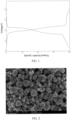
- the charge-discharge curve at a rate of 0.1C is shown in FIG. 1 . It can be seen from FIG. 1 that the carbon-coated sodium iron fluorophosphate prepared in this example had a clear discharge plateau and relatively small polarization.
- the SEM image of the carbon-coated sodium iron fluorophosphate prepared is shown in FIG. 2 .
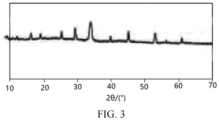
- the XRD pattern of the carbon-coated sodium iron fluorophosphate prepared is shown in FIG. 3 .
- the method for preparing carbon-coated sodium iron fluorophosphate from waste lithium iron phosphate provided in this example was basically the same as that in Example 1, except that in step (4), the carbon source was replaced with polyethylene glycol and the mass of polyethylene glycol was 0.3 times the mass of the calcination material.
- the method for preparing carbon-coated sodium iron fluorophosphate from waste lithium iron phosphate provided in this example was basically the same as that in Example 1, except that in step (4), the carbon source was replaced with starch and the mass of starch was 0.2 times the mass of the calcination material.
- the method for preparing carbon-coated sodium iron phosphate from waste lithium iron phosphate provided in this comparative example was basically the same as that in Example 1, except that in step (4), sodium fluoride was not added. That is, the product prepared in the comparative example was carbon-coated sodium iron phosphate.
- the method for preparing sodium iron fluorophosphate from waste lithium iron phosphate provided in this comparative example was basically the same as that in Example 1, except that in step (4), no additional carbon source was added, but a mixture of N 2 and H 2 were introduced during the calcination process for reduction. That is, the product prepared in this comparative example was sodium iron fluorophosphate and had a relatively less carbon coating on the surface.
- Example 1 compared with Comparative Example 1, Example 1 has increased capacity because the introduction of fluoride ions leads to effective doping, causing an eutectic effect and improving ionic conductivity, thereby improving the capacity.
- the higher sodium content in sodium iron fluorophosphate than that in sodium iron phosphate also improves the theoretical capacity.
- Example 1 Compared with Comparative Example 2, Example 1 adopted appropriate carbon coating due to the poor electrical conductivity of the polyanionic sodium battery material, which can effectively improve electronic conductivity of the material. In addition, the appropriate carbon coating can also prevent growth of particles, making the primary particle size of the particles more uniform and effectively restraining the growth of the particles, thereby improving the capacity and the cycling performance.
- the carbon-coated sodium iron fluorophosphate prepared through the method for preparing carbon-coated sodium iron fluorophosphate from waste lithium iron phosphate provided in the present invention has excellent electrochemical performance and can be used as a cathode material for the sodium battery.
Landscapes
- Chemical & Material Sciences (AREA)
- Organic Chemistry (AREA)
- Engineering & Computer Science (AREA)
- Inorganic Chemistry (AREA)
- General Chemical & Material Sciences (AREA)
- Chemical Kinetics & Catalysis (AREA)
- Electrochemistry (AREA)
- Materials Engineering (AREA)
- Composite Materials (AREA)
- Manufacturing & Machinery (AREA)
- Life Sciences & Earth Sciences (AREA)
- Geology (AREA)
- Crystallography & Structural Chemistry (AREA)
- Battery Electrode And Active Subsutance (AREA)
- Compounds Of Alkaline-Earth Elements, Aluminum Or Rare-Earth Metals (AREA)
- Compounds Of Iron (AREA)
- Processing Of Solid Wastes (AREA)
- Secondary Cells (AREA)
Applications Claiming Priority (2)
| Application Number | Priority Date | Filing Date | Title |
|---|---|---|---|
| CN202211602946.6A CN115818613B (zh) | 2022-12-13 | 2022-12-13 | 以废弃磷酸铁锂制备碳包覆的氟磷酸铁钠的方法及其应用 |
| PCT/CN2023/138502 WO2024125561A1 (zh) | 2022-12-13 | 2023-12-13 | 以废弃磷酸铁锂制备碳包覆的氟磷酸铁钠的方法及其应用 |
Publications (2)
| Publication Number | Publication Date |
|---|---|
| EP4406915A1 true EP4406915A1 (de) | 2024-07-31 |
| EP4406915A4 EP4406915A4 (de) | 2025-11-05 |
Family
ID=85547141
Family Applications (1)
| Application Number | Title | Priority Date | Filing Date |
|---|---|---|---|
| EP23843969.9A Pending EP4406915A4 (de) | 2022-12-13 | 2023-12-13 | Verfahren zur herstellung von kohlenstoffbeschichtetem natriumeisenfluorphosphat aus lithiumeisenphosphatabfall und verwendung davon |
Country Status (6)
| Country | Link |
|---|---|
| US (1) | US20250140957A1 (de) |
| EP (1) | EP4406915A4 (de) |
| JP (1) | JP7757589B2 (de) |
| KR (1) | KR102951330B1 (de) |
| CN (1) | CN115818613B (de) |
| WO (1) | WO2024125561A1 (de) |
Families Citing this family (11)
| Publication number | Priority date | Publication date | Assignee | Title |
|---|---|---|---|---|
| CN115818613B (zh) * | 2022-12-13 | 2023-10-03 | 湖北万润新能源科技股份有限公司 | 以废弃磷酸铁锂制备碳包覆的氟磷酸铁钠的方法及其应用 |
| CN116495716A (zh) * | 2023-06-26 | 2023-07-28 | 南昌大学 | 利用废旧磷酸铁锂制备钠离子电池正极材料的方法 |
| CN117712544B (zh) * | 2024-02-06 | 2024-04-12 | 邢东(河北)锂电科技有限公司 | 一种废旧磷酸铁锂电池的资源化利用方法 |
| CN118888747B (zh) * | 2024-07-09 | 2025-06-27 | 武汉浩元新能源有限公司 | 一种钠离子电池正极材料Na2-xFePO4F1-x、其制备方法和应用 |
| CN118702129B (zh) * | 2024-08-14 | 2025-09-05 | 湖北万润新能源科技股份有限公司 | 一种沉锂母液资源化利用方法 |
| CN119864403B (zh) * | 2025-01-20 | 2025-08-26 | 方寸新能源有限公司 | 一种正极材料制备方法以及极片、电池 |
| CN120097309B (zh) * | 2025-05-09 | 2025-07-22 | 合肥国轩电池材料有限公司 | 一种废旧磷酸铁锂回收制备磷酸铁锂的方法 |
| CN120573676A (zh) * | 2025-05-23 | 2025-09-02 | 湖北工业大学 | 一种氟代磷酸铁钠正极材料及其制备方法和应用 |
| CN120389032B (zh) * | 2025-06-30 | 2025-09-19 | 湖南长远锂科新能源有限公司 | 一种磷酸锰铁锂正极材料及其制备方法和锂离子电池 |
| CN121035204A (zh) * | 2025-08-25 | 2025-11-28 | 三峡大学 | 一种宽层间距二维层片状结构的氟磷酸铁钠正极材料及其制备方法 |
| CN121085240B (zh) * | 2025-11-11 | 2026-02-17 | 中南大学 | 再生磷酸铁锂活性材料及其制备和应用 |
Family Cites Families (20)
| Publication number | Priority date | Publication date | Assignee | Title |
|---|---|---|---|---|
| US2561439A (en) * | 1947-07-08 | 1951-07-24 | Union Carbide & Carbon Corp | Method of treating lithiferous ores to recover lithium as lithium chloride |
| JP2010238603A (ja) * | 2009-03-31 | 2010-10-21 | Toda Kogyo Corp | フッ化リン酸鉄リチウム固溶体正極活物質粉末、及び製造方法、並びにリチウムイオン二次電池 |
| JP2011154833A (ja) | 2010-01-26 | 2011-08-11 | Jx Nippon Mining & Metals Corp | アルミニウム箔と正極活物質の分離方法 |
| KR101219401B1 (ko) * | 2011-05-31 | 2013-01-15 | 전자부품연구원 | 이차전지용 양극재료 및 이의 제조방법 |
| CN107352524A (zh) * | 2017-08-03 | 2017-11-17 | 清华大学 | 一种废旧磷酸铁锂正极材料的回收方法 |
| CN108923090A (zh) * | 2018-05-29 | 2018-11-30 | 深圳市德方纳米科技股份有限公司 | 一种从废旧磷酸铁锂电池回收制备碳包覆的磷酸锰铁锂正极材料的方法 |
| US11990620B2 (en) * | 2018-08-07 | 2024-05-21 | Shanghai Zijian Chemical Technology Co., Ltd | Vanadium sodium phosphate positive electrode material, sodium ion battery, preparation method therefor, and use thereof |
| CN111270072B (zh) * | 2020-01-19 | 2021-09-03 | 广西师范大学 | 一种废旧磷酸铁锂电池正极材料的回收利用方法 |
| CN112054261B (zh) * | 2020-07-28 | 2021-10-08 | 昆明理工大学 | 一种机械活化辅助喷雾热解回收废旧锂电池正极的方法 |
| CN113264821B (zh) * | 2021-04-29 | 2023-05-05 | 广东邦普循环科技有限公司 | 一种磷酸铁锂废料的回收方法及应用 |
| CN115275125B (zh) | 2021-04-30 | 2025-01-03 | 湖南钠邦新能源有限公司 | 氟磷酸亚铁钠-石墨化碳@无定型碳复合正极材料及其制备和应用 |
| CN113526482B (zh) | 2021-06-24 | 2023-05-09 | 广东邦普循环科技有限公司 | 废旧电池回用制备磷酸铁锂的方法 |
| CN114015885B (zh) * | 2021-09-24 | 2022-09-27 | 中南大学 | 一种含磷酸铁锂的废旧物料的分离回收方法 |
| CN114242968A (zh) * | 2021-11-16 | 2022-03-25 | 华南理工大学 | 一种碳包覆氟磷酸铁钠材料及其制备方法与应用 |
| CN114105118A (zh) * | 2021-11-25 | 2022-03-01 | 河南佰利新能源材料有限公司 | 一种碳包覆磷酸铁锰锂的制备方法和锂离子电池 |
| CN114122311B (zh) * | 2021-11-26 | 2024-02-02 | 湖南钠邦新能源有限公司 | 碳包覆氟磷酸亚铁钠活性材料及其制备和在钠电中的应用 |
| CN114368736B (zh) * | 2022-01-28 | 2023-03-31 | 中南大学 | 一种橄榄石型磷酸铁钠正极材料的制备方法 |
| CN114597399B (zh) * | 2022-02-15 | 2024-10-18 | 广东邦普循环科技有限公司 | 一种磷酸钒铁钠材料的制备方法及其应用 |
| CN115231537B (zh) * | 2022-06-27 | 2023-09-08 | 湖北虹润高科新材料有限公司 | 一种利用铁磷渣制备磷酸铁的方法、磷酸铁及其应用 |
| CN115818613B (zh) * | 2022-12-13 | 2023-10-03 | 湖北万润新能源科技股份有限公司 | 以废弃磷酸铁锂制备碳包覆的氟磷酸铁钠的方法及其应用 |
-
2022
- 2022-12-13 CN CN202211602946.6A patent/CN115818613B/zh active Active
-
2023
- 2023-12-13 EP EP23843969.9A patent/EP4406915A4/de active Pending
- 2023-12-13 JP JP2024506246A patent/JP7757589B2/ja active Active
- 2023-12-13 WO PCT/CN2023/138502 patent/WO2024125561A1/zh not_active Ceased
- 2023-12-13 KR KR1020247004720A patent/KR102951330B1/ko active Active
- 2023-12-13 US US18/692,286 patent/US20250140957A1/en active Pending
Also Published As
| Publication number | Publication date |
|---|---|
| KR102951330B1 (ko) | 2026-04-14 |
| US20250140957A1 (en) | 2025-05-01 |
| WO2024125561A1 (zh) | 2024-06-20 |
| EP4406915A4 (de) | 2025-11-05 |
| CN115818613B (zh) | 2023-10-03 |
| JP7757589B2 (ja) | 2025-10-22 |
| CN115818613A (zh) | 2023-03-21 |
| JP2025501832A (ja) | 2025-01-24 |
| KR20240096445A (ko) | 2024-06-26 |
Similar Documents
| Publication | Publication Date | Title |
|---|---|---|
| EP4406915A1 (de) | Verfahren zur herstellung von kohlenstoffbeschichtetem natriumeisenfluorphosphat aus lithiumeisenphosphatabfall und verwendung davon | |
| KR101369658B1 (ko) | 비수전해질 이차 전지용 Li-Ni 복합 산화물 입자 분말 및 그의 제조 방법, 및 비수전해질 이차 전지 | |
| KR101049937B1 (ko) | 폐 리튬 이차전지의 양극물질로부터 리튬 화합물을 회수하는 방법 | |
| KR102675713B1 (ko) | 재생 양극 활물질, 이의 재생 방법 및 이를 포함하는 이차 전지 | |
| JP2025512355A (ja) | 正極活物質の再生方法及びこれから再生された正極活物質 | |
| CN115974036B (zh) | 一种球形磷酸铁锰锂纳米颗粒及其制备方法 | |
| EP4725900A1 (de) | Manganeisenphosphatvorläufer und lithiummanganeisenphosphat sowie herstellungsverfahren dafür und verwendung davon | |
| JP2022174097A (ja) | 非水系電解質二次電池用正極活物質の製造方法、及び、成形体 | |
| CN121225562A (zh) | 一种焦磷酸磷酸铁钠及其制备方法 | |
| CN116395663A (zh) | 一种磷酸锰铁锂前驱体及磷酸锰铁锂的制备方法 | |
| JP7652588B2 (ja) | オリビン型リン酸リチウム系正極材料を得るためのLi3PO4粒子の製造方法 | |
| JP2018041683A (ja) | オリビン型リン酸リチウム系正極材料の製造方法 | |
| JP3021229B2 (ja) | 結晶性スピネル構造のLiMn2 O4 の製法およびそれを活物質とする二次電池用正極 | |
| JP7676730B2 (ja) | スピネル型マンガン酸リチウム及びその製造方法並びにその用途 | |
| CN115140722B (zh) | 一种利用废旧磷酸氧钒锂电池制备正极材料的方法 | |
| CN116514091A (zh) | 一种磷酸铁锂的制备方法和应用 | |
| JP7631039B2 (ja) | オリビン型リン酸リチウム系正極材料を得るためのLi3PO4粒子の製造方法 | |
| JP7490513B2 (ja) | オリビン型リン酸リチウム系正極材料を得るためのLi3PO4粒子の製造方法 | |
| JP2017204340A (ja) | リチウムイオン二次電池用正極活物質の製造方法 | |
| EP4621083A1 (de) | Verfahren zur rückgewinnung von lithiumcarbonat aus kathodenmaterial einer verbrauchten lithium-ionen-batterie | |
| KR102869976B1 (ko) | 양극 활물질 및 이의 재생방법 | |
| JP7631822B2 (ja) | スピネル型マンガン酸リチウム及びその製造方法並びにその用途 | |
| WO2025079070A1 (en) | Preparation of lithium bromide and li-argyrodite | |
| KR20250133169A (ko) | 양극 활물질 재생 방법 및 이로부터 제조된 재생 양극 활물질 | |
| CA3256412A1 (en) | Method of recycling cathode active material and recycled cathode active material prepared using method |
Legal Events
| Date | Code | Title | Description |
|---|---|---|---|
| STAA | Information on the status of an ep patent application or granted ep patent |
Free format text: STATUS: UNKNOWN |
|
| STAA | Information on the status of an ep patent application or granted ep patent |
Free format text: STATUS: THE INTERNATIONAL PUBLICATION HAS BEEN MADE |
|
| PUAI | Public reference made under article 153(3) epc to a published international application that has entered the european phase |
Free format text: ORIGINAL CODE: 0009012 |
|
| STAA | Information on the status of an ep patent application or granted ep patent |
Free format text: STATUS: REQUEST FOR EXAMINATION WAS MADE |
|
| 17P | Request for examination filed |
Effective date: 20240129 |
|
| AK | Designated contracting states |
Kind code of ref document: A1 Designated state(s): AL AT BE BG CH CY CZ DE DK EE ES FI FR GB GR HR HU IE IS IT LI LT LU LV MC ME MK MT NL NO PL PT RO RS SE SI SK SM TR |
|
| A4 | Supplementary search report drawn up and despatched |
Effective date: 20251008 |
|
| RIC1 | Information provided on ipc code assigned before grant |
Ipc: C01B 25/455 20060101AFI20251001BHEP |
|
| DAV | Request for validation of the european patent (deleted) | ||
| DAX | Request for extension of the european patent (deleted) |