EP4338998A1 - Verfahren und fahrerassistenzsystem zum betreiben eines fahrzeugs - Google Patents
Verfahren und fahrerassistenzsystem zum betreiben eines fahrzeugs Download PDFInfo
- Publication number
- EP4338998A1 EP4338998A1 EP23181501.0A EP23181501A EP4338998A1 EP 4338998 A1 EP4338998 A1 EP 4338998A1 EP 23181501 A EP23181501 A EP 23181501A EP 4338998 A1 EP4338998 A1 EP 4338998A1
- Authority
- EP
- European Patent Office
- Prior art keywords
- distance
- vehicle
- function
- cornering
- driver
- Prior art date
- Legal status (The legal status is an assumption and is not a legal conclusion. Google has not performed a legal analysis and makes no representation as to the accuracy of the status listed.)
- Granted
Links
Images
Classifications
-
- B—PERFORMING OPERATIONS; TRANSPORTING
- B62—LAND VEHICLES FOR TRAVELLING OTHERWISE THAN ON RAILS
- B62J—CYCLE SADDLES OR SEATS; AUXILIARY DEVICES OR ACCESSORIES SPECIALLY ADAPTED TO CYCLES AND NOT OTHERWISE PROVIDED FOR, e.g. ARTICLE CARRIERS OR CYCLE PROTECTORS
- B62J45/00—Electrical equipment arrangements specially adapted for use as accessories on cycles, not otherwise provided for
- B62J45/20—Cycle computers as cycle accessories
-
- B—PERFORMING OPERATIONS; TRANSPORTING
- B60—VEHICLES IN GENERAL
- B60W—CONJOINT CONTROL OF VEHICLE SUB-UNITS OF DIFFERENT TYPE OR DIFFERENT FUNCTION; CONTROL SYSTEMS SPECIALLY ADAPTED FOR HYBRID VEHICLES; ROAD VEHICLE DRIVE CONTROL SYSTEMS FOR PURPOSES NOT RELATED TO THE CONTROL OF A PARTICULAR SUB-UNIT
- B60W30/00—Purposes of road vehicle drive control systems not related to the control of a particular sub-unit, e.g. of systems using conjoint control of vehicle sub-units
- B60W30/14—Adaptive cruise control
- B60W30/16—Control of distance between vehicles, e.g. keeping a distance to preceding vehicle
-
- B—PERFORMING OPERATIONS; TRANSPORTING
- B60—VEHICLES IN GENERAL
- B60K—ARRANGEMENT OR MOUNTING OF PROPULSION UNITS OR OF TRANSMISSIONS IN VEHICLES; ARRANGEMENT OR MOUNTING OF PLURAL DIVERSE PRIME-MOVERS IN VEHICLES; AUXILIARY DRIVES FOR VEHICLES; INSTRUMENTATION OR DASHBOARDS FOR VEHICLES; ARRANGEMENTS IN CONNECTION WITH COOLING, AIR INTAKE, GAS EXHAUST OR FUEL SUPPLY OF PROPULSION UNITS IN VEHICLES
- B60K31/00—Vehicle fittings, acting on a single sub-unit only, for automatically controlling vehicle speed, i.e. preventing speed from exceeding an arbitrarily established velocity or maintaining speed at a particular velocity, as selected by the vehicle operator
- B60K31/0008—Vehicle fittings, acting on a single sub-unit only, for automatically controlling vehicle speed, i.e. preventing speed from exceeding an arbitrarily established velocity or maintaining speed at a particular velocity, as selected by the vehicle operator including means for detecting potential obstacles in vehicle path
-
- B—PERFORMING OPERATIONS; TRANSPORTING
- B60—VEHICLES IN GENERAL
- B60K—ARRANGEMENT OR MOUNTING OF PROPULSION UNITS OR OF TRANSMISSIONS IN VEHICLES; ARRANGEMENT OR MOUNTING OF PLURAL DIVERSE PRIME-MOVERS IN VEHICLES; AUXILIARY DRIVES FOR VEHICLES; INSTRUMENTATION OR DASHBOARDS FOR VEHICLES; ARRANGEMENTS IN CONNECTION WITH COOLING, AIR INTAKE, GAS EXHAUST OR FUEL SUPPLY OF PROPULSION UNITS IN VEHICLES
- B60K31/00—Vehicle fittings, acting on a single sub-unit only, for automatically controlling vehicle speed, i.e. preventing speed from exceeding an arbitrarily established velocity or maintaining speed at a particular velocity, as selected by the vehicle operator
- B60K31/0066—Vehicle fittings, acting on a single sub-unit only, for automatically controlling vehicle speed, i.e. preventing speed from exceeding an arbitrarily established velocity or maintaining speed at a particular velocity, as selected by the vehicle operator responsive to vehicle path curvature
-
- B—PERFORMING OPERATIONS; TRANSPORTING
- B60—VEHICLES IN GENERAL
- B60K—ARRANGEMENT OR MOUNTING OF PROPULSION UNITS OR OF TRANSMISSIONS IN VEHICLES; ARRANGEMENT OR MOUNTING OF PLURAL DIVERSE PRIME-MOVERS IN VEHICLES; AUXILIARY DRIVES FOR VEHICLES; INSTRUMENTATION OR DASHBOARDS FOR VEHICLES; ARRANGEMENTS IN CONNECTION WITH COOLING, AIR INTAKE, GAS EXHAUST OR FUEL SUPPLY OF PROPULSION UNITS IN VEHICLES
- B60K31/00—Vehicle fittings, acting on a single sub-unit only, for automatically controlling vehicle speed, i.e. preventing speed from exceeding an arbitrarily established velocity or maintaining speed at a particular velocity, as selected by the vehicle operator
- B60K31/0066—Vehicle fittings, acting on a single sub-unit only, for automatically controlling vehicle speed, i.e. preventing speed from exceeding an arbitrarily established velocity or maintaining speed at a particular velocity, as selected by the vehicle operator responsive to vehicle path curvature
- B60K31/0075—Vehicle fittings, acting on a single sub-unit only, for automatically controlling vehicle speed, i.e. preventing speed from exceeding an arbitrarily established velocity or maintaining speed at a particular velocity, as selected by the vehicle operator responsive to vehicle path curvature responsive to vehicle steering angle
-
- B—PERFORMING OPERATIONS; TRANSPORTING
- B60—VEHICLES IN GENERAL
- B60K—ARRANGEMENT OR MOUNTING OF PROPULSION UNITS OR OF TRANSMISSIONS IN VEHICLES; ARRANGEMENT OR MOUNTING OF PLURAL DIVERSE PRIME-MOVERS IN VEHICLES; AUXILIARY DRIVES FOR VEHICLES; INSTRUMENTATION OR DASHBOARDS FOR VEHICLES; ARRANGEMENTS IN CONNECTION WITH COOLING, AIR INTAKE, GAS EXHAUST OR FUEL SUPPLY OF PROPULSION UNITS IN VEHICLES
- B60K31/00—Vehicle fittings, acting on a single sub-unit only, for automatically controlling vehicle speed, i.e. preventing speed from exceeding an arbitrarily established velocity or maintaining speed at a particular velocity, as selected by the vehicle operator
- B60K31/12—Vehicle fittings, acting on a single sub-unit only, for automatically controlling vehicle speed, i.e. preventing speed from exceeding an arbitrarily established velocity or maintaining speed at a particular velocity, as selected by the vehicle operator including a device responsive to centrifugal force
-
- B—PERFORMING OPERATIONS; TRANSPORTING
- B60—VEHICLES IN GENERAL
- B60T—VEHICLE BRAKE CONTROL SYSTEMS OR PARTS THEREOF; BRAKE CONTROL SYSTEMS OR PARTS THEREOF, IN GENERAL; ARRANGEMENT OF BRAKING ELEMENTS ON VEHICLES IN GENERAL; PORTABLE DEVICES FOR PREVENTING UNWANTED MOVEMENT OF VEHICLES; VEHICLE MODIFICATIONS TO FACILITATE COOLING OF BRAKES
- B60T7/00—Brake-action initiating means
- B60T7/12—Brake-action initiating means for automatic initiation; for initiation not subject to will of driver or passenger
- B60T7/22—Brake-action initiating means for automatic initiation; for initiation not subject to will of driver or passenger initiated by contact of vehicle, e.g. bumper, with an external object, e.g. another vehicle, or by means of contactless obstacle detectors mounted on the vehicle
-
- B—PERFORMING OPERATIONS; TRANSPORTING
- B60—VEHICLES IN GENERAL
- B60T—VEHICLE BRAKE CONTROL SYSTEMS OR PARTS THEREOF; BRAKE CONTROL SYSTEMS OR PARTS THEREOF, IN GENERAL; ARRANGEMENT OF BRAKING ELEMENTS ON VEHICLES IN GENERAL; PORTABLE DEVICES FOR PREVENTING UNWANTED MOVEMENT OF VEHICLES; VEHICLE MODIFICATIONS TO FACILITATE COOLING OF BRAKES
- B60T8/00—Arrangements for adjusting wheel-braking force to meet varying vehicular or ground-surface conditions, e.g. limiting or varying distribution of braking force
- B60T8/17—Using electrical or electronic regulation means to control braking
- B60T8/1701—Braking or traction control means specially adapted for particular types of vehicles
- B60T8/1706—Braking or traction control means specially adapted for particular types of vehicles for single-track vehicles, e.g. motorcycles
-
- B—PERFORMING OPERATIONS; TRANSPORTING
- B60—VEHICLES IN GENERAL
- B60T—VEHICLE BRAKE CONTROL SYSTEMS OR PARTS THEREOF; BRAKE CONTROL SYSTEMS OR PARTS THEREOF, IN GENERAL; ARRANGEMENT OF BRAKING ELEMENTS ON VEHICLES IN GENERAL; PORTABLE DEVICES FOR PREVENTING UNWANTED MOVEMENT OF VEHICLES; VEHICLE MODIFICATIONS TO FACILITATE COOLING OF BRAKES
- B60T8/00—Arrangements for adjusting wheel-braking force to meet varying vehicular or ground-surface conditions, e.g. limiting or varying distribution of braking force
- B60T8/32—Arrangements for adjusting wheel-braking force to meet varying vehicular or ground-surface conditions, e.g. limiting or varying distribution of braking force responsive to a speed condition, e.g. acceleration or deceleration
- B60T8/321—Arrangements for adjusting wheel-braking force to meet varying vehicular or ground-surface conditions, e.g. limiting or varying distribution of braking force responsive to a speed condition, e.g. acceleration or deceleration deceleration
- B60T8/3225—Systems specially adapted for single-track vehicles, e.g. motorcycles
-
- B—PERFORMING OPERATIONS; TRANSPORTING
- B60—VEHICLES IN GENERAL
- B60W—CONJOINT CONTROL OF VEHICLE SUB-UNITS OF DIFFERENT TYPE OR DIFFERENT FUNCTION; CONTROL SYSTEMS SPECIALLY ADAPTED FOR HYBRID VEHICLES; ROAD VEHICLE DRIVE CONTROL SYSTEMS FOR PURPOSES NOT RELATED TO THE CONTROL OF A PARTICULAR SUB-UNIT
- B60W30/00—Purposes of road vehicle drive control systems not related to the control of a particular sub-unit, e.g. of systems using conjoint control of vehicle sub-units
- B60W30/08—Active safety systems predicting or avoiding probable or impending collision or attempting to minimise its consequences
- B60W30/09—Taking automatic action to avoid collision, e.g. braking and steering
-
- B—PERFORMING OPERATIONS; TRANSPORTING
- B60—VEHICLES IN GENERAL
- B60W—CONJOINT CONTROL OF VEHICLE SUB-UNITS OF DIFFERENT TYPE OR DIFFERENT FUNCTION; CONTROL SYSTEMS SPECIALLY ADAPTED FOR HYBRID VEHICLES; ROAD VEHICLE DRIVE CONTROL SYSTEMS FOR PURPOSES NOT RELATED TO THE CONTROL OF A PARTICULAR SUB-UNIT
- B60W30/00—Purposes of road vehicle drive control systems not related to the control of a particular sub-unit, e.g. of systems using conjoint control of vehicle sub-units
- B60W30/18—Propelling the vehicle
- B60W30/18009—Propelling the vehicle related to particular drive situations
- B60W30/18145—Cornering
-
- B—PERFORMING OPERATIONS; TRANSPORTING
- B60—VEHICLES IN GENERAL
- B60W—CONJOINT CONTROL OF VEHICLE SUB-UNITS OF DIFFERENT TYPE OR DIFFERENT FUNCTION; CONTROL SYSTEMS SPECIALLY ADAPTED FOR HYBRID VEHICLES; ROAD VEHICLE DRIVE CONTROL SYSTEMS FOR PURPOSES NOT RELATED TO THE CONTROL OF A PARTICULAR SUB-UNIT
- B60W40/00—Estimation or calculation of non-directly measurable driving parameters for road vehicle drive control systems not related to the control of a particular sub unit, e.g. by using mathematical models
- B60W40/02—Estimation or calculation of non-directly measurable driving parameters for road vehicle drive control systems not related to the control of a particular sub unit, e.g. by using mathematical models related to ambient conditions
- B60W40/06—Road conditions
- B60W40/072—Curvature of the road
-
- B—PERFORMING OPERATIONS; TRANSPORTING
- B62—LAND VEHICLES FOR TRAVELLING OTHERWISE THAN ON RAILS
- B62K—CYCLES; CYCLE FRAMES; CYCLE STEERING DEVICES; RIDER-OPERATED TERMINAL CONTROLS SPECIALLY ADAPTED FOR CYCLES; CYCLE AXLE SUSPENSIONS; CYCLE SIDECARS, FORECARS, OR THE LIKE
- B62K11/00—Motorcycles, engine-assisted cycles or motor scooters with one or two wheels
-
- B—PERFORMING OPERATIONS; TRANSPORTING
- B60—VEHICLES IN GENERAL
- B60T—VEHICLE BRAKE CONTROL SYSTEMS OR PARTS THEREOF; BRAKE CONTROL SYSTEMS OR PARTS THEREOF, IN GENERAL; ARRANGEMENT OF BRAKING ELEMENTS ON VEHICLES IN GENERAL; PORTABLE DEVICES FOR PREVENTING UNWANTED MOVEMENT OF VEHICLES; VEHICLE MODIFICATIONS TO FACILITATE COOLING OF BRAKES
- B60T2201/00—Particular use of vehicle brake systems; Special systems using also the brakes; Special software modules within the brake system controller
- B60T2201/16—Curve braking control, e.g. turn control within ABS control algorithm
-
- B—PERFORMING OPERATIONS; TRANSPORTING
- B60—VEHICLES IN GENERAL
- B60T—VEHICLE BRAKE CONTROL SYSTEMS OR PARTS THEREOF; BRAKE CONTROL SYSTEMS OR PARTS THEREOF, IN GENERAL; ARRANGEMENT OF BRAKING ELEMENTS ON VEHICLES IN GENERAL; PORTABLE DEVICES FOR PREVENTING UNWANTED MOVEMENT OF VEHICLES; VEHICLE MODIFICATIONS TO FACILITATE COOLING OF BRAKES
- B60T2210/00—Detection or estimation of road or environment conditions; Detection or estimation of road shapes
- B60T2210/30—Environment conditions or position therewithin
- B60T2210/32—Vehicle surroundings
-
- B—PERFORMING OPERATIONS; TRANSPORTING
- B60—VEHICLES IN GENERAL
- B60W—CONJOINT CONTROL OF VEHICLE SUB-UNITS OF DIFFERENT TYPE OR DIFFERENT FUNCTION; CONTROL SYSTEMS SPECIALLY ADAPTED FOR HYBRID VEHICLES; ROAD VEHICLE DRIVE CONTROL SYSTEMS FOR PURPOSES NOT RELATED TO THE CONTROL OF A PARTICULAR SUB-UNIT
- B60W2300/00—Indexing codes relating to the type of vehicle
- B60W2300/36—Cycles; Motorcycles; Scooters
-
- B—PERFORMING OPERATIONS; TRANSPORTING
- B60—VEHICLES IN GENERAL
- B60W—CONJOINT CONTROL OF VEHICLE SUB-UNITS OF DIFFERENT TYPE OR DIFFERENT FUNCTION; CONTROL SYSTEMS SPECIALLY ADAPTED FOR HYBRID VEHICLES; ROAD VEHICLE DRIVE CONTROL SYSTEMS FOR PURPOSES NOT RELATED TO THE CONTROL OF A PARTICULAR SUB-UNIT
- B60W2552/00—Input parameters relating to infrastructure
- B60W2552/20—Road profile, i.e. the change in elevation or curvature of a plurality of continuous road segments
-
- B—PERFORMING OPERATIONS; TRANSPORTING
- B60—VEHICLES IN GENERAL
- B60W—CONJOINT CONTROL OF VEHICLE SUB-UNITS OF DIFFERENT TYPE OR DIFFERENT FUNCTION; CONTROL SYSTEMS SPECIALLY ADAPTED FOR HYBRID VEHICLES; ROAD VEHICLE DRIVE CONTROL SYSTEMS FOR PURPOSES NOT RELATED TO THE CONTROL OF A PARTICULAR SUB-UNIT
- B60W2552/00—Input parameters relating to infrastructure
- B60W2552/30—Road curve radius
-
- B—PERFORMING OPERATIONS; TRANSPORTING
- B60—VEHICLES IN GENERAL
- B60Y—INDEXING SCHEME RELATING TO ASPECTS CROSS-CUTTING VEHICLE TECHNOLOGY
- B60Y2300/00—Purposes or special features of road vehicle drive control systems
- B60Y2300/18—Propelling the vehicle
- B60Y2300/26—Dangerous conditions
Definitions
- the invention relates to a method for operating a vehicle with a driver assistance system, a corresponding driver assistance system and a corresponding computer program product.
- a dynamic driver assistance system of a vehicle can maintain a speed-dependent safety distance from a vehicle in front via system interventions in a drive system of the vehicle and/or a braking system of the vehicle. For this purpose, a drive torque can be reduced and/or a braking torque can be increased when a distance between the vehicles approaches the safety distance. If the distance is large enough, the driver assistance system can monitor the distance without intervening. This means that the vehicle can be operated conventionally using the accelerator pedal and brake pedal as long as the distance is greater than the safety distance. However, if the vehicle approaches the vehicle in front in such a way that the safety distance for the speed being driven would be undershot, the driver assistance system intervenes with the system interventions and slows the vehicle so that the safety distance is maintained.
- a dynamic driver assistance system of a vehicle continuously monitors the distance between the vehicle and a vehicle in front.
- the driver assistance system can trigger at least a low-threshold system intervention on the brake and/or drive system when the vehicle approaches another vehicle impermissibly if the attention of a driver of the vehicle is distracted for a short time or the driver misjudges the distance.
- the low-threshold system intervention results in a jolt that the driver can feel. In this way, the driver's attention is fully redirected to the traffic happening around the vehicle.
- the vehicle can in particular be a two-wheeler. Due to the small mass of the two-wheeler, the jerk can be clearly felt.
- the driver assistance system can brake the vehicle using stronger system interventions so that the safety distance is maintained.
- the driver's attention can decrease, especially when driving straight ahead.
- the driver assistance system can then fully develop its advantages and warn the driver of an unauthorized approach.
- cornering the driver is so focused that he is always in control of the distance to the vehicle in front.
- the safety distance actually required for the speed being driven can be significantly less than that without there being an increased risk of collision.
- very tight curves a very close approach to the vehicle in front can occur, since the vehicle in front decelerates strongly from a braking point on the curve and accelerates again correspondingly strongly at an apex of the curve. This The driver can take advantage of existing prior knowledge and drive very close to the vehicle in front shortly before the apex.
- a distance function of the dynamic driver assistance system is at least weakened while the vehicle is cornering. This results in later and/or weaker system interventions while cornering. In addition, the system interventions can prevent driver irritation while cornering.
- a method for operating a vehicle with a driver assistance system wherein a distance function of the driver assistance system regulates a distance to a target object in front to a speed-dependent safety distance using system interventions in a braking system and/or a drive system of the vehicle, the distance function being controlled during cornering of the vehicle is degraded.
- a driver assistance system can be integrated into a control unit of a vehicle.
- the vehicle can in particular be a two-wheeler or motorcycle.
- the driver assistance system can process sensor information and generate control signals.
- the driver assistance system can process sensor signals from at least one distance sensor of the vehicle and provide control signals for a drive system of the vehicle and alternatively or additionally for a braking system of the vehicle.
- the control signals trigger system intervention in the vehicle.
- the system intervention can result in particular in a deceleration of the vehicle.
- the control signals can, for example, request a reduced drive torque and/or an increased braking torque to decelerate the vehicle.
- the vehicle can be decelerated both by reducing the drive torque and increasing the braking torque or a combination thereof.
- the distance sensor can detect a detection area in front of the vehicle and map a distance to objects in the detection area in distance information.
- the distance sensor can be, for example, a radar sensor, a lidar sensor or a camera.
- the distance can be represented as a time gap.
- the time gap corresponds to a time period between a point in time at which an object in front passes over a defined point and the point in time at which the vehicle passes over the same point.
- the distance to the object in front is determined by the speed of the vehicle.
- the distance sensor may have reduced detection performance when the vehicle is cornering.
- a reference plane of the detection area can be aligned obliquely to a contact area of the two-wheeler.
- the reference plane can approximately correspond to the contact area when the two-wheeler is upright. This allows the distance sensor to detect new objects on the contact patch, particularly when entering a curve on the inside of a curve at a short distance from the two-wheeler, but which actually have no significance for the two-wheeler. In unfavorable situations, such objects can be interpreted as moving objects and lead to unfounded system interventions. Due to the inclination of the reference plane to the contact surface, objects that are actually present on the outside of the curve can disappear from the detection area and can no longer be detected. Especially when exiting a curve, these objects can suddenly be detected again and trigger irritating system interventions.
- a speed-dependent safety distance increases as the speed increases.
- the safety distance can be represented particularly easily by a constant safety time gap.
- the safety time gap can be independent of the current speed of the vehicle. At low speeds, the safety time gap results in a small safety distance. At high speeds, the safety time gap results in a large safety distance.
- the safety distance or the safety time gap can be influenced by a driver of the vehicle.
- the driver can, for example, use an operator interface to select whether a larger one is required Safety time gap or a larger safety distance or a smaller safety time gap or a smaller safety distance is used.
- the safety distance or the safety time gap cannot be chosen to be smaller than a minimum necessary value.
- the safety distance or the safety time gap can also be influenced via an accelerator pedal or a handle of the two-wheeler.
- a distance function of the driver assistance system can compare the measured time gap to a vehicle in front with the safety time gap or compare the measured distance with the speed-dependent safety distance. If a difference between the time gap and the safety time gap becomes smaller, the driver assistance system can trigger a system intervention to delay the vehicle. As a result of the system intervention, the difference between the time gap and the safety time gap will change more slowly. The time gap can thus approach the safety time gap more slowly. The system intervention can be repeated or continued until the time gap is within a tolerance range around the safety time gap and the vehicle is traveling behind the object in front at essentially the same speed.
- Cornering can be detected using sensor signals from the vehicle. Cornering can be detected using a steering angle signal. Cornering can alternatively or additionally be detected using inertial sensor signals, such as acceleration signals and/or rotation rate signals. Acceleration signals can, for example, represent centrifugal force resulting from cornering. Rotation rate signals can, for example, depict the tipping of a two-wheeler into a curve. When cornering, the driver is concentrated and needs at least less support to operate the vehicle safely.
- the distance function can be degraded using a ramp. In this way, a sudden change in the distance function when cornering is detected can be avoided.
- the distance function can also be raised again via a ramp at the end of cornering. In other words, the distance function can be ramped out and ramped in.
- the safety distance can be reduced while cornering. If cornering is detected, a reduced setpoint for the safety distance can be used.
- the reduced safety distance allows the vehicle to drive closer to the vehicle in front when cornering before the system interventions are triggered.
- the system interventions can be weakened while cornering. If cornering is detected and the safety distance is undershot, deceleration can be reduced. The distance can become smaller than the safety distance through weakened system interventions.
- An attention function of the driver assistance system can draw the attention of a driver of the vehicle to a traffic situation using low-threshold system interventions in the braking system and/or the drive system if the distance falls below a speed-dependent attention distance.
- the attention function can also be degraded while cornering.
- Low-threshold system interventions can be clearly noticeable to the driver due to the resulting jolt, but do not cause a significant change in the speed of the vehicle.
- the driver When driving straight ahead, the driver can feel the low-threshold system interventions and adapt his behavior so that the system interventions stop. Since the driver is concentrating on his driving task when cornering, even low-threshold system intervention can disrupt concentration. The driver can be more distracted by the system intervention and ultimately drive through the curve less safely. By weakening the system intervention while cornering, the driver can fully concentrate on cornering.
- a speed-dependent attention gap can be represented by a speed-independent attention time gap.
- the attention distance can be reduced while cornering. If cornering is detected, a reduced attention distance setpoint can be used. The reduced attention distance allows the vehicle to be closer to the vehicle when cornering The vehicle in front should approach before the low-threshold system interventions are triggered.
- the distance function or the attention function can be degraded depending on the inclined position of a two-wheeler. Cornering can be detected based on the lean angle of the two-wheeler.
- the lean angle can reflect the lean angle.
- the inclined position can be understood as the deviation of the two-wheeler from the vertical.
- the lean angle can be detected by a lean angle sensor on the two-wheeler.
- the lean angle can also be calculated by combining several sensor information.
- the distance function or the attention function can be degraded if the inclination is greater than a predetermined threshold value.
- the distance function can be degraded from a predetermined inclined position of the two-wheeler.
- the threshold value for cornering can, for example, be between 10° and 30° deviation from the vertical. In particular, the threshold value can be around 20° deviation from the vertical.
- the distance function or the attention function can be degraded in proportion to the inclination.
- the distance function or the attention function can be degraded all the more the greater the inclination or deviation from the vertical.
- the distance function or the attention function can also be gradually degraded with predefined attenuation factors depending on the inclination.
- the distance function or the attention function can be suspended if the inclination is greater than a predetermined limit value. From a certain angle, the distance function or the attention function can be switched off. When cornering through a very tight curve, the rider is sure to be focused on driving the two-wheeler. From an incline of, for example Between 35° and 55° the distance function or the attention function can be suspended. In particular, the distance function or the attention function can be suspended from an inclination of 45°.
- the method is preferably computer-implemented and can be implemented, for example, in software or hardware or in a mixed form of software and hardware, for example in a driver assistance system.
- the approach presented here also creates a driver assistance system for a vehicle, wherein the driver assistance system is designed to carry out, control or implement the steps of a variant of the method presented here in corresponding devices.
- the driver assistance system can be an electrical device with at least one computing unit for processing signals or data, at least one storage unit for storing signals or data, and at least one interface and / or a communication interface for reading in or outputting data that is embedded in a communication protocol, be.
- the computing unit can be, for example, a signal processor, a so-called system ASIC or a microcontroller for processing sensor signals and outputting data signals depending on the sensor signals.
- the storage unit can be, for example, a flash memory, an EPROM or a magnetic storage unit.
- the interface can be designed as a sensor interface for reading in the sensor signals from a sensor and/or as an actuator interface for outputting the data signals and/or control signals to an actuator.
- the communication interface can be designed to read or output the data wirelessly and/or by wire.
- the interfaces can also be software modules that are present, for example, on a microcontroller alongside other software modules.
- a computer program product or computer program with program code which can be stored on a machine-readable carrier or storage medium such as a semiconductor memory, a hard drive memory or an optical memory and for carrying out, implementing and / or controlling the steps of the method according to one of the embodiments described above is used, especially if the Program product or program running on a computer or device.
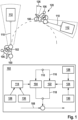
- Fig. 1 shows a representation of a two-wheeler with a driver assistance system according to an exemplary embodiment.
- Fig. 1 shows a representation of a two-wheeler 100 with a driver assistance system 102 according to an exemplary embodiment.
- the driver assistance system 102 has a distance function 104. While the distance function 104 is activated, a driver 106 of the two-wheeler 100 specifies a speed of the two-wheeler 100 via a driver request 108. The driver's request 108 is read in via a driving handle or throttle grip and/or brake controls of the two-wheeler 100.
- the distance function 104 is configured to keep a distance 110 of the two-wheeler 100 to a target object 112 in front at least as large as a speed-dependent safety distance 114. To do this, the driver assistance system 102 reads distance information 116 from you Distance sensor of the two-wheeler 100. The distance sensor detects objects in a detection area in front of the two-wheeler 100. The distance sensor also detects the target object 112 and maps the distance 110 between the two-wheeler 100 and the target object 112 in the distance information 116.
- the distance function 104 compares the distance 110 with the speed-dependent safety distance 114. If the distance 110 approaches the safety distance 114 in such a way that it would fall below it, the distance function 104 controls a system intervention 118 in a braking system and / or a drive system of the two-wheeler 100, to slow down the two-wheeler 100.
- the system intervention 118 superimposes the driver's request 108 of the driver 106.
- a desired acceleration is reduced by the system intervention 118.
- a desired delay is increased by system intervention 118.
- the distance function 104 is degraded when cornering 120 is detected.
- the safety distance 114 is reduced while cornering 120.
- the system interventions 118 can be weakened during cornering 120.
- the safety distance 114 and/or the system interventions 118 can be ramped out, i.e. reduced via a ramp, and ramped in, i.e. increased again via a ramp.
- the driver assistance system 102 also has an attention function 122.
- the attention function 122 is configured to draw the attention of the driver 106 to a traffic situation around the two-wheeler 100 using weak system interventions 118 when the distance 110 is smaller than an attention distance 124.
- the attention distance 124 is greater than the safety distance 114.
- a weak system intervention 118 generates a jerk that is clearly perceived by the driver 106. The jerk is noticeable regardless of the ambient volume.
- the attention function 122 is degraded when cornering 120 is detected.
- the attention distance 124 is reduced while cornering 120.
- the weakened system interventions 118 can be further weakened during cornering 120.
- the distance function 104 and/or the attention function 122 are degraded or weakened depending on an inclined position 126 of the two-wheeler 100.
- the inclination 126 or an inclination angle of the two-wheeler 100 is greater the tighter the cornering 120 is.
- the distance function 104 and/or the attention function 122 can be attenuated from a predetermined threshold value 128. If the inclination 126 is smaller than the threshold value 128, the two-wheeler 100 is assumed to be traveling straight ahead.
- the distance function 104 and/or the attention function 122 are attenuated more the greater the inclination 126 is. This means that the attenuation can be stronger on tighter curves than on wide curves.
- the distance function 104 and/or the attention function 122 are deactivated or suspended from a predetermined limit value 130 of the inclination.
- Vehicles can have different driver assistance systems that offer the driver increased comfort and safety (such as Adaptive Cruise Control (ACC) and Highway Assist (HWA)).
- driver assistance systems provide increased safety through distance warnings and emergency braking interventions.
- ACC Adaptive Cruise Control
- HWA Highway Assist
- DDA Driver-oriented assistance function
- the driver is primarily responsible for braking The pedal is largely removed, while the accelerator pedal is left to him.
- the DDA function can be activated explicitly by the driver (similar to ACC). In some cases, automatic activation is also possible. Thanks to the approach presented here, the function can also be used for two-wheelers. The focus is on alerting the driver to a possible collision (if the driver is inattentive) by means of a "gentle" deceleration.
- the main goal of two-wheeled vehicles is to alert an inattentive driver to a possible collision with the vehicle in front by means of a "gentle” deceleration. This is mainly necessary when driving (more or less) straight ahead.
- a “gentle” deceleration by the system is not critical in terms of vehicle stability.
- the system can also provide (adjusted) slight deceleration without jeopardizing vehicle stability. Nevertheless, such an intervention often does not feel very comfortable for the driver.
- a two-wheeler driver when driving through a curve, a two-wheeler driver is always attentive to the course of the road and the traffic in front.
- the distance to the vehicle in front depends on the driver's personal risk assessment and also on whether the vehicle in front is also a friend on a two-wheeler, such as on a motorcycle group ride.
- the vehicle deceleration is automatically deactivated by the system on a two-wheeler as soon as the vehicle is in a curve. This can be detected using tilt sensors and acceleration sensors.
- a short-term detection or a short-term loss of detection of a vehicle in front while cornering does not lead to uncomfortable system behavior.
- the driver of the two-wheeler can manually maintain his or her personally selected distance from the vehicle in front without being influenced by the system (the DDA function).
- the function (DDA) intervenes on a two-wheeler when driving straight ahead by decelerating the vehicle or reducing acceleration, but this system reaction does not occur when driving through a curve.
Landscapes
- Engineering & Computer Science (AREA)
- Mechanical Engineering (AREA)
- Transportation (AREA)
- Chemical & Material Sciences (AREA)
- Combustion & Propulsion (AREA)
- Automation & Control Theory (AREA)
- Physics & Mathematics (AREA)
- Mathematical Physics (AREA)
- Traffic Control Systems (AREA)
Abstract
Description
- Die Erfindung betrifft ein Verfahren zum Betreiben eines Fahrzeugs mit einem Fahrerassistenzsystem, ein entsprechendes Fahrerassistenzsystem sowie ein entsprechendes Computerprogrammprodukt.
- Ein dynamisches Fahrerassistenzsystem eines Fahrzeugs kann zu einem vorausfahrenden Fahrzeug über Systemeingriffe in ein Antriebssystem des Fahrzeugs und/oder ein Bremssystem des Fahrzeugs einen geschwindigkeitsabhängigen Sicherheitsabstand einhalten. Dazu kann ein Antriebsmoment verringert und/oder ein Bremsmoment erhöht werden, wenn sich ein Abstand zwischen den Fahrzeugen an den Sicherheitsabstand annähert. Wenn der Abstand groß genug ist, kann das Fahrerassistenzsystem den Abstand überwachen, ohne einzugreifen. Dadurch kann das Fahrzeug über Fahrpedal und Bremspedal konventionell bedient werden, so lange der Abstand größer als der Sicherheitsabstand ist. Wenn sich das Fahrzeug aber so an das vorausfahrende Fahrzeug annähert, dass der Sicherheitsabstand für die gefahrene Geschwindigkeit unterschritten würde, greift das Fahrerassistenzsystem mit den Systemeingriffen ein und verzögert das Fahrzeug so, dass der Sicherheitsabstand eingehalten wird.
- Vor diesem Hintergrund werden mit dem hier vorgestellten Ansatz ein Verfahren zum Betreiben eines Fahrzeugs mit einem Fahrerassistenzsystem, ein entsprechendes Fahrerassistenzsystem, sowie ein entsprechendes Computerprogrammprodukt gemäß den unabhängigen Ansprüchen vorgestellt. Vorteilhafte Weiterbildungen und Verbesserungen des hier vorgestellten Ansatzes ergeben sich aus der Beschreibung und sind in den abhängigen Ansprüchen beschrieben.
- Ein dynamisches Fahrerassistenzsystem eines Fahrzeugs überwacht einen Abstand des Fahrzeugs zu einem vorausfahrenden Fahrzeug kontinuierlich. So kann das Fahrerassistenzsystem das Fahrzeug bei einer unzulässigen Annäherung an ein anderes Fahrzeug zumindest einen niederschwelligen Systemeingriff an Bremse und/oder Antrieb auslösen, wenn eine Aufmerksamkeit eines Fahrers des Fahrzeugs kurzfristig abgelenkt sein sollte oder der Fahrer den Abstand falsch einschätzt. Der niederschwellige Systemeingriff resultiert in einem für den Fahrer spürbaren Ruck. So wird die die Aufmerksamkeit des Fahrers wieder voll auf ein Verkehrsgeschehen um das Fahrzeug gelenkt. Das Fahrzeug kann dabei insbesondere ein Zweirad sein. Aufgrund einer kleinen Masse des Zweirads kann der Ruck deutlich gefühlt werden.
- Falls daraufhin kein Eingriff des Fahrers zum Erhöhen des Abstands beziehungsweise zum Verringern einer Annäherung an das vorausfahrende Fahrzeug erfolgt, kann das Fahrerassistenzsystem das Fahrzeug über stärkere Systemeingriffe abbremsen, sodass der Sicherheitsabstand gewahrt bleibt.
- Insbesondere bei einem Zweirad kann die Aufmerksamkeit des Fahrers vorwiegend während einer Geradeausfahrt nachlassen. Dann kann das Fahrerassistenzsystem seine Vorteile voll entfalten und den Fahrer vor einer unzulässigen Annäherung warnen. Während einer Kurvenfahrt ist der Fahrer aber so konzentriert, dass er selbst jederzeit die Kontrolle über den Abstand zum vorausfahrenden Fahrzeug hat. Während der Kurvenfahrt kann auch der eigentlich für die gefahrene Geschwindigkeit erforderliche Sicherheitsabstand deutlich unterschritten werden, ohne dass eine erhöhte Kollisionsgefahr besteht. Insbesondere bei sehr engen Kurven kann es zu einer sehr nahen Annäherung zum vorausfahrenden Fahrzeug kommen, da das vorausfahrende Fahrzeug ab einem Anbremspunkt der Kurve stark verzögert und näherungsweise an einem Scheitelpunkt der Kurve wieder entsprechend stark beschleunigt. Dieses vorhandene Vorwissen kann der Fahrer ausnutzen und kurz vor dem Scheitelpunkt sehr nahe auf das vorausfahrende Fahrzeug auffahren.
- Bei dem hier vorgestellten Ansatz wird eine Abstandsfunktion des dynamischen Fahrerassistenzsystems während einer Kurvenfahrt des Fahrzeugs zumindest abgeschwächt. Dadurch ergeben sich spätere und/oder schwächere Systemeingriffe während der Kurvenfahrt. Zusätzlich kann eine Irritation des Fahrers während der Kurvenfahrt durch die Systemeingriffe vermieden werden.
- Es wird ein Verfahren zum Betreiben eines Fahrzeugs mit einem Fahrerassistenzsystem vorgeschlagen, wobei eine Abstandsfunktion des Fahrerassistenzsystems einen Abstand zu einem vorausfahrenden Zielobjekt unter Verwendung von Systemeingriffen in ein Bremssystem und/oder ein Antriebssystem des Fahrzeugs auf einen geschwindigkeitsabhängigen Sicherheitsabstand regelt, wobei die Abstandsfunktion während einer Kurvenfahrt des Fahrzeugs degradiert wird.
- Ideen zu Ausführungsformen der vorliegenden Erfindung können unter anderem als auf den nachfolgend beschriebenen Gedanken und Erkenntnissen beruhend angesehen werden.
- Ein Fahrerassistenzsystem kann in ein Steuergerät eines Fahrzeugs integriert sein. Das Fahrzeug kann insbesondere ein Zweirad beziehungsweise Motorrad sein. Das Fahrerassistenzsystem kann Sensorinformationen verarbeiten und Steuersignale erzeugen. Insbesondere kann das Fahrerassistenzsystem Sensorsignale von zumindest einem Entfernungssensor des Fahrzeugs verarbeiten und Steuersignale für ein Antriebssystem des Fahrzeugs und alternativ oder ergänzend für ein Bremssystem des Fahrzeugs bereitstellen. Die Steuersignale steuern einen Systemeingriff in das Fahrzeug an. Der Systemeingriff kann insbesondere in einer Verzögerung des Fahrzeugs resultieren.
- Die Steuersignale können beispielsweise ein verringertes Antriebsmoment und/oder ein erhöhtes Bremsmoment zum Verzögern des Fahrzeugs anfordern. Dabei kann das Fahrzeug sowohl durch eine Verringerung des Antriebsmoments als auch eine Erhöhung des Bremsmoments oder eine Kombination daraus verzögert werden.
- Der Entfernungssensor kann einen Erfassungsbereich vor dem Fahrzeug erfassen und einen Abstand zu Objekten in dem Erfassungsbereich in Abstandsinformationen abbilden. Der Entfernungssensor kann beispielsweise ein Radarsensor, ein Lidarsensor oder eine Kamera sein. Der Abstand kann als Zeitlücke abgebildet werden. Die Zeitlücke entspricht einer Zeitdauer zwischen einem Zeitpunkt, an dem ein vorausfahrendes Objekt einen definierten Punkt überfährt und dem Zeitpunkt, an dem das Fahrzeug denselben Punkt überfährt. Über eine Geschwindigkeit des Fahrzeugs ergibt sich somit der Abstand zu dem vorausfahrenden Objekt.
- Der Entfernungssensor kann bei einer Kurvenfahrt des Fahrzeugs eine verringerte Erfassungsleistung aufweisen. Insbesondere kann durch eine Schräglage eines Zweirads während der Kurvenfahrt eine Bezugsebene des Erfassungsbereichs schräg zu einer Aufstandsfläche des Zweirads ausgerichtet sein. Die Bezugsebene kann bei aufrechtem Zweirad näherungsweise der Aufstandsfläche entsprechen. Dadurch kann der Entfernungssensor insbesondere bei der Kurveneinfahrt auf einer Kurveninnenseite in geringem Abstand zum Zweirad neue Objekte auf der Aufstandsfläche erfassen, die aber tatsächlich keine Bedeutung für das Zweirad aufweisen. Solche Objekte können in ungünstigen Situationen als bewegte Objekte interpretiert werden und zu unbegründeten Systemeingriffen führen. Durch die Schrägstellung der Bezugsebene zur Aufstandsfläche können ferner tatsächlich vorhandene Objekte auf einer Kurvenaußenseite aus dem Erfassungsbereich verschwinden und nicht mehr erfasst werden. Insbesondere bei der Kurvenausfahrt können diese Objekte dann plötzlich wieder erfasst werden und irritierende Systemeingriffe auslösen.
- Ein geschwindigkeitsabhängiger Sicherheitsabstand wird mit steigender Geschwindigkeit größer. Der Sicherheitsabstand kann besonders einfach durch eine konstante Sicherheitszeitlücke abgebildet werden. Die Sicherheitszeitlücke kann unabhängig von der aktuellen Geschwindigkeit des Fahrzeugs sein. Bei kleiner Geschwindigkeit resultiert aus der Sicherheitszeitlücke ein kleiner Sicherheitsabstand. Bei großer Geschwindigkeit resultiert aus der Sicherheitszeitlücke ein großer Sicherheitsabstand.
- Der Sicherheitsabstand beziehungsweise die Sicherheitszeitlücke kann durch einen Fahrer des Fahrzeugs beeinflusst werden. Dabei kann der Fahrer beispielsweise über eine Bedienerschnittstelle auswählen, ob eine größere Sicherheitszeitlücke beziehungsweise ein größerer Sicherheitsabstand oder eine kleinere Sicherheitszeitlücke beziehungsweise ein kleinerer Sicherheitsabstand verwendet wird. Der Sicherheitsabstand beziehungsweise die Sicherheitszeitlücke kann dabei nicht kleiner als ein minimal notwendiger Wert gewählt werden. Der Sicherheitsabstand beziehungsweise die Sicherheitszeitlücke kann auch über ein Fahrpedal beziehungsweise einen Fahrgriff des Zweirads beeinflusst werden.
- Eine Abstandsfunktion des Fahrerassistenzsystems kann die gemessenen Zeitlücke zu einem vorausfahrenden Fahrzeug mit der Sicherheitszeitlücke vergleichen beziehungsweise den gemessenen Abstand mit dem geschwindigkeitsabhängigen Sicherheitsabstand vergleichen. Wenn eine Differenz zwischen der Zeitlücke und der Sicherheitszeitlücke kleiner wird, kann das Fahrerassistenzsystem einen Systemeingriff auslösen, um das Fahrzeug zu verzögern. Durch den Systemeingriff wird sich die Differenz zwischen der Zeitlücke und der Sicherheitszeitlücke langsamer ändern. Die Zeitlücke kann sich so langsamer an die Sicherheitszeitlücke annähern. Der Systemeingriff kann wiederholt oder fortgeführt werden, bis die Zeitlücke innerhalb eines Toleranzbereichs um die Sicherheitszeitlücke liegt und das Fahrzeug mit im Wesentlichen der gleichen Geschwindigkeit hinter dem vorausfahrenden Objekt herfährt.
- Eine Kurvenfahrt kann unter Verwendung von Sensorsignalen des Fahrzeugs erkannt werden. Die Kurvenfahrt kann unter Verwendung eines Lenkwinkelsignals erkannt werden. Die Kurvenfahrt kann alternativ oder ergänzend unter Verwendung von Inertialsensorsignalen, wie Beschleunigungssignalen und/oder Drehratensignalen erkannt werden. Beschleunigungssignale können beispielsweise eine aus der Kurvenfahrt resultierende Fliehkraft abbilden. Drehratensignale können beispielsweise ein Kippen eines Zweirads in die Kurve hinein abbilden. Während der Kurvenfahrt ist der Fahrer konzentriert und benötigt zumindest weniger Unterstützung, um das Fahrzeug sicher zu bedienen.
- Die Abstandsfunktion kann über eine Rampe degradiert werden. So kann eine plötzliche Änderung der Abstandsfunktion beim Erkennen der Kurvenfahrt vermieden werden. Ebenso kann die Abstandsfunktion am Ende der Kurvenfahrt wieder über eine Rampe hochgefahren werden. Mit anderen Worten kann die Abstandsfunktion ausgerampt und eingerampt werden.
- Der Sicherheitsabstand kann während der Kurvenfahrt reduziert werden. Wenn eine Kurvenfahrt erkannt wird, kann ein verringerter Sollwert für den Sicherheitsabstand verwendet werden. Durch den reduzierten Sicherheitsabstand kann das Fahrzeug bei der Kurvenfahrt näher an das vorausfahrende Fahrzeug heranfahren, bevor die Systemeingriffe ausgelöst werden.
- Alternativ oder ergänzend können die Systemeingriffe während der Kurvenfahrt abgeschwächt werden. Wenn die Kurvenfahrt erkannt wird und dabei der Sicherheitsabstand unterschritten werden wird, kann weniger stark verzögert werden. Durch abgeschwächte Systemeingriffe kann der Abstand kleiner als der Sicherheitsabstand werden.
- Eine Aufmerksamkeitsfunktion des Fahrerassistenzsystems kann unter Verwendung von niederschwelligen Systemeingriffen in das Bremssystem und/oder das Antriebssystem eine Aufmerksamkeit eines Fahrers des Fahrzeugs auf ein Verkehrsgeschehen lenken, wenn der Abstand einen geschwindigkeitsabhängigen Aufmerksamkeitsabstand unterschreitet. Die Aufmerksamkeitsfunktion kann während der Kurvenfahrt ebenfalls degradiert werden. Niederschwellige Systemeingriffe können für den Fahrer aufgrund des resultierenden Rucks gut spürbar sein, jedoch keine wesentliche Geschwindigkeitsveränderung des Fahrzeugs bewirken. Bei einer Geradeausfahrt kann der Fahrer die niederschwelligen Systemeingriffe spüren und sein Verhalten so anpassen, dass die Systemeingriffe aufhören. Da der Fahrer in der Kurve auf seine Fahraufgabe konzentriert ist, kann selbst der niederschwellige Systemeingriff die Konzentration stören. Der Fahrer kann durch den Systemeingriff eher abgelenkt werden und letztendlich weniger sicher durch die Kurve fahren. Durch die Abschwächung der Systemeingriffe während der Kurvenfahrt kann der Fahrer sich voll auf die Kurvenfahrt konzentrieren. Ein geschwindigkeitsabhängiger Aufmerksamkeitsabstand kann durch eine geschwindigkeitsunabhängige Aufmerksamkeitszeitlücke abgebildet sein.
- Der Aufmerksamkeitsabstand kann während der Kurvenfahrt reduziert werden. Wenn die Kurvenfahrt erkannt wird, kann ein verringerter Sollwert für den Aufmerksamkeitsabstand verwendet werden. Durch den reduzierten Aufmerksamkeitsabstand kann das Fahrzeug bei der Kurvenfahrt näher an das vorausfahrende Fahrzeug heranfahren, bevor die niederschwelligen Systemeingriffe ausgelöst werden.
- Die Abstandsfunktion beziehungsweise die Aufmerksamkeitsfunktion können in Abhängigkeit von einer Schräglage eines Zweirads degradiert werden. Die Kurvenfahrt kann anhand eines Schräglagenwinkels des Zweirads erkannt werden. Der Schräglagenwinkel kann die Schräglage abbilden. Die Schräglage kann als Abweichung des Zweirads von der Vertikalen verstanden werden. Der Schräglagenwinkel kann durch einen Schräglagenwinkelsensor des Zweirads erfasst werden. Der Schräglagenwinkel kann auch durch ein Zusammenführen mehrerer Sensorinformationen errechnet werden.
- Die Abstandsfunktion beziehungsweise die Aufmerksamkeitsfunktion können degradiert werden, wenn die Schräglage größer als ein vorbestimmter Schwellenwert ist. Die Abstandsfunktion kann ab einer vorbestimmten Schräglage des Zweirads degradiert werden. Bei Geradeausfahrt ist die Schräglage des Zweirads sehr klein. Aufgrund einer kontinuierlichen geringfügigen Balancierbewegung des Zweirads kann aber innerhalb eines Toleranzbereichs um die Vertikale von einer Geradeausfahrt des Zweirads ausgegangen werden. Der Schwellenwert für die Kurvenfahrt kann beispielsweise zwischen 10° und 30° Abweichung von der Vertikale liegen. Insbesondere kann der Schwellenwert bei um die 20° Abweichung von der Vertikalen liegen.
- Die Abstandsfunktion beziehungsweise die Aufmerksamkeitsfunktion können proportional zur Schräglage degradiert werden. Die Abstandsfunktion beziehungsweise die Aufmerksamkeitsfunktion können umso stärker degradiert werden, je größer die Schräglage beziehungsweise Abweichung von der Vertikalen ist. Die Abstandsfunktion beziehungsweise die Aufmerksamkeitsfunktion können auch in Abhängigkeit von der Schräglage schrittweise mit vordefinierten Abschwächungsfaktoren degradiert werden.
- Die Abstandsfunktion beziehungsweise die Aufmerksamkeitsfunktion können ausgesetzt werden, wenn die Schräglage größer als ein vorbestimmter Grenzwert ist. Ab einer bestimmten Schräglage können die Abstandsfunktion beziehungsweise die Aufmerksamkeitsfunktion abgeschaltet werden. Bei einer Kurvenfahrt durch eine sehr enge Kurve ist der Fahrer mit Sicherheit auf das Fahren des Zweirads konzentriert. Ab einer Schräglage von beispielsweise zwischen 35° und 55° können die Abstandsfunktion beziehungsweise die Aufmerksamkeitsfunktion ausgesetzt werden. Insbesondere können die Abstandsfunktion beziehungsweise die Aufmerksamkeitsfunktion ab einer Schräglage von 45° ausgesetzt werden.
- Das Verfahren ist vorzugsweise computerimplementiert und kann beispielsweise in Software oder Hardware oder in einer Mischform aus Software und Hardware beispielsweise in einem Fahrerassistenzsystem implementiert sein.
- Der hier vorgestellte Ansatz schafft ferner ein Fahrerassistenzsystem für ein Fahrzeug, wobei das Fahrerassistenzsystem dazu ausgebildet ist, um die Schritte einer Variante des hier vorgestellten Verfahrens in entsprechenden Einrichtungen durchzuführen, anzusteuern bzw. umzusetzen.
- Das Fahrerassistenzsystem kann ein elektrisches Gerät mit zumindest einer Recheneinheit zum Verarbeiten von Signalen oder Daten, zumindest einer Speichereinheit zum Speichern von Signalen oder Daten, und zumindest einer Schnittstelle und/oder einer Kommunikationsschnittstelle zum Einlesen oder Ausgeben von Daten, die in ein Kommunikationsprotokoll eingebettet sind, sein. Die Recheneinheit kann beispielsweise ein Signalprozessor, ein sogenannter System-ASIC oder ein Mikrocontroller zum Verarbeiten von Sensorsignalen und Ausgeben von Datensignalen in Abhängigkeit von den Sensorsignalen sein. Die Speichereinheit kann beispielsweise ein Flash-Speicher, ein EPROM oder eine magnetische Speichereinheit sein. Die Schnittstelle kann als Sensorschnittstelle zum Einlesen der Sensorsignale von einem Sensor und/oder als Aktorschnittstelle zum Ausgeben der Datensignale und/oder Steuersignale an einen Aktor ausgebildet sein. Die Kommunikationsschnittstelle kann dazu ausgebildet sein, die Daten drahtlos und/oder leitungsgebunden einzulesen oder auszugeben. Die Schnittstellen können auch Softwaremodule sein, die beispielsweise auf einem Mikrocontroller neben anderen Softwaremodulen vorhanden sind.
- Von Vorteil ist auch ein Computerprogrammprodukt oder Computerprogramm mit Programmcode, der auf einem maschinenlesbaren Träger oder Speichermedium wie einem Halbleiterspeicher, einem Festplattenspeicher oder einem optischen Speicher gespeichert sein kann und zur Durchführung, Umsetzung und/oder Ansteuerung der Schritte des Verfahrens nach einer der vorstehend beschriebenen Ausführungsformen verwendet wird, insbesondere wenn das Programmprodukt oder Programm auf einem Computer oder einer Vorrichtung ausgeführt wird.
- Es wird darauf hingewiesen, dass einige der möglichen Merkmale und Vorteile der Erfindung hierin mit Bezug auf unterschiedliche Ausführungsformen beschrieben sind. Ein Fachmann erkennt, dass die Merkmale des Steuergeräts und des Verfahrens in geeigneter Weise kombiniert, angepasst oder ausgetauscht werden können, um zu weiteren Ausführungsformen der Erfindung zu gelangen.
- Nachfolgend werden Ausführungsformen der Erfindung unter Bezugnahme auf die beigefügte Zeichnung beschrieben, wobei weder die Zeichnung noch die Beschreibung als die Erfindung einschränkend auszulegen sind.
-
Fig. 1 zeigt eine Darstellung eines Zweirads mit einem Fahrerassistenzsystem gemäß einem Ausführungsbeispiel. - Die Figur ist lediglich schematisch und nicht maßstabsgetreu. Gleiche Bezugszeichen bezeichnen gleiche oder gleichwirkende Merkmale.
-
Fig. 1 zeigt eine Darstellung eines Zweirads 100 mit einem Fahrerassistenzsystem 102 gemäß einem Ausführungsbeispiel. Das Fahrerassistenzsystem 102 weist eine Abstandsfunktion 104 auf. Während die Abstandsfunktion 104 aktiviert ist, gibt ein Fahrer 106 des Zweirads 100 eine Geschwindigkeit des Zweirads 100 über einen Fahrerwunsch 108 vor. Der Fahrerwunsch 108 wird über einen Fahrgriff beziehungsweise Gasdrehriff und/oder Bremsbedienelemente des Zweirads 100 eingelesen. Die Abstandsfunktion 104 ist dazu konfiguriert, einen Abstand 110 des Zweirads 100 zu einem vorausfahrenden Zielobjekt 112 mindestens so groß wie einen geschwindigkeitsabhängigen Sicherheitsabstand 114 zu halten. Dazu liest das Fahrerassistenzsystem 102 eine Abstandsinformation 116 von einem Abstandssensor des Zweirads 100 ein. Der Abstandssensor erfasst Objekte in einem Erfassungsbereich vor dem Zweirad 100. Der Abstandssensor erfasst dabei auch das Zielobjekt 112 und bildet den Abstand 110 zwischen dem Zweirad 100 und dem Zielobjekt 112 in der Abstandsinformation 116 ab. - Die Abstandsfunktion 104 vergleicht den Abstand 110 mit dem geschwindigkeitsabhängigen Sicherheitsabstand 114. Wenn sich der Abstand 110 an den Sicherheitsabstand 114 so annähert, dass dieser unterschritten würde, steuert die Abstandsfunktion 104 einen Systemeingriff 118 in ein Bremssystem und/oder ein Antriebssystem des Zweirads 100 an, um das Zweirad 100 zu verzögern.
- Der Systemeingriff 118 überlagert dabei den Fahrerwunsch 108 des Fahrers 106. Eine gewünschte Beschleunigung wird dabei durch den Systemeingriff 118 verringert. Eine gewünschte Verzögerung wird durch den Systemeingriff 118 verstärkt.
- Bei dem hier vorgestellten Ansatz wird die Abstandsfunktion 104 beim Erkennen einer Kurvenfahrt 120 degradiert. Dabei wird beispielsweise der Sicherheitsabstand 114 während der Kurvenfahrt 120 verringert. Alternativ oder ergänzend können die Systemeingriffe 118 während der Kurvenfahrt 120 abgeschwächt werden. Um abrupte Änderungen der Stärke der Systemeingriffe 118 am Anfang und Ende der Kurvenfahrt 120 zu verhindern, können der Sicherheitsabstand 114 und/oder die Systemeingriffe 118 ausgerampt, also über eine Rampe verringert und eingerampt, also wieder über eine Rampe vergrößert werden.
- Das Fahrerassistenzsystem 102 weist ferner eine Aufmerksamkeitsfunktion 122 auf. Die Aufmerksamkeitsfunktion 122 ist dazu konfiguriert, unter Verwendung von schwachen Systemeingriffen 118 eine Aufmerksamkeit des Fahrers 106 auf ein Verkehrsgeschehen um das Zweirad 100 herum zu lenken, wenn der Abstand 110 kleiner als ein Aufmerksamkeitsabstand 124 ist. Der Aufmerksamkeitsabstand 124 ist dabei größer als der Sicherheitsabstand 114. Durch einen schwachen Systemeingriff 118 wird ein Ruck erzeugt, der von dem Fahrer 106 deutlich wahrgenommen wird. Der Ruck ist dabei unabhängig von einer Umgebungslautstärke wahrnehmbar.
- In einem Ausführungsbeispiel wird die Aufmerksamkeitsfunktion 122 beim Erkennen der Kurvenfahrt 120 degradiert. Dabei wird beispielsweise der Aufmerksamkeitsabstand 124 während der Kurvenfahrt 120 verringert. Alternativ oder ergänzend können die abgeschwächten Systemeingriffe 118 während der Kurvenfahrt 120 weiter abgeschwächt werden.
- In einem Ausführungsbeispiel werden die Abstandsfunktion 104 und/oder die Aufmerksamkeitsfunktion 122 in Abhängigkeit von einer Schräglage 126 des Zweirads 100 degradiert beziehungsweise abgeschwächt. Die Schräglage 126 beziehungsweise ein Schräglagenwinkel des Zweirads 100 sind dabei umso größer, je enger die Kurvenfahrt 120 ist.
- Dabei können die Abstandsfunktion 104 und/oder die Aufmerksamkeitsfunktion 122 ab einem vorbestimmten Schwellenwert 128 abgeschwächt werden. Wenn die Schräglage 126 kleiner als der Schwellenwert 128 ist, wird von einer Geradeausfahrt des Zweirads 100 ausgegangen.
- Die Abstandsfunktion 104 und/oder die Aufmerksamkeitsfunktion 122 werden in einem Ausführungsbeispiel umso stärker abgeschwächt, je größer die Schräglage 126 ist. Dadurch kann die Abschwächung bei engeren Kurven stärker sein als bei weiten Kurven.
- In einem Ausführungsbeispiel werden die Abstandsfunktion 104 und/oder die Aufmerksamkeitsfunktion 122 ab einem vorbestimmten Grenzwert 130 der Schräglage deaktiviert beziehungsweise ausgesetzt.
- Nachfolgend werden mögliche Ausgestaltungen der Erfindung nochmals zusammengefasst bzw. mit einer geringfügig anderen Wortwahl dargestellt.
- Es wird eine Unterdrückung des Systemeingriffs der Funktion DDA (Dynamic Drive Assist) bei einem Zweirad während einer Kurvenfahrt vorgestellt.
- Fahrzeuge können unterschiedliche Fahrerassistenzsysteme aufweisen, die dem Fahrer erhöhten Komfort und mehr Sicherheit bieten (wie z.B. Adaptive Cruise Control (ACC) und Highway Assist (HWA)). Darüber hinaus leisten weitere Assistenzsysteme einen Sicherheitsgewinn durch Abstandswarnungen und Notbremseingriffe. Bei einer als "Dynamic Drive Assist" (DDA) bezeichneten, fahrerorientierten Assistenzfunktion wird dem Fahrer vor allem das Bremsen per Pedal in weiten Teilen abgenommen, während ihm das Gaspedal überlassen bleibt.
- Die Funktion DDA kann durch den Fahrer (ähnlich wie ACC) explizit aktiviert werden. In einigen Fällen ist auch eine automatische Aktivierung denkbar. Durch den hier vorgestellten Ansatz kann die Funktion auch für Zweiräder eingesetzt werden. Dabei liegt der Schwerpunkt darauf, den Fahrer auf eine mögliche Kollision (bei Unaufmerksamkeit des Fahrers) mittels einer "sanften" Verzögerung hinzuweisen.
- Das Hauptziel bei Zweirädern ist es, einen unaufmerksamen Fahrer mittels einer "sanften" Verzögerung auf ein mögliches Auffahren auf das vorausfahrende Fahrzeug hinzuweisen. Dies ist hauptsächlich notwendig bei einer (mehr oder weniger) Geradeausfahrt. Hier ist eine "sanfte" Verzögerung durch das System unkritisch hinsichtlich der Fahrzeugstabilität. Bei Schräglage ist eine (angepasste) geringe Verzögerung durch das System auch möglich, ohne die Fahrzeugstabilität zu gefährden. Trotzdem fühlt sich ein solcher Eingriff oft nicht sehr komfortabel für den Fahrer an.
- Da eine korrekte Objektdetektion und -auswahl mittels einer Umgebungssensorik (beispielsweise durch eine Radar-Sensorik) bei einer Kurvendurchfahrt bei Zweirädern nicht die gleiche Robustheit liefert wie bei einer Geradeausfahrt, kommt es hierbei systembedingt teilweise "spontan" zu einer Fahrzeugverzögerung durch das System. Dies ist für den Fahrer oft unkomfortabel.
- Des Weiteren ist ein Zweirad-Fahrer bei der Durchfahrt einer Kurve immer aufmerksam auf den Straßenverlauf und auch den vorausfahrenden Verkehr. Der Abstand zum vorausfahrenden Fahrzeug ist hierbei abhängig von der persönlichen Risikoabschätzung des Fahrers und auch davon, ob das vorausfahrende Fahrzeug eventuell auch ein Freund auch auf einem Zweirad ist, wie beispielsweise bei einer Motorrad Gruppenfahrt.
- Bei dem hier vorgestellten Ansatz wird die Fahrzeugverzögerung durch das System beim Zweirad immer dann automatisch deaktiviert, sobald das Fahrzeug sich in einer Kurve befindet. Das kann mittels Schräglagensensoren und Beschleunigungssensoren erkannt werden.
- Der Fahrer des Zweirads ist bei Kurvenfahrt aufmerksam. Daher ist eine DDA Systemunterstützung hier nicht notwendig. Beim Transfer von Geradeausfahrt in eine Kurvenfahrt wird daher eine mögliche Verzögerung durch das System aufgelöst. Beim Transfer von der Kurvenfahrt zu einer Geradeausfahrt wird (sofern notwendig) eine Verzögerung durch das System "Ruck frei" aufgebaut.
- Unter der Annahme, dass der Fahrer eines Zweirads während einer Kurvenfahrt fokussiert und nicht abgelenkt ist, hinsichtlich der Berücksichtigung des vorausfahrenden Verkehrs, kann ein unnötiger Systemeingriff (Verzögerung) verhindert / verringert werden. Dazu wird die Verzögerung durch das System bei erkannter Kurvendurchfahrt aufgehoben bzw. verhindert.
- Eine kurzzeitige Detektion oder ein kurzzeitiger Detektionsverlust eines vorausfahrenden Fahrzeugs während der Kurvenfahrt führt damit nicht zu einem unkomfortablen Systemverhalten.
- Der Fahrer des Zweirads kann seinen persönlich gewählten Abstand zum Vordermann ohne eine Beeinflussung durch das System (die DDA-Funktion) manuell einhalten. Bei dem hier vorgestellten Ansatz greift die Funktion (DDA) bei einem Zweirad bei einer Geradeausfahrt mittels einer Fahrzeugverzögerung oder Beschleunigungsreduktion ein, bei einer Kurvendurchfahrt bleibt diese Systemreaktion jedoch aus.
- Abschließend ist darauf hinzuweisen, dass Begriffe wie "aufweisend", "umfassend", etc. keine anderen Elemente oder Schritte ausschließen und Begriffe wie "eine" oder "ein" keine Vielzahl ausschließen. Bezugszeichen in den Ansprüchen sind nicht als Einschränkung anzusehen.
Claims (12)
- Verfahren zum Betreiben eines Fahrzeugs (100) mit einem Fahrerassistenzsystem (102), wobei eine Abstandsfunktion (104) des Fahrerassistenzsystems (102) einen Abstand (110) zu einem vorausfahrenden Zielobjekt (112) unter Verwendung von Systemeingriffen (118) in ein Bremssystem und/oder ein Antriebssystem des Fahrzeugs (100) auf einen geschwindigkeitsabhängigen Sicherheitsabstand (114) regelt, wobei die Abstandsfunktion (104) während einer Kurvenfahrt (120) des Fahrzeugs (100) degradiert wird.
- Verfahren gemäß Anspruch 1, bei dem der Sicherheitsabstand (114) während der Kurvenfahrt (120) reduziert wird.
- Verfahren gemäß einem der vorhergehenden Ansprüche, bei dem die Systemeingriffe (118) während der Kurvenfahrt (120) abgeschwächt werden.
- Verfahren gemäß einem der vorhergehenden Ansprüche, bei dem die Abstandsfunktion (104) in Abhängigkeit von einer Schräglage (126) des Fahrzeugs (100) degradiert wird.
- Verfahren gemäß Anspruch 4, bei dem die Abstandsfunktion (104) degradiert wird, wenn die Schräglage (126) größer als ein vorbestimmter Schwellenwert (128) ist.
- Verfahren gemäß einem der Ansprüche 4 bis 5 bei dem die Abstandsfunktion (104) proportional zur Schräglage (126) degradiert wird.
- Verfahren gemäß einem der Ansprüche 4 bis 6, bei dem die Abstandsfunktion (104) ausgesetzt wird, wenn die Schräglage (126) größer als ein vorbestimmter Grenzwert (130) ist.
- Verfahren gemäß einem der vorhergehenden Ansprüche, bei dem eine Aufmerksamkeitsfunktion (122) des Fahrerassistenzsystems (102) unter Verwendung von niederschwelligen Systemeingriffen (118) in das Bremssystem und/oder das Antriebssystem eine Aufmerksamkeit eines Fahrers (106) des Fahrzeugs (100) auf ein Verkehrsgeschehen lenkt, wenn der Abstand (110) einen geschwindigkeitsabhängigen Aufmerksamkeitsabstand (124) unterschreitet, wobei die Aufmerksamkeitsfunktion (122) während der Kurvenfahrt (120) degradiert wird.
- Verfahren gemäß Anspruch 8, bei dem der Aufmerksamkeitsabstand (124) während der Kurvenfahrt (120) reduziert wird.
- Fahrerassistenzsystem (102) für ein Fahrzeug (100), wobei das Fahrerassistenzsystem (102) dazu konfiguriert ist, das Verfahren gemäß einem der vorhergehenden Ansprüche in entsprechenden Einrichtungen auszuführen, umzusetzen und/oder anzusteuern.
- Computerprogrammprodukt, das dazu eingerichtet ist, einen Prozessor bei Ausführung des Computerprogrammprodukts dazu anzuleiten, das Verfahren gemäß einem der Ansprüche 1 bis 9 auszuführen, umzusetzen und/oder anzusteuern.
- Maschinenlesbares Speichermedium, auf dem das Computerprogrammprodukt gemäß Anspruch 11 gespeichert ist.
Applications Claiming Priority (1)
| Application Number | Priority Date | Filing Date | Title |
|---|---|---|---|
| DE102022209678.9A DE102022209678A1 (de) | 2022-09-15 | 2022-09-15 | Verfahren und Fahrerassistenzsystem zum Betreiben eines Fahrzeugs |
Publications (2)
| Publication Number | Publication Date |
|---|---|
| EP4338998A1 true EP4338998A1 (de) | 2024-03-20 |
| EP4338998B1 EP4338998B1 (de) | 2025-12-24 |
Family
ID=87047798
Family Applications (1)
| Application Number | Title | Priority Date | Filing Date |
|---|---|---|---|
| EP23181501.0A Active EP4338998B1 (de) | 2022-09-15 | 2023-06-26 | Verfahren und fahrerassistenzsystem zum betreiben eines zweirads |
Country Status (4)
| Country | Link |
|---|---|
| US (1) | US12409907B2 (de) |
| EP (1) | EP4338998B1 (de) |
| JP (1) | JP2024042670A (de) |
| DE (1) | DE102022209678A1 (de) |
Families Citing this family (2)
| Publication number | Priority date | Publication date | Assignee | Title |
|---|---|---|---|---|
| WO2026009055A1 (ja) * | 2024-07-05 | 2026-01-08 | ロベルト•ボッシュ•ゲゼルシャフト•ミト•ベシュレンクテル•ハフツング | 制御装置及び制御方法 |
| CN118977736A (zh) * | 2024-10-21 | 2024-11-19 | 南昌智能新能源汽车研究院 | 一种面向高阶自动驾驶系统的状态切换控制方法及系统 |
Citations (4)
| Publication number | Priority date | Publication date | Assignee | Title |
|---|---|---|---|---|
| US20150081189A1 (en) * | 2012-03-22 | 2015-03-19 | Jaguar Land Rover Limited | Method of Adaptive Cruise Control, Adaptive Cruise Control System and Vehicle Incorporating Such a System |
| DE202015002817U1 (de) * | 2015-04-17 | 2016-07-19 | GM GLOBAL TECHNOLOGY OPERATION LLC (n. d. Ges. d. Staates Delaware) | Abstandsregelungssystem, Kraftfahrzeug sowie Computerprogrammprodukt |
| EP3335953A1 (de) * | 2015-08-17 | 2018-06-20 | Yamaha Hatsudoki Kabushiki Kaisha | Neigefahrzeug |
| WO2021090233A1 (en) * | 2019-11-05 | 2021-05-14 | Efesto S.A.R.L. | Hybrid-drive motorcycle and hybridization kit for a motorcycle |
Family Cites Families (15)
| Publication number | Priority date | Publication date | Assignee | Title |
|---|---|---|---|---|
| JP3127351B2 (ja) * | 1995-11-24 | 2001-01-22 | 本田技研工業株式会社 | 車両用オートクルーズ装置 |
| DE10149146A1 (de) * | 2001-10-05 | 2003-04-17 | Bosch Gmbh Robert | Geschwindigkeitsregler mit Abstandsregelfunktion |
| US7831367B2 (en) * | 2002-11-21 | 2010-11-09 | Lucas Automotive Gmbh | System for influencing the speed of a motor vehicle |
| US7337056B2 (en) * | 2004-03-29 | 2008-02-26 | Honda Motor Co., Ltd. | Driving control apparatus |
| JP5056220B2 (ja) * | 2006-09-29 | 2012-10-24 | 日産自動車株式会社 | 走行制御装置 |
| JP2017021546A (ja) * | 2015-07-10 | 2017-01-26 | 田山 修一 | 車輌用画像表示システム及び方法 |
| JP6381079B2 (ja) * | 2016-06-17 | 2018-08-29 | 株式会社Subaru | 車両の走行制御装置 |
| US10668823B2 (en) * | 2016-08-09 | 2020-06-02 | Nio Usa, Inc. | Smart cruise control and ADAS for range extension |
| JP6547970B2 (ja) * | 2016-12-26 | 2019-07-24 | トヨタ自動車株式会社 | 車両の車線変更支援装置 |
| JP6813433B2 (ja) * | 2017-06-13 | 2021-01-13 | 日立オートモティブシステムズ株式会社 | 車両運動制御装置、車両運動制御方法および車両運動制御システム |
| JP7077083B2 (ja) * | 2018-03-15 | 2022-05-30 | 本田技研工業株式会社 | 表示システム、表示方法、およびプログラム |
| US11097730B2 (en) * | 2018-12-05 | 2021-08-24 | Volkswagen Aktiengesellschaft | Implicit activation and control of driver assistance systems |
| JPWO2020202266A1 (ja) * | 2019-03-29 | 2021-12-02 | 本田技研工業株式会社 | 鞍乗り型車両の運転支援装置 |
| US10896606B1 (en) * | 2019-09-13 | 2021-01-19 | Bendix Commercial Vehicle Systems Llc | Emergency vehicle detection and right-of-way deference control in platooning |
| JP7680254B2 (ja) * | 2021-04-27 | 2025-05-20 | トヨタ自動車株式会社 | 運転支援装置 |
-
2022
- 2022-09-15 DE DE102022209678.9A patent/DE102022209678A1/de active Pending
-
2023
- 2023-06-26 EP EP23181501.0A patent/EP4338998B1/de active Active
- 2023-08-02 US US18/363,837 patent/US12409907B2/en active Active
- 2023-09-11 JP JP2023146686A patent/JP2024042670A/ja active Pending
Patent Citations (4)
| Publication number | Priority date | Publication date | Assignee | Title |
|---|---|---|---|---|
| US20150081189A1 (en) * | 2012-03-22 | 2015-03-19 | Jaguar Land Rover Limited | Method of Adaptive Cruise Control, Adaptive Cruise Control System and Vehicle Incorporating Such a System |
| DE202015002817U1 (de) * | 2015-04-17 | 2016-07-19 | GM GLOBAL TECHNOLOGY OPERATION LLC (n. d. Ges. d. Staates Delaware) | Abstandsregelungssystem, Kraftfahrzeug sowie Computerprogrammprodukt |
| EP3335953A1 (de) * | 2015-08-17 | 2018-06-20 | Yamaha Hatsudoki Kabushiki Kaisha | Neigefahrzeug |
| WO2021090233A1 (en) * | 2019-11-05 | 2021-05-14 | Efesto S.A.R.L. | Hybrid-drive motorcycle and hybridization kit for a motorcycle |
Also Published As
| Publication number | Publication date |
|---|---|
| DE102022209678A1 (de) | 2024-03-21 |
| EP4338998B1 (de) | 2025-12-24 |
| JP2024042670A (ja) | 2024-03-28 |
| US20240092446A1 (en) | 2024-03-21 |
| US12409907B2 (en) | 2025-09-09 |
Similar Documents
| Publication | Publication Date | Title |
|---|---|---|
| US11186280B2 (en) | Method and distance controller for controlling a distance of a vehicle to a preceding vehicle | |
| DE112019003322B4 (de) | Fahrzeugsteuervorrichtung | |
| DE102008050973B4 (de) | Geschwindigkeitsreglungssystem für Fahrzeuge | |
| CN102126497B (zh) | 在超车过程期间辅助驾驶员的方法和装置 | |
| DE112013001720B4 (de) | Fahrzeug-Fahrsteuerungssystem | |
| EP3810472B1 (de) | Verfahren zum betreiben eines fahrzeugs und steuergerät | |
| US9114809B2 (en) | Cruise controller for motor vehicles and method of operating same | |
| EP4338998B1 (de) | Verfahren und fahrerassistenzsystem zum betreiben eines zweirads | |
| EP4168265B1 (de) | Verfahren und fahrerassistenzsystem zum betreiben eines einspurigen oder mehrspurigen fahrzeugs | |
| DE102012212616A1 (de) | Verfahren zur Verbesserung der Fahrstabilität | |
| EP1412930A2 (de) | Verfahren und vorrichtung zum selbsttätigen auslösen einer verzögerung eines fahrzeugs | |
| EP3672848B1 (de) | Notbremssystem eines einspurfahrzeugs | |
| JP7627999B2 (ja) | 単軌道動力車両のための速度一定保持機能をドライバーとは独立に一時的に非動作状態にさせるための方法および装置 | |
| JP2016159683A (ja) | 車両制御装置、車両制御システム、および、車両制御方法 | |
| DE102008023100A1 (de) | Steuervorrichtung und -verfahren für den Fahrzeugzwischenabstand | |
| US11541852B2 (en) | Method for operating an accelerator pedal-controlled distance controller of a vehicle and control unit | |
| DE102021213608A1 (de) | Steuervorrichtung und Steuerverfahren | |
| EP1575799B1 (de) | Vorrichtung zur adaptiven abstands- und geschwindigkeitsregelung mit ruckbegrenzung | |
| CN105593089A (zh) | 车辆的行驶控制装置 | |
| KR20120035263A (ko) | 내비게이션을 이용한 차량의 주행 조절장치 및 방법 | |
| JP7047708B2 (ja) | 車両用運転支援装置 | |
| DE102021208426A1 (de) | Verfahren zum Warnen eines Fahrers eines Kraftfahrzeugs, Steuervorrichtung sowie Kraftfahrzeug | |
| DE102018211440A1 (de) | Verfahren und Steuergerät zum Betreiben eines Fahrerassistenzsystems eines Fahrzeugs | |
| CN112706730A (zh) | 调整车辆制动状态的方法和装置、控制系统以及程序载体 | |
| DE102021212967A1 (de) | Verfahren und Steuergerät zum Beeinflussen eines Abstands eines Fahrzeugs mit einer anforderungsbasierten Abstandsregelung zu einem vorausfahrenden Fremdfahrzeug |
Legal Events
| Date | Code | Title | Description |
|---|---|---|---|
| PUAI | Public reference made under article 153(3) epc to a published international application that has entered the european phase |
Free format text: ORIGINAL CODE: 0009012 |
|
| STAA | Information on the status of an ep patent application or granted ep patent |
Free format text: STATUS: THE APPLICATION HAS BEEN PUBLISHED |
|
| AK | Designated contracting states |
Kind code of ref document: A1 Designated state(s): AL AT BE BG CH CY CZ DE DK EE ES FI FR GB GR HR HU IE IS IT LI LT LU LV MC ME MK MT NL NO PL PT RO RS SE SI SK SM TR |
|
| STAA | Information on the status of an ep patent application or granted ep patent |
Free format text: STATUS: REQUEST FOR EXAMINATION WAS MADE |
|
| 17P | Request for examination filed |
Effective date: 20240920 |
|
| RBV | Designated contracting states (corrected) |
Designated state(s): AL AT BE BG CH CY CZ DE DK EE ES FI FR GB GR HR HU IE IS IT LI LT LU LV MC ME MK MT NL NO PL PT RO RS SE SI SK SM TR |
|
| STAA | Information on the status of an ep patent application or granted ep patent |
Free format text: STATUS: EXAMINATION IS IN PROGRESS |
|
| 17Q | First examination report despatched |
Effective date: 20250311 |
|
| REG | Reference to a national code |
Ref country code: DE Free format text: PREVIOUS MAIN CLASS: B60K0031000000 Ref legal event code: R079 Ref document number: 502023002562 Country of ref document: DE Ipc: B60K0031120000 |
|
| GRAP | Despatch of communication of intention to grant a patent |
Free format text: ORIGINAL CODE: EPIDOSNIGR1 |
|
| STAA | Information on the status of an ep patent application or granted ep patent |
Free format text: STATUS: GRANT OF PATENT IS INTENDED |
|
| RIC1 | Information provided on ipc code assigned before grant |
Ipc: B60K 31/12 20060101AFI20250919BHEP Ipc: B60T 8/17 20060101ALI20250919BHEP Ipc: B60T 8/32 20060101ALI20250919BHEP Ipc: B60K 31/00 20060101ALI20250919BHEP Ipc: B60T 7/22 20060101ALI20250919BHEP Ipc: B60W 30/09 20120101ALI20250919BHEP Ipc: B60W 30/18 20120101ALI20250919BHEP Ipc: B60W 40/072 20120101ALI20250919BHEP Ipc: B60W 30/16 20200101ALI20250919BHEP |
|
| INTG | Intention to grant announced |
Effective date: 20251013 |
|
| GRAS | Grant fee paid |
Free format text: ORIGINAL CODE: EPIDOSNIGR3 |
|
| GRAA | (expected) grant |
Free format text: ORIGINAL CODE: 0009210 |
|
| STAA | Information on the status of an ep patent application or granted ep patent |
Free format text: STATUS: THE PATENT HAS BEEN GRANTED |
|
| AK | Designated contracting states |
Kind code of ref document: B1 Designated state(s): AL AT BE BG CH CY CZ DE DK EE ES FI FR GB GR HR HU IE IS IT LI LT LU LV MC ME MK MT NL NO PL PT RO RS SE SI SK SM TR |
|
| REG | Reference to a national code |
Ref country code: CH Ref legal event code: F10 Free format text: ST27 STATUS EVENT CODE: U-0-0-F10-F00 (AS PROVIDED BY THE NATIONAL OFFICE) Effective date: 20251224 Ref country code: GB Ref legal event code: FG4D Free format text: NOT ENGLISH |
|
| REG | Reference to a national code |
Ref country code: DE Ref legal event code: R096 Ref document number: 502023002562 Country of ref document: DE |
|
| REG | Reference to a national code |
Ref country code: LT Ref legal event code: MG9D |
|
| PG25 | Lapsed in a contracting state [announced via postgrant information from national office to epo] |
Ref country code: NO Free format text: LAPSE BECAUSE OF FAILURE TO SUBMIT A TRANSLATION OF THE DESCRIPTION OR TO PAY THE FEE WITHIN THE PRESCRIBED TIME-LIMIT Effective date: 20260324 |
|
| PG25 | Lapsed in a contracting state [announced via postgrant information from national office to epo] |
Ref country code: HR Free format text: LAPSE BECAUSE OF FAILURE TO SUBMIT A TRANSLATION OF THE DESCRIPTION OR TO PAY THE FEE WITHIN THE PRESCRIBED TIME-LIMIT Effective date: 20251224 Ref country code: FI Free format text: LAPSE BECAUSE OF FAILURE TO SUBMIT A TRANSLATION OF THE DESCRIPTION OR TO PAY THE FEE WITHIN THE PRESCRIBED TIME-LIMIT Effective date: 20251224 |
|
| PG25 | Lapsed in a contracting state [announced via postgrant information from national office to epo] |
Ref country code: RS Free format text: LAPSE BECAUSE OF FAILURE TO SUBMIT A TRANSLATION OF THE DESCRIPTION OR TO PAY THE FEE WITHIN THE PRESCRIBED TIME-LIMIT Effective date: 20260324 |
|
| PG25 | Lapsed in a contracting state [announced via postgrant information from national office to epo] |
Ref country code: LV Free format text: LAPSE BECAUSE OF FAILURE TO SUBMIT A TRANSLATION OF THE DESCRIPTION OR TO PAY THE FEE WITHIN THE PRESCRIBED TIME-LIMIT Effective date: 20251224 |
|
| REG | Reference to a national code |
Ref country code: NL Ref legal event code: MP Effective date: 20251224 |
|
| PG25 | Lapsed in a contracting state [announced via postgrant information from national office to epo] |
Ref country code: BG Free format text: LAPSE BECAUSE OF FAILURE TO SUBMIT A TRANSLATION OF THE DESCRIPTION OR TO PAY THE FEE WITHIN THE PRESCRIBED TIME-LIMIT Effective date: 20251224 |