EP4318656A1 - Positive elektrodenaufschlämmungszusammensetzung, damit hergestellte positive elektrode und lithiumsekundärbatterie - Google Patents
Positive elektrodenaufschlämmungszusammensetzung, damit hergestellte positive elektrode und lithiumsekundärbatterie Download PDFInfo
- Publication number
- EP4318656A1 EP4318656A1 EP22911857.5A EP22911857A EP4318656A1 EP 4318656 A1 EP4318656 A1 EP 4318656A1 EP 22911857 A EP22911857 A EP 22911857A EP 4318656 A1 EP4318656 A1 EP 4318656A1
- Authority
- EP
- European Patent Office
- Prior art keywords
- positive electrode
- active material
- iron phosphate
- slurry composition
- weight
- Prior art date
- Legal status (The legal status is an assumption and is not a legal conclusion. Google has not performed a legal analysis and makes no representation as to the accuracy of the status listed.)
- Pending
Links
Images



Classifications
-
- H—ELECTRICITY
- H01—ELECTRIC ELEMENTS
- H01M—PROCESSES OR MEANS, e.g. BATTERIES, FOR THE DIRECT CONVERSION OF CHEMICAL ENERGY INTO ELECTRICAL ENERGY
- H01M4/00—Electrodes
- H01M4/02—Electrodes composed of, or comprising, active material
- H01M4/36—Selection of substances as active materials, active masses, active liquids
- H01M4/58—Selection of substances as active materials, active masses, active liquids of inorganic compounds other than oxides or hydroxides, e.g. sulfides, selenides, tellurides, halogenides or LiCoFy; of polyanionic structures, e.g. phosphates, silicates or borates
- H01M4/5825—Oxygenated metallic salts or polyanionic structures, e.g. borates, phosphates, silicates, olivines
-
- H—ELECTRICITY
- H01—ELECTRIC ELEMENTS
- H01M—PROCESSES OR MEANS, e.g. BATTERIES, FOR THE DIRECT CONVERSION OF CHEMICAL ENERGY INTO ELECTRICAL ENERGY
- H01M4/00—Electrodes
- H01M4/02—Electrodes composed of, or comprising, active material
- H01M4/36—Selection of substances as active materials, active masses, active liquids
- H01M4/48—Selection of substances as active materials, active masses, active liquids of inorganic oxides or hydroxides
- H01M4/52—Selection of substances as active materials, active masses, active liquids of inorganic oxides or hydroxides of nickel, cobalt or iron
- H01M4/525—Selection of substances as active materials, active masses, active liquids of inorganic oxides or hydroxides of nickel, cobalt or iron of mixed oxides or hydroxides containing iron, cobalt or nickel for inserting or intercalating light metals, e.g. LiNiO2, LiCoO2 or LiCoOxFy
-
- H—ELECTRICITY
- H01—ELECTRIC ELEMENTS
- H01M—PROCESSES OR MEANS, e.g. BATTERIES, FOR THE DIRECT CONVERSION OF CHEMICAL ENERGY INTO ELECTRICAL ENERGY
- H01M10/00—Secondary cells; Manufacture thereof
- H01M10/05—Accumulators with non-aqueous electrolyte
- H01M10/052—Li-accumulators
-
- H—ELECTRICITY
- H01—ELECTRIC ELEMENTS
- H01M—PROCESSES OR MEANS, e.g. BATTERIES, FOR THE DIRECT CONVERSION OF CHEMICAL ENERGY INTO ELECTRICAL ENERGY
- H01M10/00—Secondary cells; Manufacture thereof
- H01M10/05—Accumulators with non-aqueous electrolyte
- H01M10/052—Li-accumulators
- H01M10/0525—Rocking-chair batteries, i.e. batteries with lithium insertion or intercalation in both electrodes; Lithium-ion batteries
-
- H—ELECTRICITY
- H01—ELECTRIC ELEMENTS
- H01M—PROCESSES OR MEANS, e.g. BATTERIES, FOR THE DIRECT CONVERSION OF CHEMICAL ENERGY INTO ELECTRICAL ENERGY
- H01M4/00—Electrodes
- H01M4/02—Electrodes composed of, or comprising, active material
- H01M4/04—Processes of manufacture in general
-
- H—ELECTRICITY
- H01—ELECTRIC ELEMENTS
- H01M—PROCESSES OR MEANS, e.g. BATTERIES, FOR THE DIRECT CONVERSION OF CHEMICAL ENERGY INTO ELECTRICAL ENERGY
- H01M4/00—Electrodes
- H01M4/02—Electrodes composed of, or comprising, active material
- H01M4/04—Processes of manufacture in general
- H01M4/0402—Methods of deposition of the material
- H01M4/0404—Methods of deposition of the material by coating on electrode collectors
-
- H—ELECTRICITY
- H01—ELECTRIC ELEMENTS
- H01M—PROCESSES OR MEANS, e.g. BATTERIES, FOR THE DIRECT CONVERSION OF CHEMICAL ENERGY INTO ELECTRICAL ENERGY
- H01M4/00—Electrodes
- H01M4/02—Electrodes composed of, or comprising, active material
- H01M4/13—Electrodes for accumulators with non-aqueous electrolyte, e.g. for lithium-accumulators; Processes of manufacture thereof
-
- H—ELECTRICITY
- H01—ELECTRIC ELEMENTS
- H01M—PROCESSES OR MEANS, e.g. BATTERIES, FOR THE DIRECT CONVERSION OF CHEMICAL ENERGY INTO ELECTRICAL ENERGY
- H01M4/00—Electrodes
- H01M4/02—Electrodes composed of, or comprising, active material
- H01M4/13—Electrodes for accumulators with non-aqueous electrolyte, e.g. for lithium-accumulators; Processes of manufacture thereof
- H01M4/131—Electrodes based on mixed oxides or hydroxides, or on mixtures of oxides or hydroxides, e.g. LiCoOx
-
- H—ELECTRICITY
- H01—ELECTRIC ELEMENTS
- H01M—PROCESSES OR MEANS, e.g. BATTERIES, FOR THE DIRECT CONVERSION OF CHEMICAL ENERGY INTO ELECTRICAL ENERGY
- H01M4/00—Electrodes
- H01M4/02—Electrodes composed of, or comprising, active material
- H01M4/13—Electrodes for accumulators with non-aqueous electrolyte, e.g. for lithium-accumulators; Processes of manufacture thereof
- H01M4/136—Electrodes based on inorganic compounds other than oxides or hydroxides, e.g. sulfides, selenides, tellurides, halogenides or LiCoFy
-
- H—ELECTRICITY
- H01—ELECTRIC ELEMENTS
- H01M—PROCESSES OR MEANS, e.g. BATTERIES, FOR THE DIRECT CONVERSION OF CHEMICAL ENERGY INTO ELECTRICAL ENERGY
- H01M4/00—Electrodes
- H01M4/02—Electrodes composed of, or comprising, active material
- H01M4/13—Electrodes for accumulators with non-aqueous electrolyte, e.g. for lithium-accumulators; Processes of manufacture thereof
- H01M4/139—Processes of manufacture
-
- H—ELECTRICITY
- H01—ELECTRIC ELEMENTS
- H01M—PROCESSES OR MEANS, e.g. BATTERIES, FOR THE DIRECT CONVERSION OF CHEMICAL ENERGY INTO ELECTRICAL ENERGY
- H01M4/00—Electrodes
- H01M4/02—Electrodes composed of, or comprising, active material
- H01M4/13—Electrodes for accumulators with non-aqueous electrolyte, e.g. for lithium-accumulators; Processes of manufacture thereof
- H01M4/139—Processes of manufacture
- H01M4/1397—Processes of manufacture of electrodes based on inorganic compounds other than oxides or hydroxides, e.g. sulfides, selenides, tellurides, halogenides or LiCoFy
-
- H—ELECTRICITY
- H01—ELECTRIC ELEMENTS
- H01M—PROCESSES OR MEANS, e.g. BATTERIES, FOR THE DIRECT CONVERSION OF CHEMICAL ENERGY INTO ELECTRICAL ENERGY
- H01M4/00—Electrodes
- H01M4/02—Electrodes composed of, or comprising, active material
- H01M4/36—Selection of substances as active materials, active masses, active liquids
-
- H—ELECTRICITY
- H01—ELECTRIC ELEMENTS
- H01M—PROCESSES OR MEANS, e.g. BATTERIES, FOR THE DIRECT CONVERSION OF CHEMICAL ENERGY INTO ELECTRICAL ENERGY
- H01M4/00—Electrodes
- H01M4/02—Electrodes composed of, or comprising, active material
- H01M4/36—Selection of substances as active materials, active masses, active liquids
- H01M4/362—Composites
- H01M4/364—Composites as mixtures
-
- H—ELECTRICITY
- H01—ELECTRIC ELEMENTS
- H01M—PROCESSES OR MEANS, e.g. BATTERIES, FOR THE DIRECT CONVERSION OF CHEMICAL ENERGY INTO ELECTRICAL ENERGY
- H01M4/00—Electrodes
- H01M4/02—Electrodes composed of, or comprising, active material
- H01M4/36—Selection of substances as active materials, active masses, active liquids
- H01M4/58—Selection of substances as active materials, active masses, active liquids of inorganic compounds other than oxides or hydroxides, e.g. sulfides, selenides, tellurides, halogenides or LiCoFy; of polyanionic structures, e.g. phosphates, silicates or borates
-
- H—ELECTRICITY
- H01—ELECTRIC ELEMENTS
- H01M—PROCESSES OR MEANS, e.g. BATTERIES, FOR THE DIRECT CONVERSION OF CHEMICAL ENERGY INTO ELECTRICAL ENERGY
- H01M4/00—Electrodes
- H01M4/02—Electrodes composed of, or comprising, active material
- H01M4/62—Selection of inactive substances as ingredients for active masses, e.g. binders, fillers
-
- H—ELECTRICITY
- H01—ELECTRIC ELEMENTS
- H01M—PROCESSES OR MEANS, e.g. BATTERIES, FOR THE DIRECT CONVERSION OF CHEMICAL ENERGY INTO ELECTRICAL ENERGY
- H01M4/00—Electrodes
- H01M4/02—Electrodes composed of, or comprising, active material
- H01M4/62—Selection of inactive substances as ingredients for active masses, e.g. binders, fillers
- H01M4/621—Binders
- H01M4/622—Binders being polymers
-
- H—ELECTRICITY
- H01—ELECTRIC ELEMENTS
- H01M—PROCESSES OR MEANS, e.g. BATTERIES, FOR THE DIRECT CONVERSION OF CHEMICAL ENERGY INTO ELECTRICAL ENERGY
- H01M4/00—Electrodes
- H01M4/02—Electrodes composed of, or comprising, active material
- H01M4/62—Selection of inactive substances as ingredients for active masses, e.g. binders, fillers
- H01M4/624—Electric conductive fillers
- H01M4/625—Carbon or graphite
-
- H—ELECTRICITY
- H01—ELECTRIC ELEMENTS
- H01M—PROCESSES OR MEANS, e.g. BATTERIES, FOR THE DIRECT CONVERSION OF CHEMICAL ENERGY INTO ELECTRICAL ENERGY
- H01M4/00—Electrodes
- H01M4/02—Electrodes composed of, or comprising, active material
- H01M2004/021—Physical characteristics, e.g. porosity, surface area
-
- H—ELECTRICITY
- H01—ELECTRIC ELEMENTS
- H01M—PROCESSES OR MEANS, e.g. BATTERIES, FOR THE DIRECT CONVERSION OF CHEMICAL ENERGY INTO ELECTRICAL ENERGY
- H01M4/00—Electrodes
- H01M4/02—Electrodes composed of, or comprising, active material
- H01M2004/026—Electrodes composed of, or comprising, active material characterised by the polarity
- H01M2004/028—Positive electrodes
-
- Y—GENERAL TAGGING OF NEW TECHNOLOGICAL DEVELOPMENTS; GENERAL TAGGING OF CROSS-SECTIONAL TECHNOLOGIES SPANNING OVER SEVERAL SECTIONS OF THE IPC; TECHNICAL SUBJECTS COVERED BY FORMER USPC CROSS-REFERENCE ART COLLECTIONS [XRACs] AND DIGESTS
- Y02—TECHNOLOGIES OR APPLICATIONS FOR MITIGATION OR ADAPTATION AGAINST CLIMATE CHANGE
- Y02E—REDUCTION OF GREENHOUSE GAS [GHG] EMISSIONS, RELATED TO ENERGY GENERATION, TRANSMISSION OR DISTRIBUTION
- Y02E60/00—Enabling technologies; Technologies with a potential or indirect contribution to GHG emissions mitigation
- Y02E60/10—Energy storage using batteries
Definitions
- the present disclosure relates to a positive electrode slurry composition, and a positive electrode and lithium secondary battery manufactured using the same, and more specifically, to a positive electrode slurry composition for forming a positive electrode having excellent positive electrode adhesion, and a positive electrode and lithium secondary battery manufactured using the same.
- lithium cobalt-based oxides (LCO), lithium nickel cobalt manganese-based oxides (LNCMO), lithium iron phosphate (LFP), and the like have been used.
- LCO lithium cobalt-based oxides
- LNCMO lithium nickel cobalt manganese-based oxides
- LFP lithium iron phosphate
- Lithium iron phosphate is inexpensive because it is abundant in resources and contains iron, which is a low-cost material. Also, since lithium iron phosphate has low toxicity, environmental pollution can be reduced when lithium iron phosphate is used. Furthermore, since lithium iron phosphate has an olivine structure, the active material structure can be stably maintained at a high temperature as compared to lithium transition metal oxides having a layered structure. Accordingly, high-temperature stability and high-temperature lifetime characteristics can be improved.
- lithium iron phosphate has a problem of poor lithium mobility and low electrical conductivity compared to lithium transition metal oxides such as lithium nickel cobalt manganese oxides. Accordingly, conventionally, lithium iron phosphate has been used after electrical conductivity is improved by coating the surface of lithium iron phosphate with carbon and lithium ion mobility is improved by shortening the movement route of lithium by reducing an average particle diameter of lithium iron phosphate.
- the specific surface area increases, and accordingly, particle agglomeration severely occurs. As a result, the stability of a positive electrode slurry is degraded, and coating processability is degraded.
- positive electrode adhesion adhesion between a current collector and a positive electrode active material layer in the manufactured positive electrode
- a dispersant is used to suppress slurry agglomeration, when the content of the dispersant increases, electrode resistance increases, and a region where the dispersant is distributed in an active material surface increases to reduce a contact area between the active material and a binder, and thus electrode adhesion is rather degraded.
- a technique for improving positive electrode adhesion by increasing a total binder content in a positive electrode active material layer, by interposing an adhesive layer such as a primer coating layer having a high binder content between a current collector and a positive electrode active material layer, or by increasing a binder content at an interface between a current collector and an active material layer by mitigating binder migration by increasing a drying time during electrode coating is known.
- the present disclosure is directed to providing a positive electrode slurry composition for forming a positive electrode having excellent positive electrode adhesion.
- the present disclosure is also directed to providing a positive electrode having excellent positive electrode adhesion and a lithium secondary battery whose resistance characteristics are minimally degraded by including such a positive electrode.
- a positive electrode slurry composition which includes a positive electrode active material, a conductive material, a binder, a dispersant, and a solvent, wherein the positive electrode active material includes lithium iron phosphate, the lithium iron phosphate has an average particle diameter D 50 of 1.5 ⁇ m or more, and the dispersant is included in an amount of 0.2 parts by weight to 0.9 parts by weight with respect to 100 parts by weight of solids in the positive electrode slurry composition.
- a positive electrode which includes a current collector and a positive electrode active material layer disposed on the current collector, wherein the positive electrode active material layer includes a positive electrode active material, a conductive material, a binder, and a dispersant, the positive electrode active material includes lithium iron phosphate, the lithium iron phosphate has an average particle diameter D 50 of 1.5 ⁇ m or more, and the dispersant is included in an amount of 0.2 wt% to 0.9 wt% in the positive electrode active material layer.
- a lithium secondary battery which includes a positive electrode, a negative electrode, a separator, and an electrolyte
- the positive electrode includes a positive electrode active material, a conductive material, a binder, and a dispersant in a positive electrode active material layer
- the positive electrode active material includes lithium iron phosphate
- the lithium iron phosphate has an average particle diameter D 50 of 1.5 ⁇ m or more
- the dispersant is included in an amount of 0.2 wt% to 0.9 wt% in the positive electrode active material layer.
- a positive electrode slurry composition according to the present disclosure includes lithium iron phosphate having an average particle diameter D 50 of 1.5 ⁇ m or more, particle agglomeration can be effectively prevented even with a relatively small amount of a conventional dispersant. Accordingly, the lithium iron phosphate and a binder can be present in a positive electrode active material layer while being uniformly mixed, and thus positive electrode adhesion can be improved.
- the content of a dispersant that does not contribute to positive electrode adhesion may be low, degradation of positive electrode adhesion can be minimized. Accordingly, the positive electrode active material layer is prevented from being separated, and thus an increase in battery resistance can be reduced, and the lifetime characteristics of a battery can be improved.
- D 50 refers to a particle diameter corresponding to a cumulative volume of 50% in the particle diameter distribution curve.
- the D 50 may be measured, for example, by a laser diffraction method.
- the laser diffraction method generally enables measurement of a particle diameter ranging from submicrons to several mm and may obtain a result with high reproducibility and high resolution.
- a “specific surface area” is measured by a BET method and may be specifically calculated from the amount of nitrogen gas adsorbed at a liquid nitrogen temperature (77 K) using BELSORP-mini II commercially available from BEL Japan.
- weight-average molecular weight refers to a conversion value with respect to standard polystyrene measured through gel permeation chromatography (GPC). Specifically, the weight-average molecular weight is a value obtained by converting a value measured under the following conditions using GPC, and standard polystyrene of an Agilent system is used to make a calibration curve.
- positive electrode adhesion may be measured as follows. A positive electrode cut into pieces having a length of 150 mm and a width of 20 mm is prepared and attached in a lengthwise direction to a slide glass having a length of 75 mm and a width of 25 mm using a double-sided adhesive tape so that a positive electrode active material layer is placed to face the slide glass. That is, the slide glass is attached to an area corresponding to half of the lengthwise direction of the positive electrode. Then, rubbing is performed 10 times using a roller so that the double-sided adhesive tape is uniformly attached, thereby preparing an evaluation sample.
- the slide glass part of the evaluation sample is fixed to the sample stage of a universal testing machine (UTM; LS5, AMETEK), and the half of the positive electrode to which the slide glass is not attached is connected to the load cell of the UTM.
- the load applied to the load cell is measured while moving the load cell up to 50 mm with a force at an angle of 90° and a speed of 100 mm/min. In this case, the minimum value of the load measured in the section of 20 mm to 40 mm during the driving section is obtained.
- This process is repeated a total of 5 times, and an average value thereof is determined as positive electrode adhesion (gf/20 mm) of each sample.
- positive electrode resistance may be measured as follows. A positive electrode including a 98 ⁇ m-thick positive electrode active material layer is cut into pieces having a size of 50 mm ⁇ 50 mm to prepare a sample. The resistance per unit area (10 mm ⁇ 10 mm) in the thickness direction of the positive electrode active material layer of the sample is measured using a positive electrode resistance analyzer (MP tester, HIOKI), and measurement conditions are as follows. The corresponding positive electrode is measured 3 times by the above method, and then an average value of the three measurement values when the standard deviation is within 10% is determined as positive electrode resistance.
- MP tester positive electrode resistance analyzer
- a positive electrode slurry composition according to an embodiment of the present invention is intended to form a positive electrode active material layer and includes a positive electrode active material, a conductive material, a binder, a dispersant, and a solvent, wherein the positive electrode active material includes lithium iron phosphate, the lithium iron phosphate has an average particle diameter D 50 of 1.5 ⁇ m or more, and the dispersant is included in an amount of 0.2 parts by weight to 0.9 parts by weight with respect to 100 parts by weight of solids in the positive electrode slurry composition.
- the inventors of the present disclosure have found that, when lithium iron phosphate has an average particle diameter D 50 of 1.5 ⁇ m or more, and a dispersant is included in an amount of 0.2 parts by weight to 0.9 parts by weight with respect to 100 parts by weight of solids in the positive electrode slurry composition, the distribution of the dispersant on the lithium iron phosphate surface is reduced to increase a contact area, or at least a greater opportunity for contact, between the binder and the lithium iron phosphate, and accordingly, positive electrode adhesion is substantially improved. This will be described in detail below.
- the positive electrode active material may include lithium iron phosphate.
- the stability of a positive electrode including the positive electrode active material is substantially improved, and thus ignition of a lithium secondary battery including the positive electrode can be substantially reduced.
- the lithium iron phosphate may be a compound represented by the following Chemical Formula 1.
- Chemical Formula 1 Li 1+a Fe 1-x M x (PO 4-b )X b
- M includes any one or two or more elements selected from the group consisting of Al, Mg, Ni, Co, Mn, Ti, Ga, Cu, V, Nb, Zr, Ce, In, Zn, and Y
- X includes any one or two or more elements selected from the group consisting of F, S, and N, and a, b, and x satisfy -0.5 ⁇ a ⁇ 0.5, 0 ⁇ b ⁇ 0.1, and 0 ⁇ x ⁇ 0.5, respectively)
- the lithium iron phosphate may be LiFePO 4 .
- the lithium iron phosphate may have an average particle diameter D 50 of 1.5 ⁇ m or more.
- the average particle diameter of the lithium iron phosphate is less than 1.5 ⁇ m, the lithium iron phosphate is excessively agglomerated in the positive electrode slurry composition, requiring a large amount of dispersant to prevent agglomeration. Accordingly, unless a large amount of dispersant is used, the lithium iron phosphate and the binder are not effectively mixed, and thus the adhesion of a positive electrode is degraded.
- the average particle diameter D 50 of the lithium iron phosphate is 1.5 ⁇ m or more, agglomeration of the lithium iron phosphate can be suppressed even when a small amount of a dispersant is used. Also, since a region where the dispersant is distributed in the lithium iron phosphate surface is reduced to increase a contact area between the binder and the lithium iron phosphate, positive electrode adhesion can be improved. Accordingly, the separation of a positive electrode active material layer is prevented when a battery is driven, and thus an increase in battery resistance can be suppressed, and the lifetime characteristics of a battery can be improved.
- the lithium iron phosphate may have an average particle diameter D 50 of 1.5 ⁇ m to 4.5 ⁇ m, and specifically, 1.7 ⁇ m to 3.0 ⁇ m.
- the average particle diameter D 50 of the lithium iron phosphate satisfies the above-described range, positive electrode adhesion is improved due to the above-described reason to prevent the separation of a positive electrode active material layer, and thus an increase in battery resistance can be suppressed. Also, an increase in battery resistance, which is caused by lithium iron phosphate having a large particle diameter, can be prevented.
- the lithium iron phosphate may be in the form of a secondary particle.
- the form of a secondary particle refers to the form of one larger particle formed by combining a plurality of primary lithium iron phosphate particles in the form of a single particle. In this case, the combination does not simply mean agglomeration by van der Waals bonding, but may mean agglomeration by chemical bonding.
- the lithium iron phosphate is in the form of a secondary particle, the above-described average particle diameter D 50 of the lithium iron phosphate corresponds to an average particle diameter D 50 of the secondary particle.
- the primary lithium iron phosphate particles may have an average particle diameter D 50 of 50 nm to 400 nm, specifically 70 nm to 300 nm, and more specifically 100 nm to 200 nm.
- the lithium iron phosphate may have a BET specific surface area of 5 m 2 /g to 20 m 2 /g, specifically 7 m 2 /g to 18 m 2 /g, and more specifically 9 m 2 /g to 16 m 2 /g.
- the above-described range is a low BET specific surface area range compared to typical lithium iron phosphate. When the above-described range is satisfied, agglomeration of the lithium iron phosphate can be effectively suppressed even in a positive electrode slurry composition having a relatively small amount of a dispersant.
- the lithium iron phosphate may be included in an amount of 94.8 parts by weight to 98.0 parts by weight, specifically 95.0 parts by weight to 98.0 parts by weight, and more specifically 95.1 parts by weight to 98.0 parts by weight with respect to 100 parts by weight of solids in the positive electrode slurry composition.
- the content of the lithium iron phosphate satisfies the above-described range, the energy density per weight/volume of a positive electrode can be increased.
- the lithium iron phosphate may further have a carbon coating layer formed on the surface of the lithium iron phosphate.
- the carbon coating layer may improve the electrical conductivity of the lithium iron phosphate to degrade the resistance of a positive electrode.
- the carbon coating layer may be formed using at least one raw material selected from the group consisting of glucose, sucrose, lactose, starch, an oligosaccharide, a polyoligosaccharide, fructose, cellulose, a furfuryl alcohol polymer, a block copolymer of ethylene and ethylene oxide, a vinyl-based resin, a cellulose-based resin, a phenolic resin, a pitch-based resin, and a tar-based resin.
- the carbon coating layer may be formed by disposing the raw materials on the surface of the lithium iron phosphate and firing the same.
- the dispersant suppresses the lithium iron phosphate from being excessively agglomerated in the positive electrode slurry composition and allows the lithium iron phosphate to be effectively dispersed in the prepared positive electrode active material layer.
- the dispersant may include a hydrogenated nitrile-based copolymer.
- the dispersant may be a hydrogenated nitrile-based copolymer.
- the hydrogenated nitrile-based copolymer may be a copolymer including a structural unit derived from an ⁇ , ⁇ -unsaturated nitrile and a structural unit derived from a hydrogenated conjugated diene or a copolymer including a structural unit derived from an ⁇ , ⁇ -unsaturated nitrile, a structural unit derived from a conjugated diene, and a structural unit derived from a hydrogenated conjugated diene.
- the ⁇ , ⁇ -unsaturated nitrile monomer for example, acrylonitrile, methacrylonitrile, and the like may be used, which may be used alone or in combination of two or more thereof.
- conjugated diene-based monomer for example, a C4 to C6 conjugated diene-based monomer such as 1,3-butadiene, isoprene, 2,3-methyl butadiene, and the like may be used, which may be used alone or in combination of two or more thereof.
- the hydrogenated nitrile-based copolymer may be a hydrogenated nitrile butadiene rubber (H-NBR).
- H-NBR hydrogenated nitrile butadiene rubber
- the hydrogenated nitrile butadiene rubber may have a weight-average molecular weight of 10,000 to 400,000, specifically 20,000 to 350,000, and more specifically 30,000 to 260,000. Since the above-described average particle diameter of the lithium iron phosphate is larger than the average particle diameter of conventionally used lithium iron phosphate, it is preferable that the weight-average molecular weight of the hydrogenated nitrile butadiene rubber satisfies the above-described range in view of agglomeration prevention and effective dispersion of the lithium iron phosphate.
- the dispersant may be included in an amount of 0.2 parts by weight to 0.9 parts by weight, specifically 0.2 parts by weight to 0.7 parts by weight, and more specifically 0.2 parts by weight to 0.5 parts by weight with respect to 100 parts by weight of solids in the positive electrode slurry composition. Since the average particle diameter D 50 of the lithium iron phosphate is 1.5 ⁇ m or more, even when the dispersant is included in a slightly low amount as described above, agglomeration of the lithium iron phosphate can be effectively suppressed. Also, since the dispersant accounts for a small amount in the positive electrode active material layer, a contact area between the lithium iron phosphate and the binder can be increased, and thus positive electrode adhesion can be improved. Accordingly, the resistance of a positive electrode and the lifetime characteristics of a battery can be improved.
- the dispersant when included in an amount of 0.2 parts by weight to 0.7 parts by weight with respect to 100 parts by weight of solids in the positive electrode slurry composition, the content of the dispersant that does not contribute to adhesion relative to the content of the binder that directly affects adhesion is decreased, and thus positive electrode adhesion can be substantially improved.
- the content of the dispersant exceeds 0.9 parts by weight with respect to 100 parts by weight of solids in the positive electrode slurry composition, a contact area between the lithium iron phosphate and the binder is reduced due to an excessive dispersant content, positive electrode adhesion may be degraded. Also, when the content of the dispersant is less than 0.2 parts by weight with respect to 100 parts by weight of solids in the positive electrode slurry composition, the lithium iron phosphate and the binder are not effectively mixed due to excessive agglomeration of the lithium iron phosphate, and thus positive electrode adhesion may be degraded.
- the binder serves to aid in the binding of the positive electrode active material, the conductive material, and the like to one another and to a current collector.
- Specific examples thereof include polyvinylidene fluoride (PVDF), polyvinyl alcohol, carboxymethylcellulose (CMC), starch, hydroxypropyl cellulose, regenerated cellulose, polyvinylpyrrolidone, polytetrafluoroethylene, polyethylene, polypropylene, an ethylene-propylene-diene polymer (EPDM), a sulfonated EPDM, styrene butadiene rubber, fluoro-rubber, various copolymers thereof, and the like, which may be used alone or in combination of two or more thereof.
- PVDF polyvinylidene fluoride
- CMC carboxymethylcellulose
- EPDM ethylene-propylene-diene polymer
- EPDM ethylene-propylene-diene polymer
- sulfonated EPDM styrene butadiene
- the binder may be included in an amount of 1 part by weight to 4 parts by weight, specifically 1.5 parts by weight to 4 parts by weight, and more specifically 2 parts by weight to 3.5 parts by weight with respect to 100 parts by weight of solids in the positive electrode slurry composition.
- the conductive material is not particularly limited as long as it does not cause a chemical change in a battery and has conductivity.
- graphite carbon-based materials such as carbon black, acetylene black, Ketjen black, channel black, furnace black, lamp black, thermal black, and the like
- conductive fibers such as carbon fibers, metal fibers, and the like
- fluorinated carbon metal powders such as aluminum, nickel powders, and the like
- conductive whiskers such as zinc oxide, potassium titanate, and the like
- conductive metal oxides such as titanium oxide and the like
- conductive materials such as polyphenylene derivatives and the like may be used.
- the conductive material may be carbon nanotubes. Since the conductive network of carbon nanotubes may mitigate a migration phenomenon of the binder in a drying process of the positive electrode slurry composition, carbon nanotubes are particularly preferred as the conductive material included in the positive electrode slurry composition of the present disclosure.
- the conductive material may be included in an amount of 0.1 parts by weight to 3.0 parts by weight, specifically 0.2 parts by weight to 2.0 parts by weight, and more specifically 0.6 parts by weight to 1.2 parts by weight with respect to 100 parts by weight of solids in the positive electrode slurry composition.
- the conductive network of a positive electrode is ensured, and thus the electrical conductivity of the positive electrode can be improved.
- any solvent that is typically used in the art may be used, and examples thereof include dimethyl sulfoxide (DMSO), isopropyl alcohol, N-methyl-2-pyrrolidone (NMP), acetone, water, and the like, which may be used alone or in combination of two or more thereof.
- DMSO dimethyl sulfoxide
- NMP N-methyl-2-pyrrolidone
- acetone water, and the like, which may be used alone or in combination of two or more thereof.
- the positive electrode slurry composition may include solids and the solvent.
- the solids may include at least one among the positive electrode active material, the conductive material, the binder, and the dispersant.
- a solid content of the composition may be 40 wt% to 75 wt%, specifically 50 wt% to 70 wt%, and more specifically 55 wt% to 65 wt%.
- the composition can have a slurry viscosity suitable for a slurry coating process such as slot-die coating.
- the composition may include, with respect to 100 parts by weight of the solids in the positive electrode slurry composition, 0.1 parts by weight to 3.0 parts by weight of the conductive material, 1 part by weight to 4 parts by weight of the binder, and 0.2 parts by weight to 0.9 parts by weight of the dispersant.
- the contents of the conductive material, binder, and dispersant satisfies the above-described ranges, agglomeration of the lithium iron phosphate is suppressed, and thus positive electrode adhesion can be substantially improved.
- the positive electrode includes a positive electrode current collector and a positive electrode active material layer positioned on at least one surface of the positive electrode current collector.
- the positive electrode active material layer includes a positive electrode active material, a conductive material, a binder, and a dispersant
- the positive electrode active material includes lithium iron phosphate
- the lithium iron phosphate has an average particle diameter D 50 of 1.5 ⁇ m or more
- the dispersant is included in an amount of 0.2 wt% to 0.9 wt% in the positive electrode active material layer.
- the positive electrode may be formed using the above-described positive electrode slurry composition.
- the positive electrode active material, dispersant, binder, and conductive material have been described above.
- the lithium iron phosphate has an average particle diameter D 50 of 1.5 ⁇ m or more, and the dispersant is included in an amount of 0.2 wt% to 0.9 wt% in the positive electrode active material layer, adhesion is enhanced. Accordingly, even when a separate layer for enhancing adhesion, such as a primer coating layer or a binder layer having a high binder content, is not provided between the positive electrode current collector and the positive electrode active material layer, adhesion may be exhibited at the same or higher levels than that of a positive electrode provided with the separate layer.
- a separate layer for enhancing adhesion such as a primer coating layer or a binder layer having a high binder content
- the positive electrode current collector is not particularly limited as long as it does not cause a chemical change in a battery and has conductivity.
- copper, stainless steel, aluminum, nickel, titanium, calcined carbon, or aluminum or stainless steel whose surface has been treated with carbon, nickel, titanium, silver, or the like may be used as the current collector.
- the positive electrode current collector may have a thickness of 3 ⁇ m to 500 ⁇ m and may have fine irregularities formed on the surface thereof to increase the adhesion to a positive electrode active material layer.
- the positive electrode current collector may be used in any of various forms such as a film, a sheet, a foil, a net, a porous material, a foam, a non-woven fabric, and the like.
- the positive electrode active material layer may be positioned on at least one surface of the positive electrode current collector and formed of the above-described positive electrode slurry composition.
- the positive electrode may be manufactured by a typical method of manufacturing a positive electrode, except that the above-described positive electrode slurry composition is used. Specifically, the positive electrode may be manufactured by applying the positive electrode slurry composition onto a positive electrode current collector, followed by drying and rolling.
- the positive electrode may be manufactured by laminating, on a positive electrode current collector, a film obtained by casting the positive electrode slurry composition on a separate support and removing it from the support.
- the positive electrode according to an embodiment of the present invention may have excellent positive electrode adhesion.
- the positive electrode active material layer may have enhanced adhesion to the positive electrode current collector.
- the separation of the positive electrode is prevented, and thus the cell resistance of a secondary battery can be lowered, the capacity and output characteristics of a battery can be enhanced, and defects that are generated in a manufacturing process can be reduced.
- the positive electrode may have a positive electrode adhesion of 32 gf/20 mm or more, specifically 35 gf/20 mm or more, and more specifically 40 gf/20 mm to 200 gf/20 mm as measured by a 90° peel test.
- This positive electrode adhesion is higher than the positive electrode adhesion of a conventional positive electrode using lithium iron phosphate.
- the positive electrode adhesion may be exhibited because the lithium iron phosphate has an average particle diameter D 50 of 1.5 ⁇ m or more and the dispersant is included in an amount of 0.2 wt% to 0.9 wt% in the positive electrode active material layer.
- the positive electrode according to an embodiment of the present invention has a structure in which the positive electrode active material layer directly faces the positive electrode current collector and may not include a separate layer for enhancing adhesion between the positive electrode active material layer and the positive electrode current collector. Even when a separate layer such as a binding layer, an adhesive layer, a bonding layer, or a primer coating layer, which may be interposed to enhance adhesion between the positive electrode current collector and the positive electrode active material layer, is not included, the positive electrode according to the present disclosure may exhibit excellent adhesion such as interfacial adhesion between the positive electrode current collector and the positive electrode active material layer within the above numerical range.
- the positive electrode may have a resistance per unit area of 9 ⁇ /cm 2 or less, specifically 8 ⁇ /cm 2 or less, and more specifically 7 ⁇ /cm 2 or less, for example, 1 ⁇ /cm 2 to 9 ⁇ /cm 2 .
- the resistance may be exhibited because agglomeration of the lithium iron phosphate is minimized and a small amount of the dispersant is used.
- the lithium secondary battery includes a positive electrode, a negative electrode, a separator interposed between the positive electrode and the negative electrode, and an electrolyte.
- the positive electrode in the lithium secondary battery has been described above.
- the positive electrode includes a positive electrode active material, a conductive material, a binder, and a dispersant in a positive electrode active material layer
- the positive electrode active material includes lithium iron phosphate
- the lithium iron phosphate has an average particle diameter D 50 of 1.5 ⁇ m or more
- the dispersant is included in an amount of 0.2 wt% to 0.9 wt% in the positive electrode active material layer.
- the negative electrode may be manufactured, for example, by preparing a composition for forming a negative electrode, which includes a negative electrode active material, a negative electrode binder, and a negative electrode conductive material, and then applying the composition onto a negative electrode current collector.
- the negative electrode active material is not particularly limited, and any compound capable of reversibly intercalating and deintercalating lithium may be used. Specific examples thereof include: carbonaceous materials such as artificial graphite, natural graphite, graphitized carbon fiber, amorphous carbon, high-crystallinity carbon, and the like; (semi)metal-based materials capable of alloying with lithium, such as Si, Al, Sn, Pb, Zn, Bi, In, Mg, Ga, Cd, a Si alloy, a Sn alloy, an Al alloy, and the like; and composites including (semi)metal-based materials and carbonaceous materials.
- carbonaceous materials such as artificial graphite, natural graphite, graphitized carbon fiber, amorphous carbon, high-crystallinity carbon, and the like
- (semi)metal-based materials capable of alloying with lithium such as Si, Al, Sn, Pb, Zn, Bi, In, Mg, Ga, Cd, a Si
- Examples of low-crystallinity carbon include soft carbon and hard carbon
- examples of the high-crystallinity carbon include natural graphite, Kish graphite, pyrolytic carbon, mesophase pitch-based carbon fiber, meso-carbon microbeads, mesophase pitches, and high-temperature calcined carbon such as petroleum or coal tar pitch-derived cokes, which may be used alone or in combination of two or more thereof.
- a lithium metal thin film may be used as the negative electrode active material.
- the negative electrode conductive material is used to impart conductivity to the electrode, and any conductive material that does not cause a chemical change in a battery and has conductivity may be used without particular limitation.
- conductive material such as natural graphite, artificial graphite, and the like
- carbon-based materials such as carbon black, acetylene black, Ketjen black, channel black, furnace black, lamp black, thermal black, carbon fiber, carbon nanotubes, and the like
- powders or fibers of metals such as copper, nickel, aluminum, silver, and the like
- conductive whiskers such as zinc oxide, potassium titanate, and the like
- conductive metal oxides such as titanium oxide and the like
- conductive polymers such as polyphenylene derivatives and the like, which may be used alone or in combination of two or more thereof.
- the negative electrode conductive material may be typically included in an amount of 1 to 30 wt%, preferably 1 to 20 wt%, and more preferably 1 to 10 wt% with respect to the total weight of a negative electrode
- the negative electrode binder serves to enhance the cohesion between negative electrode active material particles and the adhesion between the negative electrode active material and the negative electrode current collector.
- Specific examples thereof include polyvinylidene fluoride (PVDF), a vinylidene fluoride-hexafluoropropylene copolymer (PVDF-co-HFP), polyvinyl alcohol, polyacrylonitrile, carboxymethylcellulose (CMC), starch, hydroxypropyl cellulose, regenerated cellulose, polyvinylpyrrolidone, polytetrafluoroethylene, polyethylene, polypropylene, ethylene-propylene-diene monomer rubber (EPDM rubber), a sulfonated EPDM, styrene butadiene rubber (SBR), fluoro-rubber, and various copolymers thereof, which may be used alone or in combination of two or more thereof.
- PVDF polyvinylidene fluoride
- PVDF-co-HFP vinylidene fluoride
- the negative electrode binder may be included in an amount of 1 wt% to 30 wt%, preferably 1 wt% to 20 wt%, and more preferably 1 wt% to 10 wt% with respect to the total weight of a negative electrode active material layer.
- the negative electrode current collector is not particularly limited as long as it does not cause a chemical change in a battery and has high conductivity.
- copper, stainless steel, aluminum, nickel, titanium, calcined carbon, or copper or stainless steel whose surface has been treated with carbon, nickel, titanium, silver, or the like, an aluminum-cadmium alloy, or the like may be used as the negative electrode current collector.
- the negative electrode current collector may typically have a thickness of 3 ⁇ m to 500 ⁇ m.
- the negative electrode current collector may have fine irregularities formed on the surface thereof to increase the adhesion of a negative electrode active material.
- the negative electrode current collector may be used in any of various forms such as a film, a sheet, a foil, a net, a porous material, a foam, a non-woven fabric, and the like.
- any separator that is typically used as a separator in a lithium secondary battery may be used without particular limitation, and in particular, a separator that exhibits low resistance to the migration of electrolyte ions and has an excellent electrolyte impregnation ability is preferred.
- a porous polymer film for example, a porous polymer film made of a polyolefin-based polymer such as an ethylene homopolymer, a propylene homopolymer, an ethylene/butene copolymer, an ethylene/hexene copolymer, an ethylene/methacrylate copolymer, or the like or a stacked structure having two or more layers thereof, may be used.
- a typical porous non-woven fabric for example, a non-woven fabric made of high-melting-point glass fiber, polyethylene terephthalate fiber, or the like may be used.
- the separator may be a porous thin film having a pore diameter of 0.01 ⁇ m to 10 ⁇ m and a thickness of 5 ⁇ m to 300 ⁇ m.
- the electrolyte may include an organic solvent and a lithium salt, which are typically used in an electrolyte, and they are not particularly limited.
- any solvent that may function as a medium through which ions involved in an electrochemical reaction of a battery can migrate may be used without particular limitation.
- an ester-based solvent such as methyl acetate, ethyl acetate, ⁇ -butyrolactone, ⁇ -caprolactone, or the like
- an ether-based solvent such as dibutyl ether, tetrahydrofuran, or the like
- a ketone-based solvent such as cyclohexanone or the like
- an aromatic hydrocarbon-based solvent such as benzene, fluorobenzene, or the like
- a carbonate-based solvent such as dimethyl carbonate (DMC), diethyl carbonate (DEC), ethyl methyl carbonate (EMC), ethylene carbonate (EC), propylene carbonate (PC), or the like
- DMC dimethyl carbonate
- DEC diethyl carbonate
- EMC ethyl methyl carbonate
- EC ethylene carbonate
- the carbonate-based solvent is preferred, and a mixture of a cyclic carbonate-based compound with high ion conductivity and high permittivity (e.g., EC, PC, etc.) and a linear carbonate-based compound with low viscosity (e.g., EMC, DMC, DEC, etc.), which may increase the charging/discharging performance of a battery, is more preferred.
- a cyclic carbonate-based compound with high ion conductivity and high permittivity e.g., EC, PC, etc.
- a linear carbonate-based compound with low viscosity e.g., EMC, DMC, DEC, etc.
- any compound that is able to provide lithium ions used in a lithium secondary battery may be used without particular limitation.
- the lithium salt LiPF 6 , LiClO 4 , LiAsF 6 , LiBF 4 , LiSbF 6 , LiAlO 4 , LiAlCl 4 , LiCF 3 SO 3 , LiC 4 F 9 SO 3 , LiN(C 2 F 5 SO 3 ) 2 , LiN(C 2 F 5 SO 2 ) 2 , LiN(CF 3 SO 2 ) 2 .
- LiCl, LiI, LiB(C 2 O 4 ) 2 , or the like may be used.
- the lithium salt is preferably included at a concentration of about 0.6 mol% to 2 mol% in the electrolyte.
- the electrolyte may further include one or more additives such as pyridine, triethylphosphite, triethanolamine, cyclic ether, ethylenediamine, n-glyme, hexamethyl phosphoric triamide, a nitrobenzene derivative, sulfur, a quinone imine dye, an N-substituted oxazolidinone, an N,N-substituted imidazolidine, an ethylene glycol dialkyl ether, an ammonium salt, pyrrole, 2-methoxyethanol, aluminum trichloride, and the like for the purpose of enhancing the lifetime characteristics of a battery, suppressing a decrease in battery capacity, enhancing the discharge capacity of a battery, or the like.
- the additives may be included in an amount of 0.1 to 5 wt% with respect to the total weight of the electrolyte.
- the lithium secondary battery according to the present disclosure may be manufactured by interposing a separator between the positive electrode and the negative electrode to form an electrode assembly, placing the electrode assembly in a cylindrical battery case or a prismatic battery case, and injecting an electrolyte.
- the lithium secondary battery may be manufactured by stacking the electrode assembly, impregnating the same with an electrolyte, placing the resultant in a battery case, and sealing the battery case.
- the electrode assembly may be dried to remove one or more organic solvents selected from the group consisting of N-methyl-2-pyrrolidone (NMP), acetone, ethanol, PC, EMC, EC, and DMC, which are used in the manufacture of the positive electrode.
- NMP N-methyl-2-pyrrolidone
- acetone ethanol
- PC PC
- EMC electrolyte
- EC electrolyte
- DMC DMC
- the battery case any battery case that is typically used in the art may be used, and there is no limitation on an outer shape according to the purpose of the battery.
- the outer shape of the battery case may be a cylindrical form using a can, a prismatic form, a pouch form, a coin form, or the like.
- the lithium secondary battery according to the present disclosure is useful in the fields of portable devices such as mobile phones, laptop computers, digital cameras, and the like, energy storage systems (ESSs), and electric vehicles such as hybrid electric vehicles (HEVs) and the like due to stably exhibiting excellent discharge capacity, output characteristics, and a capacity retention rate.
- portable devices such as mobile phones, laptop computers, digital cameras, and the like
- ESSs energy storage systems
- electric vehicles such as hybrid electric vehicles (HEVs) and the like due to stably exhibiting excellent discharge capacity, output characteristics, and a capacity retention rate.
- LiFePO 4 having an average particle diameter D 50 of 2 ⁇ m and a BET specific surface area of 11 m 2 /g as a positive electrode active material, carbon nanotubes (CNTs) as a conductive material, polyvinylidene fluoride (PVdF) as a binder, and a hydrogenated nitrile butadiene rubber (H-NBR) as a dispersant were added to an N-methyl pyrrolidone solvent and stirred to prepare a positive electrode slurry composition.
- the positive electrode active material, conductive material, binder, and dispersant in the positive electrode slurry composition were present in a weight ratio of 95.7:1.0:2.7:0.3, and a solid content of the positive electrode slurry composition was 60 wt%.
- the positive electrode slurry composition was applied onto a 15 ⁇ m-thick aluminum thin film and then vacuum-dried at 130 °C for 10 hours. Afterward, rolling was performed so that a positive electrode active material layer had a porosity of 29% to manufacture a positive electrode.
- the positive electrode active material layer had a thickness of 98 ⁇ m, and the loading amount of the positive electrode active material layer was 3.6 mAh/cm 2 .
- a positive electrode was manufactured in the same manner as in Example 1, except that a positive electrode active material and a dispersant were mixed in a weight ratio of 95.2:0.8.
- a positive electrode was manufactured in the same manner as in Example 1, except that a positive electrode active material and a dispersant were mixed in a weight ratio of 94.65:1.35.
- a positive electrode was manufactured in the same manner as in Comparative Example 1, except that a positive electrode active material having an average particle diameter D 50 of 0.8 ⁇ m was used.
- a positive electrode was manufactured in the same manner as in Comparative Example 1, except that a positive electrode active material having an average particle diameter D 50 of 1.0 ⁇ m was used, and a positive electrode active material and a dispersant were mixed in a weight ratio of 95.2:0.8.
- a positive electrode was manufactured in the same manner as in Comparative Example 1, except that a positive electrode active material having an average particle diameter D 50 of 1.2 ⁇ m was used.
- D 50 Average particle diameter of positive electrode active material ( ⁇ m) Content (wt%)
- Positive electrode active material LiFePO 4
- Conductive material CNT
- Binder PVdF
- Dispersant H-NBR
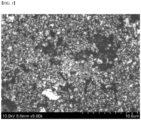
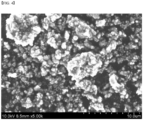
- FIG. 1 to FIG. 4 are scanning electron microscope (SEM) images of respective lithium iron phosphates having an average particle diameter D 50 of 0.8 ⁇ m, 1.0 ⁇ m, 1.2 ⁇ m, and 2.0 ⁇ m, which are used in the positive electrodes manufactured in examples and comparative examples.
- FIG. 1 is an SEM image of lithium iron phosphate included in the positive electrode manufactured in Comparative Example 2
- FIG. 2 is an SEM image of Comparative Example 3
- FIG. 3 is an SEM image of Comparative Example 4
- FIG. 4 is an SEM image of Examples 1 and 2 and Comparative Example 1
- lithium iron phosphate in the positive electrode is formed in the form of a primary particle and/or a secondary particle.
- FIG. 6 is an SEM image of the cross section of the positive electrode of Example 2
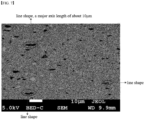
- FIG. 7 is an SEM image of the cross section of the positive electrode of Comparative Example 3.
- bright contrast indicates lithium iron phosphate
- dark contrast indicates that the conductive material and the binder are agglomerated.
- the surface area of the agglomerated conductive material is minimized, and as a result, the surface area of the positive electrode active material, which is located adjacent to the conductive material and does not participate in a lithium intercalation/deintercalation reaction, is minimized, and thus the discharge resistance of a lithium secondary battery may be lowered.
- the agglomeration region of the conductive material was uniformly dispersed as a whole, a deviation in the area of the agglomeration region of the conductive material was small, and the agglomeration region of the conductive material was close to a spherical shape, as compared to the positive electrode of Comparative Example 3.
- a deviation in the area of the agglomeration region of the conductive material was large, and several large conductive material agglomeration regions having a major axis length of about 10 ⁇ m were observed.
- the positive electrode active material, the conductive material, and the binder were dispersed well due to a difference in the average particle diameter D 50 of lithium iron phosphate despite the same dispersant content, as compared to the positive electrode of Comparative Example 3. Also, the positive electrode of Example 2 was expected to achieve excellent discharge resistance in a lithium secondary battery due to the agglomeration of the conductive material in a spherical shape, as compared to the positive electrode of Comparative Example 3.
- Adhesion between a positive electrode active material layer and a positive electrode current collector in each positive electrode manufactured in Examples 1 and 2 and Comparative Examples 1 to 4 was compared.
- each positive electrode manufactured in Examples 1 and 2 and Comparative Examples 1 to 4 was cut into pieces having a length of 150 mm and a width of 20 mm, and the positive electrode surface was attached in a lengthwise direction to a slide glass having a length of 75 mm and a width of 25 mm using a double-sided adhesive tape. That is, the slide glass was attached to an area corresponding to half of the lengthwise direction of the positive electrode. Then, rubbing was performed 10 times using a roller so that the double-sided adhesive tape was uniformly attached, thereby preparing an evaluation sample.
- the slide glass part of the evaluation sample was fixed to the sample stage of a universal testing machine (UTM; LS5, AMETEK), and the half of the positive electrode to which the slide glass was not attached was connected to the load cell of the UTM.
- the load applied to the load cell was measured while moving the load cell up to 50 mm with a force at an angle of 90° and a speed of 100 mm/min.
- the minimum value of the load measured in the section of 20 mm to 40 mm during the driving section was measured as the positive electrode adhesion (gf/20 mm) of each sample.
- Each positive electrode was measured a total of 5 times, and an average value thereof is shown in Table 2 below.
- the positive electrode including a 98 ⁇ m-thick positive electrode active material layer which was manufactured in each of Examples 1 and 2 and Comparative Examples 1 to 4 was cut into pieces having a size of 50 mm ⁇ 50 mm.
- Resistance per unit area (10 mm ⁇ 10 mm) in the thickness direction of the positive electrode active material layer was measured using a positive electrode resistance analyzer (MP tester, HIOKI), and measurement conditions were as follows. Each positive electrode was measured 3 times, and then an average value of the three measurement values when the standard deviation is within 10% is shown in Table 2 below.
- Artificial graphite as a negative electrode active material, Super C as a conductive material, and SBR/CMC as a binder were mixed in a weight ratio of 96:1:3 to prepare a negative electrode slurry, and the slurry was applied onto one surface of a copper current collector, dried at 130 °C, and rolled to manufacture a negative electrode.
- the loading amount of a negative electrode active material layer in the manufactured negative electrode was 3.6 mAh/cm 2 , and the negative electrode active material layer had a porosity of 29%.
- an 18 ⁇ m-thick polypropylene separator was interposed between the manufactured positive electrode and negative electrode to manufacture an electrode assembly.
- the electrolyte was aged for a day, activated at 7.9 mAh for 3 hours, and then further aged for 3 days. Finally, a degassing process was performed to manufacture a lithium secondary battery.
- the cell resistance value of the lithium secondary battery manufactured using each positive electrode of Examples 1 and 2 and Comparative Examples 1 to 4 was measured and compared.
- initial cell resistance refers to a resistance value measured after the lithium secondary battery was manufactured
- cell resistance after 100 cycles refers to a resistance value measured after charging and discharging were repeated 100 times under the condition of 26.3 mAh, a range of 2.5 V to 3.6 V, and 45 °C. Measurement results are shown in the following Table 2.
- Positive electrode Adhesion gf/20 mm
- Positive electrode resistance ⁇ /cm 2
- Initial cell resistance m ⁇
- Cell resistance after 100 cycles m ⁇
- the positive electrode of Comparative Example 1 in which the content of a dispersant in a positive electrode active material layer exceeded 0.9 wt%, exhibited substantially low positive electrode adhesion and high positive electrode resistance compared to the positive electrodes of Examples 1 and 2. Also, it can be confirmed that the initial cell resistance of the lithium secondary battery using the positive electrode of Comparative Example 1 was higher than that of Example 1, and the cell resistance after 100 cycles was substantially increased compared to the initial cell resistance.
- the positive electrode of Comparative Example 3 in which lithium iron phosphate had an average particle diameter D 50 of less than 1.5 ⁇ m, exhibited low positive electrode adhesion and substantially high positive electrode resistance compared to the positive electrodes of Examples 1 and 2. Also, it can be confirmed that the initial cell resistance of the lithium secondary battery using the positive electrode of Comparative Example 3 was higher than that of Example 1, and the cell resistance after 100 cycles was increased compared to the initial cell resistance. However, in the case of the positive electrode of Comparative Example 3, since a positive electrode active material had a larger particle size than that of Comparative Example 2, and the content of a dispersant was lower than that of Comparative Example 4, the separation of a positive electrode active material layer did not occur.
- FIG. 5 is an image showing that the positive electrode manufactured using the positive electrode slurry composition of Comparative Example 4 is partially separated after being rolled, and the positive electrode active material layer of Comparative Example 4 was partially separated from a current collector as shown in FIG. 5 . Therefore, the measurement of the positive electrode adhesion, positive electrode resistance, initial cell resistance, and cell resistance after 100 cycles of the positive electrodes and lithium secondary batteries of Comparative Examples 2 and 4 was not possible.
- the positive electrode of Example 1 exhibited high positive electrode adhesion and low resistance compared to the positive electrode of Example 2. Also, it can be confirmed that the lithium secondary battery using the positive electrode of Example 1 exhibited low initial cell resistance and low cell resistance after 100 cycles compared to the lithium secondary battery using the positive electrode of Example 2.
Landscapes
- Chemical & Material Sciences (AREA)
- Chemical Kinetics & Catalysis (AREA)
- Electrochemistry (AREA)
- General Chemical & Material Sciences (AREA)
- Engineering & Computer Science (AREA)
- Manufacturing & Machinery (AREA)
- Inorganic Chemistry (AREA)
- Materials Engineering (AREA)
- Composite Materials (AREA)
- Crystallography & Structural Chemistry (AREA)
- Battery Electrode And Active Subsutance (AREA)
Applications Claiming Priority (3)
| Application Number | Priority Date | Filing Date | Title |
|---|---|---|---|
| KR20210187190 | 2021-12-24 | ||
| KR1020220178086A KR102815342B1 (ko) | 2021-12-24 | 2022-12-19 | 양극 슬러리 조성물, 이를 이용하여 제조된 양극 및 리튬 이차 전지 |
| PCT/KR2022/020839 WO2023121224A1 (ko) | 2021-12-24 | 2022-12-20 | 양극 슬러리 조성물, 이를 이용하여 제조된 양극 및 리튬 이차 전지 |
Publications (2)
| Publication Number | Publication Date |
|---|---|
| EP4318656A1 true EP4318656A1 (de) | 2024-02-07 |
| EP4318656A4 EP4318656A4 (de) | 2025-07-16 |
Family
ID=86897357
Family Applications (1)
| Application Number | Title | Priority Date | Filing Date |
|---|---|---|---|
| EP22911857.5A Pending EP4318656A4 (de) | 2021-12-24 | 2022-12-20 | Positive elektrodenaufschlämmungszusammensetzung, damit hergestellte positive elektrode und lithiumsekundärbatterie |
Country Status (5)
| Country | Link |
|---|---|
| US (1) | US20230207798A1 (de) |
| EP (1) | EP4318656A4 (de) |
| JP (1) | JP7771215B2 (de) |
| CA (1) | CA3218267A1 (de) |
| WO (1) | WO2023121224A1 (de) |
Family Cites Families (22)
| Publication number | Priority date | Publication date | Assignee | Title |
|---|---|---|---|---|
| CA2535064A1 (fr) * | 2006-02-01 | 2007-08-01 | Hydro Quebec | Materiau multi-couches, procede de fabrication et utilisation comme electrode |
| KR100952277B1 (ko) * | 2007-03-05 | 2010-04-12 | 도요 잉키 세이조 가부시끼가이샤 | 전지용 조성물 |
| JP5381024B2 (ja) | 2008-11-06 | 2014-01-08 | 株式会社Gsユアサ | リチウム二次電池用正極及びリチウム二次電池 |
| JP2010287497A (ja) | 2009-06-12 | 2010-12-24 | Panasonic Corp | 非水電解質二次電池用正極、非水電解質二次電池用正極の製造方法及び非水電解質二次電池 |
| CN102237521B (zh) * | 2010-04-29 | 2014-03-12 | 上海比亚迪有限公司 | 一种锂离子电池正极浆料、正极及电池 |
| JP5273274B1 (ja) * | 2012-04-27 | 2013-08-28 | 東洋インキScホールディングス株式会社 | リチウム二次電池電極形成用組成物、二次電池用電極 |
| KR101440003B1 (ko) * | 2012-11-23 | 2014-09-12 | 한국화학연구원 | 리튬인산철 양극 활물질의 제조방법, 이에 따라 제조되는 리튬인산철 양극 활물질 및 이에 따라 제조되는 2차 전지 |
| JP2014182873A (ja) * | 2013-03-18 | 2014-09-29 | Toyo Ink Sc Holdings Co Ltd | 非水二次電池電極形成材料、非水二次電池電極、及び非水二次電池 |
| JP6436472B2 (ja) | 2014-03-05 | 2018-12-12 | 日本ケミコン株式会社 | 導電性カーボンの製造方法、導電性カーボンを含む電極材料の製造方法、及び、電極材料を用いた電極の製造方法 |
| KR102303569B1 (ko) * | 2014-09-23 | 2021-09-16 | 삼성에스디아이 주식회사 | 리튬 이차 전지용 양극 및 이를 포함하는 리튬 이차 전지 |
| JP2016105359A (ja) | 2014-12-01 | 2016-06-09 | Tdk株式会社 | 正極活物質及びそれを用いたリチウムイオン二次電池 |
| JP2017091913A (ja) | 2015-11-13 | 2017-05-25 | トヨタ自動車株式会社 | 硫化物全固体リチウム電池の複合正極活物質の製造方法 |
| SG11202000089TA (en) * | 2016-10-11 | 2020-02-27 | Grst Int Ltd | Cathode slurry for lithium ion battery |
| JP2018120820A (ja) | 2017-01-27 | 2018-08-02 | 古河電池株式会社 | リチウムイオン二次電池用正極及びリチウムイオン二次電池 |
| US11283058B2 (en) * | 2017-03-22 | 2022-03-22 | Lg Energy Solution, Ltd. | Method of preparing slurry composition for secondary battery positive electrode, positive electrode for secondary battery prepared by using the same, and lithium secondary battery including the positive electrode |
| CN109845005B (zh) | 2017-03-22 | 2022-04-08 | 株式会社Lg化学 | 正极活性材料预分散体组合物、二次电池用正极以及包含该正极的锂二次电池 |
| KR102242254B1 (ko) | 2017-03-23 | 2021-04-21 | 주식회사 엘지화학 | 이차전지 양극용 슬러리의 제조방법 |
| JP6825978B2 (ja) * | 2017-04-28 | 2021-02-03 | トヨタ自動車株式会社 | リチウムイオン二次電池用正極およびその製造方法 |
| CN108091847A (zh) * | 2017-12-11 | 2018-05-29 | 北京国能电池科技有限公司 | 锂离子电池正极材料及其制备方法与锂离子电池 |
| WO2020059802A1 (ja) | 2018-09-19 | 2020-03-26 | 株式会社村田製作所 | 二次電池 |
| CN109494349B (zh) * | 2018-10-17 | 2020-08-28 | 宁德时代新能源科技股份有限公司 | 负极极片及二次电池 |
| CN111540877A (zh) * | 2020-04-22 | 2020-08-14 | 欣旺达电动汽车电池有限公司 | 电极极片及其制备方法和二次电池 |
-
2022
- 2022-12-20 JP JP2023564602A patent/JP7771215B2/ja active Active
- 2022-12-20 WO PCT/KR2022/020839 patent/WO2023121224A1/ko not_active Ceased
- 2022-12-20 EP EP22911857.5A patent/EP4318656A4/de active Pending
- 2022-12-20 CA CA3218267A patent/CA3218267A1/en active Pending
- 2022-12-21 US US18/069,602 patent/US20230207798A1/en active Pending
Also Published As
| Publication number | Publication date |
|---|---|
| EP4318656A4 (de) | 2025-07-16 |
| JP2024518748A (ja) | 2024-05-02 |
| JP7771215B2 (ja) | 2025-11-17 |
| WO2023121224A1 (ko) | 2023-06-29 |
| US20230207798A1 (en) | 2023-06-29 |
| CA3218267A1 (en) | 2023-06-29 |
Similar Documents
| Publication | Publication Date | Title |
|---|---|---|
| EP3525270B1 (de) | Vordispersionszusammensetzung eines aktivmaterials einer positivelektrode, positivelektrode für sekundärbatterie und lithiumsekundärbatterie enthaltend die positivelectrode | |
| EP3396744B1 (de) | Positivelektrode für sekundärbatterie und lithiumsekundärbatterie damit | |
| KR102323808B1 (ko) | 이차전지 양극용 슬러리 조성물의 제조방법, 이를 이용하여 제조된 이차전지용 양극 및 이를 포함하는 리튬 이차전지 | |
| EP3506398B1 (de) | Verfahren zur herstellung von schlämme für kathode für sekundärbatterie | |
| KR102815342B1 (ko) | 양극 슬러리 조성물, 이를 이용하여 제조된 양극 및 리튬 이차 전지 | |
| KR20250126678A (ko) | 양극 및 이를 이용하여 제조된 리튬 이차전지 | |
| KR102848080B1 (ko) | 양극 및 이를 이용하여 제조된 리튬 이차전지 | |
| KR20240058785A (ko) | 양극 및 이를 이용하여 제조된 리튬 이차전지 | |
| KR20250053042A (ko) | 양극 슬러리 조성물, 이를 이용하여 제조된 리튬 이차전지 | |
| KR102773510B1 (ko) | 고로딩 양극, 양극용 슬러리 및 리튬 이차전지 | |
| KR102819232B1 (ko) | 양극 슬러리 조성물, 이를 이용하여 제조된 리튬 이차전지 | |
| EP4435888A1 (de) | Kathode und damit hergestellte lithiumsekundärbatterie | |
| EP4318656A1 (de) | Positive elektrodenaufschlämmungszusammensetzung, damit hergestellte positive elektrode und lithiumsekundärbatterie | |
| EP4322253A1 (de) | Kathodensuspensionszusammensetzung, damit hergestellte kathode und lithiumsekundärbatterie | |
| KR102652282B1 (ko) | 양극 슬러리 조성물, 이를 이용하여 제조된 양극 및 리튬 이차전지 | |
| EP4510232A1 (de) | Kathode und damit hergestellte lithiumsekundärbatterie | |
| EP4535461A1 (de) | Positivelektrode und damit hergestellte lithiumsekundärbatterie | |
| CN117203793A (zh) | 正极浆料组合物、使用其制造的正极和锂二次电池 | |
| EP4465387A1 (de) | Kathode und lithiumsekundärbatterie damit | |
| CN118974975A (zh) | 高负载正极、正极用浆料和锂二次电池 |
Legal Events
| Date | Code | Title | Description |
|---|---|---|---|
| STAA | Information on the status of an ep patent application or granted ep patent |
Free format text: STATUS: THE INTERNATIONAL PUBLICATION HAS BEEN MADE |
|
| PUAI | Public reference made under article 153(3) epc to a published international application that has entered the european phase |
Free format text: ORIGINAL CODE: 0009012 |
|
| STAA | Information on the status of an ep patent application or granted ep patent |
Free format text: STATUS: REQUEST FOR EXAMINATION WAS MADE |
|
| 17P | Request for examination filed |
Effective date: 20231027 |
|
| AK | Designated contracting states |
Kind code of ref document: A1 Designated state(s): AL AT BE BG CH CY CZ DE DK EE ES FI FR GB GR HR HU IE IS IT LI LT LU LV MC ME MK MT NL NO PL PT RO RS SE SI SK SM TR |
|
| DAV | Request for validation of the european patent (deleted) | ||
| DAX | Request for extension of the european patent (deleted) | ||
| A4 | Supplementary search report drawn up and despatched |
Effective date: 20250616 |
|
| RIC1 | Information provided on ipc code assigned before grant |
Ipc: H01M 4/38 20060101AFI20250610BHEP Ipc: H01M 4/58 20100101ALI20250610BHEP Ipc: H01M 4/52 20100101ALI20250610BHEP Ipc: H01M 4/62 20060101ALI20250610BHEP Ipc: H01M 10/052 20100101ALI20250610BHEP Ipc: H01M 4/02 20060101ALI20250610BHEP Ipc: H01M 10/0525 20100101ALI20250610BHEP Ipc: H01M 4/04 20060101ALI20250610BHEP Ipc: H01M 4/13 20100101ALI20250610BHEP Ipc: H01M 4/131 20100101ALI20250610BHEP Ipc: H01M 4/136 20100101ALI20250610BHEP Ipc: H01M 4/139 20100101ALI20250610BHEP Ipc: H01M 4/1397 20100101ALI20250610BHEP Ipc: H01M 4/36 20060101ALI20250610BHEP Ipc: H01M 4/525 20100101ALI20250610BHEP |
|
| RIC1 | Information provided on ipc code assigned before grant |
Ipc: H01M 4/38 20060101AFI20251117BHEP Ipc: H01M 4/58 20100101ALI20251117BHEP Ipc: H01M 4/52 20100101ALI20251117BHEP Ipc: H01M 4/62 20060101ALI20251117BHEP Ipc: H01M 10/052 20100101ALI20251117BHEP Ipc: H01M 4/02 20060101ALI20251117BHEP Ipc: H01M 10/0525 20100101ALI20251117BHEP Ipc: H01M 4/04 20060101ALI20251117BHEP Ipc: H01M 4/13 20100101ALI20251117BHEP Ipc: H01M 4/131 20100101ALI20251117BHEP Ipc: H01M 4/136 20100101ALI20251117BHEP Ipc: H01M 4/139 20100101ALI20251117BHEP Ipc: H01M 4/1397 20100101ALI20251117BHEP Ipc: H01M 4/36 20060101ALI20251117BHEP Ipc: H01M 4/525 20100101ALI20251117BHEP |