EP4298150B1 - Phosphonierte nichtfluorierte und teilfluorierte arylpolymere aus sulfonierten arylpolymeren und polymere perfluorphosphonsäuren aus polymeren perfluorsulfonsäuren, deren herstellungsverfahren und anwendung in elektromembrananwendungen - Google Patents
Phosphonierte nichtfluorierte und teilfluorierte arylpolymere aus sulfonierten arylpolymeren und polymere perfluorphosphonsäuren aus polymeren perfluorsulfonsäuren, deren herstellungsverfahren und anwendung in elektromembrananwendungen Download PDFInfo
- Publication number
- EP4298150B1 EP4298150B1 EP22748236.1A EP22748236A EP4298150B1 EP 4298150 B1 EP4298150 B1 EP 4298150B1 EP 22748236 A EP22748236 A EP 22748236A EP 4298150 B1 EP4298150 B1 EP 4298150B1
- Authority
- EP
- European Patent Office
- Prior art keywords
- polymers
- polymer
- phosphonated
- membranes
- polymeric
- Prior art date
- Legal status (The legal status is an assumption and is not a legal conclusion. Google has not performed a legal analysis and makes no representation as to the accuracy of the status listed.)
- Active
Links
Images

Classifications
-
- C—CHEMISTRY; METALLURGY
- C08—ORGANIC MACROMOLECULAR COMPOUNDS; THEIR PREPARATION OR CHEMICAL WORKING-UP; COMPOSITIONS BASED THEREON
- C08G—MACROMOLECULAR COMPOUNDS OBTAINED OTHERWISE THAN BY REACTIONS ONLY INVOLVING UNSATURATED CARBON-TO-CARBON BONDS
- C08G65/00—Macromolecular compounds obtained by reactions forming an ether link in the main chain of the macromolecule
- C08G65/34—Macromolecular compounds obtained by reactions forming an ether link in the main chain of the macromolecule from hydroxy compounds or their metallic derivatives
- C08G65/48—Polymers modified by chemical after-treatment
-
- C—CHEMISTRY; METALLURGY
- C08—ORGANIC MACROMOLECULAR COMPOUNDS; THEIR PREPARATION OR CHEMICAL WORKING-UP; COMPOSITIONS BASED THEREON
- C08G—MACROMOLECULAR COMPOUNDS OBTAINED OTHERWISE THAN BY REACTIONS ONLY INVOLVING UNSATURATED CARBON-TO-CARBON BONDS
- C08G65/00—Macromolecular compounds obtained by reactions forming an ether link in the main chain of the macromolecule
- C08G65/34—Macromolecular compounds obtained by reactions forming an ether link in the main chain of the macromolecule from hydroxy compounds or their metallic derivatives
- C08G65/38—Macromolecular compounds obtained by reactions forming an ether link in the main chain of the macromolecule from hydroxy compounds or their metallic derivatives derived from phenols
- C08G65/40—Macromolecular compounds obtained by reactions forming an ether link in the main chain of the macromolecule from hydroxy compounds or their metallic derivatives derived from phenols from phenols (I) and other compounds (II), e.g. OH-Ar-OH + X-Ar-X, where X is halogen atom, i.e. leaving group
- C08G65/4012—Other compound (II) containing a ketone group, e.g. X-Ar-C(=O)-Ar-X for polyetherketones
- C08G65/4056—(I) or (II) containing sulfur
-
- C—CHEMISTRY; METALLURGY
- C08—ORGANIC MACROMOLECULAR COMPOUNDS; THEIR PREPARATION OR CHEMICAL WORKING-UP; COMPOSITIONS BASED THEREON
- C08J—WORKING-UP; GENERAL PROCESSES OF COMPOUNDING; AFTER-TREATMENT NOT COVERED BY SUBCLASSES C08B, C08C, C08F, C08G or C08H
- C08J5/00—Manufacture of articles or shaped materials containing macromolecular substances
- C08J5/20—Manufacture of shaped structures of ion-exchange resins
- C08J5/22—Films, membranes or diaphragms
- C08J5/2206—Films, membranes or diaphragms based on organic and/or inorganic macromolecular compounds
- C08J5/2218—Synthetic macromolecular compounds
- C08J5/2256—Synthetic macromolecular compounds based on macromolecular compounds obtained by reactions other than those involving carbon-to-carbon bonds, e.g. obtained by polycondensation
-
- C—CHEMISTRY; METALLURGY
- C08—ORGANIC MACROMOLECULAR COMPOUNDS; THEIR PREPARATION OR CHEMICAL WORKING-UP; COMPOSITIONS BASED THEREON
- C08J—WORKING-UP; GENERAL PROCESSES OF COMPOUNDING; AFTER-TREATMENT NOT COVERED BY SUBCLASSES C08B, C08C, C08F, C08G or C08H
- C08J5/00—Manufacture of articles or shaped materials containing macromolecular substances
- C08J5/20—Manufacture of shaped structures of ion-exchange resins
- C08J5/22—Films, membranes or diaphragms
- C08J5/2287—After-treatment
-
- C—CHEMISTRY; METALLURGY
- C25—ELECTROLYTIC OR ELECTROPHORETIC PROCESSES; APPARATUS THEREFOR
- C25B—ELECTROLYTIC OR ELECTROPHORETIC PROCESSES FOR THE PRODUCTION OF COMPOUNDS OR NON-METALS; APPARATUS THEREFOR
- C25B13/00—Diaphragms; Spacing elements
- C25B13/04—Diaphragms; Spacing elements characterised by the material
- C25B13/08—Diaphragms; Spacing elements characterised by the material based on organic materials
-
- H—ELECTRICITY
- H01—ELECTRIC ELEMENTS
- H01M—PROCESSES OR MEANS, e.g. BATTERIES, FOR THE DIRECT CONVERSION OF CHEMICAL ENERGY INTO ELECTRICAL ENERGY
- H01M4/00—Electrodes
- H01M4/02—Electrodes composed of, or comprising, active material
- H01M4/62—Selection of inactive substances as ingredients for active masses, e.g. binders, fillers
- H01M4/621—Binders
- H01M4/622—Binders being polymers
-
- H—ELECTRICITY
- H01—ELECTRIC ELEMENTS
- H01M—PROCESSES OR MEANS, e.g. BATTERIES, FOR THE DIRECT CONVERSION OF CHEMICAL ENERGY INTO ELECTRICAL ENERGY
- H01M50/00—Constructional details or processes of manufacture of the non-active parts of electrochemical cells other than fuel cells, e.g. hybrid cells
- H01M50/40—Separators; Membranes; Diaphragms; Spacing elements inside cells
- H01M50/409—Separators, membranes or diaphragms characterised by the material
- H01M50/411—Organic material
- H01M50/414—Synthetic resins, e.g. thermoplastics or thermosetting resins
-
- H—ELECTRICITY
- H01—ELECTRIC ELEMENTS
- H01M—PROCESSES OR MEANS, e.g. BATTERIES, FOR THE DIRECT CONVERSION OF CHEMICAL ENERGY INTO ELECTRICAL ENERGY
- H01M8/00—Fuel cells; Manufacture thereof
- H01M8/10—Fuel cells with solid electrolytes
- H01M8/1016—Fuel cells with solid electrolytes characterised by the electrolyte material
- H01M8/1018—Polymeric electrolyte materials
- H01M8/102—Polymeric electrolyte materials characterised by the chemical structure of the main chain of the ion-conducting polymer
- H01M8/1025—Polymeric electrolyte materials characterised by the chemical structure of the main chain of the ion-conducting polymer having only carbon and oxygen, e.g. polyethers, sulfonated polyetheretherketones [S-PEEK], sulfonated polysaccharides, sulfonated celluloses or sulfonated polyesters
-
- C—CHEMISTRY; METALLURGY
- C08—ORGANIC MACROMOLECULAR COMPOUNDS; THEIR PREPARATION OR CHEMICAL WORKING-UP; COMPOSITIONS BASED THEREON
- C08G—MACROMOLECULAR COMPOUNDS OBTAINED OTHERWISE THAN BY REACTIONS ONLY INVOLVING UNSATURATED CARBON-TO-CARBON BONDS
- C08G2650/00—Macromolecular compounds obtained by reactions forming an ether link in the main chain of the macromolecule
- C08G2650/28—Macromolecular compounds obtained by reactions forming an ether link in the main chain of the macromolecule characterised by the polymer type
- C08G2650/38—Macromolecular compounds obtained by reactions forming an ether link in the main chain of the macromolecule characterised by the polymer type containing oxygen in addition to the ether group
- C08G2650/40—Macromolecular compounds obtained by reactions forming an ether link in the main chain of the macromolecule characterised by the polymer type containing oxygen in addition to the ether group containing ketone groups, e.g. polyarylethylketones, PEEK or PEK
-
- C—CHEMISTRY; METALLURGY
- C08—ORGANIC MACROMOLECULAR COMPOUNDS; THEIR PREPARATION OR CHEMICAL WORKING-UP; COMPOSITIONS BASED THEREON
- C08J—WORKING-UP; GENERAL PROCESSES OF COMPOUNDING; AFTER-TREATMENT NOT COVERED BY SUBCLASSES C08B, C08C, C08F, C08G or C08H
- C08J2371/00—Characterised by the use of polyethers obtained by reactions forming an ether link in the main chain; Derivatives of such polymers
- C08J2371/08—Polyethers derived from hydroxy compounds or from their metallic derivatives
- C08J2371/10—Polyethers derived from hydroxy compounds or from their metallic derivatives from phenols
-
- H—ELECTRICITY
- H01—ELECTRIC ELEMENTS
- H01M—PROCESSES OR MEANS, e.g. BATTERIES, FOR THE DIRECT CONVERSION OF CHEMICAL ENERGY INTO ELECTRICAL ENERGY
- H01M8/00—Fuel cells; Manufacture thereof
- H01M8/10—Fuel cells with solid electrolytes
- H01M2008/1095—Fuel cells with polymeric electrolytes
-
- Y—GENERAL TAGGING OF NEW TECHNOLOGICAL DEVELOPMENTS; GENERAL TAGGING OF CROSS-SECTIONAL TECHNOLOGIES SPANNING OVER SEVERAL SECTIONS OF THE IPC; TECHNICAL SUBJECTS COVERED BY FORMER USPC CROSS-REFERENCE ART COLLECTIONS [XRACs] AND DIGESTS
- Y02—TECHNOLOGIES OR APPLICATIONS FOR MITIGATION OR ADAPTATION AGAINST CLIMATE CHANGE
- Y02E—REDUCTION OF GREENHOUSE GAS [GHG] EMISSIONS, RELATED TO ENERGY GENERATION, TRANSMISSION OR DISTRIBUTION
- Y02E60/00—Enabling technologies; Technologies with a potential or indirect contribution to GHG emissions mitigation
- Y02E60/30—Hydrogen technology
- Y02E60/50—Fuel cells
Definitions
- aryl polymers which are synthesized by nucleophilic substitution (Michaelis-Arbusow and Michaelis-Becker rearrangement) of aryl halides and di- or trialkyl phosphite.
- WO 2007/101415 A2 relates to polymer materials for the production of membranes in electrochemical cells and has the task, among other things, of achieving the highest possible proton conductivity even under reduced humidification.
- the polymers used - preferably polyarylethers - can carry sulfonic and phosphonic acid groups, among others (claim 1; Figures 12, 22 and 27)
- the inventive step is based on finding and synthesizing new phosphonated polymers that are proton-conducting and chemically and mechanically stable even when dry. This is achieved by first converting sulfonated polymers, which already have good mechanical properties and sulfonic acid groups, into the -SO 2 Cl form by means of sulfochlorination with thionyl chloride.
- TTMSP tris(trimethylsilyl)phosphite
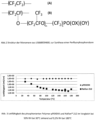
- the polymers which already have good mechanical and chemical properties in their sulfonated form, retain these after phosphonation and, unlike the polymers containing sulfonic acid, are also very good proton conductors above 100°C. ( Fig. 3 )
- the reaction should be as efficient and simple as possible, which is the case here.
- the phosphonated polymers should be soluble in common solvents in order to be able to produce membranes from them.
- the phosphonated polymer can in principle be synthesized from all sulfonated polymers.
- the invention is based on the introduction of a reactive group -X into a sulfonated polymer (-X can be -SO 2 Cl, -SO 2 Na, -SO 2 Li) and the reaction of the reactive group with trialkyl phosphites such as tris(trimethylsilyl)phosphite (TTMSP).
- a reactive group -X can be -SO 2 Cl, -SO 2 Na, -SO 2 Li
- TTMSP tris(trimethylsilyl)phosphite
- the phosphonated polymers may still contain free reactive groups -X. These free groups can be used to subsequently covalently crosslink the phosphonated polymers or to convert the unreacted groups back into the -SO 3 H form and thus obtain a polymer which contains both sulfonated and phosphonated groups.
- the phosphonation can take place in solution.
- the polymers with the reactive group -X can be dissolved in solvents such as N-methylpyrolidone (NMP), dimethylacetamide (DMAc), dimethyl sulfoxide (DMSO), etc.
- NMP N-methylpyrolidone
- DMAc dimethylacetamide
- DMSO dimethyl sulfoxide
- TTMSP can be added either beforehand, directly during the dissolving process, or after the polymers have dissolved.
- 0.1 wt.% weight percent
- low degree of phosphonation up to 5000 wt.%
- high degree of phosphonation based on the polymer weight is added.
- the reaction works best and fastest in high-boiling solvents such as NMP, DMAc and DMSO.
- high-boiling solvents such as NMP, DMAc and DMSO.
- gas evolution can be observed, which indicates when the reaction starts or ends, and no more gas evolution.
- reaction temperature 60-200°C
- reaction temperature 60-200°C
- reaction by-products and excess TTMSP are removed by distillation and the phosphonated polymer, in the form of its trimethylsilyl ester, remains in the solvent.
- the polymer solution is then poured into water and, depending on the degree of phosphonation, precipitates as a solid (low degree of phosphonation) or dissolves (high degree of phosphonation).
- the phosphonated polymer is hydrolyzed from its trimethylsilyl ester form to the free polymeric phosphonic acid.
- the polymer can simply be washed with water, depending on the degree of phosphonation.
- Non-water-soluble components can be washed out with water and filtered off, or water-soluble components can be purified by dialysis.
- Another variant is not to precipitate the polymer solution in water, but to separate the excess TTMSP and to process the polymer solution from [0015] directly into a membrane and then to hydrolyze it in hot to boiling water or to post-treat it with hot steam.
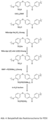
- FIG. 4 A corresponding exemplary reaction overview of a non-limiting embodiment is shown in Fig. 4 shown.
- the polymers obtained can be blended with basic polymers, such as polybenzimidazole or anion exchange polymers, to form acid-base blend membranes, covalently cross-linked membranes and covalently cross-linked acid-base blend membranes.
- basic polymers such as polybenzimidazole or anion exchange polymers
- the mixing ratio between phosphonated and basic polymer can be between 99 mol% phosphonated polymer/1 mol% basic polymer and 1 mol% phosphonated polymer/99 mol% basic polymer.
- Any sulfonated polymer can be added to the polymer or blend in any amount.
- the polymers obtained can be blended with basic polymers, such as polybenzimidazole or anion exchange polymers, to form acid-base blend membranes, covalently cross-linked membranes and covalently cross-linked acid-base blend membranes.
- basic polymers such as polybenzimidazole or anion exchange polymers
- the mixing ratio between phosphonated and basic polymer can be between 99 mol% phosphonated polymer/1 mol% basic polymer and 1 mol% phosphonated polymer/99 mol% basic polymer.
- Any sulfonated polymer can be added to the polymer or blend in any amount.
- the blend membrane can also be doped with phosphoric acid in any quantity. Values between 40 wt.% and 500 wt.% are preferred as the phosphoric acid doping level.
- the polymers obtained can be used in electrochemical cells.
- the polymers obtained can be used in low or medium temperature fuel cells in the temperature range from -30°C to 250°C or in low or medium temperature electrolyzers in the temperature range from 0°C to 250°C.
- the polymers obtained can be used in chemical synthesis reactors from -70 to 250°C.
- the polymers obtained can also be used as separators in primary and secondary batteries or as binders in electrodes, primary and secondary batteries.
- sPEKEKK sulfonated polyether ketone ether ketone ketone
- the previously sulfonated polymer is now in the -SO 2 Cl form.
- the product is now converted into the -SO 2 Na form in a 2 M sodium sulfite solution.
- the polymer is then filtered off and washed again with water to wash out excess sodium sulfite.
- the polymer of the -SO 2 Na form is then mixed with a 10 wt% LiCl solution to convert it into the -SO 2 Li form.
- the polymer is then washed again with water to flush out excess salts. Finally, the polymer is dried.
- Phosphonation with TTMSP can be carried out with all three forms, -SO 2 Cl, -SO 2 Na and -SO 2 Li, with the -SO 2 Li form being preferred.
- the polymer with -SO 2 Cl, -SO 2 Na or -SO 2 Li groups can now be treated with an organic solvent such as DMAc, NMP, DMSO etc. and TTMSP and phosphonated.
- organic solvent such as DMAc, NMP, DMSO etc. and TTMSP and phosphonated.
- the reaction can either be carried out from the polymer granulate, powder, etc., as described in [0019] to [0021], or it is possible to use the perfluorosulfonic acid membrane directly.
- the perfluorosulfonic acid membrane is pulled through a hot thionyl chloride/DMF bath in which the sulfochlorination takes place, then pulled through a water bath to rinse.
- the membrane, which now has the -SO 2 Cl form is then pulled through a sodium sulfite bath, where the -SO 2 Na form is formed and then rinsed. pulled through a water bath again.
- the membrane in the -SO 2 Na form is then pulled through a LiCl bath and converted into the -SO 2 Li form and then washed again in a water bath. All three forms of the membrane, -SO 2 Cl, -SO 2 Na and -SO 2 Li can be pulled through a heated TTMSP bath and finally pulled through a hot/boiling water bath to obtain the phosphonic acid form by hydrolysis. This can be done in a continuous roll-to-roll process, but is also possible in a batch process. The membrane can now be dried and used again directly.
- the -SO 2 Li form is preferred for phosphonation.
- one of the phosphonated polymers is described as an example, whose ion exchange capacity, conductivity up to 180°C ( Fig. 3 ).
- the high conductivity at high temperatures may be due to the fact that the SO 2 group has a strong attracting effect on the electrons of the phosphonic acid group.
Landscapes
- Chemical & Material Sciences (AREA)
- Chemical Kinetics & Catalysis (AREA)
- General Chemical & Material Sciences (AREA)
- Electrochemistry (AREA)
- Engineering & Computer Science (AREA)
- Organic Chemistry (AREA)
- Manufacturing & Machinery (AREA)
- Health & Medical Sciences (AREA)
- Medicinal Chemistry (AREA)
- Polymers & Plastics (AREA)
- Materials Engineering (AREA)
- Life Sciences & Earth Sciences (AREA)
- Crystallography & Structural Chemistry (AREA)
- Sustainable Development (AREA)
- Sustainable Energy (AREA)
- Metallurgy (AREA)
- Inorganic Chemistry (AREA)
- Polymers With Sulfur, Phosphorus Or Metals In The Main Chain (AREA)
- Manufacture Of Macromolecular Shaped Articles (AREA)
- Other Resins Obtained By Reactions Not Involving Carbon-To-Carbon Unsaturated Bonds (AREA)
- Macromolecular Compounds Obtained By Forming Nitrogen-Containing Linkages In General (AREA)
- Fuel Cell (AREA)
- Polyethers (AREA)
- Polyesters Or Polycarbonates (AREA)
Description
- Die am häufigsten beschriebenen phosphonierten Systeme beruhen auf Arylpolymeren, die mittels nucleophiler Substitution (Michaelis-Arbusow- und Michaelis-Becker Umlagerung) von Arylhalogeniden und Di- bzw. Trialkylphosphit synthetisiert werden.
- Diese phosphonierten Arylpolymere haben eine hohe thermische und chemische Stabilität. Zudem zeigen sie eine gute Protonenleitfähigkeit auch im nicht befeuchteten Zustand. [1-5]
- Nachteile dieser phosphonierten Arylpolymere z. B. aus
DE 10 2011 015 212 A1 ist, dass diese im nicht hydrierten Zustand, also trocken, extrem spröde sind und so keine funktionstüchtigen Membranen hergestellt werden können. Das spröde Verhalten nimmt mit steigender Temperatur und sinkender Feuchtigkeit zu und führt zum mechanischen Versagen der Membran. Dies macht einen Einsatz dieser Polymere als Membran für Elektromembranverfahren im Bereich über 100°C nicht möglich. - Im
Patent US6680346B1 von Kyoji Kimoto wird eine direkte Synthese zu einer phosphonierten Perfluorphosphonsäure beschrieben. Der Anspruch bezieht sich dort auf folgende Struktur (Abb. 2 ) mit den Verhältnissen m ist 0 oder 1, n ist 2 oder 3, X,Y ist H oder C6H4SO3H und das Verhältnis von A/B ist 1,5 bis 15. - Aus
EP2514773A1 geht hervor, dass die synthetisierten Polymere inUS6680346B1 , aufgrund von schwer kontrollierbaren Polymerisationsbedingungen, einer Zyklisierung unterworfen sind, die zu einem Kettentransfer während der Polymerisation führen und dadurch eine Abnahme des Molekulargewichts und der mechanischen Festigkeit der Materialien verursacht. Mit zunehmendem Molverhältnis von kurzkettigen phosphonylhaltigem Monomer zum Tetrafluorethylen-Monomer wird diese Nebenreaktion weiter gefördert, was die Erhöhung der lonenaustauschkapazität und der Materialstabilität einschränkt. -
WO 2007/101415 A2 betrifft polymere Materialien zur Herstellung von Membranen in elektrochemischen Zellen und stellt sich unter anderem die Aufgabe, eine möglichst hohe Protonenleitfähigkeit auch unter reduzierter Befeuchtung zu erreichen. Die eingesetzten Polymere - bevorzugt Polyarylether - können unter anderem Sulfon- und Phosphonsäure-Gruppen tragen (Anspruch 1; Abbildungen 12, 22 und 27) - Das hier beanspruchte Verfahren, hat diese Einschränkung nicht, da polymere Perfluorsulfonsäuren heutzutage in gleichbleibender Qualität hergestellt werden können, Beispiele dafür sind in
Abb. 1 zu sehen. - Die beschriebene Phosphonierungsreaktion führt somit zu einer neuen stabilen Materialklasse von polymeren Perfluorphosphonsäuren und besitzt nicht die Nachteile aus
US6680346B1 . Bei den sulfonierten Arylpolymeren verhält es sich genauso, hat das Grundpolymer bereits gute mechanische Eigenschaften, behält es diese in seiner neuen Form als phosphoniertes Polymer bei. - Die erfinderische Tätigkeit beruht darauf, neue phosphonierte Polymere, die auch im trockenen Zustand protonenleitend, chemisch und mechanisch stabil sind, zu finden und zu synthetisieren. Dies wird erreicht, in dem man sulfonierte Polymere, die bereits gute mechanische Eigenschaften aufweisen und Sulfonsäuregruppen besitzen, mittels Sulfochlorierung mit Thionylchlorid zunächst in die -SO2Cl Form überführt. Von der-SO2Cl Form ausgehend, kann man bereits mit Trialkylphosphiten wie z. B. Tris(trimethylsilyl)phosphit (TTMSP) phosphonieren bzw. die -SO2Cl Form mit Natriumsulfit in die -SO2Na (Natriumsulfonat) Form überführen und diese phosphonieren, oder weitergehend die -SO2Na Form in die -SO2Li (Lithiumsulfonat) Form überführen und diese wiederum Phosphonieren. Mit diesem Verfahren lassen sich aus allen Polymeren mit Sulfonsäuregruppen, die phosphonierten Polymere mit einer hohen mechanischen Flexibilität, chemischen Stabilität und hohen Protonenleitfähigkeit synthetisieren. Die Polymere, die bereits in ihrer sulfonierten Form gute mechanische und chemische Eigenschaften besitzen, behalten diese nach der Phosphonierung bei und sind auch, anders als die sulfonsäurehaltigen Polymere, über 100°C sehr gut protonenleitend. (
Abb. 3 ) - Die Reaktion möglichst effizient und einfacher Art sein soll, was hier gegeben ist.
- Die phosphonierten Polymere sollen in gängigen Lösemitteln löslich sein, um daraus Membranen herstellen zu können.
- Mit der hier beschriebenen Synthesemethode, kann prinzipiell aus allen sulfonierten Polymeren das phosphonierte Polymer synthetisiert werden.
- Die Erfindung beruht auf dem Einfügen einer reaktiven Gruppe -X in ein sulfoniertes Polymer (-X kann sein, -SO2Cl, -SO2Na, -SO2Li) und der Reaktion der reaktiven Gruppe, mit Trialkylphosphiten wie z. B. Tris(trimethylsilyl)phosphit (TTMSP).
- Die phosphonierten Polymere können je nach Phosponierungsgrad noch freie reaktive Gruppen -X beinhalten. Diese freien Gruppen können verwendet werden, um die phosphonierten Polymere nachträglich kovalent zu vernetzen bzw. die nicht abreagierten Gruppen wieder in die -SO3H Form zu überführen und somit ein Polymer zu erhalten welches sowohl sulfonierte als auch phosphonierte Gruppen enthält.
- Die Phosphonierung kann in Lösung stattfinden. Hierfür können die Polymere mit der reaktiven Gruppe -X in Lösungsmitteln wie z. B. N-Methylpyrolidon (NMP), Dimethylacetamid (DMAc), Dimethylsulfoxid (DMSO) etc. gelöst werden. TTMSP kann wahlweise vorher, direkt beim Lösevorgang bzw. nachdem die Polymere gelöst sind zugegeben werden. Je nach gewünschtem Phosphonierungsgrad werden 0,1 Gew.% (Gewichtsprozent), geringer Phosphonierungsgrad, bis 5000 Gew.%, hoher Phosphonierungsgrad, bezogen auf die Polymereinwaage zugegeben.
- Am besten und schnellsten funktioniert die Reaktion in hoch siedenden Lösungsmitteln wie NMP, DMAc und DMSO. Während der Reaktion ist eine Gasentwicklung zu beobachten, die anzeigt, wann die Reaktion startet bzw. endet, keine Gasentwicklung mehr.
- Die Reaktion wird so lange auf Reaktionstemperatur (60-200°C), abhängig vom verwendeten Polymer, dessen Molekularmasse und Lösungsmittel gehalten, bis die Gasentwicklung stoppt. Anschließend wird die Reaktion weitere 2 - 8 Stunden auf Temperatur gehalten, um sicher zu sein, dass die Reaktion vollständig ist.
- Anschließend werden Reaktionsnebenprodukte und überschüssiges TTMSP mittels Destillation entfernt und das phosphonierte Polymer, in Form seines Trimethylsilylesters, bleibt im Lösungsmittel zurück.
- Die Polymerlösung wird nun in Wasser gegossen und fällt je nach Phosphonierungsgrad als Feststoff aus (niedriger Phosphonierungsgrad) bzw. geht in Lösung (hoher Phosphonierunsgrad). Durch Erhitzen der Wasser/Polymermischung wird das phosphonierte Polymer von seiner Trimethylsilylesterform zur freien polymeren Phosphonsäure hydrolisiert.
- Zum vollständigen Abtrennen von Hydrolysenebenprodukten kann das Polymer je nach Phosponierungsgrad einfach mit Wasser gewaschen werden. Nicht wasserlösliche Anteile können mit Wasser ausgewaschen und abfiltriert werden bzw. wasserlösliche können durch Dialyse gereinigt werden.
- Eine weitere Variante ist, die Polymerlösung nicht in Wasser auszufällen, sondern nach abtrennen des überschüssigen TTMSP die Polymerlösung aus [0015] direkt zu einer Membran weiter zu verarbeiten und diese anschließend in heißem bis kochendem Wasser zu hydrolysieren bzw. mit heißem Wasserdampf nachzubehandeln.
- Eine entsprechende beispielhafte Reaktionsübersicht eines nicht einschränkenden Ausführungsbeispiels ist in
Abb. 4 dargestellt. - Die erhaltenen Polymere können mit basischen Polymeren, wie z. B mit. Polybenzimidazol oder Anionentauscherpolymeren, zu Säure-Base-Blendmembranen, kovalent-vernetzten Membranen und kovalent-vernetzten Säure-Base Blendmembranen geblendet werden.
- Das Mischungsverhältnis zwischen phosphoniertem und basischem Polymer kann zwischen 99 mol% phosphoniertes Polymer/1 mol% basisches Polymer und 1 mol% phosphoniertes Polymer/99 mol% basisches Polymer betragen.
- Dem Polymer oder Blend kann noch zusätzlich ein beliebiges sulfoniertes Polymer in beliebiger Menge hinzugefügt werden kann.
- Die erhaltenen Polymere können mit basischen Polymeren, wie z. B. Polybenzimidazol oder Anionentauscherpolymeren, zu Säure-Base-Blendmembranen, kovalent-vernetzten Membranen und kovalent-vernetzten Säure-Base Blendmembranen geblendet werden.
- Das Mischungsverhältnis zwischen phosphoniertem und basischem Polymer kann zwischen 99 mol% phosphoniertes Polymer/1 mol% basisches Polymer und 1 mol% phosphoniertes Polymer/99 mol% basisches Polymer betragen.
- Dem Polymer oder Blend kann noch zusätzlich ein beliebiges sulfoniertes Polymer in beliebiger Menge hinzugefügt werden.
- Die Blendmembran kann noch zusätzlich mit Phosphorsäure in beliebiger Menge dotiert werden. Als Phosphorsäure-Dotierungsgrad werden Werte zwischen 40 Gew.% und 500 Gew.% bevorzugt.
- Die erhaltenen Polymere können in elektrochemischen Zellen eingesetzt werden. Vorzugsweise können die erhaltenen Polymere in Nieder- oder Mitteltemperaturbrennstoffzellen im Temperaturbereich von -30°C bis 250°C oder in Nieder- oder Mitteltemperaturelektrolyseuren im Temperaturbereich von 0°C bis 250°C eingesetzt werden. Darüber hinaus können die erhaltenen Polymere in chemischen Synthesereaktoren von -70 bis 250°C. eingesetzt werden. Die erhaltenen Polymere können auch als Separator in Primär- und Sekundärbatterien oder als Binder in Elektroden, Primär- und Sekundärbatterien verwendet werden.
- 2 g eines sulfonierten Polyetherketonetherketonketon (sPEKEKK) werden mit 55 g Thionylchlorid versetzt, auf 90°C erhitzt und im Rückfluss gekocht. Anschließend gibt man DMF (Dimethylformamid) dazu und erhitzt so lange, bis keine Gasentwicklung mehr zu sehen ist. Anschließend wird noch 2 Stunden auf der Reaktionstemperatur gehalten, um die Vollständigkeit der Reaktion zu gewährleisten. Nun wir das überschüssige Thionylchlorid und Nebenprodukte abdestilliert und das Produkt mit THF (Tetrahydrofuran) aufgeschlämmt. Die Lösung/Suspension kann nun in Isopropanol oder Wasser ausgefällt werden. Das Produkt wird bis zur Neutralität gewaschen und anschließend getrocknet. Nun liegt das vorher sulfonierte Polymer in der -SO2Cl Form vor. Nun wird das Produkt in einer 2 M Natriumsulfit Lösung in die -SO2Na Form überführt. Das Polymer wird anschließend abfiltriert und wiederum mit Wasser gewaschen, um überschüssiges Natriumsulfit auszuwaschen. Anschließend wird das Polymer der -SO2Na Form mit einer 10 wt% LiCl Lösung versetzt, um es in die -SO2Li Form zu überführen. Anschließend wird das Polymer wiederum mit Wasser gewaschen, um überschüssige Salze auszuspülen. Abschließend wird das Polymer getrocknet.
- Man kann die Phosphonierung mit TTMSP mit allen drei Formen, -SO2Cl, -SO2Na und -SO2Li durchführen, wobei die -SO2Li Form bevorzugt ist.
- Das Polymer mit -SO2Cl, -SO2Na oder -SO2Li Gruppen kann nun mit einem organischen Lösungsmittel wie DMAc, NMP, DMSO etc. und TTMSP versetzt werden und phosphoniert werden.
- Bei den polymeren Perfluorsulfonsäuren kann man entweder vom Polymergranulat, Pulver etc. aus die Reaktion, wie in [0019] bis [0021] beschrieben durchführen, oder man hat die Möglichkeit, direkt die Perfluorsulfonsäuremembran zu verwenden. Dazu wird die Perfluorsulfonsäuremembran durch ein heißes Thionylchlorid/DMF Bad gezogen, in dem die Sulfochlorierung stattfindet, dann durch ein Wasserbad gezogen, um zu spülen. Anschließend wird die Membran, die nun die-SO2Cl Form hat, durch ein Natriumsulfit Bad gezogen, wobei die -SO2Na Form entsteht und anschließend zum Spülen wieder durch ein Wasserbad gezogen. Anschließend wir die Membran in der -SO2Na Form durch ein LiCl Bad gezogen und in die -SO2Li Form überführt und anschließend wieder in einem Wasserbad gewaschen. Alle drei Formen der Membran, -SO2Cl, -SO2Na und -SO2Li können durch ein erhitztes TTMSP Bad gezogen werden und abschließend durch ein heißes/kochendes Wasserbad gezogen, um durch Hydrolyse, die phosphonsäure Form zu erhalten. Dies kann man sowohl in einem kontinuierlichen Rolle-zu-Rolle Verfahren umsetzen, ist aber auch im Batchverfahren möglich. Nun kann man die Membran trocknen und direkt wieder einsetzen. Bevorzugt für die Phosphonierung ist die -SO2Li Form.
- Hier wird beispielhaft eins der phosphonierten Polymere beschrieben, dessen Ionenaustauscherkapazität, Leitfähigkeit bis 180°C (
Abb. 3 ). - 100 mg des aufbereiteten Polymers werden mit einer gesättigten NaCl Lösung überschichtet, ca. 2h gerührt und 2 Tropfen Bromthymolblau als Indikator zugegeben. Dabei tauschen die Protonen des phosphonierten Polymers mit den Na-Ionen und es entsteht HCl. Diese HCl kann mittels Titration mit 0,1 mol NaOH nachgewiesen werden. Daraus lässt sich der IECdirekt bestimmen. Um den Gesamt IECGesamt zu bestimmen, werden zu selben Lösung 3ml NaOH 0,1M im Überschuss dazu gegeben, wieder 2h gerührt und anschließend mit HCl zurück titriert.
- Für den Versuch in [0019] erhält man für das phosphonierte PEKEKK (pPEKEKK) einen IECdirekt= 0,95 mmol/g und IECGesamt = 2,2 mmol/g. Die sehr gute Protonenleitung, auch über 100°C kann man an der Leitfähigkeitsmessung in
Abb. 3 sehr gut sehen. Zudem sieht man im Vergleich eine Nafion 212 und deren Abnahme in der Leitfähigkeit unter denselben Messbedingungen bei 50% RH bei 30°C sinkend auf 0,2% RH bei 180°C. - Die hohe Leitfähigkeit bei hohen Temperaturen kann dadurch begründet sein, dass die SO2-Gruppe einen stark ziehenden Effekt auf die Elektronen der Phosponsäuregruppe auswirkt.
-
- [1] Vladimir Atanasov and Jochen Kerres Highly Phosphonated Polypentafluorostyrene; Macromolecules 2011, 44, 16, 6416-6423
- [2] Vladimir Atanasov, Dietrich Gudat, Bastian Ruffmann, Jochen Kerres, Highly phosphonated polypentafluorostyrene: Characterization and blends with polybenzimidazole, European Polymer Journal, Volume 49, Issue 12, 2013, Pages 3977-3985,
- [3] Vladimir Atanasov, Matthias Bürger, Sandrine Lyonnard, Lionel Porcar, Jochen Kerres, Sulfonated poly(pentafluorostyrene): Synthesis & characterization, Solid State lonics, Volume 252, 2013, Pages 75-83,
- [4] Vladimir Atanasov, Jochen Kerres, ETFE-g-pentafluorostyrene: Functionalization and proton conductivity, European Polymer Journal, Volume 63, 2015, Pages 168-176,
- [5] Vladimir Atanasov, Andrey Oleynikov, Jiabing Xia, Sandrine Lyonnard, Jochen Kerres, Phosphonic acid functionalized poly(pentafluorostyrene) as polyelectrolyte membrane for fuel cell application Journal of Power Sources, Volume 343, 2017, Pages 364-372
Claims (17)
- Verfahren zur Herstellung phosphonierter Polymere aus Ursprungspolymeren, die Sulfonsäuregruppen enthalten,mit folgenden Verfahrensschritten:a) das Ursprungspolymer wird mittels Sulfochlorierung mit Thionylchlorid in die (-SO2Cl)-Form umgesetzt,b) das Zwischenprodukt wird mit Tris(trimethylsilyl)phosphit zum phosphonierten Polymer umgesetzt,wobei das Urspungspolymer ein Mitglied, ausgewählt aus der Gruppe bestehend aus Polyimide, Polyetherketone (PEK), Polyetheretherketone (PEEK), Polyetherketonetherketonketon (PEKEKK), Polycarbonate, Polysulfone, Polysulfoxide, Polysulfide, nicht- und teilfluorierte Polyethersulfone, nicht- und teilfluorierte Polyetherethersulfone, Polyester, Polystyrole, polymeren Perfluorphosphonsäuren, ist.
- Verfahren nach Anspruch 1,
dadurch gekennzeichnet, dass
nach Verfahrensschritt a) zunächst eine Umsetzung in die Natriumform (-SO2Na) durch Reaktion mit Natriumsulfit erfolgt. - Verfahren nach Anspruch 2,
dadurch gekennzeichnet, dass
nach der Umsetzung in die Natriumform zunächst eine Umsetzung in die Lithiumform (-SO2Li) durch Reaktion mit Lithiumchlorid bzw. Lithiumhydroxid oder einem anderen Lithiumsalz erfolgt. - Verfahren nach einem der vorstehenden Ansprüche,
dadurch gekennzeichnet, dass
Verfahrensschritt b) in einem Lösungsmittel, vorzugsweise in einem hochsiedenden Lösungsmittel, durchgeführt wird, wobei das Lösungsmittel mindestens ein Mitglied, ausgewählt aus der Gruppe bestehend aus N-Methylpyrrolidon (NMP), Dimethylacetamid (DMAc), Dimethylsulfoxid (DMSO), ist. - Verfahren nach Anspruch 4,
dadurch gekennzeichnet, dass
das Lösungsmittel während des Verfahrensschritts b) bis zur Siedetemperatur erhitzt wird. - Verfahren nach Anspruch 5
dadurch gekennzeichnet, dass
das Reaktionsgemisch mindestens 2 Stunden, vorzugsweise mindestens 8 Stunden auf Siedetemperatur des Lösungsmittels erhitzt wird. - Verfahren nach einem der vorstehenden Ansprüche,
dadurch gekennzeichnet, dass
nach Verfahrensschritt b) eine Rückreaktion der nicht abreagierten aktiven Gruppen (-SO2Cl, Natriumform oder Lithiumform) in die Sulfonsäuregruppe erfolgt. - Verfahren nach einem der vorstehenden Ansprüche
dadurch gekennzeichnet, dass
die Menge des Tris(trimethylsilyl)phosphit 0,1 bis 5000 Gewichtsprozent des Zwischenprodukts beträgt. - Verfahren nach einem der vorstehenden Ansprüche,
dadurch gekennzeichnet, dassdas Ursprungspolymer als Membran vorliegt,die Verfahrensschritte a) und b) durch ein Tauchbad in dem jeweiligen Reagenz durchgeführt werden, wobei jeweils anschließend an die Verfahrensschritte ein Spülen der Membran durch ein Tauchbad in Wasser erfolgt. - Phosphonierte Polymere und Membranen erhältlich nach einem der vorstehenden Ansprüche,
dadurch gekennzeichnet, dass
das Polymer sowohl Sulfongruppen als auch Phosphonsäuregruppen enthält. - Phosphonierte Polymere und Membranen erhältlich nach einem der vorstehenden Ansprüche,
dadurch gekennzeichnet, dass
es sich um ein phosphoniertes Polyetherketonetherketonketon (pPEKEKK) handelt. - Verwendung der Polymere und Membranen nach einem der Ansprüche 10 oder 11 in elektrochemischen Zellen.
- Verwendung der Membranen nach Anspruch 12 in Nieder- oder Mitteltemperaturbrennstoffzellen im Temperaturbereich von -30°C bis 250°C.
- Verwendung der Membranen nach Anspruch 12 in Nieder- oder Mitteltemperaturelektrolyseuren im Temperaturbereich von 0°C bis 250°C.
- Verwendung der Membranen nach Anspruch 12 in chemischen Synthesereaktoren von -70 bis 250°C.
- Verwendung der Membranen nach Anspruch 12 als Separator in Primär- und Sekundärbatterien
- Verwendung der Polymere nach Anspruch 12 als Binder in Elektroden für Primär- und Sekundärbatterien
Applications Claiming Priority (2)
| Application Number | Priority Date | Filing Date | Title |
|---|---|---|---|
| DE102021003228.4A DE102021003228A1 (de) | 2021-06-23 | 2021-06-23 | Neuartige phosphonierte nichtfluorierte und teilfluorierte Arylpolymere aus sulfonierten Arylpolymeren und neuartige polymere Perfluorphosphonsäuren aus polymeren Perfluorsulfonsäuren, deren Herstellungsverfahren und Anwendung in Elektromembrananwendungen |
| PCT/DE2022/100466 WO2022268265A1 (de) | 2021-06-23 | 2022-06-23 | Neuartige phosphonierte nichtfluorierte und teilfluorierte arylpolymere aus sulfonierten arylpolymeren und neuartige polymere perfluorphosphonsäuren aus polymeren perfluorsulfonsäuren, deren herstellungsverfahren und anwendung in elektromembrananwendungen |
Publications (3)
| Publication Number | Publication Date |
|---|---|
| EP4298150A1 EP4298150A1 (de) | 2024-01-03 |
| EP4298150B1 true EP4298150B1 (de) | 2024-12-18 |
| EP4298150C0 EP4298150C0 (de) | 2024-12-18 |
Family
ID=82748587
Family Applications (1)
| Application Number | Title | Priority Date | Filing Date |
|---|---|---|---|
| EP22748236.1A Active EP4298150B1 (de) | 2021-06-23 | 2022-06-23 | Phosphonierte nichtfluorierte und teilfluorierte arylpolymere aus sulfonierten arylpolymeren und polymere perfluorphosphonsäuren aus polymeren perfluorsulfonsäuren, deren herstellungsverfahren und anwendung in elektromembrananwendungen |
Country Status (9)
| Country | Link |
|---|---|
| US (1) | US20240262961A1 (de) |
| EP (1) | EP4298150B1 (de) |
| JP (1) | JP7751001B2 (de) |
| KR (1) | KR20240011175A (de) |
| CN (1) | CN117377713A (de) |
| CA (1) | CA3223514A1 (de) |
| DE (1) | DE102021003228A1 (de) |
| WO (1) | WO2022268265A1 (de) |
| ZA (1) | ZA202309175B (de) |
Family Cites Families (13)
| Publication number | Priority date | Publication date | Assignee | Title |
|---|---|---|---|---|
| EP0213466A3 (de) * | 1985-08-22 | 1987-10-07 | General Electric Company | Verfahren zur Herstellung von sulfonierten Polycarbonaten und deren Verwendung als Flammenverzögerer |
| JPH04359016A (ja) * | 1991-06-05 | 1992-12-11 | Teijin Ltd | 改質ポリエステルの製造方法 |
| JP2924985B2 (ja) * | 1991-06-28 | 1999-07-26 | 日本ジーイープラスチックス株式会社 | ポリカーボネートの製造方法 |
| JP2000011756A (ja) | 1998-06-22 | 2000-01-14 | Toyota Central Res & Dev Lab Inc | 高耐久性固体高分子電解質 |
| US6680346B1 (en) | 1999-04-15 | 2004-01-20 | Mirane Corporation | Phosphorus atom-containing fluorinated cation exchange membrane and proton conduction type fuel cell using the same |
| JP3630306B2 (ja) | 2001-02-23 | 2005-03-16 | 株式会社豊田中央研究所 | 多官能化電解質及びこれを用いた電気化学デバイス並びに多官能化電解質の製造方法 |
| DE10209784A1 (de) * | 2001-09-01 | 2003-12-04 | Univ Stuttgart Inst Fuer Chemi | Sulfinatgruppen enthaltende Oligomere und Polymere und Verfahren zu ihrer Herstellung |
| JP3934944B2 (ja) | 2002-01-15 | 2007-06-20 | 住友化学株式会社 | 高分子電解質組成物及びその用途 |
| US8637174B2 (en) * | 2006-02-03 | 2014-01-28 | Thomas Häring | Phosphonic acid-containing blends and phosphonic acid-containing polymers |
| JP5170561B2 (ja) | 2006-02-16 | 2013-03-27 | ビーエーエスエフ ソシエタス・ヨーロピア | 高温重合体のホスホニル化の触媒による方法 |
| JP5486693B2 (ja) | 2009-12-15 | 2014-05-07 | シャンドン・フアシャ・シェンゾウ・ニュー・マテリアル・カンパニー・リミテッド | 高交換容量過フッ化イオン交換樹脂、その調製方法、及び使用 |
| RU2446169C2 (ru) * | 2010-05-28 | 2012-03-27 | Закрытое акционерное общество "Производственно-коммерческая Ассоциация АЗТ" | Способ получения 5'-аминокарбонилфосфонатов нуклеозидов и способ получения хлорангидрида триметилсилильного эфира этоксикарбонилфосфоновой кислоты |
| DE102011015212A1 (de) | 2011-03-25 | 2012-09-27 | Universität Stuttgart | Phosphonierte fluorierte Monomere und Polymere |
-
2021
- 2021-06-23 DE DE102021003228.4A patent/DE102021003228A1/de active Pending
-
2022
- 2022-06-23 EP EP22748236.1A patent/EP4298150B1/de active Active
- 2022-06-23 CN CN202280034942.4A patent/CN117377713A/zh active Pending
- 2022-06-23 CA CA3223514A patent/CA3223514A1/en active Pending
- 2022-06-23 JP JP2023579531A patent/JP7751001B2/ja active Active
- 2022-06-23 KR KR1020237044160A patent/KR20240011175A/ko active Pending
- 2022-06-23 WO PCT/DE2022/100466 patent/WO2022268265A1/de not_active Ceased
-
2023
- 2023-09-28 US US18/566,734 patent/US20240262961A1/en active Pending
- 2023-09-29 ZA ZA2023/09175A patent/ZA202309175B/en unknown
Also Published As
| Publication number | Publication date |
|---|---|
| EP4298150A1 (de) | 2024-01-03 |
| CA3223514A1 (en) | 2022-12-29 |
| CN117377713A (zh) | 2024-01-09 |
| JP2024527532A (ja) | 2024-07-25 |
| KR20240011175A (ko) | 2024-01-25 |
| EP4298150C0 (de) | 2024-12-18 |
| WO2022268265A1 (de) | 2022-12-29 |
| DE102021003228A1 (de) | 2022-12-29 |
| US20240262961A1 (en) | 2024-08-08 |
| ZA202309175B (en) | 2024-10-30 |
| JP7751001B2 (ja) | 2025-10-07 |
Similar Documents
| Publication | Publication Date | Title |
|---|---|---|
| DE60214166T2 (de) | Polymerelektrolyt für eine brennstoffzelle des festpolymertyps und brennstoffzelle | |
| DE102009020181B4 (de) | Sulfonierte Perfluorcyclobutanblockcopolymere und protonenleitende Polymermembranen | |
| EP1971635B1 (de) | Protonenleitende polymermembran | |
| DE102014009170A1 (de) | Kombinatorisches Materialsystem für Ionenaustauschermembranen und dessen Verwendung in elektrochemischen Prozessen | |
| EP1144100A2 (de) | Polymerzusammensetzung, membran enthaltend diese, verfahren zu deren herstellung und deren verwendung | |
| DE10144815A1 (de) | Protonenleitende Membran und deren Verwendung | |
| DE10258175A1 (de) | Ein Blockcopolymer zur Verwendung als fester Polymerelektrolyt, eine ionenleitfähige Membran, die aus einem Blockcopolymer gemacht ist, und Verfahren zur Herstellung eines Blockcopolymers | |
| EP1856188B1 (de) | Sulfonierte poly(arylene) als hydrolytisch und thermo-oxidativ stabile polymere | |
| WO2007101415A2 (de) | Phosphonsäure-haltige blends und phosphonsäure-haltige polymere | |
| EP1373364B1 (de) | Sulfoniertes polyetherketonketon | |
| EP4061879A1 (de) | Kationenaustauscher- und anionenaustauscherpolymere und -(blend)membranen aus hochfluorierte aromatische gruppen enthaltenden polymeren mittels nucleophiler substitution | |
| WO1997005191A1 (de) | Polymerelektrolyte und verfahren zu deren herstellung | |
| WO2000051716A1 (de) | Sulfonierte aromatische polymere, membran enthaltend diese polymeren, verfahren zu deren herstellung und deren verwendung | |
| DE112007002070T5 (de) | Polymer, Polymerelektrolyt und Brennstoffzelle mit Verwendung desselben | |
| DE10148131B4 (de) | Verfahren zur Herstellung eines Polymers, Polymer und protonenleitfähige Membran für elektrochemische Anwendungen | |
| EP4298150A1 (de) | Neuartige phosphonierte nichtfluorierte und teilfluorierte arylpolymere aus sulfonierten arylpolymeren und neuartige polymere perfluorphosphonsäuren aus polymeren perfluorsulfonsäuren, deren herstellungsverfahren und anwendung in elektromembrananwendungen | |
| DE102022105724B4 (de) | Stoff, Membran, Verwendung einer Membran und Verfahren zur Herstellung eines Stoffs | |
| EP4298137A1 (de) | Neuartige phosphonierte fluorelastomere (pfkms), phosphonierte perfluorelastomere (pffkms), deren herstellungsverfahren und ihre anwendung in elektromembrananwendungen | |
| DE102012002781A1 (de) | Polyperfluorcyclobutanionomer mit phosphonsäuregruppen für hochtemperatur-brennstoffzellen | |
| HK40099115A (zh) | 由磺化芳基聚合物形成的新型膦酰化未氟化和部分氟化的芳基聚合物以及由聚合物型全氟磺酸形成的新型聚合物型全氟膦酸、其制备方法及在电学膜应用中的用途 | |
| WO2008034399A1 (de) | Mischungen sulfonierter und phosphonierter polymere | |
| DE10338404A1 (de) | Ionenleitende Membranen aus Wasser als Lösungsmittel | |
| WO2003014201A9 (de) | Membranen für ionentransport | |
| WO2007034337A2 (de) | Mischungen sulfonierter und phosphonierter polymere | |
| DE102011013840A1 (de) | Aus löslichen Perfluorcyclobutanpolymeren mit Sulfonylchloridgruppen abgeleitete Polyelektrolytmembranen |
Legal Events
| Date | Code | Title | Description |
|---|---|---|---|
| STAA | Information on the status of an ep patent application or granted ep patent |
Free format text: STATUS: UNKNOWN |
|
| STAA | Information on the status of an ep patent application or granted ep patent |
Free format text: STATUS: THE INTERNATIONAL PUBLICATION HAS BEEN MADE |
|
| PUAI | Public reference made under article 153(3) epc to a published international application that has entered the european phase |
Free format text: ORIGINAL CODE: 0009012 |
|
| STAA | Information on the status of an ep patent application or granted ep patent |
Free format text: STATUS: REQUEST FOR EXAMINATION WAS MADE |
|
| 17P | Request for examination filed |
Effective date: 20230929 |
|
| AK | Designated contracting states |
Kind code of ref document: A1 Designated state(s): AL AT BE BG CH CY CZ DE DK EE ES FI FR GB GR HR HU IE IS IT LI LT LU LV MC MK MT NL NO PL PT RO RS SE SI SK SM TR |
|
| GRAP | Despatch of communication of intention to grant a patent |
Free format text: ORIGINAL CODE: EPIDOSNIGR1 |
|
| STAA | Information on the status of an ep patent application or granted ep patent |
Free format text: STATUS: GRANT OF PATENT IS INTENDED |
|
| RIC1 | Information provided on ipc code assigned before grant |
Ipc: H01M 8/10 20160101ALN20240624BHEP Ipc: H01M 8/1025 20160101ALI20240624BHEP Ipc: H01M 4/62 20060101ALI20240624BHEP Ipc: C25B 13/08 20060101ALI20240624BHEP Ipc: H01M 50/414 20210101ALI20240624BHEP Ipc: C08G 65/48 20060101AFI20240624BHEP |
|
| DAV | Request for validation of the european patent (deleted) | ||
| DAX | Request for extension of the european patent (deleted) | ||
| INTG | Intention to grant announced |
Effective date: 20240717 |
|
| GRAS | Grant fee paid |
Free format text: ORIGINAL CODE: EPIDOSNIGR3 |
|
| GRAA | (expected) grant |
Free format text: ORIGINAL CODE: 0009210 |
|
| STAA | Information on the status of an ep patent application or granted ep patent |
Free format text: STATUS: THE PATENT HAS BEEN GRANTED |
|
| TPAC | Observations filed by third parties |
Free format text: ORIGINAL CODE: EPIDOSNTIPA |
|
| AK | Designated contracting states |
Kind code of ref document: B1 Designated state(s): AL AT BE BG CH CY CZ DE DK EE ES FI FR GB GR HR HU IE IS IT LI LT LU LV MC MK MT NL NO PL PT RO RS SE SI SK SM TR |
|
| REG | Reference to a national code |
Ref country code: CH Ref legal event code: EP |
|
| REG | Reference to a national code |
Ref country code: DE Ref legal event code: R096 Ref document number: 502022002451 Country of ref document: DE |
|
| REG | Reference to a national code |
Ref country code: IE Ref legal event code: FG4D Free format text: LANGUAGE OF EP DOCUMENT: GERMAN |
|
| U01 | Request for unitary effect filed |
Effective date: 20250113 |
|
| U07 | Unitary effect registered |
Designated state(s): AT BE BG DE DK EE FI FR IT LT LU LV MT NL PT RO SE SI Effective date: 20250120 |
|
| PG25 | Lapsed in a contracting state [announced via postgrant information from national office to epo] |
Ref country code: HR Free format text: LAPSE BECAUSE OF FAILURE TO SUBMIT A TRANSLATION OF THE DESCRIPTION OR TO PAY THE FEE WITHIN THE PRESCRIBED TIME-LIMIT Effective date: 20241218 |
|
| PG25 | Lapsed in a contracting state [announced via postgrant information from national office to epo] |
Ref country code: NO Free format text: LAPSE BECAUSE OF FAILURE TO SUBMIT A TRANSLATION OF THE DESCRIPTION OR TO PAY THE FEE WITHIN THE PRESCRIBED TIME-LIMIT Effective date: 20250318 |
|
| PG25 | Lapsed in a contracting state [announced via postgrant information from national office to epo] |
Ref country code: GR Free format text: LAPSE BECAUSE OF FAILURE TO SUBMIT A TRANSLATION OF THE DESCRIPTION OR TO PAY THE FEE WITHIN THE PRESCRIBED TIME-LIMIT Effective date: 20250319 |
|
| PG25 | Lapsed in a contracting state [announced via postgrant information from national office to epo] |
Ref country code: RS Free format text: LAPSE BECAUSE OF FAILURE TO SUBMIT A TRANSLATION OF THE DESCRIPTION OR TO PAY THE FEE WITHIN THE PRESCRIBED TIME-LIMIT Effective date: 20250318 |
|
| PG25 | Lapsed in a contracting state [announced via postgrant information from national office to epo] |
Ref country code: SM Free format text: LAPSE BECAUSE OF FAILURE TO SUBMIT A TRANSLATION OF THE DESCRIPTION OR TO PAY THE FEE WITHIN THE PRESCRIBED TIME-LIMIT Effective date: 20241218 |
|
| PG25 | Lapsed in a contracting state [announced via postgrant information from national office to epo] |
Ref country code: PL Free format text: LAPSE BECAUSE OF FAILURE TO SUBMIT A TRANSLATION OF THE DESCRIPTION OR TO PAY THE FEE WITHIN THE PRESCRIBED TIME-LIMIT Effective date: 20241218 |
|
| PG25 | Lapsed in a contracting state [announced via postgrant information from national office to epo] |
Ref country code: ES Free format text: LAPSE BECAUSE OF FAILURE TO SUBMIT A TRANSLATION OF THE DESCRIPTION OR TO PAY THE FEE WITHIN THE PRESCRIBED TIME-LIMIT Effective date: 20241218 |
|
| PG25 | Lapsed in a contracting state [announced via postgrant information from national office to epo] |
Ref country code: IS Free format text: LAPSE BECAUSE OF FAILURE TO SUBMIT A TRANSLATION OF THE DESCRIPTION OR TO PAY THE FEE WITHIN THE PRESCRIBED TIME-LIMIT Effective date: 20250418 |
|
| PG25 | Lapsed in a contracting state [announced via postgrant information from national office to epo] |
Ref country code: SK Free format text: LAPSE BECAUSE OF FAILURE TO SUBMIT A TRANSLATION OF THE DESCRIPTION OR TO PAY THE FEE WITHIN THE PRESCRIBED TIME-LIMIT Effective date: 20241218 |
|
| PG25 | Lapsed in a contracting state [announced via postgrant information from national office to epo] |
Ref country code: CZ Free format text: LAPSE BECAUSE OF FAILURE TO SUBMIT A TRANSLATION OF THE DESCRIPTION OR TO PAY THE FEE WITHIN THE PRESCRIBED TIME-LIMIT Effective date: 20241218 |
|
| U20 | Renewal fee for the european patent with unitary effect paid |
Year of fee payment: 4 Effective date: 20250625 |
|
| PLBI | Opposition filed |
Free format text: ORIGINAL CODE: 0009260 |
|
| PGFP | Annual fee paid to national office [announced via postgrant information from national office to epo] |
Ref country code: CH Payment date: 20250701 Year of fee payment: 4 |
|
| 26 | Opposition filed |
Opponent name: HAERING, THOMAS Effective date: 20250918 |
|
| PLAX | Notice of opposition and request to file observation + time limit sent |
Free format text: ORIGINAL CODE: EPIDOSNOBS2 |
|
| PG25 | Lapsed in a contracting state [announced via postgrant information from national office to epo] |
Ref country code: MC Free format text: LAPSE BECAUSE OF FAILURE TO SUBMIT A TRANSLATION OF THE DESCRIPTION OR TO PAY THE FEE WITHIN THE PRESCRIBED TIME-LIMIT Effective date: 20241218 |
|
| PLBB | Reply of patent proprietor to notice(s) of opposition received |
Free format text: ORIGINAL CODE: EPIDOSNOBS3 |
|
| PG25 | Lapsed in a contracting state [announced via postgrant information from national office to epo] |
Ref country code: IE Free format text: LAPSE BECAUSE OF NON-PAYMENT OF DUE FEES Effective date: 20250623 |