EP4294679B1 - Ensemble comprenant un support de radar, un radome et un bouclier d'un vehicule automobile - Google Patents
Ensemble comprenant un support de radar, un radome et un bouclier d'un vehicule automobile Download PDFInfo
- Publication number
- EP4294679B1 EP4294679B1 EP22702929.5A EP22702929A EP4294679B1 EP 4294679 B1 EP4294679 B1 EP 4294679B1 EP 22702929 A EP22702929 A EP 22702929A EP 4294679 B1 EP4294679 B1 EP 4294679B1
- Authority
- EP
- European Patent Office
- Prior art keywords
- support
- radar
- moulding
- protective
- transverse
- Prior art date
- Legal status (The legal status is an assumption and is not a legal conclusion. Google has not performed a legal analysis and makes no representation as to the accuracy of the status listed.)
- Active
Links
Images



Classifications
-
- B—PERFORMING OPERATIONS; TRANSPORTING
- B60—VEHICLES IN GENERAL
- B60R—VEHICLES, VEHICLE FITTINGS, OR VEHICLE PARTS, NOT OTHERWISE PROVIDED FOR
- B60R19/00—Wheel guards; Radiator guards, e.g. grilles; Obstruction removers; Fittings damping bouncing force in collisions
- B60R19/02—Bumpers, i.e. impact receiving or absorbing members for protecting vehicles or fending off blows from other vehicles or objects
- B60R19/48—Bumpers, i.e. impact receiving or absorbing members for protecting vehicles or fending off blows from other vehicles or objects combined with, or convertible into, other devices or objects, e.g. bumpers combined with road brushes, bumpers convertible into beds
- B60R19/483—Bumpers, i.e. impact receiving or absorbing members for protecting vehicles or fending off blows from other vehicles or objects combined with, or convertible into, other devices or objects, e.g. bumpers combined with road brushes, bumpers convertible into beds with obstacle sensors of electric or electronic type
-
- B—PERFORMING OPERATIONS; TRANSPORTING
- B60—VEHICLES IN GENERAL
- B60R—VEHICLES, VEHICLE FITTINGS, OR VEHICLE PARTS, NOT OTHERWISE PROVIDED FOR
- B60R19/00—Wheel guards; Radiator guards, e.g. grilles; Obstruction removers; Fittings damping bouncing force in collisions
- B60R19/02—Bumpers, i.e. impact receiving or absorbing members for protecting vehicles or fending off blows from other vehicles or objects
- B60R19/18—Bumpers, i.e. impact receiving or absorbing members for protecting vehicles or fending off blows from other vehicles or objects characterised by the cross-section; Means within the bumper to absorb impact
- B60R2019/1886—Bumper fascias and fastening means therefor
-
- B—PERFORMING OPERATIONS; TRANSPORTING
- B60—VEHICLES IN GENERAL
- B60R—VEHICLES, VEHICLE FITTINGS, OR VEHICLE PARTS, NOT OTHERWISE PROVIDED FOR
- B60R19/00—Wheel guards; Radiator guards, e.g. grilles; Obstruction removers; Fittings damping bouncing force in collisions
- B60R19/52—Radiator or grille guards ; Radiator grilles
- B60R2019/525—Radiator grilles
Definitions
- the invention relates to an assembly comprising a radar support, a radome and a shield, installed in the front part of a motor vehicle. It also relates to the front part of a motor vehicle comprising said assembly.
- AEBS Advanced Energy Braking System
- AEBS Advanced Energy Braking System
- This system allows the car to brake automatically if a potential obstacle is detected, such as a pedestrian crossing or if the car gets too close to the car in front of it.
- the AEBS emergency braking system measures the distances to the potential obstacle detected and, if these are less than a safety limit, it is able to activate braking at a higher intensity.
- the system receives the data recorded by the radar installed at the front of the vehicle. By extension, this type of radar is usually called AEBS radar.
- Such a radar is usually installed via a support fixed to elements of the structure of the body, in the front part of the vehicle to have sufficient rigidity of the support.
- This assembly further comprises a radome, a protective element of the radar sensor, which is arranged externally, and which is made of a material allowing the radar waves to pass in the required frequency band.
- the radar support can be directly fixed to a structural part of the front part of the vehicle, such as for example to the front cross member, a structural part of the vehicle body located in the engine compartment, between two side members.
- a structural part of the front part of the vehicle such as for example to the front cross member, a structural part of the vehicle body located in the engine compartment, between two side members.
- the radar bracket may be attached to the technical front end (FAT) or to a sheet metal part of the vehicle.
- a disadvantage of this prior art is in particular an adjustment problem, too much geometric dispersion is observed due to a large number of links in the dimension chain.
- the size of said radome in this case is of the order of 200 mm wide by a hundred millimeters long to absorb the dispersion cone of the radar waves.
- the invention aims to solve, at least in part, these drawbacks. It aims in particular to provide a new arrangement of the radar support in the front part of a vehicle.
- the invention provides an assembly in the front part of a motor vehicle, said assembly comprising the characteristics of claim
- said radar reception and fixing zone comprises a hollow housing receiving said radar, and said housing is located in correspondence with the location of the radome arranged externally.
- the inner face of the shield comprises an upper central element for indexing the position of the radar support in the transverse and vertical directions of the shield, cooperating with the upper part of said support, and at least two lower elements for indexing and anti-rotating the position of the radar support at least in said transverse direction, cooperating with the lower part of the support.
- the radome is secured to the outer face of the grid, in an opening that comprises said ventilation grid, said opening forming the receiving location of the radome at the ventilation grid, said opening being located at right angles to said radar housing.
- the radome is clipped into said opening, said opening being the size of the radome.
- said first transverse part and said second transverse part of the shield belong to the skin of the shield.
- the radar support is located at or near the center of the shield along the transverse direction of the shield.
- said external ventilation grille located between said first and second shield parts is the lower ventilation grille.
- said upper central indexing element comprises ribs on its external surface, the height of which is variable. Adjusting the height of the ribs makes it possible to adjust the position of the radar support.
- said upper central indexing element is in the form of an elongated element and generally perpendicular to the inner face of the shield. In particular, it is in the form of a barrel.
- said support comprises, in its upper part, two lateral pre-holding means which rest respectively on two lateral fins which the shield comprises on its inner face, in order to hold the support during its positioning, waiting to be fixed.
- the radar support is made up of a single piece comprising two lateral straps comprising stiffening ribs, said straps extending from said first transverse part to said second transverse part of the shield, and each lower end of said straps defining the feet of the support which cooperate with said at least two lower indexing and anti-rotation elements of the shield, said feet each comprising a fixing orifice making it possible to fix said support to said first transverse part of the shield.
- said lower indexing and anti-rotation elements of the shield each comprise a lateral anti-rotation stop coming respectively into contact with the respective inner side of a said fixing foot of the support.
- said lateral stops are located between the feet of the support, which are preferably two in number, and are in contact with the inside of the foot which is respectively directly adjacent to them.
- said lower anti-rotation indexing elements of the shield are two in number.
- each upper end of said straps there is respectively arranged a pre-holding and fixing hole cooperating respectively with a lateral fixing stud of said second transverse part of the shield, said stud further comprising on its external surface ribs of adjustable height making it possible to adjust the position of the support.
- the adjustment of the height of these ribs can cooperate with the adjustment of the height of the ribs of said upper central indexing element of the shield to adjust the position of the radar support.
- the shield comprises a third transverse part, greater than said second transverse part and adjoining the latter, which comprises a plastron covering said upper part of the radar support, said plastron comprising an orifice positioned around said central indexing element which the shield comprises.
- said plastron comprises two lateral fixing holes positioned to cover the pre-holding and fixing holes located respectively at the respective upper ends of said straps of the radar support, in addition fixing means being introduced into said lateral fixing holes of the plastron to achieve fixing in said lateral fixing studs of said second transverse part of the shield, so that the upper part of the radar support is sandwiched between said second part of the shield and said third part of the shield. Fixing the plastron allows the upper part of the radar support to be secured to the shield.
- said means for fixing the radar support to the shield are screws.
- these fixing means consist of four screws in total.
- said radar support comprises a transverse bar delimiting the upper part of the radar receiver housing, said bar comprising fixing holes intended for fixing the radar, for example by screwing.
- An advantage of the invention is that a radome of smaller size than those usually used in the prior art can be used, due to a precise and easy adjustment of the positioning of the support, in particular of the location reserved for housing the radar, the radome being very close to the housing of the radar and therefore to the radar.
- said radome has the shape of a plate, the largest dimension of one side of the plate of which is of the order of a hundred millimeters, in particular between 90 and 130 millimeters, or between 98 and 128 mm.
- the radar support is made of a loaded plastic material, preferably polypropylene loaded with glass fibers, and more preferably loaded with between 25 and 35% by weight of glass fibers.
- a loaded plastic material preferably polypropylene loaded with glass fibers, and more preferably loaded with between 25 and 35% by weight of glass fibers.
- the invention also relates to a motor vehicle comprising an assembly as described above.
- front, rear, upper, lower refer respectively to the front and rear, upper and lower directions of the vehicle, when the assembly is mounted on the vehicle.
- FIG. 1 schematically illustrates by a three-quarter side perspective view, a front part of a motor vehicle comprising an assembly in accordance with the invention, comprising the front shield 1 seen from its face interior 100, a radar support 2 which comprises a hollow housing 23 receiving the radar, and a radome 3, the radar itself not being shown.
- FIG 2 schematically illustrates by a three-quarter side perspective view, a front part of a motor vehicle comprising the assembly according to the figure 1 , comprising the radar support 2 and the front shield 1 seen from its outer face 101, at the level of the lower ventilation grille 4 comprising the receiving location of the radome 3.
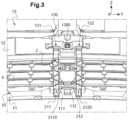
- FIG 3 represents an assembly in accordance with the invention, in the front part of a motor vehicle according to a volume and front view, comprising a front shield 1 seen from its inner face 100, a radar support 2 which comprises a hollow housing 23 receiving the radar, said assembly further comprising a plastron 130 of the receiving frame of the upper ventilation grille, said frame forming part of the shield 1.
- the radar itself is not shown in this figure, nor the radome.
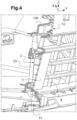
- figure 4 represents this set in section, seen from the outside.
- the front shield 1 comprises a first transverse part 11, constituting a lower part of the shield, and a second transverse part 12, located higher than said first part, this second part constituting a middle part 12 of the shield. Between these two parts, is located the lower ventilation grille 4, for example fixed by clipping.
- These two lower 11 and middle 12 shield parts belong more precisely to the shield skin 10 which constitutes the lower part of the shield 1. They respectively form the lower part 11 and the upper part 12 of said shield skin 10.
- the shield skin comprises at least one opening receiving the lower ventilation grille 4.
- the radar support 2 is a single-piece part which comprises a lower part 21 which is secured to the lower part 11 of the shield, and an upper part 22 which is secured to the middle part 12 of the shield. Said radar support comprises a central part 20 located between its said lower 21 and upper 22 parts.
- the upper part 22 of the support matches the shape of the upper part of the grid 4 which comprises a substantially horizontal inner wall 42, thanks to a right-angled shape 220 consisting of two portions substantially perpendicular to each other, one being substantially vertical and the other substantially horizontal, such that said horizontal portion passes just above said horizontal wall 42 of the lower ventilation grille 4.
- the central support portion 20 comprises a housing 23 which is hollowed out to receive the radar, the hollowing out corresponding to the location 30 reserved for the radome 3, the latter being arranged on the exterior side 40 of the lower ventilation grille 4 ( Fig.2 ).
- Said housing comprises a wall 230 delimiting the perimeter of the recess of said housing 23, and extending at the front of the support, towards an opening of the ventilation grille defining the location 30 for the radome, without overflowing into said opening 30.
- Said housing 23 further comprises a transverse bar 24 for fixing the radar, this bar delimiting the upper part of the recess, the fixing of the radar being done using two screws which are fixed respectively in the fixing holes 241, 242 of said transverse bar 24.
- the shield 1 comprises a central indexing barrel 120 in its middle part 12 which cooperates with an indexing hole 223 of said support 2, in the upper part of the support, for indexing in the transverse direction Y and in the vertical direction Z in order to adjust the centering of said housing 23 in the transverse direction Y and also the position of the housing of the radar 23 in the vertical direction Z.
- Said indexing barrel 120 comprises ribs 1200 on its external surface, the height of which can be adjusted to adapt it to the model of shield and support, in particular to the dimensions of the shield and the support, in order to be able to properly center the housing of the radar with the radome.
- the lower part 11 of the shield comprises two lateral elements 111, 112 for indexing in the transverse direction Y to control the centering of the radar support 2, in particular by preventing a lateral rotation (+Y, -Y) of the two fixing feet 211, 212 that the lower part 21 of the support comprises and which are secured to the lower part 11 of the shield.
- Said lateral elements 111, 112 form stops positioned respectively on the internal side of said fixing feet of the support.
- said support comprises, in its upper part 22, two lateral pre-holding branches 223, 224 which cooperate respectively with two lateral fins 123, 124 which the shield comprises on its inner face 100, said lateral holding branches of the support coming to rest on said fins of the shield during positioning of the support, waiting to be fixed.
- the support is fixed in the middle part 12 and in the lower part 11 of the shield.
- Two upper lateral fixing holes 221, 222 and the lateral fixing feet 211, 212 of the radar support are located respectively at the ends of two lateral straps 201, 202, stiffened by a set of ribs. These two lateral straps extend over the entire height (Z direction) of the support, and laterally delimit said support.
- the shield comprises on its inner face 100, in its middle part 12, two lateral fixing studs 121, 122 in which the upper part 22 of said support 2 are fixed, for example by screwing, said fixing studs 121, 122 passing respectively through the two upper lateral fixing holes 221, 222 that comprise said upper part 22 of said support.
- These lateral fixing studs 121, 122 that comprise the shield 1 are advantageously arranged on either side of the central indexing barrel 120, and substantially in the vertical direction Z at the same level as said central indexing stud 120.
- Said lateral fixing studs may also comprise ribs on their external surface to be adapted to said indexing barrel 120.
- the radar support being made of a single piece, its said central part 20 does not include any fixing means to be fixed directly to the shield 1 or to the ventilation grille 4.
- the support in particular its central part receiving the radar, benefits from all the rigidity of the area and will have better vibration behavior.
- the shield further comprises an upper transverse part 13, forming an upper part receiving an upper ventilation grille.
- This upper part of the shield is delimited by a frame which includes at least one opening receiving an upper ventilation grille (not visible on the figure 3 ).
- the frame comprises a plastron 130 in its lower portion which forms the junction with the upper part 12 of the shield skin 10, in other words at the level of the middle part 12 of the shield. Said plastron 130 is centered in the transverse direction Y, and comes to cover the upper part 22 of the radar support, at the level of said middle part 12 of the shield.
- Said plastron comprises a centering orifice 1300 which is attached to the YZ indexing barrel 120 so that the plastron 130 is well centered, and consequently also the upper part of the shield, covering the top of the radar support.
- Said plastron 130 comprises lateral fixing holes 131, 132 which come to correspond with the upper fixing holes 221, 222 of the radar support.
- the radar support 2 is therefore sandwiched in its upper part 22 between the shield skin 10 and the upper transverse part 13 of the shield.
- the support is made of polypropylene (PP) loaded with 30% glass fibers by weight, in order to contribute to having significant rigidity of the assembly and to have good vibration behavior.
- PP polypropylene
- the radome has a relatively small area, because the radar can be fixed in a housing well centered on the radome and very close to the radome, as can be seen in particular in the cross-section view ( Fig. 4 ).
- the radar frequency dispersion cone is therefore relatively small and well protected behind the radome.
- the radome has a side length of around 100 millimeters.
- the radome is rectangular and is around 125 mm (in height along Z) by 100 mm (in width along Y).
- the invention has achieved its objectives by proposing an arrangement of the shield with a radar support allowing a radar to be fixed centered and close to the radome.
- the assembly according to the invention forms a chain of dimensions comprising few links and ensures good rigidity of the zone.
- the radar support is not fixed to a structural element of the vehicle body. It has a rigidity and a fixing to the shield that best prevents vibration phenomena, while having a certain plasticity that allows shocks to be absorbed as well as possible.
Landscapes
- Engineering & Computer Science (AREA)
- Mechanical Engineering (AREA)
- Radar Systems Or Details Thereof (AREA)
Description
- L'invention concerne un ensemble comprenant un support de radar, un radôme et un bouclier, installé en partie avant d'un véhicule automobile. Elle concerne aussi la partie avant d'un véhicule automobile comprenant ledit ensemble.
- Avec l'évolution et la généralisation des systèmes d'aide à la conduite embarqués, de plus en plus de véhicules sont équipés d'un système radar anti-collision destiné à la régulation de la vitesse du véhicule en fonction de distances de sécurité avec l'environnement extérieur. Ce type de système comprend un système de freinage d'urgence « AEBS » ( acronyme anglais de « Advanced Energy Braking System » signifiant littéralement « système de freinage énergétique avancé »). Ce système permet à la voiture de freiner automatiquement si un obstacle potentiel est détecté, notamment un piéton qui traverse ou si la voiture s'approche trop de la voiture qui la précède. Le système de freinage d'urgence AEBS mesure notamment les distances par rapport à l'obstacle potentiel détecté et, si celles-ci sont inférieures à une limite de sécurité, il est en mesure d'activer le freinage à plus forte intensité. Le système reçoit les données relevées par le radar installé à l'avant du véhicule. Par extension, ce type de radar est usuellement appelé radar AEBS.
- Un tel radar étant implanté en partie avant du véhicule, il est nécessaire d'assurer une intégrité optimale de ces systèmes sécuritaires contre les chocs.
- Selon l'art antérieur, un tel radar est usuellement installé via un support fixé à des éléments de la structure de la caisse, en partie avant du véhicule pour avoir une rigidité du support suffisante. Cet ensemble comprend en outre un radôme, élément protecteur du capteur radar, qui est disposé extérieurement, et qui est en un matériau laissant passer les ondes radar dans la bande de fréquences requise.
- Selon un premier art antérieur courant, le support de radar peut être directement fixé à une pièce structurelle de la partie avant du véhicule, comme par exemple à la traverse avant, pièce structurelle de la caisse du véhicule située dans le compartiment moteur, entre deux longerons latéraux. Une telle configuration est par exemple décrite dans la demande de brevet
FR3056176 - Comme autre exemple d'art antérieur, le support de radar peut être fixé à la face avant technique (FAT) ou encore à une pièce de tôlerie du véhicule.
- Un inconvénient de cet art antérieur est notamment un problème d'ajustement, on observe trop de dispersions géométriques du fait d'un grand nombre de maillons dans la chaîne de cotes. La taille dudit radôme dans ce cas est de l'ordre de 200mm de large sur une centaine de millimètres de long pour absorber le cône de dispersion des ondes radars.
- Un autre inconvénient des différents modes connus, est que le radôme doit être d'une taille relativement importante afin de couvrir le cône de dispersion des ondes radar qui est large du fait que le radar est éloigné du radôme. Une telle disposition est relativement onéreuse. Le document
DE 10 2015 224924 A1 divulgue un ensemble en partie avant d'un véhicule automobile selon le préambule de la revendication 1. - L'invention vise à résoudre, au moins en partie, ces inconvénients. Elle vise notamment à fournir un nouvel agencement du support de radar en partie avant d'un véhicule.
- A cet effet, l'invention propose un ensemble en partie avant d'un véhicule automobile, ledit ensemble comprenant les caractéristiques de la revendication
- Selon l'invention, ladite zone de réception et de fixation du radar comprend un logement évidé récepteur dudit radar, et ledit logement est situé en correspondance avec l'emplacement du radôme se disposant extérieurement.
- Selon l'invention, la face intérieure du bouclier comprend un élément central supérieur d'indexation de la position du support de radar selon les directions transversale et verticale du bouclier, coopérant avec la partie supérieure dudit support, et au moins deux éléments inférieurs d'indexation et anti-rotation de la position du support de radar au moins selon ladite direction transversale, coopérant avec la partie inférieure du support.
- En particulier selon l'invention, le radôme est solidarisé sur la face extérieure de la grille, dans une ouverture que comprend ladite grille d'aération, ladite ouverture formant l'emplacement récepteur du radôme à la grille d'aération, ladite ouverture se situant au droit dudit logement du radar. Par exemple le radôme est clipsé dans ladite ouverture, ladite ouverture étant de la taille du radôme.
- Plus particulièrement selon l'invention, ladite première partie transverse et ladite deuxième partie transverse du bouclier appartiennent à la peau du bouclier.
- En particulier selon l'invention, le support de radar est situé au centre ou à proximité du centre du bouclier suivant la direction transversale du bouclier.
- De préférence selon l'invention, ladite grille d'aération extérieure située entre lesdites première et deuxième parties de bouclier est la grille d'aération inférieure.
- Selon un mode de réalisation préféré de l'invention, ledit élément central supérieur d'indexation comprend des nervures sur sa surface externe dont la hauteur est variable. Le réglage de la hauteur des nervures permet d'ajuster la position du support radar. De préférence ledit élément central supérieur d'indexation se présente sous forme d'un élément allongé et globalement perpendiculaire à la face intérieure du bouclier. En particulier il se présente sous forme d'un fût.
- Avantageusement selon l'invention, ledit support comprend, en sa partie supérieure, deux moyens de prémaintien latéraux qui reposent respectivement sur deux ailettes latérales que comprend le bouclier en sa face intérieure, afin de maintenir le support lors de son positionnement, en attente d'être fixé.
- Selon un mode de réalisation préféré de l'invention, le support radar est constituée d'une seule pièce comprenant deux bretelles latérales comprenant des nervures de rigidification, lesdites bretelles s'étendant de ladite première partie transverse à ladite deuxième partie transverse du bouclier, et chaque extrémité inférieure desdites bretelles définissant les pieds du support qui coopèrent avec lesdits au moins deux éléments inférieurs d'indexation et anti-rotation du bouclier, lesdits pieds comprenant chacun un orifice de fixation permettant de fixer ledit support à ladite première partie transverse du bouclier.
- De préférence lesdits éléments inférieurs d'indexation et anti-rotation du bouclier comprennent chacun une butée latérale anti-rotation venant respectivement au contact du côté intérieur respectif d'un dit pied de fixation du support. Autrement dit lesdites butées latérales se situent entre les pieds du support, qui sont de préférence au nombre de deux, et sont au contact de l'intérieur du pied qui leur est respectivement directement adjacent. De préférence lesdits éléments inférieurs d'indexation anti-rotation du bouclier sont au nombre de deux.
- En outre, en chaque extrémité supérieure desdites bretelles, est disposé respectivement un trou de prémaintien et de fixation coopérant respectivement avec un plot de fixation latéral de ladite deuxième partie transverse du bouclier, ledit plot comprenant en outre sur sa surface externe des nervures de hauteur réglable permettant d'ajuster la position du support. Le réglable de la hauteur de ces nervures peut coopérer avec le réglage de la hauteur des nervures dudit élément central supérieur d'indexation du bouclier pour régler la position du support de radar.
- Avantageusement selon l'invention, le bouclier comprend une troisième partie transverse, supérieure à ladite deuxième partie transverse et jouxtant cette dernière, qui comporte un plastron venant en recouvrement de ladite partie supérieure du support de radar, ledit plastron comprenant un orifice se positionnant autour dudit élément central d'indexation que comprend le bouclier.
- De préférence selon ce mode, ledit plastron comprend deux trous de fixation latéraux positionnés en recouvrement des trous de prémaintien et de fixation situés respectivement en extrémités supérieures respectives desdites bretelles du support radar, en outre des moyens de fixation étant introduits dans lesdits trous de fixation latéraux du plastron pour réaliser la fixation dans lesdits plots de fixation latéraux de ladite deuxième partie transverse du bouclier, de sorte que la partie supérieure du support radar est prise en sandwich entre ladite deuxième partie du bouclier et ladite troisième partie du bouclier. La fixation du plastron permet la solidarisation de la partie supérieure du support de radar au bouclier.
- De préférence selon l'invention, lesdits moyens de fixation du support radar au bouclier sont des vis. De préférence ces moyens de fixation sont constitués de quatre vis en tout.
- Selon l'invention, ledit support de radar comprend une barre transversale délimitant la partie supérieure du logement récepteur du radar, ladite barre comprenant des trous de fixation destinés à la fixation du radar, par exemple par vissage.
- Un avantage de l'invention est qu'un radôme de taille plus petite que ceux usuellement utilisés en art antérieur peut être utilisé, du fait d'un ajustement précis et facilité du positionnement du support, notamment de l'emplacement réservé pour loger le radar, le radôme étant tout proche du logement du radar et donc du radar.
- Avantageusement ledit radôme a une forme de plaque dont la plus grande dimension d'un côté de la plaque est de l'ordre d'une centaine de millimètres, en particulier comprise entre 90 et 130 millimètres, ou encore entre 98 et 128 mm.
- Avantageusement selon l'invention, le support de radar est en un matériau plastique chargé, de préférence en polypropylène chargé en fibres de verre, et plus préférentiellement chargé entre 25 à 35 % en poids de fibres de verre. Un tel matériau augmente la rigidité de l'ensemble et permet d'avoir un meilleur comportement vibratoire.
- L'invention a aussi pour objet un véhicule automobile comprenant un ensemble tel que décrit précédemment.
- D'autres particularités et avantages de l'invention ressortiront à la lecture de la description faite ci-après de modes de réalisation particuliers de l'invention, donné à titre indicatif mais non limitatif, en référence aux dessins annexés.
- [
Fig. 1 ] illustre par une vue en perspective de trois-quarts latérale, un ensemble selon l'invention comprenant un bouclier avant, un support de radar et un radôme, installé en partie avant d'un véhicule automobile, vu depuis l'intérieur de ladite partie avant du véhicule. - [
Fig. 2 ] représente selon une vue en perspective de trois-quarts latérale, ledit ensemble selon lafigure 1 , vu depuis l'extérieur du véhicule, le radôme n'étant pas représenté. - [
Fig. 3 ] représente un ensemble selon l'invention comprenant un bouclier avant, un support de radar, et un radôme, installé en partie avant d'un véhicule automobile selon une vue en volume et de face, vu depuis l'intérieur de la partie avant du véhicule, le radôme n'étant pas représenté. - [
Fig. 4 ] illustre schématiquement, selon une vue en coupe longitudinale dans le plan XZ, une partie avant d'un véhicule automobile comprenant un ensemble, selon lafigure 3 , vue depuis l'extérieur du véhicule, le radôme étant représenté. - [
Fig. 5 ] représente un repère trièdre XYZ représenté par rapport à un véhicule, ce repère étant utilisé pour commenter les figures. - Dans la présente description, les termes avant, arrière, supérieur, inférieur, font référence respectivement aux directions avant et arrière, supérieure et inférieure du véhicule, lorsque l'ensemble est monté sur le véhicule.
- Les orientations exprimées dans la description des figures sont données en référence à un repère classique XYZ du véhicule tel que représenté en
figure 5 , et dans lequel X représente la direction longitudinale avant-arrière du véhicule, orientée vers l'arrière, Y la direction transversale du véhicule, orientée vers la droite, et Z la direction verticale orientée vers le haut du véhicule, ce dernier reposant sur le sol. - La
figure 1 illustre schématiquement par une vue en perspective de trois-quarts latérale, une partie avant d'un véhicule automobile comportant un ensemble conforme à l'invention, comprenant le bouclier avant 1 vu depuis sa face intérieure 100, un support de radar 2 qui comporte un logement évidé 23 récepteur du radar, et un radôme 3, le radar lui-même n'étant pas représenté. - La
figure 2 illustre schématiquement par une vue en perspective de trois-quarts latérale, une partie avant d'un véhicule automobile comportant l'ensemble selon lafigure 1 , comprenant le support de radar 2 et le bouclier avant 1 vu depuis sa face extérieure 101, au niveau de la grille d'aération inférieure 4 comportant l'emplacement récepteur du radôme 3. - La
figure 3 représente un ensemble conforme à l'invention, en partie avant d'un véhicule automobile selon une vue en volume et de face, comprenant un bouclier avant 1 vu depuis sa face intérieure 100, un support de radar 2 qui comporte un logement évidé 23 récepteur du radar, ledit ensemble comprenant en outre un plastron 130 du cadre récepteur de la grille d'aération supérieure, ledit cadre faisant partie du bouclier 1. Le radar lui-même n'est pas représenté sur cette figure, ni le radôme. Lafigure 4 représente cet ensemble en coupe, vu depuis l'extérieur. - En référence aux
figures 1 et2 , le bouclier avant 1 comprend une première partie transverse 11, constituant une partie inférieure du bouclier, et une deuxième partie transverse 12, située plus haut que ladite première partie cette deuxième partie constituant une partie médiane 12 du bouclier. Entre ces deux parties, se situe la grille d'aération inférieure 4, par exemple fixée par clipsage. Ces deux parties inférieure 11 et médiane 12 de bouclier appartiennent plus précisément à la peau de bouclier 10 qui constitue la pièce inférieure du bouclier 1. Elles forment respectivement la partie inférieure 11 et la partie supérieure 12 de ladite peau de bouclier 10. La peau de bouclier comprend au moins une ouverture réceptrice de la grille d'aération inférieure 4. - Le support de radar 2 est une pièce monobloc qui comprend une partie inférieure 21 qui se solidarise à la partie inférieure 11 du bouclier, et une partie supérieure 22 qui se solidarise à la partie médiane 12 du bouclier. Ledit support de radar comprend une partie centrale 20 située entre ses dites parties inférieure 21 et supérieure 22.
- La partie supérieure 22 du support épouse la forme de la partie haute de la grille 4 qui comprend une paroi intérieure sensiblement horizontale 42, grâce à une forme en équerre 220 constituée de deux portions sensiblement perpendiculaires entre elles, l'une étant sensiblement verticale et l'autre sensiblement horizontale, de sorte que ladite portion horizontale passe juste au-dessus de ladite paroi horizontale 42 de la grille d'aération inférieure 4.
- La partie de support centrale 20 comprend un logement 23 qui est évidé pour recevoir le radar, l'évidement venant en correspondance avec l'emplacement 30 réservé pour le radôme 3, ce dernier étant disposé côté extérieur 40 de la grille d'aération inférieure 4 (
Fig.2 ). Ledit logement comprend une paroi 230 délimitant le périmètre de l'évidement dudit logement 23, et s'étendant à l'avant du support, en direction d'une ouverture de la grille d'aération définissant l'emplacement 30 pour le radôme, sans déborder dans ladite ouverture 30. Ledit logement 23 comprend en outre une barre transversale 24 pour la fixation du radar, cette barre délimitant la partie supérieure de l'évidement, la fixation du radar se faisant à l'aide de deux vis qui se fixent respectivement dans les orifices de fixation 241, 242 de ladite barre transversale 24. - Afin que le logement 23 pour le radar, et notamment que sa portion évidée se trouve centrée et bien positionnée face au radôme 3 qui est d'une taille relativement petite, le bouclier 1 comprend un fût central d'indexation 120 en sa partie médiane 12 qui coopère avec un trou d'indexation 223 dudit support 2, en partie supérieure du support, pour un indexage selon la direction transversale Y et selon la direction verticale Z afin de régler le centrage dudit logement 23 selon la direction transversale Y et aussi la position du logement du radar 23 selon la direction verticale Z. Ledit fût d'indexation 120 comprend des nervures 1200 sur sa surface externe, dont la hauteur peut être réglée pour l'adapter au modèle de bouclier et de support, en particulier aux dimensions du bouclier et du support, afin de bien pouvoir centrer le logement du radar avec le radôme.
- La partie inférieure 11 du bouclier comprend deux éléments latéraux 111, 112 d'indexation selon la direction transversale Y pour contrôler le centrage du support de radar 2, en empêchant notamment une rotation latérale (+Y, -Y) des deux pieds de fixation 211, 212 que comprend la partie inférieure 21 du support et qui se solidarisent à la partie inférieure 11 du bouclier. Lesdits éléments latéraux 111, 112 forment des butées positionnées respectivement sur le côté interne desdits pieds de fixation du support.
- En outre ledit support comprend, en sa partie supérieure 22, deux branches de prémaintien latérales 223, 224 qui coopèrent respectivement avec deux ailettes latérales 123, 124 que comprend le bouclier en sa face intérieure 100, lesdites branches de maintien latérales du support venant reposer sur lesdites ailettes du bouclier lors du positionnement du support, en attente d'être fixé.
- Une fois le support de radar positionné correctement grâce aux différents éléments d'indexation 120, 111, 112, afin que le logement récepteur du radar 23 se trouve bien face à l'emplacement 30 du radôme, on fixe le support en la partie médiane 12 et en la partie inférieure 11 du bouclier.
- Deux trous de fixation latéraux supérieurs 221, 222 et les pieds de fixation 211, 212 latéraux du support de radar se trouvent respectivement aux extrémités de deux bretelles latérales 201, 202, rigidifiées par un ensemble de nervures. Ces deux bretelles latérales s'étendent sur toute la hauteur (direction Z) du support, et délimitent latéralement ledit support.
- Le bouclier comporte sur sa face intérieure 100, en sa partie médiane 12, deux plots de fixation latéraux 121, 122 dans lesquels se fixent, par exemple par vissage, la partie supérieure 22 dudit support 2, lesdits plots de fixation 121, 122 passant respectivement à travers les deux trous de fixation latéraux supérieurs 221, 222 que comprend ladite partie supérieure 22 dudit support. Ces plots de fixation latéraux 121, 122 que comprend le bouclier 1 sont avantageusement disposés de part et d'autre du fût central d'indexation 120, et sensiblement suivant la direction verticale Z au même niveau que ledit plot central d'indexation 120. Lesdits plots de fixation latéraux peuvent aussi comprendre des nervures sur leur surface externe pour être adaptée audit fût d'indexation 120.
- Le support de radar étant constitué d'une seule pièce, sa dite partie centrale 20 ne comporte pas de moyens de fixation pour être fixée directement au bouclier 1 ou à la grille d'aération 4. De ce fait le support, notamment sa partie centrale recevant le radar bénéficie de toute la rigidité de la zone et aura un meilleur comportement vibratoire.
- En référence à la
figure 3 , le bouclier comprend en outre une partie transverse supérieure 13, formant une pièce supérieure réceptrice d'une grille d'aération supérieure. Cette pièce supérieure du bouclier est délimitée par un cadre qui comprend au moins une ouverture réceptrice d'une grille d'aération supérieure (non visible sur lafigure 3 ). Le cadre comprend un plastron 130 en sa portion inférieure qui forme la jonction avec la partie supérieure 12 de la peau de bouclier 10, autrement dit au niveau de la partie médiane 12 du bouclier. Ledit plastron 130 est centré selon la direction transversale Y, et vient en recouvrement de la partie supérieure 22 du support de radar, au niveau de ladite partie médiane 12 du bouclier. Ledit plastron comprend un orifice de centrage 1300 qui est accroché au fût 120 d'indexation YZ de sorte que le plastron 130 est bien centré, et par conséquent aussi la pièce supérieure du bouclier, en recouvrement du haut du support de radar. Ledit plastron 130 comprend des trous de fixation latéraux 131, 132 qui viennent en correspondance avec les trous de fixation supérieurs 221, 222 du support de radar. Le support de radar 2 est donc pris en sandwich en sa partie supérieure 22 entre la peau de bouclier 10 et la partie transverse supérieure 13 du bouclier. - Ceci peut permettre d'améliorer la rigidité des fixations du support de radar, notamment au niveau de la jonction des pièces du bouclier, qui se trouve dans une zone en générale avancée du bouclier selon la direction longitudinale du véhicule X et donc davantage soumise aux déformations en cas de choc.
- Selon l'exemple préféré, le support est réalisé en polypropylène (PP) chargé en fibres de verre à 30% en poids, afin de contribuer à avoir une rigidité importante de l'ensemble et d'avoir un bon comportement vibratoire.
- Le radôme a une aire relativement petite, du fait que le radar peut être fixé dans un logement bien centré sur le radôme et très proche du radôme, comme on peut notamment le voir sur la vue en coupe (
Fig. 4 ). Le cône de dispersion de fréquences du radar est donc relativement petit et bien protégé derrière le radôme. Par exemple le radôme a une longueur de côté de l'ordre 100 millimètres. Par exemple le radôme est de forme rectangulaire et fait de l'ordre de 125 mm (en hauteur selon Z) par 100 mm (en largeur selon Y). - L'invention a atteint ses objectifs en proposant un agencement du bouclier avec un support de radar permettant de fixer un radar centré et proche du radôme. L'ensemble selon l'invention forme une chaine de cotes comportant peu de maillons et assure une bonne rigidité de la zone.
- En outre le support de radar ne se fixe pas à un élément structurel de la caisse du véhicule. Il présente une rigidité et une fixation au bouclier prévenant au mieux les phénomènes vibratoires, tout en présentant une certaine plasticité permettant d'absorber au mieux les chocs
Claims (10)
- Ensemble en partie avant d'un véhicule automobile, ledit ensemble comprenant un radôme (3), un support de radar (2), un bouclier avant (1) d'un véhicule, ledit bouclier comportant une face intérieure (100) et une face extérieure (101), et qui s'étend selon des directions transversale, longitudinale et verticale correspondant respectivement aux directions transversale, longitudinale et verticale d'un véhicule reposant sur ses roues, lorsque le bouclier est monté à l'avant du véhicule, ledit bouclier comportant une première partie transverse (11) et une deuxième partie transverse (12) supérieure à ladite première partie transverse, et entre lesquelles est installée une grille d'aération extérieure (4) comprenant un emplacement (30) récepteur du radôme, ledit radôme se solidarisant à ladite grille, ledit support de radar (2) étant constitué d'une pièce monobloc s'étendant verticalement de ladite première partie de bouclier (11) à ladite deuxième partie de bouclier (12), ledit support comprenant une partie supérieure (22) solidarisée à ladite deuxième partie de bouclier (12) et une partie inférieure (21) fixée à ladite première partie de bouclier (11), ledit support comportant en outre une zone de réception et de fixation du radar (20), située entre lesdites parties supérieure et inférieure du support, qui comprend un logement évidé (23) récepteur dudit radar situé en correspondance avec l'emplacement (30) du radôme se disposant extérieurement, et le bouclier comprenant un élément central supérieur d'indexation (120) de la position du support de radar selon les directions transversale et verticale du bouclier, coopérant avec la partie supérieure dudit support (22), et au moins deux éléments inférieurs (111, 112) d'indexation et anti-rotation de la position du support de radar au moins selon ladite direction transversale, coopérant avec ladite partie inférieure du support (21), caractérisé en ce que ladite pièce monobloc du support de radar (2) et les éléments d'indexation et anti-rotation (120, 111, 112) sont disposés sur la face intérieure (100) du bouclier.
- Ensemble selon la revendication 1, caractérisé en ce que ledit élément central supérieur d'indexation (120) comprend des nervures (1200) sur sa surface externe dont la hauteur est variable.
- Ensemble selon l'une des revendications 1 à 2, caractérisé en ce que le support radar (2) est constituée d'une seule pièce comportant deux bretelles latérales (201, 202) comprenant des nervures de rigidification, lesdites bretelles s'étendant de ladite première partie transverse (11) à ladite deuxième partie transverse du bouclier (12), et chaque extrémité inférieure desdites bretelles définissant les pieds du support (211, 212) qui coopèrent avec lesdits au moins deux éléments inférieurs d'indexation et anti-rotation du bouclier (111, 112), lesdits pieds comprenant chacun un orifice de fixation (2110 , 2120) permettant de fixer ledit support à ladite première partie transverse du bouclier (11).
- Ensemble selon la revendication 3, caractérisé en ce que en ce que lesdits éléments inférieurs d'indexation et anti-rotation du bouclier (111, 112) comprennent chacun une butée latérale anti-rotation venant respectivement au contact du côté intérieur respectif d'un dit pied de fixation du support (211, 212).
- Ensemble selon l'une des revendications 3 à 4, caractérisée en ce qu'en chaque extrémité supérieure desdites bretelles, est disposé respectivement un trou de prémaintien et de fixation (221, 222) coopérant respectivement avec un plot de fixation latéral (121, 122) de ladite deuxième partie transverse du bouclier (12), ledit plot (121, 122) comprenant en outre sur sa surface externe des nervures de hauteur réglable permettant d'ajuster la position du support.
- Ensemble selon l'une des revendications 1 à 5 caractérisé en ce que ledit bouclier comprend une troisième partie transverse (13), supérieure à la dite deuxième partie transverse (12) et jouxtant cette dernière, qui comporte un plastron (130) venant en recouvrement de la partie supérieure du support de radar (22), ledit plastron comprenant un orifice (1300) se positionnant autour dudit élément central supérieur d'indexation (120) que comprend le bouclier.
- Ensemble selon l'une des revendications 6 et 5, caractérisé en ce que ledit plastron (130) comprend deux trous de fixation latéraux (131, 132) positionnés en recouvrement des trous de prémaintien et de fixation (221, 222) situés respectivement en extrémités supérieures respectives desdites bretelles du support radar, en outre des moyens de fixation étant introduits dans lesdits trous de fixation latéraux du plastron pour réaliser la fixation dans lesdits plots de fixation latéraux de ladite deuxième partie transverse du bouclier, de sorte que la partie supérieure du support radar est prise en sandwich entre ladite deuxième partie du bouclier et ladite troisième partie du bouclier.
- Ensemble selon l'une des revendications 1 à 7, dans lequel ledit support de radar comprend une barre transversale (24) délimitant la partie supérieure du logement (23) récepteur du radar, ladite barre comprenant des trous de fixation (241, 242) destinés à la fixation du radar.
- Ensemble selon l'une des revendications 1 à 8, caractérisé en ce que ledit support (2) comprend, en sa partie supérieure, deux moyens de prémaintien latéraux (223, 224) qui reposent respectivement sur deux ailettes latérales (123, 124) que comprend le bouclier en sa face intérieure, afin de maintenir le support lors de son positionnement, en attente d'être fixé.
- Partie avant d'un véhicule automobile comprenant un ensemble comprenant un radôme (3), un support de radar (2) et un bouclier avant (1), défini selon l'une des revendications 1 à 9.
Applications Claiming Priority (2)
| Application Number | Priority Date | Filing Date | Title |
|---|---|---|---|
| FR2101505A FR3119811B1 (fr) | 2021-02-17 | 2021-02-17 | Ensemble comprenant un support de radar, un radôme et un bouclier d’un véhicule automobile |
| PCT/EP2022/051816 WO2022175045A1 (fr) | 2021-02-17 | 2022-01-26 | Ensemble comprenant un support de radar, un radome et un bouclier d'un vehicule automobile |
Publications (2)
| Publication Number | Publication Date |
|---|---|
| EP4294679A1 EP4294679A1 (fr) | 2023-12-27 |
| EP4294679B1 true EP4294679B1 (fr) | 2024-11-27 |
Family
ID=75746825
Family Applications (1)
| Application Number | Title | Priority Date | Filing Date |
|---|---|---|---|
| EP22702929.5A Active EP4294679B1 (fr) | 2021-02-17 | 2022-01-26 | Ensemble comprenant un support de radar, un radome et un bouclier d'un vehicule automobile |
Country Status (6)
| Country | Link |
|---|---|
| EP (1) | EP4294679B1 (fr) |
| JP (1) | JP7850165B2 (fr) |
| KR (1) | KR20230146542A (fr) |
| CN (1) | CN116723965B (fr) |
| FR (1) | FR3119811B1 (fr) |
| WO (1) | WO2022175045A1 (fr) |
Families Citing this family (4)
| Publication number | Priority date | Publication date | Assignee | Title |
|---|---|---|---|---|
| FR3148956B1 (fr) * | 2023-05-25 | 2025-04-11 | Psa Automobiles Sa | Grille de pare-chocs avant de véhicule automobile avec radar frontal |
| FR3149550A1 (fr) * | 2023-06-07 | 2024-12-13 | Psa Automobiles Sa | Grille de protection avec support de caméra pour véhicule automobile et procédé de fabrication |
| FR3153053A1 (fr) | 2023-09-14 | 2025-03-21 | Psa Automobiles Sa | Support de radar de pare-chocs de véhicule automobile |
| EP4733146A1 (fr) * | 2024-10-25 | 2026-04-29 | Suzuki Motor Corporation | Structure de véhicule |
Family Cites Families (21)
| Publication number | Priority date | Publication date | Assignee | Title |
|---|---|---|---|---|
| DE102007045001A1 (de) * | 2007-09-20 | 2009-04-02 | Daimler Ag | Anordnung einer Halterung an einem Stoßfänger eines Personenkraftwagens |
| KR20120025896A (ko) * | 2010-09-08 | 2012-03-16 | 주식회사 만도 | 차량용 레이더의 장착 및 가변 장치 |
| JP6032167B2 (ja) | 2013-09-25 | 2016-11-24 | マツダ株式会社 | 物体検知装置の取付構造 |
| EP3070489B1 (fr) * | 2013-11-14 | 2020-01-01 | Veoneer Sweden AB | Structure d'installation de radar de véhicule et dispositif de retenue de carénage frontal |
| JP2015196434A (ja) | 2014-03-31 | 2015-11-09 | ダイハツ工業株式会社 | 障害物検知装置の取付け構造 |
| JP6515497B2 (ja) | 2014-11-17 | 2019-05-22 | スズキ株式会社 | 車体前部構造 |
| JP6187484B2 (ja) | 2015-01-16 | 2017-08-30 | マツダ株式会社 | 車両の前部構造 |
| JP6565596B2 (ja) | 2015-10-27 | 2019-08-28 | スズキ株式会社 | 検出装置取付構造 |
| DE102015224924A1 (de) * | 2015-12-10 | 2017-06-14 | Bayerische Motoren Werke Aktiengesellschaft | Sensoreinrichtung, Außenwandung mit Sensoreinrichtung und Kraftfahrzeug |
| FR3056176B1 (fr) | 2016-09-21 | 2019-08-23 | Renault S.A.S | Agencement de fixation d'un ecran de protection d'un dispositif de detection dans un vehicule automobile |
| US9956993B1 (en) * | 2017-01-20 | 2018-05-01 | Ford Global Technologies, Llc | Vehicle front impact sensor with impact resistant carriage |
| FR3070547A1 (fr) * | 2017-08-25 | 2019-03-01 | Compagnie Plastic Omnium | Radome a decoration retro-illuminee |
| FR3078929B1 (fr) * | 2018-03-16 | 2020-02-28 | Renault S.A.S | Dispositif de support pour element de detection d'un vehicule automobile et son procede de montage. |
| JP6590974B2 (ja) | 2018-03-23 | 2019-10-16 | 本田技研工業株式会社 | 車体前部構造 |
| CN108312974A (zh) * | 2018-04-09 | 2018-07-24 | 上海为彪汽配制造有限公司 | 一种毫米波雷达的调节支架、调节方法及其安装方法 |
| JP7037998B2 (ja) * | 2018-04-19 | 2022-03-17 | 本田技研工業株式会社 | 輸送機器 |
| WO2020162201A1 (fr) | 2019-02-06 | 2020-08-13 | 三菱自動車工業株式会社 | Structure de fixation de radar |
| JP6932155B2 (ja) | 2019-05-28 | 2021-09-08 | 株式会社ファルテック | レーダカバー及びレーダカバーの製造方法 |
| CN210191414U (zh) * | 2019-06-24 | 2020-03-27 | 浙江吉利控股集团有限公司 | 一种汽车雷达支架的安装结构 |
| FR3106806B1 (fr) * | 2020-02-03 | 2022-01-07 | Renault Sas | Bouclier avant de véhicule automobile équipé d’un radar et structure avant de véhicule comprenant un tel bouclier |
| CN214295816U (zh) | 2020-12-21 | 2021-09-28 | 上汽通用五菱汽车股份有限公司 | 一种前蒙皮驾驶辅助雷达装饰盖 |
-
2021
- 2021-02-17 FR FR2101505A patent/FR3119811B1/fr active Active
-
2022
- 2022-01-26 EP EP22702929.5A patent/EP4294679B1/fr active Active
- 2022-01-26 CN CN202280010900.7A patent/CN116723965B/zh active Active
- 2022-01-26 JP JP2023542556A patent/JP7850165B2/ja active Active
- 2022-01-26 WO PCT/EP2022/051816 patent/WO2022175045A1/fr not_active Ceased
- 2022-01-26 KR KR1020237028046A patent/KR20230146542A/ko active Pending
Also Published As
| Publication number | Publication date |
|---|---|
| FR3119811B1 (fr) | 2022-12-30 |
| CN116723965B (zh) | 2026-01-02 |
| JP7850165B2 (ja) | 2026-04-22 |
| JP2024506136A (ja) | 2024-02-09 |
| CN116723965A (zh) | 2023-09-08 |
| EP4294679A1 (fr) | 2023-12-27 |
| KR20230146542A (ko) | 2023-10-19 |
| FR3119811A1 (fr) | 2022-08-19 |
| WO2022175045A1 (fr) | 2022-08-25 |
Similar Documents
| Publication | Publication Date | Title |
|---|---|---|
| EP4294679B1 (fr) | Ensemble comprenant un support de radar, un radome et un bouclier d'un vehicule automobile | |
| FR2987806A1 (fr) | Dispositif pour ameliorer l'aerodynamique d'un vehicule automobile | |
| WO2008132366A1 (fr) | Soubassement de vehicule automobile | |
| EP3765337B1 (fr) | Dispositif de support pour element de detection d'un vehicule automobile et son procede de montage | |
| EP2914476B1 (fr) | Dispositif de fixation entre deux pièces structurelles à élément de positionnement flottant | |
| WO2009044072A2 (fr) | Impacteur de choc pour groupe motopropulseur automobile | |
| FR3083513A1 (fr) | Agencement d'un soubassement de caisse d'un vehicule integrant un ensemble de batteries et vehicule ayant un tel agencement | |
| EP2135778B1 (fr) | Pare-chocs arrière pour véhicule automobile utilitaire | |
| EP4100283B1 (fr) | Bouclier avant de véhicule automobile équipé d'un radar et structure avant de véhicule comprenant un tel bouclier | |
| EP3677463B1 (fr) | Guide d'air d'une face avant d'un vehicule automobile | |
| EP3380366B1 (fr) | Dispositif de montage d'un radar pour véhicule automobile | |
| EP3126209B1 (fr) | Structure de vehicule automobile renforcee | |
| EP4263295B1 (fr) | Dispositif de pare-chocs a absorbeur integre et vehicule comportant un tel dispositif | |
| EP3154843B1 (fr) | Assemblage d'un élément de structure de véhicule automobile et d'un élément fonctionnel | |
| EP1473197B1 (fr) | Pare-chocs de véhicule automobile pourvu d'éléments d'absorption de choc, et véhicule automobile équipé d'un tel pare-chocs | |
| FR2932766A1 (fr) | Element de support de peau de bouclier ameliore pour vehicule automobile | |
| WO2015025101A1 (fr) | Renfort de tunnel de plancher de vehicule automobile | |
| EP3050758B1 (fr) | Sous-ensemble structurel d'un véhicule automobile et procédé de montage de ce sous-ensemble | |
| EP2771230B1 (fr) | Bouclier de vehicule automobile integrand un reflecteur d'air et vehicule correspondant | |
| EP3283354B1 (fr) | Structure de face avant technique de véhicule automobile en matière plastique | |
| EP3350064B1 (fr) | Structure de support pour un module de face avant d'un vehicule automobile et module de face avant comprenant ladite structure de support | |
| EP3350003B1 (fr) | Hayon de vehicule avec element d'interface renforce | |
| FR3082819A1 (fr) | Caisse de vehicule automobile, pourvue d'un support pour un enrouleur de ceinture de securite arriere qui integre une aile de renfort de la caisse | |
| FR3152453A1 (fr) | Système de pare-chocs avant de véhicule automobile | |
| FR3165435A1 (fr) | Structure de véhicule automobile avec pièce de renfort de pied avant |
Legal Events
| Date | Code | Title | Description |
|---|---|---|---|
| STAA | Information on the status of an ep patent application or granted ep patent |
Free format text: STATUS: UNKNOWN |
|
| STAA | Information on the status of an ep patent application or granted ep patent |
Free format text: STATUS: THE INTERNATIONAL PUBLICATION HAS BEEN MADE |
|
| PUAI | Public reference made under article 153(3) epc to a published international application that has entered the european phase |
Free format text: ORIGINAL CODE: 0009012 |
|
| STAA | Information on the status of an ep patent application or granted ep patent |
Free format text: STATUS: REQUEST FOR EXAMINATION WAS MADE |
|
| 17P | Request for examination filed |
Effective date: 20230907 |
|
| AK | Designated contracting states |
Kind code of ref document: A1 Designated state(s): AL AT BE BG CH CY CZ DE DK EE ES FI FR GB GR HR HU IE IS IT LI LT LU LV MC MK MT NL NO PL PT RO RS SE SI SK SM TR |
|
| DAV | Request for validation of the european patent (deleted) | ||
| DAX | Request for extension of the european patent (deleted) | ||
| GRAP | Despatch of communication of intention to grant a patent |
Free format text: ORIGINAL CODE: EPIDOSNIGR1 |
|
| STAA | Information on the status of an ep patent application or granted ep patent |
Free format text: STATUS: GRANT OF PATENT IS INTENDED |
|
| INTG | Intention to grant announced |
Effective date: 20240607 |
|
| GRAS | Grant fee paid |
Free format text: ORIGINAL CODE: EPIDOSNIGR3 |
|
| GRAA | (expected) grant |
Free format text: ORIGINAL CODE: 0009210 |
|
| STAA | Information on the status of an ep patent application or granted ep patent |
Free format text: STATUS: THE PATENT HAS BEEN GRANTED |
|
| AK | Designated contracting states |
Kind code of ref document: B1 Designated state(s): AL AT BE BG CH CY CZ DE DK EE ES FI FR GB GR HR HU IE IS IT LI LT LU LV MC MK MT NL NO PL PT RO RS SE SI SK SM TR |
|
| REG | Reference to a national code |
Ref country code: GB Ref legal event code: FG4D Free format text: NOT ENGLISH |
|
| REG | Reference to a national code |
Ref country code: CH Ref legal event code: EP |
|
| REG | Reference to a national code |
Ref country code: DE Ref legal event code: R096 Ref document number: 602022008181 Country of ref document: DE |
|
| REG | Reference to a national code |
Ref country code: IE Ref legal event code: FG4D Free format text: LANGUAGE OF EP DOCUMENT: FRENCH |
|
| REG | Reference to a national code |
Ref country code: LT Ref legal event code: MG9D |
|
| REG | Reference to a national code |
Ref country code: NL Ref legal event code: MP Effective date: 20241127 |
|
| PG25 | Lapsed in a contracting state [announced via postgrant information from national office to epo] |
Ref country code: HR Free format text: LAPSE BECAUSE OF FAILURE TO SUBMIT A TRANSLATION OF THE DESCRIPTION OR TO PAY THE FEE WITHIN THE PRESCRIBED TIME-LIMIT Effective date: 20241127 Ref country code: IS Free format text: LAPSE BECAUSE OF FAILURE TO SUBMIT A TRANSLATION OF THE DESCRIPTION OR TO PAY THE FEE WITHIN THE PRESCRIBED TIME-LIMIT Effective date: 20250327 Ref country code: PT Free format text: LAPSE BECAUSE OF FAILURE TO SUBMIT A TRANSLATION OF THE DESCRIPTION OR TO PAY THE FEE WITHIN THE PRESCRIBED TIME-LIMIT Effective date: 20250327 |
|
| PG25 | Lapsed in a contracting state [announced via postgrant information from national office to epo] |
Ref country code: FI Free format text: LAPSE BECAUSE OF FAILURE TO SUBMIT A TRANSLATION OF THE DESCRIPTION OR TO PAY THE FEE WITHIN THE PRESCRIBED TIME-LIMIT Effective date: 20241127 Ref country code: NL Free format text: LAPSE BECAUSE OF FAILURE TO SUBMIT A TRANSLATION OF THE DESCRIPTION OR TO PAY THE FEE WITHIN THE PRESCRIBED TIME-LIMIT Effective date: 20241127 |
|
| REG | Reference to a national code |
Ref country code: AT Ref legal event code: MK05 Ref document number: 1745425 Country of ref document: AT Kind code of ref document: T Effective date: 20241127 |
|
| PG25 | Lapsed in a contracting state [announced via postgrant information from national office to epo] |
Ref country code: BG Free format text: LAPSE BECAUSE OF FAILURE TO SUBMIT A TRANSLATION OF THE DESCRIPTION OR TO PAY THE FEE WITHIN THE PRESCRIBED TIME-LIMIT Effective date: 20241127 |
|
| PG25 | Lapsed in a contracting state [announced via postgrant information from national office to epo] |
Ref country code: ES Free format text: LAPSE BECAUSE OF FAILURE TO SUBMIT A TRANSLATION OF THE DESCRIPTION OR TO PAY THE FEE WITHIN THE PRESCRIBED TIME-LIMIT Effective date: 20241127 |
|
| PG25 | Lapsed in a contracting state [announced via postgrant information from national office to epo] |
Ref country code: NO Free format text: LAPSE BECAUSE OF FAILURE TO SUBMIT A TRANSLATION OF THE DESCRIPTION OR TO PAY THE FEE WITHIN THE PRESCRIBED TIME-LIMIT Effective date: 20250227 |
|
| PG25 | Lapsed in a contracting state [announced via postgrant information from national office to epo] |
Ref country code: LV Free format text: LAPSE BECAUSE OF FAILURE TO SUBMIT A TRANSLATION OF THE DESCRIPTION OR TO PAY THE FEE WITHIN THE PRESCRIBED TIME-LIMIT Effective date: 20241127 Ref country code: GR Free format text: LAPSE BECAUSE OF FAILURE TO SUBMIT A TRANSLATION OF THE DESCRIPTION OR TO PAY THE FEE WITHIN THE PRESCRIBED TIME-LIMIT Effective date: 20250228 Ref country code: AT Free format text: LAPSE BECAUSE OF FAILURE TO SUBMIT A TRANSLATION OF THE DESCRIPTION OR TO PAY THE FEE WITHIN THE PRESCRIBED TIME-LIMIT Effective date: 20241127 |
|
| PG25 | Lapsed in a contracting state [announced via postgrant information from national office to epo] |
Ref country code: PL Free format text: LAPSE BECAUSE OF FAILURE TO SUBMIT A TRANSLATION OF THE DESCRIPTION OR TO PAY THE FEE WITHIN THE PRESCRIBED TIME-LIMIT Effective date: 20241127 |
|
| PG25 | Lapsed in a contracting state [announced via postgrant information from national office to epo] |
Ref country code: RS Free format text: LAPSE BECAUSE OF FAILURE TO SUBMIT A TRANSLATION OF THE DESCRIPTION OR TO PAY THE FEE WITHIN THE PRESCRIBED TIME-LIMIT Effective date: 20250227 |
|
| PG25 | Lapsed in a contracting state [announced via postgrant information from national office to epo] |
Ref country code: SM Free format text: LAPSE BECAUSE OF FAILURE TO SUBMIT A TRANSLATION OF THE DESCRIPTION OR TO PAY THE FEE WITHIN THE PRESCRIBED TIME-LIMIT Effective date: 20241127 |
|
| PG25 | Lapsed in a contracting state [announced via postgrant information from national office to epo] |
Ref country code: DK Free format text: LAPSE BECAUSE OF FAILURE TO SUBMIT A TRANSLATION OF THE DESCRIPTION OR TO PAY THE FEE WITHIN THE PRESCRIBED TIME-LIMIT Effective date: 20241127 |
|
| PG25 | Lapsed in a contracting state [announced via postgrant information from national office to epo] |
Ref country code: EE Free format text: LAPSE BECAUSE OF FAILURE TO SUBMIT A TRANSLATION OF THE DESCRIPTION OR TO PAY THE FEE WITHIN THE PRESCRIBED TIME-LIMIT Effective date: 20241127 |
|
| PG25 | Lapsed in a contracting state [announced via postgrant information from national office to epo] |
Ref country code: RO Free format text: LAPSE BECAUSE OF FAILURE TO SUBMIT A TRANSLATION OF THE DESCRIPTION OR TO PAY THE FEE WITHIN THE PRESCRIBED TIME-LIMIT Effective date: 20241127 |
|
| PG25 | Lapsed in a contracting state [announced via postgrant information from national office to epo] |
Ref country code: SK Free format text: LAPSE BECAUSE OF FAILURE TO SUBMIT A TRANSLATION OF THE DESCRIPTION OR TO PAY THE FEE WITHIN THE PRESCRIBED TIME-LIMIT Effective date: 20241127 |
|
| PG25 | Lapsed in a contracting state [announced via postgrant information from national office to epo] |
Ref country code: CZ Free format text: LAPSE BECAUSE OF FAILURE TO SUBMIT A TRANSLATION OF THE DESCRIPTION OR TO PAY THE FEE WITHIN THE PRESCRIBED TIME-LIMIT Effective date: 20241127 |
|
| PG25 | Lapsed in a contracting state [announced via postgrant information from national office to epo] |
Ref country code: IT Free format text: LAPSE BECAUSE OF FAILURE TO SUBMIT A TRANSLATION OF THE DESCRIPTION OR TO PAY THE FEE WITHIN THE PRESCRIBED TIME-LIMIT Effective date: 20241127 |
|
| REG | Reference to a national code |
Ref country code: DE Ref legal event code: R097 Ref document number: 602022008181 Country of ref document: DE |
|
| REG | Reference to a national code |
Ref country code: CH Ref legal event code: PL |
|
| PG25 | Lapsed in a contracting state [announced via postgrant information from national office to epo] |
Ref country code: SE Free format text: LAPSE BECAUSE OF FAILURE TO SUBMIT A TRANSLATION OF THE DESCRIPTION OR TO PAY THE FEE WITHIN THE PRESCRIBED TIME-LIMIT Effective date: 20241127 |
|
| PG25 | Lapsed in a contracting state [announced via postgrant information from national office to epo] |
Ref country code: MC Free format text: LAPSE BECAUSE OF FAILURE TO SUBMIT A TRANSLATION OF THE DESCRIPTION OR TO PAY THE FEE WITHIN THE PRESCRIBED TIME-LIMIT Effective date: 20241127 Ref country code: LU Free format text: LAPSE BECAUSE OF NON-PAYMENT OF DUE FEES Effective date: 20250126 |
|
| PLBE | No opposition filed within time limit |
Free format text: ORIGINAL CODE: 0009261 |
|
| STAA | Information on the status of an ep patent application or granted ep patent |
Free format text: STATUS: NO OPPOSITION FILED WITHIN TIME LIMIT |
|
| PG25 | Lapsed in a contracting state [announced via postgrant information from national office to epo] |
Ref country code: BE Free format text: LAPSE BECAUSE OF NON-PAYMENT OF DUE FEES Effective date: 20250131 |
|
| PG25 | Lapsed in a contracting state [announced via postgrant information from national office to epo] |
Ref country code: CH Free format text: LAPSE BECAUSE OF NON-PAYMENT OF DUE FEES Effective date: 20250131 |
|
| REG | Reference to a national code |
Ref country code: BE Ref legal event code: MM Effective date: 20250131 |
|
| 26N | No opposition filed |
Effective date: 20250828 |
|
| PG25 | Lapsed in a contracting state [announced via postgrant information from national office to epo] |
Ref country code: IE Free format text: LAPSE BECAUSE OF NON-PAYMENT OF DUE FEES Effective date: 20250126 |
|
| PGFP | Annual fee paid to national office [announced via postgrant information from national office to epo] |
Ref country code: GB Payment date: 20260123 Year of fee payment: 5 |
|
| PGFP | Annual fee paid to national office [announced via postgrant information from national office to epo] |
Ref country code: DE Payment date: 20260121 Year of fee payment: 5 |
|
| PGFP | Annual fee paid to national office [announced via postgrant information from national office to epo] |
Ref country code: FR Payment date: 20260123 Year of fee payment: 5 |