EP4268637A1 - Zerstäuber und elektronische zerstäubungsvorrichtung - Google Patents
Zerstäuber und elektronische zerstäubungsvorrichtung Download PDFInfo
- Publication number
- EP4268637A1 EP4268637A1 EP21909057.8A EP21909057A EP4268637A1 EP 4268637 A1 EP4268637 A1 EP 4268637A1 EP 21909057 A EP21909057 A EP 21909057A EP 4268637 A1 EP4268637 A1 EP 4268637A1
- Authority
- EP
- European Patent Office
- Prior art keywords
- atomizer
- liquid
- liquid inlet
- insulating layer
- heating
- Prior art date
- Legal status (The legal status is an assumption and is not a legal conclusion. Google has not performed a legal analysis and makes no representation as to the accuracy of the status listed.)
- Pending
Links
Images



Classifications
-
- B—PERFORMING OPERATIONS; TRANSPORTING
- B05—SPRAYING OR ATOMISING IN GENERAL; APPLYING FLUENT MATERIALS TO SURFACES, IN GENERAL
- B05B—SPRAYING APPARATUS; ATOMISING APPARATUS; NOZZLES
- B05B17/00—Apparatus for spraying or atomising liquids or other fluent materials, not covered by the preceding groups
- B05B17/04—Apparatus for spraying or atomising liquids or other fluent materials, not covered by the preceding groups operating with special methods
- B05B17/06—Apparatus for spraying or atomising liquids or other fluent materials, not covered by the preceding groups operating with special methods using ultrasonic or other kinds of vibrations
- B05B17/0607—Apparatus for spraying or atomising liquids or other fluent materials, not covered by the preceding groups operating with special methods using ultrasonic or other kinds of vibrations generated by electrical means, e.g. piezoelectric transducers
- B05B17/0638—Apparatus for spraying or atomising liquids or other fluent materials, not covered by the preceding groups operating with special methods using ultrasonic or other kinds of vibrations generated by electrical means, e.g. piezoelectric transducers spray being produced by discharging the liquid or other fluent material through a plate comprising a plurality of orifices
- B05B17/0646—Vibrating plates, i.e. plates being directly subjected to the vibrations, e.g. having a piezoelectric transducer attached thereto
-
- A—HUMAN NECESSITIES
- A24—TOBACCO; CIGARS; CIGARETTES; SIMULATED SMOKING DEVICES; SMOKERS' REQUISITES
- A24F—SMOKERS' REQUISITES; MATCH BOXES; SIMULATED SMOKING DEVICES
- A24F40/00—Electrically operated smoking devices; Component parts thereof; Manufacture thereof; Maintenance or testing thereof; Charging means specially adapted therefor
- A24F40/40—Constructional details, e.g. connection of cartridges and battery parts
- A24F40/46—Shape or structure of electric heating means
-
- A—HUMAN NECESSITIES
- A24—TOBACCO; CIGARS; CIGARETTES; SIMULATED SMOKING DEVICES; SMOKERS' REQUISITES
- A24F—SMOKERS' REQUISITES; MATCH BOXES; SIMULATED SMOKING DEVICES
- A24F40/00—Electrically operated smoking devices; Component parts thereof; Manufacture thereof; Maintenance or testing thereof; Charging means specially adapted therefor
- A24F40/05—Devices without heating means
-
- A—HUMAN NECESSITIES
- A24—TOBACCO; CIGARS; CIGARETTES; SIMULATED SMOKING DEVICES; SMOKERS' REQUISITES
- A24F—SMOKERS' REQUISITES; MATCH BOXES; SIMULATED SMOKING DEVICES
- A24F40/00—Electrically operated smoking devices; Component parts thereof; Manufacture thereof; Maintenance or testing thereof; Charging means specially adapted therefor
- A24F40/10—Devices using liquid inhalable precursors
-
- A—HUMAN NECESSITIES
- A24—TOBACCO; CIGARS; CIGARETTES; SIMULATED SMOKING DEVICES; SMOKERS' REQUISITES
- A24F—SMOKERS' REQUISITES; MATCH BOXES; SIMULATED SMOKING DEVICES
- A24F40/00—Electrically operated smoking devices; Component parts thereof; Manufacture thereof; Maintenance or testing thereof; Charging means specially adapted therefor
- A24F40/40—Constructional details, e.g. connection of cartridges and battery parts
-
- A—HUMAN NECESSITIES
- A24—TOBACCO; CIGARS; CIGARETTES; SIMULATED SMOKING DEVICES; SMOKERS' REQUISITES
- A24F—SMOKERS' REQUISITES; MATCH BOXES; SIMULATED SMOKING DEVICES
- A24F40/00—Electrically operated smoking devices; Component parts thereof; Manufacture thereof; Maintenance or testing thereof; Charging means specially adapted therefor
- A24F40/40—Constructional details, e.g. connection of cartridges and battery parts
- A24F40/48—Fluid transfer means, e.g. pumps
- A24F40/485—Valves; Apertures
-
- A—HUMAN NECESSITIES
- A61—MEDICAL OR VETERINARY SCIENCE; HYGIENE
- A61M—DEVICES FOR INTRODUCING MEDIA INTO, OR ONTO, THE BODY; DEVICES FOR TRANSDUCING BODY MEDIA OR FOR TAKING MEDIA FROM THE BODY; DEVICES FOR PRODUCING OR ENDING SLEEP OR STUPOR
- A61M11/00—Sprayers or atomisers specially adapted for therapeutic purposes
- A61M11/005—Sprayers or atomisers specially adapted for therapeutic purposes using ultrasonics
-
- A—HUMAN NECESSITIES
- A61—MEDICAL OR VETERINARY SCIENCE; HYGIENE
- A61M—DEVICES FOR INTRODUCING MEDIA INTO, OR ONTO, THE BODY; DEVICES FOR TRANSDUCING BODY MEDIA OR FOR TAKING MEDIA FROM THE BODY; DEVICES FOR PRODUCING OR ENDING SLEEP OR STUPOR
- A61M11/00—Sprayers or atomisers specially adapted for therapeutic purposes
- A61M11/04—Sprayers or atomisers specially adapted for therapeutic purposes operated by the vapour pressure of the liquid to be sprayed or atomised
- A61M11/041—Sprayers or atomisers specially adapted for therapeutic purposes operated by the vapour pressure of the liquid to be sprayed or atomised using heaters
- A61M11/042—Sprayers or atomisers specially adapted for therapeutic purposes operated by the vapour pressure of the liquid to be sprayed or atomised using heaters electrical
-
- A—HUMAN NECESSITIES
- A61—MEDICAL OR VETERINARY SCIENCE; HYGIENE
- A61M—DEVICES FOR INTRODUCING MEDIA INTO, OR ONTO, THE BODY; DEVICES FOR TRANSDUCING BODY MEDIA OR FOR TAKING MEDIA FROM THE BODY; DEVICES FOR PRODUCING OR ENDING SLEEP OR STUPOR
- A61M15/00—Inhalators
- A61M15/0085—Inhalators using ultrasonics
-
- H—ELECTRICITY
- H05—ELECTRIC TECHNIQUES NOT OTHERWISE PROVIDED FOR
- H05B—ELECTRIC HEATING; ELECTRIC LIGHT SOURCES NOT OTHERWISE PROVIDED FOR; CIRCUIT ARRANGEMENTS FOR ELECTRIC LIGHT SOURCES, IN GENERAL
- H05B3/00—Ohmic-resistance heating
- H05B3/02—Details
- H05B3/04—Waterproof or air-tight seals for heaters
-
- H—ELECTRICITY
- H05—ELECTRIC TECHNIQUES NOT OTHERWISE PROVIDED FOR
- H05B—ELECTRIC HEATING; ELECTRIC LIGHT SOURCES NOT OTHERWISE PROVIDED FOR; CIRCUIT ARRANGEMENTS FOR ELECTRIC LIGHT SOURCES, IN GENERAL
- H05B3/00—Ohmic-resistance heating
- H05B3/10—Heating elements characterised by the composition or nature of the materials or by the arrangement of the conductor
- H05B3/12—Heating elements characterised by the composition or nature of the materials or by the arrangement of the conductor characterised by the composition or nature of the conductive material
- H05B3/14—Heating elements characterised by the composition or nature of the materials or by the arrangement of the conductor characterised by the composition or nature of the conductive material the material being non-metallic
- H05B3/145—Carbon only, e.g. carbon black, graphite
-
- H—ELECTRICITY
- H05—ELECTRIC TECHNIQUES NOT OTHERWISE PROVIDED FOR
- H05B—ELECTRIC HEATING; ELECTRIC LIGHT SOURCES NOT OTHERWISE PROVIDED FOR; CIRCUIT ARRANGEMENTS FOR ELECTRIC LIGHT SOURCES, IN GENERAL
- H05B3/00—Ohmic-resistance heating
- H05B3/20—Heating elements having extended surface area substantially in a two-dimensional [2D] plane, e.g. plate-heater
- H05B3/22—Heating elements having extended surface area substantially in a two-dimensional [2D] plane, e.g. plate-heater non-flexible
- H05B3/28—Heating elements having extended surface area substantially in a two-dimensional [2D] plane, e.g. plate-heater non-flexible heating conductor embedded in insulating material
-
- A—HUMAN NECESSITIES
- A61—MEDICAL OR VETERINARY SCIENCE; HYGIENE
- A61M—DEVICES FOR INTRODUCING MEDIA INTO, OR ONTO, THE BODY; DEVICES FOR TRANSDUCING BODY MEDIA OR FOR TAKING MEDIA FROM THE BODY; DEVICES FOR PRODUCING OR ENDING SLEEP OR STUPOR
- A61M2205/00—General characteristics of the apparatus
- A61M2205/02—General characteristics of the apparatus characterised by a particular materials
- A61M2205/0272—Electro-active or magneto-active materials
- A61M2205/0294—Piezoelectric materials
-
- A—HUMAN NECESSITIES
- A61—MEDICAL OR VETERINARY SCIENCE; HYGIENE
- A61M—DEVICES FOR INTRODUCING MEDIA INTO, OR ONTO, THE BODY; DEVICES FOR TRANSDUCING BODY MEDIA OR FOR TAKING MEDIA FROM THE BODY; DEVICES FOR PRODUCING OR ENDING SLEEP OR STUPOR
- A61M2205/00—General characteristics of the apparatus
- A61M2205/36—General characteristics of the apparatus related to heating or cooling
- A61M2205/3653—General characteristics of the apparatus related to heating or cooling by Joule effect, i.e. electric resistance
-
- H—ELECTRICITY
- H05—ELECTRIC TECHNIQUES NOT OTHERWISE PROVIDED FOR
- H05B—ELECTRIC HEATING; ELECTRIC LIGHT SOURCES NOT OTHERWISE PROVIDED FOR; CIRCUIT ARRANGEMENTS FOR ELECTRIC LIGHT SOURCES, IN GENERAL
- H05B2203/00—Aspects relating to Ohmic resistive heating covered by group H05B3/00
- H05B2203/002—Heaters using a particular layout for the resistive material or resistive elements
- H05B2203/007—Heaters using a particular layout for the resistive material or resistive elements using multiple electrically connected resistive elements or resistive zones
-
- H—ELECTRICITY
- H05—ELECTRIC TECHNIQUES NOT OTHERWISE PROVIDED FOR
- H05B—ELECTRIC HEATING; ELECTRIC LIGHT SOURCES NOT OTHERWISE PROVIDED FOR; CIRCUIT ARRANGEMENTS FOR ELECTRIC LIGHT SOURCES, IN GENERAL
- H05B2203/00—Aspects relating to Ohmic resistive heating covered by group H05B3/00
- H05B2203/013—Heaters using resistive films or coatings
-
- H—ELECTRICITY
- H05—ELECTRIC TECHNIQUES NOT OTHERWISE PROVIDED FOR
- H05B—ELECTRIC HEATING; ELECTRIC LIGHT SOURCES NOT OTHERWISE PROVIDED FOR; CIRCUIT ARRANGEMENTS FOR ELECTRIC LIGHT SOURCES, IN GENERAL
- H05B2203/00—Aspects relating to Ohmic resistive heating covered by group H05B3/00
- H05B2203/021—Heaters specially adapted for heating liquids
-
- H—ELECTRICITY
- H05—ELECTRIC TECHNIQUES NOT OTHERWISE PROVIDED FOR
- H05B—ELECTRIC HEATING; ELECTRIC LIGHT SOURCES NOT OTHERWISE PROVIDED FOR; CIRCUIT ARRANGEMENTS FOR ELECTRIC LIGHT SOURCES, IN GENERAL
- H05B2203/00—Aspects relating to Ohmic resistive heating covered by group H05B3/00
- H05B2203/022—Heaters specially adapted for heating gaseous material
-
- H—ELECTRICITY
- H05—ELECTRIC TECHNIQUES NOT OTHERWISE PROVIDED FOR
- H05B—ELECTRIC HEATING; ELECTRIC LIGHT SOURCES NOT OTHERWISE PROVIDED FOR; CIRCUIT ARRANGEMENTS FOR ELECTRIC LIGHT SOURCES, IN GENERAL
- H05B2214/00—Aspects relating to resistive heating, induction heating and heating using microwaves, covered by groups H05B3/00, H05B6/00
- H05B2214/04—Heating means manufactured by using nanotechnology
Definitions
- This application relates to the field of atomization technologies, and in particular, to an atomizer and an electronic atomization device including the atomizer.
- Atomizer usually includes an ultrasonic atomization piece, and an atomization hole is provided in the ultrasonic atomization piece.
- the ultrasonic atomization piece may atomize liquid in the atomization hole to form liquid vapor, and the liquid vapor is sprayed from the atomization hole to be absorbed by a user.
- liquid vapor generated by the conventional atomizer irritates a respiratory tract of a user, which affects user experience.
- an atomizer and an electronic atomization device including the atomizer are provided.
- An atomizer including:
- the ultrasonic atomization assembly includes a piezoelectric ceramic piece and a metal piece, the liquid inlet surface and the first support surface are both located on a first side of the metal piece, a second side of the metal piece opposite the first side has a second support surface corresponding to the first support surface and a vapor outlet surface corresponding to the liquid inlet surface, the piezoelectric ceramic piece is attached to the second support surface and is provided with a through hole corresponding to the vapor outlet surface, and the metal piece is provided with an atomization hole extending through the liquid inlet surface and the vapor outlet surface and in communication with the through hole.
- At least part of both the liquid inlet surface and the vapor outlet surface is a spherical crown surface, an opening of the spherical crown surface faces the first side, and the atomization hole is provided on the spherical crown surface.
- the heating assembly includes a heating layer, the heating layer is attached to the first side of the metal piece, and the heating layer is configured to include a high temperature zone surrounding the liquid inlet surface and a low temperature zone surrounding the high temperature zone.
- a distance between the edge of the liquid inlet surface and the heating layer is less than a distance between an edge of the first support surface and the heating layer.
- the heating layer includes a first resistance wire surrounding the liquid inlet surface and a second resistance wire surrounding the first resistance wire, and a resistance of the first resistance wire is greater than a resistance of the second resistance wire.
- the heating assembly further includes a first insulating layer and a second insulating layer, the first insulating layer is attached to the first support surface, and the heating layer is sandwiched between the first insulating layer and the second insulating layer.
- a thermal conductivity of the second insulating layer is greater than a thermal conductivity of the first insulating layer.
- the heating assembly further includes a third insulating layer and a bonding layer, the heating layer is packaged in the third insulating layer, and the bonding layer is attached to the first support surface and is connected to the third insulating layer.
- the heating assembly is configured to be activated before the ultrasonic atomization assembly is activated.
- the atomization hole is a conical hole, and a hole diameter of the atomization hole is gradually reduced from the liquid inlet surface to the vapor outlet surface.
- the first insulating layer, the second insulating layer and the heating layer are provided with through holes in communication with each other, the through holes correspond to the liquid inlet surface, and the liquid is in contact with the liquid inlet surface through the through holes and enters the atomization hole to be atomized.
- a thickness of the first insulating layer and/or the second insulating layer ranges from 5 ⁇ m to 20 ⁇ m.
- a thickness of the heating layer ranges from 5 ⁇ m to 40 ⁇ m.
- An electronic atomization device including the atomizer of any one of the above.
- the heating assembly may preheat liquid to a temperature close to a body temperature, and when the ultrasonic atomization assembly atomizes the liquid to form liquid vapor, a temperature of the liquid vapor is close to the body temperature, so as to prevent the liquid vapor from irritating a respiratory tract of a human body and improve user experience.
- the heating assembly is directly attached to a back of the ultrasonic atomization assembly, that is, the heating assembly is integrated and arranged on the ultrasonic atomization assembly. Therefore, the heating assembly may heat liquid near the liquid inlet surface, i.e. a part of the liquid, so that heated liquid may directly enter the ultrasonic atomization assembly for atomization.
- the heating assembly is directly arranged on the first support surface of the metal piece, that is, the heating assembly is located on a side on which the liquid inlet surface is located, so that the heating assembly can be in direct contact with the liquid, and heat generated by the heating assembly is directly transmitted to the liquid without an intermediate medium, thereby reducing heat loss, improving a heat utilization rate, making the liquid heat up quickly, and reducing time for waiting the liquid vapor to spray.
- there is no need to set an additional heat insulation part on the heating assembly thus simplifying an overall structure of the atomizer.
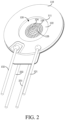
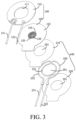
- an atomizer 10 provided by an embodiment of this application includes an ultrasonic atomization assembly 100 and a heating assembly 200.
- the ultrasonic atomization assembly 100 is configured to atomize liquid to form liquid vapor, and the liquid may be oil, liquid medicine, or the like. When the liquid is atomized to form the liquid vapor, a user may inhale the liquid vapor.
- the ultrasonic atomization assembly 100 includes a piezoelectric ceramic piece 110, a metal piece 120, a first electrode 131, and a second electrode 132.
- An end of the first electrode 131 and an end of the second electrode 132 are electrically connected to a circuit in the piezoelectric ceramic piece 110, and the other end of the first electrode 131 and the other end of the second electrode 132 are configured to be connected to an alternating current power supply. Therefore, the circuit in the piezoelectric ceramic piece 110 is configured to be supplied with an alternating current.
- the piezoelectric ceramic piece 110 When the alternating current power supply supplies the alternating current to the circuit in the piezoelectric ceramic piece 110 through the first electrode 131 and the second electrode 132, the piezoelectric ceramic piece 110 generates high frequency vibration, so that a vibration frequency of the piezoelectric ceramic piece 110 is equal to a vibration frequency of an ultrasound.
- a through hole 111 is provided at a center of the piezoelectric ceramic piece 110, and the through hole 111 penetrates two opposite surfaces of the piezoelectric ceramic piece 110. By providing the through hole 111, the piezoelectric ceramic piece 110 has a substantially circular structure.
- the metal piece 120 has a substantially disk-shaped structure and includes a first support surface 121, a second support surface 122, a liquid inlet surface 123, and a vapor outlet surface 124.
- the liquid inlet surface 123 and the vapor outlet surface 124 are opposite to each other and are located at a central region of the metal piece 120.
- the second support surface 122 and the first support surface 121 are opposite to each other and are located at an edge region of the metal piece 120.
- the second support surface 122 and the vapor outlet surface 124 are located on a second side (i.e.
- the first support surface 121 and the liquid inlet surface 123 are located on a first side (i.e. a lower side) of the metal piece 120, and the first support surface 121 is connected to a periphery of the liquid inlet surface 123, so that the first support surface 121 is circular and surrounds the liquid inlet surface 123.
- both the second support surface 122 and the first support surface 121 are spaced apart along a thickness direction of the metal piece 120 and correspond to each other, and both the liquid inlet surface 123 and the vapor outlet surface 124 are spaced apart along the thickness direction of the metal piece 120 and correspond to each other.
- a plurality of atomization holes 126 are provided on the metal piece 120, and the atomization holes 126 penetrate both the liquid inlet surface 123 and the vapor outlet surface 124.
- the heating assembly 200 is arranged on the first support surface 121 of the metal piece 120.
- the piezoelectric ceramic piece 110 is attached to the second support surface 122 of the metal piece 120, so that the vapor outlet surface 124 corresponds to the through hole 111 of the piezoelectric ceramic piece 110, and the through hole 111 is in communication with the atomization hole 126.
- Liquid to be atomized is located on a side at which the liquid inlet surface 123 is located, and the liquid is in direct contact with the liquid inlet surface 123, so that the liquid enters the atomization hole 126 through the liquid inlet surface 123.
- vibration energy of the piezoelectric ceramic piece 110 is transmitted to the metal piece 120, so that the metal piece 120 also generates high frequency vibration along with the piezoelectric ceramic piece 110, so as to atomize the liquid in the atomization hole 126 to form liquid vapor.
- the liquid vapor is sprayed out from the vapor outlet surface 124 into the through hole 111 of the piezoelectric ceramic piece 110 to be inhaled by a user.
- the atomization hole 126 is a conical hole, and a diameter of the atomization hole 126 is gradually reduced from the liquid inlet surface 123 to the vapor outlet surface 124.
- the metal piece 120 may be made of a stainless steel material, so that the metal piece 120 has good structural strength, thermal conductivity, and rust resistance. Therefore, it can be ensured that the metal piece 120 has sufficient anti-fatigue strength, which prevents fatigue fracture of the metal piece 120 under high frequency vibration, and improves a service life of the entire ultrasonic atomization assembly 100. In addition, it can prevent a rust particle from partially or completely blocking the atomization hole 126, ensure that particle sizes of tiny liquid droplets in the liquid vapor are equal, and ensure that each atomization hole 126 can atomize the liquid, so as to finally improve uniformity and reliability of the metal piece 120 in vaporizing the liquid.
- At least a part of both the liquid inlet surface 123 and the vapor outlet surface 124 is a spherical crown surface 125.
- An opening of the spherical crown surface 125 faces the heating assembly 200, so that an entire central region of the metal piece 120 forms a spherical crown protrusion, and an opening of the protrusion is the opening of the spherical crown surface 125.
- the protrusion may also be formed by a central region of a flat metal piece 120 recessed toward the first side.
- Another part of the atomization hole 126 may be located on the spherical crown surface 125, and another part of the atomization hole 126 may be located at other parts of the liquid inlet surface 123 and the vapor outlet surface 124.
- all atomization holes 126 may be located on the spherical crown surface 125.
- a plane perpendicular to a thickness direction of the metal piece 120 is used as a reference plane.
- an orthographic projection of a metal piece 120 having the spherical crown surface 125 on the reference plane is the same as that of the flat metal piece 120 on the reference plane, the metal piece 120 having the spherical crown surface 125 can ensure that the liquid vapor is sprayed in different directions and has a relatively large spraying range.
- a relatively large number of atomization holes 126 may be provided, so that an atomization amount of liquid per unit time is increased to increase liquid vapor concentration.
- the heating assembly 200 includes a first insulating layer 210, a second insulating layer 220, and a heating layer 230.
- the first insulating layer 210, the second insulating layer 220, and the heating layer 230 are all substantially circular, and are provided with through holes 201 in communication with each other.
- the through holes 201 correspond to the liquid inlet surface 123 of the metal piece 120, and liquid may be in contact with the liquid inlet surface 123 through the through holes 201 and enter the atomization hole 126 to be atomized.
- the first insulating layer 210 is attached to the first support surface 121 of the metal piece 120, and the first insulating layer 210 may be attached to the first support surface 121 through a physical vapor deposition (PVD) process or a screen printing process, so that the first insulating layer 210 is directly connected to the metal piece 120, so as to prevent the first insulating layer 210 from being connected to the metal piece 120 through another connection layer, and reduce a thickness and weight of the entire atomizer 10, which facilitates a thin and light design of the atomizer 10.
- PVD physical vapor deposition
- the thickness of the first insulating layer 210 may range from 5 ⁇ m to 20 ⁇ m, for example, a specific value may be 5 ⁇ m, 10 ⁇ m, 15 ⁇ m, 20 ⁇ m, or the like. On the premise of ensuring that the first insulating layer 210 has sufficient insulating performance, the thickness of the first insulating layer 210 may be appropriately reduced, so that the thickness of the entire atomizer 10 may be further compressed.
- the heating layer 230 is attached to a surface of the first insulating layer 210 away from the metal piece 120, and the heating layer 230 may also be attached to the first insulating layer 210 through the physical vapor deposition (PVD) process or the screen printing process, so that the heating layer 230 is directly connected to the first insulating layer 210, to prevent the heating layer 230 from being connected to the first insulating layer 210 through another connecting layer, which may also reduce the thickness of the entire atomizer 10 and realize the thin and light design of the atomizer 10.
- the thickness of the heating layer 230 may range from 5 ⁇ m to 40 ⁇ m, for example, a specific value may be 5 ⁇ m, 20 ⁇ m, 30 ⁇ m, 40 ⁇ m, or the like.
- the heating layer 230 may further include a third electrode 231 and a fourth electrode 232.
- One end of the third electrode 231 and one end of the fourth electrode 232 are electrically connected to the heating layer 230, and the other end of the third electrode 231 and the other end of the fourth electrode 232 are configured to be connected to a direct current power supply. Therefore, the heating layer 230 is configured to be supplied with alternating current.
- the heating layer 230 may convert electrical energy to heat energy when the direct current power supply (e.g. a battery) applies a direct current to the heating layer 230 through the third electrode 231 and the fourth electrode 232.
- the direct current power supply e.g. a battery
- the heating layer 230 may be a layered structure formed by bending a wire-like wire or directly be a layered structure formed by a conductive diaphragm.
- the heating layer 230 may be a carbon nanoflake or may be made of a metal or alloy material such as a stainless steel material, a titanium metal material, or a titanium alloy material.
- the second insulating layer 220 is attached to a surface of the heating layer 230 away from the metal piece 120, and the second insulating layer 220 may also be attached to the heating layer 230 through the physical vapor deposition (PVD) process or the screen printing process, so that the heating layer 230 is directly connected to the second insulating layer 220, to prevent the heating layer 230 from being connected to the second insulating layer 220 through another connecting layer, which may also reduce the thickness of the entire atomizer 10 and realize the thin and light design of the atomizer 10.
- the thickness of the second insulating layer 220 may range from 5 ⁇ m to 20 ⁇ m, for example, a specific value may be 5 ⁇ m, 10 ⁇ m, 15 ⁇ m, 20 ⁇ m, or the like.
- the thickness of the second insulating layer 220 may be appropriately reduced, so that the thickness of the entire atomizer 10 may be further compressed.
- the second insulating layer 220 may be made of a ceramic glaze material, so that the second insulating layer 220 has high wear resistance and good thermal conductivity.
- the first insulating layer 210 is arranged on the first support surface 121 of the metal piece 120, and the heating layer 230 is directly sandwiched between the first insulating layer 210 and the second insulating layer 220.
- the first insulating layer 210 a short circuit phenomenon caused by a direct contact between the heating layer 230 and the metal piece 120 may be avoided.
- the second insulating layer 220 the second insulating layer 220 is in direct contact with liquid on a side of the liquid inlet surface 123, so as to avoid a short circuit phenomenon caused by a direct contact between the heating layer 230 and the liquid, and also avoid contamination on the liquid caused by a contact between the heating layer 230 and the liquid.
- the heating assembly 200 is activated before the ultrasonic atomization assembly 100 is activated.
- a direct current power supply is used for supplying power to the heating layer 230 through the third electrode 231 and the fourth electrode 232, and then an alternating current power supply is used for supplying power to the circuit in the piezoelectric ceramic piece 110 through the first electrode 131 and the second electrode 132, so that a working time of the heating layer 230 is earlier than a working time of the piezoelectric ceramic piece 110.
- the heating layer 230 may be activated no more than one second before the piezoelectric ceramic piece 110 is activated, so that the piezoelectric ceramic piece 110 can drive the metal piece 120 to vibrate to atomize liquid to form liquid vapor as soon as possible, which reduces time of waiting for the liquid vapor by a user, and improves user experience of the entire atomizer 10.
- the heating assembly 200 can preheat the liquid approaching the liquid inlet surface 123. Certainly, the heating assembly 200 may preheat the liquid to a temperature close to a body temperature.
- the metal piece 120 atomizes the liquid to form liquid vapor sprayed from the vapor outlet surface 124 into the through hole 111, the temperature of the liquid vapor is close to the body temperature.
- the liquid medicine liquid vapor
- the liquid medicine can be prevented from irritating a respiratory tract of a human body, so as to avoid other symptoms such as cough or elevated blood pressure, and ensure a therapeutic effect of the liquid medicine on the user.
- a temperature difference between the liquid vapor in an early stage and a middle-late stage of the heating assembly 200 due to simultaneous activating of the heating assembly 200 and the piezoelectric ceramic piece 110 may be eliminated, the temperature of the liquid vapor in an atomization process may be kept consistent, and comfort of inhaling the liquid vapor may be improved.
- the viscosity of the liquid can be appropriately reduced, thereby increasing fluidity of the liquid, making it easier for the liquid to enter the atomization hole 126 and to be rapidly atomized to form liquid vapor under high frequency vibration, thus avoiding a phenomenon that the liquid is difficult to flow into the atomization hole 126 or is difficult to be atomized to form the liquid vapor, and improving atomization efficiency, atomization stability, and atomization reliability of the entire atomizer 10.
- the heating assembly 200 simultaneously heat liquid near the liquid inlet surface 123 and liquid far away from the liquid inlet surface 123.
- the heating assembly 200 repeatedly heats the liquid, resulting in a waste of energy.
- the heating assembly 200 is directly attached to the first support surface 121 of the ultrasonic atomization assembly 100, that is, the heating assembly 200 is integrated and arranged on the ultrasonic atomization assembly 100.
- the heating assembly 200 may merely heat liquid near the liquid inlet surface 123, i.e. a part of the liquid, so that heated liquid may directly enter the atomization hole 126 for atomization. In this way, the liquid is heated up quickly, energy consumption of the heating assembly 200 is reduced, and time for waiting the liquid vapor to spray is reduced to improve the user experience.
- the heating assembly 200 is arranged on a side on which the vapor outlet surface 124 of the metal piece 120 is located, the heating assembly 200 cannot be in direct contact with liquid on a side of the liquid inlet surface 123, and heat generated by the heating assembly 200 is transferred to the liquid through the metal piece 120 to preheat the liquid, thus prolonging a heat transfer path, increasing a heat loss generated in a heat transfer process, and reducing a heat utilization rate of the heating assembly 200.
- the heating assembly 200 needs to be protected by a heat insulation part, to prevent heat of the heating assembly 200 from being transferred to another member of the atomizer 10 and causing damage to the member. Therefore, arrangement of the heat insulation part significantly complicates a structure of the atomizer 10.
- the entire heating assembly 200 is directly arranged on the first support surface 121 of the metal piece 120, that is, the heating assembly 200 is located on a side on which the liquid inlet surface 123 is located, so that the heating assembly 200 can be in direct contact with the liquid, and heat generated by the heating assembly 200 is directly transmitted to the liquid without an intermediate medium, thereby reducing heat loss, improving a heat utilization rate, making the liquid heat up quickly, and reducing time for waiting the liquid vapor to spray.
- there is no need to set an additional heat insulation part on the heating assembly 200 thus simplifying an overall structure of the atomizer 10.
- the heating layer 230 is configured to include a high temperature zone surrounding the liquid inlet surface 123 and a low temperature zone surrounding the high temperature zone, so that the high temperature zone of the heating layer 230 may be closer to the liquid inlet surface 123 than the low temperature zone.
- the heating layer 123 includes a first resistance wire 231 surrounding the liquid inlet surface 123 and a second resistance wire 232 surrounding the first resistance wire. A resistance of the first resistance wire 231 is greater than a resistance of the second resistance wire 232.
- first resistance wire 231 and the second resistance wire 232 are connected in series, heat generated by the first resistance wire 231 is more than heat generated by the second resistance wire 232 in the same time period, so that the first resistance wire 231 corresponds to the high temperature zone and the second resistance wire 232 corresponds to the low temperature zone. Therefore, heat generated by the heating layer 230 is more focused on the liquid near the liquid inlet surface 123, which may reduce repeated heating and increase a heating speed of the liquid. In addition, heat transferred by the heating layer 230 to another member of the atomizer 10 through an edge of the metal piece 120 may be reduced and an energy utilization rate of the heating layer 230 may be improved.
- the liquid inlet surface 123 may be arranged closer to the heating layer 230 relative to an edge of the first support surface 121 of the metal piece 120. In other words, in a case that a distance h between the heating layer 230 and the liquid inlet surface 123 is less than a distance H between the heating layer 230 and the edge of the first support surface 121, the heat generated by the heating layer 230 may also be more focused on the liquid near the liquid inlet surface 123, thus improving the energy utilization rate of the heating layer 230.
- a thermal conductivity of the second insulating layer 220 is greater than a thermal conductivity of the first insulating layer 210, so that the heat generated by the heating layer 230 may be easily and directly transferred to the liquid through the second insulating layer 220, heat transferred to another member of the atomizer 10 through the first insulating layer 210 and the metal piece 120 may be reduced, and the energy utilization rate of the heating layer 230 may also be improved.
- a prepared heating layer 230 may be placed in an injection mold and then a liquid insulating material is injected to a cavity of the mold.
- the liquid insulating material may be cooled and solidified to form an insulating layer, and the insulating layer may be denoted as a third insulating layer 241. Therefore, the entire heating layer 230 is packaged in the third insulating layer 241.
- the third insulating layer 241 short circuit caused by a contact between the heating layer 230 and the metal piece 120 as well as the liquid can be avoided.
- the third insulating layer 241 may be provided with a slot structure, so that a third electrode 231 and a fourth electrode 232 electrically connected to the heating layer 230 penetrate the slot structure.
- a bonding layer 242 may be provided on the first support surface 121 of the metal piece 120, and the third insulating layer 241 is attached to the bonding layer 242. That is, the third insulating layer 241 is arranged on the first support surface 121 of the metal piece 120 through the bonding layer 242.
- the third insulating layer 241 may be fixed on the first support surface 121 of the metal piece 120 through a snap connection.
- an insulating layer may be provided on both sides of the prepared heating layer 230 through physical vapor deposition, electrophoresis, or spraying, and then the insulating layer is fixed on the metal piece 120 through the bonding layer 242 or the snap connection.
- the electronic atomization device includes the forgoing atomizer 10.
- the user experience of the electronic atomization device can be improved, energy consumption can be reduced, and the structure can be thinner and lighter.
Landscapes
- Health & Medical Sciences (AREA)
- Engineering & Computer Science (AREA)
- Life Sciences & Earth Sciences (AREA)
- Biomedical Technology (AREA)
- Heart & Thoracic Surgery (AREA)
- Hematology (AREA)
- Anesthesiology (AREA)
- Animal Behavior & Ethology (AREA)
- General Health & Medical Sciences (AREA)
- Public Health (AREA)
- Veterinary Medicine (AREA)
- Bioinformatics & Cheminformatics (AREA)
- Pulmonology (AREA)
- Special Spraying Apparatus (AREA)
- Catching Or Destruction (AREA)
Applications Claiming Priority (2)
| Application Number | Priority Date | Filing Date | Title |
|---|---|---|---|
| CN202011525441.5A CN112617297B (zh) | 2020-12-22 | 2020-12-22 | 雾化器及电子雾化装置 |
| PCT/CN2021/133814 WO2022135058A1 (zh) | 2020-12-22 | 2021-11-29 | 雾化器及电子雾化装置 |
Publications (2)
| Publication Number | Publication Date |
|---|---|
| EP4268637A1 true EP4268637A1 (de) | 2023-11-01 |
| EP4268637A4 EP4268637A4 (de) | 2024-12-04 |
Family
ID=75320653
Family Applications (1)
| Application Number | Title | Priority Date | Filing Date |
|---|---|---|---|
| EP21909057.8A Pending EP4268637A4 (de) | 2020-12-22 | 2021-11-29 | Zerstäuber und elektronische zerstäubungsvorrichtung |
Country Status (4)
| Country | Link |
|---|---|
| US (1) | US20230329343A1 (de) |
| EP (1) | EP4268637A4 (de) |
| CN (1) | CN112617297B (de) |
| WO (1) | WO2022135058A1 (de) |
Families Citing this family (3)
| Publication number | Priority date | Publication date | Assignee | Title |
|---|---|---|---|---|
| CN112617297B (zh) * | 2020-12-22 | 2025-07-11 | 深圳麦克韦尔科技有限公司 | 雾化器及电子雾化装置 |
| US20230356253A1 (en) * | 2022-05-03 | 2023-11-09 | Pneuma Respiratory, Inc. | Small active area plate ejector for droplet delivery device |
| US12161795B2 (en) | 2022-07-18 | 2024-12-10 | Pneuma Respiratory, Inc. | Small step size and high resolution aerosol generation system and method |
Family Cites Families (18)
| Publication number | Priority date | Publication date | Assignee | Title |
|---|---|---|---|---|
| CN100353814C (zh) * | 2001-11-14 | 2007-12-05 | 松下电器产业株式会社 | 加热辊、加热带、图像加热装置和成像设备 |
| CN104983078B (zh) * | 2015-07-17 | 2018-11-30 | 湖南中烟工业有限责任公司 | 一种电子烟雾化器及电子烟 |
| KR20240063168A (ko) * | 2015-11-02 | 2024-05-09 | 필립모리스 프로덕츠 에스.에이. | 진동 부재를 포함하는 에어로졸 발생 시스템 |
| PL3448186T3 (pl) * | 2016-04-27 | 2024-07-08 | Nicoventures Trading Limited | Elektroniczny system zapewniania aerozolu i przeznaczony dla niego odparowywacz |
| CN205922888U (zh) * | 2016-06-20 | 2017-02-08 | 湖南中烟工业有限责任公司 | 一种超声雾化器及超声雾化式电子烟 |
| CN206137193U (zh) * | 2016-07-01 | 2017-05-03 | 林光榕 | 采用混合雾化单元的电子烟雾化器 |
| CN105962421B (zh) * | 2016-07-01 | 2018-12-25 | 林光榕 | 采用超声波雾化单元的电子烟雾化器 |
| CN206043450U (zh) * | 2016-09-20 | 2017-03-29 | 湖南中烟工业有限责任公司 | 一种雾化器及其电子烟 |
| JP6872604B2 (ja) * | 2016-09-30 | 2021-05-19 | チャイナ タバコ フーナン インダストリアル カンパニー リミテッド | 超音波電子タバコ用の霧化器 |
| CN107185766A (zh) * | 2017-07-31 | 2017-09-22 | 苏州雾联医疗科技有限公司 | 一种压电陶瓷超声雾化片 |
| CN107823764A (zh) * | 2017-09-20 | 2018-03-23 | 戴承萍 | 一种压电陶瓷超声雾化片 |
| CN113133555A (zh) * | 2017-12-29 | 2021-07-20 | 深圳市华诚达精密工业有限公司 | 一种柔性烟草加热组件及其生产工艺 |
| CN109261428A (zh) * | 2018-11-05 | 2019-01-25 | 东莞市谦合电子有限公司 | 一种压电陶瓷雾化片 |
| WO2020209112A1 (ja) * | 2019-04-09 | 2020-10-15 | 日本たばこ産業株式会社 | エアロゾル供給デバイス |
| JP7678796B2 (ja) * | 2019-09-06 | 2025-05-16 | ジェイティー インターナショナル エスエイ | 薄膜ヒータ |
| CN211832824U (zh) * | 2019-12-25 | 2020-11-03 | 深圳麦克韦尔科技有限公司 | 一种加热器及其加热组件和发热体 |
| CN215013609U (zh) * | 2020-12-22 | 2021-12-07 | 深圳麦克韦尔科技有限公司 | 雾化器及电子雾化装置 |
| CN112617297B (zh) * | 2020-12-22 | 2025-07-11 | 深圳麦克韦尔科技有限公司 | 雾化器及电子雾化装置 |
-
2020
- 2020-12-22 CN CN202011525441.5A patent/CN112617297B/zh active Active
-
2021
- 2021-11-29 WO PCT/CN2021/133814 patent/WO2022135058A1/zh not_active Ceased
- 2021-11-29 EP EP21909057.8A patent/EP4268637A4/de active Pending
-
2023
- 2023-06-21 US US18/339,048 patent/US20230329343A1/en active Pending
Also Published As
| Publication number | Publication date |
|---|---|
| EP4268637A4 (de) | 2024-12-04 |
| WO2022135058A1 (zh) | 2022-06-30 |
| US20230329343A1 (en) | 2023-10-19 |
| CN112617297B (zh) | 2025-07-11 |
| CN112617297A (zh) | 2021-04-09 |
Similar Documents
| Publication | Publication Date | Title |
|---|---|---|
| EP4268637A1 (de) | Zerstäuber und elektronische zerstäubungsvorrichtung | |
| JP2023098827A (ja) | 超音波霧化アセンブリ及び超音波霧化装置 | |
| CN119054971A (zh) | 用于气溶胶生成的吸烟装置及方法 | |
| CN114365870A (zh) | 雾化组件及电子雾化装置 | |
| US20100319685A1 (en) | Medical liquid droplet apparatus | |
| US7229028B2 (en) | Aerosol impingement baffle | |
| CN215013609U (zh) | 雾化器及电子雾化装置 | |
| CN220675139U (zh) | 加热雾化片、雾化器及电子雾化装置 | |
| KR102812767B1 (ko) | 마이크로포어 무화 조립체 및 전자 무화장치 | |
| CN214911978U (zh) | 一种可调频率的雾化结构 | |
| CN221554707U (zh) | 雾化器及电子雾化装置 | |
| TW200940182A (en) | Nozzle plate of a spray apparatus and fabrication method thereof | |
| CN114794555B (zh) | 超声雾化芯及电子雾化器 | |
| CN219941480U (zh) | 超声雾化结构及电子雾化装置 | |
| CN211482976U (zh) | 一种可加热微孔雾化装置及雾化器 | |
| CN215736883U (zh) | 雾化芯组件和电子雾化器 | |
| WO2023109341A1 (zh) | 雾化件及电子雾化装置 | |
| CN217772929U (zh) | 超声雾化组件及超声雾化装置 | |
| CN219785303U (zh) | 一种雾化组件及雾化装置 | |
| CN219802611U (zh) | 一种加热膜及气溶胶生成组件和气溶胶发生装置 | |
| CN219334732U (zh) | 雾化组件及电子雾化装置 | |
| WO2022082515A1 (zh) | 微孔雾化片以及超声雾化装置 | |
| CN220712926U (zh) | 一种发热组件、雾化器及气溶胶生成装置 | |
| CN221241715U (zh) | 一种具有复合结构的发热片、雾化芯及电子烟 | |
| WO2025021122A1 (zh) | 一种雾化器、超声雾化片组件和气溶胶生成装置 |
Legal Events
| Date | Code | Title | Description |
|---|---|---|---|
| STAA | Information on the status of an ep patent application or granted ep patent |
Free format text: STATUS: THE INTERNATIONAL PUBLICATION HAS BEEN MADE |
|
| PUAI | Public reference made under article 153(3) epc to a published international application that has entered the european phase |
Free format text: ORIGINAL CODE: 0009012 |
|
| STAA | Information on the status of an ep patent application or granted ep patent |
Free format text: STATUS: REQUEST FOR EXAMINATION WAS MADE |
|
| 17P | Request for examination filed |
Effective date: 20230616 |
|
| AK | Designated contracting states |
Kind code of ref document: A1 Designated state(s): AL AT BE BG CH CY CZ DE DK EE ES FI FR GB GR HR HU IE IS IT LI LT LU LV MC MK MT NL NO PL PT RO RS SE SI SK SM TR |
|
| DAV | Request for validation of the european patent (deleted) | ||
| DAX | Request for extension of the european patent (deleted) | ||
| RAP3 | Party data changed (applicant data changed or rights of an application transferred) |
Owner name: SHENZHEN SMOORE TECHNOLOGY LIMITED |
|
| A4 | Supplementary search report drawn up and despatched |
Effective date: 20241106 |
|
| RIC1 | Information provided on ipc code assigned before grant |
Ipc: A24F 40/10 20200101ALN20241030BHEP Ipc: H05B 3/28 20060101ALI20241030BHEP Ipc: H05B 3/14 20060101ALI20241030BHEP Ipc: H05B 3/04 20060101ALI20241030BHEP Ipc: B05B 17/00 20060101ALI20241030BHEP Ipc: A61M 15/00 20060101ALI20241030BHEP Ipc: A61M 11/04 20060101ALI20241030BHEP Ipc: A61M 11/00 20060101ALI20241030BHEP Ipc: A24F 40/05 20200101ALI20241030BHEP Ipc: A24F 40/40 20200101ALI20241030BHEP Ipc: A24F 40/46 20200101AFI20241030BHEP |
|
| RAP3 | Party data changed (applicant data changed or rights of an application transferred) |
Owner name: SHENZHEN SMOORE TECHNOLOGY LIMITED |