EP4263894B1 - Austenitischer nichtrostender stahl, platten für wärmetauscher und kaminrohre aus diesem stahl - Google Patents
Austenitischer nichtrostender stahl, platten für wärmetauscher und kaminrohre aus diesem stahl Download PDFInfo
- Publication number
- EP4263894B1 EP4263894B1 EP21824085.1A EP21824085A EP4263894B1 EP 4263894 B1 EP4263894 B1 EP 4263894B1 EP 21824085 A EP21824085 A EP 21824085A EP 4263894 B1 EP4263894 B1 EP 4263894B1
- Authority
- EP
- European Patent Office
- Prior art keywords
- traces
- corrosion
- content
- steel
- austenitic stainless
- Prior art date
- Legal status (The legal status is an assumption and is not a legal conclusion. Google has not performed a legal analysis and makes no representation as to the accuracy of the status listed.)
- Active
Links
Images






Classifications
-
- C—CHEMISTRY; METALLURGY
- C22—METALLURGY; FERROUS OR NON-FERROUS ALLOYS; TREATMENT OF ALLOYS OR NON-FERROUS METALS
- C22C—ALLOYS
- C22C38/00—Ferrous alloys, e.g. steel alloys
- C22C38/18—Ferrous alloys, e.g. steel alloys containing chromium
- C22C38/40—Ferrous alloys, e.g. steel alloys containing chromium with nickel
- C22C38/58—Ferrous alloys, e.g. steel alloys containing chromium with nickel with more than 1.5% by weight of manganese
-
- C—CHEMISTRY; METALLURGY
- C22—METALLURGY; FERROUS OR NON-FERROUS ALLOYS; TREATMENT OF ALLOYS OR NON-FERROUS METALS
- C22C—ALLOYS
- C22C38/00—Ferrous alloys, e.g. steel alloys
- C22C38/001—Ferrous alloys, e.g. steel alloys containing N
-
- C—CHEMISTRY; METALLURGY
- C22—METALLURGY; FERROUS OR NON-FERROUS ALLOYS; TREATMENT OF ALLOYS OR NON-FERROUS METALS
- C22C—ALLOYS
- C22C38/00—Ferrous alloys, e.g. steel alloys
- C22C38/008—Ferrous alloys, e.g. steel alloys containing tin
-
- C—CHEMISTRY; METALLURGY
- C22—METALLURGY; FERROUS OR NON-FERROUS ALLOYS; TREATMENT OF ALLOYS OR NON-FERROUS METALS
- C22C—ALLOYS
- C22C38/00—Ferrous alloys, e.g. steel alloys
- C22C38/02—Ferrous alloys, e.g. steel alloys containing silicon
-
- C—CHEMISTRY; METALLURGY
- C22—METALLURGY; FERROUS OR NON-FERROUS ALLOYS; TREATMENT OF ALLOYS OR NON-FERROUS METALS
- C22C—ALLOYS
- C22C38/00—Ferrous alloys, e.g. steel alloys
- C22C38/04—Ferrous alloys, e.g. steel alloys containing manganese
-
- C—CHEMISTRY; METALLURGY
- C22—METALLURGY; FERROUS OR NON-FERROUS ALLOYS; TREATMENT OF ALLOYS OR NON-FERROUS METALS
- C22C—ALLOYS
- C22C38/00—Ferrous alloys, e.g. steel alloys
- C22C38/06—Ferrous alloys, e.g. steel alloys containing aluminium
-
- C—CHEMISTRY; METALLURGY
- C22—METALLURGY; FERROUS OR NON-FERROUS ALLOYS; TREATMENT OF ALLOYS OR NON-FERROUS METALS
- C22C—ALLOYS
- C22C38/00—Ferrous alloys, e.g. steel alloys
- C22C38/18—Ferrous alloys, e.g. steel alloys containing chromium
- C22C38/22—Ferrous alloys, e.g. steel alloys containing chromium with molybdenum or tungsten
-
- C—CHEMISTRY; METALLURGY
- C22—METALLURGY; FERROUS OR NON-FERROUS ALLOYS; TREATMENT OF ALLOYS OR NON-FERROUS METALS
- C22C—ALLOYS
- C22C38/00—Ferrous alloys, e.g. steel alloys
- C22C38/18—Ferrous alloys, e.g. steel alloys containing chromium
- C22C38/24—Ferrous alloys, e.g. steel alloys containing chromium with vanadium
-
- C—CHEMISTRY; METALLURGY
- C22—METALLURGY; FERROUS OR NON-FERROUS ALLOYS; TREATMENT OF ALLOYS OR NON-FERROUS METALS
- C22C—ALLOYS
- C22C38/00—Ferrous alloys, e.g. steel alloys
- C22C38/18—Ferrous alloys, e.g. steel alloys containing chromium
- C22C38/40—Ferrous alloys, e.g. steel alloys containing chromium with nickel
- C22C38/42—Ferrous alloys, e.g. steel alloys containing chromium with nickel with copper
-
- C—CHEMISTRY; METALLURGY
- C22—METALLURGY; FERROUS OR NON-FERROUS ALLOYS; TREATMENT OF ALLOYS OR NON-FERROUS METALS
- C22C—ALLOYS
- C22C38/00—Ferrous alloys, e.g. steel alloys
- C22C38/18—Ferrous alloys, e.g. steel alloys containing chromium
- C22C38/40—Ferrous alloys, e.g. steel alloys containing chromium with nickel
- C22C38/44—Ferrous alloys, e.g. steel alloys containing chromium with nickel with molybdenum or tungsten
-
- C—CHEMISTRY; METALLURGY
- C22—METALLURGY; FERROUS OR NON-FERROUS ALLOYS; TREATMENT OF ALLOYS OR NON-FERROUS METALS
- C22C—ALLOYS
- C22C38/00—Ferrous alloys, e.g. steel alloys
- C22C38/18—Ferrous alloys, e.g. steel alloys containing chromium
- C22C38/40—Ferrous alloys, e.g. steel alloys containing chromium with nickel
- C22C38/46—Ferrous alloys, e.g. steel alloys containing chromium with nickel with vanadium
-
- C—CHEMISTRY; METALLURGY
- C22—METALLURGY; FERROUS OR NON-FERROUS ALLOYS; TREATMENT OF ALLOYS OR NON-FERROUS METALS
- C22C—ALLOYS
- C22C38/00—Ferrous alloys, e.g. steel alloys
- C22C38/18—Ferrous alloys, e.g. steel alloys containing chromium
- C22C38/40—Ferrous alloys, e.g. steel alloys containing chromium with nickel
- C22C38/48—Ferrous alloys, e.g. steel alloys containing chromium with nickel with niobium or tantalum
-
- C—CHEMISTRY; METALLURGY
- C22—METALLURGY; FERROUS OR NON-FERROUS ALLOYS; TREATMENT OF ALLOYS OR NON-FERROUS METALS
- C22C—ALLOYS
- C22C38/00—Ferrous alloys, e.g. steel alloys
- C22C38/18—Ferrous alloys, e.g. steel alloys containing chromium
- C22C38/40—Ferrous alloys, e.g. steel alloys containing chromium with nickel
- C22C38/50—Ferrous alloys, e.g. steel alloys containing chromium with nickel with titanium or zirconium
-
- C—CHEMISTRY; METALLURGY
- C22—METALLURGY; FERROUS OR NON-FERROUS ALLOYS; TREATMENT OF ALLOYS OR NON-FERROUS METALS
- C22C—ALLOYS
- C22C38/00—Ferrous alloys, e.g. steel alloys
- C22C38/18—Ferrous alloys, e.g. steel alloys containing chromium
- C22C38/40—Ferrous alloys, e.g. steel alloys containing chromium with nickel
- C22C38/52—Ferrous alloys, e.g. steel alloys containing chromium with nickel with cobalt
-
- C—CHEMISTRY; METALLURGY
- C22—METALLURGY; FERROUS OR NON-FERROUS ALLOYS; TREATMENT OF ALLOYS OR NON-FERROUS METALS
- C22C—ALLOYS
- C22C38/00—Ferrous alloys, e.g. steel alloys
- C22C38/18—Ferrous alloys, e.g. steel alloys containing chromium
- C22C38/40—Ferrous alloys, e.g. steel alloys containing chromium with nickel
- C22C38/54—Ferrous alloys, e.g. steel alloys containing chromium with nickel with boron
-
- C—CHEMISTRY; METALLURGY
- C21—METALLURGY OF IRON
- C21D—MODIFYING THE PHYSICAL STRUCTURE OF FERROUS METALS; GENERAL DEVICES FOR HEAT TREATMENT OF FERROUS OR NON-FERROUS METALS OR ALLOYS; MAKING METAL MALLEABLE, e.g. BY DECARBURISATION OR TEMPERING
- C21D2211/00—Microstructure comprising significant phases
- C21D2211/001—Austenite
Definitions
- the present invention relates to the field of austenitic stainless steels. More particularly, it aims at austenitic stainless steels having a good compromise between high resistance to different types of corrosion, good formability and moderate cost obtained by limiting as much as possible the presence of expensive alloying elements such as Ni and Mo.
- This grade is comparable to that designated "304" according to standard ASTM A240, except that it limits Si to 0.75% and C to 0.08%.
- Nb or Ti of the order of 0.2% for example, can help to improve the corrosion resistance of welds, in that they lead to the formation of Nb or Ti carbides instead of Cr carbides, thus preserving the amount of Cr in solution.
- grades of type X5CrNiMo17-12-2 according to EN 10088-2 and “316” according to ASTM A240, and those derived from them, are therefore often preferred to grade X5CrNi189 (1.4301) and 304 according to the same standards, respectively.
- X5CrNiMo17-12-2 grade essentially by a lower maximum C content which contributes to giving it an even better resistance to intergranular corrosion in a chlorinated environment than that of X5CrNiMo17-12-2, due to the lower possibility of formation of Cr carbides and carbonitrides. It is also more easily weldable.
- This grade is comparable to that designated by "316L" in the ASTM A240 standard.
- the X5CrNiMo17-12-2 type grades and their known derivatives have the disadvantage of being more expensive than the X5CrNiMo17-12-2 grades, due to their higher Ni contents and the significant presence of Mo. Also, the extraction of these elements from their ore is harmful to the environment. It would therefore be interesting to find suitable substitutes for them with a lower content of expensive alloying elements and a high ecological impact. This is the aim of the present invention.
- Its average grain size can be between 11 and 6 ASTM.
- the invention also relates to a plate for a heat exchanger, characterized in that it is made of this austenitic stainless steel.
- the invention also relates to an element of a chimney flue, characterized in that it is made of this austenitic stainless steel.
- the invention is based on a modification of the composition of the classic grade X2CrNi18-9 by carefully balanced additions of Mo and Si, the Mo content remaining relatively low. These additions tend to bring the steel closer to the composition of X2CrNiMo17-12-2, due to the presence of Mo. But they do not correspond to a variant of this grade that would have been known until now, or that would have been obvious, in particular because the presence of Mo remains relatively moderate.
- This modification is thus not economically penalizing, and is nevertheless sufficient to, in combination with the Si content which may be higher than in X2CrNi18-9 and X2CrNiMo17-12-2, retain both mechanical properties and corrosion resistance at least as good as those of CrNiMo17-12-2. These properties are well suited to uses requiring both high resistance to different types of corrosion and good formability allowing the production of thin parts and parts with complex shapes, such as heat exchanger elements or chimney flues.
- the C content ranges from trace to 0.030%.
- This element is a highly gammagenic (austenitizing) element, and excessive C content would lead to having to compensate for it by adding expensive alphagenic (ferritizing) elements such as Cr or Mo.
- C is highly unfavorable to the intergranular corrosion content and greatly reduces the weldability of the grade.
- the Mn content is between 1.0% and 2.0%. Mn ensures the stability of the austenite by reducing its propensity to transform into martensite, under stress or thermally, and consequently increases its deformation capacity and reduces its work hardening, which is greatly appreciated when stamping heat exchanger plates. However, at high content it tends to reduce the corrosion resistance of the grade, and its content must be limited here to 2.0%.
- the P content is at most 0.045%.
- the S content is at most 0.015%.
- S and P are elements that are extremely harmful to the corrosion resistance of stainless steel grades and also significantly reduce their mechanical resistance and their capacity for hot deformation. Their contents must preferably be as low as possible, and in any case less than or equal to the limits cited.
- the Si content is between 0.8% and 2.0%, and preferably between 1.0% and 1.5%.
- This element allows, according to the invention, when associated with a moderate Mo content, to significantly increase the corrosion resistance of the grade. It is also an important alphagenic (ferritizing) element, and its content must be limited to 2%, otherwise the grade would be unbalanced and the high Si content would have to be compensated by the presence of a gammagenic element, expensive like Ni or harmful like C.
- the Al content ranges from traces resulting from the production to 0.06%.
- This element can be used by steelmakers as a deoxidizer. However, if poorly controlled, it can affect the inclusion cleanliness of the steel, and particularly the final appearance of the product surface. It is also an alphagenic element whose excessive presence would require compensation by an expensive gammagenic element such as Ni or one that is detrimental to corrosion resistance properties such as C. It is therefore important to limit its content to at most 0.06%, and preferably to at most 0.01%.
- Ni is a powerful gammagenic element and increases the deformability and resilience of the steel grades considered.
- it is also relatively expensive and its content must bring about a balance between the metallurgical stability of the grade and its cost.
- too low a Ni content (less than 8.0%) would lead to an unstable grade with the formation of martensite during deformation leading to a significant increase in mechanical strength (work hardening) and a decrease in elongation at break.
- too high a content would lead to an economically uncompetitive grade.
- the Ni content is between 8.0% and 12.0%, preferably between 9.45% and 10.0%.
- Cr is the fundamental element for the production of stainless steel. Its content gives the steel most of its resistance to corrosion. For the applications targeted by the invention and to give the steel its austenitic metallurgical state, it is necessary for the Cr to be between 17.5% and 20.0%.
- the Mo content is between 0.4% and 0.8% and preferably between 0.5% and 0.6%.
- Mo is an element that allows the increase of corrosion resistance by reinforcing the passive film that spontaneously forms on the surface of a stainless steel.
- the addition of Mo carefully adjusted and associated with a precise range of Si contents, makes it possible to significantly increase the properties of corrosion resistance of an austenitic steel without having to increase its Mo content to levels such as those present in the grade X2CrNiMo17-12-2.
- the Mo content required by the invention must also take into account the possible presence of W, as will be discussed later.
- the Sn content is limited between traces resulting from the elaboration and 0.05%, Sn strongly reducing the hot forgeability.
- Nb, Zr and Ti are between traces resulting from the elaboration and 0.08%. These stabilizing elements with respect to intergranular corrosion are, here, not necessary due to the low C content which is imposed according to the invention.
- the Nb content is strictly less than 0.03%, better still less than 0.02%.
- V content is between traces resulting from the elaboration and 0.15%.
- V allows to increase the solubility of N in the austenite at high temperature, and can be added moderately to the grade in order to avoid any precipitation of chromium nitrides.
- the V content is greater than or equal to 0.03%, to improve the forgeability, preferably greater than or equal to 0.04%.
- Co content ranges from traces resulting from the elaboration to 1.0%.
- Co is a gammagenic element and therefore could have metallurgical advantages, it is excessively expensive and must be limited to 1.0% in order not to drastically degrade the cost of the grade.
- W is described in the scientific literature as allowing to increase the corrosion resistance of the grade in proportions equivalent to those of Mo. However, it is an excessively expensive element whose significant presence would drastically increase the cost of the grade. It must therefore be restricted to a maximum value depending on the proportion of Mo and respecting the law Mo + W ⁇ 0.8%, and preferably reduced to the state of traces resulting from the elaboration.
- Cu is present in the composition as an impurity resulting from the production, in a content which must remain at most 0.6%, generally less than or equal to 0.5%, better still less than 0.3%.
- the Cu content is at least 0.02%, or, depending on the production process, at least 0.10%.
- the Pb content ranges from traces resulting from processing to 0.03%.
- the N content is between traces and 0.1% (1000 ppm). Such a content makes it possible to avoid a degradation of the mechanical properties which would be induced by higher contents. Preferably, the N content remains at most 0.08% (800 ppm). The N content is generally greater than or equal to 0.03% (300 ppm).
- the O content is between traces and 0.01%, and preferably limited to as low a content as possible, in order to respect inclusion cleanliness in line with the main targeted applications.
- traces should, in general, be understood as meaning that these elements are not added intentionally during the production process, or that (which may be the case for Al and other deoxidizing elements such as Zr), they are subsequently eliminated, for example by decantation of the non-metallic inclusions that they have formed, and are only found very marginally in the final steel.
- the average grain size can be between 11 and 6 ASTM.
- the 6 ASTM size is preferred for applications where complex geometries, such as exchanger plates, must be produced by stamping, and the 11 ASTM size is preferred in cases where the exchanger is brazed or diffusion welded at high temperatures. This ensures mechanical strength of the exchanger, after the assembly operation, which is adequate for the high pressures supported in service.
- Castings of steels with the compositions listed in Table 1 were made. Small ingots were obtained, and 40 mm thick samples were extracted, which were then hot rolled at 1150°C to a thickness of 4 mm, then annealed at 1140-1120°C and pickled. They were then cold rolled to a thickness of 1.5 mm, annealed at 1140-1120°C, then cooled in forced air and pickled.
- a balancing of the composition which makes it possible to obtain a suitable A4 temperature, i.e. higher than the reheating temperature before hot rolling, is then necessary in order to ensure the integrity of the steel during hot rolling, and mechanical properties and corrosion resistance on the finished product compatible with the applications mainly envisaged for this steel: heat exchangers and chimney flues.
- Example 11 to 14 are according to the invention, Example 15 is the reference 316L.
- the Al content is therefore at most 0.06%, the Sn content at most 0.05%, the Nb content at most 0.08% (even less than 0.03%), the Ti content at most 0.08%, the Zr content at most 0.08%, the B content at most 0.01%, the sum of the W and Mo contents remains at most 0.8% and the Pb content at most 0.03%.
- the examples according to the invention differ from each other very essentially in their Si content, which ranges from 1.3% to approximately 1.0%.
- Samples of 150 x 100 x 25 mm were then cut from it. They were hot rolled to reduce their thickness from 25 to 2.8 mm.
- a first annealing at 1100°C without holding was then carried out, followed by pickling, which resulted in total recrystallization of the samples and an oxide-free surface.
- the average grain size of steel greatly influences its mechanical behavior and in particular its drawing capacity.
- the flexibility of adjusting the grain size between 6 and 11 ASTM is a major asset for establishing a fair compromise between the deformation capacity required for drawing the part and the mechanical strength required for its service life.
- planar isotropy coefficient ⁇ r of the two examples is calculated from the tensile curves in the three directions, it is found to be equal to -0.286 for example 15 of 316L and to -0.229 for example 14 according to the invention.
- the good mechanical properties of the steel according to the invention in that they have high mechanical strengths associated with large deformations at break and high isotropy, therefore make it a good substitute for applications of 316L for which these properties are important, as is resistance to various types of corrosion.
- examples 14 and 15 were subjected to an Erichsen test and a deep drawing test.
- the Erichsen test aims to obtain the Erichsen index IE which corresponds to the depth of the stamping before the appearance of a crack, according to an equibiaxial stress.
- a punch with a constant diameter of 20 mm, a constant blank holding pressure of 1000 daN, Molykote® lubricant spread with a brush, and a constant stamping speed of 5 mm/min were used.
- the thickness of the sheet metal tested was 1 mm.
- Example 14 according to the invention performs slightly better than reference example 15: the IE of example 14 is 12 mm, that of example 15 is 11.5 mm.
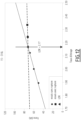
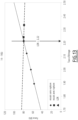
- the LDR theoretically corresponds to the ratio ⁇ between the maximum diameter of the blank before cracking and the initial diameter of the punch
- the results are visible on the figures 12 And 13 .
- the LDRs are very similar for the two examples: 2.22 for example 14 according to the invention ( figure 13 ) And 2 , 17 for reference example 15 ( figures 12 ).
- the LDR of the example steel according to the invention is even slightly better than that of the reference 316L steel.
- Electrochemical tests were carried out on 15 mm diameter stamped discs, polished underwater with 1200 grit SiC paper. Then, they were degreased in an ultrasonic bath of acetone/ethanol, rinsed with distilled water, and left to age for 24 h in ambient air.
- Electrochemical corrosion tests were performed in a solution of distilled water and analytical grade NaCl, deaerated with nitrogen and hydrogen.
- a saturated calomel electrode (SCE) was used as a reference electrode and a platinum electrode as a counter electrode.
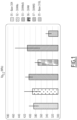
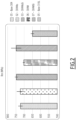
- the resistance to pitting corrosion is expressed by the pitting corrosion potential E pit , measured in mV/SCE on samples 11, 14 and 15 of Table 3 in a deaerated NaCl solution at pH 6.6 by leaving the sample at free potential for 15 min, then performing a potentiodynamic scan at a constant scan rate (100 mV/min) until an intensity of 50 ⁇ A was reached at which the potential E pit was measured.
- the experiments were carried out in 0.02M and 0.5M NaCl solutions, at 23°C and 50°C.
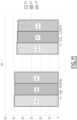
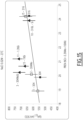
- the elementary pitting probability Pi in cm 2 was measured as a function of the corrosion potential E pit . The results are shown in fig.14 .
- PREN Platinum Resistance Equivalent Number
- the PREN can be taken equal to %Cr + 3.3x%Mo + 16x%N.
- the gain on E pit0.1 provided by the addition of Mo and Si according to the invention to a conventional 304 is estimated at around 100 to 150 mV, in the case of exposure to 0.02M or 0.5M NaCl at 23°C.
- the gain is more moderate for tests at 50°C (not very significant at 23°C, 50 to 100 mV for 0.5M NaCl) but nevertheless remains interesting for the most difficult conditions encountered during the tests. This shows, in passing, that the PREN is not, on its own, a sufficiently discriminating criterion to very finely predict the sensitivity of a stainless steel to corrosion resistance.
- the passive layer was first removed from the three samples 11, 14, 15 and from the sample of 304 from industrial production whose composition was given earlier, by immersion in a deaerated solution of 2M sulfuric acid at a pH lower than the depassivation pH (pHd), for 15 min at resting potential V corr .
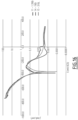
- Potentiodynamic polarization tests were performed at a scan rate of 10 mV/min, from -750 mV/SCE to 1800 mv/SCE. Current/voltage curves were determined. They are shown in the figure 16 .
- the peak intensity I crit which is all the higher as the uniform corrosion of the metal is rapid, is substantially identical for the three samples tested: 0.25 mA/cm 2 for the sample with 1.3% Si, 0.26 mA/cm 2 for the sample with 1.0% Si and 0.20 mA/cm 2 for the 316 sample and 0.23 mA/cm 2 for the 304 sample from industrial production.
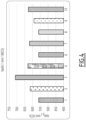
- Samples 11 of 304 with 0.5% Mo and 1.3% Si additives show a fairly large dispersion of their test results: between 46 and 172 h before cracking.
- Samples 15 of 304 with 0.5% Mo and 1.0% Si additives have a smaller dispersion, between 46 and 72 h.
- Samples 16 of 316L show cracking after 48 to 90 h.
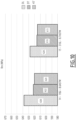
- the samples were first subjected to cathodic polarization at -750 mV/SCE for 2 min and then left at their resting potential. Then, potentiodynamic measurements were started at a scanning rate of 10 mV/min in the anodic direction from -750 mV/SCE. The measurements were carried out at different pH values in order to determine the maximum intensity in the active region of the polarization curves. Their results can be seen on the figure 18 .
- the depassivation pH is, in both cases, between 1 and 1.2, which is a range of values that compares favorably with that of ordinary industrial AISI 304 (1.7-2.3), and also with that of ordinary industrial 316 (1.5-1.65).
Landscapes
- Chemical & Material Sciences (AREA)
- Engineering & Computer Science (AREA)
- Materials Engineering (AREA)
- Mechanical Engineering (AREA)
- Metallurgy (AREA)
- Organic Chemistry (AREA)
- Heat Treatment Of Steel (AREA)
- Heat Treatment Of Sheet Steel (AREA)
- Chimneys And Flues (AREA)
- Rigid Pipes And Flexible Pipes (AREA)
- Heat Treatment Of Articles (AREA)
Claims (10)
- Austenitischer Edelstahl, dadurch gekennzeichnet, dass seine Zusammensetzung in Gewichtsprozenten aus Folgendem besteht:- Spuren ≤ C ≤ 0,03 %;- 1,0 % ≤ Mn ≤ 2,0 %;- 0,8 % ≤ Si ≤ 2,0 %; vorzugsweise 1,0 % ≤ Si ≤ 1,5 %;- Spuren ≤ Al ≤ 0,06 %; vorzugsweise Spuren ≤ Al ≤ 0,01 %;- Spuren ≤ P ≤ 0,045 %;- Spuren ≤ S ≤ 0,015 %;- 8,0 % ≤ Ni ≤ 12,0 %; vorzugsweise 9,45 % ≤ Ni ≤ 10,0 %;- 17,5 % ≤ Cr ≤ 20,0 %;- 0,4 % ≤ Mo ≤ 0,8 %; vorzugsweise 0,5 % ≤ Mo ≤ 0,6 %;- Spuren ≤ Sn ≤ 0,05 %;- Spuren ≤ Nb ≤ 0,08 %;- Spuren ≤ V ≤ 0,15 %;- Spuren ≤ Ti ≤ 0,08 %;- Spuren ≤ Zr ≤ 0,08 %;- Spuren ≤ Co ≤ 1,0 %;- 0,02 % ≤ Cu ≤ 0,6 %;- Spuren ≤ B ≤ 0,01 %;- Spuren ≤ W + Mo ≤ 0,8 %;- Spuren ≤ Pb ≤ 0,03 %;- Spuren ≤ N ≤ 1000 ppm;- Spuren ≤ O ≤ 0,01 %; vorzugsweise Spuren ≤ O ≤ 0,005 %;wobei der Rest Eisen und aus der Verarbeitung resultierende Verunreinigungen sind.
- Austenitischer Edelstahl nach Anspruch 1, dadurch gekennzeichnet, dass seine mittlere Korngröße zwischen 11 und 6 ASTM, vorzugsweise zwischen 10 und 7 ASTM, liegt.
- Austenitischer Edelstahl nach einem der Ansprüche 1 oder 2, dadurch gekennzeichnet, dass Spuren ≤ Nb ≤ 0,03 %.
- Austenitischer Edelstahl nach Anspruch 3, dadurch gekennzeichnet, dass Spuren ≤ Nb ≤ 0,02 %.
- Austenitischer Edelstahl nach einem der Ansprüche 1 bis 4, dadurch gekennzeichnet, dass 0,03 % ≤ V ≤ 0,15 %.
- Austenitischer Edelstahl nach Anspruch 5, dadurch gekennzeichnet, dass 0,04 % ≤ V ≤ 0,15 %.
- Austenitischer Edelstahl nach einem der Ansprüche 1 bis 6, dadurch gekennzeichnet, dass 300 ppm ≤ N ≤ 1000 ppm.
- Austenitischer Edelstahl nach Anspruch 7, dadurch gekennzeichnet, dass 300 ppm ≤ N ≤ 800 ppm.
- Platte für Wärmetauscher, dadurch gekennzeichnet, dass sie aus einem austenitischen rostfreien Stahl nach einem der Ansprüche 1 bis 8 gefertigt ist.
- Element eines Schornsteins, dadurch gekennzeichnet, dass es aus einem austenitischen Edelstahl nach einem der Ansprüche 1 bis 8 gefertigt ist.
Applications Claiming Priority (2)
| Application Number | Priority Date | Filing Date | Title |
|---|---|---|---|
| PCT/IB2020/062043 WO2022129993A1 (fr) | 2020-12-16 | 2020-12-16 | Acier inoxydable austénitique, plaques pour échangeurs de chaleurs, et conduits de cheminée, réalisés avec cet acier |
| PCT/IB2021/061647 WO2022130176A1 (fr) | 2020-12-16 | 2021-12-13 | Acier inoxydable austénitique, plaques pour échangeurs de chaleurs, et conduits de cheminée, réalisés avec cet acier |
Publications (2)
| Publication Number | Publication Date |
|---|---|
| EP4263894A1 EP4263894A1 (de) | 2023-10-25 |
| EP4263894B1 true EP4263894B1 (de) | 2025-02-12 |
Family
ID=73856235
Family Applications (1)
| Application Number | Title | Priority Date | Filing Date |
|---|---|---|---|
| EP21824085.1A Active EP4263894B1 (de) | 2020-12-16 | 2021-12-13 | Austenitischer nichtrostender stahl, platten für wärmetauscher und kaminrohre aus diesem stahl |
Country Status (11)
| Country | Link |
|---|---|
| US (1) | US12509755B2 (de) |
| EP (1) | EP4263894B1 (de) |
| JP (1) | JP2024500729A (de) |
| KR (1) | KR20230119199A (de) |
| CN (1) | CN116670313A (de) |
| CA (1) | CA3202028A1 (de) |
| ES (1) | ES3020483T3 (de) |
| FI (1) | FI4263894T3 (de) |
| MX (1) | MX2023007169A (de) |
| PL (1) | PL4263894T3 (de) |
| WO (2) | WO2022129993A1 (de) |
Family Cites Families (14)
| Publication number | Priority date | Publication date | Assignee | Title |
|---|---|---|---|---|
| US3107997A (en) * | 1961-07-31 | 1963-10-22 | Int Nickel Co | Unfired pressure vessel |
| GB1574101A (en) * | 1978-05-06 | 1980-09-03 | Fagersta Ab | Austenitic stainliess steel |
| JPS63213643A (ja) * | 1987-02-27 | 1988-09-06 | Sumitomo Metal Ind Ltd | 塩化物共存下での耐高温腐食性に優れたステンレス鋼 |
| JP3265930B2 (ja) * | 1995-06-30 | 2002-03-18 | 日本鋼管株式会社 | 溶接性に優れた高Cr鋼板およびその製造方法 |
| JPH09279313A (ja) * | 1996-04-15 | 1997-10-28 | Sumitomo Metal Ind Ltd | 都市ゴミ焼却設備排ガス系用ステンレス鋼 |
| JPH11106872A (ja) * | 1997-09-30 | 1999-04-20 | Nkk Corp | 熱間加工性に優れた耐硫酸露点腐食用ステンレス鋼 |
| KR100545092B1 (ko) * | 2001-12-18 | 2006-01-24 | 주식회사 포스코 | 성형성 및 내시효균열성이 우수한 연질 오스테나이트계 스테인레스강 제조방법 |
| CN102317489A (zh) * | 2007-10-04 | 2012-01-11 | 住友金属工业株式会社 | 奥氏体系不锈钢 |
| FR3003271B1 (fr) * | 2013-03-13 | 2015-04-17 | Areva Np | Acier inoxydable pour forgeage a chaud et procede de forgeage a chaud utilisant cet acier |
| PL3441494T3 (pl) * | 2016-03-23 | 2022-01-17 | Nippon Steel Stainless Steel Corporation | Blacha cienka z nierdzewnej stali austenitycznej na element układu wydechowego o doskonałej odporności cieplnej i obrabialności, element turbosprężarki oraz sposób wytwarzania blachy cienkiej z nierdzewnej stali austenitycznej na element układu wydechowego |
| JP6807221B2 (ja) * | 2016-11-25 | 2021-01-06 | 日鉄ステンレス株式会社 | Niろう付け接合熱交換器部材 |
| KR20180074322A (ko) * | 2016-12-23 | 2018-07-03 | 주식회사 포스코 | 내식성 및 열간가공성이 우수한 오스테나이트계 스테인리스강 |
| CN111094611A (zh) * | 2017-09-13 | 2020-05-01 | 神钢特殊钢管株式会社 | 奥氏体系不锈钢及其制造方法 |
| CN112789362B (zh) * | 2018-10-04 | 2022-08-16 | 日本制铁株式会社 | 奥氏体系不锈钢板及其制造方法 |
-
2020
- 2020-12-16 WO PCT/IB2020/062043 patent/WO2022129993A1/fr not_active Ceased
-
2021
- 2021-12-13 KR KR1020237023958A patent/KR20230119199A/ko active Pending
- 2021-12-13 MX MX2023007169A patent/MX2023007169A/es unknown
- 2021-12-13 CN CN202180085196.7A patent/CN116670313A/zh active Pending
- 2021-12-13 PL PL21824085.1T patent/PL4263894T3/pl unknown
- 2021-12-13 CA CA3202028A patent/CA3202028A1/fr active Pending
- 2021-12-13 WO PCT/IB2021/061647 patent/WO2022130176A1/fr not_active Ceased
- 2021-12-13 EP EP21824085.1A patent/EP4263894B1/de active Active
- 2021-12-13 US US18/267,307 patent/US12509755B2/en active Active
- 2021-12-13 FI FIEP21824085.1T patent/FI4263894T3/fi active
- 2021-12-13 ES ES21824085T patent/ES3020483T3/es active Active
- 2021-12-13 JP JP2023536525A patent/JP2024500729A/ja active Pending
Also Published As
| Publication number | Publication date |
|---|---|
| KR20230119199A (ko) | 2023-08-16 |
| MX2023007169A (es) | 2023-06-30 |
| ES3020483T3 (en) | 2025-05-22 |
| PL4263894T3 (pl) | 2025-04-22 |
| US20240018638A1 (en) | 2024-01-18 |
| CN116670313A (zh) | 2023-08-29 |
| JP2024500729A (ja) | 2024-01-10 |
| US12509755B2 (en) | 2025-12-30 |
| EP4263894A1 (de) | 2023-10-25 |
| CA3202028A1 (fr) | 2022-06-23 |
| WO2022129993A1 (fr) | 2022-06-23 |
| WO2022130176A1 (fr) | 2022-06-23 |
| FI4263894T3 (fi) | 2025-04-08 |
Similar Documents
| Publication | Publication Date | Title |
|---|---|---|
| EP1896624B1 (de) | Zusammensetzung von martensitischem nichtrostendem stahl, verfahren zur herstellung eines mechanischen teils daraus und resultierendes teil | |
| EP3362585B1 (de) | Stahl, produkt aush dem stahl und verfahren zur herstellung | |
| EP2164998B1 (de) | Gehärteter martensitischer stahl mit geringem oder ohne kobaltanteil, verfahren zur herstellung eines teils aus diesem stahl und in diesem verfahren hergestelltes teil | |
| EP3783118A1 (de) | Herstellungsverfahren von beschichteten und in der presse gehärteten stahlteilen | |
| CA2815018A1 (fr) | Tole d'acier laminee a chaud ou a froid, son procede de fabrication et son utilisation dans l'industrie automobile | |
| JPH09287053A (ja) | 転がり軸受その他の転動装置 | |
| KR20190042045A (ko) | 내황산 이슬점 부식강 | |
| CA3065036A1 (fr) | Procede de fabrication de pieces d'acier a haute resistance mecanique et ductilite amelioree, et pieces obtenues par ce procede | |
| WO2016146857A1 (fr) | Acier inoxydable martensitique, procédé de fabrication d'un demi-produit en cet acier et outil de coupe réalisé à partir de ce demi-produit | |
| CN103221566B (zh) | 软氮化用非调质钢以及软氮化部件 | |
| JP4283643B2 (ja) | 耐食性に優れた軸受鋼及び軸受部品 | |
| JP2010265487A (ja) | マルテンサイト系ステンレス鋼および転がり軸受 | |
| WO2022130176A1 (fr) | Acier inoxydable austénitique, plaques pour échangeurs de chaleurs, et conduits de cheminée, réalisés avec cet acier | |
| US20040094238A1 (en) | Bearing steel excellent in corrosion resistance | |
| JP7832553B2 (ja) | タンク用熱間圧延鋼材及びその製造方法 | |
| FR3026748A1 (fr) | Alliage metallique, piece metallique et procede d'obtention | |
| FR2864108A1 (fr) | Tole en acier inoxydable presentant une grande resistance et un bon allongement, et procede de fabrication | |
| JP4569961B2 (ja) | ボールネジまたはワンウェイクラッチ用部品の製造方法 | |
| HK40094018A (zh) | 奥氏体不锈钢和由这种钢制成的热交换器板和烟囱管道 | |
| EP3914738B1 (de) | Eisen-mangan-legierung mit verbesserter schweissbarkeit | |
| Bourgin et al. | Effect of a nitrogen addition on mechanical and corrosion properties of 1.4116 martensitic stainless steel | |
| EP1042524A1 (de) | Zementierter baustahl, verfahren zu seiner herstellung und daraus hergestellte formteile | |
| JP3925119B2 (ja) | ミルスケール付きマルテンサイト系ステンレス鋼材の製造方法 | |
| WO2026087926A1 (fr) | Acier inoxydable austénitique pour réservoir cryogénique |
Legal Events
| Date | Code | Title | Description |
|---|---|---|---|
| STAA | Information on the status of an ep patent application or granted ep patent |
Free format text: STATUS: UNKNOWN |
|
| STAA | Information on the status of an ep patent application or granted ep patent |
Free format text: STATUS: THE INTERNATIONAL PUBLICATION HAS BEEN MADE |
|
| PUAI | Public reference made under article 153(3) epc to a published international application that has entered the european phase |
Free format text: ORIGINAL CODE: 0009012 |
|
| STAA | Information on the status of an ep patent application or granted ep patent |
Free format text: STATUS: REQUEST FOR EXAMINATION WAS MADE |
|
| 17P | Request for examination filed |
Effective date: 20230614 |
|
| AK | Designated contracting states |
Kind code of ref document: A1 Designated state(s): AL AT BE BG CH CY CZ DE DK EE ES FI FR GB GR HR HU IE IS IT LI LT LU LV MC MK MT NL NO PL PT RO RS SE SI SK SM TR |
|
| P01 | Opt-out of the competence of the unified patent court (upc) registered |
Effective date: 20231031 |
|
| DAV | Request for validation of the european patent (deleted) | ||
| DAX | Request for extension of the european patent (deleted) | ||
| GRAP | Despatch of communication of intention to grant a patent |
Free format text: ORIGINAL CODE: EPIDOSNIGR1 |
|
| STAA | Information on the status of an ep patent application or granted ep patent |
Free format text: STATUS: GRANT OF PATENT IS INTENDED |
|
| INTG | Intention to grant announced |
Effective date: 20240910 |
|
| GRAS | Grant fee paid |
Free format text: ORIGINAL CODE: EPIDOSNIGR3 |
|
| GRAA | (expected) grant |
Free format text: ORIGINAL CODE: 0009210 |
|
| STAA | Information on the status of an ep patent application or granted ep patent |
Free format text: STATUS: THE PATENT HAS BEEN GRANTED |
|
| AK | Designated contracting states |
Kind code of ref document: B1 Designated state(s): AL AT BE BG CH CY CZ DE DK EE ES FI FR GB GR HR HU IE IS IT LI LT LU LV MC MK MT NL NO PL PT RO RS SE SI SK SM TR |
|
| REG | Reference to a national code |
Ref country code: GB Ref legal event code: FG4D Free format text: NOT ENGLISH |
|
| REG | Reference to a national code |
Ref country code: CH Ref legal event code: EP |
|
| REG | Reference to a national code |
Ref country code: DE Ref legal event code: R096 Ref document number: 602021026110 Country of ref document: DE |
|
| REG | Reference to a national code |
Ref country code: IE Ref legal event code: FG4D Free format text: LANGUAGE OF EP DOCUMENT: FRENCH |
|
| REG | Reference to a national code |
Ref country code: FI Ref legal event code: FGE |
|
| REG | Reference to a national code |
Ref country code: SE Ref legal event code: TRGR |
|
| REG | Reference to a national code |
Ref country code: ES Ref legal event code: FG2A Ref document number: 3020483 Country of ref document: ES Kind code of ref document: T3 Effective date: 20250522 |
|
| REG | Reference to a national code |
Ref country code: NL Ref legal event code: MP Effective date: 20250212 |
|
| PG25 | Lapsed in a contracting state [announced via postgrant information from national office to epo] |
Ref country code: RS Free format text: LAPSE BECAUSE OF FAILURE TO SUBMIT A TRANSLATION OF THE DESCRIPTION OR TO PAY THE FEE WITHIN THE PRESCRIBED TIME-LIMIT Effective date: 20250512 |
|
| REG | Reference to a national code |
Ref country code: LT Ref legal event code: MG9D |
|
| PG25 | Lapsed in a contracting state [announced via postgrant information from national office to epo] |
Ref country code: IS Free format text: LAPSE BECAUSE OF FAILURE TO SUBMIT A TRANSLATION OF THE DESCRIPTION OR TO PAY THE FEE WITHIN THE PRESCRIBED TIME-LIMIT Effective date: 20250612 Ref country code: NO Free format text: LAPSE BECAUSE OF FAILURE TO SUBMIT A TRANSLATION OF THE DESCRIPTION OR TO PAY THE FEE WITHIN THE PRESCRIBED TIME-LIMIT Effective date: 20250512 |
|
| PG25 | Lapsed in a contracting state [announced via postgrant information from national office to epo] |
Ref country code: NL Free format text: LAPSE BECAUSE OF FAILURE TO SUBMIT A TRANSLATION OF THE DESCRIPTION OR TO PAY THE FEE WITHIN THE PRESCRIBED TIME-LIMIT Effective date: 20250212 |
|
| PG25 | Lapsed in a contracting state [announced via postgrant information from national office to epo] |
Ref country code: HR Free format text: LAPSE BECAUSE OF FAILURE TO SUBMIT A TRANSLATION OF THE DESCRIPTION OR TO PAY THE FEE WITHIN THE PRESCRIBED TIME-LIMIT Effective date: 20250212 |
|
| PG25 | Lapsed in a contracting state [announced via postgrant information from national office to epo] |
Ref country code: LV Free format text: LAPSE BECAUSE OF FAILURE TO SUBMIT A TRANSLATION OF THE DESCRIPTION OR TO PAY THE FEE WITHIN THE PRESCRIBED TIME-LIMIT Effective date: 20250212 Ref country code: PT Free format text: LAPSE BECAUSE OF FAILURE TO SUBMIT A TRANSLATION OF THE DESCRIPTION OR TO PAY THE FEE WITHIN THE PRESCRIBED TIME-LIMIT Effective date: 20250612 |
|
| PG25 | Lapsed in a contracting state [announced via postgrant information from national office to epo] |
Ref country code: BG Free format text: LAPSE BECAUSE OF FAILURE TO SUBMIT A TRANSLATION OF THE DESCRIPTION OR TO PAY THE FEE WITHIN THE PRESCRIBED TIME-LIMIT Effective date: 20250212 Ref country code: GR Free format text: LAPSE BECAUSE OF FAILURE TO SUBMIT A TRANSLATION OF THE DESCRIPTION OR TO PAY THE FEE WITHIN THE PRESCRIBED TIME-LIMIT Effective date: 20250513 |
|
| REG | Reference to a national code |
Ref country code: AT Ref legal event code: MK05 Ref document number: 1766115 Country of ref document: AT Kind code of ref document: T Effective date: 20250212 |
|
| PG25 | Lapsed in a contracting state [announced via postgrant information from national office to epo] |
Ref country code: SM Free format text: LAPSE BECAUSE OF FAILURE TO SUBMIT A TRANSLATION OF THE DESCRIPTION OR TO PAY THE FEE WITHIN THE PRESCRIBED TIME-LIMIT Effective date: 20250212 |
|
| PG25 | Lapsed in a contracting state [announced via postgrant information from national office to epo] |
Ref country code: DK Free format text: LAPSE BECAUSE OF FAILURE TO SUBMIT A TRANSLATION OF THE DESCRIPTION OR TO PAY THE FEE WITHIN THE PRESCRIBED TIME-LIMIT Effective date: 20250212 |
|
| PG25 | Lapsed in a contracting state [announced via postgrant information from national office to epo] |
Ref country code: AT Free format text: LAPSE BECAUSE OF FAILURE TO SUBMIT A TRANSLATION OF THE DESCRIPTION OR TO PAY THE FEE WITHIN THE PRESCRIBED TIME-LIMIT Effective date: 20250212 |
|
| PG25 | Lapsed in a contracting state [announced via postgrant information from national office to epo] |
Ref country code: EE Free format text: LAPSE BECAUSE OF FAILURE TO SUBMIT A TRANSLATION OF THE DESCRIPTION OR TO PAY THE FEE WITHIN THE PRESCRIBED TIME-LIMIT Effective date: 20250212 Ref country code: CZ Free format text: LAPSE BECAUSE OF FAILURE TO SUBMIT A TRANSLATION OF THE DESCRIPTION OR TO PAY THE FEE WITHIN THE PRESCRIBED TIME-LIMIT Effective date: 20250212 |
|
| PG25 | Lapsed in a contracting state [announced via postgrant information from national office to epo] |
Ref country code: SK Free format text: LAPSE BECAUSE OF FAILURE TO SUBMIT A TRANSLATION OF THE DESCRIPTION OR TO PAY THE FEE WITHIN THE PRESCRIBED TIME-LIMIT Effective date: 20250212 |
|
| REG | Reference to a national code |
Ref country code: DE Ref legal event code: R097 Ref document number: 602021026110 Country of ref document: DE |
|
| PLBE | No opposition filed within time limit |
Free format text: ORIGINAL CODE: 0009261 |
|
| STAA | Information on the status of an ep patent application or granted ep patent |
Free format text: STATUS: NO OPPOSITION FILED WITHIN TIME LIMIT |
|
| PGFP | Annual fee paid to national office [announced via postgrant information from national office to epo] |
Ref country code: GB Payment date: 20251229 Year of fee payment: 5 |
|
| PGFP | Annual fee paid to national office [announced via postgrant information from national office to epo] |
Ref country code: IT Payment date: 20251210 Year of fee payment: 5 Ref country code: FI Payment date: 20251124 Year of fee payment: 5 |
|
| PGFP | Annual fee paid to national office [announced via postgrant information from national office to epo] |
Ref country code: FR Payment date: 20251114 Year of fee payment: 5 |
|
| PGFP | Annual fee paid to national office [announced via postgrant information from national office to epo] |
Ref country code: TR Payment date: 20251205 Year of fee payment: 5 Ref country code: BE Payment date: 20251226 Year of fee payment: 5 |
|
| PGFP | Annual fee paid to national office [announced via postgrant information from national office to epo] |
Ref country code: SE Payment date: 20251218 Year of fee payment: 5 |
|
| 26N | No opposition filed |
Effective date: 20251113 |
|
| PGFP | Annual fee paid to national office [announced via postgrant information from national office to epo] |
Ref country code: PL Payment date: 20251121 Year of fee payment: 5 |
|
| PGFP | Annual fee paid to national office [announced via postgrant information from national office to epo] |
Ref country code: RO Payment date: 20251127 Year of fee payment: 5 |
|
| PGFP | Annual fee paid to national office [announced via postgrant information from national office to epo] |
Ref country code: ES Payment date: 20260112 Year of fee payment: 5 |
|
| PGFP | Annual fee paid to national office [announced via postgrant information from national office to epo] |
Ref country code: DE Payment date: 20251231 Year of fee payment: 5 |