EP4233858B1 - Enhancing autophagy or increasing longevity by administration of urolithins or precursors thereof - Google Patents
Enhancing autophagy or increasing longevity by administration of urolithins or precursors thereof Download PDFInfo
- Publication number
- EP4233858B1 EP4233858B1 EP23175506.7A EP23175506A EP4233858B1 EP 4233858 B1 EP4233858 B1 EP 4233858B1 EP 23175506 A EP23175506 A EP 23175506A EP 4233858 B1 EP4233858 B1 EP 4233858B1
- Authority
- EP
- European Patent Office
- Prior art keywords
- urolithin
- certain embodiments
- relates
- aforementioned compounds
- autophagy
- Prior art date
- Legal status (The legal status is an assumption and is not a legal conclusion. Google has not performed a legal analysis and makes no representation as to the accuracy of the status listed.)
- Active
Links
Images












Classifications
-
- A—HUMAN NECESSITIES
- A61—MEDICAL OR VETERINARY SCIENCE; HYGIENE
- A61K—PREPARATIONS FOR MEDICAL, DENTAL OR TOILETRY PURPOSES
- A61K31/00—Medicinal preparations containing organic active ingredients
-
- A—HUMAN NECESSITIES
- A61—MEDICAL OR VETERINARY SCIENCE; HYGIENE
- A61K—PREPARATIONS FOR MEDICAL, DENTAL OR TOILETRY PURPOSES
- A61K31/00—Medicinal preparations containing organic active ingredients
- A61K31/045—Hydroxy compounds, e.g. alcohols; Salts thereof, e.g. alcoholates
- A61K31/05—Phenols
-
- A—HUMAN NECESSITIES
- A61—MEDICAL OR VETERINARY SCIENCE; HYGIENE
- A61K—PREPARATIONS FOR MEDICAL, DENTAL OR TOILETRY PURPOSES
- A61K31/00—Medicinal preparations containing organic active ingredients
- A61K31/12—Ketones
- A61K31/122—Ketones having the oxygen directly attached to a ring, e.g. quinones, vitamin K1, anthralin
-
- A—HUMAN NECESSITIES
- A61—MEDICAL OR VETERINARY SCIENCE; HYGIENE
- A61K—PREPARATIONS FOR MEDICAL, DENTAL OR TOILETRY PURPOSES
- A61K31/00—Medicinal preparations containing organic active ingredients
- A61K31/13—Amines
- A61K31/132—Amines having two or more amino groups, e.g. spermidine, putrescine
-
- A—HUMAN NECESSITIES
- A61—MEDICAL OR VETERINARY SCIENCE; HYGIENE
- A61K—PREPARATIONS FOR MEDICAL, DENTAL OR TOILETRY PURPOSES
- A61K31/00—Medicinal preparations containing organic active ingredients
- A61K31/13—Amines
- A61K31/155—Amidines (), e.g. guanidine (H2N—C(=NH)—NH2), isourea (N=C(OH)—NH2), isothiourea (—N=C(SH)—NH2)
-
- A—HUMAN NECESSITIES
- A61—MEDICAL OR VETERINARY SCIENCE; HYGIENE
- A61K—PREPARATIONS FOR MEDICAL, DENTAL OR TOILETRY PURPOSES
- A61K31/00—Medicinal preparations containing organic active ingredients
- A61K31/185—Acids; Anhydrides, halides or salts thereof, e.g. sulfur acids, imidic, hydrazonic or hydroximic acids
- A61K31/19—Carboxylic acids, e.g. valproic acid
- A61K31/195—Carboxylic acids, e.g. valproic acid having an amino group
- A61K31/197—Carboxylic acids, e.g. valproic acid having an amino group the amino and the carboxyl groups being attached to the same acyclic carbon chain, e.g. gamma-aminobutyric acid [GABA], beta-alanine, epsilon-aminocaproic acid or pantothenic acid
- A61K31/198—Alpha-amino acids, e.g. alanine or edetic acid [EDTA]
-
- A—HUMAN NECESSITIES
- A61—MEDICAL OR VETERINARY SCIENCE; HYGIENE
- A61K—PREPARATIONS FOR MEDICAL, DENTAL OR TOILETRY PURPOSES
- A61K31/00—Medicinal preparations containing organic active ingredients
- A61K31/185—Acids; Anhydrides, halides or salts thereof, e.g. sulfur acids, imidic, hydrazonic or hydroximic acids
- A61K31/205—Amine addition salts of organic acids; Inner quaternary ammonium salts, e.g. betaine, carnitine
-
- A—HUMAN NECESSITIES
- A61—MEDICAL OR VETERINARY SCIENCE; HYGIENE
- A61K—PREPARATIONS FOR MEDICAL, DENTAL OR TOILETRY PURPOSES
- A61K31/00—Medicinal preparations containing organic active ingredients
- A61K31/33—Heterocyclic compounds
- A61K31/335—Heterocyclic compounds having oxygen as the only ring hetero atom, e.g. fungichromin
- A61K31/35—Heterocyclic compounds having oxygen as the only ring hetero atom, e.g. fungichromin having six-membered rings with one oxygen as the only ring hetero atom
- A61K31/352—Heterocyclic compounds having oxygen as the only ring hetero atom, e.g. fungichromin having six-membered rings with one oxygen as the only ring hetero atom condensed with carbocyclic rings, e.g. methantheline
- A61K31/353—3,4-Dihydrobenzopyrans, e.g. chroman, catechin
-
- A—HUMAN NECESSITIES
- A61—MEDICAL OR VETERINARY SCIENCE; HYGIENE
- A61K—PREPARATIONS FOR MEDICAL, DENTAL OR TOILETRY PURPOSES
- A61K31/00—Medicinal preparations containing organic active ingredients
- A61K31/33—Heterocyclic compounds
- A61K31/335—Heterocyclic compounds having oxygen as the only ring hetero atom, e.g. fungichromin
- A61K31/365—Lactones
- A61K31/366—Lactones having six-membered rings, e.g. delta-lactones
-
- A—HUMAN NECESSITIES
- A61—MEDICAL OR VETERINARY SCIENCE; HYGIENE
- A61K—PREPARATIONS FOR MEDICAL, DENTAL OR TOILETRY PURPOSES
- A61K31/00—Medicinal preparations containing organic active ingredients
- A61K31/33—Heterocyclic compounds
- A61K31/335—Heterocyclic compounds having oxygen as the only ring hetero atom, e.g. fungichromin
- A61K31/365—Lactones
- A61K31/366—Lactones having six-membered rings, e.g. delta-lactones
- A61K31/37—Coumarins, e.g. psoralen
-
- A—HUMAN NECESSITIES
- A61—MEDICAL OR VETERINARY SCIENCE; HYGIENE
- A61K—PREPARATIONS FOR MEDICAL, DENTAL OR TOILETRY PURPOSES
- A61K31/00—Medicinal preparations containing organic active ingredients
- A61K31/33—Heterocyclic compounds
- A61K31/335—Heterocyclic compounds having oxygen as the only ring hetero atom, e.g. fungichromin
- A61K31/365—Lactones
- A61K31/375—Ascorbic acid, i.e. vitamin C; Salts thereof
-
- A—HUMAN NECESSITIES
- A61—MEDICAL OR VETERINARY SCIENCE; HYGIENE
- A61K—PREPARATIONS FOR MEDICAL, DENTAL OR TOILETRY PURPOSES
- A61K31/00—Medicinal preparations containing organic active ingredients
- A61K31/33—Heterocyclic compounds
- A61K31/395—Heterocyclic compounds having nitrogen as a ring hetero atom, e.g. guanethidine or rifamycins
- A61K31/435—Heterocyclic compounds having nitrogen as a ring hetero atom, e.g. guanethidine or rifamycins having six-membered rings with one nitrogen as the only ring hetero atom
- A61K31/4353—Heterocyclic compounds having nitrogen as a ring hetero atom, e.g. guanethidine or rifamycins having six-membered rings with one nitrogen as the only ring hetero atom ortho- or peri-condensed with heterocyclic ring systems
- A61K31/436—Heterocyclic compounds having nitrogen as a ring hetero atom, e.g. guanethidine or rifamycins having six-membered rings with one nitrogen as the only ring hetero atom ortho- or peri-condensed with heterocyclic ring systems the heterocyclic ring system containing a six-membered ring having oxygen as a ring hetero atom, e.g. rapamycin
-
- A—HUMAN NECESSITIES
- A61—MEDICAL OR VETERINARY SCIENCE; HYGIENE
- A61K—PREPARATIONS FOR MEDICAL, DENTAL OR TOILETRY PURPOSES
- A61K31/00—Medicinal preparations containing organic active ingredients
- A61K31/33—Heterocyclic compounds
- A61K31/395—Heterocyclic compounds having nitrogen as a ring hetero atom, e.g. guanethidine or rifamycins
- A61K31/495—Heterocyclic compounds having nitrogen as a ring hetero atom, e.g. guanethidine or rifamycins having six-membered rings with two or more nitrogen atoms as the only ring heteroatoms, e.g. piperazine or tetrazines
- A61K31/505—Pyrimidines; Hydrogenated pyrimidines, e.g. trimethoprim
- A61K31/519—Pyrimidines; Hydrogenated pyrimidines, e.g. trimethoprim ortho- or peri-condensed with heterocyclic rings
-
- A—HUMAN NECESSITIES
- A61—MEDICAL OR VETERINARY SCIENCE; HYGIENE
- A61K—PREPARATIONS FOR MEDICAL, DENTAL OR TOILETRY PURPOSES
- A61K31/00—Medicinal preparations containing organic active ingredients
- A61K31/33—Heterocyclic compounds
- A61K31/395—Heterocyclic compounds having nitrogen as a ring hetero atom, e.g. guanethidine or rifamycins
- A61K31/495—Heterocyclic compounds having nitrogen as a ring hetero atom, e.g. guanethidine or rifamycins having six-membered rings with two or more nitrogen atoms as the only ring heteroatoms, e.g. piperazine or tetrazines
- A61K31/505—Pyrimidines; Hydrogenated pyrimidines, e.g. trimethoprim
- A61K31/519—Pyrimidines; Hydrogenated pyrimidines, e.g. trimethoprim ortho- or peri-condensed with heterocyclic rings
- A61K31/525—Isoalloxazines, e.g. riboflavins, vitamin B2
-
- A—HUMAN NECESSITIES
- A61—MEDICAL OR VETERINARY SCIENCE; HYGIENE
- A61K—PREPARATIONS FOR MEDICAL, DENTAL OR TOILETRY PURPOSES
- A61K31/00—Medicinal preparations containing organic active ingredients
- A61K31/70—Carbohydrates; Sugars; Derivatives thereof
- A61K31/7016—Disaccharides, e.g. lactose, lactulose
-
- A—HUMAN NECESSITIES
- A61—MEDICAL OR VETERINARY SCIENCE; HYGIENE
- A61K—PREPARATIONS FOR MEDICAL, DENTAL OR TOILETRY PURPOSES
- A61K31/00—Medicinal preparations containing organic active ingredients
- A61K31/70—Carbohydrates; Sugars; Derivatives thereof
- A61K31/7042—Compounds having saccharide radicals and heterocyclic rings
- A61K31/7048—Compounds having saccharide radicals and heterocyclic rings having oxygen as a ring hetero atom, e.g. leucoglucosan, hesperidin, erythromycin, nystatin, digitoxin or digoxin
-
- A—HUMAN NECESSITIES
- A61—MEDICAL OR VETERINARY SCIENCE; HYGIENE
- A61K—PREPARATIONS FOR MEDICAL, DENTAL OR TOILETRY PURPOSES
- A61K45/00—Medicinal preparations containing active ingredients not provided for in groups A61K31/00 - A61K41/00
- A61K45/06—Mixtures of active ingredients without chemical characterisation, e.g. antiphlogistics and cardiaca
-
- A—HUMAN NECESSITIES
- A61—MEDICAL OR VETERINARY SCIENCE; HYGIENE
- A61P—SPECIFIC THERAPEUTIC ACTIVITY OF CHEMICAL COMPOUNDS OR MEDICINAL PREPARATIONS
- A61P1/00—Drugs for disorders of the alimentary tract or the digestive system
- A61P1/04—Drugs for disorders of the alimentary tract or the digestive system for ulcers, gastritis or reflux esophagitis, e.g. antacids, inhibitors of acid secretion, mucosal protectants
-
- A—HUMAN NECESSITIES
- A61—MEDICAL OR VETERINARY SCIENCE; HYGIENE
- A61P—SPECIFIC THERAPEUTIC ACTIVITY OF CHEMICAL COMPOUNDS OR MEDICINAL PREPARATIONS
- A61P1/00—Drugs for disorders of the alimentary tract or the digestive system
- A61P1/16—Drugs for disorders of the alimentary tract or the digestive system for liver or gallbladder disorders, e.g. hepatoprotective agents, cholagogues, litholytics
-
- A—HUMAN NECESSITIES
- A61—MEDICAL OR VETERINARY SCIENCE; HYGIENE
- A61P—SPECIFIC THERAPEUTIC ACTIVITY OF CHEMICAL COMPOUNDS OR MEDICINAL PREPARATIONS
- A61P1/00—Drugs for disorders of the alimentary tract or the digestive system
- A61P1/18—Drugs for disorders of the alimentary tract or the digestive system for pancreatic disorders, e.g. pancreatic enzymes
-
- A—HUMAN NECESSITIES
- A61—MEDICAL OR VETERINARY SCIENCE; HYGIENE
- A61P—SPECIFIC THERAPEUTIC ACTIVITY OF CHEMICAL COMPOUNDS OR MEDICINAL PREPARATIONS
- A61P11/00—Drugs for disorders of the respiratory system
-
- A—HUMAN NECESSITIES
- A61—MEDICAL OR VETERINARY SCIENCE; HYGIENE
- A61P—SPECIFIC THERAPEUTIC ACTIVITY OF CHEMICAL COMPOUNDS OR MEDICINAL PREPARATIONS
- A61P13/00—Drugs for disorders of the urinary system
- A61P13/12—Drugs for disorders of the urinary system of the kidneys
-
- A—HUMAN NECESSITIES
- A61—MEDICAL OR VETERINARY SCIENCE; HYGIENE
- A61P—SPECIFIC THERAPEUTIC ACTIVITY OF CHEMICAL COMPOUNDS OR MEDICINAL PREPARATIONS
- A61P17/00—Drugs for dermatological disorders
-
- A—HUMAN NECESSITIES
- A61—MEDICAL OR VETERINARY SCIENCE; HYGIENE
- A61P—SPECIFIC THERAPEUTIC ACTIVITY OF CHEMICAL COMPOUNDS OR MEDICINAL PREPARATIONS
- A61P17/00—Drugs for dermatological disorders
- A61P17/18—Antioxidants, e.g. antiradicals
-
- A—HUMAN NECESSITIES
- A61—MEDICAL OR VETERINARY SCIENCE; HYGIENE
- A61P—SPECIFIC THERAPEUTIC ACTIVITY OF CHEMICAL COMPOUNDS OR MEDICINAL PREPARATIONS
- A61P19/00—Drugs for skeletal disorders
- A61P19/02—Drugs for skeletal disorders for joint disorders, e.g. arthritis, arthrosis
-
- A—HUMAN NECESSITIES
- A61—MEDICAL OR VETERINARY SCIENCE; HYGIENE
- A61P—SPECIFIC THERAPEUTIC ACTIVITY OF CHEMICAL COMPOUNDS OR MEDICINAL PREPARATIONS
- A61P19/00—Drugs for skeletal disorders
- A61P19/08—Drugs for skeletal disorders for bone diseases, e.g. rachitism, Paget's disease
-
- A—HUMAN NECESSITIES
- A61—MEDICAL OR VETERINARY SCIENCE; HYGIENE
- A61P—SPECIFIC THERAPEUTIC ACTIVITY OF CHEMICAL COMPOUNDS OR MEDICINAL PREPARATIONS
- A61P21/00—Drugs for disorders of the muscular or neuromuscular system
-
- A—HUMAN NECESSITIES
- A61—MEDICAL OR VETERINARY SCIENCE; HYGIENE
- A61P—SPECIFIC THERAPEUTIC ACTIVITY OF CHEMICAL COMPOUNDS OR MEDICINAL PREPARATIONS
- A61P21/00—Drugs for disorders of the muscular or neuromuscular system
- A61P21/02—Muscle relaxants, e.g. for tetanus or cramps
-
- A—HUMAN NECESSITIES
- A61—MEDICAL OR VETERINARY SCIENCE; HYGIENE
- A61P—SPECIFIC THERAPEUTIC ACTIVITY OF CHEMICAL COMPOUNDS OR MEDICINAL PREPARATIONS
- A61P21/00—Drugs for disorders of the muscular or neuromuscular system
- A61P21/04—Drugs for disorders of the muscular or neuromuscular system for myasthenia gravis
-
- A—HUMAN NECESSITIES
- A61—MEDICAL OR VETERINARY SCIENCE; HYGIENE
- A61P—SPECIFIC THERAPEUTIC ACTIVITY OF CHEMICAL COMPOUNDS OR MEDICINAL PREPARATIONS
- A61P25/00—Drugs for disorders of the nervous system
-
- A—HUMAN NECESSITIES
- A61—MEDICAL OR VETERINARY SCIENCE; HYGIENE
- A61P—SPECIFIC THERAPEUTIC ACTIVITY OF CHEMICAL COMPOUNDS OR MEDICINAL PREPARATIONS
- A61P25/00—Drugs for disorders of the nervous system
- A61P25/14—Drugs for disorders of the nervous system for treating abnormal movements, e.g. chorea, dyskinesia
- A61P25/16—Anti-Parkinson drugs
-
- A—HUMAN NECESSITIES
- A61—MEDICAL OR VETERINARY SCIENCE; HYGIENE
- A61P—SPECIFIC THERAPEUTIC ACTIVITY OF CHEMICAL COMPOUNDS OR MEDICINAL PREPARATIONS
- A61P25/00—Drugs for disorders of the nervous system
- A61P25/18—Antipsychotics, i.e. neuroleptics; Drugs for mania or schizophrenia
-
- A—HUMAN NECESSITIES
- A61—MEDICAL OR VETERINARY SCIENCE; HYGIENE
- A61P—SPECIFIC THERAPEUTIC ACTIVITY OF CHEMICAL COMPOUNDS OR MEDICINAL PREPARATIONS
- A61P25/00—Drugs for disorders of the nervous system
- A61P25/22—Anxiolytics
-
- A—HUMAN NECESSITIES
- A61—MEDICAL OR VETERINARY SCIENCE; HYGIENE
- A61P—SPECIFIC THERAPEUTIC ACTIVITY OF CHEMICAL COMPOUNDS OR MEDICINAL PREPARATIONS
- A61P25/00—Drugs for disorders of the nervous system
- A61P25/28—Drugs for disorders of the nervous system for treating neurodegenerative disorders of the central nervous system, e.g. nootropic agents, cognition enhancers, drugs for treating Alzheimer's disease or other forms of dementia
-
- A—HUMAN NECESSITIES
- A61—MEDICAL OR VETERINARY SCIENCE; HYGIENE
- A61P—SPECIFIC THERAPEUTIC ACTIVITY OF CHEMICAL COMPOUNDS OR MEDICINAL PREPARATIONS
- A61P25/00—Drugs for disorders of the nervous system
- A61P25/30—Drugs for disorders of the nervous system for treating abuse or dependence
- A61P25/32—Alcohol-abuse
-
- A—HUMAN NECESSITIES
- A61—MEDICAL OR VETERINARY SCIENCE; HYGIENE
- A61P—SPECIFIC THERAPEUTIC ACTIVITY OF CHEMICAL COMPOUNDS OR MEDICINAL PREPARATIONS
- A61P27/00—Drugs for disorders of the senses
- A61P27/02—Ophthalmic agents
-
- A—HUMAN NECESSITIES
- A61—MEDICAL OR VETERINARY SCIENCE; HYGIENE
- A61P—SPECIFIC THERAPEUTIC ACTIVITY OF CHEMICAL COMPOUNDS OR MEDICINAL PREPARATIONS
- A61P29/00—Non-central analgesic, antipyretic or antiinflammatory agents, e.g. antirheumatic agents; Non-steroidal antiinflammatory drugs [NSAID]
-
- A—HUMAN NECESSITIES
- A61—MEDICAL OR VETERINARY SCIENCE; HYGIENE
- A61P—SPECIFIC THERAPEUTIC ACTIVITY OF CHEMICAL COMPOUNDS OR MEDICINAL PREPARATIONS
- A61P3/00—Drugs for disorders of the metabolism
-
- A—HUMAN NECESSITIES
- A61—MEDICAL OR VETERINARY SCIENCE; HYGIENE
- A61P—SPECIFIC THERAPEUTIC ACTIVITY OF CHEMICAL COMPOUNDS OR MEDICINAL PREPARATIONS
- A61P3/00—Drugs for disorders of the metabolism
- A61P3/04—Anorexiants; Antiobesity agents
-
- A—HUMAN NECESSITIES
- A61—MEDICAL OR VETERINARY SCIENCE; HYGIENE
- A61P—SPECIFIC THERAPEUTIC ACTIVITY OF CHEMICAL COMPOUNDS OR MEDICINAL PREPARATIONS
- A61P3/00—Drugs for disorders of the metabolism
- A61P3/06—Antihyperlipidemics
-
- A—HUMAN NECESSITIES
- A61—MEDICAL OR VETERINARY SCIENCE; HYGIENE
- A61P—SPECIFIC THERAPEUTIC ACTIVITY OF CHEMICAL COMPOUNDS OR MEDICINAL PREPARATIONS
- A61P3/00—Drugs for disorders of the metabolism
- A61P3/08—Drugs for disorders of the metabolism for glucose homeostasis
- A61P3/10—Drugs for disorders of the metabolism for glucose homeostasis for hyperglycaemia, e.g. antidiabetics
-
- A—HUMAN NECESSITIES
- A61—MEDICAL OR VETERINARY SCIENCE; HYGIENE
- A61P—SPECIFIC THERAPEUTIC ACTIVITY OF CHEMICAL COMPOUNDS OR MEDICINAL PREPARATIONS
- A61P35/00—Antineoplastic agents
-
- A—HUMAN NECESSITIES
- A61—MEDICAL OR VETERINARY SCIENCE; HYGIENE
- A61P—SPECIFIC THERAPEUTIC ACTIVITY OF CHEMICAL COMPOUNDS OR MEDICINAL PREPARATIONS
- A61P43/00—Drugs for specific purposes, not provided for in groups A61P1/00-A61P41/00
-
- A—HUMAN NECESSITIES
- A61—MEDICAL OR VETERINARY SCIENCE; HYGIENE
- A61P—SPECIFIC THERAPEUTIC ACTIVITY OF CHEMICAL COMPOUNDS OR MEDICINAL PREPARATIONS
- A61P9/00—Drugs for disorders of the cardiovascular system
-
- A—HUMAN NECESSITIES
- A61—MEDICAL OR VETERINARY SCIENCE; HYGIENE
- A61P—SPECIFIC THERAPEUTIC ACTIVITY OF CHEMICAL COMPOUNDS OR MEDICINAL PREPARATIONS
- A61P9/00—Drugs for disorders of the cardiovascular system
- A61P9/10—Drugs for disorders of the cardiovascular system for treating ischaemic or atherosclerotic diseases, e.g. antianginal drugs, coronary vasodilators, drugs for myocardial infarction, retinopathy, cerebrovascula insufficiency, renal arteriosclerosis
-
- C—CHEMISTRY; METALLURGY
- C07—ORGANIC CHEMISTRY
- C07D—HETEROCYCLIC COMPOUNDS
- C07D311/00—Heterocyclic compounds containing six-membered rings having one oxygen atom as the only hetero atom, condensed with other rings
- C07D311/02—Heterocyclic compounds containing six-membered rings having one oxygen atom as the only hetero atom, condensed with other rings ortho- or peri-condensed with carbocyclic rings or ring systems
- C07D311/78—Ring systems having three or more relevant rings
- C07D311/80—Dibenzopyrans; Hydrogenated dibenzopyrans
-
- A—HUMAN NECESSITIES
- A61—MEDICAL OR VETERINARY SCIENCE; HYGIENE
- A61K—PREPARATIONS FOR MEDICAL, DENTAL OR TOILETRY PURPOSES
- A61K2300/00—Mixtures or combinations of active ingredients, wherein at least one active ingredient is fully defined in groups A61K31/00 - A61K41/00
Definitions
- Autophagy is a lysosomal degradation pathway in both animals and plants that is essential for development, differentiation, homeostasis, and survival.
- autophagy serves principally as an adaptive mechanism to protect organisms against diverse pathologies, including infection, cancer, neurodegeneration, heart disease, and aging.
- the repertoire of routine housekeeping functions performed by autophagy includes elimination of defective proteins and organelles, prevention of the accumulation of abnormal protein aggregates, and elimination of intracellular pathogens.
- the autophagy pathway is uniquely capable of degrading entire organelles, such as mitochondria, peroxisomes, and endoplasmic reticulum.
- proteins required for autophagy induction such as sirtuin 1
- levels of autophagy have been shown to diminish with age.
- Reduced levels of autophagy have also been associated with obesity, diabetes, cancer, neurodegenerative diseases, cardiovascular disease, osteoarthritis, and age-related macular degeneration.
- a number of compounds that stimulate autophagy have been identified, including rapamycin, resveratrol, metformin, spermidine, and glucosamine.
- Urolithins are ellagitannin- and ellagic acid-derived metabolites produced, e.g., by mammalian colonic microflora, including human colonic microflora. Urolithins are known to exhibit anti-oxidant activity.
- US patent application, US 2006/0257337 discloses compositions and methods for preventing and/or treating skin disease, including 2-hydroxybenzo[c]chromen-6-one.
- US patent application, US 2011/0263521 discloses hyaluronic acid degradation inhibitors for the treatment of skin aging, for example, urolithin B.
- International application, WO 2008/016554 discloses an anti-aging composition comprising purified Shilajit, which comprises a mixture of urolithin B and urolithin A, amongst other components. Chen et al (2011) Aging Cell 10(5), 908-911 discloses that rapamycin enhances the generation of mouse induced pluripotent stem cells.
- An aspect of the invention is a urolithin for use in the treatment of skin disorders, wherein the skin disorder is selected from environmental insults and skin injury from excessive lipid oxidation in aged and diseased skin.
- An aspect of the invention is a urolithin for use for improving or increasing autophagy in an animal, wherein the autophagy is improved or increased in cells of the animal selected from epithelial cells and endothelial cells.
- An aspect of the invention is a compound of Formula II, for use in a method of the invention.
- An aspect of the invention is a compound of Formula III, for use in a method of the invention.
- Autophagy is a process by which cells degrade their own components, recycling amino acids and other building blocks that can be reused. Such degradation is performed by lysosomal acidic hydrolases. It is a tightly regulated process that plays an important role in normal cell growth, development, and homeostasis, helping to maintain a balance between the synthesis, degradation, and subsequent recycling of cellular products. It is a major mechanism by which starving cells can reallocate nutrients from less-essential processes to more essential processes.
- the failure of autophagy is thought to be an important factor in the accumulation of cell damage and, therefore, aging.
- autophagy Three types of autophagy can be distinguished, depending on the pathway along which cellular components are delivered to lysosomes: macroautophagy, microautophagy, and chaperone-mediated autophagy (CMA).
- macroautophagy macroautophagy
- microautophagy microautophagy
- CMA chaperone-mediated autophagy
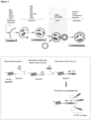
- Macroautophagy involves the degradation of long-lived proteins and whole cellular organelles through a multistep process ( Figure 1 ) .
- Macroautophagy begins with the formation of a double-layered isolation membrane (phagophore) around the molecules and/or organelles to be degraded.
- the phagophore engulfs cytosolic components and seals around the content, forming an autophagosome.
- the autophagosome fuses with a lysosome, evolving into an autophagolysosome (or autolysosome), wherein lysosomal hydrolases digest the cargo.
- Microautophagy involves the direct sequestration of cytosolic components through invaginations or armlike projections of the lysosomal membrane. Microautophagy may serve for the turnover of long-lived proteins; however, the significance and regulation of this type of autophagy remain poorly understood.
- chaperone-mediated autophagy is a highly selective process devoted to the degradation of soluble cyto
- the microtubule-associated protein 1A/1B-light chain 3 (LC3), a mammalian homolog of the yeast Atg8, is a soluble protein with a molecular mass of approximately 17 kDa which is distributed ubiquitously in mammalian tissues and cultured cells. It is processed immediately after its synthesis by Atg4B, a cysteine protease, that exposes the C-terminal glycine residue (LC3-I). During autophagy, autophagosomes engulf cytoplasmic components, including cytosolic proteins and organelles.
- LC3-I cysteine protease
- LC3-I cytosolic form of LC3
- PE phosphatidylethanolamine
- LC3-II LC3-PE conjugate
- p62 also known as sequestosome-1, was identified as a novel partner of the atypical protein kinase Cs (aPKCs) and is a ubiquitiously expressed cellular protein.
- aPKCs atypical protein kinase Cs
- p62 is known to have domains that interact with and bind to ubiquitinated proteins, and it has been identified as a component of inclusion bodies observed in human diseases, especially neurodegenerative diseases (e.g., Alzheimer's disease, Parkinson's disease, amyotrophic lateral sclerosis) as well as in liver diseases.
- p62 also has been identified as an LC3 interacting protein and it has been demonstrated that an 11 amino acid sequence in the mouse p62 serves to recognize the LC3 protein.
- LC3 binds to p62 and transports it (and any ubiquitinated proteins or cell components bound to it) into the autophagosome, where it is degraded. Consequently, one of the hallmarks of autophagy is an increase in the ratio of LC3-II/LC3-I with a concomitant decrease in the level of cellular p62.
- macroautophagy is the best characterized in mammalian cells. Starvation is the strongest stimulus of macroautophagy. During nutrient deprivation, macroautophagy breaks down cellular components, generating amino acids, fatty acids, and carbohydrates, which can be harnessed for energy production and for the synthesis of essential cellular molecules. Macroautophagy is also involved in specific cytosolic rearrangements during embryogenesis and postnatal development. Furthermore, macroautophagy is induced during viral or bacterial infections, in hypoxia, and under various stress conditions, including radiation exposure and increased reactive oxygen species (ROS) generation. In these circumstances, macroautophagy is essential for the maintenance of cell homeostasis by its promotion of the removal of damaged components.
- ROS reactive oxygen species
- Atg proteins More than 35 Atg (AuTophaGy-related) proteins have been identified in yeasts and mammals; however, the precise role each Atg protein plays during autophagy is not yet fully established.
- the process of macroautophagy can be divided into discrete steps, namely, induction and nucleation, expansion, fusion, and degradation.
- the induction phase is mediated by the ULK1-Atg13-FIP200 kinase complex.
- the regulation of the nucleation stage which consists of the recruitment of Atg proteins to the phagophore assembly site, is not yet completely understood.
- Vps34 vacuolar protein sorting-34
- PI3K phosphatidylinositol-3-kinase
- Vps34 associates with Beclin1, the mammalian homologue of yeast Atg6, and subsequently recruits Atg14 and Vps15 (p150) to the preautophagosomal structure.
- the elongation and expansion of the phagophore membrane require two ubiquitin-like conjugation systems involving Atg12 (conjugated to Atg5) and Atg8/microtubule-associated protein 1 light chain-3 (LC3, conjugated to phosphatidyl ethanolamine), along with other Atg proteins such as Atg9 and Atg16.
- the fusion of the autophagosome with a lysosome relies on canonical cellular fusion machinery that consists of the Rab-SNARE (Soluble N-ethylmaleimide-sensitive factor Attachment protein REceptor) system and requires the presence of lysosomal membraneassociated protein-2 (LAMP-2) and the UV radiation resistance-associated gene (UVRAG). Finally, the digestion of the cargo is accomplished by lysosomal hydrolases, followed by the transportation of degraded components into the cytoplasm by lysosomal efflux transporters such as Atg22.
- Rab-SNARE Soluble N-ethylmaleimide-sensitive factor Attachment protein REceptor
- LAMP-2 lysosomal membraneassociated protein-2
- UVRAG UV radiation resistance-associated gene
- mTOR the mammalian target of rapamycin
- ULK1-Atg13-FIP200 complex required for the induction of macroautophagy.
- Energy deprivation leads to mTOR inactivation and stimulation of AMP-activated protein kinase (AMPK), which both induce macroautophagy.
- AMPK AMP-activated protein kinase
- AMPK functions as an energy-sensing kinase and is activated by increases in the cellular AMP to ATP ratio. Under such circumstances, AMPK promotes autophagy by directly activating ULK1 and by relieving the mTOR-mediated inhibition of macroautophagy.
- Macroautophagy can be selectively directed toward the removal of particular targets, e.g., peroxisomes (pexophagy), endoplasmic reticulum (reticulophagy), intracellular lipids (lipophagy), ribosomes (ribophagy), and intracellular pathogens (xenopathy).
- targets e.g., peroxisomes (pexophagy), endoplasmic reticulum (reticulophagy), intracellular lipids (lipophagy), ribosomes (ribophagy), and intracellular pathogens (xenopathy).
- mitochondria can be selectively targeted for degradation via macroautophagy (mitophagy).
- Mitophagy A Specialized Form of Macro autophagy
- Mitophagy is a highly selective process that can promote the elimination of dysfunctional or unnecessary mitochondria.
- the loss of mitochondrial membrane potential ( ⁇ m) represents a major trigger of mitophagy.
- laser-induced photo damage of selected mitochondria inside living hepatocytes results in the rapid dissipation of ⁇ m , followed by the quick removal of depolarized mitochondria through mitophagy.
- oxidative damage can lead to the formation of asymmetrical daughter mitochondria characterized by different ⁇ m , with autophagy specifically targeting mitochondria with lower ⁇ m .
- mitophagy is essential for mitochondrial turnover in the basal state and during cell differentiation, such as the maturation of reticulocytes into mature red blood cells.
- Parkin and Pink1 are believed to play important roles in the selective degradation of damaged mitochondria, at least under certain circumstances.
- Parkin is a cytosolic E3-ubiquitin ligase that is selectively recruited to dysfunctional mitochondria and assists in their removal by mitophagy. Narenda D (2008) J Cell Biol. 183:795-803 .
- Pink1 is imported into healthy mitochondria through a ⁇ m-dependent process and is degraded by the presenilin-associated rhomboidlike (PARL) protease. Matsuda N et al. (2010) J Cell Biol. 189:211-221 .
- PARL presenilin-associated rhomboidlike
- ⁇ m results in the accumulation of Pink1 on the mitochondrial surface, leading to the recruitment of Parkin, which ubiquitinates outer membrane proteins, including the voltage-dependent anion channel (VDAC).
- VDAC voltage-dependent anion channel
- ubiquitin-tagged mitochondria are targeted directly to autophagic vacuoles through the interaction of ubiquitinated proteins with the autophagosomal marker LC3 (Atg8).
- Parkin can ubiquitinate the inner mitochondrial membrane and apoptosis regulator protein B-cell lymphoma-2 (Bcl-2), thereby de-repressing Beclin1.
- mPTP mitochondrial permeability transition pore
- Opening of the mPTP causes a sudden increase of the inner membrane permeability to solutes with molecular weight up to 1500 Da. This results in mitochondrial depolarization, activation of the mitochondrial ATPase (i.e., ATP synthase operating in reverse), and swelling and rupture of the outer membrane.
- the loss of ⁇ m subsequent to permeability transition targets individual mitochondria for degradation.
- the loss of ⁇ m and the activation of macroautophagy are prevented by cyclosporin A, an inhibitor of the mPTP component cyclophilin D.
- nicotinamide adenine dinucleotide (NAD)-dependent deacetylase sirtuin-3 appears to be critically involved in the control of mPTP by modulation of cyclophilin D.
- the apoptotic proteins Bnip3 (Bcl-2 and adenovirus E1B 19-kDa-interacting protein-3) and Nix (Nip3-like protein X) are thought to trigger selective mitophagy through mitochondrial depolarization. Moreover, Bnip3 may induce mitophagy by competitively disrupting the inhibitory interaction between Bcl-2 and Beclin1. Finally, Nix associates with mitochondrial membranes and directly interacts with LC3 (Atg8).
- AMPK in addition to stimulating mitochondrial removal through autophagy, enhances the activity of sirtuin-1 (SIRT1) and its downstream target PGC-1 ⁇ , resulting in stimulation of mitochondrial biogenesis.
- SIRT1 sirtuin-1
- PGC-1 ⁇ a target of mitochondrial biogenesis
- Lipophagy is a recently recognized alternative pathway of lipid metabolism in which intracellular lipid droplet triglycerides and cholesterol are taken up by autophagosomes and delivered to lysosomes for degradation by acidic hydrolases, thereby releasing free fatty acids. Lipophagy, therefore, functions to regulate intracellular lipid stores, cellular levels of free lipids, such as fatty acids, and energy homeostasis.
- Xenophagy is a recently recognized mechanism of defense against various types of intracellular pathogens, including Mycobacterium tuberculosis, Salmonella typhimurium, Legionella pneumophila, Brucella species, Chlamydia species, Coxiella burnetti, Listeria monocytogenes, Shigella flexneri, Rickettsia species, Mycobacterium marinum, Burkholderia species, and Francisella tularensis.
- Mycobacterium tuberculosis Salmonella typhimurium, Legionella pneumophila, Brucella species, Chlamydia species, Coxiella burnetti, Listeria monocytogenes, Shigella flexneri, Rickettsia species, Mycobacterium marinum, Burkholderia species, and Francisella tularensis.
- Microautophagy involves lysosomes directly engulfing cytoplasm by invagination, protrusion, or septation of the lysosomal limiting membrane.
- Chaperone-mediated autophagy concerns only those proteins that have a consensus peptide sequence that can be recognized by the binding of a hsc70-containing chaperone/co-chaperone complex.
- the CMA substrate/chaperone complex then moves to the lysosomes, where the CMA receptor lysosome-associated membrane protein type-2a (LAMP-2A) recognizes it.
- LAMP-2A CMA receptor lysosome-associated membrane protein type-2a
- CMA substrates are translocated across the lysosomal membrane on a one-by-one basis, whereas in macroautophagy and microautophagy the substrates are engulfed or sequestered in bulk. Moreover, CMA degrades only certain proteins and not organelles.
- Compounds, compositions, and methods of the invention can be used to treat and prevent any of the following therapeutic indications for increased autophagy.
- Nutrient deprivation, growth factor depletion, and hypoxia can induce metabolic stress leading to the induction of autophagy and to the generation of free amino acids and fatty acids. These can be recycled in a cell-autonomous fashion and be used for 1) de novo synthesis of proteins important in the stress response, and 2) fueling the TCA cycle to maintain ATP function. The importance of this process is demonstrated in the inability of mice and C. elegans with deficiencies in the ATG proteins important for autophagy to resist starvation. Thus, a critical role for autophagy is the mobilization of intracellular energy resources to meet cellular and organismal demand for metabolic substrates.
- Cardiomyocyte function and survival rely critically on the presence of basal levels of cardiomyocyte autophagy.
- Autophagic recycling of damaged cellular components in nutrient-rich conditions constitutes a major means of protein and organelle quality control, ridding the cell of defective (e.g., misfolded or oxidized) proteins and dysfunctional organelles. This fact is highlighted by the observation that abrogation of autophagic pathways in adult heart by conditional inactivation of either the Atg5 or Atg7 genes triggers rapid-onset cardiac hypertrophy, left ventricular dilation, and diminished cardiac output.
- Danon disease a condition marked by severe and progressive myopathy, stems from defective fusion of autophagosomes with lysosomes.
- Atg5 disruption provokes in utero defects and embryonic lethality.
- age-related declines in the efficiency of autophagic clearance likely contribute to progressive accumulation of defective proteins and organelles which ultimately lead to functional deterioration over time.
- Normal aging is associated with loss of cardiac function mainly due to impaired relaxation during diastole.
- Varying formulations of caloric restriction (CR) can prolong lifespan and improve LV diastolic function; the underlying mechanisms are believed to be the induction of autophagy.
- Skeletal muscle adapts its capacity to levels of load and utilization.
- a central aspect of this adaption is the regulation of fiber remodeling through degeneration or regeneration of muscle fibers.
- the autophagy process and in particular mitophagy are important in clearing damaged mitochondria and reducing the effects of increased oxidative stress on muscle functional capacity. Failure of the autophagy process has been shown to be an important contributing factor to muscle disuse atrophy, by failing to remove damaged mitochondria. This decrease in mitochondria turnover leads to an accumulation of dysfunctional organs and ensuing muscle damage.
- Skeletal muscle atrophy and impaired muscle strength represent an important health issue and may occur as a consequence of immobilization, disuse, injury, starvation, and aging.
- advanced age is ineluctably accompanied by the loss of muscle mass and strength.
- This condition known as sarcopenia of aging, has significant effects on individual health and impacts the severity of frailty.
- poor muscular strength is highly predictive of disability and mortality, and general weakness often results in the loss of independent living, thereby affecting individual quality of life and imposing a high burden on healthcare expenditure. Aside from aging, skeletal muscle can undergo significant atrophy following disuse.
- Sarcopenia is characterized by a gradual loss of muscle proteins.
- the size of stable post-mitotic tissues, such as skeletal and cardiac muscles, is regulated by protein turnover, and skeletal muscle is influenced by a balance between protein synthesis and degradation and the turnover of contractile proteins.
- a key factor influencing the development of sarcopenia is the imbalance between the rates of protein synthesis and degradation.
- Protein degradation in skeletal muscle cells is essentially mediated by the activity of two highly conserved pathways: the autophagic lysosomal pathway and the ubiquitin-proteasome pathway.
- Autophagy which is activated when skeletal muscle is under nutritional stress (such as metabolic stress), plays a role in the catabolic condition and in the degradation of macromolecules and organelles. Catabolic pathways are accelerated during exercise to supply energy and substrates to the muscle for continuation of contractions. It has been well established that the rates of amino acid (relatively small) and glucose oxidation are increased during endurance exercise, and increased energy consumption is likely required to induce autophagy. It has been shown that autophagy is required for myofiber maintenance and for the clearance of damaged proteins and altered organelles.
- Muscular dystrophies are a group of genetic, hereditary muscle diseases characterized by defects in muscle proteins. These defects result in progressive skeletal muscle damage accompanied by myofiber necrosis and chronic local inflammation, leading to substitution of myofibers by connective and adipose tissue. In Duchenne muscular dystrophy (DMD), the most severe form of these diseases, the continuous and progressive skeletal muscle damage leads to complete paralysis and death of patients, usually by respiratory and/or cardiac failure.
- DMD Duchenne muscular dystrophy
- the therapeutic protocols currently in use provide some delay in the progression of the disease, but they are associated with severe side effects.
- Therapies that substitute corticosteroids or at least may act as corticosteroid-sparing drugs are thus being actively pursued, and biological mechanisms relevant to skeletal muscle homoeostasis are explored, in order to identify new targets.
- Autophagy is emerging as an important process that limits muscle damage. Inhibition/alteration of autophagy contributes to myofiber degeneration leading to accumulation of abnormal organelles. Mutations that inactivate Jumpy, a phosphatase that counteracts the activation of VPS34 for autophagosome formation and reduces autophagy, are associated with a centronuclear myopathy. This observation suggests that unbalanced autophagy is pathogenic in muscle degeneration. Likewise, hyperactivation of Akt as a consequence of muscle-specific deletion of the mammalian target of rapamycin (mTOR) leads to inhibition of autophagy and to a muscle phenotype resembling the one observed in muscular dystrophy. The validity of autophagy modulation as a therapeutic strategy has been shown in a mouse model of Ulrich myopathy characterized by defective autophagy and accumulation of dysfunctional organelles. Forced reactivation of autophagy in these animals yielded a beneficial therapeutic response.
- mTOR mammalian target of rapamycin
- a low protein diet has been shown in mice to lead to a prolonged induction of autophagy.
- an induction of autophagy leads to an improvement and management in the disease progression.
- Significant improvements in muscle function have been observed with an improvement of whole body tension, reduced muscle fibrosis, decreased collagen disposition, reduced accumulation of damaged organelles and reduced apoptosis of muscle fibers.
- liver diseases such as cancer and cirrhosis
- the liver can undergo tissue hypoxia. This process has been shown to induce an autophagy process, which if inhibited resulted in increased apoptosis of liver cells.
- ⁇ 1-antitrypsin deficiency the most common genetic cause of human liver disease, there is significant chronic inflammation and eventual carcinogenesis.
- a point mutation occurs in ⁇ 1-antitrypsin Z (ATZ) leading to improperly folding and accumulation of aggregates.
- ATG5 in hepatic cell lines lead to an accumulation of the mutant ATZ protein, demonstrating the important role for autophagy in reducing the impact of liver disease.
- Ischemic preconditioning is the only promising strategy for improving the outcome of liver surgery, but its beneficial effects are limited to young patients. To date, no therapeutic strategy can suppress the age-dependent ischemia and reperfusion injury.
- the intestinal epithelium interfaces directly with a diverse community of bacteria that includes benign commensals, opportunistic pathogens, and overt pathogens, and consequently is the first line of defense against bacterial invasion of host tissues.
- One means that the epithelial cells employ to defend themselves includes secreting antimicrobial proteins.
- Salmonella tyhpimurium or opportunistically invasive commensal bacteria, such as Enterococcus faecalis which can avoid this first line of defense and enter the epithelial cells.
- Autophagy has been shown to be essential for the recognition and degradation of intracellular pathogens, acting as an innate barrier to infection. In cell culture, autophagy has been shown to limit the replication of certain bacterial species.
- IBD inflammatory bowel disease
- Crohn's disease is a chronic form of IBD that can affect any part of the gastrointestinal system, but is usually found in the colon or terminal ileum. The average onset is at 27 years of age in humans, and is usually present throughout the normal lifespan of the individual. It is characterized by severe colitis, strictures, and perianal fistulas, typically requiring surgery.
- CD chronic inflammatory process characteristic of CD requires the intensive interaction between intestinal epithelial cells and immune competent cells.
- immune response to the intestinal microbiota characterized by an abnormal increase in Th17 cells, which play a major role in autoimmunity, and a down-regulation of Treg cells important for controlling the immune response.
- intestinal epithelial cell autophagy is essential for mammalian intestinal defense against invasive bacteria. Autophagy in the epithelial cells protects against the dissemination of invasive bacteria. Following oral infection with the invasive pathogen Salmonella typhimurium as well as Enterococcus faecalis, mouse epithelial cells activate autophagy as a consequence of exposure to these pathogens. Autophagy was also shown to be critical to limit the extra-intestinal spread of S. typhimurium. This indicates that autophagy is a key epithelial cell-autonomous mechanism of antibacterial defense that protects against dissemination of intestinal bacteria.
- Cardiac muscle is also strongly exposed to ischemic episodes during cardiac infarcts.
- the level of cardiac muscle damage that these ischemic episodes produce is strongly dependent on the ability of the cells to mount an effective autophagy response to clear damaged organelles.
- a defective autophagy response leads to an increase in cardiac muscle damage after ischemic events.
- promotion of autophagy during these acute events could serve to protect cardiac muscle from damage.
- Autophagy Due to the role of autophagy in clearing defective organelles, a defect in this process leads to a buildup of cellular debris and the induction of apoptosis. Autophagy also plays an important role in defending the organism against microbial pathogens by inducing their degradation. Additionally, autophagy plays an important role in the trafficking events that activate innate and adaptive immunity.
- the autophagic removal of apoptotic corpses is critical for preventing danger signals that could lead to an inflammation response.
- an impaired autophagy response where apoptotic clearance is not efficient the resulting induction of inflammation, could overcome tolerance to self-antigens leading to autoimmune diseases such as systemic lupus erythematosus.
- induction of autophagy could serve to decrease inflammatory responses and the development of autoimmune diseases.
- liver is rather unique in its regenerative properties as while hepatocytes are normally in a quiescent state, they retain the ability to quickly enter the cell cycle when there is a loss of liver tissue due to injury or surgical removal.
- the lack of cell turnover makes hepatocytes particularly vulnerable to the effects of impaired autophagy, as cells having long lives accumulate high levels of damaged organelles, protein aggregates, etc. that are normally cleared by autophagy. This leads to cellular injury and potentially to transformation.
- the liver serves as the second largest repository of stored lipids in the body after adipose tissue.
- Hepatocytes are a major cellular storehouse for neutral lipids in the form of triglycerides (TGs) and cholesterol esters contained in specialized organelles termed lipid droplets (LD).
- TGs triglycerides
- LD lipid droplets
- Autophagy mediates the breakdown of intracellular LD stores through the process of lipophagy. This enables the hepatocytes to rapidly mobilize their lipid stores in times of metabolic need.
- the loss of hepatocyte autophagy leads to a marked increase in hepatic TG and cholesterol content, indicating that lipophagy limits lipid accumulation by the liver in vivo.
- lipophagy controls cellular energy homeostasis by providing free fatty acids (FFA) from the breakdown of TGs, which subsequently drives mitochondrial ⁇ -oxidation and cellular ATP generation. It has been shown that the autophagosomal protein LC3, critical for autophagosome membrane formation, associates with LDs.
- FFA free fatty acids
- SERPINA1/ ⁇ 1-anti-trypsin deficiency is the most common genetic cause of human liver disease in children. This disease is caused by homozygosity for the SERPINA1/ ⁇ 1-antitrypsin Z allele SERPINA1-Z, a point mutation, which renders the hepatic secretory glycoprotein SERPINA1 prone to misfolding, polymerization, and aggregation.
- the mutant SERPINA1-Z protein accumulates in hepatocytes and the levels of SERPINA1 found in the blood and body fluids are reduced to 10-15% of those normally observed.
- carbamazepine known to induce autophagy
- Carbamazepine increases autophagic degradation of SERPINA1-Z in cultured cells and when provided orally to the PiZ mouse model of ATD, it reduced the hepatic load of SERPINA1-Z. Additionally, inducing autophagy reduced hepatic fibrosis. Consequently, drugs enhancing autophagy are attractive candidates for improving the liver disease that develops in some patients with ATD.
- Nonalcoholic fatty liver disease is an important component of the metabolic syndrome together with obesity and diabetes.
- NAFLD encompasses a spectrum of hepatic abnormalities that range from simple fatty liver or steatosis, to fatty liver with hepatocellular injury and inflammation, which is known as nonalcoholic steatohepatitis (NASH).
- NAFLD is now the most prevalent liver disease in the USA and accounts for about 75% of all chronic liver diseases.
- mice with a hepatocyte-specific knockout of Atg7 a protein required for autophagy, consuming a high-fat diet led to a marked increase in liver TGs and cholesterol content, showing that autophagy defects can induce hepatic steatosis.
- FFA free fatty acid
- Autophagy is an attractive therapeutic target for the treatment and prevention of both NAFLD and NASH.
- Therapeutic intervention to increase autophagy may reverse not only the hepatic manifestations of NAFLD, including hepatocellular steatosis and injury, but also some of the underlying metabolic abnormalities of the disease via its effects on insulin resistance. Additionally, treatment by increasing autophagy may prevent common end-stage complications of NAFLD, such as hepatocellular carcinoma.
- Alcoholic liver disease is a major cause of chronic liver disease, and like NAFLD, has a wide spectrum of pathogenic features, that range from steatosis to sever acute alcoholic hepatitis, fibrosis, cirrhosis, and hepatocellular carcinoma.
- Autophagy has been shown to play a role in treating ALD.
- induction of autophagy by administration of rapamycin significantly suppresses acute alcohol-induced steatosis.
- a common feature of chronic alcohol abuse is the formation of hepatic protein aggregates known as Mallory-Denk bodies, which are cytosolic inclusion bodies enriched with Krt8/keratin 8 and Krt18 and proteins that include ubiquitin. Rapamycin treatment significantly reduces the number of Mallory-Denk bodies in proteasome inhibitor-treated KRT8 transgenic mice.
- N-acetyl-p-aminophenol is a widely used antipyretic and analgesic drug and is also the most common source of severe drug-induced hepatotoxicity.
- APAP N-acetyl-p-benzoquinone imine
- NAPQI can deplete hepatic stores of glutathione (GSH), an intracellular antioxidant. Following the depletion of GSH, NAPQI is known to react with cellular proteins as well as mitochondrial proteins to form protein adducts. These APAP-induced mitochondrial protein adducts can then lead to mitochondrial damage and subsequent necrosis.
- GSH glutathione
- Ischemia/reperfusion (I/R) injury is a causal factor contributing to morbidity and mortality.
- the vulnerability of the liver to I/R injury is a major obstacle to liver resection and transplantation surgery where reperfusion after sustained ischemia is unavoidable during hepatectomy and vascular reconstruction.
- Mitochondrial dysfunction is known to be one of the critical downstream events that lead to I/R-mediated cell death.
- Mitophagy is essential for hepatic function and survival following I/R injury.
- I/R injury plays an important role in the outcome of transplanted young livers
- aged livers are even more susceptible to negative impact of I/R injury.
- hepatocytes fail to respond to the I/R stress and upregulate their endogenous protective autophagy response.
- aged livers after short-term ischemia accumulate dysfunctional mitochondria, undergo mitochondrial permeability transition, and lose their viability soon after reperfusion.
- Methods of enhancing autophagy including pre-ischemia nutrient depletion and over expression of pro-autophagy genes ATG7 or BECN1, lead to the suppression of the mitochondrial permeability transition and increases hepatocyte survival following reperfusion.
- Treatments may involve: (i) pre-treatments of the liver tissue ex vivo by perfusion of the liver with a solution that contains an inducer of autophagy; (ii) treatment of the liver donor with an autophagy inducer; or (iii) treatment of the liver recipient prior to, during the operation and/or immediately after the surgical intervention.
- these treatment modalities may be applied individually or in any combination (for example: 1 and 2; 2 and 3; 1 and 3; 1, 2, and 3).
- Osteoarthritis is the most common aging-related joint pathology and is characterized by degradation of cartilage extracellular matrix (ECM) and reduced cartilage cellularity. Changes in the articular cartilage appear to be critical in OA initiation and progression. Chondrocytes are the only cell population of adult articular cartilage. The capacity of the adult articular chondrocytes to regenerate the normal cartilage matrix architecture is limited and declines with aging, due to cell death and abnormal responsiveness to anabolic stimuli. Articular cartilage is characterized by a very low rate of cell turnover and it has been shown that autophagy play an important role in chondrocyte cellular function and survival.
- autophagy is a constitutively active and protective process for the maintenance of cartilage homeostasis.
- Studies have shown both in joint aging and OA in humans and in mice that there is a reduction in the expression of autophagy regulators, which was accompanied by an increase in chondrocyte apoptosis.
- Compromised autophagy is thought to contribute to the development of OA. It has been shown that treatment with the compound rapamycin, a known inducer of autophagy, has been able to increase activation of LC3 in cartilage in an animal model of OA and consequently reduce the severity of articular cartilage degradation.
- metabolic syndrome refers to a combination of medical disorders that, when occurring together, increase the risk of developing cardiovascular disease and diabetes. It affects one in five people in the United States and prevalence increases with age. Some studies have shown the prevalence in the United States to be an estimated 25% of the population. In accordance with the International Diabetes Foundation consensus worldwide definition (2006), metabolic syndrome is central obesity plus any two of the following:
- brain tissue accumulates autophagosomes, demonstrating an increase in autophagy, which in model organisms has been shown to have a protective effect. It plays an important role in clearing the misfolded proteins that accumulate as a result of several neurodegenerative diseases. These include proteins that have polyQ repeats as seen as in Huntington's diseases and spinocerebellar ataxia, mutant ⁇ -synucleins involved in Parkinson's as well as tau aggregates.
- a cognitive disorder refers to any condition that impairs cognitive function.
- "cognitive disorder” refers to any one or more of delirium, dementia, learning disorder, attention deficit disorder (ADD), and attention deficit hyperactivity disorder (ADHD).
- the cognitive disorder is a learning disorder.
- the cognitive disorder is attention deficit disorder (ADD).
- the cognitive disorder is attention deficit hyperactivity disorder (ADHD).
- cognitive function refers to any mental process that involves symbolic operations, e.g., perception, memory, attention, speech comprehension, speech generation, reading comprehension, creation of imagery, learning, and reasoning. In one embodiment, “cognitive function” refers to any one or more of perception, memory, attention, and reasoning. In one embodiment, “cognitive function” refers to memory.
- Methods for measuring cognitive function are well known and can include, for example, individual or battery tests for any aspect of cognitive function.
- One such test is the Prudhoe Cognitive Function Test. Margallo-Lana et al. (2003) J Intellect Disability Res. 47:488-492 .
- Another such test is the Mini Mental State Exam (MMSE), which is designed to assess orientation to time and place, registration, attention and calculation, recall, language use and comprehension, repetition, and complex commands. Folstein et al. (1975) J Psych Res. 12:189-198 .
- Other tests useful for measuring cognitive function include the Alzheimer Disease Assessment Scale-Cognitive (ADAS-Cog) ( Rosen et al. (1984) Am J Psychiatry.
- ADAS-Cog Alzheimer Disease Assessment Scale-Cognitive
- Such tests can be used to assess cognitive function in an objective manner, so that changes in cognitive function, for example in response to treatment in accordance with methods of the invention, can be measured and compared.
- amyloid-related diseases fall into two main categories: (a) those which affect the brain and other parts of the central nervous system; and (b) those which affect other organs or tissues around the body.
- amyloid-related diseases which fall under these two categories are listed in the following two sections; however, many other examples of rare, hereditary amyloid-related diseases are known which are not included here, and additional forms of amyloid-related disease are likely to be discovered in future.
- neurodegenerative diseases are associated with the misfolding and aggregation of a specific protein or peptide in a particular part of the brain, or elsewhere in the central nervous system, depending on the specific disease. Examples of such diseases follow.
- AD Alzheimer's disease
- HSHWA hereditary cerebral hemorrhage with amyloidosis
- HSHWA hereditary cerebral hemorrhage with amyloidosis
- cerebral amyloid angiopathy and possibly also mild cognitive impairment and other forms of dementia
- AD Alzheimer's disease
- HSHWA hereditary cerebral hemorrhage with amyloidosis
- cerebral amyloid angiopathy and possibly also mild cognitive impairment and other forms of dementia
- ⁇ -amyloid A ⁇ (1-40) or A ⁇ (1-42)
- Alzheimer's disease is also associated with the formation of neurofibrillary tangles by aggregation of a hyperphosphorylated protein called tau, which also occurs in frontotemporal dementia (Pick's disease).
- Parkinson's disease dementia with Lewy bodies (DLB), and multiple system atrophy (MSA) are associated with the aggregation of a protein called ⁇ -synuclein, which results in the formation of insoluble inclusions called Lewy bodies.
- Huntington's disease (HD), spinal and bulbar muscular atrophy (SBMA, also known as Kennedy's disease), dentatorubral pallidoluysian atrophy (DRPLA), different forms of spinocerebellar ataxia (SCA, types 1, 2, 3, 6 and 7), and possibly several other inheritable neurodegenerative diseases are associated with the aggregation of various proteins and peptides that contain abnormally expanded glutamine repeats (extended tracts of polyglutamine).
- Creutzfeldt-Jakob disease CJD
- bovine spongiform encephalopathy BSE
- GSS Gerstmann-Straussler-Scheinker disease
- GSS Gerstmann-Straussler-Scheinker disease
- ALS Amyotrophic lateral sclerosis
- MND motor neuron disease
- Familial British dementia (FBD) and familial Danish dementia (FDD), respectively, are associated with aggregation of the ABri and ADan peptide sequences derived from the BRI protein.
- HCVWA Hereditary cerebral hemorrhage with amyloidosis
- systemic ageing-related or degenerative diseases are associated with the misfolding and aggregation of a particular protein or peptide in various other tissues around the body (i.e., outside of the brain). Examples of such diseases follow.
- Type II diabetes mellitus also known as adult-onset diabetes, or non-insulin dependent diabetes mellitus
- IAPP islet amyloid polypeptide
- Dialysis-related amyloidosis (DRA) and prostatic amyloid are associated with the aggregation of a protein called ⁇ 2 -microglobulin, either in bones, joints and tendons in DRA, which develops during prolonged periods of hemodialysis, or within the prostate in the case of prostatic amyloid.
- DRA Dialysis-related amyloidosis
- prostatic amyloid are associated with the aggregation of a protein called ⁇ 2 -microglobulin, either in bones, joints and tendons in DRA, which develops during prolonged periods of hemodialysis, or within the prostate in the case of prostatic amyloid.
- Primary systemic amyloidosis, systemic AL amyloidosis and myeloma-associated amyloidosis are associated with the aggregation of immunoglobulin light chain (or in some cases immunoglobulin heavy chain) into insoluble amyloid deposits, which gradually accumulate in various major organs such as the liver, kidneys, heart and gastrointestinal (GI) tract.
- immunoglobulin light chain or in some cases immunoglobulin heavy chain
- GI gastrointestinal
- Reactive systemic AA amyloidosis Reactive systemic AA amyloidosis, secondary systemic amyloidosis, familial Mediterranean fever, and chronic inflammatory disease are associated with the aggregation of serum amyloid A protein, which forms insoluble amyloid deposits that accumulate in major organs such as the liver, kidneys and splee.
- Senile systemic amyloidosis (SSA), familial amyloid polyneuropathy (FAP) and familial amyloid cardiomyopathy (FAC) are associated with the misfolding and aggregation of different mutants of transthyretin protein (TTR), which form insoluble inclusions in various organs and tissues such as the heart (especially in FAC), peripheral nerves (especially in FAP) and gastrointestinal (GI) tract.
- Familial visceral amyloidosis and hereditary non-neuropathic systemic amyloidosis are associated with misfolding and aggregation of various mutants of lysozyme, which form insoluble deposits in major organs such as the liver, kidneys and spleen.
- Finnish hereditary systemic amyloidosis is associated with aggregation of a protein called gelsolin in the eyes (particularly in the cornea).
- Fibrinogen ⁇ -chain amyloidosis is associated with aggregation of the fibrinogen A ⁇ - chain, which forms insoluble amyloid deposits in various organs, such as the liver and kidneys.
- Insulin-related amyloidosis occurs by the aggregation of insulin at the site of injection in diabetics.
- Medullary carcinoma of the thyroid is associated with the aggregation of calcitonin in surrounding tissues.
- Isolated atrial amyloidosis is associated with the aggregation of atrial natriuretic peptide (ANP) in the heart.
- SIPS stress-induced premature senencense
- Endothelial cell dysfunction also occurs as a result of aging with an increased incidence of cardiovascular diseases. This increase in cell dysfunction correlates with a decrease in autophagy.
- expression of autophagy markers in arterial endothelial cells was impaired by 50% (P ⁇ 0.05) and was associated with a 30% (P ⁇ 0.05) reduction in arterial endothelium-dependent dilatation (EDD).
- EDD arterial endothelium-dependent dilatation
- C57BL/6 control mice aging was associated with a 40% decrease (P ⁇ 0.05) in arterial markers of autophagy and a 25% reduction (P ⁇ 0.05) in EDD, demonstrating that impaired autophagy is a cause of age-related arterial dysfunction.
- the present invention provides the knowhow to use compounds that include urolithins and their precursors as enhancers of autophagy for the treatment of individuals having health conditions linked to endothelial cell dysfunction and in need thereof.
- Endothelial cell injury can occur as a result of disease processes such as sickle cell anemia or thalassemia in which pathologically high levels of heme and iron release can occur. Severe skeletal muscle damage, as well as cardiac ischemia injury results in the release of the heme protein, myoglobin, which also results in endothelial cell injury. This damage to the vascular endothelial cells can lead to vascular dysfunction and an increase in cardiovascular complications. Endothelial cell injury caused by heme toxicity is associated with a progressive decrease in endothelial cell mitochondrial membrane potential, leading to apoptosis.
- Endothelial dysfunction contributes to the development and progression of the complications.
- Abnormal functions in endothelial cells lead to the increase in vascular tension and atherosclerosis, followed by systemic hypertension as well as increased incidence of ischemia and stroke in diabetic patients.
- Mitochondrial dysfunction appears to be central to the vascular endothelial dysfunction.
- Enhanced mitochondrial fission and/or attenuated fusion leads to mitochondrial fragmentation and disruption of the endothelial physiological function.
- Abnormal mitochondrial biogenesis and disturbance of mitochondrial autophagy increase the accumulation of damaged mitochondria, such as irreversibly depolarized or leaky mitochondria, and facilitate cell death.
- Augmented mitochondrial ROS production and Ca 2+ overload in mitochondria not only cause the maladaptive effect on the endothelial function, but also are potentially detrimental to cell survival.
- Endothelial cell injury can also result from cardiac procedures such as angioplasty, bypass surgery, and valve replacement. Upregulation of autophagy should lead to a reduction in the injury to the associated endothelial cells.
- Autophagy and cancer have similar regulatory pathways, with several tumor suppression genes such as PTEN, TSC1 and TSC2 leading to the upstream inhibition of TOR signaling, leading to the stimulation of autophagy. Additionally, the autophagy protein, Beclin1 has been identified as a tumor suppressor deleted in many human cancers. These results demonstrate that autophagy plays an important role in tumor suppression.
- mtDNA mitochondrial DNA
- ROS reactive oxygen species
- Inherited mutations in mtDNA are known to cause a variety of diseases, most of which affect the brain and muscles -- tissues with high energy requirements. It has been hypothesized that somatic mtDNA mutations acquired during aging contribute to the physiological decline that occurs with aging and aging-related neurodegeneration. It is well established that mtDNA accumulates mutations with aging, especially large-scale deletions and point mutations. In the mtDNA control region, point mutations at specific sites can accumulate to high levels in certain tissues: T414G in cultured fibroblasts, A189G and T408A in muscle, and C150T in white blood cells. However, these control-region "hot spots" have not been observed in the brain.
- Point mutations at individual nucleotides seem to occur at low levels in the brain, although the overall level may be high.
- PCR polymerase chain reaction
- Noncoding regions which may be under less selection pressure, potentially accumulate between twice and four times as many.
- the accumulation of these deletions and point mutations with aging correlates with decline in mitochondrial function. For example, a negative correlation has been found between brain cytochrome oxidase activity and increased point-mutation levels in a cytochrome oxidase gene (CO1).
- Activity in animals is driven largely by circadian rhythm and is synchronized to the environment. Disruption of the circadian rhythm or a desynchronization with the environment can lead to increase in nighttime wakefulness or daytime naps.
- Age-dependent changes in activity rhythms are also observed in other animals, for example, rats, hamsters, mice and dogs, with an increase in fragmentation and a decrease in synchronization with the environment. These age-dependent circadian disruptions have been linked to the degeneration of the suprachiasmatic nucleus of the hypothalamus. Sleep disruption in both humans and rodents have been shown to contribute to age-dependent cognitive dysfunction.
- Table 1 summarizes some of the types of cells affected by autophagy and the beneficial effects of autophagy in those cells.
- Table 1 summarizes some of the types of cells affected by autophagy and the beneficial effects of autophagy in those cells.
- Table 1. Health Benefits of Increased Autophagy Cell Type Condition Improved by Autophagy All cells • Maintenance of the amino acid pool during starvation • Anti-aging • Tumor suppression • Clearance of intracellular microbes • Clearance of protein aggregates Neurons • Prevention of neurodegeneration • Alleviation of symptoms related to neurodegeneration • Clearance of protein aggregates Acinar cells of the pancreas • Improved outcome in acute pancreatitis Smooth muscle cells • Improved outcome in various heart conditions such as heart disease, cardiac hypertrophy, left ventricular dilation, Danon disease • Amelioration of cardiomyopathy resulting from diabetes • Preventing cardiac deterioration with age • Improvement outcome from ischemia/reperfusion injury • Protection of cells from ischemia and hypoxic conditions resulting from myocardial function • Improved
- UV light, anti-aging Reduction of skin injury from excessive lipid oxidation commonly observed in aged and diseased skin Lung cells • Clearance of protein aggregates in pulmonary cells • Improved outcome from pulmonary emphysema cause by al-antrypsin • Chronic obstructive pulmonary disorder Alveolar macrophages • Improved outcome for chronic obstructive pulmonary disease Airway epithelial cells • Reduction in protein aggregates in cystic fibrosis • Improved clearance of aggresomes that accumulate mutant cystic fibrosis transmembrane conductance regulator (CFTR) protein • Improved outcome for human idiopathic pulmonary fibrosis Immune cells • Reduction of auto-immune disorders • Improved immune response to infection from pathogens
- Compounds of the invention for use, include certain urolithins. These compounds can be used to practice any of the methods herein, including but not limited to increasing autophagy, and for the treatment or prevention of the various diseases and conditions described herein.
- the invention relates to urolithins.
- a "urolithin” refers to a compound of Formula I: wherein
- alkyl refers to a straight chain or branched, noncyclic or cyclic, unsaturated or saturated aliphatic hydrocarbon radical containing carbon atoms.
- Representative saturated straight chain alkyls include methyl, ethyl, n-propyl, n-butyl, n-pentyl, n-hexyl, and the like; while saturated branched alkyls include isopropyl, sec- butyl, isobutyl, tert-butyl, isopentyl, and the like.
- Representative saturated cyclic alkyls include cyclopropyl, cyclobutyl, cyclopentyl, cyclohexyl, and the like; while unsaturated cyclic alkyls include cyclopentenyl and cyclohexenyl, and the like.
- Unsaturated alkyls contain at least one double or triple bond between adjacent carbon atoms (referred to as an "alkenyl” or “alkynyl”, respectively).
- Representative straight chain and branched alkenyls include ethylenyl, propylenyl, 1-butenyl, 2-butenyl, isobutylenyl, 1-pentenyl, 2-pentenyl, 3-methyl-1-butenyl, 2-methyl-2-butenyl, 2,3-dimethyl-2-butenyl, and the like; while representative straight chain and branched alkynyls include acetylenyl, propynyl, 1-butynyl, 2- butynyl, 1-pentynyl, 2-pentynyl, 3-methyl-1-butynyl, and the like.
- aryl refers to a hydrocarbon ring system radical comprising hydrogen, 6 to 18 carbon atoms and at least one aromatic ring.
- the aryl radical may be a monocyclic, bicyclic, tricyclic or tetracyclic ring system, which may include fused or bridged ring systems.
- Aryl radicals include, but are not limited to, aryl radicals derived from aceanthrylene, acenaphthylene, acephenanthrylene, anthracene, azulene, benzene, chrysene, fluoranthene, fluorene, as-indacene, s-indacene, indane, indene, naphthalene, phenalene, phenanthrene, pleiadene, pyrene, and triphenylene.
- the term "monosaccharide” refers to a simple sugar of the formula (CH 2 O) n .
- monosaccharides include erythrose, threose, ribose, arabinose, xylose, lyxose, allose, altrose, glucose, mannose, gulose, idose, galactose, talose, erythulose, ribulose, xyulose, psicose, fructose, sorbose, tagatose, erythropentulose, threopentulose, glycerotetrulose, glucopyranose, fructofuranose.
- monosaccharide refers to glucopyranose.
- oligosaccharide refers to saccharide consisting of at least two, up to 10 glycosidically linked monosaccharide units, preferably of 2 to 8 monosaccharide units, more preferably of 2 to 7 monosaccharide units, and even more preferably of 2 to 6 monosaccharide units or of 2 to 5 monosaccharide units.
- substituted as used herein (for example, in the context of a substituted heterocyclyl or substituted aryl) means that at least one hydrogen atom is replaced with a substituent.
- R a and R b in this context may be the same or different and independently hydrogen, alkyl, haloalkyl, cycloalkyl, aryl, aralkyl, heterocyclyl.
- the foregoing substituents may be further substituted with one or more of the above substituents.
- the urolithin is urolithin A.
- the urolithin is urolithin B.
- the urolithin is urolithin C.
- the urolithin is urolithin D.
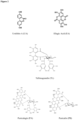
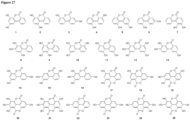
- a "urolithin” refers to any one or combination of urolithin A, urolithin B, urolithin C, and urolithin D (see, for example, Figure 2 and Figure 3 ).
- a urolithin is urolithin A, urolithin B, urolithin C, urolithin D, or any combination of urolithin A, urolithin B, urolithin C, and urolithin D.
- a urolithin is urolithin A, urolithin B, urolithin C, or any combination of urolithin A, urolithin B, and urolithin C.
- a urolithin is urolithin A, urolithin B, or a combination of urolithin A and urolithin B.
- a urolithin is urolithin A.
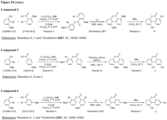
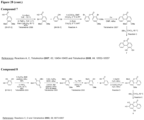
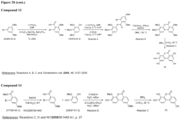
- a urolithin is provided as an isolated urolithin, e.g., isolated from a natural source or prepared by total synthesis. Isolated urolithins may be synthesized de novo. See Examples 1-4.
- a urolithin is provided as a purified urolithin.
- a "urolithin” as used herein is or can include a glucuronated, methylated, or sulfated urolithin.
- the invention relates to a compound of Formula II wherein
- the invention relates to any one of the aforementioned compounds, wherein at least two of X 1 , X 2 , X 3 , X 4 , X 5 , X 6 , X 7 , and X 8 are OH.
- the invention relates to any one of the aforementioned compounds, wherein at least three of X 1 , X 2 , X 3 , X 4 , X 5 , X 6 , X 7 , and X 8 are OH.
- the invention relates to any one of the aforementioned compounds, wherein at least four of X 1 , X 2 , X 3 , X 4 , X 5 , X 6 , X 7 , and X 8 are OH.
- the invention relates to any one of the aforementioned compounds, wherein at least five of X 1 , X 2 , X 3 , X 4 , X 5 , X 6 , X 7 , and X 8 are OH.
- the invention relates to any one of the aforementioned compounds, wherein at least six of X 1 , X 2 , X 3 , X 4 , X 5 , X 6 , X 7 , and X 8 are OH.
- the invention relates to any one of the aforementioned compounds, wherein at least seven of X 1 , X 2 , X 3 , X 4 , X 5 , X 6 , X 7 , and X 8 are OH.
- the invention relates to any one of the aforementioned compounds, wherein X 1 , X 2 , X 3 , X 4 , X 5 , X 6 , X 7 , and X 8 are OH.
- the invention relates to any one of the aforementioned compounds, wherein X 1 and X 3 are OH; and X 2 , X 4 , X 5 , X 6 , X 7 , and X 8 are H.
- the invention relates to any one of the aforementioned compounds, wherein X 1 and X 4 are OH; and X 2 , X 3 , X 5 , X 6 , X 7 , and X 8 are H.
- the invention relates to any one of the aforementioned compounds, wherein X 1 and X 6 are OH; and X 2 , X 3 , X 4 , X 5 , X 7 , and X 8 are H.
- the invention relates to any one of the aforementioned compounds, wherein X 2 and X 8 are OH; and X 1 , X 3 , X 4 , X 5 , X 6 , and X 7 are H.
- the invention relates to any one of the aforementioned compounds, wherein X 3 and X 7 are OH; and X 1 , X 2 , X 4 , X 5 , X 6 , and X 8 are H.
- the invention relates to any one of the aforementioned compounds, wherein X 3 and X 8 are OH; and X 1 , X 2 , X 4 , X 5 , X 6 , and X 7 are H.
- the invention relates to any one of the aforementioned compounds, wherein X 4 and X 5 are OH; and X 1 , X 2 , X 3 , X 6 , X 7 , and X 8 are H.
- the invention relates to any one of the aforementioned compounds, wherein X 4 and X 6 are OH; and X 1 , X 2 , X 3 , X 5 , X 7 , and X 8 are H.
- the invention relates to any one of the aforementioned compounds, wherein X 4 and X 7 are OH; and X 1 , X 2 , X 3 , X 5 , X 6 , and X 8 are H.
- the invention relates to any one of the aforementioned compounds, wherein X 4 and X 8 are OH; and X 1 , X 2 , X 3 , X 5 , X 6 , and X 7 are H.
- the invention relates to any one of the aforementioned compounds, wherein X 5 and X 7 are OH; and X 1 , X 2 , X 3 , X 4 , X 6 , and X 8 are H.
- the invention relates to any one of the aforementioned compounds, wherein X 6 and X 8 are OH; and X 1 , X 2 , X 3 , X 4 , X 5 , and X 7 are H.
- the invention relates to any one of the aforementioned compounds, wherein X 7 and X 8 are OH; and X 1 , X 2 , X 3 , X 4 , X 5 , and X 6 are H.
- the invention relates to any one of the aforementioned compounds, wherein X 1 , X 2 , and X 3 are OH; and X 4 , X 5 , X 6 , X 7 , and X 8 are H.
- the invention relates to any one of the aforementioned compounds, wherein X 1 , X 2 , and X 4 are OH; and X 3 , X 5 , X 6 , X 7 , and X 8 are H.
- the invention relates to any one of the aforementioned compounds, wherein X 1 , X 2 , and X 7 are OH; and X 3 , X 4 , X 5 , X 6 , and X 8 are H.
- the invention relates to any one of the aforementioned compounds, wherein X 1 , X 2 , and X 8 are OH; and X 3 , X 4 , X 5 , X 6 , and X 7 are H.
- the invention relates to any one of the aforementioned compounds, wherein X 1 , X 3 , and X 4 are OH; and X 2 , X 5 , X 6 , X 7 , and X 8 are H.
- the invention relates to any one of the aforementioned compounds, wherein X 1 , X 3 , and X 5 are OH; and X 2 , X 4 , X 6 , X 7 , and X 8 are H.
- the invention relates to any one of the aforementioned compounds, wherein X 1 , X 3 , and X 6 are OH; and X 2 , X 4 , X 5 , X 7 , and X 8 are H.
- the invention relates to any one of the aforementioned compounds, wherein X 1 , X 3 , and X 7 are OH; and X 2 , X 4 , X 5 , X 6 , and X 8 are H.
- the invention relates to any one of the aforementioned compounds, wherein X 1 , X 3 , and X 8 are OH; and X 2 , X 4 , X 5 , X 6 , and X 7 are H.
- the invention relates to any one of the aforementioned compounds, wherein X 1 , X 4 , and X 5 are OH; and X 2 , X 3 , X 6 , X 7 , and X 8 are H.
- the invention relates to any one of the aforementioned compounds, wherein X 1 , X 4 , and X 6 are OH; and X 2 , X 3 , X 5 , X 7 , and X 8 are H.
- the invention relates to any one of the aforementioned compounds, wherein X 1 , X 4 , and X 7 are OH; and X 2 , X 3 , X 5 , X 6 , and X 8 are H.
- the invention relates to any one of the aforementioned compounds, wherein X 1 , X 4 , and X 8 are OH; and X 2 , X 3 , X 5 , X 6 , and X 7 are H.
- the invention relates to any one of the aforementioned compounds, wherein X 1 , X 5 , and X 6 are OH; and X 2 , X 3 , X 4 , X 7 , and X 8 are H.
- the invention relates to any one of the aforementioned compounds, wherein X 1 , X 5 , and X 7 are OH; and X 2 , X 3 , X 4 , X 6 , and X 8 are H.
- the invention relates to any one of the aforementioned compounds, wherein X 1 , X 6 , and X 7 are OH; and X 2 , X 3 , X 4 , X 5 , and X 8 are H.
- the invention relates to any one of the aforementioned compounds, wherein X 1 , X 6 , and X 8 are OH; and X 2 , X 3 , X 4 , X 5 , and X 7 are H.
- the invention relates to any one of the aforementioned compounds, wherein X 1 , X 7 , and X 8 are OH; and X 2 , X 3 , X 4 , X 5 , and X 6 are H.
- the invention relates to any one of the aforementioned compounds, wherein X 2 , X 3 , and X 4 are OH; and X 1 , X 5 , X 6 , X 7 , and X 8 are H.
- the invention relates to any one of the aforementioned compounds, wherein X 2 , X 3 , and X 5 are OH; and X 1 , X 4 , X 6 , X 7 , and X 8 are H.
- the invention relates to any one of the aforementioned compounds, wherein X 2 , X 3 , and X 6 are OH; and X 1 , X 4 , X 5 , X 7 , and X 8 are H.
- the invention relates to any one of the aforementioned compounds, wherein X 2 , X 3 , and X 7 are OH; and X 1 , X 4 , X 5 , X 6 , and X 8 are H.
- the invention relates to any one of the aforementioned compounds, wherein X 2 , X 3 , and X 8 are OH; and X 1 , X 4 , X 5 , X 6 , and X 7 are H.
- the invention relates to any one of the aforementioned compounds, wherein X 2 , X 4 , and X 5 are OH; and X 1 , X 3 , X 6 , X 7 , and X 8 are H.
- the invention relates to any one of the aforementioned compounds, wherein X 2 , X 4 , and X 8 are OH; and X 1 , X 3 , X 5 , X 6 , and X 7 are H.
- the invention relates to any one of the aforementioned compounds, wherein X 2 , X 5 , and X 6 are OH; and X 1 , X 3 , X 4 , X 7 , and X 8 are H.
- the invention relates to any one of the aforementioned compounds, wherein X 2 , X 5 , and X 7 are OH; and X 1 , X 3 , X 4 , X 6 , and X 8 are H.
- the invention relates to any one of the aforementioned compounds, wherein X 2 , X 5 , and X 8 are OH; and X 1 , X 3 , X 4 , X 6 , and X 7 are H.
- the invention relates to any one of the aforementioned compounds, wherein X 3 , X 4 , and X 5 are OH; and X 1 , X 2 , X 6 , X 7 , and X 8 are H.
- the invention relates to any one of the aforementioned compounds, wherein X 3 , X 4 , and X 6 are OH; and X 1 , X 2 , X 5 , X 7 , and X 8 are H.
- the invention relates to any one of the aforementioned compounds, wherein X 3 , X 4 , and X 7 are OH; and X 1 , X 2 , X 5 , X 6 , and X 8 are H.
- the invention relates to any one of the aforementioned compounds, wherein X 3 , X 4 , and X 8 are OH; and X 1 , X 2 , X 5 , X 6 , and X 7 are H.
- the invention relates to any one of the aforementioned compounds, wherein X 3 , X 5 , and X 6 are OH; and X 1 , X 2 , X 4 , X 7 , and X 8 are H.
- the invention relates to any one of the aforementioned compounds, wherein X 3 , X 5 , and X 7 are OH; and X 1 , X 2 , X 4 , X 6 , and X 8 are H.
- the invention relates to any one of the aforementioned compounds, wherein X 3 , X 5 , and X 8 are OH; and X 1 , X 2 , X 4 , X 6 , and X 7 are H.
- the invention relates to any one of the aforementioned compounds, wherein X 3 , X 6 , and X 7 are OH; and X 1 , X 2 , X 4 , X 5 , and X 8 are H.
- the invention relates to any one of the aforementioned compounds, wherein X 3 , X 6 , and X 8 are OH; and X 1 , X 2 , X 4 , X 5 , and X 7 are H.
- the invention relates to any one of the aforementioned compounds, wherein X 3 , X 7 , and X 8 are OH; and X 1 , X 2 , X 4 , X 5 , and X 6 are H.
- the invention relates to any one of the aforementioned compounds, wherein X 4 , X 5 , and X 6 are OH; and X 1 , X 2 , X 3 , X 7 , and X 8 are H.
- the invention relates to any one of the aforementioned compounds, wherein X 4 , X 5 , and X 7 are OH; and X 1 , X 2 , X 3 , X 6 , and X 8 are H.
- the invention relates to any one of the aforementioned compounds, wherein X 4 , X 5 , and X 8 are OH; and X 1 , X 2 , X 3 , X 6 , and X 7 are H.
- the invention relates to any one of the aforementioned compounds, wherein X 4 , X 6 , and X 7 are OH; and X 1 , X 2 , X 3 , X 5 , and X 8 are H.
- the invention relates to any one of the aforementioned compounds, wherein X 4 , X 6 , and X 8 are OH; and X 1 , X 2 , X 3 , X 5 , and X 7 are H.
- the invention relates to any one of the aforementioned compounds, wherein X 4 , X 7 , and X 8 are OH; and X 1 , X 2 , X 3 , X 5 , and X 6 are H.
- the invention relates to any one of the aforementioned compounds, wherein X 5 , X 6 , and X 7 are OH; and X 1 , X 2 , X 3 , X 4 , and X 8 are H.
- the invention relates to any one of the aforementioned compounds, wherein X 5 , X 6 , and X 8 are OH; and X 1 , X 2 , X 3 , X 4 , and X 7 are H.
- the invention relates to any one of the aforementioned compounds, wherein X 5 , X 7 , and X 8 are OH; and X 1 , X 2 , X 3 , X 4 , and X 6 are H.
- the invention relates to any one of the aforementioned compounds, wherein X 6 , X 7 , and X 8 are OH; and X 1 , X 2 , X 3 , X 4 , and X 5 are H.
- the invention relates to any one of the aforementioned compounds, wherein X 1 , X 2 , X 3 , and X 4 are OH; and X 5 , X 6 , X 7 , and X 8 are H.
- the invention relates to any one of the aforementioned compounds, wherein X 1 , X 2 , X 3 , and X 5 are OH; and X 4 , X 6 , X 7 , and X 8 are H.
- the invention relates to any one of the aforementioned compounds, wherein X 1 , X 2 , X 3 , and X 6 are OH; and X 4 , X 5 , X 7 , and X 8 are H.
- the invention relates to any one of the aforementioned compounds, wherein X 1 , X 2 , X 3 , and X 7 are OH; and X 4 , X 5 , X 6 , and X 8 are H.
- the invention relates to any one of the aforementioned compounds, wherein X 1 , X 2 , X 3 , and X 8 are OH; and X 4 , X 5 , X 6 , and X 7 are H.
- the invention relates to any one of the aforementioned compounds, wherein X 1 , X 2 , X 4 , and X 5 are OH; and X 3 , X 6 , X 7 , and X 8 are H.
- the invention relates to any one of the aforementioned compounds, wherein X 1 , X 2 , X 4 , and X 6 are OH; and X 3 , X 5 , X 7 , and X 8 are H.
- the invention relates to any one of the aforementioned compounds, wherein X 1 , X 2 , X 4 , and X 7 are OH; and X 3 , X 5 , X 6 , and X 8 are H.
- the invention relates to any one of the aforementioned compounds, wherein X 1 , X 2 , X 4 , and X 8 are OH; and X 3 , X 5 , X 6 , and X 7 are H.
- the invention relates to any one of the aforementioned compounds, wherein X 1 , X 2 , X 5 , and X 8 are OH; and X 3 , X 4 , X 6 , and X 7 are H.
- the invention relates to any one of the aforementioned compounds, wherein X 1 , X 2 , X 6 , and X 8 are OH; and X 3 , X 4 , X 5 , and X 7 are H.
- the invention relates to any one of the aforementioned compounds, wherein X 1 , X 2 , X 7 , and X 8 are OH; and X 3 , X 4 , X 5 , and X 6 are H.
- the invention relates to any one of the aforementioned compounds, wherein X 1 , X 3 , X 4 , and X 5 are OH; and X 2 , X 6 , X 7 , and X 8 are H.
- the invention relates to any one of the aforementioned compounds, wherein X 1 , X 3 , X 4 , and X 6 are OH; and X 2 , X 5 , X 7 , and X 8 are H.
- the invention relates to any one of the aforementioned compounds, wherein X 1 , X 3 , X 4 , and X 7 are OH; and X 2 , X 5 , X 6 , and X 8 are H.
- the invention relates to any one of the aforementioned compounds, wherein X 1 , X 3 , X 4 , and X 8 are OH; and X 2 , X 5 , X 6 , and X 7 are H.
- the invention relates to any one of the aforementioned compounds, wherein X 1 , X 3 , X 5 , and X 6 are OH; and X 2 , X 4 , X 7 , and X 8 are H.
- the invention relates to any one of the aforementioned compounds, wherein X 1 , X 3 , X 5 , and X 7 are OH; and X 2 , X 4 , X 6 , and X 8 are H.
- the invention relates to any one of the aforementioned compounds, wherein X 1 , X 3 , X 5 , and X 8 are OH; and X 2 , X 4 , X 6 , and X 7 are H.
- the invention relates to any one of the aforementioned compounds, wherein X 1 , X 3 , X 6 , and X 7 are OH; and X 2 , X 4 , X 5 , and X 8 are H.
- the invention relates to any one of the aforementioned compounds, wherein X 1 , X 3 , X 6 , and X 8 are OH; and X 2 , X 4 , X 5 , and X 7 are H.
- the invention relates to any one of the aforementioned compounds, wherein X 1 , X 3 , X 7 , and X 8 are OH; and X 2 , X 4 , X 5 , and X 6 are H.
- the invention relates to any one of the aforementioned compounds, wherein X 1 , X 4 , X 5 , and X 6 are OH; and X 2 , X 3 , X 7 , and X 8 are H.
- the invention relates to any one of the aforementioned compounds, wherein X 1 , X 4 , X 5 , and X 7 are OH; and X 2 , X 3 , X 6 , and X 8 are H.
- the invention relates to any one of the aforementioned compounds, wherein X 1 , X 4 , X 5 , and X 8 are OH; and X 2 , X 3 , X 6 , and X 7 are H.
- the invention relates to any one of the aforementioned compounds, wherein X 1 , X 4 , X 6 , and X 7 are OH; and X 2 , X 3 , X 5 , and X 8 are H.
- the invention relates to any one of the aforementioned compounds, wherein X 1 , X 4 , X 6 , and X 8 are OH; and X 2 , X 3 , X 5 , and X 7 are H.
- the invention relates to any one of the aforementioned compounds, wherein X 1 , X 4 , X 7 , and X 8 are OH; and X 2 , X 3 , X 5 , and X 6 are H.
- the invention relates to any one of the aforementioned compounds, wherein X 1 , X 5 , X 6 , and X 7 are OH; and X 2 , X 3 , X 4 , and X 8 are H.
- the invention relates to any one of the aforementioned compounds, wherein X 1 , X 5 , X 6 , and X 8 are OH; and X 2 , X 3 , X 4 , and X 7 are H.
- the invention relates to any one of the aforementioned compounds, wherein X 1 , X 5 , X 7 , and X 8 are OH; and X 2 , X 3 , X 4 , and X 6 are H.
- the invention relates to any one of the aforementioned compounds, wherein X 2 , X 3 , X 4 , and X 5 are OH; and X 1 , X 6 , X 7 , and X 8 are H.
- the invention relates to any one of the aforementioned compounds, wherein X 2 , X 3 , X 4 , and X 6 are OH; and X 1 , X 5 , X 7 , and X 8 are H.
- the invention relates to any one of the aforementioned compounds, wherein X 2 , X 3 , X 4 , and X 7 are OH; and X 1 , X 5 , X 6 , and X 8 are H.
- the invention relates to any one of the aforementioned compounds, wherein X 2 , X 3 , X 4 , and X 8 are OH; and X 1 , X 5 , X 6 , and X 7 are H.
- the invention relates to any one of the aforementioned compounds, wherein X 2 , X 3 , X 5 , and X 6 are OH; and X 1 , X 4 , X 7 , and X 8 are H.
- the invention relates to any one of the aforementioned compounds, wherein X 2 , X 3 , X 5 , and X 7 are OH; and X 1 , X 4 , X 6 , and X 8 are H.
- the invention relates to any one of the aforementioned compounds, wherein X 2 , X 3 , X 5 , and X 8 are OH; and X 1 , X 4 , X 6 , and X 7 are H.
- the invention relates to any one of the aforementioned compounds, wherein X 2 , X 3 , X 6 , and X 8 are OH; and X 1 , X 4 , X 5 , and X 7 are H.
- the invention relates to any one of the aforementioned compounds, wherein X 2 , X 3 , X 7 , and X 8 are OH; and X 1 , X 4 , X 6 , and X 7 are H.
- the invention relates to any one of the aforementioned compounds, wherein X 2 , X 4 , X 5 , and X 6 are OH; and X 1 , X 3 , X 7 , and X 8 are H.
- the invention relates to any one of the aforementioned compounds, wherein X 2 , X 4 , X 5 , and X 7 are OH; and X 1 , X 3 , X 6 , and X 8 are H.
- the invention relates to any one of the aforementioned compounds, wherein X 2 , X 4 , X 6 , and X 8 are OH; and X 1 , X 3 , X 5 , and X 7 are H.
- the invention relates to any one of the aforementioned compounds, wherein X 2 , X 4 , X 7 , and X 8 are OH; and X 1 , X 3 , X 5 , and X 6 are H.
- the invention relates to any one of the aforementioned compounds, wherein X 2 , X 5 , X 6 , and X 7 are OH; and X 1 , X 3 , X 4 , and X 8 are H.
- the invention relates to any one of the aforementioned compounds, wherein X 2 , X 5 , X 6 , and X 8 are OH; and X 1 , X 3 , X 4 , and X 7 are H.
- the invention relates to any one of the aforementioned compounds, wherein X 2 , X 5 , X 7 , and X 8 are OH; and X 1 , X 3 , X 4 , and X 6 are H.
- the invention relates to any one of the aforementioned compounds, wherein X 2 , X 6 , X 7 , and X 8 are OH; and X 1 , X 3 , X 4 , and X 5 are H.
- the invention relates to any one of the aforementioned compounds, wherein X 3 , X 4 , X 5 , and X 6 are OH; and X 1 , X 2 , X 7 , and X 8 are H.
- the invention relates to any one of the aforementioned compounds, wherein X 3 , X 4 , X 5 , and X 7 are OH; and X 1 , X 2 , X 6 , and X 8 are H.
- the invention relates to any one of the aforementioned compounds, wherein X 3 , X 4 , X 5 , and X 8 are OH; and X 1 , X 2 , X 6 , and X 7 are H.
- the invention relates to any one of the aforementioned compounds, wherein X 3 , X 4 , X 6 , and X 7 are OH; and X 1 , X 2 , X 5 , and X 8 are H.
- the invention relates to any one of the aforementioned compounds, wherein X 3 , X 4 , X 6 , and X 8 are OH; and X 1 , X 2 , X 5 , and X 7 are H.
- the invention relates to any one of the aforementioned compounds, wherein X 3 , X 4 , X 7 , and X 8 are OH; and X 1 , X 2 , X 5 , and X 6 are H.
- the invention relates to any one of the aforementioned compounds, wherein X 3 , X 5 , X 6 , and X 7 are OH; and X 1 , X 2 , X 4 , and X 8 are H.
- the invention relates to any one of the aforementioned compounds, wherein X 3 , X 5 , X 6 , and X 8 are OH; and X 1 , X 2 , X 4 , and X 7 are H.
- the invention relates to any one of the aforementioned compounds, wherein X 3 , X 5 , X 7 , and X 8 are OH; and X 1 , X 2 , X 4 , and X 6 are H.
- the invention relates to any one of the aforementioned compounds, wherein X 3 , X 6 , X 7 , and X 8 are OH; and X 1 , X 2 , X 4 , and X 5 are H.
- the invention relates to any one of the aforementioned compounds, wherein X 4 , X 5 , X 6 , and X 7 are OH; and X 1 , X 2 , X 3 , and X 8 are H.
- the invention relates to any one of the aforementioned compounds, wherein X 4 , X 5 , X 6 , and X 8 are OH; and X 1 , X 2 , X 3 , and X 7 are H.
- the invention relates to any one of the aforementioned compounds, wherein X 4 , X 5 , X 7 , and X 8 are OH; and X 1 , X 2 , X 3 , and X 6 are H.
- the invention relates to any one of the aforementioned compounds, wherein X 4 , X 6 , X 7 , and X 8 are OH; and X 1 , X 2 , X 3 , and X 5 are H.
- the invention relates to any one of the aforementioned compounds, wherein X 5 , X 6 , X 7 , and X 8 are OH; and X 1 , X 2 , X 3 , and X 4 are H.
- the invention relates to any one of the aforementioned compounds, wherein X 1 , X 2 , X 3 , X 4 , and X 5 are OH; and X 6 , X 7 , and X 8 are H.
- the invention relates to any one of the aforementioned compounds, wherein X 1 , X 2 , X 3 , X 4 , and X 6 are OH; and X 5 , X 7 , and X 8 are H.
- the invention relates to any one of the aforementioned compounds, wherein X 1 , X 2 , X 3 , X 4 , and X 7 are OH; and X 5 , X 6 , and X 8 are H.
- the invention relates to any one of the aforementioned compounds, wherein X 1 , X 2 , X 3 , X 4 , and X 8 are OH; and X 5 , X 6 , and X 7 are H.
- the invention relates to any one of the aforementioned compounds, wherein X 1 , X 2 , X 3 , X 5 , and X 6 are OH; and X 4 , X 7 , and X 8 are H.
- the invention relates to any one of the aforementioned compounds, wherein X 1 , X 2 , X 3 , X 5 , and X 7 are OH; and X 4 , X 6 , and X 8 are H.
- the invention relates to any one of the aforementioned compounds, wherein X 1 , X 2 , X 3 , X 5 , and X 8 are OH; and X 4 , X 6 , and X 7 are H.
- the invention relates to any one of the aforementioned compounds, wherein X 1 , X 2 , X 3 , X 6 , and X 7 are OH; and X 4 , X 5 , and X 8 are H.
- the invention relates to any one of the aforementioned compounds, wherein X 1 , X 2 , X 3 , X 6 , and X 8 are OH; and X 4 , X 5 , and X 7 are H.
- the invention relates to any one of the aforementioned compounds, wherein X 1 , X 2 , X 3 , X 7 , and X 8 are OH; and X 4 , X 5 , and X 6 are H.
- the invention relates to any one of the aforementioned compounds, wherein X 1 , X 2 , X 4 , X 5 , and X 6 are OH; and X 3 , X 7 , and X 8 are H.
- the invention relates to any one of the aforementioned compounds, wherein X 1 , X 2 , X 4 , X 5 , and X 8 are OH; and X 3 , X 6 , and X 7 are H.
- the invention relates to any one of the aforementioned compounds, wherein X 1 , X 2 , X 4 , X 6 , and X 7 are OH; and X 3 , X 5 , and X 8 are H.
- the invention relates to any one of the aforementioned compounds, wherein X 1 , X 2 , X 4 , X 6 , and X 8 are OH; and X 3 , X 5 , and X 7 are H.
- the invention relates to any one of the aforementioned compounds, wherein X 1 , X 2 , X 4 , X 7 , and X 8 are OH; and X 3 , X 5 , and X 6 are H.
- the invention relates to any one of the aforementioned compounds, wherein X 1 , X 2 , X 5 , X 6 , and X 7 are OH; and X 3 , X 4 , and X 8 are H.
- the invention relates to any one of the aforementioned compounds, wherein X 1 , X 2 , X 5 , X 6 , and X 8 are OH; and X 3 , X 4 , and X 7 are H.
- the invention relates to any one of the aforementioned compounds, wherein X 1 , X 2 , X 5 , X 7 , and X 8 are OH; and X 3 , X 4 , and X 6 are H.
- the invention relates to any one of the aforementioned compounds, wherein X 1 , X 3 , X 4 , X 5 , and X 6 are OH; and X 2 , X 7 , and X 8 are H.
- the invention relates to any one of the aforementioned compounds, wherein X 1 , X 3 , X 4 , X 5 , and X 7 are OH; and X 2 , X 6 , and X 8 are H.
- the invention relates to any one of the aforementioned compounds, wherein X 1 , X 3 , X 4 , X 5 , and X 8 are OH; and X 2 , X 6 , and X 7 are H.
- the invention relates to any one of the aforementioned compounds, wherein X 1 , X 3 , X 4 , X 6 , and X 7 are OH; and X 2 , X 5 , and X 8 are H.
- the invention relates to any one of the aforementioned compounds, wherein X 1 , X 3 , X 4 , X 6 , and X 8 are OH; and X 2 , X 5 , and X 7 are H.
- the invention relates to any one of the aforementioned compounds, wherein X 1 , X 3 , X 4 , X 7 , and X 8 are OH; and X 2 , X 5 , and X 7 are H.
- the invention relates to any one of the aforementioned compounds, wherein X 1 , X 3 , X 5 , X 6 , and X 7 are OH; and X 2 , X 4 , and X 8 are H.
- the invention relates to any one of the aforementioned compounds, wherein X 1 , X 3 , X 5 , X 6 , and X 8 are OH; and X 2 , X 4 , and X 7 are H.
- the invention relates to any one of the aforementioned compounds, wherein X 1 , X 3 , X 5 , X 7 , and X 8 are OH; and X 2 , X 4 , and X 6 are H.
- the invention relates to any one of the aforementioned compounds, wherein X 1 , X 3 , X 6 , X 7 , and X 8 are OH; and X 2 , X 4 , and X 5 are H.
- the invention relates to any one of the aforementioned compounds, wherein X 1 , X 4 , X 5 , X 6 , and X 7 are OH; and X 2 , X 3 , and X 8 are H.
- the invention relates to any one of the aforementioned compounds, wherein X 1 , X 4 , X 5 , X 6 , and X 8 are OH; and X 2 , X 3 , and X 7 are H.
- the invention relates to any one of the aforementioned compounds, wherein X 1 , X 4 , X 5 , X 7 , and X 8 are OH; and X 2 , X 3 , and X 6 are H.
- the invention relates to any one of the aforementioned compounds, wherein X 1 , X 4 , X 6 , X 7 , and X 8 are OH; and X 2 , X 3 , and X 6 are H.
- the invention relates to any one of the aforementioned compounds, wherein X 1 , X 5 , X 6 , X 7 , and X 8 are OH; and X 2 , X 3 , and X 4 are H.
- the invention relates to any one of the aforementioned compounds, wherein X 2 , X 3 , X 4 , X 5 , and X 6 are OH; and X 1 , X 7 , and X 8 are H.
- the invention relates to any one of the aforementioned compounds, wherein X 2 , X 3 , X 4 , X 5 , and X 7 are OH; and X 1 , X 6 , and X 8 are H.
- the invention relates to any one of the aforementioned compounds, wherein X 2 , X 3 , X 4 , X 5 , and X 8 are OH; and X 1 , X 6 , and X 7 are H.
- the invention relates to any one of the aforementioned compounds, wherein X 2 , X 3 , X 4 , X 6 , and X 7 are OH; and X 1 , X 5 , and X 8 are H.
- the invention relates to any one of the aforementioned compounds, wherein X 2 , X 3 , X 4 , X 6 , and X 8 are OH; and X 1 , X 5 , and X 7 are H.
- the invention relates to any one of the aforementioned compounds, wherein X 2 , X 3 , X 4 , X 7 , and X 8 are OH; and X 1 , X 5 , and X 6 are H.
- the invention relates to any one of the aforementioned compounds, wherein X 2 , X 3 , X 5 , X 6 , and X 7 are OH; and X 1 , X 4 , and X 8 are H.
- the invention relates to any one of the aforementioned compounds, wherein X 2 , X 3 , X 5 , X 6 , and X 8 are OH; and X 1 , X 4 , and X 7 are H.
- the invention relates to any one of the aforementioned compounds, wherein X 2 , X 3 , X 5 , X 7 , and X 8 are OH; and X 1 , X 4 , and X 6 are H.
- the invention relates to any one of the aforementioned compounds, wherein X 2 , X 3 , X 6 , X 7 , and X 8 are OH; and X 1 , X 4 , and X 5 are H.
- the invention relates to any one of the aforementioned compounds, wherein X 2 , X 4 , X 5 , X 6 , and X 7 are OH; and X 1 , X 3 , and X 8 are H.
- the invention relates to any one of the aforementioned compounds, wherein X 2 , X 4 , X 5 , X 6 , and X 8 are OH; and X 1 , X 3 , and X 7 are H.
- the invention relates to any one of the aforementioned compounds, wherein X 2 , X 4 , X 5 , X 7 , and X 8 are OH; and X 1 , X 3 , and X 6 are H.
- the invention relates to any one of the aforementioned compounds, wherein X 2 , X 4 , X 6 , X 7 , and X 8 are OH; and X 1 , X 3 , and X 5 are H.
- the invention relates to any one of the aforementioned compounds, wherein X 2 , X 5 , X 6 , X 7 , and X 8 are OH; and X 1 , X 3 , and X 5 are H.
- the invention relates to any one of the aforementioned compounds, wherein X 3 , X 4 , X 5 , X 6 , and X 7 are OH; and X 1 , X 2 , and X 8 are H.
- the invention relates to any one of the aforementioned compounds, wherein X 3 , X 4 , X 5 , X 6 , and X 8 are OH; and X 1 , X 2 , and X 7 are H.
- the invention relates to any one of the aforementioned compounds, wherein X 3 , X 4 , X 5 , X 7 , and X 8 are OH; and X 1 , X 2 , and X 6 are H.
- the invention relates to any one of the aforementioned compounds, wherein X 3 , X 4 , X 6 , X 7 , and X 8 are OH; and X 1 , X 2 , and X 5 are H.
- the invention relates to any one of the aforementioned compounds, wherein X 3 , X 5 , X 6 , X 7 , and X 8 are OH; and X 1 , X 2 , and X 4 are H.
- the invention relates to any one of the aforementioned compounds, wherein X 4 , X 5 , X 6 , X 7 , and X 8 are OH; and X 1 , X 2 , and X 3 are H.
- the invention relates to any one of the aforementioned compounds, wherein X 1 , X 2 , X 3 , X 4 , X 5 , and X 6 are OH; and X 7 and X 8 are H.
- the invention relates to any one of the aforementioned compounds, wherein X 1 , X 2 , X 3 , X 4 , X 5 , and X 7 are OH; and X 6 and X 8 are H.
- the invention relates to any one of the aforementioned compounds, wherein X 1 , X 2 , X 3 , X 4 , X 5 , and X 8 are OH; and X 6 and X 7 are H.
- the invention relates to any one of the aforementioned compounds, wherein X 1 , X 2 , X 3 , X 4 , X 6 , and X 7 are OH; and X 5 and X 8 are H.
- the invention relates to any one of the aforementioned compounds, wherein X 1 , X 2 , X 3 , X 4 , X 6 , and X 8 are OH; and X 5 and X 7 are H.
- the invention relates to any one of the aforementioned compounds, wherein X 1 , X 2 , X 3 , X 4 , X 7 , and X 8 are OH; and X 5 and X 6 are H.
- the invention relates to any one of the aforementioned compounds, wherein X 1 , X 2 , X 3 , X 5 , X 6 , and X 7 are OH; and X 4 and X 8 are H.
- the invention relates to any one of the aforementioned compounds, wherein X 1 , X 2 , X 3 , X 5 , X 6 , and X 8 are OH; and X 4 and X 7 are H.
- the invention relates to any one of the aforementioned compounds, wherein X 1 , X 2 , X 3 , X 5 , X 7 , and X 8 are OH; and X 4 and X 6 are H.
- the invention relates to any one of the aforementioned compounds, wherein X 1 , X 2 , X 4 , X 5 , X 6 , and X 7 are OH; and X 3 and X 8 are H.
- the invention relates to any one of the aforementioned compounds, wherein X 1 , X 2 , X 4 , X 5 , X 6 , and X 8 are OH; and X 3 and X 7 are H.
- the invention relates to any one of the aforementioned compounds, wherein X 1 , X 2 , X 4 , X 5 , X 7 , and X 8 are OH; and X 3 and X 6 are H.
- the invention relates to any one of the aforementioned compounds, wherein X 1 , X 2 , X 4 , X 6 , X 7 , and X 8 are OH; and X 3 and X 5 are H.
- the invention relates to any one of the aforementioned compounds, wherein X 1 , X 2 , X 5 , X 6 , X 7 , and X 8 are OH; and X 3 and X 4 are H.
- the invention relates to any one of the aforementioned compounds, wherein X 1 , X 3 , X 4 , X 5 , X 6 , and X 7 are OH; and X 2 and X 8 are H.
- the invention relates to any one of the aforementioned compounds, wherein X 1 , X 3 , X 4 , X 5 , X 6 , and X 8 are OH; and X 2 and X 7 are H.
- the invention relates to any one of the aforementioned compounds, wherein X 1 , X 3 , X 4 , X 5 , X 7 , and X 8 are OH; and X 2 and X 6 are H.
- the invention relates to any one of the aforementioned compounds, wherein X 1 , X 3 , X 4 , X 6 , X 7 , and X 8 are OH; and X 2 and X 5 are H.
- the invention relates to any one of the aforementioned compounds, wherein X 1 , X 3 , X 5 , X 6 , X 7 , and X 8 are OH; and X 2 and X 4 are H.
- the invention relates to any one of the aforementioned compounds, wherein X 1 , X 4 , X 5 , X 6 , X 7 , and X 8 are OH; and X 2 and X 3 are H.
- the invention relates to any one of the aforementioned compounds, wherein X 2 , X 3 , X 4 , X 5 , X 6 , and X 7 are OH; and X 1 and X 8 are H.
- the invention relates to any one of the aforementioned compounds, wherein X 2 , X 3 , X 4 , X 5 , X 6 , and X 8 are OH; and X 1 and X 7 are H.
- the invention relates to any one of the aforementioned compounds, wherein X 2 , X 3 , X 4 , X 5 , X 7 , and X 8 are OH; and X 1 and X 6 are H.
- the invention relates to any one of the aforementioned compounds, wherein X 2 , X 3 , X 4 , X 6 , X 7 , and X 8 are OH; and X 1 and X 5 are H.
- the invention relates to any one of the aforementioned compounds, wherein X 2 , X 3 , X 5 , X 6 , X 7 , and X 8 are OH; and X 1 and X 4 are H.
- the invention relates to any one of the aforementioned compounds, wherein X 2 , X 4 , X 5 , X 6 , X 7 , and X 8 are OH; and X 1 and X 3 are H.
- the invention relates to any one of the aforementioned compounds, wherein X 3 , X 4 , X 5 , X 6 , X 7 , and X 8 are OH; and X 1 and X 2 are H.
- the invention relates to any one of the aforementioned compounds, wherein X 1 , X 2 , X 3 , X 4 , X 5 , X 6 , and X 7 are OH; and X 8 is H.
- the invention relates to any one of the aforementioned compounds, wherein X 1 , X 2 , X 3 , X 4 , X 5 , X 6 , and X 8 are OH; and X 7 is H.
- the invention relates to any one of the aforementioned compounds, wherein X 1 , X 2 , X 3 , X 4 , X 5 , X 7 , and X 8 are OH; and X 6 is H.
- the invention relates to any one of the aforementioned compounds, wherein X 1 , X 2 , X 3 , X 4 , X 6 , X 7 , and X 8 are OH; and X 5 is H.
- the invention relates to any one of the aforementioned compounds, wherein X 1 , X 2 , X 3 , X 5 , X 6 , X 7 , and X 8 are OH; and X 4 is H.
- the invention relates to any one of the aforementioned compounds, wherein X 1 , X 2 , X 4 , X 5 , X 6 , X 7 , and X 8 are OH; and X 3 is H.
- the invention relates to any one of the aforementioned compounds, wherein X 1 , X 3 , X 4 , X 5 , X 6 , X 7 , and X 8 are OH; and X 2 is H.
- the invention relates to any one of the aforementioned compounds, wherein X 2 , X 3 , X 4 , X 5 , X 6 , X 7 , and X 8 are OH; and X 1 is H.
- the invention relates to a compound of Formula III wherein
- the invention relates to any one of the aforementioned compounds, wherein at least two of R 1 , R 2 , R 3 , R 4 , R 5 , R 6 , R 7 , and R 8 are OR.
- the invention relates to any one of the aforementioned compounds, wherein at least three of R 1 , R 2 , R 3 , R 4 , R 5 , R 6 , R 7 , and R 8 are OR.
- the invention relates to any one of the aforementioned compounds, wherein at least four of R 1 , R 2 , R 3 , R 4 , R 5 , R 6 , R 7 , and R 8 are OR.
- the invention relates to any one of the aforementioned compounds, wherein at least five of R 1 , R 2 , R 3 , R 4 , R 5 , R 6 , R 7 , and R 8 are OR.
- the invention relates to any one of the aforementioned compounds, wherein at least six of R 1 , R 2 , R 3 , R 4 , R 5 , R 6 , R 7 , and R 8 are OR.
- the invention relates to any one of the aforementioned compounds, wherein at least seven of R 1 , R 2 , R 3 , R 4 , R 5 , R 6 , R 7 , and R 8 are OR.
- the invention relates to any one of the aforementioned compounds, wherein R 1 , R 2 , R 3 , R 4 , R 5 , R 6 , R 7 , and R 8 are OR.
- the invention relates to any one of the aforementioned compounds, wherein R 1 and R 3 are OR; and R 2 , R 4 , R 5 , R 6 , R 7 , and R 8 are H.
- the invention relates to any one of the aforementioned compounds, wherein R 1 and R 4 are OR; and R 2 , R 3 , R 5 , R 6 , R 7 , and R 8 are H.
- the invention relates to any one of the aforementioned compounds, wherein R 1 and R 6 are OR; and R 2 , R 3 , R 4 , R 5 , R 7 , and R 8 are H.
- the invention relates to any one of the aforementioned compounds, wherein R 4 and R 5 are OR; and R 1 , R 2 , R 3 , R 6 , R 7 , and R 8 are H.
- the invention relates to any one of the aforementioned compounds, wherein R 4 and R 6 are OR; and R 1 , R 2 , R 3 , R 5 , R 7 , and R 8 are H.
- the invention relates to any one of the aforementioned compounds, wherein R 4 and R 7 are OR; and R 1 , R 2 , R 3 , R 5 , R 6 , and R 8 are H.
- the invention relates to any one of the aforementioned compounds, wherein R 7 and R 8 are OR; and R 1 , R 2 , R 3 , R 4 , R 5 , and R 6 are H.
- the invention relates to any one of the aforementioned compounds, wherein R 1 , R 2 , and R 4 are OR; and R 3 , R 5 , R 6 , R 7 , and R 8 are H.
- the invention relates to any one of the aforementioned compounds, wherein R 1 , R 2 , and R 7 are OR; and R 3 , R 4 , R 5 , R 6 , and R 8 are H.
- the invention relates to any one of the aforementioned compounds, wherein R 1 , R 3 , and R 4 are OR; and R 2 , R 5 , R 6 , R 7 , and R 8 are H.
- the invention relates to any one of the aforementioned compounds, wherein R 1 , R 3 , and R 5 are OR; and R 2 , R 4 , R 6 , R 7 , and R 8 are H.
- the invention relates to any one of the aforementioned compounds, wherein R 1 , R 3 , and R 6 are OR; and R 2 , R 4 , R 5 , R 7 , and R 8 are H.
- the invention relates to any one of the aforementioned compounds, wherein R 1 , R 3 , and R 7 are OR; and R 2 , R 4 , R 5 , R 6 , and R 8 are H.
- the invention relates to any one of the aforementioned compounds, wherein R 1 , R 3 , and R 8 are OR; and R 2 , R 4 , R 5 , R 6 , and R 7 are H.
- the invention relates to any one of the aforementioned compounds, wherein R 1 , R 4 , and R 5 are OR; and R 2 , R 3 , R 6 , R 7 , and R 8 are H.
- the invention relates to any one of the aforementioned compounds, wherein R 1 , R 4 , and R 6 are OR; and R 2 , R 3 , R 5 , R 7 , and R 8 are H.
- the invention relates to any one of the aforementioned compounds, wherein R 1 , R 4 , and R 7 are OR; and R 2 , R 3 , R 5 , R 6 , and R 8 are H.
- the invention relates to any one of the aforementioned compounds, wherein R 1 , R 4 , and R 8 are OR; and R 2 , R 3 , R 5 , R 6 , and R 7 are H.
- the invention relates to any one of the aforementioned compounds, wherein R 1 , R 5 , and R 6 are OR; and R 2 , R 3 , R 4 , R 7 , and R 8 are H.
- the invention relates to any one of the aforementioned compounds, wherein R 1 , R 5 , and R 7 are OR; and R 2 , R 3 , R 4 , R 6 , and R 8 are H.
- the invention relates to any one of the aforementioned compounds, wherein R 1 , R 6 , and R 7 are OR; and R 2 , R 3 , R 4 , R 5 , and R 8 are H.
- the invention relates to any one of the aforementioned compounds, wherein R 1 , R 6 , and R 8 are OR; and R 2 , R 3 , R 4 , R 5 , and R 7 are H.
- the invention relates to any one of the aforementioned compounds, wherein R 2 , R 3 , and R 5 are OR; and R 1 , R 4 , R 6 , R 7 , and R 8 are H.
- the invention relates to any one of the aforementioned compounds, wherein R 2 , R 3 , and R 6 are OR; and R 1 , R 4 , R 5 , R 7 , and R 8 are H.
- the invention relates to any one of the aforementioned compounds, wherein R 2 , R 3 , and R 7 are OR; and R 1 , R 4 , R 5 , R 6 , and R 8 are H.
- the invention relates to any one of the aforementioned compounds, wherein R 2 , R 3 , and R 8 are OR; and R 1 , R 4 , R 5 , R 6 , and R 7 are H.
- the invention relates to any one of the aforementioned compounds, wherein R 2 , R 4 , and R 5 are OR; and R 1 , R 3 , R 6 , R 7 , and R 8 are H.
- the invention relates to any one of the aforementioned compounds, wherein R 2 , R 4 , and R 8 are OR; and R 1 , R 3 , R 5 , R 6 , and R 7 are H.
- the invention relates to any one of the aforementioned compounds, wherein R 2 , R 5 , and R 6 are OR; and R 1 , R 3 , R 4 , R 7 , and R 8 are H.
- the invention relates to any one of the aforementioned compounds, wherein R 2 , R 5 , and R 7 are OR; and R 1 , R 3 , R 4 , R 6 , and R 8 are H.
- the invention relates to any one of the aforementioned compounds, wherein R 3 , R 4 , and R 5 are OR; and R 1 , R 2 , R 6 , R 7 , and R 8 are H.
- the invention relates to any one of the aforementioned compounds, wherein R 3 , R 4 , and R 6 are OR; and R 1 , R 2 , R 5 , R 7 , and R 8 are H.
- the invention relates to any one of the aforementioned compounds, wherein R 3 , R 4 , and R 7 are OR; and R 1 , R 2 , R 5 , R 6 , and R 8 are H.
- the invention relates to any one of the aforementioned compounds, wherein R 3 , R 4 , and R 8 are OR; and R 1 , R 2 , R 5 , R 6 , and R 7 are H.
- the invention relates to any one of the aforementioned compounds, wherein R 3 , R 5 , and R 6 are OR; and R 1 , R 2 , R 4 , R 7 , and R 8 are H.
- the invention relates to any one of the aforementioned compounds, wherein R 3 , R 5 , and R 7 are OR; and R 1 , R 2 , R 4 , R 6 , and R 8 are H.
- the invention relates to any one of the aforementioned compounds, wherein R 3 , R 6 , and R 7 are OR; and R 1 , R 2 , R 4 , R 5 , and R 8 are H.
- the invention relates to any one of the aforementioned compounds, wherein R 3 , R 6 , and R 8 are OR; and R 1 , R 2 , R 4 , R 5 , and R 7 are H.
- the invention relates to any one of the aforementioned compounds, wherein R 4 , R 5 , and R 6 are OR; and R 1 , R 2 , R 3 , R 7 , and R 8 are H.
- the invention relates to any one of the aforementioned compounds, wherein R 4 , R 5 , and R 7 are OR; and R 1 , R 2 , R 3 , R 6 , and R 8 are H.
- the invention relates to any one of the aforementioned compounds, wherein R 4 , R 5 , and R 8 are OR; and R 1 , R 2 , R 3 , R 6 , and R 7 are H.
- the invention relates to any one of the aforementioned compounds, wherein R 4 , R 6 , and R 7 are OR; and R 1 , R 2 , R 3 , R 5 , and R 8 are H.
- the invention relates to any one of the aforementioned compounds, wherein R 4 , R 6 , and R 8 are OR; and R 1 , R 2 , R 3 , R 5 , and R 7 are H.
- the invention relates to any one of the aforementioned compounds, wherein R 4 , R 7 , and R 8 are OR; and R 1 , R 2 , R 3 , R 5 , and R 6 are H.
- the invention relates to any one of the aforementioned compounds, wherein R 5 , R 6 , and R 7 are OR; and R 1 , R 2 , R 3 , R 4 , and R 8 are H.
- the invention relates to any one of the aforementioned compounds, wherein R 5 , R 6 , and R 8 are OR; and R 1 , R 2 , R 3 , R 4 , and R 7 are H.
- the invention relates to any one of the aforementioned compounds, wherein R 5 , R 7 , and R 8 are OR; and R 1 , R 2 , R 3 , R 4 , and R 6 are H.
- the invention relates to any one of the aforementioned compounds, wherein R 1 , R 2 , R 3 , and R 4 are OR; and R 5 , R 6 , R 7 , and R 8 are H.
- the invention relates to any one of the aforementioned compounds, wherein R 1 , R 2 , R 3 , and R 5 are OR; and R 4 , R 6 , R 7 , and R 8 are H.
- the invention relates to any one of the aforementioned compounds, wherein R 1 , R 2 , R 3 , and R 6 are OR; and R 4 , R 5 , R 7 , and R 8 are H.
- the invention relates to any one of the aforementioned compounds, wherein R 1 , R 2 , R 3 , and R 7 are OR; and R 4 , R 5 , R 6 , and R 8 are H.
- the invention relates to any one of the aforementioned compounds, wherein R 1 , R 2 , R 3 , and R 8 are OR; and R 4 , R 5 , R 6 , and R 7 are H.
- the invention relates to any one of the aforementioned compounds, wherein R 1 , R 2 , R 4 , and R 5 are OR; and R 3 , R 6 , R 7 , and R 8 are H.
- the invention relates to any one of the aforementioned compounds, wherein R 1 , R 2 , R 4 , and R 6 are OR; and R 3 , R 5 , R 7 , and R 8 are H.
- the invention relates to any one of the aforementioned compounds, wherein R 1 , R 2 , R 4 , and R 7 are OR; and R 3 , R 5 , R 6 , and R 8 are H.
- the invention relates to any one of the aforementioned compounds, wherein R 1 , R 2 , R 4 , and R 8 are OR; and R 3 , R 5 , R 6 , and R 7 are H.
- the invention relates to any one of the aforementioned compounds, wherein R 1 , R 2 , R 5 , and R 8 are OR; and R 3 , R 4 , R 6 , and R 7 are H.
- the invention relates to any one of the aforementioned compounds, wherein R 1 , R 2 , R 6 , and R 8 are OR; and R 3 , R 4 , R 5 , and R 7 are H.
- the invention relates to any one of the aforementioned compounds, wherein R 1 , R 2 , R 7 , and R 8 are OR; and R 3 , R 4 , R 5 , and R 6 are H.
- the invention relates to any one of the aforementioned compounds, wherein R 1 , R 3 , R 4 , and R 5 are OR; and R 2 , R 6 , R 7 , and R 8 are H.
- the invention relates to any one of the aforementioned compounds, wherein R 1 , R 3 , R 4 , and R 6 are OR; and R 2 , R 5 , R 7 , and R 8 are H.
- the invention relates to any one of the aforementioned compounds, wherein R 1 , R 3 , R 4 , and R 7 are OR; and R 2 , R 5 , R 6 , and R 8 are H.
- the invention relates to any one of the aforementioned compounds, wherein R 1 , R 3 , R 4 , and R 8 are OR; and R 2 , R 5 , R 6 , and R 7 are H.
- the invention relates to any one of the aforementioned compounds, wherein R 1 , R 3 , R 5 , and R 6 are OR; and R 2 , R 4 , R 7 , and R 8 are H.
- the invention relates to any one of the aforementioned compounds, wherein R 1 , R 3 , R 5 , and R 7 are OR; and R 2 , R 4 , R 6 , and R 8 are H.
- the invention relates to any one of the aforementioned compounds, wherein R 1 , R 3 , R 5 , and R 8 are OR; and R 2 , R 4 , R 6 , and R 7 are H.
- the invention relates to any one of the aforementioned compounds, wherein R 1 , R 3 , R 6 , and R 7 are OR; and R 2 , R 4 , R 5 , and R 8 are H.
- the invention relates to any one of the aforementioned compounds, wherein R 1 , R 3 , R 6 , and R 8 are OR; and R 2 , R 4 , R 5 , and R 7 are H.
- the invention relates to any one of the aforementioned compounds, wherein R 1 , R 3 , R 7 , and R 8 are OR; and R 2 , R 4 , R 5 , and R 6 are H.
- the invention relates to any one of the aforementioned compounds, wherein R 1 , R 4 , R 5 , and R 6 are OR; and R 2 , R 3 , R 7 , and R 8 are H.
- the invention relates to any one of the aforementioned compounds, wherein R 1 , R 4 , R 5 , and R 7 are OR; and R 2 , R 3 , R 6 , and R 8 are H.
- the invention relates to any one of the aforementioned compounds, wherein R 1 , R 4 , R 5 , and R 8 are OR; and R 2 , R 3 , R 6 , and R 7 are H.
- the invention relates to any one of the aforementioned compounds, wherein R 1 , R 4 , R 6 , and R 7 are OR; and R 2 , R 3 , R 5 , and R 8 are H.
- the invention relates to any one of the aforementioned compounds, wherein R 1 , R 4 , R 6 , and R 8 are OR; and R 2 , R 3 , R 5 , and R 7 are H.
- the invention relates to any one of the aforementioned compounds, wherein R 1 , R 4 , R 7 , and R 8 are OR; and R 2 , R 3 , R 5 , and R 6 are H.
- the invention relates to any one of the aforementioned compounds, wherein R 1 , R 5 , R 6 , and R 7 are OR; and R 2 , R 3 , R 4 , and R 8 are H.
- the invention relates to any one of the aforementioned compounds, wherein R 1 , R 5 , R 6 , and R 8 are OR; and R 2 , R 3 , R 4 , and R 7 are H.
- the invention relates to any one of the aforementioned compounds, wherein R 1 , R 5 , R 7 , and R 8 are OR; and R 2 , R 3 , R 4 , and R 6 are H.
- the invention relates to any one of the aforementioned compounds, wherein R 2 , R 3 , R 4 , and R 5 are OR; and R 1 , R 6 , R 7 , and R 8 are H.
- the invention relates to any one of the aforementioned compounds, wherein R 2 , R 3 , R 4 , and R 7 are OR; and R 1 , R 5 , R 6 , and R 8 are H.
- the invention relates to any one of the aforementioned compounds, wherein R 2 , R 3 , R 4 , and R 8 are OR; and R 1 , R 5 , R 6 , and R 7 are H.
- the invention relates to any one of the aforementioned compounds, wherein R 2 , R 3 , R 5 , and R 6 are OR; and R 1 , R 4 , R 7 , and R 8 are H.
- the invention relates to any one of the aforementioned compounds, wherein R 2 , R 3 , R 5 , and R 8 are OR; and R 1 , R 4 , R 6 , and R 7 are H.
- the invention relates to any one of the aforementioned compounds, wherein R 2 , R 3 , R 6 , and R 8 are OR; and R 1 , R 4 , R 5 , and R 7 are H.
- the invention relates to any one of the aforementioned compounds, wherein R 2 , R 3 , R 7 , and R 8 are OR; and R 1 , R 4 , R 6 , and R 7 are H.
- the invention relates to any one of the aforementioned compounds, wherein R 2 , R 4 , R 5 , and R 6 are OR; and R 1 , R 3 , R 7 , and R 8 are H.
- the invention relates to any one of the aforementioned compounds, wherein R 2 , R 4 , R 5 , and R 7 are OR; and R 1 , R 3 , R 6 , and R 8 are H.
- the invention relates to any one of the aforementioned compounds, wherein R 2 , R 4 , R 6 , and R 8 are OR; and R 1 , R 3 , R 5 , and R 7 are H.
- the invention relates to any one of the aforementioned compounds, wherein R 2 , R 4 , R 7 , and R 8 are OR; and R 1 , R 3 , R 5 , and R 6 are H.
- the invention relates to any one of the aforementioned compounds, wherein R 2 , R 5 , R 6 , and R 8 are OR; and R 1 , R 3 , R 4 , and R 7 are H.
- the invention relates to any one of the aforementioned compounds, wherein R 2 , R 5 , R 7 , and R 8 are OR; and R 1 , R 3 , R 4 , and R 6 are H.
- the invention relates to any one of the aforementioned compounds, wherein R 3 , R 4 , R 5 , and R 6 are OR; and R 1 , R 2 , R 7 , and R 8 are H.
- the invention relates to any one of the aforementioned compounds, wherein R 3 , R 4 , R 5 , and R 7 are OR; and R 1 , R 2 , R 6 , and R 8 are H.
- the invention relates to any one of the aforementioned compounds, wherein R 3 , R 4 , R 5 , and R 8 are OR; and R 1 , R 2 , R 6 , and R 7 are H.
- the invention relates to any one of the aforementioned compounds, wherein R 3 , R 4 , R 6 , and R 7 are OR; and R 1 , R 2 , R 5 , and R 8 are H.
- the invention relates to any one of the aforementioned compounds, wherein R 3 , R 4 , R 6 , and R 8 are OR; and R 1 , R 2 , R 5 , and R 7 are H.
- the invention relates to any one of the aforementioned compounds, wherein R 3 , R 4 , R 7 , and R 8 are OR; and R 1 , R 2 , R 5 , and R 6 are H.
- the invention relates to any one of the aforementioned compounds, wherein R 3 , R 5 , R 6 , and R 7 are OR; and R 1 , R 2 , R 4 , and R 8 are H.
- the invention relates to any one of the aforementioned compounds, wherein R 3 , R 5 , R 6 , and R 8 are OR; and R 1 , R 2 , R 4 , and R 7 are H.
- the invention relates to any one of the aforementioned compounds, wherein R 3 , R 5 , R 7 , and R 8 are OR; and R 1 , R 2 , R 4 , and R 6 are H.
- the invention relates to any one of the aforementioned compounds, wherein R 3 , R 6 , R 7 , and R 8 are OR; and R 1 , R 2 , R 4 , and R 5 are H.
- the invention relates to any one of the aforementioned compounds, wherein R 4 , R 5 , R 6 , and R 7 are OR; and R 1 , R 2 , R 3 , and R 8 are H.
- the invention relates to any one of the aforementioned compounds, wherein R 4 , R 5 , R 6 , and R 8 are OR; and R 1 , R 2 , R 3 , and R 7 are H.
- the invention relates to any one of the aforementioned compounds, wherein R 4 , R 5 , R 7 , and R 8 are OR; and R 1 , R 2 , R 3 , and R 6 are H.
- the invention relates to any one of the aforementioned compounds, wherein R 4 , R 6 , R 7 , and R 8 are OR; and R 1 , R 2 , R 3 , and R 5 are H.
- the invention relates to any one of the aforementioned compounds, wherein R 5 , R 6 , R 7 , and R 8 are OR; and R 1 , R 2 , R 3 , and R 4 are H.
- the invention relates to any one of the aforementioned compounds, wherein R 1 , R 2 , R 3 , R 4 , and R 5 are OR; and R 6 , R 7 , and R 8 are H.
- the invention relates to any one of the aforementioned compounds, wherein R 1 , R 2 , R 3 , R 4 , and R 6 are OR; and R 5 , R 7 , and R 8 are H.
- the invention relates to any one of the aforementioned compounds, wherein R 1 , R 2 , R 3 , R 4 , and R 7 are OR; and R 5 , R 6 , and R 8 are H.
- the invention relates to any one of the aforementioned compounds, wherein R 1 , R 2 , R 3 , R 4 , and R 8 are OR; and R 5 , R 6 , and R 7 are H.
- the invention relates to any one of the aforementioned compounds, wherein R 1 , R 2 , R 3 , R 5 , and R 6 are OR; and R 4 , R 7 , and R 8 are H.
- the invention relates to any one of the aforementioned compounds, wherein R 1 , R 2 , R 3 , R 5 , and R 7 are OR; and R 4 , R 6 , and R 8 are H.
- the invention relates to any one of the aforementioned compounds, wherein R 1 , R 2 , R 3 , R 5 , and R 8 are OR; and R 4 , R 6 , and R 7 are H.
- the invention relates to any one of the aforementioned compounds, wherein R 1 , R 2 , R 3 , R 6 , and R 7 are OR; and R 4 , R 5 , and R 8 are H.
- the invention relates to any one of the aforementioned compounds, wherein R 1 , R 2 , R 3 , R 6 , and R 8 are OR; and R 4 , R 5 , and R 7 are H.
- the invention relates to any one of the aforementioned compounds, wherein R 1 , R 2 , R 3 , R 7 , and R 8 are OR; and R 4 , R 5 , and R 6 are H.
- the invention relates to any one of the aforementioned compounds, wherein R 1 , R 2 , R 4 , R 5 , and R 6 are OR; and R 3 , R 7 , and R 8 are H.
- the invention relates to any one of the aforementioned compounds, wherein R 1 , R 2 , R 4 , R 5 , and R 8 are OR; and R 3 , R 6 , and R 7 are H.
- the invention relates to any one of the aforementioned compounds, wherein R 1 , R 2 , R 4 , R 6 , and R 7 are OR; and R 3 , R 5 , and R 8 are H.
- the invention relates to any one of the aforementioned compounds, wherein R 1 , R 2 , R 4 , R 6 , and R 8 are OR; and R 3 , R 5 , and R 7 are H.
- the invention relates to any one of the aforementioned compounds, wherein R 1 , R 2 , R 4 , R 7 , and R 8 are OR; and R 3 , R 5 , and R 6 are H.
- the invention relates to any one of the aforementioned compounds, wherein R 1 , R 2 , R 5 , R 6 , and R 7 are OR; and R 3 , R 4 , and R 8 are H.
- the invention relates to any one of the aforementioned compounds, wherein R 1 , R 2 , R 5 , R 6 , and R 8 are OR; and R 3 , R 4 , and R 7 are H.
- the invention relates to any one of the aforementioned compounds, wherein R 1 , R 2 , R 5 , R 7 , and R 8 are OR; and R 3 , R 4 , and R 6 are H.
- the invention relates to any one of the aforementioned compounds, wherein R 1 , R 3 , R 4 , R 5 , and R 6 are OR; and R 2 , R 7 , and R 8 are H.
- the invention relates to any one of the aforementioned compounds, wherein R 1 , R 3 , R 4 , R 5 , and R 7 are OR; and R 2 , R 6 , and R 8 are H.
- the invention relates to any one of the aforementioned compounds, wherein R 1 , R 3 , R 4 , R 5 , and R 8 are OR; and R 2 , R 6 , and R 7 are H.
- the invention relates to any one of the aforementioned compounds, wherein R 1 , R 3 , R 4 , R 6 , and R 7 are OR; and R 2 , R 5 , and R 8 are H.
- the invention relates to any one of the aforementioned compounds, wherein R 1 , R 3 , R 4 , R 6 , and R 8 are OR; and R 2 , R 5 , and R 7 are H.
- the invention relates to any one of the aforementioned compounds, wherein R 1 , R 3 , R 4 , R 7 , and R 8 are OR; and R 2 , R 5 , and R 7 are H.
- the invention relates to any one of the aforementioned compounds, wherein R 1 , R 3 , R 5 , R 6 , and R 7 are OR; and R 2 , R 4 , and R 8 are H.
- the invention relates to any one of the aforementioned compounds, wherein R 1 , R 3 , R 5 , R 6 , and R 8 are OR; and R 2 , R 4 , and R 7 are H.
- the invention relates to any one of the aforementioned compounds, wherein R 1 , R 3 , R 5 , R 7 , and R 8 are OR; and R 2 , R 4 , and R 6 are H.
- the invention relates to any one of the aforementioned compounds, wherein R 1 , R 3 , R 6 , R 7 , and R 8 are OR; and R 2 , R 4 , and R 5 are H.
- the invention relates to any one of the aforementioned compounds, wherein R 1 , R 4 , R 5 , R 6 , and R 7 are OR; and R 2 , R 3 , and R 8 are H.
- the invention relates to any one of the aforementioned compounds, wherein R 1 , R 4 , R 5 , R 6 , and R 8 are OR; and R 2 , R 3 , and R 7 are H.
- the invention relates to any one of the aforementioned compounds, wherein R 1 , R 4 , R 5 , R 7 , and R 8 are OR; and R 2 , R 3 , and R 6 are H.
- the invention relates to any one of the aforementioned compounds, wherein R 1 , R 4 , R 6 , R 7 , and R 8 are OR; and R 2 , R 3 , and R 6 are H.
- the invention relates to any one of the aforementioned compounds, wherein R 1 , R 5 , R 6 , R 7 , and R 8 are OR; and R 2 , R 3 , and R 4 are H.
- the invention relates to any one of the aforementioned compounds, wherein R 2 , R 3 , R 4 , R 5 , and R 6 are OR; and R 1 , R 7 , and R 8 are H.
- the invention relates to any one of the aforementioned compounds, wherein R 2 , R 3 , R 4 , R 5 , and R 8 are OR; and R 1 , R 6 , and R 7 are H.
- the invention relates to any one of the aforementioned compounds, wherein R 2 , R 3 , R 4 , R 6 , and R 7 are OR; and R 1 , R 5 , and R 8 are H.
- the invention relates to any one of the aforementioned compounds, wherein R 2 , R 3 , R 4 , R 6 , and R 8 are OR; and R 1 , R 5 , and R 7 are H.
- the invention relates to any one of the aforementioned compounds, wherein R 2 , R 3 , R 4 , R 7 , and R 8 are OR; and R 1 , R 5 , and R 6 are H.
- the invention relates to any one of the aforementioned compounds, wherein R 2 , R 3 , R 5 , R 6 , and R 7 are OR; and R 1 , R 4 , and R 8 are H.
- the invention relates to any one of the aforementioned compounds, wherein R 2 , R 3 , R 5 , R 6 , and R 8 are OR; and R 1 , R 4 , and R 7 are H.
- the invention relates to any one of the aforementioned compounds, wherein R 2 , R 3 , R 5 , R 7 , and R 8 are OR; and R 1 , R 4 , and R 6 are H.
- the invention relates to any one of the aforementioned compounds, wherein R 2 , R 4 , R 5 , R 6 , and R 7 are OR; and R 1 , R 3 , and R 8 are H.
- the invention relates to any one of the aforementioned compounds, wherein R 2 , R 4 , R 5 , R 6 , and R 8 are OR; and R 1 , R 3 , and R 7 are H.
- the invention relates to any one of the aforementioned compounds, wherein R 2 , R 4 , R 5 , R 7 , and R 8 are OR; and R 1 , R 3 , and R 6 are H.
- the invention relates to any one of the aforementioned compounds, wherein R 3 , R 4 , R 5 , R 6 , and R 7 are OR; and R 1 , R 2 , and R 8 are H.
- the invention relates to any one of the aforementioned compounds, wherein R 3 , R 4 , R 5 , R 6 , and R 8 are OR; and R 1 , R 2 , and R 7 are H.
- the invention relates to any one of the aforementioned compounds, wherein R 3 , R 4 , R 5 , R 7 , and R 8 are OR; and R 1 , R 2 , and R 6 are H.
- the invention relates to any one of the aforementioned compounds, wherein R 3 , R 4 , R 6 , R 7 , and R 8 are OR; and R 1 , R 2 , and R 5 are H.
- the invention relates to any one of the aforementioned compounds, wherein R 3 , R 5 , R 6 , R 7 , and R 8 are OR; and R 1 , R 2 , and R 4 are H.
- the invention relates to any one of the aforementioned compounds, wherein R 4 , R 5 , R 6 , R 7 , and R 8 are OR; and R 1 , R 2 , and R 3 are H.
- the invention relates to any one of the aforementioned compounds, wherein R 1 , R 2 , R 3 , R 4 , R 5 , and R 6 are OR; and R 7 and R 8 are H.
- the invention relates to any one of the aforementioned compounds, wherein R 1 , R 2 , R 3 , R 4 , R 5 , and R 7 are OR; and R 6 and R 8 are H.
- the invention relates to any one of the aforementioned compounds, wherein R 1 , R 2 , R 3 , R 4 , R 5 , and R 8 are OR; and R 6 and R 7 are H.
- the invention relates to any one of the aforementioned compounds, wherein R 1 , R 2 , R 3 , R 4 , R 6 , and R 7 are OR; and R 5 and R 8 are H.
- the invention relates to any one of the aforementioned compounds, wherein R 1 , R 2 , R 3 , R 4 , R 6 , and R 8 are OR; and R 5 and R 7 are H.
- the invention relates to any one of the aforementioned compounds, wherein R 1 , R 2 , R 3 , R 4 , R 7 , and R 8 are OR; and R 5 and R 6 are H.
- the invention relates to any one of the aforementioned compounds, wherein R 1 , R 2 , R 3 , R 5 , R 6 , and R 7 are OR; and R 4 and R 8 are H.
- the invention relates to any one of the aforementioned compounds, wherein R 1 , R 2 , R 3 , R 5 , R 6 , and R 8 are OR; and R 4 and R 7 are H.
- the invention relates to any one of the aforementioned compounds, wherein R 1 , R 2 , R 3 , R 5 , R 7 , and R 8 are OR; and R 4 and R 6 are H.
- the invention relates to any one of the aforementioned compounds, wherein R 1 , R 2 , R 4 , R 5 , R 6 , and R 7 are OR; and R 3 and R 8 are H.
- the invention relates to any one of the aforementioned compounds, wherein R 1 , R 2 , R 4 , R 5 , R 6 , and R 8 are OR; and R 3 and R 7 are H.
- the invention relates to any one of the aforementioned compounds, wherein R 1 , R 2 , R 4 , R 5 , R 7 , and R 8 are OR; and R 3 and R 6 are H.
- the invention relates to any one of the aforementioned compounds, wherein R 1 , R 2 , R 4 , R 6 , R 7 , and R 8 are OR; and R 3 and R 5 are H.
- the invention relates to any one of the aforementioned compounds, wherein R 1 , R 2 , R 5 , R 6 , R 7 , and R 8 are OR; and R 3 and R 4 are H.
- the invention relates to any one of the aforementioned compounds, wherein R 1 , R 3 , R 4 , R 5 , R 6 , and R 7 are OR; and R 2 and R 8 are H.
- the invention relates to any one of the aforementioned compounds, wherein R 1 , R 3 , R 4 , R 5 , R 6 , and R 8 are OR; and R 2 and R 7 are H.
- the invention relates to any one of the aforementioned compounds, wherein R 1 , R 3 , R 4 , R 5 , R 7 , and R 8 are OR; and R 2 and R 6 are H.
- the invention relates to any one of the aforementioned compounds, wherein R 1 , R 3 , R 4 , R 6 , R 7 , and R 8 are OR; and R 2 and R 5 are H.
- the invention relates to any one of the aforementioned compounds, wherein R 1 , R 3 , R 5 , R 6 , R 7 , and R 8 are OR; and R 2 and R 4 are H.
- the invention relates to any one of the aforementioned compounds, wherein R 1 , R 4 , R 5 , R 6 , R 7 , and R 8 are OR; and R 2 and R 3 are H.
- the invention relates to any one of the aforementioned compounds, wherein R 2 , R 3 , R 4 , R 5 , R 6 , and R 7 are OR; and R 1 and R 8 are H.
- the invention relates to any one of the aforementioned compounds, wherein R 2 , R 3 , R 4 , R 5 , R 6 , and R 8 are OR; and R 1 and R 7 are H.
- the invention relates to any one of the aforementioned compounds, wherein R 2 , R 3 , R 4 , R 5 , R 7 , and R 8 are OR; and R 1 and R 6 are H.
- the invention relates to any one of the aforementioned compounds, wherein R 2 , R 3 , R 5 , R 6 , R 7 , and R 8 are OR; and R 1 and R 4 are H.
- the invention relates to any one of the aforementioned compounds, wherein R 3 , R 4 , R 5 , R 6 , R 7 , and R 8 are OR; and R 1 and R 2 are H.
- the invention relates to any one of the aforementioned compounds, wherein R 1 , R 2 , R 3 , R 4 , R 5 , R 6 , and R 7 are OR; and R 8 is H.
- the invention relates to any one of the aforementioned compounds, wherein R 1 , R 2 , R 3 , R 4 , R 5 , R 6 , and R 8 are OR; and R 7 is H.
- the invention relates to any one of the aforementioned compounds, wherein R 1 , R 2 , R 3 , R 4 , R 5 , R 7 , and R 8 are OR; and R 6 is H.
- the invention relates to any one of the aforementioned compounds, wherein R 1 , R 2 , R 3 , R 4 , R 6 , R 7 , and R 8 are OR; and R 5 is H.
- the invention relates to any one of the aforementioned compounds, wherein R 1 , R 2 , R 3 , R 5 , R 6 , R 7 , and R 8 are OR; and R 4 is H.
- the invention relates to any one of the aforementioned compounds, wherein R 1 , R 2 , R 4 , R 5 , R 6 , R 7 , and R 8 are OR; and R 3 is H.
- the invention relates to any one of the aforementioned compounds, wherein R 1 , R 3 , R 4 , R 5 , R 6 , R 7 , and R 8 are OR; and R 2 is H.
- the invention relates to any one of the aforementioned compounds, wherein R 2 , R 3 , R 4 , R 5 , R 6 , R 7 , and R 8 are OR; and R 1 is H.
- the invention relates to any one of the aforementioned compounds, wherein R is H.
- Urolithins are metabolites of ellagic acid, punicalagin (PA), punicalin (PB), tellimagrandin (TL), and other ellagitannins.
- Ellagic acid (EA) is abundant in pomegranate juice. Gil et al. (2000) J. Agric. Food Chem. 48:4581-4589 .
- the ellagitannin tellimagrandin (TL) has been previously isolated from pomegranate and other plants. Structural formulas for UA, PA, PB, EA, and TL are presented in Figure 2 .
- Ellagitannins generally are not absorbed in the gut. Rather, they release EA in the gut, which is only poorly absorbed in the stomach and small intestine. EA is largely metabolized by unidentified bacteria in the intestinal lumen to produce urolithins. Microbial metabolism starts in the small intestine and the first metabolites produced retain four phenolic hydroxyls (urolithin D, four hydroxyl groups), and these are further metabolized along the intestinal tract to remove hydroxyl units leading to urolithin C (three hydroxyls), urolithin A (two hydroxyls) and B (one hydroxyl) in the distal parts of the colon ( Figure 3 ).
- Urolithin A and B conjugates are the main metabolites detected in plasma and urine, although some trihydroxy derivatives (hydroxyl-UA) or EA-dimethyl ether glucuronide have also been detected in smaller amounts.
- tetrahydroxy-urolithins, trihydroxy-urolithins, and EA derivatives generally are not detected in peripheral plasma, but they are absorbed in the small intestine and they are transported to the liver where they are further metabolized and excreted with bile to the small intestine establishing an enterohepatic circulation that is responsible for the relatively long life of urolithins in plasma and urine.
- the invention provides methods of treating or preventing various diseases and conditions using urolithins.
- a disease or disorder treated or prevented according to the present invention is a disease or disorder associated with reduced autophagy, or which would benefit from increased autophagy, including but not limited to any of the diseases and conditions described herein.
- An aspect of the invention is a method of treating or preventing a disease or condition associated with, or characterized by, reduced or decreased autophagy, or which would benefit from increased autophagy.
- the method includes the step of administering to a subject in need thereof a therapeutically effective amount of a urolithin or precursor thereof.
- a urolithin or precursor thereof any of the urolithins or precursors thereof described herein may be used to practice any aspect of the invention.
- treatment indicates an approach for obtaining beneficial or desired results, including clinical results.
- Treatment can involve optionally either the reduction or amelioration of symptoms of the disease or condition, or the delaying of the progression of the disease or condition. In some embodiments, treatment is achieved by reducing the duration of the disease or condition. Administration of a compound described herein may, in some embodiments, treat one or more of such symptoms.
- prevent indicates an approach for preventing, inhibiting, or reducing the likelihood of the onset or recurrence of a disease or condition. It also refers to preventing, inhibiting, or reducing the likelihood of the occurrence or recurrence of the symptoms of a disease or condition, or optionally an approach for delaying the onset or recurrence of a disease or condition or delaying the occurrence or recurrence of the symptoms of a disease or condition. As used herein, "prevent” and similar words also includes reducing the intensity, effect, symptoms or burden of a disease or condition prior to onset or recurrence of the disease or condition.
- An aspect of the invention is a method of increasing autophagy in a cell, comprising the step of contacting a cell with an effective amount of a urolithin or a precursor thereof to increase autophagy in the cell.
- the cell is present within a subject, e.g., a mammal.
- the invention includes a method of increasing autophagy in a cell, wherein the cell is present in a subject, e.g., a mammal, comprising the step of providing to the subject an effective amount of a urolithin or a precursor thereof to increase autophagy in the cell.
- An aspect of the invention is a method of increasing autophagy in a cell, comprising the step of contacting a cell with an effective amount of a urolithin, or a precursor thereof, to increase autophagy in the cell.
- a urolithin is a compound having a structure set forth in Formula I, Formula II, or Formula III, including any one of the specific compounds of Formula II or Formula III described herein.
- An "effective amount" as used herein refers to an amount that is sufficient to achieve or realize a specified or desired biological effect.
- an effective amount of a urolithin to increase autophagy in a cell is an amount of a urolithin that is sufficient to increase autophagy in the cell.
- An increase in autophagy in a cell can be measured using any suitable assay for measuring autophagy.
- autophagy formation can be determined by using the fluorescent dye monodansylcadaverine (MDC) (Sigma-Aldrich, 30432). This dye selectively labels autophagic vacuoles. Biederbick A et al. (1995) Eur. J. Cell. Biol. 66:3-14 .
- Autophagy may also be determined by examining the change in the ratio of the proteins involved in autophagy, such as LC3-II to LC3-I, for example, using Western blot analysis.
- an increase in the LC3-II/LC3-I ratio in a treated cell above the baseline, untreated cells LC3-II/LC3-I ratio would be considered as an increase in autophagy. Examination of other protein levels such as p62 may also help in the confirmation.
- the ratio of LC3-II/LC3-I at baseline (B-Ratio) and the ratio of LC3-II/LC3-I during treatment (T-Ratio) may be employed.
- the percent (%) increase can be determined mathematically, for example, by the formula 100x[((T-Ratio)-(B-Ratio))/(B-Ratio)].
- Autophagy is said to be increased in a cell if it is measurably greater than autophagy that is or would be present in an untreated or placebo control cell. In one embodiment autophagy is said to be increased in a cell if it is greater by a statistically significant amount or degree than autophagy that is or would be present in an untreated or placebo control cell.
- the increase in autophagy is an increase of at least 5%, at least 10%, at least 15%, at least 20%, at least 25%, at least 30%, at least 40%, at least 50%, at least 60%, at least 70%, at least 80%, at least 90%, at least 100%, at least 150%, at least 200%, at least 300%, at least 400%, at least 500%, at least 600%, at least 700%, at least 800%, at least 900%, at least 1,000%or greater than 1,000%, as compared to the level of autophagy present in an untreated cell or a cell treated with a placebo.
- the increase in autophagy is an increase of 5-500%, 10-500%, 15-500%, 20-500%, 25-500%, 30-500%, 40-500%, 50-500%, 60-500%, at least 70-500%, 80-500%, 90-500%, 100-500%, 150-500%, 200-500%, 300-500%, or 400-500%, 5-1,000%, 10-500%, 15-1,000%, 20-1,000%, 25-1,000%, 30-1,000%, 40-1,000%, 50-1,000%, 60-1,000%, at least 70-1,000%, 80-1,000%, 90-1,000%, 100-1,000%, 150-1,000%, 200-1,000%, 300-1,000%, 400-1,000%, 500-1,000%, 600-1,000%, 700-1,000%, 800-1,000% or 900-1,000%, as compared to the level of autophagy present in an untreated cell or a cell treated with a placebo.
- the autophagy is mitophagy.
- the urolithin is an isolated urolithin.
- the urolithin is a purified urolithin.
- the urolithin is selected from the group consisting of urolithin A, urolithin B, urolithin C, urolithin D, and any combination thereof.
- the urolithin is urolithin A.
- the urolithin is urolithin B.
- the urolithin is urolithin C.
- the urolithin is urolithin D.
- the urolithin is a compound of Formula I, Formula II, or Formula III, including any one of the specific compounds of these formulas described herein.
- the cell is selected from epithelial cells, .
- the cell is selected from the group consisting of: endothelial cells, and keratinocytes (skin cells).
- the cells are present in a tissue or tissue slice.
- the cells are contacted with the urolithin or precursor thereof in vivo, ex vivo, or in vitro.
- An animal is any multicellular eukaryote belonging to the kingdom Animalia.
- an animal is an invertebrate, for example a nematode (e.g., C . elegans ) or a fruit fly (e.g., D. melanogaster ) .
- an animal is a vertebrate, for example a fish or a mammal.
- an animal is a mammal.
- an animal is a primate.
- an animal is a human.
- an animal is a domestic animal, such as a dog or a cat.
- an animal is a livestock, such as a horse, a cow, or a sheep.
- the urolithin is an isolated urolithin.
- the urolithin is a purified urolithin.
- the urolithin is selected from the group consisting of urolithin A, urolithin B, urolithin C, urolithin D, and any combination thereof.
- the urolithin is urolithin A.
- the urolithin is urolithin B.
- the urolithin is urolithin C.
- the urolithin is urolithin D.
- the urolithin is a compound of Formula I, Formula II, or Formula III, including any one of the specific compounds of these formulas described herein.
- urolithins can be used as a cell culture reagent to help promote the growth and preservation of cells and tissues in culture. It is believed urolithin has the potential to keep primary cells and tissues alive for extended periods of time, which means that they could be used for a wide range of in vitro applications, including: (i) routine cell culture in research labs of cell lines, primary cells of any origin (i.e., recently isolated from humans or animals); and (ii) tissues or organs that are maintained in culture.
- the invention includes a method of culturing or preserving cells or tissue, comprising growing or culturing the cells or tissue in a culture medium comprising a urolithin.
- Cell culture media suitable for culturing and growing various cells and tissues are known in the art and commercially available.
- Urolithins and precursors thereof may also find use as positive controls when testing for autophagy and improved mitochondrial function in a cell, tissue, or organism.
- a urolithin can be used separately or included as part of a kit useful to examine mitochondrial function -related pathways such as the mTOR pathway.
- the autophagy is mitophagy.
- the urolithin is an isolated urolithin.
- the urolithin is a purified urolithin.
- the urolithin is selected from the group consisting of urolithin A, urolithin B, urolithin C, urolithin D, and any combination thereof.
- the urolithin is urolithin A.
- the urolithin is urolithin B.
- the urolithin is urolithin C.
- the urolithin is urolithin D.
- the urolithin is a compound of Formula I, Formula II, or Formula III, including any one of the specific compounds of these formulas described herein.
- the eukaryotic cells are eukaryotic cells in primary culture.
- the eukaryotic cells are part of a cell line.
- the eukaryotic cells are selected from the group consisting of: epithelial cells. In one embodiment, the cell is selected from the group consisting of: endothelial cells and keratinocytes (skin cells).
- the cell is present in an isolated tissue or organ or portion or sample thereof. In certain embodiments, the cells are present in an isolated organ or bloc of organs, such as an organ or bloc of organs harvested for transplantation or maintained ex vivo. In certain embodiments, the cells are present in a tissue or tissue slice.
- the cell is present in a primary culture, i.e., a "primary cell.”
- primary culture refers to cells cultured directly from a tissue or a subject.
- a primary culture includes two or more types of cells.
- a primary culture includes a single type of cell, e.g., endothelial cells. Cells in primary culture often can have only a limited number of passages or divisions.
- the cell is present in a cell line.
- a "cell line” refers to an established, immortalized, and genetically homogeneous population of cells derived from a eukaryotic animal and maintained in vitro.
- a cell line is derived from a mammal.
- a cell line is derived from a human.
- Cell lines of many types are available from a number of commercial suppliers, including, for example, American Type Culture Collection (ATCC), Manassas, Virginia.
- ATCC American Type Culture Collection
- Manassas Manass, Virginia.
- the invention relates to a method of increasing autophagy in a cell, comprising contacting the cell with an effective amount of a compound selected from the group consisting of: urolithin A, urolithin B, urolithin C, and urolithin D, thereby increasing autophagy in the cell.
- the invention relates to any one of the aforementioned methods, wherein the autophagy is mitophagy.
- the invention relates to any one of the aforementioned methods, wherein the compound is urolithin A.
- the invention relates to any one of the aforementioned methods, wherein the compound is urolithin B.
- the invention relates to any one of the aforementioned methods, wherein the compound is urolithin C.
- the invention relates to any one of the aforementioned methods, wherein the compound is urolithin D.
- the invention relates to any one of the aforementioned methods, wherein the cell is selected from the group consisting of: epithelial cells.
- the invention relates to a method of increasing autophagy in a cell, comprising contacting the cell with an effective amount of a compound of Formula I, thereby increasing autophagy in the cell; wherein the compound of Formula I is wherein
- the invention relates to any one of the aforementioned methods, wherein the autophagy is mitophagy.
- the invention relates to any one of the aforementioned methods, wherein the cell is selected from the group consisting of: epithelial cells.
- the invention relates to any one of the aforementioned methods, wherein the compound is a compound of Formula II as defined herein.
- the invention relates to any one of the aforementioned methods, wherein the compound is a compound of Formula III as defined herein.
- the invention relates to any one of the aforementioned methods, wherein the compound is urolithin A.
- the invention relates to any one of the aforementioned methods, wherein the compound is urolithin B.
- the invention relates to any one of the aforementioned methods, wherein the compound is urolithin C.
- the invention relates to any one of the aforementioned methods, wherein the compound is urolithin D.
- compositions Comprising Urolithins and Other Compounds
- An aspect of the invention is a composition, comprising a urolithin or a precursor thereof, and one or more additional compounds that induce autophagy.
- the one or more additional compounds comprises a urolithin.
- the one or more additional compounds is selected from the group consisting of rapamycin, resveratrol, metformin, and spermidine.
- the one or more additional compounds comprise both a urolithin or precursor thereof and a compound selected from the group consisting of rapamycin, resveratrol, metformin, and spermidine.
- the urolithin is an isolated urolithin.
- the urolithin is a purified urolithin.
- the urolithin is selected from the group consisting of urolithin A, urolithin B, urolithin C, urolithin D, and any combination thereof.
- the urolithin is urolithin A.
- the urolithin is urolithin B.
- the urolithin is urolithin C.
- the urolithin is urolithin D.
- the urolithin is a compound of Formula I, Formula II, or Formula III, including any one of the specific compounds of these formulas described herein.
- the invention relates to a composition
- a composition comprising a first compound selected from the group consisting of: a compound of Formula II, and a compound of Formula III, and a second compound selected from the group consisting of rapamycin, resveratrol, metformin, and spermidine.
- the composition further comprises a pharmaceutically acceptable carrier.
- inhibition of the mTOR pathway is known to promote autophagy, and inhibitors of the mTOR pathway are known to activate autophagy.
- Inhibitors of the mTOR pathway are known to include rapamycin, metformin, and resveratrol.
- Additional agents known to stimulate autophagy, albeit via different mechanism(s) include spermidine, clonidine, rilmenidine, tyramine, morphine, baclofen, mastoparan, propranolol, bupivacain, N-dodecyl lysinamide, tamoxifen, interferon (IFN)-gamma, trehalose and vinblastine
- Rapamycin ((3 S, 6 R, 7 E, 9 R, 10 R, 12 R, 14 S, 15 E ,17 E ,19 E ,21 S ,23 S ,26 R ,27 R ,34a S )-9,10,12,13,14,21,22,23,24,25,26,27,32,33,34,34a-hexadecahydro-9,27-dihydroxy-3-[(1 R )-2-[(1 S ,3 R ,4 R )-4-hydroxy-3-methoxycyclohexyl]-1-methylethyl]-10,21-dimethoxy-6,8,12,14,20,26-hexamethyl-23,27-epoxy-3 H -pyrido[2,1-c][1,4]-oxaazacyclohentriacontine-1,5,11,28,29(4 H ,6 H ,31 H )-pentone), also known as sirolimus, is a macrolide immuno
- Rapamune ® cytosolic protein FK-binding protein 12
- mTORC1 mTOR Complex1
- rapamycin extends lifespan only under conditions in which autophagy can be induced. Rapamycin was first shown to extend lifespan in eukaryotes in 2006. Powers et al. ((2006) Genes Dev. 20:174-184 ) showed a dose-responsive effect of rapamycin on lifespan extension in yeast cells.
- mice fed rapamycin were increased between 28 and 38% from the beginning of treatment, or 9 to 14% in total increased maximum lifespan.
- Harrison DE et al. (2009) Nature 460:392-395 .
- the treatment began in mice aged 20 months, the equivalent of 60 human years.
- Metformin ( N , N -Dimethylimidodicarbonimidic diamide; rosiglitazone) is a thiazolidinedione compound in a class of oral antidiabetic drugs known as the biguanide class. It is commercially available in the United States as Glucophage, Fortamet, Glumetza, and Riomet, principally for use in the treatment of type 2 (insulin resistant) diabetes mellitus. Dowling RJO et al. (2007) Cancer Res. 67:10804-10812 reported that metformin inhibits the mTOR pathway in breast cancer cells.
- Resveratrol (3,5,4'-trihydroxy-trans-stilbene) is a natural phenol found in the skin of red grapes and other fruits, and it is an indirect activator of sirtuin 1. It has also been produced by chemical synthesis. Farina A et al. (2006) Nat. Prod. Res. 20:247-252 . Resveratrol is available as a nutritional supplement from a number of commercial suppliers. A number of studies have reported that resveratrol extends lifespan in yeast, C . elegans, Drosophila, certain fish, and mice. In addition, Brito PM et al. (2009) Atherosclerosis 205:126-134 reported that resveratrol inhibits the mTOR pathway.
- Baur JA et al. (2006) Nature 444:337-342 reported that resveratrol shifts the physiology of middle-aged mice on a high-calorie diet towards that of mice on a standard diet and significantly increases their survival.
- resveratrol produces changes associated with longer lifespan, including increased insulin sensitivity, reduced insulin-like growth factor-1 (IGF-I) levels, increased AMP-activated protein kinase (AMPK) and peroxisome proliferator-activated receptor-gamma coactivator 1 ⁇ (PGC-1 ⁇ ) activity, increased mitochondrial number, and improved motor function.
- IGF-I insulin-like growth factor-1
- AMPK AMP-activated protein kinase
- POC-1 ⁇ peroxisome proliferator-activated receptor-gamma coactivator 1 ⁇
- Parametric analysis of gene set enrichment revealed that resveratrol opposed the effects of the high-calorie diet in 144 out of 153 significantly altered pathways.
- C. elegans invertebrates
- yeast invertebrates
- fruit flies Drosophila
- C. elegans in particular, is the most commonly employed in vivo model for determining impact on longevity due to its short lifespan and ease of genetic manipulation.
- Pharmaceutical interventions found to extend the lifespan of C . elegans have also been shown to extend the lifespan of yeast and fruit flies.
- urolithin A has been found to be unexpectedly more potent, in terms of life extension, than any of rapamycin, resveratrol, metformin, or spermidine.
- Table 11 it is clear that urolithins are the most potent among all of the compounds listed, in terms of life extension, increasing mean life extension by 75% versus 27% for metformin, the most potent other compound listed. This illustrates that urolithins show superior effects with respect to their ability to delay the negative consequences linked to aging. The effects of other urolithins have also shown impressive effects on life span extension ( Figure 4 ).
- the invention encompasses methods and compositions combining urolithins, with one or more other agents that promote autophagy.
- agents include, without limitation, rapamycin, metformin, resveratrol, spermidine, epigallocatechin gallate, genistein, silibinin, curcumin, clonidine, rilmenidine, tyramine, morphine, baclofen, mastoparan, propranolol, bupivacaine, N-dodecyl lysinamide, tamoxifen, IFN-gamma, trehalose, and vinblastine.
- the invention further encompasses methods and compositions combining urolithins, or precursors thereof, together with one or more agents that are useful for mitochondrial disorders.
- agents which may be identified as mitochondrial medications and supplements, include riboflavin (vitamin B 2 ), L-creatine, L-arginine, L-camitine, B50 or B100 (B vitamin complexes), vitamin E, vitamin C, alpha-lipoic acid, and folinic acid (e.g., as leucovorin).
- Methods and compositions of the invention are believed to be useful in any of a variety of clinical settings for which increasing autophagy and/or improving mitochondrial function are desirable.
- Methods and compositions of the invention can be used for the treatment and prevention of diseases and conditions where increasing autophagy and/or improving mitochondrial function are desirable.
- Non-limiting indications for clinical use include: immune disorders, improving stem cell function, all aging-related health conditions where decline in autophagy with aging and/or increase in defective or suboptimally functioning mitochondria accumulate, e.g., neurodegenerative disease, heart disease, vascular disease, atherosclerosis, macular degeneration, sensory hearing loss, obesity, fatty liver, cancer, and infectious disease.
- Methods and compositions of the invention are also believed to be useful in the treatment and prevention of ischemia and reperfusion injury (including, for example, stroke, myocardial infarction, cardiac bypass, and organ transplantation). Methods and compositions of the invention are also believed to be useful in the treatment of certain skin disorders, including skin aging, skin inflammation, and psoriasis. Methods and compositions of the invention are also believed to be useful in the treatment of osteoarthritis.
- the present invention features a method of enhancing autophagy in a subject with a disease or condition; the method includes administering to the subject an effective amount of a urolithin or a precursor thereof, thereby treating the disease or condition in the subject.
- the invention includes methods of treating or preventing any of a variety of diseases or conditions by providing to a subject in need thereof an effective amount of a urolithin or precursor thereof.
- the urolithin or precursor thereof is present in a pharmaceutical composition.
- the pharmaceutical composition comprises one or more additional active agents, such as, e.g., one or more additional urolithin or precursor thereof, or other compound described herein.
- the urolithin or precursor thereof is present in a medical food or beverage, functional food or beverage or nutraceutical.
- the medical food or beverage, functional food or beverage or nutraceutical comprises one or more additional active agents, such as, e.g., one or more additional urolithin or precursor thereof, or other compound described herein.
- the urolithin or precursor thereof may be administered, alone or together with at least one other agent, to a subject (e.g., a mammal) in any of a variety of ways.
- a subject e.g., a mammal
- the urolithin or precursor thereof can be administered orally or parenterally.
- Parenterally includes, without limitation, intravenously, intramuscularly, intraperitoneally, subcutaneously, intra-articularly, intrasynovially, intraocularly, intrathecally, topically, or by inhalation.
- the form of the urolithin or precursor thereof dose can be any of a variety of suitable forms, including neat compounds, natural foods, processed foods, natural juices, concentrates and extracts, injectable solutions, microcapsules, nano-capsules, liposomes, plasters, inhalation forms, nose sprays, nose drops, eyedrops, sublingual tablets, and sustained-release preparations.
- the compounds of this invention can be provided in isolated form.
- isolated means substantially removed from other compounds or components with which the compound of interest may otherwise be found, for example, as found in nature.
- a compound is isolated when it is essentially completely removed from other compounds or components with which the compound of interest may otherwise be found.
- a compound is isolated when it is pure.
- the compounds of this invention can be incorporated into a variety of formulations for therapeutic administration. More particularly, the compounds of the present invention can be formulated into pharmaceutical compositions by combination with appropriate pharmaceutically acceptable carriers or diluents, and may be formulated into preparations in solid, semi-solid, liquid or gaseous forms, such as tablets, capsules, powders, granules, ointments, solutions, suppositories, injections, inhalants, gels, microspheres, and aerosols. As such, administration of the compounds can be achieved in various ways, including without limitation oral, buccal, rectal, intravenous, intramuscular, intraperitoneal, intradermal, transdermal, and intratracheal administration.
- the active agent may be systemic after administration or may be localized by the use of regional administration, intramural administration, or use of an implant that acts to retain the active dose at the site of implantation.
- the compounds of the invention can also be formulated as food additives, food ingredients, functional foods, dietary supplements, medical foods, nutraceuticals, or food supplements.
- compounds of the invention can be included into nutraceutical beverages of varying volumes to permit the administration of a daily dose in a convenient format.
- beverages may deliver effective doses in a final volume ranging from 5 mL to 1,000 mL, delivered as a single dose or multiple doses.
- compositions and methods of the invention are utilized for and in non-human animals. Accordingly, compounds and compositions of the invention may be formulated as veterinary products.
- Compounds and composition may also be formulated into functional foods for administration to animals, for example, dogs, cats, horses, etc.
- the compounds may be administered in the form of their pharmaceutically acceptable salts.
- pharmaceutically acceptable salt is intended to encompass any and all acceptable salt forms derived from a physiologically acceptable acid or base.
- the compounds of the present invention may be utilized as the free acid or free base.
- the compounds of this invention may be used in the form of acid or base addition salts, which may be formed by methods well known in the art.
- the compounds may also be used in appropriate association with other pharmaceutically active compounds.
- the following methods and excipients are merely exemplary and are in no way limiting.
- the compounds can be used alone or in combination with appropriate additives to make tablets, powders, granules or capsules, for example, with conventional additives, such as lactose, mannitol, corn starch or potato starch; with binders, such as crystalline cellulose, cellulose derivatives, acacia, corn starch or gelatins; with disintegrators, such as corn starch, potato starch or sodium carboxymethylcellulose; with lubricants, such as talc or magnesium stearate; and if desired, with diluents, buffering agents, moistening agents, preservatives and flavoring agents.
- conventional additives such as lactose, mannitol, corn starch or potato starch
- binders such as crystalline cellulose, cellulose derivatives, acacia, corn starch or gelatins
- disintegrators such as corn starch, potato starch or sodium carboxymethylcellulose
- lubricants such as talc or magnesium stearate
- the compounds can be formulated into preparations for injections by dissolving, suspending or emulsifying them in an aqueous or nonaqueous solvent, such as vegetable or other similar oils, synthetic aliphatic acid glycerides, esters of higher aliphatic acids or propylene glycol; and if desired, with conventional, additives such as solubilizers, isotonic agents, suspending agents, emulsifying agents, stabilizers and preservatives.
- the compounds can be utilized in aerosol formulation to be administered via inhalation.
- the compounds of the present invention can be formulated into pressurized acceptable propellants such as dichlorodifluoromethane, propane, nitrogen and the like.
- the compounds can be made into suppositories by mixing with a variety of bases such as emulsifying bases or water-soluble bases.
- bases such as emulsifying bases or water-soluble bases.
- the compounds of the present invention can be administered rectally via a suppository.
- the suppository can include vehicles such as cocoa butter, carbowaxes and polyethylene glycols, which melt at body temperature, yet are solidified at room temperature.
- Unit dosage forms for oral or rectal administration such as syrups, elixirs, and suspensions may be provided wherein each dosage unit, for example, teaspoonful, tablespoonful, tablet or suppository, contains a predetermined amount of the composition containing one or more compounds of the present invention.
- unit dosage forms for injection or intravenous administration may comprise the compound of the present invention in a composition as a solution in sterile water, normal saline or another pharmaceutically acceptable carrier, wherein each dosage unit, for example, mL or L, contains a predetermined amount of the composition containing one or more compounds of the present invention.
- Implants for sustained release formulations are well-known in the art. Implants are formulated as microspheres; slabs, etc., with biodegradable or non-biodegradable polymers. For example, polymers of lactic acid and/or glycolic acid form an erodible polymer that is well-tolerated by the host.
- the implant containing the inhibitory compounds may be placed in proximity to a site of interest, so that the local concentration of active agent is increased relative to the rest of the body.
- unit dosage form refers to physically discrete units suitable as unitary dosages for human and animal subjects, each unit containing a predetermined quantity of compounds of the present invention calculated in an amount sufficient to produce the desired effect in association with a pharmaceutically acceptable diluent, carrier or vehicle.
- the specifications for the novel unit dosage forms of the present invention depend on the particular compound employed and the effect to be achieved, and the pharmacodynamics associated with each compound in the host.
- the pharmaceutically acceptable excipients such as vehicles, adjuvants, carriers or diluents, are readily available to the public.
- pharmaceutically acceptable auxiliary substances such as pH adjusting and buffering agents, tonicity adjusting agents, stabilizers, wetting agents and the like, are readily available to the public.
- an "effective amount” refers to an amount that is sufficient to achieve or realize a specified or desired biological effect.
- a “therapeutically effective amount” refers to an amount sufficient to realize, in a single dose or multiple doses, a desired therapeutic effect. A skilled artisan can determine therapeutically effective amounts based on in vitro , preclinical, or clinical studies, or any combination thereof.
- urolithins and their precursors can be delivered by means of natural products.
- One of these is the pomegranate, which contains ellagitannins and ellagic acid.
- Pomegranates may be processed in several ways for practicing this invention. Pomegranate juice can vary widely in terms of its polyphenol constituents, particularly punicalagin, the ellagitannin having the highest concentration found in the pomegranate.
- the starting material i.e., pomegranates and their variety
- the method of juicing, as well as the storage conditions will affect punicalagin levels found in the final juice product.
- Table 12 below provides examples of juices that have been store bought and of different origins. A large variation in punicalagin from one juice batch to another is observed.
- Dosing will generally be daily to weekly. In one embodiment, dosing is at least weekly. For example, a subject may receive one dose once weekly, twice weekly, thrice weekly, or every other day. In one embodiment, dosing is at least daily. For example, a subject may receive one or more doses daily.
- dosing for greatest efficacy in humans involves extended, daily administration, e.g., when delivering ellagitannins, amounts equivalent to at least 16 ounces (500 mL) of pomegranate juice per day.
- Extended use is contemplated to include use for 1 month, 2 months, 3 months, 4 months, 5 months, 6 months, or even longer.
- a urolithin may be administered to treat either a chronic or an acute condition.
- autophagy is observed to be increased in cells in less than one day, for example after 8 hours
- urolithins and their variants of Formula I, Formula II and Formula III may be administered in an acute fashion to treat a condition acutely in need an induction of autophagy.
- Such instances may include conditions due to reperfusion injuries (for example, organ transplantation), heart attack, stroke, ischemic insult, during surgery (for example, during an angioplasty procedure or replacement of a heart valve), or following a traumatic injury.
- a urolithin thereof will generally be administered in an amount equal or equivalent to 0.2 - 2000 milligram (mg) of urolithin per kilogram (kg) of body weight of the subject per day.
- the urolithin is administered in a dose equal or equivalent to 2 - 2000 mg of urolithin per kg body weight of the subject per day.
- the urolithin is administered in a dose equal or equivalent to 20 - 2000 mg of urolithin per kg body weight of the subject per day.
- the urolithin is administered in a dose equal or equivalent to 50 - 2000 mg of urolithin per kg body weight of the subject per day.
- the urolithin is administered in a dose equal or equivalent to 100 - 2000 mg of urolithin per kg body weight of the subject per day. In one embodiment, the urolithin is administered in a dose equal or equivalent to 200 - 2000 mg of urolithin per kg body weight of the subject per day.
- the formulations of urolithin can be administered to human subjects in therapeutically effective amounts. Typical dose ranges are from about 0.01 microgram/kg to about 2 mg/kg of body weight per day.
- the dosage of drug to be administered is likely to depend on such variables as the type and extent of the disorder, the overall health status of the particular subject, the specific compound being administered, the excipients used to formulate the compound, and its route of administration. Routine experiments may be used to optimize the dose and dosing frequency for any particular compound.
- the urolithin is administered at a concentration in the range from about 0.001 microgram/kg to greater than about 500 mg/kg.
- the concentration may be 0.001 microgram/kg, 0.01 microgram/kg, 0.05 microgram/kg, 0.1 microgram/kg, 0.5 microgram/kg, 1.0 microgram/kg, 10.0 microgram/kg, 50.0 microgram/kg, 100.0 microgram/kg, 500 microgram/kg, 1.0 mg/kg, 5.0 mg/kg, 10.0 mg/kg, 15.0 mg/kg, 20.0 mg/kg, 25.0 mg/kg, 30.0 mg/kg, 35.0 mg/kg, 40.0 mg/kg, 45.0 mg/kg, 50.0 mg/kg, 60.0 mg/kg, 70.0 mg/kg, 80.0 mg/kg, 90.0 mg/kg, 100.0 mg/kg, 150.0 mg/kg, 200.0 mg/kg, 250.0 mg/kg, 300.0 mg/kg, 350.0 mg/kg, 400.0 mg/kg, 450.0 mg/kg, to greater than
- the urolithin is administered at a dosage in the range from about 0.2 milligram/kg/day to greater than about 100 mg/kg/day.
- the dosage may be 0.2 mg/kg/day to 100 mg/kg/day, 0.2 mg/kg/day to 50 mg/kg/day, 0.2 mg/kg/day to 25 mg/kg/day, 0.2 mg/kg/day to 10 mg/kg/day, 0.2 mg/kg/day to 7.5 mg/kg/day, 0.2 mg/kg/day to 5 mg/kg/day, 0.25 mg/kg/day to 100 mg/kg/day, 0.25 mg/kg/day to 50 mg/kg/day, 0.25 mg/kg/day to 25 mg/kg/day, 0.25 mg/kg/day to 10 mg/kg/day, 0.25 mg/kg/day to 7.5 mg/kg/day, 0.25 mg/kg/day to 5 mg/kg/day, 0.5 mg/kg/day to 50 mg/kg/day, 0.5 mg/kg/day to 25 mg.
- the urolithin is administered at a dosage in the range from about 0.25 milligram/kg/day to about 25 mg/kg/day.
- the dosage may be 0.25 mg/kg/day, 0.5 mg/kg/day, 0.75 mg/kg/day, 1.0 mg/kg/day, 1.25 mg/kg/day, 1.5 mg/kg/day, 1.75 mg/kg/day, 2.0 mg/kg/day, 2.25 mg/kg/day, 2.5 mg/kg/day, 2.75 mg/kg/day, 3.0 mg/kg/day, 3.25 mg/kg/day, 3.5 mg/kg/day, 3.75 mg/kg/day, 4.0 mg/kg/day, 4.25 mg/kg/day, 4.5 mg/kg/day, 4.75 mg/kg/day, 5 mg/kg/day, 5.5 mg/kg/day, 6.0 mg/kg/day, 6.5 mg/kg/day, 7.0 mg/kg/day, 7.5 mg/kg/day, 8.0 mg/kg/day, 8.5 mg/kg
- the urolithin is administered in concentrations that range from 0.01 micromolar to greater than or equal to 500 micromolar.
- the dose may be 0.01 micromolar, 0.02 micromolar, 0.05 micromolar, 0.1 micromolar, 0.15 micromolar, 0.2 micromolar, 0.5 micromolar, 0.7 micromolar, 1.0 micromolar, 3.0 micromolar, 5.0 micromolar, 7.0 micromolar, 10.0 micromolar, 15.0 micromolar, 20.0 micromolar, 25.0 micromolar, 30.0 micromolar, 35.0 micromolar, 40.0 micromolar, 45.0 micromolar, 50.0 micromolar, 60.0 micromolar, 70.0 micromolar, 80.0 micromolar, 90.0 micromolar, 100.0 micromolar, 150.0 micromolar, 200.0 micromolar, 250.0 micromolar, 300.0 micromolar, 350.0 micromolar, 400.0 micromolar, 450.0 micromolar, to greater than about 500.0 micromolar or any incremental value thereof. It
- the urolithin is administered at concentrations that range from 0.10 microgram/mL to 500.0 microgram/mL.
- concentration may be 0.10 microgram/mL, 0.50 microgram/mL, 1 microgram/mL, 2.0 microgram/mL, 5.0 microgram/mL, 10.0 microgram/mL, 20 microgram/mL, 25 microgram/mL.
- microgram/mL 35 microgram/mL, 40 microgram/mL, 45 microgram/mL, 50 microgram/mL, 60.0 microgram/mL, 70.0 microgram/mL, 80.0 microgram/mL, 90.0 microgram/mL, 100.0 microgram/mL, 150.0 microgram/mL, 200.0 microgram/mL, 250.0 g/mL. 250.0 microgram/mL, 300.0 microgram/mL, 350.0 microgram/mL, 400.0 microgram/mL, 450.0 microgram/mL, to greater than about 500.0 microgram/mL or any incremental value thereof. It is to be understood that all values and ranges between these values and ranges are meant to be encompassed by the present invention.
- the term "effective amount” refers to the amount of the urolithin required to enhance autophagy, e.g., in a disease associated with misfolded protein aggregates.
- the effective amount of the urolithin used to enhance autophagy varies depending upon the manner of administration, the age, body weight, and general health of the subject.
- An effective amount of the urolithin, as defined herein, may vary according to factors such as the disease state, age, and weight of the subject, and the ability of the urolithin to elicit a desired response in the subject. Dosage regimens may be adjusted to provide the optimum therapeutic response.
- an effective amount is also one in which any toxic or detrimental effects (e.g., side effects) of the autophagy inducing compound are outweighed by the therapeutically beneficial effects.
- a therapeutically effective amount of the urolithin i.e., an effective dosage
- treatment of a subject with a therapeutically effective amount of the urolithin can include a single treatment or, preferably, can include a series of treatments.
- a subject is treated with the urolithin in the range of between about 0.1 to 20 mg/kg body weight, one time per week for between about 1 to 10 weeks, preferably between 2 to 8 weeks, more preferably between about 3 to 7 weeks, and even more preferably for about 4, 5, or 6 weeks.
- the effective dosage of the urolithin used for treatment may increase or decrease over the course of a particular treatment.
- Non-limiting, illustrative examples of urolithin dosages that may be used are provided in Table 13.
- Table 13 Ellagitannin / Ellagic Acid / Urolithin Dosing in Mice and Man Mice Man Total Urolithins (mg/kg/day) 55.00 4.01 Urolithin A (moles/kg/day) 12.49 0.91 Urolithin B (moles/kg/day) 11.66 0.85 Urolithin C (moles/kg/day) 13.42 0.98 Urolithin D (moles/kg/day) 14.25 1.04
- Urolithin Dosing in Mouse and Human Mouse Dose (mg/kg/day) Human Dose (mg/kg/day) 5 0.36 10 0.73 15 1.09 20 1.46 30 2.19 40 2.91 50 3.64 60 4.37 70 5.10 80 5.33 90 6.56 100 7.29 110 8.01 120 8.74 130 9.47 140 10.20 150 10.93 160 11.66 170 12.38 180 13.11 190 13.84 200 14.57 210 15.30 220 16.03 230 16.76 240 17.48 250 18.21 260 18.94 270 19.67 280 20.40 290 21.13 300 21.86 310 22.58 320 23.31 330 24.04 340 24.77 350 25.50 360 26.23 370 26.96 380 27.68 390 28.41 400 29.14 410 29.87 420 30.60 430 31.33
- Any dose may be given as a single dose or as divided doses.
- the urolithin is administered in a dose sufficient to achieve a peak serum level of urolithin and its known metabolites (glucoronides, sulfonates, etc.) of at least 0.001 micromolar ( ⁇ M).
- the urolithin is administered in a dose sufficient to achieve a peak serum level of urolithin of at least 0.01 ⁇ M.
- the urolithin or precursor thereof is administered in a dose sufficient to achieve a peak serum level of urolithin of at least 0.1 ⁇ M.
- the urolithin is administered in a dose sufficient to achieve a peak serum level of urolithin of at least 1 ⁇ M.
- the urolithin is administered in a dose sufficient to achieve a peak serum level of urolithin of at least 10 ⁇ M, at least 20 ⁇ M, at least 30 ⁇ M, at least 40 ⁇ M, at least 50 ⁇ M, at least 60 ⁇ M, at least 70 ⁇ M, at least 80 ⁇ M, at least 90 ⁇ M, at least 100 ⁇ M, or at least 200 ⁇ M.
- the urolithin is administered in a dose sufficient to achieve a sustained serum level of urolithin of at least 0.001 micromolar ( ⁇ M). In one embodiment, the urolithin is administered in a dose sufficient to achieve a sustained serum level of urolithin of at least 0.01 ⁇ M. In one embodiment, the urolithin is administered in a dose sufficient to achieve a sustained serum level of urolithin of at least 0.1 ⁇ M. In one embodiment, the urolithin is administered in a dose sufficient to achieve a sustained serum level of urolithin of at least 1 ⁇ M.
- ⁇ M micromolar
- the urolithin is administered in a dose sufficient to achieve a sustained serum level of urolithin of at least 10 ⁇ M, the urolithin is administered in a dose sufficient to achieve a sustained serum level of urolithin of at least 50 ⁇ M.
- the sustained serum level can be measured using any suitable method, for example, high pressure liquid chromatography (HPLC) or HPLC-MS.
- Urolithin A (4) was prepared in two steps starting from bromide 1 and resorcinol 2. The pure compound was obtained as a pale yellow powder.
- Urolithin B (3) was prepared in one step by coupling of resorcinol (1) and 2-bromobenzoic acid (2) following the procedure employed for the preparation of urolithin A in Example 1.
- Urolithin C (4) was prepared in two steps starting from resorcinol (1) and 2-bromo-4,5-dimethoxybenzoic acid (2) following the procedure above for the preparation of urolithin A in Example 1.
- Urolithin D (5) was prepared in three steps starting from 2,3-dimethoxyphenol (1) and 2-bromo-4,5-dimethoxybenzoic acid (2).
- Oxalyl chloride (1.07 mL; 12.6 mmol; 1.1 eq.) and dimethylformamide (1 drop; cat.) were added to a cold (0 °C) suspension of 2-bromo-4,5-dimethoxybenzoic acid 2 (3.00 g; 11.5 mmol; 1.0 eq.) in dichloromethane (20 mL). After addition, the reaction mixture was stirred for 5 minutes at 0 °C and then for 16 hours at room temperature. The reaction mixture was concentrated under reduced pressure. The resulting oil was solubilized in dichloromethane (10 mL) and cooled to 0 °C.
- C. elegans strains were cultured at 20 °C on nematode growth media (NGM) agar plates seeded with E. coli strain OP50. Strain used was wild-type Bristol N2 provided by the Caenorhabditis Genetics Center (University of Minnesota). All Compounds were dissolved in DMSO. Animals were exposed to compounds from eggs on plates seeded with live OP50 bacteria. Control plates were prepared with the corresponding concentrations of DMSO (0.1%). For lifespan tests, worms were observed using a Nikon SMZ 1500 stereomicroscope (Nikon, Melville, NY, USA).
- Treatment with urolithin A extended the lifespan in C. elegans in a dose-dependent manner ( Figure 5 ). At a concentration of 10 ⁇ M the median lifespan increased by 27.7 %, and at a concentration of 50 ⁇ M the median lifespan increased by 75%.
- Urolithin A Activates AMPK / aak-2 and SIRT1 / sir-2.1 to Mediate Longevity
- Lifespan assays were performed with (A) wild-type (N2), (B) sir-2.1(ok434) mutant, (C) aak-2(ok524), (D) daf-16(mu86), (E) eat-2(ad465) and (F) daf-2(e1370) mutant strains of C. elegans maintained during their full life on plates supplemented with either 50 ⁇ M of urolithin A or with a control treatment and seeded with OP50 bacteria. Control plates without urolithin A contained an equivalent concentration of DMSO. Worm lifespan assays were performed at 20 °C. Animals that crawled off the plate or had an "exploded vulva" phenotype were censored.
- sir-2.1 encodes the mammalian homolog of the NAD-dependent deacetylase SIRT1 in C . elegans. SIR-2.1/SIRT1 activity is mediated by NAD + level and is well described to be involved in longevity regulation in yeast, C . elegans, and Drosophila in response to caloric restriction.
- aak-2 encodes the mammalian homolog of the AMP-dependent kinase AMPK in C . elegans.
- daf-16 encodes a FOXO transcription factor.
- eat-2 encodes a protein involved in pharyngeal pumping.
- daf-2 encodes for the insulin-like growth factor 1 (IGF-1) receptor in C . elegans.
- Results are shown in Table 16 and Figure 6 .
- urolithin A significantly extended lifespan in wild-type C. elegans by 75%, showing that urolithin A is a pro-longevity compound.
- Table 16 Lifespan Extension in sir-2.1, aak-2, daf-16, daf-2, and eat-2 Mutant C. elegans Genotype Urolithin/ DMSO conc.
- sir-2.1 mutant completely suppressed the activity of urolithin A on the extension of median lifespan in C . elegans. This indicates that sir-2.1 is required for the lifespan extension induced by urolithin A and that urolithin A is dependent on sir-2.1 to extend lifespan.
- the aak-2 mutant significantly suppressed the lifespan extension phenotype induced by urolithin A from a 75% increase in mean lifespan down to a 12.5% extension. This indicates that aak-2 plays an important role in the lifespan subsequent to urolithin A exposure. This also demonstrates that urolithin A activation of AMPK is a key step in the lifespan extension induced by urolithin A.
- the daf-2 mutant completely suppressed the activity of urolithin A on the extension of median lifespan in C . elegans. This indicates that daf-2 is required for the lifespan extension induced by urolithin A and that urolithin A is dependent on daf-2 to extend lifespan.
- C . elegans Treatment of C . elegans with either rapamycin, resveratrol, or metformin induces an increase in worm mean lifespan, which has been shown to be a result of acting on the autophagy pathway.
- lifespan extension induced by urolithin A treatment (75%) is much greater than the life extension induced by either resveratrol (12.6%), rapamycin (19%), or metformin (27%) alone.
- Urolithin A Increases Mitochondrial Activity in C. elegans
- C. elegans strains were cultured at 20 °C on nematode growth media (NGM) agar plates seeded with HT115 bacteria and containing 50 ⁇ M urolithin A or a corresponding concentration of DMSO as a control. The worms were treated from eggs to the first day of adulthood.
- the strains used were the SJ4103 (zcIs14[myo-3::GFP(mit)]), which is a stable transgenic line expressing a mitochondrially localized green fluorescent protein (GFP) with a cleavable mitochondrial import signal peptide under the control of the specific body wall muscle promoter myo-3. GFP expression and quantification was carried out according to the protocol previously described.
- Worms were treated with 50 ⁇ M urolithin A from eggs and GFP was monitored after one day of adulthood. Fluorimetric assays were performed using a Victor X4 multilabel plate reader (Perkin-Elmer Life Science). Eighty worms were picked at random (20 worms per well of a black-walled 96-well plate), and each well was read four times and averaged.
- Urolithin A Increases Mitochondrial Function in Aged C . elegans
- C. elegans strains were cultured at 20 °C on nematode growth media (NGM) agar plates seeded with E. coli strain OP50. Strain used was wild-type Bristol N2 provided by the Caenorhabditis Genetics Center (University of Minnesota). Urolithin A was dissolved in DMSO. Animals were exposed to compounds from eggs on plates seeded with live OP50 bacteria. Control plates were prepared with the corresponding concentration of DMSO (0.1%).
- Measurement of oxygen consumption is a direct indicator of mitochondrial activity.
- the effect of urolithin A on mitochondrial activity in aged C . elegans (10 days old) was assessed by treating C . elegans with urolithin A for 10 days of adulthood, at which time oxygen consumption was measured using the Seahorse XF24 equipment (Seahorse Bioscience Inc., North Billerica, MA). 250 ten-day-old C . elegans were used per condition.
- C. elegans were recovered from NGM plates with M9 medium, washed three times in 2 mL M9 to eliminate residual bacteria, and resuspended in 500 ⁇ L M9 medium.
- FCCP is a chemical uncoupling agent that abolishes the obligatory linkage between the respiratory chain and the phosphorylation system which is observed with intact mitochondria. This effect is due to the amphipathic properties of the molecule which dissolves in mitochondrial phospholipid bilayers. This dramatically increases ionic permeability of the mitochondrial membrane and generates dramatic proton leak leading to increase in oxygen consumption due to the quenching by oxygen of the electrons pumped into the respiratory chain in parallel to the proton leak. Since this oxygen consumption is dissociated (uncoupled) to ATP production (oxidative phosphorylation), FCCP increases oxygen consumption while decreasing the generation of energy (ATP) by the mitochondria. Fully uncoupled mitochondria, as achieved with FCCP, display the maximal capacity of their mitochondrial respiratory chain (maximal oxygen consumption) without the "brake” that oxidative phosphorylation and energy production represents.
- FIG. 8 illustrates that urolithin A increases the maximal mitochondrial capacity of 10-day-old aged C .
- elegans as depicted by a prolonged effect on increased uncoupled respiration in worms treated with urolithin A versus control (DMSO)-treated worms.
- Control untreated worms showed a brief increase in uncoupled respiration which quickly returned to basal levels of oxygen consumption.
- Urolithin A-treated worms showed a more extended elevation in oxygen consumption.
- the extent of enhanced mitochondrial activity is shown by comparing the area under the curves (AUC) during the decoupling period with the average coupled respiration employed as the baseline.
- FIG. 8C shows that aged, 10-day-old C . elegans have a decrease in basal respiration in comparison with young, 1-day-old C . elegans.
- Figure 8D shows that treatment of worms with urolithin A at 30 ⁇ M normalizes the respiration rates, and aged, 10-day-old C . elegans show comparable levels of oxygen consumption to young, 1-day-old C . elegans.
- Urolithin A Increases Autophagy in C . elegans
- C. elegans strains were cultured at 20°C on nematode growth media (NGM) agar plates seeded with OP50 bacteria and containing 50 ⁇ M urolithin A or a corresponding concentration of DMSO as a control. The worms were treated from eggs to the second day of the adulthood.
- the strains used were the DA2122 (adIs2122[lgg-1::GFP + rol-6(su1006)]), which is a transgenic line expressing the LGG-1 protein (homolog of LC3 in human) fused with the green fluorescent protein (GFP).
- DA2122 adIs2122[lgg-1::GFP + rol-6(su1006)
- LGG-1 protein homolog of LC3 in human fused with the green fluorescent protein (GFP).
- worms were immobilized with tetramisole (Sigma) and mounted on 6% agarose pads on glass slides.
- RNAi RNA interference
- RNA interference RNA interference
- vps-34 sequence name: B0025.1, homolog of VPS34 in human
- PI3K phosphatidylinositol 3-kinase
- bec-1 sequence name: T19E7.3, homolog of beclin in human
- Vps34p VPS-34 VPS34 Vps34 has been shown to interact with Vps15, a protein kinase.
- Vps15 can activate the lipid kinase activity of Vps34 and interact with Rab5, which has been hypothesized to recruit the Vps34/15 complex to early endosomes.
- Urolithins Maintain Muscle Function in C . elegans During the Aging Process
- pharyngeal pumping was examined in C . elegans worms at day 7 and day 14. Worms were observed using a Nikon SMZ 1500 stereomicroscope (Nikon, Melville, NY, USA). Ten L4 worms were transferred on plates containing NGM medium with vehicle (DMSO 0.1%, final concentration) or the compound of interest (urolithin A (UA), urolithin B (UB), urolithin C (UC), urolithin D (UD)) dissolved in DMSO (final concentration 50 ⁇ M) and seeded with E. coli RNAi clones as indicated.
- DMSO urolithin A
- UB urolithin B
- UC urolithin C
- UD urolithin D
- the pharyngeal pumping rates at day 7 and 14 were measured for 10 worms by transferring single worms to an unseeded plate and scoring for pharyngeal pumping under a dissecting microscope for 30 seconds. The pharyngeal pumping rates were then computed by extrapolating the pumping made by worms during this 30 second period.
- Pharyngeal pumping at day 7 were markedly increased for all urolithins tested ( Figure 11 ) , demonstrated the ability of urolithin treatment to improve muscle function in young worms. This improved muscle function is maintained in aging worms and urolithin treatment also improves muscle function in worms at day 14. In the aged worms (day 14) urolithin treatment, and in particular urolithins A and B, decreases the age related decline in muscle activity (pharyngeal pumping).
- C . elegans movement tracking 45 seconds of video were recorded using a Nikon DS-L2 / DS-Fi1 camera and controller setup, attached to both a computer and a standard bright field microscope, tracking an entire plate of 10 worms, with 5 plates per condition.
- the movement of worms during this time was calculated using an adapted version of the freely-available software Parallel Worm Tracker for MATLAB.
- the total movement over the 45 second tracking was averaged across all worms for each condition. This experiment was repeated twice with between 40 and 70 worms per condition.
- Ellagic acid treatment has no effect on this age related mobility decline ( Figure 12 ).
- urolithin treatment with 50 ⁇ M of either urolithin A or B, demonstrate a marked ability to reduce muscle function decline and maintain muscle function in aging C . elegans worms. This demonstrates the ability of urolithin treatment to preserve muscle function during the aging process.
- C . elegans were treated and their mobility observed under time-lapse microscopy.
- the effects of urolithin A on muscle function in C . elegans were examined. Briefly, worms were observed using a Nikon SMZ1500 stereomicroscope (Nikon, Melville, NY, USA).
- worms coming from different plates were transferred on plates containing NGM medium with vehicle (DMSO 0.1%, final concentration) or compound of interest (ellagic acid (EA), urolithin A (UA), urolithin B (UB), urolithin C (UC), urolithin D (UD)) dissolved in DMSO (final concentration 50 ⁇ M) and seeded with E. coli RNAi clones as indicated.
- EA urolithin A
- UB urolithin B
- UC urolithin C
- UD urolithin D
- Urolithin treatment resulted in a marked increase in motility that was maintained to varying degrees during the aging process ( Figure 13 ). The strongest effect was observed for urolithin B. The results presented here demonstrate the ability of all urolithin treatments to improve muscle function in C . elegans and preserve muscle function against age related muscle activity decline.
- urolithins The ability of urolithins to induce autophagy in mammalian cells was also examined.
- ModeK cells derived from intestine were cultured in RPMI 1640 medium including 4.5 g/L glucose, 10% fetal calf serum, 1 mM Sodium Pyruvate, 10 mM HEPES, 0.1 mM NEAA, 2-Mercaptoethanol Penicillin 100 UI/mL and Streptomycin 100 ⁇ g/mL.
- Cells were cultured at 37°C under a 5% CO 2 atmosphere.
- Cells were treated with increasing concentrations of urolithin A (10 ⁇ M, 20 ⁇ M and 50 ⁇ M). Treatment was performed for eight hours, after which cells were lysed and prepared for Western Blot analysis.
- Protein expression levels were examined for autophagy related proteins LC3-I and II (Cell Signaling antibody #4108), p62 (Cell Signalling antibody #5114), AMPK ⁇ (Cell Signaling antibody #2603), and p-AMPK ⁇ (Cell Signaling antibody #2531).
- the housekeeping protein, HSP90 (BD Transduction Laboratories antibody #610418) level was measured as a loading control.
- Increasing concentrations of urolithin A resulted in increasing levels of phosphorylated AMPK ⁇ ( Figure 14 ).
- the ratio of p-AMPK ⁇ /AMPK ⁇ increased in a dose-dependent manner in response to treatment with urolithin A, ranging from 4-fold to over 10-fold induction.
- Urolithin A treatment also resulted in significant increases in the LC3-II/LC3-I ratio (a hallmark of autophagy), at all doses tested.
- the ratio of LC3-II/LC3-I increased as high as 10-fold in treated cells as compared to the vehicle-treated cells at the doses tested.
- the levels of p62 decreased with the addition of urolithin A, in accordance with autophagy process.
- Induction of autophagy by urolithins was also demonstrated in mammalian primary hepatocytes.
- Primary hepatocytes were isolated by perfusion through the supra-hepatic inferior vena cava from 7- to 9-week-old wildtype C57BL/6J mice, as described previously (Ryu et al., 2011). Isolated primary hepatocytes were cultured in Medium 199 including 4.5 g/L glucose, 10% fetal calf serum, 0.1 mM NEAA, 10 mM HEPES and 50 ⁇ g/mL gentamicin.
- P62 protein levels were observed to decrease following exposure to urolithin A.
- C2C12 myoblast were cultured in Dulbecco's modified Eagle's medium (DMEM) including 4.5 g/L glucose, 20% fetal calf serum, and 50 ⁇ g/mL gentamicin.
- DMEM Dulbecco's modified Eagle's medium
- Urolithin A was dissolved in DMSO in a stock solution of 1 mM.
- Cells were treated at final concentrations of urolithin A of 10 ⁇ M, 20 ⁇ M, and 50 ⁇ M for a period 16 hours.
- Control cells were treated with DMSO at an equivalent final concentration for the same period and served as the untreated control.
- Human primary skeletal myocytes were cultured in vitro and exposed to increasing concentrations of urolithin A, including 10 ⁇ M, 20 ⁇ M, and 50 ⁇ M for 16 hours.
- Human skeletal myoblasts were grown in DMEM plus 2% horse serum.
- Control cells were treated with DMSO at an equivalent final concentration for the same period and served as the untreated control.
- urolithin A treatment led to a dose-dependent increase in autophagy as verified by an increase in the ratio of LC3-II to LC3-I, accompanied by a decrease in the levels of p62, as observed by the change in density of the bands in the western blots.
- phosphorylated AMPK ⁇ (pAMPK ⁇ ) levels increased, with the ratio of pAMPK ⁇ /AMPK ⁇ increasing several fold in response to exposure to urolithin A.
- HEOEC Human Aortic Endothelial Cells
- CAI Cell Applications Inc.
- ECACC European Collection of Cell Cultures
- the cells were thawed and cultured with Endothelial Cell Growth Medium, provided by the ECACC, catalog number 06091509 (CAI No. 211-500), in a 37 °C, 5% CO 2 humidified incubator; media was changed 24 hours after thawing. Endothelial Cell Growth Medium was changed every other day until the cells reached 80% confluency.
- Cells were then subcultured into four 6-well dishes and after overnight incubation were treated with different concentrations of urolithin A, 10 ⁇ M, 20 ⁇ M, and 50 ⁇ M, or a DMSO control for a period of 16 hours, 3 wells per treatment. Control cells were treated with DMSO at an equivalent final concentration for the same period and served as the untreated control.
- urolithin A treatment led to a dose-dependent increase in autophagy as verified by an increase in the ratio of LC3-II to LC3-I to as high as 3-fold induction at 50 ⁇ M of urolithin A, which was also accompanied by a decrease in the levels of p62, as observed by the change in density of the bands in the western blots.
- mice were treated with either a standard rodent diet or a diet containing urolithin A mixed with food to reach a dosing of 55 mg/kg/day delivered to the mice. Following 8 weeks of treatment with urolithin A, mice were sacrificed and the liver of each animal was surgically isolated. The isolated livers were then placed in lysis buffer and prepared for western blot analysis.
- Protein expression levels were examined for autophagy related proteins LC3-I and LC3-II (Cell Signaling antibody #4108), p62 (Cell Signalling antibody #5114), AMPK ⁇ (Cell Signaling antibody #2603), and p-AMPK ⁇ (Cell Signaling antibody #2531).
- the housekeeping protein, HSP90 (BD Transduction Laboratories antibody #610418) level was measured as a loading control.
- Each lane in the Western blot represents a protein sample for the liver of a single mouse, to permit observation of the effects aver a number of treated animals.
- p62 protein levels also decreased with utolithin A treatment.
- mice were treated with either a standard rodent diet or a diet containing urolithin A mixed with food to reach a dosing of 55 mg/kg/day delivered to the mice.
- a 23 cm in diameter running wheel was placed in the cage of each mouse. Spontaneous exercise activity was measured over a five day period at 20 min intervals, allowing the capture of the circadian rhythm of the exercise activity.
- Urolithin A treatment resulted in a significant and sustained increase in the distance covered by the mice each day ( Figure 20 ). During the initial 3 days the urolithin A treated animals showed an increase of 25% over untreated controls in the cumulative distance covered. This difference increased further to 29% on the final two days tested. These results demonstrate the ability of urolithin A treatment to improve motor activity in mammals. A clear training effect was observed in which mice administered urolithin A not only increased their spontaneous running activity, but there was an increase over time. Additionally, this demonstrated that the benefits persist over time.
- mice were treated with either a high fat rodent diet or a high fat rodent diet containing urolithin A mixed with food to reach a dosing of 50 mg/kg/day delivered to the mice.
- mice Following 30 weeks of treatment with urolithin A, mice were housed individually and a 23 cm diameter running wheel was placed in the cage of each mouse. Spontaneous exercise activity was measured continuously over a two day period allowing the capture of the circadian rhythm of the exercise activity. Afterwards, mice were returned to their home cages.
- Urolithin A Improves Muscle Strength in Aged Mammals
- mice 17-month-old C57BL/6J mice were treated with either a high fat rodent diet or a high fat rodent diet containing urolithin A mixed with food to reach a dosing of 50 mg/kg/day delivered to the mice.
- mice were assessed for their neuromuscular function by means of a grip test.
- a grip test one can measure the forelimb grip strength of mice. Mice were placed on a grid to enable their fore paws grasp the support. To measure the grip strength, mice are pulled backward in the sensor axis until they are no longer able to hold the grid.
- Urolithin A Improves Locomotor Activity in Aged Mammals
- Locomotor activity may be also assessed by measuring animal movements using infrared detection.
- infrared detection To determine the effects of urolithin A on spontaneous locomotor activity in aged animals, 16-month-old C57BL/6J mice were treated with either a standard rodent diet or a diet containing urolithin A mixed with food to reach a dosing of 50 mg/kg/day delivered to mice. Following 34 weeks of treatment with urolithin A, mice were placed in a locomotor activity monitoring system, TSE Systems. Infrared transmitters and receivers are placed in the x, y, and z axis. Interruption of the infrared beams in the x, y axis by the passage of the mouse, allows for a measurement of the horizontal movement (ambulation).
- Interruption of the infrared beams in the z axis by the mouse allows for the measurement of rearing behavior. Each beam interruption results in one count being recorded. Total counts were measured for each 30 minute period over a two day period. The total counts observed during the 12 hour dark period, which corresponds to the time of highest activity in mice, were summed for each animal.
- Figure 23 shows that aged mice treated with urolithin A showed a 14% increase in ambulation and a 25% increase in rearing. These results demonstrate the ability of urolithin A to increase mobility in aged animals.
- Urolithin A Increases Autophagy in Skeletal Muscle of Aged Mammals
- mice from Example 19 were sacrificed and the organs were collected.
- the gastrocnemius muscles were assessed for the presence of autophagy by the assessment of the change in the ratio of the autophagy markers LC3 and p62 using western blot analysis.
- Each lane corresponds to a muscle sample from an individual mouse. Representative results are shown in Figure 24 .
- the ratio of LC3-II/LC3-I increased in the muscles of urolithin A (UA)-treated mice versus untreated mice. This was accompanied by a decrease in the levels of p62 in the muscles of UA treated versus untreated mice. These shifts in the levels of LC3 and p62 in the muscle of mice are consistent with an increase in the level of autophagy taking place.
- urolithin A To determine the ability of urolithin A to induce autophagy in mouse muscle cells, undifferentiated C2C12 mouse myoblasts were seeded in T25 flasks and incubated overnight. Cells were incubated in 5% CO 2 at 37° C. These cells were treated with one of the urolithins - urolithin A (UA), urolithin B (UB), urolithin C (UC) or urolithin D (UD) - dissolved in a 0.1% solution of DMSO for 24 hours. In one experiment UA, UB, UC and UD were dosed at a concentration of 100 ⁇ M for C2C12 myoblast treatment.
- UA urolithin A
- UB urolithin B
- UC urolithin C
- UD urolithin D
- C2C12 myoblasts were incubated at increasing concentrations of UA (10 ⁇ M, 50 ⁇ M and 100 ⁇ M).
- UA 10 ⁇ M, 50 ⁇ M and 100 ⁇ M.
- a control culture was treated with 0.1 % DMSO for the same period and served as the untreated control.
- lysosome degradation inhibitor was added to the culture.
- the cells were then washed with phosphate buffer solution and then treated with a 1% solution of trypsin enzyme to remove the adhesive cells from the cell culture dishes.
- the cells were then treated with EMD Millipore selective permeabilization reagent to permeabilize the cells so as to make the internal cellular proteins accessible to antibody treatment.
- Urolithin A treatment of C2C12 cells results in an increase in LC3B expression that is dose dependent ( Figure 25 ) demonstrating the ability of urolithin A to induce autophagy in mouse muscle cells in a dose-dependent manner (10 ⁇ M, 50 ⁇ M and 100 ⁇ M).
- induction of autophagy was also observed in C2C12 mouse myoblasts following treatment with urolithin A (UA), urolithin B (UB), urolithin C (UC) and urolithin D (UD) at 100 ⁇ M after 24 hrs of treatment ( Figure 26 ).
- Examples of urolithin compounds of the invention are shown in Figure 27 as compounds 1 through 16.
- Examples of urolithin precursors of this invention are shown in Figure 27 as compounds 17 through 25.
- Figure 28 describes methods to synthesize the compounds 1 to 25 to enable their therapeutic use in the present invention. Several chemical reactions are conserved and the details are provided below as Reactions A, B, C and D.
- Oxalyl chloride (1 eq.) and dimethylformamide (cat.) were added to a suspension of the benzoic acid (1 eq.) in dichloromethane.
- the reaction mixture was stirred for 16 hours at room temperature and concentrated under reduced pressure.
- the residue was immediately solubilized in dichloromethane and cooled to 0°C.
- the phenol (1.1 eq.) and triethylamine (1.5 eq.) were successively added and the mixture was stirred for 5 minutes. Acetonitrile was finally added and the resulting solution was stirred for 16 hours at room temperature.
- the reaction was quenched by addition of a saturated solution of ammonium chloride and the layers were separated.
- the aqueous phase was extracted with dichloromethane and the combined organic layers were dried over sodium sulphate, filtered and concentrated under reduced pressure.
- the crude was purified by column chromatography on silica gel.
Landscapes
- Health & Medical Sciences (AREA)
- Chemical & Material Sciences (AREA)
- Life Sciences & Earth Sciences (AREA)
- Veterinary Medicine (AREA)
- Public Health (AREA)
- General Health & Medical Sciences (AREA)
- Animal Behavior & Ethology (AREA)
- Medicinal Chemistry (AREA)
- Pharmacology & Pharmacy (AREA)
- Organic Chemistry (AREA)
- Bioinformatics & Cheminformatics (AREA)
- Engineering & Computer Science (AREA)
- Nuclear Medicine, Radiotherapy & Molecular Imaging (AREA)
- General Chemical & Material Sciences (AREA)
- Chemical Kinetics & Catalysis (AREA)
- Epidemiology (AREA)
- Neurology (AREA)
- Biomedical Technology (AREA)
- Neurosurgery (AREA)
- Physical Education & Sports Medicine (AREA)
- Diabetes (AREA)
- Orthopedic Medicine & Surgery (AREA)
- Molecular Biology (AREA)
- Obesity (AREA)
- Hematology (AREA)
- Rheumatology (AREA)
- Psychiatry (AREA)
- Addiction (AREA)
- Dermatology (AREA)
- Pain & Pain Management (AREA)
- Cardiology (AREA)
- Heart & Thoracic Surgery (AREA)
- Urology & Nephrology (AREA)
- Vascular Medicine (AREA)
- Emergency Medicine (AREA)
- Psychology (AREA)
- Pulmonology (AREA)
- Immunology (AREA)
- Endocrinology (AREA)
- Hospice & Palliative Care (AREA)
Priority Applications (1)
| Application Number | Priority Date | Filing Date | Title |
|---|---|---|---|
| EP25157187.3A EP4566677A3 (en) | 2012-06-27 | 2013-06-27 | Enhancing autophagy or increasing longevity by administration of urolithins or precursors thereof |
Applications Claiming Priority (5)
| Application Number | Priority Date | Filing Date | Title |
|---|---|---|---|
| US201261665137P | 2012-06-27 | 2012-06-27 | |
| US201261712886P | 2012-10-12 | 2012-10-12 | |
| US201361791137P | 2013-03-15 | 2013-03-15 | |
| EP13735543.4A EP2866804B1 (en) | 2012-06-27 | 2013-06-27 | Enhancing autophagy or increasing longevity by administration of urolithins or precursors thereof |
| PCT/US2013/048310 WO2014004902A2 (en) | 2012-06-27 | 2013-06-27 | Enhancing autophagy or increasing longevity by administration of urolithins or precursors thereof |
Related Parent Applications (2)
| Application Number | Title | Priority Date | Filing Date |
|---|---|---|---|
| EP13735543.4A Division-Into EP2866804B1 (en) | 2012-06-27 | 2013-06-27 | Enhancing autophagy or increasing longevity by administration of urolithins or precursors thereof |
| EP13735543.4A Division EP2866804B1 (en) | 2012-06-27 | 2013-06-27 | Enhancing autophagy or increasing longevity by administration of urolithins or precursors thereof |
Related Child Applications (1)
| Application Number | Title | Priority Date | Filing Date |
|---|---|---|---|
| EP25157187.3A Division EP4566677A3 (en) | 2012-06-27 | 2013-06-27 | Enhancing autophagy or increasing longevity by administration of urolithins or precursors thereof |
Publications (2)
| Publication Number | Publication Date |
|---|---|
| EP4233858A1 EP4233858A1 (en) | 2023-08-30 |
| EP4233858B1 true EP4233858B1 (en) | 2025-02-12 |
Family
ID=48782652
Family Applications (3)
| Application Number | Title | Priority Date | Filing Date |
|---|---|---|---|
| EP23175506.7A Active EP4233858B1 (en) | 2012-06-27 | 2013-06-27 | Enhancing autophagy or increasing longevity by administration of urolithins or precursors thereof |
| EP25157187.3A Pending EP4566677A3 (en) | 2012-06-27 | 2013-06-27 | Enhancing autophagy or increasing longevity by administration of urolithins or precursors thereof |
| EP13735543.4A Active EP2866804B1 (en) | 2012-06-27 | 2013-06-27 | Enhancing autophagy or increasing longevity by administration of urolithins or precursors thereof |
Family Applications After (2)
| Application Number | Title | Priority Date | Filing Date |
|---|---|---|---|
| EP25157187.3A Pending EP4566677A3 (en) | 2012-06-27 | 2013-06-27 | Enhancing autophagy or increasing longevity by administration of urolithins or precursors thereof |
| EP13735543.4A Active EP2866804B1 (en) | 2012-06-27 | 2013-06-27 | Enhancing autophagy or increasing longevity by administration of urolithins or precursors thereof |
Country Status (16)
| Country | Link |
|---|---|
| US (10) | US11020373B2 (enExample) |
| EP (3) | EP4233858B1 (enExample) |
| JP (5) | JP6422163B2 (enExample) |
| KR (4) | KR102317160B1 (enExample) |
| CN (2) | CN105142632B (enExample) |
| AR (1) | AR091604A1 (enExample) |
| AU (6) | AU2013284419A1 (enExample) |
| BR (1) | BR112014032809A8 (enExample) |
| CA (3) | CA3291904A1 (enExample) |
| DK (1) | DK4233858T3 (enExample) |
| ES (2) | ES3032009T3 (enExample) |
| MX (3) | MX393128B (enExample) |
| PL (1) | PL4233858T3 (enExample) |
| PT (2) | PT2866804T (enExample) |
| SG (3) | SG10202106329TA (enExample) |
| WO (1) | WO2014004902A2 (enExample) |
Families Citing this family (85)
| Publication number | Priority date | Publication date | Assignee | Title |
|---|---|---|---|---|
| CA3291904A1 (en) | 2012-06-27 | 2026-03-02 | Amazentis Sa | Enhancing autophagy or increasing longevity by administration of urolithins or precursors thereof |
| US20160045472A1 (en) * | 2013-01-18 | 2016-02-18 | Procell Sprl | Urolithin b for muscle growth |
| WO2015035358A1 (en) | 2013-09-09 | 2015-03-12 | Natreon, Inc. | Regulation of steroidogenic activity by using purified shilajit |
| EP2862568A1 (en) | 2013-10-15 | 2015-04-22 | Centre National de la Recherche Scientifique (CNRS) | Compositions comprising urolithins and uses thereof for the stimulation of insulin secretion |
| US9394269B2 (en) | 2013-12-23 | 2016-07-19 | Amazentis Sa | Process-scale synthesis of urolithins |
| GB201323008D0 (en) | 2013-12-24 | 2014-02-12 | Amazentis As | Compounds and uses thereof |
| GB201413228D0 (en) * | 2014-07-25 | 2014-09-10 | Nugerontix Ltd | Polyphenol compositions |
| WO2016099947A1 (en) * | 2014-12-19 | 2016-06-23 | Halo Life Science, Llc | Use of ellagic acid dihydrate in food products and nutraceuticals |
| WO2016167225A1 (ja) * | 2015-04-13 | 2016-10-20 | 住友精化株式会社 | 2-ハロゲン化安息香酸類の製造方法 |
| JP6740548B2 (ja) * | 2015-05-15 | 2020-08-19 | 公立大学法人岡山県立大学 | ウロリチン類を含有する育毛剤、及び、ウロリチン類を含有する5αレダクターゼ活性阻害剤 |
| JP2017014154A (ja) * | 2015-07-01 | 2017-01-19 | 公立大学法人岡山県立大学 | ウロリチン類を含有するヒアルロン酸産生促進剤 |
| JP6799767B2 (ja) * | 2015-07-07 | 2020-12-16 | 公立大学法人岡山県立大学 | ウロリチン類を含有するメラニン産生抑制剤 |
| GB201515391D0 (en) | 2015-08-28 | 2015-10-14 | Amazentis Sa | Compositions |
| EP3393467B1 (en) * | 2015-12-24 | 2020-07-01 | Amazentis SA | Compositions comprising nicotinamide riboside and a urolithin |
| JP6791478B2 (ja) * | 2016-05-26 | 2020-11-25 | 株式会社ダイセル | ウロリチン類を含有するアンジオテンシン変換酵素阻害剤 |
| JP2017210444A (ja) * | 2016-05-26 | 2017-11-30 | 株式会社ダイセル | ウロリチン類を含有するリパーゼ阻害剤 |
| ES2985944T3 (es) * | 2016-06-29 | 2024-11-07 | Halo Life Science Llc | Método de preparación de una sal de ellagato de dicolinio de poco olor y otras sales orgánicas de colina de poco olor |
| US10774328B2 (en) | 2016-07-11 | 2020-09-15 | University Of North Texas Health Science Center At Fort Worth | Treatment for glaucoma and other eye diseases |
| WO2018085419A1 (en) | 2016-11-01 | 2018-05-11 | Jian Feng | Method of producing naive pluripotent stem cells |
| EP3354645A1 (en) | 2017-01-26 | 2018-08-01 | Patheon Austria GmbH & Co KG | Process for preparing urolithins |
| EP3592425A1 (en) * | 2017-03-08 | 2020-01-15 | Amazentis SA | Methods for improving mitophagy in subjects |
| US20180256471A1 (en) | 2017-03-08 | 2018-09-13 | Amazentis Sa | Skin Treatment Methods |
| EP4553071A3 (en) | 2017-03-08 | 2025-07-23 | Amazentis SA | Methods for improving mitophagy in subjects |
| JP2019097566A (ja) * | 2017-12-07 | 2019-06-24 | 大正製薬株式会社 | 体内時計調整用組成物 |
| US20200384064A1 (en) * | 2017-12-20 | 2020-12-10 | Societe Des Produits Nestle S.A. | Compositions and methods using high protein for induction of autophagy |
| CA3086250A1 (en) * | 2017-12-20 | 2019-06-27 | Societe Des Produits Nestle S.A. | Compositions and methods using a combination of autophagy inducer and high protein for induction of autophagy |
| CN111727040A (zh) * | 2018-02-19 | 2020-09-29 | 纳特雷恩公司 | 用于改善认知能力或认知功能的尿石素a和b的协同组合 |
| WO2019163176A1 (ja) | 2018-02-21 | 2019-08-29 | 株式会社ダイセル | ウロリチン類を含有する破骨細胞分化抑制剤 |
| IL276886B2 (en) * | 2018-02-27 | 2024-11-01 | Amazentis Sa | Urolitin A synthesis process |
| WO2019187918A1 (ja) * | 2018-03-29 | 2019-10-03 | 国立大学法人 琉球大学 | 分化コントロール化合物を用いて造腫瘍性をもつおそれのある未分化iPS細胞等の混入を除去する方法 |
| JP7557374B2 (ja) * | 2018-04-30 | 2024-09-27 | アマゼンティス エスアー | 免疫増強剤としてのウロリチンa |
| KR20210042264A (ko) | 2018-05-15 | 2021-04-19 | 유니버시티 오브 루이빌 리서치 파운데이션, 인코포레이티드 | 요법에서의 사용을 위한 우롤리틴 a 및 그의 유도체 |
| WO2019236765A1 (en) * | 2018-06-05 | 2019-12-12 | Flagship Pioneering Innovations V, Inc. | Acylated catechin polyphenols and methods of their use for the treatment of cancer |
| CA3102404A1 (en) | 2018-06-05 | 2019-12-12 | Flagship Pioneering Innovations V, Inc. | Active agents and methods of their use for the treatment of metabolic disorders and nonalcoholic fatty liver disease |
| CN108676013B (zh) * | 2018-06-25 | 2021-01-01 | 中国医学科学院医药生物技术研究所 | 具有自噬激活活性的黄醇酮类化合物、其制备方法及其制药应用 |
| CN109316478A (zh) * | 2018-11-06 | 2019-02-12 | 上海出入境检验检疫局动植物与食品检验检疫技术中心 | 一种尿石素a在制备抗衰老的药物、化妆品中的应用及药物、化妆品 |
| PL245399B1 (pl) | 2018-11-29 | 2024-07-15 | Univ Warszawski Medyczny | Kompozycja farmaceutyczna zawierająca urolitynę A lub jej pochodną do zastosowania zewnętrznego miejscowego w leczeniu, hamowaniu i zapobieganiu chorobom skóry i błon śluzowych o podłożu zapalnym |
| JP7677893B2 (ja) * | 2019-01-18 | 2025-05-15 | ソシエテ・デ・プロデュイ・ネスレ・エス・アー | 幹細胞機能を向上させるための薬剤及び方法 |
| CN110066284B (zh) * | 2019-02-01 | 2021-06-04 | 贵阳倍隆生物科技有限公司 | 一种一锅法合成鞣花酸的方法 |
| CN110229167B (zh) * | 2019-05-22 | 2020-11-24 | 珠海萱嘉君行健康产业发展有限公司 | 一种利用五倍子制备鞣花酸的方法、制得的鞣花酸及其应用 |
| CN111995610A (zh) * | 2019-05-27 | 2020-11-27 | 首都医科大学 | 一种尿石素类化合物用于治疗胶质母细胞瘤药物的应用 |
| US20200397807A1 (en) * | 2019-06-18 | 2020-12-24 | MitoPower, LLC | Nicotinyl riboside compounds and their uses |
| US20220184015A1 (en) * | 2019-06-20 | 2022-06-16 | Societe Des Produits Nestle S.A. | Compositions and methods to potentiate musculoskeletal effect of one or more anabolic amino acids on bone health |
| GB201912107D0 (en) * | 2019-08-22 | 2019-10-09 | Amazentis Sa | Combination |
| GB201915191D0 (en) | 2019-10-21 | 2019-12-04 | Floratek Gmbh | Novel heterocyclic compounds |
| GB201916046D0 (en) | 2019-11-04 | 2019-12-18 | Amazentis Sa | Diagnostic method |
| EP4065102A1 (en) * | 2019-11-27 | 2022-10-05 | Société des Produits Nestlé S.A. | Benzocoumarin ampk activator compounds, compositions, methods and uses thereof |
| JP2023503276A (ja) * | 2019-11-27 | 2023-01-27 | ソシエテ・デ・プロデュイ・ネスレ・エス・アー | Ampk間接活性化化合物と組み合わせたampk直接活性化化合物、組成物、方法、及びそれらの使用 |
| CN113018305A (zh) * | 2019-12-24 | 2021-06-25 | 兰州大学 | 一种化合物在制备治疗阿尔兹海默症药物中的应用 |
| CA3168493A1 (en) * | 2020-02-20 | 2021-08-26 | The Royal Institution For The Advancement Of Learning/Mcgill University | Use of castalagin or analogs thereof for anti-cancer efficacy and to increase the response to immune checkpoint inhibitors |
| EP4182342A4 (en) * | 2020-07-17 | 2024-08-14 | The Trustees of Columbia University in the City of New York | Methods and compositions to increase lifespan and healthspan by mimicking the effects of time-restricted feeding |
| CN111983058B (zh) * | 2020-07-30 | 2023-06-23 | 云南中医药大学 | 中药抗非酒精性脂肪肝活性物质的筛选方法 |
| WO2022051643A1 (en) * | 2020-09-04 | 2022-03-10 | Natreon, Inc. | Methods of treating and preventing hepatotoxicity |
| CA3188397A1 (en) | 2020-09-25 | 2022-03-31 | Anupama Dattatreya | Compositions and methods using xanthan gum to stabilize at least one urolithin in an aqueous matrix |
| KR102623664B1 (ko) | 2020-12-10 | 2024-01-12 | 서울대학교산학협력단 | 유로리틴 a를 이용한 당뇨성 알츠하이머병의 치료 조성물 및 치료 방법 |
| WO2022162471A1 (en) | 2021-01-27 | 2022-08-04 | Vandria Sa | Urolithin derivatives and methods of use thereof |
| CN112716938A (zh) * | 2021-02-25 | 2021-04-30 | 新疆医科大学 | 鞣花酸在制备缓解眼组织病变的药物中的用途 |
| KR102677423B1 (ko) * | 2021-09-17 | 2024-06-21 | 조선대학교산학협력단 | 망기페린을 포함하는 자가포식 활성화용 조성물 |
| KR102690860B1 (ko) * | 2021-10-13 | 2024-08-05 | 한국해양과학기술원 | 남극 진균 균주 Pleosporales sp. SF-7343 유래 대사화합물을 포함하는 염증질환 예방 또는 치료용 조성물 |
| EP4422614A1 (en) * | 2021-10-28 | 2024-09-04 | Société des Produits Nestlé S.A. | Compositions and methods using a combination of nutrients to support cognition and emotional health in a mammal |
| EP4482947A1 (en) | 2022-02-24 | 2025-01-01 | Amazentis SA | Uses of urolithins |
| CA3246412A1 (en) | 2022-03-22 | 2023-09-28 | Amazentis Sa | COMPOSITIONS |
| WO2023237926A2 (en) * | 2022-06-06 | 2023-12-14 | Amazentis Sa | Urolithins for improving cardiac function and health |
| JP2025527175A (ja) * | 2022-07-27 | 2025-08-20 | ヴァンドリア エスアー | ウロリチン誘導体の治療的使用 |
| CN115433151A (zh) * | 2022-09-02 | 2022-12-06 | 苏州大学 | 一种6,7,8-三羟基香豆素的制备方法 |
| CN115581689B (zh) * | 2022-10-17 | 2024-05-14 | 常州大学 | 尿石素b酰胺类衍生物的应用 |
| GB202219317D0 (en) | 2022-12-20 | 2023-02-01 | Amazentis Sa | Methods for improving mitophagy in subjects |
| GB202308224D0 (en) | 2023-06-01 | 2023-07-19 | Amazentis Sa | Formulation |
| CN116966188B (zh) * | 2023-07-14 | 2026-04-03 | 天津医科大学总医院 | 丁香素在制备治疗和/或预防炎症性肠病药物中的应用 |
| GB202312220D0 (en) | 2023-08-09 | 2023-09-20 | Amazentis Sa | Formulation |
| WO2025076497A1 (en) * | 2023-10-06 | 2025-04-10 | Northeast Ohio Medical University | Combination treatment of tau pathology |
| WO2025078645A1 (en) * | 2023-10-13 | 2025-04-17 | L'oreal | Cosmetic use of at least urolithin b or c on a sensitive skin |
| FR3153996A1 (fr) * | 2023-10-13 | 2025-04-18 | L'oreal | Utilisation cosmétique d'au moins l’urolithine C sur une peau sensible |
| FR3153997A1 (fr) * | 2023-10-13 | 2025-04-18 | L'oreal | Utilisation cosmétique d'au moins l’urolithine B sur une peau sensible |
| FR3153998A1 (fr) * | 2023-10-13 | 2025-04-18 | L'oreal | Utilisation cosmétique d’iso-urolithine A sur une peau sensible |
| GB202316295D0 (en) | 2023-10-24 | 2023-12-06 | Amazentis Sa | Composition |
| GB202319994D0 (en) | 2023-12-22 | 2024-02-07 | Amazentis Sa | Compositions for use |
| CN117771237B (zh) * | 2024-02-27 | 2024-05-03 | 南昌医学院 | 一种松香烷型二萜化合物的用途和制备方法 |
| WO2025194036A1 (en) * | 2024-03-14 | 2025-09-18 | Washington University | Autophagy enhancers |
| WO2025224366A1 (en) | 2024-04-26 | 2025-10-30 | Amazentis Sa | Immune health improvers |
| WO2025252771A1 (en) | 2024-06-03 | 2025-12-11 | Amazentis Sa | Urolithin combinations |
| WO2025264604A1 (en) * | 2024-06-17 | 2025-12-26 | The Procter & Gamble Company | Skin care composition and method of using the same |
| CN118649186A (zh) * | 2024-06-28 | 2024-09-17 | 大连医科大学附属第二医院 | 诃子鞣酸在制备用于治疗膀胱癌的药物中的应用 |
| GB202411739D0 (en) | 2024-08-08 | 2024-09-25 | Amazentis Sa | Compositions |
| CN119792272B (zh) * | 2025-02-07 | 2025-10-03 | 陕西中鸿科瑞再生医学研究院有限公司 | 一种改善睡眠的组合物及其制备方法与制剂 |
Family Cites Families (101)
| Publication number | Priority date | Publication date | Assignee | Title |
|---|---|---|---|---|
| JPS6479103A (en) | 1987-06-09 | 1989-03-24 | Lion Corp | External preparation |
| JPH02304080A (ja) | 1989-05-17 | 1990-12-17 | Toyo Pharma- Kk | 6H―ジベンゾ[b,d]ピラン―6―オン誘導体,その製法及び用途 |
| US6066312A (en) | 1996-07-16 | 2000-05-23 | Lion Corporation | Topical composition for application to the skin containing an ellagic acid-based compound or salt thereof |
| CA2338638C (en) | 1998-07-30 | 2009-03-17 | Sigma-Tau Industrie Farmaceutiche Riunite S.P.A. | Use of l-carnitine and its alkanoyl derivatives in the preparation of medicaments with anticancer activity |
| KR20000019718A (ko) | 1998-09-15 | 2000-04-15 | 박호군 | 탄닌 또는 탄닌 유래 페놀성 화합물을 포함하는 동맥경화증, 고지혈증 및 간질환의 예방 및 치료용 조성물 |
| US20030078212A1 (en) | 1998-10-30 | 2003-04-24 | Jia-He Li | Pharmaceutical compositions containing poly(adp-ribose) glycohydrolase inhibitors and methods of using the same |
| US7611738B2 (en) | 2005-05-24 | 2009-11-03 | Pom Wonderful, Llc | Processes for extracting phytochemicals from pomegranate solids and compositions and methods of use thereof |
| US7727563B2 (en) | 1999-04-19 | 2010-06-01 | Pom Wonderful, Llc | Methods of using pomegranate extracts for treating diabetes related atherosclerotic complications in humans |
| IT1306141B1 (it) * | 1999-05-17 | 2001-05-30 | Giampiero Valletta | Composizione per il trattamento del prurito uremico e di forme diprurito non riconducibili a lesioni organiche. |
| US20010047032A1 (en) | 1999-12-30 | 2001-11-29 | Castillo Gerardo M. | Polyhydroxylated aromatic compounds for the treatment of amyloidosis and alpha-synuclein fibril diseases |
| US6440436B1 (en) | 2001-05-18 | 2002-08-27 | Natreon Inc. | Process for preparing purified shilajit composition from native shilajit |
| US20080039179A1 (en) | 2001-06-27 | 2008-02-14 | Seelig Jerald C | Gaming display with moveable indicator and methods of use |
| US6953241B2 (en) | 2001-11-30 | 2005-10-11 | Brother Kogyo Kabushiki Kaisha | Ink-jet head having passage unit and actuator units attached to the passage unit, and ink-jet printer having the ink-jet head |
| US20050171079A1 (en) | 2004-02-04 | 2005-08-04 | Schrimpf Michael R. | Amino-substituted tricyclic derivatives and methods of use |
| US7365193B2 (en) | 2004-02-04 | 2008-04-29 | Abbott Laboratories | Amino-substituted tricyclic derivatives and methods of use |
| ES2543981T3 (es) | 2004-03-24 | 2015-08-26 | The Regents Of The University Of California | Purificaciones de elagitaninos |
| US20050282781A1 (en) | 2004-06-18 | 2005-12-22 | Shibnath Ghosal | Compositions of stable bioactive metabolites of docosahexaenoic (DHA) and eicosapentaenoic (EPA) acids |
| US20060257337A1 (en) * | 2005-04-28 | 2006-11-16 | David Sherris | Compositions and methods to treat skin diseases characterized by cellular proliferation and angiogenesis |
| JP2009528381A (ja) | 2006-02-28 | 2009-08-06 | パロマ ファーマシューティカルズ,インク. | 細胞増殖および血管新生を特徴とする疾患を治療する組成物および方法 |
| US8183282B2 (en) * | 2006-04-26 | 2012-05-22 | The Regents Of The University Of California | Therapeutic uses of urolithins |
| US8894993B2 (en) | 2006-08-04 | 2014-11-25 | Natreon Inc. | Mitochondria-targeted antioxidants |
| US8017147B2 (en) | 2008-04-07 | 2011-09-13 | Mazed Mohammad A | Nutritional supplement for the prevention of cardiovascular disease, alzheimer's disease, diabetes, and regulation and reduction of blood sugar and insulin resistance |
| US8367072B2 (en) | 2006-12-08 | 2013-02-05 | Polifenoles Naturales, S.L. | Composition for treating obesity and method of using the same |
| US7972633B2 (en) | 2007-02-07 | 2011-07-05 | Applied Cognitive Sciences, LLC | Nutritional supplements for healthy memory and mental function |
| WO2008139123A2 (fr) * | 2007-05-11 | 2008-11-20 | Galderma Research & Development | Preparations pharmaceutiques ou cosmetiques pour application topique et/ou parenterale, leurs procedes de preparation, et leurs utilisations |
| CA2686511A1 (fr) * | 2007-05-11 | 2008-11-20 | Galderma Research & Development | Preparations pharmaceutiques ou cosmetiques pour application topique et/ou parenterale, leurs procedes de preparation, et leurs utilisations |
| US20090105196A1 (en) * | 2007-06-22 | 2009-04-23 | Belinda Tsao Nivaggioli | Use of creatine compounds to treat dermatitis |
| EP2033526A1 (en) | 2007-09-07 | 2009-03-11 | Probelte Pharma, S.A. | Nutritional products comprising pomegranate extracts containing ellagitannins and their use |
| TW200929211A (en) | 2007-12-17 | 2009-07-01 | Etron Technology Inc | Method of reducing current of memory in self-refreshing mode |
| WO2009086303A2 (en) * | 2007-12-21 | 2009-07-09 | University Of Rochester | Method for altering the lifespan of eukaryotic organisms |
| US20110021618A1 (en) | 2008-03-25 | 2011-01-27 | Paloma Pharmaceuticals, Inc. | Methods of treating fibrotic disorders |
| US7927633B2 (en) | 2008-03-28 | 2011-04-19 | Janiece Diane Swilling | Adaptogenic tea |
| WO2009153652A2 (en) | 2008-06-19 | 2009-12-23 | Avesthagen Limited | An extract and a process thereof (pomplex) |
| US20100004334A1 (en) | 2008-07-01 | 2010-01-07 | Mead Johnson Nutrition Company | Nutritional Compositions Containing Punicalagins |
| CN101301319A (zh) | 2008-07-09 | 2008-11-12 | 中国科学院新疆理化技术研究所 | 石榴花多酚的制备方法及其应用 |
| US20100055247A1 (en) | 2008-08-29 | 2010-03-04 | Tirrito Salvatore J | Nutritional Compositions for Athletes |
| BRPI1010655A2 (pt) * | 2009-04-10 | 2019-09-03 | Qi Haiyan | novos agentes antienvelhecimento e métodos para identificá-los |
| JP5385686B2 (ja) | 2009-06-05 | 2014-01-08 | サントリーホールディングス株式会社 | 血小板凝集抑制剤 |
| EP2456772A4 (en) | 2009-07-24 | 2013-02-27 | Amazentis Sa | COMPOUNDS, COMPOSITIONS AND METHODS FOR CONSERVING HEALTH HEALTH IN NEURODEEGENERATIVE DISEASES |
| US9005738B2 (en) | 2010-12-08 | 2015-04-14 | Buckeye Technologies Inc. | Dispersible nonwoven wipe material |
| PH12022550598A1 (en) | 2010-12-23 | 2024-03-11 | Amazentis Sa | Compositions and methods for improving mitochondrial function and treating neurodenegenerative diseases and cognitive disorders |
| WO2012103487A1 (en) | 2011-01-27 | 2012-08-02 | New York University | Coumarin compounds as melanogenesis modifiers and uses thereof |
| US9381187B2 (en) | 2011-02-16 | 2016-07-05 | Paloma Pharmaceuticals, Inc. | Radiation countermeasure agents |
| EP2678012A1 (en) | 2011-02-22 | 2014-01-01 | Institut National de la Santé et de la Recherche Medicale | C-glucosidic ellagitannin compounds for use for altering the supramolecular arrangement of actin and for the treatment of osteoporosis, cancer, bacterial infection and viral infection |
| CA3291904A1 (en) | 2012-06-27 | 2026-03-02 | Amazentis Sa | Enhancing autophagy or increasing longevity by administration of urolithins or precursors thereof |
| US9394269B2 (en) | 2013-12-23 | 2016-07-19 | Amazentis Sa | Process-scale synthesis of urolithins |
| GB201323008D0 (en) | 2013-12-24 | 2014-02-12 | Amazentis As | Compounds and uses thereof |
| CA3173584A1 (en) | 2014-10-02 | 2016-04-07 | Natreon, Inc. | Promoting muscle building and repair and treating disorders related to collagen and pertinent proteins by using shilajit |
| US10111842B2 (en) | 2014-12-31 | 2018-10-30 | University Of Oslo | Eutectic solvents and uses thereof |
| JP2016216378A (ja) | 2015-05-15 | 2016-12-22 | 公立大学法人岡山県立大学 | ウロリチン類を含有する抗糖化剤 |
| JP2017007951A (ja) | 2015-06-17 | 2017-01-12 | 公立大学法人岡山県立大学 | ウロリチンを含有する光老化抑制剤 |
| JP2017014154A (ja) | 2015-07-01 | 2017-01-19 | 公立大学法人岡山県立大学 | ウロリチン類を含有するヒアルロン酸産生促進剤 |
| JP6799767B2 (ja) | 2015-07-07 | 2020-12-16 | 公立大学法人岡山県立大学 | ウロリチン類を含有するメラニン産生抑制剤 |
| JP2017031108A (ja) | 2015-08-04 | 2017-02-09 | 公立大学法人岡山県立大学 | ウロリチン類を含有する、抗しわ剤、コラーゲン産生促進剤、mmp−1産生抑制剤、及びエラスターゼ活性阻害剤 |
| GB201515391D0 (en) | 2015-08-28 | 2015-10-14 | Amazentis Sa | Compositions |
| GB201515387D0 (en) | 2015-08-28 | 2015-10-14 | Amazentis Sa | Compositions |
| KR102546379B1 (ko) | 2015-10-22 | 2023-06-21 | 에이지씨 가부시키가이샤 | 배선 기판의 제조 방법 |
| EP3393467B1 (en) | 2015-12-24 | 2020-07-01 | Amazentis SA | Compositions comprising nicotinamide riboside and a urolithin |
| US11066381B2 (en) | 2016-02-02 | 2021-07-20 | Daicel Corporation | Urolithins-containing aqueous solution, dried solid composition thereof and production method therefor, and urolithins stabilizing method |
| DE202016102778U1 (de) | 2016-05-25 | 2017-08-28 | Bobst Bielefeld Gmbh | Klapplager |
| US20180256471A1 (en) | 2017-03-08 | 2018-09-13 | Amazentis Sa | Skin Treatment Methods |
| EP4553071A3 (en) | 2017-03-08 | 2025-07-23 | Amazentis SA | Methods for improving mitophagy in subjects |
| EP3592425A1 (en) | 2017-03-08 | 2020-01-15 | Amazentis SA | Methods for improving mitophagy in subjects |
| US20180296464A1 (en) | 2017-04-17 | 2018-10-18 | W Skincare, LLC | Autophagy activation nutrient complex, compositions and methods |
| US10485363B2 (en) | 2017-05-21 | 2019-11-26 | Go Smart, Inc. | Inflatable pillow with adjustable height |
| DE102017131226A1 (de) | 2017-12-22 | 2019-06-27 | Dewertokin Gmbh | Elektromotorischer Möbelantrieb, Möbel und Verfahren zum Erfassen einer Position eines elektromotorischen Möbelantriebs |
| IL276886B2 (en) | 2018-02-27 | 2024-11-01 | Amazentis Sa | Urolitin A synthesis process |
| JP7557374B2 (ja) | 2018-04-30 | 2024-09-27 | アマゼンティス エスアー | 免疫増強剤としてのウロリチンa |
| CN112204248B (zh) | 2018-05-28 | 2026-04-03 | Lm风力发电国际技术有限公司 | 用于风力涡轮机叶片的雷电保护系统的连接元件 |
| US12288430B2 (en) | 2018-07-09 | 2025-04-29 | Shimano Inc. | Information processing device |
| US20200085895A1 (en) | 2018-09-13 | 2020-03-19 | Verdure Sciences | Punicalagin compositions and methods for the treatment of disorders arising from methylglyoxal-induced dna damage |
| CN109316478A (zh) | 2018-11-06 | 2019-02-12 | 上海出入境检验检疫局动植物与食品检验检疫技术中心 | 一种尿石素a在制备抗衰老的药物、化妆品中的应用及药物、化妆品 |
| CN116612991A (zh) | 2019-01-28 | 2023-08-18 | 京瓷Avx元器件公司 | 具有超宽带性能的多层陶瓷电容器 |
| CN110244079B (zh) | 2019-07-18 | 2019-12-20 | 西南石油大学 | 一种控缝高上浮剂上浮速率的测试方法 |
| GB201910450D0 (en) | 2019-07-22 | 2019-09-04 | Iiaa Ltd | Cosmetic compositions |
| US11016804B2 (en) | 2019-08-02 | 2021-05-25 | Argo AI, LLC | Ahead of time scheduling process for autonomous vehicles |
| GB201912107D0 (en) | 2019-08-22 | 2019-10-09 | Amazentis Sa | Combination |
| CN110368476A (zh) | 2019-08-29 | 2019-10-25 | 中南大学湘雅医院 | 一种治疗骨肉瘤的手术辅助药物 |
| GB201916046D0 (en) | 2019-11-04 | 2019-12-18 | Amazentis Sa | Diagnostic method |
| DE102020200633A1 (de) | 2020-01-21 | 2021-07-22 | Jungheinrich Aktiengesellschaft | Doppelpedalsystem für ein Flurförderzeug |
| US11205053B2 (en) | 2020-03-26 | 2021-12-21 | International Business Machines Corporation | Semantic evaluation of tentative triggers based on contextual triggers |
| CA3179442A1 (en) | 2020-05-22 | 2021-11-25 | Brian Warrington | Compositions for treating acne and dermatological conditions |
| WO2021237214A1 (en) | 2020-05-22 | 2021-11-25 | Ilera Derm LLC | Compositions for treating acne and dermatological conditions |
| WO2022158533A1 (en) | 2021-01-20 | 2022-07-28 | Ajinomoto Co., Inc. | Cosmetic composition |
| CN112843049A (zh) | 2021-02-02 | 2021-05-28 | 邯郸制药股份有限公司 | 一种组合物用于制备基于调控CDKs和SMAD6基因抑制胃癌细胞增殖药物的用途 |
| CN113171319B (zh) | 2021-05-07 | 2022-03-08 | 宝萃生物科技有限公司 | 一种即时、长效抗衰除皱的复合植物提取物及其制备方法和应用 |
| CN113476362B (zh) | 2021-06-23 | 2022-09-13 | 植物医生(广东)生物科技有限公司 | 一种面部皮肤角质更新促进剂及其应用 |
| WO2023031673A1 (en) | 2021-08-30 | 2023-03-09 | Amazentis Sa | Treating long covid-19 with urolithins |
| CN113855758A (zh) | 2021-11-02 | 2021-12-31 | 顾佳圻 | 一种益寿补钙丸及其制备方法 |
| EP4482947A1 (en) | 2022-02-24 | 2025-01-01 | Amazentis SA | Uses of urolithins |
| CA3246412A1 (en) | 2022-03-22 | 2023-09-28 | Amazentis Sa | COMPOSITIONS |
| CN114794490B (zh) | 2022-05-25 | 2023-07-25 | 江南大学 | 一种具有抗皮肤光老化及辅助减脂功能的组合物 |
| WO2023237926A2 (en) | 2022-06-06 | 2023-12-14 | Amazentis Sa | Urolithins for improving cardiac function and health |
| WO2024246603A1 (en) | 2023-05-26 | 2024-12-05 | Amazentis Sa | Urolithin for improving performance in elite and sub-elite athletes |
| WO2024246601A1 (en) | 2023-05-26 | 2024-12-05 | Amazentis Sa | Compositions comprising trigonelline and urolithin |
| GB202312220D0 (en) | 2023-08-09 | 2023-09-20 | Amazentis Sa | Formulation |
| CN116889583B (zh) | 2023-08-26 | 2024-07-23 | 琛蓝(美国)营养制品股份有限公司 | 一种富含稀有人参皂苷的人参提取物的制备方法及其应用 |
| FR3153998A1 (fr) | 2023-10-13 | 2025-04-18 | L'oreal | Utilisation cosmétique d’iso-urolithine A sur une peau sensible |
| WO2025078645A1 (en) | 2023-10-13 | 2025-04-17 | L'oreal | Cosmetic use of at least urolithin b or c on a sensitive skin |
| GB202316295D0 (en) | 2023-10-24 | 2023-12-06 | Amazentis Sa | Composition |
| GB202319994D0 (en) | 2023-12-22 | 2024-02-07 | Amazentis Sa | Compositions for use |
-
2013
- 2013-06-27 CA CA3291904A patent/CA3291904A1/en active Pending
- 2013-06-27 SG SG10202106329TA patent/SG10202106329TA/en unknown
- 2013-06-27 KR KR1020207027814A patent/KR102317160B1/ko active Active
- 2013-06-27 CA CA2877718A patent/CA2877718C/en active Active
- 2013-06-27 JP JP2015520531A patent/JP6422163B2/ja active Active
- 2013-06-27 PT PT137355434T patent/PT2866804T/pt unknown
- 2013-06-27 WO PCT/US2013/048310 patent/WO2014004902A2/en not_active Ceased
- 2013-06-27 ES ES23175506T patent/ES3032009T3/es active Active
- 2013-06-27 DK DK23175506.7T patent/DK4233858T3/da active
- 2013-06-27 MX MX2020008468A patent/MX393128B/es unknown
- 2013-06-27 KR KR1020237025456A patent/KR20230116091A/ko not_active Ceased
- 2013-06-27 EP EP23175506.7A patent/EP4233858B1/en active Active
- 2013-06-27 MX MX2014016044A patent/MX378354B/es unknown
- 2013-06-27 PL PL23175506.7T patent/PL4233858T3/pl unknown
- 2013-06-27 AU AU2013284419A patent/AU2013284419A1/en not_active Abandoned
- 2013-06-27 EP EP25157187.3A patent/EP4566677A3/en active Pending
- 2013-06-27 KR KR1020157002201A patent/KR102163091B1/ko active Active
- 2013-06-27 SG SG11201408539UA patent/SG11201408539UA/en unknown
- 2013-06-27 US US13/929,455 patent/US11020373B2/en active Active
- 2013-06-27 CA CA3127211A patent/CA3127211C/en active Active
- 2013-06-27 ES ES13735543T patent/ES2968368T3/es active Active
- 2013-06-27 BR BR112014032809A patent/BR112014032809A8/pt not_active Application Discontinuation
- 2013-06-27 EP EP13735543.4A patent/EP2866804B1/en active Active
- 2013-06-27 KR KR1020217033621A patent/KR20210128511A/ko not_active Ceased
- 2013-06-27 CN CN201380044735.8A patent/CN105142632B/zh active Active
- 2013-06-27 CN CN201911369731.2A patent/CN110934863A/zh active Pending
- 2013-06-27 AR ARP130102297 patent/AR091604A1/es not_active Application Discontinuation
- 2013-06-27 PT PT231755067T patent/PT4233858T/pt unknown
- 2013-06-27 SG SG10201610798QA patent/SG10201610798QA/en unknown
-
2014
- 2014-12-19 MX MX2022007264A patent/MX2022007264A/es unknown
-
2015
- 2015-03-10 US US14/643,635 patent/US9962366B2/en active Active
-
2017
- 2017-09-11 US US15/701,057 patent/US20180015069A1/en not_active Abandoned
-
2018
- 2018-02-01 AU AU2018200791A patent/AU2018200791B2/en active Active
- 2018-04-05 AU AU2018202407A patent/AU2018202407B2/en active Active
- 2018-07-26 JP JP2018140453A patent/JP6879980B2/ja active Active
-
2020
- 2020-01-29 AU AU2020200420A patent/AU2020200420B2/en active Active
- 2020-08-03 US US16/983,367 patent/US11931335B2/en active Active
-
2021
- 2021-04-30 JP JP2021077856A patent/JP7339296B2/ja active Active
- 2021-05-19 US US17/324,490 patent/US11931336B2/en active Active
-
2022
- 2022-02-10 AU AU2022200876A patent/AU2022200876B2/en active Active
-
2023
- 2023-04-03 US US18/130,246 patent/US12544358B2/en active Active
- 2023-06-02 US US18/205,305 patent/US20230390238A1/en active Pending
- 2023-06-14 JP JP2023097670A patent/JP2023107934A/ja active Pending
-
2024
- 2024-11-06 AU AU2024259763A patent/AU2024259763A1/en active Pending
-
2025
- 2025-04-04 US US19/170,770 patent/US12576065B2/en active Active
- 2025-04-04 US US19/170,782 patent/US20250228817A1/en active Pending
- 2025-08-15 JP JP2025135511A patent/JP2025161884A/ja active Pending
- 2025-08-27 US US19/311,619 patent/US20250375415A1/en active Pending
Also Published As
Similar Documents
| Publication | Publication Date | Title |
|---|---|---|
| US12576065B2 (en) | Enhancing autophagy or increasing longevity by administration of urolithins | |
| HK40128462A (en) | Enhancing autophagy or increasing longevity by administration of urolithins or precursors thereof | |
| KR20260056322A (ko) | 우롤리틴 또는 이의 전구체를 투여에 의한 자가포식 향상 또는 장수 증가 |
Legal Events
| Date | Code | Title | Description |
|---|---|---|---|
| PUAI | Public reference made under article 153(3) epc to a published international application that has entered the european phase |
Free format text: ORIGINAL CODE: 0009012 |
|
| STAA | Information on the status of an ep patent application or granted ep patent |
Free format text: STATUS: THE APPLICATION HAS BEEN PUBLISHED |
|
| AC | Divisional application: reference to earlier application |
Ref document number: 2866804 Country of ref document: EP Kind code of ref document: P |
|
| AK | Designated contracting states |
Kind code of ref document: A1 Designated state(s): AL AT BE BG CH CY CZ DE DK EE ES FI FR GB GR HR HU IE IS IT LI LT LU LV MC MK MT NL NO PL PT RO RS SE SI SK SM TR |
|
| STAA | Information on the status of an ep patent application or granted ep patent |
Free format text: STATUS: REQUEST FOR EXAMINATION WAS MADE |
|
| 17P | Request for examination filed |
Effective date: 20240222 |
|
| RBV | Designated contracting states (corrected) |
Designated state(s): AL AT BE BG CH CY CZ DE DK EE ES FI FR GB GR HR HU IE IS IT LI LT LU LV MC MK MT NL NO PL PT RO RS SE SI SK SM TR |
|
| GRAP | Despatch of communication of intention to grant a patent |
Free format text: ORIGINAL CODE: EPIDOSNIGR1 |
|
| STAA | Information on the status of an ep patent application or granted ep patent |
Free format text: STATUS: GRANT OF PATENT IS INTENDED |
|
| INTG | Intention to grant announced |
Effective date: 20240711 |
|
| RIN1 | Information on inventor provided before grant (corrected) |
Inventor name: AUWERX, JOHAN Inventor name: ANDREUX, PENELOPE Inventor name: RYU, DONGRYEOL Inventor name: MOUCHIROUD, LAURENT Inventor name: SCHNEIDER, BERNARD Inventor name: BLANCO-BOSE, WILLIAM Inventor name: RINSCH, CHRISTOPHER L. |
|
| GRAJ | Information related to disapproval of communication of intention to grant by the applicant or resumption of examination proceedings by the epo deleted |
Free format text: ORIGINAL CODE: EPIDOSDIGR1 |
|
| STAA | Information on the status of an ep patent application or granted ep patent |
Free format text: STATUS: REQUEST FOR EXAMINATION WAS MADE |
|
| INTC | Intention to grant announced (deleted) | ||
| GRAP | Despatch of communication of intention to grant a patent |
Free format text: ORIGINAL CODE: EPIDOSNIGR1 |
|
| STAA | Information on the status of an ep patent application or granted ep patent |
Free format text: STATUS: GRANT OF PATENT IS INTENDED |
|
| INTG | Intention to grant announced |
Effective date: 20241121 |
|
| GRAS | Grant fee paid |
Free format text: ORIGINAL CODE: EPIDOSNIGR3 |
|
| GRAA | (expected) grant |
Free format text: ORIGINAL CODE: 0009210 |
|
| STAA | Information on the status of an ep patent application or granted ep patent |
Free format text: STATUS: THE PATENT HAS BEEN GRANTED |
|
| P01 | Opt-out of the competence of the unified patent court (upc) registered |
Free format text: CASE NUMBER: APP_66794/2024 Effective date: 20241217 |
|
| AC | Divisional application: reference to earlier application |
Ref document number: 2866804 Country of ref document: EP Kind code of ref document: P |
|
| AK | Designated contracting states |
Kind code of ref document: B1 Designated state(s): AL AT BE BG CH CY CZ DE DK EE ES FI FR GB GR HR HU IE IS IT LI LT LU LV MC MK MT NL NO PL PT RO RS SE SI SK SM TR |
|
| REG | Reference to a national code |
Ref country code: GB Ref legal event code: FG4D |
|
| REG | Reference to a national code |
Ref country code: CH Ref legal event code: EP |
|
| REG | Reference to a national code |
Ref country code: DE Ref legal event code: R096 Ref document number: 602013086518 Country of ref document: DE |
|
| REG | Reference to a national code |
Ref country code: IE Ref legal event code: FG4D |
|
| REG | Reference to a national code |
Ref country code: DK Ref legal event code: T3 Effective date: 20250506 |
|
| REG | Reference to a national code |
Ref country code: PT Ref legal event code: SC4A Ref document number: 4233858 Country of ref document: PT Date of ref document: 20250515 Kind code of ref document: T Free format text: AVAILABILITY OF NATIONAL TRANSLATION Effective date: 20250509 |
|
| REG | Reference to a national code |
Ref country code: NL Ref legal event code: FP |
|
| REG | Reference to a national code |
Ref country code: SE Ref legal event code: TRGR |
|
| PGFP | Annual fee paid to national office [announced via postgrant information from national office to epo] |
Ref country code: NL Payment date: 20250516 Year of fee payment: 13 |
|
| PG25 | Lapsed in a contracting state [announced via postgrant information from national office to epo] |
Ref country code: RS Free format text: LAPSE BECAUSE OF FAILURE TO SUBMIT A TRANSLATION OF THE DESCRIPTION OR TO PAY THE FEE WITHIN THE PRESCRIBED TIME-LIMIT Effective date: 20250512 |
|
| PG25 | Lapsed in a contracting state [announced via postgrant information from national office to epo] |
Ref country code: FI Free format text: LAPSE BECAUSE OF FAILURE TO SUBMIT A TRANSLATION OF THE DESCRIPTION OR TO PAY THE FEE WITHIN THE PRESCRIBED TIME-LIMIT Effective date: 20250212 |
|
| PGFP | Annual fee paid to national office [announced via postgrant information from national office to epo] |
Ref country code: PL Payment date: 20250604 Year of fee payment: 13 Ref country code: DE Payment date: 20250514 Year of fee payment: 13 |
|
| PGFP | Annual fee paid to national office [announced via postgrant information from national office to epo] |
Ref country code: GB Payment date: 20250515 Year of fee payment: 13 Ref country code: DK Payment date: 20250618 Year of fee payment: 13 |
|
| REG | Reference to a national code |
Ref country code: LT Ref legal event code: MG9D |
|
| PGFP | Annual fee paid to national office [announced via postgrant information from national office to epo] |
Ref country code: IS Payment date: 20250612 Year of fee payment: 13 Ref country code: NO Payment date: 20250610 Year of fee payment: 13 |
|
| REG | Reference to a national code |
Ref country code: ES Ref legal event code: FG2A Ref document number: 3032009 Country of ref document: ES Kind code of ref document: T3 Effective date: 20250714 |
|
| PGFP | Annual fee paid to national office [announced via postgrant information from national office to epo] |
Ref country code: BE Payment date: 20250516 Year of fee payment: 13 Ref country code: IT Payment date: 20250527 Year of fee payment: 13 |
|
| PG25 | Lapsed in a contracting state [announced via postgrant information from national office to epo] |
Ref country code: HR Free format text: LAPSE BECAUSE OF FAILURE TO SUBMIT A TRANSLATION OF THE DESCRIPTION OR TO PAY THE FEE WITHIN THE PRESCRIBED TIME-LIMIT Effective date: 20250212 |
|
| PG25 | Lapsed in a contracting state [announced via postgrant information from national office to epo] |
Ref country code: LV Free format text: LAPSE BECAUSE OF FAILURE TO SUBMIT A TRANSLATION OF THE DESCRIPTION OR TO PAY THE FEE WITHIN THE PRESCRIBED TIME-LIMIT Effective date: 20250212 |
|
| PGFP | Annual fee paid to national office [announced via postgrant information from national office to epo] |
Ref country code: PT Payment date: 20250612 Year of fee payment: 13 |
|
| PGFP | Annual fee paid to national office [announced via postgrant information from national office to epo] |
Ref country code: FR Payment date: 20250523 Year of fee payment: 13 |
|
| PG25 | Lapsed in a contracting state [announced via postgrant information from national office to epo] |
Ref country code: BG Free format text: LAPSE BECAUSE OF FAILURE TO SUBMIT A TRANSLATION OF THE DESCRIPTION OR TO PAY THE FEE WITHIN THE PRESCRIBED TIME-LIMIT Effective date: 20250212 Ref country code: GR Free format text: LAPSE BECAUSE OF FAILURE TO SUBMIT A TRANSLATION OF THE DESCRIPTION OR TO PAY THE FEE WITHIN THE PRESCRIBED TIME-LIMIT Effective date: 20250513 |
|
| PGFP | Annual fee paid to national office [announced via postgrant information from national office to epo] |
Ref country code: IE Payment date: 20250509 Year of fee payment: 13 |
|
| PGFP | Annual fee paid to national office [announced via postgrant information from national office to epo] |
Ref country code: SE Payment date: 20250514 Year of fee payment: 13 |
|
| REG | Reference to a national code |
Ref country code: AT Ref legal event code: MK05 Ref document number: 1765436 Country of ref document: AT Kind code of ref document: T Effective date: 20250212 |
|
| PG25 | Lapsed in a contracting state [announced via postgrant information from national office to epo] |
Ref country code: SM Free format text: LAPSE BECAUSE OF FAILURE TO SUBMIT A TRANSLATION OF THE DESCRIPTION OR TO PAY THE FEE WITHIN THE PRESCRIBED TIME-LIMIT Effective date: 20250212 |
|
| PGFP | Annual fee paid to national office [announced via postgrant information from national office to epo] |
Ref country code: ES Payment date: 20250702 Year of fee payment: 13 |
|
| PG25 | Lapsed in a contracting state [announced via postgrant information from national office to epo] |
Ref country code: AT Free format text: LAPSE BECAUSE OF FAILURE TO SUBMIT A TRANSLATION OF THE DESCRIPTION OR TO PAY THE FEE WITHIN THE PRESCRIBED TIME-LIMIT Effective date: 20250212 |
|
| PGFP | Annual fee paid to national office [announced via postgrant information from national office to epo] |
Ref country code: CH Payment date: 20250701 Year of fee payment: 13 |
|
| PG25 | Lapsed in a contracting state [announced via postgrant information from national office to epo] |
Ref country code: EE Free format text: LAPSE BECAUSE OF FAILURE TO SUBMIT A TRANSLATION OF THE DESCRIPTION OR TO PAY THE FEE WITHIN THE PRESCRIBED TIME-LIMIT Effective date: 20250212 Ref country code: CZ Free format text: LAPSE BECAUSE OF FAILURE TO SUBMIT A TRANSLATION OF THE DESCRIPTION OR TO PAY THE FEE WITHIN THE PRESCRIBED TIME-LIMIT Effective date: 20250212 |
|
| PG25 | Lapsed in a contracting state [announced via postgrant information from national office to epo] |
Ref country code: RO Free format text: LAPSE BECAUSE OF FAILURE TO SUBMIT A TRANSLATION OF THE DESCRIPTION OR TO PAY THE FEE WITHIN THE PRESCRIBED TIME-LIMIT Effective date: 20250212 |
|
| PG25 | Lapsed in a contracting state [announced via postgrant information from national office to epo] |
Ref country code: SK Free format text: LAPSE BECAUSE OF FAILURE TO SUBMIT A TRANSLATION OF THE DESCRIPTION OR TO PAY THE FEE WITHIN THE PRESCRIBED TIME-LIMIT Effective date: 20250212 |
|
| REG | Reference to a national code |
Ref country code: DE Ref legal event code: R097 Ref document number: 602013086518 Country of ref document: DE |
|
| PLBE | No opposition filed within time limit |
Free format text: ORIGINAL CODE: 0009261 |
|
| STAA | Information on the status of an ep patent application or granted ep patent |
Free format text: STATUS: NO OPPOSITION FILED WITHIN TIME LIMIT |
|
| 26N | No opposition filed |
Effective date: 20251113 |
|
| PG25 | Lapsed in a contracting state [announced via postgrant information from national office to epo] |
Ref country code: LU Free format text: LAPSE BECAUSE OF NON-PAYMENT OF DUE FEES Effective date: 20250627 |
|
| PGFP | Annual fee paid to national office [announced via postgrant information from national office to epo] |
Ref country code: MC Payment date: 20260325 Year of fee payment: 14 |