EP4211010B1 - Procédé d'affichage sécurisé d'informations dans un véhicule - Google Patents
Procédé d'affichage sécurisé d'informations dans un véhicule Download PDFInfo
- Publication number
- EP4211010B1 EP4211010B1 EP21770169.7A EP21770169A EP4211010B1 EP 4211010 B1 EP4211010 B1 EP 4211010B1 EP 21770169 A EP21770169 A EP 21770169A EP 4211010 B1 EP4211010 B1 EP 4211010B1
- Authority
- EP
- European Patent Office
- Prior art keywords
- vehicle
- infrastructure element
- driver
- infrastructure
- sub
- Prior art date
- Legal status (The legal status is an assumption and is not a legal conclusion. Google has not performed a legal analysis and makes no representation as to the accuracy of the status listed.)
- Active
Links
Images



Classifications
-
- B—PERFORMING OPERATIONS; TRANSPORTING
- B60—VEHICLES IN GENERAL
- B60W—CONJOINT CONTROL OF VEHICLE SUB-UNITS OF DIFFERENT TYPE OR DIFFERENT FUNCTION; CONTROL SYSTEMS SPECIALLY ADAPTED FOR HYBRID VEHICLES; ROAD VEHICLE DRIVE CONTROL SYSTEMS FOR PURPOSES NOT RELATED TO THE CONTROL OF A PARTICULAR SUB-UNIT
- B60W50/00—Details of control systems for road vehicle drive control not related to the control of a particular sub-unit, e.g. process diagnostic or vehicle driver interfaces
- B60W50/08—Interaction between the driver and the control system
- B60W50/14—Means for informing the driver, warning the driver or prompting a driver intervention
-
- B—PERFORMING OPERATIONS; TRANSPORTING
- B60—VEHICLES IN GENERAL
- B60W—CONJOINT CONTROL OF VEHICLE SUB-UNITS OF DIFFERENT TYPE OR DIFFERENT FUNCTION; CONTROL SYSTEMS SPECIALLY ADAPTED FOR HYBRID VEHICLES; ROAD VEHICLE DRIVE CONTROL SYSTEMS FOR PURPOSES NOT RELATED TO THE CONTROL OF A PARTICULAR SUB-UNIT
- B60W60/00—Drive control systems specially adapted for autonomous road vehicles
- B60W60/001—Planning or execution of driving tasks
- B60W60/0021—Planning or execution of driving tasks specially adapted for travel time
-
- B—PERFORMING OPERATIONS; TRANSPORTING
- B60—VEHICLES IN GENERAL
- B60K—ARRANGEMENT OR MOUNTING OF PROPULSION UNITS OR OF TRANSMISSIONS IN VEHICLES; ARRANGEMENT OR MOUNTING OF PLURAL DIVERSE PRIME-MOVERS IN VEHICLES; AUXILIARY DRIVES FOR VEHICLES; INSTRUMENTATION OR DASHBOARDS FOR VEHICLES; ARRANGEMENTS IN CONNECTION WITH COOLING, AIR INTAKE, GAS EXHAUST OR FUEL SUPPLY OF PROPULSION UNITS IN VEHICLES
- B60K35/00—Instruments specially adapted for vehicles; Arrangement of instruments in or on vehicles
-
- B—PERFORMING OPERATIONS; TRANSPORTING
- B60—VEHICLES IN GENERAL
- B60K—ARRANGEMENT OR MOUNTING OF PROPULSION UNITS OR OF TRANSMISSIONS IN VEHICLES; ARRANGEMENT OR MOUNTING OF PLURAL DIVERSE PRIME-MOVERS IN VEHICLES; AUXILIARY DRIVES FOR VEHICLES; INSTRUMENTATION OR DASHBOARDS FOR VEHICLES; ARRANGEMENTS IN CONNECTION WITH COOLING, AIR INTAKE, GAS EXHAUST OR FUEL SUPPLY OF PROPULSION UNITS IN VEHICLES
- B60K35/00—Instruments specially adapted for vehicles; Arrangement of instruments in or on vehicles
- B60K35/20—Output arrangements, i.e. from vehicle to user, associated with vehicle functions or specially adapted therefor
- B60K35/29—Instruments characterised by the way in which information is handled, e.g. showing information on plural displays or prioritising information according to driving conditions
-
- B—PERFORMING OPERATIONS; TRANSPORTING
- B60—VEHICLES IN GENERAL
- B60W—CONJOINT CONTROL OF VEHICLE SUB-UNITS OF DIFFERENT TYPE OR DIFFERENT FUNCTION; CONTROL SYSTEMS SPECIALLY ADAPTED FOR HYBRID VEHICLES; ROAD VEHICLE DRIVE CONTROL SYSTEMS FOR PURPOSES NOT RELATED TO THE CONTROL OF A PARTICULAR SUB-UNIT
- B60W30/00—Purposes of road vehicle drive control systems not related to the control of a particular sub-unit, e.g. of systems using conjoint control of vehicle sub-units
- B60W30/18—Propelling the vehicle
- B60W30/18009—Propelling the vehicle related to particular drive situations
- B60W30/181—Preparing for stopping
-
- B—PERFORMING OPERATIONS; TRANSPORTING
- B60—VEHICLES IN GENERAL
- B60W—CONJOINT CONTROL OF VEHICLE SUB-UNITS OF DIFFERENT TYPE OR DIFFERENT FUNCTION; CONTROL SYSTEMS SPECIALLY ADAPTED FOR HYBRID VEHICLES; ROAD VEHICLE DRIVE CONTROL SYSTEMS FOR PURPOSES NOT RELATED TO THE CONTROL OF A PARTICULAR SUB-UNIT
- B60W30/00—Purposes of road vehicle drive control systems not related to the control of a particular sub-unit, e.g. of systems using conjoint control of vehicle sub-units
- B60W30/18—Propelling the vehicle
- B60W30/18009—Propelling the vehicle related to particular drive situations
- B60W30/18154—Approaching an intersection
-
- B—PERFORMING OPERATIONS; TRANSPORTING
- B60—VEHICLES IN GENERAL
- B60W—CONJOINT CONTROL OF VEHICLE SUB-UNITS OF DIFFERENT TYPE OR DIFFERENT FUNCTION; CONTROL SYSTEMS SPECIALLY ADAPTED FOR HYBRID VEHICLES; ROAD VEHICLE DRIVE CONTROL SYSTEMS FOR PURPOSES NOT RELATED TO THE CONTROL OF A PARTICULAR SUB-UNIT
- B60W40/00—Estimation or calculation of non-directly measurable driving parameters for road vehicle drive control systems not related to the control of a particular sub unit, e.g. by using mathematical models
- B60W40/02—Estimation or calculation of non-directly measurable driving parameters for road vehicle drive control systems not related to the control of a particular sub unit, e.g. by using mathematical models related to ambient conditions
-
- B—PERFORMING OPERATIONS; TRANSPORTING
- B60—VEHICLES IN GENERAL
- B60W—CONJOINT CONTROL OF VEHICLE SUB-UNITS OF DIFFERENT TYPE OR DIFFERENT FUNCTION; CONTROL SYSTEMS SPECIALLY ADAPTED FOR HYBRID VEHICLES; ROAD VEHICLE DRIVE CONTROL SYSTEMS FOR PURPOSES NOT RELATED TO THE CONTROL OF A PARTICULAR SUB-UNIT
- B60W40/00—Estimation or calculation of non-directly measurable driving parameters for road vehicle drive control systems not related to the control of a particular sub unit, e.g. by using mathematical models
- B60W40/08—Estimation or calculation of non-directly measurable driving parameters for road vehicle drive control systems not related to the control of a particular sub unit, e.g. by using mathematical models related to drivers or passengers
-
- B—PERFORMING OPERATIONS; TRANSPORTING
- B60—VEHICLES IN GENERAL
- B60W—CONJOINT CONTROL OF VEHICLE SUB-UNITS OF DIFFERENT TYPE OR DIFFERENT FUNCTION; CONTROL SYSTEMS SPECIALLY ADAPTED FOR HYBRID VEHICLES; ROAD VEHICLE DRIVE CONTROL SYSTEMS FOR PURPOSES NOT RELATED TO THE CONTROL OF A PARTICULAR SUB-UNIT
- B60W40/00—Estimation or calculation of non-directly measurable driving parameters for road vehicle drive control systems not related to the control of a particular sub unit, e.g. by using mathematical models
- B60W40/10—Estimation or calculation of non-directly measurable driving parameters for road vehicle drive control systems not related to the control of a particular sub unit, e.g. by using mathematical models related to vehicle motion
- B60W40/105—Speed
-
- B—PERFORMING OPERATIONS; TRANSPORTING
- B60—VEHICLES IN GENERAL
- B60W—CONJOINT CONTROL OF VEHICLE SUB-UNITS OF DIFFERENT TYPE OR DIFFERENT FUNCTION; CONTROL SYSTEMS SPECIALLY ADAPTED FOR HYBRID VEHICLES; ROAD VEHICLE DRIVE CONTROL SYSTEMS FOR PURPOSES NOT RELATED TO THE CONTROL OF A PARTICULAR SUB-UNIT
- B60W50/00—Details of control systems for road vehicle drive control not related to the control of a particular sub-unit, e.g. process diagnostic or vehicle driver interfaces
- B60W50/0097—Predicting future conditions
-
- G—PHYSICS
- G06—COMPUTING OR CALCULATING; COUNTING
- G06V—IMAGE OR VIDEO RECOGNITION OR UNDERSTANDING
- G06V20/00—Scenes; Scene-specific elements
- G06V20/50—Context or environment of the image
- G06V20/56—Context or environment of the image exterior to a vehicle by using sensors mounted on the vehicle
- G06V20/58—Recognition of moving objects or obstacles, e.g. vehicles or pedestrians; Recognition of traffic objects, e.g. traffic signs, traffic lights or roads
-
- G—PHYSICS
- G08—SIGNALLING
- G08G—TRAFFIC CONTROL SYSTEMS
- G08G1/00—Traffic control systems for road vehicles
- G08G1/09—Arrangements for giving variable traffic instructions
- G08G1/0962—Arrangements for giving variable traffic instructions having an indicator mounted inside the vehicle, e.g. giving voice messages
- G08G1/09623—Systems involving the acquisition of information from passive traffic signs by means mounted on the vehicle
-
- G—PHYSICS
- G08—SIGNALLING
- G08G—TRAFFIC CONTROL SYSTEMS
- G08G1/00—Traffic control systems for road vehicles
- G08G1/09—Arrangements for giving variable traffic instructions
- G08G1/0962—Arrangements for giving variable traffic instructions having an indicator mounted inside the vehicle, e.g. giving voice messages
- G08G1/0967—Systems involving transmission of highway information, e.g. weather, speed limits
- G08G1/096708—Systems involving transmission of highway information, e.g. weather, speed limits where the received information might be used to generate an automatic action on the vehicle control
- G08G1/096716—Systems involving transmission of highway information, e.g. weather, speed limits where the received information might be used to generate an automatic action on the vehicle control where the received information does not generate an automatic action on the vehicle control
-
- G—PHYSICS
- G08—SIGNALLING
- G08G—TRAFFIC CONTROL SYSTEMS
- G08G1/00—Traffic control systems for road vehicles
- G08G1/09—Arrangements for giving variable traffic instructions
- G08G1/0962—Arrangements for giving variable traffic instructions having an indicator mounted inside the vehicle, e.g. giving voice messages
- G08G1/0967—Systems involving transmission of highway information, e.g. weather, speed limits
- G08G1/096733—Systems involving transmission of highway information, e.g. weather, speed limits where a selection of the information might take place
- G08G1/09675—Systems involving transmission of highway information, e.g. weather, speed limits where a selection of the information might take place where a selection from the received information takes place in the vehicle
-
- G—PHYSICS
- G08—SIGNALLING
- G08G—TRAFFIC CONTROL SYSTEMS
- G08G1/00—Traffic control systems for road vehicles
- G08G1/09—Arrangements for giving variable traffic instructions
- G08G1/0962—Arrangements for giving variable traffic instructions having an indicator mounted inside the vehicle, e.g. giving voice messages
- G08G1/0967—Systems involving transmission of highway information, e.g. weather, speed limits
- G08G1/096766—Systems involving transmission of highway information, e.g. weather, speed limits where the system is characterised by the origin of the information transmission
- G08G1/096783—Systems involving transmission of highway information, e.g. weather, speed limits where the system is characterised by the origin of the information transmission where the origin of the information is a roadside individual element
-
- B—PERFORMING OPERATIONS; TRANSPORTING
- B60—VEHICLES IN GENERAL
- B60W—CONJOINT CONTROL OF VEHICLE SUB-UNITS OF DIFFERENT TYPE OR DIFFERENT FUNCTION; CONTROL SYSTEMS SPECIALLY ADAPTED FOR HYBRID VEHICLES; ROAD VEHICLE DRIVE CONTROL SYSTEMS FOR PURPOSES NOT RELATED TO THE CONTROL OF A PARTICULAR SUB-UNIT
- B60W40/00—Estimation or calculation of non-directly measurable driving parameters for road vehicle drive control systems not related to the control of a particular sub unit, e.g. by using mathematical models
- B60W40/08—Estimation or calculation of non-directly measurable driving parameters for road vehicle drive control systems not related to the control of a particular sub unit, e.g. by using mathematical models related to drivers or passengers
- B60W2040/0872—Driver physiology
-
- B—PERFORMING OPERATIONS; TRANSPORTING
- B60—VEHICLES IN GENERAL
- B60W—CONJOINT CONTROL OF VEHICLE SUB-UNITS OF DIFFERENT TYPE OR DIFFERENT FUNCTION; CONTROL SYSTEMS SPECIALLY ADAPTED FOR HYBRID VEHICLES; ROAD VEHICLE DRIVE CONTROL SYSTEMS FOR PURPOSES NOT RELATED TO THE CONTROL OF A PARTICULAR SUB-UNIT
- B60W50/00—Details of control systems for road vehicle drive control not related to the control of a particular sub-unit, e.g. process diagnostic or vehicle driver interfaces
- B60W50/08—Interaction between the driver and the control system
- B60W50/14—Means for informing the driver, warning the driver or prompting a driver intervention
- B60W2050/143—Alarm means
-
- B—PERFORMING OPERATIONS; TRANSPORTING
- B60—VEHICLES IN GENERAL
- B60W—CONJOINT CONTROL OF VEHICLE SUB-UNITS OF DIFFERENT TYPE OR DIFFERENT FUNCTION; CONTROL SYSTEMS SPECIALLY ADAPTED FOR HYBRID VEHICLES; ROAD VEHICLE DRIVE CONTROL SYSTEMS FOR PURPOSES NOT RELATED TO THE CONTROL OF A PARTICULAR SUB-UNIT
- B60W50/00—Details of control systems for road vehicle drive control not related to the control of a particular sub-unit, e.g. process diagnostic or vehicle driver interfaces
- B60W50/08—Interaction between the driver and the control system
- B60W50/14—Means for informing the driver, warning the driver or prompting a driver intervention
- B60W2050/146—Display means
-
- B—PERFORMING OPERATIONS; TRANSPORTING
- B60—VEHICLES IN GENERAL
- B60W—CONJOINT CONTROL OF VEHICLE SUB-UNITS OF DIFFERENT TYPE OR DIFFERENT FUNCTION; CONTROL SYSTEMS SPECIALLY ADAPTED FOR HYBRID VEHICLES; ROAD VEHICLE DRIVE CONTROL SYSTEMS FOR PURPOSES NOT RELATED TO THE CONTROL OF A PARTICULAR SUB-UNIT
- B60W2420/00—Indexing codes relating to the type of sensors based on the principle of their operation
- B60W2420/40—Photo, light or radio wave sensitive means, e.g. infrared sensors
- B60W2420/403—Image sensing, e.g. optical camera
-
- B—PERFORMING OPERATIONS; TRANSPORTING
- B60—VEHICLES IN GENERAL
- B60W—CONJOINT CONTROL OF VEHICLE SUB-UNITS OF DIFFERENT TYPE OR DIFFERENT FUNCTION; CONTROL SYSTEMS SPECIALLY ADAPTED FOR HYBRID VEHICLES; ROAD VEHICLE DRIVE CONTROL SYSTEMS FOR PURPOSES NOT RELATED TO THE CONTROL OF A PARTICULAR SUB-UNIT
- B60W2520/00—Input parameters relating to overall vehicle dynamics
- B60W2520/10—Longitudinal speed
-
- B—PERFORMING OPERATIONS; TRANSPORTING
- B60—VEHICLES IN GENERAL
- B60W—CONJOINT CONTROL OF VEHICLE SUB-UNITS OF DIFFERENT TYPE OR DIFFERENT FUNCTION; CONTROL SYSTEMS SPECIALLY ADAPTED FOR HYBRID VEHICLES; ROAD VEHICLE DRIVE CONTROL SYSTEMS FOR PURPOSES NOT RELATED TO THE CONTROL OF A PARTICULAR SUB-UNIT
- B60W2540/00—Input parameters relating to occupants
- B60W2540/22—Psychological state; Stress level or workload
-
- B—PERFORMING OPERATIONS; TRANSPORTING
- B60—VEHICLES IN GENERAL
- B60W—CONJOINT CONTROL OF VEHICLE SUB-UNITS OF DIFFERENT TYPE OR DIFFERENT FUNCTION; CONTROL SYSTEMS SPECIALLY ADAPTED FOR HYBRID VEHICLES; ROAD VEHICLE DRIVE CONTROL SYSTEMS FOR PURPOSES NOT RELATED TO THE CONTROL OF A PARTICULAR SUB-UNIT
- B60W2540/00—Input parameters relating to occupants
- B60W2540/221—Physiology, e.g. weight, heartbeat, health or special needs
-
- B—PERFORMING OPERATIONS; TRANSPORTING
- B60—VEHICLES IN GENERAL
- B60W—CONJOINT CONTROL OF VEHICLE SUB-UNITS OF DIFFERENT TYPE OR DIFFERENT FUNCTION; CONTROL SYSTEMS SPECIALLY ADAPTED FOR HYBRID VEHICLES; ROAD VEHICLE DRIVE CONTROL SYSTEMS FOR PURPOSES NOT RELATED TO THE CONTROL OF A PARTICULAR SUB-UNIT
- B60W2540/00—Input parameters relating to occupants
- B60W2540/225—Direction of gaze
-
- B—PERFORMING OPERATIONS; TRANSPORTING
- B60—VEHICLES IN GENERAL
- B60W—CONJOINT CONTROL OF VEHICLE SUB-UNITS OF DIFFERENT TYPE OR DIFFERENT FUNCTION; CONTROL SYSTEMS SPECIALLY ADAPTED FOR HYBRID VEHICLES; ROAD VEHICLE DRIVE CONTROL SYSTEMS FOR PURPOSES NOT RELATED TO THE CONTROL OF A PARTICULAR SUB-UNIT
- B60W2540/00—Input parameters relating to occupants
- B60W2540/229—Attention level, e.g. attentive to driving, reading or sleeping
-
- B—PERFORMING OPERATIONS; TRANSPORTING
- B60—VEHICLES IN GENERAL
- B60W—CONJOINT CONTROL OF VEHICLE SUB-UNITS OF DIFFERENT TYPE OR DIFFERENT FUNCTION; CONTROL SYSTEMS SPECIALLY ADAPTED FOR HYBRID VEHICLES; ROAD VEHICLE DRIVE CONTROL SYSTEMS FOR PURPOSES NOT RELATED TO THE CONTROL OF A PARTICULAR SUB-UNIT
- B60W2552/00—Input parameters relating to infrastructure
-
- B—PERFORMING OPERATIONS; TRANSPORTING
- B60—VEHICLES IN GENERAL
- B60W—CONJOINT CONTROL OF VEHICLE SUB-UNITS OF DIFFERENT TYPE OR DIFFERENT FUNCTION; CONTROL SYSTEMS SPECIALLY ADAPTED FOR HYBRID VEHICLES; ROAD VEHICLE DRIVE CONTROL SYSTEMS FOR PURPOSES NOT RELATED TO THE CONTROL OF A PARTICULAR SUB-UNIT
- B60W2554/00—Input parameters relating to objects
- B60W2554/80—Spatial relation or speed relative to objects
- B60W2554/802—Longitudinal distance
-
- B—PERFORMING OPERATIONS; TRANSPORTING
- B60—VEHICLES IN GENERAL
- B60W—CONJOINT CONTROL OF VEHICLE SUB-UNITS OF DIFFERENT TYPE OR DIFFERENT FUNCTION; CONTROL SYSTEMS SPECIALLY ADAPTED FOR HYBRID VEHICLES; ROAD VEHICLE DRIVE CONTROL SYSTEMS FOR PURPOSES NOT RELATED TO THE CONTROL OF A PARTICULAR SUB-UNIT
- B60W2555/00—Input parameters relating to exterior conditions, not covered by groups B60W2552/00, B60W2554/00
- B60W2555/60—Traffic rules, e.g. speed limits or right of way
-
- B—PERFORMING OPERATIONS; TRANSPORTING
- B60—VEHICLES IN GENERAL
- B60W—CONJOINT CONTROL OF VEHICLE SUB-UNITS OF DIFFERENT TYPE OR DIFFERENT FUNCTION; CONTROL SYSTEMS SPECIALLY ADAPTED FOR HYBRID VEHICLES; ROAD VEHICLE DRIVE CONTROL SYSTEMS FOR PURPOSES NOT RELATED TO THE CONTROL OF A PARTICULAR SUB-UNIT
- B60W2556/00—Input parameters relating to data
- B60W2556/45—External transmission of data to or from the vehicle
-
- B—PERFORMING OPERATIONS; TRANSPORTING
- B60—VEHICLES IN GENERAL
- B60W—CONJOINT CONTROL OF VEHICLE SUB-UNITS OF DIFFERENT TYPE OR DIFFERENT FUNCTION; CONTROL SYSTEMS SPECIALLY ADAPTED FOR HYBRID VEHICLES; ROAD VEHICLE DRIVE CONTROL SYSTEMS FOR PURPOSES NOT RELATED TO THE CONTROL OF A PARTICULAR SUB-UNIT
- B60W30/00—Purposes of road vehicle drive control systems not related to the control of a particular sub-unit, e.g. of systems using conjoint control of vehicle sub-units
- B60W30/14—Adaptive cruise control
-
- B—PERFORMING OPERATIONS; TRANSPORTING
- B60—VEHICLES IN GENERAL
- B60W—CONJOINT CONTROL OF VEHICLE SUB-UNITS OF DIFFERENT TYPE OR DIFFERENT FUNCTION; CONTROL SYSTEMS SPECIALLY ADAPTED FOR HYBRID VEHICLES; ROAD VEHICLE DRIVE CONTROL SYSTEMS FOR PURPOSES NOT RELATED TO THE CONTROL OF A PARTICULAR SUB-UNIT
- B60W50/00—Details of control systems for road vehicle drive control not related to the control of a particular sub-unit, e.g. process diagnostic or vehicle driver interfaces
- B60W50/08—Interaction between the driver and the control system
- B60W50/14—Means for informing the driver, warning the driver or prompting a driver intervention
- B60W50/16—Tactile feedback to the driver, e.g. vibration or force feedback to the driver on the steering wheel or the accelerator pedal
Definitions
- the invention relates to a method for securely displaying information in a vehicle.
- the invention also relates to a vehicle driving assistance system and to a vehicle comprising such an assistance system.
- the invention also relates to a computer program implementing the mentioned method.
- driver assistance systems are becoming more widespread and are no longer limited to high-end vehicles.
- Documents US 2013/0110315 A1 , EP 3575175 A1 And DE 112016005784 T5 disclose driver assistance systems. These technologies make it possible to simplify the driving of motor vehicles and/or to make the behavior of the drivers of said vehicles more reliable.
- driver assistance systems improve the comfort and safety of users by generally regulating the speed of the vehicle. This is particularly the case for assistance methods and systems such as systems for recommending an optimal longitudinal speed based on traffic lights, also known by the acronym "GLOSA" for "green light optimal speed advisory", or adaptive cruise controls of the "ACC" type, from the English "Adaptive Cruise Control”.
- Such systems typically include interface systems comprising display modules of the screen type broadcasting information relating to driving events in real time and/or in the future.
- Such display modules can nevertheless cause a state of reduced vigilance of the driver by diverting his attention from the traffic lane and thus causing abnormal behavior likely to cause an accident.
- the invention falls within this context and aims to provide a method for securely displaying information in a motor vehicle and a driver assistance system capable of implementing such a method.
- the method comprises a step of updating the status of the infrastructure element comprising at least one sub-step of alerting of an imminent change in status of the infrastructure element from a first status to a second status by means of an alert signal comprising a light and/or sound and/or haptic signal.
- the method may comprise at least one sub-step of monitoring the driver's vigilance by a unit for monitoring a state of the driver.
- the driver vigilance control sub-step may comprise a phase of monitoring at least one physiological parameter of the driver by means of at least the driver monitoring unit and a phase of detecting an exceeding of the parameter and/or of a combination of parameters by a value lower or higher than a threshold value.
- the step of securing the display of information may comprise a sub-step of transmitting at least one alert message to a driver of the vehicle when an exceeding of the parameter and/or of the combination of parameters is detected during the control sub-step, the alert message comprising a light and/or sound and/or haptic signal.
- the time limit T L may be of the order of 2 to 3 seconds.
- the step of detecting the infrastructure element may comprise a sub-step of selecting the infrastructure element from a plurality of infrastructure elements according to a position of the infrastructure element relative to a lane and/or roadway traveled by the vehicle and/or according to the spatial and/or temporal proximity of the infrastructure element relative to the vehicle.
- all or part of the securing step may be implemented only when the vehicle is moving at a speed greater than or equal to 15 km/h.
- the step of updating the status of the infrastructure element may comprise, following the alert sub-step, a sub-step of verifying the driver's behavior by measuring at least one physiological parameter of the driver by means of at least one monitoring unit and, when the parameter and/or a combination of parameters is exceeded by a value lower or higher than a threshold value is detected, a sub-step of recalling the change of status of the infrastructure element and/or vigilance.
- the present invention also relates to a driving assistance system for a motor vehicle comprising the hardware and/or software elements implementing the method as previously set out, the hardware elements comprising at least one location means, a means for detecting a connected infrastructure element, a communication module, a data processing unit, a unit for monitoring a driver's state and a display module for the assistance system.
- the invention further provides a computer program product comprising program code instructions recorded on a computer-readable medium for implementing the steps of the method of the invention when said program operates on a computer or a computer program product downloadable from a communication network and/or recorded on a data medium readable by a computer and/or executable by a computer, the program being characterized in that it comprises instructions which, when the program is executed by the computer, lead the latter to implement the method according to the invention.
- FIG. 1 illustrates an embodiment of a vehicle 10 equipped with a means for implementing a method for securely displaying information 1 in a vehicle as described below with reference to the Figures 2 to 7 .
- a secure display method 1 is intended to be integrated into a driving assistance system 2.
- the assistance systems considered may be, preferably, a system for setting an optimal longitudinal speed of the vehicle 10 of the GLOSA (“Green Light Optimal Speed Advice”) type, or a distance regulation system of the contextual ACC type, from the English “Adaptative Cruise Control”,
- the vehicle 10 is a motor vehicle of any type, in particular a passenger vehicle or a utility vehicle.
- the vehicle 10 comprises the motor vehicle driving assistance system 2 which comprises the hardware and/or software elements implementing the method according to the invention.
- Said hardware elements comprise at least one location means 3, a detection means 4 of a connected infrastructure element 11, a communication module 5, a data processing unit 6, a monitoring unit 7 of a driver state and a display module 8 of the assistance system 2.
- the location means 3 allows the location of the vehicle 10 in the road infrastructure. It integrates, for example, a system for approximate location of the vehicle 10 and/or a high-definition map of the road infrastructure.
- the approximate location of the vehicle 10 can be provided by a GPS type system, from the English acronym “Global Positioning system”.
- the approximate location of the vehicle 10 makes it possible to extract from a mapping database the information concerning the road infrastructure within a radius of a few hundred meters around the approximate position of the vehicle 10.
- the location means 3 can be a location system embedded in the vehicle 10, which integrates the movements of the vehicle 10 permanently.
- the detection means 4 is configured to detect at least one connected infrastructure element 11.
- connected infrastructure element 11 is meant an infrastructure element capable of being connected to a remote server 100 and/or of exchanging information with the vehicle 10.
- the infrastructure element 11 may be mobile or, preferably, fixed.
- the infrastructure element comprises at least one communication device 51 configured to transmit and receive data with the server 100 and/or transmit data to the vehicle, in particular periodically.
- data may comprise an identifier of the infrastructure element 11, a positioning and/or a current status of the infrastructure element 11.
- the connected infrastructure element is likely to have a plurality of statuses.
- statuses is meant different states of the infrastructure element affecting the circulation of vehicles on the traffic lane.
- the infrastructure element 11 considered may be a traffic light, a railway or bridge barrier or any other traffic control element of a road infrastructure likely to be connected and to have different statuses.
- the status of such infrastructure elements 11 is then relative to a color of the traffic light or to the state of opening or closing of the barrier.
- the infrastructure element 11 transmits in real time the data relating to it.
- the detection means 4 of the system according to the invention may in particular be configured to detect an outgoing data signal emitted by the connected infrastructure element 11.
- the detection means 4 may in particular be included in the communication module 5 of the system.
- the detection means 4 may further comprise a camera, not shown, so as to optimize the detection and/or selection of the infrastructure element 11.
- a camera may be fixed in such a way that it is able to acquire images of a portion of a traffic lane, on which the vehicle 10 is moving, which is located at the front of the vehicle 10.
- This camera may thus be fixed at the front of the vehicle 10, for example at the level of the front headlights, or in the passenger compartment, in particular behind the windshield, or even on a roof of the vehicle 10.
- Such a camera is capable of providing signals representative of an image which can then be transmitted to the processing unit 6 in order to process and/or archive images.
- Such an arrangement makes it possible to provide the processing unit 6 with additional information relating to connected or unconnected infrastructure elements of the road infrastructure, for example so as to optimize the detection of the relevant infrastructure element(s).
- the communication module 5 allows the vehicle 10 to receive the data from the infrastructure element 11 by means of a wireless connection, low frequency or high frequency. It may, for example, be a wireless connection based on “cellular” or “Wifi” technologies for example. In this case, when implementing the method according to the invention, such a communication module 5 does not ensure the transmission of information from the vehicle 10 to the infrastructure element 11.
- the processing unit 6 comprises at least one calculation unit comprising hardware and software resources, more precisely at least one processor, or microprocessor, cooperating with memory elements.
- This calculation unit is capable of executing instructions for the implementation of a computer program.
- the monitoring unit 7 is configured to monitor a state of the driver and to enable the detection of a state of reduced vigilance of the driver.
- a state of reduced vigilance is understood to mean a physical or physiological state of the driver which is likely to disturb or even hinder him in the context of safe driving of the vehicle 10. Such a state corresponds, in a non-limiting and non-exhaustive manner, to a state of distraction.
- the monitoring unit 7 comprises at least one driver monitoring sensor 71, in particular a camera inside the vehicle 10, configured to detect the state of the driver.
- the at least one monitoring sensor 71 may be arranged in the passenger compartment of the vehicle 10.
- Such at least one driver monitoring sensor 71 is in particular capable of measuring at least one physiological parameter of the driver among the direction of gaze, the orientation or the movement of the head.
- the monitoring unit 7 also comprises a processing module 72 capable of carrying out the calculation operations making it possible to identify the state of reduced vigilance of the driver.
- the monitoring unit 7 is capable of identifying a change in the behavioral conditions of the driver and therefore in the driving mode that he adopts or that he is likely to adopt.
- the processing module 72 can be integrated into the processing unit 6.
- the vehicle 10 comprises a display module 8 of the assistance system 2.
- the display module 8 may comprise a screen capable of broadcasting at least information relating to driving instructions. driving and/or a location map of the vehicle 10 of the driving assistance system and/or the location means 3.
- the vehicle 10 may optionally but preferably comprise a member for determining a longitudinal speed of the vehicle 10, i.e. a speed of movement of the vehicle 10.
- the member for determining the longitudinal speed may comprise a speed sensor 21.
- the driving assistance system 1 may also comprise a memory or a storage space constituting a recording medium readable by a computer or by the calculator of the processing unit comprising instructions which, when executed by the computer or the calculator, lead the latter to implement the method as described below.
- the processing unit 6 is connected to the detection means 4 and to the communication module 5 so as to receive and process the information relating to the infrastructure element or elements 11. Furthermore, the processing unit 6 is connected to the location means 3. The processing unit 6 is also connected to the warning module 22. Finally, the processing unit 6 is, directly or indirectly, connected to the various sensors, for example the monitoring sensor(s) 71 or the speed 21 so as to receive information relating to the driver or the longitudinal speed of the vehicle 10 in real time.
- the display method 1 can also be considered as being a method of operating a driving assistance system or as a method of operating a motor vehicle 10 equipped with such a system, the display method 1 making it possible in particular to secure the display of information when a driving assistance method is implemented, that is to say is being executed.
- the vehicle 10 transmits in real time a position of the vehicle 10 within the road infrastructure via the location means 3.
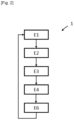
- the display method 1 firstly comprises a step E1 of detecting a connected infrastructure element 11, in particular an infrastructure element likely to change status.
- the detection means 4 detects an approaching infrastructure element 11.
- the detection means 4 as previously described capture(s) an outgoing data stream emitted by a communication device 51, specific to the infrastructure element 11, in particular to a server and/or to the vehicle, and/or the detection means 4 capture(s) images of the infrastructure element 11.
- the detection means 4 transmits this information to the processing unit 6 which, by implementing at least one algorithm, for example of analysis of the distance relative to the infrastructure element 11 and/or image processing, detects or not the approaching infrastructure element 11.
- the detection means 4 and/or the system may be configured to detect an infrastructure element 11 having a spatial and/or temporal proximity relative to the vehicle 10.
- the detection means 4 and/or the system may be configured to detect an infrastructure element 11 present at a detection distance D d of between 25 and 500 m and/or at a detection time T d , corresponding to a time remaining for the vehicle 10, at its current longitudinal driving speed, before reaching the infrastructure element 11, of between 2 and 60 s.
- the detection means 4 detects one or more infrastructure element(s) present in a spatial and/or temporal perimeter surrounding the vehicle 10.
- the detection step E1 may comprise a sub-step E11 of selecting the infrastructure element 11 from a plurality of infrastructure elements.
- a selection may be carried out on the basis of a position of the infrastructure element 11 relative to a lane and/or roadway traveled by the vehicle 10 and/or according to the spatial and/or temporal proximity of the infrastructure element 11 relative to the vehicle 10.
- the infrastructure element 11 may be selected from the plurality of infrastructure elements on the basis of its positioning on the traffic lane traveled by the vehicle rather than on a transverse traffic lane and/or on the basis of its positioning on a front portion of the roadway, extending in front of the vehicle 10, rather than on a rear portion of the roadway.
- the selection sub-step E11 may take into account a path preprogrammed in the location means 3.
- a step E2 of transmitting data and displaying information relating to driving events according to said transmitted data is implemented.
- the communication device 51 of the infrastructure element 11 transmits to the communication module 5 of the vehicle 10, for example included in the processing unit 6, the data relating to the infrastructure element 11 and then the information relating to the driving events, from the transmitted data, is displayed on the display module 8 of the driving assistance system 2.
- such data may include an identification, or ID, of the infrastructure element 11, an exact position of the infrastructure element 11, a status of the infrastructure element 11 and/or a time remaining before an upcoming change of status of the infrastructure element 11 and/or a combination of a time elapsed since the last change and a period specific to a status of the infrastructure element.
- status means a color of a traffic light, a “closed” or “open” state of a movable barrier marking a railway track, a bridge or any other traffic lane.
- the data transmitted to the vehicle 10 during the search and transmission step comprise at least one identifier of the infrastructure element 11, a position of the infrastructure element 11, a current status, in real time, of the infrastructure element 11 and/or a time remaining before a change of the infrastructure element 11 to a second status, distinct from the current status.
- the method then implements a location step E3 of the vehicle 10 relative to the infrastructure element 11.
- This step aims to define the position, in real time, of the vehicle 10 moving in the road infrastructure and relative to the infrastructure element 11 on the based on the location information of the vehicle 10, transmitted at all times by the location means 3, and the positioning data of the infrastructure element 11 previously transmitted during step E2.
- step E4 of estimating, in real time, a temporal proximity of the infrastructure element 11.
- temporal proximity is meant a remaining time T i for the vehicle 10 to reach the infrastructure element 11 for a detected longitudinal speed.
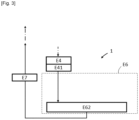
- the system carries out, in real time, on the one hand the step E4 of estimating the remaining time T i for the vehicle 10 to reach the infrastructure element 11 and on the other hand a step E41 of comparing such a remaining time T i with a reference limit time T L.
- the method is also configured to implement a step E6 of securing the display of information. It should be noted that, in the various figures, the estimation step E4 is represented as preceding the securing step E6, nevertheless, the updating of the remaining time T i can continue in parallel with the implementation of the securing step E6.
- the securing step is triggered when the remaining time T i separating the vehicle 10 from the infrastructure element 11 is equal or substantially equal to the predetermined limit time T L separating the vehicle 10 from the structural element.
- the limit time T L is an optimal time remaining before reaching the infrastructure element 11 which makes it possible to ensure that the driver can react appropriately in response to the implementation of the securing step and before reaching the infrastructure element 11.
- such a time limit is of the order of 2 to 3 s.
- the securing step E6 can thus be implemented work during all or part of a period of time between a remaining time T i equal to the limit time T L and a remaining time T i zero corresponding to a positioning of the vehicle at the right of the infrastructure element.
- the initiation of the securing step E6 on the basis of the temporal proximity of the infrastructure element, dependent on the longitudinal speed of the vehicle 10, instead of a predetermined spatial proximity advantageously makes it possible to make the method 1 suitable for variable traffic conditions, in particular for variable traffic densities.
- the method according to the invention does not require the integration of steps for detecting additional parameters relating to traffic such as the presence of vehicles, moving or stationary, on the roadway or near the infrastructure element 11.
- the definition of a fixed predetermined limit time i.e. constant and non-variable, contributes to the driver becoming accustomed to the securing system according to the invention over the course of its use. In this way, the driver's behavior adapts to the operation of the process and gradually anticipates the implementation of the security step E6 when approaching the infrastructure element 11, thus reinforcing his vigilance through habit.
- the securing step E6 comprises a sub-step E62 of switching off the display of the information of the display module 8 of the driving assistance system 2.
- the processing unit 6 controls the switching off of the display module 8, in particular of at least the information relating to driving events.
- the extinction sub-step E62 can thus be implemented when the remaining time T i separating the vehicle 10 from the infrastructure element 11 is equal or substantially equal to the predetermined limit time T L , separating the vehicle 10 from the structural element.
- the securing step E6 may, optionally, include a sub-step E5 of monitoring the driver's vigilance by the monitoring unit 7 of a driver's state.
- a sub-step E5 of monitoring can, preferably, be implemented prior to the extinction sub-step E62.
- the system initiates the control sub-step E5. If, conversely, the remaining time T i is greater than the limit time T L then the method repeats the estimation step E4, in real time, of the remaining time T i so as to allow it to be updated as a function of the movement and position of the vehicle 10.
- the driver vigilance control sub-step E5 may comprise a monitoring phase E51 of at least one physiological parameter of the driver by means of at least the monitoring unit 7 as previously described.
- Each parameter is detected and/or measured by one or more monitoring sensors 71 of the driver, included in the monitoring unit 7, which are connected to the processing module 72, for example included in the processing unit 6.
- the monitoring unit 7 of the vehicle 10 may capture images of the driver, in particular of the driver's gaze, which are then transmitted to the processing unit 6, which is equipped with at least one image analysis algorithm.
- the control sub-step E5 can then comprise a detection phase E52 of an exceeding of the parameter and/or of a combination of parameters by a value lower than or higher than a threshold value, by the processing unit 6.
- the processing unit 6 is able to carry out calculation and comparison operations capable of determining whether the parameter(s) provided by the sensor(s) exceed(s), by a value higher than or lower than, at least a given threshold and thus allow the identification, where appropriate, of a state of reduced vigilance of the driver.
- the securing step E6 may, in addition, comprise one or more sub-steps capable of being implemented implemented conditionally according to the result of the control sub-step E5 of the driver's state of vigilance and/or according to one or more operating modes implemented by the display method 1 and/or the system.
- the step E6 of securing the display of information may comprise a sub-step E61 of transmitting at least one alert message to the driver of the vehicle 10 when an exceeding of the parameter and/or of the combination of parameters is detected during the control sub-step E5.
- the processing unit 6 generates an alert message that is transmitted to the warning module 22 designed to broadcast information included in this message to the driver in order to redirect his attention to the traffic lane.
- This alert message may, as previously explained, comprise a light signal, for example displayed on the display module 8 of the assistance system 2, and/or an audio signal, for example transmitted via a loudspeaker, and/or a haptic signal, which may in particular be implemented by the driver's seat and/or the steering wheel, as previously explained.
- the sub-step E62 of extinguishing the display of information from the display module 8, in particular relating to driving events, from the driving assistance system 2 can be conditioned by the control sub-step E5.
- the processing unit 6 can thus directly implement the extinction of the display module 8 when the remaining time T i is equal or substantially equal to the limit time T L and no exceeding of the parameter and/or of the combination of parameters is detected during the control sub-step E5.
- the processing unit 6 can execute substep E61 and order the transmission of a message by the warning module 22.
- the processing unit 6 can then execute substep E62 and control the switching off of the display module 8 directly following the transmission substep E61.
- the processing unit 6 can execute the substep E62 when it no longer detects an exceeding of the parameter and/or the combination of parameters.
- the control substep E5 can then be repeated following the alert substep E61 in order to update, in real time, a measurement of the driver's state of vigilance and implement the extinction substep E62 only when the parameter and/or the combination of parameters has(have) an acceptable value.
- the extinction sub-step E62 is implemented when the system detects that the driver's gaze, and therefore attention, is focused on the traffic lane and not the display module 8.
- Such an arrangement prevents possible distraction of the driver by the display module 8 during a most critical period, in this case when approaching the infrastructure element 11, and makes it possible to direct the driver's attention towards the traffic lane.
- the method according to the invention can ensure the steps of transmission E2, location E3 and estimation E4 even when immediately approaching the infrastructure element 11, that is to say even when the remaining time T i is less than the time limit T L in order to ensure the updating of the position data of the vehicle 10 and remaining time T i in real time.
- FIG. 5 to 7 illustrate different variants of execution of the method according to the invention, such variants being in particular integrated into the second embodiment as set out above. It is nevertheless understood that each of said variants can also be integrated mutatis mutandis into the first embodiment as previously described with reference to the figure 3 .
- all or part of the securing step E6 can be implemented only when the vehicle 10 is moving at a speed greater than or equal to 15 km/h.
- the method comprises an optional step E45 of evaluating and comparing the longitudinal speed of the vehicle to a predetermined threshold value, in this case 15 km/h.
- the emission sub-step E61 can be implemented only when the vehicle 10 is moving at a speed greater than or equal to 15 km/h.
- the extinction sub-step E62 is implemented only when the vehicle 10 is moving at a speed greater than or equal to 15 km/h.
- the display module 8 can remain operational when the vehicle 10 is stationary or moving at a low longitudinal speed.
- such an evaluation and comparison step E45 is illustrated, for the sake of clarity, as preceding the securing step E6.
- the comparison step E45 can be carried out prior to the control sub-step E5 so that, if the vehicle is moving at a speed lower than 15 km/h, the extinction sub-step 62, the emission sub-step E61 and the re-ignition step E7 are not implemented. It is nevertheless understood that such an evaluation and comparison step E45 can be carried out simultaneously with the control sub-step E5, that is to say that it is implemented when the remaining time T i separating the vehicle 10 from the infrastructure element 11 is equal or substantially equal to the predetermined limit time T L.
- the method may comprise a step E8 of updating, in real time, the status of the infrastructure element 11.
- such an updating step E8 can be carried out simultaneously with the localization step E3 and/or the estimation step E4 and/or the securing step E6.
- the updating step E8 is represented simultaneously with the estimation step E4; it is nevertheless understood that such a representation is in no way limiting and that the updating step E8 can be implemented at any time following the transmission step E2, i.e. between the transmission step E2 and the passage of the vehicle past the infrastructure element.
- the update step E8 comprises a sub-step E81 for alerting an imminent change in status of the infrastructure element 11 by means of an alert signal comprising a light and/or sound and/or haptic signal broadcast by the warning module 22.
- a change in status is understood to mean the transition from a first status to a second status as previously described.
- a traffic light we will call, for example, a green light as the "first status”
- a stop light for example orange or red, as the second status.
- imminent we mean that a remaining time T s in the current status of the infrastructure element, namely the first status, is equal or substantially equal to a predetermined threshold time T LS at which the alert sub-step is implemented.
- a threshold time T LS may be of the order of 3 s before a change in status of the infrastructure element.
- the alert substep E81 comprises, prior to the emission of an alert signal, a phase of receiving updated data relating to the infrastructure element and a phase of comparing the remaining time T s at the current status with the threshold time T LS , not illustrated. Furthermore, depending on the type of data transmitted by the infrastructure element, the phase of receiving updated data may be followed by a phase of calculating the remaining time T s at the current status.
- the step E8 of updating the status of the infrastructure element may comprise, following the alert sub-step E81, a sub-step E82 of verifying the driver's behavior, in particular his taking into account an imminent change in the status of the infrastructure element and/or his vigilance.
- a verification sub-step E82 is similar to the control sub-step E5 as previously detailed, therefore, the entire description relating to this step applies mutatis mutandis to the verification step E82.
- the verification step E82 comprises a monitoring phase, not illustrated, of at least one physiological parameter of the driver by means of at least the monitoring unit 7 as well as a detection phase, by the processing unit 6, of an exceeding of the parameter and/or of a combination of parameters by a value lower or higher than a threshold value.
- the update step E8 may, optionally, comprise a reminder sub-step E83 of the change in status of the infrastructure element and/or vigilance in order to ensure that the information has been taken into account by the driver and/or that the driver's attention is directed to the traffic lane.
- a reminder sub-step is notably executed when an exceeding of the parameter and/or of the combination of parameters is detected and contributes to reinforcing the safety of the driver's driving.
- the invention relates to a computer program comprising program code instructions for executing the steps of this method when said program is executed by a computer, for example the processing unit 6, or produces a computer program downloadable from a communication network and/or recorded on a data medium readable by a computer and/or executable by a computer.
- the invention also relates to a computer-readable data recording medium on which is recorded a computer program comprising program code instructions for implementing the method as previously set out or a computer-readable recording medium comprising instructions which, when executed by a computer, cause the latter to implement the method according to the invention.
- the present invention thus proposes a method for securely displaying information in a vehicle equipped with a driving assistance system allowing the detection of a connected infrastructure element, capable of having a plurality of statuses, and the estimation of a temporal proximity with said infrastructure element, the method implementing the securing of the display of information relating to driving events displayed on a display module of the system.
- the method thus makes it possible to focus the driver's attention on the traffic lanes and the traffic, thereby making his driving safer.
Landscapes
- Engineering & Computer Science (AREA)
- Physics & Mathematics (AREA)
- General Physics & Mathematics (AREA)
- Transportation (AREA)
- Mechanical Engineering (AREA)
- Automation & Control Theory (AREA)
- Life Sciences & Earth Sciences (AREA)
- Atmospheric Sciences (AREA)
- Mathematical Physics (AREA)
- Human Computer Interaction (AREA)
- Chemical & Material Sciences (AREA)
- Combustion & Propulsion (AREA)
- Multimedia (AREA)
- Theoretical Computer Science (AREA)
- Traffic Control Systems (AREA)
Description
- L'invention concerne un procédé d'affichage sécurisé d'informations dans un véhicule. L'invention porte encore sur un système d'assistance à la conduite d'un véhicule et sur un véhicule comprenant un tel système d'assistance. L'invention porte également sur un programme d'ordinateur mettant en oeuvre le procédé mentionné.
- Les technologies d'assistance à la conduite sont de plus en plus répandues et ne sont plus limitées aux véhicules haut de gamme. Les documents
US 2013/0110315 A1 ,EP 3575175 A1 etDE 112016005784 T5 divulguent des systèmes d'aide à la conduite. Ces technologies permettent de simplifier la conduite des véhicules automobiles et/ou de fiabiliser les comportements des conducteurs desdits véhicules. En particulier, les systèmes d'assistance à la conduite améliorent le confort et la sécurité des usagers en régulant généralement la vitesse du véhicule. C'est notamment le cas de procédés et systèmes d'assistance tels que les systèmes de recommandation d'une vitesse longitudinale optimale en fonction des feux de signalisation, également connus sous l'acronyme « GLOSA » de l'anglais « green light optimal speed advisory », ou des régulateurs de vitesse adaptatifs de type « ACC », de l'anglais « Adaptative Cruise Control ». - De tels systèmes comprennent classiquement des systèmes d'interface comprenant des modules d'affichage de type écrans diffusant les informations relatives à des évènements de conduite en temps réel et/ou à venir. De tels modules d'affichage peuvent néanmoins provoquer un état de baisse de vigilance du conducteur en détournant son attention de la voie de circulation et en provoquant ainsi un comportement anormal susceptible d'engendrer un accident.
- L'invention s'inscrit dans ce contexte et vise à fournir un procédé d'affichage sécurisé d'informations dans un véhicule automobile et un système d'assistance à la conduite apte à mettre en oeuvre un tel procédé.
- L'invention propose un procédé d'affichage sécurisé d'informations dans un véhicule équipé d'un système d'assistance à la conduite, le procédé comprenant les étapes suivantes :
- une étape de détection d'un élément d'infrastructure, notamment un feu de signalisation connecté, susceptible de présenter une pluralité de statuts ;
- une étape de transmission de données, relatives à l'élément d'infrastructure, au véhicule et d'affichage d'informations relatives à des évènements de conduite sur un module d'affichage d'un système d'assistance à la conduite en fonction desdites données transmises ;
- une étape de localisation du véhicule relativement à l'élément d'infrastructure ;
- une étape d'estimation, en temps réel, d'un temps restant Ti au véhicule pour atteindre l'élément d'infrastructure prenant en compte une vitesse longitudinale du véhicule ;
- une étape de sécurisation de l'affichage d'informations ;
- Selon l'invention, le procédé comprend une étape d'actualisation du statut de l'élément d'infrastructure comportant au moins une sous-étape d'alerte d'un changement de statut imminent de l'élément d'infrastructure depuis un premier statut vers un deuxième statut par l'intermédiaire d'un signal d'alerte comprenant un signal lumineux et/ou sonore et/ou haptique.
- Le procédé peut comprendre au moins une sous-étape de contrôle de la vigilance du conducteur par une unité de surveillance d'un état du conducteur.
- Selon une caractéristique optionnelle, la sous-étape de contrôle de la vigilance du conducteur peut comprendre une phase de surveillance d'au moins un paramètre physiologique du conducteur au moyen d'au moins l'unité de surveillance du conducteur et une phase de détection d'un dépassement du paramètre et/ou d'une combinaison de paramètres par une valeur inférieure ou supérieure à une valeur seuil.
- Selon une caractéristique optionnelle, l'étape de sécurisation de l'affichage d'informations peut comprendre une sous-étape d'émission d'au moins un message d'alerte à un conducteur du véhicule lorsqu'un dépassement du paramètre et/ou de la combinaison de paramètres est détecté lors de la sous-étape de contrôle, le message d'alerte comprenant un signal lumineux et/ou sonore et/ou haptique. Notamment, le temps limite TL peut être de l'ordre de 2 à 3 secondes. Selon une caractéristique optionnelle, l'étape de détection de l'élément d'infrastructure peut comprendre une sous-étape de sélection de l'élément d'infrastructure parmi une pluralité d'éléments d'infrastructure selon une position de l'élément d'infrastructure relativement à une voie et/ou chaussée parcourue par le véhicule et/ou selon la proximité spatiale et/ou temporelle de l'élément d'infrastructure relativement au véhicule. Selon une caractéristique optionnelle, tout ou partie de l'étape de sécurisation peut être mise en oeuvre seulement lorsque le véhicule évolue à une vitesse supérieure ou égale à 15 km/h.
- L'étape d'actualisation du statut de l'élément d'infrastructure peut comprendre, suite à la sous-étape d'alerte, une sous-étape de vérification d'un comportement du conducteur par mesure d'au moins un paramètre physiologique du conducteur au moyen d'au moins une unité de surveillance et, lorsque qu'un dépassement du paramètre et/ou d'une combinaison de paramètres par une valeur inférieure ou supérieure à une valeur seuil est détecté, une sous-étape de rappel du changement de statut de l'élément d'infrastructure et/ou de vigilance.
- La présente invention concerne également un système d'assistance à la conduite d'un véhicule automobile comprenant les éléments matériels et/ou logiciels mettant en oeuvre le procédé tel que précédemment exposé, les éléments matériels comportant au moins un moyen de localisation, un moyen de détection d'un élément d'infrastructure connecté, un module de communication, une unité de traitement de données, une unité de surveillance d'un état du conducteur et un module d'affichage du système d'assistance.
- L'invention propose, en outre, un produit programme d'ordinateur comprenant des instructions de code de programme enregistrées sur un support lisible par ordinateur pour mettre en oeuvre les étapes du procédé l'invention lorsque ledit programme fonctionne sur un ordinateur ou produit programme d'ordinateur téléchargeable depuis un réseau de communication et/ou enregistré sur un support de données lisible par un ordinateur et/ou exécutable par un ordinateur, le programme étant caractérisé en ce en ce qu'il comprend des instructions qui, lorsque le programme est exécuté par l'ordinateur, conduisent celui-ci à mettre en oeuvre le procédé selon l'invention.
- D'autres détails, caractéristiques et avantages ressortiront plus clairement à la lecture de la description détaillée donnée ci-après, à titre indicatif et non limitatif, en relation avec les différents exemples de réalisation illustrés sur les figures suivantes :
- [
Fig. 1 ] Lafigure 1 représente schématiquement un mode de réalisation d'un véhicule équipé d'un moyen de mise en oeuvre d'un procédé d'affichage sécurisé d'informations dans un véhicule. - [
Fig. 2 ] Lafigure 2 est un ordinogramme général d'un mode d'exécution du procédé d'affichage sécurisé d'informations. - [
Fig. 3 ] Lafigure 3 est un ordinogramme détaillant une étape de sécurisation d'un premier mode d'exécution du procédé d'affichage sécurisé d'informations. - [
Fig. 4 ] Lafigure 4 est un ordinogramme détaillant une étape de sécurisation d'un deuxième mode d'exécution du procédé d'affichage sécurisé d'informations. - [
Fig. 5 ] Lafigure 5 est un ordinogramme détaillant l'étape de sécurisation d'une première variante d'exécution du procédé d'affichage sécurisé d'informations. - [
Fig. 6 ] Lafigure 6 est un ordinogramme détaillant une étape de sécurisation d'une deuxième variante d'exécution du procédé d'affichage sécurisé d'informations. - [
Fig. 7 ] Lafigure 7 est un ordinogramme détaillant une étape de sécurisation d'une troisième variante d'exécution du procédé d'affichage sécurisé d'informations. - La
figure 1 illustre un mode de réalisation d'un véhicule 10 équipé d'un moyen de mise en oeuvre d'un procédé d'affichage sécurisé d'informations 1 dans un véhicule tel que décrit ci-après en référence auxfigures 2 à 7 . Un tel procédé d'affichage sécurisé 1 est destiné à être intégré à un système d'assistance 2 à la conduite. Par exemple, les systèmes d'assistance considérés peuvent être, de manière préférentielle, un système de consigne d'une vitesse longitudinale optimale du véhicule 10 de type GLOSA (« Green Light Optimal Speed Advice »), ou encore un système de régulation de distance de type ACC contextuel, de l'anglais « Adaptative Cruise Control », - Le véhicule 10 est un véhicule automobile de n'importe quel type, notamment un véhicule de tourisme ou un véhicule utilitaire. Le véhicule 10 comprend le système d'assistance 2 à la conduite du véhicule automobile qui comporte les éléments matériels et/ou logiciels mettant en oeuvre le procédé selon l'invention. Lesdits éléments matériels comportent au moins un moyen de localisation 3, un moyen de détection 4 d'un élément d'infrastructure 11 connecté, un module de communication 5, une unité de traitement 6 de données, une unité de surveillance 7 d'un état du conducteur et un module d'affichage 8 du système d'assistance 2.
- Le moyen de localisation 3 permet la localisation du véhicule 10 dans l'infrastructure routière. Il intègre, par exemple, un système de localisation approximative du véhicule 10 et/ou une cartographie haute définition de l'infrastructure routière. Notamment, la localisation approximative du véhicule 10 peut être fournie par un système de type GPS, de l'acronyme anglais « Global Positioning system ». La localisation approximative du véhicule 10 permet d'extraire d'une base de données de cartographie les informations concernant l'infrastructure routière dans un rayon de quelques centaines de mètres autour de la position approximative du véhicule 10. Alternativement ou en complément, le moyen de localisation 3 peut être un système de localisation embarqué dans le véhicule 10, qui intègre les mouvements du véhicule 10 en permanence.
- Le moyen de détection 4 est configuré pour détecter au moins un élément d'infrastructure 11 connecté.
- On entend par élément d'infrastructure 11 connecté un élément d'infrastructure apte à être relié à un serveur distant 100 et/ou à échanger des informations avec le véhicule 10. L'élément d'infrastructure 11 peut être mobile ou, de manière préférentielle, fixe.
- L'élément d'infrastructure comprend au moins un dispositif de communication 51 configuré pour transmettre et recevoir des données avec le serveur 100 et/ou émettre des données vers le véhicule, notamment de manière périodique. De telles données peuvent comprendre un identifiant de l'élément d'infrastructure 11, un positionnement et/ou un statut actuel de l'élément d'infrastructure 11. Notamment, l'élément d'infrastructure connecté est susceptible de présenter une pluralité de statuts. On entend par « statuts » différents états de l'élément d'infrastructure affectant la circulation des véhicules sur la voie de circulation. A titre d'exemple, l'élément d'infrastructure 11 considéré peut être un feu de signalisation, une barrière de voie ferroviaire ou pont ou tout autre élément de régulation de la circulation d'une infrastructure routière susceptible d'être connecté et de présenter différents statuts. Le statut de tels éléments d'infrastructure 11 est alors relatif à une couleur du feu de signalisation ou à l'état d'ouverture ou de fermeture de la barrière. De manière préférentielle, l'élément d'infrastructure 11 transmet en temps réel les données qui lui sont relatives.
- Le moyen de détection 4 du système selon l'invention peut notamment être configuré pour détecter un signal sortant de données émises par l'élément d'infrastructure 11 connecté. Le moyen de détection 4 peut notamment être compris dans le module de communication 5 du système.
- De manière optionnelle, le moyen de détection 4 peut, en outre, comprendre une caméra, non représentée, de sorte à optimiser la détection et/ou la sélection de l'élément d'infrastructure 11. Une telle caméra peut être fixée de telle manière qu'elle est en mesure d'acquérir des images d'une portion d'une voie de circulation, sur laquelle évolue le véhicule 10, qui est située à l'avant du véhicule 10. Cette caméra peut ainsi être fixée à l'avant du véhicule 10, par exemple au niveau des phares avant, ou dans l'habitacle, notamment derrière le pare-brise, ou encore sur un toit du véhicule 10. Une telle caméra est apte à fournir des signaux représentatifs d'une image qui peuvent ensuite être transmis à l'unité de traitement 6 en vue de traiter et/ou d'archiver des images. Un tel arrangement permet de fournir à l'unité de traitement 6 un complément d'informations relatives à des éléments d'infrastructure connectés ou non de l'infrastructure routière, par exemple de sorte à optimiser la détection du ou des éléments d'infrastructure pertinents.
- Le module de communication 5 permet au véhicule 10 de recevoir les données issues de l'élément d'infrastructure 11 au moyen d'une liaison sans fil, basse fréquence ou haute fréquence. Il peut, par exemple, s'agir d'une liaison sans fil basée sur des technologies « cellulaire» ou « Wifi » par exemple. En l'espèce, lors de la mise en oeuvre du procédé selon l'invention, un tel module de communication 5 n'assure pas la transmission d'informations depuis le véhicule 10 vers l'élément d'infrastructure 11.
- L'unité de traitement 6 comprend au moins une unité de calcul comportant des ressources matérielles et logicielles plus précisément au moins un processeur, ou microprocesseur, coopérant avec des éléments de mémoire. Cette unité de calcul est apte à exécuter des instructions pour la mise en oeuvre d'un programme d'ordinateur.
- L'unité de surveillance 7 est configurée pour surveiller un état du conducteur et permettre la détection d'un état de baisse de vigilance de celui-ci. Un état de baisse de vigilance s'entend d'un état physique ou physiologique du conducteur qui est susceptible de le perturber voire de le gêner dans le cadre d'une conduite sécuritaire du véhicule 10. Un tel état correspond de manière non limitative et non exhaustive à un état de distraction.
- L'unité de surveillance 7 comprend au moins un capteur de surveillance 71 du conducteur, notamment une caméra intérieure au véhicule 10, configuré pour détecter l'état du conducteur. L'au moins un capteur de surveillance 71 peut être aménagé dans l'habitacle du véhicule 10. Un tel au moins un capteur de surveillance 71 du conducteur est notamment apte à mesurer au moins un paramètre physiologique du conducteur parmi la direction du regard, l'orientation ou le mouvement de la tête.
- L'unité de surveillance 7 comprend également un module de traitement 72 apte à réaliser les opérations de calcul permettant d'identifier l'état de baisse de vigilance du conducteur. Ainsi, l'unité de surveillance 7 est apte à identifier une modification des conditions comportementales du conducteur et donc du mode de conduite qu'il adopte ou qu'il est susceptible d'adopter. De manière particulière, le module de traitement 72 peut être intégré à l'unité de traitement 6.
- Le véhicule 10 comprend un module d'affichage 8 du système d'assistance 2. Le module d'affichage 8 peut comprendre un écran apte à diffuser au moins des informations relatives à des instructions de conduite et/ou une cartographie de localisation du véhicule 10 du système d'assistance à la conduite et/ou du moyen de localisation 3.
- En outre, le véhicule 10 peut comprendre, de manière optionnelle mais préférentielle, un organe de détermination d'une vitesse longitudinale du véhicule 10, c'est-à-dire d'une vitesse de déplacement du véhicule 10. Par exemple, l'organe de détermination de la vitesse longitudinale peut comprendre un capteur de vitesse 21.
- Egalement, le système peut être configuré de sorte à intégrer un module d'avertissement 22 apte à diffuser une information. Le module d'avertissement 22 peut notamment diffuser un message et/ou un signal sous la forme d'émission :
- sonore, par exemple au moyen d'un haut-parleur, et/ou
- visuelle, par exemple au moyen du module d'affichage 8 de type écran, et/ou
- haptique, par exemple vibratoire, par exemple au moyen d'un élément apte à émettre des vibrations compris dans le siège conducteur ou au niveau d'au moins un élément de commande du véhicule 10, par exemple le volant.
- Le système 1 d'assistance à la conduite peut également comprendre une mémoire ou un espace de stockage constituant un support d'enregistrement lisible par un ordinateur ou par le calculateur de l'unité de traitement comprenant des instructions qui, lorsqu'elles sont exécutées par l'ordinateur ou le calculateur, conduisent celui-ci à mettre en oeuvre le procédé tel que décrit ci-après.
- Au sein d'un tel système 1 tel qu'illustré à la
figure 1 , l'unité de traitement 6 est reliée au moyen de détection 4 et au module de communication 5 de sorte à recevoir et traiter les informations relatives à élément d'infrastructure ou aux éléments d'infrastructures 11. En outre, l'unité de traitement 6 est reliée au moyen de localisation 3. L'unité de traitement 6 est également connectée au module d'avertissement 22. Enfin, l'unité de traitement 6 est, directement ou indirectement, reliée aux différents capteurs, par exemple le ou les capteurs de surveillance 71 ou de vitesse 21 de sorte à recevoir les informations portant sur le conducteur ou la vitesse longitudinale du véhicule 10 en temps réel. - Pour l'ensemble de la description ci-après, on suppose que le véhicule 10 automobile circule sur une voie de circulation qui comprend prochainement un élément d'infrastructure 11, en l'espèce un feu de signalisation. Le terme « prochainement » fait référence à un critère de proximité temporel. Il signifie que le temps que mettrait le véhicule 10 pour atteindre l'élément d'infrastructure 11 est inférieur à un seuil donné. Deux modes d'exécution du procédé d'affichage sécurisé d'informations 1 sont décrits ci-après en référence aux
figures 2 à 4 . Le procédé d'affichage 1 peut également être considéré comme étant un procédé de fonctionnement d'un système d'assistance à la conduite ou comme un procédé de fonctionnement d'un véhicule 10 automobile équipé d'un tel système, le procédé d'affichage 1 permettant notamment de sécuriser l'affichage d'informations lorsqu'un procédé d'assistance à la conduite est mis en oeuvre, c'est-à-dire est en cours d'exécution. - A noter que, lors de l'exécution d'un tel procédé d'affichage 1, le véhicule 10 transmet en temps réel une position du véhicule 10 au sein de l'infrastructure routière par l'intermédiaire du moyen de localisation 3.
- Le procédé d'affichage 1 selon l'invention comprend dans un premier temps une étape de détection E1 d'un élément d'infrastructure 11 connecté, notamment un élément d'infrastructure susceptible de changer de statut.
- Lors d'une telle étape de détection E1, le moyen de détection 4 détecte un élément d'infrastructure 11 approchant. Selon différentes alternatives, le ou les moyen(s) de détection 4 tel(s) que précédemment exposé capte(nt) un flux de données sortant émis par un dispositif de communication 51, propre à l'élément d'infrastructure 11, notamment vers un serveur et/ou vers le véhicule, et/ou le ou les moyen(s) de détection 4 capture(nt) des images de l'élément d'infrastructure 11. Le moyen de détection 4 transmet ces informations à l'unité de traitement 6 qui, en mettant en oeuvre au moins un algorithme, par exemple d'analyse de la distance relativement à l'élément d'infrastructure 11 et/ou de traitement d'image, détecte ou non l'élément d'infrastructure 11 approchant.
- Par exemple, le moyen de détection 4 et/ou le système peut être configuré de sorte à détecter un élément d'infrastructure 11 présentant une proximité spatiale et/ou temporelle relativement au véhicule 10. A titre d'exemple, le moyen de détection 4 et/ou le système peut être configuré de sorte à détecter un élément d'infrastructure 11 présent à une distance de détection Dd comprise entre 25 et 500 m et/ou à un temps de détection Td, correspondant à un temps restant au véhicule 10, à sa vitesse longitudinale de roulage actuelle, avant d'atteindre l'élément d'infrastructure 11, compris entre 2 et 60 s. En d'autres termes, le moyen de détection 4 détecte un ou plusieurs élément(s) d'infrastructure présent(s) dans un périmètre spatial et/ou temporel entourant le véhicule 10.
- De manière optionnelle mais préférentielle, l'étape de détection E1 peut comprendre une sous-étape de sélection E11 de l'élément d'infrastructure 11 parmi une pluralité d'éléments d'infrastructure. Notamment, une telle sélection peut être réalisée sur la base d'une position de l'élément d'infrastructure 11 relativement à une voie et/ou chaussée parcourue par le véhicule 10 et/ou selon la proximité spatiale et/ou temporelle de l'élément d'infrastructure 11 relativement au véhicule 10.
- Par exemple, l'élément d'infrastructure 11 peut être sélectionné parmi la pluralité d'éléments d'infrastructure sur la base de son positionnement sur la voie de circulation parcourue par le véhicule plutôt que sur une voie de circulation transverse et/ou sur la base de son positionnement sur une portion avant de la chaussée, s'étendant au-devant du véhicule 10, plutôt que sur une portion arrière de la chaussée. De manière optionnelle, la sous-étape de sélection E11 peut prendre en compte un trajet préprogrammé dans le moyen de localisation 3.
- Une fois l'élément d'infrastructure 11 pertinent détecté, une étape de transmission E2 de données et d'affichage d'informations relatives à des évènements de conduite en fonction desdites données transmises est mise en oeuvre. Dans une telle étape, le dispositif de communication 51 de l'élément d'infrastructure 11 transmet au module de communication 5 du véhicule 10, par exemple compris dans l'unité de traitement 6, les données relatives à l'élément d'infrastructure 11 puis les informations relatives aux évènements de conduites, issues des données transmises, sont affichées sur le module d'affichage 8 du système d'assistance 2 à la conduite.
- Notamment, de telles données peuvent comprendre une identification, ou ID, de l'élément d'infrastructure 11, une position exacte de l'élément d'infrastructure 11, un statut de l'élément d'infrastructure 11 et/ou un temps restant avant un changement prochain de statut de l'élément d'infrastructure 11 et/ou une combinaison d'un temps écoulé depuis le dernier changement et d'une période propre à un statut de l'élément d'infrastructure. A titre d'exemple, on entend par « statut » une couleur d'un feu de signalisation, un état « fermé » ou « ouvert » d'une barrière mobile marquant une voie ferrée, un pont ou toute autre voie de circulation.
- Selon un exemple de réalisation préférentiel dans lequel l'élément d'infrastructure 11 est un feu de signalisation, les données transmises au véhicule 10 lors de l'étape de recherche et de transmission comprennent au moins un identifiant de l'élément d'infrastructure 11, une position de l'élément d'infrastructure 11, un statut actuel, en temps réel, de l'élément d'infrastructure 11 et/ou un temps restant avant un changement de l'élément d'infrastructure 11 vers un deuxième statut, distinct du statut actuel.
- Le procédé met ensuite en oeuvre une étape de localisation E3 du véhicule 10 relativement à l'élément d'infrastructure 11. Cette étape vise à définir la position, en temps réel, du véhicule 10 en déplacement dans l'infrastructure routière et par rapport à l'élément d'infrastructure 11 sur la base des informations de localisation du véhicule 10, transmises en tout temps par le moyen de localisation 3, et des données de positionnement de l'élément d'infrastructure 11 préalablement transmises lors de l'étape E2.
- Ces données et informations sont transmises à l'unité de traitement 6 qui, grâce aux données de vitesse longitudinale du véhicule 10, par exemple transmises par les capteurs de vitesse 21, met en oeuvre une étape d'estimation E4, en temps réel, d'une proximité temporelle de l'élément d'infrastructure 11. On entend par « proximité temporelle », un temps restant Ti au véhicule 10 pour atteindre l'élément d'infrastructure 11 pour une vitesse longitudinale détectée.
- En d'autres termes, lors de l'exécution du procédé selon l'invention, le système réalise, en temps réel, d'une part l'étape d'estimation E4 du temps restant Ti au véhicule 10 pour atteindre l'élément d'infrastructure 11 et d'autre part une étape de comparaison E41 d'un tel temps restant Ti avec un temps limite TL de référence.
- Le procédé est également configuré pour mettre en oeuvre une étape de sécurisation E6 de l'affichage d'informations. Il est à noter que, dans les différentes figures, l'étape d'estimation E4 est représentée comme précédant l'étape de sécurisation E6, néanmoins, l'actualisation du temps restant Ti peut se poursuivre parallèlement à la mise en oeuvre de l'étape de sécurisation E6.
- L'étape de sécurisation est déclenchée lorsque le temps restant Ti séparant le véhicule 10 de l'élément d'infrastructure 11 est égal ou sensiblement égal au temps limite TL prédéterminé, séparant le véhicule 10 de l'élément de structure. Le temps limite TL est un temps optimal restant avant d'atteindre l'élément d'infrastructure 11 qui permet d'assurer que le conducteur puisse réagir de manière appropriée en réponse à la mise en oeuvre de l'étape de sécurisation et avant d'atteindre l'élément d'infrastructure 11.
- Selon un mode de réalisation préférentiel, un tel temps limite est de l'ordre de 2 à 3 s. L'étape de sécurisation E6 peut ainsi être mise en oeuvre pendant tout ou partie d'une période de temps comprise entre un temps restant Ti égal au temps limite TL et un temps restant Ti nul correspondant à un positionnement du véhicule au droit de l'élément d'infrastructure.
- L'initiation de l'étape de sécurisation E6 sur la base de la proximité temporelle de l'élément d'infrastructure, dépendant de la vitesse longitudinale du véhicule 10, en lieu d'une proximité spatiale prédéterminée permet avantageusement de rendre le procédé 1 adapté à des conditions de circulation variables, notamment à des densités de circulation variable. Aussi, le procédé selon l'invention ne requiert pas l'intégration d'étapes de détection de paramètres additionnels relatifs au trafic tels que la présence de véhicules, circulants ou à l'arrêt, sur la chaussée ou à proximité de l'élément d'infrastructure 11. Avantageusement, la définition d'un temps limite prédéterminé fixe, c'est-à-dire constant et non variable, contribue à l'habituation du conducteur au système de sécurisation selon l'invention au fil de son utilisation. De la sorte, le comportement du conducteur s'adapte au fonctionnement du procédé et anticipe progressivement la mise en oeuvre de l'étape de sécurisation E6 à l'approche de l'élément d'infrastructure 11, renforçant ainsi sa vigilance à force d'habitude.
- L'étape de sécurisation E6 comprend une sous-étape d'extinction E62 de l'affichage des informations du module d'affichage 8 du système d'assistance 2 à la conduite. Autrement dit, l'unité de traitement 6 contrôle l'extinction du module d'affichage 8, notamment d'au moins les informations relatives à des évènements de conduite.
- Notamment, selon le premier mode d'exécution illustré à la
figure 3 , la sous-étape d'extinction E62 peut ainsi être mise en oeuvre lorsque le temps restant Ti séparant le véhicule 10 de l'élément d'infrastructure 11 est égal ou sensiblement égal au temps limite TL prédéterminé, séparant le véhicule 10 de l'élément de structure. - Selon un deuxième mode d'exécution du procédé, illustré à la
figure 4 , l'étape de sécurisation E6 peut, de manière optionnelle, comprendre une sous-étape de contrôle E5 de la vigilance du conducteur par l'unité de surveillance 7 d'un état du conducteur. Notamment, une telle sous-étape de contrôle E5 peut, de manière préférentielle, être mise en oeuvre préalablement à la sous-étape d'extinction E62. - Ainsi, par exemple, lorsque le temps restant Ti est égal, ou sensiblement égal, au temps limite TL, le système initie la sous-étape de contrôle E5. Si à l'inverse, le temps restant Ti est supérieur au temps limite TL alors le procédé répète l'étape d'estimation E4, en temps réel, du temps restant Ti de sorte à permettre son actualisation en fonction du déplacement et de la position du véhicule 10.
- La sous-étape de contrôle E5 de la vigilance du conducteur peut comprendre une phase de surveillance E51 d'au moins un paramètre physiologique du conducteur au moyen d'au moins l'unité de surveillance 7 telle que précédemment exposée. Chaque paramètre est détecté et/ou mesuré par un ou des capteurs de surveillance 71 du conducteur, compris dans l'unité de surveillance 7, qui sont reliés au module de traitement 72, par exemple compris dans l'unité de traitement 6. A titre d'exemple, l'unité de surveillance 7 du véhicule 10 peut capturer des images du conducteur, notamment du regard du conducteur qui sont ensuite transmises à l'unité de traitement 6, laquelle est équipée d'au moins un algorithme d'analyse d'image.
- La sous-étape de contrôle E5 peut ensuite comprendre une phase de détection E52 d'un dépassement du paramètre et/ou d'une combinaison de paramètres par une valeur inférieure ou supérieure à une valeur seuil, par l'unité de traitement 6. En d'autres termes, l'unité de traitement 6 est apte à réaliser des opérations de calcul et de comparaison propre à déterminer si le(s) paramètre(s) fourni(s) par le ou les capteurs dépasse(nt), par une valeur supérieure ou inférieure, au moins un seuil donné et ainsi permettre l'identification, le cas échéant, d'un état de baisse de vigilance du conducteur.
- Dans un tel mode d'exécution, l'étape de sécurisation E6 peut, en outre, comprendre une ou plusieurs sous-étapes susceptible(s) d'être mise(s) en oeuvre de manière conditionnelle selon le résultat de la sous-étape de contrôle E5 de l'état de vigilance du conducteur et/ou selon un ou des mode(s) de fonctionnement mis en oeuvre par le procédé d'affichage 1 et/ou le système.
- Notamment, selon un exemple de mode de fonctionnement, l'étape de sécurisation E6 de l'affichage d'informations peut comprendre une sous-étape d'émission E61 d'au moins un message d'alerte au conducteur du véhicule 10 lorsqu'un dépassement du paramètre et/ou de la combinaison de paramètres est détecté lors de la sous-étape de contrôle E5.
- Pour ce faire, l'unité de traitement 6 génère un message d'alerte qui est transmis au module d'avertissement 22 prévu pour diffuser des informations comprises dans ce message au conducteur afin de rediriger son attention vers la voie de circulation. Ce message d'alerte peut, tel que précédemment exposé, comprendre un signal lumineux, par exemple affiché sur le module d'affichage 8 du système d'assistance 2, et/ou sonore, par exemple transmis par l'intermédiaire d'un haut-parleur, et/ou haptique, pouvant notamment être mis en oeuvre par le siège du conducteur et/ou le volant, tel que précédemment exposé.
- De manière particulière, la sous-étape d'extinction E62 de l'affichage des informations du module d'affichage 8, notamment relatives à des évènements de conduite, du système d'assistance 2 à la conduite peut être conditionnée par la sous-étape de contrôle E5.
- Notamment, sur la base des informations transmises par l'unité de surveillance 7, l'unité de traitement 6 peut ainsi directement mettre en oeuvre l'extinction du module d'affichage 8 lorsque le temps restant Ti est égal ou sensiblement égal au temps limite TL et qu'aucun dépassement du paramètre et/ou de la combinaison de paramètres n'est détecté lors de la sous-étape de contrôle E5.
- A l'inverse, lorsque le temps restant Ti est égal au temps limite TL et qu'un dépassement du paramètre et/ou de la combinaison de paramètres est détecté lors de la sous-étape de contrôle E5, l'unité de traitement 6 peut exécuter la sous-étape E61 et ordonner l'émission d'un message par le module d'avertissement 22. L'unité de traitement 6 peut ensuite exécuter la sous-étape E62 et contrôler l'extinction du module d'affichage 8 directement suite à la sous-étape d'émission E61.
- De manière alternative, représentée dans les différentes figures par une flèche grasse pointillée, l'unité de traitement 6 peut exécuter la sous-étape E62 lorsqu'elle ne détecte plus un dépassement du paramètre et/ou de la combinaison de paramètres. Autrement dit, la sous-étape de contrôle E5 peut alors être répétée suite à la sous-étape d'alerte E61 afin d'actualiser, en temps réel, une mesure de l'état de vigilance du conducteur et mettre en oeuvre la sous-étape d'extinction E62 seulement lorsque le paramètre et/ou la combinaison de paramètres présente(nt) une valeur acceptable.
- A titre d'exemple, la sous-étape d'extinction E62 est mise en oeuvre lorsque le système détecte que le regard, et donc l'attention, du conducteur est porté sur la voie de circulation et non le module d'affichage 8.
- Un tel arrangement prévient une éventuelle distraction du conducteur par le module d'affichage 8 pendant une période la plus critique, en l'espèce à l'approche de l'élément d'infrastructure 11, et permet de diriger l'attention du conducteur vers la voie de circulation.
- Il est à noter que, si l'affichage des informations et/ou données relatives à l'élément d'infrastructure 11 est interrompu, ce n'est pas le cas de la transmission de données relatives à l'élément d'infrastructure 11 depuis le module de communication 5 fixe dudit élément d'infrastructure 11 vers le module de communication 5 du véhicule 10. Autrement dit, le procédé selon l'invention peut assurer les étapes de transmission E2, localisation E3 et estimation E4 même à l'approche immédiate de l'élément d'infrastructure 11, c'est-à-dire même lorsque le temps restant Ti est inférieur au temps limite TL afin d'assurer l'actualisation des données de position du véhicule 10 et de temps restant Ti en temps réel.
- Indépendamment du mode d'exécution, le procédé peut, en outre, comprendre une étape de rallumage E7 du module d'affichage 8 pouvant être mise en oeuvre selon différentes alternatives :
- le module d'affichage 8 peut être à nouveau allumé lorsque le temps restant Ti au véhicule 10 pour atteindre l'élément d'infrastructure 11 est nul, c'est-à-dire lorsque le véhicule 10 est au droit dudit élément d'infrastructure 11 ; ou
- le module d'affichage 8 peut être à nouveau allumé lorsque le module de localisation du véhicule 10 transmet une position du véhicule 10 indiquant que la position de l'élément d'infrastructure 11 a été dépassée ; ou
- le module d'affichage 8 peut être à nouveau allumé lorsque un autre élément d'infrastructure 11 est détecté, c'est-à-dire simultanément à l'étape de détection E1 d'un nouveau cycle du procédé.
- Les
figures 5 à 7 illustrent différentes variantes d'exécution du procédé selon l'invention, de telles variantes étant notamment intégrées au deuxième mode d'exécution tel qu'exposé ci-dessus. Il est néanmoins entendu que chacune desdites variantes peut également être intégrée mutatis mutandis au premier mode d'exécution tel que précédemment décrit en référence à lafigure 3 . - De manière avantageuse, tel qu'illustré aux
figures 5 et7 , tout ou partie de l'étape de sécurisation E6 peut être mise en oeuvre seulement lorsque le véhicule 10 évolue à une vitesse supérieure ou égale à 15 km/h. En d'autres termes, le procédé comprend une étape, optionnelle, d'évaluation et de comparaison E45 de la vitesse longitudinale du véhicule à une valeur seuil prédéterminée, en l'espèce 15km/h. - A titre d'exemple, la sous-étape d'émission E61 peut être mise en oeuvre seulement lorsque le véhicule 10 évolue à une vitesse supérieure ou égale à 15 km/h.
- De manière optionnelle mais préférentielle, la sous-étape d'extinction E62 est mise en oeuvre seulement lorsque le véhicule 10 évolue à une vitesse supérieure ou égale à 15 km/h. Ainsi, le module d'affichage 8 peut demeurer opérant lorsque le véhicule 10 est à l'arrêt ou évolue à une faible vitesse longitudinale
- Dans l'exemple illustré, une telle étape d'évaluation et de comparaison E45 est illustrée, à des fins de clarté, comme précédant l'étape de sécurisation E6. Notamment, l'étape de comparaison E45 peut être réalisée préalablement à la sous-étape de contrôle E5 de sorte que, si le véhicule évolue à une vitesse inférieure à 15km/h, la sous-étape d'extinction 62, la sous-étape d'émission E61 et l'étape de rallumage E7 ne sont pas mises en oeuvre. Il est néanmoins entendu qu'une telle étape d'évaluation et de comparaison E45 peut être réalisée simultanément à la sous-étape de contrôle E5, c'est-à-dire qu'elle est mise en oeuvre lorsque le temps restant Ti séparant le véhicule 10 de l'élément d'infrastructure 11 est égal ou sensiblement égal au temps limite TL prédéterminé.
- De manière optionnelle, illustrée aux
figures 6 et7 , le procédé peut comprendre une étape d'actualisation E8, en temps réel, du statut de l'élément d'infrastructure 11. - Notamment une telle étape d'actualisation E8 peut être réalisée simultanément à l'étape de localisation E3 et/ou à l'étape d'estimation E4 et/ou à l'étape de sécurisation E6.
- Dans l'exemple illustré, l'étape d'actualisation E8 est représentée simultanément à l'étape d'estimation E4, il est néanmoins entendu qu'une telle représentation n'est en rien limitative et que l'étape d'actualisation E8 peut être mise en oeuvre à tout moment suite à l'étape de transmission E2, c'est-à-dire entre l'étape de transmission E2 et le passage du véhicule au droit de l'élément d'infrastructure.
- Notamment, l'étape d'actualisation E8 comprend une sous-étape d'alerte E81 d'un changement de statut imminent de l'élément d'infrastructure 11 par l'intermédiaire d'un signal d'alerte comprenant un signal lumineux et/ou sonore et/ou haptique diffusé par le module d'avertissement 22. On entend par exemple par changement de statut le passage d'un premier statut à un deuxième statut tel que précédemment exposé. Pour un feu de signalisation, on qualifiera, à titre d'exemple, de « premier statut » un feu vert, et de deuxième statut un feu d'arrêt, par exemple orange ou rouge. Par « imminent », on entend qu'un temps restant Ts au statut actuel de l'élément d'infrastructure, à savoir le premier statut, est égal ou sensiblement égal à un temps seuil TLS prédéterminé auquel la sous-étape d'alerte est mise en oeuvre. A titre d'exemple, un tel temps seuil TLS peut être de l'ordre de 3 s avant un changement de statut de l'élément d'infrastructure.
- En d'autres termes, la sous-étape d'alerte E81 comprend, préalablement à l'émission d'un signal d'alerte, une phase de réception de données actualisées relatives à l'élément d'infrastructure et une phase de comparaison du temps restant Ts au statut actuel avec le temps seuil TLS, non illustrées. En outre, selon le type de données transmises par l'élément d'infrastructure, la phase de réception de données actualisées peut être suivie d'une phase de calcul du temps restant Ts au statut actuel.
- De manière optionnelle mais préférentielle, l'étape d'actualisation E8 du statut de l'élément d'infrastructure peut comprendre, suite à la sous-étape d'alerte E81, une sous-étape de vérification E82 d'un comportement du conducteur, notamment de sa prise en compte d'un changement imminent du statut de l'élément d'infrastructure et/ou de sa vigilance. Une telle sous-étape de vérification E82 est similaire à la sous-étape de contrôle E5 telle que précédemment détaillée, aussi, l'ensemble de la description relative à cette étape s'applique-t-elle mutatis mutandis à l'étape de vérification E82.
- L'étape de vérification E82 comprend une phase de surveillance, non illustrée, d'au moins un paramètre physiologique du conducteur au moyen d'au moins l'unité de surveillance 7 ainsi qu'une phase de détection, par l'unité de traitement 6, d'un dépassement du paramètre et/ou d'une combinaison de paramètres par une valeur inférieure ou supérieure à une valeur seuil.
- L'étape d'actualisation E8 peut, de manière optionnelle, comprendre une sous-étape de rappel E83 du changement de statut de l'élément d'infrastructure et/ou de vigilance afin d'assurer que l'information a bien été prise en compte par le conducteur et/ou que l'attention du conducteur est bien dirigée sur la voie de circulation. Une telle sous-étape de rappel est notamment exécutée lorsqu'un dépassement du paramètre et/ou de la combinaison de paramètres est détecté et contribue à renforcer la sécurisation de la conduite du conducteur.
- Par ailleurs, l'invention porte sur un programme d'ordinateur comprenant des instructions de code de programme pour l'exécution des étapes de ce procédé lorsque ledit programme est exécuté par un ordinateur, par exemple l'unité de traitement 6, ou produit programme d'ordinateur téléchargeable depuis un réseau de communication et/ou enregistré sur un support de données lisible par un ordinateur et/ou exécutable par un ordinateur.
- L'invention porte également sur un support d'enregistrement de données, lisible par un ordinateur, sur lequel est enregistré un programme d'ordinateur comprenant des instructions de code de programme de mise en oeuvre du procédé tel que précédemment exposé ou un support d'enregistrement lisible par ordinateur comprenant des instructions qui, lorsqu'elles sont exécutées par un ordinateur, conduisent celui-ci à mettre en oeuvre le procédé selon l'invention.
- La présente invention propose ainsi un procédé d'affichage sécurisé d'informations dans un véhicule équipé d'un système d'assistance à la conduite permettant la détection d'un élément d'infrastructure connecté, susceptible de présenter une pluralité de statuts, et l'estimation d'une proximité temporelle avec ledit élément d'infrastructure, le procédé mettant en oeuvre la sécurisation de l'affichage d'informations relatives à des évènements de conduite affichés sur un module d'affichage du système. Le procédé permet ainsi de concentrer l'attention du conducteur sur les voies de circulation et le trafic, sécurisant de ce fait sa conduite.
- La présente invention ne saurait toutefois se limiter aux moyens et configurations décrits et illustrés ici. Plutôt, la portée de l'invention est définie par les revendications annexées.
Claims (10)
- Procédé d'affichage sécurisé d'informations (1) dans un véhicule (10) équipé d'un système d'assistance à la conduite, le procédé comprenant les étapes suivantes :- une étape de détection (E1) d'un élément d'infrastructure (11), notamment un feu de signalisation connecté, susceptible de présenter une pluralité de statuts ;- une étape de transmission (E2) de données, relatives à l'élément d'infrastructure (11), au véhicule (10) et d'affichage d'informations relatives à des évènements de conduite sur un module d'affichage (8) d'un système d'assistance (2) à la conduite en fonction desdites données transmises ;- une étape de localisation (E3) du véhicule (10) relativement à l'élément d'infrastructure (11) ;- une étape d'estimation (E4), en temps réel, d'un temps restant (Ti) au véhicule (10) pour atteindre l'élément d'infrastructure (11) prenant en compte une vitesse longitudinale du véhicule (10) ;- une étape de sécurisation (E6) de l'affichage d'informationsl'étape de sécurisation (E6) comprenant une sous-étape d'extinction (E62) de l'affichage des informations du module d'affichage (8) et étant déclenchée lorsque le temps restant (Ti) séparant le véhicule (10) de l'élément d'infrastructure (11) est égal ou sensiblement égal à un temps limite (TL) prédéterminé séparant le véhicule (10) de l'élément de structure ;
caractérisé en ce que le procédé comprend une étape d'actualisation (E8) du statut de l'élément d'infrastructure (11) comportant au moins une sous-étape d'alerte (E81) d'un changement de statut imminent de l'élément d'infrastructure (11) depuis un premier statut vers un deuxième statut par l'intermédiaire d'un signal d'alerte comprenant un signal lumineux et/ou sonore et/ou haptique. - Procédé selon la revendication précédente, dans lequel l'étape de sécurisation (E6) comprend au moins une sous-étape de contrôle (E5) de la vigilance du conducteur par une unité de surveillance (7) d'un état du conducteur.
- Procédé selon la revendication précédente, dans lequel la sous-étape de contrôle (E5) de la vigilance du conducteur comprend une phase de surveillance (E51) d'au moins un paramètre physiologique du conducteur au moyen d'au moins l'unité de surveillance (7) du conducteur et une phase de détection (E52) d'un dépassement du paramètre et/ou d'une combinaison de paramètres par une valeur inférieure ou supérieure à une valeur seuil.
- Procédé selon la revendication précédente, dans lequel l'étape de sécurisation (E6) de l'affichage d'informations comprend une sous-étape d'émission (E61) d'au moins un message d'alerte à un conducteur du véhicule (10) lorsqu'un dépassement du paramètre et/ou de la combinaison de paramètres est détecté lors de la sous-étape de contrôle (E5), le message d'alerte comprenant un signal lumineux et/ou sonore et/ou haptique.
- Procédé selon l'une quelconque des revendications précédentes, dans lequel le temps limite (TL) est de l'ordre de 2 à 3 secondes.
- Procédé selon l'une des revendications précédentes, dans lequel l'étape de détection (E1) de l'élément d'infrastructure (11) comprend une sous-étape de sélection (E11) de l'élément d'infrastructure (11) parmi une pluralité d'éléments d'infrastructure selon une position de l'élément d'infrastructure (11) relativement à une voie et/ou chaussée parcourue par le véhicule (10) et/ou selon la proximité spatiale et/ou temporelle de l'élément d'infrastructure (11) relativement au véhicule (10).
- Procédé selon l'une des revendications précédentes, dans lequel tout ou partie de l'étape de sécurisation (E6) est mise en oeuvre seulement lorsque le véhicule (10) évolue à une vitesse supérieure ou égale à 15 km/h.
- Procédé selon l'une des revendications précédentes, dans lequel l'étape d'actualisation (E8) du statut de l'élément d'infrastructure comprend, suite à la sous-étape d'alerte (E81), une sous-étape de vérification (E82) d'un comportement du conducteur par mesure d'au moins un paramètre physiologique du conducteur au moyen d'au moins une unité de surveillance (7) et, lorsque qu'un dépassement du paramètre et/ou d'une combinaison de paramètres par une valeur inférieure ou supérieure à une valeur seuil est détecté, une sous-étape de rappel (E83) du changement de statut de l'élément d'infrastructure et/ou de vigilance.
- Système d'assistance (2) à la conduite d'un véhicule (10) automobile comprenant les éléments matériels et/ou logiciels mettant en oeuvre le procédé selon l'une des revendications précédentes, les éléments matériels comportant au moins un moyen de localisation (3), un moyen de détection (4) d'un élément d'infrastructure (11) connecté, un module de communication (5), une unité de traitement (6) de données, une unité de surveillance (7) d'un état du conducteur et un module d'affichage (8) du système d'assistance (2).
- Produit programme d'ordinateur comprenant des instructions de code de programme enregistrées sur un support lisible par ordinateur pour mettre en oeuvre les étapes du procédé selon l'une quelconque des revendications 1 à 8 lorsque ledit programme fonctionne sur un ordinateur ou produit programme d'ordinateur téléchargeable depuis un réseau de communication et/ou enregistré sur un support de données lisible par un ordinateur et/ou exécutable par un ordinateur, caractérisé en ce en ce qu'il comprend des instructions qui, lorsque le programme est exécuté par l'ordinateur, conduisent celui-ci à mettre en oeuvre le procédé selon l'une quelconque des revendications 1 à 8.
Applications Claiming Priority (2)
| Application Number | Priority Date | Filing Date | Title |
|---|---|---|---|
| FR2009132A FR3113881B1 (fr) | 2020-09-09 | 2020-09-09 | Procédé d’affichage sécurisé d’informations dans un véhicule. |
| PCT/EP2021/073767 WO2022053338A1 (fr) | 2020-09-09 | 2021-08-27 | Procédé d'affichage sécurisé d'informations dans un véhicule |
Publications (2)
| Publication Number | Publication Date |
|---|---|
| EP4211010A1 EP4211010A1 (fr) | 2023-07-19 |
| EP4211010B1 true EP4211010B1 (fr) | 2024-10-23 |
Family
ID=74125328
Family Applications (1)
| Application Number | Title | Priority Date | Filing Date |
|---|---|---|---|
| EP21770169.7A Active EP4211010B1 (fr) | 2020-09-09 | 2021-08-27 | Procédé d'affichage sécurisé d'informations dans un véhicule |
Country Status (7)
| Country | Link |
|---|---|
| US (1) | US20230326337A1 (fr) |
| EP (1) | EP4211010B1 (fr) |
| JP (1) | JP2023540324A (fr) |
| KR (1) | KR20230065998A (fr) |
| CN (1) | CN116157310A (fr) |
| FR (1) | FR3113881B1 (fr) |
| WO (1) | WO2022053338A1 (fr) |
Families Citing this family (3)
| Publication number | Priority date | Publication date | Assignee | Title |
|---|---|---|---|---|
| FR3156413A1 (fr) * | 2023-12-07 | 2025-06-13 | Stellantis Auto Sas | Procédé et dispositif de contrôle d’un système d’affichage pour l’affichage d’alerte en approche d’un passage à niveau pour un véhicule |
| FR3156576B1 (fr) * | 2023-12-07 | 2026-01-02 | Stellantis Auto Sas | Procédé et dispositif de contrôle d’un système d’affichage pour l’affichage d’un contenu représentatif d’un panneau à message variable |
| EP4711224A1 (fr) * | 2024-09-12 | 2026-03-18 | AUMOVIO Germany GmbH | Véhicule, appareil, support de données, programme informatique, réseau neuronal et procédés pour une interface homme-machine |
Family Cites Families (21)
| Publication number | Priority date | Publication date | Assignee | Title |
|---|---|---|---|---|
| JP2001165670A (ja) * | 1999-12-10 | 2001-06-22 | Alpine Electronics Inc | ナビゲーション装置 |
| JP4248170B2 (ja) * | 2001-09-13 | 2009-04-02 | アルパイン株式会社 | ナビゲーション装置 |
| JP2006072936A (ja) * | 2004-09-06 | 2006-03-16 | Sumitomo Electric Ind Ltd | 車両停止要求システム |
| JP2008033617A (ja) * | 2006-07-28 | 2008-02-14 | Tokai Rika Co Ltd | 交差点安全走行システム |
| JP5310276B2 (ja) * | 2009-06-04 | 2013-10-09 | トヨタ自動車株式会社 | 運転支援装置 |
| JP5278292B2 (ja) * | 2009-11-27 | 2013-09-04 | 株式会社デンソー | 情報提示装置 |
| JP5461235B2 (ja) * | 2010-02-26 | 2014-04-02 | 株式会社デンソー | 安全運転支援システム、車載機、および、車載機に用いるプログラム |
| JP2013097620A (ja) * | 2011-11-01 | 2013-05-20 | Toyota Motor Corp | 運転支援装置 |
| DE102013003798A1 (de) * | 2013-03-05 | 2014-09-11 | GM Global Technology Operations LLC (n. d. Ges. d. Staates Delaware) | Fahrerassistenzsystem |
| JP6184515B2 (ja) * | 2013-11-18 | 2017-08-23 | 三菱電機株式会社 | 運転支援装置および運転支援方法 |
| DE102014003781B4 (de) * | 2014-03-15 | 2016-07-21 | Audi Ag | Fahrerassistenzsystem für ein Kraftfahrzeug und zugehöriges Betriebsverfahren |
| JP6265146B2 (ja) * | 2014-05-27 | 2018-01-24 | 株式会社デンソー | 注意喚起装置 |
| DE102014222190A1 (de) * | 2014-10-30 | 2016-05-04 | Volkswagen Aktiengesellschaft | Vorrichtung und Verfahren zur Anbindung einer mobilen Kameraeinrichtung |
| DE202015004892U1 (de) * | 2015-07-07 | 2016-10-13 | GM Global Technology Operations LLC (n. d. Gesetzen des Staates Delaware) | Fahrerassistenzsystem |
| JP6563798B2 (ja) * | 2015-12-17 | 2019-08-21 | 大学共同利用機関法人自然科学研究機構 | 視覚認知支援システムおよび視認対象物の検出システム |
| EP3535646A4 (fr) * | 2016-11-07 | 2020-08-12 | Nauto, Inc. | Système et procédé de détermination de distraction d'un conducteur |
| JP6962802B2 (ja) * | 2017-12-08 | 2021-11-05 | トヨタ自動車株式会社 | 運転支援装置、運転支援方法及びプログラム |
| US10363944B1 (en) * | 2018-02-14 | 2019-07-30 | GM Global Technology Operations LLC | Method and apparatus for evaluating pedestrian collision risks and determining driver warning levels |
| CN110322714B (zh) * | 2018-03-30 | 2023-11-14 | 比亚迪股份有限公司 | 基于车载显示终端的智能提醒系统、方法和车辆 |
| EP3575175B1 (fr) * | 2018-06-01 | 2024-03-13 | Zenuity AB | Procédé et système pour aider des conducteurs à conduire avec précaution |
| US20200344532A1 (en) * | 2019-04-25 | 2020-10-29 | Route 1 Inc. | Selectively transitioning a display screen of a human-operable apparatus between a restricted mode and an unrestricted mode based upon motion and/or proximity detection |
-
2020
- 2020-09-09 FR FR2009132A patent/FR3113881B1/fr active Active
-
2021
- 2021-08-27 JP JP2023514882A patent/JP2023540324A/ja active Pending
- 2021-08-27 WO PCT/EP2021/073767 patent/WO2022053338A1/fr not_active Ceased
- 2021-08-27 KR KR1020237008282A patent/KR20230065998A/ko active Pending
- 2021-08-27 EP EP21770169.7A patent/EP4211010B1/fr active Active
- 2021-08-27 CN CN202180054592.3A patent/CN116157310A/zh active Pending
- 2021-08-27 US US18/043,494 patent/US20230326337A1/en active Pending
Also Published As
| Publication number | Publication date |
|---|---|
| FR3113881B1 (fr) | 2022-09-02 |
| KR20230065998A (ko) | 2023-05-12 |
| JP2023540324A (ja) | 2023-09-22 |
| CN116157310A (zh) | 2023-05-23 |
| US20230326337A1 (en) | 2023-10-12 |
| EP4211010A1 (fr) | 2023-07-19 |
| FR3113881A1 (fr) | 2022-03-11 |
| WO2022053338A1 (fr) | 2022-03-17 |
Similar Documents
| Publication | Publication Date | Title |
|---|---|---|
| EP4211010B1 (fr) | Procédé d'affichage sécurisé d'informations dans un véhicule | |
| EP3344508B1 (fr) | Procede d'assistance d'un conducteur dans la transition d'un premier mode autonome vers un deuxieme mode autonome | |
| FR3041778A1 (fr) | Procede d’assistance a la reprise en main d’un vehicule automobile | |
| FR3046587A1 (fr) | Procede de pilotage d’un systeme automatise d’assistance a la conduite d’un vehicule automobile. | |
| FR3051757A1 (fr) | Dispositif de suivi des habitudes de conduite d'un conducteur d'un vehicule de transport et procede correspondant | |
| EP4374340A1 (fr) | Procédé et dispositif de contrôle d'ouverture de porte de véhicule | |
| FR3041917A1 (fr) | Procede adaptatif d’assistance a la reprise en main d’un vehicule automobile au terme d’une phase de conduite automatisee. | |
| EP4296136B1 (fr) | Procédé d'alerte d'un conducteur d'un véhicule automobile après détermination de zones non surveillées par le conducteur | |
| EP3317156A1 (fr) | Procede d'assistance a un conducteur proposant une position de conduite en fonction d'un contexte de conduite | |
| FR3122391A1 (fr) | Procédé et dispositif de détermination d’un état d’attention d’un conducteur d’un véhicule autonome | |
| EP3867126B1 (fr) | Procédé et dispositif d'aide à la conduite d'un véhicule automobile en phase de recul | |
| JP2010117315A (ja) | 運転支援装置および運転支援プログラム | |
| WO2011004083A1 (fr) | Procede de controle d'un systeme de regulation a controle de distance, et systeme de regulation associe | |
| FR3067901B1 (fr) | Procede de gestion d’applications media dans un vehicule dote d’un systeme de conduite automatisee. | |
| EP3271236A1 (fr) | Procédé et dispositif de contrôle de changement de voie automatisé d'un véhicule automatisé, par sélection de la voie et validation | |
| EP3900409B1 (fr) | Procédé, programme d'ordinateur et dispositif de configuration d'une connexion radio | |
| EP4200176A1 (fr) | Procédé de gestion automatisée de la vitesse longitudinale d'un véhicule | |
| FR3129123A1 (fr) | Activation automatique de clignotants d’un véhicule automobile | |
| FR3122142A1 (fr) | Procédé de sécurisation d’un véhicule automobile | |
| EP3984850A2 (fr) | Procédé de contrôle de la délégation de conduite d'un véhicule automobile à conduite autonome | |
| WO2024008682A1 (fr) | Procede d'optimisation de la consommation energetique d'un vehicule | |
| FR3151281A1 (fr) | Procédé et dispositif de contrôle d’un système d’alerte de repos embarqué dans un véhicule | |
| FR3121776A1 (fr) | Procédé de configuration d’une séquence sécuritaire d’un véhicule automobile en prévision d’un évènement distant. | |
| FR3089931A1 (fr) | Procédé et dispositif d’assistance d’un conducteur recevant un appel d’un interlocuteur distant |
Legal Events
| Date | Code | Title | Description |
|---|---|---|---|
| STAA | Information on the status of an ep patent application or granted ep patent |
Free format text: STATUS: UNKNOWN |
|
| STAA | Information on the status of an ep patent application or granted ep patent |
Free format text: STATUS: THE INTERNATIONAL PUBLICATION HAS BEEN MADE |
|
| PUAI | Public reference made under article 153(3) epc to a published international application that has entered the european phase |
Free format text: ORIGINAL CODE: 0009012 |
|
| STAA | Information on the status of an ep patent application or granted ep patent |
Free format text: STATUS: REQUEST FOR EXAMINATION WAS MADE |
|
| 17P | Request for examination filed |
Effective date: 20230227 |
|
| AK | Designated contracting states |
Kind code of ref document: A1 Designated state(s): AL AT BE BG CH CY CZ DE DK EE ES FI FR GB GR HR HU IE IS IT LI LT LU LV MC MK MT NL NO PL PT RO RS SE SI SK SM TR |
|
| DAV | Request for validation of the european patent (deleted) | ||
| DAX | Request for extension of the european patent (deleted) | ||
| RAP1 | Party data changed (applicant data changed or rights of an application transferred) |
Owner name: NISSAN MOTOR CO., LTD. Owner name: AMPERE SAS |
|
| GRAP | Despatch of communication of intention to grant a patent |
Free format text: ORIGINAL CODE: EPIDOSNIGR1 |
|
| STAA | Information on the status of an ep patent application or granted ep patent |
Free format text: STATUS: GRANT OF PATENT IS INTENDED |
|
| RIC1 | Information provided on ipc code assigned before grant |
Ipc: B60W 50/00 20060101ALI20240418BHEP Ipc: B60W 60/00 20200101ALI20240418BHEP Ipc: G08G 1/0962 20060101ALI20240418BHEP Ipc: G08G 1/0967 20060101ALI20240418BHEP Ipc: B60W 50/14 20200101ALI20240418BHEP Ipc: B60W 30/18 20120101AFI20240418BHEP |
|
| INTG | Intention to grant announced |
Effective date: 20240516 |
|
| GRAS | Grant fee paid |
Free format text: ORIGINAL CODE: EPIDOSNIGR3 |
|
| GRAA | (expected) grant |
Free format text: ORIGINAL CODE: 0009210 |
|
| STAA | Information on the status of an ep patent application or granted ep patent |
Free format text: STATUS: THE PATENT HAS BEEN GRANTED |
|
| AK | Designated contracting states |
Kind code of ref document: B1 Designated state(s): AL AT BE BG CH CY CZ DE DK EE ES FI FR GB GR HR HU IE IS IT LI LT LU LV MC MK MT NL NO PL PT RO RS SE SI SK SM TR |
|
| REG | Reference to a national code |
Ref country code: GB Ref legal event code: FG4D Free format text: NOT ENGLISH |
|
| REG | Reference to a national code |
Ref country code: CH Ref legal event code: EP |
|
| REG | Reference to a national code |
Ref country code: DE Ref legal event code: R096 Ref document number: 602021020715 Country of ref document: DE |
|
| REG | Reference to a national code |
Ref country code: IE Ref legal event code: FG4D Free format text: LANGUAGE OF EP DOCUMENT: FRENCH |
|
| REG | Reference to a national code |
Ref country code: LT Ref legal event code: MG9D |
|
| REG | Reference to a national code |
Ref country code: NL Ref legal event code: MP Effective date: 20241023 |
|
| REG | Reference to a national code |
Ref country code: AT Ref legal event code: MK05 Ref document number: 1734615 Country of ref document: AT Kind code of ref document: T Effective date: 20241023 |
|
| PG25 | Lapsed in a contracting state [announced via postgrant information from national office to epo] |
Ref country code: NL Free format text: LAPSE BECAUSE OF FAILURE TO SUBMIT A TRANSLATION OF THE DESCRIPTION OR TO PAY THE FEE WITHIN THE PRESCRIBED TIME-LIMIT Effective date: 20241023 |
|
| PG25 | Lapsed in a contracting state [announced via postgrant information from national office to epo] |
Ref country code: NL Free format text: LAPSE BECAUSE OF FAILURE TO SUBMIT A TRANSLATION OF THE DESCRIPTION OR TO PAY THE FEE WITHIN THE PRESCRIBED TIME-LIMIT Effective date: 20241023 |
|
| PG25 | Lapsed in a contracting state [announced via postgrant information from national office to epo] |
Ref country code: IS Free format text: LAPSE BECAUSE OF FAILURE TO SUBMIT A TRANSLATION OF THE DESCRIPTION OR TO PAY THE FEE WITHIN THE PRESCRIBED TIME-LIMIT Effective date: 20250223 Ref country code: PT Free format text: LAPSE BECAUSE OF FAILURE TO SUBMIT A TRANSLATION OF THE DESCRIPTION OR TO PAY THE FEE WITHIN THE PRESCRIBED TIME-LIMIT Effective date: 20250224 Ref country code: HR Free format text: LAPSE BECAUSE OF FAILURE TO SUBMIT A TRANSLATION OF THE DESCRIPTION OR TO PAY THE FEE WITHIN THE PRESCRIBED TIME-LIMIT Effective date: 20241023 |
|
| PG25 | Lapsed in a contracting state [announced via postgrant information from national office to epo] |
Ref country code: FI Free format text: LAPSE BECAUSE OF FAILURE TO SUBMIT A TRANSLATION OF THE DESCRIPTION OR TO PAY THE FEE WITHIN THE PRESCRIBED TIME-LIMIT Effective date: 20241023 |
|
| PG25 | Lapsed in a contracting state [announced via postgrant information from national office to epo] |
Ref country code: BG Free format text: LAPSE BECAUSE OF FAILURE TO SUBMIT A TRANSLATION OF THE DESCRIPTION OR TO PAY THE FEE WITHIN THE PRESCRIBED TIME-LIMIT Effective date: 20241023 |
|
| PG25 | Lapsed in a contracting state [announced via postgrant information from national office to epo] |
Ref country code: ES Free format text: LAPSE BECAUSE OF FAILURE TO SUBMIT A TRANSLATION OF THE DESCRIPTION OR TO PAY THE FEE WITHIN THE PRESCRIBED TIME-LIMIT Effective date: 20241023 |
|
| PG25 | Lapsed in a contracting state [announced via postgrant information from national office to epo] |
Ref country code: NO Free format text: LAPSE BECAUSE OF FAILURE TO SUBMIT A TRANSLATION OF THE DESCRIPTION OR TO PAY THE FEE WITHIN THE PRESCRIBED TIME-LIMIT Effective date: 20250123 |
|
| PG25 | Lapsed in a contracting state [announced via postgrant information from national office to epo] |
Ref country code: AT Free format text: LAPSE BECAUSE OF FAILURE TO SUBMIT A TRANSLATION OF THE DESCRIPTION OR TO PAY THE FEE WITHIN THE PRESCRIBED TIME-LIMIT Effective date: 20241023 Ref country code: LV Free format text: LAPSE BECAUSE OF FAILURE TO SUBMIT A TRANSLATION OF THE DESCRIPTION OR TO PAY THE FEE WITHIN THE PRESCRIBED TIME-LIMIT Effective date: 20241023 Ref country code: GR Free format text: LAPSE BECAUSE OF FAILURE TO SUBMIT A TRANSLATION OF THE DESCRIPTION OR TO PAY THE FEE WITHIN THE PRESCRIBED TIME-LIMIT Effective date: 20250124 |
|
| PG25 | Lapsed in a contracting state [announced via postgrant information from national office to epo] |
Ref country code: PL Free format text: LAPSE BECAUSE OF FAILURE TO SUBMIT A TRANSLATION OF THE DESCRIPTION OR TO PAY THE FEE WITHIN THE PRESCRIBED TIME-LIMIT Effective date: 20241023 |
|
| PG25 | Lapsed in a contracting state [announced via postgrant information from national office to epo] |
Ref country code: RS Free format text: LAPSE BECAUSE OF FAILURE TO SUBMIT A TRANSLATION OF THE DESCRIPTION OR TO PAY THE FEE WITHIN THE PRESCRIBED TIME-LIMIT Effective date: 20250123 |
|
| PG25 | Lapsed in a contracting state [announced via postgrant information from national office to epo] |
Ref country code: SM Free format text: LAPSE BECAUSE OF FAILURE TO SUBMIT A TRANSLATION OF THE DESCRIPTION OR TO PAY THE FEE WITHIN THE PRESCRIBED TIME-LIMIT Effective date: 20241023 |
|
| PG25 | Lapsed in a contracting state [announced via postgrant information from national office to epo] |
Ref country code: DK Free format text: LAPSE BECAUSE OF FAILURE TO SUBMIT A TRANSLATION OF THE DESCRIPTION OR TO PAY THE FEE WITHIN THE PRESCRIBED TIME-LIMIT Effective date: 20241023 |
|
| PG25 | Lapsed in a contracting state [announced via postgrant information from national office to epo] |
Ref country code: EE Free format text: LAPSE BECAUSE OF FAILURE TO SUBMIT A TRANSLATION OF THE DESCRIPTION OR TO PAY THE FEE WITHIN THE PRESCRIBED TIME-LIMIT Effective date: 20241023 |
|
| PG25 | Lapsed in a contracting state [announced via postgrant information from national office to epo] |
Ref country code: RO Free format text: LAPSE BECAUSE OF FAILURE TO SUBMIT A TRANSLATION OF THE DESCRIPTION OR TO PAY THE FEE WITHIN THE PRESCRIBED TIME-LIMIT Effective date: 20241023 |
|
| REG | Reference to a national code |
Ref country code: DE Ref legal event code: R097 Ref document number: 602021020715 Country of ref document: DE |
|
| PG25 | Lapsed in a contracting state [announced via postgrant information from national office to epo] |
Ref country code: SK Free format text: LAPSE BECAUSE OF FAILURE TO SUBMIT A TRANSLATION OF THE DESCRIPTION OR TO PAY THE FEE WITHIN THE PRESCRIBED TIME-LIMIT Effective date: 20241023 |
|
| PG25 | Lapsed in a contracting state [announced via postgrant information from national office to epo] |
Ref country code: CZ Free format text: LAPSE BECAUSE OF FAILURE TO SUBMIT A TRANSLATION OF THE DESCRIPTION OR TO PAY THE FEE WITHIN THE PRESCRIBED TIME-LIMIT Effective date: 20241023 |
|
| PG25 | Lapsed in a contracting state [announced via postgrant information from national office to epo] |
Ref country code: IT Free format text: LAPSE BECAUSE OF FAILURE TO SUBMIT A TRANSLATION OF THE DESCRIPTION OR TO PAY THE FEE WITHIN THE PRESCRIBED TIME-LIMIT Effective date: 20241023 |
|
| PLBE | No opposition filed within time limit |
Free format text: ORIGINAL CODE: 0009261 |
|
| STAA | Information on the status of an ep patent application or granted ep patent |
Free format text: STATUS: NO OPPOSITION FILED WITHIN TIME LIMIT |
|
| PG25 | Lapsed in a contracting state [announced via postgrant information from national office to epo] |
Ref country code: SE Free format text: LAPSE BECAUSE OF FAILURE TO SUBMIT A TRANSLATION OF THE DESCRIPTION OR TO PAY THE FEE WITHIN THE PRESCRIBED TIME-LIMIT Effective date: 20241023 |
|
| 26N | No opposition filed |
Effective date: 20250724 |
|
| PGFP | Annual fee paid to national office [announced via postgrant information from national office to epo] |
Ref country code: DE Payment date: 20250820 Year of fee payment: 5 |
|
| PGFP | Annual fee paid to national office [announced via postgrant information from national office to epo] |
Ref country code: GB Payment date: 20250821 Year of fee payment: 5 |
|
| PGFP | Annual fee paid to national office [announced via postgrant information from national office to epo] |
Ref country code: FR Payment date: 20250828 Year of fee payment: 5 |
|
| REG | Reference to a national code |
Ref country code: CH Ref legal event code: H13 Free format text: ST27 STATUS EVENT CODE: U-0-0-H10-H13 (AS PROVIDED BY THE NATIONAL OFFICE) Effective date: 20260324 |
|
| PG25 | Lapsed in a contracting state [announced via postgrant information from national office to epo] |
Ref country code: MC Free format text: LAPSE BECAUSE OF FAILURE TO SUBMIT A TRANSLATION OF THE DESCRIPTION OR TO PAY THE FEE WITHIN THE PRESCRIBED TIME-LIMIT Effective date: 20241023 |
|
| PG25 | Lapsed in a contracting state [announced via postgrant information from national office to epo] |
Ref country code: LU Free format text: LAPSE BECAUSE OF NON-PAYMENT OF DUE FEES Effective date: 20250827 |
|
| PG25 | Lapsed in a contracting state [announced via postgrant information from national office to epo] |
Ref country code: CH Free format text: LAPSE BECAUSE OF NON-PAYMENT OF DUE FEES Effective date: 20250831 |