EP4186529B1 - Verbesserte antikörper-nutzlast-konjugate (aps), hergestellt durch ortsspezifische konjugation mittels genetischer codeerweiterung - Google Patents
Verbesserte antikörper-nutzlast-konjugate (aps), hergestellt durch ortsspezifische konjugation mittels genetischer codeerweiterung Download PDFInfo
- Publication number
- EP4186529B1 EP4186529B1 EP22197947.9A EP22197947A EP4186529B1 EP 4186529 B1 EP4186529 B1 EP 4186529B1 EP 22197947 A EP22197947 A EP 22197947A EP 4186529 B1 EP4186529 B1 EP 4186529B1
- Authority
- EP
- European Patent Office
- Prior art keywords
- antibody
- site
- ncaa
- sequences
- auristatin
- Prior art date
- Legal status (The legal status is an assumption and is not a legal conclusion. Google has not performed a legal analysis and makes no representation as to the accuracy of the status listed.)
- Active
Links
Images








Classifications
-
- A—HUMAN NECESSITIES
- A61—MEDICAL OR VETERINARY SCIENCE; HYGIENE
- A61P—SPECIFIC THERAPEUTIC ACTIVITY OF CHEMICAL COMPOUNDS OR MEDICINAL PREPARATIONS
- A61P35/00—Antineoplastic agents
-
- A—HUMAN NECESSITIES
- A61—MEDICAL OR VETERINARY SCIENCE; HYGIENE
- A61K—PREPARATIONS FOR MEDICAL, DENTAL OR TOILETRY PURPOSES
- A61K47/00—Medicinal preparations characterised by the non-active ingredients used, e.g. carriers or inert additives; Targeting or modifying agents chemically bound to the active ingredient
- A61K47/50—Medicinal preparations characterised by the non-active ingredients used, e.g. carriers or inert additives; Targeting or modifying agents chemically bound to the active ingredient the non-active ingredient being chemically bound to the active ingredient, e.g. polymer-drug conjugates
- A61K47/51—Medicinal preparations characterised by the non-active ingredients used, e.g. carriers or inert additives; Targeting or modifying agents chemically bound to the active ingredient the non-active ingredient being chemically bound to the active ingredient, e.g. polymer-drug conjugates the non-active ingredient being a modifying agent
- A61K47/68—Medicinal preparations characterised by the non-active ingredients used, e.g. carriers or inert additives; Targeting or modifying agents chemically bound to the active ingredient the non-active ingredient being chemically bound to the active ingredient, e.g. polymer-drug conjugates the non-active ingredient being a modifying agent the modifying agent being an antibody, an immunoglobulin or a fragment thereof, e.g. an Fc-fragment
- A61K47/6801—Drug-antibody or immunoglobulin conjugates defined by the pharmacologically or therapeutically active agent
- A61K47/6803—Drugs conjugated to an antibody or immunoglobulin, e.g. cisplatin-antibody conjugates
- A61K47/68031—Drugs conjugated to an antibody or immunoglobulin, e.g. cisplatin-antibody conjugates the drug being an auristatin
-
- A—HUMAN NECESSITIES
- A61—MEDICAL OR VETERINARY SCIENCE; HYGIENE
- A61K—PREPARATIONS FOR MEDICAL, DENTAL OR TOILETRY PURPOSES
- A61K47/00—Medicinal preparations characterised by the non-active ingredients used, e.g. carriers or inert additives; Targeting or modifying agents chemically bound to the active ingredient
- A61K47/50—Medicinal preparations characterised by the non-active ingredients used, e.g. carriers or inert additives; Targeting or modifying agents chemically bound to the active ingredient the non-active ingredient being chemically bound to the active ingredient, e.g. polymer-drug conjugates
- A61K47/51—Medicinal preparations characterised by the non-active ingredients used, e.g. carriers or inert additives; Targeting or modifying agents chemically bound to the active ingredient the non-active ingredient being chemically bound to the active ingredient, e.g. polymer-drug conjugates the non-active ingredient being a modifying agent
- A61K47/68—Medicinal preparations characterised by the non-active ingredients used, e.g. carriers or inert additives; Targeting or modifying agents chemically bound to the active ingredient the non-active ingredient being chemically bound to the active ingredient, e.g. polymer-drug conjugates the non-active ingredient being a modifying agent the modifying agent being an antibody, an immunoglobulin or a fragment thereof, e.g. an Fc-fragment
- A61K47/6835—Medicinal preparations characterised by the non-active ingredients used, e.g. carriers or inert additives; Targeting or modifying agents chemically bound to the active ingredient the non-active ingredient being chemically bound to the active ingredient, e.g. polymer-drug conjugates the non-active ingredient being a modifying agent the modifying agent being an antibody, an immunoglobulin or a fragment thereof, e.g. an Fc-fragment the modifying agent being an antibody or an immunoglobulin bearing at least one antigen-binding site
- A61K47/6851—Medicinal preparations characterised by the non-active ingredients used, e.g. carriers or inert additives; Targeting or modifying agents chemically bound to the active ingredient the non-active ingredient being chemically bound to the active ingredient, e.g. polymer-drug conjugates the non-active ingredient being a modifying agent the modifying agent being an antibody, an immunoglobulin or a fragment thereof, e.g. an Fc-fragment the modifying agent being an antibody or an immunoglobulin bearing at least one antigen-binding site the antibody targeting a determinant of a tumour cell
-
- A—HUMAN NECESSITIES
- A61—MEDICAL OR VETERINARY SCIENCE; HYGIENE
- A61K—PREPARATIONS FOR MEDICAL, DENTAL OR TOILETRY PURPOSES
- A61K47/00—Medicinal preparations characterised by the non-active ingredients used, e.g. carriers or inert additives; Targeting or modifying agents chemically bound to the active ingredient
- A61K47/50—Medicinal preparations characterised by the non-active ingredients used, e.g. carriers or inert additives; Targeting or modifying agents chemically bound to the active ingredient the non-active ingredient being chemically bound to the active ingredient, e.g. polymer-drug conjugates
- A61K47/51—Medicinal preparations characterised by the non-active ingredients used, e.g. carriers or inert additives; Targeting or modifying agents chemically bound to the active ingredient the non-active ingredient being chemically bound to the active ingredient, e.g. polymer-drug conjugates the non-active ingredient being a modifying agent
- A61K47/68—Medicinal preparations characterised by the non-active ingredients used, e.g. carriers or inert additives; Targeting or modifying agents chemically bound to the active ingredient the non-active ingredient being chemically bound to the active ingredient, e.g. polymer-drug conjugates the non-active ingredient being a modifying agent the modifying agent being an antibody, an immunoglobulin or a fragment thereof, e.g. an Fc-fragment
- A61K47/6889—Conjugates wherein the antibody being the modifying agent and wherein the linker, binder or spacer confers particular properties to the conjugates, e.g. peptidic enzyme-labile linkers or acid-labile linkers, providing for an acid-labile immuno conjugate wherein the drug may be released from its antibody conjugated part in an acidic, e.g. tumoural or environment
-
- A—HUMAN NECESSITIES
- A61—MEDICAL OR VETERINARY SCIENCE; HYGIENE
- A61K—PREPARATIONS FOR MEDICAL, DENTAL OR TOILETRY PURPOSES
- A61K51/00—Preparations containing radioactive substances for use in therapy or testing in vivo
- A61K51/02—Preparations containing radioactive substances for use in therapy or testing in vivo characterised by the carrier, i.e. characterised by the agent or material covalently linked or complexing the radioactive nucleus
- A61K51/04—Organic compounds
- A61K51/08—Peptides, e.g. proteins, carriers being peptides, polyamino acids, proteins
- A61K51/10—Antibodies or immunoglobulins; Fragments thereof, the carrier being an antibody, an immunoglobulin or a fragment thereof, e.g. a camelised human single domain antibody or the Fc fragment of an antibody
- A61K51/1045—Antibodies or immunoglobulins; Fragments thereof, the carrier being an antibody, an immunoglobulin or a fragment thereof, e.g. a camelised human single domain antibody or the Fc fragment of an antibody against animal or human tumor cells or tumor cell determinants
-
- A—HUMAN NECESSITIES
- A61—MEDICAL OR VETERINARY SCIENCE; HYGIENE
- A61K—PREPARATIONS FOR MEDICAL, DENTAL OR TOILETRY PURPOSES
- A61K51/00—Preparations containing radioactive substances for use in therapy or testing in vivo
- A61K51/02—Preparations containing radioactive substances for use in therapy or testing in vivo characterised by the carrier, i.e. characterised by the agent or material covalently linked or complexing the radioactive nucleus
- A61K51/04—Organic compounds
- A61K51/08—Peptides, e.g. proteins, carriers being peptides, polyamino acids, proteins
- A61K51/10—Antibodies or immunoglobulins; Fragments thereof, the carrier being an antibody, an immunoglobulin or a fragment thereof, e.g. a camelised human single domain antibody or the Fc fragment of an antibody
- A61K51/1093—Antibodies or immunoglobulins; Fragments thereof, the carrier being an antibody, an immunoglobulin or a fragment thereof, e.g. a camelised human single domain antibody or the Fc fragment of an antibody conjugates with carriers being antibodies
- A61K51/1096—Antibodies or immunoglobulins; Fragments thereof, the carrier being an antibody, an immunoglobulin or a fragment thereof, e.g. a camelised human single domain antibody or the Fc fragment of an antibody conjugates with carriers being antibodies radioimmunotoxins, i.e. conjugates being structurally as defined in A61K51/1093, and including a radioactive nucleus for use in radiotherapeutic applications
-
- C—CHEMISTRY; METALLURGY
- C07—ORGANIC CHEMISTRY
- C07K—PEPTIDES
- C07K2317/00—Immunoglobulins specific features
- C07K2317/70—Immunoglobulins specific features characterized by effect upon binding to a cell or to an antigen
- C07K2317/73—Inducing cell death, e.g. apoptosis, necrosis or inhibition of cell proliferation
-
- C—CHEMISTRY; METALLURGY
- C07—ORGANIC CHEMISTRY
- C07K—PEPTIDES
- C07K2317/00—Immunoglobulins specific features
- C07K2317/70—Immunoglobulins specific features characterized by effect upon binding to a cell or to an antigen
- C07K2317/73—Inducing cell death, e.g. apoptosis, necrosis or inhibition of cell proliferation
- C07K2317/732—Antibody-dependent cellular cytotoxicity [ADCC]
Definitions
- ncAA can be positioned freely in the antibody sequence and can used for the conjugation with the toxic payload depending on its chemical properties.
- ncAAs existing, based on various endogenous amino acids, like lysine or tryptophan. They can have different headgroups, which influences their chemical properties and give rise to which chemical reaction they can undergo.
- Tian et al. showed the incorporation of a ncAA containing a ketone headgroup into several antibodies expressed in CHO cells followed by coupling to a cytotoxic payload via copper-free click reaction.
- SPIEDAC strain-promoted inverse electron demand Diels-Alder cycloaddition
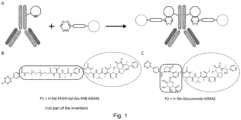
- SPIEDAC reaction One special case of a SPIEDAC reaction is the conjugation of a cyclooctene-lysine (SCO) and a 1,2,4,5-tetrazine, which might not be an inverse electron demand reaction and does not show the same reaction speed as other strained alkenes or alkynes, as it could be shown in in vivo measurements ( Figure 1 ). Therefore, SCO as well as the resulting reaction product, shows highest stability in the cellular environment compared to other strained alkene/alkynes tested ( Wagner, J. A., Mercadante, D., Nikic, I., Lemke, E. A. & Gräter, F. Origin of Orthogonality of Strain-Promoted Click Reactions. Chem.
- the toxic payload can be divided into a linker and a cytotoxic drug.
- linker technologies existing nowadays, ranging from non-cleavable, to enzymatic, acidic and glutathione cleavable linkers.
- the linker is directly influencing the pharmacokinetics and pharmacodynamics of the ADC ( Hafeez, U., Parakh, S., Gan, H. K. & Scott, A. M. Antibody-drug conjugates for cancer therapy. Molecules 25, 4764 (2020 ); Khongorzul, P., Ling, C. J., Khan, F. U., Ihsan, A. U. & Zhang, J. Antibody-Drug Conjugates: A Comprehensive Review. Mol. Cancer Res. 18, 3-19 (2020 )).
- RIC represent another interesting subclass of ADCs, and may be generated by labelling monoclonal antibodies with a radioactive payload, which is then delivered to the tumor site thereby leading to shrinking and/or growth inhibition of the tumor cells.
- isotopes are beta emitting isotopes such as 177 Lu with a half-life of 6.7 days.
- radioisotopes conjugation of radioisotopes to mAbs also opens up the opportunity to replace the therapeutic radioisotopes, often beta- or alpha-emitters, with diagnostic isotopes, often positron emitters for positron emission tomography (PET), to detect the disease-associated targets of interest.
- therapeutic radioisotopes often beta- or alpha-emitters
- diagnostic isotopes often positron emitters for positron emission tomography (PET)
- radioisotopes for therapeutic studies has particularly high prerequisites on purity and stability in a biologic system over several hours to days.
- reaction temperatures are higher advising execution of the radiolabeling without heat sensitive proteins like monoclonal antibodies.
- Various typesof conjugates are disclosed, in which active agents are conjugated to an antibody polypeptide chain via diverse types of linkers.
- Burke et al relates to ADCs presenting an auristatin type molecule (MMAE) connected to a glucuronide linker allwiong for the site-specific conjugation to an antibody scaffold via a maleimide moiety.
- MMAE auristatin type molecule
- Oller-Salvia, et al., Angewandte Chemie Int. Ed. (2016), 57, 2831 - 2834 describes the site-specific conjugation of a tetrazine modified MMAE to an ncAA modified Trastuzumab.
- improved therapeutic ADCs as further described herein, comprising particular site-specifically modified antibody components of the conjugate. More particularly, improved ADCs valuable for use in the treatment of breast cancer are provided.
- Kadcyla ® is an antibody/cytostatic conjugate that combines the humanized anti-HER2 IgG1 antibody Trastuzumab with the microtubule-inhibiting maytansinoid DM1.
- the Trastuzumab component binds to HER2 and exerts an antineoplastic effect there.
- the conjugate is subsequently internalized and degraded so that DM1 is released in the cell, and binding to tubulin leads to apoptotic cell death. This is thought to enhance the therapeutic effect. Due to the covalent binding between Trastuzumab and DM1 via a thioether linker the systemic release of DM1 shall be reduced and the targeted release of DM1 is enhanced.
- the present invention provides the first study showing the influence of the coupling site on the efficacy of the ADC, as well as the influence of the DAR in in vitro cytotoxicity assays.
- Different variants of Trastuzumab either non-glycosylated or glycosylated, containing one ncAA in various sites on its heavy (IgH) or light (LgL) or two ncAAs in various sites on its heavy or light chain or on both heavy and light chains, were coupled to the respective toxic payload.
- IgH heavy
- LgL light
- two ncAAs in various sites on its heavy or light chain or on both heavy and light chains were coupled to the respective toxic payload.
- the different mutation sites were chosen based on structural knowledge of Trastuzumab and human IgG1 Fc fragment (PDB:4HKZ for Trastuzumab Fab fragment and PDB: 3DNK for IgG1 Fc fragment). Some sites are already know based on literature, like to position K249 in the heavy chain of Trastuzumab. This position was, however, merely used for coupling to a cyclic peptide, but not by utilizing genetic code expansion technology ( Shi, W. et al. Manipulating the Click Reactivity of Dibenzoazacyclooctynes: From Azide Click Component to Caged Acylation Reagent by Silver Catalysis. Angew. Chemie 132, 20112-20116 (2020 )). The position K320 was mentioned in the context of C1q binding, but not used for site-specific labeling so far.
- Trastuzumab-based ADCs Short name mutation site mutation in chain domain payload used ADC-H1-P1 (not part of the invention K249 Heavy C H 2 H-Tet-PEG9-Val-Ala-PAB-M MAE ADC-H1-P2 K249 Heavy C H 2 H-Tet-Glucuronide-MMAE ADC-H2-P1 (not part of the invention) K251 Heavy C H 2 H-Tet-PEG9-Val-Ala-PAB-MMAE ADC-H3-P1 (not part of the invention) K291 Heavy C H 2 H-Tet-PEG9-Val-Ala-PAB-MMAE ADC-H4-P1 (not part of the invention) K320 Heavy C H 2 H-Tet-PEG9-Val-Ala-PAB-MMAE ADC-H4-P1 (not part of the invention) K320 Heavy C H 2 H-Tet-PEG9-Val-Ala-PA
- Trastuzumab-based radiolabeled ADCs particularly site-specifically labeled Trastuzumab variants carrying a ncAA moiety which can be selectively conjugated via click reaction with, for example tetrazine modified, chelators ( Figure 10 ), particularly with DOTA-based chelators ( Figure 11 ) under mild conditions (not part of the invention).
- Table: Trastuzumab-based radiolabeled ADCs Short name mutation site mutation in chain domain payload used ADC-H8-P3 (not part of the invention) A121 Heavy C H 1 H-Tet-PEG9-DOTA
- substantially describes a range of values of from about 80 to 100%, such as, for example, 85-99.9%, in particular 90 to 99.9%, more particularly 95 to 99.9%, or 98 to 99.9% and especially 99 to 99.9%.
- Predominantly refers to a proportion in the range of above 50%, as for example in the range of 51 to 100%, particularly in the range of 75 to 99,9%; more particularly 85 to 98,5%, like 95 to 99%.
- Internalize or “internalization” of an immunoglobulin molecule relates to the ability of an immunoglobulin or ADC or APC as described herein binding to a cell surface receptor to induce a receptor-mediated endocytosis upon binding.
- archaeal pyrrolysyl tRNA synthetase (abbreviated as "archaeal PyIRS") as used herein refers to a PyIRS, wherein at least a segment of the PylRS amino acid sequence, or the entire PylRS amino acid sequence, has at least 60%, at least 70%, at least 80%, at least 90%, at least 95%, at last 99%, or 100% sequence identity to the amino acid sequence of a naturally occurring PyIRS from an archaeon, or to the amino acid sequence of an enzymatically active fragment of such naturally occurring PyIRS.
- the PylRS of the present invention may comprise a mutant archaeal PyIRS, or an enzymatically active fragment thereof.
- nuclear export signal refers to an amino acid sequence which can direct a polypeptide containing it (such as a NES-containing PylRS of the invention) to be exported from the nucleus of a eukaryotic cell. Said export is believed to be mostly mediated by Crm1 (chromosomal region maintenance 1, also known as karyopherin exportin 1). NESs are known in the art. For example, the database ValidNESs (http://validness.ym.edu.tw/) provides sequence information of experimentally validated NES-containing proteins.
- NES databases like, e.g., NESbase 1.0 (www.cbs.dtu.dk/databased/NESbase-1.0/; see Le Cour et al., Nucl Acids Res 31(1), 2003 ) as well as tools for NES prediction like NetNES (www.cbs.dtu.dk/services/NetNES/; see La Cour et al., La Cour et al., Protein Eng Des Sel 17(6):527-536, 2004 ), NESpredictor (NetNES, http://www.cbs.dtu.dk/; see Fu et al., Nucl Acids Res 41:D338-D343, 2013 ; La Cour et al., Protein Eng Des Sel 17(6):527-536, 2004 )) and NESsential (a web interface combined with ValidNESs) are available to the public.
- NESbase 1.0 www.cbs.dtu.dk/databased/NESbase-1.0/; see Le Cour e
- Hydrophobic leucine-rich NESs are most common and represent the best characterized group of NESs to date.
- a hydrophobic leucine-rich NES is a non-conservative motif having 3 or 4 hydrophobic residues.
- Many of these NESs comprise the conserved amino acid sequence pattern LxxLxL (SEQ ID NO:111) or LxxxLxL (SEQ ID NO:112), wherein each L is independently selected from leucine, isoleucine, valine, phenylalanine and methionine amino acid residues, and each x is independently selected from any amino acid (see La Cour et al., Protein Eng Des Sel 17(6):527-536, 2004 ).
- nuclear localization signal refers to an amino acid sequence which can direct a polypeptide containing it (e.g., a wild-type archaeal PyIRS) to be imported into the nucleus of a eukaryotic cell. Said export is believed to be mediated by binding of the NLS-containing polypeptide to importin (also known as karyopherin) so as to form a complex that moves through a nuclear pore. NLSs are known in the art.
- NLSdb see Nair et al., Nucl Acids Res 31(1), 2003
- cNLS Mapper www.nls-mapper.aib.keio.ac.jp; see Kosugi et al., Proc Natl Acad Sci U S A.
- tRNA aminoacyl. in particular, “tRNA Pyl” refers to a tRNA that can be acylated (essentially selectively and in particular selectively) by an aminoacyl RS, in particular a PyIRS.
- the tRNA Pyl described herein be a wildtype tRNA that can be acylated by a PylRS with pyrrolysine, or a mutant of such tRNA, e.g., a wildtype or a mutant tRNA from an archaeon, for example from a Methanosarcina species, e.g. M. mazei or M. barkeri.
- the anticodon comprised by the"tRNA aminoacyl. ", or the tRNA Pyl used together with the respective RS is the reverse complement of a selector codon.
- the anticodon of the "tRNA aminoacyl. ", in particular of tRNA Pyl is the reverse complement of the amber stop codon.
- vector codon refers to a codon that is recognized (i.e. bound) by the"tRNA aminoacyl. ", or tRNA Pyl in the translation process and is not recognized by endogenous tRNAs of the eukaryotic cell.
- the term is also used for the corresponding codons in polypeptide-encoding sequences of polynucleotides, which are not messenger RNAs (mRNAs), e.g. DNA plasmids.
- mRNAs messenger RNAs
- the selector codon is a codon of low abundance in naturally occurring eukaryotic cells. The anticodon of the "tRNA aminoacyl.
- tRNA Pyl binds to a selector codon within an mRNA and thus incorporates the ncAA site-specifically into the growing chain of the polypeptide encoded by said mRNA.
- the known 64 genetic (triplet) codons code for 20 amino acids and three stop codons. Because only one stop codon is needed for translational termination, the other two can in principle be used to encode non-proteinogenic amino acids.
- the amber codon, UAG has been successfully used as a selector codon in in vitro and in vivo translation systems to direct the incorporation of unnatural amino acids.
- Selector codons utilized in methods of the present invention expand the genetic codon framework of the protein biosynthetic machinery of the translation system used.
- selector codons include, but are not limited to, nonsense codons, such as stop codons, e.g ., amber (UAG), ochre (UAA), and opal (UGA) codons; codons consisting of more than three bases (e.g., four base codons); and codons derived from natural or unnatural base pairs.
- a selector codon can also include one of the natural three base codons (i.e.
- the endogenous translation system does not (or only scarcely) use said natural triplet, e.g ., a system that is lacking a tRNA that recognizes the natural triplet or a system wherein the natural triplet is a rare codon.
- a polynucleotide sequence encoding a "polypeptide of interest" or "POI” can comprise one or more, e.g ., two or more, more than three, etc., codons (e.g. selector codons) which are the reverse complement of the anticodon comprised by the tRNA Pyl .
- Conventional site-directed mutagenesis can be used to introduce said codon(s) at the site of interest into a polynucleotide sequence, to generate a POI-encoding polynucleotide sequence.
- the RS (or mutants thereof) and the respective tRNA are preferably orthogonal.
- orthogonal refers to a molecule (e.g., an orthogonal tRNA and/or an orthogonal RS) that is used with reduced efficiency by a translation system of interest (e.g., a eukaryotic cell used for expression of a POI as described herein).
- a translation system of interest e.g., a eukaryotic cell used for expression of a POI as described herein.
- orthogonal refers to the inability or reduced efficiency, e.g., less than 20% efficient, less than 10% efficient, less than 5% efficient, or e.g., less than 1% efficient, of an orthogonal tRNA or an orthogonal RS to function with the endogenous RSs or endogenous tRNAs, respectively, of the translation system of interest.
- any endogenous RS of the eukaryotic cell of the invention catalyzes acylation of the (orthogonal) tRNA Pyl with reduced or even zero efficiency, when compared to acylation of an endogenous tRNA by the endogenous RS, for example less than 20% as efficient, less than 10% as efficient, less than 5% as efficient or less than 1% as efficient.
- the (orthogonal) PylRS of the invention acylates any endogenous tRNA of the eukaryotic cell of the invention with reduced or even zero efficiency, as compared to acylation of the tRNA Pyl by an endogenous RS of the cell, for example less than 20% as efficient, less than 10% as efficient, less than 5% as efficient or less than 1% as efficient.
- translation system generally refers to a set of components necessary to incorporate a naturally occurring amino acid in a growing polypeptide chain (protein).
- Components of a translation system can include, e.g., ribosomes, tRNAs, aminoacyl tRNA synthetases (RS), mRNA and the like.
- Translation systems include artificial mixture of said components, cell extracts and living cells, e.g. living eukaryotic cells.
- Incorporation occurs in a site-specific manner, e.g ., the tRNA Pyl recognizes a codon (e.g ., a selector codon such as an amber stop codon) in the mRNA coding for the POI.
- a codon e.g ., a selector codon such as an amber stop codon
- residue H-Tet in formula 20 is selected from residues of the formulae 5, 6, 7, 11, 12 or 13
- said at least one IgH is side-selectively modified by incorporation of at least one ncAA residue within their amino acid sequence in a positions within C H 2 and/or in at least one, as for example 1, 2, 3, 4 or 5, more particularly 1 or 2, positions within one or more, as for example 1, 2, 3, 4, more particularly 1 or 2, framework V H regions, selected from FR1, FR2, FR3 and FR4, more particularly selected from FR2 and FR3 and/or said
- Each of the above-mentioned mutants may be provided either in non-glycosylated, glycosylated or de-glycosylated form.
- a site-selectively modified immunoglobulin molecule which contains one ncAA in the constant region of each of its IgH chains.
- a site-selectively modified immunoglobulin molecule which contains two ncAAs in the constant region of each of its IgH chains.
- a site-selectively modified immunoglobulin molecule which contains two ncAAs in the constant region of each of its IgH chains and which contains one ncAA in the constant region of each of its IgL chains.
- a site-selectively modified immunoglobulin molecule which contains one ncAA in the constant region of each of its IgH chains and which contains two ncAAs in the constant region of each of its IgL chains.
- a site-selectively modified immunoglobulin molecule which contains two ncAAs in the constant region of each of its IgH chains and which contains two ncAAs in the constant region of each of its IgL chains.
- Each of the above-mentioned mutants may be provided either in non-glycosylated, glycosylated or de-glycosylated form.
- a site-selectively modified immunoglobulin molecule which contains one ncAA in the variable region of each of its IgH chains.
- a site-selectively modified immunoglobulin molecule which contains one ncAA in the variable region of each of its IgL chains.
- a site-selectively modified immunoglobulin molecule which contains two ncAAs in the variable region of each of its IgH chains.
- a site-selectively modified immunoglobulin molecule which contains two ncAAs in the variable region of each of its IgL chains.
- a site-selectively modified immunoglobulin molecule which contains one ncAA in the variable region of each of its IgH chains and which contains one ncAA in the variable region of each of its IgL chains.
- a site-selectively modified immunoglobulin molecule which contains two ncAAs in the variable region of each of its IgH chains and which contains one ncAA in the variable region of each of its IgL chains.
- a site-selectively modified immunoglobulin molecule which contains one ncAA in the constant region of each of its IgH chains and which contains two ncAAs in the constant region of each of its IgL chains.
- a site-selectively modified immunoglobulin molecule which contains two ncAAs in the variable region of each of its IgH chains and which contains two ncAAs in the variable region of each of its IgL chains.
- Each of the above-mentioned mutants may be provided either in non-glycosylated, glycosylated or de-glycosylated form.
- a site-selectively modified immunoglobulin molecule which contains two ncAAs distributed over the constant and the variable region of each of its IgH chains.
- a site-selectively modified immunoglobulin molecule which contains two ncAAs distributed over the constant and the variable region of each of its IgL chains.
- a site-selectively modified immunoglobulin molecule which contains two ncAAs distributed over the constant and the variable region of each of its IgH chains and which contains one ncAA in the constant region of each of its IgL chains.
- a site-selectively modified immunoglobulin molecule which contains one ncAA in the constant region of each of its IgH chains and which contains two ncAAs distributed over the constant and the variable region of each of its IgL chains.
- a site-selectively modified immunoglobulin molecule which contains two ncAAs distributed over the constant and the variable region of each of its IgH chains and which contains two ncAAs distributed over the constant and the variable region of each of its IgL chains.
- Each of the above-mentioned mutants may be provided either in non-glycosylated, glycosylated or de-glycosylated form.
- a site-selectively modified immunoglobulin molecule which comprises one single site-selective modification selected from
- Each of the above-mentioned mutants may be provided either in non-glycosylated, glycosylated or de-glycosylated form.
- a site-selectively modified immunoglobulin molecule which comprises two site-selective modifications
- Each of the above-mentioned mutants may be provided either in non-glycosylated, glycosylated or de-glycosylated form.
- Each of the above-mentioned mutants may be provided either in non-glycosylated, glycosylated or de-glycosylated form.
- said at least one side-selectively modified IgH, of said APC may be side-selectively modified by incorporation of an TCO*A residues within their amino acid sequence in a sequence position which corresponds to a position A121 according to SEQ ID NO:2 and be further characterized in that:
- H-tetrazine-functionalized payload moiety -L-P is of the formula 5: wherein
- nucleic acid molecule comprising a nucleotide sequence encoding at least one site-selectively modified immunoglobulin polypeptide chain as defined above, and which comprises at least one codon, in particular a stop codon, allowing the incorporation of said ncAA into the encoded polypeptide sequence during protein expression.
- nucleic acid sequence which is derived from nucleic acid sequences of SEQ ID NO:1, 3, 5 and 7, and nucleic acid sequences which are derived therefrom and have a sequence identity of at least 50%, as for example at least 55%, or 60%, in particular at least 75%, more particular at least 80 or 85%, such as, for example, 90, 91, 92, 93, 94, 95, 96, 97, 98 or 99%, to anyone of SEQ ID NO:1, 3, 5 and 7, and which comprise one, two or more, more than three, etc., codons (e.g.
- selector codons which are the reverse complement of the anticodon comprised by a tRNA required for incorporating a ncAA into a polypeptide sequence encoded by said nucleic acid sequence.
- the sequence deviations are selected such that the polypeptide encoded by a nucleic acid sequence derived from SEQ ID NO:1, 3, 5 and 7, retains essentially the CDR sequence motives of the respective polypeptides according to SEQ ID NO: 2, 4, 6, and 8.
- "Essentially” means that site-specific modifications are allowed within the sequences encoding the individual CDR motifs, as long as binding specificity of the respective immunoglobulin molecule is partially or fully retained.
- prokaryotic or eukaryotic hosts which carry at least one of the above identified coding nucleic acid molecules, and/or at least one of the above identified expression constructs and/or viral vectors.
- said eukaryotic cost is selected from non-human organisms or cells or cell lines.
- Also disclosed herein is a method for preparing a polypeptide conjugate comprising:
- said the conjugate is an APC, in particular an ADC.
- Said residues of the formulae 5, 6 and 7 may be directly linked to L or via a linear or branched polyalkylene oxide moieties, in particular selected from linear the moieties -((CH 2 ) x1 -O) y1 - or -(O-(CH 2 ) x1 ) y1 - and the branched analogues thereof; wherein
- the invention relates to a pharmaceutical composition
- a pharmaceutical composition comprising in a pharmaceutically acceptable carrier at least on ADC as defined above or prepared according to the above identified method.
- said linker group L is an enzymatically linker group selected from beta-glucuronidase-sensitive cleavable linker groups, in particular carrying a beta-glucuronic acid derived trigger residue.
- Said residues of the formulae 5, 6, 7, 11, 12 and 13 may be directly linked to L or via a linear or branched polyalkylene oxide moieties, in particular selected from linear the moieties -((CH 2 ) x1 -O) y1 - or -(O-(CH 2 ) x1 ) y1 - and the branched analogues thereof; wherein
- an "enzyme”, “protein” or “polypeptide” as described herein can be a native or recombinantly produced enzyme, protein or polypeptide it may be the wild type enzyme, protein or polypeptide or genetically modified by suitable mutations or by C- and/or N-terminal amino acid sequence extensions, like His-tag containing sequences.
- the enzyme, protein or polypeptide basically can be mixed with cellular, for example protein impurities, but particularly is in pure form. Suitable methods of detection are described for example in the experimental section given below or are known from the literature.
- a “pure form” or a “pure” or “substantially pure” enzyme, protein or polypeptide is to be understood according to the invention as an enzyme, protein or polypeptide with a degree of purity above 80, particularly above 90, especially above 95, and quite particularly above 99 wt%, relative to the total protein content, determined by means of usual methods of detecting proteins, for example the biuret method or protein detection according to Lowry et al. (cf. description in R.K. Scopes, Protein Purification, Springer Verlag, New York, Heidelberg, Berlin (1982 )).
- Proteinogenic amino acids comprise in particular (single-letter code): G, A, V, L, I, F, P, M, W, S, T, C, Y, N, Q, D, E, K, R and H.
- polypeptide or “peptide”, which may be used interchangeably, refer to a natural or synthetic linear chain or sequence of consecutive, peptidically linked amino acid residues, comprising about 10 to up to more than 1.000 residues. Short chain polypeptides with up to 30 residues are also designated as “oligopeptides”.
- protein refers to a macromolecular structure consisting of one or more polypeptides.
- the amino acid sequence of its polypeptide(s) represents the "primary structure” of the protein.
- the amino acid sequence also predetermines the "secondary structure” of the protein by the formation of special structural elements, such as alpha-helical and beta-sheet structures formed within a polypeptide chain. The arrangement of a plurality of such secondary structural elements defines the "tertiary structure” or spatial arrangement of the protein. If a protein comprises more than one polypeptide chains said chains are spatially arranged forming the "quaternary structure" of the protein.
- a correct spatial arrangement or "folding" of the protein is prerequisite of protein function. Denaturation or unfolding destroys protein function. If such destruction is reversible, protein function may be restored by refolding.
- polypeptide referred to herein as having a particular "activity” thus implicitly refers to a correctly folded protein showing the indicated activity.
- polypeptide fragment encompasses the terms “protein fragment”.
- isolated polypeptide refers to an amino acid sequence that is removed from its natural environment by any method or combination of methods known in the art and includes recombinant, biochemical and synthetic methods.
- the present invention also relates to "functional equivalents” (also designated as “analogs” or “functional mutations”) of the polypeptides specifically described herein.
- polypeptides which, in a test used for determining enzymatic NHase activity display at least a 1 to 10 %, or at least 20 %, or at least 50 %, or at least 75 %, or at least 90 % higher or lower activity, as that of the polypeptides specifically described herein.
- “Functional equivalents”, according to the invention also cover particular mutants, which, in at least one sequence position of an amino acid sequences stated herein, have an amino acid that is different from that concretely stated one, but nevertheless possess one of the aforementioned biological activities, as for example enzyme activity.
- “Functional equivalents” thus comprise mutants obtainable by one or more, like 1 to 20, in particular 1 to 15 or 5 to 10 amino acid additions, substitutions, in particular conservative substitutions, deletions and/or inversions, where the stated changes can occur in any sequence position, provided they lead to a mutant with the profile of properties according to the invention.
- Functional equivalence is in particular also provided if the activity patterns coincide qualitatively between the mutant and the unchanged polypeptide, i.e.
- di-scFvs, tri-scFvs including but not limited to minibodies, diabodies, triabodies, tribodies, tetrabodies, and the like, and multivalent antibodies.
- Labeling agents which may be used according to the invention can comprise any type of label known in the art which.
- ncAAs useful in methods and kits applied in the context of the present invention have been described in the prior art (for review see e.g. Liu et al., Annu Rev Biochem 83:379-408, 2010 , Lemke, ChemBioChem 15:1691-1694, 2014 ).
- ncAAs comprising docking groups
- suitable ncAAs include, but are not limited to, the ncAAs described, e.g., in WO 2012/104422 and WO 2015/107064 .
- Optionally substituted strained alkynyl groups include, but are not limited to, optionally substituted trans -cyclooctenyl groups, such as those described in.
- Optionally substituted strained alkenyl groups include, but are not limited to, optionally substituted cyclooctynyl groups, such as those described in WO 2012/104422 and WO 2015/107064 .
- Optionally substituted tetrazinyl groups include, but are not limited to, those described in WO 2012/104422 and WO 2015/107064 .
- Cyclooctynyl is an unsaturated cycloaliphatic radical having 8 carbon atoms and one triple bond in the ring structure.
- Trans -cyclooctenyl is an unsaturated cycloaliphatic radical having 8 carbon atoms and one double bond that is in trans configuration in the ring structure.
- substituted means that a radical is substituted with 1, 2 or 3, especially 1 or 2, substituent(s).
- substituents can be selected independently from hydrogen, halogen, C 1 -C 4 -alkyl, (R a O) 2 P(O)O-C 1 -C 4 -alkyl, (R b O) 2 P(O)-C 1 -C 4 -alkyl, CF 3 , CN, hydroxyl, C 1 -C 4 -alkoxy, -O-CF 3 , C 2 -C 5 -alkenoxy, C 2 -C 5 -alkanoyloxy, C 1 -C 4 -alkylaminocarbonyloxy or C 1 -C 4 -alkylthio, C 1 -C 4 -alkylamino, di-(C 1 -C 4 -alkyl)amino, C 2 -C 5 -alkenylamino
- C 1 -C 4 -Alkoxy is a radical of formula R-O-, wherein R is a C 1 -C 4 -alkyl group as defined herein.
- C 2 -C 5 -Alkenoxy is a radical of formula R-O-, wherein R is C 2 -C 5 -alkenyl as defined herein.
- C 2 -C 5 -Alkanoyloxy is a radical of formula R-C(O)-O-, wherein R is C 1 -C 4 -alkyl as defined herein.
- C 1 -C 4 -Alkylthio is a radical of formula R-S-, wherein R is C 1 -C 4 -alkyl as defined herein.
- C 1 -C 4 -Alkylamino is a radical of formula R-NH-, wherein R is C 1 -C 4 -alkyl as defined herein.
- Di-(C 2 -C 5 -alkenyl)amino is a radical of formula R x -N(R y )-, wherein R x and R y are independently C 2 -C 5 -alkenyl as defined herein.
- C 2 -C 5 -Alkanoyloxymethyl is a radical of formula R x -C(O)-O-CH 2 -, wherein R x is C 1 -C 4 -alkyl as defined herein.
- ncAAs used in the context of the present invention can be used in the form of their salt.
- Salts of an ncAA as described herein mean acid or base addition salts, especially addition salts with physiologically tolerated acids or bases.
- Physiologically tolerated acid addition salts can be formed by treatment of the base form of an ncAA with appropriate organic or inorganic acids.
- ncAAs containing an acidic proton may be converted into their non-toxic metal or amine addition salt forms by treatment with appropriate organic and inorganic bases.
- the ncAAs and salts thereof described in the context of the present invention also comprise the hydrates and solvent addition forms thereof, e.g. hydrates, alcoholates and the like.
- Physiologically tolerated acids or bases are in particular those which are tolerated by the translation system used for preparation of POI with ncAA residues, e.g. are substantially non-toxic to living eukaryotic cells.
- ncAAs, and salts thereof, useful in the context of the present the invention can be prepared by analogy to methods, which are well known in the art and are described, e.g., in the various publications cited herein.
- useful coupling partner molecules include, but are not limited to, a member of a receptor/ligand pair; a member of an antibody/antigen pair; a member of a lectin/carbohydrate pair; a member of an enzyme/substrate pair; biotin/avidin; biotin/streptavidin and digoxin/antidigoxin.
- the ability of certain (labeling groups of) ncAA residues to be coupled covalently in situ to (the docking groups of) conjugation partner molecules, in particular by a click reaction as described herein, can be used for detecting a POI having such ncAA residue(s) within a eukaryotic cell or tissue expressing the POI, and for studying the distribution and fate of the POIs.
- the method for preparing a POI by expression in eukaryotic cells can be combined with super-resolution microscopy (SRM) to detect the POI within the cell or a tissue of such cells.
- SRM super-resolution microscopy
- SRM methods are known in the art and can be adapted so as to utilize click chemistry for detecting a POI expressed by a eukaryotic cell used in the present invention.
- SRM methods include DNA-PAINT (DNA point accumulation for imaging in nanoscale topography; described, e.g., by Jungmann et al., Nat Methods 11:313-318, 2014 ), dSTORM (direct stochastic optical reconstruction microscopy) and STED (stimulated emission depletion) microscopy.
- Conjugates of the present invention are a basically well-known type of active agents, which are diagnostically and /or therapeutically applicable.
- a particular strategy of conjugation is based on a conjugation of a drug molecule to the ncAA residues of a correspondingly modified antibody molecule via Diels-Alder cycloadditions.
- a more particular approach thereof is reported by the present inventors in Koehler, C. et al Nat. Methods,2 016, 13, 997 .
- highly reactive ncAAs like cyclooctene and cyclooctyne-lysines ((TCO-K and SCO-K) have been incorporated into Trastuzumab (i.e. Herceptin) by genetic code expansion.
- TCO-K and SCO-K cyclooctene and cyclooctyne-lysines
- Such antibodies have then been reacted with 1,2,4,5-tetrazine functionalised fluorophores to detect human cancer cells.
- the tetrazine functionalised drug comprises a linker moiety between a benzyl-tetrazine endgroup and the MMAE moiety.
- the linker comprises a valine-citrulline protease-labile dipeptide linker, which is cleaved by cathepsin B in the lysosomes to release the toxin.
- the tetrazine functionalised drug is conjugated with the functionalised antibody molecule in PBS containing 10% MeCN at 25°C over 3 hours at a yield of over 95%.
- the bio-orthogonal conjugation with highly reactive ncAAs of the above-mentioned type may be performed with payload molecules functionalised with different types of dienophilic tetrazine groups.
- Reference may be, for example made to Kozma, E,. et al., ChemBioChem,2017,18 486 , disclosing tetrazine derivatives, wherein the tetrazine moiety is substituted with 1 or 2 optionally further functionalised aromatic moieties.
- suitable tetrazine groups are for example disclosed by Audebert, P. et al., in New. J. Chem., 2004, 28, 387 , or by Yang, J. et al. in Angew. Chem. Int. Ed. 2012, 51, 5222 or by Knall, A.-C., et al in Chem. Soc. Rev., 2012,42,5131
- the linker group which may be placed between the tetrazine moiety and the payload molecule of the H-tetrazine functionalized payload molecule of the present inventtion is beta-glucuronidase-sensitive cleavable linker group, in particular carrying a beta-glucuronic acid derived trigger residue.
- Non-limiting examples thereof are residues of the formula 8, 9 or 10: or
- Said residues of the formulae 5, 6 7, 11, 12 and 13 may be directly linked to L or via a linear or branched polyalkylene oxide moieties, in particular selected from linear the moieties -((CH 2 ) x1 -O) y1 - or -(O-(CH 2 ) x1 ) y1 - and the branched analogues thereof; wherein
- self-immolative groups may also be integrated into the linker moiety, particular next to the payload molecule (not part of the invention).
- suitable self-immolative moieties there may be mentioned p-amino-benzyl groups, carbonate groups, dicarbamate groups and methylene alkoxy carbamate groups.
- APCs and ADCs of the present invention may be prepared in a similar manner as described above.
- a reaction sequence starting out from a tetrazine reactant may be mentioned.
- a payload molecule already carrying a linker moiety as above exemplified may be dissolved in a suitable solvent and be reacted with the functionalised tetrazine moiety.
- Said tetrazine moiety may have a suitable reactive group, as for example a carboxylic group or succinimidyl ester group capable of reacting with a terminal amino group of the peptide linker.
- the reaction may be performed at low temperatures, preferably around ambient temperature, optionally in the presence of suitable coupling agents, like EDC.
- Organic or inorganic acids or bases may be added during the reaction in order to adjust the required pH.
- suitable solvents are polar protic or aprotic organic solvents like DMF, DMSO, pyridine.
- a payload molecule of the type H-Tet-Glucuronide-D of formula 20 or, more particularly of formula 23, and in particular of formula 34, may be prepared by applying standard techniques of organic synthesis.
- the synthesis may be performed according to the following reaction scheme:
- the obtained mixture is stirred at a suitable temperature like 0 to 100 0 C as for example at room temperature for sufficient time, as for example overnight. Afterwards, 1 M NaOH (for example in excess, like for example 4 to 20-fold or 5 to 10-fold molar excess) is added and the is mixture stirred for sufficient time and at an appropriate temperature (as for example for 1 h at room temperature).
- 1 M NaOH for example in excess, like for example 4 to 20-fold or 5 to 10-fold molar excess
- the obtained reaction product is subjected to purification in order to obtain the desired product of formula 32.
- the cloning steps carried out in the context of the present invention for example restriction cleavage, agarose gel electrophoresis, purification of DNA fragments, transfer of nucleic acids onto nitrocellulose and nylon membranes, linkage of DNA fragments, transformation of microorganisms, culturing of microorganisms, multiplication of phages and sequence analysis of recombinant DNA are, if not otherwise sated, carried out by applying well-known techniques, as for example described in Sambrook et al. (1989) op. cit.
- SCO as well as TCO*A were purchased from SiChem (SIRIUS FINE CHEMICALS, SICHEM GMBH, Germany).
- reaction progress was monitored by TLC on Merck silica gel plates 60 F254 or via UHPLC-MS. TLC-detection was executed either via UV-light at 254 nm or with potassium permanganate staining.
- Flash chromatographic purification was performed on a Biotage Isolera One purification system using silica gel (0.060-0.200 mm), KP-Sil cartridges.
- Preparative HPLC purification was performed on Agilent Infinity 1260 series equipment consisting of Agilent 1260 preparative pumps, a 1260 preparative autosampler, a 1260 fraction collector and a 1260 multiple wavelength detector VL.
- the preparative column used was a Waters X-Bridge Prep C18 column: 5 ⁇ m; 19x150 mm operated with a linear gradient of H 2 O and acetonitrile, both containing 0.1% TFA as solvents.
- Sf21 cells were cultivated at 27 °C shaking at 100 rpm using Sf-900 III SFM medium (Thermo Fisher scientific) and split every second day to 0.6 x 10 6 cells/ml or every third day to 0.3 x 10 6 cells/ml.
- Sf-900 III SFM medium Thermo Fisher scientific
- HEK293F cells Freestyle, Thermo Scientific were grown in Freestyle 293 medium accordingly to the protocol provided by the supplier.
- the payload molecule P1 was prepared according to the following reaction scheme:
- Step 1.1 Synthesis of 1-(4-(1,2,4,5-tetrazin-3-yl)phenyl)-1-oxo-5,8,11,14,17,20,23,26-octaoxa-2-azanonacosan-29-oic acid (2):
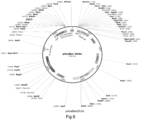
- the heavy chain of Trastuzumab was cloned with a C-terminal 6His-tag into the multi cloning site 1 (MCS1) of the plasmid pAceBacDUAL (SEQ ID NO:21) and the light chain into MCS2 using restriction enzymes resulting in the plasmid pAceBacDUAL-Trastuzumab heavy chain 6His-light chain (SEQ ID NO:22).
- the cell pellet of 1 Liter expression as obtained according to Example 2 was resuspended in 5 ml lysis buffer (4xPBS, 1 mM phenylmethylsulfonyl fluoride (PMSF), 0.2 mM tris(2-carboxyethyl)phosphine (TCEP), 5 mM Imidazole) on ice. Sonication was performed three times for 30 seconds on ice. The volume of the lysate was triplicated by addition of lysis buffer and the sample was centrifuged for 1 hour at 15000 rpm using a JA25.50 rotor (Beckman Coulter).
- lysis buffer 4xPBS, 1 mM phenylmethylsulfonyl fluoride (PMSF), 0.2 mM tris(2-carboxyethyl)phosphine (TCEP), 5 mM Imidazole
- Trastuzumab was mixed with the toxic payload in a 1:4 ratio in 1xPBS and incubated for 30 minutes at RT.
- the reaction was purified via size exclusion chromatography (Superdex S200, 10730, Cytiva) and fractions were collected.
- the fractions containing the pure ADC were pooled, concentrated in a protein filter device (Amicon ® Ultra-15 Centrifugal Filter Unit 30 KDa cutoff, Millipore) and the concentration was measured with a UV-Vis spectrometer.
- SK-BR-3 (ATCC: HTB-30) were obtained from CLS GmbH, Heidelberg (300333) and cultured in DMEM high glucose (4.5 mg/ml), containing 10% FBS, 1% Penicillin-Streptomycin and 1% nonessential amino acids (NEAA).
- BT-474 (ATCC: HTB-20) were obtained from CLS GmbH, Heidelberg (300131) and cultured in HAM-F12 medium mixed with the same amount of DMEM (high glucose) supplemented with 5% fetal bovine serum (FBS), 1% Penicillin-Streptomycin, 1% L-glutamine and 5 ⁇ g/ml human insulin.
- DMEM high glucose
- FBS fetal bovine serum
- Penicillin-Streptomycin 1%
- L-glutamine 5 ⁇ g/ml human insulin.
- the ADC were diluted in the corresponding medium to obtain the desired concentration.
- the medium was replaced by the diluted ADC and incubated for five days in a CO 2 -incubator.
- CellTiter-Glo 2.0 (Promega) was used to measure the cell viability. Therefore, the cells were incubated for 30 minutes at RT. 100 ⁇ l of the CellTiter-Glo 2.0 was pipetted to each well and after shaking 2 minutes on an orbital shaker, the plates were incubated 10 more minutes at RT. The luminescence readout was done on a plate reader. Analysis of the data was down using GraphPad Prism 9 software. The data of replicates were averaged, and the standard deviation was calculated. The data was normalized to the data point of the negative control, the viability measured for the well without the addition of ADC.
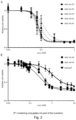
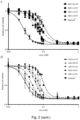
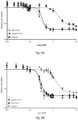
- FIG. 2 C shows three different light chain mutants coupled to P2 as well as ADC-H1-P2, and Kadcyla ® as control. All three light chain modified ADCs are more efficient than Kadcyla ® , but do not outcompete our ADC-H1-P2.
- Figure 2D we show the results of the cytotoxicity assay with two new heavy and two light chain mutants as well as our controls. The new mutations are all pointing into the cavity between the heavy and light chain structure. The data suggest that the ADC-H6-P2 is nearly as efficient as the ADC-H1-P2, showing a similar killing curve.
- the bicistronic plasmids of the two Trastuzumab variants as obtained according to Example 6 were used in combination with plasmids encoding for the T7 based inducible genetic code expansion system depending on the T-Rex system as described in WO2021/165410 .
- TetR gene (encoding a tet repressor; SEQ ID NO:51: UniProtKB - P04483 (TETR2_ECOLX)) has to be co-transfected, as well as a tRNA expression cassette according to SEQ ID NO: 54 (see also WO2021/165410 ) depicted below which contains a T7 promoter, the tRNA Pyl gene coupled to an HDV ribozyme with a C-terminal T7 termination signal.
- HEK293F cells were counted at the day of transfection and 1000 x 10 6 cells were harvested. The cells were resuspended in 50 ml Freestyle 293 medium to obtain a cell density of 20 x 10 6 cells/ml. A total amount of 3 mg DNA was mixed with 6 ml PEI Max (Polysciences) directly into the cell suspension. The mixture was incubated for 1 hour, shaking at 180 rpm. The cell mixture was transferred into a bigger flask and 1 mM SCO, 25 mM HEPES, 1 ⁇ g/ml tetracycline and medium were added to reach a final volume of 1 liter. The cells were incubated at 120 rpm for 4 days.
- Example 8 Purification of expressed glycosylated Trastuzumab variants qlyADC-H1 or qlyADC-H4
- the expression was harvested by a centrifugation step for 5 minutes at 100 rcf and the cleared supernatant was filtered through a 0.45 ⁇ m filter.
- 100 ml of 10xBuffer A (0.2M Na 3 PO 4 , 1.5M NaCl, pH 7.2) were added and the mixture was purified with a Protein A column (HiScreen MabSelect PrismA, Cytiva).
- the column was equilibrated in Buffer A (0.02M Na 3 PO 4 , 0.15M NaCl, pH 7.2) and the antibody was eluted using a gradient of Buffer B (0.1M Na citrate, pH3.2).
- Buffer B 0.1M Na citrate, pH3.2
- Fractions of eluting antibody were collected and directly buffered with 1M Tris pH10. The fractions were analyzed by SDS-PAGE. Pure antibody containing fractions were pooled and concentrated in a 30 kDa cutoff filter device (Amicon ® Ultra-15 Centrifugal Fil
- the glycosylation of the expressed antibodies may be further analysed. Different methods are described in the art (see for example : Exploring Site-Specific N-Glycosylation of HEK293 and Plant-Produced Human IgA Isotypes. K. Göritzer, D. Maresch, F. Altmann, C. Obinger and R. Strasser in J. Proteome Res. 2017, 16, 2560-2570 or IgG glycosylation analysis, C. Huhn, M.H.J. Selman, L.R. Ruhaak, A.M. Deelder, M. Wuhrer in Proteomics 2009 Feb;9(4):882-913 ).
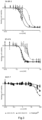
- Figure 9A compares K249SCO unglycosylated version out of Sf21 cells and glycosylated version out of HEK293F cells.
- Figure 9B compares K320SCO unglycosylated version out of Sf21 cells and glycosylated version out of HEK293F cells.
- the glysosylated Trastuzumab mutants are behaving as their unglycosylated counterpart expressed in insect cells. Both variants show a lower IC 50 than Kadcyla ® .
- Sf21 cells were cultivate at 27 °C shaking at 100 rpm using Sf-900 III SFM medium (Thermo Fisher scientific) and split every second day to 0.6 x 10 6 cells/ml or every third day to 0.3 x 10 6 cells/ml.
- the sample was loaded on a self-packed Econo-Pac chromatography column (Bio-Rad) with 17 ml Sephadex G-25 resin (Cytiva) equilibrated in 1xPBS, 1% HSA.
- the column was washed with 1xPBS containing 1% HSA and fractions were collected.
- fractions 10 and 11 were analyzed by thin layer chromatography (TLC) on silica plates using citric acid as mobile phase and on iTLC microfiber paper (Agilent) using 60% methanol as the mobile phase. Combined fractions were used for in vivo experiments.
- TLC thin layer chromatography
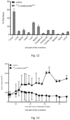
- the control group consisted of 5 animals with two mice displaying measurable tumors that were matched to the treatment group.
- Tumor weights of all animals treated with 177 Lu-Trastuzumab A121PEG 9 -DOTA were compared to tumor weights of all animals in growth control group by one sided T-Test.
- this strategy allowed to use the rather harsh reaction conditions required for complexation of 177 Lu with DOTA before the ligand complex was then reacted under biocompatible conditions using SPIEDAC with temperature-sensitive antibody.
- H-Tet-PEG 9 -DOTA (P3) (not part of the invention) for this reaction was synthesized via coupling of succinimidyl 4-(1,2,4,5-tetrazin-3-yl)benzoate with Boc-N-amido-PEG 9 -amine and subsequent deprotection of the amine, followed by coupling with DOTA-NHS ester. After radiolabeling of 7 with 177 Lu, the crude mixture was incubated with TrastuzumabA121TCO*A and the resulting 177 Lu-TrastuzumabA121PEG 9 -DOTA was purified via SEC on a PD10 column and purity analyzed via TLC.
- tumor sizes decreased after treatment with 177 Lu-TrastuzumabA121PEG 9 -DOTA, whereas tumor sizes increased in an untreated growth control group.
Landscapes
- Health & Medical Sciences (AREA)
- Life Sciences & Earth Sciences (AREA)
- Bioinformatics & Cheminformatics (AREA)
- Engineering & Computer Science (AREA)
- Veterinary Medicine (AREA)
- Public Health (AREA)
- Pharmacology & Pharmacy (AREA)
- Medicinal Chemistry (AREA)
- Chemical & Material Sciences (AREA)
- Animal Behavior & Ethology (AREA)
- General Health & Medical Sciences (AREA)
- Immunology (AREA)
- Epidemiology (AREA)
- Proteomics, Peptides & Aminoacids (AREA)
- Nuclear Medicine, Radiotherapy & Molecular Imaging (AREA)
- Physics & Mathematics (AREA)
- Optics & Photonics (AREA)
- Organic Chemistry (AREA)
- Chemical Kinetics & Catalysis (AREA)
- General Chemical & Material Sciences (AREA)
- Oncology (AREA)
- Cell Biology (AREA)
- Peptides Or Proteins (AREA)
- Medicines Containing Antibodies Or Antigens For Use As Internal Diagnostic Agents (AREA)
Claims (13)
- H-Tetrazin-funktionalisiertes Payload-Molekül der allgemeinen Formel 20
H-Tet-X1-G-X2-D (20)
worinH-Tet für eine funktionalisierende Gruppe steht, welche einen Rest der Formel 21 G für eine beta-Glucuronidase-sensitive spaltbare Gruppe steht, die insbesondere einen von beta-Glucuronsäure abgeleiteten Rest trägt;D für einen Wirkstoff vom Auristatin-Typ steht;X1 für eine chemische Bindung oder Gruppe steht, welche H-Tet und G verbindet; undX2 für eine chemische Bindung oder Gruppe steht, welche G und D verbindet,wobei die Verbindungsgruppe -C(=O)- ist;oder ein Salz davon, gegebenenfalls in stereoisomerenreiner Form oder als Gemisch aus wenigstens zwei Stereoisomeren.
 - Verbindung nach Anspruch 1, wobei H-Tet ausgewählt ist aus Resten der Formeln 5, 6, 7, 11, 12 oder 13:


- Verbindung nach einem der vorhergehenden Ansprüche, wobei G ein Rest der Formel 22 ist:

- Verbindung nach einem der vorhergehenden Ansprüche, wobei D ausgewählt ist aus Dolastatin 10, Monomethylauristatin E (MMAE), Auristatin F, Monomethylauristatin F (MMAF), Auristatin F Hydroxypropylamid (AF HPA), Auristatin F Phenylendiamin (AFP), Monomethylauristatin D (MMAD), Auristatin PE, Auristatin EB, Auristatin EFP, Auristatin TP und Auristatin AQ, insbesondere MMAE.
- Verbindung nach einem der vorhergehenden Ansprüche, wobei X1 für eine chemische Bindung und X2 für -C(=O)- steht.
- Verbindung nach einem der vorhergehenden Ansprüche mit der Formel 23:

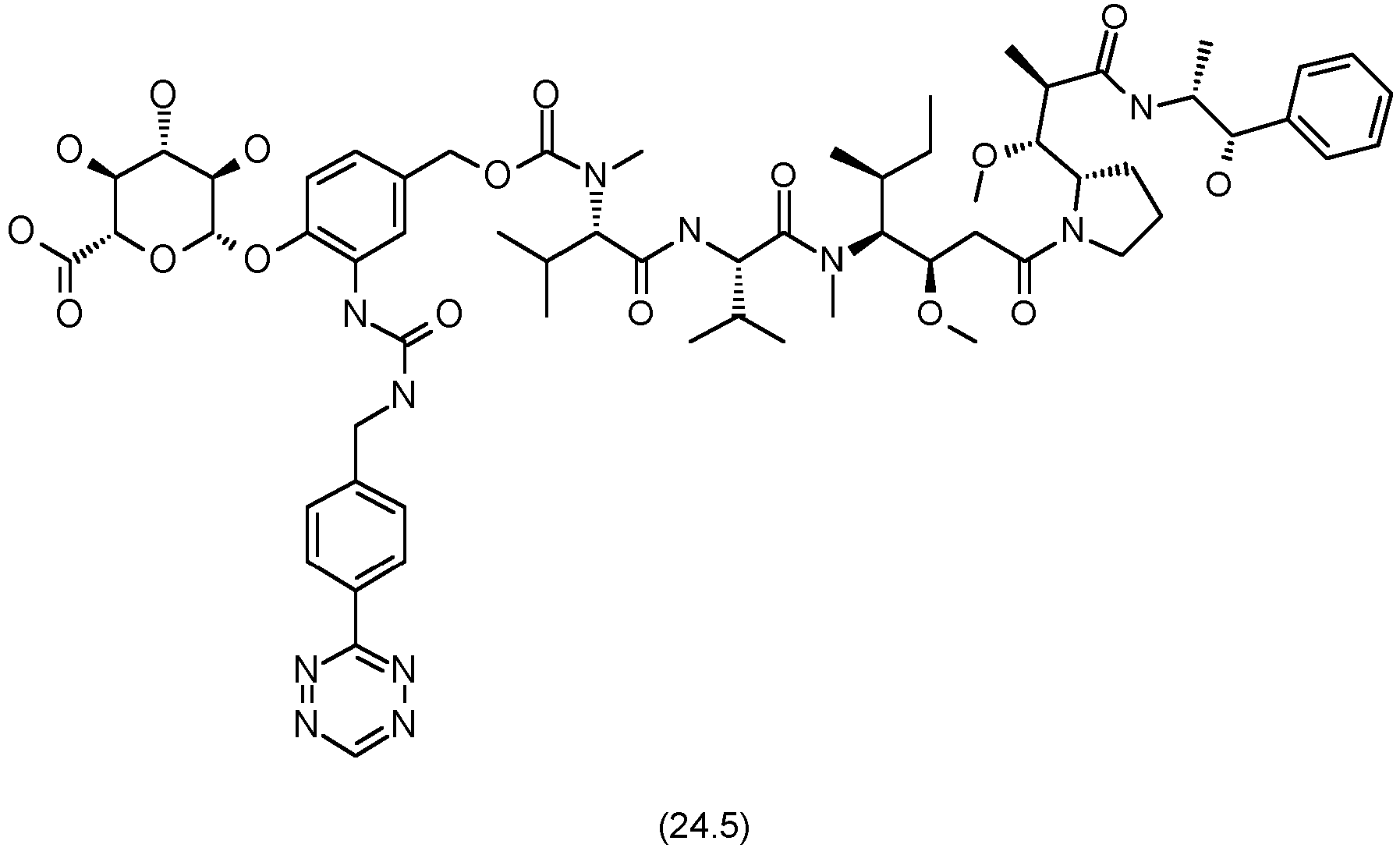
- Verbindung nach einem der vorhergehenden Ansprüche, ausgewählt aus einer Verbindung einer beliebigen der Formeln 24.1 bis 24.6



- Antikörper-Payload-Konjugat (APC), wobei ein Antikörpermolekül, welches durch Einbau von mindestens einem nichtnatürlichen Aminosäurerest (ncAA) in mindestens eine seiner Polypeptidketten funktionalisiert ist, über die Seitenkette des ncAA-Restes an mindestens ein H-Tetrazin-funktionalisiertes Payload-Molekül nach einem der vorhergehenden Ansprüche konjugiert ist.
- APC nach Anspruch 8, wobei die ncAA SCO ist.
- APC nach Anspruch 8 oder 9, wobei das Antikörpermolekül von Trastuzumab abgeleitet ist.
- APC gemäß Anspruch 8, 9 oder 10 zur Verwendung in der Medizin, insbesondere in der Therapie.
- APC gemäß Anspruch 8, 9 oder 10 zur Verwendung bei der Behandlung von Brustkrebs, Magenkrebs oder anderen Her2-überexprimierenden Tumoren, wie beispielsweise Tumoren der Eierstöcke, des Endometriums, der Blase, der Lunge, des Dickdarms sowie des Kopf-Hals-Bereichs.
- Pharmazeutische Zusammensetzung, die in einem pharmazeutisch akzeptablen Träger mindestens ein APC gemäß den Definitionen in Anspruch 8, 9 oder 10 enthält.
Priority Applications (8)
| Application Number | Priority Date | Filing Date | Title |
|---|---|---|---|
| JP2024531337A JP2024543916A (ja) | 2021-11-25 | 2022-11-24 | 遺伝暗号拡張を利用した部位特異的結合によって調製された改良された抗体ペイロード複合体(apc) |
| PCT/EP2022/083137 WO2023094525A1 (en) | 2021-11-25 | 2022-11-24 | Improved antibody-payload conjugates (apcs) prepared by site-specific conjugation utilizing genetic code expansion |
| US18/713,445 US20250144255A1 (en) | 2021-11-25 | 2022-11-24 | Improved antibody-payload conjugates (apcs) prepared by site-specific conjugation utilizing genetic code expansion |
| KR1020247020273A KR20240105469A (ko) | 2021-11-25 | 2022-11-24 | 유전자 코드 확장을 이용하는 부위-특이적 접합에 의해 제조되는 개선된 항체-페이로드 접합체 (apc) |
| EP22822065.3A EP4437005A1 (de) | 2021-11-25 | 2022-11-24 | Verbesserte antikörper-nutzlast-konjugate (aps), hergestellt durch ortsspezifische konjugation mittels genetischer codeerweiterung |
| AU2022395626A AU2022395626A1 (en) | 2021-11-25 | 2022-11-24 | Improved antibody-payload conjugates (apcs) prepared by site-specific conjugation utilizing genetic code expansion |
| CA3238627A CA3238627A1 (en) | 2021-11-25 | 2022-11-24 | Improved antibody-payload conjugates (apcs) prepared by site-specific conjugation utilizing genetic code expansion |
| CN202280089486.3A CN118613508A (zh) | 2021-11-25 | 2022-11-24 | 利用遗传密码子扩展通过位点特异性偶联制备的改进的抗体-有效载荷偶联物(apc) |
Applications Claiming Priority (3)
| Application Number | Priority Date | Filing Date | Title |
|---|---|---|---|
| EP21210452 | 2021-11-25 | ||
| EP22152683 | 2022-01-21 | ||
| EP22187181 | 2022-07-27 |
Publications (2)
| Publication Number | Publication Date |
|---|---|
| EP4186529A1 EP4186529A1 (de) | 2023-05-31 |
| EP4186529B1 true EP4186529B1 (de) | 2025-07-09 |
Family
ID=83398200
Family Applications (1)
| Application Number | Title | Priority Date | Filing Date |
|---|---|---|---|
| EP22197947.9A Active EP4186529B1 (de) | 2021-11-25 | 2022-09-27 | Verbesserte antikörper-nutzlast-konjugate (aps), hergestellt durch ortsspezifische konjugation mittels genetischer codeerweiterung |
Country Status (3)
| Country | Link |
|---|---|
| EP (1) | EP4186529B1 (de) |
| DK (1) | DK4186529T3 (de) |
| ES (1) | ES3039688T3 (de) |
Family Cites Families (109)
| Publication number | Priority date | Publication date | Assignee | Title |
|---|---|---|---|---|
| US4307016A (en) | 1978-03-24 | 1981-12-22 | Takeda Chemical Industries, Ltd. | Demethyl maytansinoids |
| US4256746A (en) | 1978-11-14 | 1981-03-17 | Takeda Chemical Industries | Dechloromaytansinoids, their pharmaceutical compositions and method of use |
| JPS55102583A (en) | 1979-01-31 | 1980-08-05 | Takeda Chem Ind Ltd | 20-acyloxy-20-demethylmaytansinoid compound |
| JPS55162791A (en) | 1979-06-05 | 1980-12-18 | Takeda Chem Ind Ltd | Antibiotic c-15003pnd and its preparation |
| JPS5645483A (en) | 1979-09-19 | 1981-04-25 | Takeda Chem Ind Ltd | C-15003phm and its preparation |
| JPS5645485A (en) | 1979-09-21 | 1981-04-25 | Takeda Chem Ind Ltd | Production of c-15003pnd |
| EP0028683A1 (de) | 1979-09-21 | 1981-05-20 | Takeda Chemical Industries, Ltd. | Antibiotikum C-15003 PHO und seine Herstellung |
| WO1982001188A1 (en) | 1980-10-08 | 1982-04-15 | Takeda Chemical Industries Ltd | 4,5-deoxymaytansinoide compounds and process for preparing same |
| US4450254A (en) | 1980-11-03 | 1984-05-22 | Standard Oil Company | Impact improvement of high nitrile resins |
| US4315929A (en) | 1981-01-27 | 1982-02-16 | The United States Of America As Represented By The Secretary Of Agriculture | Method of controlling the European corn borer with trewiasine |
| US4313946A (en) | 1981-01-27 | 1982-02-02 | The United States Of America As Represented By The Secretary Of Agriculture | Chemotherapeutically active maytansinoids from Trewia nudiflora |
| JPS57192389A (en) | 1981-05-20 | 1982-11-26 | Takeda Chem Ind Ltd | Novel maytansinoid |
| US4486414A (en) | 1983-03-21 | 1984-12-04 | Arizona Board Of Reagents | Dolastatins A and B cell growth inhibitory substances |
| US4486444A (en) | 1983-06-20 | 1984-12-04 | Merck & Co., Inc. | (Hydroxybenzoyl)thiophenesulfonamide and acyl derivatives thereof for the topical treatment of elevated intraocular pressure |
| EP0307434B2 (de) | 1987-03-18 | 1998-07-29 | Scotgen Biopharmaceuticals, Inc. | Geänderte antikörper |
| US4816444A (en) | 1987-07-10 | 1989-03-28 | Arizona Board Of Regents, Arizona State University | Cell growth inhibitory substance |
| US5076973A (en) | 1988-10-24 | 1991-12-31 | Arizona Board Of Regents | Synthesis of dolastatin 3 |
| ES2052027T5 (es) | 1988-11-11 | 2005-04-16 | Medical Research Council | Clonacion de secuencias de dominio variable de inmunoglobulina. |
| US4978744A (en) | 1989-01-27 | 1990-12-18 | Arizona Board Of Regents | Synthesis of dolastatin 10 |
| US4879278A (en) | 1989-05-16 | 1989-11-07 | Arizona Board Of Regents | Isolation and structural elucidation of the cytostatic linear depsipeptide dolastatin 15 |
| US4986988A (en) | 1989-05-18 | 1991-01-22 | Arizona Board Of Regents | Isolation and structural elucidation of the cytostatic linear depsipeptides dolastatin 13 and dehydrodolastatin 13 |
| JP2510335B2 (ja) | 1989-07-03 | 1996-06-26 | 協和醗酵工業株式会社 | Dc―88a誘導体 |
| US5187186A (en) | 1989-07-03 | 1993-02-16 | Kyowa Hakko Kogyo Co., Ltd. | Pyrroloindole derivatives |
| US5208020A (en) | 1989-10-25 | 1993-05-04 | Immunogen Inc. | Cytotoxic agents comprising maytansinoids and their therapeutic use |
| US5138036A (en) | 1989-11-13 | 1992-08-11 | Arizona Board Of Regents Acting On Behalf Of Arizona State University | Isolation and structural elucidation of the cytostatic cyclodepsipeptide dolastatin 14 |
| DE4006203C1 (de) | 1990-02-28 | 1991-05-02 | Rehm Schweisstechnik Gmbh & Co., 7321 Wangen, De | |
| US5714350A (en) | 1992-03-09 | 1998-02-03 | Protein Design Labs, Inc. | Increasing antibody affinity by altering glycosylation in the immunoglobulin variable region |
| CA2076465C (en) | 1992-03-25 | 2002-11-26 | Ravi V. J. Chari | Cell binding agent conjugates of analogues and derivatives of cc-1065 |
| US5635483A (en) | 1992-12-03 | 1997-06-03 | Arizona Board Of Regents Acting On Behalf Of Arizona State University | Tumor inhibiting tetrapeptide bearing modified phenethyl amides |
| US6034065A (en) | 1992-12-03 | 2000-03-07 | Arizona Board Of Regents | Elucidation and synthesis of antineoplastic tetrapeptide phenethylamides of dolastatin 10 |
| US5410024A (en) | 1993-01-21 | 1995-04-25 | Arizona Board Of Regents Acting On Behalf Of Arizona State University | Human cancer inhibitory pentapeptide amides |
| US5780588A (en) | 1993-01-26 | 1998-07-14 | Arizona Board Of Regents | Elucidation and synthesis of selected pentapeptides |
| US5716981A (en) | 1993-07-19 | 1998-02-10 | Angiogenesis Technologies, Inc. | Anti-angiogenic compositions and methods of use |
| JP3469580B2 (ja) | 1993-10-01 | 2003-11-25 | 帝国臓器製薬株式会社 | 新規なペプチド誘導体 |
| GB9320575D0 (en) | 1993-10-06 | 1993-11-24 | Amp Gmbh | Coaxial connector having improved locking mechanism |
| US5773001A (en) | 1994-06-03 | 1998-06-30 | American Cyanamid Company | Conjugates of methyltrithio antitumor agents and intermediates for their synthesis |
| US5521284A (en) | 1994-08-01 | 1996-05-28 | Arizona Board Of Regents Acting On Behalf Of Arizona State University | Human cancer inhibitory pentapeptide amides and esters |
| US5530097A (en) | 1994-08-01 | 1996-06-25 | Arizona Board Of Regents Acting On Behalf Of Arizona State University | Human cancer inhibitory peptide amides |
| US5504191A (en) | 1994-08-01 | 1996-04-02 | Arizona Board Of Regents Acting On Behalf Of Arizona State University | Human cancer inhibitory pentapeptide methyl esters |
| US5554725A (en) | 1994-09-14 | 1996-09-10 | Arizona Board Of Regents Acting On Behalf Of Arizona State University | Synthesis of dolastatin 15 |
| US5599902A (en) | 1994-11-10 | 1997-02-04 | Arizona Board Of Regents Acting On Behalf Of Arizona State University | Cancer inhibitory peptides |
| US5663149A (en) | 1994-12-13 | 1997-09-02 | Arizona Board Of Regents Acting On Behalf Of Arizona State University | Human cancer inhibitory pentapeptide heterocyclic and halophenyl amides |
| US5714586A (en) | 1995-06-07 | 1998-02-03 | American Cyanamid Company | Methods for the preparation of monomeric calicheamicin derivative/carrier conjugates |
| NZ321172A (en) | 1995-10-03 | 2000-02-28 | Scripps Research Inst | CBI analogs of CC-1065 and the duocarmycins |
| ATE218556T1 (de) | 1995-11-17 | 2002-06-15 | Biotechnolog Forschung Gmbh | Epothilon-derivate und deren herstellung |
| AU716610B2 (en) | 1996-08-30 | 2000-03-02 | Novartis Ag | Method for producing epothilones, and intermediate products obtained during the production process |
| US6680311B1 (en) | 1996-08-30 | 2004-01-20 | Eli Lilly And Company | Cryptophycin compounds |
| US5969145A (en) | 1996-08-30 | 1999-10-19 | Novartis Ag | Process for the production of epothilones and intermediate products within the process |
| JP4274583B2 (ja) | 1996-11-18 | 2009-06-10 | ゲゼルシャフト・フュア・ビオテクノロギッシェ・フォルシュンク・ミット・ベシュレンクテル・ハフツング(ゲー・ベー・エフ) | エポチロンc,d,e及びf、製造と薬剤 |
| US6242469B1 (en) | 1996-12-03 | 2001-06-05 | Sloan-Kettering Institute For Cancer Research | Synthesis of epothilones, intermediates thereto, analogues and uses thereof |
| US6441186B1 (en) | 1996-12-13 | 2002-08-27 | The Scripps Research Institute | Epothilone analogs |
| EP0973540B1 (de) | 1997-02-25 | 2005-11-02 | Arizona Board Of Regents | Isolierung und strukturelle aufklärung der kryostatischen linearen und cyclo-depsipeptide dolastatin 16, dolastatin 17, und dolastatin 18 |
| EP1201666A3 (de) | 1997-02-25 | 2003-03-05 | Gesellschaft für biotechnologische Forschung mbH (GBF) | Seitenkettenmodifizierte Epothilone |
| US6117659A (en) | 1997-04-30 | 2000-09-12 | Kosan Biosciences, Inc. | Recombinant narbonolide polyketide synthase |
| US6605599B1 (en) | 1997-07-08 | 2003-08-12 | Bristol-Myers Squibb Company | Epothilone derivatives |
| ES2184307T3 (es) | 1997-07-16 | 2003-04-01 | Schering Ag | Derivados de tiazol, procedimiento para su preparacion y su utilizacion. |
| CA2299608A1 (en) | 1997-08-09 | 1999-02-18 | Schering Aktiengesellschaft | New epothilone derivatives, method for producing same and their pharmaceutical use |
| US6365749B1 (en) | 1997-12-04 | 2002-04-02 | Bristol-Myers Squibb Company | Process for the preparation of ring-opened epothilone intermediates which are useful for the preparation of epothilone analogs |
| AU738576B2 (en) | 1997-12-04 | 2001-09-20 | Bristol-Myers Squibb Company | A process for the reduction of oxiranyl epothilones to olefinic epothilones |
| US6096757A (en) | 1998-12-21 | 2000-08-01 | Schering Corporation | Method for treating proliferative diseases |
| US20020103136A1 (en) | 1998-03-05 | 2002-08-01 | Dong-Mei Feng | Conjugates useful in the treatment of prostate cancer |
| AU3657899A (en) | 1998-04-20 | 1999-11-08 | James E. Bailey | Glycosylation engineering of antibodies for improving antibody-dependent cellular cytotoxicity |
| US6121029A (en) | 1998-06-18 | 2000-09-19 | Novartis Ag | Genes for the biosynthesis of epothilones |
| PT1176195E (pt) | 1999-04-09 | 2013-07-18 | Kyowa Hakko Kirin Co Ltd | Processo para controlar a actividade de uma molécula funcional sob o ponto de vista imunológico |
| US6323315B1 (en) | 1999-09-10 | 2001-11-27 | Basf Aktiengesellschaft | Dolastatin peptides |
| US7303749B1 (en) | 1999-10-01 | 2007-12-04 | Immunogen Inc. | Compositions and methods for treating cancer using immunoconjugates and chemotherapeutic agents |
| CA2385528C (en) | 1999-10-01 | 2013-12-10 | Immunogen, Inc. | Compositions and methods for treating cancer using immunoconjugates and chemotherapeutic agents |
| US6956036B1 (en) | 2000-03-17 | 2005-10-18 | Alcon, Inc. | 6-hydroxy-indazole derivatives for treating glaucoma |
| US6608053B2 (en) | 2000-04-27 | 2003-08-19 | Yamanouchi Pharmaceutical Co., Ltd. | Fused heteroaryl derivatives |
| ATE440959T1 (de) | 2000-06-28 | 2009-09-15 | Glycofi Inc | Verfahren für die herstellung modifizierter glykoproteine |
| US7449308B2 (en) | 2000-06-28 | 2008-11-11 | Glycofi, Inc. | Combinatorial DNA library for producing modified N-glycans in lower eukaryotes |
| US6412611B1 (en) | 2000-07-17 | 2002-07-02 | Magnetar Technologies, Ltd | Eddy current brake system with dual use conductor fin |
| US6333410B1 (en) | 2000-08-18 | 2001-12-25 | Immunogen, Inc. | Process for the preparation and purification of thiol-containing maytansinoids |
| DK1320522T3 (da) | 2000-09-19 | 2006-04-03 | Moses Lee | Achirale analoger af CC-1065 og af duocarmyciner samt præparater og metoder til anvendelse deraf |
| US6747021B2 (en) | 2000-10-02 | 2004-06-08 | Eli Lilly And Company | Cryptophycin compound |
| AU2002213248A1 (en) | 2000-10-13 | 2002-04-22 | The University Of Mississipi | Synthesis of epothilones and relates analogs |
| IL158418A0 (en) | 2001-04-19 | 2004-05-12 | Scripps Research Inst | In vivo incorporation of unnatural amino acids |
| US20030083263A1 (en) | 2001-04-30 | 2003-05-01 | Svetlana Doronina | Pentapeptide compounds and uses related thereto |
| US6884869B2 (en) | 2001-04-30 | 2005-04-26 | Seattle Genetics, Inc. | Pentapeptide compounds and uses related thereto |
| US6441163B1 (en) | 2001-05-31 | 2002-08-27 | Immunogen, Inc. | Methods for preparation of cytotoxic conjugates of maytansinoids and cell binding agents |
| CA2451998A1 (en) | 2001-08-17 | 2003-02-27 | Eli Lilly And Company | Anti-a.beta. antibodies |
| US7091186B2 (en) | 2001-09-24 | 2006-08-15 | Seattle Genetics, Inc. | p-Amidobenzylethers in drug delivery agents |
| KR100988949B1 (ko) | 2001-10-25 | 2010-10-20 | 제넨테크, 인크. | 당단백질 조성물 |
| US6716821B2 (en) | 2001-12-21 | 2004-04-06 | Immunogen Inc. | Cytotoxic agents bearing a reactive polyethylene glycol moiety, cytotoxic conjugates comprising polyethylene glycol linking groups, and methods of making and using the same |
| US6756397B2 (en) | 2002-04-05 | 2004-06-29 | Immunogen, Inc. | Prodrugs of CC-1065 analogs |
| US6534660B1 (en) | 2002-04-05 | 2003-03-18 | Immunogen, Inc. | CC-1065 analog synthesis |
| ES2544527T3 (es) | 2002-07-31 | 2015-09-01 | Seattle Genetics, Inc. | Conjugados de fármacos y su uso para tratar el cáncer, una enfermedad autoinmune o una enfermedad infecciosa |
| US7276497B2 (en) | 2003-05-20 | 2007-10-02 | Immunogen Inc. | Cytotoxic agents comprising new maytansinoids |
| EP3434275A1 (de) | 2003-11-06 | 2019-01-30 | Seattle Genetics, Inc. | Auf die verwendung von auristatin-konjugaten mit antikörpern basierter nachweis für krebszellen |
| JP4490703B2 (ja) | 2004-02-26 | 2010-06-30 | 出光興産株式会社 | ポリカーボネートの製造方法 |
| EP1737969B2 (de) | 2004-04-15 | 2018-09-12 | GlycoFi, Inc. | Produktion galaktosylierter glykoproteine in niederen eukaryonten |
| JP5590649B2 (ja) | 2007-09-20 | 2014-09-17 | 独立行政法人理化学研究所 | 変異体ピロリジル−tRNA合成酵素及びこれを用いる非天然アミノ酸組み込みタンパク質の製造方法 |
| JP5419220B2 (ja) | 2007-11-22 | 2014-02-19 | 独立行政法人理化学研究所 | エステル結合を含む非天然タンパク質の製造方法 |
| EP2265283B1 (de) | 2008-03-18 | 2014-09-03 | Seattle Genetics, Inc. | Auristatin-arznei-linker-konjugate |
| CN102448469A (zh) | 2009-05-28 | 2012-05-09 | 摩萨纳医疗有限公司 | 包括具有可变的释放速率的连接物的聚缩醛(酮)-药物共轭物 |
| WO2011038159A2 (en) | 2009-09-24 | 2011-03-31 | Seattle Genetics, Inc. | Dr5 ligand drug conjugates |
| EP3279211B1 (de) | 2011-02-03 | 2020-04-29 | Embl | Unnatürliche aminosäuren mit einer norbornenylgruppe und verwendungen davon |
| EP2709666B1 (de) * | 2011-05-16 | 2021-07-14 | Koninklijke Philips N.V. | Bio-orthogonale arzneimittelaktivierung |
| US8815226B2 (en) | 2011-06-10 | 2014-08-26 | Mersana Therapeutics, Inc. | Protein-polymer-drug conjugates |
| GB201201100D0 (en) | 2012-01-20 | 2012-03-07 | Medical Res Council | Polypeptides and methods |
| KR102087850B1 (ko) | 2013-10-11 | 2020-03-12 | 메르사나 테라퓨틱스, 인코포레이티드 | 단백질-고분자-약물 접합체 |
| JP6479022B2 (ja) | 2014-01-14 | 2019-03-06 | ヨーロピアン モレキュラー バイオロジー ラボラトリーEuropean Molecular Biology Laboratory | 分子標識のための複数の環化付加反応 |
| US20180339985A1 (en) | 2015-08-21 | 2018-11-29 | Femtogenix Limited | Pdd compounds |
| WO2017093254A1 (en) | 2015-11-30 | 2017-06-08 | European Molecular Biology Laboratory | Means and methods for preparing engineered proteins by genetic code expansion in insect cells |
| CN109417787A (zh) | 2016-07-05 | 2019-03-01 | 瑞典爱立信有限公司 | 用于管理无线设备的接入优先级的方法和设备 |
| EP3309260A1 (de) | 2016-10-14 | 2018-04-18 | European Molecular Biology Laboratory | Archaeale pyrrolysyl-trna-synthetasen zur orthogonalen verwendung |
| US10288745B2 (en) | 2017-04-27 | 2019-05-14 | GM Global Technology Operations LLC | Methods and systems for optimal vehicle positioning using global positioning receivers from parked fleet |
| EP3696189A1 (de) | 2019-02-14 | 2020-08-19 | European Molecular Biology Laboratory | Mittel und verfahren zur herstellung manipulierter zielproteine durch genetische codeexpansion in zielproteinselektiver weise |
| EP3868882A1 (de) | 2020-02-21 | 2021-08-25 | European Molecular Biology Laboratory | Archaeale pyrrolysyl-trna-synthetasen zur orthogonalen verwendung |
-
2022
- 2022-09-27 EP EP22197947.9A patent/EP4186529B1/de active Active
- 2022-09-27 ES ES22197947T patent/ES3039688T3/es active Active
- 2022-09-27 DK DK22197947.9T patent/DK4186529T3/da active
Non-Patent Citations (1)
| Title |
|---|
| OLLER-SALVIA BENJAMÍ ET AL: "Rapid and Efficient Generation of Stable Antibody-Drug Conjugates via an Encoded Cyclopropene and an Inverse-Electron-Demand Diels-Alder Reaction", ANGEWANDTE CHEMIE INTERNATIONAL EDITION, vol. 57, no. 11, 22 January 2018 (2018-01-22), Hoboken, USA, pages 2831 - 2834, XP055825442, ISSN: 1433-7851, DOI: 10.1002/anie.201712370 * |
Also Published As
| Publication number | Publication date |
|---|---|
| ES3039688T3 (en) | 2025-10-23 |
| DK4186529T3 (da) | 2025-08-25 |
| EP4186529A1 (de) | 2023-05-31 |
Similar Documents
| Publication | Publication Date | Title |
|---|---|---|
| US10941431B2 (en) | Lysine conjugated immunoglobulins | |
| US20240424125A1 (en) | Antibody-drug conjugates targeting folate receptor alpha and methods of use | |
| AU2015271100A1 (en) | Anti-HER2 antibody-maytansine conjugates and methods of use thereof | |
| EP3373937B1 (de) | Anti-cd22-antikörper-maytansin-konjugate und verfahren zur verwendung davon | |
| TW202421137A (zh) | 靶向NaPi2b之抗體—藥物結合物及使用方法 | |
| KR20240083174A (ko) | 종양 관련 칼슘 신호 전달 인자 2 (tacstd2) 항체-메이탄신 접합체 및 이의 사용 방법 | |
| US20250144255A1 (en) | Improved antibody-payload conjugates (apcs) prepared by site-specific conjugation utilizing genetic code expansion | |
| WO2023009751A2 (en) | Antibodies and antibody conjugates specific for nectin-4 and methods of use thereof | |
| ES3039688T3 (en) | Improved antibody-payload conjugates (apcs) prepared by site-specific conjugation utilizing genetic code expansion | |
| KR20220097392A (ko) | 항-cd37 항체-메이탄신 접합체 및 이의 사용 방법 | |
| CA3155137A1 (en) | Anti-cd25 antibody-maytansine conjugates and methods of use thereof | |
| TW202426058A (zh) | 靶向磷脂醯肌醇蛋白聚糖-3之抗體-藥物結合物及使用方法 | |
| CN118613508A (zh) | 利用遗传密码子扩展通过位点特异性偶联制备的改进的抗体-有效载荷偶联物(apc) | |
| US20240343818A1 (en) | Antibodies Having Humanized Framework Regions | |
| JP2025513664A (ja) | ムチン-1に特異的な抗体コンジュゲート及びその使用方法 | |
| CN118043328A (zh) | 对nectin-4特异性的抗体和抗体缀合物及其使用方法 | |
| HK1258409B (en) | Anti-cd22 antibody-maytansine conjugates and methods of use thereof |
Legal Events
| Date | Code | Title | Description |
|---|---|---|---|
| PUAI | Public reference made under article 153(3) epc to a published international application that has entered the european phase |
Free format text: ORIGINAL CODE: 0009012 |
|
| STAA | Information on the status of an ep patent application or granted ep patent |
Free format text: STATUS: EXAMINATION IS IN PROGRESS |
|
| 17P | Request for examination filed |
Effective date: 20220927 |
|
| AK | Designated contracting states |
Kind code of ref document: A1 Designated state(s): AL AT BE BG CH CY CZ DE DK EE ES FI FR GB GR HR HU IE IS IT LI LT LU LV MC MK MT NL NO PL PT RO RS SE SI SK SM TR |
|
| RBV | Designated contracting states (corrected) |
Designated state(s): AL AT BE BG CH CY CZ DE DK EE ES FI FR GB GR HR HU IE IS IT LI LT LU LV MC MK MT NL NO PL PT RO RS SE SI SK SM TR |
|
| GRAP | Despatch of communication of intention to grant a patent |
Free format text: ORIGINAL CODE: EPIDOSNIGR1 |
|
| STAA | Information on the status of an ep patent application or granted ep patent |
Free format text: STATUS: GRANT OF PATENT IS INTENDED |
|
| INTG | Intention to grant announced |
Effective date: 20250228 |
|
| RAP3 | Party data changed (applicant data changed or rights of an application transferred) |
Owner name: VERAXA BIOTECH GMBH |
|
| RIN1 | Information on inventor provided before grant (corrected) |
Inventor name: SAUTER, PAUL Inventor name: KOEHLER, CHRISTINE |
|
| RAP3 | Party data changed (applicant data changed or rights of an application transferred) |
Owner name: VERAXA BIOTECH GMBH |
|
| GRAS | Grant fee paid |
Free format text: ORIGINAL CODE: EPIDOSNIGR3 |
|
| GRAA | (expected) grant |
Free format text: ORIGINAL CODE: 0009210 |
|
| STAA | Information on the status of an ep patent application or granted ep patent |
Free format text: STATUS: THE PATENT HAS BEEN GRANTED |
|
| AK | Designated contracting states |
Kind code of ref document: B1 Designated state(s): AL AT BE BG CH CY CZ DE DK EE ES FI FR GB GR HR HU IE IS IT LI LT LU LV MC MK MT NL NO PL PT RO RS SE SI SK SM TR |
|
| REG | Reference to a national code |
Ref country code: GB Ref legal event code: FG4D |
|
| REG | Reference to a national code |
Ref country code: CH Ref legal event code: EP |
|
| REG | Reference to a national code |
Ref country code: IE Ref legal event code: FG4D |
|
| REG | Reference to a national code |
Ref country code: DE Ref legal event code: R096 Ref document number: 602022017238 Country of ref document: DE |
|
| P01 | Opt-out of the competence of the unified patent court (upc) registered |
Free format text: CASE NUMBER: UPC_APP_0063_4186529/2025 Effective date: 20250709 |
|
| REG | Reference to a national code |
Ref country code: DK Ref legal event code: T3 Effective date: 20250821 |
|
| REG | Reference to a national code |
Ref country code: SE Ref legal event code: TRGR |
|
| REG | Reference to a national code |
Ref country code: NL Ref legal event code: FP |
|
| REG | Reference to a national code |
Ref country code: CH Ref legal event code: U11 Free format text: ST27 STATUS EVENT CODE: U-0-0-U10-U11 (AS PROVIDED BY THE NATIONAL OFFICE) Effective date: 20251001 |
|
| PGFP | Annual fee paid to national office [announced via postgrant information from national office to epo] |
Ref country code: DE Payment date: 20250919 Year of fee payment: 4 Ref country code: DK Payment date: 20250924 Year of fee payment: 4 |
|
| PGFP | Annual fee paid to national office [announced via postgrant information from national office to epo] |
Ref country code: NL Payment date: 20250918 Year of fee payment: 4 |
|
| PGFP | Annual fee paid to national office [announced via postgrant information from national office to epo] |
Ref country code: BE Payment date: 20250918 Year of fee payment: 4 |
|
| PGFP | Annual fee paid to national office [announced via postgrant information from national office to epo] |
Ref country code: AT Payment date: 20251020 Year of fee payment: 4 Ref country code: FR Payment date: 20250922 Year of fee payment: 4 |
|
| PGFP | Annual fee paid to national office [announced via postgrant information from national office to epo] |
Ref country code: SE Payment date: 20250918 Year of fee payment: 4 |
|
| PGFP | Annual fee paid to national office [announced via postgrant information from national office to epo] |
Ref country code: IE Payment date: 20250918 Year of fee payment: 4 |
|
| REG | Reference to a national code |
Ref country code: ES Ref legal event code: FG2A Ref document number: 3039688 Country of ref document: ES Kind code of ref document: T3 Effective date: 20251023 |
|
| PG25 | Lapsed in a contracting state [announced via postgrant information from national office to epo] |
Ref country code: PT Free format text: LAPSE BECAUSE OF FAILURE TO SUBMIT A TRANSLATION OF THE DESCRIPTION OR TO PAY THE FEE WITHIN THE PRESCRIBED TIME-LIMIT Effective date: 20251110 |
|
| PG25 | Lapsed in a contracting state [announced via postgrant information from national office to epo] |
Ref country code: IS Free format text: LAPSE BECAUSE OF FAILURE TO SUBMIT A TRANSLATION OF THE DESCRIPTION OR TO PAY THE FEE WITHIN THE PRESCRIBED TIME-LIMIT Effective date: 20251109 |
|
| PG25 | Lapsed in a contracting state [announced via postgrant information from national office to epo] |
Ref country code: NO Free format text: LAPSE BECAUSE OF FAILURE TO SUBMIT A TRANSLATION OF THE DESCRIPTION OR TO PAY THE FEE WITHIN THE PRESCRIBED TIME-LIMIT Effective date: 20251009 |
|
| REG | Reference to a national code |
Ref country code: LT Ref legal event code: MG9D |
|
| PG25 | Lapsed in a contracting state [announced via postgrant information from national office to epo] |
Ref country code: FI Free format text: LAPSE BECAUSE OF FAILURE TO SUBMIT A TRANSLATION OF THE DESCRIPTION OR TO PAY THE FEE WITHIN THE PRESCRIBED TIME-LIMIT Effective date: 20250709 |
|
| PGFP | Annual fee paid to national office [announced via postgrant information from national office to epo] |
Ref country code: IT Payment date: 20250930 Year of fee payment: 4 |
|
| PG25 | Lapsed in a contracting state [announced via postgrant information from national office to epo] |
Ref country code: HR Free format text: LAPSE BECAUSE OF FAILURE TO SUBMIT A TRANSLATION OF THE DESCRIPTION OR TO PAY THE FEE WITHIN THE PRESCRIBED TIME-LIMIT Effective date: 20250709 |
|
| PG25 | Lapsed in a contracting state [announced via postgrant information from national office to epo] |
Ref country code: GR Free format text: LAPSE BECAUSE OF FAILURE TO SUBMIT A TRANSLATION OF THE DESCRIPTION OR TO PAY THE FEE WITHIN THE PRESCRIBED TIME-LIMIT Effective date: 20251010 |
|
| PGFP | Annual fee paid to national office [announced via postgrant information from national office to epo] |
Ref country code: CH Payment date: 20251001 Year of fee payment: 4 |
|
| PG25 | Lapsed in a contracting state [announced via postgrant information from national office to epo] |
Ref country code: LV Free format text: LAPSE BECAUSE OF FAILURE TO SUBMIT A TRANSLATION OF THE DESCRIPTION OR TO PAY THE FEE WITHIN THE PRESCRIBED TIME-LIMIT Effective date: 20250709 |
|
| PG25 | Lapsed in a contracting state [announced via postgrant information from national office to epo] |
Ref country code: BG Free format text: LAPSE BECAUSE OF FAILURE TO SUBMIT A TRANSLATION OF THE DESCRIPTION OR TO PAY THE FEE WITHIN THE PRESCRIBED TIME-LIMIT Effective date: 20250709 Ref country code: PL Free format text: LAPSE BECAUSE OF FAILURE TO SUBMIT A TRANSLATION OF THE DESCRIPTION OR TO PAY THE FEE WITHIN THE PRESCRIBED TIME-LIMIT Effective date: 20250709 |
|
| PG25 | Lapsed in a contracting state [announced via postgrant information from national office to epo] |
Ref country code: RS Free format text: LAPSE BECAUSE OF FAILURE TO SUBMIT A TRANSLATION OF THE DESCRIPTION OR TO PAY THE FEE WITHIN THE PRESCRIBED TIME-LIMIT Effective date: 20251009 |
|
| PGFP | Annual fee paid to national office [announced via postgrant information from national office to epo] |
Ref country code: ES Payment date: 20251030 Year of fee payment: 4 |
|
| PG25 | Lapsed in a contracting state [announced via postgrant information from national office to epo] |
Ref country code: RO Free format text: LAPSE BECAUSE OF FAILURE TO SUBMIT A TRANSLATION OF THE DESCRIPTION OR TO PAY THE FEE WITHIN THE PRESCRIBED TIME-LIMIT Effective date: 20250709 |
|
| PG25 | Lapsed in a contracting state [announced via postgrant information from national office to epo] |
Ref country code: SM Free format text: LAPSE BECAUSE OF FAILURE TO SUBMIT A TRANSLATION OF THE DESCRIPTION OR TO PAY THE FEE WITHIN THE PRESCRIBED TIME-LIMIT Effective date: 20250709 |
|
| PG25 | Lapsed in a contracting state [announced via postgrant information from national office to epo] |
Ref country code: CZ Free format text: LAPSE BECAUSE OF FAILURE TO SUBMIT A TRANSLATION OF THE DESCRIPTION OR TO PAY THE FEE WITHIN THE PRESCRIBED TIME-LIMIT Effective date: 20250709 |
|
| PG25 | Lapsed in a contracting state [announced via postgrant information from national office to epo] |
Ref country code: EE Free format text: LAPSE BECAUSE OF FAILURE TO SUBMIT A TRANSLATION OF THE DESCRIPTION OR TO PAY THE FEE WITHIN THE PRESCRIBED TIME-LIMIT Effective date: 20250709 Ref country code: SK Free format text: LAPSE BECAUSE OF FAILURE TO SUBMIT A TRANSLATION OF THE DESCRIPTION OR TO PAY THE FEE WITHIN THE PRESCRIBED TIME-LIMIT Effective date: 20250709 |
|
| PLBE | No opposition filed within time limit |
Free format text: ORIGINAL CODE: 0009261 |
|
| STAA | Information on the status of an ep patent application or granted ep patent |
Free format text: STATUS: NO OPPOSITION FILED WITHIN TIME LIMIT |