EP4163299B1 - Modified-igg antibodies that bind transforming growth factor-beta1 with high affinity, avidity and specificity - Google Patents
Modified-igg antibodies that bind transforming growth factor-beta1 with high affinity, avidity and specificity Download PDFInfo
- Publication number
- EP4163299B1 EP4163299B1 EP22180865.2A EP22180865A EP4163299B1 EP 4163299 B1 EP4163299 B1 EP 4163299B1 EP 22180865 A EP22180865 A EP 22180865A EP 4163299 B1 EP4163299 B1 EP 4163299B1
- Authority
- EP
- European Patent Office
- Prior art keywords
- seq
- tgfβ1
- binding
- cat192
- amino acid
- Prior art date
- Legal status (The legal status is an assumption and is not a legal conclusion. Google has not performed a legal analysis and makes no representation as to the accuracy of the status listed.)
- Active
Links
Images






Classifications
-
- A—HUMAN NECESSITIES
- A61—MEDICAL OR VETERINARY SCIENCE; HYGIENE
- A61K—PREPARATIONS FOR MEDICAL, DENTAL OR TOILETRY PURPOSES
- A61K39/00—Medicinal preparations containing antigens or antibodies
- A61K39/395—Antibodies; Immunoglobulins; Immune serum, e.g. antilymphocytic serum
-
- A—HUMAN NECESSITIES
- A61—MEDICAL OR VETERINARY SCIENCE; HYGIENE
- A61K—PREPARATIONS FOR MEDICAL, DENTAL OR TOILETRY PURPOSES
- A61K39/00—Medicinal preparations containing antigens or antibodies
- A61K39/395—Antibodies; Immunoglobulins; Immune serum, e.g. antilymphocytic serum
- A61K39/39533—Antibodies; Immunoglobulins; Immune serum, e.g. antilymphocytic serum against materials from animals
- A61K39/3955—Antibodies; Immunoglobulins; Immune serum, e.g. antilymphocytic serum against materials from animals against proteinaceous materials, e.g. enzymes, hormones, lymphokines
-
- A—HUMAN NECESSITIES
- A61—MEDICAL OR VETERINARY SCIENCE; HYGIENE
- A61P—SPECIFIC THERAPEUTIC ACTIVITY OF CHEMICAL COMPOUNDS OR MEDICINAL PREPARATIONS
- A61P13/00—Drugs for disorders of the urinary system
- A61P13/12—Drugs for disorders of the urinary system of the kidneys
-
- A—HUMAN NECESSITIES
- A61—MEDICAL OR VETERINARY SCIENCE; HYGIENE
- A61P—SPECIFIC THERAPEUTIC ACTIVITY OF CHEMICAL COMPOUNDS OR MEDICINAL PREPARATIONS
- A61P17/00—Drugs for dermatological disorders
-
- A—HUMAN NECESSITIES
- A61—MEDICAL OR VETERINARY SCIENCE; HYGIENE
- A61P—SPECIFIC THERAPEUTIC ACTIVITY OF CHEMICAL COMPOUNDS OR MEDICINAL PREPARATIONS
- A61P19/00—Drugs for skeletal disorders
-
- A—HUMAN NECESSITIES
- A61—MEDICAL OR VETERINARY SCIENCE; HYGIENE
- A61P—SPECIFIC THERAPEUTIC ACTIVITY OF CHEMICAL COMPOUNDS OR MEDICINAL PREPARATIONS
- A61P19/00—Drugs for skeletal disorders
- A61P19/08—Drugs for skeletal disorders for bone diseases, e.g. rachitism, Paget's disease
-
- A—HUMAN NECESSITIES
- A61—MEDICAL OR VETERINARY SCIENCE; HYGIENE
- A61P—SPECIFIC THERAPEUTIC ACTIVITY OF CHEMICAL COMPOUNDS OR MEDICINAL PREPARATIONS
- A61P35/00—Antineoplastic agents
-
- A—HUMAN NECESSITIES
- A61—MEDICAL OR VETERINARY SCIENCE; HYGIENE
- A61P—SPECIFIC THERAPEUTIC ACTIVITY OF CHEMICAL COMPOUNDS OR MEDICINAL PREPARATIONS
- A61P37/00—Drugs for immunological or allergic disorders
-
- A—HUMAN NECESSITIES
- A61—MEDICAL OR VETERINARY SCIENCE; HYGIENE
- A61P—SPECIFIC THERAPEUTIC ACTIVITY OF CHEMICAL COMPOUNDS OR MEDICINAL PREPARATIONS
- A61P37/00—Drugs for immunological or allergic disorders
- A61P37/02—Immunomodulators
-
- C—CHEMISTRY; METALLURGY
- C07—ORGANIC CHEMISTRY
- C07K—PEPTIDES
- C07K16/00—Immunoglobulins [IGs], e.g. monoclonal or polyclonal antibodies
- C07K16/18—Immunoglobulins [IGs], e.g. monoclonal or polyclonal antibodies against material from animals or humans
- C07K16/22—Immunoglobulins [IGs], e.g. monoclonal or polyclonal antibodies against material from animals or humans against growth factors ; against growth regulators
-
- C—CHEMISTRY; METALLURGY
- C07—ORGANIC CHEMISTRY
- C07K—PEPTIDES
- C07K19/00—Hybrid peptides, i.e. peptides covalently bound to nucleic acids, or non-covalently bound protein-protein complexes
-
- C—CHEMISTRY; METALLURGY
- C12—BIOCHEMISTRY; BEER; SPIRITS; WINE; VINEGAR; MICROBIOLOGY; ENZYMOLOGY; MUTATION OR GENETIC ENGINEERING
- C12N—MICROORGANISMS OR ENZYMES; COMPOSITIONS THEREOF; PROPAGATING, PRESERVING, OR MAINTAINING MICROORGANISMS; MUTATION OR GENETIC ENGINEERING; CULTURE MEDIA
- C12N15/00—Mutation or genetic engineering; DNA or RNA concerning genetic engineering, vectors, e.g. plasmids, or their isolation, preparation or purification; Use of hosts therefor
- C12N15/09—Recombinant DNA-technology
- C12N15/11—DNA or RNA fragments; Modified forms thereof; Non-coding nucleic acids having a biological activity
-
- A—HUMAN NECESSITIES
- A61—MEDICAL OR VETERINARY SCIENCE; HYGIENE
- A61K—PREPARATIONS FOR MEDICAL, DENTAL OR TOILETRY PURPOSES
- A61K39/00—Medicinal preparations containing antigens or antibodies
- A61K2039/505—Medicinal preparations containing antigens or antibodies comprising antibodies
-
- C—CHEMISTRY; METALLURGY
- C07—ORGANIC CHEMISTRY
- C07K—PEPTIDES
- C07K2317/00—Immunoglobulins specific features
- C07K2317/10—Immunoglobulins specific features characterized by their source of isolation or production
- C07K2317/14—Specific host cells or culture conditions, e.g. components, pH or temperature
-
- C—CHEMISTRY; METALLURGY
- C07—ORGANIC CHEMISTRY
- C07K—PEPTIDES
- C07K2317/00—Immunoglobulins specific features
- C07K2317/20—Immunoglobulins specific features characterized by taxonomic origin
- C07K2317/21—Immunoglobulins specific features characterized by taxonomic origin from primates, e.g. man
-
- C—CHEMISTRY; METALLURGY
- C07—ORGANIC CHEMISTRY
- C07K—PEPTIDES
- C07K2317/00—Immunoglobulins specific features
- C07K2317/30—Immunoglobulins specific features characterized by aspects of specificity or valency
- C07K2317/34—Identification of a linear epitope shorter than 20 amino acid residues or of a conformational epitope defined by amino acid residues
-
- C—CHEMISTRY; METALLURGY
- C07—ORGANIC CHEMISTRY
- C07K—PEPTIDES
- C07K2317/00—Immunoglobulins specific features
- C07K2317/50—Immunoglobulins specific features characterized by immunoglobulin fragments
- C07K2317/52—Constant or Fc region; Isotype
-
- C—CHEMISTRY; METALLURGY
- C07—ORGANIC CHEMISTRY
- C07K—PEPTIDES
- C07K2317/00—Immunoglobulins specific features
- C07K2317/50—Immunoglobulins specific features characterized by immunoglobulin fragments
- C07K2317/52—Constant or Fc region; Isotype
- C07K2317/522—CH1 domain
-
- C—CHEMISTRY; METALLURGY
- C07—ORGANIC CHEMISTRY
- C07K—PEPTIDES
- C07K2317/00—Immunoglobulins specific features
- C07K2317/50—Immunoglobulins specific features characterized by immunoglobulin fragments
- C07K2317/52—Constant or Fc region; Isotype
- C07K2317/53—Hinge
-
- C—CHEMISTRY; METALLURGY
- C07—ORGANIC CHEMISTRY
- C07K—PEPTIDES
- C07K2317/00—Immunoglobulins specific features
- C07K2317/50—Immunoglobulins specific features characterized by immunoglobulin fragments
- C07K2317/55—Fab or Fab'
-
- C—CHEMISTRY; METALLURGY
- C07—ORGANIC CHEMISTRY
- C07K—PEPTIDES
- C07K2317/00—Immunoglobulins specific features
- C07K2317/50—Immunoglobulins specific features characterized by immunoglobulin fragments
- C07K2317/56—Immunoglobulins specific features characterized by immunoglobulin fragments variable (Fv) region, i.e. VH and/or VL
-
- C—CHEMISTRY; METALLURGY
- C07—ORGANIC CHEMISTRY
- C07K—PEPTIDES
- C07K2317/00—Immunoglobulins specific features
- C07K2317/50—Immunoglobulins specific features characterized by immunoglobulin fragments
- C07K2317/56—Immunoglobulins specific features characterized by immunoglobulin fragments variable (Fv) region, i.e. VH and/or VL
- C07K2317/567—Framework region [FR]
-
- C—CHEMISTRY; METALLURGY
- C07—ORGANIC CHEMISTRY
- C07K—PEPTIDES
- C07K2317/00—Immunoglobulins specific features
- C07K2317/60—Immunoglobulins specific features characterized by non-natural combinations of immunoglobulin fragments
- C07K2317/62—Immunoglobulins specific features characterized by non-natural combinations of immunoglobulin fragments comprising only variable region components
- C07K2317/622—Single chain antibody (scFv)
-
- C—CHEMISTRY; METALLURGY
- C07—ORGANIC CHEMISTRY
- C07K—PEPTIDES
- C07K2317/00—Immunoglobulins specific features
- C07K2317/70—Immunoglobulins specific features characterized by effect upon binding to a cell or to an antigen
- C07K2317/76—Antagonist effect on antigen, e.g. neutralization or inhibition of binding
-
- C—CHEMISTRY; METALLURGY
- C07—ORGANIC CHEMISTRY
- C07K—PEPTIDES
- C07K2317/00—Immunoglobulins specific features
- C07K2317/90—Immunoglobulins specific features characterized by (pharmaco)kinetic aspects or by stability of the immunoglobulin
- C07K2317/92—Affinity (KD), association rate (Ka), dissociation rate (Kd) or EC50 value
-
- C—CHEMISTRY; METALLURGY
- C07—ORGANIC CHEMISTRY
- C07K—PEPTIDES
- C07K2317/00—Immunoglobulins specific features
- C07K2317/90—Immunoglobulins specific features characterized by (pharmaco)kinetic aspects or by stability of the immunoglobulin
- C07K2317/94—Stability, e.g. half-life, pH, temperature or enzyme-resistance
Definitions
- Modified-IgG antibodies each comprising a first, a second, a third and a fourth polypeptide chain, which exhibit high affinity and avidity to Transforming Growth Factor- ⁇ 1 (TGF ⁇ 1) but not to TGF ⁇ 2 or TGF ⁇ 3.
- Compositions comprising the modified-IgG antibodies and methods of using the same for treatment of diseases involving TGF ⁇ 1 activity are provided.
- TGF ⁇ isoforms are ⁇ 25 kDa homodimeric molecules with a similar structural framework in which two monomers are covalently linked via a disulfide bridge.
- the mammalian isoforms share a sequence identity of 70-82%, but have non-overlapping activities in vascular development and the regulation of immune cell function.
- Three TGF ⁇ isoforms have been reported in humans: TGF ⁇ 1, TGF ⁇ 2, and TGF ⁇ 3 (Swiss Prot accession numbers P01137, P08112, and P10600, respectively).
- TGF ⁇ 1 and TGF ⁇ 3 trigger a cellular signaling cascade upon binding to the extracellular domains of two transmembrane receptors, known as TGF ⁇ receptor types I and II.
- TGF ⁇ 2 may bind to TGF ⁇ receptor types I and II, as well as TGF ⁇ receptor type III.
- Antibodies that can bind human TGF ⁇ 1, TGF ⁇ 2, and TGF ⁇ 3 have been tested for clinical use.
- Grütter et al. disclosed GC1008, a human IgG4 monoclonal antibody (Mab; i.e., GC1008) in clinical development for treating malignancy and fibrotic diseases.
- GC1008 is a "pan-specific" TGF ⁇ neutralizing antibody, because it can neutralize all three human TGF ⁇ isoforms.
- Antibodies that selectively neutralize TGF ⁇ 1 are disclosed, for example, in U.S. Patent No. 6,492,497 and U.S. Patent No.
- Metelimumab also known as CAT192 (IgG4), is a human IgG4 monoclonal antibody that selectively neutralizes TGF- ⁇ 1. See e.g., U.S. Patent No. 6,492,497 . Metelimumab was tested for the treatment of diffuse cutaneous systemic sclerosis, also known as scleroderma, but demonstrated insufficient efficacy.
- the present invention provides an isolated TGF ⁇ 1-binding protein for use in treating a fibrotic disease selected from glomerulonephritis, neural scarring, dermal scarring, pulmonary fibrosis, radiation induced fibrosis, hepatic fibrosis, myelofibrosis, wherein the isolated binding protein is an IgG comprising a first polypeptide chain, a second polypeptide chain, a third polypeptide chain, and a fourth polypeptide chain, characterized in that
- the modified-IgG antibodies of the present invention comprise a variable domain that is capable of binding TGF ⁇ 1.
- the disclosed modified-IgG antibodies comprise a binding protein which exhibits a Kd for human TGF ⁇ 1 at least about 50% lower than the Kd of the same binding protein for human TGF ⁇ 2, as measured by surface plasmon resonance.
- the Fc region is connected to the CH1 domain by a hinge.
- the hinge may comprise amino acid sequences derived from a human IgG1 or IgG4 hinge region.
- the hinge may comprise the amino acid sequence PKSCDKTHTCPPCPAPELLGGP (SEQ ID No. 5), or a variant thereof having up to five amino acid modifications.
- the hinge length may vary from 1-15 amino acids.
- site-directed mutagenesis is performed on CAT192 Fab elbow regions to improve TGF ⁇ 1 binding affinity.
- One to five amino acids (G, GG, GGS, GGGS and GGGGS) are inserted to the light chain elbow region to increase the flexibility of the hinge that may be required to present a functional binding paratope from the two chains.
- Conditioned media from an Expi293 transfection show good expression and significant improvement in binding to TGF ⁇ 1 by Octet.
- the mutants are purified by Ni-NTA and high TGF ⁇ binding affinities are confirmed using Biacore.
- the CAT192 mutants with 1 to five amino acids inserted into the LC elbow region re-gain the high affinity binding of scFv to TGF ⁇ 1. These engineered elbow insertion mutants also retain isoform-selectivity and may serve as TGF ⁇ 1 specific antagonists.
- the modified IgG antibodies of the present invention may be an element of a pharmaceutical composition.
- the pharmaceutical composition may comprise a therapeutically effective amount of the modified IgG antibodies.
- the composition further comprises a pharmaceutically acceptable excipient.
- the disclosed modified IgG antibodies bind and neutralize TGF ⁇ 1 selectively and with high affinity and avidity.
- the modified IgG antibodies advantageously show greater efficacy in neutralizing TGF ⁇ 1 than when the variable domains are used in other formats.
- first element “and/or” a second element means a specific disclosure of the first or second element separately, or the first and second elements in combination.
- the singular forms “a,” “an,” and “the” include plural referents unless the context clearly dictates otherwise.
- nucleic acid or protein is removed and/or altered from its natural form using genetic engineering technologies.
- a “purified” nucleic acid or protein may be substantially pure, e.g., at least 90% pure, or in homogeneous form.
- binding protein e.g., scFv-Fc dimer
- the binding protein is capable of binding human TGF ⁇ 1 with a higher affinity than binding to human TGF ⁇ 2 or human TGF ⁇ 3, e.g., with a dissociation constant with human TGF ⁇ 1 at least 50% lower than its dissociation constant with human TGF ⁇ 2 or human TGF ⁇ 3, as measured by surface plasmon resonance.
- variable domain refers to a hypervariable binding domain of an immunoglobulin, or a ligand binding domain of a receptor, involved in antigen/ligand binding as is known by persons skilled in the art. Variable domains are routinely referred to by their location or origin within an immunoglobulin; e.g., variable domains of the light chain of an immunoglobulin (VL), variable domains of the heavy chain of an immunoglobulin (VH), variable domains of the heavy chain of a camelid immunoglobulin (VHH).
- VL variable domains of the light chain of an immunoglobulin
- VH variable domains of the heavy chain of an immunoglobulin
- VHH camelid immunoglobulin
- a “variant" variable domain comprises amino acid additions, substitutions, and/or deletions, compared to the reference sequence.
- a “variant" of the VH or VL domains may have up to four such amino acid modifications.
- one of the two domains may comprise an amino acid substitution, while the other domain is unmodified, or both of the domains may comprise amino acid substitutions.
- Modifications that add or delete amino acid residues may be made at the N-terminus or C-terminus of the VH or VL domain.
- the N-terminal residue of the VH domain may be deleted.
- the terms "between,” “from,” “to,” and “at least” are inclusive.
- an integer "from 0 to 5" means any integer equal to or greater than 0 but equal to or smaller than 5.
- a substitution of a framework amino acid with an amino acid occurring in any of these germline sequences may be tolerated.
- a residue of a VH domain of SEQ ID No. 1 may be substituted with an amino acid appearing in a corresponding position in any VH germline sequence, e.g., the germline sequence from DP-10 (V H 1-69) or DP-88 (V H 1-e).
- Corresponding positions in this case are determined by a sequence alignment between the various germline sequences, using alignment techniques well known in the art, e.g., ClustalW.
- substitutions that are expected to be tolerated are those made to an amino acid with most of its side chain exposed to the solvent, as determined by analysis of the three co-crystal structures.
- the solvent-accessible surface area of a residue may be estimated using techniques well known in the art.
- substitutions to amino acids buried within the variable domains will be better tolerated if the side chain of the amino acid does not create steric hindrance with adjoining residues. For this reason, buried amino acids generally are substituted with amino acids with side chains of similar or smaller size. For example, a substitution of a buried Ile residue with a Leu, Val, Ala, or Gly is expected to be tolerated.
- variable domains include those expected to confer new useful properties to the antibodies or antigen-binding fragments thereof.
- putative N-glycosylation sites in the VH and/or VL domains can be removed to prevent or reduce the formation of N-glycoforms.
- the amino-terminal residue can be substituted with a Gln residue to cause pyroglutamylation, which can decrease the number of charge variants.
- Amino acid substitutions can be used to lower the isoelectric point, which can decrease the rate of elimination of IgG polypeptide antibodies, for example.
- variable domains can be substituted with Cys or Lys residues, for example, which then can be covalently modified and coupled to molecules conferring useful characteristics to the antibodies or antigen-binding fragments thereof, e.g., a detectable label, toxin, targeting moiety, or protein.
- Cys residue can be coupled to a cytotoxic drug to form a drug conjugate.
- Cys residues also can be coupled to molecules that increase the serum half-life, e.g., polyethylene glycol (PEG) or serum albumin.
- PEG polyethylene glycol
- serum albumin Such amino acid modifications are reviewed in Beck et al. (2010) Nature 10: 345-52 , for example.
- Detectable labels include radiolabels such as 131 I or 99 Tc, which may be attached to antibodies or antigen-binding fragments thereof using methods known in the art. Labels also include enzyme labels such as horseradish peroxidase. Labels further include chemical moieties such as biotin which may be detected via binding to a specific cognate detectable moiety, e.g., labeled avidin. Other moieties can be attached that facilitate purification. For example, antibodies or antigen-binding fragments thereof can be His-tagged using well-known methods of recombinant modification and expression.
- the VL domains of the modified IgG antibodies are optionally linked to the CL domains by a linker, termed Linker1 herein.
- the VH domains of the modified IgG antibodies are optionally linked to the CH1 domains by a second linker, termed Linker2 herein. This can be accomplished by fusing the encoding nucleic acids in-frame and expressing the fusion protein in a suitable host cell, for example.
- a hinge is optionally inserted between the CH1 domain and Fc region of the modified IgG antibodies.
- the hinge region is a flexible domain that optionally joins the CH1 portion to the Fc region.
- the flexibility of the hinge region in IgG molecules may allow the Fab arms to adopt a wide range of angles, permitting binding to epitopes spaced variable distances apart.
- a suitable hinge region includes, for example, the human IgG1 hinge region having the amino acid sequence PKSCDKTHTCPPCPAPELLGGP (SEQ ID No. 5). This sequence corresponds to a portion of the human IgG1 upper hinge, the middle hinge, and an N-terminal portion of the CH 2 domain, as disclosed in FIG. 4B of U.S. Patent No. 8,048,421 , for example.
- suitable Fc regions of the modified IgG antibodies contain two or three constant regions.
- Fc regions may include those from human IgG1, as set forth in SEQ ID No. 6, or IgG4, as set forth in the CH 2 and CH 3 domains of SEQ ID No. 17.
- the Fc region of an antibody mediates its serum half-life and effector functions, such as complement-dependent cytotoxicity (CDC), antibody-dependent cellular cytotoxicity (ADCC) and antibody-dependent cell phagocytosis (ADCP).
- CDC complement-dependent cytotoxicity
- ADCC antibody-dependent cellular cytotoxicity
- ADCP antibody-dependent cell phagocytosis
- Modifications can be made to the hinge and Fc region to improve various properties of the modified IgG antibodies.
- one, two, three, four, five or up to ten amino acids of a naturally occurring human Fc region can be modified, in addition to modifications of the hinge region.
- the Fc region can be modified to increase the serum half-life of the modified IgG antibodies.
- the half-life of an IgG depends on its pH-dependent binding to the receptor FcRn.
- FcRn which is expressed on the surface of endothelial cells, binds the IgG in a pH-dependent manner and protects it from degradation.
- the four human IgG isotypes bind the activating Fcy receptors (FcyRI, FcyRIIa, FcyRIIIa), the inhibitory FcyRIIb receptor, and the first component of complement (C1q) with different affinities, resulting in different effector functions. Binding of IgG to the FcyRs or C1q, for example, depends on residues located in the IgG hinge region and CH 2 domain. Single or multiple amino acid substitutions of these residues can affect effector function by modulating the IgG interaction with FcyRs or C1q. Other substitutions are known to affect effector function. These modifications are reviewed in Strohl (2009) "Optimization of Fc-mediated effector functions of monoclonal antibodies," Curr. Opin. Biotechnol. 20:685-91 , for example.
- recombinant amino acid modifications can be used to decrease structural homogeneity of the expressed polypeptides.
- a representative example is Peters et al. (2012) J. Biol. Chem. 287(29): 24525-33 , which discloses Cys to Ser substitutions in the IgG4 hinge region that reduce the disulfide bond heterogeneity and increase Fab domain thermal stability.
- Zhang et al. (2010) Anal. Chem. 82: 1090-99 disclose engineering the IgG2 hinge region to limit disulfide bond scrambling and the formation of structural isomers in therapeutic applications.
- Amino acid modifications to a CH3 domain also can be used to delete carboxy-terminal Lys residues to decrease the number of charge variants.
- Amino acid modifications also can be used to improve the pharmacological function of recombinant antibodies or antigen-binding fragments thereof.
- amino acid modifications can be used to increase complement activation, enhance antibody-dependent cellular cytotoxicity (ADCC) by increasing FcyRIIIA binding or decreasing FcyRIIIB binding, and/or increase serum half-life by increasing FcRn binding.
- ADCC enhance antibody-dependent cellular cytotoxicity
- Such amino acid modifications are reviewed in Beck et al. (2010) Nature 10: 345-52 , for example.
- nucleic acids encoding modified IgG antibodies are also disclosed but nor forming part of the present invention.
- the isolated nucleic acid may be a synthetic DNA, a non-naturally occurring mRNA, or a cDNA, for example. Examples include the nucleic acids encoding the VH and VL domains set forth in SEQ ID NOS: 3, 5, 7, and 9 of U.S. Patent No. 6,492,497 .
- a recombinant host cell may comprise one or more constructs above.
- Methods of preparing modified IgG antibodies comprise expressing the encoding nucleic acid in a host cell under conditions to produce the modified IgG antibodies, and recovering the antibodies. The process of recovering the antibodies may comprise isolation and/or purification of the antibodies.
- the method of production may comprise formulating the antibodies into a composition including at least one additional component, such as a pharmaceutically acceptable excipient.
- host cell is intended to refer to a cell into which exogenous DNA has been introduced. It should be understood that such terms are intended to refer not only to the particular subject cell, but, to the progeny of such a cell. Because certain modifications may occur in succeeding generations due to either mutation or environmental influences, such progeny may not, in fact, be identical to the parent cell, but are still included within the scope of the term "host cell” as used herein.
- host cells include prokaryotic and eukaryotic cells selected from any of the Kingdoms of life. Preferred enkaryotic cells include protist, fungal, plant and animal cells.
- host cells include but are not limited to the prokaryotic cell line E. Coli ; mammalian cell lines CHO, HEK 293 and COS; the insect cell line Sf9; and the fungal cell Saccharomyces cerevisiae.
- Suitable vectors comprising a nucleic acid encoding modified IgG antibodies can be chosen or constructed, containing appropriate regulatory sequences, including promoter sequences, terminator sequences, polyadenylation sequences, enhancer sequences, marker genes and other sequences as appropriate.
- Vectors may be plasmids, phage, phagemids, adenoviral, AAV, lentiviral, for example.
- Techniques and protocols for manipulation of nucleic acid for example in preparation of nucleic acid constructs, mutagenesis, sequencing, introduction of DNA into cells, and gene expression, are well known in the art.
- vector is intended to refer to a nucleic acid molecule capable of transporting another nucleic acid to which it has been linked.
- plasmid refers to a circular double stranded DNA loop into which additional DNA segments may be ligated.
- viral vector Another type of vector is a viral vector, wherein additional DNA segments may be ligated into the viral genome.
- Certain vectors are capable of autonomous replication in a host cell into which they are introduced (e.g., bacterial vectors having a bacterial origin of replication and episomal mammalian vectors).
- vectors e.g., non-episomal mammalian vectors
- vectors can be integrated into the genome of a host cell upon introduction into the host cell, and thereby are replicated along with the host genome.
- certain vectors are capable of directing the expression of genes to which they are operatively linked.
- Such vectors are referred to herein as "recombinant expression vectors” (or simply, “expression vectors”).
- expression vectors of utility in recombinant DNA techniques are often in the form of plasmids.
- plasmid and vector may be used interchangeably as the plasmid is the most commonly used form of vector. Introducing such nucleic acids into a host cell can be accomplished using techniques well known in the art.
- suitable techniques may include calcium phosphate transfection, DEAE-Dextran, electroporation, liposome-mediated transfection, and transduction using retroviruses or other viruses, for example.
- suitable techniques may include calcium chloride transformation, electroporation, and transfection using bacteriophage.
- the introduction may be followed by causing or allowing expression from the nucleic acid, e.g. by culturing host cells under conditions for expression of the gene.
- the nucleic acid is integrated into the genome, e.g., chromosome, of the host cell. Integration may be promoted by inclusion of sequences which promote recombination with the genome, in accordance with standard techniques.
- Suitable host cells include bacteria, mammalian cells, plant cells, insect cells, fungi, yeast and transgenic plants and animals.
- Mammalian cell lines available in the art for expression of a heterologous polypeptide include Chinese hamster ovary (CHO) cells, HeLa cells, baby hamster kidney cells, mouse melanoma cells, rat myeloma cells, human embryonic kidney cells, e.g., HEK293 cells, human embryonic retina cells, and many others.
- the expression of antibodies and antibody fragments in prokaryotic cells, such as E. coli is well established in the art.
- the disclosed modified IgG antibodies may be glycosylated, either naturally or the choice of expression host, e.g., CHO, HEK293, or NSO (ECACC 85110503) cells, or they may be unglycosylated, for example if produced by expression in a prokaryotic cell. Glycosylation may also be intentionally altered, for example by inhibiting fucosylation, in order to increase ADCC activity of the resulting modified IgG antibodies.
- the present invention is directed to the isolated TGF ⁇ 1-binding protein for use in treating a fibrotic disease selected from glomerulonephritis, neural scarring, dermal scarring, pulmonary fibrosis, lung fibrosis, radiation induced fibrosis, hepatic fibrosis, myelofibrosis.
- Methods of treatment referred to herein do not form part of the invention and are disclosed for reference purposes only.
- the modified IgG antibodies may be used in a method of treatment or diagnosis of the human or animal body, such as a method of treatment (which may include prophylactic treatment) of a disease or disorder in a human patient, which comprises administering an effective amount to treat the patient.
- Treatable conditions include any in which TGF ⁇ 1 plays a role, e.g., a fibrotic disease, cancer, an immune-mediated disease, and wound healing, e.g., diffuse systemic sclerosis, bone remodeling disease, kidney disease and/or a combination thereof.
- a fibrotic disease e.g., cancer, an immune-mediated disease, and wound healing, e.g., diffuse systemic sclerosis, bone remodeling disease, kidney disease and/or a combination thereof.
- TGF ⁇ 1 glomerulonephritis Border et al. (1990) Nature 346: 371-374 ), neural scarring ( Logan et al. (1994) Eur. J. Neurosci. 6: 355-363 ), dermal scarring ( Shah et al. (1992) Lancet 339: 213-214 ; Shah et al. (1994) J. Cell Science 107: 1137-1157 ; Shah et al. (1995) J. Cell Science 108: 985-1002 ), and pulmonary fibrosis ( Giri et al. (1993) Thorax 48: 959-966 ).
- TGF ⁇ 1, 2, and 3 have been shown to be effective in models of lung fibrosis, radiation induced fibrosis ( U.S. Patent No. 5,616,561 ), myelofibrosis, burns, Dupuytren's contracture, gastric ulcers, and rheumatoid arthritis ( Wahl et al. (1993) Exp. Medicine 177: 225-230 ).
- the modified IgG antibodies are useful to treat a disease and condition resulting directly or indirectly from TGF ⁇ 1 activity.
- the modified IgG antibodies may selectively inhibit the activity of a human TGF ⁇ 1 isoform in vitro or in vivo.
- Activities of TGF ⁇ 1 isoforms include, but are not limited to, TGF ⁇ -mediated signaling, extracellular matrix (ECM) deposition, inhibiting epithelial and endothelial cell proliferation, promoting smooth muscle proliferation, inducing Type III collagen expression, inducing TGF- ⁇ , fibronectin, VEGF, and IL-11 expression, binding Latency Associated Peptide, tumor-induced immunosuppression, promotion of angiogenesis, activating myofibroblasts, promotion of metastasis, and inhibition of NK cell activity.
- ECM extracellular matrix
- the modified IgG antibodies are useful to treat focal segmental glomerulosclerosis (FSGS), hepatic fibrosis (HF), acute myocardial infarction (AMI), idiopathic pulmonary fibrosis (IPF), scleroderma (SSc), and Marfan Syndrome.
- FSGS focal segmental glomerulosclerosis
- HF hepatic fibrosis
- AMI acute myocardial infarction
- IPF idiopathic pulmonary fibrosis
- SSc scleroderma
- Marfan Syndrome Marfan Syndrome
- the modified IgG antibodies are useful to treat diseases and conditions including, but not limited to, fibrotic diseases (such as glomerulonephritis, neural scarring, dermal scarring, pulmonary fibrosis, lung fibrosis, radiation induced fibrosis, hepatic fibrosis, myelofibrosis), burns, immune mediated diseases, inflammatory diseases (including rheumatoid arthritis), transplant rejection, cancer, Dupuytren's contracture, and gastric ulcers.
- fibrotic diseases such as glomerulonephritis, neural scarring, dermal scarring, pulmonary fibrosis, lung fibrosis, radiation induced fibrosis, hepatic fibrosis, myelofibrosis
- fibrotic diseases such as glomerulonephritis, neural scarring, dermal scarring, pulmonary fibrosis, lung fibrosis, radiation induced fibrosis, hepatic fibrosis, myelofibrosis
- the modified IgG antibodies are also useful for treating, preventing and reducing the risk of occurrence of renal insufficiencies including but not limited to: diabetic (type I and type II) nephropathy, radiation-induced nephropathy, obstructive nephropathy, diffuse systemic sclerosis, pulmonary fibrosis, allograft rejection, hereditary renal disease (e.g., polycystic kidney disease, medullary sponge kidney, horseshoe kidney), glomerulonephritis, nephrosclerosis, nephrocalcinosis, systemic lupus erythematosus, Sjogren's syndrome, Berger's disease, systemic or glomerular hypertension, tubulointerstitial nephropathy, renal tubular acidosis, renal tuberculosis, and renal infarction.
- diabetic type I and type II
- radiation-induced nephropathy obstructive nephropathy
- diffuse systemic sclerosis
- modified IgG antibodies are useful when combined with antagonists of the renin-angiotensin-aldosterone system including, but not limited to: renin inhibitors, angiotensin-converting enzyme (ACE) inhibitors, Ang II receptor antagonists (also known as "Ang II receptor blockers”), and aldosterone antagonists.
- renin inhibitors angiotensin-converting enzyme (ACE) inhibitors
- Ang II receptor antagonists also known as "Ang II receptor blockers”
- aldosterone antagonists aldosterone antagonists.
- methods for using modified IgG antibodies in combination with such antagonists are set forth in WO 2004/098637 .
- the modified IgG antibodies also are useful to treat diseases and conditions associated with the deposition of ECM, including, systemic sclerosis, postoperative adhesions, keloid and hypertrophic scarring, proliferative vitreoretinopathy, glaucoma drainage surgery, corneal injury, cataract, Peyronie's disease, adult respiratory distress syndrome, cirrhosis of the liver, post myocardial infarction scarring, post angioplasty restenosis, scarring after subarachnoid hemorrhage, multiple sclerosis, fibrosis after laminectomy, fibrosis after tendon and other repairs, scarring due to tattoo removal, biliary cirrhosis (including sclerosing cholangitis), pericarditis, pleurisy, tracheostomy, penetrating central nervous system injury, eosinophilic myalgic syndrome, vascular restenosis, veno-occlusive disease, pancreatitis and psoriatic arthropathy
- the modified IgG antibodies further are useful to promote re-epithelialization in diseases and conditions such as venous ulcers, ischaemic ulcers (pressure sores), diabetic ulcers, graft sites, graft donor sites, abrasions and burns, diseases of the bronchial epithelium, such as asthma, ARDS, diseases of the intestinal epithelium, such as mucositis associated with cytotoxic treatment, esophageal ulcers (reflux disease), stomach ulcers, small intestinal and large intestinal lesions (inflammatory bowel disease).
- diseases and conditions such as venous ulcers, ischaemic ulcers (pressure sores), diabetic ulcers, graft sites, graft donor sites, abrasions and burns, diseases of the bronchial epithelium, such as asthma, ARDS, diseases of the intestinal epithelium, such as mucositis associated with cytotoxic treatment, esophageal ulcers (reflux disease), stomach ulcers, small
- the modified IgG antibodies also may be used to promote endothelial cell proliferation, for example, in stabilizing atherosclerotic plaques, promoting healing of vascular anastomoses, or to inhibit smooth muscle cell proliferation, such as in arterial disease, restenosis and asthma.
- the modified IgG antibodies are useful to enhance the immune response to macrophage-mediated infections. They are also useful to reduce immunosuppression caused, for example, by tumors, AIDS, or granulomatous diseases.
- the modified IgG antibodies are useful to treat hyperproliferative diseases, such as cancers including, but not limited to, breast, prostate, ovarian, stomach, renal, pancreatic, colorectal, skin, lung, cervical and bladder cancers, glioma, mesothelioma, as well as various leukemias and sarcomas, such as Kaposi's sarcoma, and are useful to treat or prevent recurrences or metastases of such tumors.
- Modified IgG antibodies also are useful to inhibit cyclosporin-mediated metastases.
- treatment includes any medical intervention resulting in the slowing of tumor growth or reduction in tumor metastases, as well as partial remission of the cancer in order to prolong life expectancy of a patient.
- Methods of treatment comprise administering a modified IgG antibody or pharmaceutical compositions comprising the modified IgG antibody.
- the modified IgG antibodies may be used in the manufacture of a medicament for administration.
- a method of making a medicament or pharmaceutical composition comprises formulating a modified IgG antibody with a pharmaceutically acceptable excipient.
- a composition may be administered alone or in combination with other treatments, either simultaneously or sequentially dependent upon the condition to be treated.
- Administration is preferably in a "therapeutically effective amount" sufficient to show benefit to a patient. Such benefit may be at least amelioration of at least one symptom of a particular disease or condition.
- the actual amount administered, and rate and time-course of administration, will depend on the nature and severity of the disease or condition being treated. Prescription of treatment, e.g., decisions on dosage etc., may be determined based on preclinical and clinical studies the design of which is well within the level of skill in the art.
- the precise dose will depend upon a number of factors, including whether the modified IgG antibody is for diagnosis or for treatment, the size and location of the area to be treated, and the nature of any detectable label or other molecule attached to the modified IgG antibody.
- a typical dose of a modified IgG antibody for example, can be in the range 100 ⁇ g to 1 gram for systemic applications, and 1 ⁇ g to 1 mg for topical applications.
- the dose for a single treatment of an adult patient may be adjusted proportionally for children and infants. Treatments may be repeated at daily, twice-weekly, weekly, monthly or other intervals, at the discretion of the physician. Treatment may be periodic, and the period between administrations is about two weeks or more, preferably about three weeks or more, more preferably about four weeks or more, or about once a month.
- dose levels of about 0.1, 0.3, 1, 3, 10, 15 mg, or 20 mg of the disclosed antibodies per kg body weight of the patient may be useful and safe in humans.
- 0.5-5 mg/kg in rat and mouse has been an effective dose in an acute setting. Therefore, for long-term dosing, 0.3-10 mg/kg may be administered to humans, based on an expected half-life of 21 days.
- Doses may be sufficient for efficacy, while low enough to facilitate optimal administration.
- a dose of less than 50 mg facilitates subcutaneous administration.
- Intravenous administration may be used as the route of delivery for severe diseases, where high doses and the long dosing intervals may be required.
- Subcutaneous injection can increase the potential immune response to a product. Local administration for localized disease can reduce the amount of administered product and increase the concentration at the site of action, which can improve safety.
- Modified IgG antibodies may be administered by injection, for example, subcutaneously, intravenously, intracavity (e.g., after tumor resection), intralesionally, intraperitoneally, or intramuscularly. Modified IgG antibodies also may be delivered by inhalation or topically (e.g., intraocular, intranasal, rectal, into wounds, on skin), or orally.
- isotonic agents for example, sugars, polyalcohols, such as mannitol, sorbitol, or sodium chloride in the composition.
- additional examples of pharmaceutically acceptable substances are wetting agents or auxiliary substances, such as emulsifying agents, preservatives, or buffers, which increase the shelf life or effectiveness.
- the carrier or other material will depend on the route of administration.
- the active ingredient will be in the form of a parenterally acceptable aqueous solution which is pyrogen-free and has suitable pK, isotonicity, and stability.
- a parenterally acceptable aqueous solution which is pyrogen-free and has suitable pK, isotonicity, and stability.
- isotonic vehicles such as sodium chloride injection, Ringer's injection, and lactated Ringer's injection.
- Preservatives, stabilizers, buffers, antioxidants, and/or other additives may be included.
- a modified IgG antibody may be formulated in liquid, semi-solid, or solid forms, such as liquid solutions (e.g., injectable and infusible solutions), dispersions or suspensions, powders, liposomes, and suppositories.
- liquid solutions e.g., injectable and infusible solutions
- dispersions or suspensions powders, liposomes, and suppositories.
- the preferred form depends on the intended mode of administration, the therapeutic application, the physicochemical properties of the molecule, and the route of delivery.
- Formulations may include excipients, or a combination of excipients, for example: sugars, amino acids and surfactants.
- Liquid formulations may include a wide range of modified IgG antibody concentrations and pH. Solid formulations may be produced by lyophilization, spray drying, or drying by supercritical fluid technology, for example.
- compositions can be formulated as a solution, microemulsion, dispersion, liposome, or other ordered structure suitable to high drug concentration.
- Sterile injectable solutions can be prepared by incorporating the modified IgG antibody in an appropriate solvent with one or a combination of ingredients enumerated above, followed by filtered sterilization.
- dispersions are prepared by incorporating the active compound into a sterile vehicle that contains a basic dispersion medium and other ingredients from those enumerated above.
- the preferred methods of preparation are vacuum drying and freeze-drying that yields a powder of the active ingredient plus any additional desired ingredient from a previously sterile-filtered solution thereof.
- the proper fluidity of a solution can be maintained, for example, by using a coating such as lecithin, by maintaining the particle size of a dispersion, or by using surfactants.
- Prolonged absorption of injectable compositions can be brought about by including in the composition an agent that delays absorption, for example, monostearate salts and gelatin.
- the active compound may be prepared with a carrier that will protect the modified IgG antibody against rapid release, such as a controlled release formulation, including implants, transdermal patches, and microencapsulated delivery systems.
- a controlled release formulation including implants, transdermal patches, and microencapsulated delivery systems.
- Biodegradable, biocompatible polymers can be used, such as ethylene vinyl acetate, polyanhydrides, polyglycolic acid, collagen, polyorthoesters, and polylactic acid. Many methods for the preparation of such formulations are patented or generally known to those skilled in the art.
- a method of using a modified IgG antibody may comprise causing or allowing binding to TGF ⁇ .
- binding may take place in vivo, e.g., following administration of a modified IgG antibody to a patient, or it may take place in vitro, e.g., in ELISA, Western blotting, immunocytochemistry, immunoprecipitation, affinity chromatography, or cell based assays, or in ex vivo based therapeutic methods, e.g., methods in which cells or bodily fluids are contacted ex vivo with a modified IgG antibody and then administered to a patient.
- kits comprising a modified IgG antibody.
- the modified IgG antibody may be labeled to allow its reactivity in a sample to be determined.
- Kits may be employed in diagnostic analysis, for example.
- a kit may contain instructions for use of the components.
- Ancillary materials to assist in or to enable performing such a method may be included within the kit.
- the reactivity of a modified IgG antibody in a sample may be determined by any appropriate means, e.g., radioimmunoassay (RIA).
- Radioactively labeled antigen may be mixed with unlabeled antigen (the test sample) and allowed to bind to the modified IgG antibody. Bound antigen is physically separated from unbound antigen and the amount of radioactive antigen bound to the modified IgG antibody is determined.
- a competitive binding assay also may be used with non-radioactive antigen, using an antigen or an analogue linked to a reporter molecule.
- the reporter molecule may be a fluorochrome, phosphor, or dye. Suitable fluorochromes include fluorescein, rhodamine, phycoerythrin and Texas Red. Suitable chromogenic dyes include diaminobenzidine.
- Other reporters include macromolecular colloidal particles or particulate material such as latex beads that are colored, magnetic or paramagnetic, and biologically or chemically active agents that can directly or indirectly cause detectable signals to be visually observed, electronically detected or otherwise recorded.
- These molecules may be enzymes that catalyze reactions that develop or change colors or cause changes in electrical properties, for example. They may be molecularly excitable, such that electronic transitions between energy states result in characteristic spectral absorptions or emissions. They may include chemical entities used in conjunction with biosensors. Biotin/avidin or biotin/streptavidin and alkaline phosphatase detection systems may be employed.
- the signals generated by antibody-reporter conjugates may be used to derive quantifiable absolute or relative data of the relevant antibody binding in samples.
- the modified IgG antibody can be linked to a reporter molecule so that a physical or optical change occurs on binding, for example.
- the reporter molecule may directly or indirectly generate detectable, and preferably measurable, signals.
- the reporter molecules may be linked directly or indirectly, covalently, e.g., via a peptide bond or non-covalently.
- the modified IgG antibody and a protein reporter may be linked by a peptide bond and recombinantly expressed as a fusion protein.
- Example 1 Modified IgG4 Antibody with Additional Amino Acids in the Light Chain Elbow Region
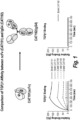
- CAT 192 is a TGF ⁇ 1-specific antibody, but most of its binding affinity was lost when it was converted from a scFv into a full-length IgG4 ( Figure 1 ). Antibody subtype and Fc formats alone do not explain this phenomenon because both IgG1 and IgG4 Fab displayed very low affinity to TGF ⁇ 1.
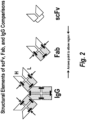
- the tight binding of scFv to TGF ⁇ 1 may be due to the high flexibility resulting from the long (GGGGS) 3 linker connecting the heavy and light chain Fv domains. This high flexibility may have been lost during conversion of the scFv to Fab or IgG versions.
- the low affinity of CAT192 was characterized by a very slow on-rate but also a very slow off-rate.
- the slow on-rate and off-rate suggested that the binding between CAT192 and TGF ⁇ 1 may require a potential conformational change which was limited by unfavorable amino acids in CAT192(IgG4).
- CAT192(IgG4) Described here are experiments designed to increase flexibility/affinity of the Fab or IgG versions of the scFv by adding additional amino acids in the light chain elbow region, which links the antibody Fv domain to the CH1 domain.
- mutants were designed to add one glycine (G), two glycines (GG), two glycines and one serine (GGS), three glycines and one serine (GGGS), and four glycines and one serine (GGGGS) sequences into the wild-type light chain elbow region as shown below in Table 2, with the added amino acids underlined.
- Table 2 Modified-IgG4 Light Chain Elbow Region Insertion Mutants Name Position Amino acid sequence WT Light chain elbow region LEIKRTVA (SEQ ID No. 21) LC+G Light chain elbow region LEIK G RTVA (SEQ ID No. 22) LC+GG Light chain elbow region LEIK GG RTVA (SEQ ID No.
- the light chain amino acid #25 is an Ala in scFv, but was changed to Ser when converted to IgG4. Therefore, an additional A25S mutant was included as a control to test whether changing the Ala to Ser affects the affinity of the scFv to TGF ⁇ 1.
- the wild-type CAT192 and the mutant DNA and amino acid sequences are listed below.
- SEQ ID No. 38 Amino acid sequence of CAT192 IgG1 Wild-Type LC with the elbow region underlined: SEQ ID No.
- the five CAT192 LC mutants, along with the A25S mutant and WT LC were co-expressed with His-tagged CAT192 HC Fab using the Expi293F transfection system (Life Technologies) in a 24-well plate format (4 ⁇ 1mL).
- Conditioned media (CM) was harvested 4 days post-transfection and the Octet QK384 instrument was used to calculate expression level and TGF ⁇ 1 binding in a single assay.
- Purified CAT192 Fab-His was used as a standard curve (diluted 2-fold from 100 to 3.125 ⁇ g/mL).
- the CAT192 Fab CM was diluted 1: 10 in diluent and GC1008 Fab CM was included as positive control. Binding to anti-Fab-CH1 biosensors was measured for 2 min at 1000 rpm and 30°C plate temperature for quantitation and capture. The sensors were then moved into wells containing 200 nM of TGF ⁇ 1 for binding assessment.
- the TGF ⁇ 1 binding result showed that each additional amino acid insertion increased the binding affinity of the CAT192 Fab as compared to the WT counterpart. Addition of at least two glycines increased the binding affinity to a level comparable to that of the GC1008 Fab antibody.
- the A25S mutant showed weak TGF ⁇ 1 binding affinity, similar to the affinity of the WT and the purified recombinant CAT192 Fab. This result was qualitative because the amount of Fab captured to the sensors was not normalized for concentration or buffer subtracted.
- the CAT192 LC Fab variants were then purified using PureSpeed IMAC tips from Rainin in order to accurately assess the affinity to TGF ⁇ 1 and confirm isoform-specificity using surface plasmon resonance.
- the conditioned media for each sample was split into four wells (-800 ⁇ L each) and ⁇ 200 ⁇ L equilibration buffer was added to each in order to use two 1 mL purification tips (20 ⁇ L resin) for each sample.
- the samples were buffer exchanged using Amicon Ultra filters into Gibco PBS pH 7.2 after the elution step to remove the imidazole.
- the concentrations were measured by A280 and 3.5 ⁇ g was loaded onto a non-reducing 4-20% Tris-Glycine SDS-PAGE gel and Coomassie stained to check the purity.
- the overall yield ranged from 12-42% of the starting material in CM.
- the Biacore T200 instrument was used to assess the TGF ⁇ binding affinity of purified CAT192 WT and LC mutant Fabs.
- TGF ⁇ 1, TGF ⁇ 2, and TGF ⁇ 3 (124, 125, and 112 RU) were immobilized to a CM5 series S chip using amine chemistry. A wide concentration range was used to account for both the low and high affinity binders.
- the Fabs were diluted 3-fold from 270 to 0.37nM in HBS-EP+ buffer. Each sample was injected in duplicate. The K D was determined using the typical concentration range with 30nM as the top concentration.
- mutants were also designed to increase flexibility/affinity by inserting additional amino acids in the heavy chain elbow region, which linked the antibody Fv domain to the CH1 domain. More specifically, mutants were designed to add one glycine (G), two glycines (GG), and four glycines and a serine (GGGGS) sequence into the wild-type heavy chain elbow region as shown below in Table 4, with the added amino acids underlined.
- Table 4 Modified-IgG4 Heavy Chain Elbow Insertion Mutants Name Position Amino acid sequence WT Heavy chain elbow region TVTVSSAST (SEQ ID No.
- the HC+GG-ST was an unexpected by-product from the PCR mutagenesis process, which added the two glycines in the elbow as designed but also had two amino acids deleted at the end of the elbow region, as confirmed by DNA sequencing. This mutant had the same number of amino acids in the heavy chain elbow region but different amino acids composition in the elbow linker. It was included as a control for characterization and affinity comparisons.
- CAT192 HC mutants were co-expressed with CAT192 LC Fab using the Expi293F transfection system (Life Technologies) in a 24-well plate format (4 ⁇ 1mL). Conditioned media was harvested 4 days post-transfection and then purified using PureSpeed IMAC tips from Rainin in order to accurately assess the affinity to TGF ⁇ 1.
- the Biacore T200 instrument was used to assess the TGFP binding affinity of purified CAT192 mutant Fabs as described in Example 1.
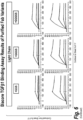
- the results shown in Figure 6 suggested that, like the mutants in the light chain elbow region, addition of amino acids in the elbow region of CAT192 heavy chain also improved the binding affinity to TGF ⁇ 1.
- the CAT192 HC+GGGGS mutant showed very high affinity binding to TGF ⁇ 1.
- Combination CAT192 mutants were created by co-transfection DNAs harboring mutants at the elbow regions of both heavy and light chains using the Expi293F transfection system (Life Technologies) in a 24-well plate format (4 ⁇ 1mL). The different combinations are listed in Table 5.
- Conditioned media was harvested 4 days post-transfection and then purified using PureSpeed IMAC tips from Rainin in order to accurately assess the affinity to TGF ⁇ 1.
- the Biacore T200 instrument was used to assess the TGF ⁇ binding affinity of purified CAT192 mutant Fabs as described in Example 1.
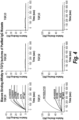
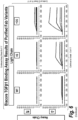
- the results shown in Figure 3 suggested that the combination mutants restored the high affinity binding to TGF ⁇ 1 of CAT192.
- the binding affinity (KD) by these mutant Fabs are listed in Table 6.
- CM was loaded onto each column at 0.5 mL/min, washed with 25 column volumes (CV) of 50 mM NaPi, 25 mM NaCl pH 7.1 (2 mL/min), washed with 25 CV of 10 mM sodium succinate pH 6.0 (2 mL/min), and eluted in 3 ⁇ 2 mL fractions with 10 mM sodium succinate pH 3.75 at 1 mL/min (labeled #1,#2,#3).
- the protein A eluates were neutralized with 0.2 M NaOH, and 0.2 M NaCl was added for a final concentration of 40 mM NaCl.
- the samples were then concentrated and buffer exchanged into 50 mM NaPi, 25 mM NaCl pH 7.1.
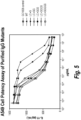
- the CAT192 IgG S228P LC insertion mutants were then characterized in a A549 cell potency assay ( Rapoza et al., 2006, J Immunol Methods, Vol316, pp18 ).
- the results showed that the CAT192 insertion mutants neutralized TGF ⁇ 1 activity, as demonstrated by the inhibitory effects by the mutants on TGF ⁇ 1-stimulated IL-11 production. It appeared that two glycines added to the light chain elbow were sufficient to for CAT192 to regain efficacy, as observed in the Biacore binding experiment.
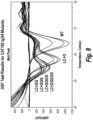
- DSF Differential Scanning Fluorimetry
- Expi293F cells were transfected with 150 ⁇ g DNA (75 ⁇ g LC + 75 ⁇ g HC). Conditioned media was collected 5 days after the transfection. The CM was then purified using His-Trap Excel columns equilibrated with 20 mM NaPi pH 7.4, 500 mM NaCl, 5mM imidazole.
- Fab protein was eluted with 20 mM NaPi pH 7.4, 500 mM NaCl, 500 mM imidazole and immediately buffer exchanged into 20 mM HEPES pH 7.0, 50 mM NaCl using a size exclusion chromatography column (Superdex 200 10/300). The Fabs were then concentrated to 20 mg/mL and sparse matrix screens were set-up at both room temperature and 4°C. All crystals used for structure determination were obtained at 4°C in a 1:1 protein to crystallization condition ratio.
- Wild-type protein and the lower binding affinity mutants crystallized in a P21 space group in similar PEG conditions WT: 12% PEG 8K/ 0.1 M sodium cacodylate pH 6/0.2 M MgCl 2 , CAT192 WT HC/LC+G: 12% PEG 20K/ 0.1 M MES pH 6.5, CAT192 HC+GGGGS/WT LC: 12% PEG 20K, 0.1 M MES pH 5.75).
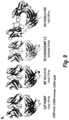
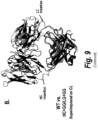
- the high binding affinity mutant (HC+GG/LC+GG) displayed large conformational changes in the variable domains compared to the other CAT192 Fab structures ( Figure 9 , part A). While the constant domains between all four Fabs superimposed nicely, the variable domains in CAT192 HC+GG/LC+GG shifted significantly compared to the other structures ( Figure 9 , part B). Furthermore, the HC CDR3 region was completely structured in the high binding affinity structure and was stabilized by interacting with the LC CDR3 ( ⁇ 3 ⁇ ). These four structures, in accordance with the Biacore results, suggested that large conformational rearrangement was required to restore the high binding affinity of CAT192.
Landscapes
- Health & Medical Sciences (AREA)
- Chemical & Material Sciences (AREA)
- Life Sciences & Earth Sciences (AREA)
- Organic Chemistry (AREA)
- Medicinal Chemistry (AREA)
- General Health & Medical Sciences (AREA)
- Engineering & Computer Science (AREA)
- Genetics & Genomics (AREA)
- Immunology (AREA)
- Bioinformatics & Cheminformatics (AREA)
- Molecular Biology (AREA)
- Biochemistry (AREA)
- Pharmacology & Pharmacy (AREA)
- Public Health (AREA)
- Veterinary Medicine (AREA)
- Animal Behavior & Ethology (AREA)
- Biophysics (AREA)
- Proteomics, Peptides & Aminoacids (AREA)
- General Chemical & Material Sciences (AREA)
- Chemical Kinetics & Catalysis (AREA)
- Nuclear Medicine, Radiotherapy & Molecular Imaging (AREA)
- Biomedical Technology (AREA)
- Microbiology (AREA)
- Physical Education & Sports Medicine (AREA)
- Zoology (AREA)
- Wood Science & Technology (AREA)
- General Engineering & Computer Science (AREA)
- Biotechnology (AREA)
- Mycology (AREA)
- Epidemiology (AREA)
- Endocrinology (AREA)
- Plant Pathology (AREA)
- Physics & Mathematics (AREA)
- Orthopedic Medicine & Surgery (AREA)
- Rheumatology (AREA)
- Dermatology (AREA)
- Urology & Nephrology (AREA)
- Peptides Or Proteins (AREA)
- Preparation Of Compounds By Using Micro-Organisms (AREA)
- Medicines Containing Antibodies Or Antigens For Use As Internal Diagnostic Agents (AREA)
Priority Applications (1)
| Application Number | Priority Date | Filing Date | Title |
|---|---|---|---|
| EP24203381.9A EP4495137A3 (en) | 2015-03-04 | 2016-03-03 | Modified-igg antibodies that bind transforming growth factor-beta1 with high affinity, avidity and specificity |
Applications Claiming Priority (3)
| Application Number | Priority Date | Filing Date | Title |
|---|---|---|---|
| US201562128149P | 2015-03-04 | 2015-03-04 | |
| PCT/US2016/020780 WO2016141245A1 (en) | 2015-03-04 | 2016-03-03 | Modified-igg antibodies that bind transforming growth factor-beta1 with high affinity, avidity and specificity |
| EP16709666.8A EP3265487B1 (en) | 2015-03-04 | 2016-03-03 | Modified-igg antibodies that bind transforming growth factor-beta1 with high affinity, avidity and specificity |
Related Parent Applications (1)
| Application Number | Title | Priority Date | Filing Date |
|---|---|---|---|
| EP16709666.8A Division EP3265487B1 (en) | 2015-03-04 | 2016-03-03 | Modified-igg antibodies that bind transforming growth factor-beta1 with high affinity, avidity and specificity |
Related Child Applications (1)
| Application Number | Title | Priority Date | Filing Date |
|---|---|---|---|
| EP24203381.9A Division EP4495137A3 (en) | 2015-03-04 | 2016-03-03 | Modified-igg antibodies that bind transforming growth factor-beta1 with high affinity, avidity and specificity |
Publications (3)
| Publication Number | Publication Date |
|---|---|
| EP4163299A1 EP4163299A1 (en) | 2023-04-12 |
| EP4163299B1 true EP4163299B1 (en) | 2024-10-02 |
| EP4163299C0 EP4163299C0 (en) | 2024-10-02 |
Family
ID=55524479
Family Applications (3)
| Application Number | Title | Priority Date | Filing Date |
|---|---|---|---|
| EP22180865.2A Active EP4163299B1 (en) | 2015-03-04 | 2016-03-03 | Modified-igg antibodies that bind transforming growth factor-beta1 with high affinity, avidity and specificity |
| EP24203381.9A Pending EP4495137A3 (en) | 2015-03-04 | 2016-03-03 | Modified-igg antibodies that bind transforming growth factor-beta1 with high affinity, avidity and specificity |
| EP16709666.8A Active EP3265487B1 (en) | 2015-03-04 | 2016-03-03 | Modified-igg antibodies that bind transforming growth factor-beta1 with high affinity, avidity and specificity |
Family Applications After (2)
| Application Number | Title | Priority Date | Filing Date |
|---|---|---|---|
| EP24203381.9A Pending EP4495137A3 (en) | 2015-03-04 | 2016-03-03 | Modified-igg antibodies that bind transforming growth factor-beta1 with high affinity, avidity and specificity |
| EP16709666.8A Active EP3265487B1 (en) | 2015-03-04 | 2016-03-03 | Modified-igg antibodies that bind transforming growth factor-beta1 with high affinity, avidity and specificity |
Country Status (22)
| Country | Link |
|---|---|
| US (4) | US11325970B2 (OSRAM) |
| EP (3) | EP4163299B1 (OSRAM) |
| JP (1) | JP6745275B2 (OSRAM) |
| KR (3) | KR102668864B1 (OSRAM) |
| CN (1) | CN107787329B (OSRAM) |
| AR (1) | AR103840A1 (OSRAM) |
| AU (1) | AU2016226098B2 (OSRAM) |
| DK (1) | DK3265487T3 (OSRAM) |
| ES (2) | ES2994790T3 (OSRAM) |
| HR (1) | HRP20221142T1 (OSRAM) |
| HU (1) | HUE059644T2 (OSRAM) |
| IL (1) | IL254239B2 (OSRAM) |
| LT (1) | LT3265487T (OSRAM) |
| MX (1) | MX382703B (OSRAM) |
| PL (1) | PL3265487T3 (OSRAM) |
| PT (1) | PT3265487T (OSRAM) |
| RS (1) | RS63589B1 (OSRAM) |
| RU (1) | RU2728858C2 (OSRAM) |
| SG (2) | SG11201707109XA (OSRAM) |
| SI (1) | SI3265487T1 (OSRAM) |
| TW (1) | TWI733661B (OSRAM) |
| WO (1) | WO2016141245A1 (OSRAM) |
Families Citing this family (10)
| Publication number | Priority date | Publication date | Assignee | Title |
|---|---|---|---|---|
| TWI726870B (zh) | 2015-03-04 | 2021-05-11 | 美商健臻公司 | 具有高親和性、結合性及專一性之結合轉形生長因子-β1的scFv-Fc二聚體 |
| TWI733661B (zh) | 2015-03-04 | 2021-07-21 | 美商健臻公司 | 以高親合性、結合性及特異性結合轉化生長因子-β1的經修飾IgG抗體 |
| MX2018010948A (es) | 2016-03-11 | 2019-06-20 | Scholar Rock Inc | INMUNOGLOBULINAS DE ENLACE A TGFß1 Y USOS DE LAS MISMAS. |
| US11326182B2 (en) | 2016-04-29 | 2022-05-10 | Voyager Therapeutics, Inc. | Compositions for the treatment of disease |
| EP3448987A4 (en) | 2016-04-29 | 2020-05-27 | Voyager Therapeutics, Inc. | COMPOSITIONS FOR TREATING A DISEASE |
| TWI787230B (zh) | 2017-01-20 | 2022-12-21 | 法商賽諾菲公司 | 抗TGF-β抗體及其用途 |
| TWI788321B (zh) | 2017-01-20 | 2023-01-01 | 美商健臻公司 | 骨靶向抗體 |
| JP7384415B2 (ja) * | 2018-05-10 | 2023-11-21 | ミラバイオロジクス株式会社 | 抗体の抗原結合領域を含み、生理活性ペプチドを融合する人工タンパク質 |
| MA53125A (fr) | 2018-07-11 | 2021-05-19 | Scholar Rock Inc | Inhibiteurs de tgf?1 sélectifs selon l'isoforme à affinité élevée |
| US20220119513A1 (en) * | 2020-06-08 | 2022-04-21 | Zoetis Services Llc | Anti-tgfb antibodies and therapeutic uses thereof |
Family Cites Families (23)
| Publication number | Priority date | Publication date | Assignee | Title |
|---|---|---|---|---|
| US20020099179A1 (en) | 1989-12-21 | 2002-07-25 | Linda K. Jolliffe | Cdr-grafted antibodies |
| US5616561A (en) | 1995-03-31 | 1997-04-01 | Regents Of The University Of California | TGF-β antagonists as mitigators of radiation-induced tissue damage |
| EP1486560A3 (en) | 1999-04-30 | 2005-02-09 | Cambridge Antibody Technology LTD | Specific antibodies and antibody fragments for TGFBETA1 |
| US6492497B1 (en) * | 1999-04-30 | 2002-12-10 | Cambridge Antibody Technology Limited | Specific binding members for TGFbeta1 |
| JP2006525362A (ja) | 2003-04-30 | 2006-11-09 | ジェンザイム コーポレーション | 腎機能不全を治療するためのTGF−βアンタゴニストとレニン−アンジオテンシン−アルドステロン系アンタゴニストとの併用 |
| KR101245983B1 (ko) | 2004-03-31 | 2013-06-28 | 제넨테크, 인크. | 인간화 항-tgf-베타 항체 |
| US7867496B2 (en) * | 2004-09-22 | 2011-01-11 | Genzyme Corporation | Use of TGF-β antagonists to limit nephrotoxicity of immunosuppressive agents |
| US9284375B2 (en) | 2005-04-15 | 2016-03-15 | Macrogenics, Inc. | Covalent diabodies and uses thereof |
| EA016038B1 (ru) | 2005-04-22 | 2012-01-30 | Эли Лилли Энд Компани | Антитело к tgf-бета и его применение |
| CA2632799A1 (en) | 2005-12-23 | 2007-07-05 | Eli Lilly And Company | Tgf-beta binding compositions |
| KR101516823B1 (ko) | 2006-03-17 | 2015-05-07 | 바이오겐 아이덱 엠에이 인코포레이티드 | 안정화된 폴리펩티드 조성물 |
| CA2644663A1 (en) | 2006-03-23 | 2007-09-27 | Kirin Pharma Kabushiki Kaisha | Agonist antibody to human thrombopoietin receptor |
| CN104645328A (zh) | 2006-10-03 | 2015-05-27 | 建新公司 | TGF-β拮抗物治疗具有罹患支气管肺发育不良风险的婴儿的用途 |
| EP2313109A2 (en) | 2008-07-02 | 2011-04-27 | Emergent Product Development Seattle, LLC | Il6 immunotherapeutics |
| US20120294868A1 (en) * | 2009-04-24 | 2012-11-22 | Edwards James R | Anti-tgf-beta induction of bone cell function and bone growth |
| EP2655624B1 (en) | 2010-12-23 | 2017-11-29 | Biogen MA Inc. | Linker peptides and polypeptides comprising same |
| TWI743461B (zh) | 2011-03-28 | 2021-10-21 | 法商賽諾菲公司 | 具有交叉結合區定向之雙重可變區類抗體結合蛋白 |
| HRP20211582T1 (hr) * | 2011-06-03 | 2022-01-07 | Xoma Technology Ltd. | Protutijela specifična za tgf-beta |
| CN104640561A (zh) | 2012-07-23 | 2015-05-20 | 酵活有限公司 | 包含轻链和重链的选择性配对的免疫球蛋白构建体 |
| TWI664979B (zh) | 2013-03-11 | 2019-07-11 | 健臻公司 | 經生物工程之抗-TGF-β抗體及抗原結合片段 |
| KR102257138B1 (ko) * | 2013-03-20 | 2021-05-26 | 젠자임 코포레이션 | 불완전 골형성증의 치료 방법 |
| TWI733661B (zh) | 2015-03-04 | 2021-07-21 | 美商健臻公司 | 以高親合性、結合性及特異性結合轉化生長因子-β1的經修飾IgG抗體 |
| TWI726870B (zh) | 2015-03-04 | 2021-05-11 | 美商健臻公司 | 具有高親和性、結合性及專一性之結合轉形生長因子-β1的scFv-Fc二聚體 |
-
2016
- 2016-03-02 TW TW105106247A patent/TWI733661B/zh active
- 2016-03-03 MX MX2017011252A patent/MX382703B/es unknown
- 2016-03-03 KR KR1020237024971A patent/KR102668864B1/ko active Active
- 2016-03-03 EP EP22180865.2A patent/EP4163299B1/en active Active
- 2016-03-03 SI SI201631598T patent/SI3265487T1/sl unknown
- 2016-03-03 EP EP24203381.9A patent/EP4495137A3/en active Pending
- 2016-03-03 KR KR1020247016764A patent/KR20240076851A/ko active Pending
- 2016-03-03 AR ARP160100560A patent/AR103840A1/es unknown
- 2016-03-03 US US15/555,500 patent/US11325970B2/en active Active
- 2016-03-03 PL PL16709666.8T patent/PL3265487T3/pl unknown
- 2016-03-03 EP EP16709666.8A patent/EP3265487B1/en active Active
- 2016-03-03 SG SG11201707109XA patent/SG11201707109XA/en unknown
- 2016-03-03 LT LTEPPCT/US2016/020780T patent/LT3265487T/lt unknown
- 2016-03-03 RU RU2017134043A patent/RU2728858C2/ru active
- 2016-03-03 HR HRP20221142TT patent/HRP20221142T1/hr unknown
- 2016-03-03 SG SG10201908019U patent/SG10201908019UA/en unknown
- 2016-03-03 DK DK16709666.8T patent/DK3265487T3/da active
- 2016-03-03 HU HUE16709666A patent/HUE059644T2/hu unknown
- 2016-03-03 WO PCT/US2016/020780 patent/WO2016141245A1/en not_active Ceased
- 2016-03-03 ES ES22180865T patent/ES2994790T3/es active Active
- 2016-03-03 RS RS20220886A patent/RS63589B1/sr unknown
- 2016-03-03 KR KR1020177027372A patent/KR102560072B1/ko active Active
- 2016-03-03 CN CN201680025633.5A patent/CN107787329B/zh active Active
- 2016-03-03 PT PT167096668T patent/PT3265487T/pt unknown
- 2016-03-03 JP JP2017546179A patent/JP6745275B2/ja active Active
- 2016-03-03 ES ES16709666T patent/ES2927297T3/es active Active
- 2016-03-03 AU AU2016226098A patent/AU2016226098B2/en active Active
-
2017
- 2017-08-31 IL IL254239A patent/IL254239B2/en unknown
-
2022
- 2022-04-11 US US17/717,967 patent/US11834495B2/en active Active
-
2023
- 2023-10-23 US US18/492,150 patent/US12162933B2/en active Active
-
2024
- 2024-11-06 US US18/939,307 patent/US20250179163A1/en active Pending
Also Published As
Similar Documents
| Publication | Publication Date | Title |
|---|---|---|
| US12162933B2 (en) | Modified-IgG antibodies that bind transforming growth factor-β1 with high affinity, avidity and specificity | |
| US12473356B2 (en) | scFv-Fc dimers that bind transforming growth factor-β1 with high affinity, avidity and specificity | |
| HK40091838A (en) | Modified-igg antibodies that bind transforming growth factor-beta1 with high affinity, avidity and specificity | |
| HK40091838B (en) | Modified-igg antibodies that bind transforming growth factor-beta1 with high affinity, avidity and specificity | |
| HK40119111A (en) | Modified-igg antibodies that bind transforming growth factor-beta1 with high affinity, avidity and specificity | |
| CA2978439C (en) | Modified-igg antibodies that bind transforming growth factor-beta1 with high affinity, avidity and specificity | |
| HK40117203A (en) | Scfv-fc dimers that bind transforming growth factor-beta1 with high affinity, avidity and specificity | |
| HK1249113B (en) | Modified-igg antibodies that bind transforming growth factor-beta1 with high affinity, avidity and specificity | |
| HK1249113A1 (en) | Modified-igg antibodies that bind transforming growth factor-beta1 with high affinity, avidity and specificity |
Legal Events
| Date | Code | Title | Description |
|---|---|---|---|
| PUAI | Public reference made under article 153(3) epc to a published international application that has entered the european phase |
Free format text: ORIGINAL CODE: 0009012 |
|
| STAA | Information on the status of an ep patent application or granted ep patent |
Free format text: STATUS: THE APPLICATION HAS BEEN PUBLISHED |
|
| AC | Divisional application: reference to earlier application |
Ref document number: 3265487 Country of ref document: EP Kind code of ref document: P |
|
| AK | Designated contracting states |
Kind code of ref document: A1 Designated state(s): AL AT BE BG CH CY CZ DE DK EE ES FI FR GB GR HR HU IE IS IT LI LT LU LV MC MK MT NL NO PL PT RO RS SE SI SK SM TR |
|
| STAA | Information on the status of an ep patent application or granted ep patent |
Free format text: STATUS: REQUEST FOR EXAMINATION WAS MADE |
|
| 17P | Request for examination filed |
Effective date: 20231002 |
|
| RBV | Designated contracting states (corrected) |
Designated state(s): AL AT BE BG CH CY CZ DE DK EE ES FI FR GB GR HR HU IE IS IT LI LT LU LV MC MK MT NL NO PL PT RO RS SE SI SK SM TR |
|
| REG | Reference to a national code |
Ref country code: HK Ref legal event code: DE Ref document number: 40091838 Country of ref document: HK |
|
| GRAP | Despatch of communication of intention to grant a patent |
Free format text: ORIGINAL CODE: EPIDOSNIGR1 |
|
| STAA | Information on the status of an ep patent application or granted ep patent |
Free format text: STATUS: GRANT OF PATENT IS INTENDED |
|
| INTG | Intention to grant announced |
Effective date: 20240201 |
|
| GRAJ | Information related to disapproval of communication of intention to grant by the applicant or resumption of examination proceedings by the epo deleted |
Free format text: ORIGINAL CODE: EPIDOSDIGR1 |
|
| STAA | Information on the status of an ep patent application or granted ep patent |
Free format text: STATUS: REQUEST FOR EXAMINATION WAS MADE |
|
| GRAP | Despatch of communication of intention to grant a patent |
Free format text: ORIGINAL CODE: EPIDOSNIGR1 |
|
| STAA | Information on the status of an ep patent application or granted ep patent |
Free format text: STATUS: GRANT OF PATENT IS INTENDED |
|
| INTC | Intention to grant announced (deleted) | ||
| INTG | Intention to grant announced |
Effective date: 20240430 |
|
| GRAS | Grant fee paid |
Free format text: ORIGINAL CODE: EPIDOSNIGR3 |
|
| GRAA | (expected) grant |
Free format text: ORIGINAL CODE: 0009210 |
|
| STAA | Information on the status of an ep patent application or granted ep patent |
Free format text: STATUS: THE PATENT HAS BEEN GRANTED |
|
| AC | Divisional application: reference to earlier application |
Ref document number: 3265487 Country of ref document: EP Kind code of ref document: P |
|
| AK | Designated contracting states |
Kind code of ref document: B1 Designated state(s): AL AT BE BG CH CY CZ DE DK EE ES FI FR GB GR HR HU IE IS IT LI LT LU LV MC MK MT NL NO PL PT RO RS SE SI SK SM TR |
|
| REG | Reference to a national code |
Ref country code: GB Ref legal event code: FG4D |
|
| REG | Reference to a national code |
Ref country code: CH Ref legal event code: EP |
|
| REG | Reference to a national code |
Ref country code: DE Ref legal event code: R096 Ref document number: 602016089715 Country of ref document: DE |
|
| REG | Reference to a national code |
Ref country code: IE Ref legal event code: FG4D |
|
| U01 | Request for unitary effect filed |
Effective date: 20241104 |
|
| U07 | Unitary effect registered |
Designated state(s): AT BE BG DE DK EE FI FR IT LT LU LV MT NL PT RO SE SI Effective date: 20241112 |
|
| REG | Reference to a national code |
Ref country code: ES Ref legal event code: FG2A Ref document number: 2994790 Country of ref document: ES Kind code of ref document: T3 Effective date: 20250131 |
|
| U20 | Renewal fee for the european patent with unitary effect paid |
Year of fee payment: 10 Effective date: 20250205 |
|
| PG25 | Lapsed in a contracting state [announced via postgrant information from national office to epo] |
Ref country code: HR Free format text: LAPSE BECAUSE OF FAILURE TO SUBMIT A TRANSLATION OF THE DESCRIPTION OR TO PAY THE FEE WITHIN THE PRESCRIBED TIME-LIMIT Effective date: 20241002 Ref country code: IS Free format text: LAPSE BECAUSE OF FAILURE TO SUBMIT A TRANSLATION OF THE DESCRIPTION OR TO PAY THE FEE WITHIN THE PRESCRIBED TIME-LIMIT Effective date: 20250202 |
|
| PG25 | Lapsed in a contracting state [announced via postgrant information from national office to epo] |
Ref country code: NO Free format text: LAPSE BECAUSE OF FAILURE TO SUBMIT A TRANSLATION OF THE DESCRIPTION OR TO PAY THE FEE WITHIN THE PRESCRIBED TIME-LIMIT Effective date: 20250102 |
|
| PG25 | Lapsed in a contracting state [announced via postgrant information from national office to epo] |
Ref country code: GR Free format text: LAPSE BECAUSE OF FAILURE TO SUBMIT A TRANSLATION OF THE DESCRIPTION OR TO PAY THE FEE WITHIN THE PRESCRIBED TIME-LIMIT Effective date: 20250103 |
|
| PG25 | Lapsed in a contracting state [announced via postgrant information from national office to epo] |
Ref country code: CZ Free format text: LAPSE BECAUSE OF FAILURE TO SUBMIT A TRANSLATION OF THE DESCRIPTION OR TO PAY THE FEE WITHIN THE PRESCRIBED TIME-LIMIT Effective date: 20241002 Ref country code: PL Free format text: LAPSE BECAUSE OF FAILURE TO SUBMIT A TRANSLATION OF THE DESCRIPTION OR TO PAY THE FEE WITHIN THE PRESCRIBED TIME-LIMIT Effective date: 20241002 |
|
| PGFP | Annual fee paid to national office [announced via postgrant information from national office to epo] |
Ref country code: GB Payment date: 20250102 Year of fee payment: 10 |
|
| PG25 | Lapsed in a contracting state [announced via postgrant information from national office to epo] |
Ref country code: RS Free format text: LAPSE BECAUSE OF FAILURE TO SUBMIT A TRANSLATION OF THE DESCRIPTION OR TO PAY THE FEE WITHIN THE PRESCRIBED TIME-LIMIT Effective date: 20250102 |
|
| PG25 | Lapsed in a contracting state [announced via postgrant information from national office to epo] |
Ref country code: SM Free format text: LAPSE BECAUSE OF FAILURE TO SUBMIT A TRANSLATION OF THE DESCRIPTION OR TO PAY THE FEE WITHIN THE PRESCRIBED TIME-LIMIT Effective date: 20241002 |
|
| PGFP | Annual fee paid to national office [announced via postgrant information from national office to epo] |
Ref country code: ES Payment date: 20250411 Year of fee payment: 10 |
|
| PGFP | Annual fee paid to national office [announced via postgrant information from national office to epo] |
Ref country code: CH Payment date: 20250401 Year of fee payment: 10 |
|
| PG25 | Lapsed in a contracting state [announced via postgrant information from national office to epo] |
Ref country code: SK Free format text: LAPSE BECAUSE OF FAILURE TO SUBMIT A TRANSLATION OF THE DESCRIPTION OR TO PAY THE FEE WITHIN THE PRESCRIBED TIME-LIMIT Effective date: 20241002 |
|
| PLBE | No opposition filed within time limit |
Free format text: ORIGINAL CODE: 0009261 |
|
| STAA | Information on the status of an ep patent application or granted ep patent |
Free format text: STATUS: NO OPPOSITION FILED WITHIN TIME LIMIT |
|
| 26N | No opposition filed |
Effective date: 20250703 |
|
| PG25 | Lapsed in a contracting state [announced via postgrant information from national office to epo] |
Ref country code: MC Free format text: LAPSE BECAUSE OF FAILURE TO SUBMIT A TRANSLATION OF THE DESCRIPTION OR TO PAY THE FEE WITHIN THE PRESCRIBED TIME-LIMIT Effective date: 20241002 |