EP4145154A2 - Batterieklassifizierungsvorrichtung und -verfahren - Google Patents
Batterieklassifizierungsvorrichtung und -verfahren Download PDFInfo
- Publication number
- EP4145154A2 EP4145154A2 EP22742925.5A EP22742925A EP4145154A2 EP 4145154 A2 EP4145154 A2 EP 4145154A2 EP 22742925 A EP22742925 A EP 22742925A EP 4145154 A2 EP4145154 A2 EP 4145154A2
- Authority
- EP
- European Patent Office
- Prior art keywords
- battery
- differential voltage
- differential
- control unit
- classification
- Prior art date
- Legal status (The legal status is an assumption and is not a legal conclusion. Google has not performed a legal analysis and makes no representation as to the accuracy of the status listed.)
- Granted
Links
Images

Classifications
-
- G—PHYSICS
- G01—MEASURING; TESTING
- G01R—MEASURING ELECTRIC VARIABLES; MEASURING MAGNETIC VARIABLES
- G01R31/00—Arrangements for testing electric properties; Arrangements for locating electric faults; Arrangements for electrical testing characterised by what is being tested not provided for elsewhere
- G01R31/36—Arrangements for testing, measuring or monitoring the electrical condition of accumulators or electric batteries, e.g. capacity or state of charge [SoC]
- G01R31/3644—Constructional arrangements
- G01R31/3648—Constructional arrangements comprising digital calculation means, e.g. for performing an algorithm
-
- G—PHYSICS
- G01—MEASURING; TESTING
- G01R—MEASURING ELECTRIC VARIABLES; MEASURING MAGNETIC VARIABLES
- G01R31/00—Arrangements for testing electric properties; Arrangements for locating electric faults; Arrangements for electrical testing characterised by what is being tested not provided for elsewhere
- G01R31/36—Arrangements for testing, measuring or monitoring the electrical condition of accumulators or electric batteries, e.g. capacity or state of charge [SoC]
- G01R31/392—Determining battery ageing or deterioration, e.g. state of health
-
- G—PHYSICS
- G01—MEASURING; TESTING
- G01R—MEASURING ELECTRIC VARIABLES; MEASURING MAGNETIC VARIABLES
- G01R31/00—Arrangements for testing electric properties; Arrangements for locating electric faults; Arrangements for electrical testing characterised by what is being tested not provided for elsewhere
- G01R31/36—Arrangements for testing, measuring or monitoring the electrical condition of accumulators or electric batteries, e.g. capacity or state of charge [SoC]
- G01R31/382—Arrangements for monitoring battery or accumulator variables, e.g. SoC
- G01R31/3835—Arrangements for monitoring battery or accumulator variables, e.g. SoC involving only voltage measurements
-
- G—PHYSICS
- G01—MEASURING; TESTING
- G01R—MEASURING ELECTRIC VARIABLES; MEASURING MAGNETIC VARIABLES
- G01R19/00—Arrangements for measuring currents or voltages or for indicating presence or sign thereof
- G01R19/165—Indicating that current or voltage is either above or below a predetermined value or within or outside a predetermined range of values
- G01R19/16533—Indicating that current or voltage is either above or below a predetermined value or within or outside a predetermined range of values characterised by the application
- G01R19/16538—Indicating that current or voltage is either above or below a predetermined value or within or outside a predetermined range of values characterised by the application in AC or DC supplies
- G01R19/16542—Indicating that current or voltage is either above or below a predetermined value or within or outside a predetermined range of values characterised by the application in AC or DC supplies for batteries
-
- G—PHYSICS
- G01—MEASURING; TESTING
- G01R—MEASURING ELECTRIC VARIABLES; MEASURING MAGNETIC VARIABLES
- G01R19/00—Arrangements for measuring currents or voltages or for indicating presence or sign thereof
- G01R19/165—Indicating that current or voltage is either above or below a predetermined value or within or outside a predetermined range of values
- G01R19/16566—Circuits and arrangements for comparing voltage or current with one or several thresholds and for indicating the result not covered by subgroups G01R19/16504, G01R19/16528, G01R19/16533
-
- G—PHYSICS
- G01—MEASURING; TESTING
- G01R—MEASURING ELECTRIC VARIABLES; MEASURING MAGNETIC VARIABLES
- G01R31/00—Arrangements for testing electric properties; Arrangements for locating electric faults; Arrangements for electrical testing characterised by what is being tested not provided for elsewhere
- G01R31/36—Arrangements for testing, measuring or monitoring the electrical condition of accumulators or electric batteries, e.g. capacity or state of charge [SoC]
- G01R31/382—Arrangements for monitoring battery or accumulator variables, e.g. SoC
-
- G—PHYSICS
- G01—MEASURING; TESTING
- G01R—MEASURING ELECTRIC VARIABLES; MEASURING MAGNETIC VARIABLES
- G01R31/00—Arrangements for testing electric properties; Arrangements for locating electric faults; Arrangements for electrical testing characterised by what is being tested not provided for elsewhere
- G01R31/36—Arrangements for testing, measuring or monitoring the electrical condition of accumulators or electric batteries, e.g. capacity or state of charge [SoC]
- G01R31/396—Acquisition or processing of data for testing or for monitoring individual cells or groups of cells within a battery
-
- H—ELECTRICITY
- H01—ELECTRIC ELEMENTS
- H01M—PROCESSES OR MEANS, e.g. BATTERIES, FOR THE DIRECT CONVERSION OF CHEMICAL ENERGY INTO ELECTRICAL ENERGY
- H01M10/00—Secondary cells; Manufacture thereof
- H01M10/42—Methods or arrangements for servicing or maintenance of secondary cells or secondary half-cells
- H01M10/48—Accumulators combined with arrangements for measuring, testing or indicating the condition of cells, e.g. the level or density of the electrolyte
-
- Y—GENERAL TAGGING OF NEW TECHNOLOGICAL DEVELOPMENTS; GENERAL TAGGING OF CROSS-SECTIONAL TECHNOLOGIES SPANNING OVER SEVERAL SECTIONS OF THE IPC; TECHNICAL SUBJECTS COVERED BY FORMER USPC CROSS-REFERENCE ART COLLECTIONS [XRACs] AND DIGESTS
- Y02—TECHNOLOGIES OR APPLICATIONS FOR MITIGATION OR ADAPTATION AGAINST CLIMATE CHANGE
- Y02E—REDUCTION OF GREENHOUSE GAS [GHG] EMISSIONS, RELATED TO ENERGY GENERATION, TRANSMISSION OR DISTRIBUTION
- Y02E60/00—Enabling technologies; Technologies with a potential or indirect contribution to GHG emissions mitigation
- Y02E60/10—Energy storage using batteries
Definitions
- the present disclosure relates to a battery classification apparatus and method, and more particularly, to a battery classification apparatus and method capable of classifying a battery based on capacity and voltage of the battery.
- Batteries commercially available at present include nickel-cadmium batteries, nickel hydrogen batteries, nickel-zinc batteries, lithium batteries and the like.
- the lithium batteries are in the limelight since they have almost no memory effect compared to nickel-based batteries and also have very low self-charging rate and high energy density.
- a battery may be classified according to a negative electrode material or a positive electrode material included therein.
- the battery may be classified into a battery containing 100% graphite-based negative electrode material, a battery containing graphite and non-graphite-based negative electrode material, or a battery containing 100% non-graphite-based negative electrode material.
- the battery may be classified into a battery containing an NMCO (nickel manganese cobalt oxide) positive electrode material, a battery containing NMCO and non-NMCO positive electrode material, or a battery containing a non-NMCO positive electrode material.
- NMCO nickel manganese cobalt oxide
- M manganese
- C manganese
- Co cobalt
- O oxide
- the battery may be classified into a high nickel-based battery and a low nickel-based battery. For example, when the content of N is 70% or more, the battery may be classified into a high nickel-based battery.
- the present disclosure is designed to solve the problems of the related art, and therefore the present disclosure is directed to providing a battery classification apparatus and method capable of classifying a battery in a non-destructive way based on voltage and capacity of the battery.
- a battery classification apparatus may comprise: a profile generating unit configured to obtain battery information about capacity and voltage of a battery and generate a differential profile representing a corresponding relationship between the capacity and a differential voltage based on the capacity and the voltage; and a control unit configured to obtain the differential profile from the profile generating unit, detect a plurality of peaks in the obtained differential profile, and classify the battery into any one of a plurality of preset groups based on a plurality of classification conditions preset for the number of the plurality of detected peaks and the differential voltage.
- the plurality of classification conditions may be set to include: a first classification condition about whether a peak at which a corresponding differential voltage is equal to or greater than a criterion value exists in a first capacity region; and a second classification condition about whether a peak at which a corresponding differential voltage is equal to or greater than the criterion value exists in a second capacity region.
- the control unit may be configured to set the first capacity region and the second capacity region based on a capacity at which a corresponding differential voltage is lowest in a predetermined capacity region of the differential profile.
- the control unit may be configured to select a peak at which a corresponding differential voltage is greatest among the plurality of peaks as a target peak, determine a first differential voltage based on a differential voltage of the selected target peak, determine a second differential voltage based on a lowest differential voltage of the differential profile, and set a greater value of the first differential voltage and the second differential voltage as the criterion value.
- the control unit may be configured to determine a value smaller than the differential voltage of the target peak by a first reference value as the first differential voltage and determine a value greater than the lowest differential voltage by a second reference value as the second differential voltage.
- the control unit may be configured to classify the battery into a first group, when the battery satisfies both the first classification condition and the second classification condition.
- the control unit may be configured to classify the battery into a second group, when the battery does not satisfy at least one of the first classification condition and the second classification condition.
- the control unit may be configured to determine the battery classified into the first group as a BOL battery or MOL battery containing a graphite-based negative electrode material.
- the control unit may be configured to determine the battery classified into the second group as a battery containing a non-graphite-based negative electrode material or an EOL battery containing a graphite-based negative electrode material.
- the control unit may be configured to determine the battery classified into the first group as a reusable battery and determine the battery classified into the second group as a non-reusable battery.
- a battery pack according to another aspect of the present disclosure may comprise the battery classification apparatus according to an aspect of the present disclosure.
- a battery classification method may comprise: a differential profile generating step of generating a differential profile representing a corresponding relationship between a differential voltage based on capacity and voltage of a battery and the capacity; a plural peak detecting step of detecting a plurality of peaks in the differential profile; and a battery classifying step of classifying the battery into any one of a plurality of preset groups based on a plurality of classification conditions preset for the number of the plurality of detected peaks and the differential voltage.
- the battery classification apparatus has an advantage of classifying a battery a non-destructive way according to the type of negative electrode material and the state of the battery. Furthermore, the battery classification apparatus has an advantage of more specifically classifying the battery into a reusable battery or a non-reusable battery.
- FIG. 1 is a diagram schematically showing a battery classification apparatus 100 according to an embodiment of the present disclosure.
- the battery classification apparatus 100 may include a profile generating unit 110 and a control unit 120.
- the profile generating unit 110 may be configured to obtain battery information about capacity and voltage of a battery.
- the battery means one physically separable independent cell including a negative electrode terminal and a positive electrode terminal.
- the battery means one physically separable independent cell including a negative electrode terminal and a positive electrode terminal.
- one lithiumion battery or lithium polymer battery may be regarded as a battery.
- the profile generating unit 110 may obtain a battery profile representing a corresponding relationship between a capacity and a voltage of the battery. That is, the battery profile may include battery information in which the capacity and the voltage of the battery are mapped.
- the profile generating unit 110 may be configured to generate a differential profile representing a corresponding relationship between a differential voltage based on capacity and voltage and the capacity.
- the differential voltage is a value obtained by differentiating the voltage included in the battery information by the capacity, and may be expressed as "dV/dQ". That is, the differential voltage may be a value representing an instantaneous change rate of voltage with respect to capacity.
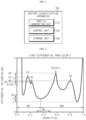
- the differential profile will be described with reference to the embodiment of FIG. 2 .
- FIG. 2 is a diagram schematically showing a first differential profile DP1 according to an embodiment of the present disclosure.
- the first differential profile DP1 is a differential profile for a battery containing an NMCO positive electrode material having a nickel content of 80% and a 100% graphite-based negative electrode material.
- the first differential profile DP1 is a differential profile generated based on the voltage and capacity of the battery obtained when the battery is charged at a temperature of 25°C and at a 0.05 C-rate.
- the profile generating unit 110 may generate the first differential profile DP1 representing a corresponding relationship between the capacity and the differential voltage, based on the obtained battery information.
- the capacity of the battery may be normalized to have a capacity region of 0 to 1. For this reason, when the plurality of batteries are classified, the capacity regions for the plurality of batteries are normalized, so that the plurality of batteries may be classified under the same condition.
- the control unit 120 may be configured to obtain a differential profile from the profile generating unit 110.
- control unit 120 and the profile generating unit 110 may be connected to communicate with each other.
- the profile generating unit 110 may transmit the generated first differential profile DP1 to the control unit 120, and the control unit 120 may receive the first differential profile DP1 from the profile generating unit 110.
- the control unit 120 may be configured to detect a plurality of peaks in the obtained differential profile.
- the peak may be a point having an upward convex form in the differential profile. That is, the peak is a point at which the change rate of the differential voltage with respect to capacity is 0. Based on the peak, the change rate may be positive at a low capacity side, and the change rate may be negative at a high capacity side.
- the control unit 120 may detect a first peak P1, a second peak P2, a third peak P3, and a fourth peak P4.
- the control unit 120 may be configured to classify the battery into any one of a plurality of preset groups based on a plurality of classification conditions preset for the number of the plurality of detected peaks and the differential voltage.
- the plurality of classification conditions may include a first classification condition and a second classification condition.
- the first classification condition may be a classification condition about whether a peak at which a corresponding differential voltage is greater than or equal to a criterion value R exists in a first capacity region RR1.
- the second classification condition may be a classification condition about whether a peak at which a corresponding differential voltage is greater than or equal to the criterion value R exists in a second capacity region RR2.
- the first peak P1 and the second peak P2 may be included in the first capacity region RR1, and the third peak P3 and the fourth peak P4 may be included in the second capacity region RR2. Since the differential voltage d1 of the first peak P1 and the differential voltage d2 of the second peak P2 are equal to or greater than the criterion value R, the battery may satisfy the first classification condition. In addition, since the differential voltage d3 of the third peak P3 and the differential voltage d4 of the fourth peak P4 are also equal to or greater than the criterion value R, the battery may satisfy the second classification condition.
- the control unit 120 may be configured to classify the battery into a first group, when the battery satisfies both the first classification condition and the second classification condition. Conversely, if the battery does not satisfy at least one of the first classification condition and the second classification condition, the control unit 120 may be configured to classify the battery into a second group.
- the battery since the battery satisfies both the first classification condition and the second classification condition, it may be classified into the first group.
- control unit 120 may be configured to determine the battery classified into the first group as a BOL (Beginning of Life) battery or a MOL (Middle of Life) battery containing a graphite-based negative electrode material.
- control unit 120 may be configured to determine the battery classified into the second group as a battery containing a non-graphite-based negative electrode material or an EOL (End of Life) battery containing a graphite-based negative electrode material.
- control unit 120 may be configured to determine the battery classified into the first group as a reusable battery. Also, the control unit 120 may be configured to determine the battery classified into the second group as a non-reusable battery.
- the battery classified into the first group may be regarded as a BOL battery or a MOL battery and thus classified as a reusable battery.
- a battery containing 100% graphite-based negative electrode material is known to have a relatively long charging/discharging lifespan, compared to a battery containing graphite and a non-graphite-based negative electrode material or a battery containing 100% non-graphite-based negative electrode material. That is, the battery including 100% graphite-based negative electrode material may exhibit high performance efficiency due to a relatively long lifespan even if it is reused.
- the battery classification apparatus 100 has an advantage of classifying a battery in a non-destructive way according to the type of negative electrode material and the state of the battery. Furthermore, the battery classification apparatus 100 has an advantage of more specifically classifying the battery into a reusable battery or a non-reusable battery.
- a battery installed in an electric vehicle deteriorates its performance when it is driven for about 200,000 km or more, and it is classified as a waste battery and needs to be replaced.
- a waste battery since such a waste battery has a high energy density, it is sufficiently applicable to other fields.
- the waste battery simply cannot show its maximum performance just when applied to an electric vehicle, and if it is used in secondary and tertiary applications such as ESS (Energy storage system) that is not frequently charged and discharged and requires high energy density compared to electric vehicles, it can be reused for the remainder of its lifespan.
- ESS Electronicgy storage system
- the waste battery is disposed of without being reused secondly or tertiarily, it may adversely affect the environment in terms of pollution.
- the production cost of the battery may be reduced according to the reuse and recycling of the waste battery, and there is a great advantage in that the environmental contamination can be minimized.
- control unit 120 provided in the battery classification apparatus 100 may selectively include processors known in the art, application-specific integrated circuit (ASIC), other chipsets, logic circuits, registers, communication modems, data processing devices, and the like to execute various control logic performed in the present disclosure.
- ASIC application-specific integrated circuit
- the control unit 120 may be implemented as a set of program modules.
- the program module may be stored in a memory and executed by the control unit 120.
- the memory may be located inside or out of the control unit 120 and may be connected to the control unit 120 by various well-known means.
- the battery classification apparatus 100 may further include a storage unit 130.
- the storage unit 130 may store data necessary for operation and function of each component of the battery classification apparatus 100, data generated in the process of performing the operation or function, or the like.
- the storage unit 130 is not particularly limited in its kind as long as it is a known information storage means that can record, erase, update and read data.
- the information storage means may include RAM, flash memory, ROM, EEPROM, registers, and the like.
- the storage unit 130 may store program codes in which processes executable by the control unit 120 are defined.
- the storage unit 130 may store the battery information representing a corresponding relationship between voltage and capacity of the battery. Also, the storage unit 130 may store the BOL battery information representing a corresponding relationship between voltage and capacity of the BOL battery. In addition, the profile generating unit 110 may access the storage unit 130 to obtain battery information, and generate a differential profile for the battery based on the obtained battery information.
- the storage unit 130 may store the differential profile generated by the profile generating unit 110.
- the control unit 120 may directly receive the differential profile from the profile generating unit 110, and may access the storage unit 130 to obtain the stored differential profile. Also, the control unit 120 may access the storage unit 130 to obtain the battery information and the BOL battery information.
- control unit 120 divides the capacity region of the differential profile into a first capacity region RR1 and a second capacity region RR2 will be described.
- the control unit 120 may be configured to set the first capacity region RR1 and the second capacity region RR2 based on a capacity at which a corresponding differential voltage is lowest in a predetermined capacity region RQ of the differential profile.
- the predetermined capacity region RQ may be preset to 0.3 to 0.5.
- the control unit 120 may set the first capacity region RR1 and the second capacity region RR2 based on the capacity corresponding to the lowest differential voltage in the predetermined capacity region RQ. That is, the control unit 120 may set a low capacity region and a high capacity region based on the capacity corresponding to the lowest differential voltage in the predetermined capacity region RQ.
- the differential voltage in the low capacity region is relatively strongly affected by the negative electrode, and the differential voltage in the high capacity region is relatively strongly affected by the positive electrode. This is the same not only for the differential voltage, but also for the differential capacity that can be expressed as "dQ/dV".
- the control unit 120 may judge whether the battery satisfies the first classification criterion based on the differential voltage of a plurality of peaks in the first capacity region RR1, which is relatively strongly affected by the negative electrode. Also, the control unit 120 may judge whether the battery satisfies the second classification criterion based on the differential voltage of a plurality of peaks in the second capacity region RR2, which is relatively strongly affected by the positive electrode. That is, the control unit 120 may improve the accuracy and reliability of battery classification by judging whether the battery satisfies the first classification criterion and the second classification criterion, respectively, in consideration of the characteristics of the battery according to the capacity region.
- control unit 120 sets the criterion value R serving as a criterion for judging whether the first classification criterion is satisfied and whether the second classification criterion is satisfied will be described.
- the control unit 120 may be configured to select a peak at which the corresponding differential voltage is greatest among the plurality of peaks as a target peak.
- control unit 120 may select the target peak in the entire capacity region of the battery, unlike the embodiment in which the first capacity region RR1 and the second capacity region RR2 are set.
- the third peak P3 having the greatest differential voltage may be determined as the target peak TP1.
- the control unit 120 may be configured to determine a first differential voltage R1 based on the differential voltage of the selected target peak.
- control unit 120 may be configured to determine a value smaller than the differential voltage of the target peak by a first reference value r1 as the first differential voltage R1.
- the differential voltage of the target peak TP1 may be d3.
- the control unit 120 may determine a value smaller than the differential voltage d3 of the target peak TP1 by the first reference value r1 as the first differential voltage R1.
- the control unit 120 may be configured to determine a second differential voltage R2 based on the lowest differential voltage L of the differential profile.
- control unit 120 may be configured to determine a value greater than the lowest differential voltage L by a second reference value r2 as the second differential voltage R2.
- the lowest differential voltage L of the differential profile may be L.
- the control unit 120 may determine a value greater than the lowest differential voltage L by the second reference value r2 as the second differential voltage R2.
- the control unit 120 may be configured to set a greater value of the first differential voltage R1 and the second differential voltage R2 as the criterion value R.
- the first differential voltage R1 since the first differential voltage R1 is greater than the second differential voltage R2, the first differential voltage R1 may be set as the criterion value R.
- the non-graphite-based negative electrode active material that can be contained in the negative electrode material of the battery exhibits capacity in the low capacity region, it may have greater hysteresis for resistance and OCV (Open Circuit Voltage) and low charging/discharging efficiency, compared to graphite.
- silicon ex. SiO
- a battery containing a non-graphite-based negative electrode material has a lower differential voltage in the low capacity region compared to a battery containing a graphite-based negative electrode material. Therefore, the control unit 120 may classify the battery more accurately by setting the criterion value R based on the greater value of the first differential voltage R1 and the second differential voltage R2.
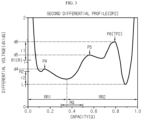
- FIG. 3 is a diagram schematically showing a second differential profile DP2 according to an embodiment of the present disclosure.
- the second differential profile DP2 is a differential profile for a battery containing an NMCO positive electrode material with a nickel content of 80% and a 100% non-graphite-based negative electrode material (SiO).
- the second differential profile DP2 is a differential profile generated based on the voltage and capacity of the battery obtained when the battery is charged at a temperature of 25°C and at a 0.05 C-rate.
- the control unit 120 may detect the fourth peak P4, the fifth peak P5, and the sixth peak P6 in the second differential profile DP2. In addition, the control unit 120 may determine the sixth peak P6 having the greatest differential voltage among the fourth peak P4, the fifth peak P5, and the sixth peak P6 as the target peak TP2.
- the control unit 120 may determine a value smaller than the differential voltage d6 of the target peak TP2 by the first reference value r1 as the first differential voltage R1. Also, the control unit 120 may determine a value greater than the lowest differential voltage L of the second differential profile DP2 by the second reference value r2 as the second differential voltage R2. Here, since the first differential voltage R1 is greater than the second differential voltage R2, the control unit 120 may set the first differential voltage R1 as the criterion value R.
- the control unit 120 may judge that the battery does not satisfy the first classification criterion.
- control unit 120 may classify the battery into the second group without judging whether the battery satisfies the second classification criterion.
- control unit 120 may classify the battery according to the type of negative electrode material contained in the battery, it is possible to judge whether the battery satisfies the first classification criterion first, and then judge whether the battery satisfies the second classification criterion. This is because the differential voltage in the first capacity region RR1, which is a low capacity region, is more affected by the negative electrode than the positive electrode as described above.
- control unit 120 may classify that the battery is a battery containing a non-graphite-based negative electrode material or an EOL battery containing a graphite-based negative electrode material, and is a non-reusable battery.
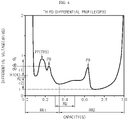
- FIG. 4 is a diagram schematically showing a third differential profile DP3 according to an embodiment of the present disclosure.
- the third differential profile DP3 is a differential profile for a battery containing an LMO (lithium manganese oxide) positive electrode material and a 100% graphite-based negative electrode material.
- the third differential profile DP3 is a differential profile generated based on the voltage and capacity of the battery obtained when the battery is charged at a temperature of 25°C and at a 0.05 C-rate.
- the control unit 120 may detect the seventh peak P7, the eighth peak P8 and the ninth peak P9 in the third differential profile DP3. In addition, the control unit 120 may determine the seventh peak P7 having the greatest differential voltage among the seventh peak P7, the eighth peak P8, and the ninth peak P9 as the target peak TP3.
- the control unit 120 may determine a value smaller than the differential voltage d7 of the target peak TP3 by the first reference value r1 as the first differential voltage R1. Also, the control unit 120 may determine a value greater than the lowest differential voltage L of the third differential profile DP3 by the second reference value r2 as the second differential voltage R2. Here, since the first differential voltage R1 is greater than the second differential voltage R2, the control unit 120 may set the first differential voltage R1 as the criterion value R.
- the control unit 120 may judge that the battery satisfies the first classification criterion.
- control unit 120 may judge that the battery satisfies the second classification criterion.
- the control unit 120 may classify the battery into the first group. In addition, the control unit 120 may classify that the battery is a BOL battery or a MOL battery containing 100% graphite-based negative electrode material, and is a reusable battery.
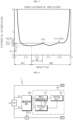
- FIG. 5 is a diagram schematically showing a fourth differential profile DP4 according to an embodiment of the present disclosure.
- the fourth differential profile DP4 is a differential profile for a battery containing a LMO (lithium manganese oxide) positive electrode material and 100% non-graphite-based negative electrode material (SiO).
- the fourth differential profile DP4 is a differential profile generated based on the voltage and capacity of the battery obtained when the battery is charged at a temperature of 25°C and at a 0.05 C-rate.
- the control unit 120 may detect the tenth peak P10 and the eleventh peak P11 in the fourth differential profile DP4. In addition, the control unit 120 may determine the eleventh peak P11 having the greatest differential voltage among the tenth peak P10 and the eleventh peak P11 as the target peak TP4.
- the control unit 120 may determine a value smaller than the differential voltage d11 of the target peak TP4 by the first reference value r1 as the first differential voltage R1. Also, the control unit 120 may determine a value greater than the lowest differential voltage L of the fourth differential profile DP4 by the second reference value r2 as the second differential voltage R2. Here, since the second differential voltage R2 is greater than the first differential voltage R1, the control unit 120 may set the second differential voltage R2 as the criterion value R.
- the control unit 120 sets the criterion value R by comparing the first differential voltage R1 determined based on the differential voltage of the target peak and the second differential voltage R2 determined based on the lowest differential voltage L with each other.
- the control unit 120 may judge that the battery does not satisfy the first classification criterion. Accordingly, the control unit 120 may classify the battery into the second group without judging whether the battery satisfies the second classification criterion.
- control unit 120 may classify the battery as a battery containing a non-graphite-based negative electrode material or an EOL battery containing a graphite-based negative electrode material, and is a non-reusable battery.
- the battery classification apparatus 100 may be applied to a BMS (Battery Management System). That is, the BMS according to the present disclosure may include the battery classification apparatus 100 described above. In this configuration, at least some of the components of the battery classification apparatus 100 may be implemented by supplementing or adding functions of the configuration included in the conventional BMS. For example, the profile generating unit 110, the control unit 120 and the storage unit 130 of the battery classification apparatus 100 may be implemented as components of the BMS.
- BMS Battery Management System
- the battery classification apparatus 100 may be provided in a battery pack. That is, the battery pack according to the present disclosure may include the above-described battery classification apparatus 100 and one or more battery cells. In addition, the battery pack may further include electrical equipment (relays, fuses, etc.) and a case.
- FIG. 6 is a diagram schematically showing an exemplary configuration of a battery pack 1 according to another embodiment of the present disclosure.
- a measuring unit 200 may be connected to a first sensing line SL1, a second sensing line SL2, and a third sensing line SL3.
- the first sensing line SL1 may be connected to a positive electrode of a battery cell B and the measuring unit 200.
- the second sensing line SL2 may be connected to a negative electrode of the battery cell B and the measuring unit 200.
- the measuring unit 200 may measure the voltage of the battery cell B by calculating the difference between the positive electrode voltage of the battery cell B measured through the first sensing line SL1 and the negative electrode voltage of the battery cell B measured through the second sensing line SL2.
- the measuring unit 200 may measure the charging current and/or the discharging current of the battery cell B through an ampere meter A connected to the third sensing line SL3.
- the ampere meter A may be a shunt resistor or an ammeter.
- the battery information about the voltage and current of the battery cell B measured by the measuring unit 200 may be transmitted to the battery classification apparatus 100.
- the profile generating unit 110 may receive the battery information of the battery cell B from the measuring unit 200.
- the profile generating unit 110 may generate a differential profile representing a corresponding relationship between the capacity of the battery cell B and the differential voltage based on the received voltage and current of the battery cell B.
- the battery information of the battery cell B measured by the measuring unit 200 may be stored in the storage unit 130.
- FIG. 7 is a diagram schematically showing a battery classification method according to still another embodiment of the present disclosure.
- each step of the battery classification method may be performed by the battery classification apparatus 100.
- contents overlapping with the previously described contents will be omitted or briefly described.
- the battery classification method may include a differential profile generating step (S 100), a plural peak detecting step (S200), and a battery classifying step (S300).
- the differential profile generating step (S100) is a step of generating a differential profile representing a corresponding relationship between a differential voltage based on capacity and voltage of a battery and the capacity, and may be performed by the profile generating unit 110.
- the profile generating unit 110 may generate a first differential profile DP1 representing a corresponding relationship between the capacity of the battery and the differential voltage.
- the plural peak detecting step S200 is a step of detecting a plurality of peaks in the differential profile, and may be performed by the control unit 120.
- control unit 120 may detect a first peak P1, a second peak P2, a third peak P3, and a fourth peak P4.
- the battery classifying step (S300) is a step of classifying the battery into any one of a plurality of groups preset based on a plurality of classification conditions preset for the number of the plurality of detected peaks and differential voltage, and may be performed by the control unit 120.
- control unit 120 may judge whether the battery satisfies the first classification condition based on the number of peaks included in the first capacity region RR1 and the differential voltage. In addition, the control unit 120 may judge whether the battery satisfies the second classification condition based on the number of peaks included in the second capacity region RR2 and the differential voltage.
- the first peak P1 and the second peak P2 may be included in the first capacity region RR1, and the third peak P3 and the fourth peak P4 may be included in the second capacity region RR2. Since the differential voltage d1 of the first peak P1 and the differential voltage d2 of the second peak P2 are equal to or greater than the criterion value R, the control unit 120 may judge that the battery satisfies the first classification condition. In addition, since the differential voltage d3 of the third peak P3 and the differential voltage d4 of the fourth peak P4 are also equal to or greater than the criterion value R, the control unit 120 may judge that the battery satisfies the second classification condition. Accordingly, the control unit 120 may classify the battery into the first group. In addition, the control unit 120 may classify that the battery is a BOL battery or a MOL battery containing a graphite-based negative electrode material, and is a reusable battery.
- the embodiments of the present disclosure described above may not be implemented only through an apparatus and a method, but may be implemented through a program that realizes a function corresponding to the configuration of the embodiments of the present disclosure or a recording medium on which the program is recorded.
- the program or recording medium may be easily implemented by those skilled in the art from the above description of the embodiments.
Landscapes
- Physics & Mathematics (AREA)
- General Physics & Mathematics (AREA)
- Engineering & Computer Science (AREA)
- Manufacturing & Machinery (AREA)
- Chemical & Material Sciences (AREA)
- Chemical Kinetics & Catalysis (AREA)
- Electrochemistry (AREA)
- General Chemical & Material Sciences (AREA)
- Power Engineering (AREA)
- Secondary Cells (AREA)
- Tests Of Electric Status Of Batteries (AREA)
- Charge And Discharge Circuits For Batteries Or The Like (AREA)
Applications Claiming Priority (2)
| Application Number | Priority Date | Filing Date | Title |
|---|---|---|---|
| KR1020210010309A KR20220107550A (ko) | 2021-01-25 | 2021-01-25 | 배터리 분류 장치 및 방법 |
| PCT/KR2022/001332 WO2022158949A2 (ko) | 2021-01-25 | 2022-01-25 | 배터리 분류 장치 및 방법 |
Publications (3)
| Publication Number | Publication Date |
|---|---|
| EP4145154A2 true EP4145154A2 (de) | 2023-03-08 |
| EP4145154A4 EP4145154A4 (de) | 2023-11-15 |
| EP4145154B1 EP4145154B1 (de) | 2025-08-20 |
Family
ID=82548950
Family Applications (1)
| Application Number | Title | Priority Date | Filing Date |
|---|---|---|---|
| EP22742925.5A Active EP4145154B1 (de) | 2021-01-25 | 2022-01-25 | Batterieklassifizierungsvorrichtung und -verfahren |
Country Status (9)
| Country | Link |
|---|---|
| US (2) | US12248024B2 (de) |
| EP (1) | EP4145154B1 (de) |
| JP (1) | JP7419648B2 (de) |
| KR (1) | KR20220107550A (de) |
| CN (1) | CN115698736A (de) |
| ES (1) | ES3041789T3 (de) |
| HU (1) | HUE072668T2 (de) |
| PL (1) | PL4145154T3 (de) |
| WO (1) | WO2022158949A2 (de) |
Cited By (1)
| Publication number | Priority date | Publication date | Assignee | Title |
|---|---|---|---|---|
| EP4224182B1 (de) * | 2021-08-02 | 2025-05-07 | LG Energy Solution, Ltd. | Batterieverwaltungsgerät und verfahren |
Families Citing this family (13)
| Publication number | Priority date | Publication date | Assignee | Title |
|---|---|---|---|---|
| KR102905305B1 (ko) * | 2023-01-25 | 2025-12-26 | 주식회사 엘지에너지솔루션 | 배터리 진단 장치 및 방법 |
| KR102905332B1 (ko) * | 2023-01-25 | 2025-12-26 | 주식회사 엘지에너지솔루션 | 배터리 진단 장치 및 방법 |
| KR20250023209A (ko) * | 2023-08-09 | 2025-02-18 | 주식회사 엘지에너지솔루션 | 배터리 관리 장치 및 방법 |
| CN117194916B (zh) * | 2023-08-30 | 2025-09-02 | 苏州浪潮智能科技有限公司 | Bbu类别识别模型构建、寿命预测方法、装置及设备 |
| KR20250083917A (ko) * | 2023-12-01 | 2025-06-10 | 주식회사 엘지에너지솔루션 | 배터리 진단 장치 및 방법 |
| KR20250090923A (ko) * | 2023-12-13 | 2025-06-20 | 주식회사 엘지에너지솔루션 | 배터리 관리 장치 및 방법 |
| KR20250119126A (ko) * | 2024-01-31 | 2025-08-07 | 주식회사 엘지에너지솔루션 | 배터리 진단 장치 및 방법 |
| KR20250119278A (ko) * | 2024-01-31 | 2025-08-07 | 주식회사 엘지에너지솔루션 | 배터리 진단 장치 및 방법 |
| KR20250119127A (ko) * | 2024-01-31 | 2025-08-07 | 주식회사 엘지에너지솔루션 | 배터리 진단 장치 및 방법 |
| US20250244404A1 (en) * | 2024-01-31 | 2025-07-31 | Lg Energy Solution, Ltd. | Apparatus and method for diagnosing battery |
| KR20250119268A (ko) * | 2024-01-31 | 2025-08-07 | 주식회사 엘지에너지솔루션 | 배터리 진단 장치 및 방법 |
| KR20250119125A (ko) * | 2024-01-31 | 2025-08-07 | 주식회사 엘지에너지솔루션 | 배터리 진단 장치 및 방법 |
| KR102757503B1 (ko) * | 2024-02-08 | 2025-01-21 | 주식회사 엘지에너지솔루션 | 배터리 진단 장치 및 방법 |
Family Cites Families (28)
| Publication number | Priority date | Publication date | Assignee | Title |
|---|---|---|---|---|
| JP3014303B2 (ja) | 1995-09-08 | 2000-02-28 | 三菱電機株式会社 | 電池用カーボン材料の評価方法、そのための装置、およびそれを用いた電池の製造方法 |
| US6816797B2 (en) * | 2000-09-29 | 2004-11-09 | Hydrogenics Corporation | System and method for measuring fuel cell voltage and high frequency resistance |
| JP4561859B2 (ja) * | 2008-04-01 | 2010-10-13 | トヨタ自動車株式会社 | 二次電池システム |
| KR20110092344A (ko) | 2009-12-14 | 2011-08-17 | 파나소닉 주식회사 | 리튬이온 이차 전지의 충전 완료 판정 방법 및 방전 종료 판정 방법, 충전 제어 회로, 방전 제어 회로, 그리고 전원 |
| JP2012055043A (ja) | 2010-08-31 | 2012-03-15 | Hitachi Koki Co Ltd | 充電システム、電池パック及び充電器 |
| US8531158B2 (en) * | 2010-11-01 | 2013-09-10 | GM Global Technology Operations LLC | Method and apparatus for assessing battery state of health |
| CN103208655A (zh) * | 2013-03-04 | 2013-07-17 | 八叶(厦门)新能源科技有限公司 | 一种动力锂离子电池的配组方法 |
| DE102013206188A1 (de) * | 2013-04-09 | 2014-10-09 | Siemens Aktiengesellschaft | Bestimmen eines Zustands eines Akkumulators |
| US10063072B2 (en) * | 2013-11-29 | 2018-08-28 | Hitachi Automotive Systems, Ltd. | Battery module and assembled battery |
| EP2990818B1 (de) * | 2014-09-01 | 2019-11-27 | Yokogawa Electric Corporation | Sekundärbatteriekapazitätsmesssystem und sekundärbatteriekapazitätsmessverfahren |
| JP6123844B2 (ja) | 2014-09-01 | 2017-05-10 | 横河電機株式会社 | 二次電池容量測定システム及び二次電池容量測定方法 |
| JP6711155B2 (ja) * | 2015-06-16 | 2020-06-17 | 株式会社リコー | 制御装置及び移動体 |
| JP6493762B2 (ja) | 2015-12-22 | 2019-04-03 | トヨタ自動車株式会社 | 電池システム |
| JP6380417B2 (ja) * | 2016-01-21 | 2018-08-29 | 横河電機株式会社 | 二次電池容量測定システム及び二次電池容量測定方法 |
| KR102563753B1 (ko) * | 2017-12-29 | 2023-08-04 | 삼성전자주식회사 | 배터리 충전 방법 및 장치 |
| US11150307B2 (en) * | 2018-04-10 | 2021-10-19 | Lg Chem, Ltd. | Apparatus and method for diagnosing battery |
| KR102349300B1 (ko) | 2018-04-10 | 2022-01-10 | 주식회사 엘지에너지솔루션 | 배터리의 전극 정보를 결정하기 위한 장치, 방법, 배터리 팩 및 전기 시스템 |
| US11598817B2 (en) * | 2018-04-17 | 2023-03-07 | Mitsubishi Electric Corporation | Storage cell diagnostic device and storage cell diagnostic method, and storage cell control system |
| JP6490882B1 (ja) * | 2018-04-17 | 2019-03-27 | 三菱電機株式会社 | 蓄電池診断装置および蓄電池診断方法、並びに蓄電池制御システム |
| CN113272667B (zh) * | 2018-08-06 | 2025-01-21 | 密执安州立大学董事会 | 锂离子电池的电极诊断 |
| WO2020032545A1 (ko) | 2018-08-09 | 2020-02-13 | 주식회사 엘지화학 | 셀 내 전극의 전해액 함침 정도 정밀 분석법 |
| KR102259415B1 (ko) * | 2018-08-29 | 2021-06-01 | 주식회사 엘지에너지솔루션 | 배터리 관리 장치, 배터리 관리 방법, 배터리 팩 및 전기 차량 |
| CN109659641B (zh) | 2019-01-22 | 2020-07-28 | 北京交通大学 | 一种改善的动力锂电池安全充电方法 |
| KR102684199B1 (ko) | 2019-04-17 | 2024-07-10 | 주식회사 엘지에너지솔루션 | 배터리의 퇴화 상태를 결정하기 위한 장치, 방법 및 배터리 팩 |
| KR102537607B1 (ko) | 2019-05-14 | 2023-05-25 | 주식회사 엘지에너지솔루션 | 배터리의 퇴화도를 결정하기 위한 장치, 방법 및 배터리 팩 |
| KR102589296B1 (ko) | 2019-07-19 | 2023-10-13 | 네이버랩스 주식회사 | 항공사진을 이용하여 3차원 지도를 생성하는 장치 및 방법 |
| CN110659605B (zh) * | 2019-09-21 | 2021-06-08 | 哈尔滨理工大学 | 一种基于电池特性曲线特征点提取的锂电池分类方法 |
| JP6818947B1 (ja) | 2020-02-25 | 2021-01-27 | 三菱電機株式会社 | 蓄電池状態推定装置および蓄電池状態推定方法 |
-
2021
- 2021-01-25 KR KR1020210010309A patent/KR20220107550A/ko active Pending
-
2022
- 2022-01-25 EP EP22742925.5A patent/EP4145154B1/de active Active
- 2022-01-25 JP JP2022565587A patent/JP7419648B2/ja active Active
- 2022-01-25 US US17/925,928 patent/US12248024B2/en active Active
- 2022-01-25 PL PL22742925.5T patent/PL4145154T3/pl unknown
- 2022-01-25 ES ES22742925T patent/ES3041789T3/es active Active
- 2022-01-25 CN CN202280004537.8A patent/CN115698736A/zh active Pending
- 2022-01-25 WO PCT/KR2022/001332 patent/WO2022158949A2/ko not_active Ceased
- 2022-01-25 HU HUE22742925A patent/HUE072668T2/hu unknown
-
2025
- 2025-03-10 US US19/074,863 patent/US20250258238A1/en active Pending
Cited By (1)
| Publication number | Priority date | Publication date | Assignee | Title |
|---|---|---|---|---|
| EP4224182B1 (de) * | 2021-08-02 | 2025-05-07 | LG Energy Solution, Ltd. | Batterieverwaltungsgerät und verfahren |
Also Published As
| Publication number | Publication date |
|---|---|
| PL4145154T3 (pl) | 2025-11-24 |
| EP4145154B1 (de) | 2025-08-20 |
| US20230184843A1 (en) | 2023-06-15 |
| HUE072668T2 (hu) | 2025-12-28 |
| JP2023522786A (ja) | 2023-05-31 |
| WO2022158949A2 (ko) | 2022-07-28 |
| EP4145154A4 (de) | 2023-11-15 |
| KR20220107550A (ko) | 2022-08-02 |
| CN115698736A (zh) | 2023-02-03 |
| JP7419648B2 (ja) | 2024-01-23 |
| ES3041789T3 (en) | 2025-11-14 |
| US12248024B2 (en) | 2025-03-11 |
| WO2022158949A3 (ko) | 2022-09-15 |
| US20250258238A1 (en) | 2025-08-14 |
Similar Documents
| Publication | Publication Date | Title |
|---|---|---|
| EP4145154B1 (de) | Batterieklassifizierungsvorrichtung und -verfahren | |
| EP4064412B1 (de) | Batteriemanagementvorrichtung und -verfahren | |
| EP4224182A1 (de) | Vorrichtung und verfahren zur verwaltung einer batterie | |
| US20240274902A1 (en) | Battery management apparatus and method | |
| US12405310B2 (en) | Battery management apparatus and method | |
| EP4063883A1 (de) | Vorrichtung und verfahren zur diagnose des zustands einer batterie | |
| EP4148950B1 (de) | Batterieverwaltungsvorrichtung und -verfahren | |
| EP3839536A1 (de) | Vorrichtung zur beurteilung des batteriezustands | |
| EP4198536A1 (de) | Batterieverwaltungsvorrichtung und -verfahren | |
| EP4145158A1 (de) | Batteriediagnosevorrichtung und -verfahren | |
| EP4145589A1 (de) | Batterieklassifizierungsvorrichtung und -verfahren | |
| EP4152020B1 (de) | Batterieverwaltungsvorrichtung und -verfahren | |
| EP4131568B1 (de) | Batterieverwaltungsgerät und -verfahren | |
| EP4517353A1 (de) | Vorrichtung und verfahren zur batteriediagnose | |
| EP4191747A1 (de) | Vorrichtung und verfahren zur detektion von lithiumfällung | |
| US20250316780A1 (en) | Battery Management Apparatus and Method | |
| EP4152025A1 (de) | Batteriediagnosevorrichtung und -verfahren |
Legal Events
| Date | Code | Title | Description |
|---|---|---|---|
| STAA | Information on the status of an ep patent application or granted ep patent |
Free format text: STATUS: THE INTERNATIONAL PUBLICATION HAS BEEN MADE |
|
| PUAI | Public reference made under article 153(3) epc to a published international application that has entered the european phase |
Free format text: ORIGINAL CODE: 0009012 |
|
| STAA | Information on the status of an ep patent application or granted ep patent |
Free format text: STATUS: REQUEST FOR EXAMINATION WAS MADE |
|
| 17P | Request for examination filed |
Effective date: 20221129 |
|
| AK | Designated contracting states |
Kind code of ref document: A2 Designated state(s): AL AT BE BG CH CY CZ DE DK EE ES FI FR GB GR HR HU IE IS IT LI LT LU LV MC MK MT NL NO PL PT RO RS SE SI SK SM TR |
|
| A4 | Supplementary search report drawn up and despatched |
Effective date: 20231018 |
|
| RIC1 | Information provided on ipc code assigned before grant |
Ipc: G01R 31/392 20190101ALI20231012BHEP Ipc: G01R 19/165 20060101ALI20231012BHEP Ipc: G01R 31/382 20190101ALI20231012BHEP Ipc: G01R 31/36 20200101AFI20231012BHEP |
|
| DAV | Request for validation of the european patent (deleted) | ||
| DAX | Request for extension of the european patent (deleted) | ||
| GRAP | Despatch of communication of intention to grant a patent |
Free format text: ORIGINAL CODE: EPIDOSNIGR1 |
|
| STAA | Information on the status of an ep patent application or granted ep patent |
Free format text: STATUS: GRANT OF PATENT IS INTENDED |
|
| INTG | Intention to grant announced |
Effective date: 20250507 |
|
| P01 | Opt-out of the competence of the unified patent court (upc) registered |
Free format text: CASE NUMBER: APP_26118/2025 Effective date: 20250602 |
|
| GRAS | Grant fee paid |
Free format text: ORIGINAL CODE: EPIDOSNIGR3 |
|
| GRAA | (expected) grant |
Free format text: ORIGINAL CODE: 0009210 |
|
| STAA | Information on the status of an ep patent application or granted ep patent |
Free format text: STATUS: THE PATENT HAS BEEN GRANTED |
|
| AK | Designated contracting states |
Kind code of ref document: B1 Designated state(s): AL AT BE BG CH CY CZ DE DK EE ES FI FR GB GR HR HU IE IS IT LI LT LU LV MC MK MT NL NO PL PT RO RS SE SI SK SM TR |
|
| REG | Reference to a national code |
Ref country code: GB Ref legal event code: FG4D |
|
| REG | Reference to a national code |
Ref country code: CH Ref legal event code: EP |
|
| REG | Reference to a national code |
Ref country code: DE Ref legal event code: R096 Ref document number: 602022019870 Country of ref document: DE |
|
| REG | Reference to a national code |
Ref country code: IE Ref legal event code: FG4D |
|
| REG | Reference to a national code |
Ref country code: SE Ref legal event code: TRGR |
|
| REG | Reference to a national code |
Ref country code: ES Ref legal event code: FG2A Ref document number: 3041789 Country of ref document: ES Kind code of ref document: T3 Effective date: 20251114 |
|
| REG | Reference to a national code |
Ref country code: NL Ref legal event code: MP Effective date: 20250820 |
|
| REG | Reference to a national code |
Ref country code: HU Ref legal event code: AG4A Ref document number: E072668 Country of ref document: HU |
|
| PG25 | Lapsed in a contracting state [announced via postgrant information from national office to epo] |
Ref country code: IS Free format text: LAPSE BECAUSE OF FAILURE TO SUBMIT A TRANSLATION OF THE DESCRIPTION OR TO PAY THE FEE WITHIN THE PRESCRIBED TIME-LIMIT Effective date: 20251220 |
|
| PGFP | Annual fee paid to national office [announced via postgrant information from national office to epo] |
Ref country code: GB Payment date: 20251222 Year of fee payment: 5 |
|
| PG25 | Lapsed in a contracting state [announced via postgrant information from national office to epo] |
Ref country code: NO Free format text: LAPSE BECAUSE OF FAILURE TO SUBMIT A TRANSLATION OF THE DESCRIPTION OR TO PAY THE FEE WITHIN THE PRESCRIBED TIME-LIMIT Effective date: 20251120 |
|
| REG | Reference to a national code |
Ref country code: LT Ref legal event code: MG9D |
|
| PG25 | Lapsed in a contracting state [announced via postgrant information from national office to epo] |
Ref country code: PT Free format text: LAPSE BECAUSE OF FAILURE TO SUBMIT A TRANSLATION OF THE DESCRIPTION OR TO PAY THE FEE WITHIN THE PRESCRIBED TIME-LIMIT Effective date: 20251222 |
|
| PG25 | Lapsed in a contracting state [announced via postgrant information from national office to epo] |
Ref country code: FI Free format text: LAPSE BECAUSE OF FAILURE TO SUBMIT A TRANSLATION OF THE DESCRIPTION OR TO PAY THE FEE WITHIN THE PRESCRIBED TIME-LIMIT Effective date: 20250820 |
|
| PG25 | Lapsed in a contracting state [announced via postgrant information from national office to epo] |
Ref country code: HR Free format text: LAPSE BECAUSE OF FAILURE TO SUBMIT A TRANSLATION OF THE DESCRIPTION OR TO PAY THE FEE WITHIN THE PRESCRIBED TIME-LIMIT Effective date: 20250820 Ref country code: NL Free format text: LAPSE BECAUSE OF FAILURE TO SUBMIT A TRANSLATION OF THE DESCRIPTION OR TO PAY THE FEE WITHIN THE PRESCRIBED TIME-LIMIT Effective date: 20250820 |
|
| PGFP | Annual fee paid to national office [announced via postgrant information from national office to epo] |
Ref country code: FR Payment date: 20251223 Year of fee payment: 5 |
|
| PG25 | Lapsed in a contracting state [announced via postgrant information from national office to epo] |
Ref country code: GR Free format text: LAPSE BECAUSE OF FAILURE TO SUBMIT A TRANSLATION OF THE DESCRIPTION OR TO PAY THE FEE WITHIN THE PRESCRIBED TIME-LIMIT Effective date: 20251121 |
|
| PGFP | Annual fee paid to national office [announced via postgrant information from national office to epo] |
Ref country code: BE Payment date: 20251229 Year of fee payment: 5 |
|
| PGFP | Annual fee paid to national office [announced via postgrant information from national office to epo] |
Ref country code: SE Payment date: 20251223 Year of fee payment: 5 |
|
| PG25 | Lapsed in a contracting state [announced via postgrant information from national office to epo] |
Ref country code: LV Free format text: LAPSE BECAUSE OF FAILURE TO SUBMIT A TRANSLATION OF THE DESCRIPTION OR TO PAY THE FEE WITHIN THE PRESCRIBED TIME-LIMIT Effective date: 20250820 |
|
| PG25 | Lapsed in a contracting state [announced via postgrant information from national office to epo] |
Ref country code: BG Free format text: LAPSE BECAUSE OF FAILURE TO SUBMIT A TRANSLATION OF THE DESCRIPTION OR TO PAY THE FEE WITHIN THE PRESCRIBED TIME-LIMIT Effective date: 20250820 |
|
| PG25 | Lapsed in a contracting state [announced via postgrant information from national office to epo] |
Ref country code: RS Free format text: LAPSE BECAUSE OF FAILURE TO SUBMIT A TRANSLATION OF THE DESCRIPTION OR TO PAY THE FEE WITHIN THE PRESCRIBED TIME-LIMIT Effective date: 20251120 |