EP4139286B1 - Substituted aminothiazoles as dgkzeta inhibitors for immune activation - Google Patents
Substituted aminothiazoles as dgkzeta inhibitors for immune activation Download PDFInfo
- Publication number
- EP4139286B1 EP4139286B1 EP21720249.8A EP21720249A EP4139286B1 EP 4139286 B1 EP4139286 B1 EP 4139286B1 EP 21720249 A EP21720249 A EP 21720249A EP 4139286 B1 EP4139286 B1 EP 4139286B1
- Authority
- EP
- European Patent Office
- Prior art keywords
- amino
- anilino
- thiazol
- propanamide
- alkyl
- Prior art date
- Legal status (The legal status is an assumption and is not a legal conclusion. Google has not performed a legal analysis and makes no representation as to the accuracy of the status listed.)
- Active
Links
Images
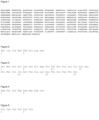
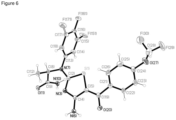
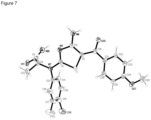


Classifications
-
- A—HUMAN NECESSITIES
- A61—MEDICAL OR VETERINARY SCIENCE; HYGIENE
- A61K—PREPARATIONS FOR MEDICAL, DENTAL OR TOILETRY PURPOSES
- A61K31/00—Medicinal preparations containing organic active ingredients
- A61K31/33—Heterocyclic compounds
- A61K31/395—Heterocyclic compounds having nitrogen as a ring hetero atom, e.g. guanethidine or rifamycins
- A61K31/41—Heterocyclic compounds having nitrogen as a ring hetero atom, e.g. guanethidine or rifamycins having five-membered rings with two or more ring hetero atoms, at least one of which being nitrogen, e.g. tetrazole
- A61K31/425—Thiazoles
- A61K31/426—1,3-Thiazoles
-
- C—CHEMISTRY; METALLURGY
- C07—ORGANIC CHEMISTRY
- C07D—HETEROCYCLIC COMPOUNDS
- C07D277/00—Heterocyclic compounds containing 1,3-thiazole or hydrogenated 1,3-thiazole rings
- C07D277/02—Heterocyclic compounds containing 1,3-thiazole or hydrogenated 1,3-thiazole rings not condensed with other rings
- C07D277/20—Heterocyclic compounds containing 1,3-thiazole or hydrogenated 1,3-thiazole rings not condensed with other rings having two or three double bonds between ring members or between ring members and non-ring members
- C07D277/32—Heterocyclic compounds containing 1,3-thiazole or hydrogenated 1,3-thiazole rings not condensed with other rings having two or three double bonds between ring members or between ring members and non-ring members with hetero atoms or with carbon atoms having three bonds to hetero atoms with at the most one bond to halogen, e.g. ester or nitrile radicals, directly attached to ring carbon atoms
- C07D277/38—Nitrogen atoms
- C07D277/42—Amino or imino radicals substituted by hydrocarbon or substituted hydrocarbon radicals
-
- C—CHEMISTRY; METALLURGY
- C07—ORGANIC CHEMISTRY
- C07D—HETEROCYCLIC COMPOUNDS
- C07D277/00—Heterocyclic compounds containing 1,3-thiazole or hydrogenated 1,3-thiazole rings
- C07D277/02—Heterocyclic compounds containing 1,3-thiazole or hydrogenated 1,3-thiazole rings not condensed with other rings
- C07D277/20—Heterocyclic compounds containing 1,3-thiazole or hydrogenated 1,3-thiazole rings not condensed with other rings having two or three double bonds between ring members or between ring members and non-ring members
- C07D277/32—Heterocyclic compounds containing 1,3-thiazole or hydrogenated 1,3-thiazole rings not condensed with other rings having two or three double bonds between ring members or between ring members and non-ring members with hetero atoms or with carbon atoms having three bonds to hetero atoms with at the most one bond to halogen, e.g. ester or nitrile radicals, directly attached to ring carbon atoms
- C07D277/38—Nitrogen atoms
-
- A—HUMAN NECESSITIES
- A61—MEDICAL OR VETERINARY SCIENCE; HYGIENE
- A61K—PREPARATIONS FOR MEDICAL, DENTAL OR TOILETRY PURPOSES
- A61K31/00—Medicinal preparations containing organic active ingredients
- A61K31/33—Heterocyclic compounds
- A61K31/395—Heterocyclic compounds having nitrogen as a ring hetero atom, e.g. guanethidine or rifamycins
- A61K31/41—Heterocyclic compounds having nitrogen as a ring hetero atom, e.g. guanethidine or rifamycins having five-membered rings with two or more ring hetero atoms, at least one of which being nitrogen, e.g. tetrazole
- A61K31/425—Thiazoles
- A61K31/427—Thiazoles not condensed and containing further heterocyclic rings
-
- A—HUMAN NECESSITIES
- A61—MEDICAL OR VETERINARY SCIENCE; HYGIENE
- A61K—PREPARATIONS FOR MEDICAL, DENTAL OR TOILETRY PURPOSES
- A61K31/00—Medicinal preparations containing organic active ingredients
- A61K31/33—Heterocyclic compounds
- A61K31/395—Heterocyclic compounds having nitrogen as a ring hetero atom, e.g. guanethidine or rifamycins
- A61K31/435—Heterocyclic compounds having nitrogen as a ring hetero atom, e.g. guanethidine or rifamycins having six-membered rings with one nitrogen as the only ring hetero atom
- A61K31/44—Non condensed pyridines; Hydrogenated derivatives thereof
- A61K31/4427—Non condensed pyridines; Hydrogenated derivatives thereof containing further heterocyclic ring systems
- A61K31/4439—Non condensed pyridines; Hydrogenated derivatives thereof containing further heterocyclic ring systems containing a five-membered ring with nitrogen as a ring hetero atom, e.g. omeprazole
-
- A—HUMAN NECESSITIES
- A61—MEDICAL OR VETERINARY SCIENCE; HYGIENE
- A61K—PREPARATIONS FOR MEDICAL, DENTAL OR TOILETRY PURPOSES
- A61K31/00—Medicinal preparations containing organic active ingredients
- A61K31/33—Heterocyclic compounds
- A61K31/395—Heterocyclic compounds having nitrogen as a ring hetero atom, e.g. guanethidine or rifamycins
- A61K31/435—Heterocyclic compounds having nitrogen as a ring hetero atom, e.g. guanethidine or rifamycins having six-membered rings with one nitrogen as the only ring hetero atom
- A61K31/44—Non condensed pyridines; Hydrogenated derivatives thereof
- A61K31/445—Non condensed piperidines, e.g. piperocaine
- A61K31/4523—Non condensed piperidines, e.g. piperocaine containing further heterocyclic ring systems
- A61K31/454—Non condensed piperidines, e.g. piperocaine containing further heterocyclic ring systems containing a five-membered ring with nitrogen as a ring hetero atom, e.g. pimozide, domperidone
-
- A—HUMAN NECESSITIES
- A61—MEDICAL OR VETERINARY SCIENCE; HYGIENE
- A61K—PREPARATIONS FOR MEDICAL, DENTAL OR TOILETRY PURPOSES
- A61K31/00—Medicinal preparations containing organic active ingredients
- A61K31/33—Heterocyclic compounds
- A61K31/395—Heterocyclic compounds having nitrogen as a ring hetero atom, e.g. guanethidine or rifamycins
- A61K31/435—Heterocyclic compounds having nitrogen as a ring hetero atom, e.g. guanethidine or rifamycins having six-membered rings with one nitrogen as the only ring hetero atom
- A61K31/47—Quinolines; Isoquinolines
- A61K31/4709—Non-condensed quinolines and containing further heterocyclic rings
-
- A—HUMAN NECESSITIES
- A61—MEDICAL OR VETERINARY SCIENCE; HYGIENE
- A61K—PREPARATIONS FOR MEDICAL, DENTAL OR TOILETRY PURPOSES
- A61K31/00—Medicinal preparations containing organic active ingredients
- A61K31/33—Heterocyclic compounds
- A61K31/395—Heterocyclic compounds having nitrogen as a ring hetero atom, e.g. guanethidine or rifamycins
- A61K31/435—Heterocyclic compounds having nitrogen as a ring hetero atom, e.g. guanethidine or rifamycins having six-membered rings with one nitrogen as the only ring hetero atom
- A61K31/47—Quinolines; Isoquinolines
- A61K31/472—Non-condensed isoquinolines, e.g. papaverine
- A61K31/4725—Non-condensed isoquinolines, e.g. papaverine containing further heterocyclic rings
-
- A—HUMAN NECESSITIES
- A61—MEDICAL OR VETERINARY SCIENCE; HYGIENE
- A61K—PREPARATIONS FOR MEDICAL, DENTAL OR TOILETRY PURPOSES
- A61K31/00—Medicinal preparations containing organic active ingredients
- A61K31/33—Heterocyclic compounds
- A61K31/395—Heterocyclic compounds having nitrogen as a ring hetero atom, e.g. guanethidine or rifamycins
- A61K31/495—Heterocyclic compounds having nitrogen as a ring hetero atom, e.g. guanethidine or rifamycins having six-membered rings with two or more nitrogen atoms as the only ring heteroatoms, e.g. piperazine or tetrazines
- A61K31/496—Non-condensed piperazines containing further heterocyclic rings, e.g. rifampin, thiothixene or sparfloxacin
-
- A—HUMAN NECESSITIES
- A61—MEDICAL OR VETERINARY SCIENCE; HYGIENE
- A61K—PREPARATIONS FOR MEDICAL, DENTAL OR TOILETRY PURPOSES
- A61K31/00—Medicinal preparations containing organic active ingredients
- A61K31/33—Heterocyclic compounds
- A61K31/395—Heterocyclic compounds having nitrogen as a ring hetero atom, e.g. guanethidine or rifamycins
- A61K31/495—Heterocyclic compounds having nitrogen as a ring hetero atom, e.g. guanethidine or rifamycins having six-membered rings with two or more nitrogen atoms as the only ring heteroatoms, e.g. piperazine or tetrazines
- A61K31/505—Pyrimidines; Hydrogenated pyrimidines, e.g. trimethoprim
- A61K31/519—Pyrimidines; Hydrogenated pyrimidines, e.g. trimethoprim ortho- or peri-condensed with heterocyclic rings
-
- A—HUMAN NECESSITIES
- A61—MEDICAL OR VETERINARY SCIENCE; HYGIENE
- A61K—PREPARATIONS FOR MEDICAL, DENTAL OR TOILETRY PURPOSES
- A61K31/00—Medicinal preparations containing organic active ingredients
- A61K31/33—Heterocyclic compounds
- A61K31/395—Heterocyclic compounds having nitrogen as a ring hetero atom, e.g. guanethidine or rifamycins
- A61K31/535—Heterocyclic compounds having nitrogen as a ring hetero atom, e.g. guanethidine or rifamycins having six-membered rings with at least one nitrogen and one oxygen as the ring hetero atoms, e.g. 1,2-oxazines
- A61K31/5375—1,4-Oxazines, e.g. morpholine
- A61K31/5377—1,4-Oxazines, e.g. morpholine not condensed and containing further heterocyclic rings, e.g. timolol
-
- A—HUMAN NECESSITIES
- A61—MEDICAL OR VETERINARY SCIENCE; HYGIENE
- A61K—PREPARATIONS FOR MEDICAL, DENTAL OR TOILETRY PURPOSES
- A61K31/00—Medicinal preparations containing organic active ingredients
- A61K31/33—Heterocyclic compounds
- A61K31/395—Heterocyclic compounds having nitrogen as a ring hetero atom, e.g. guanethidine or rifamycins
- A61K31/55—Heterocyclic compounds having nitrogen as a ring hetero atom, e.g. guanethidine or rifamycins having seven-membered rings, e.g. azelastine, pentylenetetrazole
-
- A—HUMAN NECESSITIES
- A61—MEDICAL OR VETERINARY SCIENCE; HYGIENE
- A61K—PREPARATIONS FOR MEDICAL, DENTAL OR TOILETRY PURPOSES
- A61K31/00—Medicinal preparations containing organic active ingredients
- A61K31/695—Silicon compounds
-
- A—HUMAN NECESSITIES
- A61—MEDICAL OR VETERINARY SCIENCE; HYGIENE
- A61K—PREPARATIONS FOR MEDICAL, DENTAL OR TOILETRY PURPOSES
- A61K45/00—Medicinal preparations containing active ingredients not provided for in groups A61K31/00 - A61K41/00
- A61K45/06—Mixtures of active ingredients without chemical characterisation, e.g. antiphlogistics and cardiaca
-
- A—HUMAN NECESSITIES
- A61—MEDICAL OR VETERINARY SCIENCE; HYGIENE
- A61K—PREPARATIONS FOR MEDICAL, DENTAL OR TOILETRY PURPOSES
- A61K9/00—Medicinal preparations characterised by special physical form
- A61K9/0012—Galenical forms characterised by the site of application
- A61K9/0053—Mouth and digestive tract, i.e. intraoral and peroral administration
-
- A—HUMAN NECESSITIES
- A61—MEDICAL OR VETERINARY SCIENCE; HYGIENE
- A61P—SPECIFIC THERAPEUTIC ACTIVITY OF CHEMICAL COMPOUNDS OR MEDICINAL PREPARATIONS
- A61P11/00—Drugs for disorders of the respiratory system
- A61P11/06—Antiasthmatics
-
- A—HUMAN NECESSITIES
- A61—MEDICAL OR VETERINARY SCIENCE; HYGIENE
- A61P—SPECIFIC THERAPEUTIC ACTIVITY OF CHEMICAL COMPOUNDS OR MEDICINAL PREPARATIONS
- A61P27/00—Drugs for disorders of the senses
- A61P27/02—Ophthalmic agents
-
- A—HUMAN NECESSITIES
- A61—MEDICAL OR VETERINARY SCIENCE; HYGIENE
- A61P—SPECIFIC THERAPEUTIC ACTIVITY OF CHEMICAL COMPOUNDS OR MEDICINAL PREPARATIONS
- A61P3/00—Drugs for disorders of the metabolism
- A61P3/08—Drugs for disorders of the metabolism for glucose homeostasis
- A61P3/10—Drugs for disorders of the metabolism for glucose homeostasis for hyperglycaemia, e.g. antidiabetics
-
- A—HUMAN NECESSITIES
- A61—MEDICAL OR VETERINARY SCIENCE; HYGIENE
- A61P—SPECIFIC THERAPEUTIC ACTIVITY OF CHEMICAL COMPOUNDS OR MEDICINAL PREPARATIONS
- A61P31/00—Antiinfectives, i.e. antibiotics, antiseptics, chemotherapeutics
- A61P31/12—Antivirals
-
- A—HUMAN NECESSITIES
- A61—MEDICAL OR VETERINARY SCIENCE; HYGIENE
- A61P—SPECIFIC THERAPEUTIC ACTIVITY OF CHEMICAL COMPOUNDS OR MEDICINAL PREPARATIONS
- A61P35/00—Antineoplastic agents
-
- A—HUMAN NECESSITIES
- A61—MEDICAL OR VETERINARY SCIENCE; HYGIENE
- A61P—SPECIFIC THERAPEUTIC ACTIVITY OF CHEMICAL COMPOUNDS OR MEDICINAL PREPARATIONS
- A61P37/00—Drugs for immunological or allergic disorders
- A61P37/02—Immunomodulators
-
- A—HUMAN NECESSITIES
- A61—MEDICAL OR VETERINARY SCIENCE; HYGIENE
- A61P—SPECIFIC THERAPEUTIC ACTIVITY OF CHEMICAL COMPOUNDS OR MEDICINAL PREPARATIONS
- A61P5/00—Drugs for disorders of the endocrine system
- A61P5/48—Drugs for disorders of the endocrine system of the pancreatic hormones
- A61P5/50—Drugs for disorders of the endocrine system of the pancreatic hormones for increasing or potentiating the activity of insulin
-
- C—CHEMISTRY; METALLURGY
- C07—ORGANIC CHEMISTRY
- C07D—HETEROCYCLIC COMPOUNDS
- C07D277/00—Heterocyclic compounds containing 1,3-thiazole or hydrogenated 1,3-thiazole rings
- C07D277/02—Heterocyclic compounds containing 1,3-thiazole or hydrogenated 1,3-thiazole rings not condensed with other rings
- C07D277/20—Heterocyclic compounds containing 1,3-thiazole or hydrogenated 1,3-thiazole rings not condensed with other rings having two or three double bonds between ring members or between ring members and non-ring members
- C07D277/32—Heterocyclic compounds containing 1,3-thiazole or hydrogenated 1,3-thiazole rings not condensed with other rings having two or three double bonds between ring members or between ring members and non-ring members with hetero atoms or with carbon atoms having three bonds to hetero atoms with at the most one bond to halogen, e.g. ester or nitrile radicals, directly attached to ring carbon atoms
- C07D277/38—Nitrogen atoms
- C07D277/44—Acylated amino or imino radicals
- C07D277/46—Acylated amino or imino radicals by carboxylic acids, or sulfur or nitrogen analogues thereof
-
- C—CHEMISTRY; METALLURGY
- C07—ORGANIC CHEMISTRY
- C07D—HETEROCYCLIC COMPOUNDS
- C07D417/00—Heterocyclic compounds containing two or more hetero rings, at least one ring having nitrogen and sulfur atoms as the only ring hetero atoms, not provided for by group C07D415/00
- C07D417/02—Heterocyclic compounds containing two or more hetero rings, at least one ring having nitrogen and sulfur atoms as the only ring hetero atoms, not provided for by group C07D415/00 containing two hetero rings
- C07D417/06—Heterocyclic compounds containing two or more hetero rings, at least one ring having nitrogen and sulfur atoms as the only ring hetero atoms, not provided for by group C07D415/00 containing two hetero rings linked by a carbon chain containing only aliphatic carbon atoms
-
- C—CHEMISTRY; METALLURGY
- C07—ORGANIC CHEMISTRY
- C07D—HETEROCYCLIC COMPOUNDS
- C07D417/00—Heterocyclic compounds containing two or more hetero rings, at least one ring having nitrogen and sulfur atoms as the only ring hetero atoms, not provided for by group C07D415/00
- C07D417/02—Heterocyclic compounds containing two or more hetero rings, at least one ring having nitrogen and sulfur atoms as the only ring hetero atoms, not provided for by group C07D415/00 containing two hetero rings
- C07D417/10—Heterocyclic compounds containing two or more hetero rings, at least one ring having nitrogen and sulfur atoms as the only ring hetero atoms, not provided for by group C07D415/00 containing two hetero rings linked by a carbon chain containing aromatic rings
-
- C—CHEMISTRY; METALLURGY
- C07—ORGANIC CHEMISTRY
- C07D—HETEROCYCLIC COMPOUNDS
- C07D417/00—Heterocyclic compounds containing two or more hetero rings, at least one ring having nitrogen and sulfur atoms as the only ring hetero atoms, not provided for by group C07D415/00
- C07D417/02—Heterocyclic compounds containing two or more hetero rings, at least one ring having nitrogen and sulfur atoms as the only ring hetero atoms, not provided for by group C07D415/00 containing two hetero rings
- C07D417/12—Heterocyclic compounds containing two or more hetero rings, at least one ring having nitrogen and sulfur atoms as the only ring hetero atoms, not provided for by group C07D415/00 containing two hetero rings linked by a chain containing hetero atoms as chain links
-
- C—CHEMISTRY; METALLURGY
- C07—ORGANIC CHEMISTRY
- C07D—HETEROCYCLIC COMPOUNDS
- C07D417/00—Heterocyclic compounds containing two or more hetero rings, at least one ring having nitrogen and sulfur atoms as the only ring hetero atoms, not provided for by group C07D415/00
- C07D417/14—Heterocyclic compounds containing two or more hetero rings, at least one ring having nitrogen and sulfur atoms as the only ring hetero atoms, not provided for by group C07D415/00 containing three or more hetero rings
-
- C—CHEMISTRY; METALLURGY
- C07—ORGANIC CHEMISTRY
- C07D—HETEROCYCLIC COMPOUNDS
- C07D471/00—Heterocyclic compounds containing nitrogen atoms as the only ring hetero atoms in the condensed system, at least one ring being a six-membered ring with one nitrogen atom, not provided for by groups C07D451/00 - C07D463/00
- C07D471/02—Heterocyclic compounds containing nitrogen atoms as the only ring hetero atoms in the condensed system, at least one ring being a six-membered ring with one nitrogen atom, not provided for by groups C07D451/00 - C07D463/00 in which the condensed system contains two hetero rings
- C07D471/08—Bridged systems
-
- C—CHEMISTRY; METALLURGY
- C07—ORGANIC CHEMISTRY
- C07D—HETEROCYCLIC COMPOUNDS
- C07D487/00—Heterocyclic compounds containing nitrogen atoms as the only ring hetero atoms in the condensed system, not provided for by groups C07D451/00 - C07D477/00
- C07D487/02—Heterocyclic compounds containing nitrogen atoms as the only ring hetero atoms in the condensed system, not provided for by groups C07D451/00 - C07D477/00 in which the condensed system contains two hetero rings
- C07D487/04—Ortho-condensed systems
-
- C—CHEMISTRY; METALLURGY
- C07—ORGANIC CHEMISTRY
- C07K—PEPTIDES
- C07K16/00—Immunoglobulins [IG], e.g. monoclonal or polyclonal antibodies
- C07K16/18—Immunoglobulins [IG], e.g. monoclonal or polyclonal antibodies against material from animals or humans
- C07K16/28—Immunoglobulins [IG], e.g. monoclonal or polyclonal antibodies against material from animals or humans against receptors, cell surface antigens or cell surface determinants
- C07K16/2803—Immunoglobulins [IG], e.g. monoclonal or polyclonal antibodies against material from animals or humans against receptors, cell surface antigens or cell surface determinants against the immunoglobulin superfamily
- C07K16/2818—Immunoglobulins [IG], e.g. monoclonal or polyclonal antibodies against material from animals or humans against receptors, cell surface antigens or cell surface determinants against the immunoglobulin superfamily against CD28 or CD152
-
- C—CHEMISTRY; METALLURGY
- C07—ORGANIC CHEMISTRY
- C07K—PEPTIDES
- C07K16/00—Immunoglobulins [IG], e.g. monoclonal or polyclonal antibodies
- C07K16/18—Immunoglobulins [IG], e.g. monoclonal or polyclonal antibodies against material from animals or humans
- C07K16/28—Immunoglobulins [IG], e.g. monoclonal or polyclonal antibodies against material from animals or humans against receptors, cell surface antigens or cell surface determinants
- C07K16/2803—Immunoglobulins [IG], e.g. monoclonal or polyclonal antibodies against material from animals or humans against receptors, cell surface antigens or cell surface determinants against the immunoglobulin superfamily
- C07K16/2827—Immunoglobulins [IG], e.g. monoclonal or polyclonal antibodies against material from animals or humans against receptors, cell surface antigens or cell surface determinants against the immunoglobulin superfamily against B7 molecules, e.g. CD80, CD86
-
- A—HUMAN NECESSITIES
- A61—MEDICAL OR VETERINARY SCIENCE; HYGIENE
- A61K—PREPARATIONS FOR MEDICAL, DENTAL OR TOILETRY PURPOSES
- A61K2300/00—Mixtures or combinations of active ingredients, wherein at least one active ingredient is fully defined in groups A61K31/00 - A61K41/00
-
- C—CHEMISTRY; METALLURGY
- C07—ORGANIC CHEMISTRY
- C07B—GENERAL METHODS OF ORGANIC CHEMISTRY; APPARATUS THEREFOR
- C07B2200/00—Indexing scheme relating to specific properties of organic compounds
- C07B2200/07—Optical isomers
Definitions
- the present invention covers substituted aminothiazole compounds of general formula (I) as described and defined herein, methods of preparing said compounds, intermediate compounds useful for preparing said compounds, pharmaceutical compositions and combinations comprising said compounds, and the use of said compounds for manufacturing pharmaceutical compositions for the treatment or prophylaxis of diseases, in particular of diacylglycerol kinase zeta (DGKzeta, DGKC) regulated disorders, as a sole agent or in combination with other active ingredients.
- DGKzeta diacylglycerol kinase zeta
- the compounds of general formula (I) inhibit DGK ⁇ and, by this, enhance T cell mediated immune response.
- This is a new strategy to use the patient's own immune system to overcome immunoevasive strategies utilized by many neoplastic disorders, respectively cancer and by this enhancing anti-tumor immunity.
- said compounds are used in particular to treat disorders such as viral infections or conditions with dysregulated immune responses or other disorders associated with aberrant DGK ⁇ signaling.
- the present invention further relates to the use of the compounds of general formula (I) for manufacturing pharmaceutical compositions for enhancement of T cell mediated immune response.
- the present invention further relates to the use of the compounds of general formula (I) for manufacturing pharmaceutical compositions for the treatment of cancer.
- the present invention further relates to the use of the compounds of general formula (I) for manufacturing pharmaceutical compositions for the treatment or prophylaxis of virus infections, lymphoproliferative disorders, asthma, eye diseases, and type 2 diabetes/ insulin resistance.
- DGKs Diacylglycerol kinases
- DAG membrane lipid sn-1,2 diacylglycerol
- PA phosphatidic acid
- DAG is formed downstream of the T cell receptor (TCR) after activation of the gamma 1 isoform of phospholipase C (PLCy1) and cleavage of phosphatidylinositol 4,5-biphosphate (PIP2) into DAG and an additional second messenger, inositol 1,4,5-triphosphate (IP3) ( S. Krishna and X.-P. Zhong, Front. Immunol. 2013, 4, 178 ).
- PLCy1 gamma 1 isoform of phospholipase C
- PIP2 phosphatidylinositol 4,5-biphosphate
- IP3 inositol 1,4,5-triphosphate
- DAG interacts with other proteins important in TCR signal transduction, such as Protein kinase C ⁇ ( E. J. Quann et al., Nat. Immunol.
- DGK ⁇ DGKalpha
- DGK ⁇ DGKdelta
- DGK ⁇ DGKzeta
- only two, DGK ⁇ and DGK ⁇ are thought to play an important role in facilitating DAG metabolism downstream of the TCR ( R. P. Joshi and G. A. Koretzky, Int. J. Mol. Sci. 2013, 14 (4), 6649-6673 ).
- Targeting the activity of DGK ⁇ in T cells results in enhanced and sustained signaling downstream of T cells, as assessed by prolonged phosphorylation of downstream molecules, such as extracellular signal-related kinases 1/2 (ERK1/2) and NF ⁇ B ( X.-P.-Zhong et al., Nat. Immunol. 2003, 4, 882-890 ; B. A. Olenchock et al., Nat. Immunol. 2006, 7 (11), 1174-1181 ; M. J. Riese et al., J. Biol. Chem. 2011, 286, 5254-5265 ; E. M. Wesley et al., ImmunoHorizons 2018, 2 (4), 107-118 ).
- ERK1/2 extracellular signal-related kinases 1/2
- NF ⁇ B NF ⁇ B
- DGK ⁇ Deletion of DGK ⁇ in T cells leads to enhanced production of effector cytokines, such as IL2, IFN ⁇ and enhanced proliferation
- effector cytokines such as IL2, IFN ⁇ and enhanced proliferation
- DGK ⁇ deficient T cell Adoptive transfer of DGK ⁇ deficient T cell reduced leukaemia burden after inoculation of C1498.SIY leukaemia cells compared to control. Also, DGK ⁇ deficient T cells are at least partially resistant to PD1 mediated inhibitory signals ( W. Jing et al., Cancer Res. 2017, 77 (20), 5676-5686 ). In addition, DGK ⁇ deficient mice have reduced tumor sizes compared to control after orthotopic tumor injection of a pancreatic tumor model ( E. M. Wesley et al., ImmunoHorizons, 2018, 2 (4), 107-118 ). Also, S. Wee et al.
- CAR chimeric antigen receptor
- DGK ⁇ -deficient mice mounted a more robust immune response to lymphocytic choriomeningitis virus infection than did wild-type mice ( X.-P. Zhong et al., Nat. Immunol. 2003, 4, 882-890 ).
- DGK ⁇ is also relevant in natural killer (NK) cells.
- NK cells from mice lacking DGK ⁇ display increased cytokine production and degranulation in an ERK-dependent manner. Additionally, they have improved cytotoxic functions against tumor cell lines.
- DGK ⁇ Apart from immune-cell regulation, DGK ⁇ also plays a role in cancer, mediating numerous aspects of cancer cell progression including proliferation, apoptosis, survival, invasion and tumorigenicity, e.g. in osteosarcoma, colon cancer, breast cancer, prostate cancer, glioma and leukemia models ( W. Yu et al., Front. Oncol. 2019, 8:655 ; K. Cai et al., BMC Cancer 2014 ,14:208 ; J. Diao et al., Mol. Neurobiol. 2016; 53, 5425-35 ; H. Li et al. Pharmazie 2019, 74(7): 418-422 ).
- DGK ⁇ knock-out diminished both airway inflammation and airway hyperresponsiveness in mice and also reduced bronchoconstriction of human airway samples in vitro by blocking T helper 2 (TH2) differentiation ( B. A. Singh et al., Sci. Signal. 2019, 12: eaax3332 ).
- DGK ⁇ has the potential to reverse the life-threatening Epstein-Barr virus (EBV) -associated immunopathology that occurs in X-linked lymphoproliferative disease (XLP-1) patients ( E. Ruffo et al., Sci. Transl. Med. 2016, 8: (321):321ra7 ; S. Velnati et al., Eur. J. Med. Chem. 2019, 164, 378-390 ). Based on the underlying mode of action, it can be assumed that inhibition of DGK ⁇ would have a similar effect.
- EBV Epstein-Barr virus
- the DGK ⁇ -inhibitor II (R59949) could suppress retinal neovascularization and protect retinal astrocytes in an Oxygen-Induced Retinopathy Model ( L. Yang et al., J. Mol. Neurosci. 2015, 56, 78-88 ). Also, based on the underlying mode of action, it can be assumed that inhibition of DGK ⁇ would have a similar effect.
- inhibiting DGK ⁇ activity has a therapeutic potential in targeting tumors directly as well as addressing virus infections, lymphoproliferative disorders, asthma, eye diseases, and type 2 diabetes/ insulin resistance.
- WO2020/006016 and WO2020/006018 describe Naphthyridinone compounds as T cell activators, which inhibit the activity of DGK ⁇ and/or DGK ⁇ ; for treatment of viral infections and proliferative disorders, such as cancer.
- WO2021/041588 describes pyridopyrimidinonyl compounds as T cell activators, which inhibit the activity of DGK ⁇ and/or DGK ⁇ , for treatment of viral infections and proliferative disorders, such as cancer.
- 2,4,5-trisubstituted triazole derivatives featuring a substituted amino group attached to C-2 of the thiazole core have been disclosed in published patent applications in various technical contexts but not in the context of DGK inhibition.
- WO 2014/181287 discloses heterocyclyl compounds as inhibitors of Interleukin 17 and Tumour Necrosis Factor alpha.
- WO 2014/173904 discloses compounds having antibacterial activity.
- WO 2009/149054 discloses small molecule inhibitors for the treatment or prevention of Dengue fever infection.
- WO 2007/130075 discloses aminothiazole derivatives as human stearoyl-CoA desaturase inhibitors.
- WO 2012/064715 discloses compositions and methods relating to heat shock transcription factor activating compounds and targets thereof.
- WO 2005/103022 discloses substituted thiazole and pyrimidine derivatives as melanocortin receptor modulators.
- CN 106109467 discloses the medical application of aromatic compounds, including thiazoles, in treating pyrazinamide-resistant tuberculosis.
- WO 2015/199206 discloses compounds derived from a six-membered ring as TRPV4 inhibitors.
- WO 2015/046193 discloses aromatic heterocyclic amine derivatives as TRPV4 inhibitors.
- CN 103159695 discloses thiazole compounds capable of restraining human immunodeficiency (HIV) virus replication and effective against drug-resistant HIV virus strains.
- WO 2013/056684 discloses thiazole derivatives as dihydroorotate dehydrogenase (DHODH) inhibitors.
- WO 2013/033037 discloses compounds of various chemotypes, inter alia thiazole derivatives, as antiprion compounds.
- WO 2012/075393 discloses compounds of various chemotypes, inter alia thiazole derivatives, as activators of proteasomal degradation.
- JP 2011032254 discloses compounds of various chemotypes, inter alia thiazole derivatives, as pest controlling agents.
- WO 2009/041790 discloses 2,4,5-trisubstituted thiazole derivatives as inhibitors of the sphingosylphosphorylcholine (SPC) receptor for treatment of inflammatory diseases.
- WO 2008/090382 discloses thiazole and oxazole derivatives for use in the treatment of prion diseases, cancer, and conditions of the central nervous system as well as in the regulation of stem cells.
- WO 2007/022415 discloses substituted 2-aminothiazoles for treating neurodegenerative diseases.
- WO 2006/122011 discloses thiazole compounds and methods of use in treating viral infections, particularly hepatitis C virus infections.
- WO 2006/078287 discloses derivatives of various 5-membered heteroarenes, inter alia thiazoles, as inhibitors of phosphodiesterase 4B.
- WO 2005/102318 , WO 2005/102325 , WO 2005/102326 , WO 2005/102346 , WO 2005/102455 , WO 2005/112920 , WO 2005/115304 , WO 2005/115385 all deal with c-Kit inhibitors of various chemotypes, including 2-aminothiazole derivatives, and various uses thereof.
- EP 1543824 and US 2005/0137239 disclose thiazole derivatives to counter glycation.
- WO 2004/014884 discloses thiazole derivatives as neuropeptide Y receptor ligands.
- WO 2019/133445 discloses aminothiazole derivatives as inhibitors of Vanin-1.
- WO 2021/043966 discloses substituted five-membered nitrogen containing heteroaryl compounds as inhibitors of the NOD-like receptor (NLR) family, pyrin domain-containing protein 3 (NLRP3).
- WO 2021/028382 relating to a different chemotype ([1,2,4]triazolo[1.5-c]quinazolin-5-amine compounds) according to formula (I) and abstract, discloses a single compound name N 2 -(4-amino-5-benzoyl-1,3-thiazol-2-yl)-N 2 -(3-methylphenyl)alaninamide, without providing a synthesis protocol and without biological data relating to said compound name.
- DGK ⁇ regulated disorders comprise conditions with dysregulated immune responses, particularly in an immunologically supressed tumor microenvironment in cancer, autoimmune diseases, viral infections as well as other disorders associated with aberrant DGK ⁇ signalling.
- Said compounds can be used as sole agent or in combination with other active ingredients.
- the compounds of the present invention have surprisingly been found to effectively inhibit the DGK ⁇ protein and, by this, enhance T-cell mediated immunity. Accordingly, they provide novel structures for the treatment diseases of mammals, including humans, in particular of cancers, and may therefore be used for the treatment or prophylaxis of hyperproliferative disorders, such as cancer, for example.
- the present invention covers compounds of general formula (I): in which:
- substituted means that one or more hydrogen atoms on the designated atom or group are replaced with a selection from the indicated group, provided that the designated atom's normal valency under the existing circumstances is not exceeded. Combinations of substituents and/or variables are permissible.
- optionally substituted means that the number of substituents can be equal to or different from zero. Unless otherwise indicated, it is possible that optionally substituted groups are substituted with as many optional substituents as can be accommodated by replacing a hydrogen atom with a non-hydrogen substituent on any available carbon or nitrogen atom. Commonly, it is possible for the number of optional substituents, when present, to be 1, 2, 3 or 4, in particular 1, 2 or 3.
- an oxo substituent represents an oxygen atom, which is bound to a carbon atom or to a sulfur atom via a double bond.
- a composite substituent be composed of more than one part, e.g. (C 1 -C 2 -alkoxy)-(C 1 -C 6 -alkyl)-, it is possible for a given part to be attached at any suitable position of said composite substituent, e.g . it is possible for the C 1 -C 2 -alkoxy part to be attached to any suitable carbon atom of the C 1 -C 6- alkyl part of said (C 1 -C 2 -alkoxy)-(C 1 -C 6 -alkyl)- group.
- a hyphen at the beginning or at the end of such a composite substituent indicates the point of attachment of said composite substituent to the rest of the molecule.
- a ring comprising carbon atoms and optionally one or more heteroatoms, such as nitrogen, oxygen or sulfur atoms for example, be substituted with a substituent
- substituent it is possible for said substituent to be bound at any suitable position of said ring, be it bound to a suitable carbon atom and/or to a suitable heteroatom.
- halogen atom means a fluorine, chlorine, bromine or iodine atom, particularly a fluorine, chlorine or bromine atom.
- C 1 -C 6 -alkyl means a linear or branched, saturated, monovalent hydrocarbon group having 1, 2, 3, 4, 5 or 6 carbon atoms, e.g. a methyl, ethyl, propyl, isopropyl, butyl, sec -butyl, isobutyl, tert -butyl, pentyl, isopentyl, 2-methylbutyl, 1-methylbutyl, 1-ethylpropyl, 1,2-dimethylpropyl, neo -pentyl, 1,1-dimethylpropyl, hexyl, 1-methylpentyl, 2-methylpentyl, 3-methylpentyl, 4-methylpentyl, 1-ethylbutyl, 2-ethylbutyl, 1,1-dimethylbutyl, 2,2-dimethylbutyl, 3,3-dimethylbutyl, 2,3-dimethylbutyl, 1,2-dimethylbutyl,
- said group has 1, 2, 3 or 4 carbon atoms ("C 1 -C 4 -alkyl”), e.g. a methyl, ethyl, propyl, isopropyl, butyl, sec-butyl isobutyl, or tert-butyl group, more particularly 1, 2 or 3 carbon atoms ("C 1 -C 3 -alkyl”), e.g . a methyl, ethyl, n-propyl or isopropyl group, more particularly 1 or 2 carbon atoms ("C 1 -C 2 -alkyl”), e.g. a methyl or ethyl group.
- C 1 -C 4 -alkyl e.g. a methyl, ethyl, propyl, isopropyl, butyl, sec-butyl isobutyl, or tert-butyl group, more particularly 1, 2 or 3 carbon atoms (“C 1 -C 3
- C 1 -C 4 -hydroxyalkyl means a linear or branched, saturated, monovalent hydrocarbon group in which the term “C 1 -C 4 -alkyl” is defined supra, and in which 1 or 2 hydrogen atoms are replaced with a hydroxy group, e.g .
- C 1 -C 6 -haloalkyl means a linear or branched, saturated, monovalent hydrocarbon group in which the term “C 1 -C 6 -alkyl” is as defined supra, and in which one or more of the hydrogen atoms are replaced, identically or differently, with a halogen atom.
- said halogen atom is a fluorine atom.
- Said C 1 -C 6 -haloalkyl group is, for example, fluoromethyl, difluoromethyl, trifluoromethyl, 2-fluoroethyl, 2,2-difluoroethyl, 2,2,2-trifluoroethyl, pentafluoroethyl, 3,3,3-trifluoropropyl or 1,3-difluoropropan-2-yl.
- C 1 -C 6 -alkoxy means a linear or branched, saturated, monovalent group of formula (C 1 -C 6 -alkyl)-O-, in which the term “C 1 -C 6 -alkyl” is as defined supra, e.g. a methoxy, ethoxy, n -propoxy, isopropoxy, n -butoxy; sec-butoxy, isobutoxy, tert -butoxy, pentyloxy, isopentyloxy or n -hexyloxy group, or an isomer thereof.
- C 1 -C 6 -haloalkoxy means a linear or branched, saturated, monovalent C 1 -C 6 -alkoxy group, as defined supra, in which one or more of the hydrogen atoms is replaced, identically or differently, with a halogen atom.
- said halogen atom is a fluorine atom.
- Said C 1 -C 6 -haloalkoxy group is, for example, fluoromethoxy, difluoromethoxy, trifluoromethoxy, 2,2,2-trifluoroethoxy or pentafluoroethoxy.
- C 3 -C 4 -alkenyl means a linear or branched, monovalent hydrocarbon group, which contains one or two double bonds, and which has 3 or 4 carbon atoms.
- Said alkenyl group is, for example, a prop-2-en-1-yl (or “allyl”), prop-1-en-1-yl, but-3-enyl, but-2-enyl or but-1-enyl group.
- C 3 -C 4 -alkynyl means a linear or branched, monovalent hydrocarbon group which contains one triple bond, and which contains 3 or 4 carbon atoms.
- Said C 3 -C 4 -alkynyl group is, for example, a prop-1-ynyl, prop-2-ynyl (or “propargyl”), but-1-ynyl, but-2-ynyl or but-3-ynyl group.
- C 3 -C 7 -cycloalkyl means a saturated, monovalent, monocyclic hydrocarbon ring which contains 3, 4, 5, 6 or 7 carbon ring atoms ("C 3 -C 7 cycloalkyl").
- Said C 3 -C 7 -cycloalkyl group is for example, a cyclopropyl, cyclobutyl, cyclopentyl, cyclohexyl or cycloheptyl group.
- bicyclic C 6 -C 11 -cycloalkyl means a spirocycloalkyl, fused C 6 -C 10 -cycloalkyl or bridged C 7 -C 10 -cycloalkyl group as defined below:
- bicyclic C 5 -C 11 -cycloalkyl means a spirocycloalkyl, fused C 5 -C 10 -cycloalkyl or bridged C 5 -C 10 -cycloalkyl group as defined below:
- monocyclic 4- to 7-membered heterocycloalkyl means a monocyclic, saturated heterocycle with 4, 5, 6 or 7 ring atoms in total, which contains one or two identical or different ring heteroatoms from the series N, O and S.
- Said monocyclic heterocycloalkyl group can be a 4-membered ring, such as azetidinyl, oxetanyl or thietanyl, for example; or a 5-membered ring, such as tetrahydrofuranyl, 1,3-dioxolanyl, thiolanyl, pyrrolidinyl, imidazolidinyl, pyrazolidinyl, 1,1-dioxidothiolanyl, 1,2-oxazolidinyl, 1,3-oxazolidinyl or 1,3-thiazolidinyl, for example; or a 6-membered ring, such as tetrahydropyranyl, tetrahydrothiopyranyl, piperidinyl, morpholinyl, dithianyl, thiomorpholinyl, piperazinyl, 1,3-dioxanyl, 1,4-dioxanyl
- monocyclic nitrogen containing 4- to 7-membered heterocycloalkyl group means a monocyclic, saturated heterocycle with 4, 5, 6 or 7 ring atoms in total, which contains one ring nitrogen atom and optionally one further ring heteroatom from the series N, O and S.
- Said monocyclic nitrogen containing 4- to 7-membered heterocycloalkyl group can be a 4-membered ring, such as azetidinyl, for example; or a 5-membered ring, such as pyrrolidinyl, imidazolidinyl, pyrazolidinyl, 1,2-oxazolidinyl, 1,3-oxazolidinyl or 1,3-thiazolidinyl, for example; or a 6-membered ring, such as piperidinyl, morpholinyl, thiomorpholinyl, piperazinyl, or 1,2-oxazinanyl, for example, or a 7-membered ring, such as azepanyl, 1,4-diazepanyl or 1,4-oxazepanyl, for example.
- a 4-membered ring such as azetidinyl, for example
- a 5-membered ring such as pyrrolidiny
- monocyclic nitrogen containing 4- to 7-membered heterocycloalkyl group which is optionally benzocondensed means a monocyclic, saturated heterocycle with 4, 5, 6 or 7 ring atoms in total, which contains one ring nitrogen atom and optionally one further ring heteroatom from the series N, O and S, in which two adjacent ring carbon atoms may be shared with a benzene ring optionally fused thereto, such group being one of the aforementioned monocyclic nitrogen containing 4- to 7-membered heterocycloalkyl groups, such as pyrrolidinyl, piperidinyl, and the like, or benzocondensed groups e.g.
- bicyclic 6-11 membered heterocycloalkyl means a 6- to 11-membered heterospirocycloalkyl, a 6- to 10-membered fused heterocycloalkyl or a 7- to 10-membered bridged heterocycloalkyl group as defined below:
- bicyclic nitrogen containing 6-11 membered heterocycloalkyl means a 6- to 11-membered heterospirocycloalkyl, 6- to 10-membered fused heterocycloalkyl or 7- to 10-membered bridged heterocycloalkyl group as defined supra, however containing one ring nitrogen atom and optionally one or two further ring heteroatoms from the series N, O and S; it being possible for said bicyclic nitrogen containing 6-11 membered heterocycloalkyl group to be attached to the rest of the molecule via a nitrogen atom or any one of the carbon atoms, except a spiro carbon atom.
- bicyclic 5-11 membered heterocycloalkyl means a 5-11 membered heterospirocycloalkyl, a 5-11 membered fused heterocycloalkyl or a 5-11 membered bridged heterocycloalkyl group as defined below:
- bicyclic nitrogen containing 5-11 membered heterocycloalkyl means a 5-11 membered heterospirocycloalkyl, 5-11 membered fused heterocycloalkyl or 5-11 membered bridged heterocycloalkyl group as defined supra, however containing one ring nitrogen atom and optionally one or two further ring heteroatoms from the series N, O and S; it being possible for said bicyclic nitrogen containing 5-11 membered heterocycloalkyl group to be attached to the rest of the molecule via a nitrogen atom or any one of the carbon atoms, except a spiro carbon atom.
- heteroaryl means a monovalent, monocyclic or bicyclic aromatic ring having 5, 6, 8, 9 or 10 ring atoms (a "5- to 10-membered heteroaryl” group), which contains at least one ring heteroatom and optionally one, two or three further ring heteroatoms from the series: N, O and/or S, and which is bound via a ring carbon atom, or, if valency allows as e.g . in pyrrol-1-yl, a nitrogen atom.
- Said heteroaryl group can be a 5-membered heteroaryl group, such as, for example, thienyl, furanyl, pyrrolyl, oxazolyl, thiazolyl, imidazolyl, pyrazolyl, isoxazolyl, isothiazolyl, oxadiazolyl, triazolyl, thiadiazolyl or tetrazolyl; or a 6-membered heteroaryl group, such as, for example, pyridinyl (herein also referred to as pyridyl), pyridazinyl, pyrimidinyl, pyrazinyl or triazinyl; or a 9-membered heteroaryl group, such as, for example, benzofuranyl, benzothienyl, benzoxazolyl, benzisoxazolyl, benzimidazolyl, benzothiazolyl, benzotriazolyl, thiazolopyridiny
- heteroaryl or heteroarylene groups include all possible isomeric forms thereof, e.g .: tautomers and positional isomers with respect to the point of linkage to the rest of the molecule.
- pyridinyl includes pyridin-2-yl, pyridin-3-yl and pyridin-4-yl; or the term thienyl includes thien-2-yl and thien-3-yl.
- C 1 -C 6 as used in the present text, e.g . in the context of the definition of "C 1 -C 6 -alkyl", “C 1 -C 6 -haloalkyl", “C 1 -C 6 -hydroxyalkyl", “C 1 -C 6 -alkoxy” or “C 1 -C 6 -haloalkoxy” means an alkyl group having a finite number of carbon atoms of 1 to 6, i.e. 1, 2, 3, 4, 5 or 6 carbon atoms.
- C 3 -C 7 as used in the present text, e.g . in the context of the definition of "C 3 -C 7 -cycloalkyl", means a cycloalkyl group having a finite number of carbon atoms of 3 to 7, i.e. 3, 4, 5, 6 or 7 carbon atoms.
- the term "leaving group” means an atom or a group of atoms that is displaced in a chemical reaction as stable species taking with it the bonding electrons.
- a leaving group is selected from the group comprising: a halogen atom, in particular a fluorine atom, a chlorine atom, a bromine atom or an iodide atom, being displaced as halide, in particular fluoride, chloride, bromide or iodide; (methylsulfonyl)oxy, [(trifluoromethyl)sulfonyl]oxy, [(nonafluorobutyl)sulfonyl]oxy, (phenylsulfonyl)oxy, [(4-methylphenyl)sulfonyl]oxy, [(4-bromophenyl)sulfonyl]oxy, [(4-nitrophenyl)sulfonyl]oxy, [(2-nitrophenyl)
- dipolar aprotic solvent means a solvent selected from acetone, acetonitrile, priopionitrile, dimethylsulfoxide, diethylsulfoxide, N,N-dimethylformamide, N,N-dimethylacetamide, N,N-diethylformamide, N,N-diethylacetamide, 1-methyl-2-pyrrolidinone, 1-ethyl-2-pyrrolidinone, 1-methyl-2-piperidinone and 1-ethyl-2-piperidinone, or mixtures thereof.
- said dipolar aprotic solvent is acetonitrile, dimethylsulfoxide, N,N-dimethylformamide, N,N-dimethylacetamide or 1-methyl-2-pyrrolidinone.
- room temperature means a temperature in the range from 15 °C to 25 °C.
- the invention therefore includes one or more isotopic variant(s) of the compounds of general formula (I), particularly deuterium-containing compounds of general formula (I).
- Isotopic variant of a compound or a reagent is defined as a compound exhibiting an unnatural proportion of one or more of the isotopes that constitute such a compound.
- Isotopic variant of the compound of general formula (I) is defined as a compound of general formula (I) exhibiting an unnatural proportion of one or more of the isotopes that constitute such a compound.
- unnatural proportion means a proportion of such isotope which is higher than its natural abundance.
- the natural abundances of isotopes to be applied in this context are described in " Isotopic Compositions of the Elements 1997", Pure Appl. Chem., 70(1), 217-235, 1998 .
- isotopes examples include stable and radioactive isotopes of hydrogen, carbon, nitrogen, oxygen, phosphorus, sulfur, fluorine, chlorine, bromine and iodine, such as 2 H (deuterium), 3 H (tritium), 11 C, 13 C, 14 C, 15 N, 17 O, 18 O, 32 P, 33 P, 33 S, 34 S, 35 S, 36 S, 18 F, 36 Cl, 82 Br, 123 I, 124 I, 125 I, 129 I and 131 I, respectively.
- stable and radioactive isotopes of hydrogen, carbon, nitrogen, oxygen, phosphorus, sulfur, fluorine, chlorine, bromine and iodine such as 2 H (deuterium), 3 H (tritium), 11 C, 13 C, 14 C, 15 N, 17 O, 18 O, 32 P, 33 P, 33 S, 34 S, 35 S, 36 S, 18 F, 36 Cl, 82 Br, 123 I, 124 I, 125 I, 129 I and 131 I, respectively
- the isotopic variant(s) of the compounds of general formula (I) preferably contain deuterium ("deuterium-containing compounds of general formula (I)").
- Isotopic variants of the compounds of general formula (I) in which one or more radioactive isotopes, such as 3 H or 14 C, are incorporated are useful e.g. in drug and/or substrate tissue distribution studies. These isotopes are particularly preferred for the ease of their incorporation and detectability.
- Positron emitting isotopes such as 18 F or 11 C may be incorporated into a compound of general formula (I).
- These isotopic variants of the compounds of general formula (I) are useful for in vivo imaging applications.
- Deuterium-containing and 13 C-containing compounds of general formula (I) can be used in mass spectrometry analyses in the context of preclinical or clinical studies.
- Isotopic variants of the compounds of general formula (I) can generally be prepared by methods known to a person skilled in the art, such as those described in the schemes and/or examples herein, by substituting a reagent for an isotopic variant of said reagent, preferably for a deuterium-containing reagent.
- a reagent for an isotopic variant of said reagent preferably for a deuterium-containing reagent.
- deuterium from D 2 O can be incorporated either directly into the compounds or into reagents that are useful for synthesizing such compounds.
- Deuterium gas is also a useful reagent for incorporating deuterium into molecules. Catalytic deuteration of olefinic bonds and acetylenic bonds is a rapid route for incorporation of deuterium.
- Metal catalysts i.e.
- deuterated reagents and synthetic building blocks are commercially available from companies such as for example C/D/N Isotopes, Quebec, Canada; Cambridge Isotope Laboratories Inc., Andover, MA, USA; and CombiPhos Catalysts, Inc., Princeton, NJ, USA.
- deuterium-containing compound of general formula (I) is defined as a compound of general formula (I), in which one or more hydrogen atom(s) is/are replaced by one or more deuterium atom(s) and in which the abundance of deuterium at each deuterated position of the compound of general formula (I) is higher than the natural abundance of deuterium, which is about 0.015%.
- the abundance of deuterium at each deuterated position of the compound of general formula (I) is higher than 10%, 20%, 30%, 40%, 50%, 60%, 70% or 80%, preferably higher than 90%, 95%, 96% or 97%, even more preferably higher than 98% or 99% at said position(s). It is understood that the abundance of deuterium at each deuterated position is independent of the abundance of deuterium at other deuterated position(s).
- the selective incorporation of one or more deuterium atom(s) into a compound of general formula (I) may alter the physicochemical properties (such as for example acidity [ C. L. Perrin, et al., J. Am. Chem. Soc., 2007, 129, 4490 ], basicity [ C. L. Perrin et al., J. Am. Chem. Soc., 2005, 127, 9641 ], lipophilicity [ B. Testa et al., Int. J. Pharm., 1984, 19(3), 271 ]) and/or the metabolic profile of the molecule and may result in changes in the ratio of parent compound to metabolites or in the amounts of metabolites formed.
- physicochemical properties such as for example acidity [ C. L. Perrin, et al., J. Am. Chem. Soc., 2007, 129, 4490 ], basicity [ C. L. Perrin et al., J. Am. Chem. So
- Kassahun et al., WO2012/112363 are examples for this deuterium effect. Still other cases have been reported in which reduced rates of metabolism result in an increase in exposure of the drug without changing the rate of systemic clearance (e.g. Rofecoxib: F. Schneider et al., Arzneim. Forsch. / Drug. Res., 2006, 56, 295 ; Telaprevir: F. Maltais et al., J. Med. Chem., 2009, 52, 7993 ). Deuterated drugs showing this effect may have reduced dosing requirements (e.g. lower number of doses or lower dosage to achieve the desired effect) and/or may produce lower metabolite loads.
- a compound of general formula (I) may have multiple potential sites of attack for metabolism.
- deuterium-containing compounds of general formula (I) having a certain pattern of one or more deuterium-hydrogen exchange(s) can be selected.
- the deuterium atom(s) of deuterium-containing compound(s) of general formula (I) is/are attached to a carbon atom and/or is/are located at those positions of the compound of general formula (I), which are sites of attack for metabolizing enzymes such as e.g. cytochrome P 450 .
- the present invention concerns a deuterium-containing compound of general formula (I) having 1, 2, 3 or 4 deuterium atoms, particularly with 1, 2 or 3 deuterium atoms.
- stable compound' or “stable structure” is meant a compound that is sufficiently robust to survive isolation to a useful degree of purity from a reaction mixture, and formulation into an efficacious therapeutic agent.
- the compounds of the present invention optionally contain one or more asymmetric centres, depending upon the location and nature of the various substituents desired. It is possible that one or more asymmetric carbon atoms are present in the (R) or (S) configuration, which can result in racemic mixtures in the case of a single asymmetric centre, and in diastereomeric mixtures in the case of multiple asymmetric centres. In certain instances, it is possible that asymmetry also be present due to restricted rotation about a given bond, for example, the central bond adjoining two substituted aromatic rings of the specified compounds.
- Preferred isomers are those which produce the more desirable biological activity.
- These separated, pure or partially purified isomers or racemic mixtures of the compounds of this invention are also included within the scope of the present invention.
- the purification and the separation of such materials can be accomplished by standard techniques known in the art.
- the optical isomers can be obtained by resolution of the racemic mixtures according to conventional processes, for example, by the formation of diastereoisomeric salts using an optically active acid or base or formation of covalent diastereomers.
- appropriate acids are tartaric, diacetyltartaric, ditoluoyltartaric and camphorsulfonic acid.
- Mixtures of diastereoisomers can be separated into their individual diastereomers on the basis of their physical and/or chemical differences by methods known in the art, for example, by chromatography or fractional crystallisation.
- the optically active bases or acids are then liberated from the separated diastereomeric salts.
- a different process for separation of optical isomers involves the use of chiral chromatography (e.g ., HPLC columns using a chiral phase), with or without conventional derivatisation, optimally chosen to maximise the separation of the enantiomers.
- Suitable HPLC columns using a chiral phase are commercially available, such as those manufactured by Daicel, e.g ., Chiracel OD and Chiracel OJ, for example, among many others, which are all routinely selectable.
- Enzymatic separations, with or without derivatisation are also useful.
- the optically active compounds of the present invention can likewise be obtained by chiral syntheses utilizing optically active starting materials.
- the present invention includes all possible stereoisomers of the compounds of the present invention as single stereoisomers, or as any mixture of said stereoisomers, e.g. (R)- or (S)-isomers, in any ratio.
- Isolation of a single stereoisomer, e.g. a single enantiomer or a single diastereomer, of a compound of the present invention is achieved by any suitable state of the art method, such as chromatography, especially chiral chromatography, for example.
- the compounds of the present invention may contain a pyridone moiety and can exist as a pyridone, or as an hydroxypyridine, or even a mixture in any amount of the two tautomers, namely :
- the present invention includes all possible tautomers of the compounds of the present invention as single tautomers, or as any mixture of said tautomers, in any ratio.
- the compounds of the present invention can exist as N-oxides, which are defined in that at least one nitrogen of the compounds of the present invention is oxidised.
- the present invention includes all such possible N-oxides.
- the present invention also covers useful forms of the compounds of the present invention, such as hydrates, solvates, salts, in particular pharmaceutically acceptable salts, and/or co-precipitates.
- the compounds of the present invention can exist as a hydrate, or as a solvate, wherein the compounds of the present invention contain polar solvents, in particular water, methanol or ethanol for example, as structural element of the crystal lattice of the compounds. It is possible for the amount of polar solvents, in particular water, to exist in a stoichiometric or non-stoichiometric ratio.
- polar solvents in particular water
- stoichiometric solvates e.g a hydrate, hemi-, (semi-), mono-, sesqui-, di-, tri-, tetra-, penta- etc. solvates or hydrates, respectively, are possible.
- the present invention includes all such hydrates or solvates.
- the compounds of the present invention may exist in free form, e.g . as a free base, or as a free acid, or as a zwitterion, or to exist in the form of a salt.
- Said salt may be any salt, either an organic or inorganic addition salt, particularly any pharmaceutically acceptable organic or inorganic addition salt, which is customarily used in pharmacy, or which is used, for example, for isolating or purifying the compounds of the present invention.
- pharmaceutically acceptable salt refers to an inorganic or organic acid addition salt of a compound of the present invention.
- pharmaceutically acceptable salt refers to an inorganic or organic acid addition salt of a compound of the present invention.
- S. M. Berge et al. "Pharmaceutical Salts," J. Pharm. Sci. 1977, 66, 1-19 .
- a suitable pharmaceutically acceptable salt of the compounds of the present invention may be, for example, an acid-addition salt of a compound of the present invention bearing a nitrogen atom, in a chain or in a ring, for example, which is sufficiently basic, such as an acid-addition salt with an inorganic acid, or "mineral acid", such as hydrochloric, hydrobromic, hydroiodic, sulfuric, sulfamic, bisulfuric, phosphoric, or nitric acid, for example, or with an organic acid, such as formic, acetic, acetoacetic, pyruvic, trifluoroacetic, propionic, butyric, hexanoic, heptanoic, undecanoic, lauric, benzoic, salicylic, 2-(4-hydroxybenzoyl)-benzoic, camphoric, cinnamic, cyclopentanepropionic, digluconic, 3-hydroxy-2-naphthoic, nico
- an alkali metal salt for example a sodium or potassium salt
- an alkaline earth metal salt for example a calcium, magnesium or strontium salt, or an aluminium or a zinc salt
- acid addition salts of the claimed compounds to be prepared by reaction of the compounds with the appropriate inorganic or organic acid via any of a number of known methods.
- alkali and alkaline earth metal salts of acidic compounds of the present invention are prepared by reacting the compounds of the present invention with the appropriate base via a variety of known methods.
- the present invention includes all possible salts of the compounds of the present invention as single salts, or as any mixture of said salts, in any ratio.
- the present invention includes all possible crystalline forms, or polymorphs, of the compounds of the present invention, either as single polymorph, or as a mixture of more than one polymorph, in any ratio.
- prodrugs here designates compounds which themselves can be biologically active or inactive, but are converted (for example metabolically or hydrolytically) into compounds according to the invention during their residence time in the body.
- the invention further includes all possible cyclodextrin clathrates, i.e . alpha-, beta-, or gamma-cyclodextrins, hydroxypropyl-beta-cyclodextrins, methylbetacyclodextrins.
- the present invention covers compounds of general formula (I), supra, in which:
- the present invention covers compounds of general formula (I), supra, in which:
- the present invention covers compounds of general formula (I), supra, in which:
- the present invention covers compounds of general formula (I), supra, in which:
- the present invention covers compounds of general formula (I), supra, in which:
- the present invention covers compounds of general formula (I): in which :
- the present invention covers compounds of general formula (I), supra, in which:
- the present invention covers compounds of general formula (I), supra, in which:
- the present invention covers compounds of general formula (I), supra, in which:
- the present invention covers compounds of general formula (I), supra, in which:
- the present invention covers compounds of general formula (I), supra, in which:
- the present invention covers compounds of general formula (I), supra, in which:
- the present invention covers compounds of general formula (I), supra, in which:
- the present invention covers compounds of general formula (I), supra, in which:
- the present invention covers compounds of general formula (I), supra, in which:
- the present invention covers compounds of general formula (I), supra, in which:
- the present invention covers compounds of general formula (I), supra, in which:
- the present invention covers compounds of general formula (I), supra, in which:
- the present invention covers compounds of general formula (I), supra, in which:
- the present invention covers compounds of general formula (I), supra, in which:
- the present invention covers compounds of general formula (I), supra, in which:
- the present invention covers compounds of general formula (I), supra, in which:
- the present invention covers compounds of general formula (I), supra, in which:
- the present invention covers compounds of formula (1), supra, in which:
- the present invention covers compounds of formula (1), supra, in which:
- the present invention covers compounds of formula (1), supra, in which:
- the present invention covers compounds of formula (1), supra, in which:
- the present invention covers isomeric mixtures of compounds of formula (I), supra, in which:
- the present invention covers isomeric mixtures of compounds of formula (I), supra, in which:
- the present invention covers isomeric mixtures of compounds of formula (I), supra, in which:
- the present invention covers isomeric mixtures of compounds of formula (I), supra, in which:
- the present invention covers isomeric mixtures of compounds of formula (I), supra, in which:
- the present invention covers isomeric mixtures of compounds of formula (I), supra, in which:
- the present invention covers isomeric mixtures of compounds of formula (I), supra, in which:
- the present invention covers isomeric mixtures of compounds of formula (I), supra, in which:
- the present invention covers compounds of formula (1), supra, in which:
- the present invention covers compounds of formula (1), supra, in which:
- the present invention covers compounds of formula (1), supra, in which:
- the present invention covers compounds of formula (1), supra, in which:
- the present invention covers compounds of formula (1), supra, in which:
- the present invention covers compounds of formula (1), supra, in which:
- the present invention covers compounds of formula (1), supra, in which:
- the present invention covers compounds of formula (1), supra, in which:
- the present invention covers compounds of formula (I) , supra, in which:
- the present invention covers compounds of formula (1), supra, in which:
- the present invention covers compounds of formula (1), supra, in which:
- the present invention covers compounds of formula (I) , supra, in which:
- the present invention covers compounds of formula (I) , supra, in which:
- the present invention covers compounds of formula (1), supra, in which:
- the present invention covers compounds of formula (I) , supra, in which:
- the present invention covers compounds of formula (1), supra, in which:
- the present invention covers compounds of formula (I) , supra, in which:
- the present invention covers compounds of formula (1), supra, in which:
- the present invention covers compounds of formula (1), supra, in which:
- the present invention covers compounds of formula (1), supra, in which:
- the present invention covers compounds of formula (1), supra, in which:
- the present invention covers compounds of formula (1), supra, in which:
- the present invention covers compounds of formula (I) , supra, in which:
- the present invention covers compounds of formula (I) , supra, in which:
- the present invention covers compounds of formula (1), supra, in which:
- the present invention covers compounds of formula (1), supra, in which:
- the present invention covers compounds of formula (I) , supra, in which:
- the present invention covers compounds of formula (I) , supra, in which:
- the present invention covers compounds of formula (1), supra, in which:
- the present invention covers compounds of formula (1), supra, in which:
- the present invention covers compounds of formula (1), supra, in which:
- the present invention covers compounds of formula (1), supra, in which:
- the present invention covers compounds of formula (1), supra, in which:
- the present invention covers compounds of formula (I) , supra, in which:
- the present invention covers compounds of formula (I) , supra, in which:
- the present invention covers compounds of formula (1), supra, in which:
- the present invention covers compounds of formula (1), supra, in which:
- the present invention covers compounds of formula (1), supra, in which:
- the present invention covers compounds of formula (I) , supra, in which:
- the present invention covers compounds of formula (I) , supra, in which:
- the present invention covers compounds of formula (1), supra, in which:
- the present invention covers compounds of formula (I) , supra, in which:
- the present invention covers compounds of formula (1), supra, in which:
- the present invention covers compounds of formula (1), supra, in which:
- the present invention covers compounds of formula (I) , supra, in which:
- the present invention covers compounds of formula (I) , supra, in which:
- the present invention covers compounds of formula (1), supra, in which:
- the present invention covers compounds of formula (1), supra, in which:
- the present invention covers compounds of formula (1), supra, in which:
- the present invention covers compounds of formula (I) , supra, in which:
- the present invention covers compounds of formula (1), supra, in which:
- the present invention covers compounds of formula (I) , supra, in which:
- the present invention covers compounds of formula (1), supra, in which:
- the present invention covers compounds of formula (1), supra, in which:
- the present invention covers compounds of formula (1), supra, in which:
- the present invention covers compounds of formula (I) , supra, in which:
- the present invention covers compounds of formula (1), supra, in which:
- the present invention covers compounds of formula (I) , supra, in which:
- the present invention covers compounds of formula (1), supra, in which:
- the present invention covers compounds of formula (1), supra, in which:
- the present invention covers compounds of formula (1), supra, in which:
- the present invention covers compounds of formula (I) , supra, in which:
- the present invention covers compounds of formula (I) , supra, in which:
- the present invention covers compounds of formula (1), supra, in which:
- the present invention covers compounds of formula (I) , supra, in which:
- the present invention covers compounds of formula (I) , supra, in which:
- the present invention covers compounds of formula (1), supra, in which:
- the present invention covers compounds of formula (1), supra, in which:
- the present invention covers compounds of formula (I) , supra, in which:
- the present invention covers compounds of formula (I) , supra, in which:
- the present invention covers compounds of formula (I) , supra, in which:
- the present invention covers compounds of formula (I) , supra, in which:
- the present invention covers compounds of formula (I) , supra, in which:
- the present invention covers compounds of formula (I) , supra, in which:
- the present invention covers compounds of formula (I) , supra, in which:
- the present invention covers combinations of two or more of the above mentioned embodiments under the heading "further embodiments of the first aspect of the present invention”.
- the present invention covers any sub-combination within any embodiment or aspect of the present invention of compounds of general formula (I) , supra.
- the present invention covers the compounds of general formula (I) which are disclosed in the Example Section of this text, infra.
- the compounds of general formula (I) of the present invention can be converted to any salt, preferably pharmaceutically acceptable salts, as described herein, by any method which is known to the person skilled in the art.
- any salt of a compound of general formula (I) of the present invention can be converted into the free compound, by any method which is known to the person skilled in the art.
- references to methods of treatment in the subsequent paragraphs of this description are to be interpreted as references to the compounds, pharmaceutical composition and medicaments of the present invention for use in a method of treatment of the human of animal body by therapy (or for diagnosis).
- Compounds of general formula (I) of the present invention demonstrate a valuable pharmacological spectrum of action, which could not have been predicted.
- Compounds of the present invention have surprisingly been found to effectively inhibit DGK ⁇ and it is possible therefore that said compounds be used for the treatment or prophylaxis of diseases, preferably conditions with dysregulated immune responses, particularly cancer or other disorders associated with aberrant DGK ⁇ signaling, in mammals, including humans.
- disorders and conditions particularly suitable for treatment with an DGK ⁇ inhibitor of the present invention are liquid and solid tumours, such as cancers of the breast, respiratory tract, brain, reproductive organs, digestive tract, urinary tract, eye, liver, skin, head and neck, thyroid, parathyroid and their distant metastases. Those disorders also include lymphomas, sarcomas, and leukaemias.
- breast cancers include, but are not limited to, triple negative breast cancer, invasive ductal carcinoma, invasive lobular carcinoma, ductal carcinoma in situ, and lobular carcinoma in situ.
- cancers of the respiratory tract include, but are not limited to, small-cell and non-small-cell lung carcinoma, as well as bronchial adenoma and pleuropulmonary blastoma.
- brain cancers include, but are not limited to, brain stem and hypophtalmic glioma, cerebellar and cerebral astrocytoma, glioblastoma, medulloblastoma, ependymoma, as well as neuroectodermal and pineal tumour.
- Tumours of the male reproductive organs include, but are not limited to, prostate and testicular cancer.
- Tumours of the female reproductive organs include, but are not limited to, endometrial, cervical, ovarian, vaginal, and vulvar cancer, as well as sarcoma of the uterus.
- ovarian cancer examples include, but are not limited to serous tumour, endometrioid tumour, mucinous cystadenocarcinoma, granulosa cell tumour, Sertoli-Leydig cell tumour and arrhenoblastoma.
- Tumours of the digestive tract include, but are not limited to, anal, colon, colorectal, esophageal, gallbladder, gastric, pancreatic, rectal, small-intestine, and salivary gland cancers.
- esophageal cancer examples include, but are not limited to esophageal cell carcinomas and adenocarcinomas, as well as squamous cell carcinomas, leiomyosarcoma, malignant melanoma, rhabdomyosarcoma and lymphoma.
- gastric cancer examples include, but are not limited to intestinal type and diffuse type gastric adenocarcinoma.
- pancreatic cancer examples include, but are not limited to ductal adenocarcinoma, adenosquamous carcinomas and pancreatic endocrine tumours.
- Tumours of the urinary tract include, but are not limited to, bladder, penile, kidney, renal pelvis, ureter, urethral and human papillary renal cancers.
- kidney cancer examples include, but are not limited to renal cell carcinoma, urothelial cell carcinoma, juxtaglomerular cell tumour (reninoma), angiomyolipoma, renal oncocytoma, Bellini duct carcinoma, clear-cell sarcoma of the kidney, mesoblastic nephroma and Wilms' tumour.
- bladder cancer examples include, but are not limited to transitional cell carcinoma, squamous cell carcinoma, adenocarcinoma, sarcoma and small cell carcinoma.
- Eye cancers include, but are not limited to, intraocular melanoma and retinoblastoma.
- liver cancers include, but are not limited to, hepatocellular carcinoma (liver cell carcinomas with or without fibrolamellar variant), cholangiocarcinoma (intrahepatic bile duct carcinoma), and mixed hepatocellular cholangiocarcinoma.
- Skin cancers include, but are not limited to, squamous cell carcinoma, Kaposi's sarcoma, malignant melanoma, Merkel cell skin cancer, and non-melanoma skin cancer.
- Head-and-neck cancers include, but are not limited to, squamous cell cancer of the head and neck, laryngeal, hypopharyngeal, nasopharyngeal, oropharyngeal cancer, salivary gland cancer, lip and oral cavity cancer and squamous cell.
- Lymphomas include, but are not limited to, AIDS-related lymphoma, non-Hodgkin's lymphoma, cutaneous T-cell lymphoma, Burkitt lymphoma, Hodgkin's disease, and lymphoma of the central nervous system.
- Sarcomas include, but are not limited to, sarcoma of the soft tissue, osteosarcoma, malignant fibrous histiocytoma, lymphosarcoma, and rhabdomyosarcoma.
- Leukemias include, but are not limited to, acute myeloid leukemia, acute lymphoblastic leukemia, chronic lymphocytic leukemia, chronic myelogenous leukemia, and hairy cell leukemia.
- treating or “treatment” as stated throughout this document is used conventionally, for example the management or care of a subject for the purpose of combating, alleviating, reducing, relieving, improving the condition of a disease or disorder, such as a carcinoma.
- the compounds of the present invention can be used in particular in therapy and prevention, i.e. prophylaxis, of tumour growth and metastases, especially in solid tumours of all indications and stages with or without pre-treatment of the tumour growth.
- chemotherapeutic agents and/or anti-cancer agents in combination with a compound or pharmaceutical composition of the present invention will serve to:
- the compounds of general formula (I) of the present invention can also be used in combination with radiotherapy and/or surgical intervention.
- the compounds of general formula (I) of the present invention can be used in combination with radiation: i.e. radiation treatment sensitizes cancers to anti-tumor immune responses by induction of tumor cell death and subsequent presentation of tumor neoantigens to tumor-reactive Tcells.
- radiation treatment sensitizes cancers to anti-tumor immune responses by induction of tumor cell death and subsequent presentation of tumor neoantigens to tumor-reactive Tcells.
- DGK ⁇ is enhancing the antigen specific activation of T cells, the overall effect results in a much stronger cancer cell attack as compared to irradiation treatment alone.
- the present disclosure also provides a method of killing a tumor, wherein conventional radiation therapy is employed previous to administering one or more of the compounds of the present invention.
- the compounds of the present invention can be administered as the sole pharmaceutical agent or in combination with one or more other pharmaceutically active ingredients where the combination causes no unacceptable adverse effects.
- the present invention also covers such pharmaceutical combinations.
- the compounds of the present invention can be combined with: 131I-chTNT, abarelix, abemaciclib, abiraterone, acalabrutinib, aclarubicin, adalimumab, ado-trastuzumab emtansine, afatinib, aflibercept, aldesleukin, alectinib, alemtuzumab, alendronic acid, alitretinoin, alpharadin, altretamine, amifostine, aminoglutethimide, hexyl aminolevulinate, amrubicin, amsacrine, anastrozole, ancestim, anethole dithiolethione, anetumab ravtansine, angio
- the compounds of the invention can further be combined with other reagents targeting the immune system, such as immune checkpoint inhibitors, e.g. aPD-1/-L1 axis antagonists.
- immune checkpoint inhibitors e.g. aPD-1/-L1 axis antagonists.
- PD-1 along with its ligands PD-L1 and PD-L2, function as negative regulators of T cell activation.
- PD-L1 is overexpressed in many cancers and overexpression of PD-1 often occurs concomitantly in tumor infiltrating T cells. This results in attenuation of T cell activation and evasion of immune surveillance, which contributes to impaired antitumor immune responses.
- M. E. Keir et al. Annu. Rev. Immunol. 2008, 26, 677-704 .
- the present invention covers combinations comprising one or more of the compounds of general formula (I), as described herein, or stereoisomers, tautomers, N-oxides, hydrates, solvates, and salts thereof, particularly pharmaceutically acceptable salts thereof, or mixtures of same, and one or more immune checkpoint inhibitors.
- the immune checkpoint inhibitor is a aPD-1/-L1 axis antagonist.
- the compounds of the invention can further be combined with inhibitors of DGK ⁇ , such as those inhibitors of DGK ⁇ disclosed in WO2020/006016 , WO2020/006018 and WO 2021/041588 .
- inhibitors of DGK ⁇ such as those inhibitors of DGK ⁇ disclosed in WO2020/006016 , WO2020/006018 and WO 2021/041588 .
- DGK ⁇ in T cells operates in a similar fashion as DGK ⁇ , a dual inhibition profoundly enhances T cell effector functions compared with cells with deletion of either DGK isoform alone or wild-type cells. ( M. J. Riese et al. Cancer Res. (2013), 73(12); p. 3566-77 ).
- the compounds of the invention can further be combined with chimeric antigen receptor T cells (CAR-T cells), such as Axicabtagen-Ciloleucel or Tisagenlecleucel.
- CAR-T cells chimeric antigen receptor T cells
- the activity of CAR-T cells can be suppressed by the tumor micro environment (TME).
- TME tumor micro environment
- Knock out of DGKs by techniques such as Crispr had been shown to enhance CAR-T cell activity in a suppressive TME ( I. Y. Jung et al., Mol. Cells 2018, 41 (8), 717-723 ).
- the present invention covers combinations comprising one or more compounds of general formula (I), as described herein, or stereoisomers, tautomers, N-oxides, hydrates, solvates, and salts thereof, particularly pharmaceutically acceptable salts thereof, or mixtures of same, with chimeric antigen receptor T cells, (CAR-T cells), CAR-NKT cells or CAR-NK cells.
- CAR-T cells chimeric antigen receptor T cells
- CAR-NKT cells CAR-NKT cells
- CAR-NK cells CAR-NK cells
- the chimeric antigen receptor T cells are Axicabtagen-Ciloleucel or Tisagenlecleucel.
- the present invention further provides the use of the compounds according to the invention for expansion of T cells including CAR-T and tumor infiltrated lymphocytes ex-vivo.
- the present invention also relates to the compounds according to the invention for use in the expansion of T cells, including CAR-T cell, CAR-NKT cells or CAR-NK cells and tumor infiltrated lymphocytes, ex-vivo.
- the present invention also comprises an ex-vivo method for the expansion of T cells, including CAR-T cells, CAR-NKT cells or CAR-NK cells and tumor infiltrated lymphocytes, contacting said T cells with compounds according to the invention.
- the present disclosure also provides methods of treating a variety of other disorders wherein DGK ⁇ is involved such as, but not limited to, disorders with dysregulated immune responses, inflammation, vaccination for infection & cancer, virus infections, lymphoproliferative disorders, asthma, eye diseases, and type 2 diabetes/ insulin resistance.
- the present invention covers compounds of general formula (I) , as described supra, or stereoisomers, tautomers, N-oxides, hydrates, solvates, and salts thereof, particularly pharmaceutically acceptable salts thereof, or mixtures of same, for use in the treatment or prophylaxis of diseases, in particular cancer or conditions with dysregulated immune responses or other disorders associated with aberrant DGK ⁇ signaling.
- the present invention covers the compounds of general formula (I) , as described supra, or stereoisomers, tautomers, N-oxides, hydrates, solvates, and salts thereof, particularly pharmaceutically acceptable salts thereof, or mixtures of same, for the use in the treatment or prophylaxis of diseases, in particular cancer or conditions with dysregulated immune responses or other disorders associated with aberrant DGK ⁇ signaling, particularly liquid and solid tumours.
- the compounds according to the invention for oral administration, it is possible to formulate the compounds according to the invention to dosage forms known in the art that deliver the compounds of the invention rapidly and/or in a modified manner, such as, for example, tablets (uncoated or coated tablets, for example with enteric or controlled release coatings that dissolve with a delay or are insoluble), orally-disintegrating tablets, films/wafers, films/lyophylisates, capsules (for example hard or soft gelatine capsules), sugar-coated tablets, granules, pellets, powders, emulsions, suspensions, aerosols or solutions. It is possible to incorporate the compounds according to the invention in crystalline and/or amorphised and/or dissolved form into said dosage forms.
- Examples which are suitable for other administration routes are pharmaceutical forms for inhalation [inter alia powder inhalers, nebulizers], nasal drops, nasal solutions, nasal sprays; tablets/films/wafers/capsules for lingual, sublingual or buccal administration; suppositories; eye drops, eye ointments, eye baths, ocular inserts, ear drops, ear sprays, ear powders, ear-rinses, ear tampons; vaginal capsules, aqueous suspensions (lotions, mixturae agitandae), lipophilic suspensions, emulsions, ointments, creams, transdermal therapeutic systems (such as, for example, patches), milk, pastes, foams, dusting powders, implants or stents.
- inhalation inter alia powder inhalers, nebulizers
- nasal drops nasal solutions, nasal sprays
- tablets/films/wafers/capsules for lingual, sublingual or buccal
- the present invention covers a pharmaceutical combination, which comprises:
- the average daily dosage for administration by injection will preferably be from 0.01 to 200 mg/kg of total body weight.
- the average daily rectal dosage regimen will preferably be from 0.01 to 200 mg/kg of total body weight.
- the average daily vaginal dosage regimen will preferably be from 0.01 to 200 mg/kg of total body weight.
- the average daily topical dosage regimen will preferably be from 0.1 to 200 mg administered between one to four times daily.
- the transdermal concentration will preferably be that required to maintain a daily dose of from 0.01 to 200 mg/kg.
- the average daily inhalation dosage regimen will preferably be from 0.01 to 100 mg/kg of total body weight.
- the present invention covers methods of preparing compounds of formula (I-a), said methods comprising the step of allowing an intermediate compound of formula (V-c) : in which R 1 and R 4 are as defined for the compound of general formula (I) as defined supra, to react with a compound of formula (VI) :
- the present invention covers methods of preparing compounds of formula (I-b), said methods comprising the step of allowing an intermediate compound of formula (V-d) :
- the present invention covers the intermediate compounds of formula (V-c) : in which R 1 and R 4 are as defined for the compound of general formula (I) supra.
- the present invention covers the intermediate compounds of formula (V-d) : in which R 1 and R 4 are as defined for the compound of general formula (I) supra.
- the present invention covers the use of intermediate compounds for the preparation of the compounds of formulae (I-a) and (I-b), which are sub-sets of general formula (I), supra, which when taken together they form.
- the present invention covers the intermediate compounds of formula (V-a) : in which R 1 and R 4 are as defined for the compound of general formula (I) supra, for the preparation of a compound of formula (I-a) as defined supra.
- the present invention covers the intermediate compounds of formula (V-d) : in which R 1 and R 4 are as defined for the compound of general formula (I) supra, for the preparation of a compound of formula (I-b) as defined supra.
- the present invention covers intermediate compounds which are disclosed in the Example Section of this text, infra.
- the present invention covers the use of intermediate compounds which are disclosed in the Example Section of this text, infra.
- the present invention covers any sub-combination within any embodiment or aspect of the present invention of intermediate compounds of formulae (V-a), (V-c) and (V-d), supra.
- Chemical names were generated using software programs such as the ACD/Name batch version 14.05 from ACD/Labs and BioVia Draw 2019 Version 19.1 NET, and chemical names were adapted if needed. In some cases generally accepted names of commercially available reagents were used in place of chemical names generated using abovementioned software programs.
- Table 1 lists the abbreviations used in this paragraph and in the Examples section as far as they are not explained within the text body. Other abbreviations have their meanings customary per se to the skilled person.
- Table 1 Abbreviations CDCl 3 deuterochloroform DAD diode array detector SQD single quadrupole detector Azura UVD single variable wavelength UV detector for HPLC DMF N, N-dimethylformamide DMSO-d6 deuterated dimethyl sulphoxide DMSO dimethyl sulphoxide ELSD evaporative light scattering detector ESIpos electrospray ionization positive Expl.
- HATU (7-aza-1H-benzotriazol-1-yl)-1,1,3,3-tetramethyluronium hexafluorophosphate HPLC high-pressure liquid chromatography LC-MS liquid chromatography coupled with mass spectrometry mL milliliter min minute(s) MTBE methyl tert-butyl ether RP-HPLC reverse-phase high-pressure liquid chromatography Rt retention time rt room temperature sat.
- Optical rotations were measured with a JASCO Polarimeter 2000 using the solvent and concentration stated in each case at 20°C, wavelength 589 nm, integration time 10 s, layer thickness 100 mm.
- the example compounds and intermediates produced according to the methods of the invention may require purification. Purification of organic compounds is well known to the person skilled in the art and there may be several ways of purifying the same compound. In some cases, no purification may be necessary. In some cases, the compounds may be purified by crystallization. In some cases, impurities may be stirred out using a suitable solvent. In some cases, the compounds may be purified by chromatography, particularly flash column chromatography, using for example prepacked silica gel cartridges, e.g.
- SP4 ® or Isolera Four ® Biotage autopurifier system
- eluents such as gradients of hexane/ethyl acetate or dichloromethane/methanol.
- the compounds may be purified by preparative HPLC using for example a Waters autopurifier system equipped with a diode array detector and/or on-line electrospray ionization mass spectrometer in combination with a suitable prepacked reverse phase column and eluents such as gradients of water and acetonitrile which may contain additives such as trifluoroacetic acid, formic acid or aqueous ammonia.
- a Waters autopurifier system equipped with a diode array detector and/or on-line electrospray ionization mass spectrometer in combination with a suitable prepacked reverse phase column and eluents such as gradients of water and acetonitrile which may contain additives such as trifluoroacetic acid, formic acid or aqueous ammonia.
- purification methods as described above can provide those compounds of the present invention which possess a sufficiently basic or acidic functionality in the form of a salt, such as, in the case of a compound of the present invention which is sufficiently basic, a trifluoroacetate or formate salt for example, or, in the case of a compound of the present invention which is sufficiently acidic, an ammonium salt for example.
- a salt of this type can either be transformed into its free base or free acid form, respectively, by various methods known to the person skilled in the art, or be used as salts in subsequent biological assays. It is to be understood that the specific form (e.g. salt, free base etc.) of a compound of the present invention as isolated and as described herein is not necessarily the only form in which said compound can be applied to a biological assay in order to quantify the specific biological activity.
- Instrument pump: Labomatic HD-3000, head HDK 280, low pressure gradient module ND-B1000; manual injection valve: Rheodyne 3725i038; detector: Knauer Azura UVD 2.15; collector: Labomatic Labocol Vario-4000; column: Chromatorex RP C-18 10 ⁇ m, 125x30mm; eluent; gradient; UV-Detection.
- Eluent solvent A: water + 0.1 vol% formic acid (99%; acidic) or 0.2 vol% aqueous ammonia (32%, basic)
- solvent B acetonitrile
- flow 150 mL/min solvent
- Instrument Biotage Isolera Four; pump: Dual-Piston; flow rate: 1 to 200 mL/min; internal detector: 200-400 nm (variable UV detector); solvent inlets: 4; cartridges: Biotage SNAP Ultra TM , sizes: 10 g, 25 g, 50 g, 100 g, 340 g, media: Biotage ® HP-Sphere - 25 micron spherical silica, resolution: minimum 7000 N/m (plates per meter) typical 10 000 N/m; solvent A: hexane, solvent B: ethyl acetate, solvent C: dichlormethane, solvent D: ethanol; solvent E: methanol; UV collection modes: single/dual/ ⁇ -All wavelengths (variable UV ); fractionation modes: volume, threshold, threshold with volume, low slope, medium slope, custom slope or via external detection
- Lithium diisopropylamide solution in tetrahydrofurane (1.5 mL, 2.0 M, 3.0 mmol; CAS-RN 4111-54-0 ) was provided under argon at - 70°C, and 1-(4- ⁇ [tert-butyl(dimethyl)silyl]oxy ⁇ phenyl)ethan-1-one (500 mg, 2.00 mmol, Intermediate 1) was added. The mixture was allowed to warm to 0°C and was stirred for 30 min at 0°C. Chlorotrimethylsilane (1.6 mL, 13 mmol; CAS-RN 75-77-4 ) was added and the reaction mixture was stirred for 4 h at rt. The mixture was poured into water/brine and extracted with methyl tert-butylether. The combined organic layer was washed with brine, dried and concentrated under reduced pressure to give 700 mg (98 % yield) of the title compound as a yellow oil.
- the crude product was either purified by RP-HPLC (methods A-D depending on polarity) or by preparative flash chromatography (methods X, Y or Z depending on polarity) if necessary. In case of a missing precipitation, the reaction mixture was extracted three times with ethyl acetate. The combined organic phases were dried over sodium sulfate, filtrated and evaporated to dryness. The crude product was purified by chromatography as stated in Table 2.
- 1,2-difluoro-4-isothiocyanatobenzene (129 mg, 0.755 mmol) was dissolved in acetonitrile (7.5 mL) followed by the addition of 1,8-diazabicyclo(5.4.0)undec-7-ene (100 mg, 0.66 mmol) and ethanimidamide (salt with hydrogen chloride) (86 mg, 0.91 mmol). After stirring for 45 min at rt, further 1,8-diazabicyclo(5.4.0)undec-7-ene (70 mg, 0.47 mmol) and 2-bromo-1-[4-(difluoromethoxy)phenyl]ethan-1-one (200 mg, 0.755 mmol) were added. The reaction mixture was stirred at rt overnight. The reaction mixture was concentrated under vacuum and the residue was purified by preparative HPLC (method E, basic) to give 31 mg (10 % yield) of the title compound.
- reaction mixture was treated with water, and aqueous solution of hydrochloric acid (1 M) was added to adjust the pH to 5 and afterwards it was extracted three times with dichloromethane.
- the organic layer was concentrated under reduced pressure to give 36 mg (21 % yield) of the title compound.
- aqueous layer was adjusted to pH 3 by addition of aqueous hydrochloric acid (1 M), the formed precipitate was isolated by filtration, washed with water and dried by lyophilization to give 90 mg (53 % yield) of the title compound.
- the crude product was either purified by RP-HPLC (methods A-D depending on polarity) or by preparative flash chromatography (methods X, Yor Z depending on polarity) after precipitation, extraction or filtration of the reaction mixture if necessary.
- the reaction mixture was diluted with water, aqueous hydrochloride acid (1 M) was added dropwise to adjust the pH to 3 and afterwards the mixture was extracted with dichloromethane.
- the organic layer was washed with brine, filtered through a water repellent filter circle (MN 617 WA) and evaporated to dryness.
- the residue was dissolved in acetonitrile/water (1:1) and dried by lyophilization to give 15 mg (63 % yield) of the title compound.
- reaction mixture was diluted with water, aqueous hydrochloride acid (1 M) was added dropwise to adjust the pH to 3 and afterwards the mixture was treated with dichloromethane.
- the resulting precipitate was isolated by filtration, washed with water and some dichloromethane and dried by lyophilization to give 1.48 g (62 % yield) of the title compound.
- reaction mixture was diluted with water, aqueous hydrochloride acid (1 M) was added dropwise to adjust the pH to 3 and afterwards the mixture was treated with dichloromethane.
- the resulting precipitate was isolated by filtration, washed with water and some dichloromethane and dried by lyophilization to give 0.95 g (37 % yield) of the title compound.
- the crude product was either purified by RP-HPLC (methods A-D depending on polarity) or by preparative flash chromatography (methods X, Y or Z depending on polarity) if necessary. In case of a missing precipitation, the reaction mixture was extracted three times with ethyl acetate. The combined organic phases were dried over sodium sulfate, filtrated and evaporated to dryness. The crude product was purified by chromatography as stated in Table 4.
- the reaction mixture was stirred 2 h at rt.
- the suspension was treated with water and the precipitate was isolated by filtration, washed with water and some ethyl acetate and dried in vacuo to give 1.24 g (2.52 mmol, 68 %, purity 85 %) of the title compound.
- the crude product was either purified by RP-HPLC (methods A-D depending on polarity) or by preparative flash chromatography (methods X, Y or Z depending on polarity) after precipitation, extraction or filtration of the reaction mixture if necessary.
- Enantiomers were separated from their racemate by chiral HPLC using the column and solvent conditions stated.
- Example 82 The following examples were prepared from the starting materials stated in Table 7, below, using the procedure as for Example 82.
- the crude product was either purified by RP-HPLC (methods A-D depending on polarity) or by preparative flash chromatography (methods X, Y or Z depending on polarity) after precipitation, extraction or filtration of the reaction mixture if necessary.
Landscapes
- Health & Medical Sciences (AREA)
- Chemical & Material Sciences (AREA)
- Organic Chemistry (AREA)
- Life Sciences & Earth Sciences (AREA)
- General Health & Medical Sciences (AREA)
- Medicinal Chemistry (AREA)
- Veterinary Medicine (AREA)
- Public Health (AREA)
- Animal Behavior & Ethology (AREA)
- Pharmacology & Pharmacy (AREA)
- Epidemiology (AREA)
- Immunology (AREA)
- Chemical Kinetics & Catalysis (AREA)
- General Chemical & Material Sciences (AREA)
- Nuclear Medicine, Radiotherapy & Molecular Imaging (AREA)
- Bioinformatics & Cheminformatics (AREA)
- Diabetes (AREA)
- Engineering & Computer Science (AREA)
- Biochemistry (AREA)
- Proteomics, Peptides & Aminoacids (AREA)
- Molecular Biology (AREA)
- Genetics & Genomics (AREA)
- Biophysics (AREA)
- Pulmonology (AREA)
- Endocrinology (AREA)
- Communicable Diseases (AREA)
- Emergency Medicine (AREA)
- Hematology (AREA)
- Obesity (AREA)
- Ophthalmology & Optometry (AREA)
- Nutrition Science (AREA)
- Physiology (AREA)
- Oncology (AREA)
- Virology (AREA)
- Pharmaceuticals Containing Other Organic And Inorganic Compounds (AREA)
- Plural Heterocyclic Compounds (AREA)
- Medicines That Contain Protein Lipid Enzymes And Other Medicines (AREA)
- Nitrogen Condensed Heterocyclic Rings (AREA)
- Thiazole And Isothizaole Compounds (AREA)
- Coloring Foods And Improving Nutritive Qualities (AREA)
Priority Applications (4)
| Application Number | Priority Date | Filing Date | Title |
|---|---|---|---|
| MA59379A MA59379B1 (fr) | 2020-04-24 | 2021-04-20 | Aminothiazoles substitués en tant qu'inhibiteurs de dgkzeta pour l'activation immunitaire |
| HRP20250519TT HRP20250519T1 (hr) | 2020-04-24 | 2021-04-20 | Supstituirani aminotiazoli kao inhibitori dgkzeta za imunološku aktivaciju |
| RS20250474A RS66889B1 (sr) | 2020-04-24 | 2021-04-20 | Supstituisani aminotiazoli kao inhibitori dgkzeta za aktivaciju imuniteta |
| SI202130304T SI4139286T1 (sl) | 2020-04-24 | 2021-04-20 | Substituirani aminotiazoli kot zaviralci DGKzeta za imunsko aktivacijo |
Applications Claiming Priority (2)
| Application Number | Priority Date | Filing Date | Title |
|---|---|---|---|
| EP20171280 | 2020-04-24 | ||
| PCT/EP2021/060167 WO2021214019A1 (en) | 2020-04-24 | 2021-04-20 | Substituted aminothiazoles as dgkzeta inhibitors for immune activation |
Publications (2)
| Publication Number | Publication Date |
|---|---|
| EP4139286A1 EP4139286A1 (en) | 2023-03-01 |
| EP4139286B1 true EP4139286B1 (en) | 2025-02-26 |
Family
ID=70464845
Family Applications (2)
| Application Number | Title | Priority Date | Filing Date |
|---|---|---|---|
| EP21720249.8A Active EP4139286B1 (en) | 2020-04-24 | 2021-04-20 | Substituted aminothiazoles as dgkzeta inhibitors for immune activation |
| EP21720251.4A Active EP4139287B1 (en) | 2020-04-24 | 2021-04-20 | Substituted aminothiazoles as dgkzeta inhibitors for immune activation |
Family Applications After (1)
| Application Number | Title | Priority Date | Filing Date |
|---|---|---|---|
| EP21720251.4A Active EP4139287B1 (en) | 2020-04-24 | 2021-04-20 | Substituted aminothiazoles as dgkzeta inhibitors for immune activation |
Country Status (32)
| Country | Link |
|---|---|
| US (3) | US20230167103A1 (https=) |
| EP (2) | EP4139286B1 (https=) |
| JP (3) | JP7663603B2 (https=) |
| KR (1) | KR20230005247A (https=) |
| CN (6) | CN115697980B (https=) |
| AR (1) | AR121929A1 (https=) |
| AU (1) | AU2021261524A1 (https=) |
| CA (2) | CA3180670A1 (https=) |
| CL (1) | CL2022002919A1 (https=) |
| CO (1) | CO2022014876A2 (https=) |
| CR (1) | CR20220536A (https=) |
| DK (1) | DK4139286T3 (https=) |
| DO (1) | DOP2022000223A (https=) |
| EC (1) | ECSP22080829A (https=) |
| ES (1) | ES3029140T3 (https=) |
| FI (1) | FI4139286T3 (https=) |
| GE (2) | GEAP202416095A (https=) |
| HR (1) | HRP20250519T1 (https=) |
| HU (1) | HUE071024T2 (https=) |
| IL (1) | IL297499A (https=) |
| JO (1) | JOP20220267A1 (https=) |
| LT (1) | LT4139286T (https=) |
| MA (1) | MA59379B1 (https=) |
| MX (1) | MX2022013388A (https=) |
| PE (1) | PE20230322A1 (https=) |
| PH (1) | PH12022552828A1 (https=) |
| PL (1) | PL4139286T3 (https=) |
| PT (1) | PT4139286T (https=) |
| RS (1) | RS66889B1 (https=) |
| SI (1) | SI4139286T1 (https=) |
| TW (1) | TWI894261B (https=) |
| WO (2) | WO2021214019A1 (https=) |
Families Citing this family (19)
| Publication number | Priority date | Publication date | Assignee | Title |
|---|---|---|---|---|
| IL294032A (en) | 2019-12-24 | 2022-08-01 | Carna Biosciences Inc | Compounds that regulate diacylglycerol kinase |
| AR120896A1 (es) | 2019-12-25 | 2022-03-30 | Astellas Pharma Inc | COMPUESTO DE PIRIDAZINIL-TIAZOLCARBOXAMIDA COMO INHIBIDORES DE DGKz |
| CN115697980B (zh) | 2020-04-24 | 2025-03-21 | 拜耳公司 | 作为dgkzeta抑制剂用于免疫活化的取代的氨基噻唑 |
| CR20230415A (es) | 2020-11-30 | 2023-09-08 | Kotobuki Pharmaceutical Co Ltd | Compuesto de heteroarilcarboxamida |
| JP7651018B2 (ja) | 2021-06-23 | 2025-03-25 | ギリアード サイエンシーズ, インコーポレイテッド | ジアシルグリセロールキナーゼ調節化合物 |
| MX2023014762A (es) | 2021-06-23 | 2024-01-15 | Gilead Sciences Inc | Compuestos moduladores de diacilglicerol quinasa. |
| JP7686091B2 (ja) | 2021-06-23 | 2025-05-30 | ギリアード サイエンシーズ, インコーポレイテッド | ジアシルグリセロールキナーゼ調節化合物 |
| AU2022299051B2 (en) | 2021-06-23 | 2025-03-13 | Gilead Sciences, Inc. | Diacylglyercol kinase modulating compounds |
| CN119654312A (zh) * | 2022-08-08 | 2025-03-18 | 百时美施贵宝公司 | 用作t细胞活化剂的取代的四唑基化合物 |
| EP4661869A1 (en) | 2023-02-06 | 2025-12-17 | Bayer Aktiengesellschaft | Combinations of dgk (diacylglycerol kinase) inhibitors and immune checkpoint inhibitors and modulators |
| WO2024200410A1 (en) | 2023-03-31 | 2024-10-03 | Bayer Aktiengesellschaft | Microcrystalline forms of (r)-2-(n-[4-amino-5-(4-methoxybenzoyl)thiazol-2-yl]-4-fluoroanilino)propanamide and processes for their preparation |
| CN120826393A (zh) * | 2023-04-06 | 2025-10-21 | 微境生物医药科技(上海)有限公司 | 作为DGKζ抑制剂的噻唑类化合物 |
| WO2024235203A1 (zh) * | 2023-05-15 | 2024-11-21 | 微境生物医药科技(上海)有限公司 | 作为DGKζ抑制剂的化合物 |
| WO2025061020A1 (zh) * | 2023-09-21 | 2025-03-27 | 楚浦创制(武汉)医药科技有限公司 | 苯并五元杂环衍生物及其制备方法与应用、药物组合物 |
| WO2025067360A1 (zh) * | 2023-09-27 | 2025-04-03 | 海思科医药集团股份有限公司 | 一种DGKzeta拮抗剂及其在医药上的应用 |
| WO2025082274A1 (zh) * | 2023-10-17 | 2025-04-24 | 楚浦创制(武汉)医药科技有限公司 | 硫代羰基化合物及其应用 |
| WO2025082460A1 (zh) * | 2023-10-20 | 2025-04-24 | 上海先祥医药科技有限公司 | 二酰基甘油激酶抑制剂化合物及其应用 |
| WO2025167814A1 (zh) * | 2024-02-06 | 2025-08-14 | 微境生物医药科技(上海)有限公司 | 作为DGKζ抑制剂的化合物 |
| WO2026068294A1 (en) * | 2024-09-24 | 2026-04-02 | Bayer Aktiengesellschaft | Improved nanoseeding process |
Family Cites Families (42)
| Publication number | Priority date | Publication date | Assignee | Title |
|---|---|---|---|---|
| AU2001230026A1 (en) * | 2000-02-04 | 2001-08-14 | Novo-Nordisk A/S | 2,4-diaminothiazole derivatives |
| RU2324685C2 (ru) | 2002-08-07 | 2008-05-20 | Ф.Хоффманн-Ля Рош Аг | Производные тиазола, способ их получения и применение, фармацевтическая композиция, обладающая свойствами антагонистов рецепторов npy |
| US20050137239A1 (en) | 2003-12-17 | 2005-06-23 | Hines Michelle D. | Thiazole derivatives |
| US20080146585A1 (en) | 2004-04-20 | 2008-06-19 | Ab Science | Use Of C-Kit Inhibitors For Treating Inflammatory Muscle Disorders Including Myositis And Muscular Dystrophy |
| WO2005102318A1 (en) | 2004-04-20 | 2005-11-03 | Ab Science | Use of c-kit inhibitors for treating hiv related diseases |
| AU2005236055B2 (en) | 2004-04-20 | 2011-10-06 | Transtech Pharma, Llc | Substituted thiazole and pyrimidine derivatives as melanocortin receptor modulators |
| WO2005102346A2 (en) | 2004-04-23 | 2005-11-03 | Ab Science | Use of c-kit inhibitors for treating fibrosis |
| JP2007533731A (ja) | 2004-04-23 | 2007-11-22 | アブ サイエンス | マラリア原虫関連の疾病を処置するためのc−kit阻害剤の使用法 |
| WO2005102326A2 (en) | 2004-04-23 | 2005-11-03 | Ab Science | Use of c-kit inhibitors for treating renal diseases |
| EP1742627A4 (en) | 2004-05-06 | 2009-08-26 | Plexxikon Inc | PDE4B HEMMER AND ITS USE |
| JP2007538064A (ja) | 2004-05-18 | 2007-12-27 | アブ サイエンス | 化学または生物兵器に曝露された患者を処置するための肥満細胞阻害剤の使用法 |
| WO2005115385A1 (en) | 2004-05-24 | 2005-12-08 | Ab Science | Use of c-kit inhibitors for treating acne |
| WO2005115304A2 (en) | 2004-05-24 | 2005-12-08 | Ab Science | Use of c-kit inhibitors for treating fibrodysplasia |
| UA92746C2 (en) | 2005-05-09 | 2010-12-10 | Акилайон Фармасьютикалз, Инк. | Thiazole compounds and methods of use |
| CA2618646A1 (en) | 2005-06-03 | 2007-11-15 | Xenon Pharmaceuticals Inc. | Aminothiazole derivatives as human stearoyl-coa desaturase inhibitors |
| WO2007022415A2 (en) | 2005-08-18 | 2007-02-22 | Pharmacopeia, Inc. | Substituted 2-aminothiazoles for treating neurodegenerative diseases |
| GB0701426D0 (en) | 2007-01-25 | 2007-03-07 | Univ Sheffield | Compounds and their use |
| KR100903974B1 (ko) | 2007-09-27 | 2009-06-25 | 한국화학연구원 | 2,4,5-삼중치환-1,3-티아졸 유도체 및 약제학적으로 허용가능한 그의 염, 그의 제조방법 및 그를 유효성분으로함유하는 spc 수용체 활성으로 유발되는 염증관련 질환치료제 |
| US9315449B2 (en) | 2008-05-15 | 2016-04-19 | Duke University | Substituted pyrazoles as heat shock transcription factor activators |
| AP2010005480A0 (en) | 2008-06-03 | 2010-12-31 | Siga Technologies Inc | Small molecule inhibitors for the treatment or prevention of denque virus infection. |
| JP5322296B2 (ja) | 2008-08-20 | 2013-10-23 | 日本曹達株式会社 | テトラゾイルオキシム誘導体を含む植物病害防除剤の使用方法 |
| WO2012075393A2 (en) | 2010-12-02 | 2012-06-07 | President And Fellows Of Harvard College | Activators of proteasomal degradation and uses thereof |
| US8791162B2 (en) | 2011-02-14 | 2014-07-29 | Merck Sharp & Dohme Corp. | Cathepsin cysteine protease inhibitors |
| WO2013033037A2 (en) | 2011-08-26 | 2013-03-07 | The Regents Of The University Of California | Novel antiprion compounds |
| CN103058949A (zh) | 2011-10-18 | 2013-04-24 | 华东理工大学 | 做为dhodh抑制剂的噻唑衍生物及其应用 |
| CN103159695B (zh) | 2011-12-08 | 2015-08-12 | 首都师范大学 | 可抑制hiv复制并对耐药hiv病毒株有效的噻唑类化合物及其制备方法和用途 |
| GB201307233D0 (en) | 2013-04-22 | 2013-05-29 | Vib Vzw | Compounds and uses thereof |
| WO2014181287A1 (en) | 2013-05-09 | 2014-11-13 | Piramal Enterprises Limited | Heterocyclyl compounds and uses thereof |
| WO2015046193A1 (ja) | 2013-09-25 | 2015-04-02 | 塩野義製薬株式会社 | Trpv4阻害活性を有する芳香族複素環式アミン誘導体 |
| WO2015199206A1 (ja) | 2014-06-27 | 2015-12-30 | 塩野義製薬株式会社 | Trpv4阻害活性を有する6員環誘導体 |
| CN106109467B (zh) | 2016-06-20 | 2020-04-17 | 中国药科大学 | 三类羧基取代芳香化合物在耐吡嗪酰胺结核病及结核病治疗中的医药用途 |
| WO2018089902A1 (en) | 2016-11-13 | 2018-05-17 | Apogee Biotechnology Corporation | Diaminothiazole compounds, compositions and methods of use |
| WO2019133445A1 (en) * | 2017-12-28 | 2019-07-04 | Inception Ibd, Inc. | Aminothiazoles as inhibitors of vanin-1 |
| CN112585139B (zh) | 2018-06-27 | 2023-12-01 | 百时美施贵宝公司 | 用作t细胞激活剂的萘啶酮化合物 |
| KR102767739B1 (ko) | 2018-06-27 | 2025-02-12 | 브리스톨-마이어스 스큅 컴퍼니 | T 세포 활성화제로서 유용한 치환된 나프티리디논 화합물 |
| WO2021028382A1 (en) | 2019-08-12 | 2021-02-18 | Bayer Aktiengesellschaft | [1,2,4]triazolo[1,5-c]quinazolin-5-amines |
| AR119821A1 (es) | 2019-08-28 | 2022-01-12 | Bristol Myers Squibb Co | Compuestos de piridopirimidinonilo sustituidos útiles como activadores de células t |
| JP2022547882A (ja) | 2019-09-06 | 2022-11-16 | インフレイゾーム リミテッド | Nlrp3阻害剤 |
| WO2021091885A2 (en) | 2019-11-04 | 2021-05-14 | Alector Llc | Siglec-9 ecd fusion molecules and methods of use thereof |
| AR120896A1 (es) | 2019-12-25 | 2022-03-30 | Astellas Pharma Inc | COMPUESTO DE PIRIDAZINIL-TIAZOLCARBOXAMIDA COMO INHIBIDORES DE DGKz |
| KR20230005289A (ko) | 2020-04-24 | 2023-01-09 | 베링거 인겔하임 인터내셔날 게엠베하 | 지방 간 질환 및 지방간염의 치료에서 장시간-작용성 glp-1/글루카곤 수용체 작용제로서 글루카곤 유사체 |
| CN115697980B (zh) | 2020-04-24 | 2025-03-21 | 拜耳公司 | 作为dgkzeta抑制剂用于免疫活化的取代的氨基噻唑 |
-
2021
- 2021-04-20 CN CN202180043311.4A patent/CN115697980B/zh active Active
- 2021-04-20 PT PT217202498T patent/PT4139286T/pt unknown
- 2021-04-20 CR CR20220536A patent/CR20220536A/es unknown
- 2021-04-20 CN CN202510268414.0A patent/CN120093739A/zh active Pending
- 2021-04-20 MA MA59379A patent/MA59379B1/fr unknown
- 2021-04-20 JP JP2022564007A patent/JP7663603B2/ja active Active
- 2021-04-20 PE PE2022002433A patent/PE20230322A1/es unknown
- 2021-04-20 WO PCT/EP2021/060167 patent/WO2021214019A1/en not_active Ceased
- 2021-04-20 GE GEAP202416095A patent/GEAP202416095A/en unknown
- 2021-04-20 MX MX2022013388A patent/MX2022013388A/es unknown
- 2021-04-20 FI FIEP21720249.8T patent/FI4139286T3/fi active
- 2021-04-20 PL PL21720249.8T patent/PL4139286T3/pl unknown
- 2021-04-20 CN CN202510268417.4A patent/CN120093740A/zh active Pending
- 2021-04-20 IL IL297499A patent/IL297499A/en unknown
- 2021-04-20 US US17/921,043 patent/US20230167103A1/en not_active Abandoned
- 2021-04-20 CA CA3180670A patent/CA3180670A1/en active Pending
- 2021-04-20 HR HRP20250519TT patent/HRP20250519T1/hr unknown
- 2021-04-20 CA CA3180819A patent/CA3180819A1/en active Pending
- 2021-04-20 WO PCT/EP2021/060170 patent/WO2021214020A1/en not_active Ceased
- 2021-04-20 HU HUE21720249A patent/HUE071024T2/hu unknown
- 2021-04-20 GE GEAP202116095A patent/GEP20257731B/en unknown
- 2021-04-20 CN CN202180037365.XA patent/CN115697979B/zh active Active
- 2021-04-20 LT LTEPPCT/EP2021/060167T patent/LT4139286T/lt unknown
- 2021-04-20 CN CN202510268418.9A patent/CN120093741A/zh active Pending
- 2021-04-20 SI SI202130304T patent/SI4139286T1/sl unknown
- 2021-04-20 PH PH1/2022/552828A patent/PH12022552828A1/en unknown
- 2021-04-20 EP EP21720249.8A patent/EP4139286B1/en active Active
- 2021-04-20 RS RS20250474A patent/RS66889B1/sr unknown
- 2021-04-20 AU AU2021261524A patent/AU2021261524A1/en active Pending
- 2021-04-20 CN CN202510268420.6A patent/CN120093742A/zh active Pending
- 2021-04-20 DK DK21720249.8T patent/DK4139286T3/da active
- 2021-04-20 EP EP21720251.4A patent/EP4139287B1/en active Active
- 2021-04-20 JP JP2022564009A patent/JP2023522251A/ja active Pending
- 2021-04-20 ES ES21720249T patent/ES3029140T3/es active Active
- 2021-04-20 US US17/920,679 patent/US20230167078A1/en active Pending
- 2021-04-20 KR KR1020227040664A patent/KR20230005247A/ko not_active Withdrawn
- 2021-04-23 TW TW110114675A patent/TWI894261B/zh active
- 2021-04-23 AR ARP210101100A patent/AR121929A1/es unknown
-
2022
- 2022-09-14 US US17/944,922 patent/US11964953B2/en active Active
- 2022-10-17 DO DO2022000223A patent/DOP2022000223A/es unknown
- 2022-10-17 EC ECSENADI202280829A patent/ECSP22080829A/es unknown
- 2022-10-19 CO CONC2022/0014876A patent/CO2022014876A2/es unknown
- 2022-10-21 CL CL2022002919A patent/CL2022002919A1/es unknown
- 2022-10-24 JO JOJO/P/2022/0267A patent/JOP20220267A1/ar unknown
-
2025
- 2025-04-04 JP JP2025062751A patent/JP2025120943A/ja active Pending
Also Published As
Similar Documents
| Publication | Publication Date | Title |
|---|---|---|
| EP4139286B1 (en) | Substituted aminothiazoles as dgkzeta inhibitors for immune activation | |
| US20230064809A1 (en) | Substituted aminoquinolones as dgkalpha inhibitors for immune activation | |
| US20230062100A1 (en) | Substituted aminoquinolones as dgkalpha inhibitors for immune activation | |
| CA3074381A1 (en) | Substituted pyrrolopyridine-derivatives | |
| WO2018228923A1 (en) | Substituted pyrrolopyridine-derivatives as map4k1 modulators for the treatment of cancer diseases | |
| US20200216467A1 (en) | Inhibitors of indoleamine 2,3-dioxygenase and/or tryptophan 2,3-dioxygenase | |
| WO2024003259A1 (en) | Tead inhibitors | |
| WO2017207534A1 (en) | Substituted heteroarylbenzimidazole compounds | |
| BR112022019057B1 (pt) | Aminotiazóis substituídos como inibidores de dgkzeta para ativação imune, seus usos, composição e combinação farmacêuticas, e kit | |
| EA048085B1 (ru) | Замещенные аминотиазолы в качестве ингибиторов dgkzeta для иммунной активации | |
| HK40081016B (zh) | 作为dgkzeta抑制剂用於免疫活化的取代的氨基噻唑 | |
| HK40081016A (en) | Substituted aminothiazoles as dgkzeta inhibitors for immune activation | |
| WO2025021997A1 (en) | New map4k1 inhibitors |
Legal Events
| Date | Code | Title | Description |
|---|---|---|---|
| REG | Reference to a national code |
Ref country code: HR Ref legal event code: TUEP Ref document number: P20250519T Country of ref document: HR |
|
| STAA | Information on the status of an ep patent application or granted ep patent |
Free format text: STATUS: UNKNOWN |
|
| STAA | Information on the status of an ep patent application or granted ep patent |
Free format text: STATUS: THE INTERNATIONAL PUBLICATION HAS BEEN MADE |
|
| PUAI | Public reference made under article 153(3) epc to a published international application that has entered the european phase |
Free format text: ORIGINAL CODE: 0009012 |
|
| STAA | Information on the status of an ep patent application or granted ep patent |
Free format text: STATUS: REQUEST FOR EXAMINATION WAS MADE |
|
| 17P | Request for examination filed |
Effective date: 20221124 |
|
| AK | Designated contracting states |
Kind code of ref document: A1 Designated state(s): AL AT BE BG CH CY CZ DE DK EE ES FI FR GB GR HR HU IE IS IT LI LT LU LV MC MK MT NL NO PL PT RO RS SE SI SK SM TR |
|
| RAV | Requested validation state of the european patent: fee paid |
Extension state: TN Effective date: 20221124 Extension state: MA Effective date: 20221124 |
|
| STAA | Information on the status of an ep patent application or granted ep patent |
Free format text: STATUS: EXAMINATION IS IN PROGRESS |
|
| 17Q | First examination report despatched |
Effective date: 20231129 |
|
| RIN1 | Information on inventor provided before grant (corrected) |
Inventor name: ROSENTRETER, ULRICH Inventor name: NOWAK-REPPEL, KATRIN Inventor name: LINK, CORINNA Inventor name: OFFRINGA, RIENK Inventor name: KOSEMUND, DIRK Inventor name: STOECKIGT, DETLEF Inventor name: BADER, BENJAMIN Inventor name: BOEMER, ULF Inventor name: WERBECK, NICOLAS Inventor name: GREES, MAREIKE Inventor name: NGUYEN, THI, THANH, UYEN Inventor name: PETERSEN, KIRSTIN Inventor name: KIRCHHOFF, DENNIS Inventor name: ROEHN, ULRIKE Inventor name: SCHMEES, NORBERT |
|
| GRAP | Despatch of communication of intention to grant a patent |
Free format text: ORIGINAL CODE: EPIDOSNIGR1 |
|
| STAA | Information on the status of an ep patent application or granted ep patent |
Free format text: STATUS: GRANT OF PATENT IS INTENDED |
|
| INTG | Intention to grant announced |
Effective date: 20240919 |
|
| GRAS | Grant fee paid |
Free format text: ORIGINAL CODE: EPIDOSNIGR3 |
|
| GRAA | (expected) grant |
Free format text: ORIGINAL CODE: 0009210 |
|
| STAA | Information on the status of an ep patent application or granted ep patent |
Free format text: STATUS: THE PATENT HAS BEEN GRANTED |
|
| P01 | Opt-out of the competence of the unified patent court (upc) registered |
Free format text: CASE NUMBER: APP_67336/2024 Effective date: 20241219 |
|
| AK | Designated contracting states |
Kind code of ref document: B1 Designated state(s): AL AT BE BG CH CY CZ DE DK EE ES FI FR GB GR HR HU IE IS IT LI LT LU LV MC MK MT NL NO PL PT RO RS SE SI SK SM TR |
|
| REG | Reference to a national code |
Ref country code: GB Ref legal event code: FG4D Ref country code: TN Ref legal event code: VAGR Ref document number: TN/P/2025/0120 Country of ref document: TN |
|
| REG | Reference to a national code |
Ref country code: CH Ref legal event code: EP |
|
| REG | Reference to a national code |
Ref country code: DE Ref legal event code: R081 Ref document number: 602021026765 Country of ref document: DE Owner name: DEUTSCHES KREBSFORSCHUNGSZENTRUM, STIFTUNG DES, DE Free format text: FORMER OWNER: ANMELDERANGABEN UNKLAR / UNVOLLSTAENDIG, 80297 MUENCHEN, DE Ref country code: DE Ref legal event code: R081 Ref document number: 602021026765 Country of ref document: DE Owner name: BAYER AKTIENGESELLSCHAFT, DE Free format text: FORMER OWNER: ANMELDERANGABEN UNKLAR / UNVOLLSTAENDIG, 80297 MUENCHEN, DE |
|
| REG | Reference to a national code |
Ref country code: DE Ref legal event code: R096 Ref document number: 602021026765 Country of ref document: DE |
|
| REG | Reference to a national code |
Ref country code: IE Ref legal event code: FG4D |
|
| PGFP | Annual fee paid to national office [announced via postgrant information from national office to epo] |
Ref country code: SE Payment date: 20250326 Year of fee payment: 5 |
|
| PGFP | Annual fee paid to national office [announced via postgrant information from national office to epo] |
Ref country code: NL Payment date: 20250326 Year of fee payment: 5 |
|
| PGFP | Annual fee paid to national office [announced via postgrant information from national office to epo] |
Ref country code: IE Payment date: 20250324 Year of fee payment: 5 |
|
| PGFP | Annual fee paid to national office [announced via postgrant information from national office to epo] |
Ref country code: BE Payment date: 20250326 Year of fee payment: 5 |
|
| PGFP | Annual fee paid to national office [announced via postgrant information from national office to epo] |
Ref country code: FR Payment date: 20250321 Year of fee payment: 5 |
|
| REG | Reference to a national code |
Ref country code: MA Ref legal event code: VAGR Ref document number: 59379 Country of ref document: MA Kind code of ref document: B1 |
|
| REG | Reference to a national code |
Ref country code: DK Ref legal event code: T3 Effective date: 20250429 |
|
| REG | Reference to a national code |
Ref country code: FI Ref legal event code: FGE |
|
| REG | Reference to a national code |
Ref country code: NL Ref legal event code: FP |
|
| PGFP | Annual fee paid to national office [announced via postgrant information from national office to epo] |
Ref country code: LU Payment date: 20250416 Year of fee payment: 5 |
|
| REG | Reference to a national code |
Ref country code: SE Ref legal event code: TRGR |
|
| REG | Reference to a national code |
Ref country code: PT Ref legal event code: SC4A Ref document number: 4139286 Country of ref document: PT Date of ref document: 20250521 Kind code of ref document: T Free format text: AVAILABILITY OF NATIONAL TRANSLATION Effective date: 20250516 |
|
| REG | Reference to a national code |
Ref country code: HR Ref legal event code: T1PR Ref document number: P20250519 Country of ref document: HR |
|
| REG | Reference to a national code |
Ref country code: ES Ref legal event code: FG2A Ref document number: 3029140 Country of ref document: ES Kind code of ref document: T3 Effective date: 20250623 |
|
| REG | Reference to a national code |
Ref country code: HR Ref legal event code: ODRP Ref document number: P20250519 Country of ref document: HR Payment date: 20250605 Year of fee payment: 5 |
|
| PGFP | Annual fee paid to national office [announced via postgrant information from national office to epo] |
Ref country code: FI Payment date: 20250421 Year of fee payment: 5 |
|
| PGFP | Annual fee paid to national office [announced via postgrant information from national office to epo] |
Ref country code: DE Payment date: 20250319 Year of fee payment: 5 |
|
| PGFP | Annual fee paid to national office [announced via postgrant information from national office to epo] |
Ref country code: ES Payment date: 20250508 Year of fee payment: 5 Ref country code: DK Payment date: 20250602 Year of fee payment: 5 |
|
| PGFP | Annual fee paid to national office [announced via postgrant information from national office to epo] |
Ref country code: LT Payment date: 20250318 Year of fee payment: 5 |
|
| PGFP | Annual fee paid to national office [announced via postgrant information from national office to epo] |
Ref country code: RS Payment date: 20250519 Year of fee payment: 5 Ref country code: IS Payment date: 20250402 Year of fee payment: 5 Ref country code: HU Payment date: 20250415 Year of fee payment: 5 Ref country code: NO Payment date: 20250409 Year of fee payment: 5 |
|
| PGFP | Annual fee paid to national office [announced via postgrant information from national office to epo] |
Ref country code: AL Payment date: 20250428 Year of fee payment: 5 Ref country code: IT Payment date: 20250509 Year of fee payment: 5 |
|
| PGFP | Annual fee paid to national office [announced via postgrant information from national office to epo] |
Ref country code: HR Payment date: 20250605 Year of fee payment: 5 |
|
| PGFP | Annual fee paid to national office [announced via postgrant information from national office to epo] |
Ref country code: PT Payment date: 20250526 Year of fee payment: 5 Ref country code: LV Payment date: 20250529 Year of fee payment: 5 |
|
| PGFP | Annual fee paid to national office [announced via postgrant information from national office to epo] |
Ref country code: MT Payment date: 20250421 Year of fee payment: 5 Ref country code: GR Payment date: 20250528 Year of fee payment: 5 Ref country code: BG Payment date: 20250529 Year of fee payment: 5 |
|
| PGFP | Annual fee paid to national office [announced via postgrant information from national office to epo] |
Ref country code: CH Payment date: 20250501 Year of fee payment: 5 |
|
| PGFP | Annual fee paid to national office [announced via postgrant information from national office to epo] |
Ref country code: AT Payment date: 20250721 Year of fee payment: 5 Ref country code: RO Payment date: 20250328 Year of fee payment: 5 |
|
| PGFP | Annual fee paid to national office [announced via postgrant information from national office to epo] |
Ref country code: TR Payment date: 20250509 Year of fee payment: 5 |
|
| PGFP | Annual fee paid to national office [announced via postgrant information from national office to epo] |
Ref country code: CZ Payment date: 20250331 Year of fee payment: 5 |
|
| REG | Reference to a national code |
Ref country code: HU Ref legal event code: AG4A Ref document number: E071024 Country of ref document: HU |
|
| PGFP | Annual fee paid to national office [announced via postgrant information from national office to epo] |
Ref country code: SI Payment date: 20250325 Year of fee payment: 5 |
|
| REG | Reference to a national code |
Ref country code: EE Ref legal event code: FG4A Ref document number: E025065 Country of ref document: EE Effective date: 20250514 |
|
| REG | Reference to a national code |
Ref country code: GR Ref legal event code: EP Ref document number: 20250401017 Country of ref document: GR Effective date: 20250613 |
|
| REG | Reference to a national code |
Ref country code: SK Ref legal event code: T3 Ref document number: E 46697 Country of ref document: SK |
|
| PG25 | Lapsed in a contracting state [announced via postgrant information from national office to epo] |
Ref country code: SM Free format text: LAPSE BECAUSE OF FAILURE TO SUBMIT A TRANSLATION OF THE DESCRIPTION OR TO PAY THE FEE WITHIN THE PRESCRIBED TIME-LIMIT Effective date: 20250226 |
|
| PGFP | Annual fee paid to national office [announced via postgrant information from national office to epo] |
Ref country code: PL Payment date: 20250422 Year of fee payment: 5 |
|
| PGFP | Annual fee paid to national office [announced via postgrant information from national office to epo] |
Ref country code: EE Payment date: 20250714 Year of fee payment: 5 |
|
| PGFP | Annual fee paid to national office [announced via postgrant information from national office to epo] |
Ref country code: SK Payment date: 20250324 Year of fee payment: 5 |
|
| PGFP | Annual fee paid to national office [announced via postgrant information from national office to epo] |
Ref country code: MK Payment date: 20250602 Year of fee payment: 5 |
|
| VSFP | Annual fee paid to validation state [announced via postgrant information from national office to epo] |
Ref country code: MA Payment date: 20250418 Year of fee payment: 5 |
|
| REG | Reference to a national code |
Ref country code: DE Ref legal event code: R097 Ref document number: 602021026765 Country of ref document: DE |
|
| REG | Reference to a national code |
Ref country code: DE Ref legal event code: R082 Ref document number: 602021026765 Country of ref document: DE Representative=s name: ALTMANN STOESSEL DICK PATENTANWAELTE PARTG MBB, DE |
|
| PLBE | No opposition filed within time limit |
Free format text: ORIGINAL CODE: 0009261 |
|
| STAA | Information on the status of an ep patent application or granted ep patent |
Free format text: STATUS: NO OPPOSITION FILED WITHIN TIME LIMIT |
|
| REG | Reference to a national code |
Ref country code: CH Ref legal event code: L10 Free format text: ST27 STATUS EVENT CODE: U-0-0-L10-L00 (AS PROVIDED BY THE NATIONAL OFFICE) Effective date: 20260107 |
|
| PLAA | Information modified related to event that no opposition was filed |
Free format text: ORIGINAL CODE: 0009299DELT |
|
| PLBE | No opposition filed within time limit |
Free format text: ORIGINAL CODE: 0009261 |
|
| PGFP | Annual fee paid to national office [announced via postgrant information from national office to epo] |
Ref country code: CY Payment date: 20250404 Year of fee payment: 5 |
|
| REG | Reference to a national code |
Ref country code: CH Ref legal event code: L10 Free format text: ST27 STATUS EVENT CODE: U-0-0-L10-L00 (AS PROVIDED BY THE NATIONAL OFFICE) Effective date: 20260121 |
|
| PLAA | Information modified related to event that no opposition was filed |
Free format text: ORIGINAL CODE: 0009299DELT |
|
| PLBE | No opposition filed within time limit |
Free format text: ORIGINAL CODE: 0009261 |
|
| 26N | No opposition filed |
Effective date: 20251127 |
|
| REG | Reference to a national code |
Ref country code: CH Ref legal event code: L10 Free format text: ST27 STATUS EVENT CODE: U-0-0-L10-L00 (AS PROVIDED BY THE NATIONAL OFFICE) Effective date: 20260204 |
|
| 26N | No opposition filed |
Effective date: 20251127 |
|
| 26N | No opposition filed |
Effective date: 20251127 |
|
| PLAA | Information modified related to event that no opposition was filed |
Free format text: ORIGINAL CODE: 0009299DELT |
|
| REG | Reference to a national code |
Ref country code: CH Ref legal event code: L10 Free format text: ST27 STATUS EVENT CODE: U-0-0-L10-L00 (AS PROVIDED BY THE NATIONAL OFFICE) Effective date: 20260311 |
|
| PLBE | No opposition filed within time limit |
Free format text: ORIGINAL CODE: 0009261 |
|
| REG | Reference to a national code |
Ref country code: CH Ref legal event code: L10 Free format text: ST27 STATUS EVENT CODE: U-0-0-L10-L00 (AS PROVIDED BY THE NATIONAL OFFICE) Effective date: 20260318 |
|
| D26N | No opposition filed (deleted) | ||
| RAP2 | Party data changed (patent owner data changed or rights of a patent transferred) |
Owner name: DEUTSCHES KREBSFORSCHUNGSZENTRUM |
|
| PGFP | Annual fee paid to national office [announced via postgrant information from national office to epo] |
Ref country code: GB Payment date: 20260324 Year of fee payment: 6 |
|
| PGFP | Annual fee paid to national office [announced via postgrant information from national office to epo] |
Ref country code: MC Payment date: 20260327 Year of fee payment: 6 |
|
| 26N | No opposition filed |
Effective date: 20251127 |