EP4128741B1 - Verfahren und steuereinheit zur steuerung einer kamera - Google Patents
Verfahren und steuereinheit zur steuerung einer kamera Download PDFInfo
- Publication number
- EP4128741B1 EP4128741B1 EP20835695.6A EP20835695A EP4128741B1 EP 4128741 B1 EP4128741 B1 EP 4128741B1 EP 20835695 A EP20835695 A EP 20835695A EP 4128741 B1 EP4128741 B1 EP 4128741B1
- Authority
- EP
- European Patent Office
- Prior art keywords
- vehicle
- subject
- data
- control unit
- camera
- Prior art date
- Legal status (The legal status is an assumption and is not a legal conclusion. Google has not performed a legal analysis and makes no representation as to the accuracy of the status listed.)
- Active
Links
Images
Classifications
-
- H—ELECTRICITY
- H04—ELECTRIC COMMUNICATION TECHNIQUE
- H04N—PICTORIAL COMMUNICATION, e.g. TELEVISION
- H04N7/00—Television systems
- H04N7/18—Closed-circuit television [CCTV] systems, i.e. systems in which the video signal is not broadcast
- H04N7/188—Capturing isolated or intermittent images triggered by the occurrence of a predetermined event, e.g. an object reaching a predetermined position
-
- B—PERFORMING OPERATIONS; TRANSPORTING
- B60—VEHICLES IN GENERAL
- B60C—VEHICLE TYRES; TYRE INFLATION; TYRE CHANGING; CONNECTING VALVES TO INFLATABLE ELASTIC BODIES IN GENERAL; DEVICES OR ARRANGEMENTS RELATED TO TYRES
- B60C11/00—Tyre tread bands; Tread patterns; Anti-skid inserts
- B60C11/24—Wear-indicating arrangements
-
- B—PERFORMING OPERATIONS; TRANSPORTING
- B60—VEHICLES IN GENERAL
- B60C—VEHICLE TYRES; TYRE INFLATION; TYRE CHANGING; CONNECTING VALVES TO INFLATABLE ELASTIC BODIES IN GENERAL; DEVICES OR ARRANGEMENTS RELATED TO TYRES
- B60C23/00—Devices for measuring, signalling, controlling, or distributing tyre pressure or temperature, specially adapted for mounting on vehicles; Arrangement of tyre inflating devices on vehicles, e.g. of pumps or of tanks; Tyre cooling arrangements
- B60C23/02—Signalling devices actuated by tyre pressure
- B60C23/04—Signalling devices actuated by tyre pressure mounted on the wheel or tyre
-
- G—PHYSICS
- G06—COMPUTING OR CALCULATING; COUNTING
- G06T—IMAGE DATA PROCESSING OR GENERATION, IN GENERAL
- G06T7/00—Image analysis
- G06T7/70—Determining position or orientation of objects or cameras
-
- G—PHYSICS
- G08—SIGNALLING
- G08G—TRAFFIC CONTROL SYSTEMS
- G08G1/00—Traffic control systems for road vehicles
- G08G1/09—Arrangements for giving variable traffic instructions
- G08G1/0962—Arrangements for giving variable traffic instructions having an indicator mounted inside the vehicle, e.g. giving voice messages
- G08G1/0968—Systems involving transmission of navigation instructions to the vehicle
- G08G1/0969—Systems involving transmission of navigation instructions to the vehicle having a display in the form of a map
-
- H—ELECTRICITY
- H04—ELECTRIC COMMUNICATION TECHNIQUE
- H04N—PICTORIAL COMMUNICATION, e.g. TELEVISION
- H04N23/00—Cameras or camera modules comprising electronic image sensors; Control thereof
- H04N23/60—Control of cameras or camera modules
- H04N23/63—Control of cameras or camera modules by using electronic viewfinders
- H04N23/633—Control of cameras or camera modules by using electronic viewfinders for displaying additional information relating to control or operation of the camera
-
- H—ELECTRICITY
- H04—ELECTRIC COMMUNICATION TECHNIQUE
- H04N—PICTORIAL COMMUNICATION, e.g. TELEVISION
- H04N23/00—Cameras or camera modules comprising electronic image sensors; Control thereof
- H04N23/60—Control of cameras or camera modules
- H04N23/64—Computer-aided capture of images, e.g. transfer from script file into camera, check of taken image quality, advice or proposal for image composition or decision on when to take image
-
- H—ELECTRICITY
- H04—ELECTRIC COMMUNICATION TECHNIQUE
- H04N—PICTORIAL COMMUNICATION, e.g. TELEVISION
- H04N23/00—Cameras or camera modules comprising electronic image sensors; Control thereof
- H04N23/60—Control of cameras or camera modules
- H04N23/66—Remote control of cameras or camera parts, e.g. by remote control devices
-
- H—ELECTRICITY
- H04—ELECTRIC COMMUNICATION TECHNIQUE
- H04N—PICTORIAL COMMUNICATION, e.g. TELEVISION
- H04N7/00—Television systems
- H04N7/18—Closed-circuit television [CCTV] systems, i.e. systems in which the video signal is not broadcast
- H04N7/183—Closed-circuit television [CCTV] systems, i.e. systems in which the video signal is not broadcast for receiving images from a single remote source
- H04N7/185—Closed-circuit television [CCTV] systems, i.e. systems in which the video signal is not broadcast for receiving images from a single remote source from a mobile camera, e.g. for remote control
-
- G—PHYSICS
- G06—COMPUTING OR CALCULATING; COUNTING
- G06T—IMAGE DATA PROCESSING OR GENERATION, IN GENERAL
- G06T2207/00—Indexing scheme for image analysis or image enhancement
- G06T2207/30—Subject of image; Context of image processing
- G06T2207/30248—Vehicle exterior or interior
- G06T2207/30252—Vehicle exterior; Vicinity of vehicle
Definitions
- the invention relates to the control of a camera in a vehicle.
- EN 10 2018 132369 A1 describes a system for determining an external view of a vehicle.
- EN 10 2017 219926 A1 describes a system for performing a scan at a specific geographical location.
- US 2014/136098 A1 describes a system for automatically collecting camera data.
- US 2015/356864 A1 describes a vehicle monitoring system.
- This document addresses the technical task of improving the quality of images or photos captured by a camera while driving in a vehicle in a reliable and efficient manner.
- a control unit for controlling a camera (e.g. a (digital) camera that can be held in the hand by a user, such as an SLR camera or a compact camera) that is carried in a (motor) vehicle.
- the camera can, for example, be held by the user.
- the camera can be attached to a holder of the vehicle (in the interior of the vehicle).
- the control unit can be at least partially (or completely) part of the camera.
- the control unit can be at least partially (or completely) part of the vehicle.
- the control unit can be configured to communicate with the camera via a wireless or wired communication connection (in particular to enable the control unit to control the camera).
- the control unit is set up to determine subject data relating to a subject to be captured.
- the subject can be located in front of, next to or behind the vehicle in the direction of travel.
- the subject data can indicate the trigger time and/or the trigger position at which the camera should be triggered in order to take a photo of the subject.
- the motif data can be sent from a vehicle-external unit (outside the vehicle) and received by the control unit (e.g. via a wireless communication link).
- the control unit can be configured to send a request to a vehicle-external unit regarding the provision of motif data for the motif (e.g. based on a user input at a user interface).
- the control unit can be configured to receive the motif data from the vehicle-external unit in response to the request.
- the motif data can be received from another road user (e.g. from a vehicle driving ahead) who is positioned in front of the vehicle in the direction of travel.
- the subject data is received from an infrastructure unit (e.g. on a bridge) of the road network used by the vehicle.
- the data can be received via vehicle-to-vehicle communication.
- the control unit is further configured to control the camera depending on the subject data (in particular automatically) in order to take a photo of the subject by means of the camera.
- subject data can be provided (particularly from a vehicle-external unit) which enables the camera user to control the camera (particularly automatically) to take a high-quality photograph of a subject.
- the subject data may indicate how the vehicle should move to take the photo of the subject.
- the subject data may indicate: the lane the vehicle should be in to take the photo; the speed the vehicle should travel to take the photo; the trajectory the vehicle should travel along to take the photo; and/or the orientation the vehicle should travel relative to the subject to take the photo.
- the control unit can be configured to cause the vehicle to move as indicated by the motif data.
- the control unit can be configured to issue a notification to a driver of the vehicle to cause the vehicle to move as indicated by the motif data.
- the control unit can be configured to automatically intervene in the longitudinal and/or transverse guidance of the vehicle to cause the vehicle to move as indicated by the motif data.
- the control unit can thus be set up to achieve a target state of the vehicle for taking the photo based on an actual state of the vehicle in a time-dependent manner.
- a longitudinal deceleration (braking) and/or a lateral movement (steering) of the vehicle can be brought about in order to achieve the target state of the vehicle at the trigger time and/or at the trigger position.
- the quality of the photo taken can be further increased.
- the control unit can be set up to determine position data (e.g. GPS coordinates) in relation to the position of the vehicle.
- position data e.g. GPS coordinates
- the camera can then also be controlled depending on the position data, in particular taking into account a digital map in relation to the road network traveled by the vehicle, in order to take a photo of the subject using the camera. In this way, the quality of the photo taken can be further increased.
- the control unit is set up to determine vehicle data relating to the condition of the vehicle.
- vehicle data includes: information relating to the tire pressure of at least one tire of the vehicle; information relating to the state of wear of a tire of the vehicle; information relating to the loading state of the vehicle; and/or information relating to the driving speed of the vehicle.
- the camera will then also be controlled depending on the vehicle data in order to take a photo of the subject using the camera. In this way, the quality of the photo taken can be further increased.
- the control unit can be set up to determine environmental data relating to the environment of the vehicle (in particular relating to the subject in the environment of the vehicle).
- the environmental data can be recorded by one or more environmental sensors (e.g. an environmental camera, a radar sensor, a lidar sensor, etc.) of the vehicle.
- the subject data can then be recorded in precise The distance can be determined in a similar way (if necessary) based on the surrounding data.
- the user's camera can be controlled (if necessary) depending on the surrounding data in order to take a photo of the subject using the camera. This can further increase the quality of the photo taken.
- the control unit can have access to a list with one or more preselected subject types, whereby the list indicates which subject types the user would like to photograph.
- Example subject types are: sights, sunsets, viewpoints, plants, animals, etc.
- the control unit can be set up to determine whether a subject of the preselected subject type is on the vehicle's route. This can be determined, for example, by a request to a unit external to the vehicle (e.g. by a request to a vehicle driving ahead or to an infrastructure unit). If a subject of the preselected subject type is recognized, subject data for the recognized subject can be determined in order to control the camera so that the camera can take a photo of the subject. This can further increase convenience for the user.
- the subject may be a background subject for a self-portrait of the user.
- the camera can then be controlled to take a self-portrait of the user (i.e. a so-called "selfie") with the subject to be captured in the background based on the subject data.
- a (road) motor vehicle in particular a passenger car or a truck or a bus or a motorcycle
- the control unit described in this document comprises the control unit described in this document.
- a method for controlling a camera that is carried in a vehicle includes determining subject data relating to a subject to be captured.
- the subject to be captured can be ahead in the direction of travel of the vehicle.
- the subject can be positioned next to or behind the vehicle. If the subject is next to or behind the vehicle, the vehicle can be (automatically) slowed down so that a photo of the subject can be taken.
- the method further includes controlling the camera depending on the subject data in order to take a photo of the subject using the camera.
- the subject data can be provided by a unit external to the vehicle.
- SW software program
- the SW program can be configured to be executed on a processor (e.g. on a control unit of a vehicle) and thereby to carry out the method described in this document.
- the storage medium can comprise a software program which is designed to be executed on a processor and thereby to carry out the method described in this document.
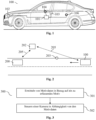
- the vehicle 100 can include one or more environment sensors 102 (e.g. an environment camera, a radar sensor, a lidar sensor, etc.) that are configured to capture sensor data (also referred to as environment data in this document) relating to the environment of the vehicle 100.
- the vehicle 100 can include a position sensor 103 that is configured to capture sensor data (also referred to as position data in this document) relating to the position of the vehicle 100.
- the vehicle 100 can include a communication unit 106 that is configured to exchange communication data with a vehicle-external unit (e.g. with an infrastructure unit of the road network traveled by the vehicle 100 and/or with another road user) via a (wireless) communication connection.
- a vehicle-external unit e.g. with an infrastructure unit of the road network traveled by the vehicle 100 and/or with another road user
- At least one camera 104 is arranged in the vehicle 100, which is designed to capture photos in relation to the surroundings of the vehicle 100.
- the camera 104 can be held, for example, by an occupant of the vehicle 100.
- the camera 104 can be attached to a holder of the vehicle 100 (not shown).
- the control unit 101 is further configured to control the camera 104 depending on the subject data (e.g. by sending a control instruction to the camera 104 via a wireless or a wired communication connection) to take a photo of the subject.
- control unit 101 can be configured to control an action of the user of the camera 104 based on the subject data.
- a voice output, a haptic signal and/or an optical signal can be used to prompt the user to hold the camera 104 to take the photo as indicated by the subject data (in particular, to hold it at the position and/or with the orientation indicated by the subject data).
- Fig. 2 shows an example driving situation in which the vehicle 100 follows another road user 200 (e.g. a vehicle driving ahead) on a roadway (shown by the arrow).
- the user of the vehicle 100 can have informed the control unit 101 of the vehicle 100 via a user interface that a photo of a specific subject 203 (e.g. of a specific landmark) should be taken with the camera 104 while the vehicle 100 is driving, wherein the subject 203 can be in front of the vehicle 100 in the direction of travel of the vehicle 100.
- the subject 203 can be arranged next to or behind the vehicle 100.
- the control unit 101 can instruct a vehicle-external unit 200, 202, e.g. the road user 200 driving ahead and/or an infrastructure unit 202, to provide subject data relating to the subject 203 to be captured via the communication unit 106 and/or via a (wireless) communication connection 205.
- the vehicle-external unit 200, 202 can be instructed to determine the exact position of the subject 203 to be captured and to send it as subject data to the control unit 101.
- the camera 104 in the vehicle 100 can then be operated in a precise and reliable manner based on the received and/or determined subject data in order to take a high-quality photo of the subject 203 (and possibly of the user).
- the subject data can be communicated by another road user 200 to a server, wherein the server is designed to store the subject data for a plurality of different subjects 203.
- the control unit 101 can then download the subject data for a selection of one or more subjects 203 from the server if required.
- the control unit 101 can be set up to convert the generally provided subject data for a subject 203 to the specific situation of the vehicle 100 (in particular with respect to the exact triggering time and/or the exact triggering position and/or with respect to the orientation of the camera 104).
- a database of subject data for interesting subjects 203 can thus be provided. This can further increase the convenience for users of cameras 104.
- a system is thus described for the optimal or optimized and automatic triggering of a hand-held or on-board installed camera 104 in a moving vehicle 100 in order to photograph a specific subject 203.
- the subject 203 should be photographed in an optimized manner (eg without a disturbing obstacle and/or with correct lighting conditions (in particular not against the sun)) at the current driving speed of the vehicle 100.
- an automatic pre-calculation of the earliest possible or exact time of triggering the camera 104 can be carried out.
- the trigger for triggering the camera 104 can be received, for example (as subject data) through car-to-car or car-to-X communication.
- car-to-X communication a fixed coordinate in relation to the subject 203 can be sent to the camera 104 in a high-resolution digital map via the vehicle 100, via the infrastructure 202, via an app and/or "over the air".
- the camera 104 and/or the control unit 101 of the vehicle 100 can have access to the digital map.
- a signal i.e. subject data
- the preceding vehicle 200 can be designed to determine the position of the subject 203 using one or more environmental sensors.
- the optimal trigger position and/or the optimal trigger time can be determined by the preceding vehicle 200.
- Current weather conditions and/or lighting conditions can be taken into account.
- the information relating to the trigger time or the trigger position can then be sent as subject data to the control unit 101 of the following vehicle 100 and/or directly to the camera 104.
- a preceding vehicle 200 and/or an infrastructure unit 202 can be combined in order to determine the triggering time or the triggering position in a particularly precise manner.
- the camera 104 can then be triggered at the determined triggering position or at the determined triggering time in order to capture an optimized photo of the subject 203.
- the vehicle 100 in which the camera 104 is located adjusts its lane, the trajectory within the lane, its speed with regard to the traffic situation and/or an existing speed limit in order to further increase the quality of the photo.
- This can be displayed as part of the determined subject data and taken into account by the control unit 101.
- the driver of the vehicle 100 can be prompted (e.g. by issuing a notice) to change the driving state of the vehicle 100 for capturing the photo.
- Fig.3 shows a flow chart of an exemplary (possibly computer-implemented) method 300 for controlling a camera 104 (such as a compact camera or a SLR camera) that is carried in a (motor) vehicle 100 (by a user or passenger).
- a camera 104 such as a compact camera or a SLR camera
- the camera 104 can be held by an occupant of the vehicle 100.
- the camera 104 can be attached to a bracket of the vehicle 100.
- the method 300 includes determining 301 subject data in relation to a subject 203 to be detected, possibly located ahead in the direction of travel of the vehicle 100.
- the subject data can be provided by a vehicle-external unit 200, 202 (in particular sent to the camera 104 and/or to the vehicle 100 via a wireless communication connection 205 and/or received by the camera 104 and/or the vehicle 100).
- the method 300 includes controlling 302 the camera 104 depending on the subject data in order to take a photo of the subject 203 using the camera 104.
- the shutter button of the camera 104 can be automatically actuated in order to take a photo of the subject 203.
- the measures described in this document enable an occupant of a vehicle 100 to take optimized photos with a camera 104 even when the vehicle 100 is moving. This can increase the comfort and satisfaction of the occupant.
Landscapes
- Engineering & Computer Science (AREA)
- Multimedia (AREA)
- Signal Processing (AREA)
- Mechanical Engineering (AREA)
- Physics & Mathematics (AREA)
- General Physics & Mathematics (AREA)
- Radar, Positioning & Navigation (AREA)
- Remote Sensing (AREA)
- Computer Vision & Pattern Recognition (AREA)
- Theoretical Computer Science (AREA)
- Traffic Control Systems (AREA)
- Control Of Driving Devices And Active Controlling Of Vehicle (AREA)
Description
- Die Erfindung betrifft die Steuerung einer Kamera in einem Fahrzeug.
- Es kommt häufig vor (z.B. auf einer Urlaubsreise), dass ein Insasse eines Fahrzeugs bei einer Fahrt mit dem Fahrzeug mit einer Kamera Fotos von der Umgebung des Fahrzeugs machen möchte. Dabei ist es für den Insassen des Fahrzeugs aufgrund der Bewegung des Fahrzeugs typischerweise schwierig, den richtigen Zeitpunkt für das Auslösen der Kamera abzupassen. Als Folge daraus ist die Qualität der in einem Fahrzeug erfassten Fotos häufig relativ niedrig.
DE 10 2018 132369 A1 beschreibt ein System zur Ermittlung einer Außenansicht eines Fahrzeugs.DE 10 2017 219926 A1 beschreibt ein System zur Durchführung einer Abtastung an einer bestimmten geographischen Position.US 2014/136098 A1 beschreibt ein System zur automatischen Erfassung von Kameradaten.US 2015/356864 A1 beschreibt ein Fahrzeugüberwachungssystem. - Das vorliegende Dokument befasst sich mit der technischen Aufgabe, in zuverlässiger und effizienter Weise die Güte der bei der Fahrt in einem Fahrzeug erfassten Bilder bzw. Fotos einer Kamera zu erhöhen.
- Die Aufgabe wird durch jeden der unabhängigen Ansprüche gelöst. Vorteilhafte Ausführungsformen werden u.a. in den abhängigen Ansprüchen beschrieben.
- Gemäß einem Aspekt wird eine Steuereinheit zur Steuerung einer Kamera beschrieben (z.B. eine (Digital-) Kamera, die von einem Nutzer in der Hand gehalten werden kann, etwa einer Spiegelreflexkamera oder einer Kompaktkamera), die in einem (Kraft-) Fahrzeug mitgeführt wird. Die Kamera kann z.B. von dem Nutzer gehalten werden. Alternativ kann die Kamera an einer Halterung des Fahrzeugs (im Innenraum des Fahrzeugs) befestigt sein. Die Steuereinheit kann zumindest teilweise (oder vollständig) Teil der Kamera sein. Alternativ oder ergänzend kann die Steuereinheit zumindest teilweise (oder vollständig) Teil des Fahrzeugs sein. Die Steuereinheit kann eingerichtet sein, mit der Kamera über eine drahtlose oder eine drahtgebundene Kommunikationsverbindung zu kommunizieren (insbesondere, um es der Steuereinheit zu ermöglichen, die Kamera zu steuern).
- Die Steuereinheit ist eingerichtet, Motivdaten in Bezug auf ein zu erfassendes Motiv zu ermitteln. Das Motiv kann in Fahrtrichtung des Fahrzeugs vor, neben oder hinter dem Fahrzeug angeordnet sein. Die Motivdaten können dabei den Auslösezeitpunkt und/oder die Auslöseposition anzeigen, an dem bzw. an der die Kamera auszulösen ist, um das Foto von dem Motiv aufzunehmen.
- Die Motivdaten können von einer Fahrzeug-externen Einheit (außerhalb des Fahrzeugs) gesendet und von der Steuereinheit empfangen werden (z.B. über eine drahtlose Kommunikationsverbindung). Insbesondere kann die Steuereinheit eingerichtet sein, eine Anfrage in Bezug auf die Bereitstellung von Motivdaten für das Motiv an eine Fahrzeug-externe Einheit zu senden (z.B. basierend auf einer Nutzereingabe an einer Benutzerschnittstelle). Des Weiteren kann die Steuereinheit eingerichtet sein, in Reaktion auf die Anfrage die Motivdaten von der Fahrzeug-externen Einheit zu empfangen.
- Die Motivdaten können dabei von einem anderen Verkehrsteilnehmer (z.B. von einem vorausfahrenden Fahrzeug) empfangen werden, der in Fahrtrichtung des Fahrzeugs vor dem Fahrzeug angeordnet ist. Alternativ oder ergänzend können die Motivdaten von einer Infrastruktureinheit (z.B. an einer Brücke) des von dem Fahrzeug befahrenen Fahrbahnnetzes empfangen werden. Die Daten können über Vehicle-to-Vehicle Kommunikation empfangen werden.
- Die Steuereinheit ist ferner eingerichtet, die Kamera in Abhängigkeit von den Motivdaten (insbesondere automatisch) zu steuern, um mittels der Kamera ein Foto von dem Motiv aufzunehmen.
- Es können somit Motivdaten bereitgestellt werden (insbesondere von einer Fahrzeug-externen Einheit), die es dem Nutzer der Kamera ermöglichen, die Kamera (insbesondere automatisch) zu steuern, um ein qualitativ hochwertiges Foto von einem Motiv zu machen.
- Die Motivdaten können anzeigen, wie sich das Fahrzeug für die Aufnahme des Fotos des Motivs bewegen sollte. Insbesondere können die Motivdaten anzeigen: die Fahrspur, in der sich das Fahrzeug zur Aufnahme des Fotos befinden sollte; die Fahrgeschwindigkeit, die das Fahrzeug zur Aufnahme des Fotos aufweisen sollte; die Trajektorie, entlang der das Fahrzeug zur Aufnahme des Fotos fahren sollte; und/oder die Ausrichtung, die das Fahrzeug relativ zu dem Motiv zur Aufnahme des Fotos aufweisen sollte.
- Die Steuereinheit kann eingerichtet sein, zu veranlassen, dass sich das Fahrzeug wie durch die Motivdaten angezeigt bewegt. Insbesondere kann die Steuereinheit eingerichtet sein, einen Hinweis an einen Fahrer des Fahrzeugs auszugeben, um zu veranlassen, dass sich das Fahrzeug wie durch die Motivdaten angezeigt bewegt. Alternativ oder ergänzend kann die Steuereinheit eingerichtet sein, automatisiert in die Längs- und/oder Querführung des Fahrzeugs einzugreifen, um zu veranlassen, dass sich das Fahrzeug wie durch die Motivdaten angezeigt bewegt.
- Die Steuereinheit kann somit eingerichtet sein, zeitabhängig einen Zielzustand des Fahrzeugs zur Aufnahme des Fotos ausgehend von einem Istzustand des Fahrzeugs zu erreichen. Zu diesem Zweck kann z.B. eine Längsverzögerung (Bremsen) und/oder eine Querbewegung (Lenken) des Fahrzeugs bewirkt werden, um an dem Auslösezeitpunkt und/oder an der Auslöseposition den Zielzustand des Fahrzeugs zu erreichen. Durch die Beeinflussung der Bewegung des Fahrzeugs für die Aufnahme des Fotos kann die Qualität des aufgenommenen Fotos weiter erhöht werden.
- Die Steuereinheit kann eingerichtet sein, Positionsdaten (z.B. GPS Koordinaten) in Bezug auf die Position des Fahrzeugs zu ermitteln. Die Kamera kann dann auch in Abhängigkeit von den Positionsdaten, insbesondere unter Berücksichtigung einer digitalen Karte in Bezug auf das von dem Fahrzeug befahrene Fahrbahnnetz, gesteuert werden, um mittels der Kamera das Foto von dem Motiv aufzunehmen. So kann die Güte des aufgenommenen Fotos weiter erhöht werden.
- Die Steuereinheit ist eingerichtet, Fahrzeugdaten in Bezug auf den Zustand des Fahrzeugs zu ermitteln. Die Fahrzeugdaten umfassen: Information in Bezug auf den Reifendruck zumindest eines Reifens des Fahrzeugs; Information in Bezug auf den Abnutzungszustand eines Reifens des Fahrzeugs; Information in Bezug auf den Beladungszustand des Fahrzeugs; und/oder Information in Bezug auf die Fahrgeschwindigkeit des Fahrzeugs. Die Kamera wird dann auch in Abhängigkeit von den Fahrzeugdaten gesteuert werden, um mittels der Kamera das Foto von dem Motiv aufzunehmen. So kann die Güte des aufgenommenen Fotos weiter erhöht werden.
- Die Steuereinheit kann eingerichtet sein, Umfelddaten in Bezug auf das Umfeld des Fahrzeugs (insbesondere in Bezug auf das Motiv im Umfeld des Fahrzeugs) zu ermitteln. Die Umfelddaten können dabei durch ein oder mehrere Umfeldsensoren (z.B. eine Umfeldkamera, einen Radarsensor, einen Lidarsensor, etc.) des Fahrzeugs erfasst worden sein. Die Motivdaten können dann in präziser Weise (ggf. auch) auf Basis der Umfelddaten ermittelt werden. Alternativ oder ergänzend kann die Kamera des Nutzers (ggf. auch) in Abhängigkeit von den Umfelddaten gesteuert werden, um mittels der Kamera das Foto von dem Motiv aufzunehmen. So kann die Güte des aufgenommenen Fotos weiter erhöht werden.
- Die Steuereinheit kann Zugriff auf eine Liste mit ein oder mehreren vorselektierten Motivtypen haben, wobei die Liste anzeigt, welche Motivtypen der Nutzer fotografieren möchte. Beispielhafte Motivtypen sind: Sehenswürdigkeiten, Sonnenuntergänge, Aussichtspunkte, Pflanzen, Tiere, etc. Die Steuereinheit kann eingerichtet sein, zu ermitteln, ob sich ein Motiv des vorselektierten Motivtypen auf der Fahrroute des Fahrzeugs befindet. Dies kann z.B. durch eine Anfrage an eine Fahrzeug-externe Einheit ermittelt werden (z.B. durch Anfrage an ein vorausfahrendes Fahrzeug oder an eine Infrastruktureinheit). Wenn ein Motiv des vorselektierten Motivtyps erkannt wird, so können Motivdaten für das erkannte Motiv ermittelt werden, um die Kamera zu steuern, so dass von der Kamera ein Foto von dem Motiv aufgenommen werden kann. So kann der Komfort für den Nutzer weiter erhöht werden.
- Das Motiv kann ggf. ein Hintergrund-Motiv für ein Selbstportrait des Nutzers sein. Die Kamera kann dann gesteuert werden, um auf Basis der Motivdaten ein Selbstportrait des Nutzers (d.h. ein sogenanntes "Selfie") mit dem zu erfassenden Motiv im Hintergrund aufzunehmen.
- Gemäß einem weiteren Aspekt wird ein (Straßen-) Kraftfahrzeug (insbesondere ein Personenkraftwagen oder ein Lastkraftwagen oder ein Bus oder ein Motorrad) beschrieben, das die in diesem Dokument beschriebene Steuereinheit umfasst.
- Gemäß einem weiteren Aspekt wird ein Verfahren zur Steuerung einer Kamera beschrieben, die in einem Fahrzeug mitgeführt wird. Das Verfahren umfasst das Ermitteln von Motivdaten in Bezug auf ein zu erfassendes Motiv. Das zu erfassende Motiv kann in Fahrtrichtung des Fahrzeugs vorausliegend sein.
- Alternativ oder ergänzend kann das Motiv neben oder hinter dem Fahrzeug angeordnet sein. Wenn sich das Motiv neben oder hinter dem Fahrzeug befindet, so kann z.B. (automatisch) eine Verzögerung des Fahrzeugs bewirkt werden, um noch ein Foto von dem Motiv aufnehmen zu können.
- Des Weiteren umfasst das Verfahren das Steuern der Kamera in Abhängigkeit von den Motivdaten, um mittels der Kamera ein Foto von dem Motiv aufzunehmen. Die Motivdaten können von einer Fahrzeug-externen Einheit bereitgestellt werden.
- Gemäß einem weiteren Aspekt wird ein Software (SW) Programm beschrieben. Das SW Programm kann eingerichtet werden, um auf einem Prozessor (z.B. auf einem Steuergerät eines Fahrzeugs) ausgeführt zu werden, und um dadurch das in diesem Dokument beschriebene Verfahren auszuführen.
- Gemäß einem weiteren Aspekt wird ein Speichermedium beschrieben. Das Speichermedium kann ein SW Programm umfassen, welches eingerichtet ist, um auf einem Prozessor ausgeführt zu werden, und um dadurch das in diesem Dokument beschriebene Verfahren auszuführen.
- Es ist zu beachten, dass die in diesem Dokument beschriebenen Verfahren, Vorrichtungen und Systeme sowohl alleine, als auch in Kombination mit anderen in diesem Dokument beschriebenen Verfahren, Vorrichtungen und Systemen verwendet werden können soweit sie in den Schutzbereich der nachfolgenden Ansprüche fallen. Des Weiteren können jegliche Aspekte der in diesem Dokument beschriebenen Verfahren, Vorrichtungen und Systemen in vielfältiger Weise miteinander kombiniert werden, soweit dies Kombinationen in den Schutzbereich der nachfolgenden Ansprüche fallen. Insbesondere können die Merkmale der Ansprüche in vielfältiger Weise miteinander kombiniert werden.
- Im Weiteren wird die Erfindung anhand von Ausführungsbeispielen näher beschrieben. Dabei zeigen
-
Figur 1 beispielhafte Komponenten eines Fahrzeugs; -
Figur 2 eine beispielhafte Fahrsituation mit einem zu erfassenden Motiv; und -
Figur 3 ein beispielhaftes Verfahren zur Steuerung einer Kamera in einem Fahrzeug. - Wie eingangs dargelegt, befasst sich das vorliegende Dokument mit der Erhöhung der Güte von Fotos, die mit einer Kamera in einem Fahrzeug erfasst werden. In diesem Zusammenhang zeigt
Fig. 1 beispielhafte Komponenten eines Fahrzeugs 100. Das Fahrzeug 100 kann ein oder mehrere Umfeldsensoren 102 (z.B. eine Umfeldkamera, einen Radarsensor, einen Lidarsensor, etc.) umfassen, die eingerichtet sind, Sensordaten (in diesem Dokument auch als Umfelddaten bezeichnet) in Bezug auf das Umfeld des Fahrzeugs 100 zu erfassen. Des Weiteren kann das Fahrzeug 100 einen Positionssensor 103 umfassen, der eingerichtet ist, Sensordaten (in diesem Dokument auch als Positionsdaten bezeichnet) in Bezug auf die Position des Fahrzeugs 100 zu erfassen. Außerdem kann das Fahrzeug 100 eine Kommunikationseinheit 106 umfassen, die eingerichtet ist, über eine (drahtlose) Kommunikationsverbindung Kommunikationsdaten mit einer Fahrzeug-externen Einheit (z.B. mit einer Infrastruktureinheit des von dem Fahrzeug 100 befahrenen Straßennetzes und/oder mit einem anderen Verkehrsteilnehmer) auszutauschen. - Des Weiteren ist in dem Fahrzeug 100 mindestens eine Kamera 104 angeordnet, die ausgebildet ist, Fotos in Bezug auf das Umfeld des Fahrzeugs 100 zu erfassen. Die Kamera 104 kann z.B. von einem Insassen des Fahrzeugs 100 gehalten werden. Alternativ kann die Kamera 104 an einer Halterung des Fahrzeugs 100 (nicht dargestellt) befestigt sein.
- Eine Steuereinheit 101 des Fahrzeugs 100 kann eingerichtet sein, auf Basis der Umfelddaten, auf Basis der Positionsdaten (z.B. in Kombination mit einer digitalen Karte in Bezug auf das von dem Fahrzeug 100 befahrene Straßennetz) und/oder auf Basis von empfangenen Kommunikationsdaten Motivdaten in Bezug auf ein Motiv im Umfeld des Fahrzeugs 100 zu ermitteln, das mit der Kamera 104 erfasst werden soll. Insbesondere können die Motivdaten anzeigen bzw. umfassen,
- die Richtung und/oder die Ausrichtung und/oder die Position der Kamera 104 zum Erfassen des Motivs; und/oder
- den Auslösezeitpunkt und/oder die Auslöseposition, an dem bzw. an der die Kamera 104 ausgelöst werden muss, um das Motiv zu erfassen.
- Die Steuereinheit 101 ist ferner eingerichtet, die Kamera 104 in Abhängigkeit von den Motivdaten zu steuern (z.B. durch Senden einer Steueranweisung an die Kamera 104 über eine drahtlose oder eine drahtgebundene Kommunikationsverbindung), um ein Foto des Motivs aufzunehmen.
- Alternativ oder ergänzend kann die Steuereinheit 101 eingerichtet sein, eine Aktion des Nutzers der Kamera 104 basierend auf den Motivdaten zu steuern. Beispielsweise kann anhand einer Sprachausgabe, eines haptischen Signals und/oder eines optischen Signals veranlasst werden, dass der Nutzer die Kamera 104 zur Aufnahme des Fotos so hält, wie durch die Motivdaten angegeben (insbesondere an der Position und/oder mit der Ausrichtung hält, die durch die Motivdaten angegeben werden).
-
Fig. 2 zeigt eine beispielhafte Fahrsituation, bei der das Fahrzeug 100 einem anderen Verkehrsteilnehmer 200 (z.B. einem vorausfahrenden Fahrzeug) auf einer Fahrbahn folgt (dargestellt durch den Pfeil). Der Nutzer des Fahrzeugs 100 kann der Steuereinheit 101 des Fahrzeugs 100 über eine Benutzerschnittstelle mitgeteilt haben, dass mit der Kamera 104 während der Fahrt des Fahrzeugs 100 ein Foto von einem bestimmten Motiv 203 (z.B. von einer bestimmten Sehenswürdigkeit) gemacht werden soll, wobei das Motiv 203 in Fahrtrichtung des Fahrzeugs 100 vor dem Fahrzeug 100 liegen kann. Alternativ oder ergänzend kann das Motiv 203 neben oder hinter dem Fahrzeug 100 angeordnet sein. - Die Steuereinheit 101 kann über die Kommunikationseinheit 106 und/oder über eine (drahtlose) Kommunikationsverbindung 205 eine Fahrzeug-externe Einheit 200, 202, z.B. den vorausfahrenden Verkehrsteilnehmer 200 und/oder eine Infrastruktureinheit 202, beauftragen, Motivdaten in Bezug auf das zu erfassende Motiv 203 bereitzustellen. Beispielsweise kann die Fahrzeug-externe Einheit 200, 202 damit beauftragt werden, die genaue Position des zu erfassenden Motivs 203 zu ermitteln, und als Motivdaten an die Steuereinheit 101 zu senden. Die Kamera 104 in dem Fahrzeug 100 kann dann in präziser und zuverlässiger Weise auf Basis der empfangenen und/oder ermittelten Motivdaten betrieben werden, um ein qualitativ hochwertiges Foto von dem Motiv 203 (und ggf. von dem Nutzer) zu machen.
- Die Motivdaten können von einem anderen Verkehrsteilnehmer 200 an einen Server kommuniziert werden, wobei der Server ausgebildet ist, die Motivdaten für eine Vielzahl von unterschiedlichen Motiven 203 zu speichern. Die Steuereinheit 101 kann dann bei Bedarf die Motivdaten für eine Auswahl von ein oder mehreren Motiven 203 von dem Server herunterladen. Die Steuereinheit 101 kann eingerichtet sein, die allgemein bereitgestellten Motivdaten für ein Motiv 203 auf die spezifische Situation des Fahrzeugs 100 umzurechnen (insbesondere in Bezug auf den genauen Auslösezeitpunkt und/oder die genaue Auslöseposition und/oder in Bezug auf die Ausrichtung der Kamera 104).
- Es kann somit eine Datenbank von Motivdaten für interessante Motive 203 bereitgestellt werden. So kann der Komfort für die Nutzer von Kameras 104 weiter erhöht werden.
- Es wird somit ein System zum optimalen bzw. optimierten und automatischen Auslösen einer handgeführten oder on-board installierten Kamera 104 in einem sich bewegenden Fahrzeug 100 beschrieben, um ein bestimmtes Motiv 203 zu fotografieren. Dabei soll das Motiv 203 in optimierter Weise (z.B. ohne ein störendes Hindernis und/oder mit korrekten Lichtverhältnissen (insbesondere nicht gegen die Sonne)) bei der aktuellen Fahrgeschwindigkeit des Fahrzeugs 100 fotografiert werden.
- Zu diesem Zweck kann eine automatische Vorausberechnung des frühestmöglichen bzw. des genauen Zeitpunkts des Auslösens der Kamera 104 erfolgen. Der Trigger für das Auslösen der Kamera 104 kann z.B. (als Motivdaten) durch Car-to-Car oder Car-to-X Kommunikation empfangen werden. Anhand von Car-to-X Kommunikation kann eine fixe Koordinate in Bezug auf das Motiv 203 in einer hochaufgelösten digitalen Karte über das Fahrzeug 100, über die Infrastruktur 202, über eine App und/oder "over the air" an die Kamera 104 gesendet werden. Die Kamera 104 und/oder die Steuereinheit 101 des Fahrzeugs 100 können Zugriff auf die digitale Karte haben.
- Anhand einer Car-to-Car Nachricht kann ein Signal (d.h. Motivdaten) von einem vorausfahrenden Fahrzeug 200 empfangen werden. Das vorausfahrende Fahrzeug 200 kann ausgebildet sein, anhand von ein oder mehrere Umfeldsensoren, die Position des Motivs 203 zu ermitteln. Insbesondere können von dem vorausfahrenden Fahrzeug 200 die optimale Auslöseposition und/oder der optimale Auslösezeitpunkt ermittelt werden. Dabei können aktuelle Witterungsbedingungen und/oder Lichtverhältnisse berücksichtigt werden. Die Information in Bezug auf den Auslösezeitpunkt bzw. die Auslöseposition kann dann als Motivdaten an die Steuereinheit 101 des nachfolgenden Fahrzeugs 100 und/oder direkt an die Kamera 104 gesendet werden.
- Ggf. können mehrere unterschiedliche Informationsquellen (z.B. ein vorausfahrendes Fahrzeugs 200 und/oder eine Infrastruktureinheit 202) kombiniert werden, um den Auslösezeitpunkt bzw. die Auslöseposition in besonders präziser Weise zu ermitteln. Die Kamera 104 kann dann an der ermittelten Auslöseposition bzw. an dem ermittelten Auslösezeitpunkt ausgelöst werden, um ein optimiertes Foto von dem Motiv 203 zu erfassen.
- Es kann ggf. für das Erfassen des Fotos vorteilhaft sein, dass das Fahrzeug 100, in dem sich die Kamera 104 befindet, seine Fahrspur, die Trajektorie innerhalb der Fahrspur, seine Geschwindigkeit mit Blick auf die Verkehrssituation und/oder eine vorliegende Geschwindigkeitsbegrenzung anpasst, um die Qualität des Fotos weiter zu erhöhen. Dies kann im Rahmen der ermittelten Motivdaten angezeigt und von der Steuereinheit 101 berücksichtigt werden. Insbesondere kann der Fahrer des Fahrzeugs 100 (z.B. durch Ausgabe eines Hinweises) veranlasst werden, den Fahrzustand des Fahrzeugs 100 für das Erfassen des Fotos zu ändern.
- Im Rahmen des beschriebenen Systems bzw. Verfahrens werden folgende Daten und/ oder Informationen verwendet werden:
- Information in Bezug auf einen Reifendruck zumindest eines Reifens des Fahrzeugs;
- Information in Bezug auf einen Abnutzungszustand eines Reifens des Fahrzeugs;
- Information in Bezug auf einen Beladungszustand des Fahrzeugs.
- Im Rahmen des beschriebenen Systems bzw. Verfahrens können des weiteren folgende Daten und/oder Informationen verwendet werden:
- Daten in Bezug auf ein oder mehrere Fahrzeugkomponenten; z.B. aktuelle Reifenreibwerte, Motorkraft und Drehmoment an den Achsen, etc.;
- GPS-Daten (Verkehr), Car-to-Car (V2V) Daten und/oder Car-to-X (V2X) Daten, um eine vorausfahrende Fahrzeugkolonne abzufragen, welche ggf. nicht durch die Umfeldkamera 102 des Fahrzeugs 100 ersichtlich ist (z.B. bei Kolonnenfahrten);
- Kartendaten und/oder Fahrbahngeometrie;
- Topografie (Steigung);
- Witterung und/oder Klima;
- Bremsleistung; und/oder
- Maximale Beschleunigungskräfte längs und/oder quer.
-
Fig. 3 zeigt ein Ablaufdiagramm eines beispielhaften (ggf. Computerimplementierten) Verfahrens 300 zur Steuerung einer Kamera 104 (etwa einer Kompaktkamera oder einer Spiegelreflexkamera), die in einem (Kraft-) Fahrzeug 100 (von einem Nutzer bzw. Insassen) mitgeführt wird. Beispielsweise kann die Kamera 104 von einem Insassen des Fahrzeugs 100 gehalten werden. Alternativ oder ergänzend kann die Kamera 104 an einer Halterung des Fahrzeugs 100 befestigt sein. - Das Verfahren 300 umfasst das Ermitteln 301 von Motivdaten in Bezug auf ein, ggf. in Fahrtrichtung des Fahrzeugs 100 vorausliegendes, zu erfassendes Motiv 203. Die Motivdaten können dabei von einer Fahrzeug-externen Einheit 200, 202 bereitgestellt werden (insbesondere über eine drahtlose Kommunikationsverbindung 205 an die Kamera 104 und/oder an das Fahrzeug 100 gesendet und/oder von der Kamera 104 und/oder dem Fahrzeug 100 empfangen werden).
- Des Weiteren umfasst das Verfahren 300 das Steuern 302 der Kamera 104 in Abhängigkeit von den Motivdaten, um mittels der Kamera 104 ein Foto von dem Motiv 203 aufzunehmen. Insbesondere kann in Abhängigkeit von den Motivdaten (z.B. in Abhängigkeit von einem in den Motivdaten angezeigten Auslösezeitpunkt bzw. einer angezeigten Auslöseposition) automatisch der Auslöser der Kamera 104 betätigt werden, um ein Foto von dem Motiv 203 aufzunehmen.
- Durch die in diesem Dokument beschriebenen Maßnahmen wird es einem Insassen eines Fahrzeugs 100 ermöglicht, auch bei einem fahrenden Fahrzeug 100 optimierte Fotos mit einer Kamera 104 zu machen. So können der Komfort und die Zufriedenheit des Insassen erhöht werden.
- Die vorliegende Erfindung ist nicht auf die gezeigten Ausführungsbeispiele beschränkt, sondern wird durch die nachfolgenden Ansprüche definiert. Insbesondere ist zu beachten, dass die Beschreibung und die Figuren nur beispielhaft das Prinzip der vorgeschlagenen Verfahren, Vorrichtungen und Systeme veranschaulichen sollen.
Claims (10)
- Steuereinheit (101) zur Steuerung einer Kamera (104), die in einem Fahrzeug (100) mitgeführt wird; wobei die Steuereinheit (101) eingerichtet ist,- Motivdaten in Bezug auf ein zu erfassendes Motiv (203) zu ermitteln;- Fahrzeugdaten in Bezug auf einen Zustand des Fahrzeugs (100) zu ermitteln; wobei die Fahrzeugdaten umfassen,- Information in Bezug auf einen Reifendruck zumindest eines Reifens des Fahrzeugs (100);- Information in Bezug auf einen Abnutzungszustand eines Reifens des Fahrzeugs (100); und/oder- Information in Bezug auf einen Beladungszustand des Fahrzeugs (100); und- die Kamera (104) in Abhängigkeit von den Motivdaten und in Abhängigkeit von den Fahrzeugdaten zu steuern, um mittels der Kamera (104) ein Foto von dem Motiv (203) aufzunehmen.
- Steuereinheit (101) gemäß Anspruch 1, wobei die Motivdaten einen Auslösezeitpunkt und/oder eine Auslöseposition anzeigen, an dem bzw. an der die Kamera (104) auszulösen ist, um das Foto von dem Motiv (203) aufzunehmen.
- Steuereinheit (101) gemäß einem der vorhergehenden Ansprüche, wobei die Steuereinheit (101) eingerichtet ist, die Motivdaten von einem anderen Verkehrsteilnehmer (200) zu empfangen, der in Fahrtrichtung des Fahrzeugs (100) vor dem Fahrzeug (100) angeordnet ist.
- Steuereinheit (101) gemäß einem der vorhergehenden Ansprüche, wobei die Steuereinheit (101) eingerichtet ist, die Motivdaten von einer Infrastruktureinheit (202) eines von dem Fahrzeug (100) befahrenen Fahrbahnnetzes zu empfangen.
- Steuereinheit (101) gemäß einem der vorhergehenden Ansprüche, wobei- die Motivdaten anzeigen, wie sich das Fahrzeug (100) für die Aufnahme des Fotos des Motivs (203) bewegen sollte, insbesondere in Bezug auf- eine Fahrspur, in der sich das Fahrzeug (100) befinden sollte;- eine Fahrgeschwindigkeit des Fahrzeugs (100);- eine Trajektorie des Fahrzeugs (100); und/oder- eine Ausrichtung des Fahrzeugs (100) relativ zu dem Motiv (203); und- die Steuereinheit (101) eingerichtet ist, zu veranlassen, dass sich das Fahrzeug (100) wie durch die Motivdaten angezeigt bewegt.
- Steuereinheit (101) gemäß Anspruch 5, wobei die Steuereinheit (101) eingerichtet ist,- einen Hinweis an einen Fahrer des Fahrzeugs (100) auszugeben, um zu veranlassen, dass sich das Fahrzeug (100) wie durch die Motivdaten angezeigt bewegt; und/oder- automatisiert in die Längs- und/oder Querführung des Fahrzeugs (100) einzugreifen, um zu veranlassen, dass sich das Fahrzeug (100) wie durch die Motivdaten angezeigt bewegt.
- Steuereinheit (101) gemäß einem der vorhergehenden Ansprüche, wobei die Steuereinheit (101) eingerichtet ist,- Positionsdaten in Bezug auf eine Position des Fahrzeugs (100) zu ermitteln; und- die Kamera (104) auch in Abhängigkeit von den Positionsdaten, insbesondere unter Berücksichtigung einer digitalen Karte in Bezug auf das von dem Fahrzeug (100) befahrene Fahrbahnnetz, zu steuern, um mittels der Kamera (104) das Foto von dem Motiv (203) aufzunehmen.
- Steuereinheit (101) gemäß einem der vorhergehenden Ansprüche, wobei die Steuereinheit (101) eingerichtet ist,- Umfelddaten in Bezug auf ein Umfeld des Fahrzeugs (100) zu ermitteln; wobei die Umfelddaten insbesondere durch ein oder mehrere Umfeldsensoren (102) des Fahrzeugs (100) erfasst wurden; und- die Motivdaten auf Basis der Umfelddaten zu ermitteln.
- Steuereinheit (101) gemäß einem der vorhergehenden Ansprüche, wobei die Steuereinheit (101) eingerichtet ist,- eine Anfrage in Bezug auf die Bereitstellung von Motivdaten für das Motiv (203) an eine Fahrzeug-externe Einheit (200, 202) zu senden; und- in Reaktion darauf die Motivdaten von der Fahrzeug-externen Einheit (200, 202) zu empfangen.
- Verfahren (300) zur Steuerung einer Kamera (104), die in einem Fahrzeug (100) mitgeführt wird; wobei das Verfahren (300) umfasst,- Ermitteln (301) von Motivdaten in Bezug auf ein zu erfassendes Motiv (203);- Ermitteln von Fahrzeugdaten in Bezug auf einen Zustand des Fahrzeugs (100); wobei die Fahrzeugdaten umfassen,- Information in Bezug auf einen Reifendruck zumindest eines Reifens des Fahrzeugs (100);- Information in Bezug auf einen Abnutzungszustand eines Reifens des Fahrzeugs (100); und/oder- Information in Bezug auf einen Beladungszustand des Fahrzeugs (100); und- Steuern (302) der Kamera (104) in Abhängigkeit von den Motivdaten und von den Fahrzeugdaten, um mittels der Kamera (104) ein Foto von dem Motiv (203) aufzunehmen.
Applications Claiming Priority (2)
| Application Number | Priority Date | Filing Date | Title |
|---|---|---|---|
| DE102020108130.8A DE102020108130A1 (de) | 2020-03-25 | 2020-03-25 | Verfahren und Steuereinheit zur Steuerung einer Kamera |
| PCT/EP2020/085485 WO2021190777A1 (de) | 2020-03-25 | 2020-12-10 | Verfahren und steuereinheit zur steuerung einer kamera |
Publications (2)
| Publication Number | Publication Date |
|---|---|
| EP4128741A1 EP4128741A1 (de) | 2023-02-08 |
| EP4128741B1 true EP4128741B1 (de) | 2024-08-07 |
Family
ID=74125138
Family Applications (1)
| Application Number | Title | Priority Date | Filing Date |
|---|---|---|---|
| EP20835695.6A Active EP4128741B1 (de) | 2020-03-25 | 2020-12-10 | Verfahren und steuereinheit zur steuerung einer kamera |
Country Status (5)
| Country | Link |
|---|---|
| US (1) | US20230145925A1 (de) |
| EP (1) | EP4128741B1 (de) |
| CN (1) | CN115136578B (de) |
| DE (1) | DE102020108130A1 (de) |
| WO (1) | WO2021190777A1 (de) |
Families Citing this family (2)
| Publication number | Priority date | Publication date | Assignee | Title |
|---|---|---|---|---|
| FR3146563B1 (fr) * | 2023-03-09 | 2025-04-04 | Renault Sas | Procédé de capture d’image pour véhicule automobile |
| CN121334295A (zh) * | 2024-07-12 | 2026-01-13 | 北京小米移动软件有限公司 | 图像拍摄方法、装置、设备、存储介质及计算机程序产品 |
Family Cites Families (28)
| Publication number | Priority date | Publication date | Assignee | Title |
|---|---|---|---|---|
| DE19748372A1 (de) | 1997-11-03 | 1999-05-06 | Eastman Kodak Co | Kamera mit einer Vorrichtung zum Auffinden guter Motivstandorte |
| DE102006046963B4 (de) | 2006-10-04 | 2008-04-10 | Kruip, Manuela | Motivklingel |
| JP2008160496A (ja) * | 2006-12-25 | 2008-07-10 | Hitachi Ltd | 監視システム |
| DE102010011093A1 (de) * | 2010-03-11 | 2011-09-15 | Daimler Ag | Verfahren zur Bestimmung einer Fahrzeugaufbaubewegung |
| US9117371B2 (en) * | 2012-06-22 | 2015-08-25 | Harman International Industries, Inc. | Mobile autonomous surveillance |
| US8798926B2 (en) * | 2012-11-14 | 2014-08-05 | Navteq B.V. | Automatic image capture |
| CN103101497A (zh) * | 2013-01-25 | 2013-05-15 | 深圳市保千里电子有限公司 | 汽车摄像系统及其视角与车速同步变化的数据处理方法 |
| TWI552897B (zh) * | 2013-05-17 | 2016-10-11 | 財團法人工業技術研究院 | 影像動態融合方法與裝置 |
| US20160328474A1 (en) * | 2015-05-08 | 2016-11-10 | Jun Shi | Data recording and data recording apparatus |
| JP5866594B1 (ja) * | 2015-07-31 | 2016-02-17 | パナソニックIpマネジメント株式会社 | 運転支援装置、運転支援システム、運転支援方法、運転支援プログラム及び自動運転車両 |
| JP5945999B1 (ja) * | 2015-07-31 | 2016-07-05 | パナソニックIpマネジメント株式会社 | 運転支援装置、運転支援システム、運転支援方法、運転支援プログラム及び自動運転車両 |
| JP2017085381A (ja) * | 2015-10-28 | 2017-05-18 | 京セラ株式会社 | 撮像装置、車両、および撮像方法 |
| US10587790B2 (en) * | 2015-11-04 | 2020-03-10 | Tencent Technology (Shenzhen) Company Limited | Control method for photographing using unmanned aerial vehicle, photographing method using unmanned aerial vehicle, mobile terminal, and unmanned aerial vehicle |
| KR102464898B1 (ko) * | 2016-01-05 | 2022-11-09 | 삼성전자주식회사 | 차량과 관련된 영상 정보를 공유하는 방법 및 장치 |
| DE102016202948A1 (de) * | 2016-02-25 | 2017-08-31 | Robert Bosch Gmbh | Verfahren und Vorrichtung zum Ermitteln eines Bildes einer Umgebung eines Fahrzeugs |
| CN106982324B (zh) * | 2017-03-10 | 2021-04-09 | 北京远度互联科技有限公司 | 无人机、视频拍摄方法和装置 |
| DE102017206344A1 (de) * | 2017-04-12 | 2018-10-18 | Robert Bosch Gmbh | Fahrerassistenzsystem für ein Fahrzeug |
| US20180316844A1 (en) * | 2017-05-01 | 2018-11-01 | The United States of America, as represented by the Secretary of the Department of the Interior | System for 3-d mapping and measurement of fluid surface in dynamic motion |
| CN206773924U (zh) * | 2017-05-11 | 2017-12-19 | 梁崇彦 | 一种路边停车自动拍摄取证装置 |
| US10491807B2 (en) * | 2017-06-27 | 2019-11-26 | GM Global Technology Operations LLC | Method to use vehicle information and sensors for photography and video viewing recording |
| KR102519662B1 (ko) * | 2017-07-31 | 2023-04-07 | 삼성전자주식회사 | 영상 획득 방법 및 영상 획득 장치 |
| US11575825B2 (en) * | 2017-10-17 | 2023-02-07 | Nikon Corporation | Control apparatus, control system, and control program |
| DE102017219926A1 (de) * | 2017-11-09 | 2019-05-09 | Bayerische Motoren Werke Aktiengesellschaft | Durchführen einer Abtastung |
| US10417911B2 (en) * | 2017-12-18 | 2019-09-17 | Ford Global Technologies, Llc | Inter-vehicle cooperation for physical exterior damage detection |
| US10600234B2 (en) * | 2017-12-18 | 2020-03-24 | Ford Global Technologies, Llc | Inter-vehicle cooperation for vehicle self imaging |
| US10816979B2 (en) * | 2018-08-24 | 2020-10-27 | Baidu Usa Llc | Image data acquisition logic of an autonomous driving vehicle for capturing image data using cameras |
| US11155209B2 (en) * | 2019-08-22 | 2021-10-26 | Micron Technology, Inc. | Virtual mirror with automatic zoom based on vehicle sensors |
| JP7438892B2 (ja) * | 2020-08-20 | 2024-02-27 | 本田技研工業株式会社 | 情報処理装置、情報処理方法、およびプログラム |
-
2020
- 2020-03-25 DE DE102020108130.8A patent/DE102020108130A1/de active Pending
- 2020-12-10 WO PCT/EP2020/085485 patent/WO2021190777A1/de not_active Ceased
- 2020-12-10 US US17/802,501 patent/US20230145925A1/en not_active Abandoned
- 2020-12-10 EP EP20835695.6A patent/EP4128741B1/de active Active
- 2020-12-10 CN CN202080096837.4A patent/CN115136578B/zh active Active
Also Published As
| Publication number | Publication date |
|---|---|
| US20230145925A1 (en) | 2023-05-11 |
| EP4128741A1 (de) | 2023-02-08 |
| CN115136578B (zh) | 2024-04-09 |
| CN115136578A (zh) | 2022-09-30 |
| WO2021190777A1 (de) | 2021-09-30 |
| DE102020108130A1 (de) | 2021-09-30 |
Similar Documents
| Publication | Publication Date | Title |
|---|---|---|
| EP3830522B1 (de) | Verfahren zur schätzung der lokalisierungsgüte bei der eigenlokalisierung eines fahrzeuges, vorrichtung für die durchführung des verfahrens, fahrzeug sowie computerprogramm | |
| DE102016112859B4 (de) | Navigationsvorrichtung für ein autonom fahrendes Fahrzeug | |
| DE102015118489B4 (de) | Fernbedienung eines autonomen Fahrzeugs in einer unerwarteten Umgebung | |
| DE102016116928A1 (de) | Formulieren von Leitplänen auf Fahrspurebene | |
| DE102018104801A1 (de) | Unterstützen von fahrern bei fahrbahnspurwechseln | |
| WO2015149971A1 (de) | Verfahren zur analyse einer verkehrsumfeldsituation eines fahrzeugs | |
| DE10258167B4 (de) | Verfahren für ein Fahrzeug | |
| DE102019110110A1 (de) | Steuerungseinrichtung für ein Fahrzeug | |
| DE112016005866T5 (de) | Dynamischer Sensorbereich in fortgeschrittenen Fahrerassistenzsystemen | |
| DE102018101105A1 (de) | Diagnose für eine kamera und reinigungssprühvorrichtung | |
| EP3678912A1 (de) | Offboard trajektorien für schwierige situationen | |
| DE102019104778A1 (de) | Verfahren und Steuereinheit zum Betrieb eines Fahrzeugs bei Annäherung an ein Halte-Ereignis | |
| DE112018007967T5 (de) | Fahrzeugsteuervorrichtung, automatisiertes fahrzeugfahrtentwicklungssystem, fahrzeugsteuerverfahren und programm | |
| EP4128741B1 (de) | Verfahren und steuereinheit zur steuerung einer kamera | |
| DE102016002232A1 (de) | Verfahren zum Betrieb eines Kraftfahrzeugs | |
| WO2020083962A1 (de) | Vorrichtung und steuereinheit zur automatisierung einer zustandsänderung einer fensterscheibe eines fahrzeugs | |
| DE102019216746A1 (de) | Verfahren zum assistierten Betreiben eines Fahrzeugs, Verfahren zum Bereitstellen eines Assistenzsystemparameters, Fahrerassistenzsystem und System | |
| DE102019217642B4 (de) | Verfahren zur Ermittlung und Archivierung von problematischen Bildausschnitten zur nachträglichen Überprüfung eines bildauswertenden Systems eines Fahrzeugs, Vorrichtung und Fahrzeug zur Verwendung bei dem Verfahren sowie Computerprogramm | |
| DE102021107781A1 (de) | System und Verfahren, um einen Überholauslöser in der Weise einzustellen, dass eingezwängte Fahrsituationen verhindert werden | |
| DE102018222509A1 (de) | Verfahren, Steuergerät und Fahrzeug | |
| DE102015223412A1 (de) | Verfahren zum Bereitstellen eines Unfalldatensatzes, Verfahren zum Erkennen eines Verkehrsunfalls im Umfeld eines Fahrzeugs und Verfahren zum Reagieren auf einen Verkehrsunfall im Umfeld eines Fahrzeugs | |
| CN109991978B (zh) | 一种基于网络的智能自动驾驶的方法及装置 | |
| DE102021213180B4 (de) | Verfahren zur automatischen Steuerung wenigstens einer Fahrzeugfunktion eines Fahrzeugs und Benachrichtigungssystem für ein Fahrzeug | |
| DE102019113963A1 (de) | Verfahren und Steuereinheit zum Betreiben einer Fahrfunktion | |
| DE102019204196B4 (de) | Verfahren zum Erfassen des Umfeldes eines Fortbewegungsmittels |
Legal Events
| Date | Code | Title | Description |
|---|---|---|---|
| STAA | Information on the status of an ep patent application or granted ep patent |
Free format text: STATUS: UNKNOWN |
|
| STAA | Information on the status of an ep patent application or granted ep patent |
Free format text: STATUS: THE INTERNATIONAL PUBLICATION HAS BEEN MADE |
|
| PUAI | Public reference made under article 153(3) epc to a published international application that has entered the european phase |
Free format text: ORIGINAL CODE: 0009012 |
|
| STAA | Information on the status of an ep patent application or granted ep patent |
Free format text: STATUS: REQUEST FOR EXAMINATION WAS MADE |
|
| 17P | Request for examination filed |
Effective date: 20220921 |
|
| AK | Designated contracting states |
Kind code of ref document: A1 Designated state(s): AL AT BE BG CH CY CZ DE DK EE ES FI FR GB GR HR HU IE IS IT LI LT LU LV MC MK MT NL NO PL PT RO RS SE SI SK SM TR |
|
| P01 | Opt-out of the competence of the unified patent court (upc) registered |
Effective date: 20230502 |
|
| DAV | Request for validation of the european patent (deleted) | ||
| DAX | Request for extension of the european patent (deleted) | ||
| P02 | Opt-out of the competence of the unified patent court (upc) changed |
Effective date: 20230808 |
|
| REG | Reference to a national code |
Ref country code: DE Ref country code: DE Ref legal event code: R079 Ref document number: 502020008832 Country of ref document: DE Free format text: PREVIOUS MAIN CLASS: H04N0005232000 Ipc: H04N0007180000 |
|
| GRAP | Despatch of communication of intention to grant a patent |
Free format text: ORIGINAL CODE: EPIDOSNIGR1 |
|
| STAA | Information on the status of an ep patent application or granted ep patent |
Free format text: STATUS: GRANT OF PATENT IS INTENDED |
|
| RIC1 | Information provided on ipc code assigned before grant |
Ipc: H04N 23/66 20230101ALI20240304BHEP Ipc: H04N 23/63 20230101ALI20240304BHEP Ipc: H04N 23/60 20230101ALI20240304BHEP Ipc: H04N 7/18 20060101AFI20240304BHEP |
|
| INTG | Intention to grant announced |
Effective date: 20240325 |
|
| GRAS | Grant fee paid |
Free format text: ORIGINAL CODE: EPIDOSNIGR3 |
|
| GRAA | (expected) grant |
Free format text: ORIGINAL CODE: 0009210 |
|
| STAA | Information on the status of an ep patent application or granted ep patent |
Free format text: STATUS: THE PATENT HAS BEEN GRANTED |
|
| AK | Designated contracting states |
Kind code of ref document: B1 Designated state(s): AL AT BE BG CH CY CZ DE DK EE ES FI FR GB GR HR HU IE IS IT LI LT LU LV MC MK MT NL NO PL PT RO RS SE SI SK SM TR |
|
| REG | Reference to a national code |
Ref country code: GB Ref legal event code: FG4D Free format text: NOT ENGLISH |
|
| REG | Reference to a national code |
Ref country code: CH Ref legal event code: EP |
|
| REG | Reference to a national code |
Ref country code: DE Ref legal event code: R096 Ref document number: 502020008832 Country of ref document: DE |
|
| REG | Reference to a national code |
Ref country code: IE Ref legal event code: FG4D Free format text: LANGUAGE OF EP DOCUMENT: GERMAN |
|
| REG | Reference to a national code |
Ref country code: LT Ref legal event code: MG9D |
|
| REG | Reference to a national code |
Ref country code: NL Ref legal event code: MP Effective date: 20240807 |
|
| PG25 | Lapsed in a contracting state [announced via postgrant information from national office to epo] |
Ref country code: NO Free format text: LAPSE BECAUSE OF FAILURE TO SUBMIT A TRANSLATION OF THE DESCRIPTION OR TO PAY THE FEE WITHIN THE PRESCRIBED TIME-LIMIT Effective date: 20241107 |
|
| PG25 | Lapsed in a contracting state [announced via postgrant information from national office to epo] |
Ref country code: GR Free format text: LAPSE BECAUSE OF FAILURE TO SUBMIT A TRANSLATION OF THE DESCRIPTION OR TO PAY THE FEE WITHIN THE PRESCRIBED TIME-LIMIT Effective date: 20241108 Ref country code: NL Free format text: LAPSE BECAUSE OF FAILURE TO SUBMIT A TRANSLATION OF THE DESCRIPTION OR TO PAY THE FEE WITHIN THE PRESCRIBED TIME-LIMIT Effective date: 20240807 Ref country code: FI Free format text: LAPSE BECAUSE OF FAILURE TO SUBMIT A TRANSLATION OF THE DESCRIPTION OR TO PAY THE FEE WITHIN THE PRESCRIBED TIME-LIMIT Effective date: 20240807 Ref country code: PL Free format text: LAPSE BECAUSE OF FAILURE TO SUBMIT A TRANSLATION OF THE DESCRIPTION OR TO PAY THE FEE WITHIN THE PRESCRIBED TIME-LIMIT Effective date: 20240807 Ref country code: PT Free format text: LAPSE BECAUSE OF FAILURE TO SUBMIT A TRANSLATION OF THE DESCRIPTION OR TO PAY THE FEE WITHIN THE PRESCRIBED TIME-LIMIT Effective date: 20241209 |
|
| PG25 | Lapsed in a contracting state [announced via postgrant information from national office to epo] |
Ref country code: BG Free format text: LAPSE BECAUSE OF FAILURE TO SUBMIT A TRANSLATION OF THE DESCRIPTION OR TO PAY THE FEE WITHIN THE PRESCRIBED TIME-LIMIT Effective date: 20240807 |
|
| PG25 | Lapsed in a contracting state [announced via postgrant information from national office to epo] |
Ref country code: LV Free format text: LAPSE BECAUSE OF FAILURE TO SUBMIT A TRANSLATION OF THE DESCRIPTION OR TO PAY THE FEE WITHIN THE PRESCRIBED TIME-LIMIT Effective date: 20240807 |
|
| PG25 | Lapsed in a contracting state [announced via postgrant information from national office to epo] |
Ref country code: IS Free format text: LAPSE BECAUSE OF FAILURE TO SUBMIT A TRANSLATION OF THE DESCRIPTION OR TO PAY THE FEE WITHIN THE PRESCRIBED TIME-LIMIT Effective date: 20241207 |
|
| PG25 | Lapsed in a contracting state [announced via postgrant information from national office to epo] |
Ref country code: HR Free format text: LAPSE BECAUSE OF FAILURE TO SUBMIT A TRANSLATION OF THE DESCRIPTION OR TO PAY THE FEE WITHIN THE PRESCRIBED TIME-LIMIT Effective date: 20240807 |
|
| PG25 | Lapsed in a contracting state [announced via postgrant information from national office to epo] |
Ref country code: ES Free format text: LAPSE BECAUSE OF FAILURE TO SUBMIT A TRANSLATION OF THE DESCRIPTION OR TO PAY THE FEE WITHIN THE PRESCRIBED TIME-LIMIT Effective date: 20240807 Ref country code: RS Free format text: LAPSE BECAUSE OF FAILURE TO SUBMIT A TRANSLATION OF THE DESCRIPTION OR TO PAY THE FEE WITHIN THE PRESCRIBED TIME-LIMIT Effective date: 20241107 |
|
| PG25 | Lapsed in a contracting state [announced via postgrant information from national office to epo] |
Ref country code: RS Free format text: LAPSE BECAUSE OF FAILURE TO SUBMIT A TRANSLATION OF THE DESCRIPTION OR TO PAY THE FEE WITHIN THE PRESCRIBED TIME-LIMIT Effective date: 20241107 Ref country code: PT Free format text: LAPSE BECAUSE OF FAILURE TO SUBMIT A TRANSLATION OF THE DESCRIPTION OR TO PAY THE FEE WITHIN THE PRESCRIBED TIME-LIMIT Effective date: 20241209 Ref country code: PL Free format text: LAPSE BECAUSE OF FAILURE TO SUBMIT A TRANSLATION OF THE DESCRIPTION OR TO PAY THE FEE WITHIN THE PRESCRIBED TIME-LIMIT Effective date: 20240807 Ref country code: NO Free format text: LAPSE BECAUSE OF FAILURE TO SUBMIT A TRANSLATION OF THE DESCRIPTION OR TO PAY THE FEE WITHIN THE PRESCRIBED TIME-LIMIT Effective date: 20241107 Ref country code: NL Free format text: LAPSE BECAUSE OF FAILURE TO SUBMIT A TRANSLATION OF THE DESCRIPTION OR TO PAY THE FEE WITHIN THE PRESCRIBED TIME-LIMIT Effective date: 20240807 Ref country code: LV Free format text: LAPSE BECAUSE OF FAILURE TO SUBMIT A TRANSLATION OF THE DESCRIPTION OR TO PAY THE FEE WITHIN THE PRESCRIBED TIME-LIMIT Effective date: 20240807 Ref country code: IS Free format text: LAPSE BECAUSE OF FAILURE TO SUBMIT A TRANSLATION OF THE DESCRIPTION OR TO PAY THE FEE WITHIN THE PRESCRIBED TIME-LIMIT Effective date: 20241207 Ref country code: HR Free format text: LAPSE BECAUSE OF FAILURE TO SUBMIT A TRANSLATION OF THE DESCRIPTION OR TO PAY THE FEE WITHIN THE PRESCRIBED TIME-LIMIT Effective date: 20240807 Ref country code: GR Free format text: LAPSE BECAUSE OF FAILURE TO SUBMIT A TRANSLATION OF THE DESCRIPTION OR TO PAY THE FEE WITHIN THE PRESCRIBED TIME-LIMIT Effective date: 20241108 Ref country code: FI Free format text: LAPSE BECAUSE OF FAILURE TO SUBMIT A TRANSLATION OF THE DESCRIPTION OR TO PAY THE FEE WITHIN THE PRESCRIBED TIME-LIMIT Effective date: 20240807 Ref country code: ES Free format text: LAPSE BECAUSE OF FAILURE TO SUBMIT A TRANSLATION OF THE DESCRIPTION OR TO PAY THE FEE WITHIN THE PRESCRIBED TIME-LIMIT Effective date: 20240807 Ref country code: BG Free format text: LAPSE BECAUSE OF FAILURE TO SUBMIT A TRANSLATION OF THE DESCRIPTION OR TO PAY THE FEE WITHIN THE PRESCRIBED TIME-LIMIT Effective date: 20240807 |
|
| PG25 | Lapsed in a contracting state [announced via postgrant information from national office to epo] |
Ref country code: DK Free format text: LAPSE BECAUSE OF FAILURE TO SUBMIT A TRANSLATION OF THE DESCRIPTION OR TO PAY THE FEE WITHIN THE PRESCRIBED TIME-LIMIT Effective date: 20240807 Ref country code: SM Free format text: LAPSE BECAUSE OF FAILURE TO SUBMIT A TRANSLATION OF THE DESCRIPTION OR TO PAY THE FEE WITHIN THE PRESCRIBED TIME-LIMIT Effective date: 20240807 |
|
| PG25 | Lapsed in a contracting state [announced via postgrant information from national office to epo] |
Ref country code: EE Free format text: LAPSE BECAUSE OF FAILURE TO SUBMIT A TRANSLATION OF THE DESCRIPTION OR TO PAY THE FEE WITHIN THE PRESCRIBED TIME-LIMIT Effective date: 20240807 |
|
| PG25 | Lapsed in a contracting state [announced via postgrant information from national office to epo] |
Ref country code: CZ Free format text: LAPSE BECAUSE OF FAILURE TO SUBMIT A TRANSLATION OF THE DESCRIPTION OR TO PAY THE FEE WITHIN THE PRESCRIBED TIME-LIMIT Effective date: 20240807 |
|
| PG25 | Lapsed in a contracting state [announced via postgrant information from national office to epo] |
Ref country code: SK Free format text: LAPSE BECAUSE OF FAILURE TO SUBMIT A TRANSLATION OF THE DESCRIPTION OR TO PAY THE FEE WITHIN THE PRESCRIBED TIME-LIMIT Effective date: 20240807 |
|
| REG | Reference to a national code |
Ref country code: DE Ref legal event code: R097 Ref document number: 502020008832 Country of ref document: DE |
|
| PLBE | No opposition filed within time limit |
Free format text: ORIGINAL CODE: 0009261 |
|
| STAA | Information on the status of an ep patent application or granted ep patent |
Free format text: STATUS: NO OPPOSITION FILED WITHIN TIME LIMIT |
|
| PG25 | Lapsed in a contracting state [announced via postgrant information from national office to epo] |
Ref country code: MC Free format text: LAPSE BECAUSE OF FAILURE TO SUBMIT A TRANSLATION OF THE DESCRIPTION OR TO PAY THE FEE WITHIN THE PRESCRIBED TIME-LIMIT Effective date: 20240807 |
|
| 26N | No opposition filed |
Effective date: 20250508 |
|
| REG | Reference to a national code |
Ref country code: CH Ref legal event code: PL |
|
| PG25 | Lapsed in a contracting state [announced via postgrant information from national office to epo] |
Ref country code: LU Free format text: LAPSE BECAUSE OF NON-PAYMENT OF DUE FEES Effective date: 20241210 |
|
| PG25 | Lapsed in a contracting state [announced via postgrant information from national office to epo] |
Ref country code: SE Free format text: LAPSE BECAUSE OF FAILURE TO SUBMIT A TRANSLATION OF THE DESCRIPTION OR TO PAY THE FEE WITHIN THE PRESCRIBED TIME-LIMIT Effective date: 20240807 |
|
| REG | Reference to a national code |
Ref country code: BE Ref legal event code: MM Effective date: 20241231 |
|
| PG25 | Lapsed in a contracting state [announced via postgrant information from national office to epo] |
Ref country code: BE Free format text: LAPSE BECAUSE OF NON-PAYMENT OF DUE FEES Effective date: 20241231 |
|
| PG25 | Lapsed in a contracting state [announced via postgrant information from national office to epo] |
Ref country code: CH Free format text: LAPSE BECAUSE OF NON-PAYMENT OF DUE FEES Effective date: 20241231 |
|
| PG25 | Lapsed in a contracting state [announced via postgrant information from national office to epo] |
Ref country code: IE Free format text: LAPSE BECAUSE OF NON-PAYMENT OF DUE FEES Effective date: 20241210 |
|
| PG25 | Lapsed in a contracting state [announced via postgrant information from national office to epo] |
Ref country code: RO Free format text: LAPSE BECAUSE OF FAILURE TO SUBMIT A TRANSLATION OF THE DESCRIPTION OR TO PAY THE FEE WITHIN THE PRESCRIBED TIME-LIMIT Effective date: 20240807 |
|
| PGFP | Annual fee paid to national office [announced via postgrant information from national office to epo] |
Ref country code: DE Payment date: 20251203 Year of fee payment: 6 |
|
| PGFP | Annual fee paid to national office [announced via postgrant information from national office to epo] |
Ref country code: GB Payment date: 20251218 Year of fee payment: 6 |
|
| PGFP | Annual fee paid to national office [announced via postgrant information from national office to epo] |
Ref country code: AT Payment date: 20260113 Year of fee payment: 5 |
|
| PGFP | Annual fee paid to national office [announced via postgrant information from national office to epo] |
Ref country code: FR Payment date: 20251217 Year of fee payment: 6 |
|
| PG25 | Lapsed in a contracting state [announced via postgrant information from national office to epo] |
Ref country code: IT Free format text: LAPSE BECAUSE OF FAILURE TO SUBMIT A TRANSLATION OF THE DESCRIPTION OR TO PAY THE FEE WITHIN THE PRESCRIBED TIME-LIMIT Effective date: 20240807 |