EP4113019B1 - Kältekreislaufvorrichtung - Google Patents
Kältekreislaufvorrichtung Download PDFInfo
- Publication number
- EP4113019B1 EP4113019B1 EP21779502.0A EP21779502A EP4113019B1 EP 4113019 B1 EP4113019 B1 EP 4113019B1 EP 21779502 A EP21779502 A EP 21779502A EP 4113019 B1 EP4113019 B1 EP 4113019B1
- Authority
- EP
- European Patent Office
- Prior art keywords
- intermediate plate
- compressor
- center
- gravity
- refrigeration cycle
- Prior art date
- Legal status (The legal status is an assumption and is not a legal conclusion. Google has not performed a legal analysis and makes no representation as to the accuracy of the status listed.)
- Active
Links
Images



Classifications
-
- F—MECHANICAL ENGINEERING; LIGHTING; HEATING; WEAPONS; BLASTING
- F25—REFRIGERATION OR COOLING; COMBINED HEATING AND REFRIGERATION SYSTEMS; HEAT PUMP SYSTEMS; MANUFACTURE OR STORAGE OF ICE; LIQUEFACTION SOLIDIFICATION OF GASES
- F25B—REFRIGERATION MACHINES, PLANTS OR SYSTEMS; COMBINED HEATING AND REFRIGERATION SYSTEMS; HEAT PUMP SYSTEMS
- F25B13/00—Compression machines, plants or systems, with reversible cycle
-
- F—MECHANICAL ENGINEERING; LIGHTING; HEATING; WEAPONS; BLASTING
- F24—HEATING; RANGES; VENTILATING
- F24F—AIR-CONDITIONING; AIR-HUMIDIFICATION; VENTILATION; USE OF AIR CURRENTS FOR SCREENING
- F24F1/00—Room units for air-conditioning, e.g. separate or self-contained units or units receiving primary air from a central station
- F24F1/06—Separate outdoor units, e.g. outdoor unit to be linked to a separate room comprising a compressor and a heat exchanger
- F24F1/08—Compressors specially adapted for separate outdoor units
- F24F1/12—Vibration or noise prevention thereof
-
- F—MECHANICAL ENGINEERING; LIGHTING; HEATING; WEAPONS; BLASTING
- F25—REFRIGERATION OR COOLING; COMBINED HEATING AND REFRIGERATION SYSTEMS; HEAT PUMP SYSTEMS; MANUFACTURE OR STORAGE OF ICE; LIQUEFACTION SOLIDIFICATION OF GASES
- F25B—REFRIGERATION MACHINES, PLANTS OR SYSTEMS; COMBINED HEATING AND REFRIGERATION SYSTEMS; HEAT PUMP SYSTEMS
- F25B1/00—Compression machines, plants or systems with non-reversible cycle
- F25B1/10—Compression machines, plants or systems with non-reversible cycle with multi-stage compression
-
- F—MECHANICAL ENGINEERING; LIGHTING; HEATING; WEAPONS; BLASTING
- F25—REFRIGERATION OR COOLING; COMBINED HEATING AND REFRIGERATION SYSTEMS; HEAT PUMP SYSTEMS; MANUFACTURE OR STORAGE OF ICE; LIQUEFACTION SOLIDIFICATION OF GASES
- F25B—REFRIGERATION MACHINES, PLANTS OR SYSTEMS; COMBINED HEATING AND REFRIGERATION SYSTEMS; HEAT PUMP SYSTEMS
- F25B31/00—Compressor arrangements
-
- F—MECHANICAL ENGINEERING; LIGHTING; HEATING; WEAPONS; BLASTING
- F25—REFRIGERATION OR COOLING; COMBINED HEATING AND REFRIGERATION SYSTEMS; HEAT PUMP SYSTEMS; MANUFACTURE OR STORAGE OF ICE; LIQUEFACTION SOLIDIFICATION OF GASES
- F25B—REFRIGERATION MACHINES, PLANTS OR SYSTEMS; COMBINED HEATING AND REFRIGERATION SYSTEMS; HEAT PUMP SYSTEMS
- F25B41/00—Fluid-circulation arrangements
- F25B41/20—Disposition of valves, e.g. of on-off valves or flow control valves
-
- F—MECHANICAL ENGINEERING; LIGHTING; HEATING; WEAPONS; BLASTING
- F25—REFRIGERATION OR COOLING; COMBINED HEATING AND REFRIGERATION SYSTEMS; HEAT PUMP SYSTEMS; MANUFACTURE OR STORAGE OF ICE; LIQUEFACTION SOLIDIFICATION OF GASES
- F25B—REFRIGERATION MACHINES, PLANTS OR SYSTEMS; COMBINED HEATING AND REFRIGERATION SYSTEMS; HEAT PUMP SYSTEMS
- F25B49/00—Arrangement or mounting of control or safety devices
- F25B49/02—Arrangement or mounting of control or safety devices for compression type machines, plants or systems
-
- F—MECHANICAL ENGINEERING; LIGHTING; HEATING; WEAPONS; BLASTING
- F25—REFRIGERATION OR COOLING; COMBINED HEATING AND REFRIGERATION SYSTEMS; HEAT PUMP SYSTEMS; MANUFACTURE OR STORAGE OF ICE; LIQUEFACTION SOLIDIFICATION OF GASES
- F25B—REFRIGERATION MACHINES, PLANTS OR SYSTEMS; COMBINED HEATING AND REFRIGERATION SYSTEMS; HEAT PUMP SYSTEMS
- F25B2400/00—General features or devices for refrigeration machines, plants or systems, combined heating and refrigeration systems or heat-pump systems, i.e. not limited to a particular subgroup of F25B
- F25B2400/13—Economisers
Definitions
- the present invention relates to a refrigeration cycle apparatus.
- JP 2010-243033 A discloses a heat pump outdoor unit with a first anti-vibration mount on a bottom plate of a machine chamber, and an intermediate base including a second anti-vibration mount, which is supported by the first mount and to which legs of a compressor are to be attached.
- JP S57-179692 A relates to a compressor for an outdoor unit of an air conditioner, characterized in that a plurality of compressors are all fixed to one mounting plate, and the mounting plate is arranged on the unit bottom plate via a buffer body.
- a heat pump outdoor unit In a case where the refrigeration cycle is performed with a refrigerant compressed through two-stage compression or in a case where the compressor's capacity needs to be increased, it is required that a heat pump outdoor unit include a plurality of compressors.
- a machine chamber does not have much space inside, and therefore a degree of freedom of a layout for arranging two or more compressors in the machine chamber.
- An object of the present invention is to attain a more compact implementation area for a plurality of compressors.
- a first aspect of the present invention is directed to a refrigeration cycle apparatus including: a housing (2) having a bottom member (3); and a plurality of compressors accommodated in the housing (2), the plurality of compressors at least including a first compressor (10) and a second compressor (20), the first compressor (10) and the second compressor (20) being supported by a same intermediate plate (5) through a plurality of first elastic members (11), and the intermediate plate (5) being supported by the bottom member (3) through second elastic members (12).
- the intermediate plate (5) is supported by the bottom member (3) through the second elastic members (12).
- the first compressor (10) and the second compressor (20) are supported by the same intermediate plate (5) through the plurality of first elastic members (11).
- This configuration facilitates attaining a more compact implementation area for the first compressor (10) and the second compressor (20), compared with the case where the first compressor (10) and the second compressor (20) are placed separately from each other.
- the vibration isolation effect improves.
- the intermediate plate (5) includes a first intermediate plate (15) supporting the first compressor (10) and a second intermediate plate (25) supporting the second compressor (20), the first intermediate plate (15) and the second intermediate plate (25) being coupled integrally.
- the intermediate plate (5) includes the first intermediate plate (15) and the second intermediate plate (25) which are coupled integrally.
- the first compressor (10) and the second compressor (20) are supported by the first intermediate plate (15) and the second intermediate plate (25), respectively.
- This configuration facilitates attaining a more compact implementation area for the first intermediate plate (15) and the second intermediate plate (25), compared with the case where the first intermediate plate (15) and the second intermediate plate (25) are placed separately from each other.
- a second aspect of the present invention is directed to the refrigeration cycle apparatus of the first aspect, wherein the plurality of compressors further include a third compressor (70), the third compressor (70) is supported by a third intermediate plate (75) through a first elastic member (11), and the intermediate plate (5) includes the first intermediate plate (15), the second intermediate plate (25), and the third intermediate plate (75) which are coupled integrally.
- the intermediate plate (5) includes the first intermediate plate (15), the second intermediate plate (25), and the third intermediate plate (75) which are coupled integrally.
- the third compressor (70) is supported by the third intermediate plate (75).
- the third compressor (70) can be added by making a minimum design change in which the third intermediate plate (75) is added and coupled integrally to the other intermediate plates.
- a third aspect of the present invention is directed to the refrigeration cycle apparatus of the first aspect, wherein the plurality of compressors further include a third compressor (70), and the third compressor (70) is supported by the second intermediate plate (25) through a first elastic member (11).
- the third compressor (70) is supported by the second intermediate plate (25) through the first elastic member (11).
- the third compressor (70) can be added by making a minimum design change in which the second compressor (20) and the third compressor (70) are supported by the second intermediate plate (25).
- a fourth aspect of the present invention is directed to the refrigeration cycle apparatus of any one of the first to third aspects, wherein the first intermediate plate (15) and the second intermediate plate (25) are coupled integrally, with the first intermediate plate (15) and the second intermediate plate (25) partially overlapped with each other in plan view.
- the first intermediate plate (15) and the second intermediate plate (25) are coupled integrally, with parts of the first intermediate plate (15) and the second intermediate plate (25) overlapped with each other in plan view.
- This configuration allows the first intermediate plate (15) and the second intermediate plate (25) to overlap each other in a greater area, thereby making it possible to ensure the rigidity of the intermediate plate (5).
- a fifth aspect of the present invention is directed to the refrigeration cycle apparatus of any one of the first to fourth aspects, wherein the first intermediate plate (15) and the second intermediate plate (25) are coupled integrally by brazing or welding.
- the first intermediate plate (15) and the second intermediate plate (25) are coupled integrally by brazing or welding.
- the first intermediate plate (15) and the second intermediate plate (25) are therefore melted and joined to each other, thereby improving a joint strength of the intermediate plate (5).
- a sixth aspect of the present invention is directed to the refrigeration cycle apparatus of any one of the first to fourth aspects, wherein the first intermediate plate (15) and the second intermediate plate (25) are coupled integrally with a rivet or bolt.
- the first intermediate plate (15) and the second intermediate plate (25) are coupled integrally with a rivet or bolt.
- This configuration can make it easy to perform the operation of coupling the first intermediate plate (15) and the second intermediate plate (25) integrally to each other.
- An seventh aspect of the present invention is directed to the refrigeration cycle apparatus of any one of the first to fourth aspects, wherein the first intermediate plate (15) and the second intermediate plate (25) are coupled integrally via a third elastic member (13).
- the first intermediate plate (15) and the second intermediate plate (25) are coupled integrally via the third elastic member (13).
- the third elastic member (13) can ease the differences in the displacement of the first intermediate plate (15) and the second intermediate plate (25) caused by the vibrations in the first intermediate plate (15) and the second intermediate plate (25).
- a eighth aspect of the present invention is directed to the refrigeration cycle apparatus of any one of the first to seventh aspects, wherein the second compressor (20) is lighter in weight than the first compressor (10).
- the second compressor (20) is lighter in weight than the first compressor (10), so that the vibration of the second compressor (20) can be reduced by the weight of the first compressor (10).
- a ninth aspect of the present invention is directed to the refrigeration cycle apparatus of any one of the first to eighth aspects, wherein assuming that P1 is a center of gravity of a combination of the intermediate plate (5) and the plurality of compressors in plan view, that Q1 is a center of gravity of layout of the second elastic members (12) in plan view, and that r1 is a distance from the center of gravity P1 to a center of gravity of a nearest one of the plurality of compressors to the center of gravity P1, the center of gravity Q1 of the layout is located in an area having the center of gravity P1 as a center and the distance r1 as a radius.
- the center of gravity Q1 of the layout is located in an area whose radius is the distance r1 from the center of gravity P1 to the center of gravity of the nearest compressor to the center of gravity P1 in plan view.
- An tenth aspect of the present invention is directed to the refrigeration cycle apparatus of the ninth aspect, wherein the center of gravity P1 substantially coincides with the center of gravity Q1 of the layout in plan view.
- the center of gravity P1 substantially coincides with the center of gravity Q1 of the layout in plan view. It is thus possible to obtain a double anti-vibration structure having a high vibration control effect in consideration of the position of the center of gravity, while ensuring the degree of freedom of the layout for arranging a plurality of compressors.
- a eleventh aspect of the present invention is directed to the refrigeration cycle apparatus of any one of the first to eighth aspects, wherein assuming that P2 is a center of gravity of a combination of the intermediate plate (5), the plurality of compressors, and a refrigerant circuit component part (31) placed on the intermediate plate (5) in plan view, that Q1 is a center of gravity of layout of the second elastic members (12) in plan view, and that r2 is a distance from the center of gravity P2 to a center of gravity of a nearest one of the plurality of compressors to the center of gravity P2, the center of gravity Q1 of the layout is located in an area having the center of gravity P2 as a center and the distance r2 as a radius.
- the center of gravity Q1 of the layout is located in an area whose radius is the distance r2 from the center of gravity P2 to the center of gravity of the nearest compressor to the center of gravity P2 in plan view.
- a twelfth aspect of the present invention is directed to the refrigeration cycle apparatus of the eleventh aspect, wherein the center of gravity P2 substantially coincides with the center of gravity Q 1 of the layout in plan view.
- the center of gravity P2 substantially coincides with the center of gravity Q1 of the layout in plan view. It is thus possible to obtain a double anti-vibration structure having a high vibration control effect in consideration of the position of the center of gravity, while ensuring the degree of freedom of the layout for arranging a plurality of compressors.
- a thirteenth aspect of the present invention is directed to the refrigeration cycle apparatus of the ninth or tenth aspect, wherein a fourth elastic member (14) is provided between the intermediate plate (5) and the bottom member (3), the fourth elastic member (14) being provided in a position overlapping the center of gravity P 1 in plan view.
- the fourth elastic member (14) is provided between the intermediate plate (5) and the bottom member (3).
- the fourth elastic member (14) is provided in a position overlapping the center of gravity P1 in the plan view.
- the fourth elastic member (14) provided in a position where the center of gravity is located can reduce warping of the intermediate plate (5) due to vibrations of the compressor.
- a fourteenth aspect of the present invention is directed to the refrigeration cycle apparatus of the eleventh or twelfth aspect, wherein a fourth elastic member (14) is provided between the intermediate plate (5) and the bottom member (3), the fourth elastic member (14) being provided in a position overlapping the center of gravity P2 in plan view.
- the fourth elastic member (14) is provided between the intermediate plate (5) and the bottom member (3).
- the fourth elastic member (14) is provided in a position overlapping the center of gravity P2 in the plan view.
- the fourth elastic member provided in a position where the center of gravity is located can reduce warping of the intermediate plate (5) due to vibrations of the compressor.
- a fifteenth aspect of the present invention is directed to the refrigeration cycle apparatus of the first to fourteenth aspects, including: a control unit (100) configured to control operations of the plurality of compressors, wherein the control unit (100) is configured to control rotations of the plurality of compressors so that centrifugal forces generated in the plurality of compressors cancel out each other.
- a control unit (100) configured to control operations of the plurality of compressors, wherein the control unit (100) is configured to control rotations of the plurality of compressors so that centrifugal forces generated in the plurality of compressors cancel out each other.
- the centrifugal forces generated in the plurality of compressors cancel out with each other by the control of the rotations of the plurality of compressors.
- a refrigeration cycle apparatus (1) is configured to heat a target fluid.
- the target fluid is water.
- the refrigeration cycle apparatus (1) is configured to supply the heated water to an apparatus utilizing the heated water, such as a hot water tank, a coil for indoor heating, or a coil for floor heating.
- the refrigeration cycle apparatus (1) is configured to cool the target fluid.
- the target fluid is water.
- the refrigeration cycle apparatus (1) is configured to supply the cooled water to an apparatus utilizing the cooled water, such as a coil for indoor cooling.
- the refrigeration cycle apparatus (1) includes a refrigerant circuit (30) and a control unit (100).
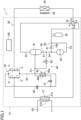
- the refrigerant circuit (30) includes a first compressor (10), a second compressor (20), a four-way switching valve (33), a heat-source-side heat exchanger (34), a check valve bridge (35), an expansion valve (36), a utilization-side heat exchanger (37), an accumulator (38), and an intermediate heat exchanger (45).
- the refrigerant circuit (30) is filled with a refrigerant.
- the refrigerant circuit (30) performs a refrigeration cycle by circulating the refrigerant therein.
- the refrigerant is, for example, a refrigerant R410A, R32, or R407C.
- the first compressor (10) is, for example, a scroll compressor.
- the first compressor (10) is provided on a discharge side of the second compressor (20).
- the first compressor (10) is connected with a first suction pipe (51) and a first discharge pipe (52).
- the first compressor (10) is configured to compress the refrigerant sucked therein and to discharge the refrigerant thus compressed.
- the first compressor (10) has a greater capacity than the second compressor (20).
- the number of rotations of the first compressor (10) is variable. For example, the number of rotations of a motor is changed by changing an output frequency of an inverter (not illustrated) connected to the first compressor (10). As a result, the number of rotations (operation frequency) of the first compressor (10) changes.
- the second compressor (20) is, for example, a scroll compressor.
- the second compressor (20) is provided on a suction side of the first compressor (10).
- the second compressor (20) is connected with a second suction pipe (53) and a second discharge pipe (54).
- a connection pipe (50) is configured.
- the second compressor (20) and the first compressor (10) are connected with each other in series via the connection pipe (50).
- the second compressor (20) is configured to compress the refrigerant sucked therein and discharge the refrigerant thus compressed.
- the number of rotations of the second compressor (20) is variable. For example, the number of rotations of a motor is changed by changing an output frequency of an inverter (not illustrated) connected to the second compressor (20). As a result, the number of rotations (operation frequency) of the second compressor (20) changes.
- the four-way switching valve (33) is a solenoid-operated switching valve.
- the four-way switching valve (33) switches between a first state (the state indicated by the solid lines in FIG. 1 ) and a second state (the state indicated by the dotted lines in FIG. 1 ).
- a first port (P1) is connected to the outlet end of the first discharge pipe (52).
- a second port (P2) is connected to the inlet end of second suction pipe (53).
- a third port (P3) communicates with a gas-side end of the heat-source-side heat exchanger (34).
- a fourth port (P4) communicates with a gas-side end of the utilization-side heat exchanger (37).
- the heat-source-side heat exchanger (34) is an outdoor heat exchanger. In the vicinity of the heat-source-side heat exchanger (34), a fan (39) is provided. As a result of operation of the fan (39), heat exchange takes place between the refrigerant of the heat-source-side heat exchanger (34) and the outdoor air.
- the check valve bridge (35) includes four check valves (C). Each of the four check valves (C) allows the refrigerant to flow in the direction indicated by the arrows in FIG. 1 , and restricts the refrigerant from flowing in the opposite direction.
- To an outlet side of the check valve bridge (35), the other end of the main liquid pipe (55) is connected.
- the check valve bridge (35) communicates with a liquid-side end of the heat-source-side heat exchanger (34) and a liquid-side end of the utilization-side heat exchanger (37).
- the expansion valve (36) expands the refrigerant to lower the pressure of the refrigerant.
- the expansion valve (36) is an electronic expansion valve whose opening degree is adjustable.
- the expansion valve (36) is connected to the main liquid pipe (55).
- the utilization-side heat exchanger (37) causes heat exchange between the refrigerant and the water.
- the utilization-side heat exchanger (37) includes a first channel (37a) and a second channel (37b).
- the first channel (37a) is a channel through which the refrigerant flows.
- the second channel (37b) is a channel through which the water flows.
- the second channel (37b) is connected to an intermediate portion of a utilization-side circuit (65) included in the apparatus utilizing the water (not illustrated).
- the utilization-side heat exchanger (37) causes heat exchange between the refrigerant flowing through the first channel (37a) and the water flowing through the second channel (37b).
- the accumulator (38) is connected to an intermediate portion of the second suction pipe (53).
- the accumulator (38) is a gas-liquid separator. Inside the accumulator (38), the refrigerant is separated into a liquid refrigerant and a gas refrigerant.
- the accumulator (38) is configured to allow only the gas refrigerant to flow out of the accumulator (38).
- a bypass circuit (60) includes a bypass piping (PB) and a bypass check valve (61).
- the bypass piping (PB) is connected between the second suction pipe (53) and the connection pipe (50).
- the bypass check valve (61) allows the refrigerant to flow in a direction from the second suction pipe (53) to the connection pipe (50), and restricts the refrigerant from flowing in the opposite direction.
- An injection circuit (40) is a circuit for supplying part of the refrigerant flowing through the main liquid pipe (55) to the suction side of the first compressor (10).
- the injection circuit (40) includes an injection piping (PJ), an injection expansion valve (41), and an open/close valve (42).
- the injection piping (PJ) has one end connected between the expansion valve (36) and the check valve bridge (35) in the main liquid pipe (55).
- the injection piping (PJ) has the other end branched into two ends, one of which is connected with the first suction pipe (51) and the other one of which is connected with a compression chamber in the course of compression of the first compressor (10).
- the injection expansion valve (41) is connected to a portion of the injection piping (PJ) upstream of the intermediate heat exchanger (45).
- the injection expansion valve (41) decompresses the refrigerant flowing through the injection piping (PJ).
- the open/close valve (42) is switchable between an open state and a closed state.
- the open/close valve (42) is in the open state, part of the refrigerant flowing through the injection piping (PJ) is supplied to the suction side of the first compressor (10).
- the open/close valve (42) is in the closed state, the refrigerant flowing through the injection piping (PJ) is supplied to the compression chamber in the course of compression of the first compressor (10).
- the intermediate heat exchanger (45) includes a third channel (45a) and a fourth channel (45b).
- the third channel (45a) is connected to an intermediate portion of the main liquid pipe (55).
- the fourth channel (45b) is connected to an intermediate portion of the injection piping (PJ).
- the intermediate heat exchanger (45) causes heat exchange between the refrigerant flowing through the third channel (45a) and the refrigerant flowing through the fourth channel (45b).
- the refrigeration cycle apparatus (1) includes various sensors, such as temperature sensors for detecting temperatures of the refrigerant etc. and pressure sensors for detecting pressures of the refrigerant etc. Signals indicative of detection results of the sensors are sent to the control unit (100).
- the refrigeration cycle apparatus (1) includes the control unit (100).
- the control unit (100) includes a microcomputer and a memory device storing software for operating the microcomputer.
- the control unit (100) is configured to control the refrigerant circuit (30) based on the signals from the various sensors and external control signals.
- the control unit (100) is configured to output control signals to the first compressor (10), the second compressor (20), the four-way switching valve (33), the expansion valve (36), the injection expansion valve (41), the open/close valve (42), and the like.
- the control unit (100) receives values detected by the various sensors.
- the refrigeration cycle apparatus (1) performs heating operation and cooling operation.
- the refrigeration cycle apparatus (1) is configured such that the first compressor (10) functions as a high-pressure compressor and the second compressor (20) functions as a low-pressure compressor.
- a refrigeration cycle is performed in which the utilization-side heat exchanger (37) serves a condenser (a radiator) and the heat-source-side heat exchanger (34) serves as an evaporator. Specifically, the four-way switching valve (33) is placed in the first state.
- the refrigerant discharged from the first compressor (10) passes through the four-way switching valve (33), and dissipates heat to water to condense in the utilization-side heat exchanger (37).
- the refrigerant that has flowed out of the utilization-side heat exchanger (37) passes through the check valve bridge (35), and circulates through the main liquid pipe (55).
- the refrigerant circulating through the main liquid pipe (55) dissipates heat to the refrigerant flowing through the fourth channel (45b), and is supercooled, in the third channel (45a) of the intermediate heat exchanger (45). Thereafter, part of the refrigerant flowing through the main liquid pipe (55) flows into the injection piping (PJ), and the remaining part of the refrigerant is decompressed at the expansion valve (36) in the main liquid pipe (55).
- the refrigerant thus decompressed passes through the check valve bridge (35) and evaporates in the heat-source-side heat exchanger (34).
- the refrigerant that has flowed out of the heat-source-side heat exchanger (34) sequentially passes through the four-way switching valve (33) and the accumulator (38), and is sucked into the second compressor (20) and compressed.
- the refrigerant discharged from the second compressor (20) is sucked into the first compressor (10) and is compressed.
- the refrigerant that has flowed into the injection piping (PJ) is decompressed at the injection expansion valve (41), and absorbs heat from the refrigerant flowing through the third channel (45a) and evaporates in the fourth channel (45b) of the intermediate heat exchanger (45). Thereafter, the refrigerant flowing through the injection piping (PJ) is introduced into the first suction pipe (51) to the first compressor (10).
- a refrigeration cycle is performed in which the heat-source-side heat exchanger (34) serves as a condenser (a radiator) and the utilization-side heat exchanger (37) serves as an evaporator. Specifically, the four-way switching valve (33) is placed in the second state. An explanation of the flow of the refrigerant during the cooling operation is omitted.
- the refrigeration cycle apparatus (1) includes a housing (2).
- the housing (2) has a bottom member (3) and a cover member (4).
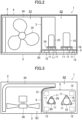
- An interior of the housing (2) is partitioned into a heat exchange chamber (S1) and a machine chamber (S2) by a partition (5).
- the cover member (4) covers the heat exchange chamber (S1) and the machine chamber (S2).
- the heat-source-side heat exchanger (34) and the fan (39) are provided in the heat exchange chamber (S1).
- the fan (39) heat exchange takes place between the refrigerant flowing through the heat-source-side heat exchanger (34) and the outdoor air.
- the devices illustrated within the virtual frame line in FIG. 1 are provided.
- the machine chamber (S2) accommodates the first compressor (10), the second compressor (20), and refrigerant circuit component parts (31) constituting the refrigerant circuit (30).
- the control unit (100) is located in the machine chamber (S2).
- the first compressor (10) is supported by an intermediate plate (5) through a plurality of first elastic members (11). Specifically, the first compressor (10) is provided with a first supporting leg (16). Between the first supporting leg (16) and the intermediate plate (5), three first elastic members (11) are provided.
- the second compressor (20) is supported by the same intermediate plate (5) through a plurality of first elastic members (11). Specifically, the second compressor (20) is provided with a second supporting leg (26). Between the second supporting leg (26) and the intermediate plate (5), three first elastic members (11) are provided.
- the first elastic members (11) may be a single large piece or may be two or more separate pieces as long as the first elastic member (11) or the first elastic members (11) can support the first compressor (10) and the second compressor (20).
- the first elastic members (11) are made of rubber or urethan.
- the intermediate plate (5) is supported by the bottom member (3) of the housing (2) through the plurality of second elastic members (12). Between the intermediate plate (5) and the bottom member (3), four second elastic members (12) are provided. The second elastic members (12) are provided at four corners of the intermediate plate (5), respectively.
- the second elastic members (12) may be a single large piece or may be two or more separate pieces.
- the second elastic members (12) are made of rubber or urethan.
- the first elastic members (11) and the second elastic members (12) may be made from the same material or different materials, and may have the same spring constant or different spring constants.
- the first compressor (10) and the second compressor (20) are placed on a double anti-vibration structure that includes the first elastic members (11), the intermediate plate (5), and the second elastic members (12). With this configuration, even if the first compressor (10) and the second compressor (20) vibrate during the operation of the refrigeration cycle apparatus (1), transmission of the vibration and noise generation are reduced.
- the first compressor (10) and the second compressor (20) are supported by the same intermediate plate (5) through a plurality of first elastic members (11).
- This configuration facilitates attaining a more compact implementation area for the first compressor (10) and the second compressor (20), compared with the case where the first compressor (10) and the second compressor (20) are placed separately from each other.
- the vibration isolation effect improves since the overall weight of the structure supported by the second elastic members (12) is increased, the vibration isolation effect improves.
- the first compressor (10) Since the first compressor (10) has a greater capacity than the second compressor (20), the first compressor (10) is heavier than the second compressor (20). Thus, the vibration of the second compressor (20), which has a relatively low weight, can be reduced by the weight of the first compressor (10).
- the center of gravity of a layout is the point that is the center (middle point) of vibration of the intermediate plate (5). In other words, is the point where the amplitude is greatest when the intermediate plate (5) vibrates.
- the four second elastic members (12) are identical with each other in terms of the material, area, and thickness. Accordingly, the center of gravity Q1 of the layout of the second elastic members (12) is the intersection of the line connecting the second elastic members (12) at the upper left corner and the lower right corner in FIG. 4 and the line connecting the second elastic members (12) at the lower left corner and the upper right corner in FIG. 4 .
- the three first elastic members (11) are placed at vertexes of an equilateral triangle.
- the three first elastic members (11) are identical with each other in terms of the material, area, and thickness.
- the center of gravity of the layout of the first elastic members (11) is the center of gravity of the equilateral triangle in plan view.
- the first compressor (10) has a cylindrical shape.
- the center of gravity C1 of the first compressor (10) is an approximate point to the center of the circle in FIG. 4 .
- the center of gravity C1 of the first compressor (10) coincides with the center of gravity of the layout of the three first elastic members (11) supporting the first supporting leg (16) in plan view.
- the second compressor (20) has a cylindrical shape.
- the center of gravity C2 of the second compressor (20) is an approximate point to the center of the circle in FIG. 4 .
- the center of gravity C2 of the second compressor (20) coincides with the center of gravity of the layout of the three first elastic members (11) supporting the second supporting leg (26) in plan view.
- the center of gravity of the combination of the intermediate plate (5) and the first and second compressors (10) and (20) in plan view will be referred to as the center of gravity P1.
- the center of gravity P1 is located in the vicinity of the center of gravity Q1 of the layout of the second elastic members (12) in plan view.
- the center of gravity P1 is closer to the first compressor (10) than the center of gravity Q1 of the layout.
- the first compressor (10) is the nearest compressor from the center of gravity P1.
- the distance from the center of gravity P1 to the first compressor (10) in plan view will be referred to as a distance r1.
- the center of gravity Q1 of the layout is located in an area having the center of gravity P1 as the center and the distance r1 as a radius.
- the center of gravity P1 may substantially coincide with the center of gravity Q1 of the layout of the second elastic members (12) in plan view.
- the control unit (100) may be configured to control the operation of the first compressor (10) and the second compressor (20) to reduce the transmission of the vibration generated in the first compressor (10) and the second compressor (20) to the housing (2).
- control unit (100) may be configured to control the first compressor (10) and the second compressor (20) so that they rotate in the same rotational direction and with phases shifted by 180°. In this configuration, centrifugal forces generated in the first compressor (10) and the second compressor (20) cancel out each other.
- vibrations generated in the first compressor (10) and the second compressor (20) cancel out each other, which makes it possible to further enhance the vibration isolation effect.
- the intermediate plate (5) is supported by the bottom member (3) through the second elastic members (12).
- the first compressor (10) and the second compressor (20) are supported by the same intermediate plate (5) through the plurality of first elastic members (11).
- a more compact implementation area for the first compressor (10) and the second compressor (20) can be attained, compared with the case where the first compressor (10) and the second compressor (20) are placed separately from each other.
- the vibration isolation effect improves.
- the second compressor (20) is lighter in weight than the first compressor (10).
- the vibration of the second compressor (20) can be reduced by the weight of the first compressor (10).
- the center of gravity Q1 of the layout is located in an area whose radius is the distance r1 from the center of gravity P1 to the center of gravity of the nearest compressor to the center of gravity P1 in plan view.
- the center of gravity P1 substantially coincides with the center of gravity Q1 of the layout in plan view.
- the rotations of the first compressor (10) and the second compressor (20) are controlled, so that the centrifugal forces generated in the first compressor (10) and the second compressor (20) cancel out each other.
- the vibrations generated in the plurality of compressors cancel out each other, which makes it possible to further enhance the vibration isolation effect.
- a first compressor (10), a second compressor (20), and a plurality of refrigerant circuit component parts (31) are placed on the intermediate plate (5).
- the refrigerant circuit component parts (31) are a utilization-side heat exchanger (37) and an accumulator (38).
- the center of gravity Q1 of the layout of the second elastic members (12) is the intersection of the line connecting the second elastic members (12) at the upper left corner and the lower right corner in FIG. 5 and the line connecting the second elastic members (12) at the lower left corner and the upper right corner in FIG. 4 .
- the center of gravity of the combination of the intermediate plate (5), the first compressor (10), the second compressor (20), the utilization-side heat exchanger (37), and the accumulator (38) in plan view will be referred to as the center of gravity P2.
- the center of gravity P2 is located in the vicinity of the center of gravity Q1 of the layout of the second elastic members (12) in plan view.
- the first compressor (10) and the second compressor (20) are located at lower portions of FIG. 5 , and therefore the center of gravity P2 is closer to the lower side than the center of gravity Q1 of the layout. Moreover, since the first compressor (10) is heavier in weight than the second compressor (20), the center of gravity P2 is closer to the first compressor (10) than the center of gravity Q1 of the layout. Thus, the center of gravity P2 is closer to the lower right side in FIG. 5 than the center of gravity Q 1 of the layout.
- the first compressor (10) is the nearest compressor from the center of gravity P2.
- the distance from the center of gravity P2 to the first compressor (10) in plan view will be referred to as a distance r2.
- the center of gravity Q1 of the layout is located in an area having the center of gravity P2 as the center and the distance r2 as a radius.
- the center of gravity P2 may substantially coincide with the center of gravity Q1 of the layout of the second elastic members (12) in plan view.
- refrigerant circuit component parts (31) other than the first compressor (10), the second compressor (20), the accumulator (38), and the utilization-side heat exchanger (37) may be arranged on the intermediate plate (5).
- refrigerant circuit component parts (31) include the intermediate heat exchanger (45), the four-way switching valve (33), the check valve bridge (35), the expansion valve (36), the bypass check valve (61), etc.
- an intermediate plate (5) includes a first intermediate plate (15) and a second intermediate plate (25).
- the first compressor (10) is supported by the first intermediate plate (15) through a plurality of first elastic members (11).
- the second compressor (20) is supported by the second intermediate plate (25) through a plurality of first elastic members (11).
- the intermediate plate (5) includes the first intermediate plate (15) and the second intermediate plate (25) which are coupled integrally.
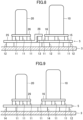
- the first intermediate plate (15) and the second intermediate plate (25) are coupled integrally to each other with coupling members (27).
- the coupling members (27) are a pair of upper and lower members which vertically sandwich the intermediate plate (5). A left edge portion of the first intermediate plate (15) and a right edge portion of the second intermediate plate (25) are in contact with each other.
- the pair of upper and lower coupling members (27) cover the boundary between the first intermediate plate (15) and the second intermediate plate (25).
- the coupling members (27), the first intermediate plate (15), and the second intermediate plate (25) are coupled integrally to each other by brazing or welding.
- the first intermediate plate (15) and the second intermediate plate (25) are therefore melted and joined to each other, thereby improving a joint strength of the intermediate plate (5).
- the first intermediate plate (15) and the second intermediate plate (25) may be coupled integrally to each other by brazing or welding the boundary between the first intermediate plate (15) and the second intermediate plate (25), without the coupling members (27).
- the coupling members (27), the first intermediate plate (15), and the second intermediate plate (25) may be coupled integrally with a rivet or bolt. This configuration can make it easy to perform the operation of coupling the first intermediate plate (15) and the second intermediate plate (25) integrally to each other.
- an intermediate plate (5) includes a first intermediate plate (15) and a second intermediate plate (25).
- the first compressor (10) is supported by the first intermediate plate (15) through a plurality of first elastic members (11).
- the second compressor (20) is supported by the second intermediate plate (25) through a plurality of first elastic members (11).
- the intermediate plate (5) includes the first intermediate plate (15) and the second intermediate plate (25) which are coupled integrally.
- the first intermediate plate (15) and the second intermediate plate (25) are coupled integrally to each other, with the first intermediate plate (15) and the second intermediate plate (25) partially overlapped with each other in plan view.
- the second intermediate plate (25) has a coupling portion (28).
- the coupling portion (28) is formed by bending an edge portion of the second intermediate plate (25) closer to the first intermediate plate (15) into a step-like shape.
- the coupling portion (28) of the second intermediate plate (25) overlaps the first intermediate plate (15) in plan view.
- the first intermediate plate (15) and the coupling portion (28) of the second intermediate plate (25) are coupled integrally to each other by brazing or welding, for example.
- the first intermediate plate (15) and the coupling portion (28) of the second intermediate plate (25) may be coupled integrally with a rivet or bolt.
- the coupling portion (28) may be formed in the first intermediate plate (15).
- an intermediate plate (5) includes a first intermediate plate (15) and a second intermediate plate (25).
- the first compressor (10) is supported by the first intermediate plate (15) through a plurality of first elastic members (11).
- the second compressor (20) is supported by the second intermediate plate (25) through a plurality of first elastic members (11).
- the intermediate plate (5) includes the first intermediate plate (15) and the second intermediate plate (25) which are coupled integrally.
- the first intermediate plate (15) and the second intermediate plate (25) are coupled integrally to each other via a third elastic member (13).
- the second intermediate plate (25) has a coupling portion (28).
- the coupling portion (28) is formed by bending an edge portion of the second intermediate plate (25) closer to the first intermediate plate (15) into a step-like shape.
- the coupling portion (28) of the second intermediate plate (25) overlaps the first intermediate plate (15) in plan view.
- the third elastic member (13) is provided between the coupling portion (28) of the second intermediate plate (25) and the first intermediate plate (15).
- the first intermediate plate (15) and the second intermediate plate (25) are coupled integrally to each other via the third elastic member (13).
- the third elastic member (13) is made from rubber of urethan.
- the third elastic member (13) is bonded to the first intermediate plate (15) and the second intermediate plate (25).
- the third elastic member (13) can ease the differences in the displacement of the first intermediate plate (15) and the second intermediate plate (25) caused by the vibrations in the first intermediate plate (15) and the second intermediate plate (25).
- a first compressor (10) and a second compressor (20) are placed on an intermediate plate (5).
- the center of gravity of the combination of the intermediate plate (5), the first compressor (10), and the second compressor (20) in plan view will be referred to as the center of gravity P1.
- a fourth elastic member (14) is provided in a position overlapping the center of gravity P1 in plan view.
- the fourth elastic member (14) is made from rubber or urethan.
- the fourth elastic member (14) provided in a position where the center of gravity is located can reduce warping of the intermediate plate (5) due to vibrations of the first compressor (10) and the second compressor (20).
- the fourth elastic member (14) is provided in a position overlapping the center of gravity P2 in plan view.
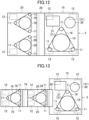
- the intermediate plate (5) includes a first intermediate plate (15), a second intermediate plate (25), and a third intermediate plate (75) which are coupled integrally.
- the second intermediate plate (25) is placed at a lower left corner of the first intermediate plate (15).
- the third intermediate plate (75) is placed at an upper left corner of the first intermediate plate (15).
- the second intermediate plate (25) and the third intermediate plate (75) are coupled integrally to the first intermediate plate (15), with the second intermediate plate (25) and the third intermediate plate (75) partially overlapped with the first intermediate plate (15) in plan view.
- the second intermediate plate (25) has a coupling portion (28).
- the coupling portion (28) is formed by bending an edge portion of the second intermediate plate (25) closer to the first intermediate plate (15) into a step-like shape.
- the coupling portion (28) of the second intermediate plate (25) overlaps the first intermediate plate (15) in plan view.
- the third intermediate plate (75) has a coupling portion (78).
- the coupling portion (78) is formed by bending an edge portion of the third intermediate plate (75) closer to the first intermediate plate (15) into a step-like shape.
- the coupling portion (78) of the third intermediate plate (75) overlaps the first intermediate plate (15) in plan view.
- the first intermediate plate (15) and each of the coupling portions (28) and (78) of the second and third intermediate plates (25) and (75) are coupled integrally to each other by brazing or welding, for example.
- the first intermediate plate (15) and each of the coupling portions (28) and (78) of the second and third intermediate plates (25) and (75) may be coupled integrally with a rivet or bolt.
- the first compressor (10) is supported by the first intermediate plate (15) through a plurality of first elastic members (11).
- the first compressor (10) is provided with a first supporting leg (16). Between the first supporting leg (16) and the first intermediate plate (15), three first elastic members (11) are provided.
- a plurality of refrigerant circuit component parts (31) are placed on the first intermediate plate (15). In the example illustrated in FIG. 11 , the refrigerant circuit component parts (31) are a utilization-side heat exchanger (37) and an accumulator (38).
- the second compressor (20) is supported by the second intermediate plate (25) through a plurality of first elastic members (11).
- the second compressor (20) is provided with a second supporting leg (26). Between the second supporting leg (26) and the second intermediate plate (25), three first elastic members (11) are provided.
- the third compressor (70) is supported by the third intermediate plate (75) through a plurality of first elastic members (11).
- the third compressor (70) is provided with a third supporting leg (76). Between the third supporting leg (76) and the third intermediate plate (75), three first elastic members (11) are provided.
- first intermediate plate (15) and the bottom member (3) a plurality of second elastic members (12) are provided.
- the second elastic members (12) are provided at four corners of the first intermediate plate (15).
- the second elastic members (12) are provided at the upper left corner and the lower left corner of the second intermediate plate (25).
- the second elastic members (12) are provided at the upper left corner and the lower left corner of the third intermediate plate (75).
- the third compressor (70) can be added by making a minimum design change in which the third intermediate plate (75) is added and coupled integrally to the first intermediate plate (15).
- a first compressor (10), a second compressor (20), and a third compressor (70) are placed on an intermediate plate (5).
- the intermediate plate (5) includes the first intermediate plate (15) and the second intermediate plate (25).
- the second intermediate plate (25) has a coupling portion (28).
- the coupling portion (28) is formed by bending an edge portion of the second intermediate plate (25) closer to the first intermediate plate (15) into a step-like shape.
- the coupling portion (28) of the second intermediate plate (25) overlaps the first intermediate plate (15) in plan view.
- the intermediate plate (5) is configured by coupling integrally the first intermediate plate (15) and the coupling portion (28) of the second intermediate plate (25).
- the first compressor (10) is supported by the first intermediate plate (15) through a plurality of first elastic members (11).
- a plurality of refrigerant circuit component parts (31) are placed on the first intermediate plate (15).
- the refrigerant circuit component parts (31) are a utilization-side heat exchanger (37) and an accumulator (38).
- the second compressor (20) is supported by the second intermediate plate (25) through a plurality of first elastic members (11).
- the third compressor (70) is supported by the second intermediate plate (25) through a plurality of first elastic members (11).
- first intermediate plate (15) and the bottom member (3) a plurality of second elastic members (12) are provided.
- the second elastic members (12) are provided at four corners of the first intermediate plate (15).
- the second elastic members (12) are provided at the upper left corner and the lower left corner of the second intermediate plate (25).
- the third compressor (70) can be added by making a minimum design change in which the second compressor (20) and the third compressor (70) are supported by the second intermediate plate (25).
- the intermediate plate (5) includes a first intermediate plate (15), a second intermediate plate (25), and a third intermediate plate (75).
- the second intermediate plate (25) has a coupling portion (28).
- the coupling portion (28) is formed by bending an edge portion of the second intermediate plate (25) closer to the first intermediate plate (15) into a step-like shape.
- the coupling portion (28) of the second intermediate plate (25) overlaps the first intermediate plate (15) in plan view.
- the third intermediate plate (75) has a coupling portion (78).
- the coupling portion (78) is formed by bending an edge portion of the third intermediate plate (75) closer to the second intermediate plate (25) into a step-like shape.
- the coupling portion (78) of the third intermediate plate (75) overlaps the second intermediate plate (25) in plan view.
- the coupling portion (28) of the second intermediate plate (25) is coupled integrally to the first intermediate plate (15).
- the coupling portion (78) of the third intermediate plate (75) is coupled integrally to the second intermediate plate (25).
- the intermediate plate (5) includes the first intermediate plate (15), the second intermediate plate (25), and the third intermediate plate (75) which are coupled integrally.
- the first compressor (10) is supported by the first intermediate plate (15) through a plurality of first elastic members (11).
- a plurality of refrigerant circuit component parts (31) are placed on the first intermediate plate (15).
- the refrigerant circuit component parts (31) are a utilization-side heat exchanger (37) and an accumulator (38).
- the second compressor (20) is supported by the second intermediate plate (25) through a plurality of first elastic members (11).
- the third compressor (70) is supported by the second intermediate plate (25) through a plurality of first elastic members (11).
- first intermediate plate (15) and the bottom member (3) a plurality of second elastic members (12) are provided.
- the second elastic members (12) are provided at four corners of the first intermediate plate (15).
- the second elastic members (12) are provided at the upper left corner and the lower left corner of the second intermediate plate (25).
- the second elastic members (12) are provided at the upper left corner and the lower left corner of the third intermediate plate (75).
- the third compressor (70) can be added by making a minimum design change in which the third intermediate plate (75) is added and coupled integrally to the other intermediate plates.
- this embodiment describes a configuration with two or three compressors, the embodiment may be configured with four or more compressors.
- the present invention is useful for a refrigeration cycle apparatus.
Landscapes
- Engineering & Computer Science (AREA)
- Mechanical Engineering (AREA)
- General Engineering & Computer Science (AREA)
- Physics & Mathematics (AREA)
- Thermal Sciences (AREA)
- Chemical & Material Sciences (AREA)
- Combustion & Propulsion (AREA)
- Compressor (AREA)
- Air Conditioning Control Device (AREA)
- Compression-Type Refrigeration Machines With Reversible Cycles (AREA)
- Separation By Low-Temperature Treatments (AREA)
Claims (15)
- Kältekreislaufvorrichtung, umfassend: ein Gehäuse (2) aufweisend ein Bodenelement (3); und eine Vielzahl von Kompressoren, die in dem Gehäuse (2) untergebracht sind,wobei die Vielzahl von Kompressoren zumindest einen ersten Kompressor (10) und einen zweiten Kompressor (20) einschließt,wobei der erste Kompressor (10) und der zweite Kompressor (20) von einer Zwischenplatte (5) über eine Vielzahl von ersten elastischen Elementen (11) getragen werden, undwobei die Zwischenplatte (5) durch das Bodenelement (3) über zweite elastische Elemente (12) getragen wird, dadurch gekennzeichnet, dass:
die Zwischenplatte (5) eine erste Zwischenplatte (15), die den ersten Kompressor (10) trägt, und eine zweite Zwischenplatte (25), die den zweiten Kompressor (20) trägt, einschließt, wobei die erste Zwischenplatte (15) und die zweite Zwischenplatte (25) einstückig gekoppelt sind. - Kältekreislaufvorrichtung nach Anspruch 1, wobeidie Vielzahl von Kompressoren weiter einen dritten Kompressor (70) einschließt,der dritte Kompressor (70) von einer dritten Zwischenplatte (75) über ein erstes elastisches Element (11) getragen wird, unddie Zwischenplatte (5) die erste Zwischenplatte (15), die zweite Zwischenplatte (25) und die dritte Zwischenplatte (75) einschließt, die einstückig gekoppelt sind.
- Kältekreislaufvorrichtung nach Anspruch 1, wobei
die Vielzahl von Kompressoren weiter einen dritten Kompressor (70) einschließt, und der dritte Kompressor (70) von der zweiten Zwischenplatte (25) über ein erstes elastisches Element (11) getragen wird. - Kältekreislaufvorrichtung nach einem der Ansprüche 1 bis 3, wobei
die erste Zwischenplatte (15) und die zweite Zwischenplatte (25) einstückig gekoppelt sind, wobei die erste Zwischenplatte (15) und die zweite Zwischenplatte (25) in der Draufsicht teilweise miteinander überlappen. - Kältekreislaufvorrichtung nach einem der Ansprüche 1 bis 4, wobei
die erste Zwischenplatte (15) und die zweite Zwischenplatte (25) durch Löten oder Schweißen einstückig gekoppelt sind. - Kältekreislaufvorrichtung nach einem der Ansprüche 1 bis 4, wobei
die erste Zwischenplatte (15) und die zweite Zwischenplatte (25) mit einer Niete oder einem Bolzen einstückig gekoppelt sind. - Kältekreislaufvorrichtung nach einem der Ansprüche 1 bis 4, wobei
die erste Zwischenplatte (15) und die zweite Zwischenplatte (25) über ein drittes elastisches Element (13) einstückig gekoppelt sind. - Kältekreislaufvorrichtung nach einem der Ansprüche 1 bis 7, wobei
der zweite Kompressor (20) ein geringeres Gewicht als der erste Kompressor (10) aufweist. - Kältekreislaufvorrichtung nach einem der Ansprüche 1 bis 8, wobeiunter der Annahme, dass P1 ein Schwerpunkt einer Kombination aus der Zwischenplatte (5) und der Vielzahl von Kompressoren in Draufsicht ist, dass Q1 ein Schwerpunkt der Anordnung der zweiten elastischen Elemente (12) in Draufsicht ist, und dass r1 ein Abstand von dem Schwerpunkt P1 zu einem Schwerpunkt eines dem Schwerpunkt P1 am nächsten liegenden Kompressors der Vielzahl von Kompressoren ist,der Schwerpunkt Q1 der Anordnung sich in einem Bereich befindet, der den Schwerpunkt P1 als Zentrum und den Abstand r1 als Radius aufweist.
- Kältekreislaufvorrichtung nach Anspruch 9, wobei
der Schwerpunkt P1 in der Draufsicht im Wesentlichen mit dem Schwerpunkt Q1 der Anordnung übereinstimmt. - Kältekreislaufvorrichtung nach einem der Ansprüche 1 bis 8, wobeiunter der Annahme, dass P2 ein Schwerpunkt einer Kombination aus der Zwischenplatte (5), der Vielzahl von Kompressoren und einem Kältemittelkreislaufkomponententeil (31) ist, das auf der Zwischenplatte (5) in Draufsicht platziert ist, dass Q1 ein Schwerpunkt der Anordnung der zweiten elastischen Elemente (12) in Draufsicht ist, und dass r2 ein Abstand von dem Schwerpunkt P2 zu einem Schwerpunkt eines dem Schwerpunkt P2 am nächsten liegenden Kompressors der Vielzahl von Kompressoren ist,der Schwerpunkt Q1 der Anordnung sich in einem Bereich befindet, der den Schwerpunkt P2 als Zentrum und den Abstand r2 als Radius aufweist.
- Kältekreislaufvorrichtung nach Anspruch 11, wobei
der Schwerpunkt P2 in der Draufsicht im Wesentlichen mit dem Schwerpunkt Q1 der Anordnung übereinstimmt. - Kältekreislaufvorrichtung nach Anspruch 9 oder 10, wobei
ein viertes elastisches Element (14) zwischen der Zwischenplatte (5) und dem Bodenelement (3) bereitgestellt ist, wobei das vierte elastische Element (14) in einer Position bereitgestellt ist, die in der Draufsicht den Schwerpunkt P1 überlappt. - Kältekreislaufvorrichtung nach Anspruch 11 oder 12, wobei
ein viertes elastisches Element (14) zwischen der Zwischenplatte (5) und dem Bodenelement (3) bereitgestellt ist, wobei das vierte elastische Element (14) in einer Position bereitgestellt ist, die in der Draufsicht den Schwerpunkt P2 überlappt. - Kältekreislaufvorrichtung nach einem der Ansprüche 1 bis 14, weiter umfassend:eine Steuereinheit (100), die so konfiguriert ist, dass sie den Betrieb der Vielzahl von Kompressoren steuert, wobeidie Steuereinheit (100) so konfiguriert ist, dass sie die Drehungen der Vielzahl von Kompressoren so steuert, dass die in der Vielzahl von Kompressoren erzeugten Zentrifugalkräfte sich gegenseitig aufheben.
Applications Claiming Priority (2)
| Application Number | Priority Date | Filing Date | Title |
|---|---|---|---|
| JP2020063763A JP7044983B2 (ja) | 2020-03-31 | 2020-03-31 | 冷凍サイクル装置 |
| PCT/JP2021/010684 WO2021200129A1 (ja) | 2020-03-31 | 2021-03-16 | 冷凍サイクル装置 |
Publications (3)
| Publication Number | Publication Date |
|---|---|
| EP4113019A1 EP4113019A1 (de) | 2023-01-04 |
| EP4113019A4 EP4113019A4 (de) | 2023-08-09 |
| EP4113019B1 true EP4113019B1 (de) | 2024-09-04 |
Family
ID=77927077
Family Applications (1)
| Application Number | Title | Priority Date | Filing Date |
|---|---|---|---|
| EP21779502.0A Active EP4113019B1 (de) | 2020-03-31 | 2021-03-16 | Kältekreislaufvorrichtung |
Country Status (7)
| Country | Link |
|---|---|
| US (1) | US20230024725A1 (de) |
| EP (1) | EP4113019B1 (de) |
| JP (1) | JP7044983B2 (de) |
| CN (1) | CN115349068B (de) |
| AU (1) | AU2021249161B2 (de) |
| CA (1) | CA3171967A1 (de) |
| WO (1) | WO2021200129A1 (de) |
Families Citing this family (7)
| Publication number | Priority date | Publication date | Assignee | Title |
|---|---|---|---|---|
| EP4498007A4 (de) * | 2022-03-31 | 2025-07-30 | Daikin Ind Ltd | Kältekreislaufvorrichtung |
| JP7684592B2 (ja) * | 2023-09-29 | 2025-05-28 | ダイキン工業株式会社 | 熱源ユニット及び冷凍サイクル装置 |
| JP2025060569A (ja) * | 2023-09-29 | 2025-04-10 | ダイキン工業株式会社 | 熱源ユニット及び冷凍サイクル装置 |
| WO2025109655A1 (ja) * | 2023-11-20 | 2025-05-30 | 日本キヤリア株式会社 | 冷凍サイクル装置 |
| JP2026049885A (ja) * | 2024-09-09 | 2026-03-19 | ダイキン工業株式会社 | 熱源装置 |
| JP2026049882A (ja) * | 2024-09-09 | 2026-03-19 | ダイキン工業株式会社 | 熱源装置 |
| JP2026049881A (ja) * | 2024-09-09 | 2026-03-19 | ダイキン工業株式会社 | 熱源装置 |
Family Cites Families (12)
| Publication number | Priority date | Publication date | Assignee | Title |
|---|---|---|---|---|
| FR2503918B1 (fr) * | 1981-04-09 | 1987-09-04 | Commissariat Energie Atomique | Barre absorbante pour reacteur nucleaire |
| JPS6034865Y2 (ja) * | 1981-05-11 | 1985-10-17 | 株式会社東芝 | 空気調和機の室外ユニツトにおける圧縮機の支持装置 |
| JPH081386Y2 (ja) * | 1989-05-29 | 1996-01-17 | 三菱電機株式会社 | 空気調和機 |
| JPH033636A (ja) * | 1989-05-30 | 1991-01-09 | Toshiba Corp | 固定子鉄心の製造方法 |
| JPH0544963A (ja) * | 1991-01-17 | 1993-02-23 | Mitsubishi Electric Corp | 空気調和機 |
| JP2000283600A (ja) * | 1999-03-30 | 2000-10-13 | Toshiba Corp | 空気調和装置 |
| JP2008039260A (ja) * | 2006-08-03 | 2008-02-21 | Sharp Corp | 空気調和機用ユニット |
| KR20090048793A (ko) * | 2007-11-12 | 2009-05-15 | 삼성전자주식회사 | 공기조화기 |
| JP2010243033A (ja) | 2009-04-03 | 2010-10-28 | Mitsubishi Electric Corp | ヒートポンプ室外機 |
| CN201934290U (zh) * | 2010-12-28 | 2011-08-17 | 重庆美的通用制冷设备有限公司 | 压缩机单元及其空调装置或冷冻装置 |
| JP6769085B2 (ja) * | 2016-04-25 | 2020-10-14 | 株式会社大林組 | チューンドマスダンパー |
| JP6677267B2 (ja) * | 2018-03-30 | 2020-04-08 | ダイキン工業株式会社 | 冷凍サイクル装置 |
-
2020
- 2020-03-31 JP JP2020063763A patent/JP7044983B2/ja active Active
-
2021
- 2021-03-16 WO PCT/JP2021/010684 patent/WO2021200129A1/ja not_active Ceased
- 2021-03-16 CN CN202180020724.0A patent/CN115349068B/zh active Active
- 2021-03-16 CA CA3171967A patent/CA3171967A1/en active Pending
- 2021-03-16 EP EP21779502.0A patent/EP4113019B1/de active Active
- 2021-03-16 AU AU2021249161A patent/AU2021249161B2/en active Active
-
2022
- 2022-09-29 US US17/956,477 patent/US20230024725A1/en not_active Abandoned
Also Published As
| Publication number | Publication date |
|---|---|
| CN115349068A (zh) | 2022-11-15 |
| AU2021249161A1 (en) | 2022-10-13 |
| JP2021162218A (ja) | 2021-10-11 |
| EP4113019A4 (de) | 2023-08-09 |
| JP7044983B2 (ja) | 2022-03-31 |
| US20230024725A1 (en) | 2023-01-26 |
| WO2021200129A1 (ja) | 2021-10-07 |
| EP4113019A1 (de) | 2023-01-04 |
| CN115349068B (zh) | 2026-03-13 |
| CA3171967A1 (en) | 2021-10-07 |
| AU2021249161B2 (en) | 2023-11-09 |
Similar Documents
| Publication | Publication Date | Title |
|---|---|---|
| EP4113019B1 (de) | Kältekreislaufvorrichtung | |
| KR101212642B1 (ko) | 압축기 용량 제어 조작 기구, 및 그것을 구비한 공기 조화 장치 | |
| US12590737B2 (en) | Refrigeration cycle apparatus | |
| WO2023218834A1 (ja) | 圧縮機モジュール | |
| WO2017119136A1 (ja) | 圧縮機支持装置、冷凍サイクル装置の室外機、及び冷凍サイクル装置 | |
| EP4317838A1 (de) | Gefriergerät | |
| WO2022003869A1 (ja) | 室外機およびそれを用いた空気調和装置 | |
| JP6380515B2 (ja) | 気液分離器およびこれを備えた空気調和装置 | |
| EP3514457A1 (de) | Wärmequelleneinheit | |
| WO2016147785A1 (ja) | 冷媒圧縮装置および冷凍サイクル装置 | |
| JP7306006B2 (ja) | 空気調和装置用室外機 | |
| WO2018047777A1 (ja) | 冷凍装置 | |
| JP2014037895A (ja) | 空気調和装置の室外機 | |
| JP7293783B2 (ja) | 空気調和装置用室外機 | |
| EP4428456A1 (de) | Ausseneinheit einer klimaanlage | |
| JP7774722B2 (ja) | 圧縮機及び冷凍サイクル装置 | |
| JP7804781B2 (ja) | スクロール圧縮機及び空気調和機 | |
| JP2013147973A (ja) | 圧縮機及び冷凍サイクル装置 | |
| JP2021181843A (ja) | 冷凍サイクル装置の室外機 | |
| JPH0542971U (ja) | 冷凍サイクル | |
| JP2000171115A (ja) | 空気調和装置 |
Legal Events
| Date | Code | Title | Description |
|---|---|---|---|
| STAA | Information on the status of an ep patent application or granted ep patent |
Free format text: STATUS: THE INTERNATIONAL PUBLICATION HAS BEEN MADE |
|
| PUAI | Public reference made under article 153(3) epc to a published international application that has entered the european phase |
Free format text: ORIGINAL CODE: 0009012 |
|
| STAA | Information on the status of an ep patent application or granted ep patent |
Free format text: STATUS: REQUEST FOR EXAMINATION WAS MADE |
|
| 17P | Request for examination filed |
Effective date: 20220926 |
|
| AK | Designated contracting states |
Kind code of ref document: A1 Designated state(s): AL AT BE BG CH CY CZ DE DK EE ES FI FR GB GR HR HU IE IS IT LI LT LU LV MC MK MT NL NO PL PT RO RS SE SI SK SM TR |
|
| RAP3 | Party data changed (applicant data changed or rights of an application transferred) |
Owner name: DAIKIN INDUSTRIES, LTD. |
|
| DAV | Request for validation of the european patent (deleted) | ||
| DAX | Request for extension of the european patent (deleted) | ||
| P01 | Opt-out of the competence of the unified patent court (upc) registered |
Effective date: 20230525 |
|
| A4 | Supplementary search report drawn up and despatched |
Effective date: 20230707 |
|
| RIC1 | Information provided on ipc code assigned before grant |
Ipc: F25B 31/00 20060101ALI20230703BHEP Ipc: F24F 11/42 20180101ALI20230703BHEP Ipc: F24F 1/12 20110101AFI20230703BHEP |
|
| GRAP | Despatch of communication of intention to grant a patent |
Free format text: ORIGINAL CODE: EPIDOSNIGR1 |
|
| STAA | Information on the status of an ep patent application or granted ep patent |
Free format text: STATUS: GRANT OF PATENT IS INTENDED |
|
| INTG | Intention to grant announced |
Effective date: 20240426 |
|
| RAP3 | Party data changed (applicant data changed or rights of an application transferred) |
Owner name: DAIKIN INDUSTRIES, LTD. |
|
| GRAS | Grant fee paid |
Free format text: ORIGINAL CODE: EPIDOSNIGR3 |
|
| GRAA | (expected) grant |
Free format text: ORIGINAL CODE: 0009210 |
|
| STAA | Information on the status of an ep patent application or granted ep patent |
Free format text: STATUS: THE PATENT HAS BEEN GRANTED |
|
| AK | Designated contracting states |
Kind code of ref document: B1 Designated state(s): AL AT BE BG CH CY CZ DE DK EE ES FI FR GB GR HR HU IE IS IT LI LT LU LV MC MK MT NL NO PL PT RO RS SE SI SK SM TR |
|
| REG | Reference to a national code |
Ref country code: GB Ref legal event code: FG4D |
|
| REG | Reference to a national code |
Ref country code: CH Ref legal event code: EP |
|
| REG | Reference to a national code |
Ref country code: IE Ref legal event code: FG4D |
|
| REG | Reference to a national code |
Ref country code: DE Ref legal event code: R096 Ref document number: 602021018419 Country of ref document: DE |
|
| REG | Reference to a national code |
Ref country code: LT Ref legal event code: MG9D |
|
| REG | Reference to a national code |
Ref country code: NL Ref legal event code: MP Effective date: 20240904 |
|
| PG25 | Lapsed in a contracting state [announced via postgrant information from national office to epo] |
Ref country code: NO Free format text: LAPSE BECAUSE OF FAILURE TO SUBMIT A TRANSLATION OF THE DESCRIPTION OR TO PAY THE FEE WITHIN THE PRESCRIBED TIME-LIMIT Effective date: 20241204 |
|
| PG25 | Lapsed in a contracting state [announced via postgrant information from national office to epo] |
Ref country code: GR Free format text: LAPSE BECAUSE OF FAILURE TO SUBMIT A TRANSLATION OF THE DESCRIPTION OR TO PAY THE FEE WITHIN THE PRESCRIBED TIME-LIMIT Effective date: 20241205 Ref country code: FI Free format text: LAPSE BECAUSE OF FAILURE TO SUBMIT A TRANSLATION OF THE DESCRIPTION OR TO PAY THE FEE WITHIN THE PRESCRIBED TIME-LIMIT Effective date: 20240904 Ref country code: PL Free format text: LAPSE BECAUSE OF FAILURE TO SUBMIT A TRANSLATION OF THE DESCRIPTION OR TO PAY THE FEE WITHIN THE PRESCRIBED TIME-LIMIT Effective date: 20240904 |
|
| PG25 | Lapsed in a contracting state [announced via postgrant information from national office to epo] |
Ref country code: BG Free format text: LAPSE BECAUSE OF FAILURE TO SUBMIT A TRANSLATION OF THE DESCRIPTION OR TO PAY THE FEE WITHIN THE PRESCRIBED TIME-LIMIT Effective date: 20240904 |
|
| PG25 | Lapsed in a contracting state [announced via postgrant information from national office to epo] |
Ref country code: LV Free format text: LAPSE BECAUSE OF FAILURE TO SUBMIT A TRANSLATION OF THE DESCRIPTION OR TO PAY THE FEE WITHIN THE PRESCRIBED TIME-LIMIT Effective date: 20240904 |
|
| PG25 | Lapsed in a contracting state [announced via postgrant information from national office to epo] |
Ref country code: HR Free format text: LAPSE BECAUSE OF FAILURE TO SUBMIT A TRANSLATION OF THE DESCRIPTION OR TO PAY THE FEE WITHIN THE PRESCRIBED TIME-LIMIT Effective date: 20240904 |
|
| PG25 | Lapsed in a contracting state [announced via postgrant information from national office to epo] |
Ref country code: RS Free format text: LAPSE BECAUSE OF FAILURE TO SUBMIT A TRANSLATION OF THE DESCRIPTION OR TO PAY THE FEE WITHIN THE PRESCRIBED TIME-LIMIT Effective date: 20241204 Ref country code: ES Free format text: LAPSE BECAUSE OF FAILURE TO SUBMIT A TRANSLATION OF THE DESCRIPTION OR TO PAY THE FEE WITHIN THE PRESCRIBED TIME-LIMIT Effective date: 20240904 |
|
| PG25 | Lapsed in a contracting state [announced via postgrant information from national office to epo] |
Ref country code: RS Free format text: LAPSE BECAUSE OF FAILURE TO SUBMIT A TRANSLATION OF THE DESCRIPTION OR TO PAY THE FEE WITHIN THE PRESCRIBED TIME-LIMIT Effective date: 20241204 Ref country code: PL Free format text: LAPSE BECAUSE OF FAILURE TO SUBMIT A TRANSLATION OF THE DESCRIPTION OR TO PAY THE FEE WITHIN THE PRESCRIBED TIME-LIMIT Effective date: 20240904 Ref country code: NO Free format text: LAPSE BECAUSE OF FAILURE TO SUBMIT A TRANSLATION OF THE DESCRIPTION OR TO PAY THE FEE WITHIN THE PRESCRIBED TIME-LIMIT Effective date: 20241204 Ref country code: LV Free format text: LAPSE BECAUSE OF FAILURE TO SUBMIT A TRANSLATION OF THE DESCRIPTION OR TO PAY THE FEE WITHIN THE PRESCRIBED TIME-LIMIT Effective date: 20240904 Ref country code: HR Free format text: LAPSE BECAUSE OF FAILURE TO SUBMIT A TRANSLATION OF THE DESCRIPTION OR TO PAY THE FEE WITHIN THE PRESCRIBED TIME-LIMIT Effective date: 20240904 Ref country code: GR Free format text: LAPSE BECAUSE OF FAILURE TO SUBMIT A TRANSLATION OF THE DESCRIPTION OR TO PAY THE FEE WITHIN THE PRESCRIBED TIME-LIMIT Effective date: 20241205 Ref country code: FI Free format text: LAPSE BECAUSE OF FAILURE TO SUBMIT A TRANSLATION OF THE DESCRIPTION OR TO PAY THE FEE WITHIN THE PRESCRIBED TIME-LIMIT Effective date: 20240904 Ref country code: ES Free format text: LAPSE BECAUSE OF FAILURE TO SUBMIT A TRANSLATION OF THE DESCRIPTION OR TO PAY THE FEE WITHIN THE PRESCRIBED TIME-LIMIT Effective date: 20240904 Ref country code: BG Free format text: LAPSE BECAUSE OF FAILURE TO SUBMIT A TRANSLATION OF THE DESCRIPTION OR TO PAY THE FEE WITHIN THE PRESCRIBED TIME-LIMIT Effective date: 20240904 |
|
| REG | Reference to a national code |
Ref country code: AT Ref legal event code: MK05 Ref document number: 1720753 Country of ref document: AT Kind code of ref document: T Effective date: 20240904 |
|
| PG25 | Lapsed in a contracting state [announced via postgrant information from national office to epo] |
Ref country code: NL Free format text: LAPSE BECAUSE OF FAILURE TO SUBMIT A TRANSLATION OF THE DESCRIPTION OR TO PAY THE FEE WITHIN THE PRESCRIBED TIME-LIMIT Effective date: 20240904 |
|
| PG25 | Lapsed in a contracting state [announced via postgrant information from national office to epo] |
Ref country code: PT Free format text: LAPSE BECAUSE OF FAILURE TO SUBMIT A TRANSLATION OF THE DESCRIPTION OR TO PAY THE FEE WITHIN THE PRESCRIBED TIME-LIMIT Effective date: 20250106 Ref country code: IS Free format text: LAPSE BECAUSE OF FAILURE TO SUBMIT A TRANSLATION OF THE DESCRIPTION OR TO PAY THE FEE WITHIN THE PRESCRIBED TIME-LIMIT Effective date: 20250104 |
|
| PG25 | Lapsed in a contracting state [announced via postgrant information from national office to epo] |
Ref country code: RO Free format text: LAPSE BECAUSE OF FAILURE TO SUBMIT A TRANSLATION OF THE DESCRIPTION OR TO PAY THE FEE WITHIN THE PRESCRIBED TIME-LIMIT Effective date: 20240904 Ref country code: SM Free format text: LAPSE BECAUSE OF FAILURE TO SUBMIT A TRANSLATION OF THE DESCRIPTION OR TO PAY THE FEE WITHIN THE PRESCRIBED TIME-LIMIT Effective date: 20240904 |
|
| PG25 | Lapsed in a contracting state [announced via postgrant information from national office to epo] |
Ref country code: EE Free format text: LAPSE BECAUSE OF FAILURE TO SUBMIT A TRANSLATION OF THE DESCRIPTION OR TO PAY THE FEE WITHIN THE PRESCRIBED TIME-LIMIT Effective date: 20240904 Ref country code: AT Free format text: LAPSE BECAUSE OF FAILURE TO SUBMIT A TRANSLATION OF THE DESCRIPTION OR TO PAY THE FEE WITHIN THE PRESCRIBED TIME-LIMIT Effective date: 20240904 |
|
| PG25 | Lapsed in a contracting state [announced via postgrant information from national office to epo] |
Ref country code: CZ Free format text: LAPSE BECAUSE OF FAILURE TO SUBMIT A TRANSLATION OF THE DESCRIPTION OR TO PAY THE FEE WITHIN THE PRESCRIBED TIME-LIMIT Effective date: 20240904 |
|
| PG25 | Lapsed in a contracting state [announced via postgrant information from national office to epo] |
Ref country code: SK Free format text: LAPSE BECAUSE OF FAILURE TO SUBMIT A TRANSLATION OF THE DESCRIPTION OR TO PAY THE FEE WITHIN THE PRESCRIBED TIME-LIMIT Effective date: 20240904 Ref country code: IT Free format text: LAPSE BECAUSE OF FAILURE TO SUBMIT A TRANSLATION OF THE DESCRIPTION OR TO PAY THE FEE WITHIN THE PRESCRIBED TIME-LIMIT Effective date: 20240904 |
|
| REG | Reference to a national code |
Ref country code: DE Ref legal event code: R097 Ref document number: 602021018419 Country of ref document: DE |
|
| PG25 | Lapsed in a contracting state [announced via postgrant information from national office to epo] |
Ref country code: DK Free format text: LAPSE BECAUSE OF FAILURE TO SUBMIT A TRANSLATION OF THE DESCRIPTION OR TO PAY THE FEE WITHIN THE PRESCRIBED TIME-LIMIT Effective date: 20240904 |
|
| PLBE | No opposition filed within time limit |
Free format text: ORIGINAL CODE: 0009261 |
|
| STAA | Information on the status of an ep patent application or granted ep patent |
Free format text: STATUS: NO OPPOSITION FILED WITHIN TIME LIMIT |
|
| 26N | No opposition filed |
Effective date: 20250605 |
|
| PG25 | Lapsed in a contracting state [announced via postgrant information from national office to epo] |
Ref country code: SE Free format text: LAPSE BECAUSE OF FAILURE TO SUBMIT A TRANSLATION OF THE DESCRIPTION OR TO PAY THE FEE WITHIN THE PRESCRIBED TIME-LIMIT Effective date: 20240904 |
|
| PG25 | Lapsed in a contracting state [announced via postgrant information from national office to epo] |
Ref country code: MC Free format text: LAPSE BECAUSE OF FAILURE TO SUBMIT A TRANSLATION OF THE DESCRIPTION OR TO PAY THE FEE WITHIN THE PRESCRIBED TIME-LIMIT Effective date: 20240904 |
|
| REG | Reference to a national code |
Ref country code: CH Ref legal event code: H13 Free format text: ST27 STATUS EVENT CODE: U-0-0-H10-H13 (AS PROVIDED BY THE NATIONAL OFFICE) Effective date: 20251023 |
|
| PG25 | Lapsed in a contracting state [announced via postgrant information from national office to epo] |
Ref country code: LU Free format text: LAPSE BECAUSE OF NON-PAYMENT OF DUE FEES Effective date: 20250316 |
|
| REG | Reference to a national code |
Ref country code: BE Ref legal event code: MM Effective date: 20250331 |
|
| PG25 | Lapsed in a contracting state [announced via postgrant information from national office to epo] |
Ref country code: BE Free format text: LAPSE BECAUSE OF NON-PAYMENT OF DUE FEES Effective date: 20250331 |
|
| PG25 | Lapsed in a contracting state [announced via postgrant information from national office to epo] |
Ref country code: CH Free format text: LAPSE BECAUSE OF NON-PAYMENT OF DUE FEES Effective date: 20250331 |
|
| PG25 | Lapsed in a contracting state [announced via postgrant information from national office to epo] |
Ref country code: IE Free format text: LAPSE BECAUSE OF NON-PAYMENT OF DUE FEES Effective date: 20250316 |
|
| PGFP | Annual fee paid to national office [announced via postgrant information from national office to epo] |
Ref country code: GB Payment date: 20260202 Year of fee payment: 6 |
|
| PGFP | Annual fee paid to national office [announced via postgrant information from national office to epo] |
Ref country code: DE Payment date: 20260128 Year of fee payment: 6 |
|
| PGFP | Annual fee paid to national office [announced via postgrant information from national office to epo] |
Ref country code: FR Payment date: 20260209 Year of fee payment: 6 |