EP4077040B1 - Vorrichtung und verfahren zum betrieb einer aus oder in einem fahrzeug ausklappbaren sitzanordnung - Google Patents
Vorrichtung und verfahren zum betrieb einer aus oder in einem fahrzeug ausklappbaren sitzanordnung Download PDFInfo
- Publication number
- EP4077040B1 EP4077040B1 EP20820806.6A EP20820806A EP4077040B1 EP 4077040 B1 EP4077040 B1 EP 4077040B1 EP 20820806 A EP20820806 A EP 20820806A EP 4077040 B1 EP4077040 B1 EP 4077040B1
- Authority
- EP
- European Patent Office
- Prior art keywords
- vehicle
- seat arrangement
- folded
- seat
- trunk
- Prior art date
- Legal status (The legal status is an assumption and is not a legal conclusion. Google has not performed a legal analysis and makes no representation as to the accuracy of the status listed.)
- Active
Links
Images
Classifications
-
- B—PERFORMING OPERATIONS; TRANSPORTING
- B60—VEHICLES IN GENERAL
- B60N—SEATS SPECIALLY ADAPTED FOR VEHICLES; VEHICLE PASSENGER ACCOMMODATION NOT OTHERWISE PROVIDED FOR
- B60N2/00—Seats specially adapted for vehicles; Arrangement or mounting of seats in vehicles
- B60N2/24—Seats specially adapted for vehicles; Arrangement or mounting of seats in vehicles for particular purposes or particular vehicles
- B60N2/30—Non-dismountable or dismountable seats storable in a non-use position, e.g. foldable spare seats
- B60N2/3095—Auxiliary rear seats accessible from outside the vehicle when in an in-use position
-
- B—PERFORMING OPERATIONS; TRANSPORTING
- B60—VEHICLES IN GENERAL
- B60N—SEATS SPECIALLY ADAPTED FOR VEHICLES; VEHICLE PASSENGER ACCOMMODATION NOT OTHERWISE PROVIDED FOR
- B60N2/00—Seats specially adapted for vehicles; Arrangement or mounting of seats in vehicles
- B60N2/02—Seats specially adapted for vehicles; Arrangement or mounting of seats in vehicles the seat or part thereof being movable, e.g. adjustable
- B60N2/0224—Non-manual adjustments, e.g. with electrical operation
-
- B—PERFORMING OPERATIONS; TRANSPORTING
- B60—VEHICLES IN GENERAL
- B60N—SEATS SPECIALLY ADAPTED FOR VEHICLES; VEHICLE PASSENGER ACCOMMODATION NOT OTHERWISE PROVIDED FOR
- B60N2/00—Seats specially adapted for vehicles; Arrangement or mounting of seats in vehicles
- B60N2/02—Seats specially adapted for vehicles; Arrangement or mounting of seats in vehicles the seat or part thereof being movable, e.g. adjustable
- B60N2/0224—Non-manual adjustments, e.g. with electrical operation
- B60N2/0226—User interfaces specially adapted for seat adjustment
- B60N2/0237—User interfaces specially adapted for seat adjustment using portable terminals, e.g. smartphones
-
- B—PERFORMING OPERATIONS; TRANSPORTING
- B60—VEHICLES IN GENERAL
- B60N—SEATS SPECIALLY ADAPTED FOR VEHICLES; VEHICLE PASSENGER ACCOMMODATION NOT OTHERWISE PROVIDED FOR
- B60N2/00—Seats specially adapted for vehicles; Arrangement or mounting of seats in vehicles
- B60N2/02—Seats specially adapted for vehicles; Arrangement or mounting of seats in vehicles the seat or part thereof being movable, e.g. adjustable
- B60N2/0224—Non-manual adjustments, e.g. with electrical operation
- B60N2/0244—Non-manual adjustments, e.g. with electrical operation with logic circuits
-
- B—PERFORMING OPERATIONS; TRANSPORTING
- B60—VEHICLES IN GENERAL
- B60N—SEATS SPECIALLY ADAPTED FOR VEHICLES; VEHICLE PASSENGER ACCOMMODATION NOT OTHERWISE PROVIDED FOR
- B60N2/00—Seats specially adapted for vehicles; Arrangement or mounting of seats in vehicles
- B60N2/24—Seats specially adapted for vehicles; Arrangement or mounting of seats in vehicles for particular purposes or particular vehicles
- B60N2/30—Non-dismountable or dismountable seats storable in a non-use position, e.g. foldable spare seats
- B60N2/3002—Non-dismountable or dismountable seats storable in a non-use position, e.g. foldable spare seats back-rest movements
- B60N2/3029—Non-dismountable or dismountable seats storable in a non-use position, e.g. foldable spare seats back-rest movements by composed movement
- B60N2/3031—Non-dismountable or dismountable seats storable in a non-use position, e.g. foldable spare seats back-rest movements by composed movement in a longitudinal-vertical plane
-
- B—PERFORMING OPERATIONS; TRANSPORTING
- B60—VEHICLES IN GENERAL
- B60N—SEATS SPECIALLY ADAPTED FOR VEHICLES; VEHICLE PASSENGER ACCOMMODATION NOT OTHERWISE PROVIDED FOR
- B60N2/00—Seats specially adapted for vehicles; Arrangement or mounting of seats in vehicles
- B60N2/24—Seats specially adapted for vehicles; Arrangement or mounting of seats in vehicles for particular purposes or particular vehicles
- B60N2/30—Non-dismountable or dismountable seats storable in a non-use position, e.g. foldable spare seats
- B60N2/3038—Cushion movements
- B60N2/3063—Cushion movements by composed movement
- B60N2/3065—Cushion movements by composed movement in a longitudinal-vertical plane
-
- B—PERFORMING OPERATIONS; TRANSPORTING
- B60—VEHICLES IN GENERAL
- B60R—VEHICLES, VEHICLE FITTINGS, OR VEHICLE PARTS, NOT OTHERWISE PROVIDED FOR
- B60R25/00—Fittings or systems for preventing or indicating unauthorised use or theft of vehicles
- B60R25/20—Means to switch the anti-theft system on or off
- B60R25/24—Means to switch the anti-theft system on or off using electronic identifiers containing a code not memorised by the user
-
- B—PERFORMING OPERATIONS; TRANSPORTING
- B60—VEHICLES IN GENERAL
- B60N—SEATS SPECIALLY ADAPTED FOR VEHICLES; VEHICLE PASSENGER ACCOMMODATION NOT OTHERWISE PROVIDED FOR
- B60N2230/00—Communication or electronic aspects
- B60N2230/20—Wireless data transmission
Definitions
- the invention relates to a device for operating a seat arrangement that can be folded out of or in a vehicle.
- the invention further relates to a method for operating a seat arrangement that can be folded out of or in a vehicle.
- the invention further relates to a vehicle.
- a fold-out seat for motor vehicles which are provided with a double floor in a trunk and a loading edge.
- the double floor of the trunk can be folded out of the trunk in the rear area and rests on the loading edge after folding out.
- a padded seat is formed on one side of the double floor which faces upwards when folded out.
- the EN 10 2016 218 071 A1 an authentication system for a motor vehicle is known, which comprises an access module that can receive and verify access authorization data from an external device and can control a door lock for the motor vehicle.
- the authentication system also comprises a driving authorization module that can receive and verify driving authorization data from the external device, wherein the driving authorization module can control a driving authorization for the motor vehicle.
- the driving authorization data is defined on the motor vehicle side and can be output by an output unit in the interior of the motor vehicle.
- the US 4 139 232 A describes a vehicle having a fold-down emergency seat system which fits into an opening in a trunk lid of the vehicle.
- the opening has a rim into which a frame engages to form a watertight seal.
- the frame is supported by the trunk lid and in turn supports bearing means which hang below in a cavity of the trunk.
- a hinge means is rotatable on the bearing means and a support member is mounted on the hinge means.
- the support member is adapted to assume a closed position in which it closes the opening.
- the support member is adapted to assume an upright backrest position in which it leaves the opening open and is tiltable relative to the frame to form a backrest.
- the hinge means is adapted to perform a parallelogram-like movement to provide necessary angular changes of a position of the support member.
- the US 1 751 378 A describes a vehicle with an opening in a rear area and a folding seat which, when folded, is arranged below the opening.
- the invention is based on the object of specifying a novel device and a novel method for operating a seat arrangement that can be folded out of or in a vehicle and a vehicle that is improved compared to the prior art.
- the object is achieved according to the invention with a device which has the features specified in claim 1, with a method which has the features specified in claim 4 and with a vehicle which has the features specified in claim 8.
- the device for operating a seat arrangement that can be folded out of or in a vehicle comprises a control unit that is designed to receive and execute an activation command from an authorized vehicle user and third parties for folding out the seat arrangement from an area inside the vehicle into an area accessible from outside the vehicle.
- a release of a folding-out function of the seat arrangement can only be activated by an authorized vehicle user if it is detected by a camera and/or the authorized vehicle user confirms that a trunk in which the seat arrangement is in the folded-in state is free of other objects.
- the device makes it possible to provide a comfortable seat, for example for changing shoes and/or for rest, even for third parties who are not authorized vehicle users. This reduces the risk of items being stolen from the trunk.
- the device comprises at least one electronic vehicle key, comprising a function for enabling operation of the seat arrangement by third parties, and/or at least one mobile terminal, comprising an application program for enabling operation of the seat arrangement by third parties.
- the device comprises at least one mobile terminal comprising an application program for operating the seating arrangement by third parties. This enables simple, convenient and safe operation by the third person.
- a folding function of the seat arrangement from an area inside the vehicle into an area accessible from outside the vehicle is released for third parties after appropriate approval by an authorized vehicle user.
- the method makes it possible to provide a comfortable seating option, for example for changing shoes and/or for rest, even for third parties who are not authorized vehicle users.
- the release is only activated or can be activated if a camera detects and/or the authorized vehicle user confirms that a trunk in which the seat arrangement is in the folded state is free of other objects. This can reduce the risk of objects being stolen from the trunk.
- locations of vehicles that have a fold-out seat arrangement that can be operated and is ready for use by third parties using the application program are output to at least one third person by means of an application program on at least one mobile terminal.
- Third parties can thus easily find vehicles that offer the function of a fold-out seat arrangement for third parties.
- every operation of the seat arrangement carried out by a third person is stored in a central storage unit together with an associated geographical position of the vehicle at the time of operation. This ensures traceability in the event of damage, vandalism and/or theft of objects from the vehicle.
- a geographical position of the third person is determined, for example, using a mobile device on which the application program is running.
- a geographical position of the vehicle is determined, for example, using a vehicle's own positioning sensor, for example a so-called GPS sensor.
- a vehicle according to the invention with a fold-out seat arrangement comprises a previously described device for operating the seat arrangement.
- the vehicle makes it possible to provide a comfortable seat, for example for changing shoes and/or for rest, even for third parties who are not authorized vehicle users. Since parked vehicles often take up valuable space, for example in a city center, an adequate counter-value and/or added value can be generated by offering a comfortable and possibly shaded seat for third parties, possibly under an open trunk lid.
- the seat arrangement in particular a sedan, can be folded out of or into a trunk.
- the seat arrangement comprises at least one backrest element and at least one seat element arranged on the backrest element.
- the at least one backrest element runs at least substantially parallel to and below an inner wall that delimits the trunk on an upper side.
- the at least one seat element runs at least substantially parallel to an inner wall that delimits the trunk from a passenger compartment.
- the at least one backrest element and the at least one seat element can be pivoted from the folded in state into an unfolded state, the at least one backrest element running at least substantially parallel to a vehicle vertical axis within the trunk in the unfolded state and the at least one seat element running at least substantially perpendicular to the vehicle vertical axis in the unfolded state, starting from a lower end of the unfolded backrest element at least as far as a loading edge of the trunk.
- the vehicle Due to this arrangement of the seats, the vehicle is characterized by a particularly large remaining volume of the trunk when folded in and its good usability. Furthermore, the vehicle can be used to provide a comfortable seat, for example for changing shoes and/or for relaxing.
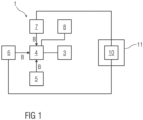
- Figure 1 is a block diagram of a possible embodiment of a device 1 for operating a device from or in a Figures 2 to 4 shown vehicle 2 fold-out seat arrangement 3.
- the seat arrangement 3 is in particular designed such that after activation it is automatically and motor-driven transferred from a folded-in position to a folded-out position.
- the seat arrangement 3 When unfolded, the seat arrangement 3 forms a comfortable seat, for example for changing shoes and/or as a relaxation option for a vehicle user. In addition, this function is also made available for third parties, such as passers-by.
- the device 1 comprises a control unit 4 which is designed to receive and execute an activation command B from an authorized vehicle user and third parties for folding out the seat arrangement 3 from an area inside the vehicle into an area accessible from outside the vehicle 2.
- the authorized vehicle user can trigger the activation command B, for example, by means of an electronic vehicle key 5 or by means of an application program of a mobile terminal 6, for example a smartphone or so-called wearable.
- the third person can also trigger the activation command B by means of an application program of a mobile terminal 7, for example a smartphone or so-called wearable.
- the operation is carried out by the authorized vehicle user using his vehicle key 5 or his mobile device 6, whereby the authorized vehicle user can specify, for example in the application program of the mobile device 6 or locally in the vehicle 2 itself, whether he allows the use of the seating arrangement 3 by third parties. If this is not the case, the vehicle 2 remains locked. Furthermore, the release by the user is only activated or can be activated if a camera 8 detects that a Figures 2 to 4
- the trunk 9 of the vehicle 2 shown in more detail, in which the vehicle seat arrangement 3 is in the folded-in state, is free of other objects, for example objects forgotten by the authorized vehicle user.
- the authorized vehicle user can also confirm, for example via the application program of the mobile terminal 6, that the trunk 9 is free of objects. If there is no confirmation that the trunk 9 is free of objects, the vehicle 2 remains locked.
- the third person can, for example, use the application program of the mobile terminal 7 to control the opening of the trunk 9 of the parked vehicle 2 and an operation, in particular the folding and unfolding of the seat arrangement 3. It is ensured that this can only be carried out by registered users, for example with an account in the application program including validated address data, while they are logged into the application program.
- the application program on the mobile terminal 7 also outputs locations of vehicles 2 that include a fold-out vehicle seat arrangement 3 that can be operated and is ready for use by third parties using the application program. This output is shown, for example, in a map display.
- each operation of the vehicle seat arrangement 3 carried out by a third person is stored together with an associated geographical position of the vehicle 2 present at the time of operation in a central storage unit 10, which is part of a central data processing unit 11, for example a so-called backend server.
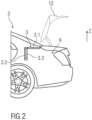
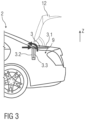
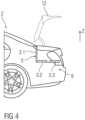
- the Figures 2 to 4 show a semi-transparent side view of a section of a vehicle 2 with a seat arrangement 3 that can be folded out in the vehicle 2 in different positions.
- the vehicle 2 is designed as a limousine and the seat arrangement 3 is arranged in a trunk 9 of the vehicle 2 and can be transferred within the same from a folded position to an unfolded position.
- the seat arrangement 3 comprises a backrest element 3.1 and two seat elements 3.2, 3.3 arranged on the backrest element 3.1.
- a first seat element 3.2 is fixedly arranged on the backrest element 3.1 and a second seat element 3.3 is pivotably arranged on the first seat element 3.2.
- the backrest element 3.1 is arranged at least substantially parallel to and below an inner wall (not shown in detail) that delimits the trunk 9 on an upper side.
- the seat elements 3.2, 3.3 are folded against one another and run substantially perpendicular to the backrest element 3.1 and parallel to an inner wall (not shown in detail) that delimits the trunk 9 from a passenger cell.
- a trunk lid 12 is automatically opened and the backrest element 3.1 is, as shown in Figure 3 shown, together with the seat elements 3.2, 3.3, are automatically moved towards the rear of the vehicle.
- the backrest element 3.1 and the second seat element 3.3 are pivoted downwards into an unfolded state so that the seat arrangement 3 is in the position shown in Figure 4 is arranged.
- the backrest element 3.1 runs at least substantially parallel to a vehicle vertical axis Z within the trunk 9 and the seat elements 3.2, 3.3 extend from a lower end of the unfolded backrest element 3.1 at least to a loading edge of the trunk 9 and at least substantially perpendicular to the vehicle vertical axis Z.
- the vehicle 2 When unfolded, the vehicle 2, in particular a parked sedan, can thus offer a relaxation option in the form of a "park bench-like" seat under the shade-providing trunk lid 12, without the actual vehicle interior having to be made available and opened.
- its fold-out seat arrangement 3 is by means of a device 1 according to Figure 1 operable.
Landscapes
- Engineering & Computer Science (AREA)
- Mechanical Engineering (AREA)
- Aviation & Aerospace Engineering (AREA)
- Transportation (AREA)
- Human Computer Interaction (AREA)
- Seats For Vehicles (AREA)
Description
- Die Erfindung betrifft eine Vorrichtung zum Betrieb einer aus oder in einem Fahrzeug ausklappbaren Sitzanordnung.
- Die Erfindung betrifft weiterhin ein Verfahren zum Betrieb einer aus oder in einem Fahrzeug ausklappbaren Sitzanordnung.
- Die Erfindung betrifft ferner ein Fahrzeug.
- Aus der
EP 2 033 839 A1 ist ein ausklappbarer Sitz für Kraftfahrzeuge bekannt, welche mit einem Doppelboden in einem Kofferraum und einer Ladekante versehen sind. Der Doppelboden des Kofferraums ist in einem im hinteren Bereich aus dem Kofferraum herausklappbar und stützt sich nach dem Herausklappen an der Ladekante. Auf einer im ausgeklappten Zustand nach oben gerichteten Seite des Doppelbodens ist eine gepolsterte Sitzfläche ausgebildet. - Weiterhin ist aus der
DE 10 2016 218 071 A1 ein Authentifikationssystem für ein Kraftfahrzeug bekannt, welches ein Zugangsmodul umfasst, das Zugangsberechtigungsdaten von einem externen Gerät empfangen und verifizieren und eine Türschlossverriegelung für das Kraftfahrzeug steuern kann. Das Authentifikationssystem umfasst weiterhin ein Fahrberechtigungsmodul, welches Fahrberechtigungsdaten von dem externen Gerät empfangen und verifizieren kann, wobei das Fahrberechtigungsmodul eine Fahrberechtigung für das Kraftfahrzeug steuern kann. Die Fahrberechtigungsdaten sind kraftfahrzeugseitig festgelegt und durch eine Ausgabeeinheit im Kraftfahrzeuginneren ausgebbar. - Die
US 4 139 232 A beschreibt ein Fahrzeug mit einem herunterklappbaren Notsitzsystem, welches in eine Öffnung in einem Kofferraumdeckel des Fahrzeugs passt. Die Öffnung hat einen Rand, in den unter Ausbildung einer wasserdichten Abdichtung ein Rahmen eingreift. Der Rahmen wird durch den Kofferraumdeckel getragen und trägt seinerseits Lagermittel, die darunter in einen Hohlraum des Kofferraums hängen. Ein Scharniermittel ist drehbar an den Lagermitteln und ein Stützelement ist an dem Scharniermittel montiert. Das Stützelement ist ausgebildet, eine geschlossene Position einzunehmen, in welcher es die Öffnung schließt. Weiterhin ist das Stützelement ausgebildet, eine aufrechte Rückenlehnenposition einzunehmen, in welcher es die Öffnung geöffnet lässt und relativ zu dem Rahmen kippbar ist, um eine Rückenlehne zu bilden. Das Scharniermittel ist ausgebildet, eine parallelogrammartige Bewegung auszuführen, um notwendige Winkeländerungen einer Position des Stützelements bereitzustellen. - Die
US 1 751 378 A beschreibt ein Fahrzeug mit einer Öffnung in einem Heckbereich und einem klappbaren Sitz, welcher im eingeklappten Zustand unterhalb der Öffnung angeordnet ist. - Der Erfindung liegt die Aufgabe zu Grunde, eine neuartige Vorrichtung sowie ein neuartiges Verfahren zum Betrieb einer aus oder in einem Fahrzeug ausklappbaren Sitzanordnung und ein gegenüber dem Stand der Technik verbessertes Fahrzeug anzugeben.
- Die Aufgabe wird erfindungsgemäß gelöst mit einer Vorrichtung, welche die im Anspruch 1 angegebenen Merkmale aufweist, mit einem Verfahren, welches die im Anspruch 4 angegebenen Merkmale aufweist und mit einem Fahrzeug, welches die im Anspruch 8 angegebenen Merkmale aufweist.
- Vorteilhafte Ausgestaltungen der Erfindung sind Gegenstand der abhängigen Ansprüche.
- Die Vorrichtung zum Betrieb einer aus oder in einem Fahrzeug ausklappbaren Sitzanordnung umfasst eine Steuereinheit, welche ausgebildet ist, einen Aktivierungsbefehl von einem autorisierten Fahrzeugnutzer und dritten Personen zum Ausklappen der Sitzanordnung aus einem fahrzeuginneren Bereich in einen von außerhalb des Fahrzeugs zugänglichen Bereich zu empfangen und auszuführen.
- Erfindungsgemäß ist eine Freigabe einer Ausklappfunktion der Sitzanordnung durch einen autorisierten Fahrzeugnutzer nur dann aktivierbar, wenn mittels einer Kamera erfasst wird und/oder der autorisierte Fahrzeugnutzer bestätigt, dass ein Kofferraum, in welchem sich die Sitzanordnung im eingeklappten Zustand befindet, frei von anderen Gegenständen ist.
- Die Vorrichtung ermöglicht ein Zuverfügungstellen einer komfortablen Sitzmöglichkeit, beispielsweise zum Wechsel von Schuhen und/oder zu einer Erholung, auch für dritte Personen, welche keine autorisierten Fahrzeugnutzer sind. Dabei ist eine Gefahr eines Diebstahls von Gegenständen aus dem Kofferraum verringert.
- In einer möglichen Ausgestaltung der Vorrichtung umfasst diese zumindest einen elektronischen Fahrzeugschlüssel, umfassend eine Funktion zur Freigabe einer Bedienung der Sitzanordnung durch dritte Personen, und/oder zumindest ein mobiles Endgerät, umfassend ein Anwendungsprogramm zur Freigabe einer Bedienung der Sitzanordnung durch dritte Personen. Hierdurch ist eine einfache, komfortable und sichere Freigabe durch den Fahrzeugnutzer möglich.
- In einer weiteren möglichen Ausgestaltung der Vorrichtung umfasst diese zumindest ein mobiles Endgerät, umfassend ein Anwendungsprogramm zur Bedienung der Sitzanordnung durch dritte Personen. Hierdurch ist eine einfache, komfortable und sichere Bedienung durch die dritte Person möglich.
- In dem Verfahren zum Betrieb einer aus oder in einem Fahrzeug ausklappbaren Sitzanordnung wird nach einer entsprechenden Freigabe von einem autorisierten Fahrzeugnutzer eine Ausklappfunktion der Sitzanordnung aus einem fahrzeuginneren Bereich in einen von außerhalb des Fahrzeugs zugänglichen Bereich für dritte Personen freigegeben.
- Das Verfahren ermöglicht ein Zuverfügungstellen einer komfortablen Sitzmöglichkeit, beispielsweise zum Wechsel von Schuhen und/oder zu einer Erholung, auch für dritte Personen, welche keine autorisierten Fahrzeugnutzer sind.
- Dabei wird die Freigabe nur dann aktiviert oder ist aktivierbar, wenn mittels einer Kamera erfasst wird und/oder der autorisierte Fahrzeugnutzer bestätigt, dass ein Kofferraum, in welchem sich die Sitzanordnung im eingeklappten Zustand befindet, frei von anderen Gegenständen ist. Somit kann eine Gefahr eines Diebstahls von Gegenständen aus dem Kofferraum verringert werden.
- In einer möglichen Ausgestaltung des Verfahrens werden mittels eines Anwendungsprogramms auf zumindest einem mobilen Endgerät zumindest einer dritten Person Standorte von Fahrzeugen, welche über eine mittels des Anwendungsprogramms von dritten Personen bedienbare und betriebsbereite ausklappbare Sitzanordnung umfassen, ausgegeben. Somit können dritte Personen in einfacher Weise Fahrzeuge auffinden, welche die Funktion einer ausklappbaren Sitzanordnung für dritte Personen anbieten.
- In einer weiteren möglichen Ausgestaltung des Verfahrens wird jede durch eine dritte Person durchgeführte Bedienung der Sitzanordnung gemeinsam mit einer zugehörigen, zum Zeitpunkt der Bedienung vorliegenden geografischen Position des Fahrzeugs in einer zentralen Speichereinheit gespeichert. Somit ist bei Beschädigungen, Vandalismus und/oder Diebstahl von Objekten aus dem Fahrzeug eine Rückverfolgbarkeit sichergestellt.
- In einer weiteren möglichen Ausgestaltung des Verfahrens wird bei einer Entfernung der dritten Person aus einem vorgegebenen Umkreis um das Fahrzeug ohne vorheriges Einklappen der Sitzanordnung mittels des Anwendungsprogramms ein Alarm auf dem mobilen Endgerät der dritten Person ausgegeben und bei einer ausbleibenden Reaktion der dritten Person wird die Sitzanordnung automatisch eingeklappt. Dies stellt sicher, dass die Sitzanordnung nach ihrer Benutzung stets wieder eingeklappt und das Fahrzeug verschlossen wird. Eine geografische Position der dritten Person wird hierbei beispielsweise anhand eines mobilen Endgeräts, auf welchem das Anwendungsprogramm ausgeführt wird, ermittelt. Eine geografische Position des Fahrzeugs wird beispielsweise anhand eines fahrzeugeigenen Positionsbestimmungssensors, beispielsweise eines so genannten GPS-Sensors, ermittelt.
- Ein erfindungsgemäßes Fahrzeug mit einer ausklappbaren Sitzanordnung umfasst eine zuvor beschriebene Vorrichtung zum Betrieb der Sitzanordnung. Das Fahrzeug ermöglicht ein Zuverfügungstellen einer komfortablen Sitzmöglichkeit, beispielsweise zum Wechsel von Schuhen und/oder zu einer Erholung, auch für dritte Personen, welche keine autorisierten Fahrzeugnutzer sind. Da geparkte Fahrzeuge oftmals wertvolle Fläche, beispielsweise in einer Innenstadt, beanspruchen, kann durch das Anbieten einer bequemen und gegebenenfalls unter einem geöffneten Kofferraumdeckel befindlichen schattigen Sitzgelegenheit für dritte Personen ein adäquater Gegen- und/oder Mehrwert erzeugt werden.
- In einer möglichen Ausgestaltung des Fahrzeugs, insbesondere einer Limousine, ist die Sitzanordnung aus oder in einem Kofferraum ausklappbar. Dabei umfasst die Sitzanordnung zumindest ein Lehnenelement und zumindest ein an dem Lehnenelement angeordnetes Sitzelement. Das zumindest eine Lehnenelement verläuft in einem eingeklappten Zustand der Sitzanordnung zumindest im Wesentlichen parallel zu und unterhalb einer den Kofferraum an einer Oberseite begrenzenden Innenwand. Das zumindest eine Sitzelement verläuft im eingeklappten Zustand der Sitzanordnung zumindest im Wesentlichen parallel zu einer den Kofferraum zu einer Fahrgastzelle abgrenzenden Innenwand. Das zumindest eine Lehnenelement und das zumindest eine Sitzelement sind aus dem eingeklappten Zustand in einen ausgeklappten Zustand schwenkbar, wobei das zumindest eine Lehnenelement in dem ausgeklappten Zustand zumindest im Wesentlichen parallel zu einer Fahrzeughochachse innerhalb des Kofferraums verläuft und das zumindest eine Sitzelement im ausgeklappten Zustand ausgehend von einem unteren Ende des ausgeklappten Lehnenelements zumindest bis zu einer Ladekante des Kofferraums zumindest im Wesentlichen senkrecht zur Fahrzeughochachse verläuft.
- Das Fahrzeug zeichnet sich aufgrund dieser Anordnung der Sitzanordnung im eingeklappten Zustand durch ein besonders großes verbleibendes Volumen des Kofferraums und eine gute Nutzbarkeit desselben aus. Weiterhin kann mittels des Fahrzeugs ein Zuverfügungstellen einer komfortablen Sitzmöglichkeit, beispielsweise zum Wechsel von Schuhen und/oder zu einer Erholung, realisiert werden.
- Ausführungsbeispiele der Erfindung werden im Folgenden anhand von Zeichnungen näher erläutert.
- Dabei zeigen:
- Fig. 1
- schematisch ein Blockschaltbild einer Vorrichtung zum Betrieb einer aus oder in einem Fahrzeug ausklappbaren Sitzanordnung,
- Fig. 2
- schematisch eine halbtransparente Seitenansicht eines Ausschnitts eines Fahrzeugs mit einer in dem Fahrzeug ausklappbaren Sitzanordnung in einer ersten Position,
- Fig. 3
- schematisch eine halbtransparente Seitenansicht eines Ausschnitts eines Fahrzeugs mit einer in dem Fahrzeug ausklappbaren Sitzanordnung in einer zweiten Position und
- Fig. 4
- schematisch eine halbtransparente Seitenansicht eines Ausschnitts eines Fahrzeugs mit einer in dem Fahrzeug ausklappbaren Sitzanordnung in einer dritten Position.
- Einander entsprechende Teile sind in allen Figuren mit den gleichen Bezugszeichen versehen.
- In
Figur 1 ist ein Blockschaltbild eines möglichen Ausführungsbeispiels einer Vorrichtung 1 zum Betrieb einer aus oder in einem in denFiguren 2 bis 4 gezeigten Fahrzeug 2 ausklappbaren Sitzanordnung 3 dargestellt. - Die Sitzanordnung 3 ist insbesondere derart ausgebildet, dass diese nach einer Aktivierung automatisch und motorisch aus einer eingeklappten Position in eine ausgeklappte Stellung überführt wird.
- Dabei bildet die Sitzanordnung 3 im ausgeklappten Zustand eine komfortable Sitzgelegenheit, zum Beispiel zum Wechsel von Schuhen und/oder als Entspannungsmöglichkeit für einen Fahrzeugnutzer. Zusätzlich wird diese Funktion auch für dritte Personen, beispielsweise Passanten, zur Verfügung gestellt.
- Hierzu umfasst die Vorrichtung 1 eine Steuereinheit 4, welche ausgebildet ist, einen Aktivierungsbefehl B von einem autorisierten Fahrzeugnutzer und dritten Personen zum Ausklappen der Sitzanordnung 3 aus einem fahrzeuginneren Bereich in einen von außerhalb des Fahrzeugs 2 zugänglichen Bereich zu empfangen und auszuführen.
- Den Aktivierungsbefehl B kann der autorisierte Fahrzeugnutzer beispielsweise mittels eines elektronischen Fahrzeugschlüssels 5 oder mittels eines Anwendungsprogramms eines mobilen Endgeräts 6, beispielsweise eines Smartphones oder so genannten Wearables, auslösen.
- Die dritte Person kann ebenfalls den Aktivierungsbefehl B mittels eines Anwendungsprogramms eines mobilen Endgeräts 7, beispielsweise eines Smartphones oder so genannten Wearables, auslösen.
- Das heißt, die Bedienung erfolgt durch den autorisierten Fahrzeugnutzer mittels seines Fahrzeugschlüssels 5 oder mittels seines mobilen Endgeräts 6, wobei der autorisierte Fahrzeugnutzer beispielsweise in dem Anwendungsprogramm des mobilen Endgeräts 6 aber auch lokal im Fahrzeug 2 selbst vorgeben kann, ob er eine Nutzung der Sitzanordnung 3 durch dritte Personen zulässt. Ist dies nicht der Fall, bleibt das Fahrzeug 2 verriegelt. Weiterhin ist die Freigabe durch den Nutzer nur dann aktiviert oder aktivierbar, wenn mittels einer Kamera 8 erfasst wird, dass ein in den
Figuren 2 bis 4 näher dargestellter Kofferraum 9 des Fahrzeugs 2, in welchem sich die Fahrzeugsitzanordnung 3 im eingeklappten Zustand befindet, frei von anderen Gegenständen, beispielsweise vom autorisierten Fahrzeugnutzer vergessenen Objekten, ist. Alternativ oder zusätzlich kann auch durch den autorisierten Fahrzeugnutzer, beispielsweise über das Anwendungsprogramm des mobilen Endgeräts 6, eine Bestätigung erfolgen, dass der Kofferraum 9 frei von Gegenständen ist. Liegt keine Bestätigung vor, dass der Kofferraum 9 frei von Gegenständen ist, bleibt das Fahrzeug 2 verriegelt. - Die dritte Person kann mittels des Anwendungsprogramms des mobilen Endgeräts 7 beispielsweise ein Öffnen des Kofferraums 9 des geparkten Fahrzeugs 2 und eine Bedienung, insbesondere das Ein- und Ausklappen der Sitzanordnung 3, steuern. Dabei ist sichergestellt, dass dies nur durch registrierte Benutzer, beispielsweise mit einem Account in dem Anwendungsprogramm inklusive validierten Adressdaten, durchführbar ist, während diese in dem Anwendungsprogramm eingeloggt sind.
- Auch werden in einer möglichen Ausgestaltung mittels des Anwendungsprogramms auf dem mobilen Endgerät 7 Standorte von Fahrzeugen 2, welche über eine mittels des Anwendungsprogramms von dritten Personen bedienbare und betriebsbereite ausklappbare Fahrzeugsitzanordnung 3 umfassen, ausgegeben. Diese Ausgabe erfolgt beispielsweise in einer Kartendarstellung.
- Weiterhin wird in einer möglichen Ausgestaltung jede durch eine dritte Person durchgeführte Bedienung der Fahrzeugsitzanordnung 3 gemeinsam mit einer zugehörigen, zum Zeitpunkt der Bedienung vorliegenden geografischen Position des Fahrzeugs 2 in einer zentralen Speichereinheit 10, welche Bestandteil einer zentralen Datenverarbeitungseinheit 11, beispielsweise eines so genannten Backendservers ist, gespeichert.
- Weiterhin ist in einer möglichen Ausgestaltung vorgesehen, dass bei einer Entfernung der dritten Person aus einem vorgegebenen Umkreis um das Fahrzeug 2 ohne vorheriges Einklappen der Fahrzeugsitzanordnung 3 mittels des Anwendungsprogramms ein Alarm auf dem mobilen Endgerät 7 der dritten Person ausgegeben wird und bei einer ausbleibenden Reaktion der dritten Person die Fahrzeugsitzanordnung 3 automatisch wieder eingeklappt wird.
- Die
Figuren 2 bis 4 zeigen eine halbtransparente Seitenansicht eines Ausschnitts eines Fahrzeugs 2 mit einer in dem Fahrzeug 2 ausklappbaren Sitzanordnung 3 in unterschiedlichen Positionen. - Das Fahrzeug 2 ist als Limousine ausgebildet und die Sitzanordnung 3 ist in einem Kofferraum 9 des Fahrzeugs 2 angeordnet und innerhalb desselben aus einer eingeklappten Position in einer ausgeklappten Position überführbar.
- Die Sitzanordnung 3 umfasst ein Lehnenelement 3.1 und zwei an dem Lehnenelement 3.1 angeordnete Sitzelemente 3.2, 3.3. Ein erstes Sitzelement 3.2 ist dabei fest an dem Lehnenelement 3.1 und ein zweites Sitzelement 3.3 schwenkbar an dem ersten Sitzelement 3.2 angeordnet.
- Im in
Figur 2 dargestellten eingeklappten Zustand der Sitzanordnung 3 ist das Lehnenelement 3.1 zumindest im Wesentlichen parallel zu und unterhalb einer nicht näher dargestellten, den Kofferraum 9 an einer Oberseite begrenzenden Innenwand angeordnet. Die Sitzelemente 3.2, 3.3 sind im eingeklappten Zustand der Sitzanordnung 3 aneinander geklappt und verlaufen im Wesentlichen senkrecht zum Lehnenelement 3.1 und parallel zu einer nicht näher dargestellten, den Kofferraum 9 zu einer Fahrgastzelle abgrenzenden Innenwand. - Zu einem Ausklappen der Sitzanordnung 3 wird ein Kofferraumdeckel 12 automatisch geöffnet und das Lehnenelement 3.1 wird, wie in
Figur 3 dargestellt, gemeinsam mit den Sitzelementen 3.2, 3.3 automatisch in Richtung eines Fahrzeughecks verschoben. - Abschließend werden das Lehnenelement 3.1 und das zweite Sitzelement 3.3 derart nach unten in einen ausgeklappten Zustand geschwenkt, dass die Sitzanordnung 3 gemäß der Darstellung in
Figur 4 angeordnet ist. Dabei verläuft das Lehnenelement 3.1 im ausgeklappten Zustand zumindest im Wesentlichen parallel zu einer Fahrzeughochachse Z innerhalb des Kofferraums 9 und die Sitzelemente 3.2, 3.3 verlaufen ausgehend von einem unteren Ende des ausgeklappten Lehnenelements 3.1 zumindest bis zu einer Ladekante des Kofferraums 9 und zumindest im Wesentlichen senkrecht zur Fahrzeughochachse Z. - Im ausgeklappten Zustand kann somit das Fahrzeug 2, insbesondere eine geparkte Limousine, eine Entspannungsmöglichkeit in Form einer "parkbankähnlichen" Sitzgelegenheit unter dem schattenspendenden Kofferraumdeckel 12 anbieten, ohne dass der eigentliche Fahrzeuginnenraum zur Verfügung gestellt und geöffnet werden muss.
- In einer möglichen Ausgestaltung des Fahrzeugs 2 ist dessen ausklappbare Sitzanordnung 3 mittels einer Vorrichtung 1 gemäß
Figur 1 betreibbar.
Claims (9)
- Vorrichtung (1) zum Betrieb einer aus oder in einem Fahrzeug (2) ausklappbaren Sitzanordnung (3) mit einer Steuereinheit (4), welche ausgebildet ist, einen Aktivierungsbefehl (B) von einem autorisierten Fahrzeugnutzer und dritten Personen zum Ausklappen der Sitzanordnung (3) aus einem fahrzeuginneren Bereich in einen von außerhalb des Fahrzeugs (2) zugänglichen Bereich zu empfangen und auszuführen,
dadurch gekennzeichnet, dass eine Freigabe einer Ausklappfunktion der Sitzanordnung (3) durch einen autorisierten Fahrzeugnutzer nur dann aktivierbar ist, wenn mittels einer Kamera (8) erfasst wird und/oder der autorisierte Fahrzeugnutzer bestätigt, dass ein Kofferraum (9), in welchem sich die Sitzanordnung (3) im eingeklappten Zustand befindet, frei von anderen Gegenständen ist. - Vorrichtung (1) nach Anspruch 1,
gekennzeichnet durch- zumindest einen elektronischen Fahrzeugschlüssel (5), umfassend eine Funktion zur Freigabe einer Bedienung der Sitzanordnung (3) durch dritte Personen, und/oder- zumindest ein mobiles Endgerät (6), umfassend ein Anwendungsprogramm zur Freigabe einer Bedienung der Sitzanordnung (3) durch dritte Personen. - Vorrichtung (1) nach Anspruch 1 oder 2,
gekennzeichnet durch zumindest ein mobiles Endgerät (7), umfassend ein Anwendungsprogramm zur Bedienung der Sitzanordnung (3) durch dritte Personen. - Verfahren zum Betrieb einer aus oder in einem Fahrzeug (2) ausklappbaren Sitzanordnung (3), wobei nach einer entsprechenden Freigabe von einem autorisierten Fahrzeugnutzer eine Ausklappfunktion der Sitzanordnung (3) aus einem fahrzeuginneren Bereich in einen von außerhalb des Fahrzeugs (2) zugänglichen Bereich für dritte Personen freigegeben wird,
dadurch gekennzeichnet, dass die Freigabe nur dann aktiviert wird oder aktivierbar ist, wenn mittels einer Kamera (8) erfasst wird und/oder der autorisierte Fahrzeugnutzer bestätigt, dass ein Kofferraum (9), in welchem sich die Sitzanordnung (3) im eingeklappten Zustand befindet, frei von anderen Gegenständen ist. - Verfahren nach Anspruch 4,
dadurch gekennzeichnet, dass mittels eines Anwendungsprogramms auf zumindest einem mobilen Endgerät (7) zumindest einer dritten Person Standorte von Fahrzeugen (2), welche über eine mittels des Anwendungsprogramms von dritten Personen bedienbare und betriebsbereite ausklappbare Sitzanordnung (3) umfassen, ausgegeben werden. - Verfahren nach Anspruch 4 oder 5,
dadurch gekennzeichnet, dass jede durch eine dritte Person durchgeführte Bedienung der Sitzanordnung (3) gemeinsam mit einer zugehörigen, zum Zeitpunkt der Bedienung vorliegenden geografischen Position des Fahrzeugs (2) in einer zentralen Speichereinheit (10) gespeichert wird. - Verfahren nach einem der Ansprüche 4 bis 6,
dadurch gekennzeichnet, dass bei einer Entfernung der dritten Person aus einem vorgegebenen Umkreis um das Fahrzeug (2) ohne vorheriges Einklappen der Sitzanordnung (3) mittels des Anwendungsprogramms ein Alarm auf dem mobilen Endgerät (7) der dritten Person ausgegeben wird und bei einer ausbleibenden Reaktion der dritten Person die Sitzanordnung (3) automatisch eingeklappt wird. - Fahrzeug (2) mit einer ausklappbaren Sitzanordnung (3) und einer Vorrichtung (1) zum Betrieb dieser nach einem der Ansprüche 1 bis 3.
- Fahrzeug (2) nach Anspruch 8,
dadurch gekennzeichnet, dass- die Sitzanordnung aus oder in einem Kofferraum (9) ausklappbar ist,- die Sitzanordnung (3) zumindest ein Lehnenelement (3.1) und zumindest ein an dem Lehnenelement (3.1) angeordnetes Sitzelement (3.2, 3.3) umfasst,- das zumindest eine Lehnenelement (3.1) in einem eingeklappten Zustand der Sitzanordnung (3) zumindest im Wesentlichen parallel zu und unterhalb einer den Kofferraum (9) an einer Oberseite begrenzenden Innenwand verläuft,- das zumindest eine Sitzelement (3.2, 3.3) im eingeklappten Zustand der Sitzanordnung (3) zumindest im Wesentlichen parallel zu einer den Kofferraum (9) zu einer Fahrgastzelle abgrenzenden Innenwand verläuft und- das zumindest eine Lehnenelement (3.1) und das zumindest eine Sitzelement (3.2, 3.3) aus dem eingeklappten Zustand in einen ausgeklappten Zustand schwenkbar sind,- das zumindest eine Lehnenelement (3.1) in dem ausgeklappten Zustand zumindest im Wesentlichen parallel zu einer Fahrzeughochachse (Z) innerhalb des Kofferraums (9) verläuft und- das zumindest eine Sitzelement (3.2, 3.3) im ausgeklappten Zustand ausgehend von einem unteren Ende des ausgeklappten Lehnenelements (3.1) zumindest bis zu einer Ladekante des Kofferraums (9) zumindest im Wesentlichen senkrecht zur Fahrzeughochachse (9) verläuft.
Applications Claiming Priority (2)
| Application Number | Priority Date | Filing Date | Title |
|---|---|---|---|
| DE102019008843.3A DE102019008843B4 (de) | 2019-12-19 | 2019-12-19 | Vorrichtung und Verfahren zum Betrieb einer aus oder in einem Fahrzeug ausklappbaren Sitzanordnung |
| PCT/EP2020/084391 WO2021122018A1 (de) | 2019-12-19 | 2020-12-03 | Vorrichtung und verfahren zum betrieb einer aus oder in einem fahrzeug ausklappbaren sitzanordnung |
Publications (3)
| Publication Number | Publication Date |
|---|---|
| EP4077040A1 EP4077040A1 (de) | 2022-10-26 |
| EP4077040B1 true EP4077040B1 (de) | 2024-05-22 |
| EP4077040C0 EP4077040C0 (de) | 2024-05-22 |
Family
ID=73748036
Family Applications (1)
| Application Number | Title | Priority Date | Filing Date |
|---|---|---|---|
| EP20820806.6A Active EP4077040B1 (de) | 2019-12-19 | 2020-12-03 | Vorrichtung und verfahren zum betrieb einer aus oder in einem fahrzeug ausklappbaren sitzanordnung |
Country Status (5)
| Country | Link |
|---|---|
| US (1) | US12122270B2 (de) |
| EP (1) | EP4077040B1 (de) |
| CN (1) | CN114829192B (de) |
| DE (1) | DE102019008843B4 (de) |
| WO (1) | WO2021122018A1 (de) |
Family Cites Families (17)
| Publication number | Priority date | Publication date | Assignee | Title |
|---|---|---|---|---|
| US1751378A (en) | 1928-10-05 | 1930-03-18 | Joseph R Zaiden | Rumble seat and locking device |
| US4139232A (en) | 1977-07-27 | 1979-02-13 | Rumble Seat Corporation Of America | Drop-in rumbleseat system |
| DE10239199B4 (de) * | 2002-08-21 | 2006-05-04 | Webasto Ag | Ausfahrbarer Sitz für ein Fahrzeug sowie Fahrzeug mit einem ausfahrbaren Sitz |
| US6820913B2 (en) * | 2003-03-20 | 2004-11-23 | Daimlerchrysler Corporation | Convertible seat assembly with cross-vehicle support |
| JP2008007057A (ja) | 2006-06-30 | 2008-01-17 | Denso Corp | 車両最後部席制御システム |
| WO2009009316A1 (en) * | 2007-07-09 | 2009-01-15 | Graphenius Inc. | Method for using a mobile communication device to activate a vehicle |
| CZ2007612A3 (cs) | 2007-09-07 | 2009-03-18 | Škoda Auto a. s. | Výklopná sedacka |
| DE102013004612B4 (de) * | 2013-03-15 | 2016-11-10 | Audi Ag | Verfahren zum Betreiben eines Infotainmentsystems |
| CN103747106B (zh) | 2014-01-27 | 2017-03-15 | 杨嵩岩 | 一种用于定位终端的远程防伪鉴定系统及方法 |
| GB2523822B (en) * | 2014-03-07 | 2017-11-01 | Jaguar Land Rover Ltd | Deployable platform system |
| CN104918212A (zh) | 2014-03-12 | 2015-09-16 | 深圳市赛格导航科技股份有限公司 | 一种基于停车位置的车辆通信方法及系统 |
| WO2016187243A1 (en) * | 2015-05-19 | 2016-11-24 | Voyomotive, Llc | Independent vahicle security method and apparatus |
| DE102015219059B4 (de) | 2015-10-02 | 2021-08-19 | Brose Fahrzeugteile SE & Co. Kommanditgesellschaft, Coburg | Fahrzeugsitzsystem, Steuergerät |
| CN106296914A (zh) | 2016-08-08 | 2017-01-04 | 深圳市元征科技股份有限公司 | 车辆自动锁门窗系统 |
| DE102016218071B4 (de) | 2016-09-21 | 2019-05-29 | Bayerische Motoren Werke Aktiengesellschaft | Authentifikationssystem für ein Kraftfahrzeug |
| US10647222B2 (en) | 2018-04-11 | 2020-05-12 | GM Global Technology Operations LLC | System and method to restrict vehicle seat movement |
| CN115190482A (zh) * | 2018-12-06 | 2022-10-14 | 博泰车联网科技(上海)股份有限公司 | 基于手机屏幕的车门锁状态同步方法、服务器、同步系统 |
-
2019
- 2019-12-19 DE DE102019008843.3A patent/DE102019008843B4/de active Active
-
2020
- 2020-12-03 WO PCT/EP2020/084391 patent/WO2021122018A1/de not_active Ceased
- 2020-12-03 US US17/786,597 patent/US12122270B2/en active Active
- 2020-12-03 EP EP20820806.6A patent/EP4077040B1/de active Active
- 2020-12-03 CN CN202080087223.XA patent/CN114829192B/zh active Active
Also Published As
| Publication number | Publication date |
|---|---|
| CN114829192B (zh) | 2025-02-28 |
| WO2021122018A1 (de) | 2021-06-24 |
| DE102019008843A1 (de) | 2021-06-24 |
| US12122270B2 (en) | 2024-10-22 |
| DE102019008843B4 (de) | 2021-12-16 |
| EP4077040A1 (de) | 2022-10-26 |
| CN114829192A (zh) | 2022-07-29 |
| US20230028999A1 (en) | 2023-01-26 |
| EP4077040C0 (de) | 2024-05-22 |
Similar Documents
| Publication | Publication Date | Title |
|---|---|---|
| DE102017207161B4 (de) | Türanordnung mit integriertem Haltegriff | |
| DE102018131250B3 (de) | Verstauung der Kofferraumabdeckung im Frunk | |
| DE102015118481A1 (de) | Klappsitzanordnung mit integriertem Aufbewahrungsfach | |
| DE102010004518A1 (de) | Fahrzeugmodus-Aktivierung durch Gestenerkennung | |
| DE102018113929A1 (de) | Fahrzeugtürassistenz | |
| DE102020126034A1 (de) | Airbagbaugruppe mit freigebbarer platte | |
| DE112017004384B4 (de) | Steuerungssystem für eine ausfahrbare Plattform | |
| DE102011120515A1 (de) | Vorrichtung zur Verlängerung der Ladefläche eines Fahrzeugs | |
| DE102015219059B4 (de) | Fahrzeugsitzsystem, Steuergerät | |
| DE102020107156A1 (de) | Innenraum-Anordnung für ein Kraftfahrzeug | |
| DE102011104061A1 (de) | Verfahren und Vorrichtung zum Aktivieren und Deaktivieren einer Valet-Parking-Funktion | |
| EP2033842B1 (de) | Kraftfahrzeuginneneinrichtung mit einem verschwenkbaren Ladeboden zur Laderaumunterteilung | |
| DE202015103958U1 (de) | Sitzanordnung mit eingebettetem und verborgenem Stauraum | |
| DE102007005555A1 (de) | Staubehältnis | |
| DE102016108470A1 (de) | Zeitgesteuerter zugang zu einem unabhängigen gesicherten raum eines fahrzeugs | |
| DE102016121121A1 (de) | Parkservice-Sicherheitssystem für ein Kraftfahrzeug | |
| DE102013006086A1 (de) | Augenbewegungsgesteuertes Authentifizierungssystem sowie Verfahren zur augenbewegungsgesteuerten Authentifizierung | |
| DE9310058U1 (de) | Heckklappe für Kraftwagen | |
| DE102011010055A1 (de) | Rückenlehne eines Sitzes oder einer Sitzbank mit integrietem Windschott | |
| DE10328504B3 (de) | Entriegelungsvorrichtung für einen Fahrzeugsitz | |
| DE202018107088U1 (de) | Mit einem Safe ausgestattetes Fahrzeug | |
| DE102007052529A1 (de) | Ein Sitz und Sitzanordnung in einem Kraftfahrzeug | |
| DE202017105424U1 (de) | Integrierte ausfahrbare Fahrradträgerbaugruppe für ein Kraftfahrzeug | |
| DE102019008843B4 (de) | Vorrichtung und Verfahren zum Betrieb einer aus oder in einem Fahrzeug ausklappbaren Sitzanordnung | |
| DE102016203807A1 (de) | Abdeckung für einen Fahrzeugladeraum und Fahrzeug |
Legal Events
| Date | Code | Title | Description |
|---|---|---|---|
| STAA | Information on the status of an ep patent application or granted ep patent |
Free format text: STATUS: UNKNOWN |
|
| STAA | Information on the status of an ep patent application or granted ep patent |
Free format text: STATUS: THE INTERNATIONAL PUBLICATION HAS BEEN MADE |
|
| PUAI | Public reference made under article 153(3) epc to a published international application that has entered the european phase |
Free format text: ORIGINAL CODE: 0009012 |
|
| STAA | Information on the status of an ep patent application or granted ep patent |
Free format text: STATUS: REQUEST FOR EXAMINATION WAS MADE |
|
| 17P | Request for examination filed |
Effective date: 20220613 |
|
| AK | Designated contracting states |
Kind code of ref document: A1 Designated state(s): AL AT BE BG CH CY CZ DE DK EE ES FI FR GB GR HR HU IE IS IT LI LT LU LV MC MK MT NL NO PL PT RO RS SE SI SK SM TR |
|
| DAV | Request for validation of the european patent (deleted) | ||
| DAX | Request for extension of the european patent (deleted) | ||
| GRAP | Despatch of communication of intention to grant a patent |
Free format text: ORIGINAL CODE: EPIDOSNIGR1 |
|
| STAA | Information on the status of an ep patent application or granted ep patent |
Free format text: STATUS: GRANT OF PATENT IS INTENDED |
|
| INTG | Intention to grant announced |
Effective date: 20240220 |
|
| GRAS | Grant fee paid |
Free format text: ORIGINAL CODE: EPIDOSNIGR3 |
|
| GRAA | (expected) grant |
Free format text: ORIGINAL CODE: 0009210 |
|
| STAA | Information on the status of an ep patent application or granted ep patent |
Free format text: STATUS: THE PATENT HAS BEEN GRANTED |
|
| AK | Designated contracting states |
Kind code of ref document: B1 Designated state(s): AL AT BE BG CH CY CZ DE DK EE ES FI FR GB GR HR HU IE IS IT LI LT LU LV MC MK MT NL NO PL PT RO RS SE SI SK SM TR |
|
| REG | Reference to a national code |
Ref country code: GB Ref legal event code: FG4D Free format text: NOT ENGLISH |
|
| REG | Reference to a national code |
Ref country code: CH Ref legal event code: EP |
|
| REG | Reference to a national code |
Ref country code: DE Ref legal event code: R096 Ref document number: 502020008094 Country of ref document: DE |
|
| REG | Reference to a national code |
Ref country code: IE Ref legal event code: FG4D Free format text: LANGUAGE OF EP DOCUMENT: GERMAN |
|
| U01 | Request for unitary effect filed |
Effective date: 20240620 |
|
| U07 | Unitary effect registered |
Designated state(s): AT BE BG DE DK EE FI FR IT LT LU LV MT NL PT SE SI Effective date: 20240628 |
|
| PG25 | Lapsed in a contracting state [announced via postgrant information from national office to epo] |
Ref country code: IS Free format text: LAPSE BECAUSE OF FAILURE TO SUBMIT A TRANSLATION OF THE DESCRIPTION OR TO PAY THE FEE WITHIN THE PRESCRIBED TIME-LIMIT Effective date: 20240922 |
|
| PG25 | Lapsed in a contracting state [announced via postgrant information from national office to epo] |
Ref country code: HR Free format text: LAPSE BECAUSE OF FAILURE TO SUBMIT A TRANSLATION OF THE DESCRIPTION OR TO PAY THE FEE WITHIN THE PRESCRIBED TIME-LIMIT Effective date: 20240522 |
|
| PG25 | Lapsed in a contracting state [announced via postgrant information from national office to epo] |
Ref country code: GR Free format text: LAPSE BECAUSE OF FAILURE TO SUBMIT A TRANSLATION OF THE DESCRIPTION OR TO PAY THE FEE WITHIN THE PRESCRIBED TIME-LIMIT Effective date: 20240823 |
|
| PG25 | Lapsed in a contracting state [announced via postgrant information from national office to epo] |
Ref country code: ES Free format text: LAPSE BECAUSE OF FAILURE TO SUBMIT A TRANSLATION OF THE DESCRIPTION OR TO PAY THE FEE WITHIN THE PRESCRIBED TIME-LIMIT Effective date: 20240522 |
|
| PG25 | Lapsed in a contracting state [announced via postgrant information from national office to epo] |
Ref country code: PL Free format text: LAPSE BECAUSE OF FAILURE TO SUBMIT A TRANSLATION OF THE DESCRIPTION OR TO PAY THE FEE WITHIN THE PRESCRIBED TIME-LIMIT Effective date: 20240522 |
|
| PG25 | Lapsed in a contracting state [announced via postgrant information from national office to epo] |
Ref country code: PL Free format text: LAPSE BECAUSE OF FAILURE TO SUBMIT A TRANSLATION OF THE DESCRIPTION OR TO PAY THE FEE WITHIN THE PRESCRIBED TIME-LIMIT Effective date: 20240522 Ref country code: NO Free format text: LAPSE BECAUSE OF FAILURE TO SUBMIT A TRANSLATION OF THE DESCRIPTION OR TO PAY THE FEE WITHIN THE PRESCRIBED TIME-LIMIT Effective date: 20240822 Ref country code: IS Free format text: LAPSE BECAUSE OF FAILURE TO SUBMIT A TRANSLATION OF THE DESCRIPTION OR TO PAY THE FEE WITHIN THE PRESCRIBED TIME-LIMIT Effective date: 20240922 Ref country code: HR Free format text: LAPSE BECAUSE OF FAILURE TO SUBMIT A TRANSLATION OF THE DESCRIPTION OR TO PAY THE FEE WITHIN THE PRESCRIBED TIME-LIMIT Effective date: 20240522 Ref country code: GR Free format text: LAPSE BECAUSE OF FAILURE TO SUBMIT A TRANSLATION OF THE DESCRIPTION OR TO PAY THE FEE WITHIN THE PRESCRIBED TIME-LIMIT Effective date: 20240823 Ref country code: ES Free format text: LAPSE BECAUSE OF FAILURE TO SUBMIT A TRANSLATION OF THE DESCRIPTION OR TO PAY THE FEE WITHIN THE PRESCRIBED TIME-LIMIT Effective date: 20240522 Ref country code: RS Free format text: LAPSE BECAUSE OF FAILURE TO SUBMIT A TRANSLATION OF THE DESCRIPTION OR TO PAY THE FEE WITHIN THE PRESCRIBED TIME-LIMIT Effective date: 20240822 |
|
| PG25 | Lapsed in a contracting state [announced via postgrant information from national office to epo] |
Ref country code: CZ Free format text: LAPSE BECAUSE OF FAILURE TO SUBMIT A TRANSLATION OF THE DESCRIPTION OR TO PAY THE FEE WITHIN THE PRESCRIBED TIME-LIMIT Effective date: 20240522 |
|
| PG25 | Lapsed in a contracting state [announced via postgrant information from national office to epo] |
Ref country code: SK Free format text: LAPSE BECAUSE OF FAILURE TO SUBMIT A TRANSLATION OF THE DESCRIPTION OR TO PAY THE FEE WITHIN THE PRESCRIBED TIME-LIMIT Effective date: 20240522 Ref country code: RO Free format text: LAPSE BECAUSE OF FAILURE TO SUBMIT A TRANSLATION OF THE DESCRIPTION OR TO PAY THE FEE WITHIN THE PRESCRIBED TIME-LIMIT Effective date: 20240522 |
|
| U20 | Renewal fee for the european patent with unitary effect paid |
Year of fee payment: 5 Effective date: 20241225 |
|
| PG25 | Lapsed in a contracting state [announced via postgrant information from national office to epo] |
Ref country code: SK Free format text: LAPSE BECAUSE OF FAILURE TO SUBMIT A TRANSLATION OF THE DESCRIPTION OR TO PAY THE FEE WITHIN THE PRESCRIBED TIME-LIMIT Effective date: 20240522 Ref country code: RO Free format text: LAPSE BECAUSE OF FAILURE TO SUBMIT A TRANSLATION OF THE DESCRIPTION OR TO PAY THE FEE WITHIN THE PRESCRIBED TIME-LIMIT Effective date: 20240522 Ref country code: CZ Free format text: LAPSE BECAUSE OF FAILURE TO SUBMIT A TRANSLATION OF THE DESCRIPTION OR TO PAY THE FEE WITHIN THE PRESCRIBED TIME-LIMIT Effective date: 20240522 |
|
| REG | Reference to a national code |
Ref country code: DE Ref legal event code: R097 Ref document number: 502020008094 Country of ref document: DE |
|
| PLBE | No opposition filed within time limit |
Free format text: ORIGINAL CODE: 0009261 |
|
| STAA | Information on the status of an ep patent application or granted ep patent |
Free format text: STATUS: NO OPPOSITION FILED WITHIN TIME LIMIT |
|
| 26N | No opposition filed |
Effective date: 20250225 |
|
| PG25 | Lapsed in a contracting state [announced via postgrant information from national office to epo] |
Ref country code: MC Free format text: LAPSE BECAUSE OF FAILURE TO SUBMIT A TRANSLATION OF THE DESCRIPTION OR TO PAY THE FEE WITHIN THE PRESCRIBED TIME-LIMIT Effective date: 20240522 |
|
| REG | Reference to a national code |
Ref country code: CH Ref legal event code: PL |
|
| GBPC | Gb: european patent ceased through non-payment of renewal fee |
Effective date: 20241203 |
|
| PG25 | Lapsed in a contracting state [announced via postgrant information from national office to epo] |
Ref country code: GB Free format text: LAPSE BECAUSE OF NON-PAYMENT OF DUE FEES Effective date: 20241203 |
|
| PG25 | Lapsed in a contracting state [announced via postgrant information from national office to epo] |
Ref country code: CH Free format text: LAPSE BECAUSE OF NON-PAYMENT OF DUE FEES Effective date: 20241231 |
|
| PG25 | Lapsed in a contracting state [announced via postgrant information from national office to epo] |
Ref country code: IE Free format text: LAPSE BECAUSE OF NON-PAYMENT OF DUE FEES Effective date: 20241203 |
|
| U20 | Renewal fee for the european patent with unitary effect paid |
Year of fee payment: 6 Effective date: 20251223 |
|
| PG25 | Lapsed in a contracting state [announced via postgrant information from national office to epo] |
Ref country code: CY Free format text: LAPSE BECAUSE OF FAILURE TO SUBMIT A TRANSLATION OF THE DESCRIPTION OR TO PAY THE FEE WITHIN THE PRESCRIBED TIME-LIMIT; INVALID AB INITIO Effective date: 20201203 |
|
| PG25 | Lapsed in a contracting state [announced via postgrant information from national office to epo] |
Ref country code: SM Free format text: LAPSE BECAUSE OF FAILURE TO SUBMIT A TRANSLATION OF THE DESCRIPTION OR TO PAY THE FEE WITHIN THE PRESCRIBED TIME-LIMIT; INVALID AB INITIO Effective date: 20201203 |