EP4074311A2 - Zusammensetzung zur wundheilung, die ein metallorganisches gerüst umfasst - Google Patents
Zusammensetzung zur wundheilung, die ein metallorganisches gerüst umfasst Download PDFInfo
- Publication number
- EP4074311A2 EP4074311A2 EP20900141.1A EP20900141A EP4074311A2 EP 4074311 A2 EP4074311 A2 EP 4074311A2 EP 20900141 A EP20900141 A EP 20900141A EP 4074311 A2 EP4074311 A2 EP 4074311A2
- Authority
- EP
- European Patent Office
- Prior art keywords
- acid
- mof
- composition
- wound
- less
- Prior art date
- Legal status (The legal status is an assumption and is not a legal conclusion. Google has not performed a legal analysis and makes no representation as to the accuracy of the status listed.)
- Withdrawn
Links
Images




Classifications
-
- A—HUMAN NECESSITIES
- A61—MEDICAL OR VETERINARY SCIENCE; HYGIENE
- A61K—PREPARATIONS FOR MEDICAL, DENTAL OR TOILETRY PURPOSES
- A61K8/00—Cosmetics or similar toiletry preparations
- A61K8/18—Cosmetics or similar toiletry preparations characterised by the composition
- A61K8/30—Cosmetics or similar toiletry preparations characterised by the composition containing organic compounds
- A61K8/58—Cosmetics or similar toiletry preparations characterised by the composition containing organic compounds containing atoms other than carbon, hydrogen, halogen, oxygen, nitrogen, sulfur or phosphorus
-
- A—HUMAN NECESSITIES
- A61—MEDICAL OR VETERINARY SCIENCE; HYGIENE
- A61P—SPECIFIC THERAPEUTIC ACTIVITY OF CHEMICAL COMPOUNDS OR MEDICINAL PREPARATIONS
- A61P17/00—Drugs for dermatological disorders
- A61P17/02—Drugs for dermatological disorders for treating wounds, ulcers, burns, scars, keloids, or the like
-
- A—HUMAN NECESSITIES
- A61—MEDICAL OR VETERINARY SCIENCE; HYGIENE
- A61F—FILTERS IMPLANTABLE INTO BLOOD VESSELS; PROSTHESES; DEVICES PROVIDING PATENCY TO, OR PREVENTING COLLAPSING OF, TUBULAR STRUCTURES OF THE BODY, e.g. STENTS; ORTHOPAEDIC, NURSING OR CONTRACEPTIVE DEVICES; FOMENTATION; TREATMENT OR PROTECTION OF EYES OR EARS; BANDAGES, DRESSINGS OR ABSORBENT PADS; FIRST-AID KITS
- A61F13/00—Bandages or dressings; Absorbent pads
- A61F13/00051—Accessories for dressings
- A61F13/00063—Accessories for dressings comprising medicaments or additives, e.g. odor control, PH control, debriding, antimicrobic
-
- A—HUMAN NECESSITIES
- A61—MEDICAL OR VETERINARY SCIENCE; HYGIENE
- A61F—FILTERS IMPLANTABLE INTO BLOOD VESSELS; PROSTHESES; DEVICES PROVIDING PATENCY TO, OR PREVENTING COLLAPSING OF, TUBULAR STRUCTURES OF THE BODY, e.g. STENTS; ORTHOPAEDIC, NURSING OR CONTRACEPTIVE DEVICES; FOMENTATION; TREATMENT OR PROTECTION OF EYES OR EARS; BANDAGES, DRESSINGS OR ABSORBENT PADS; FIRST-AID KITS
- A61F13/00—Bandages or dressings; Absorbent pads
- A61F13/02—Adhesive bandages or dressings
-
- A—HUMAN NECESSITIES
- A61—MEDICAL OR VETERINARY SCIENCE; HYGIENE
- A61F—FILTERS IMPLANTABLE INTO BLOOD VESSELS; PROSTHESES; DEVICES PROVIDING PATENCY TO, OR PREVENTING COLLAPSING OF, TUBULAR STRUCTURES OF THE BODY, e.g. STENTS; ORTHOPAEDIC, NURSING OR CONTRACEPTIVE DEVICES; FOMENTATION; TREATMENT OR PROTECTION OF EYES OR EARS; BANDAGES, DRESSINGS OR ABSORBENT PADS; FIRST-AID KITS
- A61F13/00—Bandages or dressings; Absorbent pads
- A61F13/02—Adhesive bandages or dressings
- A61F13/0203—Adhesive bandages or dressings with fluid retention members
- A61F13/0206—Adhesive bandages or dressings with fluid retention members with absorbent fibrous layers, e.g. woven or non-woven absorbent pads or island dressings
- A61F13/0209—Adhesive bandages or dressings with fluid retention members with absorbent fibrous layers, e.g. woven or non-woven absorbent pads or island dressings comprising superabsorbent material
-
- A—HUMAN NECESSITIES
- A61—MEDICAL OR VETERINARY SCIENCE; HYGIENE
- A61K—PREPARATIONS FOR MEDICAL, DENTAL OR TOILETRY PURPOSES
- A61K31/00—Medicinal preparations containing organic active ingredients
- A61K31/28—Compounds containing heavy metals
-
- A—HUMAN NECESSITIES
- A61—MEDICAL OR VETERINARY SCIENCE; HYGIENE
- A61K—PREPARATIONS FOR MEDICAL, DENTAL OR TOILETRY PURPOSES
- A61K8/00—Cosmetics or similar toiletry preparations
- A61K8/18—Cosmetics or similar toiletry preparations characterised by the composition
- A61K8/19—Cosmetics or similar toiletry preparations characterised by the composition containing inorganic ingredients
- A61K8/28—Zirconium; Compounds thereof
-
- A—HUMAN NECESSITIES
- A61—MEDICAL OR VETERINARY SCIENCE; HYGIENE
- A61K—PREPARATIONS FOR MEDICAL, DENTAL OR TOILETRY PURPOSES
- A61K8/00—Cosmetics or similar toiletry preparations
- A61K8/18—Cosmetics or similar toiletry preparations characterised by the composition
- A61K8/30—Cosmetics or similar toiletry preparations characterised by the composition containing organic compounds
- A61K8/33—Cosmetics or similar toiletry preparations characterised by the composition containing organic compounds containing oxygen
- A61K8/36—Carboxylic acids; Salts or anhydrides thereof
-
- A—HUMAN NECESSITIES
- A61—MEDICAL OR VETERINARY SCIENCE; HYGIENE
- A61K—PREPARATIONS FOR MEDICAL, DENTAL OR TOILETRY PURPOSES
- A61K8/00—Cosmetics or similar toiletry preparations
- A61K8/18—Cosmetics or similar toiletry preparations characterised by the composition
- A61K8/30—Cosmetics or similar toiletry preparations characterised by the composition containing organic compounds
- A61K8/33—Cosmetics or similar toiletry preparations characterised by the composition containing organic compounds containing oxygen
- A61K8/36—Carboxylic acids; Salts or anhydrides thereof
- A61K8/368—Carboxylic acids; Salts or anhydrides thereof with carboxyl groups directly bound to carbon atoms of aromatic rings
-
- A—HUMAN NECESSITIES
- A61—MEDICAL OR VETERINARY SCIENCE; HYGIENE
- A61L—METHODS OR APPARATUS FOR STERILISING MATERIALS OR OBJECTS IN GENERAL; DISINFECTION, STERILISATION OR DEODORISATION OF AIR; CHEMICAL ASPECTS OF BANDAGES, DRESSINGS, ABSORBENT PADS OR SURGICAL ARTICLES; MATERIALS FOR BANDAGES, DRESSINGS, ABSORBENT PADS OR SURGICAL ARTICLES
- A61L15/00—Chemical aspects of, or use of materials for, bandages, dressings or absorbent pads
- A61L15/16—Bandages, dressings or absorbent pads for physiological fluids such as urine or blood, e.g. sanitary towels, tampons
- A61L15/42—Use of materials characterised by their function or physical properties
- A61L15/44—Medicaments
-
- A—HUMAN NECESSITIES
- A61—MEDICAL OR VETERINARY SCIENCE; HYGIENE
- A61L—METHODS OR APPARATUS FOR STERILISING MATERIALS OR OBJECTS IN GENERAL; DISINFECTION, STERILISATION OR DEODORISATION OF AIR; CHEMICAL ASPECTS OF BANDAGES, DRESSINGS, ABSORBENT PADS OR SURGICAL ARTICLES; MATERIALS FOR BANDAGES, DRESSINGS, ABSORBENT PADS OR SURGICAL ARTICLES
- A61L15/00—Chemical aspects of, or use of materials for, bandages, dressings or absorbent pads
- A61L15/16—Bandages, dressings or absorbent pads for physiological fluids such as urine or blood, e.g. sanitary towels, tampons
- A61L15/42—Use of materials characterised by their function or physical properties
- A61L15/60—Liquid-swellable gel-forming materials, e.g. super-absorbents
-
- A—HUMAN NECESSITIES
- A61—MEDICAL OR VETERINARY SCIENCE; HYGIENE
- A61L—METHODS OR APPARATUS FOR STERILISING MATERIALS OR OBJECTS IN GENERAL; DISINFECTION, STERILISATION OR DEODORISATION OF AIR; CHEMICAL ASPECTS OF BANDAGES, DRESSINGS, ABSORBENT PADS OR SURGICAL ARTICLES; MATERIALS FOR BANDAGES, DRESSINGS, ABSORBENT PADS OR SURGICAL ARTICLES
- A61L27/00—Materials for grafts or prostheses or for coating grafts or prostheses
- A61L27/50—Materials characterised by their function or physical properties, e.g. injectable or lubricating compositions, shape-memory materials, surface modified materials
- A61L27/52—Hydrogels or hydrocolloids
-
- A—HUMAN NECESSITIES
- A61—MEDICAL OR VETERINARY SCIENCE; HYGIENE
- A61Q—SPECIFIC USE OF COSMETICS OR SIMILAR TOILETRY PREPARATIONS
- A61Q19/00—Preparations for care of the skin
-
- A—HUMAN NECESSITIES
- A61—MEDICAL OR VETERINARY SCIENCE; HYGIENE
- A61K—PREPARATIONS FOR MEDICAL, DENTAL OR TOILETRY PURPOSES
- A61K2800/00—Properties of cosmetic compositions or active ingredients thereof or formulation aids used therein and process related aspects
- A61K2800/10—General cosmetic use
-
- A—HUMAN NECESSITIES
- A61—MEDICAL OR VETERINARY SCIENCE; HYGIENE
- A61K—PREPARATIONS FOR MEDICAL, DENTAL OR TOILETRY PURPOSES
- A61K2800/00—Properties of cosmetic compositions or active ingredients thereof or formulation aids used therein and process related aspects
- A61K2800/40—Chemical, physico-chemical or functional or structural properties of particular ingredients
- A61K2800/58—Metal complex; Coordination compounds
-
- A—HUMAN NECESSITIES
- A61—MEDICAL OR VETERINARY SCIENCE; HYGIENE
- A61L—METHODS OR APPARATUS FOR STERILISING MATERIALS OR OBJECTS IN GENERAL; DISINFECTION, STERILISATION OR DEODORISATION OF AIR; CHEMICAL ASPECTS OF BANDAGES, DRESSINGS, ABSORBENT PADS OR SURGICAL ARTICLES; MATERIALS FOR BANDAGES, DRESSINGS, ABSORBENT PADS OR SURGICAL ARTICLES
- A61L2300/00—Biologically active materials used in bandages, wound dressings, absorbent pads or medical devices
- A61L2300/10—Biologically active materials used in bandages, wound dressings, absorbent pads or medical devices containing or releasing inorganic materials
- A61L2300/102—Metals or metal compounds, e.g. salts such as bicarbonates, carbonates, oxides, zeolites, silicates
Definitions
- composition for wound healing which includes a metal-organic framework (MOF) as an active ingredient, and a wound dressing material comprising a hydrophilic superabsorbent polymer and the MOF are disclosed.
- MOF metal-organic framework
- Skin consists of three major layers: the epidermis, the dermis and the subcutaneous fat.
- Each layer of skin tissue consists of various cells responsible for several functions of the skin and materials surrounding the cells. When the skin is damaged, the damaged site is invaded by bacteria and external toxins, and the skin defensive function against them causes inflammation.
- Wound healing is a tissue recovery process by a tissue response to damaged skin, and a complicated biological process that includes chemotaxis, cell differentiation and replication, lipoprotein synthesis and angiogenesis and the like.
- cell proliferation works with cell migration to restore the damaged skin site. That is, in order to repair damaged skin tissue, a process of activating skin cell generation and migrating newly generated cells to the damaged site and forming new skin tissue is undergone. Therefore, for wound healing, it is necessary to use a drug that is responsible for promoting the proliferation of skin cells and controlling the migration of the generated skin cells to the damaged skin site.
- wound treatment using an appropriate covering material or dressing is essential.
- conventional treatment methods for skin wounds such as burns, trauma, wounds and bedsores
- wounds were treated by applying an antiseptic to a wound, covering the wounded site with an absorbent material such as gauze or cotton to absorb an exudate generated from the wound and dry the wound site.
- an absorbent material such as gauze or cotton to absorb an exudate generated from the wound and dry the wound site.
- recent studies revealed that maintaining an appropriate moist environment is rather effective for wound treatment, and various types and materials of wound dressing materials have been developed and marketed.
- the present inventors conducted research on a material that can show an excellent wound healing effect and be prepared as a wound dressing material, and thus the present invention was completed.
- the present invention is directed to providing a composition for wound healing, which includes a metal-organic framework (MOF) as an active ingredient.
- MOF metal-organic framework
- the present invention is also directed to providing a wound dressing material which comprises a hydrophilic superabsorbent polymer and an MOF.
- the present invention provides a composition for wound healing, which includes a metal-organic framework (MOF) as an active ingredient.
- MOF metal-organic framework
- the present invention provides a wound dressing material which comprises a hydrophilic superabsorbent polymer and an MOF.
- the present invention relates to a composition including a metal-organic framework (MOF), which has an excellent wound healing ability, specifically, an excellent effect of healing wounds by promoting fibroblast migration, excellent safety when applied to the wound site because there is no significant difference from a control in terms of cytotoxicity, and an excellent wound recovery rate that can be visually confirmed as time passes in the case of the wound dressing material comprising a hydrophilic superabsorbent polymer and the MOF.
- MOF metal-organic framework
- FIG. 1 is a graph showing a cytotoxicity test result for fibroblasts treated with a metal-organic framework (MOF) according to one embodiment of the present invention.
- the x axis represents concentrations of an MOF treated for 24 h, 48 h and 72 h (Control; 0.1, 1 and 10 ⁇ g/ml), and the y axis represents fibroblast viability.
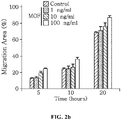
- FIGS. 2A and 2B show the wound healing ability of an MOF when mouse fibroblasts with a scratch were treated with the MOF according to one embodiment of the present invention, in which FIG. 2A is a set of images showing the wound healing ability by fibroblast migration over time, and FIG. 2B is a graph comparing a migration area of the fibroblasts.
- the x axis represents the concentrations of the MOF treated for 5, 10 and 20 hours (Control; 1, 10 and 100 ng/ml)
- the y axis represents the migration area (%) of fibroblasts, and the higher the migration area of the fibroblasts, the better the wound healing ability.
- FIGS. 3A and 3B show a set of images of the wounded dorsal areas of rats on day 0, 3, 7, 10 and 14 after dressing with an MOF-dispersed hydrogel (Control; content: 0 wt%, 0.2 wt%) according to one embodiment of the present invention ( FIG. 3A ) and a graph showing the comparison of wound contracture areas ( FIG. 3B ).
- the x axis of the graph of FIG. 3B represents the time elapsed after dressing (day), the y axis represents wound contracture area (%), and the lower the wound contracture area, the better the wound healing ability.
- MOF metal-organic framework
- MOF refers to a porous material in which metal clusters and organic linkers (or organic bridging ligands) are connected by a coordinate bond to form a three-dimensional structure, and may form various MOFs according to the choice of a metal ion and an organic ligand.
- the MOF is porous, which means that there is an empty space in its structure, and depending on the types and binding types of metal ions and organic ligands constituting an MOF, the pore size, porosity, three-dimensional structure and surface area may be designed in various ways.
- the MOF Due to this porosity, the MOF has a very large surface area and an open pore structure, so it is possible to move a large amount of molecules or solvents, compared to other porous materials known in the art, and there is the advantage of maximizing efficiency due to many active sites when used as a catalyst or gas storing body.
- the MOF is not easily deformed at a high temperature and has a rigid backbone, so it has excellent chemical stability and excellent thermal stability.
- the present invention provides a composition for wound healing, which includes an MOF as an active ingredient.
- the MOF may include one or more selected from the group consisting of Al and Zr, and one or more organic ligands selected from the group consisting of 4,4'-biphenyldicarboxylic acid, benzene-1,4-dicarboxylic acid, 9,10-anthracenedicarboxylic acid, biphenyl-3,3,5,5'-tetracarboxylic acid, biphenyl-3,4',5-tricarboxylic acid, 5-bromoisophthalic acid, 5-cyano-1,3-benzenedicarboxylic acid, 2,2-diamino-4,4'-stilbenedicarboxylic acid, 2,5-diaminoterephthalic acid, 1,1,2,2-tetra(4-carboxylphenyl)ethylene, 2,5-dihydroxyterephthalic acid, 2,2-dinitro-4,4-stilbenedicarboxylic acid, 5-ethynyl-1,3-benzenedicarboxylic acid,
- the MOF may be Zr 6 O 4 (OH) 4 (BTC) 2 (HCOO) 6 (MOF-808), Zr 6 O 4 (OH) 4 (fumarate) 6 (MOF-801), Zr 6 O 6 (BDC) 6 , Zr 6 O 6 (NH- 2 -BDC) 6 , Zr 6 O 6 (OH) 4 (BPDC) 6 , Al 3 O(OH)(H 2 O) 2 (BDC-NH 2 ) 3 or Al(OH)(BDC), and more specifically, Zr 6 O 4 (OH) 4 (BTC) 2 (HCOO) 6 (MOF-808), and may be used to ensure stability when treating a wounded skin site, and to heal the wound.
- the type of MOF is not limited as long as it is an MOF that has safety, stability and wound healing ability to be used as an active ingredient of the wound dressing material.
- the MOF may promote skin cell migration.
- the composition including the MOF may promote skin cell migration.
- the wound healing process cell proliferation and migration are important, and the MOF may promote cell migration, thereby enhancing a wound healing effect.
- the skin cells may be skin fibroblasts, but the present invention is not limited thereto.
- when fibroblasts with scratches are treated with the MOF it was confirmed that, as the time passes and the MOF concentration increases, the fibroblasts migrate faster than the control, and it was confirmed that the composition including the MOF has an excellent wound healing effect according to the promotion of fibroblast migration (Experimental Example 2 and FIGS. 2A and 2B ).
- the concentration of the MOF may be 0.001 to 10 ⁇ g/ml.
- the concentration of the MOF may be 0.001 ⁇ g/ml or more, 0.005 ⁇ g/ml or more, 0.01 ⁇ g/ml or more, 0.02 ⁇ g/ml or more, 0.03 ⁇ g/ml or more, 0.04 ⁇ g/ml or more, 0.05 ⁇ g/ml or more, 0.06 ⁇ g/ml or more, 0.07 ⁇ g/ml or more, 0.08 ⁇ g/ml or more, 0.09 ⁇ g/ml or more, 0.1 ⁇ g/ml or more, 0.11 ⁇ g/ml or more, 0.12 ⁇ g/ml or more, 0.13 ⁇ g/ml or more, 0.14 ⁇ g/ml or more, 0.15 ⁇ g/ml or more, 0.16 ⁇ g/ml or more, 0.17 ⁇ g/ml or more, 0.18 ⁇ g
- the MOF may be used to ensure safety against cytotoxicity when treating the wounded site of the skin, and may be used for wound healing.
- the concentration of the MOF is not limited as long as the MOF is included as an active ingredient of the wound dressing material to have safety, stability and wound healing ability.
- the MOF may be included at 0.01 to 10 wt% based on the total weight of the composition. Specifically, the MOF may be included at 0.01 wt% or more, 0.05 wt% or more, 0.1 wt% or more, 0.11 wt% or more, 0.12 wt% or more, 0.13 wt% or more, 0.14 wt% or more, 0.15 wt% or more, 0.16 wt% or more, 0.17 wt% or more, 0.18 wt% or more, 0.19 wt% or more, 0.2 wt% or more, 0.25 wt% or more, 0.3 wt% or more, 0.35 wt% or more, 0.4 wt% or more, 0.45 wt% or more, 0.5 wt% or more, 0.55 wt% or more, 0.6 wt% or more, 0.65 wt% or more, 0.7 wt% or more, 0.71 wt
- the MOF may be used to ensure safety against cytotoxicity when treating a wounded site of the skin, and may be used for wound healing.
- the concentration of the MOF is not limited as long as the MOF is included as an active ingredient of the wound dressing material to have safety, stability and wound healing ability.
- wounds encompass damaged body parts and refer to a state in which the body is damaged, and are also called injuries.
- the wound may be one or more selected from the group consisting of an injury, a non-healing traumatic wound, destruction of tissue by irradiation, an abrasion, a laceration, an avulsion, a penetrating injury, a bullet wound, a cut, a burn, frostbite, a sore, dry skin, keratoderma, a crack, chapped skin, dermatitis, a surgical or vascular disease wound, a bruise, a corneal wound, a bedsore, an abscess, a chronic ulcer, an operative suture site, a spinal injury, a gynecological wound, a chemical wound and acne, but the present invention is not limited thereto.
- a wound and an injury may be used interchangeably.
- a wound and an injury may be used interchangeably.
- the wound healed over time, it was confirmed that the composition including the MOF according to one embodiment of the present invention has a wound healing ability, and thus can be used as a high-functional dressing material for wound treatment or healing (Experimental Example 3 and FIG. 3 ).
- the composition may be a composition for external application to the skin, and may be a liquid, a cream, a paste or a solid.
- the composition may be a pharmaceutical composition or cosmetic composition.
- the pharmaceutical composition may be a composition for wound healing or treatment.
- the pharmaceutical composition may be provided in all formulations suitable for topical administration.
- pharmaceutical composition may be a dermal solution for external use, a suspension, an emulsion, a gel, a patch or a spray, but the present invention is not limited thereto.
- the formulation may be easily prepared by a conventional method known in the art, and a surfactant, an excipient, a hydrating agent, an emulsifier, a suspending agent, a salt or buffer for controlling osmotic pressure, a colorant, a spice, a stabilizer, a preservative, a preserving agent, or other commonly used adjuvants may be used.
- the pharmaceutical composition may further include a pharmaceutically acceptable carrier, excipient or diluent as needed in addition to the above ingredients.
- a pharmaceutically acceptable carrier, excipient or diluent is not limited as long as it does not impair the effect of the present invention, and may include, for example, a filler, an extender, a binder, a wetting agent, a disintegrant, a surfactant, a lubricant, a sweetener, a fragrance or a preservative.
- Representative examples of the pharmaceutically acceptable carriers, excipients or diluents may include lactose, dextrose, sucrose, sorbitol, mannitol, xylitol, maltitol, starch, gelatin, glycerin, acacia gum, alginate, calcium phosphate, calcium carbonate, calcium silicate, cellulose, methyl cellulose, microcrystalline cellulose, polyvinyl pyrrolidone, water, methylhydroxybenzoate, propylhydroxybenzoate, talc, magnesium stearate, mineral oil, propylene glycol, polyethylene glycol, vegetable oil, injectable ester, Witepsol, Macrogol, Tween 61, cacao butter, and laurinum.
- the MOF when used as a quasi-drug, one or more active ingredients exhibiting the same or similar function may be additionally contained.
- the MOF may include a known wound healing component.
- the additional component may be included at 0.0001 wt% to 10 wt% with respect to the total weight of the composition, and the content range may be adjusted by a requirement such as skin safety, or ease of formulation of the MOF according to one embodiment of the present invention.
- the active ingredient of the pharmaceutical composition according to one embodiment of the present invention may vary according to the age, sex, weight, a pathological condition and its severity, an administration route or the judgement of a prescriber.
- a dosage based on such a factor is determined at a level of one of ordinary skill in the art, and a daily dose may be, for example, 0.1 mg/kg/day to 5000 mg/kg/day, and more specifically, 50 mg/kg/day to 500 mg/kg/day, but the present invention is not limited thereto.
- the cosmetic material composition may be a composition for wound relief or recovery.
- the cosmetic material composition may be provided in all formulations suitable for topical application.
- the cosmetic material composition may be provided in the form of a solution, an emulsion obtained by dispersing an oil phase in a water phase, an emulsion obtained by dispersing a water phase in an oil phase, a suspension, a solid, a gel, a powder, a paste, a foam or an aerosol.
- the composition of such a formulation may be prepared according to a conventional method known in the art.
- the cosmetic material composition may contain other components within a range that does not impair the main effect, specifically, components that can give a synergistic effect to the main effect, in addition to the above-described material.
- the cosmetic material composition according to one embodiment of the present invention may include a material selected from the group consisting of a vitamin, a polymer peptide, a polymer polysaccharide and a sphingolipid.
- the cosmetic material composition according to one embodiment of the present invention may include a moisturizer, an emollient, a surfactant, a UV absorbent, a preservative, a bactericide, an antioxidant, a pH adjustor, organic and inorganic pigments, a fragrance, a cooling agent or a deodorant.
- the blending amount of the component can be easily selected by those of ordinary skill in the art within the range that does not impair the purpose and effect of the present invention, and the blending amount may be 0.01 to 5 wt%, and specifically 0.01 to 3 wt% based on the total weight of the composition.
- the composition may be a quasi-drug composition.
- the composition may be a quasi-drug composition for wound healing, which includes an MOF as an active ingredient.
- the quasi-drug composition may further include a pharmaceutically acceptable carrier, an excipient or a diluent as needed, in addition to the above-described component.
- the pharmaceutically acceptable carrier, excipient or diluent is not limited as long as it does not impair the effect of the present invention, and may include, for example, a filler, an extender, a binder, a wetting agent, a disintegrant, a surfactant, a lubricant, a sweetener, a fragrance or a preservative.
- Representative examples of the pharmaceutically acceptable carriers, excipients or diluents may include lactose, dextrose, sucrose, sorbitol, mannitol, xylitol, maltitol, starch, gelatin, glycerin, acacia gum, alginate, calcium phosphate, calcium carbonate, calcium silicate, cellulose, methyl cellulose, microcrystalline cellulose, polyvinyl pyrrolidone, water, methylhydroxybenzoate, propylhydroxybenzoate, talc, magnesium stearate, mineral oil, propylene glycol, polyethylene glycol, vegetable oil, injectable ester, Witepsol, Macrogol, Tween 61, cacao butter, and laurinum.
- the MOF when used as a quasi-drug, one or more active ingredients exhibiting the same or similar function may be additionally contained.
- the MOF may include a known wound healing component.
- the additional component may be included at 0.0001 wt% to 10 wt% with respect to the total weight of the composition, and the content range may be adjusted by a requirement such as skin safety, or ease of formulation of the MOF according to one embodiment of the present invention.
- the quasi-drug composition according to one embodiment of the present invention may be a disinfectant cleanser, a shower foam, an ointment, a wet tissue, a coating agent or the like, but the present invention is not limited thereto.
- the formulation method, dose, usage method and components of the quasi-drug may be suitably selected by a conventional method known in the art.
- the present invention may provide a wound dressing material comprising a hydrophilic superabsorbent polymer and an MOF.
- the wound dressing material may be for wound healing.
- the description of the MOF and wounds is the same as above.
- the hydrophilic superabsorbent polymer refers to a polymer having hydrophilicity among super absorbent polymers (SAPs) having high absorption ability.
- the superabsorbent polymer may be generally obtained by insolubilizing a water-soluble polymer such as starch, polyacrylic acid, polyvinyl alcohol or polyethylene oxide in water by crosslinking, and may absorb hundreds of times more water in the molecule.
- the superabsorbent polymer may be, specifically, polyacrylic acid, polyvinyl alcohol, gelatin, alginate or chitosan, but the present invention is not limited thereto.
- the hydrophilic superabsorbent polymer may be one or more selected from the group consisting of a hydrogel, hyaluronic acid, polyvinyl pyrrolidone, carboxymethyl cellulose, hydroxy ethyl cellulose, xanthan gum and sodium hyaluronate, and specifically, a hydrogel.
- the MOF according to one embodiment of the present invention may be dispersed, and when dressing the wounded area of the skin, safety is ensured and the wound healing effect is shown, and the type of hydrophilic superabsorbent polymer is not limited as long as it has safety, stability and a wound healing ability to be included as an active ingredient of a wound dressing material.
- the wound dressing material including a hydrogel in which an MOF is dispersed according to one embodiment of the present invention
- the wound healed over time, and it was confirmed that the wound dressing material including a hydrophilic superabsorbent polymer including the MOF according to one embodiment of the present invention has an excellent injury or wound healing effect (Experimental Example 3 and FIG. 3 ).
- the present invention provides a method for wound healing, which includes administering or applying a composition including an MOF to a subject in need of wound healing.
- the administration or application in this method may be performed by an administration or application method and an administration or application dose, which are disclosed in the specification.
- the present invention provides a use of an MOF for preparing a pharmaceutical composition for wound healing.
- the present invention provides a use of an MOF for preparing a cosmetic material composition for wound healing.
- the present invention provides a use of an MOF for preparing a quasi-drug composition for wound healing.
- the present invention provides a use of a composition including an MOF for wound healing.
- the present invention provides a composition including an MOF for wound healing.
- the present invention provides a method for wound healing, which includes: applying a wound dressing material comprising a hydrophilic superabsorbent polymer and an MOF to a subject in need of wound healing.
- a wound dressing material comprising a hydrophilic superabsorbent polymer and an MOF
- the application in this method may be performed by the dressing method and dressing dose, disclosed in the specification.
- the present invention provides a use of a wound dressing material comprising a hydrophilic superabsorbent polymer and an MOF for preparing a wound dressing material.
- the present invention provides a use of a wound dressing material comprising a hydrophilic superabsorbent polymer and an MOF for wound healing.
- the present invention provides a composition, which includes a wound dressing material comprising a hydrophilic superabsorbent polymer and an MOF for wound healing.
- MOF-808 as an MOF included as an active ingredient for a wound healing composition and a wound dressing material, the following process was performed.
- a hydrogel (Sigma-Aldrich, poly(acrylic acid) 306223) as a hydrophilic superabsorbent polymer was dissolved in ultrapure water according to a required viscosity, based on the total weight (500 ml).
- 0.1 wt% of the MOF-808 prepared in Example 1 was added to the completely-dissolved polymer solution and dispersed using a homogenizer (CAT, X1740) at 2,500 to 10,000 rpm for 1 hour, and the resulting solution was transferred to a mechanical stirrer (Daihan Scientific, HT-120DX), and stirred at 500 to 1,000 rpm for 1 hour while 0.1 wt% of triethanolamine (KPX) as a pH adjuster was dropped, thereby preparing a hydrogel including MOF-808.
- CAT homogenizer
- HT-120DX mechanical stirrer
- KPX triethanolamine
- MOF-808 which is the MOF prepared in Example 1
- a method suggested in the ISO 10993 biological evaluation of medical devices- Part 5 Test for in vitro cytotoxicity, test on extracts was used, and a cell line used herein was mouse fibroblasts (NIH 3T3, ATCC).
- mice fibroblasts were used after subculturing in DMEM (Gibco, DMEM, powder, high glucose) containing 10% fetal bovine serum (Gibco, Certified FBS) for 3 to 4 passages.
- DMEM Gibco, DMEM, powder, high glucose
- fetal bovine serum Gibco, Certified FBS
- the subcultured cells were seeded at 1 ⁇ 10 5 cells/well in 96-well plates and cultured in DMEM by monolayer culture, the medium was removed, and the MOF-808 prepared in Example 1 was treated at 0.1, 1 or 10 ⁇ g/ml.
- MOF-808 prepared in Example 1 was treated at 0.1, 1 or 10 ⁇ g/ml.
- DMEM for a control, only DMEM was treated.
- the fibroblasts of each sample were incubated in 5% CO 2 at 37 °C in an incubator for 24, 48 or 72 hours and observed under a microscope (OLYMPUS, CKX53 inverted microscope), and cell viability was measured by an MTT assay. The results are shown in FIG. 1 .
- the fibroblasts treated with 0.1 to 10 ⁇ g/ml of MOF-808 showed cell viability corresponding to the control.
- the values of the cell viability at 0.1 and 1 ⁇ g/ml for 24, 48 and 72 hours were similar to or superior to that of the control.
- the values of the cell viability at 10 ⁇ g/ml for 48 and 72 hours were approximately 87.9% and 88.5% of the control.
- the cell viability of the fibroblasts treated with 0.1 ⁇ g/mL or less of the MOF-808 was excellently maintained.
- the MOF-containing composition according to one embodiment of the present invention has no significant difference in cytotoxicity, compared to the control. Since this value corresponds to Grade 1 (cell viability: 80% or more) satisfying the cytotoxicity standard of the standards for approving products of wound healing materials of the Korean Food and Drug Administration (in the evaluation by the cytotoxicity test (elution method) described in ISO 10993-5, Grade 2 is appropriate when 50% or more cells are viable, and there is less cell hemolysis and the empty space between cells is not wide), the MOF-containing composition according to one embodiment of the present invention has excellent safety when applied to a wound site.
- Grade 1 cell viability: 80% or more
- the MOF-containing composition according to one embodiment of the present invention has excellent safety when applied to a wound site.
- MOF-808 which is the MOF prepared in Example 1
- an in vitro scratch wound assay was conducted as follows.
- fibroblasts which are the same as the mouse fibroblasts used in Experimental Example 1 were seeded at 5 ⁇ 10 6 cells/well in 6-well plates and cultured in DMEM (Gibco, DMEM, powder, high glucose) through monolayer culture. Scratches were generated at 100% confluence, followed by removing suspended cells. Subsequently, to confirm the effectiveness of the MOF-808 of Example 1, the MOF-808 was treated by being dispersed at 1, 10 and 100 ng/ml in serum-free DMEM, and then the cells were observed under a microscope (OLYMPUS, CKX53 inverted microscope) at a predetermined time (0, 5, 10 and 20 h), and an area was calculated using Image J (NIH). The results are shown in FIGS. 2A and 2B . Here, the control was treated with untreated serum-free DMEM.
- DMEM Gibco, DMEM, powder, high glucose
- the MOF-containing composition according to one embodiment of the present invention has excellent wound healing ability, which is the wound healing ability according to the promotion of fibroblast migration. Accordingly, the MOF-containing composition according to one embodiment of the present invention has an excellent wound healing effect.
- the following animal test was conducted using the wound dressing material prepared in Example 2, that is, the MOF-808-containing wound dressing material.
- the animal test was conducted with 4-week-old female (240 to 270 g) Sprague-Dawley rats as animal models.
- rats were bred at 20 to 24 °C and a humidity of 40 to 60% in an environment in which light/dark is automatically controlled at 12-hour intervals for one week before the test.
- a control and an experimental group of dressing materials for animal tests were sealed in an aluminum pouch and sterilized with gamma rays (25 kGy) before dressing.
- the control was a hydrogel (0% MOF) not containing the MOF-808 prepared in Example 1, which is an active ingredient
- the experimental group was a hydrogel containing 0.2 wt% MOF-808 (0.2% MOF), which is the hydrogel prepared in Example 2, based on the total weight of the hydrogel.
- the MOF-containing composition and wound dressing material according to one embodiment of the present invention have wound healing ability, and thus can be used as high-functional dressing materials for wound healing.
- the MOF according to one embodiment of the present invention has excellent wound healing ability, and a wound dressing material comprising a hydrophilic superabsorbent polymer in which the MOF is dispersed has excellent wound recovery ability and excellent wound healing ability.
Landscapes
- Health & Medical Sciences (AREA)
- Life Sciences & Earth Sciences (AREA)
- Animal Behavior & Ethology (AREA)
- General Health & Medical Sciences (AREA)
- Public Health (AREA)
- Veterinary Medicine (AREA)
- Chemical & Material Sciences (AREA)
- Epidemiology (AREA)
- Engineering & Computer Science (AREA)
- Medicinal Chemistry (AREA)
- Dermatology (AREA)
- Birds (AREA)
- Pharmacology & Pharmacy (AREA)
- Vascular Medicine (AREA)
- Heart & Thoracic Surgery (AREA)
- Materials Engineering (AREA)
- Biomedical Technology (AREA)
- Hematology (AREA)
- Nuclear Medicine, Radiotherapy & Molecular Imaging (AREA)
- Bioinformatics & Cheminformatics (AREA)
- Organic Chemistry (AREA)
- General Chemical & Material Sciences (AREA)
- Chemical Kinetics & Catalysis (AREA)
- Dispersion Chemistry (AREA)
- Emergency Medicine (AREA)
- Transplantation (AREA)
- Oral & Maxillofacial Surgery (AREA)
- Inorganic Chemistry (AREA)
- Acyclic And Carbocyclic Compounds In Medicinal Compositions (AREA)
- Pharmaceuticals Containing Other Organic And Inorganic Compounds (AREA)
- Compositions Of Macromolecular Compounds (AREA)
- Materials For Medical Uses (AREA)
- Cosmetics (AREA)
Applications Claiming Priority (3)
| Application Number | Priority Date | Filing Date | Title |
|---|---|---|---|
| KR20190167194 | 2019-12-13 | ||
| KR1020200172690A KR102457562B1 (ko) | 2019-12-13 | 2020-12-10 | 금속-유기 골격체를 포함하는 상처 치유용 조성물 |
| PCT/KR2020/018159 WO2021118292A2 (ko) | 2019-12-13 | 2020-12-11 | 금속-유기 골격체를 포함하는 상처 치유용 조성물 |
Publications (2)
| Publication Number | Publication Date |
|---|---|
| EP4074311A2 true EP4074311A2 (de) | 2022-10-19 |
| EP4074311A4 EP4074311A4 (de) | 2023-11-01 |
Family
ID=76330201
Family Applications (1)
| Application Number | Title | Priority Date | Filing Date |
|---|---|---|---|
| EP20900141.1A Withdrawn EP4074311A4 (de) | 2019-12-13 | 2020-12-11 | Zusammensetzung zur wundheilung, die ein metallorganisches gerüst umfasst |
Country Status (5)
| Country | Link |
|---|---|
| US (1) | US20220323330A1 (de) |
| EP (1) | EP4074311A4 (de) |
| JP (1) | JP7465011B2 (de) |
| CN (1) | CN114364379B (de) |
| WO (1) | WO2021118292A2 (de) |
Families Citing this family (5)
| Publication number | Priority date | Publication date | Assignee | Title |
|---|---|---|---|---|
| KR102952793B1 (ko) * | 2021-01-28 | 2026-04-15 | 서울대학교병원 | 금속-유기 골격체 및 실리콘 조성물을 포함하는 실리콘 패치 |
| CN115192762B (zh) * | 2022-08-15 | 2023-11-28 | 浙江理工大学 | 一种医用复合材料及其制备方法和应用 |
| CN115252874B (zh) * | 2022-08-18 | 2023-10-20 | 常州美杰医疗用品有限公司 | 一种可生物降解医用绷带及其制备方法 |
| CN117462734A (zh) * | 2023-09-28 | 2024-01-30 | 江苏恒正合生命科学有限公司 | 一种基于卟啉的无机有机复合物的制备方法与抗菌应用 |
| WO2026047962A1 (ja) * | 2024-08-29 | 2026-03-05 | Blisxia株式会社 | 消臭性が付与された繊維製品 |
Family Cites Families (14)
| Publication number | Priority date | Publication date | Assignee | Title |
|---|---|---|---|---|
| US5156847A (en) * | 1990-09-20 | 1992-10-20 | Walter H. Lewis | Wound-healing composition |
| GB0616350D0 (en) * | 2006-08-17 | 2006-09-27 | Univ St Andrews | Adsorption and release of nitric oxide in metal organic frameworks |
| FR2921661B1 (fr) * | 2007-10-01 | 2013-05-31 | Centre Nat Rech Scient | Solide hybride organique inorganique a surface modifiee. |
| KR100998920B1 (ko) | 2008-08-21 | 2010-12-09 | 한밭대학교 산학협력단 | 창상 치유용 피부 외용제 조성물 |
| US8771756B2 (en) * | 2009-12-28 | 2014-07-08 | Colorado State University Research Foundation | Biocompatible materials for medical devices |
| US10561761B2 (en) | 2014-12-20 | 2020-02-18 | Northwestern University | Polymer metal-organic framework composites |
| KR102561737B1 (ko) | 2015-02-03 | 2023-07-31 | 유니버시티 코트 오브 더 유니버시티 오브 세인트 앤드류스 | No 함유 조성물 |
| DE102015211920A1 (de) * | 2015-06-26 | 2016-12-29 | Henkel Ag & Co. Kgaa | Wasch- oder Reinigungsmittel zur Verringerung von Fehlgerüchen |
| KR101923825B1 (ko) | 2017-08-24 | 2019-02-27 | 국방과학연구소 | 화학작용제 제독제, 이를 이용한 제독방법 및 이를 포함하는 제품 |
| KR102000367B1 (ko) | 2017-12-15 | 2019-07-15 | 연세대학교 산학협력단 | Par1 활성 강화제 및 이를 포함하는 상처 치료용 조성물 |
| KR20190083593A (ko) | 2018-01-04 | 2019-07-12 | 계명대학교 산학협력단 | 만성상처 전용 창상피복제 및 이를 이용하는 방법 |
| CN111440253B (zh) | 2019-01-17 | 2021-08-27 | 中国科学院上海药物研究所 | 立方形环糊精骨架-rgd组合物及其制备方法 |
| CN109985279B (zh) * | 2019-04-01 | 2021-11-19 | 上海师范大学 | 一种复合有载药mof的微图案化纳米纤维材料及其制备方法和应用 |
| CN110483802A (zh) * | 2019-09-10 | 2019-11-22 | 南方科技大学 | 一种金属有机框架材料及其制备方法和应用 |
-
2020
- 2020-12-11 CN CN202080062508.8A patent/CN114364379B/zh active Active
- 2020-12-11 US US17/640,015 patent/US20220323330A1/en not_active Abandoned
- 2020-12-11 JP JP2022515570A patent/JP7465011B2/ja active Active
- 2020-12-11 EP EP20900141.1A patent/EP4074311A4/de not_active Withdrawn
- 2020-12-11 WO PCT/KR2020/018159 patent/WO2021118292A2/ko not_active Ceased
Also Published As
| Publication number | Publication date |
|---|---|
| JP7465011B2 (ja) | 2024-04-10 |
| JP2022547185A (ja) | 2022-11-10 |
| US20220323330A1 (en) | 2022-10-13 |
| EP4074311A4 (de) | 2023-11-01 |
| CN114364379B (zh) | 2024-11-15 |
| CN114364379A (zh) | 2022-04-15 |
| WO2021118292A2 (ko) | 2021-06-17 |
| WO2021118292A3 (ko) | 2021-07-29 |
Similar Documents
| Publication | Publication Date | Title |
|---|---|---|
| EP4074311A2 (de) | Zusammensetzung zur wundheilung, die ein metallorganisches gerüst umfasst | |
| Namviriyachote et al. | Development of polyurethane foam dressing containing silver and asiaticoside for healing of dermal wound | |
| Zhang et al. | A composite hydrogel of chitosan/heparin/poly (γ-glutamic acid) loaded with superoxide dismutase for wound healing | |
| Chopra et al. | Strategies and therapies for wound healing: a review | |
| KR101872429B1 (ko) | 항산화 조성물 | |
| US12582744B2 (en) | Dressings comprising platelet lysate | |
| AU2008342920A1 (en) | Topical application and formulation of erythropoietin for skin wound healing | |
| Sasan et al. | Enhanced wound healing properties of biodegradable PCL/alginate core-shell nanofibers containing Salvia abrotanoides essential oil and ZnO nanoparticles | |
| CN115554187B (zh) | 一种可湿热灭菌的贻贝粘蛋白皮肤修护乳液及其制备方法 | |
| CZ310896A3 (en) | Collagen preparation for controlled release of active substances | |
| CN112891615B (zh) | 一种液体创口贴及其制备方法 | |
| CN110404055A (zh) | 包含胶原和透明质酸钠的药物组合物 | |
| EA014391B1 (ru) | Фармацевтическая композиция для лечения ожогов и способ ее получения | |
| Firmanda et al. | Cellulose‐enriched ascorbic acid for wound dressing application: Future medical textile | |
| CN102058886A (zh) | 医用粉雾剂及其应用 | |
| JPWO2018105738A1 (ja) | 亜鉛イオン徐放性に優れる塩化水酸化亜鉛およびその製造方法 | |
| KR102457562B1 (ko) | 금속-유기 골격체를 포함하는 상처 치유용 조성물 | |
| WO2017101020A1 (zh) | 一种改良的敷料 | |
| Esmaeili et al. | Fabrication and evaluation of a soy protein isolate/collagen/sodium alginate multifunctional bilayered wound dressing: Release of cinnamaldehyde, artemisia absinthium, and oxygen | |
| Cao et al. | Engineered mesenchymal stem cells-laden chondroitin sulfate hydrogel promotes diabetic wound healing through ROS scavenging and macrophage polarization | |
| JPWO2018105739A1 (ja) | 亜鉛イオン徐放性に優れる無機組成物およびその製造方法 | |
| EP3925636A1 (de) | Verbubdmembranen erhaltend ein intelligent freigesetztes zytoprotektivum, das auf das entzünndete gewebe abzielt, und dessen verwendung | |
| Wary et al. | Chitosan gallic acid microsphere incorporated collagen matrix for chronic wounds: Biophysical and biochemical characterization | |
| KR20250020813A (ko) | MXene을 포함하는 자연광 가교 하이드로겔 및 이의 제조방법 | |
| CN112334142A (zh) | 包含β-葡聚糖、甘氨酸及4′,6,7-三甲氧基异黄酮的创伤治疗或皮肤活性用药学组合物 |
Legal Events
| Date | Code | Title | Description |
|---|---|---|---|
| STAA | Information on the status of an ep patent application or granted ep patent |
Free format text: STATUS: THE INTERNATIONAL PUBLICATION HAS BEEN MADE |
|
| PUAI | Public reference made under article 153(3) epc to a published international application that has entered the european phase |
Free format text: ORIGINAL CODE: 0009012 |
|
| STAA | Information on the status of an ep patent application or granted ep patent |
Free format text: STATUS: REQUEST FOR EXAMINATION WAS MADE |
|
| 17P | Request for examination filed |
Effective date: 20220303 |
|
| AK | Designated contracting states |
Kind code of ref document: A2 Designated state(s): AL AT BE BG CH CY CZ DE DK EE ES FI FR GB GR HR HU IE IS IT LI LT LU LV MC MK MT NL NO PL PT RO RS SE SI SK SM TR |
|
| DAV | Request for validation of the european patent (deleted) | ||
| DAX | Request for extension of the european patent (deleted) | ||
| A4 | Supplementary search report drawn up and despatched |
Effective date: 20231002 |
|
| RIC1 | Information provided on ipc code assigned before grant |
Ipc: A61K 8/368 20060101ALI20230926BHEP Ipc: A61K 8/36 20060101ALI20230926BHEP Ipc: A61K 8/28 20060101ALI20230926BHEP Ipc: A61F 13/02 20060101ALI20230926BHEP Ipc: A61F 13/00 20060101ALI20230926BHEP Ipc: A61L 15/60 20060101ALI20230926BHEP Ipc: A61L 15/44 20060101ALI20230926BHEP Ipc: A61Q 19/00 20060101ALI20230926BHEP Ipc: A61K 8/58 20060101ALI20230926BHEP Ipc: A61P 17/02 20060101ALI20230926BHEP Ipc: A61K 9/00 20060101ALI20230926BHEP Ipc: A61K 31/555 20060101ALI20230926BHEP Ipc: A61K 31/28 20060101AFI20230926BHEP |
|
| STAA | Information on the status of an ep patent application or granted ep patent |
Free format text: STATUS: THE APPLICATION IS DEEMED TO BE WITHDRAWN |
|
| 18D | Application deemed to be withdrawn |
Effective date: 20240430 |