EP4069690B1 - Polymorphs of triazole antifungal compound pc945 - Google Patents
Polymorphs of triazole antifungal compound pc945 Download PDFInfo
- Publication number
- EP4069690B1 EP4069690B1 EP20824979.7A EP20824979A EP4069690B1 EP 4069690 B1 EP4069690 B1 EP 4069690B1 EP 20824979 A EP20824979 A EP 20824979A EP 4069690 B1 EP4069690 B1 EP 4069690B1
- Authority
- EP
- European Patent Office
- Prior art keywords
- compound
- crystalline form
- polymorphic
- thf
- pharmaceutical composition
- Prior art date
- Legal status (The legal status is an assumption and is not a legal conclusion. Google has not performed a legal analysis and makes no representation as to the accuracy of the status listed.)
- Active
Links
Images



Classifications
-
- A—HUMAN NECESSITIES
- A61—MEDICAL OR VETERINARY SCIENCE; HYGIENE
- A61K—PREPARATIONS FOR MEDICAL, DENTAL OR TOILETRY PURPOSES
- A61K31/00—Medicinal preparations containing organic active ingredients
- A61K31/33—Heterocyclic compounds
- A61K31/395—Heterocyclic compounds having nitrogen as a ring hetero atom, e.g. guanethidine or rifamycins
- A61K31/495—Heterocyclic compounds having nitrogen as a ring hetero atom, e.g. guanethidine or rifamycins having six-membered rings with two or more nitrogen atoms as the only ring heteroatoms, e.g. piperazine or tetrazines
- A61K31/496—Non-condensed piperazines containing further heterocyclic rings, e.g. rifampin, thiothixene or sparfloxacin
-
- A—HUMAN NECESSITIES
- A61—MEDICAL OR VETERINARY SCIENCE; HYGIENE
- A61K—PREPARATIONS FOR MEDICAL, DENTAL OR TOILETRY PURPOSES
- A61K31/00—Medicinal preparations containing organic active ingredients
- A61K31/70—Carbohydrates; Sugars; Derivatives thereof
- A61K31/7042—Compounds having saccharide radicals and heterocyclic rings
- A61K31/7048—Compounds having saccharide radicals and heterocyclic rings having oxygen as a ring hetero atom, e.g. leucoglucosan, hesperidin, erythromycin, nystatin, digitoxin or digoxin
-
- A—HUMAN NECESSITIES
- A61—MEDICAL OR VETERINARY SCIENCE; HYGIENE
- A61K—PREPARATIONS FOR MEDICAL, DENTAL OR TOILETRY PURPOSES
- A61K47/00—Medicinal preparations characterised by the non-active ingredients used, e.g. carriers or inert additives; Targeting or modifying agents chemically bound to the active ingredient
- A61K47/02—Inorganic compounds
-
- A—HUMAN NECESSITIES
- A61—MEDICAL OR VETERINARY SCIENCE; HYGIENE
- A61K—PREPARATIONS FOR MEDICAL, DENTAL OR TOILETRY PURPOSES
- A61K47/00—Medicinal preparations characterised by the non-active ingredients used, e.g. carriers or inert additives; Targeting or modifying agents chemically bound to the active ingredient
- A61K47/06—Organic compounds, e.g. natural or synthetic hydrocarbons, polyolefins, mineral oil, petrolatum or ozokerite
- A61K47/08—Organic compounds, e.g. natural or synthetic hydrocarbons, polyolefins, mineral oil, petrolatum or ozokerite containing oxygen, e.g. ethers, acetals, ketones, quinones, aldehydes, peroxides
- A61K47/10—Alcohols; Phenols; Salts thereof, e.g. glycerol; Polyethylene glycols [PEG]; Poloxamers; PEG/POE alkyl ethers
-
- A—HUMAN NECESSITIES
- A61—MEDICAL OR VETERINARY SCIENCE; HYGIENE
- A61P—SPECIFIC THERAPEUTIC ACTIVITY OF CHEMICAL COMPOUNDS OR MEDICINAL PREPARATIONS
- A61P31/00—Antiinfectives, i.e. antibiotics, antiseptics, chemotherapeutics
- A61P31/10—Antimycotics
-
- C—CHEMISTRY; METALLURGY
- C07—ORGANIC CHEMISTRY
- C07D—HETEROCYCLIC COMPOUNDS
- C07D405/00—Heterocyclic compounds containing both one or more hetero rings having oxygen atoms as the only ring hetero atoms, and one or more rings having nitrogen as the only ring hetero atom
- C07D405/02—Heterocyclic compounds containing both one or more hetero rings having oxygen atoms as the only ring hetero atoms, and one or more rings having nitrogen as the only ring hetero atom containing two hetero rings
- C07D405/06—Heterocyclic compounds containing both one or more hetero rings having oxygen atoms as the only ring hetero atoms, and one or more rings having nitrogen as the only ring hetero atom containing two hetero rings linked by a carbon chain containing only aliphatic carbon atoms
-
- C—CHEMISTRY; METALLURGY
- C07—ORGANIC CHEMISTRY
- C07B—GENERAL METHODS OF ORGANIC CHEMISTRY; APPARATUS THEREFOR
- C07B2200/00—Indexing scheme relating to specific properties of organic compounds
- C07B2200/13—Crystalline forms, e.g. polymorphs
Definitions
- the invention relates to crystalline polymorphic manifestations of a compound useful in the treatment of mycoses and to compositions and uses thereof.
- Pulmonary aspergillosis can be segmented into either a non-invasive or an invasive condition. A further sub-division is used to characterise the condition in patients who exhibit symptoms having an allergic component to aspergillosis (known as ABPA; allergic bronchopulmonary aspergillosis) compared with those who do not.
- ABPA allergic component to aspergillosis
- the factors precipitating pulmonary aspergillosis may be acute, such as exposure to high doses of immuno-suppressive medicines or to intubation in an intensive care unit. Alternatively, they may be chronic, resulting from a previous infection, such as with TB ( Denning et al., 2011a). Chronic lung infections with aspergillus can leave patients with extensive and permanent lung damage, requiring lifetime treatment with oral azole drugs ( Limper et al., 2011).
- IA Invasive aspergillosis
- Compound I is a potent inhibitor of Aspergillus fumigatus sterol 14 ⁇ -demethylase (CYP51A and CYP51B) and has been characterised as a potent, long acting anti-fungal agent in vitro and in vivo ( Colley et al., 2017). Furthermore, it has been disclosed that topical treatment with Compound I, in combination with a known, systemic triazole agent, demonstrated synergistic antifungal effects against Aspergillus fumigatus in an in vitro human alveolus bilayer model and in the lungs of neutropenic, immunocompromised mice ( Colley et al., 2019).
- Compound I was also found to be a more potent inhibitor than posaconazole, voriconazole and fluconazole of Candida auris isolates collected globally ( Shivaprakash et al., 2019).
- Polymorphism is an important consideration in the development of a medicinal product because of its influence on the physicochemical and biopharmaceutical properties of the compound. This characteristic arises whenever an entity, such as small molecule, can adopt different crystalline lattices. The resulting variation in solid state packing can lead to differences in storage stability, solubility profiles and density thereby affecting formulation and product manufacturing, as well as dissolution characteristics: an important factor in determining bioavailability in vivo.
- the invention provides a compound of formula (I): that is 4-(4-(4-(((3 R ,5 R )-5-((1 H -1,2,4-triazol-1-yl)methyl)-5-(2,4-difluorophenyl)tetrahydrofuran-3-yl)methoxy)-3-methylphenyl)piperazin-1-yl)- N -(4-fluorophenyl)benzamide in a crystalline form wherein the crystalline form is polymorphic Form 1.
- the invention provides a compound of formula (I): that is 4-(4-(4-(((3 R ,5 R )-5-((1 H -1,2,4-triazol-1-yl)methyl)-5-(2,4-difluorophenyl)tetrahydrofuran-3-yl)methoxy)-3-methylphenyl)piperazin-1-yl)- N -(4-fluorophenyl)benzamide in a crystalline form wherein the crystalline form is polymorphic Form 2.
- polymorphic Form 1 and the crystalline polymorphic Form 2 possess distinctly different crystal structures.
- polymorphic Forms 1 and 2 of the invention have the following characteristics and properties which make them particularly suitable for use as therapeutic agents.
- the polymorphs display high melting points [ ⁇ 202°C (Form 1) and ⁇ 183°C (Form 2)]; are physically robust (as determined by XRPD, TGA and DSC analysis); have good chemical stabilities (as determined by 1 H NMR spectroscopy and HPLC analysis); are readily micronised to a respirable particle size; and are bioavailable when administered as an aqueous suspension by inhalation. Therefore, the Form 1 polymorph and the Form 2 polymorph are expected to be useful in various therapeutic applications as described herein.
- An X-ray powder diffraction (XRPD) pattern consists of a plot of diffracted beam intensity versus 2 ⁇ , the diffraction angle.
- the 2 ⁇ peak positions of an X-ray powder diffraction pattern relate directly to the unit-cell of the crystalline phase resulting in a pattern that is unique for each polymorphic form. Consequently an XRPD pattern is characteristic for each polymorph and can be used to distinguish one polymorph from another.
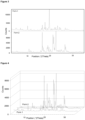
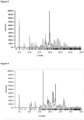
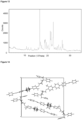
- X-ray powder diffraction patterns were obtained directly from samples of polymorphic Forms 1 and 2, prepared as described herein ( Figs. 1 and 2 ). From visual comparison of the two patterns ( Figs. 3 and 4 ) it is clearly evident that Forms 1 and 2 of Compound I represent two distinct crystalline states.
- the crystalline form of Compound I in polymorphic Form 1 wherein the said crystalline form has an X-ray powder diffraction pattern containing three, four, five, six or seven peaks selected from ( ⁇ 0.2) 7.0, 7.4, 7.9, 18.2, 19.7, 20.8 and 24.7 degrees 2-theta.
- the crystalline form of Compound I in polymorphic Form 1 wherein the said crystalline form has unit cell dimensions of 16.80 ⁇ , 23.58 ⁇ and 25.58 ⁇ , and ⁇ , ⁇ and ⁇ angles of 90°.
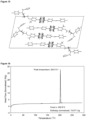
- the crystalline form of Compound I in polymorphic Form 2 wherein the said crystalline form has unit cell dimensions of 16.81 ⁇ , 5.65 ⁇ and 35.56 ⁇ , and an ⁇ angle of 90°, a ⁇ angle of 101.54° and a ⁇ angle of 90°.
- Compound I is disclosed in the prior art in patent application publications WO2016/087878 A1 and WO2016/087880 A1 .
- Compound I prepared as disclosed therein, was isolated by one of the methods comprising: (a) the addition of water to a reaction mixture comprising Compound I in pyridine to obtain crude, solid Compound I, followed by purification by flash column chromatography, eluting with 0-3% MeOH in DCM; (b) the addition of water to a cooled reaction mixture comprising Compound I in DMF followed by further cooling of the reaction mixture and collection by filtration to obtain solid Compound I, followed by slurrying the filter cake in water and collection of the solids by filtration or; (c) the addition of water to a reaction mixture comprising Compound I in DMSO, followed by extraction of Compound I with EtOAc, evaporation of the volatiles in vacuo and purification of the residue by flash column chromatography, eluting with 0-2% MeOH in DCM and re-purification
- polymorphic Form 3 results from the rapid production of Compound I, either by the addition of water to a solution of Compound I in a miscible organic solvent (such as DMF or DMSO) or by evaporation of a solvent mixture following purification by chromatography.
- a miscible organic solvent such as DMF or DMSO
- water is a powerful anti-solvent for Compound I which leads to its rapid deposition, in these instances, in a nearly amorphous state.
- the same principle applies to samples returned from chromatography, whereby the rapid evaporation of the eluent containing Compound I gives rise to polymorphic Form 3, rather than a more ordered crystalline form such as Form 1 or Form 2.
- a representative sample of Form 3 was prepared by the following procedure. To a suspension of 4-(4-(4-(((3 R ,5 R )-5-((1 H -1,2,4-triazol-1-yl)methyl)-5-(2,4-difluorophenyl)tetrahydrofuran-3-yl) methoxy)-3-methylphenyl)piperazin-1-yl)benzoic acid (2.50 g, 4.24 mmol), EDCI (1.63 g, 8.48 mmol) and DMAP (0.03 g, 0.21 mmol) in pyridine (30 mL) was added 4-fluoroaniline (0.41 mL, 4.32 mmol).
- the reaction mixture was stirred at 60°C for 2 hr then cooled to RT, diluted with water (60 mL) and stirred for 5 min.
- the resulting solid was collected by filtration, washed with water (3 x 10 mL) and with diethyl ether (2 x 15 mL) to give a tan coloured powder.
- the crude product so obtained was purified by flash column chromatography (SiO 2 , 40 g, 0-3% MeOH in DCM, gradient elution).
- the resulting yellow solid (2.37 g) was suspended in DMSO (6.50 mL) and the mixture was heated at 60°C until dissolution was complete.
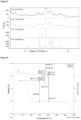
- Figure 7 shows the XRPD pattern of Compound I as polymorphic Form 3 prepared as described above ("Prior Art Sample”), compared with a sample of Form 3 typical of the batches used in the present studies ("Form 3 Reference”) and compared against XRPD patterns obtained from the Form 1 and Form 2 polymorphs.
- the XRPD traces of Form 3 material reveal it to be poorly crystalline and consequently it was not considered a readily developable entity. As a result, no comparative bioavailability data has been obtained for this polymorphic form (see Examples).
- Form 1 and Form 2 constitute an enantiotropic polymorphic pair.
- This property arises from a temperature dependency of their relative thermodynamic stabilities, whereby one of the polymorphs is the most thermodynamically stable manifestation of the material up to a characteristic (empirically determined) temperature; above which their order of stability is inverted.
- suspensions comprising equal amounts of the two polymorphs were matured, in one of six different solvents, at 50°C, 70°C and 135°C (Table 6).
- 50°C, 70°C and 135°C Table 6
- the 1:1 mixtures converted into suspensions containing only the Form 2 polymorph.
- all of the mixtures maintained at a temperature of 135°C were transformed into Form 1.
- Form 1 and 2 polymorphs may readily be micronised. This means that they are suitable for use in formulations for delivery to the respiratory tract (e.g. the lung).
- the studies described herein indicate surprisingly that the Form 2 polymorph, in particular, is a suitable crystalline manifestation of Compound I for formulation as an aqueous suspension despite the evidence that this form is metastable in such environments at ambient temperatures.
- the data obtained from the studies disclosed herein reveal that, in media comprising a high proportion of water the extremely low solubility of Compound I in water provides an effective kinetic barrier to the loss of polymorphic integrity.
- the physicochemical properties of Compound I ensures that the two principal crystalline forms do not readily interconvert under such conditions and consequently retain their initial polymorphic composition.
- the Form 2 polymorph unexpectedly and advantageously exhibits superior bioavailability to that of the Form 1 polymorph when formulated as an aqueous suspension and administrated by inhalation. Accordingly the Form 2 polymorph is a favoured presentation of Compound I for use as an inhaled therapeutic agent in nebulised aqueous suspensions.
- Suitable solvates are obtained when Compound I is maturated in a number of aromatic solvents, such as anisole, acetophenone, benzyl alcohol, chlorobenzene and cumene.
- a suitable solvate is obtained when Compound I is maturated in THF.
- the solvate of Compound I thus obtained contains around 13-14% by weight of solvent when analysed by TGA.
- the Compound I to solvent ratio is approximately stoichiometric (1:1).
- the solvates of Compound I identified were found to desolvate thermally to yield the Form 1 crystalline polymorph.
- the anisole solvate for example, exhibited two sharp endotherms under DSC analysis. The first, occurring at 112-114°C, coincided with a weight reduction of 13.4% as determined from the TGA profile, corresponding to just under one equivalent of solvent and in agreement with 1 H NMR data. The second endotherm, which peaked at 202°C, corresponded to the melting point of Form 1.
- a process for preparing Compound I as the crystalline polymorphic Form 1 which comprises heating Compound I in solvated form, e.g. the solvate formed with anisole, acetophenone, benzyl alcohol, chlorobenzene or cumene, to remove the solvent and thereby produce Compound I as the crystalline polymorphic Form 1.
- Compound I in solvated form is an intermediate in the synthesis of polymorphic Form 1.
- a process for the preparation of Compound I as polymorphic Form 1 comprising the step of crystallising Compound I as polymorphic Form 1 from a solution of Compound I in a solvent wherein the solvent is selected from the group consisting of toluene, 2-methoxyethanol, aqueous IPA (e.g. containing 3-6% H 2 O v/v, such as 5% H 2 O v/v) and aqueous acetone (e.g. containing 5-10% H 2 O v/v).
- the solvent is selected from the group consisting of toluene, 2-methoxyethanol, aqueous IPA (e.g. containing 3-6% H 2 O v/v, such as 5% H 2 O v/v) and aqueous acetone (e.g. containing 5-10% H 2 O v/v).
- the solvent is aqueous acetone (containing 5% H 2 O v/v).
- a process for the preparation of Compound I as polymorphic Form 2 comprising the step of crystallising Compound I as polymorphic Form 2 from a solution of Compound I in a nominally dry organic solvent wherein the solvent is selected from the group consisting of MIBK, THF, PrOAc, EtOH, DME, MeOH, MeCN, MeNO 2 , n-heptane, Et 2 O, IPA, MEK, acetone, TBME, i-BuOH, or a mixture of THF and TBME.
- the process comprises the step of crystallising Compound I as polymorphic Form 2 from a solution of Compound I in a nominally dry, organic solvent mixture, wherein the solvent mixture comprises two or more solvents selected from the group consisting of MIBK, THF, PrOAc, EtOH, DME, MeOH, MeCN, MeNO 2 , n-heptane, Et 2 O, IPA, MEK, acetone, TBME and i-BuOH.
- solvent mixture comprises two or more solvents selected from the group consisting of MIBK, THF, PrOAc, EtOH, DME, MeOH, MeCN, MeNO 2 , n-heptane, Et 2 O, IPA, MEK, acetone, TBME and i-BuOH.
- mistyl means that no water has been added to the solvent.
- trace water may be present though experimental conditions are designed to exclude it.
- the solvent is MIBK.
- the solvent system is a mixture of THF and toluene, wherein suitably the mixture comprises between 2:1 to 1:2 THF:toluene (such as 10:5 v/v; 9:5 v/v; 8:4 v/v; 8:16 v/v THF:toluene respectively).
- the solvent system is a mixture of THF and TBME, wherein suitably the mixture comprises between 4:1 to 1:2 THF:TBME (such as 8:2 v/v; 8:2.5 v/v; 8:4 v/v; 8:6 v/v 8:8 v/v; 8:10 v/v or 8:12 v/v THF:TBME respectively).
- composition comprising the compound of the invention optionally in combination with one or more pharmaceutically acceptable diluents or carriers.
- the compound of the invention is administered topically to the lung or nose, particularly, topically to the lung.
- a pharmaceutical composition comprising the compound of the invention optionally in combination with one or more topically acceptable diluents or carriers.
- the compound of the invention is administered by inhalation.
- the pharmaceutically acceptable diluent or carrier is water.
- compositions may conveniently be administered in unit dosage form and may be prepared by any of the methods well-known in the pharmaceutical art, for example as described in Remington's Pharmaceutical Sciences, 17th ed., Mack Publishing Company, Easton, PA., (1985 ).
- the compositions may also conveniently be administered in multiple unit dosage form.
- compositions for pulmonary or intranasal administration include powders, liquid solutions, liquid suspensions, aqueous suspensions, nasal drops comprising solutions or suspensions or pressurised or non-pressurised aerosols.
- Topical administration to the nose or lung may be achieved by use of a non-pressurised formulation such as an aqueous suspension.
- a non-pressurised formulation such as an aqueous suspension.
- Such formulations may be administered by nebulisation i.e. by means of a nebuliser e.g. one that can be either hand-held and portable or non-portable and intended for home or hospital use.
- a nebuliser e.g. one that can be either hand-held and portable or non-portable and intended for home or hospital use.
- An example of such a device is a RESPIMAT inhaler.
- Liquid suspension and aerosol formulations (whether pressurised or unpressurised) will typically contain the compound of the invention in particulate form, for example with a D 50 of 0.5-10 ⁇ m, suitably around 1-5 ⁇ m, such as 1-2 ⁇ m.
- the compound of the invention in particulate form has a D 10 of 0.2 to 1 ⁇ m, such as 0.2 to 0.5 ⁇ m.
- the compound of the invention in particulate form has a D 90 of 2 to 6 ⁇ m such as 3 to 4 ⁇ m.
- the particulate form of the compound may, for example, be a micronised form. Micronisation may be performed using a jet mill such as those manufactured by Hosokawa Alpine.
- the resultant particle size distribution may be measured using laser diffraction (e.g. with a Malvern Mastersizer2000S instrument).
- Particle size distributions may be represented using D 10 , D 50 and D 90 values.
- the D 50 median value of particle size distributions is defined as the particle size in microns that divides the distribution in half.
- the measurement derived from laser diffraction is more accurately described as a volume distribution and consequently the D 50 value obtained using this procedure is more meaningfully referred to as a Dv 50 value (median for a volume distribution).
- Dv values refer to particle size distributions measured using laser diffraction.
- D 10 and D 90 values used in the context of laser diffraction, are taken to mean Dv 10 and Dv 90 values and refer to the particle size whereby 10% of the distribution lies below the D 10 value, and 90% of the distribution lies below the D 90 value, respectively.
- a pharmaceutical composition comprising the compound of the invention as an aqueous suspension i.e. in particulate form suspended in an aqueous medium.
- the aqueous medium typically comprises water and one or more excipients selected from buffers, tonicity adjusting agents (such as sodium chloride), pH adjusting agents, viscosity modifiers, co-solvents (such as propylene glycol) and surfactants (such as Lipoid S100).
- excipients selected from buffers, tonicity adjusting agents (such as sodium chloride), pH adjusting agents, viscosity modifiers, co-solvents (such as propylene glycol) and surfactants (such as Lipoid S100).
- the aqueous medium comprises at least 40% water such as at least 60% water, at least 80% water, at least 95% water, or at least 99% water, such as at least 99% water.
- Compound I when Compound I is administered as an aqueous suspension, Compound I is employed as crystalline polymorphic Form 2.
- concentration of Compound I in the aqueous suspension formulation is 1-10 mg/mL such as 4-6 mg/mL.
- a pharmaceutical composition comprising Compound I, employed as crystalline polymorphic Form 2, in particulate form suspended in an aqueous medium.
- Aerosol formulations typically comprise the active ingredient suspended or dissolved in a suitable aerosol propellant, such as a chlorofluorocarbon (CFC) or a hydrofluorocarbon (HFC).
- a suitable aerosol propellant such as a chlorofluorocarbon (CFC) or a hydrofluorocarbon (HFC).
- CFC propellants include trichloromonofluoromethane (propellant 11), dichlorotetrafluoromethane (propellant 114), and dichlorodifluoromethane (propellant 12).
- Suitable HFC propellants include tetrafluoroethane (HFC-134a) and heptafluoropropane (HFC-227).
- the propellant typically comprises 40%-99.5%, e.g.
- the formulation may comprise excipients including co-solvents (e.g. ethanol) and surfactants (e.g. lecithin, sorbitan trioleate and the like).
- co-solvents e.g. ethanol
- surfactants e.g. lecithin, sorbitan trioleate and the like.
- Other possible excipients include polyethylene glycol, polyvinylpyrrolidone, glycerine and the like.
- Aerosol formulations are packaged in canisters and a suitable dose is delivered by means of a metering valve (e.g. as supplied by Bespak, Valois or 3M or alternatively by Aptar, Coster or Vari).
- Topical administration to the lung may also be achieved by use of a dry-powder formulation.
- a dry powder formulation will contain the compound of the disclosure in particulate form, typically with an MMAD of 1-10 ⁇ m or a D 50 of 0.5-10 ⁇ m e.g. around 1-5 ⁇ m.
- Powders of the compound of the invention in particulate form may be prepared by a micronisation process or similar size reduction process. Micronisation may be performed and measured as described above.
- the formulation will typically contain a topically acceptable diluent such as lactose, glucose or mannitol (preferably lactose), usually of comparatively large particle size e.g. an MMAD of 50 ⁇ m or more, e.g.
- lactose refers to a lactosecontaining component, including ⁇ -lactose monohydrate, ⁇ -lactose monohydrate, ⁇ -lactose anhydrous, ⁇ -lactose anhydrous and amorphous lactose. Lactose components may be processed by micronisation, sieving, milling, compression, agglomeration or spray drying.
- lactose in various forms are also encompassed, for example Lactohale ® (inhalation grade lactose; DFE Pharma), lnhaLac ® 70 (sieved lactose for dry powder inhaler; Meggle), Pharmatose ® (DFE Pharma) and Respitose ® (sieved inhalation grade lactose; DFE Pharma) products.
- the lactose component is selected from the group consisting of ⁇ -lactose monohydrate, ⁇ -lactose anhydrous and amorphous lactose.
- the lactose is ⁇ -lactose monohydrate.
- Dry powder formulations may also contain other excipients such as sodium stearate, calcium stearate or magnesium stearate.
- a dry powder formulation is typically delivered using a dry powder inhaler (DPI) device.
- DPI dry powder inhaler
- Example dry powder delivery systems include SPINHALER, DISKHALER, TURBOHALER, DISKUS, SKYEHALER, ACCUHALER and CLICKHALER.
- dry powder delivery systems include ECLIPSE, NEXT, ROTAHALER, HANDIHALER, AEROLISER, CYCLOHALER, BREEZHALER/NEOHALER, MONODOSE, FLOWCAPS, TWINCAPS, X-CAPS, TURBOSPIN, ELPENHALER, MIATHALER, TWISTHALER, NOVOLIZER, PRESSAIR, ELLIPTA, ORIEL dry powder inhaler, MICRODOSE, PULVINAL, EASYHALER, ULTRAHALER, TAIFUN, PULMOJET, OMNIHALER, GYROHALER, TAPER, CONIX, XCELOVAIR and PROHALER.
- Compound I is useful in the treatment of mycoses and for the prevention or treatment of disease associated with mycoses.
- crystalline Form 1 or crystalline Form 2 of Compound I for use in the treatment of mycoses or for use in the prevention or treatment of disease associated with mycoses.
- an effective amount of crystalline Form 1 or crystalline Form 2 of Compound I for use in a method of prevention or treatment of disease associated with a mycosis of the lung or nose (particularly the lung) in a subject when administered to said subject, by inhalation.
- Mycoses may, in particular, be caused by Aspergillus spp. such as Aspergillus fumigatus or Aspergillus pullulans. especially Aspergillus fumigatus.
- Mycoses may also be caused by Candida spp., e.g. Candida albicans or Candida glabrata; by Rhizopus spp., e.g. Rhizopus oryzae; by Cryptococcus spp., e.g. Cryptococcus neoformans; by Chaetomium spp., e.g. Chaetomium globosum; by Penicillium spp., e.g. Penicillium chrysogenum and by Trichophyton spp., e.g. Trichophyton rubrum.
- a disease associated with a mycosis is, for example, pulmonary aspergillosis.
- Compound I in the form of the Form 2 polymorph for use in the treatment of mycoses and diseases associated with a mycosis.
- Compound I may be used in a prophylactic setting by administering Compound I prior to onset of the mycosis.
- Compound I may be administered prophylactically to subjects at risk of developing a mycosis such as premature infants, children with congenital defects of the lung or heart, immunocompromised subjects (e.g. those suffering from HIV infection), asthmatics, subjects with cystic fibrosis, elderly subjects and subjects suffering from a chronic health condition affecting the heart or lung (e.g. congestive heart failure or chronic obstructive pulmonary disease).
- Compound I in the form of the Form 1 polymorph for use in the prevention of mycoses and diseases associated with a mycosis.
- Subjects include human and animal subjects, especially human subjects.
- the compound of the invention is especially useful for the treatment of mycoses such as Aspergillus fumigatus infection and for the prevention or treatment of disease associated with mycoses such as Aspergillus fumigatus infection in at-risk subjects.
- At-risk subjects are defined above.
- the compound of the invention is also useful for the treatment of azole resistant mycoses such as azole resistant Aspergillus fumigatus infection, particularly in combination with posaconazole.
- the compound of the invention may be administered in combination with a second or further active ingredient.
- Second or further active ingredients may, for example, be selected from other anti-fungal agents (such as voriconazole or posaconazole), amphotericin B, an echinocandin (such as caspofungin) and an inhibitor of 3-hydroxy-3-methyl-glutaryl-CoA reductase (such as lovastatin, pravastatin or fluvastatin).
- Second or further active ingredients include active ingredients suitable for the treatment or prevention of a mycosis such as Aspergillus fumigatus infection, or disease associated with a mycosis such as Aspergillus fumigatus infection, or conditions co-morbid with a mycosis such as Aspergillus fumigatus infection.
- a mycosis such as Aspergillus fumigatus infection
- disease associated with a mycosis such as Aspergillus fumigatus infection
- conditions co-morbid with a mycosis such as Aspergillus fumigatus infection.
- the compound of the invention may be co-formulated with a second or further active ingredient, or the second or further active ingredient may be formulated to be administered separately, by the same or a different route.
- the compound of the invention may be administered to patients already being treated systemically with an anti-fungal, such as voriconazole or posaconazole.
- an anti-fungal such as voriconazole or posaconazole.
- the compound of the invention may be co-administered, e.g. co-formulated, with one or more agents selected from amphotericin B, an echinocandin, such as caspofungin, and an inhibitor of 3-hydroxy-3-methyl-glutaryl-CoA reductase, such as lovastatin, pravastatin or fluvastatin.
- agents selected from amphotericin B, an echinocandin, such as caspofungin, and an inhibitor of 3-hydroxy-3-methyl-glutaryl-CoA reductase, such as lovastatin, pravastatin or fluvastatin such as lovastatin, pravastatin or fluvastatin.
- the compound of the invention may alternatively (or in addition) be co-administered, e.g. co-formulated, with one or more agents selected from candicidin, filipin, hamycin, natamycin, nystatin, rimocidin, bifonazole, butoconazole, clotrimazole, econazole, fenticonazole, isoconazole, ketoconazole, luliconazole, miconazole, omoconazole, oxiconazole, sertaconazole, sulconazole, tioconazole, albaconazole, efinaconazole, epoxiconazole, fluconazole, isavuconazole, itraconazole, propiconazole, ravuconazole, terconazole, abafungin, amorolfin, butenafine, naftifine, terbinafine, anid
- Preferred combination partners include intraconazole, voriconazole, caspofungin and posaconazole.
- kits of parts comprising: (a) a pharmaceutical composition comprising the compound of the invention optionally in combination with one or more diluents or carriers; (b) a pharmaceutical composition comprising a second active ingredient optionally in combination with one or more diluents or carriers; (c) optionally one or more further pharmaceutical compositions each comprising a third or further active ingredient optionally in combination with one or more diluents or carriers and (d) instructions for the administration of the pharmaceutical compositions to a subject in need thereof.
- the subject in need thereof may suffer from, or be susceptible to, a mycosis such as Aspergillus fumigatus infection.
- the compound of the invention may be administered at a suitable interval, for example once per week, once every other day, once per day, twice per day, three times per day or four times per day.
- a suitable dose amount for a human of average weight is expected to be around 50 ⁇ g to 10 mg/day e.g. 500 ⁇ g to 5 mg/day although the precise dose to be administered may be determined by a skilled person.
- Compound I in the crystalline form of polymorphic Form 1 is expected to have one or more of the following favourable attributes:
- Compound I in the crystalline form of polymorphic Form 2 is expected to have one or more of the following favourable attributes:
- X-Ray powder diffraction patterns were collected on a PANalytical diffractometer using Cu K ⁇ radiation (45 kV, 40 mA), ⁇ - ⁇ goniometer, focusing mirror, divergence slit (1/2"), soller slits at both incident and divergent beam (4 mm) and a PlXcel detector.
- the software used for data collection was X'Pert Data Collector, version 2.2f and the data was presented using X'Pert Data Viewer, version 1.2d.
- XRPD patterns were acquired under ambient conditions via a transmission foil sample stage (polyimide - Kapton, 12.7 ⁇ m thickness film) under ambient conditions using a PANalytical X'Pert PRO.
- the data collection range was 2.994-35°2 ⁇ with a continuous scan speed of 0.202 s -1 .
- X-Ray powder diffraction patterns were collected on a Bruker AXS C2 GADDS diffractometer using Cu K ⁇ radiation (40 kV, 40 mA), using an automated XYZ stage, laser video microscope for auto-sample positioning and a HiStar 2-dimensional area detector.
- X-ray optics consisted of a single Göbel multilayer mirror coupled with a pinhole collimator of 0.3 mm.
- a weekly performance check was carried out using a certified standard NIST 1976 Corundum (flat plate). The beam divergence was approximately 4 mm.
- a ⁇ - ⁇ continuous scan mode was employed with a sample to detector distance of 20 cm, thereby providing an effective 2 ⁇ range of 3.2°-29.7°.
- samples were exposed to the X-ray beam for 120 sec.
- the software used for data collection was GADDS for XP/2000 4.1.43 and the data were analysed and presented using Diffrac Plus EVA v15.0.0.0.
- Samples run under ambient conditions were prepared as flat plate specimens using powder, as received, without grinding. Approximately 1-2 mg of the sample was lightly pressed on a glass slide to obtain a flat surface. Samples run under non-ambient conditions were mounted on a silicon wafer with heat-conducting compound. The sample was then heated to the appropriate temperature at 20°C/min and subsequently held isothermally for 1 min before data collection was initiated.
- X-Ray powder diffraction patterns were collected on a Bruker D8 diffractometer using Cu K ⁇ radiation (40 kV, 40 mA), ⁇ -2 ⁇ goniometer, and divergence of V4 and receiving slits, a Ge monochromator and a Lynxeye detector. The instrument was checked for its performance using a certified Corundum standard (NIST 1976). The software used for data collection was Diffrac Plus XRD Commander v2.6.1 and the data were analysed and presented using Diffrac Plus EVA v15.0.0.0.
- the data was collected on a Fluid Film Devices 3-circle diffractometer using a Dectris Pilatus 2M detector.
- the crystal was mounted in a MiTeGen loop using a perfluoropolyether oil.
- the wavelength used was 0.6889 ⁇ . All data were collected at 295 K.
- the structure was solved by routine automatic direct methods and refined by least-squares refinement on all unique measured F 2 values.
- NMR spectra were collected on a Bruker 400 MHz instrument equipped with an auto-sampler and controlled by a DRX400 console. Automated experiments were acquired using ICON-NMR v4.0.7 running with Topspin v1.3 using the standard Bruker loaded experiments. For non-routine spectroscopy, data were acquired through the use of Topspin alone. Samples were prepared in DMSO- d 6 , unless otherwise stated. Off-line analysis was carried out using ACD Spectrus Processor 2012.
- DSC data were collected on a TA Instrument Q2000 equipped with a 50 position auto-sampler.
- the calibration for thermal capacity was carried out using sapphire and the calibration for energy and temperature was carried out using certified indium.
- 0.5-3 mg of sample, contained in a pin-holed aluminium pan was heated at 10°C/min from 25°C to 300°C (for slow scan rates) or at 40°C/min from 25°C to 300°C (for fast scanning rates).
- a purge of dry nitrogen at 50 mL/min was maintained over the sample.
- the instrument control software was Advantage for Q Series v2.8.0.394 and Thermal Advantage v5.5.3 and the data were analysed using Universal Analysis v4.5A.
- TGA data were collected on a TA Instrument Q500 TGA, equipped with a 16 position auto-sampler.
- the instrument was temperature calibrated using certified Alumel and Nickel. Typically 5-10 mg of sample was loaded onto a pre-tared aluminium DSC pan and heated at 10°C/min from ambient temperature to 350°C. A nitrogen purge at 60 mL/min was maintained over the sample.
- the instrument control software was Advantage for Q Series v2.5.0.256 and Thermal Advantage v5.5.3 and the data were analysed using Universal Analysis v4.5A.
- the XRPD trace of the micronised solid ( Fig. 10 ) confirmed that its polymorphic integrity was retained during this process.
- the maintenance of polymorphic integrity during micronisation was confirmed from the XRPD trace obtained after milling ( Fig. 13 ) which shows no significant change compared with that obtained before particle size reduction was undertaken ( Fig. 11 ).
- the Form 2 polymorph is therefore susceptible to and stable towards the micronisation process required to derive a material with the properties necessary for its intended purpose.
- Table 3 Powder X-ray Diffraction Peaks for Polymorphic Forms 1 and 2 of Compound I.
- Form 1 Form 2 2 ⁇ Value d-spacing ( ⁇ ) Rel Intensity (%) 2 ⁇ Value d-spacing ( ⁇ ) Rel Intensity (%) 5.06 17.46 12.95 5.37 16.44 4.84 5.65 15.65 6.09 10.75 8.23 16.17 6.99 12.64 12.06 11.54 7.67 8.23 7.35 12.02 5.80 11.85 7.47 3.04 7.91 11.18 6.55 12.77 6.93 3.63 8.15 10.85 3.43 14.41 6.15 2.05 10.17 8.70 21.46 15.88 5.58 8.28 11.13 7.95 2.80 16.19 5.48 3.95 11.60 7.63 7.57 16.61 5.33 94.97 12.84 6.89 2.75 17.02 5.21 22.15 13.11 6.75 3.15 17.45 5.08 10.17 14.51 6.10 3.51 17.91 4.95 3.92 15.28 5.80 2.80 18.72 4.74 22.45 15.88 5.58 2.71 19.08 4.65 31.18 16.28 5.45 10.51 19.52
- Crystal Data for Form 2 were collected from a 5 x 5 x 50 ⁇ m single crystal on beamline I19.
- the crystal data and structure refinement parameters for the Form 2 crystalline polymorph are given below (Table 5) and an image of the solved structure, viewed along its b-axis, included herein ( Fig. 15 ).
- Table 5 Crystal Data and Structure Refinement Parameters for Polymorphic Form 2.
- Table 6 XRPD Analysis of Suspensions of Forms 1 and 2 Matured at Varying Temperatures. Entry Solvent Polymorph obtained at temp indicated a (°C) 50 70 135 1 xylenes 2 2 1 2 mesitylene 2 2 1 3 diphenyl ether 2 2 1 b 4 decalin 2 2 1 b 5 heptanol 2 2 1 b 6 p -cymene 2 2 1 b Footnotes: a. As determined by XRPD analysis after 72 hr; b. Dissolution occurred at this temp; solid obtained on slight cooling.
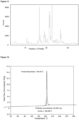
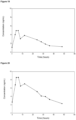
- Figure 16 comprises a fast scanning DSC trace of this sample of polymorphic Form 1 and reveals that it has a melting point of 202.6°C.
- Figure 17 displays a fast scanning DSC trace of this sample of polymorphic Form 2 and shows that this form has a melting point of 182.6°C.
- Form 2 is the more thermodynamically stable state (has the lowest Gibbs free energy) from absolute zero up to a transition point, which is the temperature at which Forms 1 and 2 have equal thermodynamic stability. Above this transition temperature the Form 1 polymorph is the more thermodynamically preferred until its melting point is reached.
- TGA profiling was carried out according to methods described above and was used to determine the amount of residual solvents associated with the polymorphs of Compound I. In addition, it was used to measure the quantity of solvent released on heating from the solvated forms of Compound I. Typical residual solvent levels found in samples of the polymorphs of Compound I are as follows.
- the Form 1 polymorph prepared from toluene showed a weight reduction of 0.3% w/w on heating from 25-120°C, consistent with the loss of 0.1 mol of water. Degradation was evident from 320°C (data not shown).
- the sample of Form 2 derived from EtOH exhibited a 0.2% w/w drop in weight from 25-150°C, ascribed to the loss of 0.03 mol of EtOH, Degradation of Compound I started at 320°C.
- the Form 2 polymorphic material isolated from MIBK revealed no weight loss until the sample began to degrade at 320°C ( Fig. 18 ).
- the anisole solvate experienced a 13.4% w/w loss when the sample was heated from 25 and 160°C (data not shown).
- Table 9 The Fate of Form 2 Slurried in Acetone, Water and Acetone/Water Mixtures. Entry Water Content (vol%) Temp (°C) Polymorphic Form by XRPD 1 and 4 hr 24 hr 1 0 25 2 2 2 10 2 2 3 20 2 2 4 40 2 2 5 100 2 2 6 0 50 2 2 7 10 2 1 8 20 2 2 9 40 2 1 10 100 2 2
- the male RccHan TM :WIST rat was considered a suitable species and strain because of its acceptance by regulatory agencies.
- the inhalation route of administration was chosen to simulate the conditions of clinical administration. A total of 14 of animals (six animals per group with two spare animals), 10 to 12 weeks of age and weighing 306 to 341 g at the start of drug treatment, were used in the study. Treatment consisted of a single 2 hour inhalation exposure with a nebulised formulation of either micronised Form 1 (98.94% purity) to Group 1 animals or micronised Form 2 (98.10% purity) to Group 2 animals.
- the pharmacokinetic parameters of the two polymorphic forms were determined to support pharmacology and toxicology studies in animals and clinical studies in man.
- Suspensions were manufactured by first preparing a concentrated solution of the surfactants (wetting solution) and a saline solution. These were then used to make the vehicle.
- a saline solution was prepared as follows. Sodium chloride (50 g) was weighed into a 5000 mL volumetric flask, made up to volume with water, stirred with a magnetic stirrer for 10 min and then passed through a 0.22 ⁇ m membrane filter. Wetting solution was prepared as follows.
- Lipoid S100 (10 g) was weighed into a 2000 mL Duran bottle, 1000 g of propylene glycol was added and the mixture was stirred on a Silverson mixer equipped with a 1" high shear screen for 1 min at 8000 rpm and then passed through a 0.22 ⁇ m membrane filter.
- Vehicle was prepared as follows. The wetting solution (500 mL) was transferred into a 5000 mL volumetric flask, made to volume with saline solution, stirred with a magnetic stirrer for 10 min and then passed through a 0.22 ⁇ m membrane filter.
- a 1000 mL batch of 4 mg/mL suspension of Compound I was prepared as follows. Compound I (4.00 g) was weighed into a small beaker, 100 mL of wetting solution was added and the mixture was stirred with a Silverson mixer equipped with a 1" high shear screen for 5 min at 8000 rpm. The mixture was then transferred into a 5000 mL Duran bottle using saline solution and stirred using a Silverson mixer equipped with a 1" high shear screen for 5 min at 8000 rpm, after which it was stored between 2 and 8°C.
- Higher or lower strength suspensions (range 0.2 to 20 mg/mL) were prepared by adjusting the input weight of API as appropriate for higher mg/mL suspensions or by further diluting with vehicle for lower mg/mL suspensions. All formulations were magnetically stirred for at least 30 min, and assessed visually prior to administration.
- Rats were acclimatised to the inhalation dosing procedure for three consecutive days prior to dosing. Animals were treated with the test substance by aerosol inhalation administration for 120 min via snout only exposure, at a target aerosol concentration of 25.2 ⁇ g/L.
- Table 14 The mean achieved aerosol concentrations, estimated inhaled dose and particle size distribution (PSD) summary data are presented below. (Table 14). Table 14: Chamber Aerosol Concentrations and Estimated Inhaled Dosages of Compound I Attained During Aerosol Inhalation Administration. Group No Average Aerosol Conc ( ⁇ g/L) Estimated Inhaled Dose (mg/kg) MMAD ( ⁇ m) ⁇ g 1 28.8 2.48 2.3 1.60 2 32.6 2.82 2.2 1.70 Footnotes: MMAD. Mass median aerodynamic diameter; og. Geometric standard deviation
- target aerosol concentrations of 25.2 ⁇ g/L were selected to deliver nominal doses of 2.2 mg/kg.
- An actual aerosol concentration of 28.8 ⁇ g/L of Form 1 was achieved providing an estimated inhaled dosage of approximately 2.48 mg/kg to Group 1 animals.
- the aerosol concentration attained for Form 2 was 32.6 ⁇ g/L thereby delivering an estimated inhaled dosage of approximately 2.82 mg/kg for Group 2 animals.
- the achieved aerosol concentrations were close to the target value and the estimated inhaled doses were 113% and 128% of target for Groups 1 and 2 respectively.
- the particle size distribution confirmed that the generated aerosols were respirable to the rat.
- Venous blood samples (0.3 mL) were taken from the tail vein of animals and samples collected after dosing (2 hr from the start of dose administration) and thereafter at times 3, 4, 6, 8, 12, 24, 28, 32, 36 and 48 hr following treatment. Samples were treated with K 2 EDTA anticoagulant, spun at 2000 g for 10 min at 4°C and then stored frozen (-20°C ⁇ 10) whilst awaiting analysis. Plasma samples were subsequently analysed for Compound I by LGC using a validated LC-MS/MS method.
- Rat plasma samples were vortex mixed and a 25 ⁇ L aliquot removed and treated with 12.5 ⁇ L of internal standard working solution (comprising 20 ng/mL of Compound 2) and 25 ⁇ L of 10 mM aq ammonium formate solution.
- the mixture was vortexed for 5 min at 1400 rpm, after which 300 ⁇ L of MTBE was added and the sample was then tumble mixed for 10 min. Following centrifugation at 3500 g for 5 min an aliquot of 150 ⁇ L of the organic layer was removed and evaporated to dryness under nitrogen at 50°C for approximately 15 min.
- the residue was reconstituted in 100 ⁇ L of a mixture of acetonitrile and water (50:50) containing 0.1% formic acid and vortex mixed for 5 min at 1400 rpm. Samples prepared in this manner were then analysed using a validated LC-MS/MS to determine the original plasma concentration of Compound I.
- the LC system comprised an Acquity Binary Solvent Manager fitted with an Acquity UPLC C8 (50 x 2.1 mm) analytical column, the latter maintained at a nominal temperature of 40°C. Samples were analysed over a run time of 2.3 min by gradient elution (Table 15) using 0.1% formic acid in acetonitrile (mobile phase A) and 0.1% formic acid in water (mobile phase B) at a flow rate of 0.8 mL/min. Table 15: HPLC Eluent Gradient Profile. Time (min) %A %B 0 30 70 0.2 30 70 1.4 95 5 1.9 95 5 2.0 30 70 2.3 30 70
- Compound I was used as a reference standard and the tetra deutero derivative Compound 2 was employed as the internal standard.
- Compound 2 is: 4-(4-(4-(((3 R ,5 R )-5-((1 H -1,2,4-triazol-1-yl)methyl)-5-(2,4-difluorophenyl)tetrahydrofuran-3-yl)methoxy)-3-methylphenyl)piperazin-1-yl)- N- (4-fluorophenyl-2,3,5,6-d 4 )benzamide.
- Table 16 Mean Pharmacokinetic Parameters for Forms 1 and 2 of Compound I Following their Inhalation Administration to Rats.
- Pharmacokinetic Parameters Mean Form 1 Form 2 Nominal dose (mg/kg) 2.2 2.2 Estimated inhaled dose (mg/kg) 2.48 2.82 C max (ng/mL) 4.95 8.59 T max (hr) 6 6 AUCt (ng.h/mL) a 122 230 AUCt dose normalised (ng.h/mL) b 122 202 Relative bioavailability Reference (100%) 166% Footnotes: a. Both AUCt values are 0-48 hr; b. AUCt of Form 2 normalised to dose achieved for Form 1 (2.48 mg/kg)
- the mean plasma concentrations of Form 1 (Group 1) increased to a maximum at 6 hr after the start of exposure and thereafter declined steadily to the last sampling time of 48 hr after the start of exposure.
- the mean C max was 4.95 ng/mL and the mean AUC t value was 122 ng.h/mL for Form 1.
- the mean plasma concentrations of Form 2 increased to a maximum 6 hr after the start of exposure and thereafter declined steadily to 48 hr after the start of exposure.
- the mean C max was 8.59 ng/mL and the mean AUC t value was 230 ng.h/mL for Form 2.
- RF AUC t Form 2 / AUC t Form 1 ⁇ achieved dose Form 1 / achieved dose Form 2
- the dose normalised AUCt values for the Form 2 polymorph indicate a relative bioavailability of 166% relative to Form 1 following inhaled administration to rats.
- Form 2 polymorph may be expected to have utility in the treatment of mycoses wherein fast dissolution and amplification of the drug concentration at the site of therapeutic action is required.
- an aqueous suspension it appears that Form 2 is prevented from transitioning to Form 1, although Form 2 is thought to be metastable in this environment, as discussed above.
- the Form 2 polymorph is especially suitable for administration by inhalation as an aqueous suspension.
- Form 1 may also be expected to have utility in the treatment of mycoses as exemplified by the systemic bioavailability of this polymorphic form.
- the Form 1 polymorph may be expected to have utility in formulations other than aqueous suspensions such as creams and pessaries.
- Such administration may have utility in the prevention of mycoses in individuals who are at risk of being infected with mycoses, such as those affecting the skin and other sites which may be dosed topically.
- the application discloses two new polymorphic forms of Compound I: Form 1 and Form 2. Both forms have good thermal stability as evidenced by their high melting points (see Table 7 ). Additionally both polymorphs have acceptable bioavailability when administered as an aqueous suspension by inhalation, although that of Form 2 is notably higher than that of Form 1 (see relative bioavailability data presented hereinabove). Both crystalline forms are amenable to micronisation to give particle size distributions compatible with inhalation administration (see Figs. 10 and 13 ).
- the Form 1 polymorph is expected to be particularly suited for use in formulations other than aqueous suspensions.
- the Form 2 polymorph is particularly suited for use in aqueous suspension formulations such as those intended for administration by inhalation.
- the invention embraces all combinations of preferred and more preferred groups and suitable and more suitable groups and embodiments of groups recited above.
Landscapes
- Health & Medical Sciences (AREA)
- Chemical & Material Sciences (AREA)
- Organic Chemistry (AREA)
- Life Sciences & Earth Sciences (AREA)
- Animal Behavior & Ethology (AREA)
- General Health & Medical Sciences (AREA)
- Public Health (AREA)
- Veterinary Medicine (AREA)
- Pharmacology & Pharmacy (AREA)
- Medicinal Chemistry (AREA)
- Epidemiology (AREA)
- Chemical Kinetics & Catalysis (AREA)
- General Chemical & Material Sciences (AREA)
- Oncology (AREA)
- Communicable Diseases (AREA)
- Nuclear Medicine, Radiotherapy & Molecular Imaging (AREA)
- Molecular Biology (AREA)
- Engineering & Computer Science (AREA)
- Oil, Petroleum & Natural Gas (AREA)
- Inorganic Chemistry (AREA)
- Pharmaceuticals Containing Other Organic And Inorganic Compounds (AREA)
- Plural Heterocyclic Compounds (AREA)
- Organic Low-Molecular-Weight Compounds And Preparation Thereof (AREA)
- Steroid Compounds (AREA)
- Medicinal Preparation (AREA)
- Medicines That Contain Protein Lipid Enzymes And Other Medicines (AREA)
- Acyclic And Carbocyclic Compounds In Medicinal Compositions (AREA)
Priority Applications (5)
| Application Number | Priority Date | Filing Date | Title |
|---|---|---|---|
| SM20240514T SMT202400514T1 (it) | 2019-12-06 | 2020-12-04 | Polimorfi del composto antimicotico di triazolo pc945 |
| RS20250045A RS66401B1 (sr) | 2019-12-06 | 2020-12-04 | Polimorfi antifungalnog jedinjenja triazola, pc945 |
| EP24212504.5A EP4509179A3 (en) | 2019-12-06 | 2020-12-04 | Polymorphs |
| SI202030565T SI4069690T1 (sl) | 2019-12-06 | 2020-12-04 | Polimorfi triazolske antimikotične spojine pc945 |
| HRP20250042TT HRP20250042T1 (hr) | 2019-12-06 | 2020-12-04 | Polimorfi triazolnog antifungalnog spoja pc945 |
Applications Claiming Priority (2)
| Application Number | Priority Date | Filing Date | Title |
|---|---|---|---|
| GBGB1917867.2A GB201917867D0 (en) | 2019-12-06 | 2019-12-06 | Polymorphs |
| PCT/GB2020/053107 WO2021111142A1 (en) | 2019-12-06 | 2020-12-04 | Polymorphs of triazole antifungal compound pc945 |
Related Child Applications (1)
| Application Number | Title | Priority Date | Filing Date |
|---|---|---|---|
| EP24212504.5A Division EP4509179A3 (en) | 2019-12-06 | 2020-12-04 | Polymorphs |
Publications (2)
| Publication Number | Publication Date |
|---|---|
| EP4069690A1 EP4069690A1 (en) | 2022-10-12 |
| EP4069690B1 true EP4069690B1 (en) | 2024-11-13 |
Family
ID=69171938
Family Applications (2)
| Application Number | Title | Priority Date | Filing Date |
|---|---|---|---|
| EP20824979.7A Active EP4069690B1 (en) | 2019-12-06 | 2020-12-04 | Polymorphs of triazole antifungal compound pc945 |
| EP24212504.5A Pending EP4509179A3 (en) | 2019-12-06 | 2020-12-04 | Polymorphs |
Family Applications After (1)
| Application Number | Title | Priority Date | Filing Date |
|---|---|---|---|
| EP24212504.5A Pending EP4509179A3 (en) | 2019-12-06 | 2020-12-04 | Polymorphs |
Country Status (26)
| Country | Link |
|---|---|
| US (2) | US12491182B2 (enExample) |
| EP (2) | EP4069690B1 (enExample) |
| JP (1) | JP2023505227A (enExample) |
| KR (1) | KR20220110726A (enExample) |
| CN (1) | CN114746415B (enExample) |
| AU (1) | AU2020397613A1 (enExample) |
| BR (1) | BR112022006259A2 (enExample) |
| CA (1) | CA3155829A1 (enExample) |
| CL (1) | CL2022001464A1 (enExample) |
| CO (1) | CO2022007808A2 (enExample) |
| DK (1) | DK4069690T3 (enExample) |
| ES (1) | ES3000984T3 (enExample) |
| FI (1) | FI4069690T3 (enExample) |
| GB (1) | GB201917867D0 (enExample) |
| HR (1) | HRP20250042T1 (enExample) |
| HU (1) | HUE069799T2 (enExample) |
| IL (1) | IL293401A (enExample) |
| LT (1) | LT4069690T (enExample) |
| MX (1) | MX2022006654A (enExample) |
| PL (1) | PL4069690T3 (enExample) |
| PT (1) | PT4069690T (enExample) |
| RS (1) | RS66401B1 (enExample) |
| SA (1) | SA522432879B1 (enExample) |
| SI (1) | SI4069690T1 (enExample) |
| SM (1) | SMT202400514T1 (enExample) |
| WO (1) | WO2021111142A1 (enExample) |
Families Citing this family (3)
| Publication number | Priority date | Publication date | Assignee | Title |
|---|---|---|---|---|
| ES2790875T3 (es) | 2014-12-05 | 2020-10-29 | Pulmocide Ltd | Compuesto antimicótico |
| CN117510488B (zh) * | 2022-07-28 | 2025-12-05 | 博瑞制药(苏州)有限公司 | 一种硫酸艾沙康唑的制备方法 |
| CN117330660A (zh) * | 2023-09-14 | 2024-01-02 | 广州医科大学附属第一医院(广州呼吸中心) | Uplc-ms/ms联用检测艾沙康唑的方法及应用 |
Family Cites Families (12)
| Publication number | Priority date | Publication date | Assignee | Title |
|---|---|---|---|---|
| CA1292472C (en) | 1985-12-03 | 1991-11-26 | Alfonsus Guilielmus Knaeps | Derivatives of ¬¬4-¬4-(4-phenyl-1-piperazinyl)- phenoxymethyl|-1,3-dioxolan-2-yl|methyl|-1h-imidazoles and 1h-1,2,4-triazoles |
| AU2811689A (en) | 1987-11-20 | 1989-06-14 | Schering Corporation | Tri-and tetra-substituted-oxetanes and tetrahydrofurans and intermediates thereof |
| US5039676A (en) | 1990-05-11 | 1991-08-13 | Schering Corporation | Tri- and tetra-substituted-oxetanes and tetrahydrofurans and intermediates thereof |
| IL112081A (en) | 1993-12-21 | 2001-08-26 | Schering Plough Corp | Tetrahydrofuran derivatives, their preparation and antifungal pharmaceutical compositions containing them |
| US5714490A (en) | 1993-12-21 | 1998-02-03 | Schering Corporation | Tetrahydrofuran antifungals |
| US5486625A (en) | 1994-07-08 | 1996-01-23 | Schering Corporation | Process for the preparation of chiral intermediates useful for the synthesis of antifungal agents |
| IL118464A (en) | 1995-06-02 | 2000-08-13 | Schering Corp | (2R-cis)-4-¬4-¬4-¬4¬¬-5-(2',4 dihalophenyl)-tetrahydro-5-(1-H-1,2,4,triazol-1-yl-methyl)furan-3-yl(methoxy¾phenyl¾-1-piperazinyl¬phenyl2,4,dihydro2¬(5)-1-ethyl-2-(5)hydroxy propyl¾-3H-1,2,4-triazol-3-one and pharmaceutical compositions comprising them |
| EP0957101A1 (en) | 1998-05-14 | 1999-11-17 | Janssen Pharmaceutica N.V. | Water soluble azoles as broad-spectrum antifungals |
| WO2002080678A1 (en) | 2001-04-03 | 2002-10-17 | Schering Corporation | Antifungal composition with enhanced bioavailability |
| EP2141159A1 (en) * | 2008-07-03 | 2010-01-06 | Sandoz AG | A Crystalline form of posaconazole |
| WO2013036866A1 (en) | 2011-09-07 | 2013-03-14 | The Johns Hopkins University | Itraconazole analogs and use thereof |
| ES2790875T3 (es) * | 2014-12-05 | 2020-10-29 | Pulmocide Ltd | Compuesto antimicótico |
-
2019
- 2019-12-06 GB GBGB1917867.2A patent/GB201917867D0/en not_active Ceased
-
2020
- 2020-12-04 PT PT208249797T patent/PT4069690T/pt unknown
- 2020-12-04 CA CA3155829A patent/CA3155829A1/en active Pending
- 2020-12-04 HR HRP20250042TT patent/HRP20250042T1/hr unknown
- 2020-12-04 SM SM20240514T patent/SMT202400514T1/it unknown
- 2020-12-04 EP EP20824979.7A patent/EP4069690B1/en active Active
- 2020-12-04 JP JP2022533459A patent/JP2023505227A/ja active Pending
- 2020-12-04 EP EP24212504.5A patent/EP4509179A3/en active Pending
- 2020-12-04 PL PL20824979.7T patent/PL4069690T3/pl unknown
- 2020-12-04 KR KR1020227012753A patent/KR20220110726A/ko active Pending
- 2020-12-04 MX MX2022006654A patent/MX2022006654A/es unknown
- 2020-12-04 RS RS20250045A patent/RS66401B1/sr unknown
- 2020-12-04 DK DK20824979.7T patent/DK4069690T3/da active
- 2020-12-04 FI FIEP20824979.7T patent/FI4069690T3/fi active
- 2020-12-04 BR BR112022006259A patent/BR112022006259A2/pt unknown
- 2020-12-04 LT LTEPPCT/GB2020/053107T patent/LT4069690T/lt unknown
- 2020-12-04 SI SI202030565T patent/SI4069690T1/sl unknown
- 2020-12-04 US US17/782,232 patent/US12491182B2/en active Active
- 2020-12-04 CN CN202080082529.6A patent/CN114746415B/zh active Active
- 2020-12-04 AU AU2020397613A patent/AU2020397613A1/en active Pending
- 2020-12-04 IL IL293401A patent/IL293401A/en unknown
- 2020-12-04 WO PCT/GB2020/053107 patent/WO2021111142A1/en not_active Ceased
- 2020-12-04 ES ES20824979T patent/ES3000984T3/es active Active
- 2020-12-04 HU HUE20824979A patent/HUE069799T2/hu unknown
-
2022
- 2022-06-01 CO CONC2022/0007808A patent/CO2022007808A2/es unknown
- 2022-06-02 CL CL2022001464A patent/CL2022001464A1/es unknown
- 2022-06-05 SA SA522432879A patent/SA522432879B1/ar unknown
-
2025
- 2025-10-15 US US19/359,464 patent/US20260060980A1/en active Pending
Also Published As
| Publication number | Publication date |
|---|---|
| ES3000984T3 (es) | 2025-03-04 |
| BR112022006259A2 (pt) | 2022-06-21 |
| AU2020397613A1 (en) | 2022-06-02 |
| PT4069690T (pt) | 2024-12-13 |
| CN114746415B (zh) | 2025-04-11 |
| US20230028714A1 (en) | 2023-01-26 |
| MX2022006654A (es) | 2022-09-07 |
| PL4069690T3 (pl) | 2025-03-10 |
| RS66401B1 (sr) | 2025-02-28 |
| KR20220110726A (ko) | 2022-08-09 |
| SI4069690T1 (sl) | 2025-03-31 |
| EP4509179A2 (en) | 2025-02-19 |
| CA3155829A1 (en) | 2021-06-10 |
| SMT202400514T1 (it) | 2025-01-14 |
| IL293401A (en) | 2022-07-01 |
| GB201917867D0 (en) | 2020-01-22 |
| EP4069690A1 (en) | 2022-10-12 |
| SA522432879B1 (ar) | 2025-01-26 |
| US20260060980A1 (en) | 2026-03-05 |
| JP2023505227A (ja) | 2023-02-08 |
| DK4069690T3 (da) | 2025-01-20 |
| HRP20250042T1 (hr) | 2025-03-14 |
| CO2022007808A2 (es) | 2022-06-30 |
| WO2021111142A1 (en) | 2021-06-10 |
| FI4069690T3 (fi) | 2025-01-21 |
| HUE069799T2 (hu) | 2025-04-28 |
| CN114746415A (zh) | 2022-07-12 |
| CL2022001464A1 (es) | 2023-03-24 |
| EP4509179A3 (en) | 2025-02-26 |
| US12491182B2 (en) | 2025-12-09 |
| LT4069690T (lt) | 2025-01-10 |
Similar Documents
| Publication | Publication Date | Title |
|---|---|---|
| US20260060980A1 (en) | Polymorphs of triazole antifungal compound pc945 | |
| EP2215087B1 (en) | Xinafoate salt of n4- (2,2-difluoro-4h-benzo [1,4] oxazin-3-one) - 6-yl] - 5-fluoro-n2 - [3-(methylaminocarbonylmethyleneoxy) phenyl] 2,4-pyrimidinediamine | |
| EP3227277B1 (en) | Antimycotic compound | |
| EP3490978B1 (en) | Salts of 2, 6-dimethylpyrimidone derivatives and uses thereof | |
| US10513511B2 (en) | Aqueous suspension formulation comprising 4-(4-(4-(((3R,5R)-5-((1H-1,2,4-triazol-1-yl)methyl)-5-(2,4-difluoro-phenyl)tetrahydrofuran-3-yl)methoxy)-3-methylphenyl) or a pharmaceutically acceptable salt thereof | |
| HK40124005A (en) | Polymorphs | |
| HK40082086B (en) | Polymorphs of triazole antifungal compound pc945 | |
| HK40082086A (en) | Polymorphs of triazole antifungal compound pc945 | |
| EA048470B1 (ru) | Полиморфы триазольного противогрибкового соединения pc945 | |
| US12281077B2 (en) | Solid forms of n-tert-butyl-4[[2-(5-chloro-2-hydroxy-phenyl)acetyl]amino]pyridine-2-carboxamide | |
| HK40009059B (en) | Salts of 2, 6-dimethylpyrimidone derivatives and uses thereof | |
| HK40009059A (en) | Salts of 2, 6-dimethylpyrimidone derivatives and uses thereof | |
| HK1252779B (en) | Antifungal 4-(4-(4-(((3r,5r)-5-((1 h -1,2,4-triazol-1-yl)methyl)-5-(2,4-difluorophenyl)tetrahydrofuran-3-yl)methoxy)- 3-methylphenyl)piperazin-1-yl )-n -(2-h yd roxycyc lo h exyl) b e nzam i d e, or a pharmaceutically acceptable salt thereof | |
| BR112017020807B1 (pt) | Composto 4-(4-(4-(((3r,5r)-5-((1h-1,2,4-triazol-1-il)metil)-5-(2,4- difluorofenil)tetra-hidrofuran-3-il)metóxi)-3-metilfenil)piperazin-1-il)-n-(2- hidroxiciclo-hexil) benzamida antifúngica, seu processo de preparação, e composição farmacêutica | |
| HK1244795B (en) | Antimycotic compound |
Legal Events
| Date | Code | Title | Description |
|---|---|---|---|
| REG | Reference to a national code |
Ref country code: HR Ref legal event code: TUEP Ref document number: P20250042T Country of ref document: HR |
|
| STAA | Information on the status of an ep patent application or granted ep patent |
Free format text: STATUS: UNKNOWN |
|
| STAA | Information on the status of an ep patent application or granted ep patent |
Free format text: STATUS: THE INTERNATIONAL PUBLICATION HAS BEEN MADE |
|
| PUAI | Public reference made under article 153(3) epc to a published international application that has entered the european phase |
Free format text: ORIGINAL CODE: 0009012 |
|
| STAA | Information on the status of an ep patent application or granted ep patent |
Free format text: STATUS: REQUEST FOR EXAMINATION WAS MADE |
|
| 17P | Request for examination filed |
Effective date: 20220616 |
|
| AK | Designated contracting states |
Kind code of ref document: A1 Designated state(s): AL AT BE BG CH CY CZ DE DK EE ES FI FR GB GR HR HU IE IS IT LI LT LU LV MC MK MT NL NO PL PT RO RS SE SI SK SM TR |
|
| DAV | Request for validation of the european patent (deleted) | ||
| DAX | Request for extension of the european patent (deleted) | ||
| REG | Reference to a national code |
Ref country code: HK Ref legal event code: DE Ref document number: 40082086 Country of ref document: HK |
|
| STAA | Information on the status of an ep patent application or granted ep patent |
Free format text: STATUS: EXAMINATION IS IN PROGRESS |
|
| 17Q | First examination report despatched |
Effective date: 20230718 |
|
| GRAP | Despatch of communication of intention to grant a patent |
Free format text: ORIGINAL CODE: EPIDOSNIGR1 |
|
| STAA | Information on the status of an ep patent application or granted ep patent |
Free format text: STATUS: GRANT OF PATENT IS INTENDED |
|
| INTG | Intention to grant announced |
Effective date: 20240126 |
|
| GRAS | Grant fee paid |
Free format text: ORIGINAL CODE: EPIDOSNIGR3 |
|
| GRAJ | Information related to disapproval of communication of intention to grant by the applicant or resumption of examination proceedings by the epo deleted |
Free format text: ORIGINAL CODE: EPIDOSDIGR1 |
|
| GRAL | Information related to payment of fee for publishing/printing deleted |
Free format text: ORIGINAL CODE: EPIDOSDIGR3 |
|
| STAA | Information on the status of an ep patent application or granted ep patent |
Free format text: STATUS: EXAMINATION IS IN PROGRESS |
|
| GRAP | Despatch of communication of intention to grant a patent |
Free format text: ORIGINAL CODE: EPIDOSNIGR1 |
|
| STAA | Information on the status of an ep patent application or granted ep patent |
Free format text: STATUS: GRANT OF PATENT IS INTENDED |
|
| INTC | Intention to grant announced (deleted) | ||
| RAP3 | Party data changed (applicant data changed or rights of an application transferred) |
Owner name: PULMOCIDE LIMITED |
|
| RIN1 | Information on inventor provided before grant (corrected) |
Inventor name: MARSHALL, JAMIE Inventor name: MYKYTIUK, JOHN Inventor name: NORTHEN, JULIAN Inventor name: SULEIMAN, OSAMA Inventor name: BUTTAR, SUZANNE Inventor name: STEELE, GERALD Inventor name: WALLIS, CHRISTOPHER JOHN |
|
| INTG | Intention to grant announced |
Effective date: 20240611 |
|
| GRAF | Information related to payment of grant fee modified |
Free format text: ORIGINAL CODE: EPIDOSCIGR3 |
|
| GRAA | (expected) grant |
Free format text: ORIGINAL CODE: 0009210 |
|
| STAA | Information on the status of an ep patent application or granted ep patent |
Free format text: STATUS: THE PATENT HAS BEEN GRANTED |
|
| AK | Designated contracting states |
Kind code of ref document: B1 Designated state(s): AL AT BE BG CH CY CZ DE DK EE ES FI FR GB GR HR HU IE IS IT LI LT LU LV MC MK MT NL NO PL PT RO RS SE SI SK SM TR |
|
| REG | Reference to a national code |
Ref country code: GB Ref legal event code: FG4D |
|
| REG | Reference to a national code |
Ref country code: CH Ref legal event code: EP |
|
| P01 | Opt-out of the competence of the unified patent court (upc) registered |
Free format text: CASE NUMBER: APP_59127/2024 Effective date: 20241030 |
|
| REG | Reference to a national code |
Ref country code: IE Ref legal event code: FG4D Ref country code: NL Ref legal event code: FP |
|
| REG | Reference to a national code |
Ref country code: DE Ref legal event code: R096 Ref document number: 602020041416 Country of ref document: DE |
|
| REG | Reference to a national code |
Ref country code: PT Ref legal event code: SC4A Ref document number: 4069690 Country of ref document: PT Date of ref document: 20241213 Kind code of ref document: T Free format text: AVAILABILITY OF NATIONAL TRANSLATION Effective date: 20241209 |
|
| REG | Reference to a national code |
Ref country code: DK Ref legal event code: T3 Effective date: 20250114 |
|
| REG | Reference to a national code |
Ref country code: FI Ref legal event code: FGE |
|
| REG | Reference to a national code |
Ref country code: SE Ref legal event code: TRGR |
|
| REG | Reference to a national code |
Ref country code: EE Ref legal event code: FG4A Ref document number: E024816 Country of ref document: EE Effective date: 20241211 |
|
| REG | Reference to a national code |
Ref country code: SK Ref legal event code: T3 Ref document number: E 45654 Country of ref document: SK |
|
| REG | Reference to a national code |
Ref country code: HR Ref legal event code: ODRP Ref document number: P20250042T Country of ref document: HR Payment date: 20250128 Year of fee payment: 5 |
|
| REG | Reference to a national code |
Ref country code: ES Ref legal event code: FG2A Ref document number: 3000984 Country of ref document: ES Kind code of ref document: T3 Effective date: 20250304 |
|
| REG | Reference to a national code |
Ref country code: GR Ref legal event code: EP Ref document number: 20250400162 Country of ref document: GR Effective date: 20250211 |
|
| REG | Reference to a national code |
Ref country code: HR Ref legal event code: T1PR Ref document number: P20250042 Country of ref document: HR |
|
| REG | Reference to a national code |
Ref country code: HU Ref legal event code: AG4A Ref document number: E069799 Country of ref document: HU |
|
| REG | Reference to a national code |
Ref country code: DE Ref legal event code: R097 Ref document number: 602020041416 Country of ref document: DE |
|
| PLBE | No opposition filed within time limit |
Free format text: ORIGINAL CODE: 0009261 |
|
| STAA | Information on the status of an ep patent application or granted ep patent |
Free format text: STATUS: NO OPPOSITION FILED WITHIN TIME LIMIT |
|
| 26N | No opposition filed |
Effective date: 20250814 |
|
| PGFP | Annual fee paid to national office [announced via postgrant information from national office to epo] |
Ref country code: PT Payment date: 20251124 Year of fee payment: 6 |
|
| REG | Reference to a national code |
Ref country code: HR Ref legal event code: ODRP Ref document number: P20250042 Country of ref document: HR Payment date: 20251114 Year of fee payment: 6 |
|
| REG | Reference to a national code |
Ref country code: CH Ref legal event code: U11 Free format text: ST27 STATUS EVENT CODE: U-0-0-U10-U11 (AS PROVIDED BY THE NATIONAL OFFICE) Effective date: 20260101 |
|
| PGFP | Annual fee paid to national office [announced via postgrant information from national office to epo] |
Ref country code: IS Payment date: 20251229 Year of fee payment: 6 |
|
| PGFP | Annual fee paid to national office [announced via postgrant information from national office to epo] |
Ref country code: LT Payment date: 20251118 Year of fee payment: 6 Ref country code: GB Payment date: 20251219 Year of fee payment: 6 |
|
| PGFP | Annual fee paid to national office [announced via postgrant information from national office to epo] |
Ref country code: MC Payment date: 20251211 Year of fee payment: 6 Ref country code: NO Payment date: 20251219 Year of fee payment: 6 |
|
| PGFP | Annual fee paid to national office [announced via postgrant information from national office to epo] |
Ref country code: SM Payment date: 20251222 Year of fee payment: 6 Ref country code: MK Payment date: 20251114 Year of fee payment: 6 Ref country code: AT Payment date: 20251219 Year of fee payment: 6 |
|
| PGFP | Annual fee paid to national office [announced via postgrant information from national office to epo] |
Ref country code: IT Payment date: 20251212 Year of fee payment: 6 Ref country code: FI Payment date: 20251216 Year of fee payment: 6 Ref country code: DK Payment date: 20251222 Year of fee payment: 6 |
|
| PGFP | Annual fee paid to national office [announced via postgrant information from national office to epo] |
Ref country code: LU Payment date: 20251215 Year of fee payment: 6 Ref country code: HR Payment date: 20251114 Year of fee payment: 6 Ref country code: HU Payment date: 20251117 Year of fee payment: 6 Ref country code: NL Payment date: 20251215 Year of fee payment: 6 Ref country code: FR Payment date: 20251211 Year of fee payment: 6 |
|
| PGFP | Annual fee paid to national office [announced via postgrant information from national office to epo] |
Ref country code: AL Payment date: 20251224 Year of fee payment: 6 Ref country code: GR Payment date: 20251219 Year of fee payment: 6 Ref country code: BE Payment date: 20251223 Year of fee payment: 6 Ref country code: TR Payment date: 20251117 Year of fee payment: 6 |
|
| PGFP | Annual fee paid to national office [announced via postgrant information from national office to epo] |
Ref country code: SE Payment date: 20251219 Year of fee payment: 6 |
|
| PGFP | Annual fee paid to national office [announced via postgrant information from national office to epo] |
Ref country code: IE Payment date: 20251215 Year of fee payment: 6 Ref country code: CZ Payment date: 20251120 Year of fee payment: 6 Ref country code: CY Payment date: 20251117 Year of fee payment: 6 |
|
| PGFP | Annual fee paid to national office [announced via postgrant information from national office to epo] |
Ref country code: MT Payment date: 20251230 Year of fee payment: 6 Ref country code: LV Payment date: 20251219 Year of fee payment: 6 |
|
| PGFP | Annual fee paid to national office [announced via postgrant information from national office to epo] |
Ref country code: PL Payment date: 20251114 Year of fee payment: 6 Ref country code: BG Payment date: 20251219 Year of fee payment: 6 |
|
| PGFP | Annual fee paid to national office [announced via postgrant information from national office to epo] |
Ref country code: EE Payment date: 20251231 Year of fee payment: 6 |
|
| PGFP | Annual fee paid to national office [announced via postgrant information from national office to epo] |
Ref country code: RO Payment date: 20251124 Year of fee payment: 6 Ref country code: SK Payment date: 20251121 Year of fee payment: 6 |
|
| PGFP | Annual fee paid to national office [announced via postgrant information from national office to epo] |
Ref country code: RS Payment date: 20251114 Year of fee payment: 6 |
|
| PGFP | Annual fee paid to national office [announced via postgrant information from national office to epo] |
Ref country code: SI Payment date: 20251125 Year of fee payment: 6 |
|
| PGFP | Annual fee paid to national office [announced via postgrant information from national office to epo] |
Ref country code: ES Payment date: 20260122 Year of fee payment: 6 |
|
| PGFP | Annual fee paid to national office [announced via postgrant information from national office to epo] |
Ref country code: DE Payment date: 20251222 Year of fee payment: 6 |
|
| PGFP | Annual fee paid to national office [announced via postgrant information from national office to epo] |
Ref country code: CH Payment date: 20260101 Year of fee payment: 6 |