EP4066972B1 - Rotierendes schneidwerkzeug - Google Patents
Rotierendes schneidwerkzeug Download PDFInfo
- Publication number
- EP4066972B1 EP4066972B1 EP20941778.1A EP20941778A EP4066972B1 EP 4066972 B1 EP4066972 B1 EP 4066972B1 EP 20941778 A EP20941778 A EP 20941778A EP 4066972 B1 EP4066972 B1 EP 4066972B1
- Authority
- EP
- European Patent Office
- Prior art keywords
- straight line
- line portion
- angle
- rotary cutting
- cutting tool
- Prior art date
- Legal status (The legal status is an assumption and is not a legal conclusion. Google has not performed a legal analysis and makes no representation as to the accuracy of the status listed.)
- Active
Links
Images

Classifications
-
- B—PERFORMING OPERATIONS; TRANSPORTING
- B23—MACHINE TOOLS; METAL-WORKING NOT OTHERWISE PROVIDED FOR
- B23C—MILLING
- B23C5/00—Milling-cutters
- B23C5/02—Milling-cutters characterised by the shape of the cutter
- B23C5/10—Shank-type cutters, i.e. with an integral shaft
-
- B—PERFORMING OPERATIONS; TRANSPORTING
- B23—MACHINE TOOLS; METAL-WORKING NOT OTHERWISE PROVIDED FOR
- B23B—TURNING; BORING
- B23B51/00—Tools for drilling machines
-
- B—PERFORMING OPERATIONS; TRANSPORTING
- B23—MACHINE TOOLS; METAL-WORKING NOT OTHERWISE PROVIDED FOR
- B23B—TURNING; BORING
- B23B2250/00—Compensating adverse effects during turning, boring or drilling
- B23B2250/12—Cooling and lubrication
-
- B—PERFORMING OPERATIONS; TRANSPORTING
- B23—MACHINE TOOLS; METAL-WORKING NOT OTHERWISE PROVIDED FOR
- B23B—TURNING; BORING
- B23B2251/00—Details of tools for drilling machines
- B23B2251/14—Configuration of the cutting part, i.e. the main cutting edges
-
- B—PERFORMING OPERATIONS; TRANSPORTING
- B23—MACHINE TOOLS; METAL-WORKING NOT OTHERWISE PROVIDED FOR
- B23C—MILLING
- B23C2210/00—Details of milling cutters
- B23C2210/32—Details of teeth
- B23C2210/321—Lands, i.e. the area on the rake face in the immediate vicinity of the cutting edge
-
- B—PERFORMING OPERATIONS; TRANSPORTING
- B23—MACHINE TOOLS; METAL-WORKING NOT OTHERWISE PROVIDED FOR
- B23C—MILLING
- B23C2210/00—Details of milling cutters
- B23C2210/40—Flutes, i.e. chip conveying grooves
-
- B—PERFORMING OPERATIONS; TRANSPORTING
- B23—MACHINE TOOLS; METAL-WORKING NOT OTHERWISE PROVIDED FOR
- B23C—MILLING
- B23C2210/00—Details of milling cutters
- B23C2210/54—Configuration of the cutting part
-
- B—PERFORMING OPERATIONS; TRANSPORTING
- B23—MACHINE TOOLS; METAL-WORKING NOT OTHERWISE PROVIDED FOR
- B23C—MILLING
- B23C2250/00—Compensating adverse effects during milling
- B23C2250/12—Cooling and lubrication
Definitions
- the present disclosure relates to a rotary cutting tool.
- Japanese Patent Laying-Open No. 2017-159380 discloses an end mill having a rake face in which a plurality of streaks (recesses) are formed.
- DE112017000520T5 relates to an end mill and a method for producing a cut article.
- PTL 1 Japanese Patent Laying-Open No. 2017-159380
- a rotary cutting tool according to the present invention is according to claim 1.
- a rotary cutting tool to suppress breakage of a cutting edge.
- a rotary cutting tool 100 according to the present invention is according to claim 1.
- a difference between a maximum value of an angle formed by two adjacent straight line portions of the plurality of straight line portions and a minimum value of the angle may be more than or equal to 8°, the maximum value corresponding to the first angle ( ⁇ 1 ).
- the plurality of straight line portions includes a first straight line portion 11, a second straight line portion 12, a third straight line portion 13, and a fourth straight line portion 14, first straight line portion 11 being contiguous to flank face 31, second straight line portion 12 being inclined with respect to first straight line portion 11, second straight line portion 12 being contiguous to first straight line portion 11, third straight line portion 13 being inclined with respect to second straight line portion 12, third straight line portion 13 being contiguous to second straight line portion 12, fourth straight line portion 14 being inclined with respect to third straight line portion 13, fourth straight line portion 14 being contiguous to third straight line portion 13.
- a first angle ⁇ 1 formed by first straight line portion 11 and second straight line portion 12 is more than a second angle ⁇ 2 formed by second straight line portion 12 and third straight line portion 13.
- Second angle ⁇ 2 is more than a third angle ⁇ 3 formed by third straight line portion 13 and fourth straight line portion 14.
- the present embodiment will be described in detail with reference to figures. It should be noted that in the below-described figures, the same or corresponding portions are denoted by the same reference characters, and will not be described repeatedly.
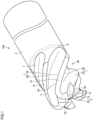
- Fig. 1 is a schematic perspective view showing a configuration of a rotary cutting tool 100 according to the present embodiment.
- Fig. 2 is a schematic side view showing the configuration of rotary cutting tool 100 according to the present embodiment.
- rotary cutting tool 100 according to the present embodiment is, for example, an end mill, and is constituted of a cutting edge portion 90, a joint portion 8, and a shank portion 3.
- Cutting edge portion 90 has first rake faces 10, first flank faces 31, second rake faces 15, second flank faces 33, outer peripheral cutting edges 20, bottom cutting edges 21, and a front end 58.
- Shank portion 3 has a rear end 59.
- Cutting edge portion 90 is fixed to shank portion 3 by joint portion 8.
- Joint portion 8 is a brazing material. Joint portion 8 is located between cutting edge portion 90 and shank portion 3.
- Rotary cutting tool 100 is rotatable about an axial line A. From another viewpoint, it can be said that axial line A is a rotation axis of rotary cutting tool 100.
- a material of cutting edge portion 90 includes a cubic boron nitride (cBN) sintered material, for example.
- the material of cutting edge portion 90 may include diamond.
- the diamond may be a single-crystal diamond or a polycrystalline diamond.
- Shank portion 3 includes a cemented carbide, for example.
- the cemented carbide is, for example, a tungsten carbide (WC)-based cemented carbide, a cemented carbide including Co in addition to WC, or a cemented carbide having a carbonitride of Cr, Ti, Ta, Nb, or the like added therein in addition to WC.
- WC tungsten carbide
- Front end 58 of rotary cutting tool 100 is a portion to face a workpiece.
- Rear end 59 of rotary cutting tool 100 is a portion to face a tool for rotating rotary cutting tool 100.
- Shank portion 3 is a portion to be attached to the tool for rotating rotary cutting tool 100.
- a direction along axial line A is an axial direction.
- a direction perpendicular to the axial direction is a radial direction.
- a direction from front end 58 toward rear end 59 is referred to as "rearward in the axial direction”.
- a direction from rear end 59 toward front end 58 is referred to as "forward in the axial direction”.
- each of first flank faces 31 is contiguous to a corresponding one of first rake faces 10.
- a ridgeline between first rake face 10 and first flank face 31 constitutes outer peripheral cutting edge 20.
- Each of second flank faces 33 is contiguous to a corresponding one of second rake faces 15.
- a ridgeline between second rake face 15 and second flank face 33 constitutes bottom cutting edge 21.
- First rake face 10 is contiguous to second rake face 15.
- First rake face 10 is located rearward in the axial direction with respect to second rake face 15.
- First flank face 31 is contiguous to second flank face 33.
- First flank face 31 is located rearward in the axial direction with respect to second flank face 33.
- First swarf discharging flutes 1 and second swarf discharging flutes 2 are formed in cutting edge portion 90 of rotary cutting tool 100.
- Each of first swarf discharging flutes 1 is constituted of first rake face 10 and a first swarf discharging surface 40.
- Each of second swarf discharging flutes 2 is constituted of second rake face 15 and a second swarf discharging surface 45.
- Second swarf discharging surface 45 is contiguous to first swarf discharging surface 40.
- First swarf discharging flute 1 is provided helically around axial line A.
- Second swarf discharging flute 2 is contiguous to first swarf discharging flute 1. In the direction along axial line A, the length of first swarf discharging flute 1 is longer than the length of second swarf discharging flute 2.
- Rotary cutting tool 100 is, for example, a multi-edged tool.
- the number of outer peripheral cutting edges 20 is, for example, more than or equal to 2.
- the lower limit of the number of outer peripheral cutting edges 20 is not particularly limited, and may be, for example, more than or equal to 4, or more than or equal to 8.
- the upper limit of the number of outer peripheral cutting edges 20 is not particularly limited, and may be, for example, less than or equal to 20, or less than or equal to 16.
- the number of outer peripheral cutting edges 20 is 5.
- the number of bottom cutting edges 21 may be the same as the number of outer peripheral cutting edges 20.
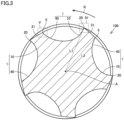
- Fig. 3 is a schematic cross sectional view when viewed along a line III-III of Fig. 2 .
- the cross section is a cross section perpendicular to the axial line.
- the plurality of first swarf discharging flutes 1 are disposed in a peripheral direction (rotation direction R).
- the plurality of first flank faces 31 are disposed in the peripheral direction.
- the plurality of outer peripheral cutting edges 20 are disposed in the peripheral direction. That is, when a combination of a first flank face 31, a first swarf discharging flute 1, and an outer peripheral cutting edge 20 is assumed as one cutting component, a plurality of cutting components are disposed in the peripheral direction.
- first swarf discharging flute 1 is located forward in the rotation direction with respect to first flank face 31.
- first rake face 10 is located forward in the rotation direction with respect to outer peripheral cutting edge 20.
- first swarf discharging surface 40 is located forward in the rotation direction with respect to first rake face 10.
- first flank faces 31 and first swarf discharging flutes 1 are alternately located in rotation direction R.
- One end of each first flank face 31 constitutes outer peripheral cutting edge 20.
- the other end of first flank face 31 constitutes a tail portion 5.
- First flank face 31 is contiguous to first rake face 10 at outer peripheral cutting edge 20.
- First flank face 31 is contiguous to first swarf discharging surface 40 at tail portion 5.
- a length (first length L1) from axial line A to outer peripheral cutting edge 20 is longer than a length (second length L2) from axial line A to tail portion 5.
- first rake face 10 is constituted of a plurality of straight line portions.
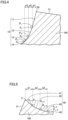
- the plurality of straight line portions include a first straight line portion 11, a second straight line portion 12, a third straight line portion 13, and a fourth straight line portion 14.
- First straight line portion 11 is contiguous to first flank face 31.
- First straight line portion 11 is inclined with respect to first flank face 31.
- a boundary between first straight line portion 11 and first flank face 31 is outer peripheral cutting edge 20.
- Second straight line portion 12 is inclined with respect to first straight line portion 11.
- Second straight line portion 12 is contiguous to first straight line portion 11.
- Second straight line portion 12 is located opposite to first flank face 31 with respect to first straight line portion 11. From another viewpoint, it can be said that first straight line portion 11 is located between second straight line portion 12 and first flank face 31.
- Third straight line portion 13 is inclined with respect to second straight line portion 12.
- Third straight line portion 13 is contiguous to second straight line portion 12.
- Third straight line portion 13 is located opposite to first straight line portion 11 with respect to second straight line portion 12. From another viewpoint, it can be said that second straight line portion 12 is located between third straight line portion 13 and first straight line portion 11.
- Fourth straight line portion 14 is inclined with respect to third straight line portion 13.
- Fourth straight line portion 14 is contiguous to third straight line portion 13.
- Fourth straight line portion 14 is located opposite to second straight line portion 12 with respect to third straight line portion 13. From another viewpoint, it can be said that third straight line portion 13 is located between fourth straight line portion 14 and second straight line portion 12.
- a first angle formed by two adjacent straight line portions of the plurality of straight line portions becomes smaller in a direction further away from first flank face 31.
- a first angle ⁇ 1 formed by first straight line portion 11 and second straight line portion 12 is more than a second angle ⁇ 2 formed by second straight line portion 12 and third straight line portion 13.
- Second angle ⁇ 2 formed by second straight line portion 12 and third straight line portion 13 is more than a third angle ⁇ 3 formed by third straight line portion 13 and fourth straight line portion 14.
- First angle ⁇ 1 is more than or equal to 140° and less than 180°, for example.
- the lower limit of first angle ⁇ 1 is not particularly limited, and may be more than or equal to 150° or may be more than or equal to 160°, for example.
- the upper limit of first angle ⁇ 1 is not particularly limited, and may be less than or equal to 178° or may be less than or equal to 175°, for example.
- a boundary between first straight line portion 11 and second straight line portion 12 is a first position X 1 .
- a boundary between second straight line portion 12 and third straight line portion 13 is a second position X 2 .
- a boundary between third straight line portion 13 and fourth straight line portion 14 is a third position X 3 .
- the length of first straight line portion 11 (distance in a straight line between outer peripheral cutting edge 20 and first position X 1 ) may be larger than the length of second straight line portion 12 (distance in a straight line between first position X 1 and second position X 2 ).
- the length of second straight line portion 12 (distance in a straight line between first position X 1 and second position X 2 ) may be larger than the length of third straight line portion 13 (distance in a straight line between second position X 2 and third position X 3 ).
- a distance (first distance a1) between outer peripheral cutting edge 20 and first position X 1 may be the same as a distance (second distance a2) between first position X 1 and second position X 2 .
- the distance (second distance a2) between first position X 1 and second position X 2 may be the same as a distance (third distance a3) between second position X 2 and third position X 3 .
- first swarf discharging surface 40 may be constituted of, for example, a plurality of straight line portions.
- First swarf discharging surface 40 has, for example, a fifth straight line portion 41, a sixth straight line portion 42, a seventh straight line portion 43, and an eighth straight line portion 44.
- Fifth straight line portion 41 is inclined with respect to first flank face 31.
- Fifth straight line portion 41 is contiguous to tail portion 5.
- Sixth straight line portion 42 is inclined with respect to fifth straight line portion 41.
- Sixth straight line portion 42 is contiguous to fifth straight line portion 41.
- Sixth straight line portion 42 is located opposite to tail portion 5 with respect to fifth straight line portion 41. From another viewpoint, it can be said that fifth straight line portion 41 is located between sixth straight line portion 42 and tail portion 5.
- Seventh straight line portion 43 is inclined with respect to sixth straight line portion 42.
- Seventh straight line portion 43 is contiguous to sixth straight line portion 42.
- Seventh straight line portion 43 is located opposite to fifth straight line portion 41 with respect to sixth straight line portion 42.
- sixth straight line portion 42 is located between seventh straight line portion 43 and fifth straight line portion 41.
- Eighth straight line portion 44 is inclined with respect to seventh straight line portion 43.
- Eighth straight line portion 44 is contiguous to seventh straight line portion 43.
- Eighth straight line portion 44 is located opposite to sixth straight line portion 42 with respect to seventh straight line portion 43. From another viewpoint, it can be said that seventh straight line portion 43 is located between eighth straight line portion 44 and sixth straight line portion 42.
- a fourth angle ⁇ n-1 formed by fifth straight line portion 41 and sixth straight line portion 42 may be more than a fifth angle ⁇ n-2 formed by sixth straight line portion 42 and seventh straight line portion 43.
- Fifth angle ⁇ n-2 formed by sixth straight line portion 42 and seventh straight line portion 43 may be more than a sixth angle ⁇ n-3 formed by seventh straight line portion 43 and eighth straight line portion 44.
- a boundary between fifth straight line portion 41 and sixth straight line portion 42 is a fourth position X n-1 .
- a boundary between sixth straight line portion 42 and seventh straight line portion 43 is a fifth position X n-2 .
- a boundary between seventh straight line portion 43 and eighth straight line portion 44 is a sixth position X n-3 .
- the length of fifth straight line portion 41 (distance in a straight line between tail portion 5 and fourth position X n-1 ) may be larger than the length of sixth straight line portion 42 (distance in a straight line between fourth position X n-1 and fifth position X n-2 ).
- sixth straight line portion 42 (distance in a straight line between fourth position X n-1 and fifth position X n-2 ) may be larger than the length of seventh straight line portion 43 (distance in a straight line between fifth position X n-2 and sixth position X n-3 ).
- a distance (fourth distance b1) between tail portion 5 and fourth position X n-1 may be the same as a distance (fifth distance b2) between fourth position X n-1 and fifth position X n-2 .
- the distance (fifth distance b2) between fourth position X n-1 and fifth position X n-2 may be the same as a distance (sixth distance b3) between fifth position X n-2 and sixth position X n-3 .
- Fig. 6 is a diagram showing a relation between the angle formed by two adjacent straight line portions and the position in the first swarf discharging flute.
- first rake face 10 the angle formed by two adjacent straight line portions may be monotonously decreased in the direction from outer peripheral cutting edge 20 toward first swarf discharging surface 40.
- rake face 10 may be constituted of, for example, more than or equal to 5 straight line portions.
- first swarf discharging surface 40 the angle formed by two adjacent straight line portions may be monotonously decreased in the direction from tail portion 5 toward first rake face 10.
- first swarf discharging surface 40 may be constituted of, for example, more than or equal to 5 straight line portions.
- the surface of first swarf discharging flute 1 may be constituted of a plurality of straight line portions.
- the lower limit of the number of the straight line portions is not particularly limited, and may be more than or equal to 10 or may be more than or equal to 20, for example.
- the upper limit of the number of the straight line portions is not particularly limited, and may be less than or equal to 50 or may be less than or equal to 40, for example.
- a difference (angle difference B) between the maximum value of the angle formed by two adjacent straight line portions and the minimum value of the angle formed by two adjacent straight line portions is, for example, more than or equal to 8°.
- the lower limit of angle difference B is not particularly limited, and may be more than or equal to 10° or may be more than or equal to 12°, for example.
- the upper limit of angle difference B is not particularly limited, and may be less than or equal to 30°, for example.
- Rotary cutting tool 100 is, for example, an end mill, but is not limited to the end mill.
- Rotary cutting tool 100 may be, for example, a reamer, a drill, or a tap.
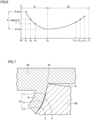
- Fig. 7 is a schematic cross sectional view showing a state in which cutting is performed using rotary cutting tool 100 according to the present embodiment.
- swarf 61 of a workpiece 60 cut by cutting edge 20 of rotary cutting tool 100 is discharged with swarf 61 being in contact with rake face 10.
- swarf 61 may be melted and adhered to rake face 10. The melting and adhesion of swarf 61 may lead to breakage of cutting edge 20.
- rake face 10 is constituted of the plurality of straight line portions. Specifically, in the cross section perpendicular to axial line A, rake face 10 has first straight line portion 11, second straight line portion 12, and third straight line portion 13, second straight line portion 12 being inclined with respect to first straight line portion 11, second straight line portion 12 being contiguous to first straight line portion 11, third straight line portion 13 being inclined with respect to second straight line portion 12, third straight line portion 13 being contiguous to second straight line portion 12.
- swarf 61 is moved on rake face 10
- swarf 61 is curled at a certain curvature.
- a space 9 is formed between curled swarf 61 and the boundary between first straight line portion 11 and second straight line portion 12.
- a space 9 is formed between curled swarf 61 and the boundary between second straight line portion 12 and third straight line portion 13.
- Rotary cutting tools 100 of samples 1 to 8 were prepared.
- Rotary cutting tools 100 of samples 1 to 6 are end mills according to examples of the present disclosure.
- Rotary cutting tool 100 of sample 8 is an end mill according to a comparative example.
- a cBN sintered material is brazed to the tip of the shank portion composed of cemented carbide.
- a plurality of straight line portions are formed in the surface of the swarf discharging flute provided helically in the cBN sintered material.
- the plurality of straight line portions are formed by performing a finishing process onto the surface (rake face) of the swarf discharging flute using a grindstone provided with straight line portions. The process is performed multiple times while changing the angle of the grindstone.
- the surface (rake face) of the swarf discharging flute is curved.
- the number of the straight line portions in first swarf discharging flute 1 was 5.
- the maximum value of the angle formed by two adjacent straight line portions was 178°.
- the minimum value of the angle formed by two adjacent straight line portions was 151°.
- a difference between the maximum value of the angle and the minimum value of the angle was 27°.
- the number of the straight line portions in first swarf discharging flute 1 was 10.
- the maximum value of the angle formed by two adjacent straight line portions was 178°.
- the minimum value of the angle formed by two adjacent straight line portions was 155°.
- a difference between the maximum value of the angle and the minimum value of the angle was 23°.
- the number of the straight line portions in first swarf discharging flute 1 was 20.
- the maximum value of the angle formed by two adjacent straight line portions was 178°.
- the minimum value of the angle formed by two adjacent straight line portions was 162°.
- a difference between the maximum value of the angle and the minimum value of the angle was 16°.
- the number of the straight line portions in first swarf discharging flute 1 was 30.
- the maximum value of the angle formed by two adjacent straight line portions was 178°.
- the minimum value of the angle formed by two adjacent straight line portions was 168°.
- a difference between the maximum value of the angle and the minimum value of the angle was 10°.
- the number of the straight line portions in first swarf discharging flute 1 was 10.
- the maximum value of the angle formed by two adjacent straight line portions was 175°.
- the minimum value of the angle formed by two adjacent straight line portions was 163°.
- a difference between the maximum value of the angle and the minimum value of the angle was 12°.
- the number of the straight line portions in first swarf discharging flute 1 was 10.
- the maximum value of the angle formed by two adjacent straight line portions was 175°.
- the minimum value of the angle formed by two adjacent straight line portions was 167°.
- a difference between the maximum value of the angle and the minimum value of the angle was 8°.
- the number of the straight line portions in first swarf discharging flute 1 was 40.
- the maximum value of the angle formed by two adjacent straight line portions was 176°.
- the minimum value of the angle formed by two adjacent straight line portions was 171°.
- a difference between the maximum value of the angle and the minimum value of the angle was 5°.
- workpieces 60 were processed using respective rotary cutting tools 100 of samples 1 to 8 (see Fig. 7 ).
- Each of workpieces 60 was Ti-6Al-4V.
- a cutting speed (Vc) was set to 300 m/min.
- a feed amount (f) was set to 0.01 mm/cutting edge.
- a cut amount (Ae) in the lateral direction was set to 0.1 mm.
- a cut amount (Ap) in the axial direction was set to 0.5 mm.
- Coolant was an emulsion diluted by 20 times.
- Table 1 shows tool lives when workpieces 60 were processed using respective rotary cutting tools 100 of samples 1 to 8. Each of the tool lives represents a period of time from the start of the processing until breakage of the cutting edge. As shown in Table 1, each of the tool lives when workpieces 60 were processed using rotary cutting tools 100 of samples 1 to 7 was more than or equal to 20 minutes and less than or equal to 50 minutes. On the other hand, the tool life when workpiece 60 was processed using rotary cutting tool 100 of sample 8 was 10 minutes. In view of the above results, it was proved that breakage of the cutting edge can be suppressed when rake face 10 is constituted of the plurality of straight line portions in the cross section perpendicular to axial line A. Also, it was proved that breakage of the cutting edge can be further suppressed when the difference between the maximum value and minimum value of the angle formed by two adjacent straight line portions is more than or equal to 8°.
- first swarf discharging flute 2: second swarf discharging flute; 3: shank portion; 5: tail portion; 8: joint portion; 9: space; 10: first rake face (rake face); 11: first straight line portion; 12: second straight line portion; 13: third straight line portion; 14: fourth straight line portion; 15: second rake face; 20: cutting edge (outer peripheral cutting edge); 21: bottom cutting edge; 31 first flank face (flank face); 33: second flank face; 40: first swarf discharging surface; 41: fifth straight line portion; 42: sixth straight line portion; 43: seventh straight line portion; 44: eighth straight line portion; 45: second swarf discharging surface; 58: front end; 59: rear end; 60: workpiece; 61: swarf; 90: cutting edge portion; 100: rotary cutting tool; A: axial line; B: angle difference; L1: first length; L2: second length; R: rotation direction; X 1 : first position; X 2
Landscapes
- Engineering & Computer Science (AREA)
- Mechanical Engineering (AREA)
- Milling Processes (AREA)
- Drilling Tools (AREA)
Claims (2)
- Rotierendes Schneidwerkzeug (100), das um eine axiale Linie (A) drehbar ist, wobei das rotierende Schneidwerkzeug (100) umfasst:eine erste Spanfläche (10); undeine Flankenfläche (31), die an die erste Spanfläche (10) angrenzt, wobeieine Gratlinie zwischen der ersten Spanfläche (10) und der Flankenfläche (31) eine Schneidkante (20) bildet,die erste Spanfläche (10) in einem Querschnitt senkrecht zu der Achslinie (A) aus zahlreichen geradlinigen Abschnitten ausgebildet ist,eine erste Spanabführrille (1) in dem rotierenden Schneidwerkzeug (100) ausgebildet ist, wobei die erste Spanabführrille (1) schraubenförmig um die axiale Linie (A) herum vorgesehen ist,ein Abschnitt der ersten Spanabführrille (1) aus der ersten Spanfläche (10) und einer ersten Spanabführfläche (40) ausgebildet ist,die zahlreichen geradlinigen Abschnitte einen ersten geradlinigen Abschnitt (11) und einen zweiten geradlinigen Abschnitt (12) umfassen, wobei der erste geradlinige Abschnitt (11) an die Flankenfläche (31) angrenzt, der zweite geradlinige Abschnitt (12) in Bezug auf den ersten geradlinigen Abschnitt (11) geneigt ist, der zweite geradlinige Abschnitt (12) an den ersten geradlinigen Abschnitt (11) angrenzt, ein erster Winkel (θ1), der von dem ersten geradlinigen Abschnitt (11) und dem zweiten geradlinigen Abschnitt (12) ausgebildet ist, mehr als oder gleich 160° beträgt,die zahlreichen geradlinigen Abschnitte einen dritten geradlinigen Abschnitt (13) und einen vierten geradlinigen Abschnitt (14) umfassen, wobei der dritte geradlinige Abschnitt (13) in Bezug auf den zweiten geradlinigen Abschnitt (12) geneigt ist, der dritte geradlinige Abschnitt (13) an den zweiten geradlinigen Abschnitt (12) angrenzt, der vierte geradlinige Abschnitt (14) in Bezug auf den dritten geradlinigen Abschnitt (13) geneigt ist und der vierte geradlinige Abschnitt (14) an den dritten geradlinigen Abschnitt (13) angrenzt,dadurch gekennzeichnet, dass in dem rotierenden Schneidwerkzeug (100) eine zweite Spanabführrille (2) ausgebildet ist, wobei die zweite Spanabführrille (2) aus einer zweiten Spanfläche (15) und einer zweiten Spanabführfläche (45) besteht, die an die erste Spanabführfläche (40) angrenzt,der erste Winkel (θ1) größer ist als ein zweiter Winkel (θ2), der durch den zweiten geradlinigen Abschnitt (12) und den dritten geradlinigen Abschnitt (13) ausgebildet ist, undder zweite Winkel (θ2) größer ist als ein dritter Winkel (θ3), der durch den dritten geradlinigen Abschnitt (13) und den vierten geradlinigen Abschnitt (14) ausgebildet ist.
- Rotationsschneidwerkzeug (100) nach Anspruch 1, bei dem eine Differenz (B) zwischen einem Maximalwert eines Winkels, der von zwei benachbarten geradlinigen Abschnitten der Vielzahl von geradlinigen Abschnitten ausgebildet ist, und einem Minimalwert des Winkels mehr als oder gleich 8° beträgt, wobei der Maximalwert dem ersten Winkel (θ1) entspricht.
Applications Claiming Priority (1)
| Application Number | Priority Date | Filing Date | Title |
|---|---|---|---|
| PCT/JP2020/024452 WO2021260774A1 (ja) | 2020-06-22 | 2020-06-22 | 回転切削工具 |
Publications (3)
| Publication Number | Publication Date |
|---|---|
| EP4066972A1 EP4066972A1 (de) | 2022-10-05 |
| EP4066972A4 EP4066972A4 (de) | 2023-01-25 |
| EP4066972B1 true EP4066972B1 (de) | 2024-09-25 |
Family
ID=79282229
Family Applications (1)
| Application Number | Title | Priority Date | Filing Date |
|---|---|---|---|
| EP20941778.1A Active EP4066972B1 (de) | 2020-06-22 | 2020-06-22 | Rotierendes schneidwerkzeug |
Country Status (6)
| Country | Link |
|---|---|
| US (1) | US11794259B2 (de) |
| EP (1) | EP4066972B1 (de) |
| JP (1) | JP7020620B1 (de) |
| KR (1) | KR102794708B1 (de) |
| CN (1) | CN115720536B (de) |
| WO (1) | WO2021260774A1 (de) |
Families Citing this family (2)
| Publication number | Priority date | Publication date | Assignee | Title |
|---|---|---|---|---|
| CN116984668B (zh) * | 2023-09-13 | 2024-03-08 | 哈尔滨理工大学 | 一种耦合仿生立铣刀 |
| JP7712739B2 (ja) * | 2023-10-23 | 2025-07-24 | 進 中谷 | タップ |
Family Cites Families (28)
| Publication number | Priority date | Publication date | Assignee | Title |
|---|---|---|---|---|
| US2322894A (en) * | 1939-06-29 | 1943-06-29 | Rustless Iron & Steel Corp | Twist drill |
| US3003224A (en) * | 1958-02-06 | 1961-10-10 | Weldon Tool Co | Cutting tool |
| DE3730378A1 (de) * | 1987-09-10 | 1989-03-23 | Micro Crystal Ag | Schneidwerkzeug, insbesondere bohrer und/oder fraeser |
| US5049009A (en) * | 1990-08-21 | 1991-09-17 | The Weldon Tool Company | Improved cutting tool |
| US5192171A (en) * | 1991-01-07 | 1993-03-09 | Gte Valenite Corporation | Chip control insert |
| JPH05228716A (ja) * | 1992-02-13 | 1993-09-07 | Mitsubishi Materials Corp | 転削工具 |
| US5209612A (en) | 1992-03-27 | 1993-05-11 | The Budd Company | Cutting tool |
| JP3335401B2 (ja) * | 1993-01-20 | 2002-10-15 | 日進工具株式会社 | エンドミル |
| JPH0871831A (ja) * | 1994-09-08 | 1996-03-19 | Mitsubishi Materials Corp | エンドミル |
| DE29601653U1 (de) * | 1995-03-30 | 1996-08-01 | Gühring, Jörg, Dr., 72458 Albstadt | Schneidwerkzeug |
| JPH1086014A (ja) * | 1996-09-11 | 1998-04-07 | Hitachi Tool Eng Ltd | フライス用ブレーカ付きスローアウェイチップ |
| JP3739591B2 (ja) * | 1999-04-05 | 2006-01-25 | 三菱マテリアル株式会社 | ソリッドエンドミル |
| JP2002337017A (ja) * | 2001-03-16 | 2002-11-26 | Hitachi Tool Engineering Ltd | 総形フライス工具及び総形フライス工具の加工方法 |
| KR100431921B1 (ko) * | 2001-04-02 | 2004-05-22 | 강호연 | 고속 가공용 엔드밀 |
| JP2003311524A (ja) | 2002-04-18 | 2003-11-05 | Nachi Fujikoshi Corp | 超硬ボールエンドミル |
| JP4380285B2 (ja) * | 2003-10-10 | 2009-12-09 | 三菱マテリアル株式会社 | 段付きエンドミルおよびその製造方法 |
| US7223053B2 (en) * | 2004-09-01 | 2007-05-29 | Berkshire Precision Tool, Llc | Helical flute end mill with multi-section cutting edge |
| US7214006B2 (en) * | 2004-09-01 | 2007-05-08 | Dauphin Precision Tool, Llc | Helical flute end mill with multi-section cutting surface |
| JP2006110667A (ja) | 2004-10-14 | 2006-04-27 | Mitsubishi Materials Corp | 切削インサート |
| DE602006020078D1 (de) * | 2006-04-28 | 2011-03-24 | Union Tool Kk | Drehschneidwerkzeug |
| JP2008006564A (ja) * | 2006-06-30 | 2008-01-17 | Mitsubishi Materials Kobe Tools Corp | 総形フライス |
| JP4848928B2 (ja) * | 2006-10-31 | 2011-12-28 | 三菱マテリアル株式会社 | エンドミル |
| US8858128B2 (en) | 2012-11-14 | 2014-10-14 | Iscar, Ltd. | Corner radius end mill |
| JP5925250B2 (ja) * | 2014-07-07 | 2016-05-25 | ユニオンツール株式会社 | スクエアエンドミル |
| KR102463681B1 (ko) * | 2015-03-20 | 2022-11-07 | 가부시키가이샤 몰디노 | 엔드밀 |
| US10722956B2 (en) | 2016-01-27 | 2020-07-28 | Kyocera Corporation | End mill and method of manufacturing machined product |
| JP2017159380A (ja) | 2016-03-07 | 2017-09-14 | 三菱マテリアル株式会社 | ラジアスエンドミル |
| EP3708283B1 (de) * | 2019-03-13 | 2023-11-29 | Seco Tools Ab | Schneidwerkzeug, verfahren zur herstellung eines schneidwerkzeugs und verfahren zur bearbeitung eines werkstücks |
-
2020
- 2020-06-22 EP EP20941778.1A patent/EP4066972B1/de active Active
- 2020-06-22 WO PCT/JP2020/024452 patent/WO2021260774A1/ja not_active Ceased
- 2020-06-22 JP JP2020571907A patent/JP7020620B1/ja active Active
- 2020-06-22 CN CN202080102220.9A patent/CN115720536B/zh active Active
- 2020-06-22 KR KR1020227042667A patent/KR102794708B1/ko active Active
- 2020-06-22 US US17/779,565 patent/US11794259B2/en active Active
Also Published As
| Publication number | Publication date |
|---|---|
| JP7020620B1 (ja) | 2022-02-16 |
| CN115720536A (zh) | 2023-02-28 |
| EP4066972A4 (de) | 2023-01-25 |
| EP4066972A1 (de) | 2022-10-05 |
| US11794259B2 (en) | 2023-10-24 |
| KR20230007481A (ko) | 2023-01-12 |
| JPWO2021260774A1 (de) | 2021-12-30 |
| WO2021260774A1 (ja) | 2021-12-30 |
| US20230015407A1 (en) | 2023-01-19 |
| CN115720536B (zh) | 2025-03-04 |
| KR102794708B1 (ko) | 2025-04-10 |
Similar Documents
| Publication | Publication Date | Title |
|---|---|---|
| CN103764326B (zh) | 多刃立铣刀 | |
| EP2698219B1 (de) | Bohrer | |
| CN110035851B (zh) | 切削刀具 | |
| CN103764325B (zh) | 钻头 | |
| EP2913131B1 (de) | Bohrer mit kleinem durchmesser | |
| US5467670A (en) | Method of manufacture for rotary cutting tool | |
| US10220451B2 (en) | End mill and method for manufacturing machined product | |
| WO2017047700A1 (ja) | 切削インサート及び刃先交換式切削工具 | |
| CN107073597B (zh) | 钻头及使用该钻头的切削加工物的制造方法 | |
| CN102581366A (zh) | 整体式陶瓷端铣刀 | |
| EP3100810B1 (de) | Fingerfräser und herstellungsverfahren für schneidprodukte | |
| EP4541491A1 (de) | Bohrer | |
| EP4066972B1 (de) | Rotierendes schneidwerkzeug | |
| CN114585464A (zh) | 钻头 | |
| CN115515740A (zh) | 钻头以及切削加工物的制造方法 | |
| JP6977228B1 (ja) | 回転切削工具用切削インサートおよび回転切削工具 | |
| JP2019115939A (ja) | 回転工具及び切削加工物の製造方法 | |
| US11364556B2 (en) | Rotary tool | |
| KR102316725B1 (ko) | 다결정다이아몬드 소재의 절삭날이 결합된 엔드밀 | |
| JP2018043321A (ja) | 切削インサート及び刃先交換式切削工具 | |
| US20030053870A1 (en) | Arc-ended cutting tools | |
| JP3639227B2 (ja) | 脆性材料用穴明け工具 | |
| WO2019189415A1 (ja) | ドリル及び切削加工物の製造方法 | |
| WO2023277176A1 (ja) | 回転工具及び切削加工物の製造方法 | |
| EP3981529A1 (de) | Bohrspitze |
Legal Events
| Date | Code | Title | Description |
|---|---|---|---|
| STAA | Information on the status of an ep patent application or granted ep patent |
Free format text: STATUS: THE INTERNATIONAL PUBLICATION HAS BEEN MADE |
|
| PUAI | Public reference made under article 153(3) epc to a published international application that has entered the european phase |
Free format text: ORIGINAL CODE: 0009012 |
|
| STAA | Information on the status of an ep patent application or granted ep patent |
Free format text: STATUS: REQUEST FOR EXAMINATION WAS MADE |
|
| 17P | Request for examination filed |
Effective date: 20220628 |
|
| AK | Designated contracting states |
Kind code of ref document: A1 Designated state(s): AL AT BE BG CH CY CZ DE DK EE ES FI FR GB GR HR HU IE IS IT LI LT LU LV MC MK MT NL NO PL PT RO RS SE SI SK SM TR |
|
| A4 | Supplementary search report drawn up and despatched |
Effective date: 20230102 |
|
| RIC1 | Information provided on ipc code assigned before grant |
Ipc: B23B 51/00 20060101ALI20221220BHEP Ipc: B23C 5/28 20060101ALI20221220BHEP Ipc: B23C 5/10 20060101AFI20221220BHEP |
|
| STAA | Information on the status of an ep patent application or granted ep patent |
Free format text: STATUS: EXAMINATION IS IN PROGRESS |
|
| DAV | Request for validation of the european patent (deleted) | ||
| DAX | Request for extension of the european patent (deleted) | ||
| 17Q | First examination report despatched |
Effective date: 20230913 |
|
| GRAP | Despatch of communication of intention to grant a patent |
Free format text: ORIGINAL CODE: EPIDOSNIGR1 |
|
| STAA | Information on the status of an ep patent application or granted ep patent |
Free format text: STATUS: GRANT OF PATENT IS INTENDED |
|
| INTG | Intention to grant announced |
Effective date: 20240506 |
|
| GRAS | Grant fee paid |
Free format text: ORIGINAL CODE: EPIDOSNIGR3 |
|
| GRAA | (expected) grant |
Free format text: ORIGINAL CODE: 0009210 |
|
| STAA | Information on the status of an ep patent application or granted ep patent |
Free format text: STATUS: THE PATENT HAS BEEN GRANTED |
|
| P01 | Opt-out of the competence of the unified patent court (upc) registered |
Free format text: CASE NUMBER: APP_45146/2024 Effective date: 20240805 |
|
| AK | Designated contracting states |
Kind code of ref document: B1 Designated state(s): AL AT BE BG CH CY CZ DE DK EE ES FI FR GB GR HR HU IE IS IT LI LT LU LV MC MK MT NL NO PL PT RO RS SE SI SK SM TR |
|
| REG | Reference to a national code |
Ref country code: GB Ref legal event code: FG4D |
|
| REG | Reference to a national code |
Ref country code: CH Ref legal event code: EP |
|
| REG | Reference to a national code |
Ref country code: DE Ref legal event code: R096 Ref document number: 602020038531 Country of ref document: DE |
|
| REG | Reference to a national code |
Ref country code: IE Ref legal event code: FG4D |
|
| REG | Reference to a national code |
Ref country code: LT Ref legal event code: MG9D |
|
| PG25 | Lapsed in a contracting state [announced via postgrant information from national office to epo] |
Ref country code: NO Free format text: LAPSE BECAUSE OF FAILURE TO SUBMIT A TRANSLATION OF THE DESCRIPTION OR TO PAY THE FEE WITHIN THE PRESCRIBED TIME-LIMIT Effective date: 20241225 |
|
| PG25 | Lapsed in a contracting state [announced via postgrant information from national office to epo] |
Ref country code: GR Free format text: LAPSE BECAUSE OF FAILURE TO SUBMIT A TRANSLATION OF THE DESCRIPTION OR TO PAY THE FEE WITHIN THE PRESCRIBED TIME-LIMIT Effective date: 20241226 Ref country code: FI Free format text: LAPSE BECAUSE OF FAILURE TO SUBMIT A TRANSLATION OF THE DESCRIPTION OR TO PAY THE FEE WITHIN THE PRESCRIBED TIME-LIMIT Effective date: 20240925 |
|
| PG25 | Lapsed in a contracting state [announced via postgrant information from national office to epo] |
Ref country code: BG Free format text: LAPSE BECAUSE OF FAILURE TO SUBMIT A TRANSLATION OF THE DESCRIPTION OR TO PAY THE FEE WITHIN THE PRESCRIBED TIME-LIMIT Effective date: 20240925 |
|
| PG25 | Lapsed in a contracting state [announced via postgrant information from national office to epo] |
Ref country code: LV Free format text: LAPSE BECAUSE OF FAILURE TO SUBMIT A TRANSLATION OF THE DESCRIPTION OR TO PAY THE FEE WITHIN THE PRESCRIBED TIME-LIMIT Effective date: 20240925 |
|
| PG25 | Lapsed in a contracting state [announced via postgrant information from national office to epo] |
Ref country code: RS Free format text: LAPSE BECAUSE OF FAILURE TO SUBMIT A TRANSLATION OF THE DESCRIPTION OR TO PAY THE FEE WITHIN THE PRESCRIBED TIME-LIMIT Effective date: 20241225 |
|
| REG | Reference to a national code |
Ref country code: NL Ref legal event code: MP Effective date: 20240925 |
|
| PG25 | Lapsed in a contracting state [announced via postgrant information from national office to epo] |
Ref country code: RS Free format text: LAPSE BECAUSE OF FAILURE TO SUBMIT A TRANSLATION OF THE DESCRIPTION OR TO PAY THE FEE WITHIN THE PRESCRIBED TIME-LIMIT Effective date: 20241225 Ref country code: NO Free format text: LAPSE BECAUSE OF FAILURE TO SUBMIT A TRANSLATION OF THE DESCRIPTION OR TO PAY THE FEE WITHIN THE PRESCRIBED TIME-LIMIT Effective date: 20241225 Ref country code: LV Free format text: LAPSE BECAUSE OF FAILURE TO SUBMIT A TRANSLATION OF THE DESCRIPTION OR TO PAY THE FEE WITHIN THE PRESCRIBED TIME-LIMIT Effective date: 20240925 Ref country code: GR Free format text: LAPSE BECAUSE OF FAILURE TO SUBMIT A TRANSLATION OF THE DESCRIPTION OR TO PAY THE FEE WITHIN THE PRESCRIBED TIME-LIMIT Effective date: 20241226 Ref country code: FI Free format text: LAPSE BECAUSE OF FAILURE TO SUBMIT A TRANSLATION OF THE DESCRIPTION OR TO PAY THE FEE WITHIN THE PRESCRIBED TIME-LIMIT Effective date: 20240925 Ref country code: BG Free format text: LAPSE BECAUSE OF FAILURE TO SUBMIT A TRANSLATION OF THE DESCRIPTION OR TO PAY THE FEE WITHIN THE PRESCRIBED TIME-LIMIT Effective date: 20240925 |
|
| REG | Reference to a national code |
Ref country code: AT Ref legal event code: MK05 Ref document number: 1726254 Country of ref document: AT Kind code of ref document: T Effective date: 20240925 |
|
| PG25 | Lapsed in a contracting state [announced via postgrant information from national office to epo] |
Ref country code: NL Free format text: LAPSE BECAUSE OF FAILURE TO SUBMIT A TRANSLATION OF THE DESCRIPTION OR TO PAY THE FEE WITHIN THE PRESCRIBED TIME-LIMIT Effective date: 20240925 |
|
| PG25 | Lapsed in a contracting state [announced via postgrant information from national office to epo] |
Ref country code: IS Free format text: LAPSE BECAUSE OF FAILURE TO SUBMIT A TRANSLATION OF THE DESCRIPTION OR TO PAY THE FEE WITHIN THE PRESCRIBED TIME-LIMIT Effective date: 20250125 Ref country code: PT Free format text: LAPSE BECAUSE OF FAILURE TO SUBMIT A TRANSLATION OF THE DESCRIPTION OR TO PAY THE FEE WITHIN THE PRESCRIBED TIME-LIMIT Effective date: 20250127 |
|
| PG25 | Lapsed in a contracting state [announced via postgrant information from national office to epo] |
Ref country code: RO Free format text: LAPSE BECAUSE OF FAILURE TO SUBMIT A TRANSLATION OF THE DESCRIPTION OR TO PAY THE FEE WITHIN THE PRESCRIBED TIME-LIMIT Effective date: 20240925 Ref country code: SM Free format text: LAPSE BECAUSE OF FAILURE TO SUBMIT A TRANSLATION OF THE DESCRIPTION OR TO PAY THE FEE WITHIN THE PRESCRIBED TIME-LIMIT Effective date: 20240925 |
|
| PG25 | Lapsed in a contracting state [announced via postgrant information from national office to epo] |
Ref country code: ES Free format text: LAPSE BECAUSE OF FAILURE TO SUBMIT A TRANSLATION OF THE DESCRIPTION OR TO PAY THE FEE WITHIN THE PRESCRIBED TIME-LIMIT Effective date: 20240925 |
|
| PG25 | Lapsed in a contracting state [announced via postgrant information from national office to epo] |
Ref country code: AT Free format text: LAPSE BECAUSE OF FAILURE TO SUBMIT A TRANSLATION OF THE DESCRIPTION OR TO PAY THE FEE WITHIN THE PRESCRIBED TIME-LIMIT Effective date: 20240925 Ref country code: EE Free format text: LAPSE BECAUSE OF FAILURE TO SUBMIT A TRANSLATION OF THE DESCRIPTION OR TO PAY THE FEE WITHIN THE PRESCRIBED TIME-LIMIT Effective date: 20240925 |
|
| PG25 | Lapsed in a contracting state [announced via postgrant information from national office to epo] |
Ref country code: CZ Free format text: LAPSE BECAUSE OF FAILURE TO SUBMIT A TRANSLATION OF THE DESCRIPTION OR TO PAY THE FEE WITHIN THE PRESCRIBED TIME-LIMIT Effective date: 20240925 Ref country code: PL Free format text: LAPSE BECAUSE OF FAILURE TO SUBMIT A TRANSLATION OF THE DESCRIPTION OR TO PAY THE FEE WITHIN THE PRESCRIBED TIME-LIMIT Effective date: 20240925 |
|
| PG25 | Lapsed in a contracting state [announced via postgrant information from national office to epo] |
Ref country code: SK Free format text: LAPSE BECAUSE OF FAILURE TO SUBMIT A TRANSLATION OF THE DESCRIPTION OR TO PAY THE FEE WITHIN THE PRESCRIBED TIME-LIMIT Effective date: 20240925 Ref country code: IT Free format text: LAPSE BECAUSE OF FAILURE TO SUBMIT A TRANSLATION OF THE DESCRIPTION OR TO PAY THE FEE WITHIN THE PRESCRIBED TIME-LIMIT Effective date: 20240925 |
|
| REG | Reference to a national code |
Ref country code: DE Ref legal event code: R097 Ref document number: 602020038531 Country of ref document: DE |
|
| PGFP | Annual fee paid to national office [announced via postgrant information from national office to epo] |
Ref country code: DE Payment date: 20250429 Year of fee payment: 6 |
|
| PG25 | Lapsed in a contracting state [announced via postgrant information from national office to epo] |
Ref country code: DK Free format text: LAPSE BECAUSE OF FAILURE TO SUBMIT A TRANSLATION OF THE DESCRIPTION OR TO PAY THE FEE WITHIN THE PRESCRIBED TIME-LIMIT Effective date: 20240925 |
|
| PLBE | No opposition filed within time limit |
Free format text: ORIGINAL CODE: 0009261 |
|
| STAA | Information on the status of an ep patent application or granted ep patent |
Free format text: STATUS: NO OPPOSITION FILED WITHIN TIME LIMIT |
|
| 26N | No opposition filed |
Effective date: 20250626 |
|
| PG25 | Lapsed in a contracting state [announced via postgrant information from national office to epo] |
Ref country code: SE Free format text: LAPSE BECAUSE OF FAILURE TO SUBMIT A TRANSLATION OF THE DESCRIPTION OR TO PAY THE FEE WITHIN THE PRESCRIBED TIME-LIMIT Effective date: 20240925 |