EP4063825A1 - Sample analyzer and sample analysis method - Google Patents
Sample analyzer and sample analysis method Download PDFInfo
- Publication number
- EP4063825A1 EP4063825A1 EP20891062.0A EP20891062A EP4063825A1 EP 4063825 A1 EP4063825 A1 EP 4063825A1 EP 20891062 A EP20891062 A EP 20891062A EP 4063825 A1 EP4063825 A1 EP 4063825A1
- Authority
- EP
- European Patent Office
- Prior art keywords
- esr
- test
- blood
- blood sample
- sample
- Prior art date
- Legal status (The legal status is an assumption and is not a legal conclusion. Google has not performed a legal analysis and makes no representation as to the accuracy of the status listed.)
- Pending
Links
- 238000012284 sample analysis method Methods 0.000 title claims abstract description 29
- 210000004369 blood Anatomy 0.000 claims abstract description 638
- 239000008280 blood Substances 0.000 claims abstract description 638
- 238000005070 sampling Methods 0.000 claims abstract description 192
- 238000009666 routine test Methods 0.000 claims abstract description 151
- 238000009826 distribution Methods 0.000 claims abstract description 78
- 238000006243 chemical reaction Methods 0.000 claims abstract description 69
- 210000003743 erythrocyte Anatomy 0.000 claims abstract description 49
- 230000003287 optical effect Effects 0.000 claims abstract description 47
- 238000005259 measurement Methods 0.000 claims abstract description 35
- 238000004062 sedimentation Methods 0.000 claims abstract description 15
- 238000012360 testing method Methods 0.000 claims description 427
- 238000000034 method Methods 0.000 claims description 30
- 230000031700 light absorption Effects 0.000 claims description 17
- 238000005534 hematocrit Methods 0.000 claims description 12
- 239000003153 chemical reaction reagent Substances 0.000 claims description 9
- 238000002156 mixing Methods 0.000 claims description 7
- 230000001678 irradiating effect Effects 0.000 claims description 5
- 238000004458 analytical method Methods 0.000 claims description 3
- 238000011109 contamination Methods 0.000 abstract description 6
- 210000004027 cell Anatomy 0.000 abstract description 4
- 230000008569 process Effects 0.000 description 20
- 239000007788 liquid Substances 0.000 description 19
- 238000010586 diagram Methods 0.000 description 18
- 230000002776 aggregation Effects 0.000 description 13
- 238000004220 aggregation Methods 0.000 description 13
- 239000003085 diluting agent Substances 0.000 description 13
- 238000004140 cleaning Methods 0.000 description 11
- 230000002572 peristaltic effect Effects 0.000 description 11
- 102000001554 Hemoglobins Human genes 0.000 description 8
- 108010054147 Hemoglobins Proteins 0.000 description 8
- 238000002847 impedance measurement Methods 0.000 description 6
- 238000002360 preparation method Methods 0.000 description 6
- 238000002834 transmittance Methods 0.000 description 6
- 230000000875 corresponding effect Effects 0.000 description 5
- 230000008859 change Effects 0.000 description 4
- 210000000265 leukocyte Anatomy 0.000 description 4
- 238000003860 storage Methods 0.000 description 4
- 239000004812 Fluorinated ethylene propylene Substances 0.000 description 3
- 230000017531 blood circulation Effects 0.000 description 3
- 230000000694 effects Effects 0.000 description 3
- 230000006870 function Effects 0.000 description 3
- 229920009441 perflouroethylene propylene Polymers 0.000 description 3
- 238000012545 processing Methods 0.000 description 3
- 238000010521 absorption reaction Methods 0.000 description 2
- 238000000149 argon plasma sintering Methods 0.000 description 2
- 210000001772 blood platelet Anatomy 0.000 description 2
- 238000004364 calculation method Methods 0.000 description 2
- 238000004590 computer program Methods 0.000 description 2
- 238000010276 construction Methods 0.000 description 2
- 201000010099 disease Diseases 0.000 description 2
- 208000037265 diseases, disorders, signs and symptoms Diseases 0.000 description 2
- 238000006073 displacement reaction Methods 0.000 description 2
- 230000005489 elastic deformation Effects 0.000 description 2
- 230000005484 gravity Effects 0.000 description 2
- 230000000877 morphologic effect Effects 0.000 description 2
- 238000010008 shearing Methods 0.000 description 2
- 208000035473 Communicable disease Diseases 0.000 description 1
- 208000017604 Hodgkin disease Diseases 0.000 description 1
- 208000010747 Hodgkins lymphoma Diseases 0.000 description 1
- 238000002835 absorbance Methods 0.000 description 1
- 230000001154 acute effect Effects 0.000 description 1
- 208000038016 acute inflammation Diseases 0.000 description 1
- 230000006022 acute inflammation Effects 0.000 description 1
- 238000007792 addition Methods 0.000 description 1
- 210000000601 blood cell Anatomy 0.000 description 1
- 238000009534 blood test Methods 0.000 description 1
- 208000037976 chronic inflammation Diseases 0.000 description 1
- 230000006020 chronic inflammation Effects 0.000 description 1
- 201000010918 connective tissue cancer Diseases 0.000 description 1
- 208000018631 connective tissue disease Diseases 0.000 description 1
- 230000001276 controlling effect Effects 0.000 description 1
- 230000002596 correlated effect Effects 0.000 description 1
- 238000012864 cross contamination Methods 0.000 description 1
- 238000003745 diagnosis Methods 0.000 description 1
- 238000005516 engineering process Methods 0.000 description 1
- 239000012530 fluid Substances 0.000 description 1
- 239000003219 hemolytic agent Substances 0.000 description 1
- 238000000338 in vitro Methods 0.000 description 1
- 230000028709 inflammatory response Effects 0.000 description 1
- 230000010354 integration Effects 0.000 description 1
- 230000007774 longterm Effects 0.000 description 1
- 238000012423 maintenance Methods 0.000 description 1
- 239000000463 material Substances 0.000 description 1
- 238000012986 modification Methods 0.000 description 1
- 230000004048 modification Effects 0.000 description 1
- 238000012544 monitoring process Methods 0.000 description 1
- 230000001575 pathological effect Effects 0.000 description 1
- 238000013166 platelet test Methods 0.000 description 1
- 102000004169 proteins and genes Human genes 0.000 description 1
- 108090000623 proteins and genes Proteins 0.000 description 1
- 210000001995 reticulocyte Anatomy 0.000 description 1
- 238000007789 sealing Methods 0.000 description 1
- 230000035945 sensitivity Effects 0.000 description 1
- 239000002699 waste material Substances 0.000 description 1
Images







Classifications
-
- G—PHYSICS
- G01—MEASURING; TESTING
- G01N—INVESTIGATING OR ANALYSING MATERIALS BY DETERMINING THEIR CHEMICAL OR PHYSICAL PROPERTIES
- G01N15/00—Investigating characteristics of particles; Investigating permeability, pore-volume or surface-area of porous materials
- G01N15/04—Investigating sedimentation of particle suspensions
- G01N15/05—Investigating sedimentation of particle suspensions in blood
-
- G—PHYSICS
- G01—MEASURING; TESTING
- G01N—INVESTIGATING OR ANALYSING MATERIALS BY DETERMINING THEIR CHEMICAL OR PHYSICAL PROPERTIES
- G01N1/00—Sampling; Preparing specimens for investigation
- G01N1/02—Devices for withdrawing samples
- G01N1/10—Devices for withdrawing samples in the liquid or fluent state
- G01N1/14—Suction devices, e.g. pumps; Ejector devices
-
- G—PHYSICS
- G01—MEASURING; TESTING
- G01N—INVESTIGATING OR ANALYSING MATERIALS BY DETERMINING THEIR CHEMICAL OR PHYSICAL PROPERTIES
- G01N33/00—Investigating or analysing materials by specific methods not covered by groups G01N1/00 - G01N31/00
- G01N33/48—Biological material, e.g. blood, urine; Haemocytometers
- G01N33/50—Chemical analysis of biological material, e.g. blood, urine; Testing involving biospecific ligand binding methods; Immunological testing
- G01N33/53—Immunoassay; Biospecific binding assay; Materials therefor
- G01N33/569—Immunoassay; Biospecific binding assay; Materials therefor for microorganisms, e.g. protozoa, bacteria, viruses
- G01N33/56966—Animal cells
- G01N33/56972—White blood cells
-
- G—PHYSICS
- G01—MEASURING; TESTING
- G01N—INVESTIGATING OR ANALYSING MATERIALS BY DETERMINING THEIR CHEMICAL OR PHYSICAL PROPERTIES
- G01N33/00—Investigating or analysing materials by specific methods not covered by groups G01N1/00 - G01N31/00
- G01N33/48—Biological material, e.g. blood, urine; Haemocytometers
- G01N33/50—Chemical analysis of biological material, e.g. blood, urine; Testing involving biospecific ligand binding methods; Immunological testing
- G01N33/72—Chemical analysis of biological material, e.g. blood, urine; Testing involving biospecific ligand binding methods; Immunological testing involving blood pigments, e.g. haemoglobin, bilirubin or other porphyrins; involving occult blood
- G01N33/721—Haemoglobin
-
- G—PHYSICS
- G01—MEASURING; TESTING
- G01N—INVESTIGATING OR ANALYSING MATERIALS BY DETERMINING THEIR CHEMICAL OR PHYSICAL PROPERTIES
- G01N33/00—Investigating or analysing materials by specific methods not covered by groups G01N1/00 - G01N31/00
- G01N33/48—Biological material, e.g. blood, urine; Haemocytometers
- G01N33/50—Chemical analysis of biological material, e.g. blood, urine; Testing involving biospecific ligand binding methods; Immunological testing
- G01N33/72—Chemical analysis of biological material, e.g. blood, urine; Testing involving biospecific ligand binding methods; Immunological testing involving blood pigments, e.g. haemoglobin, bilirubin or other porphyrins; involving occult blood
- G01N33/721—Haemoglobin
- G01N33/726—Devices
-
- G—PHYSICS
- G01—MEASURING; TESTING
- G01N—INVESTIGATING OR ANALYSING MATERIALS BY DETERMINING THEIR CHEMICAL OR PHYSICAL PROPERTIES
- G01N33/00—Investigating or analysing materials by specific methods not covered by groups G01N1/00 - G01N31/00
- G01N33/48—Biological material, e.g. blood, urine; Haemocytometers
- G01N33/50—Chemical analysis of biological material, e.g. blood, urine; Testing involving biospecific ligand binding methods; Immunological testing
- G01N33/80—Chemical analysis of biological material, e.g. blood, urine; Testing involving biospecific ligand binding methods; Immunological testing involving blood groups or blood types or red blood cells
-
- G—PHYSICS
- G01—MEASURING; TESTING
- G01N—INVESTIGATING OR ANALYSING MATERIALS BY DETERMINING THEIR CHEMICAL OR PHYSICAL PROPERTIES
- G01N15/00—Investigating characteristics of particles; Investigating permeability, pore-volume or surface-area of porous materials
- G01N15/01—Investigating characteristics of particles; Investigating permeability, pore-volume or surface-area of porous materials specially adapted for biological cells, e.g. blood cells
- G01N2015/012—Red blood cells
-
- G—PHYSICS
- G01—MEASURING; TESTING
- G01N—INVESTIGATING OR ANALYSING MATERIALS BY DETERMINING THEIR CHEMICAL OR PHYSICAL PROPERTIES
- G01N15/00—Investigating characteristics of particles; Investigating permeability, pore-volume or surface-area of porous materials
- G01N15/01—Investigating characteristics of particles; Investigating permeability, pore-volume or surface-area of porous materials specially adapted for biological cells, e.g. blood cells
- G01N2015/016—White blood cells
-
- G—PHYSICS
- G01—MEASURING; TESTING
- G01N—INVESTIGATING OR ANALYSING MATERIALS BY DETERMINING THEIR CHEMICAL OR PHYSICAL PROPERTIES
- G01N15/00—Investigating characteristics of particles; Investigating permeability, pore-volume or surface-area of porous materials
- G01N15/04—Investigating sedimentation of particle suspensions
- G01N15/05—Investigating sedimentation of particle suspensions in blood
- G01N2015/055—Investigating sedimentation of particle suspensions in blood for hematocrite determination
Definitions
- the present disclosure relates to the technical field of medical devices, and in particular to a sample analyzer and a sample analysis method.
- Erythrocytes in blood in a body are in a dispersed and suspended state due to flowing of the blood and repulsion of negative charges on the surface of erythrocytes. Moreover, when the blood in vitro is left to stand still, the erythrocytes may settle due to gravity. In a pathological state, types and content of proteins in plasma are changed, which changes the balance of charges in the blood, where the negative charges on the surface of erythrocytes are reduced, causing the erythrocytes to be in a rouleaux form and settle more quickly. Therefore, measuring the sedimentation rate of the erythrocytes in one hour, i.e., the Erythrocyte Sedimentation Rate (ESR), assists in disease assessment.
- ESR Erythrocyte Sedimentation Rate
- the ESR is still considered as a reliable and indirect acute phase inflammatory response factor, and has a wide clinical application in a long term.
- the ESR is widely applied to treatment and monitoring of a course of disease such as infectious diseases, acute and chronic inflammation, rheumatism, connective tissue diseases, cancer and Hodgkin's disease.
- some methods for predicting the ESR by measuring an erythrocyte aggregation index are known, and these methods indicate that the erythrocyte aggregation index is well correlated with an ESR parameter.
- the erythrocytes need to be disaggregated, such that the erythrocytes present an independently dispersed state, then transmittance changes in a process from aggregation to disaggregation of the independently dispersed erythrocytes are measured, and thus the aggregation index or ESR is obtained.
- Patent CN1864060B issued to the Alifax corporation discloses a method for integrating an ESR module and a cell counting module in series in a blood analyzer. Because the ESR module and the cell counting module are disposed in series on one blood sample loop, a sample acquired by a sampling module flows along the blood sample loop during measurement, the sample is first subjected to an ESR test in the ESR module and then subjected to a blood routine test in the cell counting module.
- the blood sample necessarily needs to first flow through the ESR module, and then through a blood routine module, such that the blood sample to be subjected to the blood routine test flows through major areas with diluent, which dilutes and contaminates the blood sample, causing the blood routine test inaccurate.
- the Alifax corporation in order to disaggregate the erythrocytes before measurement of the ESR, also discloses an apparatus for disaggregating erythrocytes by using a peristaltic pump.
- the peristaltic pump pumps the blood into capillary tubes.
- an aggregation state of the erythrocytes is broken.
- the peristaltic pump stops immediately, and the erythrocytes aggregate again.
- the ESR is measured by measuring a transmittance curve in the aggregation process.
- the blood in order to enable the erythrocytes to reach a uniform state, the blood needs to flow through a relatively long capillary tube, causing the blood to be diluted by a diluent in the capillary tube, and the measurement precision of the ESR is reduced. Moreover, if the measurement precision is improved in this case, the blood usage amount for the ESR needs to be greatly increased.
- the blood Because the blood viscosity is high, the blood produces an apparent residual loss when the blood flows in the capillary tubes, and the residual loss of the blood is in direct proportion to the length of the capillary tube through which the blood flows, causing a cleaning time for a pipeline, a cleaning fluid consumption amount and a contamination rate to increase, and also causing the cost of reagents to increase.
- the purpose of the present disclosure is to provide a sample analyzer and a corresponding sample analysis method, capable of reducing contamination on blood segments for blood routine test in the case that a blood routine test and an Erythrocyte Sedimentation Rate (ESR) test are integrated, so as to improve accuracy of the blood routine test; and moreover, an ESR test module is integrated in an existing blood analyzer while a complexity degree of the instrument is not increased and less changes are made as much as possible.
- ESR Erythrocyte Sedimentation Rate
- a first aspect of the present disclosure provides a sample analyzer, including an ESR test module, a blood routine test module, a sampling and distribution module, and a control module.
- the sampling and distribution module is configured to acquire a blood sample and distribute a first portion of the blood sample to the ESR test module and a second portion of the blood sample to the blood routine test module.
- the sampling and distribution module includes a sampling needle, a power supply pipeline, and a sampling power apparatus.
- the power supply pipeline is configured to connect an end of the sampling needle away from the needle head to the sampling power apparatus, and the sampling power apparatus is configured to drive, through a power pipeline, the sampling needle to suction or discharge the blood sample;
- the ESR test module includes an ESR test pipeline, an optical ESR test apparatus, and an ESR power apparatus which is connected to a first end of the ESR test pipeline.
- the ESR test pipeline is configured to provide a location for test of the distributed first portion of the blood sample.
- the optical ESR test apparatus is configured to irradiate the first portion of the blood sample distributed to the ESR test pipeline and measure a degree of light absorption or scattering of the first portion of the blood sample to measure an ESR of the blood sample.
- the ESR power apparatus is configured to suction the first portion of the blood sample to the ESR test pipeline, where a second end of the ESR test pipeline is connected to the end of the sampling needle away from the needle head.
- the blood routine test module includes a blood routine reaction pool and a blood routine test apparatus.
- the blood routine reaction pool is configured to provide a location for mixing the distributed second portion of the blood sample with a reagent
- the blood routine test apparatus is configured to measure at least one blood routine parameter of a blood sample under test obtained by mixing the second portion of the blood sample with the reagent in the blood routine reaction pool.
- the control module is connected to the ESR test module, the blood routine test module, and the sampling and distribution module, and configured to: first control the sampling power apparatus to drive the sampling needle to distribute, through the needle head, the second portion of the blood sample to the blood routine reaction pool, and then control the ESR power apparatus to suction the first portion of the blood sample from the end of the sampling needle away from the needle head to the ESR test pipeline, where the first portion of the blood sample and the second portion of the blood sample are different portions of the same blood sample.
- a second aspect of the present disclosure provides a sample analysis method, including the following steps.
- a sampling power apparatus drives, through a power supply pipeline, a sampling needle to suction a blood sample in a sample container, and then distributes a second portion of the blood sample to a blood routine test module.
- an ESR power apparatus of the ESR test module suctions a first portion of the blood sample from the sampling needle to an ESR test pipeline of the ESR test module connected to the sampling needle, and an optical ESR test apparatus of the ESR test module irradiates the first portion of the blood sample and measures a degree of light absorption or scattering of the first portion of the blood sample to measure an ESR of the blood sample, where the first portion of the blood sample and the second portion of the blood sample are different portions of the same blood sample.
- the blood routine test module measures at least one blood routine parameter of the distributed second portion of the blood sample.
- the sampling and distribution module first distributes a portion of a blood sample to the blood routine test module and then distributes another completely different portion of the blood sample to the ESR test module.
- contamination on blood segments for blood routine test is reduced, and accuracy of blood routine test is improved.
- the ESR test module and the blood routine test module perform tests in parallel, and the sample test speed is greatly increased.
- the ESR test module is simply integrated to an existing blood analyzer, and no major structural changes are required.
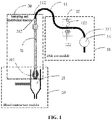
- a first aspect of the present disclosure provides a sample analyzer, including an ESR test module 10, a blood routine test module 20, and a sampling and distribution module 30.
- the sampling and distribution module 30 acquires a blood sample and distributes a first portion of the blood sample (i.e., a first blood sample portion) to an ESR test pipeline 11 of the ESR test module 10 and a second portion of the blood sample (i.e., a second blood sample portion) to the blood routine test module 20.
- the sampling and distribution module may be configured to sequentially distribute the first portion and the second portion of the blood sample, or may be configured to simultaneously distribute the first portion and the second portion of the blood sample.
- the distribution sequence is not limited.
- the sampling and distribution module 30 distributes the first portion of the blood sample to the ESR test pipeline 11 of the ESR test module 10 and the second portion of the blood sample to a blood routine reaction pool 21 of the blood routine test module 20 in a mode of one acquisition and two distributions or a mode of two acquisitions and two distributions.
- the mode of one acquisition and two distributions is: the sampling and distribution module 30 acquires the blood sample, and the sampling and distribution module 30 first distributes a portion of the acquired blood sample (i.e., the first blood sample portion) to the ESR test pipeline 11 of the ESR test module 10 and then distributes another portion of the acquired blood sample (i.e., the second blood sample portion) to the blood routine reaction pool 21 of the blood routine test module 20, or the sampling and distribution module 30 first distributes a portion of the acquired blood sample (i.e., the second blood sample portion) to the blood routine reaction pool 21 of the blood routine test module 20 and then distributes another portion of the acquired blood sample (i.e., the first blood sample portion) to the ESR test pipeline 11 of the ESR test module 10.
- the sampling and distribution module 30 acquires the blood sample
- the sampling and distribution module 30 first distributes a portion of the acquired blood sample (i.e., the first blood sample portion) to the ESR test pipeline 11 of the ESR test module 10 and then distributes another portion of the acquired blood sample
- the mode of two acquisitions and two distributions is: the sampling and distribution module 30 first acquires a portion of the blood sample and distributes the acquired portion of the blood sample to the ESR test pipeline 11 of the ESR test module 10 or the blood routine reaction pool 21 of the blood routine test module 20, and the sampling and distribution module 30 then acquires another portion of the blood sample and distributes the acquired another portion of the blood sample to the blood routine reaction pool 21 of the blood routine test module 20 or the ESR test pipeline 11 of the ESR test module 10.
- the ESR test module 10 includes the ESR test pipeline 11 and an optical ESR test apparatus 12.
- the ESR test pipeline 11 is configured to provide a location for test of the distributed first blood sample portion.
- the optical ESR test apparatus 12 is configured to irradiate the first blood sample portion distributed to the ESR test pipeline 11 and measure a degree of light absorption or scattering of the first blood sample portion in the ESR test pipeline 11 to measure an ESR of the blood sample.
- the ESR test apparatus 12 measures the ESR, the first blood sample portion does not move in the ESR test pipeline 11, i.e., keeping still.
- the blood routine test module 20 includes the blood routine reaction pool 21 and a blood routine test apparatus (not shown in FIG. 1 ).
- the blood routine reaction pool 21 is configured to provide a location for mixing the distributed second blood sample portion with a reagent
- the blood routine test apparatus is configured to carry out a blood routine test on a blood sample under test obtained by mixing the second blood sample portion with the reagent in the blood routine reaction pool 21.
- the blood routine test apparatus may be at least one of an optical test unit, an impedance test unit, or a hemoglobin test unit.
- the blood routine reaction pool can include at least one of an optical reaction pool, an impedance test reaction pool, or a hemoglobin test reaction pool.
- the blood routine test module 20 adds the blood sample and a corresponding reagent (e.g., a diluent and/or a hemolytic agent and/or a stain) into the blood routine reaction pool 21, and the blood routine test apparatus performs measurement on the blood sample in the blood routine reaction pool 21 to obtain at least one blood routine parameter.
- a corresponding reagent e.g., a diluent and/or a hemolytic agent and/or a stain
- the blood routine parameter(s) may include at least one or a combination of multiple of white blood cell (WBC) five-classification result, WBC count and morphological parameters, functional measurements of hemoglobin (HGB), and red blood cell (RBC) and blood platelet (PLT) count and morphological parameters.
- WBC white blood cell
- HGB hemoglobin
- RBC red blood cell
- PHT blood platelet
- the sample analyzer according to embodiments of the present disclosure is provided with the ESR test module 10 and the blood routine test module 20.
- the ESR test module 10 measures the ESR of the blood through the ESR test pipeline 11 and the optical ESR test apparatus 12.
- the ESR test module 20 measures the blood routine parameter(s). Therefore, the sample analyzer according to the present disclosure can test both the ESR and the blood routine. In practical clinical applications, one device can implement two blood test items, has various functions, and is convenient to use.
- the sample analyzer further includes a liquid path support module 40, configured to provide liquid path support for the sampling and distribution module 30, the ESR test module 10, and the blood routine test module 20.
- the liquid path support module 40 provides the liquid path support by providing liquid for the sampling and distribution module 30, the ESR test module 10, and the blood routine test module 20.
- the liquid path support module 40 provides respective cleaning liquids for the sampling and distribution module 30, the ESR test module 10, and the blood routine test module 20 for respectively cleaning a sampling needle 31, the ESR test pipeline 11, and the blood routine reaction pool 21, avoiding contamination on the blood sample under test and inaccuracy of a test result.
- reagent addition, reaction and blending, measurement operations, cleaning and maintenance and the like of the ESR test module and the blood routine test module are all completed under assistance of the liquid path support module.
- the sample analyzer further includes a control module 50.
- the control module 50 is connected to the sampling and distribution module 30, the ESR test module 10, the blood routine test module 20, and the liquid path support module 40 respectively.
- the control module 50 is configured to control operations of the sampling and distribution module 30, the ESR test module 10, the blood routine test module 20, and the liquid path support module 40 respectively, so as to enable the sampling and distribution module 30, the ESR test module 10, the blood routine test module 20, and the liquid path support module 40 to cooperate and complete the ESR test and the blood routine test.
- control module 50 further includes a processor and a memory.
- the processor is a central processing unit (CPU), a graphical processing unit (GPU), or other chips having the calculation capability.
- the memory is installed with computer programs executable by the processor such as an operating system and applications, as well as data required for executing the computer programs.
- the ESR test module 10 further includes a first power apparatus (also referred to as an ESR power apparatus) 14 connected to the ESR test pipeline 11, specifically, a first end 111 of the ESR test pipeline 11.
- the first power apparatus 14 is configured to drive the first blood sample portion to flow in the ESR test pipeline 11, and enable the first blood sample portion to stop moving and keep still after flowing to a test area 113 in the ESR test pipeline 11, so that the ESR test module 12 measures the ESR of the first blood sample portion. That is, the first power apparatus 14 is not only configured to drive the first blood sample portion to the ESR test pipeline 11, but also configured to ensure that the blood sample in the ESR test pipeline 11 is kept still during measurement of the ESR.
- a working process of the ESR test is as follows: the first power apparatus 14 drives the first blood sample portion to flow to the ESR test pipeline 11, and after the first blood sample portion flows to a specific position (the test area 113) of the ESR test pipelinell, the first power apparatus 14 immediately stops and instantaneously interrupts the flowing of the first blood sample portion in the ESR test pipeline 11, thereby causing the first blood sample portion to slow down (or stop flowing) at this time, and then aggregation and sedimentation of erythrocytes happen. In the aggregation and sedimentation of the erythrocytes, signal changes are detected by the ESR test apparatus 12, thereby obtaining information for determining the ESR.
- control module 50 is configured to control the first power apparatus 14 to drive the first blood sample portion to the test area 113 of the ESR test pipeline 11 and then immediately stop driving of the first power apparatus 14, thereby keeping the first blood sample portion still in the test area 113, so that the optical ESR test apparatus 12 measures the ESR of the first blood sample portion, i.e., measuring the degree of light absorption or scattering of the blood sample in the test area so as to obtain the ESR.
- the sample analyzer limits the length of the ESR test pipeline 11, which not only reduces the volume of the entire instrument, but also reduces the blood amount required for test and analysis and the amount of the cleaning liquid for cleaning the ESR test pipeline 11, thereby greatly reducing the cost of the sample analyzer integrating the ESR test and the blood routine test.
- the first power apparatus 14 may further drive, the first blood sample portion to flow in the ESR test pipeline 11 to be discharged from the ESR test pipeline 11, for preparing for the next test.
- the first power apparatus 14 may be a pump, or a syringe, or other pressure sources for providing power.
- the sampling and distribution module 30 may include a sampling needle 31 and a drive apparatus (not shown in the drawings).
- the drive apparatus is configured to drive the sampling needle 31 to move, so that the sampling needle 31 acquires the blood sample and distributes a portion of the blood sample to the blood routine reaction pool 21 of the blood routine test module 20.
- the blood sample is generally stored in a test tube 100, and the top of the test tube 100 is provided with a sealing cap.
- the drive apparatus drives the sampling needle 31 to move to a position above the corresponding test tube 100, and drives the sampling needle 31 to pierce the cap of the test tube by using a needle tip or an end of needle head 311 of the sampling needle 31. Then, the sampling needle 31 extends into the test tube, and suctions the blood sample in the test tube to acquire the blood sample.
- the sampling and distribution module 30 may further include a second power apparatus (also referred to as a sampling power apparatus) 33 which is connected, through a power supply pipeline 32, to an end 312 of the sampling needle 31 away from the needle head 311 (that is, the power supply pipeline 32 is configured to connect the end 312 of the sampling needle 31 away from the needle head 311 to the second power apparatus 33).
- the second power apparatus 33 is configured to drive, through the power supply pipeline 32, the sampling needle 31 to suction or discharge the blood sample through the needle head 311.
- the second power apparatus 33 is configured to provide a negative pressure for the sampling needle through the power supply pipeline 32 so as to suction the blood sample, and provide a positive pressure to discharge the blood sample.
- the second power apparatus 33 may be a pump, or a syringe, or other pressure sources for providing power, for example, a positive/negative pressure source. Particularly advantageously, the second power apparatus 33 is implemented as a second syringe.
- a second end 112, which is opposite to the first end 111, of the ESR test pipeline 11 is connected to the end 312 of the sampling needle 31 away from the needle head 311.
- an exemplary specific working process of blood distribution of the sample analyzer is as follows: the control module 50 controls the second power apparatus 33 to drive the sampling needle 31 to distribute, through the needle head 311, the second portion of the blood sample to the blood routine reaction pool 21, and then controls the first power apparatus 14 to suction the first portion of the blood sample from the end 312 of the sampling needle 31 away from the needle head 311 to the ESR test pipeline 11, where the first portion of the blood sample and the second portion of the blood sample are different portions of the same blood sample.
- a peristaltic pump as a liquid power source of the ESR test module may cause a large increase in the blood usage amount.
- a residue amount when a blood sample flows in the test pipeline is increased, which not only causes waste of the blood sample, but also enhances the difficulty in cleaning of the test pipeline and increases the cleaning amount, and thus also increases the possibility of cross contamination.
- the amount of a liquid transmitted by the peristaltic pump may be large or small, the precision is poor, so that the peristaltic pump is suitable for circumstances where low liquid quantitative requirements are provided, and is not suitable for a circumstance having high-precision quantitative (several microliter scale) sample distribution requirements in the field of blood cell measurement.
- the peristaltic pump as the liquid power source of the ESR test module may cause that two power sources are required in the sampling and distribution module. That is, one is configured to drive a sampling part to suction and discharge a sample, and the other peristaltic pump serves as the liquid power source of the ESR test module. Difficulty is present in deployment of the peristaltic pump and the sampling and distribution module because the peristaltic pump and the sampling and distribution module are difficult to coexist in a blood analyzer. Thus the cost, volume and construction complexity of the all-in-one machine are significantly increased.
- the first power apparatus 14 is implemented as a first syringe.
- the construction solution is not only advantageous to quick and precise EST tests (due to the precise quantitative function of the syringe, the blood sample is precisely suctioned into the test area 113 of the ESR test pipeline 11), but also advantageous to simple and low-cost integration of the ESR test module 10 to an existing blood routine analyzer.
- the volume of the blood routine analyzer is basically not, or slightly increased.
- the first power apparatus 14 and the second power apparatus 33 may be the same power apparatus.
- the first syringe and the second syringe are the same syringe.
- using the second syringe as the first syringe can not only implement a quick and precise ESR test, but also reduce the cost of sample analysis.
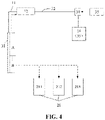
- a part of the power supply pipeline 32 may be the ESR test pipeline 11.
- the part of the power supply pipeline 32 close to the sampling needle 31 is provided as the ESR test pipeline 11.
- the second power apparatus 33 is preferably used as the first power apparatus 14 and is further configured to suction a portion of the blood sample (i.e., the first portion of the blood sample A) in the sampling needle 31 to the ESR test pipeline 11.
- the sampling needle 31 still distributes a portion of the blood sample (i.e., the second portion of the blood sample B) in the sampling needle 31 to the blood routine reaction pool 21 through the needle head 311, to measure the blood routine parameter(s).
- the second power apparatus 33 is also used as the first power apparatus 14, particularly the first syringe, and the power supply pipeline 32 of the sampling needle 31 is also used as the ESR test pipeline 11.
- the second syringe 33 is connected to the power supply pipeline 32 and a diluent storage part 35 respectively through a control valve 34.
- the control valve 34 enables the second syringe 33 to be communicated with the diluent storage part 35
- the second syringe 33 suctions the diluent from the diluent storage part 35.
- the control valve 34 enables the second syringe 33 to be communicated with the power supply pipeline 32
- the second syringe 33 provides suction power or discharge power for the sampling needle 31 through the power supply pipeline 32.
- the ESR test pipeline 11 is directly coupled to a rear pipeline of the sampling needle 31, i.e., the power supply pipeline. Therefore, the ESR test module 10 is simply integrated to an existing blood analyzer without increasing the complexity of the instrument and with less changes as much as possible.
- the second power apparatus 33 particularly the second syringe
- the first power apparatus 14 particularly the first syringe
- the sampling needle 31 for example, first moves to the blood routine reaction pool 21 of the blood routine test module 20 to perform blood distribution (a blood segment B), and after the blood distribution is completed, it is ensured that there is still blood sample (a blood segment A) in the ESR test pipeline 11, or it is ensured that there is still blood sample (the blood segment A) in the sampling needle 31 that can be suctioned to the ESR test pipeline 11.
- the ESR test and the blood routine test are started simultaneously or separately, and it is ensured that during measurement of the ESR, no displacement ofthe blood sample occurs in the ESR test pipeline 11. After the tests are completed, the pipeline is cleaned.
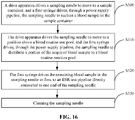
- An exemplary specific working process of the blood distribution of the sample analyzer shown in FIG. 4 is as follows: under control of the control module 50, the drive apparatus first drives the sampling needle 31 to move to the test tube 100 loaded with the blood sample.
- the second power apparatus 33 i.e., the second syringe here, provides a negative pressure to the sampling needle 31, so that the sampling needle 31 suctions the blood sample in the test tube until the blood sample flows to the ESR test pipeline 11.
- the drive apparatus drives the sampling needle 31 to move to the position above the blood routine reaction pool 21, and the second syringe 33 provides a positive pressure to the sampling needle 31 to drop a portion of the blood sample in the sampling needle 31 into the blood routine reaction pool 21 through the needle head 311, to measure the blood routine parameter(s).
- the second power apparatus 33 provides a negative pressure to the sampling needle 31, so that the remaining portion of the blood sample in the sampling needle 31 is suctioned to the ESR test pipeline 11 to perform measurement of the ESR. Or, after the sampling needle 31 distributes the blood to the blood routine reaction pool 21, it is ensured that there is still blood sample in the ESR test pipeline 11 for the ESR test module to perform the test, and therefore, there is no need to suction the remaining portion of the blood sample in the sampling needle 31 to the ESR test pipeline 11 through the second power apparatus.
- the first power apparatus 14 and the second power apparatus 33 may also be power apparatuses independent from each other.
- the first syringe and the second syringe are syringes independent from each other, and thus different syringes are adopted for different scenarios.
- the ESR test generally needs a syringe having a flow rate of a 100 uL/S scale (having a high requirement on the flow rate), so as to better implement an erythrocyte disaggregation process which is described in detail later.
- the sampling and blood distribution do not need a large flow rate (having a high requirement on precision), and in this regard, the flow rate of the first syringe (i.e., the ESR power apparatus) may be higher than that of the second syringe (i.e., the sampling power apparatus).
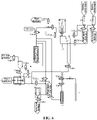
- the blood routine test module 20 may include a third syringe 23 which is connected to the blood routine reaction pool 21 through a diluent supply pipeline 22.
- the third syringe is configured to suction the diluent to the blood routine reaction pool 21 through the diluent supply pipeline 22.
- the blood routine reaction pool 21 may include a first optical reaction pool 211 for a leukocyte test and/or a second optical reaction pool 212 for an erythrocyte test (for example, a reticulocyte test).
- the blood routine test apparatus includes an optical test unit 24.
- the third syringe 23 is further configured to suction the blood sample under test in the first optical reaction pool 211 and/or the second optical reaction pool 212 to a sample preparation pipeline 27 for an optical test.
- the second power apparatus 33 which is implemented as the second syringe, is further configured to push the blood sample under test in the sample preparation pipeline 27 for the optical test to the optical test unit 24.
- the blood routine reaction pool 21 may further include an impedance measurement reaction pool 213 for an erythrocyte and/or platelet test, and the blood routine test apparatus includes an impedance measurement unit 25.
- the third syringe 23 is further configured to suction the blood sample under test in the impedance measurement reaction pool to the sample preparation pipeline for the impedance measurement.
- the second syringe 33 is further configured to push the blood sample under test in the sample preparation pipeline for the impedance measurement to the impedance measurement unit 25.
- the blood routine test apparatus includes a hemoglobin test unit 26.
- the third syringe 23 is further configured to suction the blood sample under test to the sample preparation pipeline for the hemoglobin test.
- the second syringe 33 is further configured to push the blood sample under test in the sample preparation pipeline for the hemoglobin test to the hemoglobin test unit 26.
- the range of the second syringe 33 is of a microliter scale. More preferably, the range of the second syringe 33 is from 100 uL to 300 uL, for example, 250 uL. Because the range of the second syringe 33 is larger, the quantitative precision of the second syringe 33 is improved on one hand, and a motor having a smaller step pitch is selected for the second syringe 33 as a drive motor on the other hand, for example, for a second syringe 33 with a range of 250 uL, a motor having a step pitch which is half of the step pitch of the motor for a syringe with a range of 100 uL is selected as the drive motor, and thus the requirements on quantitative precision and quantitative volume are both considered.
- the motor operates at a high speed, and the needs of high suctioning and discharge flow rates of the second syringe 33 during the ESR test are satisfied.
- the range of the third syringe 23 is of a milliliter scale, for example, 10 mL.
- the first power apparatus 14, which is implemented as the first syringe, and the third syringe 23 are the same syringe.
- the second power apparatus 33 which is implemented as the second syringe, drives the sampling needle 31 to suction the blood sample to the sampling needle 31 until the blood sample flow to the power supply pipeline 32.
- the sampling needle 31 for example, first moves to the blood routine reaction pool 21 of the blood routine test module 20 to perform blood distribution.
- the third syringe 23 is enabled to drive the remaining blood sample in the sampling needle 31 flow to the ESR test pipeline 11.
- the ESR test and the blood routine test are started simultaneously or separately, and it is ensured that during measurement of the ESR, no displacement of the blood sample occurs in the ESR test pipeline 11.
- pipeline cleaning is performed.
- the third syringe 23 is connected to the diluent storage part 29 and the optical test unit 24 through the control valve 28.
- the first power apparatus 14, the second apparatus 33, and the third syringe 23 are the same syringe, so that the cost is further reduced.
- the syringe first drives the sampling needle 31 to suction the sample, and then drives the sampling needle 31 to distribute blood (B) to the blood routine test module 20.
- the blood routine test module 20 first performs the blood routine test, and then after the blood routine test is completed, the merely one syringe drives the remaining blood sample (A) in the sampling needle 31 to flow in the ESR test pipeline 11 to perform measurement of the ESR. After the test is completed, the pipeline is cleaned.
- the ESR test module 10 further includes the ESR reaction pool 13 independent from the blood routine reaction pool 21.
- the ESR reaction pool 13 is connected to one end of the ESR test pipeline 11.
- the ESR reaction pool 13 is configured to receive the first portion of the blood sample distributed by the sampling needle 31.
- the first power apparatus 14, particularly the first syringe is configured to drive the first portion of the blood sample in the ESR reaction pool 13 to flow to the ESR test pipeline 11, and enable the first portion of the blood sample to stop moving and keep still after flowing to the test area of the ESR test pipeline 11, to facilitate the ESR test apparatus 12 to measure the ESR of the first portion of the blood sample.
- an exemplary specific working process of the blood distribution of the sample analyzer according to the present disclosure is as follows, which is performed under control of the control module 50.
- the drive apparatus first drives the sampling needle 31 to move to the test tube loaded with the blood sample.
- the second power apparatus 33 particularly the second syringe, provides a negative pressure to the sampling needle 31, to facilitate the sampling needle 31 to suction the blood sample in the test tube.
- the drive apparatus first drives the sampling needle 31 to move to the position above the ESR reaction pool 13, and the second power apparatus 33 provides a positive pressure to the sampling needle 31 to drop the first portion of the blood sample in the sampling needle 31 into the ESR reaction pool 13.
- the first power apparatus 14 particularly the first syringe, suctions the blood sample in the ESR reaction pool 13 to the ESR test pipeline 11 to measure the ESR.
- the drive apparatus then drives the sampling needle 31 to move to the position above the blood routine reaction pool 21, and the second power apparatus 33 provides a positive pressure to the sampling needle 31 to drop the second portion of the blood sample into the sampling needle 31 into the blood routine reaction pool 21, so as to measure the blood routine parameter(s).
- the drive apparatus drives the sampling needle 31 to move to the position above the blood routine reaction pool 21, and the second syringe 33 provides a positive pressure to the sampling needle 31 to drop the second portion of the blood sample in the sampling needle 31 into the blood routine reaction pool 21, so as to measure the blood routine parameter(s).
- the drive apparatus then drives the sampling needle 31 to move to the position above the ESR reaction pool 13, and the second power apparatus 33 provides a positive pressure to the sampling needle 31 to drop the first portion of the blood sample in the sampling needle 31 into the ESR reaction pool 13.
- the first power apparatus 14 suctions the blood sample in the ESR reaction pool 13 to the ESR test pipeline 11 to measure the ESR.
- the sampling needle 31 may be cleaned, to get prepared for acquisition of a next blood sample.
- the first power apparatus 14 reciprocatingly drives the first portion of the blood sample to flow in the ESR test pipeline 11. Specifically, when the first power apparatus 14 is the first syringe, since a movement speed and a movement direction of the syringe can be set flexibly, the disaggregation of the blood sample can be implemented flexibly, and the amount of blood is saved. Pariticularly, when a large-flow high-speed syringe is used, the disaggregation effect can be achieved with a reduced number of reciprocations.
- control module 50 is configured to control, during the test of the ESR test module 10, the first power apparatus 14, particularly the first syringe, of the ESR test module 10, such that:
- the first power apparatus 14 drives the first portion of the blood sample to flow back and forth in the ESR test pipeline 11 for a predetermined number of times.
- the predetermined number of times is a preset numerical value, or may be a value calculated by a processing apparatus such as a controller in a preset calculation manner.
- the first power apparatus 14 is enabled to drive the first portion of the blood sample to the test area 113 of the ESR test pipeline 11 and then immediately stop driving, thereby keeping the first portion of the blood sample still in the test area 113 of the ESR test pipeline 11, so as to facilitate the optical ESR test apparatus 12 to measure the ESR of the first portion of the blood sample, i.e., measuring the degree of light absorption or scattering of the blood sample in the test area, so as to obtain the ESR.
- an elastic deformation coefficient of a pipeline from the sampling needle 31 to the first power apparatus 14, particularly, the first sampling needle should be designed to ensure that the shearing force in the pipeline satisfies the requirements when the first power apparatus 14 is executing a reciprocating operation for disaggregation.
- the pipeline does not have an adapter, and thus an effect of the adapter on elastic deformation is eliminated.
- control module 50 is configured to enable the first power apparatus 14 to execute the following operations for the predetermined number of times, when controlling the first power apparatus 14, particularly, the first syringe, to drive the first portion of the blood sample to flow back and forth in the ESR test pipeline 11 for the predetermined number of times:
- the first speed is identical to the second speed
- the first route is identical to the second route. Therefore, simple control of the first power apparatus 14, particularly, the first syringe, is implemented.
- control module 50 may further control the first power apparatus 14, particularly, the first syringe, according to the blood routine parameter(s) measured by the blood routine test module 20.
- the control module 50 is configured to first start the blood routine test module 20 to measure the blood routine parameter(s) of the second portion of the blood sample, and then start the ESR test module 10 to measure an ESR test on the first portion of the blood sample after the blood routine test module 20 completes the measurement of the blood routine parameter(s). Then, the control module 50 is further configured to adjust, during the test of the ESR test module 10, at least one of the first speed, the second speed, the first route, the second route, or the predetermined number of times according to at least one blood routine parameter measured by the blood routine test module 20.
- the blood routine test module 10 includes an erythrocyte test unit or an impedance test unit configured to measure the hematocrit (HCT), and the at least one blood routine parameter includes the HCT. That is, the erythrocyte test unit of the blood routine test module 10 obtains an HCT value and transmits the HCT value to the control module 50.
- the control module 50 calculates disaggregation speeds (the first speed and the second speed), routes (the first route and the second route), time and/or the number of reciprocations and the like that are required to be adjusted, and based thereon, controls the first power apparatus 14, particularly, the first syringe to achieve a better disaggregation effect, thereby obtaining higher consistency of ESR results.
- HCT is high, the blood viscosity is increased, and higher disaggregation power or disaggregation time is needed to obtain a good disaggregation performance.
- an exemplary process of disaggregation by repeated suction and discharge is as follows: under control of the control module 50, the first syringe 14 drives the sampling needle 31 to suction the blood sample.
- the sampling needle 31 distributes the blood sample to the blood routine test module 20, for example, the sampling needle 31 is driven by the drive apparatus to move to the position above the blood routine reaction pool, and is driven by the first syringe 14 to distribute blood to the blood routine reaction pool.
- the first syringe 14 draws the blood sample to the ESR test area 113.
- the first syringe 14 draws the blood sample to move along the first route in the ESR test area at the first speed according to the HCT of the sample.
- the first syringe 14 reversely pushes the blood sample to move along the second route at the second speed, which is identical to the first speed, according to the HCT of the sample, the first route being identical to the second route.
- the first syringe 14 repeatedly draws and pushes the blood sample for a designed number of times, to homogenize the blood and cause the erythrocytes to be in a dispersed state as much as possible.
- the first syringe 14 is stopped immediately.
- the first syringe 14 can be stopped immediately, thereby immediately stopping the movement of the blood sample, and then the erythrocytes in the blood sample aggregate in the test area 113, causing a a transmittance change.
- the curve obtained after the first syringe 14 is stopped immediately is integrated and made to correspond to the ESR value, so as to establish association relationship, and finally, the ESR value is reported.
- FIG. 12 is a transmittance change curve of the above process, where t1 is a moment when the disaggregation by repeated suction and discharge starts, and t2 is a moment when the first syringe 14 is stopped immediately.
- the first syringe 14 drives the blood sample in the ESR test pipeline 11 to move back and forth for five times.
- the at least one blood routine parameter may also include information indicating whether the blood sample is a chylemia sample.
- a time period in which the ESR test module 10 measures the ESR of the first portion of the blood sample overlaps with a time period in which the blood routine test module 20 measures the blood routine parameter(s) of the second portion of the blood sample.
- the sample analyzer includes the ESR test module 10 and the blood routine test module 20 which can independently carry out tests, rather than waiting for the completion of the test by the previous test module and then entering the test of the next test module. Furthermore, a time period in which the ESR test module 10 measures the ESR of the first portion of the blood sample overlaps with a time period in which the blood routine test module 20 measures the blood routine parameter(s) of the second portion of the blood sample, so that the ESR test module 10 and the blood routine test module 20 can carry out tests in parallel in time, and thus the total time of the two test items is shortened.
- the sample analyzer provided by the embodiments of the present disclosure is further provided with the sampling and distribution module 30 which is configured to acquire the blood sample.
- the sampling and distribution module 30 distributes the first portion of the blood sample to the ESR test pipeline 11 of the ESR test module 10 and distributes the second portion of the blood sample to the blood routine test module 20. That is, the sampling and distribution module 30 respectively distributes different portions of the blood sample to the ESR test module 10 and the blood routine test module 20, and thus the ESR test module 10 and the blood routine test module 20 independently carry out the tests in parallel, rather than waiting for the completion of the test by the previous test module and then entering the test of the next test module. The total test time is shortened, and thus, the test efficiency is high.
- control module 50 is configured to control the sampling and distribution module 30 to first distributes a portion of the blood sample to the blood routine test module 20 as the second portion of the blood sample, and then distributes the other portion of the blood sample to the ESR test module 10 as the first portion of the blood sample.
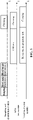
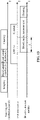
- FIG. 13 shows a working sequence diagram of the sample analyzer of one example of the present disclosure.
- the sampling and distribution module 30 first acquires the blood sample and then distributes the first portion of the blood sample to the ESR test module 10. While the sampling and distribution module 30 is distributing the second portion of the blood sample to the blood routine test module 20, the ESR test module 10 starts to measure the ESR of the first portion of the blood sample. After the sampling and distribution module 30 distributes the second portion of the blood sample to the blood routine test module 20, the blood routine test module 20 starts to carry out the blood routine test on the second portion of the blood sample.
- FIG. 14 shows another working sequence diagram of the sample analyzer of one example of the present disclosure. Different from FIG. 13 , after the sampling and distribution module 30 distributes the first portion of the blood sample to the ESR test module 10 and the second portion of the blood sample to the blood routine test module 20, the ESR test module 10 and the blood routine test module 20 simultaneously start to carry out the ESR test and the blood routine test respectively.
- the sampling and distribution module 30 also needs to be cleaned for acquiring the next blood sample under test.
- the first syringe, the second syringe and/or the third syringe include(s) a step motor, a screw and nut assembly, a cylinder body, and a piston disposed in the cylinder body. Liquid is contained in the cylinder body. The screw and nut assembly is connected to the piston. The step motor drives the screw and nut assembly to enable the piston to move in the cylinder body.
- the optical ESR test apparatus 12 includes an optical emitter 121 and an optical receiver 122.
- Each of the optical emitter 121 and the optical receiver 122 is disposed at a respective one of two sides of the test area of the test pipeline 11.
- the optical emitter 121 is configured to irradiate the first portion of the blood sample.
- the optical receiver 122 is configured to measure a change amount of the light emitted by the optical emitter 121 after irradiating the first portion of the blood sample (for example, receiving light transmitted and/or scatterred by the first portion of the blood sample), and measure the degree of light absorption or scattering of the first portion of the blood sample by measuring the amount of the received optical signals.
- the first power apparatus 14 drives the first portion of the blood sample to flow into the test pipeline 11, enables the first portion of the blood sample to stop moving and keep still after flowing to the test area.
- the optical emitter 121 irradiates the first portion of the blood sample in the test area.
- the optical receiver 122 measures the degree of scattering or transmittance of the light emitted by the optical emitter 121 after irradiating the first portion of the blood sample in the test area, i.e., testing the ESR by measuring the amount of light received by the optical receiver 122.
- the degree of light scattering or absorption of the first portion of the blood sample is measured by measuring the amount of received transmitted or scattered light after irradiating the blood sample, thereby testing the ESR.
- optical receivers 122 There may be one or more optical receivers 122, which is not limited here.
- the test pipeline 11 is made of a soft tube, and the test area of the test pipeline 11 is made of a light transmitting material. Therefore, the test pipeline 11 can be disposed freely and flexibly, for example, being disposed vertically, horizontally or inclinedly, or may be disposed to be bent. It is not limited here.
- the test pipeline 11 is a capillary tube.
- the ESR test pipeline 11 is made of Fluorinated ethylenepropylene (FEP).
- FEP Fluorinated ethylenepropylene
- the ESR test module 10 measures the ESR by measuring the degree of light scattering or absorption in the aggregation process of erythrocytes in the blood sample (i.e., implementing the ESR test by measuring the aggregation speed of the erythrocytes), compared with a test mode of waiting for natural sedimentation of the erythrocytes due to gravity (the Westergren method), it has a higher test speed, the ESR test can be completed in shorter time (for example, within 20 seconds), and the amount of blood consumption is less, only about 100 microliters (uL).
- a hard test pipe necessarily needs to be disposed in a straight mode and disposed vertically or slightly inclinedly, and thus the volume of the instrument is prone to being too large.
- the angle of the test pipeline 11 according to the embodiments of the present disclosure is not limited, and the test pipeline 11 can be flexibly adjusted according to the arrangement of other structures inside the sample analyzer, and thus the overall volume of the sample analyzer is reduced, and the space occupied by the sample analyzer is small.
- the ESR test module 10 further includes a temperature sensor 15 and a heater 16 that are communicationally connected to the control module 50 and disposed in the vicinity of the test area 113 of the ESR test pipeline 11.
- the temperature sensor 15 is configured to measure a temperature value of the blood sample in the ESR test pipeline 11 and transmit the temperature value to the control module 50.
- the control module 50 is configured to control, when the temperature value is lower than a predetermined temperature, the heater 16 to heat the blood sample in the ESR test pipeline 11.
- a second aspect of the present disclosure further provides a sample analysis method. As shown in FIG. 15 , the sample analysis method further includes the following steps.
- a sampling and distribution module 30 acquires a blood sample in a sample container 100 and distributes a first portion of the blood sample to an ESR test module 10 and a second portion of the blood sample to a blood routine test module 20;
- the ESR test module 10 irradiates the first portion of the blood sample and measures a degree of light absorption or scattering of the first portion of the blood sample to measure an ESR of the first portion of the blood sample;
- the blood routine test module 20 measures at least one blood routine parameter of the second portion of the blood sample.
- the sample analysis method may be as follows.
- a sampling power apparatus 33 (also referred to as a second power apparatus) drives, through a power supply pipeline 32, a sampling needle 21 to suction a blood sample in a sample container 100, and then distributes a second portion of the blood sample to a blood routine test module 20.
- an ESR power apparatus 14 (also referred to as a first power apparatus) of the ESR test module 10 suctions a first portion of the blood sample from the sampling needle 31 to an ESR test pipeline 11 of the ESR test module 10 connected to the sampling needle 31, and an optical ESR test apparatus 12 of the ESR test module 10 irradiates the first portion of the blood sample and measures a degree of light absorption or scattering of the first portion of the blood sample to measure an ESR of the blood sample, where the first portion of the blood sample and the second portion of the blood sample are different portions of the same blood sample.
- the blood routine test module 20 measures the blood routine parameter(s) of the distributed second portion of the blood sample.
- the ESR test module 10 is configured such that the first power apparatus 14 of the first syringe suctions the first portion of the blood sample into the ESR test pipeline 11 of the ESR test module 10.
- the ESR power apparatus drives the first portion of the blood sample to the test area 113 of the ESR test pipeline 11 and then immediately stops driving, thereby keeping the first portion of the blood sample still in the test area 113, so that the optical ESR test apparatus 12 measures the erythrocyte aggregation rate of the first portion of the blood sample, i.e., measuring the degree of light absorption or scattering of the blood sample in the test area so as to obtain the ESR.
- the sampling and distribution step S200 includes the following.
- a drive apparatus of the sampling and distribution module 30 drives the sampling needle 311 of the sampling and distribution module 30 to move to the sample container 100.
- the second power apparatus 33 of the sampling and distribution module 30, particularly a second syringe drives, through the power supply pipeline 32, the sampling needle 311 to suction the blood sample in the sample container 100.
- the drive apparatus drives the sampling needle 31 to move the blood routine test module 20.
- the second power apparatus 33 drives, through the power supply pipeline 32, the sampling needle 311 to distribute the second portion of the blood sample to the blood routine test module 20.
- the first power apparatus 14 and the second power apparatus 33 may be the same syringe.
- the ESR test pipeline 11 is a part of the power supply pipeline 32.
- the sample analysis method according to the present disclosure may include the following.
- a drive apparatus drives a sampling needle 31 to move to a sample container 100, and a first syringe 14 drives, through a power supply pipeline 32, the sampling needle 31 to suction a blood sample in the sample container 100.
- the drive apparatus drives the sampling needle 31 to move to a position above a blood routine reaction pool 21, and the first syringe 14 drives, through the power supply pipeline 32, the sampling needle 31 to distribute a portion of the acquired blood sample to the blood routine reaction pool 21, for measuring the blood routine parameter(s).
- the first syringe 14 drives the remaining blood sample in the sampling needle 31 to flow to an ESR test pipeline 11 directly connected to one end of the sampling needle 311, for testing the ESR.
- step S330 after the measurement of the ESR is completed, the sampling needle 31 is cleaned.
- the steps are implemented in a sequence of S300, S310, S320 and S330.
- a third syringe 23 suctions a diluent to the blood routine test module 20 through a diluent supply pipeline 22, so as to process the second portion of the blood sample.
- the first power apparatus 14 which is configured as the first syringe, and the third syringe 23 may also be the same syringe.
- the ESR test step S210 includes the following.
- the first power apparatus 14 particularly, the first syringe, drives the first portion of the blood sample to flow back and forth in the ESR test pipeline 11 for a predetermined number of times.
- the first power apparatus 14 drives the first portion of the blood sample to the test area 113 of the ESR test pipeline 11 and then immediately stops driving, thereby keeping the first portion of the blood sample still in the test area 113 of the ESR test pipeline 11, so that the optical ESR test apparatus 12 measures the erythrocyte aggregation rate of the first portion of the blood sample, i.e., measuring the degree of light absorption or scattering of the blood sample in the test area so as to obtain the ESR.
- the step that the first power apparatus 14, particularly, the first syringe, drives the first portion of the blood sample to flow back and forth in the ESR test pipeline 11 for the predetermined number of times includes performing the following steps for the predetermined number of times:
- the first power apparatus 14 drives the first portion of the blood sample to flow along a first route in the ESR test pipeline 11 at a first speed in a first direction.
- the first power apparatus 14 then drives the first portion of the blood sample to flow along a second route in the ESR test pipeline 11 at a second speed in a second direction, opposite to the first direction.
- the first speed is identical to the second speed
- the first route is identical to the second route
- the ESR test process may be adjusted according to the blood routine parameter(s).
- the blood routine test module 20 is first started to measure the blood routine parameter(s), and then the ESR test module 10 is started to measure an ESR after the blood routine test module 20 completes measurement of the blood routine parameter(s).
- the step that the first power apparatus 14, particularly, the first syringe, drives the first portion of the blood sample to flow back and forth in the ESR test pipeline 11 for the predetermined number of times includes: adjusting at least one of the first speed, the second speed, the first route, the second route, or the predetermined number of times, according to at least one blood routine parameter measured by the blood routine test module 20.
- the at least one blood routine parameter includes the HCT.
- the time at which the ESR test module 10 starts the ESR test on the first portion of the blood sample is identical to or different from the time at which the blood routine test module 20 starts the blood routine parameter measurement on the second portion of the blood sample.
- the sample analysis method further includes the following.
- the ESR test module 10 is first started to measure the ESR of the first portion of the blood sample, and then the blood routine test module 20 is started to measure the blood routine parameter(s) of the second portion of the blood sample.
- the blood routine test module 20 is first started to measure the blood routine parameters of the second portion of the blood sample, and then the ESR test module 10 is started to measure the ESR of the first portion of the blood sample.
- the sampling and distribution step S200 includes the following.
- the sampling and distribution module 30 acquires the blood sample.
- the sampling and distribution module 30 first distributes a portion of the acquired blood sample to the ESR test module 10 and then distributes another portion of the acquired blood sample to the blood routine test module 20.
- the sampling and distribution module 30 first distributes a portion of the acquired blood sample to the blood routine test module 20 and then distributes another portion of the acquired blood sample to the ESR test module 10.
- the sampling and distribution step S200 includes the following.
- the sampling and distribution module 30 first acquires a portion of the blood sample and distributes the acquired portion of the blood sample to the ESR test module 10 or the blood routine test module 20.
- the sampling and distribution module 30 then acquires another portion of the blood sample and distributes the acquired another portion of the blood sample to the blood routine test module 20 or the ESR test module 10.
- the sampling and distribution module 30 first distributes the blood sample to the blood routine test module 20 and starts the blood routine test, and then the sampling and distribution module 30 distributes the blood sample to the ESR test module 10 and starts measurement of the ESR. Since the speed of measurement of the ESR used in the present disclosure is higher than the speed of the blood routine test, first distributing the blood sample to the blood routine test module 20 and starting the blood routine test can facilitate generation of a total test report as quickly as possible.
- the sampling and distribution step S200 includes the following.
- the drive apparatus drives the sampling needle 31 to move to the sample container, so as to acquire the blood sample in the sample container.
- the drive apparatus drives the sampling needle 31 to move to the ESR test module and the blood routine test module respectively, so as to distribute the first portion of the blood sample to the ESR test module 10 and the second portion of the blood sample to the blood routine test module 20.
- the sample analysis method further includes the following actions.
- the drive apparatus drives the sampling needle 31 to move to the sample container, so as to acquire the blood sample in the sample container.
- the drive apparatus drives the sampling needle 31 to move to a position above the ESR reaction pool 13, and the sampling needle 31 drops the first portion of the blood sample into the ESR reaction pool 13.
- the first power apparatus 14 particularly the first syringe, drives the first portion of the blood sample in the ESR reaction pool 13 to flow to the ESR test pipeline 11, and enables the first portion of the blood sample to stop moving and keep still after flowing to the test area.
- the optical ESR test apparatus 12 irridiates the first portion of the blood sample in the ESR test pipeline 11, and measures the degree of light absorption or scattering of the first portion of the blood sample to measure the ESR.
- the drive apparatus drives the sampling needle 31 to move to a position above the blood routine reaction pool 21, and the sampling needle 31 drops the second portion of the blood sample into the blood routine reaction pool 21.
- the blood routine test apparatus measures the blood routine parameter(s) of the second portion of the blood sample in the blood routine reaction pool 21.
- S410 is carried out before or after S440.
- S420 and S430 are carried out before or after S450.
- the sample analysis method further includes cleaning the sampling needle 31.
- a time period in which the ESR test module 10 measures the ESR of the first portion of the blood sample overlaps with a time period in which the blood routine test module 20 measures the blood routine parameter(s) of the second portion of the blood sample, so that the ESR test module 10 and the blood routine test module 20 can carry out tests concurrently in time to reduce the total time of the two test items.
- the sampling and distribution module 30 distributes different portions of the blood sample (i.e., the first portion of the blood sample and the second portion of the blood sample) to the ESR test module 10 and the blood routine test module 20, such that the ESR test module 10 and the blood routine test module 20 independently carry out the tests in parallel, rather than waiting for the completion of the test by the previous test module and then entering the test of the next test module.
- the total test time is shortened, and thus, the test efficiency is high.
- the sample analysis method further includes correcting the ESR according to a result of the blood routine parameter(s). Therefore, a more accurate ESR test result is obtained.
- the sample analysis method according to the second aspect of the present disclosure is particularly applied to the sample analyzer according to the first aspect of the present disclosure.
Landscapes
- Health & Medical Sciences (AREA)
- Life Sciences & Earth Sciences (AREA)
- Hematology (AREA)
- Engineering & Computer Science (AREA)
- Chemical & Material Sciences (AREA)
- Immunology (AREA)
- Biomedical Technology (AREA)
- Molecular Biology (AREA)
- Urology & Nephrology (AREA)
- Pathology (AREA)
- Analytical Chemistry (AREA)
- General Physics & Mathematics (AREA)
- General Health & Medical Sciences (AREA)
- Biochemistry (AREA)
- Physics & Mathematics (AREA)
- Cell Biology (AREA)
- Medicinal Chemistry (AREA)
- Food Science & Technology (AREA)
- Microbiology (AREA)
- Biotechnology (AREA)
- Dispersion Chemistry (AREA)
- Zoology (AREA)
- Tropical Medicine & Parasitology (AREA)
- Virology (AREA)
- Hydrology & Water Resources (AREA)
- Investigating Or Analysing Biological Materials (AREA)
- Investigating Or Analysing Materials By Optical Means (AREA)
Abstract
Description
- The present disclosure relates to the technical field of medical devices, and in particular to a sample analyzer and a sample analysis method.
- Erythrocytes in blood in a body are in a dispersed and suspended state due to flowing of the blood and repulsion of negative charges on the surface of erythrocytes. Moreover, when the blood in vitro is left to stand still, the erythrocytes may settle due to gravity. In a pathological state, types and content of proteins in plasma are changed, which changes the balance of charges in the blood, where the negative charges on the surface of erythrocytes are reduced, causing the erythrocytes to be in a rouleaux form and settle more quickly. Therefore, measuring the sedimentation rate of the erythrocytes in one hour, i.e., the Erythrocyte Sedimentation Rate (ESR), assists in disease assessment.
- Although the sensitivity and specificity of the ESR in diagnosis are not high, the ESR is still considered as a reliable and indirect acute phase inflammatory response factor, and has a wide clinical application in a long term. For example, the ESR is widely applied to treatment and monitoring of a course of disease such as infectious diseases, acute and chronic inflammation, rheumatism, connective tissue diseases, cancer and Hodgkin's disease.
- At present, some methods for predicting the ESR by measuring an erythrocyte aggregation index are known, and these methods indicate that the erythrocyte aggregation index is well correlated with an ESR parameter. In order to measure the erythrocyte aggregation index, the erythrocytes need to be disaggregated, such that the erythrocytes present an independently dispersed state, then transmittance changes in a process from aggregation to disaggregation of the independently dispersed erythrocytes are measured, and thus the aggregation index or ESR is obtained.
- Patent
CN1864060B issued to the Alifax corporation discloses a method for integrating an ESR module and a cell counting module in series in a blood analyzer. Because the ESR module and the cell counting module are disposed in series on one blood sample loop, a sample acquired by a sampling module flows along the blood sample loop during measurement, the sample is first subjected to an ESR test in the ESR module and then subjected to a blood routine test in the cell counting module. However, in this solution, the blood sample necessarily needs to first flow through the ESR module, and then through a blood routine module, such that the blood sample to be subjected to the blood routine test flows through major areas with diluent, which dilutes and contaminates the blood sample, causing the blood routine test inaccurate. - In addition, in order to disaggregate the erythrocytes before measurement of the ESR, the Alifax corporation also discloses an apparatus for disaggregating erythrocytes by using a peristaltic pump. The peristaltic pump pumps the blood into capillary tubes. When the blood flows in the capillary tubes and the erythrocytes are subjected to a shearing force, an aggregation state of the erythrocytes is broken. After the erythrocytes are dispersed uniformly, the peristaltic pump stops immediately, and the erythrocytes aggregate again. The ESR is measured by measuring a transmittance curve in the aggregation process.
- However, in the disaggregation process using the peristaltic pump, in order to enable the erythrocytes to reach a uniform state, the blood needs to flow through a relatively long capillary tube, causing the blood to be diluted by a diluent in the capillary tube, and the measurement precision of the ESR is reduced. Moreover, if the measurement precision is improved in this case, the blood usage amount for the ESR needs to be greatly increased. Because the blood viscosity is high, the blood produces an apparent residual loss when the blood flows in the capillary tubes, and the residual loss of the blood is in direct proportion to the length of the capillary tube through which the blood flows, causing a cleaning time for a pipeline, a cleaning fluid consumption amount and a contamination rate to increase, and also causing the cost of reagents to increase.
- Therefore, the purpose of the present disclosure is to provide a sample analyzer and a corresponding sample analysis method, capable of reducing contamination on blood segments for blood routine test in the case that a blood routine test and an Erythrocyte Sedimentation Rate (ESR) test are integrated, so as to improve accuracy of the blood routine test; and moreover, an ESR test module is integrated in an existing blood analyzer while a complexity degree of the instrument is not increased and less changes are made as much as possible.
- To achieve the purpose of the present disclosure, a first aspect of the present disclosure provides a sample analyzer, including an ESR test module, a blood routine test module, a sampling and distribution module, and a control module.
- The sampling and distribution module is configured to acquire a blood sample and distribute a first portion of the blood sample to the ESR test module and a second portion of the blood sample to the blood routine test module. The sampling and distribution module includes a sampling needle, a power supply pipeline, and a sampling power apparatus. The power supply pipeline is configured to connect an end of the sampling needle away from the needle head to the sampling power apparatus, and the sampling power apparatus is configured to drive, through a power pipeline, the sampling needle to suction or discharge the blood sample;
- the ESR test module includes an ESR test pipeline, an optical ESR test apparatus, and an ESR power apparatus which is connected to a first end of the ESR test pipeline. The ESR test pipeline is configured to provide a location for test of the distributed first portion of the blood sample. The optical ESR test apparatus is configured to irradiate the first portion of the blood sample distributed to the ESR test pipeline and measure a degree of light absorption or scattering of the first portion of the blood sample to measure an ESR of the blood sample. The ESR power apparatus is configured to suction the first portion of the blood sample to the ESR test pipeline, where a second end of the ESR test pipeline is connected to the end of the sampling needle away from the needle head.
- The blood routine test module includes a blood routine reaction pool and a blood routine test apparatus. The blood routine reaction pool is configured to provide a location for mixing the distributed second portion of the blood sample with a reagent, and the blood routine test apparatus is configured to measure at least one blood routine parameter of a blood sample under test obtained by mixing the second portion of the blood sample with the reagent in the blood routine reaction pool.
- The control module is connected to the ESR test module, the blood routine test module, and the sampling and distribution module, and configured to: first control the sampling power apparatus to drive the sampling needle to distribute, through the needle head, the second portion of the blood sample to the blood routine reaction pool, and then control the ESR power apparatus to suction the first portion of the blood sample from the end of the sampling needle away from the needle head to the ESR test pipeline, where the first portion of the blood sample and the second portion of the blood sample are different portions of the same blood sample.
- A second aspect of the present disclosure provides a sample analysis method, including the following steps.
- In a sampling and distribution step, a sampling power apparatus drives, through a power supply pipeline, a sampling needle to suction a blood sample in a sample container, and then distributes a second portion of the blood sample to a blood routine test module.
- In an ESR test step, after the blood routine test module completes the blood sample distribution, an ESR power apparatus of the ESR test module suctions a first portion of the blood sample from the sampling needle to an ESR test pipeline of the ESR test module connected to the sampling needle, and an optical ESR test apparatus of the ESR test module irradiates the first portion of the blood sample and measures a degree of light absorption or scattering of the first portion of the blood sample to measure an ESR of the blood sample, where the first portion of the blood sample and the second portion of the blood sample are different portions of the same blood sample.
- In a blood routine test step, the blood routine test module, measures at least one blood routine parameter of the distributed second portion of the blood sample.
- In the sample analyzer and the sample analysis method according to the present disclosure, the sampling and distribution module first distributes a portion of a blood sample to the blood routine test module and then distributes another completely different portion of the blood sample to the ESR test module. On one hand, contamination on blood segments for blood routine test is reduced, and accuracy of blood routine test is improved. On the other hand, the ESR test module and the blood routine test module perform tests in parallel, and the sample test speed is greatly increased. In addition, by directly connecting the ESR test pipeline to the end of the sampling needle opposite to the needle head, the ESR test module is simply integrated to an existing blood analyzer, and no major structural changes are required.
- The foregoing and/or additional advantages and features of the present disclosure will become apparent and comprehensible in the description of embodiments made with reference to the following accompanying drawings, where:
-
FIG. 1 is a schematic structural diagram of a first embodiment of a sample analyzer according to a first aspect of the present disclosure. -
FIG. 2 is a schematic structural diagram of a second embodiment of a sample analyzer according to a first aspect of the present disclosure. -
FIG. 3 is a schematic structural diagram of a third embodiment of a sample analyzer according to a first aspect of the present disclosure. -
FIG. 4 is a schematic structural diagram of a fourth embodiment of a sample analyzer according to a first aspect of the present disclosure. -
FIG. 5 is a test sequence diagram of the sample analyzer illustrated inFIG. 4 . -
FIG. 6 is a schematic structural diagram of a liquid path of a sample analyzer according to a first aspect of the present disclosure. -
FIG. 7 is a schematic structural diagram of a fifth embodiment of a sample analyzer according to a first aspect of the present disclosure. -
FIG. 8 is a test sequence diagram of the sample analyzer illustrated inFIG. 7 . -
FIG. 9 is a schematic structural diagram of a sixth embodiment of a sample analyzer according to a first aspect of the present disclosure. -
FIG. 10 is a test sequence diagram of the sample analyzer illustrated inFIG. 9 . -
FIG. 11 is a schematic structural diagram of a seventh embodiment of a sample analyzer according to a first aspect of the present disclosure. -
FIG. 12 is an absorbance curve graph of an ESR test process of a sample analyzer according to a first aspect of the present disclosure. -
FIG. 13 andFIG. 14 are different test sequence diagrams of a sample analyzer according to a first aspect of the present disclosure. -
FIG. 15 to FIG. 17 are block diagrams of different embodiments of a sample analyzer according to a second aspect of the present disclosure. - To make the objectives, technical solutions, and advantages of the present disclosure clearer, the following clearly and completely describes the technical solutions in the embodiments of the present disclosure with reference to the accompanying drawings in the embodiments of the present disclosure. Apparently, the described embodiments are merely some rather than all of the embodiments of the present disclosure. All other embodiments obtained by those skilled in the art based on the embodiments of the present disclosure without creative efforts fall within the scope of protection of the present disclosure.
- With reference to
FIG. 1 , a first aspect of the present disclosure provides a sample analyzer, including anESR test module 10, a bloodroutine test module 20, and a sampling anddistribution module 30. - The sampling and
distribution module 30 acquires a blood sample and distributes a first portion of the blood sample (i.e., a first blood sample portion) to anESR test pipeline 11 of theESR test module 10 and a second portion of the blood sample (i.e., a second blood sample portion) to the bloodroutine test module 20. In this case, the sampling and distribution module may be configured to sequentially distribute the first portion and the second portion of the blood sample, or may be configured to simultaneously distribute the first portion and the second portion of the blood sample. The distribution sequence is not limited. - In some embodiments, the sampling and
distribution module 30 distributes the first portion of the blood sample to theESR test pipeline 11 of theESR test module 10 and the second portion of the blood sample to a bloodroutine reaction pool 21 of the bloodroutine test module 20 in a mode of one acquisition and two distributions or a mode of two acquisitions and two distributions. - Specifically, the mode of one acquisition and two distributions is: the sampling and
distribution module 30 acquires the blood sample, and the sampling anddistribution module 30 first distributes a portion of the acquired blood sample (i.e., the first blood sample portion) to theESR test pipeline 11 of theESR test module 10 and then distributes another portion of the acquired blood sample (i.e., the second blood sample portion) to the bloodroutine reaction pool 21 of the bloodroutine test module 20, or the sampling anddistribution module 30 first distributes a portion of the acquired blood sample (i.e., the second blood sample portion) to the bloodroutine reaction pool 21 of the bloodroutine test module 20 and then distributes another portion of the acquired blood sample (i.e., the first blood sample portion) to theESR test pipeline 11 of theESR test module 10. - The mode of two acquisitions and two distributions is: the sampling and
distribution module 30 first acquires a portion of the blood sample and distributes the acquired portion of the blood sample to theESR test pipeline 11 of theESR test module 10 or the bloodroutine reaction pool 21 of the bloodroutine test module 20, and the sampling anddistribution module 30 then acquires another portion of the blood sample and distributes the acquired another portion of the blood sample to the bloodroutine reaction pool 21 of the bloodroutine test module 20 or theESR test pipeline 11 of theESR test module 10. - The
ESR test module 10 includes theESR test pipeline 11 and an opticalESR test apparatus 12. TheESR test pipeline 11 is configured to provide a location for test of the distributed first blood sample portion. The opticalESR test apparatus 12 is configured to irradiate the first blood sample portion distributed to theESR test pipeline 11 and measure a degree of light absorption or scattering of the first blood sample portion in theESR test pipeline 11 to measure an ESR of the blood sample. when theESR test apparatus 12 measures the ESR, the first blood sample portion does not move in theESR test pipeline 11, i.e., keeping still. - The blood
routine test module 20 includes the bloodroutine reaction pool 21 and a blood routine test apparatus (not shown inFIG. 1 ). The bloodroutine reaction pool 21 is configured to provide a location for mixing the distributed second blood sample portion with a reagent, and the blood routine test apparatus is configured to carry out a blood routine test on a blood sample under test obtained by mixing the second blood sample portion with the reagent in the bloodroutine reaction pool 21. - Those skilled in the art can understand that the blood routine test apparatus may be at least one of an optical test unit, an impedance test unit, or a hemoglobin test unit. Accordingly, the blood routine reaction pool can include at least one of an optical reaction pool, an impedance test reaction pool, or a hemoglobin test reaction pool. When carrying out a blood routine test on the blood sample, the blood
routine test module 20 adds the blood sample and a corresponding reagent (e.g., a diluent and/or a hemolytic agent and/or a stain) into the bloodroutine reaction pool 21, and the blood routine test apparatus performs measurement on the blood sample in the bloodroutine reaction pool 21 to obtain at least one blood routine parameter. The blood routine parameter(s) may include at least one or a combination of multiple of white blood cell (WBC) five-classification result, WBC count and morphological parameters, functional measurements of hemoglobin (HGB), and red blood cell (RBC) and blood platelet (PLT) count and morphological parameters. In an actual blood routine test process, blood routine test items are added or reduced as needed, which is not limited herein. - The sample analyzer according to embodiments of the present disclosure is provided with the
ESR test module 10 and the bloodroutine test module 20. TheESR test module 10 measures the ESR of the blood through theESR test pipeline 11 and the opticalESR test apparatus 12. TheESR test module 20 measures the blood routine parameter(s). Therefore, the sample analyzer according to the present disclosure can test both the ESR and the blood routine. In practical clinical applications, one device can implement two blood test items, has various functions, and is convenient to use. - In some embodiments, with reference to
FIG. 2 , the sample analyzer further includes a liquidpath support module 40, configured to provide liquid path support for the sampling anddistribution module 30, theESR test module 10, and the bloodroutine test module 20. Specifically, the liquidpath support module 40 provides the liquid path support by providing liquid for the sampling anddistribution module 30, theESR test module 10, and the bloodroutine test module 20. For example, the liquidpath support module 40 provides respective cleaning liquids for the sampling anddistribution module 30, theESR test module 10, and the bloodroutine test module 20 for respectively cleaning asampling needle 31, theESR test pipeline 11, and the bloodroutine reaction pool 21, avoiding contamination on the blood sample under test and inaccuracy of a test result. For example, reagent addition, reaction and blending, measurement operations, cleaning and maintenance and the like of the ESR test module and the blood routine test module are all completed under assistance of the liquid path support module. - In addition, the sample analyzer further includes a
control module 50. Thecontrol module 50 is connected to the sampling anddistribution module 30, theESR test module 10, the bloodroutine test module 20, and the liquidpath support module 40 respectively. Thecontrol module 50 is configured to control operations of the sampling anddistribution module 30, theESR test module 10, the bloodroutine test module 20, and the liquidpath support module 40 respectively, so as to enable the sampling anddistribution module 30, theESR test module 10, the bloodroutine test module 20, and the liquidpath support module 40 to cooperate and complete the ESR test and the blood routine test. - In this case, the
control module 50 further includes a processor and a memory. The processor is a central processing unit (CPU), a graphical processing unit (GPU), or other chips having the calculation capability. The memory is installed with computer programs executable by the processor such as an operating system and applications, as well as data required for executing the computer programs. - As shown in
FIG. 1 , theESR test module 10 further includes a first power apparatus (also referred to as an ESR power apparatus) 14 connected to theESR test pipeline 11, specifically, afirst end 111 of theESR test pipeline 11. Thefirst power apparatus 14 is configured to drive the first blood sample portion to flow in theESR test pipeline 11, and enable the first blood sample portion to stop moving and keep still after flowing to atest area 113 in theESR test pipeline 11, so that theESR test module 12 measures the ESR of the first blood sample portion. That is, thefirst power apparatus 14 is not only configured to drive the first blood sample portion to theESR test pipeline 11, but also configured to ensure that the blood sample in theESR test pipeline 11 is kept still during measurement of the ESR. - In one specific example, a working process of the ESR test according to the embodiments of the present disclosure is as follows: the
first power apparatus 14 drives the first blood sample portion to flow to theESR test pipeline 11, and after the first blood sample portion flows to a specific position (the test area 113) of the ESR test pipelinell, thefirst power apparatus 14 immediately stops and instantaneously interrupts the flowing of the first blood sample portion in theESR test pipeline 11, thereby causing the first blood sample portion to slow down (or stop flowing) at this time, and then aggregation and sedimentation of erythrocytes happen. In the aggregation and sedimentation of the erythrocytes, signal changes are detected by theESR test apparatus 12, thereby obtaining information for determining the ESR. That is, thecontrol module 50 is configured to control thefirst power apparatus 14 to drive the first blood sample portion to thetest area 113 of theESR test pipeline 11 and then immediately stop driving of thefirst power apparatus 14, thereby keeping the first blood sample portion still in thetest area 113, so that the opticalESR test apparatus 12 measures the ESR of the first blood sample portion, i.e., measuring the degree of light absorption or scattering of the blood sample in the test area so as to obtain the ESR. - Compared with the existing Westergren method, the sample analyzer according to the embodiments of the present disclosure limits the length of the
ESR test pipeline 11, which not only reduces the volume of the entire instrument, but also reduces the blood amount required for test and analysis and the amount of the cleaning liquid for cleaning theESR test pipeline 11, thereby greatly reducing the cost of the sample analyzer integrating the ESR test and the blood routine test. - In some embodiments, after the ESR is tested, the
first power apparatus 14 may further drive, the first blood sample portion to flow in theESR test pipeline 11 to be discharged from theESR test pipeline 11, for preparing for the next test. - The
first power apparatus 14 may be a pump, or a syringe, or other pressure sources for providing power. - In some embodiments, with reference to
FIG. 1 andFIG. 3 , the sampling anddistribution module 30 may include asampling needle 31 and a drive apparatus (not shown in the drawings). The drive apparatus is configured to drive the samplingneedle 31 to move, so that thesampling needle 31 acquires the blood sample and distributes a portion of the blood sample to the bloodroutine reaction pool 21 of the bloodroutine test module 20. - As shown in
FIG. 3 , the blood sample is generally stored in atest tube 100, and the top of thetest tube 100 is provided with a sealing cap. The drive apparatus drives thesampling needle 31 to move to a position above thecorresponding test tube 100, and drives thesampling needle 31 to pierce the cap of the test tube by using a needle tip or an end ofneedle head 311 of thesampling needle 31. Then, thesampling needle 31 extends into the test tube, and suctions the blood sample in the test tube to acquire the blood sample. - In some embodiments, as shown in
FIG. 3 , the sampling anddistribution module 30 may further include a second power apparatus (also referred to as a sampling power apparatus) 33 which is connected, through apower supply pipeline 32, to anend 312 of thesampling needle 31 away from the needle head 311 (that is, thepower supply pipeline 32 is configured to connect theend 312 of thesampling needle 31 away from theneedle head 311 to the second power apparatus 33). Thesecond power apparatus 33 is configured to drive, through thepower supply pipeline 32, thesampling needle 31 to suction or discharge the blood sample through theneedle head 311. Furthermore, thesecond power apparatus 33 is configured to provide a negative pressure for the sampling needle through thepower supply pipeline 32 so as to suction the blood sample, and provide a positive pressure to discharge the blood sample. Thesecond power apparatus 33 may be a pump, or a syringe, or other pressure sources for providing power, for example, a positive/negative pressure source. Particularly advantageously, thesecond power apparatus 33 is implemented as a second syringe. - In some embodiments, as shown in
FIG. 1 ,FIG. 3 , andFIG. 4 , asecond end 112, which is opposite to thefirst end 111, of theESR test pipeline 11 is connected to theend 312 of thesampling needle 31 away from theneedle head 311. In this case, preferably, an exemplary specific working process of blood distribution of the sample analyzer is as follows: thecontrol module 50 controls thesecond power apparatus 33 to drive the samplingneedle 31 to distribute, through theneedle head 311, the second portion of the blood sample to the bloodroutine reaction pool 21, and then controls thefirst power apparatus 14 to suction the first portion of the blood sample from theend 312 of thesampling needle 31 away from theneedle head 311 to theESR test pipeline 11, where the first portion of the blood sample and the second portion of the blood sample are different portions of the same blood sample. Therefore, By sequentially distributing completely different portions of the same blood sample to the bloodroutine test module 20 and theESR test module 10, contamination on blood segments for blood routine tests is reduced while the blood routine test and the ESR test are integrated, so that accuracy of blood routine tests is improved. In addition, the parallel tests of the bloodroutine test module 20 and theESR test module 10 are facilitated. - As described in the background, using a peristaltic pump as a liquid power source of the ESR test module may cause a large increase in the blood usage amount. In addition, because a relatively long test pipeline is needed, a residue amount when a blood sample flows in the test pipeline is increased, which not only causes waste of the blood sample, but also enhances the difficulty in cleaning of the test pipeline and increases the cleaning amount, and thus also increases the possibility of cross contamination. Moreover, the amount of a liquid transmitted by the peristaltic pump may be large or small, the precision is poor, so that the peristaltic pump is suitable for circumstances where low liquid quantitative requirements are provided, and is not suitable for a circumstance having high-precision quantitative (several microliter scale) sample distribution requirements in the field of blood cell measurement. In addition, in an all-in-one machine integrating the blood routine test and the ESR test, using the peristaltic pump as the liquid power source of the ESR test module may cause that two power sources are required in the sampling and distribution module. That is, one is configured to drive a sampling part to suction and discharge a sample, and the other peristaltic pump serves as the liquid power source of the ESR test module. Difficulty is present in deployment of the peristaltic pump and the sampling and distribution module because the peristaltic pump and the sampling and distribution module are difficult to coexist in a blood analyzer. Thus the cost, volume and construction complexity of the all-in-one machine are significantly increased.
- Therefore, particularly advantageously, as shown in
FIG. 3 , thefirst power apparatus 14 is implemented as a first syringe. The construction solution is not only advantageous to quick and precise EST tests (due to the precise quantitative function of the syringe, the blood sample is precisely suctioned into thetest area 113 of the ESR test pipeline 11), but also advantageous to simple and low-cost integration of theESR test module 10 to an existing blood routine analyzer. Moreover, the volume of the blood routine analyzer is basically not, or slightly increased. - In some embodiments, as shown in
FIG. 3 andFIG. 4 , thefirst power apparatus 14 and thesecond power apparatus 33 may be the same power apparatus. Particularly, the first syringe and the second syringe are the same syringe. As generally, there is a high precision requirement on the second syringe used for quantitative blood distribution for the blood routine test , using the second syringe as the first syringe can not only implement a quick and precise ESR test, but also reduce the cost of sample analysis. - Preferably, in embodiments shown in
FIG. 3 andFIG. 4 , a part of thepower supply pipeline 32 may be theESR test pipeline 11. For example, the part of thepower supply pipeline 32 close to thesampling needle 31 is provided as theESR test pipeline 11. In this case, thesecond power apparatus 33 is preferably used as thefirst power apparatus 14 and is further configured to suction a portion of the blood sample (i.e., the first portion of the blood sample A) in thesampling needle 31 to theESR test pipeline 11. Moreover, thesampling needle 31 still distributes a portion of the blood sample (i.e., the second portion of the blood sample B) in thesampling needle 31 to the bloodroutine reaction pool 21 through theneedle head 311, to measure the blood routine parameter(s). That is, in this embodiment, thesecond power apparatus 33, particularly the second syringe, is also used as thefirst power apparatus 14, particularly the first syringe, and thepower supply pipeline 32 of thesampling needle 31 is also used as theESR test pipeline 11. No additional reaction pool and power apparatus has to be provided. Therefore, the structure is simple, and the cost is reduced. In this case, it can be understood that thesecond syringe 33 is connected to thepower supply pipeline 32 and adiluent storage part 35 respectively through acontrol valve 34. When thecontrol valve 34 enables thesecond syringe 33 to be communicated with thediluent storage part 35, thesecond syringe 33 suctions the diluent from thediluent storage part 35. When thecontrol valve 34 enables thesecond syringe 33 to be communicated with thepower supply pipeline 32, thesecond syringe 33 provides suction power or discharge power for thesampling needle 31 through thepower supply pipeline 32. - That is, in structure, the
ESR test pipeline 11 is directly coupled to a rear pipeline of thesampling needle 31, i.e., the power supply pipeline. Therefore, theESR test module 10 is simply integrated to an existing blood analyzer without increasing the complexity of the instrument and with less changes as much as possible. As shown in the working sequence diagram inFIG. 5 , the second power apparatus 33 (particularly the second syringe) or the first power apparatus 14 (particularly the first syringe) drives thesampling needle 31 to suction the blood sample into thesampling needle 31 until the blood sample flows to theESR test pipeline 11. Then, thesampling needle 31, for example, first moves to the bloodroutine reaction pool 21 of the bloodroutine test module 20 to perform blood distribution (a blood segment B), and after the blood distribution is completed, it is ensured that there is still blood sample (a blood segment A) in theESR test pipeline 11, or it is ensured that there is still blood sample (the blood segment A) in thesampling needle 31 that can be suctioned to theESR test pipeline 11. However, the ESR test and the blood routine test are started simultaneously or separately, and it is ensured that during measurement of the ESR, no displacement ofthe blood sample occurs in theESR test pipeline 11. After the tests are completed, the pipeline is cleaned. - An exemplary specific working process of the blood distribution of the sample analyzer shown in
FIG. 4 is as follows: under control of thecontrol module 50, the drive apparatus first drives thesampling needle 31 to move to thetest tube 100 loaded with the blood sample. - The
second power apparatus 33, i.e., the second syringe here, provides a negative pressure to thesampling needle 31, so that thesampling needle 31 suctions the blood sample in the test tube until the blood sample flows to theESR test pipeline 11. - The drive apparatus drives the
sampling needle 31 to move to the position above the bloodroutine reaction pool 21, and thesecond syringe 33 provides a positive pressure to thesampling needle 31 to drop a portion of the blood sample in thesampling needle 31 into the bloodroutine reaction pool 21 through theneedle head 311, to measure the blood routine parameter(s). - Then, the
second power apparatus 33 provides a negative pressure to thesampling needle 31, so that the remaining portion of the blood sample in thesampling needle 31 is suctioned to theESR test pipeline 11 to perform measurement of the ESR. Or, after thesampling needle 31 distributes the blood to the bloodroutine reaction pool 21, it is ensured that there is still blood sample in theESR test pipeline 11 for the ESR test module to perform the test, and therefore, there is no need to suction the remaining portion of the blood sample in thesampling needle 31 to theESR test pipeline 11 through the second power apparatus. - Apparently, in an alternative embodiment, the
first power apparatus 14 and thesecond power apparatus 33 may also be power apparatuses independent from each other. Particularly, the first syringe and the second syringe are syringes independent from each other, and thus different syringes are adopted for different scenarios. The ESR test generally needs a syringe having a flow rate of a 100 uL/S scale (having a high requirement on the flow rate), so as to better implement an erythrocyte disaggregation process which is described in detail later. However, the sampling and blood distribution do not need a large flow rate (having a high requirement on precision), and in this regard, the flow rate of the first syringe (i.e., the ESR power apparatus) may be higher than that of the second syringe (i.e., the sampling power apparatus). - In some embodiments, as shown in
FIG. 6 , the bloodroutine test module 20 may include athird syringe 23 which is connected to the bloodroutine reaction pool 21 through adiluent supply pipeline 22. The third syringe is configured to suction the diluent to the bloodroutine reaction pool 21 through thediluent supply pipeline 22. - For example, the blood
routine reaction pool 21 may include a firstoptical reaction pool 211 for a leukocyte test and/or a secondoptical reaction pool 212 for an erythrocyte test (for example, a reticulocyte test). The blood routine test apparatus includes anoptical test unit 24. Thethird syringe 23 is further configured to suction the blood sample under test in the firstoptical reaction pool 211 and/or the secondoptical reaction pool 212 to asample preparation pipeline 27 for an optical test. Thesecond power apparatus 33, which is implemented as the second syringe, is further configured to push the blood sample under test in thesample preparation pipeline 27 for the optical test to theoptical test unit 24. - In addition, as shown in
FIG. 6 , the bloodroutine reaction pool 21 may further include an impedancemeasurement reaction pool 213 for an erythrocyte and/or platelet test, and the blood routine test apparatus includes animpedance measurement unit 25. In this case, thethird syringe 23 is further configured to suction the blood sample under test in the impedance measurement reaction pool to the sample preparation pipeline for the impedance measurement. Thesecond syringe 33 is further configured to push the blood sample under test in the sample preparation pipeline for the impedance measurement to theimpedance measurement unit 25. Alternatively or additionally, the blood routine test apparatus includes a hemoglobin test unit 26. In this case, thethird syringe 23 is further configured to suction the blood sample under test to the sample preparation pipeline for the hemoglobin test. Thesecond syringe 33 is further configured to push the blood sample under test in the sample preparation pipeline for the hemoglobin test to the hemoglobin test unit 26. - Preferably, the range of the
second syringe 33 is of a microliter scale. More preferably, the range of thesecond syringe 33 is from 100 uL to 300 uL, for example, 250 uL. Because the range of thesecond syringe 33 is larger, the quantitative precision of thesecond syringe 33 is improved on one hand, and a motor having a smaller step pitch is selected for thesecond syringe 33 as a drive motor on the other hand, for example, for asecond syringe 33 with a range of 250 uL, a motor having a step pitch which is half of the step pitch of the motor for a syringe with a range of 100 uL is selected as the drive motor, and thus the requirements on quantitative precision and quantitative volume are both considered. Moreover, the motor operates at a high speed, and the needs of high suctioning and discharge flow rates of thesecond syringe 33 during the ESR test are satisfied. Preferably, the range of thethird syringe 23 is of a milliliter scale, for example, 10 mL. - Those skilled in the art could understand that functions of the
second syringe 33 and thethird syringe 23 are implemented through a valve control technology. - In some embodiments, as shown in
FIG. 7 , thefirst power apparatus 14, which is implemented as the first syringe, and thethird syringe 23 are the same syringe. In this case, as shown in a working sequence diagram inFIG. 8 , thesecond power apparatus 33, which is implemented as the second syringe, drives thesampling needle 31 to suction the blood sample to thesampling needle 31 until the blood sample flow to thepower supply pipeline 32. Then, thesampling needle 31, for example, first moves to the bloodroutine reaction pool 21 of the bloodroutine test module 20 to perform blood distribution. Then, by switching betweencontrol valves third syringe 23 is enabled to drive the remaining blood sample in thesampling needle 31 flow to theESR test pipeline 11. Then, the ESR test and the blood routine test are started simultaneously or separately, and it is ensured that during measurement of the ESR, no displacement of the blood sample occurs in theESR test pipeline 11. After the test is completed, pipeline cleaning is performed. In an embodiment shown inFIG. 7 , thethird syringe 23 is connected to thediluent storage part 29 and theoptical test unit 24 through thecontrol valve 28. - In another embodiments, as shown in
FIG. 9 , thefirst power apparatus 14, thesecond apparatus 33, and thethird syringe 23 are the same syringe, so that the cost is further reduced. In this case, as shown in a working sequence diagram inFIG. 10 , because there is merely one syringe, the syringe first drives thesampling needle 31 to suction the sample, and then drives thesampling needle 31 to distribute blood (B) to the bloodroutine test module 20. Then, the bloodroutine test module 20 first performs the blood routine test, and then after the blood routine test is completed, the merely one syringe drives the remaining blood sample (A) in thesampling needle 31 to flow in theESR test pipeline 11 to perform measurement of the ESR. After the test is completed, the pipeline is cleaned. - In some alternative embodiments, with reference to
FIG. 11 , different from the embodiment in which theESR test pipeline 11 is directly connected to thesampling needle 31, theESR test module 10 further includes theESR reaction pool 13 independent from the bloodroutine reaction pool 21. TheESR reaction pool 13 is connected to one end of theESR test pipeline 11. TheESR reaction pool 13 is configured to receive the first portion of the blood sample distributed by thesampling needle 31. Thefirst power apparatus 14, particularly the first syringe, is configured to drive the first portion of the blood sample in theESR reaction pool 13 to flow to theESR test pipeline 11, and enable the first portion of the blood sample to stop moving and keep still after flowing to the test area of theESR test pipeline 11, to facilitate theESR test apparatus 12 to measure the ESR of the first portion of the blood sample. - In an embodiment shown in
FIG. 11 , an exemplary specific working process of the blood distribution of the sample analyzer according to the present disclosure is as follows, which is performed under control of thecontrol module 50. - The drive apparatus first drives the
sampling needle 31 to move to the test tube loaded with the blood sample. - The
second power apparatus 33, particularly the second syringe, provides a negative pressure to thesampling needle 31, to facilitate thesampling needle 31 to suction the blood sample in the test tube. - Then, the drive apparatus first drives the
sampling needle 31 to move to the position above theESR reaction pool 13, and thesecond power apparatus 33 provides a positive pressure to thesampling needle 31 to drop the first portion of the blood sample in thesampling needle 31 into theESR reaction pool 13. Then, thefirst power apparatus 14, particularly the first syringe, suctions the blood sample in theESR reaction pool 13 to theESR test pipeline 11 to measure the ESR. The drive apparatus then drives thesampling needle 31 to move to the position above the bloodroutine reaction pool 21, and thesecond power apparatus 33 provides a positive pressure to thesampling needle 31 to drop the second portion of the blood sample into thesampling needle 31 into the bloodroutine reaction pool 21, so as to measure the blood routine parameter(s). - Or, the drive apparatus drives the
sampling needle 31 to move to the position above the bloodroutine reaction pool 21, and thesecond syringe 33 provides a positive pressure to thesampling needle 31 to drop the second portion of the blood sample in thesampling needle 31 into the bloodroutine reaction pool 21, so as to measure the blood routine parameter(s). The drive apparatus then drives thesampling needle 31 to move to the position above theESR reaction pool 13, and thesecond power apparatus 33 provides a positive pressure to thesampling needle 31 to drop the first portion of the blood sample in thesampling needle 31 into theESR reaction pool 13. Then, thefirst power apparatus 14 suctions the blood sample in theESR reaction pool 13 to theESR test pipeline 11 to measure the ESR. - In this embodiment, after the
sampling needle 31 distribute the blood sample to theESR test module 10 and the bloodroutine test module 20, thesampling needle 31 may be cleaned, to get prepared for acquisition of a next blood sample. - In order to enable the erythrocytes in the first portion of the blood sample in the
ESR test pipeline 11 to be in a dispersed state as much as possible before theESR test apparatus 12 measures the ESR, to more accurately test the ESR, thefirst power apparatus 14 reciprocatingly drives the first portion of the blood sample to flow in theESR test pipeline 11. Specifically, when thefirst power apparatus 14 is the first syringe, since a movement speed and a movement direction of the syringe can be set flexibly, the disaggregation of the blood sample can be implemented flexibly, and the amount of blood is saved. Pariticularly, when a large-flow high-speed syringe is used, the disaggregation effect can be achieved with a reduced number of reciprocations. - Therefore, in some embodiments, the
control module 50 is configured to control, during the test of theESR test module 10, thefirst power apparatus 14, particularly the first syringe, of theESR test module 10, such that: - the
first power apparatus 14 drives the first portion of the blood sample to flow back and forth in theESR test pipeline 11 for a predetermined number of times. It should be noted that the predetermined number of times is a preset numerical value, or may be a value calculated by a processing apparatus such as a controller in a preset calculation manner. - Then, the
first power apparatus 14 is enabled to drive the first portion of the blood sample to thetest area 113 of theESR test pipeline 11 and then immediately stop driving, thereby keeping the first portion of the blood sample still in thetest area 113 of theESR test pipeline 11, so as to facilitate the opticalESR test apparatus 12 to measure the ESR of the first portion of the blood sample, i.e., measuring the degree of light absorption or scattering of the blood sample in the test area, so as to obtain the ESR. - Preferably, an elastic deformation coefficient of a pipeline from the
sampling needle 31 to thefirst power apparatus 14, particularly, the first sampling needle, should be designed to ensure that the shearing force in the pipeline satisfies the requirements when thefirst power apparatus 14 is executing a reciprocating operation for disaggregation. More preferably, the pipeline does not have an adapter, and thus an effect of the adapter on elastic deformation is eliminated. - In a specific embodiment, the
control module 50 is configured to enable thefirst power apparatus 14 to execute the following operations for the predetermined number of times, when controlling thefirst power apparatus 14, particularly, the first syringe, to drive the first portion of the blood sample to flow back and forth in theESR test pipeline 11 for the predetermined number of times: - driving the first portion of the blood sample to flow along a first route in the
ESR test pipeline 11 at a first speed in a first direction; and - then driving the first portion of the blood sample to flow along a second route, opposite to the first direction, in the
ESR test pipeline 11 at a second speed in a second direction. - Preferably, the first speed is identical to the second speed, and the first route is identical to the second route. Therefore, simple control of the
first power apparatus 14, particularly, the first syringe, is implemented. - Furthermore, the
control module 50 may further control thefirst power apparatus 14, particularly, the first syringe, according to the blood routine parameter(s) measured by the bloodroutine test module 20. In this case, thecontrol module 50 is configured to first start the bloodroutine test module 20 to measure the blood routine parameter(s) of the second portion of the blood sample, and then start theESR test module 10 to measure an ESR test on the first portion of the blood sample after the bloodroutine test module 20 completes the measurement of the blood routine parameter(s). Then, thecontrol module 50 is further configured to adjust, during the test of theESR test module 10, at least one of the first speed, the second speed, the first route, the second route, or the predetermined number of times according to at least one blood routine parameter measured by the bloodroutine test module 20. - Preferably, the blood
routine test module 10 includes an erythrocyte test unit or an impedance test unit configured to measure the hematocrit (HCT), and the at least one blood routine parameter includes the HCT. That is, the erythrocyte test unit of the bloodroutine test module 10 obtains an HCT value and transmits the HCT value to thecontrol module 50. Thecontrol module 50 calculates disaggregation speeds (the first speed and the second speed), routes (the first route and the second route), time and/or the number of reciprocations and the like that are required to be adjusted, and based thereon, controls thefirst power apparatus 14, particularly, the first syringe to achieve a better disaggregation effect, thereby obtaining higher consistency of ESR results. When the HCT is high, the blood viscosity is increased, and higher disaggregation power or disaggregation time is needed to obtain a good disaggregation performance. - In the case that the
first syringe 14 and thesecond syringe 33 are the same syringe and theESR test pipeline 11 is a part of thepower supply pipeline 32, an exemplary process of disaggregation by repeated suction and discharge is as follows: under control of thecontrol module 50,
thefirst syringe 14 drives thesampling needle 31 to suction the blood sample. - The
sampling needle 31 distributes the blood sample to the bloodroutine test module 20, for example, thesampling needle 31 is driven by the drive apparatus to move to the position above the blood routine reaction pool, and is driven by thefirst syringe 14 to distribute blood to the blood routine reaction pool. - The
first syringe 14 draws the blood sample to theESR test area 113. - The
first syringe 14 draws the blood sample to move along the first route in the ESR test area at the first speed according to the HCT of the sample. - The
first syringe 14 reversely pushes the blood sample to move along the second route at the second speed, which is identical to the first speed, according to the HCT of the sample, the first route being identical to the second route. - The
first syringe 14 repeatedly draws and pushes the blood sample for a designed number of times, to homogenize the blood and cause the erythrocytes to be in a dispersed state as much as possible. - The
first syringe 14 is stopped immediately. For example, when a step motor is used for driving, thefirst syringe 14 can be stopped immediately, thereby immediately stopping the movement of the blood sample, and then the erythrocytes in the blood sample aggregate in thetest area 113, causing a a transmittance change. - The curve obtained after the
first syringe 14 is stopped immediately is integrated and made to correspond to the ESR value, so as to establish association relationship, and finally, the ESR value is reported. -
FIG. 12 is a transmittance change curve of the above process, where t1 is a moment when the disaggregation by repeated suction and discharge starts, and t2 is a moment when thefirst syringe 14 is stopped immediately. In this case, thefirst syringe 14 drives the blood sample in theESR test pipeline 11 to move back and forth for five times. - Apparently, the at least one blood routine parameter may also include information indicating whether the blood sample is a chylemia sample.
- In some embodiments, a time period in which the
ESR test module 10 measures the ESR of the first portion of the blood sample overlaps with a time period in which the bloodroutine test module 20 measures the blood routine parameter(s) of the second portion of the blood sample. - Different from connecting the ESR test module and the blood routine test module in series and sequentially carrying out a corresponding ESR test and blood routine test in the prior art, the sample analyzer provided by the embodiments of the present disclosure includes the
ESR test module 10 and the bloodroutine test module 20 which can independently carry out tests, rather than waiting for the completion of the test by the previous test module and then entering the test of the next test module. Furthermore, a time period in which theESR test module 10 measures the ESR of the first portion of the blood sample overlaps with a time period in which the bloodroutine test module 20 measures the blood routine parameter(s) of the second portion of the blood sample, so that theESR test module 10 and the bloodroutine test module 20 can carry out tests in parallel in time, and thus the total time of the two test items is shortened. - Moreover, the sample analyzer provided by the embodiments of the present disclosure is further provided with the sampling and
distribution module 30 which is configured to acquire the blood sample. The sampling anddistribution module 30 distributes the first portion of the blood sample to theESR test pipeline 11 of theESR test module 10 and distributes the second portion of the blood sample to the bloodroutine test module 20. That is, the sampling anddistribution module 30 respectively distributes different portions of the blood sample to theESR test module 10 and the bloodroutine test module 20, and thus theESR test module 10 and the bloodroutine test module 20 independently carry out the tests in parallel, rather than waiting for the completion of the test by the previous test module and then entering the test of the next test module. The total test time is shortened, and thus, the test efficiency is high. For example, thecontrol module 50 is configured to control the sampling anddistribution module 30 to first distributes a portion of the blood sample to the bloodroutine test module 20 as the second portion of the blood sample, and then distributes the other portion of the blood sample to theESR test module 10 as the first portion of the blood sample. - With reference to
FIG. 13, FIG. 13 shows a working sequence diagram of the sample analyzer of one example of the present disclosure. The sampling anddistribution module 30 first acquires the blood sample and then distributes the first portion of the blood sample to theESR test module 10. While the sampling anddistribution module 30 is distributing the second portion of the blood sample to the bloodroutine test module 20, theESR test module 10 starts to measure the ESR of the first portion of the blood sample. After the sampling anddistribution module 30 distributes the second portion of the blood sample to the bloodroutine test module 20, the bloodroutine test module 20 starts to carry out the blood routine test on the second portion of the blood sample. - With reference to
FIG. 14, FIG. 14 shows another working sequence diagram of the sample analyzer of one example of the present disclosure. Different fromFIG. 13 , after the sampling anddistribution module 30 distributes the first portion of the blood sample to theESR test module 10 and the second portion of the blood sample to the bloodroutine test module 20, theESR test module 10 and the bloodroutine test module 20 simultaneously start to carry out the ESR test and the blood routine test respectively. - In addition, after the
ESR test module 10 and the bloodroutine test module 20 complete the respective tests, both need to be cleaned for the respective next tests, preventing the residue of the last blood sample under test from affecting a test result of a next blood sample under test. The sampling anddistribution module 30 also needs to be cleaned for acquiring the next blood sample under test. - In some embodiments, the first syringe, the second syringe and/or the third syringe include(s) a step motor, a screw and nut assembly, a cylinder body, and a piston disposed in the cylinder body. Liquid is contained in the cylinder body. The screw and nut assembly is connected to the piston. The step motor drives the screw and nut assembly to enable the piston to move in the cylinder body.
- In some embodiments, with reference to
FIG. 1 ,FIG. 3 , andFIG. 11 , the opticalESR test apparatus 12 includes anoptical emitter 121 and anoptical receiver 122. Each of theoptical emitter 121 and theoptical receiver 122 is disposed at a respective one of two sides of the test area of thetest pipeline 11. Theoptical emitter 121 is configured to irradiate the first portion of the blood sample. Theoptical receiver 122 is configured to measure a change amount of the light emitted by theoptical emitter 121 after irradiating the first portion of the blood sample (for example, receiving light transmitted and/or scatterred by the first portion of the blood sample), and measure the degree of light absorption or scattering of the first portion of the blood sample by measuring the amount of the received optical signals. - When the test of the
ESR test module 10 is started, thefirst power apparatus 14 drives the first portion of the blood sample to flow into thetest pipeline 11, enables the first portion of the blood sample to stop moving and keep still after flowing to the test area. Theoptical emitter 121 irradiates the first portion of the blood sample in the test area. Theoptical receiver 122 measures the degree of scattering or transmittance of the light emitted by theoptical emitter 121 after irradiating the first portion of the blood sample in the test area, i.e., testing the ESR by measuring the amount of light received by theoptical receiver 122. - Because scattering or transmittance of the light irradiating the blood sample may change in a process in which the erythrocytes in the blood sample aggregate (in a rouleaux form), the degree of light scattering or absorption of the first portion of the blood sample is measured by measuring the amount of received transmitted or scattered light after irradiating the blood sample, thereby testing the ESR.
- There may be one or more
optical receivers 122, which is not limited here. - In one embodiment of the present disclosure, the
test pipeline 11 is made of a soft tube, and the test area of thetest pipeline 11 is made of a light transmitting material. Therefore, thetest pipeline 11 can be disposed freely and flexibly, for example, being disposed vertically, horizontally or inclinedly, or may be disposed to be bent. It is not limited here. - In one embodiment of the present disclosure, the
test pipeline 11 is a capillary tube. - In one embodiment of the present disclosure, the
ESR test pipeline 11 is made of Fluorinated ethylenepropylene (FEP). WhenESR test pipeline 11 is a part of thepower supply pipeline 32, the power supply pipeline is made of FEP. - Because the
ESR test module 10 provided in the sample analyzer according to the present disclosure measures the ESR by measuring the degree of light scattering or absorption in the aggregation process of erythrocytes in the blood sample (i.e., implementing the ESR test by measuring the aggregation speed of the erythrocytes), compared with a test mode of waiting for natural sedimentation of the erythrocytes due to gravity (the Westergren method), it has a higher test speed, the ESR test can be completed in shorter time (for example, within 20 seconds), and the amount of blood consumption is less, only about 100 microliters (uL). In addition, with respect to the Westergren method, a hard test pipe necessarily needs to be disposed in a straight mode and disposed vertically or slightly inclinedly, and thus the volume of the instrument is prone to being too large. However, the angle of thetest pipeline 11 according to the embodiments of the present disclosure is not limited, and thetest pipeline 11 can be flexibly adjusted according to the arrangement of other structures inside the sample analyzer, and thus the overall volume of the sample analyzer is reduced, and the space occupied by the sample analyzer is small. - Furthermore, in some embodiments, as shown in
FIG. 2 , theESR test module 10 further includes atemperature sensor 15 and aheater 16 that are communicationally connected to thecontrol module 50 and disposed in the vicinity of thetest area 113 of theESR test pipeline 11. Thetemperature sensor 15 is configured to measure a temperature value of the blood sample in theESR test pipeline 11 and transmit the temperature value to thecontrol module 50. Thecontrol module 50 is configured to control, when the temperature value is lower than a predetermined temperature, theheater 16 to heat the blood sample in theESR test pipeline 11. - A second aspect of the present disclosure further provides a sample analysis method. As shown in
FIG. 15 , the sample analysis method further includes the following steps. - In a sampling and distribution step S200, a sampling and
distribution module 30 acquires a blood sample in asample container 100 and distributes a first portion of the blood sample to anESR test module 10 and a second portion of the blood sample to a bloodroutine test module 20; - In an ESR test step S210, the
ESR test module 10 irradiates the first portion of the blood sample and measures a degree of light absorption or scattering of the first portion of the blood sample to measure an ESR of the first portion of the blood sample; and - In a blood routine test step S220, the blood
routine test module 20 measures at least one blood routine parameter of the second portion of the blood sample. - In some embodiments, the sample analysis method may be as follows.
- In the sampling and distribution step S200, a sampling power apparatus 33 (also referred to as a second power apparatus) drives, through a
power supply pipeline 32, asampling needle 21 to suction a blood sample in asample container 100, and then distributes a second portion of the blood sample to a bloodroutine test module 20. - In the ESR test step S210, after the blood
routine test module 20 completes the blood sample distribution, an ESR power apparatus 14 (also referred to as a first power apparatus) of theESR test module 10 suctions a first portion of the blood sample from thesampling needle 31 to anESR test pipeline 11 of theESR test module 10 connected to thesampling needle 31, and an opticalESR test apparatus 12 of theESR test module 10 irradiates the first portion of the blood sample and measures a degree of light absorption or scattering of the first portion of the blood sample to measure an ESR of the blood sample, where the first portion of the blood sample and the second portion of the blood sample are different portions of the same blood sample. - In the blood routine test step S220, the blood
routine test module 20 measures the blood routine parameter(s) of the distributed second portion of the blood sample. - Preferably, in the ESR test step S210, the
ESR test module 10 is configured such that thefirst power apparatus 14 of the first syringe suctions the first portion of the blood sample into theESR test pipeline 11 of theESR test module 10. - In some embodiments, in the ESR test step S210, the ESR power apparatus drives the first portion of the blood sample to the
test area 113 of theESR test pipeline 11 and then immediately stops driving, thereby keeping the first portion of the blood sample still in thetest area 113, so that the opticalESR test apparatus 12 measures the erythrocyte aggregation rate of the first portion of the blood sample, i.e., measuring the degree of light absorption or scattering of the blood sample in the test area so as to obtain the ESR. - In some embodiments, the sampling and distribution step S200 includes the following.
- A drive apparatus of the sampling and
distribution module 30 drives thesampling needle 311 of the sampling anddistribution module 30 to move to thesample container 100. - The
second power apparatus 33 of the sampling anddistribution module 30, particularly a second syringe, drives, through thepower supply pipeline 32, thesampling needle 311 to suction the blood sample in thesample container 100. - The drive apparatus drives the
sampling needle 31 to move the bloodroutine test module 20. - The
second power apparatus 33 drives, through thepower supply pipeline 32, thesampling needle 311 to distribute the second portion of the blood sample to the bloodroutine test module 20. In some embodiments, thefirst power apparatus 14 and thesecond power apparatus 33 may be the same syringe. In this case, particularly preferably, theESR test pipeline 11 is a part of thepower supply pipeline 32. Here, as shown inFIG. 16 , the sample analysis method according to the present disclosure may include the following. - At step S300, a drive apparatus drives a
sampling needle 31 to move to asample container 100, and afirst syringe 14 drives, through apower supply pipeline 32, thesampling needle 31 to suction a blood sample in thesample container 100. - At step S310, the drive apparatus drives the
sampling needle 31 to move to a position above a bloodroutine reaction pool 21, and thefirst syringe 14 drives, through thepower supply pipeline 32, thesampling needle 31 to distribute a portion of the acquired blood sample to the bloodroutine reaction pool 21, for measuring the blood routine parameter(s). - At step S320, the
first syringe 14 drives the remaining blood sample in thesampling needle 31 to flow to anESR test pipeline 11 directly connected to one end of thesampling needle 311, for testing the ESR. - At step S330, after the measurement of the ESR is completed, the
sampling needle 31 is cleaned. - In this embodiment, the steps are implemented in a sequence of S300, S310, S320 and S330.
- In some embodiments, in the blood routine test step S220, before the blood routine paremeter(s) is tested, a
third syringe 23 suctions a diluent to the bloodroutine test module 20 through adiluent supply pipeline 22, so as to process the second portion of the blood sample. - In this case, the
first power apparatus 14 which is configured as the first syringe, and thethird syringe 23 may also be the same syringe. - In some embodiments, after the first portion of the blood sample is suctioned to the
ESR test pipeline 11 and before the opticalESR test apparatus 12 carries out the ESR test on the first portion of the blood sample, the ESR test step S210 includes the following. - The
first power apparatus 14, particularly, the first syringe, drives the first portion of the blood sample to flow back and forth in theESR test pipeline 11 for a predetermined number of times. - Then, the
first power apparatus 14 drives the first portion of the blood sample to thetest area 113 of theESR test pipeline 11 and then immediately stops driving, thereby keeping the first portion of the blood sample still in thetest area 113 of theESR test pipeline 11, so that the opticalESR test apparatus 12 measures the erythrocyte aggregation rate of the first portion of the blood sample, i.e., measuring the degree of light absorption or scattering of the blood sample in the test area so as to obtain the ESR. - Furthermore, the step that the
first power apparatus 14, particularly, the first syringe, drives the first portion of the blood sample to flow back and forth in theESR test pipeline 11 for the predetermined number of times includes performing the following steps for the predetermined number of times: - The
first power apparatus 14 drives the first portion of the blood sample to flow along a first route in theESR test pipeline 11 at a first speed in a first direction. - Then, the
first power apparatus 14 then drives the first portion of the blood sample to flow along a second route in theESR test pipeline 11 at a second speed in a second direction, opposite to the first direction. - Preferably, the first speed is identical to the second speed, and the first route is identical to the second route.
- Furthermore, the ESR test process may be adjusted according to the blood routine parameter(s). In this case, the blood
routine test module 20 is first started to measure the blood routine parameter(s), and then theESR test module 10 is started to measure an ESR after the bloodroutine test module 20 completes measurement of the blood routine parameter(s). In the process of the ESR test step S210, the step that thefirst power apparatus 14, particularly, the first syringe, drives the first portion of the blood sample to flow back and forth in theESR test pipeline 11 for the predetermined number of times includes: adjusting at least one of the first speed, the second speed, the first route, the second route, or the predetermined number of times, according to at least one blood routine parameter measured by the bloodroutine test module 20. Particularly preferably, the at least one blood routine parameter includes the HCT. - In some embodiments, the time at which the
ESR test module 10 starts the ESR test on the first portion of the blood sample is identical to or different from the time at which the bloodroutine test module 20 starts the blood routine parameter measurement on the second portion of the blood sample. - In some embodiments, the sample analysis method further includes the following.
- The
ESR test module 10 is first started to measure the ESR of the first portion of the blood sample, and then the bloodroutine test module 20 is started to measure the blood routine parameter(s) of the second portion of the blood sample. - Or, the blood
routine test module 20 is first started to measure the blood routine parameters of the second portion of the blood sample, and then theESR test module 10 is started to measure the ESR of the first portion of the blood sample. - In some embodiments, the sampling and distribution step S200 includes the following.
- The sampling and
distribution module 30 acquires the blood sample. - The sampling and
distribution module 30 first distributes a portion of the acquired blood sample to theESR test module 10 and then distributes another portion of the acquired blood sample to the bloodroutine test module 20. - Or, the sampling and
distribution module 30 first distributes a portion of the acquired blood sample to the bloodroutine test module 20 and then distributes another portion of the acquired blood sample to theESR test module 10. - In some embodiments, the sampling and distribution step S200 includes the following.
- The sampling and
distribution module 30 first acquires a portion of the blood sample and distributes the acquired portion of the blood sample to theESR test module 10 or the bloodroutine test module 20. - The sampling and
distribution module 30 then acquires another portion of the blood sample and distributes the acquired another portion of the blood sample to the bloodroutine test module 20 or theESR test module 10. - Preferably, the sampling and
distribution module 30 first distributes the blood sample to the bloodroutine test module 20 and starts the blood routine test, and then the sampling anddistribution module 30 distributes the blood sample to theESR test module 10 and starts measurement of the ESR. Since the speed of measurement of the ESR used in the present disclosure is higher than the speed of the blood routine test, first distributing the blood sample to the bloodroutine test module 20 and starting the blood routine test can facilitate generation of a total test report as quickly as possible. - In some embodiments, the sampling and distribution step S200 includes the following.
- The drive apparatus drives the
sampling needle 31 to move to the sample container, so as to acquire the blood sample in the sample container. - The drive apparatus drives the
sampling needle 31 to move to the ESR test module and the blood routine test module respectively, so as to distribute the first portion of the blood sample to theESR test module 10 and the second portion of the blood sample to the bloodroutine test module 20. - In some embodiments, with reference to
FIG. 17 , the sample analysis method further includes the following actions. - At S400, the drive apparatus drives the
sampling needle 31 to move to the sample container, so as to acquire the blood sample in the sample container. - At S410, the drive apparatus drives the
sampling needle 31 to move to a position above theESR reaction pool 13, and thesampling needle 31 drops the first portion of the blood sample into theESR reaction pool 13. - At S420, the
first power apparatus 14, particularly the first syringe, drives the first portion of the blood sample in theESR reaction pool 13 to flow to theESR test pipeline 11, and enables the first portion of the blood sample to stop moving and keep still after flowing to the test area. - At S430, the optical
ESR test apparatus 12 irridiates the first portion of the blood sample in theESR test pipeline 11, and measures the degree of light absorption or scattering of the first portion of the blood sample to measure the ESR. - At S440, the drive apparatus drives the
sampling needle 31 to move to a position above the bloodroutine reaction pool 21, and thesampling needle 31 drops the second portion of the blood sample into the bloodroutine reaction pool 21. - At S450, the blood routine test apparatus measures the blood routine parameter(s) of the second portion of the blood sample in the blood
routine reaction pool 21. - In the embodiments of the present disclosure, S410 is carried out before or after S440. S420 and S430 are carried out before or after S450.
- Furthermore, after S410 and S440, the sample analysis method further includes cleaning the
sampling needle 31. - In some embodiments, a time period in which the
ESR test module 10 measures the ESR of the first portion of the blood sample overlaps with a time period in which the bloodroutine test module 20 measures the blood routine parameter(s) of the second portion of the blood sample, so that theESR test module 10 and the bloodroutine test module 20 can carry out tests concurrently in time to reduce the total time of the two test items. In this case, the sampling anddistribution module 30 distributes different portions of the blood sample (i.e., the first portion of the blood sample and the second portion of the blood sample) to theESR test module 10 and the bloodroutine test module 20, such that theESR test module 10 and the bloodroutine test module 20 independently carry out the tests in parallel, rather than waiting for the completion of the test by the previous test module and then entering the test of the next test module. The total test time is shortened, and thus, the test efficiency is high. - Furthermore, the sample analysis method further includes correcting the ESR according to a result of the blood routine parameter(s). Therefore, a more accurate ESR test result is obtained.
- The sample analysis method according to the second aspect of the present disclosure is particularly applied to the sample analyzer according to the first aspect of the present disclosure. For the advantages and more embodiments of the sample analysis method of the present disclosure, reference may be made to the descriptions of the sample analyzer, and the details are not repeated herein.
- It should be noted that relational terms such as "first" and "second" are used solely to distinguish one entity or operation from another entity or operation without necessarily requiring or implying any actual such relationship or order between such entities or operations. Moreover, the terms "include", "comprise" or any other variations thereof are intended to cover a non-exclusive inclusion, such that a process, method, object or device including a series of elements not only includes the elements, but also includes other elements not clearly listed, or further includes elements inherent to the process, method, object or device. In the absence of more limitations, an element defined by the statement "including a/an..." does not exclude that the process, method, object or device including the element further has other same elements.
- The features mentioned above in the description, the drawings and the claims can be arbitrarily combined with one another as long as they are meaningful within the present disclosure. The features and advantages described for the sample analyzer according to the present disclosure are suitable for the sample analysis method of the present disclosure in a corresponding manner, and vice versa.
- The above are merely specific implementations of the present disclosure, so that those skilled in the art can understand or implement the present disclosure. Various modifications to these embodiments are apparent to those skilled in the art, and the generic principles defined herein may be implemented in other embodiments without departing from the spirit or scope of the present disclosure. Therefore, the present disclosure is not intended to be limited to the embodiments herein, but is to be accorded the widest scope consistent with the principles and novel features claimed herein.
Claims (25)
- A sample analyzer, comprising an erythrocyte sedimentation rate test module, a blood routine test module, a sampling and distribution module, and a control module, whereinthe sampling and distribution module is configured to acquire a blood sample and distribute a first portion of the blood sample to the ESR test module and a second portion of the blood sample to the blood routine test module, wherein the sampling and distribution module comprises a sampling needle, a power supply pipeline, and a sampling power apparatus, the power supply pipeline is configured to connect an end of the sampling needle away from a needle head to the sampling power apparatus, and the sampling power apparatus is configured to drive, through a power pipeline, the sampling needle to suction or discharge the blood sample;the ESR test module comprises an ESR test pipeline, an optical ESR test apparatus, and an ESR power apparatus, the ESR test pipeline comprises a first end and a second end opposite to the first end, the first end of the ESR test pipeline is connected to the ESR power apparatus, the ESR test pipeline is configured to provide a location for test of the distributed first portion of the blood sample, the optical ESR test apparatus is configured to irradiate the first portion of the blood sample distributed to the ESR test pipeline and measure a degree of light absorption or scattering of the first portion of the blood sample to measure an ESR of the blood sample, and the ESR power apparatus is configured to suction the first portion of the blood sample to the ESR test pipeline, wherein the second end of the ESR test pipeline is connected to the end of the sampling needle away from the needle head;the blood routine test module comprises a blood routine reaction pool and a blood routine test apparatus, the blood routine reaction pool is configured to provide a location for mixing the distributed second portion of the blood sample with a reagent, and the blood routine test apparatus is configured to measure a blood routine parameter of a blood sample under test obtained by mixing the second portion of the blood sample with the reagent in the blood routine reaction pool; andthe control module is connected to the ESR test module, the blood routine test module, and the sampling and distribution module, and is configured to: first control the sampling power apparatus to drive the sampling needle to distribute, through the needle head, the second portion of the blood sample to the blood routine reaction pool, and then control the ESR power apparatus to suction the first portion of the blood sample from the end of the sampling needle away from the needle head to the ESR test pipeline, wherein the first portion of the blood sample and the second portion of the blood sample are different portions of the same blood sample.
- The sample analyzer of claim 1, wherein the ESR test pipeline is a part of the power supply pipeline.
- The sample analyzer of claim 1 or 2, wherein the sampling power apparatus and the ESR power apparatus are a same syringe.
- The sample analyzer of claim 1 or 2, wherein the sampling power apparatus and the ESR power apparatus are individual syringes, and a flow rate in the ESR power apparatus is higher than that in the sampling power apparatus.
- The sample analyzer of any one of claims 1 to 4, wherein the control module is configured to control the ESR power apparatus to drive the first portion of the blood sample to a test area of the ESR test pipeline, and then immediately stop driving the ESR power apparatus, to keep the first portion of the blood sample still in the test area, so as to enable the optical ESR test apparatus to measure the degree of light absorption or scattering of the blood sample in the test area to obtain the ESR.
- The sample analyzer of any one of claims 1 to 5, wherein the control module is configured to first start the blood routine test module to measure the a blood routine parameter of the second portion of the blood sample, and then start the ESR test module to measure the ESR of the first portion of the blood sample.
- The sample analyzer of claim 6, wherein the control module is configured to enable a time period in which the ESR test module measures the ESR of the first portion of the blood sample to overlap with a time period in which the blood routine test module measures the a blood routine parameter of the second portion of the blood sample.
- The sample analyzer of claim 6, wherein the control module is configured to start the ESR test module to measure the ESR of the first portion of the blood sample after the blood routine test module completes measurement of the a blood routine parameter.
- The sample analyzer of any one of claims 1 to 8, wherein in order to control the ESR test module to measure the ESR of the first portion of the blood sample, the control module is configured to control the ESR power apparatus of the ESR test module to:enable the ESR power apparatus to drive the first portion of the blood sample to flow back and forth in the ESR test pipeline for a predetermined number of times; andthen enable the ESR power apparatus to drive the first portion of the blood sample to a test area of the ESR test pipeline and then immediately stop driving, to keep the first portion of the blood sample still in the test area, so as to enable the optical ESR test apparatus to measure the degree of light absorption or scattering of the blood sample in the test area to obtain the ESR.
- The sample analyzer of claim 9, wherein in order to control the ESR power apparatus to drive the first portion of the blood sample to flow back and forth in the ESR test pipeline for the predetermined number of times, the control module is configured to enable the ESR power apparatus to execute the following operations for the predetermined number of times:driving the first portion of the blood sample to flow along a first route the ESR test pipeline at a first speed in a first direction; andthen driving the first portion of the blood sample to flow along a second route in the ESR test pipeline at a second speed in a second direction, which is opposite to the first direction.
- The sample analyzer of claim 10, wherein the first speed is identical to the second speed, and the first route is identical to the second route.
- The sample analyzer of claim 10 or 11, wherein the control module is configured to first start the blood routine test module to measure the a blood routine parameter of the second portion of the blood sample, and then start the ESR test module to measure the ESR of the first portion of the blood sample after the blood routine test module completes measurement of the a blood routine parameter; and
the control module is further configured to adjust at least one of the first speed, the second speed, the first route, the second route, or the predetermined number of times according to at least one of the a blood routine parameter of the blood sample. - The sample analyzer of claim 12, wherein the blood routine test module comprises an erythrocyte test unit configured to measure hematocrit, and the at least one of the a blood routine parameter comprises the hematocrit.
- A method for sample analysis, comprising:a sampling and distribution step: driving, by a sampling power apparatus, through a power supply pipeline, a sampling needle to suction a blood sample in a sample container, and then distributing, by the sampling power apparatus, a second portion of the blood sample to a blood routine test module;an ESR test step: after the blood routine test module completes the blood sample distribution, suctioning, by an ESR power apparatus of an ESR test module, a first portion of the blood sample from the sampling needle to an ESR test pipeline of the ESR test module connected to the sampling needle, and irradiating, by an optical ESR test apparatus of the ESR test module, the first portion of the blood sample, and measuring, by the optical ESR test apparatus, a degree of light absorption or scattering of the first portion of the blood sample to measure an ESR of the blood sample, wherein the first portion of the blood sample and the second portion of the blood sample are different portions of the same blood sample; anda blood routine test step: measuring, by the blood routine test module, a blood routine parameter of the distributed second portion of the blood sample.
- The sample analysis method of claim 14, wherein in the ESR test step, the ESR power apparatus drives the first portion of the blood sample to a test area of the ESR test pipeline and then immediately stops driving to keep the first portion of the blood sample still in the test area, to enable the optical ESR test apparatus to measure the degree of light absorption or scattering of the blood sample in the test area, so as to obtain the ESR.
- The sample analysis method of claim 14 or 15, comprising: first starting measurement of the a blood routine parameter of the blood routine test module, and then starting measurement of the ESR of the ESR test module.
- The sample analysis method of claim 16, wherein a time period in which the ESR test module measures the ESR of the first portion of the blood sample overlaps with a time period in which the blood routine test module measures the a blood routine parameter of the second portion of the blood sample.
- The sample analysis method of claim 16, wherein the measurement of the ESR of the ESR test module is started after the blood routine test module completes the measurement of the a blood routine parameter.
- The sample analysis method of any one of claims 14 to 18, wherein in the ESR test step, after the ESR power apparatus suctions the first portion of the blood sample to the ESR test pipeline and before the ESR test module measures the ESR of the first portion of the blood sample, the ESR test step further comprises:enabling the ESR power apparatus to drive the first portion of the blood sample to flow back and forth in the ESR test pipeline for a predetermined number of times; andthen enabling the ESR power apparatus to drive the first portion of the blood sample to the test area of the ESR test pipeline and then immediately stop driving, to keep the first portion of the blood sample still in the test area of the ESR test pipeline, to enable the optical ESR test apparatus to measure the degree of light absorption or scattering of the blood sample in the test area, so as to obtain the ESR.
- The sample analysis method of claim 19, wherein the enabling the ESR power apparatus to drive the first portion of the blood sample to flow back and forth in the ESR test pipeline for predetermined number of times comprises:driving, by the ESR power apparatus, another portion of the blood sample to flow along a first route in the ESR test pipeline at a first speed in a first direction; andthen driving, by the ESR power apparatus, the another portion of the blood sample to flow along a second route in the ESR test pipeline at a second speed in a second direction opposite to the first direction.
- The sample analysis method of claim 20, wherein the first speed is identical to the second speed, and the first route is identical to the second route.
- The sample analysis method of claim 20 or 21, comprising first starting measurement of the a blood routine parameter by the blood routine test module, and then starting measurement of the ESR of the ESR test module after the blood routine test module completes the blood routine parameter measurement,wherein the enabling the ESR power apparatus to drive the first portion of the blood sample to flow back and forth in the ESR test pipeline the predetermined number of times comprises:adjusting, according to at least one blood routine parameter of the blood sample, at least one of the first speed, the second speed, the first route, the second route, or the predetermined number of times.
- The sample analysis method of claim 22, wherein the at least one of the a blood routine parameter comprises hematocrit.
- The sample analysis method of any one of claims 14 to 23, further comprising: correcting the ESR according to a result of the a blood routine parameter.
- The sample analysis method of any one of claims 14 to 24, wherein the sample analysis method is applied to the sample analyzer of any one of claims 1 to 13.
Applications Claiming Priority (2)
| Application Number | Priority Date | Filing Date | Title |
|---|---|---|---|
| PCT/CN2019/119181 WO2021097610A1 (en) | 2019-11-18 | 2019-11-18 | Sample analyzer and sample analysis method |
| PCT/CN2020/119436 WO2021098396A1 (en) | 2019-11-18 | 2020-09-30 | Sample analyzer and sample analysis method |
Publications (2)
| Publication Number | Publication Date |
|---|---|
| EP4063825A1 true EP4063825A1 (en) | 2022-09-28 |
| EP4063825A4 EP4063825A4 (en) | 2023-01-25 |
Family
ID=72536612
Family Applications (1)
| Application Number | Title | Priority Date | Filing Date |
|---|---|---|---|
| EP20891062.0A Pending EP4063825A4 (en) | 2019-11-18 | 2020-09-30 | SAMPLE ANALYZER AND SAMPLE ANALYSIS METHOD |
Country Status (3)
| Country | Link |
|---|---|
| EP (1) | EP4063825A4 (en) |
| CN (4) | CN111712703B (en) |
| WO (4) | WO2021097610A1 (en) |
Cited By (3)
| Publication number | Priority date | Publication date | Assignee | Title |
|---|---|---|---|---|
| EP4187228A1 (en) * | 2021-11-25 | 2023-05-31 | Shenzhen Mindray Bio-Medical Electronics Co., Ltd. | System, apparatus, and method for measuring erythrocyte sedimentation rate |
| EP4249922A1 (en) * | 2022-03-21 | 2023-09-27 | Shenzhen Mindray Bio-Medical Electronics Co., Ltd. | Blood sample analyzer and control method therefor |
| EP4372362A1 (en) * | 2022-11-16 | 2024-05-22 | Shenzhen Mindray Bio-Medical Electronics Co., Ltd. | Esr detection device and esr detection method |
Families Citing this family (14)
| Publication number | Priority date | Publication date | Assignee | Title |
|---|---|---|---|---|
| CN111712703B (en) * | 2019-11-18 | 2024-04-12 | 深圳迈瑞生物医疗电子股份有限公司 | Sample analyzer and sample analysis method |
| CN114441390A (en) * | 2020-10-30 | 2022-05-06 | 深圳市瑞图生物技术有限公司 | Concurrent time sequence control method, sperm quality analyzer and storage medium |
| CN114636814B (en) * | 2020-12-16 | 2025-11-14 | 深圳市帝迈生物技术有限公司 | A blood testing method and device |
| CN114814185A (en) * | 2021-01-29 | 2022-07-29 | 深圳市帝迈生物技术有限公司 | Sample detection device |
| CN115046993B (en) * | 2021-03-09 | 2026-01-16 | 深圳市帝迈生物技术有限公司 | A blood testing device |
| CN115541459A (en) * | 2021-06-29 | 2022-12-30 | 深圳迈瑞生物医疗电子股份有限公司 | Sample analyzer and sample analyzing method |
| CN115615880A (en) * | 2021-07-16 | 2023-01-17 | 深圳迈瑞生物医疗电子股份有限公司 | Sample analyzer |
| CN116165172A (en) * | 2021-11-25 | 2023-05-26 | 深圳迈瑞生物医疗电子股份有限公司 | Blood sedimentation measurement system, blood sedimentation measurement device, and blood sedimentation measurement method |
| FR3134625B1 (en) * | 2022-04-15 | 2025-06-13 | Horiba Abx Sas | Device and method for determining sedimentation rate |
| FR3134627B1 (en) * | 2022-04-15 | 2025-07-25 | Horiba Abx Sas | Device for spreading or staining and determining sedimentation rate |
| FR3134626B1 (en) * | 2022-04-15 | 2025-07-18 | Horiba Abx Sas | Device and method for blood count and sedimentation rate determination |
| CN121783791A (en) * | 2022-06-30 | 2026-04-03 | 深圳迈瑞生物医疗电子股份有限公司 | Blood sedimentation measurement method, sample analyzer and sample analysis system |
| CN118533557B (en) * | 2024-05-16 | 2024-10-29 | 江苏上善生态科技有限公司 | Self-adaptive flow rate sampling device for water quality detection and working method thereof |
| CN119178893A (en) * | 2024-11-26 | 2024-12-24 | 深圳市帝迈生物技术有限公司 | Blood cell joint detection analyzer |
Family Cites Families (50)
| Publication number | Priority date | Publication date | Assignee | Title |
|---|---|---|---|---|
| DE2942466A1 (en) * | 1979-10-20 | 1981-04-30 | Ernst Leitz Wetzlar Gmbh, 6330 Wetzlar | Blood sedimentation measured value determination - using rise of measuring curve at preset point of time after start of aggregation phase of blood |
| US4848900A (en) * | 1987-06-22 | 1989-07-18 | Kuo Cheng Deng | Computerized automatic monitoring and recording system of erythrocyte sedimentation process |
| JP2579788Y2 (en) * | 1992-04-02 | 1998-08-27 | テルモ株式会社 | Blood sediment measurement instrument |
| CN2123074U (en) * | 1992-04-03 | 1992-11-25 | 天津中医学院 | Laser cell aggregation tester |
| JPH0622959U (en) * | 1992-06-22 | 1994-03-25 | テルモ株式会社 | Suction tool for blood sedimentation measuring instrument and blood sedimentation measuring instrument |
| JPH064668U (en) * | 1992-06-22 | 1994-01-21 | テルモ株式会社 | Blood sedimentation table |
| US5891734A (en) * | 1994-08-01 | 1999-04-06 | Abbott Laboratories | Method for performing automated analysis |
| US6296450B1 (en) * | 1999-09-03 | 2001-10-02 | Baxter International Inc. | Systems and methods for control of pumps employing gravimetric sensing |
| AU6120799A (en) * | 1999-09-27 | 2001-04-30 | Adelio Missaglia | Apparatus for testing blood samples |
| IT1311616B1 (en) * | 1999-11-08 | 2002-03-14 | Sire Analytical Syst Srl | PROCEDURE FOR THE DETERMINATION OF THE BLOOD SEDIMENTATION SPEED AND OTHER RELATED PARAMETERS, AND RELATED |
| ATE434760T1 (en) * | 2000-09-18 | 2009-07-15 | Sysmex Corp | BLOOD CELL DETECTOR, BLOOD ANALYZER AND BLOOD ANALYSIS METHOD USING THE DETECTOR |
| AU2002255878A1 (en) * | 2001-03-21 | 2002-10-08 | Mirant International Asset Management And Marketing, Llc | Pipeline inspection system |
| US7207939B2 (en) * | 2002-10-03 | 2007-04-24 | Coulter International Corp. | Apparatus and method for analyzing a liquid in a capillary tube of a hematology instrument |
| ITUD20030174A1 (en) * | 2003-09-03 | 2005-03-04 | Sire Analytical Systems Srl | INTEGRATED SYSTEM FOR HEMATOLOGICAL ANALYSIS AND ITS METHOD. |
| ITFI20030273A1 (en) * | 2003-10-28 | 2005-04-29 | Diesse Diagnostica Senese S P A | METHOD AND DEVICE TO PERFORM ANALYSIS OF SPEED |
| JP4761109B2 (en) * | 2005-01-26 | 2011-08-31 | 学校法人日本大学 | Nuclear inspection apparatus and method |
| US7481978B2 (en) * | 2005-03-23 | 2009-01-27 | Beckman Coulter, Inc. | Apparatus for aspirating liquids from sealed containers |
| ITUD20050118A1 (en) * | 2005-07-13 | 2007-01-14 | Sire Analytical Systems Srl | PROCEDURE FOR THE CALIBRATION OF MACHINES FOR THE ANALYSIS OF BLOOD PARAMETERS CONNECTED TO THE BLOOD DENSITY, SUCH AS THE ERITROSEDIMENTATION AND / OR AGGREGATION SPEED OF THE RED GLOBULES |
| ITUD20060111A1 (en) * | 2006-04-28 | 2007-10-29 | Sire Analytical Syst Srl | METHOD FOR DETECTION OF ANEMIA STATES PRESENT IN A EMATICAL SAMPLE |
| US7661326B2 (en) * | 2006-10-26 | 2010-02-16 | Beckman Coulter, Inc. | Apparatus for aspirating and dispensing liquids in an automated analyzer |
| CN201303943Y (en) * | 2008-10-15 | 2009-09-09 | 深圳市普康电子有限公司 | A blood cell analyzer sampling needle blood-sample distribution device |
| TR201001281A2 (en) * | 2010-02-22 | 2010-07-21 | Ker�M Ba�Kurt O�Uz | Measurement of erythrocyte aggregation in disposable capillary tubes. |
| CA2795008A1 (en) * | 2010-03-30 | 2011-10-13 | Battelle Memorial Institute | Buffy coat separator float systems and methods |
| CN102539792B (en) * | 2010-12-31 | 2014-08-13 | 深圳迈瑞生物医疗电子股份有限公司 | Blood sample absorption detection method and device and blood treating device |
| US9279800B2 (en) * | 2012-01-13 | 2016-03-08 | Alcor Scientific, Inc. | Apparatus, method, system for the determination of the aggregation rate of red blood cells |
| CN110187089B (en) * | 2012-07-18 | 2021-10-29 | 赛拉诺斯知识产权有限责任公司 | Rapid measurement of sedimentation rate of tangible blood components in small volume samples |
| CN104204813B (en) * | 2013-06-19 | 2016-05-25 | 深圳市亚辉龙生物科技股份有限公司 | Full-automatic erythrocyte sedimentation rate analyzer and detection method thereof |
| CN104297497B (en) * | 2013-07-16 | 2016-02-24 | 成都深迈瑞医疗电子技术研究院有限公司 | Blood analysis method, control device and blood cell analyzer |
| CN104297108B (en) * | 2013-07-16 | 2017-09-05 | 成都深迈瑞医疗电子技术研究院有限公司 | Particle analyzer and its liquid-way system |
| DE102013018284B4 (en) * | 2013-10-31 | 2015-08-27 | Fresenius Medical Care Deutschland Gmbh | Method and device for detecting hemolysis or for determining a correction factor which corrects the influence of hemolysis on a measurement of the hematocrit |
| JP6360696B2 (en) * | 2014-03-18 | 2018-07-18 | 日本光電工業株式会社 | Blood test apparatus and blood test method |
| WO2016000216A1 (en) * | 2014-07-01 | 2016-01-07 | 深圳迈瑞生物医疗电子股份有限公司 | Whole blood sample testing method and blood tester |
| CN104181319A (en) * | 2014-09-11 | 2014-12-03 | 长春星锐智能化科技有限公司 | Cadmium column reduction detection device for full-automatic chemical analyzer |
| CN104458519B (en) * | 2014-12-08 | 2017-01-18 | 重庆南方数控设备有限责任公司 | Precise detecting method for obtaining erythrocyte sedimentation data |
| CN104713816B (en) * | 2015-02-04 | 2017-06-23 | 深圳市帝迈生物技术有限公司 | A kind of whole blood CRP detection means and method and a kind of blood cell analyzer |
| CN104833813B (en) * | 2015-05-12 | 2017-03-29 | 江苏英诺华医疗技术有限公司 | It is a kind of while the analyser with blood routine and biochemistry detection function |
| CN205317792U (en) * | 2015-12-08 | 2016-06-15 | 重庆南方数控设备有限责任公司 | Automatic wei shi method erythrocyte sedimentation rate appearance of accuracy measuring |
| CN109313209B (en) * | 2015-12-18 | 2022-08-16 | 雅培实验室 | System and method for automated analysis |
| CN106248579A (en) * | 2016-08-31 | 2016-12-21 | 马东阁 | A kind of OLED blood testing equipment |
| JP7037324B2 (en) * | 2017-01-27 | 2022-03-16 | 日本光電工業株式会社 | Inflammation marker measuring method, inflammation marker measuring device, inflammation marker measuring program, and recording medium on which the program is recorded. |
| CN108732338A (en) * | 2017-04-17 | 2018-11-02 | 深圳市帝迈生物技术有限公司 | A kind of classification of compatible leucocyte five and leucocyte three divide the cellanalyzer and test method of group |
| CN107884563A (en) * | 2017-11-26 | 2018-04-06 | 张延艳 | A kind of medical treatment device and its application method for blood analysis |
| CN109991430A (en) * | 2017-12-30 | 2019-07-09 | 深圳迈瑞生物医疗电子股份有限公司 | Sample analyser and method of sample analysis |
| CN208091861U (en) * | 2018-04-20 | 2018-11-13 | 重庆南方数控设备有限责任公司 | A kind of erythrocyte sedimentation rate detection device |
| CN208621631U (en) * | 2018-04-25 | 2019-03-19 | 深圳迈瑞生物医疗电子股份有限公司 | A kind of sample analysis system |
| CN109932519A (en) * | 2019-04-19 | 2019-06-25 | 深圳市理邦精密仪器股份有限公司 | blood testing device |
| CN109932520A (en) * | 2019-04-19 | 2019-06-25 | 深圳市理邦精密仪器股份有限公司 | Blood test device |
| CN109991433B (en) * | 2019-05-05 | 2024-04-16 | 北京众驰伟业科技发展有限公司 | Blood sedimentation tester and blood sedimentation testing method |
| CN110251116A (en) * | 2019-07-15 | 2019-09-20 | 河北医科大学第一医院 | A vascular access flow detector and its calculation method |
| CN111712703B (en) * | 2019-11-18 | 2024-04-12 | 深圳迈瑞生物医疗电子股份有限公司 | Sample analyzer and sample analysis method |
-
2019
- 2019-11-18 CN CN201980011316.1A patent/CN111712703B/en active Active
- 2019-11-18 WO PCT/CN2019/119181 patent/WO2021097610A1/en not_active Ceased
-
2020
- 2020-09-30 CN CN202080072922.7A patent/CN114556082B/en active Active
- 2020-09-30 CN CN202080070395.6A patent/CN114556081A/en active Pending
- 2020-09-30 WO PCT/CN2020/119424 patent/WO2021098394A1/en not_active Ceased
- 2020-09-30 CN CN202080073698.3A patent/CN114585901B/en active Active
- 2020-09-30 WO PCT/CN2020/119436 patent/WO2021098396A1/en not_active Ceased
- 2020-09-30 EP EP20891062.0A patent/EP4063825A4/en active Pending
- 2020-09-30 WO PCT/CN2020/119668 patent/WO2021098398A1/en not_active Ceased
Cited By (3)
| Publication number | Priority date | Publication date | Assignee | Title |
|---|---|---|---|---|
| EP4187228A1 (en) * | 2021-11-25 | 2023-05-31 | Shenzhen Mindray Bio-Medical Electronics Co., Ltd. | System, apparatus, and method for measuring erythrocyte sedimentation rate |
| EP4249922A1 (en) * | 2022-03-21 | 2023-09-27 | Shenzhen Mindray Bio-Medical Electronics Co., Ltd. | Blood sample analyzer and control method therefor |
| EP4372362A1 (en) * | 2022-11-16 | 2024-05-22 | Shenzhen Mindray Bio-Medical Electronics Co., Ltd. | Esr detection device and esr detection method |
Also Published As
| Publication number | Publication date |
|---|---|
| CN114585901B (en) | 2024-08-06 |
| CN114585901A (en) | 2022-06-03 |
| WO2021098396A1 (en) | 2021-05-27 |
| WO2021097610A1 (en) | 2021-05-27 |
| EP4063825A4 (en) | 2023-01-25 |
| CN114556081A (en) | 2022-05-27 |
| WO2021098398A1 (en) | 2021-05-27 |
| CN114556082A (en) | 2022-05-27 |
| CN111712703A (en) | 2020-09-25 |
| WO2021098394A1 (en) | 2021-05-27 |
| CN114556082B (en) | 2024-07-19 |
| CN111712703B (en) | 2024-04-12 |
Similar Documents
| Publication | Publication Date | Title |
|---|---|---|
| CN114585901B (en) | Sample analyzer and sample analysis method | |
| CN102288519B (en) | For estimating the method for viscosity | |
| CN108732135A (en) | A kind of blood cell and analysis of protein device | |
| RU2753649C1 (en) | Device and method for determining erythrocyte sedimentation rate and other related parameters | |
| JP4648905B2 (en) | Integrated apparatus and related methods for hematological analysis | |
| US7005107B2 (en) | Apparatus for determining the speed of sedimentation of blood and other parameters correlated thereto | |
| CN102138800B (en) | Piston type portable detection system for blood of human body | |
| JP2018169400A (en) | Apparatus and method for determining blood sedimentation rate and other parameters associated therewith | |
| CN111886489B (en) | Sample analyzer and sample analysis method | |
| CN114062697B (en) | Blood analyzer and automatic calibration measurement method for blood analyzer | |
| CN115541459A (en) | Sample analyzer and sample analyzing method | |
| EP4187228B1 (en) | System, apparatus, and method for measuring erythrocyte sedimentation rate | |
| CN115876670A (en) | Sample analyzer and sample analysis system | |
| US12571813B2 (en) | Method of washing a fluidic system of an in-vitro diagnostic analyzer | |
| EP4350344A1 (en) | Sample analyzer and sample analysis system for glycosylated hemoglobin hba1c | |
| EP4726396A1 (en) | Automated analyzing device and abnormality determining method for same | |
| CN116067851A (en) | Sample Analyzer | |
| CN117368500A (en) | Sample analyzer and control method | |
| CN116165107A (en) | Blood sedimentation measurement system, device and method | |
| CN116165108A (en) | Blood sedimentation measurement system, device and method | |
| CN117849256A (en) | Sample analyzer and sample analysis system | |
| CN120869932A (en) | Cell counting device and method based on microfluidic technology | |
| CN113295598A (en) | Full-automatic platelet function analyzer and method thereof | |
| CN116067850A (en) | Erythrocyte sedimentation detection method and blood analyzer | |
| WO2022138249A1 (en) | Automatic analysis device and analysis method |
Legal Events
| Date | Code | Title | Description |
|---|---|---|---|
| STAA | Information on the status of an ep patent application or granted ep patent |
Free format text: STATUS: THE INTERNATIONAL PUBLICATION HAS BEEN MADE |
|
| PUAI | Public reference made under article 153(3) epc to a published international application that has entered the european phase |
Free format text: ORIGINAL CODE: 0009012 |
|
| STAA | Information on the status of an ep patent application or granted ep patent |
Free format text: STATUS: REQUEST FOR EXAMINATION WAS MADE |
|
| 17P | Request for examination filed |
Effective date: 20220615 |
|
| AK | Designated contracting states |
Kind code of ref document: A1 Designated state(s): AL AT BE BG CH CY CZ DE DK EE ES FI FR GB GR HR HU IE IS IT LI LT LU LV MC MK MT NL NO PL PT RO RS SE SI SK SM TR |
|
| A4 | Supplementary search report drawn up and despatched |
Effective date: 20221223 |
|
| RIC1 | Information provided on ipc code assigned before grant |
Ipc: G01N 33/569 20060101ALI20221219BHEP Ipc: G01N 1/14 20060101ALI20221219BHEP Ipc: G01N 15/00 20060101ALI20221219BHEP Ipc: G01N 15/05 20060101AFI20221219BHEP |
|
| DAV | Request for validation of the european patent (deleted) | ||
| DAX | Request for extension of the european patent (deleted) | ||
| STAA | Information on the status of an ep patent application or granted ep patent |
Free format text: STATUS: EXAMINATION IS IN PROGRESS |
|
| 17Q | First examination report despatched |
Effective date: 20240319 |